City of Bastards by Andrew Shvarts

City of Bastards Cover

Publisher: Hyperion

Australian Publication Date – 31 July 2018

World Publication Date – 5 June 2018

Amazon     Book Depository

Young adult fantasy author Andrew Shvarts has a dramatic return with City of Bastards, an explosive and incredible follow-up to his electrifying 2017 debut.

After her father’s declaration of rebellion against the crown, Tilla, bastard daughter of Lord Kent, turned against him by rescuing the king’s daughter, Princess Lyriana, from his clutches.  Fleeing her father’s lands in the west of the Kingdom of Noveris, Tilla, Lyriana, and Tilla’s boyfriend, Zell, make the journey to the capital city of Lightspire, the opulent and magical city where Lyriana’s father reigns.

Attempting to put aside the horrors she experienced while fleeing from the west, Tilla settles down in a life of luxury as a student in the city’s prestigious university.  However, not everything is as shiny and golden as Tilla had hoped it would be.  She faces ostracism from the most of the city’s population as her father continues to wage war against the kingdom.  On top of that, Zell appears unsatisfied with city life and is growing distant from her.  Tilla and Lyriana are still mourning the death of Tilla’s brother, Jax, and not even their hard partying lifestyle is making them feel any better.

Their new lives are only destined to last for so long before disaster strikes.  When Tilla finds her roommate dead, she knows that a mysterious mage she encountered is behind the death.  But no-one seems willing to believe her, and the death is quickly ruled a suicide and pushed under the rug.  When she is then attacked by the rogue mage, something considered impossible, Tilla begins to realise that there is something very rotten in the heart of the Lightspire.  With her father apparently keeping the king’s invincible army of mages at bay, and shadowy cultists sowing chaos in the city, Tilla uncovers a terrible plot that could shake the entire foundation of the kingdom.  With the king’s inquisitor hunting her as a traitor and the whole word turned against her, can Tilla and her friends stop the evil unfolding in front of them before it’s too late?

City of Bastards is Shvarts’s second book, and is the sequel to last year’s release, Royal Bastards.  This is a fantastic new series of young adult fantasy books, with a third entry already planned for 2019.  These books are marketed towards a young adult audience, but this is a series that will also prove to be massively appealing to older readers as well.  Fair warning to parents: this is probably not the best series for younger readers, as the huge amounts of drugs, drinking, sex and teen angst make this books more appropriate for an mid to older teenage audience.

This novel contains a truly captivating story of intrigue and murder in the heart of a magnificent and magical city.  Shvarts combines some excellent thriller and fantasy elements together to create a superb overall narrative, which includes a large-scale conspiracy that proves to be particularly impressive.  There is a well-written and absorbing investigation angle getting towards the conclusion of this plot, and the full scope of this conspiracy is very elaborate and uses some intriguing magical elements.  There are a number of surprising twists, betrayals and dramatic reveals that will hook the readers, while the conclusion of the story is epic in its size and consequences.  Overall, this is an extremely compelling fantasy thriller story that has not been simplified for a younger audience.

Shvarts has also created an intricate and intriguing cityscape that serves as an excellent setting for the story.  There are some memorable locations visited throughout the course of the narrative, and the author does a fantastic job showing the differences between the richer areas of the Lightspire and the districts where the everyday citizens live.  Exploration through the city by the protagonist highlights this class difference and the corruption of the rich, all of which forms a significant story element later in the book.  The author also introduces some fascinating fantasy elements, such as large-scale magical messages, unique methods of transportation, rebellious anti-magic fanatics, the kingdom’s hidden magical heart and substantial catacombs under the city that hold dark and powerful secrets.  All of these elements play a significant role in City of Bastards’ story, and meld in perfectly with the protagonist’s investigation and the vast underlying conspiracy.

The entirety of City of Bastards is narrated by the book’s protagonist, Tilla.  Shvarts does an amazing job of capturing the essence of a modern teenager in the book’s narration, and the reader really feels that they are accompanying a rebellious young woman on her quest throughout the city.  As a result, the book is filled with sarcasm, funny jokes, humorous observations and a certain amount of complaining about the situation.  The story is also infected with a bit of teen angst, which is amusing to see amongst storylines dealing with the future of a civilisation and will no doubt prove to be relatable to many readers.  In addition to the humour, this narration also allows the reader to see the protagonist’s many vulnerabilities throughout the course of the story.  Overall, the protagonist’s narration adds a lot to this book, and is definitely one of its more appealing features.

A highlight of the book has to be the realistic focus on trauma and the powerful consequences of the first book.  Some of the very best young adult books are those which do not shy away from heavy topics, featuring gritty and realistic portrayals of trauma and PTSD as they try to highlight the often unseen or unconsidered costs of their character’s attempted heroism or battles for survival.  In City of Bastards, Tilla, Lyriana and Zell spend a significant amount of time dealing with the terrible things the encountered in the first book, including the death of Jax, Tilla’s brother and Lyriana’s love interest.  Lyriana’s transformation is the most dramatic, as is she suffering not only from Jax’s loss but also from the guilt and trauma following her decision to break her oath of pacifism and kill someone with her magic.  As a result, she turns from the sensible and respectful character she was in Royal Bastards to a hard-drinking wreck who acts out in a number of different ways and has a hard time dealing with her feelings.  Tilla is also traumatised by the death of Jax, and while at times she seems to be processing it better, her depression is compounded by the dramatic changes in her life and the outright disdain that many characters show her.  Overall, this realistic portrayal of trauma and vulnerability in the characters is very well written and adds a real emotional edge to the story.

City of Bastards is an amazing piece of young adult fantasy that makes substantial use of its new setting to create an epic, conspiracy-laden storyline that proves to be exceedingly captivating.  This is a powerful sequel to Andrew Shvarts’s first book, and fans of Royal Bastards will be entranced by the author’s focus on the first book’s devastating consequences.  This is one of the best pieces of young adult fiction of 2018.  I had a real hard time putting this book down, and it comes highly recommend.

My Rating:

Four and a half stars

Amazon     Book Depository

Throwback Thursday: The Inheritance Cycle by Christopher Paolini

Inheritance Cycle.png

Publishers: Paolini LLC, Knopf Books, Random House AudioBooks

Publication dates:

Eragon – 2002                    Amazon     Book Depository

Eldest – 2005                     Amazon     Book Depository

Brisingr – 2008                  Amazon     Book Depository

Inheritance – 2011            Amazon     Book Depository

Reviewed as part of my Throwback Thursday series, where I republish old reviews, review books I have read before or review older books I have only just had a chance to read.

For my first edition of Unseen Library’s Throwback Thursday series, I have decided to review an important series from my youth, the Inheritance Cycle.  Loved by many, strongly criticised by others, the Inheritance Cycle is a highly inventive young adult fantasy series with an epic narrative of good versus evil

Released between 2002 and 2011, the Inheritance Cycle is the first series from author Christopher Paolini and contains four books.  Since its initial release, the first book in the series, Eragon, has been adapted into a movie starring Jeremy Irons, John Malkovich, Robert Carlyle, Djimon Hounsou and Rachel Weisz.  Despite its strong cast, the movie was a poor adaption of the source material and flopped both critically and financially.  As is often the case, however, the books are stronger than the film.
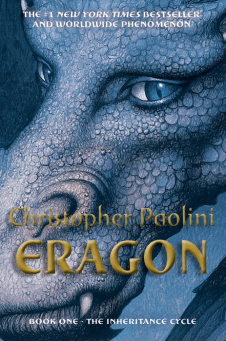
Eragon Cover.png

I received a copy of Eragon as a birthday gift a short time after its initial release in 2002 and powered through it in short order, as I was instantly hooked by the ambitious plot, massive amounts of lore, and the inventive fantasy elements.  Following Eragon I made sure to grab every other book in the Inheritance Cycle as soon as they came out and I considered it one of my favourite series.  Having re-listened to the entire Inheritance Cycle a few times on audiobook I still massively enjoy the series, although I have noticed a few flaws with the franchise.

The books are all set in the world of Alagaësia, a land filled with classic fantasy elements such as dragons, elves, dwarfs and magic, in addition to a few unique creatures and powers.  Many years before the start of the series, an order known as the Dragon Riders were formed to keep peace and harmony in Alagaësia.  The elven and human Riders were bound to their sentient dragons and formed a lifelong partnership with them, gaining powerful magical abilities as a result.  Following years of peace, the Dragon Riders were wiped out by a crazed former member of the order, Galbatorix, and his followers.  After destroying the Riders and driving the dragons to near extinction, Galbatorix conquered the human kingdoms of Alagaësia and forced the elves and dwarfs into hiding.
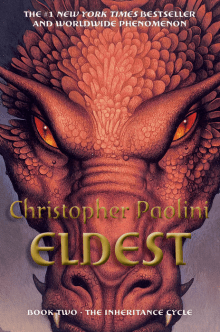
Eldest Cover.png

The first book in the series, Eragon, starts with the titular character, the young human Eragon, receiving one of the last surviving dragon eggs, which hatches forth the dragon Saphira.  Following an attack by Galbatorix’s servants, Eragon, Saphira and their mentor, Brom, are forced to flee their village of Carvahall and travel throughout Alagaësia before finally joining up with the rebel organisation, the Varden.  Along the way, Eragon and Saphira lose Brom, encounter the mysterious Murtagh, and rescue the elf Arya from Galbatorix’s captivity.

The following books in the series follow Eragon and Saphira as they lead the fight against Galbatorix while also learning about their powers and the history of the riders.  They encounter new mentors, find out terrible secrets about Eragon’s past, and eventually confront Galbatorix in a final battle.  At the same time, Eragon’s cousin Roran becomes a fugitive from the crown and must lead the entire village of Carvahall in an epic journey to the Varden.  There is also a focus on young political rebel Nasuada, who becomes leader of the Varden in the second book, and examines the trials and tribulations of leading a war against an all-powerful magic tyrant.
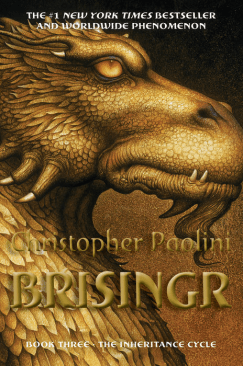
Brisingr Cover.png

The last two times that I enjoyed the books in the Inheritance Cycle, I chose to listen to them by audiobook, which are narrated by the outstanding Gerard Doyle.  Eragon is the shortest audiobook at 16 hours 27 minutes, while Inheritance, the finale, clocks in at 31 hours 28 minutes.  I am a huge fan of listening to books with large amounts of internal lore, history and background as it means I am less likely to miss an interesting fact or accidently skip over something with tired eyes.  As Paolini has created a massive amount of background lore and detail to accompany his story, I would heartily recommend listening to the Inheritance Cycle, as I felt that I absorbed so much more from the series as a result.  Doyle is an excellent narrator for this series, and at no point did I find his voice work either distracting or annoying.  His character voices are done very well, and he was able to produce excellent voices for both the male and female characters, as well as the various fantasy species.  I particularly enjoyed the Scottish accent that Doyle attributed to the character of Murtagh, as I felt it fit the character perfectly and made him very distinctive throughout the series.  Other features of the audiobook editions of this series that might appeal to potential listeners are the exclusive interviews with the author that were included at the end of two of the books.

Without a doubt, the best feature of this entire series is the sheer amount of imagination and lore that Paolini has invested in his book’s settings and history.  Each of the books in the Inheritance Cycle contains an incredible amount of background information, elaborate settings and a huge range of fantasy creatures, each with their own skills and history.  Paolini’s immense creativity is particularly evident in the series’ complex rules of magic that are a major feature of all the books.  The detailed explanation provided in Eragon is massively expanded upon in the later books in the series, and represents a significant part of the narrative.  It is also incredible to consider that Paolini created a completely new language for this magic.  With huge amounts of effort expended in creating complex lore, magic and history for all the races and peoples of Alagaësia, it is worth reading this entire series just to see all of these wonderful inclusions.
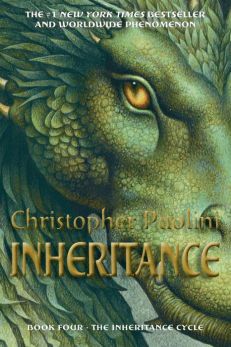
Inheritance Cover.png

There are some amazing story elements contained within the Inheritance Cycle books.  Paolini has created an epic fantasy adventure that draws the reader in and makes them care about the battle for Alagaësia.  This series has everything from impressive duels to large-scale battles that range from small groups of soldiers fighting to massive pitched battles and sieges.  There is also a significant amount of magic, politics, intrigue, romance, family and everything else that makes up a great fantasy story.  The main character, Eragon, is a classic hero coming into his great power storyline that fantasy fans will appreciate and enjoy.  However, I personally thought that the storylines that focused on Eragon’s cousin Roran were the best parts of the entire series, and business really picked up when he was made a point of view character in Eldest.  Roran is a much more grounded and likable character than Eragon, especially as he has to rely on his skill, cunning and luck to survive in a world where massive monsters and powerful magicians run rampart.

The first book, Eragon, is the only edition in the Inheritance Cycle that is told completely from the viewpoint of its titular character.  This book is a superb introduction to the series and spends significant time laying down the groundwork for the next three books.  Some great characters are introduced within this first novel, and there are a range of terrific battle scenes, the establishment of some fantastic relationships and some deep emotional moments.

The second book, Eldest, is another amazing part of this series.  Eragon spends a significant part of the book physically crippled following the final battle in Eragon, and Paolini’s descriptions of his despair and hopelessness are particularly vivid.  I am a real sucker for fantasy teaching sequences, so the scenes where Eragon learns magic, history and other subjects in the elven kingdom were really enjoyable for me.  However, the standout parts of this book focus on Eragon’s cousin Roran and the inhabitants of Carvahall.  Eragon’s actions in the first book results in Carvahall being targeted by Galbatorix and his forces, and Roran and the villages must first defend their home and then attempt to flee to the Varden.  Their exodus has some great scenes, including an extended voyage at sea, and is it fascinating to see how Eragon’s adventures impact the people he left behind.  Special mention should also be made of the scenes told from the viewpoint of Nasuada as she takes control of the Varden and leads its invasion of Galbatorix’s kingdom.  The final battle sequence of the book is another huge highlight, as the reader gets to see Eragon unleash his new powers in a massive battle scene.  The combination of the book’s three storylines into one conclusion is particularly enjoyable and epic, and there are some amazing battles and several important character revelations for the protagonist.

The third book, Brisingr, represents another fun addition to the series.  Eragon sets out on a journey of discovery during his arc.  Of particular note is the extremely intriguing look at dwarf politics and emotional reveals about Eragon’s heritage and family.  Roran’s arc is action-packed and exciting as it focuses on his role as a new member of Varden as he works his way up to becoming a high-ranking commander in the army.  The devastating conclusion to this book provides an emotional punch to the reader as one of the most likable characters meets their end.

Inheritance, the final book in the Inheritance Cycle, draws this story to its epic conclusion.  Readers who have enjoyed the first three entries in this series will have no choice but to see how this adventure ends.  Once again Roran’s arc shines through as the most enjoyable part of the entire book.  Not only does this arc focus on his own fantastic siege storyline, but it is through Roran’s eyes that we watch the massive battle for Galbatorix’s capital.  While Eragon and most of the other supporting characters are fighting Galbatorix, Roran is the only point of view character observing the fierce street-to-street combat happening in the city below.  Roran’s epic battles in this sequence more than make up for certain deficits with the main fight between the remaining Dragon Riders above.  That being said, Eragon, Arya and Angela’s earlier confrontation with a group of fanatical priests in tunnels below an ancient temple has a certain sinister edge to it that will appeal to some readers.  Offering a satisfying conclusion with a number of intriguing storylines left open for future books, this is a superb final chapter for the entire Inheritance Cycle.

While this series has a lot of great features and positive points in its favour, there are a few negative issues that need to be addressed.  When it was released, one of the main criticisms the Inheritance Cycle received was about its similarities to other works, and it’s honestly not hard to see some striking resemblances to the original Star Wars movies.  The Dragon Riders are extremely similar to Jedi, down to the unbreakable, colour-coded swords.  Obi-Wan Kenobi’s monologue from A New Hope about the destruction of the Jedi can pretty much be substituted for Brom’s description of the fall of the Riders.  The main character, Eragon, is essentially Luke Skywalker.  When we first encounter him he is living with a gruff uncle and suddenly receives a MacGuffin (in this case a dragon egg rather than a droid) that dramatically changes his life.  The arrival of the MacGuffin results in the death of his guardian and he flees the only home he knows with a mentor character.  The mentor character, Brom, the former Rider, has way too many similarities with Obi-Wan as he gives the protagonist his early, uncompleted training, provides him with his first weapon, and then dies about two-thirds through the first volume.  In the course of the first book Eragon also meets up with a rogue-like character, rescues a trapped female who he first sees from a distance (through magical scrying rather than a hologram) who later turns out to be a princess, and then flees to a rebel stronghold for an epic confrontation.  In later books Eragon meets a Yoda-like character in Oromis and finds he is related to the Darth Vader equivalent, Murtagh (after Murtagh obtains a red sword).  He eventually faces the Emperor-like villain, Galbatorix, at the very end of the series, and is forced to have a final duel with Murtagh in front of him.  Upon Galbatorix’s death and the utter destruction of his ultimate base, the heroes liberate the whole world from the control of the evil empire and Eragon sets out to teach a new generation of Riders.

These are only some of the more obvious similarities to Star Wars, and they are pretty glaring; however, this has never ruined the series for me.  Other criticisms about similarities to fantasy works such as Lord of the Rings, due to the inclusions of dwarfs and elves are a bit harder to credit, as these are hardly unique fantasy races anymore and Paolini does a fantastic job creating distinctive histories and traits for these races.

One thing that I really disliked about the series, however, is the terrible romantic arc between Eragon and the elf Arya.  Eragon pretty much falls in love with her the second he sees her, but Arya is strongly opposed to his romantic advances for various reasons.  Eragon’s unrelenting pursuit of her, especially in the second book, is very uncomfortable, and his depression and self-pitying attitude following her rejections are some of the worst parts of the series.  While their relationship in the third and fourth books becomes more natural and builds up as a result of mutual respect, I’m personally glad that Paolini doesn’t pull the trigger on their relationship at the end of the series.

I was also not a big fan of the extreme amount of self-doubt that Paolini injected into his protagonist, possibly to counterbalance the overpowered nature of Eragon.  Eragon spends way too long feeling sorry for himself, and the scenes where he deals with these feelings of inadequacy and doubt are some of the hardest to get through.  These character flaws, along with the Arya romance subplot, make it hard for the reader to like Eragon at times, and are part of the reason that I feel Roran is the better hero in the series.

While they did have some amazing parts, the third and fourth books in the series did seem to drag at times.  While I enjoyed Brisingr, when you view the whole series, I feel that Paolini could have probably gotten away with turning the series into a trilogy and simply incorporating some of the key story points into Inheritance instead.  The final conclusion of Inheritance is also a bit clichéd, especially when, out of nowhere, Eragon is able to use magic to make Galbatorix understand all the pain his actions have caused.  It’s a pretty weak way to end this epic confrontation, but luckily the reader isn’t too disappointed, especially with the epic Roran storyline down in the city ramping up the action in this part of the book.

Despite the above criticisms, I still rate all of the books in the Inheritance Cycle four stars out of five.  While this rating may be slightly bolstered by nostalgia, I do believe that this is an excellent series that will appeal to many fantasy fans, especially those younger readers who are only just starting to read the genre.  With an absolutely incredible amount of fantasy details, world history and established lore, I am still amazed by Paolini’s sheer imagination every time I go back to this series.  There are some electrifying storylines within all four of these books, as well as enough action, be it physical, mental or magical, to make any action junkie’s pulse run wild.  Readers looking for the next epic fantasy series to enjoy will find an incredible adventure awaits within the Inheritance Cycle.

My Rating (Series and Each Book):

Four stars

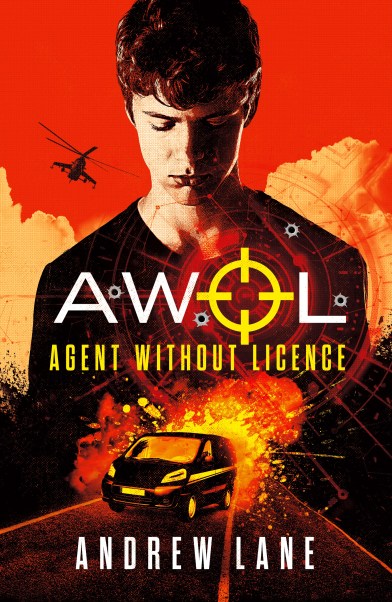
AWOL: Agent Without Licence by Andrew Lane

AWOL Agent Without Licence Cover.jpg

Publisher: Piccadilly Press

Publication date – 12 July 2018

Amazon     Book Depository

From a veteran author of young adult fiction comes this brilliant spy thriller that introduces a younger audience to the joys of modern espionage.

Kieron Mellor and his best friend, Sam, are typical teenagers living the ‘greeb’ lifestyle in Newcastle, England, with their biggest problem revolving around how to get tickets to the next rock show.  But when they witness a man being kidnapped in their local mall, they are thrust into the world of covert espionage and a plot to unleash untold destruction on the world.  Noticing that the kidnapped man has dropped a set of glasses and an earpiece, Kieron picks them up, only to discover that they are part of a high tech virtual reality kit that can provide the user with a database of information about anything they see.  They also connect Kieron to Bex, a secret agent on mission in Mumbai who is in desperate need of his help.

Bex’s handler, the man who was kidnapped, was using the technology currently in Kieron’s possession to remotely assist Bex with her mission.  Bex was observing a deal for information about nuclear weapons, but the disappearance of her handler resulted in her losing her target.  With no other options, Bex is forced to utilize Kieron and Sam’s help in order to complete her mission and stop an act of mass destruction.  However, the Newcastle teens have problems of their own; a fanatical right-wing extremist group and a mole inside Bex’s organisation are hunting them for the missing glasses, and they have no intention of leaving any witnesses alive.

Agent Without License is the first book in Lane’s AWOL series of young adult spy thrillers.  The second novel in this series, Last Safe Moment, is already set to be released later this year and will continue to follow the characters introduced in this first book.  Lane already has significant experience writing novels for a younger audience, with eight books in his bestselling Young Sherlock Holmes series, as well as his Lost Worlds and Crusoe Adventures books.  Other works from Lane include his science fiction based Netherspace series and several books set in the Dr Who extended universe.

The AWOL series is aimed towards a younger generation of reader and has been advertised for children in the 9-12 age range.  I felt that this book is an ideal read for that demographic, and it reminded me of some of the books that really caught my imagination when I was that age, including the Artemis Fowl and Alex Ryder novels.  While there is some violence and implied deaths within the storyline, it isn’t overly graphic and won’t traumatise the younger readers.  That being said, the overarching spy storyline isn’t dumbed down, and its intended audience will enjoy the realism and the references to events, ideologies and prejudices that currently affecting the real world.  There are also discussions about some mature themes, although nothing is too extreme or adult.  These small inclusions will be appreciated by the younger audience, as they will enjoy seeing some of these mature issues which they are likely already aware of included in their fiction.  Lane does make the obligatory attempts to tap into modern youth culture in order to appeal to his readers’ interests; fortunately, however, he does not go too overboard with his attempts like some authors do, and readers are not inundated with a flood of unnecessary pop culture references.  The author has also included multiple examples of the two teen heroes outsmarting older antagonists.  This is always a fun feature for the younger audience to enjoy, and these teen protagonists have some very inventive, and in some cases quite direct, solutions to the problems they encounter.  Overall, Agent Without License will prove to be an excellent read for the audience in its suggest age range.  Older readers will also have a blast with this book and enjoy the fantastic spy thriller elements.

For his AWOL series, Lane has leveraged his significant espionage experience to create intriguing novels with a sense of realism to their spy aspects.  In Agent Without License, the author lays down a foundation of tradecraft and spy techniques for the reader to enjoy as his protagonists attempt to save the world.  Lane explores the basics of spying in this book and provides information about current espionage agencies and how they impact on real world politics.  As a result, this is a fun and informative introduction to the spy thriller genre, and the younger readers will appreciate the exciting and mature content of this story.

One of the best parts of Agent Without Licence is the advanced technology that the protagonists use to help complete their mission.  This technology comes in the form of glasses and an ear piece, and is known as Augmented Reality Computer Capability (ARCC).  The ARCC is essentially Google Glass on steroids, and allows the operator to access information on anything they, or the person they are connected to, can see or interact with.  This is an awesome piece of fictional technology that sounds like an item espionage operatives could possibly already have access to.  Watching the young protagonist, Keiron, become acquainted with and learn to operate the glasses is an enjoyable part of the story which plays in well with the book’s espionage elements.  The information that Keiron obtains for himself and Bec is quiet interesting, and the ARCC technology provides them with threat analyses, escape routes, background history of the buildings they are going into, facial recognition and recording capabilities.  This is a seriously cool part of the book, and the technology’s presentation and use is a great element that will make the readers eager for glasses like these to appear on the market.

Agent Without License contains two separate but connected storylines and alternates between the two different point of view characters in each chapter.  One of the storylines focuses on Keiron in Newcastle, while the other follows Bex in India.  These storylines overlap throughout the chapters, and the characters are in constant communication with each other.  The different storylines are usually occurring at the same time, although Lane does occasionally move one storyline slightly ahead or behind to create some dramatic thrills.  Some of the most intriguing scenes feature Kerion communicating information through the ARCC glasses to Bex.  There is a fantastic interrogation sequence in which Bex uses the ARCC technology to stay in communication with Kerion as he provides her with the tools to crack her target and get the answers she is looking for.  This breakup in storylines also helps highlight the differences in espionage ability between the trained operative, Bex, and the amateur but highly skilled teenagers, Kerion and Sam.

Andrew Lane has produced a wonderful and highly enjoyable novel that is a fresh and exciting take on the teenage spy book and an excellent gateway into the world of spy thrillers.  Agent Without Licence is an ideal read for its intended younger demographic, while at the same time containing a range of mature story elements that will appeal to all ages.  This is a fantastic first instalment in a great new series that is highly recommended for young readers looking for a great adventure story.

My Rating:

Four stars

Amazon     Book Depository

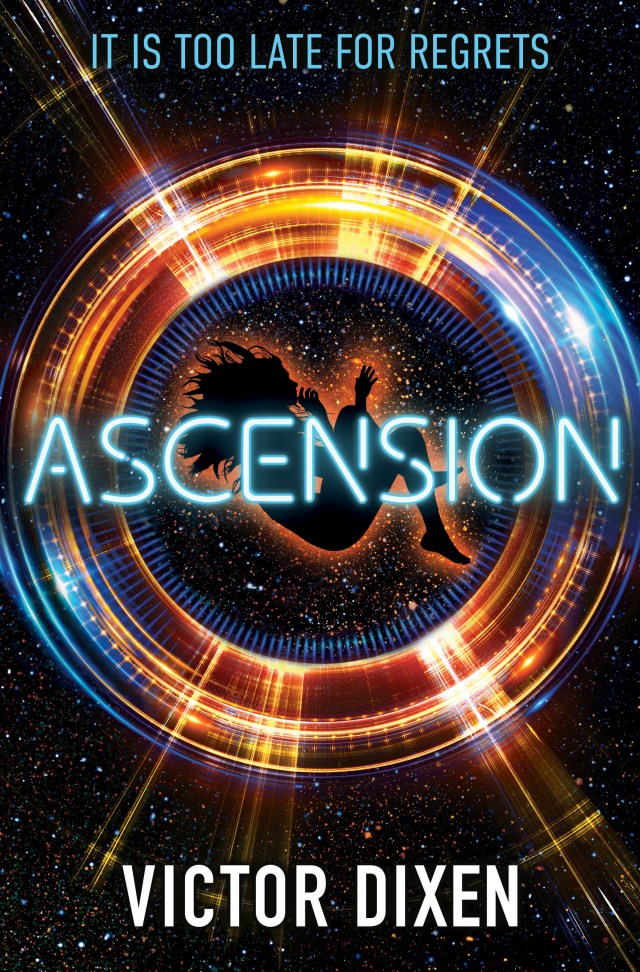
Ascension by Victor Dixen

Ascension Cover

Publisher: Hot Key Books

English Edition Translated by Daniel Hahn

Publication Date – 28 June 2018

Amazon     Book Depository

The first book in the bestselling French Phobos series is finally here.  Ascension is a fun guilty pleasure read geared towards a young adult audience that explores the dark side of reality television.

In the near future, a private company has bought NASA and is about to send the first humans to Mars as part of the Genesis program.  However, this will not be a typical voyage to another planet; it will be the most ambitious reality television show of all time.  The international group of young astronauts has been chosen through a worldwide contest, and the entire voyage into space will be broadcast back to Earth to be viewed by the masses.  Not only will these six young men and six young women colonise Mars but they will also be expected to pair up into couples by the time they reach Mars through an insane bought of speed-dating.

The boys and girls will be placed into separate bays of the same spaceship and will only be allowed to interact with the person of their choosing for six minutes each week.  In these six minutes they will meet and try to seduce their counterparts and attempt to determine who their perfect match is.  By the end of their trip, each of them must choose a partner to marry and live with once they reach the red planet.

For one of the contestants, Léonor, the Genesis program is her chance to escape from a planet where she has only ever experienced pain.  The one-way trip is the biggest opportunity of her life and she is eager for glory and love.  But as they move further away from Earth, Léonor begins to learn that this journey is far more dangerous than she had expected.  A deadly conspiracy surrounds this journey and it is far too late for regrets.

Ascension is written by Victor Dixen, a French author who has contributed multiple series to the Young Adult genre.  His previous works included a reimagination of classic fairy tales in the Animale series, and the science fiction based The Strange Case of Jack Spark series.  Ascension is part one of his exciting Phobos series, which was first published in France back in 2015.  Phobos will be the first of Dixen’s series to be translated into English, with the next two books in the series, Distortion and Collison both set to be published in English within the next year.

Ascension is a fantastic book with a lot of parts to it that make for a highly compelling and interesting read.  The overarching concept of a space exploration being turned into a reality television contest is a little crazy, but Dixen has some great explanations for this plot set-up that sound actually plausible and realistic.  With the current political craziness around the world and humanity’s constant fascination with reality television, you can’t help but think that this could be a distinct possibility.

Dixen is a talented author who is able to perfectly recreate the feel of a large-scale reality television show within his book, with all of the worst parts included.  The male and female contestants are kept apart from each other for the whole journey and are constantly aware of the world watching them through all the cameras, and they act accordingly.  Dixen shows off the various ways the producers are trying to manipulate the contestants, such as misleading messages from their host and group showings of each contestant’s ratings and accrued prize money, all in the name of creating drama.  There are also a number of scenes that show large groups of people watching the show and becoming obsessed with it in a way reminiscent of the early days of Big Brother and American Idol.  There are fun inclusions to show this off, such as having scenes where people back on Earth change their hairstyles and looks to match their favourite contestant, the contestants’ home countries showing massive support for them, and a fun scene where a cynic has to listen to other people gossip about the show.

While the parts of the book reminiscent of a typical reality television show are fantastic by themselves, they are taken to a whole other level when they are seen in conjunction with the backstage production meetings scenes.  Reality television show production meetings are probably already fairly sinister but Dixen is really able to amp this up by showing the show’s producers and host engaged in some ominous discussions involving deaths, murder, manipulation and their own bonuses.  Ascension contains a great main antagonist in Serena McBee, the host.  Serena is pretty much the ultimate villain for young people, as she acts like their friend while she tries to manipulate them, thinking she knows everything about them and how to control them.  All of these sinister surroundings create a compelling read that will really draw the reader in.

I have to admit that when I started to read Ascension the last thing I thought I would be interested in would be the potential relationships between the contestants.  However, Dixen puts significant effort into introducing the 12 contestants and describing their personalities and histories, ensuring the reader becomes invested in their futures.  While Léonor is the main character that the author focuses on, the reader is also shown many of the dating segments that the other contestants are involved with to dramatic effect.  There are also a number of discussions between the female characters as they discuss their tragic histories, their hopes for the future and who their preferred partners will be.  As a result, the reader does find themselves really caring about the characters becoming extremely interested in who will end up with whom.

Dixen also enhances his terrific narrative inclusions, sinister overtones and compelling character interactions with a range of useful visual elements included in the text.  These include flyers for the show, tables with the results of the contestants’ prize money and survey results, and detailed technical diagrams of the spaceship and the Mars habitations.  The diagrams of the ship help the readers visualise the ship and habitats, while the flyers and tables make them feel like part of the show’s audience.  These elements are well used within Ascension and are a great addition to the book.

Ascension by Victor Dixen is an exciting and invigorating young adult read that can now finally be enjoyed by an English-speaking audience.  Readers will love how the author has included an extremely realistic reality television setting into a dramatic science fiction story filled with all the emotion and manipulation you would expect from the trashiest of dating shows out there.  This crazy and brilliant read should captivate the young adult audience of the English-speaking world, just like it did with its French-speaking audience, and I will be keeping an eye out for the next two parts of this series.

My Rating:

Four stars

Amazon     Book Depository

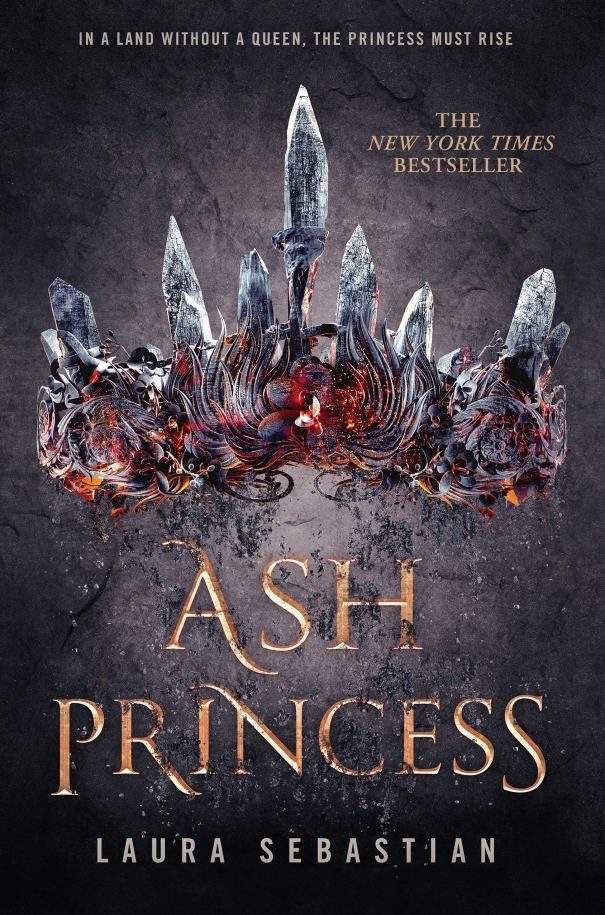
Ash Princess by Laura Sebastian

Ash Princess Cover

Publisher: Pan

Publication Date – 24 April 2018

Amazon     Book Depository

From an exciting new voice in young adult fantasy fiction comes a powerful tale of independence and freedom.

Ten years ago the Kalovaxians invaded the peaceful island nation of Astrea, killing its guardians and enslaving the entire populace to work in the island’s magical gem mines.

Theodosia was only six when Astrea was invaded and her mother, the Fire Queen, was murdered before her eyes. Since then she has lived in her former palace as a prisoner to the cruel and despotic Kaiser, who seeks to destroy all trace of the Astrea culture and language. Given a new title, the Ash Princess, and forced to endure constant humiliation and punishment for her people’s rebellion, Theodosia has become a subservient creature, trying to survive as she waits for any sort of rescue.

When the Kaiser forces her to perform a terrible act, Theodosia is no longer willing to stand back and watch her people suffer. With unexpected allies suddenly close at hand, Theodosia stops a plan for her escape and instead chooses to remain at court to obtain information for the rebellion.

However, the Kalovaxians are a cruel and merciless race of warriors who excel at raiding and destroying the lands they conquer. Theodosia soon realises that supplying information to her companions is not enough; she needs to find a way to strike at the heart of the Kalovaxians and disrupt their tight control of Astrea. When opportunity presents itself, she must risk everything to give her people a shot. It is time for the Ash Princess to rise.

Ash Princess is the debut novel from Laura Sebastian and the first book in a young adult trilogy with a lot of potential.

This story is told completely from the point of view of the main protagonist, Theodosia, with a large amount of the book dedicated to her growth as a leader. Theodosia starts the book as a completely broken person, having been oppressed and abused for years and kept as a symbol of humiliation. As the story continues, Theodosia detaches herself from the persona she created to survive and starts to finally oppose her captors. Watching her obtain the courage to fight back is an integral part of the book, and her attempts to become the ruler her people need are touching and emotive. There is also a riveting inner conflict within Theodosia as she debates whether to hurt people that she cares about, even if her actions could bring relief to her people. While Theodosia strongly wishes to save her people and defeat the invaders, there is also a great desire to not become like the enemies she hates. The character runs a fine line throughout the book as a result, and many readers will enjoy how Sebastian examines this inner conflict.

Sebastian has included an intricate background setting for her electrifying story. The nation of Astrea had been brutally subjugated 10 years before the start of the story and is currently ruled by the Kalovaxians. Because of how total this subjugation has been, with a large number of deaths and the rest of the populace forced to do heavy labour, very few characters originating from Astrea are featured within the story. This background of a near-obliterated country is dark and grim, but serves as the perfect setting for an inspiring story of freedom and rebellion. The antagonists of the story, the Kalovaxians, are also the perfect villains for such a story, as they are undeniably evil. All of the Kalovaxians–even the milder ones that consider themselves Theodosia’s friends–are power hungry, destructive and feel that they are superior to all other peoples. The use of the setting and the antagonists within Ash Princess adds significant impact to the main story and forces the reader to care about the fate of the main character.

Readers of Ash Princess will enjoy the covert activities that take place as part of the main story. In order to find a way to liberate her country, Theodosia needs to infiltrate and influence parts of the oppressive Kalovaxian society. The scenes were she attempts to seduce, manipulate and commits acts of sabotage are compelling and one of the more intriguing parts of the books. In addition to the protagonist’s actions, there are also the secret plans that the Kalovaxians are undertaking. These plans are rather dark and include magical experiments on Theodosia’s people. These Kalovaxian plans result in some interesting actions from Theodosia and play a significant part in the plot. The fascinating gem magic of the Astrea plays an interesting role in the clandestine actions of both the protagonist and antagonists, and fantasy-minded readers will enjoy the resultant exploration of this branch of magic.

Ash Princess is a poignant tale of hidden strength and the fight for freedom. This is a satisfying start to Sebastian’s first series which introduces a memorable main character and a powerful story that makes full use of its awesome background story elements. This is an ideal choice for readers looking for their new fix of young adult fantasy fiction.

My Rating:

Four stars

Amazon     Book Depository

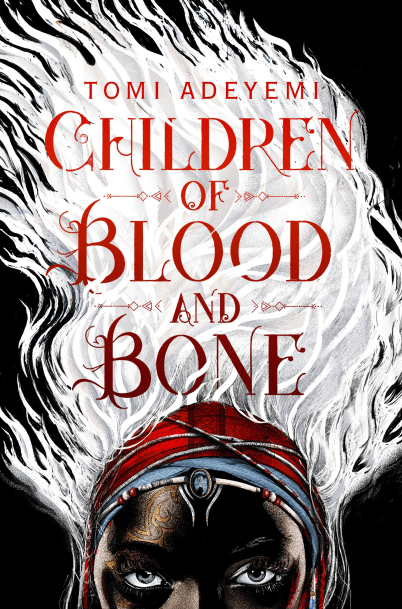
Children of Blood and Bone by Tomi Adeyemi

Children of Blood and Bone Cover.png

Publisher: Henry Holt and Company

Australian Publication Date – 13 March 2018

World Publication Date – 6 March 2018

Amazon     Book Depository

A brand new magical world is born in Children of Blood and Bone, the enthralling first book from a talented new author.

In the nation of Orisha, magic was once controlled by the maji, powerful practitioners who were respected and feared throughout the land.  However, that all changed eleven years ago, when magic suddenly and mysteriously died, leaving the maji powerless and confused.  Taking advantage of this uncertainty, the magic-fearing King Saran struck out, arresting and killing all the former maji.  Now the people of Orisha consider magic evil and all links to the old order are shunned.  Those children who would have become maji, if not for the death of magic, are known as diviners.  Made distinctive by their white hair, they have become a second-class citizenry within Orisha and are routinely targeted by abusive guards and crippling taxes as King Saran seeks to slowly kill them all off.

Zelie Adebola is one of these diviners and remembers what it was like before magic died.  Haunted by the death of her maji mother and still defiant after years of oppression, Zelie is determined to survive.  However, when a chance run-in with an ancient scroll awakens her latent magical abilities, Zelie is given an unexpected chance to restore magic to the world.  With the help of her brother, Tzain, and the rogue princess, Amari, Zelie must reclaim three artefacts and travel across Orisha before the solstice.  If they fail, magic will be gone forever.

As the trio encounter the dangers that lurk throughout Orisha they must also contend with a dangerous force that is following them.  Amari’s brother, Prince Inan, has been tasked by the king to hunt the fugitives down and ensure that magic can never return.  However, Inan’s own latent magical powers have surfaced, and he is torn between the burning powers in his head and his father’s instilled hatred of all things magical.  Will his sudden infatuation with Zelie save him, or will it lead to his destruction?

The greatest threat to the quest may come from Zelie herself, whose powers over life and death may turn out to be too dangerous to control.

Children of Blood and Bones is the first book from Nigerian American author Tomi Adeyemi.  It is a bold fantasy adventure targeted towards the young adult demographic, and has already received significant hype from various sources, including discussion about a possible movie adaption.

One of the most obvious things that will appeal to potential readers is the considerable work and imagination that Adeyemi has put into her fantasy creation.  The central focus on a group of oppressed magic users who have lost their power and influence is particularly engrossing, as is the distinctive magical practice and lore that Adeyemi has used.  The detailed landscapes and cities of the nation of Orisha do a wonderful job of catching the imagination, especially as the characters traverse a number of different locations, each with their own unique environments and features.  There are also a number of intricate battle scenes that add significant excitement to the narrative, including a particularly memorable sequence where the main characters participate in a massive ship-to-ship gladiatorial battle in a flooded desert arena.

In addition to the above elements, readers will enjoy the use of multiple character perspectives throughout Children of Blood and Bone.  Three of the main characters, Zelie, Amari and Inan, each narrate their own chapters and provide a detailed overview of the story from their point of view.  There are many quick-fire perspective changes that serve to give multiple different viewpoints of the same event.  This is particularly useful as much of the book is dedicated to Zelie, Amari and Tzain being closely pursued by Inan.  Seeing how close Inan gets to the protagonists through these separate perspectives adds a lot of tension and suspense to the book.  It also works well in enhancing many of the larger battle scenes, especially the above mentioned gladiatorial naval battle.  The different viewpoints also allow the reader a clear picture of the ideological breakdown of Adeyemi’s world, as the readers are given insight from both the oppressed diviners and the paranoid King Saran

Adeyemi’s clever use of multiple narrators also allows for a clearer view of the personal and group development of the main characters, which can be seen not just through their own eyes but through the eyes of the other narrators.  Amari’s change from spoiled princess to hardened warrior is fun and heart-warming.  The changes to Zelie and Inan as a result of their dramatic internal conflicts are much more intriguing and draw the audience in emotionally.

While Adeyemi explores several themes throughout the book, the most intriguing is her examination of power and the responsibility to wield it.  Within Children of Blood and Bone, the maji have had their magical power taken away from them and are oppressed by the king as a result.  The subsequent quest to return magic to the world raises certain ethical questions, like whether an oppressed group should suddenly have destructive powers returned to them?  Within the book there a number of characters who have dissenting views on the subject, but only Zelie and Inan are in the unique position of seeing both parts of this debate.  Inan has always been taught to fear and hate magic, but his perception of magic changes when he gains his own powers, meets Zelie and experiences the oppression brought on by his father.  As a result, his opinion about the future of magic is changed multiple times throughout the book.  Zelie on the other hand, has experienced oppression all her life, and is at first determined to bring back magic.  However, when she uses her own destructive powers and sees the devastation caused by other magic users, she starts to question her previously held beliefs.  This fascinating internal debate is masterfully woven in the story through the books narrators, and it will be interesting to see how this debate continues in any future books.

Children of Blood and Bone is an intricate and ambitious young adult fantasy debut that includes a first-rate, emotionally charged story.  Set in an inventive new universe and featuring slick use of characters and multiple narrators, Children of Blood and Bones lives up to its significant hype.

My Rating:

Four stars

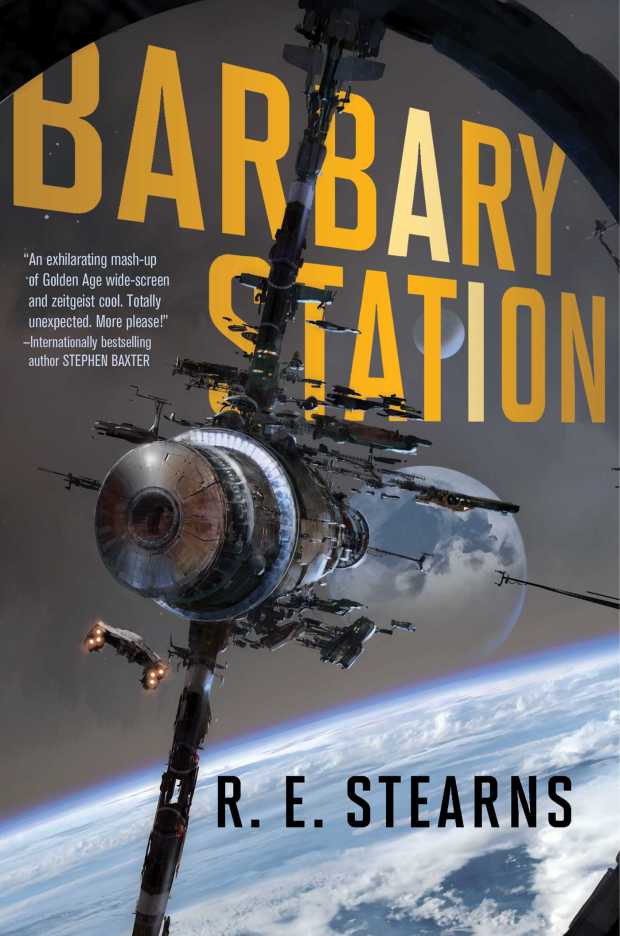
Barbary Station by R. E. Seams

barbary-station-9781481476867_hr

Publisher: Saga Press

Publication Date – 31 October 2017

Amazon     Book Depository

Space pirates take on rogue artificial intelligences in this electrifying young adult science fiction debut from R. E. Stearns.

In the distant future, humanity is recovering from a devastating civil war between Earth and its colonies.  Life is hard for all, especially for newly graduated engineers Adda Karpe and Iridian Nassir, who can only look forward to a lifetime of paying off their loans on a minimum wage.  So when Adda’s brother, Pel, contacts her with an opportunity, Adda and Iridian decide on a future as pirates.  Hijacking a massive colony ship, the girls make for Barbary Station, the base of operations for the infamous Captain Sloan, whose adventures and riches have been romanticised across the system.

Hoping to impress the pirates with their stolen ship, Adda and Iridian are shocked when, instead of bold adventurers living in luxurious conditions, they find a mismatched crew barely surviving in a hidden makeshift base welded to the hull of Barbary Station.

The station’s AI, AegiSKADA, has gone haywire and has taken to targeting all life forms on the station, bearing a particular grudge against the pirates.  Armed drones hunt people through the interior of the station, and the station’s gun batteries shoot down any ship that gets too close.  On top of that, a colony of refugees are hiding in the station, a team of crazed doctors are making life difficult for everyone and three mysterious ships swoop around the station, killing or saving as they see fit.

Now wanted criminals, Adda and Iridian have to destroy the AI to become members of the pirate crew.  The last team that tried to shut down AegiSKADA died a fiery death, and the pirates have already taken bets on how long the newcomers will survive.  Luckily, Adda is an expert on artificial intelligences and Iridian is a former solider with a big combat shield and superior survival skills.

However, AegiSKADA is the most is one of the most advanced AIs in the galaxy and is surrounded by lethal defences.  AegiSKADA is learning and is determined to kill every invader on Barbary Station.  And, as malevolent as the AI is, it is not the only danger facing Adda and Iridian.

Barbary Station is a great debut from R. E. Stearns, a thrilling new voice in science fiction.  This young adult book takes an exhilarating look into a future of artificial intelligences while introducing some exciting characters and fast-paced action.

Stearns does a great job of exploring the concepts of artificial intelligences, as well as examining the theories and debates about whether they are truly alive.  Among the highlights of the book are the multiple scenes in which Adda interfaces with the station’s systems, including some especially tense scenes in which she interfaces directly with AegiSKADA in order to determine what actions it is taking against the humans.  Stearns masterfully handles the complex matter of AI sentience, creating a narrative which is engaging and thought provoking without oversimplifying the underlying concepts.

Narration for the novel is split between the two main characters, Adda and Iridian, allowing for a well-balanced breakup of the book’s various scenes.  Iridian’s scenes are usually filled with action and exploration, while Adda’s scenes tend to involve the technical exposition and theoretical debate.  The dual perspectives help enhance certain scenes while also adding a dash of realism and tension to those moments when Adda and Iridian are unaware of how the other is faring in their respective missions.  Our heroes, with their varied experiences and character traits, are great foils for each other and can meet the challenges within Stearns’ universe.  It is great to see a same-sex couple so well portrayed in a young adult novel.

Stearns has also populated the book with a range of other interesting characters.  The majority of inhabitants within the station are a typical group of mismatched misfit pirates, led by the revered and enigmatic Captain Sloan, enduring and reflecting the chaotic nature of life within Barbary Station.  Stearns does take the time to introduce a few key characters for the reader to get attached to, and uses them for full emotional effect.  Perhaps the most interesting is Pel, a flakey, skittish character who manipulates his sister into a dangerous environment in order to save himself.  He undergoes some great character development within the story.  Readers will be intrigued as elements of his history and his motivations are revealed, especially regarding his unique connection to events within the space station.

Overall, Stearns has produced a charming and engrossing first book, bringing together several individually great science fiction elements and combining them into one kickass novel.  Barbary Station is a fantastic choice for science fiction fans no matter their age.

My Rating:

Four stars

Amazon     Book Depository