3 Days to Live by James Patterson

3 Days to Live Cover

Publisher: Century (Trade Paperback – 31 January 2023)

Series: Standalone

Length: 372 pages

My Rating: 4.5 out of 5 stars

Amazon     Book Depository

Those in the mood for a quick and very fun series of thriller stories should check out the intriguing new book from the legendary James Patterson, 3 Days to Live, featuring three great short stories co-written by some impressive talents.

I have been really getting into James Patterson’s books over the last couple of years, and there is a reason that he is always leading the thriller field.  At this point, I have mostly read books that Patterson has co-written with several other authors, including the fun Doc Savage sequel The Perfect Assassin (co-written by Brian Sitts), the impressive mystery loaded with family drama 2 Sisters Detective Agency (co-written by Candice Fox), the compelling thriller Lost (co-written by James O. Born) and the addictive and freaky Death of the Black Widow (co-written by J. D. Barker and one of my favourite books of 2022).  As such, I am always keen to read more from Patterson and when I received a copy of 3 Days to Live, I quickly dove into it knowing I would have a great time with it.

3 Days to Live is a captivating book that contains three separate short stories, including the titular story 3 Days to Live, as well as Women and Children First and The Housekeepers.  Patterson wrote each of these short stories with a separate co-author, and the talented Duane Swierczynski, Bill Schweigart and Julie Margaret Moulin each add their own flair to these great stories.  I haven’t read anything from these three authors before, so 3 Days to Live proved to be an excellent and fun introduction.  All three stories are roughly the same length, and they each have their own elaborate and intelligent narratives told utilising Patterson’s fast-paced style.  There is a very fun collection of different storylines with each of these entries, and I loved the sheer variety of scenarios these great authors came up with.

The first of these short stories is 3 Days to Live, which was co-written by Patterson and Swierczynski.  This is a very exciting and clever spy thriller that serves as an excellent and distinctive introduction to the entire collection.  The story is told from the perspective of Samantha Bell, a young, recently retired CIA agent, who has just eloped with her new husband, Kevin Drexel.  Honeymooning in Berlin, tragedy strikes when Kevin is lethally poisoned at the hotel alongside a Russian Oligarch and his daughter.  Samantha manages to survive the attack but is also dosed with the poison, which will end up killing her in less than three days.  Weakened, dazed, and heartbroken, Samantha sets out to find out who killed her and her husband and is forced to contend with both the CIA and the Russians, before discovering the terrible truth behind her own murder.

This was a very impressive and enjoyable story that I particularly enjoyed getting through.  Patterson and Swierczynski came up with a great story that perfectly utilises its fun storyline about a poisoned individual trying to find their killer before they die, which was reminiscent of films like D.O.A, Crank, and Kate.  The authors set the scene for 3 Days to Live’s story extremely well and you are soon deeply engrossed with Samantha’s story as she utilises all her knowledge and skill as a CIA agent to find out who killed her and why.  The story goes in some very fun directions, and you really connect with Samantha as she balances her grief over her husband’s death with her need for vengeance and control of the situation.  The authors do a good job of showcasing the character’s slowly declining physical health, and the weakness and loss of control she feels becomes an outstanding part of the plot, especially as you begin to worry that she won’t be able to achieve her goals.  There are some fun twists and swerves throughout this short story, and while the identity of the poisoner is a little obvious, the full motivations and set-up for it works perfectly.  I was extremely engrossed by this captivating story and I managed to power through all 110 pages in very, very short order.  Readers interested in checking this book out are in for a lot of fun with this first impressive entry and it honestly was my favourite story in the entire book.

The second story is the great read Women and Children First, which was co-written by Bill Schweigart.  This intriguing second story follows security specialist and former elite soldier Chase Weldon, who has been hired by a massive corporation to test their systems and find any potential breaches.  However, during Chase’s initial investigations a series of deadly cyber security breaches occur, and it becomes clear that someone is targeting the company and its eccentric CEO.  Initially an observer, Chase is dragged into the chaos when the saboteurs contact him and coerce him to convince his employers to pay a substantial ransom.  But when Chase attempts to push back, the saboteurs place him in a terrible situation, one where killing his wife and kids seems to be the only option.

This was another awesome and electrifying story that serves as a wonderful and compelling second entry in 3 Days to Kill.  Moving from spy thriller to corporate espionage is a fun change of pace, and I liked the unique and clever story that emerges.  Patterson and Schweigart do a great job drawing the reader in, especially after an entertaining introduction to the protagonist that also serves to highlight the tactics of the baddie.  The stakes steadily rise as the book continues and watching the protagonist get desperate enough to consider killing his family really added to tension of the plot.  The subsequent interactions with the arrogant tech CEO make for some great scenes, and while I was able to see most of the story’s big twists coming, it was still a ton of fun getting through it, especially with all the action that unfolds around them.  There are some fantastic family dynamics worked into the plot, and while the family are portrayed as way too overwhelmingly talented, you still get caught up in their gripping adventure.  The authors end up telling a very concise and entertaining story through the course of 121 pages, and I was hooked enough to read the entire thing in one sitting.  Women and Children First also serves as a great follow up to 3 Days to Live, and readers following on straight away from the first action-packed story will find another excellent read that keeps the blood pumping while telling its own distinctive and enjoyable story.

The third and final story in 3 Days to Live is the powerful and intense thriller, The Housekeepers, which was co-written by Julie Margaret Moulin.  Following several distinctive characters, The Housekeepers sees Russian housekeepers Sophie and Masha on the run from the Russian mob who intend to kill Sophie’s son Nikolai.  Desperate for a place to hide, they secrete themselves in the pool house of Masha’s boss, Dr Elizabeth Parks.  However, Dr Parks is going through her own issues, including family drama and police concerns around a gang violently targeting her clients to steal their prescription medication.  When circumstances drive them together, the doctor and the housekeepers need to work together to survive all their deadly problems.

This was another compelling story and probably the most moving and powerful of the bunch.  Rather than the fast-paced action of the first two stories, The Housekeepers is more character driven, and Patterson and Moulin do a wonderful job of efficiently setting up the major problems impacting all the distinctive protagonists.  Each of these issues, including Russian gangsters, problematic teenagers, intruders, family tensions, and even a pack of coyotes, come crashing down around them and it results in some complex and dramatic interactions.  The authors really lay down an excellent and intelligent narrative in The Housekeepers and I loved how dark it got, especially with those great twists at the end.  All the complex characters have their own dark issues, and it was really impressive how Patterson and Moulin where able to effectively set them out and resolve them during the course of this short story.  I came away from The Housekeepers deeply satisfied, if slightly saddened, and this proved to be an awesome and moving finale to this volume.

This was an overall excellent and captivating collection of short stories from Patterson and his co-writers, and I am really glad I got the chance to read them.  All three fast-paced stories really draw the reader in with their well-established and thought-out narratives and unique scenarios, and the authors played them out perfectly.  Each story really stood on its own feet while also adding to the entire volume.  I personally enjoyed the differences in tone and focus that each story contained, and I think that 3 Days to Live serves as a good example of Patterson’s style and ability to work with different authors.  I would strongly recommend 3 Days to Live to established Patterson readers or thriller fans who are interested in seeing what sort of ideas Patterson and his cohorts are working with these days.  I can’t wait to read more Patterson books in the future.

Amazon     Book Depository

Waiting on Wednesday – Code Red by Kyle Mills (based on the books by Vince Flynn)

Welcome to my weekly segment, Waiting on Wednesday, where I look at upcoming books that I am planning to order and review in the next few months and which I think I will really enjoy.  I run this segment in conjunction with the Can’t-Wait Wednesday meme that is currently running at Wishful Endings.  Stay tuned to see reviews of these books when I get a copy of them.  In this latest Waiting on Wednesday, I check out the next entry in the always exciting Mitch Rapp series with Code Red by Kyle Mills.

Code Red Cover

Amazon

Every year there are several great series that I just have to continue due to their excellent storytelling and writing styles.  Of these, one of the ones I have a particularly fun time is the amazing Mitch Rapp thriller books which are always worth a read.  Initially written by Vince Flynn, the series follows deadly spy Mitch Rapp as he faces off against all of America’s enemies in his typical brutal and efficient way.  Since Flynn’s death, the Mitch Rapp books have been continued by the very talented Kyle Mills who has produced some very clever and unique novels that show an older Rapp getting into more and more dangerous situations in a continually deteriorating world.  All the Mitch Rapp books I have had the pleasure of reading so far, such as Red War, Lethal Agent, Total Power, Enemy at the Gates and Oath of Loyalty, have been pretty epic, and I love the cool range of stories, from terrorists destroying the power grid in Total Power to Mitch Rapp facing off against a corrupt president in Oath of Loyalty.  As such, I am always extremely excited to read the new Mitch Rapp book each year and it looks like I won’t have too much longer to wait.

That is because the next Mitch Rapp novel is coming out in September with Code Red.  The 22nd Mitch Rapp novel, Code Red sees Rapp thrust into another deadly and dangerous mission with global ramifications.

Plot synopsis:

Mitch Rapp returns to make a mortal enemy of Russia in this high-octane and up-to-the-minute installment in the #1 New York Times bestselling series from “one of the best thriller writers on the planet” (The Real Book Spy).

Mitch Rapp hates owing anyone a favor—especially when it’s the world’s most powerful crime lord. But when Damian Losa calls, Mitch is honor-bound to answer.

The Syrian government appears to have created a highly addictive new narcotic that it plans to distribute throughout Europe. It’s a major threat to Losa’s business and he’s determined to send someone to keep him on top by any means necessary.

Rapp is the perfect choice for the mission. Not only does he have extensive experience operating in the Middle East, but he’s also entirely expendable.

As he crosses into war-torn Syria, Rapp quickly discovers a shocking truth. The new drug isn’t being produced by Damascus to prop up the government’s collapsing finances. Instead, it was created by Russia’s asymmetrical warfare unit, not for profit but as a weapon against the West.

With far more than Damian Losa’s interests at stake, Rapp devises a desperate plan that forces him and his team onto a battlefield where the United States is virtually powerless and allegiances shift almost hourly. Further, if Russia uncovers their plot, it will set off a confrontation between the two countries that could change the course of human history.

Ooh, now this is a very interesting sounding new novel from Mills.  After dealing with several domestic threats in the last few books it will be fun to see Rapp going after his old foes the Russians again, this time in Syria.  Code Red sounds like a much more classic spy thriller read with Rapp going up against enemy agents to try and stop an impending disaster, and the plot idea about Rapp accidently stumbling on this trying to clear a debt is very interesting.  I have a feeling this is going to turn out to be a pretty awesome read and I am curious to see Rapp’s take on certain world events when we get to it.

Based on how impressive and captivating the Mitch Rapp series by Kyle Mills has been in the past, I have very little doubt that I am going to have a wonderful time getting through Code Red.  No doubt containing the usual great blend of spy craft, over-the-top action, and intriguing commentary, Code Red is a book I will dive into the moment I get a copy and I know I will an outstanding time with it.

Headcase by Jack Heath

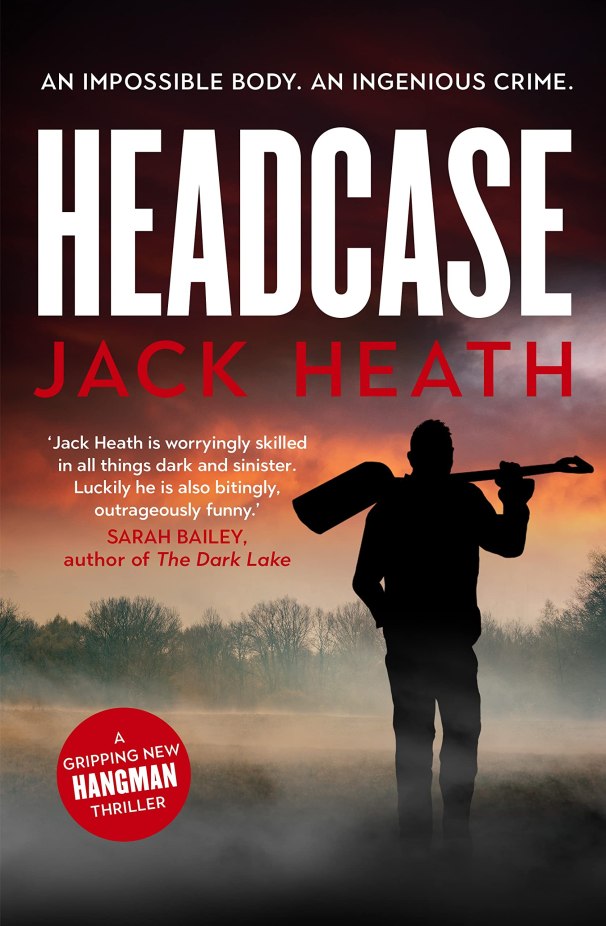
Headcase Cover

Publisher: Allen & Unwin Australia (Trade Paperback – 29 November 2022)

Series: Timothy Blake – Book Four

Length: 416 pages

My Rating: 5 out of 5 stars

Amazon     Book Depository

One of Australia’s leading and most diabolical thriller writers, the exceedingly talented Jack Heath, returns with another twisted and immensely clever mystery, Headcase, which sees the return of his cannibalistic protagonist, Timothy Blake.

While Australia has quite a few outstanding crime fiction authors, Jack Heath is a particular favourite of mine.  Coming from my hometown of Canberra, Heath has been writing for years, producing a range of different series and standalone novels.  I have really enjoyed some of his recent books, including the 2021 standalone novel, Kill Your Brother, an ultra-intense and amazing five-star read that saw a young woman with a complex past forced to make a terrible decision: kill her imprisoned brother or die herself.  This was one of my favourite Australian novels of 2021, and it is a must-read for anyone keen for a powerful and thrilling story.  However, Heath is probably best known for his Timothy Blake books (also known as the Hangman series), which are particularly fun and gruesome.  Following the titular Timothy Blake, a brilliant investigator with cannibalistic tendencies, this epic series are set around a unique but highly entertaining series of mysteries that really draw the reader in.  I have had an amazing time with this series, including the third entry in the series, Hideout (one of my favourite Australian books of 2020), and I have been very excited to see how this series continues for a while.  Heath did not disappoint as the fourth and latest entry in the series, Headcase, proved to be an exceptional and gripping read.

Following his previous harrowing adventure, which cost him his arm and burned all the trust he had with his former FBI partner, freelance investigator and full-time cannibal Timothy ‘Hangman’ Blake’s future seemed in doubt, until he was given an offer he couldn’t refuse.  Recruited by a CIA agent nearly as insane as he is, Blake now works freelance for the agency, investigating odd occurrences throughout the country in exchange for occasionally being able to indulge in his cannibalistic habit.

His latest case sees him and his CIA partner, Zara, journey to Houston, where something unexplainable has occurred at the NASA training complex.  A fully suited Chinese astronaut has been discovered on the grounds of the facility and no one can explain how he got there.  Did he fall out of the sky, or was he murdered elsewhere and somehow dragged into the middle of a secure United States facility?  As a diplomatic catastrophe seems imminent, Blake is drafted by the CIA to unofficially investigate one of the facility’s employees, a former kidnapper who Blake helped put away seven years ago, who may hold the secret of the dead astronaut.

As Blake starts digging, he uncovers a series of surprising and unusual clues that seemed design to confuse any investigation.  The evidence seems to point to the victim falling out of a Chinese spacecraft surveilling the United States, however, all Blake’s investigative senses and knowledge of human flesh seem to tell him differently.  But with Chinese hit squads following them, the CIA attempting to forestall their investigation, several suspicious individuals working in the facility attempting to misdirect him, and Blake’s own ravenous hunger driving him crazy, this case seems near impossible to solve.  Can the Hangman crack the impossible one more time, or will he finally end up in the cage that he deserves?

Wow, I just cannot get over how good Jack Heath is an author as he produces another outstanding and captivating read with a diabolical story behind it.  This amazing thriller has everything you need to enjoy yourself, including a clever mystery and some truly insane characters, and I absolutely powered through it trying to see how everything came together.  This is an easy five-star read from me and I have already featured Headcase on my Top Australian Books of 2022 list a few weeks ago.

Headcase has a brilliant story to it that takes the reader on a very wild ride into some very gruesome murders.  Told from the perspective of main character Timothy Blake, you are soon shown the compelling murder through the eyes of a crazed cannibal who is attempting to simultaneously solve a murder and please the CIA while not revealing that they are looking into the death and sate his own hunger for dead human flesh.  Heath provides a great set-up to this entire story with the mysterious Chinese astronaut discovered in the centre of the NASA facility, which is a very good hook to drag the reader in.  As Blake tries to investigate this case, the reader is treated to several flashback chapters to when Blake was working for the FBI and helped to put away one of the NASA technicians for kidnapping, a crime Blake never believed he committed.  Heath also mixes things up by also including several chapters set a short while into the future in which Blake is incarcerated in a mental institution and is recounting the current story to his psychologist.  This three-way split storyline works extremely well for the first half the book as all three timelines support the others extremely well, and the blend of different periods and focuses helps to create a very interesting read.  The storyline focusing on the dead astronaut remains at the centre of the narrative, with the other two plotlines tying into it, and this is where the magic truly happens.  Heath sets up a particularly interesting mystery around the dead astronaut, with the protagonist forced to dive through a ton of clues, overly dodgy suspects, and government secrets to try and get to the truth.  At the same time, Blake and his partner find themselves under attack from several sources, such as Chinese hit squads, the police, a mysterious serial killer, and their own very dark inner demons.

The story advances at a quick clip the entire way through as the characters power through a range of deadly and dark scenarios.  Heath loads up the clues and the complicated supporting characters and it proves very interesting to see Blake attempt to work out who may be responsible and their very complex motivations.  Much of the story has a bit more of a spy thriller taste to it, thanks to Blake’s association with the CIA and this really helps to make Headcase standout a little from the previous Timothy Blake books.  The NASA and Chinese space surveillance proves to be a very fascinating inclusion that Heath cleverly works into the plot, and I loved that the author was able to write a whole story about mysterious Chinese surveillance craft before the current balloon crisis.  While these spy elements, which include brutal encounters with hit teams from various agencies, are a great new inclusion, some of the best parts of the book still revolve around the deeper character moments of the story, especially when it comes to the protagonist.  I deeply enjoyed how Heath utilises his protagonist’s disturbing cannibalistic insights as an investigative tool, while other insights into his mind, especially when he is in a mental institution, increase the tension and make you wonder just how reliable a narrator Heath truly is.

Everything comes together perfectly in the second half, especially when Blake is desperately trying to solve everything, not only to get to the truth but to save lives.  All the previous story elements are brought together in a big way, and it was outstanding how the clues that Heath had cleverly laid throughout the story came together.  The time split perspectives are resolved in a great way, and it is a lot of fun to see how Blake ended up in the mental hospital.  Everything leads up to several big reveals at the end of the book, not just surrounding the main murder, but other curious events that have been explored as Headcase continues, and reader will not be disappointed in what comes to light, nor how the protagonist deals with it.  The full details about the compelling and unique motivations for the main murder makes for a very interesting read, and the diabolical method of murder is something that I won’t be forgetting in a hurry.  While I did find that the use of a certain McGuffin was somewhat unrealistic, even for this crazy series, I was generally extremely happy with how the entire novel came together.  The complex mystery is resolved in a very captivating way, and the character arcs that sit at the centre of the story go in some very interesting direction which should result in some fantastic books in the future.  I personally came away from Headcase extremely elated and deeply impressed with just how clever an author Heath is.

On top of the outstanding and fantastically compelling story, I have a lot of love for Heath’s writing style, which deeply enhances each of his books.  The quick pace, the fantastic dives to both the past and future, and the intense blend of mystery and insane personal issues surrounding the main characters, makes for some outstanding reading, and there honestly isn’t a single part of Headcase that wasn’t extremely fascinating or fun.  Understandably, due to the story content, this is a pretty gruesome series, and Heath doesn’t hold back on the detailed depictions of dead bodies, nor the terrible things that his protagonist does to them.  However, he never goes way too over-the-top, and the gore and cannibalism always serves a vital purpose, either to provide clues to the mystery or to highlight the protagonist’s complex nature.  It also helps to make the series particularly distinctive, even amongst other impactful thrillers, and you must love just how obsessed and focused the main character/narrator is about dead bodies. Like most of the books in this series, Headcase can be very easily read as a standalone novel, and Heath is very careful to concisely fill in any relevant details that the reader might need.  However, as with most ongoing series, those people who have read the earlier books in the series will probably get a lot more out of Headcase emotionally, especially when it comes to seeing the progression of the protagonist.  I wouldn’t hesitate to recommend Headcase to a new reader, as they are guaranteed to have a fun and unique time with this outstanding read.

I must highlight Heath’s captivating and complex central protagonist, Timothy Blake, who is once again one of the best things about this entire book.  I really love the character of Blake in this series as he is such an intriguing and damaged character due to his deranged cannibalistic tendencies, which often drive him to do terrible things in the name of obtaining human flesh.  There are so many great scenes where Blake feels his desire and hunger for human meat start controlling his actions and the character is constantly fighting for some measure of self-control.  Despite this, he is a relatively good person and a skilled investigator whose keen observation skills, canny insights, intense survival instincts, and intimate knowledge of human bodies give him some intriguing edges during a case.  While he often likes to pretend that he is only helping the case to get fresh meat, he is also obsessed with finding the truth and getting justice, which, when combined with his romantic desires for his former FBI partner Reese Thistle make him occasionally seem like a good, if highly damaged, person.  These seemingly incompatible parts of his personality are so damn effective, and it is always quite fascinating to see what part of his personality actually wins: the feral hungry beast or the surprisingly heroic detective.

The version of Blake in Headcase is particularly interesting as Heath comes up with some new range of issues and problems for him to overcome on top of his all-consuming hunger.  After managing to survive his particularly desperate situation in Hideout, he has a somewhat different lease on life which goes with his new job.  However, he is still in love with Thistle, even after their confrontations in the last two books, and this is encouraging him to be a better person.  This desire to be a better person somewhat goes against the desires of his new masters in the CIA, especially his partner Zara, who try to use his fractured mind to their advantage and his desire to change for Thistle puts both her and Blake at risk.  He also undergoes therapy for the first time in his life, albeit somewhat against his will.  These scenes with the psychologist are particularly fascinating as they discuss his cannibalistic desires and his general sanity.  While the psychologist doesn’t believe he is a cannibal, her insights give Blake a lot to think about, especially when he comes to the revelation that he might be able to overcome these life-long issues if he sought treatment.  This really alters Blake’s perspective of his entire life, and it, as well as some insights he gets from viewing other patients at the mental hospital he is locked in, proved to be a very interesting tipping point for the character growth we have witnessed throughout the series.  It will be very interesting to see how Heath continues to explore and highlight Blake in the future and I have a feeling we are only on the start of a particularly dark and emotionally rich journey.

In addition to Blake, Heath has loaded Headcase with an intriguing array of unstable and entertaining supporting characters who add some awesome value to the entire novel.  The most prominent of these is Blake’s CIA partner in this case, Zara.  Zara was introduced in the previous novel, Hideout, when she managed to infiltrate a group of psychotic killers extremely successfully, before recruiting Blake with the promise of bodies to eat.  While Zara serves as an effective agent and partner to Blake, she is ultra-violent and has some major mental issues and might even be crazier than Blake (which is saying something).  Zara ends up forming a toxic relationship with Blake in this book, especially as she utilises his addiction and leads him into to some deadly and dark situations.  She proves to be a fantastic addition to the plot and I love how intense and threatening Heath made her at times.  There are some great reveals around her, as well as a certain incident that matches her with Blake, and I loved all the awesome stuff Heath set up around her.  Heath also makes sure to bring back Blake’s former FBI partner and love interest, Reese Thistle, who has another interesting run in Headcase.  Blake and Thistle have had a very compelling relationship throughout the series, which got even more complicated when Reese found Blake’s fridge full of corpses.  Still keeping his secret after he saved her life, Reese is very awkward with Blake, which adds to Headcase’s dramatic tension.  Despite this, the two do work together to try and solve the murder and it was nice to see them teaming up again.  Of course, this leads to more danger and despair for both of them, but Heath is taking their relationship in some interesting directions, and I look forward to seeing how that turns out.  Throw in a compelling group of potential suspects, foreign agents and mental patients that the protagonist has to work his way through to solve this complex case and you have an outstanding group of characters that I had a lot of fun with.

With his latest Timothy Blake novel, Headcase, Jack Heath continues to impress with his epic and captivating take on murder and complex characters.  This incredible novel takes the reader on an awesome journey through insanity, obsession, and desperation, all centred around an impossible and very clever mystery.  I had a brilliant time powering through Headcase, and I have so much appreciation for Heath’s scary wit and ability to dive into the head of a killer.  Headcase is an exceptional book that comes highly recommended, I cannot wait to see what outstanding mysteries and thrillers he produces in the future.

Amazon     Book Depository

Burner by Mark Greaney

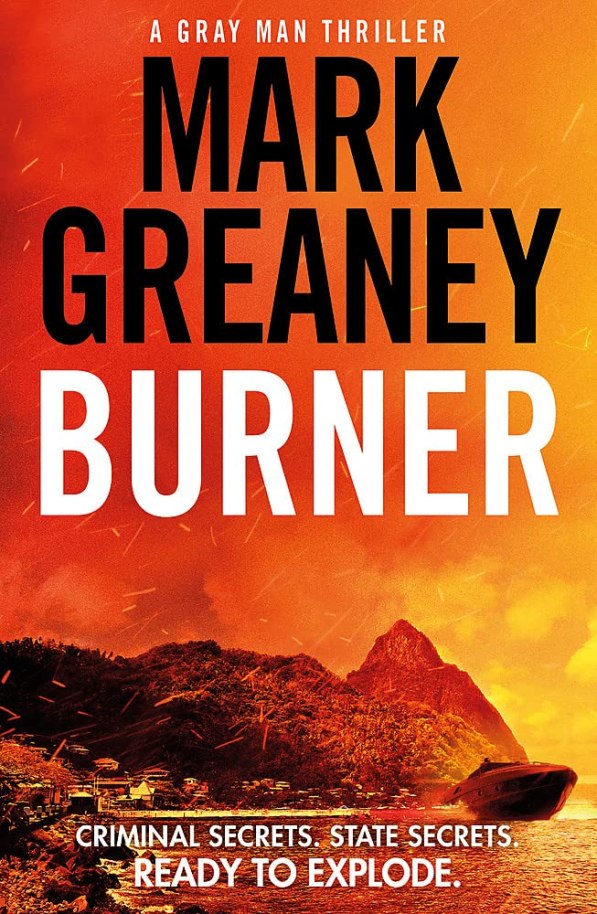
Burner Cover

Publisher: Sphere/Audible (Audiobook – 21 February 2023)

Series: Gray Man – Book 12

Length: 16 hours and 37 minutes

My Rating: 5 out of 5 stars

Amazon

The epic and captivating Gray Man series by legendary thriller author Mark Greaney returns with another exciting spy thriller entry, Burner, which thrusts the protagonists into the middle of some major real-world events.

Nothing starts off the thriller field of 2023 quite like the latest Gray Man novel from leading author Mark Greaney.  Greaney is a very impressive author who has been killing it throughout the genre for years.  Not only has he produced some cool standalone books, such as last year’s exciting action romp Armored, or the cool military thriller he co-wrote with Hunter Rawlings IV, Red Metal (one of my favourite books and audiobooks of 2019), but he has also written the exceptional Gray Man spy thriller books.  Following legendary assassin Court Gentry, better known as the Gray Man, as he gets involved in several deadly situations, the Gray Man books are one of the leading spy thriller series and I have deeply enjoyed the epic and powerful adventures that Greaney has so far released.  I personally have had an exceptional time with several of the Gray Man books, including Greaney’s debut novel, The Gray Man (which got a film adaptation last year), as well as the later entries such as Mission Critical, One Minute Out (one of my favourite books and audiobooks of 2020), Relentless (one of my favourite books and audiobooks of 2021) and Sierra Six (one of my favourite books and audiobooks of 2022).  His latest release is the outstanding Burner, which was one of my most anticipated novels of 2023.  The 12th book in the Gray Man series, Burner was a particularly intense read with a fantastic story behind it.

Alex Velesky is a Ukrainian expat living in Switzerland, whose comfy life as a notorious mover of immoral money has been hollow ever since the death of his family back in Ukraine at the start of the invasion.  Going through the motions, Velesky is suddenly given an opportunity to strike back at Russia when a disenfranchised Russian intelligence agent provides him with a trove of secret financial data.  This data, when combined with information from his own bank, reveals all the Russian bribes paid out to the West, and could damage not only Russia’s foreign intelligence apparatus but also the delicate negotiations to re-open the Russian economy to the wider world.

Immediately targeted by Russians determined to kill him and reclaim the data before it can leak out, Velesky finds himself hunted throughout Switzerland.  His only chance of survival seems to lie in rogue intelligence officer Zoya Zakharova, a woman hunted by her former employers in both Russia and the CIA, who is determined to get him and his information to New York, where it can be deciphered and released.  But Velesky and Zoya soon find themselves being stalked by an elite unit of Russian military operators who have no qualms about killing anyone in their way.

However, the Russians aren’t the only people interested in the data, as the CIA wants to claim it for themselves.  Determined to keep their interest in it quiet, the CIA reach out to Court Gentry, the Gray Man, to capture Velesky before the Russians do.  However, Court is unaware of the full significance of the data he is reclaiming, and that he will have to compete against the love of his life, Zoya.  Soon caught between the competing interests of the CIA and Russian intelligence, Court and Zoya decide to work together to keep Velesky alive.  But with the dangerous data revealing dark dealings in the highest levels of government, can even these two legendary spies survive?

Wow, Greaney really can’t miss when it comes to the Gray Man books.  Burner was another exceptional novel that had me hooked from the very beginning all the way to the final, devastating encounter.  The blend of exceptionally written action scenes, spy thriller elements, complex characters and the utilisation of contemporary issues makes Burner really stand out, even alongside the other epic Gray Man books.  This was another easy five-star rating from me as Greaney once again shows why he is currently leading the spy thriller genre.

Burner’s story is a pretty impressive and intense thrill ride that takes the reader across multiple continents in a blaze of glory and excitement.  The book starts whilst the Russian invasion of Ukraine is ongoing and introduces the reader to interesting new character, Alex Velesky, who receives information about all of Russia’s illegal financial transactions from a disaffected Russian operative.  If he can take this information, as well as data stolen from his bank, to a certain forensic accountant in New York, he will be able to disrupt Russia’s international intelligence efforts while also weakening their position against Ukraine.  However, he soon finds a deadly Russian kill team on his tail, and is only saved by reluctant operative Zoya Zakharova, who eventually believes his story and attempts to get him to New York.  However, the Russians and the CIA both want the data, and this drags in Court Gentry.  On the run from the CIA and unsatisfied with his current job sinking Russian mega-yachts, Court is given a chance to get back into the agency’s good books by helping them recover the data.  This sees him engage in a massive fight in Caribbean, before flying to Europe to find and capture Velesky and begin searching for him and the Russians.  This results in a brilliant collection of scenes as the various sides engage in elaborate tradecraft to try and outsmart the others, resulting in a particularly epic extended sequence on a train.  The resulting carnage and revelations make for some exceedingly gripping content and sets the final third of the book up extremely well.  I protagonists are forced into a series of deadly battles on a tight timeline to achieve their goals.  There are surprises, shocking deaths, elaborate fights and the resolution of several character arcs, all of which wraps up with a particularly epic, split-scene sequence that ends everything on a high note.  I was engrossed in this exceptional narrative the entire way through, and it will be very interesting to see where Greaney takes this series next.

Greaney brings all his impressive writing skills to the table with Burner, and his ability to set a dramatic and powerful scene honestly turns the already outstanding narrative into something truly special.  While I did find a few pieces of dialogue to be a bit weak and robotic, and Greaney did decide to fit in the annoying trope that two women working together must be bitchy to each other, this was mostly a very strongly written spy thriller book.  Like all the previous Gray Man books, Burner has an outstanding pacing to it that quickly draws the readers in and ensures that they stick around for the entire ride.  The action scenes are brutal and have a great veneer of realism that ensures that you can easily imagine every punch, shot or stab.  The focus on tradecraft is a particularly fascinating element to the entire story, and you must love the multiple scenes that show the characters utilising their training to outmanoeuvre their opponents.  Greaney also brings in the perfect blend of intense action focused scenes and story building, real-world issues, and character moments throughout the course of Burner and there honestly wasn’t a single moment that I wasn’t hooked on everything that was going on.  Burner also proves to be a rather interesting and significant entry in the wider Gray Man series, which long-running fans are going to appreciate.  While Burner can easily be read as a standalone novel thanks to the author’s concise and effective description of prior events, this book does continue several interesting storylines from the previous books, including Court’s fugitive status, his relationship with Zoya, and the examination of both main characters’ places in the world.  Several recurring characters from the series also make their return here, including some entertaining antagonists, and I loved how Greaney worked them into the plot.  I had a lot of fun seeing some of these call-backs to previous stories and plotlines, and Greaney leaves this book in an interesting place for the future.

I really need to mention Greaney’s exceptional use of multiple character perspectives throughout Burner.  Greaney casts a very wide net when it comes to the perspectives being followed and while primary characters, such as Court Gentry and Zoya Zakharova, do get a lot more focus, you also see a lot of events occurring through the eyes of other characters, including several antagonists.  This gives the reader a much more expansive narrative that not only lets you understand the motivations of every significant character but also allows you to see how the antagonists are responding to the actions of the protagonists, which adds intensity to the plot.  However, the best advantage is the way that Greaney utilises these perspectives to make some of his biggest sequences really pop.  In these key sequences, the point of view constantly moves around the various characters as the story unfolds and this helps to produce a particularly intricate and powerful viewpoint of how events are going down.  This is particularly evident in the book’s best extended sequence where multiple point-of-view characters, including Court, Zoya, Alex, the antagonistic Russian hit team, a lone CIA agent and more find themselves converging on a train to Switzerland.  As the scene continues, Greaney keeps quickly moving the point-of-view around from one of the characters to the next, including a couple of minor characters who are mostly there as witnesses.  Watching every character’s reactions, moves and countermoves really enhances the power of the scene as Greaney first uses it to build up tension before the inevitable firefight begins, and then switches it up to ensure that the resulting battle is even more epic as you see every shot both sides make.  Greaney uses this excellent balance of perspectives through several of Burner’s key scenes, including the big finale, and each sequence comes off much better as a result.  I cannot emphasise how effectively Greaney utilised this throughout Burner, and it was a major highlight for me.

One of the most distinctive things about Burner was the excellent and memorable use of contemporary events to enhance the already enjoyable spy thriller narrative.  Greaney has never shied away from referring to current conflicts, politics and events, and in Burner he goes for the most infamous current conflict in a big way by strongly featuring the Russian invasion of Ukraine.  Greaney pulls no punches when describing the conflict and he artfully and powerfully paints the entire invasion as the act of barbarism and greed that it is.  While no political leaders are names, multiple Ukrainian and Russian characters are featured throughout the plot and through them Greaney examines multiple sides of the conflict, ensuring that readers are fully aware of what is happening, who is responsible, and just how bad things are.  The Russian government are shown to be extremely corrupt, starting the war and then poorly preparing their own troops, all in the name of obtaining more money for the Russian elites to exploit.  This focus on corrupt money is a major part of the plot as the characters spend the entire book trying to identify funds being syphoned out of Russia to the West, either to escape sanctions or to be used for bribes or operation money by Russian intelligence.  The discussion about bribes to influential westerners is pretty interesting, especially as it seems to be a dig at certain politicians and news reporters, and it ended up being a very fascinating plot focus.  While it might seem a little insensitive to use a current conflict in a thriller novel, I personally felt that this was a master touch by Greaney.  Having the book focused on something that is such a big part of current world events ensured that I was even more invested in the story while rooting for the protagonists to succeed.  I really must compliment Greaney for using his book to shine a light on this conflict, and I feel that his warnings about how the war could end are very important.

I also need to highlight the great characters contained within Burner as Greaney brings back several of his best recurring protagonists, while also introducing some cool new figures.  This includes series protagonist Court Gentry, who has another outstanding adventure in Burner.  Court is his usual fun and effective self in this latest book, and it was great to see him utilise his skills and over-the-top abilities to achieve the mission.  Despite this, there isn’t an awful lot of character development around Court in this one, except for updating his status with the CIA.  Instead, most of the character development in this book was reserved for major recurring character and Court’s love interest, Zoya Zakharova.  Zoya last appeared in the 10th book, Relentless, which saw Court abandon her to keep her alive after he became wanted by the CIA again.  This had a major impact on Zoya’s psyche due to her previous abandonment issues and this, combined with the guilt she feels for being a former Russian spy, sends her into a massive spiral, and at the start of Burner she is an alcoholic, cocaine addicted mess.  A lot of her storyline deals with her attempts to move forward from her guilt, and she takes the mission with Alex Velesky to redeem herself.  Greaney does an outstanding job of showcasing Zoya as a woman in crisis, and I felt that this was an interesting and realistic jump in her character arc, especially after everything she’s been through in the series.  Naturally her life gets even more complicated once she is reunited with Court, which forces her to deal with some major feelings.  Greaney smartly keeps these two characters apart for a substantial part of the book and they are unaware of each other’s presence even while working the same case.  This means that when they finally do meet, the emotional pay-off is even more rewarding, and there are some great sequences with them as the story continues.  This ended up being a very substantial story for both characters and it was great to finally get some closure on the open relationship threads.

Aside from Court and Zoya, most of the other major characters are new additions to the Gray Man series, and Greaney does an outstanding job of building these characters up quickly during their initial appearances in Burner.  The most prominent of these is Alex Velesky, a Ukrainian banker working in Switzerland who ends up with the incriminating Russian data and is motivated to expose it after the death of his family.  Greaney frames an exceptionally good redemption arc around Alex in Burner as the character, who is feeling guilty for the years he’s spent illegally moving Russian money, attempts to finally reveal all the crimes he’s been apart of.  Alex’s entire arc is masterfully written by Greaney, and he proves to be an outstanding part of this book.  The other major new character was Angela Lacey, a rookie CIA operative who is sent to work with Court.  Shown to be a bit naïve, yet highly capable, Angela proves to be an interesting inclusion to Court’s mission, and he ends up become a bit of a mentor to her.  Angela is forced to grow up a lot in this book, especially when manipulated by her superiors, and it looks like Greaney has some interesting plans for her in the future.  Other great characters include a deadly new Russian assassin Luka Rudenko, slippery recurring antagonist Sebastian Drexler, and even Court’s old CIA handler Suzanne Brewer, who is up to her old diabolical tricks.  All these impressive characters add a lot to the plot of Burner, especially as Greaney takes the time to explore all their motivations and deeper secrets, and their inclusion results in some amazing sequences and confrontations.

While I did receive a paperback copy of Burner, I ended up listening to this awesome book on audiobook, mainly because I have had some great experiences with the Gray Man audiobooks in the past.  The Burner audiobook ended up being another excellent production that I managed to knock off quickly, even with a run time of over 16 and a half hours.  In my opinion, this audiobook format greatly enhanced the already epic story contained within Burner in several notable ways.  Not only does the action sequences really pop as you have them read out to you, by the format also works well to enhance the tension of some of the extended sequences involving multiple characters.  Just listening to all the players making their moves at the same time really drags you into the intense and explosive scenes and I was riveted through the scene on the train, or the final massive battle.  It also helped that Burner once again featured the exceptional vocal talents of Jay Snyder, who has lent his voice to all the previous Gray Man audiobooks.  Snyder, who was already one of my favourite audiobook narrators, has an outstanding voice that really fits the spy thriller genre.  His performances always capture the intensity, chaos, and destruction of any scene he narrates, while at the same time he manages to move the book along at a quick pace that really keeps the audience drawn in.  Snyder also has an excellent and fitting range of voices that he deploys throughout the audiobook, and I loved hearing the voices he assigns to some of the returning favourites.  His tone for Court Gentry fits perfectly, and all the other major player get some great voices with well performed accents.  All this ensures that the audiobook is an incredible way to enjoy the latest Gray Man novel and I cannot recommend the Burner audiobook enough.

I could go on more about Burner (trust me, I really could), but I think it is fair to say that I deeply enjoyed this latest Gray Man novel from Mark Greaney.  Greaney has been on a roll with his last few Gray Man books, and I honestly think that Burner is one of the better novels he has released recently.  The impactful story, great characters, compelling content and impressive writing ensured that I was enthralled throughout the entirety of Burner, and I honestly couldn’t put it down at times, especially during some of the big action sequences.  This was such an epic book, and I can already guarantee Burner is going to end up as one of my top books and audiobooks of 2023.  Highly recommended!

Amazon

How to Kill a Client by Joanna Jenkins

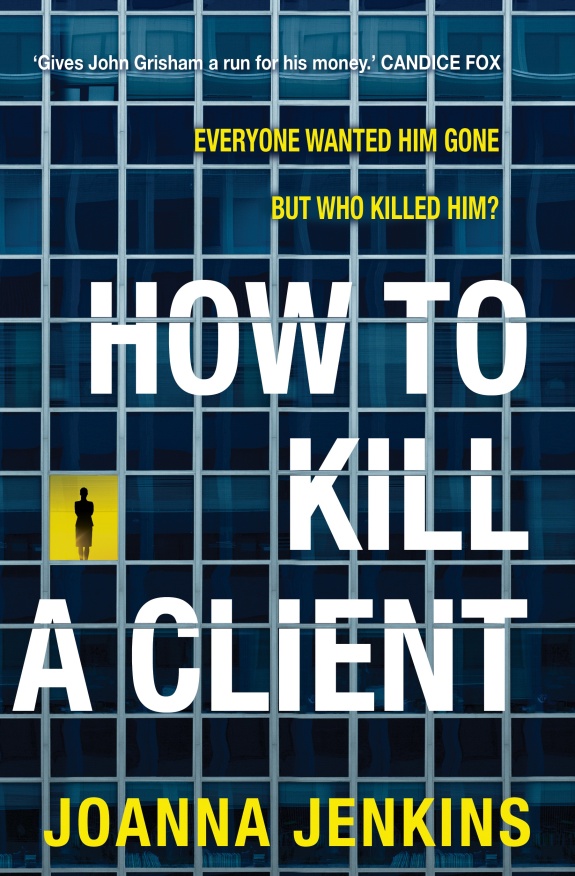
How to Kill a Client Cover

Publisher: Allen & Unwin Australia (Trade Paperback – 31 January 2023)

Series: Standalone

Length: 384 pages

My Rating: 4.5 out of 5 stars

Amazon

Australian lawyer and debuting author Joanna Jenkins introduces herself in a big way with her fantastic first novel, the legal thriller How to Kill a Client, which takes the reader on a fascinating journey to the dark side of Australia’s legal profession.

As the in-house lawyer at a powerful international mining company, Gavin Jones oversees millions of dollars’ worth of legal contracts each year, including to the Brisbane office of the Australian legal firm Howard Green.  Using them to negotiate lucrative contracts throughout Australia, Jones has become one of Howard Green’s biggest clients and the money he controls ensures that everyone at the law firm treats him like a god.

But while everyone fawns over Jones and his power, no-one actually likes him.  A cruel, petty and vindicative man, Jones has messed with the careers and lives of everyone in his orbit, especially women, who he reserves a particular disdain for.  His actions ensured the suffering of everyone he has power over, including his wife, his employees, and the female partners at Howard Green, as he seeks to wreck lives, destroy careers and give himself the lifestyle he feels he deserves.

So when Jones dies suddenly and suspiciously, everyone he knew is a potential suspect; thanks to his dodgy dealings and underhanded tactics, they all had a motive to kill him.  As the police begin their investigation and the lawyers at Howard Green close ranks, it falls to partner Ruth Dawson, one of the few people without a motive, to protect her firm and its secrets.  However, when her investigation reveals proof of who killed Jones and other dark secrets her firm is hiding, will Ruth reveal the truth or will she bury it to protect her firm?

How to Kill a Client is a clever and tricky novel that really showcases Jenkins’s skill as a new writer.  Blending a fantastic and compelling crime fiction narrative with intense looks at the lifestyle of members of a successful law firm, How to Kill a Client was a gripping and interesting read that is really worth checking out.

I loved the cool story contained within this book which came across as part legal thriller, part personal drama surrounding high-level professionals, and part intriguing murder mystery.  The story dives into the chaotic world surrounding the legal firm of Howard Green and its clients and effectively introduces all the key players in this drama, who have their own views on the troubles to come.  Each primary characters is connected to the eventual victim, Gavin Jones.  Jenkins spends the first half of the book showcasing Jones’s terrible nature and the various ways they are messing with everyone.  Cleverly utilising multiple character perspectives, you are soon drawn into the various main characters’ lives and soon see all the various reasons why each of them may have wanted to kill Jones, as well as some of the suspicious steps some of them took.  Jenkins perfectly sets up everything in the first part of How to Kill a Client, and by the time you reach the halfway point, you are firmly enthralled by the narrative and want to see how the rest of the book unfolds.

When the eventual death happens (a real high point) the reader is left wondering whether it was an accident, a mistake, or a deliberate action, with the evidence pointing towards a murder.  However, due to the sheer range of suspects and motives, the story produces a twisty and fun range of plotlines that you need to navigate to get to the final conclusion.  Jenkins really produces an emotional and captivating second half as you try to find out who killed Jones and why.  There are some brilliant revelations unfurled here, and I loved how some cunningly hidden clues in the first half of the book were utilised in the final mystery.  I was very impressed with the final reveals around how the killing was committed and why it happened, and you will come away from this story very satisfied, especially as Jenkins builds in some excellent character moments and ensures that all the remaining characters get a fitting end to their arcs.  I found myself getting really caught up in Jenkins’ powerful and amazing story and I honestly powered through the last half of the book very quickly to see how everything ended.

Part of the reason why How to Kill a Client is such an effective read is that Jenkins introduces an excellent cast of intriguing and complex characters who are thrust into a variety of compelling situations throughout the course of the narrative.  Each of the main cast, who Jenkins effectively builds up and utilises in the plot, are quite damaged, desperate or concerned in their own unique way, while many of the supporting characters are notably selfish or manipulative for their own ends.  Characters like Ruth Dawson and Viv Harrison give some compelling and honest insights into how women are treated in this influential professional setting, while Anne Jones shows the harsh reality of a women trapped in an abusive relationship.  At the same time, there is a great collection of supporting lawyer characters who Jenkins uses to show off the range of people and personalities one is likely to experience in Australia’s legal services.

However, out of all the characters in this book, the one I must highlight the most is probably the murder victim, Gavin Jones, mainly because he is such a despicable figure.  Jenkins really goes out of her way to make Jones into one of the most unlikable and petty characters you are ever likely to find in fiction and boy does she succeed, perfectly capturing an insecure and manipulative narcissist who enjoys controlling people.  Not only does he go out of the way to try and ruin the careers of several characters just because they are women, but he also demands attention from the male characters to feed is ego, while also abusing and controlling his wife to make him feel good.  In a very short amount of time Jenkins builds Jones up into such an unlikable character that the reader finds themselves trying to reach into the book and kill him before the murderer does.  This naturally adds quite a lot to the mystery of the book, as his malicious professional actions, deceits, violence and puppy killing (seriously, that one really angered me), ensures that everyone he came in contact with had a reason to murder him.  The huge suspect pool around this unlikable character allows Jenkins to craft an impressive murder mystery and you’ll really get drawn into finding who finally snapped and killed this infuriating character.  This villainous figure, and other great characters, all added so much to the plot of How to Kill a Client and really got invested in their stories very quickly.

One of the other features of How to Kill a Client that I particularly enjoyed was the author’s detailed and intriguing examination of an Australian law firm.  Clearly utilising all her past experiences as a lawyer, Jenkins perfectly showcases how a firm would work and act in a variety of scenarios, and you really get the senses of the day-to-day chaos the individuals working there would experience, which adds a lot of authenticity to the story.  Jenkins also dives into the backroom drama and politics that surround such entities, as the various lawyers cut deals and fight for control over various projects or clients.  There is a particularly cynical edge to the book’s portrayal of legal firms in this novel, and Jenkins shows it to be a dark and unfulfilling practice at times, especially in some of the more elite firms.  The author really showcases just how bad these companies are when it comes to the treatment of women as two of the book’s central characters are female partners in Howard Green who have to constantly deal with their male colleagues’ condescension and manipulations, and there are several pointed scenes where the arrogant male managers fail to listen to the women even when they are right.  There is also a focus on the way law firms sycophantically woo potential clients, bending over backwards to get hired, and this adds some intriguing angles to the drama.  Finally, there is also quite a dark look at the demand for profits over people, as there is a constant fear of firings and layoffs, even for the best employees.  This critical presentation of a professional law firm is pretty striking and it results in some powerful scenes throughout the course of the book, especially as the people stuck in these firms often refuse to escape it, no matter how bad it gets.  I felt this examination of the profession in Australia added so much to the outstanding story and it helps to make How to Kill a Client really stand out.

Overall, How to Kill a Client was an outstanding and captivating debut from new Australian author Joanna Jenkins and one I had a wonderful time reading.  Blending compelling legal elements with a fascinating, character-driven mystery, How to Kill a Client has a brilliant story that takes the reader on a powerful and twisty journey.  Slick, emotionally rich, and filled with exceptional characters, How to Kill a Client is one of my favourite debuts of 2023 so far, and I cannot wait to see what epic reads Jenkins will release in the future.

Amazon

Warhammer 40,000: Bloodlines by Chris Wraight

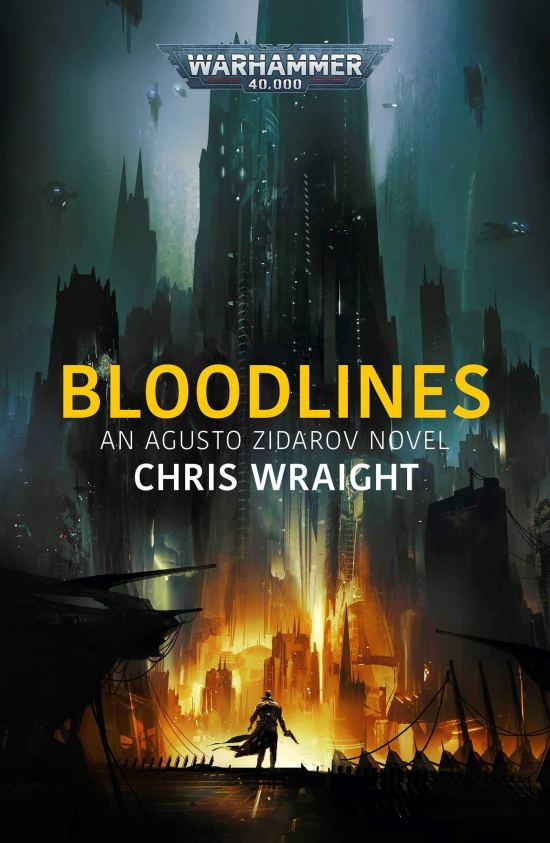
Warhammer 40,000 - Bloodlines Cover

Publisher: Black Library (Audiobook – 8 August 2020)

Series: Warhammer Crime

Length: 8 hours and 30 minutes

My Rating: 4.75 out of 5 stars

Amazon     Book Depository

After some of my recent awesome experiences with the Warhammer Crime series, I just had to check out the outstanding novel, Bloodlines by Chris Wraight, which has one of the best pure crime fiction stories in this entire epic franchise.

Regular readers may have noticed I have been having an absolutely amazing time getting through a ton of Warhammer 40,000 novels in recent weeks as everything about this extended franchise has been so damn fun.  One of the more intriguing sub-series of Warhammer fiction I have been tearing through has been the Warhammer Crime books which, as the name suggests, blends cool crime fiction narratives with a Warhammer 40,000 settings.  The entire series is set within the massive, corrupt city of Varangantua on the planet of Alecto, and several very talented writers have come up with some exceptional novels that perfectly showcase murder, mystery and death in the midst of this great setting.  I have so far deeply enjoyed the epic entries, Dredge Runners and The Wraithbone Phoenix by Alec Worley, Grim Repast by Marc Collins, and Flesh and Steel by Guy Haley, each of which have contained different, if equally exceptional stories.  However, few have had the excellent central mystery of the very first full-length Warhammer Crime novel, Bloodlines from new-to-me author Chris Wraight, which took a veteran cop on an intensive investigation with fantastic results.

After a lifetime working for the Varangantua Enforcers, Probator Agusto Zidarov is well aware that the only certainties in the continent-spanning city are wealth, corruption and criminality.  Tired of the games played between the warring gangs, trade combines, and nobles as they battle for control of the city’s resources, Zidarov is more concerned about his own life, family and secrets.  However, when a simple missing person investigation gets unexpectantly complicated, Zidarov will find a terrible case that he can’t turn away from.

Called to the estate of wealthy business magnate Udmil Terashova, Zidarov is ordered to find her son and heir, who has gone missing.  Forced to plumb the depths of Varangantua’s underbelly, Zidarov attempts to find any trace of the boy, who has likely just disappeared taking part in the rich’s hedonistic lifestyles.  However, when an uncovered lead places him conflict with one the city’s most ruthless gangs, Zidarov soon begins to believe that there is more to this case than he initially believed.

Discovering that the gang is involved in the notorious crime of cell draining, Zidarov’s attempts to shut them down.  However, his raid ends up being a bust, and the fallout results in a dead sanctioner, a wounded probator and a full-on war between the gang and the enforcers.  Attempting to mitigate the consequences of his actions, Zidarov soon discovers that there is far more going on behind the scenes than he ever imagined as corporate interests work to influence the investigation.  To find the truth about the city’s new crime ring and the missing noble, Zidarov is forced to probe both Varangantua’s lowest gangs and wealthiest citizens.  But can Zidarov survive the encounter with his secrets and life intact?

Bloodlines is an incredible and deeply impressive Warhammer Crime novel that I had an excellent time reading, especially as Wraight perfectly blended his crime fiction story with the cool Warhammer setting.  Featuring one of the more elaborate and intriguing cases in the Warhammer Crime books I have read so far, I absolutely powered through Bloodlines and this was truly an outstanding read.

At the heart of Bloodlines lies a pretty awesome and captivating narrative building on the basic crime fiction premise of a veteran cop attempting to solve a crime no one wants investigated.  Taking its cues from classic noir entries (I was reminded a bit of Chinatown), Bloodlines follows Probator Agusto Zidarov, a family man with a cynical view of his job and his place in the city, as he gets dragged into a missing persons case.  Initially starting off a little slow, the story quickly heats up as Zidarov attempts to find the missing heir to the wealthy Terashova family, a disappearance he assumes is a simple case of young rebellion.  However, his routine investigation into the missing lad leads him to discover a cell draining operation being run by one of the major gangs, and he shifts his investigation in an attempt to shut it down.  But when his plans go wrong and his colleagues end up injured or dead, Ziadarov finds himself on everyone’s firing line.

There are some interesting jumps in the case around halfway through as the protagonist soon realises there is far more going on than he initially believed and he is forced to simultaneously investigate both the gangs and some of the wealthiest families and businesses in the city.  I loved this gradual escalation of the stakes of the crime as the book continues, as the original missing persons case is revealed to be far more complex and intriguing than initially believed when the protagonist discovers that he is being used by everyone.  At the same time, Zidarov is forced to deal with some major personal issues, as his wife begins to resent his choices, his rebellious daughter has gone missing in a city full of predators, and certain dark secrets around Zidarov threaten to come into the light.  The eventual reveal about who is responsible for the various crimes is very clever, and I liked the subtle and effective hints and clues leading up to it as the unique motivations and plots utilised intriguing aspects of the Warhammer 40,000 universe.  Wraight ends Bloodlines on a great note as Zidarov gets justice through drastic means after a very intense and powerful confrontation with one of the book’s more intriguing and complex supporting characters.  As such, you come away from Bloodlines feeling very satisfied, although you instantly want to see more of this great character, especially as the sinister connotations about Zidarov’s dark secret indicate that some tragic events are going to befall this character in the future.

The entirety of Bloodlines was laid out extremely well by Wraight, who uses a great style to tell a complex and captivating story.  Told exclusively from Zidarov’s perspective, you are given a personal and close examination of the events of the book as Zidarov slowly and methodically investigates the various crimes.  You are quickly drawn into the elaborate narrative Wraight lays out as the author does a good job of combining an excellent crime fiction storyline with intriguing character development, all set with Varangantua and the wider Warhammer 40,000 universe.  The noir inspired elements of Varangantua really stand out in this book, especially as Zidarov is forced to simultaneously investigate both the criminal cartels and some of the city’s wealthiest residents.  Bloodlines really recalls some classic noir tales, as it focuses on the experienced and dogged investigator fighting the entire system to get answers and justice, and I loved exploring even more of this enormous city and its many colourful residents.  The whole concept of cell draining, which sees thousands of people literally drained of their essence to make life-extending products, was pretty damn horrifying, and I liked how the examination of this gave Bloodline’s crimes a distinctive feel.  Wraight’s great writing style really lends itself to producing a particularly impactful and compelling crime narrative, and I loved how the entire storyline unfolded, especially with the effective twists and the well thought out foreshadowing.  I ended up coming away from this book quite enthralled and happy and I am really excited to read more books from Wraight in the future.

One of the things that I have so far found with all the Warhammer Crime entries is that readers really need very little familiarity with the wider Warhammer 40,000 universe to appreciate these great books.  Anyone interested in a compelling and intense crime fiction story set in a cool and grim futuristic city can easy dive into one of these novels, and all these books are an awesome introduction to the Warhammer fandom.  Bloodlines is no exception to this, as Wraight writes a very accessible crime fiction thriller that anyone can enjoy while simultaneously enjoying the gothic setting.  That being said, Wraight does make excellent use of several intriguing elements from the Warhammer 40,000 lore to enhance his story and there are hints and discussions about elements outside of Varangantua, such as the Imperial Guard or the wider wars of the Imperium, which fans of the franchise will deeply appreciate.  Wraight does do an amazing job of explaining these elements so that newer readers will fully appreciate them, however, established readers will always get a little bit more out of it.  For example, the full significance of Zidarov’s secret isn’t going to be too apparent to new readers, while in-the-know fans are going to get a blast out of the potential implications.  I felt that Bloodlines has a lot to offer all readers, no matter their experiences with Warhammer, and you might find yourself falling for the franchise with this first book.

Another key aspect of the Warhammer Crime series that Wraight perfectly captured in Bloodlines was the excellent utilisation of a complex and likeable central character.  Wraight’s protagonist and main point of view character, Probator Agusto Zidarov, is a deeply intriguing figure who stands out from the other protagonists in the Warhammer Crime series for being much less of a damaged outsider.  Instead, he is a veteran probator who worked his way up to his position with a very realistic view of the world around him than most other characters, and I liked his no-nonsense approach to his job and his city which has been formed from years on the job staying alive.  Despite this veteran presence and cynicism, Zidarov is still willing to do what is right, even if it endangers him, and his dogged approach to solving the case is extremely addictive, especially as Wraight puts in some deeper motivations behind them.  I really enjoyed some of the scenes where Zidarov continuously ignores his friend’s advice and keeps going forward with the case, simply explaining to them and the reader that he is unable to let it go, and he just keeps moving forward despite the inherent weariness of the character.  This determined and tired cop persona is well balanced by the family man aspect of Zidarov, which is another intriguing element that you don’t see in a lot of Warhammer fiction, as most protagonists don’t have wives or children.  Watching him attempt to balance his family responsibilities with that of his job adds some intriguing drama to the story, and I enjoyed seeing this portrait a ‘normal’ Warhammer 40,000 family.  Wraight perfectly weaves together these dual aspects of Zidarov’s personality with a certain darker, secretive thread that really shows the character in a whole new light when revealed, and which is going to have some intriguing impacts down the line.  All of this, and more, helps to make Zidarov one of the more relatable and enjoyable protagonists I have ever enjoyed in Warhammer fiction, and I really hope that Wraight produces some additional Zidarov stories soon.

Once again, I chose to listen to this cool Warhammer novel in its audiobook format, which, as always, was an excellent and deeply fun experience.  The Bloodlines audiobook did an amazing job of bringing this intense and powerful story to life in some very fun ways.  In particular, the complex central setting of Varangantua is really shown in all its corrupt glory when you hear it being described, and I loved how the fast pacing of the audiobook kept the story rolling by.  This format of Bloodlines was also greatly helped by veteran narrator Charles Armstrong, who has so far only lent his talented voice to a few Warhammer audiobooks.  Armstrong provided an excellent performance in Bloodlines, really diving into the various complex characters and helping to showcase their unique personalities and emotions.  I loved the tired and resigned voice that Armstrong came up with for the main character, which really sells the audience on Zidarov’s veteran status which is the result of an exhaustive and draining career.  Other great voices include that fun Irish accent he gifted to supporting character Brecht, which added to his entertaining nature, as well as some excellent voices the various suspects in the main case had.  All this makes the Bloodlines audiobook the very best way to enjoy this exceptional novel and with a runtime of eight and a half hours, you can power through it in no time at all.

Overall, Bloodlines was a particularly epic entry in the Warhammer Crime series, and it is one that author Chris Wraight should be extremely proud off.  Wraight did a remarkable job of blending together an intense and clever crime fiction story with the dark and grim Warhammer 40,000 setting, and the result is a brilliantly twisted case that I couldn’t turn away from.  Combined with instantly likeable character, Bloodlines proved to be extremely fun and deeply captivating, and I loved how the entire book unfolded.  As such, Bloodlines comes extremely highly recommended and you are guaranteed to love every second of it.  I look forward to seeing how Wraight continues this character in the future, and any future books featuring Zidarov are going to be something truly amazing.

Amazon     Book Depository

Warhammer 40,000: Flesh and Steel by Guy Haley

Flesh and Steel Cover

Publisher: Black Library (Audiobook – 3 October 2020)

Series: Warhammer Crime

Length: 9 hours and 23 minutes

My Rating: 4.75 out of 5 stars

Amazon

I’m on a major Warhammer 40,000 review roll, so after checking out the awesome books Malleus and Hereticus by Dan Abnett, Sepulturum by Nick Kyme, For the Emperor by Sandy Mitchell and Kingsblade by Andy Clark, I’m moving on to the awesome Warhammer Crime book, Flesh and Steel by Guy Haley, which proved to be an exceptional read.

I have said this several times in the past, but one of the true strengths of Warhammer 40,000 fiction is that the franchise can cover so many different types of stories or genres and still result in some epic reads.  A particularly good example of this is the Warhammer Crime subseries that melds intriguing and classic crime fiction concepts with a grim Warhammer 40,000 setting.  I have deeply enjoyed the previous Warhammer Crime books I have read, including the twisty and fast-paced crime thrillers Dredge Runners and The Wraithbone Phoenix by Alec Worley, and the noir inspired psychological thriller Grim Repast by Marc Collins.  As such, I just had to read another fantastic entry from this series with the intriguing Flesh and Steel by Guy Haley which saw a classic odd-couple police story meet a unique thriller from the Warhammer universe in glorious fashion.

The vast continent-sprawling city of Varangantua on the planet of Alecto is home to many vile and heartless crimes, most of which are ignored by the over-taxed enforcers of the Lex Alecto.  However, some murders are so spectacular that they cannot be ignored, especially when they threaten the stability of the city’s entire economy.

Probator Symeon Noctis is a man who knows all about the obscene wealth that Varangantua can produce.  A scion of one of the city’s richest houses, Noctis has fled from his cruel family and his tragic past by joining the enforcers and attempting to help the downtrodden inhabitants of the Nearsteel district.  However, even someone as jaded and cynical as Noctis is unprepared for the strangeness of his next case when a bisected corpse is discovered in a neutral zone between Nearsteel and the Adeptus Mechanicus enclave of Steelmound, the two halves of the body neatly left on either side of the border.

Forced to cooperate with the Adeptus Mechnanicus, Noctis is partnered with Procurator Rho-1 Lux of the Collegiate Extremis to investigate the crime.  But when all evidence suggests that the murder was committed by a mindless servitor, Noctis is dragged into a terrible conspiracy inside the Adeptus Mechanicus.  Faced with tech-heresy, illegal modifications to servitors and even more bodies littering the streets, Noctis and Lux need to work together to solve this insidious crime before both their organisations are dragged down.  But with more and more people gunning for them, can this unlikely duo survive to crack the case?

Now this was an awesome Warhammer Crime book.  Loaded with great, complex characters, a compelling case, and some impressive Warhammer 40,000 elements, Flesh and Steel grabs your attention from the very start and refuses to let go.  A fantastic novel that shows off just how incredible and inventive a tie-in to the Warhammer universe can be.

Flesh and Steel has a brilliant and deeply addictive narrative that I had an amazing time getting through.  Told primarily from the perspective of protagonist Probator Symeon Noctis, the plot of Flesh and Steel revolves around an intriguing murder, where two halves of the same body have been placed on either side of the border between the main city and an Adaptus Mechanicus manufacturing enclave.  With two competing jurisdictions, Noctis is forced to work with the Mechanicus investigator Rho-1 Lux, especially after the murder weapon is determined to be the victim’s servitor and additional victims are discovered.  What follows is an intriguing buddy cop romp of a unique series of murders, as certain figures throughout the city are involved in crimes involving the always terrifying mindless man/machine hybrids, servitors.  Forced to work together despite their differences, Noctis and Lux prove to be a skilled team, investigating both the Mechanicus and the businesses in the city.  At the same time, Noctis is forced to deal with other concerns, such as an impossible missing person’s case, the machinations of his wealthy family, and his own intense personal issues as he tries to reconcile his complex life and the mistakes from his past.  The result is a fantastic and moving tale that has the right blend of crime fiction, Warhammer 40,000 and character elements to it.  While the mystery surrounding the various crimes isn’t too complex, especially as the perpetrators are obvious from the outset, the resulting conspiracy, and the impacts it has on the protagonists more than makes up for it, as you are drawn into a crime story that could only occur in the Warhammer universe.  Haley ends the book on an interesting note that not only highlights the full extent of the protagonist’s personal issues but hints at future adventures and tragedies to come.

I really liked the cool setup-up surrounding this story, as well as the distinctive writing elements that Haley utilised, and I was particularly impressed with how the author was able to utilise some classic crime fiction scenarios in this unique Warhammer setting.  The concept of a bisected body left across a border forcing a joint investigation between two agencies is reminiscent of The Bridge (or The Tunnel), and I liked the intriguing spin that Haley does on this by bringing in the Adeptus Mechanicus, who most humans have a very hard time relating to.  This leads to the unique partnership between Noctis and Lux, which I felt Haley utilised to its full effect, especially as he does a remarkable job diving into each of their intriguing lives.  While I mentioned that the mystery isn’t as complex as you would hope, Haley more than makes up for it by featuring some deeply compelling character elements, as well as perfectly fitting it into the already fantastic setting of Varangantua and the wider Warhammer 40,000 universe.  I also really enjoyed the excellent way Haley told his story through the lens of Noctis’s journals.  Not only does this provide some compelling and tragic hints at what is to come but it also paints the story through Noctis’s cynical viewpoint, which I quite enjoyed, especially as his infectious humour and sarcasm helped to make this one of the more light-hearted Warhammer Crime books at times.  This distinctive and compelling read had me hooked the entire way through, and I felt that Haley came up with something extremely special for Flesh and Steel.

I was really impressed by the excellent Warhammer 40,000 elements featured, especially as some of the more distinctive elements of this universe were used to full effect to create a gripping and powerful read.  Now, as with most of the Warhammer Crime books, I felt that Flesh and Steel stood well on its own and no prior reading is needed to fully understand this book, not even the preceding short story Haley published in the No Good Men anthology.  Indeed, due to the great use of crime fiction elements, the strong focus on characters, and Haley’s attention to detail, readers unfamiliar with the franchise can easily jump into Flesh and Steel and have a good time, and it would serve as a good bridging novel for readers more familiar with crime fiction than anything else.

However, both new and established fans will deeply appreciate Haley’s compelling and all-encompassing examination of some very interesting elements of Warhammer lore that are cleverly and expertly utilised throughout the story.  I was particularly impressed with the deep dive into the Adeptus Mechanicus, the inhuman tech-worshippers of the Imperium, who play a big role in the plot.  This was honestly one of the more intriguing novels I have so far read that deals with the Adeptus Mechanicus, and I loved the author’s depictions of their elaborate and occasionally nightmarish settlement within the wider city of Varangantua.  The protagonist spends quite a bit of time diving into their society, and I loved his cynical, if accurate, descriptions of them, as well as the apparently hypocritical role they serve in the wider Imperium.  One of the most intriguing aspects of the Adeptus Mechanicus featured in Flesh and Steel involve servitors, the cyborgs who act as mindless manual labour machines throughout the Imperium.  The creation and use of servitors, who are a common, if terrifying, background feature of the universe, becomes quite a key part of the plot, as they are end up being the murder weapons.  This helps to shape Flesh and Steel into a particularly unique mystery story, one which could only occur within the Warhammer universe, and I loved the I-Robot homages (book and the movie) that resulted from them.  Haley also treats us to several scenes that depict the creation of servitors, a process which involves lobotomising condemned criminals and turning them into barely human creations.  These scenes honestly turn Flesh and Steel into one of the most horrifying Warhammer 40,000 books out there, and these gruesome inclusions work wonders to shock both the reader and the protagonist, while also deeply enhancing the complex murder case.

In addition, Haley also spends a good amount of time expanding on the already epic setting of Varangantua, which has been such an amazing background for the rest of the Warhammer Crime novels.  There are many distinctive districts and areas to the vast city of Varangantua, and this great book introduces us to even more of them with new district of Nearsteel, which borders the Adeptus Mechanicus enclave and has its own range of issues and features.  In particular, the area is slowly dying thanks to the actions of the Mechanicus, who are killing of the industries contained within, and you get to see the decay and degradation that follows.  Haley keeps up the cool background of neon signs, dark bars, and corrupt police, that are a key feature of the wider Varangantua, and I loved the impressive Blade Runner resemblances that result.  Haley further enhances the effect of these poorer districts by also visiting the high spires and estates of Varangantua uber-wealthy, as the protagonist, a former rich boy himself, makes several visits there.  The elaborate manors, parties, and hang-outs of the gilded make for a fun and compelling comparison to the slums and desolate industrial areas of the rest of the novel, and I deeply appreciated how Haley used this multifaceted city to mirror the complex main protagonist and help show that he doesn’t really fit in anywhere.  I always have a ton of fun exploring these new areas of Varangantua, and Haley really did a great job showcasing the city, and other key Warhammer 40,000 elements throughout Flesh and Steel’s narrative.  I cannot wait to see what other crazy areas that Haley explores in some of his future books and stories, and I know I am going to love it.

While the story, the writing style, the dark setting and the cool Warhammer elements all made this book really stand out, I personally felt that the main strength of Flesh and Steel was the exceptional central characters, Probator Symeon Noctis and tech-priest Rho-1 Lux.  Haley did a remarkable job with both these complex and damaged characters and both of them carry the main story extremely well.  The combination of dramatic and tragic character arcs, combined with a fun overarching theme of them both being outsiders, is an essential part of the book’s narrative and you grow deeply connected to both the characters, and the book, as a result.

Most of the focus is on Noctis, who serves as the primary narrator, due to his personal journal (which is also an extended note to his lost daughter), being read out.  Noctis is a very fun and cocky character, who seems to treat many of the events that he encounters in an inconsequential way.  However, this is a major façade, as deep down Noctis is probably one of the most damaged and guilt-ridden characters you are likely to see in Warhammer fiction.  A member of one of the richest families on the planet, Noctis was already pretty messed up before he became a cop, due to the terrible family dynamics and his controlling father.  Further traumatic events, which are explored later in the novel, nearly break him, and he decides to escape some of his father’s control by joining the enforcers to help others.  However, his family influence and wealth still follow him and he is considered an outsider by most of his colleagues.  Despite this, Noctis doggedly continues and proves to be a very competent and capable investigator, even if he breaks all the rules and pisses off his boss to do so.  His eye for the inequity of the city and the wealthy gives the story a bit of a preachy anti-capitalist vibe, but I felt that this fit his character arc perfectly, especially as he knows better than most just how badly the lower classes are being exploited.  I also quite enjoyed how, despite Noctis’s dislike for his family’s intense wealth and intense hatred for all the nobility, he still uses their money to buy nice things for himself, including a fancy car and secure apartment.  This apparent inconsistency between what he preaches and what he does, is addressed several times by both the protagonist and other characters, and his eventual and simple explanation of, “I never said I was perfect,” is a recurring theme of this character’s existence.  Watching this conflicted and troubled figure attempt to reconcile his past and guilt with the current investigation and the people he meets is a powerful part of Flesh and Steel’s appeal, and the story would not be as strong without it.

The other major character is Procurator Rho-1 Lux, an Adeptus Mechanicus Tech Priest who acts as a detective and law enforcement officer who investigates crimes committed by or against the Mechanicus.  Lux is a great character for a number of reasons, especially as the whole idea of a Adeptus Mechanicus cop is a pretty damn cool one.  Initially shown to be an unflappable and rigid figure, you soon find a deeper layer underneath her augmentation as she proves to be just as emotionally unsure and determined for justice as Noctis.  A member of an obscure order, Lux is a rare individual who converted to the machine cult rather than being born into it.  This also makes her a bit of an outsider as she is not fully accepted by the Adeptus Mechanicus and is no longer fully human.  This forces her to accept one of the few jobs that none of the other tech priests want, and it is interesting to see her views on humanity, the Mechanicus, and the law, which surprisingly often mirror Noctis’ cynical thoughts.  Lux served as an interesting bridge between the human characters and the mysterious cyborgs of the Mechanicus, and it is fascinating to see how she changes her persona depending on who she talks to.  Haley does a wonderful job of portraying Lux’s dual persona throughout the course of Flesh and Steel, and he even shows a couple of chapters from her perspective as extracts from her data core.  These chapters have a more sterile and mechanical feel, and you see her data-laden observations in these compelling scenes.  Probably the best part of her character arc though revolves around her interactions with Noctis, as the two form a very unusual team.  Lux serves as straight person for much of Noctis’s antics, especially when it comes to their interactions with other Mechanicus figures, and usually tries to maintain her mechanical indifference.  However, the two soon form an intriguing relationship, which forces Lux to examine some of her long-hidden emotions.  I felt that the two played off each-other perfectly throughout the course of the book, and the joint explorations of their various pains and dark histories makes for quite a gripping read.  I look forward to seeing more from this distinctive and surprisingly fun duo in the future, even if Noctic’s journals hint at more tragedies to come.

As is my usual practice with Warhammer 40,000 novels, I checked out Flesh and Steel on audiobook, which proved to be an epic and deeply enjoyable experience.  Coming in at just under nine and a half hours, Flesh and Steel was a very easy audiobook to get lost in, and I felt that this amazing format really worked to enhance the exceptional story.  The journal format of Haley’s storytelling, as well as the occasional jumps to other perspectives, is expertly portrayed on audiobook and I loved how some of the darker or grander elements of the book, especially the horrors surrounding the Adeptus Mechanicus workshops, became even more distinctive or sinister when listened to.  It helps that the primary narration of Flesh and Steel was done by impressive voice actor, James Macnaughton, who really throws himself into the production.  Each of his key characters are expertly showcased through his voice work and you really get a sense of their inner selves through his performance, whether it’s Noctis’s cockiness, disdain or self-loathing, or the strangeness of Lux, Macnaughton manages to encapsulate it all with his acting and this combines extremely well with Haley’s strong character-focused writing.  A secondary voice is also utilised for the several chapters written from Lux’s perspective, and I liked how this different voice really helped to differentiate that the events were being shown from Lux’s internal processors.  This performance, combined with the usual enticement of the audiobook format, ensures that this is the best way to enjoy Flesh and Steel, and I would strongly recommend it to anyone who wants to try this epic book out.

Overall, Flesh and Steel is a pretty remarkable novel from Guy Haley that has ensured my continued addiction to all things Warhammer 40,000 and Warhammer Crime.  Featuring a complex and powerful story that simultaneously explores a compelling mystery and some brilliant characters, it is very easy to get hooked on Flesh and Steel and I had a wonderful time powering through it.  I cannot rave about this book enough and I am really hoping that Haley produces a sequel to Flesh and Steel very soon.

Amazon

Throwback Thursday – Warhammer 40,000: Hereticus by Dan Abnett

Warhammer 40,000 - Hereticus Cover

Publisher: Black Library (Audiobook – 30 July 2022)

Series: Eisenhorn – Book Three

Length: 9 hours and 48 minutes

My Rating: 5 out of 5 stars

Amazon     Book Depository

Welcome back to my Throwback Thursday series, where I republish old reviews, review books I have read before or review older books I have only just had a chance to read.  For this latest Throwback Thursday, I finish off the outstanding and iconic Eisenhorn trilogy by legendary Warhammer author, Dan Abnett, by reviewing the exceptional novel, Hereticus.

I have mentioned several times in the last few weeks that one of my absolute favourite authors of Warhammer fiction lately is the amazingly talented Dan Abnett, whose works have shaped a generation of lore and extended fiction.  I have really enjoyed several of the books in his excellent Gaunt’s Ghosts novels, such as First and Only, Ghostmaker and The Vincula Insurgency, which provide some captivating depictions of the common soldier in the Warhammer 40,000 universe.  However, based on what I have read so far, Abnett’s best series is the epic Eisenhorn trilogy, which follows titular character Inquisitor Eisenhorn as he attempts to protect humanity from a range of diabolical threats.  The first book, Xenos, served as an excellent introduction to Eisenhorn and his major supporting characters, while Malleus showed an older Eisenhorn as he attempts to unravel a massive conspiracy painting him as the villain.  I absolutely loved these outstanding novels and they both got a full five-star rating from me, and I immediately dove into the third and final book, Hereticus, as I really wanted to find how everything ended.

For over 150 years, Inquisitor Gregor Eisenhorn has loyally served the Imperium of Men, disrupting and ending multiple conspiracies and plots by heretics, daemons, and malicious xenos.  Throughout all this time, Eisenhorn has always tried to avoid the lure of the radical path that many of his fellow inquisitors tread, determined not to be corrupted by the forces he has sworn to destroy.  But desperation can drive even the best man towards the brink and Eisenhorn’s previous deal with a dark figure is coming back to haunt him.

Overseeing a Inquisitorial examination of the planet of Durer, Eisenhorn receives news that an old foe, one who cost him the life of a dear friend, is active on world.  Assembling his forces, Eisenhorn is unprepared for the full horror that awaits him, as his enemy unleashes an ancient evil capable of destroying worlds.  Facing tragedy and near death, Eisenhorn is forced to do the unthinkable and use foul rites to summon forth a greater evil in the form of the daemonhost Cherubael to survive.

Shocked and disgusted by his actions, Eisenhorn attempts to recover and atone for his mistakes.  However, before he can begin, his manor house is raided by a dangerous army of mercenaries and all his forces throughout the sector are brutally destroyed in an instant.  On the run with only a few loyal followers left, Eisenhorn needs to discover the identity of whoever is orchestrating his downfall before it is too late.  But to defeat his enemy, Eisenhorn is forced to dive deeper into heresy and call upon dark forces that are best left untouched.  Can Eisenhorn retain his sanity and soul, or is the price of his victory his own utter damnation?

Wow, just wow.  After how epic Xenos and Malleus proved to be, I knew that there was no way that I wasn’t going to love Hereticus.  However, I was unprepared for just how brutal and intense Abnett made this final book in the Eisenhorn trilogy, as Hereticus ended up being an exceptional read that perfectly ends his great series on a very high note.  Loaded with action, intrigue, and some amazingly complex characters, Hereticus gets another five-star rating from me, and this is honestly one of the best trilogies I have ever read.

Part of the reason why I enjoyed Hereticus so much is because it has an exceptionally epic story to it that really drags you in from the offset.  Set 50 years after the events of Malleus (150 years since the start of the series), Hereticus starts off big and never really slows down.  The book has a calamitous introduction that sees Eisenhorn and his comrades forced to confront a Chaos Titan which decimates them and forces Eisenhorn to call upon his captured daemonhost Cherubael.  This fantastic introduction not only perfectly continues the story from Malleus but also shows Eisenhorn’s progression towards radicalism as he uses his new knowledge in some pretty dark ways.  Following this introduction, which splits his main team up, the story continues strongly, as there is a major and extended battle sequence in the heart of Eisenhorn’s sanctum, which sees him forced out on the run.  Becoming a fugitive from new enemies, old foes, and the Inquisition itself, the rest of the novel is a very captivating and intense character-driven read that shows a desperate Eisenhorn continue to make radical decision after radical decision, all in the name of defeating his enemies, no matter the cost.  There are some extremely moving and powerful scenes scattered through the second half of the book, as Eisenhorn comes to terms with many of his long-running comrades, many of whom do not agree with his methods, as well as some deadly confrontations.  Everything leads up to a trippy and action-packed finale, as Eisenhorn finally faces down an old enemy.  While the ultimate confrontation is short and the main antagonist only has a brief appearance in the book, the real joy of the story is the hunt to find out who they are and what they are after, with a focus on investigation, intrigue, and ethics.  The conclusion leaves everyone extremely satisfied, and Abnett leaves the series open for follow-up, even if a ton of character-centric storylines are permanently closed by a series of deaths and destruction.

The author once again does an amazing job presenting the complex story contained within Hereticus and I have a lot of love for the writing style that Abnett utilised in this series.  Blending tense galaxy-spanning intrigue with the hunt for dark forces, massive mysteries, complex revenge plots, and a focus on the corruption of the spirit, there is a ton of fun for a lot of readers in this book, and I loved the elaborate conspiracy that was the fantastic focus of the plot.  I especially enjoyed the overall theme of Hereticus that saw Abnett try and bring a lot of storylines and character arcs full circle back to the original novel in the trilogy, Xenos.  The history of all the characters in the book, as well as multiple prior events, are essential parts of Hereticus’s plot, and I loved how the author was able to tie together a ton of compelling overlying storylines that really highlights the importance of the first two novels.  The primary storytelling method, a chronicle style from Eisenhorn’s perspective, adds a lot of power and flair to the overall book, especially as it enhances the character-driven aspect of the story and gives you some intriguing insights into the conflicted protagonist’s mind.  There are a ton of great scenes showcased as result of this first-person perspective, from multiple massive battles, to intimate conversations and even a very well-written psychic interrogation sequence.  Abnett has a great eye for detail and some of the resulting action sequences and unique locations are painted in such a way that the reader fully grasped every action or cool element of the setting.  This, and so much more, really helps Hereticus’ exceptional story shine through and I had so much fun seeing how this entire novel unfolded.

Like most of Abnett’s books, Hereticus can be read as a standalone novel, especially as the author does an exceptional job of recapping key events, characters, and relationships from the previous Eisenhorn entries.  However, to get the full emotional impact of epic narrative, I would strongly recommend checking out Xenos and Malleus first, as you really understand how the character has changed over the course of the series, as well as how well the storylines have continued.  I also felt that Hereticus proved to be a particularly good entry into the wider Warhammer 40,000 canon as Abnett continues to explore some of the most intriguing parts of this grim universe, including the dark cults that are constantly a threat to the Imperium’s stability and the Inquisitors who hunt them.  The fantastic dive into the different types of Inquisitors and their different ways of fighting the enemy is pretty cool and I loved seeing the various rivalries and discussions that eventuated, especially as Eisenhorn has an opinion on everything.  This book also takes the reader to a variety of unique locations within the Warhammer universe, with several unique planets becoming key settings for the plot.  I loved seeing the variety of worlds out there in this massive universe, and Abnett has fun tying the events of this book into some of the wider canon aspects of the franchise.  I would say that overall the Eisenhorn trilogy really is one of the best series to start reading Warhammer 40,000 fiction with, especially as you get a completely different and more elaborate story than the classic military fiction plots that make up the majority of the genre.

As always, I can’t go away from an Eisenhorn book without talking about the exceptional character work that Abnett brings to the table.  This is especially true in Hereticus, as Abnett brings so many compelling character arcs to a tragic and moving end, while also ensuring that his impressive protagonist is changed forever.

As you would expect, the focus of Hereticus is on protagonist Gregor Eisenhorn, who serves as the book’s primary narrator.  I mentioned during my previous reviews of these books that I have loved the complex and powerful story that Abnett has woven around Eisenhorn.  Starting off as a relatively innocent and uncontroversial Inquisitor who was just trying to do what is right, Eisenhorn has slowly slipped down the path of the radical by employing the methods and powers of his heretical foes.  Abnett has showcased this gradual fall perfectly in the first two books, and while he made some questionable decisions out of desperation in Malleus, you still believed that he could be redeemed.  Hereticus really has you doubt this as he begins to employ darker methods during this book, which not only cost him but impact the people around him.  However, this is not entirely his fault, as forces outside of his control drive him to do so.  Pretty much every mistake that Eisenhorn has made in his past seems to come back to bite him in Hereticus, and these events, and more, force him to make hard decisions to survive and defeat foes who are even worse than him.  While he does bad things, you can fully understand and appreciate why he feels he needs to do so, even if you don’t agree with them.  Despite these bad things, Eisenhorn remains a sympathetic character for most of the book, and his own realisation that what he is doing is wrong just makes the entire story that much sadder.  However, there is a layer of arrogance over this that makes you slightly concerned about Eisenhorn’s actions, and you’re never quite sure just how far he has truly fallen.  Abnett covers Eisenhorn’s overall character arc pretty damn perfectly, and while the author throws the protagonist’s decline into overdrive in this book, it felt pretty natural and showcases just how destructive desperation is as his good intentions lead him to hell.

On top of Eisenhorn, Hereticus features a bevy of compelling supporting characters who add their own complex spin to the story.  Many of the supporting characters from the first two books are once again featured in this third Eisenhorn novel, and I really appreciated how Abnett sought to bring many of their arcs and storylines full circle here.  Unfortunately for fans of the series, wrapping up their storylines results in most of the supporting character’s deaths or severe injury, and quite a substantial number of supporting figures from the first two books have their final appearance here.  While I won’t go into too much detail, several of these deaths are pretty damn tragic, especially after they follow on from some noble self-sacrifices or major character moments.  I was honestly shocked at how brutal Abnett was when it came to killing off his supporting characters, but all of these instances really worked in the context of the story and ensured that Hereticus ended up being particularly memorable.  Before these major deaths, though, the author dives into the powerful relationships that each of these supporting characters has with Eisenhorn, and there are some deeply emotional moments scattered through, especially as each of them have their own opinion about Eisenhorn’s recent actions and whether he has gone too far.  Watching his oldest friends become disgusted or outraged by his actions really hammers home how far Eisenhorn has fallen, especially as he drags several characters down with him.  Throw in some outstanding central antagonists, all of whom have a complex history with Eisenhorn, and some intriguing cameos from the previous novels, and this was an exceptionally character rich novel designed to hit you in the feels.

As with all of Abnett’s books to date, I grabbed the audiobook version of Hereticus, which was once again an exceptional way to enjoy this amazing novel.  Coming in at just under 10 hours and featuring the impressive narration of Abnett’s go-to audiobook narrator, Toby Longworth, this format was an excellent way to enjoy this book, and I managed to power through this entire story in no time at all.  Longworth really brings the entire story to life with his excellent narration, and he makes sure to infuse all the characters with a ton of personality, while also tailoring their voices to match their history and physical (or metaphysical) attributes.  I also thought that several of the best scenes of this book, including some desperate battles, a cool interrogation scene, and some particularly poignant character interactions, were made even more epic in this format, as the exceptional acting from Longworth showcased them in a way they truly deserved.  I was utterly enthralled the entire way through Hereticus’s audiobook and this was easily the best way to experience Abnett’s compelling tale.

Overall, I felt that Hereticus was a pretty amazing book and a suitably epic finale to Dan Abnett’s original Eisenhorn trilogy.  Bringing together a powerful story with some unique Warhammer 40,000 elements and an exceptional dive into the mind of a fallen inquisitor, Hereticus was utterly addictive and ended up being one of the best Warhammer books I have ever read.  I was really impressed with how Abnett concluded this incredible trilogy, and I felt that Hereticus was an excellent final entry that tied together some of the complex storylines from the first two books.  I cannot recommend this entire trilogy enough; it truly is one of the cornerstones of Warhammer 40,000 fiction.  I look forward to reading more from Abnett in the future, especially as there are several spin-offs associated with this trilogy, as well as a recently released fourth Eisenhorn book in The Magos.  However, I think I will try and get through some Gaunt’s Ghosts books first, before diving back into Abnett’s Inquisitor stories, although if I ever want a powerful Warhammer thriller, I know where to look.

Amazon     Book Depository

Throwback Thursday – Warhammer 40,000: Malleus by Dan Abnett

Warhammer 40,000 - Malleus Cover

Publisher: Black Library (Trade Paperback – 27 December 2001)

Series: Eisenhorn – Book Two

Length: 10 hours and 13 hours

My Rating: 5 out of 5 stars

Amazon     Book Depository

Welcome back to my Throwback Thursday series, where I republish old reviews, review books I have read before or review older books I have only just had a chance to read.  For this week’s Throwback Thursday, I continue my extensive dive into the Warhammer 40,000 universe with the awesome, galaxy-spanning thriller, Malleus by Dan Abnett.

For one of my latest Throwback Thursday reviews, I took a look at one of Dan Abnett’s iconic Warhammer 40,000 novels, Xenos, the first book in the incredible Eisenhorn trilogy.  This fantastic book, which followed Inquisitor Gregor Eisenhorn, a hunter of dark influences in the Imperium of Man, was a clever and compelling read that saw Eisenhorn face off against a range of terrible foes who seek to destroy humanity from within.  I had an outstanding time with Xenos, which really showcased Abnett’s skill as an author (I have also really enjoyed his Gaunt’s Ghosts novels, including First and Only, Ghostmaker and The Vincula Insurgency).  Indeed, I enjoyed it so much that I quickly decided to continue the Eisenhorn trilogy by listening to the second book in the series, Malleus, another exceptional read that takes its protagonist on another dark and engrossing adventure.

In the 41st Millennium, the dark enemies of mankind, whether they be heretical, daemonic, or alien in nature, continue to try and destroy the Imperium of Man from within.  It falls to dedicated inquisitors, such as Gregor Eisenhorn, to battle their malign influences by whatever means they deem necessary.  But what happens when the very institutions that Eisenhorn has long fought to uphold are turned against him?

Whilst battling against deadly alien influences on an isolated planet, Eisenhorn is made aware of certain allegations against his character which suggest that he has been corrupted by the influence of Chaos.  Initially planning to ignore the rumours and continue his vital work safeguarding humanity, his plans are put on hold when a terrible act of destruction unfolds on the planet of Thracian Primaris.  Investigating its causes, Eisenhorn is thrust into another deadly conspiracy, one tied to a foe he last encountered 100 years before, the daemonhost Cherubael.

Chasing after Cherubael and his minions, Eisenhorn attempts to discover what their latest unholy plan is.  However, his investigation reveals that Cherubael is just a pawn, and that the true mastermind of the plot he has uncovered may be a fellow inquisitor.  However, before Eisenhorn can find and confront them, he himself is declared a heretic and renegade by puritan members of his order, forcing him to flee.  Chased by the members of the Ordo Malleus, as well as other deadly hunters loyal to Imperium, Eisenhorn must work outside the bounds of his usual authority to prove his innocence and find the true culprits.  But to defeat his enemies, Eisenhorn may be forced to cross a dangerous line and become the very thing he has sworn to destroy.

Damn, Abnett was on a major roll when he wrote the Eisenhorn novels, as the second book, Malleus, is getting another five-star rating from me.  Brilliantly combining a taut and intrigue-laden plot with the darkest elements of the Warhammer 40,000 universe, Malleus is an addictive and powerful read that proves near impossible to stop listening to.

Malleus has an incredible story that I found to be pretty damn addictive.  Set 100 years after the events of Xenos, Malleus continues to follow Inquisitor Eisenhorn as he investigates several malign cults and figures throughout his sub-sector of space.  The story soon ties into some of the lingering storylines from Xenos as the daemonhost Cherubael makes another appearance, framing Eisenhorn as a heretic.  After a massive and suitably destructive series of events, Eisenhorn is thrust into a whole new investigation, trying to finally hunt down the figures that vexed him during the events of Xenos.  Traversing the sector in pursuit of Cherubael and other rogue inquisitors, Eisenhorn finds himself thrust into battle after hopeless battle, and his constant losses war with his determination to finish the case.  The protagonist faces several major hurdles towards the middle of the book, including capture and imprisonment by a fellow inquisitor for false crimes.  Eventually escaping, Eisenhorn spends much of the book as a fugitive hunted by loyalist forces, which is an exciting new element that Abnett plays to full effect to enhance the plot.  The overarching mystery/conspiracy plot of the book comes together extremely well, and I loved the outstanding investigation angle that follows as Eisenhorn desperately tries to find the evidence that not only ends the threat but exonerates him.  This hunt for answers is actually set over a substantial period of time, mainly due to the delays associated with space travel, but this only increases the power of the plot as you witness Eisenhorn lose years of his life being hunted.  Everything leads up to a massive confrontation with plenty of bloody battles and dangerous decisions that leave several fantastic characters dead or damaged.  The ultimate conclusion is pretty impressive, especially as Abnett really starts to showcase his protagonist’s inevitable fall from grace here, and he leaves the book on a particularly dark note that was so damn awesome.

Just like with Xenos, Abnett has a fantastic writing style that really helps to enhance Malleus’s narrative and make the book very addictive and exciting.  Perfectly utilising an excellent chronicle style that allows you to see inside Eisenhorn’s head, you are swiftly drawn into the complex plot.  Abnett keeps up a swift and intense pace the entire way through, and you barely have a moment to stop and breathe before the next intriguing event takes over.  The blend of intrigue, Inquisition politics, sector-spanning conspiracies, complex character development, unique Warhammer concerns, and impressive action is a heady mix and you get really get caught up in the hunt for the antagonists and Eisenhorn’s fight to prove his innocence.  I loved how intense and deadly some of the crazy battle scenes got and Abnett has great skill at showcasing his characters in mortal danger.  His attention to detail also results in some breathtaking sequences, and I was really impressed by that epic parade sequence, especially its ultra-chaotic ending.  Abnett also takes the time in Malleus to set up some future storylines and alternate books, with some fun hints at novellas/short stories you should check out, while also quickly introducing his next major protagonist, Ravenor.  All these brilliant writing elements, and more, really help to drag you into this elaborate narrative, and I deeply enjoyed the more intrigue-focused stories that are the hallmark of the Eisenhorn books.  A worthy and powerful sequel to Xenos that really showcases the awesome characters and continues the outstanding and elaborate storylines.

I really loved the elaborate Warhammer 40,000 elements that Abnett featured within Malleus as the author dives right into the heart of the Inquisition and their battles.  Just like with Xenos, you get a great understanding of the various internal threats that the Imperium faces in this universe, as Eisenhorn attempts to combat various conspiracies and threats.  However, there is also a much deeper look at the inner workings of the often hidden Inquisition Ordos, especially as Eisenhorn is forced to work against the factions associated with them, including the Ordo Malleus, who think he has been compromised.  The ensuing hunt for answers leads the protagonist, and by extension the reader, on a mighty chase around various unique planets in the Imperium, including Cadia before the fall, and Abnett has a lot of fun exploring the intriguing elements associated with these locations, as well as the general lore surrounding inquisitors, daemons and more.  I did find it interesting that one of the major McGuffins of the book, the mysterious pylons of Cadia, ended up seeming a little more important in hindsight after the 13th Black Crusade, and you have to wonder if the antagonist’s villainous plan didn’t actually have some merit.  I felt that this was a particularly awesome Warhammer 40,000 book and I deeply appreciated how the universe’s unique elements and lore were able to seamlessly support the elaborate tale that Abnett wrote here.  Due to Abnett’s detailed and compelling writing style, new Warhammer readers could easily start their exploration of the franchise with Malleus and get a rather good idea of the universe.  However, I would really recommend starting with Xenos, as you get a much better introduction to key details and characters there.  An overall exceptional read that makes full use of the massive, extended setting.

A highlight of any Abnett book is always the outstanding and highly complex characters, and Malleus has those in spades.  The focus is once again on series protagonist and narrator, Gregor Eisenhorn, who grows as a character with each passing adventure.  I really liked how Abnett portrayed Eisenhorn in Malleus and his compelling mission for justice and redemption is pretty intense.  The Eisenhorn here is a different creature to that in Xenos, especially as, after 100 additional years in the Inquisition, he is a lot more experienced and skilled in his work.  Now commanding a small army of followers, Eisenhorn has different methods and resources than before, but the same determination, loyalty and kindness (at least compared to other inquisitors) is still there.  However, Malleus sees Eisenhorn go through some major battles, both mentally and physically, as he is forced to confront an enemy within his own order while defending his own methods and character.  Watching him declared a heretic by his fellow inquisitors is pretty brutal, and Abnett throws in a heartbreaking prison scene to keep the readers intrigued.  These events, coupled with some personal losses, and the continued presence of beings far more powerful than him, force Eisenhorn to make deals and cross lines he really shouldn’t.  I love how each of the Eisenhorn books show the protagonist’s slow fall towards radicalism, and Malleus is an interesting starting point for that, as you understand why Eisenhorn is forced to go down this route.  While he ends the book with most of his humanity and integrity intact, that brilliant final scene shows that he is getting awfully comfortable with his feet over a line he previously feared, and I cannot wait to see how far he falls in the next Eisenhorn novel.

On top of Eisenhorn, Abnett features a pretty awesome collection of supporting characters who assist the inquisitor in his investigation and they each add their own distinctive personality to the narrative.  There is a good continuation of character arcs from the first book as several of his followers from Xenos make a return here, including the entertaining Savant Aemos, former Arbites investigator Fischig and his dedicated psychic blank Bequin.  Each of them is a little older, wiser and more familiar with the hardships of being an inquisitor’s acolyte, and I liked the stronger relationships that developed amongst them, particularly Bequin, who really comes into her own in this book as a veteran.  There are several interesting new characters added as well, such as the bounty hunter Nayl or brash pilot Medea Betancore (replacing her father Midas), and I felt that their distinctive personalities added a fun and entertaining edge to the narrative.  I was surprised that new character Gideon Ravenor, who goes on to get his own spinoff series, only had a relatively small appearance in this book, as I figured he would be a pretty major character to get his own story.  Still, he gets a good introduction here and it will be interesting to see how his arc plays out in the future.

Malleus also features several intriguing antagonists, each of whom test Eisenhorn and his colleagues in different ways.  While there are the usual array of cultists, aliens and other creatures, most of the antagonists in this novel prove to be other inquisitors, who are either working on their own radical plots or who believe that Eisenhorn is the true heretic who needs to be stopped.  This adds a very interesting dynamic to the story and it was fascinating to see the varied philosophies and plots amongst the rival orders and factions.  I did find it interesting that the main villain of the story, a mysterious inquisitor acting from the shadows, only had a very minor appearance in the book, and while you feel his presence, a bigger appearance from him might have been in order.  However, this character is more than made up for by his principal minion, the daemonhost Cherubael, who returns after his fantastic appearance in Xenos.  Cherubael is a brilliantly sinister character who steals every single scene they are in thanks to their menacing monologues and intriguing insights.  The outstanding obsession he forms with Eisenhorn is a great deal of fun and I loved seeing this evil figure toy with the inquisitor and force him to go to great lengths to defeat him.  Abnett really knows how to write an outstanding character, even in a limited amount of time, and it will be fascinating to see what happens to these characters in the next Eisenhorn book.

I of course chose to listen to Malleus on audiobook, as it is my preferred way of enjoying great Warhammer books, and I was not disappointed with how it turned out.  This fantastic format once again deeply enhanced the quality of the story and you can practically see the awesome battle scenes and other breath-taking elements of the wider Warhammer 40,000 universe.  Narrator Toby Longworth, who is the go-to narrator for all of Abnett’s Warhammer audiobooks, does another outstanding job with Malleus, and I loved how he was able to keep the pace of the production going.  He also has an outstanding voice that really conveys the dark and dangerous nature of the universe, while also perfectly bringing the characters to life.  I deeply appreciated how Longworth made sure to utilise the same character tones that he previously featured in Xenos here, and it gave the Malleus audiobook a great sense of continuation.  All the new characters are also given excellent voices, and I loved how awesome he made them sound, especially the more supernatural or alien beings that the protagonist comes across.  I was frankly hooked on this audiobook from the very start, and it is an exceptional way to enjoy this epic narrative.  With a run time of just over 10 hours, I managed to power through this audiobook very quickly, and this is definitely the best format for the Eisenhorn series.

Dan Abnett continues to showcase why he is one of the absolute best Warhammer authors out there with the second book in his superb and beloved Eisenhorn trilogy, Malleus.  Featuring a powerful and incredibly captivating narrative of conspiracy, heretics and desperation, Malleus takes Abnett’s compelling protagonist on an even darker journey of despair, compromise and hard choices.  Brutal, intense and impossible to put down, Malleus is easily one of the best Warhammer books I have ever read, and I cannot get over how exceptional it was.  A very highly recommended book, I plan to check out the third and final Eisenhorn book soon as I can to see how this epic series ends.

Amazon     Book Depository