The Proving Ground by Michael Connelly

Publisher: Allen & Unwin (Trade Paperback – 21 October 2025)

Series: Lincoln Lawyer – Book Eight

Length: 389 pages

My Rating: 5 out of 5 stars

Amazon

The always outstanding Michael Connelly continues to showcase his ability to hit all the crime fiction sub-genres with another wonderful and deeply compelling legal thriller, the new Lincoln Lawyer novel The Proving Ground.

2025 proved to be another outstanding year for acclaimed crime fiction author Michael Connelly, as he not only introduced a new protagonist in his fantastic novel Nightshade (one of my favourite books from the first half of 2025), but he also continued his very entertaining Lincoln Lawyer series with the amazing book, The Proving Ground.  Entries in the Lincoln Lawyer series, which has previously featured such awesome books as The Law of Innocence and Resurrection Walk, are always a guaranteed fun read, and I was excited for The Proving Ground for a while, especially as it had a very intriguing plot.

Plot Synopsis:

From #1 New York Times bestselling author Michael Connelly, the Lincoln Lawyer is back with a case against an AI company whose product may have been responsible for the murder of a young girl.

Mickey Haller has moved from criminal to civil court, but murder remains in his sights—in particular, the case of a chatbot encouraging the killing of a teenage girl.

Mickey files a civil lawsuit against the artificial intelligence company responsible for the chatbot and instantly finds himself on the wild frontier of the billion-dollar AI industry. Grappling with a terrifying lack of regulation and data overload, Haller partners with journalist Jack McEvoy. But they are up against mega-forces, and even the bravest whistleblower faces grave danger.

In 1997, IBM’s Deep Blue defeated chess master Garry Kasparov with an unexpected gambit. In a Herculean new match of man vs machine, can Haller pull off a winning play for humanity?

The Proving Ground was a very impressive new novel from Connelly that cleverly set his most entertaining protagonist against a complex real-world issue.  Featuring an intense and extremely thought-provoking narrative, The Proving Ground was an addictive read, and I easily got swept up in Connelly’s latest captivating tale.

Connelly pulled together an excellent and clever narrative for The Proving Ground, which quickly throws readers into the legal action and ensures you become engulfed in the complex case.  Starting off in the early stages of the case, the author soon introduces you to the latest lawsuit protagonist Mickey Haller is engaged in, suing a major artificial intelligence company, for the encouraging actions of its teenage-focused chatbot.  From there you watch as Mickey and his team, which now also features another major Connelly protagonist, Jack McEvoy (from The Poet, The Scarecrow and Fair Warning), attempt to pull together a suitable case of culpability against the company.  At the same time, Haller continues to try and find redemption by getting a dying former client released from prison.  There is also a dive into the protagonist’s personal life, with a returning love interest once again causing drama in his life after a major real-world natural disaster.

The main plot moves at a fast pace as it focuses on the case, with Mickey dealing with various pitfalls, traps and the machinations of his opponents to try and win the trial.  Connelly keeps the intensity of these proceedings at a high boil the entire way through the book, and there is barely a slow moment in The Proving Ground as the protagonist utilises his trademark tricks, unique arguments and clever legal surprises to make ground.  The personal nature of the case, as well as the dark implications around AI, make for very dramatic reading, and I honestly could not stop reading The Proving Ground at times, as I was very eager to see how everything came together.  Connelly also got the balance right between the main case, and the side stories, with the primary focus on the AI trial proving to be a real winner.  Everything comes to a very dramatic head towards the end of the novel where, after the near destruction of Haller’s case, the protagonist engages in his final clever gambit.  I really loved how this main trial came together, and while it did end a little too suddenly, I appreciated that Connelly was trying to show some realism in how these sorts of legal cases usually go.  I also do think that Connelly could have ditched out the secondary storyline in The Proving Ground, but the attempt to show Haller’s continued growth did ensure it had its place.  Overall, this was quite a strong story, and I felt that The Proving Ground was an especially clever addition to the Lincoln Lawyer series.

I quite enjoyed how The Proving Ground came together, and Connelly worked hard to keep the book as captivating and emotionally charged as possible.  Featuring a particularly compelling central legal case that dives into a major real-world concern, The Proving Ground was an interesting transition away from the criminal cases that the Lincoln Lawyer series is known for.  Indeed, at times The Proving Ground felt more like a legal drama rather than a legal thriller, as there was lack of traditional criminals and high-stakes police elements that Connelly has previously featured.  Still, this was very much a highly exciting read, especially in the multiple cleverly constructed courtroom sequences, where the alternating legal strategies, arguments and growing antagonism between the rival lawyers, really dragged in the readers.  The excellent central focus on Haller as the first-person perspective protagonist added to the thrill of the plot, as you were constantly there when Haller encountered the many swerves and twists that defined the case.  While the tone of The Proving Ground was mostly serious, Connelly did add in some fantastic bursts of humour, which helped to remind the reader that this was a Lincoln Lawyer novel.  Much of this involved the over-the-top reactions that Haller’s opponents had to the protagonist’s strategies, but I also chuckled at some fantastic references and clever jokes added in throughout the book, especially those related to AI.  This ended up being an accessible standalone novel that will appeal both to general legal thriller enthusiasts, as well as established fans of Connelly, and I think most readers are going to have an outstanding time with this book.

One of my favourite aspects of The Proving Ground was the way that Connelly so effectively and cleverly examined and showcased real-world issues.  This primarily involves the central element of artificial intelligence, which the author uses to increase the stakes of the plot and ensure that readers are educated about a complex subject likely to impact them in the future, if it hasn’t already done so.  As part of this, Connelly dives into the whole concept of AI and its potential role in society in a notably detailed manner, examining its applications, its potential for harm, and how it will likely change the way people think and interact in the future.  This was a very well-balanced and thought-provoking look at a subject many people are worried in real life, and I felt that Connelly did an exceptional job examining it through a contemporary lens in this book.  Many of the conclusions about the potential for AI to be abused if not carefully regulated and tailored to its intended audiences was quite troubling, and the reader comes away really thinking about how AI is being used and where it could go from here.

Connelly also takes the opportunity with The Proving Ground to dive into some more recent world issues, notably those occurring in America.  The use of Los Angeles as the author’s preferred setting helped with this immensely, and there were some very interesting looks at how the city started to change in 2025.  The wildfires that hit the city early this year come into play in a big way during The Proving Ground, especially for some of the secondary storylines, and Connelly tried to capture the authentic fear, anger and despair that these events would have on people caught up in them.  This compelling dive into real-world events greatly enhanced the plot of The Proving Ground, and I was very impressed with how Connelly utilised them and portrayed them with his amazing writing.

The final element of The Proving Ground that I want to highlight is the great characters, who Connelly expertly writes and utilises in his compelling story.  Most prominent of these is the main point-of-view protagonist, Mickey Haller, whose continues to try to move away from the grubby world of criminal defence by focusing his practice on helping those in need.  This redemptive phase of Haller has been ongoing for the last couple of Lincoln Lawyer books, and I’ve enjoyed the character’s attempt at growth in his work, especially as it seems to confuse many of the other characters Haller interacts with, especially his legal opponents.  Haller’s attempts to also make up for the mistakes of his past, both in his relationships and his previous defeats, were also well explored in some of The Proving Ground’s secondary storylines, and I very much enjoyed the direction that Connelly continues to take with his high-flying lawyer protagonist.

Aside from Haller, The Proving Ground also follows a compelling group of characters involved with the main case, including the recurring members of Haller’s legal team.  While these characters aren’t explored as deeply in this novel as they are on the Netflix adaptation (an adaptation which is cheekily referred to in several books, including The Proving Ground), you still see some elements about how they are going and adapting to Haller’s change in legal clients and focus, with Cisco’s concerns about Haller not needing an investigator for his civil cases being a very interesting point.  I also quite enjoyed how Connelly crossed over this novel with another one of his major protagonists by bringing in reporter Jack McEvoy as a major supporting character.  McEvoy turned out to be an exceptional part of the book, especially as the concerns with AI really fit this character’s history of writing about controversial and potentially dangerous new technologies.  The interaction between Haller and McEvoy, two characters Connelly has developed apart, felt very natural, and I liked how well he fit in as a member of Haller’s team.  Throw in some other well-written and emotionally charged characters, including grieving parents, flawed and sometimes hostile witnesses, two entertainingly conniving antagonistic lawyers, and a particularly arrogant CEO, and the cast of The Proving Ground was quite exceptional, and you will love getting drawn into their personal struggles.

Michael Connelly produces another top crime fiction read with the wonderful and highly addictive legal novel, The Proving Ground.  An impressive continuation of the always entertaining Lincoln Lawyer series, The Proving Ground was an incredible read, and one that comes very highly recommended.  Due to how deeply compelling I found it, The Proving Ground gets a five-star rating from me, and I will be including it on my best of 2025 list later tonight.

Amazon

Cold War by Jonathan Maberry

Publisher: Blackstone Audio (Audiobook – 14 October 2025)

Series: NecroTek – Book Two

Length: 19 hours and 33 minutes

My Rating: 5 out of 5 stars

Amazon

The insanity and complex storytelling of Jonathan Maberry’s incredible NecroTek series continues in 2025 with the impressive and deeply intense sequel Cold War.

2025 has been a pretty awesome year for fans of Jonathan Maberry, as we have not only gotten the new Joe Ledger/Rogue Team International novel, Burn to Shine, but Maberry also continued his excellent NecroTek series.  Released in collaboration with the iconic Weird Tales magazine, the series started last year with the amazing novel, NecroTek (one of my favourite books and audiobooks of 2024), this series saw Maberry combine compelling science fiction elements with his love for Lovecraftian horror, when, in the near future, a space station of scientists and soldiers is transported across the galaxy and forced to fight eldritch horrors.  As the book continued, several of the human characters to become the titular NecroTeks, undead pilots of gigantic alien war machines, who are forced to risk the destruction of their souls to fight back against the monsters coming for them.  Due to how powerful, compelling, and occasionally scary this novel got, I have been keen for the sequel, Cold War, for quite some time, and I made sure to check it out the amazing audiobook version of it a few weeks ago.

Plot Synopsis:

In NecroTek, Asphodel space station was accidentally teleported to the far side of the galaxy, where they became embroiled in a never-ending war against ancient cosmic horrors.

But there is much more to the story …

On Earth, scientists uncover an alien spacecraft buried for millions of years beneath Antarctic ice. Inside are terrible secrets and a creature desperate to escape.

Soon the scientists studying the Artifact begin to have terrifying dreams, driving many of them to madness and acts of shocking violence. Dr. Evie Cronin and her team struggle to find answers, fully aware that they may only be found out among the stars. Their investigation brings them to the orbit of Jupiter moments before the WarpLine gun misfires. Destiny is a vicious and devious thing.

On Asphodel Station, the newly created ghost-driven NecroTek fighting machines are engaged in a desperate battle for survival against the deadly shoggoth fleets. But a new and far more dangerous race of creatures is poised to attack, both with their own fleets and with nightmares forced into the minds of the dwindling human defenders.

The group of scientists from Antarctica and the survivors on Asphodel are pitted against an unstoppable enemy. If they fail, Asphodel Station will fall, and the Outer Gods will be free to wage a war of conquest across the galaxy—to Earth itself.

Jonathan Maberry once again delivers an impressive read with his outstanding and complex Cold War.  Featuring an intense, character driven story that takes its protagonists to hell and back, Cold War was a powerful, horror-laden science fiction novel that refuses to let you go.  I loved this book so much, and it gets a very easy five-star rating from me, and I have recently featured it on my recent favourite sequels and audiobooks lists of 2025.

Maberry produced a very exciting and captivating narrative for Cold War that goes in a very different direction than I would have expected after NecroTek, but which works as a very effective and expansive sequel.  Initially showcasing the events in the aftermath of NecroTek and the first big battle for Asphodel Station, the reader is quickly and effectively reintroduced to the key characters from the first book and given an update on how they have continued to adapt to being transferred across the universe.  The early chapters of Cold War also take the reader back in time a few years before the events of the first book, when a group of scientists uncover an ancient alien artifact in the Antarctic snow, keeping it secret from the world and all the protagonists of the first book.

Cold War’s narrative soon develops an interesting and noticeably uneven split in the storylines.  While a good chunk of Cold War continues to showcase the figures on Asphodel and their multiple struggles, including the slow reveal of a new terrifying group of antagonists, much more focus is given to the Antarctic research plot line, with longer chapters dedicated to this part of the book.  While this move away from the established plot is surprising, I personally thought it was very clever, as it allowed Maberry to further expand both the cast and the lore around the threats humanity was facing, while also bringing the story back to Earth.  The cool exploration and first-contact scientific elements of this Antarctic storyline were also deeply compelling, and I got extremely absorbed in this part of Cold War’s narrative as the book continued.  While there was more of a focus on the Earth-based narrative, the story around Asphodel was still very impressive, with some complex character development, multiple ultra-exciting sequences of space combat, and a growing sense of dread as dark forces stalk the protagonists.

The final third of Cold War sees the book’s two separate storylines come together in very direct way, which allows many of the unique characters developed in both NecroTek and Cold War to come together.  While the transition to this part of the book is quite sudden, it allows for a very exciting end run of the book, as Maberry pumps up the action, and takes the protagonists through hell and back.  Maberry brings out all his best horror writing as the now combined cast are forced to contend with a terrifying array of monsters and eldritch creatures, including another zombie substitute (Maberry loves his zombies).  All the storylines from the first half pay off in this final part of Cold War, and while there aren’t too many surprises, you’re constantly on your feet as you wait to see who’s going to survive and which side characters are going to get killed off.  The author leaves Cold War on a very interesting note, and I’m already extremely curious to see where he takes the NecroTek series going forward.

Maberry utilised his distinctive and well-honed thriller writing style in Cold War, which combined nicely with the science fiction story and the overarching horror vibes to create a brilliantly intense and fast-paced read.  Once again breaking the story up into a series of short and sharp alternating perspective subchapters, Maberry constantly jumps Cold War’s story between multiple key protagonists, as well as some antagonists, to produce a wonderfully layered and powerful narrative that constantly has multiple awesome interlocking storylines on the go.  This quick-paced style works well to enhance both the book’s horror and science fiction elements, and the constant jumps also increase the tension of the plot and produce some excellent action sequences, including some truly unique and ultra-impressive space combat sequences.  There were also some new delightfully terrifying horrors determined to kill the protagonists both in their dreams and real life cleverly introduced in this novel, and Maberry did an amazing job building them up as a threat the entire book.  Maberry also effectively splits his book into two separate narratives for much of Cold War’s runtime, with alternating chapters diving between the events in the present at Asphodel Station and the prequel storyline in Antarctica.  This cool split really changed the feel and focus of Cold War compared to NecroTek, and while Maberry allowed both storylines to run mostly independently, they also worked well to support each other.  All these great writing techniques and narrative choices allowed Cold War to really stand out as a sequel, and I liked how much stronger Cold War turned out as a result.

While Cold War does work extremely well as a sequel, with the author’s excellent storytelling choices and alternating timelines really adding a lot to the story from NecroTek, it does mean that this book is probably not as accessible to new readers as some of Maberry’s other works.  Maberry does do his usual excellent job of recapping key events in the text as the book continues, so new readers do get a pretty good idea of what happened and who the key figures are.  However, the full emotional impacts of events, as well as the significance of some of the revelations coming to light in Cold War’s big prequel narrative in Antarctica really aren’t going to hit readers as hard if they haven’t read the first book.  Indeed, Cold War might be best read by established fans of Maberry, who will appreciate the author’s continued utilisation of Lovecraftian elements, as Maberry continues to showcase his love for the classic horrors with some fun science fiction twists.  Experienced Maberry readers will also be more used to the author’s extreme content, as Cold War is as dark and disturbingly over-the-top as many of his books, with some very adult horror moments.  Readers should also be on the lookout for easter eggs to some of Maberry’s works, including a fun reference to the antagonist of the Joe Ledger novel Dogs of War.  As such, this is very much a book for those readers familiar with the author, although I think new fans would be in for an excellent time.

As with most of Maberry’s writing, one of Cold War’s big strengths is its excellent contingent of complex and often highly damaged characters, whose unique interactions and experiences during these terrifying times frame the book’s captivating narrative.  Cold War contains an interesting mixture of returning figures from NecroTek and a new batch of protagonists who end up taking over a good part of the plot.  This includes Professor Evie Cronin, the leader of the expedition who discovers the alien artifact in Antarctica.  Evie serves as a great new major protagonist for the series, and Maberry’s choice to set much of Cold War’s narrative around her, ensures that the NecroTek books continue to have a strong scientific basis to their narratives.  The author really tries to capture the shock, excitement and fear that would accompany the discovery of an alien ship through Evie’s experiences in Cold War, and she serves as a relatable and likeable major focus for much of the book’s plot.  Maberry also works in a nice romance angle between Evie and shooter Jenny Spears, that serves as a big emotional part of Cold War’s plot, and which added to the stakes and impact of some of the high-tension sequences.  Of the remaining new characters introduced in Cold War, my favourite was probably Dr Torquil Brollachan, a government scientist who takes over the investigation of the alien artifact.  A complex and guarded figure, Dr Brollachan serves as an interesting foil to Evie and his secret motivations and dangerous priorities turns him into a bit of a Dr Frankenstein figure at times (an apt comparison that Dr Brollachan would appreciate), resulting in some fantastic reveals in the second part of the book.

While these new characters are impactful and have some very compelling storylines around them, their inclusion does mean that the cast introduced in NecroTek don’t get as much time to shine as they previously did.  Still Maberry keeps many of their storylines going, and all of them serve as a key part of the book’s plot.  This includes the main character from the first book, Dr Lars Soren, whose steady presence continues to be a great part of Cold War, and I enjoyed how Maberry further explored his cosmic philosophy ideas in the interludes.  The continued inclusion of the dead characters brought back as NecroTeks was also very compelling, with their experiences, including that of Bianca Petrescu, providing some complex existential elements to the plot.  I also liked how Maberry choice to focus a lot more on pilot character Lieutenant Commander Veronica Roland, better known as Calisto, who was forced to step up and lead the human pilots defending Asphodel Station.  Calisto’s struggle to become a leader, as well as the distinctive and beautifully written fighter combat sequences, are another amazing highlight, and I appreciated how well her scenes were written in this sequel.  Throw in the entertaining Irish necromancer, Lady Jessica, who spends much of the book recovering from the events of NecroTek, and the cast of Cold War was a very awesome part of this book, and I personally cannot wait to see where all their captivating and haunting personal stories go from here.

Like I have with all the other Maberry novels I have had the pleasure of reading, I ended up enjoying Cold War on audiobook, which I find is the best way to enjoy the author’s thrilling narratives.  I always find that Maberry’s dark tales and intricate and exciting writing style always translate nicely to the audiobook format, and they tend to be some of the best listens each year.  Indeed, as I mentioned above, Cold War was one of my favourite audiobooks of 2025, and I ended up powering through this new audiobook’s 19-and-a-half-hour-long runtime.  Much of Cold War’s epic success on audiobook once again lies in the narration of Maberry’s long-time audiobook collaborator, Ray Porter.  Porter, who is one of my favourite audiobook narrators, always perfectly matches the dark and sinister tones of Maberry’s writing, and I really love the sense of menace and intensity he brings to audiobooks like Cold War, as he conveys the underlying threat and fear Maberry weaves into his tales.  Porter also expertly delivers all the book’s awesome action, great humour, and other deeper emotions, to the listener and there is always a great synchronisation between Porter’s narration and the intent of Maberry’s writing.  Porter also has an outstanding array of distinctive voices for the book’s characters, and I love how he always manages to bring the best out of Cold War’s complex casts.  All these voices, including for the various new characters introduced in this sequel, were extremely fitting for their respective cast member, and I appreciate how effectively Porter portrays each figure’s emotions.  Porter also does an exceptional job voicing the sinister monsters and other eldritch figures haunting the protagonists, and the impressive array of creepy voices really emphasises the dark nature of Cold War’s story to the listener.  All this results in quite an exceptional listen, and it’s one that I cannot recommend enough.  Honestly, I don’t think it’s going to be possible for me to ever not enjoy a Maberry novel on audiobook, especially if Porter is narrating, and there is a reason these epic listens always top my best audiobook lists each year.

Maberry’s outstanding NecroTek series continues in extremely strong fashion with the extremely captivating Cold War.  Cleverly expanding on the story from the first novel, NecroTek, Cold War effortlessly kept up the terrifying tension as multiple compelling characters continue to experience the dark horrors the universe has in store for them.  I had an exceptional time with Cold War, and I have no problem letting you know that this book will be appearing in my favourite novels of 2025 later this week.  I’m also extremely excited as a Maberry fan for 2026, as not only do we have the new Joe Ledger book, Red Empire, coming out in March, but the NecroTek series will also thankfully be continuing, with a third novel, Ghosts of the Void, tentatively set for release towards the end of the year.

Amazon

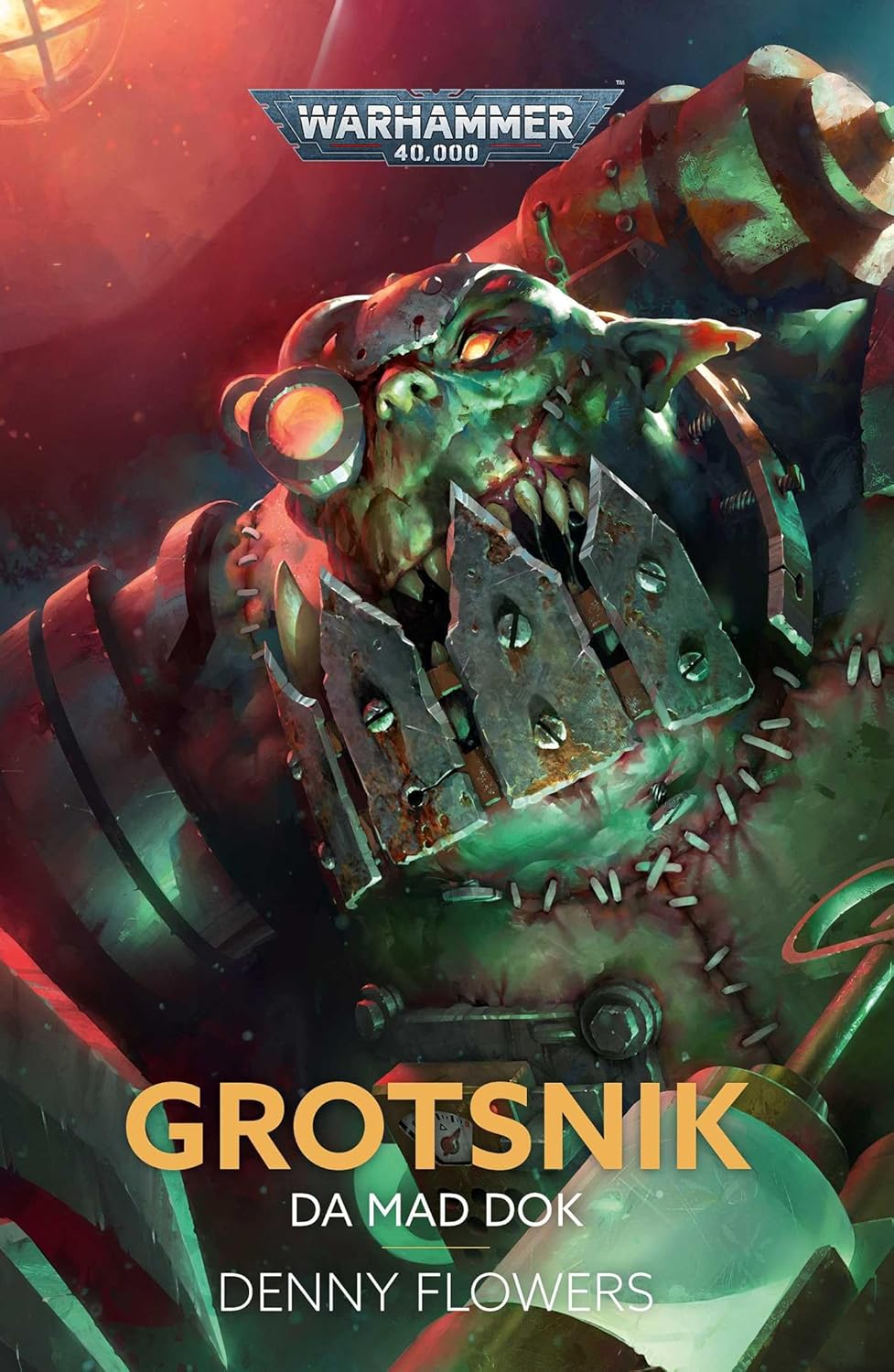
Warhammer 40,000: Grotsnik: Da Mad Dok by Denny Flowers

Publisher: Black Library (Audiobook – 1 July 2025)

Series: Warhammer 40,000

Length: 6 hours and 55 minutes

My Rating: 5 out of 5 stars

Amazon

One of my favourite Warhammer 40,000 authors, Denny Flowers, returns with one of the more entertaining novels of 2025 with Grotsnik: Da Mad Dok.

Denny Flowers is an interesting rising author of Warhammer 40,000 fiction who has so far written several particularly notable books.  Starting with his cool debut, Fire Made Flesh, Flowers went on to write his two exceptional Lucille von Shard novels, Outgunned and Above and Beyond (one of my favourite books and audiobooks of 2024), both of which are among some of my favourite pieces of Warhammer 40,000 fiction.  I also had a great time with Flowers’s inclusions in Da Red Gobbo Collection, Da Gobbo’s Demise and Da Wrong Type of Green, two hilarious entries that focused the always entertaining orks and grotz.  These short stories were quite hilarious, and it made me very excited when I saw that Flowers had a new Warhammer 40,000 novel focusing on the orks coming out this year with Grotsnik: Da Mad Dok.

Plot Synopsis:

“I made Ghazghkull. Not the Gods. Me.”

Grotsnik comes to the aid of Beastboss Bakum on Hive Prome, and it soon becomes apparent that the Mad Dok is feverishly working on something that could change the fate of ork-kind forever.

READ IT BECAUSE
How wild does a painboy have to be to earn the nickname “Mad Dok”? Find out as you follow Grotsnik – with eager scalpel in hand – as he plans his latest galaxy-changing creation. What could it be?

THE STORY
Da Mad Dok Grotsnik, creator of Ghazghkull Thraka, is a painboy beyond legend. What – and who – he harbours in his formidable brain is a mystery to every ork but himself, and an army of orderlies provides him with a constant supply of flesh with which to tinker.

So, when Grotsnik comes to the aid of Beastboss Bakmun, whose rampage on Hive Prome teeters on the brink of going out not with a Waaagh! but with a whimper, Bakmun can’t believe his luck.

Following a series of increasingly unlikely accidents, however, it soon becomes apparent that the Mad Dok is working on something in the depths of his colossal Painwagon. Something big. Something that could change the fate of ork-kind forever, surpassing Grotsnik’s own forging of the Prophet of the Waaagh!…

Denny Flowers continues to showcase why he is one of the fastest-rising authors of Warhammer 40,000 fiction with this highly entertaining and addictive new novel.  Perfectly taking on the always entertaining Warhammer orks, including the over-the-top titular character, Grotsnik: Da Mad Dok was an absolute hoot from the very beginning, and I laughed my way through the entire epic story.  One of the most hilarious novels of 2025, Grotsnik: Da Mad Dok gets a five-star rating from me due to the pure fun it contained.

Flowers comes up with an exceedingly fun narrative for Grotsnik: Da Mad Dok, which I ended up getting through in a very short amount of time.  As the title suggests, this novel follows the machinations of Grotsnik, an ork dok partially responsible for the creation of the legendary Ghazghkull Thraka, the boss of bosses for all ork-kind.  However, on the outs with his creation, Grotsnik joins up with a small band of orks led by Beastboss Bakmun, who is attempting to invade a mysterious human city.  Amongst this new band of orks is the aptly named Valtun the Patient and his clever grot Ikor, both of whom are very suspicious about Grotsnik’s intentions in joining them, especially once various members of the warband start going missing.  What follows is a hilarious series of events as Grotsnik gathers the material for his grand ambitions, while dealing with the strange humans and monsters within the city they are invading, as well as the unique intentions of other ork characters.  Primarily told through the perspective of Valtun and Ikor, who find themselves stuck in Grotsnik’s murderous orbit, these perspective protagonists slowly learn more about the titular character’s intentions, as well as the unique modifications he has made to himself, which turns him into something truly sinister.

Flowers moves this story along at a very quick pace full of funny interactions, crazy battles and the typical brutish humour that all fans of the orks will appreciate.  The action-packed and regularly over-the-top scenes that emerged were so damn fun, and there is honestly not a single slow moment in this book.  At the same time, Flowers installs a clever story throughout Grotsnik: Da Mad Dok, mostly based around the maniacal machinations of the titular character and his attempt to outsmart the suspicious Valtun.  It all leads up to a very entertaining ending that completely changes your perspective of Grotsnik’s intentions, while also leaving some of the remaining characters in ironic situations.  I personally loved where the multiple character arcs ended up at the end of this book, and while Valtun and Ikor were both great central figures, Grotsnik really stole the show with his weird behaviour, insane experiments, and the hilarious interactions he had with his unsuspecting patients/victims.  An overall awesome and well-written story that is guaranteed to suck you in with its exceptionally crazy characters and entertaining storytelling.

As with a lot of Warhammer 40,000 fiction, Flowers’s Da Mad Dok book is probably best read by established fans of the franchise, who will have a lot of fun seeing the titular character come to life.  Grotsnik’s unique mentality and connection to the most iconic ork character, Ghazghkull Thraka, makes him a very interesting figure to follow for those in love with the Warhammer canon, and Flowers clearly had a lot of fun utilising him in his story.  However, Flowers has already proven himself to be a very good at making his previous Warhammer 40,000 novels accessible to all readers, and this book is no exception.  Most people with a general knowledge of Warhammer lore and fiction can easily dive into Da Mad Dok’s narrative, and the inherent humour of the characters and the ork faction will keep them coming back for more.  I personally loved Flowers’s latest dive into the orks, and his takes on this crazy faction and some of their more distinctive members were both entertaining and accurate to the lore.  As such, Da Mad Dok has a ton of appeal, and I think most readers are going to have an exceptional time with it.

As has become my habit with all things Warhammer, I ended up listening to Da Mad Dok on audiobook, which is easily the best way to enjoy this fantastic and fun novel.  Coming in with a run time just under seven hours, Da Mad Dok is a very easy audiobook to power through, especially thanks to the great narration of Harry Myers.  Myers, who has really impressed me with books like Day of Ascension and The Wraithbone Phoenix, has an outstanding voice for Warhammer 40,000 fiction, which really fits the over-the-top nature of the universe.  He is particularly good at doing ork voices, such as in Da Big Dakka, Warboss and Da Red Gobbo Collection audiobooks, so I was very happy that he leant his voices to Da Mad Dok.  Myers uses some very fun and excessively gruff voices to bring the various ork characters to life, and the multiple laddish tones he employs are very fitting and very funny.  I cannot emphasise just how good Myers’s voice for these outrageous figures is, and I especially love how he changes from his deeper voices for the orks, to the more petulant and squeaky voice for the grot characters.  There is even a cool voice he uses for one of the more intimidating and iconic members of the cast towards the end of the book, which sounds particularly epic thanks to some vocal enhancement.  This great combination of voices, as well as Myers’s entertaining overall narration was extremely awesome, and it really enhanced Flowers’s already fantastic story.  I honestly cannot recommend this Warhammer 40,000 audiobook enough, and it ended up being one of my favourite listens of the year.

Thanks to the outstanding humour and overall craziness of its characters, Grotsnik: Da Mad Dok was a truly wonderful Warhammer 40,000 novel that is very easy to fall in love with.  Denny Flowers excelled at showcasing both the orks in general, and the cruelty and insanity of the titular characters, and the resulting intense and exciting story was a true joy to listen to.  An overall exceptional read, I cannot wait to see what epic Warhammer fiction Flowers writes next.

Amazon

Never Flinch by Stephen King

Publisher: Hodder & Stoughton/Simon & Schuster Audio (Audiobook – 5 September 2023)

Series: Holly Gibney – Book Two

Length: 14 hours and 44 minutes

My Rating: 5 out of 5 stars

Amazon

Legendary author Stephen King continues to dominate the horror and crime fiction genres with his brilliant 2025 release, Never Flinch, a gripping and intense thriller that brings back one of his more unique protagonists and keeps the reader constantly on the edge of their seat.

Ever since I started reviewing a wider range of fiction on my blog, I have been really drawn to the works of iconic author Stephen King.  King is a truly impressive author who has impacted so many levels of world fiction with his brilliant imagination, and I have had such an epic time getting through some of his latest novels.  Highlights for me so far include the fun coming-of-age story Later, the clever fantasy novel Fairy Tale, the gripping and personal thriller Billy Summers (one of my favourite books of 2021), and the impressive short story collection You Like It Darker (one of my favourite books of 2024), just to name a few.

While I have loved some of these impressive and varied reads, some of my favourite recent Stephen King books have been those where King dives into the crime fiction genre, producing some complex and particularly powerful narrative, especially when his mysteries border on horror stories.  The author’s current dive into the crime fiction genre mostly originated with his 2014 novel, Mr Mercedes.  The first book in the author’s Bill Hodges series, Mr Mercedes was a fantastic read that saw a gritty detective attempt to stop a deranged killer haunting his town.  While the Bill Hodges books featured several compelling characters, a true standout was unusual new protagonist, Holly Gibney.  An initially timid and unsocial figure, Holly grew into a competent detective as the Bill Hodges books continued and was a true standout for this clever trilogy.

King enjoyed Gibney so much as a character that she was eventually brought back for several additional books.  This included the horror thriller The Outsider (one of my favourite horror novels), where Holly is brought in halfway through the book’s plot to investigate a murder conclusively proven to be committed by a man with a perfect alibi.  The Outsider was an exceptional read, and King soon upgraded Holly to a sole protagonist with his 2023 novel Holly.  Featuring a particularly powerful and deeply shocking story, Holly saw the protagonist take on an unlikely pair of killers with a shocking motivation for committing their crimes.  Holly ended up being one of my favourite books and audiobooks of 2023, and I am still very impressed with where that dark story went.  As such, I have been very keen to read more books from Stephen King since then, and I was particularly thrilled when I found out that the author’s 2025 release was another Holly Gibney novel.  This sequel, Never Flinch, was one of my most anticipated novels of 2025, and I have been meaning to write a review about it for a while now.

Plot Synopsis:

From master storyteller Stephen King comes an extraordinary new novel with intertwining storylines—one about a killer on a diabolical revenge mission, and another about a vigilante targeting a feminist celebrity speaker—featuring the beloved Holly Gibney and a dynamic new cast of characters.

When the Buckeye City Police Department receives a disturbing letter from a person threatening to “kill thirteen innocents and one guilty” in “an act of atonement for the needless death of an innocent man,” Detective Izzy Jaynes has no idea what to think. Are fourteen citizens about to be slaughtered in an unhinged act of retribution? As the investigation unfolds, Izzy realizes that the letter writer is deadly serious, and she turns to her friend Holly Gibney for help.

Meanwhile, controversial and outspoken women’s rights activist Kate McKay is embarking on a multi-state lecture tour, drawing packed venues of both fans and detractors. Someone who vehemently opposes Kate’s message of female empowerment is targeting her and disrupting her events. At first, no one is hurt, but the stalker is growing bolder, and Holly is hired to be Kate’s bodyguard—a challenging task with a headstrong employer and a determined adversary driven by wrath and his belief in his own righteousness.

Featuring a riveting cast of characters both old and new, including world-famous gospel singer Sista Bessie and an unforgettable villain addicted to murder, these twinned narratives converge in a chilling and spectacular conclusion—a feat of storytelling only Stephen King could pull off.

Thrilling, wildly fun, and outrageously engrossing, Never Flinch is one of King’s richest and most propulsive novels.

Honestly, how the heck is King still this damn good?  Never Flinch was another exceptional novel from King, who continues to impress with his elaborate narratives, slick writing and relatable characters.  Featuring a particularly clever crime fiction plot that keeps the readers on their toes to the very end, Never Flinch proved near impossible to put down at times, especially as King keeps amping up the intensity and the danger.  Never Flinch gets a very easy five-star rating from me, and I’m already listed it as one of the top books and audiobooks from the first half of 2025.

King pulls together an awesome and compelling story for Never Flinch, that had me hooked very early on.  Starting off on an interesting note as the reader is introduced the book’s antagonist, who goes by the nickname of Trig, you are soon thrown into his desperate ploy to murder 14 random people in Buckeye City to replicate the jury who put an innocent man in prison.  Serving as a very impressive start to a great story, King soon expands the narrative further by examining the police investigation into these murders, and showing protagonist Holly Gibney’s initial interest in the case.  From there the plot expands even further, as another dangerous killer starts to stalk a women’s rights activist, Kate McKay, and her assistant, and Holly is eventually hired to act as Kate’s bodyguard during the rest of her book tour.  King does an excellent job building up all the details of this second case, while also following the growing murders in Buckeye City, and you are soon absorbed in both cases, especially when you witness all the perspectives involved with the two scenarios, including the book’s various antagonists.  There are also some fun additional personal notes added to plot, as several compelling supporting characters, including recurring Holly Gibney cast members Jerome and Barbara Robinson, the later of whom builds a connection with famous gospel singer Sista Bessie, who is performing in Buckeye City.

The author keeps the pace of Never Flinch going strong and fast as you move into the story, with interesting storylines around Holly, the police, the antagonists, and other supporting characters.  There was a real interesting mixture of storylines once King had everything set up, and I really loved the various compelling character arcs and elements as the plot continued.  While some of the big twists about the antagonists aren’t too surprising and are revealed relatively early in the plot, you are still very drawn into their respective crusades, as well as the protagonists’ attempts to stop them.  Everything comes together nicely in the second half of the book, where both cases, as well as the more personal storylines of Never Flinch, collide violently, and various characters are forced to fight for their lives.  King provides an exceedingly tense final third to Never Flinch, which sees a blow-by-blow coverage of events leading up to a dramatic and bloody final confrontation.  The alternating movements of all the participants in this case, including a deranged killer, several hostages and coerced individuals, as well as the protagonists desperately trying to save the day, produced so much tension, and you really cannot turn away until all the dramatic confrontations come to an end.  I frankly powered through this final part of the book in one extended session, as I was so damn keen to see what happened next, and this ended up being an extremely satisfying ending to a really impressive book.

I really enjoy King’s great writing style when it comes to his captivating crime fiction novels, and he excels at creating tense and ultra-exciting reads, driven by multiple compelling character arcs.  Never Flinch was an excellent example of this, as King produces a brilliant story that quickly grabs the reader’s attention and never slows down.  Featuring slick, quickfire writing and very short chapters and subchapters, the story moves along at a very fast clip, and King effectively sets up the book’s compelling scenarios very effectively.  The great array of alternating character perspectives, as well as several compelling flashbacks, really works to create a layered plot, and I loved the constant switch between the many characters.  Showcasing several antagonist perspectives also helped to really increase tension, especially as you got to see their various plans in action.  This writing style also helped to make Never Flinch feel a lot more accessible to new readers, and while established fans of the author will probably get more out of some of the character developments that occur in the novel, I felt that Never Flinch was a book that any fan of crime fiction could easily get into and have no trouble following at all.

King also experiments with some interesting themes in this novel, which added a lot to Never Flinch’s emotional impact, while also helping to highlight character flaws in the cast.  This includes a very compelling look at addiction in all its forms, with a particular focus on how it drives people.  While this includes a focus on more obvious addictions like drugs and alcohol, other major addictions come to light throughout the book, including Trig’s growing desire to kill, and Kate’s addiction for the spotlight and controversy.  The examination of addiction served as a key part of the book’s plot, especially as it helps to explore some of the character’s motivations, and I felt that King was putting a lot of his own personal experiences into the book.  King also spends a bit of time in Never Flinch examining mentorship, as several junior characters find themselves coming under the wing of older, seemingly wiser, people.  While some of these relationships are quite positive, others, such as Kate and her assistant, come across as a little more toxic at times, especially when the mentor puts their own needs ahead of their student’s safety.  I liked the interesting comparisons in the mentor/mentee relationships that formed throughout Never Flinch, and it was a very compelling addition to the plot.

As with most of King’s books, the true heart of Never Flinch lies in its compelling and often larger-than-life characters, who the author meticulously brings to life.  The focus of this book is once again the quirky and silently talented Holly Gibney, a skilled investigator brought into the case by her own curiosity and a desire to help a prominent women’s rights activist.  Holly serves as a dependable and likeable heart to the entire novel, and it was fascinating to watch her continue to battle her own lack of confidence and lingering social issues.  Her continued growth as both an investigator and a person is an excellent part of this book, and it was great to see the various relationships she continues to cultivate.

These relationships for Holly result in an excellent cast of returning characters, including detective Isabelle ‘Izzy’ James, who has a much bigger role in this novel as the main police character in the story.  Izzy’s official investigation serves as a good counterpart to Holly’s more general queries into the case, and her maverick personality, especially in the face of police politics, added some extra intrigue to Never Flinch.  The other two major returning characters are siblings Jerome and Barbara Robinson, who have served as Holly’s backup and friends since Mr Mercedes.  While Jerome was a great emotional support to Holly and had some key roles in this book, the standout supporting figure was Barbara, whose compelling side-plot about her work with Sista Bessie helped to make Never Flinch a little more hopeful in places, especially as King has been detailing Barbara’s artistic growth in response to the darkest of encounters for the last couple of books.  Of course, as this is a Stephen King novel, this hopefulness often results in greater trauma down the line, as the author must ensure you are constantly worried that bad things are going to happen to the good people in Holly’s life.  Throw in some other compelling supporting characters, including the radiant and soulful Sista Bessie, the bombastic feminist icon Kate McKay, and Corrie Anderson, Kate’s young assistant who finds herself in the firing line alongside her boss despite her best judgement, and there are a lot of interesting figures in Never Flinch who you become quite attached to.

While I love the main cast, another major highlight of Never Flinch is the complex antagonists who King effortlessly works into the plot.  This includes a compelling stalker figure who is hunting after Kate and Corrie for their own religious reasons.  An interesting character whose deeper issues are well exploited, this stalker was an interesting alternate antagonist for Holly in this novel, and I liked how their complex actions added some additional risk to the plot.  However, the best villain was the serial killer stalking Buckeye City, determined to murder 14 people in response to an innocent man dying in jail.  This killer, Trig, was a truly fascinating figure, with some unique motivations and quirks.  King does an excellent job mostly obscuring Trig’s identity for much of the novel, while also showcasing many compelling scenes from his perspective as continues his murderous quest.  The resulting slow-burn loss of Trig’s sanity as he becomes addicted to his dark work was a particularly sinister part of Never Flinch, and King excelled at showcasing this antagonist’s changing motivations and plans.  These outstanding villains served as an impressive counterpart to the main cast, and I felt that Trig was King’s best character in Never Flinch.

While I received copies of Never Flinch on a few different formats, I decided in the end to try out the audiobook version of this novel, especially after having some very good experiences with other Stephen King audiobooks.  This proved to be an outstanding choice, as the Never Flinch audiobook was an exceptional listen, with the layered and complex mystery really transforms into something special when read out.  Coming in with a near 15-hour long runtime, Never Flinch is a decently long audiobook, but it’s one that listeners will generally be able to power through quickly, especially with the compelling, if relatively new narrator Jessie Mueller bringing the story to life.  Now, I must admit that I was initially disappointed that Holly narrator Justine Lupe (who played Holly in the Mr Mercedes television adaptation), was not returning for Never Flinch, however Jessie Mueller quickly showed herself to be an excellent replacement.  Thanks to her outstanding voice work, Mueller quickly made the Never Flinch audiobook her own, and I liked the unique flair and compelling voices she gifted to the extended cast.  Several of these characters had a lot more personality thanks to Mueller’s narration, and I liked how well she voiced some of the distinctive members of the cast.  However, I think Mueller’s best inclusion to this audiobook was her very impressive singing voice, as there a couple of music focused scenes around Sista Bessie and Barbara.  Mueller captured these parts of the book perfectly, and her resulting singing performances were extremely good, and helped to give the audiobook more impact.  As such, Never Flinch was an overall exceptional listen and one of the best audiobooks of the year, and I would strongly recommend it as the best format to enjoy this great new King novel.

Stephen King once again showcases why he the world’s top author with another exceptional and truly gripping novel.  Never Flinch was an incredible read that combines a clever crime fiction narrative with some fantastic characters, to really grab the reader’s attention.  With its epic tension and high stakes, King’s latest novel was so damn addictive, and I really appreciated how clever the story got.  An overall exceptional read, Never Flinch was one of the best books I had the pleasure of reading in 2025, and I cannot wait to see what King writes next.

Amazon

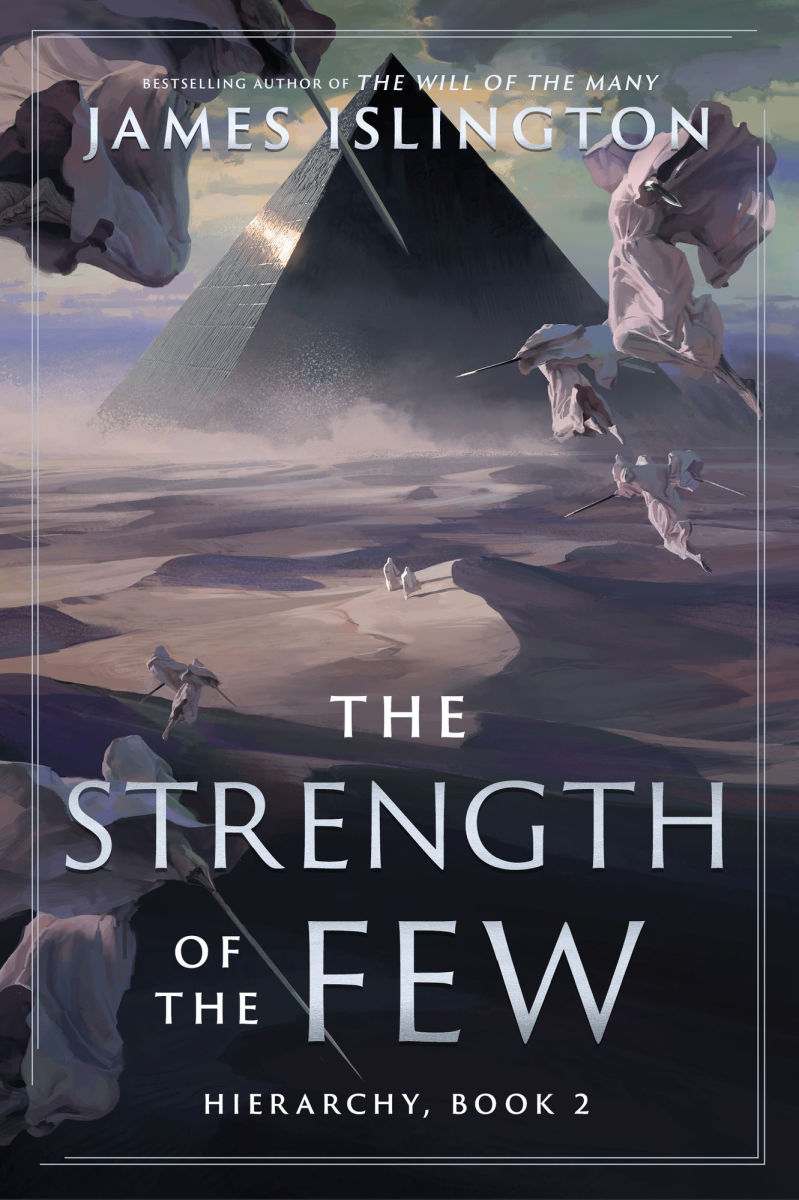
The Strength of the Few by James Islington

Publisher: Text Publishing/Audible Studios (Audiobook – 11 November 2025)

Series: Hierarchy – Book Two

Length: 31 hours 8 minutes

My Rating: 5 out of 5 stars

Amazon

Australian author James Islington continues his Hierarchy series in epic form with the incredible and complex novel, The Strength of the Few, an outstanding and highly addictive fantasy novel that I had an incredible time getting through.

Back in 2023, I had the pleasure of reading the outstanding novel, The Will of the Many from James Islington, which I very quickly fell in love with.  Following a fugitive prince who finds himself enrolled in an academy for the children of the elite members of the nation that conquered his homeland, The Will of the Many had an intricate plot that forced the protagonist to deal with elaborate ancient puzzles, the unique magic of his world, unlikely friendships, deadly rebels, and all his hidden secrets potentially becoming uncovered.  I had such an amazing time reading The Will of the Many that it got a very easy five-star rating from me, and it ended up topping several of my end-of-year lists for 2023, including my favourite book, audiobook, new-to-me author and Australian fiction lists.  Unsurprisingly, I have been keen to see how the series would continue ever since I finished the final page of The Will of the Many, and the long-awaited sequel, The Strength of the Few, was one of my most anticipated novels of 2025.  I started reading The Strength of the Few the second I could, and it turned out to be another captivating read, with a plot that goes in some captivating and intense directions.

After infiltrating the Academy and running the mysterious Labyrinth, the man known to the Catenan Republic as Vis Telimus thought that he would finally understand some of the secrets of the nation that destroyed his people.  However, his encounters within the Labyrinth have instead resulted in the impossible and placed him in the firing line of an ancient evil determined to destroy his world.

While the original Vis continues to live in the Catenan Republic, attempting to avenge the massacre of his Academy classmates and friends at the Iudicium, he is unaware that the ancient devices within the Labyrinth replicated him across three separate words.  Mirrors of each other influenced and altered by different history, the worlds of Obiteum, Luceum and the world Vis already knows as Res, are divergent places, each with their own troubles, rulers and chaos.

Now one of the few beings existing across all three concurrent realities, Vis stands as the only person who can stop the upcoming Cataclysm that will burn away all he loves.  But first he needs to face the different challenges each world has for him, especially as he truly belongs in none of them.  Forced to fight, to learn how to control the unique powers his situation has granted him, and to understand the different worlds they find themselves in, all three versions of Vis will be pushed to their limits as they try to prove themselves and understand the secrets behind their unlikely journey.  If any version of Vis fails, then all their chance to stop the Cataclysm are finished.  But can Vis really survive in three separate realities, each of which is filled with beings who desperately want him dead?

Well damn, now that’s how you do a sequel.  The Strength of the Few was an incredible novel as James Islington expertly continued the elaborate and ambitious narrative of his epic Hierarchy books.  Featuring a layered story loaded with complex world-building, intricate story details and compelling characters, The Strength of the Few was an exceptional novel that gets a very easy five-star rating from me.

Islington came up with an especially complex and powerful story for The Strength of the Few, which served as a very worthy follow-up to the compelling events of the previous Hierarchy book.  Right out the gate readers are treated to an intricate plot, with the protagonist from The Will of the Many split into three different versions of himself in three separate mirror worlds.  Each version has its own very distinct narrative that revolves around that specific Vis trying to overcome the challenges of that specific world.  For example, the version of Vis on Res, the world that The Will of the Many was completely set in, continues to endure the politics of the Hierarchy, while also attempting to uncover those responsible for the massacre of his classmates at the end of the previous book.  The storyline set on Obiteum is a bit of a post-apocalyptic narrative, as Vis is forced to survive a broken world ruled by the enemy responsible for several previous Cataclysms, and must try to find a way into a forbidden city, half staffed by the living dead.  The final storyline set in Luceum offers a much more adventurous narrative, as a version of Vis that is completely unaware that he is in an alternate world, is forced to explore a new culture and attempt to survive amongst people who have no idea of his past or his destiny.

These three separate and very distinctive storylines each go in some interesting directions as the book continues, and the result is a very impressive and compelling overall narrative, especially as Islington expertly sets up necessary details in the early stages of the book and cleverly builds from there.  For most part, each of these storylines stay isolated, although some key details from each bleed into the wider narrative, and you can appreciate the significance of certain events or revelations in one storyline better thanks to the events in one of the other worlds.  Each plot line goes in some very interesting directions, with the dark politics of Res forcing Vis to engage in some complex schemes and deceptions, the struggles of Obiteum slowly getting to an isolated version of the protagonist, while positive character interactions in Luceum turn that Vis into a completely different person.  Islington starts to enhance the tension of all three storylines in the second part of the book, and there are some very amazing scenes that completely change the tone of each of the main storylines.  I felt the political instability of Res allowed for some particularly powerful moments, especially after a shocking scene about two-thirds of the way through book.  A growing war in Luceum also provides some compelling drama for that storyline, as Vis must decide what he wants in life, while the continued threat of discovery in Obiteum proves to be particularly draining.

The final third of the book contains some of the best scenes of The Strength of the Few, as Islington builds on all the novel’s great storytelling and complex worldbuilding to bring forth an epic conclusion.  Thrusting all three versions of Vis into mortal danger, the tension is particularly thick, as the protagonist and much of the supporting cast are in constant risk.  This includes a final desperate attempt to achieve his goal of killing a god in Obiteum, which hits a range of snags amongst the ancient city Vis has spent most of the book infiltrating.  At the same time, the Vis in Leceum finds himself in the middle of a deadly war, where his unique abilities and the unlikely rewards of a deadly ceremony weigh him down.  However, the most intense is the narrative set on Res, where Vis finds himself attempting to save who he can from the chaotic events brought on by those manipulating him.  Islington probably throws the book’s most shocking moments into the Res storyline, which nicely builds on a lot of the drama and intrigue from the first novel, and forces the protagonist to make some dark decisions, out of both vengeance and necessity.  One scene where the title of the book is quoted by an antagonist really sticks in the mind, and I’m not sure I’ll be able to forgive Islington with the dark bait-and-switch there.  All three of these storylines end on an interesting note that hint of destructive events for the future, and it is going to be fascinating to see how Islington continues the Hierarchy series going forward.

Thanks to the elaborate ideas that Islington had for this epic sequel, The Strength of the Few turned out to be an exceptionally written read, which provides an intense and compelling fantasy narrative, filled with some great emotional depth.  The inventive way that the author splits the book to follow three separate versions of the same protagonist worked surprisingly well, and it allowed for quite a unique character-driven story, which really showcases Islington’s writing ability.  I felt that the split between the three distinctive storylines was very well done, and these separate narrative threads each stood on their own merits, provide a distinctive experience in each.  I loved how there was something special in each of the storylines, and you got some interesting interactions, world building and different focuses with each of them.  All three were very well written, and there were honestly no weak links with any of the storylines, which is always a risk when you split the narrative like this.  I will say that the intrigue-laden narrative on Res was a particular favourite of mine, but both other storylines were also quite exceptional, and they balanced each other nicely with their alternating themes and varied character growth.  Throw in some creative expansion of the universe the narrative is set in, with its cool Will-based magic system, and three worlds each inspired by different ancient cultures (Roman, Egyptian and Celtic), and this was a very well written book, and I really appreciate how effectively Islington builds up his different worlds and showcases them to the reader.

The Strength of the Few proved to be an impressive continuation of the Hierarchy series, and I felt that Islington did an outstanding job building on the impressive fantasy elements and storylines of the first book.  However, the complex narrative split and the way that Islington dives immediately into the story does mean that The Strength of the Few is probably best enjoyed by those readers who have already gotten through The Will of the Many.  While Islington does re-examine key elements of the plot from the first book as The Strength of the Few continues, it is a very gradual process, and new readers trying to read the sequel first are likely to get confused if they don’t know some necessary details from the first book.  The Strength of the Few might have benefited from a good summary or recap at the front of the book to remind readers of some key details, especially if they haven’t had a chance to read re-read The Will of the Many since its 2023 release.  Still, for the most part, all readers should be able to follow and appreciate The Strength of the Few, especially once you get drawn into the three compelling storylines, and people who love extremely elaborate fantasy narratives with a lot of intricate detail are going to have an outstanding time.

I was once again impressed with Islington’s great characters in The Strength of the Few, as this book has a massive cast, made up of an interesting combination of figures from The Will of the Many, and new characters from the three separate worlds of the setting.  However, most of this book naturally follows the young protagonist from the first book, who is primarily known as Vis Telimus.  A studious and damaged figure who had already gone through a lot before the events of this novel, Vis has rather a unique experience in this sequel, as unbeknown to him, there are now three separate versions of him concurrently existing in the mirror worlds of this setting.

Islington perfectly sets up and utilises this three-way split of his protagonist, and readers are soon treated to three distinct variations of the protagonist, each of whom are altered by their experiences and losses, especially the two versions of Vis who lose their left arm.  It was fascinating to see how each of the Vises are influenced and changed by their respective traumas, and how their adventures are altered by the different information or people that they meet.  For example, the Vis in Res, who is essentially the same protagonist from The Will of the Many, finds himself longing for vengeance after the events of the Iudicium, and spends much of the book angry and forced to endure politics and lies.  The version of Vis on Luceum, while feeling lessened by the loss of his arm, soon finds peace in his new setting, and his eventual motivations for fighting and living are very different from his other incarnations, especially as he finds friends he can trust completely.  Finally, the Vis on Obiteum is one of the more confident incarnations of the protagonist, having full knowledge of the upcoming Cataclysm and his place in the three worlds explain early in the book.  As such, he soon becomes the most competent at utilising his Will talents and appears the most undamaged of the three due to not losing his arm.  However, in many ways the Obiteum Vis is the worst off out of all versions of the protagonist due to his isolation, the desolate surroundings, and the early expectations of murder and potential death that are thrust upon him.  I really cannot emphasise just how clever the split between these different variations of the protagonist is, especially with the subtle differences and alternate reactions to similar events or situations. It really makes for quite a distinctive and moving read, especially as all three versions of Vis experiences even greater trauma and damage as this sequel continues.

While Vis is the obvious focus of The Strength of the Few, there is a huge supporting cast utilised throughout this book, including various characters only found on each distinctive world.  Indeed, each version of Vis picks up its own supporting cast, which allows for some very different interactions in each of the major storylines.  Highlights include many of the recurring characters from the first book who serve as Vis’ friends and mentors in Res.  There is a particular focus on Eidhin and Aequa, who have an expanded role as Vis’s main confidants in this novel, and I liked some of the powerful storylines that formed around them.  Other major supporting characters from the first novel are showcased to a lesser extent in this sequel, primarily due to the book being split into three separate parts, although many of these characters still got a notable role in this sequel.

The cast supporting Vis on the desolate world of Obiteum is a lot more limited, mainly to emphasise the protagonist’s loneliness, although he does find a compelling mentor in Caeror, his adoptive uncle, who the protagonist was hunting for in the first book.  A couple of other native characters from Obiteum gain prominence later in this storyline as Vis attempts to complete his mission, and it is fascinating to see how their experiences living on a dead-world, impact their interactions with the protagonist.  Finally, the cast of the Luceum plotline represent a compelling counterpart to the supporting characters of the rest of the book.  While Vis has enemies in Luceum, he also finds several true friends who he can trust with all his secrets.  It was interesting to finally see Vis truly open up to other people, and it allowed for some very different interactions to the secrets and lies that define the protagonist in the other two storylines.  Throw in a compelling array of antagonists, as well as an entertaining manipulator who keeps chucking Vis into the deep end on Res, and this was an impressive cast for this great sequel.  It honestly was an extremely intriguing experience to have three separate casts of characters set around different versions of the protagonist.  While this narrative split did result in some restrictions when it came to character depth or a full exploration of relationships, I think the overall extended length of the book overcame this and allowed the reader to grow close to the supporting characters.  I will warn readers not to get too attached to the extended cast though, as Islington does get a little murderous as the book continues, however, all these characters are impressive while they last.

While I was lucky enough to receive a physical copy of The Strength of the Few, I ended up holding out for a little bit to listen to the audiobook version of this book instead.  I’m a big fan of audiobooks when it comes to ultra-elaborate fantasy narratives, as I tend to absorb and retain more of the details that way, and this worked out well with The Strength of the Few.  I felt that Islington’s complex story came across very effectively when read out, and all the elements, including the elaborate worldbuilding and the great character work, were well translated to the reader.  I also appreciated how the switches between the three different versions of the perspective protagonist, was easily discernible, and this was a very easy story to follow on audiobook.  The Strength of the Few audiobook saw the return of Euan Morton for narrator, who previously read out The Will of the Many, and who I quite enjoyed as a narrator of the Star Wars audiobook, Tarkin.  Morton has a very interesting cadence to his voice as a narrator, which provided a very unique edge to this audiobook.  While Morton’s narration style might not appeal to everyone, I felt that he did a good job voicing this compelling story, especially through the eyes of the complex protagonist, and his unique narration on this elaborate story worked extremely well.  I also felt that Morton excelled at pronouncing all the different names and titles that Islington featured in his plot, no matter their Roman, Celtic or Egyptian inspiration, and the characters of all three different worlds had a subtly different cadence and accent that helped to distinguish the separate storylines from each other.  As such, I really got stuck into this audiobook, powering through it quickly, even with its 31-hour runtime.  This was probably one of the more intense and moving fantasy audiobooks I had the pleasure of listening to in 2025, and I cannot recommend this format enough.

James Islington does it again with his incredible second Hierarchy novel, The Strength of the Few.  Brilliantly continuing his elaborate narrative from the first novel in a unique manner, The Strength of the Few was an ultra-addictive read, that really showcased Islington’s writing ability and imagination.  Clever, powerful and easy to get addicted to, The Strength of the Few was one of my favourite books of the year, and I cannot wait to see how Islington continues the series going forward.

Amazon

Days of Shattered Faith by Adrian Tchaikovsky

Publisher: Head of Zeus (Audiobook – 5 December 2024)

Series: The Tyrant Philosophers – Book Three

Length: 21 hours and 39 minutes

My Rating: 5 out 5 stars

Amazon

One of the current top authors of all things fantasy and science fiction, the improbably imaginative Adrian Tchaikovsky, continues to greatly impress with his outstanding and epic early 2025 novel, Days of Shattered Faith.

I think it is fair to say that few fantasy and science fiction authors are as consistently prolific and entertaining as the relentless Adrian Tchaikovsky, who has been continuously putting out clever books over the last few years.  While he has written many intriguing series and standalone novels throughout his career, I am more familiar with some of his more recent works, including the novella Ogres, the gripping interstellar novel Alien Clay, one of my favourite Warhammer 40,000 novels, Day of Ascension, and the hilarious and insightful robot apocalypse novel, Service Model (one of my favourite books of 2024).

While the above books are all quite exceptional, my favourite body of Tchaikovsky’s work has so far been The Tyrant Philosophers series.  A gripping, brilliant and highly amusing series, the Tyrant Philosophers novels are set in a cool fantasy world filled with magic, gods and demons, all with a fun Tchaikovsky twist to them.  With the first two books, City of Last Chances and House of Open Wounds, both of which were amongst my favourite books of 2023 (with City of Last Chances being one of the best audiobooks of 2023) the series has really grabbed my attention over the last couple of years.  Much of it is down to the author’s clever narratives that work to expand this intriguing fantasy world through some interesting overlapping characters and events.  In particular, the series examines the dark impact of the Palleseen, a conquering army of fanatics who violently supress superstition and belief in the gods in the name of expanding their own worldview of perfection and correctness.  Both the previous books in this series were quite impressive, and I was very eager to read Days of Shattered Faith when it first came out.  While I have been delayed in writing a review for this book, it proved to be an outstanding read, especially with its rich and powerful narrative.

Plot Synopsis:

Welcome to Alkhalend, Jewel of the Waters, capital of Usmai, greatest of the Successor States, inheritor to the necromantic dominion that was the Moeribandi Empire and tomorrow’s frontline in the Palleseen’s relentless march to bring Perfection and Correctness to an imperfect world.

Loret is fresh off the boat, and just in time.

As Cohort-Invigilator of Correct Appreciation, Outreach department, she’s here as aide to the Palleseen Resident, Sage-Invigilator Angilly. And Sage-Invigilator Angilly – Gil to her friends – needs a second in the spectacularly illegal, culturally offensive and diplomatically inadvisable duel she must fight at midnight.

Outreach, that part of the Pal machine that has to work within the imperfection of the rest of the world, has a lot of room for the illegal, the unconventional, the unorthodox. But just how much unorthodoxy can Gil and Loret get away with?

As a succession crisis looms, as a long-forgotten feat of necromantic engineering nears fruition, as pirate kings, lizard armies and demons gather, as old gods wane and new gods wax, sooner or later Gil and Loret will have to settle their ledger.

Just as well they are both very, very good with a blade…

Wow, what an incredible read.  Adrian Tchaikovsky continues to deeply impress with his elaborate and intense narratives, especially as he expertly continues his Tyrant Philosophers series in his distinctive and creative way.  Featuring a complex plot that follows various damaged and self-serving characters as they navigate the attempts to influence and control a mighty city, Days of Shattered Faith was an addictive read from start to finish, and I loved how the entire novel came together.  A very easy five-star read, Days of Shattered Faith was one of my favourite books and audiobooks from the first half of 2025, and I had such an exceptional time getting through it.

I really loved how Days of Shattered Faith’s story turned out, especially as Tchaikovsky managed to turn this into both a powerful standalone novel as well as a moving entry in the larger Tyrant Philosophers series.  This book has quite a complex and layered narrative to it, as it follows multiple intriguing characters through chaotic events that are about to overtake the city of Alkhalend.  Initially focusing on the two Palleseen characters, Sage-Invigilator Angilly and Cohort-Invigilator Loret, Days of Shattered Faith sees them as unlikely ambassadors in a city that mostly hates and fears the Palleseen and their attempts to subvert and control the world.  When the sudden death of Alkhalend’s ruler results in a brutal civil war, Angilly and Loret attempt to help the Palleseen supporting heir to retain the throne following a coup from his brother.  At the same time, various other figures in the city, including a familiar former priest and several unconventional doctors, attempt to survive the chaos engulfing their home.

Tchaikovsky does an excellent job building up a lot of complex storylines, details of the main setting, and character arcs in the first half of Days of Shattered Faith, all of which came into play in fantastic ways as the novel continued.  Following a large collection of complex character-driven storylines throughout the novel, Tchaikovsky moulds these together into a compelling overarching narrative, with these protagonists impacted by various major events.  This includes the brutal civil war at the centre of the novel, which completely changes the course of the narrative and sets several major characters down some compelling and dark spirals.  Due to the appearance of more Palleseen influence in the second half of the book, things in Alkhalend naturally go to hell in a variety of ways, especially when all the unconventional and imperfect methods of Angilly and her unusual Palleseen colleagues in Outreach are questioned and changed by her more by-the-book superiors, who also drop the subtle tactics when it comes to controlling the city.  This results in a darker, more intense second half of the novel, where every protagonist makes mistakes or experiences greater tragedy.  The author perfectly builds up the tension and suspense before leading up to the big revolution sequence where all the separate character arcs converge for the last time, which was as devastating and crazy as you would expect from Tchaikovsky.  Everything ends on a satisfying, heartbreaking note, especially as several characters find themselves in worse positions then when they started.  It will be very interesting to see where the wider narrative of the series goes from here, especially for the series’ recurring protagonist, but it’s clear that the events of Tchaikovsky’s universe can only get sadder from here.

Tchaikovsky has a very distinctive and compelling writing style for the Tyrant Philosophers novels that coveys his elaborate and entertaining narrative in some unique ways.  Once again relying heavily on multiple perspective changes to tell his layered story, Tchaikovsky embarks on providing a deep and personal story, set around a large collection of compelling supporting characters.  The author excels at creating elaborate and complex backgrounds for the various characters, which are worked into the larger plot extremely well, especially as each character has their own unique motivations and damage.  All these varied story elements are well woven together into one complex story, and it was fascinating to see all the different figures react to the continually changing events.  As with the previous books, Days of Shattered Faith has a range of tones within it, as Tchaikovsky works hard to produce the right balance of intrigue, action, world building and dramatic and moving character moments, all of which are done perfectly and work to create an impressive novel.  The elaborate battle sequences pair well with the subtle and often forced betrayals of the various characters, while deeper personal troubles and dark histories lurk just beneath the surface.  All these sequences are well laced with the excellent and often cynical humour of the author, which really ties the entire thing together quite nicely.  I loved how so many complex scenes were made better by the sarcastic and realistic commentary of either the characters or the narrator, which worked to highlight the dark, and often absurd nature, of so many of the fantasy elements of the story.

As with the last two books in the series, Days of Shattered Faith works well as both its own distinctive, standalone narrative and as a continuation of elements and character-focused storylines from the previous books.  Due to how it initially focuses on an original group of central characters navigating an unfamiliar setting in the series’ wider world, new readers can easily come into this series without any real pre-knowledge of the other books.  However, as the story eventually grows to focus on several major characters from the first two novels, I think those readers who know the full story of these figures and the complex events they’ve had to navigate will end up appreciating the plot of Days of Shattered Faith a little more, especially as Tchaikovsky continues to torture a certain former priest with even more tragedy and hardship.  The author also features references to events from the previous books throughout Days of Shattered Faith, and readers will find it fascinating to see how certain decisions or plots from the recurring characters, such as some vengeful religious conversion in House of Open Wounds, had larger, devastating impacts on the wider world.

Tchaikovsky once again pulls together an elaborate setting for his compelling narrative, as while Days of Shattered Faith is set in the same fantasy world as the other Tyrant Philosophers novels, much of the action occurs around the newly introduced complex city of Alkhalend.  Loaded up with cut-throat politics, various conflicting religions, distinctive magic, and various otherworldly beings who have migrated from other realities, Alkhalend is an exceptional focus for much of the plot.  Tchaikovsky excelled at introducing the various unique elements of Alkhalend and its surrounding nations in the early part of the book, and it was fascinating to see how they impacted the plot going forward.  Alkhalend honestly had so many fun and quirky unique fantasy features, and this had to be one of the more memorable settings I have had the pleasure to see in fantasy figure.

Of course, as this book is set within the Tyrant Philosophers universe, Tchaikovsky had to once again include the Palleseen, who serve as the main antagonistic group in the series.  Ideological zealots often bound by their own rules and processes as they slowly and greedily try to take over the world, all the books in this series are dedicated to examining their methods and serves as a humorous critique of militarisation and empire building.  While the previous books have either looked at the Palleseen as an occupying force or at their weaponisation of magical medical practices, Days of Shattered Faith focuses on their diplomats and how they influence conflicts in lands outside their empire.  This ends up showcasing a new side to the Palleseen machine, especially as the empire’s diplomatic department, Outreach, is made up of more fluid personnel, willing to go outside of standard practices to achieve their goals.  It was quite entertaining to see the differing methods of this empire conflict with each other, especially when it brings some conflict between the various Palleseen characters, and it added some great drama to the second half of the book.  I loved once again seeing the dangerous bureaucracy and insatiable desire for more magical material turn the Palleseen from reasonable allies to controlling occupiers as the plot continued, especially as it perfectly influenced various characters to take a new course of action.

As I have mentioned a few times above, Tchaikovsky loaded this novel up with an outstanding array of complex or damaged characters who are the true highlight of the plot thanks to their collective dark histories and layered motivations.  The sheer range of different characters in Days of Shattered Faith is very impressive, featuring a great mixture of locals of Alkhalend, Palleseen visitors, and other memorable figures seeking refuge in the sandy city.  Much of the plot was focused around the two members of Palleseen Outreach in the city, Sage-Invigilator Angilly and Cohort-Invigilator Loret, whose unique take on diplomacy often causes more chaos.  Angilly was a great lead for much of the plot as a pragmatic Palleseen operative, who finds her loyalty compromised by her romantic connection to the city’s crown prince.  This doomed romance leads to all manner of trouble for both characters, and the various betrayals and eventual end resulted in some of the author’s more tragic writing.  Loret, on the other hand, was a great fish out of water in this novel as she attempts to learn the rules of diplomacy and understand the many facets of Alkhalend, all while keeping her troubled past a secret.  I felt that Tchaikovsky used Loret well as a good stand in for the audience to showcase his new city setting in more detail, while her eventual development and tragic past connected to the events of the previous book proved to be a particularly compelling, if bloody, part of the plot.

The rest of the cast are also impressive, including a couple of opportunistic Palleseen operatives who have less issues with exploiting the people of Alkhalend for their own means.  I also personally enjoyed the return of several familiar figures from the previous Tyrant Philosopher novels, including the unusual batch of former military doctors who made their escape in the previous novel.  While given less focus in this novel, Tchaikovsky still makes excellent use of these fugitive doctors, and it was interesting to see how the most junior member of the troupe got upgraded to a major character now he’s a little older.  Accompanying the doctors is character now known as Happy Jack, who readers of the series may recognise as the priest of small gods from the first two novels, Yasnic.  Now bereft of his original petty deity, Jack has now found happiness and contentment in Alkhalend, especially thanks to an unlikely doomed romance.  Of course, that happiness can’t last too long, and Tchaikovsky soon returns to torturing one of his best characters, ensuring he’ll be even more compelling in the next book of the series.  Throw in the many other unusual denizens of Alkhalend, which includes pirates, necromantic priests, scheming nobles, and even a giant frog god, and the cast of Days of Shattered Faith is impressive, especially as the author carefully balances the many alternating character storylines to create an overall outstanding narrative.  I cannot wait to see what awesome characters Tchaikovsky comes up with in the rest of the series, but I’m expecting some truly fascinating figures going forward.

While I did end up buying a physical copy of Days of Shattered Faith, I ended up listening to its audiobook format instead, mainly because I had such a good time with the City of Last Chances audiobook.  Days of Shattered Faith also proved to be an incredible listen, with the audiobook format deeply enhancing the complex plot and showcasing all the excellent fantasy elements in even more detail.  Coming in with a notable runtime of nearly 22 hours, I was able to get through Days of Shattered Faith quickly, especially with the outstanding David Thorpe narrating the story.  A veteran narrator who has lent his voice to many of Tchaikovsky’s audiobooks, Thorpe did an excellent job bringing Days of Shattered Faith to life, especially as his tones and voices matched the style of the author’s writing.  Thorpe really dives into the various unique characters loaded into Days of Shattered Faith, coming up with a range of fun and fitting voices.  I felt that these voices, as well as his excellent narration of the complex fantasy plot details of this novel, turned Days of Shattered Faith into a very enjoyable audiobook, and it was such a good format to enjoy this unique story.  Easily one of the top audiobooks I have so far enjoyed in 2025, Days of Shattered Faith comes highly recommended in this format, and you are guaranteed to have an amazing time listening to it.

With even more crazy characters, distinctive fantasy elements, and a twisty and captivating plot, Days of Shattered Faith was another exceptional novel from Adrian Tchaikovsky.  A perfect continuation of the incredible Tyrant Philosophers series, Days of Shattered Faith had so many awesome elements to it, and I loved its complex story and compelling protagonists.  An outstanding read I loved so much, Days of Shattered Faith is one of the best fantasy novels of 2025, and I cannot wait to see how the rest of the series unfolds.  Indeed, the fourth book in the series, Pretenders to the Throne of God, is out in a few months’ time, and it is already shaping up to be another epic read.

Amazon

Everyone in this Bank is a Thief by Benjamin Stevenson

Publisher: Penguin (Trade Paperback – 30 September 2025)

Series: Erenest Cunningham – Book Four

Length: 355 pages

My Rating: 5 out of 5 stars

Amazon

The over-the-top investigations of Ernest Cunningham resume in the outstanding and highly entertaining Australian crime fiction novel, Everyone in this Bank is a Thief by Benjamin Stevenson.

For the last few years, the Australian crime fiction scene has been the playground of Benjamin Stevenson. A comedian and performer with his brother, Stevenson started writing back in 2018 when he debuted his first crime fiction novel Greenlight (also released as Trust Me When I Lie and She Lies in the Vines), which Stevenson expertly followed up a year later with the great sequel Either Side of Midnight.  While these initial books were really good, for me Stevenson’s best work has been his Ernest Cunningham novels.

The Ernest Cunningham series follows the titular character, a crime fiction expert from a notorious family, who finds himself caught up in some real-life whodunit situations. The first book in the series, Everyone in My Family has Killed Someone (one of my favourite Australian novels of 2022), was particularly impressive, and it cleverly combined the author’s great sense of humour with a compelling mystery. Stevenson continued to impress the following year, with Everyone on this Train is a Suspect (one of my favourite books and pieces of Australian fiction of 2023) a worthy sequel that further parodied various crime fiction subgenres. Stevenson even released a short, but impactful, Christmas entry in the Ernest Cunningham series last year with Everyone this Christmas has a Secret, which saw a Christmas variety show get very bloody, and which ended up being one of my favourite pieces of Australian fiction in 2024. Due to how wildly entertaining these books were, I just had to get the fourth book in the series, Everyone in this Bank is a Thief, when it came out this year, and it was one of my most anticipated reads for the second half of 2025, especially with its fun title and awesome plot concept.

Ernest Cunningham, murder mystery expert and Australia’s least likely detective, has so far solved three murders, each in its own outrageous scenarios.  But even he is unprepared to solve a case in the middle of a bank robbery.

Trapped in a small-town bank while trying to get a loan for their new detective agency, Ernest and his fiancé Juliette find themselves at the mercy of a masked armed bandit, who has locked down the bank and demanding access to the vault.  The only problem, the bank’s chief of security who knows the code is missing, and Ernest was just in the process of being hired to find him.

Besieged by the police and with no chance of escape, Ernest is determined to get his fellow hostages out alive by discovering out the vault’s code.  However, as he begins his enquiries, he quickly discovers that the armed man holding them hostage isn’t the only criminal he’s dealing with.  There are many different things that can be stolen in this bank, and all the trapped hostages have their own plots in motion.  However, only one person is there to steal a life, and when bodies start turning up, Ernest once again finds himself in the middle of a murder investigation.

With all the suspects trapped in the bank with him, Ernest works quickly to solve the murders before the police end the siege.  All the people in the bank are suspicious, but is the killer the bank robber, the silent priest, the greedy film producer, the teen gaming prodigy, the dying teenage girl and her mother, or a member of bank’s staff? To find the truth, Ernest will have to uncover everyone’s secrets and work them into his established rules for a murder mystery.  But can he solve the crime before the killer takes him out, or is this one crazy investigation that even Ernest Cunningham cannot survive?

Benjamin Stevenson once again deeply impresses as Everyone in this Bank is a Thief was a brilliant and highly addictive novel that perfectly combines over-the-top mystery with the author’s distinctive humour.  Clever, wildly entertaining, and just a little silly, Everyone in this Bank is a Thief was so much fun to read, and it gets a full five-star rating from me.

What another brilliant and hilarious story.  Everyone in this Bank is a Thief was such an entertaining read, and I loved how crazy and exciting Stevenson made it.  Starting off with an interesting introductory note from the protagonist that sets the scene and foreshadows some of the events to come, you are quickly taken to the bank setting in small-town Australia, where Ernest and returning character Juliette are tasked with investigating the missing head of security, who has changed the code to the vault.  Stevenson does an effective job of introducing the locked room scenario, as well as the various suspects in these opening chapters, before the bank is taken over by the masked armed robber.  With everyone gathered as hostages and the bank surrounded by police, Ernest finds himself taking on the task of finding the combination to the vault to fulfil the robber’s unusual request of a single dollar from the bank’s vault.  This initial investigation provides a lot of hints about events for the future, before the story takes an enticing turn when someone dies in a spectacularly unusual situation.  This inspires Ernest to take on an unadvised secondary role in the case, which moves the story into an entertaining new direction.

The second half of the book is even more compelling, and you power through it fast as you can to get to the conclusion.  It quickly becomes apparent that there are multiple murders associated with this case, in addition to the other simultaneous heists taking place throughout the bank, all of which Ernest needs to uncover to solve the entire case.  The author selectively reveals some of these secondary crimes earlier in the plot, which allow the story to move forward, while also moving the suspicion away from some of the potential suspects.  While Stevenson continues to work in even more details about the suspects and the circumstances of their heists, there is also a certain amount of personal drama added into the mix, especially once Juliette realises the lengths Ernest has gone to solve the case, with some excellent moments leading up to it.  The interplay between the main plot and the author’s notes that hint at the future become even more entangled and urgent as the book continues, especially as the events of the two start to catch up, and Stevenson works in the usual concern about the protagonist’s survival a little earlier than usual.  Everything leads up to the classic summation gathering, where all the remaining secrets are revealed in hilarious and over-the-top fashion.  Featuring a big and deadly climax that all of Ernest’s investigations seem to require, the book ends on an entertaining note, with the series still having the potential to go forward.

I really enjoyed this new novel from Stevenson, which was an excellent continuation of the Ernest Cunningham series.  Working well as either the fourth book in the series, or an excellent standalone novel, Everyone in this Bank is a Thief was a lot of fun, with the concept of a crime fiction expert using the tropes of the genre to identify the killer in a humorous situation still as effective as ever.  Told in the form of a true-crime book by the protagonist as he recounts the events of the bank heist, the narrative features a classic closed circle of suspects as Ernest investigates several murders, including an actual locked-room mystery, as well as several adjacent thefts, all while trapped in the murder scene.  The result is an over-the-top mess of an investigation, as the various big personalities trapped in the bank clash with Ernest’s unusual methods and style, much to the audience’s glee.  While there is a lot of focus on the book’s humour, Stevenson also does a great job pulling together a complex mystery with a lot of compelling suspects.  There are a lot of intricate details and clues loaded into the story, often hidden by the more comedic interactions, and all these elements are well used later in the book, whether in solving the murders or examining the various hidden motivations of the other characters.  The eventual reveal of the killer also proves to be quite clever, and there is some fantastic build-up to the discovery, even if the methods the protagonist uses to uncover them, as well as the crimes itself, are a tad ridiculous.

As with the previous books in the series, Everyone in this Bank is a Thief is a great satirical take on classic crime fiction novels, with the author and the protagonist both keen to utilise and honour the well-known tropes of the genre.  While Stevenson once again features a fun takedown of old-school detective fiction murder mysteries, he also takes his protagonist outside of his crime fiction wheelhouse with the murder taking place amid a heist.  Forcing the protagonist to apply heist tropes alongside his established rules for classic murder mysteries results in a great hybrid case, with a lot of jokes and references about both subgenres of crime fiction.  Stevenson naturally goes overboard with the heist elements, with several concurrent thefts happening in the bank, all of which could serve as a potential motive for murder.  I loved the outrageous variety of thefts that were worked into the plot, especially as most weren’t typical fictional robberies, and it was quite impressive to see Stevenson work them into the novel’s larger murder mystery.  The series’ usual pre-narrative hints of events and murders to come, with accompanying page numbers, were missing in this latest novel, instead replaced by the alternate focus on the protagonist’s plight, as he instead uses the introduction to reveal that he is trapped in a safe and slowly running out of air.  The humour of this situation, as well as build-up of suspense to when Ernest gets locked in the safe, added some extra fun and drama to the plot, and it was an interesting twist on the usual Ernest Cunningham book.  I really enjoyed how Stevenson continues to experiment and alter the initial story and writing concepts he introduced in Everyone in my Family has Killed Someone, and this book was a worthy addition to this series, especially with the new focus on heist fiction in addition to other comedic differences.

As with the previous books in the series, Everyone in this Bank is a Thief features a memorable and over-the-top cast of characters.  This includes series protagonist Ernest Cunningham, a writer and crime fiction expert who has accidently found himself in the middle of several murder investigations.  Attempting to continue his unlikely career as a professional detective, Ernest proves to be an intriguing and entertaining protagonist, especially with his cynical outlook on the world.  Much of the book’s humour comes from Ernest’s entertaining observations of the people around him, and he has a unique way of solving crimes that mocks traditional murder mysteries in all the best ways.  There is a compelling addictive element to Ernest’s need to solve crime in this latest novel, which often forces him to make some stupid decisions, and the author adds in some interesting and entertaining self-reflective moments that I quite enjoyed.  There is also and quite entertaining look at Ernest’s notoriety and semi-fame in wider society, which plays into the story in several fun ways, including making him a potential target for murder.  I loved how much Ernest has developed over the series, and this proved to be a great extra inclusion to his story.

The rest of the cast of Everyone in this Bank is a Thief is also quite impressive, with my favourite being Ernest’s patient fiancé, Juliette.  A strong-willed, intelligent supporting character who has been Ernest’s love interest since the first book, Juliette often finds herself trapped in these elaborate murder investigations alongside her partner.  Her latest outing in Everyone in this Bank is a Thief was particularly fun, as Stevenson used some interesting shenanigans to showcase Juliette’s feelings about Ernest’s antics, especially when he gets caught up in an investigation.  The real brains and emotional heart of this novel, Juliette was extremely awesome, and I love how well she complements Ernest as the protagonist.  The rest of the cast, the majority of whom are fellow hostages in the bank, also prove to be a ton of fun, especially as all of them are thieves in one way or another.  While I’m going to limit my discussion about these supporting characters to avoid spoilers, I will say that Stevenson came up with an awesomely eclectic group of suspects, red herrings and rogues here, and uncovering their associated ploys and schemes made for some great reading.

Overall, Everyone in this Bank is a Thief was outstanding fourth entry in the Ernest Cunningham series, and I had such an epic time getting through it.  Benjamin Stevenson has perfected his formula for highly entertaining murder mysteries, and the intricate blend of complex mystery, excellent humour and outrageous characters makes for quite an impressive read.  One of the best Australian crime fiction novels of 2025, Everyone in this Bank is a Thief comes very highly recommended, and I cannot wait to see what Stevenson writes next.

Amazon

Born of an Iron Storm by Anthony Ryan

Publisher: Orbit/Little Brown Audio (Audiobook – 26 August 2025)

Series: Age of Wrath – Book Two

Length: 19 hours and 33 minutes

My Rating: 5 out of 5 stars

Amazon

Acclaimed fantasy author Anthony Ryan continues to explore an epic fantasy world of warriors, scholars and monsters with his outstanding new novel, Born of an Iron Storm, the impressive second entry in his Age of Wrath series.

In recent years, one of my favourite fantasy authors has been veteran writer Anthony Ryan.  Known for several intriguing and varied series, I become a fan of Ryan a few years ago when I started reading The Covenant of Steel series.  Following a young bandit turned scribe, who finds himself taking on many roles in his chronicled adventures, including that of knight, spy, rebel and heretical traitor, this amazing series was a really impressive example of fantasy fiction, and I had an incredible time with The Pariah (one of my favourite books and audiobooks of 2021), The Martyr (one of my favourite books and audiobooks of 2022), and The Traitor (one of my favourite books and audiobooks of 2023), all of which were five-star reads.

Due to how much I loved these amazing novels, I was very excited last year when Ryan released the first book in the Age of Wrath series, which served as a sequel to the Covenant of Steel books.  The first Age of Wrath novel, A Tide of Black Steel, is set a couple of decades after the events of The Traitor and builds on some of the events of the first series, while also featuring its own unique story.  I really enjoyed A Tide of Black Steel, which veered away from the chronicle style of the previous trilogy, and instead set out a Norse saga inspired tale of adventure and war.  Just like the Covenant of Steel novels, A Tide of Black Steel got a full five-star rating from me, and it was one of my favourite books and audiobooks of 2024.  As such, I have been very eager to get my hands on this sequel, which was one of my most anticipated books of 2025, and Ryan once again did not disappoint.

War and treachery have come to the sprawling island nation of Ascarlia, as the long-lost nation of Nihlvar begins an invasion centuries in the making.  The once powerful Sister Queens of Ascarlai lie dead at the hands of one of their own, the deranged Sister Lore, and their capital of Skar Magnol has been captured by Nihlvarian forces.  With their massive fleet in Skar Magnol’s harbour, and the forces of Ascarlia scattered, the Nihlvarian victory looks assured, and soon their eye turns to the wealthy port city of Olversahl and the lands of Albermaine beyond.

However, there are some who chose to resist the Nihlvarian threat.  In Skar Magnol, the young scholar Elvine finds herself trapped as an unwilling accomplice to Sister Lore.  To survive, she must play along with her queen’s twisted designs, while setting her own rebellious schemes into motion.  At the same time, loyal Ascarlian war leader Thera has survived the first skirmish against the Nihlvarian in the Outer Islands and finds herself leading a mismatched fleet against the invaders.  However, facing overwhelming odds, Thera must seek allies wherever she can, while the burdens of leadership lay heavy upon her, as if she fails, all Ascarlia falls.

As war rages in Ascarlia, other fights for survival occur across the sea.  Following his discovery of the Vaults of the Altvar, Thera’s brother Felnir has been promised a kingdom, and voyages to a hidden land filled with blood and suffering.  If he wishes to rule, Felnir will have to fight for the loyalty of his new people, while discovering the ancient secrets of those who came before him.  At the same time, in Nihlvar, the captured Ascarlian Ruhlin and his friends have escaped from captivity and are now fugitives from the Nihlvarian ruler, the Vortigurn.  If he wishes to keep himself and his comrades alive, Ruhlin needs to learn to control his inner monster and escape the bonds of prophecy, but dark secrets and beings have their eyes on him.

As war continues to spread like fire, Elvine, Thera, Felnir and Ruhlin must all fight their own desperate battles to survive and find their place in this new world.  But with treachery and hard choices all around, can these four unlikely heroes survive the wrath of the Vortigurn, or will their ambitions, fears and doubts tear them apart?

Anthony Ryan continues to showcase why he is one of the leading modern authors of fantasy fiction with this incredible and impressive novel.  Serving as an outstanding second entry in the Age of Wrath series, Born of an Iron Storm brilliantly continued Ryan’s complex, multilayered narrative, while taking the series in some exciting new adventures.  A classic fantasy tale filled with great characters, complex worldbuilding and intense, nautical action, Born of an Iron Storm was an epic read which gets a full five-star rating from me.

I felt that Born of an Iron Storm had an awesome overall narrative to it, as Ryan continued his elaborate series in strong fashion.  Once again split between the returning point-of-view characters from A Tide of Black Steel, you are essentially treated to four separate storylines, each with their own unique focus, setting and style.  This includes the intrigue laden storyline around Elvine as she attempts to survive the chaos surrounding the coup at Skar Magnol, which results in a compelling, espionage focused narrative.  Elvine’s story goes hand-in-hand with Thera’s storyline, which sees this protagonist attempt to raise an army to defend Ascarlia and retake the capital.  Thera’s chapters were some of the more action-heavy in the book, with a ton of great naval combat sequences, and it was fascinating to see this character grow into a leadership position.  Aside from Elvine and Thera, there was also the fantastic narrative around Felnir, who sets out to claim a new land as king by taking down a group of religious fanatics whose origins mirror that of the Nihlvarians.  Finally, escaped slave and occasional monster Ruhlin finds himself and his new comrades being hunted through Nihlvar and must seek an alliance with the land’s original inhabitants to survive.

Unlike the first book in the series, which saw several of the storylines cross over regularly, all four distinctive character plotlines remained mostly separate in Born of an Iron Storm, with only a few points of interaction in the Elvine and Thera narratives occurring.  This essentially meant that each of the narratives developed in a vacuum and were allowed to play out at their own pace.  Not only do these separate narratives stand out on their own merits but they come together nicely to form an intricate and addictive overarching narrative, as the alternating character-driven tales came to parallel each other extremely well.  All four of these distinctive narratives started off a lot quicker in Born of an Iron Storm than they did in the previous book, which allowed the reader to effectively get drawn into each character’s journeys as their storylines proceed.  Each storyline went in some intriguing directions, and the disparate adventures resulted in quite an exciting novel.  Ryan ensured that there were some exciting moments and compelling character interactions in each character’s respective chapters, and there was a great focus on action and war in this second Age of Wrath book.  Indeed, there were a few chapters that saw all four protagonists essentially fighting their own separate battles at the same time, with near simultaneous naval conflicts, sieges, pitched battles and forest ambushes.  Ryan ends each action and adventure laden narrative of Born of an Iron Storm on a very compelling note, with a few interesting twists and reveals hitting the two plotlines set outside of Ascarlia.  It also leaves the overall narrative of the series in a great place for the third, and presumably final, book, and I am extremely keen to see what happens to each protagonist in the next thrilling instalment.

I deeply enjoyed how Born of an Iron Storm came together, and it works well as the second entry in this epic series.  Ryan utilises many of the same style elements of A Tide of Black Steel, with the Viking-inspired setting and focus on multiple character adventures working particularly well to present an overall layered narrative with a lot of moving parts to it.  The author’s switch from the first-person chronicle style in the previous Covenant of Steel books to a third-person perspective told from four distinctive protagonists in this series allowed for a wider focus to the book, and Ryan makes sure to provide some intriguing expansions to his fantasy world.  Each chapter switches the narrative to another of the four perspective characters, and it was interesting to see how each switch would change the tone of the narrative depending on whichever protagonist was in focus.  I felt that Ryan did a great job of balancing the four distinctive storylines throughout the novel, and each plotline developed in some compelling ways.  I honestly found myself enjoying each of these separate storylines equally, with no noticeable weak links.  However, my favourite was the Elvine plotline, thanks to its inherent intrigue and focus on one of the book’s more fascinating protagonists, and Thera’s chapters, which had the most action and multiple cool scenes of long-ship on long-ship warfare.

Due to being the second book in a complex fantasy series, which is itself a sequel to a previous trilogy, Born of an Iron Storm is probably best enjoyed by those who have read the preceding novels from Ryan.  While there is a very intensive summary of the events of A Tide of Black Steel at the front of this novel, Born of an Iron Storm dives into the narrative very quickly, and reading the previous book really does help to increase enjoyment and understanding of the plot.  Ryan does a good job of recapping key plot points as he writes, and when combined with the comprehensive summary, new readers can probably drop into Born of an Iron Storm without too much effort.  However, this novel is going to appeal to those existing Ryan fans the most, especially those who previously enjoyed the Covenant of Steel novels.  While not too excessively vital to the plot, there are a lot of references to the events of the Covenant of Steel series, including the appearance of a couple of minor characters from these books, which was fun to see.  The events of these original books also play a big role in a couple of characters storylines and development, especially in the Elvine sections of the book (which features the two children of the Covenant of Steel’s protagonist), which lead to some compelling and intense moments.  I personally loved seeing Ryan continue to build on his already existing setting, and it was great to see what followed the chaotic events of the Covenant of Steel novels.

Ryan once again spent a lot of time developing his four central characters in Born of an Iron Storm, and their unique personalities, histories and continued changing perspectives, added some intriguing elements to the narrative.  Each of these characters have some fascinating moments and interactions in this novel, which cleverly builds on their storylines from the previous novel.  This includes Elvine, the young scholar revealed to be the long-lost daughter of Alwyn Scribe, who is forced to find her inner courage in this novel after being trapped in the captured Skar Magnol.  Caught up in the madness of Sister Lore, who develops a dark obsession with her, Elvine finds her inner rebel, while also trying to comprehend the sentient magical spear she recovered in the previous book.  Elvine’s storyline was really well written in Born of an Iron Storm, and Ryan had fun turning the previously mousy scholar into a dangerous warrior and leader, who gets into just as much trouble as her father.  Ryan’s other badass female protagonist in this novel was Thera, who finds herself the reluctant leader of the Ascarlian loyalist forces.  A skilled fighter, Thera spends much of Born of an Iron Storm learning to take on the mantel of leadership, while also dealing with her traumatic past, and her current emotional complexities.  Thera proved to be a very intriguing character to follow, especially with her chapter’s naval content, and it was fascinating to see her influence grow thanks to her actions.

On the other side we have the male protagonists, Felnir and Ruhlin, both of whom go through their own development and hell in this book.  Ruhlin’s character arc was a good continuation from A Tide of Black Steel, as he works to control his newly discovered inner monster and turn it into a force for good.  Like Thera, Ruhlin finds himself reluctantly leading a group of people who have placed their lives in his hands, and it was interesting to see him rise to the challenge, especially when even more figures put their hope in him.  Felnir, on the other hand, works to change fate by actively seeking leadership in a fun contrast to his sister and rival, Thera.  Finding himself in an unfamiliar land, Felnir works to inspire people unfamiliar with his past and soon finds the acclaim and respect he’s always wanted.  However, Ryan also writes a great storyline around his unchecked ambition and the consequences it has on those around him, and there is a great darkness to this character that is going to make him the wildcard of the series.

While the above four characters naturally get most of the focus in this series, Born of an Iron Storm also features a massive supporting cast, some of whom prove to be just as compelling and memorable as the main protagonists.  A lot of these figures are returning from A Tide of Black Steel, and I must admit that I was glad that Ryan put up his comprehensive summary at the front of this book, or I would have probably lost track of who they were.  Most of the best characters in this book were primarily in Elvine’s chapters, with the returning Colvyn (son of a certain scribe and a dark saint), being very fun, even if he got a little less focus here.  The ancient Ascarlian warrior and spymaster, Margnus Gruinskard, the Tieldwald was a great inclusion, first as a prisoner, then a reluctant ally to Elvine, and Ryan wrote a distinctive wearied element to him in this novel.  The author also did an amazing job of building off the big twist at the end of A Tide of Black Steel by featuring more of the traitor Sister Queen, Sister Lore.  Ryan made Lore into a particular twisted and dangerous antagonist, and her obsessive interactions with Elvine were some of the most compelling parts of the book.  Aside from these figures from the Elvine chapters, my favourite supporting figures were Lynnea, the innocent yet dangerous companion to Thera, and the mysterious Wohtin, who serves as Felnir’s guide to his new land.  Both were outstanding supporting characters in this novel, and I loved the intense, and very different, interactions they had with their respective protagonist.  I’m honestly barely scratching the surface of all the great supporting figures in Born of an Iron Storm, and I really appreciated the strong and varied cast that emerged in this novel.  All of them were very well written, and I really appreciate how Ryan utilised them to enhance his excellent narrative.

As I have tended to do with Ryan’s previous novels, I ended up enjoying Born of an Iron Storm on audiobook, which was an amazing experience.  I often find that compelling fantasy novels really come across well when read out by a talented narrator, and Born of an Iron Storm was an excellent example of this.  Thanks to the excellent narration of Steven Brand, who previously narrated the Covenant of Steel series, Born of an Iron Storm was a great treat to listen to, and I ended up powering through its near 20-hour long runtime.  Brand did an amazing job diving into the multilayered narrative and bringing out all the detail, action and compelling story elements through his narration, and I ended up absorbing a lot more detail thanks to having the story read out.  The narrator also brought back all his fantastic character voices from the previous audiobook, as well as a few new ones, to give the cast of Born of an Iron Storm life.  These characters came across amazingly, and I ended up having a blast listening to Born of an Iron Storm, especially the cool action sequences, which were so epic to listen to.  As such, I really recommend checking out this novel on audiobook, as you will be in for an amazing time.

Overall, Born of an Iron Storm was another exceptional novel from Anthony Ryan, who continues to expand on his cool fantasy world with another amazing, adventure-filled read.  Loaded with action, a fun story, and some excellent characters, Born of an Iron Storm was an impressive second outing in the author Age of Wrath series, and I loved how the story continued to evolve.  As such, this book comes highly recommended, and I cannot wait to see how Ryan continues his outstanding series next year.

Amazon

Artifact by Jeremy Robinson

Publisher: Podium Audio (Audiobook – 26 August 2025)

Series: Standalone

Length: 9 hours and 56 minutes

My Rating: 5 out of 5 stars

Amazon

One of my very favourite authors of outrageous fiction, Jeremy Robinson, returns with another intense and horrifying science fiction thriller, Artifact, a captivating and powerful novel I couldn’t get enough of.

Jeremy Robinson is an outstanding author who has a fantastic career writing clever, fun, and occasionally terrifying thrillers, often featuring intriguing science fiction elements.  Best known for his Antarktos Saga, Chess Team and Nemesis Saga series, Robinson has written a staggering amount of fiction over the years, including additional cool series and standalone reads.  I personally got into Robinson’s work a few years ago when I read a few books from his massive, interconnected Infinite Timeline series, including Tribe, The Dark and Mind Bullet (the latter two of which were amongst my favourite books and audiobooks of 2021), all of which were incredibly fun and addictive.  I have also started getting into Robinson’s standalone novels, such as last year’s fantastic novel Point Nemo (one of my favourite audiobooks of 2024), which contain some amazing stories.  As such, I was very excited when I got a copy of Robinson’s awesome new novel, Artifact, on audiobook, which sounded extremely amazing.  I honestly started listening to Artifact the same day I found out about it, and boy was I glad that I did.

Plot Synopsis:

In an isolated Alaskan town, the local sheriff uncovers a secret lab where generative A.I. and bioprinting have unleashed grotesque, living anomalies—and now, something monstrous is loose.

Sheriff Colton Graves prefers the quiet life in Raven’s Rest, Alaska, a remote town accessible only by tunnel and home to a hardy mix of locals and secrets buried in the ice. But when a camel wanders down Main Street—its head grotesquely sprouting a dozen eyes—Colton knows his quiet days are over. The bizarre incident leads him to NovaGen, a nearby research facility constructed inside a Cold War bunker, buried in the mountains above town. There, a trail of blood and eerie silence hints at something far more sinister than an escaped animal experiment.

With his deputies—the sharp-witted Tali and rookie Ethan—Colton recruits a few trusted locals, including the unshakable Marit, Tali’s sister, the intimidating ‘Grizz’ Norval, and Edgar ‘Old Red’ Rydell, an aging man plagued by demons from when he worked at the bunker during its covert cold war days.

Together, they investigate the abandoned lab. What begins as a search for missing scientists soon reveals chilling evidence: pools of blood without bodies, cryptic warnings left behind, a bloody six-fingered handprint, and the revelation of a new technology: a generative A.I. capable of printing living organisms. As they descend deeper into the lab, it becomes clear that the answers they seek may come at a terrifying cost—and that what was made in the dark may not be content to stay there.

Jeremy Robinson once again greatly impresses with his new thriller Artifact.  A complex and deeply clever read loaded with weird science, fantastic humour and incredible action, Artifact was an exceptional read that had me hooked very early on and kept my attention all the way to the end.  A particularly intense novel with so many amazing elements to it, Artifact gets a full five-star rating from me, especially on audiobook, and I ended up powering through it so damn quickly.

I deeply enjoyed the compelling and fast-paced narrative that Robinson featured in Artifact, which amps up the intrigue and excitement quickly and keeps it going all the way to the very end.  Starting with an enticing inciting event of a multi-eyed camel arriving in the middle of a snowed-over Alaskan town, the initial narrative of Artifact is quick and effective, with the protagonists quickly realising that something dark has occurred at the nearby and mysterious NovaGen facility.  Pulling together a band of scrappy locals, the group begin their decent into the facility, only to encounter mysterious creatures and tragic death.

Robinson soon takes the novel into twisted science fiction territory as you are shown the variety of experiments taking place in the facility.  In particular, the staff of NovaGen are bio-printing monsters and other creatures, which has inevitably gone wrong.  Forced to put an end to the experiments and save the town from potential destruction, Colton and his team continue to descend the various levels of the facility, all while being hunted by the worst monsters humans can imagine.  The author does an excellent job of building and maintaining tension throughout Artifact’s story, and you are expertly drawn into the personal struggles of the characters as they try to understand and withstand the horrors of the facility.  There are some outstanding twists and sudden deaths as the story draws towards its conclusion, and I enjoyed the mixture of shocking moments and well-crafted reveals many chapters in the making, which results in an outstanding novel where you never quite know what is happening next.  Robinson ends the book on a mostly hopeful note, along with an amusing cliffhanger, and this proved to be an impressive standalone narrative that is guaranteed to entertain.

I felt that the author pulled Artifact together in a very entertaining manner that allowed for the maximum thrills, tension and character development.  Perfectly utilising the first-person perspective that Robinson is so fond of, Artifact is a great standalone read that requires no prior knowledge of the author’s other works to enjoy (although there are a few fun references established fans will chuckle at).  The author does an excellent job of effectively setting out the key elements of Artifact throughout its run, including with the advanced science elements of the book.  These science elements are both compelling and quite interesting, and you can tell that Robinson did a bit of research into the subject.  This research allowed the author to envision some dark and horrifying creations of potentially realistic science, and I loved how the creatures the protagonist encounter was a combination of weaponised efficiency and dark human imagination.

These fantastic science fiction creations, and the dark conspiracy that birthed them, work well with the author’s Michael Crichton inspired scenario, to create a lot of excellent tension and uncertainty that keeps readers constantly on the edge of their seat.  I loved the constant uncertainty of what traumatising event was about to come out of nowhere next, and there are some great twists and reveals scattered throughout this captivating novel.  Throw in a series of particularly thrilling action sequences as the protagonists face off against printed monstrosities and the other disturbing denizens of NovaGen, and there is a lot to love about how Artifact was written, especially as it perfectly enhances Robinson’s fantastic and captivating narrative.

My favourite elements of Artifact were the complex and compelling characters whom Robinson set his narrative around.  Robinson has always excelled at creating entertaining characters, and I think he did a wonderful job pulling together a layered cast of Alaskan outcasts and rogues to fill the pages of Artifact.

The most prominent of these characters is main protagonist Sheriff Colton Graves, from whose perspective we see the events of this book unfold.  Colton is a widowed lawman who enjoys the simple life at Raven’s Rest, but who quickly rises to the challenge when strangeness invades his town.  Effectively established as a compelling and solid centre to the book’s plot, Colton is an easy character to like thanks to his fun humour, clever insights and leadership skills.  However, Robinson makes Colton even more interesting as the book continues by revealing some fascinating character details that are expertly weaved into the story.  This includes a new romance for Colton that helps him to move forward from his dead wife and serves as his inspiration to continue pushing through the horrors of the NovaGen lab.  In addition to this, the story reveals that Colton has autism and hypersensitivity, and these conditions have strong impacts on the plot and the way the perspective protagonist interacts with the world.  Robinson does an exceptional job really diving into these fascinating aspects of his protagonist, and it was clear that the author was trying to showcase the conditions as accurately as possible based on his own personal experiences.  I think that Robinson really succeeded in showcasing these character elements, and while certain aspects are no doubt enhanced to fit in with the science fiction aspects of the book, it was mostly realistic.  I really enjoyed how Robinson made Colton a particularly likeable and relatable protagonist, and he helps to make Artifact a very distinctive read.

In addition to Colton, Robinson loads up Artifact with a great collection of memorable supporting characters who are perfectly utilised in the narrative and add some entertaining spice on top of the protagonist.  Highlights for me include the troubled and mysterious Old Red, a survivalist with dark connections to facility, who serves as the groups guide and secret badass.  I also had a lot of fun with Grizz, a tough, bear-killing lady with the scars to prove it.  Colton’s deputy, Tali, was the perfect backup for the protagonist, while her sister, Marit, proved to be an excellent love interest to Colton, which resulted in some complicated and emotional sequences.  The rest of the cast, including some unique figures found in the bunker, are also quite entertaining, be they friend, bio-engineered organism, or evil antagonist, and I loved some of the amazing interactions that emerged.  I will warn readers not to get too attached to any characters, as most figures don’t last as long as you’d want, but Robinson makes full use of every character he features, even if they only have a brief life in the book.

As with all the previous Robinson novels I’ve enjoyed, I chose to check out Artifact on audiobook, which was a ton of fun.  I have always found that Robinson’s novels come across particularly well on audiobook, and Artifact was no exception as I powered through its near 10-hour long runtime very quickly.  Part of the reason why I had such a great time with this audiobook is the return of one of my favourite audiobook narrators R. C. Bray.  Bray, who has lent his voice to most of Robinson’s audiobooks, is a truly exceptional narrator, and I just love any story read out in his gravelly and distinctive voice.  This was particularly true for Artifact, where the intense action and the horrifying descriptions of the laboratory’s contents were so much more impactful thanks to Bray’s calm and powerful take on events.  Bray also expertly showcases each of the key characters of the novel, and I felt he developed fitting and personal voices for each of the members of the cast.  While I love Bray’s voice for Old Red and the slacker Jimmy, his best work was saved for main protagonist and point-of-view character Colton.  Bray has long perfected voicing Robinson’s various first-perspective protagonists, and he always manages to cover their complex personalities, dialogue and interactions extremely well.  His take on Colton was very moving in Artifact, and I felt that Bray really enhanced Robinson’s depictions of this character’s quirks and unique viewpoints on life.  Due to this impressive narration, and Robinson’s general cinematic writing style, the Artifact audiobook is exceptional, and it’s easily the best way to enjoy this novel.

With all the chaotic action, crazy science fiction elements, and great character I’ve come to expect from Jeremy Robinson, Artifact was an outstanding novel I had a blast getting through.  Featuring a thrilling plot, laden with shocks and monsters, Artifact grabs the reader’s attention early and refuses to let go.  This book comes very highly recommended from me, especially on audiobook, and anyone keen for a horror-filled and deeply intense thriller is going to have an outstanding time with Artifact.

Amazon

The Eye of the Bedlam Bride by Matt Dinniman

Publisher: Soundbooth Theater (Audiobook – 2 July 2023)

Series: Dungeon Crawler Carl – Book Six

Length: 26 hours and 46 minutes

My Rating: 5 out of 5 stars

Amazon

The chaotic fun of Matt Dinniman’s Dungeon Crawler Carl series continues in epic fashion with the ultra-impactful and deeply addictive sixth entry in the series, The Eye of the Bedlam Bride, an exceptional novel designed to strike hard at the reader’s emotional heartstrings.

As you might have guessed from my recent flurry of reviews for this series, I am seriously in love with the Dungeon Crawler Carl books.  An impressive and surprisingly deep LitRPG series, the Dungeon Crawler Carl novels follow a collection of compelling characters as traverse a deadly fantasy dungeon created from the ruins of all of Earth’s buildings by aliens for intergalactic viewing content.  Set around a damaged protagonist and his excitable and now sentient cat, these books are deeply addictive, and once you start the series you really can’t stop.  Indeed, I literally just chain-read the entire series, with awesome books like Dungeon Crawler Carl, Carl’s Doomsday Scenario, The Dungeon Anarchist’s Cookbook, The Gate of the Feral Gods and The Butcher’s Masquerade all proving to be outstanding reads.  I loved these previous books so much, that I instantly started listening to the sixth book in the series, The Eye of the Bedlam Bride, the first chance I got, and boy was I in for an incredible time with it.

After barely surviving the Butcher’s Masquerade and then witnessing the surprising end to the seventh floor, Carl and Princess Donut are exhausted and traumatised by recent losses.  However, they have no time for rest as they find themselves thrust into the dangerous eighth floor of the dungeon.  One of the most ambitious levels so far, the eighth floor is based on a map of Earth’s final days, filled with intangible ghosts of the humans who wandered the world mere weeks before the planet’s death.

However, this is not a perfect replica of Earth; instead these locations have been seeded with monsters and mythological figures based on twisted accounts of Earth legends, with each creature tied to the geographic area their folklore originated.  To complete this level, the crawlers are tasked with finding and capturing six of these monsters and turning them into cards, which can then be summoned to fight alongside their new owners.  Each team will need to find and convert as many powerful creatures as possible to create the best decks, especially as they will be forced to face off against mobs and other crawlers with their own cards.

Unexpectedly starting in Cuba, Carl and Donut navigate an unfamiliar location as they try to learn the new mechanics of the game.  Determined to get to the next floor, Carl and Donut endeavour to find the best monsters they can.  However, the stronger the monster, the less controllable the card, and Carl and Donut will soon have their hands full managing a strange array of summonable creatures, including the legendary demon Shi Maria, who has far more independence than they would like.  Can Carl and Donut survive this new floor of the dungeon, or will they finally be crushed by their dark secrets, troubled pasts and Carl’s slowly eroding sanity, especially once he looks into the eye of Shi Maria, the Bedlam Bride?

Just when you thought this series couldn’t get even better, Matt Dinniman amps up the intensity and complexity of his plot and characters a whole additional notch, with one of the more moving and powerful entries in the entire series.  The Eye of the Bedlam Bride was an absolute masterpiece that featured the author’s trademark LitRPG chaos, while really showcasing his impressive writing ability.  One of the best books in an already incredible series, The Eye of the Bedlam Bride was so damn good, and it gets a very easy five-star rating from me.

Dinniman pulled together another brilliant narrative for his sixth Dungeon Crawler Carl novel, as They Eye of the Bedlam Bride perfectly continued the long-running series storylines while also presenting its own unique adventure.  Thrusting the protagonists into a complex new level, Dinniman quickly showcases all the floor’s new elements, including a fun card-based combat mechanism that fits into the existing dungeon battle system surprisingly well.  While the pacing is initially a tad slower to ensure the readers fully appreciate all the necessary lore and gameplay details of this book’s plot, Dinniman quickly works to show that The Eye of the Bedlam Bride isn’t a filler novel between the pivotal fifth and seventh books.  This becomes especially clear during a major sequence that requires Carl and Donut to make a deadly choice while surrounded by several vengeful gods.  Dinniman also makes sure that a major secret from the previous book is brought into the light early, complicating protagonist relationships and presenting them with dark choices.  Dinniman swiftly follows this up with some very awesome sequences, such as Carl and Donut coming face-to-face with their most problematic card, demonic carnage in a night club, and problems from the wider universe caused by Carl’s ambitious and rebellious plots.

While all these early elements are great, The Eye of the Bedlam Bride hits its storytelling height about halfway through, as Dinniman amps up the emotional stakes of the narrative.  Forced to compete in a gruelling series of battles that test the unique fight mechanics of the floor, the protagonists find nothing but heartbreak as they near the end of the second phase of the level, including a truly horrifying and deeply personal big boss.  All this follows a series of impactful personal revelations for Carl, that hit his already fragile mental state hard and finally provides full context for character background elements that have been hinted at throughout the series.  This central part of the story was so damn heartbreaking, and you really must appreciate how Dinniman can make you laugh before loading up substantial sorrow and regret and producing some beautifully crushing sequences.  While these scenes are emotionally charged, I appreciated how Dinniman often tempered them with more heartwarming moments that show the connections the protagonists have built up during the series, and the author does some amazing character work in the second half of this book.

Everything perfectly leads up to the incredible final third of The Eye of the Bedlam Bride, as Dinniman raises the stakes as only he can.  With the protagonists forced to compete in a brutal third and final phase of the floor, events soon break down into pure chaos with undead hordes, demonic possessions, crazed gods and various rival crawlers all coming into play.  Dinniman keeps the story moving so fast in this last part of the book, as the protagonists dive into key battle after key battle.  I actually ended up listening to the last several hours in one day as I just had to see what happened next.  Following one of the most tragic scenes in the series, which nearly broke me, Carl and Donut race to save as many people as they can from the AI’s inventive endgame, leading to an all-out battle royal in the middle of Cuba.  I loved how so many story elements from the entire book came into play for the conclusion after some clever set up earlier in the plot, resulting in some very epic moments.  The ending was a brilliant mixture of humour, intense action, extra lore, and some particularly dark moments for the protagonists, which came together beautifully and ended the novel on a real high.  Throw in some last-minute reveals that really amp up the excitement for the next book, and this was pretty much a perfect narrative that is guaranteed to keep you hooked all the way the bloody end.

I honestly feel that The Eye of the Bedlam Bride was one of the best-written entries in the entire Dungeon Crawler Carl series, and frankly I am still not over every single amazing moment of this book.  Dinniman achieves so much in this impressive novel by simultaneously changing the rules of his own game while also providing the deepest examination of his complex protagonists yet.  At the same time, he makes a novel that most authors would have turned into a filler entry into one of the series’ most impactful books.  I was really impressed by how the author chose to further amp up his various storylines and character arcs in this book, and Dinniman perfectly carries on the craziness of The Butcher’s Masquerade while building up the oncoming calamity of the seventh book and the long-awaited Faction Wars.  Naturally, this means that The Eye of the Bedlam Bride is best enjoyed by those who have read all the previous Dungeon Crawler Carl books first.  Still, for those who are determined to dive in here, Dinniman provides enough context and flashbacks to ensure you can easily follow what’s happening, and there is even a fun summary at the beginning.

This sixth novel in the series brings back all the impressive humour, intense action, and great LitRPG elements that made the previous Dungeon Crawler Carl books so damn good, while also bringing in some impressive new features, primarily a fun new battle element.  I must admit that I wasn’t too sure that the card system of this level, which on paper sounded like a crazy combination of Pokémon and Yu-Gi-Oh!, was going to work.  However, I should never have doubted Dinniman as it fitted in amongst the usual chaos and over-the-top scenes perfectly.  Dinniman does an excellent job introducing and then exploring this system throughout The Eye of the Bedlam Bride it proved fun to see the characters adapt to the new rules.  There is some great progression in how these cards impact battles, and each fight with them gets increasingly hectic.  I really enjoyed how big and crazy battles with these cards could get, especially towards the end, and you won’t see protagonists facing off in card duels with gods and demons anywhere else.

There are some additional excellent elements to The Eye of the Bedlam Bride that also enhanced the epic story in some interesting ways.  This includes a haunting new setting of the book, the ghost-filled replica of the pre-dungeon Earth, which really amplifies the feeling of despair and loss that many of the characters feel.  Dinniman continues to also feature a compelling array of LitRPG elements in this novel, and you really find yourself getting drawn into the minutiae of stat updates, item benefits, spell effects, and so much more, as the author cleverly works it into the narrative.  A lot of why these RPG features are so fun is due the chaotic humour that infests every single page of this hilarious book.  The book’s comedic elements are so effortlessly funny and feature a great mixture of sudden outrageous moments with realistic reactions, the insertion of the book’s reality television elements into life-and-death struggles, often inappropriate jokes from the massive and fun supporting cast, and an array of reference focused commentary on all matters of the dungeon.  While some of the comedic moments get a little out of hand: “I need a baby seal”, they all work beautifully in the context of the book’s clever plot, and I laughed myself silly so many times during this book, including at how the day was saved thanks to, let’s say, “crab meat”.  I’m also as appalled as a certain velociraptor that some of the funniest, if weirdest, moments of the book occurred in Chapter 69.  However, what makes The Eye of the Bedlam Bride particularly good is the way in which these comedic elements are well matched by darker, tragic moments, which allows for quite on overall powerful read, especially when it comes to the characters.

Dinniman went above and beyond when it came to the character development in this book, with a particular focus on series protagonist Carl.  After several books laden with hints about his past, we finally get Carl’s full backstory, which really goes to show just how damaged he is.  Dinniman does an outstanding job showcasing this background in several powerful scenes in The Eye of the Bedlam Bride, and I really appreciate how it built on the subtle foreshadowing from the previous novels.  This existing trauma was further enhanced in this book, as Carl also finds out multiple new revelations about his family, including several that had been kept from him (which simultaneously shows just how bad a girlfriend Bea really was).  Throw in his anger and guilt from being one of the few survivors of Earth, and the trauma from all carnage he has witnessed in the dungeon, and Carl really isn’t in the best headspace for this book, and that’s even before the titular Bedlam Bride gets hold of his mind.  As such, there is a lot of dark moments for Carl to unpackage throughout this novel, and Dinniman perfectly captures his protagonist’s continued struggle to remain in control.  This deeper dive into Carl’s psyche produced some of the best scenes Dinniman has so far written in the series, and I really appreciated how these darker moments were well matched by the revelation that Carl now has a true family with Donut and his new friends.  These relationships kept him relatively sane in this book, and allowed him to remain the resilient, if explosively inclined, straight man of the book.  Dinniman also works to showcase how despite his issues and reputation, Carl has become a bit of a legendary figure for his fellow crawlers, and the big sequence at the end where he is able to convince them to follow one of his craziest plans, was just amazing.

While most of this book’s focus is on Carl and his history, the rest of the characters in The Eye of the Bedlam Bride also get their moments to shine, and you continue to appreciate just how awesome the ended cast of this series is.  This includes the other main protagonist, Princess Donut, Carl’s now sentient cat who provides much of the humour in the story thanks to her over-dramatic reactions, silliness, and feline superiority complex.  While Donut is the comedic relief of the main duo, she still has a lot of serious moments in The Eye of the Bedlam Bride, especially while serving as the emotional anchor the spiralling Carl.  Donut is also dealing with her own grief and sadness, especially after the tragedies of the previous novel, and there are some heartbreaking moments where you see her trying to push that down.  Despite her issues and immaturity, Donut role in the plot, especially as she controls the cards during most of the battles, and you get to see her tactical genius in full display.  There are some super sweet moments with Donut in this novel, and I really love how well Dinniman continues to feature the bond between her and Carl as the true heart of this series.

In addition to Carl and Donut, The Eye of the Bedlam Bride also features multiple other key members of the Dungeon Crawler Carl cast, and it is very impressive how much you care for so many of these figures.  This includes Katia, who, despite leaving the team in the previous novel, still has a major impact on the plot.  Dinniman perfectly revisits some key revelations from the end of the previous novel, that adds additional complexities to her relationship with Carl and Donut.  The protagonist’s mentor, Mordecai, also has a key role in this book, especially as you finally get the full context for his tragic past.  This background adds some additional drama to the main story, especially when Carl and Katia find themselves caught in the same feud between forces outside the dungeon that he did.  There is also a certain sweetness to Mordecai’s story in this novel, especially when you find out he’s caring for several NPC children, in ways very contrary to his usual gruff disposition.  Dinniman also perfectly brings back the various members of Carl’s guild, who form a surrogate family with each other, and whose appearance in one scene was one of the most heartwarming moments in the plot.

Other characters of note in The Eye of the Bedlam Bride include the possessed sex doll head, Samantha, whose insane declarations, unhinged actions, unsettling abilities and crazy general demeanour make her one of the funniest characters in the series.  There is also an array of over-the-top monsters and creatures that the protagonists encounter and turn into cards.  These include Uzi Jesus, a kung-fu seal, hilarious caricatures of Carl and Donut, and a crab who must overcome his ‘performance issues’ to save the day, just to name a hilarious few.  These comedic monsters were well contrasted by Shi Maria, the titular Bedlam Bride, whose dark actions amp up the intensity of this book in some powerful ways.  I also must mention a couple of recurring crawlers from previous novels who reappear in dramatic fashion in the final third of the novel, allowing for some of the book’s best moments.  One of these character ends up having one of the series’ saddest moments, and I frankly am still not over how brutally raw and tragic that whole sequence was.

While all these above characters are amazing in their own ways, my favourite character in this series remains the dungeon’s System AI.  Despite never physically appearing, the AI has a major impact on the plot, and you are constantly bombarded by its unique humour in the various descriptions and summaries it provides to Carl and the reader, often full of weird and hilarious references.  So many serious or threatening moments are turned into comedic gold by the AI’s inappropriate commentary, and anytime it provides input to the plot, you are guaranteed to laugh.  While the AI has been fun the entire series, it gets even more unhinged in this novel as it gains full sentience and takes full control of the.  Determined to continue the crawl on its own dramatic terms, the AI starts making things even weirder for the characters, throwing in its own twists and changes.  Dinniman does a wonderful job showcasing just how insane the AI is at times, including with some very worrying inclusions in its usually informative descriptions.  There are also some hilarious scenes where the AI interacts directly with the characters, including one brilliant moment when he responds to Carl’s feedback on its descriptions in a particularly petty way.  All this, and more, allows the AI to really standout in this book, and it is a testament to how good Dinniman is as an author, that a disembodied voice is one of the best characters in a series loaded with exceptional and extremely complex figures.

As with all the previous Dungeon Crawler Carl novels, I ended up listening to The Eye of the Bedlam Bride on audiobook, which is honestly the only way to enjoy the author’s fantastic and chaotic narrative.  Coming in at nearly 27 hours in length, The Eye of the Bedlam Bride was one of the longest audiobooks in the series, but you frankly don’t mind as every second you spend listening to a Dungeon Crawler Carl audiobook is so much fun.  I honestly powered through The Eye of the Bedlam Bride in no time at all, especially the concluding several hours, and I still love how audiobook format brings out all the book’s humour, tragedy and excitement.  A lot of this is down to the series’ awesome narration, which in the case of The Eye of the Bedlam Bride, includes an extended voice cast.  While there are a few voice actors for this particular audiobook, Jeff Hays remained the principal narrator, voicing nearly all the characters and the plot descriptions.  Hays is an incredible narrator, and I loved the sheer range of epic voices he brings to bear throughout the audiobook, all of which fit their associated character perfectly, with associated accents and clever tonal changes.  This includes an excellent reuse of voices for previously featured characters, while the various crazy new cast members featured in this book were also extremely cool.  My favourites for The Eye of the Bedlam Bride remain Princess Donut, who gets autotune in this audiobook to help with her singing (the sound effects for this were brilliant), and the AI running the dungeon, as Hays matches the unhinged energy of the cracked computer and conveys this insanity to the listener with amazing enthusiasm.

In addition to Jeff Hays, The Eye of the Bedlam Bride also features three other actors who voice small roles in the larger audiobook to great effect.  The most notable of these is actor Patrick Warburton, who was an awesome addition to the experience.  Initially voicing the flashback voice of Carl’s father in several heavy scenes, Warburton did an outstanding job of breathing life into a harsh figure we’d only had glimpses of in the previous books, and his appearances here had some real menace to them.  Warburton also gets to have some fun when he plays a secondary character later in the audiobook with some brilliant levels of enthusiasm.  Narrator Travis Baldree was also hilarious with his appearance in The Eye of the Bedlam Bride, voicing a giant crab who becomes one of the protagonist’s cards.  Featuring a comedic accent and some very over-the-top lines, Baldree was just amazing, and I loved the interactions he had with Hays and Warburton’s characters.  Finally, Soundbooth Theater regular Annie Ellicott returns to voice an entertaining character in a concluding skit, which was very amusing on a variety of levels.  I really loved how well these outstanding extra voice actors were fitted alongside Hays’s impressive main narration, and it allowed for a great overall listen.  Throw in the excellent sound effects of the series, some of which alter Hays’s voice in clever ways, or places a voice role into the background of a scene for some interesting ambience, and this was an exceptional audiobook that I loved so damn much.  There is honestly nothing better than a Dungeon Crawler Carl audiobook, and I must once again recommend this format with all my heart.

With a particularly impressive and powerful plot, The Eye of the Bedlam Bride was one of the best books in the already incredible Dungeon Crawler Carl series, and author Matt Dinniman outdid himself when it came to diving into his damaged protagonists.  A highly inventive and captivating novel that I just couldn’t stop listening to, The Eye of the Bedlam Bride was Dinniman at his very best and you are guaranteed to have an exceptional time with this novel, and you will, like me, instantly dive into the next novel of the series, This Inevitable Ruin, just to see what happens next.

Amazon