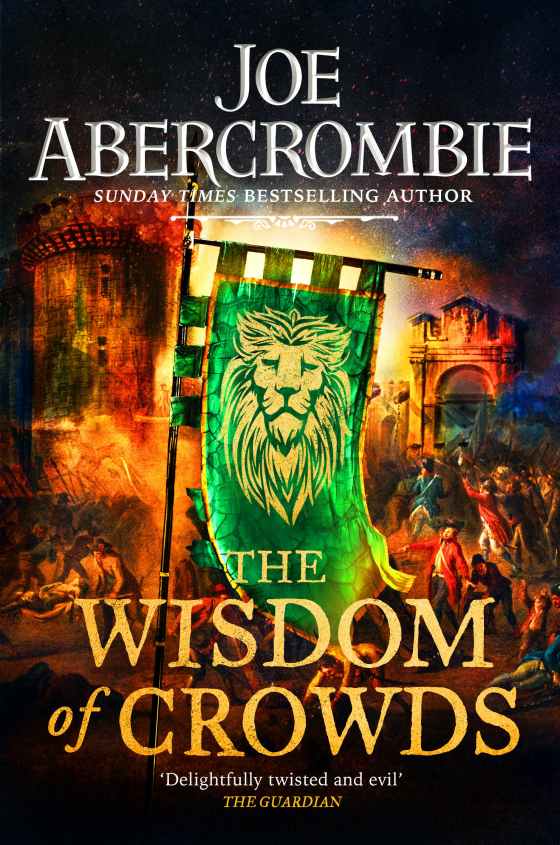
The Wisdom of Crowds by Joe Abercrombie

The Wisdom of Crowds Cover

Publisher: Gollancz (Audiobook – 14 September 2021)

Series: The Age of Madness – Book Three

Length: 23 hours and 36 minutes

My Rating: 5 out of 5 stars

Amazon

One of the best authors of dark fantasy, Joe Abercrombie, returns with the final book in his brilliant Age of Madness trilogy, the thrilling and deeply captivating The Wisdom of Crowds.

Joe Abercrombie is a particularly impressive author whose work I have been really enjoying over the last few years ever since I dove into his iconic First Law trilogy.  This great dark fantasy trilogy followed a group of complex and damaged characters who are thrust into a series of dangerous adventures in a corrupt fantasy world.  The original trilogy was pretty damn perfect, and I loved the outstanding story and universe that Abercrombie came up with.

Following his original books, Abercrombie wrote three standalone novels that continued the universe’s overall story in different ways before introducing his Age of Madness trilogy in 2019.  The Age of Madness trilogy is set around 20 years after the events of the First Law books and follows the children of the original trilogy’s protagonists as they are engulfed in additional chaotic events, including war, revolution, and lots of betrayal.  This trilogy has already featured two outstanding five-star novels, A Little Hatred (one of the best books of 2019) and The Trouble With Peace (one of the best books and audiobooks of 2020).  Due to how awesome the previous novels were, I was deeply excited for The Wisdom of Crowds, and it turned out to be another exceptional read with an impressive story to it.

Following King Orso’s decisive victory over the rebellious young hero Leo dan Brock and his wife, Savine dan Glokta, Orso believes that he has finally gained control of the Union.  However, he is unprepared for the chaos and destruction that is about to befall the kingdom.  The revolution, known as the Great Change, has finally descended upon the Union, with the people rising up and overthrowing the hated nobles.  Led by former Arch Lector Pike, known by the masses as the Weaver, the rebelling Breakers and Burners soon take the capital, Adua, bringing hope and destruction in equal measure.

Imprisoned by the mob, Orso soon discovers that there is nothing lower than a deposed king.  The freed Citizen Leo and Citizeness Savine must adapt and find new ways to manipulate a mob that both loves and hates them.  The newly raised up Chief Inspector Teufel must soon decide where her loyalties lie as she begins to see the insanity of the new rulers, while former soldier Gunnar Broad once again finds himself causing trouble as a key citizen of the new regime.  At the same time, the magically prescient Rikke has taken control of the North, capturing the former King Stour Nightfall.  However, taking the North and keeping it are two very different things, especially as the forces of her family’s old enemy, Black Calder, advance towards her, determined to free Stour.  With enemies around every corner and even her closest allies beginning to doubt her, Rikke must implement a drastic plan and make use of every tool at her disposal, even notorious turncoat Jonas Clover.

As the Great Change starts to devolve into anarchy, the death toll starts to rise and no one is safe, least of all those who have profited in the past.  Soon hard choices will need to be made and only the strongest and most cunning will survive.  The Age of Madness is well and truly here, but who will live and who will die as the fires of anger, resentment and despair burn throughout the land?  No matter who survives, the Union and the North will never be the same again, especially with unseen hands manipulating events from the shadows.

How the hell does Abercrombie do it?  I knew in advance that this was going to be an awesome book, but I was yet again blown away by the author’s clever blend of captivating storylines, outstanding characters, and outstanding dark fantasy settings.  The Wisdom of Crowds served as an excellent conclusion to the Age of Madness trilogy, and I found myself absolutely powering through this amazing novel in no time at all.  This gets another five-star review from me as I had such an incredible time reading it.

Abercrombie has come up with an exceptional narrative for his latest novel, and I deeply enjoyed the captivating and extremely dark story contained within The Wisdom of Crowds.  This novel has an impressive and memorable start to it with the aftermath of the previous novel immediately giving way to the Great Change.  This uprising quickly overcomes the existing government and changes everything, with Orso imprisoned, Savine and Leo freed from captivity and incorrectly hailed as heroes of the people, and characters like Gunnar Broad and Inquisitor Teufel pushed to the fore due to their suffering under the previous regime.  After a great extended revolution sequence, Abercrombie spends a good chunk of the first act of the novel showcasing all the severe changes to the setting of the Union, including the impacts to the protagonists, as well as the nation’s quick decline after the initial glorious revolution.  At the same time, you have the events in the North occurring at the same pace, with Rikke trying to solidify her power in the face of a rising opposition.  Most of the novel’s major storylines are either set up here or transported over from the previous novels, and it moves at a great pace with some fantastic moments.  The novel really heats up in the second act, when a group of extremists take over the Union and Rikke’s war in the North gathers speed.  The storyline set in the Union during this section of the novel is filled will all manner of insanity and terror, and this is probably one of the darkest parts of the entire book.  While there is a noticeable focus on the craziness of a Burner revolution, there is also a lot of character development occurring here, with most of the protagonists starting their last bit of major growth here, with their big plans set up.  This second act is capped off with a massive battle in the North that changes the entire fabric of that setting and provides a great deal of fantasy action and bloodshed to keep the reader satisfied, while also featuring a pretty fun story twist.

All this leads up to an impressive final act which takes up the last third of the novel.  Most of this is set in the Union and showcases the protagonists making their moves.  There are some very good scenes here, with a mixture of big character moments, destructive fights, and a cool trial sequence, which help this part of the book really stand out.  All of this leads to a major change in the plot that occurs with roughly a quarter of the novel left to go.  While there are some great scenes involved with this big shift, I must admit I was a little surprised that the book didn’t end right there, due to the resulting significant change of pace, and I wonder if Abercrombie might have been better off using this final quarter in another novel.  However, the story is still extremely cohesive, especially as it leads up to some major reveals and big character moments that had me gasping with surprise.  I really did not see some of the big twists coming, even though they were really well set up throughout the trilogy (although I really should have known who was behind everything).  The book concludes on an interesting note, with some noticeable tragedy and some outstanding character moments as the surviving protagonists settle into their new roles.  I did think that Abercrombie may have spent too much time setting up events for his next trilogy, with multiple scenes containing open-ended events that will clearly get picked up in later books.  However, to be fair it did get me excited for the next novel like it was supposed to, and I don’t think it took too much away from the overall narrative.  This was such an awesome story, and The Wisdom of Crowds’ character focus had me hooked the entire way through.

Abercrombie has a real talent for writing awesome and complex dark fantasy novels, and I really enjoyed his outstanding and compelling style.  I deeply appreciated his excellent use of multiple character perspectives to tell a rich and vibrant tale, as the story seamlessly flicks between seven major characters throughout the book.  The spread of character perspectives has been an outstanding feature of all the author’s First Law novels, and it is extremely cool to see this complex tale told from various points of view.  Not only does it ensure you get a brilliant, multifaceted exploration of the setting and the progress of the plot, but it really helps the reader get into the mind of the characters and see their personalities, emotions and opinions.  I also really appreciated the two great extended sequences that were told through the eyes of multiple supporting or one-off characters, especially as it captured the chaos and destruction of both revolution and a major battle.  The author has quite a vivid and adult writing style, which works with the realistic characters and complex storylines extremely well.  Not only does this result in some particularly graphic and powerful action sequences, including one amazing and massive pitched battle, but it also works in some distinctive and very adult dialogue.  While some of the language gets a tad over the top at times, it does give the book a very realistic feel and is a lot of fun.  Readers should be warned that this is a pretty dark tale including torture, ultra-violence and a lot of brutal deaths.

I have to say that I was quite impressed with the changes to the major setting of the Union in this novel.  While the other significant setting, the North, remains pretty much the same (its always snow, death and blood there), the Union is majorly impacted quite early on as part of the revolution known as the Great Change, which Abercrombie had been expertly setting up throughout the trilogy.  The Great Change, which was brought on by rioting workers and peasants disenfranchised by the industrial revolution that was such an amazing and distinctive feature of this trilogy, hits the city with most of the nobles, the wealthy, the ruling Closed Council, and the King all arrested.  This initial overthrowing was done pretty perfectly, with several chaotic sequences, and it eventually leads to a whole new era for the nation.  This part of the novel was very clearly inspired by the French Revolution, and I deeply appreciated the way in which the author evoked the iconic imagery of destructive historical events into his fantasy novel.  I loved the initial set-up of the new democratic government that replaced the monarchy, and I had a good chuckle at the character’s glorious ideas of a utopian society with a pompous constitution.  However, the real fun occurs when these high ideals fail miserably and are replaced by a general purge where no-one is safe.  Abercrombie did a really good job here of capturing the terror, uncertainty and horrible human nature that accompanies these sorts of purges, with a series of one-sided trials and brutal executions in front of a cheering crowd.  This chaotic setting serves as an outstanding backdrop to novel’s various storylines, and it was an amazing and dark part of The Wisdom of Crowds that made it really stand out.

As with the rest of Abercrombie’s books set in this connected universe, one of the absolute best things about The Wisdom of Crowds was the exceptional and complex characters.  Just like the previous two novels in the Age of Madness trilogy, the story is primarily shown from the perspective of seven unique and well-established point-of-view characters.  Each of these characters is extremely complex and layered as Abercrombie has been setting up some fantastic storylines around each of them throughout the course of the series.  These characters include:

  • Orso – the son of King Jezal, a point-of-view character from the original trilogy, and current High King of the Union, for whatever that title is worth. Orso is a very fun character who has probably grown the most out of all the characters featured in this series, going from a foppish, unmotivated prince, to a decisive, competent and victorious king in the second novel.  Despite his victory over his rival Leo and his secret half-sister (and former lover) Savine, Orso soon finds himself a prisoner when the Great Change leads to a people’s revolt.  Despite being imprisoned and constantly mocked by everyone, Orso keeps most of the confidence he built up in the previous novels and is a constant figure of comedy, especially with his great sarcastic observations of the events around him.  Abercrombie has done a masterful job with Orso over the last three books, and I really appreciated his growth and humour, making him one of my favourite characters in this trilogy.  Due to this it is pretty hard to see him get taken down and condemned by his people, especially as he is a much better ruler than everyone thinks he is.  I once again found myself really pulling for him in this novel, and I think he was the character I wanted to survive and win the most.
  • Savine dan Brock (formerly dan Glokta) – a formidable businesswoman and adoptive daughter of Arch Lector Glokta (the best character from the original series). Savine has been an awesome character in this trilogy, experiencing some massive highs and significant lows.  After marrying Leo and organising a revolt against her half-brother Orso in the previous novel, Savine starts this novel in chains.  However, once the Great Change occurs, she is quickly freed and must find her place amongst the revolutionaries.  Rightly terrified of being tried for her ruthless business practices, and changed by motherhood, Savine engages in charity works and tries to save herself through generosity.  I quite enjoyed Savine’s storyline in this latest novel and it had some awesome moments.  While I do think she was a bit underutilised in the middle of the book, she eventually emerges in full form and shows everyone why she is the most dangerous person in the Union.  There are some outstanding scenes surrounding her, especially that awesome court sequence, and I quite liked where her story ended up.
  • Leo dan Brock – the former governor of Angland and shining hero of the Union, before he had an arm and leg blown off during his big battle against Orso in the previous book. Leo starts this novel a shell of his former self, full of regret that his recklessness and arrogance caused his injuries and the death of his friends.  However, this regret soon turns to anger and ruthlessness as he uses his hero status to become a key part of the Great Change, attempting to manipulate it for his benefit.  I must admit that Leo was always my least-favourite character in this series, and I liked how the features I disliked about him led to his downfall in the previous book.  Abercrombie perfectly follows this up by making him a much more unlikable character in this novel, and I deeply appreciated the realistic way his personality was twisted and darkened by anger, jealousy and frustration, giving him a new ruthless edge.  Out of the characters in The Wisdom of Crowds, Leo probably goes through the most development in this novel, and it was pretty captivating to see where his new hate and frustrations led him.
  • Rikke – a Northern protagonist and the daughter of the Dogman, Rikke has had a very interesting story arc within this series due to her magical Long Eye, which allows her to see into the future. Rikke was able to outsmart all her opponents in the previous novel, taking the Northern capital and capturing her opponent, Stour Nightfall.  Now Rikke is forced to lead her people against Stour’s father, Black Calder, while also trying to balance the concerns and treachery of her allies.  I have been really impressed with Rikke’s storyline throughout The Age of Madness, and I liked the great transition from scared girl to effective leader.  This book continues to showcase her skills, even if she still appears a bit rash and too clever for her own good.  She ends up being forced to make some hard and heartless decisions, which really highlights just how far she has come.  There are some outstanding movements with Rikke in this novel, and I particularly loved the good twist around her that occurred at the big battle scene (I did see it coming, but it was still a lot of fun).  I also loved the fantastic scene where she confronts Bayaz, the First of the Magi, as it was one of the first times that you see the master manipulator of the series appearing rattled and impotent.  Rikke was a really well set up character and I really appreciated the epic and compelling storylines around her.
  • Vick dan Teufel – a Union inquisitor and protégé of Arch Lector Glokta, Vick is a master spy and investigator. Despite all her skills, Vick was taken by surprise by the revelation that Pike is the Weaver and is forced into supporting the Great Change against her will.  Falling back on her old survivalist mentality to support the winners, Vick is eventually shaken into action by the destruction caused by the Burners and finds herself supporting the losing side.  After being a little underused in the previous novel, Vick has a very strong outing in The Wisdom of Crowds and her character changers are quite essential to the plot.  Like Leo, Vick goes through a fair bit of development in this novel, although her development is a lot more positive as she tries to do what is right rather than what will keep her alive.  Vick also experiences some very crushing moments, and it was fascinating that out of all the characters, she maintained the moral high ground the best.
  • Gunnar Broad – a former Union soldier with a gift for extreme violence, who has been both a Breaker and a servant to Savine as an enforcer and bodyguard. Imprisoned after the last book, Gunnar is freed with Savine and Leo and once again finds himself drawn into the fight, despite his desire to stay out of trouble and get back to his family.  While he once again tries to be a good person at first, he is eventually seduced by the dark appeal of the Burners and truly loses himself, giving into his inner violence and anger.  While he does do some redemptive actions, Gunnar remains a bit of a lost cause, which is pretty tragic to see.  Gunnar proved to be a great character throughout this series, despite a lack of any real development, and I enjoyed his darker scenes and compelling personal insights.
  • Jonas Clover – the cunning and treacherous veteran Northern warrior who, after spending the last two books serving Stour Nightfall, betrayed him at the end of The Trouble with Peace and sided by Rikke. However, he soon finds his loyalty divided between Rikke and Black Calder, with both sides aware of his tendency to turn on the losing side, and he must finally decide who to support.  Due to his very entertaining personality and cynical viewpoint about the world, Clover was my favourite character in the series, and I love all the clever insights and subtle jokes that are characteristic of his scenes.  I really appreciated his mindset of patience, self-restraint and picking your moment, which is mostly unheard of amongst the other Northerners, and which usually sees him through most conflicts.  Despite this, Clover is finally forced to face the music in this novel after his various betrayals come back to bite him.  While he doesn’t always make the best decision, his entertaining and canny attitude ensures that the reader is constantly amused by his antics, and I am really glad that Abercrombie included him in this series.  It will be interesting to see how he is utilised in the future, especially as the author tried to evoke some similarities between his journey and that of original character Logan Ninefingers.

I deeply enjoyed each of these impressive characters, with each one bringing something very memorable and entertaining to the table.  While a couple of these characters were a bit underutilised in previous novels, I think that Abercrombie struck the right balance in The Wisdom of Crowds, with each of them shown in pretty much equal measure.  All seven character arcs are pretty awesome in their own right, but the real strength is the way that they come together to tell the overall story.  It was pretty cool to see multiple character perspectives of the same events, especially as each of these complex characters have very different views on what has happened.  I think that each of the arcs ended extremely well, with each of the characters going in some very interesting and surprising directions.  I was a bit surprised by who was left standing and in control at the end of the novel, and I must admit that I really did not foresee the fates of several of the characters.  Abercrombie sets up each of these events incredibly well, and there were some very fitting endings or transformations here.  It was interesting to see how some of these characters ended up mirroring the cast of the First Law trilogy, which seemed fitting as some were inspired by these prior characters, while others tried to escape becoming them.  I also really appreciated the way that barely any of the primary characters end up being portrayed as good people by the end of it.  While all of them initially tried to do the right thing, even the best of them is forced to make some terrible compromises which shatter their morality and impact their personality.  As a result, the reader is left with little sympathy for some of the surviving characters, and it was once again really amazing to have such morally ambiguous and naturally selfish characters.  It looks like Abercrombie might strongly feature the remaining characters again in his next trilogy, and I cannot wait to see how their various story arcs are continued.

Aside from the seven focal characters above, The Wisdom of Crowds also featured a vast collection of supporting and side characters, each of whom added a ton to the novel.  Most of the supporting characters where previously introduced in the first two novels of this trilogy, as well as a few holdouts from the original trilogy, and there weren’t too many new characters in this final novel.  The author ensures that the reader has a pretty good idea of these characters’ feelings and motivations, and it was fascinating to see the complex and powerful storylines told around several of them.  There are some really good twists around a few characters in particular, and I have to admit that I did not see most of them coming, with Abercrombie doing some masterful writing to set up these reveals throughout the entire trilogy.  Many of these side characters inspired some excellent and moving storylines, although readers should be aware that, as this is the final novel, quite a few of these characters did not survive, and I was particularly cut up by the death of one major supporting character near the end.  It will be very interesting to see what happens to the survivors in the future, and I am especially curious about a couple of key characters from the original trilogy who are set for some major events in Abercrombie’s next outing.

While I did get a physical copy of this book, I ended up listening to the audiobook instead, which proved to be an awesome decision.  The Wisdom of Crowds has a substantial runtime of 23 hours and 36 minutes (it would have placed 17th on my latest longest audiobooks list).  However, despite its length, I was able to power through it in about a week, especially after I got pretty damn hooked on the awesome story.  I found that this format moved the story along at a pretty fast pace, and it was a great way to absorb the fun and compelling details of this dark and epic tale.  It also works extremely well thanks to the outstanding voice work of the incredible Steven Pacey, who is one of my absolute favourite audiobook narrators at the moment.  Pacey, who has narrated all the other books in the First Law and Age of Madness trilogies, does another outstanding job with The Wisdom of Crowds.  Not only does he ensure that every aspect of the narrative comes across in a fun and compelling way; he also ensures that every character is perfectly brought to life.  Pacey brings back all the fun and fitting voices that were featured in Abercrombie’s previous novels, which proved to be a lot of fun, especially as he perfectly captures the unique personalities and characteristics of these fantastic figures.  Pacey makes a lot of effort to portray all the emotion and intensity of the characters, and you really get a sense of the heartbreak and darkness that surrounds all of them, especially by the end of the story.  This results in another incredible audiobook which I had an outstanding time listening to; at one point I managed to listen to it for over five hours straight and was not bored in the slightest.  As a result, I would strongly recommend The Wisdom of Crowds’ audiobook version, and it is easily one of the best audiobooks I have listened to in 2021.

With another incredible and powerful story, filled with outrageous and complex characters, impressive settings and clever twists, Joe Abercrombie brings his latest trilogy to end with the brilliant The Wisdom of Crowds.  This final book in the Age of Madness trilogy was an exceptional read, and I deeply enjoyed the dark and clever places this amazing book went.  An epic and captivating dark fantasy experience, readers are guaranteed to power through The Wisdom of Crowds in no time at all, especially as they become more and more engrossed with the excellent central protagonists.  A must-read for all Abercrombie fans, this was easily one of the best books I have read in 2021 so far and I cannot wait to see what madness and destruction are unleashed in the author’s next awesome series.

The Wisdom of Crowds Cover 2

Amazon

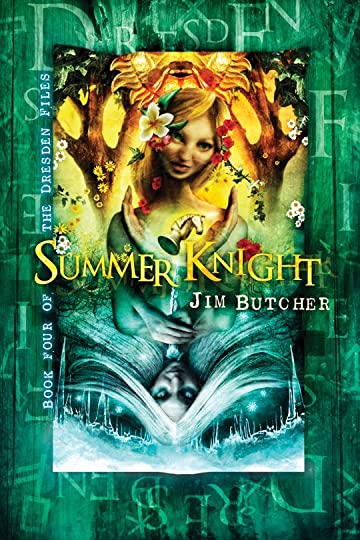
Throwback Thursday – Summer Knight by Jim Butcher

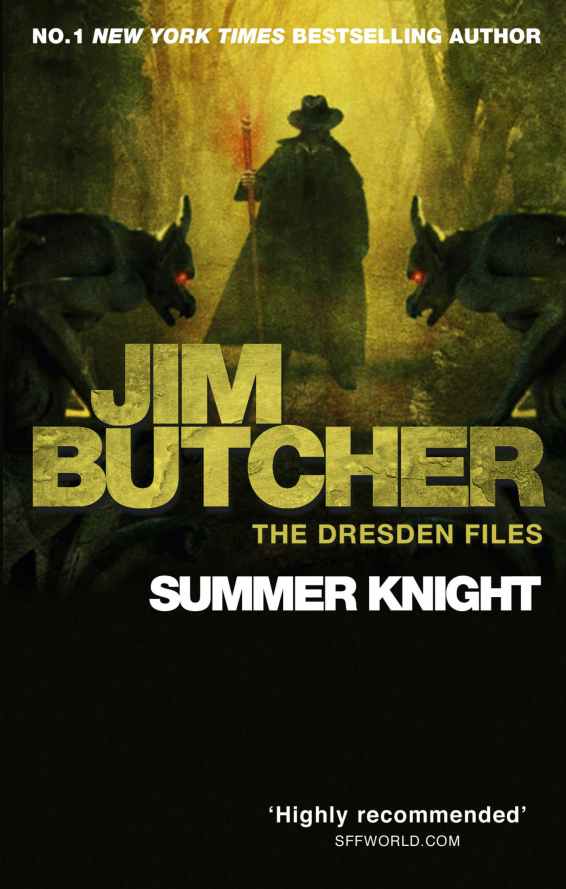
Summer Knight Cover

Publisher: Buzzy Multimedia (Audiobook – 3 September 2002)

Series: The Dresden Files – Book Four

Length: 11 hours and 13 minutes

My Rating: 5 out of 5 stars

Amazon

Welcome back to my Throwback Thursday series, where I republish old reviews, review books I have read before or review older books I have only just had a chance to read.  In this week’s Throwback Thursday I continue to explore the incredibly fun Dresden Files series by Jim Butcher with the fourth book, Summer Knight.

Readers of this blog will be familiar with my recent exploration of the epic Dresden Files series by the outstanding Jim Butcher, widely considered one of the best urban fantasy series out there.  After having an absolute blast last year with the latest book in the series, Battle Ground (one of the best books and audiobooks of 2020), I have spent a bit of time this year checking out the earlier entries in the series.  I have so far had the pleasure of listening to the first three Dresden Files novels, Storm Front, Fool Moon and Grave Peril, each of which got a five-star rating from me, and when I wanted a good audiobook to check out, the next entry in the series made the most sense.  The fourth Dresden Files novel is the impressive and compelling Summer Knight, which sets the protagonist against the fairest and most vicious opponents yet.

Following the events of Grave Peril, the White Council of wizards is at war with the Red Court of the vampires, and it is all Harry Dresden’s fault.  With vampire attacks increasing and his life consumed with finding a cure for the vampirism affecting his ex-girlfriend, Dresden is once again dragged into the conflict when the White Council arrives in Chicago.  Considered by many wizards to be a dangerous maverick, Dresden will need to find a powerful bargaining chip if he is to continue receiving the protection of the council.  Unfortunately for Dresden, the perfect opportunity has been given to him; he just wishes it were anything else.

Harry has been contacted by Winter Queen Mab, the powerful leader of the Winter Court of the Faeries, who offers him a dangerous bargain: in exchange for forgiving a previous debt, and for allowing certain concessions to the warring White Council, Harry must work a case for her.  The Winter Queen desperately needs Harry to find out who murdered a seemingly normal human, and with his life entirely in the White Council’s hands, he has no choice but to comply.  However, when it is revealed that the victim was the Summer Knight, the rival Faerie Summer Court’s mortal champion, Harry begins to realise that this will be no easy case, especially as a great deal of the Summer Court’s power was stolen after the murder.

With the Summer Court and the Winter Court gearing up for war in response to the Summer Knight’s death, Harry must quickly race to find the killer before Earth’s climate is destroyed by these powerful magical forces.  However, this is no simple case, and to solve the murder Dresden is forced to confront some of the most dangerous and malicious magical beings in existence.  Worse, the Summer Court have hired their own investigator, Dresden’s first love, Elaine, the woman who broke his heart and tried to kill him.  Can Dresden solve this murder before it is too late or will the entire world tremble at the destruction of an all-out war?

Summer Knight was another impressive and wildly entertaining release from Butcher, which did a wonderful job expanding his universe in some amazing ways.  Perfectly flowing on from the events of the previous novel, Summer Knight has an incredible story, some great characters, as well as some clever new fantasy inclusions that set up multiple future novels extremely well.  I had an absolute blast listening to Summer Knight’s audiobook format, and unsurprisingly it gets another five stars from me.

Summer Knight Cover 3

This latest entry from Butcher has a pretty amazing story that is extremely easy to enjoy.  Like the rest of the Dresden Files novels, Summer Knight can be easily read as a standalone read, although there are some compelling story threads that are continued from the prior books.  The novel starts with a damaged Harry Dresden dealing with hit squads, angry vampires and his own irritated wizard brethren.  After a fun and action-packed opening scene, Dresden soon gets drawn into another dangerous case as Mab, the Winter Queen, buys Dresden’s debt to his fairy godmother and uses it and the wizards war against the Red Court to trap him into investigating a case.  The subsequent magical murder investigation proves to be pretty fantastic, as Dresden is forced to dive into the murky magical underworld of the warring Fae courts.  After some deadly attacks, fascinating internal wizard politics, and an interesting side story about neutral half-Fae teenagers, Dresden soon uncovers the reason for the victim’s death.  I liked the twist surrounding who was responsible for murder as well as the revelation of their master plan.  Butcher did a really good job of disguising the people behind it and their methods, especially as most of the clues were often cleverly in plain sight.  This all leads up to a massive and epic conclusion, where Dresden and his allies find themselves fighting through two armies of rival Fae to try and stop the end of the world.  There are some awesome moments during this part of the novel, and Butcher throws together some epic clashes, interesting revelations, and a tragic death.  I had a particularly good chuckle at the surprising way in which the big bad was taken down, and it proved to be a great way to end this novel.  I felt that Butcher once again hit the right balance of action, drama, comedy, and character development throughout Summer Knight’s narrative, and this was another exciting and addictive read.

I really enjoyed the way in which Butcher expanded out the Dresden Files’ universe in Summer Knight, with several impressive inclusions turning this fourth book into a significant entry in the series.  Not only are events and inclusions from the previous three novels fit into this book seamlessly, but it also successfully introduces some elements that were a prominent feature of the 17th book in the series.  The most significant inclusions are those surrounding the rival Winter and Summer Courts of the Fae.  Butcher utilises a mixture of Faerie lore and his own pre-existing explanations of magical creatures to create a compelling group of characters, locked in a constant and balanced war between the Summer and Winter Courts.  The author does a good job introducing the various creatures, rules, and roles of these two competing groups of Faeries, which serves as a great basis for much of the narrative.  I also loved the fascinating examination of the differences between the two rival courts, with the Summer Court shown as caring and artistic sorts, while the Winter Court are colder and darker.  Of course, with Faeries, not everything is as it seems, and it was really intriguing the way the various plot reveals around them unfolded.  There was also a great focus on the White Council, the governing body of wizards that Dresden is a member of.  While the White Council has been mentioned in the previous novels, this was the first time that we get a deep look at their inner politics, especially as the more maverick Dresden has dragged them into a war with the Red Court of the vampires (so many Courts, so little time).  There was a particularly great council meeting towards the start of the book where Dresden and his mentor are forced to navigate the politics of the White Council to keep Dresden alive, and it was an interesting part of the book.  I really appreciated the detail that Butcher put into these expansions, and I look forward to seeing how else he expands on them between the fourth and 17th book.

As always, one of the best parts of this Dresden Files novel was the outstanding and well-developed characters, all of whom continue to develop and evolve as the novel continues.  This is particularly true with central protagonist and point-of-view character Harry Dresden.  When Summer Knight starts, Dresden is still reeling from the events of the previous three novels, particularly Grave Peril, where his lover partially turned into a vampire and then left him.  This has left Dresden an emotional mess, especially as he has spent the intervening time ignoring some of the other dangers coming at him while he fruitlessly searches for a cure to vampirism.  Dragged into this case against his will, Dresden soon starts to regain his old personality as he slowly overcomes his grief thanks to his friends and the intervention of some magical beings.  It was great to see Dresden start to heal as the book progresses, and I really appreciated the way in which Butcher explored the trauma surrounding his protagonist.  Even though he is a bit emotionally compromised, Dresden continues to be the main source of the novel’s comedy due to his sense of humour.  It is always fun to see Dresden’s witty take on the insane events occurring around him and I found myself cracking up several times throughout Summer Knight.

In addition to Dresden, Summer Knight contains an excellent group of side and supporting characters, including a combination of existing characters and newer inclusions that were introduced in this novel.  I liked the return of the werewolf gang, the Alphas, who were previously featured in the second novel, Fool Moon.  The Alphas, particularly their leader, Billy, serve as backup to Dresden for most of the novel, and it was really fun to see how much they have grown since their introduction, turning into mystical vigilantes, while also remaining a pack of nerds.  It was also great to see more of police lieutenant Karrin Murphy, who serves as a compelling female opposite to Dresden for most of the novel.  Murphy, who has also gone through a lot in the last few books, is showing a fair bit of trauma in this novel, and she ends up having some deep discussions with Dresden about it.  Despite her lack of magical abilities, Murphy serves as some impressive backup for Dresden, managing to take down several foes, including an ogre with a chainsaw.  There were also more signs of the growing romance between her and Dresden which becomes a big part of the series later, and I like the way in which Butcher is slowly building it up.  I also must highlight the inclusion of Dresden’s first love, Elaine Mallory, who suddenly reappears in his life, working for the Summer Court.  Elaine has been mentioned several times in the previous books and is a cause for a lot of Dresden’s mistrust and romantic failures.  It was great to finally meet her and see the full extent of her complex relationship with Dresden.  Elaine naturally brings out a lot of emotional issues with Dresden throughout the book, and she serves as an interesting supporting character, especially as you have no idea about her true loyalties.  These supporting characters, and more, really add a lot to the overall story and I had a great spending time with them.

Like I have with the rest of the Dresden Files novels, I made sure to grab the audiobook version of Summer Knight, a choice I am extremely thankful for.  The Dresden Files audiobooks are pretty damn awesome, mainly because of their excellent choice of narrator, actor James Marsters.  Marsters has an amazing voice, and he perfectly dives into the various characters featured within the novels, making these audiobooks an absolute treat to listen to.  I especially love the way he gets into the emotional head of the main protagonist, as well as the sheer enthusiasm he exhibits while yelling out spell conjurations.  I also enjoyed the fun voices that he assigns to some of the smaller pixies that appeared in this novel, as well as the very fitting voices that the rest of the cast received.  This voice work is pretty amazing and it ensures that readers can fly through the audiobook in no time at all.  Summer Knight’s run time was just over 11 hours, but it only took me a few days to get through due to how engrossed I got in the story, as well as the audiobook adaption.  As with all Dresden Files entries, Summer Knight comes highly recommended in its audiobook format, and I fully intend to check out the rest of the series in this same way.

Summer Knight by Jim Butcher was another exceptional entry in the awesome Dresden Files series and I had an incredible time listening to it.  With a captivating story, some complex characters and some awesome new fantasy inclusions, I deeply enjoyed this novel, and it is really worth checking out, especially in its audiobook format.  Butcher continues to shine as one of the best authors of urban fantasy and look forward to working my way through the Dresden Files in the next few years.

Summer Knight Cover 2

Amazon

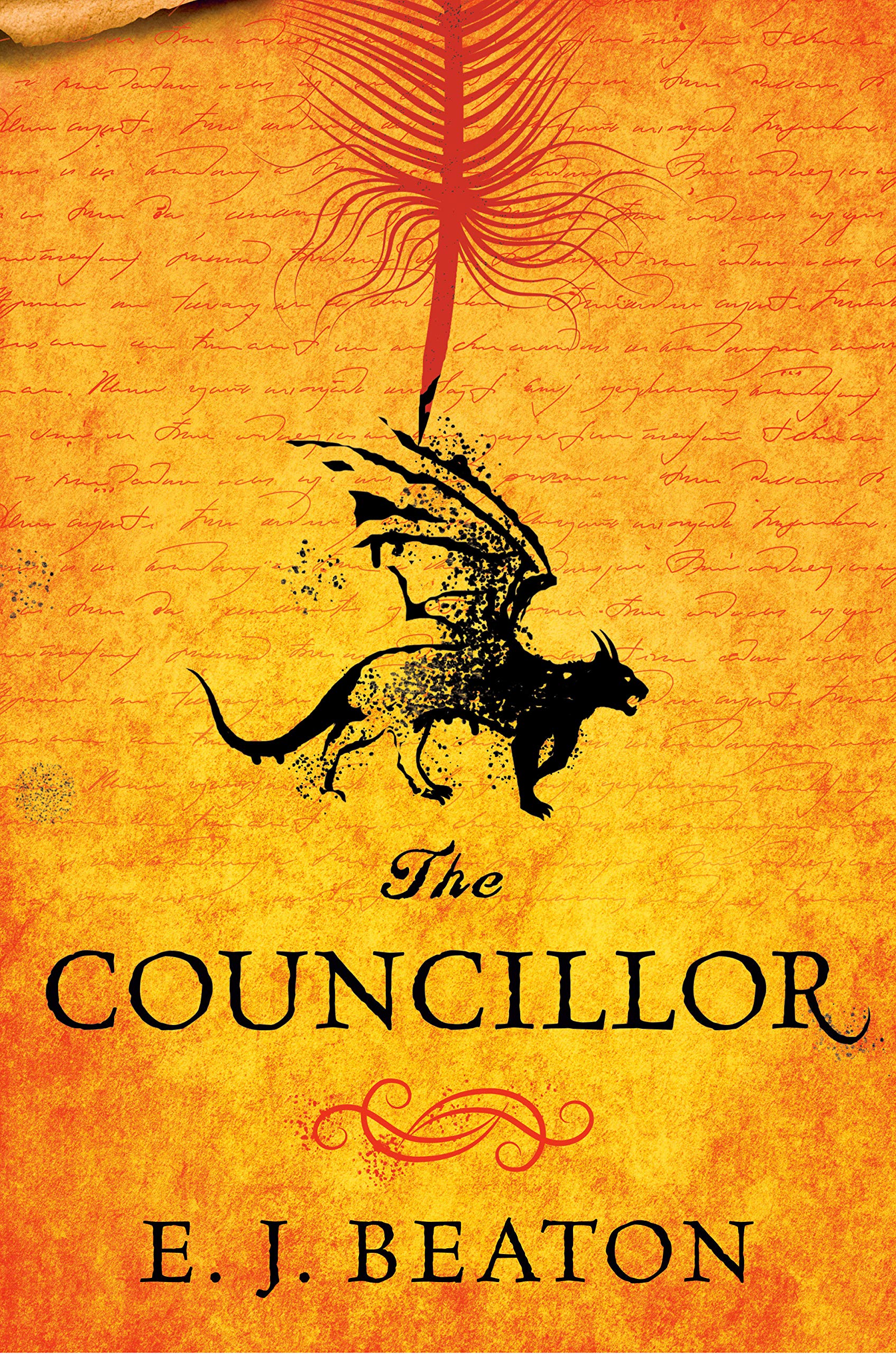
The Councillor by E. J. Beaton

The Councillor Cover

Publisher: Daw Books (Hardcover – 20 July 2021)

Series: The Councillor – Book One

Length: 442 pages

My Rating: 4.5 out of 5 stars

Amazon     Book Depository

Australian author E. J. Beaton presents an excellent and compelling fantasy debut with The Councillor, an outstanding and impressive read.

Elira is a country still recovering from a fractious war a generation ago spurred on by the tyrannical magic-wielding White Queen.  The heroic Sarelin Brey, known as the Iron Queen, defeated the White Queen and led the subsequent hunt for the elementals, powerful magical users, who were forced into hiding.  Now, Elira once again stands on the brink of ruin when a mysterious assassin manages to kill the Iron Queen, an act that threatens to split and destroy the entire nation.

The queen’s last act before her death was to name her loyal companion, the palace scholar Lysande Prior, Councillor.  As Councillor, it is Lysande’s duty to choose the next ruler of Elira from the four city rulers and to ensure a peaceful transition of power.  As the city rulers arrive at the palace, Lysande is convinced that one of them may have orchestrated the Iron Queen’s murder.  Using her position as Councillor and the upcoming decisions around Elira’s future to her advantage, Lysande begins to investigate each of the city rulers to find who is responsible for her friend’s death.

As the investigation continues, Lysande soon learns much about the city rulers, including the secrets that they harbour.  Forced to balance her investigation with her responsibilities to the people, Lysande begins to revel in the power that she has been granted, even as her problematic addiction to a magical narcotic threatens her self-control.  However, the closer she gets to the truth, the more Lysande begins to understand that there is a dark threat rising, one that could overwhelm Elira for good.  The White Queen is returning, and this time there is no mighty Iron Queen to stop her, only a brilliant scholar with a bright vision for her nation.

The Councillor was an impressive debut fantasy novel from Beaton, who combines some intriguing characters with a powerful fantasy narrative laden with political intrigue, espionage and one character’s personal journey from scholar to ruler.

Beaton utilises a pretty awesome story in The Councillor, and it is one that I quickly became quite addicted to.  Told exclusively from the point-of-view of protagonist Lysande, the novel has a powerful start with one of the major characters killed off, leaving Lysande and the entire nation in chaos, especially as it appears that a notorious magical villain has returned years after her famous defeat.  From there the protagonist attempts to identify the agent responsible for her friend’s death, believing it to be one of the four arriving nobles vying for the throne.  This results in a compelling storyline where Lysande investigates the secrets of the city rulers, while also becoming increasingly involved in the politics of the realm after being unexpectedly placed in a position of power.  As The Councillor progresses, it evolves into a very captivating piece of political intrigue as Lysande and the city rulers tour the country, attempting to rule together, initiate plans to stop the growing influence of the White Queen, while also attempting to achieve their own goals.  There are some great misdirects and red herrings featured throughout this part of the book, as Beaton attempts to disguise who the antagonist is and what the agendas of the various other politicians are.  This all leads up to a big and explosive conclusion where the traitor is revealed and several great storylines come together, resulting in some awesome action and clever political storylines.  While I was able to guess who the traitor was in advance, Beaton did a great job setting them up, and I did find the methods of the antagonist very surprising, especially the fun super-weapon that was hinted at throughout the book.  The final scenes wrap up the entire narrative extremely well and do a great job setting up the next novel in the series.  I look forward to seeing where the narrative goes from here and I think that the series has some amazing potential.

I really enjoyed the cool and memorable fantasy world that Beaton introduced in her first novel, and it serves as a great setting for the awesome story.  The nation of Elira is broken up into several distinctive political and climate zones, based around a city state, resulting in fascinating group of different and proud people.  I loved the fun blend of cultures featured within this nation, especially as it results in some compelling and entertaining cultural and political clashes.  There is a great focus on the history of Elira, especially as it relates to the previous war against the White Queen, with the scholar protagonist attempts to uncover the full truth behind the past to determine the country’s future.  There are also a ton of LGBT+ elements associated with the setting, which I really appreciated and which helped to make the setting even richer.  Add to that several hostile nations surrounding Elira, a rampaging magical queen full of vengeance, and a covert network of independent magical users with their own agenda, and you have a fantastic combination of groups and political ideals, which helps to makes the compelling narrative even more exciting.  This all proves to be pretty damn awesome, especially as Beaton does a wonderful job describing the rich and vibrant countryside of her setting, allowing the reader to have an outstanding time exploring this new nation.  I really enjoyed this captivating setting and I look forward to seeing how the author expands it in her next novel.

Easily the best thing about The Councillor are the complex and intense characters featured throughout the story.  This includes main protagonist Lysande, who is forced to endure quite a lot of growth and betrayal during the story.  Beaton weaves a powerful and intense narrative around Lysande, an orphan who was chosen to become the Iron Queen’s companion and who grew into a brilliant scholar and thinker.  After the queen’s death, Lysande is forced to become both a ruler and politician, and she finds herself excelling in the role, especially as it allows her to use her skills as a scholar and researcher to her advantage.  Due to Lysande being the point-of-view protagonist, Beaton takes a lot of time exploring her personality, feelings, and history, and it does not take long for the reader to become attached to her, especially as she finds herself in a dangerous and complex personal and political situation.  It proved to be extremely compelling to see Lysade take the political stage for the first time, and I loved the way she adapted to the intrigue and deceit, especially once she started to revel in it.  It was pretty cool to see a scholar attempt to take the throne, resulting in a very different hero from what most fantasy fans would expect.  I also enjoyed the way that the author ensured that Lysande is a bit of a flawed protagonist, especially as she is controlled by her addiction to Chimera Scale, a magical narcotic that gives her energy and different insights to the world.  This growing reliance on Chimera Scale impacts her severely throughout the novel, especially as it covers up some deeper secrets about her, which come to fore later in the novel.  An overall exceptional main character, I am very intrigued about where this story will take Lysande next.

Aside from Lysande, The Councillor features a fantastic collection of supporting characters, each of whom add a lot the story.  The main four supporting characters are the city rulers who arrive in court to put their cases for being the next monarch.  Beaton spends a bit of time building up each character, and it proves quite enjoyable learning their flaws, personalities and secrets, especially as any of them could potentially be villainous.  The most prominent of these city rulers is the mysterious and manipulative Luca Fontaine, a dangerous bastard son who became city ruler after killing his family.  Presented as a dark figure with a love of intrigue, espionage and advanced politics, Fontaine has some outstanding back and forth with Lysande, which were extremely enthralling and compelling, and Fontaine swiftly becomes one of the more entertaining and likeable characters in the novel.  I did think that Beaton could have toned down Fontain’s manipulative side just a little, especially as it made him too obvious a suspect for being the traitor, however, I don’t think this had too much of a negative impact on the narrative.  Aside from the city rulers, the book has some interesting focus on Lysande’s advisors and guards, each of whom hep her in their own unique way.  I particularly enjoyed Lysande’s new maid, Litany, especially once her real purpose in the court is revealed.  This great supporting cast proves to be a lot of fun to follow, and I really appreciated the time and detail that the author put into setting them up.

Overall, I found The Councillor to be an outstanding and deeply entertaining fantasy read with a really addictive and compelling narrative.  Australian author E. J. Beaton did an excellent job with her first book, and this is a must read for anyone who loves a fantasy tale laden with clever political intrigue.  A highly recommend fantasy debut, I cannot wait to see where Beaton takes this series next.

Amazon     Book Depository

Waiting on Wednesday – Upcoming Sequels

Welcome to my weekly segment, Waiting on Wednesday, where I look at upcoming books that I am planning to order and review in the next few months and which I think I will really enjoy.  I run this segment in conjunction with the Can’t-Wait Wednesday meme that is currently running at Wishful Endings.  Stay tuned to see reviews of these books when I get a copy of them.  For this week’s Waiting on Wednesday, I am going to highlight three upcoming novels that I think will be awesome follow ups to some excellent debut novels I’ve recently read.

Over the last year there have been some truly amazing debut novels coming out across the various genres.  This is particularly true in 2021, and I have already enjoyed some really great books written by talented first-time authors, with several other fantastic sounding ones set for release later in the year.  However, I am also particularly excited to see that some of these fantastic debuts are already producing some cool sounding sequels, which will be released over the next few months.  Considering how much fun I had reading the first books from these amazing writers, I am very excited for these sequels, especially as they are all continuing the compelling storylines from the initial books.

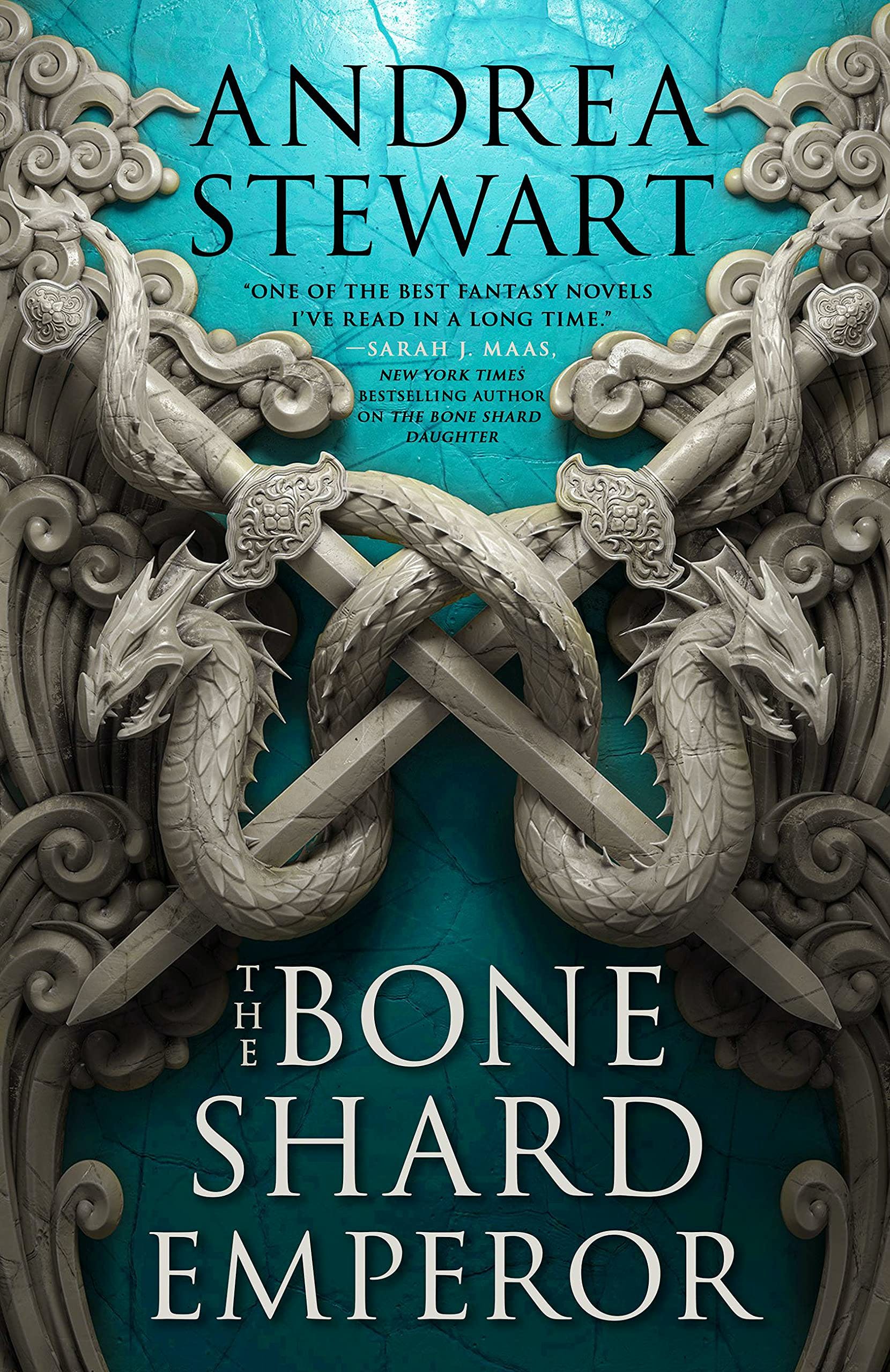
The first book I want to highlight is The Bone Shard Emperor by Andrea Stewart, the second book in The Drowning Empire series and the cool sounding follow up to the 2020 fantasy debut, The Bone Shard DaughterThe Bone Shard Daughter was a very impressive fantasy debuts and it instantly got a massive following of fans, especially as multiple reviewers quickly started raving about it.  I read it a few months after it came out and I really enjoyed its captivating story and clever setting, and it ended up being one of my favourite debuts of 2020.

The Bone Shard Emperor Cover

The Drowning Empire novels are set within a tyrannical empire of multiple islands, ruled over by a family of magicians who use shards of bone, harvested from their subjects to power dangerous constructs.  The first novel followed a great range of characters, including a smuggler, the Emperor’s rebellious daughter and several rebels, and resulted in an awesome read with a great conclusion.  I am pretty excited to check out the sequel, currently set for release on 11 November 2021, which will continue right after the events of the first book and feature a dangerous new enemy emerging to challenge the protagonists.  The Bone Shard Emperor sounds like a really good read and I cannot wait to see how Stewart’s second novel turns out.

Synopsis:

The Bone Shard Emperor is the unmissable sequel to The Bone Shard Daughter, one of the biggest fantasy debuts of 2020 – a captivating tale of magic, revolution and mystery, where a young woman’s sense of identity will make or break an empire.

The Emperor is Dead. Long live the Emperor.

Lin Sukai finally sits on the throne she won at so much cost, but her struggles are only just beginning. Her people don’t trust her. Her political alliances are weak. And in the northeast of the Empire, a rebel army of constructs is gathering, its leader determined to take the throne by force.

Yet an even greater threat is on the horizon, for the Alanga – the powerful magicians of legend – have returned to the Empire. They claim they come in peace, and Lin needs their help to defeat the rebels and restore order.

But can she trust them?

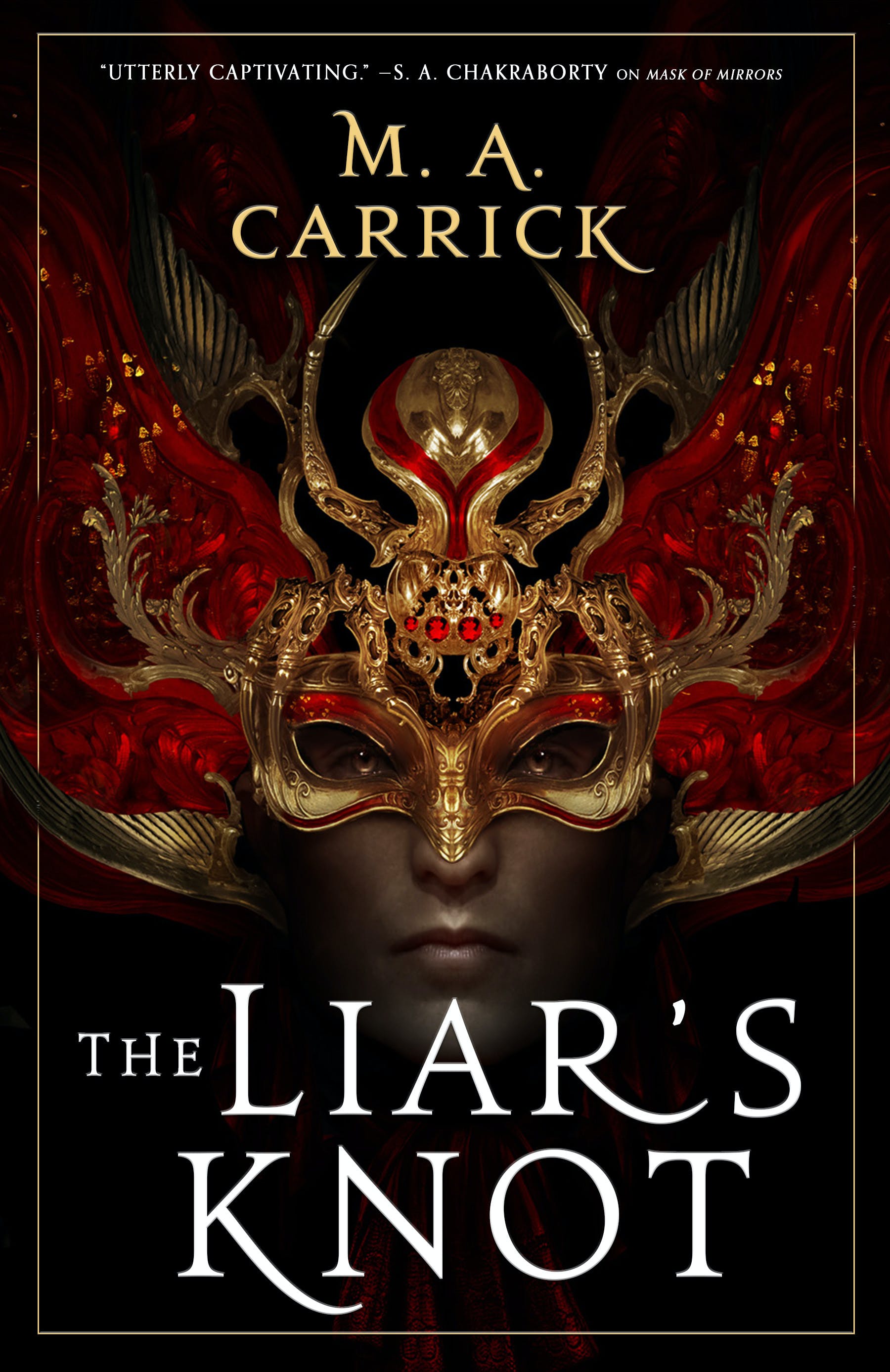
The next novel I want to highlight in this post is The Liar’s Knot by M. A. Carrick, the second book in the exciting Rook & Rose series.  The Liar’s Knot, which will be released in early December 2021, is the sequel to the excellent The Mask of Mirrors, which came out earlier this year.  The Mask of Mirrors is the first book from author M. A. Carrick, the joint pen name of Marie Brennan and Alyc Helms, two established fantasy authors, although I am counting this book as a debut as it was the first time that they wrote together.

The Liar's Knot Cover

The Mask of Mirrors, which was one of my favourite audiobooks of the first half of 2021, followed a great group of protagonists as they engage in a game of deceit and lies in an amazing fantasy setting.  Set in the troubled city of Nadežra, the book primarily followed a former street kid turned con artist as she attempts to trick her way into the ranks of a wealthy family by rescuing them from poverty.  However, her ploy sets her against a range of dangerous adversaries, including a notorious crime lord, a mysterious vigilante, and an insidious magical threat from her childhood.  This results in an awesome and compelling fantasy adventure, and I really enjoyed how the story progressed.  The next book in this series, The Liar’s Knot, will continue the impressive story with the three central protagonists coming into conflict with each other, and the other sinister forces infesting the city.

Synopsis:

Trust is the thread that binds us . . . and the rope that hangs us.

In Nadezra, peace is as tenuous as a single thread. The ruthless House Indestor has been destroyed, but darkness still weaves through the city’s filthy back alleys and jewel-bright gardens, seen by those who know where to look.

Derossi Vargo has always known. He has sacrificed more than anyone imagines to carve himself a position of power among the nobility, hiding a will of steel behind a velvet smile. He’ll be damned if he lets anyone threaten what he’s built.

Grey Serrado knows all too well. Bent under the yoke of too many burdens, he fights to protect the city’s most vulnerable. Sooner or later, that fight will demand more than he can give.

And Ren, daughter of no clan, knows best of all. Caught in a knot of lies, torn between her heritage and her aristocratic masquerade, she relies on her gift for reading pattern to survive. And it shows her the web of corruption that traps her city.

But all three have yet to discover just how far that web stretches. And in the end, it will take more than knives to cut themselves free…

The final book in this post is the really cool sounding science fiction thriller, Outcast, by Louise Carey.  Carey is a talented author who, after writing several books with her family, produced her first solo novel earlier this year, InscapeInscape was a captivating and intriguing read that featured a fantastic cyberpunk storyline in a dystopian future.  Inscape was one of the better debut novels I have read so far this year, and I was very excited to see that Carey already has a sequel on the way with Outcast.

Outcast Cover

Outcast, which is currently set for release on 25 January 2022, will continue to follow corporation security officer and spy, Tanta, as she attempts to unravel the various conspiracies dominating the futuristic society that she lives in, and which is threatening the corporation that raised her.  The first novel had a great story to it, which finished on a fantastic note, and I really enjoyed getting through this cool first book.  I am also very excited to see how this story continues, especially as the synopsis suggests that even more secrets and lies about Tanta’s past and her employers will be revealed in this latest outing.

Synopsis:

TRUTH. LIES. IT CAN BE HARD TO TELL THEM APART.

When a bomb goes off at InTech HQ, everything changes for Tanta’s corporation. Order becomes disorder. Safety becomes danger. Calm becomes chaos.

Tanta is tasked with getting to the bottom of the attack before violence and unrest overtake the city. But even though the evidence points towards rival corporation Thoughtfront, Tanta can’t shake the feeling that she’s missing something.

There’s a dark secret at the heart of the case, one that will reveal more about her own corporation than Tanta would like. And the closer Tanta gets to the mystery, the more she comes to realise something terrible:

Sometimes facing the truth can be the hardest thing of all.

As you can see from the above, there are some outstanding sequel novels coming out in the next few months, and I have to say that I am extremely excited for all of them.  All three of these fantastic upcoming books are following on from some amazing debuts, and I have very high hopes that these great authors will continue their excellent writing with these sequels.

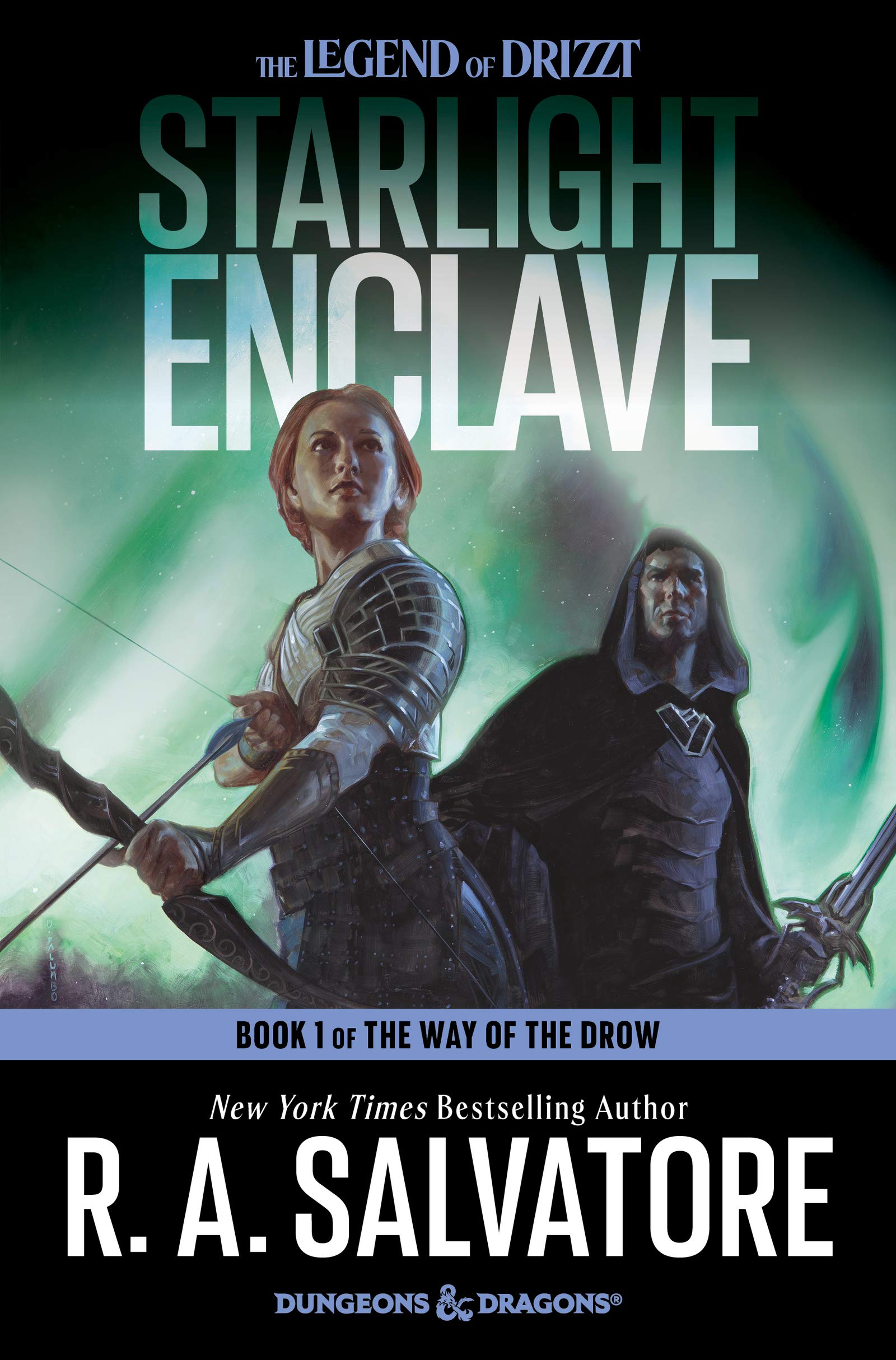
Starlight Enclave by R. A. Salvatore

Starlight Enclave Cover

Publisher: HarperAudio (Audiobook – 3 August 2021)

Series: The Way of the Drow – Book One

Length: 14 hours and 49 minutes

My Rating: 4.5 out of 5 stars

Amazon     Book Depository

The icon of the fantasy world, R. A. Salvatore, returns with a new adventure set in the world of his acclaimed Drizzt Do’Urden novels, with Starlight Enclave, the first book in The Way of the Drow trilogy.

Salvatore is an absolute legend amongst fantasy writers, having been an impressive leading figure for over 30 years with a massive catalogue of more than 60 novels.  I have long been a fan of Salvatore, who has written some of my absolute favourite fantasy novels over the years.  While he has written several great series, the author is still best known for his iconic, long-running Drizzt Do’Urden novels, which are set within the shared Forgotten Realms universe.  Salvatore has had a particularly busy couple of years, simultaneously writing two separate series, including The Coven trilogy (Child of a Mad GodReckoning of a Fallen God and Song of a Risen God), as well as the three books in the Drizzt focused Generations series (TimelessBoundless and Relentless).  All six of these recent novels have been pretty incredible, with Song of a Risen God and Boundless being amongst some of my favourite audiobooks of 2019 and 2020 respectfully.  As a result, I was pretty excited when I saw that Salvatore had another Drizzt Do’Urden novel coming out and I made sure to grab a copy of Starlight Enclave as soon as I could.

Two years after the miraculous end to the Drow siege of Gauntlgrym, peace reigns throughout the Forgotten Realms.  However, while some revel in the hard-won tranquillity, others worry about the future.  Despite having cemented his rule over the pirate city of Luskan, the Drow rogue Jarlaxle is deeply troubled by the difficulties plaguing his people.  Despite the apparent magical miracle that showed her as a false gold, the demonic Spider Queen Loth is still worshiped in the dark Drow city of Menzoberranzan, and civil war appears likely as the powerful Drow houses battle for the city’s soul.

Determined that Loth be thrown down once and for all, Jarlaxle looks for every advantage and weapon he can get his hands on.  One of his more ambitious plans leads him to arm his closest friend, the recently resurrected Zaknafein Do’Urden, with two mighty swords of power, including the notorious blade Khazid’hea, better known as Cutter.  With a sly and dark intelligence of its own, Khazid’hea has corrupted many wielders over the years, and its last master, the half-Drow Doum’wielle, may prove to be the missing piece in Jarlaxle’s latest master plan.  Unfortunately, Doum’wielle was lost years before, thrown through a magical portal to the far north, and to find her Jarlaxle will need to embark on another dangerous quest.

Gathering three mighty companions in Zaknafein, the human priestess Cattie-brie and the former assassin Artemis Entreri, Jarlaxle leads them to the extreme far north, a place few have travelled.  However, they are unprepared for just how dangerous this northern land can be, with new foes and mysterious phenomenon they have no idea about.  But there are far great surprises waiting in store for them, ones that could change the very fabric of the world and alter the course of the upcoming Drow civil war.

Starlight Enclave is another compelling and fun fantasy novel from Salvatore who continues to expand and polish his iconic characters and settings with another great adventure narrative.  This latest book contains a fantastic story that not only takes the series back to its bold adventurous roots, but which also sets up a great new trilogy that will no doubt be some of my favourite books of the next couple of years.

This new book contains a distinctive and powerful narrative that starts off a couple of years after the events of the previous novel, Relentless.  The story starts off by setting the scene for a substantial amount of the plot while also recapping some key events of the previous novels in this very long-running series.  It took me a little while to initially get into this book, but once the story got to a fantastic and intense sea battle around 50 pages in, I was pretty hooked.  From there, the story diverts into two distinctive paths, the first following Jarlaxle and his companions as they venture out into the north, while a second following main series protagonist Drizzt Do’Urden, as he takes his daughter Brie to meet his martial arts master, Grand Master Kane.  While initially pretty evenly split, the Jarlaxle adventure storyline quickly becomes the dominant narrative thread, with Drizzt’s storyline stopping about halfway through.  I personally was fine with this; by this point, I was really enjoying the unique and cool tale being told around the four adventurers as they discover new lands and great dangers in the far north.  This second half of the novel is very intriguing, and Salvatore ensures that there is a great blend of action, character development and world building.  Just like with most of Salvatore’s novels, the fight scenes within Starlight Enclave are a thing of beauty and the author does an amazing job bringing the various fantasy battles to life, so much so the reader feels like they are in the room with them.  The narrative eventually ends a bit of a cliffhanger that places most of the characters in mortal peril and which serves as a pretty cool conclusion to this great tale.  I had a wonderful time getting through this story, and I am very intrigued to see how the narrative continues in the rest of the trilogy.

Due to Starlight Enclave being part of the long running Drizzt Do’Urden series, there is a bit of a question about how easy it is for new readers to enjoy this latest book.  I will admit that there might be some difficulties for those unfamiliar with the series.  Salvatore has built up quite a lot of background lore in the last 30+ years, and large amount of this comes into play throughout the book as there are a substantial number of references to previous adventures and characters.  In addition, new readers might not be familiar with Salvatore’s writing style, which is very similar to how he wrote the original novels back in the 1980s, and as a result, they have a more classic fantasy adventure feel to them.  As someone familiar with the previous adventures (although I could use a refresher) and the author’s style, I managed to get into this novel quite well, although I could potentially see new readers having a bit of a harder time breaking into them.  Salvatore does take the time to explain the relevant bits of lore, and readers that pay attention should be able to follow the story without any substantial problems.  I do think that, at this point, most of Salvatore’s novels are probably best read by his long-term fans, but newer readers will probably find something that they enjoy within them.

Unlike the previous trilogy of novels, which was set in more established settings, Starlight Enclave takes the reader on a big adventure into some brand-new areas of this massive fantasy world.  Most of the story takes place in the far, far in the north of the planet, where very few southerners have ventured.  This is a pretty unforgiving land of ice and snow, which proves a real challenge to survive in.  Salvatore does a really good job bringing this snowy landscape to life, and it proves to be an excellent and treacherous setting for the story, especially as the protagonists soon discover that their magic does not work the same way as it does in the south, severely weakening them.  Salvatore also does some major world-building in this book, as he introduces some big new civilisations and opponents.  While I won’t go into too much detail about them here, I will say that it is a pretty major new inclusion, and it is clearly one that is going to have some significant impacts on the Drizzt Do’Urden series going forward.  Some of the new major locations and races are extremely cool and Salvatore has successfully introduced some great and intriguing new entries into this wider world.  I look forward to seeing how these elements are expanded in the future novels, and I have a feeling they are going to produce a few great surprises down the line.

You can’t talk about one of Salvatore’s novels without mentioning the fun and compelling characters.  Starlight Enclave is a great example of this, as it includes a fantastic range of characters, with both intriguing new characters to beloved long-running figures from the overarching series.  Over the last couple of Drizzt Do’Urden novels, Salvatore has noticeably moved away from some of his classic protagonists and has started to focus on the unique combination of the Drow characters of Jarlaxle and Zaknafein.  I quite like these two great characters, especially the constantly manipulative and canny Jarlaxle, and together they form a fantastic pairing who play off each other’s personalities perfectly.  The inclusion of other main characters, Cattie-brie and Artemis Entreri rounds out the main quartet nicely and presents a great group of veteran adventurers who are each looking for something very different, whether it be hope, redemption or the long-lost joy of adventure.  Long-term fans of Salvatore’s books may be a little disappointed that some major characters, such as Regis and Wulfgar, are overlooked in this novel, but I was personally more than happy with the four main characters Starlight Enclave ended up focusing on.

The other character who got a bit of attention in Starlight Enclave is the overarching series’ main protagonist, Drizzt Do’Urden, who is the focus of the book’s secondary storyline.  Like some of the other major characters, Drizzt has not been as heavily featured in the last few books as Salvatore experiments with different protagonists.  This is still true in Starlight Enclave, with less than a quarter of the book given over to Drizzt’s adventure.  Drizzt still shines as a character, especially as he is going through quite a lot.  Drizzt is facing a bit of a crisis of faith and self-identity, brought on by his unique experiences in the previous trilogy when he ascended to a higher plain of existence to escape a deadly foe.  Brought back by the love of his family, Drizzt still isn’t all there, and it is quite fascinating to see the more distracted and spiritual version of the character.  Due to this development, Drizzt’s scenes tend to be quite philosophical in nature rather than action orientated, and there are several detailed discussions and debates about religion and the morality of the Drow.  While not as exciting, Drizzt’s scenes are pretty interesting and form a great counterpoint to the other storyline.  Salavatore is clearly building to something big here surrounding Drizzt, and I feel like there are going to be some other major changes around him in the coming novels.  Still, it was nice to see a somewhat more peaceful Drizzt in this book, and after all these years, I had a smile to see him as a father rather than a warrior.

To enjoy this cool novel, I ended up grabbing the audiobook version of Starlight Enclave, which was narrated by Victor Bevine.  This audiobook has a pretty decent runtime of just under 15 hours, which I was able to get through in around a week.  I really enjoyed this version of the book, and I felt that it helped me get more entrenched in the landscapes and detailed fantasy world that Salvatore produced.  Bevine, who has narrated a substantial number of Salvatore’s previous novels, does another great job here, and it was great to once again here his take on the various characters, especially as there is a bit of continuity from the previous audiobooks I have enjoyed.  Bevine does a good job portraying each of the characters contained within Starlight Enclave, and I like the fun accents he does for the various races, especially the dwarves, who get some fun Scottish tones.  Bevine ensures that this audiobook moves along at a fast and exciting pace, and I always enjoy hearing his narration of these exciting and compelling adventures.

In the amazing Starlight Enclave, the iconic R. A. Salvatore continues to expand his impressive and long-running Drizzt Do’Urden series with another bold adventure novel.  This great novel does an awesome job setting up the cool new The Way of the Drow trilogy with a unique and exciting story and some compelling world-building.  I had a wonderful time getting through Starlight Enclave and it is an excellent read, especially for those established fans of the author who will no doubt love to see another classic fantasy tale.  An overall outstanding book, I am extremely excited to see how the rest of this new series unfolds.

Amazon     Book Depository

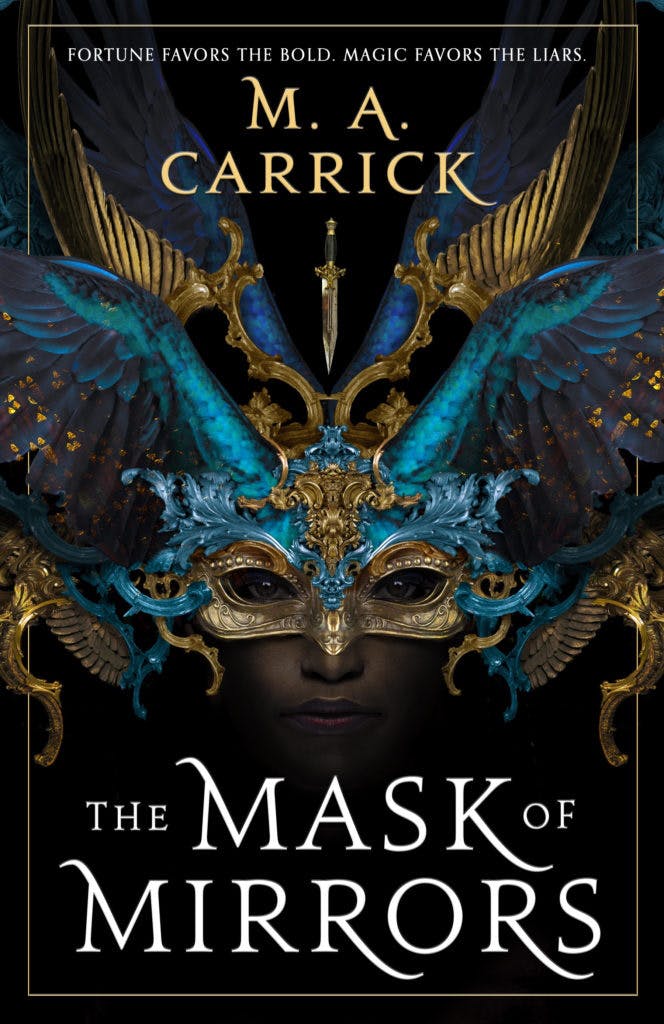
The Mask of Mirrors by M. A. Carrick

The Mask of Mirrors Cover

Publisher: Orbit (Audiobook – 19 January 2021)

Series: Rook & Rose – Book One

Length: 23 hours and 13 minutes

My Rating: 4.5 out of 5 stars

Amazon     Book Depository

Magic and masquerade combine into one of the most creative fantasy releases from the first half of 2021 with The Mask of Mirrors by M. A. Carrick, the first book in the Rook & Rose trilogy.

The Mask of Mirrors was a fantastic novel that caught a lot of buzz earlier in the year.  This book was written by M. A. Carrick, the joint pen name of Marie Brennan and Alyc Helms, two established fantasy authors who are teaming together for their first novel.  This debut novel was pretty impressive and the two talented authors ended up producing an exciting and complex fantasy tale that sees a young con artist attempt to change her fate.

Welcome to Nadežra, a city of iniquity and greed that forms the gateway between two warring cultures.  Many people call Nadežra home, although few truly prosper, with only the great noble houses and their supporters gaining any true wealth.  However, one young woman is about to change everything.  Ren is a former street rat of Nadežra who escaped the city years ago to seek her fortune.  Returning after several years, Ren has taken on an entirely new persona: Renata Viraudax, a mysterious and seemingly wealthy noblewoman from the capital, come calling on her long-lost relatives.  Ren hopes to con her way into the once great noble family of House Traementis and use their name and legacy to make her fortune and ensure a comfortable life for herself and her sister.  But as she begins to worm her way into the family, she soon finds that the life of a noble in Nadežra is far more complex than she ever imagined.

Despite their noble standing, House Traementis is in poor shape, and if Ren is going to make money off them, she first needs to ensure their success.  However, a powerful rival family is seeking to destroy House Traementis, and they will do anything in their power to get their way.  Forced to work with criminals and shadows to achieve her goal, Ren will find just how ugly the glittering nobles of Nadežra can be.  Unbeknownst to Ren, a far more insidious presence is lurking within the city, killing children and unleashing corrupt magic for their own goals.  Worse, this evil has a deadly connection to Ren’s past and wants to use her to destroy everything she holds dear.  Can Ren overcome this evil while maintaining her cover, or will the nobility of Nadežra eat her whole?

This was an extremely captivating first outing from this new writing team, and I deeply enjoyed the cool and compelling story that they came up with.  The Mask of Mirrors is a complex tale that expertly combines intriguing and clever fantasy elements with a thrilling confidence trick, as the protagonist attempts to work her way into high society.  Of course, nothing works out that simply, as the protagonist soon finds herself embroiled in all manner of scandals, plots and deadly feuds, producing an excellent story. 

While I did enjoy the overall narrative, the book did start off a little slow and it took me a while to get really excited about it.  I personally only got hooked when the character of the Rook was added in.  The Rook is a mysterious, Zorro-esque (perhaps more Tuxedo Mask than Zorro) character who haunts the streets of Nadežra, fighting oppression and tyranny while thumbing his nose at authority.  Following a great duel sequence, the mystery of the Rook’s identity becomes a major part of the plot, and I found myself really getting into this and the other interesting storylines.  The rest of the novel flows at a fantastic pace, especially after the authors set up so many fascinating and compelling plot points at the start of the book that slowly come to fruition.  There are some amazing moments throughout the novel, and I was really impressed by a particularly tragic moment that occurred around two-thirds of the way through, which was shocking and surprising.  The entire narrative comes together in an excellent conclusion, providing a satisfying and moving ending, while also setting up some excellent moments for the next two entries in the series.  I did think that the novel could maybe have benefited from either finishing at the big moment I mentioned above, or by trimming around 100 pages out of the middle of the book.  Some of the twists at the end of The Mask of Mirrors were also a little predictable, especially around the identity of the antagonists (it literally could not have been anyone else).  However, I think that the eventual reveal about who was under the Rook mask was handled beautifully, and I honestly did not know which direction they were going to go in for much of the plot.  I had a really amazing time getting through this story, and I look forward to seeing how these two talented authors continue it in the next two entries in the series.

The Mask of Mirrors contains a fantastic collection of characters who offer up a range of different perspectives and vantage points to tell a massive and complete narrative.  The authors behind this book spent a lot of time building up the various characters, ensuring that they had intriguing and tragic backstories, which leads to some fantastic development throughout the course of the novel and the entire series.  The most prominent character is Ren, a former local who attempts to pull off and ambitious con.  Ren is a confident, talented, haunted figure, who experienced great tragedy at an early age and is still trying to pull herself together.  She is forced to return to the city that she fled from years before to achieve greatness and make money and ends up connecting to her heritage as well as being forced to relive her greatest mistakes and traumas.  I loved the fantastic storylines surrounding Ren, and she proves to be quite a complex character.  Rather than being obsessed with money and dislike of the noble class in Nadežra, Ren grows to care for her marks and works to save them and the entire city when the antagonist makes their move.  Ren proves to be an exceptional central character to follow, especially as she provides the most insight into one of the main magical disciplines featured in the book, and it will be very interesting to see how her storyline continues later in the series, especially after she gains a mask of her own.

Other great characters contained within this novel include ruthless rising crime boss Derossi Vargo, a man with great ambition who is willing to risk anything and anyone to achieve his goal.  Vargo, a seemingly self-made man, proves to be one of the most entertaining and enthralling figures in the entire novel, and I deeply enjoyed seeing him work with Ren while enhancing his own plans.  It looks like Carrick has some major plans for Vargo, and he could be an amazing overarching antagonistic figure.  Another excellent character is Grey Serrado, a police officer and friend of the Traementis who finds himself investigating some of the major activities occurring the city.  Grey is a conflicted and damaged character, constantly torn between his duty as an officer and his heritage.  He goes through some major events throughout this novel and looks set to be a major figure throughout the rest of the series.  I also enjoyed Ren’s adopted siblings Tess and Sedge, who act as fantastic supporting figures to Ren and her plans.  Carrick develops them quite nicely and they prove to be entertaining figures who have a long and caring relationship with Ren.  I also appreciated the focus on the members of House Traementis, the people that Ren is trying to con.  The Traementis are a once great house who have fallen on hard times and are slowly falling into oblivion due to a rumoured curse.  While you initially aren’t too concerned with these characters, due to their status as patsies, the three surviving members swiftly grow on you, enough that you eventually start to judge Ren’s continued attempts to con them.  Finally, I have to say that the masked Rook was a particularly awesome character, and I deeply loved his inclusion in the plot.  It was so much fun trying to figure out who he was, and the authors utilised him to perfection to create an outstanding narrative.

You cannot talk about The Mask of Mirrors without discussing the complex and distinctive setting that is the city of Nadežra.  Nadežra is a sprawling, independent city state resting on a delta, filled with palaces, slums, massive buildings and all manner of different people.  Due to its unique history, Nadežra is home to several distinct ethnic groups, the local Vraszenians underclass and the Liganti upper class.  The two ethnic groups are opposites, and there is substantial friction between them, especially as the Vraszenians feel like second-class citizens in their own historical city.  While most of the novel shows the two groups living mostly in harmony, the lingering tension between the two groups becomes a major plot point as the novel, and I think that the authors did an outstanding job highlighting this and using it as part of the story.  Carrick provides detailed explorations of the different cultures between the two groups, and it was interesting to see how it partially paralleled some real-life political situations.  It was also quite interesting to see that, despite the cultural differences and clashes, Nadežra proves to extremely woke and tolerant when it comes to issues of gender and LGTB+ issues.  Not only are there several prominent female figures within the city but there also several homosexual, nonbinary and transgender characters.  I love the way in which most modern fantasy novels are featuring more and more of these aspects in their settings, and this was a great example of that.  The city of Nadežra proves to be a very magical place, and there is so much detail, backstory and culture contained within that the reader will feel like they are actually walking the streets.

Carrick also comes up with several distinctive forms of magic, which are as diverse and different as the various cultures contained within the city.  There are three major forms of magic shown in the book, although I had to say that I found all three of them to be a little less dramatic than you would expect in a fantasy book.  The first one of these is numinata, which is sort of a combination of geometry and astronomy, often using complex glyphs or geometric patterns.  Numinata is generally used by the Liganti and is considered a more cultured and precise form of magic.  The Vraszenian magic, on the other hand, is based on patterns and dreams, and is mostly shown through the protagonist’s pattern reading, a form of tarot card reading which gives glimpses into the past, the present and the future.  The final form of magic is imbuing, which allows the user to put a little bit of their essence into an item or product to enhance its effect.  All three magics are featured fairly prominently within The Mask of Mirrors and prove to give the novel a unique feel, while also highlighting the cultural and social differences between the ethnic groups.  While I did think that much of the magic was a little undefined in the novel, it becomes a key part of the plot, and it was interesting to see how the combination of magics could create some nightmarish results.  Overall, I deeply enjoyed the extraordinary and detailed setting that Carrick came up for The Mask of Mirrors and I found myself getting really lost in its spectacle and details.  While I would have preferred just a little more info about the universe’s magical rules, I felt that Carrick did a wonderful job pulling this together, and it was a definite highlight of this great book.

I ended up listening to the audiobook version of The Mask of Mirrors, narrated by Nikki Massoud, who has done several interesting audiobooks in the last year.  While this is a pretty long audiobook (at 23 hours and 13 minutes, it is the 17th longest audiobook I have ever listened to) I am actually incredibly glad that I ended up checking out the audiobook format of this book.  The complex narrative and immensely detailed setting really came to life, and I found myself absorbing a whole lot more of the story and the beauty of the background.  However, the real advantage of this format was the outstanding narration by Massoud.  Massoud did an exquisite job portraying the various characters featured within The Mask of Mirrors, capturing each figure perfectly and providing them with an outstanding and wildly fitting voice.  To achieve this, Massoud utilises a wide array of different voices and accents, which really help you differentiate the various characters, and which help to show their nationality or social status.  I was particularly impressed at how Massoud was able to showcase the various personas of the main character, Ren.  This was achieved by seamlessly changing accents depending on which character Ren was playing at the time.  For example, when Ren was with her sister or pretending to be a local, Massoud would use the rougher, more exotic accent that all the Vraszenian characters have.  However, when the character changed back into the persona of Alta Renata, her voice would become a lot more cultured, mimicking the nobility.  This seamless change between the various voices was perfectly done, and I really appreciated the narrator’s determination to capture the separate halves of the character.  This was some truly impressive voice work, and I think that listening to the audiobook format ended up adding to my overall rating for the novel.

The Mask of Mirrors by M. A. Carrick is an outstanding and moving fantasy novel that I had a wonderful time reading.  Featuring an excellent narrative, some complex characters and a detailed and memorable fantasy setting, this debut novel from the writing team of Marie Brennan and Alyc Helms was an immense amount of fun and I really got into this fantastic story.  The Rook & Rose trilogy looks set to a spectacular series and I am quite excited to see how all the books turn out.  The next entry, The Liar’s Knot, is set for release in December, and I look forward to continuing this great series into the New Year.

Amazon     Book Depository

Waiting on Wednesday – The Bone Ship’s Wake by R. J. Barker

Welcome to my weekly segment, Waiting on Wednesday, where I look at upcoming books that I am planning to order and review in the next few months and which I think I will really enjoy.  I run this segment in conjunction with the Can’t-Wait Wednesday meme that is currently running at Wishful Endings.  Stay tuned to see reviews of these books when I get a copy of them.  For my latest Waiting on Wednesday I take a look at one of my most anticipated reads for the second half of 2021, The Bone Ship’s Wake by R. J. Barker, the final book in The Tide Child trilogy.

The Bone Ship's Wake Cover

Most fantasy readers will be familiar with the incredible talent that is R. J. Barker, especially as the author has been one of the leading authors in the genre since their debut in 2017.  I have been a major fan of Barker’s ever since I read the first book in his The Wounded Kingdom series.  This first book, Age of Assassins, was a great read that focused on an intriguing pair of assassins in a dark fantasy world.  I had a fantastic time reading Age of Assassins, and Barker swiftly followed his debut with Blood of Assassins and King of Assassins, both of which were better than the last.  I deeply enjoyed The Wounded Kingdom novels, and Barker made sure to capitalise on this success by releasing another amazing series the following year.

This second series was the outstanding and impressive The Tide Child trilogy.  Set in another unique dark fantasy world, The Tide Child novels follow a condemned crew who are forced to serve aboard black ships made from the bones of sea dragons and fight in a deadly, long running war.  The first novel in this series, The Bone Ships, introduced the central characters and set the crew on an epic quest to find and kill the last dragon.  This was an incredible and outstanding novel, as Barker was able to produce a powerful and compelling read that made full use of its nautical setting and features.  The Bone Ships was one of my favourite books and audiobooks of 2019 and is a very highly recommended read.  Its sequel, Call of the Bone Ships, was another five-star read that was a particularly strong 2020 novel.  This second Tide Child novel had a great plot, which saw the crew, particularly its Shipwife, Meas Gillbryn and main character, Joron Twiner, start a rebellion in order to end the war and save the returning dragons.  Call of the Bone Ships ended on a fantastic cliffhanger, which leads us into the final book, The Bone Ship’s Wake.

The Bone Ship’s Wake, which is currently set for release on 28 September 2021, has an amazing amount of potential and I already know that it is going to be one of the better fantasy books of the year.  I have been hoping to feature this novel in a Waiting on Wednesday article for a while, but I had to wait for the cover to be revealed.  The wait was worth it however, as the new cover looks pretty damn impressive (all The Tide Child novel’s covers have been exceptionally cool).  In addition, we also have a brief synopsis, which provides some intriguing hints about what is going to happen with this final book.

Synopsis:

Discover a brilliantly imagined epic fantasy of honor, glory, and warfare in this action-packed conclusion to the David Gemmell Award-nominated trilogy.

Joron Twiner’s dreams of freedom lay shattered. His Shipwife is gone and all he has left is revenge. Leading the black fleet from the deck of Tide Child, he takes every opportunity to hurt the Hundred Isles he is given. But his time is limited.

His fleet is shrinking, the Keyshan’s Rot is running through his body, and he hiding from a prophecy that says he and the avian sorcerer, the Windseer will end the entire world.

But the Sea Dragons have returned, a miracle in itself, and who is to say that if you can have one miracle, there cannot be another?

Whelp, I know that I am excited for this.  It looks like Barker plans to end his trilogy on a massive high note, with lead character, Jordan Twiner, continuing the rebellion that was started in the previous book.  It will be very interesting to see how the entire story unfolds, especially as Twiner is dying from a disease, is missing the guiding influence of his Shipwife (captain) who sacrificed herself for her crew, and is also an apparent prophesised world destroyer.  There are so many awesome storylines that need to be wrapped up from the previous novel, and I cannot wait to see what Barker has planned for this final novel.  You have to know that there are going to be some major moments and twists featured in this final book, and I am expecting a particularly large and impressive naval battle at some point (I’m picturing rebel ships and dragons versus everyone else).  There is also likely to be a lot of painful and moving character development, especially as Twiner gets closer to either his death or achieving his unwanted destiny.  It will also be great to see what happens to some of the various side characters, as you become rather attached to several in the previous two books.  All of this should be pretty epic, and I am dying to see how it all comes together.

As you can probably tell from the above, I am pretty keen for this final novel in The Tide Child trilogy.  Barker is an exceptional author, and based on all his prior works, I know that this will be an incredible and captivating novel.  The Bone Ship’s Wake has nearly unlimited potential and I have no doubt that Barker will write one of his best novels yet.  This will be one of the best fantasy books of there year, and if you have not explored The Tide Child trilogy yet, you are missing out.

Throwback Thursday – Daemonslayer by William King

Daemonslayer Cover

Publisher: Black Library (Audiobook – October 2000)

Series: Gotrek and Felix – Book Three

Length: 9 hours and 38 minutes

My rating: 4.75 out of 5 stars

Amazon     Book Depository

Welcome back to my Throwback Thursday series, where I republish old reviews, review books I have read before or review older books I have only just had a chance to read.  For this Throwback Thursday, I am doing a bit of a double feature by reviewing two of the outstanding entries from the iconic Warhammer Fantasy franchise’s Gotrek and Felix series by the brilliant William King.  I have just published a review for the second book in the series, Skavenslayer, and, after some rapid audiobook listening, I have also pulled together a review for the third book, Daemonslayer.

After the epic conclusion of the battle of Nuln in Skavenslayer, Dwarf Slayer Gotrek Gurnisson receives a mysterious message and immediately sets out on the road, convinced that this missive may be the key to finding his much desired glorious death.  Accompanied as always by his companion, the former poet turned reluctant adventurer Felix Jaeger, Gotrek marches to the northern parts of the Empire to meet his destiny.

Arriving at their destination, Gotrek and Felix learn that a group of dwarfs are planning an expedition to find the lost dwarf stronghold of Karag Dum, and they want Gotrek to accompany them.  Destroyed in ages past, Karag Dum now lies in the middle of the Chaos Wastes, the most dangerous place in the entire world.  Wracked by the shifting winds of magic, marauding war bands, mutating warpstone and the foul essence of Chaos, no one can cross the Chaos Wastes and survive, and only death, madness or mutation awaits those who try.  However, expedition leader Borek Forkbeard has come up with an ambitious plan to fly over the Chaos Wastes in a giant, experimental airship, designed by an unstable engineer turned Slayer.

Determined to make up for previous failed attempt to reach Karag Dum, Gotrek agrees to accompany the expedition, with an inspired Felix accompanying him.  However, even with all the advantages that the airship provides, this will still be a perilous journey.  Many dangerous things lurk in the Chaos Wastes that will not hesitate to destroy the dwarven company for their dark gods.  At the same time, Gotrek and Felix’s old foe, Grey Seer Thanquol, plots from the shadows, determined to claim the airship for the Skaven cause.  But the very worst dangers will be found at Karag Dum.  A terrible foe lies within, waiting for revenge and determined to destroy all before him.  Can even the legendary Gotrek and Felix stand up to the wrath of a deadly Bloodthirster of Khorne, especially one who appears destined to kill Gotrek and destroy all who stand with him?

I am having so much fun getting through this cool series and I really wish I had checked it out many years ago.  Daemonslayer is another incredible read that continues the fantastic Gotrek and Felix adventures that started in Trollslayer and were continued in Skavenslayer.  William King has come up with a pretty intense story for this third entry in the series, and I loved the change in writing style featured within it.  An exciting and character-driven tale, this was easily the best entry in the series so far, and I deeply enjoyed the time I spent getting through it.

Daemonslayer contains an impressive and intense narrative that proves to be extremely addictive and a lot of fun to read.  Unlike the previous novels in the series, which featured a collection of short stories, Daemonslayer is actually a complete story with one continuous narrative.  This is an interesting change of pace, and one that I think works extremely well, especially as it cut down on some of the repetition that was an issue in Trollslayer and to a lesser extent in Skavenslayer.  King writes a fantastic story that quickly gets into the action and adventure as the protagonists embark on an epic and potentially lethal quest.  While not a collection of short stories, King does break the book up into several distinctive sections, each filled some unique plot points and antagonists.  These sections are pretty linear and flow into each other extremely well, resulting in a very cohesive and entertaining narrative.  Like the rest of the novels in the Gotrek and Felix series, readers do not need a lot of background knowledge about the Warhammer Fantasy world to enjoy this book.  While I would probably suggest reading Skavenslayer first, Daemonslayer can be read as a standalone book, and all readers are generally in for a good time with this novel.

The action and adventure flies pretty fast and thick throughout Daemonslayer, with highlights including a lengthy battle against an army of Skaven towards the start of the novel, exploration in the dark tunnels of Karag Dum and the final epic fight sequence against the hordes of Chaos.  King is particularly skilled at writing exciting and powerful battle sequences, and I loved how he managed to bring the uniqueness of a large-scale Warhammer battle to life.  Part of this is because the author makes great use of multiple character perspectives throughout Daemonslayer, which allows for a richer narrative as you get to see many different angles of the same story.  This works particularly well in the first battle against the Skaven, as you get to see Grey Seer Thanquol controlling his forces, as he desperately tries to kill Gotrek and Felix.  I did think that some of the Thanquol scenes in the second half of the novel were a bit weak, especially as they were more concerned with setting up his appearance in the next novel, Dragonslayer, than influencing the plot of Daemonslayer.  Still, these scenes were great, and you are always guaranteed a laugh when dealing with this ruthless Skaven.  While there is a noticeable focus on action and death, King also works in some fantastic comedy and humour, which makes this book an absolute treat to read.  I also appreciated how dark and emotional several scenes became, especially when the protagonists are faced with the grim realities of certain terrible situation.  All of this is worked into quite an impressive adventure story, which ends up being extremely addictive and enthralling to get through.

I loved the great use of setting throughout Daemonslayer, especially as King features some of the darkest and most dangerous locations in the entire Warhammer Fantasy canon.  The most notable of these is the notorious Chaos Wastes, a dark and dangerous wasteland, completely corrupted by the Chaos gods and filled with all manner of mutants, monsters, beastmen, worshipers of Chaos and Daemons, who gather and fight throughout the wastes.  While the Chaos Wastes are primarily shown from above, King makes sure to produce some gruesome and disturbing depictions of the landscape and its inhabitants, and it proves to be a pretty horrific backdrop for a good part of the story.  I do wish that a little more of the story had been spent on the ground within the Wastes, but it was probably a wise choice to avoid, as the story could easily become bogged down there.  I also really enjoyed the lost dwarf hold of Karag Dum, where the last third of the book takes place.  King was clearly drawing some inspirations from Tolkein’s Mines of Moria when he came up with this location (Moria is also known as Khazad-dûm), with hidden doors, ancient treasures, despoiling opponent, and a giant fiery demon boss.  The scenes set within this hold are pretty claustrophobic, and King makes sure to use the dark location to its full advantage during fight scenes.  You really get a sense of the decay and destruction that has occurred within this setting over the years, and it is pretty easy to feel the despair of the various dwarf characters.  Both these major settings are really impressive, and they prove to be an excellent and fitting backdrop to a very fun and intense story.

A major strength of this book is its characters, as King continues to produce a range of complex and distinctive figures to populate his tales.  This includes protagonists Gotrek and Felix, who find themselves on their most dangerous mission yet.  Felix continues to be used as the novel’s primary point-of-view character, and it is fascinating to see his continued evolution from cowardly fop to dangerous warrior.  Despite his continued caution and reluctance to engage in fights, Felix is now regarded by everyone as a heroic figure, and he accompanies Gotrek on this latest quest with only a minimum of forbearance, despite being given an out by his friend.  King has really hit his groove when it comes to portraying Felix, and the character reigns supreme as a sarcastic, but loyal friend.  I have really grown to like Felix, and readers will become pretty invested in his tale.

After being overlooked a bit in Skavenslayer, Gotrek has a lot more focus on him in Daemonslayer, as he re-visits one of his old failures and reunites with some of his dwarf kin.  For most of the novel, Gotrek is his usual gruff and battle-hardened self, still searching for his doom while managing to kill anything that he comes across.  While this is always a lot of fun, King makes sure to feature some deeper character elements in this novel, by highlighting some of his inner feelings and giving hints at his past.  There are several compelling mentions of Gotrek’s pre-Slayer life in this book, as well as some early hints at the character’s true destiny and the dark fate surrounding him.  King also shows a surprising amount of emotion in the character for this book, and Gotrek has some moving scenes with Felix as he contemplates the mistakes of his past and his many regrets.  I really enjoyed seeing how the character’s friendship with Felix has developed over the course of the last few books, and there is even a scene where Gotrek admits he is apprehensive about journeying to the Chaos Wastes and even lets Felix know he does not have to follow him.  While all this character development is great, King also makes sure to continue to portray Gotrek as an absolute badass in Daemonslayer, as he goes up against a ton of different enemies and opponents.  The various fight scenes with Gotrek are so much fun, although I do worry that King is perhaps making Gotrek a little too overpowered, especially as he manages to defeat a Bloodthirster, literally the most dangerous creature in the entire Warhammer canon (admittedly Felix helps a lot).  I still really love this great character and I cannot wait to see what other crazy adventures he goes on in the future.

Just like his previous books, King loads Daemonslayer up with a great range of supporting characters, and several of the characters introduced in this novel end up becoming major recurring figures in the Gotrek and Felix series.  Probably my favourite was Snorri Nosebiter, a fellow dwarf Slayer, who has had way too many blows to the head.  Snorri proves to be a fun companion to Gotrek and it was interesting to see a character who makes the titular protagonist seem sane in comparison.  There was also a fun character in Varek Varigsson, who is essentially the dwarf version of Felix, except with a range of explosive devices.  In addition, you cannot overlook the dwarf engineer turned Slayer, Malakai Makaisson, and I had a good chuckle when the characters discuss the fates of his previous, unfortunately named ships.  I also really liked that King reused two of his most entertaining characters from the previous novel, the Skavens Grey Seer Thanquol and Lurk Snitchtongue.  Both serve as secondary antagonists in the story, and prove to be excellent comic reliefs, especially as their schemes constantly go against them.  It looks like King has some fun plans for Snitchtonuge in the future, and I liked the fun changes he went through.

As I did for Skavenslayer, I really need to point out the extreme lack of female characters in this book.  Daemonslayer literally had only one named female character, Ulrika Magdova, who naturally falls in love with Felix the first time they lay eyes on each other.  While this is pretty lazy writing on King’s part, at least Ulrika is a much better written character than the females featured in Skavenslayer.  Ulrika is a badass Kislev fighter, who proves to be a dangerous fighter (of course, Felix has to be just a little bit better).  Still, I have a feeling she is going to be a bit of a damsel in distress in some of the future novels, and I hope that King balances it out with some additional female characters in the future.  Overall, there are some great characters featured throughout Daemonslayer and I look forward to seeing the ones who survive in some of the other Gotrek and Felix novels.

I ended up grabbing the audiobook format of Daemonslayer, narrated by Jonathan Keeble.  With a relatively short runtime of 9 hours and 38 minutes, the Daemonslayer audiobook is an easy audiobook to get through, and I managed to finish it off quickly.  The audiobook format proves to be a great way to enjoy this excellent book, especially as it allows the fantastic and chaotic landscape and characters to come to life in all their ghastly glory.  Keeble continues to impress as the narrator of this series, and I love the amazing array of voices he brings to the table.  Daemonslayer really highlights just how varied his voice can be as Keeble produces a substantial number of different accents and vocal tones to capture the rich and unique cast.  This includes Scottish-sounding dwarfs, Russian-esque Kislev lancers, humans with cultured British accents and the mad, loud voice of Snorri Nosebiter.  Keeble also has to voice the various inhuman monsters that the protagonists encounter, from the great Skaven characters, to the monstrous daemons and warriors of Chaos, all of which prove very fitting and amusing.  He also brings an immense amount of passion to his narration that deeply enhances the experience of anyone listening to the book.  The way in which he gets into the various fight sequences is amazing, and you can hear the sheer excitement in his voice as he reads.  This is especially true in the final epic fight scene, and the listener soon finds themselves on the edge of their seat as Keeble works his way up to the conclusion.  This is really an impressive and amazing format to enjoy Daemonslayer in, and I cannot recommend this audiobook enough.

Daemonslayer by William King is an exceptional and amazing entry in the fantastic Gotrek and Felix tie-in series.  This awesome novel contains an epic and intense story, as its two iconic protagonists continue to explore the dark and deadly Warhammer Fantasy world.  Filled with action, adventure, comedy and some dramatic character moments, Daemonslayer is an outstanding novel that comes highly recommended for all Warhammer fans.  I look forward to seeing how the rest of the series turns out and I am really enjoying my current jaunt into the world of Warhammer tie-in fiction.

Daemonslayer 2 Cover

Amazon     Book Depository

Throwback Thursday – Skavenslayer by William King

Skavenslayer Cover

Publisher: Black Library (Audiobook – December 1999)

Series: Gotrek and Felix – Book Two

Length: 10 hours and 30 minutes

My rating: 4.5 out of 5 stars

Amazon     Book Depository

Welcome back to my Throwback Thursday series, where I republish old reviews, review books I have read before or review older books I have only just had a chance to read.  The adventures of my two favourite Warhammer Fantasy protagonists, Gotrek and Felix, continues, with the second incredible and extremely fun entry in their series, Skavenslayer.

After their previous escapades throughout the Empire and beyond, wandering adventurer, outlaw, and writer Felix Jaeger is still reluctantly following the Dwarf Slayer Gotrek Gurnisson on his quest to find a glorious death.  After travelling to the Imperial city of Nuln, the two heroes attempt to make some money to support their travels.  However, danger is always around the corner, as the heroes find themselves thrust into the middle of a vast conspiracy when they take on a menial job.  The chittering and evil hordes of the Skaven are amassing beneath Nuln, determined to conquer the city by any means necessary.  Led by a dangerous and ambitious leader, the rat-men have several sinister plots to kill all the humans above and appropriate their city and technology for their own glorious purposes.  The only chance the city has to survive this chaos appears to be Gotrek and Felix, who are constantly dragged into the middle of the Skavens’ plots, thanks to fate, Skaven pettiness or terrible bad luck (both Felix’s and the Skaven’s).  Can the two heroes save Nuln from the Skaven hordes, or will Gotrek finally find the death he always seeks?

Wow, this is such a fun and entertaining series.  Skavenslayer is the second entry in the Gotrek and Felix series, which follows the two titular heroes as they journey throughout the Warhammer Fantasy world, battling all manner of monsters, demons and creatures.  After enjoying some of the excellent Warhammer 40,000 fiction out there (Deathwatch: Shadowbreaker and Kal Jerico: Sinner’s Bounty), I recently dove into the first Gotrek and Felix novel, Trollslayer, which contained several exciting and compelling short stories.  I loved the fantastic mixture of action, world-building and fun characters featured within Trollslayer, and within a couple of weeks I had started listening to SkavenslayerSkavenslayer proved to be another excellent novel, and I honestly think it was a slightly stronger novel than Trollslayer, thanks to its much more connected plot.  This was an outstanding read that has many amazing elements to it.

Skavenslayer contains an outstanding and deeply addictive narrative that follows Gotrek and Felix as they attempt to stop the Skaven plot to destroy the city of Nuln.  Skavenslayer is made up of several short stories linked together by Felix’s journal entries.  Unlike the previous novel, all six stories and the epilogue are linked, forming one continuous narrative and resulting in a tighter and more comprehensive read.

Skavenslayer’s first short story is Skaven’s Claw, which sees Gotrek and Felix employed as sewerjacks, guards who patrol the vast catacombs underneath Nuln.  On patrol, they chance upon a clandestine meeting between a Skaven and a human noble, placing Gotrek and Felix in the middle of a conspiracy involving the head of Nuln’s secret police.  Skaven’s Claw is an excellent first story that does a wonderful job establishing most of Skavenslayer’s plot details and introducing several key characters, including recurring antagonist Grey Seer Thanquol.  I loved the combination of action, world building and intrigue that was contained within Skaven’s Claw, and it results in an awesome, fast-paced story.  The Nuln sewers prove to be a claustrophobic and memorable setting for most of the battles.  I also enjoyed the use of secondary antagonist Fritz von Halstadt, a fanatical human who has been manipulated by the Skaven, as his story arc was very well established and quite compelling.  This is an awesome entry that gets Skavenslayer off to an impressive start.

Next up we have Gutter Runners, which sees the Clan Eshin assassin, Chang Squik, lead a group of Skaven Gutter Runners on a mission to kill Gotrek and Felix at the inn where they are working as bouncers.  This was a quick and action-packed story which proved to be a lot of compelling fun.  The action is swift and deadly, as the protagonists are attacked on multiple fronts, and there are several great battle scenes throughout.  This is a fun story that you can easily power through in one short sitting, and I felt that it did a great job keeping the reader’s attention after the fantastic introductory story.

The third entry is the fantastic and funny Night Raid, which focuses on the members of Clan Skyre, the insane Skaven engineers and weapon designers.  The leader of the Clan Skyre contingent, Heskit One-Eye, plans a raid on the Nuln College of Engineering to appropriate the latest human weapons and technology and obtain glory.  However, the jealous Grey Seer Thanquol organises a significant roadblock in the form of Gotrek and Felix.  This is another outstanding entry in the novel, and I consider it to be the most comedic and entertaining of the bunch.  Not only do you get to see amazing examples of Skaven backstabbing and betrayal but you also have an extremely funny and exciting sequence at the college, where all hell breaks loose when a Skaven gets stuck in a Steam Tank.  This story also serves as an excellent introduction to the various Skaven side-characters, and a lot of elements from Night Raid have major impacts on the rest of Skavenslayer’s story.

Up next, we have the disgusting and captivating story, Plague Monks of Pestilens.  In this story, a brewing plague strikes quick with deadly consequences.  However, this is no ordinary plague; it is a deadly concoction dreamt up by the demented plague monks of Clan Pestilens, led by the terrible Vilebroth Null.  Warned again by Thanquol, Gotrek and Felix attempt to stop the plague monks before it is too late.  Plague Monks of Pestilens is an amazing middle story that is pretty memorable.  Rather than the pure hack-and-slash narrative of the previous story, King works in an interesting mystery element, as Felix tries to work out where the plague monks are attacking from.  Once battle is joined, you are in for a dangerous and gruesome fight, especially as the author goes into full horror mode when describing the grotesque plague monks and their malformed, diseased bodies.  This is an extremely intense and disturbing story which really enhances Skavenslayer’s overall narrative and gives it the more serious edge it needed.

The penultimate story of Skavenslayer is Beasts of Moulder, which sees Gotrek and Felix attempt to stop the master mutators of Clan Moulder, led by Izak Grottle, try to unleash their latest creation.  This was a decent addition, although if I am being honest, it was probably the weakest entry in the entire book.  Not only are the stakes a little lower, but it repeats the pattern of the previous two entries.  I did quite enjoy the scene where Felix visits the palace, especially as everyone there assumes he is some sort of master monster hunter, but the rest of the story fell a little flat, especially the Elissa subplot.  Still, it fits into Skavenslayer’s narrative well and does a good job setting up the final story.

The last entry in Skavenslayer is the major concluding storyline, The Battle of Nuln.  In this story, both the citizens of Nuln and the Skaven army hiding beneath the streets have been afflicted by plague and famine.  In order to achieve victory, Thanquol leads a daring raid on the Countess’s palace during a ball, while the rest of the Skaven army attacks the city.  With Gotrek and Felix stuck in the middle of several Skaven plots, can they save the city before it is overwhelmed by rats, disease and vile Skaven magic?  The Battle of Nuln is an incredible and captivating entry that serves as the action-packed conclusion to the entire book.  King brings together all his fantastic storylines, and the readers are rewarded with an intense and extended war sequence, as the full wrath of the Skaven force is unleashed.  I deeply enjoyed this final story, and it did an outstanding job of providing satisfying, if occasionally lethal, conclusions to all the character arcs and storylines.  There is so much action going on in The Battle of Nuln, and I loved seeing the consequences of all the previous short stories finally come to the fore for both sides in the war.  An excellent and exciting conclusion that will put you in the mood for even more Gotrek and Felix.

I had an outstanding time getting through each of the short stories above, and not only are they fantastic reads on their own but together they form an impressive and intense overarching narrative.  King did a wonderful job crafting together all six stories, and I felt that the use of a single location and overarching antagonists worked extremely well, especially once you are introduced to the four iconic Skaven clans.  While some of the middle stories do suffer from plot repetition, this is still a great book which is extremely fun to read.  King ensures each story has a great combination of action, character development and humour, and each of the stories can easily be read on their own without a lot of context from the others.  This is also a very good Warhammer Fantasy novel, and readers only need minimal prior knowledge of the franchise, especially as King provides a great amount of detail and self-contained lore.  I felt that it came together perfectly, and readers are in for an exceptional time when they check this novel out.

One of the more entertaining and fun parts of this novel was King’s use of the Skaven as the villains of the story.  The giant rat-men known as Skaven are chaotic beings who, thanks to their spiteful nature, massive ambitions and weird array of abilities, weapons, magic and fighting techniques, are one of the most entertaining and recognisable races in the Warhammer Fantasy canon.  I think that King did a particularly good job bringing the Skaven to life in Skavenslayer, and they proved to be a very intriguing and memorable group of antagonists.  Not only does the author showcase several unique Skaven clans (each of them is covered in a short story), but he also captures the Skavens’ treacherous nature, speech pattern and insane pettiness.  While the Skaven have an elaborate plan, their own paranoia and self-serving mindset gets in the way of its success, and it is wonderful to see the various backstabbing, betrayals and plots that occur throughout the course of the book.  Despite this, they still prove to be a dangerous group of enemies, and they manage to hit the protagonists and the rest of the humans in Nuln in a big way.  I really enjoyed the way that King utilised the Skaven throughout this novel, especially as their duplicitous or cowardly actions are the catalyst for most of the book’s humour, and Skavenslayer is a fantastic and detailed introduction to this impressive Warhammer Fantasy faction.  That being said, there are only so many times you can hear a scared Skaven getting ready to “squirt the musk of fear”, and some different wording might have been better.

Another highlight of this book is its complex characters.  The most notable and prominent of these are titular protagonists, Gotrek and Felix, and it is still incredibly fun to see the unusual partnership of a doomed Dwarf Slayer and a former wealthy poet turned notorious adventurer.  Due to his position as the book’s main point of view character, much of Skavenslayer’s focus lies on Felix.  While there are still hints at his somewhat cowardly past, especially as he seems apprehensive before every single fight, Felix has become a much more fearless and dangerous being in this book, and he leads the way in several battles throughout Skavenslayer, proving himself a fantastic hero.  There are some interesting character moments for Felix throughout this book, especially as he encounters his brother, Otto, the first member of his family to reach out to him since his banishment.  There are some great comparisons between the wealthy Otto and the more adventurous Felix in Skavenslayer, and it was intriguing to see what Felix might have turned into if he was not bound to Gotrek.  I also liked how Felix developed more into his role as the sane straight man to Gotrek, and his dry humour really adds a lot of comedy to the books.  Overall, Skavenslayer is quite a strong outing for Felix, and he proves to be an outstanding central character.

Aside from Felix, the other main character is Gotrek, the mad, death-hungry Dwarf Slayer, who is constantly denied his desired doom in glorious combat due to his own unnatural skill.  Gotrek is his usual crude and disrespectful self throughout Skavenslayer, and it is an absolute joy to see him in battle, even if his portrayed as way too overpowered.  While he is a great character, Gotrek was underutilised in Skavenslayer, and he was mainly just a supporting player in the Felix-based stories, only appearing when there is a need for fighting.  Still, it was great to see him, and he does get a lot more attention in the next novel.

While Gotrek was a bit overlooked, King does a wonderful compromise by introducing an exceptional primary antagonist in the form of Grey Seer Thanquol, a powerful Skaven sorcerer who goes on to be a major recurring figure within the Gotrek and Felix novels and the wider Warhammer Fantasy universe.  Thanquol is an impressively entertaining character who represents the absolute best (or worst, depending on your point of view) of Skaven society.  He is insanely ambitious, arrogant, power-hungry and dangerous, and rose to power thanks to an unfortunate “accident” involving his predecessor, a loaded crossbow and an exploding donkey.  Due to his ambition and an unwillingness to share any glory, Thanquol spends just as much time plotting against his equally aspiring subordinates as he does attempting to conquer Nuln or kill Gotrek and Felix.  Indeed, several conflicts with the Skaven are due to Thanquol himself informing the protagonists about his rival’s plots, often through some hilarious letters which are clearly written by a Skaven (despite Thanquol’s own belief that they are masterful forgeries).  The sheer overconfidence, deluded self-belief and inability to take responsibility for his failings make Thanquol a particularly nasty antagonist, however, it is just so entertaining to see him strive and then fail, that you end up wanting him to live and succeed against his Skaven opponents.  Thanquol proves to be an excellent antagonist, and I really enjoyed seeing his alternative point-of-view which highlights the Skaven plans.  King really outdid himself coming up with this villainous rat-man, and he is one of the best things about Skavenslayer and the overall Gotrek and Felix series.

King has also filled Skavenslayer with an interesting collection of side characters who add a lot to the plot.  The author does a good job of introducing these major side characters throughout the various stories, and he manages to build them up and flesh out their personalities in a short amount of time.  There are great human supporting characters, such as Heinz and Doctor Drexler, and several fun and amusing Skaven.  The majority of these Skaven characters are leading members of the main clans who not only serve as secondary antagonists for the novel, but who are also cast as rivals to Thanquol’s rise to power.  I had a fantastic time seeing each of these Skaven characters in all their treacherous, self-serving glory, although my favourite had to be the aptly named Lurk Snitchtongue, who is a very fun and cowardly character.

If I had to make one major criticism, it would be about the complete lack of any decent female supporting characters.  While you can forgive some older fantasy books for their lack of gender diversity, it is a painfully obvious problem in Skavenslayer.  There are literally only two female characters of note within the novel, and both are badly written.  The first is Felix’s romantic partner, Elissa, who quickly becomes a major burden to the story by forming conflicts with Felix.  Their romance is thankfully over before the end of the book, and you cannot feel anything but relief as she leaves.  The other character is the ruler of Nuln, Countess Emmanuelle, who gets only a couple of lines at the end of the novel.  While her one scene does shine her in a good light, the rest of the novel hints that she is a vapid, lustful and incompetent ruler.  The underuse of female characters is probably going to be a major feature of Gotrek and Felix series in the future (for example, Daemonslayer only has one female character), however, I really hope that any who feature are written a lot better than the ones featured in Skavenslayer.

Just like I did with Trollslayer before it, I chose to listen to Skavenslayer on audiobook rather than grab a physical copy of the book.  I have a lot of love for the Warhammer Fantasy audiobooks, especially as they always perfectly capture the excitement, grim horror and elaborate fantasy of this franchise.  Skavenslayer was another great example of this, and I had a wonderful and thrilling time listening to this amazing novel in this format.  Much of the reason for this was the excellent narration by Jonathan Keeble, a brilliant narrator who has lent his voice to most of the Gotrek and Felix novels.  Keeble has an outstanding voice for dark fantasy stories such as this, and I loved the grim tone he gives to several of the characters, particularly Gotrek, as well as the sheer excitement that infects his tone whenever there is a fight sequence or dangerous scene.  Keeble also a lot of fun voicing the various Skaven characters, and he expertly mimics their high-pitched, whiney tones, which helps highlight their fickle and cowardly nature.  This excellent voice work helps turn the Skavenslayer audiobook into an absolute treat to listen to, and with a runtime of only 10 and a half hours, listeners will power through this in no time at all.

William King’s second Gotrek and Felix novel, Skavenslayer, was another outstanding and wildly enjoyable novel that I had an incredible time listening to.  Featuring a compelling connected narrative filled with intense action and fun villains, this is an amazing fantasy tale that is perfect for all Warhammer Fantasy fans.  I can think of no higher compliment for this book than to reveal that the moment I finished Skavenslayer, I immediately grabbed the next novel in the series, Daemonslayer, which proved to be just as much fun.

Skavenslayer 2

Amazon     Book Depository

Waiting on Wednesday – All of Us Villains by Amanda Foody and Christine Lynn Herman

Welcome to my weekly segment, Waiting on Wednesday, where I look at upcoming books that I am planning to order and review in the next few months and which I think I will really enjoy.  I run this segment in conjunction with the Can’t-Wait Wednesday meme that is currently running at Wishful Endings.  Stay tuned to see reviews of these books when I get a copy of them.  In this week’s Waiting on Wednesday article, I am going to look at a fun novel containing a The Hunger Games inspired magical death tournament, with All of Us Villains by Amanda Foody and Christine Lynn Herman.

All of us Villains Cover

All of Us Villains is a deeply intriguing and fun sounding young adult fantasy novel that is currently set for release on 9 November 2021.  This cool book, which has two awesome covers and a great synopsis already out, will be written by the compelling team of Amanda Foody and Christine Lynn Herman.  I have not previously read either of Foody or Herman’s works in the past, although both have some intriguing young adult fantasy series to their names, including Foody’s The Shadow Game series and Lynn’s The Devouring Gray novels.  Despite my lack of experience with the authors, I have been deeply drawn to the cool synopsis below, and I think this book could be a rather fun read.

Synopsis:

First there was Hogwarts. Then there were the Hunger Games. Now there is The Blood Veil. Introducing a stunning new contemporary fantasy that will pit seven families against one another in a bid to be the masters of magic. It’s winner takes all.

You Fell In Love With The Victors of The Hunger Games.

Now Prepare To Meet The Villains Of The Blood Veil.

After the publication of a salacious tell-all book, the remote city of Ilvernath is thrust into the spotlight. Tourists, protesters, and reporters alike flock to its spellshops and historic ruins to witness an ancient curse unfold: every generation, seven families name a champion among them to compete in a tournament to the death. The winner awards their family exclusive control over the city’s high magick supply, the most powerful resource in the world.

In the past, the villainous Lowes have won nearly every tournament, and their champion is prepared to continue his family’s reign. But this year, thanks to the influence of their newfound notoriety, each of the champions has a means to win. Or better yet–a chance to rewrite their story.

But this is a story that must be penned in blood.

I loved the outstanding story described above.  The combination of a deadly fight to the death between young people and dark magic, which, if done right, has some amazing story potential.  Add in a group of tourists and reporters now that the whole tournament is public, and you have got a unique and intriguing narrative that I am very keen to read.  I think that All of Us Villains might turn out to be a major hit for 2021, and I look forward to seeing just how fun this dark, young adult fantasy novel turns out.

All of us Villains Cover 2