Quick Review – Texas Hold ‘Em edited by George R. R. Martin

Texas Hold 'Em Cover

Publisher: Harper Voyager (Trade Paperback – 6 November 2019)

Series: Wild Cards series – Book 27

              American Triad trilogy – Book 3

My Rating: 4 out of 5 stars

Amazon     Book Depository

Texas Hold ’Em is the 27th book in the long-running Wild Cards series, which started in 1987. I read this book late last year but did not get a chance to review it until just now, so I’m just going to do a quick one.

The Wild Cards books make up one of the more interesting book series at the moment. Started by George R. R. Martin and his tabletop game friends (all of whom where fantasy and science fiction writers), this series has since expanded into a massive book franchise that has featured an impressive line-up of authors. There are a huge number of books, and the series is even currently being adapted into a couple of television series on Hulu.

Each of the Wild Cards books is made up of several short, interconnected stories written by a different author, with the entire novel edited together by Martin. Texas Hold ’Em, for example, features the talents of David Anthony Durham, Max Gladstone, Diana Rowland, Caroline Spector, Walton Simons, William F. Wu and the late Victor Milán. Melinda M. Snodgrass, who has contributed to a huge number of the previous Wild Cards books, also assisted in editing this book.

I came into this franchise fairly late and have only read the books which make up the most recent trilogy, The American Triad. I quite enjoyed the first two books in the trilogy, Mississippi Roll and Low Chicago, and was looking forward to the third and final book, Texas Hold ’Em.

Blurb:

In the aftermath of World War II, the Earth’s population was devastated by a terrifying alien virus. Those who survived changed forever. Some, known as jokers, were cursed with bizarre mental and physical mutations; others, granted superhuman abilities, became the lucky few known as aces.

San Antonio, home of the Alamo, is also host to the USA’s top high school jazz competition, and the musicians at Xavier Desmond High are excited to outplay their rivals. But they are also jokers; kids with super abilities and looks that make them stand out. On top of that, well, they are teenagers – prone to mischief, mishaps, and romantic misunderstandings.

Ace Michelle Pond, aka The Amazing Bubbles, thinks that her superhero know-how has prepared her to chaperone the event. But little does she know the true meaning of the saying, ‘Don’t mess with Texas’.

I found Texas Hold ‘Em to be a fun addition to this fantastic series. However, unlike the other two Wild Cards books that I have read, this one seemed to be a bit more like a young adult fiction novel. This is mainly because many of the short stories focus on teenage characters as they encounter the many ups and downs of San Antonio and the jazz competition. The rest of the stories are a pretty interesting mix of mystery, thriller and other action adventure type stories, as the various adult characters encounter a range of situations, mostly associated with protecting or wrangling their young charges. There were some good stories within this book, and fans of the franchise will appreciate the return of several recurring characters who have appeared in some of the previous books.

The stories in this book are told in a different way to the previous Wild Cards books. Rather than having several short stories told to their full extent and then connected by one split short story that overlaps with each of them, Texas Hold ’Em is instead broken up by a period of several days. Each of the days contains multiple parts of the various short stories, featuring the events of that story that happens on that day. This is a much more fragmented way to tell each story, but the chronological consistency is an interesting narrative choice. The combined short stories do make for quite a good overall narrative, although it does seem a little lower stakes than some of the previous books in the series.

One of the most interesting parts of this book is the examination of prejudice and hatred that infects each of the stories. In this universe, many of the humans who were unaffected by the Wild Card virus discriminate against Jokers and Aces; Jokers because of their disfigurations and Aces because they are afraid of them. This appears to be particularly enhanced down in San Antonio, mainly due to the appearance of the Purity Baptist Church, this universe’s version of everyone’s favourite hate group, the Westboro Baptist Church. The various protests and prejudices of the fiction group against those affected by the Wild Card virus do reflect the Westboro Baptist Church, so it was definitely an accurate depiction, and it was cool to see how they would react when confronted with someone with superpowers. That being said, the writers really needed to come up with a better term than “God’s Weenies” to refer to this group, or least stop repeating it to the degree that they did. Many of the characters in the book also encounter other forms of discrimination aside from the protests occurring outside the event, most of which mirrored discrimination real-life minority groups experience every day. This was a pretty good look at discrimination, and I liked how the various authors attempted to examine this problem by putting it in the context of the Wild Cards universe, especially as it led to some curious scenarios and interesting story moments.

Overall, this was a great new addition to the Wild Cards series. If I’m going to be honest, this was probably my least favourite book in the American Triad trilogy, but I still had fun reading it. I am interested to see what the next book in the Wild Cards universe will be like, and I will be curious to see if the show I mentioned above actually comes into being.

Amazon     Book Depository

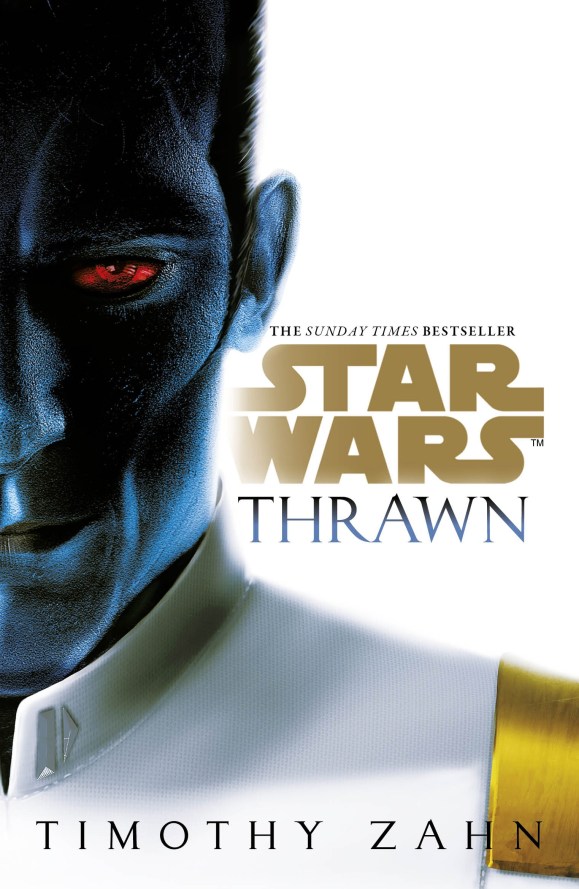
Throwback Thursday – Star Wars: Thrawn by Timothy Zahn – Audiobook Review

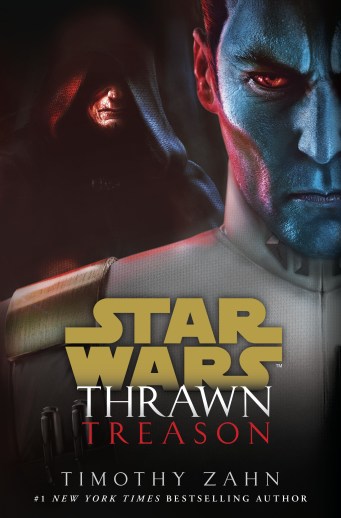
Thrawn Cover

Publisher: Random House Audio (11 April 2017)

Series: Star Wars

Length: 16 hours and 56 minutes

My Rating: 5 out of 5 stars

Amazon

Reviewed as part of my Throwback Thursday series, where I republish old reviews, review books I have read before or review older books I have only just had a chance to read.

While Disney are currently releasing quite a large number of Star Wars tie-in novels and comics, none of them quite had the history behind them that Thrawn did. Timothy Zahn is probably one of the best authors of Star Wars fiction of all time, having written several books in the previous Star Wars expanded universe (now rebranded as Star Wars Legends) before Lucasfilm was bought out in 2012. Without a doubt, his most iconic contribution to the Star Wars universe was the character of Grand Admiral Thrawn, who was introduced in his 1991 book, Heir the Empire, the first book in Zahn’s original Thrawn trilogy. Grand Admiral Thrawn was the Empire’s greatest tactician and naval commander, who led the war against the protagonists of the original Star Wars trilogy following the events of Return of the Jedi and proved to be an effective major antagonist. Thrawn swiftly became a fan favourite, and Zahn revisited the character several times.

While Thrawn was an amazing character, many assumed that he was unlikely to be seen again after Disney shelved the original expanded universe to allow for their own stories and characters. However, Disney surprised many when they announced that Thrawn would be brought back to their extended universe in the Star Wars Rebels animated show. Thrawn was introduced as the show’s main antagonist for the third and fourth season and he shone as the villain of the show, bringing his tactical abilities and unique view of war to bear against the rebels. Brought to life with the voice work of the extremely talented Lars Mikkelsen, Thrawn is easily one of my favourite things about the show’s last two seasons and was a fantastic addition to the plot.

Disney also decided to include Thrawn in their slowly building collection of Star Wars novels, with a whole new Thrawn trilogy commissioned from Timothy Zahn. Given the unique opportunity to have a second go at introducing one of his most iconic creation, Zahn has so far written two books in this series, Thrawn and Alliances. I read and reviewed Alliances last year, but I unfortunately missed getting a copy of Thrawn when it first came out. With the third and final book, Treason, coming out at the end of July, I decided to finally go back and check out an audiobook copy of Thrawn.

In the Star Wars Legends canon, Thrawn was active for a long period of time, essentially from before the events of Attack of the Clones until several years after the events of Return of the Jedi, with a lengthy service in the Imperial Navy. In this book, however, Zahn has to reintroduce his character in a much earlier and compacted period of Star Wars history, as his character could only have come to prominence between Revenge of the Sith and the third season of Star Wars Rebels in the Disney canon. I was quite keen to see this new version of the character, especially as Zahn gets to once again show how an alien managed to rise to the highest of ranks in the xenophobic Imperial military.

Several years after the fall of the Galactic Republic and the Jedi, the Empire reigns supreme throughout the galaxy and is always looking to expand its control. A routine survey of an unexplored world in Wild Space uncovers a small, ramshackle settlement with items featuring writing in an unknown alien language. As the Imperial survey team investigates, they find themselves under attack from an unseen adversary who manages to inflict heavy causalities with minimal resources. Retreating back to their ship, the Imperials discover that their attacker, a blue-skinned, blue-haired alien, has stowed away on their transport. The alien identifies himself as Mitth’raw’nuruodo, a member of the Chiss Ascendency, a legendary race from the Unknown Regions. The Imperial commander takes Mitth’raw’nuruodo, or Thrawn, to Coruscant to be presented to the Emperor, who he impresses with his tactical ability and his mysterious connection to the Clone War General, Anakin Skywalker.

Taking Thrawn into his service, the Emperor makes him an officer in the Imperial Navy, along with his translator, cadet Eli Vanto. As Thrawn and Vanto are first enrolled in the Imperial Naval Academy and then assigned junior roles on a ship, they face opposition and resentment from other members of Navy. However, thanks to Thrawn’s unparalleled tactical and strategic mind, as well as his ability to understand and predict the actions of his opponents on the battlefield, the two are able to rise in the Imperial hierarchy.

As Thrawn is quickly promoted up the ranks, he starts to become obsessed with the enigmatic Nightswan, a brilliant rogue tactician who has been helping criminals and dissidents defy the Empire across the galaxy. At the same time, Thrawn’s inability to understand the political realities of the Imperial Navy proves to be a major threat. Luckily the politically ambitious Arihnda Pryce is willing to provide help, as long Thrawn assists with her plans to gain political power and become governor of her home planet of Lothal. As rebellion spreads through the galaxy, Thrawn leads the assault to cut it down as he heads towards his promotion as Grand Admiral.

This was a pretty outstanding novel. I absolutely loved Thrawn and it is probably the best canon Star Wars novel in that I have so far had the pleasure of reading. Zahn did an amazing job revamping his iconic character by presenting a fantastic new story that not only harkens back to the author’s original novels but also fits the character perfectly into the Disney timelines. Thrawn is an excellent balance of character work, action, political intrigue and exploration of the Star Wars universe, all of which adds up to an incredible novel that I was nearly unable to stop listening to and which results in an easy five-star rating from me.

The events of this book take place over the course of nine years, between the events of Revenge of the Sith and A New Hope. More specifically, it starts 11 years after Revenge of the Sith, and continues directly at the start of the third season of Star Wars Rebels, approximately two years before A New Hope. Thrawn is split into two separate storylines: one that follows the rise of Thrawn through the Imperial Navy and another that focuses on the machinations of Arihnda Pryce as she becomes governor of Lothal. The Thrawn storyline is mostly told from the perspective of Thrawn’s companion, Eli Vanto, although a few chapters are shown from Thrawn’s perspective alone. While the two storylines start off showing Thrawn and Pryce’s separate rises to power and are not initially connected, once the two characters start working together, their stories mesh together a lot more. While I had a stronger preference for the parts of the book focussing on Thrawn, I did quite enjoy the sections focusing on Pryce, as they had some compelling elements and showed a different side of the Empire. The two separate storylines mesh together quite well, and together they tell a complete and intriguing story that highlights how the characters obtained the relevant positions in the Imperial hierarchy that they had when introduced in Star Wars Rebels.

At the heart of this book is the focus on Thrawn, an absolutely amazing central protagonist, whose escapades and adventures are some of the best parts of the book. Zahn has done an amazing job reinventing Thrawn for this new era of Star Wars history, keeping all the character traits that made him such a hit in the original expanded universe, while fitting his character timeline into a much shorter period. Thrawn is still the same highly intelligent alien with an unmatched tactical mind and an appreciation for the culture and art of the various people he encounters. However, in this universe, he achieves his rank of Grand Admiral in a far shorter period of time. Starting with his rescue on a remote planet after ambushing Imperial forces (the entire scene is a rewrite of Zahn’s 1995 short story, Mist Encounter, although with a few necessary changes), this book shows him joining the Imperial Academy, and then climbing the ranks all the way up to Grand Admiral within a few short years. The entire story of Thrawn’s early career in the Imperial Navy is absolutely fascinating, and I really enjoyed this look at the character’s history, especially as his rapid promotions were due to the multiple intriguing military actions he oversaw. His entire storyline is extremely well paced out, and the reader gets a full story that is incredibly captivating. This was a really clever reimagining of the character’s history, and it is a great story to tell.

Zahn does a great job showcasing Thrawn as an utterly brilliant individual who is clearly smarter than everyone else he encounters. There are some great characteristics to Thrawn, like the way he is able to get into his opponents’ heads and anticipate their actions and intentions. His shear analytic ability is showcased so many times throughout the book, most notably in the way that he analyses the emotions and body language of all the people he encounters. For example, whenever Thrawn is talking with someone, the reader gets a short description of the facial reactions or emotions that the character talking to Thrawn is exhibiting. I’m unsure what this looks like in the hard copy of the book, but in the audiobook version the narrator uses his chilling Thrawn voice rather than his baseline narrator voices. From these short descriptions, the reader gets an idea of what Thrawn thinks the other character is thinking, and it is deeply fascinating to see how this affects Thrawn’s actions. I loved that the author continued to show how Thrawn gains insight into a people’s culture and personalities through their art. Throughout the book, Thrawn is shown appreciating a potential opponent’s art and culture, and then using the conclusions and observations he gleams from the items to alter his strategies or the way that he deals with them. This is a fantastic character trait that I am glad Zahn continued to use in his works.

Probably one of the best things about the character of Thrawn in this book is the inventive and brilliant strategies that he comes up with to defeat his enemies. Throughout the course of the book, Thrawn utilises some deeply inventive plans for both large-scale conflicts and smaller battles, and it is always very entertaining to watch these plans come to fruition. I loved some of the strategies that Thrawn used in this book; whether he is swamping a shielded fortress with artificial tidal waves or using Clone Wars era buzz droids to take out a pirate ship, the end result is just spectacular. In many ways, the Thrawn in this book is a bit like Sherlock Holmes, if Sherlock worked for an evil space empire. His opponent, Nightswan, is essentially Moriarty (a man nearly as smart as Thrawn, who sells his tactical abilities to members of the underworld), and the author uses this to make the battle scenes even more intense, as a brilliant attack from Nightswan is countered by an even more sophisticated move from Thrawn. In addition, Thrawn also has a loyal sidekick in Eli Vanto, who is essentially the Watson to Thrawn’s Sherlock. Not only are there certain similarities between the two within the story, such as the way that Thrawn takes Vanto and train him in his methods, turning Vanto into an extremely competent strategist, but Zahn also uses him in a similar literary way to Watson in the Sherlock Holmes novels. Vanto is used as a proxy for the audience, so when he questions Thrawn on how he came up with his plans or anticipated his opponents, the audience gets a full explanation within the scope of the story. Thrawn was an extremely awesome character in this book, and his presence helps turn this into an outstanding read.

In addition to the character of Thrawn, Zahn also looks at Governor Arihnda Pryce, another major antagonist from Star Wars Rebels. Zahn spends a good amount of time showing Pryce’s past and how she went from a nobody to a powerful planetary governor with major political connections and a history working with Grand Admiral Thrawn. I liked this look at Pryce; her story is pretty compelling and it offers a great look at the political side of the Empire. Pryce is already a pretty despicable character in Star Wars Rebels (she is responsible for the tragic death of one of the main characters), but this book does a masterful job of showing just how evil she is. While it starts off showing her experiencing early hardship and difficulties, she quickly stops being a character you can root for the moment she has any sort of power within her grasp. The way she turns on her friends and her extreme act of self-preservation towards the end of the book are pretty dark, and you cannot help but dislike the character even more after reading her full arc in this book. This was some really good character work, and Zahn does an amazing job showcasing Pryce’s motivations and despicable nature.

If you are a fan of massive and electrifying space battles, there is a lot for you to love in Thrawn. Zahn has packed this book with a huge number of large and impressive battles between Imperial ships and the various pirates and rebels that are encountered throughout the story. There are some really fun ship-to-ship battles throughout this book, and they are absolutely spectacular to watch unfold. Thanks to the brilliant adversary that Thrawn faces for most of the book, the characters face some unique opposition, such as Clone War era ships, like the vulture droids, and an impressive island base with massive guns. These result in some amazing sequences, especially when Thrawn comes up with a surprising strategy to defeat the opposition. I had a lot of fun listening to these battle sequences, and they are a real highlight I feel that many readers will enjoy.

Thrawn takes quite an interesting look at certain parts of the Star Wars universe, and fans of the series will enjoy the author’s canonical deep dive into the Empire at the height of its power. Quite a lot of time is spend showcasing the ins and outs of the Imperial Navy, and readers get a good idea of how it operates and its system of command as the main character rises through the ranks during the course of the book. In addition to the military side of the Empire, the storyline focusing on Governor Pryce highlights how brutal Imperial politics is during this period, as she attempts to gain power and influence. Zahn also includes a number of key characters from Star Wars lore and inserts them into his story. Characters such as Grand Moth Tarkin and Colonel Wullf Yularen (a background Imperial character in A New Hope who was given an expanded role in The Clone Wars animated show) are used quite successfully in this book and offer some interesting insights into additional aspects of the Empire. There are also the obligatory hints at the Death Star (seriously, nearly every piece of Star Wars fiction set in the period has some mention of a “secret Imperial project”) and other elements of the Star Wars movies. I quite enjoyed this intriguing look at the Empire between the events of the first two trilogies, and it helped with the story.

Like most Star Wars tie-in novels, Thrawn is intended more for dedicated fans of the franchise, although I felt that this book would be particularly accessible to those readers with only a basic knowledge of the Star Wars franchise. Zahn does an excellent job explaining key aspects of the Star Wars universe that fans who are only familiar with the movies might not understand, and the book features some really fun and exciting moments. As a result, this might be the perfect book to try if you are interested in exploring the Star Wars expanded universe for the first time, especially if you happened to enjoy Thrawn in Star Wars Rebels. There really is so much in here for dedicated Star Wars fans to enjoy, and those readers who grew up with Zahn’s original Thrawn trilogy will no doubt be extremely curious to see this new version of the character.

Like most of the Throwback Thursday books I review, I chose to listen to the audiobook version of Thrawn rather than read the physical copy. The Thrawn audiobook is narrated by veteran Star Wars audiobook narrator Marc Thompson and runs for 16 hours and 56 minutes. I have mentioned before that listening to a Star Wars audiobook is an intriguing experience, as the productions are filled with all manner sound effects, including a number of iconic sounds from the Star Wars franchise. Thrawn continues this tradition, featuring a huge number of sound effects in pretty much every scene. These sound effects are really effective at creating an ambiance and atmosphere, and the reader gets a whole other experience of the events occurring in the book. This includes a background susurration during parties and large gatherings or the sound of blaster fire during a battle sequence. While I really love how most of these sound effects work, I did have a slight issue with an effect used to alter the voices of a certain alien species. The producers added a high-pitched screeching echo to the voices of the aliens known as the Afe in order to simulate their unique vocal patters as described in the book. However, this sound effect is extremely distracting and unpleasant, and I found it hard to listen to the dialogue of the Afe characters. While these characters were only in the book for a short while, their voices were extremely memorable and it is hard to forget that screeching sound. On the plus side, the audiobook also featured several pieces of John Williams’s epic music from the Star Wars films at key parts of the book, which helped enhance several of the scenes and bring the audience into the story.

In addition to all the sound effects and music, the Thrawn audiobook also featured the vocal talents of narrator Marc Thompson. Thompson is an extremely talented voice actor, and his work in Thrawn was pretty amazing. He has an excellent voice for the character of Thrawn that not only sounds like Lars Mikkelsen from Star Wars Rebels but which also carries all of the character’s intelligence and charm. Thompson comes up with a great voice for Eli Vanto, utilising an accent that screams space yokel and which stands out from the voices of other Imperial characters in this book. I was also quite impressed with how Thompson was able to imitate key characters from the Star Wars universe. For example, Thompson does a great Emperor Palpatine voice and also comes up with passable imitation of Grand Moth Tarkin. I felt that Thompson really got the heart of many of the characters he narrated, whether by showcasing Thrawn’s cool intelligent manner or by replicating the arrogance that comes off many of the book’s Imperial characters. As a result, I would wholeheartedly recommend the audiobook version of Thrawn, as not only do the producers continue to make good use of sound effects and music, but they also use an amazing narrator to bring this story to life.

I had an absolute blast going back and listening to Thrawn for the first time. This is an exception piece of Star Wars fiction and Zahn does an outstanding job bringing his iconic character, Grand Admiral Thrawn, into the new Disney canon. Featuring a ton of amazingly entertaining moments and some excellent character work, Thrawn is an exceedingly fun book that will prove to be extremely appealing to both hardcore Star Wars fans and novice readers. This was a wonderful five-star read, and I cannot wait to see how Zahn wraps up this trilogy.

Amazon

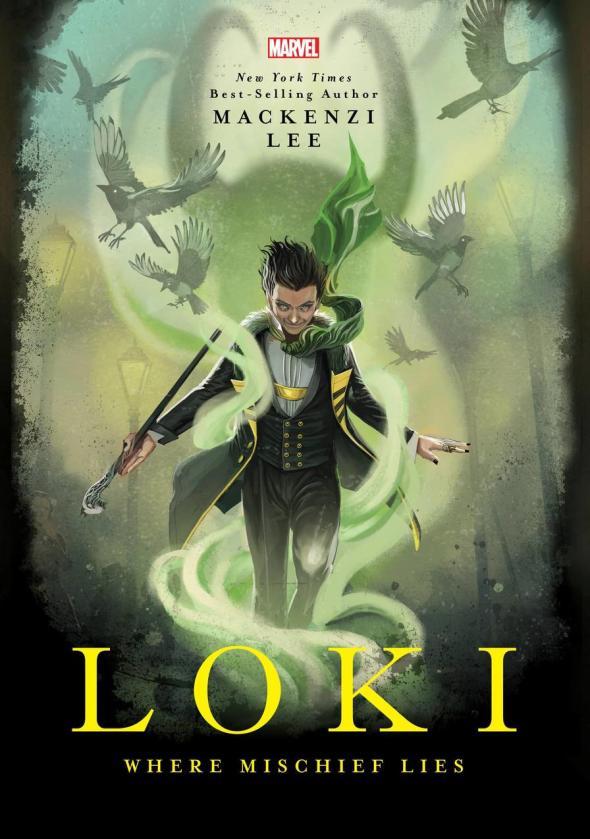
Waiting of Wednesday – Loki: Where Mischief Lies by Mackenzi Lee

Welcome to my weekly segment, Waiting on Wednesday, where I look at upcoming books that I am planning to order and review in the next few months and which I think I will really enjoy.  Stay tuned to see reviews of these books when I get a copy of them.

I am a man that loves a good and complex anti-hero story, so for this week’s Waiting on Wednesday I check out an absolutely spectacular-sounding book that is set to be released in September 2019: Loki: Where Mischief Lies.

Loki Where Mischief Lies.jpg

Loki: Where Mischief Lies is the first of three young adult novels that acclaimed author Mackenzi Lee has been contracted to write by Marvel Comics. Each of these books will focus on a different Marvel anti-hero and will feature a historical setting. The first of these anti-heroes is the master of mischief himself, Loki, Prince of Asgard, who, thanks to the Marvel Cinematic Universe, has to be one of the most popular comic book villains at the moment.

Even before Tom Hiddleston brought him to life with some significant swagger in the MCU, the character of Loki has been a major figure in the Marvel Comics universe. A re-imagining of the Norse god of mischief, Loki is portrayed as a powerful magician who battles against his brother, the superhero Thor, out of jealousy or for control of Asgard or the world. He has been a recurring Marvel villain for over 60 years and is the villain responsible for the formation of the Avengers. Over the years, a large amount of complexity has been added to his character, with some significant developments to his motivations and history, and a number of notable shifts in his allegiance and relationship with Thor and the rest of Asgard. As a result, I am quite eager to see any sort of novel written about Loki, especially one that sounds as awesome as this one.

Goodreads Synopsis:
Before the days of going toe-to-toe with the Avengers, a younger Loki is desperate to prove himself heroic and capable, while it seems everyone around him suspects him of inevitable villainy and depravity . . . except for Amora. Asgard’s resident sorceress-in-training feels like a kindred spirit-someone who values magic and knowledge, who might even see the best in him.

But when Loki and Amora cause the destruction of one of Asgard’s most prized possessions, Amora is banished to Earth, where her powers will slowly and excruciatingly fade to nothing. Without the only person who ever looked at his magic as a gift instead of a threat, Loki slips further into anguish and the shadow of his universally adored brother, Thor.

When Asgardian magic is detected in relation to a string of mysterious murders on Earth, Odin sends Loki to investigate. As he descends upon nineteenth-century London, Loki embarks on a journey that leads him to more than just a murder suspect, putting him on a path to discover the source of his power-and who he’s meant to be.

There are so many amazing elements to unwrap in the plot synopsis, but the bottom line is I think I am going to like this. Not only do we have a comic book novelisation focusing on an amazing character, but we have Loki investigating murders in 19th century London. Historical fiction is one of my favourite genres, and a murder mystery in 19th century London is always a great basis for a good story. Combine that with comic book shenanigans and a young Loki investigating the crimes, and you have a book with insane amounts of potential.

I am also quite excited by the choice of author for this trilogy. Mackenzi Lee is a fantastic author known for her unique and powerful novels, most of which are set in 19th century England. I am very much looking forward to seeing her take on the character of Loki, and I cannot wait to see what sort of backstory and conflicted thought processes she attributes to this amazing character.

One of the things about Where Mischief Lies that is getting a lot of attention is the author’s apparent intention to make Loki a genderfluid and pansexual character. This is based on a tweet from December 2017, in which Lee responds to someone’s question about Loki being queer in her upcoming book. Lee correctly points out that Loki “is a canonically pansexual and gender fluid character” and then ends it with “So.”. Based on that, quite a lot of people are assuming she will explore this aspect of the character in her book. Loki’s gender identity and sexuality have been featured in many comics, with the character reincarnating as a female several times, and there are also some examples of Loki romancing members of various genders. I am quite interested in seeing how much of this is explored in Where Mischief Lies, and I am sure it will result in quite an intriguing part of the story.

I am uncertain whether I will grab a physical copy of this book or try to get it on audiobook. While I love the awesome cover for Where Mischief Lies and imagine it would look great on a hardcover book, I do love a good audiobook and I have had excellent experiences with comic book based audiobooks in the past. They have also gotten Marc Thompson, one of the best Star Wars audiobook narrators, to narrate this book. I have recently finished listening to one of his Star Wars audiobooks and would be really intrigued to see what voice he would attribute to Loki and the other iconic Marvel characters.

This has the potential to be an outstanding novel, and I am really looking forward to seeing how Lee tackles the character of Loki. The plot of this book sounds like a huge amount of fun, and I am sure there will be some amazing story and character developments throughout the book. I think this is going to be one of the best tie-in novels of the year and I plan to get it as soon as it comes out.

Stranger Things: Darkness on the Edge of Town by Adam Christopher

Darkness on the Edge of Town Cover.jpg

Publisher: Century (Trade Paperback – 4 June 2019)

Series: Stranger Things

Length: 411 pages

My Rating: 4 out of 5 stars

Amazon     Book Depository

With the third season of the sensational and entertaining television show Stranger Things fast approaching (4 July cannot come fast enough), another tie-in novel, Darkness on the Edge of Town by Adam Christopher, has been released and offers another intriguing look into the wider Stranger Things universe. This story heads back into 1970s and focuses on the life of Hawkins police Chief Jim Hopper, portrayed in the show by David Harbour, and presents a thrilling and curious new adventure.

Stranger Things is one of the hottest televisions shows on at the moment, featuring a captivating plot, some incredible characters, amazing young actors and the fun use of 1980s nostalgia, all of which come together into one hell of a show. With the final season of Game of Thrones just wrapped up, the third season of Stranger Things is the next big release I am looking forward to (with the possible exception of Good Omens), and I fully intend to binge-watch it the weekend it comes out. It is not surprising that some tie-in material has been released to capitalise on the success of the show, and, truth be told, they have actually been a little restrained with it, with only one tie-in novel and one comic book series released so far. While I have not had a chance to the read the comic book series, The Other Side, which looks at Will Beyers’ time in the Upside Down in Season 1, I did previously read and review the first official Stranger Things tie-in novel, Suspicious Minds by Gwenda Bond, a few months ago. Suspicious Minds was set back in 1969 and looked at how Eleven was born and then subsequently stolen by the US Government, and it proved to be quite a thrilling read which explored some fascinating backstory to the television show.

As a result, I was very keen to check out what the next Stranger Things tie-in novel was like and what secrets it might reveal about the show. Darkness on the Edge of Town is set to be released on 4 June 2019, exactly one month before the release of Stranger Things’ third season, which is going to be set around Independence Day in 1985. Another Stranger Things book, which I will also try to get a copy of, Runaway Max, is also due out on 4 June, and this book will be aimed at a young adult audience.

Darkness on the Edge of Town was written by New Zealand-born author Adam Christopher, who has some experience with tie-in novels, having previously written three books that tie in to the Dishonoured video game and two books that tie in to the Elementary television show. Christopher is probably best known for his 2012 debut novel, Empire State, as well his Ray Electromatic Mysteries and Spider Wars series. I have not previously read any of Christopher’s work before, but several of his books, especially Empire State (a noir superhero thriller with parallel words, yes please!), sound like a lot of fun and I may have to check them out in the future.

Darkness on the Edge of Town’s story starts in December 1984, around two months after the end of the second season of Stranger Things. While enjoying a quiet Christmas with his adopted daughter, Eleven, Jim Hopper is suddenly brought back to his past when Eleven pulls out a cardboard box marked “New York”. Despite his reluctance, Hopper begins to tell Eleven the story of the greatest case he solved before tragedy forced him back to Hawkins.

On Independence Day in 1977, after returning from the Vietnam War, Jim Hopper is living in New York City with his wife, Diane, and his daughter, Sara. While the city deals with bankruptcy and a heatwave, Hopper, a rookie NYPD detective, finds himself investigating a series of brutal, ritualistic murders with his new partner, Rosario Delgado. The murderer has already killed three people, leaving a mysterious card at each crime scene. Before Hopper and Delgado can make any progress, their investigation is shut down by shadowy federal agents who order them off the case. Disobeying orders and putting his career on the line, Hopper continues to investigate the murders and is able to connect the deaths to the mysterious leader of the Viper gang, who is reputed to have paranormal powers. Going undercover to infiltrate the Vipers, Hopper makes some startling revelations about the scope and devastation of the gang leader’s sinister plans, and he must do everything he can to protect his city from an upcoming evil.

This was quite an interesting and engaging novel from Christopher, who not only manages to examine some interesting aspects of the Stranger Things television show but also creates his own intriguing story set during an interesting time in American history. The story is split between two separate time periods. Some of the story is set in December 1984 and follows the older Hopper as he tells the story to Eleven, while the majority of the book is set back in 1977 and follows Hopper and his partner as they investigate the brutal murders and the Vipers. Most of the book comes across as a dark murder mystery thriller that also spends significant time examining the psyche of its protagonist. I quite liked the murder mystery angles of the 1977 storyline, and it provides an interesting counterpoint to the more science fiction/horror/young protagonist focus of the television show.

The previous Stranger Things novel, Suspicious Minds, explored in detail events that featured in the show in flashbacks. Darkness on the Edge of Town, however, is a character study that may not have too much relevance to franchise’s overall story. While this might not appeal to some Stranger Things fans, it does allow Christopher a lot more freedom to explore the character of a younger Hopper. The result is a fantastic story that dives deep into the psyche of this great character and really lets the reader see what drives Hopper and what initially convinced him to become a police officer. There are some amazing parts to this examination of the character, but I personally liked the way that Christopher decided to focus on the lasting effects of Hopper’s service in Vietnam. This is explored in some detail, and the reader gets a really good idea of how emotionally vulnerable Hopper was even before his daughter became sick and his wife left him. I also thought that the author did a great job showing Hopper’s relationship with Eleven in the 1984 storylines, and their oddball father-daughter relationship comes across quite well.

In addition to the focus on the character of Hopper, this book also contains a few plot points that tie into the wider Stranger Things universe. The contents of the mysterious box Hopper had hidden in his house, which Eleven uncovered in Season 2, becomes a major part of this book’s story. In addition, there are several things that could potentially become significant in the future, and which the reader can leave to their own imagination. The first thing that comes up is a physic prediction about clouds or tendrils of darkness covering the world, mentioned a few pages in and repeated throughout the book. While events that occur later in the book do fit in with some of these predictions, the imagery of the Mind Flayer from the show comes to mind every time this vision is mentioned, and in some ways, it fits the predictions a little better. In addition, quite early in the book the antagonist is rumoured to have mental abilities as a result of government experiments. For a large part of the book, the reader is left wondering whether he actually has abilities like Eleven and, if he does, how he is connected to the institute that Eleven was being tested in. All of these, plus some other great references, will prove to be deeply appealing to fans of the television show, and I will be really intrigued to see if any of these references might appear in the third season of the show (do these authors have the inside track on the series?).

One of the most interesting parts of Darkness on the Edge of Town was its setting in 1970s New York City. The 1970s, especially 1977, were a pretty chaotic period in the city’s history, which serves as an excellent backdrop to this dark and gritty tale. Not only was the city suffering through a severe economic downturn but there was also a tremendous heatwave, especially in July of 1977, when the vast majority of the storyline is set. The Son of Sam killer was also active during this time, a fact commented on in several parts of the book, which also ties into the darker ‘70s crime nature of this book. I liked the way that Christopher was able to bring the atmosphere of this period to life in his book, as well as the way he was able to tie the story into a certain major event that occurred in New York in July 1977. This great use of setting really added a lot to the story and helped turn Darkness on the Edge of Town into quite a compelling read.

One of the reasons why Stranger Things is such a success is the show’s writers and creators have such an amazing ability to channel its viewers’ nostalgia for the 1980s into each episode. Writers of these tie-in novels also attempt to capitalise on this nostalgia by highlighting aspects of that decade’s culture in their writing. I previously felt that Gwenda Bond did an amazing job of that in Suspicious Minds, and Christopher also did his job exploring parts of that culture, specifically when it relates to New York City. As a result, there are several fun references to relevant movies, television shows, books, sports and music for fans of the 1970s to notice and reminisce about. Whether the characters are having fun thoughts about M*A*S*H or cheeky discussions about whether Princess Leia will end up with Luke or Han in Star Wars, there are some really fun inclusions throughout the book, and Christopher luckily does not go too overboard loading his story up with these references. I personally quite liked the way that the author envisioned the New York City gangs at this point, and the main one that Hopper encounters has a very Warriors vibe around it. An extended sequence later in the book kind of put me in mind of Escape from New York (although that was released in ’81). I really enjoyed the strong nostalgia included in the book, and it added a certain amount of fun to the book that fans of the show will greatly appreciate.

Darkness of the Edge of Town is a fantastic new addition to the burgeoning Stranger Things extended universe, and Adam Christopher does an amazing job of exploring one of the show’s main characters. The author’s examination of Jim Hopper is a deep and emotional dive into the character’s psyche, and it proves to be an effective and compelling centre to this book. Christopher is also able to utilise ’70s nostalgia and fan interest in the franchise quite effectively and turn this into an excellent tie-in novel to this complex and enjoyable show. The end result is an excellent character-driven story that will greatly appeal to fans of Stranger Things. This book is really worth checking out, especially before the third season of the show is released, and I look forward to seeing what other tie-in novels Christopher produces in the future.

Amazon     Book Depository

Star Trek: The Next Generation: Available Light by Dayton Ward – Audiobook Review

Star Trek - Available Light Cover

Publisher: Simon & Schuster Audio (9 April 2019)

Series: Star Trek

Length: 11 hours and 59 minutes

My Rating: 4 out of 5 stars

Amazon     Book Depository

For my latest review, I dive back into the massive universe of extended books that surround the Star Trek television and movie series, with the latest novel from legendary Star Trek fiction author Dayton Ward.

When I reviewed my first piece of Star Trek fiction, The Way to the Stars by Una McCormack, a couple of months ago, I mentioned how substantial the extended book universe around Star Trek was. With a huge number of series that cover various points of the Star Trek universe and over 840 novels to accompany the various movies and television shows, there are so many additional stories and characters out there for dedicated fans to enjoy. Star Trek tie-in novels and comics were not something that I had really gotten into before The Way to the Stars, but after enjoying it, I thought that Available Light would be a good opportunity to expand my knowledge of the Star Trek universe. I also decided that I would try my first Star Trek audiobook; I chose to listen to the audiobook format of Available Light, narrated by Robert Petkoff.

Quite a large amount of the extremely large Star Trek extended universe can be attributed to the author of this book, Dayton Ward. Ward is a prolific author who has been writing Star Trek fiction since 1998 with his inclusions in the long-running Strange New Words collections of Star Trek short stories, becoming the first author to contribute to three separate volumes of this series. Since then he has written more than 20 additional inclusions in the Star Trek universe, including last year’s Star Trek Discovery: Drastic Measures, which made my Top Ten list of Books I Wish I Read in 2018.

Available Light is the latest book in a series of novels which are set after the events of the last Star Trek: The Next Generation film, Nemesis. Available Light takes place in the year 2386, set seven years after the events of Nemesis and continues to follow the adventures of the USS Enterprise E, under the command of Captain Picard. Ward has written the last three books in this specific Star Trek series and Available Light continues several of the storylines established in these previous novels.

For over 200 years, covert organisation Section 31 has policed and protected the United Federation of Planets from the shadows. Following the designs of an artificial intelligence, Control, Section 31 has committed attacks, assassinations, political interference and all manner of illegal actions to preserve the security of the Federation, without any oversight. However, thanks to the actions of Star Trek: Deep Space Nine character, Dr Julian Bashir, all of Section 31’s secrets have been published and are now out in the open for everyone to see. With the entire Federation of Planets now aware of Section 31’s actions, the Federation government and Starfleet move to arrest and prosecute all known Section 31 agents for treason against the Federation.

While numerous crimes and atrocities have been revealed, perhaps none is more controversial than Section 31’s assassination of Federation President Min Zife following his secret deposition by a group of Starfleet officers. More shocking is the revelation that one of the Starfleet officers responsible for the illegal coup d’etat that unseated Min Zife was none other than Jean-Luc Picard, the captain of the USS Enterprise E.

While the politicians and remaining commanders of Starfleet argue about the future of Picard, the Enterprise continues its exploration of the distant and uncharted Odyssean Pass. The Enterprise has come across an incredibly large and ancient spaceship adrift in the middle of nowhere and apparently abandoned. When the Enterprise’s away team boards the ship, they discover that the ship might not be as abandoned as first believed. As Picard and the Enterprise attempt to help the mysterious beings who inhabit the ship, they find their plans complicated by the arrival of a band of salvagers with designs on the massive ship.

I really enjoyed Available Light, as Ward presents the reader with a compelling adventure in space that really reminded me of an episode of Star Trek: The Next Generation. Ward goes deep into the Star Trek lore to produce an intriguing story for the fans, and it was quite interesting to see how the events of Available Light help shape the wider Star Trek book universe. The book makes exceptional use of advanced science and a large amount of action to make the story even more interesting and fun. I especially enjoyed the various wonderful examples of ship-to-ship combat that occurred throughout much of the book, and I found them to be extremely entertaining and exciting. Overall, this is a pretty fun read, although there are some issues when it comes to its intended audience and the distribution of its two main storylines.

One of the things that I always try to cover when reviewing novels related to movies, television shows and video games is whether a book is suitable only for fans of the original media or whether readers with limited background knowledge of the franchise will be able to appreciate the book. Available Light falls into the category of books which is primarily aimed towards those readers with some knowledge and appreciation of the Star Trek franchise, especially those who are fans of the books, as Ward makes use of a number of storylines that originated in other books. For example, Available Light continues to showcase the Enterprise’s exploration of the region of space known as the Odyssean Pass, which has been covered in Ward’s last three novels, Armageddon’s Arrow, Headlong Flight and Hearts and Minds. It also dramatically follows storylines started in David Mack’s 2004 novel, A Time to Heal, which detailed the assassination of Min Zife, and his 2017 Star Trek: Section 31 novel, Control, which featured the publication of Section 31’s secrets. The book also contains a huge number of references to previous Star Trek adventures that happened in other books, the movies and the television shows. This does not just include those works associated with The Next Generation, as events from other shows, such as Deep Space Nine, are also heavily referenced. As a result, fans of these existing pieces of Star Trek fiction will have a much deeper appreciation for what is going on, and they may already be invested in the storylines that have been established in these previous books.

Dedicated fans of The Next Generation television series and movies will probably be surprised about the extensive storylines established in these books. Since the events of Nemesis, the books included in these series cover a huge range of adventures and character developments of the crew of the Enterprise. Those Star Trek television and movies fans coming into this book will be surprised at events like Picard and Beverly Crusher getting married and having a son. These fans should also be prepared for the fact that only a few of The Next Generation’s main characters are really featured in Available Light. While Picard, Worf, Geordi La Forge and Beverly Crusher are still aboard the Enterprise, major characters such as Deanna Troi, Data and Wesley Crusher do not appear at all, while the character of William Riker (now an Admiral) only appears in one chapter. In their place, several new, original characters have taken on their roles and become point-of-view characters for the Enterprise. While these characters are quite intriguing, fans of the original crew may be a little disappointed not to see how the missing characters are going. Ward has also included some characters that appeared in minor roles in both The Next Generation and Deep Space Nine. These include Admiral William Ross (who appeared in 13 episodes of Deep Space Nine), Worf’s brother Martok (who also appeared in Deep Space Nine) and Philippa Louvois (the Judge Advocate General from The Next Generation episode The Measure of a Man). Not only are these characters quite interesting in their own right, but there are some significant developments for some of these characters that fans of the franchise will be deeply intrigued to see.

That being said, while a large amount of the story is quite heavy on Star Trek lore, references and tie-ins to previous storylines, Ward does an exception job making this story accessible to a wide range of readers. I am not a particularly dedicated Star Trek fan and I only have an average knowledge of the lore and the various series and movies. However, I was able to follow the story quite closely, as Ward did a fantastic job explaining and describing the events that occurred in the previous storylines and episodes that Available Light’s story follows on from. While some readers whose knowledge of Star Trek is lesser than mine might struggle a little with the book, I feel that Ward has made this book extremely accessible to most readers. However, this book will really appeal to those readers who have a prior appreciation of the Star Trek franchise.

I should mention that that this book, like many licensed Star Trek novels, is not actually considered to be canon in relation to the television shows or movies. While some books, such as the recent Star Trek Discovery books, are considered to be canon (indeed, events in The Way to the Stars were mentioned in the show), Available Light and the books that it follows on from are not. That means that events that occur in this book are unlikely to affect what happens in upcoming movies or television shows, such as the upcoming show featuring the return of Captain Picard. While reading a non-canon book like this might not appeal to some fans of the franchise, I still quite enjoyed the story, and I am intrigued to see how this separate Star Trek universe will continue.

Available Light features two separate storylines that mostly remain separate from each other. The first storyline focuses on the fallout of the events of Control, including the revelation about Section 31’s actions and the attempts by the Federation to round up and prosecute all those who worked with or for the covert organisation. The second storyline focuses on the Enterprise as they encounter the new alien ship and the various inhabitants of this new region of space. Despite the huge amount of detail used to describe the Section 31 part of the book in both the official synopsis and the synopsis I wrote above, this storyline only really takes up around one-third of Available Light, with the remaining two thirds focusing on the Enterprise and her crew. I found both storylines to be extremely fascinating and a lot of fun. The Enterprise storyline felt like a classic episode of a Star Trek television series, with the crew working together to explore an intriguing phenomenon and overcome the odds to save an innocent party. The Section 31 storyline is also really cool, and I really enjoyed seeing what happens when the existence of this organisation becomes public knowledge.

While Ward does try to bring these two separate storylines together, such as by examining Picard’s guilt at the role he played in Min Zife’s ousting and assassination and having it affect his actions in the Enterprise storyline, I did at times feel like I was reading two unrelated books. I really think this would have been a better book if Ward had focused on only one storyline. I would have really loved a book completely dedicated to the aftermath of the Section 31 reveal, including having Picard stand trial for his crimes, and I am sure that the story of the Enterprise discovering the massive ship could have been even better with some additional storytelling. Instead, the story of Picard’s trail will occur later this year in David Mack’s upcoming novel, Collateral Damage. While it was slightly disappointing to find out that Available Light’s Section 31 storyline was mostly included to set up a future book, it was still really interesting and helped created a book that was a lot of fun to read.

Ever since Section 31 was first introduced, it has been a deeply intriguing plot point. The idea of a secret Federation security organisation that goes against nearly everything that Starfleet stands for is really clever, and it opens up a lot of possibilities. Section 31 is getting a lot of focus at the moment, as not only did they appear throughout the second season of Star Trek Discovery (which utilised the AI program Control, who appeared in several novels linked to Available Light as an antagonist) but there are apparently plans to do a Section 31 television series featuring Michelle Yeoh’s character from Discovery. As a result, it was really interesting to see this book universe version of Section 31 start to unravel in Available Light. The shock and outrage that results throughout the book are deeply intriguing, and I really liked seeing how the Federation and Starfleet reacted to the news. This really was a cool plot point, and I am extremely curious to see what happens to the organisation in future books.

As I mentioned before, I chose to listen to the audiobook version of Available Light. At just under 12 hours in length, it did not take me too long to get through this book, and I found it to be a great format to enjoy the intriguing, Star Trek based plot. I did find that listening to the story helped me pick up a lot more of the previous storylines and Star Trek references that Ward had littered throughout the book, which probably gave me a better base to enjoy the story. I found Robert Petkoff to be a really good narrator, and I really enjoyed the way that he told the story. Petkoff does a pretty good impersonation of the male characters from The Next Generation, including Picard, Worf and La Forge, and I found his Picard voice to be extremely convincing. Petkoff also did a great impersonation of Vulcan and Klingon characters throughout the book, and I thought the voices he attributed to these alien characters were quite excellent. As a result, I would strongly recommend the audiobook version of Available Light, and I am extremely glad it was the version of the book I chose to enjoy.

In the end, my second dive into the Star Trek universe was a little bit of a mixed bag. While there are some great and enjoyable story inclusions throughout Available Light, this is a book that is more aimed towards extremely dedicated Star Trek fans and features a split story that at times is more concerned with setting up future books rather than standing on its own. But I found the storylines explored within the books to be a lot fun, and I had an absolute blast listening to this captivating Star Trek tale. I am still really keen to check out additional Star Trek novels, and I hope to see where the various plots explored in this book go from here.

Amazon     Book Depository

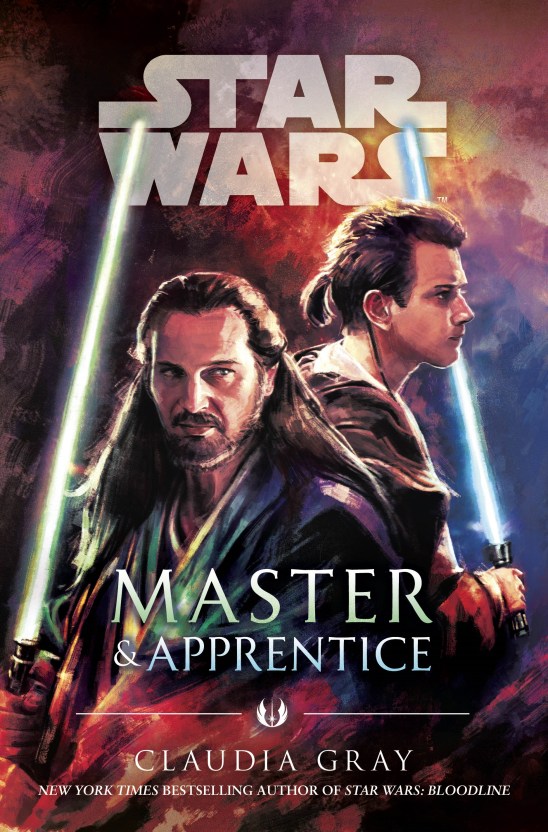
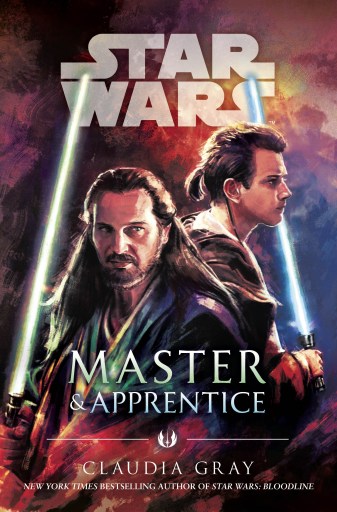
Star Wars: Master & Apprentice by Claudia Gray – Audiobook Review

Master & Apprentice Cover

Publisher: Random House Audio (16 April 2019)

Series: Star Wars

Length: 11 hours and 42 minutes

My Rating: 4.75 out of 5 stars

Amazon

2019 is shaping up to be an amazing year for fans of the new Star Wars extended universe, a group of which I consider myself to be a proud member, with so many awesome Star Wars books and comics being released.  After reviewing the first Star Wars book for 2019, Queen’s Shadow, a few weeks ago, I have been really looking forward to getting to grips with the franchises second 2019 novel, Master & Apprentice by Claudia Gray.

Master & Apprentice is a canon Star Wars novel set around eight years before the events of Star Wars Episode I: The Phantom Menace.  It focuses on two of the main characters from this prequel movie, Jedi Knight Qui-Gon Jinn and his Padawan, Obi-Wan Kenobi.

Qui-Gon Jinn is an experienced and powerful Jedi Knight, having been trained in the Force by the legendary Count Dooku, who himself was trained by Master Yoda, and is ready to face any threat or danger that lies in front of him.  However, his greatest challenge may prove to be his own Padawan, Obi-Wan Kenobi.  The two Jedi are polar opposites to each other: while Obi-Wan is by-the-book and rigid in his respect of rules and protocol, Qui-Gon routinely shows very little regard for the rules and laws that bind the Jedi and constantly finds himself at odds with the Jedi Council.  Despite years of working together, the two Jedi struggle to understand each other.  Qui-Gon sees every mistake of Obi-Wan’s as his own, while Obi-Wan is unable to understand the reasoning behind Qui-Gon’s actions, nor his obsession with the ancient Jedi prophecies that many see as dangerous and unreliable.  Their tenuous and strained relationship is further tested when Qui-Gon is unexpectantly offered a place on the Jedi Council, a move that would likely end their partnership.  With feelings of betrayal and failure hanging over both of them, they are suddenly assigned a critical mission that is likely to be their last as master and apprentice.

Fellow Jedi Rael Averross, another former apprentice of Dooku, has requested Qui-Gon’s help with a difficult political dispute on the planet of Pijal.  Averross has been serving as regent for the planet’s young queen, who is days away from ascending to the throne and signing an important treaty.  A series of attacks which has rocked the planet is apparently the work of The Opposition, a band of political performance artists turned terrorists.  Once the two Jedi arrive on the planet, they quickly find that the situation is far more complicated than initially believed.  With corruption and secrets around every corner, Qui-Gon and Obi-Wan attempt to get to the bottom of everything, even utilising a pair of jewel smugglers to help with their inquiries.  However, their investigations are hampered by their opposing points of view, which only worsen when Qui-Gon places great stock in a dark vision of the future he has foreseen.  Can they overcome their differences to unravel the plot, or will they fail their mission?

Claudia Gray, also known as Amy Vincent, is a prolific and experienced author, best known for her first body of work, the Evernight series, which started in 2008.  Since then she has written a number of other series, including the Spellcaster, Firebird and Constellation series, as well as the standalone novel Fateful.  Gray also has a huge amount of experience writing Star Wars fiction, having previously written three Star Wars tie-in novels in the new extended universe, including Lost Stars, Bloodline and Leia, Princess of Alderaan.  As a result, the story of Qui-Gon Jinn and Obi-Wan Kenobi is in safe hands as Gray produces an outstanding, compelling and character-driven novel that delves deep into the Star Wars lore to create an amazing story.

Master & Apprentice presents a clever and exciting story that sees the protagonist attempt to uncover the mysterious events unfolding on Pijal, while also dealing with their many personal and emotional issues.  The story is told from the perspective of a range of characters in the book, and each of them adds their own thoughts and experiences to the story.  The overall story arc on Pijal becomes quite complex, with many different and intriguing sides to the conflict, and the people behind the events are not who you think.  I had an amazing time enjoying this book.

In this fantastic piece of fiction Gray goes into some intriguing parts of the Star Wars universe and lore.  This is actually the furthest back the new extended universe books go, so it offers the reader a great opportunity to see some of aspects of the pre-movie Star Wars universe.  While there are some hints at the events to come, as well as references to some major characters in the upcoming movies, the book contains a significant amount of new content and antagonists.  It is actually quite refreshing to read a Star Wars book that is not tied into the Skywalker family or featuring the Empire or the First Order as an antagonist.  I quite enjoyed the look at the pre-The Phantom Menace universe, including the new planet of Pijal, and the inclusion of the immoral Czerka Corporation, who previously appeared in the pre-Disney Star Wars universe.  While those fans of the Star Wars franchise who like to consume more than the movies will absolutely love this book, Master & Apprentice should prove to be fairly easy to read for those people who have at least seen The Phantom Menace, as it is a pretty intriguing science fiction adventure.

Those readers who are interested in a deeper dive into the Jedi of the Republic era are in for a real treat in this book, as Gray delves into aspects of their history and lifestyle.  Throughout Master & Apprentice there are a number of scenes set in the Jedi Temple, as well as a number of discussions about how and why the Jedi do what they do.  Perhaps one of the key things highlighted in this book is how the traditional Jedi master and apprentice program worked.  Several different apprenticeships are shown, and the reader gets a good idea of what is entailed in this relationship, what training the Padawans go through and how the process turns them into the eventual guardians of peace in the galaxy.

One of the most unique and fascinating aspects of Star Wars and Jedi lore that Gray examines are the fabled Jedi prophecies.  The prophecies were created long ago by an ancient group of Jedi sages, and are reputed to reveal events from the future.  The prophecies become a key part of the story, as not only do they drive a wedge between Qui-Gon and Obi-Wan but they are also shown to have a major influence over Dooku when Qui-Gon was his Padawan.  The prophecies have been mentioned in the movies before, with the most famous prophecy about the coming of a chosen one who will bring balance to the Force, referring to Anakin Skywalker/Darth Vader.  While the chosen one prophecy is referenced in Master & Apprentice, several other prophecies are mentioned, including one that comes true in this book.  I was really quite intrigued by the author’s examination of the prophecies; while they have been mentioned in the movies, I did not know too much about them.  Dedicated fans will no doubt have fun trying to tie some of these prophecies into the movies and other associated pieces of Star Wars media.  For example, there is one that clearly refers to Princess Leia that is repeated a couple of times.  I personally was very curious about one prophecy that was mentioned towards the end of the book, which was referenced as being obsessed over by Count Dooku.  It was a particularly portentous-sounding prophecy, and I wonder if it will have anything to do with recent revelations in the trailer for the next Star Wars movie, The Rise of Skywalker.

The story contained within Master & Apprentice is a strong, character-driven affair which features a compelling central cast, each of whom gets an in-depth analysis from Gray.  Not only is there some compelling examinations of the main two characters, Qui-Gon and Obi-Wan, but Gray also introduces several intriguing and entertaining new characters who really add a lot to the story.

There is a great examination of the younger Qui-Gon Jinn and Obi-Wan Kenobi in this book, as Gray examines not only the relationship between the two characters but also aspects of their past and their personalities.  When the two characters are introduced in the first prequel film, The Phantom Menace, very little is known about them, save that Obi-Wan is nearing the end of his apprenticeship and the two of them disagree on certain matters, such as the future of Anakin Skywalker.  Master & Apprentice offers a whole new, deeper examination of these characters and explores how these two Jedi came together and appeared so close, despite some differences in their personalities and styles.  I thought that this deep dive into the relationship between these key movie characters was utterly fascinating, and it made me reconsider aspects from the movie.  The strained relationship between the two characters becomes a major factor of the book, and Gray creates an emotional storyline around it as Qui-Gon and Obi-Wan work to overcome their issues while facing external threats.  This was an excellent part of the book which readers will quite enjoy.

In addition to looking at their relationship and how the two characters become close, Gray also looks at other aspects of their past.  This is particularly true for Qui-Gon, as Gray spends time highlighting Qui-Gon’s apprenticeship to Dooku and his friendship with Rael through a series of flashbacks.  These flashback scenes are quite interesting as they show several key events that were responsible for turning Qui-Gon into the character he was in the movie and go a long way to explain why he was such a hesitant master for most of Master & Apprentice.  There was also an intriguing and extended look at how and why Qui-Gon became so obsessed with the Jedi prophecies.  Qui-Gon’s research and fascination with the prophecies becomes a major part of the book, which really appealed to me, and which also explains a lot about the Qui-Gon’s actions in The Phantom Menace.  For example, it explains why Qui-Gon was so sure that he had found the Chosen One in Anakin Skywalker, and why he was determined to train him, even if it meant defying the will of the council.  These storylines also explain certain aspects of Obi-Wan’s personality that occur within the movies.  For example, the bond and respect that are formed between Obi-Wan and his master explain why he was so willing to take on Anakin as an apprentice after Qui-Gon’s death in The Phantom Menace.  It also adds another layer to Anakin’s betrayal in Revenge of the Sith, as Anakin has not only betrayed Obi-Wan and the Jedi but also Qui-Gon’s memory and his belief in Anakin as the chosen one.  This might explain why Obi-Wan, upon defeating Anakin, so passionately shouted “YOU WERE THE CHOSEN ONE.”  There were also some cute aspects to Obi-Wan’s life that are explained, such as why he had such an aversion to flying and how he was able to ride the lizard mount in Revenge of the Sith.  I quite liked how both characters developed over the course of the book, and I felt that Gray did an amazing job bringing these characters to life and providing an excellent story about their past.

While Gray’s portrayal of the main two characters is really good, I also have to say how much I loved some of the side characters that the author introduced in this book.  My favourite has to be Rael Averross, the unconventional Jedi who has a connection to Qui-Gon’s past.  Rael Averross is pretty much the opposite of all the Jedi readers would mostly be familiar with.  He’s a hard drinking, womanising (which he claims is technically not against the rules of being a Jedi), death stick using scoundrel, who hates nearly every aspect of being a Jedi Knight.  He was an extremely entertaining character whose actions and scruffy appearance are part of a persona the character has created to disguise the guilt, fear and resentment from his past.  I also liked how he was the only character able to identify and point out what the actual result of someone fulfilling the prophecy and finding the chosen one, something that every other Jedi apparently missed.  Rael was such an interesting counterpoint to the other Jedi characters in Master & Apprentice, and his influence on a young Qui-Gon was quite intriguing.  It will be interesting to see if Rael shows up again (I believed he is used in a recent Star Wars audiobook, Dooku: Jedi Lost) as he has the potential to be a key character in the new Disney expanded universe.

Other characters utilised within this book are the two jewel smugglers co-opted by the Jedi to be their guides on Pijal, Pax and Rahara.  While both these characters are a lot of fun, the standout one has to be Pax.  Pax is a gaudy and socially inept character whose inability to interact with other people is due to the fact he was raised by a ship full of protocol droids.  Pax is full of sass, sarcasm and insults, and is easily the most entertaining character in this entire book.  Rahara is also a great character.  A former slave of the Czerka Corporation, Rahara is the more normal of the two characters.  However, her former enslavement still haunts her and drives much of her more noble actions in this book.  Individually, both these characters are pretty cool, but together they form a great team who play off each other well.  Their emotional attachment to each other is another great part of the book and seeing the lengths that the usually pragmatic Pax will go to for Rahara is very heart-warming.

There were also a few flashback scenes featuring Qui-Gon’s mentor and future Star Wars antagonist Count Dooku.  All of these scenes were shown from the point of view of Qui-Gon as Dooku’s apprentice, and they paint a picture of a rigid and severe Jedi who was already showing signs of being tempted to the Dark Side of the Force.  This was a very intriguing portrayal, although I believe that the audiobook Dooku: Jedi Lost, which was released around the same time as Master & Apprentice, contains a lot more of Dooku’s backstory and motivations, and I am definitely going to check this other audiobook out at some point.

As usual, I was deeply, deeply impressed with the audiobook version of this Star Wars book.  The company behind these audiobooks really go the extra mile to make them special, and these tie-in novels are quickly becoming my favourite series to listen to rather than read.  The Master & Apprentice audiobook runs for 11 hours and 42 minutes, and I found that I was able to get through this book quite quickly.  I always find I absorb a lot more of the story with the audiobook format, and with this book I was really able to enjoy the character strife, as well as the new world building that Gray included.  Props need to be given to the amazing sound effects that seem to permeate nearly every single scene in this book.  Firstly, I absolutely love how the incredible and iconic music from the Star Wars movies is used during some of the book’s major scenes.  The music, especially some of the big orchestral moments that defined key parts of the original Star Wars movies, is quite incredible and it does an amazing job of forcefully dragging the reader into the story.  The additional sound effects used throughout the book easily replicate the actions going on around the characters, often using established and recognisable sound from the movies.  I also loved how some of the sound effects could be so effective at creating an appropriate background for the scene by adding in engine noises or the susurration of a loud crowd.

The audiobook format of Master & Apprentice is narrated by Jonathan Davis, who has previously provided his voice to several other Star Wars audiobooks.  I was deeply impressed with Davis’ incredible voice acting range in this book, as the voices he comes up with for the characters are outstanding.  For example, he produces incredible voices for the book’s two main characters, Qui-Gon and Ob-Wan as he damn near succeeds in replicating the two actors voices from The Phantom Menace.  On top of that, his Yoda voice is spot-on, and sounded just like Frank Oz in the movies.  I also liked the voices that the narrator came up with for some of his new characters.  His voice for Rael, for example, does an amazing job capturing the character’s personality, including his more carefree attitude, and the simmering anger that exists for most of his interactions with Qui-Gon.  I also quite like the voice and tone he uses for Pax, and the character’s inbuilt arrogance and emotional shallowness really shine through.

Master & Apprentice is so far my favourite Star Wars book of 2019, and I absolutely fell in love with its excellent story and powerful character work.  Gray takes her readers deep into the Star Wars lore, allowing fans of the franchise to further examine two of the best characters from The Phantom Menace movie.  The combination of Jonathan Davis’ exceptional narration and the production company’s perfect use of classic Star Wars music and sound effects resulted in an absolutely fantastic audiobook that comes highly recommended.  This is one hell of a book, and I cannot wait to see how the rest of the year’s Star Wars books turn out.

Amazon

Superman: Dawnbreaker by Matt de la Peña

Dawnbreaker Cover.jpg

Publisher: Penguin Books (Trade Paperback – 5 March 2019)

Series: DC Icons – Book 4

Length: 290 pages

My Rating: 4 out of 5 stars

Amazon     Book Depository

Bestselling young adult fiction author Matt de la Peña attempts to put his own spin on the classic origins of one of DC Comics’ most iconic superheroes, Superman, in the fourth and final instalment of the DC Icons book series.

The DC Icons series is made up of four young adult books that present new and modernised origin stories for four of DC Comics’ most iconic and recognisable characters.  Written by some of the world’s best young adult fiction authors, this series has so far looked at Wonder Woman, Batman and Catwoman, and this final book, Dawnbreaker, takes a look at Superman.  Each of the stories in the DC Icons series stands alone and does not connect to either the main DC comic universe or the other DC Icons books.  I have so far only had the opportunity to read one of the previous books in the DC Icons series, Soulstealer by Sarah J. Maas, which presented an imaginative and captivating new version of Catwoman’s origin story.  I really liked Soulstealer when I read it late last year, and I have been looking forward to Superman: Dawnbreaker for a while.

In Dawnbreaker, the reader is taken to the sleepy Kanas town of Smallville, home to awkward high school student Clark Kent.  Clark has always been different to the other young people around him, as he is gifted with abilities that make him stronger, faster and resistant to injury.  Afraid of these powers and the potential reactions of the people around him if they found out, Clark tries to live a more ordinary life, hiding his abilities and only confiding in his parents.  However, Clark is finding it harder and harder to disguise what he can really do, especially when he has the power to help those around him.

However, Clark is not the only person with secrets in Smallville.  When Clark finds fellow student Gloria Alvarez crying one day after school, he begins to see that there is something dark at the heart of the town he loves.  People are disappearing; men are skulking around the Kent farm attempting to enter a barn that his father always keeps locked, a large corporation is buying up land around town, and several wealthy young people, including the mysterious Lex Luthor, are suddenly taking an interest in both Smallville and Clark.

Teaming up with his best friend, Lana Lang, Clark attempts to uncover what is really happening in his town.  But the further down the rabbit hole they go, the more Clark begins to realise that only his abilities will be able to stop the terrible events occurring around them.  Can Clark become the hero that his town and the world needs?

De la Peña is an award winning young adult author who has written a number of intriguing and thought-provoking books which often look at young people from disadvantaged or ethnic backgrounds.  De la Peña debuted in 2005 with Ball Don’t Lie, which was later developed into a motion picture of the same name.  Some of his other notable works include We Were Here, I Will Save You and the highly acclaimed children’s book, Last Stop on Market Street.  His most famous book is probably his second novel, Mexican WhiteBoy, which was actually banned in Tucson for five years due to its “critical race theory”.  Dawnbreaker is de la Peña’s first foray into comic book fiction.  While he has previously written some science fiction books, such as The Living and his instalment of the Infinity Ring series, Curse of the Ancients, I was interested to see how he went writing in this new genre.

I personally think that de la Peña did a great job with this book, as he was able to craft together a compelling and exciting novel that contains an excellent combination of mystery, superhero origin story and teen drama.  The mystery and young adult storylines are particularly good, and I quite enjoyed seeing where those parts of the story went.  However, I did have some minor issues with the Superman origin story part of the book, namely because I had seen this origin story so many times before.  I honestly found parts of Dawnbreaker to be very similar to some of the previous versions of Superman that I have seen in both comics or screen adaptions like the Smallville television show (which I may mention again a few times, as I was a massive fan of the show).  Of course, readers who have not already been exposed to so many iterations of Superman’s origin story will not have the same problem.

I fully recognise that this was always going to be a problem for any author attempting to write this sort of book.  For the last 81 years, Superman has been one of the most, if not the most, iconic and recognisable comic book superheros in the world.  As a result of the commercial appeal of the character, there have been so many different versions of Superman over the years, nearly all of which at some point have shown him as a younger Clark Kent living in Smallville.  Because of all of these comics, novels, movies, television shows, games and animated features, the character’s origin story has really been done to death.

Still, de la Peña does do a great job portraying the character of Clark Kent and presenting a more modern version of the hero.  In particular, he did an outstanding job of capturing the character’s identity issues.  An important part of Clark Kent/Superman’s character has always been his fear of hurting anyone with his power or exposing his family to danger.  De la Peña’s take on this character aspect is fantastic, as his version of Clark is extremely vary of using his powers anymore after he previously lost control and hurt someone.  As a result, he finds himself somewhat socially isolated in this book, as he attempts to distance himself from others to make sure they do not realise that he is different and subsequently reject or fear him.  However, events keep conspiring against him, as he keeps finding himself drawn into situations where his powers could help or save people and he has to decide what to do.  I felt that de la Peña covered this part extremely well, and the emotional and ethical internal debates that occur within the protagonist during these events were spot on and some of the best writing in the entire book.  The eventual creation of the Superman identity later in the book is a great result of some of these events, and it is shown to be a natural progression for the character.

Another issue I had with this book was how compacted the origin story felt.  While some origin stories would build up to Clark becoming Superman and an alien saviour over an extended period (although perhaps Smallville’s 10 seasons were a bit over the top), Dawnbreaker covers all of this rather quickly.  At the start of the book, Clark is a teenager with powers (mostly strength and invulnerability at that point), but he has no idea where they come from or what their full extent is.  Within a few days, he finds out that his an alien, he learns all his additional abilities (x-ray vision, heat vision, artic breath and the ability to fly) and he takes on the Superman identity for the first time.  While I certainly understand de la Peña’s desire to portray all these iconic Superman elements in this book, it did make Dawnbreaker’s story feel a bit rushed.

There is some great utilisation of characters within this book.  As I mentioned above, the examinations of Clark’s inner self are done perfectly and really cover important aspects of the character.  I also felt that de la Peña made good use of several classic Superman comic characters, specifically Lana Lang and Ma and Pa Kent, and there were a few clever references to other major characters associated with Superman.  I was a tad disappointed in the portrayal of perennial Superman villain, Lex Luthor.  While he is a key character with his own agenda, there are no real signs of the super scientist and utterly ruthless businessman he is in the comics, nor was there the close friendship that devolved into antagonism that features in some comics, as well as the excellent version that appeared in Smallville.  Still the new, original characters that appear in this book are really well done and offer some unique new inspirations for Superman that I quite enjoyed.

I also quite liked the way that de la Peña attempted to introduce relevant and divisive political and social issues into Dawnbreaker, such as racism and immigration.  This can be mainly seen in treatment of Mexican immigrants (both legal and illegal) in Smallville.  Not only have several of these immigrants gone missing without the police caring, but also people in the town are harassing some of the remaining immigrants, and there are attempts to pass a targeted stop-and-search law.  I thought this was an intriguing and thought provoking inclusion for this book, and it was interesting to see such issues discussed in a comic book tie-in novel.  A Superman book is a great place for this sort of storyline to be explored, as the character is probably the most famous illegal alien in fiction, and Clark’s empathy for these immigrants once he finds out the truth of his past is an interesting inclusion.

Like the other books in the DC Icons series, Dawnbreaker is targeted at a young adult audience.  This is quite a good book for younger audiences, as not only does it present an exciting and fun adventure at an American high school, but it would also serve as an excellent introduction of this iconic character’s origins for this younger cohort.  Younger readers will no doubt appreciate the author’s more modern take on this beloved superhero and be intrigued by how his story starts.  There is also quite a lot for older readers in this book, especially fans of comic books and Superman, and an adult audience can easily enjoy Dawnbreaker.

Superman: Dawnbreaker by Matt de la Peña is a compelling and exciting story that attempts to present an updated origin of one of comic’s most iconic superheros.  Featuring some new takes on the character of Clark Kent, as well as bringing some more contemporary issues to bear in the story, this is an fantastic and enjoyable book and one a wide range of readers can appreciate.  Dawnbreaker is an excellent conclusion to the DC Icons series, and I still fully intend to check out the first two instalments in this series in the near future.

Amazon     Book Depository

Throwback Thursday – Moving Pictures by Terry Pratchett

Moving Pictures Cover

Publishers: Corgi and ISIS Audiobooks (14 November 1991)

Series: Discworld – Book 10

Length: 332 pages or 10 hours and 8 minutes

My Rating: 5 out of 5 stars

Amazon

Reviewed as part of my Throwback Thursday series, where I republish old reviews, review books I have read before or review older books I have only just had a chance to read.

Because my blog shares the name of a building featured in Terry Pratchett’s Discworld series, some people might have assumed that I am a fan.  You would be right, so very, very right.  I have loved Discworld since I was a small child, and my appreciation and respect for the complex writings of the late, great genius, Sir Terry Pratchett, has grown with me.  The Discworld series represents one of my ultimate comfort series of books.  It’s the series that I go back to at any time when I want something fun and familiar to enjoy.  I have read all of the adult books set in Discworld multiple times (I have yet to read all of the young adult ones), and it is an unusual year when I do not listen or read some of these books in my spare time.  Pretty much every single book in this series deserves five out of five stars or higher (with one or two exceptions that I may mark down to a 4.75 with a heavy, heavy heart), and you are unlikely to find any real criticisms about this book below.  After nearly a year of running this blog, the continued exclusion of a review of any of Pratchett’s Discworld is a travesty, and one that I seek to rectify in this somewhat late Throwback Thursday with a review of the 10th book in the series, Moving Pictures.

Before I review Moving Pictures, here is some quick context of the Discworld series for those people unfamiliar with these books.  Discworld is the main series of Sir Terry Pratchett, set upon the Discworld, world and mirror of worlds.  The Discworld, or the Disc, is a flat world that rests on the backs of four massive elephants, who themselves stand on the back of a gigantic turtle swimming in space, Great A’Tuin.  The Discworld itself features a huge range of different nations and continents that bear striking similarities to real-world locations.  This series is, without a doubt, the best series that utilises a combination of fantasy and satire in the entire world.  The seamless blend of the two elements is just incredible, and both elements do an unbelievable job at enhancing each other.  Before his death, Pratchett wrote 41 books in the Discworld series, six of which are considered young adult books.  While the books can be read in any real order, the series were mostly written in chronological order (with the exception of Small Gods), and events from earlier books in the series are often referenced.  Although most of the Discworld stories are self-contained, a number of the books are linked together by a recurring main character and are subsequently grouped together into subseries.  These include the Rincewind, Witches, City Watch, Death, Tiffany Arching and Moist von Lipwig subseries, in addition to a few standalone books that fall outside of any of the subseries.  Characters often appear in other Discworld books outside of their subseries, and there are a string of side or secondary characters who appear in multiple subseries and standalone books.

The book I am reviewing, Moving Pictures, is a standalone book that does not really fall within any of the main subseries.  It is sometimes considered part of minor subseries, called the Industrial Revolution subseries, with The Truth and Monstrous Regiment, but I am not a big fan of that distinction.  As it is the first Discworld book I am reviewing, you might think that it is my favourite book in the entire series, which is not true; although it does get five out of five stars from me and I have enjoyed it an amazing number of times, it is not my absolute favourite Discworld book, although it is high on the list.  It is, however, an easier one for me to review as there is a lot I can say about it.

Goodreads Synopsis:

‘Holy wood is a different sort of place. People act differently here. Everywhere else the most important things are gods or money or cattle. Here, the most important thing is to be important.’

People might say that reality is a quality that things possess in the same way that they possess weight. Sadly alchemists never really held with such a quaint notion. They think that they can change reality, shape it to their own purpose. Imagine then the damage that could be wrought if they get their hands on the ultimate alchemy: the invention of motion pictures, the greatest making of illusions. It may be a triumph of universe-shaking proportions. It’s either that or they’re about to unlock the dark terrible secret of the Holy Wood hills – by mistake…

The blurb above is a bit vague on the details of what is actually happening in Moving Pictures.  Essentially, the alchemists of Ankh-Morpork, the largest city on the Discworld (and a central location for many of the books), suddenly develop filmmaking, which they call moving pictures, and set up a filming base at the ancient and abandoned Holy Wood.  The moving pictures issue a weird siren call to the inhabitants of the Discworld, dragging all manners of people and creatures from across the lands and infecting them with their magic (not a metaphor).

Among those drawn to Holy Wood are Victor Tugelbend, a former student wizard, and Theda “Ginger” Withel, a small-town girl with big dreams.  Thanks to the magical on-screen chemistry between them, Victor and Ginger quickly become the superstars of the fledgling moving pictures industry, especially when the Discworld’s most infamous salesman, Cut-Me-Own-Throat Dibbler, comes to town and takes over the studios.

However, reality on the Discworld is always a bit thin, and Lovecraftian monsters (a favourite recurring antagonist of Pratchett’s early Discworld novels) are revealed to be the ones who planted the idea of moving pictures and Holy Wood in the alchemists’ heads.  Using the new sort of magic created by Holy Wood, the creatures start to break through.  With the wizards of Unseen University, the people who are supposed to guard against these sorts of incursions, distracted by the arrival of an unconventional new Archchancellor, it is up to Victor, Ginger and a ragtag band of other Holy Wood characters to save the day.

This book has so many moving parts to it that it’s hard to know where to begin when reviewing it.  While the main story is concerned with the introduction of moving pictures into the Discworld, there are a number of other entertaining storylines going on throughout the book, each one complementing the main story and creating an amazing overall narrative.  The major appeal of this book is its sharp and intelligent satire of the movie business, which also examines the nature of a film industry in a world as crazy as the Discworld.  I also quite like all the amazing characters, either introduced or built up in this book, many of whom appear in later books in the series.

This book is absolutely hilarious and filled with a huge number of clever and outrageous jokes and observations about the film industry, all of which lie on top of Pratchett’s usual humour about day-to-day life in the Discworld and his random observations, many of which are perfectly introduced in the book’s footnotes.  The main storyline is an amazing portrayal of the hectic early days of the film industry, placed in a fantasy setting.  The cameras are powered by miniature demons (who paint the pictures really, really fast), the lighting is done by salamanders, actors of all species make up the cast, the audience eat ‘banged grains’ while watching the ‘clicks’ and the film’s monsters and villains are all trolls in crude costumes.  However, literal movie magic is making people do strange things (strange even for Discworld folk), talking animals are showing up looking for work, Dwarfs are singing “Hihohihohiho” as they work, characters routinely burst into song and dance in the rain, and one producer keeps threatening to turn people into stars, all while the book’s few straight-characters look on in bemusement.  All of this is amazing, and the sheer number of fantasy-assisted jokes throughout the book is pretty unbelievable.

At its heart, Moving Pictures is a satire and a critique about the film industry as a whole.  Quite a large amount of the story is dedicated to parodying the real-life the crazy effect that movies can have on audiences and the people who make them, as the book shows some ridiculous events.  The story also reflects the insubstantial nature of fame and the fragility of dreams surrounding the movie industry.  The fast-moving world of the film industry is also shown, although sped up even more for comedic and story value, as they film creators are constantly searching and finding new advancements in their field.  A great example of this is shown when Cut-My-Own-Throat Dibbler invents and then continually advances the art of advertisement, so that, within a few short weeks, the film industry goes from ineffective text advertisements to eye-catching posters and explorations of product placement and subliminal messages.  Pratchett handles these critiques very skilfully, and you cannot help but laugh aloud as he skewers the film industry quite cleverly throughout Moving Pictures.

Pratchett also filled Moving Pictures with a ton of references to iconic films and elements of the film industry.  Many of the characters involved with the films are caricatures of famous movie actors, with Victor playing all the typical romantic or manly male heroes of the day, and Ginger is essentially Marilyn Monroe.  Several films are parodied throughout the book, such as Gone With The Wind, which becomes Blown Away, an epic love story set around a famous Ankh-Morpork Civil War.  There is a rather good King Kong parody, in which a gigantic woman kidnaps a poor defenceless Ape (the Librarian) and drags him to the roof of the tallest tower in Ankh-Morpork, all while two wizards on a broomstick shoot at it with a crossbow, with one shouting “If it bleeds, we can kill it!”  That is only scratching the surface of the references featured within this book.  A golden figure with a name starting with O plays a big part in the story, the various studios are all parodies of real-life studios, and there a huge number of funny and subtle references to various famous films.  Examples of these include Wizard of Oz, Lassie, Lawrence of Arabia, Indiana Jones, Looney Tunes, Blues Brothers, Casablanca, Tarzan and Star Trek just to name a few.  Readers can go through this book multiple times and not pick up every detail, which is a testament to the cleverness of Pratchett and his ability to come up with some hilarious references.

I have always found the way that Pratchett utilises or re-uses his characters to be extremely fascinating; while some characters appear in multiple books, a number of his main characters, especially from his earlier books, are only used once. There are several examples of this, including Mort from Mort, Pteppic from Pyramids and Esk from Equal Rites (who did appear in a later young adult novel, but there was a significant time gap between the writing of these two books).  While Pratchett may have simply had only one story in mind for these characters, I have a feeling that he simply did not like how they turned out and decided not to use them again under any circumstances.  Mort is probably the best example of this.  Despite being the protagonist of the first Death subseries book Mort, he never appears in any of the Death subseries books again (aside from one brief flashback), and is instead replaced by his own daughter, Susan.  It is interesting to note that most of the main characters who were never or rarely used again are somewhat similar to each other, being young heroes without too many obvious flaws to them.  On the other hand, the unique main characters Pratchett creates with notable flaws, such as Rincewind, the wizard who has turned cowardice into an art form, or the overly cynical and dangerous alcoholic Sam Vimes, helm multiple books.

If I have to make one criticism about this book, it is the weak and somewhat inconsistent main characters, Victor and Ginger.  Ginger is a generic female character, and while she is a good parody of Marilyn Monroe and other early screen actresses, she is pretty one-dimensional and unlikeable.  Victor starts out with some very interesting character traits, as he is described as an extremely lazy person, whose unique brand of laziness forces him to become a brilliant student wizard in order for him to succeed in his quest to fail every test he ever takes by a certain point margin to ensure he remains a student.  However, these character traits are pretty much thrown out the window a few chapters in and he becomes a typical male hero for the rest of the book.  While this sort of straight-man character was needed for this wacky adventure, it is surprising that the character never again really shows the slightest hint of some of these earlier established character traits.  It is interesting to note that neither Victor or Ginger appear in any of the subsequent Discworld novels, so I think there is a strong possibility that Pratchett might also have disliked how these characters turned out.

While one or two of his earlier main characters were somewhat unimpressive, Pratchett always managed to make up for this by creating a range of memorable and enjoyable side characters.  It was always interesting to see which of these side characters would appear in various later books, as you knew Pratchett had to like them as well.  For example, Granny Weatherwax was a supporting character in Equal Rites, but Pratchett must have liked writing her, as she became a major character in the Discworld series, even getting her own subseries with several other witch characters.  Moving Pictures is perhaps the best example of Pratchett’s love of side characters; while Victor and Ginger never appear in the Discworld again, many of the side characters introduced or developed in this book have major roles later in the series.

For example, I was always impressed with how this book turned two minor characters from Guards! Guards!, Cut-Me-Own-Throat Dibbler and Detritus the troll, and gave them more expanded roles in Moving Pictures.  Dibbler was an opportunistic merchant who got a couple of good, if minor, scenes in Guards! Guards!, but in Moving Pictures, Pratchett transformed him into a ruthless and extremely savvy salesman who gets in the front door of every major new opportunity inflicted on the Discworld, but is often forced by circumstances back to becoming a sausage-in-a-bun merchant.  Dibbler was absolutely fantastic as the stereotypical sleazy film producer, and it is unsurprising why he suddenly became a major recurring character throughout the Discworld books, not only appearing in nearly every book set in Ankh-Morpork but also having clones of him appear in the other nations and cities, all of whom sell disgusting local delicacies.  Detritus is another great example, as he goes from the simple bouncer introduced in previous books to a troll seeking love and a new way of life.  Pratchett comes up with a great personality for Detritus in this book, and it carries through to the City Watch subseries when he joins the Watch in Men at Arms and becomes a major recurring character in this subseries and other books set around Ankh-Morpork.  Other recurring characters, Death and the Librarian, are as awesome as ever, but Dibbler and Detritus are the real standout stars of this book.

Several new characters introduced in this story also make a number of reappearances throughout the rest of the Discworld series.  A good example of this is the talking dog, Gaspode, who is a fantastic and sarcastic character through the book.  He has some great scenes, with the highlight being his friendship with Laddie, a Lassie parody and idiot who Gaspode takes under his wing.  The idea of a clever, underappreciated and sarcastic talking dog side character apparently worked so well that Pratchett found a way to return his magical intelligence and ability to speak a few books later in Men at Arms (the same book Detritus reappeared in) and he then featured in several additional books.

You also have to love the new wizard characters that Pratchett also created for this book.  Before Moving Pictures, the faculty of Unseen University, with the exception of the Librarian and Rincewind, were replaced each book with a new group of senior wizards, thanks to the competitive nature of succession in the university.  However, this 10th book introduces a brand new and more permanent faculty of Unseen University, led by Archchancellor Mustrum Ridcully.  Ridcully is a fantastic character as he is big, loud and sporty man who is generally the complete opposite to any other wizard previously shown in the Discworld series.  I really enjoyed his storyline and found it to be one of the most entertaining in the entire book.  Pratchett must have agreed, as Ridcully became the only recurring Archchancellor in the Discworld series.  This also allowed for the creation and stabilisation of unique characters to make up the senior faculty of Unseen University, including the Bursar, the Dean, the Chair of Indefinite Studies and the Lecturer in Recent Runes.  While the other wizards have a fun romp breaking out to go see the moving pictures, the Bursar has a great story, as you get to see the first signs of madness that would afflict him throughout every other book he appears in, as he first encounters the stress associated with working under Ridcully.  I also liked the introduction of a young Ponder Stibbons, whose bad day while trying to escape from the university is pretty humorous, but also the complete departure from his later role as the only serious member of the faculty.  Thanks to their entertaining storylines, the wizards would appear in multiple books in the rest of the Discworld series, and while they never had their own specific subseries, they would get major inclusions in several other subseries, including substantial stories in The Last Continent, Soul Music, Lords and Ladies and The Hogfather, as well as their own novel, Unseen Academics.

While I have physically read most of the books in the Discworld series, including Moving Pictures, these days I tend to only listen to the audiobook formats of these books.  The Discworld audiobooks are pretty awesome, and the two narrators for the series, Nigel Planer and Stephen Briggs, both do an incredible job.  I find that the humour in the Discworld novels is massively enhanced by the narration, and I love listening to the stories this way.  At 10 hours and 8 minutes, this is not a long audiobook, and I always tend to power through these books really, really quickly.  Planer is a comedy veteran and has an awesome audiobook voice, and it is quite impressive the sheer range of different and distinctive voices he can come up with.  I also like his incredible consistency when it comes the multiple books in the Discworld series; for example, voices he creates for Moving Pictures are generally the same used for that character in later books he narrated.  The audiobook format of Moving Pictures is my preferred way to enjoy this book, and it is really worth trying out.

As you can see from my extremely long rant above, I absolutely love Moving Pictures and the Discworld series.  Pratchett created an incredibly complex and extremely funny novel that laughs right at the heart of the film industry.  The sheer range of references in this book is amazing, and the creation and enhancing of the various side characters featured in this book has massive ramifications for many of the later Discworld novels.  If you have yet to experience the joy of Terry Pratchett’s Discworld series, get on it as soon as you can.  It is well worth it, and Moving Pictures is a great place to start your Pratchett adventure.  I fully intend to review more books in this series in the future.

Amazon

Halo: Renegades by Kelly Gay – Audiobook Review

Halo Renegades Cover.jpg

Publishers: Gallery Books and Simon & Schuster Audio (19 February 2019)

Series: Halo

Length: 8 hours 37 minutes

My Rating: 4.25 out of 5 stars

Amazon     Book Depository

In this review, I dive into the expanded media universe surrounding the popular Halo video game franchise, as I review one of their latest tie-in books, Renegades by Kelly Gay.

I remember way back in 2001 when we first got the X-Box, the original Halo (or Halo: Combat Evolved) was one of the first games we got on the system, and it was definitely one of the best games we had at the beginning of the platform.  The graphics on Halo were just incredible for the time, and it represented a fantastic evolution in the first-person shooter genre.  The Halo series has since expanded out in a number of addition games, including the five main games (Halo to Halo 5), two additional first-person shooters (ODST and Reach) and two real-time strategy games (Halo Wars 1 and 2).  I have ended up playing most of the games in this series and have quite enjoyed the fun action and excitement that come with the series.

Like many other video game franchises, writers have taken advantage of the Halo series’ popularity to create a range of tie-in novels, comics, animation and other media items.  There has even been talk of a live-action Halo movie for some time, although we are probably a long way off from that.  Halo is one of those games where the creators actually invested in a complex backstory and extended history, much of which is revealed within the game’s impressive cut scenes.  While I quite enjoyed the extended Halo backstory revealed in the games, I never got too into the media tie-ins associated with the franchise.  The only other book in this franchise I have read is Halo: Contact Harvest, which I bought in Philippines to supplement my reading material on an extended trip.  While I did actually really enjoy Contact Harvest, which focused on one of the most entertaining side characters in the original game trilogy, I did not have a chance to read any of the other books written about the games until now.  Since starting my blog, I am always keen to expand my range and decided to listen to the audiobook version of this book for something different.  I did have to choose between Renegades and the recently released young adult Halo book, Battle Born, but ended up going with Renegades in the end.  I may yet check out Battle Born at a later date.

For those unfamiliar with the franchise, the games are set in the 26th century, after humanity has journeyed away from Earth and formed an interstellar civilisation.  Some years before the events of the first game, humanity comes into contact with an advanced alliance of alien races, collectively known as the Covenant, who engage in a brutal war against humanity.  As part of this war, a human ship fleeing the Covenant lands on an artificial ring planet, known as Halo.  The Halo rings were created millennia ago by a now extinct race of beings, the Forerunners, to stop the creatures destroying their civilisation, the parasitic race known as the Flood.  However, the only way to defeat the Flood was to wipe out all life in the galaxy to starve the Flood, and then reseed life, including humanity, back into the galaxy.  Throughout the course of the first three games, the protagonist attempts to save humanity from the Covenant and the Flood, eventually forming an alliance with elements of the Covenant and bringing the war to an end.  Halo 4 and 5 are set a few years after the original trilogy, and feature the protagonist dealing with surviving members of the Forerunners and a whole set of other threats.

Renegades is set in the year 2557, approximately around the same times as Halo 4, and follows the adventures of the human salvage ship Ace of Spades.  After the events of the book Halo: Shadow and Smoke, the crew of the Ace of Spades are still reeling from the losses they experienced and are eager to get revenge of the Sangheili (Elite) Covenant commander Gek’Lhar.  Captain Rion Forge is also determined to use the information they recovered in their last adventure to locate and rescue her father’s missing ship, the Spirit of Fire.

However, Gek’Lhar is not the only enemy they have made.  The United Nations Space Command’s (UNSC) Office of Naval Intelligence (ONI) works to collect or control all valuable or dangerous pieces off Forerunner technology in the galaxy, and the crew of the Ace of Spades are the only people aside from Gek’Lhar who have knowledge of a massive debris field filled with valuable Forerunner technology.  In the middle of a daring heist to steal information from Gek’Lhar, Forge and her crew find themselves captured by ONI operatives, who confiscate the coordinates to the debris field, as well as all the crew’s assets and salvaged technology.

Left with nothing but their ship, the Ace of Spades crew need to find the next big score, and information Forge secretly obtained from ONI during their arrest may provide them with what they need.  ONI are on route to secure a remote and desolate planet, which contains the remains of one of their ships, which apparently crashed with classified technology aboard.  The contents of the ship may be the crew’s best option to reclaim their stolen possessions, so they set out to get there first.  Beating ONI to the planet, the Ace of Spades crew make a surprising discovery of an advanced robot calling itself 313 Guilty Spark.

Halo: Renegades is a terrific novel from author Kelly Gay, who creates an exciting and compelling story with a huge number of connections to the Halo universe.  Gay is a well-established author of science fiction and fantasy fiction, best known for her Charlie Madigan series, and who also writes under the pen name of Kelly Keaton.  Renegades is the direct sequel to Gay’s 2016 novella Smoke and Shadows, but it also continues stories started in the games and introduced in The Forerunner Saga of books.

The first thing I have to talk about when it comes to Halo: Renegades is the sheer range of Halo references and backstory from across the Halo games and extended media utilised in this book.  Not only is the story set in the post-Halo 3 universe but the book takes place around the time of the events of Halo 4, with several of the events from the fourth game commented on and having some impact on the story.  In addition, one of the main protagonists of the book, Rion Forge, is the daughter of one of the main characters from the first Halo Wars, Sergeant John Forge, and Rion Forge spends a good part of this book trying to find her father and the ship from Halo Wars 1 and 2, the Spirit of FireRenegades also features 313 Guilty Spark, one of the main antagonists from the original trilogy, as a major point-of-view character in the book, and characters from the Spartan Ops additional content of Halo 4 appear in various minor roles throughout the book.  That is on top of all the information contained in the previous books in the Halo extended universe.  Renegades takes place directly after the events of Gay’s preceding Halo novella, Smoke and Shadows, and all the events that occur in that book are incredibly relevant.  In addition, the events and characters explored in The Forerunner Saga, a trilogy that dove deeply into several key Forerunner characters from the various games, also play a significant role throughout Renegades.

Now, with all these references to various games and books, how easy is the plot of Renegades to follow, especially for those with limited or only basic knowledge of the Halo universe?  I would say that Renegades is a perfect book for hardcore fans of the Halo series who have enjoyed some of the books mentioned above and who will appreciate all the references and discussion that occurs within.  People with slightly less knowledge of the franchise may struggle during certain parts of the plot and have a hard time understanding the relevance of what is happening.  Having played all the games and having done some background reading, I thought that I would be able to follow everything that was going on, but I actually struggled with some aspects of the plot, especially with the extensive discussion about ancient Forerunner characters.  While I did struggle a little, I found that as I stuck with the book, all the relevant parts were eventually explored in some additional detail, helping to fill in the picture.  I do think that the author took the reader’s knowledge of the events of all the video games a little for granted, and there were some gaps in the story that, while I was able to fill them in, people less familiar with the games might have trouble with.  That being said, Gay did a fantastic job of making the story accessible to those people who had not read her direct prequel story, Smoke and Shadows, and readers were quickly able to get a good understanding of Gay’s earlier entry into the Halo universe.  In the end, if you have very little knowledge of the Halo games, this probably is not the book for you, and while you might be able to enjoy the adventure within, you are extremely likely to get lost a number of times throughout the complex plot.

Aside from the intensive amount of inclusions from the various Halo games and media tie-ins, I felt that Renegades was an overall awesome book that was a lot of fun to listen to.  Gay presents an entertaining character based novel that has a good amount of new, original story content while also utilising the main aspects of the Halo universe.  The author presents the story from a range of different character perspectives, allowing for a richer and fuller story for the reader to enjoy.  There is a little less action than you would expect from a Halo tie-in novel, but there are still a number of action sequences throughout the book to keep fans of combat and firefights interested.  I quite liked where the story went, and I was extremely glad that I decided to read this book.

I thought that the camaraderie of the crew of the Ace of Spades served as a good emotional heart to this story, and I liked the time that Gay spent exploring the familiar relationship that had formed among the members of the crew, and the strain that recent events had placed upon them.  I also enjoyed how the story focused on a gang of salvagers, and it was interesting to see how they fit into the wider Halo universe.  It also meant the story featured a few heists-like sequences, as the team uses intelligence rather than brute-strength to defeat their opponents.

One of the more interesting characters utilised in Renegades was the character of 313 Guilty Spark.  Spark was a Forerunner Monitor; an intelligence left behind to maintain the Halo rings and help activate them in case of another Flood infestation.  Spark appeared in all three of the original Halo games, including Halo: Combat Evolved as the main antagonist, and Halo 3, in which he was apparently killed.  However, The Forerunner Saga of books revealed he had survived the events of Halo 3 and was actually a former ancient human who had been transformed into a monitor long ago by the Forerunners.  Spark had quite a good redemption arc within this book, as well as good a redemption arc, as someone who killed off Sergeant Major Johnson deserves.  While Spark has his own agenda for most of the book, his time among the crew starts to rekindle his lost humanity and slowly turns him into a somewhat likeable character.  I did enjoy the duality that Gay portrayed within Spark, as the character tries to figure out who exactly he is: the ancient human, the Forerunner monitor or something entirely different.  His subsequent quest to find out who he is becomes a major part of the story, and it was interesting to see how it tied into the larger Halo universe, especially in relation to the Forerunners.  I was slightly disappointed that his role in the original three Halo games was not really mentioned or explored, but it was still a compelling character arc that I found to be most intriguing.

As I mentioned before, I chose to listen to the audiobook format of this novel, narrated by Justine Eyre.  Like many tie-in novels, this is a relatively short audiobook, only going for 8 hours and 37 minutes, making it fairly easy to get through this book quickly.  I quite enjoyed listening to this book rather than reading it, as it allowed me to absorb the deep dive into the Halo lore a little easier.  I also found that the audiobook format helped enhance some of the action sequences, such as the awesome spaceship fight sequences in the centre of the book.  Justine Eyre did a fantastic job of narrating this story, and the voice she provides for the base narration and the book’s central character, Rion Forge, is perfect, encapsulating the strong and determined nature of Forge that Gay sets forth in the book.  I quite liked the voices that Eyre utilises for the other human members of the Ace of Spades crew, and she does some decent and varied voices for the book’s alien characters.  I had a little trouble liking Eyre’s voice for Guilty Spark, mainly because Tim Dadabo did such an incredible job with the character in the games; however, this did not really negatively impact my experience with Renegades.  As a result, I would definitely recommend the audiobook format of this tie-in novel, as I found it to be an awesome way to enjoy this amazing story.

Kelly Gay did an excellent job following up her 2016 Halo novella, Smoke and Shadow, and I had an absolute blast listening to Halo: Renegades.  The book contains an outstanding story that goes deep into the lore of the Halo franchise and successfully pulls in elements from several games and novels to create a fantastic overall read.  While some readers may have trouble following some parts of the story, I had a great time reading it, and I know that established fans of this particular franchise will really love Gay’s new book.  I really hope that Gay continues the story of Rion Forge, 313 Guilty Spark and the rest of the crew of the Ace of Spades in the future, and I would be quite interested to see them try to navigate the post-Halo 5 universe.  This is definitely a series that I will be keeping an eye on.

Amazon     Book Depository

Waiting on Wednesday – Upcoming Star Wars Tie-in Novels

Welcome to my weekly segment, Waiting on Wednesday, where I look at upcoming books that I am planning to order and review in the next few months and which I think I will really enjoy.  Stay tuned to see reviews of these books when I get a copy of them.

I have never made it a secret that I am a huge fan of the Star Wars extended universe, having devoured several of the books and comics in the last year.  After reviewing the first 2019 entry into the Star Wars extended universe, the young adult novel Queen’s Shadow, last week I thought this would be a good time to talk about some of the upcoming books in the franchise.  There are three Star Wars novels being released in the next four months that I am very much looking forward to.  These three novels represent a very interesting spread of stories across the Star Wars timeline, and each have some very intriguing story premises.

The first of these books is Master and Apprentice, by Claudia Gray, which is coming out in a few weeks.

Master & Apprentice Cover.jpg
Master and Apprentice is an intriguing novel that will focus on the relationship between Qui-Gon Jinn and his young apprentice, Obi-Wan Kenobi.  While previous novels have explored Obi-Wan’s apprenticeship with Qui-Gon, none of these are considered canon anymore, so it will be interesting to see how this relationship is explored in the new extended universe.  This will be fourth Star Wars novel from Claudia Gray, who has already contributed to the current Star Wars extended universe with Lost Stars, Bloodline and Leia, Princess of Alderaan.

Goodreads Synopsis:

An unexpected offer threatens the bond between Qui-Gon Jinn and Obi-Wan Kenobi as the two Jedi navigate a dangerous new planet and an uncertain future.

A Jedi must be a fearless warrior, a guardian of justice, and a scholar in the ways of the Force. But perhaps a Jedi’s most essential duty is to pass on what they have learned. Master Yoda trained Dooku; Dooku trained Qui-Gon Jinn; and now Qui-Gon has a Padawan of his own. But while Qui-Gon has faced all manner of threats and danger as a Jedi, nothing has ever scared him like the thought of failing his apprentice.

Obi-Wan Kenobi has deep respect for his Master, but struggles to understand him. Why must Qui-Gon so often disregard the laws that bind the Jedi? Why is Qui-Gon drawn to ancient Jedi prophecies instead of more practical concerns? And why wasn’t Obi-Wan told that Qui-Gon is considering an invitation to join the Jedi Council—knowing it would mean the end of their partnership? The simple answer scares him: Obi-Wan has failed his Master.

When Jedi Rael Averross, another former student of Dooku, requests their assistance with a political dispute, Jinn and Kenobi travel to the royal court of Pijal for what may be their final mission together. What should be a simple assignment quickly becomes clouded by deceit, and by visions of violent disaster that take hold in Qui-Gon’s mind. As Qui-Gon’s faith in prophecy grows, Obi-Wan’s faith in him is tested—just as a threat surfaces that will demand that Master and apprentice come together as never before, or be divided forever.

This sounds like it will have a complex and character driven plot that will really plumb the depths of this Jedi Master and apprentice relationship.  This is actually the furthest back the new extended universe books have explored, and I am quite excited to see the earlier adventures of these two iconic characters.  I am extremely curious to see how Qui-Gon Jinn is characterised in this book, and I would love to see some discussion about his relationship with Count Dooku.  Master and Apprentice sounds absolutely incredible, and I have already requested a copy.

Alphabet Squadron Cover.jpg
The second book is the ultra-exciting-sounding Alphabet Squadron by Alexander Freed.  Alphabet Squadron, which is set to be released in early June, is the first book in a new original Star Wars trilogy, featuring New Republic pilots in the post-Return of the Jedi timeline.  Freed is another established Star Wars author, having written two books in the current canon, Twilight Company and the Rogue One: A Star Wars Story novelisation, as well as a series of Star Wars comics in the now defunct extended universe.  Alphabet Squadron also has a synopsis out, although I chose to use the one I found on the Penguin Random House website as it contains a lot more detail.

Penguin Random House Synopsis:

On the verge of victory in a brutal war, five New Republic pilots transform from hunted to hunters in this epic STAR WARS adventure. Set after Return of the Jedi, Alphabet Squadron follows a unique team, each flying a different class of starfighter as they struggle to end their war once and for all.

The Emperor is dead. His final weapon has been destroyed. The Imperial Army is in disarray. In the aftermath, Yrica Quell is just one of thousands of defectors from her former cause living in a deserters’ shantytown—until she is selected to join Alphabet Squadron.

Cobbled together from an eclectic assortment of pilots and starfighters, the five members of Alphabet are tasked by New Republic general Hera Syndulla herself. Like Yrica, each is a talented pilot struggling to find their place in a changing galaxy. Their mission: to track down and destroy the mysterious Shadow Wing, a lethal force of TIE fighters exacting bloody, reckless vengeance in the twilight of their reign.

The newly formed unit embodies the heart and soul of the Rebellion: ragtag, resourceful, scrappy, and emboldened by their most audacious victory in decades. But going from underdog rebels to celebrated heroes isn’t as easy as it seems, and their inner demons threaten them as much as their enemies among the stars. The wayward warriors of Alphabet Squadron will have to learn to fly together if they want to protect the new era of peace they’ve fought so hard to achieve.

While I was always going to get this book no matter what, the moment I saw the plot summary mention of Hera Syndulla, of Star Wars Rebels fame, I knew I would move heaven and Earth to get this book.  I absolutely loved Star Wars Rebels and I am extremely keen to read anything that explores the fates of any of the characters from the show.  Aside from the presence of Hera Syndulla, there are so many other cool elements of Alphabet Squadron that make me really want to check it out.  First of all, the focus on a fighter squadron has so much potential for action and adventure, and I am anticipating a ton of awesome dog fights and wonderful examples of ship-to-ship battles in space.  I am also looking forward to the requisite training and analysis of the various flying techniques that tend to follow those sorts of stories, and a squadron made up of one of each of the Rebel Alliance’s iconic ships sounds pretty damn awesome to me.  Finally, I am excited to see the start of a whole new, original Star Wars series, focusing on a whole new bunch of characters.  While the Star Wars books that focus on the characters from the films, shows and games are really cool, it will be interesting to see an extended universe book whose plot is not as closely linked with the overarching story of the movies and televisions shows.  I have a feeling that this might be the Star Wars book I enjoy the most in 2019, and I have high hopes for it.

Thrawn Treason Cover.jpg

The final book that I will be looking at is Treason, the third book in the Thrawn series by master of Star Wars novels, Timothy Zahn.  Treason, set to be released in July, will continue the story of one of the best villains of the Star Wars extended universe, Grand Admiral Thrawn.  Grand Admiral Thrawn was introduced in 1991’s Heir to the Empire and is one of the most iconic characters in the previous extended universe, serving as a major antagonist for several books.  Thrawn proved so popular that Disney resurrected him for their extended universe, featuring him as a villain in Star Wars Rebels.  In addition, Disney also invited Zahn to reimagine his character’s origin in 2016, with the first book in this series, Thrawn.

Goodreads Synopsis:

Grand Admiral Thrawn faces the ultimate test of his loyalty to the Empire in this epic Star Wars novel from bestselling author Timothy Zahn.

“If I were to serve the Empire, you would command my allegiance.”

Such was the promise Grand Admiral Thrawn made to Emperor Palpatine at their first meeting. Since then, Thrawn has been one of the Empire’s most effective instruments, pursuing its enemies to the very edges of the known galaxy. But as keen a weapon as Thrawn has become, the Emperor dreams of something far more destructive.

Now, as Thrawn’s TIE defender program is halted in favor of Director Krennic’s secret Death Star project, he realizes that the balance of power in the Empire is measured by more than just military acumen or tactical efficiency. Even the greatest intellect can hardly compete with the power to annihilate entire planets.

As Thrawn works to secure his place in the Imperial hierarchy, his former protégé Eli Vanto returns with a dire warning about Thrawn’s homeworld. Thrawn’s mastery of strategy must guide him through an impossible choice: duty to the Chiss Ascendancy, or fealty to the Empire he has sworn to serve. Even if the right choice means committing treason.

This should be a really interesting read, and I believe that it will be the final book in the Thrawn series.  Thrawn is an amazing character to read about, and the adventures of the Empire’s ultimate tactician are some of the best stories in the entire Star Wars universe.  I really enjoyed the second book in this series, Alliances, which saw Thrawn team up with Darth Vader, although the plot of this book sounds like it will be more closely associated with the first book in the series, Thrawn.  I have not had a chance to enjoy the first Thrawn novel yet, although I am planning to listen to it before Treason comes out.  I imagine that this book will wrap up the character’s story before his final appearance in Star Wars Rebels, and I am very intrigued to see how this story arc finishes up.  I will be interested to see Thrawn try and work against the Death Star project, and the return to his home planet has some intriguing potential as well.  Overall, this sounds like another enjoyable instalment in the Thrawn series, and I am quite looking forward to see how the author ends this series, and where he will go from here.

While I may try and get physical copies of these books, preferably before their release dates, I will be strongly tempted to seek out the audiobook versions of these books instead.  Star Wars audiobooks are something special, and I love how they utilise the franchise’s iconic sound effects and music to enhance the story and make them sound out.  I will have to see how I go, but do not be surprised if one or more of the follow up reviews to this article involve the audiobook versions of these books.

I am very excited for these next three Star Wars novels, and I know that I will love all of them.  I love how these books represent such a wide range of stories, and I think that the new Star Wars extended universe is in excellent shape.  Stand by to see what I think of these amazing sounding tie-in novels.