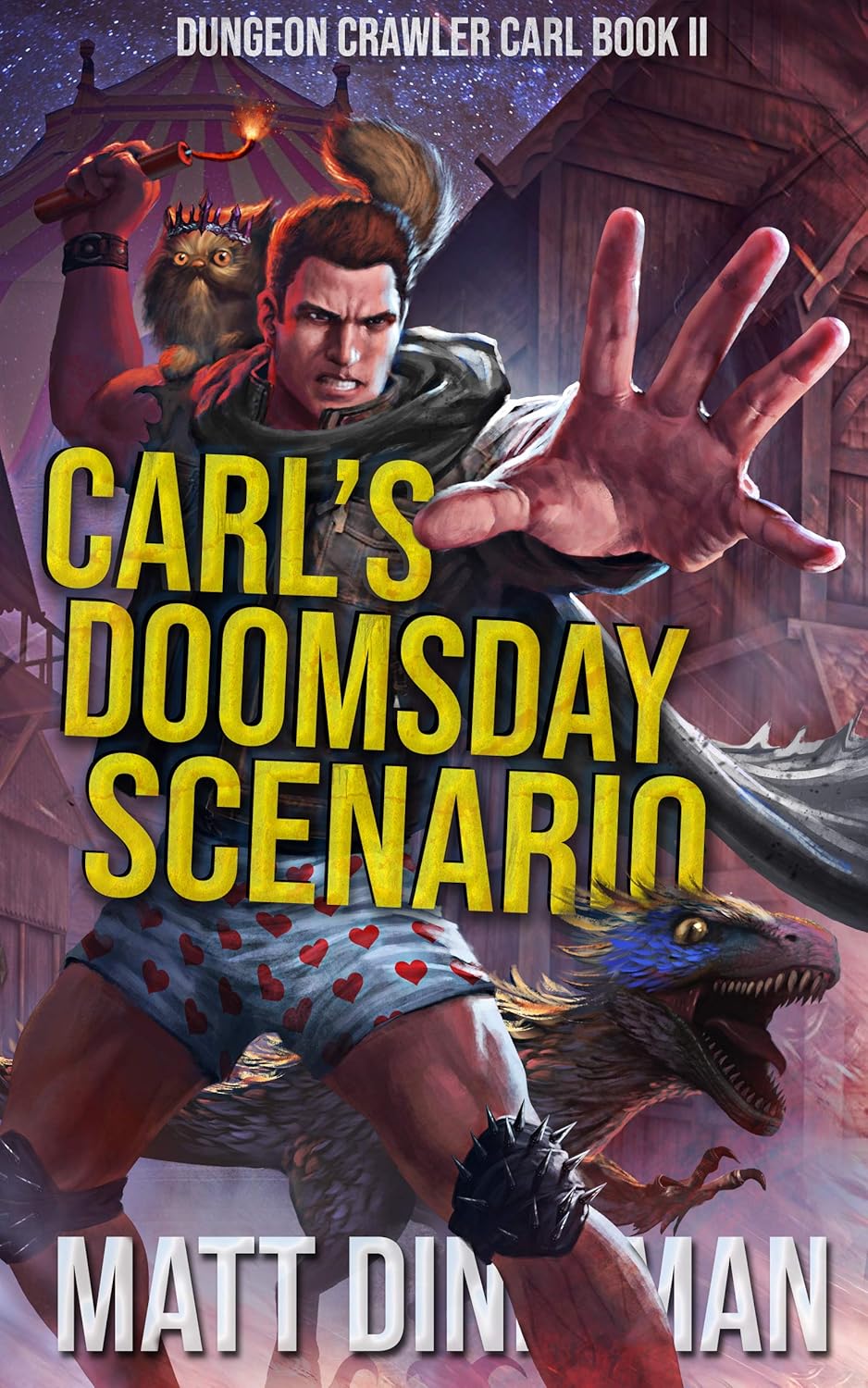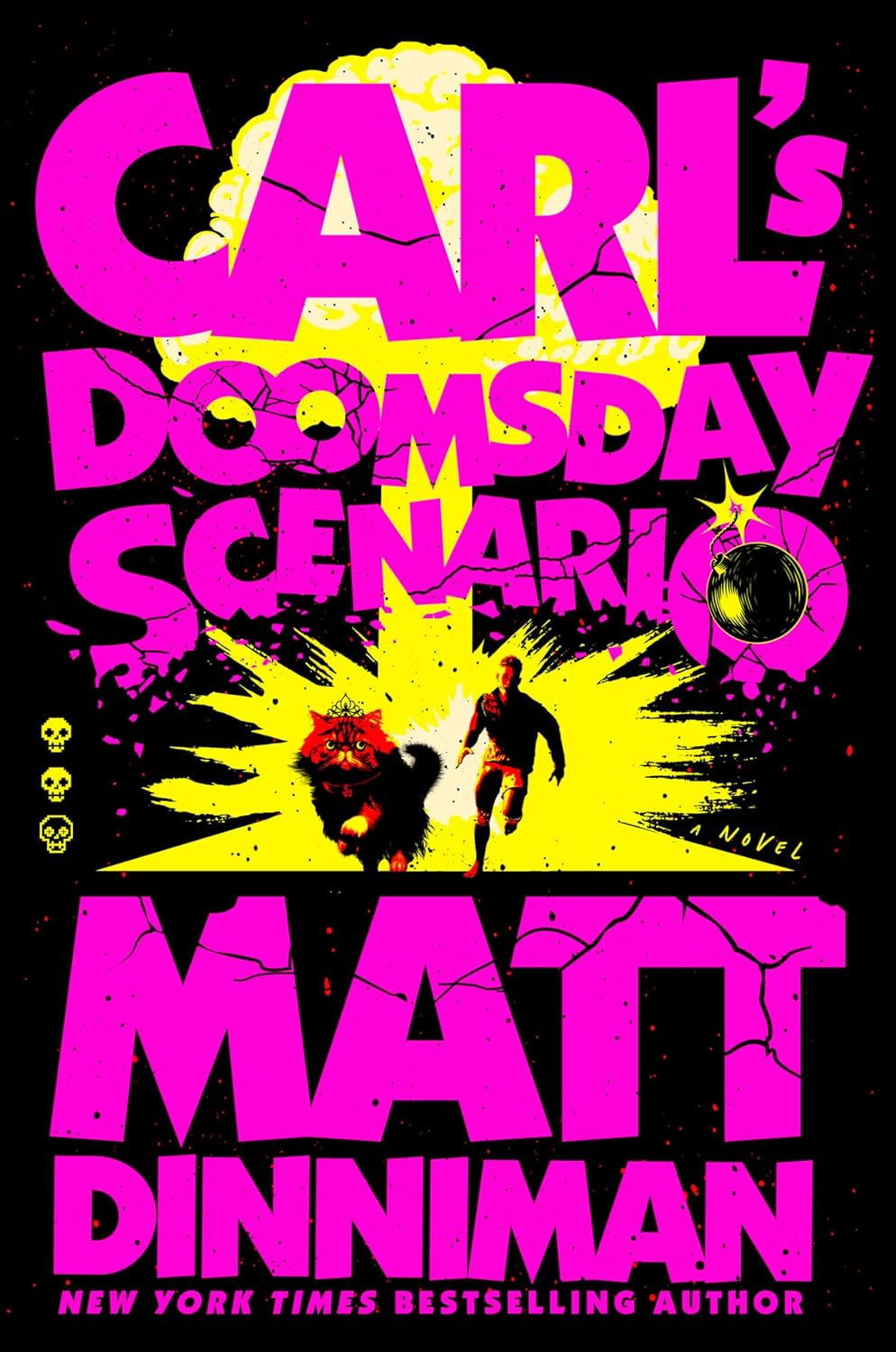
Carl’s Doomsday Scenario by Matt Dinniman

Publisher: Soundbooth Theater (Audiobook – 6 January 2020)

Series: Dungeon Crawler Carl – Book Two

Length: 11 hours and 28 minutes

My Rating: 5 out of 5 stars

Amazon

After falling in love with Dungeon Crawler Carl, the first book in the epic Dungeon Crawler Carl series, I have decided to continue diving into this incredible series of adventure, friendship and adversity, with the second novel in the deeply impressive LitRPG series Carl’s Doomsday ScenarioDungeon Crawler Carl was so damn fun, and I chose to start reading this awesome sequel the very moment I finished the first book in the series.

The dungeon crawl to determine the fate of planet Earth has begun, and it is already the highest rated show in the entire galaxy.  However, the games have only just began, as the human crawlers who survived the training levels of the game now must contend with the horrors of the dungeon’s third level. 

The unlikely team of the pants-bereft hero Carl, his now sentient cat, Princess Donut, and Donut’s pet dinosaur, Mongo, have already survived great adversity in their initial forays through the dungeon, but now the game is starting to get even more chaotic.  Starting off the level with the ability to chooses new races and specialised classes, Carl and Donut have some serious upgrades to face the full horrors of the dungeon, and they are going to need it.

This new level of the dungeon, known as the Over City, is the sprawling ruin of a once vast city, laid low by a devastating calamity.  Many creatures still haunt the now destroyed streets, including the horrifying remains of a once popular circus, while in the seemingly safe town they use as a base, murdered prostitutes rain from the sky as part of a malevolent scheme.  However, while Carl and Donut face all manner of monsters and mayhem tackling these horrors and the quests that lay behind them, the greater danger may lay outside of the dungeon, as old and new enemies from the alien races descending on Earth are determined to make Carl’s journey as difficult as possible.  Can these two unlikely companions and their pet dinosaur survive the carnage to come, or is their doomed crawl through the dungeon about to come to an end?

Well damn, now that was a really impressive follow-up to the first book in the Dungeon Crawler Carl series.  Carl’s Doomsday Scenario was an outstanding novel from Dinniman that ups the craziness and ensures that you are still absolutely hooked on its brilliant storytelling, intriguing LitRPG elements and awesome humour.  I frankly couldn’t stop listening to Carl’s Doomsday Scenario, and I have to give it another five-star rating for how much fun I had with it.

Dinniman came up with another great story for Carl’s Doomsday Scenario that continues right after the events of the first book in the series.  One of the shorter novels in the series, Carl’s Doomsday Scenario avoids any recap material and instead jumps right into the plot, which covers the entire time the protagonists spend on the third level of the game.  Cleverly bringing in some cool new elements at the start, the protagonists are soon grinding through this new level.  The plot mostly focused around two of the quests that the protagonists choose to participate in, one involving a cursed circus, and the other involving a sinister plot of sacrifice and murder in one of the floor’s main towns.  Dinniman plays through both major plot elements in a similar manner to quests from a particularly deranged RPG game, and you soon get invested in both the scenarios, and the protagonist’s unusual or explosive ways of dealing with the situation.  Both major quest lines involved carnage, exploration, a dash of mystery, and an array of intriguing new characters, and allow for the protagonists to keep getting stronger and more experienced.

These quest-focused sequences are well balanced by an array of events that tie them into the larger series story of the protagonists playing the dungeon game.  The protagonists become involved in several events outside the dungeon which helps introduce long-term antagonists and hints about some of the future obstacles to come.  You also get some interesting updates about some of the recurring characters introduced in the first book, many of whom are clearly going to have a bigger impact on the story in the future.  All these elements blend well into one cohesive and exciting plot, and I loved how well Dinniman balanced the various unique story elements and kept making the overall narrative of the series even more elaborate.  These plots all come together for Carl’s Doomsday Scenario’s big finale, which was as hilariously epic as possible.  Dinniman really ramped up the tension for this final part of the book, and you are constantly on the edge of your seat as you wait to see who survives and how.  An epic story that perfectly continued the overarching Dungeon Crawler Carl narrative, while also providing some very memorable moments that allows Carl’s Doomsday Scenario to stand on its own.

I loved how Carl’s Doomsday Scenario came together, although I must point out that you really need to read Dungeon Crawler Carl first.  The plot of Carl’s Doomsday Scenario directly continues from the events of Dungeon Crawler Carl, and you could honestly combine the two to get one long novel without any issues at all.  Indeed, this story does feel a little like a bridging novel between the introductory first novel and the heavily plot laden third book, although it still works well to tell its own fun story.  While the point-of-view protagonist does recap some events in his head as the story unfolds, new readers trying to start at this second book would likely get lost in some of the plot details.  As such, this is definitely a book for those who plan to read the series from start to finish, and those that are will find that Carl’s Doomsday Scenario features all the very best elements from the initial novel, including a ton of great action, some unique LitRPG elements, and the continued side-splitting humour that made Dungeon Crawler Carl so much fun to get through.

Dinniman makes excellent continued use of the first-person perspective to paint a compelling picture of the protagonists’ journey in this second book, and you really get drawn into Carl and Princess Donut’s adventures as a result.  Thanks to the fact that they are experiencing all these scenarios for the first time, readers with all manner of LitRPG or RPG experience can easily enjoy this novel, and the author does an amazing job combining the more elaborate RPG elements into the larger exciting narrative.  There are a ton of great new elements added in for this book, with things like class and species decisions, quests, elite NPCs, towns and more, adds some additional complexity to the plot which helps to make the story even more interest.  These extensive LitRPG features are perfectly enhanced by the author’s comedic writing, and there are so many great jokes thrust into the story.  This humour is well supported by the book’s overall outrageous nature, and all the over-the-top scenarios the protagonists encounter can be exceptionally funny at times.  Thanks to how well Dinniman writes and combines these elements together, I was so invested in every part of the book, and it was fantastic to see the entire narrative unfold and watch the protagonists evolve with the game.

As with Dungeon Crawler Carl, the emotional heart of Carl’s Doomsday Scenario lies in the partnership between Carl and Princess Donut, and it was fascinating to follow these two unlikely heroes through the dungeon.  Carl continues to be the gruff and over-exasperated central character through whose eyes we see the story unfold.  A tired figure still reeling from the death of his planet, Carl continues to grimly stay alive for Donut’s sake, while also becoming more enraged at the full evils of the dungeon and the corrupt alien corporations controlling it.  I really enjoyed the practical and often quite clever way he addresses the dungeon’s many challenges, and Dinniman does a good job showcasing his evolution as a player, even though he still mainly resorts to explosives and crazy plans.  Indeed, Carl starts to develop a somewhat well-deserved reputation as a reckless figure, which is quite entertaining.

While Carl is the stoic centre of the plot, Princess Donut is the comedic heart of the Dungeon Crawler Carl series, and you just have to love her entertaining persona.  Despite being sentient, Princess Donut is still very much a cat in nature and bearing, and it is hilarious to see her exaggerated personality clash with the more subdued nature of Carl.  Her ability to get them into all manner of trouble with her fun-loving ways and lack of caution adds some great entertainment to the plot (Goddammit Donut!), while her love of attention and popularity perfectly plays into the reality television nature of the dungeon game they are in.  Donut is an outstanding personality foil to Carl, and this allows for some very entertaining moments as a duo.  However, while on the outside she is still the same silly and haughty cat you came to love in the first book, Dinniman has started to showcase Donut’s hidden depths, and there are some great moments when you come to realise that the cat is growing up and become more mature.  A lot of this lies in the heartwarming relationship between Carl and Donut as the two continue to become a true team.  I love some of the scenes when Carl and Donut are vulnerable with each other, especially when they are close to death, and you realise just how close they’ve become and how much they mean to each other.  This connection provides some amazing moments throughout Carl’s Doomsday Scenario, and you continue to become extremely invested in these two’s adventures.

Aside from Carl and Donut, there is an array of additional awesome characters featured in Carl’s Doomsday Scenario, including a combination of figures from the previous novel and some new great characters.  This includes Donut’s pet velociraptor, Mongo, who continues to grow into an even more dangerous killing machine.  Despite some continued teething troubles about Mogo’s inability to control himself, Mogo grows into a key member of the team, and that intense scene where he defends Donut from harm cements him as a wonderfully beloved pet.  The team’s NPC tutorial guide, Mordecai, gets an extended appearance in Carl’s Doomsday Scenario, becoming Donut’s reluctant manager, and I loved the fun mentor role he adds to the cast, becoming the team’s voice of reason, which is often ignored by the protagonists.  Dinniman also adds in an interesting third member of the party later in the book, who gets an effective introduction, even if they don’t play a major role in the plot this time around.  Throw in an array of determined fellow crawlers, aliens who often have beef with Carl, and some complex mobs and NPCs whose unique stories the protagonists get dragged into, and the cast of Carl’s Doomsday Scenario was so damn epic and really enhanced the overall story.

As with the first book in the series, I chose to listen to Carl’s Doomsday Scenario on audiobook, which is frankly the very best way to enjoy this incredible novel, especially as the having the crazy story and the antics of the characters read out is so much fun.  Coming in with a run time of 11 and a half hours, this is one of the shorter entries in the series, and I managed to finish off this audiobook in a few very entertaining days.  I deeply appreciate the fact that Jeff Hays continues as the narrator of this second audiobook in the series, as he really impressed me with Dungeon Crawler Carl.  Hays has an amazing array of elaborate voices that perfectly fit so many of the unique characters featured in this novel, and he carries over several of the key tones from the first audiobook for the recurring characters.  His voices for Carl and Princess Donut are particularly good, and I love how effectively he still captures their complex personalities, including Carl’s frustrations and anger, and Donut’s comedic over-excitement and infectious personality.  His best voice still probably remains the system AI running the dungeon, as the sheer amount of excitement, sarcasm and comedic timing Hays brings to reading out the AI’s notices is so damn good.  Throw in a cool array of new character voices, as well as some modulated tones for characters who have changed race or attributes, and this was such an impressive listen that will have you laughing like crazy.  I cannot recommend the audiobook format of the Dungeon Crawler Carl books enough, so do yourself a favour and make sure to check them out.

My newfound obsession with Matt Dinniman’s Dungeon Crawler Carl series continues unabated as I powered through the second book, Carl’s Doomsday Scenario, in no time at all.  an outstanding sequel that perfectly continues all the amazing story elements from the first book, while adding even more layers to the elaborate scenario.  Fast-paced, constantly entertaining, and with some impressive emotional depth to it, Carl’s Doomsday Scenario was particularly awesome, and I had an absolute blast reading it.  Indeed, I loved it so much that I once again instantly dived into the next book in the series, The Dungeon Anarchist’s Cookbook, which is proving to be just as incredible as its predecessors.

Amazon

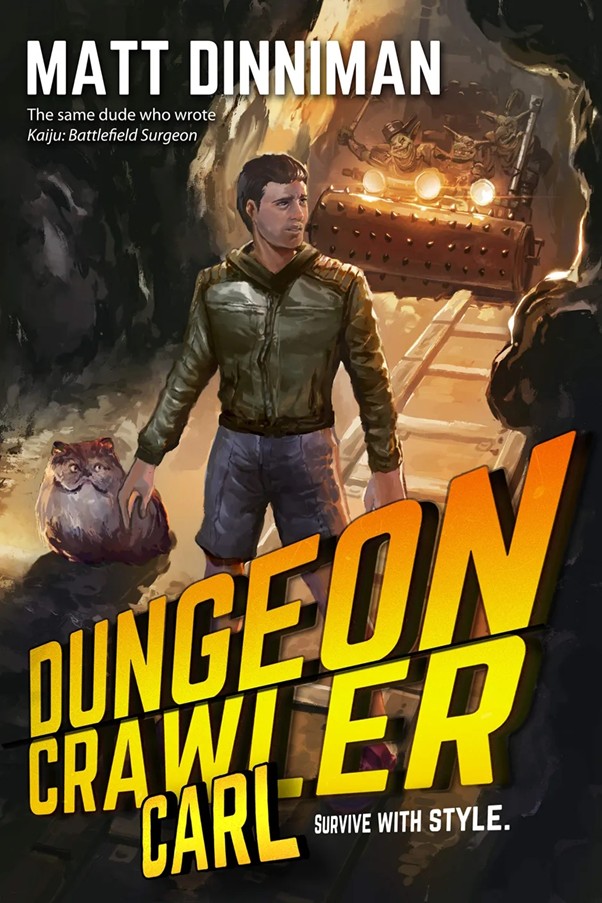
Dungeon Crawler Carl by Matt Dinniman

Publisher: Soundbooth Theater (Audiobook – 21 September 2020)

Series: Dungeon Crawler Carl – Book One

Length: 13 hours and 31 minutes

My Rating: 5 out of 5 stars

Amazon

Have you ever had one of those books or series that everybody seems to be talking up all the time?  Lately for me that series has been the Dungeon Crawler Carl novels by Matt Dinniman.  An intriguing LitRPG series, the Dungeon Crawler Carl books are a funky and hilarious fantasy and science fiction hybrid that places its outrageous protagonist into an unlikely alien reality show filled with subterranean dungeons inspired from classic RPGs.  A series with a very interesting premise, I have been seeing so much online about the Dungeon Crawler Carl books over the last couple of years, with everyone praising it and really talking it up.  Despite not having a lot of experience with the LitRPG genre (except for Ascension by B. F. Rockriver), I decided to check out the first novel in the series, also titled Dungeon Crawler Carl, to see what all the fuss was about, and boy did that have an excellent result.

When aliens come to Earth, first contact is far more brutal and unusual than you could ever expect.  Instead of communicating or conquering, the aliens instead instantaneously collapse every single human-made structure down into the ground, killing everyone who was inside.  Only those standing outside at the time survived, and they are given a dire choice: either remain on the planet’s now desolate surface with no shelter, or journey down into the subterranean 18-level dungeon that has been formed from humanity’s repurposed buildings.

For those few million human survivors who journey into the newly labyrinth, they soon encounter a fantasy-inspired dungeon, filled with traps, monsters, loot and other dark dangers to navigate.  These survivors, known as dungeon crawlers, need to keep moving downwards in the hope of reaching the 18th floor and the promised reward it contains.  Death and dismemberment are a near certainty in the dungeon, so contestants will need to learn how to kill mobs, find enchanted gear, learn new combat skills or magic and keep getting stronger, all before the level they are on collapses.  However, this dungeon is far more that a contest of might and magic; it is the most popular reality program in the galaxy, seen by untold trillions of aliens, and only those crawlers who can gain a strong following and rich sponsors are likely to survive.

Into this chaotic situation is thrown unlikely hero Carl.  A simple man caught outside in his underwear as he attempted to retrieve his ex-girlfriend’s cat, Princess Donut, Carl soon finds himself fighting for his life in the most ridiculous of circumstances.  Teaming up with the now sentient Princess Donut, Carl finds that the dungeon has a steep learning curve, and he will need all his resolve, cunning and the friendship of a superpowered cat to survive.  However, as Carl and Princess Donut accidently become two of the most popular contestants in the game, they will need to contend with everyone who wants them dead, both from inside the dungeon and without, as they constantly move downwards.  Dangerously overmatched, completely overwhelmed, and with a distinct lack of pants for Carl, this unlikely duo will need to learn how to survive big and show the universe and the unhinged AI controlling the game that they are worth keeping alive.

Goddammit Dinniman, how could you create something so damn addictive.  It turns out that for once the internet crowd had this 100% right, and Dungeon Crawler Carl was everything they said it would be and more.  A clever, intense and overall hilarious romp through a cool LitRPG scenario, Dungeon Crawler Carl had me hooked very early on and I absolutely powered through this epic adventure novel which I just had to give a full five-star rating.

I really, really loved the cool story in Dungeon Crawler Carl, which starts off quickly and never lets up all the way to the end.  Starting with a quick but effective introduction to Carl, which then leads to the world collapsing and him being forced to enter the dungeon with his cat, you are soon immersed in this new crazy world, with some bloody opening fights setting the crazy tone for the rest of the novel.  After an in-depth sequence that explains the rules of the world, Dungeon Crawler Carl takes off again at a fast pace made even more entertaining thanks to the introduction of the now sentient cat, Princess Donut.  Forced to keep fighting through monsters, traps and other obstacles, the action and excitement never lets up, and I really appreciated how Dinniman naturally flowed the protagonists into fresh scenarios, including unusual boss fights, explosive opportunities, and starting a meth war between goblins and fire-spitting llamas.

The second half of Dungeon Crawler Carl goes in some very interesting direction, as the protagonists encounter other Crawlers, with some very different results, while also ensuring the full and often ultra-bonkers horrors of the first two levels of the dungeon keep coming at you hard and fast.  There is some great character development as the book continues, both literally and figuratively, and it was interesting to see the characters evolve to face the unique threats of the dungeon in their own way.  Dinniman threw in some clever and often hilarious solutions to many of the obstacles the protagonists face (although most of them involve explosives), and you’re constantly on the edge of your seat as you wait to see how they will survive going forward.  There is also some excellent universe expansion as the characters experience the reality-television obsessed world outside the dungeon, which often leads to some hints of the dangers to come later in the series.  These upcoming elements are well placed into the book, which allows the readers to anticipate what is to come, while not distracting from the main plot points.  The conclusion of Dungeon Crawler Carl comes a little after the big events of the book, but it sits in a good place as part of the wider series.  This novel ends up being an exceptional read on its own, while also being an excellent first entry in the series that perfectly sets up the many over-the-top adventures to come.

This proved to be a very cleverly put together novel, and Dinniman really excelled at utilising the unique elements of the LitRPG genre and utilising in his story.  Featuring a very cool explanation for why the protagonists are trapped in a fantasy dungeon (alien reality television show to determine the fate of the planet is an awesome plot idea), you soon get engrossed in the LitRPG themes of the book, as the characters are instantly forced to battle mobs to survive.  Due to the time limits built into the plot, the protagonists are quickly forced to adapt to the new way of living (or dying), and the reader is given a crash course in the mechanics of the game system.  I found these to be quite fascinating, and you really get engrossed in the various levelling, skills, magical items, achievements and other elements of the game, which fans of RPGs of all varieties will be familiar with.  The dungeon itself is a unique blend of classic fantasy creatures and tropes, with exaggerated elements of modern human culture, allowing for modern references to go together with fights against goblins and other creatures.  Dinniman also adds in a great reality television element to the plot, as the protagonists are forced to earn followers and appeal to a wider audience to improve their chances, like The Hunger Games on steroids.  The author does an excellent job of setting these unique elements up, and it’s a great extra edge to the typical LitRPG elements.

Dinniman ensures that these LitRPG elements continue to be quite entertaining throughout the entirety of Dungeon Crawler Carl thanks to a variety of factors, mainly humour.  Nearly every scene in this book is incredibly funny of various levels, including entertaining character interactions, reactions to over-the-top scenarios, various subtle jokes, and a large amount of more noticeable adult humour that reflects the crazy situation and big personalities of the plot.  I personally loved how Dinniman enhanced all the game elements of the book, such as item and mob descriptions, achievements, skill discussions and more, by including comedic summaries loaded with jokes, references and the barely controlled fetishes of the AI running the dungeon.  These wacky descriptions made the more LitRPG-heavy parts of the plot flow a lot better, especially as readers with less interest in RPGs can still have fun with these scenes.  Dinniman works to make various other LitRPG elements more entertaining for casual readers in various other ways, such as ensuring all the scenes featuring the chat function are quite distinct and humorous due to Princess Donut’s insistence of only writing in caps.  I honestly was left laughing out loud multiple times throughout Dungeon Crawler Carl, and the sheer ridiculousness of the story, as well as the often quite inappropriate, yet hilarious jokes, was just too much for me.

While there is a definite focus on comedy and jokes in Dungeon Crawler Carl, Dinniman also adds in some real emotional heart to the story, mainly through the focus on the protagonists.  The relationship between the perspective protagonist Carl, and the now sentient cat Princess Donut adds some excellent and powerful depth to the book, especially as they grow to be a compelling team.  While initially thrown together in unlikely fashion, the grumpy Carl and the amusing Princess Donut, who has all the smugness and confidence of a prize-winning cat, turn into the ultimate odd-couple, made even more entertaining by the fact that the cat is much more powerful than Carl.  Dinniman throws in a lot of very entertaining quirks for both characters that makes you love them; however, it is the more subtle examination of the protagonist’s deeper emotions that help to enhance this narrative even more.  This includes Carl’s deep internal anger, brought on by various factors, the despair he feels at the complete destruction of his world, and his continued attempted heroics, even when it puts him at greater risk.  I loved how both Carl and Princess Donut both grew to become quite dependent on each other as the book continued, and while there is still a lot of growth needed for both, you can see that their bond is going to be the powerful centre of the plot.

Aside from Carl and Princess Donut, Dungeon Crawler Carl is loaded with an outstanding array of characters who each bring their own brand of fun to the plot.  I personally enjoyed the protagonist’s guide, Mordecai, a veteran former crawler who provides advice on how to proceed, while also hiding the trauma of his own adventures in a previous dungeon.  There was also an array of compelling and distinctive mobs, alien night show hosts, and other creatures associated with the production, who on the surface are quite entertaining and funny, but whose deeper tragedies work to highlight just how dark the dungeon process truly is.  There are also some other distinctive fellow crawlers thrown into the plot, and it is interesting to see how humans will react to the terrible situation before them, either becoming heroes or dark villains.  Finally, I must mention the AI running the dungeon, who proves to be one of the more entertaining figures in the book, despite not appearing in person in any way.  His very over-the-top commentary and descriptions for all the game mechanics was ultra-hilarious, and there are so many great jokes there.  However, it was the AI’s more subtle actions that proved to be the funniest part of this electronically ethereal figure’s inclusion, as it guides the game to suit its own interests and desires.  This includes giving very specific items to the protagonists to produce the most amusing story, while other rewards and loot encourage Carl to remain barefoot and lacking pants throughout the game for “reasons”.  I felt that this excellent cast really matched the over-the-top story that Dinniman threw together for Dungeon Crawler Carl, and every character made an amusing and memorable impact on the story.

I ended up checking out the audiobook for Dungeon Crawler Carl, which was honestly exceptional, and I cannot emphasise enough just how effective this format enhanced Dinniman’s great story and outrageous humour.  Narrated by Jeff Hays, who might be one of my new favourite audiobook voice actors, all the action, intensity and the distinctive characters of Dungeon Crawler Carl came across exceptionally well in this format, and I absolutely loved how effectively Hays conveyed the entire craziness of this novel.  The narrator provides an excellent voice for the protagonist, Carl, that served as the base tone for most of the narration, and you really get to feel the protagonist’s fear, determination and continued exasperation, especially when he encounters all the crazy twists and inclusions.  Hays’ voices for the other characters of Dungeon Crawler Carl also helps to make this audiobook stick out.  For example, the tone that Hays choice for Mordecai perfectly fit the tired, old mentor, while his Princess Donut voice is so damn entertaining, especially as you can fully appreciate the character’s catlike nature with Hays’ high-pitched and demanding voice.  Hays also captures all the fun features of weird mobs of the dungeon, including goblins and other sentient creatures, and there are some very striking and funny voices featured there.  However, it is the tone he uses when speaking in the voice of the AI running the dungeon that is the best.  Cheerful and sarcastic, Hays perfectly captures this computer program’s weird sense of humour with his narration, and I loved the boisterous way he reads out the achievements, the skills, item stats and more, especially for more colourful descriptions that require accents or other creepier voice changes.  This outstanding narration worked on so many levels with Dinniman’s unique style, and I frankly could not get enough of listening to Dungeon Crawler Carl on audiobook, which is just the best way to check out this novel.

Overall, I had an exceptional time with Dungeon Crawler Carl, and this series instantly became my new obsession.  Fun, outrageous and constantly exciting, Dungeon Crawler Carl lives up to all the hype surrounding it, and I was really impressed with Matt Dinniman’s ability to craft a complex story that will potentially get better with each new entry.  Honestly the best way to showcase just how much I enjoyed Dungeon Crawler Carl is to reveal that as soon as I finished this first book I instantly started listening to the sequel, Carl’s Doomsday Scenario, and then the third book, The Dungeon Anarchist’s Cookbook, soon after that.  I will probably end up powering through this series in the next few months, hopefully before the eighth book comes out next year, and I cannot wait to see where Dinniman takes this beautifully unhinged plot next.

Amazon

Top Ten Tuesday – My Favourite Audiobooks from the First Half of 2025

Top Ten Tuesday is a weekly feature that currently resides at The Artsy Reader Girl and features bloggers sharing lists on various book topics.  The official topic for this week’s Top Ten Tuesday required participants to list their favourite books that take place in a setting of their choosing.  While this is an interesting idea, and one I might come back to later, I’m instead going to continue my recent trend of discussing books from the first half of the year and highlight my favourite audiobooks from the first half of 2025.  This is a continuation of my Top Ten list from a couple of weeks ago that featured my favourite overall novels from the first half of 2025.

I have a great deal of love for the audiobook format, and it is one of the main ways that I tend to check out books.  Each year I enjoy a great number of different audiobooks and use the format to enjoy both recent releases and older novels.  I have long been a major fan of audiobooks, and it is amazing the various ways in which listening to a book can enhance your enjoyment.  A great audiobook can really bring you into the story, and I find that listening to a book enhances the amount of detail that you can take in.  In addition, other features, such as captivating voices, music and sound effects can really make an audiobook something special, and there some great examples of the format I have enjoyed throughout my life.  This year alone I have listened to a ton of outstanding audiobooks, includes some of my favourite books from early 2025.  Because I love this format so much, I thought I would take this opportunity to highlight my favourite audiobooks from the first half of the year.

To pull this list off I had a look at all the 2025 releases that I listened to on audiobook to figure out my favourites.  It turns out that I have already gone through quite a few this year so there was a large collection of potential additions to this list, which I was eventually able to whittle it down to the best ten audiobooks.  There is a bit of a crossover with my previous Favourite Books from the First Half of 2025 list, but I think there are enough new additions to make this list worthwhile.  I made sure to feature only the very best audiobooks on this list, and, in addition to the quality of the baseline novel, I also looked at audiobook production and narration.  This includes whether the audiobook has outstanding narration or uses music and sound effects to enhance the plot.  Keeping these criteria in mind, I came up with the following strong Top Ten List and associated Honourable Mentions, and all the audiobooks listed below were exceptional listens that come very highly recommended by this blog.

Honourable Mentions:

Warhammer 40,000: Fulgrim: The Perfect Son, written by Jude Reid and narrated by Andrew James Spooner

An excellent and intense Warhammer 40,000 novel perfectly brought to life by narrator Andrew James Spooner.

Amazon


Grave Danger, written by James Grippando and narrated by Jonathan Davis

James Grippando continues his fantastic Jack Swyteck legal thriller series, with the audiobook well presented by the always impressive Jonathan Davis

Amazon


Badlands, written by Douglas Preston and Lincoln Child and narrated by Cynthia Farrell

Cynthia Farrell ensures this new dark thriller from the legendary team of Douglas Preston and Lincoln Child really shines with her outstanding narration.

Amazon


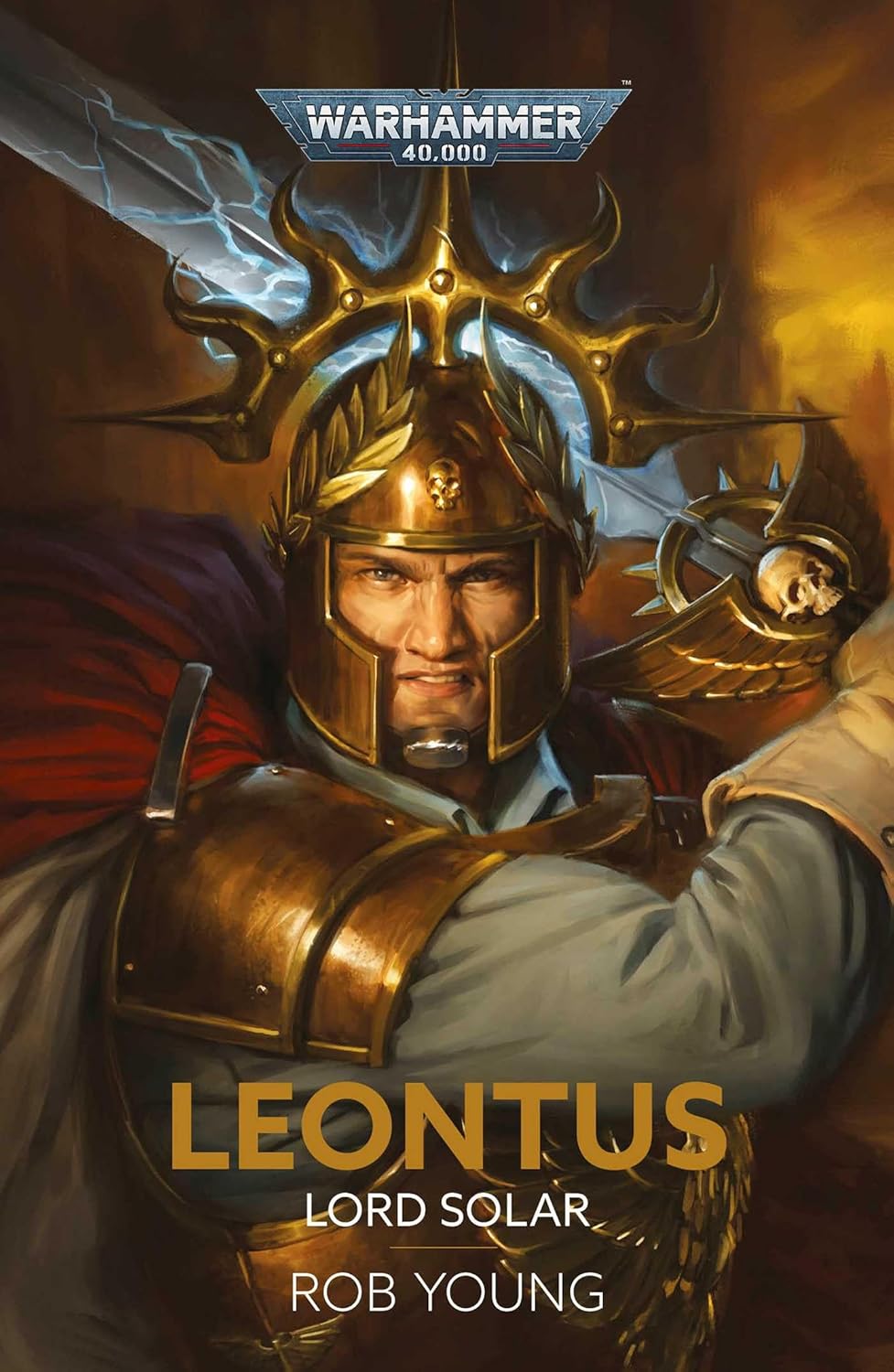
Warhammer 40,000: Leontus: Lord Solar, written by Rob Young and narrated by David Seddon

A short, but very sweet Warhammer 40,000 audiobook that really pops when read out.

Amazon

Top Ten List:

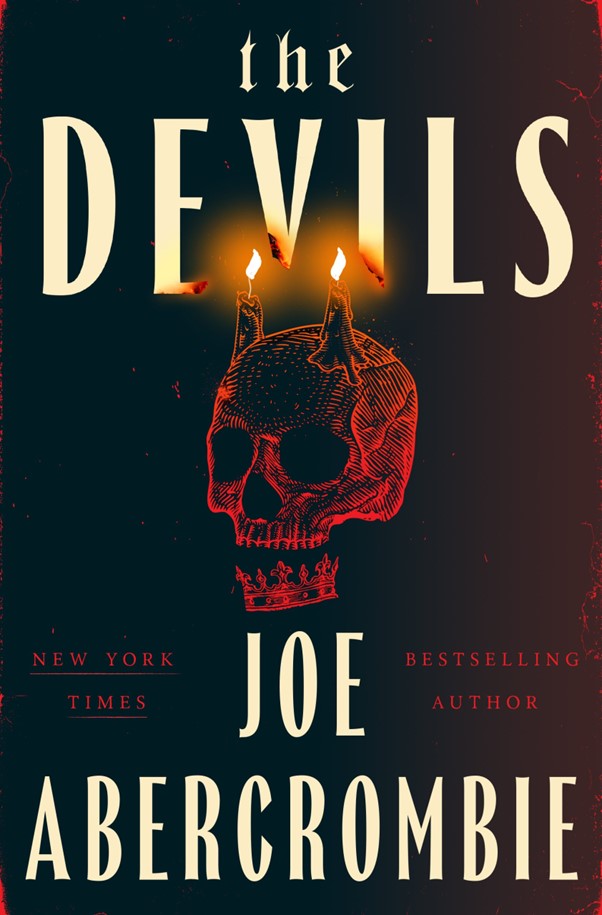
The Devils, written by Joe Abercrombie and narrated by Steven Pacey

Let’s start this list off with one of my top books and audiobooks of the year, The Devils by the master of grim dark fantasy fiction, Joe Abercrombie.  An incredible and highly entertaining novel that sees a group of monsters attempt to place a street thief on the throne of Troy in a clever, alternate medieval Europe setting, The Devils was a particularly fun, bloody and compelling novel I couldn’t get enough of, especially on audiobook.  Thanks to one of my favourite audiobook narrators, Steven Pacey, The Devils was so much fun to listen to as Pacey perfectly embodied the entire crazy cast of this book.  Highly recommended, you are in for an epic time listening to The Devils.
Amazon


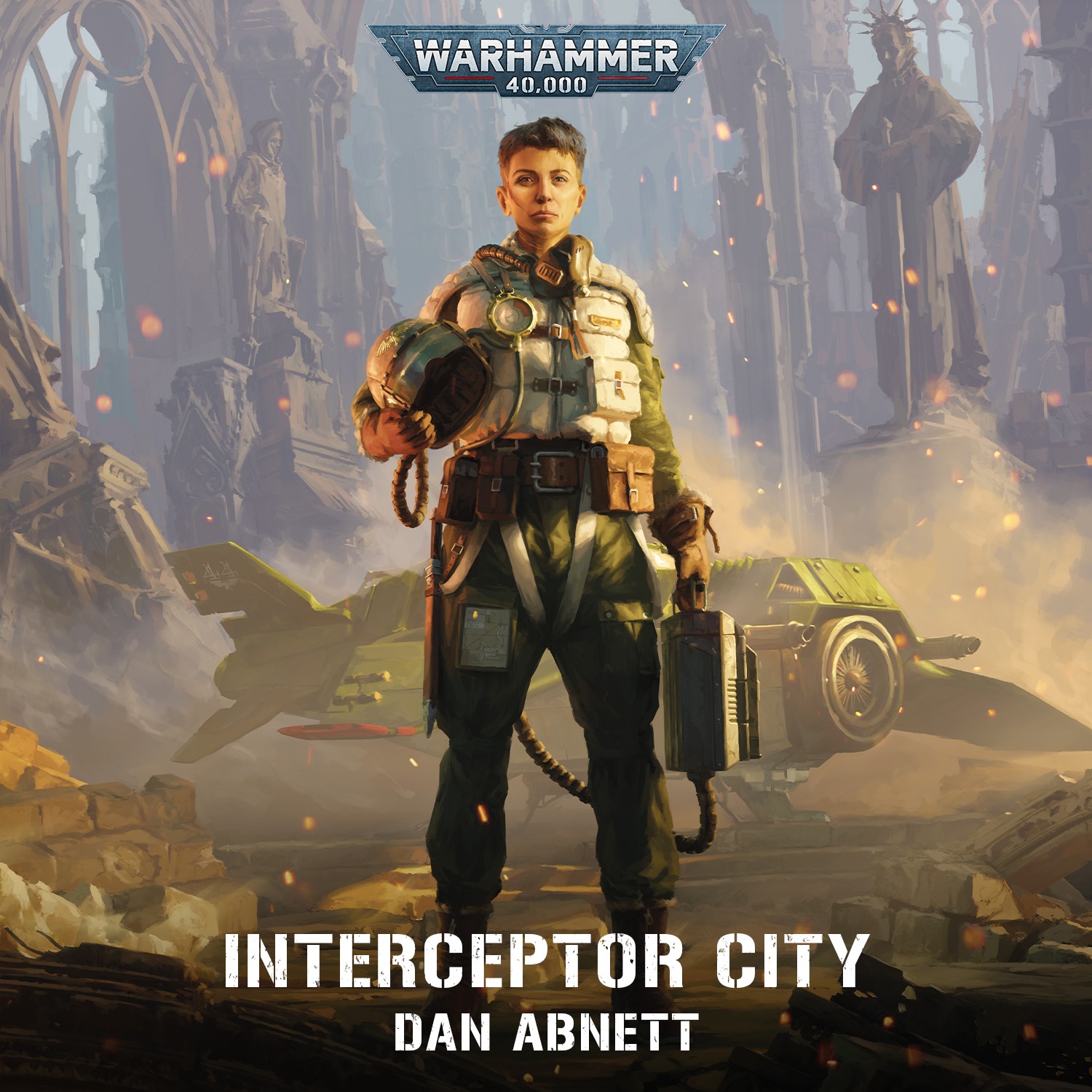
Warhammer 40,000: Interceptor City, written by Dan Abnett and narrated by Toby Longworth

Unsurprisingly to anyone who knows me, I have a Warhammer 40,000 audiobook on this list with Interceptor City.  The long-awaited sequel to Dan Abnett’s classic novel, Double Eagle, Interceptor City was a gritty and enthralling science fiction war story that saw fighter pilots battle it out amongst the massive ruins of a fallen Hive City.  A powerful and action-packed novel, Interceptor City becomes even more epic when read out by long-time Warhammer narrator Toby Longworth, who expertly showcases the intense, claustrophobic aeronautic combat sequences.  I honestly could have listened to another 20 hours of Interceptor City, and there is no better way to enjoy this epic read.

Amazon


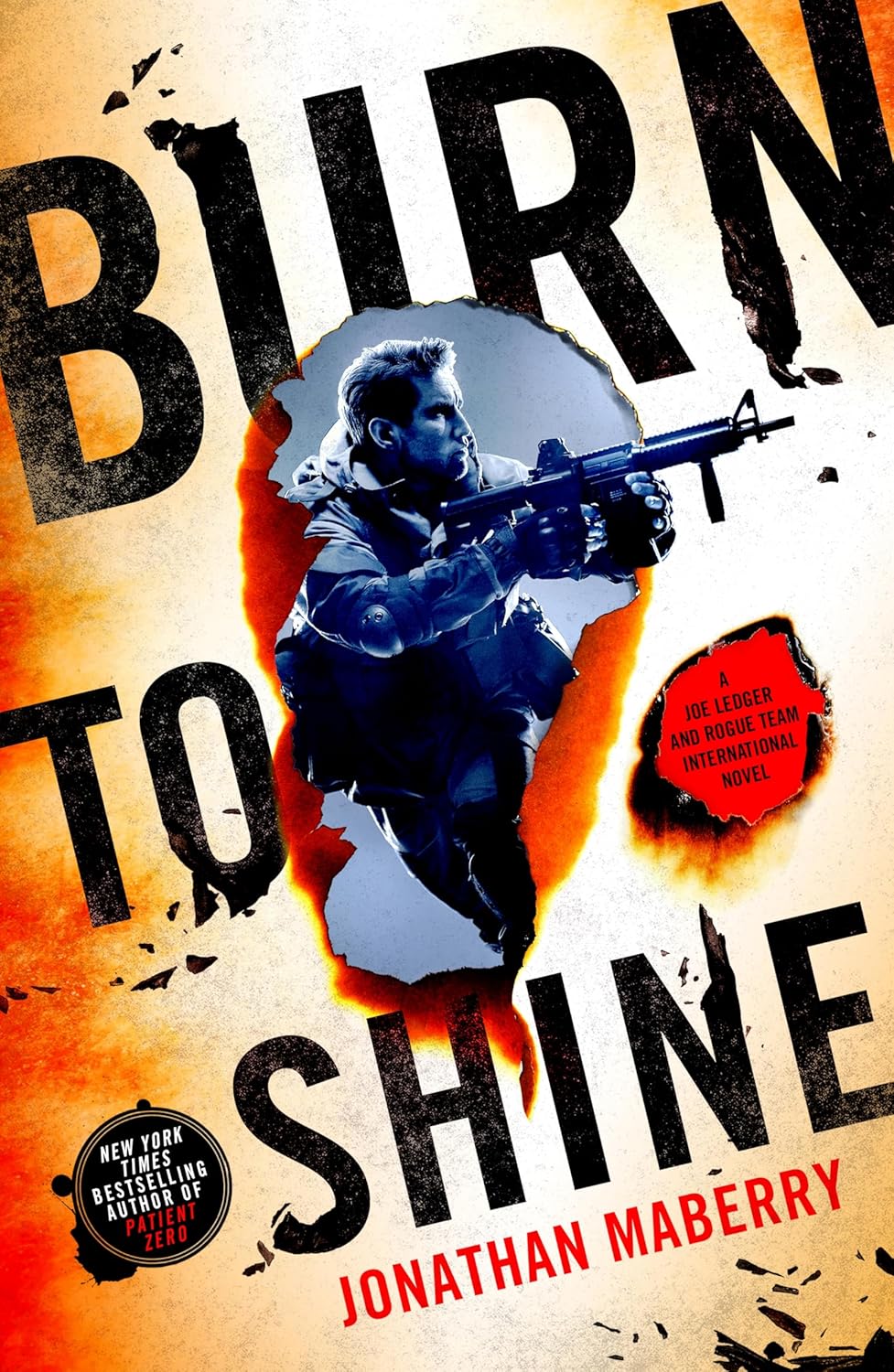
Burn to Shine, written by Jonathan Maberry and narrated by Ray Porter

The dream team of Jonathan Maberry and Ray Porter continues to produce incredible audiobooks, this time with the gripping thriller Burn to Shine.  The fourth book in Maberry’s Rogue Team International series (Rage, Relentless and Cave 13), Burn to Shine was another exciting read that pitted the protagonists against high-tech and supernatural threats from their past.  Maberry writes an excellent story for this book, and Ray Porter once again effortlessly brings the complex characters and dark tone to life with his narration.  A deeply impressive listen from two amazing creatives.

Amazon


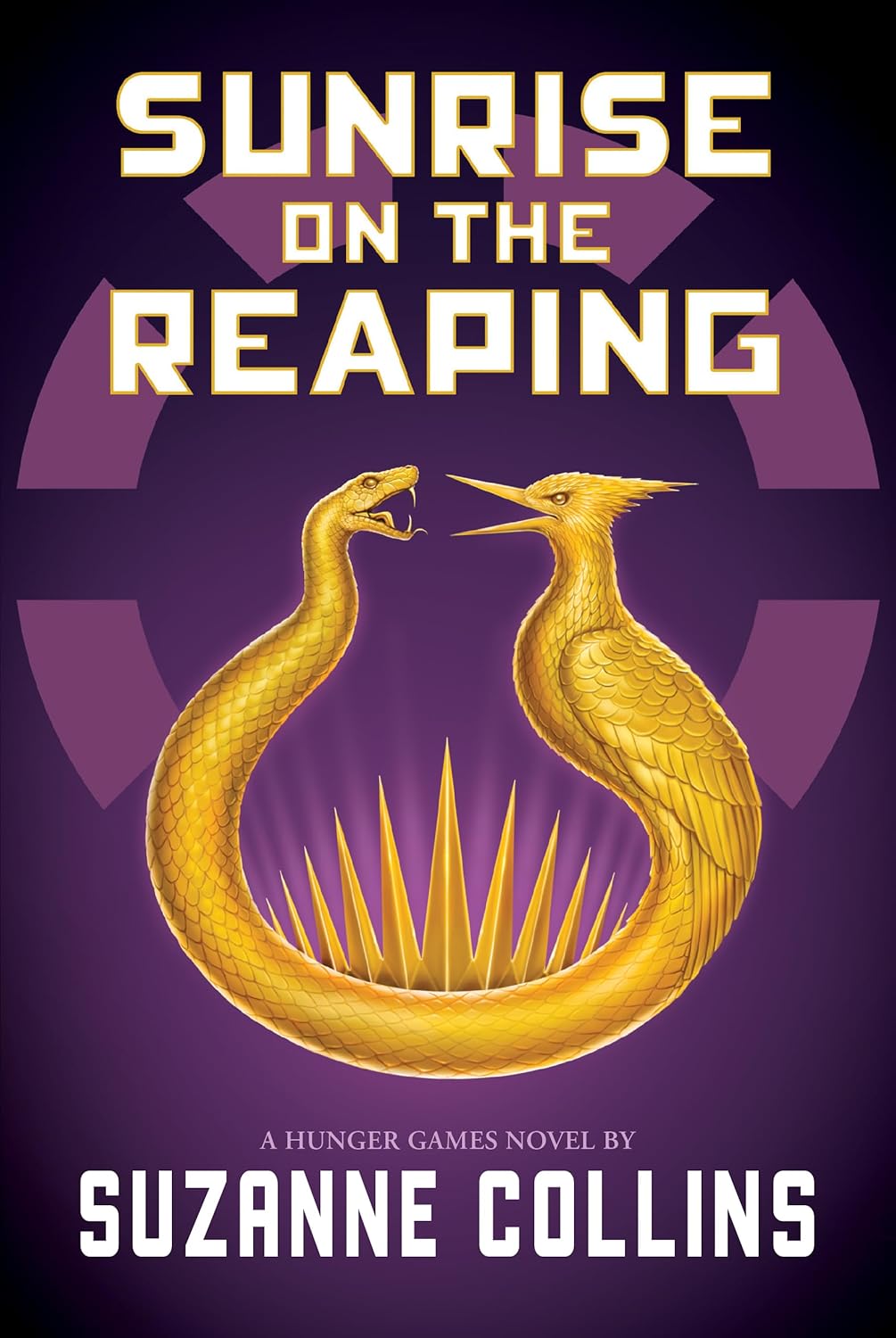
Sunrise on the Reaping, written by Suzanne Collins and narrated by Jefferson White

One of the more impressive audiobooks I listened to in 2025 was the new Hunger Games novel, Sunrise on the Reaping.  Suzanne Collins cleverly revisited her iconic world with a fantastic prequel novel focused around one of her best characters Haymitch Abernathy.  This amazing book really hit the readers hard, and I found myself enjoying it even more thanks to the impressive audiobook narration of actor Jefferson White.  White proved to be a perfect narrator for a young Haymitch, and I got deeply engrossed in this audiobook thanks to his fantastic voice work. An exceptional audiobook guaranteed to break your heart.

Amazon


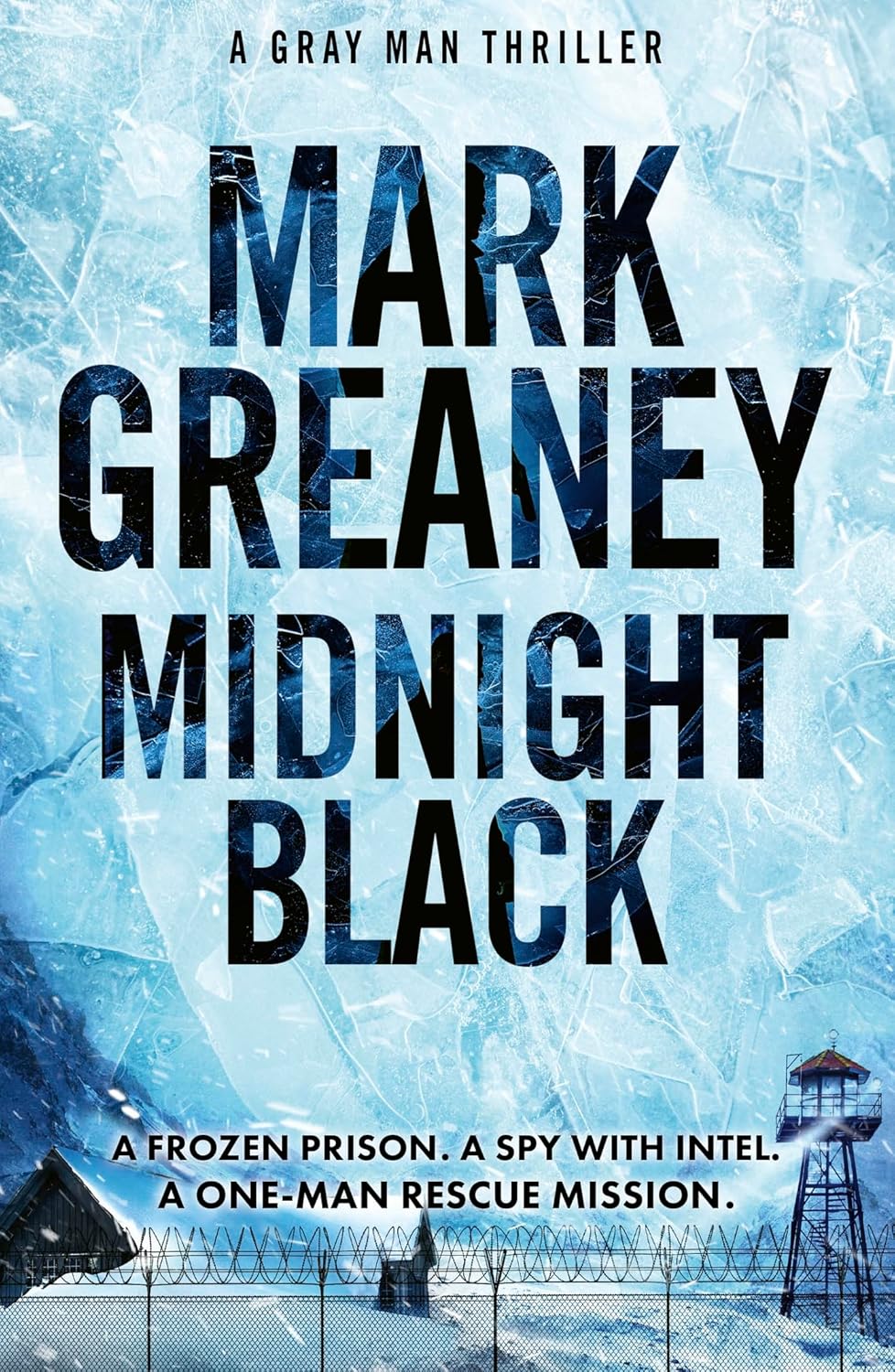
Midnight Black, written by Mark Greaney and narrated by Jay Snyder

The latest Gray Man audiobook from Mark Greaney proved to be an exceptional piece of entertainment for a long road trip, and I really got engrossed in this gripping thriller while driving around the United States.  Once again narrated by Jay Snyder, Midnight Black’s compelling tale of desperation and imprisonment proved to be particularly addictive and constantly exciting, and I couldn’t stop listening to this book at times as I waited to see how everything came together.  An impressive new audiobook entry in one of my favourite spy thriller series.

Amazon


Four Ruined Realms, written by Mai Corland and narrated by various

One of the first audiobooks of 2025 I listened to this year was the awesome fantasy novel, Four Ruined Realms.  The sequel to Mai Corland’s 2024 novel, Five Broken Blades, Four Ruined Realms had a great story that sent the author’s lethal protagonists to an enemy nation to complete a desperate heist mission, with everything and everyone they love on the line.  Not only was this a great fantasy story, but the Four Ruined Realms audiobook once again came across as an incredible listen thanks to it’s six outstanding narrators.  Jaine Ye, Sophie Oda, Greg Chun, Zion Jang, Roger Yeh and Donald Chang each excelled at narrating the perspective chapters of one of the book’s protagonists, and I like their unique take on each of the characters.  Thanks to these six talented narrators, Four Ruined Realms was a real joy to listen to, and this proved to be a great second entry in the Broken Blades series.  I’m planning to listen to the recently released third and final book in the trilogy, Three Shattered Souls, on audiobook soon and it’s going to be an outstanding listen, even with one of the narrators stepping away after the tragic ending to Four Ruined Realms.

Amazon


Star Wars: Reign of the Empire: The Mask of Fear, written by Alexander Freed and narrated by January Lavoy

This year Alexander Freed presented the start of a cool new Star Wars trilogy that aimed to show the early days of Emperor Palpatine’s rule and the steps that would lead some key figures to rebellion.  The first book in this trilogy, The Mask of Fear, was a compelling and complex read that examined politics and lies in the Star Wars universe.  Thanks to the narration of January Lavoy, as well as the cool music and sound effects Star Wars audiobooks are known for, The Mask of Fear proved to a particularly impactful listen, and there is really no better way to enjoy this novel.

Amazon


Never Flinch, written by Stephen King and narrated by Jessie Mueller

Stephen King continues to impress in 2025 with his new and particularly powerful thriller, Never Flinch.  Bringing back one of his more unique protagonists, Holly Gibney, Never Flinch was a dark and captivating novel of obsession, addiction and murder, that frankly was impossible to stop listening to.  Narrator Jessie Mueller was particularly impressive, and I love her outstanding take on the story, as well as her excellent character voices.  Easily one of the best books of 2025 that really comes to life on audiobook.

Amazon


Open Season, written by Jonathan Kellerman and narrated by John Rubinstein

Another great murder mystery I was lucky enough to enjoy on audiobook this year was Open Season by Jonathan Kellerman.  The 40th book in Kellerman’s Alex Delaware series, Open Season was an outstanding and powerful novel that saw the team of a skilled psychologist and a veteran detective hunt a dangerous killer with a sinister motive.  I really enjoyed the awesome audiobook of Open Season, which I powered through on a plane ride, and frankly I couldn’t stop listening to this book at times.  Long-time Alex Delaware narrator John Rubinstein was once again amazing in Open Season, and I love his fantastic take on all the characters, including the main detective.  Thrilling, exciting and very clever, Open Season was a great audiobook that comes highly recommended.

Amazon


Days of Shattered Faith, written by Adrian Tchaikovsky and narrated by David Thorpe

The final audiobook I want to highlight on this list is Days of Shattered Faith, which I enjoyed early in the year.  The third book in Adrian Tchaikovsky’s Tyrant Philosopher series, Days of Shattered Faith continued to explore the author’s unique fantasy world where a dangerous empire of perfection-seeking fanatics conquers everything through various despicable, and often repurposed, means.  This latest book was an incredible novel of diplomacy, clashing cultures and subtle wars, and I loved the varied storylines explored within.  Narrator David Thorpe does an excellent job bringing this varied cast to life, while also capturing Tchaikovsky’s unique tone, and the result was a truly awesome listen that I deeply enjoyed.  A wonderful new audiobook entry in one of Tchaikovsky’s best series.

Amazon


Well, that’s the end of this latest list.  As you can see, there have been some very good audiobooks out in the first half of 2025.  It will be interesting to see which books make the cut later in the year, especially as I currently have several major 2025 audiobooks currently sitting on my phone, waiting to be listened to.  While I get to that, make sure to let me know what your favourite audiobooks of 2025 so far are in the comments below.

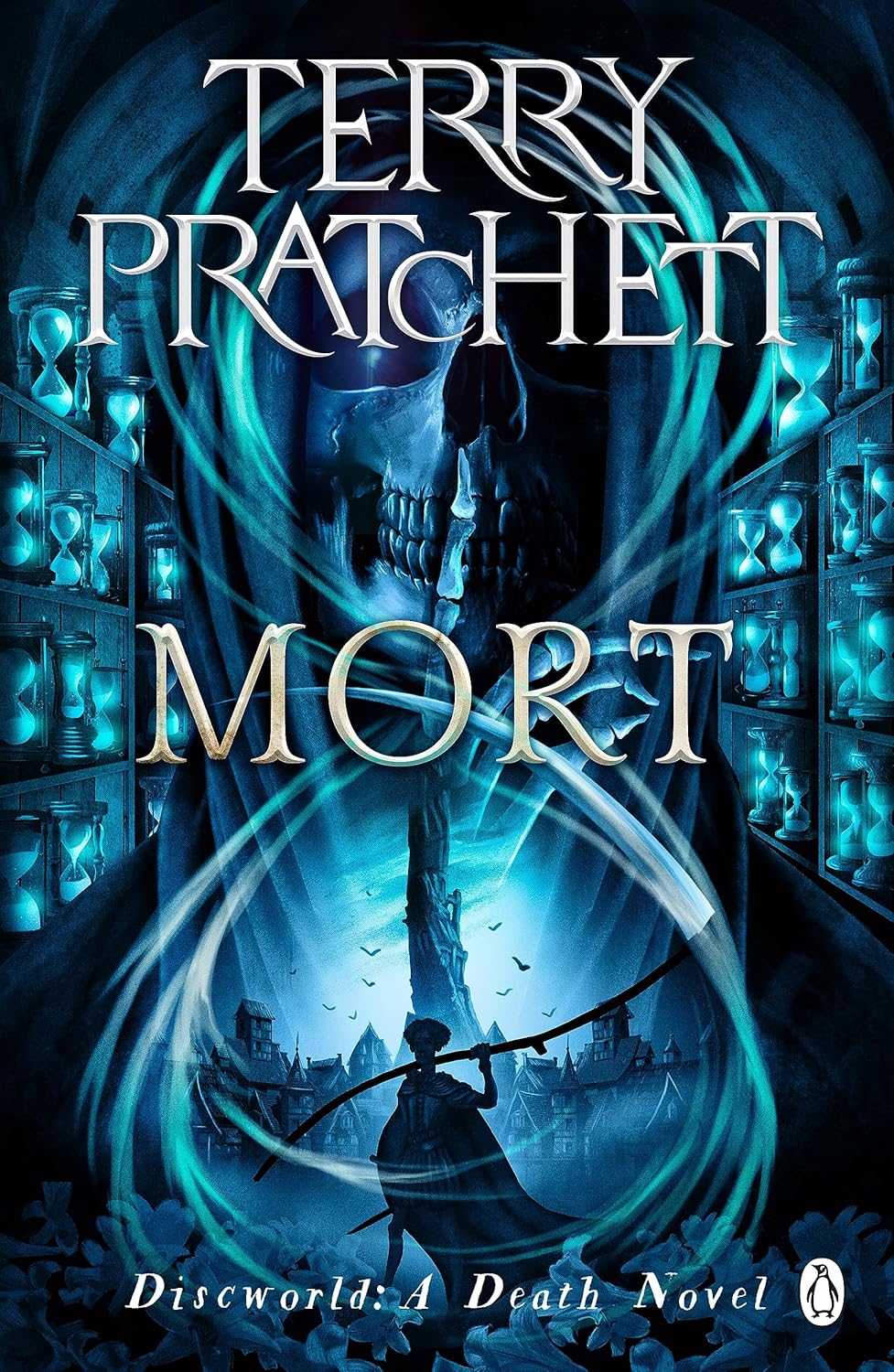
Mort by Terry Pratchett

Publisher: Gollancz/Penguin Audio (Audiobook – 1987)

Series: Discworld – Book Four/Death – Book One

Length: 7 hours and 18 minutes (Planer version)/7 hours and 57 minutes (Clifford version)

My Rating: 5 out of 5 stars

Amazon

My dive into the always outstanding Discworld series by the legendary Terry Pratchett continues with one of the earlier classics, Mort, a clever and highly entertaining novel that still hits hard after all these years.

Readers of this blog will be aware of my obsession for all things Discworld, which I have been a mega fan of for many years.  I have had the very great pleasure of reading all the books in the Discworld series multiple times, and I honestly love everything about them, so much so that I even named this blog after a key setting in the series.  I’ve recently been having one of my periodic re-reads of the series, which has seen me finally review some of my favourite Discworld entries, including Pyramids, Guards! Guards!, Moving Pictures, Small Gods and Men at Arms.  The next entry in the series I decided to reread was the wonderfully compelling Mort.  The fourth book in the series, this is one of the earlier Discworld novels and serves as the first book in the Death sub-series.

They say that death comes for everybody, but on the Discworld that statement couldn’t be more true, as everyone will eventually encounter Death, the black-robed, scythe wielding skeleton who personifies the end of life.  However, not all encounters with Death are the same, as terminally unqualified teenager Mort is about to discover, as instead of taking his life, Death offers Mort a job.

Suddenly saddled with the responsibilities of being the apprentice of Death, Mort finds his life a lot more complicated.  Reaping the souls of the recently departed is one thing, but learning to walk through walls and deal with the unlikely whims of his new master is another, especially as Death seems determined to set Mort up with his adopted daughter Ysabell.  However, the big problems begin when Mort impulsively decides to change fate and save the life of a young princess destined to die.

Forced to find a way to stop the diverging threads of reality while keeping the princess alive, Mort soon discovers that being the Grim Reaper isn’t all it’s cracked up to be.  Worse, with the real Death suddenly discovering the joys of life, Mort’s own humanity is starting to slip away.  Can Mort and a group of unlikely companions save reality, or will he have to face his final judgement at the hands of the universe’s most unyielding employer?

Mort was a particularly impressive Discworld novel from Pratchett, especially as it was probably the book where the author finally found his true writing groove.  Fun, thoughtful and featuring a clever and concise story, Mort was an outstanding read, and I once again powered through in very short order.  As such, Mort gets a very well-deserved five-star rating from me and is a particularly awesome Discworld novel to check out.

I loved the very impressive story that Pratchett came up with for Mort, which takes the concept of Death finding an apprentice and going to the extreme with it.  Starting at an initially slow pace that introduces the key characters of Mort and Death, you soon get invested in Mort’s tale of young man coming into his own in a very unusual field.  Things get interesting quickly when Mort decides to save the life of a young princess destined to die and soon splits reality down the middle.  This leads to a very addictive middle section, as Mort attempts to save the princess while also ensuring reality doesn’t split apart.  At the same time, Death, who finds his time freed up thanks to his assistant, begins to wonder around the world learning about humans and trying to have fun.  The resulting outlandish interactions with Death are a great counterpoint to Mort’s storyline, especially as this results in the apprentice starting to obtain his own powers, often with hilarious results.

Everything cleverly and quickly leads up to the big final third of the novel, where a less-than-human Mort and a scrappy Ysabell attempt to do a disappeared Death’s duty, while also finding a way to save the doomed princess, whose own attempts to stay in reality have been less than successful.  At the same time, fun supporting character Albert, Death’s manservant, returns to his old profession on the Disc and tries to find the original Death, who has found his own unlikely niche in the mortal world.  This final third of Mort is extremely fun, fast-paced and surprisingly impactful, especially as the author keeps raising the stakes for the protagonists, and you are very much unable to stop reading it as you try to see where all the entertaining storylines are going.  However, it’s the inevitable showdown between Death and Mort that really ties everything together perfectly.  Their intense, deeply personal and perfectly showcased duel is amazing, especially as it expertly builds off all the character growth in the novel.  Ending on a hopeful note that sets the tone for a great character going forward, you come away from Mort very happy and with an interesting new outlook on life and its always-grinning counterpart.

I really enjoyed how Mort came together, especially as this is the Discworld novel where Pratchett perfects the style and storytelling methods that make his later novels such a treat to read.  As such, Mort is an early classic in the series, so much so that it is a perfect entry point for new Discworld fans, who get to see a lot of key ideas develop here, while also being introduced to the author’s humour and clever storytelling.  Mort definitely benefited from Pratchett developing a more concise storytelling style here, keeping the narrative a little more focused than the previous novels, and this works as a well-crafted standalone read.  Pratchett also does an outstanding job combining cool fantasy elements with outrageous humour and complex characters, and the result is a very entertaining read that will appeal to a wide range of readers.  Part coming-of-age story, part examination of an extreme mid-life crisis, Mort’s narrative hits a lot of generational notes, and while some of his ideas about splitting reality and the nature of the Discworld are a little complex, Pratchett ensures that readers can completely follow his thought all the way to the fantastic conclusion.

As with all Discworld books, Pratchett imbues Mort with an amazing level of humour, and I loved how intensely funny this novel was at times.  Despite Mort essentially being a novel about mortality and destiny, this is a very light-hearted novel thanks to the entertaining characters and the unusual situations they find themselves in.  There are several different levels of humour contained within Mort, ranging from obvious jokes and over-the-top situations to well-setup references or clever name gags, as well as the subtly funny footnotes that really dive into the absurdity of this flat world that lies atop a giant turtle.  Some of the funniest parts of Mort lie in the usually hardboiled and cynical inhabitants of the Disc suddenly encountering Death in unlikely scenarios.  This becomes particularly prevalent later in the novel when Death leaves the job to Mort and wanders the world looking to understand “fun”, and the various scenes with Death fishing, going to parties, getting drunk, gambling and even searching for a job, are particularly hilarious, especially as everyone else involved in these situations is either deeply unsettled or completely terrified.  Other great jokes involve wizards coming to terms with an apparently animated statue, very long-running bar tabs, fun, if short-lived, political intrigues, unlikely deaths, and the young protagonist upsetting everyone by unwittingly walking through walls.  I laughed myself silly multiple times in Mort, even though I had heard all the jokes many times before, and you are guaranteed to have a lot of fun with this great Discworld entry.

As with all of Pratchett’s novels, Mort features an excellent array of entertaining characters, whose unique arcs add some excellent power to book’s overall narrative.  The cast of Mort was particularly compelling and well-rounded, and I think that Pratchett did a great job of introducing some excellent new figures while also making use of one of the best side-characters in the entire series.  Unsurprisingly, most of the novel’s focus settles on the titular character of Mortimer (Mort), a young teen who unexpectedly finds himself the apprentice of Death.  Shown at the start of the book to be an awkward and unusually thoughtful figure, Mort’s storyline revolves around his attempts to fit in, learn his unlikely trade, and the interesting relationships that form thanks to his new position.  Pratchett works in a very compelling coming-of-age narrative around Mort, especially as he grows into his new role and gains the confidence that comes with finding oneself, while also walking the fine line between morality and duty.  However, there is a definite dark edge to Mort’s storyline towards the end, as Mort starts to lose his humanity and becomes more like Death, and it falls to the rest of the characters to keep him human.  Pratchett did a really good job introducing and building up Mort as a complex young character, and he ended up being one of the author’s better one-shot protagonists.

While much of the book is focused on Mort, the character who constantly steals the show is Death.  The literal personification of death on the Discworld, Death appeared in the first three novels in the series, serving as an ethereal and often entertaining figure on the sidelines who occasionally haunted the author’s original protagonist.  Pratchett cleverly expands on Death in this book, showcasing him as a wise and implacable figure doing his duty in a dispassionate way.  However, his interactions with humans, especially Mort, soon start to change his personality, especially as he becomes curious about life and tires of his eternal station.  This allows him to become a particularly entertaining figure in the second half of the book, as he roams the Disc in unlikely situations, trying to learn how to have fun.  His various ponderings on mortality and human nature result in some hilarious moments, and there are so many fantastic and funny interactions that occur here.  However, it is the final third of the book where you get a real sense of Death’s character; at first, he wistfully tries to embrace life, only to leave that behind when confronted by the actions of Mort.  The anger and sadness that accompany his return to his role and his confrontation with Mort is extremely powerful, and you can’t help but feel for him as he faces an impossible choice, as well as rejection from those he loves.  An overall excellent first deep dive into the character of Death from Pratchett, and you can really see why the author wrote several more books around this character going forward.

Aside from Mort and Death, the rest of the main cast of Mort is quite concise and contains an excellent blend of distinctive and impactful characters.  This includes Death’s adopted daughter, Ysabell, a seemingly spoiled princess and lover of over-the-top romance, who is initially antagonistic to Mort.  Despite her attitude, Ysabell soon turns into quite a likeable and sympathetic character, especially when certain traumas from her unusual life become apparent.  Due to her having some of the more emotionally poignant dialogue and character moments in the book, Ysabell is an excellent part of Mort, and I liked how Pratchett paced her storyline.  The other major resident of Death’s domain featured in this story is Albert, the mysterious servant determined to hide his past from Mort and Ysabell.  Pratchett does an excellent job of setting him up as a bigger figure within the Disc’s history, and his explosive return to form after some entertaining scenes between him and a threatening Mort are a highpoint of the book.  Other major characters include Princess Keli, a young princess who finds her sudden reign made even more difficult due her convoluted existence, and young wizard Igneous Cutwell, who serves as a great foil to the more serious Mort and Keli and becomes an excellent comic relief for the book.  Throw in an array of over-the-top minor Discworld characters whose lives briefly become that much more interesting due to their interactions with either Death or Mort, and Mort has an especially fun cast that Pratchett uses to great effect within this masterful novel.

I must once again highlight the amazing audiobook formats that are my favourite ways of enjoying the Discworld series.  I honestly have so much fun with the Discworld audiobooks, mainly because the format does such an incredible job of showcasing Pratchett’s legendary humour and inventive worldbuilding, and there is frankly no better way to enjoy this cool series.  Like the rest of the series, Mort has two particularly awesome unabridged audiobook versions, both of which come highly recommended by me.  This includes the old-school version narrated by the legendary Nigel Planer, who provided his voice to over half the unabridged Discworld audiobooks.  As with all the Discworld books he narrated, Planer does a remarkable job in this early entry in the series, and I loved the impressive array of voices that he utilised in Mort.  Due to this being the first Death audiobook, Planer had a ton of fun featuring his amazing Death voice, which combines beautifully with some of the other new character tones he had to come up with for this novel.  His great voice work also helped to showcase some of Pratchett’s excellent jokes and key bits of humour, and you really get drawn into the author’s brilliant story and fantastic writing with this classic audiobook release.

Despite my love for the Planer version of Mort, which in some ways is still the definitive audiobook version of this novel, I must also really hype up the new Mort audiobook that was recently released.  Part of the recent rerecording of the Discworld audiobooks I have spruiked in previous reviews, this new version of Mort was extremely awesome, and in some ways it surpasses the old-school version.  Coming in with a runtime of just under eight hours, around half an hour longer than the Planer version, this was a brilliant listen, especially with the impressive combined voice work of Sian Clifford, Peter Serafinowicz and Bill Nighy.

Sian Clifford (of Fleabag fame) did an excellent job as the main narrator for this audiobook, reading out most of the story and the voices of the associated cast.  This results in a swift, well-voiced and deeply compelling version of Mort, and I loved how effectively Clifford brought the story to life and helped to showcase the author’s great humour.  You really get drawn into the cool narrative as Clifford reads it out, and I enjoyed her fresh take on many aspects of the audiobook.  Despite Mort being a rather male character dominated entry in the sub-series, Clifford did an excellent job portraying the cast, and there are some great voices featured here, including of some iconic figures from other sub-series (her Rincewind voice was sufficiently terrified and grovelling).  Clifford clearly has fun when it comes to some of the more outrageous members of the cast, such as Albert, while her take on Princess Keli was excessively regal, and captured both her irritation at the events unfolding around her, while also showcasing her fear and uncertainty.  I must also highlight the voice Clifford provides for the main character, Mort, as the narrator really paints a great picture of a gangly, uncertain teenage boy who starts to come into his own as he gains confidence, and more.  I particularly enjoyed the clever voice changes that Clifford did later in the book, especially when Mort started becoming more like his employer, and the corresponding changes to Death’s voice were just perfect.  This was honestly some amazing voice work from Clifford, and I look forward to listening to her narration of the other Death audiobooks, especially once Susan is brought in as the main character.

While Clifford is amazing, I felt that Peter Serafinowicz clearly stole the show in Mort, playing his character to perfection.  Voicing the recurring character of Death in all the new Discworld audiobooks whenever he appears in the plot, Serafinowicz hits listeners with a deep and final tone that perfectly portrays the Discworld’s Grim Reaper in all his bony glory.  For most of the audiobooks, this is just a fun extra inclusion, as Death only appears in a few hilarious scenes.  But for Mort, this is much more of an involved role, as Death is one of the book’s main characters, and so much of the book’s humour and complex narrative is based around Death interactions with humanity.  As such, Serafinowicz has a ton of fun voice Death through various unusual situations and emotional states, all while keeping up the foreboding Death voice.  The clever and subtle changes to this voice that Serafinowicz makes are extremely impressive, and the humour that results from hearing Death engage in these unlikely scenarios and conversations cannot be overstated.  I also must highlight one brilliant sequence where Serafinowicz hilariously hummed the classic funeral march in his Death voice in response to the text describing Death walking away humming a tune.  Details like that in Serafinowicz’s performance, as well as the increased utilisation of Death in this audiobook, really enhanced the overall impact and humour of Mort, and I loved every second I spent listening to it. 

The final actor featured in this audiobook is the legendary Bill Nighy, who also has a recurring role in all the new Discworld audiobooks.  Nighy has a very important job of narrating all the various footnotes that Pratchett includes in his text, and his gentle voice really brings out the subtle humour hidden in these footnotes.  While Nighy doesn’t get much to do in Mort due to author only featuring a few footnotes in this novel, he still makes an impact, and I’ve really enjoyed how expertly he enhances these clever inclusions.  Honestly, all three of these narrators did an outstanding job in this new version of Mort, and I deeply appreciated how well their compelling performances blended into one impactful listen. As such, Mort is best enjoyed on audiobook, and whether it be the classic Planer version, or the new one with extended cast, you will have a wonderful time listening to it.

As the above rambling pages no doubt prove, I have a lot of love for Mort which was an excellent early Discworld novel from Terry Pratchett.  Featuring some excellent storytelling and fully embracing the clever writing style and comedic charm that made the later Discworld novels so damn awesome, Mort was a brilliant read, and one that proves impossible to put down.  An outstanding novel that really shows how impressive Pratchett could be as an author; Mort comes highly recommended and is guaranteed to be enjoyed by any reader.

Amazon

A Tide of Black Steel by Anthony Ryan

Publisher: Orbit (Audiobook – 24 September 2024)

Series: Age of Wrath – Book One

Length: 19 hours and 20 minutes

My Rating: 5 out of 5 stars

Amazon

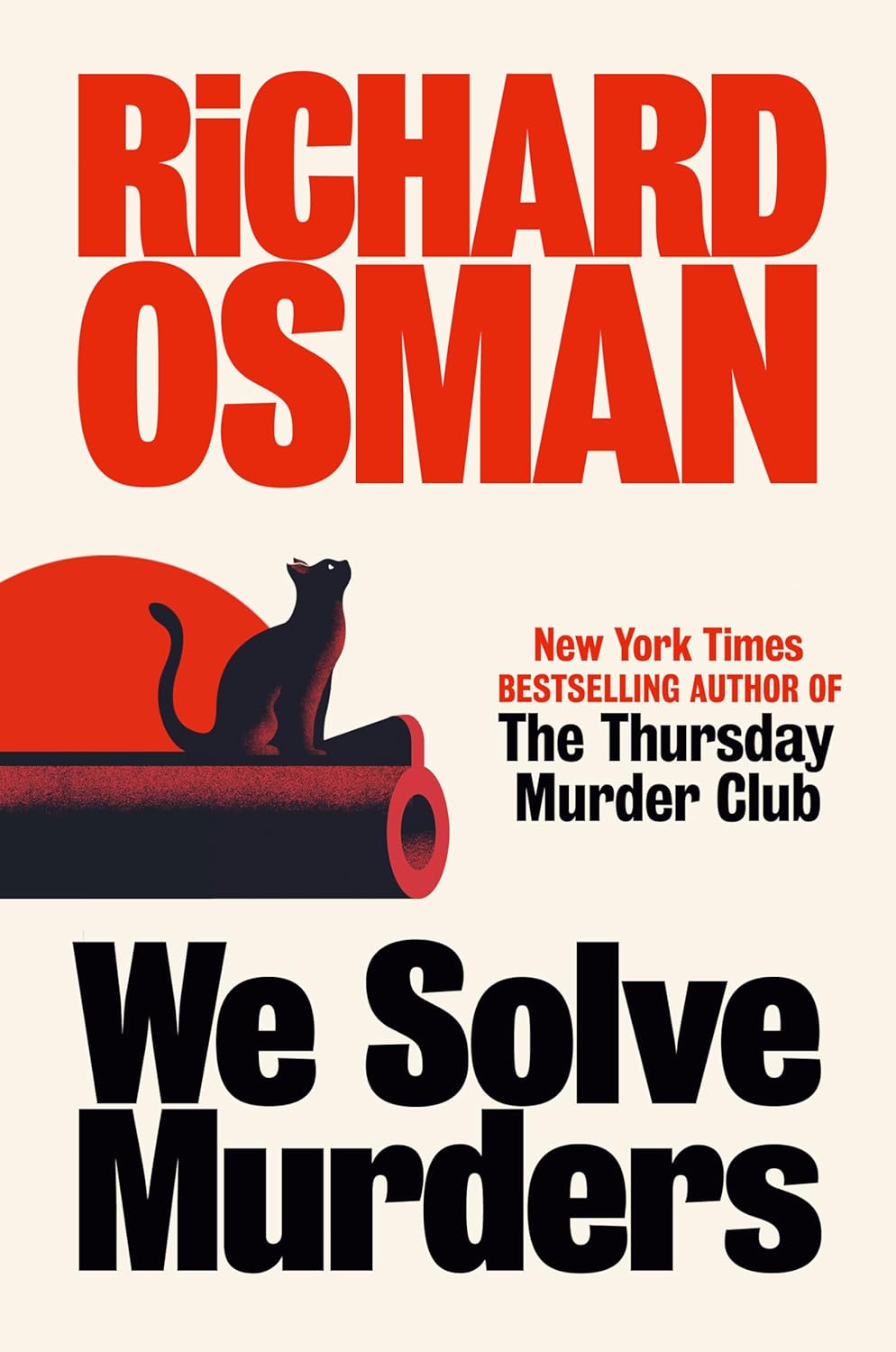
After finally getting something up for We Solve Murders, I continue trying to publish long-overdue reviews for some of the better books of 2024, including the highly captivating fantasy novel A Tide of Black Steel by Anthony Ryan.

Veteran fantasy author Anthony Ryan is an author I have been really learning to enjoy in recent years, especially as I fell in love with his epic The Covenant of Steel series.  Following a young rogue who takes on the mantle of a warrior, spy, strategist and most importantly a scribe throughout his complicated and danger-filled life, The Covenant of Steel novels were an impressive collection of books loaded with great characters, a compelling chronicle style and some brilliant twists.  All three books in the series, including The Pariah (one of my favourite books and audiobooks of 2021), The Martyr (one of my favourite books and audiobooks of 2022), and The Traitor (one of my favourite books and audiobooks of 2023), were instant five-star reads from me, and I had so much fun getting through them.  As such, I was very excited to find out about Ryan’s new novel, A Tide of Black Steel, especially as it serves as a sequel to The Covenant of Steel series.  The first book in the author’s new Age of Wrath series, A Tide of Black Steel sets up a mighty fantasy tale that I had a brilliant time with.

Plot Synopsis:

From the international bestselling author Anthony Ryan comes the spectacular first novel in a new epic new fantasy trilogy inspired by Norse mythology. A new age has dawned. An age of blood and steel. An age of wrath.

The land of Ascarlia, a fabled realm of bloodied steel and epic sagas, has been ruled by the Sister Queens for centuries. No one has dared question their rule. Until now.

Whispers speak of longships of mysterious tattooed warriors, sailing under the banners of a murderous cult of oath-breakers long thought extinct. A tide of black steel that threatens to vanquish all in its path.

Thera of the Blackspear, favoured servant of the Sister Queens, is ordered to uncover the truth. As Thera sails north, her reviled brother, Felnir, sets out on his own adventure. He hopes to find the Vault of the Altvar – the treasure room of the gods – and win the Sister Queens’ favour at his sister’s expense.

Both siblings – along with a brilliant young scribe and a prisoner with a terrifying, primal power – will play a part in the coming storm.

The Age of Wrath has begun.

A Tide of Black Steel was another outstanding novel by Anthony Ryan that provided readers with a cool and layered fantasy adventure.  Cleverly expanding the fantasy universe introduced in The Covenant of Steel books, A Tide of Black Steel brings together several interesting storylines into one exciting read with a very different tone to the author’s previous novels.  Powerful, action-packed, and featuring some interesting twists and turns, A Tide of Black Steel gets a full five-star rating from me, and it was one of my favourite books and audiobooks of 2024.

I really enjoyed how this cool novel turned out, especially as Ryan introduced an ambitious and powerful new narrative that combines bold, seafaring adventures with some complex world-building to create an outstanding read.  Serving as a loosely connected sequel to the author’s The Covenant of Steel books and told through the eyes of four compelling protagonists, the plot of A Tide of Black Steel breaks off into several divergent threads that each have their own charm while also individually exploring a dangerous new enemy threatening the world.  These perspective characters include Ruhlin, a young man who is captured for his mysterious magical abilities and must try to escape from dangerous new masters who want to use his gifts in the fighting ring.  At the same time, Thera of the Blackspear, an agent of the Sister Queens of Ascarlia, investigates a mysterious series of raids against Ascarlia’s borders, travelling to the most isolated islands of the nation.  Finally, Thera’s brother, Felnir, and the young scholar Elvine, are tasked with trying to find an ancient treasure horde and the dark secrets it contains.

Apart from Thera and Felnir’s perspective chapters, which are strongly linked for much of the book, these major storylines are kept mostly separate from each other, allowing for three separate adventures to occur simultaneously.  All these arcs were equally interesting and provided some cool alternate perspective and themes to the book, with Ruhlin’s being a dark coming-of-age plot, Thera’s being a brutal series of battles and investigation, while the combined plot of Felnir and Elvine was a great mixture of exploration, redemption and secrets.  While I was a little more drawn to Felnir and Elvine’s plotlines at times, primarily because of a couple of secretive supporting characters that hinted at a great connection between this book and The Covenant of Steel series, I honestly had a brilliant time with all the storylines, and they combined nicely into one compelling and cohesive overall plot.  All these storylines progress nicely, amping up the stakes and enhancing the adventure until they reach some thrilling conclusions where some big reveals come to pass.  While I saw a few of the twists coming, the impact of these arc conclusions was really impressive, and I came away from A Tide of Black Steel wanting more, especially as there was a cool and brutal cliff-hanger that is going to result in dark moments for the series going forward.

Ryan gave it a real classic adventure feel that worked in the context of the plot.  The author used a very different writing style here compared to The Covenant of Steel novels, as this latest book was a multi-character epic that lacked the chronicle style of the previous trilogy.  While this change in style while remaining the same universe could be potentially jarring, I think it worked quite well, and I enjoyed the complex and entertaining narrative that emerged.  Ryan proved adept at splitting the narrative between various protagonists, and the diverging perspective chapters blended well into a large and compelling story, with only occasional crossovers.  The reveal of key plot points in one perspective arc was well utilised in some of the other protagonist’s chapters, and I really enjoyed the tight, character-driven narrative that emerged.

As I have mentioned a few times, A Tide of Black Steel and the Age of Wrath series it is a part of are a sequel to Ryan’s The Covenant of Steel series, which the author uses to full effect to makes this novel even more enticing and fun.  Set years after the conclusion of The Traitor, A Tide of Black Steel takes place in a new setting, Ascarlia, a neighbouring realm to the lands featured in The Covenant of Steel books and features several characters with interesting connections to figures from the previous trilogy, including that series’ main protagonist.  Ryan has a wonderful time diving into this new setting, which has a distinctive Norse/Viking feel compared to the more traditional medieval Europe vibe of the previous novels.  This allows for an entirely new focus on naval combat, a boat and island focused culture and Norse-inspired military tactics, which really helps to set A Tide of Black Steel apart.  Ryan utilises all these elements to great effect in this new book, and the multiple longship-on-longship battles and clashes at the shield wall were impactful, as well as the well-researched and beautifully written depictions of maritime activity and nautical life.  I deeply enjoyed this expansion of Ryan’s universe, and the focus on a whole new realm within this world really opened the story options and allowed new protagonists and threats to shine.

While A Tide of Black Steel stands on its own extremely well, the events of The Covenant of Steel books are routinely referenced, and there are some very interesting connections between it and this new series.  As such, I feel that A Tide of Black Steel is a book that fans of Ryan’s previous series are going particularly enjoy, especially as they eagerly await any clues or hints about the open story threads from the end of The Covenant of Steel novels.  I know I was constantly curious to see whether some of the characters with more mysterious pasts were going to be revealed as figures we’d previously seen in the other series, and the result of that was pretty good.  I also liked how the use Ascarlia in this book finally provided a good follow-up to a key part of the first The Covenant of Steel novel, The Pariah, and I really enjoyed seeing Ryan expand on these events, including bringing back an antagonist from that book and making them a key supporting character here.  Despite all these references, those readers interested in checking out A Tide of Black Steel without reading The Covenant of Steel novels first are still guaranteed a good time, especially as Ryan provides all the relevant background and refreshes your mind about details relevant to the plot.  Still, for the full emotional attachment and background, I would recommend reading the other trilogy first, especially as they are excellent pieces of fantasy fiction.

I should also take the time to mention the excellent array of characters featured within A Tide of Black Steel, as Ryan introduces four outstanding central protagonists, as well as a great collection of supporting figures.  These characters are used to full effect throughout the course of the plot, and you grow attached to several, especially when you learn their background and motivations.  Each of the four perspective protagonists set an own excellent tone for their chapters, and I frankly enjoyed seeing all their separate adventures and differing mindsets.  Watching all of them overcome adversity, lies and issues from their past was quite impressive, and Ryan sets up some interesting, long-running character arcs that are going to be really interesting to see conclude in the future books.  The supporting cast was also quite impressive, and Ryan introduced a range of fantastic characters who were usually exclusive to a particular protagonist.  I personally enjoyed seeing a couple of Ascarlian-related characters previously featured in The Pariah return here, include Margnus Gruinskard, whose deadly duel in his previous appearance directly led to much of the carnage in the previous trilogy.  A couple of mysterious prisoners who find themselves tied to two of the protagonists also added a great deal of interest to the plot, and it was fascinating to see how they connected into the larger plot of the overall series, as well as their personal connection to a key character of this book.  I deeply enjoyed this fantastic cast, and their complex storylines added so much to the overall plot of A Tide of Black Steel.

While I was lucky enough to receive a copy of the A Tide of Black Steel paperback, I ended up listening to the audiobook version instead, primarily because I previously had such a great time with The Covenant of Steel audiobooks.  This proved to be an outstanding choice, especially as the audiobook version really helped to showcase the extended scope of Ryan’s fantasy world, while also enhancing the cool action sequences.  I personally really appreciated that they brought back narrator Steven Brand for A Tide of Black Steel, especially after he did such an awesome job voicing The Covenant of Steel audiobooks.  Brand really gets Ryan’s writing style, and he once again perfectly voiced all the key elements of the plot through his narration.  His take on the large cast of characters was particularly impressive, and each of the compelling figures featured in the plot was perfectly portrayed, with their complex personalities on full display.  I absolutely sped through A Tide of Black Steel’s nearly 20 hour long run time thanks to both the great story and the excellent narration, and this ended up being a particularly amazing audiobook that I deeply enjoyed.  A highly recommended listen and one of the best ways to experience Ryan’s cool new series.

Overall, A Tide of Black Steel was an outstanding fantasy novel, and one I really should have written something about earlier.  Cleverly expanding Ryan’s previously utilised fantasy world to create a compelling Norse-inspired fantasy adventure loaded with twists and hidden secrets, A Tide of Black Steel was a very worthy follow-up to The Covenant of Steel books and takes the reader on a very wild ride.  Exciting, intense and featuring some impressive characters, A Tide of Black Steel was extremely good, and there is a reason it was one of my favourite books from last year.  I cannot wait to see how Ryan continues the Age of Wrath series this year, and the upcoming sequel, Born of an Iron Storm, already sounds particularly awesome.

Amazon

Midnight Black by Mark Greaney

Publisher: Sphere/Audible (Audiobook – 18 February 2025)

Series: Gray Man – Book 14

Length: 15 hours and 51 minutes

My Rating: 5 out of 5 stars

Amazon

The always outstanding Mark Greaney provides another addictive and heart-pounding addition to his iconic Gray Man series with the incredible 2025 spy thriller, Midnight Black.

Ever since I started getting fully into the thriller genre, one of the main authors I check out each year is Mark Greaney, a veteran master of thriller fiction who has produced some incredible reads.  Some of his more entertaining books include his Josh Duffy series (Armored and Sentinel), as well as the fun military thriller Red Metal (cowritten with Hunter Ripley Rawlings IV).  However, his best-known body of work is the long-running Gray Man series, which was adapted into a Netflix movie of the same name.

The Gray Man series is an outstanding collection of spy thriller novels that follows elite assassin and black ops operative Court Gentry, better known by the titular moniker of the Gray Man, as he faces off against an array of deadly enemies while occasionally working for the CIA.  I have become a pretty major fan of the Gray Man series thanks to the author’s complex stories, gritty action sequences and damaged characters, and I have had a blast with books like The Gray Man, Mission CriticalOne Minute Out (one of my favourite books and audiobooks of 2020), Relentless (one of my favourite books and audiobooks of 2021), Sierra Six (one of my favourite books and audiobooks of 2022), Burner (one of my favourite books and audiobooks of 2023) and The Chaos Agent (one of my favourite books of 2024).  Due to how epic all these previous Gray Man entries have been, I couldn’t wait to get my hands on the next entry in the series, Midnight Black.  Providing an intense follow-up to a fantastic cliffhanger from the last book, Midnight Black was one of my most anticipated releases of 2025, and it really did not disappoint.

In the icy wilds of Mordovia, lies the brutal woman’s penal colony IK-2 Yavas.  A harsh work camp for the many political enemies of the current Russian regime, IK-2 Yavas is hell on earth for any women who have defied the state.  However, despite the prison holding many prominent criminals and politicians, their most valuable prisoner is former spy Zoya Zakharova.

Once a prominent Russian foreign intelligence agent, Zoya was forced to flee her position and eventually found herself working covertly for the CIA as a deniable asset.  However, after being captured by the Chinese and traded to the Russians, Zoya’s future is bleak as she is slowly worked to death.  Worse, a ruthless FSB operative is using Zoya as bait for the person most important left in her life, her lover Court Gentry, the Gray Man.  But, unknown to Zoya, the Gray Man is far closer than she realises.

Having spent months prowling the Eastern European countries, Gentry seeks a way to steal across the Russian border and save the woman he loves, no matter the cost.  Embarking on a risky entry plan with only minimal help from his old CIA contacts, Gentry is determined to find Zoya and kill anybody who gets in his way.  But with the entire Russian state security apparatus turned against him, can Gentry once again do the impossible and save Zoya, or will this be the final mission for the legendary Gray Man?

Mark Greaney continues to impress with his epic Gray Man series, as the 14th brilliant entry in the series, Midnight Black, was absolute fire.  Providing an intense and deeply addictive spy thriller narrative, Midnight Black hooked me from the very beginning and refused to let go until the final explosive confrontation.  Slick, emotionally charged and very clever, Midnight Black gets an easy five-star rating from me, and I had such an amazing time listening to it.

This proved to be an outstanding book to get through, as Midnight Black featured a compelling and cinematic narrative that had me hooked the entire way through.  Expertly following on from the emotional cliffhanger from the end of the previous book in the series, The Chaos Agent, Midnight Black starts several months later and sees a desperate Court Gentry doing anything he can to try to enter Russia, only to encounter setbacks he has to take care of in his usual destructive manner.  This works as an excellent introduction to Midnight Black’s plot, especially as it helps you appreciate the emotional stakes of the book, and you quickly become invested in the protagonist’s quest.  Greaney quickly expands the plot through several additional character perspectives, including recuring characters Zack Hightower and Zoya Zakharova, who have their own missions/problems, an intriguing new Russian rebel protagonist, and the perspective of some sinister Russian operatives, including the FSB agent pulling all the strings around Zoya’s imprisonment.  This serves as a great base for the rest of the story, and the author soon starts to feature some of the more complex and action-packed sequences in Midnight Black.

Starting with a well-layered extended shootout sequence in Europe, the second half of Midnight Black hits hard and keeps the reader deeply engaged.  Greaney continues to set out quite an impressive story, as Gentry enters Russia and proceeds to cause all manner of havoc, while his allies in Europe and the US throw together an audacious plan that really amps up the narrative.  Greaney keeps the plot constantly moving, taking the protagonists from one dangerous situation to the next, with compelling character moments and well-featured exposition that keeps everything going forward.  The author also throws in a ton of high-octane and memorable sequences, including a fun extended chase in Moscow involving a stolen train, which was so entertaining to behold.  Everything leads up to the big finale in the last third of the story, where the protagonist makes his play to free Zoya in very cinematic fashion.  There is a lot of intense anticipation involved in the leadup to this final part of Midnight Black, and it proves to be particularly captivating and exciting.  The conflict, high stakes and constant worry you have for the characters ensures you won’t be able to put this part of the book down, and I was so keen to see how everything came together.  Greaney wraps things up perfectly, and I liked the hopeful conclusion to Midnight Black, especially after some of the dark preceding books, and you come away satisfied, as well as excited to see where the series goes next.

I am always greatly impressed with how Greaney sets out his outstanding novels, and Midnight Black is a particularly strong example of this.  A fast-paced book with several interesting layers to it, Midnight Black drags you in with its powerful narrative and keeps you there with the well-set-out action, complex characters, and gritty realism.  Thanks to the blend of character arcs and alternating storylines, there is a lot going on in Midnight Black, and you are given a great mixture of ultra-exciting sequences of action and spy craft, intense personal moments of despair and hope, as well as a cool dive into real-world issues, such as the current war in Ukraine, that enhance the overall plot.  I particularly enjoyed the gritty realism loaded in the story, especially when it comes to looking at the current politics of Russia, and there was a particular dire tone to much of the plot that was well mirrored by several protagonist’s circumstances.

One of the writing techniques I always enjoy with the Gray Man novels is the author’s excellent use of alternating character perspectives, as the reader gets to see the narrative through a variety of different viewpoints.  While primary characters like Gentry, Hightower and Zakharova naturally get most of the focus, you also see events through the eyes of more minor protagonists, such as Gentry’s former CIA handler in the US, or a Russian rebel fighter launching attacks in Moscow, as well as from several of the book’s antagonists.  This provides a much more expansive narrative for readers, especially as you soon understand the compelling motivations of all the significant characters, as well as their often conflict plans and schemes.  I particularly enjoyed how well some of Midnight Black’s many action sequences become even more impressive when you get to see events through the eyes of all the participants in the event.  Seeing all the alternate sides of conflicts really helps to make the fight sequences stand out, and it is captivating to see the various moves and countermoves of all the characters involved.  I felt this worked particularly well in some of the book’s big firefights, such as one sequence out in the woods where Gentry and Hightower’s camp gets raided by a squad of hitters, and you really get drawn into the books brutal action thanks to this.

While Midnight Black can probably be read as a standalone novel, especially as Greaney does a good job recapping key events, I feel that this latest Gray Man novel is probably best enjoyed by those who have read the previous books in the series, especially the preceding entry, The Chaos Agent.  This is mainly because Greaney is following up on a major cliffhanger from the previous book, and a lot of the emotional weight of the plot is based around the protagonist trying to right this wrong and save the woman he loves.  Being invested in the relationship between Gentry and Zakharova, as well as appreciating the protagonist’s other character relationships, really helps to amp up the stakes of Midnight Black, and I know I was personally hooked on seeing how events played out.  While having this background does enhance the experience, I do think that new readers can easily come into the series here and still have an amazing time, especially once they get caught up in the intense plot.

I also need to once again compliment the compelling characters found within Midnight Black, as Greaney really went out of his way to create some intense character moments in this latest Gray Man novel.  A lot of this revolves around the protagonist, Court Gentry, who finds himself in emotional turmoil following the Russians imprisoning the woman he loves.  Unsure about her fate and desperate to enter Russia to rescue her, Gentry is a ghost of his former self, recklessly engaging in deadly actions without his former skill and tradecraft.  This uncharacteristic lack of planning from the main protagonist and the way he lets his emotions overwhelm him adds a compelling edge to the story, especially as it results in more carnage and close calls.

The rest of the cast are also well featured in Midnight Black, especially as Greaney brings back several old favourites in dire circumstances.  For example, Court’s love interest, Zoya Zakharova, ends up having a particularly powerful arc in Midnight Black, as she is imprisoned in a Russian work camp.  Slowly losing hope due to her surroundings, her imminent execution, and her worry for Court, Zoya’s scenes are often hard to read and really help to hammer home the dark stakes of the book.  Greaney also brings back fun recurring character Zack Hightower, who serves as a lighter point of view protagonist compared to Court and Zoya.  A veteran operator with a lot of history with the other protagonists, Zack was a great foil for Court’s moodier persona in Midnight Black, and I loved seeing them work together in this way.  Other characters of note include Court’s former CIA handler, Matthew Hanley, who works to provide outside help despite his own downward career trajectory, and Major Colonel Eriks Baronov, an FSB operative trying to use Zoya as bait for the Gray Man.  I really enjoyed how Hanley and Baronov provided interesting alternating tactical insights into the events of Midnight Black, which gave the novel a great global conflict feel at times.  All these characters and more helped to turn Midnight Black into something special, and I really enjoyed how complex and exciting the various character-driven storylines turned out to be.

As has become my habit with the Gray Man series in recent years, I ended up listening to Midnight Black on audiobook rather than reading a physical copy.  I find that the audiobook version of the Gray Man books, narrated by the always reliable Jay Snyder, are an excellent way to absorb Greaney’s fantastic stories, especially as the various action sequences and compelling showcases of spycraft are highlighted particularly well in this format.  For Midnight Black, I listened to this audiobook while on a holiday with a lot of flying/driving time, which not only kept me from getting bored on the bus/plane but which ensured that I absolutely powered through its near 16-hour run time.  It helped that many of the best sequences in the book, such as the epic firefight at the halfway point and the big chase through Moscow, were particularly impactful in this format, and Snyder did an excellent job voicing all the characters.  I particularly appreciated all the eastern European and Russian accents that Snyder attributed to the various characters, and he also did a good job capturing key parts of the protagonist’s personalities, especially Gentry’s weariness and desperation that were a key part of this book.  Due to this brilliant voice work, as well as my general love for the format, I would strongly recommend Midnight Black on audiobook, and I can guarantee it makes for great entertainment on long road trips.

Overall, Midnight Black was another outstanding and captivating new entry in the always impressive Gray Man series.  Author Mark Greaney did an amazing job continuing one of the very best spy thriller series out there, and I deeply enjoyed Midnight Black’s particularly intense and personal story.  Featuring some fantastic action, complex character arcs and some compelling insights into major contemporary events, Midnight Black was extremely addictive, and I cannot wait to see how Greaney continues the series in the future.

Amazon

We Solve Murders by Richard Osman

Publisher: Penguin Audio (Audiobook – 17 September 2024)

Series: Standalone/Book One

Length: 10 hours and 33 minutes

My Rating: 5 out of 5 stars

Amazon

One of my favourite authors of crime fiction, hilarious British television personality Richard Osman, continues his run of exceptional books with the 2024 novel, We Solve Murders.

Few authors have made as big an impact on the crime fiction world in recent years than Richard Osman.  Debuting in 2020 with his incredible novel, The Thursday Murder Club, Osman deeply impressed with his first book that cleverly blended a great mystery with likeable characters and a brilliant sense of humour.  A fun novel about four retirees who solve murders from the activity room of their retirement village, The Thursday Murder Club was quite exceptional, and it ended up being one of my favourite books, debuts and audiobooks of 2020.  Osman has done an outstanding job of continuing this series, with the next three books The Man Who Died Twice (one of my favourite books and audiobooks of 2021), The Bullet That Missed (one of my favourite books and audiobooks of 2022) and The Last Devil to Die (one of my favourite books and audiobooks of 2023), all being incredible.  After the powerful conclusion to The Last Devil to Die, Osman decided to take a break from the Thursday Murder Club books and instead dove into a cool standalone read, We Solve Murders.  A fun thriller with some entertaining twists to it, We Solve Murders was an interesting new read from Osman, that I had an exceptional time with last year.  Unfortunately, I’ve been a bit slack at getting a review out for this awesome book, but I’m trying to make an effort to get through it now before we hit the halfway mark of 2025.

Plot Synopsis:

A brand new series. An iconic new detective duo. And a puzzling new murder to solve…

Steve Wheeler is enjoying retired life. He does the odd bit of investigation work, but he prefers his familiar habits and routines: the pub quiz, his favorite bench, his cat waiting for him when he comes home. His days of adventure are over: adrenaline is daughter-in-law Amy’s business now.

Amy Wheeler thinks adrenaline is good for the soul. As a private security officer, she doesn’t stay still long enough for habits or routines. She’s currently on a remote island keeping world-famous author Rosie D’Antonio alive. Which was meant to be an easy job…

Then a dead body, a bag of money, and a killer with their sights on Amy have her sending an SOS to the only person she trusts. A breakneck race around the world begins, but can Amy and Steve stay one step ahead of a lethal enemy?

This was another exceptional book from Osman who really showcased his impressive ability to tell an engaging story with unique protagonist in this brilliant novel.  Sharp, captivating and relentlessly entertaining, We Solve Murders had me hooked the entire way through, and there were times I couldn’t stop listening to it.  A very easy five-star book for me, We Solve Murders was one of my top books and audiobooks of 2024 for a very good reason.

I must admit that before reading We Solve Murders, I wasn’t too certain that Osman was going to have the same success he’d had with the Thursday Murder Club books, especially as he was moving onto new ground and characters.  However, I really shouldn’t have been worried, as Osman crafted together an incredible, captivating and highly personal story that was so damn fun.  Focusing on the interesting father/daughter-in-law combination of Steve and Amy Wheeler, the story starts quickly with Amy getting framed for the death of several clients from her private security company.  With killers after her and unable to trust anyone at her company, Amy has no choice but to go on the run and attempt to solve the case herself, accompanied by her eccentric client, famed author Rosie D’Antonio.  Needing help and faced with a series of strange clues, a massive conspiracy and the ire of a legendary money launderer, Amy seeks the unlikely help of her semi-retired investigator father-in-law, Steve Wheeler, dragging him out of his comfortable life in small-town England and taking him on an international tour of murder and criminality.

The resulting narrative is a highly entertaining series of events, as the protagonists flit around various locations, attempting to uncover the truth behind the killings, while also trying to avoid a dangerous hitman hunting them.  At the same time, an array of excellent supporting characters nip around the edge of the investigation themselves, as they attempt to figure out how Amy is involved and who the master criminal of the case is.  I loved the various outrageous and fun moments that follow on from this, as the protagonists get into all manner of trouble, with Steve and Rosie D’Antonio becoming unlikely heroes at times.  Osman loads up an array of excellent twists throughout the novel, and you are constantly left guessing at who the overall villain of the book, as well as their mole in Amy’s agency, is, and how they are plotting against the protagonists.  It all leads up to a fantastic final sequence in Dubia, where the protagonists come face to face with the villain in a brilliant end to the mystery.  I felt that this entire story wrapped up pretty perfectly, with all the relevant threads Osman introduced coming together into a clever conclusion.  I also really liked the surprising reveal about who the villain of the story is, and it works extremely well in the context of the hidden clues and hints that Osman had expertly featured throughout the rest of the book.  An overall outstanding story that I honestly could not get enough of.

While the story focus of We Solve Murders is different from his previous novels, Osman still deploys the outstanding writing style that made the Thursday Murder Club novels such a hit.  Working well as a standalone novel outside of his main series (although there was a good minor cameo), Osman once again quickly sets up a complex story with many intriguing characters and lets them loose with an amazing blend of mystery, humour and character development.  Adapting to the international thriller genre extremely well and featuring an extended range of cool settings, Osman’s plot in We Solve Murders is very fast paced, while also taking the time to ensure readers are having fun and getting absorbed in both the clever main mystery and the unique story threads surrounding the characters.  I loved all the very subtle and clever setup that Osman features in the early parts of the book, especially as there are some impressive clues to the identity of the various bad guys, and I really need to go back now I know the solution to see these clues in a new light.

While the compelling mystery, surprising twists and dive into international criminality was a great base to We Solve Murders, the element that tied it all together was Osman’s comedic charm.  Featuring the fantastic British-centric humour that Osman is so well known for, We Solve Murders was constantly entertaining, and there are so many fun jokes and references loaded into every page.  While much of this humour is quite restrained and subtle, which allows for a general light-hearted tone amongst the discussions of murder and crime, there are also some more direct comedic moments brought about by outrageous characters, unlikely interactions and the constant subverting of expectations.  Some of my favourite jokes include a high-stakes pub quiz night, the surprising motivations of a hitman, and the main villain’s constant use of ChatGPT to re-write his communications in the style of an English gentleman.  All this ensures that the reader is constantly laughing, allowing them to stay hooked to this captivating and well-written story.

Another major highlight of We Solve Murders was the extremely likeable and compelling characters through whose eyes we see the story unfold.  Osman excels at writing fun and memorable characters, and the ones in We Solve Murders are particularly entertaining.  The two main anchor characters of this book are the fantastic duo of retired investigator Steve Wheeler and his globetrotting elite bodyguard daughter-in-law Amy Wheeler.  A fun and very likeable combination thanks to their close relationship, Steve and Amy start the books as complete opposites, with Steve a unadventurous figure whose only desire is to remain in his small town, while Amy is constantly thrust into action while also managing to keep a successful long-distance relationship with her husband.  I loved how Osman wrote both characters, and it was fascinating to see their alternative takes on how to live life.  Some of the best parts of We Solve Murders’ plot involves Amy trying to pull Steve out his shell by taking him on her adventure, and readers get to see some genuinely nice character development around Steve as a result.  There is also a good focus on Amy learning to rely on those closest to her for help, especially when she finds herself in trouble.

While Amy and Steve are the heart of the book, there are a range of other outrageous and entertaining characters loaded throughout We Solve Murders, each of whom add to the impact and enjoyability of the novel in various ways.  These include multiple residents of Steve’s village, who joyfully aid him in his investigation, a local talent agent with an unusual connection to an international crime ring, the feuding owners of two rival private security companies whose mistrust for each other leads to a lot of intrigue, a diva actor oblivious to the crazy events going on around him, various international criminals who find themselves outmatched by the unlikely team of protagonists, a relentless hitman with his own motivations, and the big bad of the story, who casts a big shadow while staying hidden.  Out of all these characters, my favourite was easily glorious author Rosie D’Antonio, who tags along with the Wheelers on their adventure and becomes a valuable part of their team.  Over-the-top, internationally beloved, and constantly providing juicy titbits about her many adventures, Rosie D’Antonio effortlessly steals every scene she is in with her big personality and unpredictable actions.  I don’t think any character made me laugh as much as Rosie did, and I guarantee We Solve Murders would not have been as good without her.  I really appreciate how well the author utilises all these great characters, splitting the story perfectly between them, and you will come away from this novel completely in love with Osman’s memorable protagonists and their brilliant personalities.

I have mentioned multiple times how much I have enjoyed the Thursday Murder Club novels on audiobook, so I naturally had to check out We Solve Murders in this format as well.  Unsurprisingly, the We Solve Murders audiobook was just as awesome as I had hoped, as the format perfectly showcased Osman’s complex storytelling and outrageous characters.  Part of the reason why the We Solve Murders audiobook worked so well was that they once again got an extremely talented English actress to narrate the book, this case Nicola Walker, who blew it out of the park.  Walker, who is well known for her roles in various UK crime shows, did a remarkable job of narrating Osman’s story, perfectly capturing the crazy thriller tone as well as the author’s fantastic subtle humour, and ensuring that the reader is constantly engaged with the plot of the book.  I really enjoyed how well Walker inhabited all the figures Osman imagined for this brilliant read, no matter how outrageous they were, and she made sure to cleverly showcase their unique personalities and intriguing outlooks on life.  This great voice acting really enhanced the overall epic experience I had with the We Solve Murders audiobook, and this is easily the best way to enjoy this exceptional read.  I honestly cannot recommend this audiobook enough and you will just power through its 10-and-a-half-hour-long runtime.

Richard Osman continues to dominate the crime fiction scene with the outstanding standalone novel, We Solve Murders.  Combining a complex mystery with likeable characters and subtle British humour, We Solve Murders was a fun new direction for Osman, who had his own brilliant take on an international thriller.  A clever and highly entertaining novel, We Solve Murders once again showed off how good Osman is as a writer, and you will be unable to put this book down.  I cannot wait to get my next hit of Osman, and with both a The Thursday Murder Club film adaptation and the fifth Thursday Murder Club novel, The Impossible Fortune, coming out later this year, fans of the author are in for a real treat.

Amazon

The Devils by Joe Abercrombie

Publisher: Gollancz/Macmillan Audio (Audiobook – 13 May  2025)

Series: The Devils – Book One

Length: 25 hours and 7 minutes

My Rating: 5 out of 5 stars

Amazon

The master of grimdark fantasy fiction presents a bold and over-the-top new story with The Devils, an outstanding, addictive and highly entertaining read that you will not be able to turn away from.

Joe Abercrombie is an impressive and compelling author who has been wowing fantasy fiction authors with his complex reads for nearly 20 years.  While he has written some other cool books, like his Shattered Sea trilogy, Abercrombie is best known for his iconic First Law series of dark fantasy novels, that followed a group of highly damaged people as they tried to survive war, magic and politics in a messed-up fantasy world.  I really enjoyed the original First Law trilogy, and Abercrombie has cleverly expanded it out over the years, including with three standalone novels and his sequel Age of Madness trilogy.  The Age of Madness novels were ones that I particularly enjoyed reading, and A Little Hatred (one of my favourite books of 2019), The Trouble With Peace (one of my favourite books and audiobooks of 2020) and The Wisdom of Crowds (one of my favourite books and audiobooks of 2021), were very highly rated by me, and I could not get enough of this series.

Needless to say, I am a pretty big fan of Abercrombie’s novels, and I have been eagerly awaiting a new book from him since I finished The Wisdom of Crowds.  While I had hoped that we would be getting a new First Law novel, Abercrombie instead decided to present readers with something a little different with his new The Devils series.  Starting off with The Devils, this series is another clever dark fantasy series, set in an alternative, magic filled version of medieval Europe.  One of my most anticipated books of 2025, The Devils sounded so damn good, especially with its crazy plot and intriguing new setting.

The lands of Europe are in dire peril.  Between the constant wars, dangerous monsters, ruinous famines and deadly plagues, the various kingdoms of Europe are in poor condition, barely held together by the fractured church.  However, the real danger lies outside its borders, as the mysterious elves gather their power in the Holy Lands, preparing for another invasion of Europe that will surely lead to the destruction of all humanity.

In response to the growing threat of the elves, the church and its juvenile pope determine that a new ruler needs to be placed upon the Serpent Throne of Troy after its evil sorcerous empress dies.  With all four of the empress’s duplicitous and power-hungry sons unfit for the crown, the church surprisingly finds that their ideal candidate is a lowly street thief from the Holy City called Alex.  A ferrety sneak with no noble bearing or confidence, Alex is shocked to discover that she is really the long-lost Princess Alexia Pyrogennetos of Troy, destined to reunite the churches of Europe by claiming the throne.

Turning the reluctant and terrified Alex into a potential princess is one thing, but getting her to Troy is a far more difficult prospect, especially as her rival contenders to the throne are stalking Europe with their deadly, magically enhanced followers, determined to claim Troy for themselves.  To succeed in marching Alex through the European hellscape and placing her on the Serpent Throne, the church will need far more than prayers and the blessing of saints; they are going to need devils.  Luckily, such devils are close at hand. 

Deep within the Holy City lies the Chapel of Holy Expediency, which binds dangerous heretics and monsters and forces them to seek redemption through holy missions for the pope.  Led by the hapless Brother Diaz, the congregation of the Chapel of Holy Expediency is charged with getting Alex to Troy and placing her on the throne.  But can a terrified monk, an immortal knight, an arrogant necromancer, an invisible elf, a sarcastic vampire, an uncontrollable Viking werewolf and the most experienced woman in Europe succeed in making a street-rat an empress, or will their new mission only bring even more death and destruction to the continent? 

Joe Abercrombie once again shows why he is one of the very best authors of dark fantasy fiction with his captivating and deeply impressive new novel.  The Devils was an ultra-entertaining read that perfectly introduced the author’s intriguing setting and populated it with highly amusing characters and dark deeds.  Exciting, clever and loaded with over-the-top humour, The Devils was an absolute joy to listen to, and I loved every second I spent with it.  One of the most addictive novels of 2025 so far, The Devils gets a very-well deserved five-star rating from me, and readers are guaranteed an extra fun time with this crazy novel.

I absolutely loved the cool and highly entertaining story that Abercrombie came up with for The Devils, which was essentially a fun dark fantasy iteration of The Dirty Dozen/Suicide Squad narrative with some amazing monsters.  Providing a quick introduction to the key characters, the reader soon becomes highly invested in the narrative, as the memorable and very amusing protagonists begin their trek to Troy.  What follows is a classic travelling adventure story with some dark and comedic twists, as the protagonists encounter all manner of foes on the way to their destination, which they are forced to dispatch with ruthless efficiency.  While parts of this story start to become a tad formulaic, especially as the protagonists are intercepted multiple times by one of Princess Alexia’s cousins, with each encounter resulting in a deadly battle for survival against different occult forces, you are generally so entertained by the compelling characters, interesting interactions, and over-the-top action sequences, you don’t even really mind.  Abercrombie works to break up these encounters with some fun side quests, as well as altering the circumstances by having the characters occasionally split up into unlikely pairings, exploring the fun alternate medieval Europe that works as such an effective setting for this book.  This allows for some interesting changes of pace in the main quest narrative, while also allowing for some outrageous character moments as the reader gets to know the protagonists a little better.

Everything nicely leads up to the last third of The Devil, which sees the protagonists arrive at their destination against the odds.  Without going into much detail, things naturally go to hell, and everybody is forced to fight for their lives.  This chaotic series of events isn’t unexpected, as the reader is waiting for the other shoe to drop the entire book, but the who and the how of it makes for great reading.  Some excellent twists come to life here, often revealed in a fun meta way, and, while you see a couple of them coming, the entire ball of surprises and reveals make for quite an exciting end sequence.  These twists are well backed up by some of the grittiest action sequences in the entire book, and you are constantly on your feet waiting to see what happens next.  The entire novel ends on a tragic, if thoughtful note, especially when you’re left to consider who the true monsters of the story are.  An overall impressive narrative, that blends alternate history and classic adventure narrative threads with Abercrombie’s wild imagination to create something exceedingly entertaining and addictive.

The Devils was a very fun and well-written story as Abercrombie provides a very intense and hard-hitting tale, bound together by dark humour, over-the-top sequences, and complex characters.  Abercrombie once again showcases his skill at balancing multiple distinctive perspectives to tell an integrated and ongoing narrative, with the story cleverly bouncing between the viewpoint of several impressive protagonists.  The continued switches between the characters allows for a very elaborate narrative, and the reader is drawn into both the overarching plot and the more personal battles of the protagonists.  I liked how Abercrombie was able to tailor the descriptive narration of each of the perspective chapters to suit the character it was following, and each chapter has a slightly different tone as a result.  However, this is a very dark overall story, as the characters encounter outrageous scenarios of death and destruction, and the resulting carnage allows for some intense moments.  I will say that The Devils did feel a little sillier than some of Abercrombie’s previous novels, although the author uses this extra layer of ridiculous energy to full effect to tell an extremely addictive story.

As you would expect from Abercrombie, the intense action sequences are a highlight of The Devils, with the many brutal sequences coming to life thanks to the author’s great descriptive style.  There was a certain casualness to some of the fights, especially those featuring the plot’s more dangerous killers, and which was enhanced by the clever overall narration of the writing.  I loved how Abercrombie set out all his scenes, with a lot of subtle humour revolving around cynical description of events, especially as the author provides some ironic results and meta commentary.  This more subtle writing of events is counterbalanced by the over-the-top humour of the dialogue, especially when it comes to certain characters.  A lot of the dialogue gets downright filthy at times, with some very adult discussions coming out in outrageous fashion.  While this excessive crass language had the potential to distract from the story, I think that Abercrombie got the right balance, with the ridiculously rude dialogue fitting in well amongst the crazy events of the plot.  While the combination of ugly events, adult humour and cooky carnage isn’t going to be everyone, I think most fantasy fans are going to have a ton of fun with it, especially as it plays into Abercrombie’s grimdark style.  Throw in a clever alternative medieval Europe as the elaborate setting which will delight history buffs with the intricate differences, and The Devils was a very impressive read that perfectly plays the author’s strengths and talent for entertaining and dark fantasy fiction.

Fans of Abercrombie will know that the author specialises at making damaged and captivating characters to set his narratives around, and The Devils is no exception to this.  The author introduces an amazing cast of complex and memorable characters in The Devils, and I love the very impressive storylines that emerge around them.  This includes six separate perspective protagonists, two major supporting characters, and an array of interesting figures throughout Europe who play various roles in the outcome of the plot.  Abercrombie does an excellent job of introducing and utilising this complex cast, with all the major characters getting their chance to shine in some impressive ways.  While some of the characters in The Devils didn’t quite have the complexity of the protagonists from the First Law books, Abercrombie instead amps up the entertainment aspect of these figures, introducing several particularly hilarious, ridiculous and highly relatable monsters, each of whom added a great deal to the overall reading experience.

The first two characters I want to talk about are major perspective protagonists, Brother Diaz and the newly discovered princess, Alex.  Despite neither being members of the titular devils, both have major roles in this book and are shaped by their experiences with the monstrous pawns of the church.  Brother Diaz, a simple monk who is brought in to guide the devils, is initially shown to be a hapless and terrified figure, clearly out of his depth when it comes to the dangerous mission he has been entrusted with.  Abercrombie has a lot of fun showcasing him as a useless social climber at the start of the novel, and he initially has more of a comedic role in the plot.  However, as the story progresses, Diaz starts to gain a little confidence as he continues to survive, and you soon see flashes of the man he could be.  Despite falling to temptation (repeatedly), Diaz ends up being quite a stalwart figure in the book, and I loved some of the scenes where he got to show off his intelligence (including one particularly entertaining legal battle).  The way in which Abercrombie subtly added more and more depth to Diaz’s personality as the story continued was very impressive, and his growth as a character was a highlight of the book.  The author also ensured that Diaz was one of the more relatable characters in The Devils, especially as he continuously makes mistakes, finds himself shaken by his fears and failings, yet continues to try to do the right thing.

Much like Diaz, the other non-devil perspective protagonist, Alex, is also shown to be an imperfect figure who finds themselves thrust into events outside of their control.  Initially shown as a simple thief, Alex, or Princess Alexia Pyrogennetos, is ill prepared for the events before her, and is forced to rise to the occasion when she is declared long-lost royalty.  Mostly shown as the book’s damsel in distress, Alex is generally scared and lacking confidence, especially as she knows she is not the princess everyone wants her to be.  Like Diaz, Abercrombie writes Alex slowly rising to the occasion throughout course of The Devils’ plot, as she learns to fight back and become a leader.  I really liked following Alex’s journey in The Devils, and while the journey to the character finding her self-confidence is a long and bloody affair featuring some good twists, it ended up being a powerful part of the book’s overarching narrative.

Outside of Alex and Diaz, a lot of time is also spent following the other perspective members of The Devils, including Balthazar, Sunny and Vigga, who are a necromancer, an elf and a werewolf respectively.  These three characters are amazing, and I liked how well they played off each other and the rest of the cast with a great mixture of serious and more comedic elements.  For example, Balthazar (or to introduce him properly, Balthazar Sham Ivan Draxi), is a highly arrogant figure who chafes at being captured and controlled by the church.  Much of his story focuses on his many attempts to break the Papal binding compelling him to help Alex, while also dealing with the realisation that he is helpless against those he considers his lesser.  Much of the entertainment around Balthazar is his complete lack of self-awareness or humility, especially within his own mind, and while there are times when it appears that he is going to become a better person, he usually returns to his old personality when he hits a wall.  Sunny the elf, on the other hand, is a far more sensible character, who serves as the team’s shadow thanks to her ability to become invisible.  Despite her nice and helpful personality, Sunny is shown as an alien creature, incapable of understanding the humans who generally hate and fear her.  Imbued with a more subtle humour than her fellow devils, Sunny proves to be quite an interesting figure, especially when you examine her past and her dark experiences with humans.  Probably one of the more likeable and selfless figures in the book, Sunny’s arc adds a lot to the overall story, especially through her unlikely romance angle, and Abercrombie clearly had fun writing the various scenes where she traipses around invisible.

One of the more memorable cast members of The Devils is Vigga, a former Viking raider who was cursed as a werewolf and then captured by the church.  Crass, constantly controlled by her urges, incapable of self-restraint and particularly deadly, even when not a massive wolf, Vigga powers through the entirety of The Devils’ narrative, leaving a major impression whenever she appears.  Featuring some of the more visceral and entertaining perspectives of the book, which includes a combination of hungry sequences from her wolf mind and her more entertaining insights as a human with no impulse control and an inability to focus on anything, Vigga is responsible for a large part of The Devils’ chaotic and outrageous tone, and the book would not be anywhere near as fun without her.  However, as this is Abercrombie, there are quite a few darker moments in Vigga’s story, and you soon become absorbed with her attempts to pull together her fractured mind and control the monster within, especially when she gets close to her travelling companions.  The dark depression that occasionally befalls her because of her uncontrolled actions adds some major drama to certain tragic parts of The Devils’ plot, and Vigga comes away as one of the more sympathetic, if scary, characters in the book.

While the above perspective characters are all particularly impressive, my favourite was the team’s resident knight, Jakob of Thorn.  An old soldier cursed with immortality who has been fighting battles on behalf of the church and God for hundreds of years, Jakob is a tired and haggard figure bound by his many vows.  Suffering from the degradation of his body due to age and the many injuries inflicted on him, Jakob is weariness personified as he attempts to deal with his pain, and the guilt from his long history of death and service to the church.  Readers familiar with the author will know that Abercrombie specialises at writing tired old warriors who are sick of the death and destruction they cause, and Jakob of Thorn is one of his better ones (which is saying a lot).  I loved all of Jakob’s scenes, especially as he doggedly continues to fight despite his pain, often providing some of the book’s best quotes and insights.  Unsurprisingly, Abercrombie makes Jakob suffer a lot in this novel (what else would this sadistic author do with an immortal character?), and you learn a lot about his resolve and psyche as a result, especially as he knows he is the biggest monster of them all.  I really think that Jakob’s grittier and more self-aware perspective chapters helped to balance out the more outrageous character arcs in The Devils, and he was a perfect addition to this outstanding narrative.

The final two major characters I want to highlight are Baron Rikard, an ancient vampire, and Baptiste, a rogue hired to keep the devils in check, who seems to have experience with every profession possible in Europe.  Both these characters are excellent additions to the plot and manage to shine through, despite not being perspective characters.  Indeed, I felt that their role in the book was enhanced by the readers not having direct insights about their motivations or actions, and instead you get to enjoy the mystery surrounding them as you see them through the eyes of the other characters.  Baron Rikard, who serves as a fun, sarcastic figure who only helps when it suits him, proves to be a great inclusion in the plot, especially as his gentlemanly manners and demeaner makes him stand out amongst the other characters.  While a ridiculously charming figure (especially when he starts talking about dumplings), you are initially given the impression that Rikard is another trapped monster keen to escape his binding.  However, Abercrombie nicely turns this assumption on its head as the story continues, and I really enjoyed the character’s revealed motivation, especially as it shades all the character’s actions in a new light.

Baptiste, on the other hand, is a suave and entertaining figure whose impact on the book would be diminished if you got a deeper look at her thoughts, motivations or true history.  I particularly enjoyed how well Baptiste served as a foil to Balthazar, and they had a great back and forth that helped to define them both.  Throw in a range of other impressive supporting characters, including a barrage of outrageous or diabolical antagonists, and the cast of The Devils was something very special.  I cannot emphasise enough just how much fun all these characters were, and their moving and complex arcs and interactions really helped to give some powerful meat to The Devils’ entertaining narrative.  You really come away with some conflicted feelings for many of the protagonists, especially as none of your favourites have a truly happy ending, and it will be interesting to see what happens to the survivors in the future entries of the series.  A special shoutout as well to the fun artwork depicting several of these characters in The Devils paperback, especially as the artist really captures how the author wrote these colourful protagonists.

While I did receive a physical copy of The Devils, I ended up listening to this novel on audiobook, which was a fantastic choice.  Not only did the audiobook version allow for a fuller immersion in Abercrombie’s new fantasy universe and his crazy action sequences, but it also featured the superb voice of actor Steven Pacey.  Pacey, who is one of my favourite audiobook narrators, previously lent his voice to the audiobook versions of Abercrombie First Law novels, and he frankly does a perfect job of capturing the author’s unique tone and style.  Abercrombie’s complex writing, witty dialogue and excessive humour really come to the fore when read out by Pacey, and the narrator’s tone and cadence in The Devils always perfectly matched the intended mood of the scenes, no matter how dark or over-the-top they became.  Pacey also does some very entertaining and highly fitting voices for the key characters of The Devils, and it is amazing how well he captures all these outrageous figures.  All the defining character details, including the timid nature of Brother Diaz, the arrogance of Balthazar, the pain and weariness of Jakob, the wry amusement of Baron Rikard, the unearthly nature of Sunny and the sheer wildness of Vigga are all amazingly highlighted by Pacey’s various voices, and really come to love the characters the way that Pacey reads them out.  Thanks to Pacey’s brilliant acting and evident love for the content, this was an incredible listen, and I really cannot emphasise enough just how effectively he narrated this crazy story.  I flew through the books lengthy, 25-hour runtime due to this brilliant narration and epic narrative, and I honestly don’t believe that anyone but Steven Pacey could make Abercrombie’s amazing novels come to life in the same way.  An exceptional audiobook and one of the best things I have so far listened to in 2025.

With his trademark blend of chaos, fantastic humour and complex characters, Joe Abercrombie presents one of the very best books and audiobooks of 2025 with The Devils.  A unique and very entertaining fantasy adventure novel, The Devils pushed everything to 11 and beyond, ensuring that you couldn’t turn away.  An exceptional read from start to finish, I had so much fun with The Devils and I cannot wait to see how Abercrombie will continue this series in the future.

Amazon

Sunrise on the Reaping by Suzanne Collins

Publisher: Scholastic Audio (Audiobook – 18 March 2025)

Series: The Hunger Games – Book 0.5

Length: 12 hours and 48 minutes

My Rating: 5 out of 5 stars

Amazon

Acclaimed author Suzanne Collins presents the next epic and heartbreaking entry to her iconic Hunger Games series with the brilliant prequel, Sunrise on the Reaping.

Unless you’ve been living under a rock for the last few years, then you’ll probably be more than familiar with the Hunger Games series by Suzanne Collins, as well as the major film franchise that it spawned.  Set in a dystopian future where 24 teenagers are forced to fight to the death each year, the Hunger Games franchise is a very cool and inventive young adult series that expertly blends great characters, an overarching anti-authoritarian narrative and a ton of complex action with its excellent central concept.  I have been a massive fan of the Hunger Games since watching the first movie, which I went into blind and ended up deeply enjoying.  I have since read all the books, including Collins’s previous prequel, A Ballad of Songbirds and Serpents, all of which are extremely awesome and contain exceptional stories that cleverly add to the larger setting.

While I have enjoyed all the awesome Hunger Games books that Collins has so far written, there has always been one intriguing story from the universe that I always felt needed to be expanded on, that of the rascally old drunk mentor Haymitch Abernathy (played perfectly by Woody Harrelson in the films).  I especially have always wanted more detail about Haymitch’s own Hunger Games, which were briefly summarised in the second novel, Catching Fire.  Well, Collins has just granted one of my fondest literary wishes as her latest book captures just that with Sunrise on the ReapingSunrise on the Reaping has been very high on my to-read list since it was first announced, and it was one of my most anticipated novels of 2025, as well as a much-anticipated film in late 2026.  I had a real blast listening to it, and boy did Collins take her story to all the dark places I wanted, and further beyond.

May the odds be ever in your favour!

As the dawn breaks on the 50th annual Hunger Games, few people have cause to celebrate, even young District 12 bootlegger Haymitch Abernathy, whose birthday unfortunately falls on Reaping Day each year.  Despite growing up in a totalitarian dictatorship, Haymitch believes that he has a good life, with friends, family and the love of his life.  However, he is unprepared for just how badly a single moment can change everything.

Selected as one of his district’s Hunger Games tributes, Haymitch suddenly finds himself torn away from everything he loves and must contemplate fighting for his life to survive in the Capitol’s arena.  However, this is no ordinary Hunger Games, it is the second Quarter Quell, and twice as many tributes have been taken from each of the districts, ensuring that his games will be the largest and most brutal battle ever seen.

Forced to compete alongside three other District 12 tributes, including one of his best friends, an oddsmaker whose family prospers by betting on the games, and the most stuck-up-girl in town, Haymitch knows that his chances of survival are slim.  However, something within Haymitch wants to fight back against both the Capitol and the controlling President Snow.  Finding unlikely allies, Haymitch seeks a way to make his impending death mean something and to strike a blow that the Capitol can’t ignore.  But can Haymitch survive long enough to make his stand, while still keeping true to his own loyalties and friendships? The fires of rebellion start to burn here, but Haymitch will soon find out that when flames start, people get burnt.

Well hot damn, that is how you do a prequel.  Suzanne Collins once again shows why she is the leading lady of dystopian young adult fiction, with the brilliant and powerful Sunrise on the Reaping.  A devastating prequel to her original Hunger Games trilogy that perfectly tells the haunting tale of Haymitch Abernathy, Sunrise on the Reaping was an exceptional novel that I can’t help but give a full five-star rating to.  This is a must-read for all fans of the Hunger Games series, but be warned: you won’t be prepared for how tragic the book gets.

I honestly have so much to say about the epic new story that Collins came up with for Sunrise on the Reaping, although I really don’t want to ruin anything for those who have yet to read it.  I will say that if you think you know the story from the summary in Catching Fire, then you are very, very wrong, as Collins twists everything you thought you knew about the 50th Hunger Games and Haymitch Abernathy, while breaking your heart in so many ways.

This dive into tragedy is very well established, and Collins does a brilliant job of initially setting the scene around young Haymitch and showing his early life, family and the other connections he has around District 12.  It doesn’t take long for Collins to turn the expected narrative on its head, thanks to a very clever bait-and-switch, and from that moment on, you really don’t know what to expect.  While much of Sunrise on the Reaping does follow the story beats you would expect from reading the previous books and from Catching Fire’s summary, Collins keeps cleverly turning or twisting them around, so that events like the Tributes parade, the pre-game training and the interviews go in some surprising and often even more traumatic directions.  At the same time, Haymitch has interesting interactions with an array of great supporting characters, many of whom will be very familiar to those who have read the previous Hunger Games books.  All this works to provide much more depth to a story that could have simply been about a massive teenage deathmatch, and which helps to drag you even more into the story, especially as it gives you some intriguing context about Haymitch’s upcoming actions.

Things get pretty crazy once the characters get into the games proper at around the halfway point, and Collins keeps this part of the story fast paced, as you watch Haymitch navigate the arena, surviving the fights and trying to enact his own plans.  This is the part of the book that really deviates from the previously shown version of these games, and I loved how much more detail and complexity Collins gives this latest batch of carnage as Haymitch tries to enact his own hidden goals alongside the previously known narrative.  This works to form quite a compelling plot, which I won’t talk about too much to avoid spoilers.  I will say that there are some truly devastating moments, and you cannot help but feel despair as you witness what really happened to Haymitch and his fellow tributes.  There are so many heartbreaking scenes scattered throughout this part of the book, as well as some great moments of rebellion and humanity, all of which keeps you hooked as you wait to see the brutal final moments of these games.  Collins does an amazing job wrapping everything up in a powerful way, although the conclusion is guaranteed to gut you.  While you know something bad is coming, the full enormity and devastation of the ending really does break you and ensures that will come away from Sunrise on the Reaping haunted and with a deeper appreciation of the rest of the series.

I deeply enjoyed how this epic novel came about, as Collins delivered a complex, powerful and distinctive character-driven read that has the right balance of moving character arcs, desperate survival, brutal tragedy and clever word building, all brought together by a series of shocking twists and heart-breaking reveals.  Once again told exclusively from the protagonist’s perspective, you witness events through the eyes of the young and rebellious Haymitch, which narrows the reader’s vision of the plot.  While I do hope that the film makers show some alternative perspectives like they did in the original Hunger Games films (i.e. what was happening in the control room), I think that this single-character perspective worked extremely well for the book, allowing the reader to get closer to the protagonist, appreciate his emotional reactions to the dark events unfurling around him, while also provide a great outsider perspective to the craziness of the Capitol and the arena.  Collins utilises this to tell a dark and haunting tale, and you are soon inundated with the many injustices Haymitch experiences that Haymitch experiences as he makes his may towards the inevitable Hunger Games.  I really appreciated how well Collins set out the various pivotal events of Sunrise on the Reaping, especially as there are some subtle hints about some of the big events cleverly scattered throughout both the early part of the book, as well as the brief synopsis of the games featured in Catching Fire.  I felt the author did an excellent job pacing everything out, and the reader is constantly on their toes as unexpected events hit the protagonist, and you never quite know what is going to happen next.

As with most of the books in this series, I found Sunrise on the Reaping to be a novel that will appeal to a wide range of readers, including both its intended young adult audience and older fans.  Thanks to the protagonist covering his adventure from start to finish, new readers can easily jump into the series here if they wanted to and not lose any of the book’s intensive impact.  Unsurprisingly, though, Sunrise on the Reaping is going to be best enjoyed by those readers who have enjoyed the rest of the Hunger Games books or movie adaptations.  Collins layers in a ton of references, cameos and hints at events to come, throughout the course of Sunrise on the Reaping’s plot, and eagle-eyed readers will have a lot of satisfaction picking up on them.  I personally loved some of the clever references to the previous prequel, A Ballad of Songbirds and Serpents, including one scene where President Snow utilises some of his knowledge gained from his sojourn to District 12 to rattle Haymitch.  I also quite liked the author’s depictions of the games 24 years before the events of the first novel, and it was interesting to see the similarities and differences between the events, especially after the more basic version that was showcased in A Ballad of Songbirds and Serpents.

One of the things that fans of the series will no doubt be interested in seeing is how the events of Sunrise on the Reaping are widely different to the summary included in Catching Fire.  While certain broad strokes of the event are the same as what Katniss and Peeta saw in the recording, most of what happened in the actual games and its lead-up is vastly different, with Collins showing some very surprising motivations and hidden events throughout the course of the book.  I found this to be extremely fascinating, mainly because it so cleverly invokes the overlapping theme of Sunrise on the Reaping: control of information as a powerful tool of authoritarian governments.  There are some very clever scenes where the Capitol edits and rewrites key events of the plot to suit their own propaganda, and it was fascinating to see tragedies, injustices and occasional flashes of kindness hidden away or completely erased to make Snow look good and Haymitch and the other tributes look like animals or noble patriots.  This allowed Collins to hide a very compelling early rebellion storyline amongst the events of the book, which puts the events of the main trilogy in a whole new light and makes you full reevaluate some of the supporting cast members.  Collins did this in a very clever manner which doesn’t devalue or contradict the events of the other Hunger Games novels but which allowed Sunrise on the Reaping to stand out as a major entry in the larger canon, with events that would resonate down the years.  I really cannot emphasise enough what an impressive act of long-term series writing this is, and you can tell that Collins put an exceptional amount of thought and planning into bringing this unique story to life.

This compelling read features an excellent and varied array of major and supporting characters, including a whole collection of major existing characters from the franchise, as well as several great new figures.  Collins wrapped some amazing storylines around these outstanding figures, and I was really impressed by how attached I grew to several of them, even though I knew what their eventual fate was likely to be.

Due to his role as the book’s main narrator and point-of-view character, most of Sunrise on the Reaping’s focus was around the young Haymitch Abernathy, and it was particularly fascinating to see a younger version of this iconic figure.  Initially shown to be a hopeful and confident teenager with ambitions of love and a future, you soon become quite attached to the young Haymitch due to his selflessness and his willingness to protect his friends and loved ones leading up to the games, as well as the inherent rebellious nature that makes him a target of the Capitol and Snow.  However, as the book continues and Haymitch experiences multiple tragedies, including a series of dark deaths, you witness his spirit start to break piece by piece.  While you had to know that Haymitch was going to have a hard time in this novel, especially after seeing the drunk and damaged figure from the original trilogy, it was still very heartbreaking to see every dark event that befalls him, especially while witnessing all his thoughts and emotions.  I really loved this deeper dive into Haymitch’s life, especially as you get to see why he had so little hope or resolve when you first met him in The Hunger Games, and this makes his entire story from the main trilogy even more impactful.  A truly amazing origin story for one of the best characters in the Hunger Games series.

Aside from Haymitch, Sunrise on the Reaping contains an outstanding array of supporting characters, many of whom Collins makes shine in the time that they appear.  This includes several great new figures, primarily those fellow tributes of Haymitch, whose story alongside the protagonist is highly impactful.  I’m not going to go into too much detail to avoid spoilers, but I felt that several of these new characters were extremely cool, and will no doubt become even larger than life on the big screen.  Highlights for me include Wyatt Callow, a young oddsmaker whose family business makes the other tributes distrust him; Louella McCoy, the youngest tribute from District 12, whose story is especially tragic; and Ampert Latier, a tribute with connections to a major character from the original trilogy.  Lenore Dove Baird, Haymitch’s love interest back home, is a very enthralling figure who has some potential connections to a major figure from A Ballad of Songbirds and Serpents, which allows for some very compelling and moving scenes.  Other interesting new figures included the cruel Capitol escort, Drusilla Sickle, and the reptile-obsessed stylist Magno Stift, while several other great characters step up in their own way.  However, it was the final District 12 tribute, Maysilee Donner, who really stole the show for me, and her fantastic wit and brutal barbs helped turn her into a major favourite of mine, especially when you realise that she isn’t as stuck up as people believe she is.

Collins wraps up this cast with several characters introduced in the original trilogy who have some memorable appearances here.  However, they aren’t just there to please the fans; Collins used them strategically to give a lot more depth to some of these recurring characters as you witness early key events in their personal history.  Many of these appearances helped to underscore why they are so willing to rebel or help Katniss, and I loved how well they were featured in the plot.  Special mention must go to a returning President Snow (the only character to appear in all five books), who was a spectacular antagonist in this latest Hunger Games book.  The author made sure to showcase Snow at his most cruel and vindictive during his scenes, and Collin’s use of him here was a pure masterclass of evil that you had to love.  I also need to highlight the fantastic deeper dive into Plutarch Heavensbee, whose motivations during the Catching Fire, are a little clearer after reading Sunrise on the Reaping, and it was awesome, if initially a little surprising, to see him so well utilised in this novel.

Overall, I think that the character work in Sunrise on the Reaping was quite exceptional, and I loved how well all these characters were featured in this book.  While the particularly large cast of supporting characters did mean that some tributes weren’t as well featured or explored as they could have been (this is also a side effect of there being twice as many tributes), the figures who were highlighted more than made up for this, and I loved the various complex and tragic story arcs that surrounded them.  I cannot wait to see how many of these characters come across in the upcoming Sunrise on the Reaping film, although based on the recent casting announcements, they are going to shine so brightly when they appear.

As with the rest of the books in the Hunger Games series, I chose to listen to Sunrise on the Reaping on audiobook, which is an exceptional way to absorb Collins’s dark and brutal tale.  Featuring a runtime of just under 13 hours, Sunrise on the Reaping has a decent length that I managed to move through quickly.  Thanks to some great narration and an excellent pace, the audiobook format did an outstanding job of enhancing many of the best elements of Sunrise on the Reaping, especially the central characters and the emotional depth of the protagonist.  The narrator of this audiobook, actor Jefferson White, was particularly effective, and I loved how he brought the story to life with his voice.  His take on many of the characters was pretty damn perfect, with his voice for the young Haymitch being particularly effective.  His young Haymitch, which was the default tone for much of the audiobook, was a great take on a younger Woody Harrelson, and I really felt that he captured the characters many nuances and emotions.  I also liked how White tried to sing out the various melodies that were so intrinsic to the plot of Sunrise on the Reaping, which ensured that they were a little more impactful.  This outstanding narration really helped to enhance my enjoyment of the books’ epic plot, and I honestly felt that this was the best way to enjoy this exceptional addition to the Hunger Games franchise.

I think the above five pages are more than enough to showcase just how much I loved Sunrise on the Reaping, which was such a brilliant addition to the Hunger Games series.  Suzanne Collins honestly outdid herself with this incredible prequel, and you will not be prepared for how complex and emotionally traumatising this outstanding novel is.  I honestly cannot not stop thinking about how Sunrise on the Reaping turned out and this is easily one of the better books (and audiobooks) I have so far enjoyed in 2025.

Amazon

Men at Arms by Terry Pratchett

Publisher: Gollancz/Penguin Random (Audiobook – 1993)

Series: Discworld – Book 15/City Watch – Book Two

Length: 12 hours and 58 minutes

My Rating: 5 out of 5 stars

Amazon

After yet another re-read, the classic fantasy satire novel, Men at Arms remains as one of my favourite Discworld novels by the late, great Terry Pratchett, especially as its new audiobook version breaths fresh life into the always impressive novel.

Readers of this blog will have noticed that I have been on a real Discworld rampage lately, having re-read several books from my absolute favourite fantasy series.  Much of this is due to the recent release of a cool new audiobook version of all the Discworld books, featuring an awesome array of new narrators and vocal talents.  This new format has proven particularly awesome for books like Pyramids, Moving Pictures and Small Gods, and I have been eager to see how some of the books in my favourite Discworld sub-series, the City Watch books, come across with the new narrators.

While I have a lot of love for all the books in Terry Pratchett’s Discworld, my absolute favourites come from the City Watch sub-series.  Following the unlikely members of the Ankh-Morpork City Watch, a rag-tag team of guards generally looked down upon by the entire city, the City Watch books features an exceptional combination of fantasy and crime fiction elements, wrapped up in Pratchett’s usual satirical humour, as the protagonists investigate a series of dastardly crimes in the supernatural Discworld.  The series started perfectly with the awesome novel Guards! Guards!, which I reviewed last year, and Pratchett did an outstanding job following this up with the brilliant sequel, Men at Arms.

After saving the sprawling and eternally crime-ridden city of Ankh-Morpork from a fire-breathing dragon, the men of the Night Watch are still at work protecting the city, even though most of the city wishes they didn’t exist.  Despite their previous escapades, it’s a bad time to be a copper in Ankh-Morpork, with species tension between the dwarfs and the trolls at boiling point, while the powerful guilds disregard the Watch’s non-existent authority.  Worse, the Night Watch has been forced to accept three diversity hires, and must now contend with a mad dwarf, a thick troll and a woman (gasp) amongst their ranks.

Despite this, when an explosion at the Assassin’s Guild literally rocks the city, it falls to Captain Samuel Vimes and his small squad to investigate the heist hidden by the blast, despite the deliberate orders of the city’s tyrannical ruler to stop.  Determined to wrap up the case before his impending marriage and retirement, Vimes is soon forced to contend with a series of unusual, but seemingly linked murders, many of which have been caused by a lethal weapon never seen on the Disc.

With riots on the streets, and assassins and fools dodging their questions, all the members of the watch, including their contentious recruits, will need to work together to solve the murders before the city descends into chaos.  But how will they fare when going up against the most dangerous criminal mind the city has ever seen, one determined to bring back the Ankh-Morpork’s ancient kings, while wielding a dangerous new weapon that could change the entire Disc forever?

Even after many, many re-reads, Men at Arms continues to shine as one of Pratchett’s better books.  Featuring an epic crime fiction narrative, loaded with impressive characters, fantastic humour and great use of Pratchett’s iconic Discworld setting, Men at Arms is a complex, emotionally charged and deeply moving read that I could honestly read 100 times and still not get bored with.  A brilliant novel that unsurprisingly gets an instant five-star rating from me.

Pratchett wrote some exceptional narratives throughout his career, but few stand up to Men at Arms in terms of complexity, cleverness and emotional impact.  Expertly reintroducing the cast of Guards! Guards!, while also bringing in some impressive new support characters, Men at Arms starts off an excellent pace, as Pratchett cleverly examines the changes to the characters, sets up the new case, while also showcasing the motivations of the apparent main antagonist.  From there, it doesn’t take long for a dark series of crimes to take place, with Vimes and his squad investigating despite the apathy of the rest of the city.  Pratchett does a lot of excellent set up in the early part of the book, and the reader soon becomes invested in the investigation, especially as the book begins to follow a series of deaths, some of which were caused by a particularly deadly weapon that modern readers will be all-too familiar with.  Some great character arcs are also introduced here, as the extended cast all hit their own various problems they are forced to overcome, with Vimes dreading his eventual retirement, Carrot feeling the added responsibility, the fun buddy-cop arc between Detritus and Cuddy, and Angua dealing with her own problems.  The author sets up and expands on these arcs throughout the book perfectly, providing additional emotional impact, as well as some interesting side angles on the main storyline.

While the first half of the novel sets everything up perfectly, it is in its second half where Men at Arms truly shines.  Pratchett keeps raising the stakes of the story, with more victims, run-ins with the shadowy antagonist, and the Watch characters attempting to understand the nature of the weapon that has been turned against the city.  The author throws in some interesting wrinkles to the case, which shadow who the true villain is, while other events throw emotional shade across several of the characters.  The various connected character arcs start to come together perfectly as the book continues, and you go into the final stretch with a range of emotions around you.  While ostensibly a comedy, Pratchett chooses to hit the tragedy element of the plot really hard in the lead up to the finale, with some big moments that will leave you speechless.  The big end reveal and confrontation is exceptional, and I loved how well all the storylines and cleverly setup plot points came together.  Everything leads up to a very desperate struggle that helps to define some of the main characters in some very powerful ways.  Pratchett chooses to leave the book on a hopeful note that sets the expanded course for the future City Watch books, while also providing some interesting insights into one of the main characters and his role in the city.  An overall epic narrative that twists, turns and keeps you guessing, while constantly entertaining and emotionally charged.

As with his other books, Pratchett perfectly sets out Men at Arms with impeccable writing, and I loved how this complex novel came about.  Featuring his usual impressive blend of fantasy and humour elements at its base, Men at Arms is both intriguing and quite funny in equal measures, and I love the subtle comedy that runs through it.  Many of these scenarios involve classic fantasy scenarios being seen through the eyes of self-aware characters, allowing the situation to be taken up to an 11, with sarcastic commentary from the witnesses.  This humour is well enhanced by several of its best characters, including a fantastic new buddy cop routine, with members of two separate and historically antagonistic species forced to work together and eventually becoming friends.  Some of the other hilarious moments in the book include unlikely members of the city’s population being conscripted into the Watch, unfunny clowns, unconventional investigation methods, and other subtle humour.  You also have to love the brilliant footnotes that seek to enhance the story and showcase just how ridiculous the Discworld is by providing additional details about the universe and the people within it.  All this results in a brilliant and highly entertaining fantasy read, and that’s before you even get to the great crime fiction elements of the story.

As with Guards! Guards!, Men at Arms stands out from the rest of the Discworld series due to the way that Pratchett provides a complex and compelling crime fiction narrative.  Focused on an explosive heist that eventually results in a series of brutal murders, Men at Arms tries to envision how firearms would disrupt the Discworld.  This allows for quite a captivating crime fiction narrative, which I feel was a much better mystery than Guards! Guards!.  Advancing more into police procedural territory than its predecessor, the mystery of Men at Arms proves to be top rate, with the protagonists going after an already known villain for much of the book.  Much of the early story involves the protagonists trying to unfurl the antagonist’s plan and discover how he committed the crime, which allows for some great scenes as the Watch inexpertly investigate.  Pratchett cleverly twists the fact that think you know who the antagonist is towards the end of the book, and I love how well he switched this key story element, especially as the implied true villain of the story is far more sinister than just evil humans.  I really enjoyed how well Pratchett sets up this mystery in Men at Arms, and even after so many re-reads there are still additional subtle clues and foreshadowing that I’m only just picking up on.  The police procedural elements of the story are also extremely well handled, with a lot of humour focused around three very unlikely recruits joining the already scruffy outsiders who make up the Watch.  All these elements come together extremely perfectly and allow for readers of various genres to come into Men at Arms and have an incredible time.

Due to Pratchett’s excellent writing style, Men at Arms does work quite well as a standalone novel, and new readers can generally enjoy this book without any prior knowledge of the Discworld series, especially once they get caught up in the cool story and amazing humour.  However, I do feel that to get the best experience with Men at Arms, readers really do need to have checked out Guards! Guards! first.  The continuing storylines, history of the city and character arcs all come into play extremely well in Men at Arms, and you get a much more complete experience viewing all City Watch novels in order.  There is also a continuation of some character arcs from the standalone novel, Moving Pictures, especially as a few major characters from there get a recurring role in this new sub-series.  As such, I would say that Men at Arms is a novel more aimed towards Pratchett’s established fans, with those who loved Guards! Guards! guaranteed to enjoy its impressive sequel and the compelling direction Pratchett starts to take the City Watch books in.  It helps that the author continued to explore the crumbling and crime-ridden city that is Ankh-Morpork in this Men at Arms, providing even more details about its governance, mindset and people.  This includes really expanding on the species tension between the dwarfs and trolls and showcasing it as a major plot point while also paralleling real-life racial tensions.  This focus on dwarf and troll conflict becomes a major plot point of the Discworld going forward (especially in the later City Watch books), and its setup here was spectacular.  Combine that with the changes that happen to the Watch at the end of the book, and Men at Arms is an important entry in the wider Discworld context, especially as so many key City Watch storylines start here.

While there are so many amazing writing elements to Men at Arms, few things top the exceptional character work that ensured that this novel was far more than just a funny fantasy novel with crime fiction elements.  Instead, the complex and heartfelt dives into its extensive main cast ensured that Men at Arms was one of the more powerful and emotionally charged entries in the Discworld (a very impressive feat).  The combination of returning protagonists from previous books, as well as a few outstanding new characters, allows for a range of different plot perspectives and personal storylines, and Pratchett effortlessly works to make you invested in all these character arcs before hitting you with intense tragedy and powerful moments.

At the centre of the plot lies main character Captain Samuel Vimes, the cynical veteran leader of the Night Watch, who has finally found happiness and romance in his life.  Now on course to retire and become a man of leisure, Vimes must deal with the horror of becoming the thing he hates most: a rich civilian.  Dealing with it by diving into one last investigation, Vimes finds himself facing everything he hates about his job, including bureaucracy and the whims of powerful people, resulting in some brilliantly chaotic scenes.  While it does seem that Vimes’s role in this story is slightly diminished compared to in other City Watch books, especially in the centre, he is still a major part of the book, and Pratchett writes some excellent storylines around him being the dogged and worn-down investigator pushing against authority and trying to solve one more crime.  The focus on his identity as a copper, the sacrifices he makes for his fellow officers, as well as the horror at having to give up the job are major parts of his character arc, and there are some truly heartbreaking moments when he realises he must give it all up.  This is well balanced with his heartwarming romance with his unlikely partner, Lady Sybil Ramkin, whose well-meaning support and determination help to make Vimes a better person.  However, it is the major sequence when Vimes finally encounters the antagonist which really provides the best look at the character.  Forced to decide between being a good cop or a figure of vengeance (a battle that rears its ugly head for Vimes many times during the series), Vimes truly hits his mental and moral limit as he faces down his adversary, and it is one of the most powerful scenes in the entire Discworld series.

While Vimes is the main character of the City Watch series, the focus of Men at Arms is a little more skewed more towards Corporal Carrot Ironfoundersson, as Pratchett expands on his excellent introduction in Guards! Guards!.  Now firmly a part of Ankh-Morpork society, Carrot has evolved from naïve newcomer to a seasoned police officer who knows literally everyone in the city.  Fully utilising his natural charisma, Carrot proves to be a major force for law and order in the city.  I loved how much Pratchett enhanced Carrot in this sequel, as his personality evolves due to his role and responsibility, and despite still appearing quite naïve and obedient, Carrot showcases some impressive intelligence driving much of the investigation.  I especially appreciated the various scenes where Carrot managed to outfox many of the city’s more dangerous figures who fall for the dumb copper routine.  Despite his new confidence and ability to bring out loyalty in others, Pratchett makes sure to show that Carrot isn’t infallible, and you see some vulnerability at times. Carrot also serves as the moral centre of the book, bringing out the best in the other members of the Watch.  His interactions with Vimes in the final confrontation were very heartfelt, especially as he keeps the man he admires most from doing the wrong thing, while the way he handles the antagonists goes to show that he is truly a good man, who you better pray you never face.  I also think that his talk with Vetinari at the end of the book was one of the best scenes in Men at Arms, especially as he truly surprises the Patrician, while also dancing around the tricky subject of Carrot’s potential position as heir to the throne.  His decision to refuse power and ensure that Vimes will be there instead really helps you keep faith in the good of people, and this was frankly Carrot’s best book.

I also have to highlight the fantastic and fun duo that was the newly instated watchmen, Cuddy and Detritus, the later of whom previously appeared in Moving Pictures.  An unusual dwarf and the thickest of trolls, the two make for a particularly unlikely and chaotic duo, which Pratchett uses to full effect as the book continues.  Thanks to the enmity that exists between their respective species, Cuddy and Detritus spend much of the early part of Men at Arms bickering with each other, including in one scene in the middle of a riot.  However, after being forced to work together, the two form a grudging bond, especially when Cuddy stops seeing Detritus as a dumb troll.  I loved how well Pratchett took the classic odd-couple police partner trope and twisted it around the compelling species-rivalry theme of the book, and the fun dynamic that forms between the new friends is a major highlight of the book.  The various sequences that follow the big scene that defines these two partners are some of the most powerful in the entire Discworld.

Following on the heels of Cuddy and Detritus is Angua, the other new recruit to the Night Watch.  Angua is an interesting figure in the story, mainly because she’s one of the few people able to see how ridiculous the entire Night Watch is.  The subsequent storylines surrounding her potentially doomed romance with Carrot and her desire to keep her status as a werewolf secret from everyone, add some excellent alternate perspectives to the plot, and Pratchett did an outstanding job setting her up as a compelling figure for the rest of the series.  It helped that for this first book she worked as a bit of a double act with the small talking street dog, Gaspode, who also previously appeared in Moving Pictures.  Gaspode proves to be a fantastic wise-cracking counterpoint to Angua, and it was hilarious to watch him mess with the various human characters who refuse to believe he can talk.  Their resulting storylines about investigating the crime as canines, as well as the unlikely dog rebellion brewing within the city, works well with the other character focused arcs, and it was fun to get a little more closure on Gaspode’s story after his previous appearance.

Other great supporting characters in Men at Arms includes the returning members of the City Watch, Sergeant Colon and Corporal Nobbs.  While not as well utilised in this book as the rest of the City Watch series, they still prove to be a fantastic addition to the supporting cast.  Entertaining backers to the various other character-driven storylines, both show interesting depths in this book, whether it’s Colon acting as a put-upon drill sergeant, or Nobby’s use of his quartermaster past to obtain a collection of weapons.  Other members of the city also prove to extremely entertaining, with the tyrannical Lord Vetinari being the highlight.  The way in which Vetinari manipulates Vimes throughout the entire novel, while also understanding the true nature of most of the city’s residents is highly impressive, and I love that he stayed on as a major character after Guards! Guards!.  Throw in a complex arrangement of well-hidden antagonists, including an idea of violence that takes on a familiar form, and the cast of Men at Arms proves quite exceptional.  I really cannot emphasise just how much these carefully written character arcs and complex personal storylines increased the impact and emotional power of this novel, and you will come away loving everything about them.

I doubt anyone will be too surprised that I am about to write several paragraphs about Men at Arms’s epic audiobook formats, which I have long described as the very best way to enjoy Pratchett’s stories.  I honestly love all the Discworld audiobooks and luckily for connoisseurs, there are two outstanding versions of the Men at Arms audiobook that you can check out.

The first of these is the classic edition that was released back in 1996 and which is read by Nigel Planer.  Planer, who is one of my favourite audiobook narrators, lent his voice to most of the early Discworld novels, and is a key reason why I love Discworld books in this audio format.  Planer unsurprisingly does an amazing job with Men at Arms, especially as he perfectly captures Pratchett’s complex humour and intense story arcs with his brilliant narration, with every element of the book coming across in an exceptional and addictive manner.  This includes the brilliant characters, many of whom Planer previously voiced in other Discworld books.  Planner does an amazing job once again diving into these unique characters throughout Men at Arms, and the way he effortlessly portrays each character and shows their full personality and emotional range is just amazing.  He frankly provides the definitive portrayal for all the City Watch characters, and I honestly love the passion he brings to the Men at Arms audiobook. 

While the Nigel Planer audiobook version is always going to be a favourite of mine, I also have come to deeply appreciate the latest Men at Arms audiobook.  Part of a newly released collection of Disworld audiobooks that feature an interesting array of British talents bringing their vocal skills to Pratchett’s classic tales, this new Men at Arms audiobook is very impressive and is just as easy to get lost in at the classic Planer version.  Featuring the amazing cast of Jon Culshaw, Peter Serafinowicz and Bill Nighy, this Men at Arms audiobooks has a runtime just short of 13 hours, which is a few hours longer than Planer version.  However, the excellent array of narrators really makes it worth a listen.

The heart of this new Men at Arms’ audiobook is British radio and television personality Jon Culshaw, who dove into this role in a very impressive manner.  Culshaw really makes the story his own with his take on the novel and the characters, resulting in a very different feel that fans of the original Planer version will really appreciate.  Part of the reason why it was so good was that Culshaw brought back the excellent character voices and tones he previously used in Guards! Guards!, many of which provide great and often gritty new takes on some classic characters.  This includes a much rougher and despair filled Vimes, which fits the darker places Pratchett took the character in Men at Arms, especially when he goes up against the system.  His voice for Carrot captures the same keenness and naiveté that we saw in the previous book, however Culshaw’s vocal work also backed up Carrot’s excellent character development as the protagonist came into his own.  His voices for Lord Vetinari and Nobby Nobbs were also a ton of fun, with the dark and insister tones of Vetinari stealing every scene he is in, while Culshaw’s Nobby voices sounded appropriately similar to David Bradley or Jon Pertwee, which is just hilarious.  Culshaw also did an excellent job with several newly introduced City Watch characters, and I felt he got ever new additional cast members’ voice down perfectly.  My favourite was probably the troll Detritus, as Culshaw worked hard to showcase his massive and rocky troll nature, as well as his serious and slow personality.  This excellent vocal work from Culshaw ensured that the core of this Men at Arms audiobook was extremely impressive, and I really could listen to Culshaw’s take on these epic characters all day long.

As with all books in this new collection of Discworld audiobook’s, Culshaw’s main narration was perfectly backed up by recuring voices of Bill Nighy and Peter Serafinowicz. Both play key parts in this audiobook, with Nighy providing the narration for the footnotes, while Serafinowicz was the voice of Death whenever he appeared. These performances were once again perfect, and I especially loved Nighy’s excellent work with the vital, comedic footnotes.  Nighy really enhances the impact and value of these footnotes with his calm and impressive voices, and I especially loved his take on some of the more entertaining footnotes, including one where he partially sings a bad folk song.  Serafinowicz’s role in Men at Arms is also very fun, as he brings the fan-favourite character of Death to life.  Death has several great appearances in Men at Arms, and hearing Serafinowicz’s excellent voice suddenly appear amongst the general narration really increases the impact of the character.  Both Bill Nighy and Peter Serafinowicz’s inclusions were extremely fun, and I felt that they were combined with Culshaw’s main narration in a very impressive way.  These three brilliant British talents ensured that the new version of Men at Arms was particularly impressive, and while the original audiobook will always remain one of my favourite ways to enjoy Men at Arms, this new version is very much worth a listen and will likely inspire a new generation of Discworld fans.

Well, I think that my above excessive ramblings have probably made the point by now that I deeply enjoyed Men at Arms by Terry Pratchett.  One of the best Discworld and City Watch novels, Men at Arms was a glorious, captivating and moving read that perfectly blended crime fiction, fantasy and satire into one truly addictive and impactful book.  Clever, sharp and loaded with truly exceptional characters, Men at Arms was Pratchett at his very best, and I cannot recommend this book enough, especially on audiobook.  I can think of no higher praise for Men at Arms than to once again state that I will never get bored with this exceptional book, and it inspired me to continue the series and re-listen the next City Watch book, Feet of Clay.

Amazon