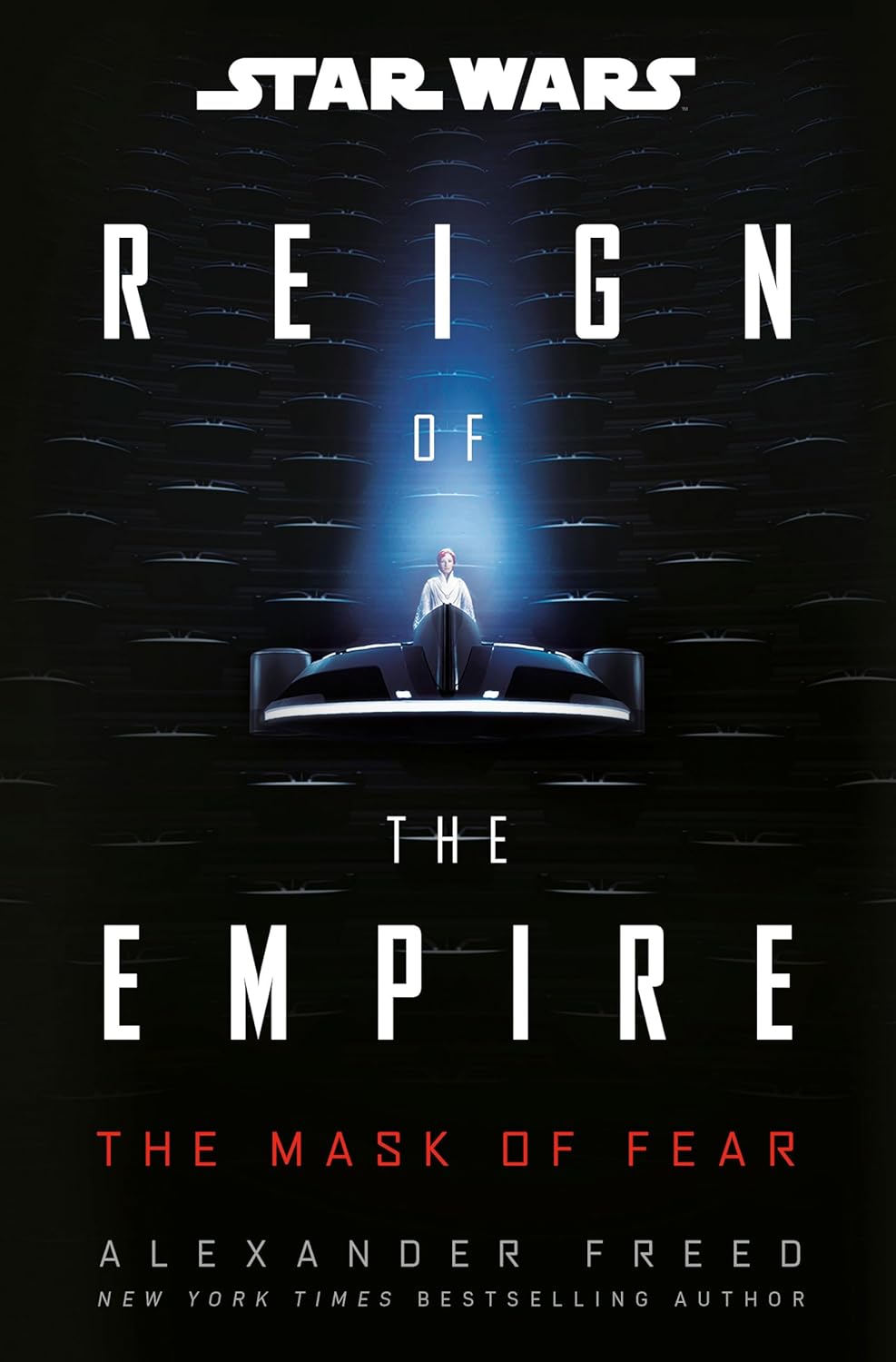
Star Wars: Reign of the Empire: The Mask of Fear by Alexander Freed

Publisher: Penguin Random House Audio (Audiobook – 25 February 2025)

Series: Reign of the Empire – Book One

Length: 16 hours and 51 minutes

My Rating: 4.5 out of 5 stars

Amazon

One of the top authors of Star Wars extended fiction, Alexander Freed, presents a compelling and complex inclusion to the franchise with The Mask of Fear, a powerful Star Wars novel that is a must-read before the upcoming second season of Andor.

There are some impressive authors writing Star Wars fiction at the moment, but one of my favourites is Alexander Freed, primarily because of his Alphabet Squadron trilogy.  An awesome series that followed a group of New Republic pilots in the immediate aftermath of Return of the Jedi, the Alphabet Squadron novels (Alphabet Squadron, Shadow Fall and Victory’s Price), are amongst some of my favourite Star Wars books, and I loved Freed’s dark take on the universe following the happy ending of the original trilogy.  As such, I was very intrigued when I heard that Freed was working on a new Star Wars trilogy set during one of my favourite periods of the franchise’s history, with the cool Reign of the Empire trilogy.

The Reign of the Empire trilogy is an ambitious series that seeks to chronicle the rise of the Empire and provides some cool new history in the current Disney canon.  Set immediately after Revenge of the Sith, the Reign of the Empire follow several key supporting characters from the films, as well as some new figures, as they attempt to navigate the galaxy following the formation of the Empire.  The first book in this series, The Mask of Fear, proved to be extremely fascinating, and I loved the compelling direction that Freed took the story.


Plot Synopsis:

Before the Rebellion, the Empire reigns, in book one of a trilogy told through the eyes of Mon Mothma, Bail Organa, and Saw Gerrera – for fans of Andor.

“In order to ensure the security and continuing stability, the Republic will be reorganized into the first Galactic Empire! For a safe and secure society!”

With one speech, and thunderous applause, Chancellor Palpatine brought the era of the Republic crashing down. In its place rose the Galactic Empire. Across the galaxy, people rejoiced and celebrated the end to war—and the promises of tomorrow. But that tomorrow was a lie. Instead the galaxy became twisted by the cruelty and fear of the Emperor’s rule.

During that terrifying first year of tyranny, Mon Mothma, Saw Gerrera, and Bail Organa face the encroaching darkness. One day, they will be three architects of the Rebel Alliance. But first, each must find purpose and direction in a changing galaxy, while harboring their own secrets, fears, and hopes for a future that may never come, unless they act.


The Mask of Fear
was another impressive and unique Star Wars novel from Freed, who sought to bring together a complex narrative of early rebellion and fear, as various people witness the rise of a tyrannical government.  Clever, intense and cleverly addressing some real-world parallels, The Mask of Fear was extremely good, and it served as a brilliant start to an excellent new Star Wars trilogy.

Freed produced a particularly intricate and complex narrative for The Mask of Fear that really sets the scene for the trilogy in a fantastic character-driven read.  I must warn potential readers that this is a very slow-burn narrative, with a focus on politics, character development, and Star Wars lore, and as such the book doesn’t have a ton of action in it at the start.  Instead, Freed follows the experiences of several different characters as they face the early days of the Empire’s rise and the end of the Clone Wars, with the narrative broken down across several character perspectives, including Mon Mothma, Bail Organa, a former Separatist operative who is forced to team up with Saw Guerra, and a couple of Imperial spies who find out the hard way that their Empire isn’t everything it’s cracked up to be.  This interesting combination of characters allows The Mask of Fear to go in a few compelling directions, including a political narrative around Mon Mothma, an adventure-laden investigation by Bail Organa, who tries to prove that the Jedi was set-up by the Emperor, a dark journey of revenge by the former Separatist, while the two spies find their stories interacting with the other characters as they try to investigate them.

As I mentioned above, the first half of The Mask of Fear is a little dry and slow-paced, but it nicely explores the universe after Revenge of the Sith and provides some dark context to how the Republic was changed into the Empire.  Mon Mothma’s story lies at the heart of the book, as she tries to bring about a legislative end to the Emperor’s reign, and this compelling political tale meshes well with the more action focused or espionage laden chapters of the other protagonists.  Things start to get a lot more interesting and intense once some of the characters start to interact with each other, including with a few action sequences, and Freed ensures that narrative gets realistically dark as you begin to understand the full evil of the Empire.

Everything leads up to the climatic final third of The Mask of Fear, where most of the major storylines of the book start to come together.  Thanks to the complicated story elements Freed set up in the earlier stages of the book, the reader finds themselves quite hooked at this point, especially as the characters find themselves in real peril.  I really enjoyed how Freed wrapped up a couple of the story arcs in The Mask of Fear, especially in one scene were a previously moral character finds the dark side of conflict.  Freed rewards the reader by providing a big moment of hope towards the end of the book, although this is swiftly taken away just to highlight what sort of Star Wars series this is going to be.  I really enjoyed this final section of the book, as the dark result of all the character’s plans galvanises them and leads them into a new direction.  I felt that this story came together extremely well, and while it was initially a little hard to get invested in it, Freed’s excellent establishment of the characters, narrative and overarching setting, ensured that it became a really gripping narrative.

The Mask of Fear was a very well-written novel from Freed, who expertly sets up a cool new Star Wars novel trilogy with some intriguing disparate elements to it.  The blend of politics, intrigue and action made for quite a compelling read, and I felt the author’s excellent use of multiple character perspectives led to a very rich and complex read that hit a lot of great boxes for me.  In addition, Freed does an amazing job placing this into the larger Star Wars canon, especially as he spends a lot of time exploring the very early days of Imperial rule, which is such a fascinating period in the franchise’s history.  The author perfectly blends compelling Star Wars lore about the fallout of the Clone Wars and the start of the Empire with his own story, and the resulting narrative is very fascinating.  While not every reader is going to love the complex political inclusions, I personally really enjoyed them, and this book helped to fill in some interesting gaps in how the Republic from the prequel films becomes the Empire.  As such, The Mask of Fear is a novel geared more towards hardcore Star Wars fans, although anyone who’s seen the original and prequel trilogies, or who wants to get a little more universe history before the second season of Andor comes out will probably have an amazing time with this book.

Speaking of politics, it’s hard not to notice some interesting real-life parallels that The Mask of Fear has with political realities of the world right now.  Freed would have written this book in 2024, and he paints a grim picture of the Empire’s new political and social reality within this book, which includes gross corruption, manipulation of the media, disinformation and other despicable practices, which will probably be quite familiar to readers now.  For example, the portrayal of a legislative body transferring most of its power to a popular-supported executive who then makes radical right-wing changes is jarringly close to how 2025 is turning out in some ways.  I found that these real-world parallels made the story that much more fascinating, and the reader ends up really feeling for the emotional turmoils of the protagonists.  One particular part of Freed’s portrayal of the Empire that I personally appreciated was the decision not to feature any of the franchise’s main villains, but instead focused on the people joining the administration purely for their own goals or benefit, who start revelling in the power they now have, or the lower level supporters who finally believe that they have a worthy leader.  In some ways this makes the Empire seem even eviler, as much like certain real-world governments, it’s obvious that the Empire was corrupt from top to bottom since the beginning.  As such, The Mask of Fear proved to be a masterful examination of how such fascist governments come into being and stay in power, and it was interesting, if a little scary, to see how the ultimate evil empire from fiction is being mirrored in the world today.

While the amazing story elements and intriguing examination of politics is a highlight of this book, for me, the best part of The Mask of Fear was the brilliant and damaged characters that Freed featured, especially his five major protagonists.  Each of these protagonists, which includes a compelling mixture of established characters and new figures written for this novel, has fascinating plot arcs behind them, as each of them tries to find their place in the new book.

Of these, I personally enjoyed the compelling storylines around future Rebel leaders Mon Mothma and Bail Organa the most.  Mon Mothma, who has been so well used in recent shows like Star Wars Rebels and Andor, had a compelling showing here in The Mask of Fear, and it was fascinating to see what happened to her in the immediate aftermath of the Empire’s takeover.  Portrayed as an ambitious politician already under attack by the new administration, Mon’s storyline around her attempts to curtail the Emperor’s power through political means and to keep power in the Senate is interesting, and I really enjoyed seeing the version of Mon who still believed in the institution she was apart of.  Freed weaves together an excellent combination of storylines around Mon, including her political troubles, personal issues, trauma from past arrests and her own growing disillusion with her political colleagues.  Mon’s storyline in The Mask of Fear starts her on the path to becoming the future Rebel leader, as she is forced to take deadly action in protection of her ideals, while also learning just how ruthless the new Emperor and his administration is.

The storyline surrounding Bail Organa on the other hand was a little more action and adventure focused, as he began his own journey towards rebellion.  Portrayed as the only person in the Empire who actually knows that the Emperor is a Sith Lord, Bail spends much of the book desperately trying to fight back by clearing the Jedi’s name.  You can really feel the despair in Bail as he tries to solve the situation in a manner he believes is right, only to hit roadblocks and disinterest from even his potential allies who disregard the Jedi who Bail knows are innocent.  This allows for some very intense scenes, especially as Bail crosses some major boundaries to chase his goals, and you really sympathised with everything Bail is going through.  Bail’s storyline was really well written, and I really enjoyed Freed’s realistic portrayal of what this character would be going through.  His storylines ended up melding nicely with the rest of the cast, especially Mon Mothma’s, and I loved how Freed showed them as having some noticeable political and personal friction.

The rest of the main point-of-view cast of The Mask of Fear includes three original characters, who provide intriguing alternate views about the Empire.  This included Soujen, a cybernetically enhanced Separatist infiltrator who awakens from hibernation to find that the government that made him was defeated, and he has to decide who or what he is going to fight for now.  A complex figure who believed in the Separatist cause, Soujen provides a compelling alternate view of events from the Clone Wars and the formation of the Empire.  Freed works an interesting and intense storyline around Soujen, as he is forced to confront the impact of his actions and the realisation that he might not have achieved anything with his fighting.  I loved how dark some of Soujen’s scenes got, as well as the realistic emotional outbursts as the character refuses to give up the war.  Soujen’s storyline is one of the most impactful in the entire story, as his more destructive approach forces the other characters to act against him.  There were some very complex interactions that occurred as Soujen tried to achieve his objectives, including a certain amount of tragedy which hits the reader hard.  The other key perspective characters are two imperial intelligence operatives, made up of an elderly spy who doesn’t fit in with the new regime and her young apprentice from the slums of Coruscant.  They both go on compelling journeys throughout the book, with the veteran tailing Bail, while the younger journeys into the morass of the extremist groups supporting the Emperor.  I really enjoyed seeing both coming to realise the problems with the Empire they’re solving in their own different ways, and both their perspective character arcs supported the other storylines extremely well.

This main cast is supported by an interesting array of figures, including supporting characters from the main shows, who have a big impact on the story.  The most prominent of these is Saw Gerrera, who, despite having a big role in the plot, doesn’t serve as a major perspective character.  Freed does an excellent job portraying Saw in this book, and it proves fascinating to see the character’s journey to become an extremist fighter begin in this book, as he initiates the first militant rebellion against the Empire.  This mostly rounds out the main cast, and as I mentioned above there is a distinct lack of major antagonists in this book, with neither the Emperor or Darth Vader appearing.  However, there is an array of self-serving middle management administrators and agents, pro-Imperial vigilantes and politicians supporting the new Empire, who prove to be quite dangerous and corrupt in their own way, especially as they oppose and attempt to remove the protagonist when they oppose the Emperor.  An overall excellent collection captivating character arcs in this book which really enhanced The Mask of Fear’s narrative in some impressive ways.

As with most Star Wars novels that I check out, I chose to enjoy The Mask of Fear on audiobook, which proved to be an outstanding way to enjoy this captivating read.  Star Wars audiobooks always do such a great job of capturing the atmosphere and excitement of the franchise’s extended universe, and I love how awesome they can make a story.  The Mask of Fear was a great example of this, and the complex narrative of politics, betrayal and damaged characters, really came to life when read out by the talented January LaVoy.  LaVoy, who specialises in reading female-led fiction, including extended universe books such as Star Trek: Die Standing and Freed’s Alphabet Squadron books, did an outstanding job narrating this awesome novel, and I loved how well she captured the key characters.  Her voice work for Mon Mothma was particularly good, and I liked the fun voices that accompanied some of the other intriguing female characters.  LaVoy also ensured that the story moved at a swift pace, and readers found themselves really drawn in, even with the book’s politically heavy content.  It helped that The Mask of Fear featured the typical array of iconic sound effects and music from the Star Wars films, which are put to great use throughout the production.  The sound effects in particular were cool, giving extra life to some scenes, especially those involving firefights, vehicles and crowds, while the music was used to add some outstanding gravity or excitement to key moments.  The combination of the amazing narration and the cool Star Wars sound inclusions helped to make The Mask of Fear something truly wonderful to listen to, and this is easily the best way to enjoy this fantastic novel.

Alexander Freed kicks off his Reign of the Empire trilogy in a big way with this captivating novel.  An outstanding addition to the Star Wars canon that dives into one of the franchise’s most intriguing periods, The Mask of Fear was an intriguing, character-driven novel that examines the fallout of war, political upheaval and the rise of evil.  Highly recommended, especially on audiobook, The Mask of Fear is a must-read for all Star Wars fans.

Amazon

Nobody’s Fool by Harlan Coben

Publisher: Century (Trade Paperback – 25 March 2025)

Series: Detective Sami Kierce – Book Two

Length: 432 pages

My Rating: 5 out of 5 stars

Amazon

One of the best authors of modern crime fiction, Harlan Coben, returns with another exceptional and twisty read, Nobody’s Fool, which hooks you from the beginning and refuses to let you go.

Harlan Coben is an author who needs very little introduction considering he is currently dominating the crime fiction world with his brilliant literary fiction and awesome television adaptations (plus he’s apparently a great murder alibi for Stephen King characters).  I have only read a few examples of Coben’s work so far, although I had an amazing time with the intense novels I checked out.  For example, I Will Find You and Think Twice were very exceptional, and I loved the unique mysteries and scenarios that the author comes up with.  As such, it was an easy decision to check out the latest book from Coben, Nobody’s Fool, especially when I was in the mood for an addictive and twist-laden read.  The sequel to one of Coben’s better known books/television series, Fool Me Once, Nobody’s Fool was an outstanding novel with an impressive plot behind it.

Plot Synopsis:

A year after the devastating events that took place in Fool Me Once, a secret from former Detective Sami Kierce’s college days comes back to haunt him. Present day is hard enough for Kierce, but his past isn’t through with him yet…

Sami Kierce, a young college grad backpacking in Spain with friends, wakes up one morning, covered in blood. There’s a knife in his hand. Beside him, the body of his girlfriend. Anna. Dead. He begins to scream – and then he runs.

Twenty two years later, Kierce, now a private investigator, is a new father who’s working off his debts by teaching wannabe sleuths at a night school in New York City. One evening, he recognizes a familiar face at the back of the classroom. Anna. It’s unmistakably her. But as soon as he makes eye contact with her, she bolts.

For Kierce there is no choice. He knows he must find this woman and solve the impossible mystery that has haunted his every waking moment since that terrible day.

His investigation will bring him face-to-face with his past. Soon he discovers that some secrets should stay buried.

Well damn, now that was an awesome read.  While I was expecting Nobody’s Fool to be an entertaining and complex novel, I wasn’t fully ready for all the fantastic twists and turns that Coben loaded into this cool new book, and I got really sucked in as a result.  Due to how addictive Nobody’s Fool was, I managed to knock it off in a single day, and I had to give it a full five-star rating as a result.

Coben ended up pulling together a spectacular and multi-layered narrative in Nobody’s Fool, which successfully blended complex mysteries with some intense personal moments from the book’s protagonist.  Set a year after the events of Fool Me Once, Nobody’s Fool follows former police detective Sami Kierce, who had a strong supporting role in the previous book.  Now a private detective and part-time criminology lecturer to wannabe crime solvers, Kierce is struggling to make ends meet.  However, he soon becomes obsessed with a new personal case when Anna, a former lover who he believed was dead, suddenly appears at one of his classes before running away.  Determined to uncover what happened all those years before, Kierce soon connects Anna to one of the most infamous kidnapping cases in the country’s history and must attempt to work out who she is and what truly happened to her.  At the same time, the protagonist is also forced to deal with the release of the man who was convicted of murdering Kierce’s former fiancé, especially as the released killer wants Kierce’s help to prove his innocence.

I really enjoyed this compelling narrative, especially as Coben effortlessly combines the protagonist’s personal issues in the aftermath of Fool Me Once, with the current thrilling mysteries.  The main plot around the supposed death of Anna and how it ties into the troubled history of an influential family was just spectacular, and I loved the many impressive twists and intriguing family drama that the protagonist is forced to navigate.  At the same time, the complex storyline around the murder of his former fiancé added a compelling personal edge to the book which hit all the right emotional notes.  Both these separate storylines come together extremely well in Nobody’s Fool’s larger narrative, and Coben balanced them nicely, especially when it comes to a major story moment about two-thirds of the way through that ensures that the entire investigation is thrown out of whack.  This eventually leads to two sperate sets of revelations as Kierce uncovers the truth behind both crimes.  While I felt that the solution to the mystery around the protagonist’s dead fiancé was a little obvious, the main plotline around Anna was extremely clever, and I deeply enjoyed how it was solved.  Coben did an outstanding job layering the hints and clues to this mystery throughout the rest of the book, and it came together in a tragic and powerful end.  An overall great mystery narrative that goes in some captivating and shocking directions, this was such an addictive story and there was a reason I couldn’t stop reading it.

Coben brought Nobody’s Fool together in a particularly impressive way that really allows readers to get to grips with the story and dive into its emotional heart.  Told solely from the perspective of protagonist Sami Kierce, Nobody’s Fool turned into quite a moving character-driven read, as Coben effectively worked the various mysteries with international implications, while also diving into the psyche and emotional turmoil of the protagonist.  The deep character dive into the protagonist was really compelling on several levels, as not only does he have to explore the trauma introduced in this book, but there is a great examination of the fallout from Fool Me Once.  It was captivating to see Kierce deal with the consequences of the previous novel, and the fallout keeps the protagonist desperate and plays into the modern story wonderfully.  At the same time, the author introduces a fun array of cooky supporting characters, who add to the general fun of the story.  My favourite were the members of Kierce’s criminology class, whose entertaining assistance helps to solve the case in an unexpected manner.  Coben expertly brings them into the plot, and there are some fun stories associated with them that I could see the author exploring further in the future.  The various suspects associated with the main case had the most emotional impact on the story, and their complex connections, dark motivations and intense need to find the truth helps to turn Nobody’s Fool into something truly special.  Throw in some quick paced scenes, cool locations (including one I know he came up with at Bouchercon 2024), and some brilliant family moments from all the damaged characters, and this was such an outstanding read.

One thing I feel I must discuss about Nobody’s Fool is how it ties into the preceding novel, Fool Me Once, and whether you can read this second novel as a sequel or as a standalone read.  Now I must admit that I haven’t read Fool Me Once, so I went into this sequel a little blind and I was initially worried that I was going to have a hard time following the plot or fully appreciating the story.  However, I found that for the most part Nobody’s Fool stands on its own, and no real pre-knowledge of Coben’s previous novel was needed.  There is a great focus on the fallout from the first book, especially when it comes to Kierce’s role, but Coben provides the necessary context so you can appreciate this drama without having to read Fool Me Once first.  This does somewhat change around halfway through, when a couple of major characters from Fool Me Once are shoehorned in as potential witnesses for the current case, and new readers might have some problems fully appreciating the personal gravity of Kierce’s meetings with them.  While those fans who have checked out Fool Me Once first will probably get some more emotional impact from these parts of the book, I felt that Coben ensured there was enough background to allow new readers to keep moving forward without any difficulty and have an exceptional time with the author’s killer plot.

Harlan Coben continues to impress with this brilliant new novel that serves as a wonderful sequel to one of his more iconic novels.  Nobody’s Fool had me hooked from the very first page, and I had such an outstanding time fully unwrapping the author’s complex mystery and diving through every fantastic twist.  This book was an absolute pleasure to read, no matter your experience with Coben’s other works, and I hope we see some more from Nobody’s Fool’s protagonist in the future.

Amazon

WWW Wednesday – 26 March 2025

WWW Wednesday is a weekly post hosted by Taking on a World of Words, where bloggers share the books that they’ve recently finished, what they are currently reading and what books they are planning to read next. Essentially you have to answer three questions (the Three Ws):

What are you currently reading?
What did you recently finish reading?
What do you think you’ll read next?

So, let’s get to it.

What are you currently reading:

How to Slay on Holiday by Sarah Bonner (ebook)

I’ve started reading the very entertaining thriller, How to Slay on Holiday.  The cool new book from Sarah Bonner, who previously impressed me with Her Perfect Twin and Her Sweet RevengeHow to Slay on Holiday sees a woman take her entire extended family on an exclusive vacation to set up her alibi for her husband’s upcoming murder.  However, between escalating family issues, various secrets and hidden agendas, nothing goes the way she plans.  I am having a lot of fun with How to Slay on Holiday and it is proving to be an excellent and twisty read.  I should finish it off this weekend and I cannot wait to see how it turns out.

Amazon


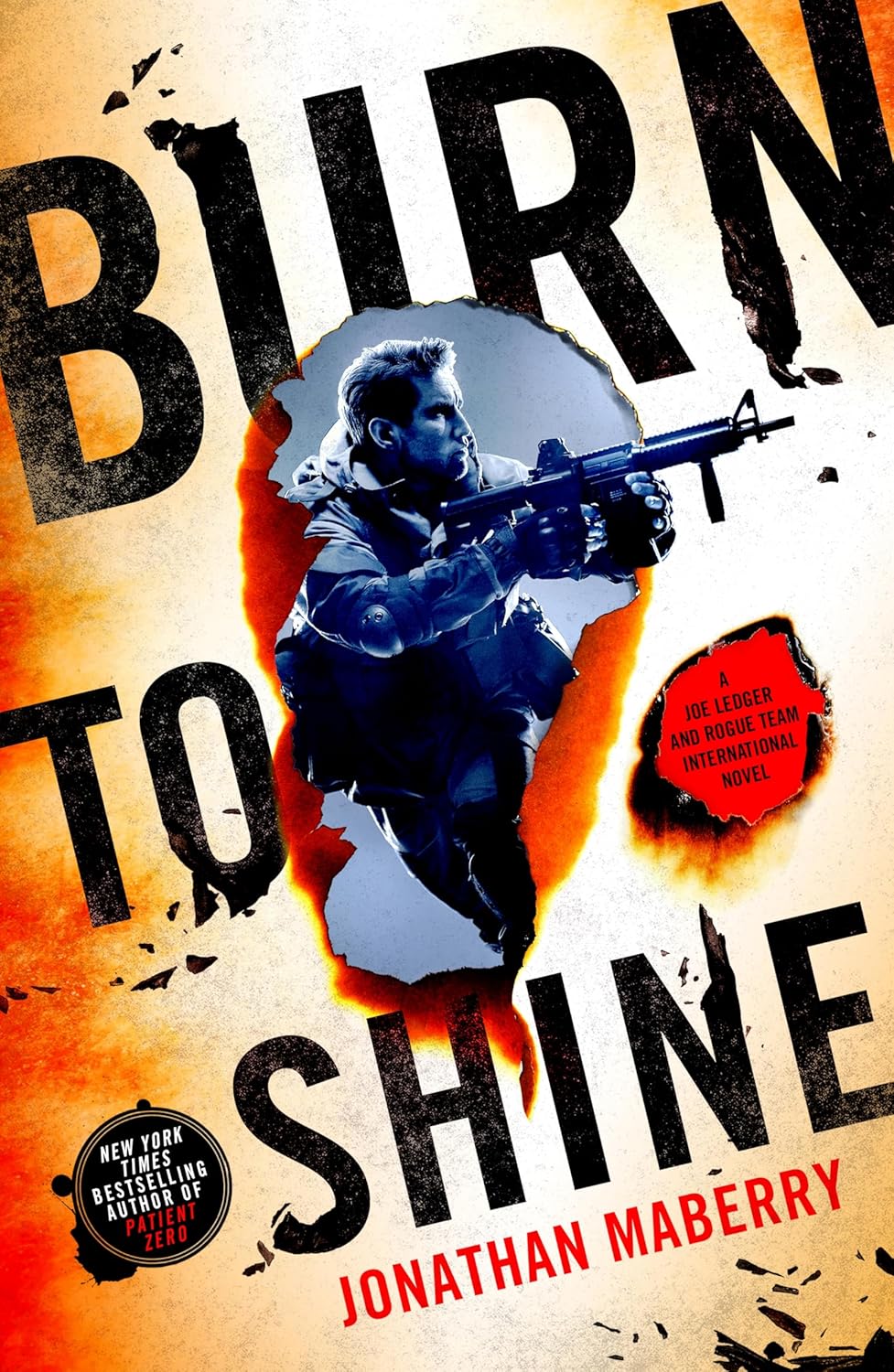
Burn to Shine by Jonathan Maberry (Audiobook)

I am still going very strong with the epic new Jonathan Maberry audiobook, Burn to Shine. The fourth book in Maberry’s Rogue Team International series (RageRelentless and Cave 13), Burn to Shine is a brutal and deeply intense thriller loaded with action and an elaborate plot that sees some of the worst enemies from the series return in a destructive way.  Intense, dark and highly captivating, I am really enjoying this epic novel and Burn to Shine will probably end up being one of my favourite books and audiobooks of 2025. 

Amazon

What did you recently finish reading?

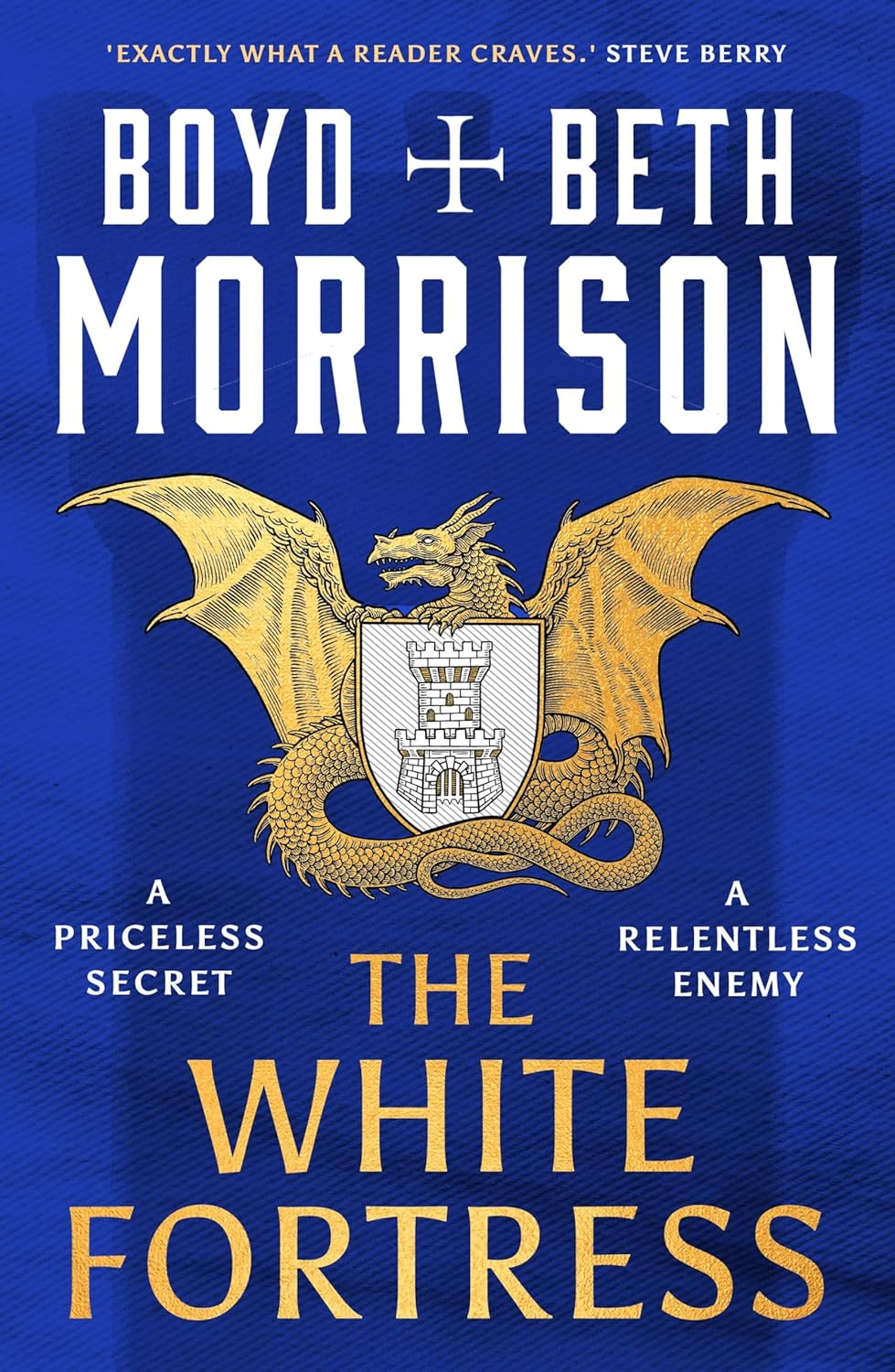
The White Fortress by Boyd and Beth Morrison (ebook)

I ended up powering through the compelling historical thriller The White Fortress from Boyd and Beth Morrison this week.  The follow-up to The Lawless Land and The Last True TemplarThe White Fortress was a very exciting novel with some amazing historical details around it.   Review to hopefully follow soon.

Amazon

What do you think you’ll read next?

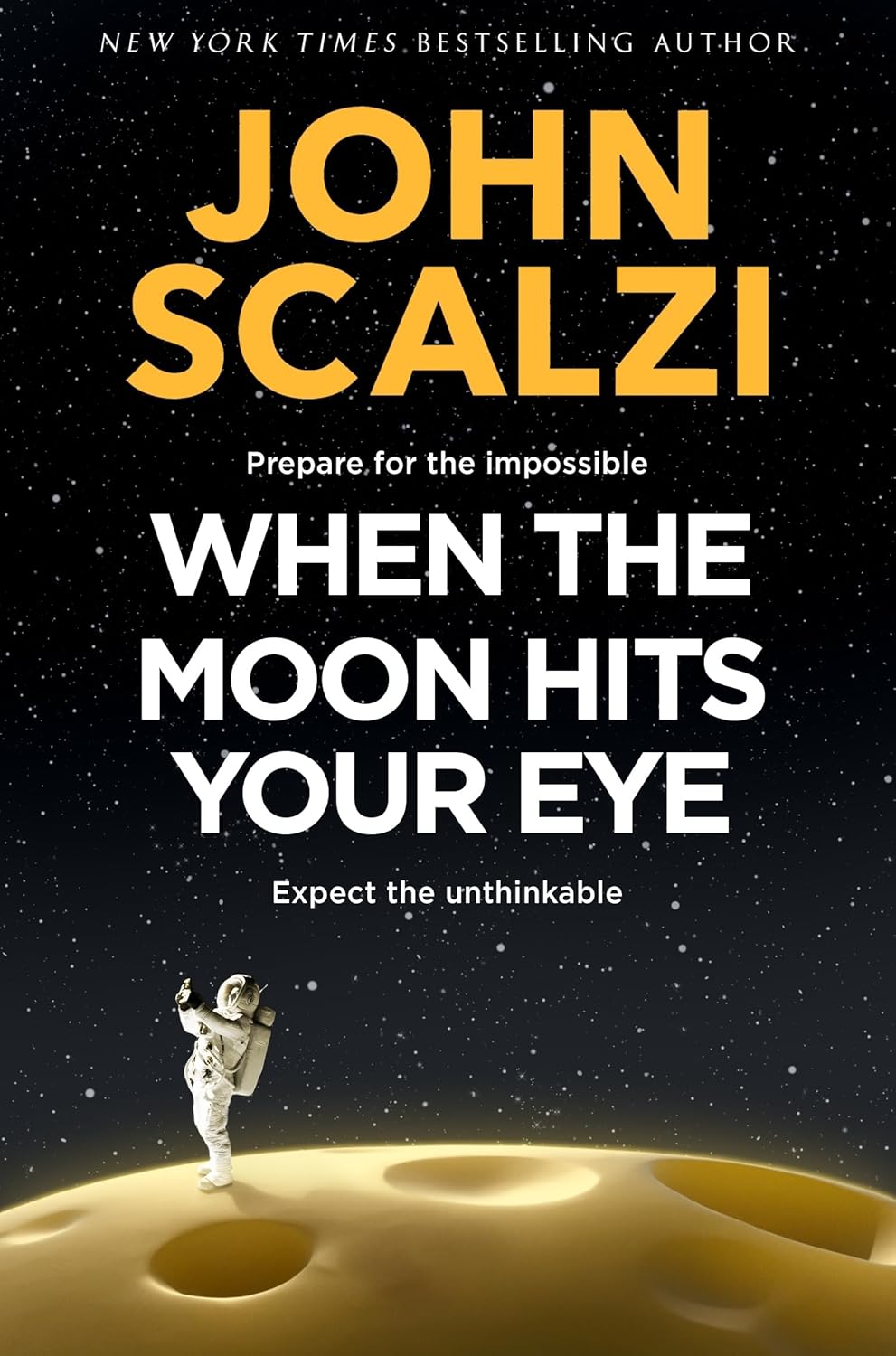
When the Moon Hits Your Eye by John Scalzi

I’m hoping to start listening to the highly entertaining new novel from John Scalzi, When the Moon Hits Your Eye next. An awesome sounding novel with a unique plot behind it, When the Moon Hits Your Eye sounds like so much fun and I cannot wait to start reading it.

Amazon


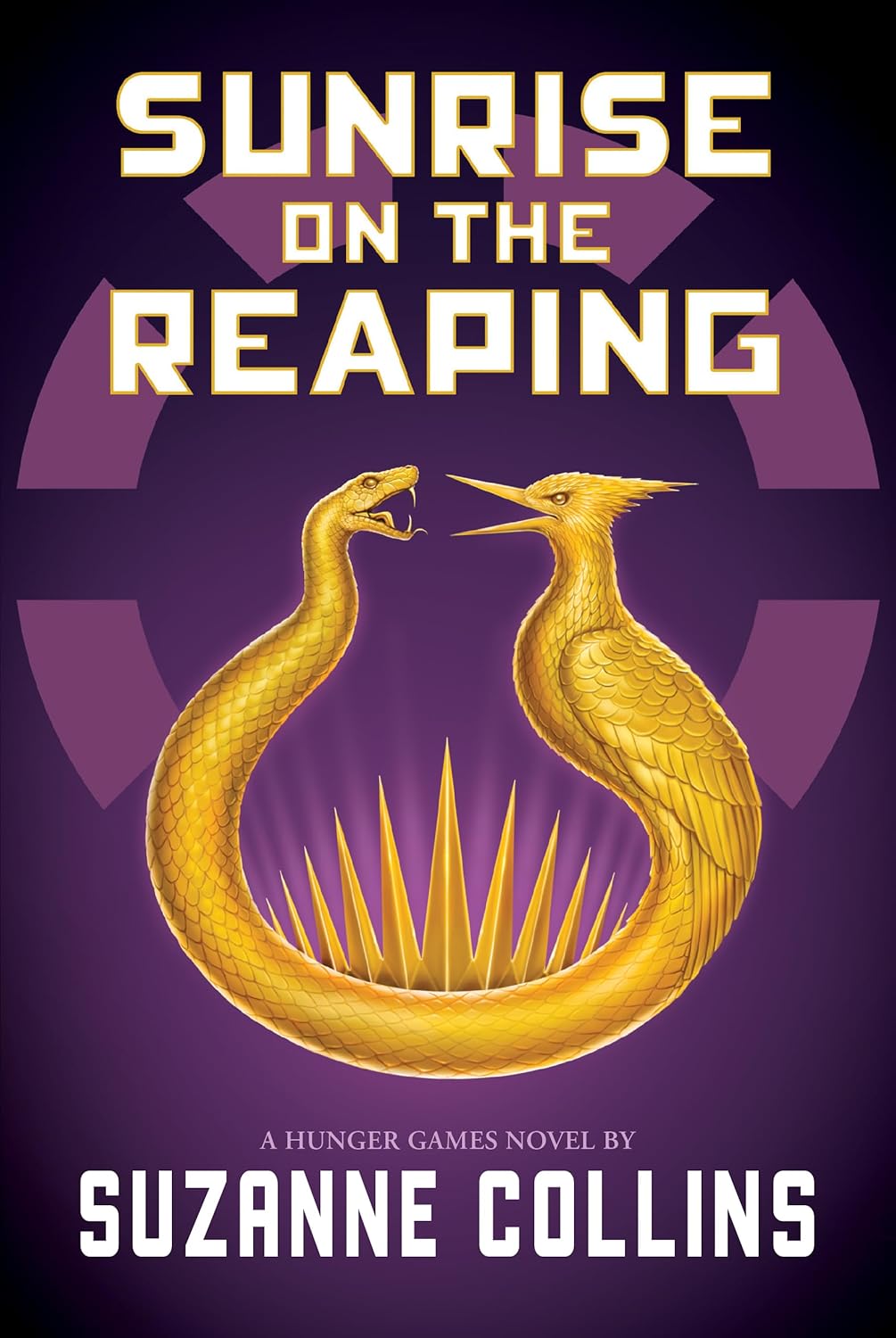
Sunrise on the Reaping by Suzanne Collins

I’m also hoping to start listening to the audiobook version of the new Hunger Games novel, Sunrise on the Reaping.  I have had an exceptional time with Suzanne Collins’ other Hunger Games books, and I’ve heard this one is pretty amazing as well.

Amazon


That’s it for this week; check back in next Wednesday to see what progress I’ve made on my reading and what books I’ll be looking at next.

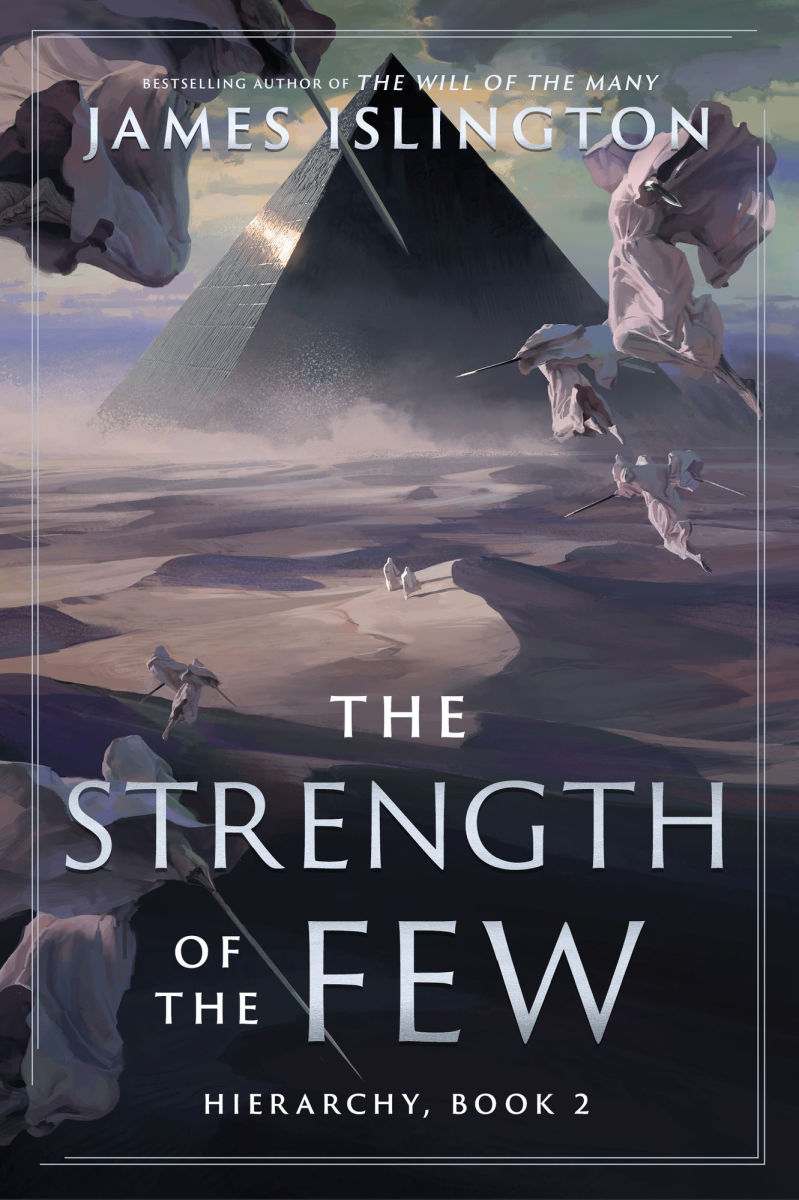
Waiting on Wednesday – The Strength of the Few by James Islington

Welcome to my weekly segment, Waiting on Wednesday, where I look at upcoming books that I am planning to order and review in the next few months and which I think I will really enjoy.  Stay tuned to see reviews of these books when I get a copy of them.  For this week’s Waiting on Wednesday, I highlight a major 2025 release that a lot of fantasy fans have been eagerly waiting for, with The Strength of the Few by James Islington.

Amazon

Back in 2023 I was very lucky to read the brilliant novel, The Will of the Many by Australian author James Islington.  The first book of Islington’s I had the pleasure of reading, The Will of the Many was a captivating novel that followed a young prince of a conquered land hiding in the one of the cities of the nation that killed his family.  Recruited by a powerful nobleman and placed in the crosshairs of a dangerous resistance movement, the protagonist is sent to a school for the conquering nation’s elite, where he must rise up the ranks of the hierarchical classes in order to expose various secrets that could have major implications for the future of the world.  I ended up getting really drawn into The Will of the Many’s epic narrative, and Islington pulled together an exceptional read that combined complex characters and intricate world building with some impressive and intense moments.  The Will of the Many ended up being one of my favourite books, audiobooks and Australian novels of 2023, and got a very easy five-star rating from me.

Due to how outstanding The Will of the Many was, myself and many other fantasy fiction fans have been eagerly awaiting a sequel since 2023.  Thankfully this patient waiting has paid off, as Islington just released details about his long-awaited sequel to The Will of the Many, The Strength of the Few, which has just been set for release in November 2025.

The Strength of the Few will be an intricate and compelling sequel, that will continue to follow the protagonist as he continues to infiltrate the Hierarchy and tries to uncover the dark secrets of the nation that took everything from him.  However, certain magical complications have resulted in the protagonist being split across three separate worlds, and each incarnation of him now has to play alternate games to survive.

Plot Synopsis:

This highly anticipated follow-up to The Will of the Many—one of 2023’s most lauded and bestselling fantasy novels—follows Vis as he grapples with a dangerous secret that could unravel history across alternate dimensions.

OMNE TRIUM PERFECTUM

The Hierarchy still call me Vis Telimus. Still hail me as Catenicus. They still, as one, believe they know who I am.

But with all that has happened—with what I fear is coming—I am not sure it matters anymore.

I am no longer one. I won the Iudicium, and lost everything—and now, impossibly, the ancient device beyond the Labyrinth has replicated me across three separate worlds. A different version of myself in each of Obiteum, Luceum, and Res. Three different bodies, three different lives. I have to hide; fight; play politics. I have to train; trust; lie. I have to kill; heal; prove myself again, and again, and again.

I am loved, and hated, and entirely alone.

Above all, though, I need to find answers before it’s too late. To understand the nature of what has happened to me, and why.

I need to find a way to stop the coming Cataclysm, because if all I have learned is true, I may be the only one who can.

Now it sounds like Islington has quite an intriguing plot planned for The Strength of the Few, and one that has the potential to be pretty damn awesome.  Having the protagonist simultaneously stranded in three separate dimensions, with each version unaware of the actions of the other is quite ambitious, and it could result in some captivating scenarios, especially if each version of the protagonist needs to develop alternate skills to survive in each world.  While I can imagine the plot has some potential to get over complicated or confusing, if handled right it could be quite impressive, and I am very eager to see how it turns out.  Based on how well Islington managed the complex plot of The Will of the Many, I am very confident that The Strength of the Few is going to be pretty damn epic, and I cannot wait to see more excellent world building, some great character moments, and potentially some answers to the secrets from the previous book.

Due to how damn good Islington’s previous book is, there is no way that I will be missing The Strength of the Few when it comes out later this year.  An intense and ambitious book, The Strength of the Few has the potential to be one of the very best books of 2025, and I will be reading it the very first chance that I get.  An epic sounding read that is sure to impress.

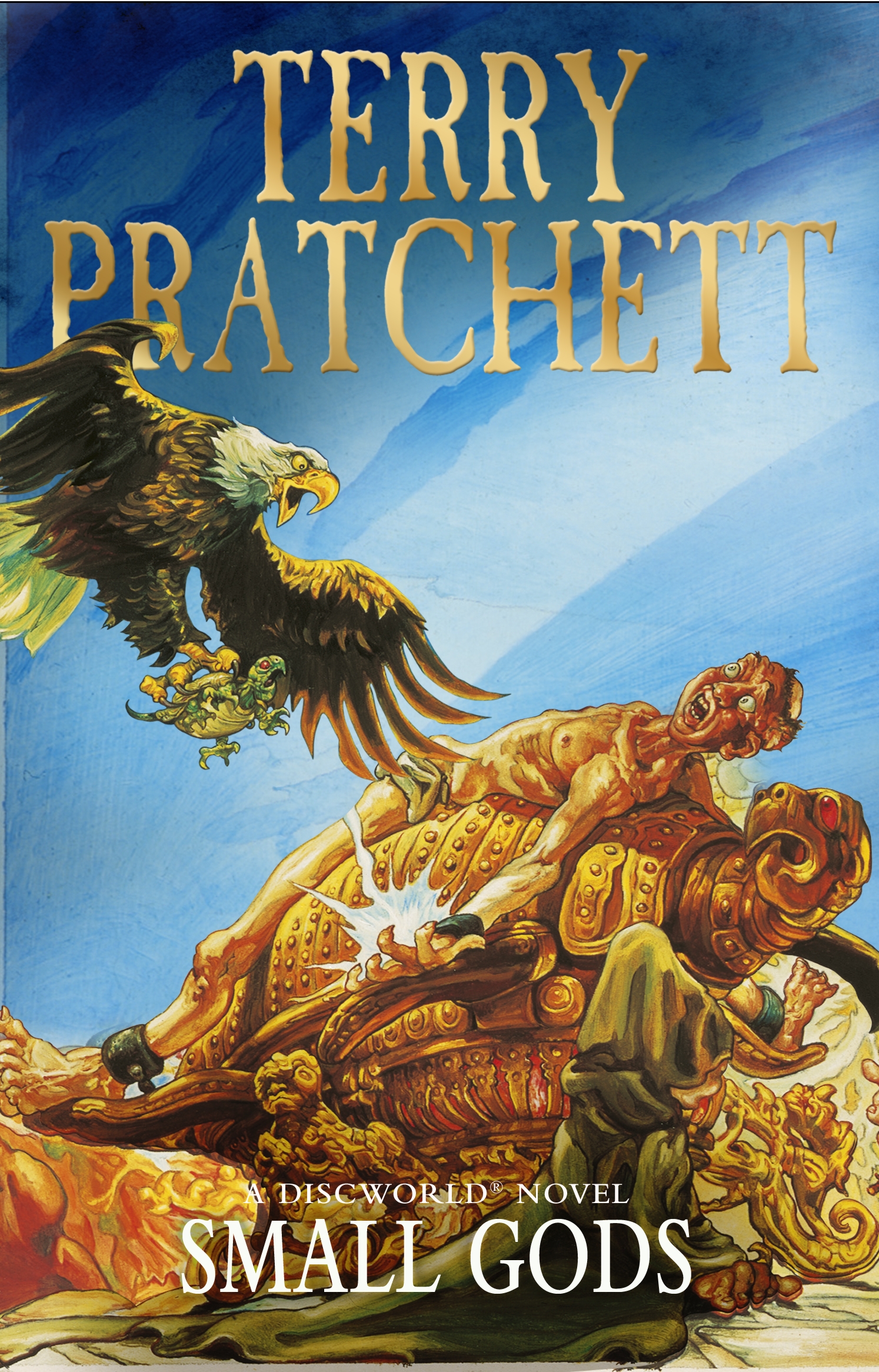
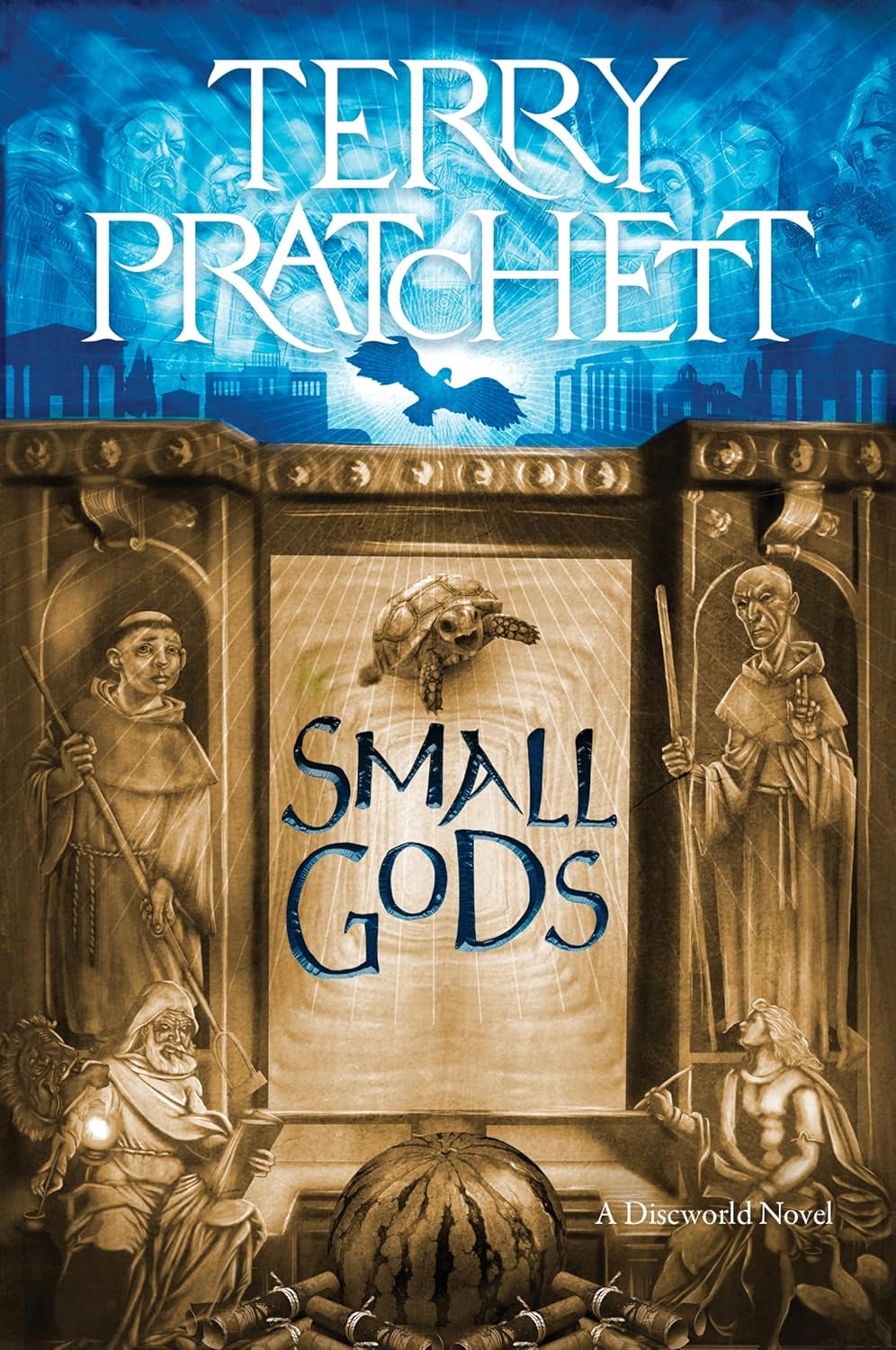
Small Gods by Terry Pratchett

Publisher: Gollancz/Penguin Audio (Audiobook – 1993)

Series: Discworld – Book 13

Length: 9 hours and 55 minutes (Planer version)/11 hours and 38 minutes (Serkis version)

My Rating: 5 out of 5 stars

Amazon

Thanks to an excellent road trip, I managed to revisit several awesome entries from the iconic Discworld series by the legendary Terry Pratchett, and it is time to highlight one of the very best books that Pratchett wrote, Small Gods.

I have never made any secret of the fact that I love all things Terry Pratchett, as the Discworld books were the formative series of my youth.  A massively popular collection of loosely connected novels set on a flat world carried through space on the back of four elephants atop a giant turtle, the Discworld books present a range of unique fantasy adventures backed with exceptional comedy and satire.  This series is so much fun, and I honestly love every single Discworld book, having read them all multiple times, usually while laughing myself silly.  Indeed, I am such a big fan of this series that I named my blog after a location in the universe.  Despite my overwhelming love for all things Discworld, I haven’t reviewed too many of the books on this blog, with Moving Pictures and The Last Continent previously being the only exception.  However, thanks to some great road trips giving me opportunities for revisiting some classics, I have recently published reviews for Guards! Guards! and an additional review for Moving Pictures.  I also recently re-listened to the impressive and thoughtful 13th entry in the series, Small Gods. An outstanding standalone novel that seeks to blend religious commentary with Pratchett’s strong humour and complex satire, Small Gods is one of the more thoughtful and moving Discworld books and is a must read for all fans of the franchise.

Floating through space on the back of a giant turtle, the Discworld is a place of magic, wonders, strange creatures and, unfortunately for the mortals just trying to live their lives, gods.  Instead of the wise and beatific beings we hope them to be, the gods of the Disc are a capricious and vain lot, empowered by the belief of their human worshippers.  But what happens when a mighty god loses his believers?

The militant nation of Omnia is an empire dedicated to the fervent worship of the Great God Om, an all-powerful being who knows all, sees all and is the only true god in the world.  The problem is none of that is true.  Instead, Om is a self-obsessed god among many, who barely pays attention to the people fighting in his name.  More importantly, he is currently residing in the body of a tortoise, stripped of nearly all his divine power, and the only person who can hear him is a simple novice, Brutha, who isn’t fully convinced that the talking tortoise smiting him with tiny thunderbolts is his god.

Determined to get back on top and find out why he lost his power, Om recruits Brutha as his unlikely prophet.  However, Brutha has his own problems as the sinister head of Omnia’s Quisition, Vorbis, has taken an interest in him.  Forced to accompany Vorbis on a diplomatic mission, Brutha soon begins to understand that the world is a far bigger place than he realised, and that there is something very wrong at the heart of his nation.

As the tides of history take Brutha and Om into strange new places, the two find themselves encountering unexpected dangers, including dangerous ideas, sinister eagles, rebels determined to prove that the world isn’t round, deranged philosophers and the small gods that lurk in the dark places.  To survive, Brutha will need to have faith in his god, but more importantly, Om will need to have faith in Brutha, especially when his own religion is turned against them.

After yet another re-read, Small Gods remains one of my favourite Discworld novels, and this is one of the very best examples of Terry Pratchett’s unique style and imagination.  A hilarious, yet thought-provoking read that cleverly dissects religion, divinity and people’s beliefs, Small Gods quickly grabs your full attention and refuses to let go until it’s powerful, terminal end.

I have so much love for the outstanding narrative that Pratchett pulled together for Small Gods, which tells one of the more unique standalone tales in the Discworld series.  I must admit, even after many reads, I am still very impressed that Pratchett decided to examine the nature of religion and belief through the lens of a hilarious odd-couple story that evolves into a road trip narrative.  Starting off on a very entertaining note with the unsuspecting new prophet of Om, Brutha, encountering his god in the form of a small, battered tortoise, Pratchett does a good job of introducing the nation of Omnia and its place in the wider setting.  This proves to be an effective start to the book, and a lot of the early themes and wider issues surrounding the nation of Omnia are well set-up.  You also get a great examination of the book’s three main characters, and their compelling early interactions in Omnia sets up a lot of the book’s character-driven narratives.  After this excellent introduction, Small Gods’ plot then moves to the bordering nation of Ephebe, which proves to be an intriguing centre of the novel, not only because it has some of the more entertaining sequences, but also because it begins to expand on some of the ideas from the front of Small Gods and you are given a good understanding of both Om’s situation and Brutha’s growth as a character.

The plot of Small Gods takes a powerful turn around halfway through, when Brutha helps further Vorbis’s schemes, only to then attempt to flee and do the right thing.  However, thanks to the influence of a rival god and unexpected technology, Brutha and Om are inadvertently stranded in the desert with a helpless Vorbis.  The following extensive scenes in the desert are probably the best parts of Small Gods, especially as Brutha begins to think for himself, and the philosophical clashes he has with Om set him up as the protagonist both the reader and the Omnians need.  Pratchett really dives into what it is to be human and divine in this section of the book, and I deeply appreciate the rich character development featured within these sections of the plot.  These desert scenes become even more impactful when Pratchett throws in a major obstacle for Brutha that threatens to push him over the edge into despair.  You really feel for Brutha as he has his crisis of faith, only to maintain his humanity in the last confrontation with Vorbis.  The subsequent scene on the metal turtle was very tense, and while I know some people dislike the end of Vorbis, I thought it was a very clever sequence, especially as Pratchett set up the hunting eagle perfectly.  Pratchett continues to wrap up the rest of the narrative in a very satisfying way, and while the war sequence might have been a little unnecessary, it allowed some great character arcs to come together and showed how much Om had grown as a god.  The final scene with Brutha once again showing his humanity no matter what, ended the book on satisfying and heart-felt note, I appreciated the hopeful tone Pratchett concluded his brilliant story on.  An overall impactful and moving narrative that brought together a lot of complex plotlines and character moments and ensured you were hooked the entire way through.

I have always believed that Small Gods was one of Pratchett’s better written books, as he effortlessly blended a complex fantasy narrative that examined religion with his typically brilliant humour and some outstanding characters.  Featuring one of his most complex and thought-provoking plots, Pratchett achieves so much with his intriguing inclusions, all without slowing down the speed of the book and keeping the tension and emotional charge of the book on high.  Introducing a cool new setting, Small Gods works well as a standalone entry in the larger series that cleverly expands on some previously introduced features, such as the selfish and somewhat stupid gods of the Disc, as well as cool locations like Ephebe (which was previously featured in Pyramids).  Due to its lack of major connections to the other entries in the Discworld series, Small Gods is a rather excellent introduction to Pratchett’s style and ability to dive into heavy topics with comedic content.  Like all of Pratchett’s books, Small Gods is hilarious, and I love the many different levels of humour contained with the book, that range from obvious jokes at over-the-top situations, subtle witticisms often contain within well-placed footnotes, to clever word or name gags.  Some of this humour is so subtle that it often goes over the reader’s head the first time, and you honestly need multiple readings to full appreciate every single joke or gag that Pratchett thought up (I still discover new jokes I previously missed every time I read a Pratchett novel).

However, the thing that ensures Small Gods stands out amongst the other brilliant Discworld novels is the author’s clever and insightful breakdown of religion and godhood on the Disc, which is both fascinating and entertaining.  A lot of the book’s powerful messaging, complex themes and some of the best humour, comes out of the exploration of the divine and how it relates to both this crazy fantasy setting and the real world.  While Pratchett does provide a lot of jokes about religion throughout the ages, he does it in a very intelligent and delicate way that makes the reader think.  Rather than simply dunking on religions and focussing on the negatives, Pratchett instead subtly satirises the institutions, manipulative leaders and unthinking traditions that can often complicate or weaponise religion.  A large amount of the plot revolves around Vorbis and the Omnian church violently trying the repress the idea that the world is flat and on the back of a giant turtle.  While this is primarily a fun parody of the Catholic church’s suppression of Galileo’s claims about the Earth orbiting the sun (and which is now both funnier and sadder, thanks to flat earthers), it also examines how some people utilise religion as an excuse for violent action and manipulate faith for their own ends, which is a powerful recurring them throughout the book.

At the same time, Pratchett also focuses on a compelling central character with true faith who explores the meaning of religion and how it impacts his people.  Seeing a likable character like Brutha recognise the problems in his nation allows readers to reflect and see the flaws in the organised religions Pratchett is parodying, while also appreciating the messages that these religions should strive for.  The various complex discussions, personal revelations and jokes within Small Gods allow for a very insightful read that reportedly resonates with both atheists and pro-religious figures (Pratchett apparently received a lot of fan mail from both groups who thought Small Gods was written for them).  I personally think that Pratchett’s thoughts and messages were extremely perceptive and layered with a great understand of humanity, and indeed many his compelling criticism or organised religion and how it is weaponised are more relevant now than when Small Gods was written, especially as it could also apply to other traditional institutions that are being abused.

Pratchett perfectly rounds out this incredible writing by featuring some of his very best characters, including several very complex figures who mature and evolve throughout the course of the book’s plot.  This includes the main protagonist, Brutha, a simple novice who finds himself the only person left who can hear Om due to his genuine belief in the god rather than in the institutions that surround the religious practices.  While initially portrayed as a somewhat dull and unthinking novice, you soon begin to realise that there is much greater complexity within Brutha, as well as the fact that he is a genuinely nice person held back by his simple ideas of life and faith.  Thanks to his interactions with Om, who provides greater clarity to his religious beliefs, as well as his experiences outside his insular nation, Brutha begins to evolve quickly as a person, gaining a greater appreciation for the wider world, as well as beginning the understand that the world isn’t quite as black and white as he believed.  It was fascinating to see Brutha develop as the book continues, especially as he begins to doubt his faith and rebel against the church and the god that had been his entire life.  His interactions with Om were quite entertaining, as the two eventually become a fun duo of equals, although Brutha does get the upper hand over his god in quite an entertaining and refreshing manner.  Brutha was also well defined by his relationship with the book’s antagonist, Vorbis, and their discussions about truth prove to be quite defining for Brutha as an inspiration for his rebellion.  However, unlike the rest of the cast, Brutha resists becoming the monster that Vorbis wants him to be, and his subsequent demonstrations of faith, reason and humanity, really set him up as one of Pratchett’s best and most likeable central protagonists.

Brutha is well matched by his god, Om, who honestly is one of the best deities featured in the Discworld series.  Formerly an all-powerful and arrogant god who didn’t care about his believers, Om finds himself suddenly trapped as a helpless tortoise who must desperately cling to Brutha to survive.  Om proves to be quite a fascinating and entertaining figure in Small Gods, especially as Pratchett perfectly portrays him as formerly powerful being who must now rely on the mercy of others.  His initial arrogance is very entertaining, and his subsequent wheedling manipulation of Brutha was a great follow-up that worked to keep him in the story.  However, it was his eventual co-evolution with Brutha that turned Om into a particularly compelling protagonist.  Despite his resistance, his bond to Brutha shapes him and forces him to see the world through human eyes, and the subsequent discourse on philosophy, life and how religion should be as they wander the dessert impacts Om just as much as Brutha.  This eventually causes them to reach an interesting and heartfelt religious partnership, and it was fascinating to see the previously selfish Om risk it all to save Brutha, especially when he is confronted by other gods who act the same way he used to.  I loved seeing this powerful and positive development in a divine figure, and Om really ended up being a compelling secondary protagonist with some of the best jokes.

While Brutha and Om are the heart and soul of Small Gods, this book would not be as impactful without its brilliant villain, Vorbis.  A cruel and unflinching figure, Vorbis is probably Pratchett’s most ruthless antagonist, who utilises the mechanisms of the church to achieve his goals.  However, rather than being a purely evil figure, Vorbis is shown to be simply someone who understands human nature and uses this knowledge to achieve his self-determined goals, which in some ways is worse than an obvious villain.  Pratchett does an outstanding job showcasing Vorbis’s dark, insular nature, and you come to really appreciate just how sinister he is, especially as his actions inspire other people to do evil things to try and match him.  He becomes even more immoral when compared to the very innocent Brutha, the only person that Vorbis occasionally sees as a real threat to his plans due to his legitimate belief, and their various interactions and discussion about the true nature of the world are quite powerful.  Pratchett features Vorbis perfectly throughout the book, and his final appearances, where he finally understands his own nature, are very satisfying to behold.

The rest of the cast of Small Gods are also quite impactful in their own way.  The blind philosopher, Didactylos, proves to be a fantastic voice of reason in the story, especially compared to the rest of the insane philosophers of Ephebe, and his very simple philosophy and viewpoint on life and truth give the characters, and the readers, much to think about amongst the discussions on religion.  Didactylos’s nephew, Urn, came across perfectly as a machine-obsessed proto engineer, whose storylines go in some interesting philosophical directions, especially when he realises what his inventions will be used for.  I had a very fun chuckle at the inclusion of Cut-Me-Own-Hand-Off Dhblah, a fun Omnian equivalent to the always entertaining Ankh-Morpork native, Cut-Me-Own-Throat Dibbler, while the Sweeper, Lu Tze, gets a great introduction as a secret history monk who occasionally changes events for the better.  Finally, the zealous Sergeant Simony, who leads the internal Omnian revolution against Vorbis, proves to be a very impressive figure who, despite being a fervent misotheist (someone who hates one specific god), has a belief in freedom and the turtle that matches Brutha’s faith in Om.  Simony serves as a very good example of just how far Vorbis can drive someone trying to do the wrong thing to achieve their goals, and I felt that he matched the fervour and faith of the other major characters in some fascinating ways.  This cast of characters was overall superb, and I really appreciated how well they complimented each other’s story arcs, as well as the intelligent themes Pratchett was trying to get across.

As with all the Discworld novels, I have enjoyed Small Gods as both a physical novel and an audiobook, and frankly this epic story comes across extremely well in all formats.  However, I have a very special place in my heart for the Discworld audiobooks, and the outstanding stories, elaborate characters and impressive and clever humour always comes across extremely well in this format.  I have had the great pleasure of listening to Small Gods multiple times over the years, and I want to highlight the two different unabridged version of Small Gods.

The first audiobook version of Small Gods is the original production narrated by Nigel Planer.  Small Gods was a particularly impressive example of Planer’s voice work, as he had to come up with unique voices for a range of unusual characters.  The Planer version of Small Gods is the one that I grew up with, and it is engrained in my mind as a result, especially as the narrator effortlessly moves through Pratchett’s many complex ideas and plots and brings them out in a fantastic and humours manner.  Planer provides all the voices in his version of Small Gods, and he perfectly encapsulated all the key figures of the book with his exceptional narrations.  You really get the full range of these character’s personalities and emotions through Planer’s voice work, and I loved his clever takes on Pratchett’s distinctive cast.  As such, the Planer version of Small Gods is probably the gold standard for all Discworld fans, and it will always have a very special place in my heart.

There is also a recently released version of Small Gods that is narrated by three brilliant British talents, and which was the version I most recently enjoyed.  This new Small Gods audiobook features a runtime of around 12 hours, which is a little longer than the roughly 10-hour long Planer version and provides an interesting new take on the novel.  I really enjoyed the voice cast for this new audiobook, as not only do we once again get Peter Serafinowicz and Bill Nighy in their recurring roles, but it also features the primary narration of actor Andy Serkis.

Serkis, who has also narrated a recent version of The Lord of the Rings books that is worth checking out, does an exceptional job in Small Gods, ensuring a very fun experience for all listeners.  While there are some tonal shifts in this audiobook that fans of the Planer version may find a little surprising or jarring, for the most part I think Serkis matches and even occasionally exceeds Nigel Planer’s performance, and I very much enjoyed his take on the book.  His basic narration of Small Gods matches Pratchett’s style and humour extremely well, and I love how effectively he moves the story along, perfectly capturing the complex tone and energy of the plot.  However, it is Serkis’s entertaining voices that were the highlight of this version of Small Gods, as the characters are each given unique tones that fit their personalities in some fantastic ways.  His voice for Brutha, the central character, was extremely good, and I loved how well Serkis captured Brutha’s transformative journey and complex personality.  Utilising a fitting rural voice for the protagonist, Serkis successfully showcases Brutha’s changing mentality and deep moral roots with his narration, and you can honestly imagine this intriguing figure every time the narrator voices him.

In comparison to Brutha, the voices for Vorbis and the Great God Om were a lot more elaborate by necessity, and I really appreciated the fantastic tones that Serkis choice for these entertaining figures.  My favourite was probably the voice used for Vorbis, as the narrator gifted this antagonist a deep, rich and lingering voice that honestly put me in mind of Tony Jay or Alan Rickman with some added oily sinisterness.  This impactful voice perfectly fit Vorbis’ menacing personality, and whenever the listener hears the voice, you know bad stuff is about to go down for the rest of the cast.  As for Om, Serkis provides him with an unrefined and laddish voice with a Liverpool accent.  This interesting voice choice matched Om’s uncaring and selfish personality extremely well, and I liked how well Serkis’s chosen tone for this divine figure played into the overarching theme that gods on the Discworld aren’t as sophisticated as everyone assumes they are.  Most of the rest of the voices in Small Gods work extremely well, with Sergeant Simony and Cut-Me-Own-Hand-Off Dhblah having memorable voices as a result.  However, I felt that the strong American accents that Serkis assigned to Didactylos and Urn really didn’t work, and failed to match the tone of the rest of the audiobook.  While Serkis was probably trying to distinguish these two from the other Ephebian philosophers, their voices honestly grated on me, and I really wish he’d have tried something else.  Still, the rest of Serkis’ voice work was amazing, and I cannot emphasise how incredible most of his narration of Small Gods turned out to be.

Serkis’s main narration was perfectly enhanced with the inclusion of Peter Serafinowicz and Bill Nighy in their recurring roles from the new Discworld audiobooks.  Serafinowicz provides the voice of Death whenever he appears in this audiobook, which is a lot of fun as Serafinowicz has an extremely entertaining Death voice that captures the anthropomorphic personification in all his skeletal glory.  His multiple appearances in Small Gods, leading key character towards the desert of judgement, were very awesome, and I loved hearing Serafinowicz converse with the other characters as Death.  The audiobook production team does an excellent job sliding the Death voice into Serkis’s main narration seamlessly, and I love it when Serafinowicz’s voice suddenly appears during dangerous scenes, heralding that someone is about to die, and ensuring there is some great tension as you watch the other characters slowly realise something is very wrong.  Nighy, on the other hand, narrates the various footnotes that Pratchett included in his text, providing an extra layer of humour.  While there are relatively few footnotes in Small Gods, it is a key role that Nighy perfectly fulfils, and his calm, consistent tones, echoing Peter Jones’s similar role in The Hitchhiker’s Guide to the Galaxy radio and TV editions really highlighted the subtle comedy of these footnotes. These three exceptional actors come together perfectly and provide an outstanding overall performance that I could not get enough of.  This was a truly exceptional audiobook that I think is on par with the previous Planer version, and I would strongly recommend both audiobooks as an amazing way to enjoy Small Gods, especially if you need to listen to something while travelling.

Well, as I am currently just getting to the end of page seven of my review for Small Gods by Terry Pratchett, I think it is a safe assumption to say that I love this amazing book.  Easily one of my favourite Discworld novels, Small Gods perfectly blends a brilliant story and amazing characters with Pratchett’s amazing wit and his uncanny insights into compelling real-world issues.  An incredible and addictive read from start to finish, Small Gods comes extremely highly recommended and can easily be enjoyed by anyone wanting a clever, funny and heartfelt read, especially on its two audiobook formats.

Amazon

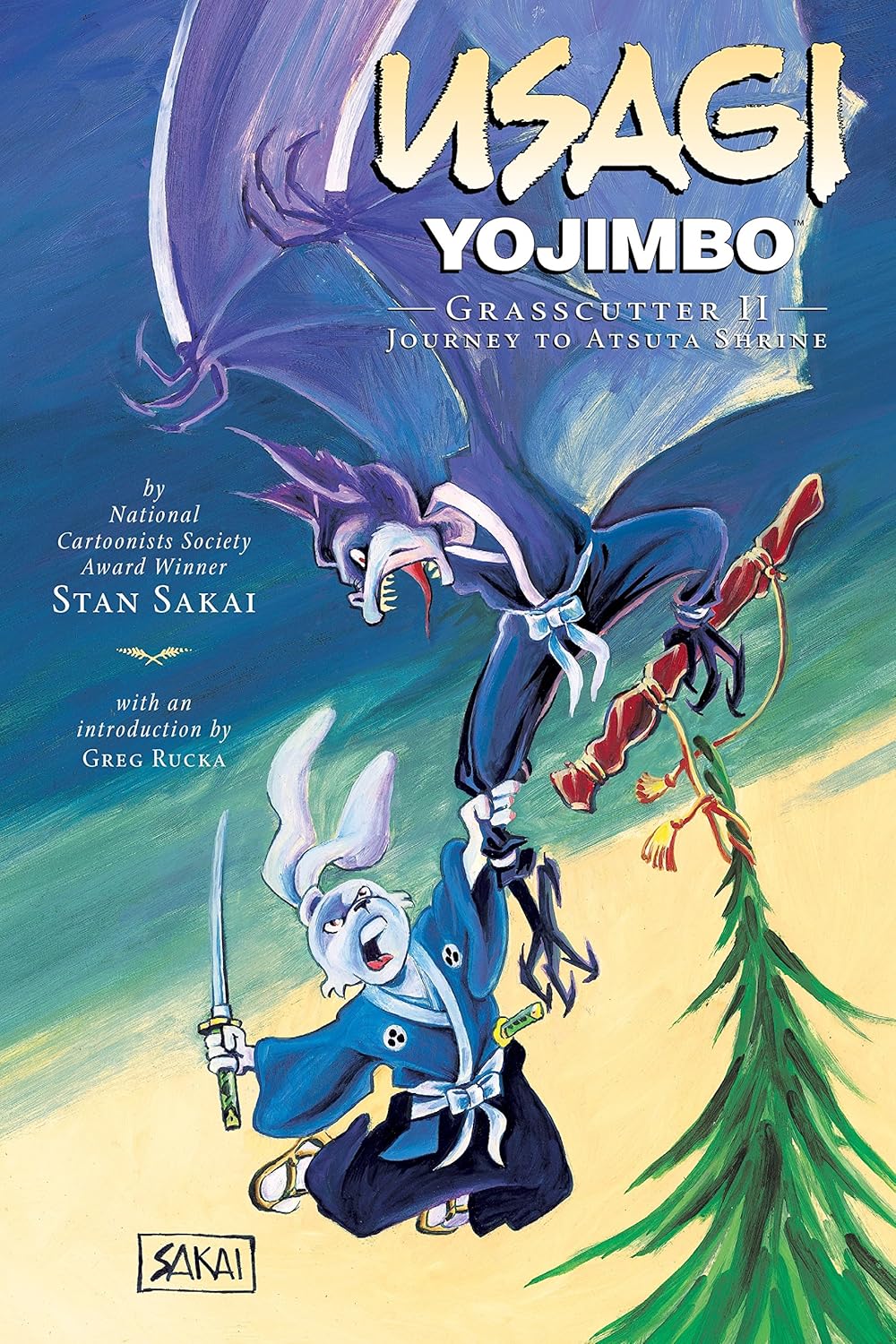
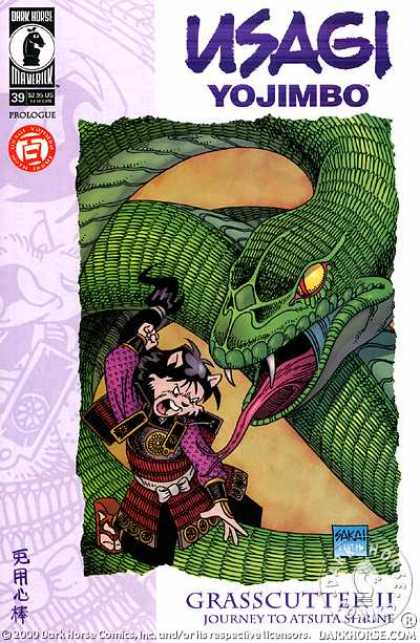
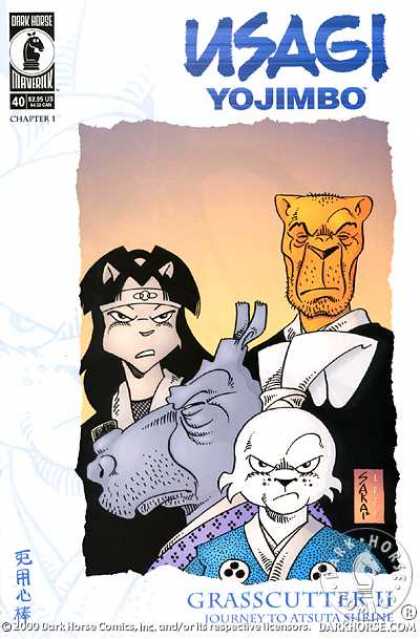
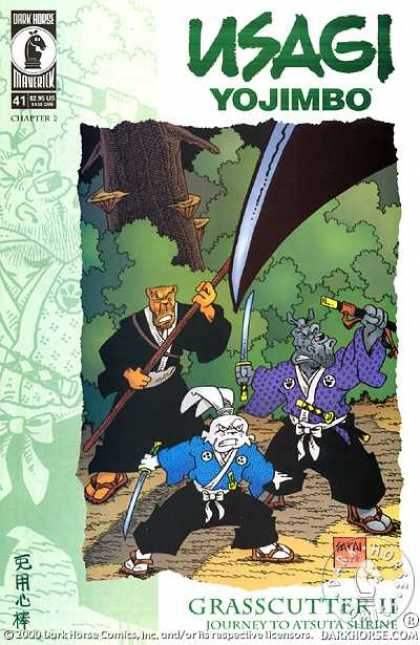
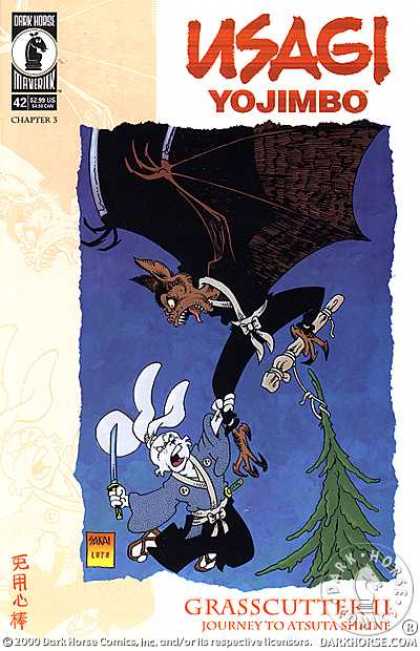
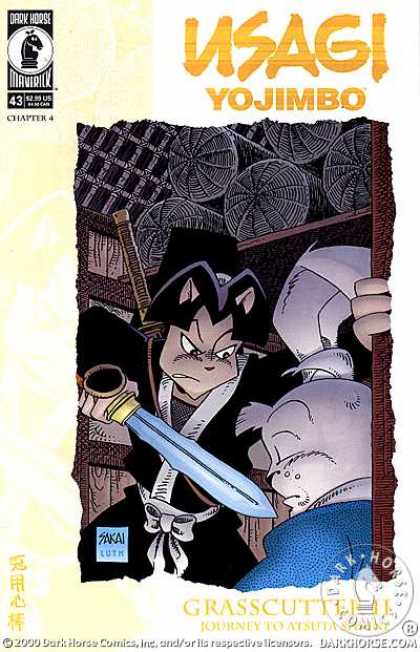
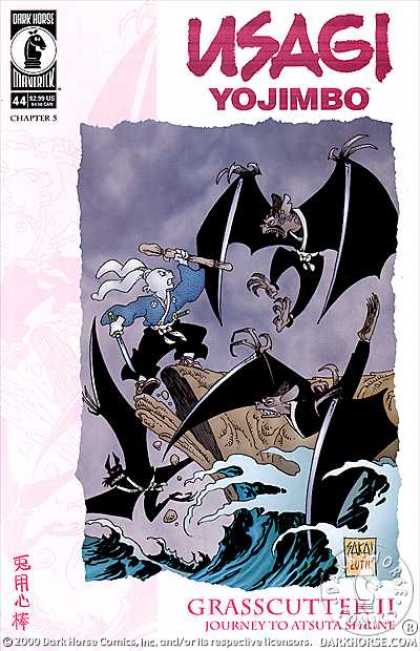
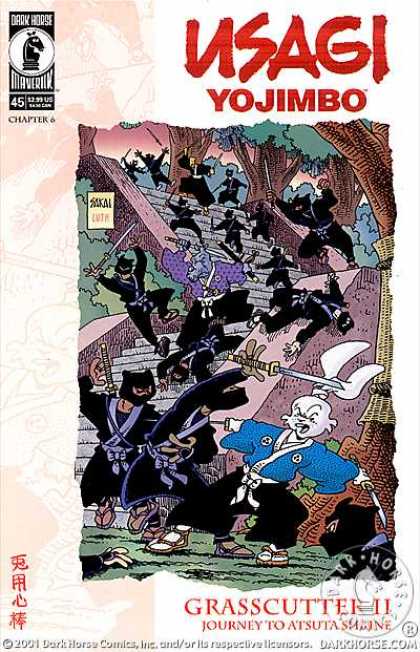
Usagi Yojimbo: Volume 15: Grasscutter II- Journey to Atsuta Shrine by Stan Sakai

Publisher: Dark Horse Comics (Paperback – 1 February 2002)

Series: Usagi Yojimbo – Volume 15

Length: 184 pages

My Rating: 5 out of 5 stars

Amazon

The classic adventures of Usagi Yojimbo continue as I look back at the 15th brilliant volume, Grasscutter II – Journey to Atsuta Shrine, one of Stan Sakai’s more ambitious and powerful comics, which sees the protagonist and his friends caught up in the tides of fate and history.

Ever since I read the recently released 40th volume of Stan Sakai’s iconic Usagi Yojimbo comic series, The Crow, I have been in a major Usagi Yojimbo mood, so I decided to go back and continue reviewing the older volumes of this classic comic, which follows a rabbit ronin in a version of Feudal Japan populated with anthropomorphised animals.  I reviewed the first 14th volumes during COVID lockdown, and had a lot of fun doing so, especially as Usagi Yojimbo is one of my favourite comic series.  I have been meaning to restart reviewing the older comics for a while, and I’m not going to throw away this sudden surge of creative energy, so this is the perfect time to bring out my review for the 15th volume in the series, Grasscutter II.

Grasscutter II is one of Sakai’s most impressive comics in the series.  Featuring issues #39-45 of the first Dark Horse Comics run on the Usagi Yojimbo series, Grasscutter II serves as the gripping sequel and conclusion to the intense and pivotal story contained in the 12th volume, Grasscutter.  This previous volume saw Usagi and his friends become embroiled in the recovery of the legendary sword Kusanagi and the foiling of a major plot to rebel against the Shogun.  A dark and compelling entry in the series, Grasscutter featured an amazing story with major implications for the Usagi Yojimbo series.  This was such a key volume, and it is interesting to see how Sakai follows it up here, especially as he needed to make Grasscutter II’s story in just as epic, if not more impressive.

Following dark events of magic and death, few people are aware that the legendary Imperial sword Kusanagi has been recovered from the sea.  Forged by the gods and wielded as a symbol of Imperial authority for generations, Kusanagi, or the Grasscutter sword has the potential to reshape the power structure of Japan, as whoever holds it could rally all the country to their cause, bringing war and destruction to a currently peaceful nation. 

Hidden at a small temple, the sword is currently guarded by the honourable samurai Miyamoto Usagi, the irrepressible bounty hunter Gen, and the head priest Sanshobo.  However, the three know that they cannot keep the sword hidden for long, with dangerous foes seeking to uncover its secrets.  The only place that the sword will be truly safe and out of the hands of those who would use it for political gain is the sacred shrine of Atsuta, where a replica of the sword currently rests.

Embarking on a noble quest, Usagi, Gen and Sanshobo hope to sneak the sword to the shrine before anyone knows they have it.  However, the road to safety is long, and it soon becomes apparent that dangerous foes know exactly what they are carrying.  Pursued by two rival ninja clans who will stop at nothing to possess the sword as fuel for their own dark ambitions, Usagi and his comrades will need to fight tooth and nail to survive and keep the sword out of their hands.  But with old friends and new bitter rivals revealing themselves, can even Usagi and his skilled companions avoid the tragedy that stalks them?

Grasscutter II was an epic and captivating classic entry in one of the best ongoing comic series.  Serving as an effective follow up to the bloody events of Grasscutter, Grasscutter II blended together a ton of outstanding action with some great character moments to create a memorable and beautifully drawn addition to the series that gets a very easy five-star rating from me.

This 15th volume of the Usagi Yojimbo series has a very gripping and intense storyline that seeks to combine Japanese history and mythology with the author’s action-packed style.  Starting with a beautifully drawn prologue that gives some interesting historical and mythological context to the sacred shrine of Atsuta, Sakai quickly moves into the main story, with Usagi, Gen and Sanshobo starting their journey to the shrine after being forced to protect the sword in the previous volume, Demon Mask.  At the same time, two rival bands of ninja, the Komori ninja and Neko ninja, discover that the existence of the sword and move quickly to intercept the companions, hoping to claim it for their own conflicting reasons.  The Neko ninja, led by Chizu, who has a complicated history with Usagi, catch up to the protagonists around the same time as the Komori ninja, leading to a wild three-way brawl.  Forced to work together, Chizu joins Usagi and his friends to recover the sword, which raises some interesting conflicts and issues, especially as Chizu has very different plans for the Kusanagi sword.

The second half of Grasscutter II is epic the entire way through, as Sakai continues to feature impressive action, while also allowing several character arcs to develop and conclude in tragic ways.  This includes the companions meeting up with the excellent supporting character Ikeda, who had such a great redemption arc in the previous Grasscutter volume.  Following some initial betrayal from Chizu, Usagi, Gen and Sanshobo follow her and enter battle with the Komori ninja, which ends in a dark moment of honour and loyalty from another interesting supporting figure.  While this initially seems to wrap up the main story, a fun twist ensures that Grasscutter II enters a fantastic concluding arc that sees that protagonists enter one last battle before achieving their goal.  This big battle is one of the most brutal and intense in the entire volume, and results in the book’s final tragic moment, which proves to be a fitting end to one amazing figure.  Loaded with powerful emotion, sacrifice and grief, this ending to Grasscutter II wraps up the entire story perfectly and ensures you are hooked all the way to the final blow.

This was another great volume from Sakai that successfully pushes the overall narrative of the series onwards and results in some intriguing changes to the comics, both in this book and the future.  As with all of Sakai’s work, Grasscutter II features a great combination of action, intrigue, character work and beautiful art that comes together perfectly to create an exceptional comic that is impossible not to finish in one sitting.  There are some truly great moments in Grasscutter II that help to make it stand out amongst Sakai’s other outstanding work, including the cool battle sequences.  The various scenes that feature the protagonists caught between two different schools of ninja were the best, and Sakai had fun showcasing the scary fighting ability of the blade-winged Komori ninja, as well as the established tricks of the Neko ninja.  This fantastic clash of styles allowed for some brilliant sequences, which were so damn epic to see unfold.  While I had a lot of fun with Grasscutter II, I must say that it probably isn’t the best volume of Usagi Yojimbo to start the comic on.  While Sakai does a good job revisiting some of the key plotlines and characters, you probably should read the previous Grasscutter volume to fully appreciate the plot, as well as some of the other earlier volumes to understand some of the character arcs.  Still, this is a very impressive Usagi Yojimbo entry, and a key read for established fans of the series who will have an exceptional time with Grasscutter II.

While fans will probably enjoy Grasscutter II’s exceptional action the most, I personally thought that it was some of the great character work in this volume that helped to make it particularly good.  Thanks to the volume featuring one extended storyline, Sakai takes his time to set up some outstanding character moments that work perfectly alongside the complex narrative and cool artwork.  While Usagi and Gen are their usual fun selves (there opposing views on honour, duty and what is right is always fun), I thought it was several returning supporting characters who really stole the show in Grasscutter II, especially as Sakai wove some great storylines around each of them.  This includes the former samurai turned monk Sanshobo, who has been an excellent recurring figure since his introduction in the series’ 10th volume, The Brink of Life and Death.  Not only does he mesh well with Usagi and Gen, acting as a voice of reason between the two strong-willed characters, but Sakai also brings one of his main character arcs full circle when he encounters his former lord.  Sanshobo has some great moments in Grasscutter II, especially his grief at the end, and I liked how Sakai utilised him as part of the main trio.

Another impressive character in Grasscutter II is Ikeda, who Sakai has built up as a wonderful figure.  Introduced in the moving story, The Patience of the Spider (contained in the 11th volume, Seasons) and expanded on in the first Grasscutter story, Ikeda is a former lord and general who learned to enjoy the quiet life of a peasant after his defeat.  Reunited by chance here with his former retainer Sanshobo, Ikeda proves to be an interesting addition to the cast.  Not only do his insights into the Neko ninja, who he greatly distrusts due to his history with them, result in a key plot point, but he is also once again tempted to achieve power, something he decides against in a great continuation of his storyline.  However, it is in the final sequence where Ikeda’s full character is revealed, where he serves as a willing rearguard to the companions to ensure the Neko ninja don’t get the Grasscutter sword.  His big battle sequence is very well portrayed, especially with how Sakai features his old war wound, and his final scene is one of the most badass inclusions in any Usagi Yojimbo comic.  An extremely well-written and complex character who is used to his full potential in this last appearance.

The final characters I want to mention are the various members of the Neko ninja who appear in this volume, primarily as antagonists.  Long-time opponents of Usagi, the Neko ninja represent the more classic ninja styles in the Usagi Yojimbo universe and prove to be great foils to the protagonist’s samurai style.  This includes their leader, Chizu, who has a long and complicated history with Usagi.  Simultaneously serving as both an alternate protagonist, antagonist and potential love interest to Usagi, Chizu has a lot of storylines in Grasscutter II, which Sakai makes full use of.  Forced to hunt for the Grasscutter sword against her better judgement, Chizu desires nothing more than to throw the sword back into the ocean to keep it out of anyone’s hands, and will betray anyone, including Usagi for that goal.  This results in some intriguing personal issues amongst the protagonists, especially as Usagi tries to see the best in her, while Gen forms an instant, mutual dislike of her.  Chizu’s inner conflicts become a key part of the plot, and her appearance here will have major impacts for her storyline going forward, especially when it comes to her ambitious number two, Kagemaru, who has been angling for power for several volumes now.  Kagemaru proves to be a ruthless alternate antagonist in Grasscutter II, and I liked how well Sakai set him up as both a physical and political threat going forward.  The final Neko ninja character I should mention is Saru, a former member of the clan betrayed by Kagemaru in the previous volume.  Seeking revenge on Chizu, who Saru believes was behind the betrayal, Saru stalks Chizu for much of the volume, resulting in some excellent sequences of ninja-on-ninja violence.  A compelling figure, Saru ends up redeeming herself in a particularly moving sequence and makes an impact despite her relatively short appearance.  These great ninja characters, and indeed the entire case of Grasscutter II, deeply enhanced the impact of the comic’s narrative, and I had an outstanding time seeing their arcs unfold.

As with all the Usagi Yojimbo comics I review, I must highlight the outstanding artwork that is such a brilliant feature of Grasscutter II.  Featuring Sakai’s classic pre-colour style of drawing, Grasscutter II’s art is very visually impactful, and I loved the fantastic black-and-white panels that cleanly show the complex actions and characters.  Every panel is extremely striking, and I love how effectively Sakai showcases everything in such detail, including the actions of his many characters.  I am always impressed with how well Sakai implies movement and activity with his drawings, and you really get the flow the scene from his panels.  I particularly appreciate how well the intense fight sequences come across in Grasscutter II, especially as there are so many scenes of carnage that occur within this volume.  The various battles, which usually involve a range of ninja, are so well drawn, and I loved the complex array of combat that flitters along the pages.  Some of these scenes are quite elaborate, and I loved seeing all the multiple black-clad figures moving around the established cast, especially in some of the bigger fight sequences.

In addition to great fights, Sakai does a great job capturing the emotive nature of his cast with his fantastic drawings of the major characters.  The intense reactions of many of his characters help to make the scene pop, and I love how well Sakai showcases the emotional range that the story elicits.  Highlights include the final face of one badass warrior while the grief of another usually calm figure really hammers home the seriousness of the moment.  All this amazing action and great character drawings is perfectly supported by Sakai’s trademark drawings of the picturesque Japanese landscapes, towns and temples that serve as an amazing backdrop to the main story.  Sakai has some real talent of showcasing Feudal Japan with his artwork, and you can often feel the world through which the characters are trapsing.  I particularly appreciated Sakai’s portrayals of a wild oceans beneath a ragged cliff, which was a setting for several of the volume’s more visually powerful panels.  The harsh waves striking around the combatants was especially impactful, and you could almost feel the wave’s strength as the characters fight at their edge.  Throw in Sakai’s interesting take on a classic Japanese legend at the very start of the volume in the prologue and Grasscutter II’s art comes together in a truly perfect manner, especially as this volume features some of the artist’s most ambitious fight sequences.

Based on my rambling paragraphs above, I think it is safe to say that I had an amazing time reading the 15th Usagi Yojimbo volume, Grasscutter II.  Featuring the exceptional storytelling and artwork of the legendary Stan Sakai, Grasscutter II achieves so much with its ambitious plot, long-term, character driven storytelling, and amazing sequences of combat and chaos.  A brilliant, classic addition to a truly incredible comic series, Grasscutter II comes highly recommend, and I had such a great time getting through it yet again.

Amazon

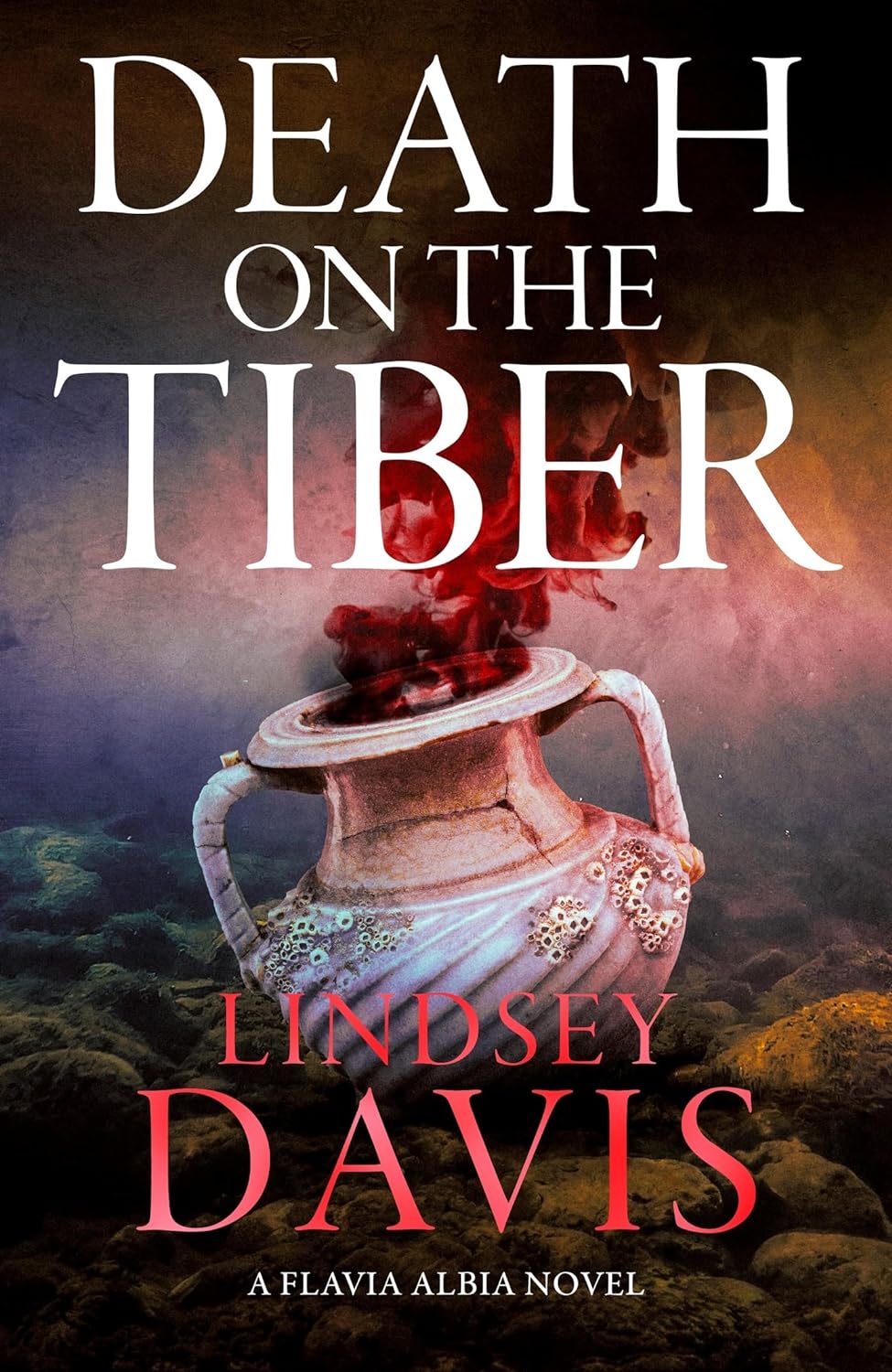
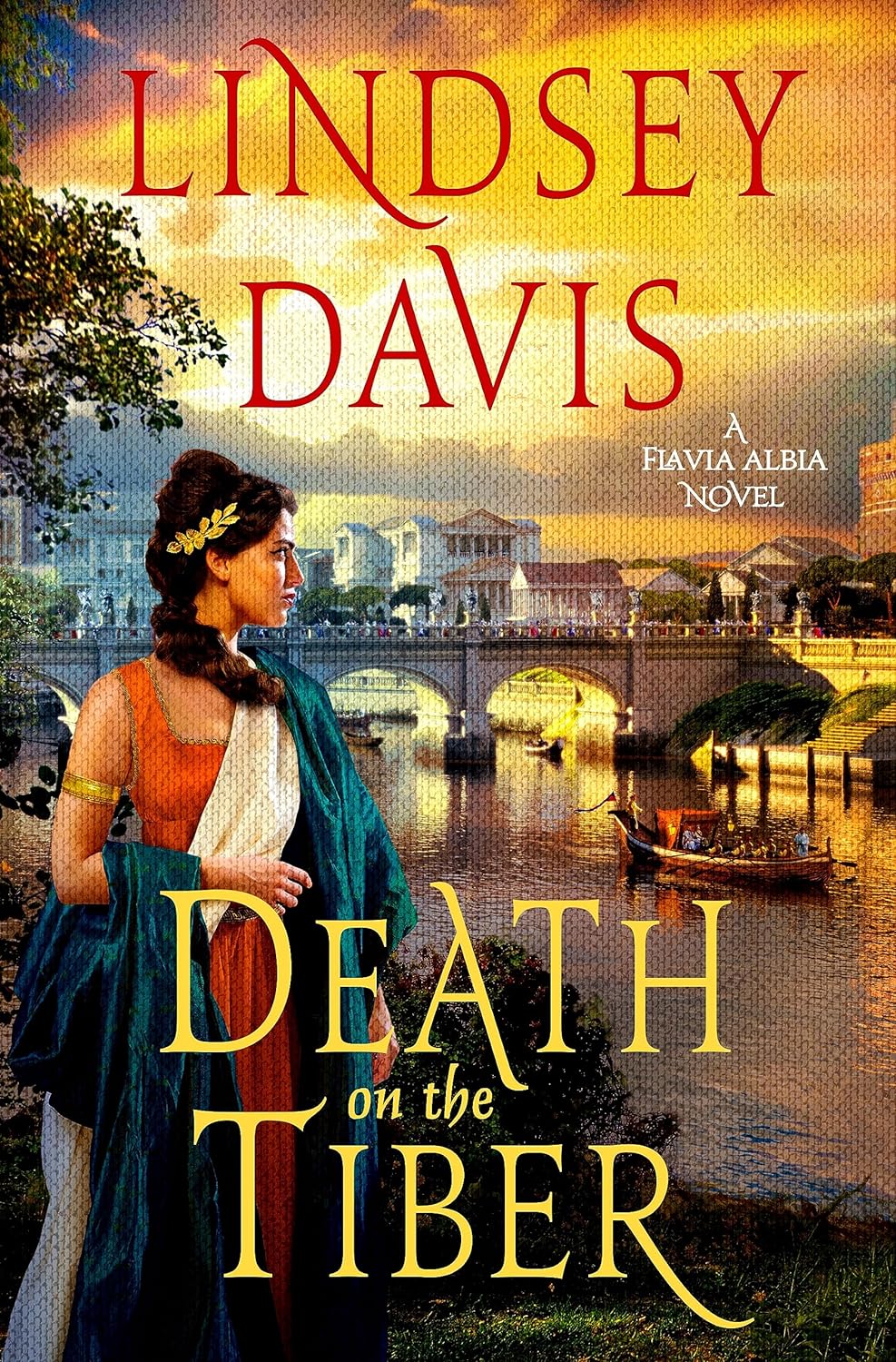
Quick Review – Death on the Tiber by Lindsey Davis

Publisher: Hodder & Stoughton (Trade Paperback – 9 April 2024)

Series: Flavia Albia – Book 12

Length: 380 pages

My Rating: 4.75 out of 5 stars

Amazon

Those in the mood for a clever murder mystery in ancient Rome look no further than the 2024 entry in the long-running Flavia Albia series with Death on the Tiber by Lindsey Davis.

I am a huge fan of historical fiction, and one of my favourite ongoing historical series is the outstanding Flavia Albia books by veteran author Lindsey Davis.  The Flavia Albia books, which are a sequel series to the author’s long-running Falco series, follow a determined private investigator in ancient Rome who takes on a range of complex cases and murder investigations, often encountering many of the city’s over-the-top inhabitants.  I have had an amazing time reading this series over the years, including The Third NeroPandora’s BoyA Capitol DeathThe Grove of the Caesars (one of my favourite books of 2020), A Comedy of TerrorsDesperate Undertakings (one of my favourite books of 2022) and Fatal Legacy.  As such, I try to read every new Flavia Albia book that comes out, and after accidently avoiding it for much of 2024, I recently finished off the 12th book in the series, Death on the Tiber.


Plot Synopsis:

Rome is in chaos. The empire of a mobster chief is falling apart following his death. Rivals, fearsome relatives and associates are taking up position to vie for the spoils.

With hideous murders in the streets of Rome, a lone female traveller arrives with an agenda of her own. But when her corpse is dragged out of the river bearing signs of foul play, Flavia Alba is drawn in, concerned about her fellow Briton’s fate.

Alba’s quest to find the killer becomes deeply personal when she discovers a man at the centre of the plot is an old adversary of hers. Will she be obsessed by revenge? Can she let the past go, or will it consume her?

Death on the Tiber was a great addition to the Flavia Albia series that features its own distinctive crimes, while also cleverly tying into several of the author’s previous Falco and Flavia Albia books. 

The plot of Death on the Tiber is very compelling, as the protagonist, Flavia Albia, finds herself drawn into the investigation of a murdered tourist pulled out of the Tiber.  However, the case becomes personal for Albia when she discovers the victim’s connection to the gangster Florius, an old foe of her fathers, who years before committed unspeakable evils against Albia and who may have finally returned to Rome.  Determined to finally hunt down Florius and make him pay for his crimes, Albia begins her investigation and soon finds herself embroiled in a deadly gang war that could tip the balance of Rome’s underworld.  Forced to compete with a range of interested parties, including her own vengeful father and uncle, the Roman military and several gangsters and their families who Flavia has previously encountered through her work, the protagonist slowly begins to piece together the events that lead to the victim’s death and the connection to her quarry’s current location.

This proved to be a highly personal and complex entry in the series, and one that I felt served as a love letter to the author’s prior works.  A huge range of characters from previous Flavia Albia novels, as well as major figures from the preceding Falco books, are featured throughout Death on the Tiber as the author takes the opportunity to tie together a range of ongoing storylines related to a major antagonist of the Falco books.  This allows for quite a fascinating read, especially for those readers familiar with the previous works, and it was awesome to see Davis bring together a compelling cast of returning figures. 

The plot moves in some interesting directions as the book nears the end, and Davis adds in a range of compelling layers to the case, including disgruntled mobster wives, a big gang war for the control of Rome, and alternating bands of Roman officials seeking to disrupt events.  The conclusion for the book proves to be very emotionally charged, especially as the protagonist comes face to face with her biggest monster and finally gets some closure.  The main mystery of Death on the Tiber is also extremely well written and utilised, and Davis does an excellent job tying in a lot of the novel’s leads and investigative plots into the main hunt for the returning Florius.  While the reveal of the ultimate culprit behind the killing isn’t especially surprising, the way in which Davis addresses their fate is particularly impressive, and it leads to a very fun final moment in the book.  I loved this last little twist, which I honestly think tied the book together very nicely, and it certainly was one of the moments that has stuck with me since finishing Death on the Tiber off.

This ended up being another strong Flavia Albia book as Davis continues to utilise her trademark style in Death on the Tiber.  Focused primarily through the sarcastic and cynical Flavia, Death in the Tiber evolves into a twisty hunt for answers, that brings together mystery, criminal intrigue, and the protagonist’s various personal connections.  Davis has a very compelling way of writing her stories, and her examinations of Rome through the protagonist’s eyes are often light-hearted, sarcastic, and applying modern mentalities to the ancient society.  This results in an impressive read, especially as Davis lays down an exceptional combination mystery and revenge-focussed narrative.  While I really enjoyed how well Davis revisited multiple previous books from both the Falco and Flavia Albia series, it does mean that readers do need a bit of pre-knowledge of these earlier works to fully appreciate Death on the Tiber’s plot.  Davis does provide some much-needed context at times, which will allow some new or forgetful readers to enjoy this book, but I personally think that people should have at least read the last few Flavia Albia books before Death on the Tiber to really get this book.

Despite the series’ general comedic vibe, Death on the Tiber gets very dark at times, especially as the protagonist is forced to revisit her traumatic history.  The author does an excellent job of diving into Flavia’s trauma and pain on the subject, and it was nice for this compelling protagonist to finally get some closure.  Davis nicely balances some of these darker moments by including an extensive cast of eccentric characters, many of whom are continuing their storylines from both the Falco and Flavia Albia series, and there are some very fun moments scattered throughout Death on the Tiber as a result.  This includes a fun competitiveness with Flavia’s father, Falco, a dive into some other important parental figures in her life, as well as her very strong relationship with her supportive and relentless husband.  I personally loved the return of all the various major gangsters Flavia has dealt with over the years, and it was fun to see her try to investigate them after prior experiences.  However, two of Flavia’s female relatives end up stealing the show in Death on the Tiber, especially at the end where they showed an ironic sense of justice.  An overall great extended cast that served to connect this book to the larger series in some outstanding ways.

With Lindsey Davis’s typical impressive writing and a cool plot laden with mystery and criminal intrigue, Death on the Tiber was an amazing entry in one of my favourite historical fiction series.  Entertaining, addictive and very moving, Death on the Tiber had me hooked from the very beginning, and I wish I’d read it sooner.  I look forward to continuing the Flavia Albia series this year, especially as Davis has a cool book coming out in April set around the ruins of Pompei with There Will Be Bodies.

Amazon

WWW Wednesday – 19 March 2025

WWW Wednesday is a weekly post hosted by Taking on a World of Words, where bloggers share the books that they’ve recently finished, what they are currently reading and what books they are planning to read next. Essentially you have to answer three questions (the Three Ws):

What are you currently reading?
What did you recently finish reading?
What do you think you’ll read next?

So, let’s get to it.

What are you currently reading:

The White Fortress by Boyd and Beth Morrison (ebook)

I’ve just started reading the compelling historical thriller The White Fortress from Boyd and Beth Morrison.  The follow-up to The Lawless Land and The Last True TemplarThe White Fortress is an exciting novel that sees two unlikely heroes attempt to save a small town from invasion by uncovering a journal written by Marco Polo.  I’ve made a bit of progress on The White Fortress, and it is proving to be an excellent addition the series and I cannot wait to finish it off.

Amazon


Burn to Shine by Jonathan Maberry (Audiobook)

I have also started listening to the epic new Jonathan Maberry novel, Burn to Shine. The fourth book in Maberry’s Rogue Team International series (RageRelentless and Cave 13), Burn to Shine is a brutal and deeply intense thriller loaded with action and an elaborate plot.  I have so much love for the Rogue Team International series and Burn to Shine will probably end up being one of my favourite books and audiobooks of 2025. 

Amazon

What did you recently finish reading?

The Reunion by Bronwyn Rivers (Trade Paperback)

A fantastic and compelling Australia debut that comes very highly recommended.

Amazon


Star Wars: Reign of the Empire: The Mask of Fear by Alexander Freed (Audiobook)

I managed to finish off the cool new Star Wars audiobook, The Mask of Fear by Alexander Freed, which follows the early day of the Emperor’s reign. A very intriguing addition to the Star Wars canon loaded with cool lore and some compelling political commentary, this was a very excellent book to check out. 

Amazon


A Death in Berlin by Simon Scarrow (Trade Paperback)

An impressive and addictive piece of historical crime fiction from one of my favourite authors.  Review to hopefully follow soon.

Amazon


The Whisperer’s War by Jackie French (Trade Paperback)

An outstanding historical drama from one of Australia’s best authors.

Amazon

What do you think you’ll read next?

How to Slay on Holiday by Sarah Bonner

I have quite a few books I want to read at the moment, but I think I might try to read the entertaining sounding thriller, How to Slay on Holiday next.  The cool new book from Sarah Bonner, who previously impressed me with Her Perfect Twin and Her Sweet Revenge, How to Slay on Holiday sounds extremely fun and I look forward to checking it out.

Amazon


That’s it for this week; check back in next Wednesday to see what progress I’ve made on my reading and what books I’ll be looking at next.

Waiting on Wednesday – Circle of Days by Ken Follett

Welcome to my weekly segment, Waiting on Wednesday, where I look at upcoming books that I am planning to order and review in the next few months and which I think I will really enjoy.  Stay tuned to see reviews of these books when I get a copy of them.  For my latest Waiting on Wednesday post, I check out an awesome upcoming historical fiction novel, Circle of Days, from one of my favourite authors, Ken Follett.

Amazon

Ken Follett is an exceptional author who has been a leading thriller and historical fiction writer since the 1970s.  Originally known for an array of complex and intriguing thrillers, including Capricorn One, Eye of the Needle, Triple and more, Follett is probably better known these days as an author of historical fiction, thanks to Kingsbridge series and The Century trilogy.

Both these ambitious historical fiction series attempt to examine key periods of history, both in and outside of England, following large casts of complex characters.  For example, his Kingsbridge series, which started with the iconic novel, The Pillars of the Earth, showcases different eras of the fictional town of Kingsbridge, following a new set of protagonists with each book over a period of many years.  For example, A Column of Fire was set during the Elizabethan period, The Evening and the Morning (one of my favourite books of 2020) was a prequel novel set to the backdrop of Viking raids, while The Armour of Light (one of my favourite books of 2023) focused on the Industrial Revolution in Kingsbridge and the Napoleonic Wars.  The Century trilogy on the other hand was an impressive series that followed members of several connected families living in different countries (i.e. UK, US, Russia and Germany) as they experienced the key events of the 20th century from various perspectives.  I really enjoyed these elaborate and compelling historical epics, especially as Follett does a wonderful job of working key events into his fictional character’s personal dramas, and they are all five-star reads in my book.  As such, I am always keen for more historical fiction from Follett which is why I am so excited to see that he has a new novel coming out later this year with Circle of Days.

Circle of Days is an intriguing and awesome upcoming novel that will be based around the construction of Stonehenge.  Set for release in September 2025, Circle of Days will once again follow an array of compelling characters as they live their lives around this major event in England’s pre-history.

Plot Synopsis:

From the master of epic fiction comes the deeply human story of one of the world’s greatest mysteries: the building of Stonehenge.

A FLINT MINER WITH A GIFT

Seft, a talented flint miner, walks the Great Plain in the high summer heat, to witness the rituals that signal the start of a new year. He is there to trade his stone at the Midsummer Rite, and to find Neen, the girl he loves. Her family lives in prosperity and offers Seft an escape from his brutish father and brothers, within their herder community.

A PRIESTESS WHO BELIEVES THE IMPOSSIBLE

Joia, Neen’s sister, is a priestess with a vision and an unmatched ability to lead. As a child, she watches the Midsummer ceremony, enthralled, and dreams of a miraculous new monument, raised from the biggest stones in the world. But trouble is brewing among the hills and woodlands of the Great Plain.

A MONUMENT THAT WILL DEFINE A CIVILISATION

Joia’s vision of a great stone circle, assembled by the divided tribes of the Plain, will inspire Seft and become their life’s work. But as drought ravages the earth, mistrust grows between the herders, farmers and woodlanders – and an act of savage violence leads to open warfare . . .

Truly ambitious in scope, Circle of Days invites you to join master storyteller Ken Follett in exploring one of the greatest mysteries of our age: Stonehenge.

This sounds like another particularly cool and intriguing novel from Follett, and I cannot wait to see him explore this fascinating British period.  Focussing the plot of Circle of Days around the creation of Stonehenge is an awesome idea, and I look forward to seeing how the author envisions this era of pre-history.  It sounds like Follett will be utilising his typical style of focussing the story on multiple compelling characters, both protagonist and antagonist, which the author has used to great effects in his previous historical novels to create fantastic, character-driven narratives.  I am also very excited to see what complex and elaborate narratives evolve as a result, and the depictions of war, mistrust and shattered relationships, all set around the construction of Stonehenge, sounds extremely promising to me.  I am a little curious to see if Circle of Days will be some sort of very early prequel to the Kingsbridge books (the fictional town of Kingsbridge is set close to Salisbury), which will probably be a fun little revelation for existing Follett fans.

Based on Ken Follett’s previous historical fiction books alone, Circle of Days is a particularly highly anticipated read for me, especially as I have had an exceptional time reading Follett’s amazing books over the years.  However, I am also really intrigued by the new historical scenario that Follett is envisioning, and an elaborate, multi-protagonist narrative set around the creation of Stonehenge has so much potential.  I have no doubt that Circle of Days is going to be one of the top books of 2025 for me, and I look forward to reading it the second it comes out.

Waiting on Wednesday – Forged For Destiny by Andrew Knighton

Welcome to my weekly segment, Waiting on Wednesday, where I look at upcoming books that I am planning to order and review in the next few months and which I think I will really enjoy.  Stay tuned to see reviews of these books when I get a copy of them.  For this latest Waiting on Wednesday, I check out an awesome upcoming fantasy book that looks to bring the laughs with Forged For Destiny by Andrew Kingston.

Amazon

Here at the Unseen Library, we’re a big fan of all things fantasy, whether that be compelling epics, elaborate tales of woe, or action-laded adventures.  However, sometimes it’s nice to settle in with a fun book that parodies the genre, which is why the upcoming book, Forged For Destiny has caught my attention.

A compelling new read from Andrew Knighton, Forged For Destiny looks set to be an entertaining satire on the classic chosen one story, as a supposed long-lost prince and hero begins to doubt his destiny on route to claim the throne.  Set for release late June 2025, Forged For Destiny sounds really cool, and I love the fantastic and entertaining plot synopsis laid out below.  I have a strong feeling that Forged For Destiny is going to be one of the more unique and captivating fantasy novels of 2025, and I cannot wait to get my hands on it.

Plot Synopsis:

Raul has a destiny: claim his birthright as the last surviving heir of King Balbainus and lead his conquered people to freedom.

The signs are all there—his birthmark, in the shape of Balbainus’ halfmoon and dagger sigil, the gemstone-hilted sword he found in his parents’ inn, and the sudden influx of illegal books featuring the late king’s lineage. Nevermind that his ma is a hidden scribe writing a play about Balbainus’ return, or that his da, a hardened warrior, has been training him to fight since he could stand. Or the fact that his sword doesn’t seem very old at all, he feels much more comfortable reading than fighting, and his birthmark is looking more and more like a burn scar…

As Raul leaves his simple village life to start a rebellion against the tyrannical Dunholmi government, he begins to wonder if his destiny is more someone else’s plan for a future he doesn’t want to be a part of. He’ll go along with things, for now, if only to prove that change can come from kindness instead of outright destruction.

After all, destiny is what you make of it.