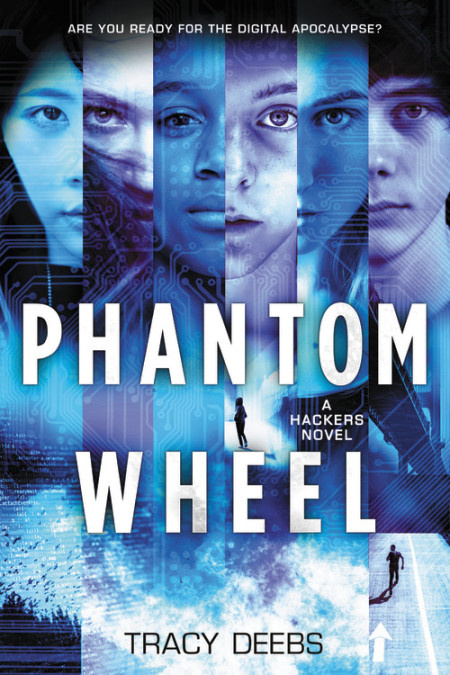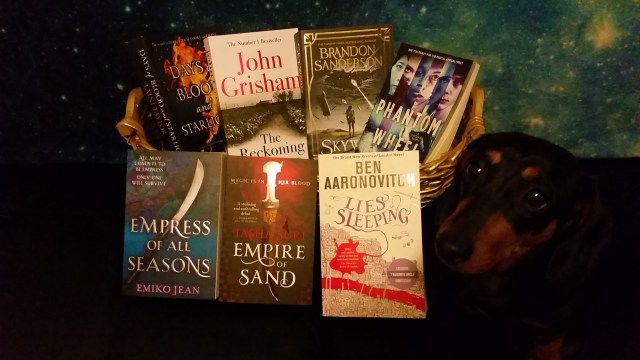
Phantom Wheel by Tracy Deebs

Phantom Wheel Cover

Publisher: Little, Brown and Company

Publication Date – 16 October 2018

Amazon     Book Depository

When six genius teen hackers are invited to audition for the CIA in order to receive an exclusive scholarship and job offer, five of them, Issa, Harper, Ezra, Alika and Seth, jump at the opportunity and create the code that is requested of them.  The sixth teen, Owen, walks out of the room, refusing to participate.  Later, when the other five return home they each receive a message for Owen, “You’ve been played.”  Owen has uncovered that the people interviewing them were not from the CIA; instead they work for one of the world’s largest telecommunications companies, Jacento.  Worse, the hackers’ combined code works together to create a virus, known as Phantom Wheel, which is a malicious piece of code that will give Jacento access to everyone’s personal data and unparalleled control of the world.  Determined not to let their creation be unleashed, the six teens band together to break into Jacento and steal back their code.  While they are young, these teens are among the most creative hackers in the world.  But will their combined skill be enough to protect them from a dangerous corporation with everything to lose?

Phantom Wheel is a fun young adult thriller that focuses on the adventures of six teen hackers determined to save the world from their unintentional creation.  This book has a cool style to it, some interesting characters and an intriguing story that features a lot of technological and hacker elements to it.  I only got this book a little while ago and managed to read through it pretty quickly, enjoying its various elements and aspects.

The author of this book, Tracy Deebs, is actually the young adult pseudonym of prolific romance novelist Tracy Wolff.  As Tracy Deebs, the author has created a number of varied young adult titles, including the techno-thriller Doomed; the mermaid based Tempest series; the superhero based The Hero Agenda series, which was cowritten with Tera Lynn Childs; and the teen romance series, Dahlia and Keegan, which started with her 2016 release The Secret Life of a Dream Girl.

When I first heard the premise of Phantom Wheel, I was intrigued and interested to see if the story could live up to the awesome-sounding plot summary, and overall I was fairly satisfied with the end result.  The story is told from the point of view of three of the main teen characters, Issa, Harper and Owen, and focuses on their fast-paced and exciting story of technological espionage and high-stakes hacking.  The plot moves quickly from the protagonist discovering what they had been tricked into doing, to them attempting a complex heist to steal it back.  I loved the heist scene, especially at the start when the protagonists split off into three teams, each with a point-of-view character, in order to obtain security items off three different members of the company at a party, especially as it allowed all the characters to play to their strengths during this sequence.  The sequences following the heist were also particularly good, as the protagonists attempt to escape from a horde of evil corporate security goons and the police by using their hacking skills to crash cars and stop trains.  I have no idea how realistic this is, but it was still fun to read about.  Overall the story is pretty fun, and has a lot of memorable moments.

The style of Phantom Wheel is also really interesting and has some great elements to it.  I personally really enjoyed the inclusion of the several different case study summaries of the protagonists that were scattered throughout the book.  These case studies also included amusing video surveillance files that follow each of the protagonists as they use their hacking skills to either get revenge or justice, or look at the characters having key conversations with each other.  I also liked the various uses of text messages and other electronic communications throughout the entire book, which fits in well with the technology based theme of Phantom Wheel.  The protagonists also speak a large amount of techno-talk and hacker slang throughout the novel, which gives the entire story a whole lot of authenticity.

Deebs has included six interesting and varied protagonists in the novel.  Despite the various first impressions of these characters, each of them has a lot more depth revealed throughout the course of the book, especially as they grow to trust the other members of their little band and open up to them.  Each of the characters has varying degrees of emotional backstory, which explains why they are the people they are and why they have taken to hacking, all of which is revealed throughout the course of the book.  I have to say I was impressed by Deebs’s inclusion of an asexual character in Harper, especially as asexual people are an under-represented group in modern fiction.  This asexual character seemed like a natural fit, and her acceptance by the group with only minimal questions or comments came across as a quite realistic and generally positive.

While I enjoyed the characters, they did at times stretch the plausibility of the book just a tad too much for my liking.  While I am willing to accept that hackers are just as likely to be in shape as other members of society, the actions that these teenagers were able to do, such as evading professional killers, fighting off trained security guards and jumping out of buildings, did seem a little ridiculous to me, and made me slightly question what I was reading.  I also found it interesting that four out of the six main protagonists were all members of rich families and had a huge net worth, one of them was even the daughter of a fictional Secretary of State.  While each of them had issues as a result of their wealthy lifestyle and the poorer characters of Issa and Harper balanced them out a little, even calling them out on their wealth, it did seem a little odd to include so many rich kid characters.  While this could potentially be explained away by the fact that hackers need money to pay for training and equipment, I feel that Deebs could have made one or two of them more middle class.  Still, none of these impacted my enjoyment of the book too severely and are easy to get around.

As a young adult book, Phantom Wheel is a good read for younger to older teens, although adult readers could also have a lot of fun with this.  The technological aspects of the book are quite intriguing and are easy to follow and understand, and will probably spark the interest of technically minded youths.  Readers will be able to relate to some of the characters in the book, and once again I have to point out my respect for Deebs’s great portrayal of an asexual character, as well as other minor LGBT+ elements.  With nothing too over-the-top in this book, it is a perfect read for a wide audience.

Overall, this new techno-thriller from veteran author Tracy Deebs is a fun and exciting novel that most readers will find quite entertaining.  Deebs has created a compelling story, used some great characters and installed some intriguing elements, all of which makes Phantom Wheel quite enjoyable and definitely worth checking out.

My Rating:

Four stars

Amazon     Book Depository

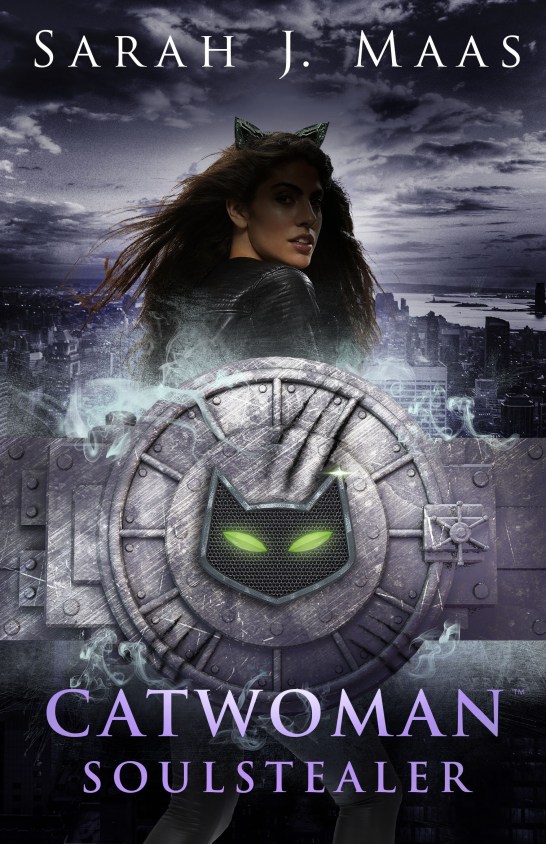
Catwoman: Soulstealer by Sarah J. Maas

Catwoman Soulstealer Cover.jpg

Publishers: Penguin Random House

                        Penguin Random House Audio

Publication Date – 7 August 2018

Amazon

One of DC Comics’ most iconic and badass female antiheroes is re-imagined in this bold new novel from young adult fiction bestseller Sarah J. Maas.

Selina Kyle is a rough street kid growing up in the slums of Gotham City.  She looks after her sister while scraping a living as a gang member and pit fighter.  When her luck finally runs out, her potential is seen by the mysterious Talia al Ghul who saves her and recruited into the League of Assassins.

Two years later, Selina has returned to Gotham City with a plan to turn the city on its head as Catwoman, the master thief and criminal mastermind.  Using the alias of the spoiled socialite Holly Vanderhees, Selina has returned at an ideal time; Batman is not in the city, away on a vital mission, and he has left his protégé Batwing behind to safeguard the city.  Initiating a series of high-profile thefts, Selina soon has the attention of Batwing and GCPD, especially when she starts teaming up with her new BFFs Poison Ivy and Harley Quinn to wreak havoc around the city.

While Batwing searches the city for this mysterious new villain, his alter ego, Luke Fox, encounters his mysterious new neighbour, Holly, and the two find themselves drawn to each other as their alter-egos battle in the night.  While Selina is able to outfox Batwing, a far more destructive force is about to be unleased upon Gotham.  Catwoman stole something from the League of Assassins and now a cadre of their most lethal assassins are descending on the city.  Will Selina be able to survive their deadly attentions, what is Catwoman’s plan, and who will be left standing in the aftermath?

This is the third book in the DC Icons series, a series of young adult books that provide re-imagined origin stories for younger versions of DC’s most iconic characters outside of the other established DC universes.  Featuring a range of different authors, the first book in the series, Wonder Woman: Warbringer, focused on Wonder Woman before she left Themyscira to become a hero, while the second book, Batman: Nightwalker, followed a teenage Bruce Wayne as he attempts to stop a series of murders in Gotham City.  A fourth book in the DC Icons series, Superman: Dawnbreaker, is currently set to be released in March 2019 and will follow a young Clark Kent as he investigates strange happenings in Smallville.

Soulstealer is the first of these DC Icons books that I have read, and I was quite impressed with the new and unique Catwoman story that it contained, as well as the cool new versions of several DC characters, including Poison Ivy, Harley Quinn and Batwing.  I listened to this book in its audiobook format, read by Julia Whelan.  I quite enjoyed having the story narrated to me, especially as it only took around 10 hours to get through.  While I initially had misgivings about whether I would like this series, after reading and loving Soulstealer I will definitely be getting a copy of Dawnbreaker when it is released next year, and Warbringer and Nightwalker will both be appearing future versions of my Throwback Thursdays reviews.

The author of Soulstealer, Sarah J. Maas, is one of the biggest names in modern young adult fiction, having written two best-selling young adult series in the last six years.  Her long-running Throne of Glass series finished earlier this year, and she has also created the A Court of Thorns and Roses series.  Soulstealer is the first Sarah J. Maas book that I have had the pleasure of reading, but after really enjoying the intricate story and fantastic characters within the novel I am keen to see what her fantasy books are like.  As a result, her Throne of Glass series is high on my list of books to check out in the future, especially after seeing just how awesome the artwork is on some of those covers and collected box sets.

Maas has installed a fantastic and clever story into her debut DC novel, and I really enjoyed how she re-imagined the origins of prominent comic book character.  Soulstealer contains a younger version of Catwoman, introducing her as a teenager gang member and focusing on her initial life of crime.  After the introductory paragraph, the story jumps ahead two years to Selina’s return to Gotham and her initial adventures as Catwoman, while also featuring several flashbacks to her training with the League of Assassins.  This main story is then told from two separate point-of-view characters, Selena and Batwing, and shows the characters in both their costumed adventures and as the people behind the masks in their civilian identities.  Soulstealer has a tight and intricate storyline that contains the perfect balance of comic book action, relationships, backstory, references and variations to comic lore, as well as a number of heists and intricate plots.  I loved Catwoman’s overall plan, as she engages in a play to take over Gotham while really nursing an ulterior motive that pits her against the League of Assassins.  I loved the slow reveal of this complex and insane plan, as well as the lengths she goes to bring her plan to pass, including making some dangerous partnerships.

One of the most interesting and significant changes that Maas makes to Catwoman’s origin story in this novel is the fact that she never meets or associates with Batman.  In nearly every previous iteration of Catwoman, her story has always been intertwined with Batman’s, as the two were usually each other’s main love interest, either as Batman and Catwoman or Bruce Wayne and Selina Kyle.  However, in Soulstealer, Catwoman is substantially younger than Batman, who starts his crusade years before she is trained by the League of Assassins.  In addition, Batman is not present in Gotham when she returns to the city and throughout the book the two characters have no interactions at all.  Instead, Catwoman’s main love interest is the Luke Fox version of Batwing, who has been defending Gotham in Batman’s absence.  This results in a similar romance plot to some of the classic Batman and Catwoman storylines, where the two characters meet and start to fall in love with each other in both of their personas, despite their apparently different personalities.  This is a fun little romance that does get serious at times, as the two characters are mirrored by their personal traumas and backstories, such as a Selina’s life on the streets and with the League, versus Luke’s PTSD as a result of his time as a marine.  There are also some great moments when the two characters face off against each other, and some of the book’s best laugh-out-loud moments came when Catwoman messes with either Batwing or Luke, sometimes at the same time.  To my mind, the funniest scene in the book had to be when Batwing, after getting injured and rescued by Catwoman, awakens half-naked in a darkened room, only to find out that he is actually in Commissioner Gordon’s spare bedroom.  The moment Luke walks out to find Gordon and his family staring at them was pretty darn funny, especially when Batwing attempted to play it off nonchalantly while silently cursing Catwoman.

One of the elements of Soulstealer that I really appreciated was the references and re-imagined versions of several DC comics characters that appeared throughout the novel.  A huge range of DC characters, many tied into the Batman comics, appear throughout the book in a number of different capacities.  The characters that appear range from the iconic to the obscure and are enough to delight both hardcore comic fans and those with a more casual knowledge of these comics.  Several major Batman characters appear throughout the story; I will refrain from mentioning the full roster of characters to cut down on spoilers, although there is one appearance that was particularly awesome.  While a number of these characters have key or interesting differences between their mainstream comic book counterparts, it is clear that Maas has a real understanding and appreciation for the lore behind these characters.  It is also incredibly fascinating to see how Maas changes these characters for the purposes of her story, and the subtle tweaks that are made to accommodate this different universe.

Of all these additional characters, two of the best and significant inclusions are fellow supervillains Poison Ivy and Harley Quinn, who team up with Catwoman to bring a little chaos to Gotham.  In the comic universe, these three supervillains occasionally form a team known as the Gotham City Sirens, and it was great to see them together in this book.  Like Catwoman, both Poison Ivy and Harley Quinn are quite young and have slightly altered origin stories which somewhat mirror the new origin story of Catwoman.  However, some of the key elements that made these characters so great in their comic book origins remain alive in these book adaptations of the characters and which work extremely well with Maas’s fantastic Soulstealer storyline.  For example, in this story, Harley is still obsessed with the Joker, no matter how much it impacts her relationship with the others, and there are a lot of discussions between Catwoman and Ivy about the roots of her obsession and insanity.  There is also a very clear and acknowledged romantic connection between Ivy and Harley that adds a really interesting element to the story, especially as Harley’s insanity stands in the way of the more serious relationship Ivy desires.  The inclusion of these characters adds in a defining friendship for a main character who has never had the option of friends before, and it’s also a lot of fun seeing these three characters work together, especially as they have such diverse skill sets and range of attitudes.  Overall, I really loved the fact that Maas included Poison Ivy and Harley Quinn as key characters in her novel, and it was a lot of fun to see her version of these young villains banding together for the first time and forming an outstanding partnership.

Rather than read a physical copy of this book, I grabbed the audiobook copy of Soulstealer and listened to that instead.  The audiobook is narrated by Julia Whelan, who does an amazing job capturing the essence of the book’s main character, Catwoman/Selina Kyle.  When focused on Catwoman’s point of view, the listener gets a real sense of the character’s emotions and attitude, and the voices that Whelan assigns to the other main female characters, Ivy, Harley and Talia, are fairly distinctive and fit well with the character.  I thought that the voice that the narrator used for the book’s other point-of-view character, Batwing/Luke Fox, was very serviceable and conveyed the character well enough.  However, I was a tad disappointed that the narrator did not do too much with several of the other iconic Batman characters in the story, such as Alfred, Batman or Commissioner Gordon, especially as these major characters have all been portrayed by amazing actors or voice actors in the past.  Still, the audiobook version is a great way to enjoy this story and it certainly helped me power through this novel quickly without forcing me to skip over any of its important elements.

Catwoman: Soulstealer is an excellent young adult superhero novel from acclaimed author Sarah J. Maas.  This book is a fantastic standalone novel that re-imagines an iconic DC comic book character.  No great previous insight into Catwoman or the DC universe is required, and those with even a glancing knowledge of the comic book characters will be able to enjoy this novel to its full potential.  This serves as a very good young adult novel that will hopefully draw in a younger generation of readers into this established universe, and I appreciated Maas’s casual inclusions of a number of LGBT+ elements.  Soulstealer comes highly recommended and it has certainly sparked my interest in checking out all the other books in the DC Icons range.

My Rating:

Four and a half stars

Amazon

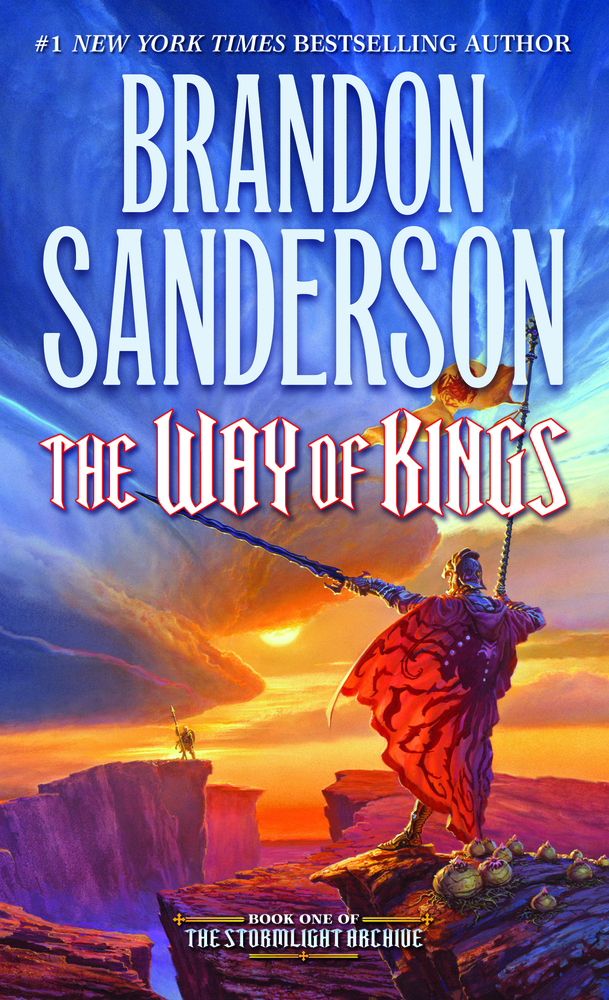
Throwback Thursday – The Way of Kings by Brandon Sanderson

The Way of Kings Cover.jpg

Publishers: Tor Books

                       Macmillan Audio

Publication Date – 31 August 2010

Amazon

Reviewed as part of my Throwback Thursday series, where I republish old reviews, review books I have read before or review older books I have only just had a chance to read.

In this week’s Throwback Thursday I will be reviewing one of the best pieces of fantasy fiction from the last decade: The Way of Kings by Brandon Sanderson.  I listened to this book for the first time earlier in the year and have been seeking to review it for some time.  However, I just finished reading the latest Brandon Sanderson book, Skyward, which I will be reviewing next week, and decided that this would be the perfect opportunity to finally get a review of The Way of Kings together.

Brandon Sanderson is one of the best writers of fantasy and science fiction in the world today, with several iconic series created by him.  These include the Mistborn series, the Wax and Wayne series, the Warbreaker series, The Reckoners series and his latest book, Skyward, which serves as the first book of his new Skyward series, just to name a few.  Perhaps the biggest indication of how highly regarded Sanderson is the fact that he was the author chosen to finish off Robert Jordan’s iconic Wheel of Time series of fantasy books, generally considered one of the most important fantasy series ever created, and the second bestselling series since The Lord of the Rings.  Following Jordan’s death, Sanderson put several of his series on hold to write the final three books in the Wheel of Time series, finishing off these epic fantasy novels with the help of Jordan’s notes.

The Way of Kings is the first book in Sanderson’s most iconic series, The Stormlight Archives, an epic fantasy series set in gigantic fantasy world.  The Stormlight Archives is a massive series from Sanderson with at least 10 books currently planned.  The first three of these books have already been released, with a fourth planned for 2020.  Each of these books is a massive undertaking to read, each totalling over 1,000 pages.  I chose to listen to The Way of Kings in its audiobook format, read by Michael Kramer and Kate Reading.  At over 45 hours in length, it does take a while to get through, but it was well worth it for the epic adventure within.

The Stormlight Archives is set within the world of Roshar, which has seen much chaos and bloodshed and is constantly beset by powerful storms, known as highstorms.  Centuries ago, a recurring event, known as the Desolation, unleashed the demonic Voidbringers upon the lands, devastating all before it.  To counter these creatures, the legendary Knights Radiant were formed.  They were powerful warriors with magical powers who wielded the epic magical armour and swords known as Shardplate and Shardblades.  After years of fighting, the Desolation was stopped and the Voidbringers defeated.  With their task complete, the Knights Radiant abandoned their weapons and disappeared.  Centuries later, when the main story is set, these events have become myths and legends, with many doubting that they ever existed.  However, the remaining pieces of Shardplate and Shardblades have become valuable commodities to the warring nations that have sprung up since the end of the Desolation, as they allow normal men to become the mightiest of warriors.

The main story of The Way of Kings begins with the assassination of the powerful King of Alethkar, Gavilar Kholin by Szeth-son-son-Vallano, apparently on the order of the Parshendi, a recently discovered race of humanoids who Gavilar was seeking peace with.  This killing results in a war between the Alethi and the Parshendi on the Shattered Plains.  After years of fighting, the war has mostly stymied, with neither side gaining a significant advantage, as the two armies compete for magical resources on the Plains.

This book has three distinctive main plot lines that lie mostly unconnected throughout the course of the novel.  The first plot follows the brother of the slain King Gavilar, Dalinar Kholin, and his sons, as they serve the new king on the Shattered Plains.  After years of fighting, Dalinar has grown weary of war and the competitive and caste based Alethkar way of life and attempts to find solace in the ancient book The Way of Kings, a volume that his brother became obsessed with before his death.  Questioning the merits of his people’s current ways of life, Dalinar attempts to find a way to unite the squabbling highprinces in a final strike against the Parshendi, while also dealing with visions of the past that affect his ability to lead.

The second plot line follows Kaladin, a former solider to an Alethi lord.  Kaladin was betrayed and has been sold into slavery.  Transported to the Shattered Plains, Kaladin is forced to become a bridgeman, carrying the heavy bridges into battle that the armies require to cross the canyons and broken landscape of the Shattered Plains.  Bridgeman have low life expectancies and are usually targeted first by the Parshendi in the battles that dominate the plains.  Determined to survive, Kaladin attempts to form his unit of bridgemen into an effective team in order to minimise casualties in each battle.  But the lord he serves has no interesting in having his bridgeman survive, and Kaladin must utilise newly discovered magical abilities if he is to keep his unit alive.  A part of this storyline also follows a younger Kaladin and shows how he gained his skills and abilities, and the events that resulted in his enslavement.

The final storyline follows Shallan Davar, a minor noblewoman and scholar who seeks the patronage of Jasnah Kholin, the current king’s sister, who is Dalinar’s niece.  While Shallan succeeds in becoming Jasnah’s apprentice, she is really plotting to steal an item of great value from Jasnah that will ensure her families survival.  But as she makes her plans, she finds herself embroiled in a series of plots while also uncovering her own powerful magic.

In addition to these three main storylines, there are a series of interludes that help build up the world in which The Stormlight Chronicles is set, while also briefly introducing a number of characters who are likely to become major players in future volumes of this series.  Each interlude also features an extended sequence that focuses on Szeth-son-son-Vallano, the assassin forced to kill King Gavilar, as he finds himself controlled by a mysterious organisation that appears to be behind many of the books more mysterious events.

Quite frankly, there is so much going on within The Way of Kings.  Not only are there several substantial storylines that combine together into one massive and captivating overall narrative, but Sanderson also creates a massive and detailed new fantasy world with significant history and character backstories to form the basis of this massive series.  It is actually quite amazing that Sanderson has managed to combine so much together into one book without it getting away from him, but The Way of Kings is proof that it is possible.

Without a doubt, the most impressive thing about The Way of Kings is the sheer amount of world building that Sanderson is able to cram into one book.  There is so much that forms the basis of The Stormlight Archive’s universe, from its magical based technology, to the iconic weapons and armour, the unique battle tactics, the creatures found within, the caste system based upon eye colour and this world’s history.  Every different nation appears to have its own unique and fascinating culture, all of which come into play within the plot of the story in some way or another.  For example, the Shin culture results in the character of Szeth-son-son-Vallano becoming a servant to whoever holds his Oathstone, while the Alethi culture produces quite a lot of backstabbing and conflict due to the competitive nature of its citizens.  There are some really fun cultural details added into these world cultures, such as women being the sole scholars of this world, while men do not even learn to read, or several cultures requiring all the women to wear gloves on one hand.

In addition to the culture, the world of Roshar is pretty impressive in itself.  One of the most distinctive and defining features of Roshar is the continuous gigantic storms, known as high storms, that devastate the land on a regular basis.  As a result, the people have had to adapt to these conditions, and there are a number of interludes where the protagonists have to shelter for periods from the storm.  I loved the way that Sanderson was able to come up with a range of impacts that these destructive storms would have on this world, such as the way that plants would grow and become reactive in response to constantly being hit by storms.  A large portion of the story is set around the landscape known as the Shattered Plains, which, as the name suggested, is a shattered landscape made up of a series of massive canyons and gaps between plateaus, haunted by giant monsters and prone to flash floods during high storms.  There are a number of massive battles and smaller explorations occurring in this landscape throughout the book, and it serves as a distinctive background which quite a number of fantastic plot points build up around.

All of this world building is quite incredible, but it is also impressive in the way that Sanderson has linked this world to some of the other series he has created or is currently planning to create.  This shared universe, known as The Cosmere, is made up of a number of worlds where some of his fantasy books are set.  The books in The Cosmere share several characters who travel from world to world, as well as some overarching themes and plot points.  For example, some of the chaos that the characters explore is the result of a massive conflict that affects all the books within The Cosmere universe.  There are several aspects of this explored within The Way of Kings, and it results in some interesting storytelling.

In addition to the massive world in which this book is set, Sanderson has filled The Way of Kings with a series of incredible storylines.  I really enjoyed each of the storylines, as each of them added something different to the book.  The storylines that focused on Dalinar Kholin and his family provide the reader with large-scale battles and a deep look at the culture, history and lifestyle of one of the main nations on Roshar, while also exploring the mystery of the disappearing Knights Radiant.  The storylines that are mostly told from the point of view of Shallan Davar are a bit slower paced, but contain an intriguing storyline of research, teaching, ethical deliberations, various plots and even a planned heist of a magical item.  Without a doubt however, my favourite storylines focused on the Kaladin and his attempts to turn his bridgemen into a cohesive unit.  These storylines contain some great scenes of comradery, friendship and training, while also allowing for some intense and clever battle sequences.  The storylines focusing on Kaladin’s youth were among my least favourite in the entire book, but they were still intriguing as they allowed the reader to see how Kaladin gained his complicated personality, his hatred for the world’s noble class and his determination to save lives.  In addition, I have no doubt that all that backstory will serve an important part in a future book in the series.  All three of these main storylines, as well as the shorter stories contained within the interludes, come together perfectly to form a complex narrative that interweaves subtly for most of the book.  While there are some brief mentions or crossovers for the majority of The Way of Kings, Sanderson does not focus too much on bringing these characters together until the very end of the story.  This allows Sanderson to set up each of these main characters and their associated minor characters in more detail, and allows them to be defined on their own terms.

I really loved how each of the main point-of-view characters within The Way of Kings is incredibly complicated.  For example, Dalinar Kholin is a person who spent years becoming the most feared warrior in the world.  Nicknamed the Blackthorn, his skill in battle and bloodlust helped unite Alethkar under his brother’s rule and he was considered the epitome of Alethi warrior culture.  However, after the death of his brother, Dalinar is weighed down with guilt, and his desire to follow ancient codes of conduct and the teachings of The Way of Kings causes him to doubt everything he previously knew.  Szeth-son-son-Vallano, is a killer without peer, but he is not in control of his own actions, due to becoming Truthless.  Forced to obey whoever holds his Oathstone, Szeth is constantly forced to kill for a rotating string of masters, and he despairs at the death he deals around him.  Finally there is Kaladin, a man so full of regret and despair for the friends and family he has lost, he is constantly drawn to the brink of sanity.  He is brought out of his stupor by his desire to help the men on his bridge crew and his relationship with the spren Syl, and is a fantastic character to follow, especially when Sanderson spends time simultaneously examining his past and previous tragedies.  Each of these storylines also features a huge number of intriguing side characters, and the reader can get quite attached to a number of these, especially the members of Kaladin’s bridge crew, who unfortunately have a short life expectancy.

Those people who like a healthy dose of action with their incredible storytelling will not be disappointed with The Way of Kings, as it features an incredible number of battles and warfare throughout its various storylines.  There are so many different and unique action sequences throughout this book for the reader to enjoy, and the inclusion of the epic magical weapons and armour, Shardblades and Shardplate, in many of these scenes provide some truly awesome moments.  There are a number of fantastic large-scale battles throughout the book, often with the character of Dalinar leading the charge.  However, I always quite enjoyed the sequences where Kaladin and his bridge crew are forced to carry a massive bridge at the front of the army.  These scenes are always extremely intense as the bridgemen come under intense fire and many die in the attempts to cross the gorges that make up the Shattered Plains.  As the book continues, Kaladin and his crew experiment with a number of different techniques and strategies to try and stay alive during these assaults, with varied and intriguing results.

While all the above scenes are pretty epic, nothing can top the sequences where Szeth-son-son-Vallano unleashes his full potential.  Szeth has unique magical abilities and wields a powerful Shardblade so is quite a powerful opponent, even against Full Shardbearers (those wielding both a Shardblade and Shardplate, essentially indestructible warriors).  There are two great scenes where Szeth unleashes his abilities against his opponents.  The first time is one of the best opening scenes in fantasy fiction as he storms the palace of King Gavilar, taking out a number of opponents with his abilities.  Quite frankly, if this scene were to be the first thing that was shown in an adaption of this series, it has the potential to be one of the most epic opening moments in movie or television history.  This is actually topped later in the book, when Szeth falls into a trap against one of his targets, who utilises a number of Shardbearers against him.  This scene is great not only because it has a number of additional opponents for the assassin but because Szeth unleashes his full rage when he realises how many people his opponent has sacrificed to trap Szeth.  All of these action sequences are fairly epic, and are enough to make any action junkie extremely happy.

At this point, I have not had the chance to read any additional books in The Stormlight Archive, mainly as I have not had time to dive into such a big book with so many other great reads coming out this year.  That being said, I fully appreciate how much of a great introduction to this series The Way of Kings is.  It sets up so much of the universe and starts each of these major storylines and introduces several fantastic main characters.  I have no doubt that future books in these storylines will be awesome, and I really appreciate how well Sanderson introduces his series.  I fully intend to read the next books in this series soon, and my goal is to get through the second and third book in The Stormlight Archive before the fourth book is released in 2020.

I listened to the audiobook version of The Way of Kings and have to say it was an incredible way to enjoy this incredible book.  The publishers utilise two separate narrators, Michael Kramer and Kate Reading, who split the book between them.  Kramer reads the chapters told from male characters’ point of view, while Reading does the same for chapters told from a female characters’ point of view.  Both of these narrators are pretty epic and do an amazing job portraying their various characters and bringing them to life.  I would mostly recommend using the audiobook version of The Way of Kings because I find it helps the reader remember all the insane amount of information, detail and lore that the author has crammed into this book.  I also loved the way that the narration dragged me into the centre of some of these epic battles, and it is definitely one of the best ways to enjoy The Way of Kings.

Overall, The Way of Kings is an incredible piece of fantasy fiction and really lives up to the hype.  This is the perfect book to start exploring Sanderson’s work, and readers can expect a massive read, chock full of intricate and detailed world building, intense and unique action and a series of outstanding characters.  This is some of the best fantasy fiction you will ever read.  Clear out your calendar and make room to read this book.

My Rating:

Five Stars

Amazon

Dracul by Dacre Stoker and J. D. Barker

Dracul Cover

Publisher: Bantam Press

Publication Date – 2 October 2018

Amazon     Book Depository

You think you know the story of Dracula?  Prepare to have your understanding of one of history’s greatest horror novels completely turned on its head as Bram Stoker’s great-grandnephew presents a captivating new story of horror based off Bram Stoker’s notes and his original version of the iconic book.

The year is 1868, and a young Bram Stoker has barricaded himself in the top room of an abandoned abbey.  This room has crosses carved on every wall, mirrors hanging from every angle and garlic smeared around the door frame, while Bram himself is armed with roses, holy water and a rifle.  Outside the room lurks an ancient evil, its greatest desire to enter the room and claim the man waiting within.  As Bram waits for the sun to rise, he writes in his journal, desperate to describe the events that lead to this moment.

The tale he tells is an intriguing tale of horror and mystery set in the midst of 19th century Ireland.  Bram was born a sickly youth whose constant illness stopped him from leaving his bed for most of his early life.  One of the few points of comfort in his life was his nanny, Ellen Crone, who nursed him through the worst of his maladies.  Bram seemed destined for a short life, until one day a miracle occurs and Bram’s sickness is cured by the mysterious intervention of Nanny Crone.  But as Bram and his sister Matilda investigate the suspicious behaviour and abilities of Nanny Crone, she disappears, leaving behind questions about who, or what, she really was.

Years later, it appears that Ellen Crone has returned, as strange and bloody events haunt the lives of Bram, Matilda and their older brother Thornley.  As they investigate further they find that the mysterious Ellen Crone has not aged a day, is accompanied by those who died years earlier and has a strange hypnotic hold over Bram.  But even as the siblings attempt to find answers, they soon realise a far more powerful and malevolent creature is hunting in Ireland, one who will forever change the life of the Stoker family.

This is one of the most intriguing books of 2018, as it is a reimagining of the origin of one of the world’s most iconic horror novels, Dracula, which was originally published in 1897 by author Bram Stoker.  The authors of this new book are the team of established horror writer J. D. Barker, and Bram Stoker’s great-grandnephew Dacre Stoker.  This is not the first Dracula book that Dacre Stoker has had his hand in, as he also wrote the 2009 book, Dracula the Un-dead with Ian Holt, which serves as the official sequel to the original Dracula.

Dracul is a clever and compelling read that takes a deeper look at the story behind the classic horror novel.  The plot of this novel is apparently based upon Bram Stoker’s notes, journals and around 100 pages that were culled from the original draft of Dracula by his editors.  As a result, the authors of Dracul strongly hint that Bram Stoker and his family actually encountered a vampire, and that his experiences led him to publish Dracula as a warning to people about the dangers that were hidden around them and the apparent weaknesses of these creatures.  There is a great quote at the very start of this novel that the authors attribute to Bram Stoker and indicate was part of Dracula’s original preface: “I am quite convinced that there is no doubt whatever that the events here described really took place, however unbelievable and incomprehensible they might appear at first sight.”

This new novel by Stoker and Barker is an outstanding piece of fiction.  Not only is it a powerful piece of horror fiction in its own right but it has a number of clever and intriguing connections to Dracula.  The horror elements of this book are fantastic, and the authors do a great job of highlighting the dread that surrounds the protagonists as they investigate the horrors that surround them and their family.  There are a number of great scenes throughout this book where the characters encounter supernatural elements that slowly seek to drive them mad with fear or horror, and the attacks come from a variety of sources.  I have to mention the fact that the monster who inspires Dracula is particularly fearsome in Dracul and the authors really paint him as a powerful and soulless being far beyond the comprehension of the human protagonists.  I really loved the overall story of Bram and the other Stokers as they find themselves bound to this adventure at an early age and slowly encounter all the horrors around them.  There are some very clever turns throughout this book, and there are some surprising twists.  This is a great chronicle of Bram’s life and the writers even try to answer some interesting unanswered questions, like why Bram Stoker left instructions to have his body immediately cremated upon his death, an unusual custom for the time.

I really loved the way that this story is told, especially as Stoker and Barker have set large portions of this story out in a similar manner to the original Dracula novel.  Like Dracula, a large part of Dracul’s story is told in an epistolary format, featuring a series of diary entries from Bram and Thornley Stoker, as well as several letters from Matilda Stoker.  This serves to provide the reader with a large amount of backstory to the Stoker lives and show how they initially met their first vampire and the crazy events that followed them uncovering her secret.  This epistolary format is used for around the first two thirds of Dracul, and these journal entries are interlaced with short chapters set in the story’s present, with Bram stuck at the top of a tower and an evil force trying to get into him.  These scenes are particularly awesome, as they show strange forces trying to get through the door in front of Bram, while the protagonists utilise a number of techniques to force it back.  As the book continues, the reader is given a view into why Bram is up in the tower, what he is facing and the truth to everything that is happening to him, revealing a completely different story than you were expecting.  All of this is a fantastic and unique way to tell this story, and I felt it added a lot to the book, especially as the lack of knowledge about what Bram was facing in the tower at the start of the book really increased the book’s early horror elements.  These notes are also an item within the story, as the characters combine their journals together and the letters to Nanny Crone appear in a number of places that the protagonists are exploring.  At one point, the characters even arrange some of the older journals together to form a more coherent story, indicating that these journals and letters formed the basis of Bram Stoker’s original novel, and play into the idea that the events of Dracul could have actually happened.

While this book is a fantastic horror novel in its own right, fans of Dracula will appreciate how this book calls back to the original novel in a number of captivating ways.  For example, the major character of Nanny Crone has her backstory explored at one point and her real name is revealed to be Countess Dolingen of Gratz.  Fans of Stoker’s work may recognise her as a vampiric character featured in Bram Stoker’s 1914 short story, Dracula’s Guest.  While very little about this character was revealed in Dracula’s Guest, Stoker and Barker flesh her out in this book, creating a fascinating backstory for her and an interesting connection to Dracula, perhaps even explaining why she featured in Dracula’s Guest.  There are a number of other interesting features of Dracul that call back to the original novel.  For example, a large part of Dracul is set in Whitby, England, a major setting in Dracula.  I also really enjoyed the inclusion of real life historical figure Ármin Vámbéry as a major character in this book.  Vámbéry, a noted scholar and a close friend of Bram Stoker, is considered by some to be the inspiration for Professor Van Helsing in Dracula, and in Dracul he plays a similar role, understanding the threat that is before them and providing the Stokers with the tools to fight against the Vampires.  I also really appreciated the vampiric lore that Stoker and Barker put into Dracul, as the vampire characters only have the vampiric traits found around the time that Dracula was published, and not the ideas that have been included in more recent versions of the vampire legend.  As a result, Dracul comes across as an intricate and clever tribute to Dracula, which fans of the original novel will greatly appreciate.

Dacre Stoker and J. D. Barker have produced an incredibly exciting and deeply fascinating novel that breathes new life into the familiar story of Dracula.  Setting the plot around the life of a pre-Dracula Bram Stoker and his family is an amazing idea that works incredibly well to create a dark and captivating horror story.  One of the more unique books of 2018, Dracul is definitely worth checking out, especially if you have an appreciation for one of fiction’s greatest and most iconic monsters.

My Rating:

Four and a half stars

Amazon     Book Depository

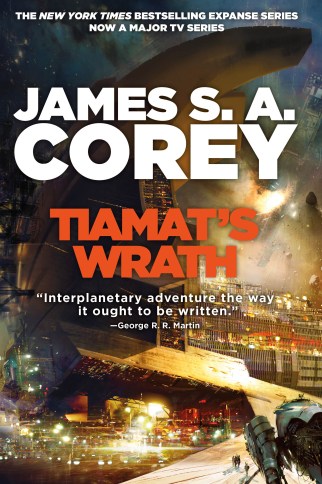
Waiting on Wednesday – Tiamat’s Wrath

Welcome to my weekly segment, Waiting on Wednesday, where I look at upcoming books that I am planning to order and review in the next few months and which I think I will really enjoy.  Stay tuned to see reviews of these books when I get a copy of them.
Tiamat's Wrath Cover.jpg

In this week’s Waiting on Wednesday review, I will be looking at a book that is probably on the waiting list of every science fiction fan out there: Tiamat’s Wrath by James S. A. Corey. Tiamat’s Wrath is the eighth book in Corey’s bestselling The Expanse series, which has been developed into the popular epic science fiction television series of the same name.  Tiamat’s Wrath is currently being billed as the penultimate book in the entire series.  I really enjoyed the previous book in the series, Persepolis Rising, especially as it set up the story for this final trilogy within the series, while also really raising the stakes for the entire The Expanse universe.  I, like many other readers, was very disappointed when Tiamat’s Wrath was delayed from December this year to March 2019.

This new book sounds like it will have some incredible plot elements to it, as the crew of the Rocinante are forced to fight a desperate war against the Laconian Empire, an old and powerful enemy that easily conquered the galaxy in the previous book using advanced alien technology.  At the same time, their captain, James Holden, is trapped on the enemy’s planet and will find himself involved in some political intrigue.  In the midst of all this, mysterious alien powers threaten everyone in the galaxy, which will ensure the return of Elvi Okoye and focus on her trying to get to the bottom of the threat while being hunted by the Laconian Empire. All of these story elements sound incredibly fascinating, and Corey already has a proven ability to combine several great storylines into outstanding overall narratives.

As a result, Tiamat’s Wrath sounds like it has the potential to be an amazing book, and is probably already a contender for the best science fiction book of 2019.  I am very much looking forward to checking out this book, especially as it will set up the final book in this iconic science fiction series.

Heads You Win by Jeffrey Archer

Heads You Win Cover.png

Publisher: Macmillan

Publication Date – 30 October 2018

Amazon

From the mind of one of modern fiction’s most controversial authors comes a two-in-one fantastic and elaborate piece of historical fiction that utilises an intriguing narrative device to create one of 2018’s most unique stories.

Young student Alexander Karpenko is the bright, talented and ambitious child of two hardworking citizens of the Soviet Union.  Living in Leningrad in 1968, Alexander’s dream is to become the first democratically elected president of his country.  However, when he is betrayed and his father is killed by the KGB, Alexander and his mother realise that their only hope is to flee Russia and make a new life for themselves in another country.

Arriving at the docks, Alexander and his mother are given a choice between two different ships: one heading to London or one heading to New York.  The decision is made by the flip of a coin, and Alexander’s life splits into two separate paths: one where he heads to Britain and one where he heads to America.  Alexander arrives in these countries with great ambition and a desire to succeed no matter what.

Over the next 30 years, in both these lives, Alexander finds success in a two separate ways.  He fights his way up from the bottom as a lowly immigrant to an influential person, overcoming obstacles and antagonists along the way.  Both Alexanders’ journeys are inspirational, but no matter what these two Alexanders accomplish, the fate of their home country is always on their minds, and the shadow of the Soviet Union constantly surrounds them.

Jeffrey Archer is a rather interesting individual, with a very eventful and controversial background.  A former British MP, Archer is probably better known for the various accusations of fraud he has attracted throughout his life, and he has even spent some time in jail as a result.  However, rather than let that ruin his public profile, Archer has used his experience and imagination to create a number of fascinating novels, many of which utilise aspects of his political, academic or professional life or expertise to some degree.  As a result, Archer is now one of the most high-profile authors in the world and has written over 20 adult novels, including the three books in his Kane and Abel series and the seven books in his bestselling Clifton Chronicles.  On top of that, Archer has also written a number of short stories, a couple of plays, several children’s books and his Prison Diaries, three non-fiction novels that chronicle his life in prison.

Heads You Win is an extremely fascinating novel from Archer, which takes his protagonist on two separate adventures through over 30 years of American and British history and life.  Archer utilises a very clever divergent timelines narrative device (think Sliding Doors), which creates two separate timelines around the different outcomes of one event, in this case, the outcome of a coin toss.  As a result, in one timeline, the protagonists and his mother get on a ship to London, while in another timeline they board a ship bound for New York.  This is a very interesting concept to utilise in this story, and one that works to create two separate narrative threads to follow.  Both of these storylines focus on the protagonist attempting to find his place in the country that he eventually ends up in, and then moves onto the protagonist becoming a powerful and influential individual in his own way, all the while dealing with the terrible people that seem to inhabit Archer’s world.

I rather enjoyed both of the separate storylines in this book, and had a lot of fun seeing the different or similar ways that the protagonist attempted to make his fortune in each lifetime.  The differences between these two storylines happen right away, as in the London timeline, Alexander and his mother find themselves on a nice ship with a friendly crew who mostly want to help, while the New York timeline finds them in a poorly maintained vessel with a self-serving crew who seek to exploit the two main characters.  I found it rather fascinating to see the way that their treatment and the environments they find themselves in change the way in which they act.  For example, Alexander’s experience in the English setting encourage him to seek the full Cambridge academic lifestyle, while his American counterpart was less focused on his formal education and learned more on the street.

Both of these divergent timelines feature an intriguing look at the cities and countries that the protagonists end up in, and both serve as a good historical backdrop to each of the main storylines, featuring several real historical events and some historical characters.  For example, the Alexander who ends up in the American timeline is forced to fight in the Vietnam War, while the British Alexander rubs elbows with a number of the country’s prominent politicians.  I liked how the divergent ways that the two separate protagonists gained their power and prestige matched the country that there were in.  The American Alexander became rich through his business acumen and financial brilliance, while the British Alexander went the academic route and eventually become deeply involved with the British political system, something close to the author’s heart.  Not only does this help match the locations and people that the protagonist deals with, but it allows the two separate stories to diverge out slightly, with the British storyline containing political intrigue, while the American storyline reads a little bit more like a financial thriller.  While the focus on the protagonist’s two adopted homelands is a great part of this novel, the protagonist’s history in the Soviet Union is a major part of this story.  The initial chapters capture the uncertainty and despair that inhabitants of the Soviet Union would have felt in the 1960s, while the character’s subsequent visits helped highlight the obvious differences between the Soviet Union and the countries that Alexander escaped to.  There is also a rather exciting reveal about one of the Russian characters towards the end of the book that will prove to be the most memorable part of Heads You Win, and is definitely something to look out for.

While I enjoyed the divergent timelines narrative device that Archer employed throughout Heads You Win I did feel that he could have done more with it.  I would have loved to see a bit more crossover between the two separate timelines, and, for example, see how key characters from one storyline would have fared without their Alexander in their lives.  Instead there is minimal crossover between these two separate storylines, which feels like a bit of a missed opportunity.  I am also not the biggest fan of what these quick crossovers revealed, as it strongly hinted that both storylines actually exist together at the same time, and as a result, there are two Alexanders existing in the world at the same time.  This is a bit of a weird twist, and while it does not negatively impact the vast majority of either storyline, it does result in a conclusion that some may find slightly confusing.  As a result, while this did slightly mark down my rating of Heads You Win, the split storyline concept is a fantastic and unforgettable part of this book and makes it quite a distinctive read.

This latest novel from one of the world’s most colourful professional authors is a fun, historical thrill ride that features a very unique and memorable narrative device.  With a great look at two different countries during the same historical time period and featuring two separate by similar stories of life, adversity and success, this is an extremely enjoyable novel that will appeal to a varied range of readers.  Heads You Win is definitely worth checking out, and I am planning to keep an eye out for the next read from Archer.

My Rating:

Four stars

Amazon

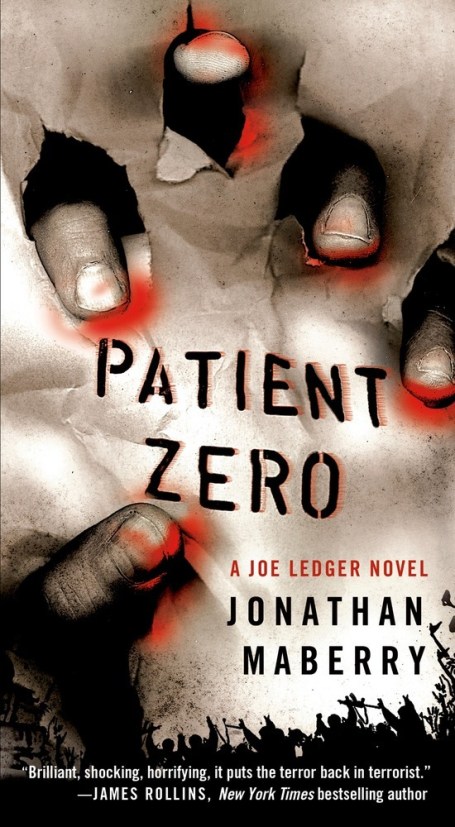
Throwback Thursday: Patient Zero by Jonathan Maberry

Patient Zero Cover.jpg

Publishers: St. Martin’s Griffin

                       Blackstone Audiobooks

Publication Date – 3 March 2009

Amazon     Book Depository

Reviewed as part of my Throwback Thursday series, where I republish old reviews, review books I have read before or review older books I have only just had a chance to read.

A couple of weeks ago I listened to and reviewed the latest book in Jonathan Maberry’s Joe Ledger series, Deep Silence, and found myself hooked on the insane, mad science based thriller adventure.  After enjoying Deep Silence and giving it a five-star review, I started checking out some of the previous books in the Joe Ledger series that I had not had a chance to read before, and found myself enjoying the plot concepts of the other books in the series.  The moment I finished listening to Deep Silence, I immediately jumped back to the first book in the series, Patient Zero, to review as part of my Throwback Thursday series.

When Baltimore detective Joe Ledger is assigned to a joint terrorism taskforce, he thinks it is an opportunity to fight back against the people responsible for 9/11.  What he was not expecting was to have a crazed man try to bite him on his first raid with the taskforce after discovering a warehouse filled with terrorists.  His elation about a job well done is destroyed when he encounters one of the terrorists again later that week.  There is just one problem: Ledger knows that he killed him during the first raid.  Someone has created a terrifying bio-weapon that can turn ordinary people into zombies, and worse, they have supplied this virus to a destructive terrorist organisation that plans to release it within the United States.

As the full extent of the horror being unleashed against them is revealed, Ledger finds himself recruited into a newly created covert organisation that was set up to handle extraordinary threats such as this.  Known as the Department of Military Sciences (DMS), this organisation wields the latest technology and the country’s brightest scientists under the command of the mysterious Mr Church.  As a member of the DMS, Ledger leads an elite team of combat specialists in the field in an attempt to contain any attempts to unleash the virus on the population and to destroy those who have already been infected.  As Ledger’s investigation progresses, he uncovers an elaborate conspiracy that will have devastating impacts for all of humanity.  But with the fate of the world in the balance, it soon becomes clear that there is a traitor within the DMS who has no qualms about unleashing a zombie apocalypse.

I have to admit that after absolutely loving Deep Silence, I had very high expectations when I started reading Patient Zero.  Luckily I was not disappointed and found that Patient Zero had a fantastic action based storyline that makes good use of its mad science elements to create an intense and very enjoyable novel that sets up all the elements for this future series.  I also chose to check out the first book in this series in its audiobook format, which, at just under 15 hours, is a great way to enjoy this high-octane story.

Hands down, the best thing about this novel has to be the zombies and the way that Maberry has created a compelling and intricate thriller story around this classic horror story concept.  The thriller aspect of this is really clever.  Rather than being the central antagonists themselves, the zombies are a tool being utilised in a wide-reaching conspiracy that the protagonists have to unravel in order to figure out the origins and endgames of the book’s true antagonists.  These thriller elements are quite detailed, and Maberry utilises a number of chapters told from the antagonists’ point of view to add some depth to the conspiracy and showcase the extent of their plot, as well the problems these groups have.  The protagonists also have to deal with potential traitors in their ranks, advanced science that they do not understand and a surprisingly organised, devious and well-equipped terrorist organisation.  All of this is an extremely captivating thriller storyline, and I love how Maberry has managed to utilise the book’s zombie element to help flesh this out.

Maberry has also created a unique and intriguing zombie origin for this book that is based on potential real-life science.  The zombies in this book are the result of a disease rather than a supernatural calamity.  They have been created by some advanced science and extreme mutations of existing diseases and viruses, such as prion diseases.  As a result, Maberry and his characters spend a lot of time examining the potential science behind this zombie virus, which pulls the reader in as they consider how close something this crazy could be to a reality.  I was really struck by the way that Maberry tried to show the horror that these creatures would inflict on the people who encounter them, and the sheer terror that they inflect on normal humans.  The point-of-view protagonists spend significant time explaining how terrifying and emotionally damaging it is to have to encounter and fight these infected people, as well as how guilty they feel about having to kill them.  There are quite a few parts of the book where the characters discuss how damaging these events are to them, and it really adds some emotional gravitas to this story.  Maberry is a prominent author of zombie fiction, so it is no surprise that he is able to create quite a number of awesome and terrifying scenes featuring the zombies as they attack and kill all around them.  There are also some interesting zombie deviations that appear and offer some unique elements to the story.  Overall this is an incredible and memorable addition to this story and one that will really appeal to fans of zombies and the horror genre.

Action is a major part of the Joe Ledger series, as the protagonist leads an elite special forces unit against all these elite scientific threats.  As a result, there are a huge number of action sequences throughout this novel and the reader is constantly left with a racing pulse.  There are so many great fast-paced elements throughout Patient Zero for action junkies to enjoy.  Maberry is always great at describing special forces tactics in his stories, and I enjoyed seeing them used against the unique threats in this book.  There are a number of excellent firefights throughout the story, and the author has a great mind to examining the psychology of a gun battle.  Maberry’s love of martial arts and close-combat fighting once again shines through in Patient Zero, as his protagonist is an expert fighter who has innumerable hand-to-hand fights with a number of different opponents.  While the above actions scenes are all extremely awesome, the best scenes have to revolve around the desperate fight between these elite soldiers and the horde of zombies that they encounter.  These scenes are really fantastic and watching the special forces characters fight tooth and nail against a horde of zombies becomes a captivating and powerful part of this book.  There are quite a few crazy action scenes throughout Patient Zero for the reader to look out for and which are defiantly a highlight of the book.  I personally found that listening to these scenes in the audiobook format really brought me into the centre of the action, and it was an excellent way to enjoy this element.

Patient Zero is an excellent introduction to the Joe Ledger series and contains a number of elements that will continue into the rest of the series.  I came to this book having first read the 10th and latest book in the series, Deep Silence.  As a result, I was really intrigued to see what characters were introduced in the first book and which ones do not appear in the final book of the series.  There are some interesting differences between Patient Zero and Deep Silence that I found quite fascinating.  For example, the opponents and technology in this first book are a lot more realistic, as Maberry has yet to start utilising the Lovecraft-inspired aliens which feature in some of the later Joe Ledger novels.  The head of the DMS, the mysterious Mr Church, also comes across as a much colder character in this first book, as well as someone who is more comfortable with civilian deaths and sacrifice if it results in the survival of the rest of the world.  That being said, there are some familiar elements.  Ledger is still an incredibly sarcastic and funny protagonist, and the author tries to highlight a huge range of varied viewpoints to show the whole range of the plot the DMS is trying to unravel.  Patient Zero serves as a great introduction to the DMS, and I really enjoyed seeing the early days of this organisation.  I also love how everyone is quite confused about what this organisation is and the mystery around Mr Church, who appears to have an incredible amount of influence and power in Washington.  For example, at one point he actually tells the president of the United States that he is wasting his time and hangs up on him in, an action an incredulous Ledger describes as “bitch-slapping the president”.

Patient Zero is an incredible first novel in Jonathan Maberry’s incredible Joe Ledger series and one that serves as a fantastic introduction for readers unfamiliar with this series.  Featuring all sorts of mad science, impressive action sequences, a five-star thriller storyline and a ton of amazing zombies, this is an outstanding novel and one that proves very hard to put down.  After loving this book, as well as the latest book in this series, Deep Silence, I am now fully determined to read the rest of the books in the Joe Ledger series.  Fully expect to see a review for The Dragon Factory very soon; I have no doubt that I will really enjoy that book as well.

My Rating:

Five Stars

Amazon     Book Depository

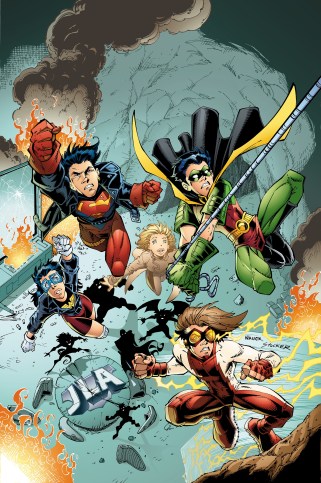
Young Justice – Book Three by Peter David and Todd Nauck

Young Justice 3.jpg

Publisher: DC Comics

Publication Date – 4 December 2018

Amazon

Before the third season of the Young Justice television show debuts after its long hiatus, go back to the comic book series that inspired it all, with the third volume of DC Comics’ reprint of the 1990s Young Justice comic book series, which includes the full collection of the Sins of Youth crossover event from 2000.

Young Justice is an interesting comic series.  Most people would probably be familiar with the 2010 television series of the same name.  The original comic book series started in the 1990s and was created in a unique period of DC Comics.  Many of the traditional sidekicks had grown up in recent years and taken on different identities to distinguish themselves from their mentors.  For example, the first Robin, Dick Grayson, had has own identity as Nightwing; the original Kid Flash, Wally West, had succeeded his mentor as the Flash; the original Wonder Girl, Donna Troy, had become Troia; while the original Speedy and Aqualad had taken on the identities of Arsenal and Tempest respectfully.  In order to fill the void, DC Comics creators in the 1990s created several new young sidekicks for their key heroes.  At the same time, with most of the former sidekicks in their early 20s, DC needed a new group of young heroes to appeal to their younger readers.  With the former sidekicks already formed up as the Titans, these younger heroes were placed into their own team, Young Justice.

Starting in 1998, this series ran alongside DC’s Titans series before both were cancelled in 2003 following the Graduation Day crossover event.  Young Justice was a successful way to launch several of its featured character outside their mentors’ orbit, much like the original Teen Titans series did for the first round of sidekicks, and many of its key characters are still used in DC Comics to this day.  Despite this, the series is probably best known for having the same name of one DC’s most popular animated shows, the Young Justice television show.  The show, which started in 2010, features a team based more on the Teen Titans comics rather than the Young Justice comics, with only one member of the original comic run of Young Justice, Superboy, appearing in the first season, although other members of the team did appear in the second season.  It did, however, make use of a number of storylines and villains from the original series, many of which were adapted into first-rate episodes.  The show received high ratings, but was cancelled after only two seasons.  However, continued petitioning from its dedicated fanbase has seen a revival of the show, with a third season airing in January 2019.  A new comic book reboot of the Young Justice comic series is also planned for 2019 and will see several of the original characters reunite for the first time in years.  Starting in 2017, DC started reprinting the original Young Justice comic run into a new set of collected editions, and this review is focused on the third volume of this reprinting.

Before this new reprinting of the original series I had not had much of a chance to read Young Justice, but it has always been high on my list of must-read comics.  This is mainly because I am such a big fan of Geoff John’s 2003 run on Teen Titans, which followed several characters from Young Justice after their team was disbanded.  This run on Teen Titans has to be one of my all-time favourite series and I was always very curious to see what happened to the characters during their Young Justice years.  So I was very happy when DC decided to reprint this original run and I have been having fun seeing these younger versions of some of my favourite characters before they got more mature and serious after the events of Graduation Day.

They are the next generation of superheroes, but being the second round of sidekicks to the leading members of the Justice League is tough, and sometimes having your own group of friends is what you need.  So Young Justice was formed: part superhero team, part friendship group.  Originally made up Robin (Tim Drake), Superboy (Kon-El/Conner Kent), Impulse (Bart Allen) and Wonder Girl (Cassandra Sandsmark), the team was later joined by new heroes Arrowette and Secret, while also being monitored by veteran hero Red Tornado.

Recent events have rocked the group and exposed them to negative attention.  The team have continuously been drawn into destructive fights and been forced to partially destroy Mount Rushmore, and Arrowette has been forced to retire after nearly killing a suspect.  At the same time, a new superhero team, Old Justice, made up of the aging sidekicks of the Golden Age of heroism, have been calling out the actions of their younger counterparts.  Railroaded by the press, politicians and even their mentors in the Justice League, the situation keeps going from bad to worse for the young heroes when they lose their base to an attack from a new superpowered group, the Point Men.

Attempting to regain public opinion, Young Justice and a supporting group of heroes attempt to hold a rally in support of young heroes, but a villainous presence wants to stop the young heroes from developing to their full potential.  A mysterious organisation, Agenda, headed by Lex Luthor’s ex-wife Contessa Erica Alexandra Del Portenza, wants to discredit all superheroes and believes that Young Justice is their weakest link.  Agenda uses the magical agent, Klarion the Witch-Boy, to cause havoc at the event, and Klarion’s magic leads to some accidental side effects.

The members of Young Justice have all been aged into adults, while their contemporaries, the members of the Justice League of America and the Justice Society of America, have all been turned into children or teenagers.  Worse, these de-aged heroes now have the emotional maturity of their age, while the members of Young Justice have the patience and wisdom of their mentors.  Forced to switch roles with the world’s greatest heroes, the members of Young Justice must find a way to not only stop the sinister machinations of Agenda but also find a way to reverse the effects of the spell.  Can Young Justice grow up to be the heroes they were always meant to be, or is the future of the DC universe a whole lot darker than anticipated?

This third volume of the reprint is another fantastic collection of a great original storyline.  I have been really enjoying this reprinting of Young Justice, and it was great to see this full collection of one of their most iconic storylines in full.  Not only does this new volume contain issues #18-19 of the original series but it also contains a huge number of tie-in storylines that feature most of the other heroes of that period of the DC universe, following their adventures as they have been de-aged or aged up.  As a result, this volume contains input from a gigantic range of DC creative talent, as the writers and artists of these other connected series do a one-shot version of the series they were working on at the time.

There is quite a lot going on in this volume and it definitely takes a while to get through.  There are a also a lot of technical and obscure comic book characters and teams that become the focus of the various stories within Young Justice Volume 3, so it might become a bit confusing for some people.  The volume is broken up by a couple of Young Justice storylines that introduce and finalise the story, while also providing the explanation for how this event unfolds and the villains responsible for it.  Once this is established, the volume goes into a series of different short stories that focus not only on the members of Young Justice but on some of the other superheros that have been caught up in the events of this crossover.  Each of these storylines show how the various heroes deal with being de-aged or turned into adults, and then follows up with an adventure, often with that particular team or hero working to find a solution to the curse afflicting them.  The four best storylines deal with the aged-up sidekick members of Young Justice (Robin, Wonder Girl, Superboy and Impulse) as they are forced to team up with teenage versions of their mentors.  There are some good jokes in this as the characters reverse roles and the younger heroes are forced to act as the mature anchors for their biggest heroes in the DC Universe.  These jokes range from Bruce Wayne being forced to pretend to be a moody Robin while his sidekick takes on the role of Batman for the first time, to Wonder Girl being forced to reign in a destructive Wonder Woman while making several snide comments about the practicality of her uniform, to a very young Flash attempting to hit on his fully grown wife.  There are also some quite heartfelt moments as the mentors are finally placed in their misunderstood sidekicks’ shoes and find a way to emphasise with them in a way they haven’t managed before.

In addition to these stories around the Young Justice sidekicks and their well-established mentors, there are a number of other interesting stories splashed through this volume.  I particularly enjoyed the short one that featured a teenage Aquaman teaming up with an adult Lagoon Boy to stop a crisis under the water.  This one is not only fun, as the teenage Aquaman is a bit of a bold ladies man, but it also shows how he was a hero even as a teenager, as he sacrifices a potential solution to his problem to restore a devastated city.  There is also a story that focuses on the Titans, which brings its founding members back to their Teen Titans days, with a storyline that reminds the readers of their classic adventures.  I was less of a fan of the storyline that focused completely on a teenage version of the Justice League, and I really disliked the storyline that contained an all-child version of the Justice Society going on an adventure.  Overall though, this huge collection of stories comes together in a fun and cohesive narrative that not only presents a massive, whole DC Universe event, but one that focuses on the core team at the heart of the adventure.

A major feature of this volume is the examination of the negative perceptions that older people have for the world’s youth.  Even 20 years later this is still incredibly relevant, as most older people these days are quite dismissive of today’s youth culture (those darn millennials).  Young Justice goes out of its way to show a group of teenagers who try to do the right thing but are constantly dismissed by adults as nuisances who do not try to see their side of the story.  After being hounded for a good part of this and the previous volume, Wonder Girl gives an impassioned speech to the media that gets the worlds attention, divides some of the older heroes and rallies several other prominent young heroes to their cause.  The creative team follows this up by putting its young heroes in the position of responsibility and showing that they can act in a mature and responsible way when given the chance, while their established mentors act irresponsibly when turned back into teenagers.  All of this is a great examination of how young people are perceived by their elders and how they can surprise you when given a chance.  This is still a great storyline to enjoy to this day and one that will resonate with the modern youth culture.

While I have been having quite a lot of fun with this re-print run of Young Justice, it may prove a little harder to get into for people who are not as familiar with some of the other 1990s DC Comics storylines which were happening at the time.  That being said, it is a series well worth getting into, especially for fans of any of the Teen Titan runs that followed the cancellation of Young Justice, as many of the members of these teams were originally featured in this series.  Fans of the Young Justice television show will probably also get a lot out of this series, as several of the show’s best storylines and villains originated in this original comic series.  Overall, Young Justice is a fantastic series that will appeal to both younger readers and well-established comic book fans.  This third volume features a full and fantastic collection of one of this series’ most iconic story events, which provides an intriguing examination of youth culture perception and a great examination of the additional hazards of being a young hero.  Extremely entertaining and a lot of fun to read, I am really glad that DC decided to do this re-print of Young Justice.

My Rating:

Four and a half stars

Amazon