The Hunger by Marsheila Rockwell

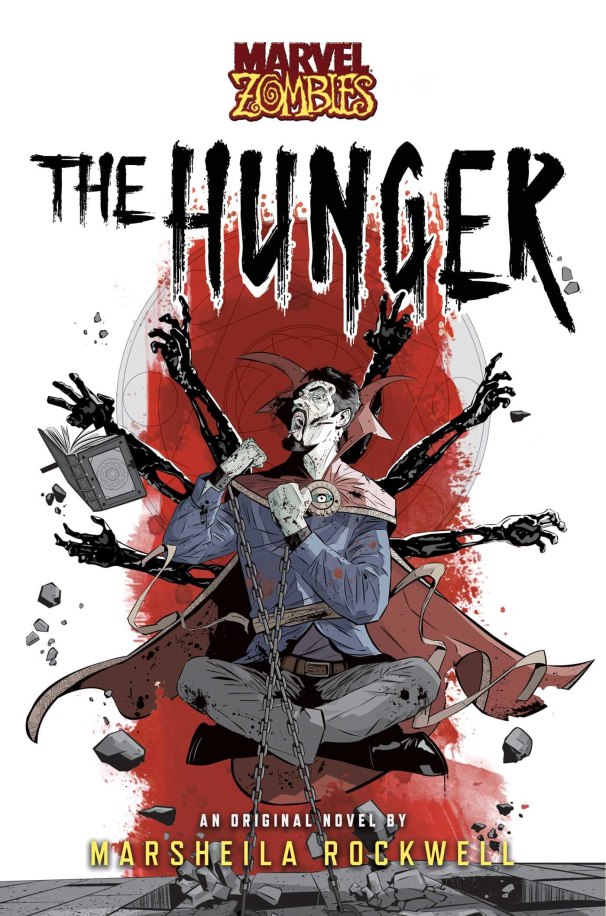
The Hunger Cover

Publisher: Aconyte Books (ebook – 3 October 2023)

Series: Marvel Zombies

Length: 249 pages

My Rating: 4.5 out 5 stars

Amazon

Prepare to dive into a wacky, time travelling, zombie filled Marvel novel with Marsheila Rockwell’s fantastic tie-in book, The Hunger.

After having a lot of fun reading the awesome Marvel Comics tie-in novel The Tyrant Skies by David Annandale earlier this year, I thought it would be an excellent idea to dive into another amazing Marvel book, especially one with a great plot like The Hunger.  Written by intriguing fantasy and science fiction author, Marsheila Rockwell, whose previous foray in Marvel fiction produced the magic Sisters of Sorcery novel, The Hunger is an awesome upcoming book that I was very happy to get an early copy of thanks to Netgalley.  Set around the iconic Marvel Zombies concept, The Hunger was a pretty epic read that I had an outstanding time with.

When a mysterious object falls to Earth, landing in New York city, it unleashes a wave of evil and despair as the world’s greatest heroes are turned into ravenous zombies determined to feast on all living flesh.  As the zombified superheroes begin to spread out across the planet, turning or eating everything before them, only Doctor Strange can briefly retain his sanity to try and find a way to avert disaster, but despite his best efforts, his overwhelming hunger threatens all around him.

With no alternative, Doctor Strange is forced to turn to one of the few magic users left unaffected by the zombie outbreak, the librarian of the Sanctum Sanctorum, Zelma Stanton, who reluctantly takes up the burden and imprisons her zombified mentor.  Despite her lack of experience, Zelma has access to all the magical knowledge and ancient artefacts in Doctor Strange’s Sanctum Sanctorum, and she hopes to find some answer to the deadly chaos consuming her planet.  But Zelma soon realises that even all the books in the Sanctum aren’t enough; if she wants to succeed, she’s going to need help.

Pulling together a ragtag team of survivors, including Runaway witch Nico Minoru, monster hunter Elsa Bloodstone and the living embodiment of insanity, Deadpool, Zelma hopes that together they can find a solution.  But their plan to trap the zombies in a time loop backfires on them, thanks to antics of Deadpool, unsurprisingly.  Now with time fracturing all around them, an evil magic threat unleashed, and the zombie horde still determined to eat everything, Zelma and her strange team need to find a way to reverse the damaged they caused while still saving the world.  But is this group of survivors truly capable of stopping the flesh-eating nightmares waiting for them?

That was an insanely fun book about zombies and time travel shenanigans that I desperately needed, and I am sure glad that I decided to check this novel out.  The Hunger was a very entertaining book that I ended up knocking out in a few hours because of how easy and fantastic it was to read.  Rockwell came up with a very impressive story that quickly grabbed my attention and took me along a wild journey loaded with so many awesome moments.  Starting off with a great new introduction to an alternate Marvel Zombies event, where Doctor Strange and pretty much every other hero gets brutally turned into zombies, the story gets bleak very quickly and rarely lightens up after that.  The resulting narrative focuses on the intriguing figure of Zelma Stanton, a supporting character in one of the recent Doctor Strange comics, and it proves to be very interesting as you follow a young, inexperienced magician as she tries to survive in a very dangerous world.  The resulting story has a lot of great features to it as Zelma finds her courage, gathers a unique group of allies, and then finds herself getting thrown into all manner of chaos as her actions produce more zombie mayhem and every time travel issues you could think of.  The second half of The Hunger is pure, unadulterated bedlam, and I frankly loved every second of it, as Rockwell comes up with some outrageous and exciting scenarios that never really slow down.  Bringing together some well set-up storylines in some excellent ways, you honestly will find it hard to put down The Hunger once you get rolling with it, and I found the entire story to be exceedingly entertaining, especially as Rockwell wove together some complex scenes that saw the characters journey through all manner of unique points the Marvel Universe timeline.  This story was a riot from start to finish, especially the fantastic extended time travel sequences, and you will come away from this book very satisfied and honestly wanting more.

Rockwell has a great writing style that I felt really lent itself to the emotionally charged and intense story that came together in The Hunger.  Primarily told from the perspective of two young female magic users, The Hunger is a strong, character-driven tale that showcases how people grow under adversity, while also treating the reader to a brilliant amount of action, carnage and Marvel comics lore.  Rockwell really leans into the Marvel Zombies background of her story to provide some gruesome and graphic moments, which I felt helped set The Hunger apart from some of the other Marvel tie-in books.  While there is a lot of humour attached to the book, mainly thanks to the inclusion of a particular merc-with-a-mouth, The Hunger gets very deep and serious at times, and I loved the impactful dive into the traumas affecting the protagonists.  I loved the fast pace that Rockwell sets for The Hunger’s story, and frankly there was not a single moment of this book where I wanted to stop, as I just wanted to see what was going to happen next.  I did think some of the early sequences of the book felt a little simplistic in their writing, which almost threw me off.  However, Rockwell found her stride as the book continued, and I loved some of the elaborate sequences that emerged, especially those that feature multiple figures, time elements and obscure bits of Marvel lore.  Some of The Hunger’s twists were very well set up in the earlier stages of the book, and I loved how well things came together in the end, especially as Rockwell made such great use of the time travel elements to tell a very entertaining story.

The Hunger serves as a rather interesting addition to the wider Marvel lore that exists as Rockwell makes fine use of several existing storylines, concepts and characters, to create a pretty fun read.  Set in a version of the main Marvel universe that is suddenly impacted by a Marvel Zombies event, The Hunger has a ton of curious and distinctive elements to it that established fans of the comics will deeply enjoy.  Not only are there a ton of different characters present, often in zombie form, but Rockwell goes out of her way to feature or reference multiple storylines from the comics.  This includes a great mixture of more recent comics and some classic storylines, both of which work extremely well in the context of the story and its time travel elements.  I felt that Rockwell did a very good job of cleverly introducing and then utilising these different storylines throughout the course of the comics, and the resulting crazy plot encounters and big moments were pretty damn awesome.  Each of the main characters also makes sure to remember or mention many key story arcs from their history, many of which have a compelling impact on the current storyline or mental state.  The author clearly has an appreciation for the various storylines and obscure characters that she featured and I loved how random and compelling the later scenes got.  While Rockwell does go to some diverse areas of the Marvel universe and history, all of these elements and characters are explored in excellent detail so that anyone with some basic knowledge of Marvel comics can easily enjoy what is going on.  I personally loved all the cool references that emerged, as well the excellent reimagining of the Marvel Zombies storyline which helped turn The Hunger into a pretty awesome tie-in novel.

As with her previous Marvel tie-in novel, Sisters of Sorcery, Rockwell chose to focus The Hunger on three intriguing and somewhat underused female characters from the Marvel canon, Zelma Stanton, Nico Minoru, and Elsa Bloodstone.  All three characters are already epic, but it was great to see them forming a team here in The Hunger, especially when faced with an insane, world-ending threat.  Of these three characters, Zelma is probably the one I knew the least about, mainly because I’ve never read any of the Doctor Strange comics she is in, but she soon proved to be the invaluable heart of this entire novel.  Rockwell did a remarkable job of introducing and utilising Zelma as a character, even to a reader like me that has had no experience with her.  You are swiftly brought up to speed on who Zelma is and why she is involved, and soon you follow this overwhelmed magical character as she is thrust into events beyond her comprehension.  I loved the overarching narrative of this character finding her confidence and ability in this ultimate post-apocalyptic setting, and it was great to see her become the hero that Doctor Strange believed her to be.  Watching her use her unique intelligence and experiences to survive and attempt to stop all the chaos is quite compelling, and you really grow to appreciate Zelma, especially as she has very relatable doubts and concerns.  Zelma is the emotional heart of this entire book and I felt that Rockwell was very wise to use her as a central character, especially with how exceptionally she is portrayed.

In addition to Zelma, I really enjoyed the fantastic use of Nico Minoru and Elsa Bloodstone in The Hunger who served as impressive joint protagonists.  I particularly loved seeing Nico Minoru here in The Hunger, mainly because I’m such a big fan of Runaways, and Rockwell featured her in an excellent way.  Focusing on her at a key part of her character development from the comics, this already jaded and wary Nico arrives on the scene after seeing her entire adopted family turned to zombies and is swiftly forced into another harrowing adventure with a new group of strangers.  I really enjoyed exploring Nico’s fears, concerns and complex history throughout The Hunger, and she served as a great secondary point-of-view character for the plot.  These female characters are further enhanced by monster hunter extraordinaire Elsa Bloodstone, who is well suited for this sort of dark, monstrous tale.  The foul-mouthed, highly confident figure is a great addition to the focal cast of the novel, especially as her loud personality plays off the more reserved Zelma and Nico for a good chunk of the novel.  While initially shown to be mostly carefree, there are some compelling darker feelings under the surface, especially related to the start of the zombie apocalypse, and I felt that Elsa was a brilliant and great addition to the plot.

The final major character in the book really needs no introduction as Rockwell features Deadpool as the much need comic relief.  Brought into the story for very unique reasons, Deadpool is his usual blend of irrelevant humour, catchy one-liners, and all-round killing machine that works well with the female protagonists to save the day.  His constant jokes, weird comments and fourth wall breaks deeply add to the enjoyment I had of the book, even with its darker story content.  So many of the best plot moments in The Hunger revolve around Deadpool’s antics, and he really is an unsurpassed character to include in a crazy book like this.  His interactions with the other protagonists are also a lot of fun, with an intriguing blend of comedic conversations, crazed resentment, and even a grudging respect for his fellow survivors.  Throw in a ton of zombified superheroes, an overpowered magical witch from history, a fun new mount for Deadpool, and some intriguing figures from the dawn of the Marvel canon, and The Hunger has an outstanding cast that are a lot of fun to follow, especially during their darker and emotionally charged moments.

The Hunger really lived up to all its great potential and I had an epic time getting through this insane and highly exciting read.  Marsheila Rockwell produced one hell of a story here that made great use of the Marvel Zombies theme and featured a bonkers story with fantastic time travel elements, complex characters, and a ton of compelling references to the wider Marvel canon.  I honestly had such an incredible time with The Hunger and readers are guaranteed to get caught up in its cool story just like me.  Highly recommended, for all Marvel fans, you will have fun with this book.
Amazon

Warhammer 40,000: Sepulturum by Nick Kyme

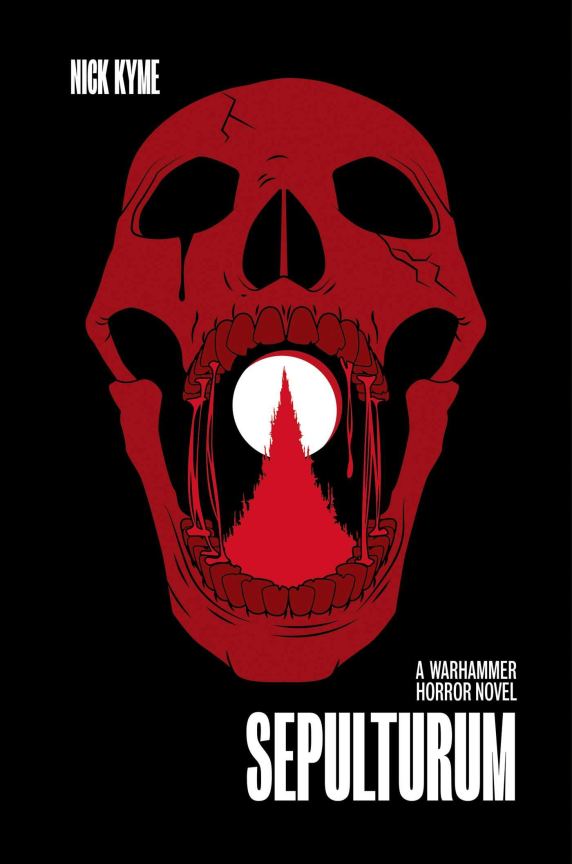
Warhammer 40,000 Sepulturum Cover

Publisher: Black Library (Audiobook – 3 March 2020)

Series: Warhammer Horror

Length: 7 hours and 9 minutes

My Rating: 4.25 out of 5 stars

Amazon

My obsession with Warhammer continues as I check out the grisly Warhammer Horror book, Sepulturum by Nick Kyme.

Over the last couple of years, I have had a lot of fun diving down into the epic Warhammer 40,000 universe.  This universe features so many epic and unique stories and characters, and I love all the fantastic tales that can be told across the genres.  One sub-genre of Warhammer fiction I’ve only had a little experience with so far is the Warhammer Horror books which, as the name suggest, blend gruesome horror elements with the already grim Warhammer universe.  I have so far enjoyed one Warhammer Horror book, the creepy and clever The Bookkeeper’s Skull by Justin Hill, which was brilliantly written and showcased.  I have been meaning to check out some other horror related Warhammer books, and when I saw that there was a zombie-centric Warhammer book, I knew it was something I would have to read.  This book is Sepulturum, a compelling read written by new-to-me author Nick Kyme.  Kyme is a veteran Warhammer writer, and I’ve got a couple of his other books sitting on my shelf already waiting for my attention.  However, my first experience of him was through Sepulturum, which proved to be a really fun and interesting adventure.

Something dark and deadly, something which hungers for blood and flesh, is stirring in the low-hive of Blackgheist.  The only person who can stop it is Inquisitor Morgravia Sanctus of the Ordo Sepulturum, whose investigation in Blackgheist revealed a terrible presence.  However, before she could act, something happened that destroyed her memories and left her scarred, broken and hunted.  Now with only one acolyte left, Morgravia attempts to find a psyker capable of restoring her mind to let her figure out what is chasing her and what their plans are.

Meeting with a broker from the criminal underworld, Morgravia believes that she has finally found the solution to her problems.  However, before she can proceed, a terrible attack is launched across Blackgheist which no one is prepared for.  The people of the hive have been turned into something violent, no-longer alive, and desperate to devour everything they come across.  These creatures are soon swarming across Blackgheist, destroying all before them and leading to untold chaos and destruction.

Soon, only small bands of survivors are left who hope to escape from the horrors surrounding them.  But as Morgravia leads one such group to safety, she soon discovers that not everything is as it seems.  Other deadly monsters are hunting throughout Blackgheist, while deranged cultists take the opportunity to seize power for themselves.  The truth behind the terrible events unfolding lies only within Morgravia’s mind, but is she truly prepared for the horrific secrets that are about to be unleashed?

Sepulturum was a fantastic and dark read that proved to be an outstanding addition to the Warhammer Horror range.  Kyme has produced a fast-paced and gruesome zombie story in an amazing novel that combines a clever story with some excellent horror elements.  The story itself is a fun zombie narrative as several characters attempt to survive a sudden onslaught of deranged and hungry former humans overrunning the city.  The story primarily focuses on the damaged Inquisitor Morgravia and a couple of her companions as they attempt to escape the horrors unleashed upon them and find its cause, although a second storyline revolves around a normal labourer, Cristo, as he tries to get his daughter to safety.  Both groups first encounter the zombie creatures in some pretty horrifying situations that leave them badly shaken and alone, and they are forced to navigate through the rest of the chaos in a daze.  Their subsequent attempts to evade the zombie creatures lead them further into danger, especially as there are other dark forces out in the city that provide additional awesome complications and conflicts, and there are betrayals, insanities and the feeling that the zombies are only a small part of the larger picture.  Everything leads up to some pretty disturbing final sequences that are loaded with brutal twists and major confrontations, especially as nobody is who they seem, and there is high need of some bloody self-sacrifice.  Readers will come away pretty satisfied with how the story ends, with horror fans no doubt liking the high body count, and the potential hint of a continuation in the future.

I loved how Kyme set out the story in Sepulturum, and it proves to be an outstanding read about survival and desperation in a Warhammer city.  The main setting for Sepulturum is already pretty gritty and unsavoury before the zombies, but everything only gets worse as the story unfolds.  The slow reveal of the zombie creatures is handled well, and I loved the slow-burn panic that sweeps the city.  The blend of character perspectives works well throughout the story, and while Morgravia and Cristo prove to be the main narrators, several other supporting cast members, often in Morgravia’s party, give an excellent alternative edge to the narrative while adding some fun moments to it.  Cristo’s separate storyline also works well in concert with the main narrative surrounding Morgravia and her survivors, and it was interesting to see their two stories play out simultaneously without the groups ever meeting.  Kyme has a lot of fun setting out some excellent elements of the story, and I particularly loved the attention to detail when it came to some of the fight scenes and the horror creatures the protagonists have to deal with.  There are also several great twists and reveals towards the end of the book, and while some are well foreshadowed, there is also one genuine surprise that I thought was pretty damn brilliant.  I did think the big conclusion ended up being a little to over-the-top metaphysical for its own good, but it was most a good ending with a fun last-minute inclusion from a whole other faction.  This ended up being a pretty good self-contained, standalone read within the wider Warhammer 40,000 universe, and not too much pre-knowledge of the Warhammer universe is needed to fully appreciate it, especially with the zombies there.  However, fans of the franchise will have the best time with it, and I felt this was a great inclusion into the wider Warhammer universe.

Naturally the real highlight of Sepulturum is the zombies, and it is always fun to see how Warhammer stories turn out when combined with genres like horror, especially as this universe already has some terrifying and shocking elements to it.  The zombies in Sepulturum are interesting inclusions to the story, especially as Kyme does a good job of brutally introducing them and then unleashing them upon a wider world.  While some members of the Warhammer 40,000 universe do have some concepts of what a zombie is, the vast majority do not, so the inherent panic and horror at what the creatures are is pretty crazy, and you have to love the reactions of the people who don’t know what they are dealing with.  All the zombie scenes are pretty ferocious, and the unstoppable horde coming at you is always pretty freaky to deal with.  I did quite like how the zombies themselves weren’t exactly what you thought they were from a Warhammer 40,000 lore perspective, and their presence heralds another threat, with some creepy alternate creatures.

In addition, Kyme also enhances other dark elements of the Warhammer 40,000 universe and uses that to increase the horror feel of the book.  The author affects a brooding and repressive tone across the entire book, and all the characters are caught up in intense feelings of despair and horror at what they are experiencing and the creatures they are encountering.  Kyme also introduces some gruesome body modification elements that work well with the zombies to create a terrifying read.  Body horror, including some of the more shocking elements around servitors, argumentation and other body modifications, is always close to the surface of any Warhammer story, but it was particularly bad here, especially as some characters are dissected or have elements contained within their bodies that Kyme showcases in distressing detail.  A lot of the horror is also derived from the craziness within people’s minds, as many of the characters break down in different ways after the initial zombie attack.  Watching characters go insane in various ways, whether through suicidal thoughts or with bloody religious fervour, really adds to the overall horror elements of the book, and I felt that Kyme had the right balance between outer and inner horror throughout this book.  The combination of the darker tone, zombies and other cool horror elements, really fits into the Warhammer universe well and I enjoyed the dark tale that Kyme told around it.

As is my usual practice, I ended up listening to Sepulturum on audiobook rather than seeking out a physical copy.  As always, it proved to be pretty epic.  I always love how well the audiobook format works to enhance the fantastic stories in the Warhammer universe.  This was especially good with Sepulturum, as the audiobook version helped to bring out some darker elements of the story and make Sepulturum feel even spookier.  Narrated by veteran audiobook narrator Antonia Beamish, who has worked on several Warhammer Horror books previously, the audiobook ensured that the darker tone and desperation of the characters really came through.  You really get a sense of the characters’ panic and despair through Beamish’s great narration, and I deeply appreciated how gruesome and ghastly all the horror details sounded when she described them.  The additional voices she used for several of the characters were pretty good as well, and you end up getting a good sense of each character’s personality, especially during the terrible encounters they go through.  Beamish’s voice work really helps to bring this entire audiobook together, and this ended up being an outstanding way to enjoy Sepulturum.  With a run time of just over seven hours, you can power through this audiobook quickly, and I deeply enjoyed listening to this gory book in this format.

The Warhammer universe offers further treasures as Nick Kyme has some zombie fun in Sepulturum.  A fantastic addition to the Warhammer Horror subseries, Sepulturum takes some great characters on a particularly dark and shocking adventure loaded with all manner of horror.  It’s an excellent and exciting read for fans of both Warhammer and horror fiction.  I deeply enjoyed this book and can’t wait to try out more awesome Warhammer Horror in the future.

Amazon

Throwback Thursday: World War Z by Max Brooks

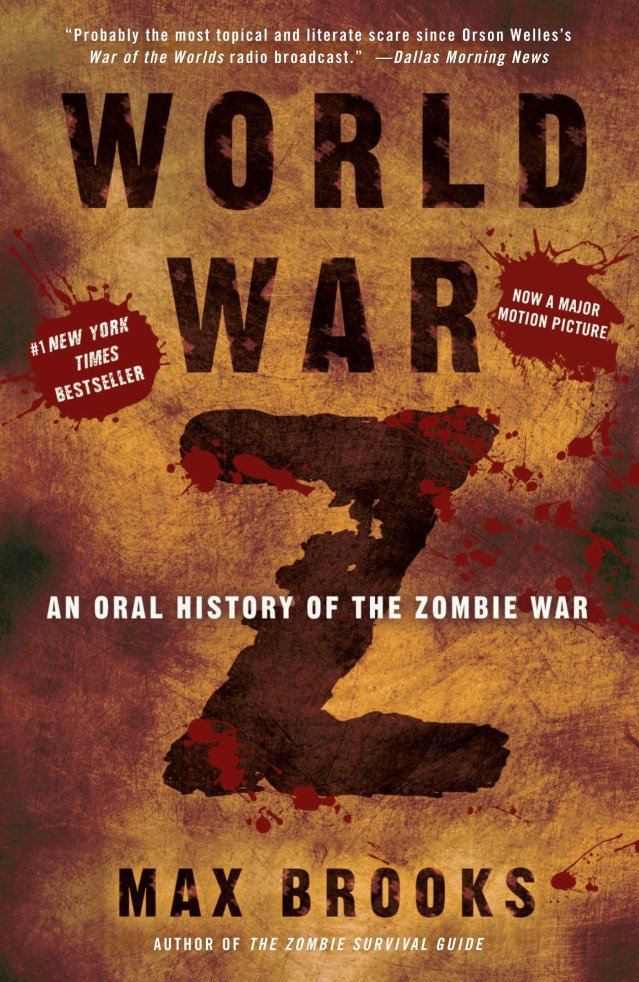
World War Z Cover

Publisher: Random House Audio (Audiobook – 14 May 2013, originally published 12 September 2006)

Series: Standalone

Length: 12 hours and 9 minutes

My Rating: 5 out of 5 stars

Amazon

Welcome back to my Throwback Thursday series, where I republish old reviews, review books I have read before or review older books I have only just had a chance to read.  For my latest Throwback Thursday review I take a look at the zombie horror classic, World War Z by Max Brooks, a truly epic and outstanding read.

One of the biggest novels that I have been meaning to read for ages was the highly regarded zombie novel, World War Z, also known as World War Z: An Oral History of the Zombie War.  Written by Max Brooks as a follow-up to his first book, the non-fictional The Zombie Survival Guide, World War Z is a unique novel that fully examines a zombie apocalypse from multiple perspectives.  I had heard some great things about this novel, and I even enjoyed the movie adaptation when it came out (more on that later).  Unfortunately, I never got a chance to read it and I kind of figured for a while that it might stay in my to-read pile for a while.  However, it moved much higher up my list of books to check out after I read Brooks’s 2020 novel, Devolution, which was one of my favourite novels of 2020 (as well as one of my favourite all-time horror novels).  I had also heard a lot of praise for World War Z‘s awesome audiobook edition, so when my wife and I needed some entertainment during a recent cross-country road trip, this was our first choice.

Plot Synopsis:

The Zombie War came unthinkably close to eradicating humanity. Max Brooks, driven by the urgency of preserving the acid-etched first-hand experiences of the survivors from those apocalyptic years, traveled across the United States of America and throughout the world, from decimated cities that once teemed with upwards of thirty million souls to the most remote and inhospitable areas of the planet. He recorded the testimony of men, women, and sometimes children who came face-to-face with the living, or at least the undead, hell of that dreadful time. World War Z is the result. Never before have we had access to a document that so powerfully conveys the depth of fear and horror, and also the ineradicable spirit of resistance, that gripped human society through the plague years.

Ranging from the now infamous village of New Dachang in the United Federation of China, where the epidemiological trail began with the twelve-year-old Patient Zero, to the unnamed northern forests where untold numbers sought a terrible and temporary refuge in the cold, to the United States of Southern Africa, where the Redeker Plan provided hope for humanity at an unspeakable price, to the west-of-the-Rockies redoubt where the North American tide finally started to turn, this invaluable chronicle reflects the full scope and duration of the Zombie War.

Most of all, the book captures with haunting immediacy the human dimension of this epochal event. Facing the often raw and vivid nature of these personal accounts requires a degree of courage on the part of the reader, but the effort is invaluable because, as Mr. Brooks says in his introduction, “By excluding the human factor, aren’t we risking the kind of personal detachment from history that may, heaven forbid, lead us one day to repeat it? And in the end, isn’t the human factor the only true difference between us and the enemy we now refer to as ‘the living dead’?”

Note: Some of the numerical and factual material contained in this edition was previously published under the auspices of the United Nations Postwar Commission.

Holy hell, that was an exceptional book!  I loved the powerful and expansive narrative contained within World War Z as Brooks attempts to fully encapsulate the entire experience of a zombie apocalypse in impressive detail.  Literally all the good things I heard about this book were true, and I loved his unique and very captivating way of capturing the horrors of this sort of experience, both from the zombies and other humans.  An exceptional and impressively inventive read, World War Z gets an easy five-star read from me.

I cannot get over how awesome and distinctive World War Z was as a concept.  Rather than a traditional novel, Brook’s masterpiece is written as an epistolary novel, written as in-universe oral history anthology of a zombie apocalypse.  The book, which was compiled by this universe’s version of Max Brooks, contained multiple testimonials and interviews, as Brooks seeks out and talks to multiple people who experienced the apocalypse and pulls together their various unique stories.  This book contains around 40 individual stories set out across five chapters which look at the various stages of the zombie war, from its origins all the way up to the postwar ‘new normal’.

At this point I need to make a quick note about the version of World War Z that we checked out.  There are a couple of different World War Z audiobooks out there, but for our trip we listened to the World War Z: The Complete Edition, which combines two separate audiobook adaptations of the novel, and contains all the stories from the original book.  I did look over a paperback edition of World War Z before I started this review, and it looks like our audiobook version covered the full stories well, although I did notice that some of the stories were shortened or missing minor parts.  In addition, the audiobook version did not feature any of the paperback’s footnotes, which contained technical details and notes from the author.  However, I don’t think I lost out on too much of the plot from some of these missing gaps.

I really fell in love with the various individual stories contained with World War Z as Brooks went out of his way to produce the most unique and moving tales that he could.  These are mostly standalone tales, although there are a few interesting crossovers as the book continues, with some character’s mentioning events or supporting figures from other stories in their interviews.  However, as you follow the stories within these five chapters (made up of Warnings, Blame, The Great Panic, Turning the Tide, and Good-Byes), you get a full sense of the entire war, and it quickly comes apparent how cleverly Brooks was crafting everything here.  I personally deeply enjoyed both the individual shorter tales and the much larger connected story of World War Z, and I was deeply impressed with the excellent writing style behind it.  Brooks is a true master of writing deeply personal, character-driven tales of survival, and you swiftly become attached to the various protagonists as they tell their unique stories.  The action within is gruesome, fast-paced and deeply terrifying, and there are multiple over-the-top descriptions of zombie and human violence that will stick with you forever.  This was easily one of the best zombie novels I have read in terms of storytelling and action, and everything about this tale is so damn compelling.

As I mentioned, there are roughly 40 separate stories contained within this anthology, each of which contains its own unique protagonist, supporting characters, settings and unique circumstances.  Naturally, with so many stories you have a bit of a range in terms of storytelling, with some being substantially better than others.  However, I felt that Brooks did a very good job of writing each of these stories extremely well, and there were none that particularly dragged the novel down.  There is a real mixture of narratives here, with particularly gruesome horror stories mixed in with more human-focused narrative, political plotlines, military thrillers, stories that balance on the edge of science fiction, and everything in between.  The spread of these stories works pretty well, with Brooks providing an entertaining mixture of storylines throughout the book so readers aren’t constantly bombarded by tales of horror or tragedy.  Instead, there are often fascinating, humorous and humanising stories thrown in amongst the horror.  This works to make the entire novel flow at a fantastic pace.

While pretty much all these stories are fun and tell some outstanding tales of the zombie apocalypse, there are a few that stood out to me as being a cut above the rest.  I had some early fun with the Stanley MacDonald storyline, which showed an amoral illegal surgeon in Brazil unwittingly transfer a zombie heart into a patient, which led to one of the earliest outbreaks in South America.  The Jesika Hendricks plot showed a brilliant, if very dark, take on ordinary citizens trying to flee the zombies only to experience the other dangers of surviving the winter in a desperate community.  There are several amazing and cynical storylines, such as the Breckinridge Scott and Grover Carison testimonies that showcase the capitalist opportunism that surrounded the initial outbreaks.  I also really liked the South African focused storyline around Paul Redeker, which showed a former Apartheid strategist using his stark and brutal plans to save the country from the undead hordes.  I loved the particularly inventive and clever testimony surrounding the character of Arthur Sinclair Junior, which focuses on how America was reorganised after the initial stages of the war, with the country setting its sights towards industry, construction and warfare, which really highlights the author’s impressive insights into the world.

Two other fantastic World War Z storylines set in Japan focus on two unique individuals, one an “otaku” (a computer-obsessed outsider who tried to live entirely online), and a blind “hibakusha” (a person affected by the atomic bombs used in WWII).  Both characters were outsiders in Japan before the zombie war, but the zombie invasion changed their entire lives and led to them becoming renowned warriors and survivors against all the odds.  These two storylines are extremely compelling, and I loved the way that the author utilised unique subsections of Japanese society and tried to imagine how those sorts of people would survive the zombies.  There was also a really intense storyline, told by Admiral Xu Zhicai, that details a Chinese submarine’s attempt to escape the zombies with their families, which turns into a brilliant, powerful and occasionally disturbing tale of survival, loyalty and family.  I also must mention the Terry Knox testimony that details the actions aboard the International Space Station and the Darnell Hackworth story that looks at the US army’s canine units that helped scout and herd zombies (yay for mini dachshunds, the real heroes of this book).  However, out all the testimonies featured within World War Z, my favourite had to be the ones focussing on soldier Todd Wainio.  Todd battled the zombies at multiple stages of the war, and his multiple entries paint a pretty grim picture but are easily some of the best depictions of the horror of the zombies and the challenges faced by the armed forces.  His first testimony about the army’s initial inability to combat the zombies is very chilling, and it was fascinating to hear about the changes to his training and equipment as the military adapted to fight this new and strange enemy.  I am honestly just scratching the surface of these testimonials here, as pretty much all of them were great in their own way.  However, the ones I mentioned here were my personal favourites, and I had a blast listening to them and seeing how they fit into the wider narrative.

For me, one of the main highlights of World War Z was Brooks’s incredible inventiveness and insights when it came to envisioning a potential world-wide zombie apocalypse.  Thanks to his amazing range of stories, Brooks showcases a vast global catastrophe that impacts everyone no matter where they are.  I loved his depiction of how the apocalypse emerged, and rather than a continuous attack that pretty much destroys everything in a single day, Brooks imagines a gradual catastrophe that is initially ignored and mishandled before it spreads uncontrollably.  This is covered in the early chapters of the book with some substantial skill, and you really get to see how and why everything falls apart, with appropriate zombie violence included.  While there is an understandable focus on America, I found it fascinating to see how Brooks imagined different countries would deal with this crisis, with different culturally informed strategies, and there are even some compelling references to real-life figures (the Nelson Mandela facsimile reacts in a very different way than you’d expect).  The author really dives into all the details of a zombie attack and examines all the pros and cons of various strategies humans could utilise, from fleeing, staying in defensible positions, or fighting back.  There are some brilliant testimonies that cover all of them, and Brooks’s dark depictions of unprepared or overconfident humans failing to understand the threats in front of them and paying the price for it are shocking, bleak and captivating.  Brooks also comes up with some truly unique and clever problems or impacts of the zombies, many of which are referenced or experienced by multiple characters, including floating zombies, marine zombies, feral children who survived without their parents, looters, civil wars, and even crazed humans pretending to be zombies.

These intriguing insights from Brooks’s imagination are further expanded on in the later chapters of the novel, where the author explores how the world order changed because of the zombie war.  Again Brooks dives into multiple countries here, and it was fascinating to witness which countries the author imagines will be destroyed by the zombies and which would thrive.  I really enjoyed his examinations of the way that America needed to reorganise itself and its subsequent battleplans, which were perfectly covered by several of the best characters.  Seeing countries likes Russia, China, Japan and more change in drastic ways a result of this apocalypse was really cool and compelling, especially as the author covers it in such a reasonable and logical manner.  Countries like Cuba and the West Indies thriving due to their isolation was pretty fascinating, and they stood as an interesting contrast to more prominent countries that were disadvantaged or never stood a chance thanks to their socioeconomic issues or unsuitable landscapes.  I loved some of the unique issues that some countries experienced, such as the infested Paris catacombs or the mystery around North Korea, and they leave some intriguing afterthoughts as a result.  Brooks also cleverly examines other unique impacts that the zombies are having on the world, such as extinctions (goodbye whales), changes in global relations, and long-term problems, and I was deeply fascinated and enthralled by all this impressive thinking.  All of this compelling insight and imagination really enhances the stories being told by various characters, especially as they all impact humanity’s potential survival, and I really lost myself in the author’s powerful and impressive vision of a zombie apocalypse.

While World War Z is primarily about survival and the wider impacts of a zombie apocalypse, Brooks also takes the time to cover a few interesting themes.  In particular, he uses this novel about zombies to examine humanity.  While there is a certain overlying theme about the indomitable human spirit and our ability to triumph no matter the odds, there are some very noticeable depictions of the worst parts of human nature.  I found his initial depictions of most people ignoring or ridiculing the slow rising zombie threat to be pretty realistic (keep in mind that this was written 14 years before COVID).  There are also some major critiques about corruption and government incompetence in the face of disaster that I also found to be very intriguing and insightful.  Many of the early chapters that talked about military attempts to fight back had some interesting parallels to the wars in the Middle East, and I really appreciated the author’s clever critiques of these conflicts through the medium of a zombie war.  I felt that Todd’s testimony about the first major battle of the zombie war was a great example of this, as he regales the reader with how politically motivated leadership and incompetence led to a massacre.  All of this added a thought-provoking and entertaining edge to many of the storylines in the novel, especially the earlier testimonies, and I felt that Brooks did an amazing job bringing some of his own insights and critiques into his writing.

As I mentioned a few times above, I listened to the extended audiobook adaptation of this novel, which I personally felt was the absolute best way to enjoy this epic read.  Running at just over 12 hours in length, we absolutely powered through the World War Z audiobook during our road trip, and it served as an excellent entertainment for a long drive.  I often find that having a story read out to you really helps you to absorb everything about the story, and this was particularly true with World War Z.  Not only did the narration allow you to focus on all the details of the testimonials, but the horror elements and action felt a lot more intense, especially when you were dragged into some of the more gruesome scenes.  I also feel that the audiobook version of World War Z had a better flow than the paperback novel.  The testimonials with the audiobook are a lot more separated out, treated as a new chapter each time the narrator changes.  This is very different from the paperback version, which throws multiple testimonials in a quick fire manner, with everything crammed together into the five chapters.  As such, I really felt the audiobook helped to highlight the uniqueness of each testimonial and you really got to focus on each story a lot more.

However, easily the best thing about the World War Z audiobook was the truly impressive voice cast that were featured within.  Brooks, a voice actor himself, recruited a crack team of international actors to fill out his cast, including several A-listers, who give some outstanding and amazing performances.  All these actors really dive into their various roles here, conveying the emotion, fear and insights of their protagonists, and their great voice work definitely enhanced the already cool stories of their characters.  I deeply enjoyed all their voice work throughout the audiobook, and I know that I enjoyed several testimonies even more because of the talented actors voicing them.  This cast is led by Brooks himself, who voices the interviewer, asking all the questions and meeting all the various figures the novel is set around.  Brooks does a really good job here, and his calm, collected interviewing style and additional narration helps to set the scene for the entire novel and moves the other character’s stories along at a great pace.

Aside from Brooks, there are a good 40 or so voice actors featured in the World War Z audiobook, and I was pretty impressed with all their performances.  Some standout early performances include a brief appearance from Nathan Fillion as Canadian soldier Stanley MacDonald; Paul Sorvino, who gives a very fun performances as the sketchy doctor Fernado Oliveira; and Martin Scorsese, who gives an unrepentant portrayal of corrupt businessman Breckinridge Scott.  Other great performances include Kal Penn as Sardar Khan, an Indian soldier who serves an excellent witness to an act of heroism; the late, great David Ogden Stiers, who brings Ukrainian solider Bohdan Taras Kondratiuk to life perfectly as he watches a great act of evil from his government; Common as dog trainer Darnell Hackworth; and Rob Reiner as “The Whacko” a radical politician/former Vice President who shares his strong opinions in a very fun outing.  I really need to highlight some intriguing voice performances from Simon Pegg, who does a pretty good Texan accent in the role of Grover Carlson; and Alfred Molina, whose Australian accent was pretty accurate (a rare talent).

The performances of Masi Oka and Frank Kamai really brought to life the two Japanese characters I mentioned above, as does Ric Young for Chinese Admiral Xu Zhicai’s elaborate testimony.  I also really need to highlight the brilliant work of Alan Alda in this book as he voices pivotal administrator Arthur Sinclair Junior.  Alda, whose voice I have loved since M*A*S*H, perfectly inhabits the role of this intriguing figure, and I loved hearing his narration of how America’s economy was changed.  However, out of all the voice actors in World War Z, my favourite was the always impressive and remarkable Mark Hamill, who voiced standout character Todd Wainio.  Hamill was one of the main reasons why Todd was such a great character, and I loved his outstanding performance as a former ground soldier recounting all the horror of the front line of the zombie war.  There is so much weariness, trauma and cynicism in Hamill’s voice as he narrates Todd’s testimony, and you really feel the character’s resentment and anger.  The way that Hamill describes all the gruesome gore and zombie violence was just so great, and his impressive range and tone helped to really enhance the insanity and horror of the moment.  These voice actors, and the rest of the impressive cast, are extremely epic here, and they turned this production into something extremely impressive.

A quick final note about the World War Z film.  Until I read this book, I really did not appreciate how wildly off-book the film adaptation was.  None of the true magic from the original story appears in the film at all, as they turned it into a generic action flick rather than a clever analysis of how a zombie apocalypse would change the world.  While I did enjoy the World War Z movie on its own, it is a terrible adaptation, with only small elements from the book appearing in the film.  While I can appreciate that this is not the easiest book to turn into a film, they didn’t even try.  I really do hope that someone does a proper adaptation of World War Z at some point, as it frankly deserves a lot better than what it got (perhaps a television series with each episode recreating one of the testimonies).

As you can clearly tell from the massive essay above, I deeply enjoyed World War Z by Max Brooks.  This was easily one of the best zombie novels I have ever read, and it definitely deserves its epic and highly regarded status.  Brooks’s distinctive and brilliant story was just plain amazing and I loved the outstanding combination of smaller testimonies coming together into one connected and thought-provoking tale.  The author cleverly examines every single aspect of a potential zombie apocalypse, and you find yourself not only loving the insane horror elements, but the fascinating political and social impacts that come with such an invasion.  Best enjoyed in the full audiobook format which features so many impressive voice actors, World War Z comes extremely highly recommended and I cannot hype it up enough!

World War Z Cover 2

Amazon