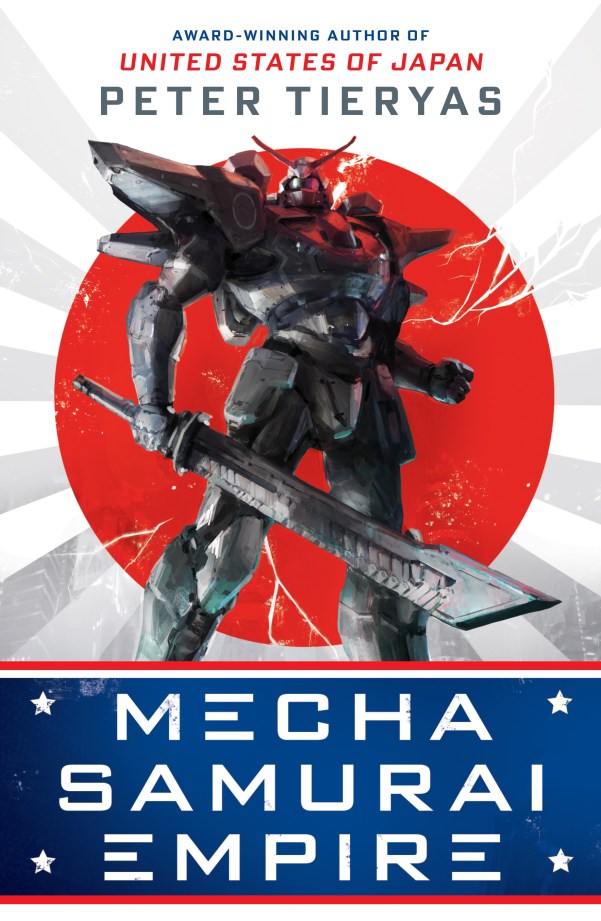
Mecha Samurai Empire by Peter Tieryas

Mecha Samurai Empire Cover

Publisher: Ace

Publication Date – 18 September 2018

Amazon     Book Depository

Prepare to experience one hell of an adventure in this follow-up to Peter Tieryas’s successful United States of Japan, in this incredibly exciting read that can best be described as The Man in the High Castle meets Pacific Rim.

Mecha Samurai Empire is set in an alternate version of our history, in which Japan and the Nazis won World War II.  This change to the outcome of the war was a result of the creation of the mecha, gigantic piloted military machines which gave the Japanese an unparallel advantage against the American forces.  In the aftermath of the war, America was split between Japan and Germany, who created distinct territories.  The western states, including California, became part of the United States of Japan, with its inhabitants swearing fealty to the Emperor.

In the 50 years that followed the end of the war, the United States of Japan entered an age of prosperity and technological advancement, and the development of more advanced mecha made them the most feared and effective military power in the world.  In addition to their military control, Japanese culture and custom has also been incorporated into American society, history has been rewritten and Japan’s wartime atrocities have been whitewashed.

In California, young student Makoto Fujimoto has only one dream: to become a mecha pilot and defend his country against the terrorists who killed his parents.  Unfortunately, Mac lacks the grades or political connections to achieve a placement in the mecha pilot training course at the elite Berkeley Military Academy, and his attempts to pass the special military exam end disastrously.  However, a chance encounter with rebel American forces allows him the opportunity to join up with a civilian mecha security company.  While his new role might not provide him much action, it might ensure his future placement at Berkeley.  But when Mac’s first mission goes horribly wrong, it might take all of his luck and skill just to survive.

Mecha Samurai Empire is an intriguing and exciting new novel from Tieryas and is the second book set in the United States of Japan universe.  Mecha Samurai Empire is not a direct sequel to the first book, United States of Japan, but it does contain a number of the story ideas that Tieryas did explore in his first book, and includes appearances from some of its characters.

As soon as I saw this book in the store and found out it featured mecha battles in an alternate timeline, I knew I was going to have to read it.  Because of the very enticing story concept, I did find myself going into this book with some very high expectations.  After reading it I am very pleased to say that I was not disappointed in the slightest, as I found Mecha Samurai Empire to be an incredibly entertaining book that makes full use of its unique elements and likeable characters to create an addictive story.  If you enjoyed the original United States of Japan, then you will definitely love this latest addition to the universe, that not only continues to highlight Tieryas’s marvellous alternate world, but which ramps the incredible mecha action.

The mecha are definitely the stars of this book, and the author spends a significant amount of time focusing on them and highlighting their importance in this new world.  Most readers of this book are going to be looking for some electrifying mecha combat, and Tieryas delivers this in abundance.  There is a huge amount of different types of mecha action, including training simulations, friendly competitions, small-scale battles between smaller mecha, larger battles between gigantic mechas and Nazi bimorphs (organic mechas), and there is even a large elimination tournament between various mecha pilots.  I’m a sucker for a good tournament, but this had to be one of my favourite extended sequences in the entire book.  Not only is there some incredible action during these tournament battles but the inclusion of multiple pilots allows the author to show off the various mecha battle techniques and fight styles as the competitors go at each other with a variety of close-combat weapons.  I also really enjoyed an earlier sequence when the protagonist finds himself piloting a small crab mecha by himself and must overcome several cannibalised mecha piloted by fanatical American rebels.  During these scenes Mac has to use all his training and skills, as well as the limited resources available to him in order to beat a larger force of opponents, and it is a very gripping scene to read.  Aside from the awesome action scenes, Tieryas has also chosen to present the reader with a much more in-depth view of the mecha in his universe.  The book contains the history of the mecha; the required training, simulations and the teamwork; discussion about famous mecha pilots; examinations of tactics and battle plans; mecha research; and even a look at the cultural impact of the mecha and the reverence shown to the pilots.  All of this additional information is deeply fascinating and really adds a lot to the book as the readers are shown they are more than just weapons.  If you’ve ever enjoyed the idea of mecha combat before, this is definitely the book for you.

While the mecha battles are one of this book’s best features, readers are also treated to an intriguing and memorable alternate history setting where the Axis powers won World War II and ended up taking control of the United States of America.  Tieryas has done an absolutely amazing job of creating a version of America that has been under Japanese control for 50 years, and it is fascinating to see how the author imagines this world would look.  In order to show the reader how the world came to be this way, Tieryas comes up with a clever alternate history of World War II and the years that followed it.  For example, Tieryas explores how a different strategy during the war could lead to a different outcome.  In this case, Japan joined the war by attacking Russia with the Nazis rather than America in the Pacific.  There is also some clever mirroring of real-life history, as the two main victorious world powers, Japan and Germany, end up in a cold war after splitting their conquered territory between them.

In addition to the changes in histories, Tieryas has also been quite inventive when it comes to the impact that a Japanese conquest would have on the culture of America.  While the Japanese influence on these territories in the book is quite noticeable, the author has come up with some captivating combinations between the two distinctive cultures.  I personally though that the way Tieryas continued to provide the reader with a ton of detailed descriptions of the food his characters were having was a very nice touch, as this showcased just how prominent Japanese food is in occupied America, while also featuring some curious examples of fusion cuisine.  It’s also interesting to see how much more advanced certain technology appears to be in this universe, a fact which can be attributed to the research into mecha technology and the fact that Japanese and Nazi scientists were able to operate with the world’s resources, including human test subjects, and a completely unchecked lack of morals.  There is also a dystopian element around this whole country, as there are a range of elements that show how controlling and despotic the United States of Japan government really is.  This is a continuation of the storyline from United States of Japan, and Tieryas continues to explore the nation’s hidden World War II war crimes, the rewriting of history, the use of propaganda, nationwide indoctrination, installed national pride and the fact that the characters are living in thinly disguised police state.  All of this serves to be an amazing background to this book that is both intriguing to explore and adds to the dramatic actions of the characters.

The story of Mecha Samurai Empire is strongly driven by the character development of the narrator and the other protagonists as they attempt to find their place in the world.  The main character and narrator, Mac, is an interesting focal character as the story is primarily set around his attempts to navigate this world and achieve his dream of becoming a mecha pilot.  Due to his past and the tragedy he experiences, Mac has a lot of self-doubt and other emotional baggage.  It is moving to see him getting through these barriers in order to become the hero his friends and country need.  I also got really attached to several of the supporting characters, especially Nori, Chieko, Kujira and Kazu, who we get to see develop in a similar manner to Mac.  Each of these characters has some distinctive character traits and motivations, and it’s cool to see how their personalities affect their mecha combat style.  It’s also intriguing to see the various levels of indoctrination and love for their country that these characters have, especially when they start to experience the darker side of the country and at times infuriating military commanders.  Another superb subplot is the relationship between Mac and Griselda, an exchange student from Nazi Germany.  Despite being old friends, their relationship is constantly criticised or forbidden by the other Japanese or German characters, and the constant us or them attitude is an accurate mirror of similar relationships throughout history.  It was a real treat to watch these characters develop throughout the course of the book, and the final fates of some these characters may leave readers reeling.

Award-winning author Peter Tieryas once again delivers another addictive and captivating story set in an alternate history version of the United States of America.  Making full use of this clever and creative setting, Tieryas packs his story full of pulse-pounding action as his characters pilot giant mecha in a variety of well-written and exciting battles.  With some real heart and emotional depth, Mecha Samurai Empire is so much more than its fun and memorable concept and comes highly recommended for all readers.

My Rating:

Four and a half stars

Amazon     Book Depository

The Honourable Thief by Meaghan Wilson Anastasios

The Honourable Thief Cover.png

Publisher: Macmillan Australia

Publication date – 31 July 2018

Amazon     Book Depository

In her first solo novel, Australian Meaghan Anastasios has produced a deeply compelling historical drama that combines a thriller storyline with an archaeological investigation into one fun and invigorating narrative.

In 1955, world-renowned archaeologist and war hero Benedict Hitchens has been living a life of academic exile in Istanbul.  His promising archaeological career and professional reputation were destroyed after a chance encounter with the mysterious Eris, who held a horde of ancient treasures that validated the legends of the Iliad.  When Eris and her treasures suddenly disappear, Ben’s attempts to find her result in suspicion from the authorities and disbelief from the world at large.  His only tangible proof of the encounter is a small tablet that hints at the existence of Achilles, Ben’s archaeological obsession.

Now, Ben embarks on an ambitious plan to flush out the people responsible for Eris’s disappearance, hoping to bring her to justice and salvage his life and reputation.  The clues that he uncovers take him on a quest to find the tomb of Achilles, travelling through Greece, London and Turkey in order to locate one of the world’s greatest treasures.  However, a shadowy group is manipulating Ben at every turn.  Can Ben find the Achilles’s tomb before the ghosts of his past catch up with him?

Despite this being her first solo book, Anastasios is already a successful author, having previously teamed up with her husband to produce the historical drama The Water Diviner, which was adapted into a movie starring Russell Crowe.  While this book does not appear to be connected to Anastiasios’s previous work, both stories are primarily set in Turkey and focus on key events in the country’s history.  The Honourable Thief does contain a fun little callback to her other novel when its main character is at one point nicknamed ‘the Water Diviner’ due to his uncanny ability to find archaeological material.

The overall story that Anastasios presents with The Honourable Thief is a fantastic narrative that combines mystery and suspense aspects, great historical fiction elements, exploration of Greece and Turkey, and a whole lot of archaeology.  There is a great focus on the impact of World War II on Greece, especially Crete, as well as a detailed examination of Turkish history and culture.  Having the protagonist work on uncovering both an archaeological investigation and a conspiracy around missing artefacts is an interesting combination that creates a very interesting story.  The ties to the stories of the Iliad as the protagonist examines the possibility of finding the tomb of Achilles are fascinating and will appeal to fans of the classics.

The author has split The Honourable Thief into two parts and three separate timelines.  Part I of the book only briefly touches on the storyline set in 1955, and instead focuses on the events in the protagonist’s life that led up to the latest timeline.  One of these storylines looks at Ben’s early life during the 1930s and 1940s, including his experiences during World War II.  The second storyline is set in the early 1950s and focuses on the events that led up to Ben losing his reputation and the beginnings of his self-destructive life in Istanbul.  Part II of the book mostly contains the 1955 storyline, and follows Ben’s quest to clear his name.

This split into three distinct storylines is a great way to highlight The Honourable Thief’s intricate narrative, and it was interesting to focus on the earlier timelines in the first half of the book.  This also allows the main plot to continue almost uninterrupted in the second half of the book, ensuring that the reader can completely focus on the intense and electrifying adventure set around the protagonist’s hunt for answers.  This formatting decision was a great change of pace from other novels that slowly reveal their protagonist’s past through the course of the entire story.

While the vast majority of The Honourable Thief is told from the protagonist’s point of view, some very short chapters that buck this trend have been added into Part II of the book.  These smaller entries are inserted before the longer chapters that focus on the protagonist and contain brief, shadowy conversations between the story’s villains.  During these chapters, these hidden characters discuss and analyse the actions of Ben and work out ways to manipulate him further.  The identities of these conspirators are not revealed within these chapters, which builds intrigue as the reader tries to work out who they are.  These short chapters are a terrific addition to the book, as they provide the story with some short, but stimulating, breaks in the narrative.  It also adds a completely new perspective to the story and allows the reader insight into the machinations of the book’s antagonists.

Anastasios has created an interesting and memorable protagonist for her excellent story.  When Benedict Hitchens is introduced, he is a disgraced and self-destructive character who does not elicit a great deal of sympathy from the audience.  However, the author’s clever use of the separate storylines allows the reader to view his backstory, which explores his obsession with finding Eris and Achilles.  Both earlier timelines are vital in explaining the character’s motives and emotional baggage, turning Ben into a tragic and sympathetic character.  It is also fascinating to see the changes that have happened to the character during the various timelines.  For example, his experiences change his entire outlook on life and make him more likely to engage in reckless actions.  It also changes his style of archaeology as he goes from the academically accepted practice of carefully digging trenches and laboriously recording every single detail, to a more reckless technique reminiscent of a tomb raider like Indiana Jones.  Anastasios has included an interesting character flaw for her protagonist: despite him being a brilliant archaeologist, he keeps falling for a series of blindingly obvious manipulations, which becomes quite frustrating for the reader to watch.

The reader may find it is possible to predict many of the book’s various twists well in advance, and that lessens the impact of the story.  The eventual reveal of who the antagonists are also was not too uprising.  However, there is one significant, if not slightly ridiculous, twist in the last few pages of the book that nobody is likely to see coming.  While these negative aspects are slightly detrimental to the story, I felt that the all the book’s other amazing elements more than make up for it and turn The Honourable Thief into a captivating and highly enjoyable read.

This fantastic novel is a superb first solo outing from Anastasios, who has crafted an excellent story of betrayal, mystery and adventure, all bound together with archaeology and history.  Cleverly utilising three separate timelines into one compelling narrative, The Honourable Thief is a powerful and distinctive read that will appeal to a huge range of readers.

My Rating:

Four stars

Amazon     Book Depository

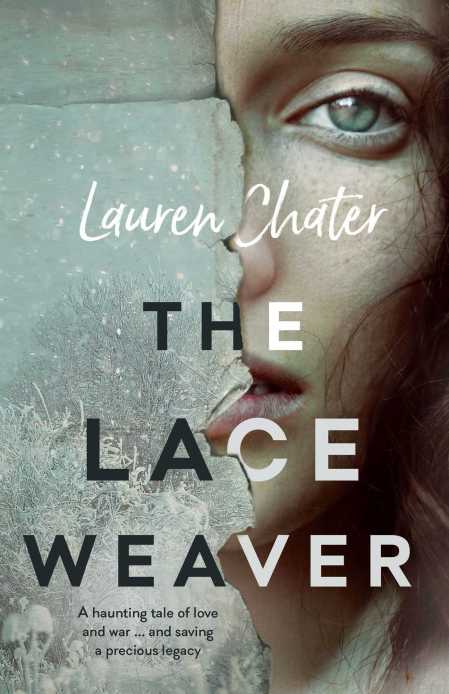
The Lace Weaver by Lauren Chater

The Lace Weaver Cover.jpg

Publisher: Simon & Schuster

Publication Date – 19 March 2018

Amazon     Book Depository

Love, war, suffering, oppression, hope and lace all come together in this emotionally charged debut from Australian author Lauren Chater.

It has been two years since the outbreak of World War II.  Following their respective expansions, Nazi Germany and the USSR now control much of Europe between them.  The small country of Estonia, located on the border of the USSR, has been occupied by the Soviets and is now controlled by Stalin’s Red Army, who have brutally installed their communist ideals.  Now all of Estonia’s resources are controlled by the Soviets and any signs of opposition are brutally cracked down on.

In the middle of this horrific occupation lives Katarina, a young Estonian woman whose family survives because their farm produces food for the occupying forces.  While the Soviets are attempting to control all parts of Estonian life, Katarina works to preserve her family’s culture through their lace shawls, which contain intricate and unique patterns and stories.  She must also deal with her feelings for her old friend Oskar, who is leading the revolution against the Soviets.

At the same time in Moscow, another young woman, Lydia, lives an ostensible life of privilege, but is really living in a gilded cage, controlled by her ruthless guardian.  Fleeing to Estonia, the land of her mother, Lydia attempts to find sanctuary but finds out just how far her captivity truly extends.

When a Soviet crackdown forces Katarina and Lydia together, these two women must find a way to survive the horrors of the occupation.  As they become part of Oskar’s resistance against the Soviets, Katarina and Lydia must learn to work together, even when Lydia falls for Katarina’s brother Jakob.  But their situation is about to get even worse, with the forces of the Third Reich set to invade.

This is fantastic first book from Chater, who has woven together an amazing tale filled with great characters and an outstanding and underused historical location.  This book is also an extraordinary piece of dramatic literature.  All of the main characters experience significant loss, heartache and disappointment as they attempt to survive the most turbulent time in our world’s history.  These heartbreaking losses of friends, family and other loved ones draw the reader in, while Chater’s fantastic writing makes them feel the character’s loss and grief as she highlights the brutal reality of those caught in the middle of war.

Perhaps the most memorable part of The Lace Weaver is the story’s central setting of Estonia.  During World War II, Estonia was in the unfortunate position of being one of the countries that fell between the Soviet Union and Nazi Germany.  Estonia was a significant theatre of war where many horrors occurred, and yet very few novels focus on this part of World War II.  Chater’s decision to focus on this underused period of war history is intriguing, and she has done a commendable job of calling attention to the horrors experienced by the Estonians during the time that they were occupied by two of the world’s most brutal regimes.

Estonia was brutally occupied by the Soviets in 1940, and a large portion of this book is set during this period.  Chater does an amazing job of describing this brutal period through the eyes of her Estonian characters.  There is a serious sense of dread from these characters as they anticipate what horrible crimes might occur next.  The descriptions of the Soviet soldiers’ brutality and contempt for the Estonians is at times harrowing, and there is one sequence describing a mass deportation that will stick in the reader’s mind.  While the scenes describing the occupation of the Soviets are pretty distressing, one of the most disturbing parts of this story is that for much of the book many of the characters, especially Oskar and Jakob, believe that their salvation and freedom could be granted to them by the Nazis.  Reading this can prove to be disquieting as you are forced to watch the characters help the Nazis occupy their country.  The characters working out what they have let into their country is chilling to behold, and by this point readers will be desperate to see what happens next in Estonia.

In addition to focusing on the terrible occupations Estonia suffered during the war, The Lace Weaver also contains an insightful look into some aspects of Estonian culture.  This is mainly shown through the use of the lace shawls, which are described as an important part of Estonian culture and history.  Chater spends a large part of the book investigating these shawls, and the reader soon appreciates their importance.  Katarina spends a significant part of her narration describing the significance of these shawls to her family, and her interactions allow the readers to see how vital they were to her social and familiar circles.  These shawls are also very important to the story as they draw many of the characters together, especially the two main characters, Katarina and Lydia.  The scenes in which the shawls are being worked can also be seen as an indicator of the periods when the characters are managing to survive and have some hope for the future, and are to be cherished, especially as the reader grows to care for these characters.

There are some great characters within The Lace Weaver that readers will find themselves deeply invested in.  Narration of this story is split evenly between the two main characters, Katarina and Lydia, both of whom have unique stories to tell.  Lydia’s transformation from a sheltered girl in Russia to a hardboiled Estonian survivor is particularly gripping, and revelations about who she actually is offer big thrills in the first part of the book and up her personal stakes.  Katarina’s story of survival and her attempts to keep the cultural ways of life she inherited from her beloved grandmother are also heartfelt and compelling.  The unique stories that these two characters have are deeply absorbing and emotional, and Chater does a masterful job of eventually combining these two stories together into one extraordinary and captivating tale.

The Lace Weaver is a deep and emotional wartime drama that makes full use of its dark setting, rare historical fiction location and amazing characters.  Australian author Lauren Chater has produced a very impressive first book and readers will fall in love with this fantastic tale.

My Rating:

Four stars

Amazon     Book Depository

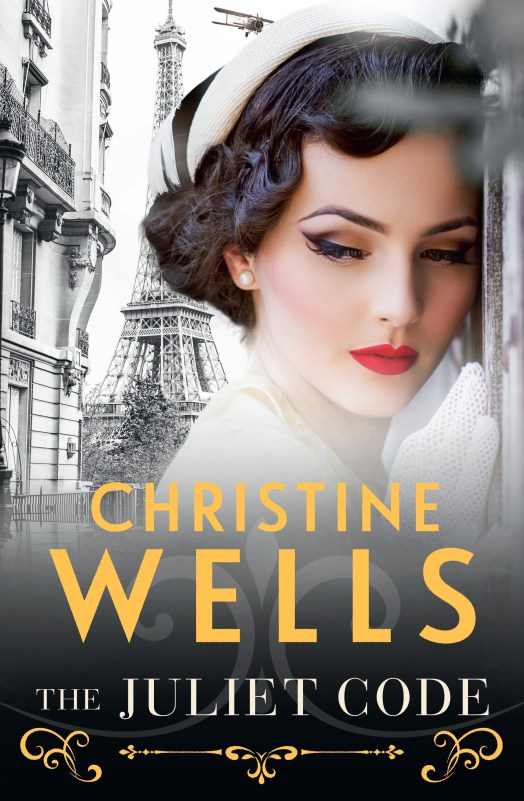
The Juliet Code by Christine Wells

The Juliet Code Cover

Publisher: Michael Joseph

Publication Date – 30 April 2018

Amazon     Book Depository

From acclaimed Australian author Christine Wells comes this touching and memorable tale of love, captivity and endurance in the darkest of times.

During World War II, Juliet Barnard was a British agent working for the Special Operations Executive.  A skilled wireless operator, she was one of the few female agents that were dropped into occupied France to meet contacts and pass intelligence back to the Allies.  While initially successful, she was only active in France for a short time before the Nazis captured her.  Trapped in a prison that specialised in interrogating captured spies and infiltrators at Paris’s Avenue Foch, Juliet endured torture, drugging and manipulation and came out of the prison a different person.

Now, two years after the end of the war, Juliet is still recovering from her ordeal and trying to continue a relationship with Felix, the man she fell in love with during her training.  Claiming to be suffering from memory loss, Juliet has managed to avoid providing any details about her time at Avenue Foch or about the man who held her captive, Sturmbannführer Strasser.  Finding Strasser is the last thing Juliet wants to happen, because he knows a dark secret about Juliet – a secret she would kill to protect.  However, when Juliet meets Mac, an SAS officer turned Nazi hunter whose sister served in the war with Juliet, her guilt compels her to return to Paris to help him locate Strasser.

This is the third book from Wells, who has previously written two English-based historical stories that feature a strong, female protagonist.  The Juliet Code is the second book from Wells that focuses on British spy activities during World War II; her previous novel, The Traitor’s Girl, focused on a World War II MI5 operative.  The Juliet Code is another excellent and intense romp into the history of World War II, and Wells has done an amazing job of creating this unique and emotional story.  This book is a combination of a great dramatic story and a two-stage historical spy thriller wrapped up with a poignant romantic subplot.

Wells has injected considerable drama and emotion into her story, especially through her main character, Juliet, who goes through substantial emotional changes throughout the book.  Before she is dropped into France, Juliet is portrayed as a shy girl, unsure of her abilities as a potential spy but eager to do her duty to her country.  After the war she is more hardened individual who is suffering from guilt, both due to being one of the few agents to survive capture and because of her own actions during the war.  These changes in the character are made obvious to the reader, not just because of Wells’s great writing ability but also because she switches between the mid-war and post-war scenes multiple times.  Wells slowly reveals the main character’s wartime secret, which is a central part of the plot.  While there are some hints to what this secret is early in the book, the full reveal is not done until later in the story, and makes use of a moving and artfully constructed confession scene.

The Juliet Code is set in the 1940s, and Wells has broken the story up into two distinct periods.  The first period starts in 1943 and continues for the rest of the war, examining the main character’s training, her infiltration of occupied France and her time as a captive at Avenue Foch.  The parts of the book set during the war are very intriguing and are some of the most appealing scenes from a historical fiction viewpoint.  The sections that feature Juliet training and actively spying in France were some of my favourite parts of the plot, and I loved reading Wells’s descriptions about the French resistance networks, the British covert activities, their espionage techniques and the counteroperations the Nazis were undertaking to catch the operatives active in France.  There are also some significant descriptions of how the British wireless transmitters functioned and British coding techniques.  These very technical parts of the book contain some fascinating information while also providing the reader with a good understanding of this technology and what the operators were doing with it.  There are also a number of scenes that follow Juliet after she is captured and held as an enemy spy in Paris.  These parts of the book are, by necessity, darker in nature, depicting how these spies, especially female operatives, were treated during this period.  There are also thorough descriptions of the historical locations used as prisons in Paris.

The second part of the book is set in 1947 and features Juliet and her companions revisiting the sites of Juliet’s captivity and attempting to hunt down her jailer.  This part of the book comes across as more of a traditional spy thriller, and contains some vivid descriptions of post-war France.  There are some examinations of how the Allies and the Soviets were attempting to capture or recruit former members of the Nazi regime, as well as some interesting looks into the post-war espionage that was occurring at this time.  Wells also revisits characters and locations encountered by the protagonist during the war, and these scenes are used to provide clues to locate Strasser while also providing additional hints about what happened to Juliet during her captivity.

Among the defining features of The Juliet Code are the realistic and detailed characters that the reader gets to enjoy.  They feel so realistic because these characters were inspired by real historical figures who served in similar capacities during the war.  This touch of realism adds a lot to the book and serves as an inspirational reminder of those unsung heroes of British espionage.  These fictional facsimiles do interact with a few real historical figures within the book, and readers will be captivated as they find out which of these unique wartime stories are actually historical fact.

Wells has included an enticing romantic subplot between the characters of Juliet and Felix.  Readers will be able to feel the affection that these two characters have for each other, as well as the loss they experience as a result of Juliet’s capture.  Their relationship is also masterfully woven into the main story, and elements of their romance become key plot points, such as some personal romantic poems that actually contain transmitter codes.  Thankfully, Wells decided not to invest too much time in a love triangle between Juliet, Felix and Mac, although she does include the initial and somewhat entertaining jealousy you would come to expect from this situation.  Overall, the romantic subplot is both absorbing and nicely subtle, as it does not overwhelm the rest of the story.

Australian author Christine Wells once again delivers an elegant piece of literature that makes full use of its well-paced dramatic story and an utterly stimulating historical setting and content.  Fans of historical fiction will love The Juliet Code’s dive into World War II spycraft and counterespionage, as well as the excellent and electrifying thriller that blazes through post-war France.  This is a phenomenal novel that sticks in the mind and will appeal to wide array of readers.

My Rating:

Four stars

Amazon     Book Depository

Nucleus by Rory Clements

Nucleus Cover.jpg

Publisher: Zaffre

Australian Publication Date – 1 March 2018

World Publication Date – 25 January 2018

Amazon     Book Depository

In June 1939, war is on the horizon.  While many in England still hope to avoid another conflict with the Germans, it is becoming clearer that war may be unavoidable.  Nazi Germany is aggressively moving throughout Europe, while back in England the IRA has embarked on a new bombing campaign.

While the world watches and waits, many governments have turned their focus towards a dangerous new arms race.  Advances in nuclear fission have allowed scientists to envision a potentially game-changing weapon: an atomic bomb.  Many believe that the research at Cambridge’s Cavendish Laboratory will lead to the creation of the first bomb, and the laboratory is now the subject of intense scrutiny.

While holidaying in America, Cambridge professor Tom Wilde is summoned to the White House to meet President Roosevelt.  The president requests that Wilde use his position to spy on the research at Cavendish and report their progress to the Americans.  Upon his return to Cambridge, Wilde begins to suspects that Nazi spies may have infiltrated the laboratory when one of the Cavendish researchers is brutally murdered.  As he investigates further, he learns that the murder may be connected to a wealthy family with Nazi sympathies and the famous movie star sister of one of his colleagues.  Wilde is forced into a web of spies and assassins as he tries to discover what terrible plans the Nazis have for Cavendish.  What does his long-lost cousin have to do with this plot, and how do these attacks tie into a kidnapped child that Wilde’s girlfriend, Lydia, is searching for in Germany?

Nucleus is a pulse-pounding thriller that combines mysterious events and spycraft with a dark historical background and a grounding in nuclear physics.  This is the second book in Clements’ Tom Wilde series, and the follow-up novel to his 2017 bestseller, Corpus, which was a stunning historical thriller that featured a plot against the royal family.

Clements has a lot of experience with historical thrillers, having previously examined espionage during the Elizabethan era in his acclaimed John Shakespeare series.  In Nucleus, Clements combines several intriguing storylines into one compelling plot that will draw the reader into the book’s many mysteries.  With a series of hidden adversaries, twisting character loyalties and several shocking conclusions, Clements tells a first-rate thriller that combines well with his story’s historical setting and locations.

Clements uses his latest book to once again explore the period of calm immediately before World War II.  Clements does a masterful job of depicting the dread and apprehension filling England as the whole country found itself drawing closer and closer to war.  This bleak and foreboding historical period is the perfect setting for Clements’ thriller, especially as the characters realise the major repercussions their actions could have on the world.

The historical locations used throughout Nucleus are an essential part of the book and add a lot to the story.  Clements once again returns to the Cambridge backdrop that was one of the defining features of Corpus.  The academic background is used less during this book, but the reader is compensated by being able to see the famous Cavendish Laboratory.  There is also a harrowing journey into Nazi Germany for one of the characters, Lydia, which Clements uses to full effect, highlighting the terror many German citizens felt during that time and their attempts to flee the country before it was too late.  Another highlight of the scenes set in Nazi Germany was the interesting focus on some of the groups attempting to get refugees out of the country, such as the Quakers and the staff at the British Embassy.  The reader also experiences Lydia’s palpable dread as she comes into direct contact with the dark mechanisms of the Nazi machine, and these scenes contain an amazing and appropriate level of suspense.

Due to it being a major plot point for Nucleus, Clements spends a significant amount of time focusing on the state of nuclear science in the 1930s.  Clements does a good job of explaining the science in some detail without it getting too complicated.  As a result, the reader receives a basic understanding of nuclear science of the time, at least enough to appreciate what the spies and nuclear physicist characters within the book are up to and are attempting to achieve.  This is a good balance to have and it allows the reader to experience the fascinating early history of nuclear fission and the early arms race for the atomic bomb.

By infusing his excellent storytelling with a dark historical period, Clements once again delivers with an exhilarating historical thriller.  Featuring a gritty and captivating storyline and making full use of its excellent historical setting, Nucleus is guaranteed to blow you away.

My Rating:

Four and a half stars

Amazon     Book Depository