
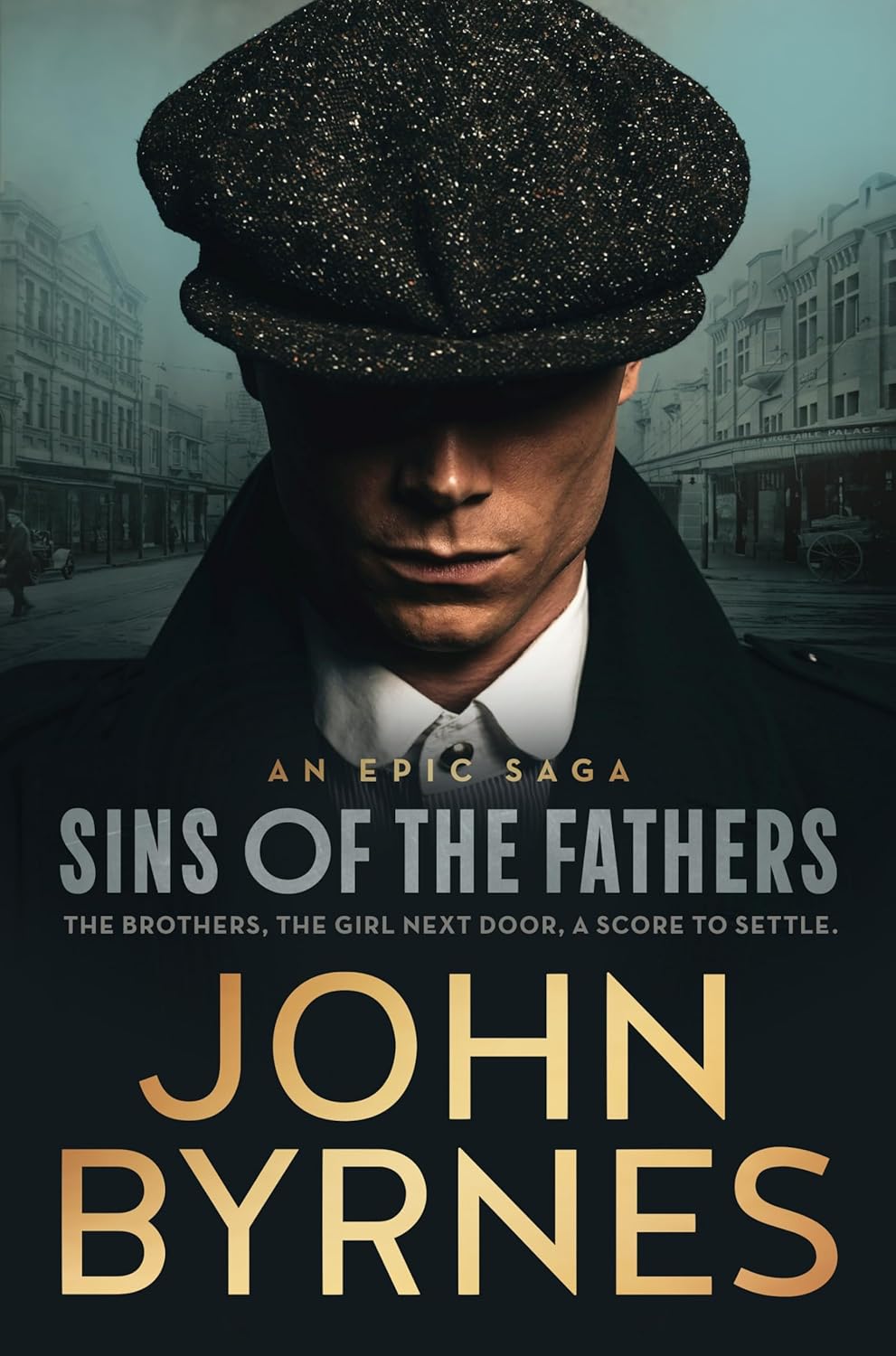
Sins of the Fathers by John Byrnes

Publisher: Macmillan (Trade Paperback – 1 July 2025)

Series: Standalone

Length: 399 pages

My Rating: 4.5 out of 5 stars

Amazon

A rising author in the field of Australian drama and historical fiction, John Byrnes, had a very interesting book back in 2025 that I have been meaning to review for a while, Sins of the Fathers.

Byrnes is a relatively new Australian author whose work I have been rather enjoying in recent years.  Byrnes career started back in 2023 with his cool thriller Headland, a compelling modern crime fiction novel with some interesting dramatic twists around it.  Headland ended up being one of my favourite debuts of 2023, and I made sure to read his next novel, the historical saga The Youngest Son (one of my favourite Australian novels of 2024).  It looks like Byrnes intends to continue his focus on Australian historical epics going forward, as his third book was the intriguing and exciting novel from last year, Sins of the Fathers, which followed several compelling characters through several major events of the 1910s.

Plot Synopsis:

In 1910s Australia, the sins of the fathers leave behind a bloody legacy in this historical epic saga, perfect for fans of Peaky Blinders.

Two fathers, their sons and the feud that binds them.

In the early years of the twentieth century, Billy and Tommy Smith are growing up on the mean streets of Sydney’s Millers Point. It’s a hungry, hard-scrabble life, made even worse when their violent father returns home from a long stint in prison.

In the wealthy eastern suburbs, Charles Davies is living an entirely different life, the beneficiary of his father’s business acumen and insatiable, unyielding greed. Charles wants for nothing – except perhaps his father’s approval.

When an incident on The Point leads to the deaths of both Charles’ and the Smith boys’ fathers, a hatred is born that will follow the three men through their lives. In an epic saga taking them from Sydney to Gallipoli and the killing fields of France in World War I, to the melting pot of Darwin and the opal fields at Lightning Ridge, the men’s paths all lead to one final revenge.

But in the end, what price must be paid for the sins of the fathers?

Sins of the Fathers was a very good historical fiction read that thrusts several damaged youths into the grinder of early 20th century Australian history.  Starting off strong, the book primarily begins in early 1910, when violent father of Billy and Tommy Smith is released from prison back into their already hard lives.  As the Smith children attempt to survive in harsh poverty, their lives take a dangerous spin when their father is murdered, and the evidence points to crooked businessman Arthur Davies, who soon also dies.  This leads to a life-long, mostly one-sided feud between the Smiths and the spoiled son of Davies, Charles, who is determined to get revenge for the slights against him.  This revenge plot also extends to the Smith’s young neighbour Angeline, who serves as a love interest to Tommy throughout the book.

After these early chapters, the plot of Sins of the Fathers keeps jumping ahead every couple of years, with the protagonists examining some key historical events that impacted Sydney in the early 1910s.  Naturally, this leads to the three male characters of the book getting enlisted in the Australian Army for World War I, with the Smiths and Charles Davies eventually ending up on the same battlefield, with disastrous results for all involved.  At the same time, Angeline remains in Sydney and serves as an interesting fourth point-of-view character, as she uses her business acumen to survive and gain status.  Back in Europe, the three male characters are eventually separated and start making their own way in the world in their own standalone adventures.  The exception is Davies, who continues to attempt to get revenge and gain money by attacking his apparent rivals.  Byres explores some interesting different historical locales and periods throughout the second half of Sins of the Fathers, with some intense and exciting adventures befalling the cast.  Everything eventually leads up to all the characters reuniting towards the end of the book, as the protagonists attempt to overcome one last plot from Davies.  The end result is a very compelling and intense standalone narrative, that drags you in with its fun characters and cool historical content.

At this point Byrnes has settled well into the historical fiction groove, producing a complex and layered narrative across several entertaining characters.  Making good use of a split between four key characters, Byrnes did an excellent job exploring the turbulent 1910s in Sins of the Fathers, with some great dives into key elements of early Australia and World War I.  This exploration of this crucial decade served as a captivating backdrop to the personal narratives of the four main characters, and the mixture of personalities and their separate struggles allows for a highly enjoyable read.

The resulting narrative is loaded with action, adventure and some excellent examples of personal determination, which allows for a very fast-paced read.  I also loved the thrilling intrigue that surrounds the book’s antagonist, Charles Davies, who is a devious and entertaining brat incapable of taking responsibility for his actions.  Byrnes did such a good job creating another repellent villain here with Davies, and watching his various schemes against the protagonists and others really amps up the stakes of the book as the reader is eager to see him fail.  I frankly had the most fun with Davies’s various chapters, and it was an entertaining foil to perspectives of the more likeable protagonists.  Throw in some interesting twists about the death of the Smith’s father and the resulting rivalry between them and Davies, and the entirety of Sins of the Fathers plot really comes together into a clever and deeply personal historical journey.

Overall, I was quite impressed with John Byrnes’s second dive into the historical fiction genre, and Sins of the Fathers proved to be a strong and highly exciting piece of Australian fiction that you could really sink your teeth into.  An addictive epic that expertly showcased some key Australian moments and locations in the 1910s, Sins of the Fathers was a great read, and I am excited for whatever historical adventure Byrnes comes up with next.
Amazon

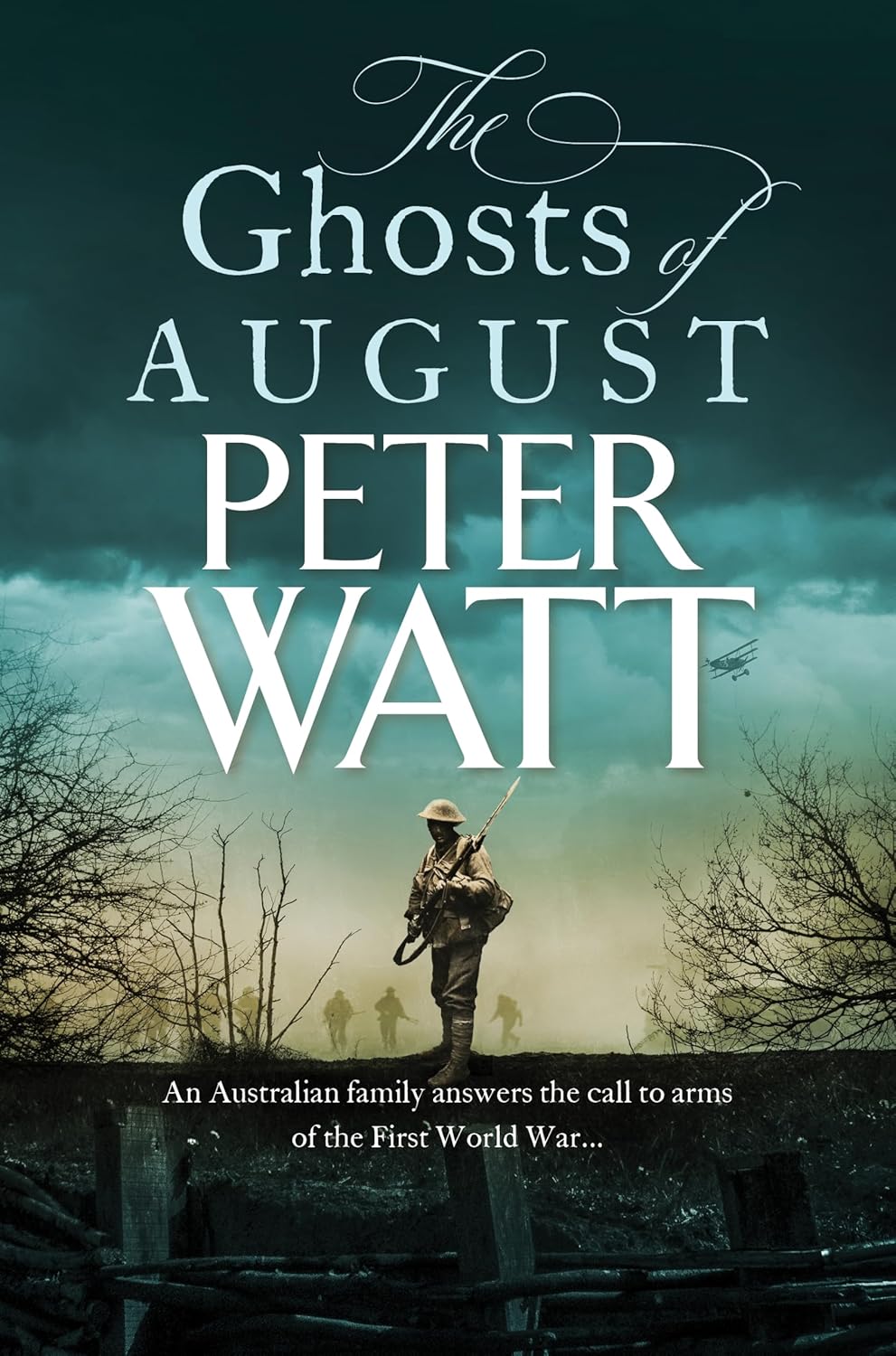
The Ghosts of August by Peter Watt

Publisher: Macmillan Australia (Trade Paperback – 29 October 2024)

Series: Colonial series – Book Six

Length: 401 pages

My Rating: 4.25 out of 5 stars

Amazon

Australia’s master of historical fiction, Peter Watt, continues to shine with the latest exciting book in his Colonial series, The Ghosts of August.

Watt is a fantastic author who has a particular skill at writing fast-paced adventure novels based around Australia’s compelling and complex history.  The author of several intriguing multigenerational series, Watt’s current body of work is the Colonial series, which started back in 2018 with The Queen’s Colonial.  An awesome book that followed a young Australian farmer, Ian Steele, who journeys to England and through a series of shenanigans gets commissioned in the British army as a captain, gaining the moniker the Queen’s Colonial.  I had a lot of fun with this first book, and Watt has kept the series going strong ever since.  The next two books in the series, The Queen’s Tiger and The Queen’s Captain, followed Ian through several mid-19th century wars, while also encountering love, loss, and dark intrigues.  The third and fourth novels, The Colonial’s Son and Call of Empire, featured a time skip to the late 19th century, where a mostly retired Ian had taken a step back from adventuring while his two sons, Josiah and Samuel, became the main characters.  With the death of Ian at the end of Call of Empire, the series entered a new phase as Watt again skipped ahead with The Ghosts of August.  Set around the turbulent events of World War I, The Ghosts of August was another fantastic entry in the series that continued to follow all the adventures of the Steele family.

The Queen’s Colonial, Ian Steele, is dead, but his family still serve the crown, especially as the threat of war spills across the globe. Ian’s oldest son, Josiah, is now head of the Steele family, and, like his father before him, he has two very different sons to worry about.  His oldest son, David, is a canny and cultured young man with the world at his feet, while his youngest son Ben is a wild child, constantly finding trouble and solving it with his fists.  However, despite their differences, both David and Ben are about to be caught up in the chaos of war.

Ben, sent away on a secret mission about the family’s boat, inadvertently finds himself trapped in German New Guinea when the war breaks out, where circumstances force him to become a desperate fugitive from the German troops stationed there.  David, determined to do his bit, becomes an officer in the Australian army, and finds himself involved in Australia’s attempt to take control of German New Guinea, hoping to reunite with his brother.

However, with petty grievances and the love of a women between them, Ben and David find themselves on different paths as the war progresses.  While David finds himself serving as an officer on the Western front, Ben signs up as an enlisted man in the deserts of Palestine.  Both brothers will face danger and death the like of which the world has ever seen before, and the desperate battles will rock the Steele family to its very core.

The Ghosts of August was another awesome book from Watt that pits the latest generation of his central family against all the horrors of war, turmoil and history.  A great addition to the Colonial series, The Ghosts of August was a very fun and action-packed read that cleverly tied into some fascinating periods of history.

Watt features a very familiar narrative structure for The Ghosts of August, which follows the current protagonists of the Colonial series into a whole new conflict.  Starting in 1914, the novel initially follows the various characters through the period leading up to the conflict, before throwing them right into the carnage with several battles and action pieces.  Making great use of the historical record to enhance his narrative, Watt sets his story throughout a range of fascinating locations and periods, all shown from the overlapping perspectives of his point-of-view characters.  Watt provides an interesting spread of protagonists in The Ghosts of August; while the key characters are the younger members of the Steele family, you also see alternate perspectives from the books various antagonists, as well as some more friendly German characters.  There is a good mixture of action, character-focused drama, and intrigue as these figures deal with issues on various fronts.  I particularly enjoyed Ben’s attempt to survive in the wilds of German New Guina for the first part of the book, while the various intricate depictions of war in the second half of the book steal the show, especially as there is a ton of tragedy and shocking moments.  Watt brings the entire narrative to a sad, but hopeful end, and it will be interesting to see if or how the author continues the series in the future.

As with all the books in the Colonial series, The Ghosts of August works well as both a standalone novel and a continuation of the rest of the series, as Watt highlights key character history and previous adventures in an effective manner for new readers.  I personally have had a lot of fun exploring the entire series from the start, and it has been great to see how the central family has evolved.  The focus on a single family and its various members, friends and enemies throughout turbulent points of history is a fun writing style that the author has a lot of experience in, and it always results in an entertaining and fast-paced book.  As with the previous Colonial novels, Watt’s focus on action, warfare, and the intricate history of the period, is the highlight of The Ghosts of August.  Anyone with a love of early 19th century warfare or adventure is in for a great time, and I deeply enjoyed the powerful war sequences the author featured.  However, I did think that some of the characters were a little one-dimensional in places, especially as his two main protagonists, brothers Ben and David, are carbon copies of other Watt central characters.  That being said, Watt writes an excellent storyline that sees the two brothers at odds due to an alluring German noblewoman, and the resulting attempts to get past it are moving, with some real tragedy thrown in.  I also enjoyed the devious German military antagonist, Kurt Jäger who plagues Ben in the first half of The Ghosts of August, and whose full storyline in the novel proves to be particularly interesting.  An overall fun book that is easy to enjoy, especially if you have read one of Watt’s novels in the past.

The final element of The Ghosts of August that I want to highlight is the fascinating historical features that really made this novel stand out.  Watt has a clear love for Australian history that shines through in his writing, especially in The Ghosts of August where he dives into various unique aspects of Australia’s contribution to World War I.  Not only does he take his characters to the obligatory battlefields of Gallipoli and the Western Front (the former of which is relatively brief for an Australian war novel), but he also examines other lesser-known conflicts Australia was involved with during this period.  This includes Australia’s contribution to the fighting in the Middle East, as there are some very intense and action-packed sequences that follow one of the protagonists fighting in Egypt and Palestine with the Australian Light Horse.  I also found the first conflict focused on in the book, Australia’s expedition to take control of German New Guinea, to be particularly fascinating.  Watt portrays the main battle in compelling and exciting detail, and it was fascinating to learn more about this expedition, especially as it rarely gets featured in fiction, despite being Australia’s first contribution to the war.  All these historical elements are expertly woven into the main narrative by Watt, who always does an outstanding job of setting his own story arcs around these events.  You really get stuck into both the narrative and the Australian history as a result, and I loved seeing more of Watt’s infection love for Australian wartime history.

The Ghosts of August was another amazing book from Peter Watt that provided a fantastic continuation to his highly enjoyable Colonial series.  Loaded with action, adventure and interesting historical inclusions, The Ghosts of August is classic Watt, and I had a ton of fun with it as always.  I am curious to see where Watt goes next, as I will always be eager to grab another historical adventure from this excellent Australian author.

Amazon