Throwback Thursday – Justice League: The Flashpoint Paradox

The Flashpoint Paradox Poster

Studio: Warner Bros. Animation and DC Entertainment

Series: DC Universe Animated Original Movies – Film 18 / DC Animated Movie Universe – Film One

Director: Jay Oliva

Writer: Jim Krieg (Based on the comic by Geoff Johns and Andy Kubert)

Producer: James Tucker

Length: 81 minutes

My Rating: 5 out of 5 stars

Welcome back to my Throwback Thursday series, where I republish old reviews, review content I have enjoyed before or review older books I have only just had a chance to read.  For this week’s Throwback Thursday, I dive into a pretty damn awesome DC Comics animated film that is highly relevant at the moment with the awesome Justice League: The Flashpoint Paradox.

Like many comic book fans in the world, I went out last weekend for the epic new film offering, The Flash, which ended up being pretty damn good.  The film had a lot of great elements to it, including the return of Michael Keaton as Batman, the introduction of a great new Supergirl, and a fantastic examination of the Flash mythos.  I was also very happy to see a fresh new take on the iconic Flashpoint comic, and it will be interesting to see how that impacts any upcoming live action DC films.  While I liked what they did with the Flashpoint story, I don’t think that The Flash was the absolute best adaptation of the Flashpoint comic; instead that honour goes the focus of this article, the 2013 animated film, Justice League: The Flashpoint Paradox.

Before we talk about the film, I should give a little background about the Flashpoint comic.  Flashpoint was a major 2011 comic event, written by Geoff Johns, whose work I have deeply enjoyed in comics like Rogues’ Revenge and Teen Titans, and pencilled by Andy Kubert.  Flashpoint was a compelling alternate timeline story that ended up resetting the main DC Universe in a big way.  While I honestly have very little love for the resulting changes it caused (I will never forgive DC for The New 52), the Flashpoint comic itself is pretty good, featuring some unique and stunning ideas within it.

Flashpoint has been adapted a few times in recent years, including in several seasons of The Flash television series, and the current The Flash film takes a lot from it.  While these other adaptations are pretty good, I think that The Flashpoint Paradox did the most with it, mainly because it sticks a lot closer to the source material and provides a very gritty animated film with a brilliant cast behind it.  Directed by veteran animated film director Jay Oliva (who has directed several of my favourite animated comic book films) and written by Jim Krieg, The Flashpoint Paradox is pretty damn awesome film and it is one that I have rewatched multiple times over the years.

Barry Allen is the Flash, founding member of the Justice League, the fastest man alive and the greatest hero Central City has ever known.  However, despite all he has done and everyone he has saved, Barry still cannot shake the trauma of his mother’s murder, a tragedy that has haunted him since his childhood.  After defeating several of his greatest foes, including his archenemy, the Reverse-Flash Eobard Thawne, Barry awakens to find himself in a new world, one where his mother is still alive and the Flash never existed.  Despite the joy he feels about his mother, this new world is no paradise, instead it is on the brink of ruin.  The Atlanteans, under the command of Aquaman, and the Amazons, led by Wonder Woman, are at war, and their relentless battling and disdain for humanity, has seen the destruction of much of Europe and the death of hundreds of millions of people.

Determined to find out what is happening and to stop the war between the Atlanteans and the Amazons before it destroys the world, Barry seeks out the one man who he thinks can help him, Batman.  However, the Batman he encounters is far different from the one he knows and has very little desire to save the world.  Worse, it soon becomes apparent that the changes to the world have been caused by Thawne, whose obsession with destroying the Flash could lead to unbelievable destruction.  To save the day, Barry needs to find a way to regain his powers and unite the scattered heroes of this reality.  But with all-out war in front of him, and his own trauma catching up behind, can the Flash stop Thawne before it’s too late?  And even if he succeeds, is he truly ready for the revelations that await him?

The Flashpoint Paradox was a pretty epic film that I have a lot of love for, especially as it blends a compelling story with great aesthetics, slick animation and a brilliant cast to produce something pretty damn awesome and a lot of fun to check out.

The creative team behind The Flashpoint Paradox did an outstanding job bringing this film together and one of the main reasons it works is the fantastic and intense story behind it.  The film itself is an exceptional adaptation of the original Flashpoint comic and much of it is a close and deliberate match to the source material.  That being said, it’s not a straight adaption as they needed to make it more accessible and take the story out of the main comic universe.  The film starts off with an exceptional sequence where the Flash faces off against the Rogues and the Reverse-Flash, who ambush him at the Flash Museum.  This scene, which sees a series of bombs threaten Flash and Central City, manages to achieve a lot of essential story points, including introducing Flash, showcasing his bitter rivalry with the self-destructive Thawne, and presenting the established version of the various Justice League characters who will later appear in the alternate timeline.  It’s also a very entertaining scene in several great ways, not only because the banter between Flash and Thawne is pretty brutal, but because it shows each member of the Justice League in action as they disarm a bomb in their own unique way.  This great intro really sets up the rest of the film, especially thanks to the clever references to Barry’s mothers’ death, and while it does make it a little more obvious whose ultimately responsible for events, it was a pretty damn epic start.

The middle part of the film is where the meat of the story is developed, as Barry arrives in the alternate universe and attempts to find out what is going on.  This part of the film resembles the source material the closest as they are pretty much doing a straight adaptation of the Flashpoint comic at this point.  However, they manage to really show off the grim reality of this new timeline very effectively in a short amount of time, and you really get to appreciate just how murderous the Amazons and the Atlanteans are, as well as how dark a world without the Justice League can be.  The creative team tell a very impactful story in this part of the film, and you must love the powerful interactions between Barry and the new Batman, as well as the emotional impacts of Barry realising just how much his universe has changed.  Everything is well capped off by the infiltration into the lab holding Superman, which is honestly way darker than what they did in the recent Flash film, especially with the horrifying aesthetics around the captured Superman.  At the same time, the growing sense of doom in the world is intensifying as the two superhuman armies prepare for war in London, and the tension is well and truly ratcheted up before the final phase of the film.

Everything leads up perfectly to the final act of The Flashpoint Paradox, which frankly is the best and most impactful part of this entire exceptional film.  The final third of the film is essentially an all-out war sequence, as the various characters descend into a three-way battle in the ruins of London, with the Atlanteans, the Amazons, and the human resistance, which includes the protagonists, fighting to kill as many enemies as possible.  This sequence is dominated by several excessively brutal fights between the heroes, and so many characters end up dead in some pretty horrible ways.  Not only are these action scenes highly polished and exciting, but they are also emotionally powerful, as the various character arcs and elements come full circle.  The best scenes are probably shared between Barry and Thawne, as they fight through the battle, debating what has happened to the world.  There are some outstanding revelations here, especially if you aren’t familiar with the source material or the other Flashpoint adaptations, and the moment when Barry figures out what truly happened is just heartbreaking, especially with Thawne’s taunting.  There is so much dramatic tension floating around, especially as Barry witnesses the full onslaught of the battle in front of him, and everything tilts on the edge of destruction.  The final brutal moments of this fight are so damn epic, and it leads up to some painful farewells and some tough decisions from Barry that will shake him forever.  This built-up emotion remains to the very end of the movie, especially as Flash manages to get closure for himself and others, and I really appreciated just how well the film ended.

On top of the epic plot and amazing concluding third, I also need to really highlight the impressive animation, stylistic choices, and fantastic musical score that accompanied it.  The animation in particular is awesome, and I loved the brilliant and iconic character designs that it depicted, especially as there is a mixture of classic character depictions, and the alternate versions that appeared in the Flashpoint universe.  The grim nature of the Flashpoint timeline serves as a powerful backdrop to the plot of The Flashpoint Paradox, and it was fantastic to see the DC universe in an even darker and more desperate light.  The best animation is naturally saved for the multiple impressive fight sequences scattered throughout the film, especially in the big war sequence at the end, and the brutality and sheer ferocity of the fights and battles are quite distinctive.  The animators honestly show no hesitation in showing blood, gore, death and even brains throughout this film, and it is even more brutal than The Flash film or the original comics, as there is barely a second in the final war where someone isn’t dying in some dramatic fashion.  There is some outstanding attention to detail during these various battles, whether it be a brutal fight in the sky, an intense duel between Cyborg and Aquaman in the middle of a warzone, or a high-speed fight through the midst of over combatants, and these are expertly portrayed and guaranteed to keep your interest with its high concept impact.  The cool time travel sequences are also a great highlight, and the clever animation around them really dial up the intensity of the film, especially during certain seminal scenes.  I’m also a big fan of the way that the major characters are presented throughout this film, and I appreciated how their designs change at various points of the film depending on which timeline is being watched.  The alternate costumes or depictions are well contrasted by the classic costumes shown at the start of the film, and I also love the subsequent subtle changes that appear at the end of the film to represent the further changes that have been created.

I also must talk about the fantastic use of music throughout this film, which works perfectly in concert with the animated sequences.  There are some great orchestral scores and tunes that are featured throughout the film, often in the most impact scenes, and I really liked how well they were used to enhance emotion or drama in a very powerful way.  Some of the very best scenes, including several particularly tense or pivotal sequences at the end come across as so much better thanks to the music that was overscoring it, and this really drew me further into the plot.  Combined this great music with the excellent graphics and The Flashpoint Paradox turns out to be an exceptional watch that I cannot get away from.

While the adapted plot and amazing stylistic choices help to turn this film into something special, I cannot walk away from this review without talking about the incredible cast of actors who bring this elaborate story to life.  The Flashpoint Paradox features a pretty hefty and impressive group of voice actors who each dive into their respective characters and bring forth some of the more iconic figures from the DC universe, as well as their alternate versions, in some pretty epic ways.  There is a great combination of classic character depictions, as well as the more nuanced and, in many cases, evil versions from the alternate timeline, that are featured in The Flashpoint Paradox, and the creative team brilliantly balanced the two throughout the plot.

At the centre of The Flashpoint Paradox is the Barry Allen version of the Flash, who embarks upon one of the most important missions of his life.  Expertly voiced by Justin Chambers (of Grey’s Anatomy fame), this version of the Flash is much more closely related to the classic comic portrayals (rather than Ezra Miller’s quirky version) and is an experienced and competent crime fighter.  Despite being one of the more stable superheroes out there, Barry is still haunted by the murder of his mother and his failure to save her.  Chambers really dives into this role and perfectly voices the full emotional spectrum out of Barry, showing all the deep inner pain, as well as his inherent hope, all of which really comes out throughout the film.  There are so many powerful scenes featuring Barry in the film, from his initial confusion over the new timeline, the emotional meeting with his mother, the despair at how the world turned out, and his absolute shocked resignation at who is responsible.  I also felt that the writers did an outstanding job of capturing the entire personality, key history and mythos of the Flash within this film, and you really understand his decisions and how he interacts with the other heroes.  I particularly loved his shock and pain at seeing what his friends have become in this alternate timeline, and it is so damn compelling.  Honestly, there are so many powerful moments here and I have a whole new level of respect for Chambers thanks to this film as he honestly was just magical here.

On top of the Flash, I really need to highlight two figures from the new timeline who perfectly mesh with the main character and show off just how dark events are.  The most prominent of these is easily this universes Batman, who was voiced by another Grey’s Anatomy alumni, Kevin McKidd.  Rather than being an older version of Bruce Wayne, this version of Batman is his father Thomas Wayne, who took on the cowl after Bruce was killed in Crime Alley and Martha became this universe’s Joker.  McKidd goes full on growly here for Batman, and the result is a grizzled, violent, and very murderous Dark Knight who has given up on the world in many ways.  I loved this fantastic and clever take on Batman in The Flashpoint Paradox, and it is so damn epic to watch Barry attempt to work with this very different Batman.  The shared connection of knowing Bruce gives these characters a powerful emotional bond, and McKidd kills it in several emotionally charged scenes, showcasing this Batman’s hidden heart.

I also have a lot of love for the cool version of Cyborg that appears in The Flashpoint Paradox, and honestly this is probably the grimmest and most powerful portrayal you are likely to see.  Voiced by a young Michael B. Jordan, this Cyborg is the only real superhero left in America and has been modded out into a massive tank figure who runs national security.  Out of all the figures in the film, Cyborg has the most impressive change in characterisation between timelines, especially as he goes from teenage figure to actual adult, and this is one of the first animated films that really showed what he could offer the wider DC universe.  Jordan provides a pretty good and slightly robotic voice for Cyborg here, and I loved how he was portrayed as a level-headed peacemaker, trying to save the world.  While still a little naive and idealistic, he really lives up to all the hype surrounding him in his initial introductions, especially during the final bloody battle scenes.  He honestly goes full out in this war, and it was so damn cool to see just how dangerous he could be.

While the more heroic (or anti-heroic for Batman) characters above were great, this film would be nothing without its villains.  The most prominent of these is easily Flash’s archnemesis Eobard Thawne, better known as the Reverse Flash.  Voiced by the very talented C. Thomas Howell, Thawne is a brilliant and powerful figure in The Flashpoint Paradox, mainly because he has such a tangible hatred for Barry and his legacy.  While he is the main villain of the story, he only appears in a few short scenes, but Howell makes each and every one of them count.  The sheer contempt and bile that drips from every sentence is so important for the performance, and you quickly understand just how much he wants to destroy him, even if that means losing his own life.  Thawne’s best sequence occurs at the end of the film when he finally appears to mock Barry and reveal everything that has been done.  The joy, satisfaction and mocking appreciation for Barry is just perfect, and he has such a great villain monologue here.  Howell has one of the strongest performances in The Flashpoint Paradox and I deeply appreciated how he brought such a fun and compelling villain to life.

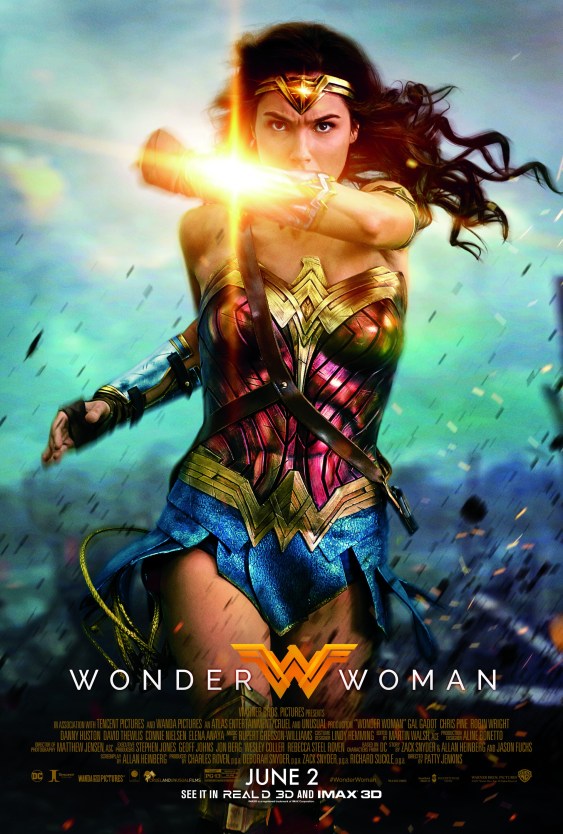
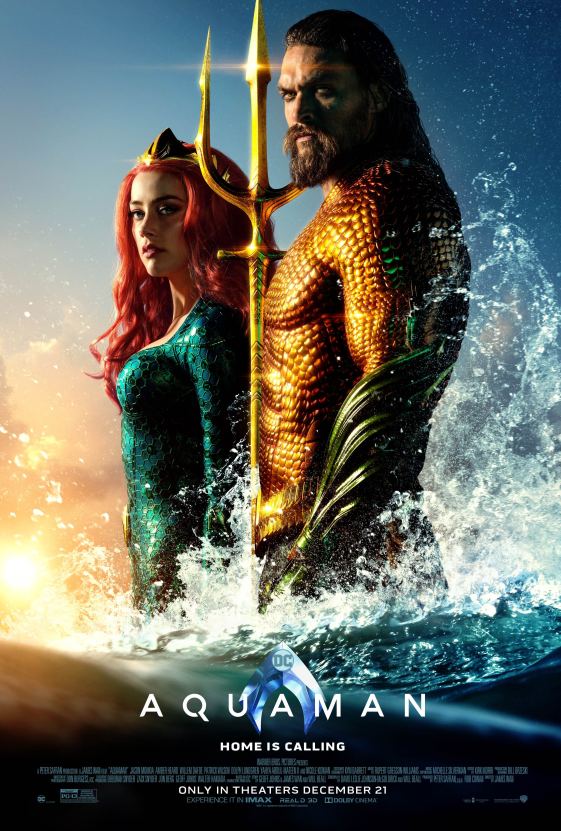
In addition to Thawne, The Flashpoint Paradox features two other outstanding and particularly unique antagonists in the form of militarised and anti-human versions of Aquaman and Wonder Woman.  Both characters have been twisted by a failed romance and the hatred that followed Wonder Woman’s slaying of Aquaman’s wife, and they are now brutally engaged in war to kill each other and the rest of the world.  I loved these darker and more murderous forms of these iconic characters, especially after they are shown in their more heroic guises at the start of the film, and their complex war is a destructive backdrop to the intense narrative.  Like Reverse-Flash, both are consumed by hatred, and they are willing to destroy the world rather than lose.  Despite that, there is still an obvious, if twisted, love between them, which makes their fight even more tragic.  I loved how both characters are portrayed, although I especially like how badass they make Aquaman here, especially as this was released in the pre-Jason Momoa days when Aquaman was still a bit of a joke.  Watching him destroy everyone in The Flashpoint Paradox really sets him up as a massive threat, and I deeply appreciated this fantastic change to the character.  I also loved the great casting behind these characters as well.  Aquaman is portrayed by legendary actor Cary Elwes, who honestly disappears into the role, providing a much more gruff and commanding voice than I have heard in his previous works.  The voice of Wonder Woman is provided by veteran voice actor Vanessa Marshall (Hera Syndulla from Star Wars Rebels), who is reprising the role she previously portrayed in Justice League: Crisis on Two Earths.  Both actors really get these iconic characters down perfectly, especially in their darker moments, and I loved how well they were utilised in the film, especially as they enhance the emotional power and looming threat of the narrative.

On top of the great performances above, I also must commend the use of several excellent supporting actors in smaller roles who did an outstanding job.  I as particularly happy that several actors who had previously voiced certain characters in other films and shows revisited their roles here, including some big names.  The most noticeable of these is the late great Kevin Conroy, who does an exceptional (as always) job of voicing the Bruce Wayne Batman at the beginning and end of the story.  Conway has several amazing scenes, including a particularly emotional sequence at the end that will have you in tears.  Other performers include Nathan Fillion providing a cocky voice to the Hal Jordan Green Lantern, Dana Delany once again voicing Lois Lane after voicing her the DC Animated Universe (Superman: The Animated Series, Justice League and Justice League Unlimited), and Ron Perlman revisiting his epic Teen Titans performance as Deathstroke for a short scene.  Other notable actors and characters include Danny Huston doing a quick dash as General Sam Lane and Dee Bradley Baker (the voice of all the clones in Star Wars animation, as well as several hundred other credits) doing a fantastic Etrigan the Demon.  However, my favourite of these side characters is Danny Jacobs’s portrayal of the Wildstorm Comics character Grifter.  Grifter is a brutally effective figure in the final third of the film, and he has some outstanding interactions with other characters like Batman.  This cast, and more, all add so much to the film with their brilliantly portrayed characters, and I am still blown away by the calibre of the cast that was brought together here.

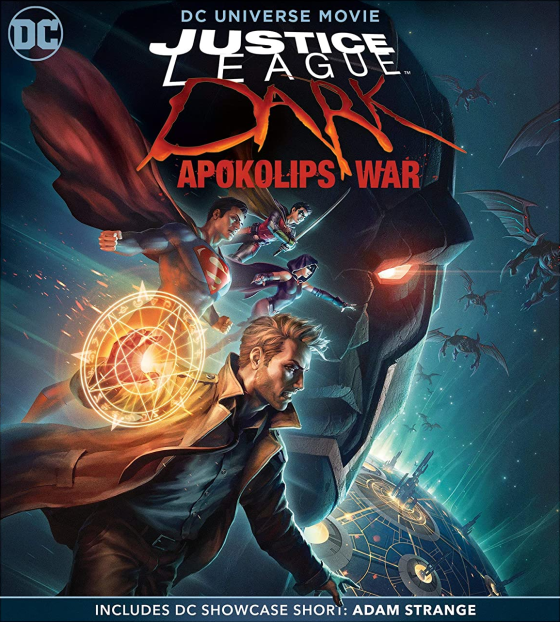
I think it is pretty obvious from the lengthy rant above that I have a lot of love for Justice League: The Flashpoint Paradox, and it is one of those animated films that I have watched so many times.  Thanks to its amazing cast, fantastically adapted story, intense animation and general darker vibe, The Flashpoint Paradox is a pretty spectacular animated film, and I honestly think it has the best execution of the Flashpoint comic.  It also has an awesome legacy, especially as it sets up the DC Animated Movie Universe and has impacts that range all the way to the final film, Justice League Dark: Apokolips War.  As such, I really must give this film a full five-star rating and it is a must-watch for all comic fans, especially those who like their animation a little more adult and emotionally charged.
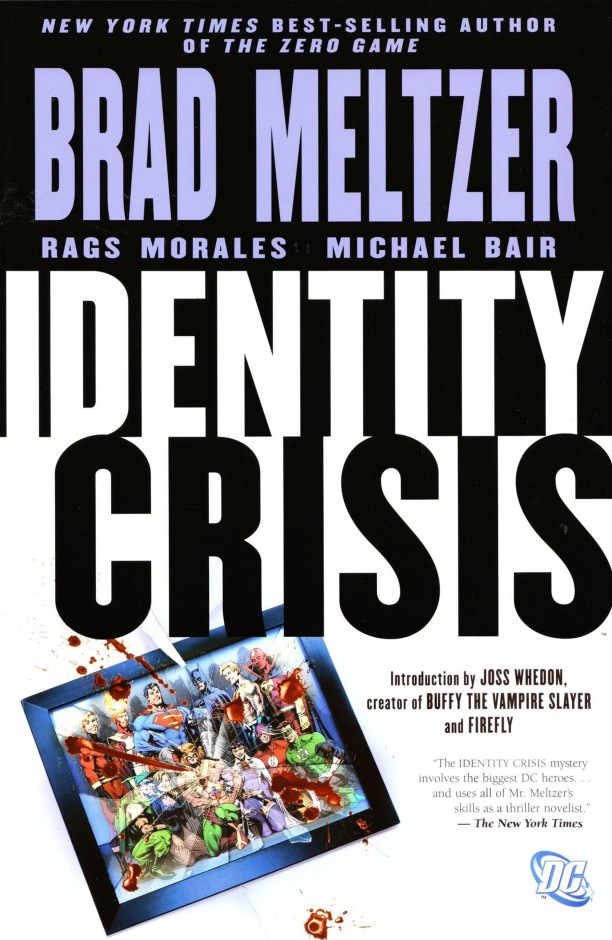
Throwback Thursday – Identity Crisis by Brad Meltzer, Rags Morales and Michael Bair.

Identity Crisis Cover

Publisher: DC Comics (Paperback – 1 October 2005)

Series: Identity Crisis Limited Series

Writer: Brad Meltzer

Penciller: Rags Morales

Inker: Michael Bair

Letterer: Ken Lopez

Colorist: Alex Sinclair

Length: 288 pages

My Rating: 5 out 5 stars

Amazon     Book Depository

Welcome back to my Throwback Thursday series, where I republish old reviews, review books I have read before or review older books I have only just had a chance to read.  For this week’s Throwback Thursday I take a look at one of my absolute favourite comic book limited series, the epic 2004 DC Comics event, Identity Crisis.  (Quick warning, there are spoilers ahead).

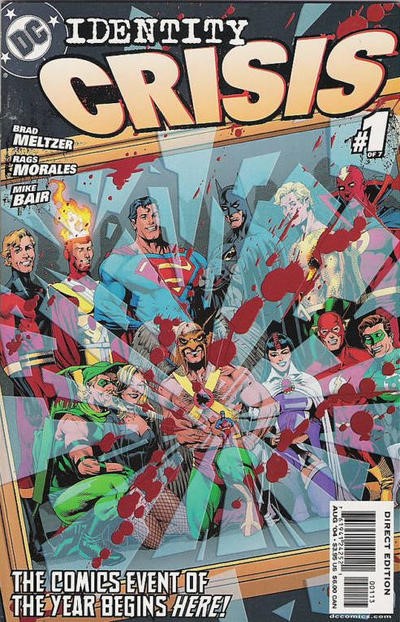
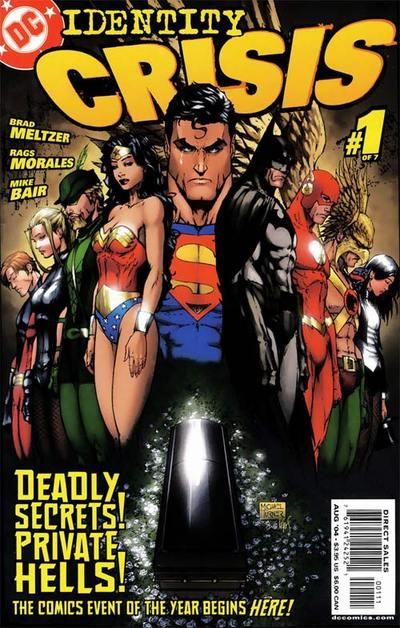
Identity Crisis #1

It is fair to say that the early to mid-2000s was one of my favourite periods of comic books, with some truly cool and epic ongoing and limited series being released.  This was particularly true for DC Comics, who produced some of their best work during this time, many of which rank amongst my all-time favourite comic series.  This easily includes the exceptional and brilliant crossover event, Identity Crisis, which to my mind is one of the best limited series ever written.

Made of seven issues, Identity Crisis combines the unique writing talent of thriller author Brad Meltzer with the artistic stylings of veteran DC Comics collaborators Rags Morales and Michael Bair.  This ended up being a near perfect combination of talents and skill, and I have a lot of love for the exceptional story, which absolutely hooks me every time, and its outstanding associated artwork.  I particularly impressed with the addition of Meltzer, who, despite his more literary background has written some of the absolute best and most human comics I have ever had the pleasure of reading, including Green Arrow: The Archer’s Quest and the two Justice League of America storylines, The Tornado’s Path and The Lightning Saga.  However, his story in Identity Crisis is particularly powerful and thought-provoking, and it ends up being a comic that completely changes everything you knew about your favourite heroes.

For years the members of the Justice League of America have protected the world from all manner of evil and destruction, always prevailing no matter the odds.  But who can protect them when someone goes after those closest to them?  And what if they actually deserve the punishment being visited upon them?

On an unremarkable night, a mysterious attacker breaks into the home of long-serving Justice League associate, Ralph Dibny, the Elongated Man, and commits a terrible crime, the murder of Ralph’s beloved wife, Sue Dibny.  With no evidence about who the killer is and no idea how they breached the Dibnys’ impressive security, the superhero community rallies behind their bereaved friend and seeks to find the killer by any means necessary.

As the rest of the heroes seek answers at any potential suspect within the supervillain community, the Elongated Man and a small group his closest friends hunt for a minor villain, Dr Light, whose secret connection to the League’s darkest moment may hold the answers they seek.  However, when a second attack occurs on another publicly known relative of a superhero, Jean Loring, the former wife of the Atom, it soon becomes clear that someone else is targeting the heroes and their loved ones.

Identity Crisis #1b

As Batman, Superman, Green Arrow and others attempt to get to the bottom of the case, cryptic threats to one hero’s relative reveal that whoever is targeting them knows all of the League’s secrets, including their hidden identities.  As even more tragedies befall the superhero community, dark secrets from the League’s past are brought into the light and no-one will be prepared for the terrible truth behind these brutal murders.  Can the League weather this latest attack, or is this the beginning of the end for the world’s greatest heroes?

Damn, no matter how many times I read this comic, the tragic and powerful events of Identity Crisis still really get to me.  This exceptional comic contains one of the most impressive narratives I have ever seen in a limited series, taking the reader on a captivating and emotional dive into the world of your favourite heroes.  Perfectly combing a dark, mysterious narrative with incredible character work and some truly amazing artistic inclusions, this comic gets an extremely easy five-star rating from me.

For Identity Crisis, Brad Meltzer really went to the well, producing an insanely compelling and moving story that relentless drags you in and introduces you to a completely new side of your favourite heroes.  Utilising his experience as a crime thriller writer, he produces a powerful, character driven superhero narrative with detailed crime fiction elements to create an exceptional and unique story.  Identity Crisis has an amazing start to it, which not only carefully introduces several key figures but also installs some dark tragedy, as the wife of a superhero is killed off.  The subsequent investigation into her murder by the enraged superhero community is extremely compelling and intense, as the emotional heroes turn over every rock and stone, much to the horror of the villains.  However, it is soon revealed that several members of the Justice League are harbouring a devastating secret, one that could reveal the identity of the killer.  This secret becomes one of the most important parts of the first half of the series, and it leads to an epic, action-packed fight sequence against a particularly dangerous foe.

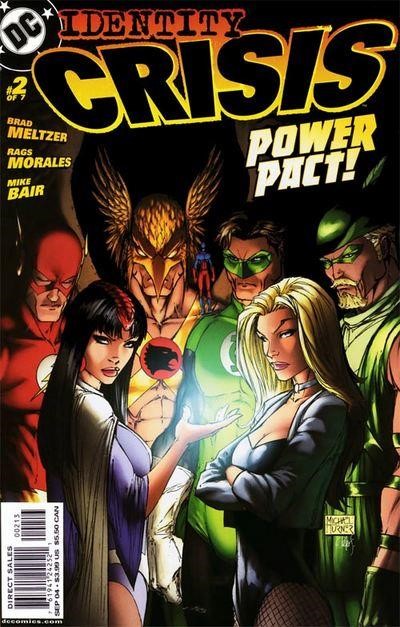
Identity Crisis #2

The story starts to go in a bit of a different direction at this point, with the above secret not really panning out regarding the investigation.  However, other superhero relatives, both public and secret, are targeted, resulting in pandemonium around the characters.  I loved the narrative’s move to a more classic investigation at this point, as the heroes start following every lead they can, while more character development and big moments are explored.  This all leads up to the defining moment when another superhero loses a loved one and the identity of the killer is seemingly revealed.  However, this turns out to be a bluff, as the real killer is still hidden.  The reveal of who did it and why are revealed pretty suddenly towards the end, with some curious and clever motivations exposed.  This leads to a tragic and heartbreaking conclusion, as more secrets are revealed, dangerous lies are uncovered, and several characters leave the story more broken and destroyed than ever before.  You will be thrown through the emotional wringer as you check this comic out.
I deeply enjoyed the way that Meltzer told Identity Crisis’s excellent story, especially as it quickly and effectively engrosses the reader and ensures their undivided attention.  The author utilises a mass-character narrative that follows a substantial collection of heroes and villains, many of whom have distinctive or semi-separate storylines.  This works to tell an intriguing, rich narrative that not only has some clever dramatic components but also allows for some intriguing and compelling retcons and expansions to the already elaborate DC universe.  It is very cool how the story developed into more of a murder mystery/thriller story as the comic progressed, and this really played to Meltzer’s strengths.  The investigation is handled very well, and I liked how the superhero elements altered and enhanced it in some clever ways.  The mystery itself is complex and clever, with Meltzer adding in some great twists, false leads and compelling surprises to keep the reader guessing.  The twist about the actual killer is pretty good, and Meltzer did a great job layering in hints and clues throughout the rest of the story while also introducing a few good alternative suspects.  While the motivations and complexities surrounding the killer’s actions are great, I did think that how the protagonists worked it out was a little abrupt, and it might have been a little better if they worked it out from some earlier clues.  The use of female characters wasn’t the best either, especially as most of them are there simply to be victims in one shape or another.  Having a long-established character getting both raped and murdered in a comic as a plot device is pretty unfortunate, and some stronger female figures might have helped balance this out.  Still, this ended up being an awesome read and I deeply enjoyed how it turned out.

One of the things that I really enjoy about Identity Crisis is the interesting examinations that were included as part of the plot.  Meltzer and the artistic team obviously had a lot of fun exploring or introducing some cool aspects of the DC Universe in this series, especially when it comes to the secret or hidden lives of superheroes and supervillains.  I particularly loved the in-depth examination about how both groups are officially or unofficially organised, and there are some very intriguing views of them socialising or working together.  The inclusion of a highly organised superhero death investigation squad, made up of a range of random heroes (the Ray, the Atom, Animal Man, Mister Miracle and two of the Metal Men) is particularly clever, as is the way the various heroes organise into a vengeful posse to question potential suspects.  The deep dive into the importance of a superhero secret identity also becomes an important part of the story, especially as the loss of the secret brings pandemonium thanks to the killer stalking them.  I also loved the counterbalance look at organised villainy, and there are some excellent scenes that see the villains gathering to socialise or talk shop.  Having an organising force like the Calculator, as well as a secret space station hangout, is pretty elaborate, and the deeper look at the villains of this universe, definitely gave Identity Crisis a compelling and intricate edge.

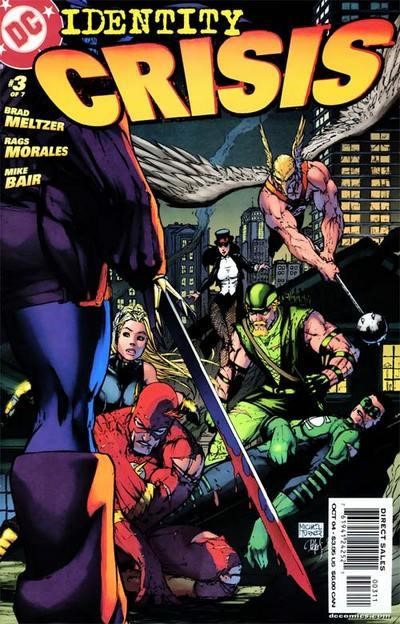
Identity Crisis #3

However, easily the most groundbreaking and compelling new inclusion to the universe is the reveal about the unofficial league within the Justice League who have some dark secrets.  Made up of heroes Green Arrow, Black Canary, Hawkman, Zatanna and Atom, as well as the Silver Age Green Lantern and Flash, this group of heroes apparently operated separately of the main Justice League during their classic Silver Age adventures, acting as their clean-up crew.  This retcon by Meltzer provides an interesting explanation for why villains never remember the secret identities of the heroes they switch minds with or whose dreams they invade, namely they have their mind erased by Zatanna’s magic after being captured by this inner-League.  While this is already a dark move by these established heroes, it gets even worse when they are forced to reveal that they intentionally destroyed Dr Light’s brain to make him less of a threat.  This and other revelations, acts to make many of your favourite heroes appear much more morally grey and fallible, and it was a particularly impressive and monumental inclusion, that will have grave consequences down the line for the entire universe.

Unsurprisingly for something written by Meltzer, Identity Crisis contains some insanely complex and impressive characters who form the heart of the tale.  Due to the way the story is told, Identity Crisis follows a massive cast of comic characters, including several obscure or underappreciated figures.  Meltzer does a brilliant job of utilising all these established characters throughout his story, with nearly every major cast member getting a moment to shine in some way or another, and multiple figures who were underutilised or unappreciated before this comic were given brilliant and defining second chances here.  While the use of multiple focus characters had the potential for a scattered narrative, Meltzer was able to direct the flow of the story around all these various protagonists and antagonists perfectly, and you still get a tight and concise story, which also takes the time to dive into each of these figures and showcase them to their greatest degree.  As I mentioned before, there is a real focus on highlighting the darker side of the superhero characters throughout Identity Crisis, and you end up really seeing these fantastic figures in a whole new scary light.

Let’s start with Ralph and Sue Dibny.  I must admit that the very first time I ever read Identity Crisis, many years ago, I honestly had no idea who Elongated Man and his wife were, as they were a little obscure.  However, Meltzer really goes out of his way to feature them in this story (even adding in a few retcons) and you are given a great introduction to them at the start.  In just a few panels, you understand who these characters are and what they mean to each other and the other superheroes, as well as some unique characteristics and relationship quirks.  This excellent introduction makes you start to care about them just as Meltzer brings the hammer down and kills Sue.  The subsequent grief, rage and despair from Elongated Man is just heartbreaking, and you go through the rest of the comic seeing him attempt to recover from these terrible events.  This amazing use of characters at the start of the comic has a great flow-on effect to the rest of the story, and you become exceedingly invested in finding the killer as a result.

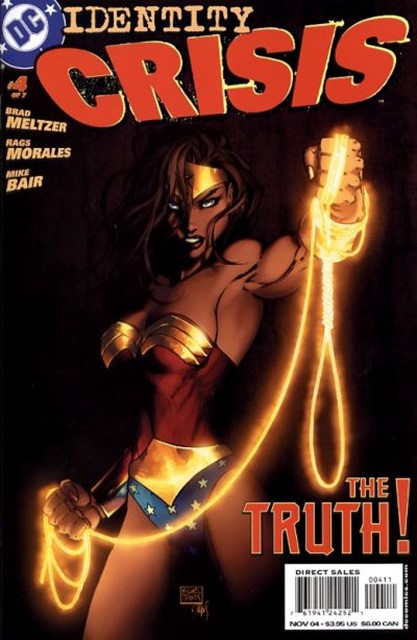
Identity Crisis #4

From there, a lot of the superhero focus goes to the surviving members of the Justice League who formed the league within the League I mentioned above.  There is some exceptional character work around some of these team members, especially as they come to terms with the decisions they made in the past and how they are impacting them now.  I loved seeing them attempt to justify their actions to the other heroes, even their darkest decisions, especially as you can understand why they did what they did, while also feeling disappointed in them.  You really get a sense of determination and shame from them as the story continues, and you see all of them go through a lot in both the past in the present story.  Despite multiple differences, this team are still friends and comrades, and watching them come together to brawl with some of the most dangerous characters is pretty heartwarming, even if darker elements lie just beneath the surface.

While there is a focus on these inner-Leaguers, some of them are utilised a lot more frequently than others, particularly the original Green Arrow, Oliver Queen.  Green Arrow is an excellent figure in this comic and is probably the closest thing to a heroic narrator/central protagonist the story has.  His unique perspective on the events acts as a good foil to many of the other characters, such as Batman and Superman, and he proves to be a calm, if potentially vengeful figure for much of the story, organising many of the League actions and forensic investigations.  He also proves to be the voice of reason for the inner League, calmly justifying many of their actions and serving as a bridge between this existing group and the newer Flash and Green Lantern.  Despite his belief that they are doing the right thing, you can see some real emotion and regret in his face, especially when the further revelations about Dr Light and Batman come out.  I also appreciated the deeper look into his antagonistic relationship with Hawkman, which partially originated in the past events mentioned here, and it is interesting to see how the events of this comic impact future Green Arrow storylines.

Aside from Green Arrow, other members of this secret League who get an intriguing focus include the Atom, Ray Palmer, and his ex-wife, Jean Loring.  Due to his status as another public hero, Atom and Jean are also targeted throughout the story, and you end up getting a rather intense and fascinating look at both.  Watching their failed relationship rekindle is a nicer part of most of the comic, although eventual reveals and tragedies naturally ruin it and smash everything around.  Still, their complicated emotions and issues surrounding their fractured relationship make for some of the best parts of the comic.  I liked the interesting look at Zatanna throughout the comic, especially as she is largely responsible for some of the worst moments of this group of heroes, as she clearly feels guilty about her magic messing with the villain’s minds.  I also need to highlight the younger Flash, Wally West, who finds out about the actions of the other characters during the current events of the comic.  It is absolutely heartbreaking to see Wally learn that his mentor and predecessor, Barry Allen, was not as perfect as he imagined, and actually participated in some of the team’s worst events.  The distress he exhibits with every subsequent reveal is showcased through the comic’s art extremely well, and his subsequent guilt as he is forced to keep it secret from other Leaguers like Batman is quite noticeable.

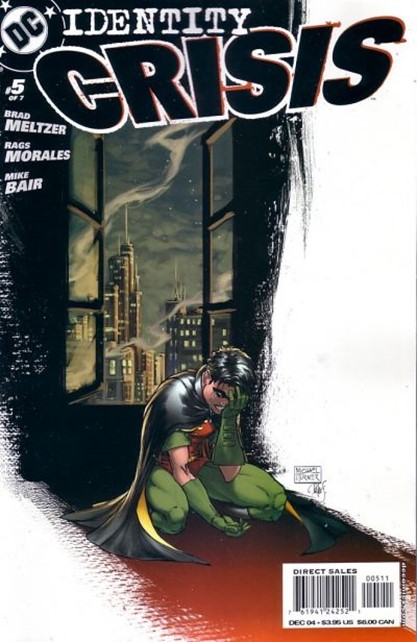
Identity Crisis #5

As you can expect from any major DC Comics crossover event, members of DC’s Big Three are strongly featured throughout Identity Crisis.  While Wonder Woman only has a few intriguing scenes, in which you get to see both her ferocity and her kindness, there is much more of a focus on Superman and Batman.  Superman gets some great sequences throughout Identity Crisis, especially as the creative team sinisterly focus on his family and friends, all of whom are potential targets.  Watching Superman slowly get frustrated with the investigation, especially when Lois is threatened, helps to enhance the seriousness of the story, and he has some powerful moments here.  I did appreciate the way in which Meltzer attempted to paint the big blue Boy Scout in a darker light, as it is revealed that even the supposedly righteous Superman is not as innocent as you’d believe.  It is subtly implied that Superman always knew what the inner League was up to (yay for super hearing), and chose to ignore it for convenience.  This brilliant and dark suggestion that even Superman isn’t infallible is a pretty weighty one that  helps to enhance the weight and power of Identity Crisis’s narrative.

Batman is a lot more involved in the story and leads his own investigation into who is behind the killing.  Even though he does not actually appear until halfway through the comic, he is a heavy presence throughout Identity Crisis, both because of his brusque, loner ways of trying to solve the crime, but because of the dark shadows of the past.  There are multiple moments that revisit his childhood and the death of his parents, which parallels some of the other losses in Identity Crisis, and you get to see the human side of grief impacting this usually stoic character.  Batman’s storyline gets even more intense when it is revealed that part of his memory was erased by his fellow Leaguers to cover up their actions surrounding Dr Light, which is a very haunting inclusion.  Meltzer makes this even more intriguing by having Green Arrow suggest, mostly out of guilt, that Batman likely has done something similar in the past, while also acknowledging that he has likely already deduced that his memories were erased.  This really makes you consider Batman’s relationship with the rest of his heroes, and it certainly has a big impact on future Batman storylines.

The Batman impact on this story is also felt through the great focus on the current Robin, Tim Drake, who plays a surprisingly big role in the events of Identity Crisis.  At the start of the comic, Tim is one of the few members of the Bat-family who still has a father, which puts him at odds with Batman and the Robin predecessors.  As his father has only just discovered his dual identity as Robin, he becomes one of the more interesting protagonists, as the comic explores the stress of the superhero lifestyle on family.  Tim’s storyline ends up being extremely tragic when his father is murdered.  Watching Robin talk to his father over the phone as he’s about to die is just damn horrific, and your heart can’t help but break during that epically drawn-out scene where he and Batman arrive too late.  The subsequent parallel between him, Bruce Wayne and previous Robin Dick Grayson during this moment is particularly poignant, and it results in a whole new chapter of this amazing incarnation of Robin.

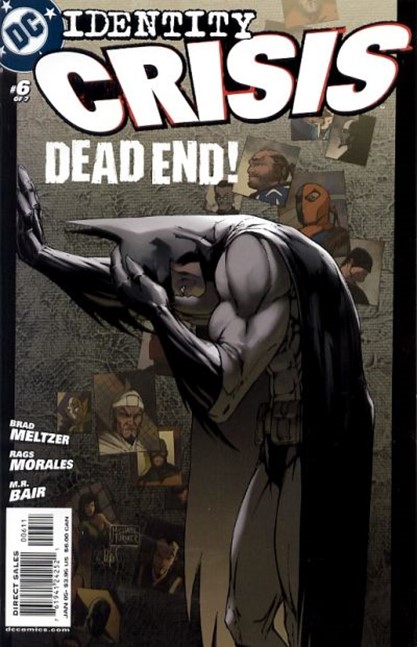
Identity Crisis #6

While there are a few other interestingly featured heroes in Identity Crisis, I’m going to start talking about the villains, as many of them have a brilliant role in this comic.  Thanks to Meltzer’s fantastic writing, Identity Crisis proves to be just as much about the villains as the heroes, as many of them are deeply impacted by the events disclosed here.  While I won’t reveal the identity of the killer here (I’m keeping some spoilers locked up), I will say that their motivations are pretty fascinating and provide a compelling insight into the super lifestyle.  The rest of the villains in Identity Crisis are fair game for discussion, though, and I deeply loved the creative team’s excellent examination of them.

Easily the villain I need to talk about the most is Dr Light, an old school Justice League villain who had not been really utilised in recent years.  Mostly known before this comic as the Teen Titans’ punching bag, Meltzer completely revitalised the character in Identity Crisis and, with a stroke, turned him onto one of the most deranged and dangerous figures in the entire universe.  It is revealed throughout the comic that Dr Light used to be an extremely powerful villain, but after invading an empty Watch Tower and raping Sue Dibny, the League brutally took him down, erased his memory of the event and then magically lobotomised him.  This resulted in him becoming the moronic and weakened villain who was routinely taken down by the teenage heroes and other embarrassing foes.  This entire reveal is pretty damn epic and horrifying at the same time.  Not only does Dr Light seem excessively evil and deranged in the flashback scenes, but the shocking revelations of his actions immediately make you hate him.  Meltzer’s explanation for why he turned into such as pathetic creature (aside from the real reason of capricious authors) really hits home hard, and even though Dr Light is a terrible person, you can’t believe that members of the Justice League went so far.  The subsequent scenes where Dr Light regains his memories and his powers feature some of the best artwork in the comic, and while he doesn’t do much here, the scenes with him brooding and plotting hit at his returned and future malevolence.  I deeply appreciated how much Meltzer was able to morph this villain, and while the reliance on rape for antagonist purposes is a bit low, he succeeded in making him a very hateful and despicable figure.

Aside from the killer and Dr Light, several other villains hold interesting and significant roles in Identity Crisis, and I deeply enjoyed how they were portrayed.  This includes Green Arrow villain Meryln, who serves as an interesting shadow to Oliver Queen throughout the comic (more so than usual).  While Green Arrow provides the superhero community’s viewpoint on events, Merlyn’s narration examines the supervillain community and their various reactions.  I loved his fun insights into his fellow villains, and he ends up being an interesting inclusion to the cast.  The same can be said for the Calculator, a formerly silly figure who has turned himself into a non-costumed villain who acts as an anti-Oracle, providing the villain community with tech support and intelligence by charging them $1,000 per question.  I loved this interesting revamp of this minor character, especially as this suave, behind-the-scenes information broker became his default look for years.  Calculator’s conversations and business dealings offer some compelling insights into the superhero community, and I loved the occasional jokes about his old costume.  Meltzer also makes exceptional use of one of my favourite villains, Deathstroke, who once again shows why he is the DC universe’s ultimate badass.  Hired by Dr Light to protect himself from the League, Deathstroke takes on an entire team of heroes single handily and essentially spanks them.  I love how the creative team not only showcase his insane physical abilities, but also his tactical knowhow, as he expertly takes down major heroes in brilliant ways (he takes down the Atom and Hawkman with a laser pointer, true story).  His scene in the centre of the comic is the best action sequence in Identity Crisis, and it perfectly showcased this awesome villain (seriously, give this man a movie), while also hinting at some future grudges.

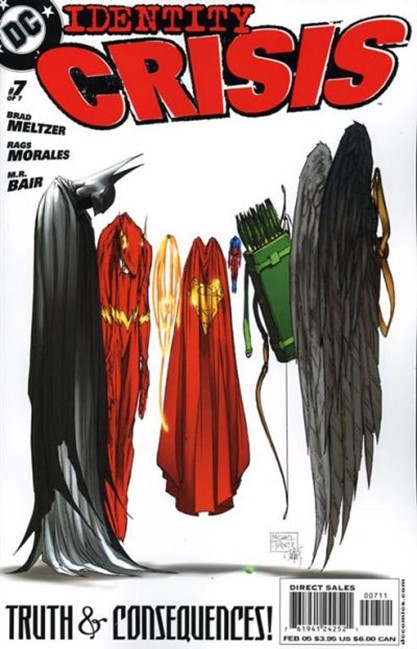
Identity Crisis #7

The final character I want to talk about is the lecherous and always entertaining Captain Boomerang, who has a major role in the plot.  I absolutely loved the exceptional story that Meltzer wrote around this infamous villain, and it is easily one of his most defining depictions.  Captain Boomerang has always been shown as a bit of a joke, but this comic shows him as a fat, washed up has-been, who leaches off his fellow villains and is generally looked down upon by them.  However, he gets a very intense and emotional story in this comic, as he meets his long-lost son and starts to develop a relationship with him.  The father/son moments add a rather interesting and nice edge to the main story and seem slightly disconnected from the rest of the plot.  That is until the final killing, when it is revealed that Captain Boomerang has arrived to kill Robin’s father.  The implied suggestion that Captain Boomerang of all people might be behind the killings is pretty iconic, and I loved the split panels that contrast his phone call to his son with the phone conversation between Robin and his father.  The subsequent results of the attack, as well as the reveals in the aftermath are pretty awesome, and I really appreciated the fun second chance that Meltzer and the artistic team gave to this iconic, old-school villain.

While I have gone a lot about story elements and characters, I also really need to highlight the incredible artwork featured in Identity Crisis.  The artistic team of Rags Morales and Michael Bair did an outstanding job in this limited series, producing some of the absolute best artwork from this era of DC Comics which perfectly enhances Meltzer’s epic storytelling.  There are so many impressive and memorable artistic moments and sequences throughout Identity Crisis, and I loved the various ways in which the artists convey movement, action, and emotion in their detailed and captivating panels.  There are so many brilliant action sequences in this comic, with my favourite being the Deathstroke vs Justice League fight I mentioned above, although a few others are also very cool to see.  I also loved the character designs featured throughout Identity Crisis, especially as the creative team took the opportunity to seriously reinvent several heroes and villains.  The streamlined look of the Calculator is particularly fun, and I also loved the balding and fat version of Captain Boomerang.  While I didn’t love how a couple of characters looked (what was with the hair on Connor Hawke?), most of it was pretty exceptional, and I love how it was later reutilised by other artists.

There are multiple truly brilliant and eye-catching artistic highlights of Identity Crisis that I must highlight, including the massive and powerful funeral sequence that takes place in the early part of the series.  There is an incredibly elaborate double-page public funeral spread that shows every single emotional superhero in attendance, with the various heroes organised by team or connection to the grieving family.  The use of the multiple heroes and associates is pretty awesome, especially as there are a range of character-appropriate reactions, and I loved seeing the whole costume crowd surrounded by members of the press and public as they mourn.  You also get also some excellent and heartfelt sequences in the subsequent scenes which show the eulogies, especially when Elongated Man starts to literally deteriorate due to his grief, which is just so powerful.  Other great examples of the artist’s work include the fun flashback scenes that allowed them to draw events in various classic comic styles, that offer a little bit of simplicity compared to the darker modern spread.

I particularly loved some of the brilliant sequences that are set around Dr Light, as not only do you see him at his most dangerous in the past but you also have some outstanding scenes when he regains his memories and powers.  The excellent parallels between the Justice League’s takedown of Dr Light and their attack on Deathstroke are incredible, and the subsequent massive panel of blinding light around Dr Light’s face is perfection.  However, the absolute best-drawn sequence in Identity Crisis must be the panels leading up to the death of Robin’s father.  Watching the insane amount of emotion on Batman and Robin as they realise that Robin’s father is about to die is so damn moving, especially the anguish on Robin.  The most moving of these panels is the one that focuses on Batman’s face after Robin begs his mentor to save his father.  The look of pure dread, fear and despair on Batman’s face takes my breath away every single time I look at it, and it perfectly conveys all of Batman’s repressed feelings as he realises that history is once again going to repeat itself.  While there are some other great scenes, the above are easily the cream of the artistic crop and definitely make this comic stand out.  I have so much love for the artistic work of Morales and Bair here, and it markedly enhances the already exceptional story, turning Identity Crisis into a true epic classic.

Well, that’s pretty much everything I have to say about Identity Crisis here.  As you can no doubt guess from the excessive way I have waffled on, I have a lot of love for this exceptional comic and I’m not afraid to show it.  The brilliant creative team behind Identity Crisis did an incredible job with this comic and they really turned out something special.  Perfectly bringing together a deep and clever story with impressive artwork, amazing characters, and so much damn emotion, this comic has something for everyone and is so very highly recommended.  I deeply enjoy everything about Identity Crisis, especially how it leads to some other epic comic books (the continuation of the mindwipe stuff in Justice League of America, Green Arrow, Teen Titans and more is particularly good).  One of the most distinctive and amazing comics ever and a must read for all DC Comics fans.

Amazon     Book Depository

Top Ten Tuesday – Books I Enjoyed, but Have Never Mentioned on My Blog

Top Ten Tuesday is a weekly meme that currently resides at The Artsy Reader Girl and features bloggers sharing lists on various book topics.  For this week’s Top Ten Tuesday participants are tasked with listing the top books that they have enjoyed, but which they have never mentioned on their blog.  I thought this was a pretty interesting topic to undertake and I had to dive deep into my book collection to find several great reads that I have so far failed to talk about before on my blog.

To appear on my list, the books in question had to be ones that I haven’t talked about to any real degree before during my blogging career.  That means that I am featuring a bunch of older novels I read before I started my blog which I have been unable to re-read and review for an appearance here.  I have also decided to exclude any books or series that I have mentioned in other Top Ten Tuesday posts, especially as there are a few awesome series I have really praised without doing any reviews for them (The Kingkiller Chronicles and The Gentleman Bastards series come to mind).  I must admit that I struggled a little here with finding enough awesome books, so I ended up featuring some comic series as well.  The result is a pretty varied and interesting list that I feel fully conveys the best series that I have really enjoyed and which I need to do some extra reviewing for.

Honourable Mentions:

Pirate Latitudes by Michael Crichton

Pirate Latitudes Cover

A brilliant and clever pirate novel by legendary author Michael Crichton, that was released after his death.


Batman: Detective Comics (2016) by James Tynion IV

Batman Detective Comics - Rise of the Batmen Cover

I deeply enjoyed this new series of the iconic Batman: Detective Comic series that started in 2016 as part of the DC Rebirth line.  This series follows Batman as he forms a new team to face off against a deadly army threatening Gotham.  Featuring some of the best and most complex Batman supporting characters, this is an excellent run I really need to review.


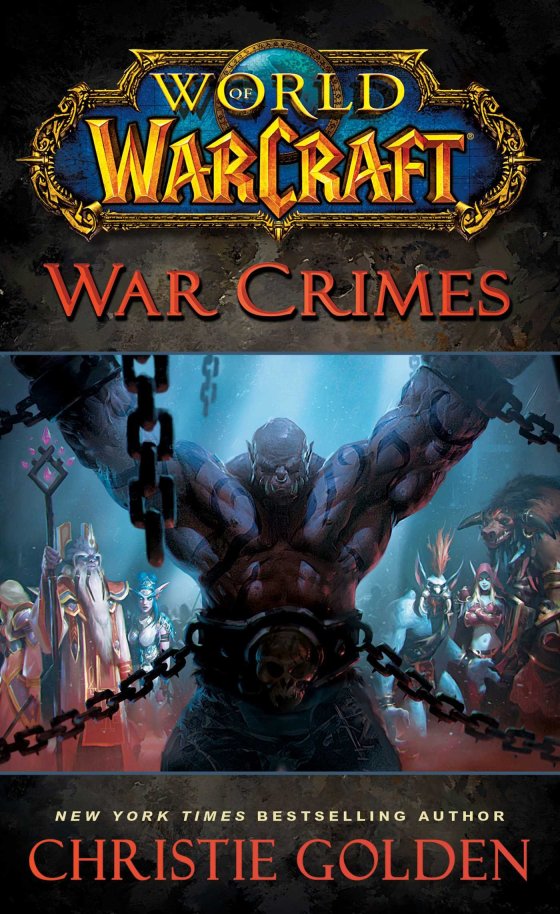
World of Warcraft: War Crimes by Christie Golden

World of Warcraft - War Crimes Cover

One of my absolute favourite World of Warcraft tie-in novels must be War Crimes by Christie Golden.  Set between the Mists of Pandaria and Warlords of Draenor expansions, this novel featured the trial of major antagonist Garrosh Hellscream after he drags the entire world into war.  A surprisingly deep and emotional read that recaps key parts of Warcraft history and make the iconic characters relive their worst decisions, this is an epic, must-read for all Warcraft fans.


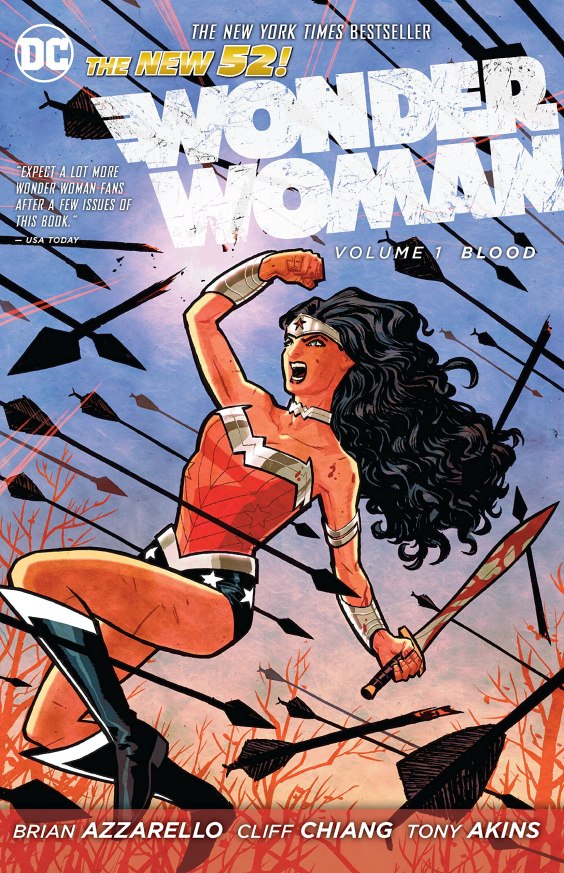
Wonder Woman by Brian Azzarello and Cliff Chiang

Wonder Woman - War Cover

In 2011 DC rebooted their entire comic line in an event known as the New 52.  Despite having some initial promise, the New 52 was a massive mess, especially as it ended several awesome series and brought in sub-par replacements.  Despite my dislike of this reboot, there were some good titles released here, with my personal favourite being the impressive Wonder Woman series written by Brian Azzarello.  A dark and gritty reimagining of the iconic character that proved to be highly addictive and impactful, especially as several ideas introduced here were eventually featured in the Wonder Woman films.  If only the rest of the New 52 could have measured up.

Top Ten Tuesday:

The Athenian Mysteries by Gary Corby

The Pericles Commission Cover

An excellent historical murder mystery series set in ancient Greece that has a brilliant mixture of intrigue, investigation and outrageous humour.


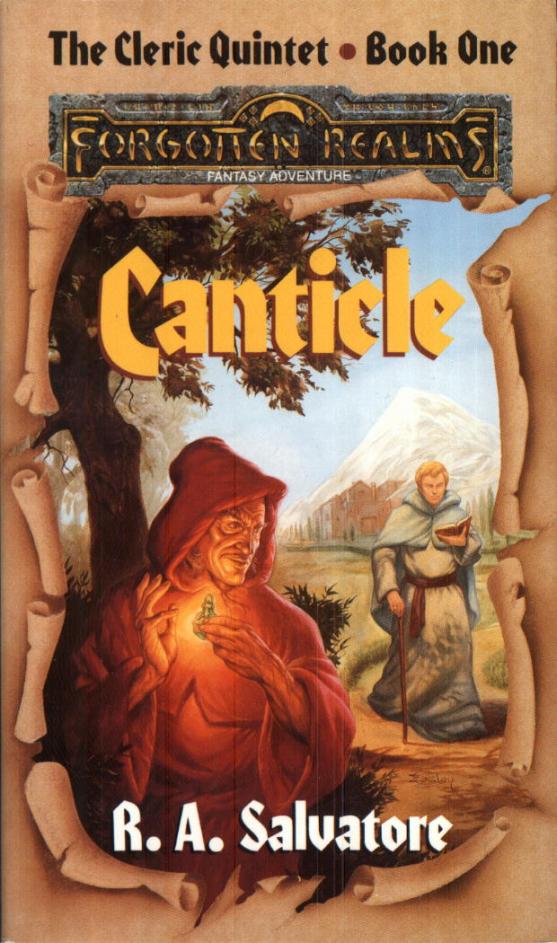
The Cleric Quintet by R. A. Salvatore

Canticle Cover

I often mention Salvatore’s excellent Drizzt Do’Urden fantasy novels on this blog but I barely ever talk about his amazing Cleric Quintet.  Set in the same world as the Drizzt Do’Urden novels, the Cleric Quintet is a compelling and tight five-novel series that follows a young priest and his unusual friends as they defeat the various evils surrounding their temple.


Identity Crisis by Brad Meltzer

Idenity Crisis Cover

I honestly can’t believe that I haven’t talked about this amazing comic on my blog before, especially as it is one of my favourite limited series.  Written by acclaimed author Brad Meltzer, Identity Crisis is an exquisite and powerful read that sees the families of the various DC superheroes being targeted by a serial killer.  Featuring all the best DC characters at their very worst and revealing some damning secrets, Identity Crisis is an epic read and it is easily one of my favourite comics of all time.


Empire of the Moghul by Alex Rutherford

Raiders from the North Cover

A brilliant series that details the rise and fall of the Moghul empire in India.  Filled with innumerable betrayals, deadly war sequences and an impressive depiction of one of history’s most dysfunctional dynasties, the Empire of the Moghul books are a brilliant historical fiction series that I had a lot of fun reading.


The Witches of Eileanan by Kate Forsyth

Dragonclaw Cover

One the first fantasy series I ever really got into were The Witches of Eileanan books by Australian author Kate Forsyth.  While Forsyth is mostly known for her historical dramas, I prefer this exceptional fantasy series that followed a young witch as she battled through a land where magic is outlawed.  Filled with an excellent cast of characters and containing a dark and elaborate narrative, this is a great fantasy series, and it is one that I really need to reread at some point.


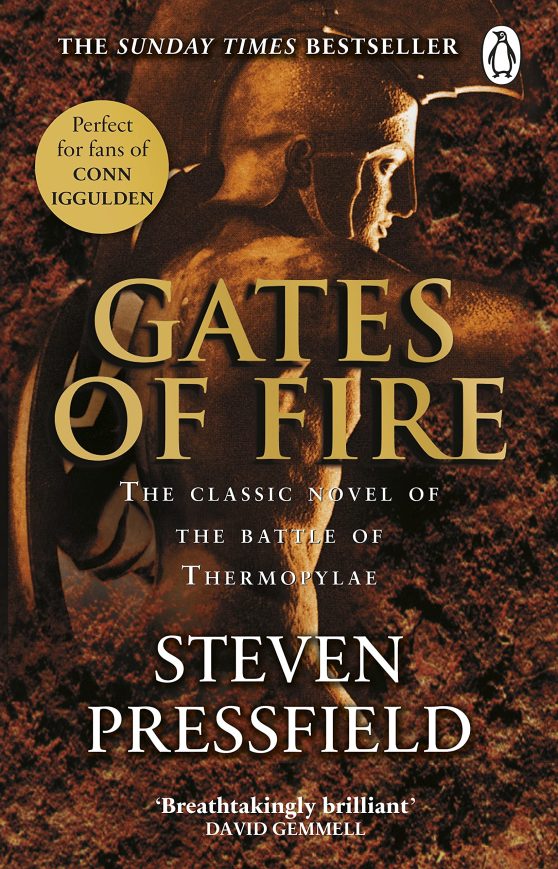
Gates of Fire by Steven Pressfield

Gates of Fire Cover

One of the best historical fiction novels ever written, Gates of Fire is an excellent novel that provides one of the most accurate and moving depictions of the Battle of Thermopylae.  Told from the perspective of a Spartan slave, this amazing novel really dives into the Spartan warrior culture and shows the nation’s darkest hour in all its bitter and brutal glory.


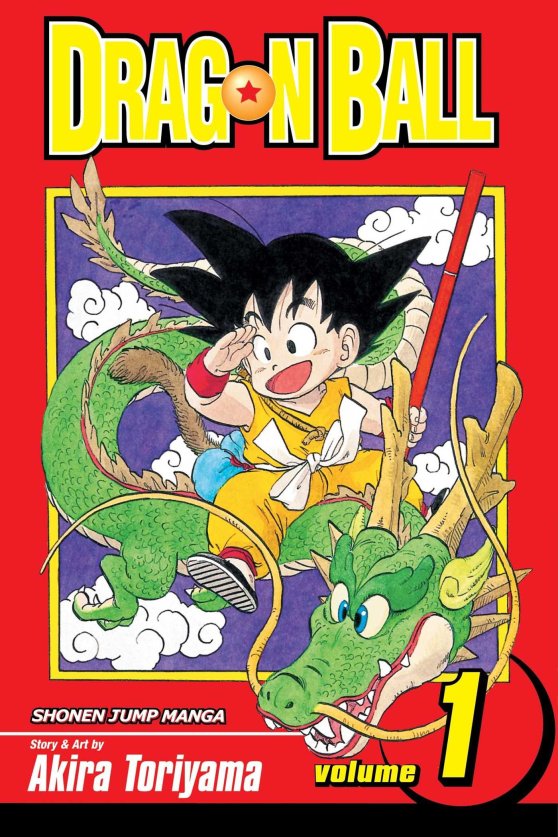
Dragon Ball/Dragon Ball Z by Akira Toriyama

Dragon Ball Cover

Despite my love of anime, I have honestly never read that much manga in my life, which is one of my many literary regrets.  The big exception to this is the impressive Dragon Ball and Dragon Ball Z manga by Akira Toriyama.  Bought because of my childhood love of the Dragon Ball Z anime, this manga is really good and tells an elaborate and wildly entertaining story, which is a lot of fun to check out.  While considered one of the more basic manga to check out, I still deeply enjoyed it and I have done multiple re-reads of it over the years.


An Officer and a Spy by Robert Harris

An Officer and a Spy Cover

An impressive historical fiction novel that perfectly recreates the infamous Dreyfus Affair from French history. 


The Serpent War Saga by Raymond E. Feist

Shadow of a Dark Queen Cover

Part of Feist’s amazing Riftwar Cycle, this sub-series of books is one that I haven’t talked about before, but it contains some of Feist’s strongest writing.  Bringing in several great new characters and setting them lose in his established world, The Serpent War Saga novels were extremely intense and saw several established favourites meet their end.


The Paris Architect by Charles Belfoure

The Paris Architect

The final book on this list is the impressive historical drama The Paris Architect.  Set during World War II, this book followed a young French architect who risked everything to create elaborate hiding places for Jews in Paris.  Very moving and extremely good, this was an excellent novel that hit you right in the heart with its amazing story.


Well, that is the end of this list.  As you can see there are several awesome books out there that I have so far neglected to include on this blog.  All the above are really worth checking out and I must make an effort to review some of the above in the future.

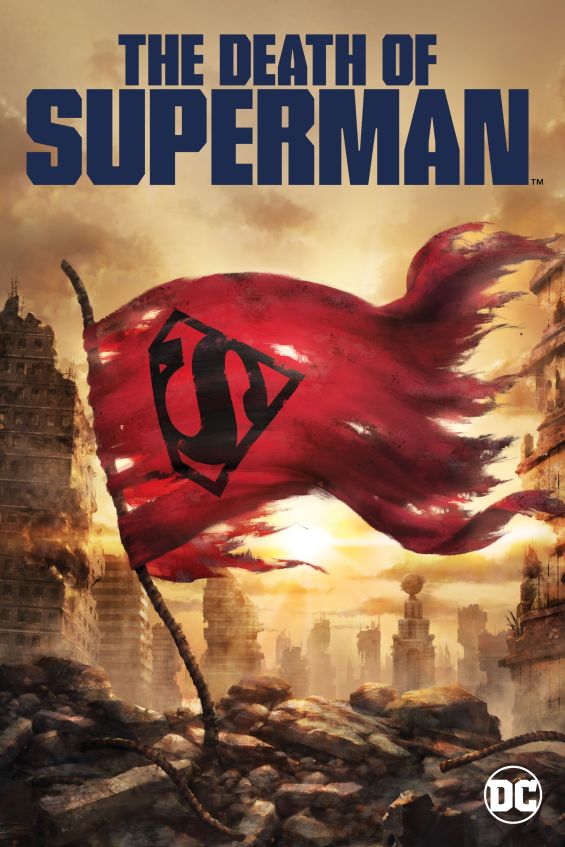
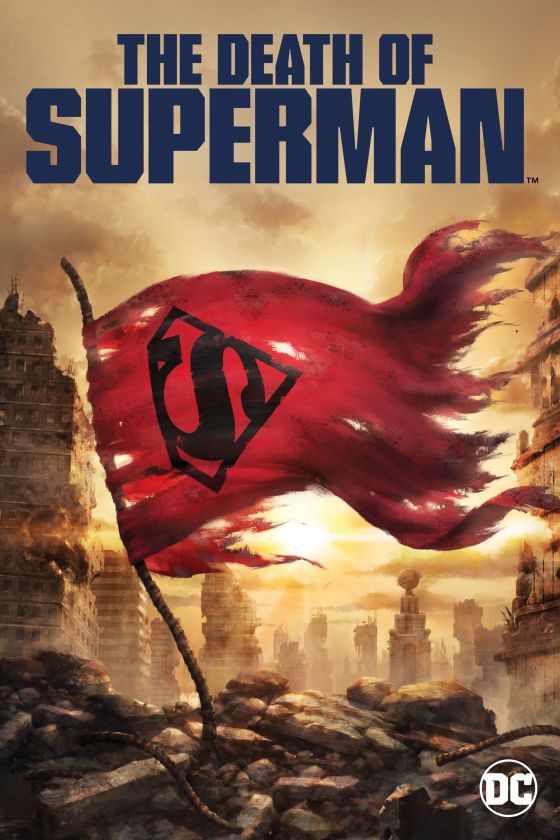
Throwback Thursday – The Death of Superman

Death of Superman Poster

Studio: Warner Bros. Animation and DC Entertainment

Series: DC Universe Animated Original Movies – Film 32 / DC Animated Movie Universe – Film 11

Directors: Sam Liu and Jake Castorena

Writer: Peter J. Tomasi

Producers: Sam Liu and Amy McKenna

Length: 81 Minutes

My Rating: 5 out of 5 stars

Welcome back to my Throwback Thursday series, where I republish old reviews, review content I have enjoyed before or review older books I have only just had a chance to read.  This week, after the fun I’ve had recently reviewing Batman: Assault on Arkham and Batman: Under the Red Hood, I continue to check out some awesome DC comic book animated features, with the impressive and powerful The Death of Superman.

Easily one of the most iconic comic book arcs of all time is the 1992/1993 storyline, The Death of Superman, which (spoiler alert) saw Superman die at the hands of new villain Doomsday.  Not only did the act of actually killing off Superman shock the world but the series was a massive financial success, becoming one of the bestselling comics of all time.  Due to its popularity, DC have attempted to adapt the storyline multiple times, with Smallville, the animated Justice League show, and Batman v Superman: Dawn of Justice, all using elements of it in one form or another.  There has even been another direct animated attempt at recreating the storyline, with the 2007 release, Superman: Doomsday, the very first film of the DC Universe Animated Original Movies.  However, in my opinion, none of them successfully conveyed the tone or the fantastic story as well as the 2018 animated film, The Death of Superman.

Directed by Sam Liu and Jake Castorena and written by Peter J. Tomasi, The Death of Superman is an incredible and amazing film that really gets to grips with the original comic, while also adding in some unique details to create a memorable and deeply moving experience.  As the 32nd instalment in the DC Universe Animated Original Movies, it also sat in the joint DC Animated Movie Universe, and was a major instalment in this series, setting up several storylines that would later be utilised in later entries, such as the final film, Justice League Dark: Apokolips War.  Featuring an awesome story, a fantastic voice cast and some exceptional animation, The Death of Superman is easily one of the best films in the entire DC Animated Movie Universe and is one of my all-time favourite animated comic book adaptions.

After saving the world multiple times, both by himself and with the Justice League, Superman reigns as one of the planet’s most popular superheros, inspiring the world with his spirit and determination to do good.  His latest act of heroics saved the mayor of Metropolis from the notorious Intergang, who made use of a large arsenal of advanced weaponry, likely supplied by an apparently incarcerated Lex Luthor.  However, despite his larger-than-life personality, Superman is also Clark Kent, a down-to-earth man from small-town America, trying to make his new relationship with fellow reporter Lois Lane work.  As Clark finally opens himself up to Lois and reveals his biggest secret to her, a brand-new threat arrives on Earth, bringing with it only death and destruction.

A mysterious meteorite has rapidly entered the solar system and crashed down on Earth, landing in the ocean.  When a team sent by Luthor and a group of Atlantean soldiers arrive, they find that the meteorite was a containment pod, and inside is something monstrous.  Killing everyone it encounters, the beast escapes the ocean and makes landfall, heading towards the largest population centre it can find, Metropolis.  With no-one able to slow it down, and even the Justice League powerless against it, it falls to Superman to engage it as Earth’s last standing defender.

Engaging in battle in the heart of Metropolis, Superman and the monster, Doomsday, begin a bloody battle that tears through the streets and levels buildings.  Superman may by the strongest person on the planet, but his new foe is a deranged and unstoppable killing machine, concerned with only death, destruction, and dominance.   Can Superman once again prevail and defeat his foe or has the Man of Steel finally met his match.  Whatever, happens, the world with never be the same again, and everyone who Superman has inspired may suddenly have to deal with the death of their greatest champion.

I must admit that when I first saw that they were doing yet another adaption of The Death of Superman comic, I was a little ambivalent, as I have not been too impressed by some of the other versions out there.  However, I still grabbed a copy as soon as it came out, and I was frankly blown away by how good it was.  This film has everything you could want in a brilliant animated feature, including an exceptional story and some amazing actors, but what this film has in abundance is heart.  Throughout its run time, you swiftly become attached to the great characters contained within, especially Superman and Lois, and then you are forced to watch as they suffer the most tragic moment of their lives.  This results in an extremely moving and powerful film, which became an instant classic in my book, and it is one that I have no problem awarding a full five-star rating.

When writing this film, Peter J. Tomasi had to do a lot with a limited amount of time.  Not only did he have to produce a pretty accurate adaption of the original Death of Superman comic, but he also had to work it into the wider DC Animated Movie Universe, which had already had its own unique history.  He easily succeeded on both fronts, as The Death of Superman contains an excellent and powerful story, that I have an extremely hard time faulting in any way whatsoever.  The story starts off with a shot of Superman saving the city and painting a pretty rosy picture of himself as Metropolis’s favourite son and defender.  After the title card, which contains the grim name of the film, the movie works to quickly introduce all the key characters, relationships, and settings, most of which had only been briefly touched on in the preceding DC Animated Movie Universe films.  This makes for a rather light-hearted start to the film; however, it also works to get you to know the characters and other key aspects of the Superman mythos and backstory, and all the setup is essential for you to get the full emotional and dramatic reactions during the second half of the film.  I also liked the way in which the film is tied into the other films of the universe, mostly using the Justice League, especially Batman and Wonder Woman, and it was great to see more of that version of the League.  All of this serves as a great set-up for the intense and action-packed second act, which is where all the action and mayhem begins.

About halfway through, the film really picks up the action with the Justice League, sans Superman, engaging Doomsday in a small town.  The action here is fast and furious, as the various members of the League get their best shots in and are then taken down in some quite brutal ways.  While this is happening, Clark is on a date with a frustrated Lois, where he finally reveals to her that his is Superman.  This date scene is done really well, and Lois’s reaction to the revelations runs the full range of emotions, especially once Superman, forced to leave to confront the threat reveals his other secret: that he loves her.  This is a great scene, and it is one that helps solidify the relationship and emotional bond between Superman and Lois while also making the viewer care for the characters just a little bit more.  However, the focus is quickly changed back to the fight with Doomsday, who has managed to take out the entire League, with only Wonder Woman hanging in.  As she falls, Superman steps in and begins a massive and brutal fight throughout Metropolis.  The creative team behind The Death of Superman really do not hold back here, as they present a knockdown brawl between the two, with Superman forced to also try and save civilians as they fight.  Their battle is a truly intense and amazing extended sequence, and there are some outstanding scenes featured throughout it.  You get some great reaction shots from the various supporting characters, and Lois and Lex Luthor have some outstanding moments as well, as they get involved for various reasons.  However, despite everything, it soon becomes clear just how indestructible and dangerous Doomsday is, and how even Superman doesn’t stand a chance.

The entire film leads up to the final climatic sequence, where the inevitable finally happens and Superman dies taking down Doomsday.  This entire scene is done perfectly, with a near-defeated Superman spurred on to make one final effort against Doomsday as the monster advances towards a seemingly hopeless Lois, who reveals to a downed Clark that she loves him too.  The blow itself is beautifully rendered with a powerful and lethal shot to Doomsday, but it is the aftermath that really turns this film into a five-star watch, as Superman is fatally impaled on a spike.  Watching a grieving Lois slowly release that the love of her life is dying in her arms is so hard to watch, and the creative team really turn up waterworks with Superman giving some touching last words: “what a lucky man I was”.  The eventual death is extremely moving, with the entire world witnessing his death and Lois’s grief, while standing in absolute shock.  Even the Justice League is moved to tears, with the usually taciturn Batman’s reaction being the most telling.  This entire sequence is deeply enhanced by a brilliant orchestral score that really plays up the emotion of the scene and strikes home every time you hear it.  This is such a powerful and impactful sequence, and it is swiftly followed by a moving funeral, with all the major characters in attendance, and then a final shot of several characters reacting in a post-funeral grief while Superman superfan Bibbo Bibbowski narrates a fitting final prayer for the character.  This entire sequence leaves me breathless, even after several re-watches, and it easily one of the most moving animated sequences I have watched.  The film then does a decent wrap-up, with several concluding sequences and post-credit scenes setting up the events of the sequel film.  However, it is the moving conclusion that will stick with you well past the films end, as it really brought everything about this movie together.

While I would be plenty happy with this film with only the outstanding story and amazing conclusion, The Death of Superman is also backed up with some incredible animation and a fantastic musical score which deeply enhance this fantastic film.  The animation is really great, and I loved the designs for the various characters, most of which hark back to their original comic book appearances.  The most impressive animation is reserved for the excellent and impactful action sequences involving Doomsday.  The animators show no hesitation in showing the blood and gore as Doomsday literally tears through everything in his way.  The initial fight with the Justice League is brilliant, especially as Doomsday brutally counters all their unique abilities and absolutely destroys them.  However, it is the giant fight with Superman which is the true highlight of The Death of Superman.  This fight is pretty extraordinary, and the animators really highlight the desperation and inspiration of the two participants.  Each of them is well and truly battered, and it is really shocking to see all the damage that Superman takes throughout the fight.  There is also some very dramatic damage to the city of Metropolis, with even the Hall of Justice being turned to a pile of rumble as these two duke it out.  I cannot emphasise how awesome this animation is, and it was so cool to see these battles unfold.

I also really need to highlight the fantastic use of music throughout this film, which works well in concert with the animated sequences.  The Death of Superman features an exceptional orchestral score, with the various tunes often harking back to classic Superman music.  This music is used perfectly throughout the various scenes in this film and help to really enhance the drama or emotion of the scene.  There are some great scenes with music throughout the film, although nothing tops the fantastic climatic sequence I mentioned above.  This animation and music are so very awesome, and it was an absolute joy to behold.

This film contains a pretty cool range of different characters, including iconic heroes, major Superman supporting characters and even a few more obscure characters.  This helps to turn The Death of Superman into quite a unique and fun film, and I really loved the range of reactions and character arcs that it contained.

Unsurprisingly, the most highlighted character in the film is Superman, who is voiced by Jerry O’Connell, who voiced the character in most of the DC Animated Movie Universe entries.  Up until this point, I felt that Superman was a bit underutilised.  Most of the previous films have focused on Superman’s relationship with Wonder Woman, while also featuring him as the League’s powerhouse.  However, this is easily Superman’s film, as the writers take substantial time to examine his history, relationships, inner personality and the duality between Superman and his Clark Kent persona.  You really get some intense insights into both versions of the same person, especially when you see his evolving relationship with Lois, and you swiftly grow to care for him in a way that some of the recent live-action films really didn’t make you.  His character really shines through during the battle with Doomsday, as he refuses to stay down, especially when people’s lives are on the line, and even risks himself to save his most hated enemy.  His sheer determination and intensity is really inspirational, and it starts to hurt a little inside to see him get beaten down by his opponent.  I felt that O’Connell does such a great job portraying Superman, and he really brings out the best of the character, showing his true heart and soul, and making him such a likeable character, who, despite his alien heritage, was still so very human.  I was really impressed and shocked by how much I grew to love Superman by the end of this film, which of course, ensures that you are so moved by the final scenes.  Seeing this character die in Lois’s arms in front of the world is just heartbreaking, and you guaranteed to be moved by his portrayal in this film.

While there is a natural focus on Superman, in many ways The Death of Superman is just as much a film about Lois Lane.  Voiced by the talented Rebecca Romijn, this version of Lois is bold and fearless in her career but also a little guarded in her personal life, especially as she senses that Clark is hiding something from her.  This film really builds up Lois extremely well in its short run-time, and you get a great sense of who she is and what she cares about.  I felt that the character had some amazing chemistry with Clark, which really isn’t surprising as Romijn is married to O’Connell in real life, so I’m sure they channelled a lot of that film.  I really was impressed by the way they showed Lois’s growing relationship with Clark as the film progresses, and the revelation about Superman’s true identity at the centre of the film really helps to solidify it, especially once Clark declares his love for her.  The subsequent battle sees Lois go through hell, as she chases the fight throughout Metropolis and has to watch Superman continuously get beaten up.  The scene where she tries to distract Doomsday and then gives up as he turns towards her is so dramatic, especially as she follows it up with her own declaration of love for Clark.  The final grief laden scene with Superman really moves me every time, and I felt that the sheer emotion coming off Lois was just amazing.  This might be one of my all-time favourite portrayals of Lois Lane, especially as Romijn does some exceptional follow ups in later DC Animated Movie Universe films.

The other major character I really want to highlight is Lex Luthor, who was voiced by the always entertaining Rainn Wilson.  Like Superman, Lex had been really underutilised in the DC Animated Movie Universe; his reveal in the Throne of Atlantis post-credit scene really did not pan out in a meaningful way in Justice League vs. Teen Titans.  However, this dramatically changed in The Death of Superman as they go out of their way to build up the showcase and show him as the maniacal yet brilliant businessman and criminal mastermind.  The creative team did a lot with Luthor in a short amount of time, and you get a really good idea of his genius, his various plans, and his unrelenting antagonism with Superman, born out of jealousy.  He proves to be a good secondary antagonist for the film, eventually turning into an erstwhile ally, abet for his own purposes, and he has some great scenes.  I was particularly impressed by Rainn Wilson’s voice work in this film, as he brings all the arrogance he can to the film, while also giving character a bit of a slimy edge.  I think he really captured Luthor’s various nuances, and ensures you see him lose his cool when faced with defeat.  I really liked the scene where Luthor can only watch in horror as Superman, despite being beat to hell, saves his life, and that results in some interesting changes in the later films.  I also liked how they captured a bunch of fun aspects of Luthor’s character from the 1990 comics, such as a nod to the Lex Luthor II persona that appeared in The Death of Superman comic.

I also need to highlight the main antagonist, Doomsday.  Despite not saying anything, Doomsday is a major presence, mainly due to his brutality and capability for destruction.  Doomsday is perfectly introduced and I loved the slow reveal of his true form, as the suit containing him is destroyed after several fights.  I must again really highlight how cool he looks in a fight, and the battles between the Justice League, Wonder Woman and Superman are just so damn impressive and pretty intense.  This was a really good portrayal of the character that perfectly harkens back to its comic origins, and it was a nice palate-cleanser after his cave-troll look in Batman v Superman: Dawn of Justice.

The Death of Superman also contains a pretty substantial supporting cast of characters, each of whom add a fair bit to the overarching narrative of the film.  Some of the most prominent of these are the various members of the Justice League, with most of the actors from the earlier DC Animated Movie Universe films reprising their roles.  Each of these characters and their actors have been perfectly introduced in the previous films, so they are inserted into The Death of Superman with minimal effort and form a fantastic cohort around Superman.  The leading two characters are probably Batman, voiced by Jason O’Mara, and Wonder Woman, voiced by Rosario Dawson.  Both characters have unique relationships with Superman, particularly Wonder Woman, and his death really impacts them both.  I also liked the combination of Green Lantern (Nathan Fillion) and Flash (Christopher Gorham), who form a fun comedic duo, while also having some great action moments.  I had a great laugh during the Justice League meeting scene where Flash does a good imitation of Batman joining the PTA of Damien’s school, and Batman’s glaring reaction is pretty funny.

I also loved the inclusion of a couple of unique Superman supporting characters.  Despite the role he played in the original comic, I was really surprised to see so much of Bibbo Bibbowski, Superman’s biggest fan, in this film.  Bibbo is a bit of a dated character, to be honest, but he slides into this film really well, and I loved the voice work done by Charles Halford.  His comedic interactions with both Superman and Clark Kent in the early parts of the film are pretty fun, and there is something amusing about a big, rough sailor type fanboying about a superhero.  It also proves to be quite heartbreaking to see this fan watch Superman die in front of him, and you can see it really breaks him.  I felt that Bibbo’s Hail Mary prayer at the end, which overscored some great visuals of people in mourning, and the subsequent breakdown on the dock was quite touching.  I also liked Erica Luttrell’s Mercy Graves, especially as she forms a great counterpoint to Luthor, especially as she calls him out on some of his more outrageous plans.  Overall, I think that this film was incredibly well cast, and I loved the fantastic group of characters that they brought together.

The Death of Superman is a truly great and powerful animated film that continues to reign as one of my absolute favourite animated comic book adaptions.  Featuring a near-perfect adaption of one of the most iconic comic stories of all time, The Death of Superman is intense, exciting, and downright heartbreaking, as it shows the greatest hero in his final battle.  I was moved to tears the first time I saw this film, and I have so much love and admiration for the work the creative team did to revitalise the character of Superman in one short film.  A highly recommend film to watch, this is one of the better Superman adaptations (live action or animated) I have ever seen.

Top Ten Tuesday – My Favourite DC Films, Ranked

Top Ten Tuesday is a weekly meme that currently resides at The Artsy Reader Girl and features bloggers sharing lists on various book topics.  The official topic for this week was Secondary/Minor Characters who Deserve More Love, which, while interesting did not appeal to me.  Instead, I figured I would do something a little more in my wheelhouse and turn my mind to the film adaptions of DC Comics.  I am currently in a major DC Comics mood, and the reason for this was the awesome recently released film, The Suicide SquadThe Suicide Squad was an absolute blast from start to finish, and it was probably one of my favourite films of the year, and the best entry in the current DC Extended Universe (DCEU).  I loved this film so much, and so I thought I might do some related posts this week, starting with this Top Ten Tuesday.

While not as prolific or as impressive as Marvel in recent years, DC Comics has produced some awesome film adaptions of their comic properties over the years, including animated films, standalone films, series, and the recent DCEU films.  Despite some regrettable duds, there are still some outstanding DC films out there, and I thought that I would take the time to highlight them in this list.  I recently did a similar list for Marvel films (where I ranked the MCU), although rather than feature all the films of a particular shared universe, I am going to look at my absolute 10 favourite DC films of all time and have a go at ranking those.

I had a few rules in place when I started making this list.  I was only going to feature films based on mainstream DC Comics, so that excludes excellent films like Watchmen or V for Vendetta, both of which’s source material was published by DC Comics, and probably would have made the list.  I also excluded films I haven’t seen, such as Joker (I know, I know, it’s on my to-watch list) and Justice League: The Snyder Cut (I honestly can’t be bothered watching this film again no matter how they recut it).  I am sure that some readers will be amazed that I have excluded a few classic films, such as the Michael Keaton Batman or the Christopher Reeve Superman films, but to be honest, I was never a big fan of them (I’m such a millennial).  However, I did leave the list open to animated films (check out my previous list to see how much I enjoy them), with a couple making the cut.  Using these criteria, I was able to come up with and rank my absolute 10 favourite DC films, and I think my list turned out pretty good as a result.  So buckle in and see which great films made the cut.

Honourable Mentions:

Suicide Squad: Hell to Pay

Suicide Squad Hell to Pay Poster

The best Suicide Squad movie I’d seen before last week.


Wonder Woman 1984

Wonder Woman 1984 Poster

Not as polished as the first film, but still lots of fun.


The Death of Superman

Death of Superman Poster

An outstanding piece of animation that will make you care for Superman again, and then absolutely break your heart.


Suicide Squad

Suicide Squad (2016) Poster

Ignore the plot and the villains and focus on the amazing main cast and the great music.


Top Ten List (Ranked in Descending Order):

10. Justice League Dark: Apokolips War

Justice League Dark - Apokolips War

Let’s start this list off with a bang and look at the awesome and incredible animated film, Justice League Dark: Apokolips War.  This fantastic film serves as the culmination of 15 brilliant, animated films and sends the entire Justice League through hell and back as they attempt to save the world.  Exceedingly grim, emotionally draining and featuring some massive moments and an amazing voice cast, Apokolips War is a thing of beauty and comes highly recommended.


9. Batman: Under the Red Hood

Under the Red Hood Cover

My current favourite DC animated film is the 2010 classic, Batman: Under the Red Hood.  A near-perfect adaptation of the Under the Hood comic storyline, this epic film is one of the best Batman films in existence.  Containing a deep and emotionally rich story, this is an exciting and moving tale, which sees Batman come to terms with the ghosts of his past.  Featuring an exceptional voice cast, including Bruce Greenwood, Jensen Ackles, Neil Patrick Harris, Jason Isaacs, and John DiMaggio as a particularly impressive Joker, you will love every second of this cool film.


8. Wonder Woman

Wonder Woman Poster

The moment that this film came out was the moment that the DCEU actually got good.  Following on from a couple of disappointing duds, Wonder Woman tells an exciting and powerful origin tale of one of DC’s most iconic characters.  With a great cast, a cool story, a tragic ending, fantastic music (Wonder Woman’s instrumental theme is so epic) and some impressive action (that no man’s land scene is just amazing), this is a captivating and distinctive film.  If only that final battle scene could have been a little less cheesy, then this film would be way higher up on the list.


7. Birds of Prey (and the Fantabulous Emancipation of One Harley Quinn)

Birds of Prey Poster

Another great entry in the DCEU is the wacky and relentlessly entertaining Birds of Prey.  This cool film sees the return of Margo Robbie as fan favourite Harley Quinn and includes an amazing cast of characters.  An unfortunate casualty of COVID-19, this was one of the best (and only) comic films of 2020, and I had a great time watching it.  Special mentions to Mary Elizabeth Winstead as Huntress and Ewan McGregor as Black Mask, who really added a lot of fun to this already hilarious film.


6. Shazam

Shazam Poster

One of the main reasons that the DCEU is doing so much better these days is because the films try to embrace their fun side a little more.  Nothing encapsulates this philosophy more than Shazam, which utilises some great humour to tell a very fun and surprisingly deep story.  Featuring the origin of long-time DC character Captain Marvel/Shazam, this film featured a heart-warming tale of a teenager who gains the power of a god and has some fun with it.  I love the combination of adult and teen actors, and Zachary Levi, Asher Angel and Jack Dylan Grazer absolutely rock as the three main characters.  There are so many fun moments in this film, although I particularly loved their take of training montage sequence, which had me in stiches.  A really cool and excellent film.


5. Aquaman

Aquaman Poster

I had a hard time figuring out whether to rank this film higher or lower than Shazam, but in the end I ranked it higher, because I think it is an overall better movie, even if it does not reach the same levels of humour.  After making Aquaman cool in Justice League (one of the few good things you can say about Justice League), Jason Momoa returns to the role in a feature film and knocks it out of the park.  Thanks to James Wan’s impressive directing, Aquaman was a major CGI epic that not only dives into the heart of its main character but presents an outstanding adventure at the same time.  All the underwater scenes are stunning, and every sequence is visually beautiful and eye-catching.  A powerful film that serves as a true anchor to the DCEU.


4. Batman Begins

Batman Begins Cover

To my mind there is not better film version of the Batman origin tale than 2005’s Batman Begins.  Based on the Batman: Year One comic and written and directed by the unbelievable Christopher Nolan, this amazing film reinvents the iconic character and gives him a bold new story to follow.  Containing an epic cast of some of the best actors on the planet, this outstanding film had me from the moment Liam Neeson delivered his prison cell monologue, all the way to its explosive ending.  I have seen this film so many times, and only the very best comic adaptions can rank above it.


3. The Suicide Squad

The Suicide Squad Cover

Now we are at the latest DC film to be released, with The Suicide Squad.  After the mediocre performance of the first Suicide Squad live-action film, the legendary James Gunn takes the helm producing an outrageous, hilarious, and downright bloody film.  While I was expecting something pretty incredible, I was blown away with how good this film was, and I loved every second of it.  Gunn ensures that The Suicide Squad has all the utter carnage and absurdity a Suicide Squad movie needs, and the entire outstanding film is carried on a back of bizarre group of characters and actors.  On paper you wouldn’t assume that a team of Idris Elba, John Cena, Margot Robbie, and the voice of Sylvester Stallone, would work, however, it does, with all the characters playing off each other perfectly to bring you an exceptional performance.  I have so much love for this film, and it is a major favourite for me now.


2. The Dark Knight Rises

The Dark Knight Rises Poster

Christopher Nolan’s The Dark Knight trilogy comes to an end perfectly with The Dark Knight Rises, a grim and powerful film.  Taking inspiration from The Dark Knight Returns comic, this great movie features an outstanding story that shows a fallen Batman return to save his city one last time.  With the entire trilogy flowing into this film perfectly, you will be hit by every emotional imaginable as you witness Batman’s final adventure.  On top of the great cast from the previous two movies, Tom Hardy shines as Bane while Anne Hathaway manages to redeem Catwoman after her last film outing.  With a nail-biting conclusion, an amazing twist, and a moving ending, this was an amazing way to conclude the defining Batman film series.


1. The Dark Knight

The Dark Knight Cover

“And here we go!”  Ok, so the top film on this list is going to come as no surprise to anybody.  The Dark Knight is easily the best DC film of all time, and honestly it is probably the best comic film ever made (sorry Infinity War and Deadpool 2).  Featuring the epic and tragic performance of the late, great Heath Ledger, this movie contains the perfect portrayal of the Joker, who brings all manner of madness and chaos to an already dark setting.  I could honestly watch this film 100 times and not get bored, and I know most comic fans could do the same.  I cannot see how this film could ever be upstaged by any other comic film adaption, and it was the only entry that could sit at the top of this list.


So that is the end of this Top Ten list and I think it did a good job of capturing my thoughts on the current DC film adaptions.  I am sure that this will provoke some disagreement, so let me know your opinions in the comments below.  I will probably come back to this list at some point in the future after I check out some more films, and maybe revaluate my decisions.  Hopefully some of the planned upcoming DC films will be great, and if they can knock any of the above off this list, I will be excited.  Until then, make sure you check out The Suicide Squad, because it is pretty damn awesome.

Throwback Thursday – Heroes in Crisis by Tom King and Clay Mann

Heroes in Crisis Cover

Publisher: DC Comics (Paperback – 1 October 2019)

Writer: Tom King

Artists: Clay Mann, Travis Moore, Lee Weeks, Mitch Gerads, Jorge Fornes

Colourists: Tomeu Morey, Arif Prianto, Mitch Gerads

Letterer: Clayton Cowles

Length: 234 pages

My Rating: 4 out of 5 stars

Amazon     Book Depository

Welcome back to my Throwback Thursday series, where I republish old reviews, review books I have read before or review older books I have only just had a chance to read.  For this latest Throwback Thursday article, I look at an interesting DC Comics crossover event from a couple of years ago, the deep and compelling Heroes in Crisis.

Heroes_in_Crisis_1 (V1)

Now I have to admit that I have been somewhat avoiding a lot of the recent DC crossover events, mainly because I think the universe is getting a bit too complicated, what with the multiple versions of characters and timelines.  However, I recently grabbed the Heroes in Crisis collected edition (containing all nine issues of the limited series), mostly because I had heard some conflicting reports about whether it was any good, and I thought that it would be worth seeing just what sort of comic it really was.  I was also drawn to this comic as I am major fan of Tom King and Clay Mann after the work they recently did on Batman, which featured some really cool and compelling storylines.  Heroes in Crisis turned out to be a rather fun and intriguing comic, especially as King came up with another fascinating narrative.

Heroes_in_Crisis_1 (V2)

After years of fighting and surviving against the very worst evils in the universe, even the greatest heroes will start to crack under the unreal pressures of their chosen lives.  Realising this and determined to help their fellow superheroes, the trinity of Superman, Batman and Wonder Woman designed Sanctuary.  Sanctuary is a hidden facility containing a cutting-edge artificial intelligence programmed to provide advanced therapy, support and counselling to any hero that needs it after harsh battles and traumatic events.  However, no sanctuary lasts forever, and after losing contact with the facility, Superman, Batman and Wonder Woman arrive to find Sanctuary in shambles and several patients brutally killed.  As the world’s superheroes reel from the deaths of friends and colleagues such as Roy Harper, Red Devil, Commander Steel, Poison Ivy and Wally West, their thoughts swiftly turn to justice.  But who is responsible for the killings, and could the culprit be one of their own?

Heroes_in_Crisis_1 (V3)

The answer may lie with the only two survivors of the Sanctuary massacre, the greatest hero you have never heard of, Booster Gold, and the mad clown princess, Harley Quinn.  However, Booster and Harley are both convinced that they saw the other commit the crime, and are now out to stop the other survivor by any means necessary.  As the heroes attempt to uncover the killer lurking amongst them, their world will be further turned upside down when the confessions and therapy sessions recorded at Sanctuary are leaked to the media, casting a new light on them.  Can the killer be caught before they strike again, or will this case irreparably damage the world’s greatest superheroes?  Whatever happens, the DC universe will never be the same again.

This was a very unique and fascinating crossover comic which contains some notable flaws, but is something that I quite enjoyed.  King, Mann, and their artistic team produced a clever comic that really dives into the minds of the collected heroes of the DC universe.  Featuring a great story, some powerful character moments and some impressive artwork, Heroes in Crisis turned out to be a fun and heartfelt comic that I had a wonderful time reading and which has really stuck in my mind.

Heroes_in_Crisis_2

Heroes in Crisis has an intense and powerful character driven narrative that presents the reader with an interesting mystery, while also attempting to dive into the minds of some of the most iconic comic book characters out there.  I very much enjoyed the excellent premise that King came up with for this comic, especially as he starts the narrative off by showing several iconic heroes brutally killed around the Sanctuary within the first several pages.  At the same time, two of DC’s most unique and complex characters, Booster Gold and Harley Quinn, are fighting to the death, with both claiming that the other is responsible for the crimes.  This proves to be an excellent start to the comic which really drew me into the book, and which quickly leads into a compelling investigation angle with Booster, Harley and the DC Big Three (Superman, Batman and Wonder Woman) all working towards the same goal while also fighting amongst themselves.  At the same time, a mysterious opponent is manipulating events from the shadows, ensuring that the protagonists are distracted by the public revelations about their mental fragility.  All of this leads up to an interesting and heartfelt conclusion where the killer is finally revealed in an emotional confrontation.

Heroes_in_Crisis_3

This was a rather intense and fast-paced narrative and it was clear that King was drawing a lot of inspiration from the iconic Identity Crisis crossover comic (another controversial comic that split the fan base, although I personally consider it a masterpiece).  However, unlike Identity Crisis, I think that Heroes in Crisis fell a little flat and I can see where a lot of the criticism surrounding it came from.  While this comic has a great start and the author sets up the whole mystery and characters perfectly, I felt that the ending had some major flaws to it.  The reveal of the killer, despite some hints throughout the story, is a bit of a letdown (admittedly, due to internet spoilers, I did know who it was in advance of reading this comic, but this didn’t massively impact my overall reaction).  While I could appreciate some of the motives surrounding the killer’s choices, especially as it ties into the psyche aspects of the comic, it was a bit of a weak choice that undermined an amazing and well-established character.  In addition, many aspects of the conclusion, such as the reveal, the killer’s motivations, and the eventual solution to some established problems, were unnecessarily complicated and required some major logic leaps.  I also did not quite get why King included a certain “bros before heroes” scene, as it proved to be a very odd inclusion for such a serious story.  While I did greatly enjoy the set-up, as well the impressive inclusion of flashbacks and character centric panels throughout the entire comic, this ending was a bit of a letdown that substantially affected how much I enjoyed Heroes in Crisis.

Heroes_in_Crisis_4

While the flaws in the story were a little disappointing, I think that King’s excellent character work more than makes up for it.  As he has previously done with his recent run on Batman, King attempts to really dive into the heart of the characters featured within Heroes in Crisis, highlighting their complex psyches and personalities to help to draw the reader in.  I also quite liked how this comic focuses on a very unique selection of characters, including several of my personal favourites.  While much of the story follows the Big Three, with some additional inclusions from the Barry Allen Flash, the major focus of the comic is on the fun duo of Booster Gold and Harley Quinn.

Booster Gold, unconventional time traveller and the greatest hero you have never heard of, is a character I have a lot of love for, especially as he is usually shown to be a bungling hero trying to do the right thing.  Booster ends up being an excellent character in Heroes in Crisis as he desperately tries to understand who is responsible for the deaths at Sanctuary, especially as he is a suspect himself.  While much of Booster’s appearance is comical, there is a deeper sadness to him, both before the killings and after them.  King does a masterful job showing off Booster’s inner thoughts in some of his therapy sessions while also presenting him as a damaged person potentially capable of committing the murders.  I loved seeing Booster used so prominently in the comic and I hope we see more of him in the future.  The appearance of Booster also ensures that we get to see some of his robot companion, Skeets, who has a fun relationship with Booster, often pointing out the stupidity of several of his plans, such as telling the Flash that he may be responsible for Wally West’s death and not realising it would get him punched in the face.

Heroes_in_Crisis_5

Heroes in Crisis also strongly features Harley Quinn, who DC have been heavily promoting recently.  Harley is her usual fun, chaotic self throughout Heroes in Crisis, although like Booster, deep down she is hurting.  King makes sure to explore the various damages that she still bears from her abusive relationship with the Joker, while also focusing on her current, relatively healthier relationship with Poison Ivy (who has a very lethal idea about therapy).  However, when Ivy is killed, Harley snaps a little and is determined to hunt down the person she thinks is responsible.  King does a great job showing off Harley’s unpredictability, humour and inner turmoil, and I liked how he presents her as a real threat, even to the likes of Superman and Batman.  Harley has a number of great moments throughout this comic, including a dangerous standoff, some great character development and some fantastic lines.  Harley also serves as a great foil to Booster, and when they are not trying to kill each other their conversations highlight their similarities, as both consider themselves failures in one way or another.  I deeply appreciated the use of Booster and Harley as key characters, and they were an outstanding focus of this comic.

Heroes_in_Crisis_6

Heroes in Crisis also features a fantastic array of supporting characters, and the creative team takes full advantage of their story to bring back some great underutilised heroes.  I loved how King spent time exploring all the various characters who were massacred at the start of the novel, especially as he examines why they were there seeking help.  While there is an obvious focus on the more prominent heroes like Wally West and Poison Ivy, I had a lot of fun seeing characters like Lagoon Boy, Commander Steel and Gnarrk the Last Cro-Magnon.  King did a lot with these very minor DC characters, using a few short sequences to build them up as sympathetic and likeable characters, ensuring that the impact of their death was a little more significant to the reader.  The inclusion of Wally West was also mostly well done and I appreciated the exploration of all the trauma and pain he has gone through in the last few years (being written out of existence for a few years is a painful experience).  Batgirl and Blue Beetle (Ted Kord) also show up as supporting characters for Harley and Booster respectfully, and I quite enjoyed the examination of the unique relationships between these friends.  All of these characters really add a lot to the story and I very glad that King took the opportunity to explore and highlight how complex some of these DC heroes can be.

Heroes_in_Crisis_7

While Heroes in Crisis has many good and bad qualities, without a doubt the best thing about it is the examination of traumatised heroes.  A large part of this comic’s narrative revolves around the fact that all the superheros in the DC universe are deeply traumatised or emotionally damaged because of their heroic careers, requiring them to seek treatment at Sanctuary.  While I know that some readers really disliked this portrayal of superheroes being emotionally and psychologically damaged, I personally felt that it was a clever inclusion from King that added a lot of realism to the DC universe.  Of course these heroes are going to be traumatised!  Most of them have been fighting crime or dealing with crazy people for most of their lives, experiencing innumerable tragedies and losses along the way, including dying and coming back to life multiple times.  It is honestly rather refreshing to see this acknowledged within the comics, and I deeply appreciated that King decided to feature it so prominently in Heroes in Crisis.

Heroes_in_Crisis_8

One of the reasons that this psychological plotline works so well is because Heroes in Crisis features a ton of panels and scenes highlighting the heroes as they discuss their trauma.  Not only do you get glimpses at several AI assisted therapy sessions, some of which are quite intense (Lagoon Boy’s one hurts to read at times), but there are a ton of “confession” panels, which show the various heroes sitting in a special room discussing their pain to a camera.  These confession scenes are cleverly scattered throughout the comic and are worked into the story extremely well, showing the raw psyche of some of the comic’s major characters or murder suspects and providing possible motivations for their actions.  At the same time, they work to show the reader just how damaged some of your favourite heroes can be.  While there is a focus on characters who were part of the Sanctuary massacre, nearly every DC superhero makes an appearance at some point in Heroes in Crisis, talking about their pain and their sorrow.  King ensures that each of these confessions, even the single-panel ones, are really emotionally rich and moving, and you get some amazing feelings out of all of them.  Highlights for me include a great sequence with Batman lamenting the death of his sidekicks, and another one with Commander Steel, who is pretty damn traumatised by his experiences of dying, being reborn as a zombie, having his corpse mutilated, and then coming back again.  Booster, Harley and Wally West also have some very intense, story driven confessions which both moved the story along and helped to get to the roots of their issues.  I found these scenes of trauma, healing and emotions to be particularly well written and very powerful, and they are one of the main reasons I enjoyed this comic as much as I did.

Heroes_in_Crisis_9

Another major highlight of Heroes in Crisis is the exceptional artwork by a massive collection of artists who banded together to produce some iconic and powerful pieces of art.  All of the scenes within this comic are very well drawn, and there is a real sense of movement, purpose and intensity in every panel.  I loved all the cool action sequences, and the artists really did not pull any punches when it came to highlighting the tragic deaths of so many different heroes.  Some of the best artwork, however, lies around the amazing and wonderful background and landscape shots throughout the comic.  There are so many fantastic shots that superimpose the characters in front of some beautiful settings, whether they be fields, sunsets or other pieces of nature.  These shots are not only visually impressive but they really add to the dramatic feel of the entire comic, especially as they remind you of the hope that so many of the damaged characters want to feel, but cannot, either because of the events of this comic or some pre-existing trauma.  The artistic team also has a lot of fun bringing to life a host of heroes from various periods of DC’s history, including some obscure characters we have not seen for a very long time.  While some of them were brought back only to die a painful death, it was great to see them again and the artwork surrounding them turned out to be superb.  I also deeply appreciated the artists’ ability to portray emotion and sorrow on the faces of each of the characters featured within Heroes in Crisis.  You get a real sense of the darkness and pain lying behind some of the characters’ eyes, especially in some unguarded moments, and it helps to enhance the emotion of the pages.  Overall, this was some impressive and memorable artwork that did a great job enhancing King’s intriguing tale.

Heroes_in_Crisis_9 (V1)

Heroes in Crisis was a very interesting and memorable comic which I had a great time reading.  While it does have some flaws, I think that the creative team behind it managed to create a very touching character driven narrative that succeeded in highlighting the vulnerabilities of several iconic DC superheroes.  I had an amazing time reading this comic and it is definitely worth checking out, especially if you are interested in exploring the damaged minds of some of your favourite heroes.

Amazon     Book Depository