Throwback Thursday – Warhammer 40,000: Xenos by Dan Abnett

Warhammer 40,000 - Xenos Cover

Publisher: Black Library (Audiobook – 1 May 2001)

Series: Eisenhorn – Book One

Length: 9 hours and 55 minutes

My Rating: 5 out of 5 stars

Amazon

Welcome back to my Throwback Thursday series, where I republish old reviews, review books I have read before or review older books I have only just had a chance to read.  In my latest Throwback Thursday I continue to review the awesome Warhammer 40,000 works of Dan Abnett with his impressive and dark space thriller, Xenos.

For my Throwback Thursday last week, I talked about legendary Warhammer fiction author Dan Abnett and his Gaunt’s Ghosts series, which is one of the pillars of Warhammer 40,000 fiction.  I have already had a lot of fun reading several of the Gaunt’s Ghosts novels (including First and Only, Ghostmaker and The Vincula Insurgency), so I thought I would take the opportunity to check out one of Abnett’s other major Warhammer entries, the Eisenhorn series, which I have heard some extremely good things about.  Set in a different area of the Warhammer 40,000 universe than the Gaunt’s Ghosts books, the Eisenhorn books are a darker and more intense series that follows a troubled Imperial Inquisitor hunting down a deadly conspiracy at the heart of humanity.

In the dark future, the Imperium of Man is under constant attack from aliens, monsters and daemons who seek to destroy or corrupt all within.  However, the greatest threat to the Imperium comes from within as diabolical heretics, witches and cultists work from the shadows to weaken the Imperium, worship the forces of Chaos, and bring humanity crashing down around them.  The only protection humanity has against these nefarious and hidden threats are the members of the Inquisition, deadly agents who wield great power and authority to pursue their investigations by any means necessary.

Gregor Eisenhorn is a talented and experienced Inquisitor who has long fought against the shadows constantly threatening stability and order.  When he finally corners and kills an old adversary amid a dark ritual, Eisenhorn hopes that his actions have permanently ended an ongoing source of Chaos and despair in the Imperium.  However, evidence he recovers from the crime scene hints at a greater conspiracy that threatens several local systems.

Travelling to a prosperous system hub, Eisenhorn restarts his investigation, determined to get to the bottom of this new danger.  However, he is unprepared for the full scope of the hidden forces of Chaos that wait for him, as a massive and hidden cabal rises in opposition against him.  As multiple planets within the system burn due to the action of the Chaos cultists, Eisenhorn works with a series of unique allies to bring this cult to heel before they cause irreparable damage to the Imperium.  However, the more sinister danger may come from the prize that his enemies are seeking, an ancient and dark tome of knowledge, known as the Necroteuch, which has the potential to burn the universe and turn the entire Inquisition against Eisenhorn.

Xenos was another exceptional novel from Abnett, and one that really showcases his ability to tell a varied and complex tale.  This is a dark, powerful, and impressive character-driven read, and I loved the switch to dark intrigue and heretical investigations, which made for such an incredible story.  I was an instant fan of Xenos’s clever and highly addictive plot, and I must give it a full five-star rating for how awesome it was.

I was deeply impressed with the outstanding and compelling story that Abnett featured in Xenos, especially as it was very different in style and substance to his previous works I have enjoyed.  While the Gaunt’s Ghosts novels are gritty war stories that focus on the common soldier, Xenos was a powerful and twisty space thriller that saw a determined Inquisitor attempt to root out the manipulations of Chaos far away from the battlefields.  The story itself is extremely clever and well-paced, and it swiftly draws you in with its dark events, especially its intense and action-packed introduction.  Despite killing his nemesis early in the story, Eisenhorn is forced to keep digging even further as he uncovers more conspiracies and plots.  Utilising undercover methods, interrogations, obscure evidence and a series of bloody fights, Eisenhorn and his unique comrades follow the trail across the sub-sector, attempting to discover the true plot of their enemies.  This leads to several large and memorable set pieces, and I loved the constant change of locations, especially as it allowed you to get a whole new idea of the scope of their foes plans and the desperate battles being fought to stop them.  I also enjoyed the quieter scenes that were laid out between them as they not only added some great intrigue, but also highlighted the personal nature of the protagonist’s quests and the bonds he forged along the way.  The plot is eventually resolved after several major battles, including some very trippy sequences, and I came away from this book very satisfied and wanting more, especially as Abnett laid some intriguing hints about deeper conspiracies towards the end.  I was absolutely hooked the entire way through this narrative and I had such an amazing time reading this exciting and compelling story.

Xenos was an extremely well written Warhammer novel, and I really appreciated how Abnett was able to seamlessly change writing style and tone for this darker read.  The author makes excellent use of a first-person perspective for Xenos, as the story is in a chronicle format being written by the central character of Inquisitor Eisenhorn.  This allows for a much more personal and protagonist-centric narrative which really draws you into the hunt as you see the protagonist’s obsession with capturing the heretics and ending the threat to the Imperium.  Abnett keeps the pace pretty fast and intense throughout the entirety of Xenos, even during the sequences between the main action-packed scenes, and you are constantly engaged with the hunt or the intriguing relationships between the characters.  I was personally very impressed with how Abnett was able to blend a lot of distinctive story elements together throughout Xenos to produce an excellent story.  The way that the author combines Warhammer, thriller, mystery, science fiction and even horror (the Chaos creatures can get pretty bad at times) elements together is just amazing, and it opens up the appeal of the book to a wide range of readers.  I loved the continued and powerful hunt throughout the Imperium, especially as all the protagonist’s actions and attempts to end the threat result in major consequences for those around him.  This was a deeply captivating and intense read, and I cannot empathise how addictive and fun I found it.

One of the main reasons I chose to check out Xenos and the Eisenhorn series, aside from generally loving Abnett’s writing, is it is generally considered to be one of the best series to start a dive into Warhammer fiction.  After powering through Xenos, I can confirm this as Abnett uses the lore and the darker side of the Warhammer universe to its full advantage throughout this fantastic thriller tale.  While some slight knowledge of the large Warhammer 40,000 universe might be helpful to understand parts of Xenos, new readers unfamiliar with the franchise can easily dive into this book and follow the story with no problem, and any science fiction fan can have an amazing time reading it.  Abnett patiently and competently explores key details of the Warhammer universe as the story continues, although never in a way that interferes with the captivating flow of the book.  As such, you get a good view of the overall state of humanity and the Imperium during this novel, with a particular focus on the Inquisitors and their mission.  The Inquisitors have always been a fascinating and complex part of Warhammer 40,000 lore, and this series really highlights just how dangerous their tasks are, as well as the fine line they walk in their hunt for justice and purity.  Naturally, this dive into the Inquisition will also make this book very appealing to experienced Warhammer readers as well, and Abnett is considered to be one of the best franchise authors for a reason.  I have a deep appreciation for all the cool lore elements that were featured here, and I particularly enjoyed how Xenos offers a very different story to many of the other Warhammer 40,000 books out there, and really highlights just how complex the universe can be.

I was also very impressed by the exceptional character work that Abnett featured with Xenos, as this compelling read features some great characters.  The primary figure of this book is naturally Inquisitor Gregor Eisenhorn, who serves as the main protagonist and narrator of the story.  I felt that Xenos served as a particularly good introduction to this iconic Warhammer figure, and I found myself getting quite attached to his journey.  A no-nonsense and extremely practical Inquisitor, Eisenhorn is seen by many as a cold and calculating man, although deep down he is a caring individual who feels great attachment to his friends and comrades.  Abnett portrays Eisenhorn as a pretty reasonable figure, preferring subtle investigations, which makes him appear a bit radical to some of his fellow Inquisitors whose preferred methods are to kill anyone with any potential for evil.  It was very interesting to see him as a pretty strait-laced guy in Xenos, especially as I have heard of how radical he gets in the future, and I think it was very smart of Abnett to showcase him in this way first to enhance the impact of his future actions.  However, Eisenhorn does go through a lot in Xenos, including mental, psychical and spiritual tortures, and you can really see the damage done to him and how his desire for vengeance and getting the job done by any means grows.  I cannot wait to see how his story advances in the next few books, as I know that Abnett has damaging days in store for him.

In addition to Eisenhorn, Abnett loads Xenos with a ton of interesting supporting characters, all of whom are seen through Eisenhorn’s eyes.  This includes Eisenhorn’s eccentric entourage of follows and agents, including a data-obsessed scholar, a skilled pilot, a grim justice operative and his newest associate, Bequin, a psychic blank who is drafted into the war against Chaos against her will.  This unusual team prove to be great backup to the dour Eisenhorn, and I liked the genuine connection that Eisenhorn forms with them, especially as it shows that he really isn’t the monster many people think he is.  Other characters of note include the varied and distinctive fellow inquisitors that either assist or oppose Eisenhorn, and the various deadly enemies he goes up against.  Rather than have one specific antagonist in Xenos, Abnett featured a cabal of Chaos worshipping foes, each of whom despises Eisenhorn for what he represents.  While there isn’t a massive focus on any specific villain, each of the major players in the cabal are pretty distinctive, and I liked the overall effect that Eisenhorn is fighting a multi-faced beast in Chaos, rather than a specific evil.  These outstanding characters really enhanced this epic and captivating narrative and I look forward to seeing what other insane figures show up in this series as it progresses.

Unsurprisingly, I chose to enjoy Xenos in its audiobook format, which is frankly the best way to experience any Warhammer novel.  With a run time of just under 10 hours, I absolutely powered through this audiobook and I found that it perfectly conveyed all of Abnett’s elaborate and compelling story elements.  This was partially due to the brilliant narration of veteran voice actor Toby Longworth, who has lent his fantastic vocal talents to most of Abnett’s Warhammer books.  Longworth did another remarkable job here with Xenos, and I loved his take on this slighter darker narrative.  I deeply appreciated all the voices he provided to the characters in Xenos, especially as he is not just recycling the voices he uses in the Gaunt’s Ghosts books.  Each of the voices here are pretty fitting to their respective character and there is some fantastic variation based on plot details such as the speaker’s planet of origin, species, inclination, and personality.  This excellent voice work really enhanced my enjoyment of this captivating read and I would strongly recommend this format to anyone interested in reading Xenos.

The first entry in Dan Abnett’s Eisenhorn series, Xenos, lives up to all the hype surrounding it as it proved to be an exceptional and highly addictive read.  Perfectly combining an elaborate thriller story with the dark Warhammer 40,000 universe, Xenos was a joy to read from start to finish.  I cannot recommend this novel enough and my plan is to listen to yet another book from Abnett in the next couple of days.
Amazon

Throwback Thursday – Warhammer 40,000: Ghostmaker by Dan Abnett

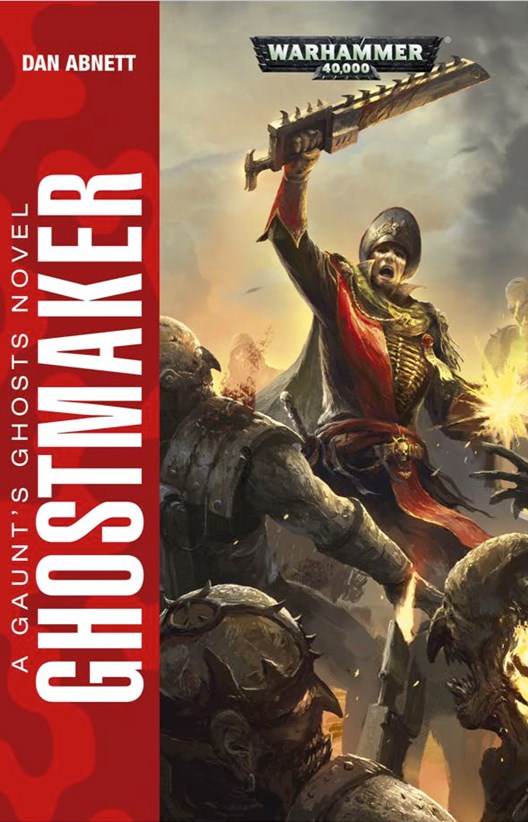
Warhammer Ghostmaker Cover

Publisher: Black Library (Audiobook – January 2000)

Series: Gaunt’s Ghosts – Book Two

Length: 10 hours and 15 minutes

My Rating: 4.75 out of 5 stars

Amazon

Welcome back to my Throwback Thursday series, where I republish old reviews, review books I have read before or review older books I have only just had a chance to read.  For my latest Throwback Thursday, I check out another Warhammer 40,000 novel with an epic entry from Dan Abnett’s classic Gaunt’s Ghosts series, Ghostmaker.

I have been in a real Warhammer 40,000 mood lately so I thought I would continue to explore some outstanding books from legendary Warhammer author Dan Abnett.  Abnett is one of the most prolific and highly regarded contributors to the extended Warhammer universe, having created a huge range of compelling series and unique standalone books, most of which are considered the gold standard of Warhammer tie-in novels.  One of his most significant contributions to the Warhammer 40,000 universe is the Gaunt’s Ghosts series, which follows a ragtag group of human soldiers as they are dragged from deadly battleground to deadly battleground.  Made up of 15 novels, a ton of short stories and some other intriguing inclusions, the Gaunt’s Ghosts is a very iconic series in Warhammer 40,000 lore, which has spawned some awesome spinoffs and stories.  I had an outstanding time reading the first entry in the series, First and Only, and I also recently read the prequel novel, The Vincula InsurgencyGhostmaker was another impressive early entry in this series, and I had a wonderful time listening to it last week.

Colonel-Commissar Ibram Gaunt and the men of the Tanith First-and-Only, also known as Gaunt’s Ghosts, are some of the toughest soldiers serving the Imperium of Man.  The only survivors of the now dead world of Tanith, the Ghosts bear a substantial grudge against the forces of Chaos, as well as a complex relationship with their commander who saved their lives by abandoning their planet.  Now deployed to the jungle world of Monthax, the Ghosts prepare for their next inevitable battle against the Chaos host.

As the Ghosts await their next confrontation, Gaunt walks the lines, reliving the events that made his regiment what it is, while also growing close to the unique individuals he commands.  Each member of the Ghosts has their own story, and all have been forged in the crucible of war alongside their fearless commander.  But when battle is joined again the Ghosts find themselves in a unique confrontation that pulls on their tragic history and forces them to relive the worst day of their lives.  Is this the event that will forge the Ghosts into a legendary regiment, or will the survivors of Tanith break when they are needed most?

Abnett once again showcases why he is one of the very best Warhammer authors out there with this brilliant second entry in the Gaunt’s Ghosts series.  Bringing together several fantastic narratives into one character-driven plot, Ghostmaker is a key and compelling entry in this wider series that I absolutely powered through in a couple of days.

Ghostmaker is a compelling and powerful Warhammer 40,000 novel that continues to explore the intriguing members of the Tanith First-and-Only regiment.  Abnett spins a unique narrative in Ghostmaker, as this book reads more like a short-story collection than a typical novel.  Broken up by several brief sequences in the present on Monthax, most of the book revolves around a series of self-contained, character-driven background stories that showcase the history of the regiment and its members.  This includes a dive into the tragic formation of the regiment and the death of the planet Tanith, and you also get a view of some of the earliest battles the Ghosts fought in.  As Ghostmaker continues, the next series of stories each contain a more focussed narrative that dive into specific members of the regiment.  These shorter stories usually showcase one of these focus characters’ key battles or moments as a Ghost, while also diving into their personality and personal histories.  This deep dive into the key characters really helps you bond with the cast of this series in a whole new way, and I liked seeing more of these unique figures.  Everything comes to a head in the final quarter of the novel, when the story is dragged back to the conflict on Monthax as the Ghosts advance into battle.  Several key plot threads and recurring characters from the previous short stories make a reappearance here, and I loved how Abnett was able to connect this storylines together to make a cohesive and captivating overarching plot.  The final sequences are loaded with some of the deadliest fights in the entire novel, while also resolving a ton of character arcs and personal storylines raised in the previous entries.  The end result is a powerful and compelling overall story that really drags you in while giving you additional insights into some of Abnett’s best characters.

I really appreciated how Ghostmaker came together, and Abnett really showed off his writing skill by combining these shorter stories together the way he did.  I especially enjoyed how the multiple short stories gave Ghostmaker various tones as the reader continued through it.  For example, while most of the stories featured battles and war, there were also some more subtle stories of politics and investigations.  Abnett also featured some dark psychological stories as well as some deeply personal and brutal survival tales.  This variation in narratives and settings gave the book an eclectic feel, but I think that was very appropriate considering the regiment that Abnett was writing about.  All the shorter stories contained within Ghostmaker were entertaining in their own way, although a few definitely stood out over the rest.  Each story was extremely well written, concise, and fast-paced, and any leftover narrative threads are clipped off in the final entry, so the reader isn’t left wondering about anything.  The book also features a ton of awesome battle sequences in nearly every chapter and Abnett has a great skill at showing the horrors the men face during their dangerous battles, especially when they go up against supernatural or horrific foes.  Abnett also presents this book as a gritty war novel, with many of the stories focusing on the damaged and traumatised common troops who have been dragged into a series of terrible situations.  I have often said that some of the very best Warhammer novels focus on the common human soldiers (for example Steel Tread or Krieg), and Ghostmaker was one of the better examples of this I have seen in Warhammer fiction.  You really can sense the characters pain through the various chapters, especially when reminded of their home, and this makes for quite an emotionally rich read at times.

As I have mentioned a few times above, one of the major strengths of this book, and indeed the entire Gaunt’s Ghosts series, are the outstanding characters that Abnett focuses his stories around.  Throughout the course of the series, Abnett has introduced a great core of complex central protagonists who you really grow attached to.  However, Ghostmaker perhaps gives the best look at these characters, as it showcases their histories while also chucking them into deadly and deeply personal situations.  You really grow attached to these protagonists as the book proceeds and Abnett crafts some outstanding and wildly entertaining narratives around many of the cast, which are really fun to read.

As with most books in the series, a lot of Ghostmaker’s plot is focussed on the central character of Colonel-Commissar Ibram Gaunt, the Ghost’s commander.  Abnett continues to paint Gaunt as a caring and charismatic leader who recognises the sacrifice his men have made and is determined to keep as many of them alive as possible.  Most of Gaunt’s personal history before the events of Tanith was covered in the last book, and Abnett doesn’t rehash that in Ghostmaker.  Instead, you get to see Gaunt’s actions during and after the fall of Tanith, and I loved the examination of the guilt and responsibility he feels for abandoning the planet.  While the first chapter of this book primarily focuses on Gaunt, he also appears as a major figure in all the other protagonist’s stories, and it was fascinating to see the other Ghost’s opinions of him, especially as many have both resentment and respect for him.

Ghostmaker also spends a ton of time exploring several other key Ghosts, and Abnett does an excellent job of perfectly utilising all these great characters.  There are some brilliant tales surrounding these figures, and many also appear as supporting characters in other chapters, with some storylines crossing over.  Naturally, some of the characters stand out a little more than others, due to having personal plots that were particularly fun or intense.  Colm Corbec, the regiment’s second-in-command, is a major figure throughout most of the book, and I liked how Abnett expanded on him and focused on his different leadership style to Gaunt.  The story surrounding the seemingly stupid Trooper Bragg was extremely funny, especially with the slow-burn reveal of the character’s deep cunning, and you must love how funny and likeable Bragg is.  The story around the Ghosts’ medical officer, Tolin Dorden, was also very good, as it not only highlighted his position as the oldest Ghost, but also his refusal to sacrifice a life.  Other highlights include the trippy story of ace sniper Hlaine Larkin, who loses his mind during a mission, or the intense and compelling tale of elite scout Sergeant Mkoll, whose keen senses serve him well in the most hostile of environments.

However, I felt that the best two stories in Ghostmaker revolved around the characters of Major Rawne and Brin Milo.  Rawne is a murderous and slippery character who bears a great deal of hate and disdain towards Gaunt following the destruction of Tanith.  His story sees himself and Gaunt trapped together on an ice planet, which forces the two to work together.  Seeing the hateful Rawne trying to work out whether to kill Gaunt in cold blood or resolve their differences another time, makes for some compelling reading, and Rawne is probably one of the most complex and intense figures in the series.  Milo on the other hand is Gaunt’s young adjutant and the only civilian who survived the destruction of Tanith.  Milo serves a unique position in the Ghosts, and I really appreciated how Abnett explored how the rest of the regiment views him.  Milo’s story was particularly good, as politics sees him getting investigated by an Imperial Inquisitor for potentially having psychic abilities.  The scene where Milo manages to outplay the Inquisitor during his interrogation is one of the best scenes in the entire book and it really shows you just how clever he is, while also hinting at a potentially deeper secret.  All these characters, and more, help to turn Ghostmaker into a particularly enjoyable and fun read and I was very glad that Abnett gave us a closer look at the main supporting cast in this novel.

I felt that Ghostmaker was a great addition to the wider Warhammer 40,000 canon, as well as a great entry in the Gaunt’s Ghosts series.  While it is the second novel in the series, readers can easily get into Ghostmaker without any knowledge of the prior books, especially as Abnett spends so much time exploring the characters and the unit’s history.  While some of the narrative is set after the events of First and Only, Abnett does a great job reintroducing any relevant elements again in Ghostmaker and you don’t need too much pre-knowledge to enjoy the plot.  Ghostmaker would also serve as an interesting entry point for those who aren’t familiar with the Warhammer 40,000 franchise.  Abnett makes his novel very accessible to new readers, and I liked how he carefully and subtly introduced key elements of the wider universe, mainly those that concern the common soldiers.  The continued expansion of the Sabbat Worlds Crusade made for an interesting background to the book, and Abnett introduces or references several factions or regiments here that will go on to have a bigger role in later novels.  For example, Ghostmaker introduces readers to the Royal Volpone regiment (better known as the Bluebloods), who serve as rivals to the Ghosts and who recently got their own novel.  I had an incredible time diving back into the Warhammer 40,000 universe in Ghostmaker, and Abnett did a great job of expanding this already elaborate universe.

As with most Warhammer novels I enjoy, I chose to listen to Ghostmaker’s audiobook version, which was an excellent way to dive into this compelling read.  The audiobook format really allows the reader to get transported into the middle of the epic fights that are the hallmark of this fantastic series, while also ensuring that the reader absorbs all the key information about the surrounding universe.  Coming in at just over 10 hours in length, this is an easy audiobook to get through quickly, and I tore through the Ghostmaker audiobook in short order.  It helped that Ghostmaker was narrated by the very talented Toby Longworth, who voices most of Abnett’s Warhammer audiobooks.  Longworth has an excellent voice that fits the intense, character-rich tone of Ghostmaker extremely well, and he can move the plot along at a fast and compelling pace.  In addition, he has a brilliant take on all the key characters featured within the series and he provides everyone with a unique and fitting voice.  He also has the fantastic ability to capture the emotions and personality traits of the various characters with his tones, and you really get inside their heads when he talks.  This was an outstanding audiobook and I would strongly recommend it as the best way to enjoy this amazing novel.

Overall, Ghostmaker was a fantastic and impressive read by Dan Abnett and I am really glad I took the time to read another Gaunt’s Ghosts novel.  Featuring a distinctive format and some amazing character-driven stories, Ghostmaker beautifully expanded on the groundwork Abnett laid down in First and Only and this serves as an excellent and powerful addition to the series.  I deeply enjoyed this book, and I can think of no better way to illustrate this than to mention the fact that the moment I finished Ghostmaker I immediately started listening to the other Dan Abnett audiobook I had loaded on my phone, Xenos.  I really cannot recommend this series enough, and if you are interested in trying out some Warhammer 40,000 fiction, then the Gaunt’s Ghost series is the perfect place to start.

Amazon

Warhammer 40,000: The Wraithbone Phoenix by Alec Worley

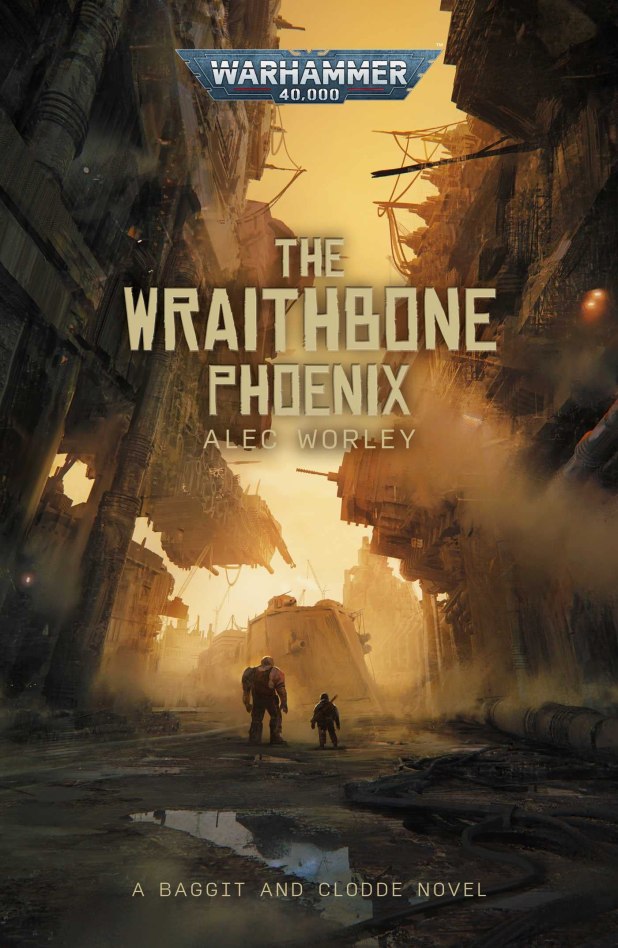
The Wraithbone Phoenix Cover

Publisher: Black Library (Audiobook – 30 August 2022)

Series: Warhammer Crime

Length: 11 hours and 6 minutes

My Rating: 4.75 out of 5 stars

Amazon     Book Depository

The entertaining team of Baggit and Clodde return for another Warhammer Crime adventure in the rip-roaring and deeply exciting science fiction thriller romp, The Wraithbone Phoenix by the impressive Alec Worley.

Last week I presented a review that talked about the intriguing Warhammer Crime series that combined crime fiction narratives with elements of the iconic Warhammer universe to create some amazing reads.  While some Warhammer novels already feature some intriguing crime fiction elements, such as in Necromunda novels like Kal Jericho: Sinner’s Bounty by Joshua Reynolds, the Warhammer Crime books are a much more complete melding, with cool thriller plots and complex mysteries.  I was rather intrigued by this concept, especially as I love it when authors combine wildly different genres together, and I mentioned how I planned to try out one of those books next.  Well, that book was The Wraithbone Phoenix by Alec Worley, an awesome and captivating read set in the Warhammer 40,000 universe.  A follow-up to Worley’s 2020 full-cast audiobook, Dredge Runners, The Wraithbone Phoenix is a full-length novel that brings back the protagonists of the original audiobook and puts them in another unique and deadly situation.

In the far future of the universe, there are few places more corrupt and chaotic than the crime-ridden city of Varangantua.  Life is cheap on the mean streets of Varangantua, and death waits around every corner, especially if you have a massive bounty on your head.  Unfortunately, the most wanted in the city currently are the abhuman deserters turned criminals, Baggit and Clodde.  Baggit, a tricky ratling always looking for the next score, and Clodde, his ogryn friend with a rare facility for thought, have made an enemy of one of the most dangerous men in the city, and now everyone is after their heads.  Hiding out within one of the city’s industrial salvatoriums, Baggit and Clodde have taken on new identities until the heat dies down.  However, the twos natural inclination for getting into trouble soon breaks their cover, and they are soon forced out into the open.

Desperate to find a way to pay off their debts, Baggit hears an interesting bit of news that could change all their fortunes.  One of the nearby salvatoriums is dismantling the decommissioned Imperial Navy ship, Sunstriker, the reputed home of a long-lost treasure, a xenos artifact known as the Wraithbone Phoenix.  Guided by the rumours he heard when previously served about the Sunstriker, Baggit believes that the Wraithbone Phoenix is still hidden aboard, and its value is more than enough to get rid of their bounty.

But no secrets every remain safe in Varangantua, and as Baggit and Clodde make their preparations to sneak into the Sunstriker, news of their location and their potential treasure leaks out.  Soon every criminal, bounty hunter, treasure hunter and mercenary is on their way towards the Sunstriker, desperate to claim either the bounty on Baggit and Clodde’s head, or the Wraithbone Phoenix.  Forced to face off against the very worst killers that Varangantua and its main criminal cesspool, the Dredge, has to offer, Baggit and Clodde attempt to do the impossible, recover the artefact from the ship and get out with their heads intact.  But can even the clever Baggit and the indomitable Clodde escape the deadly wave about to crash down upon them?

Wow, now this was one of the most entertaining and thrilling Warhammer 40,000 novels I have read all year.  Worley has produced an amazing novel in The Wraithbone Phoenix that did a wonderful job blending Warhammer elements with an impressive crime fiction narrative.  Filled with a ton of action, some amazing humour, and so many outrageous characters, The Wraithbone Phoenix is an outstanding read that proves to be extremely addictive.

I had such a brilliant time with The Wraithbone Phoenix, especially as Worley pulled together an extremely impressive and intense narrative that is very hard to put down.  Set in a particularly crime-ridden and corrupt city, the novel sees the chaotic duo of the ratling (halfling/hobbit) Baggit and the ogryn (ogre) Clodde, get into all manner of trouble.  Featuring a range of character perspectives, the first third of the book is pretty firmly focussed on the main duo, with some fun scenes from the contemptable villain Lemuel Scratchwick.  Forced into hiding due to past mistakes, Baggit comes up with an ambitious plan to recover the Wraithbone Phoenix, a legendary xenos treasure that is rumoured to be hidden in a nearby ship being scrapped (the theft and hiding having been cleverly set up in some early interludes).  However, after Lemuel overhears and spills the beans in a very public way, the entire city knowns what the two are planning, and a horde of killers and thieves head towards the ship.  The book starts spreading its focus to several other outrageous figures, all of whom are interested in either the Wraithbone Phoenix or killing Baggit and Clodde.  The author does a wonderful job introducing each of the characters, and you soon become invested in their hunt, as all of them are pretty amusing in their own way.  The action ends up in the decommissioned ship, were everyone starts their search for the missing treasure, and it doesn’t take long for everyone to start fighting each other in a series of bloody battles.  You honestly have no idea who is going to survive the various encounters, and it is very fun to see the distinctive characters dying in surprisingly and compelling ways.  At the same time, the characters also attempt to solve the mystery of the hidden Wraithbone Phoenix, and the various hints about its initial disappearance are cleverly woven into the modern tale, requiring the protagonists to solve it.  Eventually, only a few characters are left, and there is a great series of twists and turns that sees everyone get what they truly deserve.  While I did think that Worley perhaps went one twist too far (the final one was a bit too metaphysical for my taste), the reader comes away extremely satisfied, and highly entertained.

I had a wonderful time with this awesome book, and I think that Worley did a great job setting the entire narrative out.  The combination of crime fiction elements and the great and grim Warhammer 40,000 setting worked extremely well, and you ended up with a high-octane thriller that saw futuristic and half-crazed killers go against each other in a deadly contest for money and treasure.  The use of various perspectives allows you to get to know the various outrageous killers and participants in a very short amount of time, and you are soon invested in them and their various personal struggles as they duke it out.  I was getting a very cool and cinematic vibe from this story that put me in mind of films and books like Smoking Aces, Snatch or Bullet Train, with big casts all working against each other for the same goal.  While you are generally rooting for the main two characters, it is also very fun to see the other players in action, and the multiple unique interactions all these crazy figures have results in an impressive and frenetic read.  Worley backs this up with a ton of brilliantly written and highly detailed action sequences, and you really won’t believe the range of destruction and deliciously devious deaths that occurs.  There are so many impressive and cleverly set up moments throughout this narrative, and the deaths of several characters are usually the result of some well-placed bit of trickery that occurred chapters ago.  All this action, intrigue and character development is perfectly bound together by the book’s overarching humour, which helps to balance out the more intense elements of the novel, while also keeping everything darkly funny.  There are so many good jokes or hilariously over-the-top moments scattered throughout the novel, and I had a lot of great laughs as I powered through it.  Heck, even the title, The Wraithbone Phoenix, is a play on the classic noir book/film, The Maltese Falcon.  Everything comes together so perfectly throughout the book, especially as Worley also includes several outstanding interludes, some brilliant flashbacks, and even some hilarious in-universe text excerpts and announcements, all of which add perfectly the funny, but grim, tone of the book.  This was an incredibly well written and captivating read, and it proves quite impossible to put down at times.

While The Wraithbone Phoenix does have an outstanding crime fiction narrative, this book wouldn’t be anywhere near as good if it weren’t set in the grim future of Warhammer 40,000.  Worley did a remarkable job setting the book in this futuristic world, and it was great to see the various technologies and factions from the game being utilised in a crime story.  The author really works to explain many different elements from the Warhammer 40,000 lore here, and readers new to the franchise can easily dive into this book and start appreciating its clever story and settings.  I particularly loved the primary location of the corrupt city of Varangantua.  The author expands on this city a lot in this new book, giving more depth than it had in Dredge Runners, and you see more of the massive industries the planet supports, and the terrible conditions the people forced to work there endure.  Worley continues to hammer home just how much of a dark, dystopian society Varangantua, and the larger Imperium, really is for ordinary human citizens, and that their supposedly enlightened rulers are in many ways just as bad, if not worse, than the various monsters and the forces of Chaos they fight against (at least Chaos worshippers are honest about their intentions).  You can really sense the woe and control that Varangantua’s rulers have over the populace, and this is only enhanced by the various propaganda announcements that are played at various intervals throughout the book.  The propaganda posts are very obviously biased in their attempted manipulations and exhalations for service and order, that they are all extremely funny, even as they show just how bad things are by denying them.  However, Worley takes this even further by showing the darker, criminal side that surrounds the city, and it was really cool to see just how much worse things could get.

One of the most intriguing Warhammer 40,000 elements that Worley explores in The Wraithbone Phoenix is how the Imperial abhumans are treated.  Abhumans are genetically diverse humans who come in many shapes and sizes, like the small and sneaky ratlings and the gigantic, but dumb, ogryn.  Tolerated by the Imperium for their usefulness, these abhumans are treated as second-class citizens, looked down on by everyone just for the way they were born.  While this has been explored in other books, Worley really hammers it home in The Wraithbone Phoenix, especially as the two main characters are both abhumans.  You get a brilliant examination of how abhumans are regarded throughout the Imperium, both in the Astra Militarum and in general society, and the results are pretty damn grim.  Not only do all the humans treat them terribly and generally tell them they are worthless (there is an entire litany they need to learn about them being abhorred, unclean, but forgiven), but there are multiple examples of abhumans being killed or maimed, just for what they are.  Not only is this fascinating, while also enhancing the dark nature of the Imperium and the supposedly righteous humans, but it also becomes quite a key plot point throughout the book.  There are multiple scenes that focus on the protagonists struggling to deal with the prejudice they have suffered throughout their life, which defines them and drives them.  In addition, the plot around the hidden Wraithbone Phoenix is down to a mistreated ratling trying to get his revenge after being unfairly targeted and left filled with hate.  This proves to be quite a fascinating and well-written aspect of The Wraithbone Phoenix, and I loved being able to see everything from the abhumans perspective.

I also have a lot of love for the excellent characters that Worley set his story around.  There is such a great range of distinctive and captivating characters throughout The Wraithbone Phoenix, and you really get drawn into their individual tales and battles for survival and redemption.  Most of the focus ends up going around the main characters of the book, Baggit and Clodde, abhuman Astra Militarum deserters turned criminal entrepreneurs who were introduced in Dredge Runners.  Worley ensures that new readers can quickly pick up who Baggit and Clodde are, and it was so much fun to follow this ratling/ogryn combination, especially as they continued their chaotic lives of crime.  Both protagonists have their own brilliant characteristics, including Baggit’s (I assume the name is a fun homage to Bilbo/Frodo Baggins) enjoyment of plans and schemes that never work out, and the surprisingly smart and philosophical nature of Clodde (that’s what happens when you get shot in the head).  The two characters play off each other perfectly, with Baggit taking on the role of leader and carer for his big comrade, and Clodde letting him, while also not allowing him to get away with anything, thanks to the increased understanding he has.  We get a bit more history surround these two characters, including their time in the army, and while it is not fully explored yet, you get to see the fantastic bond they have.  Baggit ends up getting a bit more of a focus in this book than Clodde, mainly because the central plot point is so tightly tied to the fate of a mistreated ratling.  Baggit, who suffered his own abuse from humans while serving, becomes obsessed with the fate of this long dead ratling, and he is determined to find out what happened to him and whether he got his revenge.  Baggit really emphasises with him as the story continues, and his obsession for answers lead him to make some big mistakes, especially once he learns all the ancient ratling’s secrets.  Both Baggit and Clodde are extremely likeable, and you can’t help but fall in love with the scheming ratling and the sweet, if brilliantly weird, ogryn.

Aside from Baggit and Clodde, Worley also fills The Wraithbone Phoenix with an eclectic mix of characters, with some very diverse storylines and characteristics to them.  The most iconic and heavily featured are the various assassins, bounty hunters and other individuals who are flocking to the Sunstriker for various reasons, be it money, treasure, or a chance of redemption (sometimes all three at once).  This list of crazy characters includes a genetically enhanced killing machine, a cult of phoenix-worshiping wackjobs, a team of elite mercenaries, an ageing bounty hunter trying to regain his reputation, a sadistic archaeologist with a love of whips, another ratling with a past connection to Baggit and Clodde, a disgraced and drunk Imperial Navy officer with a dream of finally impressing his dead mother, and the mysterious hooded assassin known only as Death.  Worley did a really good job of introducing each of these unique figures, and you swiftly get drawn into their compelling personal stories and outrageous personalities, especially after witnessing several scenes from their perspective.  While I could go on for ages about all of these dangerous people, I’m mainly just going to give a shoutout to the character of Lemuel Scratchwick, a steward at the plant Baggit and Clodde were working at, who really grows to hate the pair.  Dragged down from his high perch by them, Lemuel spends the rest of the book trying to get even and comes across as the most arrogant and detestable villain.  It is so amusing to see Lemuel in action, especially as his pride often gets the better of him and nothing goes his way, much to my delight.  He forms quite an unhealthy rivalry with Baggit which draws them both into taking stupid risks.  All these over-the-top, but deeply likeable characters, really enhanced my enjoyment of this book and I can’t wait to see what impressively outrageous figures appear in Worley’s next novel.

Unsurprisingly, I chose to listen to The Wraithbone Phoenix on audiobook, which is really one of the best ways to enjoy a great Warhammer book.  This was a moderately long audiobook, coming in at just over 11 hours, and I found myself getting through it in a relatively short amount of time, including powering through the last several hours in a day trying to get to the conclusion.  This was a very fun and entertaining audiobook, and I had a great time listening to the awesome humour and intense violence unfold, especially as the narration by Harry Myers painted quite an impressive picture.  Myers, whose work I previously enjoyed in another recent Warhammer 40,000 novel, Day of Ascension by Adrian Tchaikovsky, does a pretty epic job in The Wraithbone Phoenix, and I loved his narrative take on the captivating story.  Every character in this audiobook is given their own distinctive and fitting voice, which I deeply enjoyed, especially as it helps the listener to connect more to them and the story.  Myers clearly had a lot of fun when it came to voicing all the outrageous figures and some of the voices he came up with were very amusing.  I really appreciated the squeakier voice he used for the rattling characters, as wells as the deeper boom of Clodde, and the rest of the voices he came up with were not only distinctive and fun, but they also helped to enhance the inherent traits of the character it was associated with.  For example, he really conveyed the deep arrogance and distain contained within the character of Lemuel Scrathwick, as well as he dramatic decline in sanity as the book unfolded, and I really appreciated the narrator’s attention to detail with that.  Myers really impressed me as a narrator in The Wraithbone Phoenix, and I liked how some of his scenes, namely those depicting the in-universe propaganda, were enhanced with some serious and inspiration music and sound effects, which made the absurd declarations even more hilarious.  This was such a good audiobook, and I cannot recommend it enough as a way to enjoy this epic Warhammer novel.

Overall, this was an outstanding first Warhammer Crime novel from me, and I had such an incredible time getting through this book.  The Wraithbone Phoenix is an impressive and highly addictive Warhammer 40,000 read, and I loved the elaborate story that Alec Worley came up with for it.  Containing some brilliant characters, a highly entertaining story, and a great combination of crime fiction and Warhammer elements, The Wraithbone Phoenix comes highly recommended, and you are guaranteed to have an exceptional time reading this witty and intense read.

Amazon     Book Depository

Quick review – Warhammer 40,000: Dredge Runners by Alec Worley

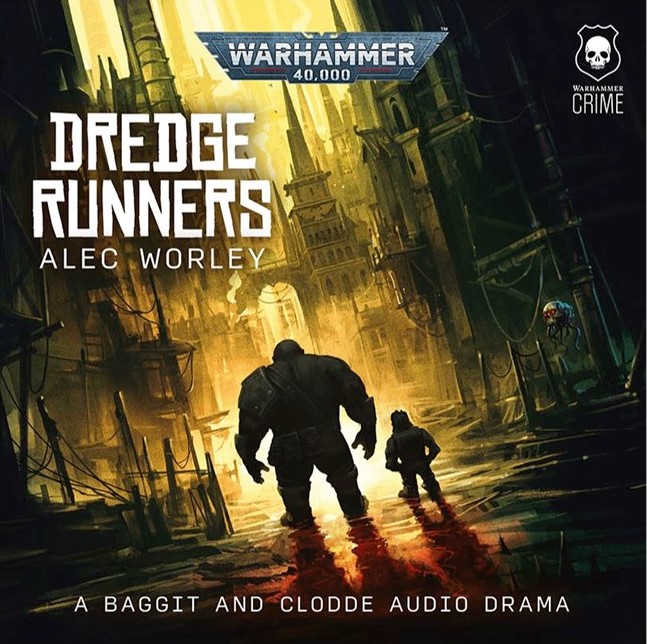
Dredge Runners

Publisher: Black Library (Audiobook – 8 August 2020)

Series: Warhammer Crime

Length: 1 hour and 1 minute

My Rating: 5 out of 5 stars

Amazon

Prepare to dive into the dark and fun world of the Warhammer Crime subseries with the short but incredible hilarious audio drama, Dredge Runners by Alec Worley.

Fans of this blog will be well aware of my current obsession with all things Warhammer fiction, as I have been making an effort to try out a range of their recently released books, all of which have been highly entertaining reads.  One of the main things that I love about the tie-in fiction that surrounds the Warhammer tabletop games is the sheer range of different stories that can be told, especially as the various authors associated with this franchise often go out of their way to blend it with other genres and story types.  As a result, there are several great Warhammer sub-series out there at the moment, including the Warhammer Crime books, which dive into the criminal underbelly of the Warhammer 40,000 universe and presents the readers with some intriguing and unique adventures.

I have been meaning to check out some Warhammer Crime novels for a while, especially as there are some quite fascinating sounding books already part of it.  I love the idea of the grim and gothic Warhammer universe blending with a more traditional crime fiction read, and I know I am going to have a lot of fun with all of them.  As such, when I saw that a new Warhammer Crime book, The Wraithbone Phoenix by Alec Worley, was coming out, I thought that it would be a good entry point to the wider Warhammer Crime sub-series.  However, I noticed that The Wraithbone Phoenix was actually a follow-up to a previous short story by Worley, Dredge Runners, which was released in 2020 as a full-cast audio drama.  Well, I am a reviewer who likes the get the complete picture and considering that Dredge Runners was just over an hour long I figured I would listen to it quickly to get some context before diving into The Wraithbone Phoenix.  As such, I listened to the whole of Dredge Runners in one go this morning, and it proved to be quite an amazing and amusing listen.

Goodreads Synopsis:

A Warhammer Crime Audio Drama

Baggit the ratling and Clodde the ogryn fight to survive on the mean streets of Varangantua as powerful enemies close in from all sides.

LISTEN TO IT BECAUSE
Experience the sounds of a crime-ridden city and enjoy the twists and turns of a tale starring some of the more unusual inhabitants of the Imperium of Man.

THE STORY
Baggit is a fast-talking ratling sniper with a greedy eye and loose morals. Clodde is an ogryn, a brute with a core of decency and a desire for a better life. Two abhuman deserters turned thieves, at large in the monolithic city of Varangantua, where only the tough or the ruthless survive. Having landed in debt to a savage crime lord, Baggit and Clodde end up in the crosshairs of the meanest, most puritanical sanctioner in the city. Caught between two powerful enemies, and with innocent lives at stake, the unlikely companions must think fast and hustle hard before death points a las-pistol in their direction… 

Unsurprisingly, Dredge Runners turned out to be just as amusing and fantastic as the plot synopsis suggested.  I loved the idea of two abhumans, in this case a ratling (a futuristic halfling sniper) and an ogryn (ogre), getting involved in a series of disastrous criminal enterprises after getting caught between the city’s biggest crime lord and a puritanical sanctioner (law enforcement official).  Despite its short runtime, Worley achieves a lot with Dredge Runners, perfectly introducing his excellent protagonists and taking them on a wild science fiction thriller adventure that includes hilarious exchanges, failed undercover operations and explosive heists.

Told completely through dialogue (with some sound effects giving off extra context), Dredge Runners’ story draws you in within the first few minutes as the author blends the more outrageous elements of the Warhammer 40,000 universe with a dark but amusing crime fiction narrative.  Due to the length, you do not often get the full story of the events taking place, but the subsequent reaction by the characters allows you to imagine the full destructive scope of their actions, and it often proves funnier this way.  There is a real focus on humour in this short production, and I was constantly left in stiches at some of the fantastic antics that the main characters get up to as a chaotic team.  However, the story also has some real heart to it, especially towards the end when the protagonists are forced to make some tough decisions about their future, and they find their greed crashing up against their moral responsibility to other abhumans.  Throw in some memorable and deeply cynical propaganda messages from the city authorities that shows just how corrupt and repressive the entirety of Imperial culture is in the Warhammer 40,000 universe (the one that concluded the story had me laughing hard), and this proves to be an outstanding Warhammer production that I had an absolute blast getting through.

One of the main things that Worley achieved with Dredge Runners is the successful introduction of protagonists Baggit and Clodde, who serve as a fantastic central duo.  On the surface, Baggit is a thieving rattling who serves as the team’s leader and plan maker, while Clodde is the muscle, going along with Baggit’s plans and often messing them up by not understanding them.  However, there is a lot more to both of them.  Baggit is desperate to escape the dark life they currently have in Varagantua and feels a responsibility to Clodde due to their connected past.  Clodde, on the other hand, is a rather unique and amusing ogryn character, who has an unusual intellectual side after getting shot in the head (by Baggit).  As such, Clodde comes off as surprisingly deep and philosophical, and he is way smarter than he appears, especially when it comes to Baggit’s antics.  These two play off each other perfectly, especially with Clodde acting as the group’s conscious, and their eventual attempts to get justice and do the right thing, paints them in a much different light that makes them even more likeable.

I really need to highlight the outstanding way that this audio drama was presented, as the fantastic production melded well with Worley’s great script.  Acted out by a full cast of talented voice actors and narrators who tell the entire story through dialogue, this was a really fun Warhammer presentation to listen to, especially as the dialogue was also enhanced by some great sound effects and small bits of music.  I was particularly impressed by the voice actors, as each of them gave it their all when it came to their specific character/characters, moulding their voices to fit their distinctive traits and personalities.  The cast was led by Jon Rand (Baggit) and Paul Putner (Clodde), who I previously deeply enjoyed in Ghazghkull Thraka: Prophet of the Waaagh!.  These two actors did an outstanding job with their abhuman characters in Dredge Runners, and they play these two humorous figures perfectly, showcasing their different natures while also slowly revealing their outstanding hidden hearts.  These two are expertly matched by Emma Noakes and Kelly Hotten, who play the antagonistic crime lord and sanctioner respectively.  Noakes and Hotten both bring some outstanding menace to their roles, and I loved hearing these more serious characters attempt to deal with the chaotic main characters.  The voice cast is rounded out by veteran narrators, David Seddon and Andrew James Spooner, who narrate some of the fun supporting characters, and I loved some of the unique and compelling voices they brought to the table.  This entire audio drama comes together extremely smoothly, and listeners are constantly aware of all the actions going on in the story, especially with the fantastic cacophony of explosions, gunshots and screams that often happen around Baggit and Clodde.  I had a wonderful time listening to Dredge Runners in one go, and you will not be disappointed with this excellent audio production.

Overall, Dredge Runners was an awesome and highly impressive Warhammer 40,000 short, that is well worth checking out.  Not only did Alec Worley come up with a captivating and deeply hilarious narrative and script for this production but it features an outstanding and talented voice cast who perfectly perform it.  As such, Dredge Runners was a particularly epic introduction to the Warhammer Crime sub-series, and I had an outstanding time seeing just how amazing and unique crime fiction in the Warhammer 40,000 universe can be.  I am really glad that I chose to check out Dredge Runners first, and I honestly was surprised at just how perfectly entertaining this short audio drama turned out to be.  As such, I am giving it a five-star review and I am now extremely excited to see how the next adventure of Baggit and Clodde turns out in The Wraithbone Phoenix.

Amazon

Throwback Thursday – Warhammer: Van Horstmann by Ben Counter

Van Horstmann Cover

Publisher: Black Library (Paperback – 1 February 2013)

Series: Warhammer Fantasy

Length: 415 pages

My Rating: 4.75 out of 5 stars

Amazon

Welcome back to my Throwback Thursday series, where I republish old reviews, review books I have read before or review older books I have only just had a chance to read.  For my latest Throwback Thursday I review another awesome Warhammer Fantasy novel, the compelling and unique Van Horstmann by Ben Counter.

Another week, another Warhammer tie-in novel that I must review.  I have been really diving into this franchise over the last year; to be fair, there are some incredible books there, including the two 2022 Warhammer 40,000 releases that got a full five-star rating from me, Ghazghkull Thraka: Prophet of the Waaagh! by Nate Crowley and Assassinorum: Kingmaker by Robert Rath.  Some of the best of these books are tie-ins to the now destroyed Warhammer Fantasy universe, including the novel from last week’s Throwback Thursday, Runefang by C. L. Werner.  Well, my current obsession with all things Warhammer continued again as I recently read the awesome Van Horstmann by Ben Counter.  Counter is a well-established author of Warhammer fiction, having made a ton of impressive contributions to the franchise, including his Grey Knights and Soul Drinkers series, as well as his entries in the massive Horus Heresy series.  I was really drawn to Van Horstmann when I picked it up, not only because it has a great cover (love a cover with a dragon on it), but because of its intriguing plot, which sounded extremely awesome.

In the human realm known as the Empire, magic has been feared and mistrusted through most of its history, with practitioners hunted down and burned at the stake.  However, following the Great War against Chaos, the elven mage Teclis was allowed to train various talented humans in the use of magic, establishing the eight Colleges of Magic that train scholars and battle mages to help the armies of the Empire.  Out of all the colleges that were formed, the most revered are the College of Light, whose powerful light magic can be used to push back the darkness of Chaos.

Years after its formation, a young wizard manages to find the College of Light, hidden behind a magical barrier in the Imperial capital, Altdorf.  This wandering wizard, Egrimm van Horstmann, is a talented young mage whose desire for knowledge and skill at manipulating the Wind of Hysh immediately impress his new teachers, and many believe that he will rise high in the order.  However, van Horstmann has a dark secret that burns deep within him, and knowledge, power and ambition aren’t the only reasons for his joining the Light Order.

As van Horstmann rises in the ranks of his order, it soon becomes apparent that he has a diabolical plan.  Working with dangerous forces, including daemons, cursed items and even the Chaos god Tzeentch, van Horstmann begins to manipulate his order, the other colleges, and even the emperor to get what he wants.  But the closer he gets to achieving the goal, the more enemies he makes, and soon factions within the Light Order and the greater Empire begin to move against him.  Can van Horstmann succeed in his mission before his dark purpose is discovered, or will his dastardly designs unleash the great and uncontrollable power hidden at the very heart of the College of Light?

This was an impressive and deeply captivating Warhammer Fantasy novel, and I absolutely loved the elaborate and clever narrative that Counter came up with.  Focusing on an intriguing villainous figure and crafting an addictive story around him that also explores key aspects of the franchise’s lore, Van Horstmann was an outstanding novel, and it was probably the best Warhammer fantasy novel I have read so far.

Counter has come up with an excellent and impressive narrative for Van Horstmann, which, as the name suggests, is completely focused on the character of Egrimm van Horstmann.  For those who don’t know, van Horstmann was a minor special character for the Chaos army in some of the earlier editions of the games, but he didn’t have that much background or lore surrounding him.  I personally knew him due to his name being associated with one of my favourite magical items available to Empire armies in the later editions, Van Horstmann’s Speculum, which is a very fun surprise for an unwary foe (I have fond memories of using Van Horstmann’s Speculum in a game to switch stats between my Master Engineer and my brother’s Manfred von Carstein in a duel.  The look on his face as his ultimate general was suddenly weaker than my minor hero was just hilarious).  However, Counter manages to take the short background summary of the character and uses it as the basis for this novel, expanding on the tale of van Horstmann and showing how and why he infiltrated the Light Order and ended up betraying them, which results in an epic story.

Van Horstmann has a bit of a slow start to it, as Counter takes the time to set up key parts of the story, including an intriguing prelude that examines the first wizards of the Empire and their darkest secret.  From there, the story introduces the main character, van Horstmann, and shows his entry into the Light Order and his start as a student.  The story gets quite interesting after this, especially as you see van Horstmann involved in a demonic exorcism, which quickly highlights just how ruthless and cunning he can be.  The story picks up pace from there as you begin to witness van Horstmann’s inevitable rise to power as the full scope of his desire and despicable nature become fully apparent.  Most of the middle of the book showcases the characters careful and evil manipulations, as he manages to fool everyone and become more and more powerful through deals with daemons and the Chaos gods.  There are some brilliant scenes here as you witness the full scope of his plans, from a great battle scene against the skaven, to organising several duels between the various magical factions, all in the name of gaining power.  Counter really does a good job of showcasing this viewpoint through multiple perspectives, and while much of the focus is on the gloating van Horstmann, you also see how his actions impact several supporting characters, many of whom start to get suspicious.  The entire narrative has a great dark fantasy edge to it, that occasionally borders on horror (especially when the character interacts with some of the daemons and their dark gods), and I found myself really getting drawn into this story once everything had been set up.

This leads up to the epic conclusion that sees van Horstmann’s master plan enter its final phase while his enemies begin to realise his evil nature.  This ended up being an extremely impressive conclusion, and it really becomes apparent just how much stuff Counter had set up in the first two-thirds of the book.  Everything comes together here, as compelling story elements such as van Horstmann’s long-term plans, his troubled past, all his terrible actions while part of the order, the revelations about the foundation of the Light Order, several great secondary character arcs, and the attempted investigation by van Horstmann’s enemies, all pay off.  I really appreciated the brilliant and dark way that these storylines worked out, and there are some great revelations, especially around van Horstmann’s motivations and the full scope of his careful actions.  I loved the deep and very personal reasons behind the events, especially as van Horstmann has some extremely fantastic revenge planned, which was pretty epic to behold.  The entire novel ends on a brilliant note that sets up the character for his future appearances as a special character in the tabletop game, while also stabbing home that van Horstmann isn’t the absolute master manipulator that he thought it was.  This clever conclusion was the perfect ending to this gripping plot about a conniving and dangerously intelligent villain, and it was so much fun to see how everything ended.  These final pages and the outstanding conclusion they contained, definitely increased the overall awesomeness of the entire narrative, and seeing just how well every great twist and turn was set up is incredibly awesome.

This ended up being an excellent addition to the overall Warhammer Fantasy canon, and Counter did a wonderful job of working this elaborate and impressive story into the wider universe.  As I mentioned above, Van Horstmann adapted basic character notes from an older game book, and I felt that Counter expanded on all these details extremely well, working them into the wider history of the Empire.  There are some great explorations of several key factions throughout this novel, particularly the Empire and some of the forces of Chaos, and the reader really gets an impressive view of the iconic setting of Altdorf, where much of the narrative takes place.  However, the most detailed and fascinating part of Counter’s dive into the Warhammer Fantasy world revolves around the exploration of the Colleges of Magic in the Empire.  Without a doubt, Van Horstmann contains some of the best explanations of how human wizards perceive magic that you are every likely to see in a Warhammer novel and Counter spends a ton of time examining this.  While some of the explorations surrounding magic do get a bit overly metaphysical for their own good, they are always pretty compelling to see, and I loved how there is a fun focus on the various different orders of magic, especially Light and Gold magic, as there are some awesome fights between these groups.  However, it is the Light Order that gets the most attention in this novel, as the main character is nominally a member of this group.  There is so much detail put into showcasing the Light Order’s elaborate, hidden headquarters, as well as how their particular brand of magic works, and you come away with a pretty intense understanding of this, which I deeply enjoyed.

Now, due to the sheer level of intriguing detail and Warhammer Fantasy lore contained within this novel, Van Horstmann is a book best enjoyed by those already a fan of the franchise.  Counter dives into some fantastic and occasionally obscure parts of the lore, and established Warhammer fans will really appreciate the clever touches and revelations featured within.  That being said, Counter also spends time ensuring that new readers will be able to follow the narrative rather easily, and a lot of the book’s exposition is spent establishing the history, magical elements, and some of the key factions for new readers.  As such, pretty much anyone who loves a good dark fantasy story can easily enjoy Van Horstmann as a novel, and I am sure that most people will have an excellent time with its very clever and intense narrative.  However, Warhammer fans are going to get the most out of it, and this probably isn’t the best first book for those readers interested in exploring the Warhammer Fantasy universe (the Gotrek and Felix novels, such as Trollslayer, would be my recommendation).  Nevertheless, this is an exceptional Warhammer Fantasy read that will appeal to a wide cadre of readers.

There is some great character work featured in Van Horstmann, which naturally focuses primarily on the titular character.  Counter really gets into the mind of van Horstmann in this book, and while most of the time you only see the supremely confident wizard who delights in manipulating men, wizards and daemons, there is a lot more under the surface.  This includes a tragic backstory that serves as the motivation that drives him to do all the terrible things he wants to do here.  While it would be rather easy to hate this character, especially with his inherent arrogance, I found myself getting drawn into his multiple plots and machinations, and you end up rooting for him just to see how all his plans unfold.  Despite that, it is also quite fun to see misfortune strike him, especially the fun twist at the very end of the book where his overconfidence comes back to bite him in a big way.  I had an outstanding time following van Horstmann in this fantastic novel and he proved to be a very fun central figure in this book.

Due to the massive focus on van Horstmann, Counter doesn’t spend a lot of time building up a lot of the side characters.  Despite that, there are a few interesting supporting characters and storylines that add a fair bit to the narrative and which have some compelling connections to the main plot.  Various members of the Light Order are featured throughout, and I liked the way that Counter portrayed them as mostly being quite full of themselves and unable to consider treachery from within their order.  Watching them get taken down a massive peg by van Horstmann is a little satisfying at times, especially when their fates are well deserved, although there are a few tragedies thrown in at the same time.  Other great characters include the manipulative Skull of Katam, a sentient magical skull who guides van Horstmann for its own reasons, and who served as an untrustworthy accomplice for a good part of the book.  Finally, there is also the interesting character of Witch Hunter Argenos, a rabid religious zealot who hunts agents of dark magic and the Chaos gods.  Argenos serves as a good counterpoint to many of the more magical characters, and his deep drive and desire for religious justice, helps to turn him into an excellent threat to van Horstmann.  These side characters, and more, have some interesting moments in the book, and I liked their excellent contributions that combined with Van Horstmann’s main tale in some fantastic ways.

Containing an addictive, powerful and brilliant story, Van Horstmann by Ben Counter is an incredible and awesome Warhammer Fantasy novel that follows a fantastic villain as he dives deep into the world of magic.  I loved the elaborate and captivating tale of revenge and dark power that Counter came up with here, and readers will swiftly get drawn into this amazing novel.  An excellent in the Warhammer Fantasy canon, Van Horstmann is an exceptional read that comes very highly recommended.

Amazon