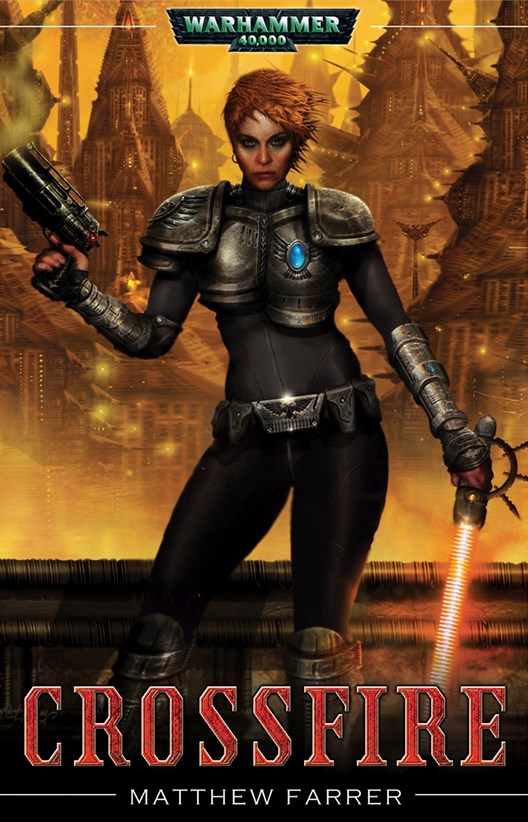
Warhammer 40,000: Crossfire by Matthew Farrer

Publisher: Black Library (Paperback – 1 January 2003)

Series: Warhammer 40,000: Shira Calpurnia – Book One

Length: 320 pages

My Rating: 4.25 out of 5 stars

Amazon

I finally got around to reading the awesome Warhammer 40,000 novel, Crossfire.  A classic entry in the Warhammer 40,000 canon with a cool crime fiction twist, Crossfire was a great novel that serves as an excellent first entry in Farrer’s Shira Calpurnia trilogy.

In the grim future of the 41st millennium, order and control of the massive Imperium of Man is maintained through the strictest interpretation of Imperial law, with no room for variation or leniency.  The ultimate arbitrators of this law are the dedicated members of the Adeptus Arbites, elite law bringers, trained to weed out corruption, dissent and disloyalty wherever they are deployed.

Shira Calpurnia Lucina, recently promoted arbitor senioris of the Adeptus Arbites, has been assigned to the bustling dockyards of the Hydraphur system.  A glistening gem of Imperial rule dedicated to providing material to the navy, Hydraphur is a seemingly unlikely place for dissention.  But this elite planet harbours dark secrets which come to the surface after a deadly assassination attempt is made in public against Calpurnia amid the distraction and celebration of a major religious festival.

Attempting to uncover who would want her killed after only just arriving on world, Calpurnia begins her relentless investigation.  However, this is no simple case, and soon Calpurnia finds herself forced to navigate the many plots and schemes of the Hydraphur elite.  With more attacks striking close to her and the fate of the whole planet seemingly in the balance, Calpurnia must uncover all Hydraphur’s secrets before the assassins stalking her finally succeed.

Crossfire was an excellent and compelling Warhammer 40,000 novel from Farrer that proved very fun to get through.  Featuring a fantastic plot that is one of the earlier examples of a crime fiction narrative melding with the iconic Warhammer 40,000 universe, Crossfire was a great read and one that is worth checking out.

I liked the captivating story that Farrer came up with for Crossfire, which quickly gets the reader’s attention with a powerful introduction to the protagonist, as she quickly finds herself under fire from a lethal assassin.  Serving as a good start to the main investigation arc, the plot follows the protagonist as she attempts to uncover the identity of the assassin, while also learning more about the planet of Hydraphur.  While a very lore-heavy story, Farrer keeps the plot going quickly and effectively, especially as there are soon more apparent attacks against the protagonist, each of which give her more clues to follow to try and find the mastermind of the plot against her.  At the same time the protagonist gets bogged down in dealing with various other interested parties on Hydraphur, including the planet’s local elites, agents of the Imperial church, the Adeptus Mechanicus and the Inquisition, each of whom have their own interests in finding out who is trying to kill Calpurnia.

While Farrer keeps up a good pace for Crossfire as the plot continues, I do think that he might have overloaded the narrative with details about Hydraphur’s society, as well as the various plots that infest it.  While these serve as good red herring motives for the protagonist to follow, it did overcomplicate the plot at times, which slowed things down even amid some great action sequences.  Despite this, the overall narrative for Crossfire was quite strong, and you get hooked into the continued investigation, especially as the author kept raising the stakes of the case.  After some exciting scenes, everything leads up to the big final confrontation, as the protagonist fully unwinds all the conflicting conspiracies they’ve been forced to encounter.  The conclusion was a sufficiently intense and over-the-top fight, which you need in Warhammer 40,000 fiction, and I liked the clever way the protagonist was able to turn the tables on the antagonist, even if the set-up for it was a little heavy handed.  An overall excellent Warhammer 40,000 plot that nicely tells its own story, while also introducing the character for the larger trilogy.

I’ve previously had a lot of fun with previous Warhammer 40,000 novels that utilise strong crime fiction elements in their story telling, such as Bloodlines by Chris Wraight and Grim Repast by Marc Collins, as there are some outstanding crime narratives in this grimdark universe. Crossfire is an interesting early example of this utilisation of crime fiction in Warhammer 40,000 fiction, and I felt that Farrer did a pretty good job of building a compelling investigation around this fantastic setting.  The resulting story is a layered and intense read that sees the protagonist slowly unwind the case amid various battle sequences and other dark distractions.  The relevant clues, hints and misleading details are well scattered throughout the plot, and I felt there was a good amount of foreshadowing to some of the key plot reveals.  While some story elements and conspiracies came a little out of nowhere, for the most part this was a concise and ordered novel, well told through the perspective of the protagonist.  Farrer excelled at fitting a ton of interesting and heavy lore elements in the plot, and I particularly appreciated how well he utilised his setting throughout the story.  The various plots and schemes of planet’s noble families and prominent organisations, as well as the elaborate religious festival the novel is set around (ceremonial details of which are cleverly included at the start of each chapter), are expertly worked into the larger plot, and it was fascinating to see how they impacted the story and drove the investigation.

One of the more entertaining elements of Crossfire I enjoyed was the narrative’s compelling characters.  The focus is primarily around series protagonist Shira Calpurnia Lucina, the arbitor senioris through whose eyes we see the story unfold.  Calpurnia serves as an interesting central figure, especially as she provides an outsider perspective to the complex setting.  While Farrer writes Calpurnia as a somewhat bullish and highly determined figure that is initially hard to appreciate, I felt that this was an intentional choice by the author, which reflects the typical attitudes of the Arbites in the general Warhammer 40,000 setting.  Forcing her to deal with the more subtle techniques needed for the politically delicate Hydraphur brought in some interesting conflict for Calpurnia, as well as producing some interesting character growth.  Despite this, the outsider status of Calpurnia continues to be a compelling plot feature throughout Crossfire, which Farrer utilised extremely well with his writing.  The rest of the cast, while less prominent, adds some complexity to the plot, and I enjoyed the compelling array of fellow Arbites members, the gentry of Hydraphur, and other prominent figures in the planet’s hierarchy.  I particularly enjoyed the motivations of the book’s eventual antagonist, which had a great hint of madness behind it, and this was an overall excellent group of characters.

While I really enjoyed Crossfire’s compelling story, I must admit that this wasn’t the easiest Warhammer 40,000 novel to read.  The plot details of Crossfire are very dense, and it takes a lot of effort to absorb and follow the story.  I felt this was especially noticeable in the small-print paperback version I had, and you really had to focus to take everything in.  As a result, this one probably wouldn’t be a recommended starting point for a new Warhammer reader.  Farrer utilises a lot of intricate details about the Warhammer 40,000 universe that even people casually familiar with the franchise are going to struggle to follow at times.  While most new readers can probably follow along well enough through context, I would suggest it’s best enjoyed by veteran fans who will probably have a lot more fun with it.

Overall, Crossfire by Matthew Farrer was an awesome Warhammer 40,000 novel, and one that I was glad I finally got the opportunity to read.  A compelling crime fiction novel that makes great use of Farrer’s complex setting, Crossfire proved to be an exciting and interesting read.  While not the easiest novel to get through at times, Crossfire proved to be an excellent piece of Warhammer fiction and I’m hoping to get through the rest of the Shira Calpurnia trilogy soon.

Amazon

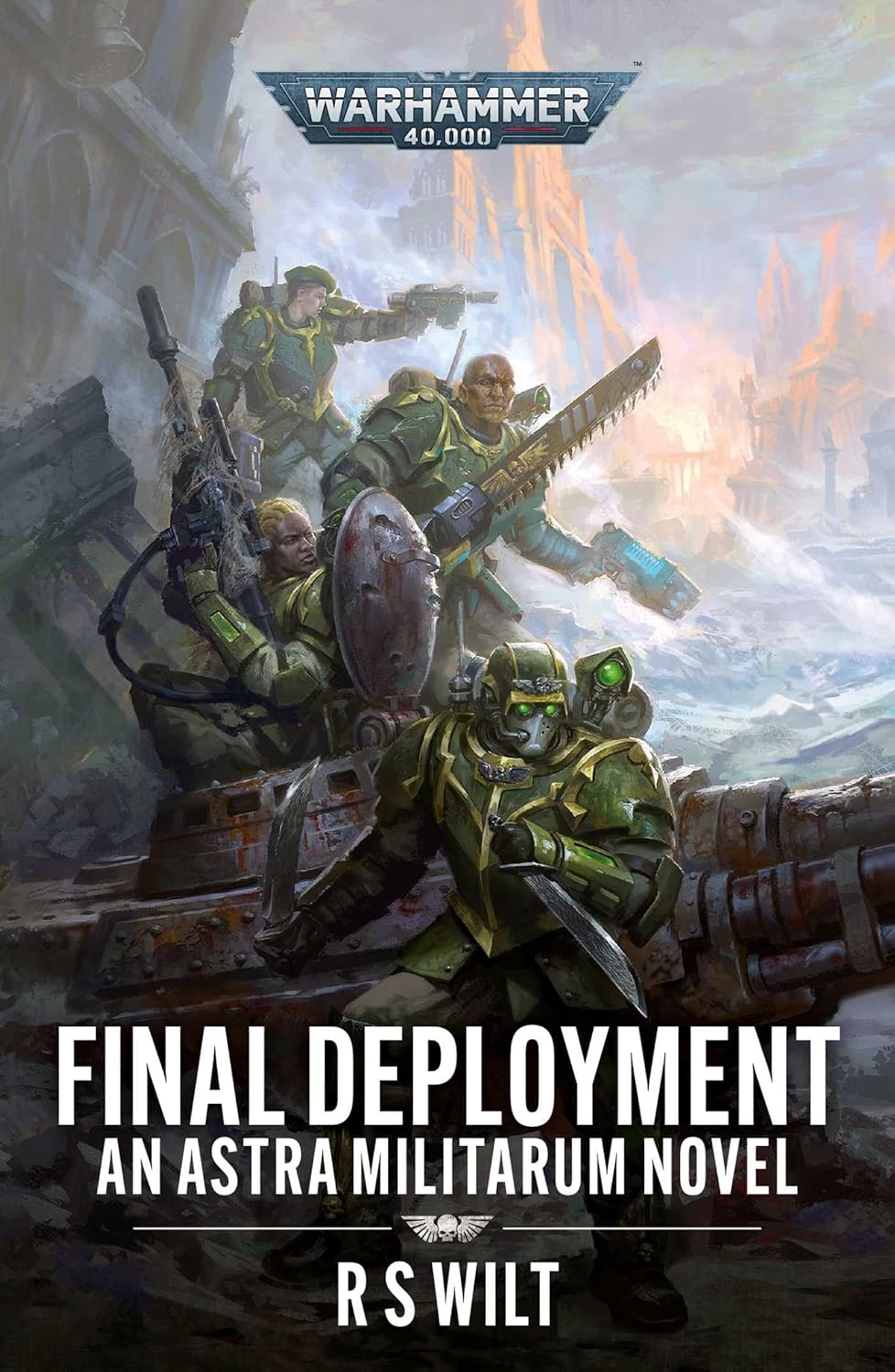
Warhammer 40,000: Final Deployment by R. S. Wilt

Publisher: Black Library (Audiobook – 30 August 2025)

Series: Warhammer 40,000

Length: 11 hours and 23 minutes

My Rating: 4.5 out of 5 stars

Amazon

Prepare for battle as R. S. Wilt presents his debut novel, Final Deployment, a captivating read that perfectly highlights bloody war in the grimdark future of the Warhammer 40,000 universe.

There are few franchises that bring me as much joy as the Warhammer 40,000 series, which follows the numerous factions of the infamously grimdark 41st millennium.  The sheer amount of imaginative stories and tales that are featured in this universe, as well as the talented authors who contribute to it, is quite impressive, and includes some major established writers.  I particularly like how the Warhammer 40,000 publishers also give some interesting opportunities to new authors looking to break into the fantasy or science fiction space.  Many aspiring authors have had their very first novel published in the Warhammer canon recently, and I deeply enjoy reading debuts from these new writers.  Examples of this include Fire Made Flesh by Denny Flowers, The King of the Spoil by Jonathan D. Beer, Ashes of Cadia by Jude Reid, Longshot by Rob Young, Deathworlder by Victoria Hayward and Lord of Excess by Rich McCormick, to name a few.  Many of these debuts are first class reads, and I’ve featured a few on my favourite Warhammer 40,000 novels lists over the years.

Due to my previous awesome experiences with debuts in this franchise, I am always very excited to check out first Warhammer 40,000 novels from new authors, especially those with epic plots.  The latest example of this is Final Deployment by R. S. Wilt, which was the author’s very first novel.  Spinning off from his previously published short story Eradicant, Final Deployment had a very exciting plot behind it that follows the most lethal human soldiers in the grimdark future, the Tempestus Scions.

In the far future, the Imperium of Man battles for survival on thousands of planet-spanning battlefields, with untold numbers of human soldiers fighting and dying every day against monsters, xenos and heretics.  Of these soldiers, none are more deadly or skilled than the Tempestus Scions.  Moulded into unquestionable killing machines from a young age with relentless training and mental manipulation, the Tempestus Scions serve as an elite force with the soldiers of mankind, taking on the missions that no other soldier could complete.

Amongst these Tempestus Scions are the fighters of First Eradicant squad of the Xian Tigers.  Led by Tempestor Traxel and “inspired” by Commissar Fennech, First Eradicant are an unusual regiment made up of several misfit Scions damaged by the battles they have seen.  Deployed to the planet of Rilis, a formerly loyal world now fighting a brutal civil war, First Eradicant is tasked with destroying the rebelling regiments and bringing order to the planet.  Utilising their superior training and equipment, First Eradicant quickly turn the tide against the enemy and being to lead the loyalist forces on Rilis to victory.  However, their success leads them discover the full strength of the traitors, as well as their dark allegiances.

After a disastrous battle that sees their loyalist allies massacred, First Eradicant find themselves facing monstrous opponents even more lethal than they are; three Chaos Space Marines from the Iron Warriors legion.  Determined to slay the ancient, genetically enhanced traitors, First Eradicant take the fight to the Iron Warriors across the planet.  However, with their leader traumatised by past battles and Commissar Fennech playing his own sinister games, can even the best human soldiers in the galaxy defeat the evolved might of the Chaos Space Marines?

R. S. Wilt starts his professional writing career off in explosive fashion with this amazing and compelling debut. Final Deployment was a deeply exciting character-driven Warhammer 40,000 story that followed several highly damaged characters as they attempted to survive the horrors of war. Intense, action-packed and deeply addictive, Final Deployment was an outstanding read that I had an incredible time getting through.

I really enjoyed the epic and deeply exciting narrative that Wilt pulled together for Final Deployment, which perfectly showcases futuristic special forces soldiers going after a deadlier opponent.  Set after the events of the author’s previous short story Eradicant, Final Deployment has a quick and effective start to it, as Wilt first sets the scene for the war on Rilis, before introducing the members of First Eradicant as they literally drop onto the scene.  Each of the protagonists, especially lethal and reckless recon trooper Norroll, gets their moment to shine in these opening scenes, which also work well to highlight Wilt’s intense writing style.  You are soon dragged into the story, and while the initial parts of the book are a tad slow, that changes with the pivotal battle around a third of the way through that sees the Chaos Space Marines arrive in bloody fashion.

Wilt did an outstanding job of changing the tone of Final Deployment after this big moment, as the protagonists find themselves heavily on the backfoot, and there are some notable PTSD elements hitting Tempestor Traxel.  The rest of the novel revolves around the protagonists attempting to hunt down and stop the Chaos Space Marines, no matter how the rest of the war is going.  The story from that point is essentially broken down into three distinctive parts, each of which showcase the very different, but equally brutal, fights against the separate deadly antagonists.  Wilt does an excellent job setting up the scenarios around these battles, which include infiltrating a deadly facility, a brutal ambush by a daemonic possessed foe, and an air drop into enemy territory, and you soon get enthralled in the protagonist’s desperate mission.  These events work extremely well as a sequential and cohesive narrative, and you get really absorbed in the mission of the slowly dwindling group of Tempestus Scions.  Everything leads up to the desperate final confrontation between the protagonists and their deadliest foe, which hits hard and keeps you guessing about who is going to survive.  I felt this entire story came together perfectly, and the ending does an excellent job wrapping up Final Deployment as a standalone Warhammer 40,000 story, with the potential left open for a sequel.  An overall excellent narrative that was quite impossible to put down at times.

While the story is very cool, I also felt that Final Deployment was extremely well written, as Wilt produces a powerful, character-driven narrative that focused on the horrors of war in the grimdark future.  Expertly utilising the iconic Warhammer 40,000 universe in this clever and brutal war story, I loved how the intense personal narratives blended with the more outrageous elements of franchise.  Wilt puts his evident skill at writing brilliant and bloody action sequences to good use in Final Deployment, and the resulting firefights and close combat sequences were some of the more intense and striking you are likely to see in Warhammer fiction.  The author maintains an excellent, fast pace throughout the entire novel, and there wasn’t a single slow moment or inclusion that didn’t play into the story in some interesting or compelling way.  I also appreciated the great use of alternate perspectives, as the story cleverly jumps between several key characters.  This is primarily utilised to showcase multiple angles to the book’s awesome action sequences, which was a ton of fun.  However, I also enjoyed how Wilt took the opportunity to examine the plot from the perspective of several interesting supporting character, including a couple of antagonists.  This helps Wilt to present an even more layered narrative, and it is always really entertaining to see the villain’s reactions to the protagonist’s actions.

Final Deployment is also an excellent and entertaining addition to the Warhammer 40,000 franchise, which works well as an exciting standalone novel.  Despite diving straight into the universe, Final Deployment is accessible to readers no matter their experience with Warhammer fiction, as the author provides a lot of intriguing universe details.  This includes the Tempestus Scions, who serve as the human faction’s ultimate special forces unit outside of the genetically enhanced Space Marines.  The author does an incredible job showcasing the skill and tactics of the Scions throughout Final Deployment, and you really appreciate that they are a highly trained and better equipped regiment.  While Wilt somewhat exaggerates the effectiveness of the Scions and their equipment for narrative purposes (especially carapace armour), you get a realistic sense of these figures in combat, and I appreciated how the characters were slowly debilitated by injuries and losses.  There is also a fascinating look at the harsh training and religious brainwashing these figures undergo, which fits the grimdark Warhammer 40,000 universe perfectly.  Other elements of Warhammer fiction are cleverly utilised here, and I loved the author’s depiction of just how dangerous Space Marines and their chaotic counterparts are compared to normal humans, even the Tempestus Scions.  The damage three Iron Warriors were able to do to the loyalist army, and the lengths the protagonists went to beat them, was so beautifully excessive, and I felt it was an appropriate amount of power scaling.  Thanks to these cool features from the Warhammer 40,000 universe, this book will primarily appeal to established fans of the franchise, although thanks to Wilt’s great writing, new readers will also have a lot of fun with it, even if they didn’t read the author’s previous short story.

While much of the appeal of Final Deployment was its epic story, great writing, and impressive action, I also felt the complex characters helped to make it even more special.  Primarily set around a group of Tempestus Scions, Final Deployment featured an intriguing look at these figures, their damaged pasts, and the struggles they experience on and off the battlefield.  Wilt does an excellent job of splitting the focus of Final Deployment over much of the extended cast, and indeed its nominal main characters, Tempestor Traxel and Commissar Fennech, don’t have that much of the book shown from their perspective.  Instead, most of the story is told through the eyes of other key members of the squad, including Norroll and the squad’s medic, Daviland.  This allows these secondary figures in the squad much more room to shine, and I felt the book was stronger as a result.  Norroll in particularly was quite a fun character.  An overly reckless Scion, Norroll finds himself caught between loyalty to Traxel and his squad, and his own death wish, and it was often really intriguing to see him in the middle of the bloodiest scenes in the book.  Daviland served as an excellent counter to Norroll’s more outrageous perspectives, especially as she is one of the saner members of the squad.  A transplant from another regiment, Daviland provides an interesting outsider’s perspective to the book, especially as she has a lot less mental damage the rest of First Eradicant.  Despite her loyalty primarily being to Fennech, Wilt writes an excellent storyline around Daviland becoming closer to her squad, and I felt that her perspective scenes were some of the more thoughtful and provided some great insights in the minds of the rest of the characters. 

Of the rest of the cast, Tempestor Traxel and Commissar Fennech, had the most presence.  Despite not serving as perspective characters, both were major parts of the book’s plot, and Wilt did an excellent job showcasing their personalities and issues through the eyes of the other protagonists.  This includes Traxel’s mental trauma at once again facing Chaos Space Marines after a previous deadly mission, and his impacted leadership adds an extra layer of difficulty to the protagonists’ mission.  Fennech, on the other hand, was a great portrayal of a classic, cold-blooded Imperial commissar, shooting allies first and never asking questions.  Fennech served an interesting role as both an ally/gun-bearing motivator, and a potential secondary antagonist to First Eradicant, especially as he questions their effectiveness and resolve.  While Fennech’s storyline doesn’t go as far as it could have, and I would have liked seeing some of the book through his steely eyes, I felt that he was an outstanding inclusion to Final Deployment’s cast that added some excellent alternative menace.

In addition to these characters, I enjoyed how the rest of First Eradicant also got their time to shine in this novel.  Featuring a mixture of existing members and later transfers from another squad, each of these characters had their own unique charm, and their compelling interactions added a lot to the novel’s enjoyment.  While there isn’t an excessive amount of development with some of these characters, which is mainly down to the mental indoctrination they’ve gone through, they were still fun to follow.  Just make sure not to get too attached to them, as the death toll in this novel is quite high.  Wilt matches these excellent perspective characters with several additional outsider characters, including several gloriously over-the-top antagonists, and the clash of styles and mentalities increased the overall fun and excitement I had with Final Deployment.

Unsurprisingly, I ended up listening to Final Deployment on audiobook, rather than seeking out a physical copy of the book.  I always find that the audiobook format brings out the very best of the grimdark Warhammer 40,000 universe and the unique characters that inhabit it, and the Final Deployment audiobook was a great example of this.  Perfectly narrated by Andrew Wincott, who previously impressed me with his voice work in Deathwatch: Shadowbreaker by Steve Parker and Huron Blackheart: Master of the Maelstrom by Mike Brooks, the intense action and harsh nature of war featured in Final Deployment really comes through in this audiobook, and I loved hearing all the intense firefight sequences come to life.  Wincott did an excellent job moving this intense story along at a quick clip, while also providing all the characters with distinctive voices that really fit their unique and gritty personalities.  The fun mixture of voices between the battle-weary human soldiers and the more unnatural forces of Chaos was extremely enjoyable, and you really get drawn into the compelling narrative as a result.  I honestly flew through the over 11-hour long audiobook in no time at all, and I loved every second I spent listening to it, especially some of the more brutal and deadly fight sequences.

Loaded with awesome action, damaged characters and an epic narrative, Final Deployment by R. S. Wilt was an incredible read and an amazing piece of Warhammer 40,000 fiction.  A fast-paced novel that follows some intense protagonists through hell and back, Final Deployment was an outstanding debut from Wilt, and comes very highly recommended, especially on audiobook.  I look forward to seeing how Wilt’s writing career continues in the future, and I am sure I will enjoy any additional contributions to the Warhammer franchise.

Amazon

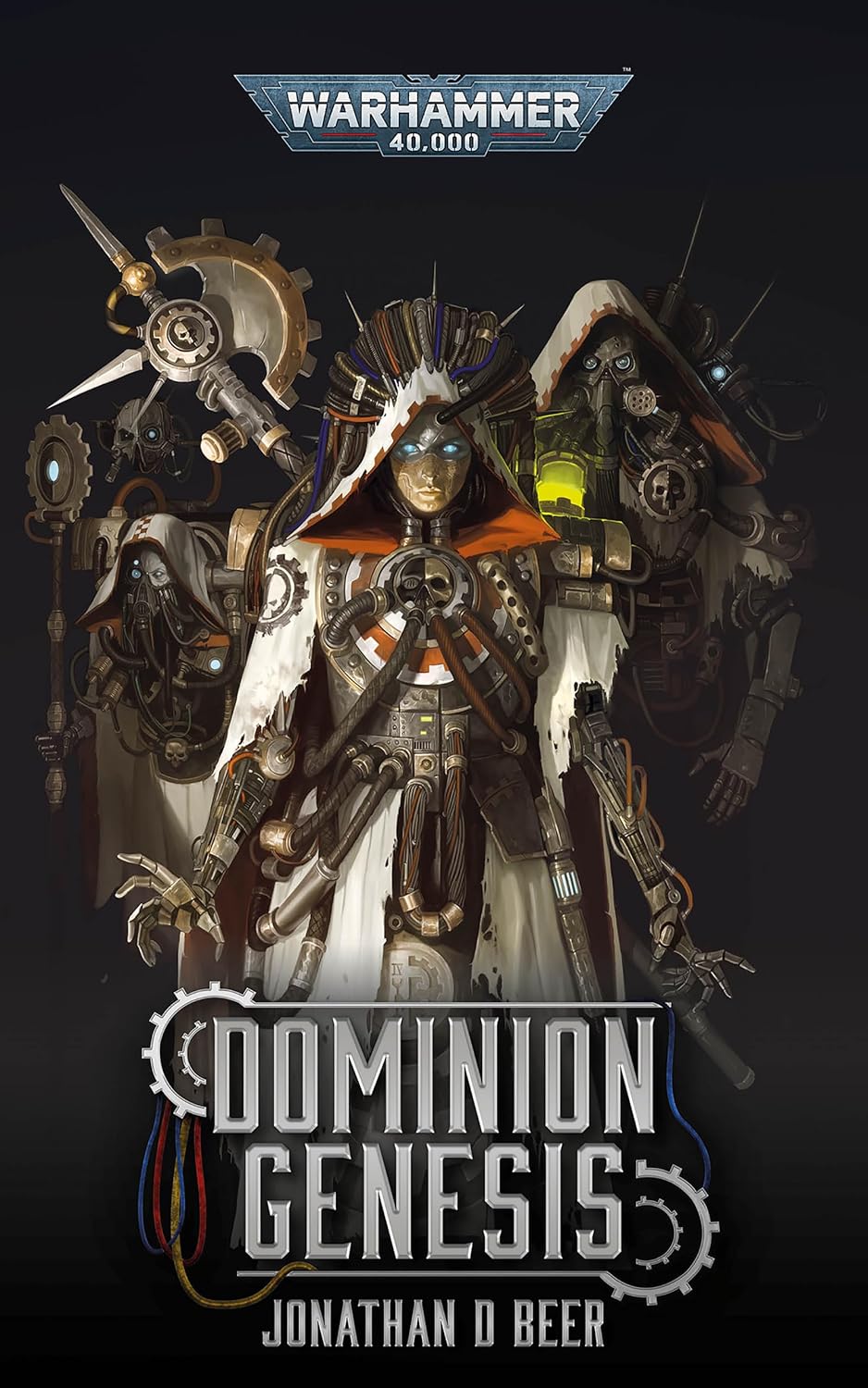
Warhammer 40,000: Dominion Genesis by Jonathan D. Beer

Publisher: Black Library (Audiobook – 21 September 2024)

Series: Warhammer 40,000

Length: 10 hours and 47 minutes

My Rating: 4.5 out of 5 stars

Amazon

Destitute tech-priests of the Adeptus Mechanicus embark on a massive quest for redemption in the excellent 2024 Warhammer 40,000 novel, Dominion Genesis by Jonathan D. Beer.

Beer is a talented rising author in the Warhammer 40,000 fiction space who has so far impressed with two interesting books covering unique spheres of the fandom’s canon.  I deeply enjoyed his first novel, The King of the Spoil, which was a particularly epic entry in the Warhammer Crime sub-series, and which ended up being one of my favourite debuts of 2023.  Beer followed up this debut last year with his second novel, Dominion Genesis, an intriguing read that takes place in a very different Warhammer 40,000 setting.  I had an excellent time with Dominion Genesis, although I spectacularly failed to write a review for it last year.  However, with Beer’s third Warhammer 40,000 novel just released, I felt that this was a good time to finally write something about Dominion Genesis, which honestly was an awesome read.

Plot Synopsis:

Gryphonne IV is dead – one of the mightiest forge worlds in the arsenal of the Adeptus Mechanicus, succumbed to the relentless hunger of Hive Fleet Leviathan. Devoured. Lost.

The few magi that survive drift in idleness, robbed of purpose and direction. But there is one who rejects that fate.

READ IT BECAUSE
It’s the gripping tale of an Explorator desperately seeking ancient technologies from humanity’s past as she races against time to restore one of the mightiest forge worlds in the Imperium.

THE STORY
Explorator Talin Sherax seeks ancient and miraculous technologies from humanity’s distant past. When she learns of a fabled relic that could restore all that has been lost, Sherax embarks on a journey, the outcome of which could change everything. Nothing will stand in her way… even if the quest brings her to the brink of heresy.

Dominion Genesis was a particularly intense and compelling entry in the Warhammer 40,000 canon that proves quite enthralling to read.  I like how Beer managed to achieve quite a few things with this book, as he produced an excellent quest narrative with a focus on obsession, trauma and survival, while also cleverly showcasing several different factions of the Warhammer 40,000 universe.

Beer came up with a very awesome story that hits a lot of highly emotional story notes early on.  The start of Dominion Genesis was one of the more striking sequences of Warhammer fiction I have read, as the protagonist, Explorator Talin Sherax, is forced to witness the destruction of their home world.  Moving quickly into a time skip, you see a very different version of Sherax several years in the future, as she still attempts to make sense of the destruction while searching for valuable lost technology.  After a great sequence aboard a derelict spacehulk, Sherax finds a clue about a potential artifact that could help to restore her planet.  Going against the orders of her superiors, Sherax leads a crew of human soldiers and Adeptus Mechanicus forces on a quest to several deadly and hidden locations in the galaxy.  Along the way, the protagonists examine their humanity in several different forms, while also being stalked by dangerous alien fighters determined to stop them achieving their goal.

There are some great sequences in the middle of this book, as the protagonist desperately follow the clues into a trap, which shakes all the characters to their core.  After a gruelling sequence of events that help to highlight and move along several, well-constructed character development arcs, the adventure moves to its destructive conclusion.  After another disaster, the protagonists are dropped in amongst a war between rival xenos forces and must journey into the fray to achieve their goal, resulting in a brutal series of battles and the intense conclusion to the narrative.  Beer wrote in some great tragic moments as the protagonists are outmatched at nearly every turn, although many of these sequences work well to provide closure to some of the book’s various character arcs.  The conclusion to Dominion Genesis was as bleak as you would hope for a novel in the grimdark Warhammer 40,000 universe, but it provides some great closure for the main character and will keep readers very satisfied.

I felt that Dominion Genesis was a particularly good addition to the Warhammer 40,000 canon, as Beer provides a thoughtful and complex novel loaded with unique action and damaged characters trying to survive the inherent darkness of the war-torn universe.  Beer ended up producing an intense character-driven story for Dominion Genesis, and I loved the great balance between action, exploration and interaction between certain unique Warhammer races, and the focus on character elements.  I personally really enjoyed the deep dive into the Adeptus Mechanicus, with various character perspectives diving into their culture and thought processes, even though certain sections of the plot need to be altered to emulate the machine nature of the tech-priests.  Beer tried to showcase a more emotional side to the Adeptus Mechanicus in this book, especially through his protagonist which, while different from other portrays of this faction, fits the trauma-rich narrative as all these characters struggle with the loss of their home.  The author also has fun fitting in several of the main alien races of the Warhammer 40,000 universe into the story, including orks, Tyranid, Aeldari and Necrons.  While not a lot of focus is given to understanding them, they serve as good foils to the obsessed protagonists, and it was interesting to see the Mechanicus takes on these different enemies.  In the end, Dominion Genesis proved to be a compelling, and impressive standalone novel that makes great use of its Warhammer 40,000 elements.  However, be warned that this novel is probably better read by more established fans of the franchise, rather than newer readers, as Beer covers a lot of complex lore in a short period of time.

One of the key things I liked about Dominion Genesis was the rich array of compelling characters featured throughout the plot.  Beer does an outstanding job introducing and following several very damaged figures, including the protagonist Explorator Talin Sherax, who finds herself in a depressed state following the opening sequence of book.  Cutting herself off from the technological hivemind used by the rest of Adeptus Mechanicus brethren, Sherax proves to be a brilliantly complex figure in Dominion Genesis, and Beer’s take of her as the depressed member of a group known for having no emotions was really fascinating.  The author also features an interesting array of other Adeptus Mechanicus members who provide great alternate viewpoints to that of Sherax.  I really enjoyed how Beer managed to include a lot of intriguing individualism in these machine-like Adeptus Mechanicus characters, and the range of different opinions and feelings around Sherax and her mission added some interesting drama to the story. 

Finally, I must highlight the human members of the Dominion Genesis cast, who provide intriguing alternate viewpoints to cybernetic protagonists. I particularly enjoyed the focus on a depressed former Imperial Knight pilot, who, after losing his ancient war machine, decides to join the crew of Sherax’s ship.  There are some fascinating focuses on his parallel grief to that of the Adeptus Mechanicus characters, as well as his own self-anger, especially while forced to pilot a seemingly lesser machine.  Beer writes some interesting side plots around this more human character, including his relationship with an Imperial Guard regiment also aboard the ship, and he must balance his need for human contact with his own grief and arrogance.  I felt this compelling collection of distinctive characters helped to make Dominion Genesis really stand out, and I enjoyed seeing their unique interactions.

As with most Warhammer 40,000 novels I review, I ended up listening to Dominion Genesis on audiobook, which is pretty much the best way to enjoy this series.  The Dominion Genesis audiobook ended up being a lot of fun to listen to, and I managed to get through it’s near 11-hour runtime quickly.  It helped that Dominion Genesis was narrated by the very talented Colleen Prendergast, who is becoming the go-to narrator for any Warhammer 40,000 audiobook that features a human female protagonist, such as Justin D. Hill’s Cadia series, or standalone books like Creed: Ashes of Cadia by Jude Reid or Longshot by Rob Young.  Prendergast did an outstanding job bringing the various complex cast members of Dominion Genesis to life, and I particularly appreciated the skill need to voice a variety of cybernetic humans with altered or robotic voices.  This great voice work turned Dominion Genesis into a fantastic listen, and it was very easy to enjoy Beer’s outstanding and lore-heavy story when it was being read out.

Overall, Dominion Genesis was an amazing second novel by Jonathan D. Beer, who did an outstanding job pivoting to a different area of Warhammer 40,000 fiction.  I loved the complex character-driven narrative contained within Dominion Genesis, and this was one of the more enjoyable Warhammer 40,000 novels that came out last year.  I cannot wait to see how Beer continues to develop as a writer in the future, and I currently have a copy of his latest book, Tomb World, in my audiobook queue to listen to.

Amazon

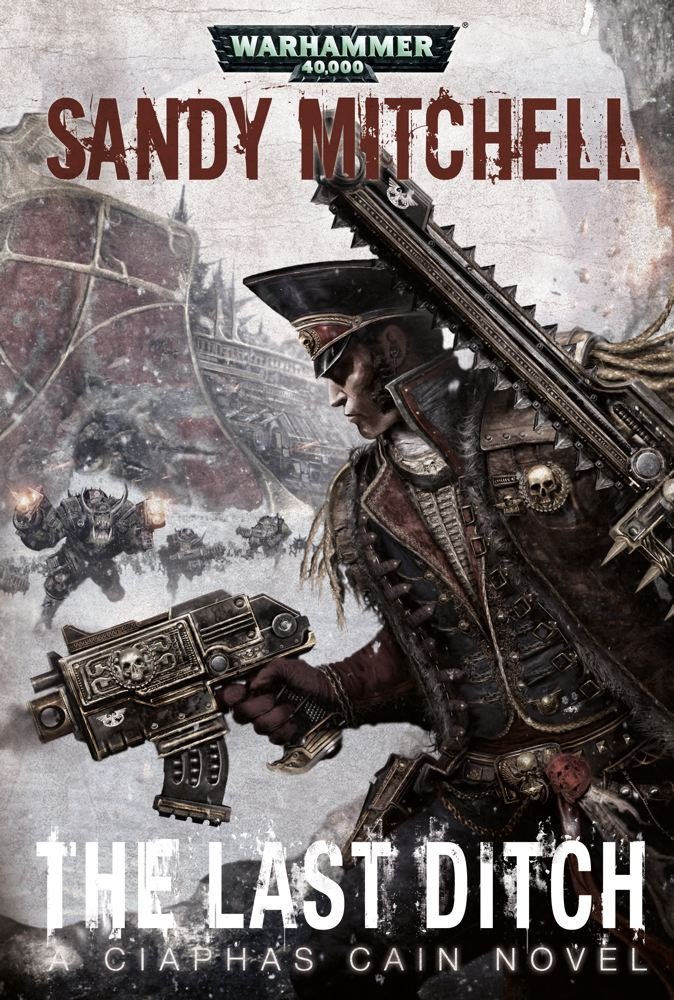
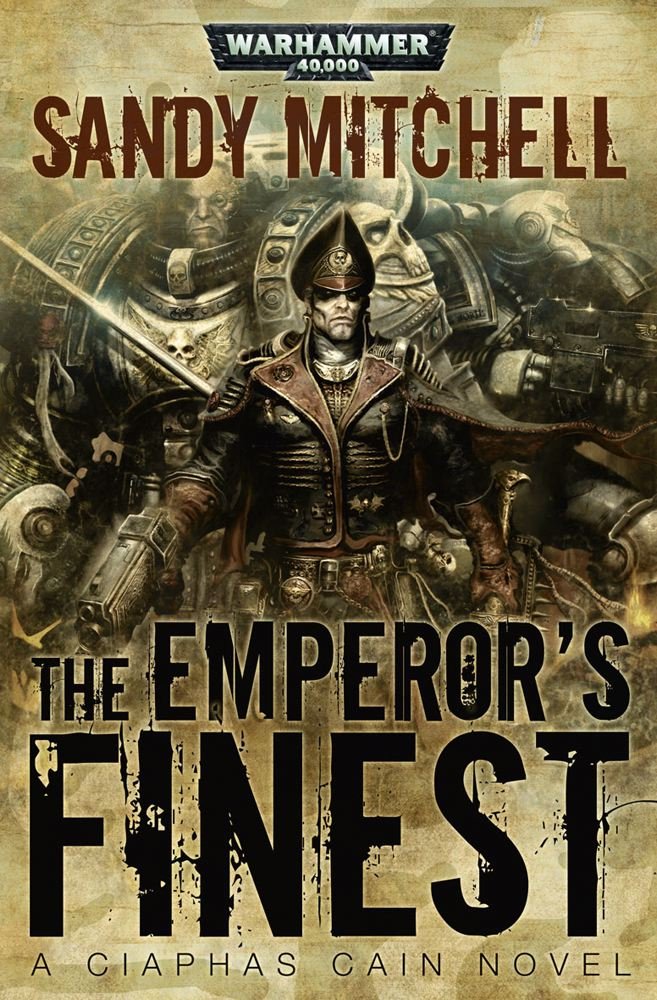
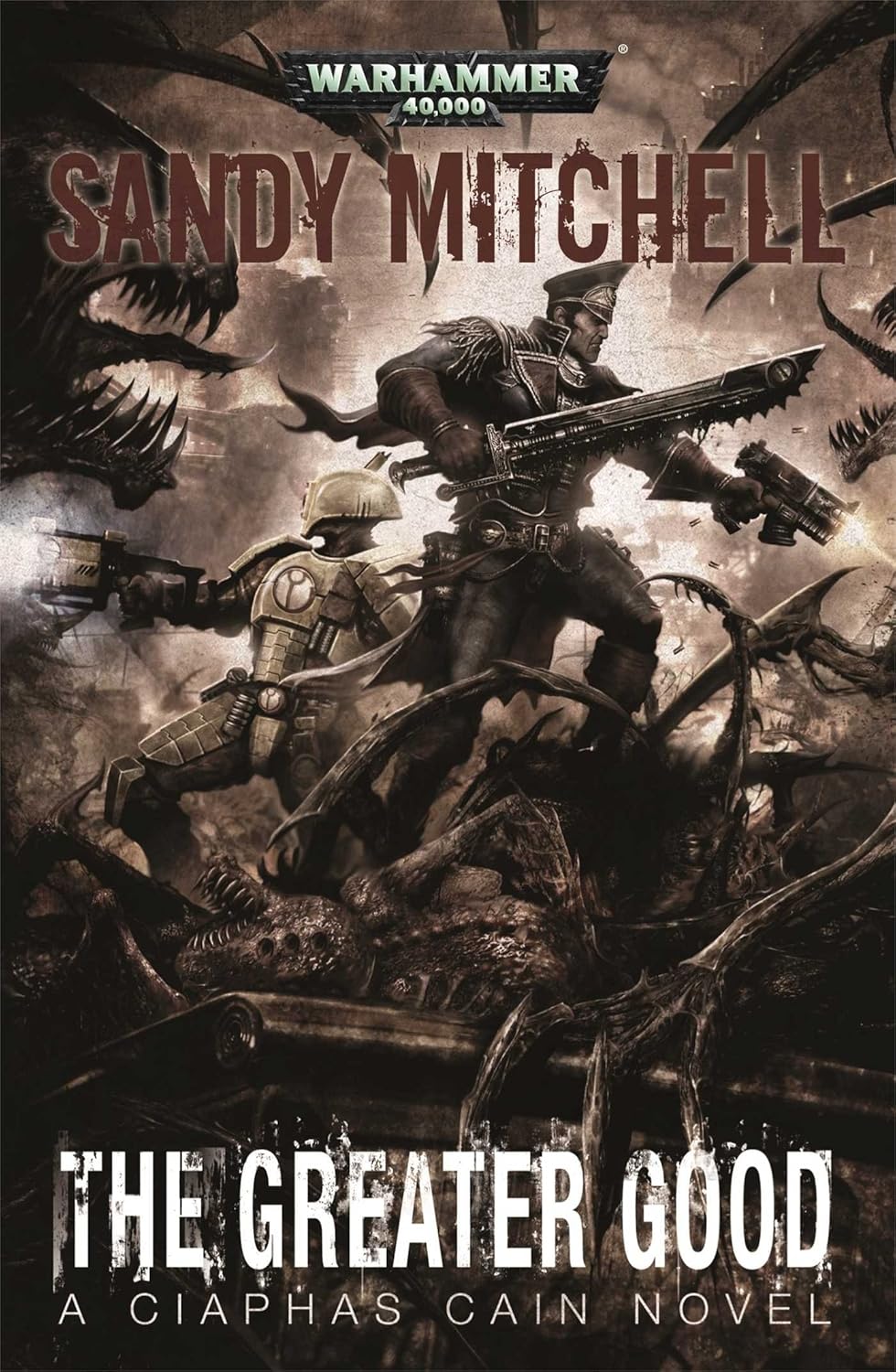
Warhammer 40,000: The Emperor’s Finest by Sandy Mitchell

Publisher: Black Library (Audiobook – 7 December 2010)

Series: Ciaphas Cain – Book Seven

Length: 10 hours and 14 minutes

My Rating: 4.75 out of 5 stars

Amazon

Dive once again into the crazy adventures of the Warhammer 40,000 universe’s most undeserving hero, with the awesome Ciaphas Cain novel, The Emperor’s Finest by Sandy Mitchell.

I was recently in the mood for something familiar and fun to enjoy during a gap in my audiobook listening schedule, and the first thing that came to mind was another entry in the highly entertaining and addictive Ciaphas Cain series by Sandy Mitchell (a pseudonym of author Alex Stewart).  One of my favourite Warhammer 40,000 series, the Ciaphas Cain books chronicle the adventures of the dashing and doubtful hero of the Imperium of Man, Commissar Ciaphas Cain, a man who sensibly seeks to avoid the many, many terrifying dangers of the Warhammer 40,000 universe, but who constantly finds himself dragged into the deadliest of situations, often because of his vastly inflated legend.  I have had a wonderful time making my way through the series, with books like For the EmperorCaves of IceThe Traitor’s HandDeath or Glory, Duty Calls and Cain’s Last Stand, proving to be extremely compelling and highly entertaining.  As such, I knew well in advance of reading The Emperor’s Finest that I was going to have a brilliant time with it, and Mitchell did not disappoint.  The seventh entry in this outstanding series, The Emperor’s Finest, had an outrageous and fantastic plot behind it that throws you into the action right away.

A dangerous and terrible foe stalks several human worlds in the galaxy, and only one man is unlucky enough to face it: Commissar Ciaphas Cain.  Despite being relatively early in his illustrious career, Cain has already gained a reputation for heroics and bravery, a combination that conspires to get the Commissar into far more trouble than he wants.  However, one of his most dangerous adventures occurs when he is surrounded by the finest warriors humanity has to defend them.

Rescued from an exploding Necron ship, Cain finds himself in the care of Space Marines of the Reclaimers chapter and soon becomes their Imperial Guard liaison as part of a new campaign.  Assigned to supress a civil war on the important agricultural world of Viridia, the Reclaimers are keen to engage the enemy, and Cain finds himself reluctantly dragged in their wake, forced to once again play the rousing hero and bring the loyalists of Viridia into line.  However, as the Reclaimers begin their bloody work, it soon becomes apparent that the traitors of Viridia are far more deadly than expected, when a nefarious genestealer cult is revealed at the heart of the warring factions.

As the Space Marines engage the genestealers, the defenders of Viridia determine that they must have snuck into the system when a massive, drifting space hulk briefly appeared.  Determined to eradicate the source of this unholy threat to the Imperium, the Reclaimers lead an ambitious expedition into the warp to track down the space hulk and obtain its secrets, and Cain is naturally required to follow along.  With murderous genestealers and ravaging orks in front of him, and the far more terrifying threat of an ambitious husband-seeking noblewoman at his back, Cain and his trusty aide, Jurgen, are flung once again into the fray and must find a way to extricate themselves from the new dangers all around them.  But if anyone can survive the oncoming terrors of the space hulk, it’s the soon to be legend of the Imperium.

Sandy Mitchell continues to delightfully show just how ridiculous and entertaining the Warhammer 40,000 universe can be with this outstanding entry in his Ciaphas Cain series.  Featuring an intense plot loaded with some fantastic characters, The Emperor’s Finest takes Cain on a grand adventure filled with action, questionable heroics, and boundless fun.

As with the rest of the books in the Ciaphas Cain series, The Emperor’s Finest features a brilliant and highly entertaining story loaded with funny coincidences, complex characters and highly dangerous situations.  Following on from the immediate aftermath of the Ciaphas Cain short story, Echoes of the Tomb, the initial story sees Cain once again thrust into danger, this time supporting the Reclaimers’ attempts to wipe out a genestealer-led revolution on the planet of Viridia.  This first part of The Emperor’s Finest is a somewhat typical Ciaphas Cain narrative, with the reluctant Cain dragged into a dangerous situation thanks to his own inflated reputation.  This ensures a ton of excellent action and over-the-top scenarios, as Cain jumps from danger to danger, with many of his decisions to avoid trouble resulting in him finding an even worse scenario.  Mitchell enhances this fun by also forcing Cain to contend with supporting character, Mira DuPanya, whose entertaining exploits, foppish nature, aristocratic arrogance, and determination to stick with Cain leads to some great moments, including an unlikely romantic subplot with the protagonist.

While this was a great introduction, the plot focus of The Emperor’s Finest changes about a third of the way through into a space adventure, when the Reclaimers set out to find and cleanse the space hulk that initially corrupted Viridia, and Cain is dragged along.  This allows for some excellent space adventures, especially when Cain and the Space Marines burst out into ork space, resulting in a great boarding action sequence.  Mitchell really leans into some fun interpersonal clashes between the book’s three main characters here, especially as Cain and the always dependable Jurgen find themselves at their wits end with Mira, who continues to be a real highlight of the plot.  All this leads to the excellent final third of The Emperor’s Finest, which sees Cain and Jurgen trapped alone aboard the space hulk, facing off against genestealers and orks.  A frenetic and fast-paced extended sequence, the space hulk scenes feature some of the book’s best action, and it was fun to see Cain and Jurgen working as an effective team to achieve Cain’s goal of not dying.  Mitchell plunks in some really awesome, fast-paced sequences here, and the reader is left hanging on until the end as they wait to see how Cain escapes this time.  Everything wraps up with some final fun moments, with Cain once again coming out on top through happy accident, and I was thoroughly entertained with how the self-contained storylines around Mira came to an end.

Unsurprisingly, Mitchell continued to utilise the same writing style that made the rest of the Ciaphas Cain series so entertaining, with the main narrative primarily told in a journal format, written by an older Cain.  Filled with self-deprecating humour and his own narrow insights into events, the novel paints a rather compelling and frank picture of events, which Mitchell ensures is loaded with action, adventure, and a certain level of ridiculousness.  This main narration is cleverly interspersed with entertaining footnotes, commentary and in-universe texts provided by the account’s editor, Inquisitor Amberly Vail, which ensures that the story becomes even more cynical and humorous, abet with some excellent additional insights into the Warhammer 40,000 universe.  I personally found The Emperor’s Finest to be one of the funnier Ciaphas Cian novels, and I chuckled my way through several scenes, especially those where Cain’s greatest threat proves to be an ambitious and heavily armed love interest.  I really love Mitchell’s great writing style for these books, which are honestly some of the more light-hearted entries in the larger Warhammer 40,000 canon, and I felt that it helped to turn the already awesome action story of The Emperor’s Finest into a truly entertaining narrative.  While the overall general adventure narrative is relatively basic, especially after some of the preceding books that had a little more depth, this was still a great read, and those in the mood for comedy, action and amusing characters in the always grim dark Warhammer 40,000 universe are going to have fun with this seventh Ciaphas Cain book.

As with the rest of the series, The Emperor’s Finest works extremely well as a standalone novel, with no prior knowledge of the rest of the Ciaphas Cain series needed to enjoy this cool narrative.  Indeed, as The Emperor’s Finest is set relatively early in the character’s personal chronology, only a couple of the previous books are referenced or mentioned, although the short story, Echoes of the Tomb, set directly before the events of this novel, is discussed a few times.  As such, The Emperor’s Children could potentially be used as a good entry point into the larger series, especially as you get some great comedic moments and interactions in this book.  While The Emperor’s Finest does suffer from some repetition issues due to Mitchell reusing some phrases, descriptions and broad story arcs, I feel that there were enough unique elements in this book to make it stand out from the rest of the series.  This includes the inclusion of Space Marines characters for the first time in a Ciaphas Cain book, as well as the inclusion of some fun new supporting figures who add a lot of humour to the plot.  As such, I felt that The Emperor’s Finest was an outstanding addition to the overall series, and one that will appeal to both new readers and established fans of the series.

An always amazing highlight of the Ciaphas Cain novels are the great characters, and The Emperor’s Finest is an excellent example of this, featuring a fun cast of outrageous figures.  This includes protagonist and main point-of-view character, Commissar Ciaphas Cain, who is a particularly complex figure in the Warhammer 40,000 canon.  Always described by the protagonist himself as a coward and a false hero, Cain spends most of the book trying to come up with ways to avoid combat and survive the inevitable danger his reputation and own bad lack force him to participate in.  Written in a very cynical and self-deprecating manner, Mitchell always tries to emulate classic figures like Flashman or Blackadder with his depictions of Cain.  However, despite Cain’s own constant assurances that he is no hero, he often proves to be quite a skilled fighter and leader, routinely defeating the enemy through clever strategies or natural talents, and you soon figure out that the character is actually a good Commissar, even if he doesn’t believe it.  As such, Cain is a brilliantly contrary character, and it always fun to see him in action, especially in these earlier adventures where even he isn’t sure whether he’s brave or a hero.  Throw in the protagonist’s usual witty humour, sarcastic comments and overall cynical nature, which throws some entertaining shade on the entire Warhammer 40,000 universe, and Cain is a brilliant and surprisingly likeable central character that is so much fun to follow.

Aside from Cain, The Emperor’s Finest features some excellent supporting characters, including some recurring figures from the main series.  This includes Cain’s faithful aide Jurgen, a seemingly gormless and thoroughly unsanitary soldier, who is also an effective and lethal sidekick and in many ways is the true hero of the series.  While some elements of his nature are hidden due to this book being set early in the series’ timeline, Jurgen still has several moments to shine in The Emperor’s Finest, and I love how well he plays off Cian.  Another great recurring figure is Inquisitor Amberly Vail, who serves the essential role as the overarching narrator of the book as well as the person behind the footnotes.  Despite not physically appearing as a character in The Emperor’s Finest, Vail’s impact on the overarching book is undeniable, and I love hearing her commentary on Cain’s exploits while also calling out all his lies and mistakes.  Mitchell also features several stoic Space Marine characters, whose surly presence adds some interesting colour to proceedings, and whose apparently inability to see through Cain is quite amusing.

While Jurgen and Vail are great in their roles as always, I think that new character Mira DuPanya honestly stole the show in The Emperor’s Finest.  The spoiled daughter of Viridia’s governor, Mira is shown to be an early thorn in Cain’s side as she decides to accompany him into battle with her troops, despite being unqualified to lead anyone.  The early conflict between the two quickly turns into an unconventional romance, which Cain humorously regrets the entire way through, especially when Mira’s true intentions are revealed.  Mitchell honestly did a masterful job of portraying Mira in the most spoiled and foppish light, and for once Cain isn’t the most selfish character in the plot.  The hilarious interactions that occur between Mira and several of the recurring cast is often comedic gold, and I felt that this character’s presence alone helped to make The Emperor’s Finest one of the funnier books in the series.  An overall amazing cast of characters that I couldn’t get enough of.

I almost don’t need to say it at this point, but I of course checked out The Emperor’s Finest on audiobook, which frankly is the very best way to enjoy a Ciaphas Cain/Warhammer 40,000 novel.  Once again featuring an impressive cast of entertaining narrators, The Emperor’s Finest had a brisk run time of just over 10 hours, which I honestly flew through because I was having such a fun time with this audiobook.  The multiple narrators really help to capture the entertaining and crazy nature of the narrative, with Stephen Perring doing his usual exceptional job leading the narration.  His voice work in the main story, as told from Cain’s perspective, is very entertaining, and I love the extremely fitting voices that once again accompany the recurring protagonists of Cain and Jurgen, with Jurgen’s sticky tones being particularly fun.  Thanks to its compelling cast, Perring also had some additional interesting voices to feature in The Emperor’s Children, including a group of Space Marines, who Perring gives an appropriately intimidating and booming voice. However, Perring’s most entertaining, if ridiculous voice, belonged to Cain’s new love interest, Mira, upon whom Perring bestows a very grating and overly aristocratic voice, that really fits the spoiled princess persona the character had.  I honestly chuckled my way through some of the outrageous dialogue between the two, especially with Perring’s tones making them even more ridiculous.

In addition to Perring, the voice cast of The Emperor’s Finest also features the returning Penelope Rawlins, as well as additional narrators Andrew James Spooner and Helen McAlphine.  Rawlins once again does an amazing job voicing Inquisitor Vail’s notes on Cain’s account of this mission, and I loved the sarcastic yet informative tone that Rawlins has long attributed to this compelling figure.  Rawlins’s inclusions work perfectly alongside the main narration of Perring, and the way that her subtle and comedic comments are inserted into the flow of the story in this format is always extremely fun.  Throw in some excellent work from Spooner and McAlphine, who bring the contextual articles, interviews and exerts from in-universe texts to life in an amusing and striking fashion, and The Emperor’s Finest once again features some outstanding narration that really enhances Mitchell’s already awesome story.  I have so much love for how the Ciaphas Cain novels come across on audiobook, and The Emperor’s Finest once again shows why this is the very best way to enjoy this series.

Seven books in and the always fun Ciaphas Cain series remains one of the best Warhammer 40,000 series.  Sandy Mitchell did an outstanding job continuing the series with The Emperor’s Finest, which provides even more great action, fantastic comedy, and amazing character interactions.  An excellent and captivating read from start to finish, The Emperor’s Finest comes highly recommended, and I can’t wait to dive even further into the series when I get a chance.

Amazon

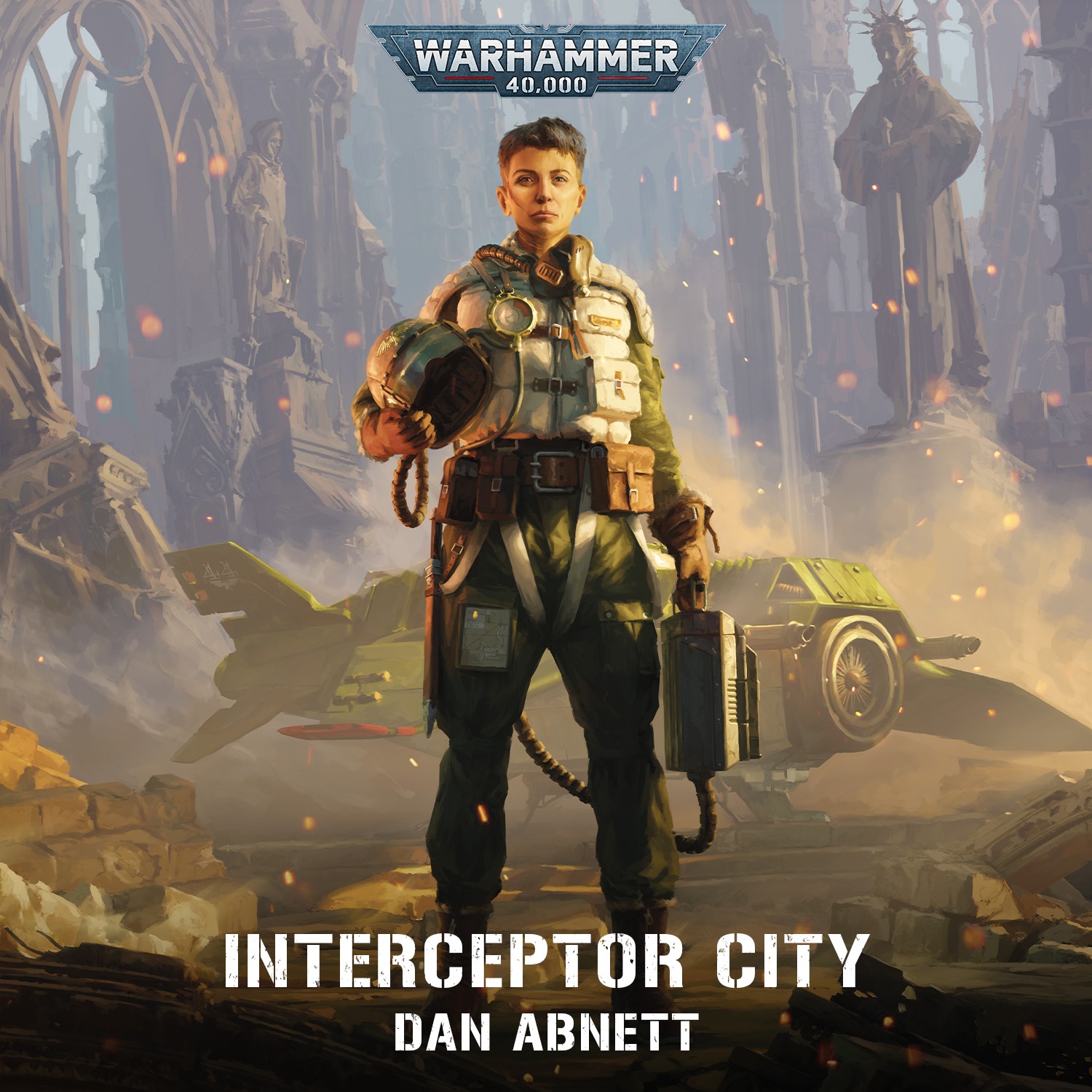
Warhammer 40,000: Interceptor City by Dan Abnett

Publisher: Black Library (Audiobook – 22 February 2025)

Series: Sabbat World Crusades/Warhammer 40,000

Length: 15 hours and 35 minutes

My Rating: 5 out of 5 stars

Amazon

Take to the skies once more as legendary Warhammer 40,000 author Dan Abnett presents another ambitious and rip-roaring novel of dogfights and explosive characters in the incredible novel, Interceptor City.

Dan Abnett is an author who I have mentioned multiple times in this blog, primarily because he is one of the best and most prolific writers of Warhammer fiction.  Abnett’s impressive work is a substantial pillar of the extended Warhammer 40,000 universe, especially with his entries in the Horus Heresy range, as well as his own various unique series, several of which are amongst some of my very favourite pieces of Warhammer 40,000 fiction.  This includes his outstanding Eisenhorn novels (XenosMalleus and Hereticus), his long-running Gaunt’s Ghosts books (First and Only, Ghostmaker, Necropolis, Honour Guard, The Guns of Tanith, Straight Silver and Sabbat Martyr), as well as gripping standalone titles like Titanicus. However, one of his very best books is the exceptional Double Eagle, for which Abnett has just released a sequel.

Double Eagle was an incredible novel first released in 2004 that sought to add a new, unique vantage point to the author’s Sabbat Worlds Crusade, the massive, multi-planet war served as a background the Gaunt’s Ghosts books.  Double Eagle followed members of a regiment of fighter pilots as they sought to control the skies above the Sabbat Worlds.  An intense, beautifully written, character-driven novel, Double Eagle got an easy five-star rating from me thanks to its outstanding and epic dogfights and examples of fighter-on-fighter combat.  Double Eagle was easily one of the best Warhammer books I have ever read, and I was very excited to find out that Abnett was finally releasing a sequel.

The Emperor protects, the Aeronautica remembers!

It has been more than 20 years since the battle to save Enothis and the Sabbat Worlds Crusade continues to rage, with millions of soldiers from the Imperium of Man fighting and dying to claim the planets from the arch-enemies grasp.  For some the crusade seems like a distant event, but for those on the scarred planet of Lysander, war is a daily occurrence, especially as the air forces of Chaos constantly seek to destroy the Imperial defenders with massive bomber flights.  The latest front of this campaign is the ruined hive city of Vesperus, which the enemy is using as cover to launch bombing attacks where the Imperials least expect it.  In response, the fighter pilots of the Aeronautica Imperialis have been ordered to secure the destroyed spires and massive building and turn Vesperus into a city of interceptors.

Into this precarious warzone flies former famed fighter pilot Bree Jagdea.  No longer the heroic ace who led her squadron to victory on Enothis, Jagdea now only pilots cargo haulers, determined to stay out the fighting.  However, an encounter with an old comrade leads her back into danger when she agrees to help the war effort by driving a needed replacement fighter to the Circus 66 squadron, currently serving in the ruins of Vesperus.  Planning to leave immediately after dropping off her precious cargo, Jagdea instead finds herself conscripted to join the ranks of the squadron as they face overwhelming odds against massed opposition from the forces of Chaos.

With no way out of the fight, Jagdea must once again contend against opponents in the sky if she wants survive and escape this new hellish posting.  However, this is not the air combat she is familiar with, instead the fighting in Vesperus is a cramped and deadly affair as their fighter aircraft must fight amongst the devastated and towering buildings of the Hive, where even the slightest error could result in death.  Forced to adapt to the new urban conditions Jagdea attempts to bring out her former skills and talent to survive the enemy all around her.  But with mysterious deaths haunting the squadron and the addictive thrill of danger once again luring her in, can Jagdea once again become a hero, or will she finally face her fate in the sky?

Well damn, now that’s how you do a sequel!  Dan Abnett continues to showcase why he is one of the very best authors of Warhammer fiction with the exceptional Interceptor City.  A particularly intense and captivating read that brings back one of Abnett’s best protagonists, Interceptor City was everything I hoped it would be, and more, as this novel simply blew me away.  One of my new favourite Warhammer 40,000 novels, Interceptor City gets a very easy five-star rating from, and I love the unique direction Abnett took this long-awaited sequel.

I have so much love for the narrative in Interceptor City, especially as Abnett decided to provide something very special for this sequel.  Abnett could have produced another open-skied flying story set right after the events of Double Eagle, and this probably would have been good enough to keep most Warhammer fans happy.  Instead, the author decided to raise the stakes in a big way by producing a deep and intense character-driven novel that brings back and focusses solely on a traumatised and retired version of his previous novel’s protagonist 20 years after the events of the first book, and places them into an impossible combat situation amongst suffocating spires and devastated city blocks to produce some outstanding action.

Told exclusively from the point of view of protagonist Bree Jagdea, Interceptor City went in some very interesting directions that bring the reader quickly into the fray.  Effectively setting up the unique situation on Lysander and Jagdea’s current emotional state, the story soon introduces some of the key supporting characters, before bringing Jagdea to the thick of the fighting in the devastated hive city of Vesperus.  Forced by circumstances to once again fly in combat, Jagdea finds herself in a new craft alongside an insane group of pilots trying to survive against impossible odds.  This results in the powerful main body of the plot as the traumatised Jagdea attempts to survive in an array of lethal fights amongst the massive, destroyed buildings of the Vesperus hive.

Abnett works in some incredible aerial sequences throughout Interceptor City, and you really become absorbed in the elaborate flying duels amongst the ruined buildings.  There is a great character-driven story here as Jagdea remembers her old instincts and slowly adapts to the new flying conditions she is forced to fight in.  At the same time as the brilliant action sequences, Jagdea also gets to know the other eccentric members of her new squadron, and there are some amazing character moments as she tries to understand their desperation, insanity and unique methods, while also trying to improve the survival rate of the less experienced pilots.  The flying scenes get more intense as the plot continues, especially as Jagdea regains her confidence, and you begin to understand more of the squadron’s madnesses.  There are some truly impressive story moments here, including a harrowing survival sequences and multiple complex aerial fights, that are cleverly worked together into one coherent and compelling plot.  Thanks to a great subplot, the later part of the book has a darker edge of mystery that requires to protagonist to try and understand the deeper motivations of the supporting cast.  While the solution of this mystery is somewhat obvious, it proves to be very well set up, and Abnett utilises it to masterfully increase the novel’s tension and stakes.  Interceptor City ends on a dark but fun note, as Abnett bucks against the expected final confrontation and allows the protagonist to end events on her own terms in a very over-the-top fashion.  This proved to be an extremely addictive narrative that really dives into the heart of the protagonist and provides some powerful and action-packed moments.

I loved this amazing Warhammer 40,000 novel, and I felt that Abnett presented it in such an impressive way.  Cleverly settling in as a standalone novel amongst the author’s other Sabbat World Crusade books, Interceptor City features a somewhat different style from Double Eagle, which works to make this sequel stand out on its own.  Rather than the extensive, multiple viewpoints that Double Eagle featured, Interceptor City is told exclusively from the perspective of the damaged protagonist Bree Jagdea.  While this does mean that you don’t get the full-picture war story that made Double Eagle cool, it allowed Abnett to really dive into his impressive protagonist’s story and showcase her personality and emotional state.  This ensured that this sequel was a particularly powerful and complex read, especially as Jagdea is a shadow of her former self after burning out as a pilot and crashing at her peak.  Now back into the cockpit, Jagdea is forced to come to terms with her own fears and doubt, as well as try the legacy of her past actions.  Abnett did an exceptional dive into Jagdea’s mind throughout Interceptor City, and he utilised the sole viewpoint to really explore her fears, hopes and the reasons behind her retirement.  This proved to be quite exceptional, and while readers are advised to read Double Eagle first to see this protagonist at her flying peak, new readers can easily dive into Interceptor City and appreciate its powerful emotional heart.  Throw in an over-the-top cast of eccentric pilots and killers with some additional complex and fascinating stories that the protagonist gets to know and trust, and Interceptor City has an impressive amount of character work that I found really fascinating.  Abnett layers this was a very grimdark tone, which allows the reader to full appreciate the desperate situation the protagonists are, and readers come away with an intense and impressive appreciation for the story.

While the great writing and the impressive focus on the protagonist’s mind ensures Interceptor City had an amazing story, the true highlight of this book is the outstanding depictions of aerial combat.  Abnett somehow managed to exceed his various impressive aerial sequences from Double Eagle in this sequel, and the resulting scenes of fighter-on-fight combat were so damn impressive, especially as the author describes them in exceptional detail.  The change of scenery from open skies to cramped urban flight conditions was extremely smart, and it ensured that Interceptor City’s flight scenes really stood out.  While the protagonist isn’t facing the overwhelming numbers of enemy fighters she encountered in Double Eagle, she is now forced to deal with small groups of skilled pilots amongst the wreckage of Vesperus, flying at impossible speed where even the slightest mistake could lead to death.  This results in some extremely nerve-wracking and claustrophobic sequences, as the protagonist tries to simultaneously fight and survive the dangerous environment she is flying through.  These fight sequences were so damn cool, and I loved how Abnett slowly improved the protagonist’s performance with each flight to reflect her growing confidence and mastery of the new location.  It is honestly impossible to stop reading Interceptor City during any of these sequences, especially the massive high-stakes ones at the end, and I frankly could not believe how Abnett made the dogfights and flying scenes even more epic in this outstanding sequel.

As is my preference with all things Warhammer, I chose to check out Interceptor City on audiobook rather than seeking out a physical copy.  Warhammer audiobooks are so damn good, and I love how well the elaborate and dangerous Warhammer 40,000 setting comes across when it is read out by a skilled narrator.  Abnett’s Warhammer 40,000 novels are a great example of this, as his compelling character and intense, tailored action really comes across on audiobook, especially in the hands of one of my favourite narrators Toby Longworth.  Longworth, who has lent his voice to most of Abnett’s books, really understands the best way to present the author’s fantastic narratives, and I love his cool take on all his Warhammer novels.  This was particularly true with Interceptor City, as Longworth did a masterful job bringing this complex tale to life, moving the main plot along at a quick pace and ensuring the action sequences were as epic as possible.  The passionate way he reads out the complex dogfights is just brilliant, and I found myself getting more and more drawn into these scenes as Longworth effortlessly vocalises every turn of the fighter and every lethal explosion in a tense and powerful manner.  You really got a sense of the protagonist’s desperation and the claustrophobic flying conditions she experienced thanks to this narration, and I was honestly on the edge of my seat for some of these outstanding sequences.  Throw in Longworth’s great array of compelling voices, which perfectly match the character they are assigned to, unique space accents and all, and the full impact of this amazing Warhammer 40,000 novel really comes out in the audiobook format.  Coming in with a run time of 15 and a half hours, Interceptor City is an epic audiobook to get drawn into, and I powered through this format in no time at all.  I actually wished it was a longer audiobook, it was that much fun, and as such I cannot recommend this format enough.

Dan Abnett was once again on fire with this exceptional and impossibly impressive Warhammer 40,000 novel.  A worthy sequel with its own incredible narrative, Interceptor City was a blast from start to finish and I had such a great time getting through this ambitious read.  Powerful, exciting, and loaded with some of the best Warhammer action sequences you are likely to read, Interceptor City comes highly recommended, and this might be one of my new favourite books.  I cannot wait to see what awesome Warhammer 40,000 novel Abnett writes next, and I hope we don’t have to wait another 20 years to see a new aerial adventure from this amazing author.

Amazon

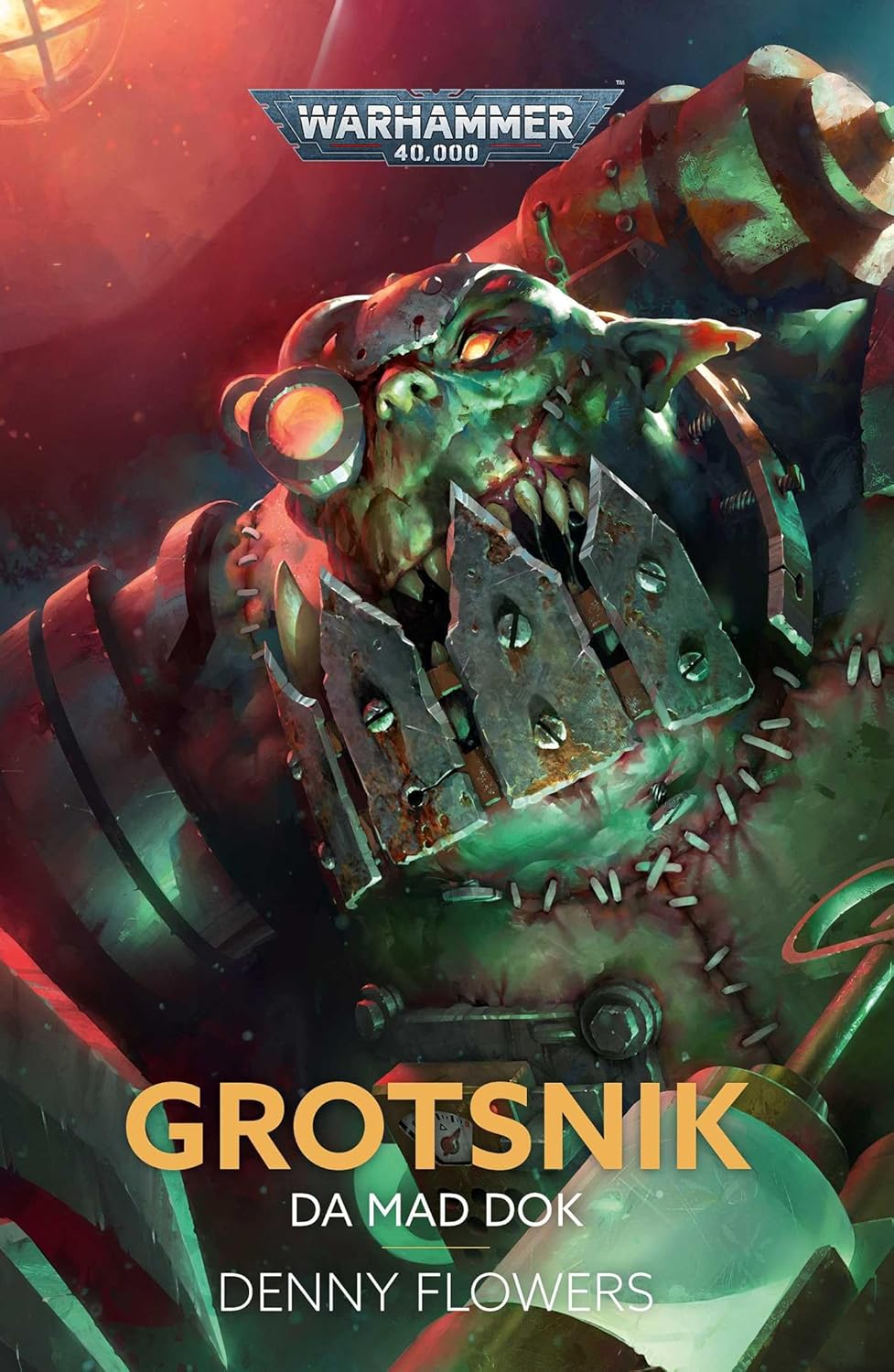
Waiting on Wednesday – Warhammer 40,000: Grotsnik: Da Mad Dok by Denny Flowers

Welcome to my weekly segment, Waiting on Wednesday, where I look at upcoming books that I am planning to order and review in the next few months and which I think I will really enjoy.  Stay tuned to see reviews of these books when I get a copy of them.  For this latest Waiting on Wednesday, I highlight a recently announced 2025 Warhammer 40,000 novel that I am particularly excited for with Grotsnik: Da Mad Dok by Denny Flowers

Fans of this blog will know that I am a massive sucker for all things Warhammer 40,000, and I have been having a blast reading and reviewing so many fantastic novels and audiobooks from this franchise for years.  2025 is already proving to be an interesting year for Warhammer 40,000 fiction, as not only did I just read and review Leontus: Lord Solar, but we also have the very awesome Interceptor City by Dan Abnett (the sequel to Double Eagle), coming out in a couple of days.  Well, it looks like my 2025 Warhammer experience is set to become even better, as the Black Library have just announced an excellent upcoming book that I am very excited for with Grotsnik: Da Mad Dok, from one of my favourite Warhammer authors Denny Flowers.

Denny Flowers is an author who has deeply impressed me since they started writing Warhammer 40,000 fiction.  Starting with Fire Made Flesh in 2021, Flowers did an outstanding job exploring the Necromunda setting, and Fire Made Flesh ended up being one of my favourite debuts of 2021.  Flowers followed his first book up in a big way in 2022 with the fantastic read Outgunned.  An incredibly clever and entertaining novel, Outgunned showcased a deadly fliers war through the eyes of a propaganda expert, who grows to understand the deadly reality they have been trying to sell to the rest of humanity.  Outgunned was such a good book, and it is one of my favourite Warhammer 40,000 novels thanks to its great story and complex characters.  Flowers further impressed last year when he provided us with an exceptional sequel to Outgunned with Above and Beyond.  A powerful read that cleverly expanded on the great character arcs from Outgunned and provided readers with a nuanced take on the human heroes of the Warhammer 40,000 universe, Above and Beyond was another exceptional read that ended up being one of my top books and audiobooks of 2024.

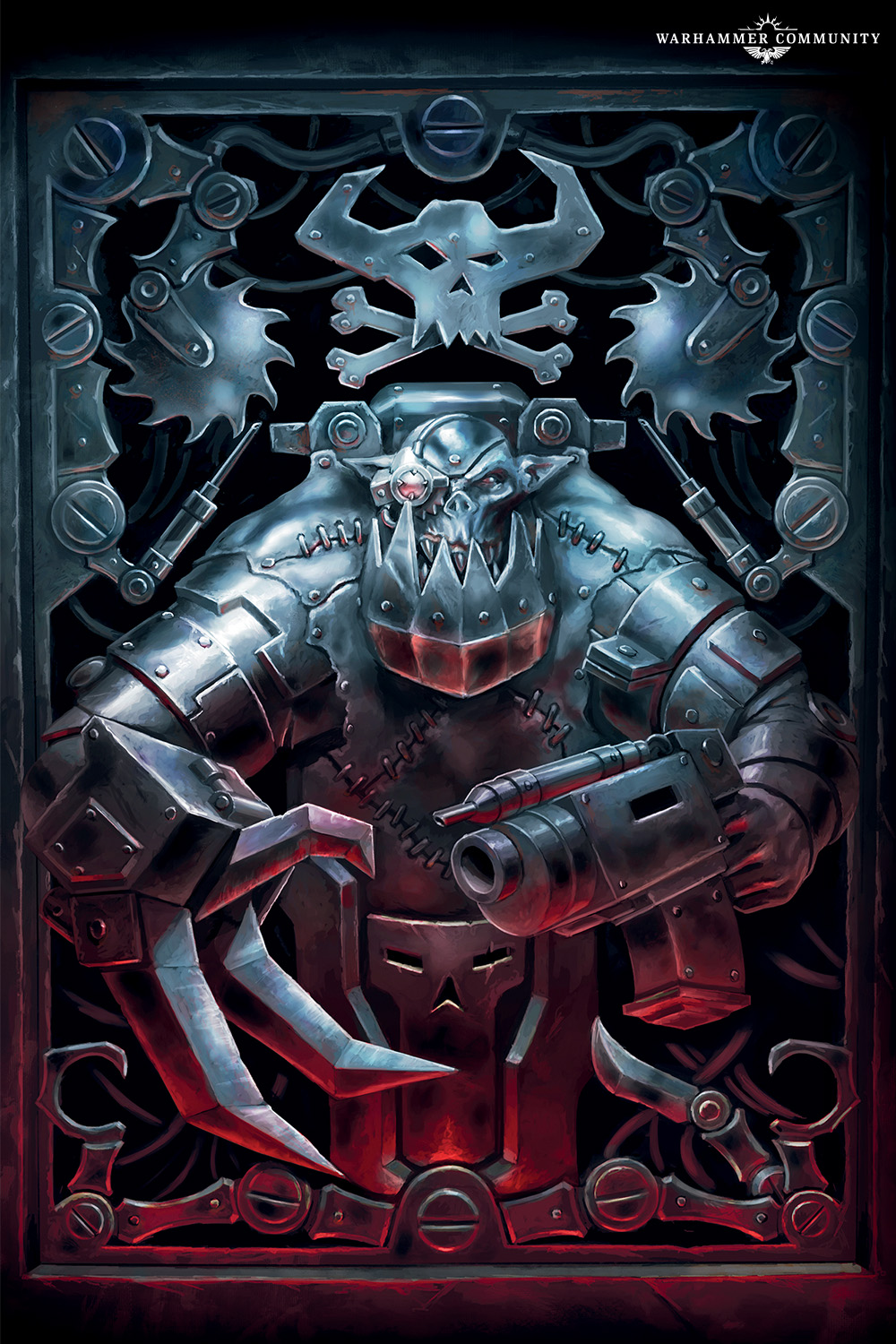
Due to how much fun I have had with Flowers in the past, you can understand that I was very excited to find that he had a new book coming out later this year.  While the details of this upcoming novel, Grotsnik: Da Mad Dok, are a tad sparse (and I only have some unfished covers at this point), the fragmented synopsis below honestly sounds pretty damn amazing, and I am already extremely keen to check it out.


Plot Synopsis:

A painboy of legendary repute, Mad Dok Grotsnik is the singular mind responsible for the towering monstrosity and numero uno Warboss of the Goff clan, Ghazghkull Thraka.* He has an entire army of thuggish orderlies who supply him with fresh meat to experiment on, and a formidable brain that harbours secrets not even the weirdest of boys could reckon at. 

So when he deigns to visit his medical “expertise” upon the beleaguered Bakum, whose faltering Waaagh! against Hive Prome is threatening to peter out, the Beastboss can’t believe his luck. But in reality, the Mad Dok is working on something monumental in his Painwagon, something that will supplant the creation of Ghazghkull as his grandest medical achievement and change the nature of ork-kind forever. 


Ok, now this sounds pretty damn awesome.  I have a special love for ork stories in Warhammer 40,000 fiction, which are so damn hilarious thanks to their over-the-top characters and crazy narratives.  Grotsnik: Da Mad Dok sounds like a particularly good example of this, and a story about a crazed ork painboy taking over a Waaagh! to create some elaborate medical experiment can only be amazing.  I have no doubts whatsoever that Flowers will do an incredible job with this premise, especially after showcasing his ability to write ork characters with his two short story entries in Da Red Gobbo Collection.

Look, I honestly will grab any new piece of Warhammer 40,000 fiction that Denny Flowers produces, as Flowers is an author that honestly gets better with every book he writes. However, a fantastically fun and elaborately over-the-top read about one of the canon’s most feared ork painboys is something I am extremely keen on, and there is no way that this won’t be good.  As such, Grotsnik: Da Mad Dok is one of my most anticipated Warhammer 40,000 novels coming out in 2025, and it won’t surprise me if this ends up being one of the best books I read all year.

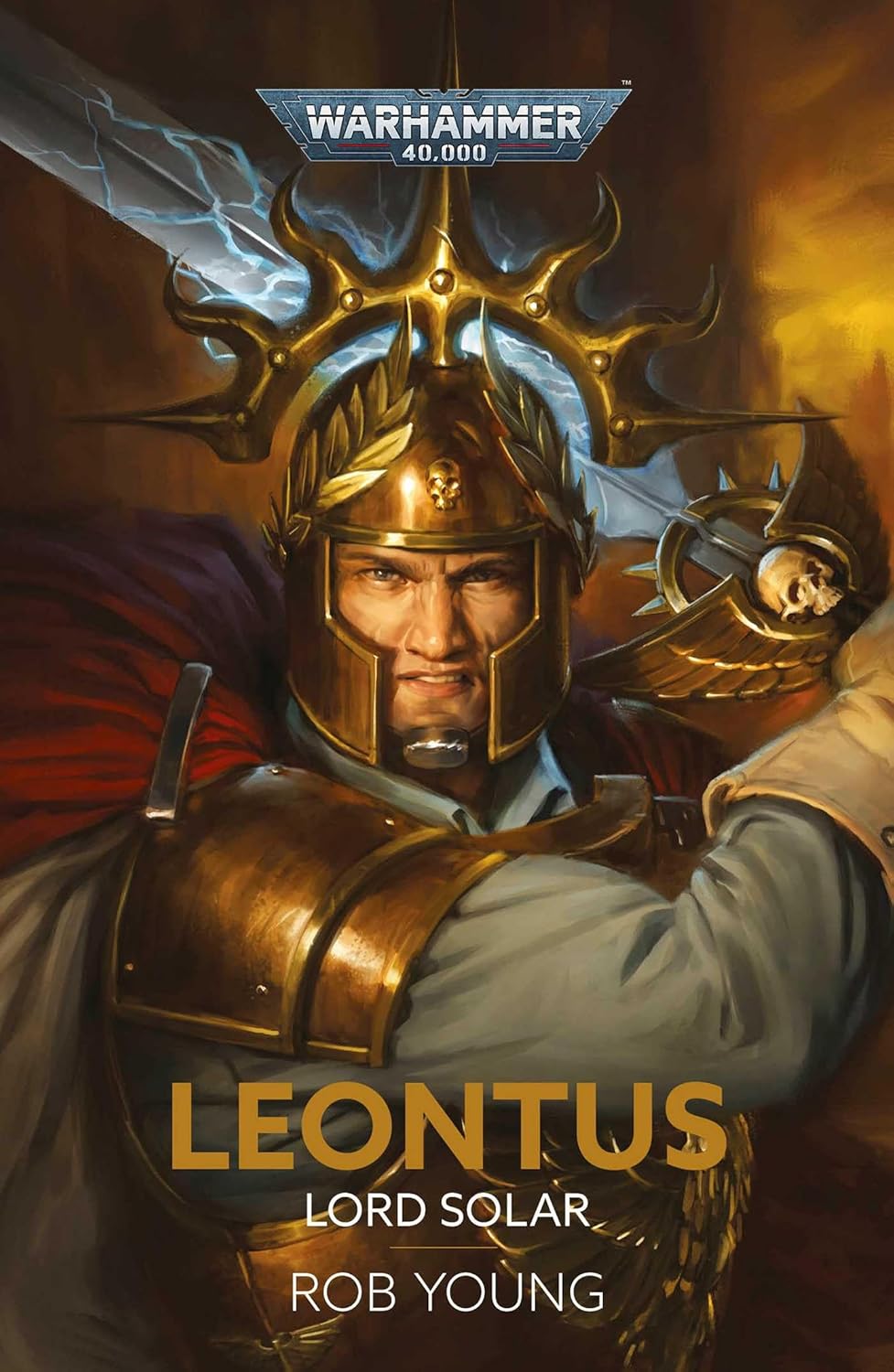
Warhammer 40,000: Leontus: Lord Solar by Rob Young

Publisher: Black Library (Audiobook – 25 January 2025)

Series: Warhammer 40,000

Length: 5 hours and 44 minutes

My Rating: 4.5 out of 5 stars

Amazon

Warhammer 40,000 fiction in 2025 starts off strong with the compelling, character-focused novel, Leontus: Lord Solar by Rob Young.

Back in 2023 I had the very great pleasure of reading my first book from Rob Young, Longshot.  A cool and intense character-driven Warhammer 40,000 novel that followed a sniper war on a T’au held world, Longshot was a fantastic first book from Young, and it ended up being one of my favourite debuts of 2023.  As such, I have been very intrigued to see how Young would continue his Warhammer fiction career, and his next novel, Leontus: Lord Solar, proved to be an excellent new entry to the Warhammer 40,000 canon.  Focused on a legendary human leader, Leontus: Lord Solar was an impactful read that I shot through very quickly.

On the world of Fortuna Minor, an Astra Militarum taskforce of soldiers from various Imperial Guard regiments encounters grave disaster.  Sent to eliminate an invading ork horde, the Astra Militarum soldiers find themselves overwhelmed on the landing fields of Fortuna Minor and are slaughtered, while their reinforcements are forced to retreat into space thanks to the orks’ fighters and spacecraft.  Surrounded, outnumbered and lacking resources, only a few humans manage to escape the massacre, including legendary hero of the Imperium of Man, Arcadian Leontus, Lord Commander of the Segmentum Solar.

One of humanity’s most dedicated defenders and a master tactician, Leontus has no intention of giving up in the face of the ork invasion, even with his armies lost and devastated.  Determined to not only survive but complete the objective of reclaiming Fortuna Minor, Leontus rallies a small group of survivors and prisoners liberated from the ork camps to his cause and begins a desperate campaign to fight ensure that the armies of the Imperium can triumph on this latest battlefield.

Effectively welding his scattered force of mismatched and poorly armed soldiers into a coherent army, Leontus soon finds success against the orks, bringing hope to his demoralised troops.  But in the face of overwhelming odds, a determined and dangerously intelligent opponent, and his own lack of resources, can even the brilliant Leontus succeed, especially when his own men begin to question his tactics and motivations?

Leontus: Lord Solar was an excellent and fun Warhammer 40,000 novel that allowed Young to bring an iconic figure from the game to life.  A compelling and exciting read, Leontus: Lord Solar was a real blast to check out, especially as Young presents an impressive and direct narrative that you quickly sink your teeth into.

This was a very fast-paced and exciting Warhammer 40,000 novel that quickly throws you into the fray and successfully keeps your attention the entire way through.  Starting off with fire and blood as the Imperial Guard regiments are devastated by orks as they land, the story sets itself around some of the main supporting characters, particularly Belgutei, an Attilan Rough Rider, and Keori Arnetz, a Catachan medic.  Fighting there way out of the killing fields, Belgutei and Arnetz, as well as a handful of other survivors, link up with the titular Leontus, who leads them to safety and initiates a desperate guerrilla campaign against the orks, bringing together scattered troops, rescuing prisoners and ambushing ork convoys.

The resulting narrative is highly compelling and action-packed, as the brilliant yet practical Leontus proves to be a skilled commander, inspiring his disparate and demoralised troops, while also engaging in some risky and intense actions.  Young does an excellent job balancing the narrative amongst the three main protagonists, as well as a couple of interesting supporting figures, and I liked how the author tended to focus more on Belgutei and Arnetz, which allowed for an intriguing outsider perspective of Leontus and his actions.  There are some powerful character interactions, especially between Leontus and Belgutei, as the two clash over strategy and the fate of the survivors, which adds some dramatic spice to the overall exciting dish.  The action scenes flow fast and heavy as the book nears its end, including some dark sacrifices, and everything leads up to a massive and intense final battle, where so many of your favourite characters are in peril.  The book ends on a complex note, as Leontus proves his status as a tactician and hero, although the reader is left to decide on his humanity.  An outstanding overall Warhammer 40,000 narrative that is guaranteed to quickly hook you and keep your attention to the end.

Young once again shows his impressive ability when it comes to writing Warhammer 40,000 fiction, and I loved the short, brutal and captivating way Leontus: Lord Solar was presented.  While I was initially worried that it would be too similar to the Ciaphas Cain book, Death or Glory, which also featured a human hero marooned on an ork-held world, Young ensured that Leontus: Lord Solar stood out on its own feet.  The quick-fire narrative, intense and tactical action sequences, and cool scenario ensured this was a distinctive read, and one guaranteed to keep your attention the entire way through.  Primarily a character-focused story around the iconic in-game figure of Arcadian Leontus, Lord Commander of the Segmentum Solar, Young does an excellent job of highlighting the protagonist and showcasing him in a compelling way.  The author chose to primarily show Leontus through the eyes of his supporting characters, which allowed for a more nuanced take on the titular protagonist, while the occasional scene shown from Leontus’ perspective hinted at plans the character is hiding from his soldiers.  Throw in some excellent supporting characters and a memorable, if somewhat underutilised antagonist (who was simultaneously awesome and freaky), and this proved to be an amazing novel with some excellent character-driven strife and complexity at its core.

As with Young’s previous book, Longshot, Leontus: Lord Solar is an outstanding piece of Warhammer 40,000 fiction, and one that would serve as a good introduction to the wider universe for new readers.  The quickfire storytelling, classic action between humans and orks, and lack of excessive lore makes Leontus: Lord Solar a very accessible read, especially as Young doesn’t excessively dive into the history of his main protagonist.  Established readers of Warhammer fiction will naturally get a little more out of this book, especially as it was very cool to see the titular character in action in all his tactical glory, and I felt that Young did an exceptional job capturing and presenting this figure.  In addition, the book also features some intriguing unit makeups as Leontus bands together an irregular force of surviving Cadians, Catachans, Kreig troopers and Attilan Rough Riders.  The interactions between the groups and Leontus was pretty fun, and I liked the mixtures of styles of battle strategies.  Of them, I felt that the Attilan Rough Riders were shown off the best, and their explosive cavalry charges were awesome to read and reminded me of Warhammer Fantasy fiction at times.  All of this and more ensured that Leontus: Lord Solar was a very cool Warhammer 40,000 novel, and it is one I would recommend to all fans of the franchise.

As I tend to with most Warhammer novels I enjoy, I decided to check out Leontus: Lord Solar on audiobook, which was another fantastic experience.  As I have stated innumerable times, Warhammer fiction really lends itself to the audiobook format, and having talented narrators read out the over-the-top stories allows for all the best bits of the universe and its grim dark themes to come to life.  This was particularly true for Leontus: Lord Solar, whose compelling character focused storylines and intense action sequences proved to be a lot of fun to listen to.  Coming in with a relatively short runtime under six hours long, dedicated listeners can really fly through Leontus: Lord Solar, and I enjoyed how quick the pace turned out to be.  I also really appreciated the choice in narrator as David Seddon is a skilled voice actor who really impressed me in previous Warhammer 40,000 audiobooks Dredge Runners and Kasrkin.  Seddon did an excellent job with Leontus: Lord Solar, as not only did he move the story along at a fantastic and enjoyable pace, but he also provided some excellent voices for the various characters.  His take on the titular Leontus was extremely good, and you get a real sense of the character’s nobility, as well as his determination to win, through the performance.  The rest of the human characters also came across extremely well, and Seddon expertly gifts them accents that cleverly corresponded to their regiment and their real-world military influence.  This great voice work really enhanced the already exciting narrative, and I found myself getting really engrossed in this audiobook version as a result.

With this fantastic second book, Leontus: Lord Solar, Rob Young has nicely set himself up as a rising author of Warhammer fiction, especially as he brings a compelling figure from the game to life.  Featuring some awesome action, compelling characters, and an entertaining narrative, Leontus: Lord Solar was an outstanding Warhammer 40,000 novel to start the year with, and I look forward to seeing what amazing adventures Young brings to the franchise in the future.

Amazon

Warhammer 40,000: Titanicus by Dan Abnett

Publisher: Black Library (Audiobook – 1 September 2008)

Series: Warhammer 40,000/Sabbat Worlds Crusade

Length: 13 hours and 38 minutes

My Rating: 5 out of 5 stars

Amazon

The Titans walk to war in this brutal and captivating Warhammer 40,000 novel from the legendary Dan Abnett, Titanicus.

Of the many great Warhammer 40,000 authors out there, few are as impressive as Dan Abnett, who has envisioned an incredible number of awesome battlefields and unique character-focused war stories across the Warhammer universe.  Abnett has written a ton of exceptional and powerful books around the franchise, including several series considered to be the seminal texts of the extended universe.  This includes his brilliant Eisenhorn trilogy (XenosMalleus and Hereticus), and he has multiple entries in my favourite Warhammer 40,000 books list.  However, his best-known series is the Gaunt’s Ghosts books, which I am currently in the middle of reading.

The Gaunt’s Ghosts books are a key series of Warhammer 40,000 fiction that follows the frontline human soldier of this grimdark universe.  Set in an extended multi-planet campaign, known as the Sabbat Worlds Crusade, the Gaunt’s Ghosts books follow a ragged regiment of soldiers as they attempt to survive the dark servants of Chaos coming for them.  I am having an exceptional time reading the Gaunt’s Ghosts series, with books like First and Only, Ghostmaker, Necropolis, Honour Guard, The Guns of Tanith, Straight Silver and Sabbat Martyr, really impressing me with the complex stories and intense action.  While I need to read more of the Gaunt’s Ghosts books, I have taken a quick break to read some of the spin-off novels Abnett wrote around his main series.  Also set around the Sabbat Worlds Crusade, these spin-off novels follow other campaigns in this massive sector spanning war and provide Warhammer fans with a more in-depth view of these battles.  These spin-offs include the exceptional Double Eagle, which I had the great pleasure of reading last year, and which featured so many awesome duels between flyers.  Titanicus was another spectacular book shows a new and highly destructive battlefront of the crusade by focusing on the iconic Titan Legions of the Adeptus Mechanicus.

As war rage across the stars, the forces of Chaos constantly seek a way to disrupt the vital Sabbat World Crusade and destroy the human forces fighting to bring new worlds into the Imperium of Man.  To that end, the archenemy launches an ambitious and devastating surprise assault on the vital forge world of Orestes, whose under-strength defenders find themselves under mass attack from Chaos Titan war engines.  With both the citizens of the Imperium of Man and the forges of the Adeptus Mechanicus under threat, the planet appeals for help and soon finds its prayers answered from the stars in dramatic fashion.

Fresh from their own wars and heading out to join the crusade, the Titans of the Legio Invicta arrive on Orestes, determined to help their Mechanicus brethren.  Finding the forces of Orestes severely outwatched, the Invicta Titans stride to war, causing everything to tremble at the god-machines wrath.  Soon the world is engulfed in an engine war, with both sides wielding enough firepower to crack the planet and the entire population of Orestes caught in the conflict.

But as the war continues, a far more insidious threat arises that could impact far more than just the war on Orestes.  Deep secrets from within Orestes Forge soon begin to spill out, risking a schism between the Imperium of Man and the Adeptus Mechanicus.  With the planet trembling under the battling machines and enemy forces growing by the day, can Legio Invicta overcome the peril growing within their brotherhood before Orestes and the entire galaxy is put to the flame?

Dan Abnett presets another brilliant war story that is epic in every definition of the word.  Successfully presenting the awesome power of the Titans, Titanicus is a deeply compelling and impressive Warhammer 40,000 novel that I honestly could not get enough of.  Intense, exciting and so darn cool, Titanicus gets an easy five-star rating from me, as Abnett once again shows just how talented he is.

Titanicus had a particularly awesome and multi-layered standalone war narrative behind it that hooked me thanks to the author’s nuanced take on the destructive conflicts of the Warhammer 40,000 universe.  Starting off with some dark death to hammer home how grim the situation is, you are soon thrust into the main story as the planet of Orestes comes under attack and the defenders are pushed to the limit.  However, hope soon arrives with the landing of Legio Invicta, who back up Orestes’s existing Titans and defenders with their own engines and troops.  Abnett quickly and effectively sets up multiple character specific storylines as the book progresses that show various alternative viewpoints of the war.  The author works hard to showcase multiple levels of the conflict, from the top commanders all the way to the lowliest of soldiers, and I really enjoyed some of the intriguing storylines that emerged.  This includes desperate tales of survival by following human troops caught behind enemy lines and pursued by mechanical monsters, compelling dives into the minds of the Titan pilots, looks at the various political forces on Orestes, and even some fascinating storylines inside the Adeptus Mechanicus forge.  Abnett did an amazing job highlighting the desperate strife and the complex conflicts these figures endured, and you get a fantastic overarching look at the machine war that proves hard to look away from. 

As the plot of Titanicus continues, the various storylines go in some interesting directions, as you follow each of the characters or groups on their own unique journeys.  Abnett did a really good job of ensuring these unique storylines effectively played off each other as the book continues, and the way characters reacted to events from other plotlines was quite clever and helped to produce a cohesive and intense overarching narrative.  The introduction of a compelling storyline around intrigue and dissent amongst the Adeptus Mechanicus characters provides some extra drama and character conflicts, which added some interesting complexity to the plot, especially as it gave you an alternative group of antagonists which worked well alongside the menacing forces of Chaos, whose perspective you don’t see.  I appreciated how well Abnett set this storyline up in advance, and there are some clever hints to this, and other big events, earlier in the plot.

The final third of Titanicus is particularly impressive and intense, as the author brings together his various storylines extremely well.  I especially enjoyed some of the massive action sequences, while the resolution of the Adeptus Mechanicus storyline was powerful and full of drama as big personalities try to overcome mistrust and dissent.  While I would have liked to have seen the final battle in full, I think Abnett’s effective summary worked pretty well, and I understand that spending another few hours in combat would have watered down the author’s main message.  Each major character’s arc is resolved in a very satisfying manner, and there is an excellent blend of dramatic moments and intense action to keep the reader hooked.  I appreciated how a couple of these conclusions were more depressing, rather than being uniformly happy, which fits both the grimdark nature of Warhammer 40,000 as well as Abnett’s overarching themes that war has no true winners.  This story really came together well, and I deeply enjoyed the complex standalone narrative that Abnett came up with.

This was another insanely well written novel from Abnett, who excels at telling dark, deeply personal war stories from multiple perspectives.  The author provides the perfect balance of excitement, deep intrigue and fantastic character growth in Titanicus, all expertly set within the amazing Warhammer 40,000 universe, and it proves to be such an addictive read.  I personally became engrossed in the various character-driven storylines that emerged throughout the plot, especially the long-running storylines that lasted the entire book.  However, even the more minor character arcs, such as the occasional scene from a normal citizen living in the city to an extended look at the crew of a doomed machine, was hard hitting and Abnett really gets you invested in these personal tales.  As I mentioned above, these often-separate storylines worked extremely well in concert with each other, and Abnett did such a good job pulling them together into a brilliant, overarching narrative. 

Of course, you can’t talk about Titanicus’s writing without going into how incredible the action sequences are.  Abnett crafts together so many deeply intense and powerful battle scenes throughout Titanicus that constantly had the blood pumping as you watched your favourite characters brave the dark gauntlet of battle time and time again.  The author had a lot of fun envisioning war on multiple fronts, and I loved how we got to see infantry fights, tank battles and entertaining skirmishes between various augmented foes as the story continued.  However, easily the most awesome thing about Titanicus is the Titans themselves.  Insanely massive and powerful walking war machines, the Titans steal any scene they are in, and there are so many great reactions as the normal human characters see the Titans fight, especially when the despoiled enemy machines advance on them.  However, it is the sequences shown from the perspective of the Titan pilots themselves that are the best, as you become fully immersed into the battles in the scenes as the machines rain down destruction and depth.  You can honestly feel the insane powerful and destructive ability of the Titans as you move throughout Titanicus, and every single battle involving one of these massive walkers is epic on so many levels. 

As with the rest of Abnett’s books, Titanicus proved to be a particularly strong entry in the Warhammer 40,000 canon.  Serving as a companion piece to the Gaunt’s Ghosts books, Titanicus is a must-read to anyone who has enjoyed Abnett’s main series and the overarching campaign it is a part of.  However, as there are no overlapping characters or major storylines, Titanicus can also be easily read as a standalone novel, and indeed would be a great introduction to Abnett’s writing style and his ability to write awesome war stories.  Titanicus would also be the perfect entry novel to anyone interested in exploring Warhammer 40,000 fiction, especially science fiction readers who love the idea of giant piloted war machines.  The cool action, complex character arcs and fantastic standalone narrative ensures that anyone can really dive into Titanicus and have a brilliant time, and I honestly think this book would appeal to a wide range of different readers.

However, as with most books in the franchise, Titanicus will mostly appeal to those established Warhammer 40,000 fans who will love Abnett’s dive into some unique aspects of the universe.  Naturally, this is primarily going to be around the Titans, who are a very awesome part of the Warhammer 40,000 setting that are often underutilised in fiction due to being too overpowered (or getting badly nerfed when they do appear).  I think Abnett did these war machines perfect justice in Titanicus, and you really come away appreciating every aspect of them, including their raw power, their powerful spirit, and the love the crews have for them.  However, Abnett also dives into the dark side of the machine, and some of the sequences that show the pilots losing their humanity were particularly jarring.  Honestly, I thought Abnett’s portray of the Titans was just brilliant, and I have yet to see another Warhammer author do any better.  Abnett also takes a lot of time to dive into the lore surrounding the Adeptus Mechanics.  While these parts of the book might be slightly confusing for newer readers, established fans will love seeing Abnett explore these machine-worshipping figures, especially as a theological schism becomes a major plot issue.  Other cool lore aspects include examining the uneasy relationship between the Imperium and the Mechanicus on planets they share, the dark side of human life on a planet under siege, and even little fun moments, like a toy maker finally finding success as he makes models of the Titans battling across the world.  All these elements make Titanicus a particularly epic read for fans of the franchise, and I personally loved seeing Abnett’s take on all these cool universe inclusions.

While the writing, story and Warhammer 40,000 elements are all exceptional on their own, what really brings them together and makes Titanicus truly awesome are the multiple cool characters scattered throughout the plot.  Abnett introduces a huge range of fantastic and complex characters in Titanicus who you grow quite attached to as the plot continues.  All the characters, from major figures to minor one-scene characters, are fantastically written and cleverly influence the plot in their own cool ways.  Highlights for me included the desperate crew of a destroyed tank who try to escape on foot, only to find more danger in front of them.  A group of inexperienced conscripts who are completely unprepared for the horrors of war also prove to be really entertaining, and you grow invested in their struggles to survive and the tragedies that await them.  Abnett also examines several intriguing Adeptus Mechanicus figures within the Orestes Forge, whose frustrations, ambitions and struggles for power are far more human than they’d like to believe.  However, the best character arc for me was the one that revolved around the crew of a Legio Invicta’s Titan who are forced to accept an Orestes’ Princeps (the pilot plugged into the Titan’s mind) when their own dies without a successor.  The resulting conflicts between the inexperienced and arrogant outsider pilot and the veteran Legio Invicta crew, which includes the Titan’s moderati (second-in-command), who finds himself under a suspended death sentence, sets the scene perfectly, and you become really intrigued in seeing how the Titan will survive.  Watching these figures come together as a crew is a highlight of Titanicus, although Abnett does an excellent job twisting that around later when internal conflict splits the protagonists.  All these characters, and many more, gave Titanicus some real emotional heft, and I became so damn invested in seeing the final fate of so many of these outstanding protagonists.

I think that it’s kind of a given that I listened to Titanicus on audiobook rather than seeking out a physical copy of the book.  Warhammer audiobooks are so damn good, and frankly there is no better way to enjoy the franchise’s awesome narratives and compelling action.  This is particularly true for Titanicus, as the intricate details and impressive combat sequences really shine through even better when read out.  I especially loved how incredibly epic the various Titan-on-Titan battles came across in this audiobook format, and the fantastic voice of narrator Toby Longworth ensured that you were enrapt by every single second of carnage.  Longworth, who is one of my favourite audiobook narrators, always does an exceptional job bringing Abnett’s amazing stories to life, and he was once again exceptional here in Titanicus.  Longworth captures all the characters in Titanicus perfectly, and you get a real sense of their personalities, emotions and their reactions to the insane events of the book.  This includes the various Adeptus Mechanicus figures, which Longworth voices in all their mechanical glory, and you can just imagine these augmented figures, and indeed all the complex characters of Titanicus, as Longworth describes them.  This makes for such an exceptional experience, and I flew through the audiobook’s near 14-hour long runtime extremely quickly.  There is honestly no other way to enjoy Titanicus than on audiobook, and you are guaranteed to have an amazing time.

Dan Abnett continues to showcase why he is such a highly regarded author of Warhammer fiction with the brilliant and captivating Titanicus.  Perfectly showcasing a war between one of the franchise’s most epic components, the massive Titan war engines, Titanicus was an exceptional read from start to finish and one that I cannot recommend enough.  I had such a great time with Titanicus, and I look forward to reading even more Warhammer 40,000 books from Dan Abnett this year.

Amazon

Quick Review – Warhammer: The Horus Heresy: Eidolon: The Auric Hammer by Marc Collins

Publisher: Black Library (Audiobook – 22 October 2024)

Series: Warhammer: The Horus Heresy

Length: 6 hours and 26 minutes

My Rating: 4 out of 5 stars

Amazon

2024 was a great year for Warhammer fiction, especially as the Black Library released a ton of awesome books across the various sub-series and franchises, including The Horus Heresy series, which serves as a major prequel to the Warhammer 40,000 books I usually look at.  One of the last releases of the year was The Horus Heresy character novel, Eidolon: The Auric Hammer.  Written by Marc Collins, who previously impressed me with his Warhammer Crime novel, Grim Repast, Eidolon: The Auric Hammer was a fast-paced and compelling read that dove into the twisted mind of an ambitious traitor as he travels to the final battle of the great war.


Plot Synopsis:

A Horus Heresy Novel

Lord Commander Primus Eidolon has claimed many titles along the annals of his infamy. He is the Exemplar and the Risen, the Soul-Severed, and the Auric Hammer. Now, fallen far from his primarch’s grace, he carves a path to Terra, where the culmination of Horus’ grand heresy awaits.

READ IT BECAUSE

Eidolon has been a key figure of the Emperor’s Children Legion from the beginning. Now, on the eve of the Siege of Terra, he’s fallen far from grace and is facing a long overdue reckoning for his many misdeeds during the Horus Heresy. Can he come to terms with his tainted legacy?

THE STORY

Coaxed and goaded by the wiles of the warp – and an entity whose whispered truths stretch even his credulity – Eidolon finds himself stranded around the world of Tatricala, where the ghosts of his past haunt every fated step. Now he must choose which life he wants to lead… and how much of his soul he is willing to sacrifice for it.

If Eidolon cannot banish his daemons, then they will surely take him for their own.


Eidolon: The Auric Hammer
was an excellent addition to the canon, and one that will really appeal to those readers who dove into the extended Horus Heresy series.  Like many of the Horus Heresy character books, The Auric Hammer focuses on one of the interesting supporting characters in the larger franchise and provides a compelling story around them, while also diving into their past.  In this case, Marc Collins tells a quick and entertaining story around Eidolon, one of the commanders of the now fallen Emperor’s Children legion, who has given in to the hedonism and worship of Slaanesh, the Chaos God of pleasure and obsession.

Collins does a great job effectively introducing the character of Eidolon and thrusting readers into his personal madness.  I must admit that I haven’t read any of the other Horus Heresy novels before, so I wasn’t especially familiar with the character of Eidolon, which did slightly reduce my appreciation for this book.  However, readers with even moderate knowledge of Warhammer 40,000 lore and the Horus Heresy can easily follow along with Collin’s quick story without too much difficulty.  Collins breaks this into a couple of fun parts, with a fight against daemons on the protagonist’s ship leading to an impromptu invasion of an isolated planet alongside “allies”.  However, nothing goes to plan as Eidolon and his comrades find themselves best by the dark plots of a daemonic entity who desires to destroy him.

This last third of the book is probably the best, as Collins envisions a series of daemonic encounters that play in the ravaged psyches of the various Emperor’s Children characters.  While I had a hard time connecting to some of the supporting cast members (Collins might have been better off with a more tightly focused narrative), it was interesting to see their various struggles, especially as it effectively showed how far their legion had fallen.  Eidolon’s personal inner struggle was the strongest part of the book, especially as Collins dove into his many issues, including his ambition, resentments and the anger he has with the various father figures in his life.  The protagonist comes out of this book stronger, and I particularly loved the reveal about who was behind everything at the end of the novel.  The confrontation that Eidolon had with this figure was extremely entertaining, and you come away appreciating just how suicidally stubborn Eidolon can be.

As is my habit with most Warhammer fiction, I chose to check out The Auric Hammer on audiobook, mainly because it was voiced by one of my favourite audiobook narrators, Toby Longworth.  A very effective narrator, Longworth perfectly captures the various elaborately dark characters featured with The Auric Hammer, and I love how he brings readers into the outrageous and grim Warhammer universe.  Longworth’s already impressive voice is enhanced in various sequences by cool sound effects that help to showcase the various daemonic creatures that the protagonist encounters.  These effects and Longworth’s fantastic voicework really make you appreciate the eldritch power and inherent evilness the various figures they represented, and I felt it did wonders on bringing me further into the narrative.  Combine that with the excellent way in which Longworth captures the intense dark emotions of Eidolon, including his frustration and disgust at his Primarch’s actions and abandonment of him, and this proves to be an outstanding and addictive audiobook.  Featuring a relatively short runtime of just under six and a half hours, The Auric Hammer is an easy audiobook to get through quickly, and I had a lot of fun knocking it off in a couple of enjoyable sessions.

Overall, Eidolon: The Auric Hammer was an awesome and exciting Warhammer audiobook from Marc Collins that is worth checking out.  Cleverly focusing on an intriguing figure in the canon while also expanding on the massive Horus Heresy series, The Auric Hammer really grabbed my attention, and I had a great time getting through it.  An excellent Warhammer book to check out, especially if you have been enjoying the other Horus Heresy books.

Amazon

Da Red Gobbo Collection by Mike Brooks, Denny Flowers and Rhuairidh James

Publisher: Black Library (Audiobook – 16 November 2024)

Series: Warhammer 40,000

Length: 11 hours and 10 minutes

My Rating: 5 out of 5 stars

Amazon

Prepare for da revolution with this collection of brilliant Warhammer 40,000 stories from three top authors, with Da Red Gobbo Collection.

Gosh this has been a great year for Warhammer 40,000 fiction, and the fun is still continuing as one of the best releases of this year just dropped with Da Red Gobbo Collection, which features five brilliant stories from awesome authors Mike Brooks, Denny Flowers and Rhuairidh James.  Featuring three novellas and two short stories, Da Red Gobbo Collection focuses on the always entertaining ork faction from Warhammer 40,000 fiction, whose brutal, hooligan-inspired mindset always leads to comedic and outrageous reads.

However, rather than your typical ork novel, the stories in this anthology collection are focused on the ork sub-species known as grots, who are the 40K equivalent of the goblins from the Warhammer Fantasy universe.  Small, cunning and cowardly, the grots, also known as gretchin, work as slaves, cannon fodder and scapegoats (scape-grots??) to the bigger orks, generally getting kicked around by their ork masters even if they do the right thing.  However, not all grots are content to live under ork oppression, and some even have the courage to fight back thanks to the legendary figure known as Da Red Gobbo.

Da Red Gobbo is a mysterious figure in the grot mythology, who arises whenever the orks push their smaller cousins too far.  Able to put aside the typical grot amnesty and selfishness, Da Red Gobbo is an icon for revolution and revolt against the orkish oppression.  But who is Da Red Gobbo?  Are they really a legendary figure going from ork warband to ork warband spreading the word of freedom, or can any grot put on the cape, hat and goggles and inspire his fellows?  Whatever the truth may be, Da Red Gobbo is here to bring a crumping, and nobody, be they human, Chaos worshipper or even the mightiest of orks, will underestimate the grots again.

I had a blast with Da Red Gobbo Collection, especially as I was able to enjoy all five stories on audiobook for the first time.  Brooks, Flowers and James have all produced exceptional stories focused on the hilarious figure of the Red Gobbo, and I like their intriguing alternative takes on this unlikely revolutionary and his origin.  Thanks to the inherent humour of the ork faction, this was a particularly entertaining and comedic novel, and I frankly laughed my way through the various stories, especially as the three excellent authors created some particularly inventive reads.

The first story in Da Red Gobbo Collection was Da Gobbo’s Revenge by Mike Brooks, which was one of the longer novellas in the collection.  Brooks is an outstanding author, and I have read quite a few of his Warhammer 40,000 books recently, including The Lion: Son the Forest and Lelith Hesperax: Queen of KnivesDa Gobbo’s Revenge was a particularly entertaining read, which is set parallel to Brook’s previous ork-focused novels, such as Warboss, Brutal Kunnin and Da Big Dakka, which have also featured fun narratives of grot revolution and rebellion.

Da Gobbo’s Revenge is a more compact narrative that follows the unlikely hero, Fingwit.  The leader of small band of grots that follow a crazed ork mek, Fingwit and his comrades find themselves in deep trouble when their boss forces them to participate in a deadly boarding action aboard an Imperial war vessel.  When the mek dies in front of them, Fingwit attempts to lead his fellow grots to complete their boss’s final mission, only to encounter human soldiers, running firefights, and dissent from amongst his fellow grots.  However, it’s the actions of an ork taskmaster that finally drives Fingwit over the edge, and he decides that the only way to survive is to become something legendary.

Da Gobbo’s Revenge is a very entertaining and fast-paced novella that provides an interesting initial look into the grot mindset while throwing them into a frenetic adventure.  Brooks hits this story with the clever and comedic style he has utilised for his other ork-focused books, and you can really appreciate his clear love for this faction, as well as his attention to detail around them.  The only story in this book told exclusively through the eyes of a grot, Da Gobbo’s Revenge fully showcases their sneakiness, their shrewd cunning, and their desire to outdo each other, and the result is hilarious, especially as they manage to outsmart various bigger opponents who completely underestimate them.  This over-the-top adventure, while very fun, takes on a more thoughtful manner towards the end once Fingwit decides to take on the mantle of the Red Gobbo to save his friends.  Seeing the previously self-obsessed Fingwit become more concerned with the fate of his fellow grots helps to hammer home the significance of the Red Gobbo to these lowly creatures, especially as he inspires them to do something truly special and unselfish.  This ending is surprisingly powerful and poignant, especially for an ork/grot focussed Warhammer 40,000 story, and Da Gobbo’s Revenge was a very strong story that serves as the perfect introduction to Da Red Gobbo Collection.

Following hot on the heels of this first excellent entry is the brilliant novella, Da Gobbo’s Demise by Denny Flowers.  Da Gobbo’s Demise was another awesome read that I was particularly keen to check out, mainly because I am a massive fan of Flowers at the moment.  One of the best rising stars of Warhammer 40,000 fiction, Flowers has deeply impressed me with his books Fire Made Flesh, Outgunned, and the outstanding 2024 release Above and BeyondDa Gobbo’s Demise was the first of Flowers’s novellas I have had the pleasure of reading, and I was very excited to check out his take on a non-human character, the result of which was extremely entertaining and fantastically fun.

Da Gobbo’s Demise follows a small herd of grots who find themselves alone and in trouble when their taskmaster, Runtherd Killaskun, is suddenly killed, and they are left without any ork supervision.  This proves particularly problematic for Killaskun’s right-hand grot, Redsnot, as he knows that his fellow grots will be looking to even the score against him for enforcing Killaskun’s orders.  However, the grots soon find themselves in deeper trouble when they are surrounded by a horde of Chaos cultists determined to kill them and take the church they are hiding in.  Determined to survive, Redsnot seeks to take advantage of the situation and be the leader the grots need.  However, his genius plan is ruined by the surprise appearance of Da Red Gobbo, hero of all grot-kind.  But Redsnot isn’t going to be upstaged by anyone, even if the Red Gobbo trying to save his life.  But luckily even legends are susceptible to a knife in the back.

This was another particularly fun and awesome novella that really showcase Flowers’ ability to write a clever, funny and very cynical story that I could not get enough off.  I honestly really enjoyed where Flowers took the story, especially as it ended up being a Home Alone-inspired siege, where the hilariously cruel grots hold off a bunch of incompetent cultists by any means necessary.  The constant bickering and dissent on both sides of the conflict was just great, and there are some very amusing moments as the grots use their natural cunning to outsmart their opponent.  The entire story moves quickly, and I found myself constantly laughing due to the outrageous antics of everyone involved.

Flowers makes Da Gobbo’s Demise’s story even more entertaining and funny through amazing use of multiple character perspectives, as in addition to showing events through Redsnot’s eyes, the author also features the viewpoint of the Chaos cultists besieging them, including a traitor commissar hoping for glory under his new gods.  There are some brilliant contrasts between the bickering grots and the disorganised cultists, especially when it comes to their different leaders.  While the chaos cultists are controlled by fear, and their leader becomes more and more demented the more failure he encounters, the usually contentious grots become surprisingly well organised thanks to the appearance of Da Red Gobbo, who resolves most of their petty arguments and turns them into an effective team.  I especially enjoyed the way in which Da Red Gobbo manages to effectively undermine and outsmart Redsnot at every turn, especially as it leads to yet another compelling bit of character growth for the main protagonist as he learns to fight for something bigger than himself.  The resulting story turns into a wonderfully bloody mess of over-the-top characters and outrageous antics, and I laughed my way through it.  Another outstanding outing from Flowers that perfectly expanded on the opening momentum of Da Gobbo’s Revenge and ensured that readers are firmly enthralled by Da Red Gobbo Collection as this point in the book.

The next entry in Da Red Gobbo Collection is the short story Da Wrong Type of Green, also by Denny Flowers.  A quick and exciting read, Da Wrong Type of Green is a direct prequel to Da Gobbo’s Demise that, shows the events immediately leading up to the novella’s opening scene.  Featuring the exact same style and most of the same characters, Da Wrong Type of Green gives some fun additional context to Da Gobbo’s Demise that I rather enjoyed seeing, especially as I had such a brilliant time with Flower’s longer novella.  I particularly enjoyed seeing the protagonist’s relationship with their former ork leader, Runtherd Killaskun, which really enhanced some of the themes of freedom and revolution that Flowers featured in novella.  While the inclusion of this story does feel a tad unnecessary, especially as you don’t really need to read it to appreciate Da Gobbo’s Demise, it was an interesting story, and one that you can get through very quickly.

Following these two stories by Flowers, readers are then led to the book’s third novella, the amusing and outrageous entry, Da Gobbo Rides Again, by Rhuairidh James.  James, who has previously written several interesting Warhammer 40,000 short stories, honestly produces one of the best entries in Da Red Gobbo Collection, and I was really blown away by his intriguing and original take on the focal character, especially as he examines the revolution and the relationship between orks and grots in a very different manner.

Da Gobbo Rides Again follows the ork painboy Stimma, who arrives back to camp only to discover something strange happening to his warband’s grots.  Rather than being their usual sneaky selves, the grots have all become exceedingly compliant and helpful, completely throwing off the usual anarchic rhythms of the ork encampment.  Ordered by his warboss to fix the problem, Stimma and his grot assistant, Goggulz, try to shake the grots out of their malaise and back to their previous sly and murderous mentality.  They soon determine that the only way to inspire the grots is to give them a Red Gobbo to stir them up.  However, with no Red Gobbo to hand, Stimma decides to create one, but first he needs to understand what the Red Gobbo is and how he comes into being.  But the further he dives into the mysteries of the Red Gobbo, the closer he comes to the truth, and not even an ork as ruthless as Stimma is prepared for what he finds.

This was such a brilliant entry from James, and I loved the elaborate and very memorable story he comes up with.  I love how he decided to tell the story through the eyes of an ork master, rather than another grot, which allows for a unique new perspective in the tale of Da Red Gobbo.  The central story focusing on the dispirited grots was very clever, and James’s concept of compliant grots being more dangerous to the orks than rebellious ones was a fun take.  The resulting story of Stimma’s attempt to create his own Red Gobbo is both hilarious and philosophical in nature, and you must love the ork mentality when it comes to grots and their so-called heroes.  This attempt at science also leads the protagonist to various ork experts, and while this is mostly a novella about grots, the fun and in-depth dive into the oddboyz, those orks with special skills such as meks and weirdboyz, proves to be really amusing and detailed.  I especially loved Jame’s take on the painboyz, the orks’ highly experimental medics, especially as it results in some hilarious discussions about ‘medicine’.

However, the thing that I loved most about Da Gobbo Rides Again is the main twist of the story.  Thanks in part to having read the other novellas first, you can easily see where Stimma’s plan is going to go, even if the orks cannot due to their blind spot when it comes to their smaller cousins.  As such, you get to watch in joy as James openly works to bring this twist to fruition bit by bit, and it is very satisfying when it all comes together.  This fantastic buildup works extremely well amongst the general chaos of the ork camp, while the fun relationship that builds between Stimma and Goggulz makes it even more delicious.  Throw in some very interesting sequences that explore the unusual past of the orks and their relationship to grot-kind, as well as a great scene that brings together Da Gobbo Rides Again with the other novellas in this collection, and this was an impressive entry that I could not get enough of.  I honestly cannot emphasise enough just how amazing Da Gobbo Rides Again was, and I hope we get a full-length novel from James at some point in the future as I know I will deeply enjoy it.

The final entry within Da Red Gobbo Collection is The Instigator.  Also written by James, The Instigator is a prequel to Da Gobbo Rides Again which was originally released in the White Dwarf magazine.  This story tells of the first time a young Stimma encountered a Red Gobbo, when he accompanies an ork raiding party when it attempts to board a spaceship.  However, nothing goes to plan, especially when the orks find an unexpected enemy hidden within the ship, led by an unlikely commander.  This story does a great job of showcasing events that were hinted at within Da Gobbo Rides Again and presenting them in a very different way than Stimma remembers them, especially as events were a little more desperate than he cares to admit.  James amps up the tension in this short but sweet story, which shows just how scary grots can be for orks, while also providing a fantastic opponent for the plot.  The Instigator proves to be a great follow-up for Da Gobbo Rides Again, and I really enjoyed seeing the seeds for Stimma’s later idea around Da Red Gobbo be planted.

This ended up being a very awesome overall collection of Warhammer 40,000 stories, and I love the impressive and relentlessly comedic tales that these excellent authors came up with.  I loved how the three main novellas perfectly complemented each other, building on the work of the preceding stories, while also standing on their own feet.  Brooks, Flowers and James really had fun when it came to these stories, and I love how you get some unique takes on the orks and the grots, although the general ork humour does carry through very well for all of them.  I also deeply enjoyed how each author showcased a different aspect of the Red Gobbo character, and the three separate incarnations of the Red Gobbo you witness paints a fascinating picture of this unique being in the Warhammer canon.  All three authors really outdid themselves in how they brought this figure to life, and their amazing stories were a true joy to read.

Unsurprisingly, I chose to listen to Da Red Gobbo Collection on audiobook, a format which always deeply enhances Warhammer fiction, especially as the crazy characters, unlikely scenarios and dark settings really pop when read out loud.  Warhammer 40,000 audiobooks that feature the orks are always particularly awesome, as the outrageous aliens are so damn entertaining especially when you get a great narrator voicing them.  As such, I was very keen to listen to Da Red Gobbo Collection, especially as it provided the first audiobook adaptations of several existing short stories and novellas, which ensured a whole new way to appreciate these clever tales.  I was also excited because British actor Harry Myers was attached to narrate Da Red Gobbo Collection.  A very talented narrator who has brought some of my favourite Warhammer 40,000 books to life, including The Wraithbone Phoenix and Day of Ascension, Myers has a fantastically entertaining voice that really fits some of the outrageous figures in this universe.  Myers particularly excels at voice ork characters (he previously narrated Warboss and Da Big Dakka by Mike Brooks), and his voice perfectly fits the rough and crude orks in so many entertaining ways.  He also does a great job of capturing the smaller and cowardly grots, and you really get a great sense of their scared, weaselly and backstabbing ways through his narration.  I also loved how each character comes out in this audiobook, and I was very impressed that Myers featured variety with his voice work, providing the various grots different voices, even when he moved on to a new story.  This was such an epic listen, and I really cannot recommend Da Red Gobbo Collection on audiobook enough.  Coming in with a runtime of just over 11 hours, this is a slightly long but very easy audiobook to power through, and there is honestly no better way to enjoy Da Red Gobbo Collection than by listening to it in this format.

Da Red Gobbo Collection was an exceptional Warhammer 40,000 book that I had so much damn fun getting through.  Thanks to the outstanding team of Mike Brooks, Denny Flowers and Rhuairidh James, you are gifted with some very impressive stories that prove to be exceedingly addictive.  Insanely addictive and extremely hilarious, Da Red Gobbo Collection will bring a smile to any Warhammer fan, and even new readers will be able to have an amazing time with it.  As such, I must give this collection a full five-star rating, as each author delivered something very special that came together perfectly.

Amazon