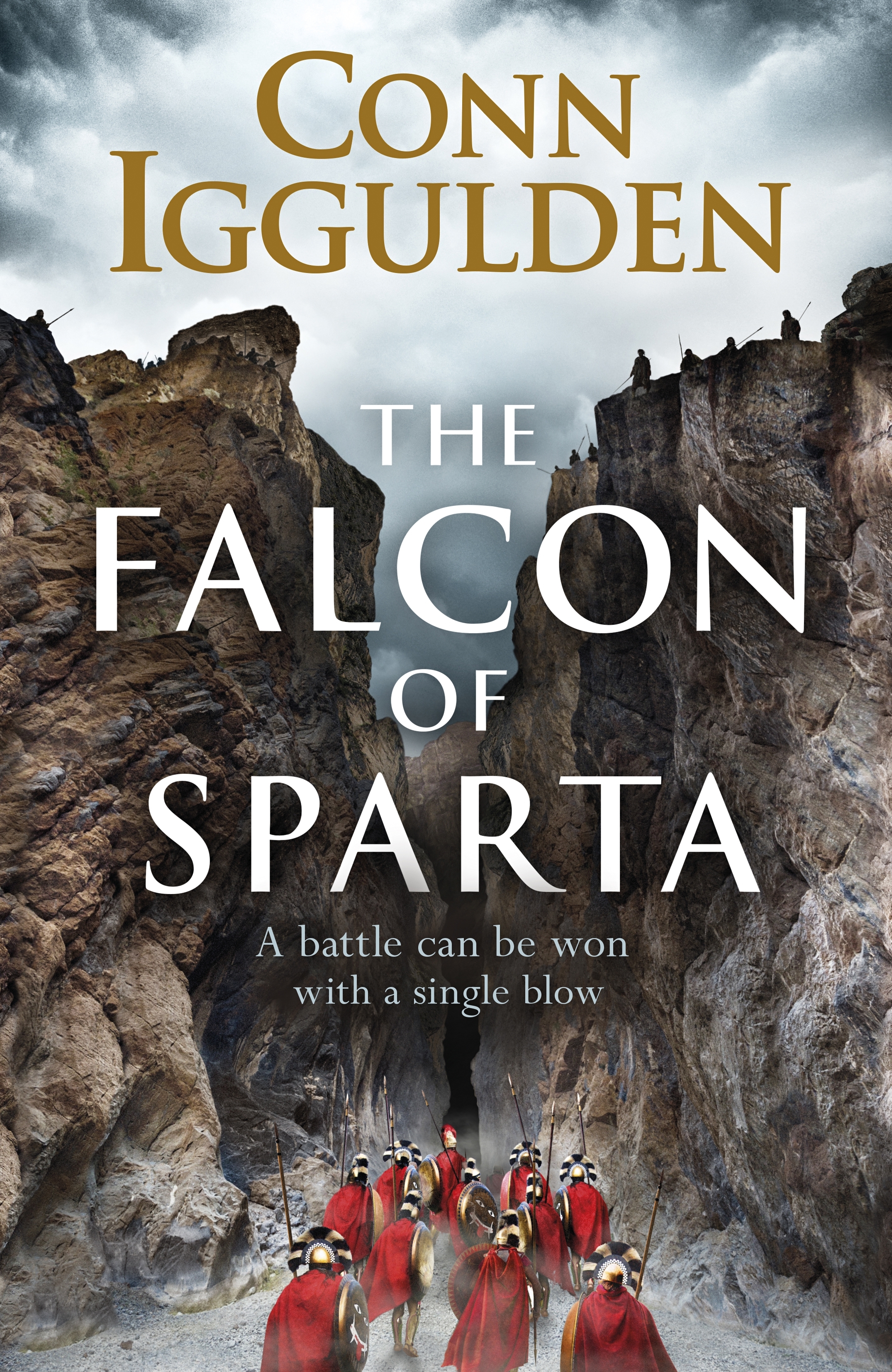
The Falcon of Sparta by Conn Iggulden

Publisher: Michael Joseph

Publication Date – 3 May 2018

Amazon

One of historical fiction’s very best authors is back with an enthralling story that follows history’s greatest warriors on one of their most legendary journeys.  Without a doubt, Conn Iggulden is one of the top authors of historical fiction in the world today.  Since 2003 he has consistently produced some of the most in-depth, detailed and engrossing chronicles of several different historical periods and cultures.  His previous work includes lengthy examinations of Julius Caesar and Genghis Khan in his bestselling Emperor and Conqueror series, and he has also produced the definitive fictional account of one of the bloodiest civil wars in English history with his extraordinary War of the Roses series.  Now, following his 2017 fantasy debut Darien, Iggulden has once again returned to his historical fiction roots by exploring another new realm of history, the Spartans.

In 401 BC, the new Persian king, Artaxerxes II, rules the largest empire in the known world.  With an empire sprawling from the Aegean Sea to the north of India, the king of Persia is the undisputed ruler of 50 million people.  However, despite all their wealth and power, the kings of Persia have never conquered Greece.  From Thermopylae to Marathon and Platea, the Persians have suffered the ferocity of the Greeks, and none are more feared than the men of Sparta.  As a result, it has been many years since the Persians have attempted to invade Greece, and many Spartans now serve as mercenaries in the Persian army.

When Prince Cyrus, Artaxerxes’s brother, is nearly executed by the new king following the death of their father, the young prince is determined to claim the throne of Persia for himself.  After hiring an army of skilled Greek mercenaries led by an elite core of Spartan warriors and the revered Spartan General Clearchus, Cyrus marches against his brother.  But battles can be lost with a single blow, and when Cyrus is killed on the battlefield the Greeks suddenly find themselves trapped in the middle of the Persian Empire.

With Clearchus and the other Greek generals having been killed through treachery, it falls to a young solider, Xenophon, to lead the surviving Greeks to safety.  With limited supplies and no knowledge of the land before them, Xenophon must find a way to lead 10,000 soldiers and an additional 10,000 camp followers back to Greece.  Forced to endure constant attacks from the Persian army as they travel through deserts and across mountains, their journey will become legendary.

The Falcon of Sparta is a standalone novel primarily based on the classic Greek text, Anabasis, which was written by the historical Xenophon.  Iggulden’s novel focuses on the events of the first four of the seven books of Anabasis.

While The Falcon of Sparta does not contain the full version of Anabasis, in some ways it is a much more complete and detailed story that focuses on the people who featured in this great adventure.  Xenophon related his tale in a rather simple and direct manner, and Iggulden has compensated for this by providing his own storytelling and dramatic writing.  Many of the key characters now have significant backstories fictional justifications for many of these characters’ actions and motives.  For example, Iggulden attempts to provide a more complex and dramatic explanation for the schism between Artaxerxes and Cyrus, rather than the historical story that Cyrus simply desired the throne.  Iggulden also provides additional context for one of the main villains of the Anabasis, the Persian noble Tissaphernes, who led the Persian armies against the retreating Greek forces.  In The Falcon of Sparta his role as a villain is greatly expanded.  Not only is he portrayed as a former friend of Cyrus who betrayed him for power but also as one of the main reasons Cyrus fails to seize the throne and the protagonists are placed into such peril.  Iggulden’s additional backstories and character traits make for a much more compelling and complete story with thrilling and absorbing motivations and antagonists.

These additional story elements are greatly enhanced by the author’s use of character perspectives.  For the first two thirds of the story, narration is split between a number of characters, including Cyrus, Clearchus, Tissaphernes, Artaxerxes and Xenophon.  Not only does this split narration help to build up the respective characters’ histories and allow the audience a better view of their personalities, but it also adds significantly to the story as these characters provide various perspectives on the events occurring in the formative parts of the main story.  Through the narrators we are given glimpses into a range of interesting things, including Artaxerxes’s and Cyrus’s thoughts on the war for their father’s throne, as well as the events and feelings that led up to the conflict.  We also see the respect that Cyrus and Xenophon have for their Spartan allies, as they see examples of their effectiveness in combat and their legendary self-discipline.

The scenes told from Tissaphernes’s point of view further highlight his role as a villain as his inner monologue reveals his selfish motivations and ambitions.  The story told from Tissaphernes’s viewpoint helps turn him into an embodiment of the distain that the ancient Persians had for the Greeks and their soldiers.  Despite seeing the Greeks’ substantial battle prowess, Tissaphernes and many of the Persians viewed the Greeks as second-rate soldiers, and it is fascinating to see how deeply held this belief was.

After the first two thirds of the book, the story is told exclusively from the point of view of Xenophon and starts to mostly represent Book III and Book IV of the Anabasis.  This part of the book allows the reader a closer view of the Spartan and Greek forces as they participate in their epic march and is very entertaining.  Even as the story becomes confined to only one narrator, Iggulden is still able to provide the necessary detail and drama in the final part of the book to keep the story going strong and maintain the reader’s attention and enjoyment.

Special attention needs to be given to the masterful portrayal of the Greeks and Spartans in battle.  Iggulden has an incredible eye for detail and an amazing writing style that brings the reader right into the heart of the book’s large-scale action sequences.  In particular, he spends a significant amount of time focusing on the Greeks and the Spartans and does an amazing job of capturing their battle techniques, tactics and mentality.  There are a large number of battle scenes within this book, and Iggulden uses every opportunity to show off the prowess of his heroes in as much detail as possible, allowing the reader to easily witness the events in their minds.  The Persian soldiers are also examined in the scenes narrated by Cyrus, and it is interesting to see the differences in the fighting style and mentality of the Greeks and Persians.  Those interested in reading about this part of history will love the amount of attention given to the Spartans and find many of the associated descriptions deeply fascinating.

Conn Iggulden has once again produced a masterful and absorbing fictional account that focuses on an utterly intriguing historical event.  Bringing the reader right into the middle of the march of the Ten Thousand, Iggulden expands on Xenophon’s Anabasis and provides a more dramatic and elegant story of betrayal, endurance and survival.  The Falcon of Sparta is a love letter to one of history’s most legendary race of warriors, and it provides the reader with a detailed exploration of Spartan warfare, lifestyle and mentality.  This is a breathtaking and highly recommended piece of historical fiction that is guaranteed to drag you in for the long haul.

My Rating:

Five Stars

Amazon

The Juliet Code by Christine Wells

The Juliet Code Cover

Publisher: Michael Joseph

Publication Date – 30 April 2018

Amazon     Book Depository

From acclaimed Australian author Christine Wells comes this touching and memorable tale of love, captivity and endurance in the darkest of times.

During World War II, Juliet Barnard was a British agent working for the Special Operations Executive.  A skilled wireless operator, she was one of the few female agents that were dropped into occupied France to meet contacts and pass intelligence back to the Allies.  While initially successful, she was only active in France for a short time before the Nazis captured her.  Trapped in a prison that specialised in interrogating captured spies and infiltrators at Paris’s Avenue Foch, Juliet endured torture, drugging and manipulation and came out of the prison a different person.

Now, two years after the end of the war, Juliet is still recovering from her ordeal and trying to continue a relationship with Felix, the man she fell in love with during her training.  Claiming to be suffering from memory loss, Juliet has managed to avoid providing any details about her time at Avenue Foch or about the man who held her captive, Sturmbannführer Strasser.  Finding Strasser is the last thing Juliet wants to happen, because he knows a dark secret about Juliet – a secret she would kill to protect.  However, when Juliet meets Mac, an SAS officer turned Nazi hunter whose sister served in the war with Juliet, her guilt compels her to return to Paris to help him locate Strasser.

This is the third book from Wells, who has previously written two English-based historical stories that feature a strong, female protagonist.  The Juliet Code is the second book from Wells that focuses on British spy activities during World War II; her previous novel, The Traitor’s Girl, focused on a World War II MI5 operative.  The Juliet Code is another excellent and intense romp into the history of World War II, and Wells has done an amazing job of creating this unique and emotional story.  This book is a combination of a great dramatic story and a two-stage historical spy thriller wrapped up with a poignant romantic subplot.

Wells has injected considerable drama and emotion into her story, especially through her main character, Juliet, who goes through substantial emotional changes throughout the book.  Before she is dropped into France, Juliet is portrayed as a shy girl, unsure of her abilities as a potential spy but eager to do her duty to her country.  After the war she is more hardened individual who is suffering from guilt, both due to being one of the few agents to survive capture and because of her own actions during the war.  These changes in the character are made obvious to the reader, not just because of Wells’s great writing ability but also because she switches between the mid-war and post-war scenes multiple times.  Wells slowly reveals the main character’s wartime secret, which is a central part of the plot.  While there are some hints to what this secret is early in the book, the full reveal is not done until later in the story, and makes use of a moving and artfully constructed confession scene.

The Juliet Code is set in the 1940s, and Wells has broken the story up into two distinct periods.  The first period starts in 1943 and continues for the rest of the war, examining the main character’s training, her infiltration of occupied France and her time as a captive at Avenue Foch.  The parts of the book set during the war are very intriguing and are some of the most appealing scenes from a historical fiction viewpoint.  The sections that feature Juliet training and actively spying in France were some of my favourite parts of the plot, and I loved reading Wells’s descriptions about the French resistance networks, the British covert activities, their espionage techniques and the counteroperations the Nazis were undertaking to catch the operatives active in France.  There are also some significant descriptions of how the British wireless transmitters functioned and British coding techniques.  These very technical parts of the book contain some fascinating information while also providing the reader with a good understanding of this technology and what the operators were doing with it.  There are also a number of scenes that follow Juliet after she is captured and held as an enemy spy in Paris.  These parts of the book are, by necessity, darker in nature, depicting how these spies, especially female operatives, were treated during this period.  There are also thorough descriptions of the historical locations used as prisons in Paris.

The second part of the book is set in 1947 and features Juliet and her companions revisiting the sites of Juliet’s captivity and attempting to hunt down her jailer.  This part of the book comes across as more of a traditional spy thriller, and contains some vivid descriptions of post-war France.  There are some examinations of how the Allies and the Soviets were attempting to capture or recruit former members of the Nazi regime, as well as some interesting looks into the post-war espionage that was occurring at this time.  Wells also revisits characters and locations encountered by the protagonist during the war, and these scenes are used to provide clues to locate Strasser while also providing additional hints about what happened to Juliet during her captivity.

Among the defining features of The Juliet Code are the realistic and detailed characters that the reader gets to enjoy.  They feel so realistic because these characters were inspired by real historical figures who served in similar capacities during the war.  This touch of realism adds a lot to the book and serves as an inspirational reminder of those unsung heroes of British espionage.  These fictional facsimiles do interact with a few real historical figures within the book, and readers will be captivated as they find out which of these unique wartime stories are actually historical fact.

Wells has included an enticing romantic subplot between the characters of Juliet and Felix.  Readers will be able to feel the affection that these two characters have for each other, as well as the loss they experience as a result of Juliet’s capture.  Their relationship is also masterfully woven into the main story, and elements of their romance become key plot points, such as some personal romantic poems that actually contain transmitter codes.  Thankfully, Wells decided not to invest too much time in a love triangle between Juliet, Felix and Mac, although she does include the initial and somewhat entertaining jealousy you would come to expect from this situation.  Overall, the romantic subplot is both absorbing and nicely subtle, as it does not overwhelm the rest of the story.

Australian author Christine Wells once again delivers an elegant piece of literature that makes full use of its well-paced dramatic story and an utterly stimulating historical setting and content.  Fans of historical fiction will love The Juliet Code’s dive into World War II spycraft and counterespionage, as well as the excellent and electrifying thriller that blazes through post-war France.  This is a phenomenal novel that sticks in the mind and will appeal to wide array of readers.

My Rating:

Four stars

Amazon     Book Depository

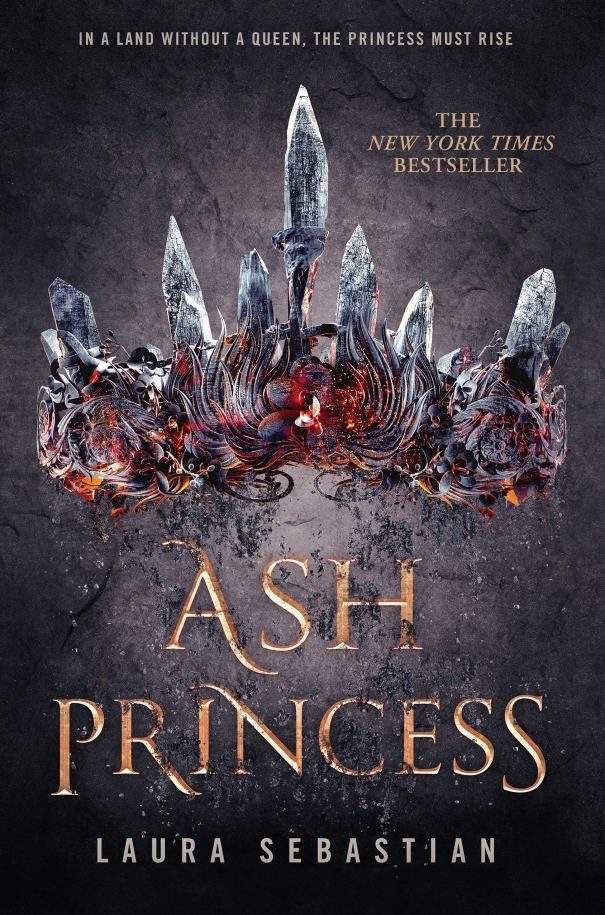
Ash Princess by Laura Sebastian

Ash Princess Cover

Publisher: Pan

Publication Date – 24 April 2018

Amazon     Book Depository

From an exciting new voice in young adult fantasy fiction comes a powerful tale of independence and freedom.

Ten years ago the Kalovaxians invaded the peaceful island nation of Astrea, killing its guardians and enslaving the entire populace to work in the island’s magical gem mines.

Theodosia was only six when Astrea was invaded and her mother, the Fire Queen, was murdered before her eyes. Since then she has lived in her former palace as a prisoner to the cruel and despotic Kaiser, who seeks to destroy all trace of the Astrea culture and language. Given a new title, the Ash Princess, and forced to endure constant humiliation and punishment for her people’s rebellion, Theodosia has become a subservient creature, trying to survive as she waits for any sort of rescue.

When the Kaiser forces her to perform a terrible act, Theodosia is no longer willing to stand back and watch her people suffer. With unexpected allies suddenly close at hand, Theodosia stops a plan for her escape and instead chooses to remain at court to obtain information for the rebellion.

However, the Kalovaxians are a cruel and merciless race of warriors who excel at raiding and destroying the lands they conquer. Theodosia soon realises that supplying information to her companions is not enough; she needs to find a way to strike at the heart of the Kalovaxians and disrupt their tight control of Astrea. When opportunity presents itself, she must risk everything to give her people a shot. It is time for the Ash Princess to rise.

Ash Princess is the debut novel from Laura Sebastian and the first book in a young adult trilogy with a lot of potential.

This story is told completely from the point of view of the main protagonist, Theodosia, with a large amount of the book dedicated to her growth as a leader. Theodosia starts the book as a completely broken person, having been oppressed and abused for years and kept as a symbol of humiliation. As the story continues, Theodosia detaches herself from the persona she created to survive and starts to finally oppose her captors. Watching her obtain the courage to fight back is an integral part of the book, and her attempts to become the ruler her people need are touching and emotive. There is also a riveting inner conflict within Theodosia as she debates whether to hurt people that she cares about, even if her actions could bring relief to her people. While Theodosia strongly wishes to save her people and defeat the invaders, there is also a great desire to not become like the enemies she hates. The character runs a fine line throughout the book as a result, and many readers will enjoy how Sebastian examines this inner conflict.

Sebastian has included an intricate background setting for her electrifying story. The nation of Astrea had been brutally subjugated 10 years before the start of the story and is currently ruled by the Kalovaxians. Because of how total this subjugation has been, with a large number of deaths and the rest of the populace forced to do heavy labour, very few characters originating from Astrea are featured within the story. This background of a near-obliterated country is dark and grim, but serves as the perfect setting for an inspiring story of freedom and rebellion. The antagonists of the story, the Kalovaxians, are also the perfect villains for such a story, as they are undeniably evil. All of the Kalovaxians–even the milder ones that consider themselves Theodosia’s friends–are power hungry, destructive and feel that they are superior to all other peoples. The use of the setting and the antagonists within Ash Princess adds significant impact to the main story and forces the reader to care about the fate of the main character.

Readers of Ash Princess will enjoy the covert activities that take place as part of the main story. In order to find a way to liberate her country, Theodosia needs to infiltrate and influence parts of the oppressive Kalovaxian society. The scenes were she attempts to seduce, manipulate and commits acts of sabotage are compelling and one of the more intriguing parts of the books. In addition to the protagonist’s actions, there are also the secret plans that the Kalovaxians are undertaking. These plans are rather dark and include magical experiments on Theodosia’s people. These Kalovaxian plans result in some interesting actions from Theodosia and play a significant part in the plot. The fascinating gem magic of the Astrea plays an interesting role in the clandestine actions of both the protagonist and antagonists, and fantasy-minded readers will enjoy the resultant exploration of this branch of magic.

Ash Princess is a poignant tale of hidden strength and the fight for freedom. This is a satisfying start to Sebastian’s first series which introduces a memorable main character and a powerful story that makes full use of its awesome background story elements. This is an ideal choice for readers looking for their new fix of young adult fantasy fiction.

My Rating:

Four stars

Amazon     Book Depository

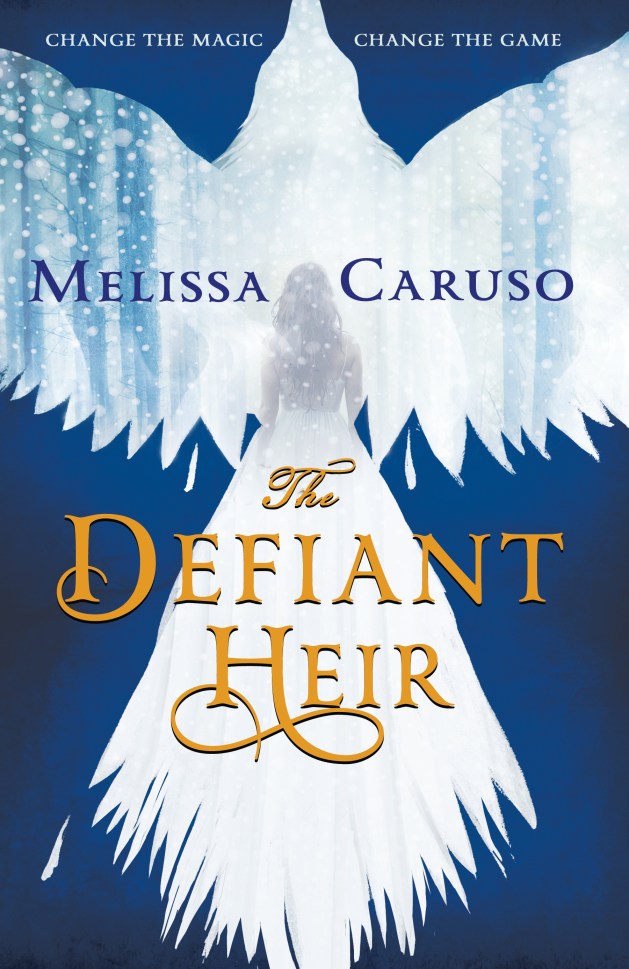
The Defiant Heir by Melissa Caruso

The Defiant Heir Cover.jpg

Publisher: Orbit

Australian Publication Date – 24 April 2018

World Publication Date – 19 April 2018

Amazon

Melissa Caruso follows up her extraordinary debut with another unmissable magical adventure.

On the continent of Eruvia lies the Serene Empire of Raverra.  Ruled by the Doge and the Council of Nine, the Empire’s power comes from its mages, the legendary Falcon Army.  When a mage comes to power in the lands of Raverra, they are conscripted as a Falcon and bound to a Falconer, a non-mage who can choose to unleash or bind their Falcon’s power with a word.

However, the Serene Empire is not the only great power on Eruvia.  To the north lies the mysterious nation of Vaskandar, controlled by a dangerous group of mages known as the Witch Lords.  Each Witch Lord is a powerful vivomancer whose magic grants them control over all living beings, such as animals, plants and even humans.  After years of peace, several of the Witch Lords desire additional territory and are preparing for war against the Serene Empire.  Large forces of soldiers and the Vaskandar’s dreaded chimeras amass on the border while covert attacks are undertaken against the Serene Empire’s most powerful Falcons.  But before the Vaskandar can formally declare war, all seventeen Witch Lords must meet in a conclave to agree to a course of action.

Lady Amalia Cornaro is heir to one of the oldest and most powerful families in all of the Serene Empire.  Formerly a sheltered academic, her life dramatically changed when she was accidently bonded to the rebellious teenage runway Zaira, a rare and destructive fire warlock and the most powerful mage in the Empire.  Despite a turbulent and resentful start to their relationship, Amalia and Zaira have come to a mutual understanding following their adventures in the city of Ardence.

As the tension between the two nations increases, Amalia and Zaira are sent as a military deterrent to the border province of Callamourne, ruled by Amalia’s grandmother.  Despite their presence, it quickly becomes apparent that forces are conspiring to bring the war to pass, especially with spies and assassins targeting Amalia and Zaira directly.  Determined to maintain the peace, Amalia knows that the only way to prevent the war is to infiltrate Vaskandar and attend the conclave on behalf of the Serene Empire.

Entering Vaskandar is a dangerous proposition.  Each Witch Lord has their own territory which they rule absolutely thanks to a mysterious bond to the land that allows them to control all living creatures within their boundaries.  In addition, Amalia already has powerful enemies among the Witch Lords.  The deadly Lady of Thorns holds a grudge against her entire family, and Amalia and Zaiara have experience with the machinations of the Skinwitch Ruven, whose plot could cause great destruction.

Their only hope to influence the conclave may come from the mysterious Crow Lord, who has taken an interest in Amalia.  However, the Crow Lord is playing his own game, and Amalia and Zaira are the perfect pawns.

Melissa Caruso is a relatively new fantasy author whose first book in the Swords and Fire series, The Tethered Mage, was released in late 2017.  The Defiant Heir is a direct sequel to this, and is set a few months after.

The Tethered Mage was one of the surprising hits of last year.  What started out as an intriguing sounding fantasy novel turned into one of the most exciting and memorable debuts of 2017 and proved near impossible to put down.  Caruso maintains this trend of excellent writing in The Defiant Heir, which continues to the provide the same great characters, fantasy adventure, worldbuilding and amazing story writing that made her first book such an irresistible read.

Caruso has chosen to expand her fantasy world in The Defiant Heir by detailing the nation of Vaskandar and focusing on its rulers, the Witch Lords.  While Vaskandar was mentioned and one of nation’s vivomancers, Prince Ruven, was a secondary antagonist, this area of her world wasn’t really explored in the first book.  For this book, Vaskandar is a major location and the protagonists spend a large portion of the story within its boundaries.  As a result, Caruso has produced a significant amount of fascinating lore about this country, especially when it comes to the Witch Lords.  The focus on the Witch Lords is particularly interesting as Caruso has developed complex backstories, powers, plots and motivations for many of them, which adds immensely to the story.  In addition, despite the fact that they all study the same branch of the magic, each of the Witch Lords has their own speciality and their appearance and abilities are different as a result.  This is especially noticeable during the numerous magical duels that occur throughout the book, where these differences allow for a wider variety of magical action.  It is also quite fun when the various Witch Lords use their powers to show off with memorable entrances and appearances during the opening scenes of the conclave.

Readers should also keep an eye out for Caruso’s focus on character development within The Defiant Heir for the two main characters.  Amalia’s growth is the most significant, as circumstances force her to become a more savvy and decisive political player, very much like her mother.  As a result, she is forced to make a number of tough decisions and struggles to maintain her morality in a harsh world where her options are becoming more and more limited.  There is also the growing realisation that her position may not allow her to have the personal life she wants, and this greatly affects her relationship with the dashing Captain Marcello, the main love interest of the first book.  This is a well done bit of character development that will draw the reader in emotionally, especially when it comes to Amalia’s most significant decision in the book.

Zaira’s development is more subtle, as she is not the book’s narrator, and is mostly a continuation of the transformation from inverted loner to team player that started in The Tethered Mage.  However, it is more realistic to see that this growth is a slow process, and her stubbornness is not automatically fixed in the span of one book.  The same could be said about the satisfying but gradual development in the relationship between the main characters.

Melissa Caruso once again shows why she is one of the brightest new stars in the fantasy fiction.  The Defiant Heir is an outstanding continuation of her first series that introduces significant and exiting lore to her already intriguing universe while providing significant development to her main characters.  If you haven’t already discovered the magic of Caruso’s Swords and Fire series, you are in for a serious treat.

My Rating:

Five Stars

Amazon

Nucleus by Rory Clements

Nucleus Cover.jpg

Publisher: Zaffre

Australian Publication Date – 1 March 2018

World Publication Date – 25 January 2018

Amazon     Book Depository

In June 1939, war is on the horizon.  While many in England still hope to avoid another conflict with the Germans, it is becoming clearer that war may be unavoidable.  Nazi Germany is aggressively moving throughout Europe, while back in England the IRA has embarked on a new bombing campaign.

While the world watches and waits, many governments have turned their focus towards a dangerous new arms race.  Advances in nuclear fission have allowed scientists to envision a potentially game-changing weapon: an atomic bomb.  Many believe that the research at Cambridge’s Cavendish Laboratory will lead to the creation of the first bomb, and the laboratory is now the subject of intense scrutiny.

While holidaying in America, Cambridge professor Tom Wilde is summoned to the White House to meet President Roosevelt.  The president requests that Wilde use his position to spy on the research at Cavendish and report their progress to the Americans.  Upon his return to Cambridge, Wilde begins to suspects that Nazi spies may have infiltrated the laboratory when one of the Cavendish researchers is brutally murdered.  As he investigates further, he learns that the murder may be connected to a wealthy family with Nazi sympathies and the famous movie star sister of one of his colleagues.  Wilde is forced into a web of spies and assassins as he tries to discover what terrible plans the Nazis have for Cavendish.  What does his long-lost cousin have to do with this plot, and how do these attacks tie into a kidnapped child that Wilde’s girlfriend, Lydia, is searching for in Germany?

Nucleus is a pulse-pounding thriller that combines mysterious events and spycraft with a dark historical background and a grounding in nuclear physics.  This is the second book in Clements’ Tom Wilde series, and the follow-up novel to his 2017 bestseller, Corpus, which was a stunning historical thriller that featured a plot against the royal family.

Clements has a lot of experience with historical thrillers, having previously examined espionage during the Elizabethan era in his acclaimed John Shakespeare series.  In Nucleus, Clements combines several intriguing storylines into one compelling plot that will draw the reader into the book’s many mysteries.  With a series of hidden adversaries, twisting character loyalties and several shocking conclusions, Clements tells a first-rate thriller that combines well with his story’s historical setting and locations.

Clements uses his latest book to once again explore the period of calm immediately before World War II.  Clements does a masterful job of depicting the dread and apprehension filling England as the whole country found itself drawing closer and closer to war.  This bleak and foreboding historical period is the perfect setting for Clements’ thriller, especially as the characters realise the major repercussions their actions could have on the world.

The historical locations used throughout Nucleus are an essential part of the book and add a lot to the story.  Clements once again returns to the Cambridge backdrop that was one of the defining features of Corpus.  The academic background is used less during this book, but the reader is compensated by being able to see the famous Cavendish Laboratory.  There is also a harrowing journey into Nazi Germany for one of the characters, Lydia, which Clements uses to full effect, highlighting the terror many German citizens felt during that time and their attempts to flee the country before it was too late.  Another highlight of the scenes set in Nazi Germany was the interesting focus on some of the groups attempting to get refugees out of the country, such as the Quakers and the staff at the British Embassy.  The reader also experiences Lydia’s palpable dread as she comes into direct contact with the dark mechanisms of the Nazi machine, and these scenes contain an amazing and appropriate level of suspense.

Due to it being a major plot point for Nucleus, Clements spends a significant amount of time focusing on the state of nuclear science in the 1930s.  Clements does a good job of explaining the science in some detail without it getting too complicated.  As a result, the reader receives a basic understanding of nuclear science of the time, at least enough to appreciate what the spies and nuclear physicist characters within the book are up to and are attempting to achieve.  This is a good balance to have and it allows the reader to experience the fascinating early history of nuclear fission and the early arms race for the atomic bomb.

By infusing his excellent storytelling with a dark historical period, Clements once again delivers with an exhilarating historical thriller.  Featuring a gritty and captivating storyline and making full use of its excellent historical setting, Nucleus is guaranteed to blow you away.

My Rating:

Four and a half stars

Amazon     Book Depository

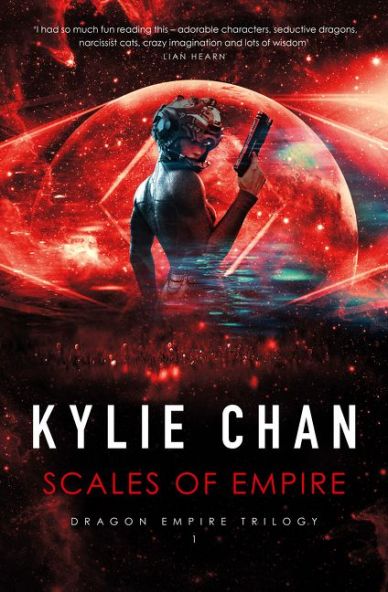
Scales of Empire by Kylie Chan

Scales of Empire Cover

Publisher: Harper Voyager

Publication Date – 19 February 2018

Amazon     Book Depository

Can humanity survive the arrival of an alien dragon with an offer of love?  Find out in this curious novel about first contact with aliens from bestselling Australian author Kylie Chan.

In the near future, Earth’s ecosystem is failing and humanity’s only hope for survival lies in escaping our solar system and finding viable new planets to colonise.  Corporal Jian Choumali has been chosen to accompany one of the huge generation ships that is preparing to journey to a distant planet.  However, the launch is interrupted by the arrival of a giant alien spaceship above Earth that will change humanity forever.

The ship is piloted by an alien known as a dragon, which bears a striking resemblance to the beasts of legend.  Dragons are the ruling members of a vast technologically and culturally advanced empire made up of numerous alien races.  The Dragon emissary, Shiumo, brings offers of peace, love and advanced technology to humanity as she introduces Earth to a wider universe.

Jian and her commander, Richard Alto, are chosen to be the first delegates to meet with Shiumo, and they soon become her guides to Earth.  Shiumo becomes a sensation overnight, providing humanity with longer lives, faster-than-light travel and a solution to Earth’s failing ecosystem.

However, the more Jian gets to know Shiumo, the more it becomes apparent that the Dragons may not be as benevolent as they seem.  What price will humanity really have to pay to join the Empire, and what role will the Dragons’ cat-like enemies play in the future of Earth?

Scales of Empire is the first book in the intriguing Dragon Empire trilogy, written by Australian author Kylie Chan.  This is Chan’s first voyage into science fiction, having previously written the Chinese mythology inspired Xuan Wu series.

Scales of Empire has a number of cool features that make it an amusing and thought-provoking science fiction novel.  Chan has constructed a first contact story that explores how humanity could potentially interact with an advanced alien race.  Chan provides a series of fascinating postulations about what human products would prove desirable to an alien species, what humanity could use in our defence against potential alien threats, and what our place would be among a vast interstellar empire.  The Dragons are the stars of this book, as Chan has imbued them with several distinctive abilities and personality quirks.  There is also a fun origin story to explain the similarities between the alien Dragons and the Earth dragons of myth and legend.  Having the other main alien race also resemble an Earth species, in this case cats, is a little over the top very unrealistic.  However, the behaviour of this other species acts as a good foil to the apparently benevolent and socially advanced Dragons.

Science fiction aficionados will also appreciate Chan’s descriptions and theories about what would be required for humans to reach and colonise other inhabitable planets in the galaxy.  Chan spends some of the early parts of the book highlighting her theories about how humans in the near future would achieve this.  Her descriptions of large ships that would require ten generations of its crew to live in space before they even reached the planet is fascinating, as are her suggestions about the ideal initial crewmembers; not a lot of other writers would suggest that colonisation ships should have large crews mostly made up of bisexual women with good genetic diversity.  In addition, there is also some intriguing discussion about the colonisation of other planets, and several chapters are dedicated to the training and initial colonisation of a planet, which many readers will find enticing.

While these science fiction aspects of the book are good reasons to try Scales of Empire, one of the most compelling and memorable aspect of this book is the constant examination of whether the Dragons are as benevolent as they seem, or if they have their own secret agenda.  This becomes a central focus of the story as the human characters analyse all of the Dragons’ actions while coming up with countermoves and their own attempts at manipulation.  There are many twists and turns, and at points it becomes hard to tell whether the Dragons or the humans come off as the worst species during these interactions.  This results in a really compelling narrative which serves as a superb central focus for the book and will keep you hooked until the final reveal.

The new book from Kylie Chan is an intriguing start to a promising science fiction trilogy.  Examining humanity’s potential first contact with an alien species, Chan asks the question: between an alien species with its own agenda and mistrustful and calculating humans, who is the greater evil?  This is a brilliant bit of fiction that provides a distinctive and in-depth discussion and is definitely worth exploring.

My Rating:
Three and a half stars

to

Four stars

Blood of Assassins by R. J. Barker

Blood of Assassins Cover

Publisher: Orbit

Publication Date – 13 February 2018

Amazon     Book Depository

War, murder and magic return with R. J. Barker’s assassins in the sequel to his impressive debut, Age of Assassins.

It has been five years since assassins Girton Club-Foot and his master, Merela Karn, started a bloody civil war in the nation of Maniyadoc.  Since then, they have been in hiding, fighting in the borderlands as soldiers for hire to avoid the price on their heads.  However, when Merela is gravely injured, they have no choice but to return to Maniyadoc and seek shelter there.  Girton finds a far different land to the one he visited five years before.  War has turned much of the kingdom into a brutal hellscape, ruled over by war crazed marauders known as Nonmen, while giant flesh-eating pigs roam the wilds.

Amongst this chaos, three kings fight for power, their armies controlling what small tracts of inhabitable land remain.  Girton knows all three of the opposing kings, having spent time among them five years ago.  Two of them hate Girton and his master, falsely blaming them for the deaths of their relatives, the events which started the war.  However, the other of the warring kings, Rufra, owes Girton his life, and may be the only friend the young assassin has.  Since their last meeting, Rufra has turned into a noble king, weighed down by the responsibility of his office and personal grief.

Pledging his loyalty to Rufra, Girton immediately sets about trying to find a spy hidden among the king’s closest followers, navigating camp politics and the fragile alliances that hold the army together.  At the same time, Girton must also solve the murder of a fanatical religious leader whose dangerous followers demand retribution.  Rufra is the fractured nation’s best option for peace, but far too many people want him dead.  Each day the spy is active hastens Rufra’s defeat, and Girton must use every bit of his wit and skill to save his friend.

But the greatest threat to Rufra’s reign may be Girton himself.  Like all assassins, Girton uses forbidden magic to grant himself subtle advantages to aid him in his kills.  However, Girton’s magic has become far too powerful, and he can no longer control the terrible energies within him.  In a world were all magic is outlawed and feared, any evidence of Girton’s abilities would condemn him and everyone he loves to a bloody end.  The last uncontrolled sorcerer turned the kingdom of Maniyadoc into a barren wasteland, and Girton’s power may soon compel him to do the same.

This is the second book in Barker’s The Wounded Kingdom series and is the follow-up to last year’s successful and highly compelling debut, Age of AssassinsBlood of Assassins is a great addition to the series which builds up the anticipation for the upcoming King of Assassins, which is set to come out in Australia in August 2018.

The fantasy world that Barker has created is an interesting one with several unique features.  While most of the first book’s story was limited to the goings-on within one specific castle, Barker completely changes the script in this sequel by expanding the narrative to the whole realm of Maniyadoc and the fighting going on around it.  Readers of Age of Assassins will enjoy seeing how the devastation of the civil war has changed the kingdom.  The nation of Maniyadoc, which was already described as a fairly dismal place, is now haunted by a new range of monstrous creatures and humans created by neglect and the brutal fighting.  This noticeable change to the scenery of the story helps to affect the overall mood of the book and also acts as a mirror to Girton’s more depressed and hopeless mental viewpoint in the second book.

I often enjoy authors blending different genre types within fantasy books, and Blood of Assassins is a great example of this, as Barker has incorporated elements of political thrillers and murder mysteries.  The hunt for the murderers and traitors at the heart of Rufra’s camp is a well done and produces a compelling mystery that combines well with the book’s action, politics and magic.

Fans of action and battle will not be disappointed, as Barker makes full use of a range of fight scenes.  Action junkies will enjoy the numerous duels, clashes between assassins, larger pitched battles and one notable siege that sees that protagonist fighting to defend a village from a horde of crazed Nonmen while also attempting to hold his destructive magic at bay.  It is also interesting to see how Barker forgoes the enormous pitched battles that are a usual fantasy staple.  Instead this conflict is fought by small, desperate armies over limited amounts of land, which comes across as more realistic, considering the landscape.

Finally, Barker has also done a great job of showing how his main characters have developed since the last novel, particularly taking the time to illustrate how their relationships move and change throughout the book.  Girton has gone from a young and optimistic boy seeking the approval of his master to a taciturn and depressed man, actively resenting his master for the changes and problems in his life.  At the same time, Rufra has gone from a lowly squire seeking a friend and trying to avoid trouble to a man consumed by his responsibilities and personal grief.  These changes lie at the heart of the book and add emotional depth to the story.  It is also warming to see how the friendship between Girton and Rufra lightens both characters and helps heal their emotional wounds.

As a result, Blood of Assassins is a fantastic character-driven story that weaves together action and mystery in Baker’s excellent fantasy world to create a scintillating and addictive read.  This is a marvellous second outing from a bright new star in fantasy fiction.

My Rating:

Four stars

Amazon     Book Depository

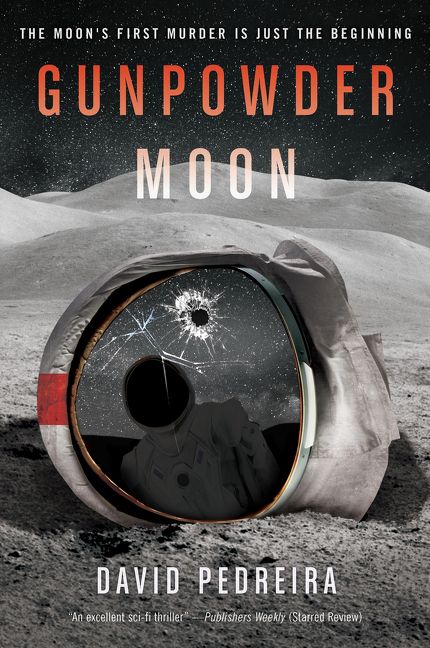
Gunpowder Moon by David Pedreira

Gunpowder Moon Cover

Publisher: Harper Voyager

Publication Date – 13 February 2018

Amazon     Book Depository

Murder has just been committed on the Moon, and all hell is about to break loose.

By 2072 the world has dramatically changed.  A devastating natural disaster shook the planet and altered the balance of power between nations.  The only hope for the future lies in a new energy source, helium-3, which can power Earth’s fusion reactors and provide unlimited clean energy.

Earth’s main source of helium-3 is on the Moon.  Desperate to have as much of this valuable material as possible, the world’s leading nations each have their own mining expeditions in play.  Life is tough for the miners, death lies around every corner and Moon dust can quickly destroy the hardiest of equipment.

For Caden Dechert, the Moon is the perfect place for a man trying to escape his past, even if it does strongly smell of gunpowder.  Trying to forget the long wars he fought back on Earth as a marine, Caden has forged a new life as the chief of the U.S. mining station Sea of Serenity 1, a vital station for a country only just coming back into world prominence.

However, Caden’s small slice of peace is broken when a member of his mining team is murdered in a deliberate explosion.  Evidence quickly points to the United States’ most prominent rival, China, whose bases are located a short distance from Caden’s station.  Tensions are quick to rise, and a series of escalating incidents sees the two nations draw closer to the brink of war.

Despite the evidence supplied by his own country, Caden is not convinced that the Chinese are behind the explosion.  Years spent working near the Chinese mining team has built up a certain respect, and Caden’s suspicions of a conspiracy begin to grow after noticing other unusual activities around his base.  With his team trapped at Sea of Serenity 1, and with both nations ready to fire the first shot, Caden is forced to investigate the murder himself in order to stop a destructive war that could tear his beloved Moon apart.

From first time author David Pedreira comes Gunpowder Moon, a spectacular piece of crime fiction set on the harsh and unforgiving surface of the Moon.  Pedreira has created an interesting murder mystery that combines with a high-stakes plot, science fiction elements and exotic location in order to produce a great story.

Without a doubt, the most memorable feature of this book is its setting of the Moon.  Pedreira has done a remarkable job of highlighting and describing his story’s brutal backdrop.  Significant time is also spent describing the narrator’s emotional attachment to the Moon and how it represents a new beginning for his crew of outcasts.  By the end of the book, the Moon is nearly an additional character as it acts as an excellent emotive setting for the reader.

The Moon also serves as an important plot device, as various features of life on the Moon, such as the required technology, gravity, the isolation and the devastating effects of Moon dust, all play a key part in the overall story.  In addition, Pedreira’s observations about the requirements for living on the Moon and his descriptions of the technology and mining work will appeal to the interests of many curious readers.

While the Moon is the main location for this book, Pedreira has also created an interesting potential future for humanity that serves as a backdrop for the story.  Pedreira postulates an interesting build-up to a war between America and China made up of ecological problems on Earth, expansion outside the planet and a fight for a new energy source.  Views of the near future of Earth are always fascinating, and the predicted future presented in Gunpowder Moon is a particularly intriguing story element that combines well with the books overarching mystery.

The plot of Gunpowder Moon focuses on a riveting murder mystery that is made unique by its location and the limited options for an investigation.  The investigators do not have any traditional evidence or witnesses.  They have limited information due to their isolation and they are unable to discuss the case with many of their suspects, who may be on Earth.  The background plot of the United States and China going to war combines well with the murder elements, as there is a real sense of urgency and import to the investigation as the main characters are trying to stop an upcoming war.

Gunpowder Moon is an excellent science fiction murder mystery that contains a fast-paced, action-packed story.  The author makes great use of his futuristic setting and unique location, providing the reader with impassioned descriptions of the Moon’s surface.  David Pedreira’s debut novel is a captivating and intriguing new read that spectacularly captures humanity’s imagination with the Moon.

My Rating:

Four stars

Amazon     Book Depository