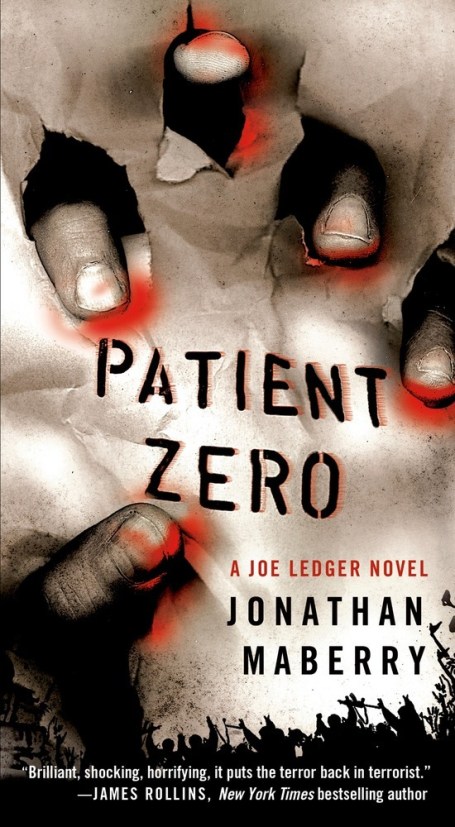
Throwback Thursday: Patient Zero by Jonathan Maberry

Patient Zero Cover.jpg

Publishers: St. Martin’s Griffin

                       Blackstone Audiobooks

Publication Date – 3 March 2009

Amazon     Book Depository

Reviewed as part of my Throwback Thursday series, where I republish old reviews, review books I have read before or review older books I have only just had a chance to read.

A couple of weeks ago I listened to and reviewed the latest book in Jonathan Maberry’s Joe Ledger series, Deep Silence, and found myself hooked on the insane, mad science based thriller adventure.  After enjoying Deep Silence and giving it a five-star review, I started checking out some of the previous books in the Joe Ledger series that I had not had a chance to read before, and found myself enjoying the plot concepts of the other books in the series.  The moment I finished listening to Deep Silence, I immediately jumped back to the first book in the series, Patient Zero, to review as part of my Throwback Thursday series.

When Baltimore detective Joe Ledger is assigned to a joint terrorism taskforce, he thinks it is an opportunity to fight back against the people responsible for 9/11.  What he was not expecting was to have a crazed man try to bite him on his first raid with the taskforce after discovering a warehouse filled with terrorists.  His elation about a job well done is destroyed when he encounters one of the terrorists again later that week.  There is just one problem: Ledger knows that he killed him during the first raid.  Someone has created a terrifying bio-weapon that can turn ordinary people into zombies, and worse, they have supplied this virus to a destructive terrorist organisation that plans to release it within the United States.

As the full extent of the horror being unleashed against them is revealed, Ledger finds himself recruited into a newly created covert organisation that was set up to handle extraordinary threats such as this.  Known as the Department of Military Sciences (DMS), this organisation wields the latest technology and the country’s brightest scientists under the command of the mysterious Mr Church.  As a member of the DMS, Ledger leads an elite team of combat specialists in the field in an attempt to contain any attempts to unleash the virus on the population and to destroy those who have already been infected.  As Ledger’s investigation progresses, he uncovers an elaborate conspiracy that will have devastating impacts for all of humanity.  But with the fate of the world in the balance, it soon becomes clear that there is a traitor within the DMS who has no qualms about unleashing a zombie apocalypse.

I have to admit that after absolutely loving Deep Silence, I had very high expectations when I started reading Patient Zero.  Luckily I was not disappointed and found that Patient Zero had a fantastic action based storyline that makes good use of its mad science elements to create an intense and very enjoyable novel that sets up all the elements for this future series.  I also chose to check out the first book in this series in its audiobook format, which, at just under 15 hours, is a great way to enjoy this high-octane story.

Hands down, the best thing about this novel has to be the zombies and the way that Maberry has created a compelling and intricate thriller story around this classic horror story concept.  The thriller aspect of this is really clever.  Rather than being the central antagonists themselves, the zombies are a tool being utilised in a wide-reaching conspiracy that the protagonists have to unravel in order to figure out the origins and endgames of the book’s true antagonists.  These thriller elements are quite detailed, and Maberry utilises a number of chapters told from the antagonists’ point of view to add some depth to the conspiracy and showcase the extent of their plot, as well the problems these groups have.  The protagonists also have to deal with potential traitors in their ranks, advanced science that they do not understand and a surprisingly organised, devious and well-equipped terrorist organisation.  All of this is an extremely captivating thriller storyline, and I love how Maberry has managed to utilise the book’s zombie element to help flesh this out.

Maberry has also created a unique and intriguing zombie origin for this book that is based on potential real-life science.  The zombies in this book are the result of a disease rather than a supernatural calamity.  They have been created by some advanced science and extreme mutations of existing diseases and viruses, such as prion diseases.  As a result, Maberry and his characters spend a lot of time examining the potential science behind this zombie virus, which pulls the reader in as they consider how close something this crazy could be to a reality.  I was really struck by the way that Maberry tried to show the horror that these creatures would inflict on the people who encounter them, and the sheer terror that they inflect on normal humans.  The point-of-view protagonists spend significant time explaining how terrifying and emotionally damaging it is to have to encounter and fight these infected people, as well as how guilty they feel about having to kill them.  There are quite a few parts of the book where the characters discuss how damaging these events are to them, and it really adds some emotional gravitas to this story.  Maberry is a prominent author of zombie fiction, so it is no surprise that he is able to create quite a number of awesome and terrifying scenes featuring the zombies as they attack and kill all around them.  There are also some interesting zombie deviations that appear and offer some unique elements to the story.  Overall this is an incredible and memorable addition to this story and one that will really appeal to fans of zombies and the horror genre.

Action is a major part of the Joe Ledger series, as the protagonist leads an elite special forces unit against all these elite scientific threats.  As a result, there are a huge number of action sequences throughout this novel and the reader is constantly left with a racing pulse.  There are so many great fast-paced elements throughout Patient Zero for action junkies to enjoy.  Maberry is always great at describing special forces tactics in his stories, and I enjoyed seeing them used against the unique threats in this book.  There are a number of excellent firefights throughout the story, and the author has a great mind to examining the psychology of a gun battle.  Maberry’s love of martial arts and close-combat fighting once again shines through in Patient Zero, as his protagonist is an expert fighter who has innumerable hand-to-hand fights with a number of different opponents.  While the above actions scenes are all extremely awesome, the best scenes have to revolve around the desperate fight between these elite soldiers and the horde of zombies that they encounter.  These scenes are really fantastic and watching the special forces characters fight tooth and nail against a horde of zombies becomes a captivating and powerful part of this book.  There are quite a few crazy action scenes throughout Patient Zero for the reader to look out for and which are defiantly a highlight of the book.  I personally found that listening to these scenes in the audiobook format really brought me into the centre of the action, and it was an excellent way to enjoy this element.

Patient Zero is an excellent introduction to the Joe Ledger series and contains a number of elements that will continue into the rest of the series.  I came to this book having first read the 10th and latest book in the series, Deep Silence.  As a result, I was really intrigued to see what characters were introduced in the first book and which ones do not appear in the final book of the series.  There are some interesting differences between Patient Zero and Deep Silence that I found quite fascinating.  For example, the opponents and technology in this first book are a lot more realistic, as Maberry has yet to start utilising the Lovecraft-inspired aliens which feature in some of the later Joe Ledger novels.  The head of the DMS, the mysterious Mr Church, also comes across as a much colder character in this first book, as well as someone who is more comfortable with civilian deaths and sacrifice if it results in the survival of the rest of the world.  That being said, there are some familiar elements.  Ledger is still an incredibly sarcastic and funny protagonist, and the author tries to highlight a huge range of varied viewpoints to show the whole range of the plot the DMS is trying to unravel.  Patient Zero serves as a great introduction to the DMS, and I really enjoyed seeing the early days of this organisation.  I also love how everyone is quite confused about what this organisation is and the mystery around Mr Church, who appears to have an incredible amount of influence and power in Washington.  For example, at one point he actually tells the president of the United States that he is wasting his time and hangs up on him in, an action an incredulous Ledger describes as “bitch-slapping the president”.

Patient Zero is an incredible first novel in Jonathan Maberry’s incredible Joe Ledger series and one that serves as a fantastic introduction for readers unfamiliar with this series.  Featuring all sorts of mad science, impressive action sequences, a five-star thriller storyline and a ton of amazing zombies, this is an outstanding novel and one that proves very hard to put down.  After loving this book, as well as the latest book in this series, Deep Silence, I am now fully determined to read the rest of the books in the Joe Ledger series.  Fully expect to see a review for The Dragon Factory very soon; I have no doubt that I will really enjoy that book as well.

My Rating:

Five Stars

Amazon     Book Depository

Scent of Fear by Tony Park

Scent of Fear Cover.png

Publisher: Macmillan

Publication Date – 27 November 2018

Amazon     Book Depository

Australian author Tony Park returns with a blast, as he once again dives into the heart of Africa to present his latest high-octane and deeply captivating novel, Scent of Fear.

Sean Bourke, former contractor in Afghanistan, has returned to his native South Africa and now works for his ex-wife’s company, which provides security dogs and handlers for the country’s game reserves to help stop the spread of poachers.  Out on a routine anti-poaching patrol, new recruit Tumi Mabasa is almost killed in an explosion and her dog sufferers severe injuries.  Someone has been rigging IEDs in the game preserves specifically to target the dogs and their handlers, and for Sean, the war he has spent years trying to escape from has suddenly followed him home.

Teaming up with Tumi and his best friend and former war colleague Craig Hoddy, Sean attempts to hunt down the bomber targeting them.  As more attacks hit close to home and several members of the team are caught in the crossfire, Sean must go above and beyond to stop a sinister poaching syndicate and save his friends.  But can Sean overcome these outside forces in addition to his own demons?

Tony Park is an interesting author.  A former member of the Australian Defence Force, he has spent significant parts of his life in Southern Africa, where he sets most of his novels.  Park has been writing since 2003, and his novels often feature modern militaristic protagonists adventuring in African wilderness.  Scent of Fear is Park’s 16th novel, although he has also produced several non-fiction books, including the 2009 release War Dogs, which Park wrote with former Australian Army dog handler Shane Bryant.

Scent of Fear is a fast-paced and action-packed novel that explores the horrors of the poaching business in Africa in the midst of a thrilling adventure.  Park creates an exhilarating novel that sets his damaged protagonist against a ruthless and at times hidden group of antagonists.  The story makes good use of multiple perspectives to tell this tale from many different angles, which not only throws a new light into the conspiracy surrounding the main plot, but which also enhances the book’s many action sequences.  The multiple perspectives also allow the histories of the book’s various characters to be explored in greater detail, to create a fuller and more intense narrative.  The various motivations of the book’s protagonists and antagonists are displayed for the reader, and I was particularly intrigued by the deep examination of Sean’s inner issues, including a crippling gambling addiction that plays into the story extremely well.  Overall this is quite an enjoyable storyline that has some surprising twists and excellent action sequences.

One of the most noticeable features of Scent of Fear is the excellent portrayals of the African landscape throughout the course of the story.  Park is obviously very keen to show off the incredible locations that are a feature of his adopted homeland, which is a massive boon to his storytelling.  There are a number of scenes set deep in the African bush, and the author does a fantastic job highlighting the beauty and danger contained out in these magnificent locations.  In addition to the landscape, Park has also tried to show off various points of South African culture and lifestyles throughout the course of the book’s narrative.  While the story is mostly set within the game preserves, there are a few city scenes, and the characters spend time discussing their lives and their pasts within South Africa.  There are even a couple of scenes set within neighbouring Mozambique that may prove intriguing to various readers.  I liked the way that Park constantly utilised South African phrases, greetings and slang throughout his dialogue, which gave the whole story a sense of authenticity.  The background location is definitely a highlight of this book, and I hope to explore more of Africa in Park’s future novels.

It is probably important to note that this is not a great book for animal lovers, as Park takes a deep look at the horrors of the poaching trade and issues created by this destructive hunting.  Poaching is obviously an issue dear to the author’s heart, as he presents a dark, no-punches-pulled look at the illegal trade in African wildlife and the lengths that some people will go to get the money associated with it.  This is an intriguing centre to the book’s plot, and Park is clearly knowledgeable on the subject, discussing motivations for local and international poachers, details of the types of protections game reserves utilise and the various tricks and techniques poachers utilise.  Scent of Fear initially focuses on the hunt for rhinos and their horns, but Park also spends time to explore a current epidemic in lion skeleton trading, which is an alternative to tiger bones in some cultures.  The examinations of the human costs of poaching are examined throughout the book, as Park highlights the fact that anti-poaching patrols are frequently coming under attack in Africa.  All of this serves as a grim backdrop to the story, but one that helps create a story with more social conscience.

I also really enjoyed the continued use of dogs throughout the book, as Park goes out of his way to sing the praises of the anti-poaching dogs that are currently being utilised successfully throughout Africa.  There are several canine characters throughout the book that play a significant role in the book’s action and investigative scenes and I really enjoyed seeing how the dogs are helping to save the African wildlife.  The author really invests in the utilisation of the dogs, and the reader gets to see their training and their full operational capacities, and the story is sprinkled with the protagonists calling out the dogs various commands.  As I mentioned above, Park has previously written about dogs used in warzones, and this becomes an important part of Scent of Fear, with the poachers utilising explosives to attempt to take out the protagonists.  This is another fascinating element of this book, and one that many readers will find incredibly interesting.  Be warned, some dogs do get hurt in this book, so it might not be for everyone.

This is another wonderful addition from Australian author Park, who once again takes his readers to the very heart of modern Africa.  With some interesting concepts, varied characters and a thrilling story, Scent of Fear is a great book to check out.

My rating:

Four stars

Amazon     Book Depository

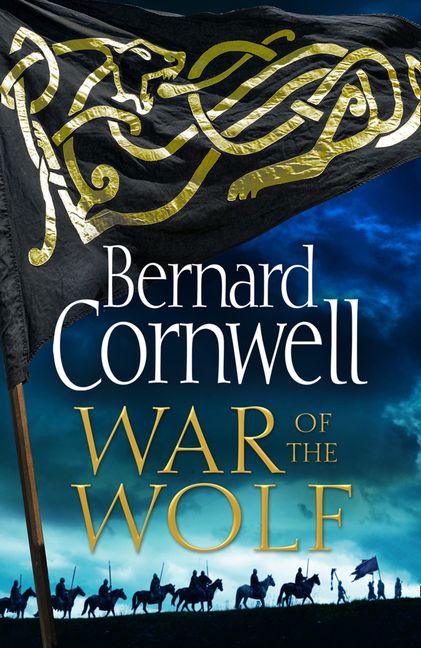
War of the Wolf by Bernard Cornwell

War of the Wolf Cover.jpg

Publisher: Harper Collins

Publication Date – 24 September 2018

Amazon

Uhtred of Bebbanburg returns in another rich historical adventure set in the heart of post-Roman Britain in this incredible and first-rate story from historical fiction legend Bernard Cornwell.

In the early 10th century, after many years of trials and tribulations, Uhtred has at last achieved his lifelong goal of reclaiming his ancestral fortress of Bebbanburg.  Finally able to claim his independence from Wessex and the Saxon Christians who have always treated him with scorn and hostility for his pagan beliefs, Uhtred seeks to move away from the politics, battles and backstabbing that has been his life for so long.  However, his new peaceful life is about to be interrupted by the interventions of enemies new and old.

In the outside world, King Edward of Wessex has made his move on the kingdom of Mercia, and has finally achieved his father’s dream of uniting the Christian kingdoms of Britain into one nation.  The only remaining country outside of his control is the Kingdom of Northumbria, ruled by Uhtred’s son in law, Sigtryggr.  These events have led to dangerous changes and new alliances for the remaining factions living outside of Edward’s control.

When a mysterious priest sends Uhtred on a mission to save Edward’s maligned firstborn son and Uhtred’s former ward, Æthelstan, from a Mercian siege, he finds himself outmanoeuvred by a new army of Danes who have come to claim Northumbria for themselves.  Faced with great loss, Uhtred finds himself in a brutal fight against an opponent who seems to have mystical powers at his command.  At the same time, the politics of the Wessex court threaten to start a war on another front, as the various contenders for the fading Edward’s throne seek to gain position, and many of the potential heirs want Uhtred dead.  With enemies all around and not enough men at his back, the odds look grim for Uhtred.  But, despite years of brutal battles and the ravages of age, Uhtred is still the most feared warrior in all of Britain, and he’s about to show everyone why he is always a force to be reckoned with.

War of the Wolf is the 11th book in The Last Kingdom series of historical fiction books from Bernard Cornwell.  To my mind, Bernard Cornwell has to be considered one of the greatest authors of historical fiction in the world today, both in the quantity of books he has written and the quality of their content.  Cornwell has been writing since 1981 and has produced more than 55 novels in his career, the vast majority of which are either set in England or focus on English characters out in the world.  The sheer scope of Cornwell’s work is incredible, as he has covered vast tracts of world history, including several more obscure eras not regularly covered by other historical fiction authors.  He is possibly best known for his long-running Richard Sharpe series, which followed the adventures of a British soldier and commander during and around the time of the Napoleonic Wars.  The Richard Sharpe series featured 24 books and was adapted into the British television series, Sharpe, featuring Sean Bean as the titular character.  Other series that Cornwell has published include the American Civil War series The Starbuck Chronicles, the Arthurian legends series The Warlord Chronicles and the Grail Quest novels, which are set during the early years of the Hundred Years’ War.  Cornwell has also produced a number of standalone novels, including several sailing based modern thrillers and a number of intriguing individual historical novels.  These standalone novels cover a huge range of different topics, from the prehistoric English story in Stonehenge, to the war novel Azincourt, the excellent examination of one of the more interesting battles of the American Revolutionary War in The Fort and the thriller set among Shakespeare’s theatre company in Fools and Mortals, which I have previously reviewed here.

The Last Kingdom series, alternatively known as the Saxon Stories, the Saxon Tales, the Warrior Chronicles or the Saxon Chronicles, started in 2004 and is Cornwell’s second–longest-running series, with 11 books currently written, and more set for the future.  The Last Kingdom series is the second of Cornwell’s series to be adapted for television, with a third season of The Last Kingdom television just starting yesterday.  I have always been a massive fan of this series, especially as one of the books in the series, Sword Song, was one of the first pieces of historical fiction I ever read and which helped get me into the genre.  This is a fantastic series, as each of the books contains an electrifying adventure set during a period of history often overlooked or underutilised by other historical fiction authors.  I have routinely reviewed several books in this series over the years, many of which will appear in future additions of my Throwback Thursday series of reviews.

War of the Wolf is another incredible outing from Cornwell that once again focuses on the life of his grizzled and battle-tested protagonist, Uhtred of Bebbanburg.  Uhtred is a superb series protagonist who has witnessed the changing political and religious landscape of this period of post-Roman Britain.  Originally a Christian Saxon, he is captured by pagan Danes as a child after the death of his father and the theft of his Uhtred’s ancestral fortress of Bebbanburg (modern day Bamburgh Castle in Northeast England) by his uncle.  Raised by the Danes, Uhtred gains an appreciation for their culture and even starts practicing their religion.  Uhtred is eventually forced into the service of the last remaining Christian kingdom of Wessex and its pious King Alfred (Alfred the Great).  Even with several falling outs between the two, Uhtred serves Alfred and his family for many years as his most ferocious warrior and war leader, participating in several of the defining battles of the era.  Throughout the series, Uhtred is constantly torn between the Christian Saxons and the invading pagan Danes.  Despite being born as a Christian in a formerly Christian kingdom, Uhtred finds more in common with the Danes after being raised by one of their noble families and taking on their religion.  While he’d rather fight alongside the Danes, circumstances force Uhtred to swear oaths of loyalty to various Saxon kings, especially Alfred, despite the hatred and disdain they show towards him for retaining his pagan faith.  These dual loyalties are a key part of the character, and often result in much internal and external conflict for Uhtred and form the basis of a number of excellent storylines.  Cornwell uses the character of Uhtred extremely well to highlight the differences between the Danes and the Saxons, as well as the importance of religion to these warring groups, especially when it comes to the somewhat insidious spread of Christianity to the Danes.

These storylines continue in War of the Wolf, as one of Uhtred’s oaths sends him into battle once again.  This sets up the main story of the new book perfectly, as Uhtred is forced to deal with the politics and betrayals of the Saxons, while also fighting against a dangerous pagan opponent.  I liked how Cornwell has continued to focus on Uhtred’s ties to the warring factions of Britain, and his attempts to reconcile his loyalties with his sense of honour and right and wrong.  I also really enjoyed the way that Cornwell has aged up his protagonists throughout the series.  Many authors will try to fit a number of adventures in to a short period of time in order to keep their protagonists in the same age range.  Cornwell, who has based many of the key occurrences of his books on real-life historical events, has instead chosen to age up his protagonist as he outlives several historical figures.  As a result, in War of the Wolf, Uhtred is no longer the young warrior he was at the start of the series, but is now an old sword in his 60s.  This is an intriguing narrative element from Cornwell, who has been slowly building up to this over the last few books in the series.  Not only has Cornwell been slowly ageing him but he’s been making him a more canny and crafty individual, able to rely on his brains and experiences more than his sword arm, although he still finds himself in the middle of every battle.  In the latest book, this leads Uhtred to think more about the future of the people he cares about than his own future, as he realises he is getting closer to death.  This is another fantastic outing featuring one of Cornwell’s best protagonists, and I am excited to see that he has left the series open for several additional stories in the future.

One of the more interesting parts of The Last Kingdom series is Cornwell’s outstanding research and his focus on historical details and events that are often not part of the public consciousness.  I can think of no better way to highlight this then to mention that while I was doing a post-Roman Britain archaeology course at university, my lecturer actually included several books from The Last Kingdom series on his suggested reading list among the usual textbooks and scholarly articles.  The previous books have all featured major battles or political events that helped decide the future of England, and his fictional point-of-view character often finds himself discussing the events with significant historical figures.  Smaller details, such as the traditional names and spellings of historical people and places, give all of these books an incredibly authentic feel and really make the reader think they are back in this time period.  As a result, these books are extremely intriguing for those fans of history and I cannot speak highly enough of the level of historical detail or insight Cornwell shows in his work.  Cornwell continues his trend of interesting historical features in War of the Wolf, as he examines several key events during this period.  This includes the annexation of the Kingdom of Mercia by King Edward of Wessex following the death of his sister Æthelflæd, the Queen of Mercia, and the subsequent rebellion by the Mercians.  There is also focus on the submission of King Sigtryggr of Northumbria to King Edward, and focuses on the events that led up to it.  Uhtred also finds himself embroiled in the politics around who would rule Sussex following the future death of Edward.  All of this is incredibly fascinating and form an amazing background for the rest of the book’s story.

Intense action sequences have always been a major part of this series, with the large-scale fight scenes between the various warring factions battling around the British countryside.  Cornwell does an excellent job replicating the battle tactics and techniques of the Saxons and the Danes, especially the standard technique of the shield wall, where the two opposing sides line up their shields and advance at each other.  The battles are always incredibly detailed and pull no punches when it comes to the gruesome realities of war and combat.  War of the Wolf in particular has quite a few great battle sequences, including one extended siege sequence towards the end of the book at an old Roman fort.  I also loved the inclusion of the úlfhéðnar, the fabled wolf berserkers, who become a major part of the story, as Uhtred and his soldiers must find a way to overcome these dangerous opponents.  It was quite interesting to see how these sorts of legendary historical fighters would actually fare in battle, and the author presents both the advantages and disadvantages of using them.  Special mention should also be given to the dual between the two opposing ‘sorcerers’ during the climactic battle that was extremely entertaining and one of the more amusing parts of the entire book.

Cornwell has once again delivered a five-star classic piece of historical fiction with the latest book in his bestselling The Last Kingdom series.  Filled with fantastic action, amazing historical context and focusing on a well-established and amazingly fleshed and complex protagonist, War of the Wolf is an incredible read that comes highly recommended.  Even after 11 books, this is still one of my favourite series and I’m very excited to get the next edition.

My Rating:

Five Stars

Amazon

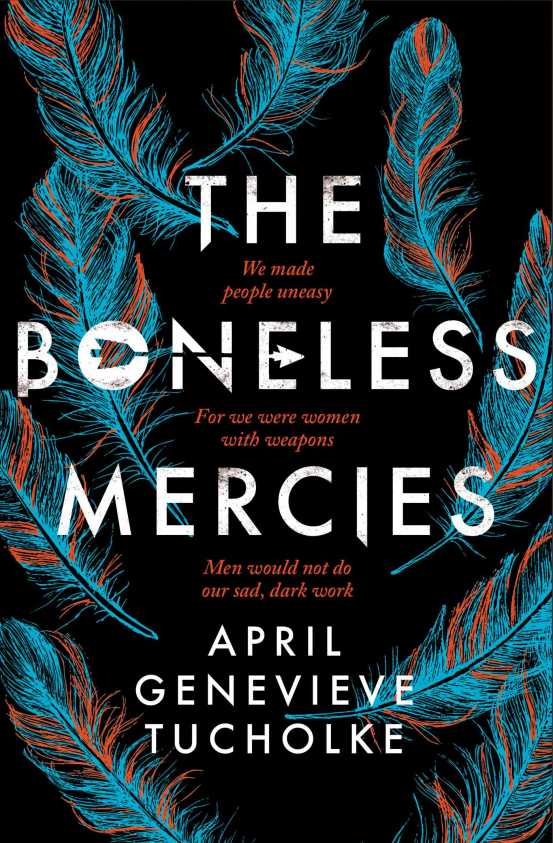
The Boneless Mercies by April Genevieve Tucholke

The Bonless Mercies Cover.jpg

Publisher: Simon & Schuster

Publication Date – 2 October 2018

Amazon     Book Depository

In the dark and cold realm of Vorseland, life is hard and death is easy.  This is especially the case for young women Frey, Ovie, Juniper and Runa, who eke out a living as Boneless Mercies.  Mercies are those people who travel the land exchanging mercy killings for coin in order to alleviate suffering, both mental and physical, in those living in the harsh land.  Only women can become Boneless Mercies, as men cannot do this dark and sad work.

While their roles as Mercies have provided this group of young women with an escape from the horrors or uncertainties of their previous lives, each of them, as well as their young male companion Trigve, seeks something different from this depressing routine of death dealing.  Runa dreams of joining the Quicks, the bands of forest-dwelling hunters and revellers with mastery of the bow; the former Sea Witch Juniper wants to return to her sisters; while Ovie seeks companionship after the trials of her previous life.  But their leader, Frey, wants something very different: fame and glory.

Hearing of a dangerous monster roaming in a far-off land, killing all the men and terrorising the landscape, the girls decide to change their fate and become heroes.  In order to reach their destination, they first have to engage on a dangerous journey through a harsh countryside.  First finding themselves caught up in the middle of a war between rival factions of witches, the Mercies find acceptance and camaraderie in the land they have come to save.  But as the monster they’ve come to face makes an appearance, the girls must finally face up to their destinies.  Will they be able to defeat a creature that so many have already died facing?

The Boneless Mercies is the fourth and latest book from dark fantasy young adult author April Genevieve Tucholke, whose previous works include the two books of the Between series, Between the Devil and the Deep Blue Sea and Between the Spark and the Burn, as well as her 2016 standalone novel, Wink Poppy Midnight.  All three of these previous novels dealt with a young adult supernatural romance set in a modern-day location.  The Boneless Mercies is Tucholke’s first foray into her own fantasy world, and it is the first book that is not as focused on a major romantic subplot.  The Boneless Mercies serves as a great standalone novel, although it has potential as the first book in a new series that either follows the characters introduced in this volume or that utilises Tucholke’s fantasy landscape.

The overall story of The Boneless Mercies is an interesting creation from Tucholke, as it is a good combination of character development, world building and searches for glory.  The premise of this story is unique.  Four professional mercy killers seeking better lives for themselves through fighting monsters is a fantastic pitch from the author that really drove me to read this story.  The author has made a clear attempt to emulate the sagas of old, and it is easy to note its similarities to Beowulf, especially when it comes to the monster.  The book’s central characters helped reinforce this by reciting several sagas that exist within their fantasy world, even coming up with a few verses for their own adventure.  I was a bit surprised about how only the last third of the book focused on the protagonists’ hunt for the monster; the antagonist that was such a focus of the book’s blurb and publication material, and instead a lot more of the book was spent focusing on the adventure getting there.

This actually works out really well, with the characters’ involvement with the various witch characters serving as the centre of the book.  The protagonists find themselves recruited to fight in a war between two rival factions of witches, which leads to some tough and damaging choices for Frey while the also allowing Tucholke to create a harrowing extended sequence in deadly marsh landscape.  The reversal of gender roles within the story is another great part of the story, and it is intriguing to see women in a more central role of these saga storylines in both the protagonists and antagonist roles.  The Boneless Mercies contains a unique and memorable central story that will prove to be appealing to a huge audience.  With several exciting romps through Tucholke’s new fantasy landscape, the book has an excellent conclusion, as well as several plot threads that could lead to intriguing future stories in the same universe.

Tucholke has woven some wonderful character dynamics into this story and introduced several intriguing protagonists for the reader to enjoy.  The book’s five main characters, Frey, Ovie, Juniper, Runa and Trigve, have all found an escape from their terrible past lives by coming together and following each other down the destructive path of the mercy killing trade.  Each of the characters has their own distinctive traits.  Frey is the big sister and reluctant leader of the group, and must struggle to balance her own desires with the needs of the people under her care.  Runa is the rebellious and free-spirited member of the group, eager to live the carefree life of a Quick in order to escape the horrors of her past.  Juniper is the dreamer, and her minor magical abilities and connection with the Sea Witches are essential to the plot in the middle of the book.  Ovie is the tough, no-nonsense member of the group, and is the group’s main warrior, teaching the others how to fight.  Despite some insights into her past, Ovie is the character who is explored the least out of each of the characters, although she does serve as a bit of a moral compass for Frey’s decision.

The main male character, Trigve is also an interesting inclusion, as he fills the role of the assistant and bastion of knowledge that the girls, especially Frey, go out of the way to protect.  This is a noticeable and intriguing change in the traditional gender roles within an adventurer group, and it is interesting to note that Trigve is usually sent away by the girls before any of the big action scenes.  His relationship with Frey is also one of the book’s main romantic subplots, and I liked the complex and mostly unspoken relationship these two characters had.  Overall, all of these main characters are great additions to the book, and Tucholoke spends considerable time exploring how these characters, all of whom have been forced to sever their previous connections, have come together into a surrogate family.  I really appreciated watching the characters’ relationships with each other build, as that worked really well to make the reader connect with each of them and become concerned with their fates.  The slow reveal of each character’s previous lives and the events that drove them to the other Boneless Mercies was also handled wonderfully and worked with the other story elements to create a powerful overarching narrative.

I also enjoyed the great new fantasy world that Tucholke created for this novel.  The author really gets to grips with the harsh, cold and unforgiving scenery of her Norse-inspired landscape of Vorseland, and the reader gets a real idea of why many inhabitants are tempted to employ the Boneless Mercies.  There are also a number of fantastic elements included throughout this world that really help make it an amazing location for this intriguing adventure.  The various bands of different fantasy professionals, such as the Boneless Mercies or the Quicks, give it an interesting flair.  The various groups of witches, including Marsh Witches, Sea Witches and even a group of pig mystics, become deeply entangled in the main story, and will also be significant players in any future books set in this universe.  This is an excellent and creative new fantasy world from Tucholke that works incredibly well for this book’s story.

April Tucholke has created an exciting and intense piece of young adult fiction in her latest novel, The Boneless Mercies.  Creating an intriguing narrative around a group of female former mercy killers embarking on a quest for glory in a dark and saga-rich fantasy landscape is a masterstroke from Tucholke, especially when she combines it with a fantastic story and close-knit and likeable group of protagonists.  The strong female characters make this an excellent one for a young adult audience, and I enjoyed the story’s darker background and storylines.  Special appreciation goes to the book’s great covers as well; the copy I had an iridescent feather design which was cool, but I also really enjoyed the excellent cover with the red wolf and the protagonist’s shadows.  Overall, The Boneless Mercies is a great piece of young adult fiction which presents the reader with something enjoyably different from the classic fantasy adventure.

My Rating:

Four stars

Amazon     Book Depository

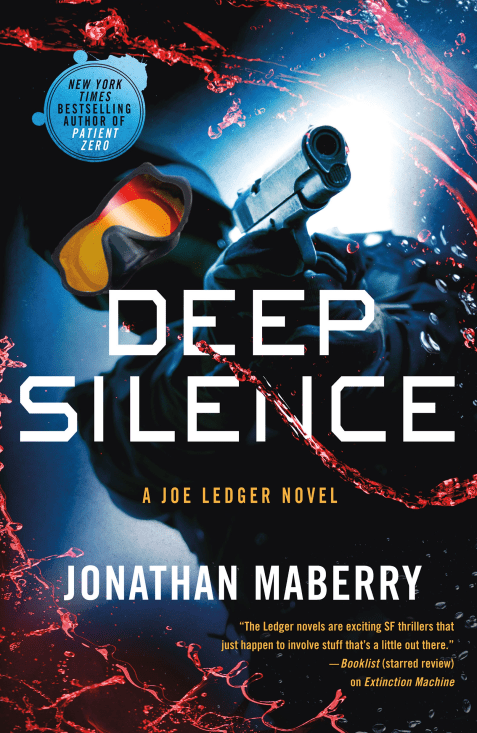
Deep Silence by Jonathan Maberry

Deep Silence Cover.png

Publishers: St. Martins Griffin

                        Macmillan Audio

Publication Date – 30 October 2018

Amazon     Book Depository

From horror legend Jonathan Maberry comes the 10th book in his weird-science based horror, thriller, science fiction Joe Ledger series, which takes the reader on a wild joyride through a world gone mad in this five-star adventure.

I have to admit that Maberry is not an author that I have had much experience with before.  The only work of his I have previously read was a fun short story that was featured in a volume of zombie short stories he jointly edited with George A. Romero in 2017 that I previously reviewed here.  However, I am extremely happy that I decided to check out this latest book as it exposed me to this incredible series, which I enjoyed immensely.  I can think of no greater praise for this novel then to say that upon finishing it, I immediately dropped everything and started reading the first book in the series, Patient Zero, which I will be reviewing in the next few weeks as part of my Throwback Thursday series.

I chose to listen to Deep Silence on audiobook rather than read a physical copy.  The audiobook format of this book is just under 16½ hours long and is narrated by Ray Porter, who has worked on several other books in the series.

In this latest book, a Russian splinter group have developed a powerful weapon with pieces of alien crystal seeded throughout the planet.  This new weapon can cause devastating earthquakes on a level never before seen and has the potential to destroy the entirety of the United States.  The weapon also has a chilling side effect: it causes people around the epicentre of the quake to engage in violent acts of madness, from suicide to ferocious attacks on others.  The first attack targets Washington, with mass violence erupting around the Capitol building.

America’s only hope may be the top-secret rapid response organisation, the Department of Military Sciences (DMS).  For years, the DMS has been the only line of defence against the insane science America’s enemies are utilising and developing in this new age of wonders.  From deadly diseases, ancient forbidden technologies, extreme acts of genetic manipulation, the latest forms of cyber and electronic attack, and even weaponised zombies, the DMS, led in the field by Captain Joe Ledger, has managed to stop all these threats and more.  Utilising the latest military and espionage equipment and the best and brightest soldiers and scientists America has to offer, the DMS operates just outside the government and can go further than any other agency can.

However, while the DMS attempts to combat this latest threat, they find themselves hindered by a megalomaniac President whose stupidity and paranoia make him more afraid of the DMS than the group unleashing earthquakes across his country.  As Joe and his team attempt to hunt down the origins of this attack they must contend not only with a dangerous Russian force but also with agents of their own Government and devices that can drive even the most dedicated DMS agent insane.  But as the Russians attempt to force the eruption of the Yellowstone caldera, the greatest threat may come from the creatures the technology was stolen from.

Deep Silence is the 10th book in Maberry’s Joe Ledger series, which started in 2009 with Patient Zero.  Maberry has been writing since 2006, with his debut book Ghost Road Blues forming the first book in the Pine Deep Trilogy.  Since then, Maberry has written a huge number of books, most of which have a horror theme or focus.  Apart from his Joe Ledger series, Maberry is probably best known for his Rot & Ruin series, a young adult zombie apocalypse series.  Aside from his fictional novels, Maberry has also written several comics for Marvel as well of a number of non-fiction books, which tend to focus on Maberry’s passions for martial arts and the supernatural.

Deep Silence is an exceptional book that combines together a number of genres, including science fiction, thriller, horror, military fiction and spy thrillers into one very captivating narrative.  The end result is a non-stop thrill ride that perfectly utilises the series’s bizarre nature and advanced science to create a devastating threat and a larger-than-life protagonist to face it.  There are so many amazing elements to this book, from its continuation of an enjoyable series, to the very weird elements that come into play, to the excellent writing style and enjoyable characters.  Once I started reading this book I just could not stop, and it is easily one of my favourite books of this year.

From what I understand, the Joe Ledger series started off mostly focusing on the mad sciences that humans are able to create and use against each other.  However, in recent books, the series has taken on a more Lovecraftian vibe, with unknown aliens, space demons and incredibly insane technology.  Deep Silence in particular seems to relate back to several of these previous alien technology based novels, as the devices, technology and motives that the book’s antagonists utilise are closely related to the adventures that occurred in previous books.  That being said, there is still the continuous use of more advanced human technologies utilised by many of the book’s characters, especially those working for the DMS.  All the crazy gadgets that they use are pretty impressive, but none (with one or two major exceptions) are outside the realm of possibility and reflect technologies that could potentially exist.  Indeed, in the introduction to Patient Zero, Maberry actually confirms that most of the technology he describes in his books is currently used or could soon be used by intelligence organisations around the world today.

One of the challenges of coming into a series late is the reader’s lack of knowledge about the universe’s background information, lore and the development of its main characters and the extent of their relationships.  Maberry does an incredible job bridging this gap throughout Deep Silence, providing the reader with descriptions of previous events, recaps of character descriptions and history and making use of a number of references to previous missions and adventures captured in the other books in the Joe Ledger series.  There are also a number of scenes that appeared to be callbacks to previous books, although the author was able to describe the pertinent details of these events.  As a result, I was never lost at any point and really appreciated the recaps and detailed descriptions the book’s various point-of-view characters provided throughout the novel.  It also made me very curious about some of the previous books in the franchise, and I am now very interested in checking out some of these insane and fun-sounding adventures.  As a result, Deep Silence is an excellent book if you want to get an idea of what the Joe Ledger series is all about.  At the same time, established fans of this long-running series will be interested to see the significant changes that occur to the book’s main characters, as well as the scenes detailing where the series will potentially be going in the future.

One of the things that I really enjoyed about Deep Silence was the way that Maberry presents the book’s narrative from multiple perspectives and across a range of different time periods.  Because of this, the reader is given a far wider view of the overall narrative.  Not only do they get to see the protagonists attempting to investigate and stop what is going on, but they get to see the antagonists coming up with their plans, discovering and researching their doomsday device over a period of years and then implementing their mission.  This also allows the reader to get a far deeper understanding of the antagonist’s objectives and mindscapes in committing these acts and what it costs them mentally and emotionally.  Nearly all the fun and eccentric characters working in the DMS get a few scenes told from their point of view.  This provides the reader with some high level, but easy to follow, scientific discussions, hacking sequences and the utilisation of incredibly exciting-sounding advanced espionage technology.  There is also a focus within Deep Silence of the politics around and behind the DMS, and how the organisation’s leader, the mysterious Mr Church (who is totally an alien, right?), deals with these situations.

While all of the other point-of-view characters are entertaining and it is intriguing to view their sides of the story, the best character has to be the series’s main protagonist, Joe Ledger.  Ledger is the extremely dangerous and slightly disturbed leader of the DMS field team, and has been at the forefront of all the adventures in this series.  It is interesting to note that Ledger is the only character in this book whose story is told from the first person perspective, which is fortunate because Ledger is one of the biggest smartasses in fiction, especially within the privacy of his head.  Nearly every single piece of the book told from Ledger’s point of view is filled with jokes, wisecracks, and exaggerated or sarcastic thoughts.  Ledger has some incredibly humorous observations about the world around him, especially the eccentric characters he encounters, and his thoughts are just as likely to be self-deprecating as they are to be insulting about the people he has to deal with.  He is also an eccentric being who does some incredibly funny things, from having fun with his opponents to humming the Mission Impossible theme as he breaks into a safe.  However, beneath this humorous exterior there is a deeply damaged character who is severely impacted by events that have occurred before and during this series.  Maberry spends significant time diving into this character’s history and psyche, which quickly gives the reader, even readers previously unfamiliar with the series, a good understanding of his life and the events that define him.  His deep and fractured mind becomes a key part of this story, especially when it encounters mind-altering alien crystal and events beyond the realm of human comprehension.  All of this helps create an amazing and incredibly relatable central character whom the reader becomes incredibly drawn to, and as a result, Ledger is one of the best things about this book.  Special mention should also be given to Ledger’s combat dog Ghost, who appears in nearly all the same scenes as Ledger and is just as much of an enjoyable character as his owner.

While the mad science elements and characters are great, Maberry has also ensured that this is the perfect book for those action junkies looking for fast-paced thrills.  Ledger is an absolute beast throughout this book and engages in a number of fantastic fights in a variety of different scenarios.  Maberry channels his love of martial arts through this character and includes a number of detailed and very quick fight scenes as Ledger dismantles his opponents with efficient skill.  The other characters are no slouches and there are number of great action sequences I enjoyed.  Two of my favourites have to be two separate and extended sequences which see Ledger and DMS’s Echo Team engage in massive fire fights with a range of opponents.  These scenes are absolutely incredible and make the reader feel like they are really in the middle of a gun battle.  The author takes pains to try and highlight how methodical and calm professional teams can be during battles while also highlighting the various strategies and combat advantages used.  The multiple perspectives come into play here perfectly, as the different members of Echo Team engage in various encounters around the main battle, really highlighting what an effective special ops team can accomplish in the field.  Maberry enhances the fun and the action to a crazy degree by also utilising the advanced technology available to the DMS agents.  This not only includes some insane and deadly weaponry, which is very cool in action, but also other pieces of advanced technology such as drones, body armour, goggles, and enhancements for Ghost that help turn the battles into massive and enjoyable set pieces.

Nothing, however, can top the sheer insanity that unfolds when the book’s antagonists unleash their super weapon against the world.  Maberry’s descriptive and skilled writing really brings these scenes to life.  The sheer devastation of the earthquakes that he describes is just incredible and very disturbing.  But nothing is more crazy or electrifying then the scenes where the people who are affected by the strange energy given off by the weapon go insane and start participating in a violent rampage against themselves or against each other.  Maberry pulls no punches here and all the violence is on full display, from terrible acts of violence against anyone around them to disturbing suicides or episodes of self-harm.  In many of these scenes the author attempts to get into the head of these characters and watch them slowly unfold from within.  This mostly prevalent with his protagonist, Joe Ledger, but other characters’ thoughts are shown.  Let’s just say you’ll never look at the Beatles song Revolution 9 the same again.  The biggest example of this insanity happens around the Capitol building in Washington DC, and quite frankly it reminded me of the church scene in Kingsman: The Secret Service, with the protagonists stuck in the middle of a crazy mob.

One of the more intriguing parts of Deep Silence is the side character of the President of the United States of America.  While this character is never explicitly named in the book, he is clearly supposed to be a Trump analogue.  The character is an easily manipulated, short-tempered, Twitter-obsessed moron who puts his own needs far above those of the country he is governing.  The resemblance to Trump is uncanny, and Maberry does an incredible job mirroring his arrogance and personality throughout the book.  While this character is a great addition by itself, Maberry spends a lot of time exploring how a character like this would deal with the advanced technology and extreme catastrophes that are a major part of this series.  The results are frustrating for the reader as they are forced to sit there and watch this character make all the wrong decisions and serve his own agenda or self-interest.  It was also very intriguing watching this President go up against the DMS as he routinely targets the department out of fear and ignorance.  The new political reality of Washington becomes a major factor throughout Deep Silence, and Maberry is understandably critical about how things are being run and the insanity currently gripping Washington.  It was very interesting to see Maberry incorporate the current unpredictable political reality of America into his new book, and readers will be very intrigued to see how this might impact the future of his long-running series.

I listened to the audiobook version of Deep Silence, narrated by Ray Porter.  The audiobook version does go for over 16 hours, so it’s one of the longer ones I have listened to lately.  That being said, due to its exceptional content, I found myself making a variety of excuses just to keep listening to this audiobook, and got through it very quickly.  The audiobook is an incredible way to experience this book, and I would highly recommend it, mainly because of Ray Porter’s narration.  Porter absolutely nails all of the characters and provides a number of amazing voices to fully capture the diverse accents and attitudes of this eccentric group of characters.  I was particularly enthralled with the calm, cool voice he gifted to the DMS Director, Mr Church, which really reminded me of Tom Hanks’s voice.  Special mention should also be given to his narration of the President.  The narrator created a fantastic Trump-like voice that fully conveyed the character’s high opinion of himself, as well as his dismissive and arrogant nature.  I actually had a visceral reaction when I heard that voice the first time, it was that good.  Porter’s narration for Joe Ledger was also perfect, as he does an incredible job portraying Ledger’s high-energy musings and the full tone of his personality.  Porter’s voice peaks and rises to meet the full intent of any of Ledger’s sentences, and he is a master at conveying Ledger’s innate sarcasm.  At the same time, he is also able to make his voice more serious and subdued during the darker scenes in which Ledger is deep within his head or his memories.  This is sterling work from Porter, and one of the best audiobook narrations I have ever listened to.  As a result, I highly recommend that the audiobook version of Deep Silence as the best way to experience this novel.

Bestselling author Jonathan Maberry once again takes his audience on a captivating thrill ride in the Joe Ledger Series.  Deep Silence provides the reader with an extraordinary and very engrossing story that proves extremely hard to put down.  Equally enjoyable for established fans of this long-running series and new readers who have yet to experience Maberry’s work, readers can and will have an incredible amount of fun with this book.  Best enjoyed in audiobook format, Deep Silence is guaranteed to make you a dedicated fan of the author and easily gets a five-star rating from me.

My Rating:

Five Stars

Amazon     Book Depository

The Pearl Thief by Fiona McIntosh

The Pearl Thief Cover.jpg

Publisher: Michael Joseph

Publication Date – 29 October 2018

Amazon     Book Depository

From acclaimed Australian author Fiona McIntosh comes a deep and powerful tale of loss, revenge and the traumatic shadows of World War II.

Severine Kassel is one of the Louvre’s top curators of antique jewellery and specialises in identifying pieces plundered by the Nazis during World War II.  Seconded to the British Museum in 1963, Severine maintains a careful image of mystery, distance, French elegance and control.  However, that image is shattered completely the moment Severine sets eyes on the Byzantine pearls, an incredible artefact of mysterious providence on loan to the museum.  Severine knows exactly what the pearls are and may be the only person in the world who knows their full history.  She also remembers the last time she saw them: in 1941 in the hands of the man who murdered her family, the brutal Nazi Ruda Mayek.

As she recovers from the shock of seeing the pearls again, Severine reveals to the world that she is actually Katerina Kassowicz, and her story is one of sorrow and torture.  Katerina was the daughter of a prominent Jewish family in Prague during the war.  Her family attempted to flee the Nazi purge but was betrayed by a man they considered a friend, Mayek, and only Katerina survived, although her life was never the same.

With the discovery of the pearls, it becomes apparent that Mayek may still be alive.  Desperate to hunt down the man who took everything from her, Katerina begins a desperate investigation to find him and get her revenge.  Assisted by the mysterious Daniel, a Mossad agent, Katerina’s only clue is the lawyer handling the transaction of the pearls.  As Katerina’s search intensifies, old wounds are opened and life-changing secrets are revealed.  But as she gets closer to the truth, she begins to wonder who is actually hunting who.

Australian Fiona McIntosh is a fantastic author with a diverse and intriguing bibliography to her name.  She has been writing since 2001 and initially focused on the fantasy genre with her debut book Betrayal, which formed the first book in the Trinity series.  She wrote several fantasy books over the next nine years, including The Quickening trilogy, the Percheron series and the Valisar trilogy.  During this time she also wrote several pieces of children’s fiction, including the Shapeshifter series, as well as the adult crime Jack Hawksworth series under the pen-name Lauren Crow.  In 2010, McIntosh switched to historical dramas and has written a number of these books, mostly featuring female protagonists.  Examples include the 2012 release The Lavender Keeper and last year’s epic The Tea Gardens.

 The Pearl Thief is the latest piece of historical drama from McIntosh.  It plunges the reader right into the heart of occupied Czechoslovakia and explores the horrific impacts that World War II had on the book’s main character while also providing the reader with an intense thriller in the 1960s.  Told from the point of view of several characters, the book follows an interesting format.  This first part of the book mostly follows Katerina and Daniel in Paris, and is set around Katerina telling her life story to Daniel and recounting what happened to her and her family during the war.  These flashbacks are different in style, being told from the first person perspective to highlight that Katerina is telling the story, rather than the third person perspective utilised during the rest of the book.  These flashback chapters are also visually distinctive due to the use of italicised font.  The second half of the book follows the protagonist’s hunt for Mayek, and features a different style to the first half of the book.  This different style includes the uses several more point-of-view characters, in particular the lawyer Edward, and the focus on more individualised storylines fitting into one overarching narrative.

The way that McIntosh chooses to tell this story is not only distinctive, but it is a great way to tell this dark and complex narrative.  By presenting the main character’s World War II storyline first, the author sets up just how evil the book’s antagonist is, which ups the stakes for the second half of the book as the reader is desperate to see Mayek receive the justice he deserves.  This dislike for the antagonist helps the reader stay focused on the story and makes them more eager to quickly get to the conclusion of the book to see if the protagonists succeed in catching him.  This early storyline also highlights just how damaged Katerina, and in some regards side character Daniel, really are and what impacts the war had on them.  As a result, the reader is a lot more attached to them and is keen to see how they reconcile their hatred and grief while also attempting to move past these events nearly 20 years after the end of the war.  Both parts of this book are very captivating and do a fantastic job of drawing the reader in to this deep and dramatic story.

This is a fairly grim tale and McIntosh does not pull any punches, especially when it comes to showcasing the horrors the Jewish community experienced during World War II in countries such as Czechoslovakia.  There are some very disturbing sequences throughout these flashbacks, especially when Katerina describes the final fate of her family, and the reader cannot help but feel sorrow and anger at the horror these characters and their real life historical equivalents suffered.  McIntosh focuses on the physical impacts and the persecution that these people suffered and the mental stresses and long-term emotional damage that these actions inflict both during the war and well into the 1963 storyline for the survivors.  These emotional scenes start right from the front of the book, with the first chapter showing the Kindertransport, mercy trains that got Jewish children out of Czechoslovakia and forced a permanent separation between parents and their children.  This opening scene is very emotional, and the readers are left wondering what they may have done in a similar situation.  There are also some quite dark scenes in the second half of the book, as the main characters are forced to relive the horrors they experienced and deal with the emotional fallout and the darkness they feel when it comes to Mayek.  McIntosh’s frank and grim depictions of these events turn this book into an incredible drama, and readers will be left with a memorable and emotional vision of these events.

The Pearl Thief is a deep and captivating historical drama from exceptional Australian author Fiona McIntosh.  Featuring some highly detailed and realistically dark flashback story to World War II as well as a thrilling hunt for a despicable war criminal in the 60s, this is a highly emotional and dramatic piece of literature that is well worth checking out.

My Rating:

Four stars

Amazon     Book Depository

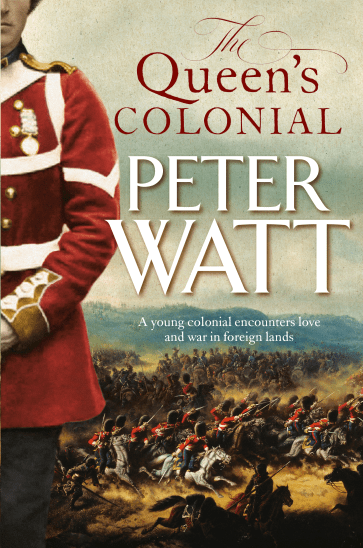
The Queen’s Colonial by Peter Watt

The Queen's Colonial Cover.png

Publisher: Macmillan

Publication Date – 13 November 2018

Amazon     Book Depository

Following the conclusion of his long-running Frontier series, one of Australia’s most intriguing authors, Peter Watt, returns with a brand new adventure that features several intriguing characters involved with unique historical events during the Victorian era.

For as long as he could remember, colonial Ian Steele has always wanted to serve as an officer in the Queen’s army.  However, for a humble blacksmith living just outside of Sydney Town, this seems like an impossibility.  That is until 1852, when he meets Samuel Forbes, a young English aristocrat, poet and former Second Lieutenant in the army, who bears a striking resemblance to Ian.  After prematurely finishing his commission following a terrifying campaign against the Maori warriors in New Zealand, Samuel is living with his uncle in Australia, avoiding returning home to a father who hates him and forced him to join the army against his will.

Samuel presents Ian with an interesting proposition.  In order to receive a massive family inheritance, he needs to complete 10 years’ service in the army, but after his previous combat experiences he has no intention of heading back, preferring to seek adventure in America with the man he loves.  However, wanting to receive the money and spite the father who abandoned him, Samuel has come up with a plan: send Ian in his place and then split the inheritance between them.

After the death of his mother, Ian accepts the offer and journeys to England to take his place as a captain in the Forbes family regiment.  As he successfully integrates himself in the Forbes household, he becomes acquainted with the members of his new family.  While Samuel’s sister and younger brother welcome him with open arms, Ian quickly discovers that Samuel’s father and older brother have no intention of giving up Samuel’s portion of the inheritance.

Ian’s desire to prove himself in battle is soon rewarded, as the regiment departs England for the continent.  Nicknamed “the Queen’s colonial” by his soldiers, he gains a reputation in the fight against the Russians in the Crimean war.  But while the Russians and disease are a constant danger, the greatest threat to Ian may come from his own side.  An Australian fugitive hiding out in the regiment knows who Ian really is and could easily report him, while the devious plots of the Forbes family could strike him down at any time.

Peter Watt is a well-established historical fiction author who has been writing Australian based novels since 2000.  The Queen’s Colonial is Watt’s 19th book, and is the first book he has written since concluding his 12-book Frontier series.

In The Queen’s Colonial, Watt continues with the same distinctive style that made his previous books such a treat to read.  Throughout the book, the reader is shown various sides of the story from multiple point-of-view characters, as both the protagonists and antagonists journey through history’s most intriguing events and wars.  There is also a minor hint of spirituality, although rather than the spirit of a vengeful Indigenous Australian that was such a major character in the Frontier series, The Queen’s Colonial features visions based around old British druids.  Watt is a master of utilising multiple character perspectives to tell a strong and addictive narrative.  While a large portion of the book is focused on the main character of Ian, several of the other characters are given starring roles throughout the book, and their adventures run parallel to the main storyline featuring Ian.  This is a great way to tell a larger narrative, and it is fascinating to see how the actions of one character could impact on a different storyline.  Each of the side storylines are pretty intriguing and allow the author to expand on several fun side characters throughout the course of the novel.  Watt has engineered quite a lot of coincidental connections, which, while a tad unrealistic, is a great way of connecting these character storylines in various intriguing ways.  I was somewhat surprised that Watt did not really show what Samuel Forbes was getting up to.  Despite him being majorly important to the plot, very little is seen of his adventures after the start of the book.  I would have been interested in seeing what he was getting up to, as well as his reactions to the events happening in the other storylines.  Hopefully Watt will explore his subsequent focus on him a little more in any books that follow on from The Queen’s Colonial.

One of the best ways that Watt utilises his multiple perspectives is by showing the villainous actions of two of his main antagonists as they plot and scheme to rid themselves of the protagonist.  These storylines are mostly told from the point of view of the oldest Forbes son Charles, and feature him and his father coming up with ways to kill the man they think is the second Forbes son, Samuel, but is really Ian in disguise.  Watching them come up with several devious plans and commit terrible acts is pretty intense, especially as you watch these plots unfold in the sections of the book told from Ian’s point of view.  It is quite fun for the reader to see Ian react to events that they knew was coming, and works to make an intriguing overall narrative.

I loved Watt’s depiction of the Crimean War, as the author does a fantastic job highlighting the brutality and harsh reality of this war, and the terrible conditions that the British troops had to deal with.  Watt really captures the horrors of battle in his writing, and the reader is constantly brought into the middle of the book’s battle sequences thanks to the author’s detailed descriptions and historical features.  While the battles are harrowing and bloody, quite a number of scenes show the horrifying results of the biggest killer of the British during this war, dysentery and other diseases.  Watt is quite critical of most of the British officers who lead this army, and places most of the blame for the war’s disasters on the backs of inexperienced or incompetent officers.  This is particularly exemplified by the character of Jenkins, who is promoted up through the army thanks to his family’s connections and money, and ends up getting many people killed thanks to his cowardice, incompetence and personal prejudices.  History buffs will enjoy Watt’s focus on this war, which is often overlooked in historical fiction, especially the author’s determination to show the trials and tribulations of an infantry regiment in this war.

Peter Watt’s new book, The Queen’s Colonial, is an excellent piece of historical fiction that takes the reader on a fantastic adventure through time.  Following a 19th century New South Wales colonial into the Crimean War is a great story, and I loved Watt’s great use multiple character perspectives to tell an overarching narrative.  Watt once again shines as one of Australia’s best authors of historical fiction and readers of his latest novel will enjoy a cleverly crafted and captivating story.

My Rating:

Four and a half stars

Amazon     Book Depository

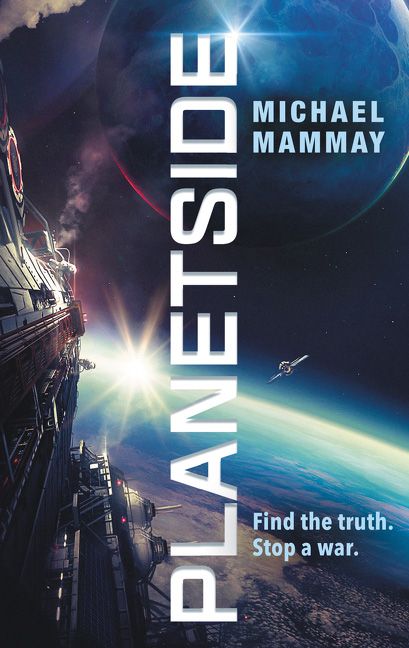
Planetside by Michael Mammay

Planetside Cover 2

Publishers: Harper Voyager

                        HarperAudio

Publication Date – 31 July 2018

Amazon

Well, that was an unexpectantly awesome book!  I am usually pretty good at predicting how good a book is going to be by its plot synopsis or my prior knowledge of the author.  When I first heard about Planetside I thought it sounded like an interesting concept from first-time author Michael Mammay.  While I had high hopes for the book, I did somewhat assume that it would just be another solid but enjoyable science fiction mystery.  What I was not expecting, however, was one of the best science fiction books of 2018 that easy achieves a five-star rating from me.

Set in the far future of Earth’s expansion, Planetside follows Colonel Carl Butler, a war hero living out a peaceful semi-retirement on a training base.  However, when his old friend General Serata calls him late at night and drags him all the way to headquarters, he obliges for old times’ sake.  Serata needs him to travel to the planet of Cappa, humanity’s current warzone, where members of a resilient and intelligent alien race known as the Cappans are fighting a gruelling insurgency against the humans attempting to exploit their planet.  Once there, he will head up an investigation into the disappearance of a young lieutenant who went missing after being wounded on the planet.  By all accounts, the wounded lieutenant was successfully evacuated from the surface, but the military hospital claims that he never arrived at their facility.  To makes matters worse, the lieutenant is the son of a high councillor, and the disappearance has become a highly publicised affair.  Despite knowing that there is more to the case than Serata is letting on, Butler agrees to find the missing officer.

Arriving at Cappa Base, the space station hovering over the planet, Butler soon finds that his investigation is going to be a lot harder than he anticipated.  All the soldiers he speaks to have the same rehearsed story, the head of the base’s military hospital flat out refuses to cooperate with him, the head of Special Ops is continuously unable to come off-planet to speak to him, and any witnesses or evidence that could point him in the right direction mysteriously disappears.  It is also damn suspicious that any time he takes a step in the right direction, somebody tries to have him killed.  Under pressure to wrap this investigation up, Butler decides to drop down onto the surface of Cappa, but what he finds down there will change everything.  Forced into an increasingly desperate situation, Butler must find the answers he needs before it is too late.

This is the first book from Michael Mammay, but it was more than enough to make me a dedicated fan of this author.  With a sequel already set to be released in 2019, Planetside is an extraordinary introduction to an amazing new series.  I chose to listen to this book in its audiobook format, read by R. C. Bray, and at 8 hours 38 minutes, this is a fairly quick way to enjoy this fantastic book.

Planetside’s story is based around the protagonist’s investigation into a missing human soldier on an alien planet that has been occupied by the human military.  As Butler arrives at the military base the solider was stationed out of, he begins to realise that there is something much more to the case than what was advertised.  Every single person he speaks to is hiding something, he seems only to uncover more lies, and some shadowy figures are actively trying to sabotage his investigation in any way they can.  Despite all these setbacks, the protagonist persists with his investigation throughout the course of the book and slowly begins to uncover the underlying conspiracy that the soldier’s disappearance is just one small part of.  There is so much about this mystery investigation to enjoy, as the author seamlessly combines the mystery and conspiracy part of this story with the science fiction element, creating a unique and captivating overall narrative.  The full scope of this conspiracy is very impressive, and Mammay’s slow burn reveal of the extent and implications of what Butler uncovers is well done to keep the reader in suspense.  I was intensely intrigued by this multilayered conspiracy, and was left constantly guessing at what the potential solution was.

The book is told from the point of view of its protagonist, Colonel Butler, and Mammay has created an excellent central character for this story that the reader is instantly drawn to and cannot help but like.  The author has done a fantastic job conveying the fact that Butler is a straight-shooting, no-bullshit, wily veteran soldier who has had enough of war and is just looking forward to retirement.  He is an amusing and intriguing choice to investigate the book’s intricate and potentially wide-reaching conspiracy, as he powers through the expected political niceties other investigators may have worried about without any concerns for his future or career.  His years of service also ensure that he has impeccable instincts when it comes to the people he is dealing with and is fully aware of when the other characters are bullshitting him, which occurs frequently throughout this book.  I had fun observing this rough and seemingly uncomplicated old-school soldier get to grips with this elaborate conspiracy and blow through all the careful plans of the book’s antagonists.  The colonel also has a sense of humour, something that the other characters encounter to various degrees of frustration, especially the people he is intentionally pissing off.  I also appreciated the self-deprecating and extremely honest reflections about the situation that Butler presents to the reader, as it made me like him even more.

The military aspects of this book are another amazing part of Planetside, as Mammay has perfectly captured elements of the modern day military and transplanted them into this science fiction storyline.  The majority of the story is set within Cappa Base, and the reader is made to feel like they are in a real military base.  The author also seeks to capture the full minutiae of military life throughout the book, and the reader is given insight into what tasks are undertaken on the base, the main characters experience and the respect he commands of the other soldiers in the story.  While most of the focus is on the investigation, there are a couple of action scenes throughout the book, including an extended battle sequence that see’s the protagonist and his allies engage in a protracted firefight with enemy forces on the planet’s surface.  The author’s use of the first-person perspective is perfect for these battle sequences and the reader is dragged right into the middle of these firefights, really experiencing the action through Mammay’s skilled and descriptive writing.  This battle sequences felt very realistic and had some noticeable similarities to real-life skirmishes in modern day battlefields.  The tactics the humans use during these conflicts on Cappa are highly reminiscent of American forces in the Middle East, although the inclusion of more science fiction appropriate weapons and technology allow for some interesting differences.

While the impressive investigation storyline does a fantastic job holding onto the reader’s interest, and the solution to the entire mystery arc is creative and clever, nothing compares to the book’s epic conclusion.  Without going into too much detail, I thought that the way that Mammay ended this book was just incredible, and is one of the main reasons why I am giving this book a five-star rating.  I also loved how, towards the end of the book, the protagonist becomes fully aware of how everything has to end, and at the same time he starts to understand that his oldest friend had sent him on this mission because he knew exactly how Butler would act upon uncovering the full extent of the conspiracy.  The final scene of the book was just perfect as the protagonist reflects on everything that has happened with one of the book’s side characters.  During this scene there is an excellent use of the end of a subtle countdown that has been occurring throughout the entire book, represented by a depleting number of whisky bottles, as well as an appropriate moment of happiness for Butler as he finally gets to have a whisky in a proper glass, which was just perfect.  As mentioned above, Mammay already has a sequel planned, and I am extremely curious to see where the story goes next.

The audiobook version of Planetside is a great way to enjoy this fantastic book, and I had a lot of fun listening to this format.  The audiobook’s narrator, R. C. Bray, manages to capture the gruff and grizzled personality of Butler perfectly, and for most of the book it really sounded like the old colonel was telling you his story.  Bray also does a good job producing distinctive voices for the rest of the characters in book, including several female characters, and the listener is able to distinguish between the various people without too much difficulty.  I also felt that listening to this story really helped bring me into the book’s awesome battle sequences as well as ensuring that I was fully invested in the success of the enjoyable main character.  Overall, I would recommend the audiobook format as an excellent way to enjoy this book, although readers will of course get a lot out of this book if they choose the paperback format.

Michael Mammay’s debut novel, Planetside, is an incredible piece of science fiction and is one of my favourite books of 2018.  Featuring a captivating mystery storyline that places the book’s likeable protagonist in the middle of a massive conspiracy, this book completely grabs the reader’s attention and refuses to let go until its powerful and memorable conclusion.  I cannot recommend this book enough and it is essential reading for all fans of the science fiction genre.  I am very much looking forward to Mammay’s sequel to Planetside, which is already at the top of my must-read list for 2019.

My Rating:

Five Stars

Amazon

Throwback Thursday: Star Wars: Ahsoka by E. K. Johnston

Ahsoka_novel_cover

Publishers: Disney Lucasfilm Press

                        Penguin Random House Audio

Release Date – 11 October 2016

Amazon

Reviewed as part of my Throwback Thursday series, where I republish old reviews, review books I have read before or review older books I have only just had a chance to read.

The apprentice lives.  One of the best Star Wars characters that originated outside of the live-action movies returns in this action-packed, character-driven novel, which follows Ahsoka Tano’s adventures after the destruction of the Jedi Order.

Those people familiar with my previous reviews may have noticed that I am a bit of a Star Wars fan, having reviewed several pieces from the current Disney Star Wars extended universe in the last few months.  Therefore, it should not come as a surprise to anyone that I have watched and enjoyed the Star Wars: The Clone Wars and Star Wars Rebels animated television shows.  Both of these shows are very well done, can be appreciated by a varied audience and contain a large amount of the classic Star Wars heart and respect for the franchise’s lore and history that was missing in some of the more recent movies.  While many memorable characters were introduced in these shows, perhaps the most significant to the lore is the titular character of this book, Ahsoka Tano, Anakin Skywalker’s apprentice.

For those of you failing to remember Anakin having an apprentice in the live-action movies, you are not going crazy; Ahsoka has yet to appear in any live action movie.  She was instead introduced in The Clone Wars animated movie and served as one of the main characters of The Clone Wars television series, all of which take place in the years between Attack of the Clones and Revenge of the Sith.  Despite being one of the most popular characters on the show, Ahsoka would leave the Jedi Order at the end of the fifth season of The Clone Wars and only appear in the sixth season as part of a short vision sequence.  As a result, fans of the both the show and the character were frustrated and confused about what Ahsoka’s fate was and whether she had survived the events of the third prequel movie.  Fans didn’t get their answer until a couple of years later, at the end of the first season of Star Wars Rebels, where it was revealed that Ahsoka had survived the Jedi purge, becoming a member of the early Rebel Alliance.  Ahsoka, now wielding a pair of white lightsabers, became a key character in the second season of Star Wars Rebels, in which she was still an incredibly cool and powerful warrior.  She was utilised to perfection in this new show and had what is easily the best scene in the entire run of Star Wars Rebels: her long-awaited confrontation with Darth Vader.  The sheer emotion and intensity as Ahsoka finally came face-to-face with her old master and discovered that he was responsible for the fall of the Jedi was just amazing and is one of my favourite moments from all of television.

Following her appearance in Star Wars Rebels, Disney commissioned a young adult Ahsoka book, which was announced on 31 March 2016, one day after the Star Wars Rebels season 2 finale.  This book was released in late 2016 and was written by young adult author and Star Wars fan E. K. Johnston.  Ahsoka was Johnston’s first foray into Star Wars fiction, although she is currently working on Queen’s Shadow, a young adult novel focused on a post The Phantom Menace Padme Amidala, set to be released next year.  I have no doubt that a review for Queen’s Shadow will appear on this website in due time.  Now, with the recent announcement of a seventh season of The Clone Wars and the reveal that Ahsoka will be appearing in this new season, I decided to check out this book to see if it did the character any justice.  I chose to enjoy this as an audiobook, rather than read a physical copy.

During the Clone War, Ahsoka Tano was a fierce warrior and a commander of the Republic’s clone troopers.  However, after the devastation of Emperor Palpatine’s Order 66, which saw the clones turn on the Jedi, everything changed.  Fighting on Mandalore, far away from her master, Anakin Skywalker, Ahsoka is unaware of his fall to the dark side of the Force, and only just manages to escape the purge of the Jedi Order.

Now, one year after the fall of the Republic and the rise of the new Galactic Empire, the former Padawan is in hiding on the outskirts of the galaxy, trying to avoid any Imperial attention.  Living under an assumed name and with her trusty dual lightsabres gone, Ahsoka scrapes a living as a mechanic, intentionally distancing herself from the Force in order to hide her Jedi abilities.

Ahsoka journeys to a remote farming settlement on the Outer Rim moon of Raada.  Settling into her new life and making connections with its inhabitants, Ahsoka believes that she has finally found her sanctuary.  But her hopes of a peaceful life in her new home are quickly dashed when the Empire arrives, imposing their totalitarian rule on the people of Raada.  The agricultural potential of the moon is vital to the future of the Empire, and the workers are being forced to farm a new and mysterious plant.  Determined to help her new friends and wanting to make a difference, Ahsoka uses her wartime experience to help form a resistance in order to undermine Imperial control.

But when she is forced to reveal her full powers in order to save her friends, she once again finds herself on the run.  However, this time her actions have not gone unnoticed.  Her old ally, Senator Bail Organa wants her to join his fledgling rebellion, while the sinister Inquisitor, the Sixth Brother, arrives on Raada with plans to capture her, using Ahsoka’s friends as bait.

Because I am a fan of the titular character, I did go into Ahsoka with some rather high expectations.  Luckily I quite enjoyed Ahsoka, powering through this book quickly while appreciating how Ahsoka’s new adventure fit into the existing Star Wars chronology.  This story is very good, with an excellent blend of character development, Star Wars lore and some scintillating action and adventure.  The book contains a well-paced narrative that not only features Ahsoka’s personal story, but also examines the viewpoint of several side characters, in order to move the plot along, while also showing the impacts of Ahsoka’s actions from a different viewpoint.

This book is mainly focused on the adventures of Ahsoka, and fans of the animated show will appreciate seeing how she not only managed to survived the purge of the Jedi, but how she became the hardened rebel agent we encountered in Star Wars Rebels.  I feel that anyone who reads this book will appreciate the considerable amount of character development and insight that occurs with the titular character.  At the start of the book, Ahsoka is afraid, hiding who and what she is from the world while also denying herself access to the Force.  She is filled with regrets, concerns for her missing Jedi family and guilt not just about surviving but also about leaving the Jedi Order before its fall.  Throughout the book, her adventures, the new friendships she develops, the people she helps and the role she plays on Raada all help her to find a new purpose, as well as re-establishing her connection with the Force.

There are a number of great scenes featuring or concerning Ahsoka in this book.  These include her battle with the Sixth Brother, the forging of her new white lightsabres and the epic scene where she unleashes her Force abilities for the first time in a year.  It was also intriguing to see her advising the farmers in guerrilla tactics and helping them sabotage the Imperial occupation.  Fans of Ahsoka will appreciate the similarities this has to one of the character’s most significant arcs from The Clone Wars that featured her training a guerrilla army to combat a Separatist invasion, including a young Saw Gerrera (Forest Whitaker’s character in Rogue One).  I also enjoyed Johnston’s focus on the connection between Ahsoka and the female character Kaedan Larte.  It was great seeing this character help get Ahsoka out of her shell, and the subtle romantic feelings between the two of them was an interesting character direction for Ahsoka.  Overall, I thought Ahsoka contained an incredible take on its titular character, as Johnston not only provides the reader with a much clearer picture of Ahsoka’s fate following The Clone Wars, but also provides a powerful look at her thoughts and feelings following the destruction of the Jedi.

In addition to exploring the fates of one of their favourite characters, fans of the franchise are also treated to another intriguing look at events in the Star Wars universe not covered in the movies or television shows.  Ahsoka is set one year after the events of Revenge of the Sith, and shows the early days of Imperial control in the galaxy.  There is a palpable and well-utilised feeling of dread throughout the book as the various point-of-view characters encounter the steady increases in Imperial control as their military expands its influence.  It is fascinating to see the early Imperial military machine in action, especially when it comes to controlling and pacifying smaller planets and moons.  One of the most interesting aspects of this is the type of troops being utilised.  By this point in the Star Wars’ chronology, the Empire has started to phase out their clone troopers, replacing them with the human stormtroopers that appear in the original trilogy.  During her encounters with them, Ahsoka notes that these stormtroopers are still quite green and are nowhere near the clones’ level of competency when it comes to battle, controlling territory or dealing with Jedi.  This changeover in troop type for the Empire has not really been covered in too much detail before and is quite fascinating to see.

The exploration of the Empire’s methods of hunting down the remaining Jedi is also intriguing, as one of Vader’s Inquisitors serves as the book’s main antagonist.  The Sixth Brother is shown not only hunting fully trained Jedi like Ahsoka but also tracking down Force-sensitive children for his masters.  The extent of the Inquisitor’s power and influence is explored in some detail here, and I enjoyed seeing Ahsoka’s impression of these Inquisitors’ skills and actions, especially as the Inquisitors were also trained by Darth Vader.  Readers will also note the obligatory hints at the creation of the Death Star throughout the plot of the book, which is an important part of the overall Star Wars chronology.

These early days of the Imperial military is not the only thing covered in the book, as Johnston also explores the opening actions that would lead to the formation of the Rebel Alliance.  Johnston uses minor Star Wars character Bail Organa to great effect here, showing the work he beings immediately after his heroics in Revenge of the Sith to oppose the Emperor.  Ahsoka also features several cameos from other characters in the Star Wars cannon, and readers can look forward to seeing fan favourite characters Darth Maul, Obi-Wan Kenobi, R2D2, a young Princess Leia and the Grand Inquisitor.  This is a compelling and insightful addition to the Star Wars extended universe, and readers will be amazed by this new viewpoint into one of the franchise’s most volatile periods.

As I mentioned above, I chose to listen to the audiobook version of Ahsoka rather than track down a physical copy to read.  This was mainly because the creators of the Ahsoka audiobook managed to score Ashley Eckstein as the narrator.  Eckstein is the actor who voices Ahsoka in both The Clone Wars and Star Wars Rebels, and I loved the idea of having the definitive voice of the character narrate this crucial Ahsoka story to me.  As Ahsoka is the most prominent point-of-view character, this works out incredibly well, and the reader can enjoy hearing Ahsoka tell the story of what is around her.  Eckstein also provides excellent voice work for all the other speaking characters that feature in the book, as each of these characters were given a distinctive voice that does not feel out of place.

While I really enjoyed hearing Eckstein narrate the story, another benefit of listening to Ahsoka on audiobook is the use of the iconic Star Wars music, as well as the book’s cool use of sound effects.  The creators of the Ahsoka audiobook have inserted John Williams’s iconic score from the movies into a variety of the book’s scenes.  While this is slightly distracting in one or two places where the music did not quite fit properly, it works incredibly well for most of the book.  Several of the story’s big scenes, such as the pivotal battle sequence where Ahsoka reveals her Jedi powers for the first time since she went into hiding, are underscored by this music.  With this grand and powerful music playing in the background, these scenes are given a real epic quality that you just do not get from reading a psychical copy of the book.  It also serves to make Ahsoka feel a lot more connected to the movies, as the listeners are provided with a score that is instantly recognisable as belonging to this franchise.  In addition to the spectacular musical inclusions, the audiobook also features a range of relevant sound effects that really add to the book’s atmosphere and authenticity.  These sound effects range from droid noises and the sounds of ships starting up, to background music when the characters hang out in the cantina.  None of these sound effects distracts from the story and for some of the battle scenes, the lightsabers and blasters sounds really add to the reader’s excitement and involvement in the action.  Another thing I found fun while listening to Ahsoka on audiobook was the producer’s use of some sort of voice modulator for when Eckstein narrates the voices of stormtroopers or other characters wearing helmets.  This is a nice touch and really speaks to the producer’s attention to detail.  I am unsure how effective this would have been if Darth Vader had appeared in the book, but I’m sure I would found the end result amusing one way or another.

Clocking in at just over seven hours long, this is an easy book to get through and the inclusion of the classic Star Wars music, fun sounds effects and the definitive voice of the titular character make it an excellent way to experience this fantastic story.

Ahsoka has been written with a young adult audience in mind, and is definitely an enjoyable book for younger readers who are curious about the Star Wars universe, are fans of the animated shows, or are just looking for an exciting adventure in space.  That being said, the book does not pull any punches, and features an extended torture scene and quite a few deaths, including one particularly gruesome kill by the Sixth Brother.  While some of this can be a tad heavy, I personally feel that anyone mature enough to be familiar with the Star Wars franchise is probably going to be mature enough to not be affected by this violence.  Despite being intended for a young adult audience, Ahsoka, like many of the Star Wars young adult range, is definitely a series that can be appreciated by an older audience, especially those familiar with the franchise and the titular character.

Overall, I was very happy that I checked out Ahsoka, as it not only provided greater insight into the history of one of my favourite Star War’s characters but also painted a detailed and intriguing picture about the early days of the Empire.  Featuring a surprisingly deep and emotional story, this is a fantastic addition to the Star Wars extended universe that will appeal to fans of the amazing animated show, while also offering character based adventure to the more casual reader.  Definitely best to check out in the audiobook format, readers will love how this morphs this impressive Star Wars story into a memorable experience that becomes very difficult to turn off.

My Rating:

Four stars

Amazon

If you enjoy Star Wars fiction, check out some of my previous reviews:

https://unseenlibrary.com/2018/08/12/star-wars-thrawn-alliances-by-timothy-zahn/

https://unseenlibrary.com/2018/05/30/star-wars-last-shot-by-daniel-jose-older/

Priest of Bones by Peter McLean

Priest of Bones Cover.jpg

Publisher: Jo Fletcher Books

Publication Date – 2 October 2018

Amazon

For those looking for some down and dirty fantasy crime, look no further than Priest of Bones, the new release from fantasy author Peter McLean, which provides the reader with a dark, violent and downright entertaining story.

After achieving victory in a devastating war, thousands of soldiers begin the long and weary journey back home through a countryside ravished by war, plague and famine.  Among those soldiers returning to the industrial city of Ellinburg is Thomas Piety, priest of Our Lady of Eternal Sorrows and leader of a small and loyal band of killers.  Thomas has taken his duty as a soldier and a priest seriously, but now it is time for him to return to what he knows best: crime.

A successful crime lord before his conscription, Thomas believed he had left his territory in capable hands.  However, upon his return he discovers that his entire criminal empire has been taken over by a new gang that appears to have origins outside of Ellinburg.  With no choice but to reclaim what is his, Thomas and his soldiers, including his loyal sergeant, Bloody Anne, and his damaged brother, Jochan, do what they do best and go to war.

As Thomas and his gang, the Pious Men, reclaim territory and re-establish themselves in Ellinburg, they begin to realise that they are facing an opponent far more dangerous than the usual gangs and criminals of the city.  Their opponents are organised, have the best weapons money can buy and even have a couple of magic users.  To make matters worse, Thomas finds himself entrapped by one the deadly Queen’s Men, the feared order of spies and assassins loyal to queen, who have some special plans for the Pious Men.  Now, Thomas and his soldiers must embark on a dangerous and bloody crusade against the other gangs of Ellinburg.  Victory will mean control of the city’s crime, while defeat will spell doom for them all.

Priest of Bones is an excellent example of fantasy crime fiction done right as McLean has produced a story that is action-packed, incredibly intriguing and very enjoyable.  McLean has been writing fantasy for a few years and is probably best known for The Burned Man series, an urban fantasy crime series that focused on a magical hitman.  He also has a few short stories to his name, including some set in the Warhammer 40,000 universe.  Priest of Bones is the first book in his new War for the Rose Throne series, which will continue next year with the highly anticipated Priest of Lies.

The story contained within this first book is an amazing fantasy crime narrative which sees the protagonist work to reclaim his criminal holdings from a powerful new gang that has moved into the city while he was gone.  This starts out exactly as you would expect from this sort of story as the protagonists attempt to regain territory, one business at a time, while their opponents launch counterattacks and raids of their own.  The protagonists come up with some effective plans for taking territory and show what happens when a bunch of soldiers engage in some brutal urban combat.  There is a large amount of action throughout this book, which McLean records in bloody and enthralling detail.  This action mostly takes the form of small skirmishes and battles, although there are some magical battles which do result in some more gory and spectacular deaths.  All of this is incredibly fun, and it works very well with the intriguing side stories and character exploration to create a compelling overall narrative.  As the book progresses, an element of political intrigue takes hold as new players enter the game.  This represents an interesting but subtle change to the pace of the book and doesn’t result in any loss of action or excitement.  In many ways, it appears to be a setup for the next book in the series, which sounds like it’s going to have a much more political focus to it.  McLean wraps this all up with a memorable conclusion that I won’t elaborate on, but is the perfect ending for this outstanding and extremely enjoyable piece of fantasy crime.

The central gang that McLean looked at in the plot, the Pious Men, are a strong bunch of characters who serve as a fantastic focal point for this series.  All of the Pious Men are former soldiers who have recently survived the war and are still haunted by the horrors they experienced, especially at the devastating siege of Abingon.  Quite a few of the characters from this small band of soldiers are explored throughout the book, and while some of these characters only get minor mentions, a number do get expanded roles throughout the book and are shown to have some form of development or are slotted into a role that they make their own.  One of the most interesting features of this book is the way that McLean has focused on just how badly the war has messed up these characters, as pretty much all of them are suffering from PTSD in some way or another, referred to by the characters in the book as battle shock.  This is handled very well and allows for some fantastic scenes, as characters who initially come across as quite amiable for most of the book go berserk when attacked, while other characters who appear quite strong find themselves crippled by these memories.

The leader of this group of former soldiers turned criminals is Thomas Piety, who serves as the book’s main protagonist and only point-of-view character.  Thomas is a good central character to anchor this story, who for the most part comes across as a cold and calculating person who knows how to get what he wants.  As Priest of Bones continues, it is slowly revealed that there is a lot more to Thomas’s character than what is originally believed, as he is trying to hide not only the emotional damage from Abingon but the dark memories from his childhood that are still driving him to this day.  It is interesting to see Thomas try and reconcile his new role as a priest of Our Lady of Eternal Sorrows with his role as a soldier and crime lord.  It is also intriguing to see that one of his deeper motivations is based on his belief that his criminal enterprises not only will make his city a better place but may also save it from a similar fate to Abingon, something he is desperate to never see again.  As the story is completely shown through Thomas’s viewpoint, the reader gets the benefit of his cynical attitude as well as his humorous and accurate insights throughout the book.  This is a great focal character for this book, and I had fun exploring his full depths.

Quite a lot of time is also spent exploring the other members of the Pious Men that follow Thomas back from the war.  The best of these characters is easily Bloody Anne, the hard-as-nails sergeant who is Thomas’s most loyal soldier and friend.  There is detailed examination of Anne’s past which reveals a lot about her current character, including her distrust of magic users.  This turns into quite a nice side story, as Anne finally starts to overcome her past enough to start exploring a relationship with the prostitute Rosie.  Thomas’s brother, Jochan, is also an intriguing character who fits in well with this darker story.  Jochan is your standard unhinged killer, who has some of the funniest lines and can be found in the middle of all the big fight scenes.  His presence results in a lot of the book’s tension, as he and Thomas clash about everything.  McLean has also created a very traumatic backstory for Jochan that not only helps to humanise the character as the reader gets further into the book but also explains a lot about Thomas’s deeper motivation and the guilt he feels whenever he thinks of his brother.  Other great characters that the reader should keep an eye out for are the fake knight Sir Eland, the mysterious barmaid Ailsa and Billy the Boy, the Pious Men’s good luck charm who is clearly going to be a very important character throughout the rest of the series.

In Priest of Bones, Peter McLean has delivered a fast-paced and captivating piece of fantasy crime that is filled with a ton of graphic violence, a number of exhilarating fight scenes and some excellent character driven story work.  This new book is a wonderful introduction to the new War for the Rose Throne series, and I’m already looking forward to the follow-up book in 2019.  Clever, bloody and all sorts of fun, readers will have a blast checking this book out.

My Rating:

Four and a half stars

Amazon