
The Shadow of the Gods by John Gwynne

The Shadow of the Gods Cover

Publisher: Orbit (Audiobook – 4 May 2021)

Series: The Bloodsworn Saga – Book One

Length: 18 hours and 13 minutes

My Rating: 5 out of 5 stars

Amazon     Book Depository

Prepare to dive into a dark and powerful Norse-inspired fantasy with the incredible and addictive new novel from superstar fantasy author John Gwynne, The Shadow of the Gods.  Gwynne is highly regarded fantasy author who has been making some major waves since his 2012 dark fantasy debut, Malice, the first book in The Faithful and the Fallen series.  Gwynne has so far written two major fantasy series, the four-novel long The Faithful and the Fallen, and the sequel Of Blood and Bone series.  His latest novel, The Shadow of the Gods, is the first book in The Bloodsworn Saga, which will follow a group of epic protagonists in a bloody and grim Norse-inspired fantasy world.

I must admit that until recently I had not had the pleasure of reading any of John Gwynne’s novels.  This has always seemed like a major oversight on my behalf, especially as most fantasy reviewers massively talk up Gwynne’s existing series. While my attention was drawn to this book thanks to its baller cover (I mean look at it, so awesome), it initially was not a major reading priority for me.  However, this changed once the reviews for The Shadow of the Gods started pouring in.  Within a day of its release, my inbox was getting blown up with glowing reviews, as nearly every member of the fantasy fiction community started singing the praises of Gwynne’s new book.  While I generally like making my own reading decisions, after seeing so many different reviewers claim it was one of the best books of the year, I honestly had no choice but to check it out, and boy was I glad that I did.

Hundreds of years ago, the gods fought in a brutal and fatal war in the lands of Vigrið for power, vengeance, and pride.  When the fighting stopped all the gods lay dead, the land was shattered, and hordes of monsters and demons were unleashed upon the world.  Now, after barely surviving the carnage of the god’s war, humans dominate Vigrið, with powerful jarls fighting for control of the towns while mercenary war bands quest after monsters and the most feared inhabitants of Vigrið, the Tainted.  The Tainted are human descendants of the gods who bear small remnants of their savage power, and who are now hunted out of fear and a desire to harness their power for the wars to come.

While life is always bloody in Vigrið, times are especially bleak now with war looming on the horizon, monsters roaming the wilds and sinister forces gather out of sight.  In these dark times, three dangerous people will find the fate of Vigrið resting in their hands.  These new heroes include Orka, a hunter and trapper who lives a quiet life in the wilds with her family, attempting to avoid her troubled past while raising her young son.  Meanwhile, Varg, an escaped thrall seeking answers, finds unexpected friendship by joining the legendary Bloodsworn mercenary company.  Finally, Elvar, a young noblewoman running from her family, seeks glory and battle fame as part of the Battle-Grim, another mercenary band who specialise in capturing Tainted humans.

Soon, all three of these fighters are faced with new and life-changing challenges.  Orka is forced to embark on a bloody mission of vengeance when her peaceful life is shattered and her son is taken from her.  Varg attempts to reconcile his responsibilities to the Bloodsworn and his own personal oaths, as the war band march into the wilderness to face a mysterious foe.  Elvar and the Battle-Grim embark on a legendary quest to find the final battleground of the gods.  However, all three will be unprepared for the revelations, lies and bloodshed about to be unleashed before them.  A dangerous conspiracy is forming in Vigrið that will shatter the very land and bring untold chaos to humanity.  Not all the gods are dead, and those that survive are very angry!

So, a little life lesson for me here: when the entire reviewing world says a book is good, then you can be damn sure that it will be an amazing read!  In this case, The Shadow of the Gods turned out to be an exceptional and captivating novel which provides an intense and clever story with great characters exploring a harsh and broken world.  Gwynne did an incredible job with his latest novel, and this was easily one of the best fantasy books I have read so far this year, earning an easy five-star rating from me.  The Shadow of the Gods has an incredible and powerful narrative that becomes even more addictive and exciting the further you get into it.  This is an outstanding and dark fantasy story which cleverly Gwynne has anchored to three separate point-of-view characters, Orka, Varg and Elvar.  I really liked how Gwynne came up with three separate narratives that are fun and memorable in their own unique way, and The Shadow of the Gods is stronger because of this.

The first one of these independent storylines revolves around Orka, a skilled and deadly warrior who has taken to living as an isolated hunter with her husband and young son.  Initially attempting to stay out of the politics and battles of Vigrið, and with a mysterious past surrounding her, Orka is eventually forced into action when her home is destroyed and her son is kidnapped.  What follows is a bloody and brutal revenge story, as Orka traverses the landscape in search of her son, killing everyone in her way.  Accompanied by two inexperienced fighters, Orka cuts a fantastic path of vengeance and despair throughout the world, eventually revealing just how dangerous she can be.  Orka’s story is really fantastic, and I loved seeing her on her quest for vengeance, blood and her son.  Gwynne weaves an incredible narrative around the character and takes her to some dark and dangerous places, as she is forced to contend with conspiring jarls, rogue warbands, vengeful fighters and dangerous Tainted with unknown agendas.  The author also puts some very impressive character work into Orka.  Initially shown as a mysterious being who is haunted by her past and is only just keeping her aggressive instincts in check for the sake of her family, Orka soon displays increasing violence and prowess as her storyline continues and she loses more control.  This was a fantastic and epic story, which has an outstanding ending with some extremely fun, if slightly predictable, twists to it.

The next storyline follows the amazing Varg, a former thrall who has run away after killing his owners.  In desperate need of magic to avenge his dead sister, Varg attempts to join the Bloodsworn, a highly regarded mercenary company, to make use of their seiðr-witch.  After impressing the Bloodsworn, Varg travels with them as an apprentice mercenary, unable to use the seiðr-witch until he proves his worth.  His first quest with the Bloodsworn takes him to a remote part of Vigrið to investigate missing villagers.  As Varg struggles between fulfilling his oath to his sister and starting a new life, he will experience betrayal, despair, and terrible revelations.  This is another excellent storyline which has a lot of awesome elements to it.  Not only is there a lot of action and intrigue as the Bloodsworn find themselves in the middle of the chaos infecting Vigrið, but it also serves as a fantastic tale of friendship, redemption, and camaraderie.

Varg proves to be a really good central protagonist and readers will quickly become attracted to his resilience, natural battle prowess and deep inner tragedy.  A former slave, Varg is unused to friendship or support from those around him, as the only person he could ever count on was his sister, whose death he seeks to avenge.  However, when confronted by the easy friendship of his fellow Bloodsworn brothers, Varg finds himself suffering from some dramatic inner conflict, especially as he believes himself undeserving of support and kindness, and his happiness feels like a betrayal to his dead sister.  This is an amazing bit of character work here, and I really appreciated Varg’s impressive personal story.  His background as a slave also ensures that this storyline features more background about this world than some of the other stories do, and you also get a series of training montages as Varg learns how to fight as a member of the Bloodsworn.  This storyline is further enhanced by a great band of supporting characters, especially as Varg finds himself fighting side by side with an eclectic group of unique and outrageous warriors.  There are several fantastic and enjoyable side characters featured amongst the Bloodsworn, although my favourite must be the cocky and entertaining Svik, a skilled warrior with a love of cheese and a funny tale to back it up (trust me, it is worth reading just to see him tell his cheese tale).  These supporting characters help to make Varg’s storyline the most entertaining and humorous parts of the book and it is near impossible not to fall in love with the various members of the Bloodsworn.

The final character arc featured in The Shadow of the Gods follows the young warrior, Elvar.  Elvar is the daughter of a powerful jarl who gave up a life of comfort and forced marriage to join the Battle-Grim, another notorious mercenary warband who specialise in killing monsters and trapping Tainted to sell them for profit.  After capturing an unusual family of Tainted, Elvar and the Battle-Grim embark on a quest of epic proportions that will change the world.  This was another impressive and captivating storyline which has some very unique differences from the other character arcs.  Elvar is an excellent point-of-view character with a complex past, who presents an interesting counterpoint to the other two protagonists.  While Orka and Varg and primarily motivated by family and vengeance, Elvar is primarily concerned with proving her worth to her crew, her commander, and her overbearing family, and is determined to win enough battle fame to outshine her father.  I also loved the comparisons between the Bloodsworn and the Battle-Grim, and it was interesting to see how the similarities and differences between the warbands, especially as the Battle-Grim are more concerned with wealth and reputation.  This storyline is a particularly ambitious and contains some amazing battle sequences, especially one at the start against a troll, and there is much more of a focus on fighting within a shield wall as a unit.  This storyline also has one of the best twists in the entire novel, as well as an extremely impressive ending that will have major implications for the rest of the series.

The three narratives are generally kept very separate right up until the end with only a minimal amount of crossover.  This means that the readers end up getting three distinct stories with a unique group of characters set within the same book.  I think that this was a pretty cool way to start the wider series off, especially as it let the reader see more of the universe, while also expertly establishing the main protagonists and their storylines.  At the same time, limiting the narrative to only three major characters (I understand that Gwynne usually uses more), also ensures that the story does not get too fractured, and that the reader has time to get properly invested in each storyline.  I had a wonderful time reading each of the three storylines, and I honestly enjoyed each of them pretty much equally.  This is pretty rare for novels that use multiple POV characters, as there is usually one narrator or storyline that the reader enjoys more than others.  I will admit that Elvar’s storyline did take me a little longer to get into, but I become extremely hooked on it after a few chapters.  If I had to choose an absolute favourite storyline, I would say that the Varg chapters were really appealing to me, and I enjoyed seeing his cool story of redemption, as well as his fun companions.  While the stories were primarily kept separate, a few overarching plotlines and a couple of supporting characters are shared between the three arcs.  While subtle, it does perfectly set up an overarching conspiracy that has major implications for the entire plot and which sets up the next novel perfectly.  This makes for a pretty epic novel, and it is one that no fantasy fan will be able to easily put down.

I was deeply impressed by the clever and memorable fantasy universe that Gwynne came up with for The Shadow of the Gods.  The world of Vigrið is a thrilling dark fantasy setting, filled with all manner of dangerous monsters, dead gods and roving warbands, all of which proves to be an amazing backdrop to the overall story.  I loved the beautiful combination of fantasy elements with Norse historical inspirations, and it was pretty damn cool to see Viking-esque warriors facing off against monsters and magically enhanced beings.  The author does a great job capturing the intricacies of these Norse elements, and the reader is treated to detailed depictions of Viking tactics, weapons and fighting styles, such as a several brutal shield wall sequences.  Gwynne really tries to enhance the authenticity of these elements by using the Norse names for various things, such as brynja for a coat of mail, and I really appreciated this attention to detail.  I am not entirely sure he needed to describe someone’s head as a thought-cage every single time, though, as it that was a tad annoying.  In addition to the cool Norse elements, I loved the whole concept of a land of fallen gods where their human descendants are hunted and enslaved.  This opens some great storylines, especially around how the Tainted are treated, and it proves to be rather interesting to see which characters are secretly empowered (some are more obvious than others).  I think that Gwynne did a good job of introducing all the key elements of his universe throughout the course of the book, and the reader is never unsure or confused about what is going on.  This truly was an impressively inventive new setting, and I look forward to seeing what chaos and destruction occurs throughout it in the next novel, especially after that ending.

I ended up listening to The Shadow of the Gods’ audiobook format, which turned out to be an amazing and captivating production.  The Shadow of the Gods has a substantial run time of just over 18 hours; however, listeners are guaranteed to power through it in no time at all.  I found myself really enjoying into this book’s audiobook format, especially as it really helped to bring the excellent story to life for me, with many fantastic details and thrilling fight scenes become so much clearer.  One of the main reasons that this format works so well is the excellent narration from Colin Mace, a man who has lent his vocal talents to some great novels in the past, including The Black Hawks by David Wragg (as well as its upcoming sequel, The Righteous).  Mace has a very gruff and commanding voice that perfectly fits the dark, Nordic tone of The Shadow of the Gods.  Mace does an awesome job moving the story along at a quick pace, and there is never a single slow spot for the listeners to get stuck in.  At the same time, he produces some rough and damaged voices for the various characters featured within the book which I felt fit each of them perfectly and which helped to highlight their distinctive personalities.  This results in an exquisite and memorable audiobook production, and I would strongly recommend this format to anyone interested in checking this impressive novel out.

With his latest incredible novel, the impressive John Gwynne once again shows why he is one of the leading authors of dark fantasy fiction.  The Shadow of the Gods is a fantastic and captivating read that takes the reader on thrilling adventures with some exceptional characters.  Featuring a powerful narrative and an intricate and grim new fantasy setting, The Shadow of the Gods is an outstanding and addictive novel that is one of the best fantasy books of 2021.  A highly recommended read for anyone looking for their latest dark fantasy fix, I cannot wait to see where Gwynne takes The Bloodsworn Saga next, but you have to know it is going to be something particularly epic.
Amazon     Book Depository

The Ember Blade by Chris Wooding

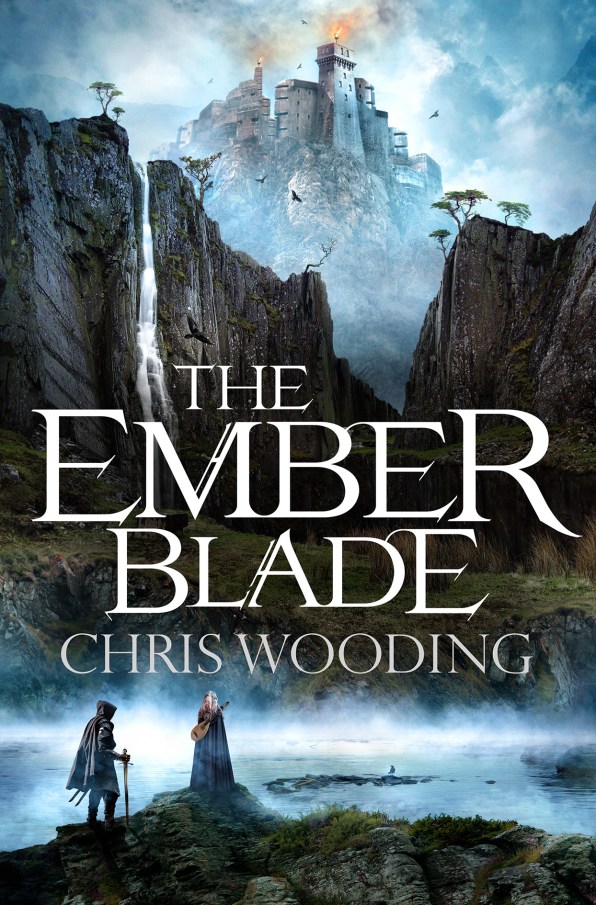
the ember blade cover

Publisher: Orion (Audiobook – 20 September 2018)

Series: The Darkwater Legacy – Book 1

Length: 30 hours and 40 minutes

My rating: 5 out of 5 stars

Amazon

If you are looking for an elaborate and exciting fantasy epic to really sink your teeth into look no further than The Ember Blade, the impressive first book in Chris Wooding’s The Darkwater Legacy.

The Ember Blade is a massive fantasy book that was released in late 2018 by veteran author Chris Wooding. I somehow completely failed to realise that this book was coming out until I saw it on the shelves of my local bookshop, and while I thought that it had a lot of potential due to the cool sounding plot, I was unfortunately unable to fit it into my reading schedule last year. However, as it was one of the books I most regret not reading in 2018, I decided to listen to the audiobook format of The Ember Blade, narrated by Simon Bubb, a little while ago. I have to say that I was not disappointed; Wooding, who has previously written such books as the Braided Path, Malice and Tales of the Ketty Jay series, has created a bold and inventive new fantasy tale in this book. Featuring a great story, an amazing group of characters and set in a massive and creative fantasy world, this was an exceptional book that I am really glad I listened to it.

A generation ago, the once proud nation of Ossia was invaded by the brutal Krodan Empire, and not even Ossia’s legendary defenders, the Dawnwardens, could stop them. Now the Krodans rule Ossia with an iron fist, installing their own religion and way of life, and treating the Ossians like second-class citizens in their own land. Any acts of dissent are quickly crushed, and those few that fight for Ossian freedom are quickly being rounded up. The only Ossians who flourish are those who accept Krodan rule and attempt to assimilate into their way of life, like Aren, the son of a wealthy Ossian collaborator. Aren has spent his whole life being told that the Krodans saved his country and that their laws, religion and rule are fair and beneficial for everyone. However, he is about to learn the dark side of Krodan rule.

When his farther is suddenly arrested and executed as a traitor, Aren and his best friend Cade are taken to a forsaken Krodan labour camp where they are expected to work until they die. With his hopes and dreams for the future crushed, Aren decides that it is finally time to rebel and engineers an escape from the camp with Cade and another prisoner. Despite all their planning, their escape seems doomed to fail until a mysterious band of fighters intervene at the last minute. However, their salvation is a double-edged sword, as the leader of this group, Garric, is a vengeful figure from Aren’s father’s past, who bears a terrible grudge against his entire family.

Forced to travel with this band, Aren and Cade discover that they are amongst some of the last Ossian rebels in the entire country. As they flee, pursued by a tenacious member of Krodan’s secret police and his three terrifying minions, they are told of Garric’s ambitious plan to break into an impenetrable fortress and steal the Ember Blade, an ancient artefact of Ossian rule that could be used to rally the country to their cause. However, in order to even have a chance to steal the blade, they must overcome treachery, the indifference of a conquered people, and their own personal demons unless they wish to be overwhelmed by the evil forces arrayed against them.

Wooding has come up with a pretty spectacular plot for this book, and I really enjoyed the places that this compelling story went. While the beginning of the book is a little slow, mainly to establish the setting and the friendship between Aren and Cade, it does not take long for the plot to get really exciting, when the two main characters introduced at that point are thrown into a prison camp. The story continues at an excellent and captivating pace from then on in, as the characters get wrapped up with Garric and his band as they attempt to free Ossia from the Krodans. This whole story is pretty fantastic, as it blends together a bunch of different fantasy adventure storylines into one satisfying narrative. For example, throughout the course of the book, you have an exploration of life within a Krodan prison camp, a complex prison break, a pursuit throughout all of Ossia by the Krodans, an exploration of a long-abandoned and magically haunted palace, treachery and plotting throughout the towns and cities of Ossia, all finished off with an elaborate heist and prison break scenario within an impenetrable castle and the dramatic consequences that result from their actions. While you would imagine that having all of these plot aspects within one novel would be a bit too much, I think that Wooding did an excellent job balancing all these intricate storylines together into one outstanding overall narrative. Sufficient time is spent on all of the various parts of the book, which not only ensures that various plot points are well-constructed and impactful but also allows the various character dynamics and relationships to come into effect while also slotting in some world building. All of this leads to an incredible and truly addictive story which I absolutely loved and which also sets up a number of intriguing plot points for future books in this series.

While The Ember Blade’s story is pretty amazing, the real strength of this book is the fantastic group of characters. The author has come up with several outstanding and complex protagonists, each of whom has an elaborate backstory which the reader learns all about through the course of the story, as many of them are utilised as a point-of-view character for a several chapters. There were some truly fantastic and memorable characters throughout this story, and I really enjoyed their various motivations and the way that they interacted with each other. The further you get into the book, the more you find yourself getting wrapped up in each character’s unique personality and finding out what makes them tick, until you actually start to care for them. However, fair warning in advance, some of these characters that you grow to like will not survive until the end of the book, and Wooding goes on a little bit of a killing spree with some of his creations (although I think there is a good chance one or two might come back in a future book).

The Ember Blade features a number of great characters that I could talk about, but for the sake of brevity I might just focus on the most important characters, Aren and Cade. These two Ossian youths are great central protagonists for this story, and they form a pretty fun and emotional duo for most of the book. Aren and Cade are dragged into the events of this book because of their friendship, and the two of them try to stick together, as they end up being the only person each of them has. However, throughout the course of this book, their friendship is tested by a lack of hope, conflict over ideals, love and feelings of betrayal, which makes for some very emotional reading. Both characters are really interesting, and both bring a lot to the story. While Aren is the central protagonist of the series, Cade is the story’s heart and soul, telling all manner of bad jokes and regaling his companions with the old stories of the land. Aside from the periods of time when he is infected with hopelessness or bitterness, Cade mostly remains the same character throughout the course of the book and does not develop too much. Aren, on the other hand, goes through a great deal of character development throughout the book, as he starts to become more disillusioned with the Krodan regime. Due to his upbringing, Aren is slow to realise the evils of the Krodans, even when his father is murdered and he is thrown into a deathcamp. However, several confrontations with Cade, discussions with Garric and actually seeing all the evil that the Krodans perpetrate help convince him of the benefit of rebelling against them and being a hero. This is not a straight progression; instead, the author creates a much more deviated course to greatness for our hero, as he is forced to betray someone he respects, is betrayed in turn by his own countrymen, must overcome his own prejudices and learn to deal with his sense of entitlement and his resentments, all before he become a better person. All of this makes for some great reading, and these two make a fantastic pairing.

Quite a lot of time is also spent on the character of Garric, who probably shares top billing with Aren as the book’s main protagonist. Garric is a freedom fighter whose own country is no longer willing to fight. Obsessed with victory, no matter the cost, Garric has become a very angry and bitter man over the years, especially due to a past interaction with Aren’s father. Despite this past hurt, his code of honour requires him to rescue Aren, and subsequent events force him to spend time with the son of the man he hated the most in the world. We learn a great deal about Garric throughout the course of the book, and despite his outer veneer of hatred and anger, most of which is directed at Aren, he is shown to be a good man and a hero. However, his need for vengeance against the Krodans slowly consumes him throughout the course of the book, and he begins to risk everything, even the lives of the people who trust him, to achieve his goal. I really liked the character of Garric, mainly because he has such an outstanding and well-written character arc in this book, the course of which goes into some dark and destructive directions and was deeply compelling to witness.

There is no way I can review this book without mentioning my favourite character, Grub, since, according to himself, “Grub is the greatest”. Grub is a Skarl, a warrior whose people journey out from an icy wasteland to do mighty deeds in order to have them tattooed on their body. Joining in on Aren and Cade’s escape plan, Grub spends the majority of the book boasting about the deeds that earned him his tattoos and making himself sound like the greatest warrior of all time. Grub is mostly used as a comic relief, and his jokes, outlandish boasts, coarse behaviour, amusing nicknames for the other characters and habit of constantly talking about himself in the third person make him the funniest protagonists in the book. However, like most of Wooding’s characters, Grub’s life is a lot more complicated than you would expect. Grub is not what he appears to be and bears a secret shame that makes him an outcast from his own people. In order to return, Grub must redeem himself by performing the most heroic or cunning of deeds and remains with the protagonists because he believes that participating in their adventures are exactly what he needs, that and he plans to rob them of the Ember Blade. However, as the book progresses, Grub, who has never known friendship or acceptance, begins to bond with several of the protagonists, especially Aren, which could alter his eventual plans.

As you can see from the examples above, Wooding has done an excellent job inserting complex and appealing characters into his story. Favourites I haven’t yet mentioned include a powerful druid and her dog, who provide much of the book’s magical elements; a fearless female hunter with poor social skills, who is a love interest for both Aren and Cade; an intelligent Ossian woman whose ambitions are thwarted by the inherent sexism of the Krodans, and who gets some of the best revenge against a mansplaining ass by beating him in a strategy game; and more. The author even shows a couple of chapters from the point of view of The Ember Blade’s main antagonist, the Krodan secret police commander Klyssen, which humanises him a little and shows why he is so determined to hunt down our protagonists. All of these characters add a large amount to the story, and it was a real pleasure to follow their adventures and learn all about their lives.

In addition to the fantastic roster of characters that the excellent story followed, I have to say that I was also impressed with the bold new fantasy world that Wooding created. Not only is the primary setting of the nation of Ossia a complex and dangerous location that helps create a thrilling and enjoyable read, but the author spends a lot of time expanding out the entire world, furnishing the reader with some fascinating depictions of some of the other cultures and races that live in the world. Thanks to the fact that one of the point-of-view characters is a bit of a storyteller, we get a really good idea of the history of the world, much of which has some sort of bearing on the current story, or could potentially become an interesting part of a future book. In addition, due to the examination of several of the protagonists, we also get a good basis for some of the other nations that are mentioned throughout the story, all of which sound really fascinating. I particularly liked the sound of the Skarl, Grub’s race, and I would definitely love to read a story set in their frozen necropolises. Wooding also introduces some supernatural elements in this book, including some ancient god-like monsters who are likely to be the major opponents of any future books in the series, as well as a cursed, magical castle which our protagonists find themselves trapped in for a substantial part of the book. I also quite enjoyed the potion-based magical system of the druids that was utilised by one of the primary characters, and I will be intrigued to see more of what sort of magic the Krodans have.

While the rest of the world introduced in The Ember Blade has a lot of potential in future books, I did really like the main location of this book, the conquered nation of Ossia. Ossia has been under Krodan rule for around a generation at the point of this story, and the people are becoming more accustomed to their conquered status. This situation bears some very strong similarities to Nazi-occupied France, with the Krodans infecting the country with their rules and ideals over a conquered nation, and utilising collaborators and violent retaliations to rule with an iron fist. Not only are the Krodans depicted in quite a Teutonic way, but it is clear that they are participating in some form of ethnic cleansing, as the entire population of a gypsy facsimile race in their empire has been rounded up and taken to an unknown location. All of this really helps to up the stakes for the protagonists, as they must not only overcome all the Krodans they come across but also contend with being sold out by members of their own nation. This chance of betrayal from fellow Ossians is quite disheartening to many of the characters, and it makes them wonder at times why they are fighting to free these people, when it is quite obvious that many amongst them do not want to be free. In addition to all of this, I have to mention the dreadknights, the strange, dangerous and seemingly indestructible elite soldiers of the Krodan Empire, who have been unleashed to hunt down and kill the protagonists. These dreadknights are terrifying beings whose unrelenting pursuit of your favourite characters (and indeed they bear responsibility for the deaths of some of these characters) really adds a lot of tension to the story. There was something of the Ringwraiths from The Lord of the Rings in their manner and bearing, and there is a lot of mystery surrounding their origins. I am very curious to see if we learn more of these creatures in the rest of the series, and I have a vague feeling that Wooding is going to make them even more horrifying in the future.

As I mentioned above, I ended up listening to the audiobook version of The Ember Blade, which was narrated by Simon Bubb. Considering the physical copy of this book is around 800+ pages, it should come as no surprise that the audiobook format is going to be fairly substantial. It runs for 30 hours and 40 minutes, which actually makes it the eighth-longest audiobook I have ever listened to. As a result, it did take me a pretty long time to get through this book, but once I started getting really into the story, I went out of my way to try and finish it off as quickly as possible. I am actually really glad that I listened to the audiobook version of this book, as I felt that it really helped me absorb the enjoyable story and detailed setting. Bubb had a great, steady narration voice for this book, and his take on the story and the characters really helped to keep my attention glued to the book. As a result, I would strongly recommend the audiobook format of The Ember Blade to those people interested in checking this book out, as you will have a lot of fun listening to it.

The Ember Blade is a modern-day fantasy masterpiece from Chris Wooding, and I am extremely glad that I managed to get a chance to read it this year. Wooding has come up with a detailed and captivating plot which combines exceedingly well with the book’s excellent group of characters and intriguing new fantasy world to create a first-rate story. This was an outstanding read which does a fantastic job introducing The Darkwater Legacy, which, if Wooding continues to write this well, has potential to become a truly great fantasy series. A highly recommended read that gets a full five out of five stars from me, this is essential reading for all fans of the fantasy genre.

Amazon