Top Ten Tuesday – Titles with Animals in Them

Top Ten Tuesday is a weekly meme that currently resides at The Artsy Reader Girl and features bloggers sharing lists on various book topics.  For this week’s Top Ten Tuesday, participants are tasked with listing their top books with animals in the title.  This is a rather interesting topic and it has several similarities to other topics that have been featured as part of the Top Ten Tuesday meme before.

I ended up coming up with quite a few good books that had animals in the titles, far too many if I’m going to be honest as it turns out it is quite a common practice to feature some form of animal in a title.  To make this list a little more manageable, I decided to exclude any mythical creatures or animals from this list, mainly because I don’t think that was in the spirit of the topic, but also because this book would end up being very similar to my recent list that looked at book covers featuring dragons.  When this exclusion still left me with way too-many options, I decided to further limit myself by restricting this list to only one book per author.  This ensured that I had reasonable input from several authors who favour animal-themed titles, or who I have a great deal of books from.  The resultant list, which still required some cutting, ended up looking pretty good and I think that I ended up covering the top books I have read with animals in the titles. So let us see what made the cut.

Honourable Mentions:

Space Wolf by William King

Space Wolf Original Cover

Following the genetically enhanced and wolf-like members of the Space Wolves Space Marine chapter, this intriguing Warhammer 40,000 is pretty damn awesome, and the title fits extremely well.

Amazon


Dark Horse by Gregg Hurwitz

Dark Horse Cover

A great entry in Hurwitz’s awesome Orphan X series, Dark Horse was a fantastic book and its animal-themed title had great multiple meanings within the plot.

Amazon


The Black Hawks by David Wragg

The Black Hawks Cover

An amazing and captivating fantasy read; The Black Hawks references the titular mercenary group the book follows who get into all manner of trouble in a dark fantasy realm.

Amazon


The Bear Pit by S. G. MacLean

The Bear Pit Cover

An excellent historical murder mystery which features a fighting bear as a potential suspect and lethal murder weapon.

Amazon

Top Ten List:

Usagi Yojimbo: Volume 5: Lone Goat and Kid by Stan Sakai

Usagi Yojimbo Lone Goat and Kid Cover

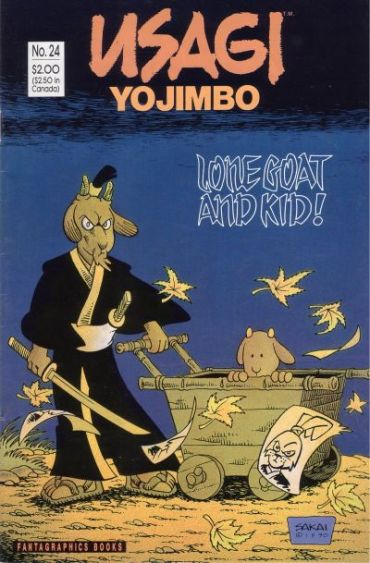
Now, realistically I could include any of the Usagi Yojimbo comics on this list, as Usagi is Japanese for rabbit.  However, I chose to ignore that and instead the animal in the title I am focusing on can be found in the fifth collected volume, Lone Goat and Kid.  A great addition in the Usagi Yojimbo series, this is a pretty epic volume, and I loved the story focussing on the titular Lone Goat and Kid, who are animal parodies of Lone Wolf and Cub.  I really like the fun homage contained in this title, which is why I included this volume, rather than the later volumes Fox Hunt and Red Scorpion, which I could have also used.

Amazon


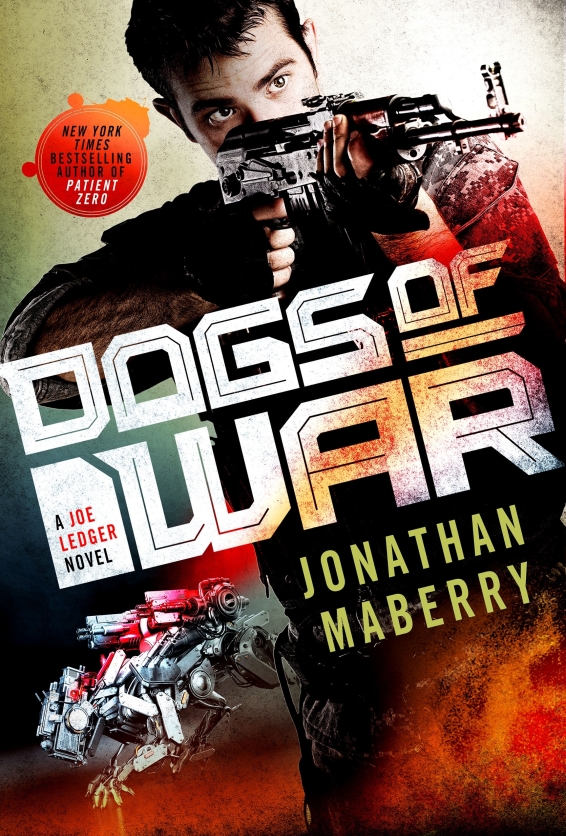
Dogs of War by Jonathan Maberry

Dogs of War Cover

The always amazing Joe Ledger series by Jonathan Maberry has some great titles to it, but the only one I could fit here was the fantastic novel Dogs of War.  This was an outstanding read, and while the title, Dogs of War, is a play on the famous saying, it also refers to robotic attack dogs featured within the book.  As such, I had to include this here, and this book is an outstanding addition to the series.

Amazon


Talon of the Silver Hawk by Raymond E. Feist

Talon of the Silver Hawk Cover

Legendary fantasy author, Raymond E. Feist has featured a couple of animals into his fantasy titles over the year, such as with King of Foxes, but the one I’m going to focus on in this list is Talon of the Silver Hawk, which was the first Feist novel I ever read.  Not only is this an incredible and eye-catching title, but Talon of the Silver Hawk also references the main character, who gains his name early in the novel when he witnesses a hawk on a vision quest.  An epic inclusion that has a very special place in my heart.

Amazon


The Fifth Elephant by Terry Pratchett

Fifth Elephant

I’m featuring a few of my favourite authors on this list and that includes the legendary Terry Pratchett who used animal names in a few of his books.  I was very tempted to use one of my favourite Discworld books, Hogfather, here, although that is more of a character name rather than a reference to an animal.  So instead, I used The Fifth Elephant, which is a fantastic and impressive entry to the series.  Elephants are a very important part of the Discworld books, as four of them hold up the titular Discworld while standing on-top of a giant turtle, so The Fifth Elephant is a title that is guaranteed to get reader’s attention.  The book itself is a compelling addition to the City Watch sub-series and this entry sees the main characters to travel to a Transylvania-esque land, which has been gifted great riches by the crashing fifth elephant, to solve several murders and resolve political discord.  This is an outstanding entry in the series and I’m glad I could feature it on this list. 

Amazon


Death of the Black Widow by James Patterson and J. D. Barker

Death of the Black Widow Cover

An excellent, animal-themed book title I wanted to highlight was Death of the Black Widow by the excellent team of James Patterson and J. D. Barker.  The black widow in the title refers to a mysterious, supernatural figure who seduces and kills many people over an extended period.  I had an amazing time with this novel, which was one of my favourite books of 2022, and I will admit the cool title was one of the reasons I chose to read Death of the Black Widow.

Amazon


White Wolf by David Gemmell

White Wolf Cover

One of the more interesting books I wanted to feature on this list was the epic fantasy novel White Wolf by the late, great David Gemmell.  I’ve mostly only ever talked about Gemmell’s debut novel, Legend, on this blog, but I also deeply enjoyed one of his later novels, White Wolf.  Following a deadly warrior who attempts and fails to leave his life of violence behind, White Wolf is an incredible novel that has so many great moments to it.  This was one of the earlier big pieces of fantasy that I read when I was younger, and it has stuck with me for years.  I have been meaning to go back and read this series for a while and White Wolf is one of the main reasons for this.

Amazon


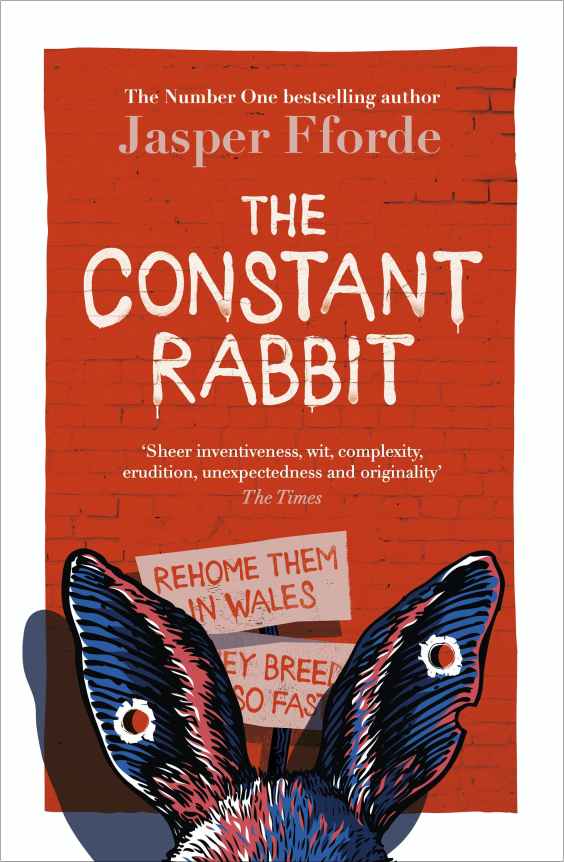
The Constant Rabbit by Jasper Fforde

The Constant Rabbit Cover

When it came to books with animals in the titles, I just to include The Constant Rabbit by Jasper Fforde, which is such an awesomely fun book.  The Constant Rabbit is a complex novel set in a version of England where anthropomorphic rabbits have emerged and started living with humans.  This ended up being a very impressive novel that is simultaneously inventive, hilarious and a brilliant parody of British politics.  One of my favourite books of 2020 and a great addition to this list.

Amazon


Under the Eagle by Simon Scarrow

Under the Eagle Cover

Out of all the authors I’m featuring on this list, few have as many books with animals in the title than historical fiction author Simon Scarrow.  That is because his long-running Eagles of the Empire series, features eagle in the titles of the first seven books (i.e. The Eagle’s Conquest, The Eagle and the Wolves and The Eagle in the Sand), as well as some other animals, like The Blood Crows.  I decided to feature the very first book in the series, Under the Eagle, which is a brilliant introduction to a gripping and powerful Roman history series, and which comes highly recommended.

Amazon


The Ballad of Songbirds and Snakes by Suzanne Collins

The Ballad of Songbirds and Snakes Cover

Next, we dive into Suzanne Collins’ The Hunger Games series, which had a lot of bird imagery involved with it.  While the third book does have an animal in the title with Mockingjay, I decided against featuring it as this was a fictional species.  Instead, I decided to feature the prequel novel Collin’s released a couple of years ago with The Ballad of Songbirds and Snakes, which features two separate animals in the title.  This was an excellent prequel to the very cool young adult trilogy and I look forward to seeing it turned into a movie later this year.

Amazon


War of the Wolf by Bernard Cornwell

War of the Wolf Cover

The final entry on this list is War of the Wolf by Bernard Cornwell, which served as a great addition to his long running Saxon series.  This great book sees the aging protagonist engage in another series of battles against enemies on all fronts.  Serving as the beginning of the end of this brilliant series, I have a lot of love for War of the Wolf and it was an outstanding addition to both the Saxon series and this list.

Amazon


Well, that’s the end of my list.  It turns out that I’ve read a good number of books with animals in the title, so this ended up being a great list for me in the end.  I am pretty happy with how this turned out and it was fun to figure what to include. Let me know what your favourite books with animals in the titles are in the comments below.

Throwback Thursday: Usagi Yojimbo: Volume 5: Lone Goat and Kid by Stan Sakai

Usagi Yojimbo Lone Goat and Kid Cover

Publisher: Fantagraphics Books (Paperback – January 1992)

Series: Usagi Yojimbo – Book Five

Length: 142 pages

My Rating: 5 out of 5 stars

Amazon

Reviewed as part of my Throwback Thursday series, where I republish old reviews, review books I have read before or review older books I have only just had a chance to read.

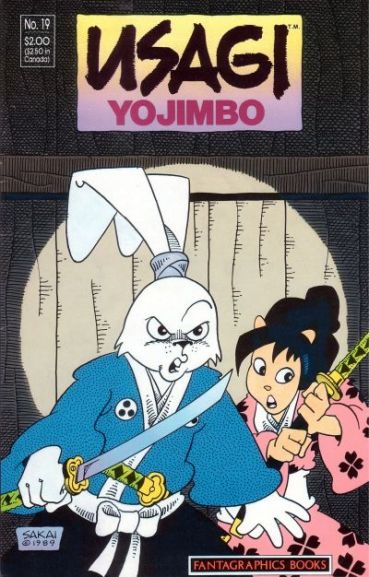
In this latest Throwback Thursday I once again check out another early volume of the excellent Usagi Yojimbo series, which I have been reviewing over the last couple of weeks. For this review, I am looking at the fifth volume, Lone Goat and Kid. Lone Goat and Kid was first released in 1992 by Fantagraphics Books and contains issues #19-24 of the Usagi Yojimbo series.

Usagi 19

This fifth volume of Usagi Yojimbo once again sees series protagonist, the rabbit ronin Miyamoto Usagi, traverse a feudal Japanese landscape populated solely with anthropomorphised animals. This volume follows on right after the chaotic events of the fourth volume, The Dragon Bellow Conspiracy, and contains five new stories across six issues. This is an interesting entry in the series, particularly as it is the first volume to barely feature any of the previously introduced recurring characters aside from Usagi (a huge departure from the last volume, which contained a number of recurring characters coming together and teaming up). Instead, Sakai takes the time to introduce a bunch of new characters and scenarios across the volume’s five separate stories. Unsurprisingly, I really liked this fifth volume of Usagi Yojimbo, especially as Sakai manages come up with some fantastic and exceedingly enjoyable tales.

The first story featured within this volume is titled Frost & Fire, and it is a tragic story with undertones of forbidden love and class struggle. In this story, Usagi is hired by the cold and proper widow of a samurai to travel to the place of her husband’s death and retrieve his swords. Upon arriving at the small village where the samurai died, Usagi discovers that the swords are in the possession of the dead man’s lover, a poor peasant girl, who wishes to keep them as a remembrance of the man she loved. Unwilling to take the swords by force, Usagi leaves, but the peasant girl’s greedy brother has other plans for the swords.

This was a rather heartfelt first story for the volume, and it contains some great underlying elements to it. Much of the story revolves around a forbidden romance between a samurai and a peasant girl who wanted to be together but were unable to due to class differences. This was a rather intriguing central element for this story, and you can’t help but feel for the poor peasant girl, especially after meeting the samurai’s harsh and honourable widow in the opening pages. There is also examination of the evils of greed and avarice, as several of the side characters attempt to deceive and murder in order to get a quick payday. Luckily, their greed proves to be their undoing, as karma quickly strikes throughout the course of the story. There are some great scenes in this story, including one sequence where Usagi stares down the peasant girl when she refuses to give up the swords, “You know I can just take them from you”, before ultimately backing down and refusing to force her to give them up. I also liked a scene later in the book where the brother’s greed proves to be his undoing, as not only does Usagi appear behind him at one point like a vengeful spirit, but he is then ironically attacked by his “friends”, who are jealous of the wealth he achieved because of his bad actions, and whose mindset mirrors that of the brother. All of this makes for a great first entry for this volume, and I really enjoyed the amazing and captivating story that Sakai came up with.

Usagi 20

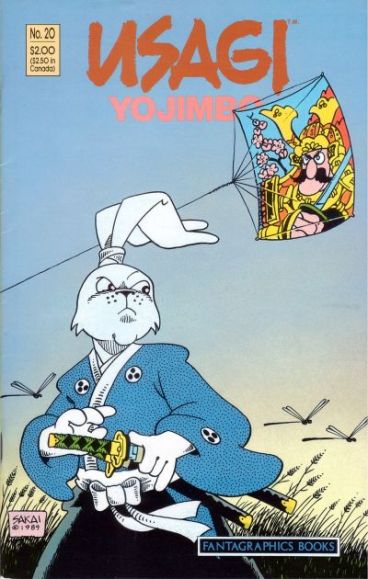
The next story is a rather unique entry called A Kite Story, which I have a particular love for. A Kite Story is actually broken up into four distinctive parts, each of which focuses on a different character participating in a famous kite festival. The first part, called The Kite Maker’s Story, follows a kite maker, Tatsusaburo, in the lead up to the festival. This part of the story contains no dialogue, but instead features a first-person narration from Tatsusaburo that overlays the drawings. This narration explains how he gathers the resources for his kites and the various processes he goes through to craft them together. It particularly focuses on the work he puts into creating an odako, a giant kite that he and a team of handlers hope to fly. The story then jumps to its second distinctive part, called The Gambler’s Tale, which follows the crook Hatsu and his gang of itinerant gamblers as they work the crowds gathering for the kite festival. This part starts off with some first-person narration from Hatsu and explores how he and his gang set up a rigged game of dice. This part ends its narration on the second page, when Usagi arrives on the scene and it becomes purely dialogue driven after that. Usagi, upon noticing the game, gets involved and is able to prove the gamblers are cheating (thanks to some fancy sword work), which sees not only the crooked gamblers run out of town but also those gamblers who were running fair games, and who are none too pleased with how they have been treated. This then moves to the third part of the story, called The Ronin’s Tale, which is nearly entirely dialogue driven, with only a small bit of narration at the front. Usagi deals with some of the players from the first two parts of the book, as he is unfairly blamed by the cheating gamblers in The Gambler’s Tale as the source of all the trouble to the honest gamblers. This sees Usagi have to make a rather quick and unconventional exit from the festival, which quickly breaks down into chaos. The story then concludes with a quick two-page final part, called The Kite Maker’s Tale II, which follows Tatsusaburo again and serves as an epilogue to the whole story.

I really liked A Kite Story, as Sakai did a really good job blending together a couple of distinctive narratives into one fantastic story. I particularly enjoyed the fascinating first part of this story and I always love it when Sakai uses his stories to explore certain unique Japanese cultural elements and industries. For this one, the author presents the reader with an amazing examination of the traditional kite-making process, and I loved seeing the process explained by the titular kite maker. This part of the story blends in surprisingly well with the other sections of A Kite Story, and I was impressed with how Sakai was able to turn these seeming separate and disparate tales into a complete narrative that is both entertaining and informative. Sakai also produces some amazing artwork in this story, from the giant kite to the visually impressive and detailed crowd scenes, and this is easily one of the more innovative stories that Sakai has come up with.

Usagi 21

The third story is the action-packed spectacular, Blood Wings, which Sakai tells over two issues. Late one night, Usagi is wandering along the road when he comes upon a dying peasant. The peasant’s last words are a mysterious warning about whatever killed him, “wings of blood”. Travelling to a nearby village, he finds a settlement living in terror, completely cut off from the outside world. They are being kept prisoner by a new and dangerous group of ninja, the Komori Ninja Clan, killer flying bats. The Komori Ninja were accidently discovered by the villagers as they prepared to ambush a shipment from a nearby goldmine and the ninja are now keeping them prisoner while they execute their attack. Knowing that the ninja will not leave the villagers alive as witnesses after the heist, Usagi attempts to break out and warn the goldmine, and when that fails, he leads the villagers in a spirited defence of their home.

Blood Wings was a fantastic and exciting story that serves as an excellent set piece for the middle of this volume. This third story is an impressive read that not only introduces a notable new group of antagonists, but it also contains some rather good action sequences. The Komori Ninja prove to be a great group of villains, and I really liked the character design that Sakai came up for them, as they fly around with sword blades attached to their wings, cutting through anyone and anything they encounter. The highlight of this story has to be the thrilling action sequences between Usagi and this new foe, who are able to outmatch the protagonist with their unique combat style. This all culminates in an extended battle sequence which sees a swordless Usagi defending the village with a force of farmers. This is probably the fastest-paced story in the volume, and Sakai comes up with an awesome narrative for it. This is also the entry in this volume that is most tied into the overarching Usagi Yojimbo world, as the Komori Ninja are revealed to be working for Lord Hikiji and are seeking to replace the Neko Ninja. This story also contains my favourite joke in the whole volume, as only Saki would have a guard yell out, “Holy flying furball! It’s Bats, man!” as the Komori Ninja descend.

Usagi 22

The fourth story is an elaborate and compelling entry titled The Way of the Samurai. This story sees Usagi intervene when a gang of bandits (including a very cool-looking walrus samurai), attack a messenger, and is directed to seek out the magistrate of the local town. Arriving at the town, Usagi is amazed to discover that the magistrate is a famed former general Oyaneko, whose battles and tactics Usagi idolises. Staying in the general’s house for a night, he learns that Oyaneko was a loyal retainer to the land’s former lord but was cast aside when the lord’s brash young son came to power. Now regulated to the role as a simple administrator and slowly dying of a disease, Oyaneko is discontent with his life, and, after meeting an honourable and skilled Usagi, challenges him to a duel to the death, “The way of the Samurai is found in death”.

This fourth entry in the volume is a moving tale that the author uses to explore the complexity of the samurai code of duty, loyalty and service. I really liked the intricate story that Sakai weaved around the characters of Usagi and Oyaneko, and Oyaneko’s story is particularly tragic and fascinating. This entire story is set up really well, with Usagi encountering Oyankeo, the two gaining a mutual respect for the other, learning about Oyankeo’s past and motivations, before the emotionally charged duel at the end. Sakai did a fantastic job illustrating the stress and emotion surrounding this final duel with his epic drawings, and the end result was really touching. I think this is one of the best written stories in the entire volume, and it becomes quite an emotional ride for the reader in the end.

Usagi 23

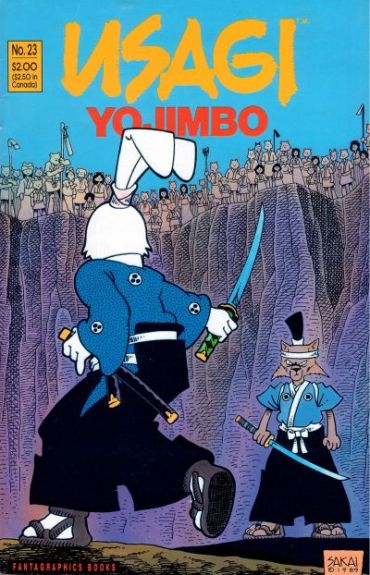
That leaves us with the fifth and final story in this volume, which shares the same name as the overall volume, Lone Goat and Kid. This story focuses on the characters of Yagi and Gorogoro, the titular Lone Goat and Kid. Years ago, Yagi served the same lord as Oyaneko. However, when their old lord died, Yagi was falsely accused of a crime by the new lord’s corrupt advisors and forced out of his service. Yagi and his son Gorogoro now work as Lone Goat and Kid, assassins for hire who many believe now travel the road to hell. The two assassins are also constantly targeted by their former lords’ samurai and bounty hunters sent after them by the corrupt advisors who framed them. As part of their latest attempt to kill Yagi and Gorogoro, these advisors use a proxy to hire the Lone Goat and Kid to assassinate Usagi, who they believe may be able to defeat the infamous assassin. When they meet, Yagi and Usagi engage in a brutal fight to the death, with the corrupt lord’s forces waiting to ambush the winner.

This was another awesome story filled with epic duels, a massive battle sequence, some superb artwork featuring Japan’s exquisite landscape, and a fun narrative packed full of deceit and conspiracy. The titular Lone Goat and Kid are a rather cool adaptation of the iconic Japanese fiction duo, Lone Wolf and Cub. Lone Wolf and Cub was a manga series back in the 1970s that followed a samurai assassin and his child as they travel feudal Japan searching for vengeance. This series has inspired several movies and a television show, and many different pieces of fiction have paid homage to them over the years, from The Mandalorian to Bob’s Burgers. Heck, Rick and Morty literally just did an anime homage to them last week on YouTube. Sakai’s versions of the characters are rather good, and they become fun recurring characters within the Usagi Yojimbo series. I loved how Sakai came up with some fantastic and unique character designs for the two assassins, turning them into goats rather than wolves (which was a nice touch, especially as the name “kid” has that fun double meaning), and providing them with a different backstory. However, there are some excellent similarities, such as the father’s skill with the blade, the desire to take down conspirators who wronged them and the baby carriage the son travels in, equipped with all manner of hidden weapons and blades. The character of Yagi, the Lone Goat, is particularly intense, and is almost demonic in his attitudes and persona, while still maintaining a samurai’s sense of honour. I was also really impressed with the battle sequences that featured in the last half of this story, and I liked how Sakai went from an elaborate one-on-one duel, to a mass fight against multiple opponents. All of this leads to another excellent story in this volume, which I really enjoyed reading.

Usagi 24

This fifth volume of Usagi Yojimbo, Lone Goat and Kid, was another incredible and powerful addition to the series, and I think Stan Sakai did another amazing job with this volume. Featuring five fantastic stories that contained Sakai’s usual complex narratives, iconic artwork and compelling underlying themes, Lone Goat and Kid gets another five-star rating from me, and it is really worth checking out.

Amazon