Warhammer 40,000: Deathworlder by Victoria Hayward

Warhammer 40,000 - Deathworlder Cover

Publisher: Black Library (Audiobook – 23 April 2024)

Series: Warhammer 40,000

Length: 11 hours and 1 minute

My Rating: 4.75 out of 5 stars

Amazon

Debuting author Victoria Hayward presents one of the year’s most compelling entries to the Warhammer 40,000 canon, with the outstanding and grim novel, Deathworlder.

I have made no bones about how much love I have for Warhammer 40,000 extended fiction, which honestly features some of the very best media tie-in novels currently being written.  One of the things I particularly love about Warhammer fiction is the sheer range of compelling and impressive authors that are adding to the lore and narrative of this universe.  While a good chunk of the novels come from grizzled veteran Warhammer authors, the Black Library has also been cleverly utilising a range of intriguing new writers to offer fresh stories to the franchise, and some of the best books in recent years have been an author’s very first novel.  In 2023 alone there were several outstanding Warhammer 40,000 novels from first time authors, including The King of the Spoil by Jonathan D. Beer, Creed: Ashes of Cadia by Jude Reid, and Longshot by Rob Young, all of which were among my favourite debuts of the year.

2024 also looks set to a be a good year for authors making their debut through Warhammer fiction, especially when it comes to Deathworlder, the very first novel by exciting new author Victoria Hayward.  Featuring a compelling and exciting plot, Deathworlder has been on my radar for a while, and I ended up grabbing Deathworlder on audiobook as soon as I could.

There are many dangerous foes and deadly enemies stalking the galaxy in the far future, but none are as insidious, destructive and terrifying as the alien menace, the tyranids.  Made up of innumerable biological lifeforms, the tyranids traverse the galaxy, devouring entire planets and adding it to their biomass.  Hundreds of former human planets have fallen to the hivefleets of the tyranids, and the next world to be consumed is the planet of Lazulai.

Once a magnificent planet of beauty and rich resources, Lazulai is currently on the brink of destruction.  The armies of humanity were unable to hold back the invading tyranid hordes, and now the planet has begun to change as it is devoured by the alien lifeforms covering its surface.  Only a few small pockets of resistance remain, including the 903rd Catachan Night Shrikes, who garrison one of the last fortresses still standing.  However, hope remains in the most unlikely of places.

Receiving intelligence about a mysterious piece of archeotech that may hold the key for saving the entire system, Major Wulf Khan is given one final mission to retrieve the technology.  Leading a small mixed squad, Major Khan must use all the innate Catachan skills of infiltration and survival in extreme environments to lead her soldiers through the alien jungles that have sprouted up in the wake of the tyranid advance.  However, while the Catachans might be the best jungle fighters humanity has to offer, they are facing off against an unstoppable foe, capable of adapting to the greatest of obstacles.  Can Khan and her Catachans prove they are the deadliest survivors in the galaxy or will the tyranid horde consume them alongside the last remnants of Lazulai?

Deathworlder was a particularly dark and intense Warhammer 40,000 novel that grabbed my attention from the very beginning.  Hayward came up with a wonderful story that expertly highlighted the opposing Warhammer factions while also making full use of some very strong character work to tell an emotionally charged narrative.

I really liked how Deathworlder’s story unfolded as it proved to be a gritty, character-driven tale of survival.  Starting off by expertly showing the end of the planet setting and the despair being felt by the various protagonists, the story quickly moves along into the main quest, with the Catachan protagonist, Major Wulf Khan, leading a small squad of troops out to recover valuable technology before the planet dies.  The story is primarily split between the perspectives of Khan and the Cadian Lieutenant Kaede Anditz, who joins the squad as a guide towards their final objective.  This leads to an intriguing first half of the book, as the eclectic squadron of protagonists begins their trek towards the objective.  There are some dark and grim moments here, especially as large chunks of the protagonist’s comrades get killed in the lead-up to their mission, and the reader is soon engulfed in the horrifying early stages of the destruction of the planet.

The second half of Deathworlder only gets darker, as the protagonists encounter more and more obstacles on their quest.  I really appreciated how Hayward focused on the alien and human monsters that the protagonists are forced to deal with, and the author ensures that emotions are constantly running hot as the characters encounter worse and worse things.  A particularly powerful moment splits the perspectives of the book even further, while also leading to some very dark experiences.  There are some excellent action set pieces, compelling character moments, and dark examinations of humanity on the edge, through this part of the book, and I honestly found it impossible to put Deathworlder down at times as a result.  Everything leads up to the final sequence as the protagonists encounter even darker surprises and revelations as they attempt to survive.  There are several exceedingly tense moments where you are constantly left wondering if any of the protagonists are going to make it, and I loved how desperate things got.  Hayward ends everything on an intriguing note, and readers will come away very moved by how this great narrative came together.

I felt that Hayward had a great dark tone for Deathworlder that really showcases just how deadly and hopeless parts of the Warhammer 40,000 universe can be.  The focus on characters who had already accepted that they were going to die, as well as the terrible changes that a loss in this universe can result in, gave a particularly intense edge to the book, which I felt made helped it really stand out.  Things get quite dark in Deathworlder, as Hayward really wanted to highlight the terrors of the tyranid, and I honestly got a major horror vibe at times, especially when it came to some particularly gruesome deaths (the field of stuck soldiers still makes me shudder).  While there is plenty of action, tragedy and lore dumps, I felt that the author’s decision to really focus on the book’s unique characters and camaraderie was very clever, and I became really invested due to the exceptional character work.  Deathworlder also proved to be a very strong addition to the Warhammer 40,000 franchise, and Hayward ensures that there is plenty of appeal for both established fans and new readers.  Indeed, I felt that Deathworlder would be a very good entry point into the larger fiction surrounding the Warhammer 40,000 franchise, especially as Hayward’s fresh writing shows just how complex a novel set in this grimdark universe can be.

While Deathworlder would be a good entry point for new readers, established Warhammer 40,000 fans will also get quite a lot out of this book, especially as Hayward expertly highlights two exceptional factions, the Catachans and the tyranids.

Essentially an army of Rambos, the Catachans have been a fan favourite regiment for ages and are always a great inclusion to any narrative.  I have read a few books around the Catachans, including Catachan Devil by Justin Woolley.  These novels, while fun, always tend to focus on the more stereotypical aspects of the Catachans: muscles, jungle craft and big knives.  However, Hayward takes a bit more of nuanced look at the Catachans in Deathworlder, showing them to be a complicated group of soldiers who fall back on the hard-talking jungle killer personas when the going gets tough.  While one very fun character does live up to the stereotype, primarily for comedic effect, for the most part the Catachans are shown as practical survivors, who in this book, are at the end of their tethers.  As such, you see a much more compelling side to the Catachans, and it was fascinating to see how complex the members of the regiment are, as well as how damaged they are by the constant fighting and slaughter.  The author’s use of alternative perspectives allows the readers to see the Catachans in various lights, both from within their own minds, and through the eyes of the Cadian Lieutenant Kaede Anditz, who grows to respect their culture and methods as the book continues.  I really appreciated this more realistic and grounded look at the Catachans in Deathworlder, and Hayward really showcased her ability to portray an iconic human regiment.

While the Catachans get a lot of the focus, you also really need to highlight the tyranids in Deathworlder, who serve as an outstanding antagonist.  While I have enjoyed a few great books where the tyranids were terrifying monsters, including Day of Ascension by Adrian Tchaikovsky, Leviathan by Darius Hinks and Duty Calls by Sandy Mitchell, Deathworlder might be one of the best portrayals of the tyranids that I have so far read.  That is primarily because Hayward’s story is set on a world already being devoured by the tyranids.  The resulting scenes of destruction, despair and digestion prove to be quite horrific, and few writers have really captured just how disturbing this scenario would be.  I felt the various scenes where the protagonists, who themselves are being slowly digested by falling spores, encounter the continuous horrors of the dying world, were so damn good.  The human experience with these horrors is a key part of Deathworlders appeal, and the despairing reactions from both the hardened soldier protagonists, as well as civilians they encounter along the way, really sells just how horrifying the situation truly is.  Even the more typical tyranid threat is well represented in Deathworlder.  The author really captures the fear associated with hordes of ravenous, chitinous aliens as they overrun simple soldiers.  While the tyranids are occasionally depowered by the protagonist’s plot armour, for the most part they are outstanding monsters, and the constant threat they could suddenly represent, proves to be a fantastic part of the novel.  As such, fans who love tyranids are in for a real treat with Deathworlder, and seldom are they a better monstrous villain than in this book.

I cannot write my review of Deathworlder without once again mentioning the impressive characters featured within this book.  Hayward excelled at introducing and exploring complex and damaged protagonists, and their very human, very determined actions, prove to be the true heart and soul of the narrative.  You go through a lot with these characters, and their overwhelming humanity in the face of continuous horrors and loss makes for a very powerful read.  There are some great characters here, including main protagonist Major Wulf Khan, a grizzled Catachan fighter who finds her desire to complete the mission constantly challenged by the losses of those around her.  Her trusted orderly, Sergeant Rutger Haruto, proves to be an excellent backup, especially as his constant curiosity and sensible nature helps to keep his commander in check.  Alternate point-of-view character Lieutenant Kaede Anditz is another excellent addition to the cast, and I think that his unique perspective of the Catachans he suddenly finds himself serving with ensured that their compelling portrayal in Deathworlder really came through.  Anditz is also going through a lot of trauma, especially after witnessing the slaughter of every Cadian soldier on Lazulai, and Hayward really ensures that his guilt and horror really shine through in his chapters.

While the characters above are great, my favourite was probably Trooper Falke Adair.  A muscled Catachan with a heavy flamer, Adair is essentially a walking Catachan stereotype, something she really acts up as the book continues.  Crass, disrespectful and always looking for a fight, Adair steals any scene she becomes a part of, and her over-the-top mannerisms and actions are very entertaining.  However, as the book continues, and characters, particularly Anditz, get closer to her, you see that much of her bravado is a front, and she proves to be one of the most complex figures in the entire novel.

I also must highlight the brilliant character of Lamya.  A Genestealer Cult propagandist, Lamya is captured at the start of the novel and dragged along by the squad for her knowledge.  An arrogant and slightly unhinged noble turned tyranid-worshipping stooge, Lamya plays off the other characters perfectly, and her distain for those around her is so much fun.  However, the more they traverse Lazulai, the more Lamya comes face to face with the horrors that her cult helped to bring to her planet.  Caught between her own beliefs and the horrors she witnesses, Lamya goes quite insane as the book continues, while also providing some of the most compelling perspective of events in the entire novel.  Throw in a scheming Tech Priest and a silent Catachan sniper, and this proves to be an outstanding cast of main characters that you really grow attached to as you watch their intense personal and physical journey.

Unsurprisingly, I chose to check out Deathworlder on audiobook, which is just the best way to enjoy a Warhammer novel.  This was very much the case with Deathworlder, and I loved how effectively and vividly the story came across as it was being read out to me.  The exciting action, captivating characters, and horrendous horrors of the narrative really came to life, especially when read out by talented narrator Gabrielle Nellis-Pain, whose work on The King of the Spoil audiobook last year was very fun.  Nellis-Pain did another outstanding job with Deathworlder, and I love how effectively she told Hayward’s elaborate story.  I particularly enjoyed the excellent voices she gifted to the various characters within Deathworlder, and she very effectively captured the cool protagonists in all their martial glory.  This was particularly true for the over-the-top Catachan protagonists, and you could really visualise the muscular characters as she narrated.  Nellis-Pain also ensured that appropriate alternate accents were given to characters from other human factions, such as the Cadians or the Adeptus Mechanicus, and I particularly enjoyed how well the narrator expressed the mechanical nature of the latter.  I honestly believe that this book wouldn’t have been as impactful if I had physically read it, and I strongly recommend the audiobook version as a result.  Coming in with a run time of 11 hours, Deathworlder was so much fun to listen to, and you can power through it in no time at all.

With her very first novel, Deathworlder, debuting author Victoria Hayward shows she is a writing force to be a reckoned with, especially when it comes to Warhammer fiction.  Deathworlder was an outstanding Warhammer 40,000 novel that features a truly dark and intense narrative, loaded with great characters and compelling depictions of Warhammer universe.  An exceptional read from start to finish, I cannot talk this novel up enough, and I am really intrigued to see how Hayward follows up her amazing debut.

Amazon

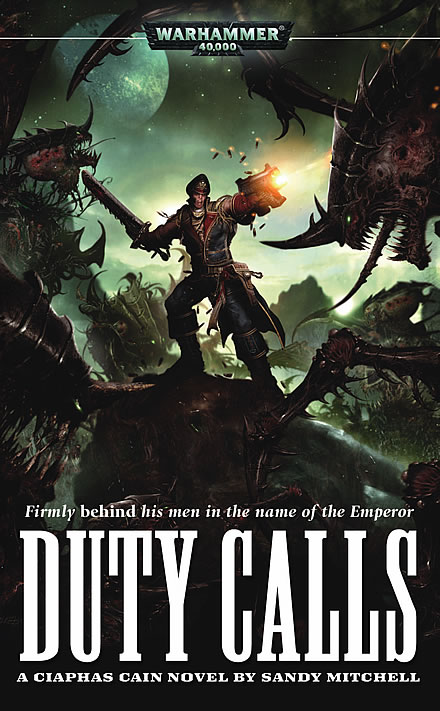
Warhammer 40,000: Duty Calls by Sandy Mitchell

Duty Calls Cover

Publisher: Black Library (Audiobook – 22 May 2007)

Series: Ciaphas Cain – Book Five

Length: 9 hours and 37 minutes

My Rating: 4.5 out of 5 stars

Amazon

One of the most entertaining authors of Warhammer fiction, Sandy Mitchell, continues to shine with the fifth book in his excellent Ciaphas Cain series, Duty Calls.

I doubt anyone is too surprised to hear that I broke a recent lull of reading by resuming the Ciaphas Cain series.  The Ciaphas Cain books, written by Sandy Mitchell (the alternate penname of author Alex Stewart), are an outstanding series that aims to bring a little humour to the crazy and dark battles of the gothic Warhammer 40,000 universe.  I have deeply enjoyed the first four books in this series, For the Emperor, Caves of Ice, The Traitor’s Hand and Death or Glory, and this honestly is one of the very best Warhammer 40,000 series out there.

Commissar Ciaphas Cain, hero of the Imperium and self-confessed self-serving coward, continues his exciting and deadly adventures when a new dark threat rises to destroy humanity.  After his last harrowing adventure with the Valhallan 597th, Cain is keen for a less deadly experience, and his new deployment to help crack down on civil unrest on the planet of Periremunda seems to be the ticket.  However, nothing is ever simple when Cain is involved.

Upon arriving on Periremunda, Cain quickly finds his life in danger as a series of assassination attempts are made against him.  Realising that his assailants are genestealers, the deadly scouts of the Tyranid swarm, Cain begins to understand the true danger Periremunda is in, as the genstealers herald the approach a Hive Fleet.  But unstoppable hordes of alien creatures are the least of Cain’s worries as he is reunited with his old flame, Inquisitor Amberley Vail.

Ostensibly on Periremunda to help the Imperial Guard stave off the Tyranid invasion, it soon becomes apparent that Vail is there for a darker reason.  Something incredibly important has been hidden on the planet that has the potential to change the entire Imperium.  Forced to assist Vail, Cain and his trusty aide, Jurgen, find themselves thrust into the deadly intricacies of a battle between hidden underground factions.  But with hungry Tyranids all around, deadly assassins gunning for Cain and a mysterious Chaos cult causing mischief, can Cain survive his deadliest encounter yet?

Duty Calls was an awesome addition to the Ciaphas Cain series that builds on several of the prior adventures, while also testing the protagonist in some fun new ways.  I loved the interesting story contained with Duty Calls, and this was one of Mitchell’s stronger additions to the series.

This fifth Ciaphas Cain novel had a great story behind it, although I am sure that prior readers will be familiar with the overall thrust of the narrative, with the seemingly cowardly Cain arriving on a new planet to face one threat, only to discover a much more dangerous enemy hiding beneath the surface that he is forced to reluctantly face and defeat, once again accidentally proving that he is a hero.  While Mitchell does try to break this story premise up throughout the series, this is a recurring story format, which can get a little too repetitive.  However, I think that Duty Calls stands on its own feet and Mitchell does a good job distinguishing it from the previous entries in the series.  The initial hidden threat of genestealers transforms into a massive Tyranid invasion, and it proved intriguing to see the protagonist face off against the ravening alien forces.  Tyranids are easily one of the best antagonists in the entire Warhammer 40,000 canon, and while they lose a little of their fighting ability in the face of Cain’s plot armour, they proved to be a great threat in Duty Calls.

While Mitchell could have probably left Duty Calls as simply a military novel, the inclusion of major recurring character Inquisitor Amberley Vail ensures that Cain is thrust into a much more subtle form of danger alongside the Tyranid invasion.  Caught between warring factions of the Inquisition and Adeptus Mechanicus, Cain is used as a pawn in the resulting shadow war, and there are some great scenes as Cain dodges assassination attempts, hidden Chaos cults, and other unseen dangers, all while trying to work out what the elaborate conspiracy is.  Novels that focus on the plots and conspiracies of Inquisitors are always very cool in the Warhammer 40,000 universe (see my reviews for Xenos, Malleus and Hereticus by Dan Abnett), and Mitchell fits Cain into this intrigue laden story arc extremely well.  It helped that there was some excellent set-up for this in the previous novel, and it was good to get a continuation here.  The resulting combination of storylines comes together really well, and Duty Calls has a really impressive and addictive narrative that will appeal to all fans of Warhammer 40,000 fiction.

As with the previous Ciaphas Cain novels, Mitchell does a great job of balancing the various elements of Duty Calls perfectly.  While primarily a military focused science fiction read, Duty Calls also has some great elements of intrigue and espionage, which ensures extra levels of excitement and danger.  However, I feel that the best part of Duty Calls is the inherent humour that Mitchell produces, which is a real rarity in Warhammer fiction.  Most of this is due to the hilarious and cynical narration of the main character, who pulls no punches when it comes to describing how ridiculous events are and the fact that he’s caught in the middle of them.  Extra humour is also built in due to the contained chronicle format that Mitchell has set the series out in, with the protagonist’s journal entries enhanced by extra documentation, descriptions, references and notes from Cain’s associate, Inquisitor Vail.  Vail’s sarcastic take on Cain’s description of events throughout these extra notes is a lot of fun, and the additional in-universe texts and broadcasts seek to showcase just how ridiculous humanity and the Imperium has gotten in the war-torn future, with over-the-top bits of propaganda and biased historical documents.  All this adds to quite a funny book, and this built-in comedy pairs remarkably well with the more serious parts of Duty Call’s narrative to create a truly addictive and fun read.

I felt that Duty Calls was a strong entry in the Ciaphas Cain series, especially as it builds nicely off the events of the preceding novel, Death or Glory.  Due to the series looking at different time periods of Cain’s career, Duty Calls is set between the second and third books, although it makes a lot of references to the first novel, and the events of Death or Glory, which took place many years before.  While the jumps around the timeline are a little confusing, Mitchell makes it work, and I liked seeing the return of several recurring characters, as well as a continuation of some mysterious storylines from the previous book.  Despite these connections, Duty Calls also works quite well as a standalone novel, and new readers can jump into the series here without too many issues.  Indeed, Duty Calls is a good introduction to both the Tyranids and the Warhammer 40,000 universe, and the Ciaphas Cain books are very much engineered for new Warhammer fans.  I will say that after reading several Ciaphas Cain books in a row, Mitchell’s proclivity for repeating elements from his other novels is a bit more obvious, and you do get a little weary of hearing the same phrases, descriptions and character depictions again and again.  Still, Mitchell ensures that Duty Calls is a particularly entertaining read, so its easy to really get stuck into it, and I deeply enjoyed seeing this unique series continue.

As always, I must mention the great characters featured within Duty Calls.  The most prominent of these is series protagonist Ciaphas Cain, who might be one of the more complex and debated figures in the Warhammer 40,000 canon.  Shown by his own admission to be a coward and a false hero, Cain spends most of the book trying to come up with ways to avoid combat and surviving the inevitable battles that his reputation and own bad luck force him to participate in.  His memoirs are filled with cynical allusions to the methods he utilises to survive, and you can see that Mitchell is trying to emulate classic characters like Flashman or Blackadder.  However, despite the character’s constant assurances that he is no hero, you see time and time again that there is far more to Cain, as he routinely defeats the enemy, often thanks to his own caution, survival instincts and ability to inspire his fellow troops.  I love how you are constantly rooting for Cain, despite his attempts to weasel out of trouble, and his self-deprecation about his actions really makes you feel for him, especially as its apparent that he is just one filled with self-doubt after not being an over-the-top martyr like the other heroes in the Warhammer 40,000 universe.  At the same time, Cain also provides a lot of the book’s humour, as you are bombarded with his fun comments and cynical attitude about everyone he encounters.  As such, I really appreciate Cain as a central character in this series, and it is always so much fun to follow him throughout his adventures.

Aside from Cain, there is an interesting array of characters featured in Duty Calls who I had a lot of fun with.  Many of them are recurring from the previous novels, and it was good to see various familiar faces again.  This includes Cain’s faithful aide, Jurgen, who Mitchell portrays in a manner like Baldrick from Blackadder, due to his apparent gormless attitude and poor personal hygiene.  However, in many ways Jurgen is just as much a hero as Cain, often being the one to save the day with his skills and big gun, and he forms a great team with Cain, especially as his Commissar is usually the one drawing the enemy’s attention from his aide’s attacks.  I also really enjoyed seeing the return of Inquisitor Amberley Vail, both as a character in Cain’s adventures and the person publishing his memoirs.  Vail proves to be the perfect foil to Cain for many reasons, and I like how she’s the only person who can effectively manipulate Cain and doesn’t fall for his lies and schemes.  Vail constantly calls out Cain, both in person and through the footnotes she amends to his chronicles, and I love how she has his number, while also clearly caring for Cain as a partner.  Duty Calls really shows just how dangerous Vail can be though, especially as she gets into the fight and makes some tough decisions.  Other interesting characters include several familiar soldiers from the Valhallan 597th, the outrageous members of Vail’s inquisitorial retinue, and a several intriguing antagonists who prove to be great and over-the-top opponents to the sensible Cain.  All these characters added a lot to the impact of the book, and I cannot wait to see how they fit into Cain’s adventures again in the future.

Readers who have seen my previous Ciaphas Cain reviews know that the only way I am going to enjoy this series is through its audiobook format.  All Warhammer novels make awesome audiobooks, but the Ciaphas Cain audiobooks are something particularly special thanks to the use of multiple narrators.  Duty Calls features six separate narrators who add a great deal to the production thanks to their fantastic voices and entertaining takes on the characters and universe.  Most of this narration is done by the superbly talented Stephen Perring, who lends his voice to all the chapters told from Cain’s perspective.  As such, he covers most of the first-person action and adventures of the main character, and his take on the complex Cain and his colleagues is exceptional.  The way he captures the various aspects of Cain’s character through his voice work is impressive, and you really get a sense of the multiple layers surrounding his motivations.  Perring also does a really good job of capturing the other intriguing characters Cain interacts with, including his aid Jurgen, and the eclectic members of the Inquisition that crosses his path.

After Perring, the most prominent narrator is Penelope Rawlins, who provides narrations for the various inclusions written by Inquisitor Vail.  As such, Rawlin’s voice is constantly interjected into the audiobook at various points as she reads out the footnotes, context pages, and personal remarks from Vail, as she attempts to make Cain’s story more readable.  Rawlins has really perfected her Vail voice over the course of the series, and it is always great to have the playful, informative, and often gently exasperated tones of a chronicling Inquisitor come through the plot.  There is also some good contrast between Perring and Rawlins, especially as both voice the character of Vail throughout Duty Calls, and they serve as a winning main team.

The other four narrators, Emma Gregory, Richard Reed, Tara Rawson and Andrew James Spooner are also very fun, even if they are used a little sparingly.  These four narrators’ voice extracts from various in-universe texts, chronicles and new casts that Inquisitor Vail has added to Cain’s manuscripts to give them more context.  These talented narrators go all out in voicing these intriguing and often over-the-top inclusions, and I love the humorous spin their excellent narration adds to them as a result.  Gregory is particularly noteworthy, especially as she once again voices the ridiculously patriotic memoirs of an officer fighting alongside Cain, but all these extra narrators do such a great job.  This excellent and entertaining combination of voice actors and audiobook narrators turns Duty Calls into a real treat to listen to, and I honestly cannot recommend this format enough to anyone interested in checking out the Ciaphas Cain series.

I continue to fall further in love with the Ciaphas Cain series as Sandy Mitchell produces another amazing and fun story in Duty Calls.  Loaded with action, humour, and a particularly complex protagonist, Duty Calls had everything I’ve come to expect from the Ciaphas Cain series, and I deeply enjoyed how Mitchell continues to showcase the Warhammer 40,000 universe in his own distinctive way.  I can think of no better way to highlight just how much of a great time I had with Duty Calls than to reveal that I automatically started listening to the sequel Cain’s Last Stand, the moment I finished it.  Highly recommended to all Warhammer fans and new readers wanting some fun science fiction adventures.

Amazon

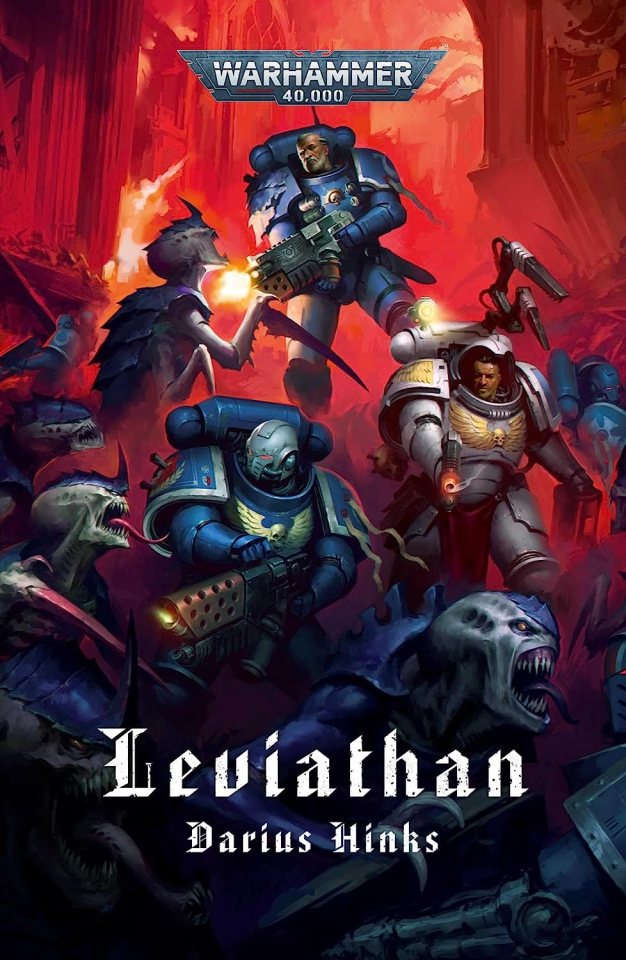
Warhammer 40,000: Leviathan by Darius Hinks

Warhammer 40,000 - Leviathan Cover

Publisher: Black Library (Audiobook – 24 June 2023)

Series: Warhammer 40,000

Length: 12 hours and 13 minutes

My Rating: 4.5 out of 5 stars

Amazon

Prepare for all-out war as the righteous Ultramarines battle the insidious Tyranids in this epic new Warhammer 40,000 novel from Darius Hinks, Leviathan.

It has been a pretty good year for Warhammer 40,000 fiction already, with several fantastic novels coming out in 2023, including Warboss and The Lion: Son of the Forest by Mike Brooks (the latter being one of my favourite books from the first half of 2023), and Shadowsun: The Patient Hunter by Phil Kelly.  However, the hits are far from over, especially as there are several fantastic new Warhammer 40,000 novels set to come out later this year.  But before we get to those, I managed to jump onto another recent release with the outstanding novel Leviathan, written by established Warhammer author Darius Hinks.  Hinks was a new author to me, but I soon grew to appreciate his latest book, especially as it showcased a dark and intense alien invasion that made for a great story.

In the far future of the 41st millennium, the besieged Imperium of Man faces many threats, but few are more deadly, unstoppable, or insidious as the unrelenting and seemingly endless hordes of the Tyranids, an alien race determined to devour everything it encounters.  While several of the larger invading Tyranid fleets have been destroyed, a splinter tendril is making its way towards the galactic centre, threatening the very heart of the Imperium.

Standing in the way of this fleet is the fortress world of Regium, an ancient planet recently taken over by Imperial forces, it now serves as a bulwark against invasions heading towards the inner-Imperium.  Many believe that Regium is secure from all threats, but when the people of the planet are haunted by parasites, strange cults, and mysterious dreams of terrifying monsters, it soon becomes clear that a Tyranid swarm is about to descend upon them.

It falls to the decorated hero, Lieutenant Castamon of the Ultramarines, to hold Regium against the foes and keep the rest of the Imperium safe.  A veteran of many battles, Castamon believes that this new Tyranid fleet will be swiftly destroyed.  However, these Tyranids are led by something far more sinister than the Ultramarines have encountered before, something cunning and ruthless that is able to disrupt minds and outthink even the cleverest of humans.  With his forces split, Regium’s defences compromised, and his allies panicking, even the vaunted Lieutenant Castamon may be unable to save Regium from the Tyranid invasion.  However, Castamon has one last trick up his sleeve, the brilliant Ultramarine Apothecary Biologis, Vultis, whose research into the Tyranid biology might be the only thing that can stop them.  Unfortunately, the enemy knows all about the Ultramarines and their plans, and the deadly creature known as the Harbinger is coming for them.

Leviathan was a pretty awesome and intense Warhammer 40,000 novel that shines a real spotlight on one of the more insidious alien races in the canon.  Featuring a strong and at times terrifying narrative, Leviathan was a great read, and I really got caught up in Hinks’s fantastic book.

Hinks pulls together an excellent story for Leviathan, and it is one that will appeal to a range of different readers, especially those fans of Warhammer 40,000 fiction.  Set around the already troubled planet of Regium, Leviathan follows an intriguing range of different human/space marine characters as they attempt to make sense and prepare for a Tyranid invasion of their world.  The early parts of the book are dedicated to introducing the key characters and the overall setting of the story, while also attempting to cast a more psychological edge to the main story as visions, doubts and other insanities haunt the populace.  There are some great early action sequences, including a disastrous shipboard incursion, and a dark hunt in some interesting terrain, and Hinks works well to set up for the second half of the book, especially as several unique, character driven stories were introduced and given some early weight.  While I enjoyed a lot of this set up, I did find the first half of the story to be a bit slow with its pacing and I was initially having trouble getting too invested in any of the characters or story elements.  However, this changed when I got to the second half of the book.

This second half masterfully builds on all the setup and character development that occurred at the start of Leviathan and readers are in for a particularly intense and gruesome narrative from this point on.  This entire second half is dedicated to the full-on invasion of Regium, as swarms of aliens, including some new creatures, emerge to decimate the populace and challenge the protagonists.  Each of the character focused plot lines set up in the first part of the book, as well as a few additional story inclusions, are perfectly thrust into this overlying chaos, and you get to see them try to survive the oncoming horrors and monstrosities.  Hinks really pulls no punches when it comes to this Tyranid invasion, and you get to witness all the devastation, the deadly transformation of the planet, and the subsequent epic battles, as the Tyranids fight against the human and Ultramarine defenders in some epic and well-crafted set pieces.  Each storyline was really good in its own way, and together they formed a fantastic and at times over-the-top overarching narrative that successfully showcased just how overwhelming the Tyranids can be.  I loved how dark Hinks made Leviathan at times, especially as he had no qualms about killing off key characters in some particularly brutal ways, which really raised the stakes for the reader.  While I did think that a lot of the plot did rely a little on the narrative stupidity of certain characters (the Ultramarines kept forgetting everything they knew about the Tyranids), the second half of the book was extremely epic, and I had real trouble putting it down.  All the separate storylines were concluded in entertaining and fitting ways, and I particularly appreciated the final plan that Hinks introduced for the main protagonists, which really fitted the outrageous feel of a lot of the plot.  This brutal and continuously exciting second half really turned Leviathan into such a great read, and I really loved how the entire thing turned out.

Leviathan proved to be an interesting and compelling addition to the wider Warhammer canon, especially as Hinks took the opportunity to really dive into some of the factions and showcase how crazy they can be.  However, I know that Leviathan has been copping a little flack in this department, mainly because some people see it as merely a promotional novel tied-in with some of the recently announced Ultramarines and Tyranid models.  While I can definitely see that, especially as Hinks spends a lot of time highlighting some of the newer Tyranid creatures in his narrative, I still enjoyed Leviathan a lot.  His depictions of the Tyranids were one of the major highlights of the book, and I loved how much he upped the horror aspect of them, showing them to be ravenous monsters who alter and devour everything they encounter.  This might be one of the better portrayals of Tyranids that I have so far seen in Warhammer fiction, and they were certainly a lot less one-dimensional here than they are in other books.  Part of this was because of the inclusion of several newer Tyranid creatures, such as the Neurotyrant and the Norn Emissary, with both being shown as unstoppable monsters with interesting abilities.  This allowed the Tyranids to attack their prey in all new ways, and it was very fun to see the various intricate tactics they were able to come up with.  Hinks tempers some of the more commercial aspects of these creatures’ inclusion by not actually using the names of the models in Leviathan, instead all you have is the protagonist’s descriptions of them when they encounter them in person.  These personal and often deeply terrified accounts of the various Tyranid bioforms really help to showcase just how terrifying and alien they are, especially to the ordinary human, and it really added a great edge to the narrative.  This darker edge is further exacerbated by the author’s powerful examination of how the planet of Regium is altered once the Tyranids arrive.  The spores constantly raining down on the planet slowly poison the various humans as they breathe in, and the depictions of the protagonists dying from within as they inhale alien matter, while their skin starts to slowly melt is pretty damn memorable and terrifying, especially as this is the first step in turning all biological matter in the planet into edible goo.  Frankly, I don’t think I’ve ever experienced the horror that is the Tyranid better than in Leviathan, and Hinks’ brilliant use of this faction enhanced the entire book.

On top of the Tyranids, Leviathan also features another intriguing major faction, the all-time classic Ultramarines chapter of Space Marines.  I mostly liked how the various Ultramarine characters were featured in Leviathan, although I did think that Hinks could have perhaps done a little more to distinguish them from other general Space Marines.  Still, Hinks goes out of his way to make the Ultramarines as badass as possible, and you really get a sense of their courage and battle prowess, especially as the severally outnumbered Ultramarines (I won’t go into the logistics of Regium’s defence here, but it did seem a tad low for such a vital planet), managed to put up quite a showing against the Tyranid swarm.  Some of the fight sequences featuring the Ultramarines in combat were pretty damn epic, and while some Space Marines did die easily for plot effect (especially when going up against a Tyranid with a new model), I felt that Hinks did a good job highlighting just how dangerous a Space Marine can be.  Hinks really tries to cover various aspects of the Space Marines throughout Leviathan, including the reverence and respect that most normal people have for them, and while this might not be the absolute best portrayal of an Ultramarine detachment ever, it was still pretty damn good, especially in those fantastic fight sequences.

I also must highlight some of the great characters featured within Leviathan as Hinks comes up with a diverse and compelling cast to tell the story with.  Thanks to the way the story is set out, each of the key plotlines revolves around some excellent characters, each with their own motivations, missions, and big moments, as they try to weather or escape the oncoming Tyranid doom.  Hinks crafts some great storylines for each of these major characters, and it proves easy to get invested in them, such as the tale of two ordinary farm workers who try to escape the monsters around them, the hapless Governor who finds himself out of his depth, or the proud Cadian leader who is drawn into war by the machinations of a delusional priest.  However, some of the best characters in Leviathan are members of the Ultramarines, and much of the story focuses on the elites of this chapter on Regium.  I really enjoyed these major Ultramarine characters, including the bold Lieutenant Castamon, the heroic leader who lives up to all the hype, the Apothecary Biologis, Vultis, whose analytical mind and desire for knowledge might hold the key to victory, and even the arrogant Sergeant Tanaro has his moments, especially in that powerful last scene.  However, my favourite character in the book is probably the scarred Ultramarine Baraca.  Baraca is a seemingly unkillable figure who has survived an insane amount of damage, but who has grown detached from even the rest of his battle brothers.  Despite appearing to be a mindless brute, Baraca is a deep and complex figure whose friendship with Vultis provides some emotional power to their scenes together.  Baraca honestly steals every scene he is in, especially his last, and Hinks writes a great storyline around him as he courts death, while trying to find his place in life.  All these characters, and more are very well written, and the impact they have on the plot is pretty impressive.

Like most Warhammer 40,000 content that I absorb, I chose to listen to Leviathan’s audiobook format, which is such a fantastic way to enjoy these intense stories.  I think that I made the right choice when it came to Leviathan, as this amazing audiobook really helped to throw me into the midst of the action.  Narrator Theo Solomon did an excellent job of setting a fast pace with his narration, and his descriptions of the massive battles, compelling heroics, and gruesome aliens was very fun to listen to.  While I wasn’t always the biggest fan of some of the character voices that he came up with, Solomon did produce some excellent tones for some of the main characters, particularly that of Lieutenant Castamon, who is made to sound very heroic and bold, which worked to showcase this intriguing protagonist.  As such, I felt that this was an excellent way to enjoy Leviathan, and with a run time of just over 12 hours, this isn’t a massive audiobook to get through, especially once you get caught up in the impressive second half.  I had an awesome time with Leviathan on audiobook, and I recently featured it on my favourite audiobooks from the first half of 2023 list.

Overall, I think that Leviathan was a pretty good Warhammer 40,000 novel and I was pretty impressed with my first book from Darius Hinks.  While I did have some issues with the story, especially in the early goings, this ended up being a very memorable and captivating read, especially thanks to the use of the cool Tyranid faction.  Loaded with carnage, brutal fights to the death, and complex characters dealing with an oncoming horde of clever aliens, Leviathan was an outstanding novel that deeply enjoyed.

Amazon

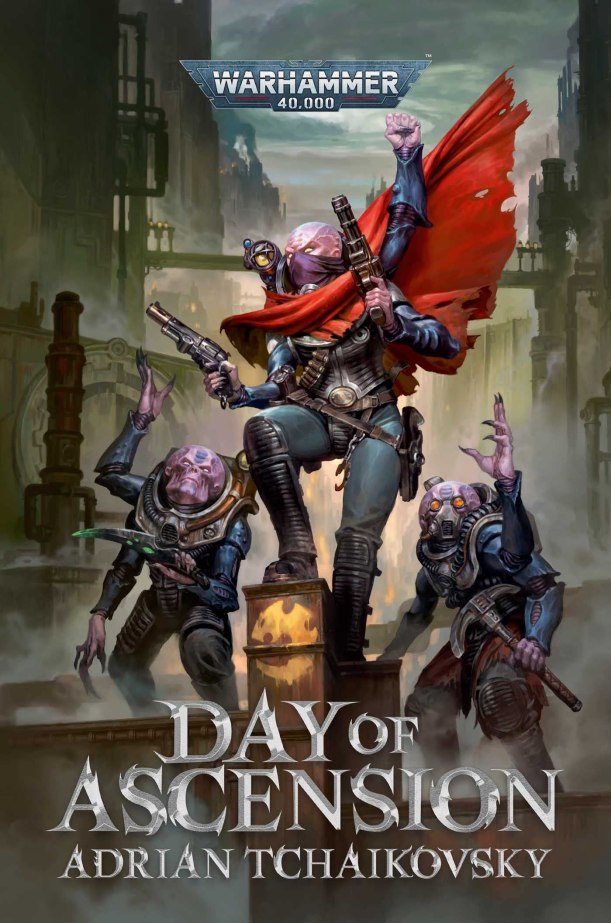
Warhammer 40,000: Day of Ascension by Adrian Tchaikovsky

Day of Ascension Cover

Publisher: Black Library (Audiobook – 29 January 2022)

Series: Warhammer 40,000

Length: 5 hours and 38 minutes

My Rating: 4.5 out of 5 stars

Amazon     Book Depository

Legendary science fiction and fantasy author Adrian Tchaikovsky has arrived in the Warhammer 40,000 universe with the awesome and clever novel, Day of Ascension, a deadly and wildly entertaining read that sets two brilliant factions against each other.

2022 has so far proven to be an amazing year for Warhammer fiction, with several impressive novels already released, including Steel Tread by Andy Clark and The Twice-Dead King: Reign by Nate Crowley.  However, the Warhammer 40,000 novel I have been most excited for is Day of Ascension, an awesome and unique read written by acclaimed author Adrian Tchaikovsky.  Tchaikovsky has been wowing science fiction and fantasy audiences for years, producing several impressive novels across various genres.  Not only has he written some fantastic standalone novels but he also produced highly regarded series, such as the Shadows of the Apt and Children of Time books.  I have really liked the sound of his cool novels, but I had not had a chance to read any of them yet.  Once I saw that Tchaikovsky was contributing to the extended Warhammer 40,000 universe, I knew that this would be the year I finally read something from him.  Day of Ascension is Tchaikovsky first full novel in the Warhammer universe (he previously wrote the short story Raised in Darkness), and I was deeply impressed by the brilliant and captivating story he came up with.

On the forge world of Morod, the life and soul of every human belongs to the Adeptus Mechanicus, the Imperial machine cult who provide the armies of mankind with their weaponry and war machines.  However, while the tech-priests of the Adeptus Mechanicus live in comfort and prosperity, constantly delving into the secrets of the machine, the common people of Morod have been worn down by millennia of servitude, exploitation and conscription, doomed to either die young in the mines and foundries or be turned into mindless mechanical soldiers.  In their grief and anger, the civilians of Morod have turned to a new faith that offers salvation from the harsh rule of the Mechanicus, although that devotion comes with a dark price.

In the hierarchy of Morod’s Adeptus Mechanicus, Genetor Gammat Triskellian is considered a joke due to his focus on improving the flesh rather than replacing it with machinery.  Constantly overlooked by his superiors and given the most menial of tasks, Triskellian looks to find a way to advance his research and end the corruption he sees holding the order back.  When he uncovers a particularly interesting genetic strain in the populace of Morod, he thinks it could be the answer to all his prayers, one that could enhance his science and revolutionise the advancements of his order.

Digging further, he finds evidence of an unusual and twisted religious congregation operating throughout the planet, preaching rebellion and the destruction of the tech-priests, while awaiting the return of long-gone angels who will turn the planet into a paradise.  Seeking to use this congregation to his own advantage, Triskellian captures young, idealistic infiltrator Davien to find out more about her mutated family.  But as his plans begin to come into effect, Triskellian is about to discover that not everyone is meant to rule, and that the forces he seeks to control are far more dangerous and hungrier than he could possibly know.

What an epic and impressive read!  Tchaikovsky has dived into this franchise with great relish, producing an exceptional and powerful piece of Warhammer 40,000 fiction that is not only exciting and action packed, but also extremely thought provoking as the author examines some of this universe’s most complex and intriguing factions.

I had a lot of fun with the incredible story contained within Day of Ascension, as Tchaikovsky takes the reader on an intense and dark journey.  The main premise of this book is a fun one: what if an ambitious Imperial tech-priest attempts to utilise the deadly power of a Genestealer Cult for his own machinations?  The answer: absolute chaos as an entire world implodes in the fires of revolution, destruction and religious zeal.  This was a great story that Tchaikovsky sets up brilliantly in the early stages, quickly introducing the corrupt world of Morod, the choking hierarchy of the Adeptus Mechanicus, and the malignant underlying Genestealer Cult attempting to manipulate events from the shadows.  After this great introduction, the remaining story happens at a very fast pace, especially as this overall novel is fairly short (193 pages, or just over five and a half hours on audiobook).  The political and scientific intrigue of point-of-view character Triskellian runs straight into the revolutionary aspirations of the Genestealer Cult’s Davien with the expected destructive results.  I loved the brilliant clash of styles that occur between these two groups, and all the betrayal, manipulation and alien influences melds perfectly with the non-stop action and revolution.  This quickly leads up to a destructive and powerful conclusion that I deeply enjoyed and will leave you reeling in multiple ways.  There were some absolutely amazing twists towards the end, and I loved the resultant terrifying consequences to the wider universe which were really cool and deliciously ironic.  Tchaikovsky ends everything on a captivating and dark note which will leave readers extremely satisfied after getting engrossed in the impressive story.  This is an epic narrative that drags you right into the very heart of the worst parts of the Warhammer 40,000 universe.

I really must commend Tchaikovsky’s first dive into the Warhammer 40,000 universe as the author has a noticeable appreciation for this franchise and canon.  I loved how he expertly focused the story on two particularly sinister factions within this universe, while also making excellent use of an Imperial Forge World as the main setting of this book.  The two main factions of this novel are the tech-priest of the Adeptus Mechanicus and an undercover Genestealer Cult, the dangerous human/alien hybrids who act as infiltrators and forerunners of the Tyranids.  Tchaikovsky ensures that the reader gets an exceptional and detailed look at both factions, and you are soon immersed in their lore, politics, and motivations, which is just so fascinating.  There are so many cool things about this, from the unique interactions of the cybernetic tech-priests and the mechanical soldiers to the slow infiltration and incorporation of the Genestealers who spark revolution throughout the planet.  However, the best thing about this is the way in which Tchaikovsky’s expertly showcases one of the most inescapable facts of the Warhammer 40,000 universe: there are no actual good guys here; just self-serving fanatics with their own terrible agendas formed from a universe constantly at war.  This is so brilliantly highlighted in the fact that halfway through the book you find yourself on the side of the alien infiltrators, who are taking advantage of the terrible conditions on Morod to spark a revolution.  However, no matter how beneficial and beatific they may appear, preaching about angels and the better days ahead, there is still an amazing sinister edge to them, especially if you know what horrors they are actually referring to.  I loved how brilliantly these two unique and corrupt Warhammer factions are played off each other, and it proves to be an excellent background to this awesome novel.

Like most Warhammer tie-in novels, Day of Ascension is probably best enjoyed by those fans of the franchise, especially as Tchaikovsky looks at some obscure and unique parts of the canon.  While maybe a little too-lore heavy to serve as the best introduction to the Warhammer 40,000 universe, I felt that this is an easy enough book for new fans to get into, especially if they are established science fiction fans.  Tchaikovsky ensures that the various story elements feature the right amount of detail and I the various factions are introduced extremely well especially to new readers.  I do feel that readers who don’t quite understand what the Genestealers and their Tyranid masters are might not get the true horror of this book and its conclusion, and I personally enjoyed the novel more because I knew what the true nature of the Genestealer’s plans were.  However, new readers probably will get the full benefit of this as it is made pretty clear from the context.  As such, I would probably recommend this to both established Warhammer fans and general science fiction readers, especially if they have enjoyed Tchaikovsky’s writings in the past, and I know a lot of people with have a great deal of fun with this.

I deeply enjoyed the cool and over-the-top characters featured throughout Day of Ascension, especially the main two characters, Triskellian and Davien, who act as the point-of-view characters for the novel.  Both are fantastic figures who are fully enveloped in the massive machines of their organisations, whether they like it or not, and who spend much of the book trying to battle what they see as their oppressors.  As such they form a brilliant tandem of opposing views, which perfectly shapes the morally grey nature of the narrative and makes it very unclear which one of these inherently terrible people you should be rooting for.  I particularly liked the character of Triskellian as the author envisions him as a thoroughly underappreciated middle management figure who is ignored and ridiculed by his superiors who fail to understand his work.  This constant mistreatment causes Triskellian to snap in this novel and he starts doing some darker deeds to gain what he believes is rightfully his.  I loved seeing this brilliantly portrayed figure, who will be clearly understood by anyone whose worked under an idiot boss, slowly slip off the deep end and attempt to use an evil alien cult to fulfil his objectives.  This character has some amazing moments, and it was so much fun seeing him try to manipulate events around him, only to be surprised that nothing goes to plan.  I also found his focus on genetics and biology to be quite fascinating, especially for a tech-priest, and his obsession with alterations on the flesh ended up having some intriguing parallels with the objectives of the Genestealer cult.

Davien, on the other hand, is an oppressed member of Morod’s population who acts as an infiltrator and spy for the Genestealer Cult she is a part of.  Frustrated by the slow pace of the promised revolution and the eventual appearance of their “saviours”, Davien has some outstanding scenes throughout Day of Ascension as she tries to save her loved ones from the machinations of the tech-priests.  Her rise in status and closeness to the powers that guide her family occur at the exact same time that she starts to have doubts about her organisations purpose, and the subsequent internal battle is extremely powerful and captivating, especially if you know just how right she is to be worried about the future.  Davien goes through a lot of growth, and it is fascinating to see what happens during her character arc, especially when it comes to her interactions with Triskellian and the influences of the beings guiding the cult.  Day of Ascension also has several great supporting characters who get their moments to shine throughout the book.  While most of them are a bit over-the-top in their appearance and personality, they prove to be very entertaining and I loved the outrageous and mechanically deformed highly ranked tech-priests who so badly enrage the protagonists.  There is a particularly good twist surrounding one of the minor support characters that I thought was extremely brilliant, especially as there is some subtle set up for it earlier on, and it results in an outstanding ending for the entire book.  An overall excellent cast of characters make this shorter Warhammer novel really shine.

Just like most of the Warhammer novels I have had the pleasure of reading, I chose to check out Day of Ascension in its audiobook format, which was an impressive and enjoyable experience.  As I mentioned above, this audiobook has a very short runtime and you can quickly power through it, especially once you get stuck into the intriguing and clever story.  I deeply enjoyed how this format enhanced this great narrative, and it was a lot of fun to hear all the chaos and destruction being read to you.  I must commend the narrator of Day of Ascension, actor Harry Myers, who did an exceptional job here.  I loved Myers’ great voice, which at times strongly reminded me of Stephen Fry, which is a definite plus.  Myers really dives into the various characters here, and I loved the brilliant edges he gives to them, especially the main character Triskellian.  You can really sense Triskellian’s frustration, ambition and internal outrage as the events of the novel proceeds, and this helps you to get into the mind of this entertaining figure.  An extremely cool way to enjoy Day of Ascension, I would strongly recommend this format to anyone interesting in checking out this great Warhammer 40,000 novel.

With this clever and exciting novel, Adrian Tchaikovsky has a brilliant debut in the Warhammer 40,000 universe.  Day of Ascension is an epic and intriguing novel that takes a fascinating look at two exceptional factions from the Warhammer canon and brings them together in a dark and entertaining battle of wills and manipulation.  Containing a tight, addictive story, some great characters, and a deep examination on some of the best parts of the Warhammer 40,000 universe, Day of Ascension is an outstanding read.  I really hope that Tchaikovsky writes more Warhammer fiction in the future as he absolutely killed it here.

Amazon     Book Depository