The Sandman – Act II (Audiobook) by Neil Gaiman and performed by a full cast

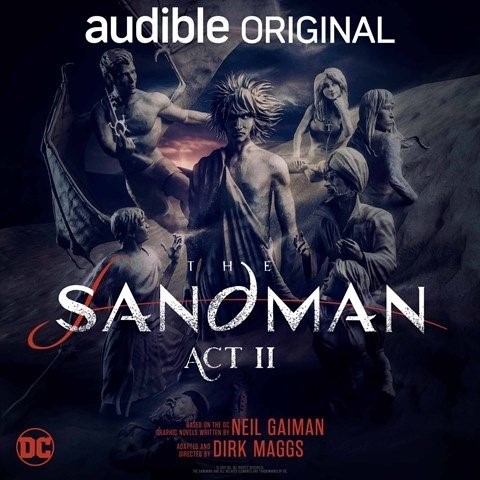
The Sandman - Act II Cover

Publisher: Audible Original (Audio Drama – 22 September 2021)

Series: The Sandman – Volume 2

Script: Neil Gaiman and Dirk Maggs (script adapter)

Director: Dirk Maggs

Length: 13 hours and 47 minutes

My Rating: 5 out of 5 stars

Amazon

The gloomy and complex fantasy adventures of Neil Gaiman’s The Sandman continues in this epic second audiobook volume that once again brings Gaiman’s unique imagination and characters to life with an outstanding cast of actors.

Back in 2022 I had an outstanding time listening to the first volume of the audiobook adaptation of The Sandman comic.  The original series, which started in 1989, is one of the most iconic comics of all time and features a unique adventure that only someone as twisted and imaginative as Neil Gaiman can come up with.  Following Dream, the anthropomorphic personification of dreams and human imagination, The Sandman is a truly interesting comic that blends horror, fantasy and superhero storylines together.  Some people might be more familiar with the recent Netflix series that adapted the first couple of comics and which has a second season on the way.

While I loved the show, I personally had a much better time with the audiobook version of the comics that was released a couple of years ago.  Featuring a truly exceptional cast of celebrity and established audiobook narrators, the first volume of this series was so damn good, and I loved how well it established the characters and universe of The Sandman while also adapting Gaiman’s unique vibes and dark themes.  This first volume was extremely addictive, and I made sure to listen to the second volume shortly after.  The second volume, or Act II as it will be called in this review, continues the comic storyline and features some amazing stories, fun characters and new cast members.

In a universe of strange and deadly creatures, many beings are considered immortal, but only seven siblings can truly claim to be endless.  The Endless, each a personification of a certain universal or human concept, are powerful and mesmerizing in their own way, but the most enchanting and mysterious is Dream.  Known by many names, including Morpheus, this being governs the Dreaming, a vast realm of creation’s collected dreams and stories, protecting the imagination that makes life worth living.  But circumstances outside of his control have set him on a dark path that not even he can escape from.

Still dealing with the consequences of his forced absence from his realm, Morpheus is working to recover everything he lost while avoiding the enemies he made along the way.  The most powerful of these is Lucifer, the fallen angel and lord of Hell, whom Morpheus insulted when he stormed Hell to take back his stolen helm.  Despite not wishing to cross Lucifer again, Morpheus is convinced to set right the biggest wrong of his life and free his former lover from Hell.  However, he is unprepared for the reception that awaits him as Lucifer chooses to damn him in a far more sinister way: by gifting him control of his dark domain.

Finding himself in possession of the key to Hell’s gates, Lucifer must determine who will become the new ruler of Hell.  Setting up a gala in the Dreaming, Morpheus receives visits from an array of gods, demons, angels, and other immortal beings, each of whom seek to control Hell for their own reason.  Soon, Morpheus finds himself in the middle of a host of scheming beings, many of whom will turn on their host to get what they want.  At the same time, weird things are happening in the Dreaming, as an ancient and unstable realm begins to drag in inhabitants from the real world and influence the waking world.  Can Morpheus ensure his realm stays whole whilst dealing with the most dangerous beings in creation?

This was another outstanding adaptation of The Sandman comics that was so damn epic to listen to.  Adapted by director Dirk Maggs and featuring all Gaiman’s impressive storytelling and dark characterisation, The Sandman – Act II was extremely impressive, and you really get drawn into the unique world of the original comics.  Adapting issues #21-40 and #50 of the original comics, The Sandman – Act II brings together the stories of Season of Mists and A Game of You, and several entries from Fables & Reflections.  All these adaptations are so damn good, and I love the elaborate and epic cast that helps to bring the tale to life.

Due to how the audiobook is set out, there are three distinctive parts to The Sandman – Act II, which provided their own unique stories and characters.  The first of these is titled Season of Mists, and features Morpheus finding himself wrapped up in the fate of Hell.  Starting with an entertaining and dysfunctional family dinner, where Morpheus reunites with all his siblings (bar one), the story then turns to Morpheus’s biggest regret, his relationship with the ancient African queen Nada (whose story was told in the last audiobook), which trapped her soul in Hell.  Travelling to Hell to free her, Morpheus finds that Lucifer has banished all the demons and damned souls from his realm and is abdicating as ruler, leaving the key to Hell’s gates with Morpheus.  Morpheus is soon tasked with deciding the fate of the dimension, which results in a flurry of immortal beings arriving at his home to request the key.  The resulting conference proves to be highly entertaining as Morpheus is forced to deal with all manner of bargains, schemes and betrayals as everyone seeks his favour.  I loved how the entire dramatic conference unfolds, and the interactions between the various over-the-top figures and the implacable Morpheus results in some great drama and hilarious sequences.  The conclusion of this storyline is amazing, as a new irony overtakes the denizens of Hell, Morpheus finds himself meeting various beings who will change him in the future, and the seeds are set for a new story around Lucifer (as seen in his own comic and television series).

Honestly, this is probably the best part of The Sandman – Act II, as not only is Season of Mists particularly gripping, but it makes full use of both the existing voice cast and several new figures to really enhance the content.  The battle of wits between several larger-than-life characters is extremely compelling and clever, and Gaiman does a remarkable job expanding the canon of The Sandman.  There are so many subtle and delightful character interactions scattered throughout this storyline, and listeners will love the impressively devious stakes that are being discussed.  This includes some fantastic and deep soul searching for the protagonist, who is forced to revisit one of his darkest deeds.  Thanks to his own experiences of being locked away, Morpheus understands his harsh past actions a lot better, especially when prompted by members of his family.  I always appreciated how Gaiman shows that Morpheus isn’t really a hero but a force of nature who arrogantly follows his own whims.  However, in this case he is a somewhat better person, even if he is still selfish in his actions, and it takes some real prompting for him to do the right thing.

Gaiman also makes sure to feature some additional amazing character arcs, the most intriguing being Lucifer’s when he decides to perform the ultimate rebellion against his father by abandoning Hell.  Lucifer’s portrayal by a returning Michael Sheen is exceptional, especially during his interactions with Morpheus, and his take on the events that led him to rule Hell are very powerful.  In addition to Sheen, Season of Mists also features the inclusion of several amazing new actors, each of whom are used to their full potential.  Jeffery Wright and Kristen Schaal are perfect additions to the Endless, voicing the taciturn Destiny and the bubbly Delirium respectfully.  However, it is the one-two punch of Bill Nighy as Odin and David Tennant as Loki that really sold this chapter to me.  Bill Nighy and David Tennant are two of my absolute favourite actors, and their takes on these two Norse gods are just amazing.  While Nighy brings gravitas and cruelty to Odin, Tennant’s wheedling, manipulative Loki was so damn fun, and both were the highlight of every scene there were in.  The rest of the cast in this chapter were epic as well, and this entire section was such a highlight of The Sandman – Act II, with its placement at the top of the book successfully drawing listeners in and ensuring they don’t go anywhere.

The other main storyline in The Sandman – Act II was titled A Game of You, and is an adaptation of one of the less popular comic arcs.  This story is an intriguing female-led additional to the series, which primarily follows Barbie, a minor figure from the previous The Doll’s House arc, who has uprooted her life and moved to New York to live with an eclectic mixture of residents in an apartment building.  When figures from Barbie’s long-lost dreams arrive in the waking world, Barbie is dragged back into a fantasy adventure, while her friends in New York deal with minions of the mysterious Cuckoo, a dream parasite preying on Barbie’s mind.  The resulting attempts to help Barbie result in chaos and tragedy as they trespass into the Dreaming and come face to face with Morpheus as a he fulfills an old bargain.

Now I must admit that A Game of You was a little weaker than I was hoping, especially when compared to the preceding Season of Mists.  The decision to focus on Barbie, who honestly didn’t stand out too much in her previous appearance, was an interesting choice by Gaiman, and this arc doesn’t have the most engrossing story.  However, I did still have a great time listening to this part of the audiobook, especially as it focuses on showcasing both the magic and danger of dreams, as well as the impacts that interactions with Morpheus can have on mortals.  The more distinctive fantasy focus of this story makes for a nice change of pace, and I liked how well Gaiman simultaneously showed events occurring inside and outside of the protagonist’s dreams.

One side effect of listening to A Game of You immediately after Season of Mists is that the less substantial cast is a lot more noticeable.  That’s not to say that A Game of You doesn’t have great characters.  There are some amazing figures featured here, including several unique protagonists who have compelling connections to previous story arcs from the series.  There are also some nicely progressive LGBT+ elements for a comic released in 1991-92, especially when it comes to the trans woman character, Wanda, who is handled with tact and who has a particularly impactful story arc.  There are also fewer celebrity voice appearances in this arc, although I did rather enjoy the inclusion of actress Emma Corrin of The Crown fame as the ancient witch Thessaly, as her intense and distinctive voice added a lot to this fantastic character.  While it is easy to nitpick A Game of You, especially after some of the previous arcs, this is s till a particularly impressive storyline, which is masterfully brought to life with this production, producing something that is very fun to listen to.

These two main storylines are impressively augmented by a series of short stories scattered throughout the course of the audiobook.  Most of these short stories fall between Season of Mists and A Game of You, with several more wrapping events up.  There is also a short story in the middle of Season of Mists that showcases the impacts the closure of Hell has, which leads to the Dead Boy Detectives series.  Gaiman comes up with some truly interesting and unique shorter stories to add to the main plot of the book.  Most of these stories involve various mortals or other supernatural creatures encountering either the Endless or some of Morpheus’s creations, and they usually serve as some form of cautionary tale.  I loved the intriguing underlying themes that Gaiman loaded into each story, including about the impermanence of power and examinations of the human condition, and the author also has fun in launching his distinctive characters into various historical periods.

While all the shorter stories contained in The Sandman – Act II are awesome in their own way, a couple do stand out due to their excellent stories and fantastic performances.  For example, the complex story Three Septembers and a January, retells the tale of Joshua Abraham Norton, self-declared Emperor of the United States, with Dream and his siblings shown to be responsible for his strange actions.  This story is both fascinating and dark, as you witness a man torn apart by the whims of the ethereal siblings.  Listeners grow particularly attached to this tale due to the performance of John Lithgow as Joshua Norton, who adds some excellent humour and no small amount of tragedy with his moving voice work.  Other great stories include Thermido, which sees the return of Lady Johanna Constantine from the first audiobook.  Voiced by the absolutely fabulous Joanna Lumley, this story follows Constantine as she steals into France during the height of the revolution to steal something from Robespierre.  This story was fast-paced, clever, and substantially dark, all of which helped it to stand out, especially with the compelling twists and ironic historical fates.  It was also amazing to get a whole story told by Joanna Lumley, who was somewhat underutilised in the first audiobook.  Finally, the tale August, which follows Augustus Caesar as he disguises himself as a beggar and tells his life story to a dwarf, proves to be quite impressive, especially with Brian Cox playing the titular character.  Each of these shorter stories are masterfully presented, and I loved how complex and powerful their stories were, even with the shorter length the author had to work with.

Overall, I really appreciated the entire story of this volume.  The blending of two fantastic main storylines, as well as the scattering of intriguing and unique short stories, makes for quite an epic continuous listen.  The short stories were well utilised as the director spread them out amongst the audiobook providing a good break between the two extended plotlines, as well as some fun listens in the epilogue.  Not only were all the entries in The Sandman – Act II fantastic and compelling, but each of them had such a distinctive feel that really highlights the author’s style and ability to blend various genres together into one powerful story.  The interesting array of over-the-top characters makes for quite a fantastic listen, especially as Gaiman attempts to capture the many burdens of having cosmic responsibility, while other stories look at how characters are affected by dreams and imagination.  The mixture of fantastic tales and dark moments is always cleverly undercut with moral lessons or complex observations about the human experience.  You honestly come away from The Sandman in deep thought while still being traumatised or wildly entertained by how events unfolded.  There is honestly nothing else quite like The Sandman in fiction, and I always have great admiration for the elaborate and multifaceted tales that Gaiman comes up with.

Just with the first volume of this epic audiobook collection, the production really captures the epic nature of the comic, which makes it a real joy to listen to.  Even with its runtime of nearly 14 hours, this is such an easy and addictive audiobook to listen to, and it proves hard to ever stop listening to the elaborate story that emerges.  A lot of this is down to the impressive nature of the production surrounding this audiobook, as the director goes out of his way to enhance the audio experience for the listener.  Everything about this audiobook, from the emotionally charged music, the elaborate sound effects, and the brilliant cast of actors and narrators, is designed to remind you what an imaginative and unique story you are listening to.  Heck, even the way that the various chapter titles are announced is epic, and I always get a kick out of the impressive way they are read out.  Honestly, the entire audiobook production is just perfect, and anyone who listens to it is in for an exceptional time they will not forget.

As part of my hyping up of the audiobook production, I have to highlight the sheer range of talent lending their voices to this audiobook production, without whom The Sandman – Act II would be nowhere near as exceptional as it was.  I have mentioned several of the newer voice actors in the review already, but The Sandman – Act II also featured the exceptional returning cast from the first audiobook, each of whom provided fantastic new performances that really stuck in the mind.  For example, Andy Serkis is so much fun as Matthew the Raven, while Justin Vivian Bond and Miriam Margolyes serve as fantastic and fitting versions of Desire and Despair respectively.  Kat Dennings proves to be an outstandingly effective incarnation of Death, especially as her positive portrayal captures the more compassionate and likeable version of Death that Gaiman envisioned for his comic.  Even Neil Gaiman has a key vocal role in the production, serving as the narrator who highlights events and details not captured by the dialogue.  Gaiman proves to be an impressive narrator for this story, and his distinctive and wise voice matches the feel of The Sandman perfectly.  However, most of these are overshadowed by James McAvoy, who plays the titular Sandman, Morpheus, in this production.  McAvoy is honestly perfect in this role, and the gravitas, sense of unknowing, and great sadness of this character is so perfectly portrayed by the actor’s voice.  McAvoy does such a good job portraying the imperialistic and arrogant tone and personality of Morpheus and the reader can really envision his actions and thoughts.  McAvoy honestly does the best presentation of this character it is possible to do (television series included), and you will fall in love with his take on this sinister and mysterious figure.

The Sandman – Act II is an outstanding and incredible audiobook production that does such a remarkable job of bringing more of Neil Gaiman’s iconic comic to life.  Perfectly adapting the distinctive and dark comics into a new format, listeners get the benefit of both an excellent narrative and some amazing audiobook production with a remarkable cast.  An absolute joy to listen to from start to finish, The Sandman – Act II was a brilliant follow-up to the first production, and I cannot recommend it enough.
Amazon

Loki: Where Mischief Lies by Mackenzi Lee

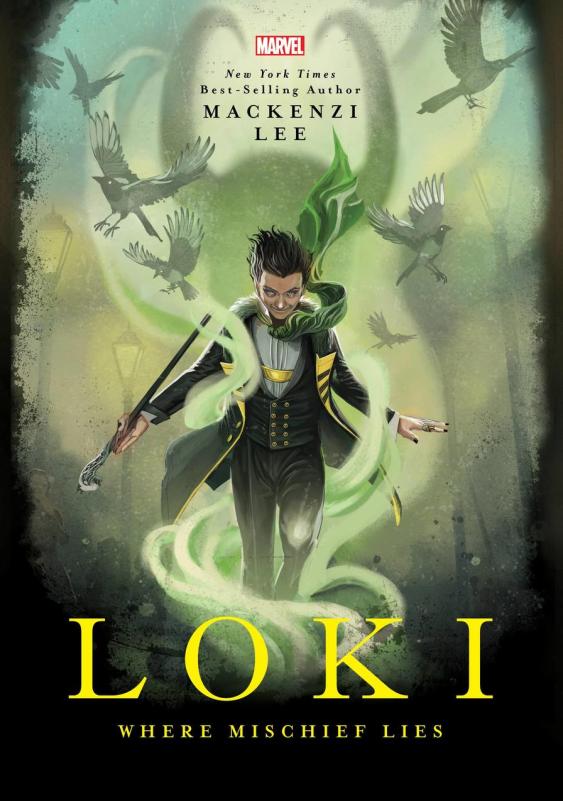
Loki Where Mischief Lies

Publisher: Penguin Random House Audio (3 September 2019)

Series: Standalone/Book One

Length: 9 hours and 10 minutes

My Rating: 4.25 out of 5 stars

Amazon

From acclaimed young adult fiction author Mackenzi Lee comes a fun and clever young adult tie-in novel to the Marvel comic book universe that follows the early life of one of the genre’s best villains, Loki, the Asgardian God of Mischief.

Loki has long been one of the most infamous and complicated villains in the Marvel Universe, whose manipulations and machinations are a constant threat to Asgard, his brother, Thor, and the Avengers. However, years before he started causing chaos in Midgard, he was a young prince of Asgard and the unfavoured son of Odin. Despised and mistrusted by the people of Asgard for his magical abilities, and feared by his father as a prophesied destroyer, Loki’s only confidant is Amora, a powerful sorceress in training.

When Loki and Amora accidently destroy an ancient and valuable magical artefact, Amora is banished to Midgard (Earth), where her magic will eventually fade, and Loki loses the one person who appreciates who he truly is. Determined to prove his father wrong, Loki dedicates himself to becoming a dutiful son, but he continues to find himself overshadowed by his brother’s bravery. When a failed mission once again disappoints Odin, Loki is sent to Midgard in order to investigate a series of murders that have been caused by Asgardian magic.

Arriving in 19th century London, Loki makes contact with a small group of humans who police interdimensional travel, the Sharp Society. Loki, despite his reluctance to help, soon finds himself trying to find the mysterious killer who is turning humans into living corpses. But when he discovers who is responsible for the deaths, he is once again torn between doing the right thing and acting the villain. As his adventure on Midgard continues, Loki soon realises that he needs to decide who he truly is: the good prince of Asgard his family always wanted, or the villain everyone expects him to be.

Loki: Where Mischief Lies is a rather intriguing read that caught my attention some time ago. I am a huge fan of Marvel comics and I will always be interested in checking out any tie-in novels connected to either the comics or the movies. As a result, I made sure to grab a copy of the audiobook version of this book as soon as I could. This turned out to be a fast-paced and enjoyable read that explores the life and times of a young Loki, placing him into a fascinating setting that helped enhance the story. Lee, who is best known for her young adult novels set in the 19th century, including This Monstrous Thing and the Montague Siblings books, created a great Loki story that does a spectacular job diving into the psyche of the character and shaping a fun adventure around it. This is actually the first book in a series of three historical novels that Lee has been contracted to write that will feature Marvel antiheros, and I am really interested in finding out which characters will be in these books.

Where Mischief Lies contains a compelling central storyline that follows the early days of Loki in Asgard and his first foray down to Midgard. Lee starts the story off by introducing a young Loki on Asgard, establishing his character, examining some of his early motivations, inserting a major life-changing event and inserting a magical premonition that will haunt the character throughout the rest of the book. I really enjoyed this introduction to the characters and the plot, and thought that it set up the rest of the story perfectly. The next few parts of the book, which are set after a time jump of a few years, do a good job showing how the character has evolved after the introductory events of the book, and then they manoeuvre him down to London where he has to discover the cause of a series of deaths done using Asgardian magic. The set up to get him down to London, the initial parts of Loki’s adventures on Midgard, his introduction to the Sharp Society and the first encounter with the mysterious bodies are all pretty interesting, and is a great follow-through from the book’s introductions.

I did however struggle with the middle parts of the book, as they felt a little flat and hard to get through. Those readers hoping for a complex mystery into who is leaving the bodies on the streets of London are going to be disappointed, as Loki solves the case quite quickly, and it is literally the most obvious suspect ever. I also wasn’t the biggest fan of the following periods of Loki’s indecision and angst as he tries to deal with the fallout from this revelation. However, the ending of the book more than makes up for it, as Lee wraps it up with an epic conclusion that showcases the full extent of the character’s nature and his eventual future, while also utilising story elements set up earlier in the book. While there were periods in the middle of the book where I was starting to get a little restless, I think overall the story of Where Mischief Lies is really good and its strong ending made it all worthwhile.

Thanks to his appearances in the MCU, Loki is probably one of the most popular and well-known Marvel antiheroes and characters, so any portrayal of him needed to be spot on. Luckily, Lee did an outstanding job with her characterisation of Loki, and the examination of the younger version of this character is probably one of the best things about this book. Lee’s version of young Loki contains all the hints of the growing arrogance, swagger, fashion sense, penchant for mischief and casual disdain for mortals and Asgardians that make him such a fun character in the comics and movies. However, what really makes this an excellent portrayal is the fact that Lee also shows all of Loki’s inherent vulnerability, frustration and anger, which have resulted from a childhood of being seen not only as the lesser son but as something that is dangerous and untrustworthy. This examination of the character’s inner psyche is a fantastic central point of the book, and it is interesting to see the world from Loki’s point of view, especially as you really start to sympathise with him. The story also shows some key moments in Loki’s life, and you get a sense of his motivations and determination to torment those around him. I also think that Lee did a fantastic job of examining the relationship between Loki and Thor. While a lot of their relationship is antagonistic, Thor is shown at times to be the only character who trusts Loki, and it is interesting to see the relationship that might lead to Loki’s eventual redemption. If I were to complain about any aspect of Lee’s portrayal of Loki, it would be that his powers and abilities were a bit inconsistent at times. For example, it was a little weird to see him being physically inconvenienced by a human in one scene, and then a chapter or two later he has the strength to lift two people up at the same time. While this is a relatively minor issue and I imagine that you could explain this away as some form of deception by Loki, I personally found it to be a little jarring.

One of the most intriguing aspects of Lee’s portrayal of Loki is his gender and sexuality. In the build-up to the release of Where Mischief Lies there was a lot of discussion about how this book was going highlight certain LGTB+ elements from the comic books, especially as Lee’s previous books have all contained LGTB+ components. Throughout his comic book history, Loki has been portrayed as both genderfluid and pansexual, and both of these elements of the character are explored within this new book to various degrees. While an interesting part of the character, the genderfluid aspect of Loki is only really shown to a small degree in this book. While Loki does not actually change his gender within Where Mischief Lies (which has occurred in some Marvel comics), when asked “if he prefers men or women”, he does indicate that he has been both. There are also several examples of Loki using his powers of magic to appear as a female character (with various degrees of success), and there are also scenes where he dresses in women’s clothing, usually stolen from Amora, who is amusedly annoyed that they look better on him. While it was not as fully explored as it could have been (and to be fair, it would have been hard to add it in to a novel of this length), it is really cool to see a genderfluid character being introduced into a novel connected to the Marvel Universe.

In addition to this, the pansexual aspect of Loki’s character is on full display throughout the book, as Loki has romantic connections with both male and female characters. Not only does he fall in love with Amora (there is a reason they call her The Enchantress), but a romantic connection also begins to spark between him and a young Sharp Society member, Theo. I really liked the way that Lee handled both of these romances. While the relationship between Loki and Amora ends in flames (which should come as no surprise to Marvel fans), the slowly growing feelings he shares with Theo are quite sweet and contain some rather interesting social commentary. The relationship with Theo is underscored with feelings of identity; due to the social conventions of the 19th century, Theo is unable to be who he really is. This is mirrored by Loki, who has complete freedom of sexuality and gender, but who finds that he is looked down on because of his magic, which he sees as a being major part of his identity. All of this was intensely fascinating, and I really enjoyed seeing this additional complexity explored within the character.

Another aspect of this book that I enjoyed was the various tie-ins it contained to the Marvel’s comics universe. This was a pretty comprehensive origin story for Loki, and quite honestly it could be used as a prequel to both the comics and the Marvel Cinematic Universe. However, given that there is a lot more focus on magic, runes, elves and artefacts, it should probably be more associated with the comics. Lee does a fantastic job bringing Asgard to life, and there are a number of cool references to the various settings and characters of the Thor comics that will appeal to major comic book fans. In addition to this, the author also peppers the story with other Marvel references, especially when the story goes down to Midgard. For example, there are mentions of an industrialist called Stark, talk of a green-skinned female alien and discussion that the Sharpe Society should be renamed as either SHIELD or SWORD. While all these references are rather amusing, I would say that no real prior knowledge of the comics or the movies are really required to enjoy this book, although Marvel fans will probably get more out of it.

Where Mischief Lies is being marketed as a young adult fiction novel, and I believe that this would be a great book for young teen readers, who will love this intriguing look at one of the best Marvel characters. Younger readers should be prepared for the typical amount of comic book level of violence and sex in this book, but there is really nothing that is too explicit for younger readers. I personally think that many teens will appreciate the various LGTB+ elements included in the story, and they will be interested to see this side of the character that has not been included in the movies. Like many young adult tie-in novels, Where Mischief Lies is very accessible to older readers, and I know that many will really like this take on Loki as well, making this a fantastic novel for all ages.

While I really enjoyed the awesome cover of Where Mischief Lies’ hardcover edition, I ended up listening to it on audiobook rather than grabbing a physical copy. The audiobook format of this book is narrated by Oliver Wyman and runs for just over nine hours in length. I think that was a pretty good way to enjoy Where Mischief Lies, as it proved to be a rather easy book to listen to, and I was able to complete it in only a couple of days. Wyman is an enjoyable narrator, and I really like his take on the book’s protagonist and point-of-view character, Loki. He did a fantastic job capturing various aspects of the character’s personality and speech patterns, from his sneering contempt to his frustrations at the way he is treated. This excellent narration really added a lot to my enjoyment of the novel and I would definitely recommend the audiobook format to anyone who is interested in checking this book out.

Loki: Where Mischief Lies by Mackenzi Lee was a fantastic young adult tie-in novel that does a wonderful job of bringing the character of Loki to life. I had a lot of fun listening to this novel, especially as Lee dives deep into the life and mind of Loki, exploring how he became the villain we all love. I was initially planning to give this book a rating of four out of 5 stars; however, considering how much I ended up writing about it, it must be worthy of 4.25 stars instead. I have to say that I was impressed with Lee’s talent for writing novelizations about Marvel antiheroes, and I look forward to her next book in this young adult series.

Amazon

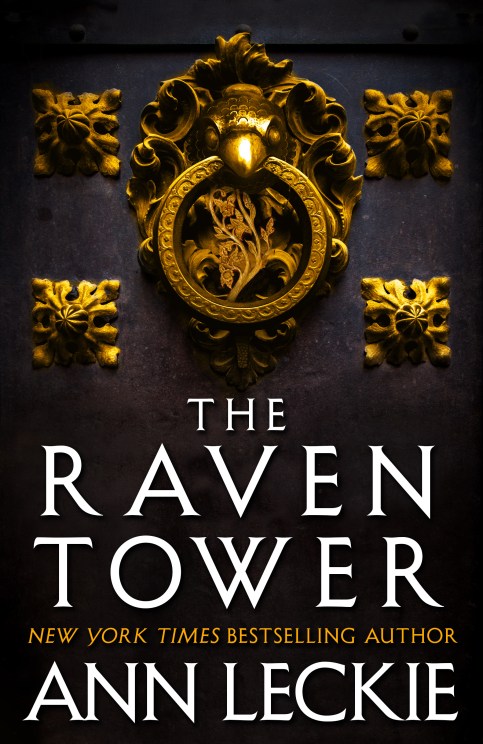
The Raven Tower by Ann Leckie

The Raven Tower Cover

Publishers: Orbit and Hachette Audio (Audiobook Format – 26 February 2019)

Series: Standalone/Book 1

Length: 12 hours and 1 Minute

My Rating: 4.25 out of 5 Stars

Amazon     Book Depository

The bestselling author of the Imperial Radch series, Ann Leckie, presents her first foray into fantasy fiction with The Raven Tower, an intriguing fantasy read that I have been looking forward to for a while, and which attempts something new and different in its presentation.

The Raven Tower is set in a world filled with gods whose power and abilities can be gifted to humans in exchange for worship and offerings.  For centuries, a powerful god known as the Raven has ruled over the rich kingdom of Iraden, offering protection and prosperity from atop a tower in the city of Vastai.  The human ruler of all of Iraden is known as the Raven’s Lease and has been chosen by the Raven to bear his power and enact the god’s will.  However, this power comes at a price, as each Lease must sacrifice himself to the Raven in order to keep the god strong and Iraden safe.

When Eolo and his lord, Mawat, heir to the Raven’s Lease, return to Vastai, they find the city in chaos.  Mawat’s father, the former Lease, went missing just before he was required to pay the Raven’s price.  In his place, Mawat’s uncle, Hibal, has taken the throne and has been named the new Raven’s Lease.  Determined to find out what happened to the former Lease and reclaim the throne for his master, Eolo attempts to uncover the many secrets of Vastai.  But as Eolo investigates he discovers that something ancient and mysterious is concealed within the Raven’s Tower: a secret from Iraden’s past that the Raven has kept hidden for centuries.  It is clear there will be a reckoning, but is Eolo ready to pay the price?

To be honest, I found that The Raven Tower was a very challenging book to critically examine and assign an overall rating for.  Before I had even started reading it, I saw that a number of other reviewers had noted that had great difficulty with this book, mainly due to the author’s unique way of narrating the story.  As a result, I chose to listen to the audiobook version of The Raven Tower, narrated by Adjoa Andoh, in the hopes that this would make it easier for me to follow along.  The audiobook version of the book is around 12 hours long, and I managed to get through it in around a week.  While I did also experience some issues with the way the book was set out, I actually began to appreciate this unique format the more that I stuck with the story, and this turned out to be a really enjoyable piece of fantasy fiction.

For this book, Leckie chose to utilise a noticeably different second person limited narration format to tell her story.  The story is told by a god known as the Strength and Patience of the Hill, who not only tells the main story in Vastai, specifically focusing on the character Eolo, but who also describes all the events of its own life that led up to this period of time.  This god has a very unique way of speaking that impacts how the Vastai story is told.  In particular, the god constantly describes what Eolo is doing, but, at the same time, it has no idea of what is going on inside Eolo’s head.  As a result, it makes very generic statements and guesses about Eolo’s memories, state of mind or thought process.  Take for example the following line, said as Eolo explores the docks near the tower: “I don’t think you grew up near the sea, and so you likely knew very little about boats or tides.”  Having this being make guesses about the protagonist’s thoughts or feelings is a little unusual, and I was very confused about why the author had written her book this way, and for a large portion of the book I really thought that it would have made more sense to have a more traditional narrator system.  However, as I read deeper into the story, it became a whole lot clearer why Leckie had set her story out in this way, and I was able to really appreciate it use.

As the book progresses, the two halves of the story start to come together.  Taken separately, both parts of the story are fairly interesting.  The storyline focusing on Eolo and the mystery surrounding the Raven’s Lease is fairly intriguing mystery filled with politics, murder, mystery and the fate of an entire nation.  The second storyline, which looks at the backstory of the Strength and Patience of the Hill, helps build up Leckie’s new world while also explaining much about the book’s primary fantasy element, the gods, as well as the Raven’s rise to power.  While both these storylines are quite fascinating in their own right, when they start coming together in the later part of the book, it creates a much more complete and intense story.  The author’s use of the Strength and Patience of the Hill as the book’s primary narrator becomes a lot clearer, and I actually really liked how this unconventional narration was utilised.  I also really enjoyed the fantastic twists that occurred at the end of the book, and the author’s excellent lead-up to these events was really quite clever and subtle.  Overall, this turned into quite an amazing story, and I was very glad that I stuck with it and got all the way through.

One of the main things that I enjoyed about The Raven Tower was the interesting fantasy elements that Leckie utilised throughout her story, mostly shown in the form of the gods that inhabit this world.  The gods in this book are quite an interesting creation from Leckie, who has come up with a number of rules surrounding them, all of which is explored by the narrator.  In this world, the gods have a finite amount of power, which they gain from worship and which they lose by altering the world, either for their own benefit or in order to answer prayers.  The gods’ power is tied to their speech; anything they say as a fact, their power will act to make it so.  For example, if they say that an object will turn, then their powers will act to make it turn.  However, if the action they want to accomplish takes more power than they have access to, then they will die or become extremely weak.  As a result, the gods are forced to speak extremely carefully, lest they inadvertently make a command that will take way too much energy.  The gods, therefore, try to avoid absolutes in their conversations and have to use words such as “I think” or “I heard” to get around this.  Leckie consequently has to have her narrator, the Strength and Patience of the Hill, utilise this language throughout the entire book, as to the god addresses the main character Eolo (even if Eolo does not hear them).  That is why there are so many unusual language choices throughout the book, such as the recurring “Here is a story that I have heard”.  While these language choices did throw me at first, once I understood why it was happening, I got used it and I thought it was extremely creative and commendable that the author stuck with this throughout the entire story.

In addition to this use of language, Leckie spends considerable time exploring the limitations and abilities of the gods throughout her book.  Leckie uses all sorts of different narrative devices to showcase this, from the Strength and Patience of the Hill’s personal memories and experiments, conversations they have with other gods, as well as telling stories about other gods and how they utilise their powers (there is one particularly amusing story about a god-powered spear I liked).  It is clear that the author put a lot of thought into her universe’s gods and the abilities that they have, and the exploration of these ideas were some of my favourite parts of the book.  I was also extremely impressed with how Leckie was able to utilise these fantasy ideas so effectively in her story, and I liked the bearing that they had on both the plot and the way the book was written.

Another interesting aspect of The Raven Tower is the characters that the author has used within the story.  The main protagonist is Eolo, whose attempts to get to the bottom of the mysterious events in Vastai are a large focus in the book.  Eolo is a pretty boss protagonist, able to disguise his intelligence and cunning behind an ignorant peasant facade, while quickly unravelling what has occurred in the city and then playing the politics to get the best result for her master.  Eolo is actually a transgender character, and I was really impressed with how well-written this part of the character’s identity was, and with how it was explored within the book.  In addition to Eolo, there are also several other intriguing characters used throughout the book.  Once you get the hang of its speech pattern, the Strength and Patience of the Hill is a pretty good narrator, and I found the god’s backstory and way of seeing the world to be incredibly intriguing.  I quite liked the character of Tikaz, who serves as one of the main female characters in the book, as well as Eolo’s potential love interest.  Tikaz is fleshed out incredibly well, and I loved the various interactions that she has with Eolo.  The book’s main villain, Hibal, is suitably evil and conniving, and he even has a pair of creepy twins serving as his henchmen.

I need to point out the fantastic job Leckie did coming up with one of the main characters in the book, Mawat.  Mawat is the heir to the Raven’s Lease, who finds his position usurped by his uncle.  However, rather than write him as a noble character we are supposed to feel sympathy for, Mawat immediately has a temper tantrum and spends the rest of the book acting as an unreasonable child, completely ignoring Eolo’s advice and even attacking his loyal servant whenever he hears something he does not like.  While a large amount of this is necessary for the story, I liked the reversal of the noble disenfranchised heir trope that is often utilised in fantasy, and instead we are left with a more complex character.

I quite liked the audiobook format of The Raven Tower and found it to be a really great way to enjoy this book.  I definitely think it helped me follow the plot and navigate the different narrative devices of this book, and I absorbed more information about Leckie’s fantasy elements.  I quite enjoyed Adjoa Andoh’s narration throughout the book and thought their voice was perfect for the mysterious and wise Strength and Patience of the Hill, who narrated most of the text.  I especially liked how Andoh was able convey the Strength and Patience of the Hill’s anger at certain key points of the book and to make the god’s voice quite menacing.  Apart from the Strength and Patience of the Hill, the other character voices throughout The Raven Tower were fairly distinctive and matched the personalities of the characters quite well.  I was especially fond of the fitting accents she assigned to some of the human characters, such as Tikaz or the god known as the Myriad.  Overall, I would strongly recommend that readers check out the audiobook format of The Raven Tower, as it may prove to be an easier way to enjoy this intricate story.

As I mentioned above, I had a hard time giving this book an overall rating.  When I first started reading it and I encountered the strange narration style for the first section of the book, I thought I might have to give it a low score.  However, once I started to get more into the story and the lore behind the gods of this world was explained in some detail, I ended up changing my score to something closer to 4 out of 5 stars.  This reflected my appreciation of Leckie’s inventiveness, but also had a few demerits due to the slow start and issues I had getting into the story.  However, I ended up changing this to a 4.25 out of 5 stars in the end, once I appreciated how the two separate storylines came together and that superb ending.  As a result, I would highly recommend The Raven Tower to fantasy readers, and I encourage people to see past the issues at the start of the book.  Leckie is an outstanding author, and her first foray into fantasy featured some unique elements that turned The Raven Tower into one of the most distinctive and clever reads of 2019.  The Raven Tower works incredibly well as a stand-alone book, but if the author decides to return to this world in the future I would be extremely curious to see where she takes the story next.

Amazon     Book Depository

Annex by Rich Larson

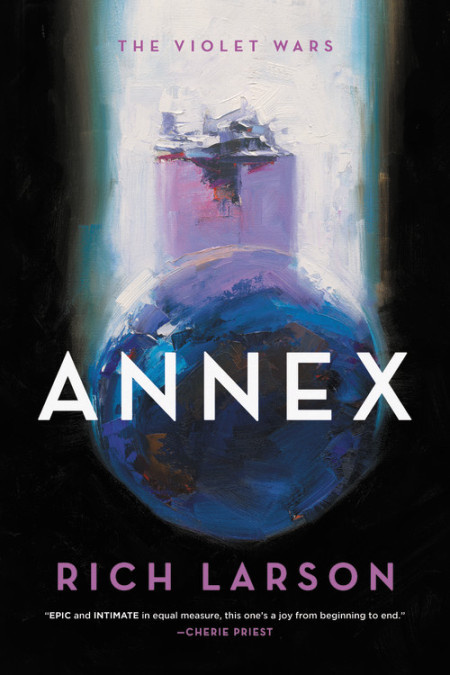
Annex Cover.jpg

Publication Date: Orbit

Australian Publication Date – 25 September 2018

World Publication Date – 24 July 2018

Amazon     Book Depository

From exciting new author Rich Larson comes an absorbing young adult science fiction debut that makes use of creepy alien elements, excellent characters and fantastic LGBT inclusions to create a powerful and creative read.

When a gigantic alien ship arrives above Earth and isolates an entire city, all the children that are trapped with the aliens are kidnapped and infested with parasitic life forms, while the adults are clamped and inserted with mechanical devices that turn them into mindless drones.

For the small group of children that escape captivity, the disappearance of all the adults offers them a life of fun and adventure.  Falling under the leadership of the charismatic Wyatt, this group of survivors, the Lost Boys, are living the high life, with their newly attached parasites giving them the ability to vanish objects for brief periods of time.  While life is fun, they must continue to avoid the mechanical whirlybirds, the pod-like spaceships and the terrifying Othermothers hunting them in the streets.

For Violet, this new world allows her the opportunity to live the life she’s always wanted and to be the person she’s always wanted to be.  But Violet’s new life on of the city streets changes dramatically when she finds a new escapee, Bo, and takes him under her wing.  Bo has the most powerful parasite the group has ever seen and is capable of permanently vanishing larger objects.  It also appears the alien invaders want him back and are deploying hordes of their creatures to capture him.

Sensing an opportunity, the Lost Boys use Bo to fight back against the aliens while trying to uncover what plans they have for the rest of the planet.  Breaking into the massive hovering mother ship, Violet and Bo team up with the mysterious Mr Gloom to end this alien threat once and for all.  But these two young people will quickly find that the biggest threat to them may be far closer to home than they realise.

Annex is the first novel from Rich Larson and is the first book in The Violet Wars series, with the second book of this intriguing series, Cypher, already on its way.  This is a wonderful debut from Larson, which contains a surprisingly intense and at times dark story that will prove to be enjoyable to a wide range of readers.

There are a number of great features of Annex that readers will enjoy; however, one of the most noticeable features is the creepy and well-written descriptions of the aliens and events that the book’s main characters encounter.  There are a lot of inventive and twisted creatures, technology and even body modifications that can be found throughout this book, and Larson’s skilled writing helps brings them to life in the reader’s imagination.  I was particularly impressed, and a little freaked out, by Larson’s unique creation the Othermothers.  The Othermothers are unsettling clones of the escaped children’s mothers, perched upon long skeletal metal legs, who chirp out random phrases in the mothers’ voices in an attempt to lure the escaped children to them and then capture them.  Because of Larson’s descriptive writing, these creatures are horrifying and really stood out for me among the other alien antagonists the heroes encountered.  Special mention should also be made of the shadowy Mr Gloom, a strange adult they encounter whose appearance is not quite human and who has a range of powerful abilities.  I am not going to reveal too much about Mr Gloom because he appears about two-thirds into the book and I do not want to spoil too much about him.  I did find him to be quite a fun character.  Larson’s descriptions of Mr Gloom are fantastic, especially when it comes to exploring his shadow based abilities, which are a treat to read about.

In addition to the alien creatures and characters that are encountered through the book, readers should also keep an eye on the leader of the Lost Boys, Wyatt.  Wyatt is at first presented as a talented leader who has managed to bring the Lost Boys together and keep them alive.  However, there is much more to this character than he initially presents, and his real personality begins to be revealed to the heroes and the readers as the book progresses.  This is some incredible character work from Larson, and the revelation of Wyatt’s true motivations and persona is done perfectly, resulting in some excellent dramatic scenes and some really dark twists.  The author’s use of two separate point-of-view characters, Violet and Bo, works really well when it comes to viewing Wyatt, as the reader is able to observe his different manipulations, his moods and the cracks that appear in his outer façade.  This is a very intriguing character that dramatically changes the narrative of Annex in a number of ways, and the scenes exploring Wyatt are some of the best written in the entire book.

One of the key aspects of Annex that will prove to be an interesting addition for the reader is one of the main protagonists, Violet.  Violet is a tough–as-nails kicker of alien ass who is also a young transgender girl who has used the lack of adults following the invasion to finally live her life the way she always wanted to.  This is an amazing portrayal of a transgender character, as the author creates a stimulating backstory for Violet that examines her past and explores how she became her current self while also exploring the fears and people that stopped her from fully expressing her identity.  The book also explores how intrinsic this identity can be and how devastating attacks about identity can be, even during an alien apocalypse.  Violet is a well-rounded character, and Larson skilfully displays her other fears, her independence, her new friendship with Bo and her relationships with the other Lost Boys.  Violet helps to elevate this book to the next level and make it into a terrific piece of young adult fiction.

This book is an interesting addition to the young adult genre that definitely highlights the empowerment of young people.  The human characters of this book are all quite youthful and yet manage to thrive in a hostile alien landscape that has incapacitated all of the adults.  Watching these young people come together as a tight-knit group is an intriguing part of this book, and it is interesting to see the subtle techniques Wyatt uses to turn them into his own little army, such as with initiation rites, slogans and other forms of manipulation.  Overall, watching this group overcome without adult help the obstacles of being among the aliens oppressing them is a great part of the book.  This makes it an interesting read for the young adult audience, especially for those who love to see transgender characters in fiction.

Annex by Rich Larson is an excellent debut and is recommended for those younger readers looking for a science fiction adventure that they can relate to.  With some creepy aliens, intriguing characters and a deep look at transgender issues among today’s youth, this is an exhilarating read from a promising new author.

My Rating:

Four stars

Amazon     Book Depository

The House on Half Moon Street by Alex Reeve

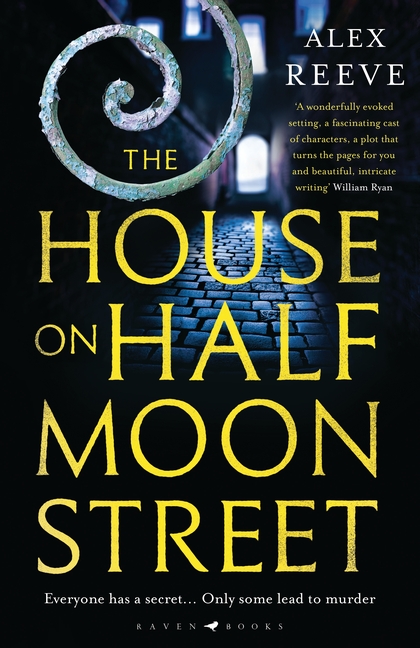
The House on Half Moon Street Cover

Publisher: Raven Books

Publication Date – 3 May 2018

Amazon     Book Depository

Prepare yourself for an extraordinary tale of love, life and murder in Victorian London, all with a unique twist that will make this book one of the most talked-about pieces of historical fiction this year.

In London, in 1880, Leo Stanhope is a bright young man living the city life.  He is employed as an assistant to a London coroner and is in love with Maria, a high-class prostitute.  However, Leo also has a big secret: he was actually born Charlotte.  Born a woman, but knowing deep inside that he was a man, he ran away as a teenager and has been living as Leo ever since.  Only a few trusted people know this, and Leo fears the day he’ll be discovered.

When Maria is found dead, Leo finds himself accused of her murder.  With his life falling down around him, Leo starts his own investigation into the case.  But what does Maria’s death have to do with another corpse found drowned in the river, and how do Maria’s rich employers and an infamous London abortionist fit into the case?  Leo will risk everything to find Maria’s killers, even if that means revealing his biggest secret.

This is an outstanding debut from author Alex Reeve, who has created a fabulous addition to the historical crime genre.  The House on Half Moon Street has massive potential to expand out into a fantastic and iconic new series.

Without a doubt, the most distinctive and memorable part of The House on Half Moon Street is the main character, Leo Stanhope, who is a transgender man.  The first thing that needs to be mentioned is that Reeve has done a great job of writing this character and has produced an appropriate and non-controversial description of a transgender person.  There is a lengthy examination of the protagonist’s views about his identity, which includes descriptions of his childhood, memories of how he has always felt this way and internal monologues on how uncomfortable he felt behaving as a woman.  Reeve also does a fantastic job of portraying Leo’s fears and frustrations at the way he has to live and the way some characters, such as members of his family, treat him.  Overall, this is an emotional and insightful examination of a transgender character in a historical setting, and Reeve has chosen an excellent protagonist for his novel.

The focus on a transgender main character and gender issues works well with Reeve’s great use of the Victorian setting, as he explores how transgender people lived in historical times.  As described in the book, transgender individuals were not treated well within Victorian England.  In one scene Leo describes how someone who was living in a similar situation to himself had recently been discovered by the authorities and institutionalised as a result.  The views and responses of the people who discover his secret also reflect the attitudes of the time, although there are some obvious parallels with some modern opinions, resulting in thought-provoking social commentary.  There are also some interesting descriptions of the techniques, tools and clothing that the protagonist uses to hide his female characteristics and make himself appear more masculine.  Due to differences in technology and social expectations, these techniques are obviously different from modern alternatives and represent some interesting hypotheses from Reeve.

There are also some amazing descriptions of Victorian London, which serves as a great backdrop for this story.  Not only does the dingy Victorian setting help to highlight Leo’s dark emotional state throughout the book; it is also the perfect background for a murder mystery that revolves around the murky criminal underworld.

On top of the compelling protagonist and the wonderful use of setting, those who read The House on Half Moon Street will also be treated to a top-notch murder mystery that also delves into the criminal and policing elements of 1880s London.  The investigation into the deaths is an intense experience that takes the protagonist through a series of different suspects and clues, creating an intriguing and complex case.  The emotional impact of the case on Leo is plainly obvious due to superb story narration, and this proves to be engaging to the reader, who becomes invested in solving the case.  The final solution to the book’s mystery is very clever, and the readers will love how the case comes to its conclusion.

Historical fiction buffs will also enjoy the examination of law and order during the era, as Reeve examines several police institutions, including the work of the coroner during the time.  The protagonist also encounters some of the city’s criminal elements, and there are some surprising crimes that are covered within the book.  Reeve’s use of a transgender protagonist once again comes into play during the character’s investigations, and the reader will be drawn into the scenes where Leo attempts to hide his previous life from the police and criminals.

The House on Half Moon Street is a phenomenal new book that takes a deep and sensitive look at transgender issues in Victorian London whilst also making use of a dark and detailed historical setting and a first-rate overarching murder mystery.

My Rating:

Four stars

Amazon     Book Depository