Warhammer 40,000: Renegades: Lord of Excess by Rich McCormick

Publisher: Black Library (Audiobook – 6 April 2024)

Series: Warhammer 40,000: Renegades – Book Two

Length: 14 hours and 17 minutes

My Rating: 5 out of 5 stars

Amazon

Prepare to break the bounds of sensation, desire and treachery in the amazing Warhammer 40,000 novel, Lord of Excess by Rich McCormick, the second book in the fantastic Renegades series.

I have been having a great time with the huge variety of unique and elaborate Warhammer 40,000 books coming out in recent years, and it is always fun to see the impressive reads the franchise is producing.  One of the things I particularly enjoy about the Warhammer 40,000 fiction machine is the way in which it gives new authors the chance to shine, with several talented authors writing their very first book as part of the Warhammer canon.  I have already talked about one particularly good Warhammer 40,000 debut this year with Deathworlder by Victoria Hayward, but another incredible first novel I had the great pleasure of reading was Lord of Excess by new author Rich McCormick.

Lord of Excess was an exceptional book that was released as part of the loosely connected Renegades series that looks at a different band of traitor Space Marines as they make their dark way through the universe.  For example, the first Renegades book, Harrowmaster by Mike Brooks, looked at the nefarious Alpha Legion, and I am sure that future entries will dive into the other traitor legions with some fun stories.  Lord of Excess is the second Renegades book, and it provides the reader with an outstanding and unique story focussed on the ultimate beings of excess, the Emperor’s Children.

At the dawn of the Imperium, the Emperor’s Children were the master of mankind’s most loyal and revered Space Marine Legions, dedicated to the fight for humanity while seeking perfection in all things.  However, during the tumultuous events of the Horus Heresy, the Emperor’s Children followed their Primarch into treachery, and turned against their Emperor, falling into the service of the ruinous powers of Chaos.

Now, millennia later, the Emperor’s Children are a twisted remnant of their former glory.  Scattered into smaller warbands, the Emperor’s Children now only seek pleasure and sensation in hedonistic service to the Chaos God Slaanesh, the lord of obsession and excess.  One such band is the feared and infamous group known as the Adored.  Lead by the tainted Space Marine Xantine, the Adored has ravaged the galaxy for centuries, taking slaves and bringing untold torment, but Xantine has never found what he truly desires, until now.

Suddenly dropped out of the Warp, the Adored find themselves in orbit about the isolated planet of Serrine.  A wealthy and corrupt planet of the Imperium, Serrine has been long cut off from the rest of humanity due to corrupted currents of the Warp.  Sensing the opportunity to carve out a place for himself, Xantine decides to take control of Serrine, and turn it into the perfect society, dedicated to loving him.  However, making true perfection is an impossible task, and Xantine soon finds his rule challenged by both the population of Serrine and those closest to him.  Worse, there are darker forces at work within the bowels of Serrine, and soon the world will be engulfed in perfect destruction.

Lord of Excess was an exceptional and impressive Warhammer 40,000 novel that achieved so very much for the reader.  Featuring a complex and compelling tale of betrayal, deceit and corruption, loaded with fun characters and larger-than-life personalities, Lord of Excess was an entertaining and elaborate read from the very start, and I could not get enough of it.

I really loved the story contained with Lord of Excess, and I find it hard to believe that this was McCormick’s very first novel.  The plot of Lord of Excess is an elaborate and continuous tale of woe and failed ambition as it charts main character, Xantine of the Emperor’s Children, as he attempts to bring perfection to the world of Serrine.  Starting off by introducing Xantine and his renegade Space Marines, you are soon shown the world of Serrine, an isolated and mismanaged Hiveworld with plenty of its own problems, including an uprising from a genestealer cult.  Taking advantage of these chaotic events, an obsessive Xantine leads his mostly apathetic Emperor’s Children to the planet’s surface, telling the locals they are there to save them.  This proves to be an intriguing start, as the reader is shown a battle between two very different group of villains, which is essentially the equivalent of the cenobites from Hellraiser facing off against xenomorphs from Alien (with both sides using a lot of purple).  This fight against the genestealers is a fun first part of the book, and I honestly thought that McCormick was going to stretch that conflict out for the entirety of Lord of Excess.  However, the author instead chooses to cleverly end this conflict about a third of the way through the book, and the rest of the novel goes in some very interesting directions.

Following this introduction, Lord of Excess than goes through a series of time skips, as you follow the unlucky course of Serrine under the “benevolent” rule of the Emperor’s Children.  Each new version of Serrine you see is somehow worse the previous version, and it proves extremely entertaining to watch the inherent downsides of the protagonist’s twisted version of perfection.  The plot cleverly rotates between the machinations of Xantine and his Adored as they fight over the course of their warband, and several intriguing human inhabitants of Serrine, whose reaction to the fate of their planet varies across the emotional spectrum.  The plot goes in some very interesting and entertaining directions, as Xantine finds himself continuously beset by betrayal, mostly of his own making, while many others are driven to extreme lengths by Xantine’s actions, and other malign foes hiding beneath Serrine’s surface.  Things continuously get darker and darker as the plot continues, leading up to a brutal and amusing conclusion.  I loved the various elaborate twists and captivating revelations that McCormick cleverly worked into the plot, and his accompanying character work really helps to sell it.  The book ends on a fantastic note, with devilish and deserved endings for many members of the cast, and the ultimate fates of everyone really reminds you that Lord of Excess is a grimdark book focussing on deranged villains.

McCormick really showcased his effective and powerful writing style in Lord of Excess, and I loved the elaborate and multifaceted book that he ended up creating.  The fantastic story has so many deep elements to it, and it transcends the typical action-focused Warhammer fiction by providing nuanced portrayals of society, human nature, and the impossible search for perfection.  That’s not to say that there isn’t action in Lord of Excess, as McCormick loads the book with multiple over-the-top and entertaining fight sequences that prove hard not to love.  However, he also balances these battles with intriguing character work, long-running elaborate story elements, and complex depictions of intriguing Warhammer features.  The way in which the author cleverly shifts the narrative around several fantastic characters works to create a fun and layered story with many moving parts to it.  I also love how descriptive and visual McCormick got at times.  The author clearly had fun describing the many excesses and mutations of the Adored, and you really got a clear and vivid sense of the twisted nature of the beings involved.  This ended up being such an outstanding read, and McCormick did such a great job bringing his elaborate story to life in the absolute best way.

I felt that Lord of Excess was a pretty awesome Warhammer 40,000 novel, that will really appeal to a varied audience.  Established Warhammer fans will love the fantastic depictions of the Emperor’s Children featured within this book, and I love how well McCormick captured the complexities of these renegade Space Marines and the depths to which they have sunk.  While he doesn’t do a full deep dive into the history of the Emperor’s Children, McCormick provides some detailed flashbacks into their past, that Warhammer readers will appreciate, which also providing some good context for new readers.  While this book did spend a lot of time examining the Emperor’s Children, it also featured its own unique and clever narrative, which really utilised the grimdark nature of the wider Warhammer setting to its advantage.  Readers are gifted by a truly complex and intense read, and I felt that Lord of Excess is an amazing example of just how good a Warhammer 40,000 novel can be.  This would be a pretty good entry point for new readers keen to check out the elaborate Warhammer 40,000 fictional universe, especially as you can get an amazing sense of the overall cruel, deadly and often ironic nature of this fantastic overarching setting.

Easily the key strengths of Lord of Excess were the elaborate, distinctive and damaged characters that McCormick centred his story around.  There are some brilliant characters featured in this book, from ancient traitor Space Marines lost in their own obsessions, to the normal inhabitants of Serrine, whose lives are irrevocably turned upside down by the arrival of the Adored.  These elaborate character arcs are very intriguing, and McCormick expertly features them throughout his story, ensuring that the reader becomes intrigued by the fates of these various figures.  The most prominent character is the Adored leader, Xantine.  An ambitious and twisted being, Xantine finds himself drawn to the world of Serrine and sees it as an opportunity to create a perfect world, much like the previous planets the Emperor’s Children called home.  Xantine proves to be an intriguing central figure for the book, especially as you get drawn into his obsession and the disdain of his followers for his vision.  Thanks to the machinations of the daemon S’janth, who shares Xantine’s body, you get some fascinating insights into this character’s mind, and you soon appreciate the depths of his determination to be perfect, which stems from his daddy issues and dark personal history.  I loved seeing how the events of the book were driven with this figures love of perfection, and Xantine proved to be an excellent dark heart to this entire story.

In addition to Xantine, Lord of Excess features several other great characters, all of whom are damaged in fantastic and intriguing ways.  This includes the various members of the Adored, each of whom has their own unique obsessions and focuses.  McCormick really had fun when it came to these corrupted figures, and there are some delightfully over-the-top characters as a result.  These other members of the Adored often come into conflict with Xantine, primarily due to their incompatible obsessions, and I loved the barbed interactions that followed, especially as Xantine both loves and hates his fellow renegades.  While several of these characters stood out, the best one was probably Vavisk.  Vavisk, a Noise Marine, is obsessed with finding the perfect sound, and often finds himself lost in his horrifying music.  However, Vavisk is also Xantine’s closest friend, and the unique bond of brotherhood between these two figures, proves to be a key part of the book, especially as the potential for it to break is always there.

Other major characters include several inhabitants of Serrine who attempt to survive the actions of Xantine.  Due to a creation myth, many people on Serrine initially see Xantine as a destined saviour, and the eventual revelation of his true nature leads to much heartache for them.  These characters provide an outstanding alternative perspective to that of Xantine and the other Adored, and I loved seeing the various reactions to the evil that came to their planet.  Key figures include the young man Arqat, whose rage at the injustices performed against him drives him to some dark places.  The mysterious Cecily founds salvation and escape thanks to the patronage of Xantine, although her loyalty costs her deeply.  While the foppish noble Pierod, seeks to take advantage of the arrival of the Adored, which has blistering ups and downs for him.  I really enjoyed these three human characters, and their unique storylines, some of which were nearly as extensive as Xantine’s, helped to turn Lord of Excess into a particularly brilliant read as you get drawn into their various tales of woe and opportunity.  While Pierod’s story was probably the most entertaining, due to his naked ambition and greed, you honestly connect to all three of them, and it proves fascinating to see where their encounters with the Adored takes them.  McCormick writes some grim and fitting fates for all three of them, and the other humans of Serrine, and seeing the journey they take to get there, is so damn entertaining.

As with most Warhammer 40,000 novels I enjoy, I ended up grabbing Lord of Excess on audiobook, which is just the best way to appreciate a piece of Warhammer fiction.  Coming in with a runtime of over 14 hours, the Lord of Excess audiobook is a decent length, but one you can get through quickly once you become caught up in the outstanding plot.  I love how well this format highlighted the epic narrative featured with Lord of Excess, and you get a real sense of the plot’s chaotic delights, unnatural horrors, and devilish figures when they are read out to you.  It helped that the Lord of Excess audiobook was helmed by one of the very best Warhammer 40,000 narrators, Richard Reed.  Reed has been killing it in recent years with his work in Warhammer 40,000 fiction, including The Infinite and the Divine by Robert Rath, Ruin and Reign by Nate Crowley and Grim Repast by Marc Collins, all of which were greatly enhanced by his impressive voice work.  His work in Lord of Excess is particularly awesome, as he once again produces an impressive range of unique voices to fit the big personalities of the plot.  This includes multiple mutated and utterly corrupted Space Marines, and Reed provides very fitting voices for them, as well as the unlucky humans caught up in their machinations.  The over-the-top story comes out so much better because of Reed’s compelling narration, and I love how effectively he captured the various insane figures.  This amazing voice work turned the Lord of Excess audiobook into something very special, and I had an exceptional time getting through it.

Lord of Excess by Rich McCormick is an absolutely brilliant and amazing piece of Warhammer 40,000 fiction that I could not get enough of.  Expertly combining elaborate elements of the Warhammer 40,000 canon with a complex narrative and darkly damaged characters, Lord of Excess was so much fun to read, and it proves impossible not to get caught up in this epic debut.  This might be one of the smartest and most compelling pieces of Warhammer 40,000 fiction release so far in 2024.  A truly outstanding Warhammer 40,000 book from a particularly amazing new author, Lord of Excess comes very highly recommended, and Rich McCormick is an author with big things in his future.

Amazon

The Shadow Casket by Chris Wooding

The Shadow Casket Cover

Publisher: Gollancz (Audiobook – 16 February 2023)

Series: The Darkwater Legacy – Book Two

Length: 32 hours and 37 minutes

My Rating: 5 out of 5 stars

Amazon

Chris Wooding continues The Darkwater Legacy in a big way with his second awesome and massive entry in this great fantasy series, The Shadow Casket.

I was recently in the mood for more epic fantasy reads, so I finally got around to checking out The Shadow Casket by Chris Wooding, which has been on my to-read list for most of the yearThe Shadow Casket is the sequel to Wooding’s exceptional 2018 novel, The Ember Blade, which I had a ton of fun reading back when it originally came out.  The Ember Blade followed a band of revolutionaries, including two young teens caught up in the carnage, as they fought to free their country from an evil empire that had conquered it a generation before.  Featuring a classic fantasy adventure plot with some awesome real-life overtones and loaded with a ton of great characters, a powerful story, and a fantastic new world, The Ember Blade was such a great read, and it got an easy five-star read from me.  I have been eagerly awaiting a sequel for some time now, and Wooding finally delivered his second Darkwater Legacy book this year with The Shadow Casket, which took the reader on another dark and captivating journey.

It has been three years since the destructive events at Hammerholt, when the ragtag band of revolutionaries, known as the Dawnwardens, managed to steal back the sacred Ember Blade and kill the Krodan Emperor’s son, seemingly lighting the fires of revolution.  However, despite the Dawnwardens’ hope that recovering the Ember Blade would encourage their people to rise in revolt, the powerful Krodan empire still reigns over Ossia, bringing new levels of terror in their occupation.  With revolution still as far away as ever, the Dawnwardens, and the Ember Blade’s champion, young Aren of Shoal Point, are forced to take a risk that could turn the tide of war.

Taking the Ember Blade out of hiding, the Dawnwardens travel to the Reaches in the far north of Osia, where the wild and rebellious clans of the Fell Folk fight amongst themselves.  Hoping to recruit the fractious clans to their cause, the Dawnwardens soon find themselves once again under attack from the Krodans and their deadliest weapons, the malevolent dreadknights.  Forced to flee with new allies and returning friends, the Dawnwardens embark on mission to find out what the Krodans are truly doing in Osia and just how far they are willing to go to maintain order.

Finding their first successes since the events of Hammerholt, the Dawnwardens form a new plan to finally strike back at the Krodans and start the revolution they have long hoped for.  However, no matter how hard they fight, the Dawnwardens constantly find themselves outmatched by the dreadknights and their foul magic.  To survive this insidious threat, the Dawnwardens hope to call upon the ancient magic of a lost artefact, the Shadow Casket, which has the potential to either save them or doom the world.  But with deadly foes facing them at every corner, and traitors within their own ranks, can the heroes succeed, or will their revolution finally be cut down?

Wooding continues his epic series in a big way with The Shadow Casket, producing an exceptional and captivating novel that was quite a treat to read.  Expertly following the existing storylines from the first book while also providing an awesome new adventure, The Shadow Casket was a gripping and powerful novel that I had an absolute blast reading.

I really loved the amazing story that Wooding came up with for The Shadow Casket, which is massive in every sense of the word.  Told from many different perspectives, The Shadow Casket has a very powerful character-driven plot that really gets you involved in the lives of all the protagonists while advancing the compelling main plot.  The transition to three years after the events of The Ember Blade was a very interesting overarching choice for this new book, but it was one that works very well, and I loved the realistic detail that the protagonist’s previous adventures didn’t magically save the day as they had hoped.  Wooding starts events off at a somewhat slow pace, which was definitely necessary as he had to re-establish all the key story elements, while also introducing the new setting of Northern Ossia and the Fell Folk.  This does mean that the initial chapters of the book might drag a little for some readers, especially those who did not read The Ember Blade first, although I appreciated the refresher on all the protagonists after all this time.  This early part of the book also sets up many plot points for the rest of The Shadow Casket, and Wooding did an outstanding job laying down a lot of groundwork here.

Things do speed up quickly after the reintroductions are done, as all hell breaks loose around the protagonists in some amazing scenes.  This early part of the book also brings back Cade and Klyssen, who were seemingly killed off at the end of The Ember Blade.  This honestly isn’t that much of a spoiler as both come back very early in the plot, and frankly it wasn’t too surprising considering the deliberate ambiguity of their “deaths” in the previous book.  Their return sets up some great character-driven plots which are very well explored in the first half of the book and have some major impacts on the overall story.  The protagonists soon find themselves involved in several distinctive character-focused quests, including the liberation of a prison camp, the machinations of a traitor, and an intriguing dive into a magical organisation that was only lightly featured in the first book.  These various storylines blend into one cohesive plot, and I liked the early focus on world building and character growth in the aftermath of the first book.  Wooding works in an interesting blend of intrigue, action, adventure, and even some horror elements, which really enhanced the classic adventure quest vibe he was trying to replicate.  I did have issues with an ungainly love triangle that got a lot of attention in the first half of The Shadow Casket, which sapped my enjoyment in places.  However, the other complex storylines that were occurring simultaneously did make up for this, and it thankfully does not last the entire length of the book.

The second half of The Shadow Casket is where things really picked up, and it features all the awesome story moments that the author had been expertly building up.  This includes a deadly adventure quest to a lethal island, which amped up the intensity of the plot, especially as secrets are revealed and tragedy awaits several characters.  These storylines and more, all lead up to epic final quarter of the novel, where the protagonists have their long-awaited mass confrontation with the enemy.  Wooding really set up everything leading up to this final quarter perfectly, and I was very excited going into it, especially as it featured a massive siege.  While there is a focus on the action in this final part of the book, Wooding also amps up the intrigue, as various parties make their moves to betray or mislead either side of the conflict.  The author plays this plot line about betrayal and intrigue perfectly, and there were times when you honestly didn’t know who was betraying who, which was so much fun to see.  This last quarter honestly has a bit of something for everyone, and I loved the inherent tragedy, the gritty battles, and the awesome resolution to so many different plotlines and character arcs.  I also really enjoyed the multitude of clever twists and reveals that Wooding layered in this part of the book, especially as I did not see several of them coming despite the great setup surrounding them.  The final play of the protagonists was particularly brilliant, and the unique siege tactics were quite inventive.  While I did think a few things were wrapped up a little too easily or positively at the end, this was honestly a very strong conclusion for this second entry, and it sets up many great storylines for the rest of the series.  I really came away from The Shadow Casket feeling very satisfied, and I cannot wait to see how my heart will get broken in the next book.

I felt that Wooding did a rather wonderful job of presenting his elaborate narrative to the reader, and his fantastic style definitely drew me into the story.  While there are a lot of positives to the author’s writing, the main thing that I was mostly grateful for was how easy he set everything up so that I could dive back into this series.  As I mentioned above, it has been over four years since I read The Ember Blade, itself a hefty read, so I was initially worried that I wouldn’t remember all the key details and get a little lost.  However, Wooding expertly led readers, both new and old, into his new book and those well-thought-out and slower paced introductory chapters really filled in all the gaps for me.  As such, there wasn’t a single moment that I was lost about what was going on, which considering how elaborate The Shadow Casket gets, is pretty damn impressive.

While The Shadow Casket is a great continuation of The Ember Blade, it also has a bit of a different tone to it.  The focus on failure, regret and fighting losing battles was quite interesting and reflected the continued failed rebellion nicely.  The book itself also comes across as more of an adventure novel, with the protagonists constantly moving and taking on new quests and journeys, rather than the more heist focused revenge plot of the first book.  This ensured that The Shadow Casket stood out a lot more than I was expecting, and it really didn’t feel like a sequel or a tired middle book.  Wooding has a great sense for pacing, and the fantastic mixture of action, character growth and betrayal and intrigue helped to turn this into quite an impressive read.  I have so much love for the multiple elaborate espionage storylines that emerged, and Wooding ensured that the reader never knew what was coming.  The excellent use of multiple character perspectives really helped with this, and it was compelling and often very moving to see the various internal struggles, history and biases that drove the characters to do what they do.  The clever alternate views of the same events also helped to create a much more expansive and captivating plot, and I think that Wooding did a great job of splitting the story up, ensuring that all the key characters got their time to shine.  There was the occasional rough chapter transition that added a touch of confusion at times, but this was usually pretty harmless, and I found the overall narrative to be very powerful and bound together excellently.  Throw in a ton of brilliant and brutal action sequences, including the extended battle at the end, and The Shadow Casket has so much going for it that you will find it very hard to put down.

One of the things I liked most about The Ember Blade was the elaborate and complex world that the book was set in.  In particular, the focal nation of Ossia was such an interesting main setting, especially as it was occupied by its stronger neighbour, who had ruled it for years.  This portrayal of Ossia had a lot of similarities to occupied France during World War II, especially as the invading Krodans were an obvious stand-in for Nazis/fascism.  This occupied fantasy nation had a certain realism to it that deeply enhanced the story, especially as the characters interacted with collaborators, rebels and locals who believed the Krodans were helping them, all while witnessing examples of Krodan cruelty.  These issues were further compounded by the fact that Ossia was already a rather fractious nation, and their lack of cooperation and unity helped the Krodan conquest years before.  Wooding continued to expand on this examination of occupied Ossia in The Shadow Casket, especially as revolution and uprisings were such an important part of the plot.  I loved the intriguing plot point about how, despite the protagonist’s actions in the first book, most of Ossia was still too cowed or wracked with infighting to join in the rebellion, making the sacrifices in the first book seem pointless.  This ensured that occupied Ossia continued to be a dangerous and compelling setting for much of the story, and Wooding doubled down on the Krodan comparisons to Nazis, especially as the Krodan’s engaged in massive retaliation strikes against the Ossian populace while also rounding up a minority group into concentration camps.  These intriguing details add a lot to the plot, and it was interesting to see how they continued from the first book.

Wooding also worked in quite a lot of world building as he sought to explore new areas within the larger fantasy realm.  This includes several intriguing and deadly new locations, such as a swamp full of dark spirits and the lethal island of Yaga, where ogres and magical slavers reign supreme.  These areas, which serve as cool settings for several key parts of the book, are great to explore, adding in some very distinctive risks, and it served as a compelling expansion of an already great world.  However, the most significant new setting is probably the northern area of Ossia known as the Reaches.  A hilly area populated by warring tribes, this part of Ossia was culturally segregated from the more urbanised southern setting before the Krogans arrived, and now is even more oppressed.  A large chunk of the novel revolves around the complex tribal politics and history of this region as the protagonists attempt to bring them together as allies while also striking back at the forces oppressing them.  Several of the best sequences, including the final battle, are set around here, and I loved the craggy and isolated feel that Wooding gave this setting.  The author also does a wonderful job expanding on some of the fantasy aspects of his series.  While there were quite a number of great and freaky magical and fantasy elements in the first book, The Shadow Casket really dives into this further, showing several different batches of magic.  This includes a fascinating examination of the Ossian druids, whose magical conclave in the first half of the novel serves as a major plot setting.  There is also a fantastic and dark examination of the magic being used by the Krogans to create their more elaborate weapons.  This look at Krogan mysticism is pretty fascinating and serves as a great contrast to their usual anti-magic dogma.  It also leads to some of the darker scenes in the book, including the exploration of a corrupted prison camp, which honestly bordered more on horror than anything else.  There are some fantastic and complex hints at the dangers to come, and I cannot wait to see how dark and compelling Wooding makes his setting in the future.

However, the most impressive and memorable part of The Shadow Casket has to be the outstanding and elaborate character work that Wooding expertly inserted into the story.  The Shadow Casket has an exceptional and memorable cast, which includes a great combination of characters from The Ember Blade, as well as several intriguing new figures.  All the characters are damaged and complex, especially after the events of The Ember Blade, and thanks to the author’s excellent use of alternating perspectives, you get to see into their minds and find out what drives them and what their intentions are.  I deeply appreciated how well the character stories altered and drove the main narrative and Wooding’s excellent character work really gets you invested in everyone’s personal journey.

As with The Ember Blade, the main character of The Shadow Casket is Aren of Shoal Point.  A teenager drafted into the rebellion by circumstances, Aren is trying to live up to his own legend after masterminding the Ember Blade heist and being declared champion.  Now a figurehead leader chafing under the responsibilities and expectations of everyone around him, Aren starts the book with a lot of his usual certainty and confidence gone, especially as the disappointments of the last three years are hanging over him.  Most of his arc involves him trying to decide whether he deserves all the fame and trust people are putting into him, as well as wondering what his destiny is.  I really liked this compelling character arc that Wooding came up with for Aren, especially as it is totally understandable that he would feel these doubts with his complex history.  While Aren probably was a more passive protagonist than some readers were hoping for, I felt his early mindset of following others fit nicely into the uncertainty he felt, and Wooding did a great job of portraying this and his eventual regained confidence.  Aren also proves to be a linchpin character for The Shadow Casket, mainly because so many other character arcs are defined by the relationships that Aren has formed over the years.  While a couple of these relationships do have some flaws in them, the rest are exceedingly emotionally rich and Aren’s connections help the other characters to grow and develop alongside him.  Aren continued to be an outstanding and complex protagonist for this second Darkwater Legacy novel and I look forward to seeing how he develops in the future.

One of the other major characters I need to highlight is Cade, Aren’s childhood friend who was forced into the adventures in the last book before heroically sacrificing himself at the end of The Ember Blade.  Cade returns quite early in The Shadow Casket, having spent three years away from his friends.  However, he is now carrying some dark secrets and a new hidden history that defines most of his actions throughout The Shadow Casket.  Cade had one of the best and most powerful character arcs in the entire novel, which I will not elaborate on too much here to avoid spoilers.  However, it was extremely well written and added some much-needed emotional depth to Cade’s character.  Wooding does an outstanding job of expanding on Cade’s character arc and story from the first book and the examination of the complex relationship between Aren and Cade resulted in some of the most moving moments in the book.

There are several great antagonistic characters in The Shadow Casket, including sinister Krodan officials and several hidden traitors, but my favourite villainous figure has to be the great character Klyssen.  A member of the Krodan secret police, Klyssen was the primary villain of The Ember Blade, and Wooding takes the opportunity to develop him further in some fantastic ways in the sequel.  Not only does he provide an alternative viewpoint to the Krodans but Wooding manages to make Klyssen into a surprisingly sympathetic character in The Shadow Casket.  Thanks to the events of The Ember Blade, Klyssen starts this new book scarred, disgraced, demoted and divorced, and is now at something of a moral and emotional crossroads.  Now driven by personal reasons, Klyssen has a bit of a redemption arc in The Shadow Casket, and it is honestly a sign of just how good Wooding is at writing characters that you actually feel sorry for this previously despicable villain.  Klyssen ends up being one of the more complex and damaged figures in the entirety of this second book, and I loved his more nuanced mindset and desperate motivations, which make his chapters particularly compelling and emotionally charged.  You really begin to feel for Klyssen, even if you don’t want to, and I really appreciated the complex additional development Wooding worked into him for this sequel.

Of course, I cannot talk about characters in The Shadow Casket without mentioning Grub, who honestly might be one of the most entertaining and hilarious figures I have ever had the pleasure to read.  Gruff, crude and inappropriate in every way imaginable, Grub is a slippery and self-obsessed figure who never fails to get a laugh thanks to his jokes, selfish mindset, fun observations on the people around him, and pure disinterest in what is actually happening.  Thanks to this humour, Grub has some of the best chapters in the entire book, and you always know you are in for a good time.  However, Wooding also creates a particularly complex and intriguing story arc around Grub that really resonates with the reader.  Coming from a culture that venerates heroic actions and tales, Grub was exiled from his people after claiming another person’s deeds.  As such, a lot of Grub’s sVVavsdtoryline involves him trying to redeem himself by become a hero, which really does not come naturally to him due to his selfish nature and upbringing.  This honesty proves to be one of the more complex story arcs in the entire book and you really get invested in his attempts to do the right thing.  A lot of this story revolves around his unlikely friendship with Aren, who serves as Grub’s moral compass, and their compelling relationship is one of the most heartwarming parts of the entire book.  I cannot emphasise just how much fun Grub is as a character, and it honestly is impossible not to fall in love with him, especially with the fantastic depth Wooding adds to his story.  While I would read an entire book about Grub, I think that Wooding did a good job not overusing him in The Shadow Casket, and blending in the other characters extremely well.

Other significant characters include Vika, a powerful druid whose connection with the spirits and the gods offers the only hope against the Krodan dreadknights.  Wooding weaves a fantastic narrative around Vika that dives into her unique and desperate personality while also using her as a focus for the more mystical elements of the book.  I quite enjoyed seeing Vika develop into more of a powerful magical user, although the emotional cost associated with it turns her into a bit of an unpredictable figure.  Wooding really laces Vika’s narrative with some powerful tragedy and distinctive moments, and while I felt that the ending of her arc could have been handled a little better, she was still an outstanding and enjoyable protagonist to follow.

I also need to highlight Mira, the team’s strategist and leader of the Dawnwardens, who comes up with elaborate plans and schemes in the name of liberation.  While Mira does not have as many chapters assigned to her as I would have liked, Wooding does a lot with her in a short amount of time, and I liked how dark the character got as the book progressed.  The dour knight Harod also proves to be an excellent protagonist, mainly because so much of his arc is based around his grief after losing the woman he loved in the last book.  Wooding does a good job expanding a bit on the typically emotionally devoid Harod in this book, especially when a fantastic new secondary character is introduced, and his martial focussed chapters have some heavy personal weight to them.  Throw in the team’s hunter, Fen, whose arc mostly survives an unenjoyable love triangle, and several great new characters, including a troubled revolutionary and a mysterious fighter with his own agenda and this proved to be an exceptionally rich novel in terms of outstanding characters.  This fantastic mixture of compelling cast members really helped to turn The Shadow Casket into an extremely powerful read and I cannot wait to see how these characters develop in the rest of the series.

Like with many epic fantasy novels, I chose to check out The Shadow Casket on audiobook, which I found to be an awesome experience.  Elaborate fantasy novels always come across better in the audiobook format for me, especially when there is a ton of detail and world building, and this was once again the case with The Shadow Casket.  Wooding’s deeply impressive setting was so much cooler when it was read out to me, and I definitely absorbed a lot more detail in this format.  It also helped that they brought back narrator Simon Bubb for this second audiobook in the series.  Bubb does such a good job highlighting all the cool action, fantastic detail, and unique features of this series in The Shadow Casket, and I really liked how effortlessly he moved events along.  Bubb also has a very good handle on the massive cast featured with this book, coming up with original and fitting voices and accents for all the characters, and bringing out all their inherent emotion and struggles.  Highlights for me include the amazing characters of Klyssen, Aren and Grub, all of who really shine through in this format in the most entertaining ways, and I cannot emphasise enough how well Bubb captures all these elaborate figures.  Coming in at over 32.5 hours, The Shadow Casket is a hefty audiobook to get through, and it is one of the longest audiobooks I have ever listened to (coming in at number five on the current list).  I did struggle a bit to get through The Shadow Casket quickly due to its length, and there were a few times where I got a bit fatigued and had to take a break for a while.  However, the compelling story kept dragging me back in, and I maintain that The Shadow Casket is very much worth checking out on audiobook, especially as this format gives you the very best experience.  The great voices, fun depiction of detail, and enhanced story absorption more than make up for the length, and The Shadow Casket audiobook comes very highly recommended as a result.

Overall, this is a very impressive book, and if I did not get it across with the massive review above, I really enjoyed The Shadow Casket.  Chris Wooding is really writing something special with his Darkwater Legacy series and The Shadow Casket proved to be an exceptional second entry.  While I did have a couple of issues with length and some character elements, the sheer power and complexity of the story ensures that The Shadow Casket gets a full five-star rating from me and I had such an incredible time getting through this amazing book.  This is easily one of the best fantasy series currently going and I cannot wait to see how it continues, even if I have to wait a while for the third book to appear.  Highly recommended, all fans of epic fantasy need to get into this series.

Amazon

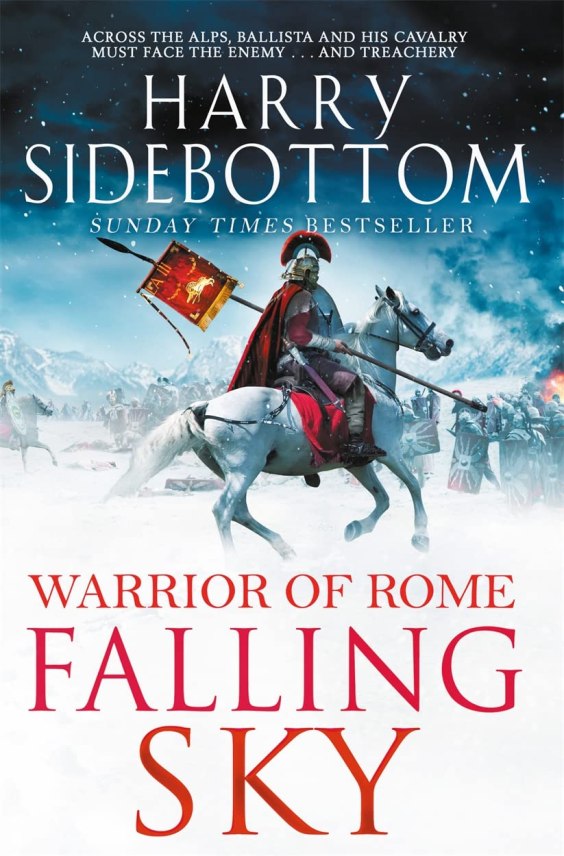
Falling Sky by Harry Sidebottom

Falling Sky Cover

Publisher: Zaffre (Trade Paperback – 17 January 2023)

Series: Warrior of Rome – Book Nine

Length: 375 pages

My Rating: 4.5 out of 5 stars

Amazon

One of the best and most compelling authors of Roman historical fiction, Harry Sidebottom, returns with another outstanding entry in his Warrior of Rome series, Falling Sky.

There are many outstanding authors who specialise in historical fiction set in ancient Rome, however, one of my absolute favourites is the always impressive Harry Sidebottom, who has been dominating the genre for most of my reviewing career.  Sidebottom has written some amazing novels over the years, including his Throne of the Caesars trilogy and some excellent standalone novels, like The Lost Ten and The Return.  However, my favourite series is his Warrior of Rome novels, which follow the Roman general Ballista, a former barbarian hostage turned Roman nobleman.  This series is pretty damn epic and was amongst some of the earlies novels I ever reviewed.  His debut novel, Fire in the East, remains one of the best siege novels I have ever had the pleasure of reading, and the rest of the series is also very impressive and inventive.  I have really loved some of his more recent Warrior of Rome books, such as The Last Hour and The Burning Road, and I was very happy to see that Sidebottom was continuing this series with Falling Sky.

AD 265, Gaul.  The usurper Postumus has been declared Emperor by his soldiers and has taken control of key territories west of Rome, including Gaul, Germania, Hispania and Britannia.  Setting up his capital within Gaul, Postumus hopes to maintain control of his new empire and peacefully coexist with Emperor Gallienus.  However, Gallienus wants vengeance for the death of his son at Postumus’s hands and has assembled a massive army to cross the Alps, take back Gaul, and kill his rival.

Amongst the Roman troops gathered to attack Gaul is Ballista, one of Gallienus’s most loyal supporters.  Determined to fight one more battle and then retire to Sicily with his family, Ballista finds himself at the forefront of the fight as one of Gallienus’s most able commanders.  However, Ballista has a far more troubling problem to deal with than battle.  His recent actions in Rome exposed a massive conspiracy to kill Gallienus and install a new Emperor.  While he was able to foil the assassination, the leader of the conspiracy remains at large, and Ballista is convinced that it was the Praetorian Prefect Volusianus, the man charged with keeping Gallienus safe.

With no evidence to support his suspicions, all Ballista can do is watch Volusianus and wait for him to slip up.  However, Volusianus is aware of Ballista’s suspicions and is determined to kill him before his machinations can be revealed.  When Ballista is sent on a dangerous mission deep into enemy territory with a column of cavalry, it represents the perfect opportunity for Volusianus to strike using spies and traitors.  However, the greatest threat to Ballista may come from the turning tides of war, as he and his men soon find themselves trapped far behind enemy lines.  Pursued by the enemy and surrounded by traitors, can even the legendary Ballista survive both the war and his friends in Rome?

This was another brilliant and captivating historical read from Sidebottom that perfectly continues the Warrior or Rome series with another exciting adventure.  Falling Sky is a very thrilling read, and it was one that I was able to finish off quite quickly, especially once I got caught up in its fantastic and fun narrative.

Falling Sky has a very fast-paced narrative that sees the forces of the Emperor Gallienus, including Ballista, return to Gaul (France) to end Postumus’s rebellion and restore the Empire.  The initial chapters set the scene brilliantly, as you get reacquainted with Ballista and his recent adventures, as well as some insights into his suspicions around Volusianus’s role in the recent assassination of the emperor.  Featuring some great early battle sequences in the Alps, you soon get a great idea of the war to come, especially when you also see some events through the eyes of Postumus and his forces.  The centre of the book is dominated by a pivotal major battle sequence with both armies clashing in a brutal series of chapters that really leaves an impression.  It also sets the rest of the story up extremely well, as the still suspicious Ballista is sent out on a dangerous mission he isn’t supposed to come back from.  This cavalry focused plot dominates the second half of the book and features a great blend of action, historical logistics, and espionage as Ballista tries to keep his troops alive, while a traitor in his ranks works to bring him down by any means necessary.  This leads to an excellent final third of the book, when Ballista and his troops are forced to retreat through half of Gaul, while traitors and problems from the protagonist’s past wait for him.  This turns into a fantastic chase sequence between enemy regiments, and I really loved how epic and intense it got in places.  The entire story wraps up really well, and I had a wonderful time getting through this awesome read.

Falling Sky turned out to be a pretty awesome book, and I loved how Sidebottom set his latest novel out.  There was an interesting change of style in Falling Sky from some of his previous novels, as Sidebottom had recently been experimenting with blending different thriller genres with historical settings.  Falling Sky, however, represents a more classic historical fiction war novel, with a focus on battles, major recorded events, and the continued growth in Ballista’s character as he becomes more and more disenchanted with Rome.  While I had a ton of fun with Sidebottom’s previous unique formats, I also enjoyed him returning to the style from the previous Warrior of Rome novels, with a compelling focus on historical war.  The author still does maintain some interesting thriller elements, including the fun espionage moments as Volusianus and the hidden traitors work to take out Ballista.  In addition, the thrilling and extensive flight of Ballista and his forces really ratchets up the tension for the end of the novel and I enjoyed how complex and powerful it became, easily resulting in it some of the best parts of the book.

The author’s use of perspective was also pretty effective, especially in the first half of the novel, which sees different chapters told from the point of view of several different key characters, including Ballista, Volusianus, Postumus and Volusianus’s spy in Ballista’s regiment.  Alternating point-of-view characters really helped to produce a more extensive and compelling plot, and I loved seeing the countermoves of Ballista and Volusianus, while also getting insights into Postumus’s rebellion.  This use of perspective changes towards the end of the novel as there is a much greater focus on Ballista as the primary narrator as he leads his troops in their escape.  I appreciated Sidebottom’s decision to mix things up this late in the novel, and it really helped to emphasise just how desperate and compelling this final section of plot truly was.  While Falling Sky is part of the larger Warrior of Rome series, it can be read as a standalone novel, especially for any fans of fun historical adventure and military fiction.  Sidebottom does an excellent job of quickly recapping necessary information and events from the previous novels throughout Falling Sky, and readers can grasp key connections and details to follow along with the plot.  The events of Falling Sky actually fall between the two previous books in the series, The Last Hour and The Burning Road, which was apparently caused by a change in the publishing schedule.  That does mean that if you have read The Burning Road in advance of this novel, the stakes of Falling Sky’s plot are slightly reduced.  However, I still had a ton of fun with this outstanding novel, and I really enjoyed how Sidebottom wrote the story.

I was also deeply impressed by the historical aspects of Falling Sky, which was one of the book’s strongest features.  Sidebottom has always excelled at exploring fantastic aspects of Roman culture and history, and Falling Sky is a pretty good example of this, especially has he closely examined Emperor Gallienus’s second invasion of Gaul in the second half of the 3rd century.  This period of Roman history doesn’t get a lot of love from other historical fiction authors, and as a result, Sidebottom’s books always feel quite unique, and I always have a great time learning more about this point of Roman history.  Sidebottom really does a good job exploring the origins of the war with Postumus’s Gallic Empire, and it was fascinating to see how this part of the Roman Empire splintered off and managed to hold out against the main Roman army for so long.  This results in some deeply intriguing scenes where politics, loyalties and personal ambitions are heavily featured, and a Roman civil war novel always contains some brilliant battles as the two armies utilise similar strategies.  Falling Sky also has some outstanding depictions of Gaul and the Alps during this period, especially as the protagonist ends up spending much of the book traversing the landscape at high speed.  Not only was it really cool to see historical depictions of so many different parts of modern-day France (the map up front was very useful), but many of these locations served as fantastic backdrops for the vicious battles that emerged.

In addition to cleverly examining the historical backdrop to the narrative, Sidebottom also ensures that his representations of the Roman soldiers and battles were as detailed as possible.  You can clearly tell that Sidebottom has done a ton of research when it comes to the depictions of the various soldiers, and you can practically see how they would have marched or engaged in battle.  The author’s epic battle scenes are particularly cool to read, and the clashes between the two opposing Roman armies are perfectly showcased, allowing you to fully experience the brutality and carnage.  However, the best historical highlight of Falling Sky revolves around the Roman cavalry, which Ballista commanded for much of the book.  Sidebottom spends much of book diving into and detailing as many aspects and experiences of the classic Roman cavalry as he can, including their practices, strategies, and general experiences.  This comes across extremely well in many scenes of Falling Sky, and it was fascinating to see Ballista get to grips with his new cavalry command and turn them into an effective force.  The sheer detail that accompanies the cavalry into every major fight of Falling Sky is very cool and I loved seeing the author’s depictions of how they would have fought and what strategies a commander like Ballista would have utilised in several different scenarios.  I had such an amazing time seeing these historical details and more get translated across into a thrilling action novel, and Sidebottom clearly has so much love for all things Roman.

Harry Sidebottom remains one of my absolute favourite authors of Roman historical fiction, especially when it comes to his Warrior of Rome novels.  Falling Sky is an outstanding new addition to the series, and I loved its clever war focused plot that saw one of Sidebottom’s best characters leading in compelling circumstances.  Loaded with action, espionage, and impressive historical detail, Falling Sky is an amazing book that I had an incredible time reading.  Highly recommended to all fans of the historical fiction genre.

Amazon

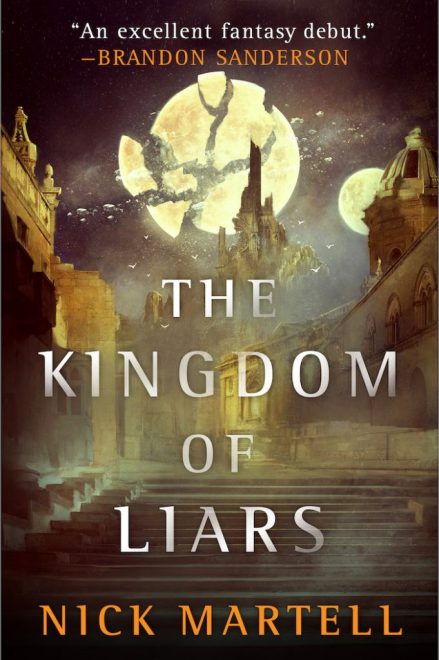
The Kingdom of Liars by Nick Martell

The Kingdom of Liars Cover

Publisher: Gollancz (Audiobook – 7 May 2020)

Series: The Legacy of the Mercenary Kings – Book One

Length: 15 hours and 37 minutes

My Rating: 5 out of 5 stars

Amazon     Book Depository

Impressive new fantasy author Nick Martell presents The Kingdom of Liars, an outstanding fantasy novel that is easily one of the top debuts of 2020.

Welcome to The Hollows, the slowly disintegrating capital of once-great kingdom where magic costs memory to used.  Once a shining beacon of culture and nobility, the city is now a shadow of its former self, surrounded by firearm-wielding rebels while petty nobles fight for scraps within and a corrupt prince plots for power.  While the people suffer under the rule of a grieving king, their only hope of survival may lie in the hands of the son of the kingdom’s most despised traitor.

Michael Kingman was only a child when he was branded a traitor for the crimes of his father.  Once the King’s loyal right-hand man, Michael’s father, David Kingman, was convicted and executed for the murder of the King’s nine-year-old son, and his family was cast out into poverty and infamy.  Now, 10 years later, Michael makes a living running petty cons on minor nobility while desperately trying to escape the legacy of his family.  However, after a devastating rebel attack rocks the city and kills someone close to him, Michael is determined to change his destiny.

Accepting employment with an eccentric and powerful noble, Michael is given a chance to re-enter noble society and find evidence that proves that his father was framed for the prince’s murder.  Participating in the Endless Waltz, the social highlight of year, Michael needs to gain influence and supporters in the court in order to gain an invitation into the king’s palace, where he believes the evidence he needs to vindicate his father can be found.  However, nearly everyone in the Endless Waltz has their own agenda and no-one wants to see a traitor’s son succeed.  Can Michael prove his father’s innocence and restore his family’s place in the kingdom, or is he doomed to share his fate and be executed as a traitor?

So, this is a book I have been meaning to read for quite some time.  Despite it coming out in May this year, I only managed to get around to listening to it a couple of weeks ago and I instantly realised I made a mistake in not reading this one sooner as The Kingdom of Liars was an epic and deeply impressive novel that I had an outstanding time listening to.  This was the debut novel from new author Nick Martell, which serves as the first entry in his planned The Legacy of the Mercenary Kings series (which is a cool series name btw).  This amazing novel from Martell contains a deeply captivating and complex story that proved incredibly irresistible to me, especially when you throw in the great characters and inventive new fantasy world that the author came up.  The end result is an exceptional and powerful read that gets a full five-star rating from me.

At the heart of this awesome book is a first-rate story that sees the protagonist, Michael Kingman, attempt to navigate his treacherous city in order to find the truth behind the death of his father.  Martell starts his narrative off with an impressive opening sequence that sees Michael being found guilty of the murder of the king, a charge he does not refute.  The story then backtracks a few weeks and the full story of Michael Kingman and his adventures is revealed to the audience through the first-person narration of Michael in a way that is reminiscent of a historical chronicle and shows how the protagonist goes from street hustling to regicide in a short period of time.  This proved to be an extremely epic tale loaded with conspiracy, political intrigue, lies, deceit and dark magic, as Michael primarily battles through a series of intense social occasions while also attempting to outwit or survive the machinations of jealous royals, betrayed friends, dangerous mercenaries, fickle nobles and scheming rebels.  At the same time, he also has to work out the motivations for the various people he encounters, most of whom have deep secrets or interesting connections to Michael and his family, as well as diving down into the history of The Hollows and the Kingman family.

There is quite a lot going on in this book, and the readers get to witness a series of different storylines and character arcs, all of which are loaded up with surprise twists and intriguing revelations.  All these storylines prove to be quite entertaining and very cleverly written and I had a great time seeing how each of them unwound.  These separate story arcs come together extremely well, and it results in a deeply compelling overall narrative which proved very hard to stop reading.  I loved all the narrative surprises that Martell came up with throughout The Kingdom of Liars and he added in some great twists which did an outstanding job keeping my attention.  While I was able to guess some of the reveals that Martell was telegraphing, several others caught me completely by surprise, which is something I deeply appreciate in a novel.  I was particularly impressed by the eventual reveal of the main antagonist and I thought that the choice of character was a real masterstroke from Martell.  I was immensely annoyed with myself for not picking up on it sooner, especially as I missed an obvious clue.  I cannot emphasise how I much loved this clever narrative, and I look forward to seeing how Martell continues this captivating tale in the future.

Because he serves as the central protagonist and only point-of-view character, most of The Kingdom of Liars is spent examining the character of Michael Kingman.  Michael is a complex and damaged protagonist who finds himself burdened with the legacy of his great family and the deeds of his traitor father.  At the start of the novel, Michael is a rather self-destructive being, who attempts to find redemption from random and pointless acts of heroism and by skimming some cash off the nobles he despises.  However, after a series of personal losses, Michael begins the path to redeeming himself and his family by attempting to prove his father’s innocence and he starts to reconnect with figures from his past, including several he had forgotten.  I quite enjoyed the character of Michael and it proved to be quite fascinating to see his constant internal battle to determine his identity and his place within the world.  Do not get me wrong, at times Michael proved to be a frustrating protagonist to follow due to his stubbornness and anger, but I think this examination of his damaged emotions helped to make him a stronger character who the reader could emphasise with more.  Thanks to the various events and revelations that become apparent to Michael as the story progresses, the protagonists develops substantially throughout The Kingdom of Liars and by the end he is a vastly different character who is placed in an interesting position for the next novel.  I look forward to seeing how Michael’s story continues throughout the rest of The Legacy of the Mercenary Kings series and I am sure it is going to be suitably dramatic and enjoyable.

In addition to the central protagonist, Martell includes an impressive supporting cast of characters who guide, befriend, manipulate, or try to kill Michael throughout the course of the narrative (sometimes they try to do all four at once).  I really enjoyed the various supporting characters that the author included in The Kingdom of Liars, especially as he ensures that each of them has a substantial and compelling backstory that is somehow interwoven with Michael’s past.  It proves to be extremely fascinating to see how each of these characters play into the larger picture of the narrative, especially as everyone has an alternate motive when it comes to dealing with Michael.  While each of the characters is suitably complex, there are a couple I need to particularly highlight.  This includes the other Kingman children, Gwen and Lyon, both of whom have been impacted by their father’s execution in a similar way to Michael, but who both deal with it in alternate ways, either by running from their family’s name or by subtly investigating it through their own means.  These two prove to be a dramatic counterpoint to Michael’s inner struggle about being a Kingman and it was fascinating to see the various, high-tension discussions they have with the protagonist on the subject.

There is also the excellent character of Trey, Michael’s best-friend, who, thanks to a tragic event early in the novel, ends up becoming more of an antagonist due to major feelings of betrayal that emerge between the two.  Trey ends up become a fantastic part of the book’s plot, as Michael is forced to constantly worry about his former friend attempting to kill him, while also attempting to do what is best for Trey’s well-being.  The various sequences with Trey are amongst the most emotional and powerful in the novel, and they add a real dramatic kick to the overall story.  The end of The Kingdom of Liars hints at a dark future for Trey in the rest of the series and I cannot wait to see what he has in store for him.  I also had quite a liking for the mysterious mercenary, Dark, a dangerous and shadowy being who Michael becomes inadvertently entangled with.  Dark is a fun and ultra-powered figure throughout the novel, and he had some great interactions with the protagonist.  However, out of all these characters my favourite is easily Charles Domet, the rich and powerful drunkard with innumerable secrets.  Domet serves as an excellent mentor character for Michael, while also being one of the most entertaining members of the cast.  I loved every scene that Domet appeared in, especially as he had a particularly intriguing backstory.  Each of these characters, and more, added substantially to The Kingdom of Liars, and it will be fascinating to see how each of them evolves in the future.

On top of the outstanding and clever story and the complex characters, Martell also invests in a captivating and highly inventive new fantasy realm, primarily set around the city of The Hollows.  This is a dark and dangerous world, with the major feature being a fractured moon hanging in the sky with occasional pieces falling to world below and causing substantial damage, while also offering cryptic remarks to those people who hold the shards.  The Hollows itself serves as an excellent setting for the novel, thanks to its dangerous politics, oppressed people, besieging rebels and withering monarchy.  Watching the scion of a once powerful house that was renowned as a force for good attempt to navigate the avenues of power throughout The Hollows proves to be extremely compelling and I really enjoyed it.  There are also some intriguing examinations of the city’s history, and each revelation about the past added a new layer to elaborate story that Martell came up with for The Kingdom of Liars.  The author has also come up with an intriguing magical system which allows people to wield substantial power at the cost of their own memories, ensuring that each magic user must work hard to maintain control.  I found this memory factor of this magical system to be very clever and it added a lot of great elements to the overall story, especially as several characters, including the protagonist, experience memory losses throughout the novel, which hinders them, and by extension the reader, from seeing the full picture.  There is also a rather intriguing comparison between magic and firearms throughout the story, as the nobles wield arcane power, while the rebels have guns.  This results in some thrilling sequences and it should be fun to see more elaborate fight scenes in the future.  Overall, this was a deeply enjoyable and compelling new setting and Martell really showed off his creativity in this first novel.  It seems likely that Martell is planning to massively expand this world in the future The Legacy of the Mercenary Kings novels and I am confident there will be some fantastic new inclusions in the future (like who actually fractured the moon).

As I mentioned above, I ended up buying The Kingdom of Liars’ audiobook format rather than grabbing a physical copy of the book.  I am extremely happy that I chose to do this as the audiobook was particularly good and it proved to be a fantastic way to enjoy this awesome novel.  I had an amazing time seeing the cool fantasy world that Martell came up be bought to life in this format and I found myself really getting into the story details as I listened to it.  The Kingdom of Liars audiobook has a relatively substantial run time of 15 hours and 37 minutes, although I found myself powering through it extremely quickly due to how much I enjoyed the story.  The audiobook features the narration of Joe Jameson, who I recently talked about in my review of King of Assassins by R. J. Barker.  Jameson’s narration in The Kingdom of Liars is pretty amazing and he does an incredible job inhabiting the various characters featured within the novel.  I think his voice and narration style really fit the way that this novel was written, and I felt that the point-of-view protagonist really came to life in his hands.  All of this results in a captivating and deeply enjoyable audiobook and this is the format I would recommend to anyone who wishes to check out The Kingdom of Liars.

The Kingdom of Liars is an incredible, compelling, and deeply exciting novel that I had an absolutely wonderful time listening to this year.  Debuting author Nick Martell really outdid himself with this first novel in his The Legacy of the Mercenary Kings series and this superb book comes highly recommended.  I loved everything about this book, including the two different but equally awesome covers that it was released with (see above and below), and I know I am going to have an amazing time following this series in the future.  The next The Legacy of the Mercenary Kings novel, The Two-Faced Queen, is set for release in March next year, and it looks set to be one of the top books of 2021.

The Kingdom of Liars Cover 2

Amazon     Book Depository

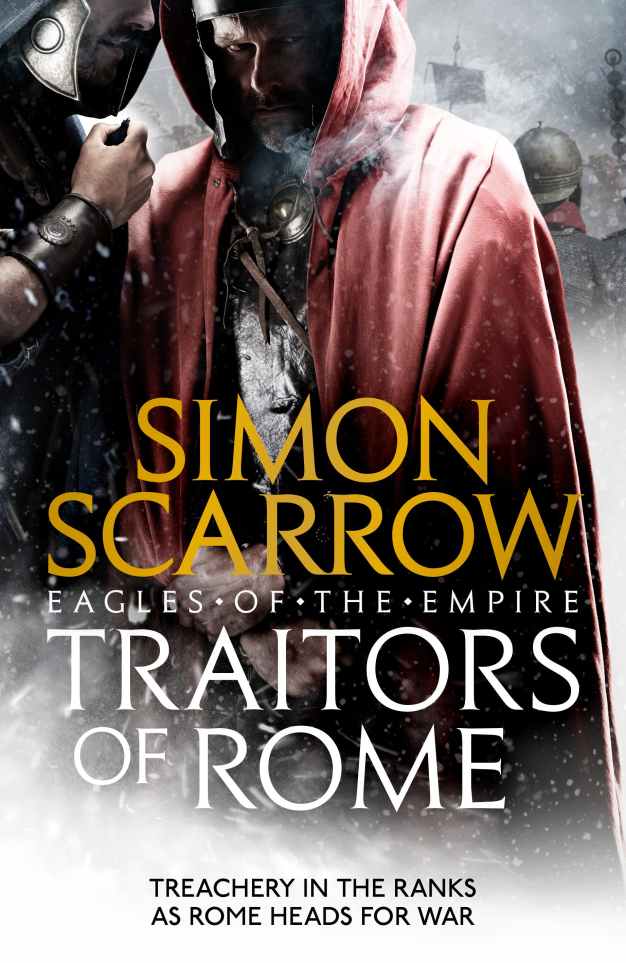
Traitors of Rome by Simon Scarrow

Traitors of Rome Cover

Publisher: Headline (Trade Paperback – 12 November 2019)

Series: Eagles of the Empire – Book 18

Length: 447 pages

My Rating: 4.5 out of 5 stars

Amazon

From one of my favourite historical fiction authors, Simon Scarrow, comes the 18th book in his long-running Eagles of the Empire series, Traitors of Rome, which once again sends his protagonists, Cato and Marco, into another dangerous scenario against Rome’s enemies. This is another of Scarrow’s books I have really been looking forward to, especially after enjoying the previous entry in the series, The Blood of Rome.

In AD 56, Rome and its great eastern rival, Parthia, are on the brink of war. Both the Roman Emperor Nero and Parthia’s king, Vologases, are in need of a great victory to fully secure their rule, and Rome’s territory has already begun to experience raids from a Parthian noble. Into this chaos Tribune Cato and Centurion Marco have been sent. Leading a cohort of Praetorian Guards, Cato and Marco have been assigned to serve under General Corbulo, who has gathered a force of over 20,000 Roman soldiers to fight against the Parthians. Unfortunately, most of the men under his command are badly trained and ill-prepared for battle, and Corbulo is desperate for more time to get them into shape.

To that end, he orders Cato to lead an embassy into Parthia to negotiate a peace treaty with Vologase. This embassy’s purpose is to delay the Parthian offensive long enough for Corbulo to finalise his preparations. Leading a small group of soldiers and accompanied by one of the general’s agents, Cato makes his way into Parthia, beset by raiders and pirates, with an uncertain reception from Vologase and his nobles awaiting him.

At the same time, the small kingdom of Thapsis on the border near Parthia has risen in revolt against Roman rule. Determined to swiftly end the revolt Corbulo leads a force to retake the kingdom with Marco at his side. However, what was initially believed to be an easy victory quickly turns into an arduous campaign as the Romans encounter heavy resistance. Worse, the harsh conditions and the even harsher discipline of Corbulo soon begin to wear on the soldier’s morale and loyalty. As Cato and Marco attempt to succeed in their missions, both officers are beset by unexpected setbacks and suspicious activities. It soon becomes apparent that a Parthian spy has infiltrated the Romans and is sabotaging their efforts and stoking a mutiny amongst the Roman ranks. Can Cato and Marco catch them before it is too late, or will this be their final mission?

This latest book from Scarrow is a fantastic and enjoyable read which features a cool new story with some unique and intriguing elements to it. I really like where Scarrow took the plot in Traitors of Rome, as he utilises two separate but equally enjoyable storylines by splitting up the two protagonists and sending them on separate missions. Both of the storylines are fairly different from each other, with Marco’s storyline being the more classic Roman military operation, while Cato’s storyline features a clandestine operation behind enemy lines with major political and espionage ramifications to it. This makes for a more complex narrative, but I found that the two different storylines worked very well together, and I really enjoyed seeing both of these plots progress. Scarrow does a good job of splitting the book between these two thrilling adventures and both of these storylines are a lot of fun.

I like some of the different elements that Scarrow featured in this fantastic, action-packed story. For example, the Cato plot had a really good team-up between Cato and the mysterious “clerk” Apollonius of Perga, a shrewd and ruthless agent of the general who lives to be mysterious and who Cato does not know if he can trust. Their relationship eventually evolves into grudging mutual respect, especially after they are forced to escape from Parthia in a great part of the book which sees them pursued by the army and other opportunists across the land. The Marco plot is also really intriguing, as it focuses on the difficult campaign to conquer Thapsis and the resultant hardships faced by the Romans when their supply lines are broken. This devolves into a messy situation where the men are fast losing their morale and General Corbulo’s harsh and unjust punishments to maintain military order and discipline start to push them in the direction of a mutiny. How this whole situation breaks down over the course of the campaign is rather fascinating, and of course Marco is caught in the middle of it. These two separate storylines come together in a great way towards the end of the book, and it looks like the series will be going in a new direction for the next book.

As always, Scarrow is a master of writing excellent historical action sequences, and after 18 books his depictions of Roman military combat have gotten pretty darn good. There are a few large-scale battle scenes throughout this book which show off Roman close-combat fighting, and the reader gets to see several other Roman battle strategies put into play. There are also several smaller-scale fights, especially in the Cato storyline, where Cato and his men face off against a more disparate array of opponents, from Parthian patrols to pirates. All of these action sequences are really well written and provide the reader with all their required excitement and thrills.

Overall, Traitors of Rome was another fantastic addition to Scarrow’s outstanding Eagles of the Empire series. Scarrow has produced another intense and exciting adventure story which goes in some cool new directions and once again puts his likeable protagonists in the middle of some major conflicts with their lives on the line. This is still one of my favourite historical fiction series of all time and is probably the best long-running Roman military sagas out there. It does feel like this series is starting to wrap up, especially as Marco gets married in this book and starts talking about retirement; however, this might be some sort of prelude to a great tragedy that keeps him in the army. Still, I am very much looking forward to the next book in the series, and I cannot wait to see where the story goes next.

Amazon

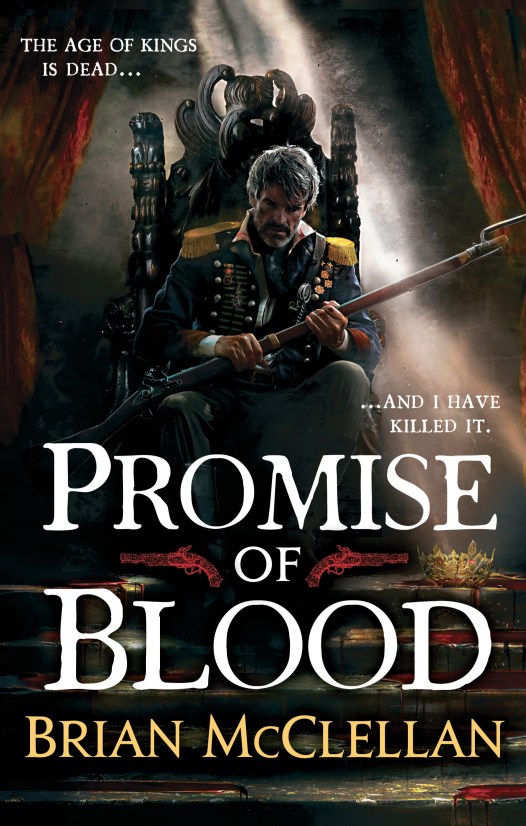
Throwback Thursday – Promise of Blood by Brian McClellan

Promise of Blood Cover.jpg

Publishers: Orbit

                        Hachette Audio

Publication Date – 16 April 2013

Amazon

Reviewed as part of my Throwback Thursday series, where I republish old reviews, review books I have read before or review older books I have only just had a chance to read.

One of the saddest realities of being a bibliophile is that no matter how hard you try or how much spare time you have, no one can read every great book that comes out every year.  I am no exception to this rule, as for years I was mainly focused on the historical fiction genre.  While this is a fantastic genre to focus on, it did mean that I missed out on many of the biggest science fiction and fantasy releases for the last several years.  Ever since I expanded my attention to a range of other genres, I have been seeking out and reading a number of different fantasy or science fiction books and series, many of which I have or will review on my blog and on Goodreads.  One of the series that I have heard constantly praised by friends, fantasy fans and other book reviewers is The Powder Mage trilogy by Brian McClellan.  Nearly every fantasy reviewer and their dog has read and said good things about these books and, as a result, The Powder Mage trilogy has long been at the top of my to-read list.  So when I was recently able to fit the first book in the trilogy, Promise of Blood, into my reading schedule, I thought I would try it out and see if it lived up to everyone’s hype.

The Powder Mage trilogy are the debut novels of fantasy author Brian McClellan, and are a flintlock fantasy series, which is a modern fantasy sub-genre that features pre-industrialisation civilisations who utilise flintlock firearms with fantasy elements.  The Powder Mage trilogy started in 2013 with Promise of Blood, which the author followed up with a new book in 2014 and 2015.  Following the success of his initial trilogy, McClellan introduced a second trilogy, the Gods of Blood and Powder trilogy, which is set 10 years after the events of The Powder Mage trilogy.  This second trilogy is still ongoing, with the third and final book set to be released in November of this year.  In addition to these two main trilogies, McClellan has also written a number of novellas and short stories set in the same universe as his main books, which expand on his fantasy world.

McClellan has created a new and captivating fantasy world in order to contain the stories in his two main trilogies.  The Powder Mage trilogy is primarily set in the nation of Adro, one of nine nations that were founded thousands of years ago by the god Kresimir, which are together known as The Nine.  By the start of the first novel, Promise of Blood, the nations of The Nine have reached a level of technology equivalent to Europe’s pre-industrial revolution period, with flintlock firearms in heavy use.  Magic is also common in this world, with the nations of The Nine containing three separate levels of magical ability.  These include the privileged, extremely powerful sorcerers who can wield a range of devastating elemental abilities; the marked, lesser mages with more specific gifts; and the knacked, who have one specific magical talent, like a perfect memory or not needing to sleep.  The privileged of The Nine are generally organised into sorcery cabals, with the most powerful organised into a Royal Cabal loyal to the King of their nation.

Promise of Blood starts with Field Marshal Tamas, the highest-ranked military officer of Adro, leading a bloody coup against his country’s corrupt king and nobility.  During the coup, Tamas and his powder mages, marked whose abilities are powered by gunpowder, assassinate every member of Adro’s Royal Cabal.  However, every member of the Royal Cabal said one thing before they died, “You can’t break Kresimir’s Promise”.  In order to find out the meaning of these mysterious words, Tamas hires former police inspector Adamat to investigate.  While Adamat sets out to uncover meaning behind these mysterious final words, Tamas begins the difficult process bringing order to his country.  However, it soon becomes apparent that staging the coup was the easiest part of his endeavour.

Tamas’s coup provokes a war with the Kez, one of Adro’s rival nations in The Nine, whose previous attempts to control Adro’s king, led to Tamas overthrowing him.  As Tamas deals with assassins, Royalists, deposed nobles and Kez magicians, it soon becomes apparent that someone on Tama’s council has betrayed him.  Brought in by Tamas to investigate who betrayed him, Adamat finds his loyalties tested when mysterious figures target him and his family.  At the same time, Tama’s estranged son, Taniel Two-Shot, embarks on a hunt for a surprisingly powerful member of the Royal Cabal who escaped Tamas’s powder mages.

Both Adamat and Taniel’s missions reveal dark secrets about the formation of their country.  With dark omens in the sky and ancient legends come to life, can Tamas and his forces stop the destruction of Adro, or will the mysterious forces arrayed against them succeed in their mission to summon forth an ancient power?

To be honest, even before I heard about this trilogy from other book lovers and reviewers, I thought the synopsis was pretty cool and the idea of gunpowder-wielding mages was an interesting concept.  I listened to the audiobook format of Promise of Blood, narrated by Christian Rodska, which goes for a lengthy 19 hours.  Now the question is; did this book live up to the hype?  The answer is yes.  I loved this book, I thought it was massively creative, filled with incredible action, had some complex, if mostly male, characters and made use of some excellent fantasy elements.

I really enjoyed the story within this book and I thought it was an amazing combination of intrigue, action and fantasy storytelling.  I liked the idea of starting the book just as a successful coup had taken place and the focus on the immediate aftermath of such a significant event.  The story is essentially broken into three main parts.  About a third of the book is told from Adamat’s point of view and really focuses on the intrigue elements of the story.  Adamat at first investigates “Kresimir’s Promise”, which is a fairly interesting part of the book, as it dives into the history of the country, and quickly reveals that shadowy forces are at play behind the scenes.  This initial investigation only lasts for a short part of the book, before Adamat is drawn into the larger investigation about the traitor in Tamas’s council.  This is a very well done investigation part of the book as the reader is presented with five suspects, each of whom is hiding several secrets and many of which have suspicious employees.  In addition, Adamat has to deal with a mysterious figure who is blackmailing him, and who keeps the identity of his employer secret.  These multiple layers of intrigue and lies ensures that the reader is looking in several different directions and have a much harder time guessing who these antagonists are.

Another third of the book is told from Taniel’s point of view, and follows him as he first hunts down a powerful privileged, and then finds himself stuck in the middle of a large battle for the survival of Adro.  While there are quite a lot of reveals about some of the book’s underlying fantasy elements in this part of the book, the main focus is on the action, as Taniel and his allies fight a number of opponents, and Taniel reveals while he is known as Two-Shot.  There is some interesting character work in this section as Taniel works through his feelings for his father, finds himself having to choose between obeying orders and the life of his best friend, and him coming to terms with his weird relationship with the powerful female character, Ka-poel.

The final main part of the book is told from the point-of-view of Tamas himself, and deals with the fallout from his coup and the multitude of issues he has to deal with in the aftermath.  The parts of the book focusing on Tamas are the most important chapters within Promise of Blood, as they bridge the other two sections of the book due to Taniel and Adamat not really interacting too much during the book.  The Tamas chapters have the best balance of Promise of Bloods’ excellent combination of fantasy elements, intrigue and action.  Throughout these chapters, Tamas is constantly forced to deal with the political infighting and betrayals occurring all around him, while also being targeted by assassination or capture by his various enemies.  Tamas also encounters a number of hints about the true nature of the fantasy events impacting Adro, including from a bizarre chef, and I loved the layers of intrigue that surrounded something most of the characters believed was a myth.  I really liked Tamas as a character, and I found him to be an intriguing combination of a calm, tactical genius and an absolute rage monster.  Despite alienating most of the people around him, especially Taniel, deep down Tamas is a good man who has been forced to make the hard decisions no-one else will.  However, when enraged he is an absolute terror to behold, especially to someone who has crossed his friends or family, and during these scenes of anger he gives several of the best lines, such as the one that appears on the cover:  “The age of kings is dead, and I have killed it”.  He is an absolutely great character and a fantastic focus for this trilogy.

In addition to these three main characters, a small portion of the book is narrated by female character Nila.  Nila’s character really is not explored too much in Promise of Blood, although she is given a good introduction, and I understand she will become a much bigger character in the next books in the trilogy.  On top of the main characters, there are several excellent side characters who really make this book extra awesome.  This includes Tamas’s bodyguard, Olem, a sarcastic and funny man who acts as Tamas’s moral compass for much of the book, and who also has certain ideas about people shooting his dog.  There is also Sousmith, Adamat’s bodyguard, a former boxer who acts as a fun foil to Adamat’s detective character.  While several characters at the Mountain Watch are also enjoyable, you have to love Ka-poel, the mute, witch who serves as Taniel’s spotter.  She has some crazy magic to her, and I have a vague feeling (without knowing anything about the plot of the future books) that she is some sort of young god or something.  I liked the way that Ka-poel was able to express everything, despite being a completely non-verbal character, although the implied romance between her and Taniel was a tad weird, especially as it started the moment he realised she was older than she looked.

The world building in this book is extremely impressive and it serves as an outstanding introduction to the key elements of the series’s universe.  While the other magical and fantasy elements of this book are pretty awesome, I especially loved the powder mages, and their magic is easily the best part of the book.  The powder mages have a unique blend of abilities, all of which are powered by eating or snorting gunpowder.  Consuming the powder gives them focus, enhanced perception, great strength and stamina.  In addition, they have control over gunpowder, igniting at will, and using their abilities to manipulate bullets in flight.  Each of the characters have different abilities on top of that.  Tamas can ricochet bullets around a room; Taniel can fire bullets further than anyone else, as well as firing two bullets at once; while another powder mage, Vlora, can ignite powder from a distance.  These characters in battle are absolutely fantastic, and I love it when these characters, especially Tamas, fully unleash their abilities.  The fight scenes between the powder mages and the privileged were exceptionally amazing, and I loved the contrast between the more traditional fantasy magic of the privileged and McClellan’s more unique powder magic.  That being said, when the privileged unleash their abilities they can be much more destructive, and some of their fights are pretty impressive.

I had a wonderful time listening to the audiobook format of Promise of Blood, and I thought that it was a spectacular way to enjoy this amazing story.  The action sequences, especially when the magic and bullets are flying, really come to life when narrated, and audiobooks always help me absorb complex new fantasy worlds such as the one in this series.  Rodska’s narration is really well done, and I found that he really captured the essence of the characters.  I especially thought he got the gruff and powerful voice of Tamas down perfectly, and it was an extremely realistic personification of the character’s voice.  I really hope that Rodska does the narration for the other books in McClellan’s series, and I would easily recommend the audiobook format of Promise of Blood to anyone interested in this series.

Overall, I really loved Promise of Blood and I found that it lived up to its substantial hype.  It’s easily a five-star novel in my eyes.  I loved this book so much that I am planning to listen to the remaining books in The Powder Mage trilogy as soon as I can, and I will probably also try and listen to the first two books in the Gods of Blood and Powder before the final book comes out in November.  McClellan is a fantasy genius, and anybody who loves action and explosions should invest the time to read this book.

My Rating:

Five Stars

Amazon