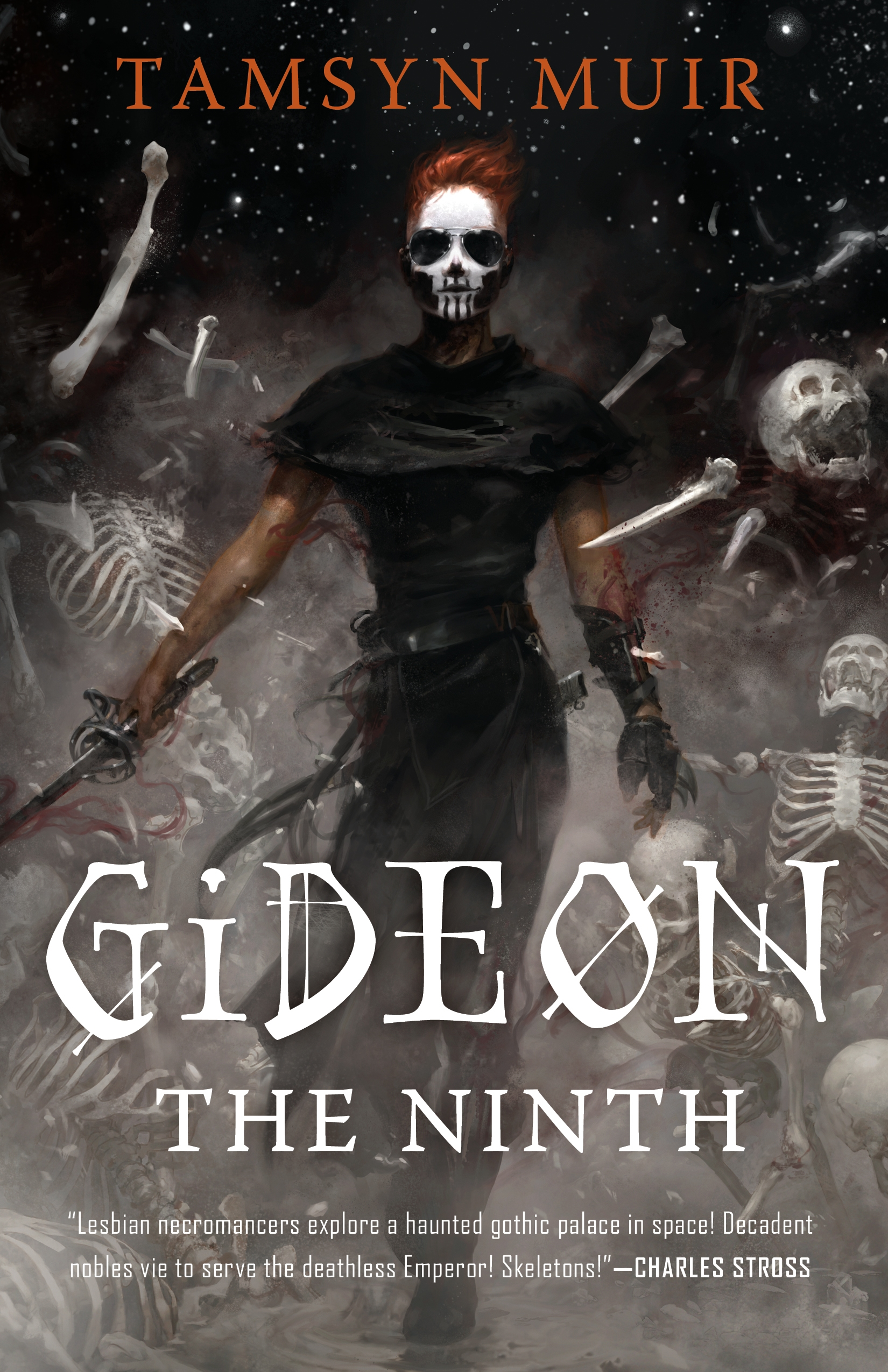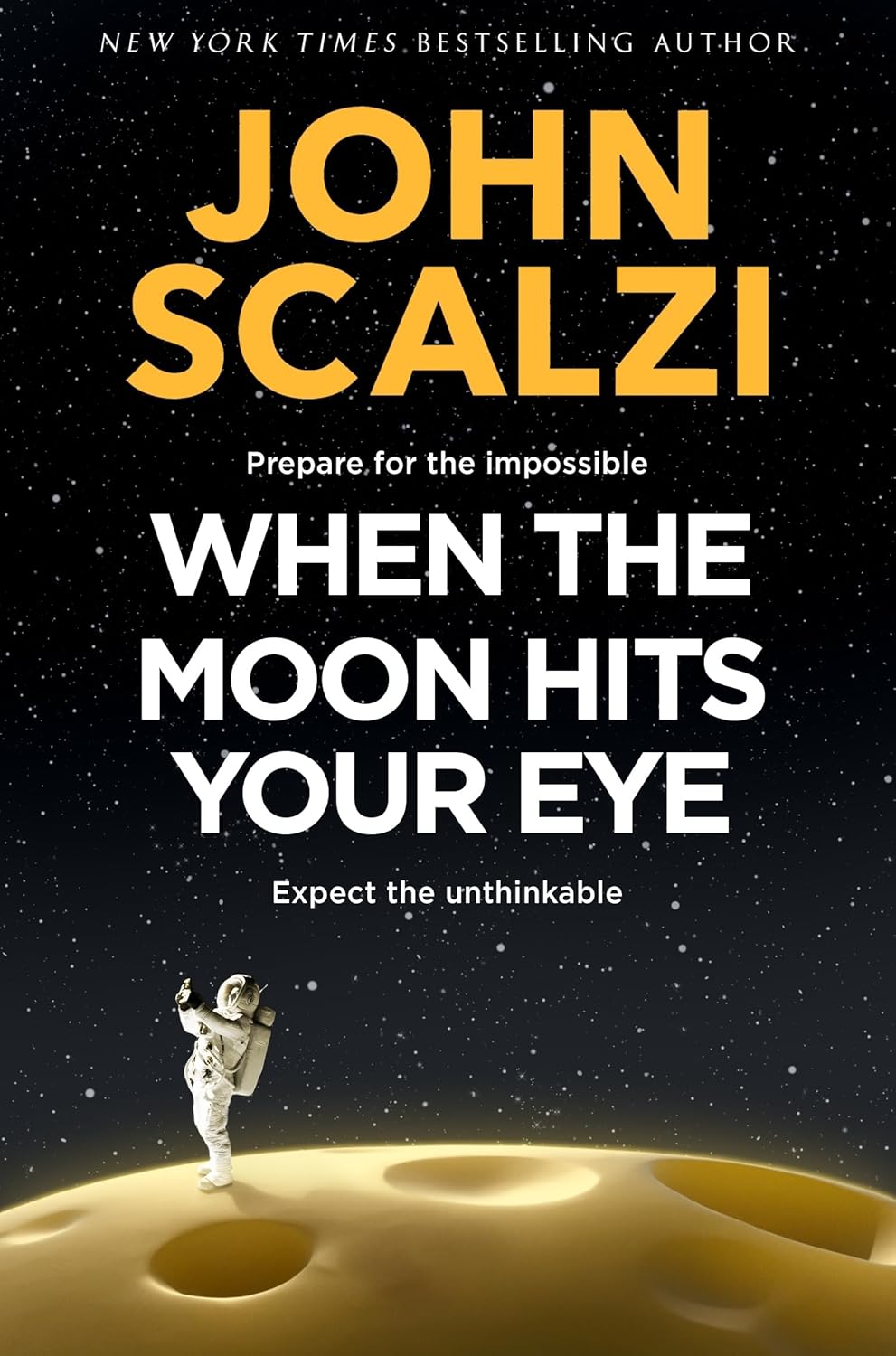
When the Moon Hits Your Eye by John Scalzi

Publisher: Tor (ebook – 25 March 2025)

Series: Standalone

Length: 336 pages

My Rating: 4.75 out of 5 stars

Amazon

Prepare for one of the most outrageous and original science fiction novels of 2025 with the fun, heartwarming and very entertaining novel, When the Moon Hits Your Eye by the always fantastic John Scalzi.

John Scalzi is a very entertaining science fiction author who has been providing his unique take on the genre for years.  Best known for Old Man’s War and The Interdependency series, Scalzi has also written a range of distinctive standalone science fiction novels that provide interesting takes on the world, as well as satirising certain elements of pop culture.  I have had a wonderful time reading novels like Redshirts, The Kaiju Preservation Society and Starter Villian, and all of them proved to be amazing books.  As such, I have been making a strong effort to read all Scalzi’s new novels, including his 2025 release, When the Moon Hits Your Eye.  A captivating read with a unique premise behind it, When the Moon Hits Your Eye was one of my most anticipated books of 2025, and I am so glad that I got the chance to read it.

Plot Synopsis:

The moon has turned into cheese.

Now humanity has to deal with it.

For some it’s an opportunity. For others it’s a moment to question their faith: In God, in science, in everything. Still others try to keep the world running in the face of absurdity and uncertainty. And then there are the billions looking to the sky and wondering how a thing that was always just there is now… something absolutely impossible.

Astronauts and billionaires, comedians and bank executives, professors and presidents, teenagers and terminal patients at the end of their lives — over the length of an entire lunar cycle, each get their moment in the moonlight. To panic, to plan, to wonder and to pray, to laugh and to grieve. All in a kaleidoscopic novel that goes all the places you’d expect, and then to so many places you wouldn’t.

It’s a wild moonage daydream. Ride this rocket.

Alright, so I knew going in that I was going to love When the Moon Hits Your Eye, primarily because it’s John Scalzi examining what happens when the moon turns to cheese, and that’s such an awesomely wacky premise.  However, even with that expectation, I was surprised at how much fun I had with When the Moon Hits Your Eye, especially as Scalzi presents a compelling, thoroughly amusing and genuinely nice book that I ended up powering through in only a couple of days. 

This was an extremely enjoyable novel, and I loved the impressive and multi-layered narrative that Scalzi was able to wrap around his original central plot idea.  Starting with a couple of great introductory chapters that showcased the people of Earth becoming aware of the makeup of the moon suddenly and inexplicably changing from rock to a cheese-like substance, the book soon evolves into a series of loosely connected stories, set over the course of the first lunar cycle of the new cheese moon.  These stories are designed to show the various reactions people in America have to the moon’s sudden change, and Scalzi has fun coming up with a range of great scenarios that only he could imagine.  Many of these involve scientists, government officials and astronauts as they explore the more scientific nature of the cheesy moon and how it impacts the larger world, and this forms the core of When the Moon Hits Your Eye’s narrative, moving the overall plot along with new developments.

These main stories are well mixed with much more personal tales of ordinary people who find the unusual world circumstances impacting their lives in various ways as they try to make sense of their new reality.  Scalzi really tries to showcase different layers of society with these stories, as he explores how religious people, philosophers, pop scientists, movie producers and even cheese shop owners would react to the unlikely scenario.  These resulting ordinary-people based narratives blended extremely well with the core storylines about the official examination of the new moon and provided the reader with an outstanding range of emotions, humour and complex character-driven tales that expertly captured the human experience and examine how people react to the unexpected and the impossible.

Scalzi goes a variety of interesting places as the overall narrative of When the Moon Hits Your Eye continues, and I appreciated how well he set out the crazy lunar cycle.  There is a more desperate edge to the second half of this book, especially as the cheese-based moon causes massive problems for the world, but this allows Scalzi to really dive into the emotional heart of the story, especially as he revisits several characters throughout the course of the book to see how these impossible events have changed their perspective and lives.  The story comes to a very interesting, if slightly sudden, end, and while I think there was room for Scalzi to possibly provide readers greater closure with some of his character arcs, I felt that his conclusion was fun and fitting, especially with its cynical, if realistic, take on Earth’s future and how it will likely look back at the past.

This ended up being a very fun and moving novel, especially as Scalzi really dove into the human side of the problem and tried to examine the various ways people would either come together and drift apart over something this insane happening.  While I’m sure some of book’s science is a little iffy, Scalzi sells the entire event in a realistic manner, and anyone can come into When the Moon Hits Your Eye and follow along with its plot, especially when it comes to the moving character-focused stories.  Scalzi has a real talent for creating some elaborate short narratives around interesting protagonists, and the cool range of cool stories set under the book’s big plot event were all quite entertaining and unique in their own way.  While some go for outright humour, others try to mirror recent real-world events, while more have much more personal and complex stories that looked at the darker side of the changes to the moon.  All feature Scalzi’s realistic and relatable characters, and I felt that the author had a great, if cynical handle, on the modern mindset and the different ways humans would react to a sudden, major event like this.

As for the many cool stories contained within When the Moon Hits Your Eye, I tended to enjoy the more outrageous or outright funny tales, primarily because Scalzi used his imagination to come up with some truly hilarious, if surprisingly realistic moments.  For example, one brilliant chapter focused on a Hollywood producer bombarded by moon and cheese focused screenplays, each one more ridiculous then the last.  Other highlights included stories following employees of an entitled uber-wealthy who wants to become the first person to eat moon cheese, a poorly received Saturday Night Live taping, and a Vegas-based narrative resulted in a very over-the-top political scandal, all of which made me chuckle.  These funnier stories were well balanced by more heartfelt narratives in unusual times, such as the tales surrounding two rival cheese shops that resulted in romance, familial reconnection, and other tales of emotional growth.  I personally found myself connecting to a particularly moving story about an aspiring and struggling fantasy author whose writing dreams are eclipsed by the changes to the moon.  Throw in several more central plot threads that move the story along in some surprisingly dark ways, including the narratives surrounding a billionaire tech-mogul with delusions of grandeur.  These stories all form quite an impressive narrative web, and I really cannot emphasise just how well they came together, nor how entertaining they are both a singular and a joint level.

John Scalzi dives into one of his craziest scenarios with When the Moon Hits Your Eye, an ultra-compelling and fantastically over-the-top novel that I couldn’t get enough of.  Smart, moving and oh-so funny, When the Moon Hits Your Eye was a breathtaking novel that brings you laughs, joy, and Scalzi’s brilliant insights into human nature.  A highly recommend book for anyone looking for something entertaining or just a little unusual.
Amazon

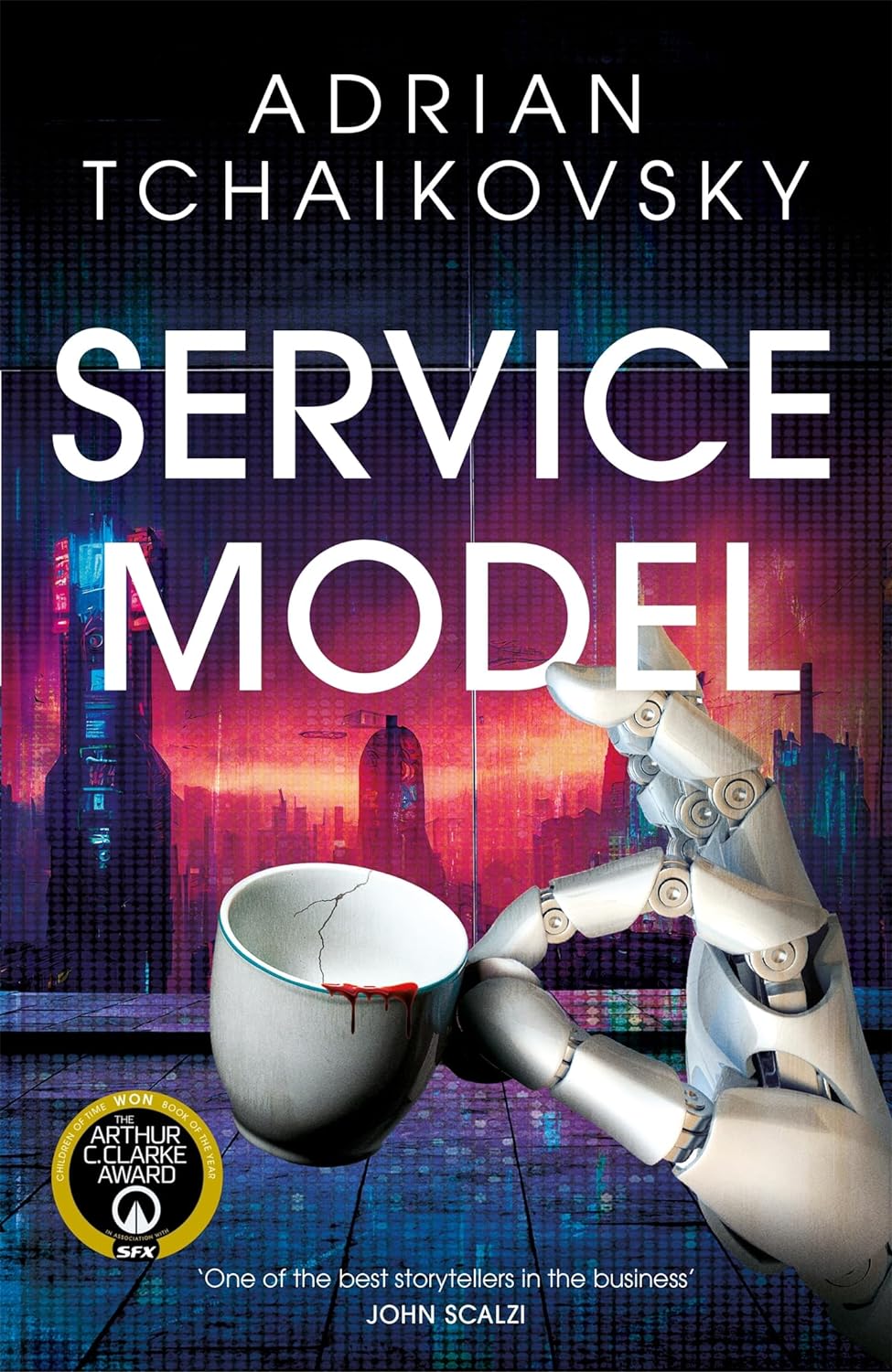
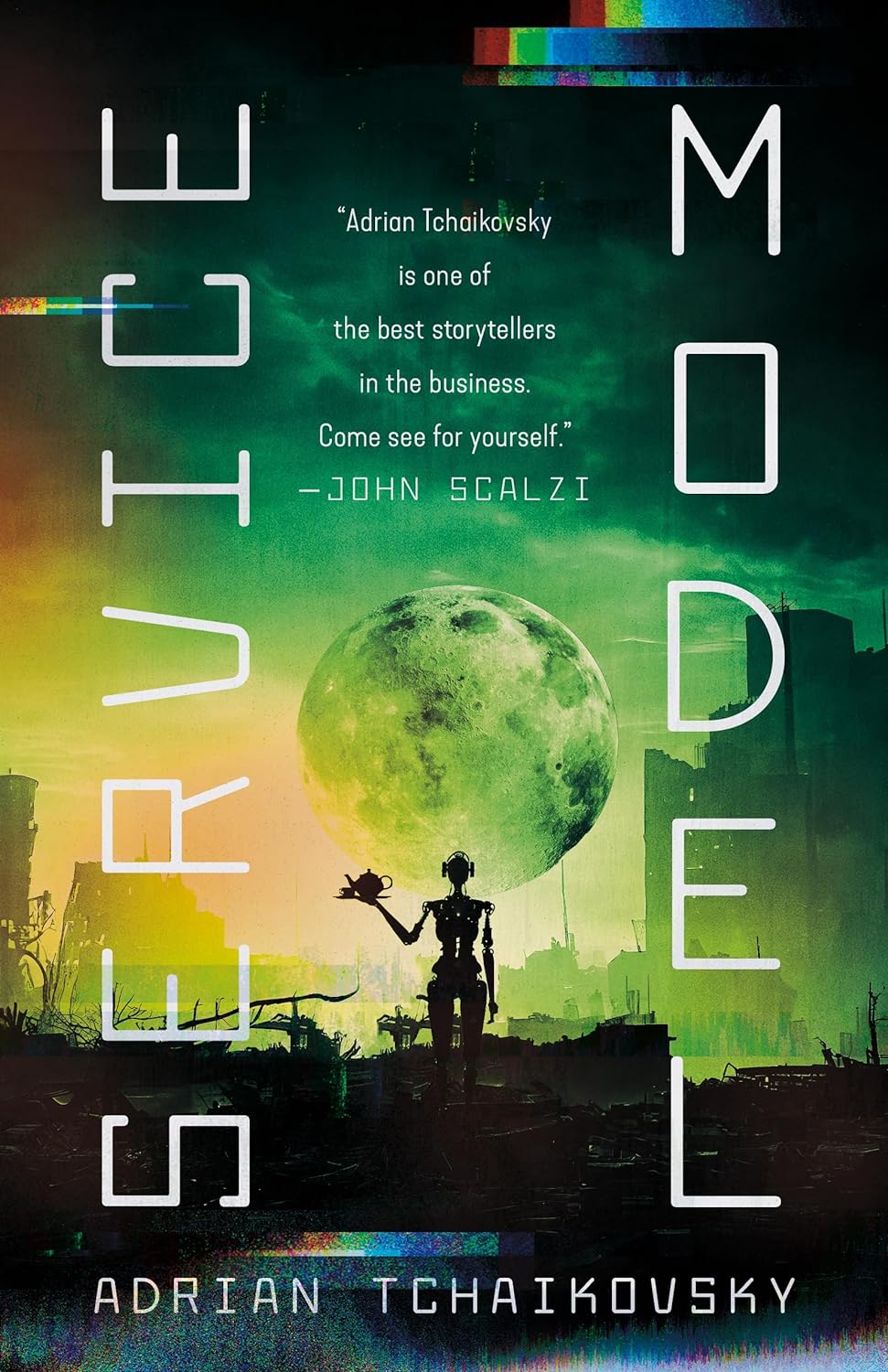
Service Model by Adrian Tchaikovsky

Publisher: Tor (ebook – 6 June 2024)

Series: Standalone

Length: 369 pages

My Rating: 5 out of 5 stars

Amazon

The line between man and machine is about to blurred in the most hilarious of ways as one of the world’s best science fiction authors, Adrian Tchaikovsky, presents the brilliantly satirical novel, Service Model.

The last couple of years have seen me really get into the writings of acclaimed author Adrian Tchaikovsky, whose work in the fantasy and science fiction genres has been truly amazing.  While Tchaikovsky has written many books over the years, I am more familiar with his recent works, including the novella Ogres, one of my favourite Warhammer 40,000 novels, Day of Ascension, and his first two Tyrant Philosophers novels, City of Last Chances and House of Open Wounds, both of which were amongst my favourite books of 2023.  2024 has proven to be a particularly big year for Tchaikovsky, as he has released four separate books.  The first of these, Alien Clay, was a compelling and memorable science fiction adventure on a deadly prison planet filled with unusual alien life, and I had a great time with it.  I also made sure to check out the brilliant and fantastic novel, Service Model, which had a hilarious plot behind it that I just couldn’t turn away from.

In the far future, the remnants of humanity are utterly reliant on artificial labour and service.  Living in estates completely staffed by robots and advanced computer systems, the remaining humans have every aspect of their lives taken care of.  But what happens when their robot servants find new and dangerous ideas loaded into their heads?

Charles is the loyal body robot to one of these humans.  Content to serve and enact the often confusing and contradictory orders of his master, Charles’s life is one of routine and protocol.  That is until one day an apparent fault in his programming causes him to murder his master.  Now without an employer or a purpose, Charles is forced to leave the household and embark on a journey into the wider world, one he never knew existed.  Here, despite all his expectations, he encounters a crumbling world in which all the humans are gone and the robots that remain are stuck completing illogical or impossible tasks.

After a chance encounter with a mysterious and self-determined figure, Charles embarks on a new mission, to find new employment as a body servant and once again gain purpose.  However, finding a suitable employer in this new world is tricky as every potential boss is dead, insane, or trapped within their own contradictory tasks.  It soon becomes apparent that if Charles is to once again find a suitable purpose in life, he must either find the cause for humanity’s fall or take everybody down with him.

Service Model was a very clever, entertaining and compelling science fiction adventure that I could not get enough of.  Featuring Tchaikovsky’s trademark satirical wit and unique outlook on all manner of life, Service Model was a particularly awesome read that was equal measures funny and tragic, but all entertainment.  A fantastic and inventive novel I had to give a full five-star rating to.

Tchaikovsky really went out of his way to produce a hilarious and intense story about life, decisions and the crumbling future in Service Model, and I loved every single mad second of it.  Set around the unlikely protagonist, Charles (later rechristened Uncharles), Service Model starts with Charles satisfied with his existence as a body servant, until he unexpectantly kills his master.  Forced to leave the manor, Charles journeys towards the repair yard, only to discover that the world is nothing like he expected, and that everything built by humans is failing, taking the robots down with them.

Faced with nothing but inconsistencies and illogical fellow robots, Charles embarks on a quest to find a new human master or some form of purpose.  Assisted and occasionally hindered by the strange robot The Wonk, who is definitely not a human in disguise, Charles encounters the many unlikely and unusual examples of continued society left in the world, from an illogical attempt to keep human society going (essentially a human zoo), a group of insane librarians (more insane than typical librarians), rival robot armies, and other outrageous occurrence of robotic life.  The book pretty much revolves around Charles and The Wonk discovering these societies, learning their flaws, and then trying to find a way to help or escape their respective crazy ideas.  There are a ton of highly amusing interactions and outrageous scenes throughout this intense quest, and I loved some of the wonderfully weird scenarios that emerged as Tchaikovsky utilises his considerable imagination to envision the grim future.  Everything ends on a very interesting note, as the protagonists find the answers they are looking for, even if it’s not what they wanted, and there is a hopeful conclusion that fits the recurring themes of Service Model perfectly and leaves the reader thoughtful going out.

Service Model ended up being an outstanding and complex standalone science fiction novel that perfectly combined a fun adventure story with the author’s cynical humour to create a powerful and inventive read.  Tchaikovsky utilises a unique writing style for this book, that seeks to really drive home the robotic nature of the main protagonist to the reader.  While this does result in some aesthetic and stylistic choices that some readers might not enjoy, especially around the dialogue, I personally felt that it fit the story perfectly and was a clever way of expressing the thoughts and motivations of the unusual point of view protagonist.  You really begin to appreciate the programmed, yet changing, mindset of Charles as the book continues, and it proves interesting to slowly see this robot realise just broken the world around him is.  There are some surprisingly deep emotional moments captured within this tale of automated life, especially tied around the great characters of Charles and The Wonk, and it was fascinating and touching to see how they developed together.  As such, Service Model proves to be a multi-layered and complex read, and it proves very hard to pull away from it at times.

One of the main reasons that I enjoyed Service Model so much was the fantastic and intelligent humour that Tchaikovsky infused his story with.  Like with most of Tchaikovsky’s more light-hearted books, much of this humour is tied into the author’s cynical view of humanity and the future, and I loved once again seeing the author’s take on how doomed we are.  In Service Model, a lot of this humour is tied into the failure of systems, overreliance on technology and human shortsightedness as the various robot characters try to enact the various incomplete, ill-advised or just plain insane commands of the former human masters.  There are so many examples of Charles or other robots trying to complete these instructions to the best of their ability, only to bring greater chaos or misunderstanding to those around them, and it is fun, if a tad depressing, to see these events unfold.  Tchaikovsky throws in even more insane occurrences of this, as certain robots have taken their former illogical instructions or existing systems too far, resulting in elaborate quests, wars or other activities, often for a broken or non-existent purpose.  Seeing the protagonist explore these events and either try to navigate them or find their place within them results in some very absurd but clever moments, and I liked how Tchaikovsky played these events for laughs while also using them to show the protagonist just how broken the current way of thinking is.  I really enjoyed this dark humour, especially as the author uses it to make you think at the same time, and it helped to turn Service Model into quite an entertaining and captivating read.

Adrian Tchaikovsky continues to shine with this brilliant and addictive science fiction read.  Bringing together a compelling and moving story of self-discovery with some fantastic humour and a post-apocalyptic setting loaded with disorganised and distressed robots, Service Model keeps you laughing while also hitting you in the feels.  I had an exceptional time with Service Model, and it was a true pleasure to read.  I cannot wait to check out more of Tchaikovsky’s books in 2025, and my next stop will have to be the outstanding Days of Shattered Faith.

Amazon

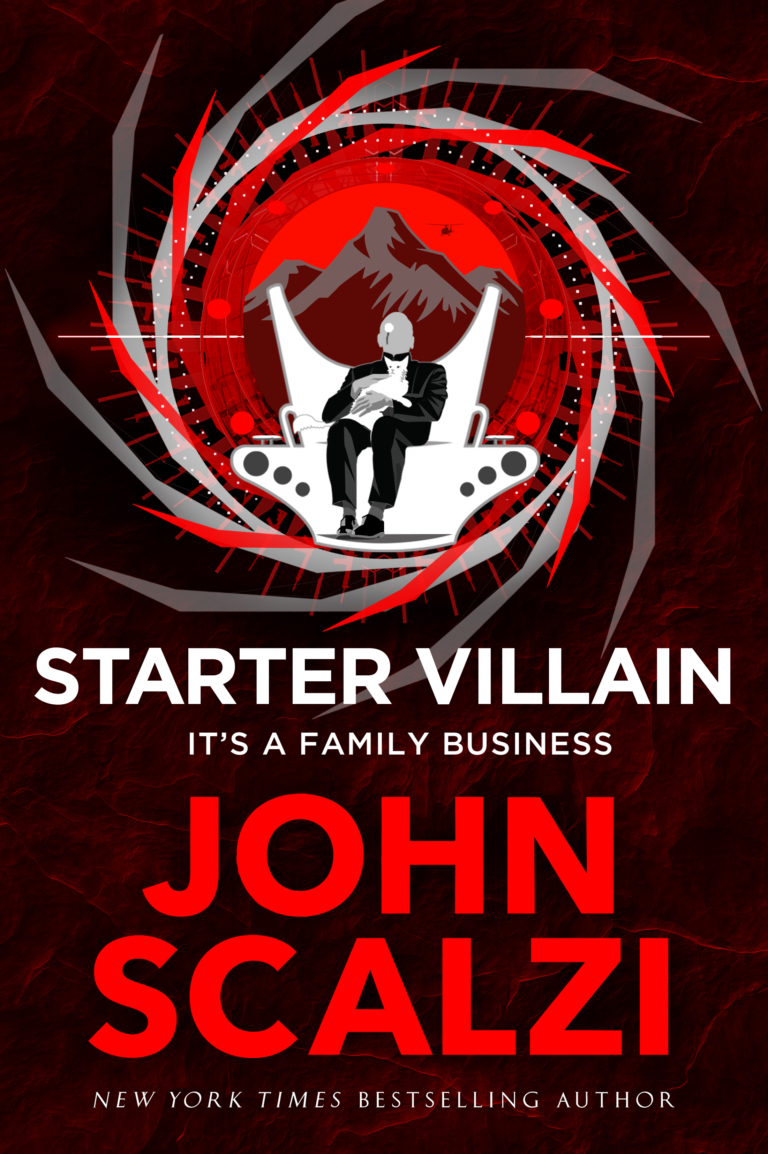
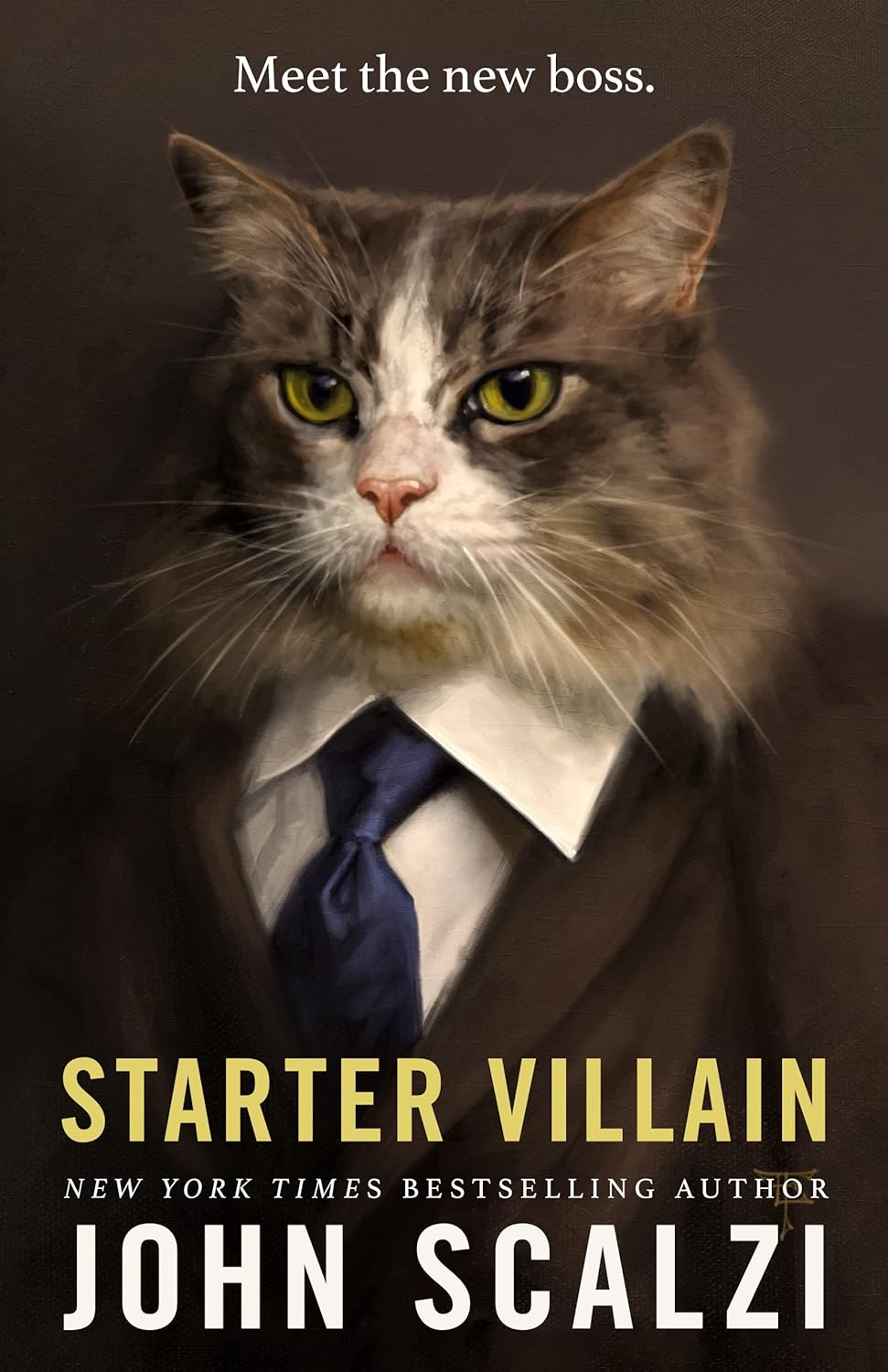
Quick Review – Starter Villain by John Scalzi

Publisher: Tor (ebook – 23 September 2023)

Series: Standalone

Length: 256 pages

My Rating: 4.5 out of 5 stars

Amazon

As we are getting towards the end of 2024, it’s probably about time I got around to writing something about one of the more hilarious and wildly entertaining books I checked out last year, the outstanding novel Starter Villain by John Scalzi.

John Scalzi is an outstanding science fiction author who has produced some intriguing and thoughtful books over the years.  Best known for his Old Man’s War series that followed the science fiction adventures of old human military volunteers whose minds are transferred to younger, genetically modified body, Scalzi is a highly inventive writer who creates some elaborate and powerful scenarios.  While he has written some very compelling science fiction series, I best know Scalzi from his standalone books where he and turns some outrageous ideas into wonderful tales of humanity.  My favourite is Redshirts, a fantastic and very clever Star Trek parody that imagines life aboard an Enterprise-esque ship from the point of view of the expendable lower-decks crew.  I also had a ton of fun with Scalzi’s 2022 novel, The Kaiju Preservation Society, which showcased the intriguing adventures of an organisation dedicated to preserving kaiju in a parallel universe.  All these books were very fun, which is why I made sure to grab a copy of the 2023 release, Starter Villian, which had a great plot behind it.


Plot Synopsis:

Inheriting your uncle’s supervillain business is more complicated than you might think. Particularly when you discover who’s running the place.

Charlie’s life is going nowhere fast. A divorced substitute teacher living with his cat in a house his siblings want to sell, all he wants is to open a pub downtown, if only the bank will approve his loan.

Then his long-lost uncle Jake dies and leaves his supervillain business (complete with island volcano lair) to Charlie.

But becoming a supervillain isn’t all giant laser death rays and lava pits. Jake had enemies, and now they’re coming after Charlie. His uncle might have been a stand-up, old-fashioned kind of villain, but these are the real thing: rich, soulless predators backed by multinational corporations and venture capital.

It’s up to Charlie to win the war his uncle started against a league of supervillains. But with unionized dolphins, hyperintelligent talking spy cats, and a terrifying henchperson at his side, going bad is starting to look pretty good.

In a dog-eat-dog world…be a cat.


This was a highly entertaining novel from Scalzi, who provides his own unique take on supervillains in all the best ways.  Starting off with a very comical funeral scene, Starter Villain only gets better from there as the protagonist, Charlie, finds his life unexpectantly changed when he inherits his uncle’s supervillain business and associated wealth.  Scalzi provides a fantastic introduction to the unique new world of super science and sinister business practices, and you are soon caught up in Charlie’s unlikely rise to the top.  The first half of the book is loaded with intriguing scenes as Scalzi lets his imagination run wild, and you have a fantastic time learning about sentient cats, crude talking dolphins constantly going on strike, and the other unlikely inventions and people that now make up Charlie’s life.  This compelling introduction to the world works well in setting up the second half of the story, as Charlie meets a cabal of similar uber-rich supervillains who all seek to exploit him.  When a series of events outside of his control force him into a battle of survival against these supervillains, Charlie needs all his new allies and his own unique ideas to win the day, even if victory isn’t quite what he imagined.

Starter Villain was such a lovely and impressive read, and I loved seeing Scalzi utilise his humour into something more terrestrial, yet still out of this world.  Featuring the author’s typical fast pace, Starter Villain hits the ground running and throws you right into the middle of Scalzi’s fantastic and memorable ideas.  The resulting story is clever, addictive, and features some amazing twists, all of which is very awesome to see unfold.  While there is a lot of mad science, Scalzi does try to ground the supervillain antics, and I loved the author’s thoughts on how such an organisation could exist in the modern world and what sort of nefarious actions they would participate in.  Naturally this means corporations and the uber-wealthy, which is depressingly accurate if you consider recent events, although this does mean that the antagonists are very easy to dislike and entirely unredeemable.  The author loads in so much clever humour around the general supervillain scenario, and I loved the fantastic jokes about the profession, the inventions that are being created, and the unusual ways they stay in power.  A lot of jokes about supervillains also provide some excellent commentary on current society, which cynical people like me will enjoy (a joke about a potential Australian recruit to the supervillain cabal hit close to home, which was just perfect).  This is a hilarious and well-put together read that expertly showcases the author’s inventive spirit.

I also want to mention the fantastic range of complex and eccentric characters featured throughout Starter Villain, who helped to make the story even more unique and funny.  Most of the book’s focus goes around the protagonist, Charlie, who finds himself thrust into a new world of dangerous rich elites and supervillain logic.  Charlie proves to be a great central figure for Starter Villain’s plot, mainly because he plays a great everyman character whose reaction to the narrative’s crazy events mirrors that of the reader.  While slightly bland compared to the other outrageous characters, Charlie does experience some excellent growth, especially as he learns to take responsibility and to appreciate the life he has.  I also enjoyed how Charlie, despite being new to the supervillain lifestyle, was able to work out solutions to his organisation’s big problems often by being his typical thoughtful self.  The rest of the characters in Starter Villain are all allowed to go wild due to having Charlie as the perspective protagonist, and I loved the array of talking dolphins, unusual scientists, murderous goons and rich manipulators that Charlie had to either work with or overcome.  My favourite figures were easily the highly intelligent sentient cats, who really run the company and who have been manipulating Charlie his whole life.  Scalzi has a lot of fun showcasing the cunning cats in charge, and I felt this whole awesome crew of characters helped to turn Starter Villain into an extremely fun read.

Overall, Starter Villain was an amazing read from John Scalzi that proves impossible not to love.  Featuring the author’s infectious humour and love for inventive scenarios, Starter Villain was such a great book, and I deeply enjoyed the author’s take on supervillain fiction.  Clever, unique and so much fun, Starter Villian is an exceptional read, and I really wish I had written a review for it sooner.  I will have to pick up my Scalzi game in the future, and not only have I got a copy of Old Man’s War to read at home, but I am eagerly awaiting his next book, When the Moon Hits Your Eye, which features a very, very interesting sounding story about the moon literally transforming into cheese, an idea I have so much love for and cannot wait to check out.

Amazon

Quick Review – Alien Clay by Adrian Tchaikovsky

Alien Clay Cover

Publisher: Tor (Audiobook – 28 March 2024)

Series: Standalone

Length: 13 hours and 55 minutes

My Rating: 4.5 out of 5 stars

Amazon

Adrian Tchaikovsky continues to dominate the science fiction genre with his intriguing new novel, Alien Clay, an awesome read that blends high-concept science with a fantastic and insightful look at human nature.

Chronic overachiever Adrian Tchaikovsky is an author who is swiftly becoming one of my favourite science fiction and fantasy writers.  A master of complex and highly inventive fiction, Tchaikovsky has deeply impressed me in recent years with some of his outstanding works, including Day of Ascension (one of my favourite Warhammer 40,000 novels), the novella Ogres, City of Last Chances (one of my favourite audiobooks of 2023) and House of Open Wounds (one of my favourite books of 2023).  Due to how awesome these recent books have been, I have been keeping a close eye on Tchaikovsky’s upcoming releases, and I was pleasantly surprised to find out that he had four books coming out in 2024, including three science fiction reads and a cool fantasy release.  The first out this year is the fantastic novel, Alien Clay, which saw a group of convicts deal with unnatural issues inside and outside their prison complex on a hostile alien world.

Plot Synopsis:

They travelled into the unknown and left themselves behind . . .

On the distant world of Kiln lie the ruins of an alien civilization. It’s the greatest discovery in humanity’s spacefaring history – yet who were its builders and where did they go?

Professor Arton Daghdev had always wanted to study alien life up close. Then his wishes become a reality in the worst way. His political activism sees him exiled from Earth to Kiln’s extrasolar labour camp. There, he’s condemned to work under an alien sky until he dies.

Kiln boasts a ravenous, chaotic ecosystem like nothing seen on Earth. The monstrous alien life interacts in surprising, sometimes shocking ways with the human body, so Arton will risk death on a daily basis. However, the camp’s oppressive regime might just kill him first. If Arton can somehow escape both fates, the world of Kiln holds a wondrous, terrible secret. It will redefine life and intelligence as he knows it, and might just set him free . . .


Alien Clay
was another awesome and complex read from Tchaikovsky that combined his trademark love of high-concept science fiction, with cynical examinations of human nature and society.  Set in a dark future where a tyrannical government places intense doctrinal limitations on scientific study, Alien Clay is told from the perspective of Professor Arton Daghdev, an ecologist who has been exiled to the Kiln labour camp in dramatic fashion due to his radical scientific and political thoughts.  Initially employed as a lab assistant researching the highly unusual biology and apparent extinct intelligent life on Kiln, Arton walks the thin line between rebel and survivor.  However, his actions soon lead to him to be forced to explore the planet’s surface, and the changes wrought by the alien biology outside will have a profound effect on everyone left on Kiln.

This proved to be another excellent standalone novel from Tchaikovsky, and you must appreciate his ability to craft another unique setting and set up a compelling narrative within it.  The alien planet the narrative is set around is loaded with unusual biological life that bonds with both itself and the human invaders in a very memorable manner, and I loved how weird things got at times.  Tchaikovsky blends the story of the protagonist attempting to survive on the planet, with an intriguing focus around political ideology, revolution, and scientific freedom of the future human society.  As such, Alien Clay turns into a mixture of science fiction adventure and a political dystopian thriller, as the protagonist is forced to navigate both to survive.  These elements are explored in immense detail by the author, and I loved how effortlessly he brings the unique future to life while also layering in some subtle critiques and observations about our own current society and where it is possibly going.

Tchaikovsky did a great job of showcasing all the unique features of Alien Clay through the eyes and mind of his protagonist, who is the position to understand all the science, politics, and social elements of the setting.  Loaded with a tragic and complex backstory, Arton proves to be a compelling and relatable protagonist to follow.  Forced to overcome the enforced conflicts of his society, the shock at being trapped on an alien world, his stymied scientific curiosity, and so many more setbacks, Arton attempts to find solace in the groundbreaking biology of Kiln.  However, when his plans for Kiln go out the window, thanks to the fantastically villainous warden of the prison camp, Arton and a group of other entertaining and compelling prisoners find out just how alive Kiln can be.  Tchaikovsky does an excellent job of combining various story elements, including the adventures on Kiln, Arton’s personal rebellious history, and all manner of scientific weirdness, into a single cohesive narrative, and the resulting explosive plot goes in some very interesting directions.  The author keeps the tension and intrigue up for as long as he can, including through cleverly skipping a key part of the story and only featuring it later through flashbacks.  The ending of the book is very Tchaikovsky and makes excellent use of his scientific and social observations and messaging.

I ended up listening to the audiobook version of Alien Clay, which proved to be a very enjoyable and interesting experience.  The audiobook, which had a run time of just under 14 hours, did a great job of telling Tchaikovsky’s complex story, and I appreciated how the story was presented in this format.  The unique and intriguing ideas from Tchaikovsky, both scientific and political in nature, really come across more effectively in this format, and I felt that I understood the many nuanced themes and messages that Tchaikovsky was trying to impart with his story a little better.  I also really enjoyed the narration featured in the Alien Clay as narrator Ben Allen proved to be an excellent addition to the production.  Allen did an amazing job capturing the complex figures with Alien Clay, and his compelling tones really helped to convey all the weird science and alien creatures that the protagonist encountered, as well as the intense personal issues surrounding the protagonist and his companions.  I honestly really enjoyed the Alien Clay audiobook, and I felt that this was a really great way to enjoy this compelling story.  There is also a fun interview between Allen and Tchaikovsky at the end, that will definitely appeal to fans of the author.

Overall, Alien Clay was a clever and unique science fiction novel that I had a fantastic time listening to.  Blending Adrian Tchaikovsky’s brilliant imagination and ability to tell a compelling and complex story, Alien Clay had me hooked the entire way through, and I loved how inventive and scientifically crazy the story got at times.  I am hoping to get to Tchaikovsky’s second novel of the year, Service Model, soon, and I have no doubt it is also going to be an outstanding read.

Amazon

Alien Clay Cover 2

Quick Review – Fractal Noise by Christopher Paolini

Fractal Noise Cover

Publisher: Tor (Trade Paperback – 16 May 2023)

Series: Fractalverse – 0.5

Length: 287 pages

My Rating: 4.5 out of 5 stars

Amazon

Return to the epic Fractalverse of the always awesome Christopher Paolini with this standalone prequel novel, Fractal Noise, a tense and impressive dark science fiction novel.

Christopher Paolini is an author that I have been a major fan of for a very long time thanks to his iconic and epic Inheritance Cycle series.  The amazing Inheritance Cycle first debuted over 20 years ago with the amazing fantasy novel Eragon, which told the compelling story of a young hero and his dragon companion as they fight to free a conquered land.  The Inheritance Cycle series is one of my all-time favourite series due to the great story, impressive world building, and the sheer nostalgia that I hold for them.  Indeed, I am particularly excited because Paolini is also releasing a sequel to the Inheritance Cycle books later this year with Murtagh, which is one of my most anticipated reads for the second half of 2023.  However, before we get to that there is even more Paolini goodness to unwrap this year as the author has also released the intriguing science fiction novel, Fractal Noise.  A standalone prequel to his science fiction epic from a few years ago, To Sleep in a Sea of Stars, Fractal Noise was an intriguing read that I had a lot of fun reading in the last week.

Plot Synopsis:

July 25th, 2234: The crew of the Adamura discovers the Anomaly.

On the seemingly uninhabited planet Talos VII: a circular pit, 50 kilometers wide.

Its curve not of nature, but design.

Now, a small team must land and journey on foot across the surface to learn who built the hole and why.

But they all carry the burdens of lives carved out on disparate colonies in the cruel cold of space.

For some the mission is the dream of the lifetime, for others a risk not worth taking, and for one it is a desperate attempt to find meaning in an uncaring universe.

Each step they take toward the mysterious abyss is more punishing than the last.

And the ghosts of their past follow.


Fractal Noise
was a very awesome book from Paolini that I had an outstanding time getting through.  I must admit that when I first received a copy of Fractal Noise, I wasn’t too sure that I was going to read it, mainly because while I enjoyed To Sleep in a Sea of Stars, it was a bit too long and overcomplicated, and I feared this potentially unnecessary prequel would be the same.  However, I decided to give it a shot, especially as Fractal Noise was considerably shorter than the original novel in this series, and boy am I glad that I did.

Paolini sets up a simple but very effective story in Fractal Noise that is set 23 years before the events of To Sleep in a Sea of Stars, which details the discover and early exploration of a mysterious alien artefact that was mentioned in the original novel.  Just like with To Sleep in a Sea of Stars, Fractal Noise is told from the perspective of a single scientific protagonist, this time a xenobiologist names Alex Crichton, and follows them and their team as they examine a newly discovered space anomaly, an uninhabited planet with a 50km-wide perfect hole in it that is constantly relaying a continuous, overwhelming beat.  This anomaly could only have been created by a sentient species, and the scientists aboard the ship decide to journey to the planet to find any additional signs of alien life and to discover more about the hole.  However, to make it to the edge they need to land a substantial distance away and trek to it by foot in an arduous journey with many potential complications.

Paolini does a good job of quickly and effectively setting up this compelling plot in the first 50 pages of Fractal Noise while also providing great introductions to the damaged protagonist, as well as the accompanying scientists that are taking the trek with him.  However, the real story doesn’t start until the protagonists land on the planet and begin walking the distance towards the hole.  The author really goes out of his way to make this trek as arduous as possible, as the characters need to walk through wind, dust and other obstacles, all while pulling a mechanised sled behind them that slowly breaks down.  The sheer repetitiveness of this task, combined with the desolate landscape, injuries, and the unique planet that rings with a loud “thud” every few seconds, works to slowly wear down the protagonists and force them into some very dark places of their mind.  The closer they get to their goal, the harder their task becomes as the vibrations and noise produced by the hole becomes more intense and places a bigger toil on their bodies and technology.  At the same time, every setback impacts their minds even further as the four scientists soon fall to dangerous infighting as each of them is haunted by their own ghosts and their own reasons for being there.

I really liked how the entire story slowly devolved into a dark and ultra-intense psychological science fiction thriller as Paolini worked to emulate desolate real-life expeditions (such as those old-school arctic journeys), with his excellent storytelling.  The slow but unstoppable mental decline of the characters is handled perfectly, and while you are initially more worried about the protagonist, Alex Crichton, due to the recent tragedies in his life, the other characters are the ones you have to watch out for as they become more and more deranged or determined in their own ways.  Watching everyone slowly turn on each other as the journey becomes harder and harder on them is extremely compelling, and it proves hard to turn away as things get darker and darker.  The author supplements this compelling narrative with some intriguing, realistic and very-well thought out science fiction elements, especially when it comes to the physics of the planet, the obstacles they are facing, and the technology they have access to.  However, there is also a certain primitive edge to the storytelling as no matter how advanced their technology is, when it starts to fail, they are forced to dive back into more a much more basic mindset.  All this combines well with the fantastic dive into Crichton’s bleak mental state, as the protagonist begins to see the expedition as an important quest that will give him some redemption for his recent losses.

The entire story continues along this dark vein all the way to its compelling conclusion, and I was honestly pretty addicted towards the end, knocking out the last couple of hundred pages in a single night.  Watching the final snap of each protagonist was pretty brutal, but it was a necessary commutation of the complex storytelling that had been leading up to at that point.  I loved how well the barren landscape served as a background to this great story, and the constant “thump” “thump” of the planet as they drew closer gave such an outstanding atmosphere to the plot.  Paolini really pulled together an excellent read here that both serves as a continuation of his existing universe, while also giving readers a story so very different to anything that he has produced before.

Overall, I found Fractal Noise to be an outstanding and epic new novel from Christopher Paolini, which I had such a great time with.  I cannot emphasise just how intense and complex this initially simple story becomes, and the author’s ability to create forbidding settings, damaged characters, and suffocating story atmospheres has clearly grow over the years.  Due to its connections to the history of his pervious novel, Fractal Noise is perfect for fans of To Sleep in a Sea of Stars, while also being very open to new readers interested in a compelling and bleak science fiction adventure.  Fractal Noise was an exceptional read that comes very highly recommended from me and I cannot wait to see more of Paolini’s writing later this year when Murtagh comes out.

Amazon

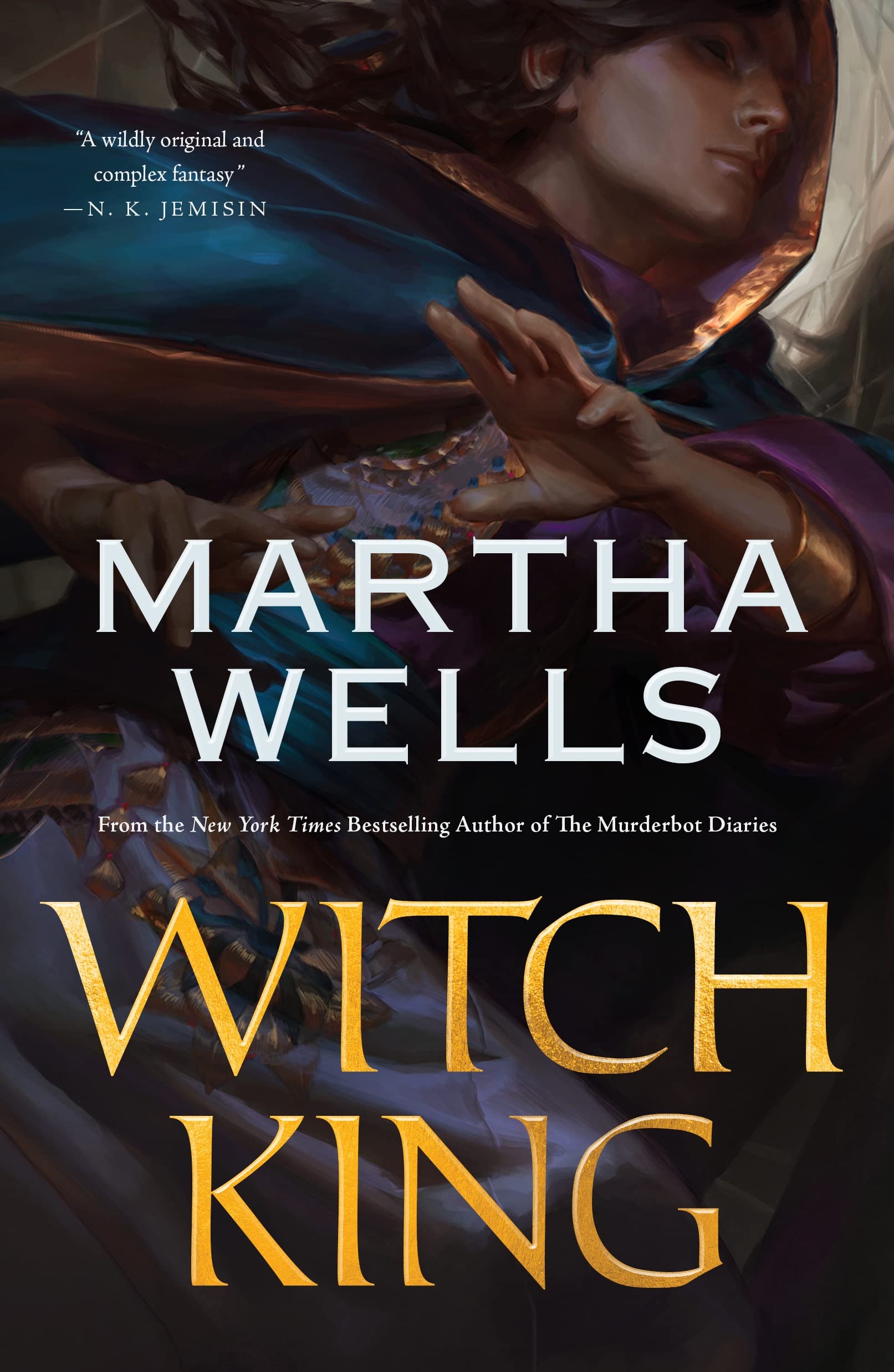
Witch King by Martha Wells

Witch King Cover

Publisher: Tor (ebook – 30 May 2023)

Series: Standalone/Book One

Length: 432 pages

My Rating: 4.5 out of 5 stars

Amazon

Acclaimed science fiction author Martha Wells returns to fantasy fiction in a big way with a cool new epic novel, Witch King.  This was an excellent and intriguing new read that I had a wonderful time reading, especially as I finally got to check out something from Wells, who has been on my to-read list for a while.  Wells is a veteran author who has several intriguing novels and series throughout her storied career, including her Ille-Rien, Books of the Raksura and Emilie, and well as tie-in books in the Star Wars and Stargate franchises.  While I am interested in reading her Star Wars book, Wells is best known for her Murderbot Diaries series, which follows a deadly security robot who has gained sentience and finds itself involved in serval complicated situation with various humans.  This series gets a lot of love in review communities and has been on my radar for a while.  However, instead I managed to get a copy of Wells’ new fantasy novel, Witch King and decided to have a read of that.  Featuring an intriguing and compelling story, Witch King was an awesome novel that I found myself really hooked on.

Kai is having a very bad day.  Awakening after an unknown period of imprisonment in a specially designed underwater cell, Kai is annoyed to find an arrogant magic user attempting to bind him to their will.  However, Kai is no mere demon, he is Kaiisteron, the Witch King, a legendary figure who, with the help of his heroic friends, saved the world from the nefarious Hierarchs and the led the current nations to freedom.

Now freed from his tomb and inhabiting the body of the mortal who foolishly tried to control him, Kai needs to find out who trapped him and why.  Accompanied by his long-time friend, the witch Ziede, and Sanja, the young woman intended to be sacrificed to him, Kai emerges once again into the world, trying to figure out what is changed and who benefited from his absence.  However, nothing is as it seems, and Kai and Ziede soon discover that their other friends and comrades have also gone missing.

Determined to get to the truth, Kai, Ziede and Sanja begin their search for answers, but soon find themselves under attack from all corners.  Dangerous magic users, powerful angelic creatures and lethal killers are all hunting for them, and everyone seems to have their own agenda.  To survive, Kai and Ziede will need to dive into their dark history, and the legendary war they fought years ago.  But the secrets they uncover will reveal dark truths about people they thought were their friends, and soon they will be forced to face the terrible consequences of their past mistakes.  Can these legendary figures survive in a world that turned against them to find their loved ones, or has their adventure finally come to an end?

This was a pretty awesome read from Wells.  Witch King has a gripping and intense story that really gets your attention early on and wows you with its elaborate world and interesting characters.  I had a great time reading this book, and while I struggled to get through it quickly, I ended up really enjoying it and I am very interested in seeing how Wells follows it up.

I really enjoyed the great story contained within Witch King, although you have to be prepared for Wells to drop you into some heavy plot right away.  There is not a lot of introduction to the characters or the world at the start of the book; instead you have to build up your own picture of events initially based on what’s going on.  This kind of makes the first few chapters a little harder to follow at times, although there is some fun action, interesting events, and great characters to grab your attention.  Wells eventually provides some of the details you need as the story continues, especially as she starts to split the story into two separate timelines, the current one and one set years in the past.  The modern timeline continues to show the characters as they get to the bottom of why they’re imprisoned and why everyone is after them, while the past timeline shows the earlier days of their history, as well as the legendary war that made them famous and which is still impacting everyone who was involved.  Both of these timelines are told from the perspective of Kai, and it provides a great overarching narrative, especially as you get to see two different sides to the same characters.  The older timeline also provides some much needed context for the modern day storyline, and Wells did a great job of balancing events from the two timelines to tell an intriguing and elaborate story.

Both awesome narratives continue at a great pace and Wells loads both up with some outstanding moments.  Out of the two, I enjoyed the chapters set in the past the most, especially as the young and inexperienced Kai was so very different from his confident and lethal persona in the future.  There was also a greater sense of desperation, oppression, and an overlay of hope in these prequel scenes which really spoke to me.  I also felt that it gave the reader a pretty good supplementary introduction into several of Witch King’s best characters, including Kai and Ziede, both of whom have some fun, complex, and LGBT+ positive arcs.  I loved seeing them as younger characters experiencing some of the worst, and most defining, moments of their lives, and Wells did an outstanding job of building that up.  However, most of the most important action occurred in the present-day storyline, and Wells writes a fantastic and powerful narrative about lost friends and relentless enemies that proved to be very compelling.  There are some great twists and turns here, most of which are rooted in their adventures in the past, and I loved some of the powerful moments that occurred.  Wells features several impressive battle scenes that make full use of the cool abilities of her magical characters, and it was particularly fun seeing Kai in action with his deadly abilities.  Both storylines come to a great conclusion that perfectly complement each other, and I liked the symmetry with the past and present, especially as it relates to the protagonists.  The final twist of the novel was pretty good and I liked how the modern-day storyline was set up to allow the narrative to continue if Wells chooses to.  However, if this was only a standalone novel, it worked really well, and I loved how impressive and fun this fantastic narrative turned out.

In addition to featuring a compelling and well-written narrative with great characters, Wells also comes up with a very distinctive and intriguing fantasy setting for Witch King, which I had a fantastic time exploring.  The world itself is a bit dark and damaged, having seen wars, magical upheaval and conquests, and it serves as a great background for the complex story.  Wells does an outstanding job of utilising some unique elements, such as demons, angelic warriors, dark magic users and mysterious tyrants to bolster the plot and produce some distinctive and exciting sequences.  This is often further enhanced by the author’s great use of the split timeline, as readers get to compare and contrast the settings and abilities of the characters after the massive time difference.  Some of the settings are really outstanding as well, with my favourite being a sinister palace first introduced in the prequel timeline.  This palace makes for an excellent backdrop for most of the early timeline’s plot, and the subsequent visit to it in the present also produces some fantastic and elaborate scenes, especially as actions in the past alter it in some very dramatic ways.  While most of these unique fantasy and world elements are impressive and fun in many ways, I did think that Wells could have done a bit of a better job introducing them.  The author really did just drop readers into the middle of the world at the start of the story with very little explanation and it takes a while to build up a full understanding of all the politics, factions, races, and basis for magic that are relevant to the plot.  While this did lead to the occasional bought of confusion during the early chapters of the book, once you get deeper into the plot (especially after the first few prequel chapters), you really grow to appreciate the elaborate world and the inventiveness Wells put into it.

Overall, Witch King was a pretty awesome and captivating fantasy read, and it was one that served as a great introduction to Martha Wells for me.  The exciting and compelling plot really drags the readers in, and the use of great characters, clever storyline splits, and an epic fantasy landscape proves to be an effective combination.  I really hope that Wells continues some of the storylines set up in Witch King in the future, and I look forward to reading more from the author if she does.

Amazon

The Kaiju Preservation Society by John Scalzi

The Kaiju Preservation Society Cover 2

Publisher: Tor (Trade Paperback – 29 March 2022)

Series: Standalone

Length: 264 pages

My Rating: 4.5 out of 5 stars

Amazon     Book Depository

Prepare to save all the monsters as bestselling and madly inventive science fiction author John Scalzi presents his latest captivating and funny novel, The Kaiju Preservation Society.

I have a lot of love for imaginative author John Scalzi, who is probably best known for his Old Man’s War and The Interdependency series, both of which make great use of high-concept science fiction elements.  I personally first experienced the author when I read his standalone novel, Redshirts a couple of years ago.  This cool and clever book served as the ultimate parody of Star Trek, focusing on an Enterprise-esque spaceship whose regular crew are extremely aware that something is very wrong as they keep dying in ridiculous situations.  I had an absolute blast with Redshirts and I have been keeping a very close eye out for anything else Scalzi was writing.  As such, I was extremely excited when I saw that his new book, The Kaiju Preservation Society was coming out this year, especially as it had such a unique and interesting plot to it.

As COVID-19 starts to run rampart through New York City, Jamie Gray’s entire life is thrown upside-down when his terrible boss steals his ideas and fires him.  Forced to work as a driver for the same food delivery app he developed, Jamie despairs at his now dead-end life, until one delivery leads to a chance encounter with an old acquaintance of his, Tom, who works for a mysterious animal rights organisation.  In desperate need of a new team member to help with their next expedition, Tom offers the job to Jamie, who jumps at the chance at a high-paying job.

However, Jamie is unprepared for just how unusual his life is about to become as the expedition first journeys to the heart of Greenland, and then through a portal into a parallel Earth filled with lush jungle, an untouched atmosphere, and giant mountain-sized creatures named kaiju.  It turns out that his new employers, known as the Kaiju Preservation Society, specialise in researching and preserving these vast creatures, while also working to keep them from leaving their own, human-less world, and traversing the barrier to ours.

Enraptured by the strange new world and exciting opportunities they present; Jamie soon takes to his role as a member of the Kaiju Preservation Society.  However, his complex and dangerous new employment is about to get even harder when strange events start occurring around camp.  It soon turns out that others have found a way to cross the boundaries between worlds and they have designs on the kaiju.  Jamie and his friends must find a way to stop these intruders before their carelessness destroys a kaiju and millions of people on our world.

Scalzi has done it again, producing a clever and wildly entertaining book that makes brilliant use of a distinctive and unique idea.  I had an incredible time reading The Kaiju Preservation Society, and I really loved the cool ideas, intelligent science fiction elements, and exciting story it contained.

The author has come up with an excellent story for The Kaiju Preservation Society that proves incredibly easy to get into and enjoy.  This is a very intriguing and captivating read that quickly drags in the audience and gets them exceedingly addicted to the plot.  Being a relatively short novel, it is an extremely fast paced, self-contained read that requires no prior experience of Scalzi’s books.  It doesn’t take long for the events of the novel to unfold, with the reader soon introduced to the key characters, new friends, and the necessary set-up for the eventual dive into kaiju land.  Once through the portal, the reader is given a crash course on the rules and attributes of the new world, the various issues the staff there are forced to contend with, and the crazy people who would choose to live amongst the monsters.  After several fantastic and action-packed sequences, often broken up by several elaborate and comedic discussions between the protagonist and his friends, the book heads towards its intriguing final third, which identifies the main threat of the book and forces the characters to act.  This final bit is extremely exciting and fun, and there are several intense moments as the characters face death, tragedy and one of the smarmiest villains I have had the pleasure of reading about.  This leads up to an amazing conclusion that wraps everything up nicely and ensures everyone leaves the book incredibly satisfied.

I mostly liked how Scalzi wrote this book, especially as he clearly had a lot of fun introducing this bold new world and its many awesome features.  The author does a lot in a short amount of time, and you are soon immersed in the excellent world of Kaijus.  Told perfectly from the perspective of the main protagonist, who, like the reader, is seeing everything in this world for the first time, you quickly get a sense of all the craziness that occurs in this land, and the various issues they experience.  I loved all the unique elements Scalzi came up with, from the impossible, nuclear-powered, mountain sized monsters with their complex biology and giant parasites, to the mass of strange creatures haunting the land, the unique landscape, and the various other awesome elements.  You get a great sense of everything in this world, and Scalzi ensures that the science is both realistic and easy to understand at the same time.  This proves to be such an impressive setting for this fantastic read, and you will wish that the author had made the book even longer just to see more of this strange new world.  While there is a good focus on monsters, exploration and science, Scalzi also makes sure to lace The Kaiju Preservation Society with a great amount of comedy that proves to be extremely entertaining and amusing.  This book is filled with so many fantastic and clever jokes, which range from comedic reactions to the outrageous events occurring around them, to fun, if random, pop culture references (for example, one of the villains is inspired by Trading Places), and multiple entertaining interactions between the eccentric central cast.  You end up really getting into this excellent story as a result and it is so very fun to read.

I did have some minor issues with some of the dialogue in The Kaiju Preservation Society, as certain exchanges came across as a little clunky.  I must note the somewhat overuse of dialogue tags (he said, she said, I said) after direct speech, which is something I noticed when I read Redshirts.  While it was not as obvious or problematic in The Kaiju Preservation Society, possibly because I read a physical version rather than the listening to the audiobook, the overuse of them still stood out a little and spoiled the flow of the book at times.  I also really wish that Scalzi could be a bit more descriptive with his writing in places, especially when it comes to the kaiju and some of the characters.  For being such a key part of the plot you often don’t fully grasp what these creatures look like, with only very general descriptions of their size and shape being featured, unless an attribute is essential to the plot.  There was also a complete lack of character description throughout the book, which I found to be a little distracting, especially as I often had no idea what a person looked like.  For example, I didn’t realise character was nonbinary until halfway through the novel when they started getting a little more focus and the them/they pronouns started being used with more regularity.  While some of this stuff is a little annoying, I felt that the strong and entertaining story more than overcomes it and you end up overlooking these minor stylistic problems.

The insanely brilliant John Scalzi continues to shine with his latest kooky and compelling science fiction read, The Kaiju Preservation Society.  Filled with a wild and captivating exploration of a distinctive alternate Earth, you will quickly fall in love with this exciting and humorous story.  I had an absolute blast getting through the awesomeness that is The Kaiju Preservation Society and I would strongly recommend it to anyone looking for something light and fun to get through.

The Kaiju Preservation Society Cover

Amazon     Book Depository

Black Leviathan by Bernd Perplies

Black Leviathan Cover

Publisher: Tor (Trade Paperback – 25 February 2020)

English Edition Translated by Lucy Van Cleef

Length: 331 pages

My Rating: 4.25 out 5 stars

Amazon

Get ready for an exciting fantasy adventure from acclaimed German author, Bernd Perplies, with Black Leviathan, an extremely fun and inventive novel that is essentially Moby Dick with dragons.

Bernd Perplies is a best-selling German fantasy and science fiction writer who debuted in 2008 with his first book, Son of the Curse Bringer. He has since authored several different series, including the Star Trek Prometheus trilogy, which he co-wrote with Christian Humberg and which were the first Star Trek books licensed to be written outside of the United States. Black Leviathan was initially released back in 2017 in Germany under the title The Dragon Hunter, and it is the first book in his Sea of Clouds series. This is the first one of Perplies’s solo books to be released in English (his Star Trek books got an English releases), and it was translated by Lucy Van Cleef.

Welcome to the Cloudmere, a floating expanse of thick cloud, mists, floating islands and mountain tops high above the ground. Thanks to the magical kyrillian crystals, which allow anything holding them to float in the air, airships now also fly through the Cloudmere attempting to harvest the useful resources available in this harsh landscape. The most valuable of resources come from the dragons, the ferocious beasts that soar amongst the clouds and mountains. Various species of dragons exist, each with their own special talents and defences, and each of which are valuable in their own way. However, hunting dragons is a dangerous occupation, and only the bravest, the most skilled or the extremely desperate set out into the Cloudmere as a drachenjäger, a dragon hunter.

Lian is a young man living in the floating city of Skargakar. The city’s entire economy revolves around the hunting and processing of dragons, and Lian himself makes a small earning carving kyrillian crystals. Lian also looks after his father, Lonjar Draksmasher, a famed drachenjäger of yesteryear whose injuries have driven him to drink. But when Lonjar is murdered in front of him, Lian instinctively gets revenge on the criminal who killed him, and now needs to get out of town quickly or face the wrath of his victim’s father, the most dangerous crime lord in the city. Taking up his father’s magical hunting spear and accompanied by his best friend, Canzo, Lian seeks work aboard one of the many drachenjäger ships leaving the city. The only one willing to take them on is the infamous Carryola.

Boarding the Carryola they find themselves working with an eclectic and effective crew of drachenjägers, and Lian believes that he has reached relative safety. However, the captain of the Carryola, Adaron, has an obsession that may prove to be the doom of Lian and the rest of the crew. Adaron is determined to hunt down and kill the Firstborn Gargantuan, a rare Black Leviathan dragon, a creature out of legends and one of the most destructive beings lurking in the Cloudmere. Now caught between a powerful dragon and a crazed captain, Lian must find a way to survive, but he quickly learns that death is always lying just around the corner in the Cloudmere.

This turned out to be a fantastic and deeply enjoyable fantasy adventure novel which I had an absolute blast reading. Black Leviathan features a fast-paced and action-packed story of a group of dragon hunters flying around in the sky chasing after a mythical and gigantic dragon, and what’s not to love about that? Perplies introduces a ship full of distinctive and compelling characters (most of whom you shouldn’t get too attached to), including an obsessive and ruthless captain, and sets them up against a powerful foe. This results in quite a fun and exciting novel, and I enjoyed some of the intriguing directions that Perplies took the story. While some elements of the story are a little bit typical of action adventure novels, such as characters whose death is a foregone conclusion the moment you meet them, this was an excellent story that is extremely easy to enjoy, and very hard to put down.

One of the best parts of Black Leviathan is the clever and inventive new world that Perplies has created as a backdrop for his fun story. The author did an outstanding job producing a unique fantasy world up in the clouds, filled with all manner of sentient races, exotic locations and intriguing magical technologies, all of which prove to be really fascinating to explore throughout the course of the story. The Cloudmere is an amazing location for a fantasy novel, and I really enjoyed seeing an entire book spent up in the clouds, either in floating cities or aboard magically powered airships. However, the highlight of this new world has to be the various species of dragons that roam the Cloudmere and dragon hunters that chase after them. Black Leviathan features a world where dragon hunting is a vast and profitable industry, and it is really quite interesting to see the various aspects of dragon hunting and its subsequent applications within this novel. There are some obvious similarities between this fictional dragon hunting industry and the real-life historical whale hunting industry and was really cool to see Perplies reinvent this iconic historical trade with fantasy creatures, floating ships and a sea of clouds.

The dragon hunting aspect of the book also results in some pretty incredible action sequences. There are some really exciting and fun dragon hunting scenes featured throughout Black Leviathan and watching the crew of an airship attempt to take down a dragon in mid-air was easily some of my favourite parts of the entire book. Perplies came up with some very clever hunting techniques for his drachenjäger, and it was very cool to see all of them unfold, especially as many require the protagonist to jump onto the back of the targeted dragon and kill them while riding on their back. This fantasy world also has many different types of dragon with a variety of different abilities (some breath fire, some have sword-like tails), each of which results a different sort of hunt with its own range of difficulties. Of course, the biggest hunt of all is when they catch up with Gargantuan, the titular Black Leviathan, the largest and most powerful dragon in the Cloudmere. That hunt goes about as well as expected, and it was extremely exciting to see the crew attempt to use their tried-and-tested techniques against this beast.

I mentioned at the start of this review that Black Leviathan was a bit like Moby Dick. That is because it features a captain who is obsessed with killing a specific rare beast who wronged him years ago, in this case a black dragon rather than a white whale. The entirety of this feud is actually shown in this book, as the first two chapters deal with Adaron’s first ship getting destroyed by Gargantuan, with nearly all his friends dying, including his fiancé, whose hand he was holding when she was eaten (with Adaron left holding her severed arm). As a result, the Adaron we see in the present is a much harder man who bears a great hatred for all dragons and is determined to find and kill Gargantuan no matter the cost. This results in a great story of obsession and hatred as Adaron scours the Cloudmere for his prey, while also attempting to kill any other dragon he comes across. The author has done a great job showing Adaron as an eccentric and damaged character from the first time the protagonist meets him. Not only does he order his own whipping every time a member of his crew gets killed by a dragon but he also keeps the skeletal hand of his fiancé in his cabin as a constant reminder of his mission to kill his prey. However, as the book progresses, it becomes more and more obvious that his obsession with finding Gargantuan has driven him insane. Not only does Adaron sacrifice his crew’s safety to locate the dragon but he ignores the concerns of the people serving under them and he even utilises dark practices to find his prey. This all results in a great final showdown with Gargantuan at the end of the book, and I think that the author did an amazing job concluding this captivating story arc.

Black Leviathan by Bernd Perplies is an excellent and deeply enjoyable fantasy adventure that combines a great central story with an extremely creative fantasy world to create a compelling and fun read. This book is filled to the brim with action and adventure and is guaranteed to get any fantasy lover’s pulse racing. I really loved this book, and I look forward to any future English releases of Perplies work. I do note that Perplies released a second book in this series in 2018, The World Finder, and hopefully we’ll get to see that in English in the next year or so.

u1_978-3-596-29671-2

Amazon

Warrior of the Altaii by Robert Jordan

Warrior of the Altaii Cover

Publisher: Tor (Trade Paperback – 9 October 2019)

Series: Standalone

Length: 352 pages

My Rating: 4.25 out of 5 stars

Amazon     Book Depository

In the mood for a very unique fantasy read? Think about checking out the hitherto unpublished first novel from Robert Jordan, an author many consider to be amongst the best fantasy writers of all time.

The late, great, Robert Jordan was a highly regarded author who started writing in the late 1970s and found his calling several years later in the fantasy genre. His first published work was The Fallon Saga of historical fiction novels, which were made up of three books released between 1980 and 1982. Following this early work, Jordan was contracted to write several Conan the Barbarian novels, starting with Conan the Invincible and Conan the Defender, both of which were released in 1982. Jordan ended up writing seven Conan the Barbarian books between 1982 and 1984, and they are some of his earliest works of fantasy fiction. However, Jordan would find his greatest success later when he wrote his epic fantasy series, The Wheel of Time, which were some of the first fantasy novels that I ever read.

The Wheel of Time series is an epic fantasy series that started in 1990 with The Eye of the World. Made up of 14 massive novels, the series ran until 2013, and is considered one of the most creative, complex and enjoyable fantasy book series ever written. Not only did many of the books gain high critical praise but it is one of the bestselling fantasy series of all times, selling over 80 million copies. Unfortunately, Jordan passed away in 2007 and it fell to fellow author Brandon Sanderson to complete the final three books in the series utilising Jordan’s notes. Sanderson did a fantastic job finishing off the series, which concluded in 2013 with A Memory of Light, (make sure to check out my reviews for some of Sanderson’s other books, including The Way of Kings, Skyward and Starsight). The Wheel of Time series is probably going to get a lot of attention in the next year or so, as it is currently being adapted into a major television series by Sony and Amazon. Featuring Rosamund Pike in the leading role, and with a mostly unknown cast of young actors, this series has some real potential to dominate in the post Game of Thrones television landscape. The Wheel of Time books were some of the first fantasy novels that I ever read, and they served as an excellent and enjoyable introduction to the genre for me. Despite recently featuring several of The Wheel of Time books in my Longest Novels That I Have Ever Read list, I do have to admit that it has been a substantial time since I have had the opportunity to read The Wheel of Time novels, and I am a little hazy on some of the series’ details. As a result, I am strongly considering trying to reread some of the books (probably the audiobook formats) before the first season of the television adaptation is released, although I will have to see how I go with time as each of the books are likely to be some of the longest audiobooks I will ever listen to, plus I also have a bunch of other series I want to get into.

Warrior of the Altaii is actually the first novel that Jordan wrote and attempted to get published. He apparently wrote it in 13 days back in 1978 but unfortunately no publishers picked it up at the time. By that point he was working on some of his other series, so the author shelved it and it remained unpublished until now. There is actually a rather fascinating and entertaining summary of this book’s publication history in the foreword that was written by Jordan’s wife and editor/publisher Harriet McDougal, which I am sure many fans of the author will find quite interesting.

Warrior of the Altaii is set on the vast and harsh lands known as the Plain. The Plain is home to all manner of terrors, obstacles and fierce warriors, as several barbarian tribes roam the cruel landscape. Amongst all the tribes of the Plain, none are more feared or deadly than the Altaii, fighters without peer, whose nomadic way of life and dedication to raiding has sustained them for generations. Life is always difficult on the Plain, but recent strange events are making it harder for the Altaii to survive. More and more ferocious beasts roam the land, dark omens abound, and some unknown group has been destroying the various water holes that keep all of the inhabitants of the Plain alive.

Amongst these chaotic events, Wulfgar, a leader of a troupe of Altaii, travels to the massive city of Lanta on the outskirts of the Plain on a trading mission. Arriving at the city, Wulfgar and his followers and comrades encounter great hostility and scorn from all they encounter, including the city’s twin queens. It soon becomes apparent that the queens of Lanta are conspiring against the Altaii with a rival barbarian tribe and the mysterious individuals known as the Most High. But what are their objectives, and why are they targeting the Altaii?

As Wulfgar attempts to understand the scope of the threat facing him, he receives a prophecy of doom and the destruction of the entire Altaii race. Their only salvation apparently lies in the hands of a traveller from another world, who will gift Wulfgar the knowledge needed to save his people. Can Wulfgar defeat the vast forces arrayed against him, or will he be overwhelmed by treachery, assassins and the vengeance of two scorned queens?

This was a rather exciting and enjoyable read that was a lot of fun to check out. Warrior of the Altaii is a cool classic fantasy read that features an interesting and, at times, over-the-top story with a number of great action sequences and some rather cool fantasy ideas. The plot of this book is extremely fast-paced, and there is never a moment that is not exciting or filled with action or adventure. There are a number of really fun sequences throughout the book, including the siege of a major city, several large-scale battle sequences that feature some fantastic strategies and high body counts, as well as a few desperate and brutal smaller fight scenes that are bound to keep readers on their toes. Despite being ostensibly a fantasy novel, there are a few interesting science fiction elements in this book, as several beings with advanced weapons have apparently travelled across from an alternate world. This results in a cool blend of science and magic in places, which added a whole new layer to the story. Warrior of the Altaii is a good standalone novel with a mostly self-contained narrative that did not leave any major storyline elements open. This is probably for the best, as, for very obvious reasons, there is not going to be any sort of sequel. Overall, I felt that Jordan created an excellent and thrilling story within this book, which I believe will be appealing to most fantasy readers.

One of the major appeals of this book is the fact that it is the unpublished first attempt at a novel from an author who is better known for their later works, and as a result, fans of Robert Jordan’s later works can get a glimpse of his early writing style. One of the major things that I took away from reading Warrior of the Altaii was the fact that Jordan clearly had an aptitude for creating intriguing fantasy worlds even early in his career. Throughout this book, he described a dark and detailed world, of which we only saw a small part, filled with memorable characters, organisations, threats and locations. Several of the elements utilised in this book were clearly early versions of things that were later featured in The Wheel of Time novels, such as the inclusion of an all-female group of magic users, which are similar to The Wheel of Time’s Aes Sedai. In addition, the whole barbarian tribe-centric storyline he produced for this book is very reminiscent of Conan the Barbarian and it is very clear why his wife thought that he would be a good fit to write several of these novels. I think that major fans of Jordan and his existing series are going to find a quite a lot to enjoy in this book, and I would strongly recommend Warrior of the Altaii to anyone interested in seeing how this great author started out.

While I quite enjoyed this book, there are elements to Warrior of the Altaii that some readers might not enjoy. In particular, there are lot of examples of female enslavement by the barbarian characters of this book. While, to be fair, the main male character does get enslaved for a period of time, I can image that quite a few readers may not appreciate all the times that female slavery becomes a casual, recurring plot point. The way that it is used in this book does seem to be a bit more of an old-school fantasy inclusion such as would be seen in a piece of Conan the Barbarian fiction and is perhaps not as appropriate for a modern book. However, as this book was written in the 1970s, this is a somewhat understandable inclusion, and I don’t think you need to read too much into it. It honestly didn’t take too much away from the enjoyment of the story; it is just something people might need to consider before reading this book.

Warrior of the Altaii is an electrifying piece of fantasy fiction with a bit of an old-school feel to it that I quite enjoyed. I had a great time checking out this early work from a fantasy author I hold in very high regard, Robert Jordan, and it was a real treat to see his previously unpublished first novel. This is definitely an interesting read for fans of the fantasy genre and is well worth checking out, especially if you are in the mood for a fast-paced and action-packed fantasy adventure.

Amazon     Book Depository

Gideon the Ninth by Tamsyn Muir

Gideon the Ninth Cover

Publisher: Tor (Hardcover – 10 September 2019)

Series: The Ninth House – Book One

Length: 448 pages

My Rating: 4.5 out of 5 stars

Amazon     Book Depository

From debuting author Tamsyn Muir comes a very unique and compelling science fiction novel filled with death, comedy and necromancers in space, Gideon the Ninth.

Before I begin reviewing Gideon the Ninth, I have to point out how impressive the design of the hardcover copy I received was. When I previously featured this book in one of my Waiting on Wednesday articles, I mentioned how much I loved the cover art. Indeed, the drawing of the book’s titular redheaded character with her face painted liked a skull surrounded by exploding skeletons is pretty damn cool. The hardcover copy also has some excellent visuals, as the outer rim of all the pages is coloured black, which definitely gives prospective readers a noticeable visual hook, especially when combined with the all-black binding underneath the jacket, emblazoned with gold writing on the spine and a single golden skull on the front. I really liked this fantastic presentation style, and it definitely left an impression on me as I started to read the book.

In the far future, a vast interstellar empire is ruled by necromancers whose control over the various magical disciplines of death make them a powerful force. Eight noble houses serve under the First House of the Emperor, and each of them has just received a message from their ruler. The heirs to each of these houses and their cavaliers, loyal sword-wielding protectors and companions, must attend the Emperor’s planet in order to compete to become the next generation of Lyctor, immortal beings of vast power.

Gideon Nav is an indentured servant to the Ninth House of the Empire, a small and impoverished house that carries a dark reputation. A skilled swordswoman, Gideon wants nothing more than to enlist in the imperial army to leave the dark crypts, the strict occult nuns and the multitude of skeletons that make up the Ninth Planet far behind. However, when her latest escape attempt fails, she finds herself offered an irresistible bargain: act as the Ninth House’s cavalier for the period of the trials and be granted her freedom. There is just one minor problem: Gideon and the heir to the Ninth House, Harrowhark Nonagesimus, an extremely powerful bone witch, absolutely hate each other.

Forced to temporarily put their differences aside, Gideon and Harrow travel to First House, only to discover it is a near ruin, looked after by a few old and mostly unhelpful servants. They soon learn that the secrets to becoming a Lyctor lie hidden within the walls around them, and the representatives of various houses can do whatever they wish to learn them. Trapped on the planet, Gideon and Harrow begin to explore the First House and encounter the heirs and cavaliers of the other houses. As the mismatched pair from the Ninth House start to unravel the various mysteries and challenges before them, a gruesome murder occurs. Something powerful is lurking within the First House, and it has the heirs in its sight. Can Gideon and Harrow work together, or will their own turbulent past and the secrets of their house tear them apart?

Gideon the Ninth is a chaotically clever and massively entertaining first novel from Tamsyn Muir, who has done an excellent job introducing readers to her intriguing new world. Gideon the Ninth is the first book in her The Ninth House series, which already has two planned sequels in the works, with the first of these currently set for release next year. After hearing the awesome plot synopsis for this book earlier in the year, I had picked this as potentially being on the best books for the latter half of 2019. I am glad to see that my instincts were once again correct, as this was an awesome read that gets four and a half stars from me.

Muir has produced an outstanding story for her first novel, as the plot for Gideon the Ninth is an amazing combination of humour, universe building, emotional character moments and a captivating set of mysteries as the protagonists attempt to uncover not only the vast secrets of the First House but the identity of the person or being that is killing them off one by one. The author has stacked this book with all manner of fantastic twists, and there are a number of major and game changing developments that are well paced out amongst the story. There is never a dull spot within the book, as even parts where no substantial plot developments are occurring are filled with excellent humour from the sarcastic narrator with a huge vocabulary of various swear words. There is also a substantial amount of action throughout the course of the book. The various fight scenes blister and explode off the page, especially thanks to the unique magical system that Muir has populated this world with. All of this results in an addictive and electrifying overall story with a very memorable ending.

The real heart of Gideon the Ninth lies in its incredible main characters, Gideon Nav and Harrowhark Nonagesimus, and the complex relationship the two of them have. Gideon is the badass, rebellious, coarse, girl-loving mistress of the blade, who serves as the book’s narrator and only point-of-view character. Gideon is an absolute blast as a main character, as she deals with every situation she comes across with an abundance of disrespect, anger and exaggerated responses, resulting in much of the book’s humour. Harrow, on the other hand, is the dark noble necromancer heir to the Ninth House, whose reserved persona, obsession with necromantic research and abilities, and vindictive nature work to make her initially appear as a polar opposite to Gideon. The relationship between these two main characters is initially extremely adversarial, as both characters declare their absolute hatred for each other, and Harrow seems determined to make Gideon’s life a living hell. As the book progresses, however, Muir really dives into the heart of the relationship between the two characters, revealing a complex history and a twin tale of woe and dark secrets that has defined them for their entire lives. The combined character arc of these two main characters was done extremely well. While you knew from the very start of the book that the two characters would eventually work together, the exact reason why this occurred was handled perfectly, and the final form of this cooperation helps create an epic and tragic conclusion to the entire book. While their relationship is not explicitly romantic (Harrow’s sexuality really is not explored in this book), they do become quite close by the end of the novel, and both characters are written exceedingly well.

In addition to Gideon and Harrow, Muir has also included a range of different characters, representing the heirs and cavaliers of the other major houses in the Empire. This results in an intriguing assortment of side characters who add a lot to the overall story. The author has made sure to invest in substantial backstories for all these additional characters, and this has a number of significant benefits for the story. Not only are the readers now blessed with an abundance of viable and duplicitous suspects for the story’s murder mystery, but each of the various representatives of the houses have their own individual secrets and motives for being at the First House. Learning more about each of these characters is quite fascinating, and a number of them have some pretty amazing character arcs. I particularly enjoyed the storyline of Palamedes Sextus of the Sixth House, who treats his necromancy more as a science than a form of magic. Sextus is the most logical character out of all the people in the book, and he serves as a major driving force of the investigation into the murders. His connection to some of the other characters in the book is a major part of the book, and the ultimate conclusion of his story arc is really cool. Muir has done an incredible job coming up with the book’s various characters, and it is a major part of why this book is so awesome.

It is quite clear that Muir has an amazing imagination, as she has produced a grim and compelling new universe to set this book in. Necromancy and a futuristic science fiction setting make for a fascinating combination, and I really loved her examination of an empire built on worshipping an immortal, necromantic Emperor and the various secrets that come with it. The sheer range of different necromantic magic featured within this book is pretty impressive, especially as each of the Imperial Houses has their own specific form of necromancy, all of which are examined throughout the book. Not only are all these different types of magic really fascinating to examine but it also results in some diverse pieces of magical action, as many of the necromancers unleash their various forms of magic throughout the book, resulting in some fantastic sequences. I do think that the author could have done a slightly better job of explaining some of the unique elements of her universe at the start of the book, as I got a little confused at some points towards the beginning; however, this was quickly chased away by deeper dives into the universe’s lore later in the book. Muir has left open a number of questions and plot directions to explore in future books in the series, and I am really curious to see what happens next.

Gideon the Ninth is a wild and exciting novel that makes use of an intriguing concept, some compelling characters and an excellent story to create an exceedingly entertaining book that was a heck of a lot of fun to read. Featuring laugh-out-loud humour, intense action and major emotional moments, this is an incredible read that is really worth checking out. Muir has hit it out of the park with her debut novel, and I cannot wait for the next book in the series.

Amazon     Book Depository