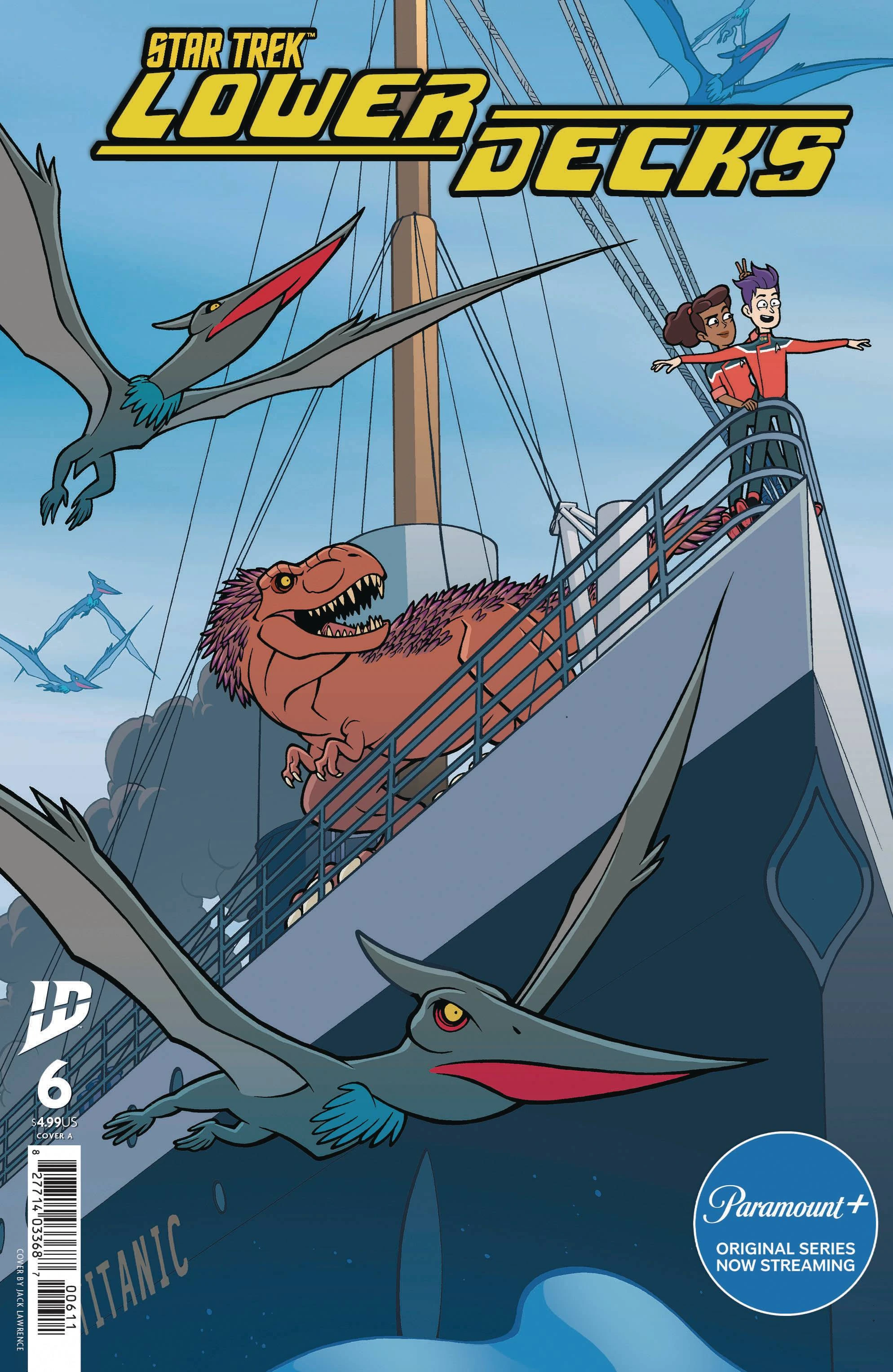
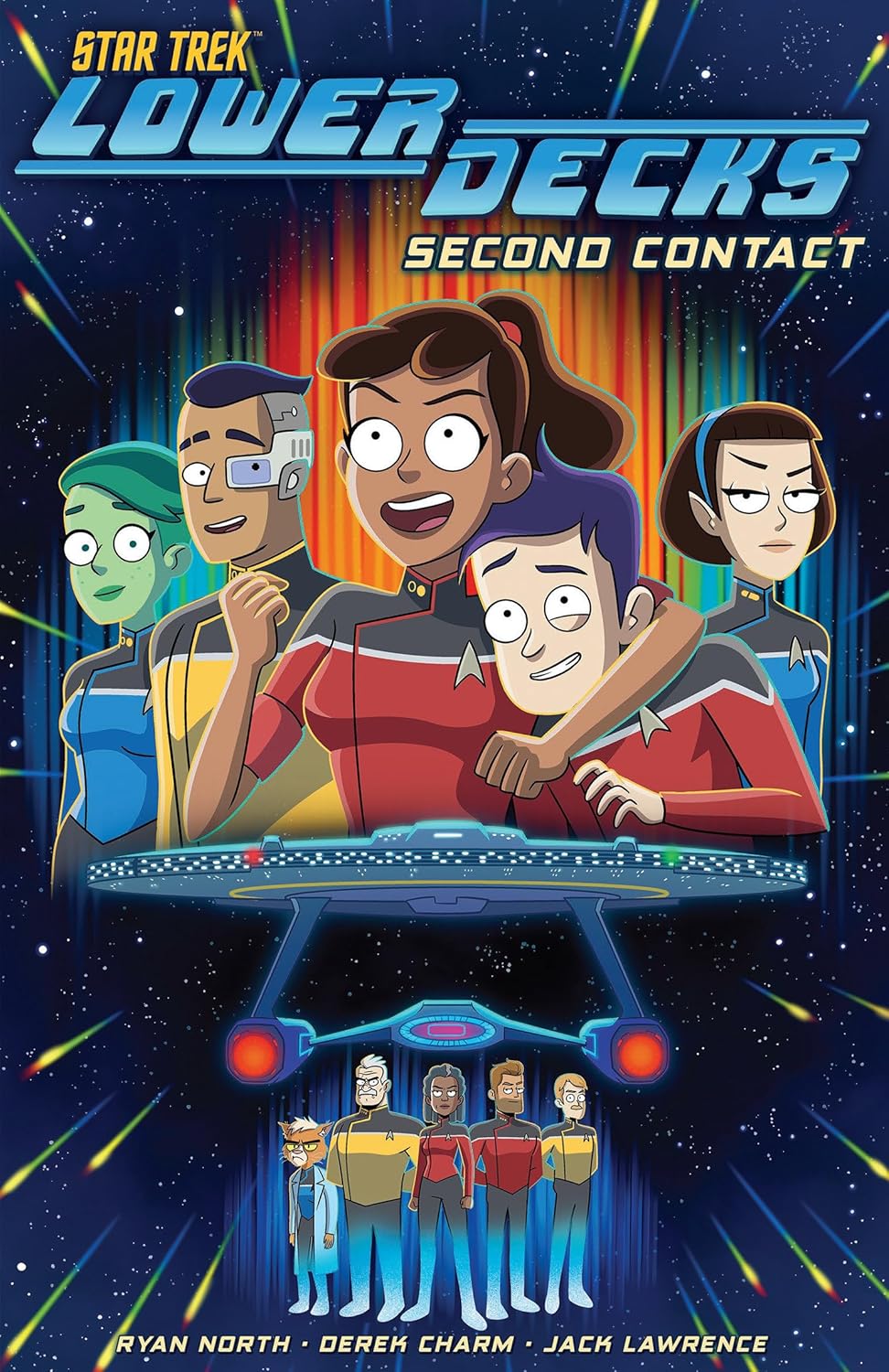
Star Trek: Lower Decks, Vol. 1: Second Contact

Publisher: IDW Publishing (Paperback – 16 September 2026)

Series: Lower Decks (2024) – Volume One

Writer: Ryan North

Artists: Derek Charm and Jack Lawrence

Length: 144 pages

My Rating: 4.5 out of 5 stars

Amazon

The hilarious adventures of the Lower Decks crew continue in the highly entertaining Star Trek comic, Second Contact, an outstanding and amusing read that will deeply appeal to all fans of the animated series.

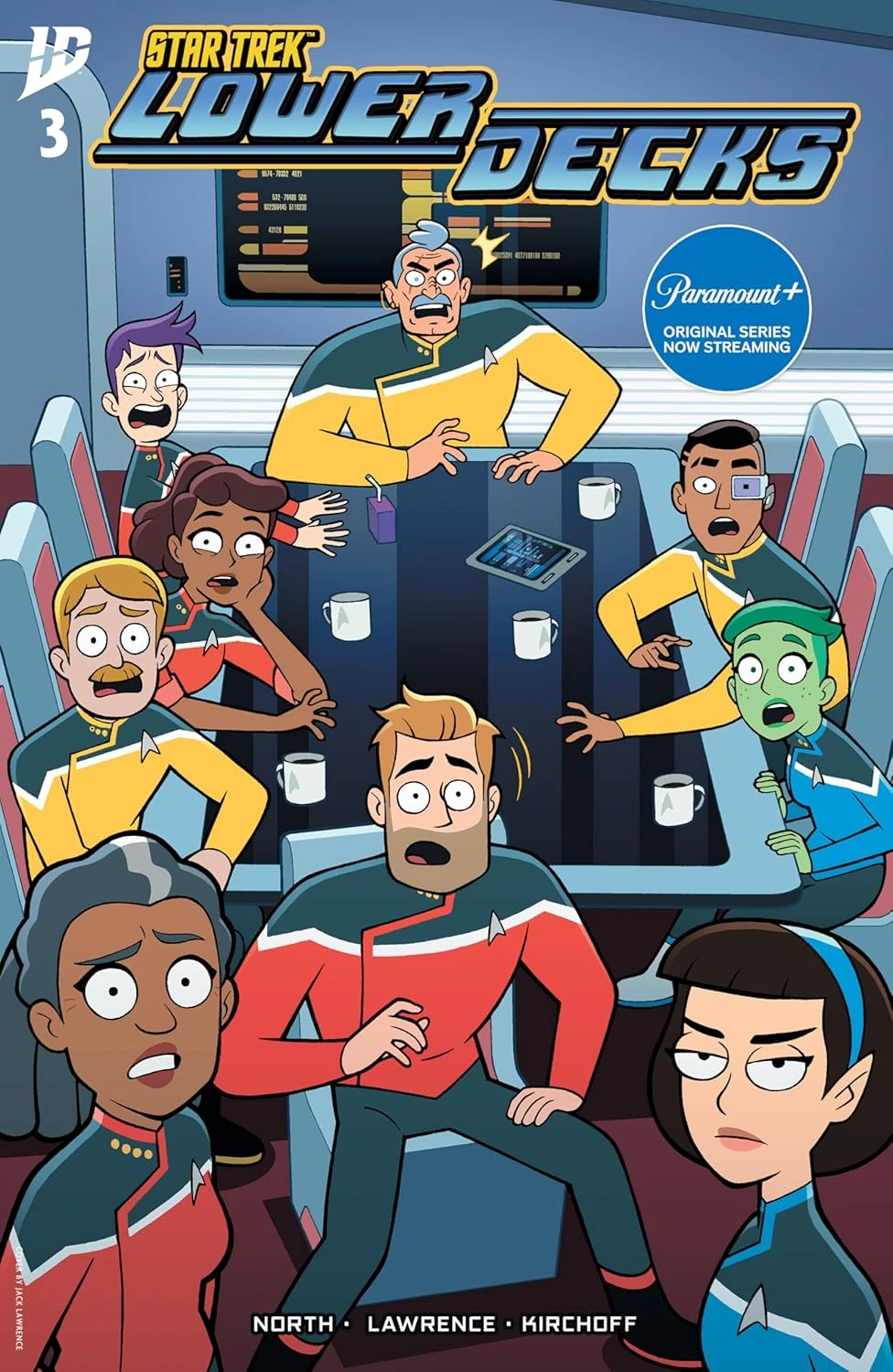
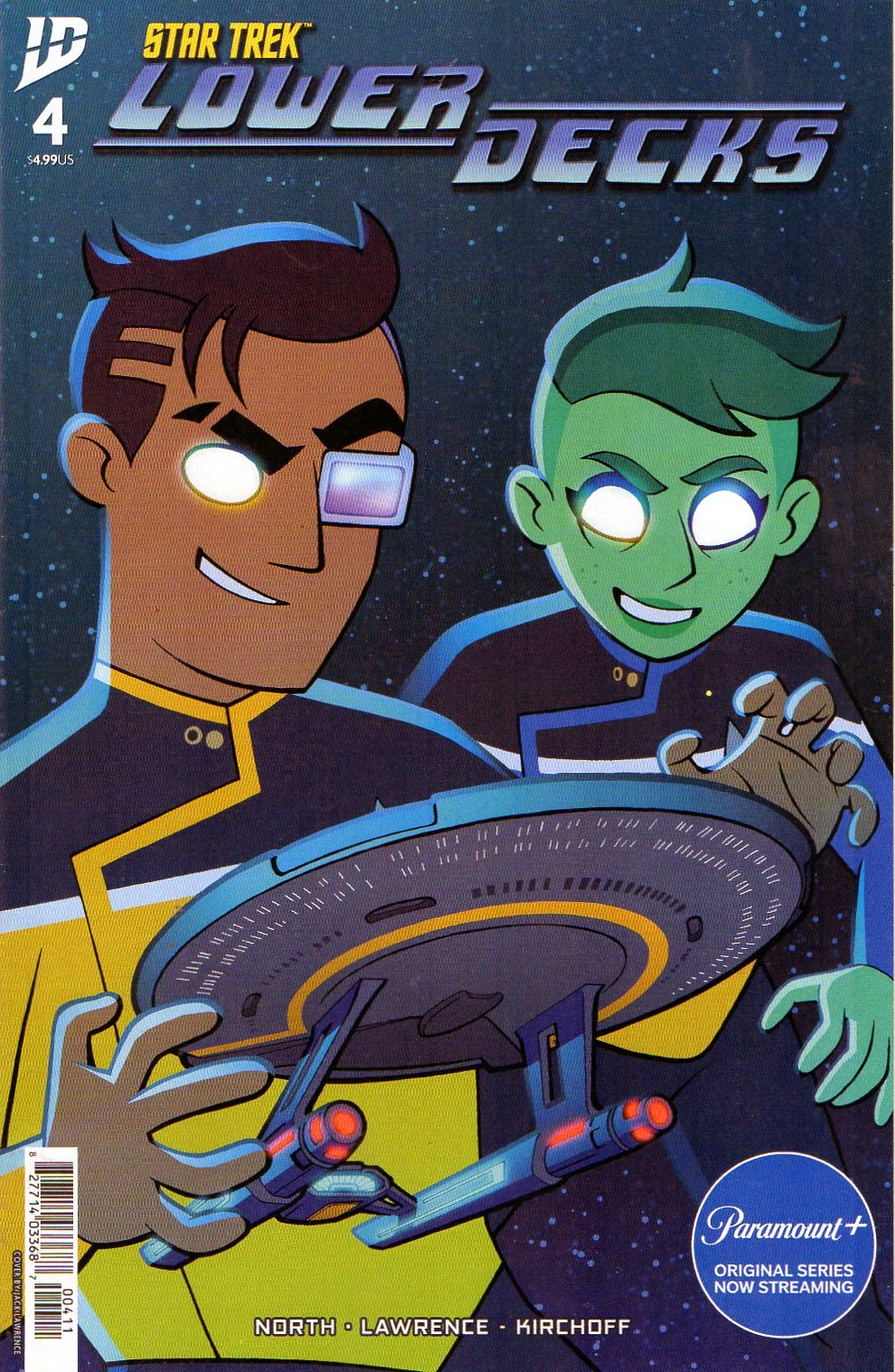
I’ve been a little slack with my comic book reading in 2025, but one of the things I was unable to turn down was the first volume of a comic series provide new adventures for one of my favourite Star Trek television series, the comedic Lower Decks animated series.  Second Contact is the first volume of the 2024 IDW Lower Decks ongoing comic series, which follows on from the previously released miniseries.  Written by veteran comic author Ryan North and featuring art from Derek Charm and Jack Lawrence, Second Contact features issues #1-6 of this new series and contains three fantastic and awesome adventures of the chaotic crew of the U.S.S. Cerritos.

Plot Synopsis:
The crew of the U.S.S. Cerritos is back in a new ongoing comic series that’s a big, fun adventure from the hit TV show Star Trek: Lower Decks.

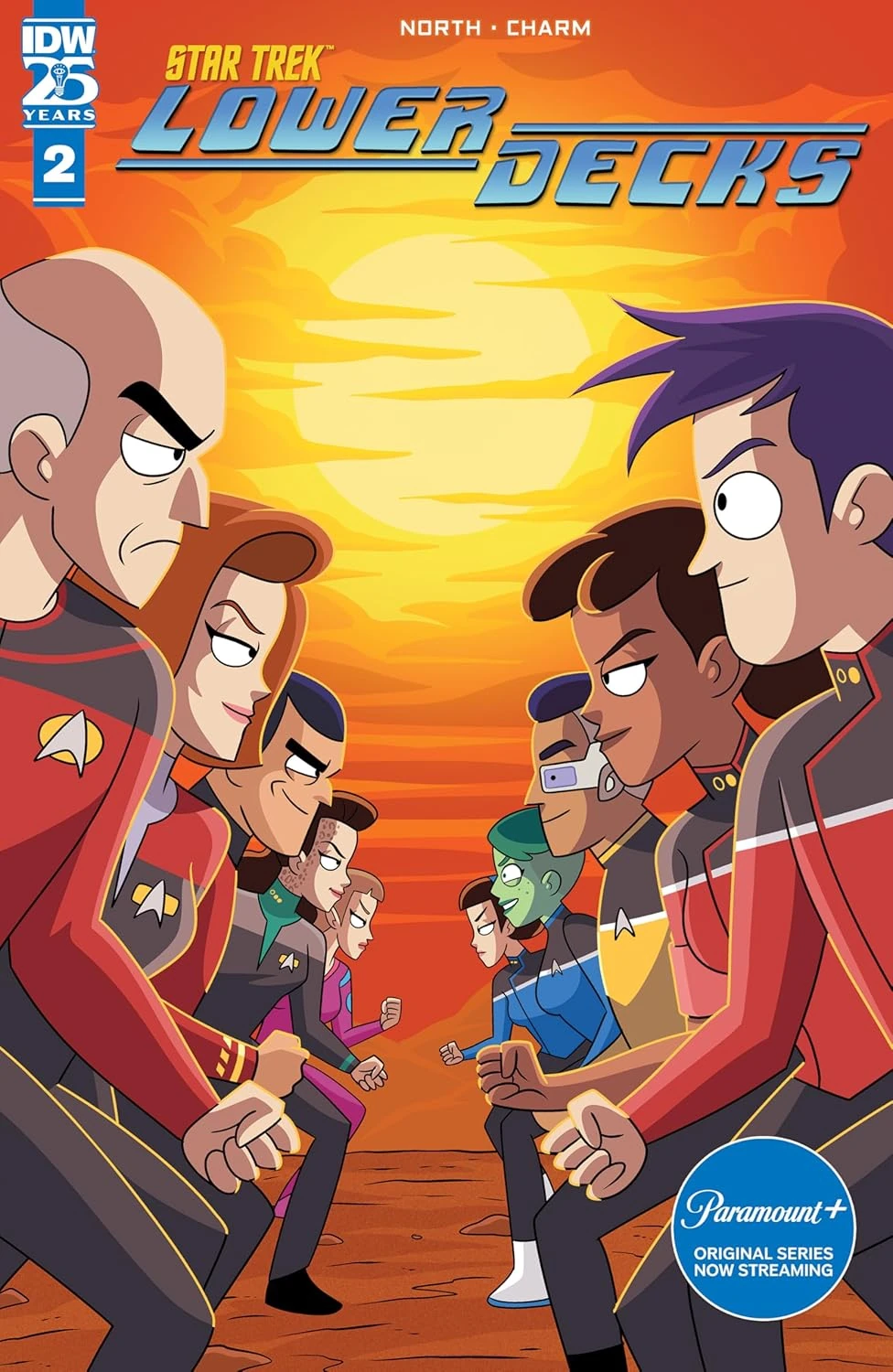
First up, a mysterious ghost ship appears just in time, as Mariner is becoming increasingly frustrated by the lack of thrills aboard the Cerritos! The thrill level increases significantly when the team is beamed onto an equally mysterious surface of an unknown world populated by an alien race that wishes to learn more about mentorship…through a battle royale! Enter Jadzia Dax, Montgomery Scott, Kathyrn Janeway, T’Pol, and Jean-Luc Picard as the mentors and the Lower Deckers as the mentees!

The Cerritos’ next mission is a supply run to Tavela Minor, but they first need to stop by the Alecto system to get some supplies to, uh, supply them with. However, just before they warp, they see the Alecto system isn’t only missing; it doesn’t exist. Like at all. Now they have a space mystery at hand: What could cause a whole star system to disappear?

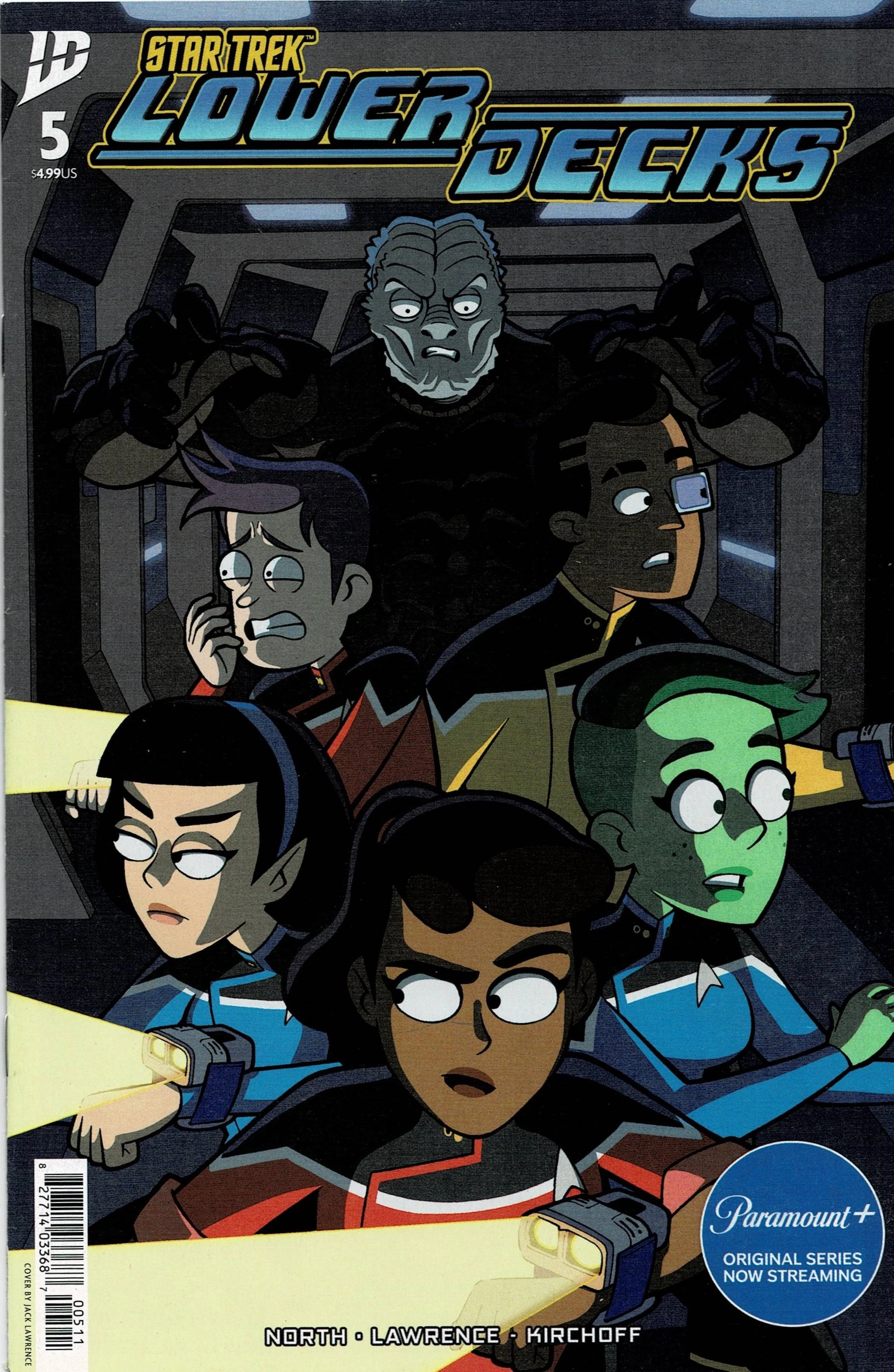
Then, suspicious after the Cerritos docks for its second baryon sweep in the same year, Mariner sneaks into a command meeting. There, the Department of Temporal Investigations tasks the crew with finding a time traveler who is rewriting Federation history at an alarming rate. Mariner finds her friends and tells them what’s really going on…only for the timeline to change around them! Obviously, something has gone wrong with Command’s mission, and per usual, it’s now up to Mariner, Tendi, Rutherford, and Boimler to save the day!

Second Contact was a very fun and compelling addition to the Lower Decks canon that sent its loveable cast on several great new adventures.  Loaded with intriguing adventures, light-hearted character moments and the self-referential humour fans of the Lower Decks animated series will know and love, Second Contact was a great comic I had an awesome time getting through.

North comes up with three great new adventures for these first issues of the Lower Decks comic, which balances fun with some deep cuts into Star Trek lore.  Set during the animated series’ fourth season, the three stories of Second Contact each run for two issues and stand on their own extremely well, with plenty of laughs, crazy moments and some fun looks at the well-established main cast of Mariner, Tendi, Rutherford, Boimler and T’Lyn as well as the main cast bridge crew.

Of these three main storylines in Second Contact, my favourite was probably the first, which sees the Cerritos crew encounter the abandoned U.S.S. Bonadventure, a starship dedicated fans may remember from the Star Trek: The Animated Series episode The Time Trap.  However, the protagonists’ attempts to study the ship go sideways, with the five newly minted Starfleet lieutenants transported to a mysterious planet by the Excalbians in an entertaining homage to The Original Series episode, The Savage Curtain.  With each Lower Decks member paired with an iconic figure from one of the first five Star Trek live-action series, the cast are forced into a hilarious death fight scenario, which goes off the rails in some very creative ways.  North clearly had a lot of fun parodying two classic Star Trek episodes, mainly through jokes about Kirk’s actions, and the references come fast and thick here.  It’s also hard not to laugh at the viciously over-the-top interpretation of some of your favourite Star Trek characters, especially when they engage in a ridiculous, televised death match, all while the main cast critique the resulting tropes, as well as the various inconsistencies in the setting and the places they visit.  This was a very strong starting point for the series, which includes one of my favourite jokes about Boimler, who, after being paired with Picard, mentally requests the ‘Early Picard. Really stern, the super hard-ass Picard. The one who just got the Enterprise and is really mean about it for some reason’, version of the character, due to his issues with authority figures.

North keeps the intriguing narratives coming quick and fast with the next two adventures, each of which are well laid out in their respective two issues.  This includes a satirically science-heavy story, where the Cerritos investigates a disappearing system, only to encounter unlikely life from another universe.  This narrative, which features some great moments for the always entertaining and light-hearted pairing of Tendi and Rutherford, was a particularly touching inclusion, especially as North veers away from the comic’s typical comedic tone to provide a darker, and reflective conclusion.  However, the humour soon returns with the third and final story in Second Contact, which throws the cast into an unlikely time travel story.  A loving homage to Star Trek’s many time travel episodes, this story sees the five main characters chase the bridge crew and a temporal fugitive who are mucking up the timelines in several inventive ways.  Initially forced to navigate through various hostile versions of the Cerritos, filled with some ridiculous alternate alien crews, they eventually journey to classic time travel destinations the Titanic and the Late Cretaceous, all with inevitable hilarious results.  This third story was a very amusing entry that allowed the Lower Decks crew to get another taste of time travel after the hilarious crossover episode, Those Old Scientists, with the comic format allowing for some particularly inventive and over-the-top scenarios.  All three of these stories come together extremely well, and while they mostly serve as standalone adventures, it is a particularly exciting and compelling overall narrative for Second Contact that you can’t turn away from.

I really enjoyed how North pulled these first six issues together, and you get a good look at his style and understanding of both general Star Trek lore and the specific feel of Lower Decks.  The writing within these comic issues was very similar in style and substance to the animated show, with the loveable characters engaged in several bonkers missions with clever and satirical ties to the wider Star Trek universe.  The main cast of Lower Decks are perfectly captured by North’s writing, and I honestly heard all their fun lines in the character’s respective voices from the show, no matter how ridiculous the statement.  The amazing humour of the original animated series is also perfectly emulated in this comic, with a great combination of outrageous moments and references to classic Star Trek lore.  There are some truly amazing comedic moments here, including some hilarious takedowns of previous Star Trek moments, which range from subtle comments from the protagonist, to a full on bloody brawl between five of the franchise’s most iconic figures thanks to ratings-obsessed aliens.  Throw in some additional self-aware commentary at the bottom of each page from a now-omniscient Badgey, who serves as the comic’s narrator, and this was a very funny read, especially if you loved the Lower Decks show.  While they humour and storylines of the comic are geared towards the more hardcore fans of the franchise, Second Contact is open to all readers, and even those who only have a passing familiarity with Star Trek can have a blast with this comic.

The final thing I want to highlight about the issues contained within Second Contact was the fantastic comic art.  Made to emulate the cartoon style of the animated series, the more simplistic panels and content work well to continue the Lower Decks feel in this comic, which I appreciated as a fan of the show.  There are some interesting minor artistic and stylistic changes after issue 2, after Jack Lawrence tagged in, but both artists did a great job replicating the show’s characters, even if they also went in some amusing directions.  I personally loved some of the sequences by artist Derek Charm where he drew some panels in a manner more reminiscent of Star Trek: The Animated Series, primarily to help mock the old-school cartoon.  There are also some extremely exaggerated and evil drawings of several classic characters, including Picard, Janeway, Scotty and more, as they engage in some overly dramatic moments of villainy.  This includes a glorious double spread where these alien duplicates all switch from nice to derange in only a couple of panels, accompanied by some very crazy moments (such as Scotty casually turning the team’s spacesuits into improvised bombs), all of which added to the humour of the story.  The other artist, Jack Lawrence also has some excellent drawn moments in these comics, including a series of trippy science moments, such as a blank section of space suctioning up planets, as well an exaggerated sequence of time travel, which enhanced the narrative of these entries. This great art from Charm and Lawrence was very fun, and I enjoyed their entertaining visual takes on the Lower Decks cast.

Star Trek: Lower Decks contained in wildly entertaining fashion with this great new comic.  Featuring some fantastic stories, amazing humour and awesome artwork, Second Contact was an outstanding first volume in this series, and it was one I had a blast getting through.  Highly recommended for all Star Trek and Lower Decks fans, especially those who like self-aware jokes about this iconic franchise.

Amazon

Quick Review – Never a Hero by Vanessa Len

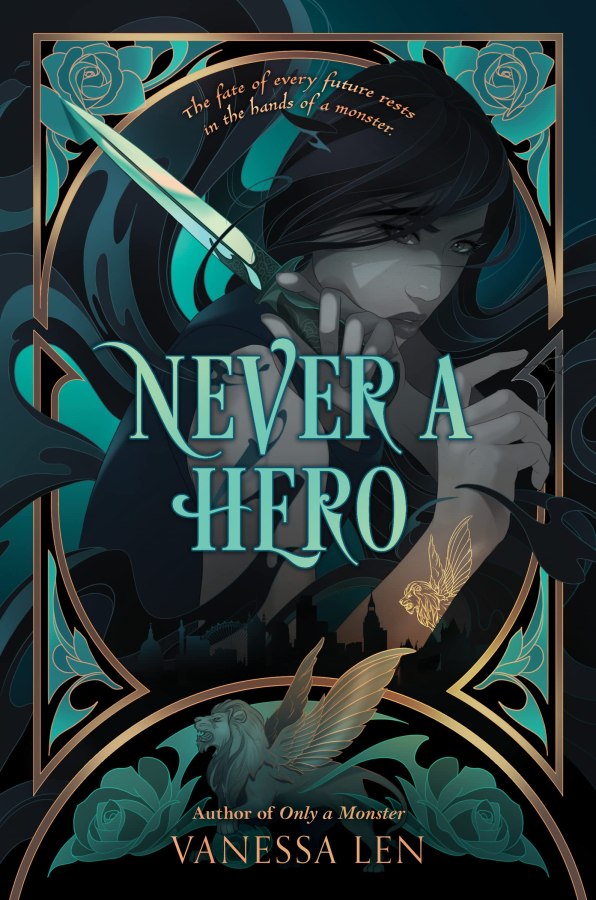
Never A Hero Cover

Publisher: Allen & Unwin (Trade Paperback – 29 August 2023)

Series: Only a Monster – Book Two

Length: 475 pages

My Rating: 4.75 out of 5 stars

Amazon

New Australian fantasy author Vanessa Len follows up her outstanding debut with her second book, Never a Hero.

Back in 2022 I was lucky enough to receive a copy of Vanessa Len’s awesome debut novel, the young adult fantasy Only a Monster.  This amazing and clever read saw a young woman find out that she was a monster, part of a community of people who can travel through time by absorbing the life force of ordinary humans.  When her crush is revealed to be a deadly monster hunter determined to destroy her and everyone she loves, she is forced to flee through time to try and save her family.  I loved the unique concept that Len came up with in her debut, and the resulting story was powerful, compelling, and very moving, especially as the author finished it off with a major twist and some heartbreaking decisions.  Only a Monster proved to be so damn good, and it ended up being one of my favourite debuts and Australian novels of 2022.  As such, I was quite excited when I saw that Len had a sequel to Only a Monster coming out last year, and I really enjoyed the unique way that she chose to continue her brilliant narrative.

Plot Synopsis:

This sequel to the contemporary fantasy Only a Monster will take Joan deeper into the monster world, where treacherous secrets and even more danger await.

Despite all of the odds, Joan achieved the impossible. She reset the timeline, saved her family – and destroyed the hero, Nick.

But her success has come at a terrible cost.

She alone remembers what happened. Now, Aaron, her hard-won friend – and maybe more – is an enemy, trying to kill her. And Nick, the boy she loved, is a stranger who doesn’t even know her name. Only Joan remembers that there is a ruthless and dangerous enemy still out there.

When a deadly attack forces Joan back into the monster world as a fugitive, she finds herself on the run with Nick – as Aaron closes in.

As the danger rises – and Nick gets perilously closer to discovering the truth of what Joan did to him – Joan discovers a secret of her own. One that threatens everyone she loves.

Torn between love and family and monstrous choices, Joan must find a way to re-gather her old allies to face down the deadliest of enemies, and to save the timeline itself.

Vanessa Len’s stunning Only a Monster trilogy continues with this second instalment, a thrilling journey where a secret past threatens to unravel everyone’s future.

Len comes up with quite an outstanding story for Never a Hero that hits the ground running fast and never lets up with the feels, action and deadly reveals.  The story starts with Joan living in a slightly different world thanks to her manipulations of the timestream, where her former love interest, Nick, has no memory of who she is or that he used to be a monster hunter.  However, an attack by the agents of the Monster Court forces her to once again jump back into that world to try and unravel a deadly conspiracy hinted at in the first novel.  However, this time she is the expert, dragging along the very human Nick, who quickly learns about the monster world as Joan desperately tries to keep him from remembering his deleted past as a monster hunter.  At the same time, her former ally from the first book, Aaron Oliver, has no idea who she is and is instead leading the hunt for her.

The resulting story proves to be quite exciting and intense, as the protagonists stay on the run, connecting with old allies and trying to discover why they are being chased and what deadly new plot has impacted their lives.  While there are some deliberate similarities with the first book, Never a Hero goes in some different directions, especially as Joan is aware of what it means to be a monster.  The book really goes in some interesting directions, and I loved how Len chose to wrap everything up.  The conclusion has so many heartbreaking revelations about the characters’ pasts, and the resulting secrets will shake readers to the core.  I love how well Len set up many of these reveals, and it was great to get a satisfying pay-off to some of the secrets and questions left unanswered in Only a MonsterNever a Hero ends on a big and ground-shaking note, hinting at a big final novel that will push the characters to their limits.

Len did an outstanding job following up her amazing debut here in Never a Hero, and this was another intense and moving character-driven read that expertly built on the elaborate story of her first book.  This was a great piece of young adult fantasy fiction that will attract both a mature teenage audience as well as older fans of inventive fantasy fiction.  While written in the same style as Only a Monster, Never a Hero definitely has a different feel to it, mainly because Len is weaving in some complex and inventive additional time travel elements.  In particular, the protagonist is forced to manoeuvre through a different world brought on by the changes to timeline she made at the end of the last book.  There is a constant reintroduction of supporting characters, locations and events, often in a much different context as the protagonist tries to work out the consequences of her actions.  At the same time, the reader is also treated to some additional lore surrounding the various monster families and there is some substantial and imaginative world building as a result.  I love how effectively and effortlessly Len utilised these complex fantasy concepts throughout her second novel and it really enhances an already exciting and memorable story.  While Len does work to make Never a Hero more accessible to new readers, the focus on differing timelines and alternate characters does slightly restrict who is going to enjoy this book.  I personally would strongly recommend reading the first novel before diving into Never a Hero, and that is honestly the best way to enjoy this story.

One of the best aspects of Never a Hero was the amazing character work of Len, who did an amazing job bringing together several intense and compelling story arcs around her excellent protagonists.  The main three characters of the book, Joan, Nick and Aaron, each have impressive appearances and scenes in Never a Hero, and what was particularly great about them is that they were so different from their prior appearance in Only a Monster.  Thanks to the time manipulations, each of them experiences an interesting new narrative in this book, and Len works this into the overall narrative of the book extremely well.  Joan, the only one who effectively remembers the prior events, is burdened by all manner of guilt, not only because of her monster heritage but because she killed off a version of Nick in the previous novel.  This guilt and despair only grows as the novel continues, especially when she realises the true consequences of her actions.  At the same time, Joan is constantly trying to hide the evil of her species from Nick, while also trying to come to terms with the other dramatic changes and revelations in her life.

The other two major characters, Nick and Aaron, also have some amazing sequences in this book.  Nick, who spent the previous novel hunting Joan as a monster hunter, is reborn for this book as a normal teen with a happy home life.  However, he is soon forced back into the world of monsters when he and Joan are attacked, and it was fascinating to see him experience everything from the other side, especially as a single wrong move from the other characters could turn Nick back into a ruthless killer.  Len also dives into the complex past around Nick’s various incarnations, and I deeply appreciated the tragic story about how he became a killer.  Aaron, on the other hand, is a monster from a noble family who was a reluctant ally to Joan in the previous book, before something else formed between them.  However, in Never a Hero, Aaron remembers nothing about this adventure or Joan, and instead he finds himself hunting her.  This was an outstanding move from Len, as readers of the first book had grown to care for Aaron, so it was jarring to see him evil again in this sequel.  The author wove quite an interesting storyline around Aaron, especially when it came to his connection with Joan, and there were some amazing scenes where the protagonist tried to bring him back onside by using secrets she previously learned from him.  These three characters and their unique personal stories formed a powerful emotional heart to Never a Hero, especially when combined with the excellent supporting cast and a wonderfully wicked villain.

Never a Hero proved to be quite an impressive and outstanding follow-up to Vanessa Len’s epic debut.  This amazing young adult fantasy novel had me quite enthralled and I loved the clever and powerful ways Len continued her unique narrative.  Len is truly proving to be one of Australia’s best new fantasy authors and I cannot wait to see how she wraps this series up with her next amazing novel.

Amazon

The Hunger by Marsheila Rockwell

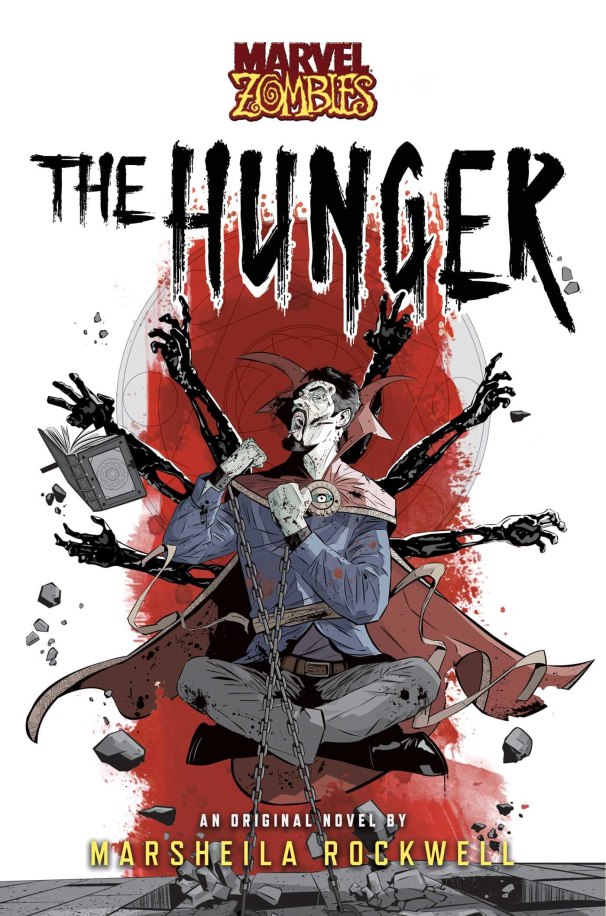
The Hunger Cover

Publisher: Aconyte Books (ebook – 3 October 2023)

Series: Marvel Zombies

Length: 249 pages

My Rating: 4.5 out 5 stars

Amazon

Prepare to dive into a wacky, time travelling, zombie filled Marvel novel with Marsheila Rockwell’s fantastic tie-in book, The Hunger.

After having a lot of fun reading the awesome Marvel Comics tie-in novel The Tyrant Skies by David Annandale earlier this year, I thought it would be an excellent idea to dive into another amazing Marvel book, especially one with a great plot like The Hunger.  Written by intriguing fantasy and science fiction author, Marsheila Rockwell, whose previous foray in Marvel fiction produced the magic Sisters of Sorcery novel, The Hunger is an awesome upcoming book that I was very happy to get an early copy of thanks to Netgalley.  Set around the iconic Marvel Zombies concept, The Hunger was a pretty epic read that I had an outstanding time with.

When a mysterious object falls to Earth, landing in New York city, it unleashes a wave of evil and despair as the world’s greatest heroes are turned into ravenous zombies determined to feast on all living flesh.  As the zombified superheroes begin to spread out across the planet, turning or eating everything before them, only Doctor Strange can briefly retain his sanity to try and find a way to avert disaster, but despite his best efforts, his overwhelming hunger threatens all around him.

With no alternative, Doctor Strange is forced to turn to one of the few magic users left unaffected by the zombie outbreak, the librarian of the Sanctum Sanctorum, Zelma Stanton, who reluctantly takes up the burden and imprisons her zombified mentor.  Despite her lack of experience, Zelma has access to all the magical knowledge and ancient artefacts in Doctor Strange’s Sanctum Sanctorum, and she hopes to find some answer to the deadly chaos consuming her planet.  But Zelma soon realises that even all the books in the Sanctum aren’t enough; if she wants to succeed, she’s going to need help.

Pulling together a ragtag team of survivors, including Runaway witch Nico Minoru, monster hunter Elsa Bloodstone and the living embodiment of insanity, Deadpool, Zelma hopes that together they can find a solution.  But their plan to trap the zombies in a time loop backfires on them, thanks to antics of Deadpool, unsurprisingly.  Now with time fracturing all around them, an evil magic threat unleashed, and the zombie horde still determined to eat everything, Zelma and her strange team need to find a way to reverse the damaged they caused while still saving the world.  But is this group of survivors truly capable of stopping the flesh-eating nightmares waiting for them?

That was an insanely fun book about zombies and time travel shenanigans that I desperately needed, and I am sure glad that I decided to check this novel out.  The Hunger was a very entertaining book that I ended up knocking out in a few hours because of how easy and fantastic it was to read.  Rockwell came up with a very impressive story that quickly grabbed my attention and took me along a wild journey loaded with so many awesome moments.  Starting off with a great new introduction to an alternate Marvel Zombies event, where Doctor Strange and pretty much every other hero gets brutally turned into zombies, the story gets bleak very quickly and rarely lightens up after that.  The resulting narrative focuses on the intriguing figure of Zelma Stanton, a supporting character in one of the recent Doctor Strange comics, and it proves to be very interesting as you follow a young, inexperienced magician as she tries to survive in a very dangerous world.  The resulting story has a lot of great features to it as Zelma finds her courage, gathers a unique group of allies, and then finds herself getting thrown into all manner of chaos as her actions produce more zombie mayhem and every time travel issues you could think of.  The second half of The Hunger is pure, unadulterated bedlam, and I frankly loved every second of it, as Rockwell comes up with some outrageous and exciting scenarios that never really slow down.  Bringing together some well set-up storylines in some excellent ways, you honestly will find it hard to put down The Hunger once you get rolling with it, and I found the entire story to be exceedingly entertaining, especially as Rockwell wove together some complex scenes that saw the characters journey through all manner of unique points the Marvel Universe timeline.  This story was a riot from start to finish, especially the fantastic extended time travel sequences, and you will come away from this book very satisfied and honestly wanting more.

Rockwell has a great writing style that I felt really lent itself to the emotionally charged and intense story that came together in The Hunger.  Primarily told from the perspective of two young female magic users, The Hunger is a strong, character-driven tale that showcases how people grow under adversity, while also treating the reader to a brilliant amount of action, carnage and Marvel comics lore.  Rockwell really leans into the Marvel Zombies background of her story to provide some gruesome and graphic moments, which I felt helped set The Hunger apart from some of the other Marvel tie-in books.  While there is a lot of humour attached to the book, mainly thanks to the inclusion of a particular merc-with-a-mouth, The Hunger gets very deep and serious at times, and I loved the impactful dive into the traumas affecting the protagonists.  I loved the fast pace that Rockwell sets for The Hunger’s story, and frankly there was not a single moment of this book where I wanted to stop, as I just wanted to see what was going to happen next.  I did think some of the early sequences of the book felt a little simplistic in their writing, which almost threw me off.  However, Rockwell found her stride as the book continued, and I loved some of the elaborate sequences that emerged, especially those that feature multiple figures, time elements and obscure bits of Marvel lore.  Some of The Hunger’s twists were very well set up in the earlier stages of the book, and I loved how well things came together in the end, especially as Rockwell made such great use of the time travel elements to tell a very entertaining story.

The Hunger serves as a rather interesting addition to the wider Marvel lore that exists as Rockwell makes fine use of several existing storylines, concepts and characters, to create a pretty fun read.  Set in a version of the main Marvel universe that is suddenly impacted by a Marvel Zombies event, The Hunger has a ton of curious and distinctive elements to it that established fans of the comics will deeply enjoy.  Not only are there a ton of different characters present, often in zombie form, but Rockwell goes out of her way to feature or reference multiple storylines from the comics.  This includes a great mixture of more recent comics and some classic storylines, both of which work extremely well in the context of the story and its time travel elements.  I felt that Rockwell did a very good job of cleverly introducing and then utilising these different storylines throughout the course of the comics, and the resulting crazy plot encounters and big moments were pretty damn awesome.  Each of the main characters also makes sure to remember or mention many key story arcs from their history, many of which have a compelling impact on the current storyline or mental state.  The author clearly has an appreciation for the various storylines and obscure characters that she featured and I loved how random and compelling the later scenes got.  While Rockwell does go to some diverse areas of the Marvel universe and history, all of these elements and characters are explored in excellent detail so that anyone with some basic knowledge of Marvel comics can easily enjoy what is going on.  I personally loved all the cool references that emerged, as well the excellent reimagining of the Marvel Zombies storyline which helped turn The Hunger into a pretty awesome tie-in novel.

As with her previous Marvel tie-in novel, Sisters of Sorcery, Rockwell chose to focus The Hunger on three intriguing and somewhat underused female characters from the Marvel canon, Zelma Stanton, Nico Minoru, and Elsa Bloodstone.  All three characters are already epic, but it was great to see them forming a team here in The Hunger, especially when faced with an insane, world-ending threat.  Of these three characters, Zelma is probably the one I knew the least about, mainly because I’ve never read any of the Doctor Strange comics she is in, but she soon proved to be the invaluable heart of this entire novel.  Rockwell did a remarkable job of introducing and utilising Zelma as a character, even to a reader like me that has had no experience with her.  You are swiftly brought up to speed on who Zelma is and why she is involved, and soon you follow this overwhelmed magical character as she is thrust into events beyond her comprehension.  I loved the overarching narrative of this character finding her confidence and ability in this ultimate post-apocalyptic setting, and it was great to see her become the hero that Doctor Strange believed her to be.  Watching her use her unique intelligence and experiences to survive and attempt to stop all the chaos is quite compelling, and you really grow to appreciate Zelma, especially as she has very relatable doubts and concerns.  Zelma is the emotional heart of this entire book and I felt that Rockwell was very wise to use her as a central character, especially with how exceptionally she is portrayed.

In addition to Zelma, I really enjoyed the fantastic use of Nico Minoru and Elsa Bloodstone in The Hunger who served as impressive joint protagonists.  I particularly loved seeing Nico Minoru here in The Hunger, mainly because I’m such a big fan of Runaways, and Rockwell featured her in an excellent way.  Focusing on her at a key part of her character development from the comics, this already jaded and wary Nico arrives on the scene after seeing her entire adopted family turned to zombies and is swiftly forced into another harrowing adventure with a new group of strangers.  I really enjoyed exploring Nico’s fears, concerns and complex history throughout The Hunger, and she served as a great secondary point-of-view character for the plot.  These female characters are further enhanced by monster hunter extraordinaire Elsa Bloodstone, who is well suited for this sort of dark, monstrous tale.  The foul-mouthed, highly confident figure is a great addition to the focal cast of the novel, especially as her loud personality plays off the more reserved Zelma and Nico for a good chunk of the novel.  While initially shown to be mostly carefree, there are some compelling darker feelings under the surface, especially related to the start of the zombie apocalypse, and I felt that Elsa was a brilliant and great addition to the plot.

The final major character in the book really needs no introduction as Rockwell features Deadpool as the much need comic relief.  Brought into the story for very unique reasons, Deadpool is his usual blend of irrelevant humour, catchy one-liners, and all-round killing machine that works well with the female protagonists to save the day.  His constant jokes, weird comments and fourth wall breaks deeply add to the enjoyment I had of the book, even with its darker story content.  So many of the best plot moments in The Hunger revolve around Deadpool’s antics, and he really is an unsurpassed character to include in a crazy book like this.  His interactions with the other protagonists are also a lot of fun, with an intriguing blend of comedic conversations, crazed resentment, and even a grudging respect for his fellow survivors.  Throw in a ton of zombified superheroes, an overpowered magical witch from history, a fun new mount for Deadpool, and some intriguing figures from the dawn of the Marvel canon, and The Hunger has an outstanding cast that are a lot of fun to follow, especially during their darker and emotionally charged moments.

The Hunger really lived up to all its great potential and I had an epic time getting through this insane and highly exciting read.  Marsheila Rockwell produced one hell of a story here that made great use of the Marvel Zombies theme and featured a bonkers story with fantastic time travel elements, complex characters, and a ton of compelling references to the wider Marvel canon.  I honestly had such an incredible time with The Hunger and readers are guaranteed to get caught up in its cool story just like me.  Highly recommended, for all Marvel fans, you will have fun with this book.

Amazon

The Book That Wouldn’t Burn by Mark Lawrence

The Book That Wouldn't Burn Cover

Publisher: Harper Voyager (Ebook – 1 May 2023)

Series: The Library trilogy – Book One

Length: 570 pages

My Rating: 5 out of 5 stars

Amazon

One of the world’s inventive and compelling fantasy authors returns with one of his best novels yet, the highly addictive and ambitious novel, The Book That Wouldn’t Burn, which sets off his new The Library trilogy.

Few authors have had the impact on the fantasy genre than Mark Lawrence has in the last few years, as the author has truly impressed readers throughout the world with his unique and captivating novels that routinely blend fantasy and science fiction elements.  His series include The Broken Empire trilogy, The Red Queen’s War series, and The Book of the Ancestor series.  I myself only started reading Lawrence’s work a couple of years ago with his compelling The Book of the Ice series, which followed several powered teens on a grim frozen planet.  I had an outstanding time with this series, which included The Girl and the Stars and The Girl and the Mountains.  While I still have to read the third book, The Girl and the Moon, I really enjoyed these books, and it was a pretty clever series.  As such, I was very keen to check out Lawrence’s new novel, The Book That Wouldn’t Burn, especially as it had a very intriguing plot synopsis behind it.

Throughout the world, there is nothing more important, more significant, nor more permanent than the library.  Built inside a mountain near the great city of Crath, the library contains an impossible number of books fitted within innumerable rooms that no one person can access.  The sheer amount of knowledge contained within the library represents the greatest power in the world, allowing its keepers and the King of Crath to wield great control in the world.  Into this vast and elaborate repository of knowledge and secrets, two young people are about to meet in unusual circumstances.

Livira is a young girl raised in the Dust, the desolate wasteland that surrounds Crath.  Plucky, curious, and incapable of giving up, Livira is a rarity among her people as she seeks to know more about the world outside her home.  But when the alien sabbers destroy her village and kill her people, Livira finds herself lost in the wilderness.  Rescued and brought to Crath, Livira soon becomes certain that her future lies in the library.  Overcoming prejudice and her own humble background, Livira learns to navigate the library and soon begins to find out some of its deeper secrets.  However, the most mysterious of these might be another strange inhabitant of the library, Evar.

Evar and his small family have known nothing but the library their entire lives.  Released after unknown eons frozen as children inside the library’s mysterious Mechanism, Evar and his siblings have grown up in a vast chamber of the library, learning from the books and becoming masters of specialised subjects.  However, Evar has always desired more and has long tried to find a way to leave their book filled prison.  His discovery of a portal within his home soon leads him to a place outside of time where he meets an exploring Livira.  Together, the two attempt to find the true history of the library and the threats it has withstood over the years.  But dark evils haunt the library, and soon the two explorers must find a way to uncover the truth behind the sabbers, their own history, and other deadly threats waiting for them in the future.  Can these two children of the library survive the revelations in front of them, or will the truth tear them apart in ways they can’t even understand?

Well damn, now this was a seriously impressive and epic book.  Lawrence has honestly outdone himself here with this incredible read, and this might be one of the best books he is ever written, which is saying something.  The Book That Wouldn’t Burn features one of the most elaborate settings and narratives you are likely to see in fantasy fiction, and this results in a powerful and moving read that will keep you guessing time and time again.  I had an exceptional time reading The Book That Wouldn’t Burn, and it would be impossible for me to give it anything less than a five-star rating.

The Book That Wouldn’t Burn is told from two separate perspectives, that of Livira and Evar, and covers their very different lives and experiences within the libraries.  These two character-driven storylines are initially kept separate from each other as Lawrence spends a good chunk of the book introducing the protagonists, setting up their unique stories, and bringing together the elaborate setting that the story is based around.  Both of these storylines are very interesting and fun off the bat, with Livira having her life torn apart, only to find purpose in the library, while Evar details his life lived purely within the library.  While both storylines are really good, I initially got drawn into Livira’s the most, especially as her outsider perspective of the library allows you to really appreciate how alien and strange the massive house of books is.  Livira’s storyline advances at an extended clip, covering years of her life as she learns, grows, and fully develops her adventurous personality as she seeks to fully understand the secrets of the library and everything within it.  Evar’s storyline on the other hand is a little more sedate in its pacing, as it is set only along the course of a few days as he tries to finally understand the structure that has kept him prisoner for so many years.

The first half of the book that showcases these two characters’ initial introduction and growth are pretty damn entertaining, and it does a wonderful job of setting the scene for Lawrence’s elaborate story and background location.  However, the story doesn’t find its true strength until the two protagonists meet and their storylines becomes a lot more intertwined.  Due to the impossible physics and requirements of the library, there is a compelling time element to the meetings between the characters, which Lawrence captures masterfully, and which really alters their perspectives of each other.  Once they are able to properly interact, the two characters grow close and spend an interesting chunk of the novel exploring their respective worlds, as well as the history of the library.  Lawrence really lays the world building on thick during these parts of the book, and it serves to bring the two protagonists together, which just ensures the last act of the book is as tragic, moving and devastating as possible.  The author drops some massive bombshell twists around two-thirds of the way through, which completely throws you and makes you rethink everything you have thought about the preceding narrative.  I honestly was pretty damn shocked at this epic and devastating revelation, and while I had already been pretty damn addicted to the story by this point, this was the moment I realised what a masterpiece The Book That Wouldn’t Burn truly was.

The final third of the novel gets even better as certain background elements of Livira’s storyline finally come to fruition and her entire life begins burning around her.  This causes her and many of the supporting characters from her part of the book to end up interacting with the characters from Evar’s storyline, which is a very interesting change of pace from the previous parts of the book.  There are also some frenetic conflicts and some very dark moments as everything you have previously known about the settings, the characters and the history of the library is thrown around in some excellent and compelling ways.  There are several great new twists in this final section of the book, and Lawrence gets very metaphysical with the reveals, relying on his setting’s unique temporal properties to mess with your mind and bring you surprise after surprise.  I really loved just how cool and complicated this novel got towards the end, and Lawrence leaves an awesome and open conclusion for you to enjoy while drawing you in towards the next book in the series.  I came away from this narrative desperately wanting more, especially after being blown away by all the twists within the book, and I cannot wait to see what happens next.

Those who are familiar with Lawrence will know that he is a very impressive and talented author, and I really liked how he developed his story and displayed all its outstanding elements to the reader.  The Book That Wouldn’t Burn is a particularly complex read, loaded with damaged characters, elaborate storylines and an inventive major setting.  Lawrence approaches his latest novel with his usual flair and imagination, expertly showcasing every clever detail of this world to the reader and keeping them enthralled the entire way through.  Due to the complexity of the story, you really need to dive into every single word that Lawrence writes, and it honestly took me a little longer to get through this lengthy novel than I expected, mainly because of how much focus I needed to fully appreciate everything.  That said, it has a very good pace to it and there is never really a dull moment as you are constantly drawn into what is happening or the elaborate depictions of the library.

I felt that the author’s use of two narrators was particularly effective, especially as they give very different views of what is happening around them and the setting they find themselves in.  The extra expansiveness of the separate narration really helps to expand the scale of the book, and it takes some major temporal shifts for the two protagonist’s storylines to align.  Once they do, the two separate character arcs intertwine extremely well, and I loved seeing their interactions through each other’s eyes, as well as the elaborate adventures they find themselves involved with.

Lawrence also was very skilled at setting up some of the book’s big twists, and while many of them surprised me when I read them, looking back you could see the subtle clues leading up to them, and you really appreciate just how clever the author was in the earlier stages of the book.  The initial big twist is probably the best, and you really have to love how careful Lawrence was with some of the dialogue and character descriptions to pull that off.  Some of the subsequent twists are a little less shocking, mainly because you are on guard at that point, but I did like how well some of the reveals based around the protagonist’s journey through time were utilised and hinted at in earlier scenes.  The fact that there are completely different faces to some of the major early figures of the book was very cool, and it was clear that the author had a very impressive plan while writing the early stages of the book.  These excellent writing elements, and more, served to enhance an already captivating story, and I cannot get past how well Lawrence set everything up.

There is no way I can move forward without talking about the elaborate library setting that was such an epic centrepiece of The Book That Wouldn’t Burn.  I love how the author’s ultimate major setting is a library, which is something that all readers can really appreciate.  While we can all imagine a pretty massive or full library, Lawrence amped that imagination up to an 11 in this book, describing a seemingly impossible structure, made up of innumerable rooms filled with massive climbable bookshelves and a seemingly infinite number of books and tomes.  The sheer scale of this setting when described by Lawrence boggles the mind to a degree, and it really is an outstanding setting for this story as it is the perfect place for exploration, adventure, and even habitation.  The library naturally features Lawrence’s trademark blend of fantasy and science fiction elements, and the structure has a transdimensional or alien feel to it, as the protagonists find different mechanisms within the structure, as well as strange and unique ways to travel through it.  This blend of fantasy and science fiction elements worked particularly well, especially as you get to experience an intriguing contrast between ancient advanced technology and endless shelves of paper books.

The more unique elements of the library, including the portals, the robotic guardians, the locked doors, and more, are worked into the plot extremely well, and it was fascinating to see how they impacted the story, especially while the characters attempted to find out their origins.  The time travel aspects of the library proved to be particularly awesome, and I loved how Lawrence used them, and other cool features, to twist the narrative in some powerful and unexpected directions, completely changing everything you thought you knew.  It was also really effective how Lawrence explored the library through two very different sets of eyes, as Livira and Evar see it in different ways based on their respective history and cultures.  These alternate views added even more depth to the epic setting, and you have to love the continued focus on exploration, especially when it resulted in some of the best scenes in the book.  Honestly, I could go on and on for pages about just how impressive this outstanding setting is, so let me just be blunt and say: read The Book That Wouldn’t Burn, as you really won’t be disappointed when it comes to this elaborate library setting and the dark world it inhabits.

The final thing that I really need to highlight are the great characters contained within The Book That Wouldn’t Burn, which Lawrence did an outstanding job pulling together.  There is a rich and compelling cast of characters featured within this novel, and their unique stories and experiences play a big role in how the story develops.  However, most of the character work is saved for the point of view protagonists, Livira and Evar.  Both characters have intriguing and tragic backgrounds brought about by encounters with sabbers, and they have found sanctuary within the library as a result.  However, this is where their storylines differ as Livira seeks out the treasures of the library and works to get deeper within, while Evar looks to escape and find a whole new world to explore. This leads to some very conflicted character moments, and it was fascinating to see how these characters’ intriguing histories influences their understanding of the world and what they want.  Both protagonists are well established and utilized by the author in The Book that Wouldn’t Burn, and their distinctive character arcs give the book a different flavour chapter to chapter as you explore both their lives.

I personally enjoyed Livira a little more as a protagonist, as her adventurous spirit, drive to be the best and sheer pluck were quite entertaining to see, especially as it allowed her to uncover so many cool secrets about the library.  However, you also have to appreciate the darker background and narrative around Evar, a man trapped all his life in the library, and who has known only limited contact and love in his life.  Evar’s entire life has been nothing but uncertainty, abandonment and a certain amount of inadequacy as he has only known a few other people, each of whom are the absolute experts in their fields.  These two protagonists, when they meet, prove to be a powerful and interesting combination, and Lawrence was quite masterful and subtle when it came to weaving their chapters together.  You really appreciate the pain, loss and sacrifices that both protagonists make throughout the book, and the bond they formed together, soon becomes such a key part of the story.  While they do experience some major, mind-blowing setbacks, you grow really attached to both of them, and seeing them continue and dive even deeper into the unknowable heart of the library, makes for powerful reading.

Aside from Livira and Evar, The Book That Wouldn’t Burn features an extensive and compelling cast of supporting characters, whose interaction with the protagonists adds some intriguing elements to the plot, especially as many of them are filled with some great surprises.  Both Livira and Evar’s storylines had some excellent supporting figures whose appearances are primarily limited to their respective narrator’s timeline.  My favourite supporting character in the Livira chapters had to be Malar, a rough and tough solider who becomes Livira’s protector mostly against his will.  His gruff attitude is a fun contrast to Livira’s bright and curious nature, and they have some entertaining scenes together, especially as he grows to care for her, and Lawrence works in some particularly compelling story elements around him in the later part of the book.

Evar’s chapters also feature a great range of supporting characters, and due to the more constricted nature of his story and setting, you get to know them a lot better than some of the cast associated with Livira.  These characters include Evar’s adopted siblings, Starval, Kerrol and Clovis, who were also trapped in the Mechanism as children and grew up with him in the library.  However, unlike Evar, who emerged relatively normal, each of Evar’s siblings were warped by the knowledge of the Mechanism and are now masters of a particular subject, including assassination and espionage, war and psychology.  Each of these siblings is now fairly damaged as a result of their complex upbringings and childhood traumas, and it was fascinating to see their unique mindsets, especially through the eyes of Evar, who holds a special place in each of their hearts.  These characters were all raised by the animatronic constructs, the Assistant and the Soldier, servants of the library who took charge of them, and I liked the fun interactions that resulted from them, especially once Lawrence worked his twisty magic on them.  All of these characters and more are pretty damn interesting, and I loved how complex and emotionally charged their interactions became.

Frankly I could go on and on about this book, but I still do not think I would really be able to fully encapsulate just how much I enjoyed The Book That Wouldn’t Burn.  This complex and clever fantasy novel is a true masterpiece from Mark Lawrence, who utilised all his impressive writing skills and imagination to create a unique and powerful read.  The Book That Wouldn’t Burn’s elaborate narrative and massive library setting really grabbed my attention and I had such an epic time getting through this outstanding novel.  Easily one of the best fantasy books of 2023, you need to check The Book That Wouldn’t Burn out, especially if you are already a fan of Mark Lawrence’s amazing works.

Amazon

Throwback Thursday – Justice League: The Flashpoint Paradox

The Flashpoint Paradox Poster

Studio: Warner Bros. Animation and DC Entertainment

Series: DC Universe Animated Original Movies – Film 18 / DC Animated Movie Universe – Film One

Director: Jay Oliva

Writer: Jim Krieg (Based on the comic by Geoff Johns and Andy Kubert)

Producer: James Tucker

Length: 81 minutes

My Rating: 5 out of 5 stars

Welcome back to my Throwback Thursday series, where I republish old reviews, review content I have enjoyed before or review older books I have only just had a chance to read.  For this week’s Throwback Thursday, I dive into a pretty damn awesome DC Comics animated film that is highly relevant at the moment with the awesome Justice League: The Flashpoint Paradox.

Like many comic book fans in the world, I went out last weekend for the epic new film offering, The Flash, which ended up being pretty damn good.  The film had a lot of great elements to it, including the return of Michael Keaton as Batman, the introduction of a great new Supergirl, and a fantastic examination of the Flash mythos.  I was also very happy to see a fresh new take on the iconic Flashpoint comic, and it will be interesting to see how that impacts any upcoming live action DC films.  While I liked what they did with the Flashpoint story, I don’t think that The Flash was the absolute best adaptation of the Flashpoint comic; instead that honour goes the focus of this article, the 2013 animated film, Justice League: The Flashpoint Paradox.

Before we talk about the film, I should give a little background about the Flashpoint comic.  Flashpoint was a major 2011 comic event, written by Geoff Johns, whose work I have deeply enjoyed in comics like Rogues’ Revenge and Teen Titans, and pencilled by Andy Kubert.  Flashpoint was a compelling alternate timeline story that ended up resetting the main DC Universe in a big way.  While I honestly have very little love for the resulting changes it caused (I will never forgive DC for The New 52), the Flashpoint comic itself is pretty good, featuring some unique and stunning ideas within it.

Flashpoint has been adapted a few times in recent years, including in several seasons of The Flash television series, and the current The Flash film takes a lot from it.  While these other adaptations are pretty good, I think that The Flashpoint Paradox did the most with it, mainly because it sticks a lot closer to the source material and provides a very gritty animated film with a brilliant cast behind it.  Directed by veteran animated film director Jay Oliva (who has directed several of my favourite animated comic book films) and written by Jim Krieg, The Flashpoint Paradox is pretty damn awesome film and it is one that I have rewatched multiple times over the years.

Barry Allen is the Flash, founding member of the Justice League, the fastest man alive and the greatest hero Central City has ever known.  However, despite all he has done and everyone he has saved, Barry still cannot shake the trauma of his mother’s murder, a tragedy that has haunted him since his childhood.  After defeating several of his greatest foes, including his archenemy, the Reverse-Flash Eobard Thawne, Barry awakens to find himself in a new world, one where his mother is still alive and the Flash never existed.  Despite the joy he feels about his mother, this new world is no paradise, instead it is on the brink of ruin.  The Atlanteans, under the command of Aquaman, and the Amazons, led by Wonder Woman, are at war, and their relentless battling and disdain for humanity, has seen the destruction of much of Europe and the death of hundreds of millions of people.

Determined to find out what is happening and to stop the war between the Atlanteans and the Amazons before it destroys the world, Barry seeks out the one man who he thinks can help him, Batman.  However, the Batman he encounters is far different from the one he knows and has very little desire to save the world.  Worse, it soon becomes apparent that the changes to the world have been caused by Thawne, whose obsession with destroying the Flash could lead to unbelievable destruction.  To save the day, Barry needs to find a way to regain his powers and unite the scattered heroes of this reality.  But with all-out war in front of him, and his own trauma catching up behind, can the Flash stop Thawne before it’s too late?  And even if he succeeds, is he truly ready for the revelations that await him?

The Flashpoint Paradox was a pretty epic film that I have a lot of love for, especially as it blends a compelling story with great aesthetics, slick animation and a brilliant cast to produce something pretty damn awesome and a lot of fun to check out.

The creative team behind The Flashpoint Paradox did an outstanding job bringing this film together and one of the main reasons it works is the fantastic and intense story behind it.  The film itself is an exceptional adaptation of the original Flashpoint comic and much of it is a close and deliberate match to the source material.  That being said, it’s not a straight adaption as they needed to make it more accessible and take the story out of the main comic universe.  The film starts off with an exceptional sequence where the Flash faces off against the Rogues and the Reverse-Flash, who ambush him at the Flash Museum.  This scene, which sees a series of bombs threaten Flash and Central City, manages to achieve a lot of essential story points, including introducing Flash, showcasing his bitter rivalry with the self-destructive Thawne, and presenting the established version of the various Justice League characters who will later appear in the alternate timeline.  It’s also a very entertaining scene in several great ways, not only because the banter between Flash and Thawne is pretty brutal, but because it shows each member of the Justice League in action as they disarm a bomb in their own unique way.  This great intro really sets up the rest of the film, especially thanks to the clever references to Barry’s mothers’ death, and while it does make it a little more obvious whose ultimately responsible for events, it was a pretty damn epic start.

The middle part of the film is where the meat of the story is developed, as Barry arrives in the alternate universe and attempts to find out what is going on.  This part of the film resembles the source material the closest as they are pretty much doing a straight adaptation of the Flashpoint comic at this point.  However, they manage to really show off the grim reality of this new timeline very effectively in a short amount of time, and you really get to appreciate just how murderous the Amazons and the Atlanteans are, as well as how dark a world without the Justice League can be.  The creative team tell a very impactful story in this part of the film, and you must love the powerful interactions between Barry and the new Batman, as well as the emotional impacts of Barry realising just how much his universe has changed.  Everything is well capped off by the infiltration into the lab holding Superman, which is honestly way darker than what they did in the recent Flash film, especially with the horrifying aesthetics around the captured Superman.  At the same time, the growing sense of doom in the world is intensifying as the two superhuman armies prepare for war in London, and the tension is well and truly ratcheted up before the final phase of the film.

Everything leads up perfectly to the final act of The Flashpoint Paradox, which frankly is the best and most impactful part of this entire exceptional film.  The final third of the film is essentially an all-out war sequence, as the various characters descend into a three-way battle in the ruins of London, with the Atlanteans, the Amazons, and the human resistance, which includes the protagonists, fighting to kill as many enemies as possible.  This sequence is dominated by several excessively brutal fights between the heroes, and so many characters end up dead in some pretty horrible ways.  Not only are these action scenes highly polished and exciting, but they are also emotionally powerful, as the various character arcs and elements come full circle.  The best scenes are probably shared between Barry and Thawne, as they fight through the battle, debating what has happened to the world.  There are some outstanding revelations here, especially if you aren’t familiar with the source material or the other Flashpoint adaptations, and the moment when Barry figures out what truly happened is just heartbreaking, especially with Thawne’s taunting.  There is so much dramatic tension floating around, especially as Barry witnesses the full onslaught of the battle in front of him, and everything tilts on the edge of destruction.  The final brutal moments of this fight are so damn epic, and it leads up to some painful farewells and some tough decisions from Barry that will shake him forever.  This built-up emotion remains to the very end of the movie, especially as Flash manages to get closure for himself and others, and I really appreciated just how well the film ended.

On top of the epic plot and amazing concluding third, I also need to really highlight the impressive animation, stylistic choices, and fantastic musical score that accompanied it.  The animation in particular is awesome, and I loved the brilliant and iconic character designs that it depicted, especially as there is a mixture of classic character depictions, and the alternate versions that appeared in the Flashpoint universe.  The grim nature of the Flashpoint timeline serves as a powerful backdrop to the plot of The Flashpoint Paradox, and it was fantastic to see the DC universe in an even darker and more desperate light.  The best animation is naturally saved for the multiple impressive fight sequences scattered throughout the film, especially in the big war sequence at the end, and the brutality and sheer ferocity of the fights and battles are quite distinctive.  The animators honestly show no hesitation in showing blood, gore, death and even brains throughout this film, and it is even more brutal than The Flash film or the original comics, as there is barely a second in the final war where someone isn’t dying in some dramatic fashion.  There is some outstanding attention to detail during these various battles, whether it be a brutal fight in the sky, an intense duel between Cyborg and Aquaman in the middle of a warzone, or a high-speed fight through the midst of over combatants, and these are expertly portrayed and guaranteed to keep your interest with its high concept impact.  The cool time travel sequences are also a great highlight, and the clever animation around them really dial up the intensity of the film, especially during certain seminal scenes.  I’m also a big fan of the way that the major characters are presented throughout this film, and I appreciated how their designs change at various points of the film depending on which timeline is being watched.  The alternate costumes or depictions are well contrasted by the classic costumes shown at the start of the film, and I also love the subsequent subtle changes that appear at the end of the film to represent the further changes that have been created.

I also must talk about the fantastic use of music throughout this film, which works perfectly in concert with the animated sequences.  There are some great orchestral scores and tunes that are featured throughout the film, often in the most impact scenes, and I really liked how well they were used to enhance emotion or drama in a very powerful way.  Some of the very best scenes, including several particularly tense or pivotal sequences at the end come across as so much better thanks to the music that was overscoring it, and this really drew me further into the plot.  Combined this great music with the excellent graphics and The Flashpoint Paradox turns out to be an exceptional watch that I cannot get away from.

While the adapted plot and amazing stylistic choices help to turn this film into something special, I cannot walk away from this review without talking about the incredible cast of actors who bring this elaborate story to life.  The Flashpoint Paradox features a pretty hefty and impressive group of voice actors who each dive into their respective characters and bring forth some of the more iconic figures from the DC universe, as well as their alternate versions, in some pretty epic ways.  There is a great combination of classic character depictions, as well as the more nuanced and, in many cases, evil versions from the alternate timeline, that are featured in The Flashpoint Paradox, and the creative team brilliantly balanced the two throughout the plot.

At the centre of The Flashpoint Paradox is the Barry Allen version of the Flash, who embarks upon one of the most important missions of his life.  Expertly voiced by Justin Chambers (of Grey’s Anatomy fame), this version of the Flash is much more closely related to the classic comic portrayals (rather than Ezra Miller’s quirky version) and is an experienced and competent crime fighter.  Despite being one of the more stable superheroes out there, Barry is still haunted by the murder of his mother and his failure to save her.  Chambers really dives into this role and perfectly voices the full emotional spectrum out of Barry, showing all the deep inner pain, as well as his inherent hope, all of which really comes out throughout the film.  There are so many powerful scenes featuring Barry in the film, from his initial confusion over the new timeline, the emotional meeting with his mother, the despair at how the world turned out, and his absolute shocked resignation at who is responsible.  I also felt that the writers did an outstanding job of capturing the entire personality, key history and mythos of the Flash within this film, and you really understand his decisions and how he interacts with the other heroes.  I particularly loved his shock and pain at seeing what his friends have become in this alternate timeline, and it is so damn compelling.  Honestly, there are so many powerful moments here and I have a whole new level of respect for Chambers thanks to this film as he honestly was just magical here.

On top of the Flash, I really need to highlight two figures from the new timeline who perfectly mesh with the main character and show off just how dark events are.  The most prominent of these is easily this universes Batman, who was voiced by another Grey’s Anatomy alumni, Kevin McKidd.  Rather than being an older version of Bruce Wayne, this version of Batman is his father Thomas Wayne, who took on the cowl after Bruce was killed in Crime Alley and Martha became this universe’s Joker.  McKidd goes full on growly here for Batman, and the result is a grizzled, violent, and very murderous Dark Knight who has given up on the world in many ways.  I loved this fantastic and clever take on Batman in The Flashpoint Paradox, and it is so damn epic to watch Barry attempt to work with this very different Batman.  The shared connection of knowing Bruce gives these characters a powerful emotional bond, and McKidd kills it in several emotionally charged scenes, showcasing this Batman’s hidden heart.

I also have a lot of love for the cool version of Cyborg that appears in The Flashpoint Paradox, and honestly this is probably the grimmest and most powerful portrayal you are likely to see.  Voiced by a young Michael B. Jordan, this Cyborg is the only real superhero left in America and has been modded out into a massive tank figure who runs national security.  Out of all the figures in the film, Cyborg has the most impressive change in characterisation between timelines, especially as he goes from teenage figure to actual adult, and this is one of the first animated films that really showed what he could offer the wider DC universe.  Jordan provides a pretty good and slightly robotic voice for Cyborg here, and I loved how he was portrayed as a level-headed peacemaker, trying to save the world.  While still a little naive and idealistic, he really lives up to all the hype surrounding him in his initial introductions, especially during the final bloody battle scenes.  He honestly goes full out in this war, and it was so damn cool to see just how dangerous he could be.

While the more heroic (or anti-heroic for Batman) characters above were great, this film would be nothing without its villains.  The most prominent of these is easily Flash’s archnemesis Eobard Thawne, better known as the Reverse Flash.  Voiced by the very talented C. Thomas Howell, Thawne is a brilliant and powerful figure in The Flashpoint Paradox, mainly because he has such a tangible hatred for Barry and his legacy.  While he is the main villain of the story, he only appears in a few short scenes, but Howell makes each and every one of them count.  The sheer contempt and bile that drips from every sentence is so important for the performance, and you quickly understand just how much he wants to destroy him, even if that means losing his own life.  Thawne’s best sequence occurs at the end of the film when he finally appears to mock Barry and reveal everything that has been done.  The joy, satisfaction and mocking appreciation for Barry is just perfect, and he has such a great villain monologue here.  Howell has one of the strongest performances in The Flashpoint Paradox and I deeply appreciated how he brought such a fun and compelling villain to life.

In addition to Thawne, The Flashpoint Paradox features two other outstanding and particularly unique antagonists in the form of militarised and anti-human versions of Aquaman and Wonder Woman.  Both characters have been twisted by a failed romance and the hatred that followed Wonder Woman’s slaying of Aquaman’s wife, and they are now brutally engaged in war to kill each other and the rest of the world.  I loved these darker and more murderous forms of these iconic characters, especially after they are shown in their more heroic guises at the start of the film, and their complex war is a destructive backdrop to the intense narrative.  Like Reverse-Flash, both are consumed by hatred, and they are willing to destroy the world rather than lose.  Despite that, there is still an obvious, if twisted, love between them, which makes their fight even more tragic.  I loved how both characters are portrayed, although I especially like how badass they make Aquaman here, especially as this was released in the pre-Jason Momoa days when Aquaman was still a bit of a joke.  Watching him destroy everyone in The Flashpoint Paradox really sets him up as a massive threat, and I deeply appreciated this fantastic change to the character.  I also loved the great casting behind these characters as well.  Aquaman is portrayed by legendary actor Cary Elwes, who honestly disappears into the role, providing a much more gruff and commanding voice than I have heard in his previous works.  The voice of Wonder Woman is provided by veteran voice actor Vanessa Marshall (Hera Syndulla from Star Wars Rebels), who is reprising the role she previously portrayed in Justice League: Crisis on Two Earths.  Both actors really get these iconic characters down perfectly, especially in their darker moments, and I loved how well they were utilised in the film, especially as they enhance the emotional power and looming threat of the narrative.

On top of the great performances above, I also must commend the use of several excellent supporting actors in smaller roles who did an outstanding job.  I as particularly happy that several actors who had previously voiced certain characters in other films and shows revisited their roles here, including some big names.  The most noticeable of these is the late great Kevin Conroy, who does an exceptional (as always) job of voicing the Bruce Wayne Batman at the beginning and end of the story.  Conway has several amazing scenes, including a particularly emotional sequence at the end that will have you in tears.  Other performers include Nathan Fillion providing a cocky voice to the Hal Jordan Green Lantern, Dana Delany once again voicing Lois Lane after voicing her the DC Animated Universe (Superman: The Animated Series, Justice League and Justice League Unlimited), and Ron Perlman revisiting his epic Teen Titans performance as Deathstroke for a short scene.  Other notable actors and characters include Danny Huston doing a quick dash as General Sam Lane and Dee Bradley Baker (the voice of all the clones in Star Wars animation, as well as several hundred other credits) doing a fantastic Etrigan the Demon.  However, my favourite of these side characters is Danny Jacobs’s portrayal of the Wildstorm Comics character Grifter.  Grifter is a brutally effective figure in the final third of the film, and he has some outstanding interactions with other characters like Batman.  This cast, and more, all add so much to the film with their brilliantly portrayed characters, and I am still blown away by the calibre of the cast that was brought together here.

I think it is pretty obvious from the lengthy rant above that I have a lot of love for Justice League: The Flashpoint Paradox, and it is one of those animated films that I have watched so many times.  Thanks to its amazing cast, fantastically adapted story, intense animation and general darker vibe, The Flashpoint Paradox is a pretty spectacular animated film, and I honestly think it has the best execution of the Flashpoint comic.  It also has an awesome legacy, especially as it sets up the DC Animated Movie Universe and has impacts that range all the way to the final film, Justice League Dark: Apokolips War.  As such, I really must give this film a full five-star rating and it is a must-watch for all comic fans, especially those who like their animation a little more adult and emotionally charged.

Quick Review – Only a Monster by Vanessa Len

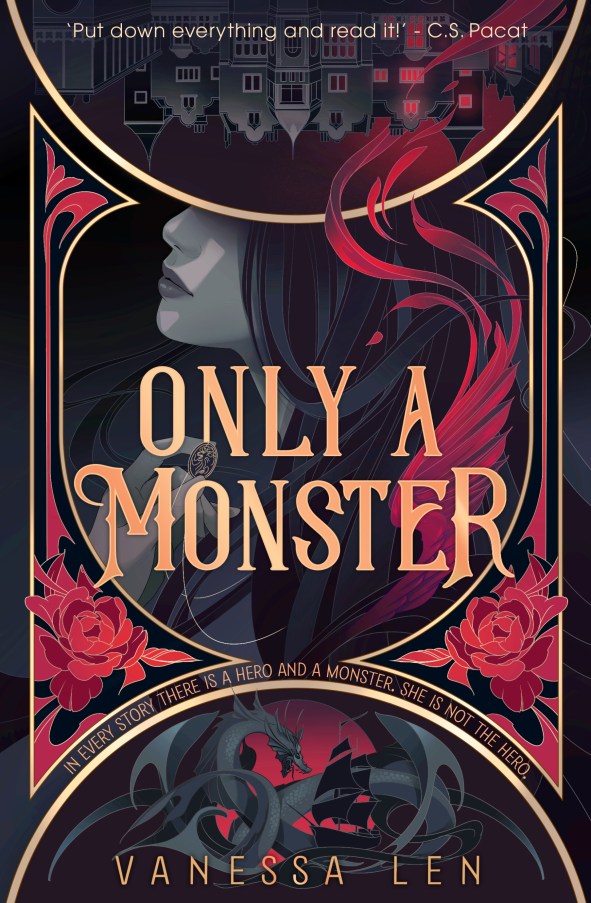
Only a Monster Cover

Publisher: Allen & Unwin Australia (Trade Paperback – 1 February 2022)

Series: Monsters – Book One

Length: 410 pages

My Rating: 4.5 out of 5 stars

Amazon

Only a Monster by Australian author Vanessa Len is a particularly wonderful debut highlight of last year that I have been meaning to talk about for some time.  A brilliant and awesome young adult fantasy read, Only a Monster is an impressive novel that sees a shocked girl realise that everything she thought she knew about her family was a lie and that deep down she really is a monster.  Intense, incredibly clever, and beautifully inventive, Only a Monster was pretty damn epic and proved to be one of the best debuts of 2022.

Plot Synopsis:

With the sweeping romance of Passenger and the dark fantasy edge of This Savage Song, this standout YA contemporary fantasy debut from Vanessa Len, is the first in a planned trilogy.

It should have been the perfect summer. Sent to stay with her late mother’s eccentric family in London, sixteen-year-old Joan is determined to enjoy herself. She loves her nerdy job at the historic Holland House, and when her super cute co-worker Nick asks her on a date, it feels like everything is falling into place.

But she soon learns the truth. Her family aren’t just eccentric: they’re monsters, with terrifying, hidden powers. And Nick isn’t just a cute boy: he’s a legendary monster slayer, who will do anything to bring them down.

As she battles Nick, Joan is forced to work with the beautiful and ruthless Aaron Oliver, heir to a monster family that hates her own. She’ll have to embrace her own monstrousness if she is to save herself, and her family. Because in this story . . .

. . . she is not the hero.


Only a Monster
has an awesome story that takes a teenage girl on a dark journey of self-discovery and magical adventure as she tries to figure out who she is and what lies within her.  Len starts this book quickly, with a good introduction to central protagonist and point-of-view character Joan Chang-Hunt, who is part of the unusual Hunt family.  A shuddering moment of unreality reveals that she is really half monster, someone who has the ability to steal time from humans to power their time-travelling abilities.  Though Joan initially tries to avoid this revelation and enjoy time with her crush, Nick, an encounter with the malevolent Oliver family of monsters forces her further into their hidden world, especially when it is revealed that Nick is secretly a monster slayer destined to kill every monster in existence, including Joan.  After a brutal series of events that sees most of her family and the other monsters of London killed in a single, coordinated massacre, Joan flees into the past with her surviving cousin Ruth and the youngest member of the Oliver family, Aaron, hoping to find a way to save their families.  Their quest leads them to try and recover a legendary artifact that will allow them to rewrite time.  But to do so, they will need to go up against the mysterious King of the Monsters and his dangerous plot to control reality.  Caught between monsters and monster slayers, the characters are forced into a series of deadly encounters which will force Joan to choose whether to retain her humanity or embrace her inner monster.

Len really came up with something special in Only a Monster, and I personally loved how this outstanding debut unfolded.  The author keeps a pretty fast pace throughout the entire book, and you are constantly thrown from intense moment to intense moment as the protagonist and her companions attempt to stay ahead of their enemies and find a way to bring back their families.  I felt that Len did a great job introducing her compelling world, fantastic characters and unique magical elements, and you quickly learn to appreciate the author’s inventive ideas.  This is actually a pretty dark read, especially as it starts with a massacre and focuses on a group of magical beings who can suck the life force out of normal humans to power their abilities.  I personally deeply enjoyed this darker tone, as Len balances it well with her unique creative ideas and the emotional character development to create an intense and addictive read.  The magical time travel elements of this book are very well done, and the darker ideas behind the absorption of people’s time span helped to make it a malevolent gift that the protagonist is forced to use by necessity.  Despite this, it does produce some fun time travel jokes, and I had a laugh at some of the pop culture references that were utilised in the identification of the period.  Len also lays down a series of interesting twists throughout the story which are revealed at perfect moments and which help to produce a pretty amazing story.  However, the absolute highlight of this book had to be the epic ending that Len decided to traumatise her readers with.  While I’m not going to give away anything here, let’s just say it is pretty insane, and I was deeply impressed with how Len set it up and executed it.

The final thing I really need to gush about when it comes to Only a Monster is the deeply complex and damaged characters featured within.  Only a Monster features a fun crew of central protagonists, each of whom are going through their own epic journeys.  The primary focus is on central character Joan Chang-Hunt, a sweet and nerdy character who, in the course of a day, finds out she is a half-monster with life-sucking time travel abilities, and then witnesses her entire extended family getting massacred.  This naturally causes her to experience a lot of emotions and trauma as she constantly tries to come to terms with how her life has unravelled and changed forever.  The main focus of her character arc is the examination of her inner monster as Joan tries to get to grips on whether she wants her abilities, especially as they force her to drain away people’s time.  She is also dealing with intense guilt over her role in the massacre that destroyed her family, partially thanks to her relationship with Nick, and this clashes hard with her own concerns about being a monster.  All this, and more, ensures that Joan is forced to grow up a lot throughout the course of Only a Monster, and she must keep making harder and harder decision as she gets closer to crossing lines she doesn’t want to.  Her final actions in this book bring all these deep feelings close to the surface as she is forced to make a terrible decision in a heartbreaking and powerful scene.  Len did an outstanding job when it came to Joan in this book, and I look forward to seeing how she continues to develop in future entries in this series.

Two other major characters I need to highlight are Joan’s accidental companion, Aaron Oliver, and her crush/personal nightmare, Nick.  Both characters have pretty dark introductions to the story, especially as they end up trying to kill Joan in the starting chapters, but Len develops them separately as the book continues.  Aaron ends up working with Joan as they try to stay alive and find a way to save their families, and they become an intriguing and combative duo throughout the book.  While Aaron is initially arrogant and antagonistic, you soon see that this is a façade, as Aaron is also incredibly damaged due to the actions of his cruel family.  Len does a wonderful job of slowly uncovering this deeper side of Aaron throughout the course of Only a Monster, and the eventual bond he forms with Joan is a touching and moving part of the book, even if it isn’t destined to last.  Nick, on the other hand, is an outstanding villain for this story, especially when it is revealed that he is an unflinching and implacable monster hunter.  Despite the connection he had formed with Joan before the events of this book, mainly because he sees her as more human than monster, Nick soon starts fanatically hunting her throughout time and becomes determined to stop her at all costs.  Clever and dark reveals about Nick come to light as the book continues, painting him in a somewhat sympathetic light, but this doesn’t stop him from hunting Joan, which leads to an exceptional and shocking confrontation towards the end of Only a Monster that perfectly changes everything.  The powerful character work contained in these central characters, as well as the intense bonds they form with Joan, are such a key part of Only a Monster, and you will come away heartbroken and moved with how their storylines unfold.

Overall, I had an incredible time with Vanessa Len’s Only a Monster, and not only was it one of the best debuts of 2022 but one of the best young adult books of the year as well.  This brilliant and powerful fantasy read had an amazing story and you will be impressed and excited by the complex characters and deeply inventive fantasy elements that are worked into this compelling narrative.  Intense, dark, and full of hope, Only a Monster is an incredible read that comes highly recommended to anyone interested in seeing the start of an extremely promising career in fantasy fiction.  I am very excited to check out the sequel, Never a Hero, later this year, and if Len keeps up the amazing writing from Only a Monster, it is going to be particularly epic and exceptional.

Amazon

Recursion by Blake Crouch Review

Recursion Cover

Publisher: Random House Audio (Audiobook – 11 June 2019)

Series: Standalone

Length: 10 hours and 47 minutes

My Rating: 5 out of 5 stars

Amazon

Get ready for one of the most impressive and compelling science fiction books of the last few years with Blake Crouch’s outstanding 2019 release, Recursion.

Crouch is one of the more intriguing and highly regarded science fiction and thriller authors out there now, having produced a fantastic catalogue of intense and addictive novels over his career.  Best known for his Wayward Pines trilogy (adapted into a television series of the same name), Crouch’s books for the last few years have been a collection of fantastic standalone science fiction thrillers, such as the bestselling Dark Matter.  These novels often combine intense thriller storylines with high-concept science fiction elements to produce some epic and captivating reads.  So far, I have only read one of Crouch’s books, his 2019 release, Recursion, which was an exceptional and amazing read.  Unfortunately, I didn’t review it back then, even though it was one of my top books and audiobooks of 2019.  As I have just started reading Crouch’s latest book, Upgrade, I thought this would be a good opportunity to quickly give Recursion the love it deserves, as this honestly was one of the better books of 2019.

Synopsis:

Memory makes reality.

That’s what New York City cop Barry Sutton is learning as he investigates the devastating phenomenon the media has dubbed False Memory Syndrome—a mysterious affliction that drives its victims mad with memories of a life they never lived.

That’s what neuroscientist Helena Smith believes. It’s why she’s dedicated her life to creating a technology that will let us preserve our most precious memories. If she succeeds, anyone will be able to re-experience a first kiss, the birth of a child, the final moment with a dying parent.

As Barry searches for the truth, he comes face-to-face with an opponent more terrifying than any disease—a force that attacks not just our minds but the very fabric of the past. And as its effects begin to unmake the world as we know it, only he and Helena, working together, will stand a chance at defeating it.

But how can they make a stand when reality itself is shifting and crumbling all around them?


Recursion
was a powerful and deeply complex novel that perfectly brought together an impressive and thrilling narrative about choices, survival, and fixing mistakes, with some outstanding and clever science fiction concepts.  Based around the concept of memory, Recursion eventually devolves into a deeply compelling time travel narrative as its amazing two protagonists are dragged into a terrifying struggle to save the world.

The narrative of Recursion is split between grizzled cop Barry Sutton and brilliant scientist Helena Smith, both of whom have tragic pasts and memories that they would kill to get a do-over for.  Their storylines are initially kept separate, as Barry attempts to investigate a mysterious illness that is causing people to suddenly awaken with a second set of memories about a life that didn’t happen, driving them insane.  At the same time, Helena works with a mysterious corporate benefactor to develop a machine that will allow people to relive their most important memories, but her boss soon takes control of the project and morphs it into something very different with impossible knowledge.

It is soon revealed that Helena’s boss is using her memory machine to travel back to the time that the important memories were created in order to alter the timeline for his and his friend’s advantage.  The false memory syndrome is a side effect of this process, as people eventually start to remember all the changes that have been made due to the time travelling villains.  Both Barry and Helena are dragged into this conspiracy, as Barry is bribed to stop investigating by reliving and altering the memory of his daughter’s death, while Helena fights to stop it before it’s too late.  Eventually teaming up once the world starts going crazy with multiple memories, Barry and Helena are too late, with the various nations launching nukes against America to stop them ruling the world through time travel.  Helena is barely able to escape by diving back in time to a point in her personal years before the events of the book.

From there the novel turns into an intense time travel thriller as Helena works through her past and attempts to perfect her machine and stop time travel from ever existing.  Continuously recruiting a younger Barry, Helena is unable to find a solution before the world regains its lost memories and is forced to travel back again and again to avoid the inevitable arrests and nuclear strikes and ends up living multiple lifetimes.  This leads to a desperate series of attempts to save the world, which results in a fantastic and clever conclusion that fits the unique science fiction elements and characters of this book extremely well.

Recursion’s entire narrative comes together extremely well and serves as a powerful standalone read.  I loved how the story developed throughout the course of the book, and I found the second half of the novel, with the multiple examples of time travel to be some of the best parts of Recursion, especially as the stakes are raised higher than ever before.  This is a very well-written and fast-paced thriller, and Crouch brings in some fascinating concepts that work extremely well in the context of the clever narrative he pulled together.  The blend of intense action, compelling characters and complex science fiction elements is pretty damn perfect, and readers really get drawn into this narrative as a result.  I was personally addicted to Recursion very early in the game, and I had an outstanding time seeing how everything came together.

Crouch explores a lot of unique and compelling scientific elements which become an excellent part of the overall book.  The author presents a very complex and intriguing series of concepts around human memory, time travel, and everything in between, and makes some very interesting and well-researched points about them.  While most of these concepts are high-level science, Crouch takes the time to explain them carefully, and I found myself following along with the ideas fairly well.  While I did think the leap from memory experiments to time travel were a little over-the-top, it did become an incredible part of the narrative, and I really loved how well time travel was used in the story.  I love a good time travel story, and Recursion was one of the better ones that I have read, especially as it covers it in a unique way, while also highlighting the many dangers of unchecked changes to the time stream.  I loved how well the author was able to weave a compelling and powerful story around these concepts, and you will come away from this book really thinking about all the implications of this potential technology, as well as the importance of memory to the human psyche.

I also deeply enjoyed the outstanding pair of protagonists, Barry Sutton and Helena Smith, whom the story is set around.  Not only does Crouch do a wonderful job splitting the narrative between them, often in some very clever ways, but he also builds both characters up extremely well, showcasing their deep inner pain.  Both have experienced a lot of tragedy in their lives, and thanks to the technology being explored here, they are given the chance to relive it and change it.  Watching them go through these deep emotional moments, as well as witnessing the various mistakes they make as they try to fix the world, is pretty damn heartbreaking, and you really grow to appreciate their struggles, especially if you can relate to their tragic memories.  As such, you grow attached to them rather quickly, and I liked how Crouch made sure to build in a compelling, if unique, relationship between them.  While both grow close during their first meeting, their romantic relationship takes on a whole new edge once time travel is brought into it and it turns into powerful romantic bond that literally last lifetimes.  I really grew close to both Barry and Helena while reading Recursion, and they are an outstanding pair of protagonists to follow.

I must admit that I was a little wary about listening to the Recursion audiobook, as a colleague of mine who read the novel before me indicated that it might prove a little challenging to keep track of the various time periods without a physical copy to flip through.  However, I really did not have any trouble keeping track of what was going on in the story while listening to the audiobook, and indeed I found that the format helped me understand the concepts more.  I also enjoyed the combined narration of Jon Lindstrom and Abby Craden, with Lindstrom reading the chapters told from Barry’s perspective and Craden doing the same for Helena’s chapters.  This split in narration worked really well, and I liked how it changed each time the character perspective did.  With a run time of just under 11 hours, this was a fairly easy audiobook to get through, and I powered through it very quickly.  An overall excellent way to enjoy this fantastic book.

Recursion by Blake Crouch is an epic and exceptional read that really showcases the author’s impressive writing skill and ability to come up with some truly unique concepts.  This science fiction masterpiece is so damn awesome, and there is a very good reason that it was one of my favourite books of 2019.  A five-star read and highly recommended in every way possible, I loved Recursion, and I can’t wait to finish off and review Upgrade next.

Amazon

Quick Review – Wrong Place Wrong Time by Gillian McAllister

Wrong Place Wrong Time Cover

Publisher: Michael Joseph (Trade Paperback – 15 June 2022)

Series: Standalone

Length: 402 pages

My Rating: 4.25 out of 5 stars

Amazon     Book Depository

Prepare to dive into one of the more unique and compelling murder mystery novels of 2022 with the trippy Wrong Place Wrong Time by Gillian McAllister.

Plot Synopsis:

 Can you stop a murder after it’s already happened?

It’s every parent’s nightmare.

Your happy, funny, innocent son commits a terrible crime: murdering a complete stranger.

You don’t know who. You don’t know why. You only know your teenage boy is in custody and his future lost.

That night you fall asleep in despair. Until you wake . . .

. . . and it is yesterday.

Every morning you wake up a day earlier, another day before the murder. Another chance to stop it.

Somewhere in the past lie the answers, and you don’t have a choice but to find them . . .

I must admit that I did not quite know what to expect when I decided to check out Wrong Place Wrong Time.  However, I ended up having an amazing time with this excellent and awesome novel from Gillian McAllister, who has produced multiple interesting family orientated crime fiction books over the last few years.  Thanks to its great story Wrong Place Wrong Time was pretty damn cool, and I really enjoyed its impressive concept that combines time travel with an intriguing murder mystery.

Wrong Place Wrong Time starts off on a captivating note, with protagonist Jen Brotherhood staring out her window one night and noticing her son, Todd, go up to a man she’s never seen before, and stab him to death in front of the house.  With Todd refusing to answer any questions, and her husband, Kelly, not knowing what to do, Jen can only watch as her son is arrested and taken away by the police.  Horrified at the terrible future that now awaits her child, Jen eventually collapses into sleep, only to wake up on the morning of the killing, aware of everything that is about to happen.

Confused by what is happening, Jen manages to persuade Todd to stay home that night, thus stopping the killing.  However, her ordeal is far from over, as the next time she falls asleep she has awakened even further back in time, to the day before the stabbing, and that each subsequent night she goes back to sleep she is travelling further and further back along her own timeline.  Believing that the only chance she might have to stop her jumps into the past and save her son’s future is to figure out why Todd stabbed the man, Jen begins to investigate the crime in reverse, perusing her son’s movements in the weeks and months leading up to the crime and trying to decide how he knew the murder victim and why he felt that he needed to kill him.  However, the more she digs and the further back in time she travels, the more Jen begins to realise that there is so much about her family and her past that she didn’t know, and she’ll have to find out every single secret to find a way to stop everything.

I really liked how this fantastic story came together, and Wrong Place Wrong Time was one of the more distinctive murder mystery/science fiction hybrid novels that I have read.  McAllister sets her entire time travel premise at the start of the book really well, and you soon get really engrossed in watching the protagonist continually falling backwards in time day by day.  Once the protagonist begins to understand what is befalling her, the story launches into its mostly standard pattern as Jen attempts to live her life in reverse while also investigating the events that led up to her son committing his crime.  I really enjoyed the reverse investigation that Jen was forced to do, and it was fascinating to see her attempt to decipher events through both the lens of her future knowledge and her previous understanding of the past.

While Jen’s storyline is the most prominent in the novel, there is also an interesting secondary storyline that follows a police officer who is assigned to investigate crimes in the same area as the main story is taking place.  This secondary storyline, which is progressing in a normal linear way, intersects with the main storyline is some brilliant ways, and it provides some intriguing and powerful context to Jen’s investigations in the past.  I was really impressed with how McAllister wrote this amazing story, and the excellent combination of time travel and mystery, came together extremely well.  It takes a particularly skilled author to hide twists in a narrative where the protagonist is going backwards through time, and Wrong Place Wrong Time had several great secrets that you will not see coming.  If I were to make one complaint, it would be that the eventual reveal about what caused the time travel was a little weak, but honestly, that was a very minor issue that didn’t impact my enjoyment that greatly.  Easily one of the more complex and inventive mystery thrillers of 2022, you will become highly engrossed in Jen’s attempts to find the truth further and further back in time.

While there is an understandable focus on both the mystery and time travel aspects of Wrong Place Wrong Time, I must also highlight the compelling character nature of the book that serves as the story’s beating heart.  The story mostly follows protagonist Jen, who goes through a rough journey in this novel.  At the start of the novel, Jen is a happy and successful woman, extremely confident in her apparently strong connection to her son.  However, after witnessing her son’s crime and subsequently jumping back in time, she begins to truly appreciate just how little she knows about her family, and that there are many secrets surrounding them.  This harrowing journey into the past, combined with the multiple revelations about her family’s history really starts to wear on her, and it was highly moving and tragic to witness Jen start to break down.  However, you also get to witness her strength and her commitment to her family, as she still struggles to solve this mystery, no matter how badly it impacts her or how much of her life she is forced to relive in reverse.  I especially loved seeing the relationship that she has with her son and husband, as you get to see the various stages of their connection and life in reverse, and it helps to paint a powerful picture about family and connection.  Thanks to this, and more, you really grow attached to Jen and the other characters, and this really helps to increase the impacts and stakes of Jen’s journey.

Talented author Gillian McAllister has done an incredible job here with Wrong Place Wrong Time.  Thanks to its compelling and memorable character-driven plot that combines a slow journey back into the past with an intense murder mystery, Wrong Place Wrong Time is a gripping and clever read that I really got attached to.  There are so many great elements to this fantastic book, and it is really worth checking out.

Amazon     Book Depository

Aurora’s End by Amie Kaufman and Jay Kristoff

Aurora's End Cover

Publisher: Allen & Unwin Australia (Trade Paperback – 2 November 2021)

Series: Aurora Cycle – Book Three

Length: 493 pages

My Rating: 4.5 out of 5 stars

Amazon

The all-star team of Australian authors Amie Kaufman and Jay Kristoff present the third and final novel in their epic Aurora Cycle series, with the intense and clever young adult science fiction novel, Aurora’s End.

Over the last few years, I have been deeply enjoying the outstanding partnership of Amie Kaufman and Jay Kristoff.  Both Kaufman and Kristoff are accomplished authors, with several independent series to their name, such as Kristoff’s Lifel1k3 series (make sure to check out my review for the second book, Dev1at3).  However, I think that some of their strongest work has been together, as Kaufman and Kristoff have previously co-authored the acclaimed The Illuminae Files trilogy.  Their latest collaboration, The Aurora Cycle, has been a particularly amazing young adult science fiction series, and I have been really enjoying its cool story.

The Aurora Cycle novels are set in a far future when humans have expanded out into space and encountered a range of different alien species.  Peace between these species is kept by the Aurora Legion, an intergalactic collation of peacekeepers, made up of teenagers of various species (a slightly more hormonal Starfleet, slightly).  The series follows Squad 312, a group of misfits brought together thanks to the arrival of the mysterious Aurora O’Malley.  Auri is a girl out of time, who was awoken by the squad after centuries frozen in a colony ship and found herself gifted with dangerous psychic powers.  The first book in this series, Aurora Rising, introduced the squad and saw them thrust into the midst of a galactic conspiracy, as a race of plant-based aliens, the Ra’haam, who are plotting to assimilate all life, frame them as terrorists.  The second novel, Aurora Burning, expanded on the threats, the conspiracies, and the character drama, and ended with a massive cliffhanger, with all the surviving members of Squad 312 in great danger and the fate of the universe on the brink.

Following the terrible battle near Earth between the human and Syldrathi fleets, the planet-destroying superweapon was fired, but nothing turned out as expected.  Now, the various members of the galaxy’s last hope, Squad 312, have been flung throughout time.  Scarlett, Finian and Zila have been blasted back into the early days of Earth’s intergalactic travel, when there is no Aurora Legion, no friends, and a ticking clock of doom as the mysterious station they arrived at keeps blowing up.  Subsequently, Auri and Kal arrive years in the future, where the Ra’haam have won, and all hope seems lost.

Trapped in a time loop, Scarlet, Fin and Zila will initiate a desperate plan (again and again) with a new friend, but their mission may end up having unimaginable consequences.  While in the future, Auri and Kal are trapped with the only weapon that can end the Ra’haam threat, if they can get back to the present.  Forced to team up with the most dangerous being in existence, Kal’s genocidal father, Caersan, Auri and Kal embark on a dangerous mission through the Ra’haam controlled future with some unexpected help.

Back in the present, Squad 312’s leader, Tyler Jones, is also running out of time.  Still branded a fugitive by the entire galaxy, Tyler is the only person who knows that the Ra’haam are making their move to destabilise the various governments of the galaxy to start their invasion.  Forced to work alone and against the odds, Tyler needs to travel back to the one place he considers home, the highly secure Aurora Legion headquarters.  All three of these teams will need to survive impossible odds if they are to complete their missions and get back home.  But even if they succeed, can this ragtag team of teenagers really save the entire galaxy, or is the age of the plant-based parasite about to begin?

This was an outstanding novel from Kaufman and Kristoff that served as an excellent and captivating end to this impressive series.  Kaufman and Kristoff really went all out here with Aurora’s End, producing a complex and entertaining narrative that separates out the various characters and presents them with impossible temporal obstacles.  I deeply appreciate the clever narrative that the authors wove around these compelling characters, and it ended up being an exceptionally fun and enjoyable young adult science fiction book that I powered through in two days.

I absolutely loved the cool story of Aurora’s End, not only because it was really thrilling and fast-paced but because it was so ambitious.  I cannot think of another trilogy where, in the final entry, the authors decide to suddenly embark on massive time-travel adventure, with an intense narrative split across three vastly different time periods.  However, it works incredibly well, as Kaufman and Kristoff produced some epic and exciting storylines that remain mostly separate throughout the entirety of the book.  All three storylines are very distinctive, and all of them are pretty fun in their own unique way.  The storyline set hundreds of years in the past is an extremely entertaining event that sees three point-of-view characters trapped in a slowly devolving time-loop that ends every time one of them dies.  The characters are forced to work through an exploding, high-security station to find a way to travel back in time, with a substantial number of hilarious deaths and mistakes along the way.  The storyline in the present follows the Squad’s leader as he attempts to stop the entire alien invasion by infiltrating the most secure location in the entire galaxy without his squad.  Finally, you have the storyline in the future, which is an emotional and powerful post-apocalyptic narrative that sees Auri and Kal forced to contend not only with a hostile galaxy completely taken over by the Ra’haam but also with Kal’s insane and manipulative father.

I felt that all three of these storylines worked incredibly well, and each of them had their own appeal.  I honestly have a hard time faulting any of these distinct storylines, and it was one of those rare occasions in a split-storyline novel where there wasn’t a single character or timeline that I was a little less excited to read about.  If I had to choose a favourite, it would be the storyline set in the past, mainly because I loved the fun opportunities that only a time-loop story can present.  All three storylines were incredibly rich and compelling, and the authors did a good job of layering drama, excitement, character growth and humour through each of them.  While they were mostly separate from each other, the overlapping elements worked incredibly well, and the storylines ended up coming together perfectly towards the end.  The authors also do a good job wrapping up a lot of the unexplained story elements from the previous novels, with certain mysterious events and McGuffins finally revealed in their entirety.  This results in a big and epic finale where all the remaining characters are reunited to face the final threat of the Ra’haam.  It was extremely cool to see all the unique story threads finally come together.  I did think that the authors got a bit too meta-physical in the finale, especially when it came to dealing with the big-bad, but this didn’t really disrupt my overall enjoyment of the story.  I absolutely loved this wacky, clever, and well-planned out narrative, and I am still deeply impressed with how well the entire time-travel story worked.

I have really appreciated the cool and enjoyable writing style that Kaufman and Kristoff utilised throughout the Aurora Cycle, and it worked incredibly well once again in this final book.  Just like with the previous novels, Aurora’s End is told utilising six split perspectives, with each of the surviving squad members going into the final book getting multiple chapters.  Not only do these multiple perspectives help to present a rich and complex character driven narrative but it also helps the reader to really get into the heads of the main characters.  Each part of the book told by a different character has its own unique feel to it, and you really get the sense of each of the characters’ personalities and experiences.  I also love the way in which Kaufman and Kristoff layer in the action and humour throughout the entire novel, with various fun scenes featured throughout.  The action scenes are very intense, and the authors do a great job of highlighting the crazy battles that each of the characters get involved in, whether it be massive space battles, deadly close-combat fights, or sneaky attempts to move through an exploding space station.  The authors also have a great sense of humour, with many fun jokes and observations that made me laugh multiple times, especially around the fun time-loop storyline.  This made Aurora’s End a very easy novel to get through, as the natural narration and fast-paced scenes ensures that readers can power through it quickly, and with little hassle at all.  Due to this being the final entry in a series, readers are encouraged to check out the first two Aurora Cycle novels first before reading Aurora’s End.  However, those readers tempted to start and finish he series here should still be able to enjoy the story as the authors have a very inclusive writing style, and the book also features a highly detailed “stuff you should know” section at the front (very useful for both new readers and those who need a quick refresher).

Just like the previous novels in this series, Aurora’s End is marketed as a young adult read, and I would strongly recommend it to this audience.  Younger readers will deeply appreciate the use of multiple complex teenage characters kicking ass and saving the world, and I think that the authors did a good job of capturing the teenage mindset in their various protagonists.  This was also quite a mature and positive read, with multiple examples of romantic relationships, complex issues, and great portrayals of LGBT+ relationships that will be appealing to the younger audience, especially as the authors do not try to talk down to their chosen readers.  Due to some of these mature elements, I would suggest that this is a more appropriate read for older teens, and this is a series I would have really enjoyed when I was first getting into fantasy and science fiction.  Despite its marketing towards the young adult audience, this is a series easily enjoyed by older readers, and I think that most science fiction fans will have a great time with this series, if they don’t have any objections to following teenage protagonists.  Overall, I think this book will appeal to a wide range of readers and is a particularly good series for teenagers looking for a fun adventure with relatable heroes.

The last thing I want to highlight abut Aurora’s End is the excellent characters featured throughout, especially protagonists Aurora, Tyler, Kal, Scarlett, Finian and Zila.  Over the course of the Aurora Cycle, the reader has had a wonderful time getting to know all the protagonists, all of whom have grown throughout the series, while also experiencing loss, heartbreak, betrayal, and devastating revelations.  I have deeply appreciated the impressive and realistic character growth featured within, and the authors have continued this throughout Aurora’s End, with some major character moments that helped to define all of them and shown how they have grown.  Unlike the previous novels that have focused on a couple of the characters a little more, there was a much more even spread amongst the characters, with each getting their moment in the light.  Indeed, thanks to the cool time travel elements, you get to see multiple versions of one protagonist, with an older version of this character becoming a supporting figure in one of the other storylines.  I deeply appreciated the various character arcs featured throughout this novel, and Kaufman and Kristoff go out of their way to make you run the full emotional gauntlet here.  These arcs include a more comedic one surrounding the sarcastic Finian and the perhaps oversexualised Scarlett as they explore their new relationship while the world continuously explodes around them.  At the same time, the socially awkward Zila has a more serious experience in the time-loop, even as she embarks on a doomed relationship with someone who lived hundreds of years before she was born.

The other three characters also have some major and moving character arcs, especially Aurora and Kal, who are trapped in a future where the Ra’haam won, and everything has been infected by them.  This is a particularly dark storyline, and these two protagonists go through a lot, especially as they keep witnessing all manner of death and destruction around them.  Their arc is further complicated by Caersan, Kal’s father, who has similar powers to Auri and used them to destroy Kal’s home planet.  This results in some major emotional moments, as Auri and Kal are forced to work with an unrepentant Caersan, while also trying to work out their own complex emotions.  Finally, I must highlight the great development at occurred with Tyler, the team’s leader, who, after spending two novels turning Squad 312 into the ultimate team and family, ends up by himself, forced to face literal ghosts from his past with none of his established support.  Tyler really suffers in this book, and you must feel sorry for everything he goes through, even if he does start a passionate, if exceedingly violent relationship with a warrior alien princess.  All of these character arcs are really impressive, and you will be moved by everything these fantastic heroes go through, especially as not all of them will come out of it in one piece.

With this fantastic final book, the team of Amie Kaufman and Jay Kristoff have brought their amazing Aurora Cycle series to an epic and impressive conclusion.  Aurora’s End was an outstanding novel that perfectly wrapped up this excellent trilogy with fun, flair, and exceptional action.  Featuring some amazing characters and a very clever time-travel based storyline, Aurora’s End was an incredibly fun novel that comes highly recommended.  I deeply enjoyed this epic novel, and I really hope that these two brilliant Australian authors team up again in the future for another compelling series.

Amazon

Throwback Thursday – Heroes in Crisis by Tom King and Clay Mann

Heroes in Crisis Cover

Publisher: DC Comics (Paperback – 1 October 2019)

Writer: Tom King

Artists: Clay Mann, Travis Moore, Lee Weeks, Mitch Gerads, Jorge Fornes

Colourists: Tomeu Morey, Arif Prianto, Mitch Gerads

Letterer: Clayton Cowles

Length: 234 pages

My Rating: 4 out of 5 stars

Amazon     Book Depository

Welcome back to my Throwback Thursday series, where I republish old reviews, review books I have read before or review older books I have only just had a chance to read.  For this latest Throwback Thursday article, I look at an interesting DC Comics crossover event from a couple of years ago, the deep and compelling Heroes in Crisis.

Heroes_in_Crisis_1 (V1)

Now I have to admit that I have been somewhat avoiding a lot of the recent DC crossover events, mainly because I think the universe is getting a bit too complicated, what with the multiple versions of characters and timelines.  However, I recently grabbed the Heroes in Crisis collected edition (containing all nine issues of the limited series), mostly because I had heard some conflicting reports about whether it was any good, and I thought that it would be worth seeing just what sort of comic it really was.  I was also drawn to this comic as I am major fan of Tom King and Clay Mann after the work they recently did on Batman, which featured some really cool and compelling storylines.  Heroes in Crisis turned out to be a rather fun and intriguing comic, especially as King came up with another fascinating narrative.

Heroes_in_Crisis_1 (V2)

After years of fighting and surviving against the very worst evils in the universe, even the greatest heroes will start to crack under the unreal pressures of their chosen lives.  Realising this and determined to help their fellow superheroes, the trinity of Superman, Batman and Wonder Woman designed Sanctuary.  Sanctuary is a hidden facility containing a cutting-edge artificial intelligence programmed to provide advanced therapy, support and counselling to any hero that needs it after harsh battles and traumatic events.  However, no sanctuary lasts forever, and after losing contact with the facility, Superman, Batman and Wonder Woman arrive to find Sanctuary in shambles and several patients brutally killed.  As the world’s superheroes reel from the deaths of friends and colleagues such as Roy Harper, Red Devil, Commander Steel, Poison Ivy and Wally West, their thoughts swiftly turn to justice.  But who is responsible for the killings, and could the culprit be one of their own?

Heroes_in_Crisis_1 (V3)

The answer may lie with the only two survivors of the Sanctuary massacre, the greatest hero you have never heard of, Booster Gold, and the mad clown princess, Harley Quinn.  However, Booster and Harley are both convinced that they saw the other commit the crime, and are now out to stop the other survivor by any means necessary.  As the heroes attempt to uncover the killer lurking amongst them, their world will be further turned upside down when the confessions and therapy sessions recorded at Sanctuary are leaked to the media, casting a new light on them.  Can the killer be caught before they strike again, or will this case irreparably damage the world’s greatest superheroes?  Whatever happens, the DC universe will never be the same again.

This was a very unique and fascinating crossover comic which contains some notable flaws, but is something that I quite enjoyed.  King, Mann, and their artistic team produced a clever comic that really dives into the minds of the collected heroes of the DC universe.  Featuring a great story, some powerful character moments and some impressive artwork, Heroes in Crisis turned out to be a fun and heartfelt comic that I had a wonderful time reading and which has really stuck in my mind.

Heroes_in_Crisis_2

Heroes in Crisis has an intense and powerful character driven narrative that presents the reader with an interesting mystery, while also attempting to dive into the minds of some of the most iconic comic book characters out there.  I very much enjoyed the excellent premise that King came up with for this comic, especially as he starts the narrative off by showing several iconic heroes brutally killed around the Sanctuary within the first several pages.  At the same time, two of DC’s most unique and complex characters, Booster Gold and Harley Quinn, are fighting to the death, with both claiming that the other is responsible for the crimes.  This proves to be an excellent start to the comic which really drew me into the book, and which quickly leads into a compelling investigation angle with Booster, Harley and the DC Big Three (Superman, Batman and Wonder Woman) all working towards the same goal while also fighting amongst themselves.  At the same time, a mysterious opponent is manipulating events from the shadows, ensuring that the protagonists are distracted by the public revelations about their mental fragility.  All of this leads up to an interesting and heartfelt conclusion where the killer is finally revealed in an emotional confrontation.

Heroes_in_Crisis_3

This was a rather intense and fast-paced narrative and it was clear that King was drawing a lot of inspiration from the iconic Identity Crisis crossover comic (another controversial comic that split the fan base, although I personally consider it a masterpiece).  However, unlike Identity Crisis, I think that Heroes in Crisis fell a little flat and I can see where a lot of the criticism surrounding it came from.  While this comic has a great start and the author sets up the whole mystery and characters perfectly, I felt that the ending had some major flaws to it.  The reveal of the killer, despite some hints throughout the story, is a bit of a letdown (admittedly, due to internet spoilers, I did know who it was in advance of reading this comic, but this didn’t massively impact my overall reaction).  While I could appreciate some of the motives surrounding the killer’s choices, especially as it ties into the psyche aspects of the comic, it was a bit of a weak choice that undermined an amazing and well-established character.  In addition, many aspects of the conclusion, such as the reveal, the killer’s motivations, and the eventual solution to some established problems, were unnecessarily complicated and required some major logic leaps.  I also did not quite get why King included a certain “bros before heroes” scene, as it proved to be a very odd inclusion for such a serious story.  While I did greatly enjoy the set-up, as well the impressive inclusion of flashbacks and character centric panels throughout the entire comic, this ending was a bit of a letdown that substantially affected how much I enjoyed Heroes in Crisis.

Heroes_in_Crisis_4

While the flaws in the story were a little disappointing, I think that King’s excellent character work more than makes up for it.  As he has previously done with his recent run on Batman, King attempts to really dive into the heart of the characters featured within Heroes in Crisis, highlighting their complex psyches and personalities to help to draw the reader in.  I also quite liked how this comic focuses on a very unique selection of characters, including several of my personal favourites.  While much of the story follows the Big Three, with some additional inclusions from the Barry Allen Flash, the major focus of the comic is on the fun duo of Booster Gold and Harley Quinn.

Booster Gold, unconventional time traveller and the greatest hero you have never heard of, is a character I have a lot of love for, especially as he is usually shown to be a bungling hero trying to do the right thing.  Booster ends up being an excellent character in Heroes in Crisis as he desperately tries to understand who is responsible for the deaths at Sanctuary, especially as he is a suspect himself.  While much of Booster’s appearance is comical, there is a deeper sadness to him, both before the killings and after them.  King does a masterful job showing off Booster’s inner thoughts in some of his therapy sessions while also presenting him as a damaged person potentially capable of committing the murders.  I loved seeing Booster used so prominently in the comic and I hope we see more of him in the future.  The appearance of Booster also ensures that we get to see some of his robot companion, Skeets, who has a fun relationship with Booster, often pointing out the stupidity of several of his plans, such as telling the Flash that he may be responsible for Wally West’s death and not realising it would get him punched in the face.

Heroes_in_Crisis_5

Heroes in Crisis also strongly features Harley Quinn, who DC have been heavily promoting recently.  Harley is her usual fun, chaotic self throughout Heroes in Crisis, although like Booster, deep down she is hurting.  King makes sure to explore the various damages that she still bears from her abusive relationship with the Joker, while also focusing on her current, relatively healthier relationship with Poison Ivy (who has a very lethal idea about therapy).  However, when Ivy is killed, Harley snaps a little and is determined to hunt down the person she thinks is responsible.  King does a great job showing off Harley’s unpredictability, humour and inner turmoil, and I liked how he presents her as a real threat, even to the likes of Superman and Batman.  Harley has a number of great moments throughout this comic, including a dangerous standoff, some great character development and some fantastic lines.  Harley also serves as a great foil to Booster, and when they are not trying to kill each other their conversations highlight their similarities, as both consider themselves failures in one way or another.  I deeply appreciated the use of Booster and Harley as key characters, and they were an outstanding focus of this comic.

Heroes_in_Crisis_6

Heroes in Crisis also features a fantastic array of supporting characters, and the creative team takes full advantage of their story to bring back some great underutilised heroes.  I loved how King spent time exploring all the various characters who were massacred at the start of the novel, especially as he examines why they were there seeking help.  While there is an obvious focus on the more prominent heroes like Wally West and Poison Ivy, I had a lot of fun seeing characters like Lagoon Boy, Commander Steel and Gnarrk the Last Cro-Magnon.  King did a lot with these very minor DC characters, using a few short sequences to build them up as sympathetic and likeable characters, ensuring that the impact of their death was a little more significant to the reader.  The inclusion of Wally West was also mostly well done and I appreciated the exploration of all the trauma and pain he has gone through in the last few years (being written out of existence for a few years is a painful experience).  Batgirl and Blue Beetle (Ted Kord) also show up as supporting characters for Harley and Booster respectfully, and I quite enjoyed the examination of the unique relationships between these friends.  All of these characters really add a lot to the story and I very glad that King took the opportunity to explore and highlight how complex some of these DC heroes can be.

Heroes_in_Crisis_7

While Heroes in Crisis has many good and bad qualities, without a doubt the best thing about it is the examination of traumatised heroes.  A large part of this comic’s narrative revolves around the fact that all the superheros in the DC universe are deeply traumatised or emotionally damaged because of their heroic careers, requiring them to seek treatment at Sanctuary.  While I know that some readers really disliked this portrayal of superheroes being emotionally and psychologically damaged, I personally felt that it was a clever inclusion from King that added a lot of realism to the DC universe.  Of course these heroes are going to be traumatised!  Most of them have been fighting crime or dealing with crazy people for most of their lives, experiencing innumerable tragedies and losses along the way, including dying and coming back to life multiple times.  It is honestly rather refreshing to see this acknowledged within the comics, and I deeply appreciated that King decided to feature it so prominently in Heroes in Crisis.

Heroes_in_Crisis_8

One of the reasons that this psychological plotline works so well is because Heroes in Crisis features a ton of panels and scenes highlighting the heroes as they discuss their trauma.  Not only do you get glimpses at several AI assisted therapy sessions, some of which are quite intense (Lagoon Boy’s one hurts to read at times), but there are a ton of “confession” panels, which show the various heroes sitting in a special room discussing their pain to a camera.  These confession scenes are cleverly scattered throughout the comic and are worked into the story extremely well, showing the raw psyche of some of the comic’s major characters or murder suspects and providing possible motivations for their actions.  At the same time, they work to show the reader just how damaged some of your favourite heroes can be.  While there is a focus on characters who were part of the Sanctuary massacre, nearly every DC superhero makes an appearance at some point in Heroes in Crisis, talking about their pain and their sorrow.  King ensures that each of these confessions, even the single-panel ones, are really emotionally rich and moving, and you get some amazing feelings out of all of them.  Highlights for me include a great sequence with Batman lamenting the death of his sidekicks, and another one with Commander Steel, who is pretty damn traumatised by his experiences of dying, being reborn as a zombie, having his corpse mutilated, and then coming back again.  Booster, Harley and Wally West also have some very intense, story driven confessions which both moved the story along and helped to get to the roots of their issues.  I found these scenes of trauma, healing and emotions to be particularly well written and very powerful, and they are one of the main reasons I enjoyed this comic as much as I did.

Heroes_in_Crisis_9

Another major highlight of Heroes in Crisis is the exceptional artwork by a massive collection of artists who banded together to produce some iconic and powerful pieces of art.  All of the scenes within this comic are very well drawn, and there is a real sense of movement, purpose and intensity in every panel.  I loved all the cool action sequences, and the artists really did not pull any punches when it came to highlighting the tragic deaths of so many different heroes.  Some of the best artwork, however, lies around the amazing and wonderful background and landscape shots throughout the comic.  There are so many fantastic shots that superimpose the characters in front of some beautiful settings, whether they be fields, sunsets or other pieces of nature.  These shots are not only visually impressive but they really add to the dramatic feel of the entire comic, especially as they remind you of the hope that so many of the damaged characters want to feel, but cannot, either because of the events of this comic or some pre-existing trauma.  The artistic team also has a lot of fun bringing to life a host of heroes from various periods of DC’s history, including some obscure characters we have not seen for a very long time.  While some of them were brought back only to die a painful death, it was great to see them again and the artwork surrounding them turned out to be superb.  I also deeply appreciated the artists’ ability to portray emotion and sorrow on the faces of each of the characters featured within Heroes in Crisis.  You get a real sense of the darkness and pain lying behind some of the characters’ eyes, especially in some unguarded moments, and it helps to enhance the emotion of the pages.  Overall, this was some impressive and memorable artwork that did a great job enhancing King’s intriguing tale.

Heroes_in_Crisis_9 (V1)

Heroes in Crisis was a very interesting and memorable comic which I had a great time reading.  While it does have some flaws, I think that the creative team behind it managed to create a very touching character driven narrative that succeeded in highlighting the vulnerabilities of several iconic DC superheroes.  I had an amazing time reading this comic and it is definitely worth checking out, especially if you are interested in exploring the damaged minds of some of your favourite heroes.

Amazon     Book Depository