Waiting on Wednesday – Star Wars – The Living Force and The Glass Abyss

Welcome to my weekly segment, Waiting on Wednesday, where I look at upcoming books that I am planning to order and review in the next few months and which I think I will really enjoy.  I run this segment in conjunction with the Can’t-Wait Wednesday meme that is currently running at Wishful Endings.  Stay tuned to see reviews of these books when I get a copy of them.  For this week’s Waiting on Wednesday, I highlight two awesome upcoming Star Wars novels that are sure to deeply entertain and excite with The Living Force and The Glass Abyss.

Fans of this blog will be well aware of my love for Star Wars fiction, especially as I have had the great pleasure of reading and reviewing a ton of amazing Star Wars novels over the last few years.  Something about a brilliant novel that further explores the elaborate Star Wars universe, or which presents a totally unique story about some of your favourite characters always greatly appeals to me, and I can always get dragged into a good Star Wars novel, especially in their audiobook format.  Unfortunately, I have been a little slack when it comes to reading Star Wars fiction in the last year, but that is something I am planning to rectify in 2024, especially as there are two fantastic sounding upcoming books from the franchise that have really caught my eye.

Star Wars - The Living Force Cover

Amazon

The first of these is Star Wars: The Living Force by John Jackson Miller.  Miller is a well-established author of tie-in fiction, have written across several franchises, including Star Trek (check out my review for his novel Die Standing), and other cool shows.  Miller has also written several Star Wars novels, with his exceptional book, Kenobi, being one of the best Star Wars novels I have ever read.  As such, I am very eager to try out his new book, The Living Force, especially as it has an awesome story behind it.

Plot Synopsis:

In the year before The Phantom Menace, Yoda, Mace Windu, and the entire Jedi Council confront a galaxy on the brink of change.

The Jedi have always traveled the stars, defending peace and justice across the galaxy. But the galaxy is changing, and the Jedi Order along with it. More and more, the Order finds itself focused on the future of the Republic, secluded on Coruscant, where the twelve members of the Jedi Council weigh crises on a galactic scale.

As yet another Jedi Outpost left over from the Republic’s golden age is set to be decommissioned on the planet Kwenn, Qui-Gon Jinn challenges the Council about the Order’s increasing isolation. Mace Windu suggests a bold response: All twelve Jedi Masters will embark on a goodwill mission to help the planet and to remind the people of the galaxy that the Jedi remain as stalwart and present as they have been across the ages.

But the arrival of the Jedi leadership is not seen by all as a cause for celebration. In the increasing absence of the Jedi, warring pirate factions have infested the sector. To maintain their dominance, the pirates unite, intent on assassinating the Council members. And they are willing to destroy countless innocent lives to secure their power.

Cut off from Coruscant, the Jedi Masters must reckon with an unwelcome truth: While no one thinks more about the future than the Jedi Council, nobody needs their help more than those living in the present.

I love the sound of this amazing book, especially as it dives into the somewhat underdeveloped history pre-The Phantom Menace.  A novel following the entire Jedi Council as they get into trouble on a remote planet sounds like a recipe for great success, and I am really looking forward to The Living Force as a result.  Set for release in April 2024, I feel that this book has a lot of potential to be pretty damn epic, especially in Miller’s extremely capable hands.  As such, I cannot wait for The Living Force to come out and I have a feeling it will be one of the top books I read in early 2024.

Star Wars - The Glass Abyss Cover

Amazon

The other Star Wars novel I want to highlight here is the intense and powerful sounding book, Star Wars: The Glass Abyss by Steven Barnes.  Set for release in August 2024, The Glass Abyss will be Barnes’ first Star Wars novel since his 2004 book, The Cetus DeceptionThe Glass Abyss will also be set during the same early period of Star Wars history as The Living Force and will follow fan-favourite character Mace Windu in the immediate aftermath of The Phantom Menace.

Plot Synopsis:

Jedi Master Mace Windu travels to a dangerous, remote planet on a mission that challenges even his deadly prowess – all to fulfill Qui-Gon’s last request.

The Jedi are reeling from Qui-Gon Jinn’s sudden death at the hands of a Sith. Jedi Master Mace Windu’s feelings about Qui-Gon have always been complicated, and have not been made any simpler in death. While they often disagreed, Mace valued Qui-Gon’s unique perspective, and their shared dedication to the Force made them allies. Without Qui-Gon and his unorthodox views, Mace feels out of balance.

While considering his fallen friend’s legacy, Mace is surprised to receive a final message from Qui-Gon, marked to be delivered to Mace on the event of Qui-Gon’s death. The message contains a last request: a plea to help the Outer Rim planet of Metagos.

Many years ago, a violent solar flare transformed the surface of the desert planet into a landscape of irradiated glass—as beautiful as it is dangerous. Now most of the surviving inhabitants live underground, where rival clans fight to control the planet’s limited resources. As a young Jedi, Qui-Gon protected the Sa’ad farming clan from the planet’s less scrupulous factions. The Sa’ad practice the art of dream-weaving, retaining their waking minds upon sleep in order to communicate and coexist with the wild creatures around them. Qui-Gon vowed to return if they ever required his aid, but now it falls to Mace to fulfill that promise. The Sa’ad’s leader, KinShan Nightbird, has begged for the Jedi’s help in freeing Metagos from the crime lords who threaten to eradicate her people’s way of life.

Intent on fulfilling Qui-Gon’s final wishes, Mace travels to Metagos and infiltrates the enemies of the Sa’ad. But as the Jedi Master investigates the intricate web of adversaries and allies, Mace finds himself pushed to the boundaries of the Jedi code, challenging his beliefs and his relationship to the Force itself.

This is another epic sounding upcoming Star Wars novel and I am very intrigued by the plot synopsis for The Glass Abyss.  Having a grieving Mace Windu attempt to free a planet from crime lords by going undercover sounds is a very cool story idea, and I look forward to seeing how Barnes pulls it off.  Mace Windu is an awesome character to follow, and I cannot wait to see his unique perspectives on life and the Force, especially after losing his friend.  The Glass Abyss also has a lot of potential in my opinion, and I am extremely keen to get my hands on it.

Both amazing 2024 Star Wars novels, The Living Force and The Glass Abyss, sound incredibly awesome, and I have very high hopes for them.  These books have some fantastic stories, and I am sure the highly regarded veteran authors behind them will turn them into something special.  2024 looks to be a very strong year for Star Wars fiction, and I look forward to reading those books, as well as any other Star Wars novels that come out, especially if I can catch up with The High Republic series.

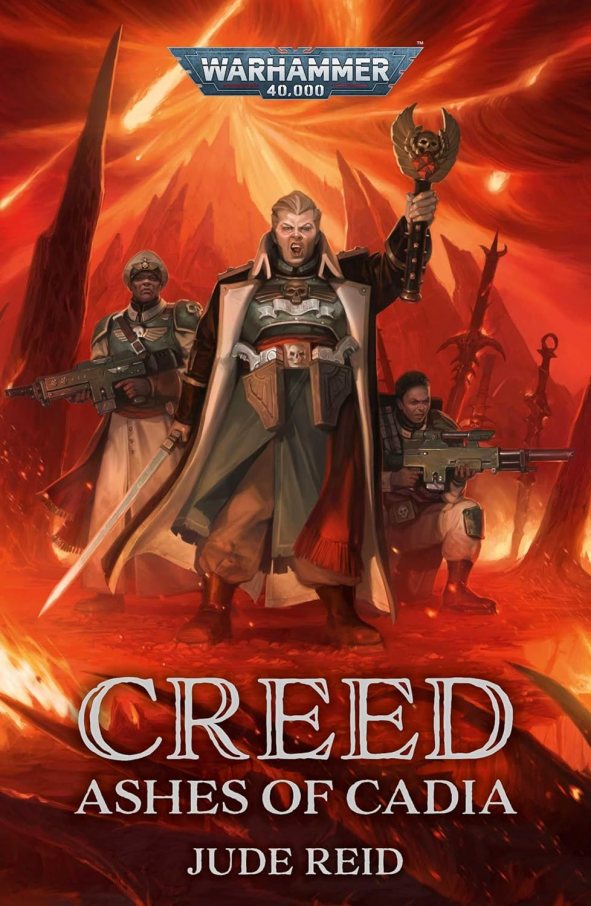
Warhammer 40,000: Creed: Ashes of Cadia by Jude Reid

Creed - Ashes of Cadia Cover 2

Publisher: Black Library (Audiobook – 9 September 2023)

Series: Warhammer 40,000

Length: 14 hours and 36 minutes

My Rating: 4.5 out of 5 stars

Amazon

Exciting new Warhammer 40,000 author Jude Reid presents an action-packed and captivating novel that takes the reader to one of the most desolate places in the franchise’s universe, the ruins of Cadia, with the exciting novel Creed: Ashes of Cadia.

Last year proved to be an outstanding year for new authors producing their first Warhammer 40,000 novel, with several highly talented authors, such as Rob Young (Longshot) and Jonathan D. Beer (The King of the Spoil), producing amazing and intense reads in this fantastic universe.  One of the most interesting of these 2023 Warhammer 40,000 debuts was the impressive and captivating Creed: Ashes of Cadia by new author Jude Reid.  Reid’s first full novel after writing multiple Warhammer 40,000 short stories, Ashes of Cadia takes the reader on an epic journey with a new major protagonist.

Years after the fall of Cadia to the dread forces of Chaos, the Imperium of Man is still reeling from the carnage wrought in its aftermath which saw a massive warp rift cleave their besieged intergalactic realm in two.  Led by the returned Primarch Roboute Guilliman, humanity fights back as best it can in a great crusade, but its victories are never enough.  When word reaches Guilliman of a potential weapon on the most unlikely of locations, desperation requires him to investigate, and there is only one person he can call on for this dangerous mission.

After continually proving herself on the field of battle, Ursula Creed has succeeded her father, Ursarkar E. Creed, in becoming the new lord castellan of Cadia.  Leading the remaining Cadian forces in the Imperium, Ursula hopes to erase the stain of her legendary father’s great defeat, however, she can never seem to leave behind his complicated legacy.  When summoned by Guilliman for a secret mission, Creed is shocked to discover that she is being sent back to one place she never thought to return to, the shattered remains of Cadia.

Accompanied by a select team of Cadians with an unusual mixture of skills and experience, Ursula is sent to the surface to recover her father’s final battle plans and the secret weapons they supposedly lead to.  However, the surface of Cadia is a blasted wasteland, filled with foul energies and unnatural magic that causes even the dead to attack the invaders.  Left without support and hopelessly outnumbered, Ursula must lead her unprepared followers onwards in the hope of securing the prize.  But terrible evils lay claim to the remnants of Cadia, and Ursula will be forced to confront both the forces of Chaos and her own inescapable legacy as the daughter of Creed if she wants to survive.  Can Ursula succeed where her father failed and redeem Cadia, or is she already lost?

Reid had a very ambitious story idea for Ashes of Cadia, in that she needed to provide a human solider focused, character-driven adventure narrative that simultaneously examined the complex legacy of the Cadians in a new way, while also providing the reader with an intense and action-packed read.  Reid more than succeeded, as Ashes of Cadia takes the reader back to Cadia, one of the most significant landscapes in the Warhammer 40,000 universe and puts several intriguing and damaged protagonists through absolute hell.

Starting off a little slow to establish the main cast, remind people about the Cadian legacy, and set up the mission, Ashes of Cadia doesn’t really speed up until the protagonists land on shattered Cadia, and naturally all hell breaks loose.  The protagonists essentially find themselves thrust into a zombie apocalypse scenario, as a sorcerer attacks with a horde of living dead and decimates the protagonist’s team, leaving them trapped on the planet.  The disparate band of damaged and disillusioned survivors are forced to journey across the ravished planet to find either an escape or the rumoured secret weapon, encountering all manner of horrors, tragedy and continuous losses of supporting characters, all the while being hunted.  At the same time, the cast become more and more disheartened and internal conflicts seek to fracture them in a range of emotionally charged scenes.  This harsh adventure takes them to several key places on the ruins of the planet, as they get closer to their various personal goals.  There are some interesting false starts and twists, as well as some heartbreaking scenes, and you are constantly on edge, especially as a new danger of betrayal might emerge just around the corner.  I liked the reveal of Creed’s treasure in the novel, especially as it has some interesting potential consequences for the future of the Cadians, and the use of Creed’s daughter as a protagonist was a smart choice.  While I did see the big twist of the book regarding a certain traitor coming, it was still really well written, and I loved how Reid tried to misdirect with multiple bloody red herrings.  Everything leads up to a big, brutal, and over-the-top final confrontation, the sees the survivors redeemed in various ways, and it ended up being a fantastic and powerful piece of Warhammer 40,000 fiction.

Reid wrote a very intense and personal novel here with Ashes of Cadia, and I really enjoyed her captivating writing style.  Expertly splitting the focus of the book between several complex and unconventional soldiers with their own individual baggage, Ashes of Cadia becomes a much more emotionally charged novel than I was expecting, but the result was an impressive read, especially as you quickly get invested in the various character arcs.  However, Reid is no slouch when it comes to the action, as the many combat sequences are sharp and brutal, keeping you on your toes as any of your favourite figures can quickly fall.  While the pace of Ashes of Cadia does slow a bit at the beginning and in the middle, for the most part Reid keeps her novel moving along, and I had a hard time putting it down as a result.  I especially loved how well Reid portrayed the fallen planet of Cadia throughout this novel, especially as she really laid out the horrors and dangers associated with this planet.  Fans of Warhammer 40,000 fiction who know this planet well will be shocked by how disturbing and different it turns out, and I loved that we finally got an adventure in the ruins.  A brilliant and exceptionally written novel, you will have a lot of fun with this book.

As I have mentioned a few times in this review, Ashes of Cadia is a significant piece of Warhammer 40,000 fiction, mainly because it provides a continuation to a lot of the major story elements that have been a big part of the franchises fiction since the lore changes surrounding the fall of Cadia.  Quite a bit of in-universe time has taken place since that event, and most of the recently released Warhammer fiction focuses on how the loss of the planet effected the Imperium and the many Cadian soldiers fighting throughout it.  If followed through, the events of Ashes of Cadia are going to give these Cadian characters and stories new purpose, and I loved that we also have new Creed character to follow in Ursula.  Reid does an excellent job of building up to these reveals, and there was another interesting look at how traumatised and demoralised the Cadians are, which really fit into the plot of this book.  There are also a lot of references to other novels and events from the lore that fans of the franchise will appreciate, and I personally liked how it had some connections to another Warhammer 40,000 novel from last year, The Fall of Cadia by Robert Rath (one of my favourite books and audiobooks of 2023).  As such, Ashes of Cadia is probably best enjoyed by those established fans of the Warhammer 40,000 universe, especially those who have enjoyed the recent influx in Cadian fiction.  However, there is still a lot for newer readers to the franchise to enjoy, especially as Reid does a wonderful job of explaining the key lore elements that lead up to this story.  General fans of adventure, science fiction and even horror, can have a lot of fun with Ashes of Cadia, and this turned into quite an intense and bloody war narrative.

Easily the most distinctive part of Ashes of Cadia is the complex and damaged cast of characters that make up the main cast.  Reid produced some unique figures for this impressive narrative, and their individual stories, as well as the general despair of the Cadian trooper following the loss of their planet, proves to be a major driving point in the plot, and I really enjoyed seeing the various character arcs unfold.

Ashes of Cadia’s story had three primary point of characters, and Reid did a pretty good job of jumping the story around them, showcasing each of their unique and well-written storylines.  The most prominent of these is the titular Ursula creed, the current lord castellan of the lost planet of Cadia.  The daughter of the beloved Cadian leader who lost the planet before disappearing, Ursula has big boots to fill, especially as she is resentful for her father’s legacy and the fact she barely knew him.  The resulting insecurities, responsibilities and bitterness play a huge part in her character arc, and watching her walk in the steps of her father and attempt to become the leader he was proved to be a great part of the plot.

The next major character, Shael Laskari, adds a more general viewpoint to the story as a recently graduated cadet who is chosen to accompany Creed to the surface for propaganda reasons.  Inexperienced and fearful, Laskari is the everywoman of Ashes of Cadia, and it proved interesting to see her deal with the unknown horrors of the planet while also trying to find her courage in her squad.  Reid also does an exceptional job with the unique character of Mac Ossian.  A former medic and member of a Cadian regiment, Ossian was assigned to a penal legion after killing his former commander, and now finds himself back on Cadia as part an expendable distraction.  Managing to meet up with Creed’s unit, Ossian spends much of the book trying to prove his loyalty and worth, while also wondering if Creed and Cadia still deserves his surface.

These central characters are accompanied by several fantastic supporting cast members, several of which have their own exceptional character arcs.  I personally really enjoyed Colonel Hadrian Aurelius Van Haast, who serves as a guide with local knowledge of the area.  Van Haast is a stupendously arrogant figure, who you can’t help but dislike, and he added a fantastic dynamic to the cast.  However, this arrogance is a cover for a much darker secret, which Reid slowly and expertly reveals as the book continues.  I also must highlight Ossian’s fellow penal legionnaire Liga Yager, another prisoner who tries to survive after being dropped on Cadia to die.  Due to her much more cynical perception of Creed and the Cadians, as well as her compelling backstory, Yager goes on a very different path than Ossian, and proved to be a devil on his shoulder that speaks some much-needed truth.  Finally, I loved the villain of the story, the Death Guard sorcerer, Livor Opilionis, who is mostly called The Huntsman throughout the book.  The Huntsman is a gloriously sinister and dangerous foe, who relentlessly hunts them throughout the ruins of Cadia, heralded by his hunting horn and packs of plague zombies, and the confrontations the protagonists have with him always leads to carnage.  This outstanding cast of characters, and more, really turned Ashes of Cadia into an amazing novel, and I loved the brilliant character arcs that Reid developed around them.

As with most Warhammer 40,000 books I check out, I made sure to grab Ashes of Cadia on audiobook.  The Warhammer 40,000 audiobooks are always pretty damn awesome, and I love how much the action, horror and unique setting came through in this format.  Coming in with a decent runtime of just over 14 and a half hours, Ashes of Cadia was a very easy book to listen to, and I managed to knock it off quickly.  It helped that Ashes of Cadia was narrated by the superbly talented Colleen Prendergast, who is swiftly becoming the go-to narrator of Warhammer 40,000 audiobooks with female Cadian protagonists.  Prendergast has a great and intense voice for Warhammer 40,000 fiction, and I love how well she was able to move the plot along.  She also provides a series of great and fitting voices for the cast of this book, especially the female characters.  I loved how dignified and complex she made some of these characters, as well as how monstrous and threatening the main antagonist sounded in his terrifying scenes.  As such, Ashes of Cadia was an absolute joy to listen to and I would strongly recommend this audiobook version to anyone interested in this fantastic piece of Warhammer 40,000 fiction.

Creed: Ashes of Cadia was a fantastic, dark and captivating novel from Jude Reid, who produce an impressive debut with some intriguing potential for the wider Warhammer 40,000 universe.  Loaded with action, intrigue and several complex characters, Creed: Ashes of Cadia was an excellent read that cleverly ties into the history and existing lore of this complex and highly fun franchise.  Intense, moving, and oh so brutal, Ashes of Cadia comes highly recommended, especially for fans of Warhammer 40,000 fiction.

Amazon

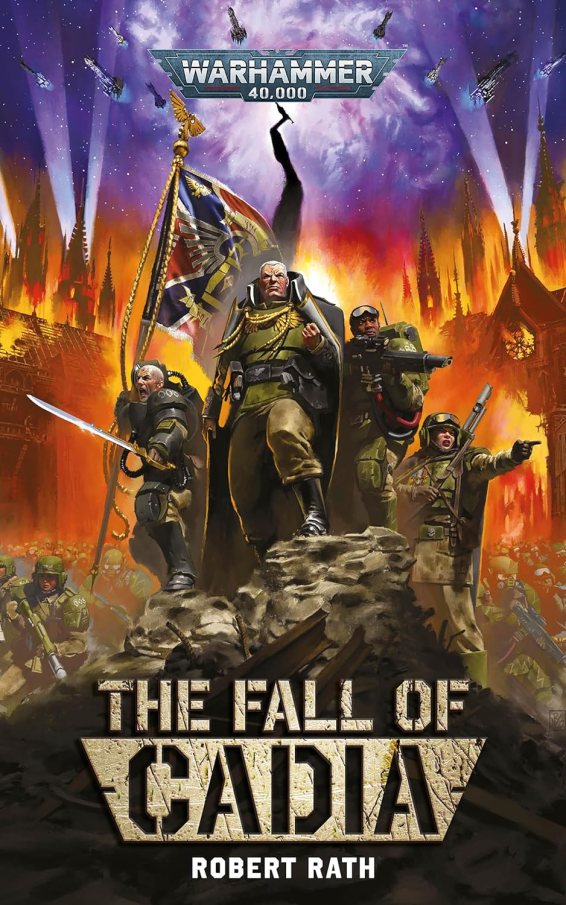
Warhammer 40,000: The Fall of Cadia by Robert Rath

Warhammer 40,000 - The Fall of Cadia Cover

Publisher: Black Library (Audiobook – 5 August 2023)

Series: Warhammer 40,000

Length: 19 hours and 42 minutes

My Rating: 5 out of 5 stars

Amazon

Cadia Stands!  I ended 2023 on a very high note with one of the best Warhammer 40,000 novels of the year that follows one of the biggest events in the franchise’s recent lore, The Fall of Cadia by Robert Rath.

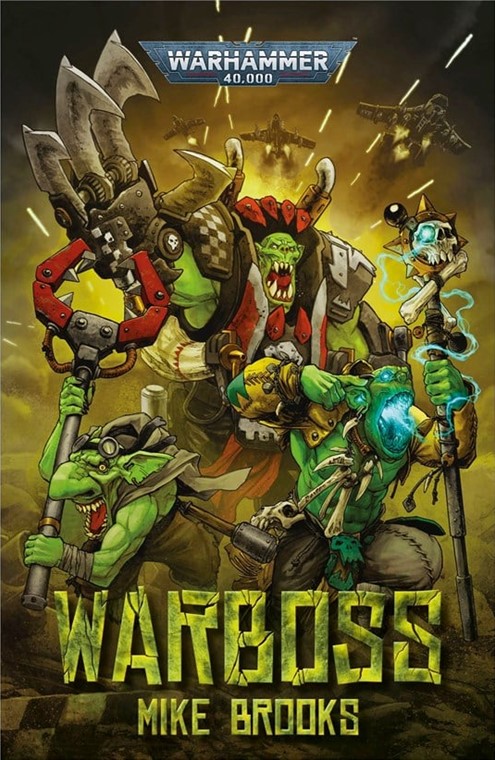
There were several amazing Warhammer 40,000 novels released in 2023, with some of my favourites including The Lion: Son of the Forest and Warboss by Mike Brooks, The King of the Spoil by Jonathan D. Beer and Cypher: Lord of the Fallen by John French, just to name a few.  However, in terms of sheer scale, epic battles, and larger-than-life characters, my favourite will have to be The Fall of Cadia.  As the name suggests, The Fall of Cadia follows the final battle for the planet of Cadia at the end of the 13th Black Crusade, which was a major campaign in the Warhammer 40,000 tabletop game.  The original 13th Black Crusade campaign happened back in 2003, with the official result being something of a draw.  However, in 2017, Games Workshop retconned the campaign to result in a much more substantial Chaos victory, which ended up having substantial impacts on the wider lore of the franchise, effectively reshaping the entire Warhammer 40,000 universe.

This change ended up being a pretty significant event, and Games Workshop provided some major write-ups about it that summarised the events and their explosive aftermath.  Indeed, the lore events initiated in this event have already been featured in several novels, and most of the current Warhammer 40,000 fiction examines the consequences of this campaign.  However, there has yet to be a novel solely dedicated to trying to capture the entirety of the action at the end, until now with The Fall of Cadia by Robert Rath.  Rath was a great choice of author to write this book as he is a truly amazing author of Warhammer 40,000 fiction.  His previous novels, Assassinorum: Kingmaker (one of my favourite books and audiobooks of 2022) and The Infinite and the Divine, have both been exceptional five-star reads, telling elaborate, character-driven stories that cleverly capture complex aspects of Warhammer 40,000 lore and turn them into impressive and addictive reads.  As such, he was the perfect choice to write The Fall of Cadia and he succeeded in creating a deeply moving and epic novel that perfectly brought the chaotic events that ended this infamous war to life.

In the far future of the 41st Millenium, few battlefields are more significant or more soaked in blood than that of Cadia.  A fortress world for the Imperium of Man, Cadia stands in the shadow of the Eye of Terror, a blazing rift that serves as a gateway into the Warp and the realm of the Chaos gods.  For any substantial invasion by the forces of Chaos into the Imperium to be successful, Cadia needs to be taken and destroyed, and for that task the Chaos Gods have chosen the Warmaster of the Black Legion, Abaddon the Despoiler.  Abaddon is a legendary warrior of hatred and spite who alone is capable of welding together the unruly and contentious forces of Chaos.  Over the millennia, Abaddon has launched 12 Black Crusades against Cadia, leading an unholy alliance of monsters, daemons, cultists and traitor Space Marines to battle.  However, each time Cadia has held, at great cost to the desperate Imperial defenders.  But now, as the forces of Chaos appear stronger than ever before, a 13th Black Crusade has been declared, one that looks set to destroy Cadia forever.

The Fall of Cadia starts well into the 13th Black Crusade, as, after weeks of heavy fighting, the forces of Cadia and humanity once again appear victorious, with the armies of Chaos retreating on all fronts.  However, despite the apparent victory over the heretics and the dark gods of Chaos, Lord Castellan Ursarkar Creed is uneasy, believing that the victory was too easy.  As the celebrations continue, Creed is soon proved right, as the Eye of Terror disgorges a new enemy force unmatched in size and deadly potential since the legendary Horus Heresy.

At its head flies a dread Blackstone Fortress, an alien superweapon capable of intense destruction and now crewed personally by Abaddon.  Faced with this threat, Creed attempts to bring together the various elements of humanities defenders, including legendary Space Marines, virtuous Sisters of Battle, the inhuman soldiers of the Adeptus Mechanicus, and the outmatched by steely rank-and-file troops of Cadia, determined to save their home.

As the final invasion of Cadia begins, Creed organises the defence the best he can to hold back the oncoming horde on land, in the sky, in space, and even far behind Cadian lines in their seemingly safe cities.  If Creed has any hope of succeeding, he will need to bring together the scattered armies of the Imperium on Cadia into a single cohesive force, but not all of the defenders are fighting for the same goals.  Even if these armies come together, can the legendary Creed hold off the fury of Abaddon and his dark gods?  Cadia’s last stand has begun, but who will be left alive at its end?

Robert Rath continues to showcase just how varied and impressive his talent for writing Warhammer 40,000 fiction is as he captures the incredible events of the last siege of Cadia.  The Fall of Cadia is epic in every way possible, as it presents the reader with a great coverage of these key lore events and the characters involved.  Elaborate, intense, and featuring so much damn carnage and war, The Fall of Cadia is an incredibly addictive read that got a very easy five-star rating from me.

I think it is important to point out that Robert Rath had a difficult task ahead of him when he was chosen to novelise the events surrounding the end of the 13th Black Crusade.  A lot of detailed lore has been written around this event, not only in the various guides, rulebooks and other material associated with the tabletop game but also in several years worth of novels and extended fiction that focused on the aftermath of the war.  Any novelisation about these events ran the risk of being a stale retelling of events that all Warhammer 40,000 fans already know about.  However, Rath rose to the challenge and presented a powerful, intense and memorable depiction of the events that really drags the readers in while showing just how incredible and epic a piece of Warhammer fiction can be.

To tell the events of The Fall of Cadia, Rath elected to cover everything in a massive, multilayered, character-driven narrative, told from every perspective imaginable.  Starting towards the final days of the battle, when Abaddon unleashes his true invasion of Cadia, the reader is soon engrossed a range of different storylines that cover many different angles of the battle.  Not only do we get to see the overall strategy of both sides but the reader is also thrust into personal wars and fights across the theatre.  So many amazing moments are covered, including a desperate last stand in the mountains, battles in the sky and space, Chaos infiltration in the cities, criminal enterprises, even internal dissension amongst the Chaos command.  These scenes are usually shown through the eyes of a complex characters, whose desperate fight for Cadia helps to define them and presents the reader with some impressive and captivating character arcs.  All these varied conflicts are expertly portrayed by Rath, who does a wonderful job capturing the intensity, brutality and lack of humanity involved in warfare, as his characters suffer on every battlefield imaginable.  The sheer epic and destructive nature of these conflicts really come across in Rath’s writing style, and I honestly visualised many of the scenes being described in cinematic detail in my head.

The first half of the book primarily focuses on these various scattered storylines, and it was a lot of fun to see the different theatres of war, especially as you start to get attached to the major characters.  All the battles featured are pretty awesome and intense in their own way, and I really have to emphasise just how skilled Rath is at bringing all the different elaborate bits of combat to life.  The complex story pieces start to come together in the second half, especially as each of the characters find themselves drawn to the same battlefields.  I really appreciated how the storylines tied together, and there are some brilliant moments featured here.  I also felt that the multiple deus ex machina moments towards the conclusion of a big battle sequence that Rath needed to include because they were part of the lore was handled about as well as they could be.  Rath did some good set-up for the most important of them earlier in the plot, and I liked how in many instances he tried to examine it from the perspective of the common soldier looking for miracles, so it often did not seem too ridiculous.

Everything leads up to the big final battle in the last third of the novel, and despite knowing how it was going to end, I still was extremely invested in the plot and eager to see how everything came about.  A lot of this was because I deeply enjoyed the compelling character arcs of the newer protagonists, but I was also very interested in seeing how Rath envisioned some of the more essential events.  The author really did not disappoint, as these epic and groundbreaking moments were expertly showcased to the reader in a powerful and captivating way.  The big deaths were pretty shocking and hurtful, especially if you did not know they were coming, and the major conflicts were so damn epic in their scope and impact.  The final devastating blows of the war really hit hard, especially as the climatic events featured some deeply personal moments alongside the mass devastation, which made everything that much more powerful.  I really loved how everything came together, and the poetic conclusion that highlighted the final fights of the surviving protagonists is going to stay with me for some time.  I am so damn impressed with how much passion and emotion that Rath was able to stick into this massive war story, and I honestly loved every single second spent reading The Fall of Cadia.

In addition to the amazing story, I really need to highlight the impressive array of characters featured throughout The Fall of Cadia.  Rath did a wonderful job of presenting the massive events of this book through a range of intriguing character perspectives on every side of the conflict, and there is a fantastic combination of new characters and established Warhammer 40,000 figures.  The author really tried to cover The Fall of Cadia’s narrative from every single angle he possibly could, and the resulting combination of generals, common soldiers, legendary warriors, ancient traitors and other interested onlookers, helped to make this Warhammer 40,000 story even more powerful and layered.  This includes several Chaos characters, whose tainted perspectives allow for a compelling view of both sides of the conflict.  The Fall of Cadia’s character arcs are mostly self-contained for the majority of the book, with their focus usually on that particular figure or theatre of the war.  However, there are some clever and moving interactions between the characters as the novel continues, and it is testament to Rath’s writing style and ability to create a massive web of overlaying character storylines that these interactions fit together so well into a cohesive and powerful narrative.  Rath really dove into the complex lives and personalities of every character he featured, even those that died quite quickly, and the resulting character arcs really added to the emotional impact of The Fall of Cadia.  You become heavily invested in these characters as a result, and waiting to see who survives the war is an important part of experiencing this novel.

So many big personalities were expertly featured throughout The Fall of Cadia and every reader is going to come away with their own favourites.  The better character arcs I personally loved included that of Major Marda Hellsker, who is forced to lead a desperate last stand for much of the book and grows into the leadership position thrust upon her.  Captain Hanna Keztral’s exploits in the sky also make for great reading, especially as she desperately tries to gain respect whilst flying an unarmed aircraft.  You also have to love the storylines surrounding Salvar Ghent, Cadia’s premier gangster, as he tries to exploit the war to his advantage before finding himself thrust into a much more prominent role.  I particularly loved how well Ghent interacted with some of the major figures in the book, and his entire storyline was one of the most entertaining.  The insatiable Necron collector Trazyn the Infinite was also a great inclusion in the plot, and Rath clearly had fun bringing back this hilarious character after featuring him so heavily in The Infinite and the Divine, and I got a good laugh at several of his pivotal scenes and petty moments.

However, the best characters in The Fall of Cadia had to be the opposing leaders of the war, Lord Castellan Ursarkar Creed and Abaddon the Despoiler.  Both are major figures in Warhammer 40,000 lore and Rath ensured that they were done justice in this novel.  Creed is shown to be a rough but brilliant commander, capable of inspiring an entire world while also suffering from the stresses of constantly being on the losing side.  I particularly enjoyed the subsequent inclusion of Colour Sergeant Jarran Kell alongside Creed as his long-suffering aide and best friend, and the two make for a very powerful character combination for many of the scenes shown from the defenders’ perspective.  Abaddon on the other hand is presented as the absolute beast that he is, and his obsessive desire to destroy Cadia is palpable.  I deeply appreciated that Rath showcased Abaddon as the ultimate villain in this universe, and his appearances were always exceedingly impactful.  Many of Abaddon’s appearances were cleverly shown through the eyes of his loyal servant, Dravura Morkath, whose rose-tinted opinions of her master barely covered the restrained evil within this figure.  I quite enjoyed Dravura as a character, especially as she has the most intriguing insights into the Chaos ranks, and the resolution of her storyline with Abaddon might be one of the most heartbreaking in the entire book.  These characters, and so much more, were such a brilliant part of The Fall of Cadia, and they helped turn what could have been a simple retelling of the lore into a particularly powerful and moving novel.

As with most Warhammer 40,000 novels, I feel that The Fall of Cadia is going to appeal to those fans of the franchise who already have a grip on the basics of the lore and main characters and can fully appreciate just how massive an event this book was.  Due to the material the book is based on, there were a lot of crazy events and characters featured here, some of which would be obscure even to casual fans of the game.  While Rath does an outstanding job of explaining and exploring the most important of these elements, some readers might occasionally be confused at what is going on or how certain characters came into being.  Still, I feel that most new readers can still have an exceptional time with this book, especially as the epic battles, impressive characters, and heartfelt military focused story, is so damn good.  The Fall of Cadia might even be a great gateway novel for those people trying to get into Warhammer 40,000 fiction, and it sure as hell encouraged me to read more Warhammer fiction.

One of the other things that I really appreciated about The Fall of Cadia was the way that Rath tried to paint a more nuanced picture of the planet of Cadia itself.  Cadia is usually portrayed as a bastion of military prowess and resistance without some of the issues other planets in the Imperium had, so it was quite interesting to see Rath’s different take on the subject, showing Cadia to be a planet with hidden issues and dissent.  In particular, Rath examines the problematic social structure of Cadia, where the active military are notably prioritized and those people who could not fight or be assigned other roles were considered a second-class citizen.  I loved how well Rath examined and focused on the issues surrounding this unique military class system, and it became a surprising key part of the book.  Indeed, the motivations of several characters are highly tied into these issues, with many seeking to prove themselves after being considered lesser for their contributions.  It also serves as an intriguing motivation for several antagonistic figures, and I loved just how well Rath was able to weave the structure of a planet into these intriguing character traits.  This, and more, really showcased Rath’s inventiveness and appreciation for the little details of the Warhammer 40,000 universe, and it is one of the reasons why I really enjoy his novels.

As with most Warhammer 40,000 novels, I chose to enjoy The Fall of Cadia on audiobook, which proved to be a very smart decision on my behalf as it was one of my favourite audiobooks of the year.  Coming in with a runtime of just under 20 hours, The Fall of Cadia is a bit longer than your typical Warhammer 40,000 audiobook, which reflects the massive story Rath came up with for this epic read.  I really loved how well this audiobook format brought the epic nature of this narrative to life and the many battles, wars, and unique characters felt even more impressive when read out.  I enjoyed the narration of Mark Elstob, who has previously lent his voice to other great Warhammer audiobooks, including Kal Jerico: Sinner’s Bounty by Josh Reynolds.  Elstob’s narration of The Fall of Cadia is extremely good, and I loved how passionately he presented every big event and piece of action.  I really enjoyed some of the great voices he came up with for the cast of The Fall of Cadia, and every larger-than-life character was gifted a fitting tone that perfectly captured their personalities and intensity.  His voices for the opposing leaders of the battle, Abaddon the Despoiler and Ursarkar Creed, are amazing examples of this, and you really get awesome impressions of both character’s opposing determination and charisma in some outstanding sequences.  I really cannot emphasise just how incredible this audiobook version of The Fall of Cadia is and it is definitely the best way to enjoy this world-shattering story.

Overall, The Fall of Cadia is a pretty exceptional piece of Warhammer 40,000 fiction that did such an impressive job of capturing this intriguing event from the game’s substantial lore.  Robert Rath is such an impressive author, and I am really glad he had the opportunity to cut loose and present this massive inclusion to the Warhammer 40,000 franchise.  The Fall of Cadia is easily one of my favourite books of 2023, and I loved how Rath told such an epic war tale in such a powerful and memorable way.  I honestly hope they make a movie based around this book in the future, because it would be so damn spectacular.  A highly recommended read that no Warhammer 40,000 fan should be without.

Amazon

Throwback Thursday – Warhammer: Grudge Bearer by Gav Thorpe

Grudge Bearer Cover

Publisher: Black Library (Paperback – 12 June 2005)

Series: Warhammer Fantasy

Length: 250 pages

My Rating: 4 out of 5 stars

Amazon

For this week’s Throwback Thursday I am doing a double feature.  In addition to my review of the awesome Warhammer 40,000 novel Lords of the Night by Simon Spurrier, I am also doing a quick review of the classic Warhammer Fantasy novel, Grudge Bearer by Gav Thorpe.

I have a lot of love for all forms of Warhammer fiction across the various genres, but I will always have a soft spot in my heart for the intense and elaborate adventures that took place in the Warhammer Fantasy realm.  Before its destruction, the Warhammer Fantasy universe featured a raft of epic novels and stories, most of which tied into the gaming events surrounding the various campaigns or model releases.  While I haven’t read nearly as much Warhammer Fantasy books in recent years as Warhammer 40,000 fiction, there are still some amazing books there, including the Gotrek and Felix books by William King (Trollslayer, Skavenslayer, Daemonslayer, Dragonslayer, Beastslayer, Vampireslayer and Giantslayer), Van Horstmann by Ben Counter, Runefang by C. L. Werner and Broken Honour by Rober Earl.

All of these fantasy books have been very impressive, and I am always keen to check out more from this awesome setting.  As such, I eagerly read the second-hand copy of Grudge Bearer by Gav Thorpe earlier this year.  Thorpe has been one of the main authors of Warhammer fiction over the years, with books across the various sub-series.  I know him from his outstanding Warhammer 40,000 Last Chancers novels, which followed a doomed group of convicts sent to complete a suicide mission.  The first two books in this series, 13th Legion and Kill Team, were so much fun, and I can’t wait to get my hands on the rest of the Last Chancers books.  Grudge Bearer was the first Warhammer Fantasy novel of his I have read and it proved to be an excellent book that focussed on some of the most entertaining and determined figures in the Warhammer Fantasy canon, the dwarfs.

Plot Synopsis:

When his father dies, Barundin, prince of Zhufbar, becomes king of that realm and lord of one of the mightiest outposts of the ancient and powerful dwarf empire. Over the centuries that follow, he sets out to right many of the wrongs done to his people, fulfilling ancient grudges and bringing death to his foes as he wages war against his father’s killers, and strives to protect Zhufbar from the dark forces of Chaos.


Grudge Bearer
ended up being quite a fun and quick paced read that I had a wonderful time getting through.  As the somewhat sparse plot synopsis above indicates, Grudge Bearer follows Barundin, a prince who becomes king of Zhufbar, a dwarf stronghold after his father’s death in battle.  Due to the betrayal of a local human lord whose cowardice resulted in his father’s death, Barundin swears a grudge against the man who betrayed him and becomes determined to get appropriate vengeance.  However, before he can marshal enough of his forces and resources to lead an army into an assault on the lord’s castle, he needs to get his realm in order.

As such the book turns into a series of short stories, which cover different periods of Barundin’s reign and the events that lead up to him attempting to settle his grudge.  While the first two chapters deal with the events that result in Barundin becoming king, each of the following chapters is essentially a connected short story, that see the protagonist and his forces go up against a series of different traditional Dwarf enemies, including the forces of Chaos, the skaven and goblins, as well as deal with other issues, such as an overly-inventive dwarf engineer and Barundin’s attempts to get married.  Each of these stories are pretty intriguing in their own right, giving some fantastic insights into the dwarfs as a race, and they come together to tell an intriguing and action-packed overarching story.  Most of these stories result in a pretty typical hack-and-slash battle, and Thorpe has a good eye for action, producing intense and bloody scenes throughout Grudge Bearer.  Some of the stories within this book are really cool, and I especially loved the eventual resolution of the grudge against the treacherous human lord and his family, especially as it proves just how ridiculously determined the dwarfs can be.  I did think the overall end of Grudge Bearer was a little sudden, especially as it could resulted in one more fantastic battle, but this ended up being a pretty strong and easy to read piece of Warhammer Fantasy fiction.

Now I do have to get a little cynical in that while Grudge Bearer is good, it was a marketing tool to help boost sales for the 6th edition of the Dwarfs Warhammer Army book that also came out in 2005.  I actually recall reading a few extracts from Grudge Bearer that appeared in White Dwarf, so I had a couple of early moments ruined for me.  Still, Grudge Bearer was a pretty fun book to read, and Thorpe clearly had fun exploring the lore and diving into what makes the dwarfs tick, both in combat and in real life.  The compelling focus on the dwarven grudge was particularly fun, and it was interesting to see how much their desire for vengeance ruled their lives.  It also covers several quite a substantial period of Warhammer Fantasy history due to the long lives of the dwarf protagonists, and it was very entertaining to see them watch their human neighbours go through major historical events while the dwarfs constantly remain the same.  There was even a tie-in to the Storms of Chaos campaign that happened in the game the year before, so there is a lot going on for established fans.  At the same time, Grudge Bearer serves as a pretty good starting point for those readers unfamiliar with either the dwarfs or the Warhammer Fantasy setting and it makes for a great introductory novel.

One thing that I was a little disappointed by in Grudge Bearer is that we didn’t get to see more of the legendary White Dwarf character.  The White Dwarf had a pretty major role at the start of the book, and there are even some hints to his origin at the start, but after this initial appearance we never see him again, which I think was a bit of a waste.  It would have been cool to see him come back a few times to offer advice or help in battle, possibly while providing more clues to who he really is.  I know this is a pretty minor complaint which doesn’t dramatically impact my enjoyment of Grudge Bearer, but it was something that bothered me as I was reading as a wasted opportunity.

Overall, Grudge Bearer was a fun action and lore packed novel that managed to fit in several fantastic and exciting shorter stories.  Containing one of the best and compact examinations of the always entertaining dwarf faction you will likely see in a Warhammer Fantasy novel, Grudge Bearer is well worth checking out, especially if you were a fan of the tabletop game and its lore back in the day.

Amazon

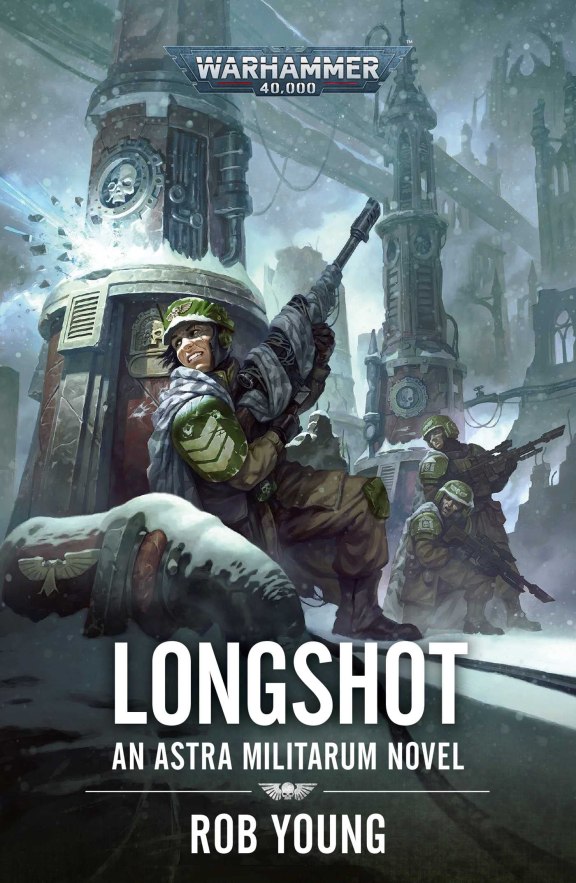
Warhammer 40,000: Longshot by Rob Young

Longshot Cover

Publisher: Black Library (Audiobook – 12 August 2023)

Series: Warhammer 40,000

Length: 10 hours and 28 minutes

My Rating: 4.5 out of 5 stars

Amazon

Prepare to dive into one of the grittiest battles in Warhammer 40,000 fiction with the awesome and captivating novel, Longshot by Rob Young.

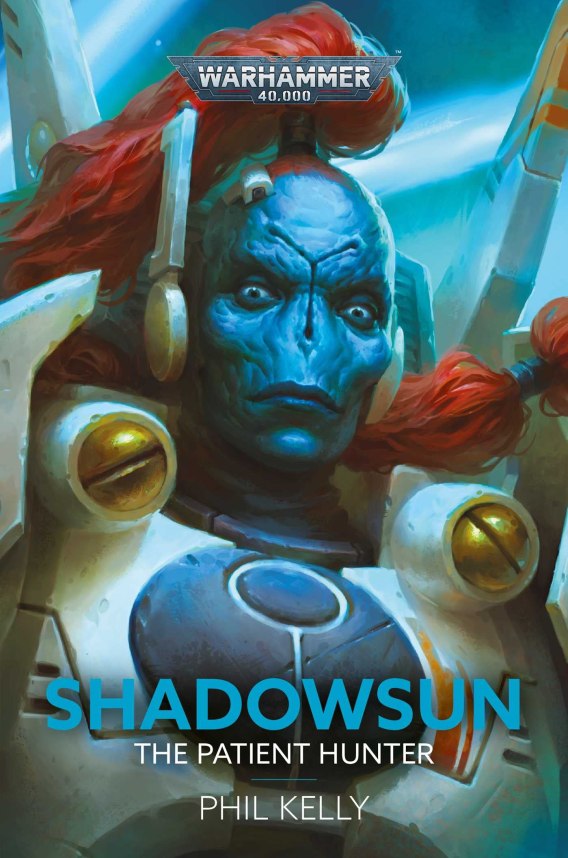
2023 has definitely been an outstanding year for Warhammer 40,000 fiction, and I have had a ton of fun reading several pretty amazing entries from this extended universe in recent months.  Examples of this include The Lion: Son of the Forest, Warboss, Shadowsun: The Patient Hunter, Leviathan and The King of the Spoil just to name a few.  However, the year is far from over and there are still several great-sounding Warhammer 40,000 novels coming out that I have my eyes on.  One of the more intriguing was the fantastic Longshot by new author Rob Young, which sounded extremely fun.  Longshot, which follows on from Young’s short stories, Transplants and Memories of Broken Glass, is the author’s debut Warhammer 40,000 novel, and it proved to be a very intense and action-packed novel with a great story.

Several years after the fall of Cadia, which saw the Imperium of Man split in two by a great rift in space, humanity is still attempting to recover as many lost planets and systems as possible.  The latest target of the relentless Indomitus Crusade sees the troops of the Cadian 217th arrive at the former manufactorium world of Attruso, whose people have fallen under the sway of the seeming beatific alien t’au.

As the initial assault begins in the battered city of Miracil, the Cadian forces struggle to make progress against the determined t’au defenders and their human auxiliaries.  As the fighting gets even more desperate, the tides of war soon place the keys to victory into the hands of Sergeant Darya Nevic and her squad of snipers.  Nevic is a legendary figure within the 217th, a transplant from a non-Cadian regiment renown for her abilities of infiltration, assassination and survival, Nevic excels at disrupting the enemy from the top down.  However, when the t’au unleash their own deadly sniper against the Cadians, Nevic is forced into a battle of wits with a killer just as skilled and ruthless as she is.  But has Nevic finally come across a foe even she can’t best, especially as she begins to doubt her mission in the face of her own infamy, the lies of her commanders and the t’au’s insidious promises?

Longshot is an awesome and fast-paced novel that perfectly showcases the horror of war in this grim universe through the lens of a skilled sniper.  Young did an outstanding job with his debut novel and I loved the intriguing and powerful narrative that placed great characters into a deadly setting.  I managed to knock this book off in a couple of days, and it is one of the most exciting and fun Warhammer 40,000 novels of 2023 so far.

I loved the complex and intense story that Young pulled together for Longshot, which perfectly presents a tale of the common soldier in the grim Warhammer 40,000 universe.  I have often said that some of the very best Warhammer 40,000 novels are those that focus on the common human soldier facing off against alien or inhuman forces (for example, Steel Tread, the Gaunt’s Ghosts books or Catachan Devil).  Longshot is a very good example of this as you follow a tired soldier as she faces internal and external threats on the frontline of a desperate conflict.  Thanks to its focus on snipers, city fighting, camaraderie and propaganda, Longshot is honestly the Warhammer 40,000 version of Enemy at the Gates, which I deeply enjoyed.  The reader really gets invested in the protagonist’s journey which follows her through some fantastic missions, battles and character growth in the first half of the novel.  This leads to a great second half, where Nevic becomes a victim of her own success and is forced to go up against a deadly enemy sniper.  Due to everything the protagonist experiences, there is some real tension leading into the final third of Longshot, especially after she experiences some terrible losses.  Thanks to the protagonists’ conflicted state, you honestly don’t know how the story is going to turn, and Young loads up some great twists and swerves.  While the ending was a tad predictable, I really enjoyed it and the author really pulled together a satisfying and exciting read that you can really power through.

This ended up being a pretty addictive standalone book, and it is one that would definitely serve as a great introductory novel to Warhammer 40,000 fiction for those readers unfamiliar with the franchise.  Young does a great job of expanding his previous short stories into his first full-length novel, and you really get to grips quickly with the situation, the characters, and the wider universe.  The sharp and intense character-driven story which primarily focuses on the protagonist, Darya Nevic, with a few chapters shown from other key character perspective, has a lot of great elements to it.  The focus on character motivation, the depravities of war, and the grim realities of the background universe really cut through the main story, and you understand the difficulties that many of the conflicted characters experience.  The subsequent focuses on morale in battle and the impacts of propaganda and manipulation also proves to be very fascinating and adds a great edge to Longshot.  I also deeply appreciated how well Young built up his main protagonist throughout the course of Longshot, diving into Nevic’s complex history and examining how she gained her legend.  You grow quite attached to Nevic as the book continues, especially she is forced to make several difficult decisions, and Young turns her into a relatable and understandable figure, especially when it comes to her conflicted feelings about her fame and leadership.  Nevic is well supported by other great characters, and Young was able to establish and utilise these figures in a short amount of time.

The real highlight of Longshot is the awesome and well-written action sequences that dominate the book and constantly keep the reader on their toes.  Young paints an effective and dark picture of brutal city fighting, and you can tell he was using the battle of Stalingrad as inspiration.  The gritty battles that take place are very exciting and powerful, and you can really feel the desperation and weariness of the combatants.  The author proves particularly adept at writing high-quality sniper scenes, and the focus on shooting, infiltration and calculated strikes makes Longshot stand out from other battle-heavy Warhammer 40,000 novels.  This ended up being a very slick and addictive read and Young proved quite skilled at getting his fantastic story across to the reader in the most effective way.

Well-established fans of Warhammer 40,000 canon will really appreciate Young’s compelling and insightful look into two distinctive factions who provide a very interesting contrast to each other.  This includes the members of the Cadians, one of the most iconic Imperial Guard factions in the game.  While the Cadians are already pretty heavily featured in Warhammer 40,000 fiction, I felt that Young provided a particularly effective dive into their current problems, namely the gradual deaths of the natural-born members of the regiment and their replacement by transplants from other regiments.  Thanks to the focus on Nevic, herself a transplant from another regiment, you see the dire internal conflict this causes as the strongly traditional Cadian regiment begin to lose their identity after the loss of their planet.  Young does a wonderful job of expressing this throughout the course of Longshot and the resultant impacts this has on the characters makes for some interesting story moments.  I also quite enjoyed seeing several outsider perspectives of the Cadians that Young worked into the story, which often contrasts well with what the Cadian protagonists feel, and it makes for some fantastic story moments. The author also examines other fascinating elements of the Imperial war machine, such as the exhausting Indomitus Crusade, the current crumbling state of the Imperium, the way other supporting regiments are treated, and the internal propaganda and planning of the regiment.

While the Cadians do get most of the story focus in Longshot, Young does take the time to also dive into the alien t’au who serve as the main antagonists of the plot.  Most Warhammer 40,000 novels that have the t’au as antagonists often nerf or underutilise them to a degree (for example Kill Team or Deathwatch: Shadowbreaker), which is frustrating for fans of the faction.  However, Young effectively showcases the t’au as skilled and deadly enemies who are able to weather the Imperial forces and overwhelm them in several key theatres.  Young has fun bringing several key t’au units to life throughout the course of Longshot and you really start to appreciate them as effective opponents to the Cadians.  There is also an interesting examination of t’au motivations, philosophies and manipulations, specifically around their recruitment of human auxiliaries.  This compelling dive into the t’au muddies the moral waters around the protagonists and the Cadians, and you soon start to question who has the best interest of the people of Attruso at heart.  This, and other intriguing similarities to the human soldiers, adds an awesome edge of consideration and concern to the story that I quite enjoyed.  I really think that Young had some of the better portrayals of the Cadians and the t’au I have so far seen in Warhammer 40,000 fiction, and fans of the franchise are going to have a wonderful time diving into that in this book.

Unsurprisingly, I chose to check out Longshot on audiobook, which in my opinion the best way to enjoy a Warhammer 40,000 novel.  Longshot is a particularly good example of this, as the audiobook format really helped to move the already exciting novel along at a fast clip, especially when the action scenes are brought to life by the narrator.  Coming in at around 10 and a half hours, this is very easy audiobook to get through quickly, and I made sure to power through it in only a few days.  It helped that this book was narrated by the very talented Colleen Prendergast, who already has a bit of experience narrating Warhammer novels featuring the Cadians.  Prendergast did a wonderful job bringing all the major characters to life, especially the main protagonist of Darya Nevic, and I loved the elaborate and fitting voices that she gifted the cast which really helped to draw you into the story.  However, the real benefit of Prendergast’s narration is the way that she walks the listener through all the elaborate battle sequences, especially those that show the snipers facing off against each other.  I felt that this narration expertly captured all the inherent intensity and danger of these scenes and I got really invested into the book as a result.  Thanks to this amazing narration and story enhancement, I would strongly recommend checking out Longshot on audiobook and I know I had a lot more fun thanks to this amazing format.

Overall, Longshot is an awesome and compelling addition to the Warhammer 40,000 canon and one that I had a ton of fun with.  Young produced a powerful and intriguing character driven war story that will appeal to a wide audience of readers, especially with its fantastic focus on sniping and some of the more fascinating elements of Warhammer lore.  I deeply enjoyed this fantastic novel and Longshot comes highly recommended.

Amazon

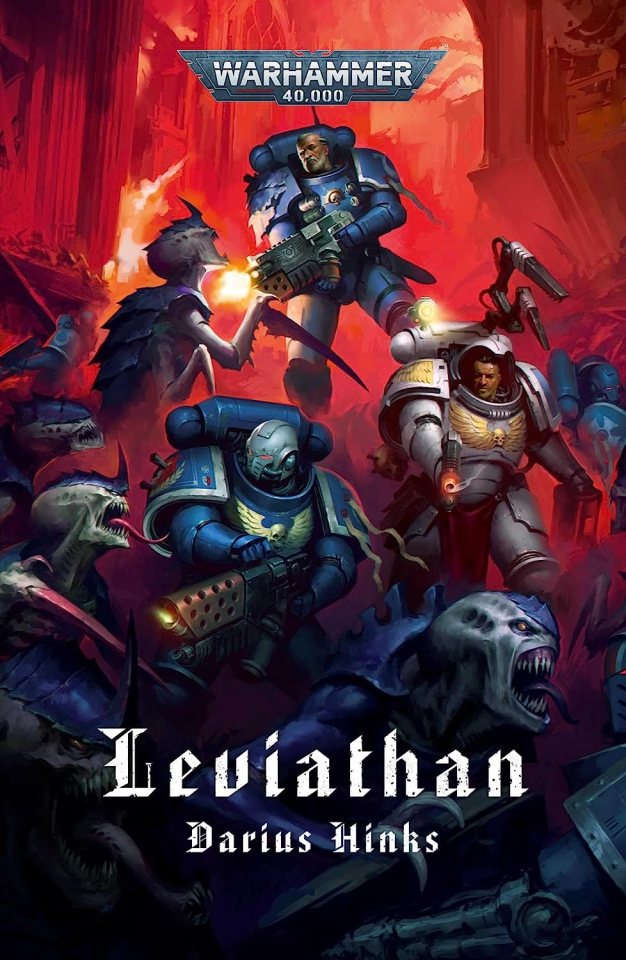
Warhammer 40,000: Leviathan by Darius Hinks

Warhammer 40,000 - Leviathan Cover

Publisher: Black Library (Audiobook – 24 June 2023)

Series: Warhammer 40,000

Length: 12 hours and 13 minutes

My Rating: 4.5 out of 5 stars

Amazon

Prepare for all-out war as the righteous Ultramarines battle the insidious Tyranids in this epic new Warhammer 40,000 novel from Darius Hinks, Leviathan.

It has been a pretty good year for Warhammer 40,000 fiction already, with several fantastic novels coming out in 2023, including Warboss and The Lion: Son of the Forest by Mike Brooks (the latter being one of my favourite books from the first half of 2023), and Shadowsun: The Patient Hunter by Phil Kelly.  However, the hits are far from over, especially as there are several fantastic new Warhammer 40,000 novels set to come out later this year.  But before we get to those, I managed to jump onto another recent release with the outstanding novel Leviathan, written by established Warhammer author Darius Hinks.  Hinks was a new author to me, but I soon grew to appreciate his latest book, especially as it showcased a dark and intense alien invasion that made for a great story.

In the far future of the 41st millennium, the besieged Imperium of Man faces many threats, but few are more deadly, unstoppable, or insidious as the unrelenting and seemingly endless hordes of the Tyranids, an alien race determined to devour everything it encounters.  While several of the larger invading Tyranid fleets have been destroyed, a splinter tendril is making its way towards the galactic centre, threatening the very heart of the Imperium.

Standing in the way of this fleet is the fortress world of Regium, an ancient planet recently taken over by Imperial forces, it now serves as a bulwark against invasions heading towards the inner-Imperium.  Many believe that Regium is secure from all threats, but when the people of the planet are haunted by parasites, strange cults, and mysterious dreams of terrifying monsters, it soon becomes clear that a Tyranid swarm is about to descend upon them.

It falls to the decorated hero, Lieutenant Castamon of the Ultramarines, to hold Regium against the foes and keep the rest of the Imperium safe.  A veteran of many battles, Castamon believes that this new Tyranid fleet will be swiftly destroyed.  However, these Tyranids are led by something far more sinister than the Ultramarines have encountered before, something cunning and ruthless that is able to disrupt minds and outthink even the cleverest of humans.  With his forces split, Regium’s defences compromised, and his allies panicking, even the vaunted Lieutenant Castamon may be unable to save Regium from the Tyranid invasion.  However, Castamon has one last trick up his sleeve, the brilliant Ultramarine Apothecary Biologis, Vultis, whose research into the Tyranid biology might be the only thing that can stop them.  Unfortunately, the enemy knows all about the Ultramarines and their plans, and the deadly creature known as the Harbinger is coming for them.

Leviathan was a pretty awesome and intense Warhammer 40,000 novel that shines a real spotlight on one of the more insidious alien races in the canon.  Featuring a strong and at times terrifying narrative, Leviathan was a great read, and I really got caught up in Hinks’s fantastic book.

Hinks pulls together an excellent story for Leviathan, and it is one that will appeal to a range of different readers, especially those fans of Warhammer 40,000 fiction.  Set around the already troubled planet of Regium, Leviathan follows an intriguing range of different human/space marine characters as they attempt to make sense and prepare for a Tyranid invasion of their world.  The early parts of the book are dedicated to introducing the key characters and the overall setting of the story, while also attempting to cast a more psychological edge to the main story as visions, doubts and other insanities haunt the populace.  There are some great early action sequences, including a disastrous shipboard incursion, and a dark hunt in some interesting terrain, and Hinks works well to set up for the second half of the book, especially as several unique, character driven stories were introduced and given some early weight.  While I enjoyed a lot of this set up, I did find the first half of the story to be a bit slow with its pacing and I was initially having trouble getting too invested in any of the characters or story elements.  However, this changed when I got to the second half of the book.

This second half masterfully builds on all the setup and character development that occurred at the start of Leviathan and readers are in for a particularly intense and gruesome narrative from this point on.  This entire second half is dedicated to the full-on invasion of Regium, as swarms of aliens, including some new creatures, emerge to decimate the populace and challenge the protagonists.  Each of the character focused plot lines set up in the first part of the book, as well as a few additional story inclusions, are perfectly thrust into this overlying chaos, and you get to see them try to survive the oncoming horrors and monstrosities.  Hinks really pulls no punches when it comes to this Tyranid invasion, and you get to witness all the devastation, the deadly transformation of the planet, and the subsequent epic battles, as the Tyranids fight against the human and Ultramarine defenders in some epic and well-crafted set pieces.  Each storyline was really good in its own way, and together they formed a fantastic and at times over-the-top overarching narrative that successfully showcased just how overwhelming the Tyranids can be.  I loved how dark Hinks made Leviathan at times, especially as he had no qualms about killing off key characters in some particularly brutal ways, which really raised the stakes for the reader.  While I did think that a lot of the plot did rely a little on the narrative stupidity of certain characters (the Ultramarines kept forgetting everything they knew about the Tyranids), the second half of the book was extremely epic, and I had real trouble putting it down.  All the separate storylines were concluded in entertaining and fitting ways, and I particularly appreciated the final plan that Hinks introduced for the main protagonists, which really fitted the outrageous feel of a lot of the plot.  This brutal and continuously exciting second half really turned Leviathan into such a great read, and I really loved how the entire thing turned out.

Leviathan proved to be an interesting and compelling addition to the wider Warhammer canon, especially as Hinks took the opportunity to really dive into some of the factions and showcase how crazy they can be.  However, I know that Leviathan has been copping a little flack in this department, mainly because some people see it as merely a promotional novel tied-in with some of the recently announced Ultramarines and Tyranid models.  While I can definitely see that, especially as Hinks spends a lot of time highlighting some of the newer Tyranid creatures in his narrative, I still enjoyed Leviathan a lot.  His depictions of the Tyranids were one of the major highlights of the book, and I loved how much he upped the horror aspect of them, showing them to be ravenous monsters who alter and devour everything they encounter.  This might be one of the better portrayals of Tyranids that I have so far seen in Warhammer fiction, and they were certainly a lot less one-dimensional here than they are in other books.  Part of this was because of the inclusion of several newer Tyranid creatures, such as the Neurotyrant and the Norn Emissary, with both being shown as unstoppable monsters with interesting abilities.  This allowed the Tyranids to attack their prey in all new ways, and it was very fun to see the various intricate tactics they were able to come up with.  Hinks tempers some of the more commercial aspects of these creatures’ inclusion by not actually using the names of the models in Leviathan, instead all you have is the protagonist’s descriptions of them when they encounter them in person.  These personal and often deeply terrified accounts of the various Tyranid bioforms really help to showcase just how terrifying and alien they are, especially to the ordinary human, and it really added a great edge to the narrative.  This darker edge is further exacerbated by the author’s powerful examination of how the planet of Regium is altered once the Tyranids arrive.  The spores constantly raining down on the planet slowly poison the various humans as they breathe in, and the depictions of the protagonists dying from within as they inhale alien matter, while their skin starts to slowly melt is pretty damn memorable and terrifying, especially as this is the first step in turning all biological matter in the planet into edible goo.  Frankly, I don’t think I’ve ever experienced the horror that is the Tyranid better than in Leviathan, and Hinks’ brilliant use of this faction enhanced the entire book.

On top of the Tyranids, Leviathan also features another intriguing major faction, the all-time classic Ultramarines chapter of Space Marines.  I mostly liked how the various Ultramarine characters were featured in Leviathan, although I did think that Hinks could have perhaps done a little more to distinguish them from other general Space Marines.  Still, Hinks goes out of his way to make the Ultramarines as badass as possible, and you really get a sense of their courage and battle prowess, especially as the severally outnumbered Ultramarines (I won’t go into the logistics of Regium’s defence here, but it did seem a tad low for such a vital planet), managed to put up quite a showing against the Tyranid swarm.  Some of the fight sequences featuring the Ultramarines in combat were pretty damn epic, and while some Space Marines did die easily for plot effect (especially when going up against a Tyranid with a new model), I felt that Hinks did a good job highlighting just how dangerous a Space Marine can be.  Hinks really tries to cover various aspects of the Space Marines throughout Leviathan, including the reverence and respect that most normal people have for them, and while this might not be the absolute best portrayal of an Ultramarine detachment ever, it was still pretty damn good, especially in those fantastic fight sequences.

I also must highlight some of the great characters featured within Leviathan as Hinks comes up with a diverse and compelling cast to tell the story with.  Thanks to the way the story is set out, each of the key plotlines revolves around some excellent characters, each with their own motivations, missions, and big moments, as they try to weather or escape the oncoming Tyranid doom.  Hinks crafts some great storylines for each of these major characters, and it proves easy to get invested in them, such as the tale of two ordinary farm workers who try to escape the monsters around them, the hapless Governor who finds himself out of his depth, or the proud Cadian leader who is drawn into war by the machinations of a delusional priest.  However, some of the best characters in Leviathan are members of the Ultramarines, and much of the story focuses on the elites of this chapter on Regium.  I really enjoyed these major Ultramarine characters, including the bold Lieutenant Castamon, the heroic leader who lives up to all the hype, the Apothecary Biologis, Vultis, whose analytical mind and desire for knowledge might hold the key to victory, and even the arrogant Sergeant Tanaro has his moments, especially in that powerful last scene.  However, my favourite character in the book is probably the scarred Ultramarine Baraca.  Baraca is a seemingly unkillable figure who has survived an insane amount of damage, but who has grown detached from even the rest of his battle brothers.  Despite appearing to be a mindless brute, Baraca is a deep and complex figure whose friendship with Vultis provides some emotional power to their scenes together.  Baraca honestly steals every scene he is in, especially his last, and Hinks writes a great storyline around him as he courts death, while trying to find his place in life.  All these characters, and more are very well written, and the impact they have on the plot is pretty impressive.

Like most Warhammer 40,000 content that I absorb, I chose to listen to Leviathan’s audiobook format, which is such a fantastic way to enjoy these intense stories.  I think that I made the right choice when it came to Leviathan, as this amazing audiobook really helped to throw me into the midst of the action.  Narrator Theo Solomon did an excellent job of setting a fast pace with his narration, and his descriptions of the massive battles, compelling heroics, and gruesome aliens was very fun to listen to.  While I wasn’t always the biggest fan of some of the character voices that he came up with, Solomon did produce some excellent tones for some of the main characters, particularly that of Lieutenant Castamon, who is made to sound very heroic and bold, which worked to showcase this intriguing protagonist.  As such, I felt that this was an excellent way to enjoy Leviathan, and with a run time of just over 12 hours, this isn’t a massive audiobook to get through, especially once you get caught up in the impressive second half.  I had an awesome time with Leviathan on audiobook, and I recently featured it on my favourite audiobooks from the first half of 2023 list.

Overall, I think that Leviathan was a pretty good Warhammer 40,000 novel and I was pretty impressed with my first book from Darius Hinks.  While I did have some issues with the story, especially in the early goings, this ended up being a very memorable and captivating read, especially thanks to the use of the cool Tyranid faction.  Loaded with carnage, brutal fights to the death, and complex characters dealing with an oncoming horde of clever aliens, Leviathan was an outstanding novel that deeply enjoyed.

Amazon

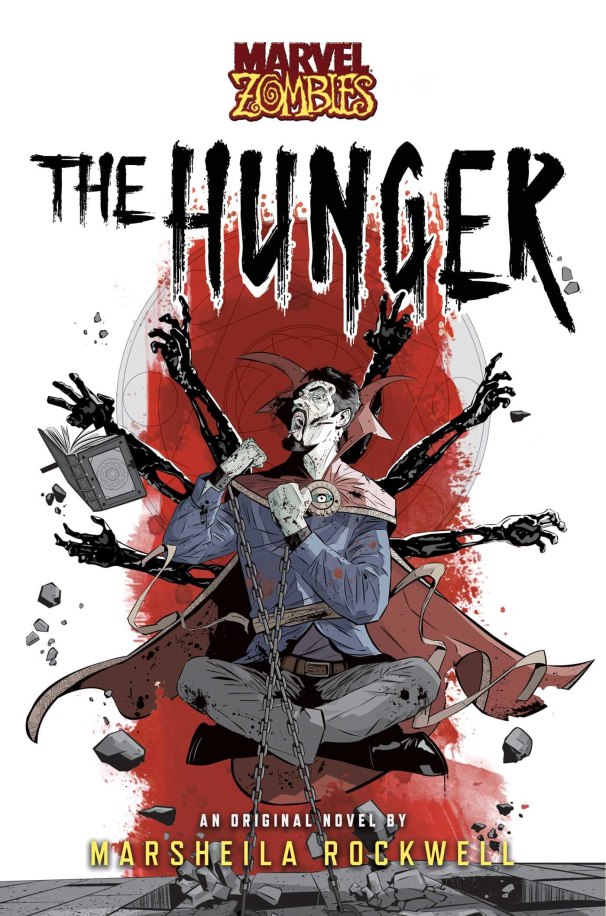
The Hunger by Marsheila Rockwell

The Hunger Cover

Publisher: Aconyte Books (ebook – 3 October 2023)

Series: Marvel Zombies

Length: 249 pages

My Rating: 4.5 out 5 stars

Amazon

Prepare to dive into a wacky, time travelling, zombie filled Marvel novel with Marsheila Rockwell’s fantastic tie-in book, The Hunger.

After having a lot of fun reading the awesome Marvel Comics tie-in novel The Tyrant Skies by David Annandale earlier this year, I thought it would be an excellent idea to dive into another amazing Marvel book, especially one with a great plot like The Hunger.  Written by intriguing fantasy and science fiction author, Marsheila Rockwell, whose previous foray in Marvel fiction produced the magic Sisters of Sorcery novel, The Hunger is an awesome upcoming book that I was very happy to get an early copy of thanks to Netgalley.  Set around the iconic Marvel Zombies concept, The Hunger was a pretty epic read that I had an outstanding time with.

When a mysterious object falls to Earth, landing in New York city, it unleashes a wave of evil and despair as the world’s greatest heroes are turned into ravenous zombies determined to feast on all living flesh.  As the zombified superheroes begin to spread out across the planet, turning or eating everything before them, only Doctor Strange can briefly retain his sanity to try and find a way to avert disaster, but despite his best efforts, his overwhelming hunger threatens all around him.

With no alternative, Doctor Strange is forced to turn to one of the few magic users left unaffected by the zombie outbreak, the librarian of the Sanctum Sanctorum, Zelma Stanton, who reluctantly takes up the burden and imprisons her zombified mentor.  Despite her lack of experience, Zelma has access to all the magical knowledge and ancient artefacts in Doctor Strange’s Sanctum Sanctorum, and she hopes to find some answer to the deadly chaos consuming her planet.  But Zelma soon realises that even all the books in the Sanctum aren’t enough; if she wants to succeed, she’s going to need help.

Pulling together a ragtag team of survivors, including Runaway witch Nico Minoru, monster hunter Elsa Bloodstone and the living embodiment of insanity, Deadpool, Zelma hopes that together they can find a solution.  But their plan to trap the zombies in a time loop backfires on them, thanks to antics of Deadpool, unsurprisingly.  Now with time fracturing all around them, an evil magic threat unleashed, and the zombie horde still determined to eat everything, Zelma and her strange team need to find a way to reverse the damaged they caused while still saving the world.  But is this group of survivors truly capable of stopping the flesh-eating nightmares waiting for them?

That was an insanely fun book about zombies and time travel shenanigans that I desperately needed, and I am sure glad that I decided to check this novel out.  The Hunger was a very entertaining book that I ended up knocking out in a few hours because of how easy and fantastic it was to read.  Rockwell came up with a very impressive story that quickly grabbed my attention and took me along a wild journey loaded with so many awesome moments.  Starting off with a great new introduction to an alternate Marvel Zombies event, where Doctor Strange and pretty much every other hero gets brutally turned into zombies, the story gets bleak very quickly and rarely lightens up after that.  The resulting narrative focuses on the intriguing figure of Zelma Stanton, a supporting character in one of the recent Doctor Strange comics, and it proves to be very interesting as you follow a young, inexperienced magician as she tries to survive in a very dangerous world.  The resulting story has a lot of great features to it as Zelma finds her courage, gathers a unique group of allies, and then finds herself getting thrown into all manner of chaos as her actions produce more zombie mayhem and every time travel issues you could think of.  The second half of The Hunger is pure, unadulterated bedlam, and I frankly loved every second of it, as Rockwell comes up with some outrageous and exciting scenarios that never really slow down.  Bringing together some well set-up storylines in some excellent ways, you honestly will find it hard to put down The Hunger once you get rolling with it, and I found the entire story to be exceedingly entertaining, especially as Rockwell wove together some complex scenes that saw the characters journey through all manner of unique points the Marvel Universe timeline.  This story was a riot from start to finish, especially the fantastic extended time travel sequences, and you will come away from this book very satisfied and honestly wanting more.

Rockwell has a great writing style that I felt really lent itself to the emotionally charged and intense story that came together in The Hunger.  Primarily told from the perspective of two young female magic users, The Hunger is a strong, character-driven tale that showcases how people grow under adversity, while also treating the reader to a brilliant amount of action, carnage and Marvel comics lore.  Rockwell really leans into the Marvel Zombies background of her story to provide some gruesome and graphic moments, which I felt helped set The Hunger apart from some of the other Marvel tie-in books.  While there is a lot of humour attached to the book, mainly thanks to the inclusion of a particular merc-with-a-mouth, The Hunger gets very deep and serious at times, and I loved the impactful dive into the traumas affecting the protagonists.  I loved the fast pace that Rockwell sets for The Hunger’s story, and frankly there was not a single moment of this book where I wanted to stop, as I just wanted to see what was going to happen next.  I did think some of the early sequences of the book felt a little simplistic in their writing, which almost threw me off.  However, Rockwell found her stride as the book continued, and I loved some of the elaborate sequences that emerged, especially those that feature multiple figures, time elements and obscure bits of Marvel lore.  Some of The Hunger’s twists were very well set up in the earlier stages of the book, and I loved how well things came together in the end, especially as Rockwell made such great use of the time travel elements to tell a very entertaining story.

The Hunger serves as a rather interesting addition to the wider Marvel lore that exists as Rockwell makes fine use of several existing storylines, concepts and characters, to create a pretty fun read.  Set in a version of the main Marvel universe that is suddenly impacted by a Marvel Zombies event, The Hunger has a ton of curious and distinctive elements to it that established fans of the comics will deeply enjoy.  Not only are there a ton of different characters present, often in zombie form, but Rockwell goes out of her way to feature or reference multiple storylines from the comics.  This includes a great mixture of more recent comics and some classic storylines, both of which work extremely well in the context of the story and its time travel elements.  I felt that Rockwell did a very good job of cleverly introducing and then utilising these different storylines throughout the course of the comics, and the resulting crazy plot encounters and big moments were pretty damn awesome.  Each of the main characters also makes sure to remember or mention many key story arcs from their history, many of which have a compelling impact on the current storyline or mental state.  The author clearly has an appreciation for the various storylines and obscure characters that she featured and I loved how random and compelling the later scenes got.  While Rockwell does go to some diverse areas of the Marvel universe and history, all of these elements and characters are explored in excellent detail so that anyone with some basic knowledge of Marvel comics can easily enjoy what is going on.  I personally loved all the cool references that emerged, as well the excellent reimagining of the Marvel Zombies storyline which helped turn The Hunger into a pretty awesome tie-in novel.

As with her previous Marvel tie-in novel, Sisters of Sorcery, Rockwell chose to focus The Hunger on three intriguing and somewhat underused female characters from the Marvel canon, Zelma Stanton, Nico Minoru, and Elsa Bloodstone.  All three characters are already epic, but it was great to see them forming a team here in The Hunger, especially when faced with an insane, world-ending threat.  Of these three characters, Zelma is probably the one I knew the least about, mainly because I’ve never read any of the Doctor Strange comics she is in, but she soon proved to be the invaluable heart of this entire novel.  Rockwell did a remarkable job of introducing and utilising Zelma as a character, even to a reader like me that has had no experience with her.  You are swiftly brought up to speed on who Zelma is and why she is involved, and soon you follow this overwhelmed magical character as she is thrust into events beyond her comprehension.  I loved the overarching narrative of this character finding her confidence and ability in this ultimate post-apocalyptic setting, and it was great to see her become the hero that Doctor Strange believed her to be.  Watching her use her unique intelligence and experiences to survive and attempt to stop all the chaos is quite compelling, and you really grow to appreciate Zelma, especially as she has very relatable doubts and concerns.  Zelma is the emotional heart of this entire book and I felt that Rockwell was very wise to use her as a central character, especially with how exceptionally she is portrayed.

In addition to Zelma, I really enjoyed the fantastic use of Nico Minoru and Elsa Bloodstone in The Hunger who served as impressive joint protagonists.  I particularly loved seeing Nico Minoru here in The Hunger, mainly because I’m such a big fan of Runaways, and Rockwell featured her in an excellent way.  Focusing on her at a key part of her character development from the comics, this already jaded and wary Nico arrives on the scene after seeing her entire adopted family turned to zombies and is swiftly forced into another harrowing adventure with a new group of strangers.  I really enjoyed exploring Nico’s fears, concerns and complex history throughout The Hunger, and she served as a great secondary point-of-view character for the plot.  These female characters are further enhanced by monster hunter extraordinaire Elsa Bloodstone, who is well suited for this sort of dark, monstrous tale.  The foul-mouthed, highly confident figure is a great addition to the focal cast of the novel, especially as her loud personality plays off the more reserved Zelma and Nico for a good chunk of the novel.  While initially shown to be mostly carefree, there are some compelling darker feelings under the surface, especially related to the start of the zombie apocalypse, and I felt that Elsa was a brilliant and great addition to the plot.

The final major character in the book really needs no introduction as Rockwell features Deadpool as the much need comic relief.  Brought into the story for very unique reasons, Deadpool is his usual blend of irrelevant humour, catchy one-liners, and all-round killing machine that works well with the female protagonists to save the day.  His constant jokes, weird comments and fourth wall breaks deeply add to the enjoyment I had of the book, even with its darker story content.  So many of the best plot moments in The Hunger revolve around Deadpool’s antics, and he really is an unsurpassed character to include in a crazy book like this.  His interactions with the other protagonists are also a lot of fun, with an intriguing blend of comedic conversations, crazed resentment, and even a grudging respect for his fellow survivors.  Throw in a ton of zombified superheroes, an overpowered magical witch from history, a fun new mount for Deadpool, and some intriguing figures from the dawn of the Marvel canon, and The Hunger has an outstanding cast that are a lot of fun to follow, especially during their darker and emotionally charged moments.

The Hunger really lived up to all its great potential and I had an epic time getting through this insane and highly exciting read.  Marsheila Rockwell produced one hell of a story here that made great use of the Marvel Zombies theme and featured a bonkers story with fantastic time travel elements, complex characters, and a ton of compelling references to the wider Marvel canon.  I honestly had such an incredible time with The Hunger and readers are guaranteed to get caught up in its cool story just like me.  Highly recommended, for all Marvel fans, you will have fun with this book.

Amazon

Warhammer 40,000: The Lion: Son of the Forest by Mike Brooks

The Lion - Son of the Forest Cover

Publisher: Black Library (Audiobook – 22 April 2023)

Series: Warhammer 40,000

Length: 12 hours and 15 minutes

My Rating: 4.75 out of 5 stars

Amazon

One of the fastest rising authors of Warhammer 40,000 fiction, Mike Brooks, returns with another exceptional read, this time covering one of the most significant events in recent Warhammer fiction, the return of Lion El’Johnson with The Lion: Son of the Forest.

At this point I think that my love for all things Warhammer is pretty well established, especially after my lengthy post earlier this year detailing my favourite Warhammer 40,000 novels.  I have been having a ton of fun in 2023 with this cool franchise, and I have just managed to finish off the newest Warhammer novel with The Lion: Son of the Forest.  This is the latest book from the very impressive Mike Brooks, who has been making a real name for himself in Warhammer 40,000 fiction and who seems to get better with every one of his books that I read.  His previous novel, Huron Blackheart: Master of the Maelstrom was a great read about an excellent established villain, and I had a lot of fun with his most recent book, Warboss, a highly entertaining novel about the always crazy orks.  However, I think that The Lion is probably his most ambitious and captivating novel yet as he covers the return of the Primarch of the Dark Angels, Lion El’Johnson.  This is a pretty big deal in Warhammer circles, and I was very impressed with how Brooks puts his own spin on the return to create an epic and powerful read.

At the dawn of the Imperium of Man, there was no force more deadly nor more loyal to the Emperor than the Dark Angels, the first Legion of Space Marines.  Led by their implacable and unstoppable Primarch and genefather, Lion El’Johnson, better known as the Lion, nothing was able to stop the Dark Angels as they crusaded from planet to planet dispensing the Emperor’s will.  However, following the events of the Horus Heresy and the Lion’s inability to save the Emperor, the Dark Angels imploded from within.  Treachery and years of resentment saw the Legion engage in a brutal and sudden civil war, which resulted in the destruction of the Dark Angel’s home world of Caliban, the scattering of the traitor Dark Angels throughout time and space as the Fallen, and the disappearance and apparent death of the Lion right when the galaxy needed him most.

Now in the 41st millennium, humanity is facing the greatest threat since the Horus Heresy.  The fall of Cadia spawned the Great Rift, a sprawling gap of daemon infested space that split the already crumbling Imperium in two, distributing travel, communications and coordination between humanity’s armies.  Into this darkness, the dread forces of Chaos emerge, destroying all before them, while other malign threats begin to eat away the remains of the Imperium.  The doom of all mankind seems certain, but hope is about to emerge in the most unlikely of places.

After a 10,000-year absence, the Lion awakens on the far-flung and devastated planet of Camarth, with no memory of how he got there.  Discovering one of his former sons, the Fallen Zabriel, the Lion soon discovers what has happened to the Imperium in his absence, as well as the terrible threats of the Great Rift and the forces of Chaos.  Unsure of his purpose or what has happened to him, the Lion sets out to preserve humanity from the forces trying to destroy it.  Rallying members of the Fallen from their long exile, the Lion begins a new campaign throughout the besieged systems of man, while trying to reconcile himself to everything he has lost.  But a dangerous and well-organised Chaos warband, the Ten Thousand Eyes, led by two of the Lion’s Fallen sons, are determined to destroy the returned Primarch and enact an ambitious plan with galaxy shattering consequences.  Can an isolated Lion survive the insanity of the 41st millennium, or has he returned only to face his doom?

Wow, now this was a pretty damn awesome Warhammer 40,000 novel.  Mike Brooks continues to really impress me with this cool new book, and I loved the elaborate and captivating tale contained within The Lion: Son of the Forest.  Featuring an intriguing and emotionally charged narrative that perfectly revives a key Warhammer 40,000 character, The Lion is an outstanding read and I think this is probably Brooks’ best Warhammer novel yet.

The Lion had a particularly interesting narrative that was firmly set around the return of Lion El’Johnson, and I loved the unique tale that Brooks came up.  The initial scenes of the book are quite fascinating as Brooks presents a symbol laden couple of chapters to show the Lion’s initial return, which I felt was a great way to start the story as it set up a lot of intriguing moments and gave the book quite a distinctive theme.  The introduction of two new alternate perspective characters a few chapters in helps to morph the story into a more typical Warhammer 40,000 narrative as it sees the Lion and other former members of the Dark Angels awaken in the current timeline.  The story soon sees the Lion reunite with one of his former sons and begin to reclaim a conquered Imperial planet from a notorious Chaos warband while trying to understand the new universe he’s in.  Getting back to his roots as a protector, the Lion soon is soon drawn into larger affairs, thanks a mysterious new ability he has obtained, and he sets out to do the right thing and right the wrongs of his past.  His actions not only lead him to more of his sons, ensuring that this book has a deep emotional heart to it, but it also leads him into conflict with a dangerous enemy, one that has big plans for him.

The Lion’s narrative is pretty epic in its scope and power as Brooks tells an exciting and compelling story about both the past and the present, and how one hero can make a difference.  The story features some great moments, including cool battles, emotional reunions, and dives into ancient history, as the characters come to grips with what the Lion’s return means to the greater universe.  Everything leads up to an ultra-intense finale as the Lion encounters a truly fallen son and is forced to reckon with the sins of his Legion and family.  I really enjoyed this epic narrative and Brooks sets out all the events extremely well, ensuring that readers will follow one excellent scene to the next.  While not every mystery is explained, the author does lay out some intriguing events that will grab a lot of Warhammer fans attention, and it leaves it open for more awesome books in the future.  I had an incredible time with The Lion and I managed to finish it off in a short amount of time.

This outstanding story is beautifully brought to life in Brooks’s capable hands as he deploys an excellent and captivating writing style throughout The Lion.  Brooks really had a tall order here in bringing back a key character from the Warhammer mythos and I think that he handled in an outstanding way by focusing on the emotional aspects of the character, rather than a pure action novel.  While The Lion does have some outstanding battle sequences designed to showcase just how epic a Space Marine can be, the focus is really on character development as Brooks examines three outstanding point of view figures while also telling an excellent narrative about characters trying to find their place in a strange new galaxy.

I loved how the author split the story across the three different perspectives, and I enjoyed how he made them so distinctive by using different styles and tenses for each of them.  For example, Baelor’s chapters use a third-person narration to show his struggles without going too deep into his head, the scenes shown from Zabriel’s eyes are written in a first person chronicle style as he recounts his story as if writing a journal, while the chapters focusing on the Lion are also in the third person, but feature a different, more epic style, which at times put me in mind of an older story or saga.  These different styles really fit the characters and their specific stories, and I appreciated how Brooks utilised these changes of styles to really tell a complex by subtly layering a classic Warhammer tale with pain, emotional damage, and uncertainty.

I felt that the author got the right balance of action and adventure with character growth, and you really get attached to the protagonists and their unique experiences in the Warhammer 40,000 universe.  I also loved how Brooks layered the story with a ton of Arthurian symbolism, as the Lion is meant to mirror King Arthur in this book, returning during his people’s darkest hour after dying during a war with his sons.  This included an excellent take on the Green Knight tale, with a dark Warhammer 40,000 twist to it, which also leads to one of the book’s funniest moments with a Monty Python homage.  I really got drawn into this outstanding story thanks to the way that Brooks told it, and this was an excellent and captivating read.

Now, this one of those Warhammer 40,000 novels that I probably wouldn’t recommend to new Warhammer readers as the story dives into some deep canon elements of the franchise.  Due to its focus on the return of Lion El’Johnson, a particularly important character that was only recently brought back in the game as a major event, The Lion is a key book in the Warhammer 40,000 expanded universe, and I felt readers needed a good understanding of the lore to fully appreciate its story.  This is because is strongly related to the history of the Dark Angels, and indeed all the Space Marines, and while Brooks does revisit and explain these events, having a more in-depth knowledge really does make that story that much clearer and more intriguing.  For those established fans of Warhammer 40,000 fiction, you are in for a real treat as Brooks expertly expands the lore while also providing some intriguing insights into established canon.  Seeing the Lion return and interact with his Fallen brethren was so damn cool, and it really tied into some of the best bits of Dark Angel lore that has been building for years and years.

I loved how the story examined both the current state of the Warhammer 40,000 universe, as well as the Horus Heresy, and it was fantastic to see characters who survived the Heresy arrive in the current universe and see what has been unleashed by the arrival of the Great Rift.  There are also a ton of jokes, references, and in-universe discussions that I had a lot of fun with, including intriguing new descriptions of events of the Horus Heresy, as well as more intriguing Dark Angels history.  I personally deeply enjoyed seeing the various ancient characters discuss the events that happened after they disappeared, and their reactions at the state of the Imperium, the deification of the Emperor to godhood, and what happened to the Dark Angels in the Lion’s absence, and this lead to some outstanding scenes.  The Lion proved to be a pretty epic piece of Warhammer 40,000 fiction and I was really impressed with how Brooks told such a unique and important story.

As I mentioned before, The Lion is a very powerful character driven novel as Brooks focuses on a cast of damaged and dispossessed figures thrust into an uncompromising future.  This is mostly clearly seen in the main character of Lion El’Johnson, the legendary Primarch of the Dark Angels and son of the Emperor, who returns after 10,000 years of mysterious disappearance.  Brooks paints quite the intriguing and complex picture around the Lion, showing him as a being out of time who, after experiencing some of the greatest losses and betrayals imaginable, awakens 10,000 years in the future with no idea of what happened to him.  The Lion is shocked at what the Imperium has become and how badly the universe has changed without him there.  Forced to reconcile with both this new future and his many failures, the older and wiser Lion heads back to the basics of his youth, protecting humans from monsters while also trying to reconnect with his lost sons, the Fallen, who he has mixed feelings about.  Brooks’s characterisation of the Lion is very different to what we’ve seen in previous novels, which I think a smart move, as the character is tired and lonely in this reality, and very much aware of the mistakes he has throughout his life.  Watching him relive some of the worst decisions he made during the Horus Heresy is very moving, and I loved how his insights into the past allowed him to move forward with his rediscovered sons and attempt to forgive them.  While there are a still a lot of questions around how the Lion returned (something I hope Brooks addresses in the future), I think that this was a pretty impressive return of such a key character, and I look forward to seeing more books focused on him.

The other major characters featured within The Lion are former Dark Angels who rebelled against their father thousands of years ago and were scattered throughout time and space following the destruction of Caliban.  Known collectively as the Fallen, these Space Marine characters have very complex feelings about Lion El’Johnson, especially as many believe he betrayed them and the Imperium, and they have all spent the intervening years being relentlessly hunted by the modern Dark Angels and their successor chapters.  This intriguing background was fertile ground for rich character development and backgrounds, and a large portion of the novel’s emotional depth relied heavily on the Lion meeting and reconciling with his lost sons.  Brooks produces several brilliant scenes that showcase the turbulent relationship between the Lion and the returning Fallen, and it was fascinating to see the Lion, a usually stubborn and proud character, admit that he was wrong and try to make amend to his sons.  I loved the intriguing group of characters that emerged in a supporting role as a result, especially as Brooks set them up as counterpoints to the Knights of the Round Table to match the Arthurian vibes around the Lion.

The most prominent of these supporting characters is Zabriel, the first Fallen that the returned Lion encounters, who serves as his guide to the new universe.  Zabriel has some amazing scenes in this book, especially as he provides the Lion with the first taste of the trauma the Fallen have experienced thanks to their father, and he makes sure the Lion knows that.  His well written chapters really capture his deep emotional conflict throughout The Lion, as he tries to reconcile the betrayals of the past with the hope that surrounds the revelation that Lion El’Johnson has returned.  His interactions with other members of the Fallen are really impressive as well, and I think he had some of the best chapters in the book.  Zabriel’s intriguing perspective is well matched by the other major point of view character, Baelor, a fellow Fallen who has chosen to continue following his former commander Seraphax, who he believes has a great plan to save the Imperium.  To achieve this goal, Seraphax has taken to wielding dark magic and is working with the followers of Chaos, forming the deadly warband, The Ten Thousand Eyes.  This forces Baelor to make a lot of compromises as he works to maintain his loyalty to Seraphax, even though they are doing terrible things.  The return of the Lion really throws Baelor for a loop, and there is a great undercurrent of denial to him as he tries to process all the implications that this has for him.  Brooks paints a brilliantly narrative of conflicted loyalty and duty around Baelor which worked wonderfully with all his chapters depicting the horrors of Chaos.  The rest of the Fallen characters in The Lion are very well written, and while some of them didn’t get a lot of focus, I loved some of the distinctive personalities that emerged.  It will be interesting to see how many of them are featured in the future, especially as there are still some secrets I wouldn’t mind knowing (who is The Red Whisper?), and I deeply appreciated how well Brooks featured them here.

To nobody’s great surprise, I checked out The Lion on audiobook, which is easily the best way to enjoy any good Warhammer novel.  Naturally, The Lion was pretty damn epic in this form, and everything about the book is greatly enhanced by the narration, as the epic story, amazing characters, and intriguing additions to the Warhammer universe, all come to life when read out.  I particularly enjoyed the voice work of Timothy Watson, who previously impressed me in last year’s Warhammer 40,000 audiobook, Krieg.  Watson has a wonderfully booming and commanding voice that worked well with all the powerful Space Marine characters in The Lion.  The narrators take on the confident and radiant tones of Lion El’Johnson was particularly awesome, and I really felt that he captured both the majesty of the character, as well as his deeper uncertainty and regret.  The other Space Marine characters are also extremely well captured, and I liked the fun range of voices that emerged, especially as they all seemed to fit that respective character and convey the key parts of their identity to the listener.  The villains are also cleverly narrated, and Watson goes out of his way to make them sound as inhuman as possible in places.  Coming in with a run time of over 12 hours, The Lion has a decent length for a Warhammer audiobook, although Watson’s fantastic narration moves the story along at a swift pace, ensuring that the listener is constantly hooked on the plot.  This entire production was just amazing, and I had an exceptional time listening to The Lion on audiobook, which is such an epic way to enjoy a Warhammer 40,000 novel.

Mike Brooks continues to rise through the ranks of Warhammer 40,000 authors with his outstanding new novel, The Lion: Son of the Forest.  The impressive and captivating read brilliantly brings back one of the most significant characters in the Warhammer canon and places him in an intense and deeply powerful tale of betrayal, forgiveness and displacement.  I had such an epic time with The Lion: Son of the Forest and this probably the best Warhammer book of 2023 so far.  I cannot wait to see what happens to this iconic character in the future, nor can wait to get my next Mike Brooks novel.  Highly recommended and required reading for all fans of Warhammer fiction.

Amazon

Warhammer 40,000: Shadowsun: The Patient Hunter by Phil Kelly

Warhammer 40,000 - Shadowsun Cover

Publisher: Black Library (Audiobook – 1 April 2023)

Series: Warhammer 40,000

Length: 8 hours and 13 minutes

My Rating: 4.25 out of 5 stars

Amazon

Veteran Warhammer 40,000 author Phil Kelly once again dives into his favourite topic, the T’au, with this new fast-paced and intense novel focused on the intriguing figure of Commander Shadowsun, Shadowsun: The Patient Hunter.

I have been having a lot of fun with Warhammer 40,000 novels this year, and I have already had the opportunity to read some major classics.  Many of these appeared in my recent Favourite Warhammer 40,000 novels list, and I have been keen to read more Warhammer fiction as a result.  As such, I decided to dive into one of the more recent Warhammer 40,000 novels, Shadowsun: The Patient Hunter, an excellent novel focusing on the intriguing T’au faction.  Shadowsun is the latest Warhammer 40,000 novel from Phil Kelly, who is probably best known for his work as a background writer on the various codexes and campaign books released as part of the Warhammer 40,000 tabletop game.  However, Kelly has also produced several Warhammer 40,000 novels over his career, with a particular focus on the T’au, having written several of the more prominent novels for the alien faction, including his Farsight novels and Blades of Damocles.  This latest book sees Kelly once again focus on Commander Shadowsun as she leads the latest T’au expansion, only to encounter more horrors than she ever expected.

Commander Shas’O Shaserra, better known to her foes as Shadowsun, has long led the forces of the T’au into war against all manner of foes.  A former contemporary of the legendary Commander Farsight, Shadowsun has since earned her own substantial reputation across various theatres.  Her latest action sees her leading the T’au Empire’s Fifth Sphere Expansion on the other side of the Startide Nexus, capturing many former Imperial worlds and bringing them under the sphere of the T’au’s influence.

A calculating tactician and a master of the philosophy of war that emulates the Patient Hunter, Shadowsun has known only success during this new phase of expansion.  But the surprise appearance of a massive fleet of decaying and indestructible warships soon throws all her plans into turmoil as she faces an enemy unlike anything T’au have dealt with before, the Chaos Space Marines of the Death Guard.

Ancient and deadly warriors sworn to the Chaos God of disease and decay, Nurgle, the Death Guard are a force unlike any other in the galaxy.  Employing deadly diseases, unstoppable daemons and other deranged horrors that defy all laws of physics and sanity, the Death Guard effortlessly brush through the T’au resistance.  Unable to counter their terrible tactics, Shadowsun desperately looks for a way to strike back against the Death Guard.  But with her own body consumed with disease and rivals within the T’au seeking their own sinister objectives, can even the great Commander Shadowsun succeed against these relentless opponents?

This was a pretty fun and intense Warhammer 40,000 novel from Phil Kelly, who had a great time really showing off two very different factions from the game.  Shadowsun: The Patient Hunter was a very interesting and action-packed read that will really appeal to fans of the Warhammer 40,000 franchise.

The plot of Shadowsun follows the character of Commander Shadowsun in her most lethal adventure yet.  This is a very brutal and quick-paced narrative that wastes no time diving into the action and intrigue to grab the readers full attention.  Starting with a good introduction to the character of Shadowsun and the complex politics of the T’au, the reader is soon introduced to the gruesome threat of the Death Guard, who soon make a major impact on the plot.  This takes the form of an extended and very over-the-top battle sequence on a T’au controlled human planet which Shadowsun was visiting, and she soon must contend with the full threat of the Death Guard.  Kelly really does not hold back at this part of the book, producing a brilliant and very lengthy connected sequence in which Shadowsun encounters the full, fly-infested horrors of Nurgle, as the Death Guard unleash their terrible might.  These scenes are pretty damn intense, at times bordering on pure horror, as the characters encounter diseases, decay, daemons and plague zombies, each of which test Shadowsun and her forces in very different ways.  This major sequence takes a substantial chunk of the book, and it really served to grab the reader’s attention early on with very high plot stakes.

The second half of the book deals with the fallout of this conflict, as an infected and weakened Shadowsun finds all her strategies and plans in ruin, and must find a new way to strike back, despite being hamstrung by internal T’au politics, a growing conflict between the T’au and their alien levies, and a sinister conspiracy from her superiors.  The resolution to this is a desperate boarding action against the Death Guard flagship, with Shadowsun leading a small force on a deadly suicide mission.  While not as extensive as the previous major confrontation, this final third of the book is extremely good, as Kelly envisions another complex battle that pits T’au tech against ancient, unclean horrors.  This sequence gets a little crazy in places, especially as Kelly brings in a couple of unique aliens as backup for the protagonist, and the Death Guard ship is loaded with horrors.  The big fights that emerge are extremely deadly and well written, and you will be enthralled at the carnage that emerges and the unique encounters that occur.  At the same time, the character of Shadowsun continues to grow as a warrior and a commander, fully trusting in her new squad of aliens, while also beginning to understand there is far more going on in the universe than her superiors have let her know.  Everything comes together extremely well, with a fun conclusion that is very satisfying for readers and leaves quite a few questions open that I am sure Kelly will try to answer in the future.  I liked the more metaphysical examination of the T’au towards the end of the book, and it gave the story a really unique conclusion that I will definitely remember.

I felt that Shadowsun was an overall pretty good Warhammer 40,000 novel as Kelly produced an excellent and highly exciting narrative that makes full use of the book’s action, heavy doses of lore intriguing characters.  The various fight sequences are very well written, and the author goes out of his way to try and capture the full horror and considerations of the battlefield, especially when regular soldiers face off against something strange and terrifying.  The two lengthy battles that much of the plot of Shadowsun focuses on are true highlights of the novel, and I love how intense, captivating and devastating the author made them.  Due to Kelly’s obvious passion for the game, this is a very, very detailed novel as the author goes out of his way to highlight the various factions, their motivations, and the state of the Warhammer 40,000 universe at this point in the canon timeline.  Every scene is loaded with some fascinating description of technology, lore, politics or factional history, which is fun in its way, especially for established fans of the games and the surrounding canon.  However, this does mean that Shadowsun might be a bit of a harder book for more casual readers to enjoy, as a certain level of understanding about the T’au is needed to fully appreciate the plot.  As such, I would probably recommend this book to fans of the T’au and dedicated Warhammer 40,000 readers, although newer readers will still be able to have some fun with Shadowsun.

Due to Kelly’s familiarity with the T’au, quite a lot of the book is dedicated to showing them in all their glory, from their advanced technology, their complex society, and their reliance on allied races to help their expansion.  While I am familiar with the T’au, I haven’t read a lot of books from their perspective, having instead only read books where they’re the enemy (Deathwatch: Shadowbreaker by Steve Parker and Kill Team by Gav Thorpe).  As such, I really appreciated this highly detailed and compelling focus on the T’au, and I had a lot of fun exploring their recent history, including their expansion throughout the galaxy.  There are so many great elements to their inclusion in Shadowsun, such as getting to see their awesome advanced weapons in combat, which are so very different from the human technology that most of the other Warhammer 40,000 books feature.  I also appreciated the compelling look at several of the client species that make up the T’au auxiliary forces, such as the Kroot.  Kelly features several intriguing different alien species throughout Shadowsun, making for some unique scenes as a result, and I appreciated the examination of their thoughts about the T’au allies, especially with how it plays into their faith and how they view the rest of the galaxy.

In addition, Kelly layers this book with so many complex bits of T’au day to day life, and you must admire his dedication and attention to detail.  Every conversation or discussion between T’au characters provides you some intriguing insights into their society, and I loved seeing their perfectionist mindsets or their fascinating interactions, such as those meaning-laden hand signals.  There are also some cool examinations of the various castes, their reliance on technology (such as Shadowsun’s two drone companions), and their desire to expand and bring word of the “Greater Good” to the rest of the galaxy.  While there is some definite love for the T’au throughout Shadowsun, Kelly also makes it a point to examine the darker side of their society, including the deadly secrets of the Fourth Sphere Expansion force and the typical manipulation of the Ethereal caste.  Commander Shadowsun, who starts the story off relatively naïve about some of the darker aspects of her race, begins to get an understanding of some of the secrets being kept from her, especially when she encounters some of the forces of Chaos and the secrets of the Warp.  The attempts to shut down any discussion about daemons or what happened to the allied species when they went through the Warp gave some of the T’au focused scenes a darker and more sinister edge, and it will be interesting to see whether Shadowsun continues to blindly follow the Ethereals in the future.  I also liked how Kelly really showcased the inherent arrogance of the T’au, especially when it comes to their opinion of other races in the universe, such as humans from the Imperium.  Their haughty belief that they understand the universe is quite amusing, especially when they come face to face with something completely insane.

To balance out the T’au, Kelly also strongly features the Chaos Space Marines of the Death Guard legion in Shadowsun, who are pretty epic antagonists.  Followers of the Chaos God Nurgle, the Death Guard are dedicated to all things disease, decay and corruption, which results in some pretty horrific mutations for their plague infested bodies.  The Death Guard are always pretty gruesome when featured in fiction, but I felt that Kelly did a particularly fantastic job of capturing them in their fully festering glory.  All the Death Guard encountered in this book are covered in putrefying mutations or growths to some degree, and Kelly really goes out of his way to describe just how unsettling they are.  This includes a compelling look at a Death Guard battle cruiser, whose interior is just covered in growths, mould, various liquids that fill up entire corridors, and loaded with so many other over-the-top elements, which really pop in Kelly’s talented hands.  I also loved how the author tries to capture the Death Guard’s highly positive and benevolent natures, which are reflections of their “kindly” god, Nurgle, and which honestly makes them even more sinister.  He further disturbs the reader by showing the Death Guard unleashing their full horrors on the T’au with, diseases, plague zombies, daemons, dark magic and more used against them, totally devastating them.

Watching the T’au get overwhelmed by these weird and terrifying elements is pretty intense, and the main T’au perspective character, Commander Shadowsun, keeps getting more disturbed by their unpredictable tactics and terrible weaponry.  I loved the compelling comparisons the author makes between the Death Guard and the T’au, and the two are honestly the antithesis of each other in aesthetics, combat styles, and mindset.  This ensures that their conflicts are pretty damn epic and watching the T’au forced to come up with some new tactic while freaking out made for some thrilling reading.  I did think that to make the Death Guard see even more threatening and dangerous, Kelly did slightly nerf the T’au in places, especially during their earlier battles, which fans of the faction probably won’t love, however, the protagonist makes up for that by taking out a Great Unclean One at one point.  Kelly’s decision to feature the Death Guard as the antagonists was an outstanding choice and one that made Shadowsun standout to me even more.

As with most Warhammer 40,000 novels that I have the pleasure of enjoying, I chose to check out Shadowsun on audiobook, which was a fun decision as always.  Coming in at just over eight hours, this was a quick audiobook to power through, especially when you get to some of the more epic battle scenes.  This format served to really enhance some of the best elements of the Shadowsun book, including the cool action and the sheer horror of some of the scenes where the protagonists go up against the forces of Nurgle.  Having someone reading out all the disgusting things this foul horde contains makes the book seem even more terrifying, which I deeply appreciated.  Narrator Helen McAlpine does a very good job bringing this compelling plot to life with her great voice work, and I really appreciated her take on several of the characters and big scenes within Shadowsun.  The voice that she gives to the main character of Commander Shadowsun is highly fitting, and I felt that McAlpine managed to capture her emotions, particularly that of distress of despair, very well throughout this audiobook.  Due to this, and more, I would once again strongly recommend this Warhammer 40,000 audiobook to anyone interested in checking out Shadowsun, as it is easily the best way to enjoy any book from this franchise.

Overall, Shadowsun: The Patient Hunter is an excellent Warhammer 40,000 novel and one that I really had a fun time with.  Phil Kelly did an outstanding job featuring the T’au again and it was great to get a deeper look at one of the more fascinating alien factions in the canon.  Loaded with action, horrifying moments, and some deep lore drops, Shadowsun is an awesome read that fans of Warhammer 40,000 fiction can have a lot of fun with.

Amazon

Warhammer 40,000: Warboss by Mike Brooks

Warhammer 40,000 - Warboss Cover

Publisher: Black Library (Audiobook – 25 March 2023)

Series: Warhammer 40,000

Length: 8 hours and 48 minutes

My Rating: 4.5 out of 5 stars

Amazon

Prepare for the ultimate battle for control as several feuding ork bosses fight to become the new leader of the Waaagh! in this amazing and highly entertaining Warhammer 40,000 novel, Warboss by Mike Brooks.

2023 has been a big Warhammer 40,000 fiction year for me as I have been having an absolute blast reading all manner of cool novels from across the franchise (make sure to check out my recently released list about my favourite Warhammer 40,000 novels).  However, while I have read a ton of Warhammer books this year, I have not had the opportunity to read any 2023 Warhammer releases.  Well, I am on my way to rectify that by looking at the recently released Warboss by awesome author Mike Brooks, who also wrote the 2022 novel Huron Blackheart: Master of the Maelstrom.  Brooks did an outstanding job with this fantastic new book, and I had so much damn fun with Warboss and its highly entertaining and hilarious story.

In the far future of the 41st millennium, there are few things are more destructive or unstoppable than an ork warband on a rampage.  One of the most effective bands currently killing its way through the galaxy is that of Warboss Gazrot Goresnappa whose Waaagh! has conquered the once mighty human fortress world of Aranua.  After several decisive and bloody victories, the Waaagh! celebrates in front of the planet’s remaining bastion, the massive Davidia Hive.  All it will take is one final assault to totally defeat the humans on Aranua so Warboss Goresnappa can strip their resources and lead his boyz to bigger and better fights out in the stars.

However, before Goresnappa can achieve his great victory, an unfortunate accident sees him very, very dead under the giant decapitated head of a Gargant war machine.  With their leader squashed, the Waaagh! now has an opening for Warboss, and several ambitious orks from across the no-longer united clans step forward to fight for the job.  However, before the usual brawl for leadership can begin, a prophecy from the clan’s resident weirdboy, Old Morgrub, reveals that the ork gods have something very special in store for the Waaagh! and its next leader.  A mysterious gate lies underneath the human city that could transport the Waaagh! to fights anywhere in the galaxy, and whichever boss finds it first will be the new Warboss.

Forced to obey the words of the gods, the bosses engage in their own elaborate plans to breach the Hive City and claim the gate.  But which boss can triumph over the others?  Will it be the brutal Goff Big Boss Mag Dedfist, the suicidally fast Speedboss of the Evil Sunz, Zagnob Thundaskuzz, the sneaky and cunning leader of the Blood Axes, Da Genrul, or could it even be the leader of the grot uprising, the self-proclaimed prophet of Gork and Mork, Snaggi Littetoof?  All four believe that they are the only ones capable of leading the Waaagh! and they will fight tooth and nail to become Warboss.  But to succeed they’ll need to not only overcome all their rivals but the human defenders of the Hive City and an Aeldari army waiting in the depths to defend their gate.  May the best ork win!

Oh dear, oh dear, what a damn funny book.  Honestly, any Warhammer 40,000 novel that focuses on the orks is bound to be comedy gold, but Warboss is one of the better ones I have had the pleasure of reading.  Author Mike Brooks does a wonderful job of telling a tight and amazingly fun story that perfectly showcases the orks in all their green skinned glory.  I had so much fun with this book and I managed to power through Warboss in very short order.

This proved to be a pretty fast-paced and impressive story, and it’s one that I was able to have a blast listening to as it unfolded.  Primarily focusing on the various ork characters that are part of Waaagh! Goresnappa, Warboss starts off with a sudden game changer for the protagonists as the infamous Warboss Goresnappa is killed off in hilarious fashion thanks to a group of argumentative grots and the falling head of a massive war machine.  This leads several of the remaining ork bosses throwing their hats into the ring to become the Warboss, and all hell follows as a result.  Tasked with finding a hidden Aeldari gate under the human city, each of the ork bosses implements their own plans to get into the city first, whether that be through blowing down the walls, infiltrating from below, or driving around the city at high speeds, hoping for the best.  Brooks breaks the story up around the main three contenders nicely, and you soon get a good idea of their different, but very orkish strategies.  However, the story is made even more enjoyable thanks to some of the alternate perspectives that emerge.  This includes the ambitious grot Snaggi Littletoof who, after accidently killing Warboss Goresnappa, attempts his own grot uprising and tries to find the gate to gain his cause legitimacy.  Several human characters are also shown, often to add some interesting contrast to the orks, and it is fun to see their attempted counterattacks, which often leads to disaster.  This makes for an excellent first two-thirds of the book and Brooks does a great job of showcasing both the protagonists and the ork nation as a whole while also setting up a very entertaining story.

Unsurprisingly, the orks make it into the city and everyone starts arriving at the gate at the same time, often in comedic or unexpected ways.  This leads to a very fast-paced final third as everyone starts fighting everyone else to become Warboss, facing off against humans, Aeldari, and every rival faction of the Waaagh!.  Brooks showcases this final big battle in some excellent ways, and you get really drawn into the crazy carnage that follows thanks to the well-written and exciting action scenes.  The use of multiple perspectives was pretty useful here, and I liked how the author showed the same massive battle again and again, each time from the point of view of another character.  This added more detail to the brawl each time, as well as some amusing alternate opinions of events from some very different characters.  Brooks throws in some excellent twists and turns here and you are never quite certain who is going to come out on top in the battle for supremacy.  The eventual fate of every major character is pretty fantastic and really fits the storylines that have been building up throughout the book.  I personally came away from Warboss extremely satisfied and I loved all the cool developments and totally insane moments that occurred.  Overall, this was a very impressive standalone Warhammer 40,000 narrative and it is very hard not come away loving this story thanks to the awesome humour and all the fantastic, over-the-top interactions that occurred.

All fans of Warhammer fiction know that ork focused novels are some of the funniest novels out there, due to the way that they focus on the over-the-top antics of this beloved faction.  Some good examples of previous Warhammer books that strongly featured orks include Ghazghkull Thraka: Prophet of the Waaagh! by Nate Crowley (one of my favourite books of 2022) and Catachan Devil by Justin Woolley, and I think that Warboss is up there with these fantastic reads.  This outstanding book really dove into the humour as you watched the crude and eternally underestimated orks battle it out amongst each other and the other factions, often coming up with insane and funny solutions to all the deadly problems they encounter.  There honestly wasn’t a single chapter where I wasn’t laughing at some of the crazy stuff that just occurred, and Brooks had a real talent for writing from the ork perspective.  There was some great consistency in the way that the ork characters acted and thought throughout Warboss and every chapter focussed on them saw the characters using similar lingo, slang and descriptions of the other races in the Warhammer 40,000 universe.  As such, you get a great appreciation for the ork mindset and it was great to see the ork perspective on all the book’s over-the-top moments.

One of the things that I felt set Warboss aside from some other Warhammer 40,000 novels featuring orks is that Brooks didn’t fall into the trap of portraying them simply as funny simpletons.  Instead, Brooks shows that the orks are quite smart and complex in their way, it just that their culture, in comparison to humans or Aeldari, has more of a focus on violence and straightforwardness than the other races in the galaxy.  This is backed up by scene after scene of the orks utilising their skills, technology and cunning to win various encounters against seemingly smarter or more organised opponents, and it is always quite fun to see the orks looking down on their opponents for making mistakes that they wouldn’t do.  While this love of extreme violence is mostly played for fun, Brook’s also tries to show the darker side of it, as the orks are pretty damn brutal in how they deal with the humans and Aeldari they encountered.  I loved the great contrast between the ork and human characters that Brooks added into Warboss, as the humans were always so arrogant and condescending towards the orks’ intelligence, even when they were beating them.  This complete lack of understanding by most of the human characters really enhanced the various ork chapters, especially those that showed the orks managing to understand and outthink their human opponents, and I really appreciated this fantastic deeper dive into ork mindset and society.  I did think that Brooks might have made the orks slightly too overpowered in Warboss, as they manage to take on quite a few major enemies with relative ease, but this always added some fun to the story and it was interesting to see the full potential of the orks.

This deep dive into the orks is further cemented thanks to the several outstanding character arcs that Brooks set up throughout Warboss, particularly around the four main characters fighting for control of the Waaagh! in their own way.  The three ork characters Mag Dedfist, Zagnob Thundaskuzz and Genrul Uzbrag (Da Genrul), are in some ways quite similar, in that they have several similar racial tendencies towards violence or leadership.  However, each of them represents a different clan, and so they have different battle tendencies which really helps to highlight the different factions within ork society.  Mag Dedfist is a Goff, and so he relies more on classic violence and explosions to achieve his goals in the most direct ways possible.  Zagnob is an Evil Sun boss who has dedicated himself to the Kult of Speed and believes in riding the fastest vehicle he can find right towards the enemy.  The most entertaining of these is probably Da Genrul, a member of the Blood Axe clan who admire human martial ability and utilise their own take on tactics, discipline and stealth to achieve their goals, often outsmarting the humans they are aping.

I was also a big fan of the character of Snaggi Littletoof, a grot with ideas of grandeur who attempts to start a grot uprising against their cruel ork masters.  The grots (also known as gretchins, essentially goblins from classic fantasy), smaller cousins of the orks who are used as slave labour and cannon fodder, aren’t particularly well featured in most Warhammer 40,000 fiction, so I had fun with a whole character arc around them in Warboss.  Snaggi and his band of rebellious grots (Da GrotWaaagh!), are a very entertaining inclusion, and I liked the revolutionary storyline that Brooks set around them that provided both humour and an interesting look at typical grot life.  It was so much fun to see Snaggi inspiring his followers to go against their nature and rebel, especially as the orks had no idea what they heck they were doing.  Thanks to Brook’s use of Mag, Zagnob, Da Genrul and Snaggi, you get a great understanding of each of their specific faction and the author did a particularly good job of featuring each of them equally.  Indeed, thanks to the appearance of several different ork characters in a supporting role, you get a pretty good idea of nearly every major ork clan, faction and designation, and even those readers completely unfamiliar with orks can come away from this book knowing most of the key things you need to know about them.

These ork and grot protagonists are well backed up by several entertainingly arrogant human characters who honestly make the orks seem reasonable and likeable in comparison.  The best is easily Captain Armenisu Varrow, who is held prisoner by Da Genrul as his pet and tactical advisor.  Varrow goes through so much hell in this book, but is so deliciously haughty while he does so that you really can’t feel sorry for him.  Despite his ironclad belief in his own intelligence, Varrow is outsmarted time and time again, and it is just great to see him cower his way through events while still thinking he is the smart one.  His story arc is very entertaining and I loved how very dark it gets, especially at the end.  The rest of the humans are also great in their own ways, even if they are only featured for a short amount of time, and their ongoing false remarks about the abilities of the orks in the face of the carnage they are laying down always made me chuckle.  An overall great group of characters who help to turn this amazing story into something truly special.

I checked out Warboss on audiobook, which honestly is becoming my go-to format for all things Warhammer.  This proved to be another excellent decision as the Warboss audiobook was a ball of absolute fun that I had a brilliant time listening to.  Coming in with a runtime of under nine hours, this is a pretty easy audiobook to power through quickly and I managed it in a few, hilarious sessions.  The outstanding, comedy laden story really works well in the audiobook format and so many of the great jokes come across that much better when you listen to them.  It definitely helped that they brought in established Warhammer narrator Harry Myers to voice this book as he did a spectacular job here.  I have deeply enjoyed Myers in several recent Warhammer audiobooks, including The Wraithbone Phoenix by Alec Worley (one of my favourite audiobooks of 2022) and Day of Ascension by Adrian Tchaikovsky, and he has another amazing performance in Warboss.  His voice is just perfect for all the alien characters featured within this novel, and the various gruff tones of the orks and high-pitched squeals of the grots are very spot on.  In addition, several of the human characters are shown in all their arrogant finery throughout the audiobook and you really appreciate just how stupid they are through this medium.  Each character is expertly showcased to the reader through Myers’ voice, and I loved every line he read out as a result.  I also deeply enjoyed how well his narration worked to convey all the fantastic jokes loaded throughout the production, including that hilarious bit involving the ork characters failing to know the chapter numbers.  This was a such a great audiobook to listen to and I cannot recommend this format enough for Warboss as you are guaranteed to have an exceptional time listening to it.

Mike Brooks continues to impress me as an outstanding author of Warhammer fiction with his amazing novel Warboss.  A comedy heavy novel that perfectly showcases the always fun orks, Warboss is pure entertainment from start to finish that both established fans of the franchise and new readers can easily enjoy.  Brooks has a clear appreciation for this faction which really shines through in his storytelling, and I loved his great take on everything orkish.  One of the funniest and enjoyable releases of 2023 so far, this is essential reading for all interest in hilarious Warhammer fiction, and I am very glad I checked it out.

Amazon