Throwback Thursday: Patient Zero by Jonathan Maberry

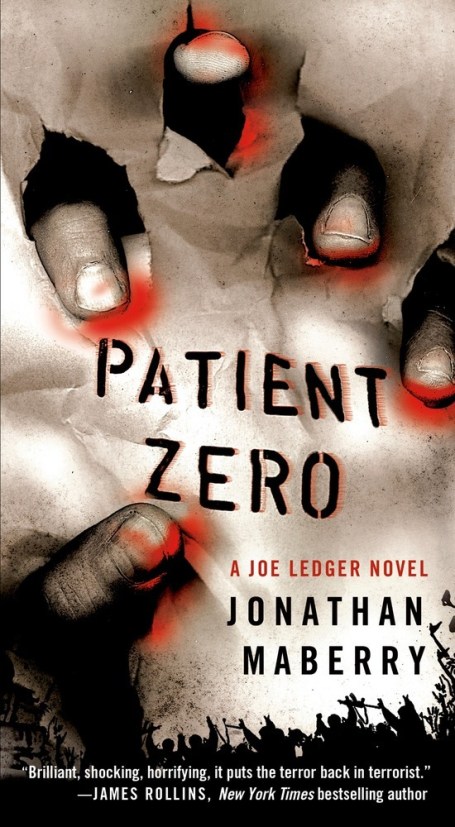
Patient Zero Cover.jpg

Publishers: St. Martin’s Griffin

                       Blackstone Audiobooks

Publication Date – 3 March 2009

Amazon     Book Depository

Reviewed as part of my Throwback Thursday series, where I republish old reviews, review books I have read before or review older books I have only just had a chance to read.

A couple of weeks ago I listened to and reviewed the latest book in Jonathan Maberry’s Joe Ledger series, Deep Silence, and found myself hooked on the insane, mad science based thriller adventure.  After enjoying Deep Silence and giving it a five-star review, I started checking out some of the previous books in the Joe Ledger series that I had not had a chance to read before, and found myself enjoying the plot concepts of the other books in the series.  The moment I finished listening to Deep Silence, I immediately jumped back to the first book in the series, Patient Zero, to review as part of my Throwback Thursday series.

When Baltimore detective Joe Ledger is assigned to a joint terrorism taskforce, he thinks it is an opportunity to fight back against the people responsible for 9/11.  What he was not expecting was to have a crazed man try to bite him on his first raid with the taskforce after discovering a warehouse filled with terrorists.  His elation about a job well done is destroyed when he encounters one of the terrorists again later that week.  There is just one problem: Ledger knows that he killed him during the first raid.  Someone has created a terrifying bio-weapon that can turn ordinary people into zombies, and worse, they have supplied this virus to a destructive terrorist organisation that plans to release it within the United States.

As the full extent of the horror being unleashed against them is revealed, Ledger finds himself recruited into a newly created covert organisation that was set up to handle extraordinary threats such as this.  Known as the Department of Military Sciences (DMS), this organisation wields the latest technology and the country’s brightest scientists under the command of the mysterious Mr Church.  As a member of the DMS, Ledger leads an elite team of combat specialists in the field in an attempt to contain any attempts to unleash the virus on the population and to destroy those who have already been infected.  As Ledger’s investigation progresses, he uncovers an elaborate conspiracy that will have devastating impacts for all of humanity.  But with the fate of the world in the balance, it soon becomes clear that there is a traitor within the DMS who has no qualms about unleashing a zombie apocalypse.

I have to admit that after absolutely loving Deep Silence, I had very high expectations when I started reading Patient Zero.  Luckily I was not disappointed and found that Patient Zero had a fantastic action based storyline that makes good use of its mad science elements to create an intense and very enjoyable novel that sets up all the elements for this future series.  I also chose to check out the first book in this series in its audiobook format, which, at just under 15 hours, is a great way to enjoy this high-octane story.

Hands down, the best thing about this novel has to be the zombies and the way that Maberry has created a compelling and intricate thriller story around this classic horror story concept.  The thriller aspect of this is really clever.  Rather than being the central antagonists themselves, the zombies are a tool being utilised in a wide-reaching conspiracy that the protagonists have to unravel in order to figure out the origins and endgames of the book’s true antagonists.  These thriller elements are quite detailed, and Maberry utilises a number of chapters told from the antagonists’ point of view to add some depth to the conspiracy and showcase the extent of their plot, as well the problems these groups have.  The protagonists also have to deal with potential traitors in their ranks, advanced science that they do not understand and a surprisingly organised, devious and well-equipped terrorist organisation.  All of this is an extremely captivating thriller storyline, and I love how Maberry has managed to utilise the book’s zombie element to help flesh this out.

Maberry has also created a unique and intriguing zombie origin for this book that is based on potential real-life science.  The zombies in this book are the result of a disease rather than a supernatural calamity.  They have been created by some advanced science and extreme mutations of existing diseases and viruses, such as prion diseases.  As a result, Maberry and his characters spend a lot of time examining the potential science behind this zombie virus, which pulls the reader in as they consider how close something this crazy could be to a reality.  I was really struck by the way that Maberry tried to show the horror that these creatures would inflict on the people who encounter them, and the sheer terror that they inflect on normal humans.  The point-of-view protagonists spend significant time explaining how terrifying and emotionally damaging it is to have to encounter and fight these infected people, as well as how guilty they feel about having to kill them.  There are quite a few parts of the book where the characters discuss how damaging these events are to them, and it really adds some emotional gravitas to this story.  Maberry is a prominent author of zombie fiction, so it is no surprise that he is able to create quite a number of awesome and terrifying scenes featuring the zombies as they attack and kill all around them.  There are also some interesting zombie deviations that appear and offer some unique elements to the story.  Overall this is an incredible and memorable addition to this story and one that will really appeal to fans of zombies and the horror genre.

Action is a major part of the Joe Ledger series, as the protagonist leads an elite special forces unit against all these elite scientific threats.  As a result, there are a huge number of action sequences throughout this novel and the reader is constantly left with a racing pulse.  There are so many great fast-paced elements throughout Patient Zero for action junkies to enjoy.  Maberry is always great at describing special forces tactics in his stories, and I enjoyed seeing them used against the unique threats in this book.  There are a number of excellent firefights throughout the story, and the author has a great mind to examining the psychology of a gun battle.  Maberry’s love of martial arts and close-combat fighting once again shines through in Patient Zero, as his protagonist is an expert fighter who has innumerable hand-to-hand fights with a number of different opponents.  While the above actions scenes are all extremely awesome, the best scenes have to revolve around the desperate fight between these elite soldiers and the horde of zombies that they encounter.  These scenes are really fantastic and watching the special forces characters fight tooth and nail against a horde of zombies becomes a captivating and powerful part of this book.  There are quite a few crazy action scenes throughout Patient Zero for the reader to look out for and which are defiantly a highlight of the book.  I personally found that listening to these scenes in the audiobook format really brought me into the centre of the action, and it was an excellent way to enjoy this element.

Patient Zero is an excellent introduction to the Joe Ledger series and contains a number of elements that will continue into the rest of the series.  I came to this book having first read the 10th and latest book in the series, Deep Silence.  As a result, I was really intrigued to see what characters were introduced in the first book and which ones do not appear in the final book of the series.  There are some interesting differences between Patient Zero and Deep Silence that I found quite fascinating.  For example, the opponents and technology in this first book are a lot more realistic, as Maberry has yet to start utilising the Lovecraft-inspired aliens which feature in some of the later Joe Ledger novels.  The head of the DMS, the mysterious Mr Church, also comes across as a much colder character in this first book, as well as someone who is more comfortable with civilian deaths and sacrifice if it results in the survival of the rest of the world.  That being said, there are some familiar elements.  Ledger is still an incredibly sarcastic and funny protagonist, and the author tries to highlight a huge range of varied viewpoints to show the whole range of the plot the DMS is trying to unravel.  Patient Zero serves as a great introduction to the DMS, and I really enjoyed seeing the early days of this organisation.  I also love how everyone is quite confused about what this organisation is and the mystery around Mr Church, who appears to have an incredible amount of influence and power in Washington.  For example, at one point he actually tells the president of the United States that he is wasting his time and hangs up on him in, an action an incredulous Ledger describes as “bitch-slapping the president”.

Patient Zero is an incredible first novel in Jonathan Maberry’s incredible Joe Ledger series and one that serves as a fantastic introduction for readers unfamiliar with this series.  Featuring all sorts of mad science, impressive action sequences, a five-star thriller storyline and a ton of amazing zombies, this is an outstanding novel and one that proves very hard to put down.  After loving this book, as well as the latest book in this series, Deep Silence, I am now fully determined to read the rest of the books in the Joe Ledger series.  Fully expect to see a review for The Dragon Factory very soon; I have no doubt that I will really enjoy that book as well.

My Rating:

Five Stars

Amazon     Book Depository

Throwback Thursday: Final Crisis: Rogues’ Revenge by Geoff Johns and Scott Kolins

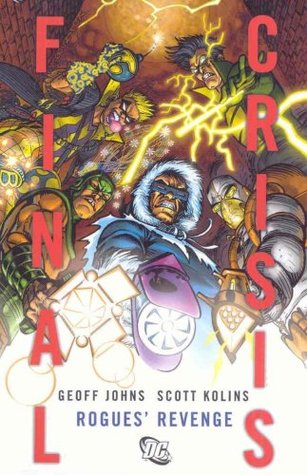
Rogues' Revenge Cover.jpg

Publisher: DC Comics

Publication Date – 28 July 2009

Amazon

Reviewed as part of my Throwback Thursday series, where I republish old reviews, review books I have read before or review older books I have only just had a chance to read.

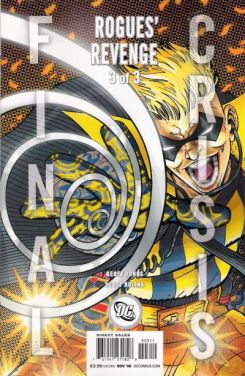
In the midst of the 2008 DC Comic crossover event Final Crisis lies this often overlooked and foolishly underappreciated miniseries, Final Crisis: Rogues’ Revenge, which focuses on the Flash’s most enduring villains, the Rogues.

Final Crisis was the big DC comic event of 2008, and is memorable for a number of key events, such as the apparent death of Batman, the death of the Martian Manhunter and the return of the original Flash, Barry Allen.  In addition to this main series, DC also released a number of miniseries and one-shots that served as tie-ins to the main Final Crisis storyline and which are often forgotten in light of Final Crisis big events.  I have to admit that I have never been a particularly big fan of the Final Crisis series, mainly because of the over-the-top and unnecessarily complicated storyline (you know, typical Grant Morrison writing).  However, I did really enjoy the tie-in miniseries, including the dark comic Revelations, which focuses on the Spectre and contains the horrifying image of Dr Light being turned into a candle, and the massive Legion of 3 Worlds miniseries, which saw the return of two great characters.  However, my favourite of all these miniseries has to be the subject of this review, Rogues’ Revenge, by iconic The Flash contributors Geoff Johns and Scott Kolins.
Final_Crisis_Rogues_Revenge_1B.jpg

The Rogues are a group of iconic dangerous criminals in the twin cities of Central City and Keystone City who have banded together in opposition to the Flash.  Different from the usual supervillains that inhabit the DC Universe, the Rogues have a sense of honour and mostly commit thefts rather than seeking world domination or pointless destruction.  Usually led by Captain Cold, the Rogues have featured most of the Flash’s villains at one point or another, including Heatwave, Mirror Master, Captain Boomerang, the Trickster, Weather Wizard and even Gorilla Grodd.  These characters have been recurring villains of the Flash for over 60 years and continue to be regular features of the various The Flash comics.  The Rogues are also very well represented in other media, appearing in several animated shows and movies.  One member, Captain Boomerang, appeared in the 2016 movie Suicide Squad, while the rest of the characters, especially Captain Cold and Heatwave, are major fixtures of the Arrowverse television series.

In Rogues’ Revenge, the core remaining Rogues, Captain Cold, Heatwave, Weather Wizard and the second Mirror Master, have been having one hell of a year after breaking their number one rule: never kill a speedster.  Tricked by the young psychopathic speedster Inertia, the Rogues attacked the Flash when he lost his powers and actually managed to kill him, which they never wanted to do.  Worst, the Flash that they killed was only a kid, Bart Allen, the former Impulse and Kid Flash, who had been aged up by his time in the Speed Force.  As the most wanted criminals in the world, the Rogues have spent the year being hunted by as fugitives by the collected superheroes.  Briefly imprisoned on an alien planet with the rest of the world’s supervillains, the Rogues escaped and have returned to Keystone City, once again fugitives.

Final_Crisis_-_Rogues_Revenge_2A.jpg

The Rogues are planning to permanently retire after their terrible mistake.  However, when Inertia escapes from his imprisonment, the Rogues decide to go on one last mission and seek revenge for Inertia’s trickery.  Joining forces with the new young and immature Trickster, the Rogues set out to break their number one rule just one more time.

However, their revenge is going to get far more complicated than they anticipated.  The supervillain prophet, Libra, is uniting the other villains for the Final Crisis and wants the Rogues by his side in his new Secret Society.  Their emphatic refusal does not go down well, and Libra sets about recruiting them by any means necessary, even if that means killing every member of the Rogues’ family to get their attention.  The former Rogue, Pied Piper, is also hunting down his former cohorts, determined to repent for the role he played in Bart Allen’s death, while powerful anti-speedster Zoom has taken Inertia under his protection and tutelage.  Against all these forces, this misfit group of killers and thieves seem incredibly outmatched, but never count the Rogues out of the fight.  Can the Rogues get their revenge, and how will they react to the return of their greatest foe, the original Flash, Barry Allen?

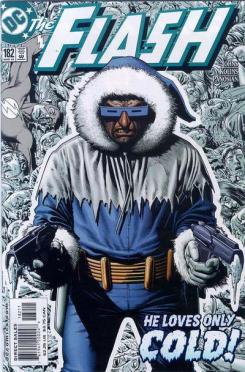
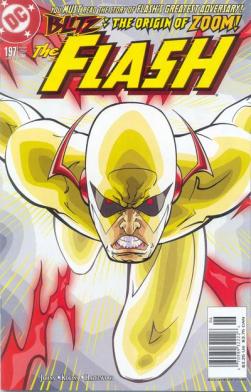
This fantastic miniseries is the brainchild of legendary DC writer Geoff Johns and artist Scott Kolins, who previously did a joint run in The Flash Vol 2Rogues’ Revenge is collected in a single volume and consists of the miniseries’ three issues, as well as two issues from Johns and Kolins’s run on The Flash Vol 2 issues #182 and #197, which focus on the origins of Captain Cold and Zoom respectfully.  Rogues’ Revenge is an excellent series that puts the focus onto an incredibly intriguing and very different group of villains.  Containing a superb story, some amazing artwork and some subtle, but interesting tie-ins to Final Crisis and other parts of the DC Universe, this is a really fun miniseries that is worth checking out.

Final_Crisis_Rogues_Revenge_3.jpg

One of the things that I like the most about this miniseries is the way that Johns and Kolins really dive into their complex main characters and show what set them apart from all the other supervillains.  The reader is given a look into the psyche of each of the Rogues, and shows the deep and dark troubles that hide within their minds.  Alone, they are incredibly damaged individuals with advanced weapons, but together they are a functioning unit able to hang with the most powerful godlike beings in the universe.  Each of the Rogues is a complex and intriguing character, and the creative team do a great job highlighting this succinctly in the miniseries.  Heatwave is a pyromaniac whose life has been consumed by fire, Weather Wizard is still haunted by the fact that he murdered his brother, Mirror Master is fighting his baser instincts and his drug habit, while Trickster is a young punk who is desperately trying to join up with the other Rogues he idolises.

Captain Cold is the most complex of them all, and his life is shown in both the miniseries and in one of the issues of The Flash Vol 2, which I have to give the producers of this volume props for including.  Captain Cold is the team’s leader and the definer of their moral code.  Because of him, the Rogues try to avoid killing where possible, do not touch drugs and have a high standard when it comes to its members, which is why they have yet to fully accept Trickster into their ranks.  Throughout Rogues’ Revenge, Captain Cold is able to control and anticipate the moods and needs of his team.  At the same time, he is able to lean on his team when it comes to his intense personal matters and the history with his family.  Issue #182 of The Flash Vol 2 does an amazing job of humanizing this character further, especially after you see him in action in the three issues of the Rogues’ Revenge miniseries.  Overall, the creative team are able showcase the close relationship the Rogues have with each other, as well as how strong they are together.

Flash_v.2_182.jpg

I also enjoyed how Johnson explores the complex relationship that the Rogues have with the Flash.  Despite him being the main superhero who has been opposing them for years, the Rogues make it quite clear that they never actually wanted to kill him, mainly because they knew how much trouble they would be in if they ever succeeded in finishing him off.  The anger at how they were duped into attacking the Flash without his powers is pretty clear early in the miniseries, and there is a certain sense of regret as they describe how their attacks usually would not have killed a speedster.  They also show some remorse that the Flash that they killed was so young, as they did not realise they were really attacking Kid Flash.  While this initial examination of their relationship with the Flash is fascinating, the discussion that occurs at the end of the third Rogues’ Revenge issue is particularly interesting, as they talk about their relationship with the original Flash, Barry Allen, and how he was different from all the other Flashes.  It is a great tie-in to the other comics focusing on this character’s return, and it also brings the Rogues’ story full circle as they decide to postpone their retirement in light of the relentless pursuit that they know is coming from their original Flash.  You have also got to love the present they send to the returning Flash in order to appease his wrath for their role in Bart Allen’s death.

 Rogues’ Revenge has an impressive and well-written story that is not only a lot of fun to read but ties in nicely with the major Final Crisis crossover event that was occurring at the same time.  The central story of the tired and weary Rogues as they plan to engage in one last mission before their retirement is amazing as it allows for a deeper look at their methods, equipment and skills at defeating speedsters.  The tie-ins with Final Crisis aren’t too over-the-top and mostly relate to the return of Barry Allen and Libra’s attempts at creating a new society of supervillains.  Libra’s scheme to bring the Rogues on board is particularly fun, as he sends the team of knock-off Rogues to face them, utilising stolen copies of their weaponry.  This is a great battle scene which helps show off how the Rogues are so much more than the weapons that they wield, as they utilise their skills and experience to eliminate their opponents in short order.  The devastating and inventive uses of their weapons are very impressive, from Captain Cold’s wide beam cold field, to Weather Wizard growing a tornado inside of one of his opponents.  The Rogues’ extreme violence in this scene is explained as the characters protecting their reputation, as there have been many copycats before, which fits these old veterans perfectly.  I also really liked the reasons the Rogues give to refuse Libra’s request for them to join the Secret Society, having been burned by joining them before, and it was fun to see them predict exactly how the new Secret Society was going to come crashing down.
Flash_v.2_197.jpg

The artwork within this miniseries is very impressive, and it was great to see Kolins back in The Flash saddle.  I was really impressed by the character designs Kolins used during this miniseries, as the four veteran Rogues all have their iconic costumes, but there is a beat-up and ragged look to them.  This perfectly encapsulates the terrible year the characters have been happening, and each of these characters have a tired and weary look to them after so many years of fighting.  I also cannot speak highly enough of the impressive fight sequences throughout the miniseries.  The full and at times gruesome effects of the Rogues’ weapons are in full display throughout Rogues’ Revenge, as the titular characters unleash fire, ice, weather, tricks and mirror insanity on their opponents.  The duelling walls of fire that occur between Heatwave and newcomer Burn are just gorgeous, and Weather Wizard’s various creations, such as lighting and fog, are drawn amazingly well.  I also cannot get past how impressively well Captain Cold’s ice devastation is drawn, especially when it comes to the effect the freeze ray has the human body.  This is an amazing bit of work from Kolins and the rest of the miniseries’ artistic team, and the art really helps to turn Rogues’ Revenge into a first-rate graphic novel.

Overall, Rogues’ Revenge is an outstanding tie-in miniseries that does so much to stand out from its overarching crossover event.  The focus on the Rogues, who make up one of DC’s most complex group of supervillains, is a compelling choice from the creative team, who do an incredible job showcasing these amazing characters.  Featuring an intriguing storyline and some first-rate artwork, this is a fantastic miniseries to check out, and one of my favourite underappreciated gems in the DC Universe.

My Rating:

Five Stars

Amazon

Throwback Thursday: Veronica Mars: The Thousand-Dollar Tan Line by Rob Thomas and Jennifer Graham

Veronica Mars - The Thousand Dollar Tan Line Cover

Publishers: Vintage Books

                        Random House Audio

Publication Date – 25 March 2014

Amazon

Reviewed as part of my Throwback Thursday series, where I republish old reviews, review books I have read before or review older books I have only just had a chance to read.

For this week’s Throwback Thursday, I will be looking at the thrilling and enjoyable first tie-in novel to the Veronica Mars franchise, The Thousand-Dollar Tan Line.

Veronica Mars was a highly regarded (at least for the first two seasons) teen crime television series that aired for three seasons between 2004 and 2007.  The show, staring Kristen Bell in her breakout role as the titular character, was an incredibly fun and compelling mixture of teen drama and serious investigation.  Veronica Mars is a teenage private investigator who finds herself investigating the murder of her best friend, following a cover up by the town’s rich and powerful inhabitants.  The first two seasons featured epic season-long mysteries, while the third season contained two half-season mysteries.  Each episode also featured a mystery-of-the-week storyline that would often play some part in that season’s overarching storyline.  In addition to the intriguing and complex mystery based storylines, fans of the show could also enjoy the heartfelt drama and romance between the show’s main characters, as well as the interesting social dichotomy of the show’s main location, Neptune, California.  Unfortunately, the show was cancelled after its third season, and fans were given an unsatisfactory and incomplete series finale.

However, due to support of the Veronica Mars hardcore fans, referred to as “Marshmallows”, as well as an incredibly successful Kickstarter campaign, the show was revived with a 2014 Veronica Mars feature film.  This new movie was set nine years after the show’s third season and showed Veronica’s return to Neptune.  The creators attempted to capitalise on the success of the Veronica Mars film by creating some additional material in the Veronica Mars universe.  This included the meta web series Play it Again, Dick as well as two novels set in the aftermath of the movie.  The Thousand-Dollar Tan Line was the first of these novels released, coming out the same month as the Veronica Mars movie, while the second book, Mr. Kiss and Tell was published a year later in 2015.  Both books were written by series creator Rob Thomas and short story author Jennifer Graham, and Thomas has stated that they are both considered to be cannon.

I only ended up watching the Veronica Mars show a few years ago, but found myself really getting into the excellent storylines and memorable characters.  I managed to avoid any spoilers so I was able to enjoy the incredible mysteries of the first two seasons, both of which were very clever, with complicated and hard to predict solutions.  After enjoying both the shows and the movies, I also decided to check out the associated books and obtained an audiobook copy of The Thousand-Dollar Tan Line, which I have listened to several times.  With the recent announcement of a Veronica Mars revival series airing in 2019 to be set five years after the events of the film, I decided this would be the perfect opportunity to re-listen to and review The Thousand-Dollar Tan Line as part of my Throwback Thursday series.  I am particularly interested to see if Thomas will continue to consider this book as canon when the new series of the show is released, as there are significant narrative developments that may prove hard to explain to those who haven’t read this book.

Neptune, California is usually the home of sun, sand, the ultra-rich, their low-income employees and a corrupt sheriff’s department.  But something else has descended on Neptune: spring breakers.  With busloads of college students descending on Neptune, the town has been turned into one long and boozy event.  It’s all fun and games until one girl disappears from a party and her case is picked up by the conservative media as a call to action against Neptune and spring break.

After nine years away, Veronica Mars has returned to Neptune, the town where she experienced so many traumatic events.  After saving her former/current boyfriend Logan from a murder investigation, Veronica has given up her career as a lawyer and has returned to her old addiction, private investigating.  With her father still recovering from a suspicious car crash, Veronica has taken over Mars Investigations and is desperately trying to keep the business afloat with small, petty cases.

With the media storm around the missing girl intensifying, Veronica is called in to find her before Neptune’s spring break economy is ruined.  Diving into the parties and sordid holiday fun, Veronica soon finds that the house that the girl disappeared from is owned by a dangerous pair of brothers with serious criminal connections.  Though Veronica is convinced that the owners of the house are behind the disappearance, the case becomes even more complicated when a second girl disappears from the same house.  Worse, the second girl has a shocking connection to Veronica’s past that will rock her to the core.

While it would have been easy for the authors just to create a lazy tie-in novel, Thomas and Graham actually created a complex and multi-layered mystery narrative that serves to keep the readers excited and guessing the entire time they are enjoying it.  There is quite a lot going on within this mystery storyline, as for most of it, the protagonist is uncertain about what crime she is actually investigating.  There are a lot of false leads, suspects, hidden clues and several pulse-pounding scenes in which Veronica finds her life threatened as she attempts to uncover a major break in the case.  The final conclusion of the investigation is pretty clever and has a few sneaky twists that are hard to see coming.  The authors also amp up the drama during certain parts of the book as Veronica is forced to confront some heavy subjects from her past, as well as the anger and despair of the people she is investigating.  There is also further antagonism between Veronica and the towns’ corrupt sheriff, who Veronica is actively investigating for corruption, as well as a dramatic fight with her father, Keith, who is dismayed by his daughter’s decision to remain in Neptune as a private investigator, a decision which caused her much grief in the past.

One of the more interesting things about the original show was the social makeup of the fictional setting of the town of Neptune.  In the show, Neptune is home to both a rich upper class, known as the “09ers” in reference to Neptune’s fictional postcode, and the people who work for them or are employed in the town’s businesses and local economy.  As a result, several of the episodes of the original series focused on this discrepancy between these two distinct social classes, which was often represented by the rich students receiving unfair advantages at Neptune High.  This was continued in the 2014 Veronica Mars movie, which showed that the sheriff’s department had become especially corrupt and were more focused on protecting the rich and powerful than arresting real criminals, as seen when they framed a side character, Weevil, with a planted gun.  The Thousand-Dollar Tan Line continues to explore how corrupt the city has become under the new sheriff, and how incompetent the police have become.  This is shown early on in the book when Veronica is hired by the Neptune Chamber of Commerce to find the missing girls, as the town’s business leaders lack confidence in the sheriff’s investigative skills.  When Veronica queries why they still support him, they make it clear that his policy of doing what the richer citizens want makes him a desirable tool.  There are also some dark reveals about the serious crimes he turns a blind eye to in order to avoid confrontation and stay in power.

While there is less focus on the town’s social divide, the authors did add a new element to the plot of this Veronica Mars book: spring breakers.  The plot of this book shows the town completely overrun with drunk, drugged-up and sexually excited college students keen to enjoy the beaches and parties of Neptune.  Thomas and Graham pull no punches when it comes to these descriptions, attempting to fully encapsulate the chaotic and at times dangerous activities that the students get up to, often highlighting how their behaviour at times degenerates to the level of a drunken mob.  This spring break background serves as an entertaining and intriguing background for the murder mystery storyline.  There is a good amount of humour watching Veronica acting the part of a drunken sorority girl as she attempts to blend in with the crowd, as this is in complete opposition to her usual prickly demeanour.  This spring break storyline will also be an interesting read for those planning to check out the upcoming revived season of Veronica Mars, which is apparently going to focus on a spring break serial killer which initiates a conflict between the upper and lower classes of the town.

As this is a tie-in book to a television and movie franchise, The Thousand-Dollar Tan Line appeals to fans of Veronica Mars the most.  Readers will be relieved to see that Veronica still maintains her trademark sarcasm and the jaded personality she developed at a young age when she learned how much other people sucked.  This book is set only a few months after the Veronica Mars film, and shows the aftermaths of the events that occurred during it.  Long-time Veronica Mars characters Wallace Fennel, Keith Mars and Cindy “Mac” Mackenzie all appear in the book in significant roles, while minor movie antagonist, Dan Lamb, returns in a similar role for this book.  In addition, other popular characters like Logan Echolls, Dick Casablancas, Eli “Weevil” Navarro and Cliff McCormack have smaller roles within the book.  While it is good to see them again, their minor appearances have mainly been added in for fan service.  One of the most memorable things about this book for fans of the show are the significant developments that happen in Veronica’s personal life, as a character from her past returns with some massive changes.  While these developments serve an important part of the book’s plot and offer some excellent and well-appreciated emotional moments, I will be very surprised if they carry through into the new season of the television show.  Overall, The Thousand-Dollar Tan Line serves as a fantastic addition to the Veronica Mars franchise and contains a huge number of elements that will prove extremely appealing to fans of the original show.

The Thousand-Dollar Tan Line is definitely one of those novels that is best enjoyed in its audiobook format.  This is because the Rob Thomas and the producers of the audiobook were able to get Kristen Bell to come in and narrate this version of the book.  As Kristen Bell does a bit of in-show narration, it makes sense for her to continue it here, with Veronica serving as the only point-of-view character.  Having her narrate the actions of the book and everything she sees makes it feel a lot like the television show and gives it a natural and authentic feel.  It was also pretty amusing to hear Bell do the voices of her co-stars from the shows and movies throughout the book.  I think she does a pretty good job of her narration of the other character’s voices, as there are distinctive approximations of all the relevant characters, in addition to new voices for the exclusive book characters.  Overall, if fans of this franchise are keen to experience a new Veronica Mars adventure, this is their best option.  Written by the show’s creator and voiced by its lead actresses, the audiobook version of The Thousand-Dollar Tan Line is essentially just another episode of the show, and is the best way for fans of the Veronica Mars show to enjoy.  At 8 hours 43 minutes, it is a quick audiobook to get through.

The Thousand-Dollar Tan Line is an excellent piece of the amazing Veronica Mars franchise which presents the reader with a continuation of this fun universe and allows fans of the show to see what happens next to their favourite characters.  Featuring a clever and intricate central mystery that twists and turns in multiple unexpected ways, this book is a fantastic read as told by its iconic protagonist.  Best enjoyed in its audiobook format with the voice of Veronica Mars herself, Kristen Bell, narrating the story, this is a recommended read for all fans of the fans of the show, and may prove to be an intriguing introduction for newcomers to the franchise.

My Rating:

Four and a half stars

Amazon

Throwback Thursday: Star Wars: Ahsoka by E. K. Johnston

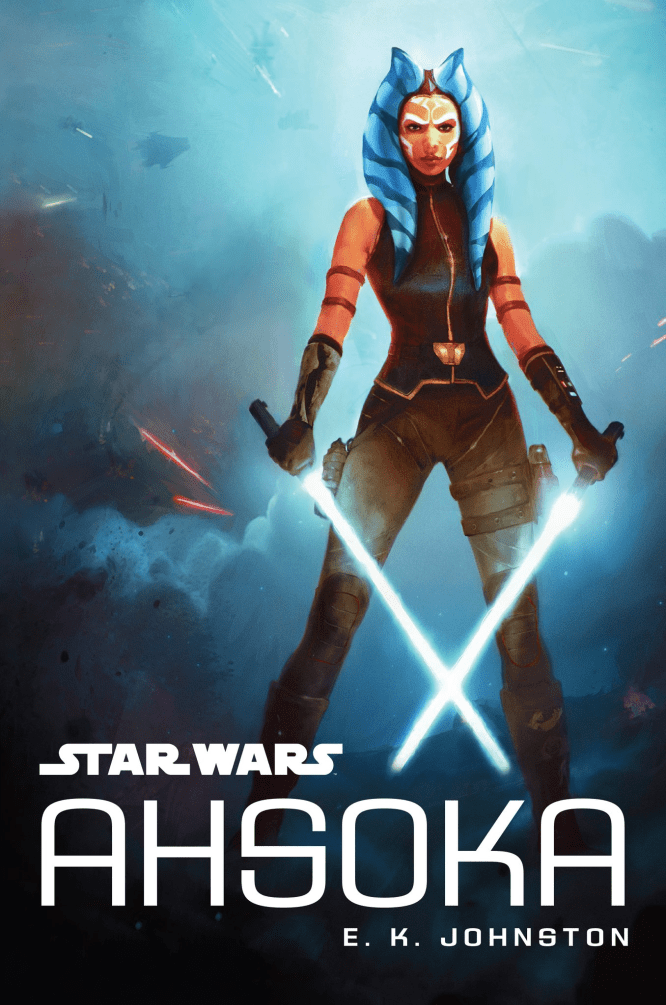
Ahsoka_novel_cover

Publishers: Disney Lucasfilm Press

                        Penguin Random House Audio

Release Date – 11 October 2016

Amazon

Reviewed as part of my Throwback Thursday series, where I republish old reviews, review books I have read before or review older books I have only just had a chance to read.

The apprentice lives.  One of the best Star Wars characters that originated outside of the live-action movies returns in this action-packed, character-driven novel, which follows Ahsoka Tano’s adventures after the destruction of the Jedi Order.

Those people familiar with my previous reviews may have noticed that I am a bit of a Star Wars fan, having reviewed several pieces from the current Disney Star Wars extended universe in the last few months.  Therefore, it should not come as a surprise to anyone that I have watched and enjoyed the Star Wars: The Clone Wars and Star Wars Rebels animated television shows.  Both of these shows are very well done, can be appreciated by a varied audience and contain a large amount of the classic Star Wars heart and respect for the franchise’s lore and history that was missing in some of the more recent movies.  While many memorable characters were introduced in these shows, perhaps the most significant to the lore is the titular character of this book, Ahsoka Tano, Anakin Skywalker’s apprentice.

For those of you failing to remember Anakin having an apprentice in the live-action movies, you are not going crazy; Ahsoka has yet to appear in any live action movie.  She was instead introduced in The Clone Wars animated movie and served as one of the main characters of The Clone Wars television series, all of which take place in the years between Attack of the Clones and Revenge of the Sith.  Despite being one of the most popular characters on the show, Ahsoka would leave the Jedi Order at the end of the fifth season of The Clone Wars and only appear in the sixth season as part of a short vision sequence.  As a result, fans of the both the show and the character were frustrated and confused about what Ahsoka’s fate was and whether she had survived the events of the third prequel movie.  Fans didn’t get their answer until a couple of years later, at the end of the first season of Star Wars Rebels, where it was revealed that Ahsoka had survived the Jedi purge, becoming a member of the early Rebel Alliance.  Ahsoka, now wielding a pair of white lightsabers, became a key character in the second season of Star Wars Rebels, in which she was still an incredibly cool and powerful warrior.  She was utilised to perfection in this new show and had what is easily the best scene in the entire run of Star Wars Rebels: her long-awaited confrontation with Darth Vader.  The sheer emotion and intensity as Ahsoka finally came face-to-face with her old master and discovered that he was responsible for the fall of the Jedi was just amazing and is one of my favourite moments from all of television.

Following her appearance in Star Wars Rebels, Disney commissioned a young adult Ahsoka book, which was announced on 31 March 2016, one day after the Star Wars Rebels season 2 finale.  This book was released in late 2016 and was written by young adult author and Star Wars fan E. K. Johnston.  Ahsoka was Johnston’s first foray into Star Wars fiction, although she is currently working on Queen’s Shadow, a young adult novel focused on a post The Phantom Menace Padme Amidala, set to be released next year.  I have no doubt that a review for Queen’s Shadow will appear on this website in due time.  Now, with the recent announcement of a seventh season of The Clone Wars and the reveal that Ahsoka will be appearing in this new season, I decided to check out this book to see if it did the character any justice.  I chose to enjoy this as an audiobook, rather than read a physical copy.

During the Clone War, Ahsoka Tano was a fierce warrior and a commander of the Republic’s clone troopers.  However, after the devastation of Emperor Palpatine’s Order 66, which saw the clones turn on the Jedi, everything changed.  Fighting on Mandalore, far away from her master, Anakin Skywalker, Ahsoka is unaware of his fall to the dark side of the Force, and only just manages to escape the purge of the Jedi Order.

Now, one year after the fall of the Republic and the rise of the new Galactic Empire, the former Padawan is in hiding on the outskirts of the galaxy, trying to avoid any Imperial attention.  Living under an assumed name and with her trusty dual lightsabres gone, Ahsoka scrapes a living as a mechanic, intentionally distancing herself from the Force in order to hide her Jedi abilities.

Ahsoka journeys to a remote farming settlement on the Outer Rim moon of Raada.  Settling into her new life and making connections with its inhabitants, Ahsoka believes that she has finally found her sanctuary.  But her hopes of a peaceful life in her new home are quickly dashed when the Empire arrives, imposing their totalitarian rule on the people of Raada.  The agricultural potential of the moon is vital to the future of the Empire, and the workers are being forced to farm a new and mysterious plant.  Determined to help her new friends and wanting to make a difference, Ahsoka uses her wartime experience to help form a resistance in order to undermine Imperial control.

But when she is forced to reveal her full powers in order to save her friends, she once again finds herself on the run.  However, this time her actions have not gone unnoticed.  Her old ally, Senator Bail Organa wants her to join his fledgling rebellion, while the sinister Inquisitor, the Sixth Brother, arrives on Raada with plans to capture her, using Ahsoka’s friends as bait.

Because I am a fan of the titular character, I did go into Ahsoka with some rather high expectations.  Luckily I quite enjoyed Ahsoka, powering through this book quickly while appreciating how Ahsoka’s new adventure fit into the existing Star Wars chronology.  This story is very good, with an excellent blend of character development, Star Wars lore and some scintillating action and adventure.  The book contains a well-paced narrative that not only features Ahsoka’s personal story, but also examines the viewpoint of several side characters, in order to move the plot along, while also showing the impacts of Ahsoka’s actions from a different viewpoint.

This book is mainly focused on the adventures of Ahsoka, and fans of the animated show will appreciate seeing how she not only managed to survived the purge of the Jedi, but how she became the hardened rebel agent we encountered in Star Wars Rebels.  I feel that anyone who reads this book will appreciate the considerable amount of character development and insight that occurs with the titular character.  At the start of the book, Ahsoka is afraid, hiding who and what she is from the world while also denying herself access to the Force.  She is filled with regrets, concerns for her missing Jedi family and guilt not just about surviving but also about leaving the Jedi Order before its fall.  Throughout the book, her adventures, the new friendships she develops, the people she helps and the role she plays on Raada all help her to find a new purpose, as well as re-establishing her connection with the Force.

There are a number of great scenes featuring or concerning Ahsoka in this book.  These include her battle with the Sixth Brother, the forging of her new white lightsabres and the epic scene where she unleashes her Force abilities for the first time in a year.  It was also intriguing to see her advising the farmers in guerrilla tactics and helping them sabotage the Imperial occupation.  Fans of Ahsoka will appreciate the similarities this has to one of the character’s most significant arcs from The Clone Wars that featured her training a guerrilla army to combat a Separatist invasion, including a young Saw Gerrera (Forest Whitaker’s character in Rogue One).  I also enjoyed Johnston’s focus on the connection between Ahsoka and the female character Kaedan Larte.  It was great seeing this character help get Ahsoka out of her shell, and the subtle romantic feelings between the two of them was an interesting character direction for Ahsoka.  Overall, I thought Ahsoka contained an incredible take on its titular character, as Johnston not only provides the reader with a much clearer picture of Ahsoka’s fate following The Clone Wars, but also provides a powerful look at her thoughts and feelings following the destruction of the Jedi.

In addition to exploring the fates of one of their favourite characters, fans of the franchise are also treated to another intriguing look at events in the Star Wars universe not covered in the movies or television shows.  Ahsoka is set one year after the events of Revenge of the Sith, and shows the early days of Imperial control in the galaxy.  There is a palpable and well-utilised feeling of dread throughout the book as the various point-of-view characters encounter the steady increases in Imperial control as their military expands its influence.  It is fascinating to see the early Imperial military machine in action, especially when it comes to controlling and pacifying smaller planets and moons.  One of the most interesting aspects of this is the type of troops being utilised.  By this point in the Star Wars’ chronology, the Empire has started to phase out their clone troopers, replacing them with the human stormtroopers that appear in the original trilogy.  During her encounters with them, Ahsoka notes that these stormtroopers are still quite green and are nowhere near the clones’ level of competency when it comes to battle, controlling territory or dealing with Jedi.  This changeover in troop type for the Empire has not really been covered in too much detail before and is quite fascinating to see.

The exploration of the Empire’s methods of hunting down the remaining Jedi is also intriguing, as one of Vader’s Inquisitors serves as the book’s main antagonist.  The Sixth Brother is shown not only hunting fully trained Jedi like Ahsoka but also tracking down Force-sensitive children for his masters.  The extent of the Inquisitor’s power and influence is explored in some detail here, and I enjoyed seeing Ahsoka’s impression of these Inquisitors’ skills and actions, especially as the Inquisitors were also trained by Darth Vader.  Readers will also note the obligatory hints at the creation of the Death Star throughout the plot of the book, which is an important part of the overall Star Wars chronology.

These early days of the Imperial military is not the only thing covered in the book, as Johnston also explores the opening actions that would lead to the formation of the Rebel Alliance.  Johnston uses minor Star Wars character Bail Organa to great effect here, showing the work he beings immediately after his heroics in Revenge of the Sith to oppose the Emperor.  Ahsoka also features several cameos from other characters in the Star Wars cannon, and readers can look forward to seeing fan favourite characters Darth Maul, Obi-Wan Kenobi, R2D2, a young Princess Leia and the Grand Inquisitor.  This is a compelling and insightful addition to the Star Wars extended universe, and readers will be amazed by this new viewpoint into one of the franchise’s most volatile periods.

As I mentioned above, I chose to listen to the audiobook version of Ahsoka rather than track down a physical copy to read.  This was mainly because the creators of the Ahsoka audiobook managed to score Ashley Eckstein as the narrator.  Eckstein is the actor who voices Ahsoka in both The Clone Wars and Star Wars Rebels, and I loved the idea of having the definitive voice of the character narrate this crucial Ahsoka story to me.  As Ahsoka is the most prominent point-of-view character, this works out incredibly well, and the reader can enjoy hearing Ahsoka tell the story of what is around her.  Eckstein also provides excellent voice work for all the other speaking characters that feature in the book, as each of these characters were given a distinctive voice that does not feel out of place.

While I really enjoyed hearing Eckstein narrate the story, another benefit of listening to Ahsoka on audiobook is the use of the iconic Star Wars music, as well as the book’s cool use of sound effects.  The creators of the Ahsoka audiobook have inserted John Williams’s iconic score from the movies into a variety of the book’s scenes.  While this is slightly distracting in one or two places where the music did not quite fit properly, it works incredibly well for most of the book.  Several of the story’s big scenes, such as the pivotal battle sequence where Ahsoka reveals her Jedi powers for the first time since she went into hiding, are underscored by this music.  With this grand and powerful music playing in the background, these scenes are given a real epic quality that you just do not get from reading a psychical copy of the book.  It also serves to make Ahsoka feel a lot more connected to the movies, as the listeners are provided with a score that is instantly recognisable as belonging to this franchise.  In addition to the spectacular musical inclusions, the audiobook also features a range of relevant sound effects that really add to the book’s atmosphere and authenticity.  These sound effects range from droid noises and the sounds of ships starting up, to background music when the characters hang out in the cantina.  None of these sound effects distracts from the story and for some of the battle scenes, the lightsabers and blasters sounds really add to the reader’s excitement and involvement in the action.  Another thing I found fun while listening to Ahsoka on audiobook was the producer’s use of some sort of voice modulator for when Eckstein narrates the voices of stormtroopers or other characters wearing helmets.  This is a nice touch and really speaks to the producer’s attention to detail.  I am unsure how effective this would have been if Darth Vader had appeared in the book, but I’m sure I would found the end result amusing one way or another.

Clocking in at just over seven hours long, this is an easy book to get through and the inclusion of the classic Star Wars music, fun sounds effects and the definitive voice of the titular character make it an excellent way to experience this fantastic story.

Ahsoka has been written with a young adult audience in mind, and is definitely an enjoyable book for younger readers who are curious about the Star Wars universe, are fans of the animated shows, or are just looking for an exciting adventure in space.  That being said, the book does not pull any punches, and features an extended torture scene and quite a few deaths, including one particularly gruesome kill by the Sixth Brother.  While some of this can be a tad heavy, I personally feel that anyone mature enough to be familiar with the Star Wars franchise is probably going to be mature enough to not be affected by this violence.  Despite being intended for a young adult audience, Ahsoka, like many of the Star Wars young adult range, is definitely a series that can be appreciated by an older audience, especially those familiar with the franchise and the titular character.

Overall, I was very happy that I checked out Ahsoka, as it not only provided greater insight into the history of one of my favourite Star War’s characters but also painted a detailed and intriguing picture about the early days of the Empire.  Featuring a surprisingly deep and emotional story, this is a fantastic addition to the Star Wars extended universe that will appeal to fans of the amazing animated show, while also offering character based adventure to the more casual reader.  Definitely best to check out in the audiobook format, readers will love how this morphs this impressive Star Wars story into a memorable experience that becomes very difficult to turn off.

My Rating:

Four stars

Amazon

If you enjoy Star Wars fiction, check out some of my previous reviews:

https://unseenlibrary.com/2018/08/12/star-wars-thrawn-alliances-by-timothy-zahn/

https://unseenlibrary.com/2018/05/30/star-wars-last-shot-by-daniel-jose-older/

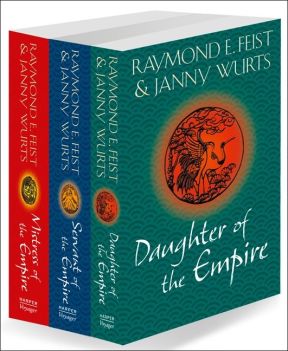
Throwback Thursday: The Empire Trilogy by Raymond E. Feist and Janny Wurts

The Empire Trilogy Cover.jpg

Publishers: Doubleday, HarperCollins

Publication Dates:

Daughter of the Empire – 1987    Amazon

Servant of the Empire – 1990       Amazon

Mistress of the Empire – 1992      Amazon

Collected Volume –                        Amazon

Reviewed as part of my Throwback Thursday series, where I republish old reviews, review books I have read before or review older books I have only just had a chance to read.

If you are a fan of Raymond E. Feist’s books, check out my review of his latest work, King of Asheshttps://unseenlibrary.com/2018/05/30/king-of-ashes-by-raymond-e-feist/

Set in the same universe as fantasy author Raymond E. Feist’s legendary Riftwar Cycle is The Empire Trilogy, which serves as a fantastic companion series to his main body of work.  This trilogy, made up of Daughter of the Empire, Servant of the Empire and Mistress of the Empire was written in collaboration with fellow fantasy author Janny Wurst and represents an intriguing piece of literature that shines not only as a side series to Feist’s first two books but also as a substantial and powerful standalone series.

I first came across this series during my school days, when I had to read Daughter of the Empire for a fantasy literature course (great book, terrible teacher).  I was already very familiar with Feist’s massive fantasy universe, having read all the other books available in the series at that point, though in a somewhat eclectic order.  I had not previously attempted to read The Empire Trilogy before this point, but I eagerly dived into Daughter of the Empire when I got my copy from the school library.  I was immediately entranced by the story and read it several times in that semester, especially during the more boring classes.  Upon completing the first book, I also sought out the second and third books in the series in order to see how the fantastic storylines continued.  In recent years, I was lucky enough to find audiobook copies of the entire trilogy, and have since re-listened to it several times.  These more recent perusals only confirmed my enjoyment of this series, as well as my love of Feist’s massive fantasy world.

The first book of The Empire Trilogy, Daughter of the Empire, was published in 1987, one year after the final book in The Riftwar Saga, the first trilogy in Feist’s massive Riftwar Cycle.  In many ways, Daughter of the Empire and the second book, Servant of the Empire, serve as accompaniments to Feist’s original series, as both plots are set at the same time and events that occur in Magician and Silverthorn have significant impacts within The Empire Trilogy.
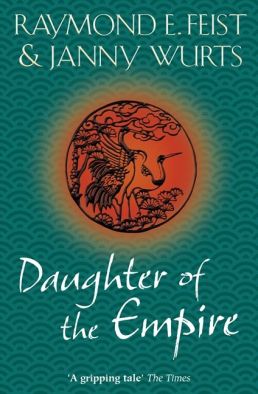
Daughter of the Empire Cover.jpg

The Empire Trilogy follows Mara of the Acoma, a young woman who becomes the Ruling Lady of her house after the sudden death of her male relatives.  Through the course of this series, Mara must become a strong ruler to maintain the honour of her family and ensure the survival of all the people pledged to her house.  Mara must use all of her cunning to overcome powerful opponents while adapting new methods and viewpoints that are uncommon in her regimented culture in order to survive.

This series is set in the world of Kelewan, a vast planet inhabited by several strange alien species, and mainly focuses on the inhabitants of the massive Empire of Tsuranuanni.  The Tsurani were introduced in Feist’s first book, Magician, where they travel through a magical rift to the world of Midkemia and clash with the inhabitants of this new planet in an event known as the Rift War.  The Tsurani are a race of humans based on a combination of real world cultures, such as the Japanese, Koreans and the Aztecs.  For example, the overriding Tsurani ideal of honour, an exceedingly important concept in the books that strongly influences their culture and way of life, is very strongly based on feudal Japanese ideals of the samurai and bushido.  Kelewan is explored within Magician through the eyes of Feist’s main protagonist, Pug.  Midkemia is the main setting for the books in the Riftwar Cycle.  While Kelewan is visited in later books of the Riftwar Cycle, most notably in Silverthorn, it becomes a more underutilised setting as Feist’s overall series continues, before eventually being destroyed in Wrath of a Mad God.

Each of the books in this trilogy contains epic and captivating stories that not only highlight life in these alien planets but also show a tale of survival and victory against all odds as the protagonist, Mara, faces and overcomes the superior forces arrayed against her.  The first book in the trilogy is Daughter of the Empire, which introduces many of the series’ main characters and storylines.  The protagonist and main point-of-view character is Mara of the Acoma, who is dramatically pulled from her peaceful life as a novice priestess into the deadly and treacherous world of Tsurani politics.  Mara’s father and brother were killed during a battle on Midkemia because of treachery from the most powerful house in the Empire, the Minwanabi.  As a result, Mara is forced to take on the role of Ruling Lady to save her house from being destroyed and her retainers taken as slaves or forced to become honourless bandits.  With the vast majority of her soldiers killed in Midkemia, Mara must find creative ways to stop the Minwanabi and other rival houses from wiping her out.

Mara proves to be an effective leader, bending Tsurani traditions to her favour, recruiting talented followers and forming new alliances.  Her machinations result in a political marriage to a brutal husband whom Mara must endure until the moment is right to remove him.  Watching the protagonist rebuild her house through any means necessary is a fantastic focus of this book which really allows the reader to get a strong idea of Tsurani politics, ideals and culture, as well as Mara’s determination as the central protagonist.  The climax of the book is set within the Minwanabi stronghold, which Mara has been forced to visit in order to attend a celebration for the Warlord (the Tsurani equivalent of a feudal Japanese Shogun).  This final part of the book is filled with significant tension and fear, as everyone is well aware that the Minwanabi will murder Mara before she leaves the party.  Mara must find a way to use the Tsurani honour system to prevent her own assassination while also striking a blow against her opponent.  Daughter of the Empire is an exceptional introduction to this fantastic series, and is a spectacular novel in its own right.

Feist and Wurst followed up their first entry in this series with another sensational novel that doubles down on the action and intrigue and contains some of the best sequences in the entire series.  Servant of the Empire directly follows on from the events of the first book and sees Mara and her house still in great peril.  Mara may have overcome the previous ruling lord of the Minwanabi, but her enemies are still the most powerful house in the Empire.  While the new lord is nowhere near as competent as his father was, he has called up the family’s most devious and destructive member, Tasaio, the man who organised the death of Mara’s father and brother.  As the Minwanabi plot against the Acoma, Mara is distracted by her acquisition of a group of Midkemian slaves, especially the charismatic Kevin of Zūn.  As Mara and Kevin fall in love, the Acoma are drawn into a series of battles on many different fronts, but Kevin’s alien way of thinking offers Mara a distinct advantage.  But events completely outside Mara’s control may have the greatest impact on the future of her house.  Both the magician Pug and the chaotic event of the Riftwar bring significant change to the Empire, and Mara and her enemies must seek new ways to turn these events to their advantage.  While Mara’s relationship with Kevin provides her with strength, it also represents her greatest weakness.
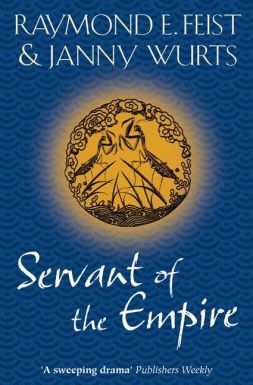
Servant of the Empire Cover.jpg

There is a lot going on within this book, including a number of large-scale battle sequences, as well several scenes focusing on the Empire’s political intrigue.  The standout scenes for me have to be either the extended sequence in the arena which features a different point of view to the chaotic magic unleased by Pug in Magician, or the sequences where the biggest houses in the Empire stage a night-time battle of assassins in the halls of the Imperial Palace.  While this might be my favourite book in the series, I am not the biggest fan of the way the romance angle between Mara and Kevin is portrayed.  Kevin, however, is a fantastic addition for this book, and it is intriguing to have a character that has a similar viewpoint as the reader to observe and comment on Tsurani honour, politics and culture.

The third book in the series, Mistress of the Empire, is set some years after Servant of the Empire and sees Mara and the Acoma once again up against a superior enemy.  After their victories in the second book, the Acoma are now the most powerful house in the Empire, but Mara’s sins have come back to haunt her.  When the Hamoi Tong assassins initiate a devastating strike at the Acoma, the Assembly of Magicians forestalls Mara’s vengeance against the house she holds responsible.  The magicians, known throughout the Empire as “Great Ones” are determined to limit the Acoma’s influence, and Mara soon finds herself in a hidden war against the most destructive force in all of Kelewan.  At the same time, her former brother-in-law, Jiro of the Anasati, seeks retribution against Mara, while her loyal Spy Master Arakasi seeks to find a way to finally destroy the Hamoi Tong.  Travelling outside the Empire, Mara uncovers dark secrets about the Assembly, and her actions will have major impacts on the future of Tsurani life.

Mistress of the Empire is an excellent conclusion to this trilogy that not only provides a compelling story with exciting new additions but also neatly wraps up storylines from the previous two books.  While this book probably has the least connections to the events of Feist’s main series, it dives deeper into the history and hidden lore of Kelewan and the Empire, including the Assembly of Magicians, a sinister and powerful group in Feist’s universe.  Many of the main characters get satisfying endings to their storylines, and we get to see several chapters told from the point of view of the Spy Master Arakasi.  Arakasi is one of the series’ best characters; however, due to the nature of his work, the readers usually do not get to see him in action, instead only hearing second-hand accounts of his missions.  Readers get to enjoy scenes that focus on Arakasi’s investigations into both the Assembly of Magicians and the Hamoi Tong, which also serve to expand on Arakasi as a character.  Readers will also enjoy the fact that, after two books in which the antagonists need to keep up the appearance that they are obeying the Tsurani code of honour in their battles with the Acoma, Mara is now forced to go up against an opponent outside the typical laws and practices of the Empire.

One of the most interesting aspects of this series is how the authors have tied the books into the events of Feist’s original trilogy.  There are actually a few pre-emptive mentions of characters and events that become an important part The Empire Trilogy in Feist’s first book, Magician.  For example, the Shinzawai, a major house, whose members become key characters in The Empire Trilogy, are first introduced in this book as friends of Pug.  During Pug’s adventures in Kelewan, there is mention of a visit to the Lady of the Acoma, an event that subsequently occurs in Servant of the Empire.  The Minwanabi betrayal of the Acoma forces is also described to the Midkemian protagonists of Magician by a former Tsurani slave in an attempt to highlight the Tsurani system of honour and politics.  The first book in The Empire Trilogy, Daughter of the Empire is actually set in the time gap between the two halves of Magician, and takes a closer look at the impact that the Riftwar has had in Kelewan.

A more direct connection to the series is established in Servant of the Empire.  As mentioned above, long-running Riftwar Cycle protagonist, Pug, makes several appearances in this book, mirroring events that occur in second half of Magician.  Events that occur in Feist’s original trilogy have severe impacts on the plans of Mara and her enemies, such as the destruction of a huge number of Tsurani lords in the final battle of Magician and the death of the new Warlord in Silverthorn.  All of these become significant plot points in Servant of the Empire, and it is absolutely fascinating to see the impacts of events in other books.
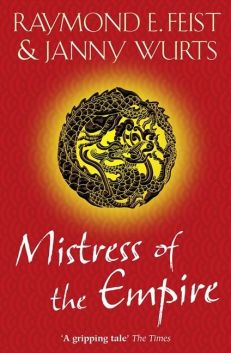
Mistress of the Empire Cover.jpg

The most spectacular crossover event comes about halfway through Servant of the Empire, which shows some of the cataclysmic events from Magician from a whole new perspective.  In the second half of Magician, the powerful magician Pug unleashes his full fury on an arena full of Tsurani, sending wave after wave of magical attacks and disasters on the arena’s audience.  The scene is very intense when told from Pug’s point of view; however, readers of the second book in The Empire Trilogy are shown the absolute terror and destruction that a member of this crowd experienced during these events.  Mara, Kevin and a few Acoma retainers are present when the magical attack occurs and must flee through the panicking mob while also avoiding enemy assassins.  The sheer chaos and dread experienced by these characters and the surrounding crowd is astounding, and turns an incredible scene from Magician into one of the most intense and memorable sequences Feist has ever written.

Throughout the series, the Mara and her house are engaged in significant conflict with other factions in the Tsuranuanni Empire.  In the first two books, their opponents are primarily the most powerful house in the Empire, the Minwanabi, while the third book sees Mara in conflict with another influential house, as well as the Assembly of Magicians and the Hamoi Tong assassins.  As a result, the main focus of these books is usually the battles for supremacy between the Acoma and their opponents.  However, what sets these stories apart from other fantasy novels is the way that these battles are fought.  While an all-out war would probably ensure a quicker conclusion to this struggle, the Acoma and their enemies are forced to fight within their nation’s rules of conflict and honour.  As a result, the participants are forced to fight in a far more shadowy conflict.  While there are battles between armies, often with one side in disguise, the participants also fight using economics, espionage and politics.  Throughout the book, the protagonist makes alliances, build up her resources and use her influence to mould the politics of the realm to her advantage.  The reliance on honour is a fascinating part of this battle, and the reader will enjoy seeing the protagonist use this concept of honour to manipulate her opponents.  The real fun comes when the various participants are no longer bound by the rules and are able to unleash much more devastating and direct attacks on each other, such as the massive battle in the imperial palace that takes place in Servant of the Empire.  The battles for survival and control of the Tsuranuanni Empire represent an absolutely captivating and exciting part of this series, especially when the Acoma spymaster Arakasi gets involved.

Readers of The Empire Trilogy are also gifted with a deeper understanding and appreciation of the people, races and culture of Kelewan.  This world and some of its history was explored in Feist’s earlier books, including Magician, where an extended magical vision showed the reader key points in the planet’s history.  However, for those readers who wish to have a truly deep understanding of life in Kelewan, and the Tsuranuanni Empire in particular, the books in this trilogy are the best things to read.  Through the protagonist’s eyes the reader gets to explore the various pieces of land that make up the Empire, as well as the creatures that inhabit these lands.  Feist and Wurst also spend significant amount of time looking at the Cho’ja, the ant-like alien creatures who were first introduced in MagicianDaughter of the Empire takes a very interesting look at the Cho’ja, especially as an early part of the book focuses on the protagonist’s attempts to win a Cho’ja colony for her land.  In order to do this, she enters a hive and negotiates with a newly hatched queen in order to provide Mara with additional warriors and access to silk spinners.  In order to gain an edge on her competition, Mara attempts to understand the cultural differences between her race and the Cho’ja, and is able to come up with some intriguing conclusions as a result.  These initial and interesting observations of this race are then massively expanded upon in Mistress of the Empire when Mara, in an attempt to find out the secrets of the Assembly of Magicians, uncovers the true history of the Cho’ja and the ancient pacts they are bound to.  Readers will be absolutely fascinated by the lore of these creatures, and there are some great scenes featuring Cho’ja economy and their skills in battle.  In addition to the Cho’ja, Feist and Wurst also explore some of the human nations that exist in Kelewan, including the desert tribes of Dustari and the Thuril.  These explorations aren’t as detailed as the authors’ look at the Cho’ja and the Tsurani, but are intriguing in their own right, as the authors create some unique cultural features for them.

While the examination of the Cho’ja and the other human races of Tsurani is an intriguing and detailed part of the books in The Empire Trilogy, it pales in comparison to the massive amount of time spent exploring Kelewan’s main civilisation, the Tsuranuanni Empire.  The vast majority of the three books is spent within the Empire, with only a small portion of Mistress of the Empire spent outside.  Feist introduced a lot of the elements of the Tsurani in Magician, but this is expanded on substantially in this series.  Readers who read through these books will be left with an incredible amount of information about Tsurani politics, religion, culture, societal makeup and various other parts of day-to-day life in the Tsuranuanni Empire.  The use and examination of Tsurani politics at many different levels is an extremely compelling part of these books, and the various meetings and manipulations that occur represent a very enjoyable part of the book.  The concept of Tsurani honour is also explored in great detail.  Honour is a massive and defining part of Tsurani culture, and the various characters risk everything to maintain it.  Living or dying without honour is considered the worst thing imaginable as it will impact on the individual’s reincarnation in the next life.  The concept of honour is particularly skewed towards the Tsurani nobles, and it often takes an outside perspective, like that of Kevin, to identify how unfair the system is.  Mara becomes particularly adept at using this honour system to her own advantage.  While absolutely devoted to maintaining her family’s honour, her interactions with Kevin lead her to try and make some substantial changes in Tsurani society.  The books in the trilogy also reveal some deeper understandings about Tsurani history and the various secret organisations such as the Assembly of Magicians have been protecting.  While physically reading these books allows the reader to absorb a lot of this lore, I would also suggest that people check out the various audiobooks that have been produced, which can help listeners to absorb more of these amazing story elements.

I do have a few minor criticisms about this series, but nothing that is really going to change my high regard for it.  There are some unnecessary scenes where Mara is scolded and nagged by her nurse, Nacoya, who quickly becomes one of the series’ more annoying characters.  I felt that some of the scenes featuring Nacoya’s constant criticism took away from Mara’s image as a skilful and intelligent leader, and just made her seem like a foolish girl.  Luckily Nacoya is easily overshadowed by several of the other supporting characters, such as Keyoke, Arakasi and Lujan.  I also found parts of the relationship between Mara and Kevin in Servant of the Empire to be very frustrating, especially as they seemed to keep cycling through the same problems and issues.  Luckily, Kevin’s ‘barbarian’ insights and ideas more than make up for this, as he produces some excellent battle and political tactics throughout the book.  Overall, these are some fairly minor criticisms from me, and I really love all three of these books.

The Empire Trilogy from Raymond E. Feist and Janny Wurst is a spectacular fantasy series set in the same incredible universe as the Riftwar Cycle.  This trilogy of books is an amazing series in its own right; however, it’s real strength comes from it being a clever tie-in to Feist’s main series of books.  Featuring some incredible story elements, exceptional action-packed scenes and a detailed setting stuffed full of lore, The Empire Trilogy is some of these two talented authors’ best works, which still stand up to this day.  The series is required reading for anyone who has read Magician and other books in the Riftwar Cycle, but it also comes highly recommended for those readers looking for that next fantasy series to fall in love with.

My Rating (Series and Each Book):

Four and a half stars