Top Ten Tuesday – My Favourite Literary Trilogies

Top Ten Tuesday is a weekly meme that currently resides at The Artsy Reader Girl and features bloggers sharing lists on various book topics.  While the official topic for this week’s Top Ten Tuesday required participants to list the 10 characters they would love an update on, I have decided to do something a little different, and instead will be listening my favourite literary trilogies.

Trilogies in literature are a long-running and deeply fun tradition that packs an epic connected tale, into three consecutive novels.  There are some truly amazing trilogies out there, from the classics, like The Lord of the Rings, to some recent trilogies that I have been deeply enjoying.  Indeed, 2021 alone has seen the end of several epic and outstanding literary trilogies.  I just finished one particularly incredible trilogy, and it got me thinking about some of the other amazing three-book series I have read.  That inspired me and I thought I would take this opportunity to try and list my 10 favourite novel trilogies of all time.  I have had the great pleasure of reading some truly awesome and exciting trilogies over the years, and I feel this is the perfect time to highlight them, especially if anyone is looking for a new trilogy/series to get addicted to.

This proved to be a fun list to pull together, especially as I had a great wealth of potential trilogies to feature on this list.  To be eligible for this list, the proposed trilogy must consist of three, inter-connected novels.  I only included series that were intended to end after three novels, rather than by happenstance, so that means that series like The Gentleman Bastards will not be featured (it technically has a fourth novel on the way).  I also excluded trilogies that I have not yet completed, even if I have already read and deeply enjoyed the first two novels.  This is because I really need to see how the third book turns out, as a bad third entry can easily spoil a trilogy that starts out with some fantastic novels.

Even with these restrictions, I ended up with a descent list of trilogies, which took me a little while to cull down and which resulted in a good honourable mentions section.  I am judging these trilogies on several factors, including how complete their story is, how well connected the novels are, and whether the component novels provide good introductions, conclusions and connections to the other books in the trilogy.  I am pretty happy with how this latest Top Ten Tuesday turned out, and I think that perfectly represents the best trilogies that I have so far finished.

Honourable Mentions:

The Wounded Kingdom trilogy by R. J. Barker

Wounded Kingdom Trilogy

A fun and awesome dark fantasy trilogy that follows an assassin as he finds himself fighting for the future of a kingdom.  Featuring a great first novel (Age of Assassins), a powerful middle entry (Blood of Assassins) and an epic ending (King of Assassins), this debut series from R. J. Barker was pretty damn awesome and really worth a read.


DiscworldMoist von Lipwig trilogy by Terry Pratchett
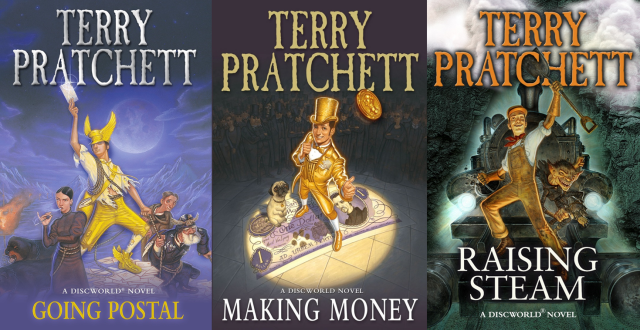
Moist von Lipwig Trilogy

Terry Pratchett’s exceptional Discworld series featured several interconnected sub-series and standalone reads, but only the Moist von Lipwig books can really be considered a trilogy.  Made up of Going Postal, Making Money and Raising Steam, these are some of Pratchett’s final books, and have a different, but still entertaining, writing stye to them.  While I love these three novels, I have decided to leave this trilogy as an honourable mention due to its potential premature ending and its complex status within the larger Discworld series.


Royal Bastards trilogy by Andrew Shvarts

Royal Bastards Cover

A fantastic and clever young adult fantasy series that followed the illegitimate children of treacherous nobles as they try to right the wrongs of their parents.  Consisting of Royal Bastards, City of Bastards and War of the Bastards, this is an impressive and captivating trilogy with some dark storylines and complex characters.


The Hunger Games trilogy by Suzanne Collins

Hunger Games Trilogy

I had to include the iconic Hunger Games novels by Suzanne Collins on this list.  Made up of The Hunger Games, Catching Fire and Mockingjay, this is a great and fast-paced dystopian series that I have read a few times now.  All three novels are a lot of fun, although the first book is probably the best.  A recent prequel novel, The Ballad of Songbirds and Snakes came out last year and is also worth a read.

Top Ten List:

The First Law trilogy by Joe Abercrombie
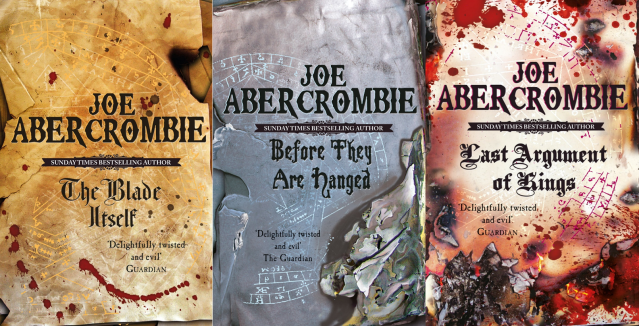
First Law Trilogy

Let us start this list off with the dark fantasy masterpiece that is Joe Abercrombie’s epic and exceptional The First Law trilogy.  Consisting of The Blade Itself, Before they are Hanged and Last Argument of Kings, this amazing trilogy follows a group of extremely complex and damaged characters as they attempt to navigate a dark world filled with betrayal, uncontrolled ambition, and all manner of monsters.  All three books are pretty incredible, with The Blade Itself providing an outstanding introduction, while Last Argument of Kings wraps everything up perfectly and leaves the reader with a troubling but memorable conclusion.  I powered through this trilogy in a very short time, and it remains one of my all-time favourite pieces of fantasy fiction.


Star Wars: Thrawn trilogy by Timothy Zahn

Thrawn Trilogy

Next, we have an amazing and complex Star Wars series by the legendary Timothy Zahn, who brings back his iconic extended universe character, Grand Admiral Thrawn.  Based in the new Disney canon, the Thrawn trilogy seeks to expand on the character’s appearances in Star Wars: Rebels and presents a complex and intriguing picture of this master tactician.  Featuring Thrawn, Alliances and Treason, this is a very well balanced and fascinating trilogy that is a must read for all Star Wars fans and is probably worth checking out before the character’s live action debut next year.  I was also tempted to include Zahn’s Thrawn Ascendancy novels (made up of Chaos Rising, Greater Good and Lesser Evil), but I am only halfway through the final book, and I really want to see how it concludes first.


The Icewind Dale trilogy by R. A. Salvatore

Icewind Dale Trilogy

Iconic fantasy author, R. A. Salvatore, has made a career out of writing trilogies, and there were several I could have included, especially his Dark Elf trilogy.  However, I think that his debut Icewind Dale series, is his most consistently impressive trilogy.  While the first novel, The Crystal Shard is a tad rough, the second and third books, Streams of Silver and The Halfling’s Gem, more than make up for it, and produce a brilliant overall story.  This series expertly introduces several of Salvatore’s key protagonists (who he is still writing about to this day) and sets up some outstanding plot points.  High fantasy at its very best, The Icewind Dale trilogy is an intense, classic trilogy that I can read again and again.


The Century trilogy by Ken Follett

Century Trilogy

Another author with some big series under his belt is talented thriller and historical fiction author Ken Follett.  My personal favourite Follett series is The Century trilogy, a massive and comprehensive historical fiction trilogy, made up of Fall of Giants, Winter of the World and Edge of Eternity.  This book takes place throughout the 20th century and follows three generations of several families as they navigate the century’s big historical events, including two world wars and the Cold War.  Some of the best historical fiction writing you are ever likely to see; this is a powerful and captivating series.


The Tide Child trilogy by R. J. Barker
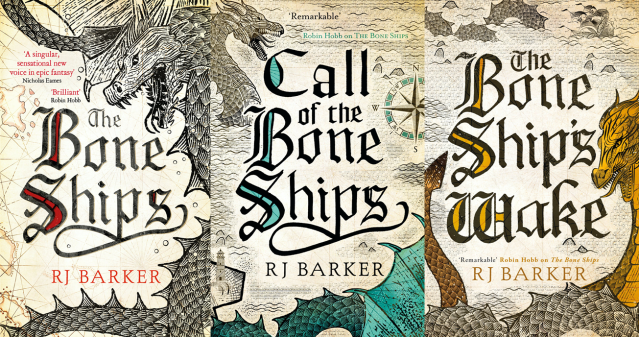
The Tide Child Trilogy

The trilogy that inspired me to write this list was the exceptional The Tide Child trilogy by rising fantasy fiction start R. J. Barker.  Barker did some incredible work here producing an intense and addictive dark fantasy series that takes place primarily on a naval vessel made from dragon bones.  With some exceptional character work, beautifully written scenes, and some truly unique fantasy features, The Tide Child series is one of the absolute best fantasy trilogies out there.  All three novels, The Bone Ships (one of the best books and audiobooks of 2019), Call of the Bone Ships, and The Bone Ship’s Wake, are exceptional and enchanting reads, which come together to form a brilliant and highly recommend trilogy.


Planetside trilogy by Michael Mammay

Planetside Cover

Another great trilogy I finished this year was Michael Mammay’s outstanding Planetside science fiction thriller trilogy.  Consisting of Planetside (one of the best books of 2018), Spaceside and Colonyside (one of the best books and audiobooks from the first half of this year), this epic trilogy follows a cynical military veteran who is dragged in to investigate a series of conspiracies, which continually forces him to commit genocide.  One of the cleverest series I have read in recent years, Mammay is an exceptional author, and I had a lot of fun getting through this trilogy.


The Age of Madness trilogy by Joe Abercrombie

Age of Madness Trilogy

Not content with only having one exceptional fantasy trilogy, Joe Abercrombie had to double down and write the epic sequel trilogy, The Age of Madness.  Set a generation after The First Law trilogy, the three Age of Madness novels, A Little Hatred, The Trouble with Peace and The Wisdom of Crowds, contains another outstanding dark fantasy tale following a whole new group of complex and troubled protagonists.  This brilliant trilogy has only just come to an end and featured three outstanding five-star reads.  These amazing novels form a deeply thrilling and powerful trilogy, and The Age of Madness books are some of the best pieces of fantasy fiction of the last three years.


The Empire trilogy by Raymond E. Feist and Janny Wurts
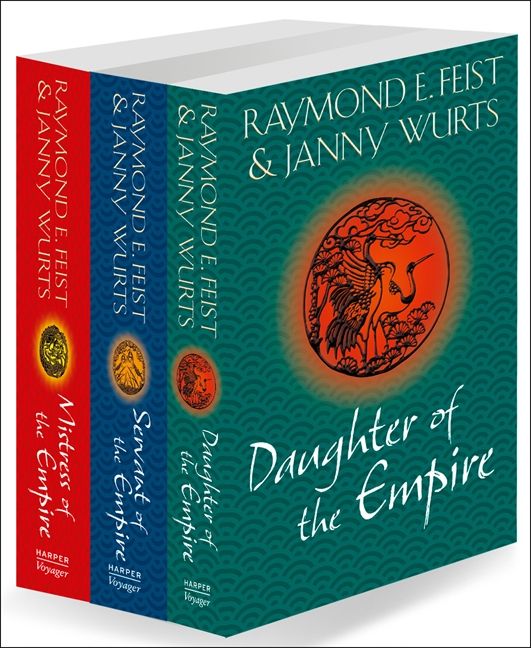
The Empire Trilogy Cover

I was spoiled for choice when it came to Raymond E. Feist and his multitude of great trilogies, from his iconic Riftwar Saga to his current The Fireman Saga (King of Ashes and Queen of Storms).  However, I think his most consistent and impressive trilogy was The Empire trilogy he cowrote with Janny Wurts.  Set at the same time as the Riftwar Saga, this trilogy explored an alien fantasy world with some major Japanese influences.  An intense and action-packed fantasy trilogy loaded with political intrigue, family feuds and a female ruler battling for control in a male-dominated world, The Empire books, Daughter of the Empire, Servant of the Empire and Mistress of the Empire, form an exceptional trilogy that is really worth reading.


Star Wars: Alphabet Squadron trilogy by Alexander Freed

Alphabet Squadron Cover

Another exceptional trilogy that finished this year was the amazing Star Wars: Alphabet Squadron series by Alexander Freed.  Made up of Alphabet Squadron, Shadow Fall and Victory’s Price, this trilogy followed a group of pilots in the immediate aftermath of Return of the Jedi, as they continue to fight the brutal war to claim the universe.  This trilogy combined a gritty and complex war story with the iconic Star Wars universe to create three impressive novels that work brilliantly as an overarching series.  All three books are really good, although Victory’s Price proved to be an exceptional conclusion that brought everything together perfectly.  A great read for Star Wars fans looking for some darker tie-in content.


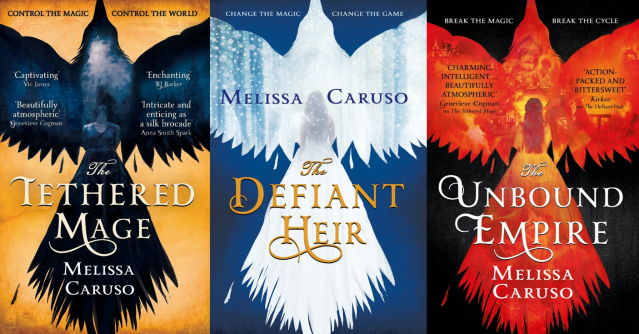
Swords and Fire trilogy by Melissa Caruso
Swords and Fire Trilogy

The final entry on this list is the debut trilogy from talented fantasy author Melissa Caruso.  Featuring The Tethered Mage, The Defiant Heir, and The Unbound Empire, the Swords and Fire trilogy tells the tale of the unlikely partnership of an ambitious noble and a reckless, ultra-powerful mage, whose fates are literally bound together.  This is an amazing and inventive fantasy trilogy that pits this duo against conspiracies, a nation of terrifying magical users, and their own substantial personal issues.  I deeply enjoyed this cool trilogy and I really need to start reading the sequel series Caruso is currently working on.


Well, that’s the end of this list.  As you can see, I have read some awesome trilogies over the years, and I think this list does a great job highlighting them all.  I will probably end up coming back to this list at some point in the future, especially as there are some outstanding trilogies, I am currently in the middle of that will easy make this list in the future.  In the meantime, let me know what your favourite trilogies are in the comments below.
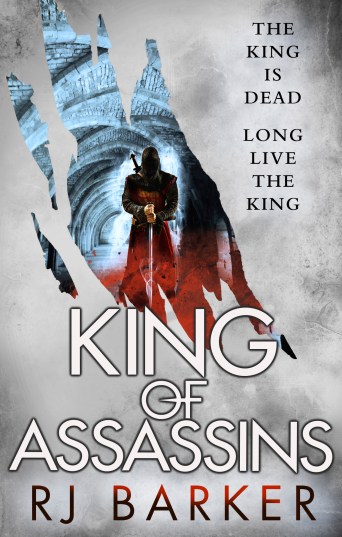
Quick Review – King of Assassins by R. J. Barker

king of assassins cover

Publisher: Hachette Audio (Audiobook – 7 August 2018)

Series: The Wounded Kingdom – Book Three

Length: 17 hours and 17 minutes

My Rating: 5 out of 5 stars

Amazon     Book Depository

I recently received a copy of R. J. Barker’s latest epic fantasy novel, Call of the Bone Ships, but before I dive into that I figured I would finally review for the third and final novel in Barker’s The Wounded Kingdom trilogy, King of Assassins.

Barker is a talented fantasy author who has been absolutely killing it over the last couple of years, creating several outstanding fantasy novels since his 2017 debut, Age of Assassins.  I was lucky enough to receive Age of Assassins, which is also the first book in The Wounded Kingdom series, when it first came out and had a fantastic time reading it.  I also really enjoyed the sequel, Blood of Assassins, which continued the excellent storylines from the first book in epic fashion.  I was quite keen to read the third book, King of Assassins, when it first came out, but I did not get a chance to read it back in 2018, which I had deep regrets about.  I did  manage to read it late last year, but I then completely failed to review it, even after I enjoyed Barker’s new novel, The Bone Ships.  So it is high time I got off my ass and pulled something together for it, especially as King of Assassins was a particularly amazing novel that gets a full five-star rating from me.

Synopsis:

The King is dead, long live the King….

Many years of peace have passed in Maniyadoc, years of relative calm for the assassin Girton Club-Foot. Even the Forgetting Plague, which ravaged the rest of the kingdoms, seemed to pass them by. But now Rufra ap Vthyr eyes the vacant High-King’s throne and will take his court to the capital, a rat’s nest of intrigue and murder, where every enemy he has ever made will gather and the endgame of 20 years of politics and murder will be played out in his bid to become the King of all Kings.

Friends become enemies, enemies become friends and the god of death, Xus the Unseen, stands closer than ever – casting his shadow over everything most dear to Girton.

One of the things that I really enjoy about Barker is the way in which he significantly improves as an author with every single book that he writes.  King of Assassins is a particularly great example of this, as the author does an impressive job expanding and enhancing his already amazing series in this novel, presenting the reader with an incredible story that makes excellent use of its dark setting and exceptional characters.  The result is an awesome and deeply captivating read that was easily my favourite book in the entire trilogy, which is saying a bit considering how good the first two entries were.

At the centre of this novel is an outstanding dark fantasy narrative which sees the assassin, Girton Club-Foot, accompany his lord, Rufra ap Vthyr, into the dangerous capital of the broken and war-ravished kingdom this series is set in.  This results in Girton and his companions stuck in the middle of a dark and crumbling citadel, surrounded by nearly every enemy and manipulator that they have encountered throughout the course of the series, as well as several new ones who pop up in this book.  As Rufra attempts to politic his way into becoming High-King, Girton navigates his way through the many dangers of the citadel, attempting to uncover the hidden motives and plans of his enemies.  Unsurprisingly, nearly every other player gathered in the citadel has plans to either kill Girton and Rufra or manipulate them for their own advantage.  As a result, King of Assassins quickly turns into an intense and exciting narrative, as the characters must unravel every plot and conspiracy in the fortress to find out everyone working against them and what their ultimate goals are.  These leads to several amazing storylines and impressive reveals throughout the course of the book, as Girton desperately attempts to save his friends while also protecting his darkest secret.  All of this comes together in an amazing conclusion which will not only satisfy fans of the series but which also delivers some clever and surprising twists that will leave the reader breathless.

There is a bit of a significant time skip between the events of this book and the preceding Blood of Assassins, which Barker works into the story very well, allowing for some subsequent changes in relationships and the simmering of old grudges.  The author also spends a substantial amount of time wrapping up some of the storylines and character arcs from the previous novels in the series, which really helped to give the novel a sense of completeness while also resulting in some big moments for the various characters.  I also really must highlight the dark, foreboding setting in which the characters find themselves in.  Not only has Barker created a great location for treachery, betrayal, and bloodshed, but he installed an extremely dark and oppressive atmosphere into it that the reader can taste as they read/listen to the book.  The sense of dread and despair that washes over the reader as they have the castle and its people described to them really enhances the story and ensures that they are eagerly waiting for the protagonists to prevail and rid the world of darkness.  All in all, this was an extremely well-written and utterly compelling narrative, and readers will quickly find themselves enthralled within it.

Among the main things I liked about King of Assassins were the impressive characters, most of whom have appeared in some of the previous novels in The Wounded Kingdom trilogy.  Barker has done an awesome job of developing each of these characters throughout the course of the series, and in this final book they all reach the conclusion of their individual or joint arcs.  While this does result in a bit of heartbreak and betrayal for some characters, one or two are quite nice, and I think those readers who have read the earlier entries in the series will be quite satisfied by where each character ends up.  The focus of the book is naturally on the point-of-view character Girton, who has gone through a lot throughout the course of the series.  Girton continues to battle his demons in this book, including his hidden and dangerous magical ability, and he must come to terms with several betrayals and old wounds from the previous books.  A major focus of the series has been the friendship between Girton and Rufra, as their lives have become inexorably bound together.  While their friendship had some ups in downs in the past, by the start of this book relationship has become a lot more strained due to differences in opinions about certain events.  Despite this the two constantly attempt to reconcile throughout the course of the novel, often unsuccessfully, but the power and complexity of their friendship is a key cornerstone of the book’s plot.  However, their joint character arc has a major twist into it near the end of the book, and the devastated feelings that result make for quite an epic and heartfelt conclusion to their narrative.  I also quite liked how the character of Aydor was featured in this book.  Aydor was one of the main antagonists of the first novel who eventually morphed into a reluctant ally in the second book.  However, in King of Assassins, after the time-skip he has become one of Girton’s closest friends and confidants.  I loved this gradual and excellent change in personality for Aydor, especially as he becomes one the nicest and warmest people in the entire novel and it was fantastic to see his relationship with Girton change throughout the series.  I ended up really loving all the amazing character arcs that concluded in King of Assassins and each of them added a strong, emotionally rich pillar to the overall narrative.

I ended up listening to King of Assassins on audiobook, and I would wholeheartedly recommend this format to anyone interested in checking out this excellent fantasy novel.  The King of Assassins audiobook is narrated by the talented Joe Jameson and has a run time of 17 hours and 17 minutes.  I had an amazing time listening to this audiobook, not only because the format helped me dive into the narrative but because of Jameson’s impressive narration.  Jameson did a fantastic job bringing the various characters to life in this book and his voice works extremely well for the first-person narration that Barker uses for his novels.  I personally found that Jameson’s narration helped to enhance the dark atmosphere that the author created with his writing and this made for an outstanding listen.  At just over 17 hours in length, this is a somewhat more substantial audiobook listen, but I found myself getting through it in an extremely short amount of time as it proved very hard to turn off.  This is an overall awesome audiobook and an excellent way to enjoy this great novel.

King of Assassins by R. J. Barker is an exceptional and captivating novel which takes the reader on an exciting and addictive ride.  This is an extremely well-written and impressive book that serves as an excellent conclusion to the fantastic The Wounded Kingdom trilogy.  This was honestly one of the better fantasy novels of 2018 and this review is a long-time coming.  King of Assassins is an outstanding book, and I am looking forward to checking out Barker’s latest novel, Call of the Bone Ships, in the next week or so.

Amazon     Book Depository

Blood of Assassins by R. J. Barker

Blood of Assassins Cover

Publisher: Orbit

Publication Date – 13 February 2018

Amazon     Book Depository

War, murder and magic return with R. J. Barker’s assassins in the sequel to his impressive debut, Age of Assassins.

It has been five years since assassins Girton Club-Foot and his master, Merela Karn, started a bloody civil war in the nation of Maniyadoc.  Since then, they have been in hiding, fighting in the borderlands as soldiers for hire to avoid the price on their heads.  However, when Merela is gravely injured, they have no choice but to return to Maniyadoc and seek shelter there.  Girton finds a far different land to the one he visited five years before.  War has turned much of the kingdom into a brutal hellscape, ruled over by war crazed marauders known as Nonmen, while giant flesh-eating pigs roam the wilds.

Amongst this chaos, three kings fight for power, their armies controlling what small tracts of inhabitable land remain.  Girton knows all three of the opposing kings, having spent time among them five years ago.  Two of them hate Girton and his master, falsely blaming them for the deaths of their relatives, the events which started the war.  However, the other of the warring kings, Rufra, owes Girton his life, and may be the only friend the young assassin has.  Since their last meeting, Rufra has turned into a noble king, weighed down by the responsibility of his office and personal grief.

Pledging his loyalty to Rufra, Girton immediately sets about trying to find a spy hidden among the king’s closest followers, navigating camp politics and the fragile alliances that hold the army together.  At the same time, Girton must also solve the murder of a fanatical religious leader whose dangerous followers demand retribution.  Rufra is the fractured nation’s best option for peace, but far too many people want him dead.  Each day the spy is active hastens Rufra’s defeat, and Girton must use every bit of his wit and skill to save his friend.

But the greatest threat to Rufra’s reign may be Girton himself.  Like all assassins, Girton uses forbidden magic to grant himself subtle advantages to aid him in his kills.  However, Girton’s magic has become far too powerful, and he can no longer control the terrible energies within him.  In a world were all magic is outlawed and feared, any evidence of Girton’s abilities would condemn him and everyone he loves to a bloody end.  The last uncontrolled sorcerer turned the kingdom of Maniyadoc into a barren wasteland, and Girton’s power may soon compel him to do the same.

This is the second book in Barker’s The Wounded Kingdom series and is the follow-up to last year’s successful and highly compelling debut, Age of AssassinsBlood of Assassins is a great addition to the series which builds up the anticipation for the upcoming King of Assassins, which is set to come out in Australia in August 2018.

The fantasy world that Barker has created is an interesting one with several unique features.  While most of the first book’s story was limited to the goings-on within one specific castle, Barker completely changes the script in this sequel by expanding the narrative to the whole realm of Maniyadoc and the fighting going on around it.  Readers of Age of Assassins will enjoy seeing how the devastation of the civil war has changed the kingdom.  The nation of Maniyadoc, which was already described as a fairly dismal place, is now haunted by a new range of monstrous creatures and humans created by neglect and the brutal fighting.  This noticeable change to the scenery of the story helps to affect the overall mood of the book and also acts as a mirror to Girton’s more depressed and hopeless mental viewpoint in the second book.

I often enjoy authors blending different genre types within fantasy books, and Blood of Assassins is a great example of this, as Barker has incorporated elements of political thrillers and murder mysteries.  The hunt for the murderers and traitors at the heart of Rufra’s camp is a well done and produces a compelling mystery that combines well with the book’s action, politics and magic.

Fans of action and battle will not be disappointed, as Barker makes full use of a range of fight scenes.  Action junkies will enjoy the numerous duels, clashes between assassins, larger pitched battles and one notable siege that sees that protagonist fighting to defend a village from a horde of crazed Nonmen while also attempting to hold his destructive magic at bay.  It is also interesting to see how Barker forgoes the enormous pitched battles that are a usual fantasy staple.  Instead this conflict is fought by small, desperate armies over limited amounts of land, which comes across as more realistic, considering the landscape.

Finally, Barker has also done a great job of showing how his main characters have developed since the last novel, particularly taking the time to illustrate how their relationships move and change throughout the book.  Girton has gone from a young and optimistic boy seeking the approval of his master to a taciturn and depressed man, actively resenting his master for the changes and problems in his life.  At the same time, Rufra has gone from a lowly squire seeking a friend and trying to avoid trouble to a man consumed by his responsibilities and personal grief.  These changes lie at the heart of the book and add emotional depth to the story.  It is also warming to see how the friendship between Girton and Rufra lightens both characters and helps heal their emotional wounds.

As a result, Blood of Assassins is a fantastic character-driven story that weaves together action and mystery in Baker’s excellent fantasy world to create a scintillating and addictive read.  This is a marvellous second outing from a bright new star in fantasy fiction.

My Rating:

Four stars

Amazon     Book Depository