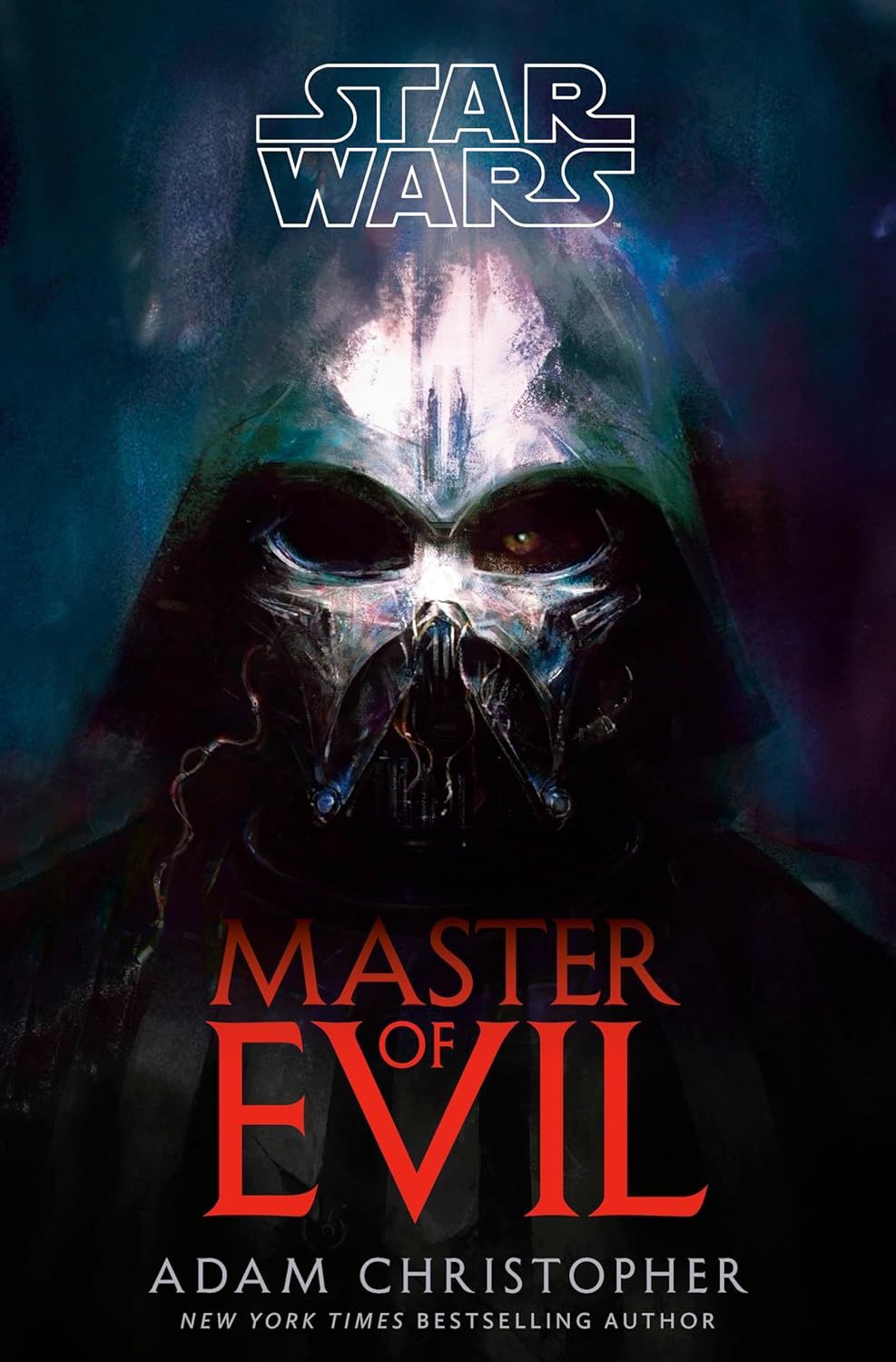
Star Wars: Master of Evil by Adam Christopher

Publisher: Penguin Random House Audio (Audiobook – 11 November 2025)

Series: Star Wars

Length: 15 hours and 27 minutes

My Rating: 4.75 out of 5 stars

Amazon

Prepare for a dive to the dark side with the captivating and impressive new Star Wars novel, Master of Evil by Adam Christopher.

2025 has been a pretty good year for Star Wars fiction, with several awesome new books introduced to the existing canon.  My favourites have so far been The Mask of Fear by Alexander Freed and Sanctuary by Lamar Giles, although I have also just finished the outstanding and deeply compelling new release, Master of Evil.  The second Star Wars book from tie-in fiction author Adam Christopher, whose Stranger Things novel, Darkness on the Edge of Town, I previously had the pleasure of reading, Master of Evil is an exciting and complex book that I have been looking forward to for a while.  A very interesting read set in one of the best periods of Star Wars lore, Master of Evil had a great plot behind it, as well as a particularly epic cover.

Plot Synopsis:

After Revenge of the Sith, a newly forged Darth Vader hunts for the secrets of life and death under the watchful eye of Emperor Palpatine.

In the wake of Emperor Palpatine’s rise to power, the true nature of his most sinister enforcer remains a mystery. Darth Vader is a dominant yet illusive figure: the shadow cast by a malignant Imperial regime, unknowable to even its top officials. But even as his humanity gives way to myth, Vader remains haunted by the promises of the dark side, seeking the ultimate power that his master has hinted at but withheld—the power to conquer death itself.

On the volcanic world of Mustafar, Vader undertakes a dark ritual, bleeding a kyber crystal to forge his lightsaber. This act unleashes a power far greater than he anticipated, giving him a glimpse into the limitless potential of the Force.

Vader is determined to follow this vision, even if it means defying his master’s orders. Yet he finds the Emperor is suspiciously supportive of his mission, even sending Vader to the Diso system to investigate rumors of a Force-wielding shaman able to raise the dead. At his side are a cadre of the Emperor’s scarlet-robed Royal Guard, led by Colonel Halland Goth—a decorated soldier with a very personal interest in Vader’s mission.

Even as the Emperor’s true motivations reveals themselves, Vader falls deeper into obsession. His journey takes him far across the galaxy, chasing rumors and phantoms. But no matter how far he travels, he cannot escape the shadows within his own soul. Haunted by the echoes of his past, Vader circles the true resolution to his quest: only once all weakness is purged can he become a master of evil.

Adam Christopher presents one of the more unique and compelling Star Wars novels of 2025, with the awesome and complex Master of Evil.  Following several highly damaged characters as they move towards a dark collision course, Master of Evil had me hooked very early on, and I had an outstanding time with this novel, especially on its audiobook format.

I really enjoyed the exciting story Christopher came up with for Master of Evil, which drags the reader in with captivating Star Wars lore and some very personal character elements.  Starting off with an interesting prologue set around Count Dooku, the story soon skips to immediately after the events of Revenge of the Sith, focusing on the early days of the Empire.  While some early scenes are shown from the perspective of Vader, much of the novel is primarily shown through the eyes of new character Colonel Halland Goth, a Royal Guard assigned to Vader.  Tasked with reporting back on Vader’s actions, Goth accompanies him on his quest to find a Force-wielding shaman and learn more about the dark side of the Force.  While there is less of a direct focus on Vader and his inner thoughts than you’d expect based on the synopsis, Christopher does an excellent job of setting up Vader as a sinister and conflicted personality in this novel, especially with a cool scene on the planet Diso, where Vader clashes with the shaman. 

Following this first part of the book, the middle of Master of Evil slows down a little, as Christopher continues to develop his new characters and their motivations, as well as set up an interesting investigation arc as Goth tries to find out who or what Vader is.  There is a less direct Vader here, but I really got stuck into this part of the book and enjoyed the author’s compelling examination of his protagonists and their personal growth, as well as the early politics of the Empire and the manipulations of the Sith.  This eventually leads to an extended final third of Master of Evil, where several different groups attempt to find an abandoned Separatist spaceship filled with various secrets.  There is an excellent mixture of storylines here, with Goth chasing Vader and his chance of survival, other interested parties trying to get the treasure of the ship, and Vader accessing dark power hidden within.  While much of Vader’s adventures are told through the eyes of others, including clone troopers assigned to him, there are several fantastic scenes here where we directly see Vader access the dark side of the force hidden in the ship.  These scenes are particularly powerful, as we are given direct access to Vader’s conflicted mind, and the resulting Force visions give some outstanding insights to his psyche.  The other big character-driven storylines of Master of Evil also go in some fascinating directions, and Christopher loads them with action, self-discovery and tragedy, all of which is quite moving and addictive.  The conclusion of Master of Evil is particularly emotionally charged, and the novel ends on some complex notes that dedicated Star Wars fans are going to really appreciate.

I felt that Adam Christopher did an excellent job pulling together a compelling, character-driven Star Wars novel that was part adventure, part intriguing lore dive, that makes full use of its setting and examination of complex figures from the films.  The excellent story moves along at a swift clip throughout the entire book, and you really get dragged into the well-balanced mix of action, intrigue and emotionally charged pieces of Star Wars lore.  While parts of the book are a little slower to build up future story elements, for the most part Master of Evil was a very compelling novel that didn’t have any real wasted space. Despite some reservations I had before I read this book that Master of Evil was going to be way too lore-heavy for casual readers, I felt that Christopher produced a Star Wars novel that was actually pretty accessible.  Anyone with a good basic knowledge of Star Wars (or who has at least watched the original and prequel trilogies) will be able to follow this story along closely and have an excellent time with it. 

While I do think that Master of Evil is accessible to new readers, Christopher does feature some deep cuts into Star Wars lore that will primarily appeal to established fans of the series and its associated tie-in books and comics.  There are a lot of references to various bits of Star Wars fiction set before and after the events of Master of Evil, and Christopher has fun mentioning other books and comics.  For example, there are multiple references to the events of Charles Soule’s Darth Vader: Dark Lord of the Sith comic, the first volume of which mostly takes place just before this novel.  Indeed, Christopher replicates one of the key sequences from this comic in one of Master of Evil’s opening scenes, which honestly made for a gripping read, especially on the audiobook format.  There are also a ton of clever references to the main films either side of this book, Revenge of the Sith and A New Hope, including some re-enactments of a couple of major scenes from another character’s perspective.  I also loved some of the vision sequences associated with Vader’s hunt for the dark side where he envisions alternate versions of established events, many of which come out in darker and more sinister ways.  This combines well with the book’s fascinating look at the early Empire era of Star Wars history, and this was a very awesome novel for those readers who love a lot of lore in their tie-in fiction.

While I had a lot of fun with the story, Christopher’s obvious strength as a writer in Master of Evil was the impressive and complex characters that he was able to utilise in the plot.  This excellent book featured an array of compelling characters throughout the plot, including a mixture of new protagonists and some iconic figures from the films.  I personally really liked the dynamics of characters that emerged, even if there were less appearances from established figures as I would have expected.  These new characters ended up providing a great outsiders perspective for the reader, and it was fascinating to see their associated views about the Empire and Darth Vader, especially when they start digging deeper into the mysteries of the Sith.

Of these characters, the most prominent is Commander Halland Goth, a Royal Guard, who finds himself enmeshed in the chaos of Vader’s quest.  Halland proved to be a compelling and complex character, whose evolution of perspective throughout Master of Evil was a powerful part of the book’s emotional depth.  A loyal soldier who wants to serve the Empire, Halland is slowly dying due to a painful disease, which forces him to make various compromises to achieve his goals.  However, the more he comes to see of Vader and the true nature of the Empire, the more Halland changes, and Christopher wrote a good redemption arc around this protagonist as the book continued.  While Halland is a great character, my favourite was his loyal protocol droid TC-99, also called Nines.  Nines, who has been heavily modified by Halland, has a very distinctive personality, which is a mixture of the established timid protocol droid mentality, and that of a close confidant to Halland ready to help him as he slowly dies.  Nines quickly steals the show with his sassy humour, caring personality and various quirks, as well as his ability to upload other droid minds and skills to help Halland achieve his goals.  Throw some other fun supporting characters including a manipulative ISB agent, a couple of clone troopers uncertain of their place in the new Empire, and two conflicted minor Force users, and this was an exceptional cast of new characters that Christopher wraps a unique narrative around.

While much of this book’s focus is on the new characters, this is still a Darth Vader novel, and he unsurprisingly turns out to be an excellent part of this book.  While there is a lot less direct focus on Vader and his perspective of events as you’d expect, he was still a consistent presence in the novel as he went about his own goals.  While I know some readers will dislike the minimalisation of Vader’s direct appearances in the plot, I personally enjoyed how Christopher set him as a mysterious and intimidating monster whose thoughts you can’t easily guess at.  It was fascinating to see all the other characters have no idea how to deal with him or his role in the Empire, and the constant threat and fear that felt as they talked to him was palpable at times.  While he was mostly shown from other characters’ viewpoints, there were a few chapters that do feature Vader’s direct perspective, which tended to be some of the book’s best sequences.  Many of these direct scenes involved Force visions or explorations of the Vader’s psyche, and it was quite powerful to see him interact with figures from the past in his mindscape.  Christopher tries to show a somewhat conflicted Vader in Master of Evil, one who has embraced his desire for power, but who still has some flashes of good in him, occasionally helping his subordinates.  Despite that, some of the later scenes show Vader making a very final choice about his place in the galaxy, which allowed for some impressively heartrending moments.  As such, I felt that Christopher did an exceptional job of showcase this iconic figure and his unique motivations in Master of Evil, and he served as a great dark centre to the story.

While I did receive a physical copy of this novel, I instead sought out an audiobook copy of Master of EvilMaster of Evil is a particularly good example of how epic a Star Wars audiobook could be, as Christopher’s amazing story is deeply enhanced by the combination of an outstanding narrator and the wonderful use of classic Star Wars sound effects and music.  I always enjoy how well the iconic audio features from the films are utilised in Star Wars audiobooks, and especially impressive in Master of Evil.  The always awesome score from John Williams was perfectly inserted into various chapters of the books, often at climatic and key moments of the plot, and the resulting boost to the emotional impact of these scenes is always quite impressive to behold.  The inclusion of various distinctive Star Wars sound effects was particularly important to the ambience of Master of Evil, with crowd noises, blaster fire, spaceship sounds and the thrum of the lightsaber helping to drag the listener into the plot.  However, the most effective sound effect utilised in Master of Evil are the respirator sounds of Darth Vader.  The iconic breathing sounds add some major impacts to the story, especially in the scenes where the various perspective protagonists are attempting to describe the intimidating nature of this awesome villain, and there is a certain level of dread that invades the audiobook whenever Vader can be heard.  The sudden appearance or lack of this sound in scenes involving Vader is also quite impactful, and I really appreciated how the effect was modulated and altered to back up some key story details.

While the impressive music and sound effects are a major factor in why Master of Evil’s audiobook is so damn good, much of the credit for its success needs to go to narrator Marc Thompson.  Thompson is easily one of the best regular Star Wars audiobook narrators (and one of my favourite overall audiobook narrators) due to his outstanding vocal range and ability to replicate many key characters from the films and television series, and he has previously impressed me with his work on Thrawn, The Rising Storm, Scoundrels and Dark Disciple, just to name a few.  His work in Master of Evil was just as exceptional as always, perfectly voicing the book’s cast, and moving the story along at an exciting and tense pace.  I felt his voice for some key Star Wars characters, such as the Emperor and Count Dooku, was particularly impressive, and he also managed an outstanding Darth Vader, with the help of some vocal enhancements.  His excellent voice work was particularly useful for several sequences where iconic quotes from the films were read out in the context of this story, giving them the emotional weight they had in the original films.  There were even some moments where Thompson needed to have alternative character say these lines (for example, Anakin and Obi-Wan switching dialogue from one of their Revenge of the Sith scenes in a vision), and the narrator’s take on both actors’ dialogue was just perfect.  Even some of the voices that Thompson used for the new members of the cast, such as Holland Goth, were powerful and effective, and I liked how he presented them.  My favourite was the voice he used for Nines, which was entertainingly similar to Alan Tudyk’s K-2SO from Rogue One.  I particularly loved how well Thompson changed Nines’s voice to reflect the different droid personalities he uploaded into himself, and it helped turn Nines into one of the more entertaining, and heartfelt, characters in the book.  This unsurprisingly outstanding performance from Marc Thompson let me effortlessly fly through Master of Evil’s 15-and-a-half-hour runtime, especially with the cool music and sound effects, and I had such a great time listing to this audiobook.  As such, the Master of Evil audiobook comes very highly recommended, and it is a guaranteed hit, especially for those who already know and love the Star Wars audiobooks.

With some outstanding action and cool characters, Master of Evil proved to be an excellent and compelling Star Wars novel, and one I had an amazing time getting through.  Adam Christopher excelled at diving into some interesting bits of Star Wars lore, and I really enjoyed his fantastic take on this compelling period of Star Wars history.  While some readers will probably be disappointed in chapter’s focusing directly on Darth Vader, Christopher still tells an impressive narrative for those who are open to it.  An overall awesome new Star Wars novel that resulted in one of the better audiobooks of 2025.
Amazon

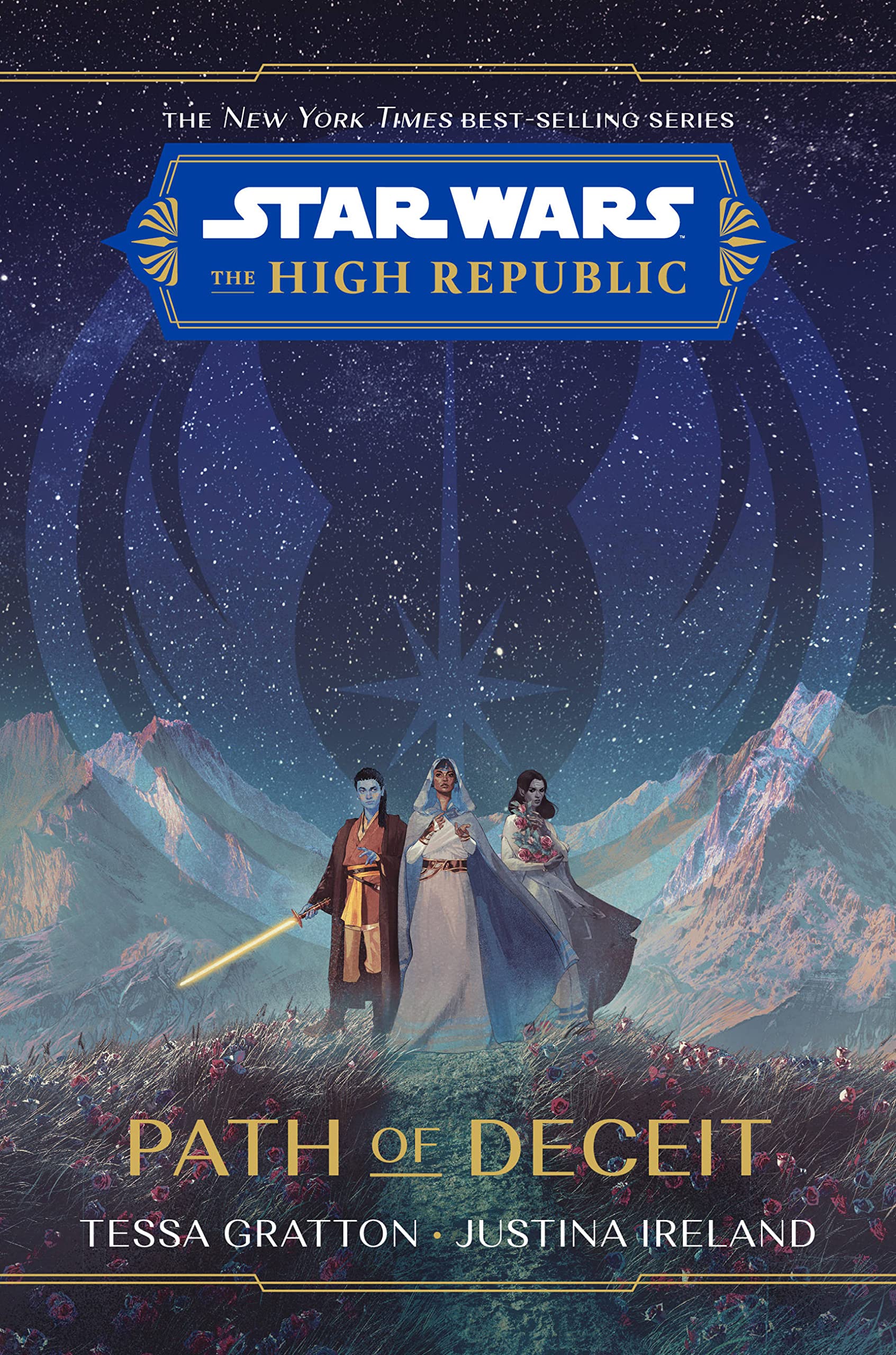
Star Wars: The High Republic: Path of Deceit by Tessa Gratton and Justina Ireland

Star Wars - Path of Deceit Cover

Publisher: Disney Lucasfilm Press (Audiobook – 4 October 2022)

Series: Star Wars: The High Republic – Phase Two

Length: 8 hours and 10 minutes

My Rating: 4.5 out of 5 stars

Amazon

The second phase of The High Republic begins with an absolute banger as the team of Tessa Gratton and Justina Ireland introduce Star Wars fans to a bold new young adult novel that ends up being epic in all the right ways with Path of Deceit.

For the last two years, Star Wars extended fiction has been firmly focused on the compelling multimedia project, The High Republic.  Set centuries before the prequel films, The High Republic takes readers to a whole new period of Star Wars history, where the Republic and the Jedi were at the absolute height of their power and influence.  However, not everything is perfect, and the Jedi characters are soon forced into conflict with dangerous forces bent on destroying them.  The first phase of The High Republic introduced readers to this new time period extremely well, while also setting up several fascinating characters, as well as the villainous Nihil, a group of space marauders who seek to destroy the order that the Republic represents.  I quickly fell in love with this cool new Star Wars subseries, and I enjoyed the massive range of different media present in this first phase, including comics, manga, children’s books, audio productions and a ton of novels.  The main story of this series is expertly told across the three main adult books, Light of the Jedi, The Rising Storm, and The Fallen Star, while other compelling, and often vital, stories take place in young adult books like Into the Dark, Out of the Shadows and Midnight Horizon, the associated comic series, as well as the audio production Tempest Runner.  This entire first phase came together extremely well, and I was really impressed with the range of stories they told, as well as the excellent new characters and elaborate new universe expansions that occurred.

After completing the first phase earlier this year, the various writers associated with The High Republic project, have just embarked on their ambitious second phase of High Republic fiction.  The second phase goes back even further into Star Wars history by being set 150 years before the events of the previous High Republic books.  The idea is that the second phase will act as a prequel to the first, showing how the Nihil were formed and the reasons behind their leader’s hatred for the Jedi.  These details will no doubt become extremely important for the third phase, while also helping the reader understand why the events of the first phase unfolded.  The first book in this second phase is Path of Deceit, written by the team of Star Wars fiction newcomer Tessa Gratton and established Star Wars writer Justina Ireland, who made a name for herself in the first phase with her young adult and middle school books.  Both authors really throw their heart into Path of Deceit, and the result in a fantastic and captivating read that presents Star Wars fans with something very epic indeed.

It is a time of exploration and discovery in the galaxy as the Republic enters an age of expansion.  Under the guidance of the Jedi, teams have been sent into the furthest corners of the Outer Rim, seeking out new planets, civilisations, and people to add to the delicate tapestry of life, diplomacy and trade that forms the basis for the Republic.  However, not all the discoveries being made are good, and many dangers lurk out in the far reaches of space.

Of these dangers, the most benign appear to be a small Force cult on the remote planet of Dalna.  Known as the Path of the Open Hand, this group believe that the Force should be free, and that no one should have the power to use and abuse it, including the Jedi.  Led by the charismatic Mother, the Path of the Open Hand is small, but features a fervent congregation of believers, including a hopeful young woman, Marda Ro.

Marda Ro always dreams of leaving Dalna to preach the message of the Path throughout the galaxy.  However, protected by her free-spirited cousin Yana Ro and held back by the Mother, Marda appears destined to remain always on Dalna.  That is until two Jedi, Jedi Knight Zallah Macri and her Padawan Kevmo Zink, arrive on Dalna, investigating the theft of several Force artifacts from surrounding systems.  Believing that the thefts are related to the Path, the two Jedi begin to investigate the group, and Marda and the young Kevmo soon form a tight bond as their connection grows.  However, not everything is as it seems on Dalna, and soon the Mother reveals a dark secret that will reverberate throughout the galaxy for centuries to come.

I have to admit that even before I started reading Path of Deceit, I kind of had some doubts about whether I was going to really enjoy it.  Not only was I surprised that this second phase of the High Republic was starting out with a young adult book, rather than the upcoming adult novel, Convergence, but I was also apprehensive about the reverse time skip between phases.  Setting this second phase 150 years before the events of the first phase was a bold choice, especially considering that The High Republic is a prequel series in itself.  However, if Path of Deceit is any indication of what is to come, then the entire second phase of The High Republic is going to be pretty damn impressive and fit into the wider High Republic extremely well.  The team of Gratton and Ireland did a remarkable job here, producing a slick, slow-burn Star Wars story that introduces many key elements of this new timeline while also giving some fantastic hints of what is to come.  I had an absolute blast getting through this book, and it is has definitely gotten me excited for the next round of High Republic fiction.

I was deeply, deeply impressed with the captivating story that the authors came up with for Path of Deceit.  Due to its position in this new High Republic phase, Gratton and Ireland had to achieve quite a lot during the narrative, not only introducing key characters and settings, but also tying them into the wider High Republic history.  However, I think they achieved this goal extremely well, and the subsequent story is very intriguing and intense.  I do need to warn people that the Path of Deceit does start of fairly slow and takes a long while for all its excellent storylines to pay off.

The book is primarily set on the planet of Dalna and follows three young central characters as they find themselves caught up in the actions of the mysterious Path of the Open Hand.  These central characters include Marda Ro, a devout member of the Path, her cousin Yana Ro, who leads the Path’s covert unit that steal Force artifacts, and Kevmo Zink, who arrives on the planet to investigate the Path and the recent thefts.  The first half of the book sees the various characters gradually get to know each other, while Marda and Kevmo grow closer, despite their different viewpoints of the Force.  As the story continues, you start to see some cracks in the serene appearance of the Path, with Yana growing more and more determined to leave as she begins to see the Mother for what she really is.  However, even with a few action scenes and a great flood sequence, the story is still moving at a gradual pace, with the authors laying down some subtle hints of what is to come.  All that changes in the last quarter of the novel, as everything comes together in a big and shocking way.  While the narrative appears to be heading in one certain direction, the authors suddenly unleash a pretty major twist that really surprised me.  This twist was extremely brilliant, not only because of how well set up it was but because its execution was very sudden and a major gamechanger.  The entire tone of the novel changes after that, with the characters taking on new roles, and you see just how well-connected Path of Deceit is to the books of Phase One.  This twist honestly makes you really appreciate the slow and careful pace of the rest of the book, and you realise just how cleverly they were setting everything up.  The entirety of Path of Deceit ends on an excellent and powerful note, and the reader is left eagerly looking forward to seeing how the rest of this second phase comes together.

The team of Gratton and Ireland set out this story in a very awesome way, and I felt that everything came together extremely well to enhance the fantastic narrative.  The split between the three main perspectives helped to produce a balanced and multifaceted narrative, and I liked seeing the distinctive alternate viewpoints of the cool events occurring.  While the pacing was initially a bit slow and there was a little less action than your typical Star Wars novel, Path of Deceit makes up for it by focusing more on the characters, setting up the new version of the universe, and featuring a great young adult story that will really appeal to the teenage audience.  The way that the characters interact and focus on their attractions is very typical of most young adult books, but I felt that it didn’t get too over-the-top.  Instead, it is just enough to help bring the younger reader in, while also still being intense and compelling enough to keep older readers still attached and entertained.  I personally deeply enjoyed how the story was presented, especially once the pace increased towards the end, and this entire novel was an absolute joy to read.

As I mentioned before, quite a lot of importance is attached to whether Path of Deceit did a good job featuring the relevant Star Wars and High Republic elements.  I say that Gratton and Ireland strongly succeeded, as they not only provided a great viewpoint of this new period of Star Wars fiction but they also provided some captivating and clever links to the first phase.  While most of the focus of Path of Deceit is primarily on one planet, so you don’t get the full galaxy view, I did like the initial glimpse of this universe.  There is a real Western frontier vibe to the entire setting, with explorers, settlers, pilgrims, and people looking for a fresh start interacting with new elements from the Outer Rim.  There are also some hints about how this version of the Republic and the Jedi are set up, and there is a very good mixture of elements that I think are going to come together very well in the future.  I also really enjoyed the mysterious and captivating Path of the Open Hand, who were introduced as an alternative Force cult who are completely opposed to the actions of the Jedi.  Their curious viewpoint of the Force, and their methods for preserving it, make for quite a fascinating group and I deeply enjoyed how they developed.  As for connections to the first High Republic phase, well let us say that Path of Deceit is a very key novel regarding this, as several key characters with connections to the future are brilliantly set up here.  So many key elements or organisations from the first phase are introduced in a completely different form here, and you will be surprised at the origins of some of the best bits from the established High Republic books.  I loved some of the impressive set up that Gratton and Ireland featured in Path of Deceit, and this young adult novel is a very key part of this phase of the High Republic, with story elements from it set to reverb through certain upcoming books all the way to the future in the third phase.

Now, one of the main questions I am sure many people are wondering is how much knowledge of the High Republic and wider Star Wars universe people need to enjoy Path of Deceit.  Naturally, as the introductory book in the second phase of an established Star Wars sub-series, people who have read the previous High Republic books are going to have a better time with Path of Deceit that readers who have not.  Not only do you have a better idea of what the earlier Star Wars period are going to look like, but you also will appreciate some of the revelations that appear in this book and have a better ability to make connections between this phase and the previous one.  As such I would strongly recommend checking out all the key previous High Republic content first (the three adult books at the very least), as you a really going to have a better time with Path of Deceit that way, especially as the big twist towards the end makes a lot more sense if you do.  However, this isn’t the absolute worst book to start the High Republic with, and maybe reading the prequel second phase first is a better way of enjoying these books.  Either way, Gratton and Ireland do a good job of making this book pretty accessible to new readers, and I think that anyone with a decent knowledge of Star Wars fiction will probably be able to enjoy and appreciate this book.

Path of Deceit contains a great group of central characters that the authors do an excellent job of introducing.  This includes three intriguing teenage protagonists who have a complex and fascinating narratives that see them engage with this new world in very different ways.  Marda Ro is the devoted adherent to the Path of the Open Hand, who believes in their mission and their leader with all her heart.  Marda has a deeply compelling and well-laid-out story arc in Path of Deceit that eventually sees her question her believes and connections to the Path once she meets Jedi Padawan Kevmo Zink.  Already feeling disconnected from the galaxy and people due to her species, which is renowned and reviled for unknown reasons, Marda was a real emotional tinderbox in this book, and her relationship with Kevmo only complicates this further.  However, the events of the book change her in a way no-one could really predict, even with the hints her name contain, and her metamorphosis from sweet character to something else is very clever and quite impactful.  I have a feeling that she is going to have one of the best character arcs in the entire second phase, and I look forward to seeing how her narrative completely unfolds.

I also like the storylines surrounding the main Jedi character, Padawan Kevmo Zink, and Marda’s cousin Yana Ro, both of whom have their own distinctive arcs that I was quite intrigued by.  Kevmo Zink is a great young Jedi character who is drawn by his own romantic urges and desire for connections as much by the Force.  Kevmo serves as a great newcomer character to Dalna and the Path of the Open Hand and provides a great alternate perspective to Marda’s strict commitment to their ways.  He also serves as an intriguing love interest to Marda, and the classic Star Wars relationship between a conflicted Jedi and a forbidden girl made for some great reading, without being too silly or over-the-top.  I had a lot of fun with Kevmo, and I liked his infectious humour and his extremely positive view of the universe.  His storyline also goes in some very surprising directions, and this ended up being a very intriguing character to follow.  Yana Ro on the other hand is a more wild and exciting addition to the cast, who acts extremely differently to her cousin Marda.  A less indoctrinated member of the Path, Yana knows that there is something rotten at their heart, and seeks a way out, mainly by stealing Force artifacts for the Mother.  Her journey is very emotionally rich, and a little bit tragic, and I had a wonderful time seeing her storyline come to fruition, especially as it puts her in a very exciting position for future entries in the series.  Yana’s realistic viewpoint of the Path, as well as her own species’ inclinations and reputation, stands in great contrast of that of Marda, and her more grounded and aggressive mindset also makes her stand out compared to Kevmo.  As such, there is a good balance of personalities in Path of Deceit amongst the point of view protagonists, and this helps to produce a fantastic and compelling read.

There are also several great side characters who add their own spice to the story.  The most prominent of these is Kevmo’s Jedi master, Zallah Macri, an extremely serious Jedi Knight who serves as Kevmo’s mentor and guide.  Zallah is a suitable cautionary figure throughout the book, trying to keep Kevmo focused on the Force and their investigation, despite his obsession with Marda.  The other side character I really want to focus on is the Mother, the Path of the Open Hand’s mysterious leader who has managed to take over the cult through to her apparent strong connection to the Force.  The Mother serves as a rather compelling antagonist throughout the book, especially as you spend most of the time wondering if she is really Force sensitive, or whether she is running a long con on her followers.  An aloof and secretive antagonist, it soon becomes very clear that the Mother has her own objectives and plans that run contrary to that of her followers, and the full extent of them proves to be very exciting and destructive.  I felt that the Mother was an excellent alternative character for Path of Deceit, especially as her plans have some major long-term impacts on the point-of-view characters, and she has some dark secrets that need to be explored further.  These, and other characters, really add to the overall strength on the novel and I deeply enjoyed the way that Gratton and Ireland introduced them and took them through a fascinating emotional ride.

As with most Star Wars novels, I chose to check out Path of Deceit’s audiobook format, which was a pleasurable and fun experience as always.  At just over eight hours, this was a relatively quick audiobook, and I managed to knock it out pretty quickly.  This format did an excellent job of presenting Path of Deceit’s compelling narrative, and I had fun having this book read out to me.  However, the real joy of a Star Wars audiobook always lies in the excellent extra production elements that have been added in.  The classic Star Wars sound effects are used very well throughout Path of Deceit’s audiobook, and hearing blasters, lightsabers and even the sounds of people in the crowds, helps to drag listeners into the story and its surrounding universe.  However, I am always more impressed with the fantastic use of the iconic Star Wars musical score that is threaded through multiple scenes in the audiobook.  Path of Deceit has a pretty cool selection of scores playing throughout it, and I liked how the music often reflected the more rural setting and the mystical elements it was exploring.  The various bits of music work extremely well at enhancing key scenes throughout the book, and there were several times when the careful application of these tunes enhanced the emotional impact of the entire book.

On top of the cool sound effects and powerful musical inclusions, much of my enjoyment of Path of Deceit’s audiobook lies in the excellent narrator who was telling the story.  Path of Deceit is narrated by actress Erin Yvette, who has done a lot of voice work recently in the video game space.  While Yvette hasn’t provided narration for too many Star Wars books yet, she did a great job here in Path of Deceit, and I loved how she read out the book.  Yvette’s voice fits the young adult tone of this Star Wars novel extremely well, and she ensures that the compelling tale is effectively shared out to the listener.  In addition, she also provides a range of excellent voices to the various characters featured throughout the book.  Each of her voices really fits the respective character, and you get a real sense of their nature, their bearing, and their emotional state as you hear Yvette narrate them.  Not only does she capture the youthful nature of characters like Kevmo Zink and Marda Ro well, but she also gets the proper Jedi character Zallah Macri, the more self-serving voice of Yana Ro, and the mystical, manipulative voice of the Mother, down perfectly.  This voice work is pretty damn impressive, and when combined with audiobook’s sound effects and outstanding Star Wars music, it helps to turn the Path of Deceit audiobook into an outstanding experience.  This was such an awesome way to enjoy this latest High Republic novel, and audiobook remains my absolute favourite way to enjoy a Star Wars tie-in book.

I am feeling a heck of a lot better about the second phase of the High Republic after powering through Path of Deceit.  The wonderful team of Tessa Gratton and Justina Ireland produced an outstanding young adult Star Wars novel that did a lot of remarkable things.  Featuring a well-crafted story that slowly but surely hooks you and some fantastic characters, Path of Deceit charts its own course while also brilliant tying into the High Republic novels that have come before.  I can’t wait to see where this phase goes following this impressive story in Path of Deceit and I am planning to read the next High Republic book as soon as I can.

Amazon

Star Wars: The Princess and the Scoundrel by Beth Revis

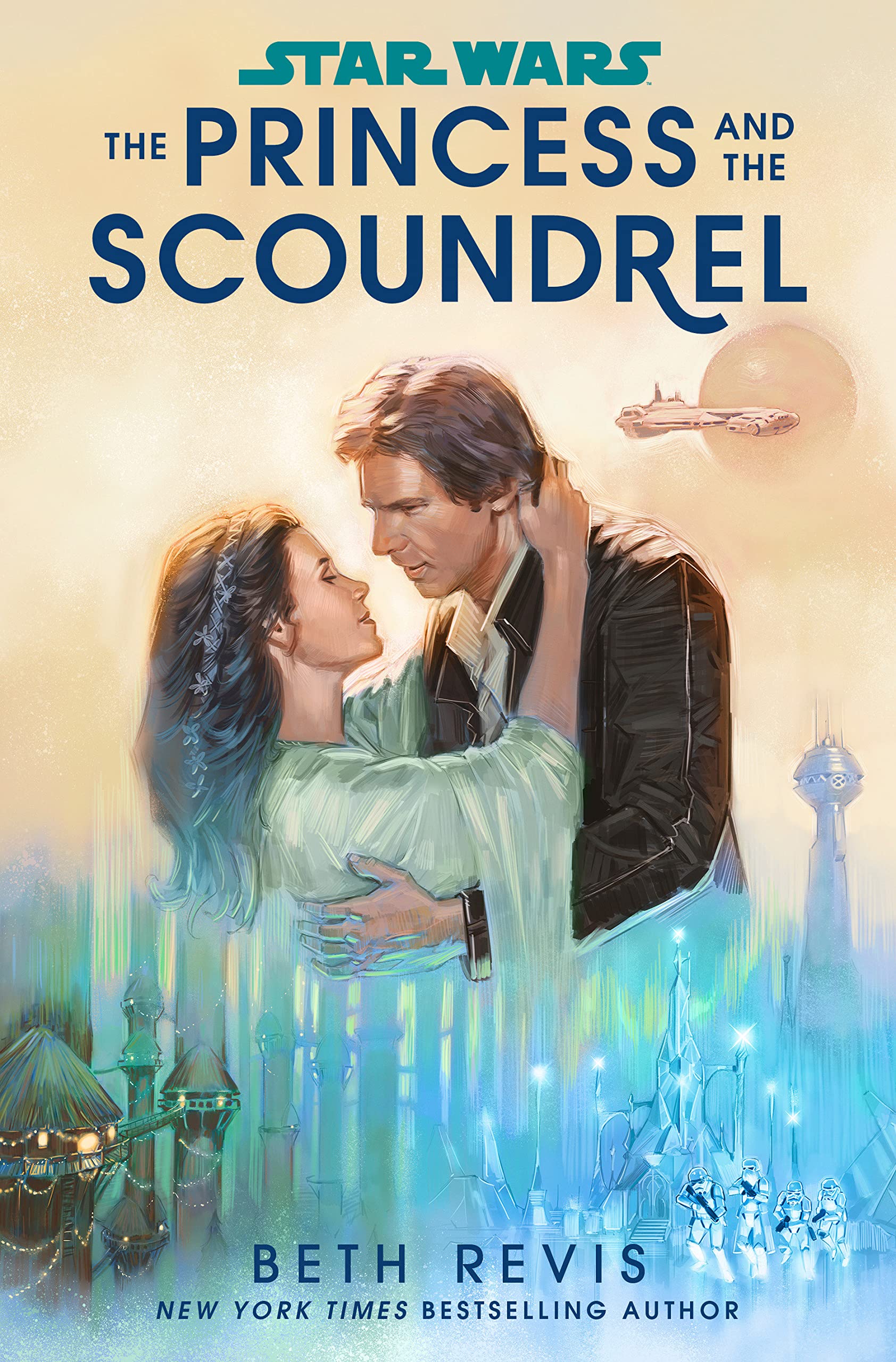
Star Wars - The Princess and the Scoundrel Cover

Publisher: Del Rey (Trade Paperback – 16 August 2022)

Series: Star Wars

Length: 348 pages

My Rating: 4 out of 5 stars

Amazon     Book Depository

Outstanding author Beth Revis presents an intriguing and enjoyable new entry in the extended Star Wars canon, with the fantastic tie-in novel, The Princess and the Scoundrel.

2022 has been a rather interesting year for Star Wars fiction.  While the focus has primarily been on the High Republic sub-series, several great authors have produced some awesome reads set around the various film trilogies (such as Star Wars: Brotherhood by Mike Chen).  However, one of the most exciting recent Star Wars tie-in novels is a character-driven read that focuses on the relationship between Han Solo and Princess Leia, The Princess and the Scoundrel, which was written by exciting author Beth Revis.  Revis, who already has some experience with the Star Wars canon, having written the 2017 novel, Rebel Rising, came up with an awesome story in The Princess and the Scoundrel that I had a wonderful time reading.  Not only does The Princess and the Scoundrel explore an interesting period of the complex and inspiring Star Wars canon, but it also contained a fantastic romantic heart that will appeal to a wider range of readers.

Goodreads Synopsis:

The Death Star is destroyed. Darth Vader is dead. The Empire is desolated. But on the forest moon of Endor, amongst the chaos of a changing galaxy, time stands still for a princess and her scoundrel.

After being frozen in carbonite, then risking everything for the Rebellion, Han is eager to stop living his life for other people. He and Leia have earned their future together, a thousand times over. And when he proposes to Leia, it’s the first time in a long time he’s had a good feeling about this. For Leia, a lifetime of fighting doesn’t truly seem over. There is work still to do, penance to pay for the dark secret she now knows runs through her veins. Her brother, Luke, is offering her that chance—one that comes with family and the promise of the Force. But when Han asks her to marry him, Leia finds her answer immediately on her lips . . . Yes.

But happily ever after doesn’t come easily. As soon as Han and Leia depart their idyllic ceremony on Endor for their honeymoon, they find themselves on the grandest and most glamorous stage of all: the Halcyon, a luxury vessel on a very public journey to the most wondrous worlds in the galaxy. Their marriage, and the peace and prosperity it represents, is a lightning rod for everyone in the galaxy—including Imperial remnants still clinging to power.

Facing their most desperate hour, the soldiers of the Empire have dispersed across the galaxy, retrenching on isolated worlds vulnerable to their influence. As the Halcyon travels from world to world, one thing becomes abundantly clear: The war is not over. But as danger draws closer, Han and Leia find that they fight their best battles not alone but as husband and wife.

I had a fantastic time getting through The Princess and the Scoundrel as Beth Revis wrote a pretty awesome and captivating Star Wars novel that covered a lot of bases.  Split between the alternating perspectives of Han and Leia, The Princess and the Scoundrel takes off right after Return of the Jedi.  While the victorious Rebellion plans their next moves, Han and Leia decide to make the most of their sudden freedom to get married after their traumatic year apart.  While both are still reeling from the events of the original trilogy, they come together in a fun wedding scene, before leaving on a glamorous trip that will be part honeymoon part propaganda show.  While initially trying to enjoy their honeymoon, both quickly fall into their old patterns, with Han chafing at the formality, while Leia continues to try and do her work as an ambassador and planner.  Arriving at an isolated ice planet, Han and Leia soon discover a destructive Imperial plot and must come together as a couple to thwart it.  This ended up being a really distinctive read, as Revis worked a more romantic plotline into the always entertaining Star Wars canon.  I loved seeing this fantastic tale of Han and Leia’s first adventure as husband and wife, and Revis ensured readers got an excellent blend of action, intrigue, and character development, as you witnessed these two amazing protagonists try to come together as a married couple.  There is a little something for everyone in this great read, and I found myself getting caught up in the action and the impressive focus on two of my favourite fictional characters.  An overall brilliant book that is really easy to enjoy and appreciate.

The Princess and the Scoundrel proved to be a very interesting addition to the current Star Wars canon.  While the romance between Han and Leia was strongly explored in the previous Legends canon, the current Disney canon has not featured it as much, and as such you see some fascinating events from their lives here for the first time.  Revis paints quite a fun picture of the sudden wedding these two have, which features entertaining interruptions from several key characters, some tricky manoeuvrings from Lando to get Han into a nice outfit, and, of course, a ton of Ewoks, while the honeymoon is as chaotic as you would expect from these two.  As such, this is a pretty key book for all fans of these two iconic characters, and I think that Revis hit an excellent tone when it came to some of these key events.  The author also fits in a lot of fantastic references and moments that a lot of Star Wars fans will appreciate, most of which are covered in a very fun way.  For example, the characters finally address that infamous kiss between Luke and Leia at the start of The Empire Strikes Back, with Han and Luke having a rather awkward conversation about it, before agreeing never to bring it up again.  Revis also makes quite good use of an interesting Han Solo villain from one of the previous canon books, and it was great to see some continuation from the previous intriguing storyline.  That, and several other amusing references, help to make this quite a key book for Star Wars fans, and I had a wonderful, nerdy time getting through it.

Aside from the direct references to the book, I was personally intrigued to see more about the period of Star Wars history that occurred in the immediate aftermath of the Death Star’s destruction in Return of the Jedi.  Despite the death of the Emperor, the war between the Empire and the Rebellion (now renamed as the New Republic), is still ongoing, and indeed some of the toughest fighting is still to come.  Several authors have covered this frenetic period in the current canon with some recent books, such as the Alphabet Squadron trilogy by Alexander Freed (made up of Alphabet Squadron, Shadow Fall and Victory’s Price).  However, I particularly enjoyed how The Princess and the Scoundrel covered this period, as it shows events literally hours after the end of the film.  Quite a bit is shown of the Rebellion’s initial strategies following the battle of Endor, as well as the Empire’s reactions to the death of the Emperor and the sudden shift in power.  While some of the wider campaigns aren’t shown, you get an interesting idea of what the military and political situation was at the time, which I deeply enjoyed.  Revis also spends time examining how members of the general public reacted to the news, and there is an interesting variation of responses.  Not only did some people straight out disbelieve that the events even occurred, with many assuming it was fake propaganda from the Rebellion, others who were associated with the Empire, or who had members of their family aboard the Death Star, acted quite hostile to the change in the established status quo.  These diverse reactions not only reflected some current real-world societal issues, but also provided a compelling insight into just how much influence the Empire had, even on the way to its downfall.  Throw in some hints and previews of the upcoming Operation Cinder, and this proved to be a very interesting addition the Star Wars canon that many established fans will really enjoy.

One of the strongest elements of The Princess and the Scoundrel is its impressive focus on the two main characters, Han Solo and Princess Leia.  While this book does contain a lot of action, intrigue and fantastic Star Wars elements, at its heart it is a romance novel between two well-established and complex characters, both of whom have experienced a lot of trauma and anguish in recent years.  Revis does a remarkable job of diving into both characters throughout the course of The Princess and the Scoundrel, and you really get a sense of their feelings, concerns and traumas following their victory.  However, there is also a great focus on their relationship, and you can really see the strong bond they have, even if they are still coming to terms with their feelings and their wildly different personalities.  I felt that Revis painted a realistic view of their relationship, which contains some difficulties early on, especially with their independent streaks.  However, the author also shows that the two characters are much stronger together, and they can work through any issues that come their way.  I think that this much better than just showing them having a fairy tale relationship, and I really appreciated the authors compelling take on one of the most iconic relationships in fiction.

Aside from their relationship, Revis also did a great job of diving into the complex emotional issues facing both central characters.  For example, Revis makes sure to explore the trauma surrounding Han after being trapped in carbonite for over a year.  Not only did he miss out on a lot of key events in his friends’ lives, but at this point of the book he has only been awake again for a few days, and some of his decisions are based on his concerns and fears about being trapped again.  Leia is also going through a lot after the discovery that Luke is her brother and, more importantly, that Darth Vader was her father.  As such, Leia spends much of the book attempting to reconcile the fact that her real father was a genocidal maniac who tortured her and is partially responsible for destroying her home planet.  This proves to be quite a deep and intriguing part of her character arc, especially since, unlike her newly discovered brother, she is unable to forgive Vader for everything he did.  There is also an interesting look at Leia’s early attempts to connect with the Force, after Luke reveals her Jedi potential.  Watching her attempts at using the Force is very fascinating, especially as she battles with her feelings about Vader while doing so and is reluctant to even try to use the abilities that he could do.  All these unique character examinations, and more, really help to showcase just how complex and traumatised Han and Leia were at this period, and how much their relationship helped them get past it.

Star Wars: The Princess and the Scoundrel by Beth Revis is an amazing read that provides Star Wars fans with something a little different to the typical tie-in novel.  Featuring a continuation of one of film’s most iconic romances, The Princess and the Scoundrels is at times touching and romantic, while also exploring the grim realities of the war-torn galaxy, all topped off with some classic Star Wars action and humour.  With an outstanding focus and understanding of its two main characters, The Princess and the Scoundrel was a fantastic novel that is well worth checking out.

Amazon     Book Depository

Throwback Thursday: Star Wars: Kenobi by John Jackson Miller

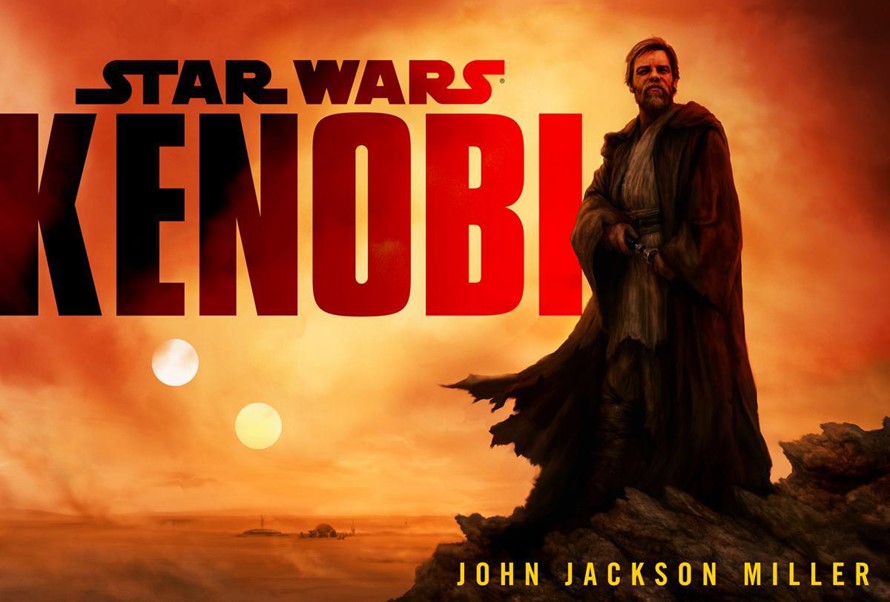
Star Wars - Kenobi Cover

Publisher: Random House Audio (Audiobook – 27 August 2013)

Series: Star Wars Legends

Length: 13 hours and 36 minutes

My Rating: 4.5 out of 5 stars

Amazon

Welcome back to my Throwback Thursday series, where I republish old reviews, review books I have read before or review older books I have only just had a chance to read.  For this week’s Throwback Thursday I take another look awesome book from the Star Wars Legends range, Kenobi by John Jackson Miller.

As I mentioned last week, I have been going out of my way to read some of the older Star Wars Legends tie-in novels, especially after all the fun I had recently reading and reviewing Darth Plagueis.  Despite no longer being considered canon since the Disney buyout, the Star Wars Legends range contains some cracking reads, including the awesome horror read Death Troopers, the brutal prison novel Maul: Lockdown, and the fun heist novel Scoundrels.  I have been meaning to check out some other great Legends novel for a while, but the one that I have been particularly excited to read is the 2013 novel, Kenobi.

Kenobi, which was one of the last novels released as part of the Legends line, is an intriguing read that follows Obi-Wan Kenobi in the aftermath of Revenge of the Sith and follows his early adventures on Tatooine.  Not only does this book have an intriguing plot, but the upcoming release of the new Obi-Wan Kenobi television series has got me more curious about this novel and I really wanted to see what differences occur between it and the show.  I was also drawn to fact that Kenobi was written by the supremely talented tie-in author John Jackson Miller.  Miller is a great author, who has written not only some intriguing Star Wars books but also some fantastic Star Trek novels, including Die Standing, which was particularly awesome.  As such, I was pretty sure I was in for an outstanding time reading Kenobi, and I definitely wasn’t disappointed.

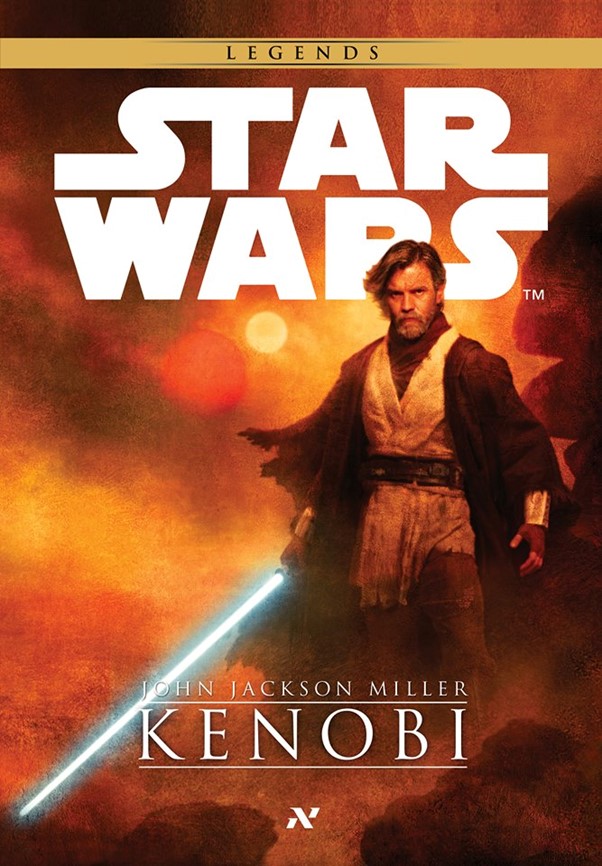
Star Wars - Kenobi Cover 2

These are dark days for the galaxy.  The Republic and the Jedi have fallen, and the Empire, along with its Sith masters, has risen in its place.  All hope looks lost, except for an orphaned baby boy, now living on Tatooine, and watched over by a solitary protector, former Jedi Master Obi-Wan Kenobi.  After failing to save his fallen apprentice, Obi-Wan has retreated to the wilds of Tatooine, determined to hone his abilities, protect his charge, and wait for the day that hope is ready to return to the galaxy.  Sticking to the outskirts of the planet, Obi-Wan has taken on a new persona of Ben, a mysterious bearded and robed stranger, living alone in the desert and hiding from his past.  However, despite all his attempts to blend in, Ben is still a Jedi, and trouble follows him wherever he goes.

A deadly conflict is brewing in the deserts of Tatooine as enterprising moisture farmers clash with desperate Tusken Raiders.  The settlers are terrified of a new and ruthless Tusken war chief who has leading raids against their farmsteads, resulting in series of brutal retaliatory attacks.  When the fight seeks to engulf some of Ben’s new friends, he is again dragged into a war he never asked for.  Discovering a grave injustice as innocents are killed for a matter of greed, Ben will once again call upon the powers of the Force to ensure justice is done.  But can he achieve his goals without revealing to the entire planet that he is a Jedi, or will his greatest secret be uncovered along with the galaxy’s last hope?

Wow, this was a pretty impressive and captivating Star Wars novel from Miller that does a wonderful job showing a unique period in an iconic character’s life.  Featuring a brilliant and surprising story, set in the iconic backdrop of Tatooine, Kenobi is an excellent read that I had an amazing time getting through.

I must admit that I was a little surprised with how this story turned out.  With a name like Kenobi, you would assume that the narrative would be primarily told by Obi-Wan as he tried to settle in and survive on Tatooine.  However, Obi-Wan isn’t even a point-of-view character in this book, instead the story revolves more around some of the local people of Tatooine as they encounter Obi-Wan (or Ben, as he is known to them).  While on paper this might sound weird, it actually works really well and Miller tells a taught, powerful and compelling narrative that perfectly utilises its titular character as a mysterious and somewhat unknown figure.  Focusing on a growing battle between Tatooine settlers and the Tusken Raiders, the story shows the impact of the arriving Ben on these long-standing communities.  Miller does a great job of introducing several excellent and impressive new characters who become connected to this early version of Ben Kenobi.  Their story soon devolves into a fast-paced, character-driven adventure as Ben finds himself caught between the opposing sides.  The growing war between them takes some interesting turns, including monsters, gangsters and hidden Jedi, and introduces a fantastic villain with some clever motivations.  Miller does a great job of working the desolate setting of Tatooine and the excellent characters into this story, and you soon become attached to both as they enhance the overall the story.  Everything comes together into a captivating and moving conclusion that is exciting, emotional, and a little dark in places, bringing everything together in a satisfying way.  This intriguing story proves to be exceeding addictive and I really love the distinctive tale that Miller came up with.

This proved to be a particularly good entry in the Star Wars Legends canon, and Miller does an outstanding job of tying this story into the wider universe.  Set right after the final scene of Revenge of the Sith, you get some intriguing views of the new galaxy under the Empire, as well as Kenobi’s early attempts to settle into obscurity on Tatooine (including the answer to the question: why did he keep the last name Kenobi? The answer may surprise you).  Thanks to Miller’s excellent writing and the close relationship to the third prequel film, Kenobi is an easy novel to get into for anyone who has seen the films, and most readers will really appreciate the cool story it contains.  There are multiple references to all three prequel films and A New Hope in this book, and I know a lot of people will appreciate seeing how several of these events impacted the wider Tatooine community in surprisingly ways.  Miller also makes sure to provide a ton of compelling references to some more obscure Star Wars Legends elements, including multiple characters and events from certain comics, such as Outlander arc of Star Wars: Republic and the Star Wars Legacy series.  Some references are pretty ingrained in certain part of the Tusken Raider character’s backstories and motivations, although readers can probably get away without knowing too much about them as Miller does summarise the most relevant details.  As such, there is a lot here for the hard-core Star Wars and Legends fans to enjoy with this book, and most readers will enjoy seeing how it ties into the former canon.

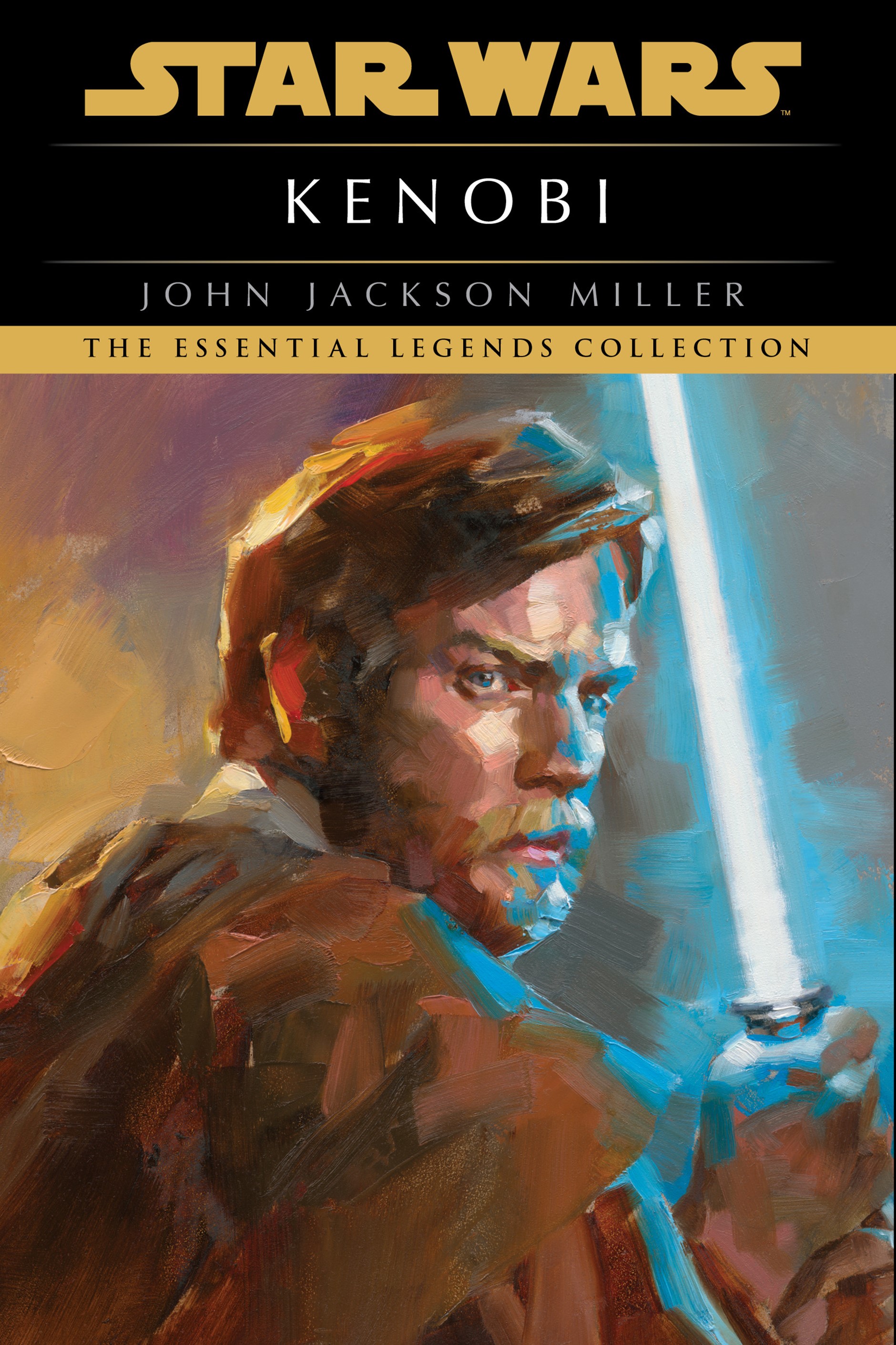
Star Wars - Kenobi Cover 3

I have to say that I was quite impressed with how Miller utilises the barren and desolate planet of Tatooine as a setting in Kenobi.  This book serves as a particularly good guide to Tatooine in the Legends canon, and you are soon immersed in the various cultures and landscapes of this deadly planet.  Not only are there multiple breathtaking and powerful depictions of the unforgiving desert landscape that the characters are forced to survive on but there are some fantastic looks at some of the creatures, monsters and threats that exist in the desert, most of which are encountered by the protagonists at some point.  The readers are also treated to an intensive look at some of the main groups of people living on Tatooine, particularly the moisture farmers and the Tusken Raiders.  I loved the depictions of these two different groups, with Miller amping up the resemblance to old West settlers and Native Americans in their cultures, disbursement, and conflict (the phrase “dancing with Tuskens” was used at one point).  I learnt a surprising amount about moisture farming in this novel, which was pretty fun, and it was really interesting to see some of the outcasts and settlers who take up the hard lifestyle.  However, the best depictions involve the Tuskens, who are featured pretty heavily thanks to the use of supporting character A’Yark.  You get some fascinating looks at the tough and often unexplained Tuskens throughout Kenobi and end up coming away with some compelling looks at their culture and lifestyles, as well as some mentions about their most distinctive members in the Legends canon.  I really appreciated the way that Miller portrayed them as a desperate people, thanks to several distinctive events from the films and the comics, and this becomes a major part of their motivations for fighting the settlers and coming into contact with Obi-Wan.  You really get a deep look at this entire setting and its people throughout the course of the story and I am extremely glad Miller featured them so heavily

Unsurprisingly, considering the title of this novel, the reader gets quite an intriguing look at the character of Obi-Wan Kenobi.  This version of Obi-Wan is recently arrived on Tatooine, only just removed from delivering baby Luke to his aunt and uncle, and now trying to find his place in the new, darker universe.  I really enjoyed how Obi-Wan was portrayed in this novel, especially as Miller made the interesting choice not to use him as a point-of-view character.  Instead, you see him purely through the eyes of the rest of the cast as the mysterious and weird hermit, Ben.  This actually works really well on many levels, providing at times a distant view of the protagonist that is reminiscent of Ben’s initial introductions in A New Hope.  I really enjoyed the other character’s impressions of Ben, especially as the character is trying to hide his Jedi abilities, and the fun reactions to his apparently odd actions are quite entertaining at times.

Despite Kenobi not being a point-of-view character, you do get some quite detailed impressions of his current state of mind, and it soon becomes apparent that Obi-Wan is emotionally raw after the events of Revenge of the Sith.  The other characters are quick to notice his apparent sadness, especially through certain noticeable reactions to particular topics, such as his past or the state of the galaxy.  While these other characters may not understand their significance, the reader certainly does, and Miller does a good job of showcasing his deep pain.  This troubled emotional state is also highlighted by several interludes that feature Obi-Wan’s attempted conversations with Qui-Gon Jinn in the Force, which summarise some of the recent events from Ben’s perspective while also examining his state of mind.  As the novel continues, certain events and revelations start to push Kenobi’s buttons, especially the actions of the book’s antagonist.  This eventually leads up to a big emotional outburst from Ben as he talks to one of the other characters about his failings in his past.  Watching him beat himself up for Anakin turning to the Dark Side, as well as the fall of the Jedi and the death of all his friends, is pretty heartbreaking, and it makes for the best scene in the entire novel.  I found it fascinating to see all these emotions unfurl as the plot continue, and the use of other character’s as the primary witnesses and interpreters of this, did a surprisingly good job of exploring the character’s mental state and showcasing just how alone and damaged he truly was.

While Obi-Wan does get a substantial amount of focus throughout Kenobi, the story is primarily told through the eyes of three separate point-of-view characters who Obi-Wan interacts with in different ways.  All three characters are pretty fascinating in their own right, and Miller sets up some brilliant and clever storylines around them.  My favourite of these is probably rancher and businessman Orrin Gault, who has an impressive and captivating character arc in Kenobi.  Initially portrayed as a compassionate, generous and ambitious moisture farmer who has set up the settler militia to oppose the Tusken Raids, Orrin appears to be a decent and noble figure.  However, Orrin has a dark side brought on by hidden motivations and dealings, and it soon becomes clear that many of the issues impacting the other characters are the result of his machinations.  Miller slowly reveals the full extent of Orrin’s misdeeds throughout the course of Kenobi, and he eventually turns into quite a conniving and distinctive antagonist.  The author provides some outstanding and powerful moments for Orrin throughout the book, and there are some interesting similarities between his fall and that of Anakin Skywalker.  I deeply enjoyed the full extent of his powerful arc in Kenobi, especially as Miller comes up with a particularly dark end to his story, and his inclusion really added to overall impact and strength of this book’s narrative.

The other major human character is Kallie Calwell, a store owner who runs the local watering hole and supply shop with her children and who has a close relationship with Orrin Gault.  Kallie ends up becoming one of the leading figures of the book after she and her daughter are the first settlers in the area to encounter the mysterious Ben and are instantly enthralled by his mysterious persona.  Kallie serves as a good narrator for a large portion of the novel and ends up being the central point of view figure for most of the interactions with Ben due to her romantic interest in him.  While I must admit I wasn’t the biggest fan of Kallie’s character (she was a bit too one-note and her constant family issues got tiring), she did have some intriguing scenes, especially when she interacted with Ben.  She ended up getting the most out of him emotionally, and her connection got him to open up at times to discuss his issues.

The other major point of view character was the deeply fascinating figure of A’Yark, the leader of the Tusken Raiders who have been raiding the local settlements.  Given the title of Plug Eye by the locals due to only having one mysterious red eye, A’Yark stands as a hard and uncompromising figure, determined to save their dying tribe without losing their traditions and sense of honour.  Thanks to A’Yark’s powerfully written scenes, you get a real sense of what it is to be a Tusken Raider, and they serve as captivating figure in comparison to the other characters in the book.  A’Yark has great story arc in this novel, and the intriguing growth, as well as their ability to adapt to certain situations, made them particularly fun to watch.  They also have some interesting connections to Obi-Wan and the Jedi Order, thanks to their former brother-in-law, and this results in some compelling scenes as A’Yark knows what Kenobi is and what he can do.  All these characters, and more, add some fascinating elements to the Kenobi novel, and I really appreciated the powerful and complex story that Miller wove around them.

Star Wars - Kenobi Cover 4

I doubt anyone would be surprised that I checked out Kenobi’s audiobook format, as I have a great love of the Star Wars audiobook format.  Naturally this worked out very well for me as the Kenobi audiobook was pretty damn awesome.  With a run time of just over 13 and a half hours, this was a relatively easy audiobook to get through and I managed to power through it over the course of several days.  Like most of the Star Wars audiobooks, Kenobi featured a great selection of iconic Star Wars sound effects and music with which the producers use to produce an atmosphere and help listeners visuals all the cool things going on.  Both were really good throughout Kenobi, with the sound effects in particularly being put to great use.  I did think that the use of John William’s epic score was a little more subtle here than in other books, but it still ended up enhancing some key scenes throughout the novel and giving them some extra emotional power.

I was also very impressed by the narration of the Kenobi audiobook, especially as the producers made excellent use of one of my favourite audiobook narrators, Jonathan Davis.  Davis is a brilliant narrator who has lent his epic voice out to multiple Star Wars productions over the years, including Master & Apprentice, Lords of the Sith and the Dooku: Jedi Lost audio drama.  He does another exceptional job with Kenobi, perfectly portraying all the characters of this novel with real aplomb.  He does a pretty good job with Obi-Wan, making himself sound as much like Ewan McGregor as possible, and I loved how intense he became during some of his more dramatic scenes.  Davis also provides distinctive voices for all the new characters in the novel, which I felt did a great job portraying their relevant personalities.  I particularly loved the scratchy and coarse voices of the various Tusken Raider characters, such as A’Yark, and you got a real sense of their rage and despair they have at their current situation.  This epic voice work really added to the quality of the Kenobi audiobook, and when combined with the usual awesome Star Wars sound effects and music, ensured that this was an absolute treat to listen to.

Overall, Kenobi by John Jackson Miller is a brilliant and powerful Star Wars novel that did an outstanding job of examining this complex and pivotal figure.  Perfectly examining the early days of Obi-Wan Kenobi’s life on Tatooine, this impressive Star Wars Legends novel contains an intriguing, character driven novel that provides an interesting perspective on this hidden Jedi master which I deeply enjoyed.  Making full use of some great new characters and the desolate desert setting, this was a compelling and addictive narrative that is really hard to put down.  Highly recommended, especially in its audiobook format, Kenobi is a great entry in the Star Wars Legends range and I look forward to seeing if any elements from it are used in the upcoming Obi-Wan Kenobi television show.

Amazon

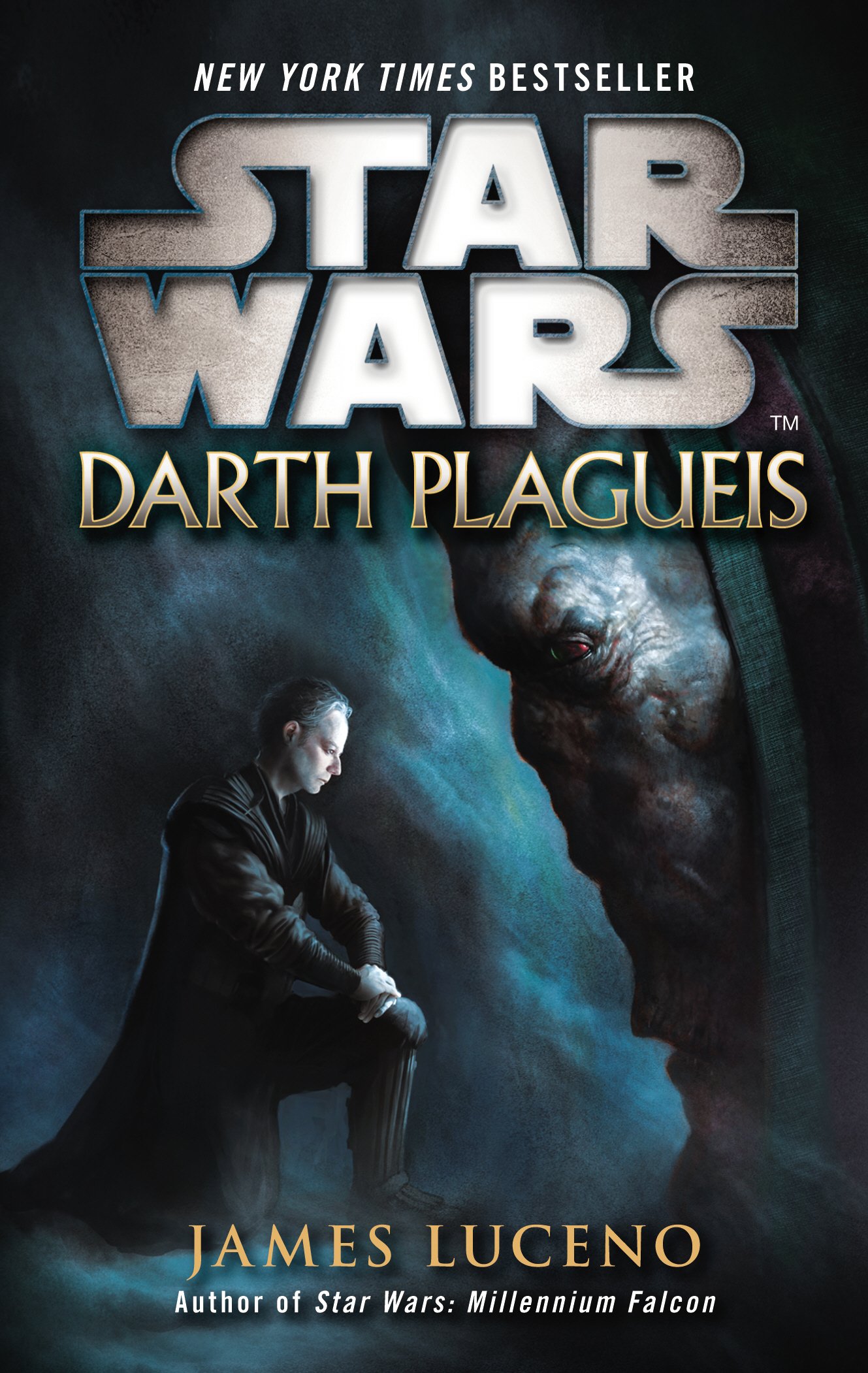
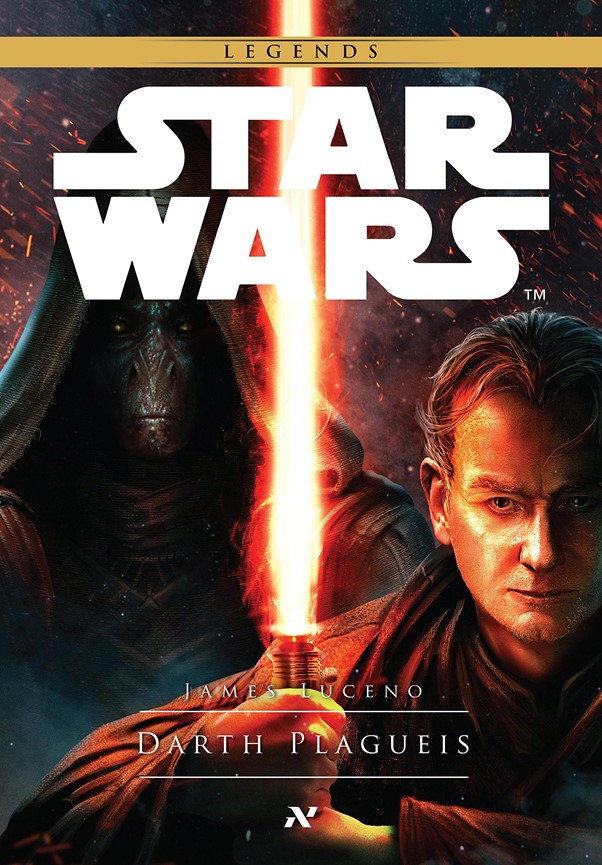
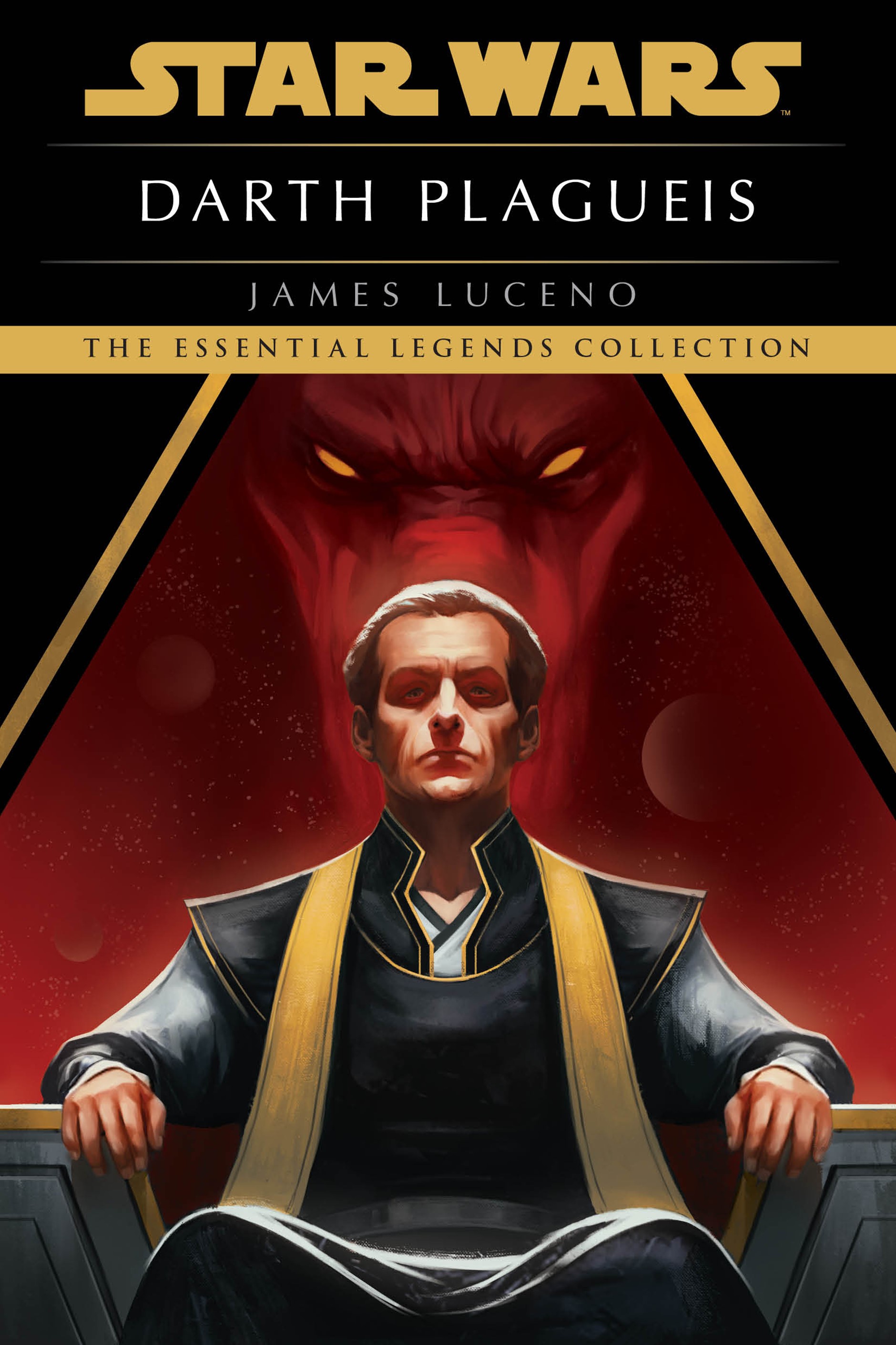
Throwback Thursday: Star Wars: Darth Plagueis by James Luceno

Star Wars - Darth Plagueis Cover

Publisher: Random House Audio (Audiobook – 10 January 2012)

Series: Star Wars Legends

Length: 14 hours and 45 minutes

My Rating: 4.75 out of 5 stars

Amazon

Welcome back to my Throwback Thursday series, where I republish old reviews, review books I have read before or review older books I have only just had a chance to read.  In my latest Throwback Thursday I look at one of the more interesting novels from the Star Wars Legends universe, Darth Plagueis by James Luceno.

With Star Wars day on the horizon, I have decided to go back and check out some of the key books in the now defunct Star Wars Legends universe.  While no longer canon, there are still some amazing books in the Legends range, including some that will no doubt serve as an inspiration for some future shows or movies.  I have already enjoyed several Legends books, such as Maul: Lockdown, Scoundrels and Death Troopers, but there are still more epic reads that I really want to check out.  Probably the one I was most interested in reading was the epic Darth Plagueis by James Luceno.  Luceno, who also wrote the fantastic novel Tarkin in the current Disney canon, is a very talented author, and I was very excited in checking out his take on the elusive and mysterious Darth Plagueis.

“Did you ever hear the tragedy of Darth Plagueis the Wise?”

Throughout the long and bloody history of the Republic, many Sith lords have risen to threaten the peace and order maintained by their hated rivals, the Jedi.  While some have put complex and deadly plans into effect, few have reached the pinnacle of power, influence or mastery of the Dark Side of the Force as the mysterious Darth Plagueis, whose malign guidance shaped the galaxy in terrible ways and introduced a great darkness.

Upon killing his master and obtaining all the power he ever desired, Darth Plagueis set out to continue his order’s greatest goal: destroying the Jedi and claiming the Republic as his own.  Using his position as a powerful member of the Banking Clan, Darth Plagueis worked to manipulate the Republic into chaos and slowly lead the Jedi to a war they had no hope of winning.  However, even a Sith as powerful as Darth Plagueis is unable to do everything on his own, and he soon seeks out a powerful Force user to take on as his apprentice, a talented politician from Naboo known only as Palpatine.

Renaming Palpatine Darth Sidious, Plagueis begins manipulating events to ensure that his apprentice becomes a major power in the Senate, planning to elevate him to the role of Supreme Chancellor while also destroying those opponents who threaten their plans.  However, despite the importance of their plan, Plagueis’s main desire is not the defeat of the Jedi but of a far older enemy, death itself.  Diving into the mysteries of the Force, Plagueis will explore avenues of power not seen for millennia as he attempts to become the immortal master of the galaxy.  But his obsession with endless life could yet be his greatest undoing.

Wow, Luceno did not disappoint with this fantastic Star Wars novel.  Darth Plagueis is an impressive and captivating read that perfectly tells the story of a particularly elusive figure.  Bringing in some heavy Star Wars elements from the extended lore, Luceno has crafted a brilliant character-driven story that I had an extraordinary time listening to.

Luceno has come up with an interesting story for the Darth Plagueis novel that achieves several goals at once.  Not only does it tell the complete story of this legendary Sith Lord but it provides some interesting context for other pieces of Star Wars fiction, while also containing a powerful story of intrigue, betrayal and darkness.  Set over a period of roughly 35 years and told from the perspectives of Darth Plagueis and Darth Sidious (with a few scenes seen from other characters, like Darth Maul), this brilliant novel does an excellent job of exploring the primary characters while also showing their malicious actions across various theatres of the Star Wars universe.  While the novel starts off a little slow, you soon become engrossed in the story as you encounter multiple layers of manipulation and politics as Plagueis attempts to control the galaxy and make his major plans.  The story is broken into three distinct periods, the first showing some of Plagueis’s early movements as a Sith Master and his initial meeting and recruitment of Sidious.  The second part of the book, set 20 years before the events of The Phantom Menace, showcases Sidious as he becomes established as a Senator as Plagueis contends with some dangerous opponents and plots as he sets up the earliest stages of his master plan.  The final third of the novel is set in the lead-up/during the events of The Phantom Menace, where you see many of the storylines come together, as well as the final chapters of the relationship between Plagueis and Sidious.

I had a really great time with this compelling story, and it is one that I feel will appeal to a lot of Star Wars fans.  While I was a little surprised at the suddenness of some of the time skips, I felt that all three major parts of the novel were really good, and I loved how well they flowed together to create one coherent and fantastic read.  The three separate time periods allow for a massive story, while also featuring some of the key moments of the main character’s lives.  Featuring a ton of intriguing and heavy bits of Star Wars lore, parts of the story do drag a little in places, especially as there is a little less action than your typical Star Wars novel.  However, I found all the politics, machinations and expansions of the Star Wars lore to be extremely fascinating, and there is a brilliant story hidden in there.  The story is also not completely bereft of action, and there are some pretty cool fight sequences scattered throughout the book, including some that show off Plagueis’s full, terrifying abilities.  This story had an excellent tone and pace to it, and I feel that everything came together extremely well and I was pretty enraptured by every damn moment of it.

Star Wars - Darth Plagueis Cover 2

This was a really good Star Wars novel, and it is one that will appeal to a wide range of fans, especially those who enjoyed the Legends range.  While Darth Plagueis is technically no longer canon, Luceno really went out of his way to connect it to the wider Star Wars canon, which is something I really appreciated about this book.  In many ways, Darth Plagueis serves as the ultimate companion to the prequel films as Luceno attempted to fill in some plot holes and unexplained bits of the movies, by exploring the entirety of the Sith’s rise to power.  Bringing in a ton of obscure lore, you get an unparalleled view of how Plagueis and Sidious manipulated events in the Legends canon to lead to the events of the films, and this really helps to fill in some gaps.  Luceno also includes multiple moments from The Phantom Menace film throughout the story, and it was pretty fascinating to see why parts of the antagonist’s plot came together like they did, as well as some excellent alternate views of certain key scenes.  I also deeply enjoyed how Darth Plagueis tied into a ton of other pieces of Star Wars Legends fiction, including books, comics and games.  Multiple prior novels are mentioned or connected to this novel in some way, and I felt that Luceno did a really good job of inserting elements from the already massive extended universe into his book and connecting the stories together and giving all of them more context and interest.  All these connections helped to create a novel that is particularly compelling and intriguing to dedicated Star Wars fans, who will love seeing the events of this book unfold.  While those fans who have only seen the movies will probably be able to enjoy this book easily enough (with only some minor confusion to some of the more obscure parts of the lore), this is a novel best enjoyed by readers who have checked out some other Star Wars Legends books and will appreciate how it fits into that wider version of the canon.

I did like a lot of the universe-building that Luceno did in this novel, as the author explored some fascinating parts of the Legends universe.  Not only does the reader get to experience a lot of obscure elements of Star Wars lore, including aliens, technology, locations and other cool things, but this also serves as one of the most impressive looks at the Sith and the Dark Side of the Force.  Due to the deep examinations of the Sith and its history by Plagueis, as well as other elements contained in the training of Palpatine, the reader is flooded with knowledge about these Dark Side users and their ways, which proves to be quite intriguing.  I had a brilliant time learning more about these deep elements of lore, especially as the characters talk about practicalities as well as history.  The difference between various forms of the Dark Side are very cool, as you see some comparisons between Plagueis’s more scientific based usage of the Force and the Dark Side sorcery preferred by Sidious.  I also found the characters’ own description and assessment of the Sith and the Force to be surprisingly deep, as the characters see themselves as more of a necessary force there to save the galaxy and the Republic from the Jedi.  Darth Plagueis also contains some fantastic detail about the history of the planet Naboo, which I also found really fascinating.  Darth Plagueis goes out of its way to explore the history of the planet and the reasons why it became a political and economic factor in the Republic in the lead-up to The Phantom Menace, and I loved seeing the political strife and manipulation that led to this initial war, as well as the rise of characters like Palpatine and Amidala.  These brilliant pieces of lore are so much fun to learn about, and I had an incredible time finding out more about the Sith in this canon.

Of course, one of the best bits of the lore that Luceno examines in this novel is the role that Darth Plagueis had in the Star Wars universe.  First mentioned in that iconic monologue in Revenge of the Sith, Plagueis remained a mostly shadowy and unknown figure until the release of this book, which serves as the ultimate guide to the character and his history.  Luceno, who at this point had been planning a Darth Plagueis story for years, does a brilliant job of telling the full story of this great character, and you get an outstanding focus on his entire life, especially his time as a Sith Master.  Plagueis, a Muun also known as Hego Damask, is portrayed as a thoughtful, powerful and manipulative being with a surprising nobility and dignity to him.  Fitted with an intriguing backstory and motivations, you see him grow into an extremely powerful Sith Lord throughout the course of the book, and it was fascinating to see all his plans and machinations.   The most significant part of the character’s motivations is his hunt for immortality through the force.  As such, you get a fantastic look at his obsessive experiments and research, as he tries to uncover this ultimate secret.  I felt that Luceno did an incredible job of working this mysterious character into the wider Star Wars canon.  There are some great moments throughout this book that show this shadowy figure manipulating key events from the shadows to bring about the events of the prequel films.  I particularly loved how Luceno fit Plagueis into some scenes from The Phantom Menace, and it is very fun to imagine him watching these moments from just outside camera shot.  This really was an incredible examination and exploration of this character, and I had so much fun finally finding out who Darth Plagueis was and how he was connected to the wider story.  Despite this story no longer being canon, this novel is really the only guide to Darth Plagueis, and it wouldn’t surprise me if it is used as the primary source material for anyone wanting to introduce him in a future film or television series.

While this book does tell the story of Darth Plagueis, in many ways it is just as much about Palpatine as it provides readers with an outstanding look at his early history.  Essentially set during the time he was Darth Plagueis’s apprentice, you get some amazing insights into who Palpatine is and how he turned to the Dark Side of the Force.  Portrayed as manipulative and insidious since birth, you get to see Palpatine at his most evil and dangerous as he learns about the Force and the Sith.  I loved how you get to see various stages of Palpatine’s early life, from his teenage years where he first learns about his powers, to his middle age where he becomes a young ambitious senator and apprentice, to his time as an experienced manipulator and Force user just before coming Supreme Chancellor.  I had a brilliant time seeing Palpatine grow as both a Sith and a politician throughout this book, and you get some fantastic views of his early interactions with key players in the Star Wars canon.  I also deeply enjoyed seeing his intriguing dynamic with Darth Plagueis.  In pretty much all his other appearances, Star Wars fans only ever see the confident and controlling Palpatine who has no-one above him.  However, in Darth Plagueis, you see a somewhat more subservient Palpatine who is forced to bow to the will of one more powerful.  Watching working under another is an interesting change of pace, although some reveals towards the end of the book (and in some other novels, such as Maul: Lockdown), show that he is never as loyal as Plagueis believes.  This truly was an outstanding depiction of Palpatine and it was so awesome to see more about our favourite soon-to-be emperor.

Aside from Plagueis and Palpatine, the Darth Plagueis novel is loaded with a ton of interesting supporting characters, many of whom had roles in the films, animated series or other pieces of Legends fiction.  These intriguing characters help to create the novel’s rich tapestry of politics, intrigue and betrayals, and all of them served some fantastic roles in the book.  I particularly enjoyed seeing the inclusion of other Sith characters like Count Dooku and Darth Maul, especially as this novel serves as a bit of an origin story for both, as you see Palpatine obtaining and training Maul as well as Plagueis and Palpatine manipulating Dooku to leave the Jedi.  I also enjoyed the intriguing look at Plagueis’s own master, Darth Tenebrous, whose brief role showed a whole other aspect to the Sith as he had his own distinctive style.  I did think that the crowd of supporting figures with their own story elements slowed the pace of the novel down a little in the middle of the book, but I ended up having a brilliant time enjoying the story set around the awesome main characters.

Unsurprisingly, I chose to listen to Darth Plagueis on audiobook rather than seeking out a physical copy of this excellent novel.  I naturally had a very fun time listening to this version of the book, which not only featured a brilliant narrator but also made excellent use of the typical Star Wars audiobook production elements.  Darth Plagueis is loaded with cool sound effects and awesome Star Wars music, all of which add to the ambiance of the story in various ways.  I particularly liked the use of John Williams’s iconic scores throughout this audiobook, which did a great job of enhancing several scenes and increasing their emotional impact.  This was particularly true for some of the darker moments in the book, as some of the music associated with the Sith, the Dark Side and death/destruction, are blasted at full volume during some key moments, such as Palpatine discovering his destructive abilities for the first time, or during a couple of massacres.  This awesome music was so cool to hear during these scenes, and you really got an increased sense of the powerful emotions and dark deeds that were going on.

I also deeply enjoyed the epic narration, as this fantastic audiobook features the vocal talents of actor Daniel Davis (whom audiences of taste will recognise as Niles from The Nanny).  Davis gives a powerful and commanding performance here, bringing some major gravitas to the role and the characters.  His voice work for the titular character, Darth Plagueis, is really good, and you get a fantastic sense of the character’s power and wisdom as the novel continues.  Davis also does a brilliant job of voicing multiple characters and species from the Star Wars films, sounding quite close to their original actors.  I loved the voice work for Palpatine, capturing much of the villain’s iconic voice, while also giving it a youthful tilt for the earlier parts of the book.  Other characters, such as Count Dooku and Darth Maul, are also expertly portrayed here, and I particularly liked Davis’s take on Christopher Lee’s amazing voice.  This outstanding voice work, combined with the sound effects and music, helped to turn this into an exceptional listen that I deeply enjoyed.  With a run time just under 15 hours, this is a descent sized Star Wars audiobook, but listeners can power through it in no time at all.  This format comes highly recommended and you will have an outstanding time listening to the Darth Plagueis audiobook.

Overall, Darth Plagueis is an impressive and addictive Star Wars Legends novel that I had an incredible time reading.  James Luceno really excels at telling complex narratives that examine character origins, and Darth Plagueis did a wonderful and comprehensive job of expanding on a mostly unknown figure.  I loved learning everything about this awesome Star Wars figure, and Luceno wove an outstanding tale of intrigue and power around him and his apprentice.  An absolute must read for all fans of the Star Wars extended universe, I cannot wait until they finally introduce this complex figure into the current canon.

Star Wars - Darth Plagueis Cover 3

Amazon

Star Wars: The High Republic: The Fallen Star by Claudia Gray

Star Wars - The Fallen Star

Publisher: Del Rey/Penguin Random House Audio (Audiobook – 4 January 2022)

Series: Star Wars – The High Republic

Length: 13 hours and 31 minutes

My Rating: 4.5 out of 5 stars

Amazon     Book Depository

The awesome new focus of Star Wars fiction, the intriguing High Republic range, continues to shine brightly with the latest epic adult novel, The Fallen Star, a dark and impressive entry by the extremely talented Claudia Gray.

Ever since its start at the beginning of 2020, the High Republic multimedia project has presented some unique Star Wars stories that I have deeply enjoyed.  Set in the golden age of the Republic and the Jedi, hundreds of years before the films, The High Republic focuses on a different generation of Jedi facing off against the murderous raiders known as the Nihil.  This series has so far produced some excellent gems across various forms of media, including novels, comics, audio dramas and other cool entries written by some of the best authors of Star Wars fiction.

While there is an interesting spread of fiction in The High Republic, the key storylines are generally contained in the main adult novels such as The Fallen Star, and the previous novels, Light of the Jedi by Charles Soule, which introduced the High Republic era and the Nihil, and The Rising Storm by Cavan Scott, which saw the Nihil launch a bold attack at the very heart of the Republic.  Other cool entries, such as the young adult novels Into the Dark and Out of the Shadows, and the audio drama Tempest Runner, added to this tapestry, and it has resulted in a fantastic and compelling overarching narrative and setting.  As such, I have been very excited to see where this franchise goes next, especially as The Fallen Star acts as one of the finales to the current phase of High Republic fiction.  Written by Claudia Gray, who previously authored the incredible Master & Apprentice (one of my favourite Star Wars novels), this was an epic book with a fantastic adventure story.

Following the brutal Nihil attack on the Republic Fair, the entire galaxy is hunting for the Nihil, determined to destroy them and their mysterious leader, the Eye, once and for all.  However, the Republic and the Jedi are unaware that the true Eye of the Nihil is the fearsome Marchion Ro, who plans to devastate the Jedi and the Republic headquarters, Starlight Beacon.  A massive space station out in the Outer Rim, Starlight Beacon was intended to bring light and cooperation to the most remote areas of the galaxy.  Staffed by some of the most powerful Jedi, Starlight Beacon stands a symbol of hope and determination, but that is about to change.  Determined to make the Jedi and the Republic pay, Ro sends his cohorts on a deadly mission to destroy Starlight Beacon from the inside, causing a massive explosive that rips through the station, causing chaos and destruction, as Starlight Beacon loses all power.

Determined to save the station and its inhabitants no matter what, the Jedi try to restart the station before it is too late.  However, something else is aboard Starlight Beacon, something ancient, unseen and bearing an insatiable hunger that drives it to hunt and feast on Jedi.  With their abilities to connect with the Force disrupted by the foul beasts stalking them, the Jedi will need the help of everyone on the station, including weird pilots, annoying droids and rogue Nihil, to save the people around them.  But even their combined abilities might not be enough to save Starlight Beacon from its imminent destruction, nor from monsters capable of turning even the most skilled Jedi into dust.

The Fallen Star was an incredible book from Claudia Gray that does an excellent job of continuing the impressive High Republic storylines.  Gray has come up with a very unique Star Wars tale that sees some of this era’s best characters trapped in an impossible and dangerous situation.  Loaded with a ton of action, some major plot moments, interesting storyline continuation and a ton of character development, this was an excellent novel that proves very easy to get drawn into.

Honestly the best way to describe The Fallen Star’s story is as a nautical disaster story, like Titanic or The Poseidon Adventure, in space.  This novel begins with the initial stages of the disaster as a small team of Nihil saboteurs infiltrate Starlight Beacon and systematically take out the station.  These early parts of the novel have a great sense of tension, as the reader is forced to watch the Nihil continue to succeed while the Jedi remain oblivious.  The story starts to pick up as the Nihil plan goes into effect, not only because of the explosion that knocks Starlight Beacon out of orbit, but because several unseen creatures immediately start to attack the Jedi in brutal mind-bending ways while also disrupting their connection to the Force.  The true disaster narrative takes over from here as the characters attempt to survive the destruction while also trying to save the station.  Gray really dives into character psychology here, as the Jedi are forced to overcome their guilt and the building fear of the creatures attacking, while the other characters try to determine whether to focus on self-preservation or helping those around them.  The last two-thirds of the book is purely devoted to the attempts to survive the station’s slow destruction, and Gray really does not let up the plot intensity.  Every time the protagonists seem to make some progress or success they are immediately hit with obstacles or tragedy that seek to overwhelm them.  This leads to some impressive and confronting moments throughout the book, and you honestly will be surprised and shocked by some of the deaths or twists that occur.  While there are one or two fake-outs designed to ramp up the feels, you will come away from this book being extremely moved and a little emotionally drained.

This was a very well put together novel; it has an amazing flow to it, and once the various disasters start up, the pace and stakes of the novel just keep jumping higher and higher.  The use of multiple character perspectives helps to tell a massive and impressive story, and you really get the full sense of how deadly and disastrous the events of the book are.  I loved how well Gray layered tension and grief into the non-stop action of the plot, and you are honestly left reeling or yelling at the book, wishing to help the characters you have become extremely attached to.  Gray also is also very skilled at detailing some fun and compelling action and disaster sequences, which works extremely well to showcase all the chaos and destruction occurring around.  I did find that there were a few plot gaps here and there throughout the novel, most likely because the full extent of this event will be featured in other High Republic media, such as the main comic series, although this didn’t impact the story too dramatically.  Overall, thanks to its powerful moments, character growth and great action, and you have an outstanding narrative that hits all the right notes at the right time.

In addition to its excellent narrative, The Fallen Star is also a great new entry in the High Republic sub-series.  Gray does an impressive job of continuing the events from the previous pieces of High Republic fiction, and aspects from most of the preceding novels are strongly featured here.  I deeply enjoyed seeing the return of several great characters and the continuation of some interesting story arcs, and Gray brings them together to create an outstanding Star Wars story.  Like most of the High Republic series, The Fallen Star is probably best read by fans of the expanded literary universe, especially as much of the build-up for this period was in the prior novels.  While I would recommend at least reading The Light of the Jedi and The Rising Storm first, people with a basic knowledge of Star Wars should be able to follow what is happening here, as Gray does a good job of recapping key events.  While there are a few good reveals here, there is still an aura of mystery around other parts of the book, particularly the character of Marchion Ro and the real motivations of the Nihil.  An epic conclusion to this phase of the High Republic novels, I will be interested to see if any other reveals or revelations occur in the connected comics.

Star Wars - The Fallen Star Cover 3

To support her fantastic narrative, Gray makes use of an excellent collection of great characters, and I loved the mixture of protagonists and antagonists that she chose.  Not only are the protagonists of the previous adult High Republic books heavily featured, but Gray also makes strong use of characters from young adult novels like Into the Dark and Out of the Shadows.  This amazing blend of character perspectives really helped to craft a unique and interesting book, and it was great to see the different protagonists react to the situation.  Readers should be aware that Gray has gone on a bit of a killing spree here, and several fan favourite characters may not survive.  These deaths really help to ratchet up the tension and emotional weight of this novel, and you will really be left reeling.  While I might question the wisdom of killing off as many characters as they did, especially as the High Republic has a greater need of recognisable characters than other Star Wars novels, I think they all worked in the context of the plot and served the overall narrative extremely well.

The most prominent characters of The Fallen Star are the Jedi protagonists of Light of the Jedi and The Rising Storm.  These Jedi go through some big moments in The Fallen Star, especially as they face disaster and failure on a scale they have rarely seen before.  Gray works in some very interesting changes in the various Jedi’s characterisation because of the unseen monsters let loose on the station who disrupt the Jedi’s connection to the Force, which messes with their heads.  As a result, for most of the book the Jedi are scared, uncertain and irritable, which is a fun and clever change of pace that I felt added to the high-stakes disaster narrative extremely well.  The most prominent of these characters include Stellan Gios, Bell Zettifar, Elzar Mann, who have had some excellent character arcs in the previous novels, and it was great to see them again.

The first of these is Elzar Mann, who has been a standout figure due to his battles with his emotions, his romantic feelings towards fellow Jedi Avar Kriss, and his inadvertent connection to the Dark Side of the Force.  Following this dark moment, Mann has gone into a deep meditation retreat with a unique spiritual guide, who is teaching him to have a different perspective on life.  As a result, when Mann returns to Starlight Beacon just before the first attack, he has mostly cut himself off from the Force.  While this impacts his ability and mentality as a Jedi, his lack of a Force connection ensures that he is one of the only Jedi not incapacitated by the monsters roaming the station, which forces him take on more responsibility during the crisis.  I liked seeing this side of Mann, and it was great to watch him attempt to step up and protect his more responsible friends.  Unfortunately, Mann also experiences some big losses and failures in this novel which really strike him hard.  The final few chapters of The Fallen Star have some major moments for this character, and there was some brilliant development occurring here.  Gray did an incredible job expanding on one of the best and most complex High Republic protagonists here, and I loved Mann’s story in this book.

I also deeply enjoyed the story arc that surrounded apprentice Bell Zettifar.  Bell has gone through a lot in the last two books, especially as his master was killed before him in The Rising Storm.  This has led to some excellent and dark moments for Bell, and Gray does a wonderful job continuing them here as Bell struggles for most of this book, dealing with intense doubt and a sense of failure that gets enhanced by the influence of the strange creatures stalking the station.  I enjoyed seeing Bell slowly regain his confidence as he finds himself in the middle of another crisis and it led to some great and heartfelt moments, even as Bell suffered even more personal tragedies.

I must also highlight the continued story of Stellan Gios, the Jedi Master and rising star of the Order who was such a fantastic figure in The Rising Storm.  Stellan starts this book off as the new Marshal of Starlight Beacon, but he is still impacted by the doubts and trauma of the last Nihil attack at the Republic Fair.  Thanks to this and the influence of the Nihil’s monsters, Stellan shows a very different side to his character in The Fallen Star, being more petty, angry, and dispirited.  This is such a substantial change to what we have previously seen out of Stellan that it really hammers home just how dangerous the Nihil monsters are.  Watching Stellan battle with his emotions is pretty intense, and it proved to be exceptional to see him slowly overcome everything that is happening to him.  Gray writes an amazing couple of moments for Stellan in this book, and you end up with an impressive appreciation of this character by the end of this awesome book.

Aside from these main three figures, The Fallen Star also features an interesting array of supporting Jedi characters.  This includes the friendliest and fluffiest Jedi of all-time, the Wookie Burryaga, who everyone loves due to his kind nature and innate connection to the Force.  Burryaga forms a moving friendship with Bell, and he is easily one of the best supporting characters in the entire novel.  I also liked the reappearance of the Jedi Wayseeker, Orla Jareni, a semi-rogue Jedi who offers her own insights into the Force.  I will say I was surprised that there was barely any Ava Kriss in this novel.  Kriss, who is frequently touted as the main protagonist of the High Republic, has barely appeared in any of the novels since The Light of the Jedi, being more of a feature in the comics.  I feel that she leaves a noticeable absence in the novel, especially as the other character seem to reference how awesome she is in every second sentence.  Still, I think it worked without her, although I hope they use her more in the future.

Aside from the Jedi characters, Gray also makes exceptional use of an interesting collection of other characters trapped aboard the station who offer a great alternate viewpoint to the various Jedi.  What is interesting is that most of these characters are creations of Gray’s who first appeared in her last High Republic book, Into the Dark.  This includes the crew of the Vessel, a unique and unusual ship that transports Mann and Orla Jareni to Starlight Beacon and then gets trapped there.  The Vessel is crewed by a very entertaining trio of characters who balance each other out nicely.  This includes owner Affie Hollow, who plays straight woman to her unusual crew, and is a great central adventurer and emotional base for much of the book.  However, Affie is very much overshadowed by the rest of the crew, including captain Leox Gyasi, who is essentially a space hippy.  Leox is a wildly entertaining figure, with his Zen mindset, pacifistic tendencies, unique way of talking, and outrageous sense of humour, and you will quickly fall in love with him as the book progresses, especially in the few scenes where he gets serious.

The most solid member of the Vessel’s crew is Geode, a Vintian who ends up being the heart and soul of not only the Vessel but all of Gray’s High Republic novels.  Geode is essentially a sentient rock who never talks, rarely moves, and for most of his first appearance in Into the Dark, you were half convinced was some sort of elaborate prank and was really just a rock.  However, Geode ends up being a remarkable figure, capable of great feats of ingenuity and courage, while also being a social genius and a massive flirt.  I cannot emphasise how hilarious it is to see all the outrageous things that the other characters attribute to this silent, giant rock, especially as he just sits there for the entire book.  However, the other characters can apparently all see the “facial” expressions he gives off, and he is apparently quite an emotional and thoughtful character, who ends up being the solution to several problems.  Honestly, having a motionless rock as a major supporting character should not work, but it really does in The Fallen Star, and I loved every second that was spent on him.  I enjoyed seeing all these characters return, and I hope that Gray brings them back in the future, although I do worry the Geode joke might eventually becomes too overused.

Former Nihil members Nan and Chancey Yarrow perfectly rounded out the main cast aboard Starlight Beacon.  Both have had some interesting appearances in the young adult books, and it was great to see them here.  Nan is another character created by Gray and is a young and zealous Nihil member, while Chancey is a brilliant scientist working for the Nihil while also promoting her own agenda.  After leaving the Nihil and starting their own partnership, Nan and Chancey get captured by the Jedi and are being questioned about Starlight Beacon when events kick off.  Freed by the Nihil infiltrators, they spend most of the book on the fence about where their loyalties lie as they try to find their own way to escape.  This results in a fantastic and compelling alternate viewpoint to the book, and I loved seeing these two morally grey characters interact with the more selfless protagonists.  Gray comes up with a great dynamic between Nan and Chancey, which is semi mother-daughter in nature, and there are some interesting moments as Nan struggles to overcome her loyalty to the Nihil.  Their storyline comes to a very interesting and powerful end, and I will be deeply intrigued to see what happens to them next.

I want to make a final mention about the antagonists of The Fallen Star, especially as there is a rather unusual dynamic with this book.  This because, in many ways, the main villain of the story isn’t the Nihil, but is instead time, despair, impossible choices, panic, and human nature.  To a degree, these basic, uncontrollable elements end up causing more damage, and the impossible battle against them results in much of the book’s most dramatic and powerful moments.  There are a few proper villains in this book, such as series antagonist Marchion Ro.  Despite only being in it for a short while, Marchion cuts a distinctive and menacing figure in The Fallen Star, especially as he instigates the next stage of his master plan.  There are some interesting developments around Marchion here, and although they are probably saving any major revelations for his upcoming comic limited series, I felt that he continues to shine as the main villain of The High Republic.  The rest of the Nihil aren’t shown as much in this book, although I did enjoy the examination of the fear and hatred associated with them, especially after all the pain and suffering they caused.  I was very intrigued by the mysterious Nihil controlled monsters that infest Starlight Beacon and mess with the Jedi.  Despite the fact you never see them, they are incredibly intimidating, effortlessly defeating the Jedi and sending them on some dangerous head-trips.  I cannot wait to find out more about them in the future, especially as they are bound to explore their history more, and it should lead to interesting discoveries.  Overall, The Fallen Star had an exceptional group of characters and their intense, compelling and entertaining story arcs really elevated this around exciting novel.

I will come as very little surprise to anyone familiar with this blog that I chose to check out The Fallen Star audiobook.  I have so much love for Star Wars audiobooks, and this ended up being a very good example of how fantastic this format could be as it combines impressive narration with clever sound effect and epic music.  With a run time of 13 and a half hours, this is a somewhat shorter Star Wars audiobook.  I had a wonderful time getting through the story in this format, and I found that the compelling narrative became even more intense when read to me.  This is particularly true in such a trauma and action laden book like The Fallen Star, with the awesome medium of the audiobook helping to enhance the danger and despair of the situation.  The use of sound effects and music was once again superb, and I loved how hearing the distinctive sound of blasters, lightsabers and other pieces of Star Wars technology, helped to bring me into the story and enhance the events being described.  I also cannot overemphasise how awesome it is to hear the incredible and iconic Star Wars music during this plot as well.  Whenever the music is played, especially during some of the more dramatic or action-packed sequences, it really enhances the impact of the moment, drawing the listener in and ensuring that they are perfectly entrapped by the events occurring.

You can’t talk about this audiobook without mentioning the epic voice work of the narrator Marc Thompson.  At this point in his career, Thompson is essentially Star Wars royalty, as he has narrated so many amazing Star Wars audiobooks over the years.  He is easily one of my favourite audiobook narrators and I loved his work on previous audiobooks like Thrawn, Chaos Rising, Greater Good, Lesser Evil, Scoundrels, Dark Disciple and more.  He once again does a great job on The Fallen Star, bringing all the characters to life and moving the story along at a swift pace.  I loved the consistency in voices from all the previous High Republic books he narrated, and he also did a great job voicing characters from other books he hasn’t worked on.  All the characters have very distinctive and fitting voices, which included some very distinctive accents, which helped to highlight the characters and what they did.  I also loved the sheer emotional range that Thompson was able to fit into these great characters, ensuring that all the intense emotions were on full display.  It was pretty intense hearing all the character’s despair, anger and grief as everything they knew and loved was burned around them, and it makes for some incredible sequences.  This was easily the best way to enjoy this cool Star Wars novel, and I would strongly recommend The Fallen Star audiobook to anyone interested in checking this book out.

Overall, Star Wars: The Fallen Star by Claudia Gray is an excellent read that I would strongly recommend.  Featuring a clever, action packed, and emotionally rich, character driven story, The Fallen Star brilliantly continues the outstanding High Republic series, and you will love the dark places this story goes. I deeply enjoyed this cool book and I cannot wait to see what happens in this brilliant sub-series next.  Long live the High Republic!

Star Wars - The Fallen Star Cover 2

Amazon     Book Depository

Star Wars: The High Republic: The Rising Storm by Cavan Scott

Star Wars - The Rising Storm Cover

Publisher: Penguin Random House Audio (Audiobook – 6 July 2021)

Series: Star Wars – The High Republic

Length: 15 hours and 32 minutes

My Rating: 4.75 out of 5 stars

Amazon

Prepare to dive back down into one of the most unique parts of the current Star Wars canon, as bestselling author Cavan Scott presents the next exciting adventure in The High Republic era, The Rising Storm.

The High Republic is a massive collaborative multimedia Star Wars project that started earlier this year and which represents a new area of focus for the Star Wars franchise.  Set in the Golden Age of the Republic, hundreds of years before the events of the Skywalker Saga, The High Republic currently contains several amazing pieces of tie-in fiction, with unique tales making up an overarching storyline.  I have so far read two entries in this series, the introductory novel Light of the Jedi by Charles Soule and the great young adult book Into the Dark by Claudia Gray.  The next major entry in this series is the fantastic and exciting The Rising Storm by Cavan Scott, which continues several storylines from Light of the Jedi.  Scott, who previously wrote the fantastic Dooku: Jedi Lost audio drama, has come up with a fascinating and compelling novel that I really enjoyed.

Two hundred years before the events of The Phantom Menace, the Republic was at its zenith, with the Jedi leading the expansion outwards to the Outer Rim.  However, following the Great Hyperspace Disaster, the Republic’s safety and security looks uncertain.  Even after the creation of Starlight Beacon, the Outer Rim is still a dangerous place, especially with the machinations of the notorious pirate group, the Nihil, as well as the spreading attacks from the plant monsters known as Drengir.

Determined to show that the Republic and the principles that govern it are still strong, Chancellor Lina Soh has organised the Republic Fair on the planet of Valo.  The fair will bring together cultural displays, new technology, Jedi artifacts and other wonders of the galaxy in a massive celebration to demonstrate the possibilities that an expanding Republic will have on the entire galaxy.  Attended by high-ranking Republic dignitaries, visiting diplomats, celebrities, leading scientists and prominent Jedi, all eyes in the galaxy will be on the fair and its participants.  However, some of these watching eyes have far more hostile intent and are determined to see the Republic Fair fail at all costs.

The most dangerous of these is Marchion Ro, the mysterious and unpredictable Eye of the Nihil.  Under his leadership, the Nihil have achieved much infamy and caused inordinate destruction throughout the Outer Rim, and Ro is determined to keep the Republic and the hated Jedi out of his territory.  As the fair begins, Ro orders a devastating attack that will shake the very galaxy to its core.  As Jedi such as Stellan Gios, Bell Zettifar and Elzar Mann attempt to hold back to the tide of evil descending on Valo, they are about to discover that there is something far more dangerous afoot in the galaxy.  Marchion Ro has uncovered an ancient evil and the entire galaxy, and every Jedi in it, is about to fear his wrath.

Now this was an awesome book, and one that is really starting to make me fall in love with The High Republic.  Scott has produced an intense and powerful story that continues to develop some of the best The High Republic characters, while also advancing some great storylines established in the previous novels and comics.  I had a wonderful time getting through this book, and this may be one of my favourite The High Republic novels so far.

This book has an awesome and captivating narrative to it.  Set about a year after the events of the first High Republic novel, The Rising Storm quickly introduces several intriguing storylines that each follow a different key character.  This includes a great storyline surrounding Elzar Mann as he attempts to decipher a warning given to him by the Force, as well as the tale of the conflicted and distracted Jedi apprentice Bell Zettifar.  There is also great storyline that follows a new character, mercenary Force user Ty Yorrick, as she takes on a new contract, and several storylines that follow key characters in the Nihil.  All these initially separated storylines are quite fun and do a good job setting up the various main characters, as well as establishing the current relevant events occurring in the galaxy.  While these individual storylines are quite fun and feature a mixture of intriguing characters, they swiftly come together into one combined narrative, when all the participants arrive at Valo for the Republic Fair.  Based on the book’s synopsis and the initial planning by the Nihil, you know that the fair is going to be attacked in some way, and Scott makes sure to ramp up anticipation for the upcoming carnage, showing multiple scenes that could lead into it.  However, even after all that, I was still not quite prepared for how amazing the main part of the novel turned out to be.

The eventual raid on the fair ended up lasting for quite a substantial part of the novel, as a coordinated attack separates the key characters.  With communications down and chaos reigning all around them, the protagonists are on their own, with each of their separate storylines focusing on their own encounters with the Nihil.  The entire raid is utter bedlam and proves to be a hotbed of action, intense moments, and dangerous character development.  I was honestly surprised at how dark parts of this book got, and readers are guaranteed a thrilling experience as there are several outstanding and intense action sequences.  Each of the main characters is effectively highlighted during this period, and readers will quickly become engrossed in their storylines and their attempts to navigate the dangers they encountered.  The entire raid sequence comes to an end with a decent part of the novel still left, which I initially thought was a bit of a mistake, as Scott could have ended the novel perfectly in the attack’s aftermath.  Instead, he constructed an incredible final sequence that really tied the entire narrative together, resulting in a memorable conclusion that sets up the next wave of novels perfectly.  While I did feel the story could have used a little bit of trimming, this was an overall excellent narrative, which I think was stronger than the preceding Light of the Jedi, mainly because it did not require the universe setup that Soule was required to chuck in.

While I deeply enjoyed The Rising Storm’s addictive story, this novel is a bit of a niche read and is mostly going to appeal to established fans of the franchise.  The Star Wars extended universe is an interesting and enjoyable place to explore, but it can be easy to get a little lost while checking out these books.  This is especially true with the new High Republic range, which takes the reader to a fictional period that has not been introduced to a wider universe either in a film or television series.  Due to its position as a second wave High Republic novel, you really need to check out some of the earlier works in the series before you try this one out, especially Light of the Jedi, which sets up most of the storylines and characters featured in this novel.  It is also important to add that this novel ties into several of the other High Republic comics and novels.  Events from these books and comics are referenced throughout The Rising Storm as Scott’s key characters interact with the protagonists of these other works, such as the junior novel, Race to Crashpoint Tower.  Knowledge of some of these contemporaneous pieces of fiction is not 100 per cent necessary, although several plot points and references become a lot clearance once you recognise the connection.  While Scott did do his best to make story accessible to new readers, I think that most High Republic newcomers would be better served reading Light of the Jedi first, which will make it so much easier to enjoy this awesome novel.

One of the more difficult things about reading a High Republic novel is the lack of any recognisable characters from the Star Wars films or television shows, as the only character from them alive at this point is Yoda (who keeps disappearing).  However, I found myself getting really invested in the complex and intriguing characters featured in The Rising Storm, as Scott makes use of both original characters and characters introduced in previous pieces of High Republic fiction.  This novel focuses on a huge selection of supporting characters, each of whom have their own adventures and stories.  One of my favourites was damaged Jedi Elzar Mann.  Mann is a troubled being who spends most of this novel haunted by both a dark vision from the Force and his unrequited and forbidden love to his friend and fellow Jedi Avar Kriss.  Because of this, Mann spends most of the novel walking the very edge of the Jedi code, breaking nearly every rule he can, including that major one about not falling in love or having a physical relationship with someone.  This sets him on a knife’s edge, and when the Nihil come, he is pushed dangerously close to the Dark Side (which mirrors Anakin’s fall in several ways) with some spectacular results.  This portrayal of Mann is one of the most compelling and exciting in the entire novel, and I appreciated the inclusion of a rogue Jedi.  Another complex Jedi character that I enjoyed was apprentice Bell Zettifar, who was a major point-of-view character in Light of the Jedi.  Bell is still reeling from the events of the first book where his master was apparently killed by the Nihil.  Because of this and other traumatic events, Bell spends much of the novel doubting the Force and his place in it.  I found myself really drawn to this character, and I appreciated the tough journey he was going on.  Unfortunately, it looks like Bell is going to go into some very dark places in the future, which should make for some excellent and moving storylines.

Aside from Mann and Bell, another great character I liked was Stellan Gios, a Jedi recently elevated to the Jedi Council.  Stellan, who had a minor role in previous pieces of High Republic fiction gets a lot more focus in this novel and proves to be a fantastic point of view character.  He is another complex figure, especially as he also has doubts and regrets, despite his position as a Council member.  I saw Stellan as the Obi-Wan Kenobi of the High Republic (partially because of the voice used by the audiobook narrator) and I liked his mostly calm demeanour, unrelenting friendship with the wilder Elzar Mann and the way he acts as straight man to several unusual Jedi characters.  Stellan goes through a lot in The Rising Storm, and it was fantastic to see him continuously overcoming adversity as he becomes more use to his place on the Council.  I also deeply enjoyed the character of Ty Yorrick, who was probably the best original character in this novel.  Ty is a former Jedi apprentice turned rogue mercenary who uses her Force abilities and spiked purple lightsaber to hunt monsters.  Despite her aversion for getting mixed up with the Jedi, Ty finds herself at the Republic Fair and must contend with both Jedi and Nihil.  While Ty was not the most developed character in this novel, I really liked her unique style and the fantastic mentor-student bond she eventually forms with Elzar Mann.  She has a lot of potential as a character, and I can see her becoming a major figure in the High Republic novels.

Some of the final characters I need to mention include Rhil Dairo, a spunky reporter who finds herself in the middle of all the key events of the book, recording with her cam droid.  Rhil is a fantastic and fun reporter character, much in the vein of Lois Lane, who can kick ass and get the scoop at the same time.  I also loved the scenes that featured Orbalin, a Jedi archivist and history buff.  Despite his more academic inclinations, Orbalin is quite a fun character who proves to be a real badass, especially as he manages to hold off several Nihil characters, including the lethal Lourna Dee, while giving a history lesson.  Finally, it was also great to see more of Wookie Jedi Burryaga, the cuddliest and nicest Jedi of all time, who everyone loves and who the reader feels inordinately protective of.  All these protagonists and more add so much to The Rising Storm’s narrative, and it was absolutely great to see all of their storylines unfold.

I am also deeply enjoying the villains of The High Republic, the Nihil.  The Nihil are a collection of murderous and self-centred pirates, who use their unique technology and tactics to bedevil the Republic and the Jedi.  With their own unique look and style, which is a mixture of spacefaring Vikings and Mad Max villains, the Nihil are a pretty fun group of characters to follow.  After a very strong introduction in Light of the Jedi, they have another amazing showing in The Rising Storm, achieving some major acts of destruction.  Thanks to their weird weapons, violent attitude and being constantly high on a cocktail of drugs and stimulants, the Nihil prove to be pretty dangerous opponents, even to the Jedi.  This makes for some very unique fight sequences, and it was fascinating to see the Jedi overwhelmed by these criminals.  At the same time, there is also an intriguing focus on the leadership of the Nihil, as the top commanders, the Tempest Runners, fight for dominance against each other and Marchion Ro.  Ro is proving to be a particularly intense and fascinating villain and Scott really builds on the character in this novel, showing more of his flaws, his motivations and his abilities to deceive and destroy.  There are several amazing storylines following Ro throughout this novel, including one where he obtains a mysterious evil item from the past.  The eventual partial reveal of this plot device results in The Rising Storm’s memorable conclusion and the High Republic creative team clearly has some fantastic plans for Ro in the future and they are turning him into one of the more complex and dastardly villains in the entire Star Wars canon.

As is becoming my recurring habit, I ended up listening to an audiobook version of this Star Wars novel.  This of course was a wonderful experience, as the team behind these books ensured that this latest Star Wars audiobook was the usual audio treat that I have come to love.  Featuring a decent run time of just over 15 and a half hours, The Rising Storm audiobook was an exceptional listen that I managed to power through in just over a week and which proved to be an exceptional way to enjoy this Star Wars adventure.  The entire narrative of The Rising Storm is enhanced and supported by a range of awesome and iconic Star Wars sound effects and music, which are intended to draw the listener into the story.  Both the sound effects and music are used to incredible effect throughout, and I think that they both added so much to my overall enjoyment of The Rising Storm.  The sound effects do a remarkable job presenting the ambient noise of every single scene, with crowd noises, the hum of a lightsaber, the engine noises of a ship or the sounds of blaster fire, constantly played in the background.  I was particularly impressed by the chaotic sound effects used during the Nihil attack on the fair, as you are treated to background noises of terror and destruction for several hours, which helps to highlight just how devastating the entire affair is.  In addition, the always impressive John Williams musical score is so much fun to hear, and it was put to particular good use in several significant scenes to enhance dramatic impacts.  I was extremely moved when I heard some of this music, as it either pumped me up during key action scenes (Duel of the Fates always gets me hyped), or to be deeply saddened when the more tragic musical cords struck up.

In addition to the exceptional use of sound effects and music, I also was deeply impressed with the incredible voice work featured in this audiobook.  Leading Star Wars narrator Marc Thompson once again lends his voice to this audiobook, continuing the work that he did in the Light of the Jedi.  Thompson has previously narrated some of my favourite Star Wars audiobooks, including Thrawn, Chaos Rising, Greater Good, Scoundrels, Dark Disciple, and the Doctor Aphra audio drama.  I also really enjoyed the awesome work he did in The Rising Storm, as Thompson not only revises the many voices that he introduced in Light of the Jedi but also adds in several new ones for the new characters.  I felt that various voices that Thompson did fit each of the characters extremely well, and he was able to perfectly personify their personality and written nature using a variety of fun accents.  I also found that Thompson was able to highlight the various emotions that the characters were feeling, giving the listeners a great sense of what they were feeling through his tone.  It was also cool to hear the combination of sound effect and Thompson’s voice when it comes to several alien characters featured within the audiobook, especially those whose voices were altered by technology.  All this outstanding voice work, combined with the awesome sound effects and music, helps to turn The Rising Storm into an absolutely incredible and addictive audiobook, and this is easily the best way to enjoy this fantastic Star Wars book.

The High Republic continues to expand as the amazing Cavan Scott adds his own unique spin on events with the exciting and memorable Star Wars: The Rising Storm.  This latest addition in the intriguing High Republic range does a fantastic job introducing the next stage of this unique Star Wars time period, complete with a devastating event, some major changes and some outstanding new characters.  I had an incredible time reading this great novel, and The Rising Storm is a must read for all fans of the Star Wars franchise, especially in its audiobook format.  If you have not gotten into the High Republic yet, you are missing out, and I cannot wait to see what happens next.  I will also have to make sure to grab a copy of Cavan Scott’s next Star Wars audio drama, Tempest Runner, a High Republic entry which is set for release in a couple of months and which will tell the tale of one of the more intriguing Nihil characters, Lourna Dee.

Star Wars - The Rising Storm Cover 2

Amazon

Star Wars: Thrawn Ascendancy: Greater Good by Timothy Zahn

Star Wars - Thrawn Ascendancy - Greater Good Cover

Publisher: Penguin Random House Audio (Audiobook – 27 April 2021)

Series: Thrawn Ascendancy – Book Two

Length: 16 hours and 17 minutes

My Rating: 4.75 out of 5

Amazon

One of the most impressive authors of Star Wars fiction in the world today, the legendary Timothy Zahn, returns with another epic entry in his Thrawn Ascendancy series, Greater Good, which continues to explore the early life of that awesome Star Wars character, Grand Admiral Thrawn.

Zahn is an outstanding author who has been writing Star Wars fiction since 1991, with the highly regarded Heir to the Empire.  Since then, Zahn has written several amazing Star Wars novels in both the current canon and the Star Wars Legends canon.  While I have not read all of Zahn’s Star Wars novels (yet!), the ones I have were all incredible and are some of my all-time favourite Star Wars novels (such as the awesome Star Wars: Scoundrels).  However, his most distinctive works have all surrounded the awesome character of Thrawn.

Grand Admiral Thrawn is an alien officer in the Imperial Navy, renowned for his amazing tactical knowledge, brilliance in battle and ability to discern insights about his opponents by observing their personality or culture, especially art.  Ever since his introduction in Heir to the Empire, Thrawn has been a firm favourite among the fans, so much so that he was one of the few characters from the Legends extended universe reintroduced in the new canon.  This reintroduction was done in the third season of the Star Wars: Rebels animated series, where he served as an impactful antagonist for the third and fourth season.  It also looks like Thrawn will also be getting a live-action appearance at some point in the future after his name was dropped in The Mandalorian, which is pretty damn exciting.

The character has been heavily featured in the current range of Star Wars novels, as Zahn was brought back in to write some exciting new Thrawn-based novels.  This started with a brand new Thrawn trilogy in 2017, made up of Thrawn, Alliances and Treason, which showed how Thrawn joined the Imperial Navy and his early career as an officer.  These novels were all incredible reads (Thrawn got a five-star review from me, and Treason was one of the best books I read in 2019), and I loved the character’s unique adventures.  Thrawn’s story was furthered expanded last year with Chaos Rising; the first novel in Zhan’s Thrawn Ascendancy series, which examines the character’s pre-Empire life.

While the armies of the Republic and the Separatists battle for supremacy in the Clone Wars, another deadly conflict is occurring beyond the bounds of known space.  Deep in the unexplored regions, known as the Chaos, the mighty Chiss Ascendancy have just defeated the forces of General Yiv the Benevolent, shattering his empire, the Nikardun Destiny, and bringing peace back to their territories.  As the Chiss Ascendancy returns to normal, they are unaware that they are still under attack from a malevolent and clever foe that is determined to finish off the Chiss once and for all.

On a Chiss agricultural planet, a group of peaceful and seemingly harmless aliens have arrived, seeking to temporarily make a home.  In addition to their good nature, kind hearts and unique spices, these aliens have also brought something of great value that many people will kill for.  As news of the alien’s resources spread, cracks begin to appear in the very foundation of the Ascendancy, as the various powerful families fight for supremacy.

With civil war on the horizon, the future of the Chiss Ascendancy may lay in the hands of the brilliant and infamous Senior Captain Mitth’raw’nuruodo of the Chiss Expansionary Defence Fleet.  Thrawn, who is personally responsible for the defeat of Yiv and the Nikardun, is currently investigating the origins of their attack on the Ascendancy and, in doing so, comes across a previously unknown planet destroyed by its own deadly civil war.  As Thrawn attempts to explore this new mystery, he soon finds himself in the midst of a dark conspiracy.  An unseen force is attempting to take control of the entire Chaos, and the Chiss are the greatest obstacle to their plot.  Hamstrung by politics, family ties and his own inability to see the deeper motivations of his fellow Chiss, can Thrawn stop the oncoming conflict before it is too late, or will the Chiss Ascendancy burn from the inside out?

Zahn has once again produced an exceptional and outstanding piece of Star Wars fiction that further explores the fantastic early adventures of his greatest creation.  Greater Good is an excellent middle novel in this cool trilogy, and readers will deeply enjoy this book’s blend of intricate storytelling, great characters and impressive universe-building.  All of this results in an exciting and compelling novel that quickly draws readers in and has absolutely no trouble keeping their attention.  I had an outstanding time getting through this great novel and I was able to power through its audiobook format in no time at all.

At the heart of this outstanding novel is a clever and addictive narrative that follows Thrawn and a bevy of supporting characters as the Chiss Ascendancy finds itself in danger from an indirect attack.  Greater Good follows on immediately after Chaos Rising, and examines the next stage of a compelling conspiracy against the Chiss, while also focusing on Thrawn’s battles during this period.  The author utilises a substantial number of alternate perspectives to tell a rich and varied story and, while Thrawn is the centre of much of the book’s plot, Zahn has widened the focus of the novel with several compelling storylines and characters.  These include an investigation into the origins of a Nikardun attack on a remote planet, several jaunts out into different parts of space, internal political conflicts that are a threat to Thrawn, and exciting encounters with other inhabitants of the Chaos.  There is also a substantial focus on a new plot to destroy the Chiss, which includes several compelling flashback sequences that examines the origins and initial planning of the conspiracy.  This use of flashback is pretty impressive, and while certain aspects of the antagonist’s storyline are a tad odd, it was still an interesting tale.  I really enjoyed the vast array of different storylines and character arcs that really highlighted the richness of the setting and the unique plotlines they could inspire.  While some of these storylines might seem rather disconnected at times, Zahn cleverly brings them together at the end of the novel, resulting in a very impressive and intriguing conclusion.

As with most of Zahn’s novels, Greater Good is loaded to the brim with Star Wars lore and intriguing universe-expanding ideas as the author dives deeper into the origins, culture and history of the Chiss Ascendancy.  Zahn really expands on what he introduced in his previous Thrawn and Thrawn Ascendancy novels, especially Chaos Rising, and highlights the proud Chiss warrior culture.  A vast amount of new information of the Ascendancy is featured within this latest book, and the reader gets a fascinating look at the planets, political makeup and social hierarchy of this race, especially at the family level.  Not only is this really intriguing, especially for those readers who have enjoyed Zahn’s previous additions to the Star Wars canon, but the author uses it extremely well within the plot.  Much of the main narrative, including the conspiracy that threatens to destroy the Chiss, is based on their family makeup and the accompanying politics and family mentalities that go along with that.  I felt that Zahn integrated this into the narrative extremely well, forcing the characters to navigate their unusual and insane politics in order to survive.

The author also expands the reader’s knowledge of the previously unexplored area of the Star Wars universe known as the Chaos.  The Chaos, thanks to certain celestial anomalies, is harder to navigate and transverse than regular space; it is a mess of isolated planets, unknown societies and new alien races.  Zahn introduces several new aliens throughout this novel, with each unusual race playing an interesting role in the overall story.  I love the unique Star Wars setting of the Chaos, especially as many of the established Star Wars rules and technology are not as present.  For example, the various warships have some different armaments and shielding, such as acid-filled missiles, resulting in some unique and previously unseen battle tactics.  It was also interesting to see the different takes on the Force that the inhabitants of the Chaos have come up with.  Without any Jedi present, the various races within the Chaos each have their own interpretations or uses for the Force, such as the Chiss Sky-Walkers, young children who can use the Force to help ships navigate the Chaos more effectively, and it was intriguing to encounter different views of this throughout Greater Good.  Hardcore Star Wars fans will enjoy the intriguing additions that Zahn makes to the expanded universe, and the final few pages hint at some major lore introductions occurring in the next Thrawn Ascendancy novel that I am rather curious about.

While this was a great book and piece of Star Wars fiction, I did feel that it required some pre-knowledge of Zahn’s prior works.  The narrative of Greater Good is heavily linked to the events of its preceding novel, Chaos Rising, and while the author does re-explain some of the elements or storylines, a lot of the plot does rather assume you read the first book.  Having greatly enjoyed Chaos Rising, I was able to follow this quite easily, but I could easily see some newer readers getting a little lost or overwhelmed in places.  In addition, parts of the Thrawn Ascendancy series are heavily linked to the events of the previous Thrawn trilogy, and certain references or comments might not make much sense unless you had already read these books.  As a result, I would suggest newer readers check out some of Zahn’s earlier novels first, although it is still possible to enjoy Greater Good without it.  Those readers who have enjoyed these prior books are definitely in for a great treat though and will find the deeper dive into the Chiss and Thrawn’s past to be really enjoyable.

I cannot review one of Zahn’s Thrawn-centric novels without talking about the awesome space battle sequences they contain.  Each of these awesome books features some impressive and detailed space battles as the protagonists encounter a range of ships and fleets that they must fight against.  Greater Good is a particularly good example of this, as Zahn has written several outstanding sequences that are attention-grabbing and fun.  The sheer level of detail and planning that Zahn puts into these action sequences is incredible, and you get an amazing sense of what is occurring during the battle as well as the associated tactics and plans.  The sequences involving Thrawn are easily the best, as Zahn goes out of his way to showcase the character’s tactical brilliance.  This results in some very elaborate sequences, as Thrawn quickly determines the weaknesses of his opponents and uses that knowledge to craft intricate and somewhat insane strategies to utterly defeat them.  Watching these plans come to fruition is always amazing, especially as the reader has no idea in advance what is going on in Thrawn’s mind.  Instead, you only get to see the brilliance and impact of his tactics at the same time as the other characters, and it is always a lot of fun seeing how Thrawn was able to come to his conclusions about his opponents and use them against him.  Zahn comes up with some outstanding sequences for Greater Good that are guaranteed to leave readers on the edge of their seats.

In addition to the awesome narrative, action and universe-building, Greater Good also features an awesome collection of characters, each of whom add so much to the novel.  Naturally, the most impressive character is Thrawn himself.  Even amongst his own people, Thrawn is a strange being who sees the world in a very unique way, and everyone he encounters is impressed by his tactical know-how and unnatural observational skills.  I always enjoy the way in which Zahn depicts Thrawn’s actions in the novel, as Thrawn is one of the few characters whose perspective we do not see.  Instead, Thrawn is only portrayed through the eyes of the major point-of-view characters who observe and react to his actions.  Not only does this remove the inherent difficulties in depicting Thrawn’s mind, but it really enhances the impacts of his deductions and subsequent reactions.  The observing characters view Thrawn making his moves or claiming some impossible bit of knowledge, and then slowly work out how he did it, either through their own observations or thanks to comments by Thrawn.  This is done in a similar manner to the classic Sherlock Holmes novels, with the supporting characters in Greater Good acting in the role of Watson to witness and be impressed by the protagonist’s intelligent leaps.  Like with Sherlock Holmes, the use of the outside narrator in Greater Good deeply enhances the impact of Thrawn’s action, resulting in some awesome scenes.

One of the intriguing aspects of Thrawn’s character in Greater Good that I appreciated was the way in which Zahn continued to highlight his character’s one major weakness: politics.  Thrawn has absolutely no concept of politics, family alliances or some of the inner conflicts impacting the Chiss, and as such is unable to defend himself or others against political ambitions or vindictiveness.  I always really enjoy this trait in the Thrawn novels, especially as it gives Thrawn a noticeable weakness, while also enhancing the impact his fellow supporting characters have, as all of them understand politics better and can help Thrawn in this arena.  This blindness to political realities is particularly important in Greater Good, as not only is Thrawn being attacked by politicians from within his own family but the main threat facing the Chiss is more political than militaristic in nature.  This results in a rather intriguing handicap for Thrawn throughout Greater Good, and it was cool to see the sort of plan that the character came up with to compensate for it, as well as the mistakes he then makes.  Overall, Thrawn is a pretty awesome and fascinating character to follow, and I cannot wait to see what events happen to him in the final book in the trilogy.

Aside from Thrawn, I also really enjoyed some of the supporting characters featured throughout Greater Good.  In addition to being perfect conduits to observing Thrawn’s actions, each of these characters have their own intriguing storylines, many of which are continuing from Chaos Rising.  Examples of this include Thrawn’s old friend, Admiral Ar’alani, Thrawn’s second in command Mid Captain Samakro, the former Sky-Walker Thalias, who has tied her fate with that of Thrawn, and the powerful Mitth family politician, Thurfian, who serves as a secondary antagonist.  Each of these characters is further developed in Greater Good, and I enjoyed some of the cool storylines that Zhan is coming up for them.  Thurfian’s storyline is particularly intriguing going into the next novel, as the final scenes hint that he is going to come into possession of some very interesting knowledge soon.

Zhan also introduces several great new characters throughout Greater Good, many of whose narratives are tied into the malevolent plot to destroy the Chiss.  I found myself quite intrigued by the character of Lakinda, a fellow Senior Captain in the Chiss Expansionary Defence Fleet, who serves alongside Thrawn.  Not only does Lakinda offer an intriguing alternate observation angle on Thrawn, tinged with a bit of jealously and mistrust, but this character provides greater insight into the Chiss family structure.  Lakinda is an extremely loyal member of a mid-tier Chiss family, and she often finds her loyalties conflicted as she attempts to choose between family and the fleet.  This results in some captivating and emotional sequences which really help to highlight the unusual nature of Chiss society.

I also quite liked how Zahn spends time following the main antagonist of Greater Good, the mysterious alien Haplif.  Haplif and his people have been hired by a mysterious third party to orchestrate chaos and dissent within the Chiss Ascendancy to destroy them.  As a result, he masterminds an ingenious plot to promote conflict between various members of the Ascendancy.  I really enjoyed the complex and clever plot that this character came up with, and it was really cool to see him manage to manipulate several people throughout the course of the book, and he was an interesting alternative to the previous antagonist, Yiv.  It was a little odd to see Haplif, a supposedly brilliant planner and master manipulator, find his plans constantly stymied by a spoiled teenager and a backwater rancher, but it was fun to see his arrogance work against him.  All of these characters are amazing, and I really appreciate the time and effort that Zahn put into developing them.

It will not surprise anyone that I ended up listening to this Star Wars novel’s audiobook format rather than seeking out a physical copy of the book.  I absolutely love Star Wars audiobooks, and this was another excellent example that comes highly recommended.  The Greater Good audiobook has a runtime of just over 16 hours, which, while substantial for a Star Wars novel, is extremely easy to get through, especially once you become engrossed in Zahn’s cool story.  Like most modern Star Wars audiobooks, Greater Good makes amazing use of the classic Star Wars sound effects and film score to enhance the story.  I particularly enjoyed its use in Greater Good’s various space combat sequences, and it really amps up how epic those scenes were.

The real standout of this audiobook was the outstanding narration by Marc Thompson.  Thompson is an experienced narrator of Star Wars fiction who, aside from contributing his voice to all the books in the Thrawn and Thrawn Ascendancy novels, has also narrated awesome audiobooks like Light of the Jedi, Doctor Aphra, Dooku: Jedi Lost, Dark Disciple and more.  Thompson does an incredible voice for Thrawn that is filled with the character’s control, intelligence, and gentle menace, and which is very, very close to how the character is portrayed in Star Wars: Rebels.  This amazing voice for Thrawn is easily one of the best parts of the audiobook, and it is fun to listen to the character lay out his elaborate strategies in Thompsons’s awesome tones.  Aside from Thrawn, Thompson also produces a great range of different voices for Greater Good’s supporting characters.  Each character gets their own distinctive voice, which matches their personality and physical qualities, and the listener is never in doubt about who is talking.  I also quite enjoyed how Zahn makes fun accommodations for the various different species featured within the audiobook, tailoring his voices to make them sound more alien at times.  Zahn also gives more rural accents to some of the Chiss characters featured in this novel who are from, or are located on more backwater planets, which I thought was a very nice touch.  All of these amazing features help to turn the Greater Good audiobook in an absolute treat for your ears, and it is an incredible way to enjoy this epic novel.

Thrawn Ascendancy: Greater Good is another exceptional piece of Star Wars fiction from Timothy Zahn.  Featuring his iconic and impressive creation, Grand Admiral Thrawn, Greater Good serves as an outstanding second entry in the Thrawn Ascendancy series, which charts the early life of this great character.  With a clever and exciting story, chock full of universe building, fantastic characters and some unique and memorable battle moments, Greater Good is an excellent novel that comes highly recommended.  I have so much love for Zahn’s Thrawn and Thrawn Ascendancy novels and, after really enjoying Greater Good, I am very excited to see how this series ends.  The final book in the Thrawn Ascendancy trilogy, Lesser Evil, is coming out in November 2021, and I cannot wait to get my hands on it.

Amazon

Star Wars (2020): Volume One: The Destiny Path by Charles Soule and Jesús Saiz

Star Wars (2020) - Volume 1 Cover

Publisher: Marvel Comics (Paperback – 10 November 2020)

Series: Star Wars (2020) – Volume One

Writer: Charles Soule

Artist: Jesús Saiz

Colour Artists: Arif Prianto, Jesús Saiz, Rachelle Rosenberg and Dan Brown

Letterer: VC’s Clayton Cowles

Length: 136 pages

My Rating: 5 out of 5 stars

Amazon

The next stage of the Star Wars comic universe continues as Charles Soule, Jesús Saiz and their team of talented artists present the first volume of the Star Wars (2020) series, The Destiny Path.

Star Wars (2020) #1 Cover

Shortly after the Disney buyout of Star Wars and their subsequent creation of a whole new canon, Marvel Comics started to develop a new range of Star Wars comics.  While there were several great series, limited series and standalone comics set during various periods of Star War history, the main series were set between the events of A New Hope and The Empire Strikes Back.  These key comics, which included the Star Wars (2015), Darth Vader (2015) and Doctor Aphra (2016) series, did a fantastic job of filling in the gaps between these two films and presenting readers with some clever and unique adventures.  All these series came to an end in late 2019, with their plots coinciding with the start of events from The Empire Strikes Back.  In the wake of their cessation, Marvel announced four new Star Wars comic series that would take their place (after suffering some pandemic-related delays), set in the aftermath of The Empire Strikes Back.  While I have already looked at some of these comics, including the first entry of the Darth Vader (2020) series, I think it is time that I explored the flagship series of this new run of comics, the Star Wars (2020) series.

The Star Wars (2020) series will explore what happens to the main cast of protagonists after the events of The Empire Strikes Back and is set in the year or so between that film and Return of the Jedi.  This looks set to be a long-running series that will not only tell its own tale but will tie in to the events of the other current comics, probably resulting in some crossovers.  This first volume, The Destiny Path, contains issues #1-6 of the Star Wars (2020) series and serves as an excellent and compelling introduction to the rest of the series.

Star Wars (2020) #2 Cover

Following the battle of Hoth, the Rebel Alliance is in disarray.  With their fleet scattered around the galaxy and the might of the Empire reigning supreme, these are the darkest days the Rebellion has ever faced, especially as the Empire appears to have found a way to locate their ships and hiding places.  The hope of the entire Rebel Alliance may lie in the hands of its greatest leaders and heroes, but, after the events on Bespin, even these shining beacons of rebellion have been damaged beyond recognition.

With Han Solo captured by the Empire and handed over to the bounty hunter Boba Fett, those on the Millennium Falcon are dispirited and lost.  However, finding a Rebel cell under attack prompts them into action.  Despite missing the man she loves, Princess Leia is determined to rescue him and revive the Rebel Alliance by any means necessary.  At the same time, reluctant Rebel recruit Lando Calrissian attempts to make himself useful, despite mistrust from everyone around him.  Finally, Luke Skywalker, after losing a hand and finding out the horrible truth of his parentage is in shock.  Worse, his meeting with Vader appears to have damaged his connection to the Force, and neither of his masters will appear to talk to him.

Star Wars (2020) #2 Cover2

As the Rebel Alliance seeks a way to survive, each of these players, with the help of Chewbacca, C-3PO and R2-D2, begin the next stage of their journey.  As Luke seeks a lightsaber, Leia looks to find a way to save Han and Alliance, while Lando looks for redemption in all the wrong places.  All their journeys lead the back to the scene of one of the worst moments of their past, Bespin.  But how far will Luke, Leia and Lando go to achieve their goes, and will they be able to survive the dangerous enemies chasing them?

This is an outstanding and intense Star Wars comic that does a wonderful job of setting up a brand-new series of exciting adventures.  Charles Soule, who has written some of the best Star War comics out there, creates an exceptional and captivating tale that highlights the tragic consequences of The Empire Strikes Back.  Featuring some incredible artwork, amazing big moments, and a perfect portrayal of some of the iconic original trilogy cast, this is an outstanding and awesome comic.

Star Wars (2020) #3 Cover

For this cool first volume in the Star Wars (2020) series, the author has come up with an extremely compelling and clever multi-part narrative that I deeply enjoyed.  The Destiny Path has a strongly character-driven story, following Luke, Leia and Lando as they attempt to recover from the traumatic events of The Empire Strikes Back.  The narrative starts right after the heroes escape from the Cloud City at Bespin (technically before the closing scene of The Empire Strikes Back) and places the shell-shocked characters right in the middle of a firefight against an intriguing new foe.  The next stage of the story contains an intriguing couple of sequences aboard the Rebel medical frigate, showing off some new angles to the film’s final scenes, while also following Lando and Chewie as they head to Tatooine to scope out Jabba’s palace.  This part of the narrative is very clever and exciting, especially as it paints Lando as a bit of a wildcard, with unclear loyalties.  The next section of the comic takes Luke, Leia and Lando back to Bespin, each for a different reason.  There are some high octane and emotionally rich comic issues here, especially as all three of the characters are forced to face up to their recent mistakes and losses, while also taking on the Imperial garrison stationed there.  All of this leads up to the final part of the book, which is primarily focused on Luke, who journeys to several distant planets following a vision to find a new lightsaber.  There are some really cool sequences here as Luke continues to battle his own personal demons (and a real one, but we’ll get to that later), before eventually coming away with an unexpected prize.  All these disparate storylines work really well on their own, but their real strength lies in the way in which they tie together perfectly throughout The Destiny Path.  You end up getting a fantastic story as you follow one major event to the next, and I liked the unique tales contained within each section.  All of this serves as an awesome and powerful start to the Star Wars (2020) series, and there are plenty of hints of awesomeness to come as the Rebels bounce back while Luke continues to grow as a Jedi.  Epic Star Wars storytelling at its best!

Star Wars (2020) #3 Cover2

There is no way that I can talk about The Destiny Path without geeking out about some of the cool and memorable Star Wars elements and references featured within.  I deeply, deeply enjoyed seeing the intriguing and dramatic aftermath of The Empire Strikes Back that Soule envisions here, especially as he took the time to explore the various traumas and consequences of the events at Bespin.  This was a fantastic heart of the entire volume which is going to appeal to all fans of the Star Wars franchise.  Other cool Star Wars moments that fans will love include the mysterious events occurring around the Skywalker lightsaber.  This lightsaber, which disappears at the end of The Empire Strikes Back and reappears in The Force Awakens, is a major item throughout the Star Wars canon and I liked seeing Luke trying to find it in the bowels of Cloud City, only for it to slip into another mysterious person’s grip.  It will be interesting to see what happens to that in the future, and foresee it being a fascinating narrative thread throughout this entire series.

In addition to these elements from the films, Soule also fits in a lot of other cool references and call-backs to previous Star Wars comics, especially ones that he has had a hand in.  The most obvious of these was the appearance of Verla, who Luke encounters while trying to find a new lightsaber.  Verla is a Force-sensitive woman who first appeared in The Burning Seas volume of Soule’s Dark Lord of the Sith comic series.  It was great to see that Verla survived, and Soule does a good job working her into this story, portraying her as the damaged and cynical former Jedi student who is just trying to survive.  Verla’s inclusion allows Luke to learn more about Vader, both as a Jedi hunter and a Jedi named Anakin, and it was interesting to finally see him learn about the Jedi purges, Order 66, and the Inquisitors.  I also noticed a lot of mentions about the High Republic in this volume.  I really should not be too surprised about this, especially as Soule is one of the leading creative minds behind the High Republic range, having written the first novel in the series, Light of the Jedi.  It looks like Star Wars (2020) is going to rely on several events from the High Republic books, and I am intrigued about how Soule will work them into his cool story.  All of these Star Wars elements are extremely cool, and I think that they will deeply appeal to every fan of this franchise.  While mega fans are obviously going to love some of the more obscure references that Soule fit into this comic, this series is also very easy to enjoy if you have a more basic knowledge of Star Wars.

Star Wars (2020) #4 Cover

I do have to quickly highlight that one of my favourite parts of this entire comic is one of the final sequences in the volume.  In this sequence, Luke visits an abandoned Jedi temple which is filled with a mound of untouched treasures, including a lightsaber which he desperately needs.  However, it turns out that this entire building is a trap (Luke was warned, to be fair), as he is quickly attacked by the ghost of the Grand Inquisitor.  The Grand Inquisitor is an awesome character who served as the main antagonist of the first season of the Star Wars Rebels animated series.  Soule has previously utilised him in his Dark Lord of the Sith comic series, especially the first two volumes, Imperial Machine and Legacy’s End, but this current comic is set after his death in Rebels.  There are so many cool elements to the Grand Inquisitor’s return in this comic, including a fantastically drawn fight between him and Luke, where Luke encounters a double-bladed lightsaber for the first time, and I loved the Grand Inquisitor’s fiery, spiritual appearance.  However, the best part of this whole unique inclusion was the characters final interaction with Darth Vader.  Here it is revealed that Vader is the one trapping the Inquisitor’s spirit in this world, using him as a tool and a trap.  When the Inquisitor begs Vader for his release, Vader refuses, as the Inquisitor still has use to him.  The forlorn spirit starts to fade, but not before sadly uttering “there are worst things than death”.  This is an outstanding call-back to the character’s final words in Rebels, and it was so cool to see his morbid prediction come to pass.  This whole sequence really pushed The Destiny Path up a level for me, and I love how the creative team worked this into this fantastic and awesome comic.

Easily one of the best parts of this entire comic is the creative team’s portrayal of the iconic Star Wars characters who serve as the main protagonists of this amazing first volume.  Soule has done an incredible job writing a character-driven narrative around these protagonists, and I love his in-depth examination of their psyches and actions following The Empire Strikes Back.  The author pulls together some great storylines around these characters, and I loved seeing what amazing adventures they went on between these two films.

Star Wars (2020) #4 Cover2

One of the main characters explored during this book is the original Star Wars hero, Luke Skywalker.  Now, Luke is going through a lot at this point, having just had his hand chopped off and learned that his father is Darth Vader.  Luke spends most of the first part of the novel absolutely traumatised by these events and ends up doubting himself while also concealing this revelation from his friends.  To compound his issues, Luke finds his connection to the Force somehow damaged or fractured, as neither of his masters, Obi Wan Kenobi and Yoda, are reaching out to him.  This results in a more scattered Luke, and I loved the way that Soule dove into his damaged mindset.  There are some great and powerful moments throughout this comic that show off Luke’s trauma, as well some dramatic moments when he lashes out uncontrollably with the Force.  After receiving some visions and engaging in a hunt for a new lightsaber, Luke starts to come to terms with the events surrounding him, and it is great to see him recover somewhat, including by learning more about his father.  This slight reconciliation with his identity enables Luke to regain his control over the Force, and there are some very cool scenes where he uses his powerful and advanced abilities against the Empire.  Overall, this was a pretty spectacular look at Luke, and I really appreciated the cool story that Soule spun around him.  It will be interesting to see what is going to happen to Luke in the future entries of this comic, especially as he continues along his journey to become a full-fledged Jedi.  It will also be cool to see more of Luke’s new yellow lightsaber, which was an intriguing decision by Soule which I think is going to really pay off.

Star Wars (2020) #5 Cover

In addition to Luke, a lot of the story focuses on Leia.  Like the rest of the characters, Leia is pretty traumatised, as she discovered her love for Han only to lose him in seconds.  While at times she seems in control, especially as she works to salvage the Rebels fleet, she is clearly still impacted by this loss.  As a result, she desperately attempts to find a way to save him from Boba Fett, even if that means risking herself and her friends.  Her recklessness leads her back to Bespin with the others as she attempts to find more about the carbonite freezing process.  While Leia’s arc is possibly the least interesting (which isn’t a criticism; it’s just the other two main characters have some outstanding stories), she does have some great moments in this comic, and I especially loved the visual of her also trapped in carbonite.  It was also great to see more of badass Rebel leader Leia in this comic as she steps up and takes charge to protect those around her.  I imagine that the creative team have some great ideas for Leia in the future and I cannot wait to see what they are.

The other main character of this volume was the flashy and charismatic rogue, Lando Calrissian, who finds himself stuck with the other protagonists after helping them flee from Bespin.  Despite his attempts to do the right thing at the end of The Empire Strikes Back, Lando is still not trusted by anyone, as they blame him for his betrayal and the loss of Han.  As a result, Lando attempts to find some form of redemption with them, although he mostly comes across as a self-centred bastard.  Soule works a really intriguing storyline around Lando, and I loved seeing his meeting with Jabba the Hutt as he makes some initial inquiries into Han’s location.  Lando is able to talk his way out of a meeting with Jabba, although the reader is left wondering whether he plans to sell out the Rebels.  This nicely leads into his storyline on Bespin as he accompanies Luke and Leia back there.  It was great to see Lando returning to his city, especially as he manages to con his way through a range of different Imperial obstacles, and he was fully in his roguish element.  While Lando appears to return to Cloud City for selfish reasons, such as throwing a big middle-finger to the Empire, his jaunt does awaken his inner hero a little, and you get a glimpse of the person we eventually see in Return of the Jedi.  Lando is easily the most entertaining character in the entire comic and most of The Destiny Path’s humour is derived from his interactions with most of the other characters.  He is a very funny character, and it was great to see so much focus on him after barely featuring in the last stage of Star Wars comics.  I look forward to seeing what Soule and the creative team have for him in the future, and I think he is going to be the MVP character of the entire series.

Star Wars (2020) #5 Cover2

Aside from the three main characters above, The Destiny Path also includes a great range of other characters from various points in Star Wars history.  Like its precursor comic, Star Wars (2020) also follows Chewbacca, C-3PO and R2-D2, although I think these three great characters were a little overshadowed by Luke, Leia and Lando in this volume.  Chewie does have a bunch of fun moments throughout the comic, mostly in his interactions with Lando, and it is entertaining to see him be forced to deal with the cocky former friend.  R2-D2 does have a great sidekick time with Luke, and it was always fun to see him save the mighty Jedi’s life again and again.  There is also an interesting focus on a couple of new or lesser-known characters.  For example, it looks like Soule is going to spend a bit of time following Kes Dameron and Shara Bey, the parents of a certain Poe Dameron.  The Destiny Path also introduces an intriguing new antagonist in the form of Commander Zahra, a fanatical Imperial officer placed in charge of eliminating the remnants of the Rebel Alliance.  Zahra is tactical genius who I understand is going to have a major role in some upcoming comics.  This volume proves to be an excellent introduction to this cool new character, especially as it establishes her dangerous intelligence, murderous mentality and the insane grudge she bears against Leia, all while she commands the unique Star Destroyer, Tarkin’s Will, which still bears scars from being hit by wreckage of the original Death Star.  Zahra proves to be an outstanding antagonist, and I cannot wait to see what deviousness and insanity she brings to the rest of the series.

I definitely need to highlight the incredible and eye-catching artwork that was an outstanding and memorable feature of this awesome comic.  The artistic team behind this comic did an amazing job from start to finish, and every page was a visual treat for the eyes.  While all the art in this comic is great, there are a few things that really stood out to me, such as character design.  The artists do such an incredible job capturing the main characters throughout this comic, especially in the first issue where all their post-The Empire Strikes Back pain and emotion is on full display.  It was uncanny how similar these characters looked to their portrayal in the film, and it is a testament to the artists’ amazing ability.  There are also several awesome combat sequences scattered throughout the comic and I loved the way in which the art brought them to life.  A particularly good example of this was the opening space battle between the Empire and a small Rebel fleet.  The artists come up with an incredible background for this fight, which takes place between a sun and a concentrated barrage of green turbolaser bolts, which are being used to fence the Rebels in place.  This was so visually pretty, and it really enhanced the cool story and fighter combat that was taking place in front of it.  I also deeply enjoyed the way in which the artists have recreated several key scenes from The Empire Strikes Back.  These scenes, which include Luke losing his hand, finding out that Vader is his father and Han giving his iconic “I know” to Leia, are scattered throughout key parts of The Destiny Path.  Not only are these cool visually, but they are also clever from a writing point of view, dragging the readers back to the emotional impact of these events and driving how much they are still sticking in the mind of the protagonists.  I cannot overstate how awesome this art is and I had an absolute blast seeing every explosion, Force burst and clever flashback that they were able to fit in.

Star Wars (2020) #6 Cover

Well, if the above multi-page rant above didn’t give it away, then I’ll say it clearly here: this comic is incredible!  Soule, Saiz and the other talented artists have done an amazing job with this first volume of the Star Wars (2020) series, and The Destiny Path is an epic and awesome read.  I loved the in-depth examination of these key characters after The Empire Strikes Back and there are so many cool Star Wars elements worked into the story.  This is one of my favourite Star Wars comics and it gets a full five-star rating from me.  I cannot wait to see what extraordinary stories and powerful artform this fantastic creative team comes up with next and I need to order the next volume in now.

Amazon

Throwback Thursday – Star Wars: Maul: Lockdown by Joe Schreiber

Star Wars - Maul - Lockdown Cover

Publisher: Random House Audio (Audiobook – 28 January 2014)

Series: Star Wars

Length: 12 hours and 20 minutes

My Rating: 4.5 out of 5 stars

Amazon

This is part of my Throwback Thursday series, where I republish old reviews, review books I have read before or review older books I have only just had a chance to read.

2021 has so far been a fantastic year for Star Wars novels with excellent releases such as the two Star Wars: The High Republic novels, Light of the Jedi and Into the Dark, and the final entry in the Alphabet Squadron trilogy, Victory’s Price.  I have been really enjoying these new Star Wars novels but I recently got a hankering for something a little different and decided to go back and check out some of the older Star Wars tie-in novels.  While there were several intriguing options (I was strongly eyeing off A New Dawn by John Jackson Miller, Darth Plagueis by James Luceno and Razor’s Edge by Martha Wells), I eventually settled for the one of the last entries in the Star Wars: Legends range of books, Maul: Lockdown by Joe Schreiber, an intensely exciting and dark novel with an amazing story to it.

Welcome to the space station Cog Hive Seven, the most dangerous prison in the entire galaxy.  Here inmates are forced to fight to the death in matches broadcast to millions of gamblers across the Republic determined to make a profit off the blood of the galaxy’s worst killers and criminals.  No one escapes from Cog Hive Seven, and every one of its deadly and evil inhabitants know that they will eventually die there.  However, not even these deranged inmates are prepared for the new evil that has been thrown into their midst, the lethal dark-side assassin, Darth Maul.

Sent by Darth Sidious to contact a secretive weapons merchant, Iram Radique, Maul has disguised himself as a notorious mercenary and killer.  Determined to complete the mission his master has given him, Maul begins to upend the prison to find the elusive Radique, quickly establishing himself as a destructive force of chaos.  However, his notoriety also sees him forced into progressively more dangerous matches against some of the deadliest creatures in the galaxy.

Bereft of his lightsaber, forbidden from using the force and with bombs injected into both his hearts, Maul must rely on his brutal combat abilities and own inner strength to succeed.  But the closer he gets to finding Radique, the more he realises that not everything is as it seems aboard Cog Hive Seven and that his target will do everything is his power to avoid meeting with Maul.  Worse, dangerous factions have taken notice of the prison and its deranged warden and soon Maul must contend with a death cult, the followers of Jabba the Hutt and a horrifying monster living within the walls of the prison.  Can even Darth Maul overcome the odds in front of him, or will the creatures of Cog Hive Seven swallow him whole?

I think readers of this blog will not be too surprised to hear that the moment I found out that there was a book that followed Darth Maul participating in death matches aboard a space prison, I knew I would have to read it, and boy am I glad I did.  Maul: Lockdown is an impressive and fantastic novel that I found to be instantly captivating and which I powered through in a short amount of time.  Author Joe Schreiber, whose previous novel, Death Troopers, featured an outstanding story about key Star Wars characters encountering a zombie horde (it is as awesome as it sounds) came up with a pretty epic narrative for this Star Wars novel, and I really enjoyed this cool, Darth Maul-centric book.

I have to say that I was really surprised about how complex and impressive Maul: Lockdown’s narrative turned out to be.  Based on the plot description, I would have expected a simple, action-orientated story, but instead Schreiber crafted together a dark and powerful Star Wars tale with some compelling mystery elements.  This book reads a lot like a prison thriller, with Maul thrust into the middle of a dangerous jail which he must navigate to find his target.  While there is a natural focus on the fights between Maul and the other dangerous inmates, which results in some exceptional action sequences, the author also works in some great mystery and crime fiction elements that combine perfectly with the Star Wars backdrop.  The author utilises a bunch of multiple perspectives to show the chaotic nature of the prison, and there are several great storylines based around supporting characters which twist their way around Maul’s central story of surviving and attempting to find the secretive arms dealer.

As the story progresses, more and more dangerous elements and antagonists are thrown into the narrative, including monsters, deranged cultists and even Jabba the Hutt, intensifying the obstacles facing Maul and raising the thrilling stakes of the narrative.  I really enjoyed the main storyline of the hunt for Radique, and there were plenty of false leads and twists around who he was and where he was hiding.  I did think the eventual reveal of the character (spoiler ahead!!!) was a tad weak, mainly as it ended up being a character we hadn’t seen before (spoiler end), but it was still an interesting and exciting centre to the narrative.  Schreiber also weaves some excellent horror elements into the story, especially surrounding one unique creature in the prison.  The author makes this creature particularly horrifying to behold, both because of its appearance and its unsettling abilities, and there are some real terrifying sequences surrounding it.  All these great elements come together perfectly into one fantastic and captivating tale that proves to be extremely addictive and very clever.

This is an exciting Star Wars novel that fans of the franchise are really going to enjoy.  Maul: Lockdown was one of the later entries in the previous Star Wars extended universe which is now known as the Star Wars: Legends range.  Despite no longer being considered canon, the Star Wars: Legends books still have some great stories, such as the impressive heist novel Scoundrels, and this was a pretty cool entry.  Set a year before The Phantom Menace, this book is loaded with a ton of references to other pieces of Star Wars media, including several previous Star Wars: Legends novels and comics, Schreiber’s previous book Death Troopers (featuring a clever cameo), and even an old Star Wars video game, Bounty Hunter.  There are lots of interesting pieces of Star Wars lore in here, and the author features a couple of major figures from the prequel films, as well as a few obscure characters from some of the older Star Wars novels, including a corrupted Padawan of Count Dooku I had not heard of before (she is not in the new canon).  I really enjoyed the author’s inclusion of a battle of intrigue between Darth Sidious and his master Darth Plagueis, and the story in Maul: Lockdown has some great connections to certain events in the Darth Plagueis novel.  While Schreiber has included a lot of high-level lore, I felt that this was quite an accessible Star Wars novel and anyone who saw Darth Maul emerge in The Phantom Menace will definitely enjoy this darker and captivating piece of Star Wars fiction.

One of the most intriguing things about this novel is the way in which the author attempts to dive into the mindset of fan-favourite character Darth Maul.  Ever since he whipped out his dual-bladed lightsaber in The Phantom Menace, Maul has been a much beloved figure in the Star Wars franchise, but you do not often get to see much of his inner thoughts.  While I would probably be happy reading a simple hack-and-slash adventure featuring Maul, I really appreciated the way in which Schreiber takes the time to examine Maul’s inner psyche, and you get an intriguing glimpse into his thoughts about his mission, his purpose in life and his loyalty to his master.  I found it quite fascinating to see the way in which Schreiber portrays Maul’s complex feelings about Sidious, as he is both simultaneous absolutely loyal to him while also being deeply suspicious about his intentions.  Maul spends most of the book believing that everything he is experiencing is a test or deception levelled at him by his Master and he also hints at his suspicions that he will eventually be betrayed.  While this examination of Maul’s more complex thoughts and feelings is quite interesting, it is also perfectly counterbalanced by a huge number of scenes that examine just how much of a badass Maul is.  Schreiber has loaded this book up with awesome and brutal fight sequences pitting Maul up against a range of deadly opponents, which are made even more awesome by the fact that Maul is unable to use either his lightsaber or force abilities.  Instead, Maul shows off his impressive unarmed fighting skills and his natural cunning, as he overwhelms his opponents in some brutal and clever ways.  The author also fits in some compelling hints and depictions of Maul’s training and early life, which I found to be very interesting, particularly as some of these events slightly differ from the current canon.  All of this makes for an exceptionally cool Darth Maul novel, and I loved seeing this great character in all his deadly glory.

I ended up checking out Maul: Lockdown on audiobook, which is easily the best way to enjoy a Star Wars book.  The Maul: Lockdown audiobook has a reasonable run time of 12 hours and 20 minutes, which dedicated listeners can get through in a couple of sittings.  I absolutely powered through this audiobook myself, especially once I got caught up in the cool story, and I had a great time experiencing all the features of this format.  Like most Star Wars audiobooks, Maul: Lockdown makes excellent use of the iconic sound effects and musical scores from the Star Wars films and television series to enhance its story.  The sound effects are particularly impactful in Maul: Lockdown, and I liked the way they made the many fight sequences pop with the sounds of violence and weapons blasting.  They also made one horrifying creature even more terrible to listen to thanks to the slithering and sucking sounds that played when it appeared.  This audiobook also made great use of John Williams’ amazing scores.  I always love hearing the inspirational and moving Star Wars music during these audiobooks, and while it was more restrained in this audiobook than some others I have enjoyed, it still helped to make several emotional or exciting scenes just a little more epic.

In addition to the cool sound effects and awesome music, Maul: Lockdown’s audiobook also made great use of exceptional narrator Jonathan Davies.  Davies is a veteran narrator who has lent his voice to several Star Wars novels in the past, such as Doctor Aphra, Dooku: Jedi Lost, Master and Apprentice and Lords of the Sith.  He does a fantastic job bringing the various characters in Maul: Lockdown to life, and I really enjoyed the unique tones that each character received.  I really liked the voices that he used for established Star Wars characters, which were close, if not spot on, to how they appeared in the films or television series.  This includes the menacing tones he came up with for Maul, which contained all the character’s barely supressed anger and hatred, and he did a rather good Darth Sidious which was reminiscent of Tim Curry’s take on him in The Clone Wars animated series.  Davis also did a perfect Jabba the Hutt (not exactly sure that is a compliment, but please take it as such), and I loved hearing him do Jabba’s iconic laugh.  Overall, his narration was pretty damn awesome and, when combined with the fantastic sound effects and great musical inclusions, helped to really enhance Maul: Lockdown’s narrative and continued the trend of outstanding Star Wars audiobooks.

Star Wars: Maul: Lockdown by Joe Schreiber is an outstanding and awesome novel that sees one of the best characters in the Star Wars canon fighting for his life in a dangerous setting.  Featuring a powerful and addictive narrative, loaded with intrigue, betrayal, and a whole lot of violence, this is a rich, clever, and dark Star Wars novel that comes highly recommended.  I had an incredible time reading this cool and captivating book and I really need to check out some of the other amazing sounding novels in the Star Wars: Legends range.

Amazon