

Publisher: Orbit/Little Brown Audio (Audiobook – 22 October 2024)
Series: The Bloodsworn Saga – Book Three
Length: 19 hours and 30 minutes
My Rating: 5 out of 5 stars
John Gwynne brings his awesome Bloodsworn trilogy to a truly epic conclusion with the outstanding novel, The Fury of the Gods.
For the last few years one of the most compelling fantasy series has been the Bloodsworn Saga trilogy from acclaimed fantasy author John Gwynne. This series is set in a Norse-inspired fantasy world shattered by warring gods and now filled with monsters, voyaging warriors and the human descendants of the gods whose power often see them collared and controlled as thralls. The series started back in 2021 with the impressive read, The Shadow of the Gods, which introduced the main characters and set them on their quests. I almost missed The Shadow of the Gods when it came out, but I was glad that I didn’t, as it turned out to be one of my favourite books and audiobooks of 2021. Gwynne continued the series in a big way the next year with the excellent sequel, The Hunger of the Gods, which expertly continued the series and ended up also being a top book and audiobook of 2022. Due to how amazing the first two entries in the trilogy proved to be, I have been eager for to the finale of the trilogy for a while, and I was so happy we got one in 2024. One of my most anticipated books in the second half of 2024, The Fury of the Gods was everything I hoped it would be and more, and I listened to it the very first chance that I got.
The gods have returned, and all must pay the price!
After centuries of imprisonment following the last great war of the gods, the evil and crazed dragon-god Lik-Rifa has been released and now seeks to rule over the land of Vigrid. With the cunning rat-god Rotta at her side, Lik-Rifa leads a vast army made up of her monstrous children, as well as ambitious mercenaries and Tainted warriors. Determined to place the entire continent under her dark rule, Lik-Rifa turns her eyes to the stronghold of Snakavik and moves to destroy the last vestige of resistance against her.
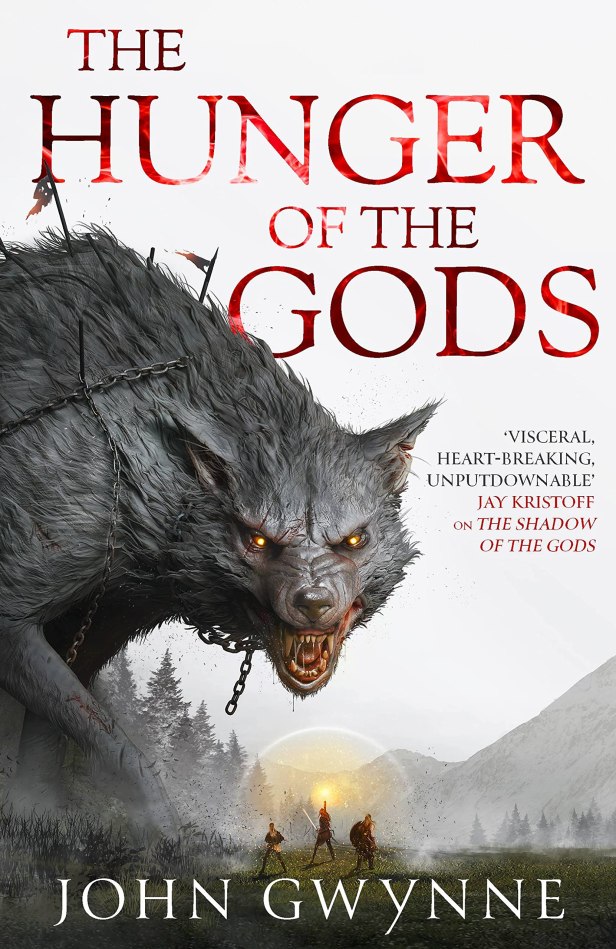
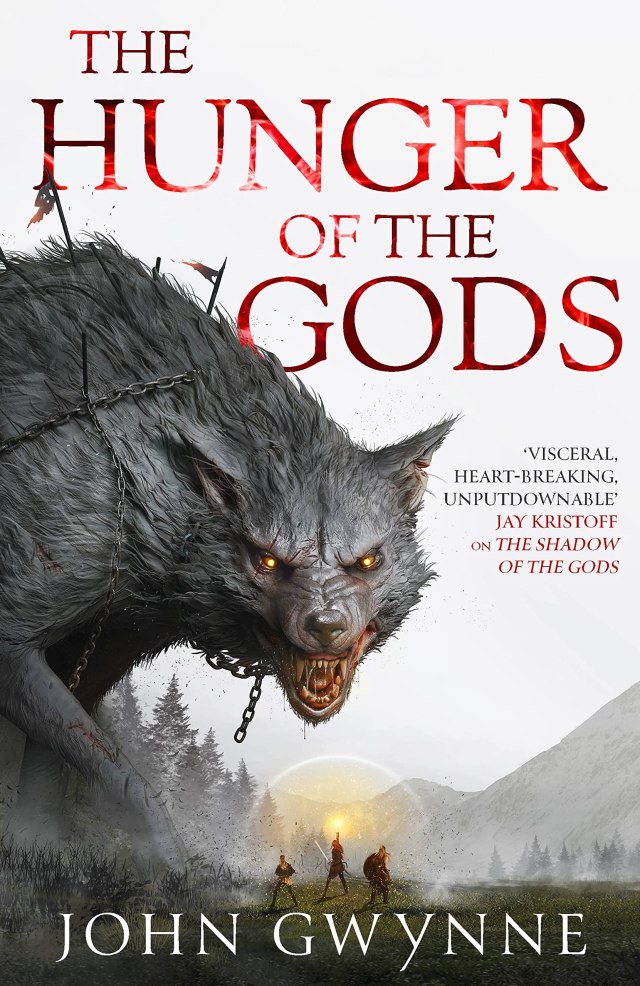
However, not all is lost, as some seek to stand against Lik-Rifa. Elvar, leader of the Battle-Grim, has killed her father and taken control of Snakavik. Bound by fate and her oaths, Elvar must balance her new responsibilities as ruler while she plans for war against Lik-Rifa, a seemingly impossible task. However, Elvar has done the impossible before by resurrecting Lik-Rifa’s hated brother, the wolf-god, Ulfrir, and binding him to her will. Now her most potent weapon and the ultimate bait for Lik-Rifa, Elvar seeks to use Ulfrir to destroy the gods coming for her. But even a giant wolf-god might not be enough to win the war, and Elvar needs even more allies to help her.
After scouring a bloody path across Vigrid, Orka Skullsplitter has rescued her son, but still seeks vengeance against Lik-Rifa’s forces. To that end, Orka reunites with her old warband, the Bloodsworn, and sets them to join Elvar’s growing host. Made up of deadly Tainted warriors, including their latest recruit, Varg No-Sense, the Bloodsworn have many reasons to fight against the dragon-god’s followers. Together, the Bloodsworn, Battle-Grim and their various allies prepare to face Lik-Rifa’s army in the greatest battle the world has ever known. But no-one is prepared for the chaos that is about to engulf Vigrid, as greater threats arise to devour all.
Gwynne continues to impress with this third and final Bloodsworn Saga novel. The Fury of the Gods was another high-octane, character driven, dark fantasy novel, that takes the reader on a powerful adventure. Loaded with fantastic moments and amazing action, The Fury of the Gods proved to be an outstanding conclusion to the Bloodsworn Saga, and I had such an awesome time getting through it.
The Fury of the Gods featured a spectacular and captivating narrative that starts off strong and refuses to slow down the entire way through. Taking off immediately after The Hunger of the Gods, Gwynne effectively sets the stage for the oncoming battles as the various character arcs continue at breakneck pace. Once again telling the story through the eyes of five distinctive protagonists (Orka, Elva, Varg, Biorr and Gudvarr), you get drawn into their intriguing personal tales as they recount the events they observe. The first half of the book keeps these protagonists mostly separated, and their various storylines continued in similar directions to The Hunger of the Gods. Orka is still set on her bloody revenge mission and must overcome her imprisonment by the rat-god Rotta. Varg and the Bloodsworn journey back from their rescue mission in the neighbouring nation of Iskidan, encountering new threats along the way. Elvar takes up the responsibility of ruling Snakavik after killing her father and finds herself leading the war against Lik-Rifa. Finally, Biorr and Gudvarr provide intriguing insights into Lik-Rifa’s camp, as both the conflicted Biorr and the snivelling Gudvarr try to survive the rise of dragon-god in their own different ways.
Gwynne does a good amount of set-up in this first half of the book, and it was nice to see the various characters continue to breathe on their own for a bit, while also amping up the dangerous antagonists. You once again get quickly drawn into each of the protagonists narratives, and I think that it is a testament to Gwynne’s writing that each of these storylines proved to be as entertaining and compelling as the rest. Unlike other multiple-perspective novels I have read, I honestly loved every single character perspective in The Fury of the Gods, and I was excited to continue each of them. Indeed, I find it hard to choose a favourite, as they were all fun while offering something a little different. That being said, Elvar’s chapters moved the plot along the most, and Gwynne did his best character work with her in this book.
Everything leads up to a particularly epic final half, as Gwynne brings together all five point-of-view characters to the same location for the first time in the series. With the protagonists spread out on each side of the conflict, you get a great view of the massive extended war as the god-led armies fight it out on several fronts, including in a brutal siege. Gwynne kept the action going thick and fast here, and there are some great encounters and moments as the various characters meet on the battlefield. Everything leads up to a massive confrontation nearly two-thirds of the way through, and there are some highly dramatic moments here, especially as the first big-death was a little unexpected. This major fight ends in an interesting way, although details of it are spoiled a little by the awesome cover above. This leads to some more fantastic moments, including the final battle between both sides. The author chucks in a few more tragic moments in this final bit of the book, although I must admit that there weren’t a lot of surprises here, with many of the big reveals well telegraphed in advance. I also thought that the various revenge arcs cluttered up the plot in a predictable manner, and I wish Gwynne had thrown a twist or two in here. Still, everything ended on an extremely epic note, and readers who enjoyed the previous Bloodsworn Saga books will come away very satisfied and happy with the finalised character arcs.
As with the previous Bloodsworn Saga novels, Gwynne brings a distinctive style to The Fury of the Gods, which I felt greatly enhanced the story. The blend of compelling Norse-inspired fantasy elements, great character work, and brutal action makes for awesome reading, and Gwynne presents it all in an accessible and enjoyable way. I loved how the characters’ dialogue and inner thoughts fell in line with the book’s historical inspiration, and while this style might not be for everyone, elements of it, such as the repetition of certain thoughts and phrases, gives it a real saga feel. As with the previous entries in the series, Gwynne makes excellent use of multiple character perspectives to tell his elaborate narrative, with his five point-of-view characters helming various chapters. The split between these five characters worked extremely well, and you get some intriguing alternate perspectives of events that blend well as the book continues. Gwynne makes excellent use of this split during some of the bigger combat scenes, and the use of shorter chapters when things get particularly exciting allows the reader to quickly switch amongst the action. Talking of action, Gwynne ensures that the combat in The Fury of the Gods is as bloody and well-written as in the previous books, and his brilliant action scenes are so well described and bring you right into the midst of the fighting.
As The Fury of the Gods is the third and final book in an epic fantasy trilogy, it obviously isn’t the most ideal place for readers to dive into the overarching story, and you really should start at the beginning of the series for the full emotional impact. However, for those who want to start with The Fury of the Gods, Gwynne does make this book somewhat accessible to new readers. Between the detailed summary of the prior books, glossary of terms, character lists and the callbacks to the previous events during the plot, new readers can follow The Fury of the Gods easily enough and have fun. This includes enjoying the full impact of the cool fantasy setting of Vigrid that Gwynne has lovingly set up during the three books. The clever use of Norse-inspired elements really lends itself to the epic revenge driven narrative that Gwynne features, and the mixture of mythological, fantasy and historical elements proved to be a winning combination. I still love seeing the various warbands using Viking war tactics against dark dangers and massive gods, and Gwynne really went all out making so many traditional Norse elements, such as weaponry, armour, ships and mentality, seem as realistic as possible. At the same time, the book’s fantasy inclusions, such as the various monsters and Tainted, the human descendants of the gods, add so much to the story, through their vicious nature, intriguing descriptions, and underlying societal issues. This was an overall pretty awesome setting, that Gwynne uses to full effect to tell his compelling tale. I hope that Gwynne returns to this world at some point in the future, and it wouldn’t surprise me if some of the younger characters featured here get their own story.
In addition to The Fury of the Gods’ fantastic story and great writing, I also need to talk about the awesome characters. Throughout the Bloodsworn Saga, Gwynne has put a lot of work into building up his various characters, and by this point in the trilogy you are highly invested in their respective stories. As such, there aren’t a lot of new figures in this final book, and you generally know what to expect when one of the protagonists’ chapters begins. However, it still proved awesome to see these figures in action again, and their compelling character arcs and differing personalities deeply increase the impact of the narrative. Of the main cast, I would say that Elva steals the show the most in The Fury of the Gods. While she has not always been the most exciting character in the series, this third and final book was where she really shined, primarily because she takes on the role of war leader against Lik-Rifa, and the increased responsibility changes her. As such, it was outstanding to follow her storyline, and I appreciated seeing how conflicted she got at times, especially when it came to treating the Tainted in her domain. Due to this, as well as some other badass scenes, Elva was one of the most compelling protagonists in The Fury of the Gods for me, and Gwynne provided an interesting conclusion to her narrative that I felt really worked.
The other four main characters all proved to be brilliant additions to the book, and their perspectives ensured quite an elaborate story. The dangerous fighters, Orka and Varg, were both solid point-of-view characters in The Fury of the Gods, and I really enjoyed seeing how their respective arcs continued, especially as they were the main avenue to seeing the Bloodsworn warband. Of all the protagonists, you were most likely to see action with Orka or Varg, and their various bloody sequences were a lot of fun. That being said, Gwynne went a little light with the character development for these figures in this book, and while they have some moving moments (Orka comes out of her solitude to find people she cares about, while Varg finally cements his place in the Bloodsworn), I felt that Gwynne focused way too much on their respective hunts for revenge, which resulted in some of their stuff getting a little repetitive.
However, Gwynne more than overcomes any minor deficiencies with Orka and Varg through his use of the antagonistic perspective characters Biorr and Gudvarr, both of whom have joined Lik-Rifa’s cause. Biorr proves to be a complex figure in The Fury of the Gods, and I loved how conflicted he become as his longstanding fanaticism slowly beings to wear away in the face of meeting his gods. Gwynne did a really great job with Biorr, and his personal journey and attempted redemption made for some powerful moments. On the other hand, we have the entertaining and despicable Gudvarr, whose chapters I always have fun with. Gudvarr is an impressively annoying figure who has spent the last two books trying to avoid danger only to find himself getting stuck in progressively worse situations. However, because he is naturally cowardly, weaselly and vindictive figure, you really don’t feel sorry for him, especially as every bad situation is the result of some failed ploy to gain influence or power. While Gudvarr is a particularly contemptible figure, it honestly proves impossible not to enjoy his chapters, as they are generally the most amusing in the entire book thanks his snarky inner monologue, the deadly situations he barely escapes from, and the near certainty that he is going to come to a sticky end. As such, I really enjoyed following Gudvarr and you can’t help but look forward to seeing what dangerous or manipulative situation he finds himself in next.
Finally, I must highlight all the awesome and impressive supporting characters that are featured in The Fury of the Gods. Gwynne has built up an exceptional and massive cast of characters throughout the series, all of whom add something to book. I loved seeing the many complex interactions that occurred between all these characters in The Fury of the Gods, and it was fun to see many of them meet for the first time in this final book, especially once all the perspective characters are together. Highlights include the key members of the Battle-Grim and Bloodsworn warbands, all of whom have gone through so much throughout the trilogy. Several of the best characters from both bands experience major tragedy in The Fury of the Gods, and it proves hard not the feel for them. I also need to mention the main antagonists, Lik-Rifa and Rotta, two vengeful gods whose desire for revenge and control move much of the plot along. I loved seeing the various human and Tainted characters interact with these dark gods, and Gywnne ensured they came across as a massive and dangerous threat. Two entertaining giant ravens, a fun talking head, and so many other great characters ensured that The Fury of the Gods was a moving and deeply personal read, and I am so glad I got the opportunity to know them during the run of this trilogy.
As with the previous books in the Bloodsworn Saga, I chose to grab The Fury of the Gods on audiobook, which proved to be a particularly awesome way to enjoy this epic read. Featuring a runtime just under 20 hours, The Fury of the Gods audiobook is a lengthy but highly exciting listening experience, and I found myself powering through this audiobook, namely because the format deeply enhances the intense story and intricate writing. Narrator Colin Mace, who has lent his voice to the other Bloodsworn Saga books, did another brilliant job with The Fury of the Gods, and his impressive voicework leant some additional impact and gravitas to the book. Mace perfectly portrays the Norse-inspired fantasy elements of the book, and I really loved how effectively he captured the various hard-nosed characters of the series. I especially loved Mace’s take on the gigantic gods and other dark creatures haunting the lands, and I felt that the narrator was a key reason why I had so much fun with this audiobook. Probably one of the best formats to enjoy The Fury of the Gods, listeners will have such an epic time with this audiobook.
With blood, fury and vengeance, the Bloodsworn Saga comes to a brilliant end that I could not get enough of. The Fury of the Gods was another exceptional read from John Gwynne, and I was so very happy to see how this entire epic narrative concluded. Loaded with action, excellent fantasy elements, and so many impressive characters, The Fury of the Gods was an outstanding book on its own, as well as an incredible conclusion to one of the most epic fantasy trilogies out there. One of my favourite fantasy books of 2024, The Fury of the Gods was an excellent read that gets an easy five-star rating from me.



 The Unseen Library