
Usagi Yojimbo: Volume 40: The Crow by Stan Sakai

Publisher: Dark Horse Comics (Paperback – 21 January 2025)

Series: Usagi Yojimbo – Volume 40

Length: 152 pages

My Rating: 5 out of 5 stars

Amazon

Stan Sakai’s iconic Usagi Yojimbo comic series powers through to its 40th volume, with the compelling and action-packed collection, The Crow, which proves to be another intense and impressive read.

Readers of this blog will know that I have a lot of love for the amazing Usagi Yojimbo series by Stan Sakai, which has remained one of my favourite comic series for years.  Following a rabbit ronin in an alternate version of Feudal Japan populated by anthropomorphic animals, the Usagi Yojimbo series combines cool art and great characters with a fantastic Japanese samurai aesthetic to create a particularly awesome comic series.  I love the various elaborate stories and scenarios that Sakai comes up with for the Usagi Yojimbo comics, and it is a real highlight of my reading year to check out the new Usagi Yojimbo volume.
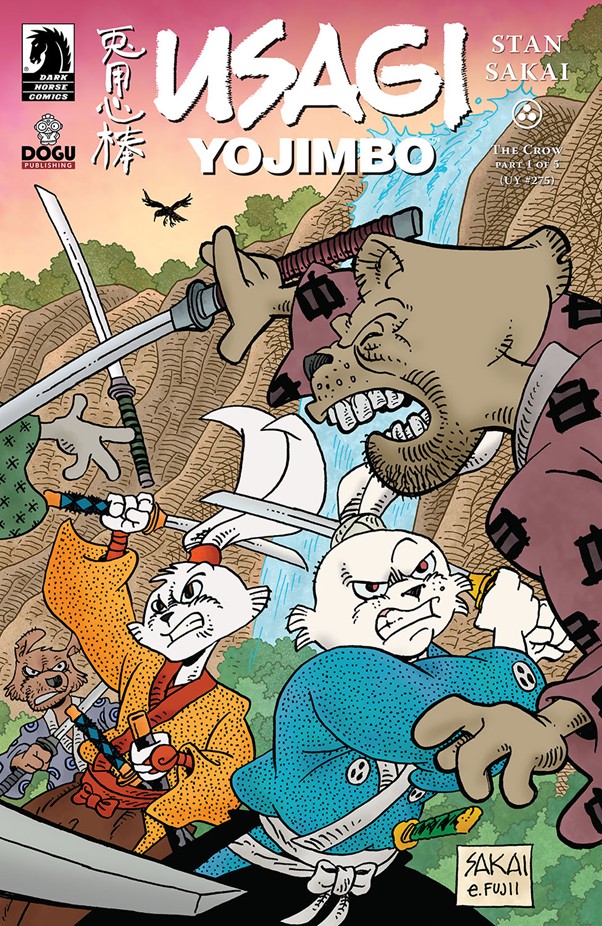
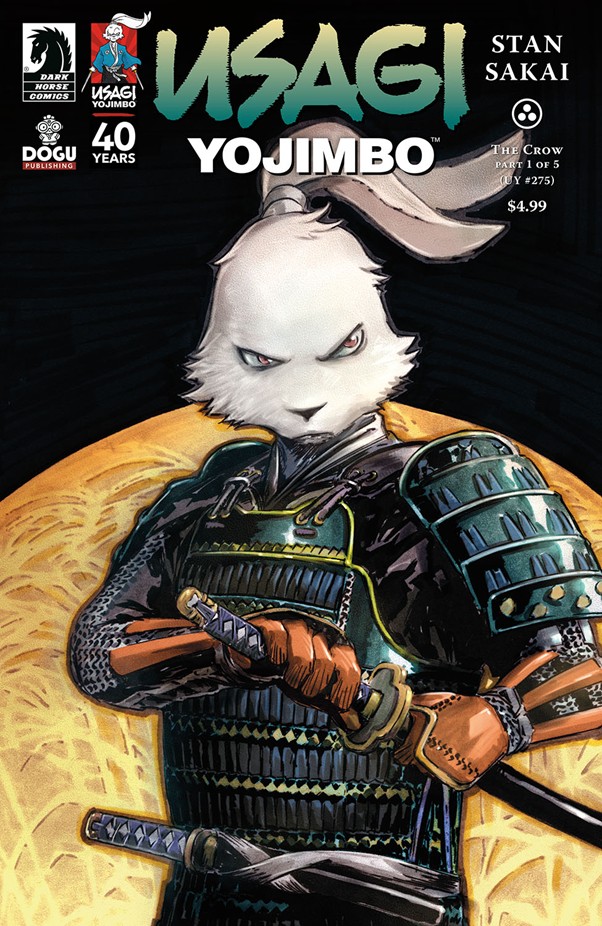
This latest volume, The Crow, is the 40th collected volume of the long-running Usagi Yojimbo comic and contains issues #275 to #279 of the series.  This is the second volume of the current Dark Horse Comics run of Usagi Yojimbo, which started last year with volume 39, Ice and Snow (one of my favourite books of 2024), and continues some of the ongoing storylines from the other recent volumes.  This volume is once again written and drawn by Sakai, with Hi-Fi Colour Design colouring in Sakai’s illustrations.  The Crow was another interesting addition to the series I was really looking forward to, as it follows Usagi and his unlikely companions into deadly danger.

Following their encounter in the mountains with the murderous Jei, Miyamoto Usagi and his cousin, Yamamoto Yukichi, have finally escaped the freezing north of Japan and have journeyed to warmer climes.  However, just because they are out of the ice and snow doesn’t mean they have escaped trouble.
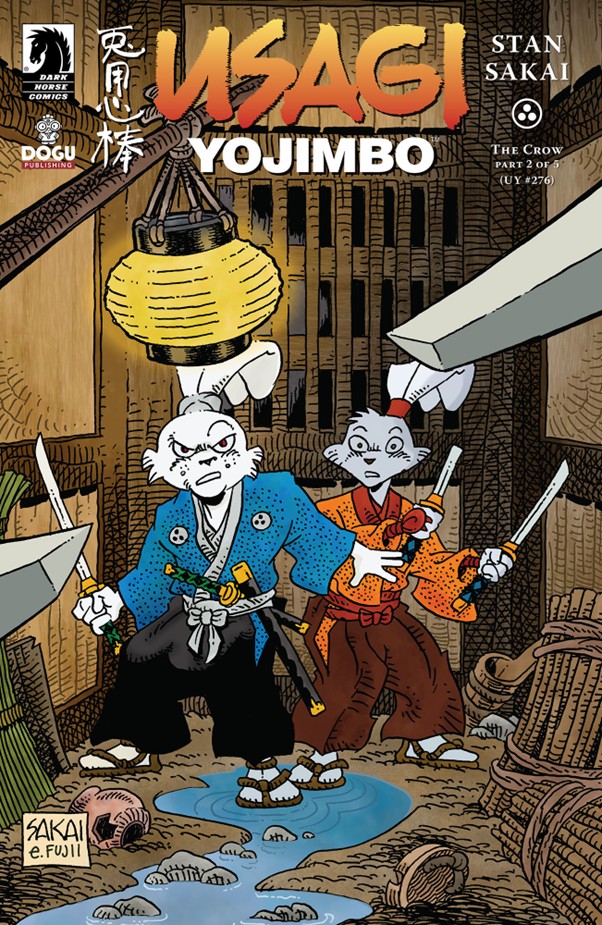
Closing in on the nearest town, Usagi and Yukichi come across a man being attacked by four ruffians.  Interceding in the fight and driving the attackers off, Usagi and Yukichi initially believe that the man they rescued was a merchant being robbed.  However, when they arrive at their destination, they find the place overrun by disreputable bounty hunters on the hunt for a big reward, including Usagi’s old companions Gen and Stray Dog.  Once again conned into paying for lunch, Usagi and Yukichi are shocked to discover that the focus of the bounty hunters’ attention is the person they saved, a dangerous bandit warlord known as Jimmu due to his crow companion.

Despite their intentions to avoid the hunt for Jimmu, the two rabbit ronin find themselves dragged into the fight by the deadly mercenary Inuyoshi, another acquaintance of Usagi who is also seeking Jimmu’s bounty.  Initially forced into conflict with Inuyoshi, Usagi and his friends soon find themselves unlikely allies of Inuyoshi’s bounty hunter band, as they must work together to take down Jimmu and his massive bandit army.  But with skilled warriors on both sides, and no mercy on the horizon, will Usagi and his associates survive unscathed?
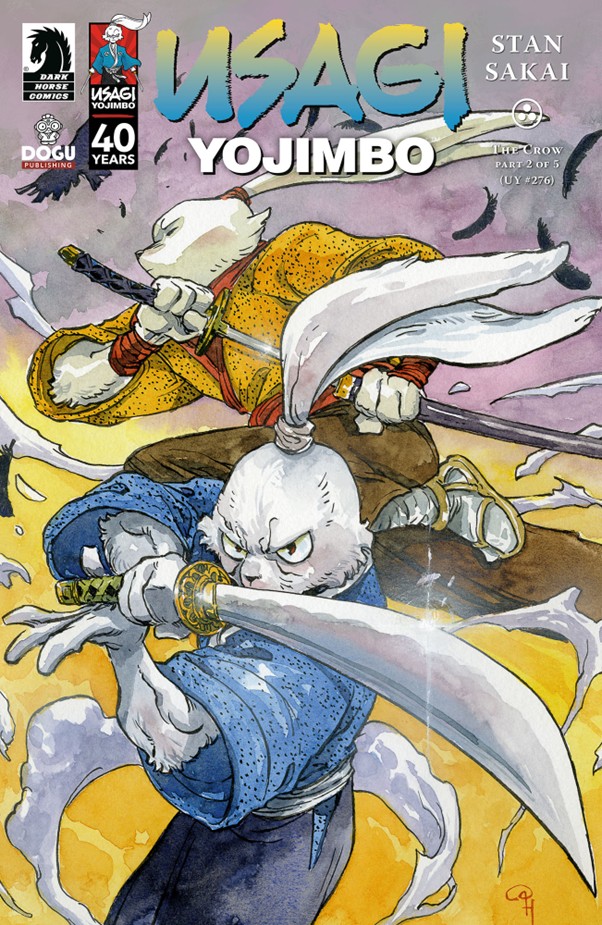
The Crow was another exceptional comic from Sakai, who continues his Usagi Yojimbo series with masterful style.  Featuring one major story that pitted the protagonists against an array of deadly warriors, The Crow had me hooked from the very beginning, and I finished the entire volume within an hour of getting my hands on it.  An outstanding comic with great art and some brilliant character arcs, The Crow unsurprisingly gets a full five-star rating from me and was so damn good.

I felt that The Crow had a particularly strong story behind it, as Sakai continues his recent trend of featuring a single multi-issue story in the volume, rather than a series of smaller short stories like in many of his earlier volumes.  This allowed the author to produce a complex, interwoven narrative that features several intriguing character-focused storylines.  Featuring the old classic start, with Usagi and Yukichi rescuing a traveller from assailants, you are drawn into familiar Usagi Yojimbo ground of bandits and bounty hunters, as the rabbit samurai encounter two of Usagi’s oldest companions, the money-focused Gen and Stray Dog.  This allows for some excellent early story tension, as the naïve and highly honourable Yukichi clashes with the morally flexible and cynical bounty hunters, especially when they discover that the traveller Yukichi helped was the notorious bandit chief Jimmu.  Sakai quickly moves the story into its central arc, when Yukichi is kidnapped by returning figure Inuyoshi, who seeks to keep Usagi, Gen and Stray Dog out of his hunt for Jimmu.
This kidnapping arc proved to be quite interesting, especially as the formerly honourable Inuyoshi verbally clashes with Yukichi and is forced to find his honour in the face of betrayals within his own gang of bounty hunters.  I really enjoyed some of the compelling interactions between some of the cast in the central part of the story, and Sakai cleverly works events so that Usagi and his friends can find and rescue Yukichi.  This central part of the story also features some great action sequences, especially a brutal, multi-page ambush by Jimmu who robs a merchant convoy.  The revelation about the true size of Jimmu’s bandit army inevitably results in Usagi’s group teaming up with Inuyoshi to find and defeat Jimmu, which results in a massive battle that takes up most of the final quarter of the volume.  This battle was everything you could hope for, and Sakai is in fine form with his drawings as he portrays the various fights.  The final duels between bounty hunters and Jimmu have some outstanding and memorable moments, and Sakai ensures there is some powerful tragedy that will live with a certain protagonist.  Sakai ensures that all the key character-driven story arcs are well wrapped up, and there are some touching moments that perfectly define some of the major protagonist’s personalities or struggles in this volume, which I felt made The Crow really stand out.  A very impressive overall story from Sakai, that shows just how interesting and intense his writing can be, even when he returns to his well-trodden tales of bandits and bounty hunters.
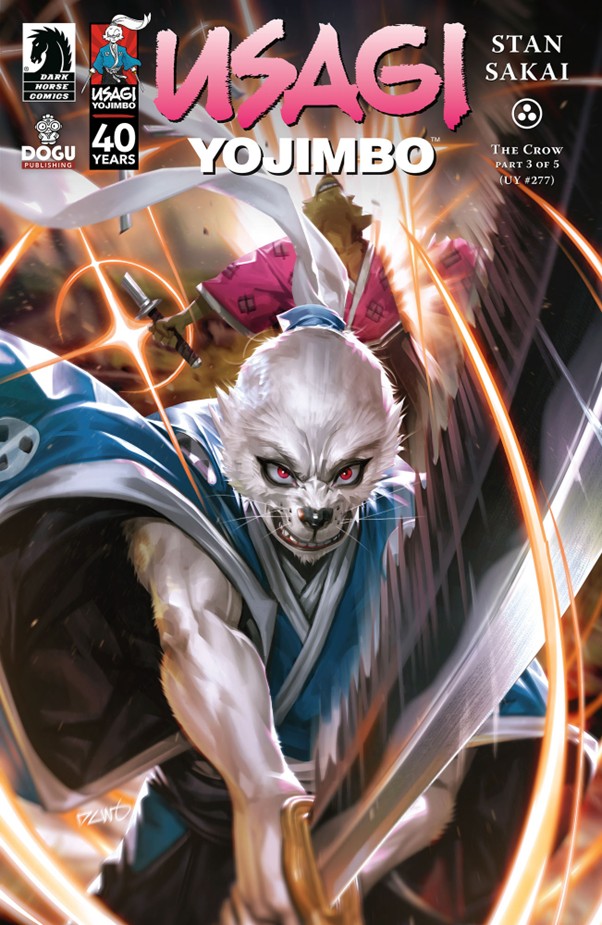
One of the things that I felt Sakai did particularly well in The Crow was to feature an array of great characters, whose combined arcs come together extremely well in the context of the larger story.  There is an awesome collection of characters in this volume, including old favourites, returning one-shot figures, and some intriguing new characters who proved to be excellent additions to the overall story.  Sakai does an excellent job balancing a number of these character storylines within the course of The Crow’s four issues, and there are some moving and compelling moments as a result.

A lot of the volume focuses on the three longer-term recurring members of the cast, Gen, Stray Dog and Usagi himself, who are the veteran presence in The Crow.  While they are featured quite prominently, Sakai doesn’t provide a massive amount of development for them, as they mostly fall into the same routines as they previously have, with Gen being the money-fixated conman, Stray Dog being the seemingly selfish and unfriendly killer, while Usagi is his usual honourable self.  I did like how Sakai once again painted Usagi more as a mature and world-weary figure, especially when compared to Yukichi, and it was interesting to see how much more realistic he is here than in some of his earlier encounters with Gen and Stray Dog.  Sakai also has fun once again featuring the dichotomy of Stray Dog, whose selfish outer-shell is cleverly balanced by his actual charitable actions, which are used to great effect for a secondary character towards the end of the volume.  Finally, Gen was his usual self, although considering how fun that is, I was happy with the result.
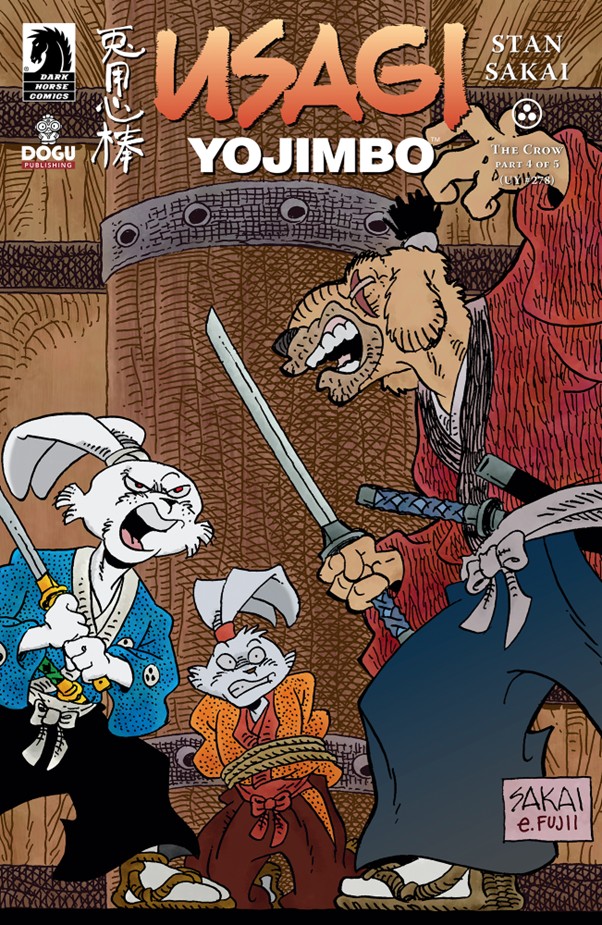
While these three long-running figures were well utilised, I felt that Sakai did his work with two more recent, returning additions to the Usagi Yojimbo universe with Yamamoto Yukichi and the mercenary Inuyoshi.  Yukichi, Usagi’s cousin introduced in volume 36: Tengu War!, has proven to be an interesting traveling companion for the protagonist, especially as he is very similar to a younger Usagi.  His naivety and unbending belief in honour without compromise is on full display in this volume, especially in his first interaction with Gen and Stray Dog, and it is interesting to compare him to the now more flexible Usagi.  Inuyoshi on the other hand is an intriguing figure who was introduced in the story The Sword of Narukami in the series’ 27th volume, A Town Called Hell.  A formerly honourable samurai betrayed by his lord’s heir, Inuyoshi has become a much more deadly and disreputable figure since his last encounter with Usagi.  I really liked how Sakai devolved Inuyoshi since his last appearance, both in his art and personality, as while he still maintains some of his honour, he has become even more ruthless, going so far as to capture Yukichi to keep Usagi and his companions away.  These two characters are in a way antithesis of each other, with one strictly holding onto samurai ideals while the other has abandoned them and is now more interested in money and survival.  The two play off each other extremely well, despite some major fractious moments, and I liked how they both gain something from the experience, with Yukichi getting a lesson in the real world, while Inuyoshi remembers some of his old honour.  Inuyoshi’s appearance here also perfectly wraps up some of the open storylines from The Sword of Narukami, and I appreciated that Sakai finally provided some closure for a one-off tale from several years ago.
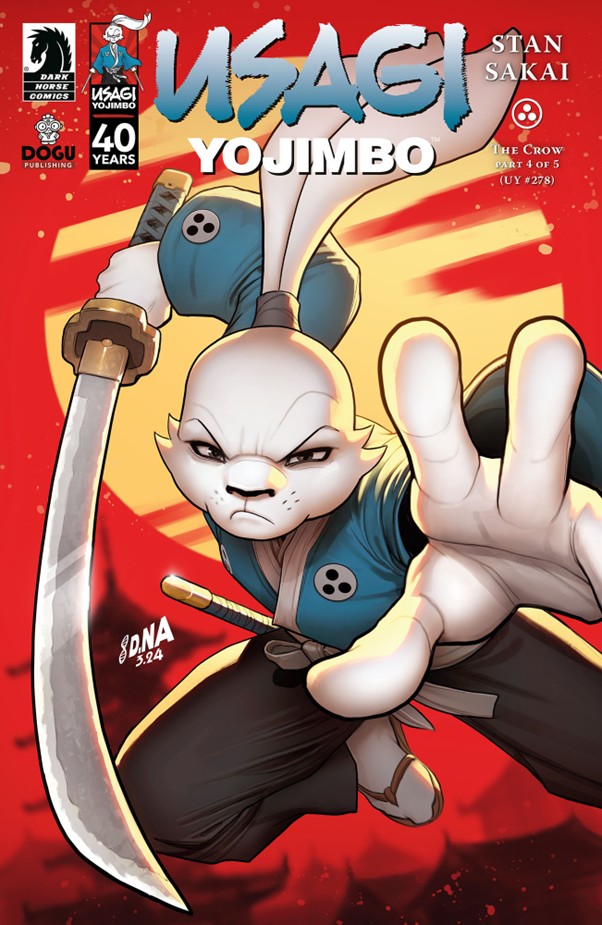
Aside from these great major characters, Sakai rounds out the cast of The Crow with some additional fun figures who each add some fantastic elements to the comic.  The volume’s main antagonist, Jimmu, proves to be a ruthless and competent outlaw leader, and I liked how his crow companion gave him a distinctive edge and allowed for some intriguing and well-drawn battle scenes.  The street urchin, Isamu, was a great mischievous figure who reminded me of a young, but brave, version of the recurring Snitch character.  Isamu has some fantastic interactions with some of the main characters, and it wouldn’t surprise me if we see more of him in the future.  Finally, Sakai has fun including a comedic merchant duo who get caught up in one of Jimmu’s raids.  Their entertaining banter during several scenes had me chuckling, especially when their newly discovered brotherhood is ruined by some ill-matched confessions, and they provided an excellent bit of humour amongst the darker story elements.  These great characters all filled their roles perfectly, and I deeply enjoyed how effectively Sakai utilised them in this fantastic narrative.
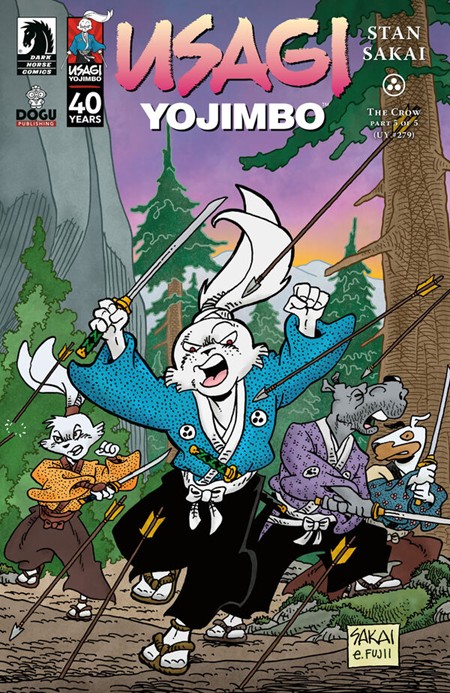
As with all the Usagi Yojimbo comics, I really need to highlight Sakai’s exceptional artwork featured within The Crow.  Sakai does another remarkable artistic job in this latest volume, and the comics are just gorgeous as he effortlessly brings his elaborate stories and characters to life with his amazing drawings.  All the characters are lovingly drawn, and their resultant actions, especially the cool battle sequences, are so intense and expressive.  I was particularly impressed with Sakai’s portrayal of rival samurai Inuyoshi, who had previously appeared once some years ago.  It was absolutely fascinating to see how Sakai’s drawing style has changed in the intervening years (I had a look at A Town Called Hell after reading The Crow), as Inuyoshi has so much more detail and depth in this appearance.  His scarred and somewhat more deranged appearance perfectly matched his darker personality, and I really think that he looked even more impressive in colour, which has only been a recurring feature since volume 34, Bunraku and Other Stories

These excellent character drawings are only matched by Sakai’s superb landscape drawings, which provide beautiful and powerful pictures of the story’s background setting.  These background drawings, whether they be depictions of historic Japanese towns or of the shaded natural forests, come across extremely well, and you really feel yourself becoming immersed in the setting as a result.  I must once again mention the awesome action scenes scattered throughout The Crow.  Sakai is a master of drawing epic sword clashes in his comic style, and you can feel every thrust and cut that the various samurai characters make.  Highlights for me this time included two massive group battle sequences that each have their own fantastic moments, cool duels against the bandit leader and his bird companion, and a somewhat graphic but very well-drawn decapitation panel which was both epic and gnarly.  This art once again perfectly enhances and compliments Sakai’s outstanding writing, and I love how even after 40 Usagi Yojimbo volumes, Sakai is still producing such masterful and moving pictures.
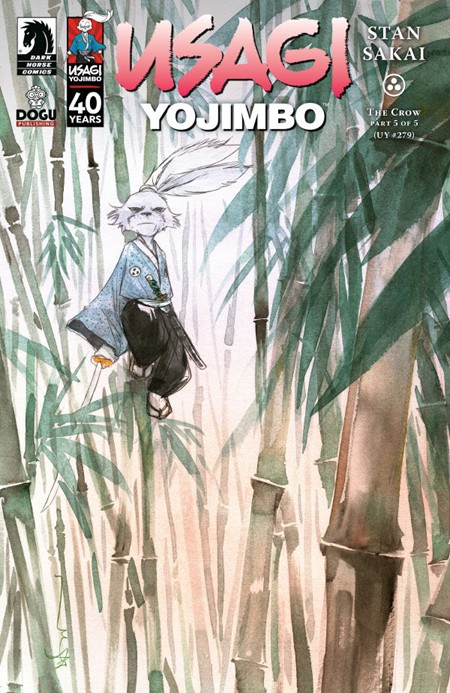
Stan Sakai continues to impress and wow me with his outstanding Usagi Yojimbo comic series.  This latest volume, The Crow, was another captivating comic, loaded with striking drawings, intense action, and some excellent samurai characters.  I felt that The Crow was a particularly strong entry in this always incredible series, and I am so very glad we were gifted a volume this early in the year.  I am hoping that we will get another volume later in 2025, but until then, do yourself a favour and make sure to check out the first exceptional 40 volumes of one of the best ongoing comic series.

Amazon

Throwback Thursday: Usagi Yojimbo: Volume 13: Grey Shadows by Stan Sakai

Usagi Yojimbo - Grey Shadows Cover

Publisher: Dark Horse Comics (Paperback – March 2000)

Series: Usagi Yojimbo – Book 13

Length: 200 pages

My Rating: 5 out 5 stars

Amazon

Welcome back to my Throwback Thursday series, where I republish old reviews, review books I have read before or review older books I have only just had a chance to read.  For this week’s Throwback Thursday I check out another epic entry in the amazing Usagi Yojimbo series by Stan Sakai with the 13th volume, Grey Shadows.

Usagi #23

I had a lot of fun reviewing the 12th volume, Grasscutter, last week and it set me down a bit of a reread journey which saw me revisit several other Usagi Yojimbo volumes.  As such I thought I would take the time to do another review of one of Stan Sakai’s comics, and luckily the next one on my list, Grey Shadows, is a particularly good one.

Grey Shadows takes place immediately after the massive events of Grasscutter and details several adventures that rabbit ronin protagonist Miyamoto Usagi goes on during this period.  Made up of issues #23-30 of the Dark Horse Comics run on the Usagi Yojimbo series, Grey Shadows returns to the series norm of featuring several shorter stories, each of which pit Usagi against a new threat or opponent.  Grey Shadows have several excellent stories, including some that focus on fantastic murder mystery elements while simultaneously introducing interesting new characters.

The first story in this volume is the intriguing and touching entry, My Father’s Swords.  This single-issue story first sees Usagi at the temple of his friend priest Sanshobo recovering from his deadly duel with the demonic spearman Jei at the end of Grasscutter.  Still troubled by the disappearance of Jei’s body and the sudden burden of being responsible for the legendary Grasscutter sword, Usagi journeys out from the temple to scout the surrounding area and determine if it is safe to move the divine blade.  His journeys eventually lead him to meet young wandering samurai, Donbori Chiaki, whose father was an old friend of Usagi’s who served with him under Usagi’s former lord.  While travelling with Chiaki, a chance encounter reveals secrets that will rock Usagi’s soul as a samurai.

Usagi #24

This was an interesting first story for Grey Shadows and it is one that I really appreciated.  I liked the excellent start that revisited key events of the previous volume and examined the burden that Usagi, Sanshobo and Gen now bear.  Not only does Sakai use this opportunity to inform the protagonists about some of the other events of Grasscutter that they were unaware of, but it also helps set up the future 15th volume, Grasscutter II, which will end this overall storyline.  Sakai also takes a little time to showcase Usagi dealing with the dark details of the defeat of his adversary Jei, especially after Jei’s body disappeared upon his defeat.  There is a great scene where a clearly shaken Usagi destroys Jei’s fallen black spear to convince himself that his foe is truly dead, although you can tell he doesn’t believe it.  I am rather impressed that Sakai manages to do such a comprehensive wrap up of the events of the previous volume in such a short amount of time, while also leaving room for another interesting story.

The main story of My Father’s Swords is pretty moving, as Usagi is immediately brought back to another trauma, his service to Lord Mifune and the Battle of Adachi Plain (see Volume 2: Samurai and Volume 11: Seasons).  Travelling with the son of an old comrade lets Usagi briefly relive his glory days, before the past is once again thrust upon him when it is revealed that his friend, Donbori Matsuo, is still alive, following his son anonymously as a cripple.  The reasons for Matsuo hiding his existence from his son and the burden he then places on Usagi to keep this secret for him is a little heartbreaking, and it provides more context about the samurai way of life Usagi is bound to.  The entirety of this storyline is handled perfectly, from the great introduction to Chiaki, the fun remembrances of Usagi’s past, to the final revelation about Matsuo that ends the story on a poignant note that will leave you very thoughtful and moved.  I enjoyed some of the clever artistic tricks in this story, such as the dark shade around Usagi when he deals with Jei’s spear, and the fun way in which Sakai slips in the beggar Matsuo into the background of several scenes, revealing his subtle surveillance of his son.  An excellent entry that not only references the events of Grasscutter but also features a powerful story of its own, My Father’s Swords proves to be a great start to this entire volume.

Usagi #25

Sakai follows up the moving first story of Grey Shadows with the dark second entry, The Demon’s Flute, a clever and memorable horror story.  The Demon’s Flute sees Usagi traversing some remote hills only to be drawn to a small town by the haunting melodies of a flute.  Once there, he discovers that the village is under attack by a mystical menace which kills villagers in utter darkness while the sound of a flute plays.  Believing it to be a ghostly figure of a flutist who wanders around with a white tokage (the dinosaur lizards that serve as this world’s main animals), the villagers implore Usagi to help save them.  However, the true evil attacking them proves to be more complicated and sinister than anyone of them believed.

The Demon’s Flute is a great story that shows just how haunting a Usagi Yojimbo story can be, especially when Sakai utilises some of the creepiest elements of Japanese mythology.  While some of the elements of the story are slightly predictable (Usagi has rocked up to save a lot of random villages over the years), the story has a great pace to it that sees Usagi attacked by dark forces he cannot overcome.  The various scenes where Usagi runs around the village chasing the darkness and the sound of a playing flute are extremely tense, and the sudden reveal of the story’s monster proves to be very thrilling.  I loved the great art that surrounded this part of the story, especially as Sakai makes great use of pure blackness to enhance the tension and threat of a scene, with Usagi often only illuminated by a small hand torch.  The final reveal of the monster and the reason for the haunting flute is pretty cool, and I liked the dark sense of honour and duty that drives even the evil and dead of this realm.  While parts of the story are wrapped up a little too neatly, this was still a brilliant entry which reaffirms my love for Sakai’s horror stories.

The next entry in Grey Shadows is the wholesome and enjoyable Momo-Usagi-Taro, which sees Usagi arrive at a large town.  However, he is almost immediately accosted by a group of orphan children who wrangle him into accompanying them to their orphanage, where he tells them an epic tale to keep them entertained.  This is a genuinely nice entry in this volume, which helps to break up the tension and serves as a gentle buffer between the darker stories in the volume.  While Sakai does take the time to do a little set up for the upcoming stories, most of Momo-Usagi-Taro is dedicated to Usagi’s story to the children, which is a retelling of the classic Momotarō folk story.  I always love it when Sakai tells traditional Japanese stories in his comic, especially as you get to see his artistic take on the legend (which usually results in the protagonist being altered to resemble Usagi), and it was great to see this classic tale brought to life in a new way.  Readers are in for a nice story here, and I loved the fun revelation at the end that the orphanage is the same one shown in Daisho, which is supported by the bounty hunter Stray Dog.

Usagi #26

Now we are getting to some of the main stories of Grey Shadows with The Hairpin Murders.  Set across two issues, The Hairpin Murders sees Usagi get involved in a murder mystery case in town when several prominent merchants are killed using a woman’s hairpin.  Teaming up with the brilliant detective, Inspector Ishida, Usagi helps with the investigation and is soon thrust into a long-hidden conspiracy that bind the victims together.  However, the closer they get to the truth the more resistance they encounter from Ishida’s superiors, forcing them to decide just how far they want to go to get justice.

This was an excellent and intriguing story that serves as one of the more impressive entries in this entire volume.  While still maintaining its comic style and focus, The Hairpin Murders reads just like a classic murder mystery story and sees the protagonist involved in a constricted investigation to find the truth.  Sakai sets up this mystery perfectly, and you are soon racing along to find out who is responsible and why.  There are a couple of great twists here, as well as some interesting connections to kabuki theatre, with the eventual reveal of the murderer and their motivations is handled really well.  The story ends on a pretty satisfying note, and it proves to be quite an intense and intriguing story.

Usagi #27

One of the best things about The Hairpin Murders is the introduction of new character Inspector Ishida, who serves as a supporting figure in the rest of Grey Shadow’s stories.  Based on real-life policeman Chang Apana (the inspiration for fictional detective Charlie Chan), Ishida is a hard-boiled police inspector who is tasked with investigating various crimes around his town, mostly murders.  Despite being restricted by feudal Japanese practices (he can’t do a proper investigation of a body), and the interference of his corrupt superiors, Ishida is a brilliant detective, able to solve complex crimes with the most basic of clues.  Ishida gets a great introduction in The Hairpin Murders, as not only do you see him investigating a tough case but you also learn more about his personality, dedication to justice and elements of his tragic past.  It is so fun to see him in action in this story, especially as he has that great fight scene that shows of his unconventional fighting style (which is surprising considering his small, hunched stature), as well as his excellent use of the cool jutte weapon (I love the jutte so much).  However, the real hint at just how complex and fascinating a character Ishida is occurs at the end of The Hairpin Murders when Ishida is presented with a massive dilemma of justice.  It is strongly implied that Ishida, who spends most of the story sticking to the rules, takes justice into his own hands, and I think it fits perfectly into his character arc, while also leaving some ambiguity about how far he went.  This really was one of the best character introductions of the entire Usagi Yojimbo series and it was so successful that Ishida would become a major recurring character in future volumes (such as Volume 32: Mysteries and Volume 33: The Hidden).

The other two-issue long story in Grey Shadows is the compelling and moving tale, The Courtesan.  In The Courtesan, Usagi runs into the scared young woman he has noticed multiple times in the last few stories and saves her from a group of masked attackers.  His actions lead to him gaining the attention of the town’s leading courtesan, the alluring Lady Maple, who begs Usagi to help save the life of her young son, who is the legitimate heir to the local lord.  However, dangerous forces within the lord’s court see Lady Maple kidnapped and her son in danger, with only Usagi able to help.

Usagi #28

This was another powerful story that really helps to make this volume stand out in terms of story building and character work.  The Courtesan is a particularly well-paced story that ties in well with the other entries of the Grey Shadow’s volume.  Sakai has come up with a pretty compelling narrative here, and the secret battle for control of the lord’s inheritance is played out with some awesome elements, such as a dive into the world of Japanese courtesans and including several great fight sequences.  The character of Lady Maple is particularly strong, as not only does Sakai make a lot of effort to highlight her elaborate beauty with his artwork, but he also shows the mother hidden underneath the fancy makeup and costume, one who is concerned solely for the welfare of her child.  This leads up to an epic and tense conclusion, as Usagi faces down all the conspirators, only for his victory to be marred by tragedy.  I loved the powerful ending this story contained, which, while sad, also ensures that several worthy characters get what they most wanted in life.  Easily one of the strongest tales in the entire volume, I always enjoy reading this impressive story.

The final entry in Grey Shadows is the fast-paced and action-packed single-issue story, Tameshigiri, which serves as an excellent conclusion to the entire volume.  Tameshigiri is another mystery story that sees Usagi assist Inspector Ishida to investigate some murders around town.  This time the two friends are looking into a series of random killings by mysterious masked samurai.  The attacks seem extremely random and lacking in motivation, but the two are soon drawn towards the acolytes of a failing sword testing school who may have a dark reason for dropping bodies around town.

Usagi #29

This was a pretty fun and cool final story for the volume, and it leaves an exciting end note for the reader.  Sakai pulls together a fantastic and compelling shorter story here that once again combines murder mystery elements with the traditional comic book action.  While the culprits of the murder are quite clear from the outset, it is pretty fun to see their plan unfold and the protagonist’s subsequent investigation into it.  The reasons behind the antagonists’ actions are pretty fascinating, and the author paints an outstanding picture of desperation and duty that drives them to kill.  I also quite liked the intriguing investigation into traditional sword testing, which ties into the story extremely well and proves to be a fascinating addition to Tameshigiri’s plot.  The entire story leads up to a massive action sequence that sees multiple participants on both sides engage in a deadly battle to the death.  Not only doe we get to see more of Inspector Ishida’s unique fighting style, but Usagi also shines in an awesome duel.  Throw in the amusing jokes about the events of the preceding story, where Ishida clearly knows Usagi is behind some of the mayhem, and you have a very entertaining entry that not only wraps up the Ishida-based storylines extremely well, but also ensures that the reader has some fun on the way out.

I must once again highlight Sakai’s brilliant artistic work in this cool volume, as Grey Shadows contains impressive examples of Sakai’s amazing style.  There are so many beautiful and intricately detailed drawings throughout this awesome volume, and I love how perfectly it enhances the already great storylines.  I particularly love the amount of detail that he throws into the various panel backgrounds, ensuring that the reader sees both the full breadth of Japan’s majestic natural landscape and the traditional feudal style buildings in the towns and villages Usagi visits.  Sakai also does incredible justice to the many battle sequences scattered throughout Grey Shadows, perfectly portraying the intricate deadly movements that make up the character’s sword play.  You always get an impressive sense of how the characters moved as they battled, and I deeply appreciated all the brilliant and brutal fight scenes.  This incredible artwork always pairs so perfectly with the written story, ensuring that this 13th volume was very spectacular and awesome to look at.

Usagi #30

As you can see, I had a lot of fun with Grey Shadows, and it proved to be another excellent entry in Stan Sakai’s Usagi Yojimbo series.  This 13th volume features several outstanding stories, which really dive into their unique protagonists and antagonists and show the full majesty of this version of feudal Japan.  Serving as a key entry in the overall series thanks to the introduction of a cool new character, Grey Shadows is a must read for all Usagi Yojimbo fans and it gets another five-star rating from me.

Amazon

Throwback Thursday: Usagi Yojimbo: Volume 9: Daisho by Stan Sakai

Usagi Yojimbo Daisho Cover

Publisher: Dark Horse Books (Paperback – 1998)

Series: Usagi Yojimbo – Book 9

Length: 215 pages

My Rating: 5 out of 5 stars

Amazon

Reviewed as part of my Throwback Thursday series, where I republish old reviews, review books I have read before or review older books I have only just had a chance to read.

Usagi Yojimbo Mirage - #7

It has been another good week of reading and reviewing for me, so I thought I would reward myself by doing a Throwback Thursday review of Daisho, the ninth volume in the outstanding, long-running Usagi Yojimbo series from one of my favourite authors, Stan Sakai.

Daisho is an impressive and exciting entry in the series, which unsurprisingly gets a five star rating out of me (full disclosure, every volume of this series is going to get five stars from me, it is just that damn good). This volume contains Issues #7-14 of the second run on the Usagi Yojimbo series, which was originally published by Mirage Comics (Issues #7 and #8 are only partially represented in Daisho as some stories from these issues were used in the prior volume, while a story from Issue #13 appears in the tenth volume that I will review next), and which has been collected into this volume by Dark Horse Books. This ninth Usagi Yojimbo volume is filled with several fantastic and creative stories that follow Usagi as he journeys across the land, getting into all manner of trouble and misadventures in this version of feudal Japan populated solely by anthropomorphic animals. Daisho serves as a significant inclusion in the overarching series, due to its connections to previous stories, and its introduction or resurrection of several key characters.

Usagi Yojimbo Mirage - 8

This volume starts off with an inspiring and tragic story, The Music of Heavens, which once again sees Usagi traversing the wilderness. His solitude is broken when he encounters the pack of Tokage lizards who he unwittingly befriended in a previous story, The Lizards’ Tale (which was featured in Volume 8: Shades of Death). While Usagi is less than thrilled to see the Tokages, they end up leading him towards another traveller who is making their camp in the woods. The traveller, Omori Kazan, is a mendicant Buddhist priest and skilled musician, who invites Usagi into his camp and talks to him about the various forms of music he studies. However, someone is stalking their camp, determined to get revenge and unafraid to kill an innocent bystander to get it.

I really liked The Music of Heavens and it proved to be a compelling first entry in this volume. The story is based on Usagi’s encounter with a new character, Omori Kazan. Kazan is an intriguing person due to his position as a komuso monk (the monks of emptiness) of a particular sect of Buddhism, which lends him a very distinctive look thanks to the woven basket hat (tengai) he wears on his head disguising his features. Kazan has an amazing arc that delivers a lot in a short while, as he introduces himself to Usagi and the reader, discusses music and religion, and then simultaneously meets his end while also experiencing the divine for the first time. This entire character arc is both beautiful and tragic at the same time, and it provides both Usagi and the reader with some significant emotional moments, especially when it comes to Usagi’s farewell to the Tokages. I also liked how Sakai utilises an antagonist from a previous story, and the fight between Usagi and this character was swift and well-drawn. This was an excellent introductory entry for this volume, and it is a story that I really enjoyed.

Usagi Yojimbo Mirage - 9

The second story in Daisho is the entertaining and clever entry, The Gambler, the Widow, and the Ronin. This story reintroduces the gambler from the previous story, The Duel (featured in Volume 6: Circles), who is up to his old tricks of organising deadly sword duels and cashing in on the bets of the local townsfolk. After the death of his previous samurai accomplice, Shubo, during a duel with Usagi, the gambler has been forced to find a new partner, the brutish and less skilled swordsman, Kedamono. However, Kedamono’s greed has convinced the gambler that it is time to end their partnership, and he quickly finds the ideal solution when Usagi arrives in town. However, as the gambler plots, he fails to realise that he is being stalked by Shubo’s widow, who is determined to get her revenge for the role he played in her husband’s death.

This was another amazing story that serves as a fantastic follow-up to a great prior Usagi Yojimbo story. I always get a real western vibe out of The Gambler, the Widow, and the Ronin, due to its title and the premise around a duel, it proves to be an excellent entry in this volume. Usagi is once again drawn into the plots of the gambler, and thanks to his humility, honour and good manners, which are mistaken as a weakness, both Kedamono and the local villagers are convinced that Usagi is a poor swordsman. However, the gambler, who has seen Usagi in action before, manipulates the odds so that he wins all the money when Usagi defeats his opponent, in a fun reversal of the events of The Duel. This was an incredibly entertaining scene as Usagi is again forced to deal with a bloodthirsty crowd, while the gambler feigns being saddened by the loss of his companion, despite being secretly delighted. However, the gambler ends up getting his comeuppance, and the widow, whose sad final scene was so memorable in The Duel, finally gets a small measure of justice. This was a very clever and enjoyable story, and I really loved how Sakai dived back to a prior standalone story to provide some closure and a fun continuation.

Usagi Yojimbo Mirage - 10

The next story is called Slavers, and it is a longer entry made up of two separate issues. In Slavers, Usagi encounters a young boy being pursued by bandits. Usagi defeats them and learns that the boy was attempting to get help for his village, which has been taken over by a gang of bandits who have enslaved the villagers as part of a destructive scam to steal their harvest and make a small fortune. Deciding to help the villagers, Usagi infiltrates the gang and attempts to rally the villagers to his cause. However, the gang’s leader, the villainous General Fujii, discovers the deception and captures Usagi, planning to kill all the villagers to make good his escape. Slavers is an amazing story that is not only intriguing in its own right but which also expertly sets up the series of follow-up stories that make up most of this volume. While the standalone narrative of Slavers gets a bit dark at times, due to an extended capture scene surrounding Usagi, it is a rather compelling story filled with action, deception and struggles against adversity.

Slavers is quickly followed up by three separate but distinct stories that can be combined together with Slavers into one large narrative that wraps up all the loose ends from the initial entry. The first one of these stories, Daisho Part One, sees Usagi in hot pursuit of General Fujii, who is in possession of Usagi’s precious swords. Due to the brutal actions of Fujii, Usagi loses his quarry and is forced into an extended hunt for him, eventually coming to a ransacked village. It turns out that the village had recently been raided by Fujii’s new gang, and Usagi must make a hard choice between recovering his soul or helping those in need.

Usagi Yojimbo Mirage - 11

I have a lot of love for Daisho Part One; it is probably one of my favourite entries in this entire volume. The story starts out with a magnificent and beautifully drawn sequence that shows the various elaborate processes by which a samurai’s swords are created. This impressive opening sequence is one of my favourite pieces of Usagi Yojimbo art from the entire series, and its creation highlights not only Sakai’s skill as an artist but his ability to research and portray intriguing parts of Japan’s unique culture and heritage. This sequence also shows the important a samurai’s swords to their wielder, as they are reflections of that warrior’s soul. This key concept is then brought to life in the main story, as it sees a somewhat unhinged Usagi risking everything to reclaim his swords from Fujii. Sakai does an outstanding job showing off how frustrated and enraged Usagi is at having his swords stolen from him, and he comes across as being quite frightening several times through the story. Usagi’s anger comes to a head when he reaches the village and his initial decision is to abandon the villagers and immediately follow Fujii and his men. However, a local village girl is able to shame him into thinking of others, and the old Usagi returns, providing aid to the villagers. This was an extremely compelling story that does a wonderful job combining a powerful, character driven narrative, with some exquisite artwork and some intriguing aspects of history, into an exceptional entry in this volume.

The next story in this volume is Mongrels, a quick story about a recurring Usagi Yojimbo side character, the bounty hunter Gen, which occurs around the same time as Daisho Part One. In this story, Gen enters a village and starts asking questions about his current bounty, General Fujii. However, he is not the only bounty hunter in town, as he soon encounters the notorious hunter Stray Dog, who is also hunting for Fujii. After a tense conversation, the two-part ways; however, both are determined to capture Fujii and outsmart their competition. This was a fun story that not only brings Gen into this multi-issue narrative but also introduces a couple of great recurring characters. Stray Dog is a fantastic character in the Usagi Yojimbo universe, and he often appears as a compelling rival (and sometime partner) to Gen (such as in the latest Usagi Yojimbo volume, Bunraku and Other Stories). This story serves as a swift and clever introduction to the character, and it was fun to see the rivalry between Gen and Stray Dog form so quickly. Mongrels also introduces the extremely entertaining side character, the Snitch (also called Toady), a sneaky, greedy character who provides information to the highest bidder. While the Snitch has only a short appearance in this story, he is going to start appearing in a lot of follow up volumes, and it is always fun to see where a character starts out. Overall, this was a great story that fits a lot of significant introductions and events into a few short pages.

Usagi Yojimbo Mirage - 12

The final story in this arc surrounding General Fujii is Daisho Part Two, in which Usagi and his guide meet up with Gen and Stray Dog right at the end of Mongrels. The three samurai decide to team up to raid General Fujii’s lair, and they engage in an all-out fight for money and honour. However, not everyone on the team is keen to work together, and betrayal is afoot. This was an excellent conclusion to the entire storyline, which I really enjoyed. This is a story chocked full of action, as the entire narrative sets up a massive fight between multiple combatants within an abandoned temple. There is some great character work within this story, not only from the protagonists, who bicker and fight amongst themselves, but also with the major antagonist, General Fujii. There some intriguing scenes that show Fujii’s efforts to lead and control a gang of bandits and cutthroats, and I also liked how Sakai shows him being haunted by thoughts of Usagi, whose swords he is holding onto. Usagi and Fujii finally get their showdown in this story, and it served as a fantastic end to this whole extended narrative. There are also some compelling moments surrounding Stray Dog, as he seeks to cheat the others out of the reward money for Fujii. While this initially paints him in a bad light, the source of his need for money is quickly shown, and it highlights just how complex and multifaceted this new side character is. I really liked how this entire story narrative ends, and Daisho Part Two is an excellent part of this volume.

The next story in this volume is the two-part entry, Runaways. In Runaways, Usagi journeys through a small town, when he finds himself in the path of a procession of the local noble lady. Hearing the lady’s name, Usagi is thrown back into the past as he remembers an adventure that occurred many years prior, when he was in the service of Lord Mifune. After finding out that the love of his life, Mariko, has married another man, Usagi is given a seemingly simple mission as a distraction. His task, to escort the young Princess Kinuko to the lands of her future husband, becomes infinitely more complicated, when their party is ambushed by a horde of Neko Ninja. Escaping with the princess, Usagi disguises Kinuko as a peasant in an attempt to hide her from their pursuers. However, the more time that Usagi and Kinuko spend together, the closer they become, until the lines of duty, honour and station become extremely blurred.

Usagi Yojimbo Mirage - 13

This was another exceptional story within the volume, and I liked how it flashed back to an adventure during his pre-ronin life. Set during the period when Usagi served Lord Mifune (as shown in Volume 2: Samurai), Runaways contains a powerful and emotional narrative that is actually based on Roman Holiday (Sakai is a massive Audrey Hepburn fan), which sees a princess run away with a strong male protagonist and grow close to him, despite her responsibilities and their differences in station. This proves to be a fun, if extremely loose adaption of the movie, and Sakai builds up a complex relationship between Usagi and Kinuko, as the two characters, both tragic victims of circumstances when it comes to love, grow closer to each other. However, despite their feelings, this relationship is fated to never be, and it ends in heartbreak, with the memories of it haunting both Usagi and Kinuko years later. I really liked how this story played out, and it was interesting to see aspects of samurai honour folded into the narrative from Roman Holiday. Other fantastic highlights of this story include the multitude of impressive fight scenes between Usagi and the Neko Ninja, starting with a major battle between two large groups of samurai and ninja. I also liked the exploration of the traditional Tanabata Matsuri festival that the two characters find themselves attending, especially as Kinuko has fun experiencing local customs, foods and activities that someone of her station will never get to enjoy. It was also cool to see an early adventure from Usagi, especially as this entry foreshadows events that have occurred in other volumes, including the return of several now-dead characters, such as Shingen (future leader of the Neko Ninja, who was introduced in Volume 3: The Wanderer’s Road, and died in Volume 4: The Dragon Bellow Conspiracy). An overall exciting and impressive story, Runaways is an amazing highlight of this volume.

The final entry is the short story, The Nature of the Viper. In this tale, a local fisherman finds the badly injured body of Usagi’s recurring foe, Jei, after he was thrown from a cliff during the climatic events of Circles. Bringing him back to his hut, the fisherman tends to Jei and manages to save his life. When Jei awakens, he shows his gratitude to the farmer be recounting a tale of viper and a peasant (a version of the classic fable, The Farmer and the Viper), before killing him and resuming his hunt for Usagi. This is a good, short entry that shows the fate of Jei after his last appearance. Jei comes across just as villainous and creepy as ever, and it was fun seeing the fisherman slowly realise just how much trouble he is in as the story progresses. While having a villain recount The Farmer and the Viper as justification for why they are killing a person is somewhat cliched at this point (although to be fair, this story was written back in the 90s), it was still a fantastic sequence. I think that this was an excellent way to end the volume, especially as the reader is left knowing that Jei has returned and that Usagi will be encountering him once again in the future.

Usagi Yojimbo Mirage - 14

Sakai has once again knocked it out of the park with the ninth volume in his series. Daisho contains several outstanding and memorable stories that are all wildly entertaining and contain some clever links to past and future entries in this series. I had an absolute blast reading this volume, and it is an extremely strong addition to the incredible Usagi Yojimbo series that comes highly recommend.

Amazon

Usagi Yojimbo: Volume 34: Bunraku and Other Stories by Stan Sakai

Usagi Yojimbo Bunraku and Other Stories Cover

Publisher: IDW Publishing (Paperback – 21 April 2020)

Writer, Artist and Letterer: Stan Sakai

Colourist: Tom Luth

Series: Usagi Yojimbo – Book 34

Length: 178 pages

My Rating: 5 out of 5 stars

Amazon

It is once again that wonderful time of the year when the brand-new volume of the ongoing comic series, Usagi Yojimbo, comes out. Legendary comic creator Stan Sakai returns with the 34th volume in this series, Bunraku and Other Stories, which contains four epic and entertaining stories taking place in the unique setting of a version of feudal Japan inhabited by anthropomorphic animals.

Usagi Yojimbo #1

Those who are familiar with my blog will know that I am a massive fan of the Usagi Yojimbo series, having read all of the comics that have been released, and this is easily one of my favourite series at the moment. I have been eagerly reading these comics for years, and since starting this blog I have been enjoying reviewing entries in the series, such as the prior two volumes, Mysteries and The Hidden (Mysteries was actually the first comic I ever reviewed on this blog), as well as some of the older volumes of the comic. As a result, I was extremely keen to get a copy of the new volume, and Bunraku and Other Stories was one of the top books I wanted to check out this autumn.

This latest volume is a rather special one, as it contains the first Usagi Yojimbo issues that Sakai has written for IDW Publishing. This series has been published by Dark Horse Comics since 1997, and their style was similar to that of the publisher before them, Fantagraphics Books. This move to IDW Publishing brings with it some very intriguing stylistic changes, namely that fact that each issue is now completely in colour. This is a massive departure from the previous entries in the series, each of which were originally released in black and white, and it brings the stories to life in a whole new manner. In order to do this, the series now employs a colourist, Tom Luth, who previously worked on Groo the Wanderer with Sakai. In addition, this latest volume is also physically different from all the previous volumes, as Bunraku and Other Stories is noticeably taller, which surprised me a bit when I saw it the first time, and which is seriously going to mess up aesthetics of my bookshelf. However, having the taller volume allows for slightly bigger panels than were typically featured in the previous Usagi Yojimbo stories, which I quite enjoyed.

Usagi Yojimbo #2

However, even with some of these physical changes, this is still the same old Usagi Yojimbo. Sakai has once again produced some outstanding and deeply enjoyable stories, equipped with his trademark art style and his fantastic and loveable characters. Bunraku and Other Stories contains Issues #1-7 of the new, IDW Publishing, run on the series, and is made up of four separate stories.

The first of these stories is titled Bunraku, and it is the main story of this entire volume, made up of the first three issues. In this story, Usagi is enjoying a bunraku, a traditional Japanese puppet play, when he encounters an old acquaintance, Sasuke, the Demon Queller. Sasuke’s endless hunt for demons and monsters has led him to the bunraku theatre, where he senses that a new evil has taken hold. Despite his reluctance to get involved in another one of Sasuke’s dangerous missions, Usagi agrees to help, especially after they find a corpse that has been supernaturally drained of its life energy. Together, Usagi and Sasuke find that a dangerous and malevolent being has infected the bunraku theatre, and they must do everything in their power to end it.

Usagi Yojimbo #3

Bunraku serves as an exciting and compelling first story in this volume, and I quite enjoyed its supernatural storyline. The Usagi Yojimbo series has a rich history of featuring Japan’s various supernatural monsters and demons in its narratives, and this is easily one of the better ones they have done. The antagonists of this story are rather creepy, and they serve as extremely deadly opponents to Usagi, who finds himself dramatically outclassed at several points throughout the story. I also liked the return of Sasuke, who has shown up in several supernatural storylines since his first appearance back in volume 14. Sasuke is a rather distinctive and intriguing character in this series, as he has dedicated his life to hunting and destroying demons and monsters, many of whom are opponents far beyond normal samurai like Usagi. Despite his tremendous magical powers, Sasuke often finds himself severely drained after each fight, but his drive to complete his mission spurs him on, despite how weary or physically weakened he becomes. Usagi and Sasuke have some interesting interactions throughout this story, as Usagi has become more wary of Sasuke after their last several encounters. Sasuke insists that Usagi helps him once again, and even guilts Usagi into working with him, which makes for a very unusual team dynamic. I thought it made sense that Usagi would be reluctant to get involved, as he or someone he loves has nearly died each time Sasuke has appeared so far. There was also a rather interesting moment when their antagonist asks Sasuke if Usagi was being groomed to replace him, a question that Sasuke does not provide an answer to, and which makes me think we will be seeing a lot more of this character in the future.

One of the more intriguing aspects of the story of Bunraku is the fascinating examination and depiction of the bunraku puppet shows. I always love it when Sakai highlights cool aspects of Japanese history, culture or industry in his stories, and this entry was really amazing. The whole concept of a life-size puppet theatre was really intriguing, and Sakai did a great job examining it, showing what sort of stories they produced and how elaborate their performances could be. This unique art form also turned out to be an awesome basis for this horror adventure story, and I really liked how Sakai worked it into the plot. I also really enjoyed the artwork contained within this first story, and Sakai has come up with some rather impressive sequences and scenes that not only do a fantastic job conveying the action that is occurring but which really highlight the horror aspect of the narrative. The various supernatural opponents in this book are shown to be quite scary and threatening, and I loved the way that Usagi’s face looked absolutely terrified as he fought against them. The use of colour in this first story is also extremely cool, and I loved how it helped bring the whole story to life. I particularly liked the way that the colour really enhanced all of Sasuke’s magical abilities and made them look that much more distinctive and mystical. There is one amazing sequence in which Sasuke turns his sword into flames, which looked so damn awesome and it put me in mind of that one iconic scene from the recent Demon Slayer anime. All in all, this was an outstanding and enjoyable first story in this volume, and readers are in for a real treat right of the bat.

Usagi Yojimbo #4

The next story that is featured within this volume is the two-issue tale, The Hero. In this entry, Usagi, still journeying across the countryside, has encountered an interesting fellow traveller, a famed author who is journeying to her father’s house. The author, Lady Mura, has written several novels, including a tragic tale of heroism that she lets Usagi read. As the two travel together, Usagi learns that Mura is the wife of a high-ranking samurai who is jealous of his wife’s writing ability, as the fame she gains from that far exceeds his reputation as a warrior. While Usagi is able to protect Mura from many of the dangers on the road, including bandits, how will he react when he encounters her husband, especially as the strict rules of honour that bind all samurai forbids him from interfering?

This is a rather heavy and clever story that I think is potentially the best entry in the entire volume. Sakai has crafted together an excellently written and well-thought out narrative that cuts deep into the reader’s emotional core before the end. The character of Lady Mura is an extremely tragic figure, as even after all Usagi does to protect her, her story still ends in heartbreak, just like all her novels. Despite how her story ends, she is able to pass on some inspiration to Usagi about the true nature of a hero, which is how she sees Usagi. There are some really intriguing discussions about the code of the samurai that binds all the major characters within this story, and the problems and compromises that occur because of it are in full display throughout The Hero. I also think that Sakai came up with a perfect ending for the entire story, which felt extremely satisfying, considering what had happened throughout the course of the narrative. The artwork in this story is also really cool, as not only do you have some of the most impressive depictions of the varied and beautiful feudal Japanese landscape (which look so impressive in colour) but you also have some amazing scenes that show fragments of Lady Mura’s novels. These scenes place Usagi in the role of the hero of the classic story (Sakai has done something similar in prior stories like My Lord’s Daughter in the sixth volume, Circles) and show him taking on an undead horde and their evil master, and they are some amazing drawn sequences. The Hero is a truly great story, and I think that Sakai has done an outstanding job coming up with this tragic and heartfelt tale.

Usagi Yojimbo #5

The next story, Adachi, is one of the more interesting entries in this volume, and it was one that I was curious to check out. This story was actually written in commemoration of the 35th anniversary of the series and features a fresh take on the very first Usagi Yojimbo story, The Goblin of Adachigahara, which I previously reviewed in the first volume, The Ronin. In this new version of the story, Usagi returns to the scene of one of his greatest personal tragedies, the battle of Adachigahara Plain (or Adachi Plain in later Usagi Yojimbo stories), where his lord, Mifune, died after one of his generals betrayed him. In the course of this battle, Usagi, who served as Lord Mifune’s bodyguard, was able to perform an essential service by fleeing the battlefield with Mifune’s head, keeping it out of the hands of the treacherous general and the evil Lord Hikiji. Usagi has journeyed back to this place to pay respects to the place he buried his late lord’s head, which only he knows the location of. However, he senses that he is being watched and continues his journey, eventually seeking shelter at the hut of an old lady, who warns him of a goblin that haunts the mountain. Later that night, the goblin attacks the house, trying to kill Usagi, but Usagi is able to trick him and engage him in a fair fight. The goblin is revealed to be the general who betrayed Mifune, who was disgraced and banished by Lord Hikiji due to Usagi’s actions in denying Hikiji his lord’s head. Now determined to claim Mifune’s head and claim what is owed to him, the goblin seeks to kill Usagi, who manages to win, thanks to the help of the old lady, revealed to be the general’s wife, who has remained in exile with him.

This is a really interesting updated version of the story, which I quite enjoyed reading. The whole story is actually a combination of three prior Usagi Yojimbo stories, with some new elements thrown in. The first part of the story, which shows Usagi reliving the events of Adachi Plain, utilises parts from two stories, including Samurai (which appeared in the second volume, Samurai) and Return to Adachi Plain (which appeared in the 11th volume, Seasons). This combination provided a much richer examination of the battle, especially Usagi’s role within it, and I think the two separate sequences merged together well, while also looking even more impressive in colour. The story then continues to focus on the events that previously occurred within The Goblin of Adachigahara, although there are some interesting additions. This includes the goblin deliberately targeting Usagi, due to his role in his dishonour, and Usagi finding out the identity of his attacker before killing him. Knowing that this is the general who betrayed his beloved lord adds a whole new emotional element to the story for Usagi, and their fight is a lot more vicious and elaborate. I also liked the way that Sakai spent time enhancing the visuals surrounding the goblin. While he looked rather cool in the original story, in Adachi, Sakai has made him look even more awesome and intimidating, especially in colour. I also found it interesting that Sakai has turned this whole event into a more recent story in Usagi’s timeline, rather than being an event that occurred quite early in his adventures. The change in the chronology is intriguing, especially as there is a rather great scene in the middle where Usagi, upon visiting the grave his former lord, begs to be released from his vow of service, perhaps so that he can pledge fealty to his friend, Lord Noriyuki of the Geishu Clan. Overall, I thought that this was a clever new take on a classic Usagi Yojimbo story, and fans of this series will appreciate this anniversary special.

Usagi Yojimbo #6

The fourth and final story in this volume is The Swords of the Higashi, which serves as a light-hearted and entertaining conclusion to this volume. The Swords of the Higashi sees the always amusing Usagi Yojimbo side character, Gen, involved in a whole new batch of trouble. This time, Gen and his occasional partner Stray Dog are attempting to recover two extremely valuable stolen swords from a group of bandits. Killing the bandits, the two bounty hunters run into Usagi, who decides to accompany them back to the sword’s owners, the Higashi clan. However, the three ronin make the mistake of leaving one of the bandits alive, and they must contend with a continued flurry of attacks as they make their way back to town.

Now this was a fun and enjoyable story that I found to be extremely hilarious. There are several great elements to this story that I really enjoyed, including the fantastic use of the three main characters, Usagi, Gen and Stray Dog, and their banter as they wander the wilderness is rather entertaining. There is also the really funny extended sequence which sees the characters come under constant attack from bandits and bounty hunters as they attempt to return the blades. Each of these attacks is led by the same bandit, who finds the three companions, gets his cohorts to attack them, and then runs away in a panic when the protagonists win, only to return with a new group of bandits and repeat the cycle a short time later. This repeated turn of events is extremely funny, mainly due to the ridiculousness of the situation and because of the way that Usagi and his friends get more and more exhausted and exasperated with each new cycle. Sakai does an amazing job of making all three protagonists look scruffier and more dispirited with each new attack, and their reactions each time are deeply entertaining, from the way that Stray Dog keeps yelling at Gen for it being his fault, Gen’s growing resentment and frustration at the bandit whose life he saved, and the usual stoic Usagi getting more and more exhausted with each fight: “I’ve been through battles less tiring than today!”. Sakai wraps this whole amusing episode up with a rather clever conclusion to the story, which sees another classic Usagi Yojimbo side character get the best of everyone, and which makes all of Usagi, Gen and Stray Dog’s effort be for nought, which is just so mean considering all they went through. This was an outstanding story that had me laughing the entire way through, and I thought it was the perfect way to end this entire volume.

Usagi Yojimbo #7

The latest Usagi Yojimbo volume, Bunraku and Other Stories, is another incredible comic from Stan Sakai that I absolutely loved. Sakai has once again produced several exciting and clever stories, filled with great characters, powerful emotional moments, clever examinations of classic Japanese culture and a number of visually stunning sequences, which are so much fun to read. With the comics now in full and glorious colour, this was an outstanding new entry in the series, and is a must read for all Usagi Yojimbo fans. It gets a full five-star rating from me and comes highly recommended.

Amazon