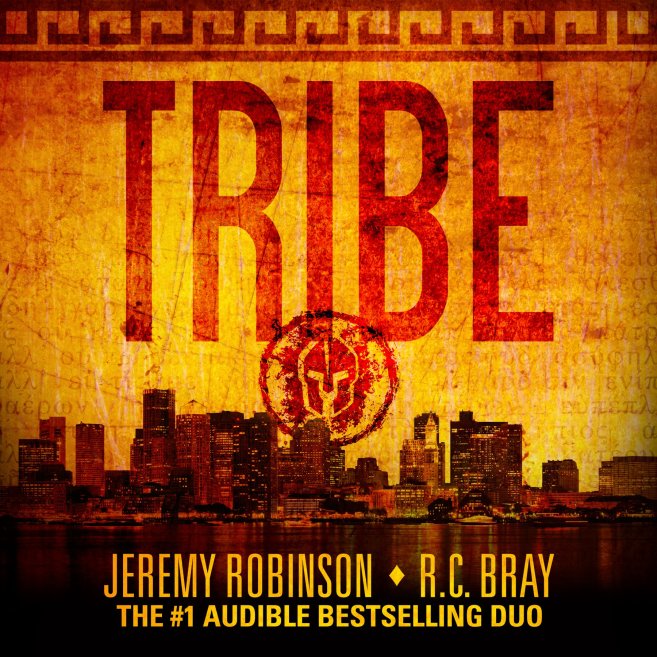
Tribe by Jeremy Robinson

Tribe Cover 2

Publisher: Breakneck Media (Audiobook – 26 November 2019)

Series: Standalone/Infinite Timeline

Length: 10 hours and 36 minutes

My Rating: 4.5 out of 5 stars

Amazon     Book Depository

Gods, mortals and everything in between will clash in Tribe, the intriguing fantasy thriller from the always entertaining Jeremy Robinson.

Last year I decided to take a chance and check out an author whose work I was unfamiliar with, and boy did that work out for me.  Jeremy Robinson had a very impressive and extensive list of awesome books to his name, most of which straddled the border between thrillers and other genres like fantasy, science fiction and horror.  The first book of his I checked out was The Dark, which followed a very likeable protagonist who gets caught up in a terrifying and horrific invasion of his neighbourhood by a horde of demons.  The Dark was an outstanding read, and I really got drawn into its awesome story, intense pacing and fun characters.  After giving The Dark a full five-star rating, I had to make sure to grab the other 2021 release from Robinson, Mind Bullet, especially as it was in the same loosely connected series.  Mind Bullet was a fantastic and highly entertaining read that followed a psychic hitman being hunted by a series of unusual but deadly assassins.  Mind Bullet was another five-star read in my book, and I had such a great time reading it.  Indeed, I loved both The Dark and Mind Bullet so much that I included them both of my top books and audiobooks lists of 2021.

Naturally, this has made me quite eager to read some more of Robinson’s work, and while I had to miss one of his 2022 releases The Order (I need to read some of the lead-up books beforehand), I did recently decide to go back and try one of his older novels, the 2019 release, Tribe, from the same storyline as The Dark and Mind Bullet.  Not only does this allow me to better follow one of Robinson’s upcoming books in the Infinite series but it had a very fun-sounding story that I really wanted to check out.  It turns out Tribe was just as fun as I hoped it would be, and I had a wonderful time getting through it.

Sarah, a 20-year-old college dropout working at a donut shop in Boston, has long struggled with the bad turns her life has taken.  Constantly plagued by bad luck and misfortune, Sarah has no one in her life she can count on, until she runs into homeless teen street punk Henry.  Henry, a kid who literally knows no fear, has randomly blown into her life and the two find themselves with a strange attachment to each other that they can’t explain.  However, life is about to get much more complicated for both when they run into each other at the local bank.

Arriving at the same time, the two manage to work together to foil a robbery that seems focused on targeting a mysterious and wealthy woman named Helen.  Taking Sarah and Henry under her wing, Helen attempts to take them to her apartment, but before they can make it they find themselves under attack by members of an ancient cult who are determined to cause as much chaos and destruction as they can.

Separated from the incredibly capable and violent Helen, Sarah and Henry find themselves alone on the streets of Boston, pursued by the cult.  Forced to keep moving and face off against a stream of determined and dangerous foes, Sarah and Henry begin to realise that there is something special about them that allows them to fight back, and which is making them stronger.  However, if they want to survive, they will need to discover the truth about who they are and what dark legacy their blood contains.  But with a dangerous figure hunting them, can Sarah and Henry live out the day, or will they become links in a master plan spanning millennia?

Tribe was an extremely entertaining and action-packed novel from Robinson, who utilises his usual fun and thrilling style to create an excellent read.  Featuring a captivating and electrifying narrative based around a couple of interesting and damaged figures, Tribe was a truly unique and captivating read that I had a fantastic time with.

Robinson crafted together a very interesting and highly exciting narrative for Tribe, which is essentially a non-stop action adventure from the very first scene.  After a quick but memorable introduction to, Sarah and Henry, the story dives right into the action, when the protagonists chance upon a violent bank hold-up.  Thanks to the impulsive Henry, the two are forced to intervene, assisting the mysterious Helen, making them heroes.  While you would imagine that would allow them to have some quiet time, Robinson puts them into the next action set piece within a few pages, as they are forced to flee an army of angry and over-the-top cultists who are hunting them.  This results in a series of impressively violent and extremely compelling fight sequences and chase scenes, as the protagonists try to survive while their lives are changing in ways that they don’t fully understand.  These initial sequences fill up the first half of the novel well, and you quickly become pretty damn invested in the narrative, especially once Robinson finally reveals the reasons behind everything and how everyone connects into the wider plot.  This first half also does a great job setting up the novel’s style, and you soon get quite used to the fantastic combination of action, character development and slick humour as the outrageous characters experience an array of over-the-top situations.

There are some rather interesting dives into Greek mythology in the second half of Tribe, which alters the course of the story and impacts everything the protagonists thought they knew about the world and themselves.  After a couple of attempted separations, the characters find themselves in some pretty dark situations as they finally face off against the big bad of the story, who ended up being an extremely sinister baddie.  The action comes thick and fast in this second half of the book, as the protagonists keep going up against a series of unique and memorable foes.  These scenes really make you appreciate Robinson’s ability to write brilliant, fast-paced action sequences, and the fantastic detail and intriguing depictions of deadly fights are so much fun to see.  I also enjoyed the strong Greek mythological motifs and elements that are slipped into this half of the book.  I think that they melded with the thriller style of the plot extremely well, and a lot of the story felt like a cool fantasy/superhero combination.  Along with some powerful reveals, major trauma, and subsequent character evolution, the protagonists become ready for the final confrontation that lays everything on the line.  The entire narrative flowed into this intense and high-stakes conclusion extremely well, and readers are in for a fun and captivating time as the protagonists go all out.  I really liked how everything turned out, and while this wasn’t my favourite of Robinson’s narratives, it was pretty damn addictive and readers will come away extremely satisfied.

I had a lot of fun with Tribe, and I am very glad that I checked it out, especially with how it plays into Robinson’s wider universe.  As I mentioned above, Tribe is part of a loosely connected series of cool books that are part of the Infinite Timeline.  While most of them are standalone reads, the further you get into the series, the more the storylines start to blend a little more, and this will all lead to several massive crossover novels, such as one being released later this year.  This is one of the main reasons why I wanted to read Tribe, as the main characters from it have appeared in the two other Robinson books I have read and will also be part of the upcoming 2022 release, Khaos.  However, readers don’t need to do any pre-reading for Tribe to enjoy it; thanks to its relatively early position in the Infinite Timeline, it doesn’t noticeably feature characters or story elements from the other novels.  As such, it is a very accessible read, and anyone who likes a fun action story can have a great time reading it.  Still, those people who are interested in Robinson’s larger series will do well to read Tribe soon, especially as it sounds like the plot of Khaos is going to come back to key details from Tribe in a big way.

I also deeply appreciated how Robinson made use of some excellent and fun central characters, Sarah and Henry, two seemingly unconnected people.  The story is set up to continuously rotate between their perspectives, which really enhances the overall quality of the narrative, especially when you get two separate views of the same events, or the characters are dealing with separate outrageous events at the same time.  The author does a great job of building up both characters throughout the novel as they start to discover their destiny and their various shared connections.  A lot of the revelations around them result in some interesting abilities and moments for the characters and watching them react to it in very different ways was very entertaining.  They also go through a lot of trauma throughout the book, and again both of them deal with it differently, which I felt was an intriguing and realistic inclusion.  Both characters are quite interesting in their own way, and they serve to balance each other out in the narrative, with Sarah acting as the moral and sensible one (at least until she unleashes the inner beast), and Henry being the wildcard.  Henry is definitely the life and soul of the much of the book.  Due to a brain condition, he lacks any sense of fear whatsoever and has no filter when it comes to doing stupid stuff.  I have mixed feelings about this; while many of these random outbursts and actions are a lot of fun, they do start to get a little repetitive and annoying after a while.  I also felt that it ensured Henry started to overshadow Sarah in parts of the book.  Still, these were some great central protagonists you quickly get attached to, and with the fantastic supporting figures, you have a lot of fun characters in this book that really enhance the narrative.

One of the most appealing things about Robinson’s books is that they all make for an amazing audiobook.  Tribe was another excellent example of this, especially as listening to the story really allows you to get to grips with the incredible and powerful action sequences.  With a run time of just over 10 and a half hours, this is a relatively quick audiobook to get through, and it is very hard not to get attached to it, especially when it features brilliant narrator R. C. Bray.  Bray is a very skilled audiobook narrator who, in addition to providing his voice to most of Robinson’s books, has also narrated several other great books and series, such as Michael Mammay’s Planetside series (Planetside, Spaceside and Colonyside), all of which were excellent audiobooks.  Bray has an exceptional voice that works really well to tell high-stakes and powerful action orientated novels while also bringing a range of interesting characters to life.  He did another outstanding job in Tribe, and all the high-octane action fights are told perfectly, with Bray really highlighting the brutal fights with his telling.  He also provides powerful and insightful voices to all the characters, with all their quirks and interesting features perfectly brought to life as a result.  As such, I had a brilliant time listening to Tribe on audiobook and felt that Bray’s excellent narration really added to my overall enjoyment of this novel.  As such, I would very much recommend the audiobook version to anyone interested in trying out Tribe, as it was a lot of fun to listen to.

Overall, Tribe was a pretty fantastic and extremely entertaining book from Jeremy Robinson.  Loaded with all the intense action, clever references to Greek mythology and intriguing characters you need for an incredible narrative, Tribe was such an epic read and it comes very highly recommended, especially as an audiobook.  I had an outstanding time, with Tribe and it will be interesting to see how these characters, as well as the protagonists of The Dark and Mind Bullet, will feature in the upcoming Khaos.
Amazon     Book Depository

Hide by Kiersten White

Hide Cover

Publisher: Penguin Random House Audio (Audiobook – 24 May 2022)

Series: Standalone/Book One

Length: 8 hours and 9 minutes

My Rating: 3.75 out of 5 stars

Amazon     Book Depository

Get ready to run and scurry for cover in the intriguing new horror thriller from Kiersten White, Hide.  Kiersten White is a captivating author who is known for her young adult and tie-in fiction novels.  I best know her for her work on the extended universe of franchises like Buffy the Vampire Slayer, where she recently wrote a series of novels about a new Slayer, which started with the 2019 release Slayer.  White is also making some waves this year with the new Star Wars young adult novel, Padawan, which follows a young Obi-Wan Kenobi and which is pretty high up on my to-read list.  However, her 2022 release that intrigued me the most was the thriller release, HideHide had a great concept to it and I couldn’t resist checking it out in the last week to see what it was all about.

Mack is good at hiding.  She’s spent her whole life doing it after it worked so well to save her life as a child while her family died around her.  However, after years of avoiding people, Mack is running out of options and money.  So when a strange challenge arises, Mack has no choice but to accept, even if it brings back terrible nightmares from her past.

A mysterious corporation is sponsoring a new and unique reality competition with a prize of $50,000 to the winner.  The challenge is simple: survive a week hiding in a creepy abandoned amusement park and don’t get found.  The last person left hidden is crowned the winner and gets enough money to change everything.

Competing against a group of similarly desperate and determined young people, each of whom is hoping that this game will turn their life around, Mack thinks the odds are in her favour to win.  However, there is something far more sinister going on than any of the contestants know.  As the people around her start disappearing, one by one, Mack and the rest of the competitors begin to realise that something else is in the park with them, something that is hungry and unrelenting.  Come out, come out, wherever you are.

This was an intriguing and fun book from White that I managed to get through in a few days.  I loved the excellent premise behind Hide and I think that the author produced a pretty good story that appeals to both horror and thriller fans.  While the book has a slightly slow start to it, once the competition starts I found myself getting pretty into it as I was very keen to see what happened.  White ratchets up the tension day by day as the competition continues, and I think that the increased level of threat and uncertainty that occurred helped to keep my attention and make me want to figure out what is going on.  There are some interesting revelations about halfway through the book that I thought were pretty clever, especially the reveal about what exactly is chasing them and why.  Once that happens, it’s a pretty high-octane fight for survival that results in some fantastic and compelling moments.  While there were still a few questions left over by the end of the book, I think White ended Hide pretty well and everything came together in interesting way.  I do wish that there the competition was a bigger part of the plot, as that could have been pretty cool, but I guess you can’t have everything.

White utilised an interesting storyline telling method to get Hide’s narrative across, which worked for the most part but had a few issues.  While the story is primarily focused around Mack, the book does quickly jump between the other characters in the book, giving some brief insights into their thoughts and history.  While this worked to keep you in the loop about every contestant, it was a bit random at times and I felt that it impacted the pacing of the story, especially when it jumped between multiple perspectives in a very short amount of time.  I also felt that the use of jumps resulted in some missing details in places, such as when some characters are removed from the contest without you realising it.  I did think that White did a good job inserting the background lore behind the events of the book into the story through a series of journal entries, and that part of the book was quite fascinating, although I wouldn’t have minded a bit of a deeper dive.  There is also quite a bit of social commentary chucked into the mix as well, especially when it comes to exploring the motives of the unsurprising villains, plus you must appreciate the strong LGBT+ elements thrown in as well.  The story itself had a mostly fine flow to it, and you do feel the fear and terror of the contestants once they realise what is going on.  All of this worked pretty well in the end, and I think that the story came across in a pretty accessible and compelling way.

White focuses the story on an interest group of protagonists, each of whom has their own reason to be there.  Due to the way that the narrative jumps around to examine different characters, you get a decent look into the heads of each of the competitors, as well as some other characters, and you soon get some insights into why each of them is there.  It soon becomes apparent that each contestant is pretty desperate and broken in their own way, which I felt added to the drama and intensity of the story.  However, due to the quick-fire change in perspective, the reader isn’t given a lot of time to bond with most of the characters, and their eventual fates aren’t too shocking or moving as a result.  The main exception to this is Mack, who you do spend quite a lot of time with.  Mack has a very tragic backstory (it reminded me of last year’s book, The Final Girls Support Group by Grady Hendrix), which becomes a major part of her motivations and trauma in Hide.  Watching her attempt to overcome her dark past and her reservations for being there is pretty intense, and there was some interesting character work there, as well as a potential for new friendships and romance.  A couple of other characters who survive towards the end of the book (I won’t mention who) are also developed to a decent degree, and I felt that some of the story arcs around them were pretty intense as well.  It was a little obvious which of them was going to survive and who was going to die, even with a few twists thrown in, although I did appreciate a few surprise changes in motivations that worked really well.  An overall interesting group of characters, I do wish that we could have gotten to know a few of them a little better though.

I ended up listening to Hide on audiobook, which worked as an excellent format to enjoy this interesting horror read.  Hide has a pretty short runtime of just over eight hours, so if you get caught in the story you can get through it rather quickly.  I felt that this format did help to emphasise the tension and the rising panic of the protagonists, especially as narrator Emma Galvin does a good job telling the story.  Galvin had an excellent voice that was pretty fitting to this setting and story genre, and she ended up doing a good job personifying the main characters.  I rather enjoyed the tone and intensity that Galvin brought to this audiobook, and I felt that this was a fantastic format to check out Hide on.

Overall, I had a lot of fun with Hide and Kiersten White came up with a great story that I really enjoyed.  While I do think that there were a few missed opportunities and pacing issues in places, this mostly came together pretty well and I think fans of exciting novels with horror elements to it will have a great time with Hide.  An interesting book that is worth checking out.

Amazon     Book Depository

The Lawless Land by Boyd and Beth Morrison

The Lawless Land Cover

Publisher: Head of Zeus (Trade Paperback – 31 May 2022)

Series: Standalone/Book One

Length: 474 pages

My Rating: 5 out of 5 stars

Amazon

Get ready for one of the most thrilling historical adventures of 2022 with the wildly entertaining and deeply captivating medieval fiction novel, The Lawless Land, by the outstanding team of Boyd and Beth Morrison.

Despite my recent focus on other genres, historical fiction in all its forms remains one of my favourite book categories to check out, especially with awesome new novels coming out all the time.  One of the best examples of this is The Lawless Land, which I was lucky enough to receive a copy of a little while ago.  The Lawless Land was a fascinating read that takes some great protagonists on a bold adventure through medieval Europe.  This book was written by Boyd and Beth Morrison, a brother and sister team who have deeply impressed me.  This was a rather interesting combination of writers, as Boyd Morrison is an acclaimed thriller and historical fiction author, and Beth Morrison is the Senior Curator of Manuscripts at the J. Paul Getty Museum and has a PHD in history.  These overachieving siblings really cooked up something special here with their first book, and I loved the outstanding story it contained.

In 1351, Europe is in utter chaos as the Hundred Years’ War rages in France and the Pestilence ravages the countryside, depopulating towns and devastating cities.  These are dark days indeed, and only the desperate and the foolish can be found traversing the roads.  Unfortunately, this includes skilled knight Gerard Fox, whose lands and titles have been taken from him as punishment for a crime against the church, and who is now forced to wander the world by himself, desperate to reclaim his family’s honour.

Journeying towards the castle of Lord Tonbridge, the one man who may be able to prove his innocence, Gerard witnesses a band of armed men waylaying a noblewoman.  Impulsively jumping into action, Gerard saves the women, slaughtering her attackers and forever changing his life.  The young woman, Lady Isabel, is Lord Tonbridge’s betrothed, who has fled from her future husband, taking with her a sacred relic she is sworn to protect.  Forced to abandon his own quest, Gerard agrees to escort Isabel to safety, however, he is unaware of the chaos that is about to be unleashed upon him.

Tonbridge had promised Isabel’s relic to an ambitious Cardinal in Paris, one who is determined to rise to the station of Pope.  Desperate to reclaim the relic and use it to cement his position, the Cardinal and his pawn, Tonbridge, unleash their substantial forces to hunt down Gerard and Isabel.  Fleeing their pursuers, Gerard and Isabel traverse the breadth of England and France to find safe harbour for the relic.  Forced to contend with dangerous foes around every corner, Gerard, Isabel, and their faithful companions will face the worse that medieval Europe has to offer and more.  But worse lies in wait for Gerard, as he bears a dark connection with his pursuers that will ensure they will never stop hunting him.

Wow, now this was a really cool historical fiction novel.  The exceptional writing team behind The Lawless Land have produced an outstanding novel that is extremely exciting, action-packed, and character driven, while also being heavy on the historical detail and accuracy.  This results in an exceptional and epic historical thriller read that I had an absolute blast getting through and which gets a well-deserved five-star rating from me.

The Lawless Land was such a cool read, and I quickly fell in love with its brilliant and exceptional story.  Essentially an adventure thriller set in medieval times, the authors start The Lawless Land off very quickly, showing the protagonist in battle as he saves the damsel in distress, only to end up in even more trouble.  Effectively introducing the key characters early on, you get a real sense of the novels impressive style right at the start, especially with its gritty feel and intense action sequences.  The story soon evolves into a high stakes chase across Europe, as Gerard, Isabel and their companions try to outrace and outwit their opponents to save Isabel’s relic and get revenge for Gerard.  The authors make excellent use of multiple character perspectives here to showcase the chase from both sides, and you get a good look at the various schemes and ploys of the antagonists, as well as the full depths of their villainy.  These amazing and action-packed scenes are expertly interspersed with some flashback chapters that examine the full history and tragedy of the protagonists, especially Gerard, and work to fully establish the enmity between him and the antagonists.  This entire first half of the book is very well written, and the authors’ excellent style will appeal to wide range of readers, not just historical fiction fans, as anyone who enjoys a great adventure or gripping thriller read, can get really engrossed in this excellent story.

This perfectly sets up the second half of this epic novel, which sees the character involved in all manner of carnage and battle as they attempt to win.  I honestly powered through the last 250 pages or so in a day; I was having that much fun reading it.  This second part has everything, including jousting tournaments, prison breaks, desperate chases, elaborate skirmishes, political intrigue, skullduggery and more action than you can shake a stick at.  There is even a full-on judicial duel (think The Last Duel), which was one of the most impressive and gritty fights in the entire book.  There are some intriguing twists, clever reveals, major tragedies, and some outstanding action throughout this entire second half, and it was so much fun to see it all unfold.  I really must highlight the impressive action of The Lawless Land, as all the fights felt particularly realist and very epic, and you can honestly feel every powerful swing and strike of steel on steel.  The authors bring all the established story elements of The Lawless Land together extremely well in the end, and readers will come away satisfied, especially with the fun conclusion and the great ending for the characters.  While this is ostensibly a standalone read, and the authors do wrap up everything really well, there is potential for a sequel at the end, and I for one would not be opposed to seeing more from these characters in the future.

One of the most compelling parts of The Lawless Land was the brilliant dive into the history of medieval Europe.  The writing team clearly did their research when it came to this novel, which is hardly surprising considering the scholarly expertise of one of its authors.  As such, this novel is loaded with impressive and captivating historical detail which isn’t overshadowed by some of the more over-the-top action.  You get a great sense of the how bleak and brutal the continent was at this point in history, with some chilling depictions of plague and pestilence, as well as some intriguing looks at The Hundred Years’ War, including a full flashback chapter to the Battle of Crécy.  The authors spend time exploring a ton of fascinating stuff from this period, including knightly conduct, the power and influence of the church, day to day life for people in cities and the countryside, and so much more.  I particularly loved the scenes set around a tournament in France, where the protagonist engages in a series of jousts.  The sheer amount of detail and realism around these scenes are so very cool, and you can really picture how everything would have looked and felt.  There is also a great examination of medieval manuscripts (again, because of one of the author’s academic focuses), which become a key part of The Lawless Land’s plot, and it was really interesting to examine the significance and process behind them.  All this impressive work around the setting and other historical elements of The Lawless Land really enhanced the overall quality of the book, and I loved how seamlessly it was worked into the epic narrative.

I also must highlight the fantastic characters featured within The Lawless Land, which includes an awesome balance of likeable protagonist and maniacal villains who hunt them.  The story is perfectly split between the two groups, and you get some fun and intense competing views of events throughout the story as a result.  The protagonists are headlined by the awesome character of Gerard Fox, a wandering knight, banished from his family’s lands by the church following a confrontation with one of the antagonists years ago.  Dragged into this conspiracy by accident, Gerard becomes Isabel’s companion and protector, and tries to escort the relic to safety.  A man of action and honour, Gerard is haunted by his past and his many failures, which include watching his brother die in battle, and being tricked into losing everything.  He is also obsessed with discovering the true fate of his mother, and her mysterious disappearance and certain revelations draw him into this conspiracy even further.  A lot of the novel revolves around Gerard’s past, and it was fascinating to see him come to terms with it and try to balance this current quest with his own desires.  Gerard ends up being a pretty awesome protagonist to follow, especially with his martial prowess, unique weaponry, penchant for mischief and trickery (like a certain French fox), and his unbending desire to do the right thing.

Gerard is accompanied by some interesting companions, and the most prominent of these is Lady Isabel.  A noblewoman who was forced into marriage, Isabel seeks to protect her family’s most sacred relic from her betrothed and goes to great length to escape him.  Although she is initially seen as a bit of a damsel in distress, you soon begin to realise that there is a lot more to Isabel than what first appears, as she is an incredibly capable woman with some keen insights and strategies that prove invaluable to her companions.  The authors work some excellent storylines around Isabel in this novel, and you really come to appreciate and enjoy her pluck, courage and intelligence.  There is also a very clever twist about this character revealed in the second half of the book, which was set up extremely well by the authors, including in some flashbacks that both hint at and hide the truth from the reader.  I also should mention the fun supporting characters of Henri and Youssef, two friendly rogues who have substantial history and friendship with Gerard.  Henri and Youssef are excellent additions to the protagonists, and their fun personalities balance well with Gerard and Isabel’s to create a very likeable group of heroes that you become quite attached to, even if that leads to eventual heartbreak for the reader.

I also need to talk about The Lawless Land’s outstanding trio of villains who dog the protagonists’ steps throughout the entire narrative.  This includes the evil Lord Tonbridge, Isabel’s betrothed who she runs away from.  While Tonbridge is mainly hunting them for Isabel’s relic, it also becomes clear that Tonbridge is even more obsessed with righting the perceived slight to his honour and is eager for vengeance.  However, Tonbridge is also partially subservient to villainous French cardinal Molyneux, who has promised him power and a kingship if he succeeds.  Molyneux is particularly despicable, as an ambitious and immoral member of the church who is attempting to become Pope.  Using his influence and the protection of the church for his advantage, Molyneux gains large amount of money and land through unscrupulous means and has some dark history with Gerard’s family, which deeply impacts both his and Gerald’s motivations to confound each other.  The final villain is Molyneux’s vassal and bastard son Basquin, who serves as the protagonist’s main pursuer.  A skilled swordsman and tactician, Basquin is a worthy, if not superior, foe to Gerard, whom he bears a powerful grudge against.  There is some fascinating history behind Basquin that became quite an awesome part of the plot, and it was great to see the intense and captivating confrontations between the two.  The authors take Basquin in some intriguing directions in this book, especially when his own desires clash with that of his abusive father, forcing him to go rogue and enact his own ambitious plan.  All these villains were extremely well written, and it proved highly entertaining to see them go up against Gerard, Isabel and the rest throughout The Lawless Land.  I had such a great time with the characters in this book, and their intense relationships, rivalries and schemes added so much to the power of the novel.

Overall, The Lawless Land was an exceptional and impressive historical fiction read from the great new team of Boyd and Beth Morrison.  These two talented writers came up with something very special with The Lawless Land, and I loved the outstanding and highly addictive narrative contained in this book.  Featuring a ton of epic action, some amazing characters, and some superb historical detail, The Lawless Land was an incredible read that comes very highly recommended by me.

Amazon

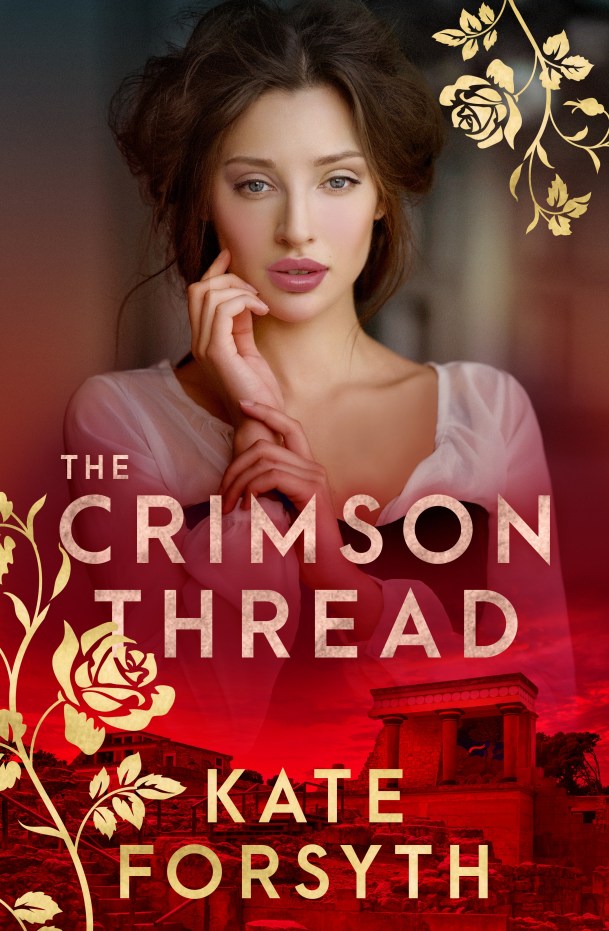
The Crimson Thread by Kate Forsyth

The Crimson Thread Cover

Publisher: Vintage Books Australia (Trade Paperback – 5 July 2022)

Series: Standalone

Length: 360 pages

My Rating: 4.5 out of 5 stars

Amazon     Book Depository

One of Australia’s premier authors presents another compelling and powerful historical drama with The Crimson Thread by Kate Forsyth.

Kate Forsyth is a very talented Australian author whose work I have long been a fan of.  While Forsyth is best known these days for her intense historical dramas, I personally am a big fan of her The Witches of Eileanan series, which I read when I was younger.  The Witches of Eileanan books, which were Forsyth’s debut series, follows a group of powerful magical users in a troubled fantasy realm filled with dragons, mages and monsters, as they attempt to overthrow a dark anti-magic tyrant and save the world from multiple impending threats.  Filled with great characters, impressive magic, a complex setting and some brilliant and occasionally dark storylines, this was a particularly awesome and epic series, and it was among the earliest fantasy books that I ever checked out.  I deeply enjoyed The Witches of Eileanan books and the sequel Rhiannon’s Ride series, and I have been meaning to reread them all for a while.  In the meantime, I decided it would be good to check out one of her more recent works with The Crimson Thread.  This intriguing and captivating historical drama is a lot more consistent with Forsyth’s current writing focus and I was very interested in seeing something from this genre.

By May 1941, the Nazis have conquered Greece and the island of Crete lies before them as the next land to control.  As the island prepares for invasion, young Cretan woman, Alenka, attempts to find some semblance of normality amongst the chaos, but chance meetings with two Australian soldiers stationed on the island will change her life forever.  When the Germans finally invade Crete in a massive and long-running battle, Alenka finds herself stuck in the middle of the fighting and eventually chooses to hide the Australians when the Germans win.

These two soldiers are Jack and Teddy.  Lifelong best friends, the rambunctious Teddy and the shy, scholarly Jack, joined the army together to see the world, only to get caught up in the chaos of the war.  Separated during the retreat to Crete, Jack and Teddy manage to reunite on the island, with both falling for the alluring Alenka upon meeting her.  When the Germans invade and they are trapped behind enemy lines with no hope of escape, both go to ground, seeking out help from Alenka and her allies in Crete’s resistance movement.

As the Germans tighten their hold on the island, Alenka, Jack and Teddy find themselves in constant danger as they attempt to find some way for the Australians to escape.  However, their attempts to evade the Nazis are not their only trouble, as Jack and Teddy’s once close friendship starts to deteriorate through jealously and anger.  Worse, Alenka’s brother, Axel, is a dangerous Nazi collaborator, whose long simmering anger and resentment threatens everything Alenka holds dear.  As Axel searches for a way to destroy his sister and her friends, all will be forced to make some hard choices, both on the battlefield and in love.

This was a deeply moving and highly detailed historical drama from Forsyth that I had a wonderful time reading.  Balancing a captivating historical tale of invasion in a unique World War II setting with a powerful tale of romance, broken friendships and family betrayals, The Crimson Thread is an outstanding novel which really highlights Forsyth’s impressive skill as an author.

The Crimson Thread has an excellent and fast-paced narrative that quickly drags readers in with the wartime action and keeps them there with the subsequent drama and tragedy.  Told from various intriguing perspectives, The Crimson Thread does a great job of quickly introducing you to the key characters and settings before bringing the terror in the form of a sudden and devastating Nazi invasion.  What follows is captivating tale of survival, endurance and resistance, as the three central protagonists attempt to evade and outwit the occupiers while also dealing with their own simmering feelings of love, betrayal and jealousy.  Forsyth weaves together some hauntingly tense and moving scenes throughout this narrative, as you see the characters thrust into all manner of dangerous and tragic circumstances amid the horrors of war.  The entire narrative has an excellent blend of action, high-stakes espionage and deep personal drama that I found myself really drawn to, all of which fits together perfectly with the distinctive setting and period.  The entire narrative takes place over the course of several years, and I deeply appreciate the long-term storylines that Forsyth utilised as you got to see the various characters grow and change throughout the war, often for the worst.  I loved the focus on camaraderie, identity and historical pride that was worked into the story, and all the unique plot points come full circle by the end.  Forsyth ends the entire excellent story of survival and war on a tragic, but hopeful note, and while you may end up with some conflicting feelings about the fates of some of the focal characters, readers are going to come away from The Crimson Thread both moved and satisfied with the story conclusion.

One of the things that I have always appreciated about books set during World War II are the sheer number of unique stories that can be written, as there were so many different battlefields, conflicts and personal dramas that resulted from them.  While I am fairly knowledgeable about history and World War II, I honestly knew very little about the occupation of Crete during the war, nor did I realise that Australian and New Zealand soldiers were stationed there when the Germans invaded.  As such I was pretty in the dark when it came to the historical context of the novel, but Forsyth was well on hand here and spent substantial time exploring the entire Nazi conquest and occupation of Crete during the war.  Everything is covered here, including the initial 11-day battle to take control of the island, the subsequent disorganised evacuation of Allied forces, the harsh occupation of the Cretans, which included several massacres, the resistance movements, and everything else that occurred from first day to the end of the war.  I was particularly intrigued by the role that Australian troops played during this conflict, and Forsyth made sure to really highlight why they were there and the various hurdles they faced during this war, including being trapped behind enemy lines with few options to escape.  All of this is worked into the story in a clever and impressive way, and the various characters find themselves involved in many of the key events, either as witnesses or participants.  You really find yourself getting drawn into the midst of these compelling historical events, and I personally found it incredibly fascinating to see them, especially as Forsyth did some substantial research for this book.

I also really appreciated Forsyth’s dive into the culture, history and iconic landscape of the main setting of Crete.  Most of this book takes place on this beautiful island, and I felt that Forsyth really captured the heart and soul of Crete and its people throughout the story.  There are some compelling dives into the identity and culture of the Cretan people, including the importance of their dress, their customs, their speech, and their defiant nature.  Due to most of this explanation being done to show the undercover Australian citizens how to blend, it proves to be very informative, and readers without much pre-knowledge of Crete come away with a lot of detail and appreciation for its people.  There are also some fun dives into the history of the island, particularly its ancient association with legend of the Minotaur and palace of Knossos.  Due to my background in archaeology, I found this to be extremely interesting, especially as there are also some compelling depictions and discussions about the famous excavations that took place on Crete during this period.  Throw in some breathtaking and highly detailed descriptions of the various environments and settlements on Crete, including its treacherous and massive mountains, which serve as a great setting for some particularly intense scenes, and you get an outstanding appreciation for this island.  All of this is utilised in The Crimson Thread’s story really well, as the characters, like the reader, really get to know the island and how it impacts many of their decisions and actions.

Forsyth also came up with some excellent and distinctive characters for The Crimson Thread, and their unique and emotionally rich storylines are a powerful part of this great book’s story.  This includes Alenka, who finds herself caught between her culture, her troubled family past, and her attraction to the two Australian soldiers she grows close to.  Despite primarily being shown as a strong and clever woman, Alenka goes through some real tragedies and trauma in this book that slowly wear away at her psyche.  I found it fascinating to see her growth throughout the book, as well as her attempts to overcome the various obstacles and indignities that come her way.  Alenka was really well counterbalanced by her brother, Axel, a dark and dangerous youth who serves as the book’s central antagonist.  Initially shown as a youth who grows into a dangerous teenager throughout the narrative, Axel is a complex figure.  A half-Cretan boy who is the result of an extramarital affair with a German archaeologist, Axel has borne the shame of his heritage for most of his life and endured the ridicule and disdain of everyone on the island.  Focusing on his German heritage, Axel becomes obsessed with Hitler and the Nazis and quickly grows to be a valuable collaborator for the occupiers, helping them root out the resistance and hidden Allied soldiers.  While he is an extremely repulsive and evil figure, you fully understand while he idolises the Nazis and tries to join them because of how well Forsyth explored Axel’s motivations and past.  Forsyth writes a very dark storyline around Axel, and it was fascinating to see him corrupted by both his own unfair past and the invading Nazis.

The other two main characters are the Australian soldier protagonists, Jack and Teddy.  Despite being old friends, these two are very much the opposite of the other, with Teddy being a wild, confident and arrogant figure, while Jack is a kind and shy man with a stutter.  While you wouldn’t think that they would be friends, Forsyth does a good job establishing their bond, and you fully understand why they are close to each other.  Both characters are interesting in their own right, and I appreciated how Forsyth highlighted their differences and showed how their relationship eventually broke down over their mutual attraction to Alenka.  Teddy’s slow crawl from causal larrikin to arrogant jerk is subtle, but well formed, and the author shows some compelling, but damning, change in views in his mind throughout The Crimson Thread.  Jack, on the other hand, grows from unconfident scholar to strong-willed fighter, all thanks to his love of Alenka.  I loved how Forsyth showed all his artistic skills and passions, such as poetry, as a strength, and it was pretty fun to see him succeed in the specialised spy school both characters end up in.  This poetry actually had an interesting role in the wider book, and you can see a great example of it at the start of different chapters.  Forsyth really excelled at creating some amazing and captivating character arcs throughout The Crimson Thread, and I had an outstanding time getting close to these figures and experiencing their triumphs and dark pains.

Overall, The Crimson Thread was a wonderful and deeply moving read that ended up being one of the better historical dramas I have read this year.  Kate Forsyth continues to shine as an extremely talented Australian author, and I had fun exploring a book from her current genre of choice.  Featuring some damaged characters, a powerful story and some exquisite dives into Crete and its wartime history, The Crimson Thread is a captivating and clever novel that I had an outstanding time reading.

Amazon     Book Depository

Sparring Partners by John Grisham

Sparring Partners Cover

Publisher: Hodder & Stoughton (Trade Paperback – 31 May 2022)

Series: Standalone/Short Story

Length: 306 pages

My Rating: 4 out of 5 stars

Amazon     Book Depository

In the mood for more legal thriller awesomeness from the mind of legendary author John Grisham?  Then make sure to grab a copy of his new short story collection, Sparring Partners.

John Grisham is an author who needs very little introduction, especially after dominating the thriller field for over 30 years.  However, I must admit that I only recently checked out his work with the 2021 book, The Judge’s ListThe Judge’s List was an extremely captivating novel that saw a determined investigator dive into allegations that a sitting judge was also a devious serial killer.  I really enjoyed this fantastic book and it definitely convinced me that I needed to read more of Grisham’s books.  Well, I recently got the opportunity to do so when I picked up a copy of Grisham’s latest release, the short story collection Sparring Partners.

Sparring Partners is an intriguing book that contains three of Grisham’s compelling short stories.  Made up of Homecoming, Strawberry Moon and the story Sparring Partners, this collection was an awesome and fun read that will really appeal to established Grisham fans.  I personally had a great time with it, and I ended up getting through it in three short intervals, knocking off one story at a time.  All three stories are quite entertaining in their own right, and together they prove to be an excellent and awesome exploration of Grisham’s style and love of the legal thriller.

The first of these stories is Homecoming, which takes the reader back to Ford County, which has served as the fictional setting of many of Grisham’s novels.  This story follows a small group of lawyers who find themselves in a unique situation when a disgraced former colleague returns to the fold.  Homecoming starts when small-time lawyer Jake Brigance suddenly receives a letter from long-lost friend and fellow lawyer Mack Stafford.  Years ago, Mack suddenly and unexpectantly fell off the grid, taking a stack of money from his clients and vanishing to parts unknown.  Considered a legend by the local legal community, Mack left behind a wife and two kids, and no one has ever understood the reasons for his disappearance.  Now, Mack is determined to return to Ford County and wants Jake and his friend Harry Rex Vonner to help navigate the waiting legal difficulties.  But as Jake and Harry work to secure Mack’s return, some members of Ford County are less than eager to see him come back and will ensure that retribution is waiting for him if he does.

Now I must admit that the first entry in this book is probably the weakest, as Homecoming does not have the most gripping narrative of the three short stories in Sparring Partners, mainly due to its low stakes.  However, it still proves to be a very compelling and interesting narrative that sees a disgraced fugitive lawyer who went through a major mid-life crisis attempt to return to the scene of the crime.  Loaded with characters with big personalities, this proves to be a very entertaining entry, and I enjoyed the unique and character-driven narrative that it contained.  Grisham provides some intriguing insights into small-town lawyering, while also taking the time to dive into some of the more significant characters.  There is a great focus on the character of Mack, especially around why he did what he did, and I really enjoyed the moving moments that looked at the impact his actions had on his family.  However, I did think that the story, while fast paced and interesting, was a bit bland and it never really went anywhere.  Still, this was a great introduction to the sort of stories you can expect in Sparring Partners and I had a wonderful time reading it.

The next entry in Sparring Partners is the powerful and intimate story, Strawberry Moon.  Set inside a death row of a prison, Strawberry Moon follows Cody Wallace, a young inmate with only three hours left until his execution.  Waiting for his final moments while his lawyer tries and fails to save him, Cody reminisces on his life and the poor choices, tragedies, and an unfair system that led him there.  But as the last minutes of his life tick away before him, Cody has just one request to the guards around him, one that will make all the difference in the world to him.

Strawberry Moon was the most powerful and heartbreaking of all the three stories contained within Sparring Partners and it serves as the emotional heart of the entire volume.  Grisham paints a grim and realistic picture of a young man who is about to be executed, by examining this remarkable figure’s remaining three hours.  Grisham has produced a deeply compelling and concise narrative that reader will swiftly get drawn into.  The story of Cody Wallace is beyond tragic, and the slow reveal of what he did and why he is about to die really gets to you, especially as it is interposed with scenes from his current existence and mentality, which has resulted in spending half his life in death row.  Watching Cody take pleasure in some of the little things he has as he waits to die is extremely moving, as are his final interactions with some of the more important people in his life, even if they are only passing acquaintances.  This story also serves as a rather blistering indictment of the death penalty system, and Grisham really got his point across extremely well, showing a mostly innocent person get killed for reasons outside of his control.  Easily the best of the three stories contained within Sparring Partners, I had an incredible time with Strawberry Moon, and you will get hit hard in the feels when you read this one.

The final story is the amusing and fast-paced story Sparring Partners, which shares the name of the volume.  Sparring Partners follows the unusual firm of Malloy & Malloy, a storied, family-operated law firm that is going through its greatest challenge.  With the Malloy family patriarch currently in prison for murder, the two remaining Malloy lawyers, brothers Kirk and Rusty, attempt to manage the firm in his stead.  However, the two brothers are polar opposites of each other and have very different ideas about how the firm should be run.  With their feud reaching an all-time high, the firm is in dire straits, and only their neutral colleague, Diantha Bradshaw, seems capable of saving it from ruin.  But Diantha has very different plans, and the firm of Malloy & Malloy may be in some real trouble.

This final story is a great entry as well, and it is definitely the most entertaining piece in the entire book.  Following a law firm in crisis, this was a fantastic and fun blend of legal thriller and family drama, as the entire lawyer family goes at each other trying to win.  Grisham sets the entire scenario up extremely well and shows the multiple conflicts, manipulations and twists in an awesome way.  None of the characters in this story are likeable, and it proves quite enjoyable to watch them fight and bicker throughout Sparring Partners, especially as many of them get what they deserve at the end.  While this entry did feature an extremely convoluted murder and investigation, which was a bit silly, there were a lot of good elements in Sparring Partners, and I had an awesome time getting through it.  A fantastic concluding story for this excellent book!

Overall, Sparring Partners was an interesting read to get through, and I quite enjoyed the various snapshots into Grisham’s imagination and writing style.  All three stories have some excellent merits, and while they aren’t the author’s best work they were very entertaining and compelling.  I loved the mixture of legal scenarios and interesting characters featured within this book, and Grisham’s ability to craft together a concise story even in shortform was on full display.  While Sparring Partners is very accessible to readers unfamiliar to Grisham’s previous works, this is probably best enjoyed by those fans of the author who are hankering for more of his unique stories in between books.  I had a great time reading it and it gave me some more insights into an author I am still not amazingly familiar with.

Amazon     Book Depository

Armored by Mark Greaney

Armored Cover (2)

Publisher: Sphere (Trade Paperback – 12 July 2022)

Series: Standalone/Book One

Length: 497 pages

My Rating: 4.5 out of 5 stars

Amazon     Book Depository

Bestselling thriller author Mark Greaney presents one of the most exciting and action-packed novels of 2022, the high-octane thriller Armored.

Over the last few years I have been really getting into the awesome thriller novels of impressive author Mark Greaney, who is having a very big 2022.  Not only has he released two separate novels but he also has a film adaptation of his iconic series coming out later this week, The Gray Man.  I am really looking forward to this film, especially as I am now a pretty big fan of The Gray Man novels, having enjoyed both the first book, The Gray Man, and some of the latest entries, such as Mission Critical, One Minute Out, Relentless and Sierra Six.  However, Greaney’s year is far from done as the novel version of his 2021 Audible Original release, Armored, has just come out.  Converted into book format, Armored tells an impressive and over-the-top tale of survival and destruction that has already grabbed the attention of legendary director Michael Bay, who plans to adapt it into his next major blockbuster.

Joshua Duffy used to be one of the best close protection agents in the world, working with teams of private military contractors as security for elites in some of the most dangerous countries.  But after his fateful last mission in Lebanon cost him his team, his client and his lower left leg, Joshua finds himself suddenly and violently out of the game.  Forced to work as a mall cop to support his struggling family, Joshua’s future seems shot.  However, opportunity is about to come knocking with a deadly offer he cannot turn down.

Following a chance encounter with an old colleague, Joshua is given the opportunity to work one last job that promises to solve all his financial issues.  A violent and highly organised drug cartel has risen to power in the Sierra Madre Mountains of Mexico, and its recent actions have greatly infuriated the Mexican government and army.  To save the large civilian population living in the Sierra Madre Mountains, the United Nations is sending a peace mission in to ease tensions and attempt to negotiate a truce before it is too late.  However, the only way to reach the cartel’s base of operations is by road, and that means travelling through one of the most dangerous and lawless areas on the planet, the Espinazo del Diablo, the Devil’s Spine.

Joining up with the notorious Armored Saint company and hiding his injury, Joshua is recruited as a team leader in the convoy assigned to keep the UN dignitaries safe.  Even loaded up in advanced armoured vehicles and working with a team of elite operators, Joshua has no allusions that his chances of success are slim, but even he is unaware just how dangerous this mission is going to be.  The other Mexican cartels are determined that the peace talks fail and are willing to pay any price to see the UN team killed and their rivals destroyed in the aftermath.  Worse, someone else is working behind the scenes to manipulate events to their advantage, and they are willing to kill everyone in the convoy to get what they want.  Can Joshua and his new team survive the deadly onslaught about to be unleashed upon them, or will they end up another victim of the Espinazo del Diablo?

Greaney continues to shine as one of our leading thriller readers with this highly entertaining action saga.  Armored is pure pulse-pounding excitement from start to finish, and I ended up powering through this substantial novel in very short order, especially once I got lured into its amazing narrative and impressively written fight scenes.

Armored Cover

I had a lot of fun with the awesome story that Greaney came up for this impressive release that is based around an intriguing and epic premise of a small team of mercenaries caught up in the violence and backstabbing of the Mexican cartels in a remote and dangerous area.  Armored has a great start to it that sets up complex protagonist Joshua Duffy extremely well, showcasing his last mission as a conventional private security contractor in a massive and deadly confrontation.  After this action-orientated introduction, you see a very desperate Duffy as he attempts to get on with his life, only to be dragged into the main mission of the book.  Greaney sets up many key parts of Armored’s plot in the early pages, introducing the main characters, showing the desperation surrounding the central protagonist, and introducing all the substantial opposition that they are likely to face.  Thanks to the use of mysterious antagonist Oscar Cardoza, you see just how rigged the situation is against the protagonists as the villain manipulates and deals with multiple cartels to ensure that they are all set against the peace mission.  As such, you know pretty early on that you are in for a wild thrill ride later in the book and Greaney does not disappoint.

Once Armored’s main story gets underway, the book moves at an extremely fast pace to match the convoy of armoured cars it is following.  The protagonists immediately face opposition, obstacles and attacks as they continue on their way, ignoring the multiple warnings about the even greater threats to come (seriously, they get so many warnings).  After surviving an increasingly deadly barrage of ambushes, betrayals and personal dramas, the story takes a whole new turn as a big twist switches the entire narrative on its head.  This twist was a fantastic game changer that was well set up during the earlier parts of the book, and it was really cool to see it fully unfold, introducing some intense new problems and opportunities.  Thanks to this twist, the second half of Armored essentially becomes one continuous battle for survival.  There are some really awesome and over-the-top moments during this second half, as several key characters die, the odds become more and more stacked against the protagonists, some final twists come into play, and new players are drawn into the fray.  This all leads up to the big conclusion, which unsurprisingly contains more action and excitement, before bringing everything to an awesome end.  I came away feeling pretty satisfied with how the story came together, and I think that Greaney wrapped up everything really well.

I quite enjoyed how Greaney wrote Armored as he brought his typical style to this later thriller.  The story was expertly told using multiple character perspectives to show the various viewpoints of the key protagonists and antagonists.  Not only does this result in a much richer story with various intriguing characters, but Greaney ensures that it ramps up the novel’s tension, especially when the reader can see betrayals and traps being formed in advance of them being unleashed upon the characters you are rooting for.  The author uses these alternate perspectives to also hint at hidden motivations in some of the supporting characters and it does a good job mostly disguising who the culprits are, while ensuring that the reader knows something big is about to go down.  There are even some intriguing flashback sequences thrown in for greater context, which help to highlight the bond two key characters have.  The entire story is very well paced, with Greaney doing a good job evenly spreading out the big action moments and the intriguing character development to ensure a continuous story that never has any slow points.  I also liked the way in which Greaney adds in some intriguing commentary about certain real-world issues, including around private military contractors, the issues surrounding wounded veterans, and the current political and criminal situation in Mexico, especially regarding the volatile cartels.  All this comes together extremely well, and the reader has a very hard time turning away from the story as everything unfolds before them.

Unsurprisingly, the real star of Armored is the action sequences, as Greaney really goes all out to provide the reader with all the high-octane gun fights they could ever want.  This thriller novel is packed to the gills with battle scenes as every major character is dragged into a series of brutal and bloody fights as they attempt to achieve their goals and survive.  I have always been really impressed with how realistic Greaney can make his fight sequences in The Gray Man novels, and this awesome attention to detail and realism continues over into Armored.  Greaney clearly knows what he is talking about when it comes to gun battles, and you really get drawn into the intense battles, as well as the detailed descriptions of proper military tactics and strategies, especially in the first half of the novel.  However, I did think that Greaney went a little too far with some of the action scenes in the second half of the book, as the already over-the-top action started to get a little insane.  Greaney was clearly trying to set up some big Hollywood moments for the announced adaptation here (to be fair, Michael Bay is going to love bringing some of these sequences to the big screen), even though it was a little too much at times.  I was especially bemused by one scene that saw several characters shooting guns out the back of a small plane, which resulted in one of the most ridiculous things I have read about in a serious thriller read.  While these crazy moments honestly did not detract too much from my enjoyment of the novel, it did give Armored a bit of an unfortunate sillier edge that it really did not need.

Finally, I need to highlight the characters featured within Armored.  Greaney has a good knack for creating large groups of likeable and distinctive characters, and most of the protagonists and antagonists in Armored were extremely good, adding some great elements to the overall story.  I particularly liked main protagonist Joshua Duffy, the wounded veteran contractor who is dragged back in for one last dangerous job.  Greaney does a lot with Duffy in this novel, showcasing him at his emotional height, slamming him down hard, and then slowly building him back up through the course of the main story.  As such, Duffy serves as an excellent central figure for most of the story, and watching him try to escape the ghosts of his past and bring his new team together to complete the mission proves to be deeply captivating in many ways.  I really enjoyed watching him being a major badass, even with one leg, and Greaney wrote a fantastic storyline over his attempts to take on a leadership role in this mission, despite dealing with a group of disrespectful and arrogant soldiers.  A definite standout character for me, it will be very interesting to see who is cast to play Duffy in the movie adaptation, and whoever it is will have a great role to fill.

Aside from Duffy, Armored featured a pretty large and fun cast of characters, with a decent focus being on the team members in Duffy’s armoured vehicle.  Made up of six members, Charlie team proves to be a solid group of protagonists, and Greaney writes a good story about them slowly coming together as a team, despite being gradually picked off.  While I enjoyed them, I did find them to be a little stereotypical in ways, with most of them being classic disrespectful and uncontrollable soldiers.  This is especially true for the characters of Wolfson, the arrogant former seal; Frenchie, the weathered veteran acting as the voice of reason; Squeeze, the extremely angry African American former Marine; and Tony Cruz, the talented but token Spanish-speaking soldier.  All of the above filled overused action tropes to a degree, and it felt a little lazy, especially when compared to some of the other characters in the book.  Luckily, this group of soldiers were well balanced out by their final member, NASCAR, the team’s driver and the book’s comic relief.  NASCAR, a former race driver turned military contractor with a history of crashing his vehicles, was an excellent addition to the cast, and his entertaining antics helped to distract from some of the blander figures in the team.

I also need to mention Duffy’s wife, Nikki, a former Army officer who has taken to cleaning houses to support her family and wounded husband.  While initially just a supporting role to help motivate the protagonist, Greaney ends up bringing Nikki into the main story in a big way as she attempts her own rescue mission.  I deeply enjoyed the determined narrative around Nikki, and it was a fantastic addition to the plot, even if it resulted in more problems for the protagonist.  I also enjoyed the other major female character in the novel, Dr Flores, a Mexican anthropologist who is assigned to the peace talks as a cultural advisor and interpreter.  Despite being a bit of a preachy figure, Dr Flores is pretty much the only character that has any common sense or idea of what they are walking into, and her knowledge and passionate personality slowly bring the main cast around.  I really enjoyed Dr Flores’s scenes throughout the novel, and you really feel for her as she keeps trying and trying to talk some sense into the soldiers or diplomats, only to be knocked back by their arrogant and dismissive attitudes.  The final character I need to highlight is Oscar Cardoza, who serves as the book’s main antagonist.  Billed as a cartel consultant who works for the highest bidder, Cardoza is a mysterious and dangerous figure for most of the book, visiting the various cartel leaders and working them to his advantage, before getting closer to the action halfway through.  I instantly enjoyed Cardoza from his first scene, especially after some fun, if ineffective, small talk with some cartel guards, and it was fantastic to watch him flit around the various cartels and play them to his advantage.  He also serves as a great foil to the main band of protagonists, and once he gets involved in the hunt for them, he really shines as a villain, especially once some secrets about him are revealed.  The cast of Armored ended up being a fantastic and captivating band of character, and I ended up becoming really invested in their unique and powerful storylines.

I cannot emphasise how exciting and enjoyable Armored turned out to be and I am really glad that I got the chance to read it.  Mark Greaney obviously had a ton of fun turning his latest novel into the most action-packed adventure he could, and Armored really lived up to its plot potential, providing the reader with wall-to-wall fire fights and intense combat.  While the novel did get a little over-the-top in places, this was a solid and impressive read that is really worth checking out.  An excellent and fast-paced thriller designed to entertain anyone who reads it; the Armored adaptation is going to end up being a pretty awesome movie that Michael Bay will have a wonderful time making.

Armored Cover 3

Amazon     Book Depository

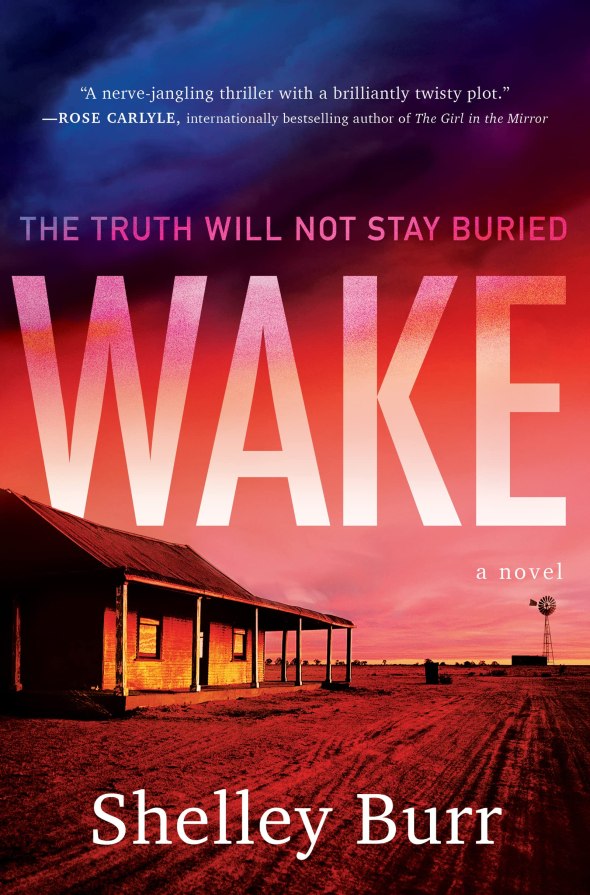
Wake by Shelley Burr

Wake Cover

Publisher: Hachette Australia (Trade Paperback – 27 April 2022)

Series: Standalone

Length: 360 pages

My Rating: 4.5 out of 5 stars

Amazon     Book Depository

2022 is proving to be quite the year for Australian crime debuts, with several compelling and thrilling read already out.  However, one of the more impressive recent debuts is probably the amazing release by new Canberran author Shelley Burr, Wake, a gripping and powerful crime thriller that takes the reader on a wild and emotionally charged ride.

Nannine is a small rural town in the harsh heart of New South Wales, punished by drought and slowly declining as the local agriculture industry starts to deteriorate.  However, Nannine will always have one harrowing claim to fame: the unsolved disappearance of Evelyn McCreery.  In 1999, young Evelyn disappeared from her rural house in the dead of night, right from the bedroom that she shared with her twin sister, Mina.

Now, 19 years after Evelyn’s disappearance, Mina lives a reclusive life on the destocked family farm, desperately seeking some shreds of normality.  However, the shadow of the unsolved case and the subsequent massive media storm that bombarded her family still haunts her, especially as many question whether she had a role in the tragic events, while others constantly attempt to claim the massive reward the family posted.  However, despite the time and her attempts to not get involved in the craziness again, Mina finds old wounds reopened when Lane Holland arrives in town.

Lane is a private investigator and failed Federal Police cadet who has made a living out of cracking cold cases involving missing girls.  Interested in claiming the substantial reward, Lane begins his own in-depth investigation of Evelyn’s disappearance, and his determination and insights soon grab Mina’s attention and she finds herself drawn close to Lane.  However, Lane has his own personal reasons for solving the case, and his dark ghosts could end up dragging Mina down with him.

This was an excellent and captivating debut novel from Shelley Burr, which is already gaining some major recognition, including some major Australian awards.  While I knew I was likely to enjoy this amazing novel, I ended powering through Wake in a day as I got really hooked on its compelling and intense outback story.

I deeply enjoyed Wake’s awesome story, especially as Burr makes sure that it contains all the necessary elements to grab your attention.  This novel starts in the modern day, 19 years after the disappearance that rocked Nannine, and sees newcomer Lane Holland arrive to attempt to solve the case.  The introduction of this sleuth character helps to jumpstart the narrative, especially as his new investigation allows the reader to find out all the relevant details about the old case, while also revealing the lasting issues it had on the various protagonists, including the long-running infamy of being involved with such a major case.  Most of the first half of the book revolves around Lane trying to find his feet in the investigation and get close to Mina, while also finding himself involved in a separate case involving another missing girl.  At the same time you get to know Mina from her perspective, and find out just how messed up she is because of the disappearance and media scrutiny.  All the key characters, major story elements, hints and settings are perfectly set up in the first half of Wake, and the captivating mystery and damaged characters really drag you in and ensure that you become deeply invested in seeing how the case unfolds.

After some big reveals about halfway through the novel, the story intensifies even further, especially once you fully understand Lane’s drive and get to know the characters even better.  There are some compelling twists and turns in this second half of the book, with multiple theories and red herrings to cleverly distract the reader, while major personal moments hit all the key characters.  This all perfectly sets up the big finale, as all the plot points, tragic backstories and hidden hints come together extremely well for the major reveal.  I really liked how Wake’s story concluded, and I think both the solution to the mysteries and the resolution of all the character arcs was pretty ingenious, especially with how well it tied together the various character’s secrets, histories and regrets.  Overall, the reader will come away very satisfied with how everything is tied up, and this ended up being a very impressive and compelling narrative that was well-paced and loaded with some great surprises, major moments, and a very intriguing central mystery.

There were many cool elements to Wake that I deeply enjoyed and which I felt helped to enhance the mystery-laden story.  I liked the rural setting of Nannine, a fictional town that captures the heart of feel of many rural Australian communities, especially those that are suffering from many issues such as drought and the slow decline of the agricultural economy.  This decaying agricultural town serves as the perfect backdrop to this amazing story, and you really get to see how the small-town vibes and attitudes affect the investigation of the case.  I also appreciated the fantastic dive into the over-the-top press coverage that surrounds famous crime cases.  The disappearance attracted a massive media focus, and Burr spends a lot of time exploring how it initially covered the case, how it morphed over the years, and the lasting impact that growing up as a media sensation had on both Mina and the other supporting characters from Nannine.  I particularly enjoyed the examination of how the case became a favourite of true-crime fanatics, which is primarily shown through a series of posts on the murder forum that appears in front of multiple chapters.  These posts highlight the attitudes, theories, mindsets and more of the true-crime internet community and serves as an intriguing weather vane for the wider Australian community.  I loved these posts, not only because they were entertaining and realistic but because it proved to be a great way to provide the reader with some interesting context while also having some impacts on the main story.  Throw in the great way that Burr utilised several flashback sequences, some hidden clues in character names, some clever insights into missing person cases, and other outstanding elements, and you have a really impressive book that will easily keep your attention.

I also need to highlight Wake’s awesome damaged characters that the plot focuses on.  Burr has come up with some sensational and powerful story arcs for these great characters, and their various histories, connections and life events add some excellent emotional heft to the story that I really enjoyed.  This includes Mina McCreery, who serves as a major point-of-view character for most of the plot.  Mina is the twin of the disappeared Evelyn, and has spent the last 19 years living in her disappeared sister’s shadow.  Not only did she have to deal with the emotional backlash of her sister being either killed or abducted but she also had to experience the intense media scrutiny and other issues associated with the major case, especially as her mother ended up becoming a media sensation to keep the focus on Evelyn’s case.  Due to this, the strained relationship she had with her sorrowful mother, and certain suspicions from some that she had something to do with her sister’s disappearance, Mina now lives a solitary life, avoiding most people and not having many friends.  This makes her rather standoffish, angry and a little paranoid (for good reason) for most of the novel, and she has a hard time connecting to anyone, especially Lane.  The events of this book really shock her in some major ways, as the years of repressed trauma and emotional uncertainty come to the surface again, especially once secrets and long-hidden truths come to the surface.  I felt that the author did an amazing job highlighting all the major issues contained within Mina’s psyche, and the subsequent emotional moments were a fantastic and powerful part of the book.

Aside from Mina, the other major character in Wake that I need to discuss is private investigator Lane Holland, who arrives in Nannine to investigate the case.  Burr created something really impressive in Lane, a former police cadet turned private investigator, as he ends up having one of the more intense and memorable character arcs in the entire novel.  Initially seen as an unwelcome outsider by most of the other characters, apparently interested in only the reward money, Lane is able to prove himself to Mina and other characters and manages to gain their trust.  However, everything you think you know about Lane is blown out the water when you find out his surprising connection to the case, as well as his motivations for investigating it.  Burr sets up the connections extremely well in the early parts of the novel, putting in several clever hints and suggestions, while also doling out useful flashbacks to Lane’s past that explain everything.  These revelations, as well as some insights into Lane’s personal history and motivations, help to both intensifies the story, while also dragging you closer to Lane as a character, hoping that he will succeed for everyone’s goods.  Burr takes Lane’s character arc into some very dark, by captivating, directions, and his entire story comes together in a brilliant and powerful way, especially with some major decisions made towards the end of the book.  These two excellent, intense, and very damaged central characters, really acted as the heart-and-soul of Wake, and I was really drawn into the outstanding narrative Burr wove around them.

With her excellent debut novel, Wake, Shelley Burr has successfully entered the world of Australian crime fiction in a big way.  Featuring a captivating and distinctively dark murder mystery narrative that sees damaged characters bring a notorious cold case into the light, Wake was a gripping and deeply thrilling read that I had a fantastic time reading.  A moving and enthralling novel, Wake was an exceptional Australian crime debut and I am extremely excited to read more stories from Burr in the future.

Wake Cover 2

Amazon     Book Depository

Blood Sugar by Sascha Rothchild

Blood Sugar Cover

Publisher: Trapeze (Trade Paperback – 26 April 2022)

Series: Standalone

Length: 328 pages

My Rating: 4.75 out of 5 stars

Amazon     Book Depository

Outstanding screenwriter Sascha Rothchild presents her debut novel with the utterly addictive Blood Sugar, an awesome and clever thriller with a sweet twist.

Ruby Simon has been a killer since she was five years old.  On a sunny day, young Ruby took an opportunity to rid herself and her sister of the school bully by helping him drown at the local Miami beach.  After managing to get away with her crime, Ruby expected to feel guilty for the life she took, but instead all she felt was relief that the boy would never hurt her sister again.  This action led to Ruby having a realisation that sometimes killing a terrible person is not necessarily a bad thing.

Twenty-five years later, Ruby appears to have it all.  A successful and driven psychologist in Miami, Ruby has killed several times over the intervening years and has never felt guilt for her actions.  However, everything she has built is about to come crumbling down when she finds herself in an interrogation room under suspicion of murder.  In front of her lie four photographs of people who she once knew and who are all now dead.

As the interrogation continues, Ruby soon discovers a significant problem: of the four victims she is accused of murdering, she has only killed three of them, and it is the death she is not responsible for that the police are most determined to bring her down for.  Can Ruby prove she is innocent of this one murder?  And even if she can, does she even deserve to be set free?

This was an impressive and compelling debut from Sascha Rothchild that I was really quite happy to get a copy of.  Not only did it have an awesome-sounding plot but I was also very intrigued by the author, as Rothchild already had some major writing creds after her work on several television shows, including GLOW, which I was a big fan of.  I ended up really loving Blood Sugar and I swiftly got drawn into its witty, humorous and powerful story set around an unlikely and extremely likeable murderer.

Blood Sugar has a distinctive and fun narrative that really grabs your attention from the beginning, starting as it does with child-on-child murder.  Told exclusively from the perspective of central character Ruby Simon, the book is an impressive, deep and occasionally humorous character study of a very unique fictional killer.  The initial narrative is split between events in the character’s present, where she is being interrogated by the police, and an extended look back at her past, as you see all the major events in her life.  These flashback sequences take up the majority of the first two thirds of the book, and they present some powerful and intriguing examinations of the protagonist and all the moments that led to her present.  In particular, they look at her key relationships, her schooling, the events that made her into the successful person she is today, as well as the moments where she decided to take a life.  These two separate narrative threads play off each other extremely well, with the character history providing some intriguing context to the character’s background and mindset, while the present-day interrogation does a good job at hinting at events that are still to be revealed in the flashbacks.  Rothchild’s excellent writing style and ability to forge interesting and compelling characters are on full display during this part of the novel, and she is effortlessly able to construct a powerful and natural life story around the very relatable protagonist, with her occasional murders cleverly worked in.  The blend of character history and justified killings really works well to keep your attention, while also making you really start to care about the protagonist and her future.  Both separate linear threads bind together perfectly as the novel progresses and leads the reader towards Blood Sugar’s awesome third and final act.

The final third of Blood Sugar takes on a completely new format as the first-person examination of the protagonist’s past is wrapped up and the book turns into an intense legal thriller.  This fantastic and powerful change of pace is quite jarring and sees the protagonist encounter all manner of personal setbacks and attacks as the police close in on her.  Thanks to all the awesome work that the author did in the first part of the novel, the reader is now incredibly invested in Ruby’s life story, and you feel incredibly sympathetic for her.  As such, it hurts a little to see her so terribly attacked, even though many of the things that they are accusing her of are true and a key part of her life.  This final part of the novel is incredibly intense, and Rothchild brings out all manner of intriguing twists and turns to shake the reader, especially as you still a little uncertain about who is responsible for one of the key events.  The author comes up with an intriguing and entertaining conclusion for the novel that really makes one of the supporting characters shine.  I really liked how everything wrapped up here, and it really did the rest of the book justice.  An overall impressive and highly addictive narrative that I powered through in very short order.

I deeply enjoyed some of the unique elements that Rothchild sprinkled throughout her novel.  While there is a natural focus on the morality of murder and the mindset of her protagonist, the author also takes the time to examine other interesting elements in her own entertaining way.  Many of these elements revolve around relationships, with the protagonist finding herself connected to multiple interesting people in a variety of complex ways, from a very close platonic friendship that experiences major highs and severe lows, to a loving relationship that tries to overcome mistrust and traumatic pasts.  The author also presents one of the most honest and powerful examinations of the relationships people have with their pets, as the protagonist becomes extremely close with several animals that she adopts.  While one of these ends quite tragically (I was legitimately heartbroken when this happened), it transitions into a very moving and accurate examination of the strong grief that people often feel for their pets, and it is one that every animal lover will understand and appreciate.  The various relationships featured in Blood Sugar form a key part of the story, and it was fascinating to see them unfold around the protagonist, especially as they brought out some unique family dynamics, and I really appreciated the clever ways that the author worked them into the wider plot.

There is also an outstanding look at the media circus that surrounds big crimes, especially once the protagonist finds their previous crimes under investigation.  Watching Ruby’s entire carefully constructed life come unravelled in the public eye is one of the more intense parts of Blood Sugar, and Rothchild pulls no punches when it comes to the savagery of the media and the isolation that accused people find themselves in.  I also appreciated the intense dive into the world of the personal psychology, as the protagonist uses her training to explore her mind as well as issues surrounding several of her clients.  This was a very intriguing part of the book’s plot, and I liked how Rothchild praised therapy, showing that it can be very beneficial to people, even trained psychologists and serial killers.  However, the most impressive story element that Rothchild worked into the novel was the in-depth examination of diabetes and the impacts it can have.  Due to a key plot point, quite a lot of the book revolves around a character’s diabetes, with their low blood sugar (yep, that is what the book is named after), become a major factor in the case against Ruby.  Rothchild has clearly done her research when it comes to the intricacies of diabetes, and I really appreciated how she was able to imagine a potential murder based around this disease.  All these distinctive elements and more are expertly utilised in the wider plot and become a key part of the protagonist’s unique and complex life.

Finally, I really must touch on Blood Sugar’s awesome protagonist of Ruby Simon, who stands out as one of the most original and surprisingly likeable literary characters of 2022.  Ruby is a very distinctive figure; she first killed at a very young age and has gone on to murder again several times through her life.  Even though she feels no guilt for these killings, Ruby is not portrayed as a psychopath or a serial killer; she is simply someone able to justify the actions she took in a very logical way.  Due to the way that the novel is set out, you see most of Ruby’s life through her eyes and you swiftly come to appreciate her point of view, especially as she appears as a mostly normal person who finds herself in some unique situations.  Each of her killings is laid out to the reader in a very logical and natural way, and you honestly have a hard time understanding and even supporting her reasons or justifications for the killings.  Due to this, as well as the extremely relatable way that Rothchild portrays her, you become strongly connected to the character, and you quickly start rooting for her to avoid being capture or prosecuted for her crimes.  I honestly cannot remember becoming as attached to a killer character as did with Ruby in Blood Sugar, and Rothchild really went out of her way to ensure that you liked her protagonist.  An excellent and memorable bit of character work.

Overall, Blood Sugar was one of the more unique and entertaining releases of 2022 so far, and I was really impressed with Sascha Rothchild’s first novel.  Featuring an extremely clever, hilarious, thrilling and addictive story, Blood Sugar was a very fun novel to dive into, especially once you become attached to the amazing main character.  Powerful, intense and very distinctive, Blood Sugar is easily one of the best debut novels of 2022 and it comes very highly recommended by the Unseen Library.

Amazon     Book Depository

Throwback Thursday: World War Z by Max Brooks

World War Z Cover

Publisher: Random House Audio (Audiobook – 14 May 2013, originally published 12 September 2006)

Series: Standalone

Length: 12 hours and 9 minutes

My Rating: 5 out of 5 stars

Amazon

Welcome back to my Throwback Thursday series, where I republish old reviews, review books I have read before or review older books I have only just had a chance to read.  For my latest Throwback Thursday review I take a look at the zombie horror classic, World War Z by Max Brooks, a truly epic and outstanding read.

One of the biggest novels that I have been meaning to read for ages was the highly regarded zombie novel, World War Z, also known as World War Z: An Oral History of the Zombie War.  Written by Max Brooks as a follow-up to his first book, the non-fictional The Zombie Survival Guide, World War Z is a unique novel that fully examines a zombie apocalypse from multiple perspectives.  I had heard some great things about this novel, and I even enjoyed the movie adaptation when it came out (more on that later).  Unfortunately, I never got a chance to read it and I kind of figured for a while that it might stay in my to-read pile for a while.  However, it moved much higher up my list of books to check out after I read Brooks’s 2020 novel, Devolution, which was one of my favourite novels of 2020 (as well as one of my favourite all-time horror novels).  I had also heard a lot of praise for World War Z‘s awesome audiobook edition, so when my wife and I needed some entertainment during a recent cross-country road trip, this was our first choice.

Plot Synopsis:

The Zombie War came unthinkably close to eradicating humanity. Max Brooks, driven by the urgency of preserving the acid-etched first-hand experiences of the survivors from those apocalyptic years, traveled across the United States of America and throughout the world, from decimated cities that once teemed with upwards of thirty million souls to the most remote and inhospitable areas of the planet. He recorded the testimony of men, women, and sometimes children who came face-to-face with the living, or at least the undead, hell of that dreadful time. World War Z is the result. Never before have we had access to a document that so powerfully conveys the depth of fear and horror, and also the ineradicable spirit of resistance, that gripped human society through the plague years.

Ranging from the now infamous village of New Dachang in the United Federation of China, where the epidemiological trail began with the twelve-year-old Patient Zero, to the unnamed northern forests where untold numbers sought a terrible and temporary refuge in the cold, to the United States of Southern Africa, where the Redeker Plan provided hope for humanity at an unspeakable price, to the west-of-the-Rockies redoubt where the North American tide finally started to turn, this invaluable chronicle reflects the full scope and duration of the Zombie War.

Most of all, the book captures with haunting immediacy the human dimension of this epochal event. Facing the often raw and vivid nature of these personal accounts requires a degree of courage on the part of the reader, but the effort is invaluable because, as Mr. Brooks says in his introduction, “By excluding the human factor, aren’t we risking the kind of personal detachment from history that may, heaven forbid, lead us one day to repeat it? And in the end, isn’t the human factor the only true difference between us and the enemy we now refer to as ‘the living dead’?”

Note: Some of the numerical and factual material contained in this edition was previously published under the auspices of the United Nations Postwar Commission.

Holy hell, that was an exceptional book!  I loved the powerful and expansive narrative contained within World War Z as Brooks attempts to fully encapsulate the entire experience of a zombie apocalypse in impressive detail.  Literally all the good things I heard about this book were true, and I loved his unique and very captivating way of capturing the horrors of this sort of experience, both from the zombies and other humans.  An exceptional and impressively inventive read, World War Z gets an easy five-star read from me.

I cannot get over how awesome and distinctive World War Z was as a concept.  Rather than a traditional novel, Brook’s masterpiece is written as an epistolary novel, written as in-universe oral history anthology of a zombie apocalypse.  The book, which was compiled by this universe’s version of Max Brooks, contained multiple testimonials and interviews, as Brooks seeks out and talks to multiple people who experienced the apocalypse and pulls together their various unique stories.  This book contains around 40 individual stories set out across five chapters which look at the various stages of the zombie war, from its origins all the way up to the postwar ‘new normal’.

At this point I need to make a quick note about the version of World War Z that we checked out.  There are a couple of different World War Z audiobooks out there, but for our trip we listened to the World War Z: The Complete Edition, which combines two separate audiobook adaptations of the novel, and contains all the stories from the original book.  I did look over a paperback edition of World War Z before I started this review, and it looks like our audiobook version covered the full stories well, although I did notice that some of the stories were shortened or missing minor parts.  In addition, the audiobook version did not feature any of the paperback’s footnotes, which contained technical details and notes from the author.  However, I don’t think I lost out on too much of the plot from some of these missing gaps.

I really fell in love with the various individual stories contained with World War Z as Brooks went out of his way to produce the most unique and moving tales that he could.  These are mostly standalone tales, although there are a few interesting crossovers as the book continues, with some character’s mentioning events or supporting figures from other stories in their interviews.  However, as you follow the stories within these five chapters (made up of Warnings, Blame, The Great Panic, Turning the Tide, and Good-Byes), you get a full sense of the entire war, and it quickly comes apparent how cleverly Brooks was crafting everything here.  I personally deeply enjoyed both the individual shorter tales and the much larger connected story of World War Z, and I was deeply impressed with the excellent writing style behind it.  Brooks is a true master of writing deeply personal, character-driven tales of survival, and you swiftly become attached to the various protagonists as they tell their unique stories.  The action within is gruesome, fast-paced and deeply terrifying, and there are multiple over-the-top descriptions of zombie and human violence that will stick with you forever.  This was easily one of the best zombie novels I have read in terms of storytelling and action, and everything about this tale is so damn compelling.

As I mentioned, there are roughly 40 separate stories contained within this anthology, each of which contains its own unique protagonist, supporting characters, settings and unique circumstances.  Naturally, with so many stories you have a bit of a range in terms of storytelling, with some being substantially better than others.  However, I felt that Brooks did a very good job of writing each of these stories extremely well, and there were none that particularly dragged the novel down.  There is a real mixture of narratives here, with particularly gruesome horror stories mixed in with more human-focused narrative, political plotlines, military thrillers, stories that balance on the edge of science fiction, and everything in between.  The spread of these stories works pretty well, with Brooks providing an entertaining mixture of storylines throughout the book so readers aren’t constantly bombarded by tales of horror or tragedy.  Instead, there are often fascinating, humorous and humanising stories thrown in amongst the horror.  This works to make the entire novel flow at a fantastic pace.

While pretty much all these stories are fun and tell some outstanding tales of the zombie apocalypse, there are a few that stood out to me as being a cut above the rest.  I had some early fun with the Stanley MacDonald storyline, which showed an amoral illegal surgeon in Brazil unwittingly transfer a zombie heart into a patient, which led to one of the earliest outbreaks in South America.  The Jesika Hendricks plot showed a brilliant, if very dark, take on ordinary citizens trying to flee the zombies only to experience the other dangers of surviving the winter in a desperate community.  There are several amazing and cynical storylines, such as the Breckinridge Scott and Grover Carison testimonies that showcase the capitalist opportunism that surrounded the initial outbreaks.  I also really liked the South African focused storyline around Paul Redeker, which showed a former Apartheid strategist using his stark and brutal plans to save the country from the undead hordes.  I loved the particularly inventive and clever testimony surrounding the character of Arthur Sinclair Junior, which focuses on how America was reorganised after the initial stages of the war, with the country setting its sights towards industry, construction and warfare, which really highlights the author’s impressive insights into the world.

Two other fantastic World War Z storylines set in Japan focus on two unique individuals, one an “otaku” (a computer-obsessed outsider who tried to live entirely online), and a blind “hibakusha” (a person affected by the atomic bombs used in WWII).  Both characters were outsiders in Japan before the zombie war, but the zombie invasion changed their entire lives and led to them becoming renowned warriors and survivors against all the odds.  These two storylines are extremely compelling, and I loved the way that the author utilised unique subsections of Japanese society and tried to imagine how those sorts of people would survive the zombies.  There was also a really intense storyline, told by Admiral Xu Zhicai, that details a Chinese submarine’s attempt to escape the zombies with their families, which turns into a brilliant, powerful and occasionally disturbing tale of survival, loyalty and family.  I also must mention the Terry Knox testimony that details the actions aboard the International Space Station and the Darnell Hackworth story that looks at the US army’s canine units that helped scout and herd zombies (yay for mini dachshunds, the real heroes of this book).  However, out all the testimonies featured within World War Z, my favourite had to be the ones focussing on soldier Todd Wainio.  Todd battled the zombies at multiple stages of the war, and his multiple entries paint a pretty grim picture but are easily some of the best depictions of the horror of the zombies and the challenges faced by the armed forces.  His first testimony about the army’s initial inability to combat the zombies is very chilling, and it was fascinating to hear about the changes to his training and equipment as the military adapted to fight this new and strange enemy.  I am honestly just scratching the surface of these testimonials here, as pretty much all of them were great in their own way.  However, the ones I mentioned here were my personal favourites, and I had a blast listening to them and seeing how they fit into the wider narrative.

For me, one of the main highlights of World War Z was Brooks’s incredible inventiveness and insights when it came to envisioning a potential world-wide zombie apocalypse.  Thanks to his amazing range of stories, Brooks showcases a vast global catastrophe that impacts everyone no matter where they are.  I loved his depiction of how the apocalypse emerged, and rather than a continuous attack that pretty much destroys everything in a single day, Brooks imagines a gradual catastrophe that is initially ignored and mishandled before it spreads uncontrollably.  This is covered in the early chapters of the book with some substantial skill, and you really get to see how and why everything falls apart, with appropriate zombie violence included.  While there is an understandable focus on America, I found it fascinating to see how Brooks imagined different countries would deal with this crisis, with different culturally informed strategies, and there are even some compelling references to real-life figures (the Nelson Mandela facsimile reacts in a very different way than you’d expect).  The author really dives into all the details of a zombie attack and examines all the pros and cons of various strategies humans could utilise, from fleeing, staying in defensible positions, or fighting back.  There are some brilliant testimonies that cover all of them, and Brooks’s dark depictions of unprepared or overconfident humans failing to understand the threats in front of them and paying the price for it are shocking, bleak and captivating.  Brooks also comes up with some truly unique and clever problems or impacts of the zombies, many of which are referenced or experienced by multiple characters, including floating zombies, marine zombies, feral children who survived without their parents, looters, civil wars, and even crazed humans pretending to be zombies.

These intriguing insights from Brooks’s imagination are further expanded on in the later chapters of the novel, where the author explores how the world order changed because of the zombie war.  Again Brooks dives into multiple countries here, and it was fascinating to witness which countries the author imagines will be destroyed by the zombies and which would thrive.  I really enjoyed his examinations of the way that America needed to reorganise itself and its subsequent battleplans, which were perfectly covered by several of the best characters.  Seeing countries likes Russia, China, Japan and more change in drastic ways a result of this apocalypse was really cool and compelling, especially as the author covers it in such a reasonable and logical manner.  Countries like Cuba and the West Indies thriving due to their isolation was pretty fascinating, and they stood as an interesting contrast to more prominent countries that were disadvantaged or never stood a chance thanks to their socioeconomic issues or unsuitable landscapes.  I loved some of the unique issues that some countries experienced, such as the infested Paris catacombs or the mystery around North Korea, and they leave some intriguing afterthoughts as a result.  Brooks also cleverly examines other unique impacts that the zombies are having on the world, such as extinctions (goodbye whales), changes in global relations, and long-term problems, and I was deeply fascinated and enthralled by all this impressive thinking.  All of this compelling insight and imagination really enhances the stories being told by various characters, especially as they all impact humanity’s potential survival, and I really lost myself in the author’s powerful and impressive vision of a zombie apocalypse.

While World War Z is primarily about survival and the wider impacts of a zombie apocalypse, Brooks also takes the time to cover a few interesting themes.  In particular, he uses this novel about zombies to examine humanity.  While there is a certain overlying theme about the indomitable human spirit and our ability to triumph no matter the odds, there are some very noticeable depictions of the worst parts of human nature.  I found his initial depictions of most people ignoring or ridiculing the slow rising zombie threat to be pretty realistic (keep in mind that this was written 14 years before COVID).  There are also some major critiques about corruption and government incompetence in the face of disaster that I also found to be very intriguing and insightful.  Many of the early chapters that talked about military attempts to fight back had some interesting parallels to the wars in the Middle East, and I really appreciated the author’s clever critiques of these conflicts through the medium of a zombie war.  I felt that Todd’s testimony about the first major battle of the zombie war was a great example of this, as he regales the reader with how politically motivated leadership and incompetence led to a massacre.  All of this added a thought-provoking and entertaining edge to many of the storylines in the novel, especially the earlier testimonies, and I felt that Brooks did an amazing job bringing some of his own insights and critiques into his writing.

As I mentioned a few times above, I listened to the extended audiobook adaptation of this novel, which I personally felt was the absolute best way to enjoy this epic read.  Running at just over 12 hours in length, we absolutely powered through the World War Z audiobook during our road trip, and it served as an excellent entertainment for a long drive.  I often find that having a story read out to you really helps you to absorb everything about the story, and this was particularly true with World War Z.  Not only did the narration allow you to focus on all the details of the testimonials, but the horror elements and action felt a lot more intense, especially when you were dragged into some of the more gruesome scenes.  I also feel that the audiobook version of World War Z had a better flow than the paperback novel.  The testimonials with the audiobook are a lot more separated out, treated as a new chapter each time the narrator changes.  This is very different from the paperback version, which throws multiple testimonials in a quick fire manner, with everything crammed together into the five chapters.  As such, I really felt the audiobook helped to highlight the uniqueness of each testimonial and you really got to focus on each story a lot more.

However, easily the best thing about the World War Z audiobook was the truly impressive voice cast that were featured within.  Brooks, a voice actor himself, recruited a crack team of international actors to fill out his cast, including several A-listers, who give some outstanding and amazing performances.  All these actors really dive into their various roles here, conveying the emotion, fear and insights of their protagonists, and their great voice work definitely enhanced the already cool stories of their characters.  I deeply enjoyed all their voice work throughout the audiobook, and I know that I enjoyed several testimonies even more because of the talented actors voicing them.  This cast is led by Brooks himself, who voices the interviewer, asking all the questions and meeting all the various figures the novel is set around.  Brooks does a really good job here, and his calm, collected interviewing style and additional narration helps to set the scene for the entire novel and moves the other character’s stories along at a great pace.

Aside from Brooks, there are a good 40 or so voice actors featured in the World War Z audiobook, and I was pretty impressed with all their performances.  Some standout early performances include a brief appearance from Nathan Fillion as Canadian soldier Stanley MacDonald; Paul Sorvino, who gives a very fun performances as the sketchy doctor Fernado Oliveira; and Martin Scorsese, who gives an unrepentant portrayal of corrupt businessman Breckinridge Scott.  Other great performances include Kal Penn as Sardar Khan, an Indian soldier who serves an excellent witness to an act of heroism; the late, great David Ogden Stiers, who brings Ukrainian solider Bohdan Taras Kondratiuk to life perfectly as he watches a great act of evil from his government; Common as dog trainer Darnell Hackworth; and Rob Reiner as “The Whacko” a radical politician/former Vice President who shares his strong opinions in a very fun outing.  I really need to highlight some intriguing voice performances from Simon Pegg, who does a pretty good Texan accent in the role of Grover Carlson; and Alfred Molina, whose Australian accent was pretty accurate (a rare talent).

The performances of Masi Oka and Frank Kamai really brought to life the two Japanese characters I mentioned above, as does Ric Young for Chinese Admiral Xu Zhicai’s elaborate testimony.  I also really need to highlight the brilliant work of Alan Alda in this book as he voices pivotal administrator Arthur Sinclair Junior.  Alda, whose voice I have loved since M*A*S*H, perfectly inhabits the role of this intriguing figure, and I loved hearing his narration of how America’s economy was changed.  However, out of all the voice actors in World War Z, my favourite was the always impressive and remarkable Mark Hamill, who voiced standout character Todd Wainio.  Hamill was one of the main reasons why Todd was such a great character, and I loved his outstanding performance as a former ground soldier recounting all the horror of the front line of the zombie war.  There is so much weariness, trauma and cynicism in Hamill’s voice as he narrates Todd’s testimony, and you really feel the character’s resentment and anger.  The way that Hamill describes all the gruesome gore and zombie violence was just so great, and his impressive range and tone helped to really enhance the insanity and horror of the moment.  These voice actors, and the rest of the impressive cast, are extremely epic here, and they turned this production into something extremely impressive.

A quick final note about the World War Z film.  Until I read this book, I really did not appreciate how wildly off-book the film adaptation was.  None of the true magic from the original story appears in the film at all, as they turned it into a generic action flick rather than a clever analysis of how a zombie apocalypse would change the world.  While I did enjoy the World War Z movie on its own, it is a terrible adaptation, with only small elements from the book appearing in the film.  While I can appreciate that this is not the easiest book to turn into a film, they didn’t even try.  I really do hope that someone does a proper adaptation of World War Z at some point, as it frankly deserves a lot better than what it got (perhaps a television series with each episode recreating one of the testimonies).

As you can clearly tell from the massive essay above, I deeply enjoyed World War Z by Max Brooks.  This was easily one of the best zombie novels I have ever read, and it definitely deserves its epic and highly regarded status.  Brooks’s distinctive and brilliant story was just plain amazing and I loved the outstanding combination of smaller testimonies coming together into one connected and thought-provoking tale.  The author cleverly examines every single aspect of a potential zombie apocalypse, and you find yourself not only loving the insane horror elements, but the fascinating political and social impacts that come with such an invasion.  Best enjoyed in the full audiobook format which features so many impressive voice actors, World War Z comes extremely highly recommended and I cannot hype it up enough!

World War Z Cover 2

Amazon

Quick Review – Esther’s Children by Caroline Beecham

Esther's Children Cover

Publisher: Allen & Unwin Australia (Trade Paperback – 3 May 2022)

Series: Standalone

Length: 361 pages

My Rating: 4.25 out of 5 stars

Amazon     Book Depository

Prepare to read about one of the more unique experiences of World War II with an excellent and moving historical drama, Esther’s Children by fantastic Australian author Caroline Beecham.

Plot Synopsis:

Inspired by the extraordinary life of Esther Simpson, Esther’s Children is a powerful novel of love and courage.

Austria, 1936: Esther ‘Tess’ Simpson works for a British organisation that rescues academics from the cruel Fascist and anti-Semitic regimes taking hold in Europe. On a dangerous trip to Vienna to help bring aid to Europe’s threatened Jewish scholars, Esther meets Harry Singer, a young Jewish academic and musician.

Tess works tirelessly to rescue at-risk academics and scientists from across Europe, trying to find positions for them in Britain and America. In 1938, she secures employment for Harry at Imperial College, London, their love affair intensifying as the world heads into war, yet they are separated once again as Britain moves to intern European refugees.

With Harry detained on the Isle of Man while still waiting for news of his parents, Esther and the Society plead with the government for the interned scientists’ release. When Harry is eventually liberated, his future with Esther is by no means secure as he faces an impossible choice.

Confronting the horrific dangers of World War Two with remarkable integrity and bravery, Esther Simpson is revealed as an exceptional heroine.

This was a rather great read from Caroline Beecham, who once again plumbs the highs and lows of history’s greatest struggle to produce an excellent read.  Beecham, who has written several other intriguing historical dramas, including 2020’s Finding Eadie, is a talented Australian author whose novels usually feature an intriguing hook around World War II.  Her latest novel, Esther’s Children, is probably my favourite one of her books so far, and tells another powerful and intense story about love, survival, and the evils committed during war time.

In Esther’s Children, Beecham has written a particularly clever and compelling story that follows the life of real historical figure Esther Simpson.  Adding in some fictional and dramatic details, Esther’s Children turns into a multi-year tale that showcases Esther’s work as she attempts to rescue academics from Nazi controlled countries in the lead-up to the war and beyond.  In particular, it follows her interactions with fictional character/love interest Harry Singer, as she attempts to get him out of Vienna and into England.  This forms the basis for an intense and heartbreaking story as these two ill-fated lovers are forced to ] contend with the obstacles placed before them, including the encroaching war, the machinations of the Nazis, the bureaucracy surrounding asylum seekers coming to England, and subsequent prejudice faced even after Harry has reached safety.  Told using a split perspective between Esther and Harry, you get an intense inside look at both characters as they attempt to overcome the odds keeping them apart, while also experiencing some of the horrors brought on by the Nazis and others, with the reader hit by constant frustration at everything that happens to these characters.  This entire story moves at a brisk and intense pace, and you will be swiftly drawn into the clever and touching narrative that is driven by these two characters’ experiences.  The way everything turns out is both poignant and heartbreaking, and I felt that this was a great and captivating read.

Esther’s Children’s dramatic story is greatly enhanced by the captivating and fascinating historical details that Beecham has set it around.  The author has clearly done a ton of research to pull her story together, and I was very impressed with some of the unique elements it contains.  Not only do you have some fantastic, if very disturbing, depictions of the Nazi movement taking over Austria, but the story goes out of its way to highlight the work done to get certain (primarily Jewish) academics out of Europe.  Focusing on the work of Esther Simpson, a unique figure from history who I was pleased to learn a lot about in this novel, you see the Society for the Protection of Science and Learning attempt to help these academics emigrate and find them jobs in England’s educational and government settings.  This novel really focuses on the impact that Esther had for many famous academics (her children, many of whom appear in the plot) and I found it fascinating to learn about her work and the people she helped.

However, I personally thought that the most fascinating historical aspect of this book was the subsequent imprisonment of these scholars and scientists by the English once the war broke out.  I must admit that I was unaware of just how widespread and unfair the interment of German nationals in England was during the war, and I was very surprised to find out that so many refugees and fleeing Jews were also incarcerated in places like the Isle of Man, often alongside Nazi sympathisers.  Shown directly through the eyes of one of her protagonists, Beecham paints a pretty grim picture of the terrible life that these incarcerated people would have experienced, and it was pretty heartbreaking to see all these people who had already lost everything get locked up by the country they were trying to help.  I really appreciated the powerful emotional weight that the author loaded into all the historical scenes, and they really work to expand on the dramatic and romance elements of the entire novel.  I cannot wait to see what unique historical element Beecham will explore in her future novels, but I am sure it will be fascinating.

Overall, Esther’s Children is a particularly powerful and captivating read that really highlights Caroline Beecham’s great skill as a historical drama author.  Expertly combining intriguing and dark elements of history with a dramatic tale of love, loss and regret, Esther’s Children becomes harder and harder to put down as the story progresses and you are drawn into the character driven narrative.  An excellent historical drama that is really worth checking out.