Four Ruined Realms by Mai Corland

Publisher: Recorded Books/Zaffe (Audiobook – 7 January 2025)

Series: The Broken Blades – Book Two

Length: 13 hours and 31 minutes

My Rating: 4.75 out of 5 stars

Amazon

One of the hottest fantasy sequels of 2025 is the impressive Four Ruined Realms by Mai Corland, that once again follows an entertaining band of killers and self-interested liars as they get drawn into dark events that threaten their entire world.

Last year I had the pleasure of reading the outstanding debut Five Broken Blades by Mai Corland.  The first book in Corland’s Broken Blades trilogy and one of my favourite debuts of 2024, Five Broken Blades was an impressive fantasy novel with some great Korean aesthetics that followed five deadly killers who are recruited to kill the king of Yusan and steal the magical crown that makes him invulnerable.  However, their planned assassination and heist becomes complicated by secrets, treachery and the fact that each member of the group had hidden motivations for being there.  Corland provided a pretty wonderful story for this first book, loaded with betrayals, lies and compelling character-driven perspective chapters, and I loved the great twist at the end that saw the protagonists captured and forced to engage in a new heist.  As such, I have been eagerly awaiting the sequel since last year, especially as I couldn’t wait to see how Four Ruined Realms resolved the awesome cliffhanger Corland left the first book on.

The group known as the Blades are five of the best killers, liars and thieves in the kingdom of Yusan.  Made up of a master spy, a beautiful poison-maiden, a murderous banished prince, a lethal thug and a mysterious thief, the Blades were hired to pull off an impossible task: kill Yusan’s God King Joon and steal his crown.  Each of the killers had a reason for becoming involved with the plot, as well as their own dark secrets that drove them onwards.  However, all of them underestimated Joon’s manipulations and greed, as the entire job was a ploy from the King to bring them together and evaluate their skills.

Captured and forced by bribes and threats to accept a new mission, the Blades now find themselves journeying to the neighbouring nation of Khitan, which has long resisted the armies of Yusan.  Ruled over by Joon’s vengeful sister, Quilimar, Khitan remains free thanks to the power of the Golden Ring of the Dragon Lord, one of five legendary magical treasures gifted to the ruling houses of the rival realms.  Determined to possess all the treasures, Joon gives the Blades one month to steal the ring and return it to him.  If they succeed, they will have everything they desire, but if they fail, then they and everyone they love will be killed.

Arriving in Khitan, the Blades find dangerous enemies all around, an impossible theft before them and their once cohesive group fractured thanks to their uncovered lies.  But even with their conflicting motivations and secrets out in the open, these killers can all agree on one thing: King Joon is their true enemy.  Determined to fight back, the Blades embark on a mission to gain an audience with Quilimar and find a way to use Khitan’s resources to defeat Joon.  However, there is a darker conspiracy at play within the borders of Khitan, and the Blades have once again underestimated the lengths their enemies will go to win.  Worse, each of the band still has secrets, and soon a new set of lies will tear them apart from within.

Four Ruined Realms was another exceptional fantasy novel from Corland that effortlessly drags you in with its fun action, compelling story, doomed romances and outstanding and damaged protagonists.  Perfectly telling a massive, multi-character narrative, Four Ruined Realms was a very worthy sequel to Five Broken Blades that proved very hard to put down.

Corland set forth another complex and emotionally charged narrative in Four Ruined Realms, and I loved how well she continued after the cool cliffhanger ending of the first book.  Taking place right in the aftermath of the betrayals and lies of Five Broken Blades, Four Ruined Realms begins just as the Blades arrive in Khitan and are forced to work together to survive and secure the prize, despite the complete lack of trust and the anger brought about by their revealed secrets.  Corland works a lot of great character development into these early chapters, as the book flits between the protagonists and showcases their respective mindsets.  There is a good blend of early planning, espionage, and personal issues, as the protagonists try to work together, while also maintaining additional secrets that they know will tear the group apart.  The first part of the book features some very fun sequences, especially when the male protagonists depart on an expedition for knowledge, while the girls attend a party that ends in turmoil.  At the same time, there are hints of a bigger conspiracy beneath the surface of the new realm they are in, and Corland provides some interesting clues that perfectly come into play later.

As Four Ruined Realms continues, Corland enhances the book by including more chapters from the perspective of returning protagonist Tiyung.  Tiyung, while a perspective character in Five Broken Blades, only had a relatively minor point-of-view role, so it was interesting to see him as more of an equal protagonist in the sequel.  His storyline of being stuck in a notorious prison back in Yusan proved to be particularly compelling, especially as he gets to interact with two of the book’s best supporting characters.  Tiyung’s storyline blends well with that of the main protagonists, and thanks to the simultaneous timeline, you get to see him react to the events occurring over in Khitan and find out secrets that have potential impacts on how the Blades succeed in their task.

The second half of the book primarily details the Blades’ attempts to learn more about Khitan and find a way to get an audience with its queen.  Their plans to achieve this see them once again split up into dramatic groupings, and you get some interesting adventures and interactions as a result, especially as all the powerful emotions come to the surface.  It also perfectly sets up the final massive sequence of Four Ruined Realms, which really delivered in both action and tragedy.  While I don’t want to spoil too much, readers will come away from this novel pretty heartbroken, and there are some very intense moments going on in the last third of the book.  Combined with a series of final reveals and twists, all of which are nicely foreshadowed by earlier subtle inclusions from the author, you come away from Four Ruined Realms both moved and extra excited to see how the series is going to come to an end.

As with the first book in the series, Corland sets Four Ruined Realms out in a fantastic manner, and I deeply enjoyed how the complex narrative came across.  The use of six separate perspective characters was a major highlight as it allowed for a multi-layered narrative with a focus on character development and interactions.  The author did an outstanding job of balancing the different perspectives, with all the protagonists getting their chance to shine in their respective chapters, and even the increased use of Tiyung didn’t throw this out of whack.  Indeed, Tiyung’s chapters honestly pulled the other perspectives together into a tight and captivating overarching narrative, as the inclusion of an outsider character viewing events from afar increased the complexity of the plot.

The author makes full use of the book’s alternating viewpoints to insert a lot of great story elements into the plot, so there is a little something for everyone here.  The constant intrigue and danger that the protagonists found themselves in was well balanced by the author’s excellent worldbuilding, while the cool action scenes are guaranteed to get anyone’s blood pumping.  There are also multiple romance subplots that none of the protagonists are immune to.  While not a full-on romantasy novel, a good chunk of the book is focused on the complicated relationships that have formed between various protagonists, which will appeal to some readers, especially as the doomed nature of many of these romantic affairs leads to some excellent drama and heightened personal tensions.  While there were a few more romantic subplots than I typically enjoy in a fantasy novel, I felt that Corland got the right equilibrium here, with the focus on relationships and failed love enhanced the main fantasy intrigue elements of the plot rather than distracting from them.

Four Ruined Realms proved to be a very worthy sequel to Five Broken Blades, and I really enjoyed how effectively the author continued her elaborate storylines and continued to build up her great characters.  Corland uses this book to substantially expand the overarching setting of the series, including exploring a second realm and diving into the larger politics of the world.  The primary new setting, Khitan, worked extremely well as a background to the story, especially as its history and inherent intrigue played nicely into the chaotic mission of the protagonists and the plots surrounding it.  While I loved how the narrative continued in this sequel, readers should be warned that Four Ruined Realms isn’t necessary the best place to dive into the Broken Blades books, primarily because it is the second entry in a complex ongoing fantasy series.  While Corland does a great job of recapping the key events of the first book throughout Four Ruined Realms to make it accessible to newcomers, readers should really start at the start of the trilogy as it will give you the full emotional impact, especially when it comes to the character arcs.  Still, there is plenty for everyone to enjoy here, and I feel that Four Ruined Realms was a great book and sequel for readers new or returning.

As with the first book in this trilogy, the element that really ensures Four Ruined Realms stands out was its well-crafted main characters through whose eyes we see the narrative unfold.  Corland brings back all six protagonists from the first novel, made up of Royo, Sora, Euyn, Mikail, Aeri and Tiyung, and features them as equal parts of the plot.  After exploring their tragic backstories in Five Broken Blades, Corland spends this second novel diving into the drama and turmoil caused by the events of the first book, including the reveal of their darkest secrets and hidden motivations.  This brings out a lot of mistrust, antagonism and broken romances, which works to create quite a turbulent and entertaining plot.  I really appreciated how well each of these protagonists came through as a result, and it was fascinating to see their next set of secrets and hidden concerns, especially the deeper you get into their new mission.

Of the six, Royo, Mikail and Tiyung probably had the best arcs in Four Ruined Realms.  Royo continues to be the loveable, tough street thug with a past, and his more straightforward approach to life and honest need for redemption are quite refreshing amongst the rest of the schemers in the group.  Mikail, the dark spy master, proves to be the book’s ultimate badass, and his entertaining persona, complex backstory, and conflicted opinions about his love interest Euyn, ensure that he is one of the better perspectives in Four Ruined Realms, especially as he continues to mislead and lie to everyone.  Tiyung, as I mentioned above, gets much more of a chance to shine in this sequel, and his transformation from spoiled rich kid to starving prisoner ensures you get a better look at his character.  A genuinely good person, Tiyung continues to rise above his family legacy here, and his narrative of prison life and unexpected connections was a true highlight of the book.

The rest of the Four Ruined Realms protagonists also had some excellent moments, and I really appreciated their storylines.  Euyn, the fugitive prince of Yusan, has a troubled time in this sequel, primarily as he has the most paranoia and mistrust after the events of the first book.  This leads to a lot of conflict, and Euyn’s character growth from the first book starts to reverse in places as he seeks fights and alienates his allies.  However, Corland works this conflict into an excellent overarching narrative for Euyn, with its resolution being a key part of the plot.  I also felt that Sora, the beautiful and deadly poison-maiden, had a great arc in this sequel, especially as she loses her confidence and her killing edge, becoming the group’s conscience.  The final protagonist, Aeri, is my least favourite, although she ties the central cast together nicely.  The secret child of the main antagonist Joon and the group’s traitor in the first book, Aeri is the most mistrusted protagonist, despite being in the same boat as the rest of the Blades, and spends much of Four Ruined Realms trying to prove herself again.  While her storyline is really interesting and an essential part of the overall plot, I still didn’t connect with Aeri.  I’m not sure if this is because of how she is written, or because of the narrator assigned to Aeri’s chapters, but I feel that there is a huge disconnect between Aeri and the other protagonists which makes her not quite fit in, especially with her overly manic (and horny) personality.  Still, she does have some great moments in Four Ruined Realms, and it will be very interesting to see where Aeri and her doomed romance ends up.  Throw in an array of excellent supporting figures, including outstanding and ruthless antagonists, and this proves to be an amazing overall cast, whose layered roles and interactions helps to turn Four Ruined Realms into quite an exceptional read.

As with the first book in the series, I chose to listen to the audiobook version of Four Ruined Realms, especially after Five Broken Blades came across so epically on the format.  Unsurprisingly, the sequel was just as impressive on audiobook with Four Ruined Realms also featuring talented narrators, Greg Chun, Zion Jang, Roger Yeh, Donald Chang, Jaine Ye and Sophie Oda, each of whom voiced the chapters of a particular character.  These multiple narrators worked wonders to tell Four Ruined Realms’s elaborate character-driven story, and I loved how each of them inhabited the role of their respective protagonist.  All the narrators really impressed me in Four Ruined Realms and thanks to the even spread of chapters between characters, they all got a chance to shine.  There was a fantastic array of voices featured in each chapter, and we get to hear several differing tones for the same characters throughout the course of the audiobook.  I will admit that the narration for Aeri’s chapters still didn’t quite seem to fit the tone of the rest of the audiobook, but the other chapters more than made up for it, and I really enjoyed some of the elaborate and varied voices that emerged.  Featuring a 13-and-a-half-hour runtime, this was a quicker audiobook to get through than Five Broken Blades, and it ended up being a wonderful way to appreciate Corland’s fantastic story.  As such, this format comes very highly recommended for Four Ruined realms, and I am currently planning to finish this series off on audiobook.

With even more betrayals, secrets and tragedy, Four Ruined Realms was another exceptional novel from Mai Corland, who is really starting to impress me as an author.  An outstanding sequel to Five Broken Blades, Four Ruined Realms perfectly continues the trilogy’s captivating narrative, and you won’t be prepared for all the cool twists, turns and major moments.  A brilliant and moving fantasy novel with some dramatic character moments, Four Ruined Realms was such a good book and I’m so very glad I continued this fantastic series.  I cannot wait to see how this trilogy concludes, and luckily the final book, Three Shattered Souls, is out in July.

Amazon

Argylle by Elly Conway

Argylle Cover

Publisher: Bantam (Trade Paperback – 3 January 2024)

Series: Argylle – Book One

Length: 368 pages

My Rating: 4.25 out of 5 stars

Amazon

One of the year’s most intriguing thrillers, Argylle by Elly Conway, proves to be a fantastic and highly entertaining book that I had a wonderful time exploring at the start of 2024.

Vasily Federov, a powerful Russian billionaire, is making a bid to become the new president of Russia.  If he succeeds, his ambition, drive, and absolute lack of humanity, could lead to chaos, especially as he seeks to bring together the dangerous right-wing factions of Europe to form a destructive new empire.  Determined to secure victory and the absolute loyalty of the Russian people, Federov promises the impossible: finding and restoring a beloved national treasure infamously looted and lost during World War II, the Amber Room.

Recognising what a dangerous threat Federov poses to the world, CIA Chief Operating Officer Frances Coffey is determined to stop him winning the election.  To that end, she pulls together an elite team of agents with the goal of locating the hidden Amber Room first and keeping it from Federov’s grasp.  However, Coffey believes that her team needs a unique edge, a new member with a different set of skills and outlook on life then her current operatives.  To that end, she recruits a complete unknown, Aubrey Argylle.

The son of two international drug dealers, Argylle has been lost since the death of his parents, hiding out in the jungles of Thailand.  Argylle attracts Coffey’s attention when he risks his own life to help a team of American agents in need.  Drafted to the CIA, Argylle works to prove himself to his new team as they work to stop Federov.  As Argylle starts to adapt to the life as a secret agent, his team makes headway in discovering the location of the Amber Room, which leads them on a desperate chase across Europe.  However, the closer they get to recovering their target, the more apparent it is that someone on their team is a traitor, and they now have Argylle in their sights.

Before I go into too much detail about what I thought about Argylle, I should probably address the interesting possibilities regarding the authorship of this book.  The identity of Argylle’s author has the potential to be one of the biggest literary reveals of the year, and the internet is already buzzing with the possibilities surrounding it.  That is because Elly Conway is a pseudonym of a new author, the identity of whom is being kept secret until the upcoming film of the same name is released.  While authors writing under pseudonyms is nothing new, certain facts about this particular case, including the large amount of money spent obtaining the film rights from a first-time writer, the insane secrecy surrounding the author’s identity, and the massive cast of famous actors in the adaptation indicate that someone special might be behind the pen.  There are several theories currently circulating, including it being written by AI, by the film’s creative team, or it being a massive marketing campaign to raise interest in the film.  However, the theory that seems to be getting the most attention is that it was authored by one of the world’s most influential singers, and there are a lot of apparent hints and easter eggs surrounding that theory.

The Argylle novel only came to my attention a few weeks ago; mainly because I had seen the cool film trailer, which features some of my favourite actors, and I figured it might be worth grabbing this related book.  It was only when I subsequently dug into the underlying material surrounding the book, including the theories about the author, that I became really curious.  I am not going to lie, that very much caught my attention, and it was a major reason why I got a copy of Argylle.  If it turns out to have been merely a marketing stunt, at least it was an effective one!  I would actually love it if someone surprising wrote this book, and I look forward to seeing how this comes into play with the upcoming film, which really looks quite hilarious.  However, I’m not going to let my curiosity about who might have written it impact my review for this book, and I have tried to make a balanced analysis of this intriguing debut thriller.

With that in mind, I am going to come right out that bat and say I quite liked Argylle, and it proved to be a fun and exciting read, with a fantastic plot and a compelling main character.  Featuring a fast-paced story, enjoyable writing, and a ton of entertaining action, Argylle was an awesome book that I managed to knock it off in only a few days.

From what I understand, the upcoming film will be set around the planned fourth book in this series and will feature the fictional adventures of Elly Conway when she releases it.  Argylle is the first book in this in-universe series, so it serves as an introductory novel, featuring the origins of the titular protagonist as well as some of his supporting cast members.  Conway initiates a strong start to Argylle, as you are given compelling visions of the disturbing main villain, as well as a great introduction to protagonist Aubrey Argylle, who risks everything to save several lives in an intense and sudden sequence, before he is recruited into a secretive team of CIA agents.  The initial training montages with the new team serve as a good introduction to the spy lifestyle for the protagonist, although it does reveal an early weakness of the book that never really went away, in that there are way too many characters.  With fourteen members in this main team, many of whom get cycled around each mission, the reader has a hard time remembering each of them, and with the exception of a couple who are pushed to the front early on, you never really connect to them.  The author’s initially rough writing style also takes a bit to get used to, with certain phrases, pieces of dialogue and more feeling a little unnatural.  Despite that, I was still really enjoying the story, and these initial introductory scenes slide nicely into the main part of the book.

This central plot of Argylle involves the protagonist’s team zipping around Europe, following hidden historical clues to uncover the location of the Amber Room before their Russian opponents.  The search for historical treasures is always an awesome thriller storyline, and I think that the author did a good job of diving into the history of the Amber Room, exploring why it is so significant, and then bringing together a fun and clever hunt for the prize that combines the official historical record with some intriguing conspiracies.  This results in a fun story, as the team are required to pull off a series of intricate heists, with the Russians close on their tail.  There are some glorious set pieces here, and I loved the fun locations and over-the-top scenarios the protagonists found themselves in.  Conway also works in a great spy thriller plot about a double agent in the team, as information about their missions keeps getting leaked to the Russians, with disastrous results.  The character arcs surrounding several of the characters develop quite nicely, and it was great to see Argylle get closer to some of the other cast, while also coming out of his shell.

Everything leads up to a pretty big and violent conclusion, as the protagonists battle it out against the Russians for the prize.  Most of this was very cool, although the issue I raised before about the large team did come to fruition at the end.  In particular, the deaths of some character really were not that impactful, because you had barely gotten to know them, while the potential identity of the traitor was a lot more obvious, as it had to be one of the characters who was prominently featured.  Still, the ending was epic and memorable, and I particularly enjoyed how the traitor storyline came full circle in an excellent and moving way.  Readers come away from Argylle very satisfied, and there are some fun hints about the planned sequels that I would be quite interested to explore.

While I have noted a few writing issues that I had with Argylle, for the most part I liked how this novel came together.  The author maintains a great pace throughout the book while also keeping the readers attached to the story.  The jump between several different characters, including the villain, gives the novel some excellent layers, and it is always great to see the antagonist’s schemes in action.  I also enjoyed the unique locations the author set the story in, including the jungles of Thailand, an isolated Greek island, and deep in the European wilderness.  All these settings, including a few intriguing historical sites, are described in exceptional detail, and you can really imagine the characters walking through these wildernesses and getting up to their shenanigans.  Throw in some excellent and high-octane action sequences, as well as some fun humour based around the unconventional protagonist, and I had a great time getting through Argylle.

Another excellent element that I enjoyed about Argylle was the fantastic central character, Aubrey Argylle.  I was actually a little surprised by how he was portrayed here as, in the movie trailer, he is played by Henry Cavill in a particularly suave James Bond-esque way.  However, the author flips the script around in this book, showing Argylle to be a much more rugged individual with a complex past.  The child of two murdered drug smugglers, Argylle had a unique childhood and spends much of the book trying to reconcile his past with his current actions with the CIA.  While the author potentially over-endowed him with natural spy abilities, it was not too noticeable, and indeed I quite enjoyed seeing the character’s early uncertainties as he grows into the agent he needs to be.

The book also features several great supporting characters.  While much of the protagonist’s support team is not effectively utilised, I quite enjoyed his main friends, Woody Wyatt and Keira Carter, who get a lot of attention throughout the book, and you quickly enjoy the fun trio that forms.  I especially liked the character of Wyatt, the cocky muscle of the team who initially serves as Argylle’s main rival.  The scene when the two characters meet and Argylle gets the drop on him is one of the funniest in the book, and I really enjoyed the entertaining dynamic that formed between them.  On top of them, Frances Coffey, serves as a complicated spymaster character for most of the plot, torn between the needs of the mission and her growing attachment to her agents.  The shadowy figure of Glenn Dabrowski has one of the most intriguing storylines in the entire book, and I loved seeing his alternate view of events.  Finally, the villain, Vasily Federov, adds a great deal of deadly menace to the plot, and I really enjoyed the fun way he was portrayed.  While I still had some issues regarding the extensive cast, I think for the most part his book had an excellent group of characters, which helped added to the emotional impact and enjoy ability of Argylle.

Overall, I really enjoyed Argylle and I thought that it was a great debut novel.  While the author has some room for improvement when it comes to their writing, I felt that this was a really good first outing, especially when it came to the fantastic story, intense action and entertaining characters.  No matter who actually wrote Argylle, I personally think it was a solid, fun and highly enjoyable thriller, and I would love to get a sequel at some point.  As such, I am even more excited for the upcoming Argylle film, and I look forward to seeing what twists it contains regarding the potential author.  If some of the suspicions regarding the author are correct, I might re-upload this review again under their real name, but until then, let us leave this one credited to Elly Conway, whose first book is pretty damn wonderful.

Amazon

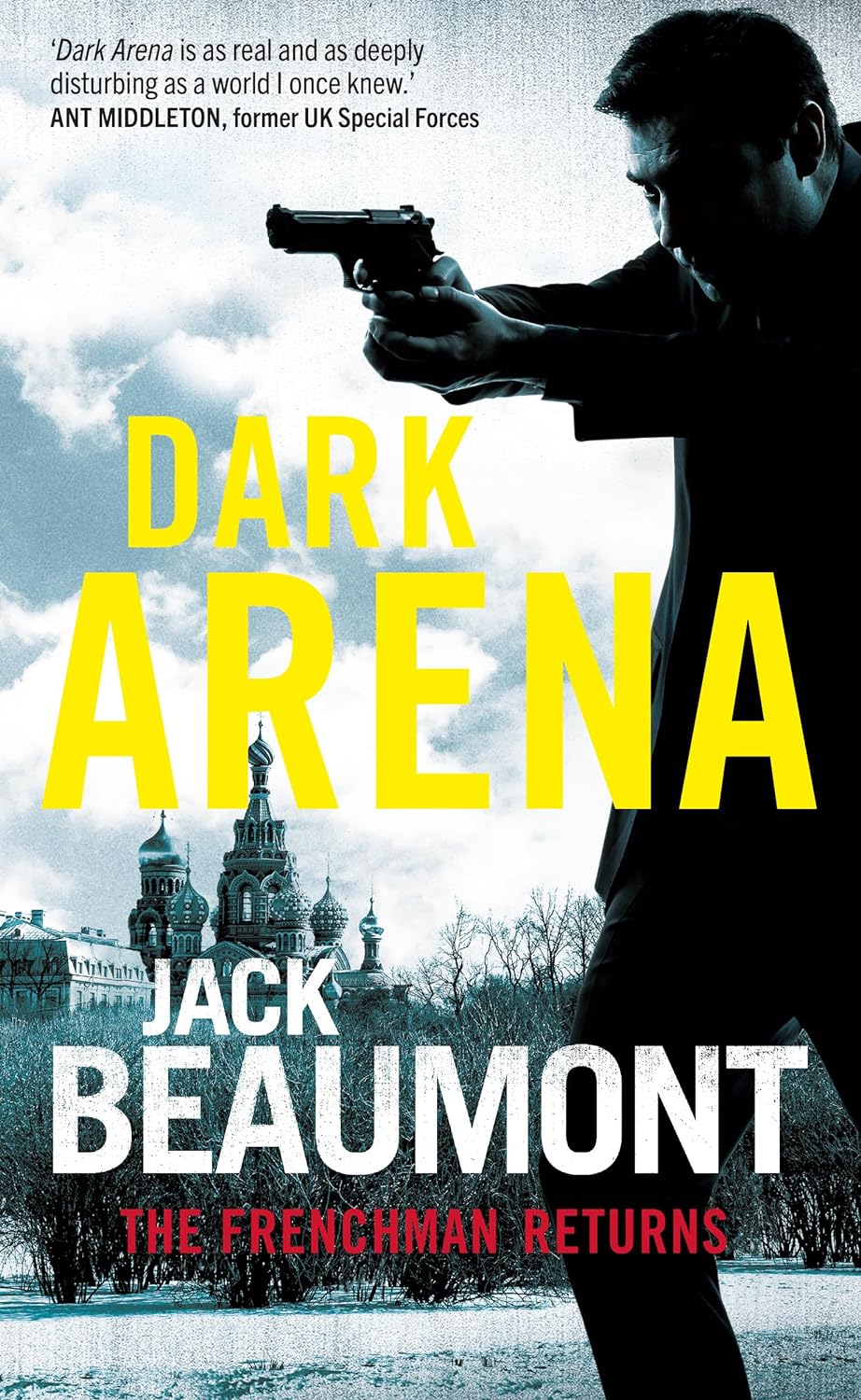
Dark Arena by Jack Beaumont

Dark Arena Cover

Publisher: Allen & Unwin (ebook – 3 January 2024)

Series: The Frenchman – Book Two

Length: 456 pages

My Rating: 4.75 out of 5

Amazon

Former French spy Jack Beaumont presents a powerful and captivating sequel to his awesome debut with Dark Arena, a gripping read with a compelling look at European espionage.

Back in 2021 I was lucky enough to receive a copy of an outstanding debut spy thriller, The Frenchman.  Written by Jack Beaumont, the pseudonym of a former operative in France’s foreign secret service, The Frenchman was an incredible read that followed a French spy who attempts to stop an elaborate terrorist plot.  Featuring some amazing authenticity and a great story, The Frenchman was an exceptional read and it ended up being one of my favourite debuts of 2021.  I have been eager for Beaumont to follow up The Frenchman for some time, and I was extremely excited when I received an advanced copy of this long-awaited sequel, Dark Arena, especially as it quoted one of my Canberra Weekly reviews up front.  The first new novel I read in 2024, Dark Arena was another outstanding read from Beaumont that combined a powerful, character-driven narrative, with a complex look at recent European events and the potential underlying intrigue surrounding it.

When a member of the DGSE, France’s foreign secret service, is brutally murdered in front of his family by a team of Russian agents, Alec de Payns is brought in to investigate the mysterious circumstances surrounding his attack.  De Payns soon discovers that this bloody operation is related to a recent piece of intelligence the DGSE recovered, which identifies hostile actions the Kremlin is authorising throughout Europe.

Infiltrating a secret meeting of businessmen, terrorists and Russian mercenaries aboard a luxury yacht in the Mediterranean, Alec discovers details about a mysterious assassination plot that could tip the balance of power in Europe.  Determined to intervene for France’s advantage, de Payns and his team attempt to uncover the target of the assassination, as well as the underlying reasons for the death sentence.  But the more they dig, the more they begin to suspect that someone is manipulating the DGSE into a confrontation with the Russians.

Closing in on their targets, de Payns soon discover the full extent of their opponent’s plans, and the DGSE are soon left with hard decisions, especially as intervening could impact France’s energy security.  Caught between dangerous superpowers and with a war on the horizon, can de Payns and his team make the right choice, or will doing the right thing cost their country terribly?

This was a superb and extremely clever spy thriller sequel from Jack Beaumont, who expertly follows on from his debut with another outstanding novel.  Dark Arena is an incredible read, which I think I enjoyed even more than The Frenchman, due to its excellent twists and compelling examinations of European politics and espionage.

Dark Arena proved to be quite a thrilling read that got more intense the further you get into it.  Starting off with a shocking but important introduction that shows a French agent killed for the information he recovered, Dark Arena quickly moves onto the main plain, as Beaumont’s protagonist, Alec de Payns, is reintroduced and set to investigate.  The initial chapters of the book are a little slow as Beaumont reasserts his steady and methodical pace, but there are some vital and fascinating story elements introduced here, especially around the conspiracy the DGSE are hoping to unravel and the protagonist’s fraught personal life.  I enjoyed the slow build-up that Beaumont showcased here, mainly because it added the authenticity of the plot.  The story really starts to kick into high gear once de Payns begins his infiltration of a luxury yacht, and the scenes set aboard there are loaded with risk, threat, cunny tradecraft and realistic depictions of information gathering.

Dark Arena’s plot speeds up a lot more in the second half as de Payns and his colleagues begin to investigate several different angles and potential enemy agents.  The reveal that the Russians are planning an assassination is quite intriguing, especially as Beaumont ties it into the invasion of Ukraine, and it adds a certain layer of extra realism and intensity to the overall plot.  While I won’t go into too much detail about this here, I felt that Beaumont did an outstanding job working his complex narrative into these major real-world events, and it was fascinating to his take on some of the events leading up to the invasion and the world politics that ensured it happened.  There are also some great reveals surrounding the origin of the information that the DGSE and other European intelligence agencies have been working off, especially as it appears they are being manipulated by outside sources.  The protagonist’s personal life also gets thrown front and centre in the narrative, and while I wasn’t the biggest fan of the many coincidences that brought together his family with his mission, it was compelling to see him balance the two.  The full discovery of the various plots being orchestrated around Europe proves to be quite clever, and the resulting chaos as the DGSE tries to intervene despite a dangerous political situation results in some captivating moments.  There are some intricate action sequences, encounters between rival spies, and some big reveals, including finally getting a payoff regarding a character introduction from The Frenchman.  This ended up being a fantastic and awesome story, and I hope that we get some form of sequel to it soon.

I deeply enjoyed how Dark Arena was showcased as Beaumont has a very distinctive writing style, that relies heavily on detail and authenticity to enhance his compelling spy thriller storyline.  The focus on tradecraft and the multiple complex aspects of real-life espionage and intelligence work is so damn fascinating, and the author does such a good job of making all these elements seem so realistic.  Nearly every action the characters makes is loaded with intricate detail as Beaumont explains the reality of the intelligence officer’s life, and you will be enthralled by the various intricate ways that the characters attempt to outwit and avoid their opponents.  While references to these actions might seem a bit repetitive at times, I thought it was a great way of hammering home just how careful these characters need to be, especially after the shocking opening scene.  I really loved how much detail Beaumont shoved into every page of Dark Arena, and it made the resulting plot pop as you absolutely believed this was the sort of thing real spies would go through.  This already elaborate narrative is further enhanced by the multiple layers Beaumont added to the plot as he follows various members of the DGSE as they attempt to unwind the multiple mysteries presented to them throughout the book.  While I did occasionally feel that Beaumont was using too many characters, the various betrayals, secrets, and complicated loyalties that emerge from the various perspectives, including from a few antagonists, helps to create a powerful espionage tapestry, and I loved how well this amazing story came about.  While Dark Arena is a sequel to The Frenchman, most readers should be able to dive straight into this second novel, as Beaumont makes the plot of this book quite accessible and any necessary details from The Frenchman are covered again here.  Everything about this book is so well written, and I have a lot of love for Beaumont’s meticulous and distinctive style.

While there are several great characters in Dark Arena, the one who gets most of the focus is protagonist Alec de Payne.  A dedicated DGSE field agent, de Payne is a fascinating figure who serves as the heart and soul of the series.  His depiction as an agent is always very fascinating as Beaumont channels most of the espionage authenticity through his scenes.  However, the most compelling aspect of de Payne’s character lies within the struggles he has balancing his secretive profession with his life as a husband and parent.  Already away for long periods of time and constantly forced to lie to his friends and family, de Payne finds himself struggling more than ever in Dark Arena, especially when it comes to his relationship with his stressed wife.  Thanks to the events of The Frenchman, which saw his family temporarily kidnapped, De Payne finds himself pushed even further to the brink as his is suffering from paranoia and anger following the threat to his loved ones.  This really impacts his personal life, and the conflicts he experiences at home provide a powerful layer of drama to the plot, which I felt contrasted nicely with the intrigue and espionage of the rest of the book.  While elements of de Payne’s personal life do blend into his professional career, it is mostly kept separate, and I loved seeing the dichotomy between a stressed family man and an accomplished spy.  De Payne was such an incredible protagonist to follows as a result, and I felt his amazing story was a major highlight of this exceptional read.

Jack Beaumont provides an outstanding follow up to his epic debut with Dark Arena.  Once again featuring his ultra-authentic take on spies and international espionage, Dark Arena has a captivating and realistic plot that takes his excellent and complex characters into the heart of a recent history.  Intense, addictive, and so damn intricate, Dark Arena was an exceptional read from a rising star in the spy thriller game.

Amazon

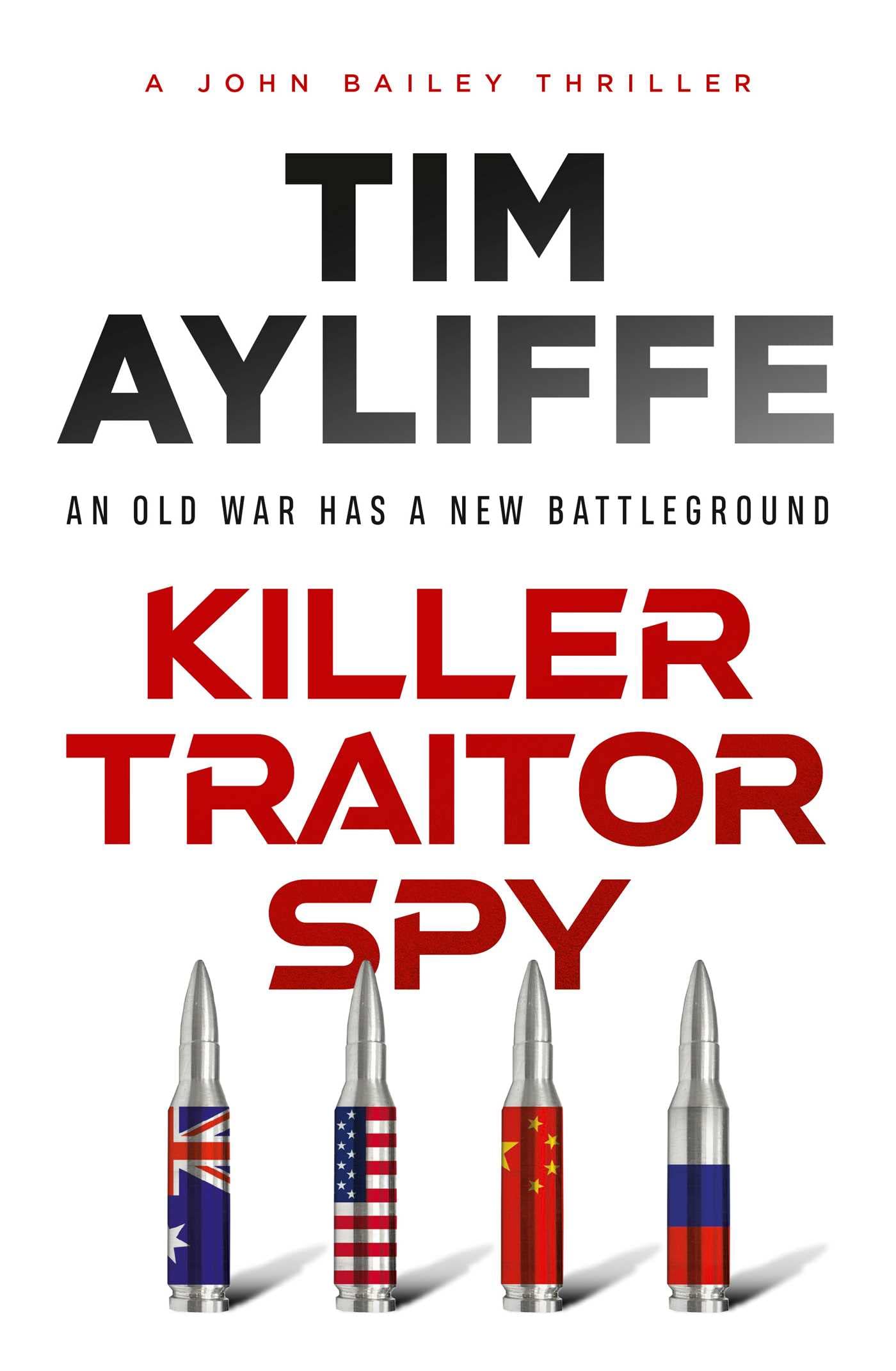
Killer Traitor Spy by Tim Ayliffe

Killer Traitor Spy Cover

Publisher: Simon & Schuster Australia (ebook – 5 July 2023)

Series: John Bailey – Book Four

Length: 310 pages

My Rating: 4.5 out of 5 stars

Amazon

One of Australia’s fastest rising thriller authors, Tim Ayliffe, returns with the fourth book in his outstanding John Bailey series, Killer Traitor Spy, which sees Cold War espionage re-emerge right in the heart of modern day Australia.

Over the last few years I have been having an amazing time reading a particularly cool Australian thriller series, the Jon Bailey books by journalist Tim Ayliffe.  Following a damaged investigative reporter who relentlessly follows his stories no matter how dangerous they are, the John Bailey books are an outstanding series that combined intriguing storylines with compelling and highly insightful depictions of modern-day Australia.  This series has so far featured three fantastic books, The Greater Good, which looked at Chinese interference in Australian politics; State of Fear, which examined Islamic radicalisation; and The Enemy Within, which presented a compelling look at Australian white supremacism.  I have deeply enjoyed all three of Ayliffe’s previous novels and I was very glad that I managed to get a copy of his fourth book, Killer Traitor Spy, a few weeks ago.

After a sex worker is accidently poisoned by a deadly neurotoxin, it quickly becomes clear that someone is trying to kill Russian millionaire Dmitry Lebedev.  As Dmitry disappears into the wind, reporter John Bailey finds himself drawn to the mysterious events, especially as his old friend, Scarlett Merriman, was the unintended victim.  As Bailey begins to dig into the circumstances around Scarlett’s poisoning, he soon discovers a hidden world of spies, espionage and secret deals, all tied to his long-time friend, CIA agent Ronnie Johnson.

It soon becomes apparent that Dmitry was an undercover spy secretly working with Ronnie and providing insights into Russian espionage efforts in Australia.  His latest bit of intelligence could expose a deadly traitor working at the highest echelons of the government, and many people wanted him dead to keep that a secret.  As Ronnie attempts to bring him in, he finds himself being targeted as well, as whoever tried to kill Dmitry has just framed Ronnie for murder.

Now on the run from the authorities and with no official backup to help him, Ronnie has no choice but to call on Bailey to help him investigate the attempted assassination and uncover the traitor.  But the more Bailey works with Ronnie, the more he discovers the dark side of the espionage business and the fact that nobody is what they seem.  Moving from the deadly urban sprawl of Sydney to the secretive suburbs of Canberra, can Bailey and Ronnie find the truth before it is too late, or will they be the latest victims of an insidious intelligence plot threatening to undermine the entire country?

This was another great book from Ayliffe, who continues to impress me with his intense and addictive reads.  Killer Traitor Spy served as a brilliant fourth book in the series, and I had such a wonderful time getting through this captivating and clever story that I ended up reading this book in a single day.

Killer Traitor Spy has a great story behind it that I instantly got hooked on.  Ayliffe sets up a fast and high-stakes narrative for his fourth book that brings in some compelling real-life spy elements to increase the realism and impact of the plot.  Starting off with a failed assassination, some fantastic spy elements, and a great reintroduction to Ayliffe’s relentless protagonist, the author gets Killer Traitor Spy going strong, and it barely slows down after that.  The author weaves together a complex net of mystery and espionage as the protagonists try to find the missing Dmitry, while also uncovering Russian agents working in Australia.  The fantastic web of murders, betrayals and lies proves to be very compelling.  There are several interesting reveals and clever turns as the plot progresses, and I loved how the story soon moved to Canberra with a ton of fun scenes.  Ayliffe really raises the stakes in the second half of Killer Traitor Spy, and the final reveal of who the various traitors and culprits are proves to be very satisfying.

I honestly had a hard time putting down this awesome book, and I wasn’t kidding when I said I read it all in a single day.  Ayliffe did a fantastic job of making his complex and compelling story as fast-paced and addictive as possible, and there wasn’t a single scene in this book that slowed me down.  There were a ton of great features to how Ayliffe wrote Killer Traitor Spy, and I personally loved how the plot featured a fun combination of journalism, espionage and mystery throughout.  While there is a bit of action throughout the book, the focus is always on uncovering the deeper secrets, and I loved seeing the different methodologies that the various protagonists used.  The author’s reliance on multiple character perspectives in Killer Traitor Spy was a particularly effective feature, especially as you got even more scenes from the always entertaining Ronnie Johnson.  This allowed Ayliffe to really separate out the various focuses of his novel, and the contrasts between Bailey’s scenes, where he investigates, and Ronnie’s scenes, where he uses more direct methods, are a lot of fun.

Unsurprisingly, the scenes focusing on journalism and investigative reporting are very impressive and insightful as Ayliffe makes full use of his background to dive into the intricacies and secrets of the trade.  However, the more espionage focused sequences are also really clever and helped ensure this book felt a lot like his original novel, The Greater Good.  The focus on the various espionage concerns in Australia were really quite compelling, and it was clear that the author did a lot of research around it.  I recognised quite a few espionage elements featured in the novel from Australian news stories, and the author covers a lot of compelling ground as a result.  I particularly liked the focus on Australia’s strategic importance, the intelligence relationship it has with other Western nations, the examination of potential espionage elements currently running around the country, and there was even a fun inclusion of the infamous “Havana Syndrome” and the potential weapons behind it.  I really enjoyed this deep dive into potential Russian espionage in Australia, and it was certainly eye opening in places, especially considering current world events.  This excellent novel really draws you in quickly and I had such an outstanding time getting through it.

One of the things that I have always deeply appreciated about the John Bailey books is the way in which Ayliffe masterfully depicts and utilises his Sydney settings throughout the stories.  So many of Sydney’s suburbs, iconic areas, and even several restaurants and bars serve as either key locations or have cameos throughout the series.  It is always very cool to see locations you are familiar with utilised in fiction, and Ayliffe always does such a wonderful job of showcasing these locales in his stories, which really help to draw Australian readers in.  This continues to be the case in Killer Traitor Spy, as several different areas of Sydney are featured strongly throughout the plot. Ayliffe, who clearly has a lot of love for Sydney, has fun bringing these locations to life throughout this book and it was really fascinating to see how he fits his narrative around these real spaces.  A good chunk of the second half of the book is set in my hometown of Canberra. As the national capital hosting government agencies and politicians, Canberra is an excellent setting for a spy thriller book such as Killer Traitor Spy, and it was great to see it utilised as such within this book.  I had a ton of fun seeing the characters reference areas that I see all the time, and it was awesome envisioning some of the action occurring within them, especially as most of our scandals aren’t so thrilling.  I also had a chuckle at all the inside jokes or references that Ayliffe layered into the story around these settings, such as his very accurate description of the drive between Sydney and Canberra (it really is that visually boring).  This excellent use of real locations as a backdrop really helped to drag me even further into Killer Traitor Spy and I really appreciate it when authors draw from their own experiences to help tell an awesome story.

Finally, I must highlight the character work featured in Killer Traitor Spy.  The intrepid and damaged protagonists have always been a big reason why the John Bailey books have been so successful as you grow very attached to these complex figures.  I have a lot of love for the impressive character growth that has surrounded the main character of John Bailey in the lead-up to Killer Traitor Spy and it was really moving to see him finally have his life together, despite all the traumas he has experienced.  This also allowed him to focus more on his journalistic work, and watching the dogged, veteran reporter chase down several stories in his usual gruff and unrelenting manner was a ton of fun.  Of course, Ayliffe did add in a few more issues for him in Killer Traitor Spy, both psychically and ethically, and I will be interested to see how they impact him in the future.  Ayliffe also features quite a lot of Ronnie Johnson in this latest novel as well, which was a major plus in my book.  Ronnie has always been a fantastic character (he caused a damned Harold Holt moment in the first book), and it was great to see him a much more of a central figure in Killer Traitor Spy.  His more espionage and violence focused chapters balance out Bailey’s chapters in some compelling ways, and I enjoyed the fantastic deeper dive into the relationship between these two protagonists that emerged as a result.  Ayliffe’s use of these two main characters was a real highlight of Killer Traitor Spy and I really appreciated the powerful story the author wove around them.

Overall, Killer Traitor Spy is a fantastic novel from Tim Ayliffe that did a wonderful job continuing his excellent John Bailey series.  A complex and entertaining Australian thriller, Killer Traitor Spy was a ton of fun to read and I really got hooked on it compelling and fast-paced story.  With great characters, a complex plot, and some intriguing Australian inclusions, Killer Traitor Spy is well worth the read, especially if you loved the previous books in the series.

Amazon

Falling Sky by Harry Sidebottom

Falling Sky Cover

Publisher: Zaffre (Trade Paperback – 17 January 2023)

Series: Warrior of Rome – Book Nine

Length: 375 pages

My Rating: 4.5 out of 5 stars

Amazon

One of the best and most compelling authors of Roman historical fiction, Harry Sidebottom, returns with another outstanding entry in his Warrior of Rome series, Falling Sky.

There are many outstanding authors who specialise in historical fiction set in ancient Rome, however, one of my absolute favourites is the always impressive Harry Sidebottom, who has been dominating the genre for most of my reviewing career.  Sidebottom has written some amazing novels over the years, including his Throne of the Caesars trilogy and some excellent standalone novels, like The Lost Ten and The Return.  However, my favourite series is his Warrior of Rome novels, which follow the Roman general Ballista, a former barbarian hostage turned Roman nobleman.  This series is pretty damn epic and was amongst some of the earlies novels I ever reviewed.  His debut novel, Fire in the East, remains one of the best siege novels I have ever had the pleasure of reading, and the rest of the series is also very impressive and inventive.  I have really loved some of his more recent Warrior of Rome books, such as The Last Hour and The Burning Road, and I was very happy to see that Sidebottom was continuing this series with Falling Sky.

AD 265, Gaul.  The usurper Postumus has been declared Emperor by his soldiers and has taken control of key territories west of Rome, including Gaul, Germania, Hispania and Britannia.  Setting up his capital within Gaul, Postumus hopes to maintain control of his new empire and peacefully coexist with Emperor Gallienus.  However, Gallienus wants vengeance for the death of his son at Postumus’s hands and has assembled a massive army to cross the Alps, take back Gaul, and kill his rival.

Amongst the Roman troops gathered to attack Gaul is Ballista, one of Gallienus’s most loyal supporters.  Determined to fight one more battle and then retire to Sicily with his family, Ballista finds himself at the forefront of the fight as one of Gallienus’s most able commanders.  However, Ballista has a far more troubling problem to deal with than battle.  His recent actions in Rome exposed a massive conspiracy to kill Gallienus and install a new Emperor.  While he was able to foil the assassination, the leader of the conspiracy remains at large, and Ballista is convinced that it was the Praetorian Prefect Volusianus, the man charged with keeping Gallienus safe.

With no evidence to support his suspicions, all Ballista can do is watch Volusianus and wait for him to slip up.  However, Volusianus is aware of Ballista’s suspicions and is determined to kill him before his machinations can be revealed.  When Ballista is sent on a dangerous mission deep into enemy territory with a column of cavalry, it represents the perfect opportunity for Volusianus to strike using spies and traitors.  However, the greatest threat to Ballista may come from the turning tides of war, as he and his men soon find themselves trapped far behind enemy lines.  Pursued by the enemy and surrounded by traitors, can even the legendary Ballista survive both the war and his friends in Rome?

This was another brilliant and captivating historical read from Sidebottom that perfectly continues the Warrior or Rome series with another exciting adventure.  Falling Sky is a very thrilling read, and it was one that I was able to finish off quite quickly, especially once I got caught up in its fantastic and fun narrative.

Falling Sky has a very fast-paced narrative that sees the forces of the Emperor Gallienus, including Ballista, return to Gaul (France) to end Postumus’s rebellion and restore the Empire.  The initial chapters set the scene brilliantly, as you get reacquainted with Ballista and his recent adventures, as well as some insights into his suspicions around Volusianus’s role in the recent assassination of the emperor.  Featuring some great early battle sequences in the Alps, you soon get a great idea of the war to come, especially when you also see some events through the eyes of Postumus and his forces.  The centre of the book is dominated by a pivotal major battle sequence with both armies clashing in a brutal series of chapters that really leaves an impression.  It also sets the rest of the story up extremely well, as the still suspicious Ballista is sent out on a dangerous mission he isn’t supposed to come back from.  This cavalry focused plot dominates the second half of the book and features a great blend of action, historical logistics, and espionage as Ballista tries to keep his troops alive, while a traitor in his ranks works to bring him down by any means necessary.  This leads to an excellent final third of the book, when Ballista and his troops are forced to retreat through half of Gaul, while traitors and problems from the protagonist’s past wait for him.  This turns into a fantastic chase sequence between enemy regiments, and I really loved how epic and intense it got in places.  The entire story wraps up really well, and I had a wonderful time getting through this awesome read.

Falling Sky turned out to be a pretty awesome book, and I loved how Sidebottom set his latest novel out.  There was an interesting change of style in Falling Sky from some of his previous novels, as Sidebottom had recently been experimenting with blending different thriller genres with historical settings.  Falling Sky, however, represents a more classic historical fiction war novel, with a focus on battles, major recorded events, and the continued growth in Ballista’s character as he becomes more and more disenchanted with Rome.  While I had a ton of fun with Sidebottom’s previous unique formats, I also enjoyed him returning to the style from the previous Warrior of Rome novels, with a compelling focus on historical war.  The author still does maintain some interesting thriller elements, including the fun espionage moments as Volusianus and the hidden traitors work to take out Ballista.  In addition, the thrilling and extensive flight of Ballista and his forces really ratchets up the tension for the end of the novel and I enjoyed how complex and powerful it became, easily resulting in it some of the best parts of the book.

The author’s use of perspective was also pretty effective, especially in the first half of the novel, which sees different chapters told from the point of view of several different key characters, including Ballista, Volusianus, Postumus and Volusianus’s spy in Ballista’s regiment.  Alternating point-of-view characters really helped to produce a more extensive and compelling plot, and I loved seeing the countermoves of Ballista and Volusianus, while also getting insights into Postumus’s rebellion.  This use of perspective changes towards the end of the novel as there is a much greater focus on Ballista as the primary narrator as he leads his troops in their escape.  I appreciated Sidebottom’s decision to mix things up this late in the novel, and it really helped to emphasise just how desperate and compelling this final section of plot truly was.  While Falling Sky is part of the larger Warrior of Rome series, it can be read as a standalone novel, especially for any fans of fun historical adventure and military fiction.  Sidebottom does an excellent job of quickly recapping necessary information and events from the previous novels throughout Falling Sky, and readers can grasp key connections and details to follow along with the plot.  The events of Falling Sky actually fall between the two previous books in the series, The Last Hour and The Burning Road, which was apparently caused by a change in the publishing schedule.  That does mean that if you have read The Burning Road in advance of this novel, the stakes of Falling Sky’s plot are slightly reduced.  However, I still had a ton of fun with this outstanding novel, and I really enjoyed how Sidebottom wrote the story.

I was also deeply impressed by the historical aspects of Falling Sky, which was one of the book’s strongest features.  Sidebottom has always excelled at exploring fantastic aspects of Roman culture and history, and Falling Sky is a pretty good example of this, especially has he closely examined Emperor Gallienus’s second invasion of Gaul in the second half of the 3rd century.  This period of Roman history doesn’t get a lot of love from other historical fiction authors, and as a result, Sidebottom’s books always feel quite unique, and I always have a great time learning more about this point of Roman history.  Sidebottom really does a good job exploring the origins of the war with Postumus’s Gallic Empire, and it was fascinating to see how this part of the Roman Empire splintered off and managed to hold out against the main Roman army for so long.  This results in some deeply intriguing scenes where politics, loyalties and personal ambitions are heavily featured, and a Roman civil war novel always contains some brilliant battles as the two armies utilise similar strategies.  Falling Sky also has some outstanding depictions of Gaul and the Alps during this period, especially as the protagonist ends up spending much of the book traversing the landscape at high speed.  Not only was it really cool to see historical depictions of so many different parts of modern-day France (the map up front was very useful), but many of these locations served as fantastic backdrops for the vicious battles that emerged.

In addition to cleverly examining the historical backdrop to the narrative, Sidebottom also ensures that his representations of the Roman soldiers and battles were as detailed as possible.  You can clearly tell that Sidebottom has done a ton of research when it comes to the depictions of the various soldiers, and you can practically see how they would have marched or engaged in battle.  The author’s epic battle scenes are particularly cool to read, and the clashes between the two opposing Roman armies are perfectly showcased, allowing you to fully experience the brutality and carnage.  However, the best historical highlight of Falling Sky revolves around the Roman cavalry, which Ballista commanded for much of the book.  Sidebottom spends much of book diving into and detailing as many aspects and experiences of the classic Roman cavalry as he can, including their practices, strategies, and general experiences.  This comes across extremely well in many scenes of Falling Sky, and it was fascinating to see Ballista get to grips with his new cavalry command and turn them into an effective force.  The sheer detail that accompanies the cavalry into every major fight of Falling Sky is very cool and I loved seeing the author’s depictions of how they would have fought and what strategies a commander like Ballista would have utilised in several different scenarios.  I had such an amazing time seeing these historical details and more get translated across into a thrilling action novel, and Sidebottom clearly has so much love for all things Roman.

Harry Sidebottom remains one of my absolute favourite authors of Roman historical fiction, especially when it comes to his Warrior of Rome novels.  Falling Sky is an outstanding new addition to the series, and I loved its clever war focused plot that saw one of Sidebottom’s best characters leading in compelling circumstances.  Loaded with action, espionage, and impressive historical detail, Falling Sky is an amazing book that I had an incredible time reading.  Highly recommended to all fans of the historical fiction genre.

Amazon

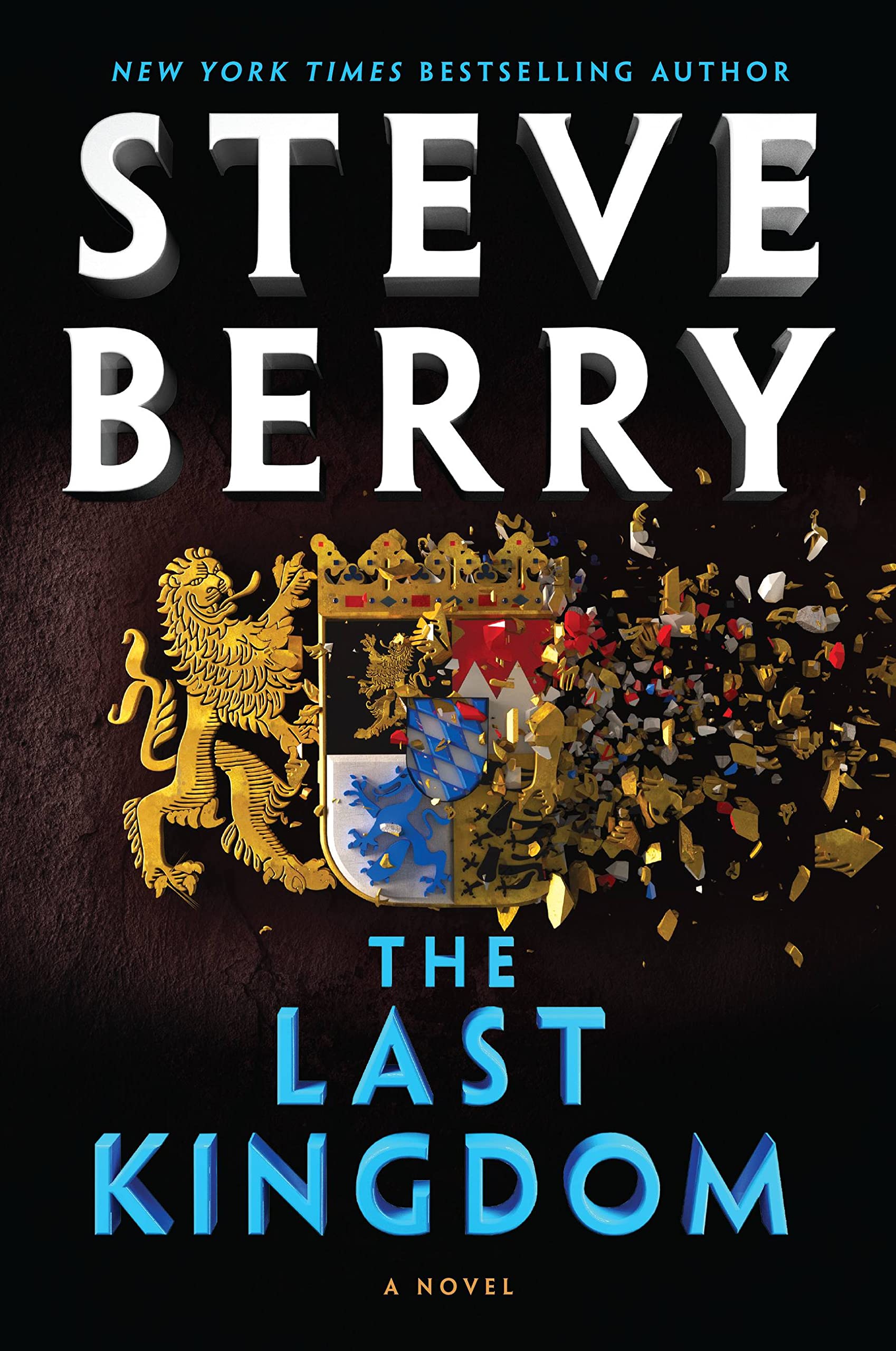
The Last Kingdom by Steve Berry

The Last Kingdom (Steve Berry) Cover

Publisher: Hachette Audio (Audiobook – 21 February 2023)

Series: Cotton Malone – Book 17

Length: 14 hours and 20 minutes

My Rating: 4.75 out of 5 stars

Amazon

Prepare for a remarkable and captivating mystery from out of history as acclaimed thriller writer Steve Berry presents another outstanding and riveting novel in The Last Kingdom.

Ever since I started reading thrillers a few years ago, one of my favourite authors in the genre, as well the most consistently entertaining, is the fantastic Steve Berry.  A veteran author who has been producing compelling reads since the early 2000s, Berry has over 25 books to his name that blend intense modern thriller narratives with intriguing history elements.  His most iconic body of work is his long-running Cotton Malone series, which follows a US Justice Department agent as he investigates unique historical conspiracies or secrets whose revelation will have major implications in the modern world.  I first fell in love with Berry’s writing back in 2019 when I read The Malta Exchange.  Since then I have gone on to read several more Cotton Malone novels including The Warsaw Protocol and The Kaiser’s Web, as well as the standalone novel The Omega Factor, each of which have contained some addictive stories that I’ve deeply enjoyed.  As such, I made sure to read his 2023 release, The Last Kingdom, as a soon as I could.  The 17th Cotton Malone novel, The Last Kingdom presented the reader with another brilliant conspiracy from history that was pretty awesome to behold.

There are many strange tales scattered throughout the history of Europe, but few are more unusual than that of King Ludwig II of Bavaria.  An unstable and fanciful figure who loved stories, solitude, and magnificent castles, King Ludwig dreamed of a magical kingdom, one far different from the lands he ruled.  Determined to find such a kingdom, he despatched agents throughout the world before his murder in 1886.  History suggests that he never found what he was looking for, but what if he did?

Now, in modern day Bavaria, freelance intelligence agent Cotton Malone has been hired by his old friend and protégé Luke Daniels to help him infiltrate a small group of radical separatists with dreams of securing Bavaria’s independence from Germany.  The focus of Luke’s investigation is the prince of Bavaria who seeks to usurp his older brother, the duke, and restore the ousted Wittelsbach monarchy with himself as king.  But to achieve his dreams, the prince needs the ultimate leverage, the Last Kingdom of King Ludwig II.

Following clues throughout several significant sites in Bavaria, Cotton and the Prince’s men are soon caught in a race to find a mysterious deed, one that Germany, China and the United States would kill for and which could greatly shift the balance of power in the world.  With the White House, Chinese intelligence, a mysterious Bavarian secret society and a rogue group of former CIA agents all vying for the prize, Cotton desperately attempts to solve the puzzle of the Last Kingdom and the terrible legacy it holds.  But can Cotton once again defeat the odds and keep the word safe from another historical mystery, or will the world be irrevocably altered by a secret form another century?

Well damn, now that was a pretty awesome read.  I have so much damn love for Steve Berry’s work, and The Last Kingdom is probably one of my favourites so far.  Perfectly combining an excellent thriller storyline with an elaborate and deeply captivating tale of history, The Last Kingdom was an exceptional read and one that I honestly could not stop listening to.

Berry has produced an amazing and addictive masterpiece of a thriller in The Last Kingdom with a particularly strong story behind it.  Like most of Berry’s books, The Last Kingdom is primarily a modern day thriller that introduces an original conspiracy that took place in history and has remained hidden until Cotton Malone wanders along (that man finds ancient mysteries wherever he goes).  As such, what starts as a simple infiltration at a famous Bavarian palace soon devolves into an elaborate treasure hunt for unique piece of history.  This latest historical mystery revolves around the eccentric and tragic final kings of Bavaria, and their desires to either retain power or find their own place in the world.  Berry expands on this historical detail throughout the entire course of the book, providing a good combination of real facts and some exaggerated fictional elements, which works into the main plot extremely well.  This modern day storyline gets some legs really early on as the protagonist and his companions are dragged into a major shadow war with several different factions attempting to take advantage of the situation and the hunt for the historical mystery.  Cotton soon finds himself working for several old colleagues, including a reckless CIA agent, while other groups, including the Bavarian prince and a rogue group of former CIA agents, start to use deadly force to solve the clues and find the hidden deed.

Berry keeps the pace of The Last Kingdom quick and compelling by raising the various stakes of the book while still showing off the entirety of Bavaria and its historic beauty.  There is a good reveal of why everyone is after the deed about halfway through which sets everyone on the road to a big confrontation.  While the full details of the conspiracy are a little over-the-top, Berry fits it into the story well, and the examination of modern and historical concerns surrounding is quite clever and intriguing.  The final half of the book is an intense thrill ride in several great ways, as Berry loads up the story with fun reveals, clever twists and so many betrayals.  I loved how the mystery of the King’s deed unfolded, and Berry really mixed the various original puzzle pieces of his conspiracy with the overlying historical detail to create a fantastic scavenger hunt.  The modern day thriller elements flitted around this extremely well, and watching the various participants in the hunt betray or outwit each other to try and get the prize was deeply exciting and led to some big moments.  The conclusion to the story is very good, and readers will come away extremely satisfied, both with how the story came together, and with all the extra knowledge Berry leaves you with.

I have a very deep appreciation for how Berry writes his outstanding novels and I think that The Last Kingdom was a particularly impressive example of this.  The blend of a high-intensity modern thriller storyline wrapped around a mystery loaded in historical detail is always entertaining, and I felt it turned out well again in The Last Kingdom.  The way that Berry splits the story out using alternate perspective chapters is particularly useful, as you get to see each of the characters interpreting the historical elements from different perspectives.  At the same time, several of the chapters are set in the 19th century and provide some deeper historical context to the story, which I felt was particularly useful and fun.  Berry really excels in simultaneously showing the different aspects of his story, and readers come away from The Last Kingdom having had fun with the thriller elements, while also learning so much more about some fascinating topics.  I really think that The Last Kingdom had one of the better thriller storylines associated with it thanks to inclusion of spies, disaffected royals, and several warring governments, and the way that story element unfolded had me pretty damn hooked the entire way through.  Like most of the Cotton Malone novels, The Last Kingdom can be read as a mostly standalone book, and readers don’t need to have any real knowledge of the previous entries in the series to enjoy this great novel.  While there are references to previous adventures and mysteries, the relevant details of these are well explained and new readers won’t be thrown by them.  However, long-term fans of the series will appreciate the continuation of several recent storylines, especially around Cotton’s feud with the US President, and I liked how that unfolded.

As I have mentioned a few times already, one of the best things about The Last Kingdom, and indeed all of the Cotton Malone novels, is the way that Berry dives into unique and intriguing parts of history to really give his stories a captivating kick.  In The Last Kingdom, this takes the form of a focus on the unique history of the kingdom of Bavaria, specifically the last 19th and early 20th century and the last three monarchs of the Wittelsbach line.  I have to admit, this was an area of history that I was not familiar with, but that changed after reading The Last Kingdom.  Berry conveys an immense amount of detail about this period and the relevant kings to the reader throughout the course of the book, so by the time you are done, you know so much about them.  However, Berry does it in such a way that ensures that the reader don’t get bored with it, as he showcases the more compelling elements of their reigns and the nation’s history around it, while also hinting at how it ties into the big conspiracy/mystery of the story.  I particularly enjoyed the detailed and fascinating examination of eccentric King Ludwig II.  Berry covers so many parts of his compelling life in this story, including his complex reign, his unusual outlook on the monarch, and his infamous end that saw him deposed and murdered.  The mysteries of Ludwig II and his search for a new kingdom proved to be a deeply compelling centre for the entire plot and I am really glad I got to learn more about them.  Another nation’s history, which I mention for spoiler reasons, is also concisely featured here, and I liked how Berry tied it together with Bavaria, resulting in a cool mixture that perfectly fed into the modern-day thriller.  The author clearly has so much fun researching and utilising all this historical detail in his books, especially if the extensive author’s notes section at the back is anything to go by.  Featuring all this historical detail works to create a great story, and I cannot emphasise how awesome it can be, especially in Berry’s capable hands.

In addition to all the historical elements of the book, I also really need to highlight how well Berry showcased Bavaria as a whole throughout the course of The Last Kingdom.  Many of the Cotton Malone novels act like a tourist brochure as the protagonists travel from one picturesque area of the country to the next, visiting all manner of historical sites.  This is very much the case for The Last Kingdom as the characters are forced to travel to several impressive locations throughout Bavaria, including iconic cityscapes, famous cathedrals, and beautiful landscapes.  Berry really spares no detail when it comes to describing these locations, and you can easily visualise them in all their stunning glory.  Some of the best descriptions are the iconic three castles that King Ludwig II built, which were strongly connected to his life story.  These castles form the basis for much of the plot’s historical scavenger hunt, and Berry really goes into the history and layout of them, even describing the furniture and the decorations.  You really grow to appreciate these locations around Bavaria, and I know that if I ever get the chance to visit, several of them are going to be on the top of my list of places to check out.  However, it is not just these iconic locations that are explored.  Berry also spends substantial time trying to show off the intangible nature of Bavaria, including its politics, its current attitudes, the state of its old monarchy, its place within larger Germany, and various other elements of its culture, including a real secret society dedicated to King Ludwig II.  All these elements are masterfully researched, examined, and showcased throughout The Last Kingdom, and all of them add to the authenticity of the story in immeasurable ways.

Aside from the excellent story and complex historical details, I also need to mention the great characters featured throughout The Last Kingdom.  Berry always writes fantastic figures, and it was awesome to see more of his central protagonist, Cotton Malone, as well as recurring supporting character Luke Daniels.  Both are well utilised throughout The Last Kingdom, and it was always great to see them working, especially as they have some major veteran presence at this point and work well against the various forces coming for them.  I did think that there was not a lot of development between the two, as both are essentially the same people they were in their last appearances, but they still make solid and likeable central focuses for the story.  However, there was some fantastic character development occurring outside of these main characters, especially as Berry introduces an amazing supporting cast of aging spies, angry deposed royalty, intriguing members of Bavarian society and deadly foreign agents.  Several of these characters have key roles in the book and Berry utilises them perfectly as great alternate perspectives for large swathes of the plot, producing a complex and powerful extended plot.  I loved the utilisation of Derrick Koger, a veteran CIA agent who has history with Cotton and has worked with him/against him in the past.  The funny and morally ambiguous Koger plays off the honourable Cotton perfectly as they work together in this book, and it was interesting to see them teaming up.  I liked how several of the antagonists, as well as Koger, shared a compelling character theme of people who believe they were overlooked or betrayed by their peers or people, and it serves as a great driving force for them to do bad things.  This group of characters and their conflicting priorities are an excellent part of The Last Kingdom and I had an outstanding time following them along this powerful quest.

I once again chose to check out this latest Steve Berry novel on audiobook, which is always a pretty epic experience.  Coming in at nearly 14 and a half hours, The Last Kingdom is medium length audiobook, although once you get caught up in the compelling story it flies by extremely quickly.  I personally love the Cotton Malone audiobooks as the narration really enhances all the elaborate detail of the story, especially the historical background, and ensures that they stick in the mind.  Hearing the key historical facts again and again really drives them home and I find that this helped me get even more fixated on the narrative as I was extremely eager to see how everything came together.  It helps that The Last Kingdom once again features narration from Scott Brick, one of the premiere thriller audiobook narrators out there who has lent his voice to all the previous Cotton Malone audiobooks.  Brick has a great voice for thrillers and I find his narration really fits Berry’s cool stories, especially as he gives some gravitas and complexity to both the modern day events and the historical elements.  Brick also has a great array of accents that he employs to full effect throughout The Last Kingdom, which I deeply appreciated.  His various American accents, which includes one from the wilds of Tennessee, are very well done, and I was once again extremely impressed by his dazzling array of German and European tones.  Even his Australian accent, something I am particularly sensitive about, was passable, if slightly stereotypical, and this fantastic choice of voices enhanced the audiobook experience.  Due to this outstanding voice work, as well as the great impact this format has on some of the key parts of the book, I would strongly recommend The Last Kingdom audiobook, and it is always one of my favourite ways to enjoy a good Steve Berry novel.

Steve Berry continues to impress with his latest outstanding Cotton Malone novel, The Last Kingdom.  Featuring his typical blend of exciting and intense thriller storylines and fascinating historical detail, The Last Kingdom is a brilliant read that powerfully showcases Bavaria in all its glory.  Examining key elements of the state’s past, as well as its current beauty, and perfectly working them into an excellent story, this was an exceptional outing from Berry and one that I had such an amazing time reading. Highly recommended!

Amazon

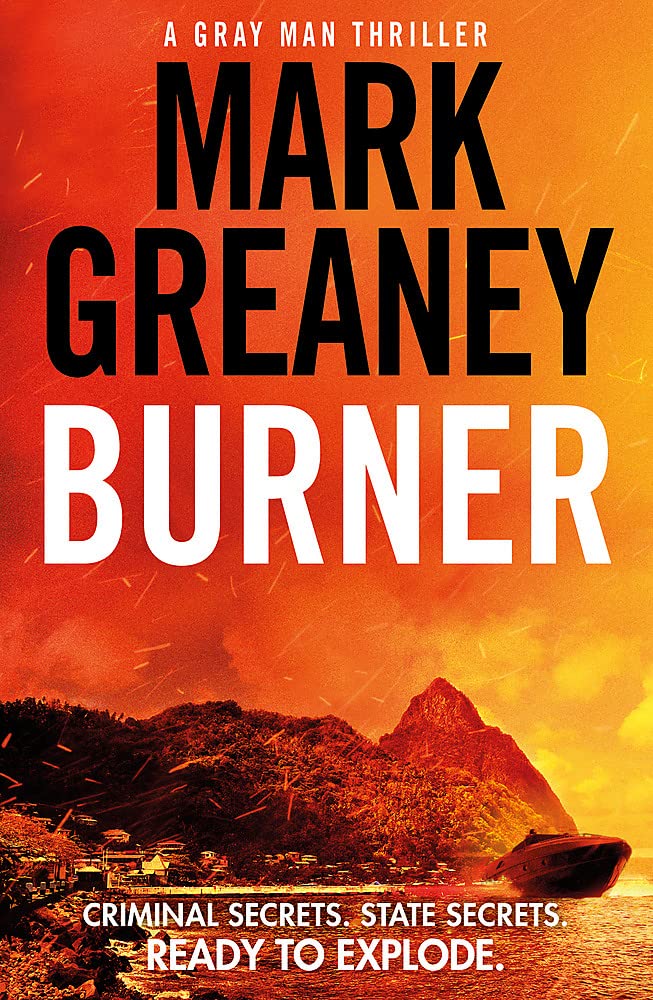
Burner by Mark Greaney

Burner Cover

Publisher: Sphere/Audible (Audiobook – 21 February 2023)

Series: Gray Man – Book 12

Length: 16 hours and 37 minutes

My Rating: 5 out of 5 stars

Amazon

The epic and captivating Gray Man series by legendary thriller author Mark Greaney returns with another exciting spy thriller entry, Burner, which thrusts the protagonists into the middle of some major real-world events.

Nothing starts off the thriller field of 2023 quite like the latest Gray Man novel from leading author Mark Greaney.  Greaney is a very impressive author who has been killing it throughout the genre for years.  Not only has he produced some cool standalone books, such as last year’s exciting action romp Armored, or the cool military thriller he co-wrote with Hunter Rawlings IV, Red Metal (one of my favourite books and audiobooks of 2019), but he has also written the exceptional Gray Man spy thriller books.  Following legendary assassin Court Gentry, better known as the Gray Man, as he gets involved in several deadly situations, the Gray Man books are one of the leading spy thriller series and I have deeply enjoyed the epic and powerful adventures that Greaney has so far released.  I personally have had an exceptional time with several of the Gray Man books, including Greaney’s debut novel, The Gray Man (which got a film adaptation last year), as well as the later entries such as Mission Critical, One Minute Out (one of my favourite books and audiobooks of 2020), Relentless (one of my favourite books and audiobooks of 2021) and Sierra Six (one of my favourite books and audiobooks of 2022).  His latest release is the outstanding Burner, which was one of my most anticipated novels of 2023.  The 12th book in the Gray Man series, Burner was a particularly intense read with a fantastic story behind it.

Alex Velesky is a Ukrainian expat living in Switzerland, whose comfy life as a notorious mover of immoral money has been hollow ever since the death of his family back in Ukraine at the start of the invasion.  Going through the motions, Velesky is suddenly given an opportunity to strike back at Russia when a disenfranchised Russian intelligence agent provides him with a trove of secret financial data.  This data, when combined with information from his own bank, reveals all the Russian bribes paid out to the West, and could damage not only Russia’s foreign intelligence apparatus but also the delicate negotiations to re-open the Russian economy to the wider world.

Immediately targeted by Russians determined to kill him and reclaim the data before it can leak out, Velesky finds himself hunted throughout Switzerland.  His only chance of survival seems to lie in rogue intelligence officer Zoya Zakharova, a woman hunted by her former employers in both Russia and the CIA, who is determined to get him and his information to New York, where it can be deciphered and released.  But Velesky and Zoya soon find themselves being stalked by an elite unit of Russian military operators who have no qualms about killing anyone in their way.

However, the Russians aren’t the only people interested in the data, as the CIA wants to claim it for themselves.  Determined to keep their interest in it quiet, the CIA reach out to Court Gentry, the Gray Man, to capture Velesky before the Russians do.  However, Court is unaware of the full significance of the data he is reclaiming, and that he will have to compete against the love of his life, Zoya.  Soon caught between the competing interests of the CIA and Russian intelligence, Court and Zoya decide to work together to keep Velesky alive.  But with the dangerous data revealing dark dealings in the highest levels of government, can even these two legendary spies survive?

Wow, Greaney really can’t miss when it comes to the Gray Man books.  Burner was another exceptional novel that had me hooked from the very beginning all the way to the final, devastating encounter.  The blend of exceptionally written action scenes, spy thriller elements, complex characters and the utilisation of contemporary issues makes Burner really stand out, even alongside the other epic Gray Man books.  This was another easy five-star rating from me as Greaney once again shows why he is currently leading the spy thriller genre.

Burner’s story is a pretty impressive and intense thrill ride that takes the reader across multiple continents in a blaze of glory and excitement.  The book starts whilst the Russian invasion of Ukraine is ongoing and introduces the reader to interesting new character, Alex Velesky, who receives information about all of Russia’s illegal financial transactions from a disaffected Russian operative.  If he can take this information, as well as data stolen from his bank, to a certain forensic accountant in New York, he will be able to disrupt Russia’s international intelligence efforts while also weakening their position against Ukraine.  However, he soon finds a deadly Russian kill team on his tail, and is only saved by reluctant operative Zoya Zakharova, who eventually believes his story and attempts to get him to New York.  However, the Russians and the CIA both want the data, and this drags in Court Gentry.  On the run from the CIA and unsatisfied with his current job sinking Russian mega-yachts, Court is given a chance to get back into the agency’s good books by helping them recover the data.  This sees him engage in a massive fight in Caribbean, before flying to Europe to find and capture Velesky and begin searching for him and the Russians.  This results in a brilliant collection of scenes as the various sides engage in elaborate tradecraft to try and outsmart the others, resulting in a particularly epic extended sequence on a train.  The resulting carnage and revelations make for some exceedingly gripping content and sets the final third of the book up extremely well.  I protagonists are forced into a series of deadly battles on a tight timeline to achieve their goals.  There are surprises, shocking deaths, elaborate fights and the resolution of several character arcs, all of which wraps up with a particularly epic, split-scene sequence that ends everything on a high note.  I was engrossed in this exceptional narrative the entire way through, and it will be very interesting to see where Greaney takes this series next.

Greaney brings all his impressive writing skills to the table with Burner, and his ability to set a dramatic and powerful scene honestly turns the already outstanding narrative into something truly special.  While I did find a few pieces of dialogue to be a bit weak and robotic, and Greaney did decide to fit in the annoying trope that two women working together must be bitchy to each other, this was mostly a very strongly written spy thriller book.  Like all the previous Gray Man books, Burner has an outstanding pacing to it that quickly draws the readers in and ensures that they stick around for the entire ride.  The action scenes are brutal and have a great veneer of realism that ensures that you can easily imagine every punch, shot or stab.  The focus on tradecraft is a particularly fascinating element to the entire story, and you must love the multiple scenes that show the characters utilising their training to outmanoeuvre their opponents.  Greaney also brings in the perfect blend of intense action focused scenes and story building, real-world issues, and character moments throughout the course of Burner and there honestly wasn’t a single moment that I wasn’t hooked on everything that was going on.  Burner also proves to be a rather interesting and significant entry in the wider Gray Man series, which long-running fans are going to appreciate.  While Burner can easily be read as a standalone novel thanks to the author’s concise and effective description of prior events, this book does continue several interesting storylines from the previous books, including Court’s fugitive status, his relationship with Zoya, and the examination of both main characters’ places in the world.  Several recurring characters from the series also make their return here, including some entertaining antagonists, and I loved how Greaney worked them into the plot.  I had a lot of fun seeing some of these call-backs to previous stories and plotlines, and Greaney leaves this book in an interesting place for the future.

I really need to mention Greaney’s exceptional use of multiple character perspectives throughout Burner.  Greaney casts a very wide net when it comes to the perspectives being followed and while primary characters, such as Court Gentry and Zoya Zakharova, do get a lot more focus, you also see a lot of events occurring through the eyes of other characters, including several antagonists.  This gives the reader a much more expansive narrative that not only lets you understand the motivations of every significant character but also allows you to see how the antagonists are responding to the actions of the protagonists, which adds intensity to the plot.  However, the best advantage is the way that Greaney utilises these perspectives to make some of his biggest sequences really pop.  In these key sequences, the point of view constantly moves around the various characters as the story unfolds and this helps to produce a particularly intricate and powerful viewpoint of how events are going down.  This is particularly evident in the book’s best extended sequence where multiple point-of-view characters, including Court, Zoya, Alex, the antagonistic Russian hit team, a lone CIA agent and more find themselves converging on a train to Switzerland.  As the scene continues, Greaney keeps quickly moving the point-of-view around from one of the characters to the next, including a couple of minor characters who are mostly there as witnesses.  Watching every character’s reactions, moves and countermoves really enhances the power of the scene as Greaney first uses it to build up tension before the inevitable firefight begins, and then switches it up to ensure that the resulting battle is even more epic as you see every shot both sides make.  Greaney uses this excellent balance of perspectives through several of Burner’s key scenes, including the big finale, and each sequence comes off much better as a result.  I cannot emphasise how effectively Greaney utilised this throughout Burner, and it was a major highlight for me.

One of the most distinctive things about Burner was the excellent and memorable use of contemporary events to enhance the already enjoyable spy thriller narrative.  Greaney has never shied away from referring to current conflicts, politics and events, and in Burner he goes for the most infamous current conflict in a big way by strongly featuring the Russian invasion of Ukraine.  Greaney pulls no punches when describing the conflict and he artfully and powerfully paints the entire invasion as the act of barbarism and greed that it is.  While no political leaders are names, multiple Ukrainian and Russian characters are featured throughout the plot and through them Greaney examines multiple sides of the conflict, ensuring that readers are fully aware of what is happening, who is responsible, and just how bad things are.  The Russian government are shown to be extremely corrupt, starting the war and then poorly preparing their own troops, all in the name of obtaining more money for the Russian elites to exploit.  This focus on corrupt money is a major part of the plot as the characters spend the entire book trying to identify funds being syphoned out of Russia to the West, either to escape sanctions or to be used for bribes or operation money by Russian intelligence.  The discussion about bribes to influential westerners is pretty interesting, especially as it seems to be a dig at certain politicians and news reporters, and it ended up being a very fascinating plot focus.  While it might seem a little insensitive to use a current conflict in a thriller novel, I personally felt that this was a master touch by Greaney.  Having the book focused on something that is such a big part of current world events ensured that I was even more invested in the story while rooting for the protagonists to succeed.  I really must compliment Greaney for using his book to shine a light on this conflict, and I feel that his warnings about how the war could end are very important.

I also need to highlight the great characters contained within Burner as Greaney brings back several of his best recurring protagonists, while also introducing some cool new figures.  This includes series protagonist Court Gentry, who has another outstanding adventure in Burner.  Court is his usual fun and effective self in this latest book, and it was great to see him utilise his skills and over-the-top abilities to achieve the mission.  Despite this, there isn’t an awful lot of character development around Court in this one, except for updating his status with the CIA.  Instead, most of the character development in this book was reserved for major recurring character and Court’s love interest, Zoya Zakharova.  Zoya last appeared in the 10th book, Relentless, which saw Court abandon her to keep her alive after he became wanted by the CIA again.  This had a major impact on Zoya’s psyche due to her previous abandonment issues and this, combined with the guilt she feels for being a former Russian spy, sends her into a massive spiral, and at the start of Burner she is an alcoholic, cocaine addicted mess.  A lot of her storyline deals with her attempts to move forward from her guilt, and she takes the mission with Alex Velesky to redeem herself.  Greaney does an outstanding job of showcasing Zoya as a woman in crisis, and I felt that this was an interesting and realistic jump in her character arc, especially after everything she’s been through in the series.  Naturally her life gets even more complicated once she is reunited with Court, which forces her to deal with some major feelings.  Greaney smartly keeps these two characters apart for a substantial part of the book and they are unaware of each other’s presence even while working the same case.  This means that when they finally do meet, the emotional pay-off is even more rewarding, and there are some great sequences with them as the story continues.  This ended up being a very substantial story for both characters and it was great to finally get some closure on the open relationship threads.

Aside from Court and Zoya, most of the other major characters are new additions to the Gray Man series, and Greaney does an outstanding job of building these characters up quickly during their initial appearances in Burner.  The most prominent of these is Alex Velesky, a Ukrainian banker working in Switzerland who ends up with the incriminating Russian data and is motivated to expose it after the death of his family.  Greaney frames an exceptionally good redemption arc around Alex in Burner as the character, who is feeling guilty for the years he’s spent illegally moving Russian money, attempts to finally reveal all the crimes he’s been apart of.  Alex’s entire arc is masterfully written by Greaney, and he proves to be an outstanding part of this book.  The other major new character was Angela Lacey, a rookie CIA operative who is sent to work with Court.  Shown to be a bit naïve, yet highly capable, Angela proves to be an interesting inclusion to Court’s mission, and he ends up become a bit of a mentor to her.  Angela is forced to grow up a lot in this book, especially when manipulated by her superiors, and it looks like Greaney has some interesting plans for her in the future.  Other great characters include a deadly new Russian assassin Luka Rudenko, slippery recurring antagonist Sebastian Drexler, and even Court’s old CIA handler Suzanne Brewer, who is up to her old diabolical tricks.  All these impressive characters add a lot to the plot of Burner, especially as Greaney takes the time to explore all their motivations and deeper secrets, and their inclusion results in some amazing sequences and confrontations.

While I did receive a paperback copy of Burner, I ended up listening to this awesome book on audiobook, mainly because I have had some great experiences with the Gray Man audiobooks in the past.  The Burner audiobook ended up being another excellent production that I managed to knock off quickly, even with a run time of over 16 and a half hours.  In my opinion, this audiobook format greatly enhanced the already epic story contained within Burner in several notable ways.  Not only does the action sequences really pop as you have them read out to you, by the format also works well to enhance the tension of some of the extended sequences involving multiple characters.  Just listening to all the players making their moves at the same time really drags you into the intense and explosive scenes and I was riveted through the scene on the train, or the final massive battle.  It also helped that Burner once again featured the exceptional vocal talents of Jay Snyder, who has lent his voice to all the previous Gray Man audiobooks.  Snyder, who was already one of my favourite audiobook narrators, has an outstanding voice that really fits the spy thriller genre.  His performances always capture the intensity, chaos, and destruction of any scene he narrates, while at the same time he manages to move the book along at a quick pace that really keeps the audience drawn in.  Snyder also has an excellent and fitting range of voices that he deploys throughout the audiobook, and I loved hearing the voices he assigns to some of the returning favourites.  His tone for Court Gentry fits perfectly, and all the other major player get some great voices with well performed accents.  All this ensures that the audiobook is an incredible way to enjoy the latest Gray Man novel and I cannot recommend the Burner audiobook enough.

I could go on more about Burner (trust me, I really could), but I think it is fair to say that I deeply enjoyed this latest Gray Man novel from Mark Greaney.  Greaney has been on a roll with his last few Gray Man books, and I honestly think that Burner is one of the better novels he has released recently.  The impactful story, great characters, compelling content and impressive writing ensured that I was enthralled throughout the entirety of Burner, and I honestly couldn’t put it down at times, especially during some of the big action sequences.  This was such an epic book, and I can already guarantee Burner is going to end up as one of my top books and audiobooks of 2023.  Highly recommended!

Amazon

Red Winter by Marc Cameron (based on the series by Tom Clancy)

Red Winter Cover

Publisher: Sphere (Trade Paperback – 13 December 2022)

Series: Jack Ryan series

Length: 419 pages

My Rating: 4 out of 5 stars

Amazon     Book Depository

Prepare for another adventure from classic spy thriller character Jack Ryan as Marc Cameron once again visits Tom Clancy’s iconic universe for an amazing read with Red Winter.

Now, I am the first to admit that I have more than a few gaps in my reading knowledge, especially when it comes to some of the classic, long-running crime fiction or thriller series.  Perhaps one of the most significant of these are the works of Tom Clancy, whose books, particularly those featuring protagonist Jack Ryan, are very highly regarded and have resulted in many films and other adaptations.  The Jack Ryan novels have continued for years, even after Clancy’s death, with several authors contributing great new stories to the wider series.  Well, I am about to dip my toe into Clancy’s universe for the first time by checking out the new Jack Ryan novel, Red Winter.  Written by established thriller author Marc Cameron, who has already contributed several recent entries to the series, Red Winter was an intriguing and enjoyable read with some great spy thriller elements to it.

Berlin, 1985.  The crushing stalemate of the Cold War continues as the East and the West engage in their usual espionage games.  The most valuable piece on the board is an apparent Stasi source embedded deep within the CIA, providing invaluable information to the East Germany intelligence agency.  However, the espionage balance is about to tip once again, when a young American embassy worker is handed a note in mysterious circumstances, apparently from a high-ranking member of the Stasi who wishes to defect to the West with a trove of information.

Unwilling to trust the CIA team in West Berlin, the traitor requests that a new face journey to East Berlin to discuss his upcoming defection.  Forced to look outside the box of their usual operatives, the CIA decide to send Jack Ryan to make contact.  Accompanied by a talented agent and shadowed by a deadly CIA killer, Ryan begins the dangerous journey to East Berlin to determine the legitimacy of their new source.  However, there are few places more dangerous for a CIA agent like Ryan than East Berlin, and he soon finds himself surrounded by tricky foreign agents, deadly assassins and desperate informers, all of whom pose a dire risk to Ryan and his mission.

However, the plan gets even more complicated when an experimental US military aircraft crashes down in the Nevada desert, right in front of an undercover Stasi agent.  Securing a vital piece of military hardware, the Stasi agent flees across America, aiming for an extraction by his masters while the FBI, Air Force and local police hunt for him.  Desperately needing information on the Stasi agent in America before it is too late, Ryan must work hard to bring the defector to their side and find out where the fugitive is going.  But with the KGB, Stasi, and the CIA traitor moving in for the kill, can Ryan escape East Berlin with the information he needs, or will the stolen technology allow the East to once again heat up the Cold War?

Red Winter was an excellent and highly exciting spy thriller novel that takes readers back to the classic Tom Clancy setting of Cold War Europe.  Marc Cameron has produced a very entertaining and compelling read here, and I was swiftly sucked into the awesome story.  The narrative itself has a lot of moving parts to it as Cameron focuses on several closely related storylines or character arcs at the same time.  While much of the focus is on Ryan and his comrades as they attempt to infiltrate East Berlin and make contact with the defector, you also get familiar with several other great characters in the vicinity.  This included the CIA mole, an East German singer who is being abused by a Stasi agent, members of the various spy agencies working on both sides of the Wall, and a deadly American operative who is shadowing Ryan to keep him alive.  The book also shows the hunt for the fugitive Stasi agent in America, who is attempting to flee with the stolen military equipment.  This American part of the book is further split between different perspectives, with the reader seeing events from the eyes of both the Stasi operative and the FBI agent hunting them.

These diverse storylines come together extremely well, and I really liked the interplay of different characters and plot lines in the second half of the book.  There are some great storylines going on throughout the plot, with my personal favourite being the compelling fugitive scenes in America.  The sequences set in Germany are also very intriguing, especially as Cameron provides some excellent descriptions of tradecraft and the various counterplays by the spies, as both sides battle it out for espionage supremacy.  I really appreciated the dark dive into life within East Germany during this period, and the compelling looks at several East German characters who are attempting to survive added some intensity to the book.  There is also an excellent look at the traitor with the CIA and their complex position and their reasons for betraying their country are an excellent part of the plot.  While the first half of the book is pretty intense, everything kicks up a notch once Ryan and his colleagues arrive in East Germany.  There are a ton of destructive and high-impact action sequences here which really get the blood pumping and keep the story going at a very fast pace.  I deeply enjoyed the cool action sequences, especially as Cameron does a great job of writing them realistically, showcasing the talent of the professionals and Ryan’s lack of fighting ability.  There are a few good twists towards the end and Cameron keeps the conclusion hopeful, but dark, highlighting that there are very few heroes in the Cold War.  Red Winter was an amazing and very fun spy thriller, and I loved how this compelling narrative came together.

I also had a lot of fun coming into to this series as a Tom Clancy newbie.  My only experience with Tom Clancy and the Jack Ryan books comes from some of the film adaptations, such as The Hunt for Red October, Clear and Present Danger and Patriot Games.  However, I found that this was more than enough to enjoy Red Winter, and my lack of any real knowledge of Tom Clancy’s original books didn’t really hamper me at all.  While I am sure that I missed out on a bunch of clever throwbacks, Cameron did a great job of reintroducing all the key characters so that new readers can follow their storylines.  There are multiple references to some of the previous events that occurred canonically before the events of Red Winter, but none of them have any major impacts on the story, and I felt that any thriller fan could dive in here with a minimal amount of knowledge and still enjoy the fantastic story within.  Red Winter also apparently serves as a bridging novel between The Hunt for Red October and The Cardinal of the Kremlin, with Ryan meeting several of the supporting characters from The Cardinal of the Kremlin in advance here.  I felt that this was a very clever inclusion by Cameron, and fans of Clancy’s original work are going to love seeing some of the intriguing hints of the events that are to come.  This also ends up being the first canonical time that recurring character John Clark sees Jack Ryan, having travelled to Berlin to help him, although Cameron uses circumstance and training to make sure they don’t actually talk.  Personally, I thought this was a great introduction to the wider world of Clancy’s writings, and I will have to try and read some of his earlier works when I get a chance.

Overall, I had a wonderful time reading Red Winter and I really enjoyed Marc Cameron’s latest addition to Tom Clancy’s spy universe.  Cleverly adding to the well-established Jack Ryan series, Red Winter features some awesome spy action while perfectly showing off the dangers of Berlin during the Cold War for all spies and government agents.  Fast-paced, action-packed, and loaded with some classic Tom Clancy moments, Red Winter was an intriguing and captivating novel that will appeal to a wide range of readers.

Amazon     Book Depository

Waiting on Wednesday – Burner by Mark Greaney

Welcome to my weekly segment, Waiting on Wednesday, where I look at upcoming books that I am planning to order and review in the next few months and which I think I will really enjoy.  I run this segment in conjunction with the Can’t-Wait Wednesday meme that is currently running at Wishful Endings.  Stay tuned to see reviews of these books when I get a copy of them.  For my latest Waiting on Wednesday, I check out the spy thriller novel that I am most excited for in 2023 with Burner by Mark Greaney.

Burner Cover

Amazon     Book Depository

Mark Greaney is a very talented thriller author who has been on a major role lately.  Not only has he produced some impressive standalone reads such as Armored and Red Metal (co-written by Hunter Ripley Rawlings IV), but his Gray Man series has just had its first adaptation on Netflix.  I am a big fan of the Gray Man novels, having been blown away by his first book, The Gray Man, while also deeply enjoying his great recent entries in the series, including Mission Critical, One Minute Out (one of my favourite books and audiobooks of 2020), Relentless (one of my favourite books and audiobooks of 2021), and Sierra Six (one of my favourite books and audiobooks from the first half of 2022).  Needless to say, after how exceptional all his recent novels have been, I am exceedingly eager to try another Greaney read, and it looks like I don’t have too much longer to wait for the next one.

Greaney’s next book, Burner, is coming out in February 2023 and it looks set to be quite an intense and action packed read.  The 12th book in the Gray Man series, Burner will follow series protagonist, Court Gentry, as he continues to get in all manner of trouble while trying to avoid his former masters at the CIA.  This time, Gentry will team up with his love interest to keep a very wanted man alive as everyone in the intelligence game and criminal underworld tries to kill him.

Plot Synopsis:

Court Gentry is caught between the Russian mafia and the CIA in this latest electrifying thriller in the #1 New York Times bestselling Gray Man series.

When you kick over a rock, you never know what’s going to crawl out.

Alex Velesky is about to discover that the hard way. He’s stolen records from the Swiss bank that employs him, thinking that he’ll uncover a criminal conspiracy. But he soon finds that he’s tapped into the mother lode of corruption. Before he knows it, he’s being hunted by everyone from the Russian mafia to the CIA.

Court Gentry and his erstwhile lover, Zoya Zakharova, find themselves on opposites poles when it comes to Velesky. They both want him but for different reasons.

That’s a problem for tomorrow. Today they need to keep him and themselves alive. Right now, it’s not looking good.

Unsurprisingly, I am pretty damn excited for Burner, especially with the cool plot synopsis above.  Greaney always delivers on fun and compelling spy thriller storylines and this one sounds particularly good.  I love the idea of Court Gentry having to keep a civilian alive from the various forces coming after him, especially when it puts Gentry back on the radar of the CIA who are always looking for him.  I am envisioning the protagonists going up against multiple groups of over-the-top killers in this new book, which is going to be so damn epic, especially as Greaney is very good at portraying action, tradecraft, and fights in impressive detail.  No doubt these actions will set Gentry against his CIA nemesis, Suzzane Brewer, who has been trying to kill him for years, and who makes for such an entertaining antagonist.  At the same time, seeing Gentry once again interact with Zoya Zakharova should be a lot of fun.  The two have a very unique relationship, in that they are deadly assassins that every government want dead, and it will be awesome to see them go up against each other for this mission.

Honestly, based on how epic the last few Gray Man novels have been, there is no way in hell that I am going to miss out on Burner, especially as it has quite an exceptional sounding story to it.  I always deep enjoy Greaney’s amazing books, and I have got extremely wrapped up in the long-running Gray Man plot that he has been pulling together for the last few books.  I have very little doubt that Burner is going to end up being one of my absolute favourite books of next year, and it is one of my most anticipated reads for early 2023.  I cannot wait to get my hands on this new book, and it is going to be so damn epic.

Oath of Loyalty by Kyle Mills (Based on the series by Vince Flynn)

Oath of Loyalty Cover

Publisher: Simon & Schuster Audio (Audiobook – 13 September 2022)

Series: Mitch Rapp – Book 21

Length: 9 hours and 23 minutes

My Rating: 4.5 out of 5 stars

Amazon     Book Depository

Fantastic spy fiction author Kyle Mills continues his excellent stewardship of the late, great Vince Flynn’s Mitch Rapp series, with the new action-packed thriller, Oath of Loyalty.

I have had a lot of fun with some cool spy thriller series over the last few years, but one series that keeps on pulling me back in is the ultra-compelling Mitch Rapp series.  Originally written by Vince Flynn, the Mitch Rapp series follows rugged American spy Mitch Rapp as he wages a brutal war against America’s enemies.  While sometimes a little too nationalistic for my tastes, the Mitch Rapp series nonetheless has some outstanding and inventive scenarios in its arsenal, with the protagonists forced to take on some dangerous enemies and crazy situations.  Since Flynn’s death, the series has been taken over by Kyle Mills, who has continued the tradition of compelling high-concept spy action.  I have had a great time reading Mills’s recent contributions to this series, with awesome reads like Red War, Lethal Agent, Total Power and Enemy at the Gate, all of which were extremely fascinating stories that proved very hard to put down.  As such, I am always very keen to check out the new Mitch Rapp adventure, and I was really drawn into the fascinating plot of the 21st Mitch Rapp novel, Oath of Loyalty.

After a lifetime of protecting the country he loves from terrorists, enemy nations and foreign spies, the shoe is on the other foot as Mitch Rapp finds himself as America’s most wanted man.  The corrupt and paranoid President Anthony Cook is determined to shape America into a personal kingdom that he and his calculating wife can rule for years.  However, after Mitch Rapp foils Cook’s plan to destroy his greatest rival, Rapp is now in the firing line.

Convinced that Rapp will attempt to assassinate him, especially as his actions have resulted in the death of one of Rapp’s oldest friends, Cook attempts to eliminate him, only to have Rapp slip through his fingers.  With neither side wishing to be at war with the other, the President and Rapp manage to negotiate a truce through former-CIA director Irene Kennedy, by which Rapp will remain untouched if he agrees to leave America and stay in plain sight for as long as the Cooks control the White House.  However, the ambitious new head of the CIA is determined to win the President’s influence and manages to convince Cook that Rapp still plans to kill him.  To stop Rapp from coming after them, the new administration decides to attack those closest to him by leaking the identity and location of Rapp’s partner, Claudia Gould, to her many enemies.

Soon, everyone Claudia and her dead assassin husband ever crossed is out to get her.  Despite Rapp’s violent reprisals against her attackers, the threat increases dramatically when one of Claudia’s old enemies hires the infamous Legion.  Legion is a completely anonymous team of assassins who rely on secrecy and never meet their client in person.  No one knows who they are; all they know is that once Legion accepts a contract they don’t stop until their target is dead, no matter how long that may take.  With their country turned against them, can Rapp and his allies save Claudia from this new threat before it is too late, or will he lose another woman he loves?

Kyle Mills continues to showcase just how awesome a Mitch Rapp novel can be with this fantastic new entry.  Perfectly utilising all the typical action, intrigue and political insight that the latest Mitch Rapp books have all been known for, Oath of Loyalty features a fantastic narrative that I really got stuck into.  This was another impressive and fun spy thriller read, and I ended up powering through this book in no time at all.

Oath of Loyalty had another excellent Mills narrative that took the protagonist on a wild adventure of survival, revenge, and political upheaval.  The start of the book contains a detailed prologue that replays the closing scene of the prior novel, Enemy at the Gate, which was a good recap to start off with.  The rest of Oath of Loyalty seamlessly follows on, showing Mitch Rapp in the crosshairs of the new President and his corrupt administration.  After a great escape sequence, Rapp flees to South Africa and arranges a truce, and begins to watch the decline of America from afar.  However, the President is far from done with him, and his fearmongering advisor convinces him to keep Rapp occupied while they prepare for his potential retaliation.  Rapp is forced to defend Claudia and her daughter from several dangerous assassins, which includes one particularly impressive action sequence as Rapp fends off an entire hit squad by himself.  This results in some A-grade vengeance as Rapp goes after Claudia’s enemies in retaliation, which naturally includes some very over-the-top results.

However, the characters find themselves in dire straights when one enemy hires the unstoppable Legion assassin team, who specialise in elaborate kills.  Mills sets up Legion extremely well, and the reader is soon engrossed in watching the cat-and-mouse game that emerges between them and Rapp.  At the same time, Rapp and his allies are forced to contend with a selfish and power hungry president who is determined to destroy them all.  The second half of the book has some great sequences, and I loved seeing Legion’s actions and their attempts to get past Rapp, and the protagonist finds himself in a tough situation, especially as his limited help sometimes proves to be even more dangerous than his opponents are.  Everything leads up to a fantastic and very entertaining conclusion, which I think worked very well.  While I did think that part of the solution was a little silly when it came to just how threatening the protagonist could be, this was a pretty amazing story and I had a wonderful time getting through it.

I felt that Mills did a great job setting out Oath of Loyalty’s narrative, and there are many great elements to it that make it so much fun to read.  The author makes excellent use of multiple character perspectives to showcase the fun narrative, and it was awesome to see the various sides of the story.  I especially liked the parts of the book shown from several antagonists’ standpoints, and it was great to see the simultaneous moves and counter-moves that Rapp and his opponents put into play.  Like the rest of the Mitch Rapp books, Oath of Loyalty has several great action scenes that come together extremely well.  The brutal combat is crisp and flows off the page perfectly, ensuring that every action junkie can imagine just how the protagonist is kicking ass.  This works in concert with the book’s outstanding espionage elements, which Mills features so very well here.  I love the author’s take on spy craft in Oath of Loyalty, and there is a gritty realism to how Rapp and his allies go up against their foes, especially as this time they are going up against the American intelligence apparatus.  Oath of Loyalty is also well paced out and readers are left with barely a second to breathe between the various exciting or compelling sequences of espionage, or political malfeasance.  All this, and more, definitely helped me stayed glued to Oath of Loyalty and I really got stuck into the cool narrative and couldn’t wait to see how it all came together.

While characters are never the strongest part of a Mitch Rapp novel (I always felt that the protagonist was a tad one-dimensional), I did like how some of the recurring figures turned out in Oath of Loyalty.  There was some interesting work on Mitch Rapp himself in this book.  While he is still the same highly feared and insanely talented assassin and general sadist, you can see that the years are really starting to get to him in this book as he starts to think about winding down.  The cynical weariness that infects him in this book as his country turns against him is pretty compelling, and it was interesting to see him as America’s enemy for once.  Throw in some growing family concerns and touching relationship moments, and this was an interesting book for Rapp, and I quite enjoyed seeing his deeper thoughts on several matters here.

Several other characters had some fantastic moments in Oath of Loyalty.  Irene Kennedy and several of Rapp’s allies find themselves on the wrong side of politics here, and it was compelling to see the loyal American soldiers realise they have been betrayed by their country.  Claudia gets quite a lot of focus, especially as her past mistakes are brought into focus, and Mills does a good job of examining how she fits into Rapp’s life and how their relationship has grown.  I liked the fantastic backstory around Legion, and Rapp manages to make them appear dangerous and interesting in a very short amount of time, which I really appreciated.  Without ruining too much, I also was highly entertained by Rapp’s allies in the second half of the book, especially as they result in a really mental minefield for the protagonist, who finds himself stuck with two damaged people he has no idea how to deal with.  Finally, President Cook and his inner circle prove to be entertaining antagonists, and I loved seeing them abuse their power all in an attempt to kill one man.  Their ambition, ruthless political savvy and complete disregard for the people they serve makes them quite unlikeable, and it was fun to see them thrown for a loop by a single man as they live in fear of what Rapp may do to them.  The growing instability of the president as he gets consumed by his paranoia is particularly fun, and Mills comes up with a great crony character who feeds on that for unique reasons, all of which is very amusing to see.  I had an excellent time with all these fantastic characters, and Mills certainly wrapped an awesome story around them.

One of the things I have appreciated with Mills’s last few Mitch Rapp novels is his insights into the current state of American politics and the country’s current divides.  All his major American protagonists, who are old hats at politics and espionage, are disillusioned by the direction the country has taken, and this becomes apparent in their discussions and inner thoughts, as many of them begin to wonder what they were fighting to preserve all these years.  At the same time, several of the villainous political figures in this book are shown to be quite aware of the divides occurring in America, and are very willing to manipulate it to their own ends.  Indeed, many of their discussions about strategy show them actively doing this, and there are several scenes with them attending the sort of rallies and conventions that people familiar with contemporary politics will know and loath.  I really appreciated this frank and intriguing look into American politics and the state of the country in Oath of Loyalty, and I honestly felt that the author and the characters were even more critical than in recent books (although some of that was tied into the plot).  It is honestly a little refreshing to see this sort of introspection from a series that has always been very pro-American, and it is definitely a sign of the times.  However, these political insights aren’t just there for the sake of making the novel stand out, and they play quite a vital role in the plot.  The characters have many discussions about the future of America, and their decisions are very tied into how they want it to proceed.  It proved to be quite a key part of Oath of Loyalty’s narrative, and I think that Mills did a pretty good job of utilising this modern-day elements in his latest book.  It will be quite interesting to see how this is presented going forward, and I really appreciated how Mills is trying to keep the series relevant.

As I have with the last few Mitch Rapp novels, I chose to check out Oath of Loyalty’s audiobook format, which was a great way to enjoy this book.  With a run time of just under nine and a half hours, this a relatively short audiobook and I managed to get through it quite quickly once I got stuck into the story.  I had an excellent time getting through the Oath of Loyalty audiobook, and I felt that it did a great job enhancing the narrative, especially by picking up the pace of the awesome action sequences.  I am however, once again on the fence when it comes to narrator George Guidall, who has lent his voice to most of the Mitch Rapp audiobooks.  I always find that Guidall’s voice sounds a little tired when he reads these audiobooks and there really is not that much variation between the various characters, although I never had any issue working out who was talking.  While this would ordinarily put me off, I have actually gotten quite used to Guidall as narrator for this series, and I honestly could not imagine anyone else voicing these cool books.  I also feel that Guidall’s older, wearier voice perfectly fits the character of Mitch Rapp in these latest books, especially as he is getting sick and tired of all the political games and general BS surrounding him.  I was quite happy to listen to Guidall once again in Oath of Loyalty, and I look forward to hearing him again with the next Mitch Rapp audiobook.

Overall, I was very happy with this great book and Oath of Loyalty proved to be an excellent addition to this brilliant long-running series.  Kyle Mills continues his impressive run of elaborate and clever Mitch Rapp stories here, and Oath of Loyalty served as an outstanding sequel to the author’s previous book while perfectly continuing some amazing storylines.  Exciting, intense and loaded with so much action, Oath of Loyalty is a very easy book to fall in love with, and I had a brilliant time getting through it.

Amazon     Book Depository