Quick Review – Song of the Samurai by C. A. Parker

Publisher: Running Wild Press (ebook – 7 May 2024)

Series: Standalone

Length: 283 pages

My Rating: 4.25 out of 5 stars

Amazon

Intriguing new author C. A. Parker dives into an intriguing area of Japanese history with his debut novel, Song of the Samurai, a fantastic and deeply compelling historical read that I had a wonderful time getting through.

Fans of this blog will know that I have a lot of love for historical fiction, as it was one of the original genres that I started with as a book reviewer, and I still try to enjoy a range of great historical reads whenever I get the chance.  I also have a lot of love for Japanese history due to some amazing personal travels as well as my long-running fandom of the Usagi Yojimbo comics by Stan Sakai.  While there have been some very interesting Japanese historical fiction novels over the years (Child of Vengeance by David Kirk comes to mind), this setting doesn’t get utilised as some other historical backgrounds, which is a real shame when you consider just how awesome and complex the setting truly is.  As such, when I came across Song of the Samurai, I couldn’t pass it up, as it sounded like such an intriguing read.

Plot Synopsis:

Japan, 1745, is a land under the iron grip of the Tokugawa shoguns. Roads are monitored, dissent stifled, and order maintained through blackmail and an extensive network of informers. Amid rumors of rebellion, Kurosawa Kinko– samurai and monk– is expelled in disgrace as the head music instructor of his Zen temple in Nagasaki. He begins an odyssey across Japan, dogged by agents and assassins from an unknown foe. Along his journey, Kinko encounters a compelling cast of merchants, ronin, courtesans, spies, warriors, hermits, and spirits, on a quest to redeem his honor. Inspired by the life of the historical Kurosawa Kinko (1710-1771), master of the shakuhachi flute and founder of the Kinko-ryu school, Song of the Samurai takes the reader on a richly-textured exploration of feudal Japan and the complexities of the human spirit.


Song of the Samurai
is the debut novel of C. A. Parker and provides readers with a compelling and fascinating historical adventure that also utilises the author’s personal passions and passes on a heartfelt message about spirituality and self-determination.

The plot of Song of the Samurai is a fictionalised narrative of real-life historical figure Kurosawa Kinko, who is known for his teachings and spiritual journeys to learn the Japanese shakuhachi flute.  Parker reimagines Kinko’s history somewhat by showing him as a young man who undertakes an extended pilgrimage from his original temple in Nagasaki all the way to the capital in Edo.  Banished from his temple due to a romantic scandal, Kinko initially starts the journey in disgrace, but soon embraces his pilgrimage, learning more and more about the people of Japan.  This ended up feeling like a bit of a quest narrative, and Parker throws in some fantastic side stories brought on by the multitude of intriguing and unique supporting characters the protagonist encounters along the way, including bandits, spies, courtesans, peasants, fellow monks and more.

While many of these side storylines don’t last too long, they do weave together into a compelling tapestry of events that aim to enhance Kinko’s personal journey.  There is a particular focus on the spiritual, as Kinko begins to fully appreciate the significance of the shakuhachi and the music that he plays, as well as the many different people who make up the nation of Japan.  I loved the impressive character development that surrounded the protagonist throughout this book, and the growth in spirit and attitude makes for a moving heart to this great narrative.  Parker also works in a compelling recurring storyline about espionage and potential rebellion against the ruling Shogun family, as Kinko finds himself wandering the outskirts of dangerous actions.  This part of the book adds in a little necessary excitement and action, and I think it balanced well with the historical and personal elements of the narrative.  While I did think this espionage element could have been a stronger part of the plot, especially as it gets sidelined several times throughout Song of the Samurai, for the most part this was a particularly engrossing and captivating story, and one that I had had a fun time getting through.

As a huge admirer of Japanese history, I felt that Parker did an exceptional job of capturing the feel and impact of the setting throughout his narrative, and the many, many depictions of Feudal Japan was an impressive part of Song of the Samurai.  Thanks to his wandering protagonist, Parker visits a ton of major cities and towns throughout Japan, and I loved the elaborate descriptions that were featured, especially as the author goes out of his way to cover some of the most intriguing parts of the country.  I personally loved it when Kinko visited locations I have been to, and you can really feel the author’s love for the setting through his writing.  Parker also makes sure to fit in a lot of discussion about key parts of Japanese history and mythology throughout the book, often included as part of a conversation or the protagonist’s thoughts.  While some of these historical inclusions weren’t as organic as they could have been, for the most part I found them to be very fascinating, and they added some excellent context to the locations the protagonist visited.

Unsurprisingly when you consider the title of the book and the author’s passion for the shakuhachi flute, there is a huge focus on music in Song of the Samurai.  The playing of the shakuhachi is a huge part of the protagonist’s identity as a monk and as a man, and the author really tries to capture Kinko’s love of the flute with his excellent writing.  The many, many scenes of Kinko playing his music are some of the best parts of Song of the Samurai, and it allowed the author to showcase the protagonist’s spiritual connection to the music and provide him with new insights into the world around him, especially as he finds music in many different people and locations.  The extended sequence where Kinko spent time learning music from a hermit monk on-top of the mountain was particularly fascinating, and I liked how moving those scenes came across.  I felt that the author did an excellent job of readapting Kurosawa Kinko’s life story in the book by showcasing these early stages of his lifelong mission to collect and understand music, and you will come away from Song of the Samurai with a whole new appreciation for traditional Japanese music.

Overall, I felt that Song of the Samurai was an outstanding and intriguing debut novel from C. A. Parker, and one I was very glad I decided to check out.  Featuring an outstanding historical story that blended great characters with unique locations, Song of the Samurai was an excellent read, and one of the more unique novels of 2024.

Amazon

Throwback Thursday – Ghost Story by Jim Butcher

Ghost Story Cover

Publisher: Penguin Audio (Audiobook – 4 August 2011)

Series: Dresden Files – Book 13

Length: 17 hours and 36 minutes

My Rating: 5 out of 5 stars

Amazon

So by this point in my explosion of Throwback Thursday articles I think I’ve made it pretty clear that I have been really enjoying the epic Dresden Files series lately.  This amazing series has so much going for it, and after listening to and reviewing Small Favour, Turncoat and Changes, I honestly had no choice but to dive into the 13th entry in the series, Ghost Story, especially as it continued on from a great cliffhanger at the end of Changes, and boy am I glad that I did.

Harry Dresden is dead.  Brutally and suddenly gunned down following his victory over the Red Court of vampires and his decision to sell his soul to Queen Mab, Dresden’s life is over, and his body is lost to the murky depths of Lake Michigan.  However, nothing is ever simple for Chicago’s only professional wizard and supernatural protector, and even his own death proves to be far too complicated for his own good.

Waking up in spiritual realm between life and death, Dresden is given an option to travel back to Chicago as ghost to clear up his irregular death.  If he manages to find out who killed him, he may save the lives of the friends he left behind, but if he fails, he will be wiped from existence completely.  Determined to save those he loved, Dresden elects to return home and finds himself back in his city, but in the six months he has been away, everything has changed.

Without his protection, Chicago has become a target of deadly dark powers wishing to capitalise on the destruction of the Red Court.  Worse, his allies have each been affected by his death, and their attempts to keep Chicago safe in his absence have led many of them upon a dark path.  Determined to save who he can, Dresden calls upon the services of ectomancer Mortimer Lindquist.  However, Mortimer is facing his own difficulties as a sinister force seeks to capture him using an army of dark spirits.  To help Mortimer and his friends, and to discover who has behind his death, Dresden will need to master his new ghostly abilities and face down some of the deadliest creatures stalking the afterlife of Chicago.  But even if he succeeds, is the remnants of Dresden’s soul ready for the dark truths and hidden secrets lurking just around the corner?

Well damn, the further I get in this series the more I appreciate just how good an author Jim Butcher is.  Ghost Story is another exceptional and epic Dresden Files book, and it might be one of the very best things he has ever written.  A dark and complex character-focused tale that places its protagonist is his most unique situation yet, Ghost Story has so much going for it, and I loved every second I spent reading it.

Ghost Story probably has one of the most unique and memorable narratives in the entire Dresden Files series, primarily because the protagonist and narrator is dead.  Cleverly following on from the intense cliffhanger of Changes, in which Dresden gets shot and killed in the final scene of the book, Ghost Story sees Dresden’s shade sent back to Chicago six months later to solve his own murder.  The initial scenes of Ghost Story are pretty interesting, and I quite liked how Butcher set up the scenario and reinforced it with the book’s first major action sequence at Mortimer Lindquist’s house, where the protagonist learns some of the rules about being a spirit and has his first encounter with the book’s antagonist.  The story really takes off when Dresden meets up with all his old friends and sees how much things have changed since his death.  The emotional damage his murder has caused is pretty damn moving, and the unintended consequences of his victory against the Red Court serve as a good set-up for some new long-running storylines.

The narrative from here continues at a brisk pace as Dresden attempts to simultaneously solve his murder, aid his lost apprentice, help a bunch of street kids being controlled by a minor sorcerer, and save Mortimer from a dangerous entity.  The last one proves to be the major storyline of the book, especially as it involves an old foe of Dresden’s, and the protagonist is forced to use all his limited ghost powers to save him.  This leads to several intense and distinctively dark set pieces, including a memorable storming of the beaches, an invisible ghost duel, and some major sacrifices.  The final confrontation of the book is very impressive, especially as it helps to reveal the full truth behind Dresden’s murder.  Butcher was really clever in setting this up big reveal, and I thought it was very fitting and complex, especially as it ties nicely to some events in Changes and hints at some great evils yet to come.  The scenes that follow are some of the best and most emotionally charged, as many of the characters get closure, and you get to see just how important Dresden is to his friends and family.  In some ways I kind of wish that Butcher ended series here, as there was a certain finality to some of the storylines that I really appreciated.  However, I’m also not upset that Butcher chose to continue the Dresden Files even further, and the inevitable scene returning Dresden to life was handled extremely well, setting up a whole new course for the protagonist.

I really liked how effectively Butcher wrote Ghost Story so that it had a different feel to most of the other Dresden Files books.  Thanks to the protagonist’s ghostly form, there is less traditional action and adventure, although Dresden compensates for this by bringing in a lot more world building and a lot of emotional character moments.  Thanks to the situation of the protagonist and the general gloomy atmosphere of the current setting, this is a much more subdued and grimmer Dresden Files novel than you might be used to.  Luckily, Butcher does try to break through this darker content with Dresden’s usual humour, which helped to lighten up some of the other characters in the book.  The usual investigative elements are still strongly represented here, especially as Dresden has to find his own killer, and I really enjoyed how the protagonist’s new limitations forced him to think about the case in new ways.  The main mystery is set up extremely well throughout this book, with clues hidden both in Ghost Story and Changes.  I particularly appreciated how the subtle absence or mention of a recurring character ended up being a clue, and it’s a brilliant bit of writing once you understand it.  Butcher really got the right blend of story elements here in Ghost Story, and I liked how he made the book a bit darker while still allowing established readers the sense of familiarity to keep them going.  These excellent writing decisions really enhanced the overall impact of the book, especially when combined with the exceptional character work and intriguing new fantasy elements.

Ghost Story is honestly one of the most significant entries in the entire Dresden Files series, not only because it resolves the cliffhanger from the previous novel but because it starts to change the status quo of the series’ wider world.  A lot of major ongoing storylines start in Ghost Story, and the six-month gap between Changes and Ghost Story also results in some intriguing changes to the main setting and supporting cast.  These changes are pretty jarring for established fans but are really clever, and I liked the darker picture of the world they painted.  Unlike most of the books in the Dresden Files series, Ghost Story really should not be read as a standalone novel or an entry into the series.  While Butcher does do his usual excellent recaps, there are just too many big story elements going on in Ghost Story for it to be an effective launchpad for new readers.  The emotional impact of the character interactions will also be reduced for those unfamiliar with the characters, and the big reveal at the end also loses a lot of punch if you haven’t read Changes.

One of the things that I really enjoyed about Ghost Story was the way in which Butcher worked some cool new fantasy elements into the story.  The spiritual world and the undead aren’t unfamiliar concepts to the series, especially with previous entries like Grave Peril and Dead Beat, but Ghost Story takes it in a whole new fascinating direction with Dresden’s death and return as a spirt.  This transformation forces Dresden to learn about spirits and ghosts extremely quickly, especially when he needs to utilise all his new abilities to save his friends.  This proves to be an excellent and complex inclusion, and Butcher does an amazing job of completely changing the abilities of his protagonist for an entire book.  The resultant changes and new talents are very cool, and I loved the dive into what ghosts are and how they can affect the world around them.  It also allows for some impressive scenes, and it was a lot of fun seeing pitched battles between ghostly magical practitioners while the mortals are completely unaware.  Throw in some intriguing new long-term baddies, the Fomor, and some new abilities for established characters, and Ghost Stories proves to be a book where Butcher was at his most inventive.

As with all the Dresden Files novels, one of the key highlights of Ghost Story is the excellent characters and the elaborate personal stories that Butcher weaves around them.  The characters arcs in Ghost Story are particularly poignant and moving, even compared to Butcher’s usual high emotional standard, as the lingering impacts of the protagonist’s death drive many of them to do things they would never expect.

Naturally, most of the focus returns to protagonist Harry Dresden, who experiences some major life changes after dying.  Despite losing his physical body, Dresden maintains much of his usual drive, humour and general disrespect for all the dangerous and scary creatures out there, and if there were ever a character who would excel as a nosey and noble ghost, it would be Dresden.  However, despite his outer façade of good cheer and comedic charm, Dresden is experiencing a great deal of emotional turmoil, because of both the events of the previous books and his regrets of leaving those close to him behind.  There are some brilliant examinations of the pure guilt he feels, especially around his destructive choices in Changes and their impact on his friends.  Despite all this, Dresden is still his usual bold and determined self, and I had an excellent time watching him come to terms with his spiritual nature and his new abilities.  Dresden had to be a lot more passive in this book, which honestly drove him a little crazy at times, and it was an interesting change of pace to see him so helpless.  Butcher also used this book to dive back into Dresden’s past, providing us with some intriguing looks at his early adventures, including his first traumatic apprenticeship, which has been mentioned but not fully explored until now.  I really enjoyed how Dresden was portrayed in this book, especially as Butcher wrote some particularly emotional and hard-hitting scenes for him, and this was one of his most unique adventures.  I look forward to seeing what happens to him next, especially as he comes to terms with certain new facts of his life in the rest of the series.

While Dresden does get a lot of compelling and emotionally rich development in Ghost Story, I really need to highlight how exceptionally well Butcher featured several of his key supporting characters in this novel.  Many of the characters the reader has grown to know and love throughout the course of this series really change in Ghost Story, especially as they have all had to spend six months dealing with the death of Dresden and the crazy world that developed in his absence.  There is some outstanding and brilliant development here as a result, and I really appreciated how effectively Butcher examined the impacts of grief, anger and guilt.

This excellent development can be particularly seen in the character of Karrin Murphey, who, after losing her position in the police and her potential romantic partner in Dresden, was forced into a dangerous war to keep Chicago safe from supernatural threats.  The resulting fights made her a lot more dangerous and unforgiving than we’ve previously seen, especially as she barely manages to keep her grief and anger contained.  The always fun Waldo Butters also grows up a lot for Ghost Story, especially now he is the holder of Bob the Skull.  Butters honestly becomes a better character with each appearance in the series, and it was great to see him being a more determined and bold figure here to try and live up to Dresden’s example.  I also really loved how well Butcher featured the character of Mortimer Lindquist in Ghost Story, as he had a sizeable role here.  A somewhat minor figure from several of the previous Dresden Files novels, Mortimer has been slowly growing into a better person with each appearance, something attributed to Dresden’s influence.  However, Ghost Story is the book were he finally shines, as you get some real insights into his abilities and heart.  While he might not be a traditional heroic figure, he does his best in this book, especially when it comes to helping the lost spirits of Chicago, and I really enjoyed how Butcher featured him, and his ghostly companions, in this novel.

While I loved all the work for the characters above, the most impactful and tragic character development revolves around the fascinating character of Molly Carpenter, Dresden’s wizard apprentice.  Molly has always been a potentially dangerous figure due to her talent for mental magic.  However, the loss of Dresden drives her off the deep end as her guilt and sorrow turn her into something a lot more dangerous and unhinged.  Molly ends up becoming the murderous, magical vigilante, the Rag Lady, to scare sinister creatures away from Chicago, and begins living on the streets, untrusted by her former friends.  This is such a powerful and surprising transformation from her previous appearances, although it’s not too surprising considering some of the darker things she’s done in the past.  Butcher does an exceptional job of diving into her grief, her growing power, and the reasons behind her actions, and it is very heartbreaking to see Molly go down such a dark path.  The full extent of her mental issues is a major part of the book’s plot, and I think that Molly had some of the best development in this whole emotionally charged novel.

As with all the other Dresden Files novels I enjoyed, I made sure to check out Ghost Story on audiobook, which frankly never fails to impress me.  Coming in with a runtime of just over 17 and a half hours, Ghost Story is one of the longer Dresden Files audiobooks, but you really don’t mind as Butcher packed so much awesome moments into this complex story.  Interestingly enough, Ghost Story is the only Dresden Files audiobook that has two separate versions to it, as actor John Glover provided the narration for the first version before James Marsters narrated a second edition a few years later.  While I did love John Glover in Smallville, I decided to listen to the Marsters version, mainly because I have gotten so used to him over the previous 12 Dresden Files audiobooks.  Marsters of course was exceptional here, and his particularly emotional and heartfelt performance in Ghost Story really highlights why he is one of my favourite audiobook narrators at the moment.  There is honestly no better way to enjoy a Dresden Files novel than by having it read out by James Marsters, and this format comes very highly recommended.

Overall, the fourth and final Dresden Files novel I review here today, Ghost Story, was an impressive and highly captivating read, especially when it comes to powerful characters and intriguing fantasy changes as Jim Butcher really showcased his writing skills here.  Exciting, emotionally charged and featuring a very different story than fans are used to, Ghost Story is one of the strongest books Butcher has ever written, and I was hooked the entire way through.  I honestly cannot express just how epic and awesome this series is at times, and I look forward to getting through the last few Dresden Files novels in the coming months.

Amazon

Quick Review – The Dying Squad by Adam Simcox

The Dying Squad Cover

Publisher: Gollancz (Trade Paperback – 27 July 2021)

Series: The Dying Squad – Book One

Length: 360 pages

My Rating: 4 out of 5 stars

Amazon     Book Depository

Intriguing new author, Adam Simcox, presents his compelling debut novel, the fun and fascinating supernatural crime fiction read, The Dying Squad, which proves that just because you are dead, it doesn’t mean that you can’t get justice.

The Dying Squad was a fantastic and intriguing first novel from Simcox that contained a fascinating premise about a man forced to solve his own murder as a ghost.  I loved the sound of this book when I first heard about it, and I was very glad when I received a copy a while ago.

Synopsis:

WHO BETTER TO SOLVE A MURDER THAN A DEAD DETECTIVE?

When Detective Inspector Joe Lazarus storms a Lincolnshire farmhouse, he expects to bring down a notorious drug gang; instead, he discovers his own body and a spirit guide called Daisy-May.

She’s there to enlist him to The Dying Squad, a spectral police force who solve crimes their flesh and blood counterparts cannot.

Lazarus reluctantly accepts and returns to the Lincolnshire Badlands, where he faces dangers from both the living and the dead in his quest to discover the identity of his killer – before they kill again.

This was an awesome and intriguing read and I ended up really getting into this fantastic supernatural novel.  Set initially in the apparently crime-ridden wilds of Lincolnshire, the novel quickly establishes itself by killing off the protagonist, Joe Lazarus, and introducing him to his co-lead the bombastic and entertaining Daisy-May, a member of the ghost-run investigative unit, known as the Dying Squad, there to recruit Lazarus.  The book then jumps to the Pen (purgatory), where Lazarus is given the chance to save his soul by solving his own murder.  Returning with Daisy to the real world, Lazarus must investigate his death while facing several limitations, including the fact that the real world is affecting his memories, and he must work to uncover his own past to discover who killed him.  At the same time, dangerous events are occurring in the Pen as a mysterious being leads an uprising of the seemingly mindless souls imprisoned there, while back in the real world, a dangerous creature stalks Lazarus and Daisy-May, seeking to drag them down below.

I really enjoyed the cool story featured within The Dying Squad, and Simcox has come up with something particularly unique and compelling here.  The author does a great job of quickly introducing all the relevant story elements, and the reader is soon expertly enthralled in the book’s compelling mystery.  I loved the unique investigation that takes place throughout the novel, especially as the protagonists must deal with a range of different problems, including the sinister Xylophone Man (he’s a lot more threatening than the name implies), the deceit of living humans, fading memories, and the protagonist’s desire to interfere in events, even when they’re not supposed to.  At the same time, the protagonist’s boss back in the Pen is forced to deal with a universe-ending revolt, as desperate lost souls attempt to tear down the walls of reality.  While Daisy May and some of the other characters are dragged between these two plot threads, Lazarus continues to follow the trial towards his death by investigating several potential suspects and slowly regaining his own memories.  This eventually leads to several startling revelations, including a very clever reveal about who was behind his death and their reasons why.  This investigation eventually leads back to the wider universe story about the rebelling souls, and there are some great moments, especially when the protagonists are forced to make some hard and afterlife-altering choices.  I really enjoyed this unique blend of storylines, as well as some of the cool characters featured throughout the book, and The Dying Squad ended up being quite a fun and interesting read.

I definitely need to highlight the unique world building featured throughout The Dying Squad.  Simcox has come up with a detailed and fascinating scenario, involving supernatural ghosts going back to Earth to investigate unsolved murders.  This results in several memorable and compelling settings, including the dark and dreary Pen, a version of Purgatory, where lost and forgotten souls congregate in confusion and apathy (unless roused by a dangerous soul with ulterior motives).  At the same time, you also have the setting of Earth, which ends up being an unnatural location for departed souls, even the protagonists.  As such, the characters who venture there to investigate encounter all manner of obstacles, from rogue spirits to the very air itself, which drains dead souls of their memories unless precautions are taken.  These various elements, especially the memory loss and the typical incorporeal nature of ghosts, are worked into the investigation aspect of the story extremely well, and it added a layer of complexity and uncertainty that really enhanced the mystery.  At the same time, Simcox really went for broke exploring the wider universe and the focus on the events in the Pen soon become a major part of the plot.  While I deeply enjoyed the potential universe ending event, I cannot help thinking that maybe more of the story could have been spent on beefing up the investigation angle of the book, especially as some of the culprits and twists ended up being a little easy to spot.  That being said, it was a fascinating part of the story that ended up being explored extremely well, and it really enhanced the stakes of the plot.  It will be interesting to see what the focus of the next novel will be, but I am sure that I will enjoy it.

Overall, this ended up being quite a clever read, and I think that Simcox did a great job of combining a complex murder investigation with complex and fascinating supernatural elements.  I had a lot of fun with The Dying Squad, and it is an excellent compelling new debut to check out in 2021.

Amazon     Book Depository

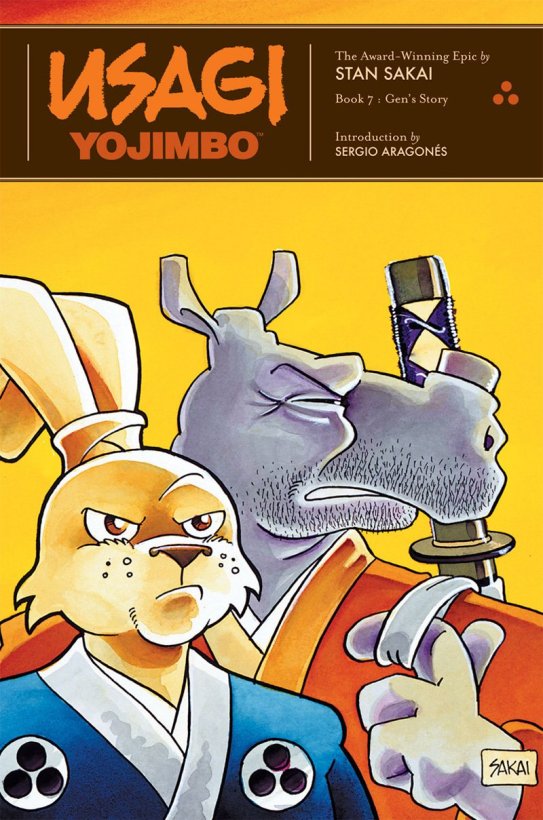
Throwback Thursday: Usagi Yojimbo: Volume 7: Gen’s Story by Stan Sakai

Usagi Yojimbo Gen's Story

Publisher: Fantagraphics Books (Paperback – 1996)

Series: Usagi Yojimbo – Book Seven

Length: 187 pages

My Rating: 5 out of 5 stars

Amazon     Book Depository

Reviewed as part of my Throwback Thursday series, where I republish old reviews, review books I have read before or review older books I have only just had a chance to read.

For this week’s Throwback Thursday, I once again dive into the wonderful world of Usagi Yojimbo and review the seventh volume of this incredible ongoing comic series, Gen’s Story. I have been really enjoying going back and reviewing the older volumes of this fantastic comic by legendary writer and artist Stan Sakai, and this seventh volume is another excellent addition to the series that I always have a terrific time reading.
Usagi 32

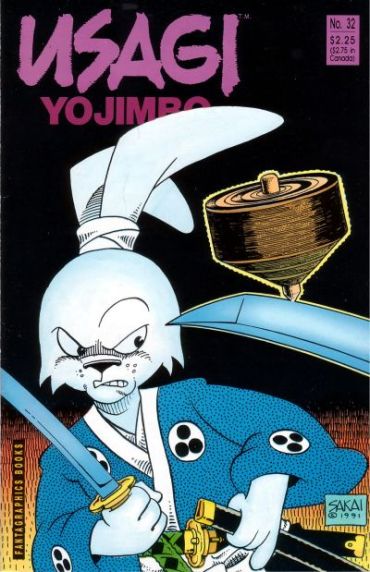
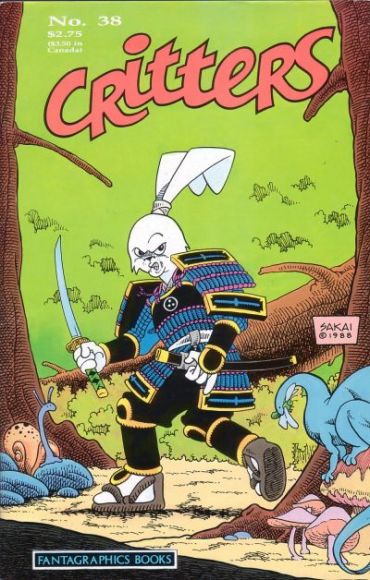
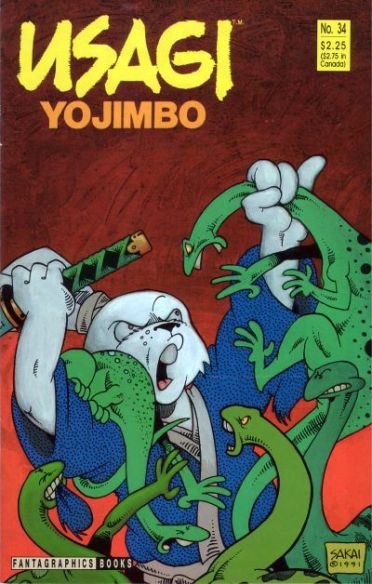
Gen’s Story is an amazing example of a Usagi Yojimbo volume, which contains several short stories, each of which shows a unique tale set within the series’ clever version of feudal Japan populated with anthropomorphised animals. Each of the individual stories in this volume is rather good, and together they form a fantastic volume that not only introduces a recurring side-character but which also explores the backstory of another key character and serves as a perfect end note for one of the series’ best character arcs. This volume is made up of issues #32-38 of the Fantagraphics Books run on Usagi Yojimbo, as well as a story from Critters #38, which makes Gen’s Story a tad longer than a typical volume. All of these issues make for an awesome read, and Gen’s Story is another excellent addition to the Usagi Yojimbo series.

The first story contained within this volume is the fun and enjoyable tale, Kitsune. In this story Usagi encounters a talented street performer, Kitsune, who entertains the crowd with the tricks she can perform with her koma (spinning tops). However, Kitsune is much more than a simple entertainer; she is also an extremely skilled thief and pickpocket who manages to take Usagi’s purse without him realising it. This forces Usagi to stay late at an inn, washing dishes to pay for his meal, which results in him witnessing and intervening in an altercation between a notorious gambler and some local gangsters. Deciding to help the gambler under the mistaken belief that he is an innocent merchant, Usagi attempts to escort him out of town, where the two encounter Kitsune again just before the gangsters attack, leading to a fight in the streets.
Usagi 33

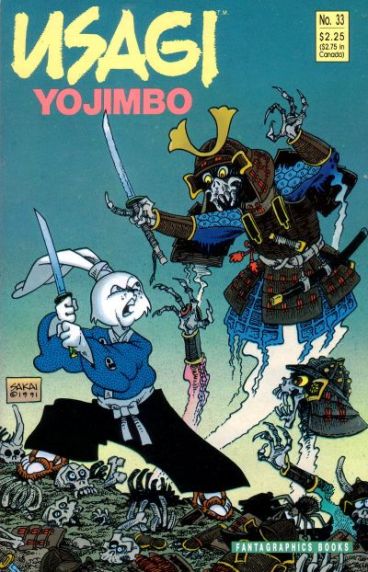
Kitsune is an entertaining story that works well as a suitably light-hearted start to the entire volume (get a fun story in before the feels start). The whole of this story is really amusing from the very start, and it contains some great comedy elements, from Usagi getting taken advantage of by Kitsune and the way he doesn’t initially realise that the person he is helping out is the same gambler who previously led a mob against him in A Kite Story, which was part of the fifth volume, Lone Goat and Kid. This leads to a great scenario where the gambler is forced to rely on Usagi for protection, while silently hoping that he will not remember who he is or what he previously did. Of course, Usagi eventually figures out who he is, thanks to the gambler’s boasting, and this results in a great end to the whole farcical tale. This issue also serves as an excellent introduction to the character of Kitsune, who goes on to become a major recurring figure within the Usagi Yojimbo stories. Sakai does a fantastic job showing off Kitsune’s personality and skills as a thief throughout this story, and I also love all the cool drawings he does of Kitsune’s various tricks with the spinning tops. Kitsune’s entire arc throughout this story is great, and I love how Usagi was able to get even with her at the very end, which is a fun prequel to all their future encounters. The combination of an entertaining plot, a great character introduction and an enjoyable call-back to a previous story helps to make Kitsune an excellent first entry in this volume, and I had an amazing time reading it.

The second story in this volume is the short entry Gaki. Gaki is quick and amusing story that follows a young Usagi back when he was a student under the tutelage of his sword master Katsuichi. After one of Katsuichi’s typical lessons, which sees Usagi receive a smack to the head, Usagi attempts to retaliate, striking a blow that seemingly kills his master and causes his ghost to start haunting Usagi. Of course, it ends up being a whole big misdirection, but it results in a fun sequence in which young Usagi is chased by a vengeful spirit, which all leads to a humorous conclusion. The highlight of this quick tale has to be the amazing drawings of the vengeful spirit and the pure terror that appears on the face of the young Usagi, all of which are way out of proportion to Gaki’s rather innocent story. All of this makes for an entertaining second inclusion in Gen’s Story, and it, together with the first story, provides readers with a fun start to this volume.
Critters 38

The third story is where we start getting to the heavier narratives of this volume, as the reader is treated to the supernatural tale, Broken Ritual. This story sees Usagi walking late at night through a small village filled with an unnatural amount of fear, especially after a loud and terrifying wail breaks the silence. Talking to the townsfolk, Usagi learns that the village, which is located close to the site of the battle of Adachi Plain, is haunted by one of Usagi’s old comrades, General Tadaoka, who died following the battle in the midst of an incomplete seppuku ritual. Now, due to the shame of having a dishonourable death at the hands of an unworthy and unnamed enemy, Tadaoka’s spectre appears in the spot where he died each full moon, letting out a wail of anguish. Upon hearing this tale, Usagi decided to try and help end the suffering of his former comrade and manages to help the spirt pass peacefully by successfully performing the seppuku ritual on the ghost.

Broken Ritual is an impressive and gripping story of honour and duty which is easily one of the best inclusions in this volume. This is one of those stories that really sticks in the reader’s mind, and the whole concept of samurai honour, even from beyond the grave, is a really fascinating central plot aspect. I loved the exploration of the seppuku ritual, and the supernatural elements of this story play into this really well, as it highlights just how important an honourable death is to a samurai like Tadaoka, so much so that he came back from the grave to ensure it was done properly. Sakai’s art is in top form for this volume, and his outstanding depiction of a wartime seppuku ritual is absolutely incredible. The intense facial expressions of Tadaoka during the seppuku scenes are particularly enthralling, and Sakai does a fantastic job of showing the pain and concentration that would have been on such a person’s face. All of this leads to a deeply captivating story, and it is amazing the sort of gripping tale Sakai can spin together in single issue.
Usagi 34

The fourth story in this volume is the shorter story, The Tangled Skein, which is the story that was originally featured in Critters #38. This is a creepy, quick story that follows Usagi in the immediate aftermath of the battle of Adachi Plain. Fleeing from the victorious troops of Lord Hikiji, Usagi attempts to hide in a dark forest known as The Tangled Skein, which is rumoured to be filled with all manner of haunts. Naturally, Usagi runs into one of these haunts, a demon disguised as a helpful old lady, and he must try to escape her clutches with help from the most unlikely of sources. This was an awesome supernatural storyline that I quite enjoyed, especially as the story once again highlights some of the philosophies surrounding samurai honour and what duties a samurai has to his lord, and vice versa. Fast-paced, exciting and with a surprisingly poignant moral to its story, The Tangled Skein is great entry to the volume, and I am glad that Sakai included it.

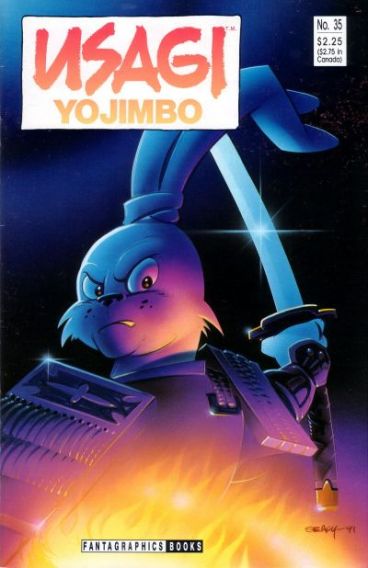
The next story in this volume is simply call Gen, and it is the major storyline contained within Gen’s Story. Made up of three Usagi Yojimbo issues, this is an excellent story of revenge and obsession that also continues the theme of the last few stories by looking at samurai honour and obligation. This story also reveals the full backstory of the always amusing and enjoyable recurring side character Gen and shows how he came to be a bounty hunter. The story is broken into three separate parts by issue, with the first part called Lady Asano’s Story, the second part called Sins of the Father and the third and final part titled Lady Asano’s Revenge.
Usagi 35

Naturally, Gen revolves around the character Gen, who Usagi once again meets out in the wilds, and helps him claim his latest bounty. Recovering from this fight in a nearby town, Usagi shares a meal with a destitute noblewoman and her retainer. The noblewomen, Lady Asano, is on the hunt for her husband’s murderer, a former advisor who betrayed him for great reward, and her exhaustive 20-year long quest has left her poor and on her own. The story is interrupted by the arrival of Gen, who is revealed to be the son of the great General Murakami, the most revered retainer of the Asano clan, and whose family owes allegiance to Lady Asano. Gen, bitter at the years his hard and disciplined father spent dragging him and his mother around the countryside hunting the murderer, an event that led to the death of Gen’s mother and Gen becoming a bounty hunter, refuses to help Lady Asano. However, once Lady Asano and Usagi are captured by the murderous advisor, revealed to be the town’s magistrate, Gen attempts to help, leading to an emotional and violent confrontation.

This was another excellent story that had a number of fantastic elements to it. It was great to finally get Gen’s backstory revealed, as Gen promised to tell his story all the way back in the second volume, Samurai. This was actually a rather tragic backstory for Gen, and I really liked seeing it, especially as it fits in really well with Gen’s character, not only explaining why he is so eager to fight for money but also why he is so dismissive and distrustful of honourable samurai, who must remind him of his father. Sakai makes sure to wrap up Gen’s personal history rather well within this story, as Gen gets some closure with his father towards the end of the story in one of the few instances that we see a really serious and emotionally wrought Gen. I also liked how Sakai continued to explore the concept of samurai honour within this story, especially the obsession and hurt that it can cause. We got to see the negative impacts that having an extremely loyal and honourable samurai as a father had on Gen, and Sakai also focused on the obsession for revenge and redemption that existed within Lady Asano, which not only drove her into poverty but also gave her the strength to finally get her revenge. The sequence where the dying Lady Asano slowly advanced towards the target of her wrath was pretty intense, and she almost appeared demonic as she slowly moved to get her revenge. Other cool highlights of the story include the huge pitched battle that occurred between the protagonists and their opponents’ retainers in the magistrate’s compound, and the continued fun banter between Usagi and Gen, which adds some much needed humour into this heavier story. Overall, this is an impressive and addictive expanded story, that achieves a lot of fantastic character development and which serves as an excellent focus of this entire volume.
Usagi 36

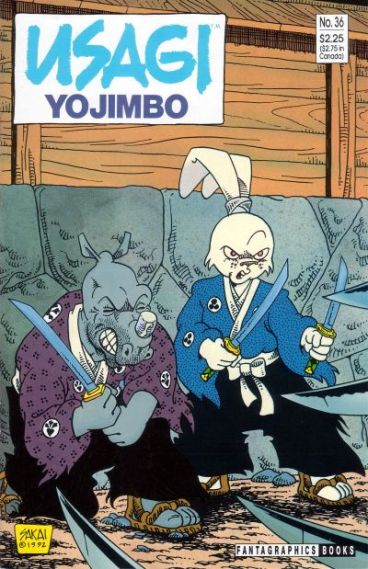
The next story contained within this volume is another lighter story, The Return of Kitsune. In this story, Usagi, who is accompanied by Gen, once again encounters Kitsune, who is up to her usual tricks of street performances and pickpocketing. This time, however, she accidently steals a valuable letter meant for a corrupt local merchant, and she is subsequently hunted through the streets until she runs into Usagi and Gen. Usagi and Gen was work together to save Kitsune from the merchant, even if they cannot agree on what the best course of action is.

The Return of Kitsune is probably one of the funniest inclusions in this volume. The highlight of this entry has to be the first meeting between the two fun side characters, Kitsune and Gen. These two characters play off each other extremely well, and you cannot help but chuckle at the exasperated expression on Usagi’s face as the Gen and Kitsune begin to flirt with each other. I also enjoyed seeing the opposing philosophies of Usagi and Gen clash throughout this story, as Usagi wants to intervene to save lives, while Gen wants to stay out of the whole thing and claims that Usagi is too nosey. This whole argument proves to be a rather entertaining part of the story, and it results in some excellent scenes towards the end of the story, especially when Usagi takes Gen’s advice about minding his own business and fails to tell his friend that Kitsune stole his purse.
Usagi 37

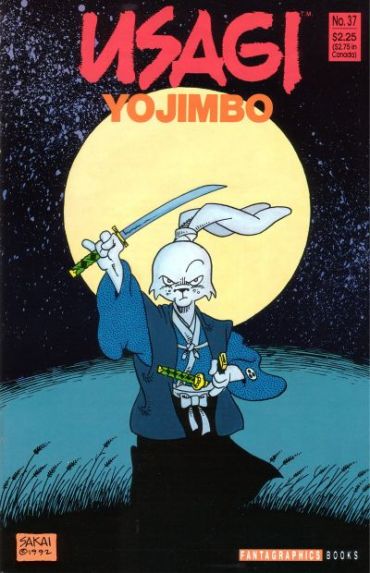
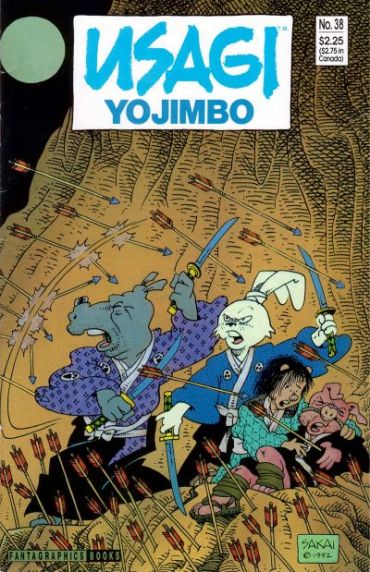
The final entry in this volume is the outstanding narrative, The Last Ino Story, which serves as the last appearance of one of the best recurring characters to appear in the earlier volumes of this series. In The Last Ino Story, Usagi and Gen are taking one of Gen’s infamous shortcuts late at night and find themselves ambushed by bandits while traversing a narrow path along the side of a cliff. Managing to outsmart their attackers, Usagi and Gen seek shelter in a nearby abandoned hut, where they find themselves confronted by a young woman who is attempting to defend her wounded husband. Able to make their way inside, they find that the woman’s husband is none other than the Zato Ino, who has settled down and abandoned his violent ways after his last encounter with Usagi and Gen. Gravely wounded by the same bandits Usagi and Gen encountered, Ino appears close to death and the two samurai must work quickly if they are to save him and ensure he gets to live the life he rightly deserves.

The Last Ino Story is an outstanding and emotionally rich story which is an amazing way to finish this entire volume off. This last entry in this volume contains a great story in its own right, especially as it serves as a fantastic conclusion to one of the best character arcs in the series, that of Zato Ino. Ino was introduced all the way back in the first volume, The Ronin, as a blind outlaw who was trying to find a quiet place to settle down and rid himself of his life of violence, but whose efforts were constantly disrupted by his large bounty and the hunters chasing him. However, as the series progressed and Usagi kept meeting him, he grew as a character, from him gaining his first true friend in the third volume, The Wanderer’s Road, to him finally finding a home and family after the events of the fourth volume, The Dragon Bellow Conspiracy. This final appearance from him (and it is indeed the last time that you see him), serves as a perfect send off to him, as Usagi and Gen, the only two people who knew his past and gave him a chance, find out that he ended up having a the peaceful life he always wanted and has even more happiness on the way. As a result, this is a perfect story for those readers who got attached to the character of Ino through the first volumes of the series, and it was great to see his story come to a satisfying end.
Usagi 38

I also liked Gen’s character arc throughout this story, especially once he finds out that Ino was the injured man in the barn. Gen and Ino have a complicated past, as Gen was initially trying to hunt Ino down for his bounty during their first encounter, and Ino ended up saving his life. In order to repay him, Gen dragged the injured Ino out of the castle before it exploded and told everyone, including Usagi, that Ino had died, in order to ensure that the blind pig would no longer be hunted and could settle down. In this story, Gen, upon seeing the man he saved once again dying, loses his cool and begins to take his rage out on an owl that has been stalking him throughout the course of the book, which he sees as an omen of death. Watching Gen constantly run out into the rain to chase away an owl is amusing on the surface, but it also reveals his deeper feelings that he usually keeps hidden: “The one decent thing I did was give him his peace, and you won’t take it away!” His determination to keep Ino alive because of this is a real change from his usual behaviour, and it helps underline that deep down Gen is a good character, even if he reverts to his usual gruff self the moment he knows Ino is fine. I also liked how the whole saga with the owl ended up, and it was a fun little turn around on the bird being an omen of death. Other highlights of this story include the cool battle sequence towards the front when Usagi and Gen manage to climb up the cliff and face the bandits trying to kill them. The five panels which show this fight are really cool, from the way that the grim faced Usagi and Gen are framed in the moonlight, the close-up of the bandits faces as they charge, the shot of Usagi’s bloody sword, and the way the fight is only alluded to by the sound effects that have been written in, makes for a great sequence that I really liked. All in all, The Last Ino Story is a first-rate inclusion, and it leaves the reader with a memorable and emotionally substantial ending to this volume.

The seventh Usagi Yojimbo volume, Gen’s Story, is another incredible addition to this awesome and deeply enjoyable series. Each of the entries within this excellent volume are outstanding reads, containing complex characters, fantastic narrative arcs and Sakai’s impressive artwork. Gen’s Story gets another five-star review from me, and Stan Sakai has once again shown why he is one of my favourite creative minds.

Amazon     Book Depository
