Star Trek: The Next Generation: Available Light by Dayton Ward – Audiobook Review

Star Trek - Available Light Cover

Publisher: Simon & Schuster Audio (9 April 2019)

Series: Star Trek

Length: 11 hours and 59 minutes

My Rating: 4 out of 5 stars

Amazon     Book Depository

For my latest review, I dive back into the massive universe of extended books that surround the Star Trek television and movie series, with the latest novel from legendary Star Trek fiction author Dayton Ward.

When I reviewed my first piece of Star Trek fiction, The Way to the Stars by Una McCormack, a couple of months ago, I mentioned how substantial the extended book universe around Star Trek was. With a huge number of series that cover various points of the Star Trek universe and over 840 novels to accompany the various movies and television shows, there are so many additional stories and characters out there for dedicated fans to enjoy. Star Trek tie-in novels and comics were not something that I had really gotten into before The Way to the Stars, but after enjoying it, I thought that Available Light would be a good opportunity to expand my knowledge of the Star Trek universe. I also decided that I would try my first Star Trek audiobook; I chose to listen to the audiobook format of Available Light, narrated by Robert Petkoff.

Quite a large amount of the extremely large Star Trek extended universe can be attributed to the author of this book, Dayton Ward. Ward is a prolific author who has been writing Star Trek fiction since 1998 with his inclusions in the long-running Strange New Words collections of Star Trek short stories, becoming the first author to contribute to three separate volumes of this series. Since then he has written more than 20 additional inclusions in the Star Trek universe, including last year’s Star Trek Discovery: Drastic Measures, which made my Top Ten list of Books I Wish I Read in 2018.

Available Light is the latest book in a series of novels which are set after the events of the last Star Trek: The Next Generation film, Nemesis. Available Light takes place in the year 2386, set seven years after the events of Nemesis and continues to follow the adventures of the USS Enterprise E, under the command of Captain Picard. Ward has written the last three books in this specific Star Trek series and Available Light continues several of the storylines established in these previous novels.

For over 200 years, covert organisation Section 31 has policed and protected the United Federation of Planets from the shadows. Following the designs of an artificial intelligence, Control, Section 31 has committed attacks, assassinations, political interference and all manner of illegal actions to preserve the security of the Federation, without any oversight. However, thanks to the actions of Star Trek: Deep Space Nine character, Dr Julian Bashir, all of Section 31’s secrets have been published and are now out in the open for everyone to see. With the entire Federation of Planets now aware of Section 31’s actions, the Federation government and Starfleet move to arrest and prosecute all known Section 31 agents for treason against the Federation.

While numerous crimes and atrocities have been revealed, perhaps none is more controversial than Section 31’s assassination of Federation President Min Zife following his secret deposition by a group of Starfleet officers. More shocking is the revelation that one of the Starfleet officers responsible for the illegal coup d’etat that unseated Min Zife was none other than Jean-Luc Picard, the captain of the USS Enterprise E.

While the politicians and remaining commanders of Starfleet argue about the future of Picard, the Enterprise continues its exploration of the distant and uncharted Odyssean Pass. The Enterprise has come across an incredibly large and ancient spaceship adrift in the middle of nowhere and apparently abandoned. When the Enterprise’s away team boards the ship, they discover that the ship might not be as abandoned as first believed. As Picard and the Enterprise attempt to help the mysterious beings who inhabit the ship, they find their plans complicated by the arrival of a band of salvagers with designs on the massive ship.

I really enjoyed Available Light, as Ward presents the reader with a compelling adventure in space that really reminded me of an episode of Star Trek: The Next Generation. Ward goes deep into the Star Trek lore to produce an intriguing story for the fans, and it was quite interesting to see how the events of Available Light help shape the wider Star Trek book universe. The book makes exceptional use of advanced science and a large amount of action to make the story even more interesting and fun. I especially enjoyed the various wonderful examples of ship-to-ship combat that occurred throughout much of the book, and I found them to be extremely entertaining and exciting. Overall, this is a pretty fun read, although there are some issues when it comes to its intended audience and the distribution of its two main storylines.

One of the things that I always try to cover when reviewing novels related to movies, television shows and video games is whether a book is suitable only for fans of the original media or whether readers with limited background knowledge of the franchise will be able to appreciate the book. Available Light falls into the category of books which is primarily aimed towards those readers with some knowledge and appreciation of the Star Trek franchise, especially those who are fans of the books, as Ward makes use of a number of storylines that originated in other books. For example, Available Light continues to showcase the Enterprise’s exploration of the region of space known as the Odyssean Pass, which has been covered in Ward’s last three novels, Armageddon’s Arrow, Headlong Flight and Hearts and Minds. It also dramatically follows storylines started in David Mack’s 2004 novel, A Time to Heal, which detailed the assassination of Min Zife, and his 2017 Star Trek: Section 31 novel, Control, which featured the publication of Section 31’s secrets. The book also contains a huge number of references to previous Star Trek adventures that happened in other books, the movies and the television shows. This does not just include those works associated with The Next Generation, as events from other shows, such as Deep Space Nine, are also heavily referenced. As a result, fans of these existing pieces of Star Trek fiction will have a much deeper appreciation for what is going on, and they may already be invested in the storylines that have been established in these previous books.

Dedicated fans of The Next Generation television series and movies will probably be surprised about the extensive storylines established in these books. Since the events of Nemesis, the books included in these series cover a huge range of adventures and character developments of the crew of the Enterprise. Those Star Trek television and movies fans coming into this book will be surprised at events like Picard and Beverly Crusher getting married and having a son. These fans should also be prepared for the fact that only a few of The Next Generation’s main characters are really featured in Available Light. While Picard, Worf, Geordi La Forge and Beverly Crusher are still aboard the Enterprise, major characters such as Deanna Troi, Data and Wesley Crusher do not appear at all, while the character of William Riker (now an Admiral) only appears in one chapter. In their place, several new, original characters have taken on their roles and become point-of-view characters for the Enterprise. While these characters are quite intriguing, fans of the original crew may be a little disappointed not to see how the missing characters are going. Ward has also included some characters that appeared in minor roles in both The Next Generation and Deep Space Nine. These include Admiral William Ross (who appeared in 13 episodes of Deep Space Nine), Worf’s brother Martok (who also appeared in Deep Space Nine) and Philippa Louvois (the Judge Advocate General from The Next Generation episode The Measure of a Man). Not only are these characters quite interesting in their own right, but there are some significant developments for some of these characters that fans of the franchise will be deeply intrigued to see.

That being said, while a large amount of the story is quite heavy on Star Trek lore, references and tie-ins to previous storylines, Ward does an exception job making this story accessible to a wide range of readers. I am not a particularly dedicated Star Trek fan and I only have an average knowledge of the lore and the various series and movies. However, I was able to follow the story quite closely, as Ward did a fantastic job explaining and describing the events that occurred in the previous storylines and episodes that Available Light’s story follows on from. While some readers whose knowledge of Star Trek is lesser than mine might struggle a little with the book, I feel that Ward has made this book extremely accessible to most readers. However, this book will really appeal to those readers who have a prior appreciation of the Star Trek franchise.

I should mention that that this book, like many licensed Star Trek novels, is not actually considered to be canon in relation to the television shows or movies. While some books, such as the recent Star Trek Discovery books, are considered to be canon (indeed, events in The Way to the Stars were mentioned in the show), Available Light and the books that it follows on from are not. That means that events that occur in this book are unlikely to affect what happens in upcoming movies or television shows, such as the upcoming show featuring the return of Captain Picard. While reading a non-canon book like this might not appeal to some fans of the franchise, I still quite enjoyed the story, and I am intrigued to see how this separate Star Trek universe will continue.

Available Light features two separate storylines that mostly remain separate from each other. The first storyline focuses on the fallout of the events of Control, including the revelation about Section 31’s actions and the attempts by the Federation to round up and prosecute all those who worked with or for the covert organisation. The second storyline focuses on the Enterprise as they encounter the new alien ship and the various inhabitants of this new region of space. Despite the huge amount of detail used to describe the Section 31 part of the book in both the official synopsis and the synopsis I wrote above, this storyline only really takes up around one-third of Available Light, with the remaining two thirds focusing on the Enterprise and her crew. I found both storylines to be extremely fascinating and a lot of fun. The Enterprise storyline felt like a classic episode of a Star Trek television series, with the crew working together to explore an intriguing phenomenon and overcome the odds to save an innocent party. The Section 31 storyline is also really cool, and I really enjoyed seeing what happens when the existence of this organisation becomes public knowledge.

While Ward does try to bring these two separate storylines together, such as by examining Picard’s guilt at the role he played in Min Zife’s ousting and assassination and having it affect his actions in the Enterprise storyline, I did at times feel like I was reading two unrelated books. I really think this would have been a better book if Ward had focused on only one storyline. I would have really loved a book completely dedicated to the aftermath of the Section 31 reveal, including having Picard stand trial for his crimes, and I am sure that the story of the Enterprise discovering the massive ship could have been even better with some additional storytelling. Instead, the story of Picard’s trail will occur later this year in David Mack’s upcoming novel, Collateral Damage. While it was slightly disappointing to find out that Available Light’s Section 31 storyline was mostly included to set up a future book, it was still really interesting and helped created a book that was a lot of fun to read.

Ever since Section 31 was first introduced, it has been a deeply intriguing plot point. The idea of a secret Federation security organisation that goes against nearly everything that Starfleet stands for is really clever, and it opens up a lot of possibilities. Section 31 is getting a lot of focus at the moment, as not only did they appear throughout the second season of Star Trek Discovery (which utilised the AI program Control, who appeared in several novels linked to Available Light as an antagonist) but there are apparently plans to do a Section 31 television series featuring Michelle Yeoh’s character from Discovery. As a result, it was really interesting to see this book universe version of Section 31 start to unravel in Available Light. The shock and outrage that results throughout the book are deeply intriguing, and I really liked seeing how the Federation and Starfleet reacted to the news. This really was a cool plot point, and I am extremely curious to see what happens to the organisation in future books.

As I mentioned before, I chose to listen to the audiobook version of Available Light. At just under 12 hours in length, it did not take me too long to get through this book, and I found it to be a great format to enjoy the intriguing, Star Trek based plot. I did find that listening to the story helped me pick up a lot more of the previous storylines and Star Trek references that Ward had littered throughout the book, which probably gave me a better base to enjoy the story. I found Robert Petkoff to be a really good narrator, and I really enjoyed the way that he told the story. Petkoff does a pretty good impersonation of the male characters from The Next Generation, including Picard, Worf and La Forge, and I found his Picard voice to be extremely convincing. Petkoff also did a great impersonation of Vulcan and Klingon characters throughout the book, and I thought the voices he attributed to these alien characters were quite excellent. As a result, I would strongly recommend the audiobook version of Available Light, and I am extremely glad it was the version of the book I chose to enjoy.

In the end, my second dive into the Star Trek universe was a little bit of a mixed bag. While there are some great and enjoyable story inclusions throughout Available Light, this is a book that is more aimed towards extremely dedicated Star Trek fans and features a split story that at times is more concerned with setting up future books rather than standing on its own. But I found the storylines explored within the books to be a lot fun, and I had an absolute blast listening to this captivating Star Trek tale. I am still really keen to check out additional Star Trek novels, and I hope to see where the various plots explored in this book go from here.
Amazon     Book Depository

Star Wars: Master & Apprentice by Claudia Gray – Audiobook Review

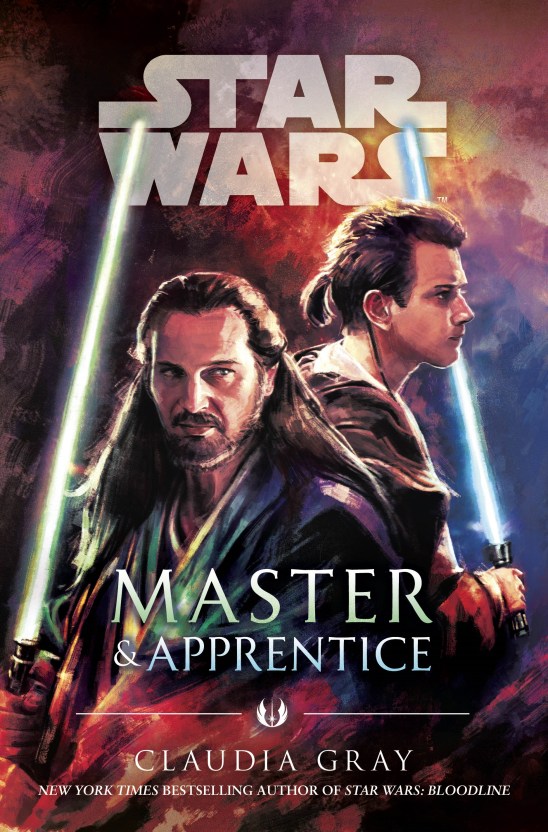
Master & Apprentice Cover

Publisher: Random House Audio (16 April 2019)

Series: Star Wars

Length: 11 hours and 42 minutes

My Rating: 4.75 out of 5 stars

Amazon

2019 is shaping up to be an amazing year for fans of the new Star Wars extended universe, a group of which I consider myself to be a proud member, with so many awesome Star Wars books and comics being released.  After reviewing the first Star Wars book for 2019, Queen’s Shadow, a few weeks ago, I have been really looking forward to getting to grips with the franchises second 2019 novel, Master & Apprentice by Claudia Gray.

Master & Apprentice is a canon Star Wars novel set around eight years before the events of Star Wars Episode I: The Phantom Menace.  It focuses on two of the main characters from this prequel movie, Jedi Knight Qui-Gon Jinn and his Padawan, Obi-Wan Kenobi.

Qui-Gon Jinn is an experienced and powerful Jedi Knight, having been trained in the Force by the legendary Count Dooku, who himself was trained by Master Yoda, and is ready to face any threat or danger that lies in front of him.  However, his greatest challenge may prove to be his own Padawan, Obi-Wan Kenobi.  The two Jedi are polar opposites to each other: while Obi-Wan is by-the-book and rigid in his respect of rules and protocol, Qui-Gon routinely shows very little regard for the rules and laws that bind the Jedi and constantly finds himself at odds with the Jedi Council.  Despite years of working together, the two Jedi struggle to understand each other.  Qui-Gon sees every mistake of Obi-Wan’s as his own, while Obi-Wan is unable to understand the reasoning behind Qui-Gon’s actions, nor his obsession with the ancient Jedi prophecies that many see as dangerous and unreliable.  Their tenuous and strained relationship is further tested when Qui-Gon is unexpectantly offered a place on the Jedi Council, a move that would likely end their partnership.  With feelings of betrayal and failure hanging over both of them, they are suddenly assigned a critical mission that is likely to be their last as master and apprentice.

Fellow Jedi Rael Averross, another former apprentice of Dooku, has requested Qui-Gon’s help with a difficult political dispute on the planet of Pijal.  Averross has been serving as regent for the planet’s young queen, who is days away from ascending to the throne and signing an important treaty.  A series of attacks which has rocked the planet is apparently the work of The Opposition, a band of political performance artists turned terrorists.  Once the two Jedi arrive on the planet, they quickly find that the situation is far more complicated than initially believed.  With corruption and secrets around every corner, Qui-Gon and Obi-Wan attempt to get to the bottom of everything, even utilising a pair of jewel smugglers to help with their inquiries.  However, their investigations are hampered by their opposing points of view, which only worsen when Qui-Gon places great stock in a dark vision of the future he has foreseen.  Can they overcome their differences to unravel the plot, or will they fail their mission?

Claudia Gray, also known as Amy Vincent, is a prolific and experienced author, best known for her first body of work, the Evernight series, which started in 2008.  Since then she has written a number of other series, including the Spellcaster, Firebird and Constellation series, as well as the standalone novel Fateful.  Gray also has a huge amount of experience writing Star Wars fiction, having previously written three Star Wars tie-in novels in the new extended universe, including Lost Stars, Bloodline and Leia, Princess of Alderaan.  As a result, the story of Qui-Gon Jinn and Obi-Wan Kenobi is in safe hands as Gray produces an outstanding, compelling and character-driven novel that delves deep into the Star Wars lore to create an amazing story.

Master & Apprentice presents a clever and exciting story that sees the protagonist attempt to uncover the mysterious events unfolding on Pijal, while also dealing with their many personal and emotional issues.  The story is told from the perspective of a range of characters in the book, and each of them adds their own thoughts and experiences to the story.  The overall story arc on Pijal becomes quite complex, with many different and intriguing sides to the conflict, and the people behind the events are not who you think.  I had an amazing time enjoying this book.

In this fantastic piece of fiction Gray goes into some intriguing parts of the Star Wars universe and lore.  This is actually the furthest back the new extended universe books go, so it offers the reader a great opportunity to see some of aspects of the pre-movie Star Wars universe.  While there are some hints at the events to come, as well as references to some major characters in the upcoming movies, the book contains a significant amount of new content and antagonists.  It is actually quite refreshing to read a Star Wars book that is not tied into the Skywalker family or featuring the Empire or the First Order as an antagonist.  I quite enjoyed the look at the pre-The Phantom Menace universe, including the new planet of Pijal, and the inclusion of the immoral Czerka Corporation, who previously appeared in the pre-Disney Star Wars universe.  While those fans of the Star Wars franchise who like to consume more than the movies will absolutely love this book, Master & Apprentice should prove to be fairly easy to read for those people who have at least seen The Phantom Menace, as it is a pretty intriguing science fiction adventure.

Those readers who are interested in a deeper dive into the Jedi of the Republic era are in for a real treat in this book, as Gray delves into aspects of their history and lifestyle.  Throughout Master & Apprentice there are a number of scenes set in the Jedi Temple, as well as a number of discussions about how and why the Jedi do what they do.  Perhaps one of the key things highlighted in this book is how the traditional Jedi master and apprentice program worked.  Several different apprenticeships are shown, and the reader gets a good idea of what is entailed in this relationship, what training the Padawans go through and how the process turns them into the eventual guardians of peace in the galaxy.

One of the most unique and fascinating aspects of Star Wars and Jedi lore that Gray examines are the fabled Jedi prophecies.  The prophecies were created long ago by an ancient group of Jedi sages, and are reputed to reveal events from the future.  The prophecies become a key part of the story, as not only do they drive a wedge between Qui-Gon and Obi-Wan but they are also shown to have a major influence over Dooku when Qui-Gon was his Padawan.  The prophecies have been mentioned in the movies before, with the most famous prophecy about the coming of a chosen one who will bring balance to the Force, referring to Anakin Skywalker/Darth Vader.  While the chosen one prophecy is referenced in Master & Apprentice, several other prophecies are mentioned, including one that comes true in this book.  I was really quite intrigued by the author’s examination of the prophecies; while they have been mentioned in the movies, I did not know too much about them.  Dedicated fans will no doubt have fun trying to tie some of these prophecies into the movies and other associated pieces of Star Wars media.  For example, there is one that clearly refers to Princess Leia that is repeated a couple of times.  I personally was very curious about one prophecy that was mentioned towards the end of the book, which was referenced as being obsessed over by Count Dooku.  It was a particularly portentous-sounding prophecy, and I wonder if it will have anything to do with recent revelations in the trailer for the next Star Wars movie, The Rise of Skywalker.

The story contained within Master & Apprentice is a strong, character-driven affair which features a compelling central cast, each of whom gets an in-depth analysis from Gray.  Not only is there some compelling examinations of the main two characters, Qui-Gon and Obi-Wan, but Gray also introduces several intriguing and entertaining new characters who really add a lot to the story.

There is a great examination of the younger Qui-Gon Jinn and Obi-Wan Kenobi in this book, as Gray examines not only the relationship between the two characters but also aspects of their past and their personalities.  When the two characters are introduced in the first prequel film, The Phantom Menace, very little is known about them, save that Obi-Wan is nearing the end of his apprenticeship and the two of them disagree on certain matters, such as the future of Anakin Skywalker.  Master & Apprentice offers a whole new, deeper examination of these characters and explores how these two Jedi came together and appeared so close, despite some differences in their personalities and styles.  I thought that this deep dive into the relationship between these key movie characters was utterly fascinating, and it made me reconsider aspects from the movie.  The strained relationship between the two characters becomes a major factor of the book, and Gray creates an emotional storyline around it as Qui-Gon and Obi-Wan work to overcome their issues while facing external threats.  This was an excellent part of the book which readers will quite enjoy.

In addition to looking at their relationship and how the two characters become close, Gray also looks at other aspects of their past.  This is particularly true for Qui-Gon, as Gray spends time highlighting Qui-Gon’s apprenticeship to Dooku and his friendship with Rael through a series of flashbacks.  These flashback scenes are quite interesting as they show several key events that were responsible for turning Qui-Gon into the character he was in the movie and go a long way to explain why he was such a hesitant master for most of Master & Apprentice.  There was also an intriguing and extended look at how and why Qui-Gon became so obsessed with the Jedi prophecies.  Qui-Gon’s research and fascination with the prophecies becomes a major part of the book, which really appealed to me, and which also explains a lot about the Qui-Gon’s actions in The Phantom Menace.  For example, it explains why Qui-Gon was so sure that he had found the Chosen One in Anakin Skywalker, and why he was determined to train him, even if it meant defying the will of the council.  These storylines also explain certain aspects of Obi-Wan’s personality that occur within the movies.  For example, the bond and respect that are formed between Obi-Wan and his master explain why he was so willing to take on Anakin as an apprentice after Qui-Gon’s death in The Phantom Menace.  It also adds another layer to Anakin’s betrayal in Revenge of the Sith, as Anakin has not only betrayed Obi-Wan and the Jedi but also Qui-Gon’s memory and his belief in Anakin as the chosen one.  This might explain why Obi-Wan, upon defeating Anakin, so passionately shouted “YOU WERE THE CHOSEN ONE.”  There were also some cute aspects to Obi-Wan’s life that are explained, such as why he had such an aversion to flying and how he was able to ride the lizard mount in Revenge of the Sith.  I quite liked how both characters developed over the course of the book, and I felt that Gray did an amazing job bringing these characters to life and providing an excellent story about their past.

While Gray’s portrayal of the main two characters is really good, I also have to say how much I loved some of the side characters that the author introduced in this book.  My favourite has to be Rael Averross, the unconventional Jedi who has a connection to Qui-Gon’s past.  Rael Averross is pretty much the opposite of all the Jedi readers would mostly be familiar with.  He’s a hard drinking, womanising (which he claims is technically not against the rules of being a Jedi), death stick using scoundrel, who hates nearly every aspect of being a Jedi Knight.  He was an extremely entertaining character whose actions and scruffy appearance are part of a persona the character has created to disguise the guilt, fear and resentment from his past.  I also liked how he was the only character able to identify and point out what the actual result of someone fulfilling the prophecy and finding the chosen one, something that every other Jedi apparently missed.  Rael was such an interesting counterpoint to the other Jedi characters in Master & Apprentice, and his influence on a young Qui-Gon was quite intriguing.  It will be interesting to see if Rael shows up again (I believed he is used in a recent Star Wars audiobook, Dooku: Jedi Lost) as he has the potential to be a key character in the new Disney expanded universe.

Other characters utilised within this book are the two jewel smugglers co-opted by the Jedi to be their guides on Pijal, Pax and Rahara.  While both these characters are a lot of fun, the standout one has to be Pax.  Pax is a gaudy and socially inept character whose inability to interact with other people is due to the fact he was raised by a ship full of protocol droids.  Pax is full of sass, sarcasm and insults, and is easily the most entertaining character in this entire book.  Rahara is also a great character.  A former slave of the Czerka Corporation, Rahara is the more normal of the two characters.  However, her former enslavement still haunts her and drives much of her more noble actions in this book.  Individually, both these characters are pretty cool, but together they form a great team who play off each other well.  Their emotional attachment to each other is another great part of the book and seeing the lengths that the usually pragmatic Pax will go to for Rahara is very heart-warming.

There were also a few flashback scenes featuring Qui-Gon’s mentor and future Star Wars antagonist Count Dooku.  All of these scenes were shown from the point of view of Qui-Gon as Dooku’s apprentice, and they paint a picture of a rigid and severe Jedi who was already showing signs of being tempted to the Dark Side of the Force.  This was a very intriguing portrayal, although I believe that the audiobook Dooku: Jedi Lost, which was released around the same time as Master & Apprentice, contains a lot more of Dooku’s backstory and motivations, and I am definitely going to check this other audiobook out at some point.

As usual, I was deeply, deeply impressed with the audiobook version of this Star Wars book.  The company behind these audiobooks really go the extra mile to make them special, and these tie-in novels are quickly becoming my favourite series to listen to rather than read.  The Master & Apprentice audiobook runs for 11 hours and 42 minutes, and I found that I was able to get through this book quite quickly.  I always find I absorb a lot more of the story with the audiobook format, and with this book I was really able to enjoy the character strife, as well as the new world building that Gray included.  Props need to be given to the amazing sound effects that seem to permeate nearly every single scene in this book.  Firstly, I absolutely love how the incredible and iconic music from the Star Wars movies is used during some of the book’s major scenes.  The music, especially some of the big orchestral moments that defined key parts of the original Star Wars movies, is quite incredible and it does an amazing job of forcefully dragging the reader into the story.  The additional sound effects used throughout the book easily replicate the actions going on around the characters, often using established and recognisable sound from the movies.  I also loved how some of the sound effects could be so effective at creating an appropriate background for the scene by adding in engine noises or the susurration of a loud crowd.

The audiobook format of Master & Apprentice is narrated by Jonathan Davis, who has previously provided his voice to several other Star Wars audiobooks.  I was deeply impressed with Davis’ incredible voice acting range in this book, as the voices he comes up with for the characters are outstanding.  For example, he produces incredible voices for the book’s two main characters, Qui-Gon and Ob-Wan as he damn near succeeds in replicating the two actors voices from The Phantom Menace.  On top of that, his Yoda voice is spot-on, and sounded just like Frank Oz in the movies.  I also liked the voices that the narrator came up with for some of his new characters.  His voice for Rael, for example, does an amazing job capturing the character’s personality, including his more carefree attitude, and the simmering anger that exists for most of his interactions with Qui-Gon.  I also quite like the voice and tone he uses for Pax, and the character’s inbuilt arrogance and emotional shallowness really shine through.

Master & Apprentice is so far my favourite Star Wars book of 2019, and I absolutely fell in love with its excellent story and powerful character work.  Gray takes her readers deep into the Star Wars lore, allowing fans of the franchise to further examine two of the best characters from The Phantom Menace movie.  The combination of Jonathan Davis’ exceptional narration and the production company’s perfect use of classic Star Wars music and sound effects resulted in an absolutely fantastic audiobook that comes highly recommended.  This is one hell of a book, and I cannot wait to see how the rest of the year’s Star Wars books turn out.

Amazon

Aurora Rising by Amie Kaufman and Jay Kristoff

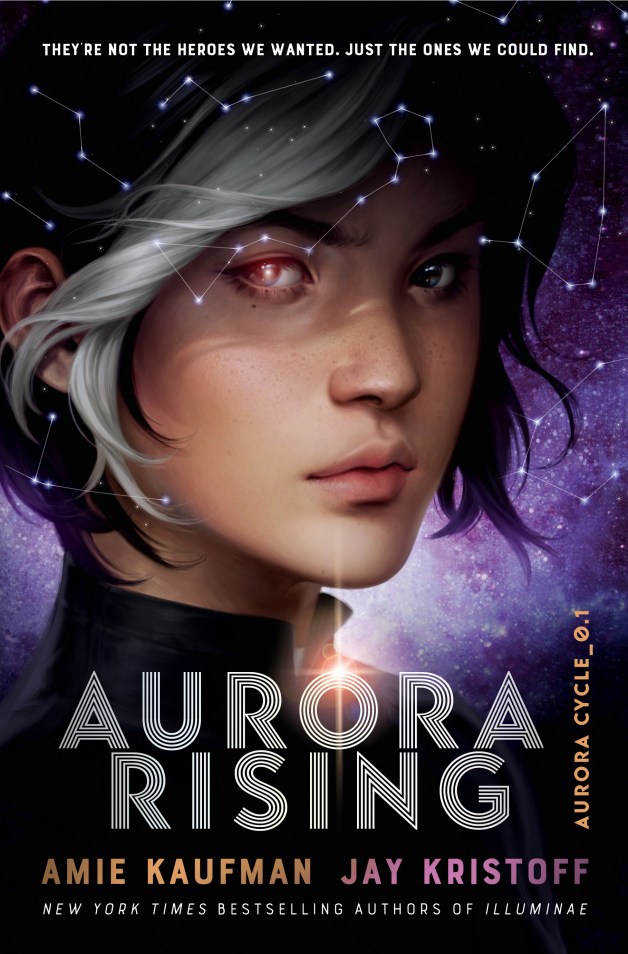
Aurora Rising Cover

Publisher: Allen & Unwin (Trade Paperback – 6 May 2019)

Series: Aurora Cycle – Book 1

Length: 470 pages

My Rating: 5 out of 5 stars

Amazon

The superstar team of Australian young adult fiction authors Amie Kaufman and Jay Kristoff comes together once more to create an outstanding, heartfelt and deeply entertaining new novel that may prove to be one of the best young adult books of 2019.

Kaufman and Kristoff are two of the biggest and most creative authors currently writing young adult fiction.  Kaufman is probably best known for her work with Meagan Spooner, where they have co-authored the Starbound trilogy and Unearthed series of books, the second book of which, Undying, was released earlier this year.  She is also in the process of writing her own Elementals series, with the second book, Scorch Dragons, released a month ago.  Kristoff first came into prominence with The Lotus War series, which debuted in 2012.  Since then he has also written The Nevernight Chronicle, the final book of which is set to be released in September, while his latest book, Lifel1k3, was one of the most talked about young adult releases of 2018.  Kristoff’s sequel to Lifel1k3, Dev1at3, is set to be released in a month, and he is currently working on an epic fantasy series, Empire of the Vampire, with the eponymous first book set to be released in September next year.

Kaufman and Kristoff have previously collaborated on the bestselling and award winning The Illuminae Files, a space opera epistolary series made up of three books which ran between 2015 and 2018.  Their latest collaboration, Aurora Rising, is another epic piece of young adult science fiction and is the first book in their planned Aurora Cycle series, which is currently set to feature another two books, released in 2020 and 2021.

Aurora Rising is set in the year 2380 and follows a spacefaring team of young adventurers as they attempt to save the galaxy.  In the future, humans have expanded out deep into the Milky Way, with fast intergalactic travel made possible through the Fold, dangerous space found on the other side of literal folds in the universe.  The Aurora Legion are an independent peacekeeping force made up of humans and several friendly alien races.  In order to complete their various humanitarian, exploration and peacekeeping missions, the Aurora Legion sends teams of young legionnaires, who can better withstand the rigors of the Fold, into the field.  Each team is made up of six highly trained and skilled individuals, who together can solve any problem they encounter.

Tyler Jones is the star graduating cadet of the Aurora Academy, who, thanks to his dedication and ability, will be given first pick of his fellow graduating cadets to form an elite team.  However, when an unscheduled joyride forces him to perform a risky rescue in the Fold, he misses the cadet draft, leaving him with a team of the cadets none of the other graduating squad leaders wanted.  These include (the descriptions were copied from the blurb due to accuracy):

  • His sister, Scarlet – A cocky diplomat with a blackbelt in sarcasm;
  • His best friend, Cat – A tomboy pilot who’s totally not into her squad leader, in case you were wondering;
  • Zila – a sociopath scientist with a fondness for shooting her bunkmates;
  • Finian – a smart-ass tech-whiz with the galaxy’s biggest chip on his shoulder;
  • Kal – an alien warrior with anger management issues.

Forced to make the most of his bad luck, Tyler leads his team on a routine mission that quickly turns hairy when a hostile force of aliens seek to destroy them.  However, genocidal aliens are the least of their problems, when they discover that the girl Tyler saved in the Fold, Aurora O’Malley, has stowed away on their ship.  Aurora, the only survivor of a colony ship long thought lost, is 200 years out of time and desperate to figure out what happened to her colony and the family she left behind.  The squad discovers that she is far more significant than they could ever imagine when she displays strange abilities and impossible knowledge of both the past and future.  When shadowy government agents attempt to arrest Aurora, the squad are forced to go rogue to solve the mystery and end up in a race to save the galaxy.

Aurora Rising is a spectacular read, as these skilled authors take the reader through an intense young adult science fiction adventure in an intriguing new universe.  The book’s story as a whole is an outstanding mixture of intense action, enjoyable science fiction elements and excellent character work, all wrapped up with clever storytelling that is both compelling and humorous.  There are a number of great scenes and epic moments throughout this book that really highlight this book’s unique style and the writer’s ability to tell a story.  For example, I personally liked an extended sequence that followed the protagonists as they embarked on an elaborate and seemingly impossible heist on a massive space station ruled by a vicious crime lord.  The overall result is a near perfect read that I had an absolute blast checking out.  This is an amazing piece of young adult fiction, with enough action and relatable characters to appeal to all manner of potential teen readers.  Older science fiction readers will also have a great time with this book, especially as it sets up a captivating and ambitious new trilogy that will appeal to a huge and diverse audience.

This book is told from the first-person perspectives of the book’s seven protagonists, which includes Aurora and all six members of Tyler’s squad, each of whom gets a series of chapters throughout the book to tell the story.  Kaufman and Kristoff make good use of the chapters each of the characters narrate and the reader gets a good idea of each character’s individual personality, as well as important snippets into their individual backstory.  The authors also try to differentiate these chapters out a bit for some of the characters.  For example, Zila’s chapters are rather short, blunt and analytical in nature, matching her personality, while Scarlet’s chapters feature her listing off the humorous pros and cons of her ex-boyfriends, figuring out which ones to stay in contact with.  I really enjoyed how the authors told the story through these seven separate narrators, as not only did it bring me closer to the characters but it allowed the authors to showcase various perspectives of some of the more impressive sequences and events, allowing for a fuller and more intense story.

Aurora Rising features an outstanding complement of main characters, as each member of the squad, including Aurora, are looked at in some detail.  I was very impressed with how the authors where able to create such expansive and intriguing backstories for all seven main characters, as each of them has their own issues or concerns.  For example, Tyler and Scarlett are living in the shadow of their dead father’s heroics and trying to make him proud, Cat is deeply in love with Tyler and is having a hard time keeping her feelings in check, and Zila struggles with her disconnection with other people brought on by her tragic past.  Other examples include the team’s two alien members: Finian, who to hides his feelings of abandonment behind his brilliance and snark; and Kal, who is torn between guilt about what his race’s warrior caste, of which he is a member, has done to his home planet and his surprising feelings for one of the other members of his squad.  Aurora is perhaps one of the most complex characters, waking after 200 years to find that everything and everyone she knew is dead and parts of her past have been hidden for nefarious reasons.  Add into that her discovery of uncontrollable mental abilities and the feeling that something mysterious is guiding her and she has a lot to worry about.  One of the best things about this book is that whilst all seven characters are fairly complex individually, the book’s true strength revolves around the fact that when these characters come together they are an extremely dysfunctional crew.  The crew starts off as a rebellious and overly sarcastic mess unable to work together effectively, even with their individual abilities and strengths.  However, as the book continues, they do learn to cooperate to a degree, and the reader is made to really care for them, both individually and as a whole.  I loved how these character relationships expanded and strengthened throughout the book, and I had a lot of fun with this humorous and entertaining group of people.

I really enjoyed the universe that Kaufman and Kristoff crafted to fit around this enjoyable and intriguing story.  Visions of humanity’s future can always be a bit hit or miss, but I thought that the science fiction setting that the authors utilise in this book, which sees humanity expanding and interacting with other races while dark secrets and wars build up in the background, to be a fun and well-thought-out setting.  The characters visit an interesting and inventive number of locations through the book, all of which really add to Aurora Rising’s adventure and action.

I liked the author’s concept of the Aurora Legion, an intergalactic peacekeeping organisation that sends teenage operatives into action due to science fiction reasons.  One of the things I quite enjoyed about this was how these teams were designed to have six members whose joint abilities and specialities would allow them to anticipate and overcome any problem.  As a result the teams are made up of:

  • Alphas – leaders
  • Faces – diplomats
  • Aces – pilots
  • Gearheads – mechanics/inventors/technicians
  • Tanks – combat specialists
  • Brains – science officers/medics

This team breakdown proved to be quite an interesting concept, even if they do sound like party roles in a MMORPG (tank, healer, DPS etc).  I liked this idea and the various characters slid into the roles quite effectively.

I also had a lot of fun with the universe-expanding insertions that Kaufman and Kristoff placed before a number of the book’s chapters.  These insertions are written as information pages being read by Aurora on her uniglass, an AI tablet called Magellan, who has a playful sense of humour and who also provides some amusing commentary within the story.  These information pages provide the reader extra information about the universe, including about the Aurora Legions, the roles of the squads’ various members, the history of the universe, alien species, locations the protagonists visit and other relevant inclusions.  While each of these pages contains universe factual information, Magellan adds humorous twists to each of these pages which are very entertaining and really fit into the easy going and entertaining mood of most of the book.  However, these information pages do change and get more serious in the darker parts of the book, which also helps prepare the reader for the shift in mood.  I loved these inclusions, not only appreciating the inventive universe building they allowed, but also the fun take on the classic idea of in-universe media inclusions.

Aurora Rising is an absolutely fantastic book that blasts off with action, humour and amazing characters to create a deeply compelling and relentlessly entertaining story.  Australian authors Kaufman and Kristoff are an outstanding writing duo, and their latest collaboration is an amazing piece of young adult fiction that brilliantly establishes their new trilogy and ensures that future instalments of the Aurora Cycle will be some of the most sought after young adult books for 2020 and 2021.  Aurora Rising comes highly recommended from me, and it is one of my favourite new young adult books of 2019 so far.

Amazon

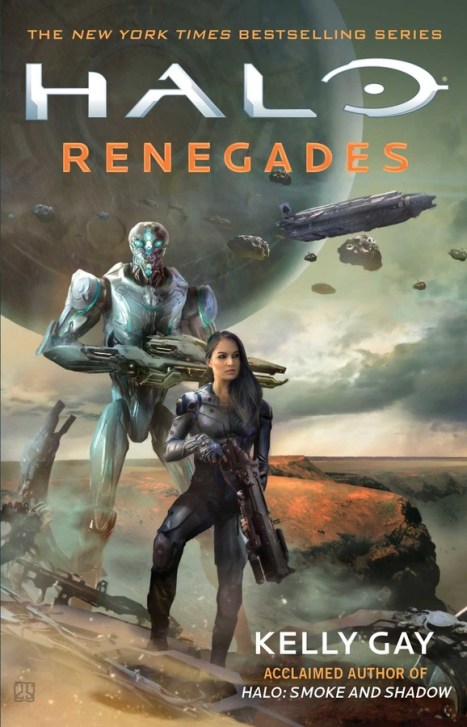
Halo: Renegades by Kelly Gay – Audiobook Review

Halo Renegades Cover.jpg

Publishers: Gallery Books and Simon & Schuster Audio (19 February 2019)

Series: Halo

Length: 8 hours 37 minutes

My Rating: 4.25 out of 5 stars

Amazon     Book Depository

In this review, I dive into the expanded media universe surrounding the popular Halo video game franchise, as I review one of their latest tie-in books, Renegades by Kelly Gay.

I remember way back in 2001 when we first got the X-Box, the original Halo (or Halo: Combat Evolved) was one of the first games we got on the system, and it was definitely one of the best games we had at the beginning of the platform.  The graphics on Halo were just incredible for the time, and it represented a fantastic evolution in the first-person shooter genre.  The Halo series has since expanded out in a number of addition games, including the five main games (Halo to Halo 5), two additional first-person shooters (ODST and Reach) and two real-time strategy games (Halo Wars 1 and 2).  I have ended up playing most of the games in this series and have quite enjoyed the fun action and excitement that come with the series.

Like many other video game franchises, writers have taken advantage of the Halo series’ popularity to create a range of tie-in novels, comics, animation and other media items.  There has even been talk of a live-action Halo movie for some time, although we are probably a long way off from that.  Halo is one of those games where the creators actually invested in a complex backstory and extended history, much of which is revealed within the game’s impressive cut scenes.  While I quite enjoyed the extended Halo backstory revealed in the games, I never got too into the media tie-ins associated with the franchise.  The only other book in this franchise I have read is Halo: Contact Harvest, which I bought in Philippines to supplement my reading material on an extended trip.  While I did actually really enjoy Contact Harvest, which focused on one of the most entertaining side characters in the original game trilogy, I did not have a chance to read any of the other books written about the games until now.  Since starting my blog, I am always keen to expand my range and decided to listen to the audiobook version of this book for something different.  I did have to choose between Renegades and the recently released young adult Halo book, Battle Born, but ended up going with Renegades in the end.  I may yet check out Battle Born at a later date.

For those unfamiliar with the franchise, the games are set in the 26th century, after humanity has journeyed away from Earth and formed an interstellar civilisation.  Some years before the events of the first game, humanity comes into contact with an advanced alliance of alien races, collectively known as the Covenant, who engage in a brutal war against humanity.  As part of this war, a human ship fleeing the Covenant lands on an artificial ring planet, known as Halo.  The Halo rings were created millennia ago by a now extinct race of beings, the Forerunners, to stop the creatures destroying their civilisation, the parasitic race known as the Flood.  However, the only way to defeat the Flood was to wipe out all life in the galaxy to starve the Flood, and then reseed life, including humanity, back into the galaxy.  Throughout the course of the first three games, the protagonist attempts to save humanity from the Covenant and the Flood, eventually forming an alliance with elements of the Covenant and bringing the war to an end.  Halo 4 and 5 are set a few years after the original trilogy, and feature the protagonist dealing with surviving members of the Forerunners and a whole set of other threats.

Renegades is set in the year 2557, approximately around the same times as Halo 4, and follows the adventures of the human salvage ship Ace of Spades.  After the events of the book Halo: Shadow and Smoke, the crew of the Ace of Spades are still reeling from the losses they experienced and are eager to get revenge of the Sangheili (Elite) Covenant commander Gek’Lhar.  Captain Rion Forge is also determined to use the information they recovered in their last adventure to locate and rescue her father’s missing ship, the Spirit of Fire.

However, Gek’Lhar is not the only enemy they have made.  The United Nations Space Command’s (UNSC) Office of Naval Intelligence (ONI) works to collect or control all valuable or dangerous pieces off Forerunner technology in the galaxy, and the crew of the Ace of Spades are the only people aside from Gek’Lhar who have knowledge of a massive debris field filled with valuable Forerunner technology.  In the middle of a daring heist to steal information from Gek’Lhar, Forge and her crew find themselves captured by ONI operatives, who confiscate the coordinates to the debris field, as well as all the crew’s assets and salvaged technology.

Left with nothing but their ship, the Ace of Spades crew need to find the next big score, and information Forge secretly obtained from ONI during their arrest may provide them with what they need.  ONI are on route to secure a remote and desolate planet, which contains the remains of one of their ships, which apparently crashed with classified technology aboard.  The contents of the ship may be the crew’s best option to reclaim their stolen possessions, so they set out to get there first.  Beating ONI to the planet, the Ace of Spades crew make a surprising discovery of an advanced robot calling itself 313 Guilty Spark.

Halo: Renegades is a terrific novel from author Kelly Gay, who creates an exciting and compelling story with a huge number of connections to the Halo universe.  Gay is a well-established author of science fiction and fantasy fiction, best known for her Charlie Madigan series, and who also writes under the pen name of Kelly Keaton.  Renegades is the direct sequel to Gay’s 2016 novella Smoke and Shadows, but it also continues stories started in the games and introduced in The Forerunner Saga of books.

The first thing I have to talk about when it comes to Halo: Renegades is the sheer range of Halo references and backstory from across the Halo games and extended media utilised in this book.  Not only is the story set in the post-Halo 3 universe but the book takes place around the time of the events of Halo 4, with several of the events from the fourth game commented on and having some impact on the story.  In addition, one of the main protagonists of the book, Rion Forge, is the daughter of one of the main characters from the first Halo Wars, Sergeant John Forge, and Rion Forge spends a good part of this book trying to find her father and the ship from Halo Wars 1 and 2, the Spirit of FireRenegades also features 313 Guilty Spark, one of the main antagonists from the original trilogy, as a major point-of-view character in the book, and characters from the Spartan Ops additional content of Halo 4 appear in various minor roles throughout the book.  That is on top of all the information contained in the previous books in the Halo extended universe.  Renegades takes place directly after the events of Gay’s preceding Halo novella, Smoke and Shadows, and all the events that occur in that book are incredibly relevant.  In addition, the events and characters explored in The Forerunner Saga, a trilogy that dove deeply into several key Forerunner characters from the various games, also play a significant role throughout Renegades.

Now, with all these references to various games and books, how easy is the plot of Renegades to follow, especially for those with limited or only basic knowledge of the Halo universe?  I would say that Renegades is a perfect book for hardcore fans of the Halo series who have enjoyed some of the books mentioned above and who will appreciate all the references and discussion that occurs within.  People with slightly less knowledge of the franchise may struggle during certain parts of the plot and have a hard time understanding the relevance of what is happening.  Having played all the games and having done some background reading, I thought that I would be able to follow everything that was going on, but I actually struggled with some aspects of the plot, especially with the extensive discussion about ancient Forerunner characters.  While I did struggle a little, I found that as I stuck with the book, all the relevant parts were eventually explored in some additional detail, helping to fill in the picture.  I do think that the author took the reader’s knowledge of the events of all the video games a little for granted, and there were some gaps in the story that, while I was able to fill them in, people less familiar with the games might have trouble with.  That being said, Gay did a fantastic job of making the story accessible to those people who had not read her direct prequel story, Smoke and Shadows, and readers were quickly able to get a good understanding of Gay’s earlier entry into the Halo universe.  In the end, if you have very little knowledge of the Halo games, this probably is not the book for you, and while you might be able to enjoy the adventure within, you are extremely likely to get lost a number of times throughout the complex plot.

Aside from the intensive amount of inclusions from the various Halo games and media tie-ins, I felt that Renegades was an overall awesome book that was a lot of fun to listen to.  Gay presents an entertaining character based novel that has a good amount of new, original story content while also utilising the main aspects of the Halo universe.  The author presents the story from a range of different character perspectives, allowing for a richer and fuller story for the reader to enjoy.  There is a little less action than you would expect from a Halo tie-in novel, but there are still a number of action sequences throughout the book to keep fans of combat and firefights interested.  I quite liked where the story went, and I was extremely glad that I decided to read this book.

I thought that the camaraderie of the crew of the Ace of Spades served as a good emotional heart to this story, and I liked the time that Gay spent exploring the familiar relationship that had formed among the members of the crew, and the strain that recent events had placed upon them.  I also enjoyed how the story focused on a gang of salvagers, and it was interesting to see how they fit into the wider Halo universe.  It also meant the story featured a few heists-like sequences, as the team uses intelligence rather than brute-strength to defeat their opponents.

One of the more interesting characters utilised in Renegades was the character of 313 Guilty Spark.  Spark was a Forerunner Monitor; an intelligence left behind to maintain the Halo rings and help activate them in case of another Flood infestation.  Spark appeared in all three of the original Halo games, including Halo: Combat Evolved as the main antagonist, and Halo 3, in which he was apparently killed.  However, The Forerunner Saga of books revealed he had survived the events of Halo 3 and was actually a former ancient human who had been transformed into a monitor long ago by the Forerunners.  Spark had quite a good redemption arc within this book, as well as good a redemption arc, as someone who killed off Sergeant Major Johnson deserves.  While Spark has his own agenda for most of the book, his time among the crew starts to rekindle his lost humanity and slowly turns him into a somewhat likeable character.  I did enjoy the duality that Gay portrayed within Spark, as the character tries to figure out who exactly he is: the ancient human, the Forerunner monitor or something entirely different.  His subsequent quest to find out who he is becomes a major part of the story, and it was interesting to see how it tied into the larger Halo universe, especially in relation to the Forerunners.  I was slightly disappointed that his role in the original three Halo games was not really mentioned or explored, but it was still a compelling character arc that I found to be most intriguing.

As I mentioned before, I chose to listen to the audiobook format of this novel, narrated by Justine Eyre.  Like many tie-in novels, this is a relatively short audiobook, only going for 8 hours and 37 minutes, making it fairly easy to get through this book quickly.  I quite enjoyed listening to this book rather than reading it, as it allowed me to absorb the deep dive into the Halo lore a little easier.  I also found that the audiobook format helped enhance some of the action sequences, such as the awesome spaceship fight sequences in the centre of the book.  Justine Eyre did a fantastic job of narrating this story, and the voice she provides for the base narration and the book’s central character, Rion Forge, is perfect, encapsulating the strong and determined nature of Forge that Gay sets forth in the book.  I quite liked the voices that Eyre utilises for the other human members of the Ace of Spades crew, and she does some decent and varied voices for the book’s alien characters.  I had a little trouble liking Eyre’s voice for Guilty Spark, mainly because Tim Dadabo did such an incredible job with the character in the games; however, this did not really negatively impact my experience with Renegades.  As a result, I would definitely recommend the audiobook format of this tie-in novel, as I found it to be an awesome way to enjoy this amazing story.

Kelly Gay did an excellent job following up her 2016 Halo novella, Smoke and Shadow, and I had an absolute blast listening to Halo: Renegades.  The book contains an outstanding story that goes deep into the lore of the Halo franchise and successfully pulls in elements from several games and novels to create a fantastic overall read.  While some readers may have trouble following some parts of the story, I had a great time reading it, and I know that established fans of this particular franchise will really love Gay’s new book.  I really hope that Gay continues the story of Rion Forge, 313 Guilty Spark and the rest of the crew of the Ace of Spades in the future, and I would be quite interested to see them try to navigate the post-Halo 5 universe.  This is definitely a series that I will be keeping an eye on.

Amazon     Book Depository

Firefly: The Magnificent Nine by James Lovegrove

Firefly The Magnificent Nine Cover

Publisher: Titan Books (Hardcover Format – 19 March 2019)

Series: Firefly – Book 2

Length: 331 pages

My Rating: 4.5 out of 5 stars

Amazon     Book Depository

Fresh off writing the fantastic first book in this new series of Firefly tie-in novels, author James Lovegrove has crafted another amazing Firefly book that focuses on one of the more entertaining members of the Serenity crew, the hero of Canton, the man they call Jayne.

As I mentioned when I reviewed the first book in this new series of Firefly novels, Big Damn Hero, and in one of my subsequent Waiting on Wednesday entries, I am a massive fan of the Firefly franchise and was particularly eager to read the second book in this new series, The Magnificent Nine, which sounded liked it had an amazing plot.  As a result, I made sure to order this copy online well in advance and was extremely happy when it came last week so close to the worldwide release date.  I managed to read through it in about a day, and once again had the amazing feeling of being transported back into Firefly universe.

Out in the darkness of the verse, the crew of the Firefly class ship Serenity is up to its old tricks, searching for smuggling jobs that will keep them flying, while at the same time staying off the Alliance’s radar.  While Captain Malcolm Reynolds is used to anticipating the needs and wants of the inhabitants of his ship, he is completely thrown when a request for an unpaid mercy mission comes from one of the most unlikely members of his crew.  Serenity’s resident disgruntled mercenary, Jayne Cobb, suddenly asks that the ship be diverted to the backwater world of Thetis.  An old flame of Jayne’s, Temperance McCloud, has reached out requesting aid.  A vicious bandit, Elias Vandal, is threatening her small town of Coogan’s Bluff with a horde of trigger-happy thieves and murderers.  Mal initially does not take the request seriously, but then Jayne does the unthinkable and offers up his most prized possession, his beloved gun, Vera, as payment for the crew’s help.

Arriving at Thetis, the crew find that not only are the inhabitants of Coogan’s Bluff reluctant to get involved in any sort of fight, but a well-armed force of killers is waiting for them and spoiling for a fight.  However, the most shocking discovery is the fact that Temperance is raising a teenage daughter, born less than a year after Temperance and Jayne parted ways and named Jane McCloud.

This was a pretty epic read and one I had a lot of fun with.  Lovegrove once again hits it out of the park with this amazing novel that featured a great story, excellent coverage of the Firefly crew and some new interesting characters and events.  The Magnificent Nine is set between the events of the television series and the film Serenity, before Inara and Shepherd Book leave the ship.  Once again, I liked how this new entry into the Firefly book series felt exactly like a new episode of the television show, although it uses some of the show’s existing episodes, like Jaynestown or Heart of Gold, as inspiration.  I also quite liked how the story emulated some classic westerns such as The Magnificent Seven, which obviously inspired this book’s name, while also utilising science fiction elements.  I actually enjoyed this book a bit more than the preceding Firefly novel, Big Damn Heroes.  I felt that the story was more fast paced, significantly more action packed, and less widely spread out that the first book.  I also quite enjoyed the author’s use of the existing characters from the show as well as the intriguing new side characters that are introduced in this book.  The main story contains some interesting twists and turns, some of which are easy to see coming, but one or two of which come out of nowhere and are quite surprising.  The end result is a thrilling and character driven story which is enhanced by its association with the Firefly television show.

One of my favourite things about this book is the focus on the character of Jayne, especially as we get to see his underutilised noble side come out once again.  Throughout the run of the television show and most of the follow-up movie, Jayne is a selfish mercenary more concerned with his own self-interest and personal gain than the lives of his fellow crewmembers.  Jayne is not above sacrificing or betraying members of his own crew, namely the Tam siblings, if it will benefit him in some way.  His joining the crew of Serenity even involved him betraying and shooting his former captain when Mal offered him a better paying job and his own room on the ship.  That being said, there are a few instances where Jayne will do the right thing and act the hero, resulting in some memorable moments for the character.  The most notable of these occurred in the episode Jaynestown, where Jayne’s core beliefs are rocked by an entire community who venerate them as a great hero of the masses.  In The Magnificent Nine, Jayne’s noble side once again comes out when he receives a request for help from his former lover and her daughter.  As a result, he makes a series of impulsive and foolish actions throughout the book in order to try to do what he sees as the right thing, and these often result in some excellent sequences throughout the book.

Seeing this more noble version of Jayne emerge once again is fantastic and will be greatly appreciated by a huge number of Firefly fans.  Jayne is always a widely entertaining character in the Firefly franchise, and I felt that Lovegrove did a great job of portraying the character in this story.  I really enjoyed seeing another Jayne-centric storyline, and I liked how the author makes sure to utilise a number of classic Jayne elements throughout The Magnificent Nine, including the return of his iconic bobble hat and his favourite gun, Vera.  However, there are some interesting new Jayne moments as well, as Lovegrove goes back and explores some elements from his past, including how he met Temperance, and how she helped turn him into the man he is today.  This is an outstanding novel for those fans who love the character of Jayne, and I had a lot of fun watching him get another personal adventure.

As The Magnificent Nine mostly focuses on Jayne, the rest of the crew do take a bit of a backseat in this book.  That being said, all of them get one or two scenes focused on them, in one way or another.  Lovegrove once again does a great job of capturing the characters from the show, and rehashing their various quirks, relationships and the other minutiae of their personalities, even with these limited scenes.  While some of the characters do not get too much action in this book, I thought that Mal and River in particular were showcased well.  In this book, Mal plays the long-suffering captain who finds himself dragged into all manner of trouble by his crew, which forces him to act as the ship’s annoyed father figure.  River, the psychotic psychic, also gets a pretty good run in this book.  While Lovegrove does not explore her mind to any great degree, she gets some fun scenes, including one where she takes out intruders in Serenity, and another where she steals Vera and uses it in a firefight.

The side characters introduced in this book are pretty memorable, and the storylines revolving around them were very interesting.  Jayne’s former love interest, Temperance McCloud, is a pretty badass woman, and it’s fun to see the sort of woman Jayne would fall in love with.  There are also a number of secrets from Temperance’s past that come into play and add some emotional depth to hers and Jayne’s story.  The villain of this story, Elias Vandal, is a fairly dark antagonist, acting as a sort of Charles Manson-like character, forming a cult of personality that draws in the planets outcasts and loners while also claiming to be a former Reaver.  I quite liked Vandal as the story’s villain.  I thought he was well written out, and the various layers to his past and the way he controls his gang are quite intriguing.  Young Jane McCloud is another great side character, and I liked her interactions with River and Jayne.  She forms a great friendship with River, and the two get up to all sorts of fun antics.  I also liked the unconventional father-daughter relationship that occurred between Jayne and Jane, especially when they were forced to work together.

As mentioned above, The Magnificent Nine contains a large amount of action, with a huge number of firefights and other battles throughout the book.  I liked the way that many of the battles had a western theme, with the skilled gunfighting heroes fighting large swathes of bandits and goons.  However, the utilisation of science fiction elements really helped enhance them and, in some cases, increase the humour value.  I liked the Mad Max-like chase scene that featured not only horses but also dune buggies, motorbikes and Firefly’s mule.  There is also a spaceship assisted lassoing that was quite fun, and I liked seeing a classic trope like a lasso assisted by science fiction elements.

I absolutely loved Firefly: The Magnificent Nine, which turned out to be another ultra-fun romp back into one of my favourite television shows.  Lovegrove has a real skill for bringing these characters to life, and I really enjoyed the thrilling story he wrote for The Magnificent Nine.  The author’s portrayal of Jayne Cobb really shines through in this book, and it was great to see another story based around this awesome and funny character.  This book is best appreciated by fans of the franchise, although I feel there is a lot in this book for new fans to enjoy.  While this book was an amazing amount of fun to read, I now have to wait another six months for my next taste of the Firefly verse; how will I survive?

Amazon     Book Depository

Star Trek Discovery: The Way To The Stars by Dr Una McCormack

Star Trek Discovery - The Way To The Stars Cover

Publisher: Gallery Books (Trade Paperback Format – 8 January 2019)

Series: Star Trek Discovery – Book 4

Length: 276 pages

My Rating: 3.75 out of 5 stars

Amazon     Book Depository

Get ready to dive into the extended Star Trek universe with The Way To The Stars, the latest tie-in novel to the franchise’s current show, Star Trek Discovery.

While most people would be familiar with the iconic Star Trek television shows and movies, some may be unaware that there is an extremely rich and extensive Star Trek universe across a variety of different media formats.  This is particularly true when it comes to the vast number of Star Trek novels which utilise the franchise’s massive universe.  Since 1967, during the run of the original Star Trek television series, a bevy of authors have contributed to this extended universe by creating a huge number of novels made up a range of different series and publishers.  There are now over 840 Star Trek novels, not only complementing the various Star Trek movies and television shows but also creating a series of new adventures.

With the announcement of the latest Star Trek television show, Star Trek Discovery, in late 2017, a new series of related novels was commissioned for release around the same time.  This new series focused on several of the characters featured within Star Trek Discovery, providing intriguing character history and a series of new, exciting adventures.  The first book in this series, Desperate Hours, was released in 2017, days after the premier episode of Star Trek Discovery.  These books have so far covered several of the show’s key characters, including Michael Burnham, Saru, Gabriel Lorca and Philippa Georgiou, while a fifth book out later this year will focus on Christopher Pyke and the original crew of the U.S.S. Enterprise.  I actually have a copy of the second book in this series, Drastic Measures, on my bookshelf at home, and I have been intending to read it for some time.  I will hopefully get to that, and the other books in the Star Trek Discovery book range, at some point in the future.

I have to admit that I am more of a casual Star Trek fan and I have more of a preference for Star Wars (and with that, I lose several Trekkies reading this review).  That being said, I have watched a number of the movies and I am really enjoying Star Trek Discovery at the moment.  This book is the first actual Star Trek novel that I have had the pleasure of reading, and there are several cool-sounding upcoming Star Trek novels that I am probably going to try and check out.

The Way To The Stars focuses on the character of Sylvia Tilly, the young, brilliant and awkward Starfleet cadet and essential member of the U.S.S. Discovery’s crew.  However, when she was 16, years before she joined Starfleet, her life was going down a different path.  The daughter of a high-ranking United Federation of Planets (the Federation) diplomat, Tilly finds herself under intense pressure to succeed.  Forced by her domineering mother to abandon her love of science and engineering to pursue a career as a diplomat, Tilly is shipped off to an elite off-world boarding school.

Forced out of her comfort zone, and continuously micromanaged by her mother, Tilly begins to crack under the pressure until, for the first time in her life, she rebels.  Escaping the school and embarking on a dangerous off-world trip, Tilly seeks her own path in life, which will eventually lead her join Starfleet and adventure out into the stars.

The Way To The Stars is the fourth entry in the Star Trek Discovery book series, and it is written by veteran science fiction and tie-in novel author, Dr Una McCormack.  Dr McCormack is an expert when it comes to the novelisation of popular science fiction television shows, having written a number of Doctor Who tie-in novels throughout her career.  Dr McCormack also has a large amount of experience when it comes to the Star Trek extended universe, having authored several novels that continue the adventures of The Next Generation and Deep Space Nine television series.

This book was a little different to what I anticipated it would be.  Rather than featuring an action-packed adventure with Starfleet like the previous books in the Star Trek Discovery series, The Way To The Stars mainly focused on Tilly’s school and family life.  While this was still a very interesting and enjoyable read, I kept expecting pirates, aliens or some sort of antagonist to drop in and take over the school, forcing Tilly to use the engineering skills that her mother and school friends were so dismissive of to save the day.  So it was a tad disappointing to find this book only contained a mostly school-based story, more concerned with Tilly’s studies, her overbearing mother and her problems making friends.  Do not get me wrong; there are a lot of fun and enjoyable elements to these parts of the story, and the later part of the book in which Tilly runs away from school and tries to make her own way in space are very interesting.  It was, however, somewhat lighter than what I was expecting from a Star Trek novel, and its tone and writing style reminded me more of a young adult school novel.

That said, this was still a very enjoyable novel as Dr McCormack does an amazing job of bringing one of Star Trek Discovery’s most entertaining characters to life while placing her in a fun and interesting coming of age story.  The author makes great use of the Star Trek elements to tell her story, and I found it fascinating to see the advanced interplanetary schooling (rich boarding schools are rich boarding schools no matter what planet they are on), as well as Tilly’s adventures on human planets and ships outside of Federation space.  The latter parts of the book set on the Starfleet ship were fun, and it was great to see the adventures of a scientific ship, as well as Tilly’s contributions to their voyage.  The resultant first contact that they make was interesting, and it was cool to see elements from the part of the story set in the school come into play during this bit.  Overall, I did have a lot of fun reading The Way To The Stars, and found it to be a very well-written story with a lot of intriguing elements to it.  I really got into the story and managed to read it in only a couple of days, so many people should have fun reading it.

One of the things that I did like about The Way To The Stars was the way the author brought the book’s main character, Tilly, to life.  Within Star Trek Discovery, Tilly, as portrayed by Mary Wiseman, is a fun, brilliant and neurotic character who serves as the show’s moral centre and heart.  Despite mostly being a kind and thoughtful person, Tilly is regularly able to take control of a situation and act in a command capacity, often with humorous results.  I felt that Dr McCormack’s portrayal of Tilly within this book did an excellent job of either showing that these were already existing qualities/personality traits or else examined the first time that Tilly ever showcased these traits.  It was really good to see where Tilly came from and the sort of influences she had in her life to turn her into the character that is so beloved in the show.  As a result, The Way To The Stars is an excellent coming of age story, and I really enjoyed the way that the author wrote the character within the book.

This book is strongly related to the Star Trek Discovery television show; however, I do not believe that too much pre-existing knowledge or fandom experience is required to enjoy The Way To The Stars.  Dr McCormack has an inclusive writing style and I believe that anyone with even a basic knowledge of Star Trek will be able to pick this book up and enjoy the fun story within.  It should go without saying, though, that those people who are fans of the Star Trek universe will get a lot more out of this story.  This is especially true for fans of Star Trek Discovery, who will appreciate this deeper dive into the protagonist’s backstory and the examination of her early life.  I believe that The Way To The Stars is considered to be a canon story within the Star Trek universe; however, I doubt that the events within will have any impact on the show.  Still, it is quite an interesting inclusion that will really interest those who have come to enjoy the characters of Star Trek Discovery.

Star Trek Discovery: The Way To The Stars is a fun and enjoyable tie-in novel that does an amazing job of examining the past of a key character of the show.  Dr McCormack creates an interesting coming-of-age story that will appeal to hardcore Trekkies and casual science fiction readers alike.  I quite enjoyed my first foray into the Star Trek extended universe, and I am planning to try and get some of other Star Trek books coming out later this year.  Stay tuned to see me go further beyond the final frontier.

Amazon     Book Depository

Firefly: Big Damn Hero by James Lovegrove and Nancy Holder

Firefly Big Damn Hero Cover.png

Publisher: Titan Books (Hardcover edition – 20 November 2018)

Series: Firefly

Length: 334 pages

My Rating: 4.25 out of 5 stars

Amazon     Book Depository

Ready for something shiny? Serenity flies again in this fantastic new Firefly tie-in novel that takes the reader back to the original television series and reunites the crew of your favourite spaceship for another amazing adventure.

Firefly, for those people unfamiliar with it, was a science fiction television show that ran for one season back in 2002-03.  Created by Joss Whedon of Buffy the Vampire Slayer, Angel and The Avengers movie fame, Firefly is widely regarded as one of the best science fiction television shows of all time.  Featuring a fun group of main characters all played by amazing actors, this western-themed epic in space had some extremely clever and well-written storylines and an outstanding core concept.  Unfortunately, the show was cancelled after only one season (clearly the evillest thing that anyone at Fox has ever done), although it gained cult status after it was released on DVD.  Its post-airing popularity allowed Whedon to create the movie, Serenity, which closed one of the show’s major storylines, while also taking out a couple of major characters (I am still upset about one of those, he was a leaf on the wind, god damn it).  Following the movie, the Firefly universe has mostly continued in the form of several different comic books, usually created with Whedon’s direct input as either a writer or producer.  Do not be surprised if I review several of these Firefly/Serenity comics in the future, either as part of my Throwback Thursday series or when I review the collected edition of the current ongoing Firefly series.

If my notations above did not give it away, I am a huge fan of the Firefly franchise (and generally anything written/created by Joss Whedon), so I was always going to love this novel.  However, all prior biases aside, I found that Big Damn Hero was an excellent tie-in novel, and I powered through this book in extremely short order.

Big Damn Hero is written by James Lovegrove with bestselling author Nancy Holder (author of nearly 20 Buffy the Vampire Slayer tie-in books) credited as coming up with the original story concept.  Joss Whedon is also acknowledged as the original creator of the Firefly universe and is credited as a consulting editor.  Lovegrove is a veteran writer who has published a number of books since his 1990 debut, The Hope.  Readers may be familiar with his long-running Pantheon series, his recent work on the 2011 Sherlock Holmes series or the three books he has currently written for his The Cthulhu Casebooks series, which also features Sherlock Holmes.  Big Damn Hero is the first novel in a new Firefly tie-in trilogy from Titan Books which brings fans a completely new set of Firefly adventures.  Two additional books are set to be released later this year, with The Magnificent Nine coming out in March and Generations being published in October.

The Firefly franchise is set approximately in the year 2517, where humanity has expanded out into a new star system and terraformed a number of planets and moons.  The central planets were fully terraformed and heavily populated, while the outer planets and moons are more rugged, desert-like and with smaller populations.  The television series is set six years after the end of a brutal war between the Union of Allied Planets (the Alliance) and the Independents (also known as the Browncoats, a name also given to the fans of the franchise), which saw the Alliance gain complete control of the star system.

The show and associated media follow the adventures of the crew of the Firefly-class spaceship Serenity as they travel across the system participating in a variety of illegal or barely legal jobs.  The ship is captained by Malcom “Mal” Reynolds, a former sergeant in the Independent army who named the Serenity after the bloodiest battle in the entire war.  Joining him are former Independent army corporal and second in command of the ship Zoe; Zoe’s husband and Serenity’s pilot Wash; mercenary Jayne; ship’s mechanic Kayle; companion Inara; Shepherd Book; and the fugitive siblings Simon and River Tam.  Most of the crew’s adventures in the show followed their various jobs, personal stories and a particular focus on the events surrounding the Tam siblings becoming fugitives.

Big Damn Hero is set a few weeks after the events of the television show’s 12th episode, The Message, and starts the same way most Firefly adventures start, with the crew taking on a new job.  Initially contracted to transport volatile explosives off Persephone for their regular booker, crime lord Badger, the crew decide to take on some additional cargo from a mysterious new contact.  However, the meet turns out to be a trap and Mal is kidnapped and taken off-world.

With the explosives nearing a point of instability, the rest of Serenity’s crew is forced to leave Persephone to continue their original contract.  With only limited leads and the Alliance on their tail, the crew split up in order to locate their captain and maintain the safety of the ship.  Meanwhile, Mal awakens to find that he has been kidnapped by a squad of former Browncoats who are fanatically hunting down former members of the Independent army who they deem responsible for the Independents’ defeat in the war.  Mal has been named a traitor and a coward by old friend from before the war and must now defend himself in an impromptu trial.  As secrets from Mal’s past are brought to the surface, he finds himself at the mercy of a frenzied mob of former friends and comrades demanding his blood.  Can the crew of the Serenity save him, or will Mal pay for his past sins?

Perhaps the best praise I could heap on this book is that I very easily saw this story as a new episode of the show.  Like several of Firefly’s episodes, Big Damn Hero contains a compelling story that is split between the current adventures while also examining the past of one of its characters, in this case Mal.  This exploration into the past then comes into play for the main adventure, as it not only shows the reader events that were formative in Mal’s current character but also explains the actions of the book’s antagonists.  I felt that the plot of Big Damn Hero was a bit of an homage to the show’s fifth episode, Safe, as there were a number of similarities.  Safe was also interspersed with character flashbacks and the main plot of that episode features members of Serenity’s crew being kidnapped and subsequently imperilled while the rest of the crew are forced to take Serenity away from the area for an urgent plot reason.  Safe also featured the crew of Serenity arriving to save the day at the last minute in order to be the “big damn heroes”, a term the crew coined in Safe.  I also felt that the author tapped into elements of the lasting impacts of the war that were featured in episodes such as The Message or in the movie Serenity.  Throughout this book, various characters are shown to be negatively impacted by the war, whether this has made them cold and determined or raging bags of revenge.  Overall, I felt that the author captured the heart of these episodes quite well and helped turn them into a fantastic new addition to the Firefly franchise.

While this is mainly a book about Mal and his past coming back to haunt him, Lovegrove does spend a bit of time focusing on the other members of Serenity’s crew.  As a result, nearly all of the other crew members have at least one chapter told from their point of view.  This allows the reader, especially those who are unfamiliar with the television series, to get a good idea of who the characters are and what their general personality or motivation is.  Aside from Mal, Zoe gets the most focus out of all the other characters, as she not only attempts to find her missing captain but must also take command of Serenity to ensure its safety from other threats encroaching on it.  Zoe is pretty awesome in these chapters, and I felt that the author captured her determination, badassery and extreme loyalty to Mal after serving with him during the war.  Shepherd Book also gets a few entertaining chapters throughout the book, as he leads the investigation into Serenity’s missing captain.  Lovegrove continues to expand on Book’s mysterious past, as the supposedly humble shepherd has high-level military contacts, investigative skills and tactical abilities (those curious to find out Book’s past should check out the comic book Serenity: The Shepherd’s Tale).  Most of the rest of the characters also get their moments to shine: Jayne is his usual over-the-top violent self, Inara uses her position and companion training to manipulate several opponents, and River does River things, such as making fun of Badger’s accent or taking out armed goons surprisingly easily.  This focus on the whole crew of Serenity was very reminiscent of the show, and it is obvious that Lovegrove has a great appreciation for franchise’s characters.

In addition to looking at the main characters, Lovegrove also features a number of characters or references from the television show and movie that are likely to be extremely attractive to the franchises fans.  Lovegrove has included a huge range of stuff, from fan favourite side character Badger to Jayne’s fabulous knitted hat and a number of other call-backs to previous episodes and antagonists.  It is possible the author might have gone a bit overboard in places with these inclusions.  When the Hands of Blue are mentioned and it is implied that they could be nearby, that really got my hopes up and I was disappointed when they did not show up in any way.  However, I personally loved all the call-backs and references and it really played to my well-defined sense of nostalgia.

One of the inclusions I really enjoyed in Big Damn Hero was the new insight into main character Malcolm Reynolds’s backstory.  While the show and movie did provide some insights into his actions during the war against the Alliance, not a lot else about his past was ever shown.  Big Damn Hero, however, provides the reader with several chapters that delve into his past and show Mal as a rambunctious teenager on his home world of Shadow.  It is quite amusing to see several of Mal’s personality traits imposed on a younger version of the character, and fans will have fun getting this insight into the early days of this character.  I quite liked these flashback scenes, especially as they show some of Mal’s early tragedies and the events that led up to him joining the Independent army.  This is a fantastic addition to the plot, and I really appreciated this deeper look into one of my favourite characters.

Big Damn Hero is a superb new addition to the Firefly franchise that sees the crew of Serenity go on another dangerous adventure.  Not only does the author dive into the past of one of one of the show’s main characters but he presents a compelling and moving story of the harsh life at the edge of the verse while expertly utilising each of the show’s major characters.  The result is a fantastic tie-in novel that does a great job of capturing the Firefly universe and continuing one of my favourite science fiction series.  I had a lot of fun reading Big Damn Hero, although I am aware that a lot of that is due to my love of the show and movie.  People who are unfamiliar with the Firefly franchise will probably have a harder time following this novel, although I felt that Lovegrove did a good job setting this up as a book any science fiction fan could enjoy.  I am giving this book a rating of 4.25, although some of this rating is due to my nostalgia and love of the series as a whole.  I am very much looking forward to the next two Firefly tie-in novels that Titan Books are releasing later this year, and 2019 is going to be a great year for fans of the Firefly franchise.

Amazon     Book Depository

Throwback Thursday – Star Wars: Death Troopers by Joe Schreiber

Death Troopers Cover.jpg

Publisher: Random House Audio (Audiobook Edition 13 October 2009)

Series: Star Wars Legends

Length: 6 hours 42 minutes

My Rating: 4.25 out of 5 stars

Amazon

Reviewed as part of my Throwback Thursday series, where I republish old reviews, review books I have read before or review older books I have only just had a chance to read.

In this week’s Throwback Thursday, I look at an entertaining blend of horror and Star Wars with Death Troopers, a book from the Star Wars Legends collection which I listened to in its audiobook format.

Death Troopers is set a short time before the events of Star Wars: Episode IV – A New Hope.  The Imperial prison barge Purge is the temporary home of the galaxy’s worst criminals, rebels and murderers.  Carrying over 500 prisoners, as well as guards, stormtroopers and other personnel, the ship is a floating hive of scum and villainy, where the guards are just as bad as the inmates.  En route to a permanent prison facility, the engines fail, stranding the Purge in an uninhabited area of space.  Rescue appears to be weeks away, unless the crew can fix the engines.  The discovery of an apparently deserted Star Destroyer offers hope to the Purge’s crew, but the ghost ship contains a dark secret.

A boarding party sent to scavenge parts for the Purge inadvertently brings back something lethal: a virus that spreads incredibly fast and soon infects everyone aboard the ship.  Within hours, only a few survivors are left alive: the ship’s compassionate doctor, the sadistic captain of the guards, two young teenage brothers and a certain pair of smugglers.  However, these survivors soon discover that the sudden and bloody death of everyone on the ship is the least of their problems.  Shortly after dying the bodies of the Purge’s crew and passengers violently reanimate.  These creatures are driven, unstoppable and have a hunger for the flesh of the living.  As the survivors attempt to flee the Purge, they soon find that the Star Destroyer above is not as abandoned as they had believed.  The dead have risen, and their greatest desire is to infect the entire Star Wars universe.

Zombies!  In a Star Wars book!  How can I possibly resist that?  No seriously, tell me how it is even possible not to check out a book with that sort of premise.

Death Troopers is a 2009 release from horror, thriller and tie-in novel author Joe Schreiber, who wrote several fun-sounding books between 2006 and 2015.  These novels include two additional Star Wars novels, all of which fall in the Star Wars Legends line of novels.  Indeed, his third Star Wars novel, 2014’s Maul: Lockdown, was actually the last novel released in the Star Wars Legends series of books.  His other Star Wars novel, 2011’s Red Harvest, is a prequel to Death Trooper, and is set in the Old Republic, thousands of years before the events of Death Troopers.

The Star Wars Legends series of books is the current incarnation of the old Star Wars expanded universe, which, in addition to the six Star Wars movies that George Lucas produced, included all the books, comics, video games and television series that were endorsed by Lucasfilm.  All of these entries were considered canon, so at one point there were actually proper zombies in the Star Wars canon.  While the original expanded universe did have a dedicated fan base, it did not survive the Disney buyout of Lucasfilm intact.  In order to allow for the new movies, Disney declared that, with the exception of the films and The Clone Wars television show, everything created before 25 April 2014 would no longer be considered canon.  However, rather than disavow all of these previous Star Wars media items, Disney rebranded this original expanded universe as the Star Wars Legends collection and kept it as a deep pool of ideas and characters for any future writers of the franchise.

It’s no secret that I am a bit of a Star Wars fan, having reviewed several tie-in books and comics in the last year.  While my current interest mostly lies within Disney’s expanded universe, I did grow up with a number of books and games in what is now the Star Wars Legends range.  Star Wars books and comics are going to form a significant part of my upcoming Throwback Thursday entries, but I had not intended to dive back into the Star Wars Legends range until I had gotten through all the books in the Disney expanded universe, as I wanted to stick with what is currently canon.  However, I happened to come across the cover and plot synopsis for Death Troopers the other day, and the moment I saw it I knew that I had to read it.  I immediately grabbed an audiobook copy, narrated by Sean Kenin, and started listening to it.

While I loved the plot synopsis, I was worried that Death Troopers was going to be a Star Wars novel first that featured some light zombie elements and minimal gore.  However, what I was not expecting was an extremely terrifying and well-written zombie novel that makes full use of its Star Wars setting to create a dark, gruesome and somewhat scary story.  I was very impressed with Schrieber’s ability to craft an amazing zombie novel.  His creations are pretty darn terrifying, especially as the author paints some detailed and horrifying descriptions to go along with his story.  The introduction of the zombies is done perfectly, in my opinion, as Schreiber goes for a slow burn approach.  Following the introduction of the virus, the book’s survivors slowly explore the ship, searching for a way to escape.  The author slowly builds up the tension by having things move around out of the characters’ sight, the bodies slowly disappear, bloody handprints appear in places and the characters hear all sorts of noises.  The characters of course have no idea what is happening, and blame their imagination or paranoia, but the reader knows full well what is happening.  Even when the first zombie is actually seen, panic and realisation still does not immediately set in for the rest of the characters, much to the reader’s frustration.  It is not until well after halfway through Death Troopers that the zombies are revealed in all their horror, and from there the pace of the book picks up, as the characters must find a way to quickly get away from the creatures hunting them.  This slow introduction of the zombies was a fantastic part of the book and represents some outstanding horror writing from Schreiber.

Despite this being a Star Wars novel, Schreiber does not dial back on the blood, gore or horror, and there are quite a few dark scenes throughout the book.  I was on the edge of my seat for quite a lot of it and felt that this was a great piece of horror fiction.  There are quite a few dark scenes, such as cannibalism, jaunts in rooms full of body parts and some fairly gross surgical scenes, all of which Schreiber describes in shocking detail.  I did find the story to be a bit predictable in places, and it was pretty easy to predict which of the characters would live or die.  There were also quite a few unanswered questions (what the hell was the lung room for?), although they may be answered in the prequel book Schreiber wrote a couple of years later.  I also thought that the way Schreiber ended the plot line about the zombies attempting to escape the Star Destroyer and infect the rest of the universe was a bit of an anti-climax, but overall this was a pretty fun story that I quite enjoyed.

I felt that Schreiber was quite clever in his use of the Star Wars elements throughout Death Troopers.  It is quite obvious that Schreiber is a fan of the franchise and he has a wonderful understanding of the history, technology and characters that have appeared in other Star Wars works.  As a result, he is able to craft an excellent Star Wars setting for this story that presents the reader a good idea of how this book appears in relation to the rest of the franchise.  However, what I really liked was how Schreiber did not overuse the Star Wars elements, and the reader’s focus was never taken away from the zombie part of the book.  I also felt that several of the Star Wars elements really helped to enhance the horror aspects of the book.  Having the familiar turn into something different can often be quite scary for people, and to see the often-ridiculed Imperial Stormtrooper turned into a ravenous, mutilated zombie was quite something.  The inclusion of fan favourite characters Han Solo and Chewbacca was also a nice touch.  Not only do you have some familiar characters for the readers to enjoy but you also raise the stakes of the story when both of these beloved characters come close to being eaten by zombies.

Another benefit of combining Star Wars and zombie fiction is that for once characters are completely justified in not knowing what a zombie is.  There are quite a few other major zombie movies or television shows set in fictional worlds that are supposed to mirror ours, and yet the protagonists have no idea what zombies are, despite how much they are used in fiction.  This always frustrates me, and while it was a minor thing, I was very happy to read a book where the character’s lack of understanding about zombies is completely understandable.  Overall, I really liked how the author presented the Star Wars elements within the book, and I was impressed by the way he used it to make the zombie elements even scarier.

If you are tempted to check this book out, I would highly recommend that you listen to the book in its audiobook format.  At just over six and a half hours, this did not take me a long time to get through, but I was absolutely amazed at how much the audiobook format enhanced the story.  This is mainly down to the fantastic sound effects that were scattered throughout the story.  The producers of this book did a superb job inserting a range of zombie sound effects throughout the background of the book’s narration.  This includes sounds such as screams, disturbing eating sounds, moans and other assorted sounds of horror, with the continued screams being particularly off-putting.  None of these sounds overwhelm or totally distract from the narration, but I found hearing them when the narrator describes a horror scene really enhanced the tension and dread I experienced.  I also thought that the disconnected, whispered and screamed echoes of the chapter names was a very nice touch and it really added to the overall atmosphere of the book. In addition to these horror based sound effects, there are quite a few classic Star Wars sound effects for the reader to enjoy and get nostalgic about, including some of the classic music from the movies.

Sean Kenin’s narration was also extremely well done, as the narrator was able to create a series of fun and distinctive voices.  I thought that Kenin’s Han Solo was very convincing, and it sounded a lot like the movie version of the character.  I also found that having this horror story narrated to me helped bring me into the centre of the action and really experience the horror and dread that was present there.  The narration of the descriptions can be a bit disturbing at times, and I would recommend not eating during one or two scenes; trust me on that.  As a result, I would highly recommend that people wanting to check out Death Troopers should definitely use the audiobook version of it, as in my opinion it does an amazing job enhancing this already fun story.

I am happy to say that I was not disappointed by this entertaining combination of zombie literature and the iconic Star Wars universe.  This was a pretty dark story, which also includes some familiar elements from a franchise that I truly love.  Because of this I had an outstanding time reading Death Troopers and felt that it was a great example of both a zombie novel and a piece of Star Wars fiction.  In my mind the book itself is four stars out of five, but I had so much fun with its audiobook format that I am raising it up to four and a quarter stars.  An overall fantastic and unique read, Death Troopers is really worth checking out for fans of either zombies or Star Wars and is perfect for those who love both.  I am very curious to check out Schreiber’s other Star Wars books in the future, as both of them sound like a lot of fun.

Amazon

Shadow Captain by Alastair Reynolds

Shadow Captain Cover.jpg

Publisher: Gollancz

Publication Date – 8 January 2019

Amazon     Book Depository

Tens of millions of the years in Earth’s future, during the period known as the Thirteenth Occupation, humanity travels across space in sailed spaceships, with many crews searching for relics and treasures from previous eras of human and alien occupation.  For years, the greatest threat to these ships was the legendary pirate Bosa Sennen, whose deadly black ship, the Nightjammer, ruthlessly hunted down and ambushed hundreds of ships, killing all onboard, before vanishing back into the darkness.  Continuously moving her consciousness from one body to the next, Bosa was able to keep her reign of terror going for years, becoming a near-horrifying myth throughout space.  However, Bosa unexpectedly lost everything when she came up against the Ness sisters, Adrana and Fura, whose courage and daring resulted in them taking Bosa’s ship and her life.

Now the Ness sisters command Bosa’s infamous ship, rechristened as Revenger, and seek to make their own fortunes.  Veering away from the ship’s previous profession of piracy, the Ness sisters and their crew scavenge through old abandoned bases, attempting to find lost treasures or supplies as they slowly establish a new life for themselves.  But the legacy of Bosa Sennen is constantly around them, and not even her death is enough to end her legend.

While Adrana seeks to come to turns with the horrors she witnessed as Bosa’s captive, Fura becomes obsessed with finding Bosa’s hidden cache of treasure from her extended lifetime of piracy.  En route to the planet of Wheel Strizzardy to find a source who may be able to lead them to the pirate trove, Revenger is attacked, forcing the crew to brutally defend themselves.  Arriving at their destination, they find that ships they encountered were hired by a consortium of hundreds of planets who have placed a massive bounty on Bosa Sennen’s head.  What’s more, they do not particularly care if she is already dead, as long as her ship and all aboard are captured and destroyed.  Now, with an armada behind them and the crew of Revenger stuck on the gangster-controlled world of Wheel Strizzardy, the Ness sisters must find a way to escape with the information they need.  But are they prepared for the devastating secrets their search will uncover?

Reynolds is a highly regarded science fiction writer who has been writing since the 1990s.  Throughout his career he has written a slew of short stories, novels and other works of fiction.  His main body of work include the Revelation Space series, The Prefect Dreyfus Emergencies, the Poseidon’s Children series and several standalone novels.  Shadow Captain is the second book in his Revenger series, and follows on from the first book in the series, 2016’s Revenger.

Shadow Captain is an intriguing and enjoyable piece of science fiction that follows a mismatched group of semi-pirates as they navigate their way through space.  Reynolds has created an ambitious new universe for this series, and set an interesting and compelling story in the heart of it.  Unfortunately, I never got a chance to read the first book in the series, Revenger, beforehand, and this somewhat negatively impacted my enjoyment of this book, as I failed to understand several key aspects of the series universe.  Despite this, I ended up really liking this fantastic read and I am looking forward to the next book in the series.

This main reason why my lack of experience with this series impacted how much I enjoyed Shadow Captain is the detailed new science fiction universe that Reynold’s has created.  This universe is pretty impressive, with a number of unique flourishes and a fascinating-sounding history made up of multiple, distinctive eras of widespread human occupation across space.  While this is a really fun feature, I found that Reynolds did a poor job of re-explaining a number of key features of his universe that were introduced in his first book.  Without these explanations I was somewhat lost during a number of important discussions that took place during the early parts of the story.  This was not a massively widespread issue and quite a few important elements were explained to the reader at various points of the book, although Reynolds did delay some explanations longer than necessary.  However, it was a bit frustrating not having an understanding of what some key elements of universe were, or what some slang or terms being discussed by the protagonists in the early parts of the book were, and there are still one or two elements that were mentioned in Shadow Captain that I am not 100 percent certain about.

I also did find the first third of the book was a little slow going, and it took me a while to really get into the story.  This was due to an early combination of not completely knowing what the characters were talking about at certain points, and some slower pacing as the author sets the scene.  While there were some good points to the start of the book, including an great summary of events in Revenger, and some intriguing scenes inside a ‘bauble’, an ancient and abandoned human construction in space, I did find it a little hard to stay interested.  However, I stuck with it and was very glad that I did, as the rest of Shadow Captain was a very entertaining and exciting read.  The last two thirds of the book are an excellent, fast-paced adventure, which features some great battles in space, an intrigue-laced period on the planet of Wheel Strizzardy and a hunt for a hidden trove of treasure.  I really enjoyed the part of the book set on Wheel Strizzardy, as it featured the crew going up against a bunch of ruthless gangsters on a backwater planet.  While there, they have to face off against a cannibalistic crime lord, deal with the secrets of aliens and attempt to outsmart several of the planet’s colourful inhabitants, all the while the bounty hunters chasing after them quickly get closer towards them.  This awesome last two-thirds of the book more than makes up for the slower start to the narrative, and makes Shadow Captain into a very good book overall.

One of the things I liked the most about Shadow Captain was the lingering impacts of events that occurred in the first book, which results in some fantastic character work from Reynolds.  In the first book, Revenger, the primary antagonist, Bosa Sennen, was a fairly impressive villain who perpetrated a number of terrible acts against many of the book’s characters.  Both of the book’s protagonists, the Ness sisters, were impacted in different ways by her actions.  Adrana was kidnapped in Revenger in order to be conditioned to become Bosa’s next host, a process that required her to endure significant torture and physiological abuse.  As a result, throughout Shadow Captain, Adrana must constantly deal with lingering issues impacting her psyche.  She is continuously angry throughout the book, and finds herself constantly holding back new and terrible thoughts that she is convinced are the last lingering aspects of Bosa’s mind and personality that might have been partially imprinted on her.  Fura is also severely impacted by the events of the first book, and has become angry and secretive, with goals she is hiding from her crew and even her own sister.  I liked the reasons behind Fura’s change in personality, as the character was forced to become more ruthless and paranoid in order to get into the mind of her foe, Bosa.  The focus on these characters’ changes in personality is an outstanding addition to the book that results in some significant and intriguing drama throughout the book.  I personally enjoyed seeing a villain’s impact continue so significantly after their death, and it was absolutely fascinating to see the various ways she lived, especially in these different but devasting impacts on the Ness sisters.

In the end, I am going to award Shadow Captain four stars out of five.  While I really enjoyed the book as a whole, the initial problems I experience with the early story and the somewhat ordinary job that Reynolds did re-explaining all of the significant elements of his universe lowered my overall rating.  As a result, I would highly recommend that readers interested in checking out Shadow Captain should probably read Revenger beforehand, as it may increase their overall experience.  There is still an amazing amount to enjoy about Shadow Captain, including an inventive science fiction setting, an entertaining story that ramps up as the book continues and some excellent character work surrounding the actions of the first book’s primary antagonist.  Overall, this is a great piece of science fiction that is well worth checking out, and any future books in the Revenger series will definitely be on my radar.

My Rating:

Four stars

Amazon     Book Depository

Quick Review – Adrift by Rob Boffard

Adrift Cover

Publishers: Orbit/Audible Studios

Publication Date – 5 June 2018

Amazon     Book Depository

For this review I will be looking at Adrift by Rob Boffard, a book I listened to a few months ago, but which I did not get a chance to review at the time.  With the end of 2018 fast approaching, I decided to do a quick review for this book in order to clear my review schedule for the new year.

Goodreads Synopsis:

In the far reaches of space, a group of tourists board a small vessel for what will be the trip of a lifetime – in more ways than one…

They are embarking on a tour around Sigma Station – a remote mining facility and luxury hotel with stunning views of the Horsehead Nebula.

During the course of the trip, a mysterious ship with devastating advanced technology attacks the Station. Their pilot’s quick evasive action means that the tour group escape with their lives – but as the dust settles, they realize they may be the only survivors . . .

Adrift in outer space, out of contact with civilization, and on a vastly under-equipped ship, these passengers are out of their depth. Their chances of getting home are close to none, and with the threat of another attack looming they must act soon – or risk perishing in the endless void of space.

What initially drew me to this book was the pretty cool-sounding synopsis above.  I had not read anything from author Rob Boffard before, but a story featuring a group of mismatched passengers attempting to survive out in space with only a small, poorly equipped ship sounded like an intriguing read.  After enjoying Adrift, I think I might check out Boffard’s Outer Earth series in the future.

Adrift turned out to be a pretty compelling read, featuring a great story in space.  While the action was a little lighter than your standard science fiction read, this is more than made up for by some powerful drama as the characters deal with the stresses of their situation.  There are also some thrilling intrigue elements as the protagonists attempt to unwrap the difficult situations inside and outside of the ship, as well as one particularly shocking and unexpected moment in the middle of the book.  There were a few good action sequences as well, including several epic flight scenes, and a memorable spaceflight featuring a little old lady.

This book is primarily a character-driven story, as the story mainly focuses on the passengers aboard the tourist ship.  Each of the various characters gets decent coverage in this book, with a particular focus on the three main point-of-view characters and the two secondary point-of-view characters.  After the first few chapters, my initial impression of all the characters in the ship was, ‘What a bunch of losers and arseholes!’  The passengers of the ship are made up of several abrasive characters who initially seemed to overshadow most of the other characters, including two timid main point-of-view characters.  However, as the book is explored further, the background of all of the characters is explored in some detail, and the reader gets an idea of why some of the characters are the way they are.  The events of the story help develop these characters further, and by the end the surviving characters are all much more likeable.  I was impressed by the emotional range that Boffard was able to write, and the various reactions to the situations about the tourist ship came across as quite realistic.

I ended up listening to Adrift in its audiobook format, which was narrated by Katie Scarfe.  The audiobook runs for a little bit over 15 hours, so readers need to invest a bit of time in getting through this book.  I thought that Scarfe did a good job with her narration, coming up with a number of good voices for her distinctive characters, and moving the story along quickly.  Scarfe had a bit of work to do with the primary cast of characters, as not only did she have to do Russian, Irish and British accents, as well as several random accents the ship’s computer system blurted out through the course of the book, but she also had to do a range of ages across both genders, from a young male child to an elderly lady.  Fortunately, Scarfe was able to produce pretty good accents for each of these characters, and it was possible to get an idea of gender and age with the various narrations.  I also thought she did a good job capturing the range of emotion that flowed from her characters, from despair to anger at their situation.  Overall, the audiobook format is a great way to enjoy Adrift, and I would recommend it for those who prefer to listen to their books.

Adrift by Rob Boffard is a clever and fairly captivating read that makes great use of its character-driven storyline.  This was a good standalone novel, and readers will find a lot to enjoy with this intense science fiction read.

My Rating:

Four stars