Star Wars: The Princess and the Scoundrel by Beth Revis

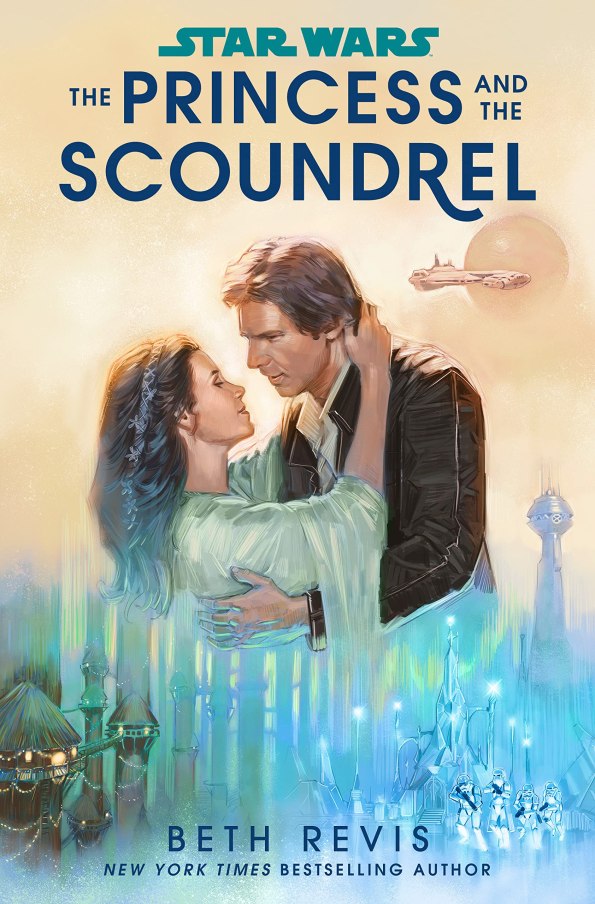
Star Wars - The Princess and the Scoundrel Cover

Publisher: Del Rey (Trade Paperback – 16 August 2022)

Series: Star Wars

Length: 348 pages

My Rating: 4 out of 5 stars

Amazon     Book Depository

Outstanding author Beth Revis presents an intriguing and enjoyable new entry in the extended Star Wars canon, with the fantastic tie-in novel, The Princess and the Scoundrel.

2022 has been a rather interesting year for Star Wars fiction.  While the focus has primarily been on the High Republic sub-series, several great authors have produced some awesome reads set around the various film trilogies (such as Star Wars: Brotherhood by Mike Chen).  However, one of the most exciting recent Star Wars tie-in novels is a character-driven read that focuses on the relationship between Han Solo and Princess Leia, The Princess and the Scoundrel, which was written by exciting author Beth Revis.  Revis, who already has some experience with the Star Wars canon, having written the 2017 novel, Rebel Rising, came up with an awesome story in The Princess and the Scoundrel that I had a wonderful time reading.  Not only does The Princess and the Scoundrel explore an interesting period of the complex and inspiring Star Wars canon, but it also contained a fantastic romantic heart that will appeal to a wider range of readers.

Goodreads Synopsis:

The Death Star is destroyed. Darth Vader is dead. The Empire is desolated. But on the forest moon of Endor, amongst the chaos of a changing galaxy, time stands still for a princess and her scoundrel.

After being frozen in carbonite, then risking everything for the Rebellion, Han is eager to stop living his life for other people. He and Leia have earned their future together, a thousand times over. And when he proposes to Leia, it’s the first time in a long time he’s had a good feeling about this. For Leia, a lifetime of fighting doesn’t truly seem over. There is work still to do, penance to pay for the dark secret she now knows runs through her veins. Her brother, Luke, is offering her that chance—one that comes with family and the promise of the Force. But when Han asks her to marry him, Leia finds her answer immediately on her lips . . . Yes.

But happily ever after doesn’t come easily. As soon as Han and Leia depart their idyllic ceremony on Endor for their honeymoon, they find themselves on the grandest and most glamorous stage of all: the Halcyon, a luxury vessel on a very public journey to the most wondrous worlds in the galaxy. Their marriage, and the peace and prosperity it represents, is a lightning rod for everyone in the galaxy—including Imperial remnants still clinging to power.

Facing their most desperate hour, the soldiers of the Empire have dispersed across the galaxy, retrenching on isolated worlds vulnerable to their influence. As the Halcyon travels from world to world, one thing becomes abundantly clear: The war is not over. But as danger draws closer, Han and Leia find that they fight their best battles not alone but as husband and wife.

I had a fantastic time getting through The Princess and the Scoundrel as Beth Revis wrote a pretty awesome and captivating Star Wars novel that covered a lot of bases.  Split between the alternating perspectives of Han and Leia, The Princess and the Scoundrel takes off right after Return of the Jedi.  While the victorious Rebellion plans their next moves, Han and Leia decide to make the most of their sudden freedom to get married after their traumatic year apart.  While both are still reeling from the events of the original trilogy, they come together in a fun wedding scene, before leaving on a glamorous trip that will be part honeymoon part propaganda show.  While initially trying to enjoy their honeymoon, both quickly fall into their old patterns, with Han chafing at the formality, while Leia continues to try and do her work as an ambassador and planner.  Arriving at an isolated ice planet, Han and Leia soon discover a destructive Imperial plot and must come together as a couple to thwart it.  This ended up being a really distinctive read, as Revis worked a more romantic plotline into the always entertaining Star Wars canon.  I loved seeing this fantastic tale of Han and Leia’s first adventure as husband and wife, and Revis ensured readers got an excellent blend of action, intrigue, and character development, as you witnessed these two amazing protagonists try to come together as a married couple.  There is a little something for everyone in this great read, and I found myself getting caught up in the action and the impressive focus on two of my favourite fictional characters.  An overall brilliant book that is really easy to enjoy and appreciate.

The Princess and the Scoundrel proved to be a very interesting addition to the current Star Wars canon.  While the romance between Han and Leia was strongly explored in the previous Legends canon, the current Disney canon has not featured it as much, and as such you see some fascinating events from their lives here for the first time.  Revis paints quite a fun picture of the sudden wedding these two have, which features entertaining interruptions from several key characters, some tricky manoeuvrings from Lando to get Han into a nice outfit, and, of course, a ton of Ewoks, while the honeymoon is as chaotic as you would expect from these two.  As such, this is a pretty key book for all fans of these two iconic characters, and I think that Revis hit an excellent tone when it came to some of these key events.  The author also fits in a lot of fantastic references and moments that a lot of Star Wars fans will appreciate, most of which are covered in a very fun way.  For example, the characters finally address that infamous kiss between Luke and Leia at the start of The Empire Strikes Back, with Han and Luke having a rather awkward conversation about it, before agreeing never to bring it up again.  Revis also makes quite good use of an interesting Han Solo villain from one of the previous canon books, and it was great to see some continuation from the previous intriguing storyline.  That, and several other amusing references, help to make this quite a key book for Star Wars fans, and I had a wonderful, nerdy time getting through it.

Aside from the direct references to the book, I was personally intrigued to see more about the period of Star Wars history that occurred in the immediate aftermath of the Death Star’s destruction in Return of the Jedi.  Despite the death of the Emperor, the war between the Empire and the Rebellion (now renamed as the New Republic), is still ongoing, and indeed some of the toughest fighting is still to come.  Several authors have covered this frenetic period in the current canon with some recent books, such as the Alphabet Squadron trilogy by Alexander Freed (made up of Alphabet Squadron, Shadow Fall and Victory’s Price).  However, I particularly enjoyed how The Princess and the Scoundrel covered this period, as it shows events literally hours after the end of the film.  Quite a bit is shown of the Rebellion’s initial strategies following the battle of Endor, as well as the Empire’s reactions to the death of the Emperor and the sudden shift in power.  While some of the wider campaigns aren’t shown, you get an interesting idea of what the military and political situation was at the time, which I deeply enjoyed.  Revis also spends time examining how members of the general public reacted to the news, and there is an interesting variation of responses.  Not only did some people straight out disbelieve that the events even occurred, with many assuming it was fake propaganda from the Rebellion, others who were associated with the Empire, or who had members of their family aboard the Death Star, acted quite hostile to the change in the established status quo.  These diverse reactions not only reflected some current real-world societal issues, but also provided a compelling insight into just how much influence the Empire had, even on the way to its downfall.  Throw in some hints and previews of the upcoming Operation Cinder, and this proved to be a very interesting addition the Star Wars canon that many established fans will really enjoy.

One of the strongest elements of The Princess and the Scoundrel is its impressive focus on the two main characters, Han Solo and Princess Leia.  While this book does contain a lot of action, intrigue and fantastic Star Wars elements, at its heart it is a romance novel between two well-established and complex characters, both of whom have experienced a lot of trauma and anguish in recent years.  Revis does a remarkable job of diving into both characters throughout the course of The Princess and the Scoundrel, and you really get a sense of their feelings, concerns and traumas following their victory.  However, there is also a great focus on their relationship, and you can really see the strong bond they have, even if they are still coming to terms with their feelings and their wildly different personalities.  I felt that Revis painted a realistic view of their relationship, which contains some difficulties early on, especially with their independent streaks.  However, the author also shows that the two characters are much stronger together, and they can work through any issues that come their way.  I think that this much better than just showing them having a fairy tale relationship, and I really appreciated the authors compelling take on one of the most iconic relationships in fiction.

Aside from their relationship, Revis also did a great job of diving into the complex emotional issues facing both central characters.  For example, Revis makes sure to explore the trauma surrounding Han after being trapped in carbonite for over a year.  Not only did he miss out on a lot of key events in his friends’ lives, but at this point of the book he has only been awake again for a few days, and some of his decisions are based on his concerns and fears about being trapped again.  Leia is also going through a lot after the discovery that Luke is her brother and, more importantly, that Darth Vader was her father.  As such, Leia spends much of the book attempting to reconcile the fact that her real father was a genocidal maniac who tortured her and is partially responsible for destroying her home planet.  This proves to be quite a deep and intriguing part of her character arc, especially since, unlike her newly discovered brother, she is unable to forgive Vader for everything he did.  There is also an interesting look at Leia’s early attempts to connect with the Force, after Luke reveals her Jedi potential.  Watching her attempts at using the Force is very fascinating, especially as she battles with her feelings about Vader while doing so and is reluctant to even try to use the abilities that he could do.  All these unique character examinations, and more, really help to showcase just how complex and traumatised Han and Leia were at this period, and how much their relationship helped them get past it.

Star Wars: The Princess and the Scoundrel by Beth Revis is an amazing read that provides Star Wars fans with something a little different to the typical tie-in novel.  Featuring a continuation of one of film’s most iconic romances, The Princess and the Scoundrels is at times touching and romantic, while also exploring the grim realities of the war-torn galaxy, all topped off with some classic Star Wars action and humour.  With an outstanding focus and understanding of its two main characters, The Princess and the Scoundrel was a fantastic novel that is well worth checking out.

Amazon     Book Depository

Warhammer 40,000: Outgunned by Denny Flowers

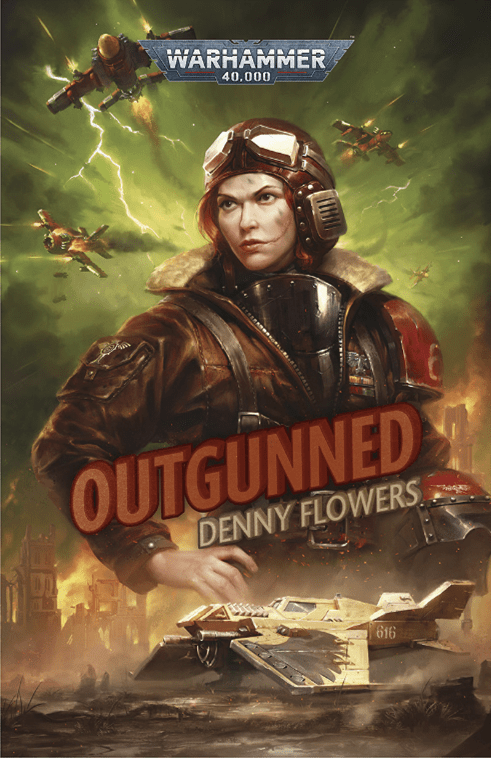
Warhammer 40,000 - Outgunned Cover

Publisher: Black Library (Audiobook – 20 August 2022)

Series: Warhammer 40,000

Length: 10 hours

My Rating: 4.75 out of 5 stars

Amazon

One of the fastest rising stars of Warhammer fiction, Denny Flowers, returns with his second novel in the Warhammer 40,000 canon, Outgunned, a deeply compelling and epic novel with a twisty and powerful story.

Last year I was lucky enough to read an interesting and memorable Warhammer 40,000 novel, Fire Made Flesh.  The debut novel of Denny Flowers, who had previously written some interesting Warhammer 40,000 short stories, Fire Made Flesh was part of the Necromunda subseries and told a fantastic story about warring factions in a spooky underworld town.  I had a lot of fun reading Fire Made Flesh, and it ended up being one of the better debuts I read in 2021.  As such, I have been eager to see how Flowers was going to follow up this debut, and I was deeply excited when I saw that he had a new novel coming out, the intriguing Outgunned.

In the far future, the soldiers of the Imperium of Man fight monsters and aliens on many battlefields and there is always a need for fresh bodies to fill the gaps in the ranks.  That is where Kile Simlex comes in.  A talented propagandist, Simlex excels at creating moving cinematic picts to inspire the people and increase recruitment to the Astra Militarum.  However, Simlex desires greater realism and seeks to travel to a battlefield to gain real footage for his greatest pict yet.

Travelling to the fetid swamp planet of Bacchus, Propagandist Simlex plans to chronicle the adventures of the Aeronautica Imperialis, the brave flying aces who traverse the skies, fighting in deadly aerial combat against the rampaging ork hordes.  In particular, he hopes to make a pict about legendary fighter ace, Lucille von Shard, considered to be the greatest pilot in the Imperium, to turn her into a renowned hero.  However, not everything is as it seems on Bacchus, and Simlex’s attempts to get footage may cost him everything.

Soon after arriving, Simlex begins to realise that the war on Bacchus is not going to plan.  The undermanned Aeronautica forces are being overwhelmed by the supposedly crude orks who have created an elaborate fleet of fighters and are slowly destroying Imperial forces from a hidden base.  At the same time, a mysterious sickness is destroying the planet itself, while its governor is determined to downplay the war no matter the cost.

However, his biggest threat may come from his chosen subject, as Lucille von Shard is an arrogant and disobedient pilot who has only avoided execution due to her peerless flying abilities.  Determined to make the situation work, Simlex attempts to chronicle the reluctant Shard’s skills, while also investigating the strange occurrences on Bacchus.  But is even the legendary Lucille von Shard capable of defeating the mysterious enemy waiting for them within the clouds?  The Green Storm hungers for combat, and the entire Imperium may shake as it approaches.

This was a superb and deeply impressive Warhammer 40,000 read that really highlights Flower’s growing skill as a science fiction writer.  Containing a unique and highly addictive narrative, Outgunned was an outstanding read that blended an exceptional story with some impressive glances at the wider Warhammer 40,000 universe.  I had an amazing time getting through this book and it was one of the more exciting and compelling Warhammer novels of 2022 so far.

I must admit that while I deeply enjoyed Outgunned’s brilliant narrative, it honestly wasn’t what I was expecting when I first started reading it.  Rather than a completely combat/military focused story about battles in the sky, Outgunned is a powerful and intense story that spends just as much time examining the darker aspects of the Imperium of Man as it does facing off against the ork threat.  This becomes clear very early on, especially as the opening introduction from Simlex hints at the deceit, cover-up and lies that are to come.  However, I was still unprepared for the full extent of the fantastic narrative that Flowers came up with, as he blends a lot of complex themes and components with some exceptional character work and clever universe expansions to create something truly special.

Outgunned’s narrative starts off hard and fast, quickly introducing Simlex and his propagandist ways, as well as his intentions on Bacchus, before throwing him briefly into the fray and introducing his fellow protagonist, Shard.  From there, Simlex attempts to film the flying aces in action, but he soon begins to realise that the supposedly stupid orks have developed a giant fleet of sophisticated airships and are slowly winning the battle against the Aeronautica Imperialis.  As he attempts to learn more about this, he finds himself drawn into a major conspiracy as Bacchus’s governor is determined to minimalize the impacts of the ork invasion and is actively working against it.  This forces Simlex to engage in multiple efforts, including diving into the past of his desired subject, the prickly and secretive Shard and flying on several missions against the orks, only to discover just how organised and deadly they are.  At the same time, he also attempts to understand what is truly going on with Bacchus and its people, as he finds many strange elements to them, including a spreading disease and a corrupt leader.  These well set up storylines are not only quite compelling and intriguing in their own right but they come together to tell a complex and impressive story that I was deeply addicted to.  I loved the mysteries and intrigues featured within this story, and they blended extremely well with the more combat orientated aspects of the plot and the unique character interactions that Flowers included.  Everything comes together extremely well at the end, and I loved some of the brilliant revelations and secrets that come out as the story concludes.  The entire narrative leads up to an excellent final fiery confrontation with the orks, which ties in nicely to many of the story elements featured throughout the book.  This is an overall excellent and powerful narrative that will really draw you in, especially with its unique look at the Warhammer 40,000 universe.

I deeply enjoyed the way that Flowers set out Outgunned’s narrative as there are so many great elements to it.  Told in a chronicle format from Propagandist Simlex’s perspective as he recalls the events in a more realistic and negative light.  This works to tell quite an intriguing tale, especially as you get some hints of the events of the future, and the negative tint that Simlex gives to the book’s narrative was a fantastic overall tone.  Despite this interesting narration choice, this novel has a brilliant, fast pace to it and the reader is never left in a dull spot, as there is always some cool action, fascinating intrigue or powerful dive into a character occurring throughout.  I loved the balance of story elements, and I must highlight the fantastic moments where Simlex works on his propaganda picts and dives through his recordings of the events around him.  I also had a lot of fun with the outstanding ariel combat scenes that are featured through the plot.  While they aren’t as heavily featured as you would expect from a book about the Aeronautica Imperialis, there are still some great sequences that were very fun to see.  Flowers really captures the magic and brutality of combat in in the air, and I loved some of the crazy scenes that resulted, especially against the ork stronghold.  There is also a particularly good fight sequence in the middle of a swamp that was pretty awesome, especially as it showed one character’s particular ingenuity and fighting spirit.

Outgunned served as an impressive standalone entry in the Warhammer 40,000 universe, and I deeply enjoyed how self-contained the narrative turned out to be.  Flowers also did a great job explaining most of the relevant Warhammer 40,000 elements featured within Outgunned, and I felt that this book can be easily enjoyed by most science fiction fans, although established Warhammer fans will probably get the most out of it.  I loved some of the very unique Warhammer 40,000 aspects that Flowers featured in Outgunned, as the author came up with some fantastic new elements that added so much more to the story.  I personally thought that Flowers did a really good job examining the Imperium through his character’s eyes, and you really get to see a fun new edge to it.  Not only do you get to see the Aeronautica Imperialis in action, which will appeal to many Imperial Guard fans, but you also get a cool viewpoint of the Imperium’s propaganda department.  Watching the protagonist dive into the techniques and motivations of the Imperial propagandists is quite fascinating, and it gives another great edge to the already dark and gothic Imperium that make you understand that deep down, they really aren’t the good guys they try to make out.  Throw in a fun blast of Imperial politics, as a corrupt planetary governor can manipulate the Astra Militarum for their own selfish ends, as well as some dark viewpoints of the brainwashing of young soldiers that occurred to certain characters, and you have a great, cynical view of the Imperium that I deeply enjoyed.

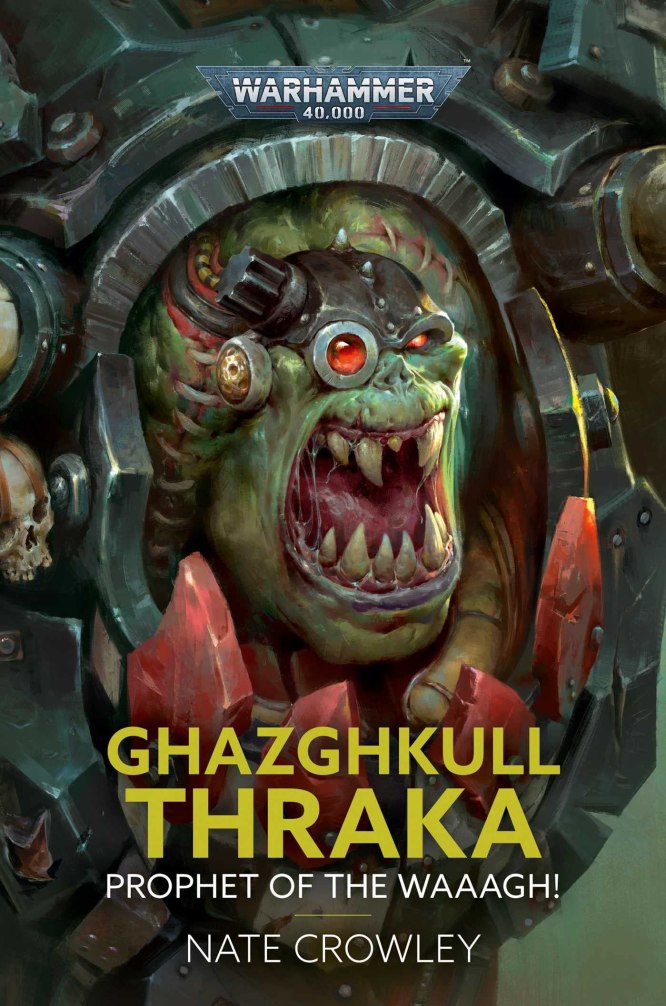
I was also quite impressed with the intriguing and cool viewpoint of the orks contained in Outgunned.  2022 has been a pretty good year for fascinating ork novels, such as Ghazghkull Thraka: Prophet of the Waagh! and Catachan Devil, and Outgunned offered another great look, even though you rarely get to see the creatures in person.  Instead, Flowers offers an interesting look at them through the human characters’ eyes as they try to work out just how these supposedly crude creatures are winning the war for the skies over the planet.  Watching the characters slowly realise just how ingenious and clever the orks really are is pretty fun, especially as the propagandist main character has spent most of his career showing them as stupid beasts.  As such, the book shows many fantastic examples of the complex ork culture through the eyes of characters who really don’t understand it, which I think worked to make it appear a lot more interesting and mysterious.  Established fans of the ork faction (and what Warhammer fiction reader doesn’t love the orks?), will have a blast watching the characters, especially the sheltered Simlex, try and understand their motivations and tactics, and I felt that it was a great way of showcasing the orks without having a major ork character present.  I deeply enjoyed all the awesome Warhammer 40,000 elements contained with Outgunned, and it really proved to be an amazing entry into the wider canon.

I also must quickly mention the outstanding setting of the planet Bacchus, where the entire narrative took place.  A swamp world with little agricultural value, Bacchus proves to be an unlikely battleground for the forces of the Imperium; however, with an influential governor and a corrupt ruling class enjoying the wine that it produces, it soon becomes a major warzone.  While I quite enjoyed this further example of how corrupt the Imperium is, its main benefit as a setting is the way that Flowers makes Bacchus appear as unpleasant and deadly as possible, and it provides a very distinctive and memorable background for many of the book’s fantastic scenes.  The sickly swamp setting comes across in vivid detail, and you can feel the terrible sucking feel of it, as well as the many dangers in contains.  If that wasn’t bad enough, Flowers also inserts in a mysterious rotting disease that is making Bacchus even more deadly and hostile.  This disease is worked into the larger story beautifully, and it helps to give Bacchus even more of a rotting, decaying feel that makes you wonder why anyone is still fighting the orks for it.  I deeply appreciated this unique and fantastic Warhammer 40,000 setting, and Flower’s masterful portrayal of it deeply enhanced Outgunned’s excellent story.

I also must talk about the outstanding characters contained within Outgunned as Flowers worked to create some impressive and complex central protagonists.  While there are some great supporting figures throughout Outgunned, I am going to limit myself to the main two characters who most of the story revolves around.  The first of these is Propagandist Kile Simlex, a renowned pict maker and artist who has dedicated his life to making inspirational films that inspire mankind and get them to fight the Imperium’s enemies.  Not only is this a very cool position in the Warhammer 40,000 canon, but Flowers writes Simlex in a very compelling way.  I loved how the character’s narration allows you to see the cynical hindsight of Simlex after he survived the events of the book and recounts his adventures, and it was fascinating to see the character slowly lose his faith in the Imperium and the system he has always served when confronted with the events of this book.  The constant danger, political selfishness, betrayal, misinformation and disdain of the soldiers he is trying to help really get to him as the novel progresses, and you really see him start to doubt himself.  Flowers writes some beautiful scenes around this, and the realisations that he has about the Imperium and his role in its continuing exploitation are great, even if they come back to bite him.

I also deeply enjoyed how Flowers paired Simlex with three servo-skulls who are linked to him mentally.  These skulls (literal skulls that have been turned into drones) are specifically altered to act as Simlex’s cameras, and he uses them to record the combat footage and gather information as he attempts to unravel the conspiracies of Bacchus.  The powerful link he has to these skulls ensures that his mind is often split between different perspectives, and he often views the world through these robotic eyes.  This unique method of viewing the world becomes a key part of Simlex’s character, and it was fascinating to see how connected he was to his floating skulls, who almost become characters in their own right.  Simlex proved to be an impressive centre for this entire narrative, and his dark and compelling view of the world really helped to shape this awesome book.

The other major character is Flight Commander Lucille von Shard, the greatest fighter ace in the Imperium, who Simlex is hoping to base his pict on.  Shard is the scion of a legendary Imperial family whose members are serving the Imperium in distinguished roles.  However, rather than being a dutiful solider, Shard is a brash, arrogant and rude figure who knows she’s the best, even when drunk, and is happy to tell everyone she knows.  Always depicted with a sneer on her face, Shard appears not to care about her position, and only truly loves flying, drinking and fighting.  Initially disrespectful of Simlex and everything he represents, the two eventually begin working as an antagonistic team against the orks, and Simlex soon sees Shard in a new light, especially once he discovers that much of her persona is an act.  Flowers does a truly fascinating dive into Shard throughout Outgunned, and she is easily the most interesting and complex characters in the entire novel.  There is so much hidden pain, unreasonable expectations and personality issues surrounding this character, and the hints about what drives her and the realities of her family and her past are just brilliant.  Shard honestly had a perfect character arc and Flowers did something special with this protagonist.  I honestly don’t think that Outgunned would have been as good as it was without Shard, and I had such an outstanding time getting to know her and seeing the complex backstory the author wove around her.

Like most of the Warhammer novels I enjoy, I chose to check out Outgunned in its audiobook format, which was pretty damn epic.  I loved how well the Outgunned audiobook turned out, and the format really enhanced the impressive, action-packed narrative.  The audiobook moves the already great story along at a brisk and fun pace, while also highlighting the excellent characters.  With a run time of 10 hours, this is a pretty quick audiobook to get through, and I managed to power through it in a few days.  I was particularly impressed with the voice work of narrator Phillip Sacramento, who does a wonderful job reading out this compelling book.  Sacramento has a brilliant voice for the dark gothic narrative of Outgunned, and I felt that this Irish accent gave the overall narration a little more gravitas.  I deeply enjoyed the great voices he attributed to the various characters of Outgunned, and every cast member was given a fitting voice that really worked for them.  I felt that Sacramento really captured each of these characters extremely well, and you get a real feel of their rough emotions as they attempt to navigate the terrible situations of the book.  I particularly liked the voice that was used for Lucille von Shard, as the sheer arrogance of the character practically drips into your ear, only to occasionally be replaced by a different emotion as her barriers break.  This outstanding narration added so much to my enjoyment of Outgunned, and this ended up being an exceptional way to enjoy this brilliant book.  As such, this format comes very highly recommended, and it is easily the best format to enjoy Outgunned.

With his second novel, Outgunned, Denny Flowers really showed the world what he is capable of as a Warhammer 40,000 author.  With its outstanding and captivating narrative, Outgunned rose above the author’s previous novel and was one of the better Warhammer 40,000 novels of 2022 so far.  The author wove some brilliant layers into this impressive read, and I loved the incredible characters, memorable setting and fascinating Warhammer elements that enhanced the clever story.  A must-read for all Warhammer 40,000 fans, Outgunned was an absolute pleasure to read and I can’t wait to find out what Flowers has planned next.

Amazon

Star Wars: The High Republic: Midnight Horizon by Daniel José Older

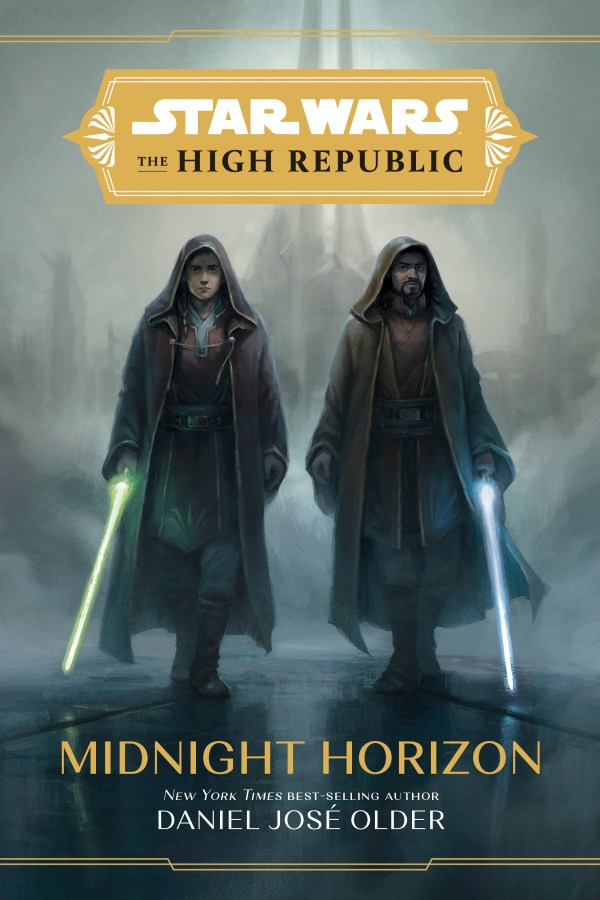
Star Wars - Midnight Horizon Cover

Publisher: Disney Lucasfilm Press (Audiobook – 1 February 2022)

Series: Star Wars – The High Republic

Length: 10 hours and 5 minutes

My Rating: 4.75 out of 5 stars

Amazon     Book Depository

The first phase of The High Republic Star Wars novels continues to come to an intriguing end with the phase’s third young adult entry, Midnight Horizon, a deeply exciting and fun novel from the talented Daniel José Older.

Since the start of 2021, fans of Star Wars fiction have been granted a unique treat in the form of The High Republic books, a Star Wars sub-series set hundreds of years before the events of the films.  Set at the height of the Republic, the High Republic era is loaded with dangers for the Jedi, particularly that of the Nihil, dangerous raiders who seek to raid, pillage, and destabilise order, while their mysterious leader attempts a far more ambitious plan: the destruction of the Jedi.  Broken down into three phases, the first phase was pretty epic and set up the entire High Republic premise extremely well.  This phase has featured a great collection, including the three main adult novels, Light of the Jedi, The Rising Storm, The Fallen Star; some intriguing young adult books; the audio drama Tempest Runner; two awesome comic book series; as well as some other media releases.  However, this first phase has come to an end, and I just managed to finish off one of the novels that served as its conclusion with Midnight Horizon.

Midnight Horizon is the third young adult fiction novel set within the first High Republic phase, and it is probably the best.  This book was written by Daniel José Older, who has authored several great Star Wars novels over his career, including Last Shot, which was one of the books that started my recent obsession with Star Wars extended fiction, and who has been one of the key contributors to The High RepublicMidnight Horizon is set around the same time as the last adult book of the phase, The Fallen Star, and continues storylines from some of the previous books, including the other two young adult books Into the Dark and Out of the Shadows, as well as the Star Wars Adventures comic series and the junior novel Race to Crashpoint Tower.

Following the devastating Nihil attack on the Republic Fair, the Nihil raiders are finally on the run from the Jedi of Starlight Beacon.  However, not everything is as it seems, and several mysterious events and attacks are beginning to occur around the galaxy.  One of the more alarming rumours of Nihil activity has been sent from the planet of Corellia, home of the galaxy’s premier shipyards, where a now missing diplomatic bodyguard was attacked by mysterious killers wearing Nihil garb.

Determined to ensure that the chaos of the Nihil does not spread to the core planets of the Republic, the Jedi dispatch the small team of Jedi Masters Cohmac Vitus and Kantam Sy, as well as Padawans Reath Silas and Ram Jomaram, to investigate.  All four Jedi have substantial experience dealing with the Nihil, but each of them is going through their own personal internal battles as they struggle to deal with recent losses.  Nevertheless, the Jedi embark upon their investigation into Corellia and soon find unusual help from young security specialist Crash, the employer and friend of the missing bodyguard.

While Cohmac and Kantam attempt to investigate through official channels, Reath and Ram work with the chaotic Crash and her unusual security specialists to infiltrate Corellia’s high society.  Crash believes that one of her elite clients has knowledge about the Nihil infiltrators and embarks on an ambitious plan to draw them out, setting up Jedi associate Zeen as a famous singer.  However, nobody is prepared for the Nihil’s plans, both on Corellia and at Starlight Beacon, and chaos is about to be unleashed upon the Jedi and all of Corellia.  Can the Jedi stand against their foe when all hope seems lost, or will the Nihil continue to sweep across the entire galaxy?

Midnight Horizon was an exceptional entry in the High Republic series, and I was particularly impressed with the cool and epic story it contained.  Older came up with a brilliant and powerful narrative that combines a fast-paced story with great characters and some interesting High Republic developments.

This entry in the High Republic range had a very distinctive and compelling young adult story that sees all manner of chaos and action befall its protagonists.  Older wrote a very fast-paced, character driven narrative that takes the reader to the world of Corellia.  Drawing in an interesting team of entertaining and chaotic protagonists, all of whom are going through some major issues, Older sets them on a path to a major confrontation, while all of them try to come to terms with their roiling emotions.  The author sets most of the story up extremely well at the start of the book, and the reader soon gets quickly invested in seeing the Jedi investigate the Nihil on Corellia.  The story goes in some very interesting directions as everyone tries to identify the Nihil plot, with the best ones following the two Jedi Padawans as they team up with young bodyguard Crash.  Crash has some elaborate and over-the-top plans that she drags them into, including tricking a rare species eating diva named Crufeela, and this proves to be a lot of fun, while also setting up the final act of the story.  At the same time, Older also throws in some intriguing flashbacks to one of the character’s pasts, as well as showing a few scenes outside of Corellia, all of which adds some greater context to the story as well as adding to the amazing emotional depth of the novel.

Everything comes together brilliantly in the final third of Midnight Horizon, where the Nihil plot on Corellia is revealed, simultaneously occurring at the revelation of the fall of Starlight Beacon (which you knew was coming).  I must admit that until this final third, I kind of found Midnight Horizon to be a bit by the numbers, although undeniably fun, but the way everything came about near the end was pretty awesome, as the characters are thrust into an all-out war.  There are multiple pitched battles, tragic deaths and surprise reveals occurring during this part of the book, and you are constantly hit with big moment after big moment as it continues.  I honestly couldn’t stop at this point in the book, as I desperately wanted to see what happened next, and I was sure that I was seconds away from bursting into either tears or cheers.  My determination to continue really paid off, as Older saved the best revelation for right near the end as there is a really big moment that changes everything and is sure to get every Star Wars fan deeply excited.  Older leaves everything on an exciting and powerful note, and readers will come away feeling deeply moved.  It will definitely keep them highly interested in The High Republic as a whole.

The author really worked to give Midnight Horizon an extremely fast pace, and it is near impossible not to swiftly power through this book as it blurs around you.  Shown from the perspective of all the key protagonists, you get a great sense of all the impressive events occurring throughout the book, while also getting some powerful and intense examinations into their respective heads.  Older presents the reader with an excellent blend of universe building, character work, humour and action throughout Midnight Horizon, and there is a little something for everyone here, guaranteeing that it keeps your constant interest and attention.  I do think that the story as a whole could have benefited from greater development of the book’s villains.  They honestly came a bit out of nowhere towards the end and you really didn’t get an appreciation of who they were (some of it is explored in some of Older’s other works).  I really wish that Older would have shown a few more scenes from the villain’s point of view, highlighting the establishment of their plans a little better, and I felt that really would have increased the impact of the book, but I still had a lot of fun with it.

Midnight Horizon also proved to be a pretty good young adult novel, especially as it shows multiple compelling and well-written teenage characters in dangerous situations, and I loved the powerful exploration of their unique issues, especially the constant uncertainty and doubt about what they are doing.  There are also some major LGBT+ elements scattered throughout this novel, which I thought were done really well, as you get a range of different relationships, orientations, sexualities and fluid genders throughout the book, and I loved seeing this sort of inclusivity in Star Wars.  I also liked the easier flow that Older featured in the novel, which I felt was associated with the younger characters, and it worked quite well to quickly and efficiently tell this book’s fantastic narrative.  While this is a young adult book, there are some great darker themes that all readers will appreciate, and I loved how it developed into a brutal and powerful war at the end.

Midnight Horizon proved to be an interesting entry in the wider High Republic series, as it served as one of the last books in the first phase.  Since it is set alongside The Fallen Star, the readers get a whole other side of this key tragedy in Midnight Horizon, as the established characters all witness the fall of Starlight Beacon and the corresponding changes to the galaxy.  At the same time, it does some interesting exploring of the key planet of Corellia during this period, gives some hints about some events that will appear in the upcoming second High Republic phase, while also setting up some other key moments for the future.  However, the most significant thing that Midnight Horizon does for the High Republic is continue and conclude multiple key storylines and character plot lines that were started in other bits of work, such as the other High Republic young adult books.  It also provides an intriguing sequel to Older’s junior fiction novel, Race to Crashpoint Tower, and actually serves as the conclusion to The High Republic Adventures comic series, also written by Older.  The High Republic Adventures was one of the major comic lines for this phase of the sub-series, and fans of it really need to check this book out as it details the fates of several of its main characters.  I had a great time seeing how some of these storylines continue in Midnight Horizon, and Older did a great job of bringing everything together in this novel, while also making it quite accessible to newer readers who haven’t had a chance to read the comics.  That being said, good knowledge of the preceding High Republic works is probably a good thing to have for this novel, although Older does make sure to give as much background as possible as he goes.

As I have mentioned a few times throughout this review, Midnight Horizon was highly character focused, as the author brings in an interesting collection of main characters to base the story around.  All the major point-of-view characters have been featured in previous pieces of High Republic fiction before (mostly in Older’s work), and the author ensures that they all get detailed and compelling storylines in this novel that not only revisit their complex appearances in previous books, but also brings all their storylines to an intriguing close for this phase.  Older also spend a substantial time diving into the minds of these protagonists, which added some impressive emotional depth to the book, as all the characters experience deep traumas or regrets, especially after fighting the Nihil for so long.  This resulted in quite a moving read, and while I do think that Older might have used a few too-many supporting characters, this ended up being an exceptional character focused novel, and I really appreciated the clever way the author explored his protagonists and showed the events of this book through their eyes.

The best two characters in this book are the two Jedi Padawans, Reath Silas and Ram Jomaram, who serves as Midnight Horizon’s heart and soul.  I was particularly keen to see Reath Silas again, as he has been the constant protagonist of the High Republic young adult books and is a pretty major figure as a result.  Older is the third Star Wars author who has featured Reath as one of their main characters, and I do like how consistent the various authors have been while showcasing his growth and emotional damage.  Reath is going through quite a lot in Midnight Horizon, as he continues to try and balance his duty as a Jedi with the mass trauma he has experience in the last two books, his conflicted emotions, penchant for personal connections, and general uncertainty about what he is doing.  Despite this, he proves to be a steadfast and dependable character, and it is hard not to grow attached to his continued story, especially as he has developed so much from the first book from scholarly shut-in to badass warrior.  Reath’s narrative comes full circle in Midnight Horizon, and fans of this character will really appreciate how Older features him in this book.

I also had a lot of fun with Ram Jomaram, who was such a joy to follow.  Ram is an eccentric and unusual Padawan who first appeared in the concurrently released The Rising Storm and Race to Crashpoint Tower.  A mechanical genius with poor social skills and who is always accompanied by a group of Bonbraks (tiny sentient creatures), Ram brings most of the fun to the book with his antics and complete lack of situational awareness.  While I initially didn’t like Jam (mainly because I found out he was the Jedi who first came up with calling cool things “Wizard”), he really grows on you quickly with is exceedingly perky personality.  It was so much fun to see him in action throughout the book, and he gets into some unusual situations as a result.  Despite mostly being a friendly and cheerful figure, Ram is also going through some major emotions in Midnight Horizon, as he witnessed his home planet get ravaged by the Nihil in The Rising Storm, and he is now very uncertain about the emotions he feels while getting into battle.  This sees Ram form a great friendship with Reath throughout the book, and the two play off each other extremely well, bringing not only some fun humour but an interesting mentor-mentee connection.  Ram ends up showing everyone just how much of a badass he is towards the end of the book, and I honestly had an amazing time getting to know this character.

There is also an interesting focus on the two Jedi Masters, Cohmac Vitus and Kantam Sy.  Both go through some interesting and major moments in Midnight Horizon, and you really get some powerful insights from both.  Cohmac’s story is an intense and intriguing examination of trauma as you see this Master continue to struggle with his history and inability to process emotion.  These issues have been building within Cohmac since his introduction in Into the Dark, and it was fascinating to see them continue to impact him here, especially once he discovers what happened at Starlight Beacon to one of his closest friends.  Kantam Sy is a nonbinary character who has been primarily featured in The High Republic Adventures comic.  You get a much more in-depth look at Kantam in this book, especially as Older spends time developing several flashbacks around him that examine his complex past as one of Yoda’s students.  Kantam’s team-up with Cohmac proves to be an intriguing part of the book’s plot, and it was compelling to see the more balanced Kantam witness Cohmac’s building anger and frustration.

The final two major characters are Zeen and Crash, both of whom have some interesting storylines in this book.  Zeen, a Force-sensitive teen who assists the Jedi, is one of the main characters from The High Republic Adventures comic, and many of her storylines are finished off here a little abruptly although in some interesting ways.  Most of her storyline is focused around her growing romantic relationship with Padawan Lula Talisola, who she has been close with during the series, and the resultant internal conflict as she tries to decide whether to act on it.  There are also some more damaging emotional moments for Zeen as she comes to terms with the actions of her old friend Kamerat and the tragedy of Starlight Beacon.  The other character is Alys Ongwa, better known as Crash, a diplomatic protection officer who specialises in protecting Corellia’s fractious and deadly political elite.  Crash is an interesting character who was first introduced in a one-shot comic written by Older, Crash and the Crew Do What They Do, and it was interesting to see her brought back here.  A skilled bodyguard and leader, Crash is an intense and highly motivated figure who enacts multiple crazy schemes to get what she wants, while also trying to be a good friend and boss.  Crash hits some major crossroads in Midnight Horizon, especially when she is forced to balance her oath as a bodyguard against justice for her friend and the safety of her city, and she is constantly forced to keep her own intense emotions in check.  I found Crash to be one of the most entertaining and enjoyable figures in Midnight Horizon and watching her and her chaotic crew of bodyguards in action is a lot of fun, especially when she plays of all the other protagonists really well, bringing out the recklessness in all of them.  However, Crash is also quite emotionally vulnerable, and it was nice to see her try to become a better friend while also working on her romantic attachments to a beautiful alien singer and lifelong friend.  I had a wonderful time with all these major characters in Midnight Horizon, and Older did a remarkable job highlighting them and ensuring the reader was aware of their many issues.

As with most Star Wars novels I read, I chose to grab a copy of Midnight Horizon’s audiobook format, which was the usual exceptional experience.  Featuring a short run time of just over 10 hours, Midnight Horizon is a quick and fun audiobook to get through, and I loved the various ways this format enhanced the fantastic story.  As usual, Midnight Horizon features all the amazing Star Wars sound effects for lightsabers, blasters and ships, which are used to punctuate the story elements being described and perfectly bring listeners into the moment.  It also made good use of some of the classic Star Wars music, which, even though it was used a little more sparingly in Midnight Horizon, deeply added to the atmosphere of the book and perfectly enhanced the emotional impact of several key scenes.

While the sound effects and music where as cool as always, the thing that really impressed me about the Midnight Horizon audiobook was the great choice of narrator in Todd Haberkorn.  I didn’t realise that Haberkorn was going to narrate this book until I started listening to it, and I was pretty blown away the second I realised that I got to listen to an audiobook read by Natsu himself.  I am a massive fan of Haberkorn’s work as the English voice actor for dubs of awesome anime like Fairy Tail and Full Metal Alchemist Brotherhood, so it was really cool to have him narrate this audiobook.  Not only that, but Haberkorn did an outstanding job bringing the various characters to life in Midnight Horizon and moving the story along at a blistering and fantastic pace.  Haberkorn’s voice perfectly fit the frenetic energy of this story, and I loved the distinctive and very fitting voices he gifted to the novel’s eccentric characters.  He also had a lot of fun voicing some of the unique alien creatures featured in the book, such as the Bonbraks, and he got to do a particularly good Yoda voice as well.  I had an absolute blast listening to Haberkorn narrate this awesome audiobook, and when combined with the great music and impressive sound effects, this was an exceptional way to listen to Midnight Horizon.  I would highly recommend this format as a result, and it probably added a few points to my overall rating because of how impressive it was.

Overall, Midnight Horizon was an excellent High Republic young adult novel that was a real treat to read.  Daniel José Older came up with an outstanding and fun story that was both exciting and powerful as he dives into his various fantastic and damaged protagonists.  Loaded with some awesome moments and epic developments, this was a great addition to the Star Wars canon, and I loved every second I spent listening to it.

Amazon     Book Depository

Warhammer 40,000: Assassinorum: Kingmaker by Robert Rath

Assassinorum Kingmaker Cover

Publisher: Black Library (Audiobook – 2 April 2022)

Series: Warhammer 40,000

Length: 11 hours and 12 minutes

My Rating: 5 out of 5 hours

Amazon     Book Depository

The most lethal assassins in the Warhammer 40,000 universe go face to face with a gigantic foe in the impressive and deeply thrilling Assassinorum: Kingmaker by amazing author Robert Rath.

I know I’ve said this before, but 2022 is turning out to be a fantastic year for Warhammer fiction.  Thanks to my recent obsession with this franchise, I have been deeply enjoying all the new tie-in novels associated with this table-top game, as a bevy of talented authors seek to expand on the already massive lore.  I have already had a lot of fun with books like Steel Tread, The Bookkeeper’s Skull, Day of Ascension, Kreig, Ghazghkull Thraka: Prophet of the Waagh!, Reign and The Vincula Insurgency, but I may have just finished one of the most purely entertaining and awesome new entries, Assassinorum: Kingmaker.  Written by Robert Rath, who previously wrote the intriguing Necron focused book, The Infinite and The Divine, Assassinorum: Kingmaker had a very appealing story that instantly grabbed my attention and which ended up being an outstanding read.

In the 41st millennium, a new generation of war has engulfed the Imperium of Man, as the forces of Chaos press mankind from all sides and the recently resurrected Roboute Guilliman leads his forces on a new crusade.  Enemies attack the Imperium from all corners, often hidden in the shadows, and all the Emperor’s agents must work to find and eliminate them.  The most deadly, effective and feared of these agents are the members of the Officio Assassinorum, elite modified assassins who kill all of the Emperor’s enemies without mercy or fear, and who many believe are merely myth.

When the mechanical warriors of the Knight World of Dominion fail in their duty, the Imperial overlords task Vindicare assassin, Absolom Raithe, to travel to the planet and kill Dominion’s High Monarch, Lucien Yavarius-Khau, and managed the succession of a suitable replacement.  However, this will be no easy kill as the High Monarch has long ago bonded himself to his massive war machine, remaining permanently within its heavily armoured cockpit.  To kill this near-invulnerable king, Raithe is forced to recruit a kill-team with variable talents, featuring the Callidus assassin Sycorax and the Vanus assassin Avaaris Koln.

Infiltrating the planet using returning Knight, Sir Linoleus Rakkan, who has been co-opted into their plans, the assassins arrive to find a world in turmoil.  The planet’s two rival ruling houses are in constant battle with each other, and in the ensuing chaos, anti-Imperial sentiment is high, and the already invincible High Monarch is under heavy guard.  Seeking to infiltrate the court of Dominion, the kill team begin to manoeuvre themselves into position, while manipulating the feuding knights around them.  However, the assassins soon begin to realise that not everything is as it seems, and a dark secret lies at the heart of this noble planet.  Can Raithe’s team achieve their goals, or are they destined to die at the hands of a dangerous foe with malicious plans for the entire Imperium?

Damn! Damn! Damn! What an over-the-top and extremely cool Warhammer 40,000 novel that I deeply, deeply loved.  Robert Rath really went out of his way to make Kingmaker as awesome as possible, and the result is an extremely thrilling, electrifying and epic read, loaded with so many cool elements.  This was honestly one of the best Warhammer novels I have had the pleasure of reading and I have very little choice but to give it a full-five star read.

I really, really loved the cool story in this book, which essentially boiled down to ultra-elite assassins attempting to kill the king of a planet of mecha, which is such an awesome idea.  Despite this being a heavy concept to achieve, Rath managed to achieve it in spades, providing readers a fantastic and clever narrative that instantly grabs your attention.  This book starts off extremely well, introducing the world of Dominion, the unique mission, and the four central characters of the three assassins, and their Knight patsy, and generally setting up all the key elements of Kingmaker to ensure some outstanding moments later.  From there, the story turns into a bit of an espionage thriller, as the three assassins begin their infiltration of the court, impersonating the knight Rakkan, and coming to grips with the unique world they have arrived at.  Rath provides an excellent balance of story elements in this first half of the novel, and the reader gets a fantastic mixture of character development, massive universe building, political intrigue, spy elements and some early mecha-action, all of which is a ton of fun and ensures that the reader is firmly addicted with this novel.

While I deeply enjoyed the excellent story elements contained with this first half of Kingmaker, it’s the second half that made me a major fan of this book, as Rath amps up the action, excitement and thrills in a massive way.  Following a major, action-packed moment around the halfway mark that sees all the characters in their element, the protagonists soon have a new objective.  This leads to several great sequences of entertaining mayhem and death as the protagonists attempt to manipulate local politics to their advantage.  However, the fun doesn’t last much longer, as the book enters its final phase and big conclusion.  While it initially appears that everything is going to plan, you just know it will end badly as there is still a lot of book left to go.  However, you do not appreciate just how bad things have gotten for the protagonists until they are suddenly hit from every direction and hell reigns down all around them.

The story essentially devolves into all-out war for its last quarter, as the protagonists find themselves facing enemies all around, and all four main characters are forced go in some amazing directions at this point as they attempt to stymie the damage before them, with varying degrees of success.  Rath really pulls out all the stops here, and the reader is dragged into non-stop action on every front, from a mass of deadly mecha fights, close combat against abominations in the bowels of an ancient castle, and an intense gun fight against overwhelming numbers.  At the same time, there are a ton of big revelations occurring here as a lot of the storylines Rath has been patiently setting up throughout the rest of Kingmaker finally come to fruition.  I honestly did not notice some of the clues that Rath set out in the earlier stages of the novel, but once you realise what he has done, it really becomes apparent how much detail and planning the author put into the story.  Everything comes together extremely well at the very end, and Rath wraps up most of the storylines perfectly, leaving the reader very, very satisfied, with all their action needs firmly quenched.  However, he also leaves a couple of storylines opened, which could potentially lead to some form of sequel in the future, which I would be very excited for.  An, epic story with so much going for it!

Rath has a great and exciting writing style which I deeply enjoyed and which I found to really enhance the cool story.  The author was able to successfully blend multiple key elements together into a very cohesive narrative which delivered the right combination of action, intrigue, character moments, world building, a little humour and more.  This was a very fast-paced and exciting story, especially during some of the key moments at the centre and towards the end, and there was honestly not a single slow moment that made me even considering turning this book off.  With the use of multiple character perspectives, particularly of the four main characters, the reader is gifted a massive overarching view of the key events occurring throughout the novel, and they are always right in the centre of the story.  I particularly need to highlight the very impressive action sequences, as Rath had a real talent when it came to displaying violence and death, whether it be by the hands of the assassins, or via the multiple Knights featured throughout the book.  There is a wonderful interchange between perspectives during some of the more impressive action sequences, with the reader is shown multiple angles of key events, which really helped to enhance how epic they were.  I was really drawn to one sequence where you see a group of characters “talking” before it flashes over to another character quickly and efficiently killing everyone nearby.  Elements like this really drew me into Kingmaker’s story and were a lot of fun to see in action.

Kingmaker proves to be a very impressive addition to the Warhammer 40,000 canon, especially as Rath ensures that the reader leaves with a healthy amount of knowledge about the universe, and several major factions within it.  Ostensibly a standalone read (although there is room to expand out into an extended series), this is a book that will appeal to a wide range of Warhammer fans, especially as it focuses on two particularly unique and brilliant Imperial sub-factions, the dual use of which clash together perfectly to create an awesome narrative.  As such, a little bit of pre-knowledge about the Warhammer 40,000 universe, its recent history and the various major groups are useful to help you enjoy this story fully.  However, Rath did a great job of explaining a lot of these key universe elements throughout his story, and general science fiction fans should be able to pick up on the context easily enough.  As such, Kingmaker has a pretty broad appeal, and I loved seeing the great ways he expanded and explored some crazy groups.

The first faction that Rath deeply explored in Kingmaker is the Officio Assassinorum, the Imperium’s elite, hidden network of ruthless trained killers, who most people believe are a myth.  Trained, conditioned and modified to become the deadliest killers in the galaxy, the Officio Assassinorum are a pretty badass part of the Warhammer 40,000 universe, and there are only a few novels currently about them.  However, Rath really goes to town exploring them, and as they come together as a Kill Team to take facilitate the plot’s main mission.  Kingmaker features three different types of Imperial assassins from Officio Assassinorum temples, each of whom has their own unique skills, methods and technology.  As such, you are given a great insight into three additional sub-factions, with the Vindicare, Callidus and Vanus temples all featured here.  Rath really does a great job showcasing these different assassins throughout Kingmaker, and you come away with some major insights into how these assassins operate, what their skills are, and how they work or don’t work together.  There is also a deep and intriguing examination of the inner minds of these assassins, and you get a good idea of their opinions on the events unfolding, as well as their general thoughts on being deadly killers in service to the Emperor.  I really enjoyed the unique and compelling team-up of assassins featured in Kingmaker, and their technologically focussed attacks and elaborate methods worked well in contrast to the other major faction in this book, the Imperial Knights.

Imperial Knights are another great human sub-faction from the Warhammer 40,000 game, and one that I really didn’t know too much about before this novel.  However, that changed really quickly as, despite Kingmaker being labelled as an Assassinorum novel, Rath spent just as much time, if not more, examining members of a Knight World.  Knight Worlds in the Warhammer 40,000 universe are unique planets that have evolved into a feudal system equivalent to Earth’s medieval period, with peasants and other servants serving the noble houses who field Knights for war.  I always love seeing the cool range of different societies, cultures and technology levels throughout the Warhammer universe, and the Knight Worlds are especially fun, as they have gone out of their way to stay as a feudal society, rather than become standard Imperial worlds.  The contrast between the spoiled nobility and the poorer peasants in this futuristic context is just great, and I loved seeing so many Medieval elements being altered to fit into a degree of advanced technology, while still retaining a lot of traditional elements (e.g. footmen with laser rifles).  However, rather than riding to battle on a horse, these knights are mounted in the Imperial Knight war machines, massive mecha that, while not as large as the god-sized Titans, are still impressive walking weapons.  Rath has a lot of fun showcasing these Knights throughout Kingmaker, and you end up getting a good look at the unique machines, which are bounded to their pilot, and which contain the spirts of all their previous riders.  The impressive Knight-on-Knight battles throughout the book are extremely good, no matter their context, and I particularly enjoyed the focused look at the war machines’ apparent sentience, as the riders are bombarded with the thoughts and voices of the previous riders.

Dominion also proves to be a great and complex setting for Kingmaker, and I loved all the unique politics and elaborate back stabbings it created.  Featuring two rival houses, Stryder and Rau, as they battle for supremacy, Rath explores its rather elaborate and distinctive rulership and court as the assassin characters search for a weak spot.  Dominion’s status as a somewhat independent planet in the Imperium was also pretty intriguing, and it was fascinating to see members of the planet arguing over whether they should serve themselves or help the Emperor.  An overall deeply impressive examination of the Imperial Knights and their worlds, I deeply enjoyed how well Rath was able to work this faction into his complex narrative and it really highlighted his attention to detail and his love for the lore.

I also need to highlight the great characters featured within Kingmaker as Rath has created an excellent collection of enticing figures whose unique personal stories deeply enhanced the overall tale.  This was a fantastic group of deep and complex characters, and their statuses within this universe ensured that they all had some unique experiences.  Most of Kingmaker’s narrative is spread amongst the three members of the Assassinorum who represent a different Assassinorum Temple, and as such have very different viewpoints on the universe and the best way to operate as killers.  This provides some compelling initial conflict amongst them as they try to work together, something none of them are really good at.  However, they soon start to come together as a team as the novel continues, and they ended up playing off each other’s strengths and personalities to create an excellent, core group of protagonists.

The Assassinorum characters in Kingmaker are headlined by Absolom Raithe, the Vindicare assassin who has been appointed team leader.  An infamous sniper, tactician, and resolute loner, Raithe struggles the most with working as a team, and his initial attempts at leadership aren’t that successful.  The author adds in some additional issues for Raithe as the story continues, especially as he is forced to deal with an injury and taking on roles that are outside his comfort zone, producing some dangerous risks for the team.  However, Raithe ends up growing a lot as a leader as the book continues, while his multiple sniper scenes contain some of the best action in the entire novels.

Apart from Raithe, there is also a lot of focus on Sycorax, a Callidus assassin who specialises in infiltration and whose enhanced abilities allow her to morph her shape.  Due to her role impersonating Rakkan for most of the novel, Sycorax is one of the most significant characters in the book, and she ends up with some thrilling and intrigue laden sequences.  Watching her take on multiple personalities throughout the novel is really cool, and it was captivating to watch her more elaborate methods strongly clash with Raithe’s more direct attempts throughout the book.  Sycorax also provides the reader with some of the best and most intense insights into being an Imperial Knight pilot, as she is required to bond with Rakkan’s Knight Jester for much of the book.  Seeing an outsider character interact with Jester’s mind, which contains the spirits of its previous riders, was extremely fascinating, and you get a good sense of the difficulties and insanities involved with piloting such a machine.  In addition, the experiences and memories she obtained from the link impacted on Sycorax’s psyche and ensure that she gets some fantastic interactions with Rakkan, while also gaining a better understanding of the people and machines she is trying to manipulate.

The final assassin character in Kingmaker is Koln, a Vanus assassin with a skill in technology, data manipulation and analysis.  Even though Koln tended to get the least focus of the assassin characters, I really grew to like this tech-focused assassin, especially after her awesome introduction at the start of the book.  Koln proved to be an excellent third member of the Assassinorum team, balancing out the impulsive Raith and manipulative Sycorax well.  Her ability to kill just by manipulating some data, providing an elaborate forgery, or by hacking into a device was really fun, and I really appreciated the examination of the lesser utilised Vanus assassins.  Koln had some interesting story moments in Kingmaker, particularly towards the end of the novel, and it sounds like the author has some intriguing plans for her in the future.

I also need to highlight the character of Sir Linoleus Rakkan, a noble of Dominion who is co-opted into the plans to kill the high monarch and becomes a member of the assassin team.  At the start of the book, he is introduced as an ambitious pilot attempting to raise his fortunes.  However, after nearly being killed, he becomes a mercenary Freeblade, fighting against the forces of Chaos, before being kidnapped by the assassins.  Initially a depressed prisoner who relies heavily on drink to mask his emotional pain and the issues surrounding his disabled legs, the assassins manage to convince him to help Sycorax impersonate him on Dominion and use his return to gain access to the court.  Due to being a son of both the rival Stryder and Rau houses, Rakkan provides some great insights into both houses and the royal court, as well providing instruction on how to pilot a Knight.  It was a lot of fun to see Rakkan’s reactions to many of the early events of the book, especially as he is forced to watch himself being impersonated, providing information to help them pull off the charade.  While Rath could have left Rakkan as a useful, one-note character, he instead spent a good portion of the novel evolving Rakkan and ensuring that he ended up being a key part of the plot.  Not only does he mature greatly after witnessing some of the key moments of the mission and Sycorax’s impersonation of him, but Rath also dives into his past and the connection he has to his father, a Dominion hero whose glorious death Rakkan continually witnesses due to his connection to Jester, which his father died in.  This obsession with his family and the past eventually leads him to some big revelations in the present, and he ends up having some major and exciting moments in the last half of the novel.  Rakkan ended up being one of the most complex and entertaining characters in Kingmaker, and I really appreciate the excellent way in which the author developed him.

Aside from these four main characters, Kingmaker is loaded with an excellent group of supporting characters, most of whom are members of the Dominion nobility.  As I mentioned above, I had an amazing time seeing the diverse and contentious Knights of Dominion, especially as most of them are engaged in a brutal blood feud between the two ruling families.  Several of these noble characters have some intriguing storylines throughout Kingmaker, with an interesting focus on the members of the Court, the king’s inner circle who are hiding some major and disturbing secrets.  Of the rest of the noble characters, the best is probably Rakkan’s mother, the leader of the Stryder family, Baroness Hawthorn Astair-Rakkan, a domineering and ambitious woman who spends most of the novel trying to manipulate Rakkan for her own gain.  Baroness Hawthorn had some excellent moments throughout the novel, and I especially loved her collection of hounds, each of whom are humorously named after famous Imperial commanders, just to show off her arrogance and disrespect to the Imperial Guards.  Hawthorn’s story arc really changes towards the end of the book, and it will be interesting to see if we get some extra appearances from her in the future.  The other major supporting character of Kingmaker is Gwynne, Rakkan’s loyal Sacristan (Jester’s mechanic, a low-level Tech Priest with some additional cultural restrictions).  Gwynne serves as another ally to the main characters, and her knowledge of the Knights and their inner workings proves invaluable, as does her inquiring mind.  The author weaves some subtle, but important, storylines around Gwynne in Kingmaker, and she ends up serving a key and impressive role.  Overall, this was an excellent collection of characters, and I deeply enjoyed how well Rath used them throughout Kingmaker’s narrative.

Like many of the newer Warhammer novels I have been lucky enough to enjoy, I chose to check out Kingmaker on audiobook, which I found to be an awesome way to enjoy this book.  Coming in with a run time of just over 11 hours, this was a decently long Warhammer novel, but I honestly flew through it in just a few days, especially once I got fully addicted to its impressive story.  The audiobook format really helped me dive into the highly detailed setting and narrative, and I deeply appreciated how much more epic it made the action sequences.  Having the intense and over-the-top fighting between the various mechanical Knights was an outstanding experience, and you got the full impact of every powerful strike.  I also really enjoyed the excellent narration of veteran audiobook voice actor Gareth Armstrong, who has done a ton of other narration for the Warhammer franchise.  Armstrong’s work in Kingmaker was very good, and I loved the great array of voices he features for the various characters, capturing the ethereal and strange nature of the assassin characters and the more robust, proud and arrogant nobles of Dominion.  There was a great contrast between these two groups, and I loved how Armstrong succeeded in making every single character stand out on their own.  An overall exceptional way to enjoy this wonderful Warhammer book, the Kingmaker audiobook is without a doubt the best way to enjoy this novel, and I deeply enjoyed every single second I spent listening to it.

I think it is fair to say that I deeply enjoyed Assassinorum: Kingmaker.  Robert Rath crafted together a brilliant and exceptionally entertaining Warhammer 40,000 novel that was loaded with action, fun and great characters.  Featuring lethal assassins facing down massive Imperial Knights, Kingmaker has a little bit of everything, including political intrigue, impressive use of Warhammer elements, and some fantastic war sequences towards the end.  Easily one of the most impressive and captivating Warhammer novels of 2022, Kingmaker is a must-read for all fans of the franchise, and you are guaranteed to have an incredible time with this epic book.

Amazon     Book Depository

Star Wars: Brotherhood by Mike Chen

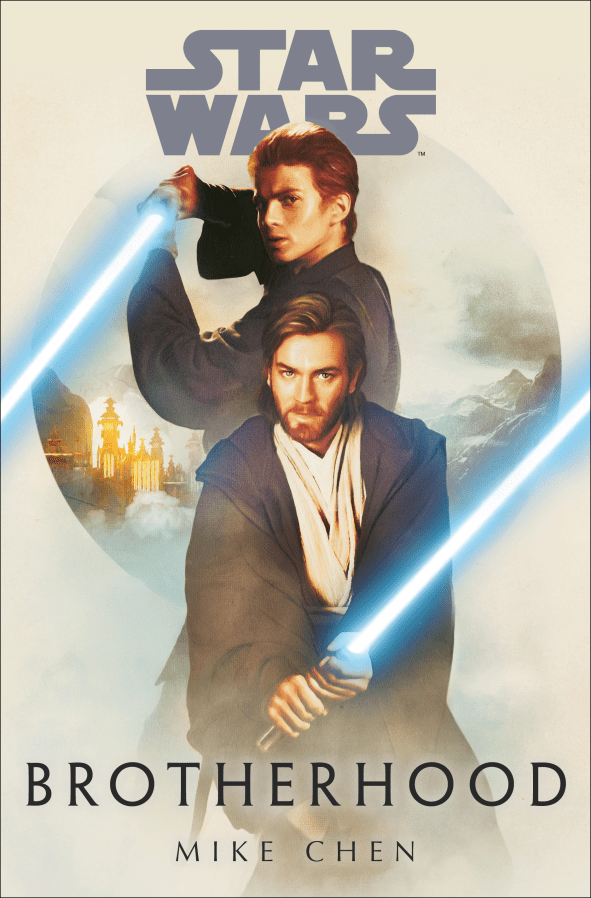
Star Wars - Brotherhood Cover

Publisher: Penguin Random House Audio (Audiobook – 10 May 2022)

Series: Star Wars

Length: 12 hours and 46 minutes

My Rating: 4.25 out of 5 stars

Amazon     Book Depository

2022 is a great time to be a Star Wars fan as we are currently being bombarded with a string of awesome shows, cool comics, and fantastic novels (a movie also would be nice, but apparently there are issues there).  Fans like me are currently having a great time with the Obi-Wan Kenobi live-action show that has been all manners of fun, especially as it brings Ewan McGregor and Hayden Christensen back to their iconic roles as Obi-Wan Kenobi and Anakin Skywalker.  However, this is not the only recent Star Wars release that focuses on this iconic duo, as author Mike Chen presents Star Wars: Brotherhood.  This is Chen’s first Star Wars novel and follows these two great characters as they embark on a dangerous political adventure right after the events of the film, Attack of the Clones.

It is dark days for the galaxy as the destructive Clone Wars between the Republic and the Separatists have just begun.  As the galaxy splits down the middle and more and more systems join the war on opposing sides, the Jedi begin to take a new role as soldiers, the fragile peace they have long guarded slowly disappearing.

When an explosion devastates the neutral planet of Cato Neimoidia, home of the Trade Federation, the Republic is blamed by Count Dooku and the Separatists.  Desperate to keep Cato Neimoidia from joining the Separatists, the Jedi dispatch Obi-Wan Kenobi to the planet to investigate the explosion and attempt to maintain the peace.  However, Obi-Wan has his work cut out from him as he encounters a hostile planet, blinded by mourning and a long history of prejudice from the Republic.  Worse, not everyone wants him to solve the crime, as Count Dooku’s sinister agent, Asajj Ventress, is also on Cato Neimoidia, attempting to turn the populace against the Republic.

At the same time, Anakin Skywalker has been promoted to the rank of Jedi Knight and works to balance his new responsibilities with his secret marriage.  Despite orders not to intervene on Cato Neimoidia, when Obi-Wan finds himself in himself trouble, Anakin races to help him, dragging along a promising Jedi youngling.  However, with their relationship forever changed by Anakin’s promotion, can the two Jedi brothers still work together as they attempt to grow beyond master and apprentice?

This was a fantastic new addition to the Star Wars canon that fans of the franchise are really going to enjoy.  Containing an interesting character-driven story, Brotherhood was a great first outing from Chen, who successfully explored some of the best characters and settings of the Star Wars universe.

Brotherhood has a rather interesting multi-perspective narrative that I felt was pretty good.  This cool Star Wars novel is set right at the start of the Clone Wars and seeks to not only highlight some early aspects of the conflict but also dive into the minds of the iconic protagonists, Obi-Wan Kenobi and Anakin Skywalker.  The book has a strong start to it, with a devastating bombing going off on a neutral planet that forces Kenobi to investigate by himself.  Arriving on a planet thick with emotion, undue influences and conspiracies, Kenobi finds himself in all manner of danger, while his former apprentice, Anakin, is forced into a far less interesting mission.  Chen does a good job introducing the key elements of this book, and you soon get invested in the protagonists’s storylines, as well as the deeper emotions raging within them and other supporting characters about the bombing and wider events in the galaxy.

While I liked the start of the book, the centre of Brotherhood honestly dragged for me.  Now part of this is because I had to have a break from audiobooks for a few weeks, but even when I started listening to Brotherhood again, I had a hard time making much progress.  The slow investigation and Anakin’s slightly lumbering narrative, combined with the occasionally unnecessary plot around Mil Alibeth, just didn’t hold my attention as much as I had hoped, and it ended up being a bit of slog to get through it.  Luckily, the pace really picks up towards the end as the various storylines start to coalesce into a more compelling and exciting read.  I managed to get through the final third of the novel a heck of a lot quicker, and I was substantially invested in the characters, including a few supporting figures, and the narrative as a result.  Everything comes together pretty well in the end and Chen delivers a mostly satisfying conclusion that hints at the wider threat to come.  An overall entertaining, if slightly staggered narrative, I did have a lot of fun getting through it.

I mostly enjoyed how Brotherhood was written, as Chen did an outstanding job of blending compelling plot elements with deep character development and some fantastic universe-building.  The main story itself features a mixture of investigation, conspiracy and personal conflicts, as Obi-Wan visits a hostile planet impacted by all manner of anger and mistrust.  The author makes excellent use of multiple character perspectives to tell a complete and wide-ranging narrative.  While a good portion of the plot focuses on the main two characters, Chen routinely throws in the perspective of several great supporting figures, including some antagonists, and it was fantastic to get some alternate views on the events occurring.  As I mentioned above, I found the pacing was a bit off in the middle of the novel, and there were certain parts of the story that I had a harder time getting through.  For the most part, though, the book flowed pretty well, and the switch between various characters helped facilitate that.  While this is primarily a character-focused book, I did think that Chen did spend way too much time having his characters over-analyse everything in their heads, as the constant contemplation of their emotions or actions slowed the story down in places.  However, I did think that the author was particularly good at capturing action, with some brilliant and intense scenes featured throughout the book.  The ones that really shined to me where the sequences that showcased the Jedi character’s abilities in battle, as Chen made them come to life in a vibrant and powerful way.  Overall, I thought that this was a mostly well written story, I loved how Chen’s distinctive style helped to enhance the narrative in places.

Brotherhood proves to be a particularly interesting piece of Star Wars fiction as Chen sought to not only expand on the main characters but also explore the wider universe during the early Clone Wars period.  Written mostly as a standalone novel, Brotherhood has a lot of interesting canon elements that established fans of the franchise will deeply enjoy.  The book is closely connected with both the events of the second prequel film, Attack of the Clones, and the following Clone Wars animated series.  It was also apparently written somewhat in sync with another 2022 Star Wars novel, Queen’s Hope by E. K. Johnston, which I haven’t had a chance to read.  However, despite this, most readers familiar with the films should easily be able to jump in and read Brotherhood without any issues as Chen does a great job of explaining all the key characters, concepts and other elements.  There is also a ton of stuff for established fans of the franchise to enjoy as Chen spends a bit of time adding in some interesting elements and some great fan service.

One of the more interesting things featured within this novel is the examination of the early days of the Clone Wars.  This hasn’t been greatly explored in the current canon too much, so it was cool to see the start of the war, with some of the earlier battles, conflicts and issues surrounding this galactic civil war.  Chen spends a bit of time showcasing how the Clone Army was incorporated into the existing Republic structure, as well as the militarisation of the Jedi as they became commanders and generals.  There is also an interesting examination of the rise of extremism during the Clone Wars, as various factions start to cause trouble outside the actions of the main armies.  As a result, Brotherhood serves as an excellent bridging novel between Attack of the Clones and some of the preceding material, and I loved how Chen spent time setting up a few things for the Clones Wars animated series, although the sudden and unexplained appearance of a female clone was a bit odd.  I also had a lot of fun seeing some of Palpatine’s machinations here as he subtly manipulates events to get the Jedi even more involved in the war and more integrated with the clones.  There are also some key moments of the corruption of Anakin that occur here, and it was fascinating to see the moment that Anakin revealed his massacre of the Sand People to his future master.

While I deeply appreciated all the above, the most fascinating bit of Star Wars universe-building in Brotherhood had to revolve around the planet of Cato Neimoidia, the capital of the Trade Federation as Chen really went out of his way to explore this planet and its people, the Neimoidians.  For years the Neimoidians have mostly been seen as the exploitive and evil villains from The Phantom Menace and were never really explored in that much detail.  Chen spends a massive part of the book providing a deeper look at them and it soon becomes quite a compelling part of the novel.  In particular, the Neimoidians and their Trade Federation are shown to be mostly neutral, trying to stay out of the war and disavowing the actions of Nute Gunray and his faction who are supporting the Separatists.  When Obi-Wan arrives at Cato Neimoidia, he is introduced to their rich culture, unique society and a distinctive mindset that relies heavily on calculation and risk-assessment.  However, Obi-Wan soon discovers that there is far more to being a Neimoidian than he ever realised, as the Neimoidians have a long history of being ignored, ridiculed and prejudiced against by the Republic.  This long history of abuse, combined with the bombings on their planet, proves to be a deeply captivating and powerful part of the story.  All these great Star Wars elements add a lot to the narrative of Brotherhood, and I had an outstanding time seeing all the clever new ways that Chen worked to expand and explore this iconic universe.

While the story and Star Wars universe are key parts of this book, Chen spends most of his time working on the characters.  Brotherhood features a great cast of point-of-view protagonists who all have their own deep and unique journey through the book.  However, the focus is on the pairing of Obi-Wan Kenobi and Anakin Skywalker, whose relationship lies at the core of the book.  Both characters are featured very heavily throughout Brotherhood, and you are soon deeply invested in their individual narratives as well as their joint story.  Chen paces out their appearances together very well, and you get to see them act as both a team and independently, although one of the main themes of the book is the examination of how well they work together as a team and how close they are.  The author spends a lot of time exploring the unique relationship this master and apprentice duo have especially now that Anakin has become a full Jedi and they are now equals.  This proves to be a fascinating element to focus on and I loved how powerful the character work around the pair and their relationship was.

On an individual level, Chen spares most of the focus to look at Anakin, who is going through a lot at this point in his life.  Not only is he dealing with the sudden abilities of having to be a Jedi, but he is now secretly married to Padme, is trying to get used to his new robotic hand, and also bearing some anger and guilt at his actions of Tatooine.  This presents many complications for Anakin, and he is constantly battling his emotions, desires and the feelings of disconnection that he feels to the rest of the Jedi.  Chen does a great job of exploring the complex emotions and history surrounding Anakin, and you get a real sense of the inner conflict he feels all the time, especially when it is reflected in other characters.  He does end up coming to grips with many of these issues as the book progresses, although some of them remain, leading to darker events in the future.  The author’s focus on Obi-Wan is a little less intense, although there are still some very interesting elements there.  Most of Obi-Wan’s concerns reflect his current mission as he finds himself dealing with a culture he doesn’t understand and whose emotions he has trouble responding to.  At the same time, Obi-Wan is deeply concerned for Anakin, and his constant worries and examinations of their strained relationship deeply impact him.  I found it fascinating to see Obi-Wan’s observations during this period, especially as he witnesses and chooses to ignore some warning signs around Anakin.  Chen does a good job of trying to establish the more confident and wiser version of Obi-Wan that we see in The Clone Wars and Revenge of the Sith, and I it was very fun to see him negotiating and investigation on Cato Neimoidia.

Aside from these central characters, Brotherhood contains some other great characters whose storylines prove quite fascinating.  The most prominent of these is Jedi youngling Mil Alibeth, whose unique connection to the Force makes her very sensitive to the pain people are feeling, so much so that she spends much of her earliest appearances trying to cut herself off from the Force.  Mil finds an unlikely mentor in Anakin in this novel, and I appreciated the impromptu master-apprentice relationship they formed, especially as it benefits them both.  Two Neimoidian characters, royal guards Ruug Quamom and Ketar Kor, also serve a significant role in the story, although in two different ways.  The younger Ketar, whose family suffered greatly due to Republic prejudice, is extremely hostile to Obi-Wan and becomes a secondary antagonist, driven by his rage, anger and the manipulations of others.  Ruug, on the other hand, is a veteran soldier and commando whose more cynical world view, a result of her long life of violence and black ops missions, allows her to see past her emotions and investigate the bombing properly.  This results in Ruug becoming an ally to Obi-Wan as she tries to find the truth to save her people from more pain.  Ketar and Ruug serve as interesting counterpoints to the Neimoidian emotional spectrum, and their separate impacts on the story are extremely fascinating.  You really grow to like Ruug through the book, especially as she sticks to her principles, while Ketar, despite being an easily manipulated idiot, is one of the more understandable Star Wars antagonists you will encounter in, and his dive towards extremism is both powerful and understandable.

I also loved seeing fan favourite The Clone Wars’ character Asajj Ventress in this book, who serves as Brotherhood’s primary antagonist.  The events of this book represent Ventress’s first canon interactions with Obi-Wan and Anakin, and it was fascinating to see them attempt to work out who or what Ventress is.  Ventress ends up being very slippery and manipulative throughout Brotherhood, and she swiftly outmanoeuvres Obi-Wan by playing to the Neimoidian prejudices and emotions.  I loved seeing this early Ventress appearance, and her conversations with Obi-Wan are really fun, especially as Ventress’s sarcasm, venom and contempt shine through in every sentence, only to be met by Obi-Wan’s politeness.  This ended up being a great first major outing for Ventress, and I really enjoyed seeing how her rivalry with the Jedi began.  The interactions, development and introductions of these great characters serve to really strengthen Brotherhood as a whole and I had a great time seeing Chen’s interpretations about all this amazing figures.

Naturally, I decided to check out the audiobook version of Brotherhood, which turned out to be an excellent decision.  The Brotherhood audiobook was a fun experience that once again makes great use the classic and iconic Star Wars sound effects and music to enhance the story.  At 12 hours and 46 minutes, this is a pretty standard length for a Star Wars audiobook, although it took me a little while to get through it.  I had a lot of fun again with the sound effects which do a great job providing the ambient noise of the story that helps to bring the listener into the story.  In addition, the always awesome Star Wars score is utilised to amazing effect during key parts of the book, and it is really impressive how much John Williams’s epic music can increase the impact of a scene.

In addition to the music and sound effects, the Brotherhood audiobook is greatly enhanced by its excellent narrator, Jonathan Davis.  Davis is one of the best Star Wars narrators out there and his outstanding voice has been well utilised over the years.  I have personally enjoyed Davis works in several fantastic audiobooks such as in Lords of the Sith, Kenobi, Maul: Lockdown, Master & Apprentice, Dooku: Jedi Lost, Doctor Aphra and Tempest Runner, and he is always great value for money.  This was once again true for Brotherhood, as Davis does an outstanding job presenting the complex story to the listener while also bringing the various characters to life.  Davis does a particularly good Obi-Wan Kenobi voice, which really helped here considering the character’s prominence in the plot.  The rest of his voices are also very good, with multiple major and iconic characters come across in distinctive ways that fit how they have been portrayed in other media, particularly Yoda.  In addition, the various new characters introduced in Brotherhood are also gifted fantastic and appropriate voices that allow the listener to distinguish who is talking.  This excellent voice work, alongside the music and sound effects, really helps listeners to enjoy the compelling story and this is easily the best format to enjoy Brotherhood in.

This was another awesome addition to the rapidly expanding canon of the Star Wars universe.  Mike Chen’s Brotherhood had an impressive and compelling narrative that not only explores some intriguing areas of Star Wars lore, but which also perfectly features two of its most iconic protagonists.  A fantastic read that will appeal to anyone currently enjoying the Star Wars universe, Brotherhood is really worth checking out and I look forward to seeing what other awesome novels are added to this brilliant, expanded universe later this year.

Amazon     Book Depository

Throwback Thursday: Warhammer 40,000: Space Wolf by William King

Space Wolf Original Cover

Publisher: Black Library (Paperback – 1999)

Series: Ragnar series – Book One

Length: 266 pages

My Rating: 4.5 out of 5 stars

Amazon

Welcome back to my Throwback Thursday series, where I republish old reviews, review books I have read before or review older books I have only just had a chance to read.  For this latest Throwback Thursday I dive into the world of the Space Wolves chapter of Space Marines with the classic Warhammer 40,000 novel, Space Wolf by William King.

The Warhammer 40,000 expanded universe is truly blessed with the sheer range of unique stories that it contains.  From pulse-pounding crime novels (Kal Jerico: Sinner’s Bounty), deeply fascinating novels about aliens (Ruin, Reign and Ghazghkull Thraka: Prophet of the Waaagh!), haunting horror tales (The Bookkeeper’s Skull), and even brutal war stories by common soldiers (Steel Tread and First and Only).  However, at the end of the day, most of the more intriguing stories focus on the iconic and awesome Space Marines.  These genetically enhanced and over-armoured warriors are often the true MVPs of the Warhammer canon, with some great series based on them (for example, the 50+ book Horus Heresy series).  There are a ton of great Warhammer 40,000 series around the Space Marines that I am exceedingly keen to get into, and I was recently lucky enough to find a copy of the first book of one of them which I immediately dived into.

That book was Space Wolf by William King, who I best know from his epic work in the Warhammer Fantasy franchise with his Gotrek and Felix series (check out my reviews for Trollslayer, Skavenslayer, Daemonslayer, Dragonslayer and Beastslayer).  Space Wolf is the first book in King’s six-part Ragnar series (also known as the Space Wolf and Wolfclaw series).  Focused on the character of Ragnar, a legendary member of the Space Wolves chapter, this series sounded really cool, especially as I have been really enjoying King’s writing lately.  I ended up having a great time with this novel which contains an awesome and very fun story.

In the far future, humanity is constantly at war with aliens, daemons, traitors, and heretics, all of whom wish to tear the massive and fragile Imperium of Man to shreds.  Humanities best and often last line of defence are the mighty Space Marines, the Emperor’s angels who fight the very worst xenos and spawns of the Chaos Gods.  Out of all the Space Marine chapters, one of the most respected, feared and honoured chapters are the Space Wolves.  Born from the genetic material of their legendary founder, Leman Russ, and bearing the touch of the wolf, the Space Wolves have stood tall time and time again.  But how does a mere man become a bestial and lethal Space Wolf?

On the planet of Fenris, Ragnar Thunderfist is a young warrior, content to work on his father’s ship and contend with the many dangers of his fierce and low-tech home world.  During a raid upon his village by a rival tribe, Ragnar is killed in a mightily duel after felling many enemies.  However, this is not the end of Ragnar’s journey; instead he finds himself waking up healed, resurrected by one of the mysterious Wolf Priests who watch over the planet.  Taken from the ruins of his village with other worthy aspirants, Ragnar learns that he has been chosen to become a member of the next generation of Space Wolves.

However, earning the right to join the Space Wolves is no easy task, and Ragnar soon embarks on a gruelling and lethal training regime that will test him to his very limit.  Working to hone himself into a living weapon, Ragnar will face trials, monsters and deadly rivalries as he attempts to prove himself.  But even if he is found worthy, the greatest trial involves the final transformation into a Space Marine.  The Canis Helix, which is implanted into all Space Wolves, bears a dangerous curse, which may turn even the strongest of wills into wild beasts.  Can Ragnar overcome the bestial rage that comes with this awesome gift, or will he lose his mind before he can serve the Emperor?  And what happens with the legions of Chaos arrive upon Fenris?

Space Wolf Cover 2

This was another exceptionally exciting and compelling read from William King, who perfectly starts another epic Warhammer series.  Space Wolf had a very different tone and structure to some of King’s other books that I have enjoyed, and I found myself getting really invested in this intriguing story of survival, self-discovery, and destiny.  Starting with an intriguing glance at the present, Space Wolf jumps back into the protagonist’s past, showing Ragnar’s formative years and the events that led to him being chosen by the Space Wolves.  Primarily told from the perspective of Ragnar, with a few sections told by an antagonistic alternate narrator, Space Wolf quickly turns into a fascinating examination of the intense training faced by potential Space Wolves recruits.  Most of the story follows the various stages of this intense military training and eventual genetic modification, and it was absolutely fascinating to see the changes the protagonist goes through.  While there is a lot of focus on expanding the lore and the character changes associated with it, King tells a concise and powerful story that really dives into the mind and personality of its protagonists.  This extended and brutal training sequence and initiations eventually leads up to the protagonist’s first mission as a Space Marine, which sees him and his team, many of whom you have also come to know, face off against an insidious foe on their own home world.  This last part of the book provides a ton of action, some intriguing horror aspects, and the introduction of a compelling antagonist who will likely show up in future entries in the series.  This final section really brings the entire narrative together extremely well, showcasing what the protagonist has been working towards, while also resolving some great character arcs.  I had a really fun time with this entire novel, and it has definitely made me keen to check out the rest of the series when I get a chance.

One of the most intriguing parts of Space Wolf was the way that it fits into the wider Warhammer 40,000 universe.  Specifically, this novel serves as a particularly good introduction to the legendary Space Wolves Space Marines chapter, who are one of the more popular factions in the extended universe.  King chooses to look at them from a rather unique direction, showing them purely from the perspective of the protagonist Ragnar, an inhabitant of a Norse-esque society with no concepts of space travel, advanced technology, or the wider universe outside of their lands, and whose understanding of the Emperor, the Chaos Gods, the Space Marines and more comes purely from myths and legends.  As such, for much of the novel Ragnar and his fellow initiates have no idea who the Space Wolves are, or what they have been chosen for.  The snippets they continue to get slowly inform them of the wider picture, and it was fascinating to see their blind faith that they were working towards something greater.  Their eventual initiation comes as a great shock to them, and seeing these previously simple warriors become elite Space Marines with knowledge of the wider universe results in some awesome and intriguing scenes.  I found it really fun to see the similarities and differences between the characters when they were normal and when they were Space Wolves, and it was fantastic to witness how their harsh roots results in Space Marines with some major Viking vibes to them (it’s one of the things that make them such a cool chapter).

However, King also ensures that the reader is given some intense insight into the dark side of the Space Wolves.  While their training is often harsh and lethal, and their treatment of the tribes of their home planet is very manipulative, there is something far more worrying lying beneath the surface.  The genetic manipulation that goes into creating them awakens a beast within them, with many losing their sanity or even their humanity entirely, reverting into beastlike creatures known as the Wulfen.  King does an awesome job highlighting the various ways in which the characters are changed, body and mind, throughout the course of Space Wolf, and there are some powerful scenes where they are forced to battle to control their new inner nature.  This really ends up being a particularly fascinating and well-balanced examination of the Space Wolves chapter, and I honestly could not think of a better introduction to this faction.  This cool lore, as well as the Norse-inspired aspects and Nordic-like wild settings, serve to beautifully enhance the entire narrative, and King’s choice to show all events from an uninitiated character’s perspective was just brilliant.  The use of Ragnar as a narrator also ensures that readers unfamiliar with the Warhammer franchise can also easily enjoy this novel, as they can learn about the wider universe at the same time as the protagonist.  Established fans, on the other hand, will get a lot of joy out of seeing the Space Wolves in this much detail, and they will no doubt have fun viewing the myths and unique interpretations that the various Fenris tribes place on the Space Marines and other elements of Warhammer lore.  As such, this is a novel that will really appeal to a lot of different readers, and anyone with interesting in fantasy, science fiction, or even historical fiction, will probably have a great time reading Space Wolf.

Finally, I must highlight how good Ragnar was as a point-of-view protagonist.  Not only do we get the great insights into Space Wolves initiatives that I mentioned above, but there are multiple intriguing personality and mental aspects to his character that come across extremely well in the narrative.  Ragnar starts the book as a young warrior whose life is changed in a single day as his tribe is destroyed by a rival clan, his family is killed, and he himself is killed and then resurrected by the Space Wolves.  Worse, he is resurrected alongside the man who killed him, Strybjorn Grimskull, and is forced to train and work with him, despite their hatred for each other.  This results in a great deal of inner struggle for Ragnar as he is constantly torn between his honour and new responsibilities to the Space Wolves and his desire for revenge against Strybjorn.  Watching these two constantly circle each other through the training parts of the novel is awesome, and their issues get even more intense once they undergo the genetic change and become Space Wolves with bestial urges.  These intense inner issues and rivalries proved to be an excellent central plotline for much of the novel, and I felt that they dramatically enhanced the entire narrative very well, adding in some much need drama, comradery, and character development.  I cannot wait to see more of Ragnar and his fellow Space Wolves in the future, especially after how his first mission turned out.

Overall, Space Wolf was just as impressive and awesome as I hoped it would be.  William King did an exceptional job writing a fantastic introductory Space Wolves tale, and he continues to remain one of my absolute favourite Warhammer authors, especially with the excellent range he showed here.  Readers will love this outstanding dive into the Space Wolves and the wider Warhammer 40,000 universe that this novel contains, and Space Wolf is a highly recommended novel to anyone looking for an action-packed and exciting read.

Space Wolf Cover

Amazon

Warhammer 40,000 – Ghazghkull Thraka: Prophet of the Waaagh! by Nate Crowley

Ghazghkull Thraka - Prophet of the Waaagh! Cover

Publisher: Black Library (Audiobook – 15 March 2022)

Series: Warhammer 40,000

Length: 7 hours and 30 minutes

My Rating: 5 out of 5 stars

Amazon     Book Depository

Prepare to read one of the most amusing and downright entertaining recent additions to the Warhammer 40,000 canon with the hilarious and brilliant Ghazghkull Thraka: Prophet of the Waaagh! by outstanding author Nate Crowley.

I have been having an immense amount of fun really diving into the massive wealth of tie-in fiction surrounding the Warhammer 40,000 tabletop game this year.  Books like Steel Tread by Andy Clarke, Krieg by Steve Lyons, The Bookkeeper’s Skull by Justin D. Hill and Day of Ascension by Adrian Tchaikovsky, have really highlighted just how diverse and intense this extended universe can be.  However, the latest tie-in novel I checked out may prove to be one of my absolute favourites, as I got to learn all about one of the most iconic ork characters in this universe with Ghazghkull Thraka: Prophet of the Waaagh!

Orks are the most notorious and dangerous creatures that roam the galaxy of the 41st millennium.  Billions upon billions of the powerful, war-loving creatures can be found throughout every sector of space, fighting anyone and anything they can find, especially each other.  However, out of all these monsters, none are more feared, respected or hated than the warlord Ghazghkull Mag Uruk Thraka, chosen of the ork gods Gork and Mork and proclaimed prophet of the Waaagh!

Throughout his legendary life, Ghazghkull has done what no other ork has been able to achieve.  Bringing together innumerable warbands into one massive horde of green, Ghazghkull has warred with every faction in the cosmos, while his infamous invasions of the Imperial planet of Armageddon are the stuff of bloody legend.  Everyone knows of his epic and rivalry with his indomitable foe, Commissar Yarrick, which turned Armageddon into a perpetual warzone, but does anyone know the true story of Ghazghkull and the events that made him?

Rogue Lord Inquisitor Tytonida Falx has long attempted to discover what lurks in the minds of the xenos her order faces.  When an opportunity to find out more about Ghazghkull presents itself, she eagerly jumps at the opportunity, bringing a unique prisoner aboard her heretical ship, Ghazghkull’s banner bearer, the grot Makari.  Interrogating him, Inquisitor Falx and her team soon discover that Makari might just be the only being in the universe who knows the full truth about who, or what, Ghazghkull is, and what he plans to do next.  But, as she listens to Makari’s tale, the Inquisitor soon discovers that the shadow of Ghazghkull’s rage and desire for violence far eclipses anything that the Imperium has ever believed.

Wow, now that was a really fun and captivating read.  I knew going into Ghazghkull Thraka: Prophet of the Waaagh! that I was going to have a great time, especially after enjoying author Nate Crowley’s The Twice-Dead King novels, Ruin and Reign, but I was blown away by how awesome Ghazghkull Thraka was.  Featuring a clever and wildly entertaining story, perfectly told through various unique eyes, as well as some deeply enjoyable characters, I quickly became absorbed in the impressive story and powered through it in a couple of days.  Not only was this my favourite book from Crowley but it also probably overtakes Kal Jerico: Sinner’s Bounty as the most amusing Warhammer novel I have ever read.

I had an absolute blast with the incredible story that Crowley whipped up for Ghazghkull Thraka, as it ended up being an inventive and entertaining way to showcase an iconic Warhammer figure.  Due to his prominence within the game and the extended fiction, Ghazghkull is probably one of the most utilised non-human characters in the canon, with many different novels, game books and comics already diving into his life.  As such, Crowley needed to come up with a completely new way to examine this great character that didn’t tread on any prior works.  I think his solution to this problem was exceedingly clever, as he chose to tell the story through the eyes of the most unlikely narrator and chronicler, the grot Makari, whose unique insights and worldview turned this already known backstory into something truly special.

The story starts off in the current timeline of the Warhammer 40,000 universe and shows Inquisitor Falx obtaining Makari and interrogating him about Ghazghkull.  This causes the book to dive back into the early days of Ghazghkull as Makari chronicle his master’s existence as he saw it.  As such, you get a very specific examination of Ghazghkull’s life, with a focus on his early trials, some of his pivotal moments, and more specifically his interactions with Makari.  At the same time, the story keeps jumping back to the present, with the Inquisitor and her followers interrupting to ask specific questions and discussing whether there is any truth in what he says.  The book keeps jumping between these different perspectives, and you end up with two distinctive storylines as Makari’s presence brings some big woes for the Inquisitor in the present day.  The chronicle storyline goes at a brisk pace, especially as Makari’s interrogators get him to skip or shorten specific sections, but there is a clever and impressive logic into what parts of Ghazghkull’s life are featured or ignored.  Not only are the past and present storylines exceedingly intriguing and entertaining in their own rights, but they also come together perfectly as well, with Makari’s insights into Ghazghkull and himself impacting the actions of Falx.  While the ending was slightly too metaphysical, it served as a brilliant and powerful conclusion to this great story, and I loved seeing the entire tale come full circle in some hilarious ways.

I deeply appreciated the way that Crowley put Ghazghkull Thraka’s story together, as its distinctive and clever style really helped to enhance the chronicle contained within.  The plot device of an interrogation of an alien prisoner works extremely well to set up the main narrative, and the constant interruptions, debates and revelations that occur whenever it snaps back to the present adds to the sense of mystery and mysticism surrounding the titular figure.  While Crowley takes the story in some interesting and complex directions at times, the entire novel is paced beautifully, and there is never a single boring or slow moment within the entire thing.  I particularly liked the near constant humour that was injected into the story, a fantastic side-effect of basing the book around the funny ork species, and I laughed out loud several times as I powered through this impressively amusing read.  Like many Warhammer novels, Ghazghkull Thraka can be enjoyed as a standalone read, and the author makes sure that it features a great self-contained narrative that anyone can enjoy, even those unfamiliar with the universe and the canon.  Indeed, this would be a decent introduction to the Warhammer 40,000 canon and associated extended universe, especially as it perfectly presents one of the key factions of the universe.  Most of the unique universe elements and wider history are explained sufficiently for new readers to follow along without any issues, although some could potentially get confused by the deliberate exclusion of events previously covered in other books.  Still, Ghazghkull Thraka should turn out to be an easy and entertaining read for any science fiction fan, and I thought that this Warhammer 40,000 novel was very well written and extremely clever.

One of the things I love the most about Nate Crowley’s Warhammer novels is his brilliant ability to dive into the unique alien races of the universe and then perfectly showcase their culture and mindsets.  This was the case again in Ghazghkull Thraka, where Crowley expertly dives into the heads of the various ork and grot characters.  No matter whose perspective is shown, every scene of this book features some excellent and often highly amusing depiction of greenskin culture, as Makari attempts to explain the ork perspective as well as his place in the society as a grot.  As such, you get some incredibly detailed and compelling insights into this crude and warlike race, including their brutal hierarchy, need for violence, insane technology, and very unique worldview, which generally results in most of the book’s fantastic humour.  However, rather than the dumb, brutal and one-note figures that most authors depict, Crowley really goes out his way to show that there is a lot more to orks than you realise.  Not only do you get some excellent insights into their various clans and organisations but the various ork characters are shown to be complex beings with unique needs and the ability to formulate some very cunning plans.  There is a particularly intriguing look at the ork religion that follows the gods Gork and Mork, and this novel ends up with a spiritual edge, especially as Crowley shows the orks being extremely successful because they choose to strongly believe in themselves.  As such, you see quite a unique and compelling side to the ork race in this book, and I loved how incredibly Crowley portrayed them.

Naturally, a big part of this examination of ork culture comes from the in-depth look at the life of Ghazghkull himself.  As I mentioned before, Ghazghkull is one of the best-known characters in the entire Warhammer 40,000 canon, so most veteran readers would already be quite familiar with him and his actions.  However, Crowley does an excellent job of examining a completely new side to this character, and mostly ignores his wars at Armageddon and his intense rivalry with Commissar Yarrick, both of which have been done to death in other books.  While certain parts of his history are revisited in this novel, Crowley completely changes their implications and causes, instead focusing on Ghazghkull’s unique orkish mindset and his role as the prophet of his gods.  This new take on Ghazghkull proves to be quite unique and very captivating, as he is shown to be an overburdened being, constantly pressured by his own visions and the influence of the gods to succeed and be a uniting force for his people.  While he still retains the casual violence of his race, you really see Ghazghkull as a deep thinker, and it is fascinating to see his inner ork face off against his grand ambitions and desires.  Crowley also adds some compelling supernatural elements to his character, as Ghazghkull, as seen by Makari, bears a direct connection to the gods which he can use to alter his fellows and himself.  While this isn’t too overpowered or strange, it adds a great extra layer of menace to the character, especially for the humans, and I loved seeing the Inquisitors trying to wrap their heads around the strange occurrences.  I had a lot of fun seeing this other side of Ghazghkull, and this novel ended up being a great analysis of who they are and what they represent to their race.

I also really enjoyed the inclusion of Makari as one of the central characters, and his use as the main witness to Ghazghkull’s life worked incredibly well.  While Makari has always been associated with the character of Ghazghkull, accompanying him in his battles and waving his banner as a source of luck, Crowley really changes him in this novel and paints him as an essential part of Ghazghkull’s success and relationship with the gods.  Shown to be there the moment that Ghazghkull became the prophet, Makari follows Ghazghkull through some of his big moments and it is hilarious to see his snide view on the subject, especially as, like most grots, he a massive coward who doesn’t want to be there.  A lot of this novel’s humour is derived from Makari’s observations and responses, and I loved some of the jokes set up around it.  Crowley does an awful lot with this character, and I particularly liked how the story explained certain aspects of his previous portrayals, such as the apparent multiple versions and his surprising luck.  These are worked into the story extremely well, but it’s the relationship with Ghazghkull that becomes the most fascinating.  Just like with Ghazghkull, there is a major spiritual edge to Makari, who appears to be just as chosen and important to the plan as his master.  Makari’s mystical and religious bond enables him to have a far bigger insight into Ghazghkull’s actions than anybody else, and this really enhanced the analysis of the titular character.  However, it is in Makari’s attempts to serve and help his master achieve his destiny that we see the best Makari scenes, especially when faced with Ghazghkull’s apparent depression, the manipulation of his other followers, and his own stubbornness.  While Ghazghkull does have the inherent ork reluctance to rely on a grot, and indeed he is extremely likely to kill Makari if he starts giving advice, the moments where Makari get through to him are powerful, and I really appreciated the character work surrounding them.  There are some rocky moments between them, especially when Ghazghkull becomes dismissive of his lucky grot, and Makari’s subsequent reactions is very funny and incredibly over the top, which was so very cool.  Overall, this ended up being an excellent and surprisingly compelling portrayal of Makari, and I am exceedingly glad that Crowley featured him in this novel the way he did.

Aside from the greenskin characters, a large amount of plot revolves around the team interrogating Makari.  Crowley really went out his way to create a particularly unique group of Imperial agents who bear surprising insights into the mind of the xenos.  This team is led by Inquistor Falx, a rogue Inquisitor who bears a dangerous obsession with the alien creatures.  Falx is desperate to learn everything she can about the aliens attacking the Imperium to help defeat them and finds herself stymied by the Imperium’s controlling and non-progressive government and religion.  As such, she takes some major risks in this book to understand Makari and Ghazghkull and has some unique and dangerous methods for achieving her goals that borders on the insane/heretical.  I quite liked Falx, despite her obsessive qualities, and she proved to be a great central figure for half the novels plot, especially as her frustrations, concerns and thoughts about the evils of the Imperium, are extremely understandable.

Falx also employs a unique team of interrogators to help her with Makari, including Brother Hendriksen, a Space Wolves rune priest assigned to Deathwatch who has also fallen out of favour with the Imperium thanks to his work with Falx.  Hendriksen serves as a beastly and powerful presence on Falx’s team, and he often provides a great counterpoint to the inquisitor in both technique and common sense, often despairing at her more dangerous choices.  Crowley’s diverse cast gets even larger with the truly unique character of Cassia, a female ogryn psyker who has grown as smart as a human.  This was a fantastic and extremely distinctive addition to the cast, and her surprisingly calm demeanour, which contrasts beautifully with her immense ogryn strength, works perfectly against Hendriksen’s impatience and anger.  The final member of the team is probably the most enjoyable, with the ork character, Biter (Bites-Faces-Of-The-Face-Biter-Before-It-Can-Bite).  Biter is a member of a Blood Axes mercenary band who have dealings with Falx and who sell Makari to her, remaining behind to interpret Makari’s testimony to the humans.  Due to being a member of the Blood Axes, a group who idolise human military culture, Biter is a very distinctive figure, wearing an approximation of a military uniform and appreciating complex tactics and strategy.  However, Biter is even more intelligent and cunning than most Blood Axes, and his near human tendencies really stand out, as it is pretty unexpected from an orc.  His fantastic reactions, comedic impressions of human behaviour, and determination to antagonise the Inquisitor really make him stand out, and he was an absolute joy to behold.  These four interrogators play off each other perfectly during the present-day scenes, and their arguments, discussions and interpretations of Makari’s story give it added depth, humour and impact, especially once they start realising just how valuable their prisoner is.  This entire cast was put together extremely well, and I had an incredible time with this unique and enjoyable collection of characters.

Like most Warhammer novels I check out, I chose to grab the audiobook version of Ghazghkull Thraka, which turned out to be such a wonderful and incredible listening experience.  Not only did the story absolutely fly by in this format, allowing me to get through its seven and a half hour runtime extremely quickly, but I found that the narrative and descriptions of ork life really popped when read out.  However, the best part about the Ghazghkull Thraka audiobook is the outstanding use of narrators.  This audiobook has three separate narrators, Kelly Hotten, Paul Putner and Jon Rand, each of whom have some experience narrating other Warhammer audio productions.  Not only are each of these narrators quite talented but the way they were featured in this audiobook is extremely clever, with the voice actor changing depending on who is witnessing or telling the events of the book.  For example, Kelly Hotten serves as the narrator for the various scenes and interludes where Inquisitor Falx is witnessing Makari’s interrogation, and Hotten does a brilliant job capturing the various players of these scenes, including the Inquisitor, her unique companions, and their orkish interpreter.  Paul Putner narrates the various scenes shown directly from Makari’s perspective, and he has a lot of fun in this role, not only capturing the cowardly and sneaky mannerisms of the grot protagonist, but also providing some amusing and deep voices for the ork characters.  Finally, Jon Rand has a memorable sequence voicing Brother Hendriksen when he psychically jumps into Makari’s mind and views some of the events occurring, and he gives the character a notable accent and internal growl that fit him extremely well.  The jumps between the voice actors were done perfectly and I really loved how it changed up depending on the perspective.  All three voice actors did an amazing job with their narration, and their work, plus some fun sound effects here and there, helped to turn this into such an impressive production.  Easily the best way to enjoy Ghazghkull Thraka, you will have an incredible time listening to this audiobook.

Nate Crowley continues to shine with another entry in the Warhammer 40,000 universe, with the unbelievably entertaining Ghazghkull Thraka: Prophet of the Waaagh!  Featuring a unique and deeply amusing story that re-examines on of the canon’s most iconic alien characters, Ghazghkull Thraka has a tight and cleverly written story, loaded with action, great characters and whole mess of outstanding humour.  Not only that, but this is without a doubt one of the best portrayals of the Warhammer 40,000 orks I have seen as Crowley obviously had a ton of fun bringing them to life.  Easily one of the best (and definitely the funniest) Warhammer 40,000 novels I have been lucky enough to enjoy, Ghazghkull Thraka comes extremely highly recommended, especially in its audiobook format, and is a must read for all fans of this wonderful fandom.

Amazon     Book Depository

Warhammer 40,000: The Bookkeeper’s Skull by Justin D. Hill

The Bookkeeper's Skull Cover

Publisher: Black Library (Audiobook – 18 January 2022)

Series: Warhammer 40,000/Warhammer Horror

Length: 4 hours and 32 minutes

My Rating: 4.5 out of 5 stars

Amazon     Book Depository

Get ready to dive back into the crazy and terrifying Warhammer 40,000 universe with the clever and exciting read, The Bookkeeper’s Skull by acclaimed author Justin D. Hill, which serves as a great entry in the Warhammer Horror sub-series.

Despite not being even halfway done yet, 2022 has already produced some epic new entries in the Warhammer 40,000 universe, including Steel Tread by Andy Clark, Reign by Nate Crowley, Day of Ascension by Adrian Tchaikovsky and Krieg by Steve Lyons, just to name a few.  After these awesome reads, there was no way I wasn’t going to check out The Bookkeeper’s Skull, especially when it had such an intriguing name.  The Bookkeeper’s Skull is an awesome book that forms part of a sub-series of Warhammer tie-in fiction known as Warhammer Horror.  This series unsurprisingly presents the reader with horror-based stories in its various universes and has already produced some very cool sounding reads.  The Bookkeeper’s Skull is my first brush with this horror series, and I was very excited to read one, especially as it was written by Justin D. Hill, a fantastic author who has been impressing recently with several great novels, including his Cadia series.  I loved the unique and clever story that Hill came up with for The Bookkeeper’s Skull.

Throughout the Imperium of Man, many planets serve the God Emperor in different ways.  For the agri-world of Potence, its only duty is to meet the iron-firm food quotas levied upon it by Imperial hierarchy, ensuring that the armies of the Imperium are supplied with all the food they need to fight the aliens and the heretics.  The enforcers, implacable lawmen with the ability to deal out death on an arbitrary basis, roam the planet and the farms of Potence, ensuring that the populace and serfs do all there is to produce the appropriate amounts.

Rudgard Howe is a new enforcer recruit who has just reported to duty.  The son of the planet’s chief enforcer, Rudgard faces a deadly future which will eventually force him to kill his older brothers to claim his dying father’s position.  But before he faces his family, he must learn the ropes by journeying out to the farmsteads of the planet and ensuring they can meet their quotas.  Travelling with a veteran enforcer, Rudgard learns the hard truths about life in the Imperium and the necessities of justice in keeping the planet running.  However, no lessons will prepare Rudgard for the horrors awaiting the enforcers at their final destination, the far-flung farmstead of Thorsarbour.

Located out in an ancient and unknown region of the planet, Thorsarbour is a cursed settlement, with its overseers poorly led and its serfs living in terror of the strange presences they claim to feel.  Finding the settlement far behind its quotas, the enforcers attempt to whip the farm into shape, but between the unnatural feeling of the land surrounding Thorsarbour and the dangerous presence of a bloody sanguinary cult amongst the serfs, they have their work cut out for them.  Worse, a series of unexplained and brutal murders are occurring around Thorsarbour, each one accompanied by mysterious strawman placed near the body.  As Rudgard tries to uncover the cause of these mysterious deaths before they destabilise their work, the enforcers begin to discover something unnatural behind them.  Can they discover the culprit before it is too late, or will the horrors of Thorsarbour consume them all?

This was a really interesting first dive into the Warhammer Horror series for me and it is one that I am very glad that I undertook.  The Bookkeeper’s Skull is an excellent novel that very quickly grabbed my attention with its clever storytelling and fantastic, fast-paced plot.  Hill manages to do a lot with this story in a very short amount of time as The Bookkeeper’s Skull has a pretty short run time.  Despite this, the reader is quickly and succinctly introduced to the main character and narrator, Rudgard, and the world of Potence, in a great couple of opening chapters, before dropping them right into the horror of Thorsarbour.  Once the narrator arrives then you are quickly struck by the unnatural and freaky nature of the location, as they encounter several of the unusual issues surrounding the farmstead.  Following the initial discovery of a multitude of bodies and death, the protagonists encounter one dangerous situation after another, as they contend with religious fanatics, terrified serfs and overseers, monstrous farm animals, mysterious strawmen, a strange and prophetic girl, and a mysterious force brutally killing off everyone in the compound.  Even with so much happening, the pace of this novel never slackens, and there is a very high death count as everything goes wrong in some very brutal way.  I was pretty hooked on this novel from the very start, and I loved where the story went, even if it did get a little predictable towards the end.  I had a fairly good idea of who was going to live and die from the start, as well as who the killer was likely to be (the title is very suggestive).  I do think that the novel slightly fell apart at the very end, as Hill chooses to leave a little too much mystery behind what sort of force might be ultimately responsible for the events of the book, but this was still an amazing story that I had a lot of fun with.

The Bookkeeper’s Skull turned out to be a pretty good Warhammer 40,000 novel, and I liked how it fit into the wider universe.  This novel is closely related to one of Hill’s other novels, Cadian Honour, which is also set on the world of Potence and features an older version of the protagonist.  I love it when a novel provides an interesting connection to an author’s previous work, especially one that provides some exciting context and personal history, and this was a great example of that.  Despite this, people interested in checking out The Bookkeeper’s Skull don’t need to have any pre-knowledge of Hill’s writing or any other Warhammer 40,000 novels to enjoy this excellent book.  Indeed, this is a fantastic introduction to both Hill’s writing and the wider Warhammer universe and could be an interesting first book to readers curious about either.

I was very impressed with how the author was able to meld horror elements into this Warhammer 40,000 novel to create a unique and impressive story.  Hill did a beautiful job of creating a powerful and creepy atmosphere for this novel right off the bat, especially as the opening chapter features a sinister and freaky toy/companion that the protagonist had as a child (seriously, WTF).  This dark atmosphere only increases as the book continues, especially once the characters arrive at Thorsarbour.  Between the brutal conditions imposed upon the serfs, the unsettling atmosphere, the undercurrent of fear, the crazed religious cult of self-mutilating fanatics, the graphic murders and the haunting presence of several otherworldly characters, you have all the elements you need for a truly impressive and memorable horror tale.  The pacing of the killings is excellent, and the reader finds themselves drawn in by their cruel and bloody nature as the bodies keep dropping in even more elaborate ways.  These killings also work well with the presence of the cult and the appearance of all the strawmen and other agricultural elements, and the book ends up with vibes reminiscent of films like The Wicker Man or Children of the Corn, especially with a pale and potentially psychic child talking about a supernatural figure responsible for the killings.  This ended up being an awesome horror read, and I find myself getting really drawn into the creepy story thanks to some of the freaky elements it contained.

This proved to be a particularly good Warhammer 40,000 novel due to the distinctive setting.  The Bookkeeper’s Skull takes place on a seemingly peaceful agri-world, which gives the reader some intriguing insights into this wider universe.  I loved the cool look at the various archaic ways that this spacefaring civilisation gets food and other resources.  The entire agri-world acts in a mostly feudalistic manner, with practically enslaved serfs doing much of the work on farmsteads.  The blend of gothic science fiction with modern and ancient agriculture elements works really well and it serves as a brilliant background for this darker tale.  Indeed, many of the book’s horror elements are derived from just how bleak and harsh the Imperium of Man truly is and just how badly they treat their own citizens (and they’re the good guys, apparently).  Hill paints some truly shocking pictures of the conditions on this world, including some very gruesome depictions of a rabid self-mutilating cult and some brutal scenes of violence that the enforcers inflict upon the people.  However, the most disturbing part of this world is Gambol, a being who is revealed to be a former criminal who had their arms and legs amputated, his mind modified by technology, and then dressed as a clown to become the protagonist’s childhood toy.  This disturbing figure, equipped with his festering flesh-plugs (shudder!), is sprung on you in the first few pages of the book and really helps to set the horror mood for the reader, as well as just how dark and horrific the Imperium can get (they do this sort of thing to a lot of people).  I loved how grim and dark Hill made this Warhammer story and you really get a sense of just how messed up everything is.

I quite enjoyed the character of Rudgard, who serves as the central protagonist and narrator.  The Bookkeeper’s Skull is told from Rudgard’s point of view in a chronicle format, so you get a real sense of this excellent character both as an experienced enforcer and the young rookie he is in this novel.  This version of Rudgard is a young and inexperienced man who is trying to live up to his family’s legacy, which includes a cruel father, two murderous brothers and an insane mother.  Sent out on routine mission with veteran enforcer Tarrini, Rudgard quickly learns all the terrible truths about his job as he essentially becomes an executioner.  Because of his past and the terrible events of this book, you get to see Rudgard turn into the no-nonsense figure from Hill’s previous novels, and I liked the continued change in his character.  I enjoyed the excellent mentor/mentee relationship he forms with Tarrini, as well as the narrators continued comments attempting or excusing some of his actions.  These considered and compelling notations from the older Rudgard give some interesting context to both the younger and older versions of the character, and it is interesting to see how much he has changed and developed over the years.  While I did think that parts of his backstory were wrapped up a little too quickly, this was still a fantastic examination of a great character and I look forward to seeing more of him in some of Hill’s other works.

I made sure to grab the audiobook version of The Bookkeeper’s Skull, which proved to be an incredible way to enjoy this brilliant novel.  Due to the shorter length of the story, this is a relatively quick audiobook with a rough run time of four and a half hours, which can be powered through extremely quickly.  I found that the audiobook format was highly conducive to the powerful horror mood of the novel and I personally felt that it really enhanced the tension and fear that the story produced.  A lot of the reason why I enjoyed this audiobook was the excellent voice work from narrator Matthew Hunt.  Hunt, who has lent his voice to several Warhammer audio productions in the past, had an excellent voice for this audiobook, and I felt that he captured both the main character and the overall tension of this novel extremely well.  Hunt moved this audiobook along at a swift and compelling pace that really grabs the attention and ensures that you keep listening as events get darker and darker.  Throw in some fantastic and fitting voices (Gambol’s near childlike voice is pretty damn freaky, and I loved the sly and manipulative voice given to the cult leader), and you have an outstanding audiobook that is really worth checking out.

Overall, The Bookkeeper’s Skull by Justin D. Hill is an outstanding and epic Warhammer Horror novel that I had a brilliant time reading.  Hill came up with a clever and captivating story that does an excellent job combining freaky horror elements with the expansive and fun Warhammer 40,000 universe.  I loved my first taste of the Warhammer Horror brand and I look forward to checking out more of it in the future, as well as some more exceptional writing from Hill.

Amazon     Book Depository

Throwback Thursday: Star Wars: Darth Plagueis by James Luceno

Star Wars - Darth Plagueis Cover

Publisher: Random House Audio (Audiobook – 10 January 2012)

Series: Star Wars Legends

Length: 14 hours and 45 minutes

My Rating: 4.75 out of 5 stars

Amazon

Welcome back to my Throwback Thursday series, where I republish old reviews, review books I have read before or review older books I have only just had a chance to read.  In my latest Throwback Thursday I look at one of the more interesting novels from the Star Wars Legends universe, Darth Plagueis by James Luceno.

With Star Wars day on the horizon, I have decided to go back and check out some of the key books in the now defunct Star Wars Legends universe.  While no longer canon, there are still some amazing books in the Legends range, including some that will no doubt serve as an inspiration for some future shows or movies.  I have already enjoyed several Legends books, such as Maul: Lockdown, Scoundrels and Death Troopers, but there are still more epic reads that I really want to check out.  Probably the one I was most interested in reading was the epic Darth Plagueis by James Luceno.  Luceno, who also wrote the fantastic novel Tarkin in the current Disney canon, is a very talented author, and I was very excited in checking out his take on the elusive and mysterious Darth Plagueis.

“Did you ever hear the tragedy of Darth Plagueis the Wise?”

Throughout the long and bloody history of the Republic, many Sith lords have risen to threaten the peace and order maintained by their hated rivals, the Jedi.  While some have put complex and deadly plans into effect, few have reached the pinnacle of power, influence or mastery of the Dark Side of the Force as the mysterious Darth Plagueis, whose malign guidance shaped the galaxy in terrible ways and introduced a great darkness.

Upon killing his master and obtaining all the power he ever desired, Darth Plagueis set out to continue his order’s greatest goal: destroying the Jedi and claiming the Republic as his own.  Using his position as a powerful member of the Banking Clan, Darth Plagueis worked to manipulate the Republic into chaos and slowly lead the Jedi to a war they had no hope of winning.  However, even a Sith as powerful as Darth Plagueis is unable to do everything on his own, and he soon seeks out a powerful Force user to take on as his apprentice, a talented politician from Naboo known only as Palpatine.

Renaming Palpatine Darth Sidious, Plagueis begins manipulating events to ensure that his apprentice becomes a major power in the Senate, planning to elevate him to the role of Supreme Chancellor while also destroying those opponents who threaten their plans.  However, despite the importance of their plan, Plagueis’s main desire is not the defeat of the Jedi but of a far older enemy, death itself.  Diving into the mysteries of the Force, Plagueis will explore avenues of power not seen for millennia as he attempts to become the immortal master of the galaxy.  But his obsession with endless life could yet be his greatest undoing.

Wow, Luceno did not disappoint with this fantastic Star Wars novel.  Darth Plagueis is an impressive and captivating read that perfectly tells the story of a particularly elusive figure.  Bringing in some heavy Star Wars elements from the extended lore, Luceno has crafted a brilliant character-driven story that I had an extraordinary time listening to.

Luceno has come up with an interesting story for the Darth Plagueis novel that achieves several goals at once.  Not only does it tell the complete story of this legendary Sith Lord but it provides some interesting context for other pieces of Star Wars fiction, while also containing a powerful story of intrigue, betrayal and darkness.  Set over a period of roughly 35 years and told from the perspectives of Darth Plagueis and Darth Sidious (with a few scenes seen from other characters, like Darth Maul), this brilliant novel does an excellent job of exploring the primary characters while also showing their malicious actions across various theatres of the Star Wars universe.  While the novel starts off a little slow, you soon become engrossed in the story as you encounter multiple layers of manipulation and politics as Plagueis attempts to control the galaxy and make his major plans.  The story is broken into three distinct periods, the first showing some of Plagueis’s early movements as a Sith Master and his initial meeting and recruitment of Sidious.  The second part of the book, set 20 years before the events of The Phantom Menace, showcases Sidious as he becomes established as a Senator as Plagueis contends with some dangerous opponents and plots as he sets up the earliest stages of his master plan.  The final third of the novel is set in the lead-up/during the events of The Phantom Menace, where you see many of the storylines come together, as well as the final chapters of the relationship between Plagueis and Sidious.

I had a really great time with this compelling story, and it is one that I feel will appeal to a lot of Star Wars fans.  While I was a little surprised at the suddenness of some of the time skips, I felt that all three major parts of the novel were really good, and I loved how well they flowed together to create one coherent and fantastic read.  The three separate time periods allow for a massive story, while also featuring some of the key moments of the main character’s lives.  Featuring a ton of intriguing and heavy bits of Star Wars lore, parts of the story do drag a little in places, especially as there is a little less action than your typical Star Wars novel.  However, I found all the politics, machinations and expansions of the Star Wars lore to be extremely fascinating, and there is a brilliant story hidden in there.  The story is also not completely bereft of action, and there are some pretty cool fight sequences scattered throughout the book, including some that show off Plagueis’s full, terrifying abilities.  This story had an excellent tone and pace to it, and I feel that everything came together extremely well and I was pretty enraptured by every damn moment of it.

Star Wars - Darth Plagueis Cover 2

This was a really good Star Wars novel, and it is one that will appeal to a wide range of fans, especially those who enjoyed the Legends range.  While Darth Plagueis is technically no longer canon, Luceno really went out of his way to connect it to the wider Star Wars canon, which is something I really appreciated about this book.  In many ways, Darth Plagueis serves as the ultimate companion to the prequel films as Luceno attempted to fill in some plot holes and unexplained bits of the movies, by exploring the entirety of the Sith’s rise to power.  Bringing in a ton of obscure lore, you get an unparalleled view of how Plagueis and Sidious manipulated events in the Legends canon to lead to the events of the films, and this really helps to fill in some gaps.  Luceno also includes multiple moments from The Phantom Menace film throughout the story, and it was pretty fascinating to see why parts of the antagonist’s plot came together like they did, as well as some excellent alternate views of certain key scenes.  I also deeply enjoyed how Darth Plagueis tied into a ton of other pieces of Star Wars Legends fiction, including books, comics and games.  Multiple prior novels are mentioned or connected to this novel in some way, and I felt that Luceno did a really good job of inserting elements from the already massive extended universe into his book and connecting the stories together and giving all of them more context and interest.  All these connections helped to create a novel that is particularly compelling and intriguing to dedicated Star Wars fans, who will love seeing the events of this book unfold.  While those fans who have only seen the movies will probably be able to enjoy this book easily enough (with only some minor confusion to some of the more obscure parts of the lore), this is a novel best enjoyed by readers who have checked out some other Star Wars Legends books and will appreciate how it fits into that wider version of the canon.

I did like a lot of the universe-building that Luceno did in this novel, as the author explored some fascinating parts of the Legends universe.  Not only does the reader get to experience a lot of obscure elements of Star Wars lore, including aliens, technology, locations and other cool things, but this also serves as one of the most impressive looks at the Sith and the Dark Side of the Force.  Due to the deep examinations of the Sith and its history by Plagueis, as well as other elements contained in the training of Palpatine, the reader is flooded with knowledge about these Dark Side users and their ways, which proves to be quite intriguing.  I had a brilliant time learning more about these deep elements of lore, especially as the characters talk about practicalities as well as history.  The difference between various forms of the Dark Side are very cool, as you see some comparisons between Plagueis’s more scientific based usage of the Force and the Dark Side sorcery preferred by Sidious.  I also found the characters’ own description and assessment of the Sith and the Force to be surprisingly deep, as the characters see themselves as more of a necessary force there to save the galaxy and the Republic from the Jedi.  Darth Plagueis also contains some fantastic detail about the history of the planet Naboo, which I also found really fascinating.  Darth Plagueis goes out of its way to explore the history of the planet and the reasons why it became a political and economic factor in the Republic in the lead-up to The Phantom Menace, and I loved seeing the political strife and manipulation that led to this initial war, as well as the rise of characters like Palpatine and Amidala.  These brilliant pieces of lore are so much fun to learn about, and I had an incredible time finding out more about the Sith in this canon.

Of course, one of the best bits of the lore that Luceno examines in this novel is the role that Darth Plagueis had in the Star Wars universe.  First mentioned in that iconic monologue in Revenge of the Sith, Plagueis remained a mostly shadowy and unknown figure until the release of this book, which serves as the ultimate guide to the character and his history.  Luceno, who at this point had been planning a Darth Plagueis story for years, does a brilliant job of telling the full story of this great character, and you get an outstanding focus on his entire life, especially his time as a Sith Master.  Plagueis, a Muun also known as Hego Damask, is portrayed as a thoughtful, powerful and manipulative being with a surprising nobility and dignity to him.  Fitted with an intriguing backstory and motivations, you see him grow into an extremely powerful Sith Lord throughout the course of the book, and it was fascinating to see all his plans and machinations.   The most significant part of the character’s motivations is his hunt for immortality through the force.  As such, you get a fantastic look at his obsessive experiments and research, as he tries to uncover this ultimate secret.  I felt that Luceno did an incredible job of working this mysterious character into the wider Star Wars canon.  There are some great moments throughout this book that show this shadowy figure manipulating key events from the shadows to bring about the events of the prequel films.  I particularly loved how Luceno fit Plagueis into some scenes from The Phantom Menace, and it is very fun to imagine him watching these moments from just outside camera shot.  This really was an incredible examination and exploration of this character, and I had so much fun finally finding out who Darth Plagueis was and how he was connected to the wider story.  Despite this story no longer being canon, this novel is really the only guide to Darth Plagueis, and it wouldn’t surprise me if it is used as the primary source material for anyone wanting to introduce him in a future film or television series.

While this book does tell the story of Darth Plagueis, in many ways it is just as much about Palpatine as it provides readers with an outstanding look at his early history.  Essentially set during the time he was Darth Plagueis’s apprentice, you get some amazing insights into who Palpatine is and how he turned to the Dark Side of the Force.  Portrayed as manipulative and insidious since birth, you get to see Palpatine at his most evil and dangerous as he learns about the Force and the Sith.  I loved how you get to see various stages of Palpatine’s early life, from his teenage years where he first learns about his powers, to his middle age where he becomes a young ambitious senator and apprentice, to his time as an experienced manipulator and Force user just before coming Supreme Chancellor.  I had a brilliant time seeing Palpatine grow as both a Sith and a politician throughout this book, and you get some fantastic views of his early interactions with key players in the Star Wars canon.  I also deeply enjoyed seeing his intriguing dynamic with Darth Plagueis.  In pretty much all his other appearances, Star Wars fans only ever see the confident and controlling Palpatine who has no-one above him.  However, in Darth Plagueis, you see a somewhat more subservient Palpatine who is forced to bow to the will of one more powerful.  Watching working under another is an interesting change of pace, although some reveals towards the end of the book (and in some other novels, such as Maul: Lockdown), show that he is never as loyal as Plagueis believes.  This truly was an outstanding depiction of Palpatine and it was so awesome to see more about our favourite soon-to-be emperor.

Aside from Plagueis and Palpatine, the Darth Plagueis novel is loaded with a ton of interesting supporting characters, many of whom had roles in the films, animated series or other pieces of Legends fiction.  These intriguing characters help to create the novel’s rich tapestry of politics, intrigue and betrayals, and all of them served some fantastic roles in the book.  I particularly enjoyed seeing the inclusion of other Sith characters like Count Dooku and Darth Maul, especially as this novel serves as a bit of an origin story for both, as you see Palpatine obtaining and training Maul as well as Plagueis and Palpatine manipulating Dooku to leave the Jedi.  I also enjoyed the intriguing look at Plagueis’s own master, Darth Tenebrous, whose brief role showed a whole other aspect to the Sith as he had his own distinctive style.  I did think that the crowd of supporting figures with their own story elements slowed the pace of the novel down a little in the middle of the book, but I ended up having a brilliant time enjoying the story set around the awesome main characters.

Unsurprisingly, I chose to listen to Darth Plagueis on audiobook rather than seeking out a physical copy of this excellent novel.  I naturally had a very fun time listening to this version of the book, which not only featured a brilliant narrator but also made excellent use of the typical Star Wars audiobook production elements.  Darth Plagueis is loaded with cool sound effects and awesome Star Wars music, all of which add to the ambiance of the story in various ways.  I particularly liked the use of John Williams’s iconic scores throughout this audiobook, which did a great job of enhancing several scenes and increasing their emotional impact.  This was particularly true for some of the darker moments in the book, as some of the music associated with the Sith, the Dark Side and death/destruction, are blasted at full volume during some key moments, such as Palpatine discovering his destructive abilities for the first time, or during a couple of massacres.  This awesome music was so cool to hear during these scenes, and you really got an increased sense of the powerful emotions and dark deeds that were going on.

I also deeply enjoyed the epic narration, as this fantastic audiobook features the vocal talents of actor Daniel Davis (whom audiences of taste will recognise as Niles from The Nanny).  Davis gives a powerful and commanding performance here, bringing some major gravitas to the role and the characters.  His voice work for the titular character, Darth Plagueis, is really good, and you get a fantastic sense of the character’s power and wisdom as the novel continues.  Davis also does a brilliant job of voicing multiple characters and species from the Star Wars films, sounding quite close to their original actors.  I loved the voice work for Palpatine, capturing much of the villain’s iconic voice, while also giving it a youthful tilt for the earlier parts of the book.  Other characters, such as Count Dooku and Darth Maul, are also expertly portrayed here, and I particularly liked Davis’s take on Christopher Lee’s amazing voice.  This outstanding voice work, combined with the sound effects and music, helped to turn this into an exceptional listen that I deeply enjoyed.  With a run time just under 15 hours, this is a descent sized Star Wars audiobook, but listeners can power through it in no time at all.  This format comes highly recommended and you will have an outstanding time listening to the Darth Plagueis audiobook.

Overall, Darth Plagueis is an impressive and addictive Star Wars Legends novel that I had an incredible time reading.  James Luceno really excels at telling complex narratives that examine character origins, and Darth Plagueis did a wonderful and comprehensive job of expanding on a mostly unknown figure.  I loved learning everything about this awesome Star Wars figure, and Luceno wove an outstanding tale of intrigue and power around him and his apprentice.  An absolute must read for all fans of the Star Wars extended universe, I cannot wait until they finally introduce this complex figure into the current canon.

Star Wars - Darth Plagueis Cover 3

Amazon

Warhammer 40,000: Day of Ascension by Adrian Tchaikovsky

Day of Ascension Cover

Publisher: Black Library (Audiobook – 29 January 2022)

Series: Warhammer 40,000

Length: 5 hours and 38 minutes

My Rating: 4.5 out of 5 stars

Amazon     Book Depository

Legendary science fiction and fantasy author Adrian Tchaikovsky has arrived in the Warhammer 40,000 universe with the awesome and clever novel, Day of Ascension, a deadly and wildly entertaining read that sets two brilliant factions against each other.

2022 has so far proven to be an amazing year for Warhammer fiction, with several impressive novels already released, including Steel Tread by Andy Clark and The Twice-Dead King: Reign by Nate Crowley.  However, the Warhammer 40,000 novel I have been most excited for is Day of Ascension, an awesome and unique read written by acclaimed author Adrian Tchaikovsky.  Tchaikovsky has been wowing science fiction and fantasy audiences for years, producing several impressive novels across various genres.  Not only has he written some fantastic standalone novels but he also produced highly regarded series, such as the Shadows of the Apt and Children of Time books.  I have really liked the sound of his cool novels, but I had not had a chance to read any of them yet.  Once I saw that Tchaikovsky was contributing to the extended Warhammer 40,000 universe, I knew that this would be the year I finally read something from him.  Day of Ascension is Tchaikovsky first full novel in the Warhammer universe (he previously wrote the short story Raised in Darkness), and I was deeply impressed by the brilliant and captivating story he came up with.

On the forge world of Morod, the life and soul of every human belongs to the Adeptus Mechanicus, the Imperial machine cult who provide the armies of mankind with their weaponry and war machines.  However, while the tech-priests of the Adeptus Mechanicus live in comfort and prosperity, constantly delving into the secrets of the machine, the common people of Morod have been worn down by millennia of servitude, exploitation and conscription, doomed to either die young in the mines and foundries or be turned into mindless mechanical soldiers.  In their grief and anger, the civilians of Morod have turned to a new faith that offers salvation from the harsh rule of the Mechanicus, although that devotion comes with a dark price.

In the hierarchy of Morod’s Adeptus Mechanicus, Genetor Gammat Triskellian is considered a joke due to his focus on improving the flesh rather than replacing it with machinery.  Constantly overlooked by his superiors and given the most menial of tasks, Triskellian looks to find a way to advance his research and end the corruption he sees holding the order back.  When he uncovers a particularly interesting genetic strain in the populace of Morod, he thinks it could be the answer to all his prayers, one that could enhance his science and revolutionise the advancements of his order.

Digging further, he finds evidence of an unusual and twisted religious congregation operating throughout the planet, preaching rebellion and the destruction of the tech-priests, while awaiting the return of long-gone angels who will turn the planet into a paradise.  Seeking to use this congregation to his own advantage, Triskellian captures young, idealistic infiltrator Davien to find out more about her mutated family.  But as his plans begin to come into effect, Triskellian is about to discover that not everyone is meant to rule, and that the forces he seeks to control are far more dangerous and hungrier than he could possibly know.

What an epic and impressive read!  Tchaikovsky has dived into this franchise with great relish, producing an exceptional and powerful piece of Warhammer 40,000 fiction that is not only exciting and action packed, but also extremely thought provoking as the author examines some of this universe’s most complex and intriguing factions.

I had a lot of fun with the incredible story contained within Day of Ascension, as Tchaikovsky takes the reader on an intense and dark journey.  The main premise of this book is a fun one: what if an ambitious Imperial tech-priest attempts to utilise the deadly power of a Genestealer Cult for his own machinations?  The answer: absolute chaos as an entire world implodes in the fires of revolution, destruction and religious zeal.  This was a great story that Tchaikovsky sets up brilliantly in the early stages, quickly introducing the corrupt world of Morod, the choking hierarchy of the Adeptus Mechanicus, and the malignant underlying Genestealer Cult attempting to manipulate events from the shadows.  After this great introduction, the remaining story happens at a very fast pace, especially as this overall novel is fairly short (193 pages, or just over five and a half hours on audiobook).  The political and scientific intrigue of point-of-view character Triskellian runs straight into the revolutionary aspirations of the Genestealer Cult’s Davien with the expected destructive results.  I loved the brilliant clash of styles that occur between these two groups, and all the betrayal, manipulation and alien influences melds perfectly with the non-stop action and revolution.  This quickly leads up to a destructive and powerful conclusion that I deeply enjoyed and will leave you reeling in multiple ways.  There were some absolutely amazing twists towards the end, and I loved the resultant terrifying consequences to the wider universe which were really cool and deliciously ironic.  Tchaikovsky ends everything on a captivating and dark note which will leave readers extremely satisfied after getting engrossed in the impressive story.  This is an epic narrative that drags you right into the very heart of the worst parts of the Warhammer 40,000 universe.

I really must commend Tchaikovsky’s first dive into the Warhammer 40,000 universe as the author has a noticeable appreciation for this franchise and canon.  I loved how he expertly focused the story on two particularly sinister factions within this universe, while also making excellent use of an Imperial Forge World as the main setting of this book.  The two main factions of this novel are the tech-priest of the Adeptus Mechanicus and an undercover Genestealer Cult, the dangerous human/alien hybrids who act as infiltrators and forerunners of the Tyranids.  Tchaikovsky ensures that the reader gets an exceptional and detailed look at both factions, and you are soon immersed in their lore, politics, and motivations, which is just so fascinating.  There are so many cool things about this, from the unique interactions of the cybernetic tech-priests and the mechanical soldiers to the slow infiltration and incorporation of the Genestealers who spark revolution throughout the planet.  However, the best thing about this is the way in which Tchaikovsky’s expertly showcases one of the most inescapable facts of the Warhammer 40,000 universe: there are no actual good guys here; just self-serving fanatics with their own terrible agendas formed from a universe constantly at war.  This is so brilliantly highlighted in the fact that halfway through the book you find yourself on the side of the alien infiltrators, who are taking advantage of the terrible conditions on Morod to spark a revolution.  However, no matter how beneficial and beatific they may appear, preaching about angels and the better days ahead, there is still an amazing sinister edge to them, especially if you know what horrors they are actually referring to.  I loved how brilliantly these two unique and corrupt Warhammer factions are played off each other, and it proves to be an excellent background to this awesome novel.

Like most Warhammer tie-in novels, Day of Ascension is probably best enjoyed by those fans of the franchise, especially as Tchaikovsky looks at some obscure and unique parts of the canon.  While maybe a little too-lore heavy to serve as the best introduction to the Warhammer 40,000 universe, I felt that this is an easy enough book for new fans to get into, especially if they are established science fiction fans.  Tchaikovsky ensures that the various story elements feature the right amount of detail and I the various factions are introduced extremely well especially to new readers.  I do feel that readers who don’t quite understand what the Genestealers and their Tyranid masters are might not get the true horror of this book and its conclusion, and I personally enjoyed the novel more because I knew what the true nature of the Genestealer’s plans were.  However, new readers probably will get the full benefit of this as it is made pretty clear from the context.  As such, I would probably recommend this to both established Warhammer fans and general science fiction readers, especially if they have enjoyed Tchaikovsky’s writings in the past, and I know a lot of people with have a great deal of fun with this.

I deeply enjoyed the cool and over-the-top characters featured throughout Day of Ascension, especially the main two characters, Triskellian and Davien, who act as the point-of-view characters for the novel.  Both are fantastic figures who are fully enveloped in the massive machines of their organisations, whether they like it or not, and who spend much of the book trying to battle what they see as their oppressors.  As such they form a brilliant tandem of opposing views, which perfectly shapes the morally grey nature of the narrative and makes it very unclear which one of these inherently terrible people you should be rooting for.  I particularly liked the character of Triskellian as the author envisions him as a thoroughly underappreciated middle management figure who is ignored and ridiculed by his superiors who fail to understand his work.  This constant mistreatment causes Triskellian to snap in this novel and he starts doing some darker deeds to gain what he believes is rightfully his.  I loved seeing this brilliantly portrayed figure, who will be clearly understood by anyone whose worked under an idiot boss, slowly slip off the deep end and attempt to use an evil alien cult to fulfil his objectives.  This character has some amazing moments, and it was so much fun seeing him try to manipulate events around him, only to be surprised that nothing goes to plan.  I also found his focus on genetics and biology to be quite fascinating, especially for a tech-priest, and his obsession with alterations on the flesh ended up having some intriguing parallels with the objectives of the Genestealer cult.

Davien, on the other hand, is an oppressed member of Morod’s population who acts as an infiltrator and spy for the Genestealer Cult she is a part of.  Frustrated by the slow pace of the promised revolution and the eventual appearance of their “saviours”, Davien has some outstanding scenes throughout Day of Ascension as she tries to save her loved ones from the machinations of the tech-priests.  Her rise in status and closeness to the powers that guide her family occur at the exact same time that she starts to have doubts about her organisations purpose, and the subsequent internal battle is extremely powerful and captivating, especially if you know just how right she is to be worried about the future.  Davien goes through a lot of growth, and it is fascinating to see what happens during her character arc, especially when it comes to her interactions with Triskellian and the influences of the beings guiding the cult.  Day of Ascension also has several great supporting characters who get their moments to shine throughout the book.  While most of them are a bit over-the-top in their appearance and personality, they prove to be very entertaining and I loved the outrageous and mechanically deformed highly ranked tech-priests who so badly enrage the protagonists.  There is a particularly good twist surrounding one of the minor support characters that I thought was extremely brilliant, especially as there is some subtle set up for it earlier on, and it results in an outstanding ending for the entire book.  An overall excellent cast of characters make this shorter Warhammer novel really shine.

Just like most of the Warhammer novels I have had the pleasure of reading, I chose to check out Day of Ascension in its audiobook format, which was an impressive and enjoyable experience.  As I mentioned above, this audiobook has a very short runtime and you can quickly power through it, especially once you get stuck into the intriguing and clever story.  I deeply enjoyed how this format enhanced this great narrative, and it was a lot of fun to hear all the chaos and destruction being read to you.  I must commend the narrator of Day of Ascension, actor Harry Myers, who did an exceptional job here.  I loved Myers’ great voice, which at times strongly reminded me of Stephen Fry, which is a definite plus.  Myers really dives into the various characters here, and I loved the brilliant edges he gives to them, especially the main character Triskellian.  You can really sense Triskellian’s frustration, ambition and internal outrage as the events of the novel proceeds, and this helps you to get into the mind of this entertaining figure.  An extremely cool way to enjoy Day of Ascension, I would strongly recommend this format to anyone interesting in checking out this great Warhammer 40,000 novel.

With this clever and exciting novel, Adrian Tchaikovsky has a brilliant debut in the Warhammer 40,000 universe.  Day of Ascension is an epic and intriguing novel that takes a fascinating look at two exceptional factions from the Warhammer canon and brings them together in a dark and entertaining battle of wills and manipulation.  Containing a tight, addictive story, some great characters, and a deep examination on some of the best parts of the Warhammer 40,000 universe, Day of Ascension is an outstanding read.  I really hope that Tchaikovsky writes more Warhammer fiction in the future as he absolutely killed it here.

Amazon     Book Depository