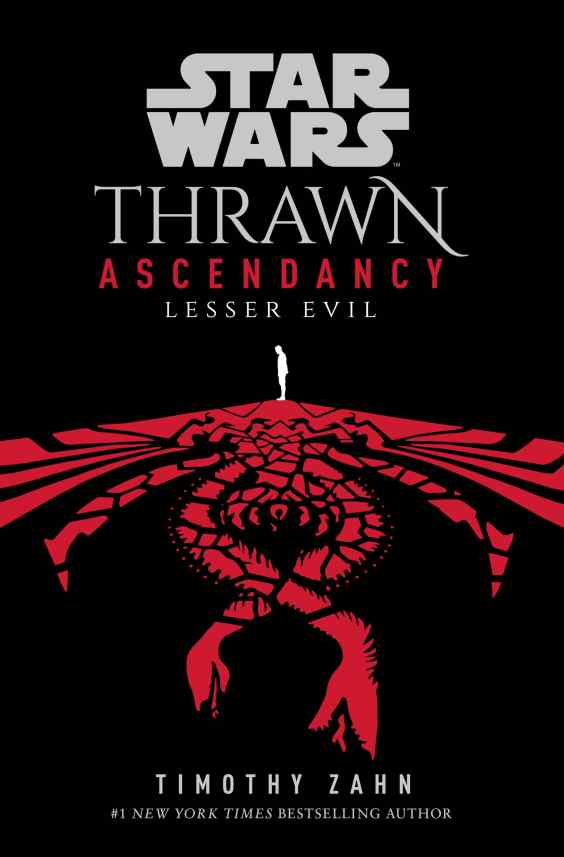
Star Wars: Thrawn Ascendancy: Lesser Evil by Timothy Zahn

Star Wars - Thrawn Ascendancy - Lesser Evil Cover

Publisher: Del Rey/Penguin Random House Audio (Audiobook – 16 November 2021)

Series: Thrawn Ascendancy – Book Three

Length: 23 hours and 13 minutes

My Rating: 5 out of 5 stars

Amazon

The undisputed master of Star Wars extended fiction, Timothy Zahn, returns with final book in the Thrawn Ascendancy series, Lesser Evil, which brings this excellent prequel trilogy to a fantastic and dramatic end.

Out of all the awesome authors who have contributed to the Star Wars extended universe over the years, few are more talented or highly regarded than Timothy Zahn.  Zahn, who is one of the key architects of the original extended universe (now rebranded as Star Wars Legends), is probably best known for his original trilogy of Star Wars novels, which started with Heir to the EmpireHeir to the Empire served as the introduction of several major extended universe characters, such as Mara Jade; however, his most iconic creation is probably the legendary character of Grand Admiral Thrawn.

Grand Admiral Thrawn is an intriguing and complex figure considered the greatest tactician in the entire Star Wars canon.  Serving as a major figure in the Imperial Navy, Thrawn was the brilliant antagonist of Heir to the Empire and other major Star Wars Legends novels.  The subsequent popularity of Thrawn saw him eventually introduced into the Disney canon in the Star Wars: Rebels animated series, as well as a future live-action appearance.  This also resulted in Zahn being contracted to write six new Thrawn-centric novels.  The Thrawn trilogy (made up of Thrawn, Alliances and Treason), detailed Thrawn’s introduction, rise and career in Imperial Navy and filled in some of the gaps of the show.  Zahn followed this up with the Thrawn Ascendancy trilogy, which served as a prequel to the original trilogy.

The Thrawn Ascendancy series is set during the Clone Wars period and takes place in the Chaos, the unexplored area of space outside of the main galaxy of the Star Wars series, and focuses on Thrawn’s species, the Chiss.  As such, the series is primarily set in and around the Chiss Ascendancy and focuses on several threats to the Ascendancy that Thrawn attempts to overcome.  This series has so far consisted of Chaos Rising and Greater Good, both of which were extremely cool, filled with detailed battles, fun new characters, and some intense political machinations.  Now this brilliant trilogy comes to an end, with a final chapter telling the full story of Thrawn’s greatest victory and lowest moment.

For thousands of years, the legendary Chiss Ascendancy has been one of the greatest powers within the Chaos, keeping its people safe from the alien races who seek to conquer or destroy them.  Confident in its own power and determined not to interfere in the lives of its neighbours, the Chiss maintain their borders through the Expansionary Defence Fleet.  However, in recent months, the Ascendancy has found itself under attack from a dangerous and manipulative force that seeks to utterly destroy the Chiss.  After defeating a potential external invader and weathering an attempt to drag some of the Ascendancy’s powerful families into conflict, the threat to the Chiss appears to be over.  However, these were merely a precursor to a much more sophisticated and dangerous attack by a new alien race, known as the Grysk.  Led by the dangerous and manipulative Jixtus, the Grysk seek to unleash a deadly, multi-pronged assault against the Chiss to rip the ascendancy apart inside and out.

As Jixtus traverses the planets of the Ascendancy, manipulating the great Chiss families towards civil war, his powerful fleet lies just outside its borders, waiting to attack.  With the Chiss getting closer and closer to a devastating internal and external conflict, the fate of the Ascendancy lies in the hands of Senior Captain Mitth’raw’nuruodo (Thrawn), the Chiss Expansionary Defence Fleet’s most brilliant and unconventional commander.  Having defeated the previous attacks on the Ascendancy, Thrawn is the only person that fully understands the oncoming danger and he is determined to stop Jixtus and permanently end the threat he represents.  However, Thrawn has long worn out the patience of the ruling families, and he now finds himself hamstrung by politics and personal grievances.  To save his people, Thrawn will be forced to break all the rules he has sworn to uphold.  But just how far will Thrawn go to defeat his enemy, and what consequences will his actions have on himself and the future of the Chiss Ascendancy?

Lesser Evil was another brilliant and exceptional read from Zahn that did an amazing job of wrapping the complex Thrawn Ascendancy series to an end.  Containing some awesome and unique Star Wars elements, Lesser Evil fills in all the gaps between this trilogy and the sequel Thrawn trilogy, and I think it ended up being one of Zahn’s strongest recent novels.

This novel contains an amazing narrative that brings together all the elaborate and compelling storylines from the previous Thrawn Ascendancy novels and provides a satisfying and fantastic conclusion to the trilogy.  The novel starts off right after the events of Greater Good, with several characters dealing with the aftermath of the near civil war and Thrawn’s latest unofficial mission.  The story quickly introduces the book’s antagonist, the master manipulator Jixtus, as he starts his grand plan to destroy the entire Chiss Ascendancy.  This brings out an impressive amount of intrigue, infighting and dissent, which forces many of the protagonists to attempt to slow it down.  At the same time, Thrawn engages in his own mission to try and identify the enemy’s master plan, which reintroduces several key storylines and settings from the previous novels and helps tie them into the plot of this book.  Zahn also throws in a series of flashback interludes that dive into key parts of Thrawn’s past and give some context to his current mindset and plans.  This all leads up to the big conclusion in which the great adversaries, Thrawn and Jixtus, finally meet in battle.  Lesser Evil proves to be a particularly exciting and intriguing read, and I loved the brilliant combination of world building, political intrigue, character development and fantastic battle sequences.  I had a lot of fun with this story, and it was one of the strongest in the entire Thrawn Ascendancy trilogy.

I really enjoyed how Zahn told this final entry in the series.  The great use of multiple character perspectives not only allows for a richer story that examines all angles of the conflict but it also presents several impressive character driven storylines that were wonderful to follow.  In addition, Zahn once again lays onto the universe building by expanding the reader’s knowledge of the alien Chiss Ascendancy and their domain outside of the main galaxy of the Star Wars universe.  This universe building excellently comes into play as the novel progresses, especially as the antagonist’s plan relies on manipulating the politics and history of the various ruling families.  I really appreciated this cool extended look into this intriguing setting, especially as it ties into some of Zahn’s prior work.  Due to the extensive and elaborate Star Wars lore contained within Lesser Evil, this book is probably best read by experienced fans of the franchise who will appreciate all the inclusions.  It is also highly recommended that readers check out the first two novels in this trilogy first, as the storylines of Lesser Evil are very strongly tied into them.

Lesser Evil contains some intriguing connections to the wider Star Wars universe and canon that long-term fans of the franchise will deeply appreciate.  These connections mainly revolve around Thrawn’s prior appearances and fills in many gaps that were left open from the Thrawn trilogy.  This includes the full reason why the original series began with Thrawn banished from his people and left stranded on an alien planet.  It has been pretty clear since the first Thrawn Ascendancy novel that this entire trilogy has been leading up to this moment, and Zahn did not disappoint, including a moving and complex reason for the banishment that played perfectly into the character’s personality and the events of the previous novels.  Zahn also layers in a ton of intriguing connections to his Star Wars Legends novels that fans will deeply enjoy.  For example, parts of Lesser Evil are deeply connected to Zhan’s previous novel, the now non-canon Outbound Flight, which also focused on a younger Thrawn.  Parts of Outbound Flight’s story and setting have been adapted into the Thrawn Ascendancy trilogy, such as some elements of Chiss culture and some supporting characters, and it was interesting to see Zahn retrofit his previous works for the new canon.  In addition, key flashbacks within Lesser Evil take place in a version of Outbound Flight’s narrative, and while I did think this was cool, Zahn did not include a lot of context, so readers unfamiliar with his prior book may be left a little confused.  Still, this was a clever homage to the author’s prior works, and I appreciated Zahn’s fascinating references to his now defunct novels.

One of the strongest things about Lesser Evil was the great array of characters featured throughout.  There is a very strong cast in this final book, with most of the key characters having been established in the previous Thrawn Ascendancy novels or re-introduced from some of Zahn’s Star Wars Legends novels.  All the major characters featured in Lesser Evil have some amazing story arcs and Zahn spends a lot of time fleshing out their personalities, motivations, and histories, which deeply enhances this brilliant narrative.

The most prominent of these characters is Thrawn himself, who has an epic showing in Lesser Evil after being somewhat underutilised in Greater Good. Lesser Evil proves to be a defining novel for Thrawn, especially as he encounters his true enemy, the Grysk, for the first time.  The reader is also given insights into certain previously unseen relationships that Thrawn had, namely with his adopted brother, Thrass.  It also finally reveals the reasons why he was banished from the Chiss and marooned on the deserted alien planet by the start of Thrawn.  I deeply enjoyed the cool character arc surrounding Thrawn in this book, and Zahn does a great job once again highlighting his unique personality and motivations.  Despite being a little less sinister in literary form than in Star Wars Rebels, Thrawn has a harsh edge here, and the reader gets some great insights into his constant motivation of protecting the Chiss Ascendancy.  Throughout the course of the book, it becomes deeply apparent that Thrawn will risk everything to achieve his goal, and I loved how heartless Thrawn can become when dealing with his enemies.  This motivation and background go a long way to exploring Thrawn’s actions while serving the Empire, and fans of this fantastic character will deeply appreciate this compelling story arc.  Zahn also answers several intriguing questions about Thrawn’s past in this book, and it proved incredibly fascinating to see this great character expanded even further.

I must once again highlight the great way in which Zahn displays his central protagonist.  As with his previous appearances in Zahn’s novels, Thrawn is one of the few characters whose perspective is not shown; instead all his actions and interactions are viewed through the eyes of his friends, allies, and even a couple of enemies.  I have always felt that this was a very clever technique from Zahn as it helps to highlight just how mysterious and distinctly complex his protagonist is.  Readers are only given glimpses into his brilliance, and it allows for increased suspense and surprise throughout the novel as the reader often has no idea what Thrawn is thinking or how he plans to get out of a certain situation.  The use of other observers also really helps to highlight the tactical ploys Thrawn employs, especially as he usually is forced to explain his insights, strategies, and the entire scope of his plans to the less tactically gifted people he is working with.  These elaborate explanations, coupled with the observations of the relevant side character, ensures that the readers get a much more detailed picture of Thrawn’s observations and subsequent tactics.  I have often compared this to how Watson amps up the deductive ability of Sherlock Holmes by having Sherlock explain everything to him, and the result is pretty much the same here.  I deeply enjoyed this fantastic use of perspective and I love everything that Zahn did with his iconic protagonist throughout Lesser Evil, and indeed the entire Thrawn Ascendancy series.

If Thrawn was Sherlock Holmes, then I would say that antagonist Jixtus was the Professor Moriarty of the Thrawn Ascendancy series.  A member of the mysterious Grysk species, Jixtus has been a shadowy figure throughout the proceeding novels, influencing events from the shadows and sending out proxies to fight Thrawn and the Chiss.  This comes to an end in Lesser Evil as Jixtus takes a personal hand in attacking the Chiss Ascendancy.  Jixtus proves to be an excellent and brilliant counterpoint to Thrawn and it is fascinating to see the battle of minds between them, especially as both have alternate strengths.  While Thrawn is tactically brilliant, Jixtus is better at personal manipulation and politics, something Thrawn struggles with.  As such, there is a real battle of styles here in Lesser Evil and the result is pretty brilliant.  I also really appreciated how you also never see any part of the book told from Jixtus’ perspective, ensuring that he is just as mysterious and ethereal as Thrawn.  I loved how Zahn portrays Jixtus in this novel; he comes across as an incredibly dangerous and malevolent being, even though you never see his face.

The other new character I wanted to focus on in this book was Thrass (Mitth’ras’safis), Thrawn’s friend and fellow member of the Mitth family.  Thrass is an interesting character, initially introduced in the previous canon as Thrawn’s brother.  There have only been hints of him in the Thrawn Ascendancy novels, and this final book finally features in him to a degree, showing him in a series of flashback interludes set in Thrawn’s past.  Thrass is shown to be a Mitth politician who finds himself befriending and then partnering with Thrawn through a series of adventures.  The two complement each other extremely well, with Thrass serving as a bridge for the more unconventional Thrawn, while also supporting him with his political knowledge.  Thrass’s scenes proved to be a great inclusion to the novel and I felt the author did a great job re-introducing the character, even if only for flashback sequences.  I really appreciated the author’s examination about how this friendship, and later brotherhood, was vital to Thrawn’s growth and current abilities, and I particularly enjoyed the examination about how Thrass helped develop Thrawn’s flair for the dramatic.  Fans of Zahn’s Legend’s work will deeply enjoy the new appearance of this established character in Lesser Evil, and I think it was an interesting and fun choice from the author, that ended up working incredibly well.

I must also highlight how Zahn featured the other recurring characters from the Thrawn Ascendancy series.  Pretty much all the major characters from the previous two novels are featured strongly in Lesser Evil, and there are some remarkably good storylines set around them.  Thrawn’s crew aboard the Springhawk get a decent amount of focus throughout this book, particularly Samakro, Thalias and Che’ri, and each of their storylines are nicely concluded.  In addition, I loved the continued use of Ziinda, another Senior Captain, who, after barely averting a civil war in the previous book, finds herself subsequently vilified and forced into a new family.  Ziinda proves to be a vital part of the plot, and it was great to see how much she had developed since the previous novel, especially as Zahn starts her on the path to becoming as determined as Thrawn.  Zahn also makes great use of Roscu, a former member of the Expansionary Defence Fleet who had issues with Thrawn in Chaos Rising. Roscu is initially set up as a secondary antagonist, especially as her mistrust of Thrawn, his friends, and all the rival families, drives her to do some stupid things.  However, Zahn slowly turns her into a surprisingly sympathetic character as the novel progresses and you end up really rooting for her.  I also loved Qilori, a supposedly neutral Pathfinder with a grudge against Thrawn; and Thurfian, the Mitth Patriarch who views Thrawn and his actions as a threat to his family and the Chiss as a whole.  These two serve as interesting secondary antagonists to the story, and it was great to see their outraged reaction to Thrawn’s actions, as well as their own attempts to end him.  These characters, and many more, added so much to this book, and I loved seeing all their arcs conclude with the trilogy.

I cannot talk about a Zahn Star Wars novel without highlighting the amazing and exciting space battles featured within.  No one does a space battle in Star Wars fiction better than Zahn, who devotes an impressive amount of time and detail into making them as impressive, thrilling, and tactically awesome as possible.  The reader gets a detailed mental impression of the space engagements that occur, and you can practically feel every shot, roll, or manoeuvre.  Lesser Evil was a particularly good example of this, featuring several great battle scenes, including one massive and action-packed confrontation towards the end.  Each sequence was beautifully rendered and perfectly portrayed, with the reader getting the full sense of everything that happened.  Throw in the distinctive technology of the Chiss, as well as the tactical abilities of Thrawn, and you have some of the most unique and brilliant battles in all of Star Wars fiction, especially as there is a great focus on larger cruisers and battleships, rather than smaller fighter craft.  I deeply enjoyed every battle sequence in this book, and fans of fights in space are in for a real treat here.

Unsurprisingly, I ended up checking out the audiobook version of Lesser Evil, rather than reading a psychical copy.  I cannot overemphasise just how amazing the Star Wars audiobooks are, thanks to their usual amazing combinations of impressive voice acting, clever sound effects and moving Star Wars music.  Lesser Evil is a great example of this, and I had a wonderful time getting through this brilliant audiobook, even with its extensive 23+ hours run time (it would rank 17th on the current version of My Longest Audiobook I Have Ever Listened To list).  I must once again highlight the cool sound effects that were utilised throughout the audiobook to great effect.  These effects, most of which have been taken from Star Wars films and animated shows, add so much depth and power to the audiobook’s scenes, building up a strong atmosphere around the words.  Sounds like blaster fire or roaring engines really help to bring the listeners into the centre of the book’s climatic scenes, while even smaller scenes get a boost thanks to having crowd noises or computer sounds lightly running in the background.  The audiobook also makes good use of the iconic Star Wars score in various parts.  While not featured as heavily as other Star Wars audiobooks, in several places the amazing orchestral music from the films is utilised to give some major scenes a dramatic punch.  This is particularly true in some of the battle sequences, and the listeners are treated to some of the more exciting or moving tunes, which makes the battles or major moments feel bigger and more important.

In addition to this great use of sound effects and epic Star Wars music, Lesser Evil’s audiobook also benefited immensely from the narration of Marc Thompson.  Thompson is an amazing narrator (one of my personal favourites), who has contributed his voice to a huge range of Star Wars novels, including all of Zahn’s previous Thrawn and Thrawn Ascendancy novels, and other audiobooks such as Scoundrels, Light of the Jedi, The Rising Storm, Dark Disciple and more.  Thompson has such a great range for Star Wars fiction, and he can produce some amazing and fitting voices for the various characters featured within.  Most of these voices are continuations of the ones used in the previous Thrawn Ascendancy novels, and I enjoyed the consistency from the previous two books.  I must also really highlight Thompson’s epic Thrawn voice, that perfectly captures the character’s essence, and which is incredibly close to Lars Mikkelsen’s voice from Star Wars: Rebels.  I also loved the voice that Thompson assigned to Jixtus, and the dark and sinister tones perfectly fit this awesome villain.  Thompson also cleverly modulated his voice for certain alien races to capture the unique characteristics Zahn assigned to them in his writing.  You really get a sense about how alien and strange these creatures are, which helped bring me into the zone.  This was another exceptional Star Wars audiobook, and this is easily the best way to enjoy this clever and impressive novel.

With the brilliant and captivating Lesser Evil, the legendary Timothy Zahn brings his awesome Thrawn Ascendancy trilogy to an end in a big way.  Loaded up with excellent universe building, an outstanding story, some excellent characters and some truly impressive space battles, Lesser Evil is probably the best entries in the entire Thrawn Ascendancy trilogy.  I loved how Zahn brought the trilogy’s various storylines together in this final novel, providing an exciting and captivating conclusion that perfectly leads into the original Thrawn trilogy.  Thanks to all of this and more, Lesser Evil gets a full five stars from me and comes extremely highly recommended, especially in its audiobook format.  I have had an incredible time reading the various Thrawn novels over the last few years and I really hope that Timothy Zahn continues to explore his iconic protagonist in the future, especially once Thrawn gets his long overdue live action debut.
Amazon

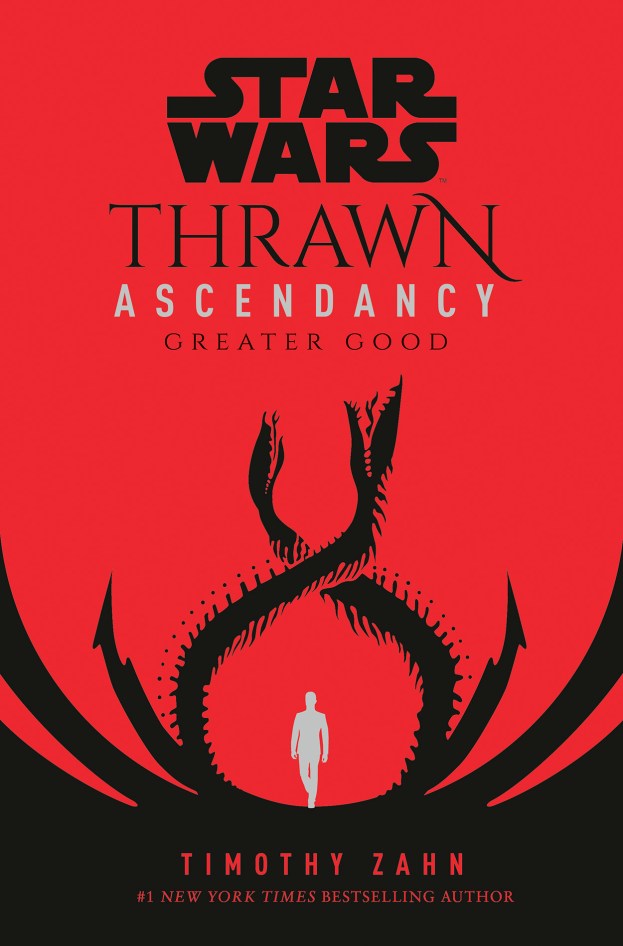
Star Wars: Thrawn Ascendancy: Greater Good by Timothy Zahn

Star Wars - Thrawn Ascendancy - Greater Good Cover

Publisher: Penguin Random House Audio (Audiobook – 27 April 2021)

Series: Thrawn Ascendancy – Book Two

Length: 16 hours and 17 minutes

My Rating: 4.75 out of 5

Amazon

One of the most impressive authors of Star Wars fiction in the world today, the legendary Timothy Zahn, returns with another epic entry in his Thrawn Ascendancy series, Greater Good, which continues to explore the early life of that awesome Star Wars character, Grand Admiral Thrawn.

Zahn is an outstanding author who has been writing Star Wars fiction since 1991, with the highly regarded Heir to the Empire.  Since then, Zahn has written several amazing Star Wars novels in both the current canon and the Star Wars Legends canon.  While I have not read all of Zahn’s Star Wars novels (yet!), the ones I have were all incredible and are some of my all-time favourite Star Wars novels (such as the awesome Star Wars: Scoundrels).  However, his most distinctive works have all surrounded the awesome character of Thrawn.

Grand Admiral Thrawn is an alien officer in the Imperial Navy, renowned for his amazing tactical knowledge, brilliance in battle and ability to discern insights about his opponents by observing their personality or culture, especially art.  Ever since his introduction in Heir to the Empire, Thrawn has been a firm favourite among the fans, so much so that he was one of the few characters from the Legends extended universe reintroduced in the new canon.  This reintroduction was done in the third season of the Star Wars: Rebels animated series, where he served as an impactful antagonist for the third and fourth season.  It also looks like Thrawn will also be getting a live-action appearance at some point in the future after his name was dropped in The Mandalorian, which is pretty damn exciting.

The character has been heavily featured in the current range of Star Wars novels, as Zahn was brought back in to write some exciting new Thrawn-based novels.  This started with a brand new Thrawn trilogy in 2017, made up of Thrawn, Alliances and Treason, which showed how Thrawn joined the Imperial Navy and his early career as an officer.  These novels were all incredible reads (Thrawn got a five-star review from me, and Treason was one of the best books I read in 2019), and I loved the character’s unique adventures.  Thrawn’s story was furthered expanded last year with Chaos Rising; the first novel in Zhan’s Thrawn Ascendancy series, which examines the character’s pre-Empire life.

While the armies of the Republic and the Separatists battle for supremacy in the Clone Wars, another deadly conflict is occurring beyond the bounds of known space.  Deep in the unexplored regions, known as the Chaos, the mighty Chiss Ascendancy have just defeated the forces of General Yiv the Benevolent, shattering his empire, the Nikardun Destiny, and bringing peace back to their territories.  As the Chiss Ascendancy returns to normal, they are unaware that they are still under attack from a malevolent and clever foe that is determined to finish off the Chiss once and for all.

On a Chiss agricultural planet, a group of peaceful and seemingly harmless aliens have arrived, seeking to temporarily make a home.  In addition to their good nature, kind hearts and unique spices, these aliens have also brought something of great value that many people will kill for.  As news of the alien’s resources spread, cracks begin to appear in the very foundation of the Ascendancy, as the various powerful families fight for supremacy.

With civil war on the horizon, the future of the Chiss Ascendancy may lay in the hands of the brilliant and infamous Senior Captain Mitth’raw’nuruodo of the Chiss Expansionary Defence Fleet.  Thrawn, who is personally responsible for the defeat of Yiv and the Nikardun, is currently investigating the origins of their attack on the Ascendancy and, in doing so, comes across a previously unknown planet destroyed by its own deadly civil war.  As Thrawn attempts to explore this new mystery, he soon finds himself in the midst of a dark conspiracy.  An unseen force is attempting to take control of the entire Chaos, and the Chiss are the greatest obstacle to their plot.  Hamstrung by politics, family ties and his own inability to see the deeper motivations of his fellow Chiss, can Thrawn stop the oncoming conflict before it is too late, or will the Chiss Ascendancy burn from the inside out?

Zahn has once again produced an exceptional and outstanding piece of Star Wars fiction that further explores the fantastic early adventures of his greatest creation.  Greater Good is an excellent middle novel in this cool trilogy, and readers will deeply enjoy this book’s blend of intricate storytelling, great characters and impressive universe-building.  All of this results in an exciting and compelling novel that quickly draws readers in and has absolutely no trouble keeping their attention.  I had an outstanding time getting through this great novel and I was able to power through its audiobook format in no time at all.

At the heart of this outstanding novel is a clever and addictive narrative that follows Thrawn and a bevy of supporting characters as the Chiss Ascendancy finds itself in danger from an indirect attack.  Greater Good follows on immediately after Chaos Rising, and examines the next stage of a compelling conspiracy against the Chiss, while also focusing on Thrawn’s battles during this period.  The author utilises a substantial number of alternate perspectives to tell a rich and varied story and, while Thrawn is the centre of much of the book’s plot, Zahn has widened the focus of the novel with several compelling storylines and characters.  These include an investigation into the origins of a Nikardun attack on a remote planet, several jaunts out into different parts of space, internal political conflicts that are a threat to Thrawn, and exciting encounters with other inhabitants of the Chaos.  There is also a substantial focus on a new plot to destroy the Chiss, which includes several compelling flashback sequences that examines the origins and initial planning of the conspiracy.  This use of flashback is pretty impressive, and while certain aspects of the antagonist’s storyline are a tad odd, it was still an interesting tale.  I really enjoyed the vast array of different storylines and character arcs that really highlighted the richness of the setting and the unique plotlines they could inspire.  While some of these storylines might seem rather disconnected at times, Zahn cleverly brings them together at the end of the novel, resulting in a very impressive and intriguing conclusion.

As with most of Zahn’s novels, Greater Good is loaded to the brim with Star Wars lore and intriguing universe-expanding ideas as the author dives deeper into the origins, culture and history of the Chiss Ascendancy.  Zahn really expands on what he introduced in his previous Thrawn and Thrawn Ascendancy novels, especially Chaos Rising, and highlights the proud Chiss warrior culture.  A vast amount of new information of the Ascendancy is featured within this latest book, and the reader gets a fascinating look at the planets, political makeup and social hierarchy of this race, especially at the family level.  Not only is this really intriguing, especially for those readers who have enjoyed Zahn’s previous additions to the Star Wars canon, but the author uses it extremely well within the plot.  Much of the main narrative, including the conspiracy that threatens to destroy the Chiss, is based on their family makeup and the accompanying politics and family mentalities that go along with that.  I felt that Zahn integrated this into the narrative extremely well, forcing the characters to navigate their unusual and insane politics in order to survive.

The author also expands the reader’s knowledge of the previously unexplored area of the Star Wars universe known as the Chaos.  The Chaos, thanks to certain celestial anomalies, is harder to navigate and transverse than regular space; it is a mess of isolated planets, unknown societies and new alien races.  Zahn introduces several new aliens throughout this novel, with each unusual race playing an interesting role in the overall story.  I love the unique Star Wars setting of the Chaos, especially as many of the established Star Wars rules and technology are not as present.  For example, the various warships have some different armaments and shielding, such as acid-filled missiles, resulting in some unique and previously unseen battle tactics.  It was also interesting to see the different takes on the Force that the inhabitants of the Chaos have come up with.  Without any Jedi present, the various races within the Chaos each have their own interpretations or uses for the Force, such as the Chiss Sky-Walkers, young children who can use the Force to help ships navigate the Chaos more effectively, and it was intriguing to encounter different views of this throughout Greater Good.  Hardcore Star Wars fans will enjoy the intriguing additions that Zahn makes to the expanded universe, and the final few pages hint at some major lore introductions occurring in the next Thrawn Ascendancy novel that I am rather curious about.

While this was a great book and piece of Star Wars fiction, I did feel that it required some pre-knowledge of Zahn’s prior works.  The narrative of Greater Good is heavily linked to the events of its preceding novel, Chaos Rising, and while the author does re-explain some of the elements or storylines, a lot of the plot does rather assume you read the first book.  Having greatly enjoyed Chaos Rising, I was able to follow this quite easily, but I could easily see some newer readers getting a little lost or overwhelmed in places.  In addition, parts of the Thrawn Ascendancy series are heavily linked to the events of the previous Thrawn trilogy, and certain references or comments might not make much sense unless you had already read these books.  As a result, I would suggest newer readers check out some of Zahn’s earlier novels first, although it is still possible to enjoy Greater Good without it.  Those readers who have enjoyed these prior books are definitely in for a great treat though and will find the deeper dive into the Chiss and Thrawn’s past to be really enjoyable.

I cannot review one of Zahn’s Thrawn-centric novels without talking about the awesome space battle sequences they contain.  Each of these awesome books features some impressive and detailed space battles as the protagonists encounter a range of ships and fleets that they must fight against.  Greater Good is a particularly good example of this, as Zahn has written several outstanding sequences that are attention-grabbing and fun.  The sheer level of detail and planning that Zahn puts into these action sequences is incredible, and you get an amazing sense of what is occurring during the battle as well as the associated tactics and plans.  The sequences involving Thrawn are easily the best, as Zahn goes out of his way to showcase the character’s tactical brilliance.  This results in some very elaborate sequences, as Thrawn quickly determines the weaknesses of his opponents and uses that knowledge to craft intricate and somewhat insane strategies to utterly defeat them.  Watching these plans come to fruition is always amazing, especially as the reader has no idea in advance what is going on in Thrawn’s mind.  Instead, you only get to see the brilliance and impact of his tactics at the same time as the other characters, and it is always a lot of fun seeing how Thrawn was able to come to his conclusions about his opponents and use them against him.  Zahn comes up with some outstanding sequences for Greater Good that are guaranteed to leave readers on the edge of their seats.

In addition to the awesome narrative, action and universe-building, Greater Good also features an awesome collection of characters, each of whom add so much to the novel.  Naturally, the most impressive character is Thrawn himself.  Even amongst his own people, Thrawn is a strange being who sees the world in a very unique way, and everyone he encounters is impressed by his tactical know-how and unnatural observational skills.  I always enjoy the way in which Zahn depicts Thrawn’s actions in the novel, as Thrawn is one of the few characters whose perspective we do not see.  Instead, Thrawn is only portrayed through the eyes of the major point-of-view characters who observe and react to his actions.  Not only does this remove the inherent difficulties in depicting Thrawn’s mind, but it really enhances the impacts of his deductions and subsequent reactions.  The observing characters view Thrawn making his moves or claiming some impossible bit of knowledge, and then slowly work out how he did it, either through their own observations or thanks to comments by Thrawn.  This is done in a similar manner to the classic Sherlock Holmes novels, with the supporting characters in Greater Good acting in the role of Watson to witness and be impressed by the protagonist’s intelligent leaps.  Like with Sherlock Holmes, the use of the outside narrator in Greater Good deeply enhances the impact of Thrawn’s action, resulting in some awesome scenes.

One of the intriguing aspects of Thrawn’s character in Greater Good that I appreciated was the way in which Zahn continued to highlight his character’s one major weakness: politics.  Thrawn has absolutely no concept of politics, family alliances or some of the inner conflicts impacting the Chiss, and as such is unable to defend himself or others against political ambitions or vindictiveness.  I always really enjoy this trait in the Thrawn novels, especially as it gives Thrawn a noticeable weakness, while also enhancing the impact his fellow supporting characters have, as all of them understand politics better and can help Thrawn in this arena.  This blindness to political realities is particularly important in Greater Good, as not only is Thrawn being attacked by politicians from within his own family but the main threat facing the Chiss is more political than militaristic in nature.  This results in a rather intriguing handicap for Thrawn throughout Greater Good, and it was cool to see the sort of plan that the character came up with to compensate for it, as well as the mistakes he then makes.  Overall, Thrawn is a pretty awesome and fascinating character to follow, and I cannot wait to see what events happen to him in the final book in the trilogy.

Aside from Thrawn, I also really enjoyed some of the supporting characters featured throughout Greater Good.  In addition to being perfect conduits to observing Thrawn’s actions, each of these characters have their own intriguing storylines, many of which are continuing from Chaos Rising.  Examples of this include Thrawn’s old friend, Admiral Ar’alani, Thrawn’s second in command Mid Captain Samakro, the former Sky-Walker Thalias, who has tied her fate with that of Thrawn, and the powerful Mitth family politician, Thurfian, who serves as a secondary antagonist.  Each of these characters is further developed in Greater Good, and I enjoyed some of the cool storylines that Zhan is coming up for them.  Thurfian’s storyline is particularly intriguing going into the next novel, as the final scenes hint that he is going to come into possession of some very interesting knowledge soon.

Zhan also introduces several great new characters throughout Greater Good, many of whose narratives are tied into the malevolent plot to destroy the Chiss.  I found myself quite intrigued by the character of Lakinda, a fellow Senior Captain in the Chiss Expansionary Defence Fleet, who serves alongside Thrawn.  Not only does Lakinda offer an intriguing alternate observation angle on Thrawn, tinged with a bit of jealously and mistrust, but this character provides greater insight into the Chiss family structure.  Lakinda is an extremely loyal member of a mid-tier Chiss family, and she often finds her loyalties conflicted as she attempts to choose between family and the fleet.  This results in some captivating and emotional sequences which really help to highlight the unusual nature of Chiss society.

I also quite liked how Zahn spends time following the main antagonist of Greater Good, the mysterious alien Haplif.  Haplif and his people have been hired by a mysterious third party to orchestrate chaos and dissent within the Chiss Ascendancy to destroy them.  As a result, he masterminds an ingenious plot to promote conflict between various members of the Ascendancy.  I really enjoyed the complex and clever plot that this character came up with, and it was really cool to see him manage to manipulate several people throughout the course of the book, and he was an interesting alternative to the previous antagonist, Yiv.  It was a little odd to see Haplif, a supposedly brilliant planner and master manipulator, find his plans constantly stymied by a spoiled teenager and a backwater rancher, but it was fun to see his arrogance work against him.  All of these characters are amazing, and I really appreciate the time and effort that Zahn put into developing them.

It will not surprise anyone that I ended up listening to this Star Wars novel’s audiobook format rather than seeking out a physical copy of the book.  I absolutely love Star Wars audiobooks, and this was another excellent example that comes highly recommended.  The Greater Good audiobook has a runtime of just over 16 hours, which, while substantial for a Star Wars novel, is extremely easy to get through, especially once you become engrossed in Zahn’s cool story.  Like most modern Star Wars audiobooks, Greater Good makes amazing use of the classic Star Wars sound effects and film score to enhance the story.  I particularly enjoyed its use in Greater Good’s various space combat sequences, and it really amps up how epic those scenes were.

The real standout of this audiobook was the outstanding narration by Marc Thompson.  Thompson is an experienced narrator of Star Wars fiction who, aside from contributing his voice to all the books in the Thrawn and Thrawn Ascendancy novels, has also narrated awesome audiobooks like Light of the Jedi, Doctor Aphra, Dooku: Jedi Lost, Dark Disciple and more.  Thompson does an incredible voice for Thrawn that is filled with the character’s control, intelligence, and gentle menace, and which is very, very close to how the character is portrayed in Star Wars: Rebels.  This amazing voice for Thrawn is easily one of the best parts of the audiobook, and it is fun to listen to the character lay out his elaborate strategies in Thompsons’s awesome tones.  Aside from Thrawn, Thompson also produces a great range of different voices for Greater Good’s supporting characters.  Each character gets their own distinctive voice, which matches their personality and physical qualities, and the listener is never in doubt about who is talking.  I also quite enjoyed how Zahn makes fun accommodations for the various different species featured within the audiobook, tailoring his voices to make them sound more alien at times.  Zahn also gives more rural accents to some of the Chiss characters featured in this novel who are from, or are located on more backwater planets, which I thought was a very nice touch.  All of these amazing features help to turn the Greater Good audiobook in an absolute treat for your ears, and it is an incredible way to enjoy this epic novel.

Thrawn Ascendancy: Greater Good is another exceptional piece of Star Wars fiction from Timothy Zahn.  Featuring his iconic and impressive creation, Grand Admiral Thrawn, Greater Good serves as an outstanding second entry in the Thrawn Ascendancy series, which charts the early life of this great character.  With a clever and exciting story, chock full of universe building, fantastic characters and some unique and memorable battle moments, Greater Good is an excellent novel that comes highly recommended.  I have so much love for Zahn’s Thrawn and Thrawn Ascendancy novels and, after really enjoying Greater Good, I am very excited to see how this series ends.  The final book in the Thrawn Ascendancy trilogy, Lesser Evil, is coming out in November 2021, and I cannot wait to get my hands on it.

Amazon

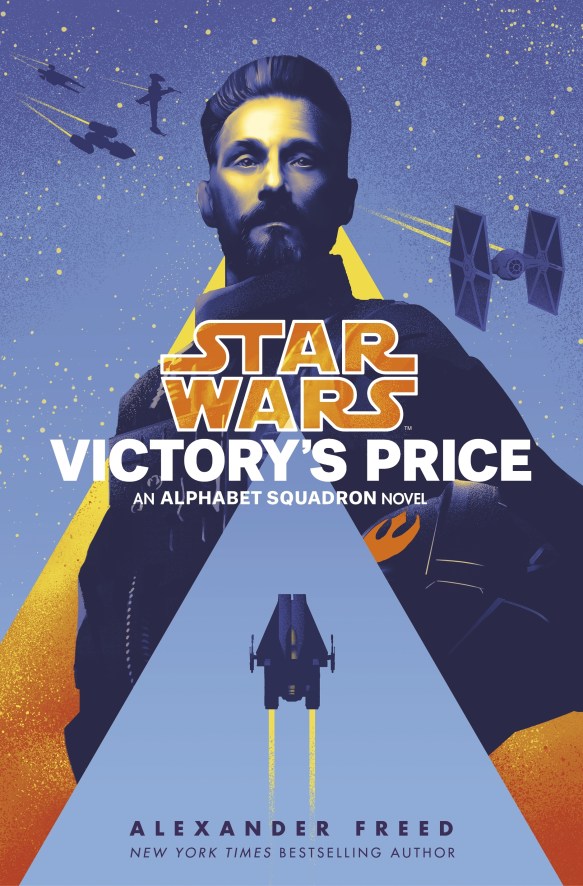
Star Wars: Victory’s Price by Alexander Freed

Star Wars - Victory's Price Cover

Publisher: Random House Audio (Audiobook – 2 March 2021)

Series: Star Wars: Alphabet Squadron – Book Three

Length: 16 hours and 19 minutes

My Rating: 5 out of 5 stars

Amazon

One of the best Star Wars tie-in series comes to an epic and impressive end, as Alexander Freed presents Star Wars: Victory’s Price, the amazing third and final entry in the awesome Alphabet Squadron trilogy.

Since its inception in 2014, the current Star Wars extended universe has featured an amazing range of novels that tie into the various movies and television series.  One of the best has been the Alphabet Squadron trilogy from acclaimed author Alexander Freed.  Alphabet Squadron is a particularly compelling trilogy that follows a fantastic group of mismatched Rebel and Imperial pilots who continue to fight in the aftermath of Return of the Jedi.  This series has so far featured two excellent entries: the great introductory novel Alphabet Squadron, and the outstanding second entry, Shadow Fall, both of which I have deeply enjoyed.  As a result, I have been looking forward to seeing how the series ends and I think that Freed has left the best to last with this epic and powerful read.

The Emperor and Darth Vader may be dead, and the second Death Star destroyed, but the war is far from over.  Nearly a year after the battle of Endor, conflict still reigns in the galaxy between the forces of the New Republic and the remnants of the Empire.  In nearly every battlefield, the Empire’s forces are in retreat and disarray, apart from the notorious pilots of the 204th Imperial Fighter Wing, better known as Shadow Wing.  Led by the dangerous Imperial TIE Fighter ace, Colonel Soran Keize, Shadow Wing continue to bring death and destruction to the Empire’s enemies, slipping away when their vile deeds are done.

However, despite their skills and strategies, Shadow Wing is in constant danger as New Republic forces, under the command of General Hera Syndulla, are pursuing them.  Syndulla is determined to end the threat of Shadow Wing utilising the ragtag pilots of the unique unit known as Alphabet Squadron, each of whom has a score to settle with Shadow Wing, to lead the fight against them.  However, the members of Alphabet Squadron, Wyl Lark, Chass na Chadic, Nath Tensent and Kairos, are still recovering from their last traumatic encounter with Shadow Wing on Cerberon, as well as the revelation that their former leader, Yrica Quell, was an active participant of Operation Cinder, the Emperor’s genocidal last order to destroy multiple disloyal planets.

As Hera and Alphabet Squadron attempt to find their prey, they begin to discover just how dangerous the cornered Shadow Wing has become, as their opponents begin to enact a new version of Operation Cinder.  Worse, Alphabet Squadron are shocked to discover that Yrica Quell is still alive and has re-joined her old comrades in Shadow Wing.  As the two forces engage in battle again, the loyalties of Alphabet Squadron will be tested like never before while Quell attempts to determine just whose side she is truly on.  The conflict will finally end above the skies of Jakku, as the Imperial and New Republic fleets engage in their final battle.  Can Alphabet Squadron finally put an end to the evils of Shadow Wing, or will Soran Keize’s master plan change the entire galaxy forever?

Now this is what all pieces of Star Wars fiction should be like.  Victory’s Price is an exceptional and impressive novel that had me hooked from the very beginning.  Not only does Freed do an amazing job of wrapping up the Alphabet Squadron trilogy but he also provides the reader with fantastic action sequences and some outstanding characters.  This is easily one of the best Star Wars novels I have read in ages and it gets a full five-star rating from me.

For this final book, Freed has come up with a powerful story set within the iconic Star Wars universe.  Starting right after the events of Shadow Fall, Victory’s Price sees the members of Alphabet Squadron separated and traumatised as their protracted and personal conflict with Shadow Wing begins.  This leads into a series of exciting encounters and battles in space as Alphabet Squadron pursues Shadow Wing during their latest mission, while the leader of Shadow Wing hatches a plan to end the war on his terms.  At the same time, each of the characters attempts to deal with issues or distress raised in the previous novels, whether it be Quell’s conflicted loyalties or Chass’s post-fight trauma.  All of this leads to some epic and impressive final confrontations as the two sides meet for the very last time.  This was an extremely good character-driven read, and I loved the very cool way that Freed finished off this amazing series.

While it is an amazing Star Wars novel, Freed focuses more on the war part of the book, turning this into a gritty story of survival, loyalty and conflict, which makes for a powerful piece of fiction.  While obviously best enjoyed by those readers familiar with the rest of the series, Victory’s Price is a very accessible novel which new readers can follow without any trouble.  Thanks to the awesome use of multiple character perspectives, Victory’s Price has an excellent flow to it, and the readers are supplied with clever twists, cool action sequences and impressive character moments as the protagonists come to terms with their place in the universe and the constant fighting.  This ended up being quite an intense tale of war and life, which not only perfectly wrapped up the Alphabet Squadron series but which also had me engrossed from the very minute I started reading it.

One of the major things that I liked about this book was the way in which it added to the Star Wars expanded universe.  This series has always done a cool job of exploring what happened after Return of the Jedi, and it is always interesting and somewhat more realistic to see that the war did not end as soon as the Emperor died.  However Freed has painted this period as a particularly dark and deadly part of the war, and I love seeing how he envisioned what happened to members of the New Republic and Empire after Endor.  Victory’s Price focuses on the very end of the civil war, showing another side of the events that lead up to the battle of Jakku and fitting its original characters into this conflict.  This is a cool part of the book, and I loved seeing another version of the epic battle of Jakku, a major conflict that has been featured in several other novels and pieces of fiction.  Freed also takes the time to explore and answer several other intriguing questions, such as the mystery behind the Emperor’s messengers, the creepy red-clad droids who project holograms of the Emperor’s face, which sought out various Imperial commanders after Endor and ordered the various genocides of Operation Cinder.  The solution surrounding the messengers ends up being rather intriguing, and there are even some clever parallels to World War II in there.  Due to the intriguing elements of Star Wars lore featured within, Victory’s Price, like the rest of the Alphabet Squadron series, will probably be enjoyed most by major fans of the franchise, but there are a lot of compelling elements that readers of all knowledge bases will appreciate.  This was truly an exceptional piece of Star Wars fiction and I cannot wait to see what Freed adds to the canon next time.

I really must highlight the outstanding action scenes that Freed came up with for this book.  I am a man who likes his Star War’s action, and I have to say that Victory’s Price has some of the best sequences that I have ever had the pleasure of enjoying.  Due to the novel’s focus on fighter pilots, there are naturally a huge number of amazing combat scenes as the rival pilots engage in complex battles in space.  Freed has saved the best for last in this final Alphabet Squadron novel, as the opposing pilots find themselves fighting in a range of unique situations.  The battle scenes are extremely well crafted, filled with elaborate details and fantastic depictions of complex manoeuvres and clever tactics that are guaranteed to keep you on the edge of your seat with their intense action.  They are also quite emotionally rich, as you witness your favourite characters constantly face near-death experiences in this final entry in the series.  Highlights of these great battle sequences included two fantastic duels between the protagonists and the leader of Shadow Wing, which sees some fancy flying between some of the most skilled pilots in the series in some very distinctive landscapes.  I also really loved the final, elaborate battle set above Jakku, which proved to be a major part of the second half of the book.  Not only do you get the desperate and packed main conflict between the entire New Republic and Imperial fleets, which features destruction and death in every direction, but you also get a more private and quiet final battle between a group of Alphabet Squadron led New Republic fighters and Shadow Wing.  This smaller pitched battle between the two sides fits perfectly into the midst of the wider conflict and is filled with personal turmoil and antagonism as these two rival squadrons meet for a final time.  All these battles come out as being extremely epic and powerful, and I loved every second of the gritty and deadly fights they contained.

While I have a lot of love for Victory’s Price’s epic story, intense action, and clever Star Wars connections, easily the best thing about this book are the complex and well-written characters.  Each of the major characters featured in Victory’s Price have been introduced in the previous Alphabet Squadron novels with some complex and powerful storylines.  In Victory’s Price, all these great arcs reach a climax as the characters meet their final destiny and their stories comes to an end.  I really enjoyed the satisfying conclusions that Freed came up with for his outstanding characters, although in many ways it was sad to see their stories finish.  Still, I really appreciated all the great character arcs contained in this final novel, and Freed ensures they go through the emotional wringer before they go.

At the forefront of these outstanding characters are the five members of Alphabet Squadron who have served as the focal point for the entire series.  The pilots in Alphabet Squadron, so named for their use of a different Rebel Alliance fighter (A-Wing, X-Wing, B-Wing, U-Wing and Y-Wing), are layered and complex individuals, each of whom has experienced their own trauma or betrayal throughout the course of the lengthy war.  All five of these original characters have gone through significant development throughout the course of the previous two novels, and Freed does an exceptional job continuing their journeys in this final book.

The main protagonist of this series is Yrica Quell, a former member of Shadow Wing, who joined Alphabet Squadron in the first novel to help neutralise her former Imperial comrades.  However, it was eventually revealed that Quell, despite claiming she defected from the Empire after refusing to participate in Operation Cinder, aided in the destruction of a planet.  This revelation caused a massive rift in her relationship with the rest of Alphabet Squadron, and she ended up reuniting with Shadow Wing at the end of the second novel.  In this final book, it is revealed that Quell has infiltrated Shadow Wing to bring them down from the inside.  However, upon spending time with her Imperial comrades, she begins to experience doubts about her plan, especially as she sees that the Imperials are just as damaged by the war as she and the New Republic pilots are.  Her plans are further complicated due to her relationship with the leader of Shadow Wing, Soran Keize, her former mentor and the person who initially convinced her to defect to the New Republic.  Quell still has an immense amount of respect for Keize, and strongly believes in several of his plans.  This re-remembered loyalty to Shadow Wing strongly conflicts with her friendships with Alphabet Squadron and the guilt she feels for her role in Operation Cinder, placing Quell in a major quandary for most of the book.  This uncertainty and inner conflict is a really clever part of Quell’s story, and the reader is deeply impacted by her struggle and conflicted loyalties.  This was easily one of the best and most powerful character arcs in Victory’s Price and I really appreciated the outstanding character story that Freed set around Quell.

Victory’s Price also spends a significant amount of time following Quell’s fellow Alphabet Squadron members, Wyl Lark and Chass na Chadic, both of whom have compelling arcs that highlight different aspects of warring soldiers.  Wyl Lark is the young, optimistic member of the squadron who took over leadership at the end of the second novel.  Lark has developed a significant amount throughout the course of this series, and it is great to see him come into his own as a leader and pilot.  However, despite his apparent ease at the role, Lark is plagued by doubts and concerns about the morality of this fight, especially as it conflicts with some of the teachings of his race.  He spends a great deal of this final book coming to terms with his morals, and even attempts to once again contact the members of Shadow Wing to try and find some common ground or a way to end the conflict.  His actions go a long way to humanising the antagonists of the novel and his hope is a refreshing beacon of light in this darker Star Wars book.  I deeply enjoyed seeing the way in which Lark attempts to change the outcome of the war his way, and it was a fascinating addition to the story.

Chass, on the other hand, is easily the most damaged character in the entire series.  A music-loving veteran pilot who is more afraid of the end of the war and her inevitable slide into irrelevance and despair than her own death, Chass has always been on edge throughout the series.  However, in Victory’s Price, Chass is even more traumatised, especially after learning of the betrayal of her love interest, Quell (which is an intriguing LGBT+ relationship for a Star Wars novel) and has since turned to the teachings of a cult to gain some clarity.  Despite this, Chass is still driven by her anger and her rage and is constantly lashing out at everyone around her, with her death wish a constant anchor around her neck.  Freed has written a complex and moving story around Chass and her suffering, and I deeply appreciate the portrayal of her as a troubled veteran.  I think that Chass’s story comes to a fantastic end in this final novel, especially as she gets closure with several important people in her life.  Both characters are incredibly well written and are fantastic examples of Freed’s exceptional writing ability.

Next up are the final two Alphabet Squadron pilots, Nath Tensent and Kairos.  While both characters have been somewhat overshadowed throughout the series, Freed has developed some intriguing storylines around them which come full circle perfectly in this final novel.  Nath Tensent, a pilot who served both the Empire and the Rebels during the war, has an enjoyable and likeable personality and is the sort of guy who quickly becomes everyone’s best friend.  However, despite the easygoing façade he projects to the world, even Nath is feeling the effects of the war and the constant worry and responsibility is getting to him.  This is particularly exacerbated in Victory’s Price when he becomes a decorated military hero with greater responsibilities and is forced to balance his own selfish goals with the lives of people who look up to him, as well as his very strong concerns for Wyl Lark.  This results in a particularly clever and enjoyable arc, and it was great to see him finally take some responsibility in this war.  I liked the way in which Freed ended Nath’s storyline, especially as it potentially opens another series in the future.

The final member of the squadron is the mysterious Kairos, an alien of unknown origin with a strong hatred for the Empire and terrifying combat skills.  Despite her intriguing introduction in Alphabet Squadron, Kairos was somewhat left out of the second book after receiving an injury.  However, this is more than rectified in Victory’s Price, as Kairos is featured more prominently and we finally get to see some of her backstory.  Freed comes up with quite the intriguing, if tragic, story for Kairos, and it was fascinating to see her unique alien beliefs and culture, as well as a powerful story of renewal and redemption that accompanies her.  Kairos becomes quite close to two characters in this book, especially after the closest people in her life died in the previous novel, and it was great to see her finally connect, even if only for a short while.  Freed did a fantastic job setting up Kairos’ story in the previous two novels, and I personally loved finally getting some answers regarding this curious character’s identity.

Aside from the members of Alphabet Squadron, several other characters are also shown in great prominence throughout this book.  The one I liked the most was Hera Syndulla, the New Republic general commanding Alphabet Squadron.  Hera is one of the few characters in this novel who Freed did not come up with, as Hera originated in the Star Wars: Rebels animated series and serves as a bridging character to the larger franchise.  Due to how much I love Star Wars: Rebels, I have really enjoyed seeing more of Hera in this series, not only because I am very curious about her post-Rebels life but because she also serves as a great mentor character to the members of Alphabet Squadron.  Hera features a lot more prominently in this final novel and her perspectives are shown nearly as much as the members of Alphabet Squadron.  This extra perspective really added a lot to the story as a whole and I personally really enjoyed seeing Hera take charge and attempt to hunt down Shadow Wing, while also attempting to determine the course of the entire war.  I also really enjoyed the fact that this book shows Hera’s role in the battle of Jakku, which as the largest space battle in the entire civil war, you had to assume she would be a part of.  Hera is naturally a bit of a badass in this battle, as you would expect, and I appreciated that Freed featured more of her in this novel.

The other major character featured within Victory’s Price is Colonel Soran Keize.  Keize is a fantastically complex character who serves as the leader of Shadow Wing and Quell’s Imperial mentor.  Despite nominally being the antagonist of this book, Keize is portrayed as a more of a tragic and misunderstood figure, one who is sick of war and who only has the best concerns of his men at heart.  As a result, Keize is running his own game throughout Victory’s Price and works to get the best result for the members of Shadow Wing.  His convictions, sense of honour and understandable motivations make him a hard character to dislike, and his role in mentoring Quell ensures that she is extremely conflicted when it comes to betraying him.  Keize is also probably the best pilot in this entire series, as he is regarded as the Empire’s ace of aces, and Victory’s Price is where you get to see him soar as he engages in several great battles and duels.  Thanks to this, and his curious character development, Keize is a great character to follow, and I really enjoyed the unique tale Freed told through him.

Freed also focuses on some of the other pilots on both the New Republic and Imperial sides.  This results in a great combination of complex side or minor characters, each of whom have their own reasons for fighting in the war.  Freed attempts to show that, despite fighting on different sides of the war, these characters really are not that different.  Instead, all of them are soldiers, with several similarities, including their own trauma, PTSD and issues with the war that they are fighting in.  I think it is a testament to Freed’s writing ability that he was able to get me to care about members of the Imperial navy, and it was pretty spectacular the way in which he attempted to show the humanity buried deep within them.  It does mean that the action sequences more emotionally loaded and potentially devastating as you end up not wanting to see some of the pilots dying, but I really appreciated the way in which Freed took the time to explore these compelling side characters.

While I have previously enjoyed the first two Alphabet Squadron novels in their paperback format, circumstances required me to check out Victory’s Price as an audiobook instead, which was pretty damn awesome.  Not only did Victory’s Price feature the usual blend of iconic sound effects and music that makes all Star Wars audiobooks such a treat to enjoy, but I found that the story flowed incredibly well in this format.  With a lengthy runtime of 16 hours and 19 minutes, I absolutely blasted through this book as I became so engrossed in the awesome story and the way in which it was performed as an audiobook.  I also thought that the use of the iconic Star Wars music in the Victory’s Price was particularly impressive, and not only did the music make several of the extended space battle sequences even more epic, but they also really highlighted some of the most emotional scenes in the book and made them strike my soul even more emphatically.  I also really enjoyed the amazing narration from January LaVoy, who has previously provided her voice to the other Alphabet Squadron books.  LaVoy is a particularly skilled narrator whose work on the Star Trek: Discovery tie-in novel, Die Standing, I really enjoyed.  Not only does LaVoy present the awesome details of Victory’s Price in a quick and exciting manner, making each of the action scenes sound particularly cool, but she also provides some great voices for the various characters.  Each of the main characters gets a unique voice which fits them perfectly and which really helps the listener get to grips with their personalities and inner thoughts.  While all of the character’s voices were done extremely well, the best voice that LaVoy did was probably Hera Syndulla’s, which sounded extremely close to the character’s voice in the Star Wars Rebels animated series.  All of this helps to make Victory’s Price’s audiobook an immensely enjoyable experience and I would highly recommend this format to anyone and everyone.

Star Wars: Victory’s Price is an exceptional and powerful novel from Alexander Freed that is one of the best books I have so far read in 2021.  Featuring a dark and gritty war story set during a fascinating period of Star Wars history, Victory’s Price perfectly wraps up the impressive Alphabet Squadron trilogy while also providing some cathartic conclusions to outstanding character arcs that Freed has built up during the previous book.  I absolutely loved this final novel (hence the massive review), and I think that this was probably the best entry in the entire series.  A highly recommended read, especially if you have already enjoyed the rest of the trilogy, this was a truly epic Star Wars novel.

Amazon

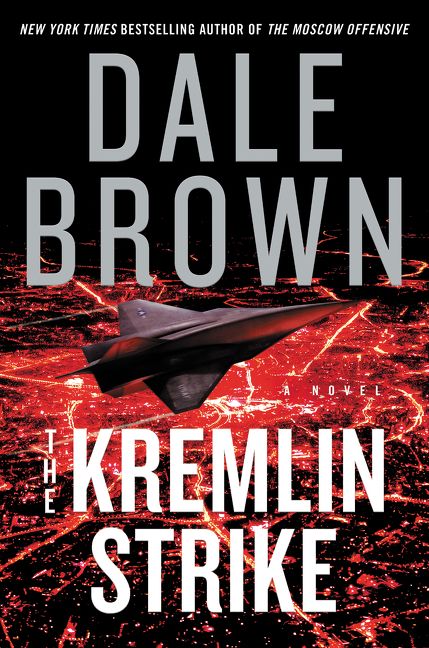
The Kremlin Strike by Dale Brown – Audiobook Review

The Kremlin Strike Cover

Publisher: HarperAudio (7 May 2019)

Series: Patrick McLanahan series – Book 23

Length: 13 hours and 18 minutes

My Rating: 4.5 out of 5 stars

Amazon     Book Depository

Bestselling author Dale Brown, perhaps one of the best current writers of military thrillers in the world today, returns with another exciting instalment of his Patrick McLanahan series, which takes America’s battle with Russia up into high orbit.

Following the recent defeat of his deadly combat robots in Texas, Russian President Geenadiy Gryzlov is desperate to strike back against the hated Americans. However, he no longer faces the inept US administration he enjoyed over the last couple of years. Instead, his failed attack on America has resulted in the election of a strong new president, John Dalton Farrell. With Farrell once again backing the innovative and resourceful private companies of former US President Kevin Martindale and former general Patrick McLanahan, Sky Masters and Scion Aviation International, America’s future looks bright. One of Farrell’s first priorities is the immediate resumption of America’s research into space flight and defence, resulting in Iron Wolf Squadron members Brad McLanahan and Nadia Roz being recruited by Sky Masters to head up their revamped space initiative.

However, the Americans are not the only ones with an eye to space. Knowing that Russia’s future world dominance depends on controlling the stars, Gryzlov has ordered the construction of a high-tech space station, Mars 1. Armed with devastating plasma weapons capable of shooting down every US satellite orbiting the planet as well as missile launchers that can rain down fire anywhere on the world, Mars 1 is an absolute game changer that will ensure Gryzlov finally achieves victory over the United States.

America’s only hope once again rests in the hands of the men of Sky Masters and Scion. As the Scion operatives attempt to determine a weakness in Mars 1’s defences, Sky Masters have created a number of advanced space planes and weapons that will allow Brad and Nadia to take the fight to the Russians in space. Will this new equipment be enough, or will Russia’s grip on high orbit propel them to a final, devastating victory?

Brown has been one of the best and most prolific authors of military fiction for over 30 years, having written 29 military thrillers in this period, as well as co-writing 18 books in the Dreamland series with Jim DeFelice. I only recently got into Brown’s books last year, when I read his 2018 release, The Moscow Offensive. After being drawn in by the promise of advanced military robots fighting it out in the American heartland, I fell in love with the awesome plot, intense action and analyses of real-world political strife, and as a result, The Kremlin Strike was one of the military thrillers I was looking forward to the most this year. The Kremlin Strike is the 23rd book in Brown’s Patrick McLanahan series, which follows the titular character and his allies as they attempt to keep America safe from a series of high-tech military threats. This book could also be considered to be sixth book in the Brad McLanahan series, as the overarching plot of the series started to focus more on Patrick’s son, Brad, in Tiger’s Claw, especially after Patrick McLanahan’s supposed death.

I absolutely loved the central concept of The Kremlin Strike, which looks at the potential of Earth’s high orbit to host the next major military conflicts that we see. This is not a new focus for Brown, as some of his previous books in this series, including Executive Intent and Starfire, have looked at the potential of space-born weapons. Before the story even starts, Brown makes it clear that he believes the United States needs to focus more on the possibility of a future war in space, and even includes some real-world news excerpts that look at recent advances in military technology that can be used to fight battles in space or destroy satellites orbiting the planet.

Based on this, Brown is able to come up with an incredibly intriguing military thriller that looks at the battles that could occur in the near future. I found it absolutely fascinating to see the author’s theories about how space warfare could be conducted, and the tactical advantages of having control of Earth’s orbit. While some of the technology in featured in the story, such as the Cybernetic Infantry Devices, are probably more advanced than what Russia or America can currently use (probably), Brown does examine a number of weapons and vehicles that are currently being tested in space. The various laser weapons, plasma launchers (OK, these are slightly less likely), missiles and other cool weapons or technology used in the battle in space make for some interesting reading. There were also some intriguing looks at the various limitations or downsides of the space technologies featured in this book, such as energy issues, fuel consumption or the gravitational backlash some weapons may experience. I especially liked how Brown was able to capture a more accurate view of space combat, with invisible laser beams rather than the colourful blasts you see in most science fiction movies.

All of the focus on combat in space is a superb basis for a story, and Brown backs that up with some first-rate storytelling to make this an outstanding read. The Kremlin Strike was an excellent blend of action, advanced technology and spy fiction that also has some intriguing mirrors to current world politics. The author tells the story from a range of different character perspectives, allowing for a widespread story that works incredibly well. I especially liked seeing the opposing views of the protagonists and antagonists, as it allowed the reader to see multiple sides of the overall conflict. For example, the reader gets to see the Russians plan their moves, and then you get to see the American countermoves. This view of the different sides of the conflict also works because neither the Americans nor the Russians have a solid idea of what the other side is planning. The reader is the only person who knows what is going on in both camps, and it is really fun to see the opponents slowly work out each other’s tactics during the course of the narrative, and then panic when they realise what their enemy is planning.

In addition to the combat in space, Brown also displays his detailed knowledge of modern warfare and military throughout the course of The Kremlin Strike. There are a huge number of scenes where modern military technology, techniques, strategies or standard operating procedures are featured, all topped off with a good helping of military terminology and acronyms. Brown utilises all of these extremely well, and there is nothing too overwhelming for readers who have a low understanding of the relevant jargon. All the action in this book is written incredibly well, and it was just plain thrilling to see some of the battles in the sky or in space take place. There were also some cool espionage sequences thrown in throughout the story as well, emphasising the benefit of human intelligence in current conflicts. All of these various aspects come together into a wonderful military thriller narrative, which proved extremely hard to stop listening to.

Another part of The Kremlin Strike that I enjoyed was the use of the fantastic prime antagonist, Russian President Geenadiy Gryzlov. Gryzlov has been a key villain in the last few books of the Patrick McLanahan series, and his angry, vindictive nature and his sheer inability to admit his own mistake makes him an amazingly easy character to dislike. I always find that a great antagonist can add so much to a story, and this is especially true in this book, where you can’t help but root for the protagonists and enjoy when the antagonist’s plots come to naught. You also cannot help but feel sorry at times for Gryzlov’s subordinates, who are forced to obey his wild orders, despite knowing that they will be punished when they fail. I really enjoyed a fun story development that occurs around this character in The Kremlin Strike, which I thought that Brown planned out very well, and which was one of my favourite highlights of this book.

While I absolutely loved The Kremlin Strike, the author has included a few right-wing political issues that might not be appealing to every reader. Right at the start of the book, Brown is very supportive about recent decision by the current US administration to form a specific armed force for space warfare, and this book examines the necessity of such a force. In addition, if you read between the lines a little, the US president in The Kremlin Strike, Farrell, could be a partial stand in for the current real-life United States president, while the previous incompetent president, Stacy Anne Barbeau, could be seen to represent this president’s real-life opponent at the 2016 election. Farrell is a political outsider, disliked by the media, whose tough talk and determination to cut through the bureaucracy of Washington (drain the swamp, if you will), won the support of the American people. The book’s apparent support of the current US president and some of his controversial decisions may be off-putting to some readers, although I do not believe that it harmed the entertainment value of the story. I personally found it interesting that in this scenario Brown once again painted Russia as America’s greatest enemy, which is something the current US president appears extremely reluctant to do, although perhaps I am reading into this too much.

I ended up listening to the audiobook version of The Kremlin Strike, which is narrated by William Dufris. The audiobook version of this book runs for a moderate 13 hours and 18 minutes, and I found it to be a great way to enjoy this exciting and detailed military thriller. Having only read Brown’s work before, I felt that having the audiobook book version playing in my ear helped ramp up the action sequences as well as increase the sense of urgency of the events occurring in the book. Dufris is also an excellent narrator, coming up with a huge number of great voices for the various characters that make up the cast of this book. The voices he attributed to these characters were really good and captured their personalities extremely well, such as, for example, the anger, ruthlessness and paranoia exhibited by Gryzlov. Dufris also did a good job with the character accents, continuing utilising a number of Russian accents throughout the book, as well as accents from other Eastern European countries such as Poland. I really enjoyed listening to the audiobook version of The Kremlin Strike and I think I will check out this format for any future books in the Patrick McLanahan series.

In this latest book in his long running Patrick McLanahan series, Dale Brown has once again created a first-class military thriller that is an absolute treat to read. The author’s focus on the future conflicts that may occur in our planet’s orbit were extremely fascinating, and the story created around it was a captivating and electrifying read. Easily accessible to those readers who have not previously had the pleasure of reading the Patrick McLanahan series before, The Kremlin Strike was a deeply enjoyable book, and a must for all fans of both the science fiction and military thriller genres.

Amazon     Book Depository