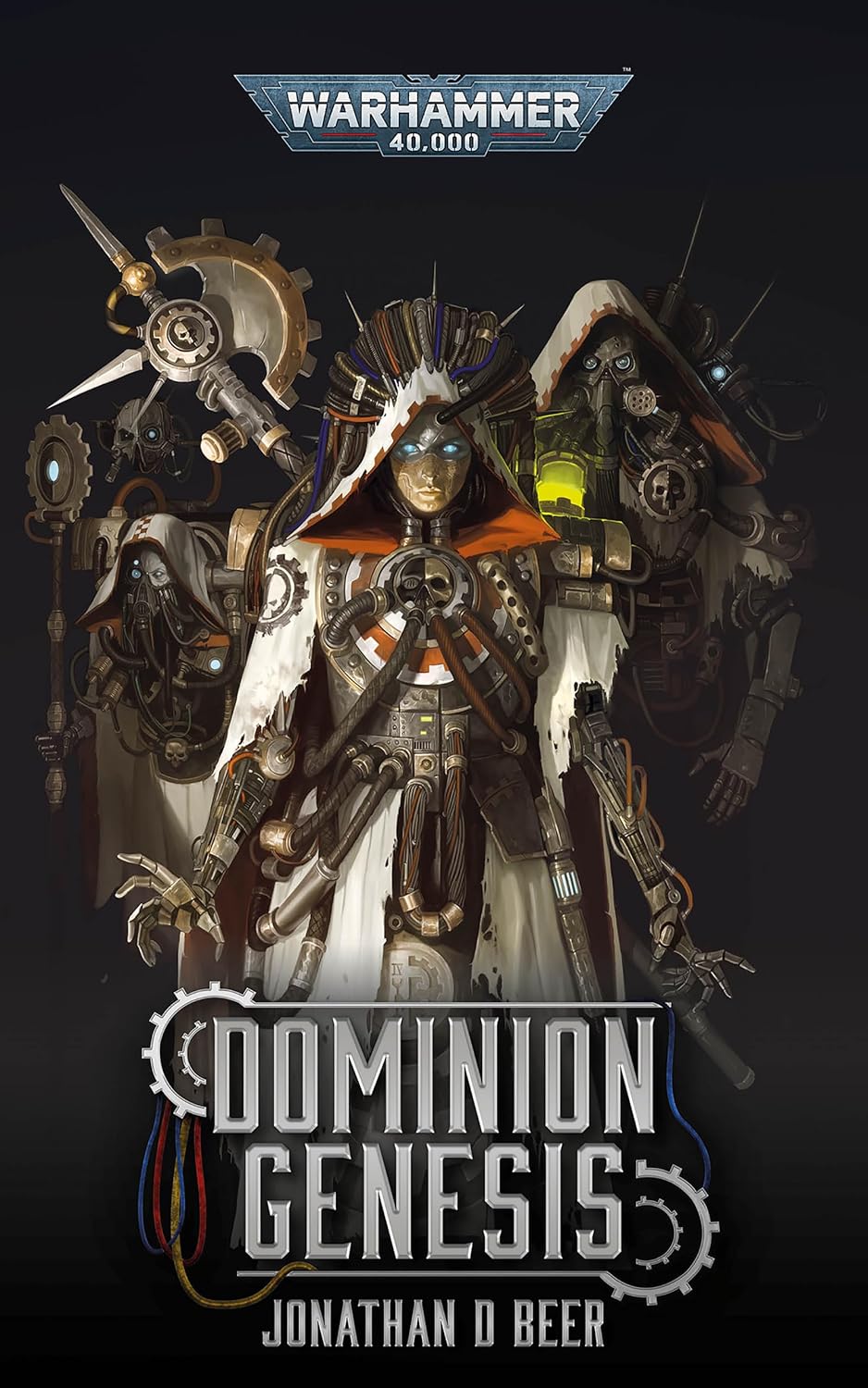
Warhammer 40,000: Dominion Genesis by Jonathan D. Beer

Publisher: Black Library (Audiobook – 21 September 2024)

Series: Warhammer 40,000

Length: 10 hours and 47 minutes

My Rating: 4.5 out of 5 stars

Amazon

Destitute tech-priests of the Adeptus Mechanicus embark on a massive quest for redemption in the excellent 2024 Warhammer 40,000 novel, Dominion Genesis by Jonathan D. Beer.

Beer is a talented rising author in the Warhammer 40,000 fiction space who has so far impressed with two interesting books covering unique spheres of the fandom’s canon.  I deeply enjoyed his first novel, The King of the Spoil, which was a particularly epic entry in the Warhammer Crime sub-series, and which ended up being one of my favourite debuts of 2023.  Beer followed up this debut last year with his second novel, Dominion Genesis, an intriguing read that takes place in a very different Warhammer 40,000 setting.  I had an excellent time with Dominion Genesis, although I spectacularly failed to write a review for it last year.  However, with Beer’s third Warhammer 40,000 novel just released, I felt that this was a good time to finally write something about Dominion Genesis, which honestly was an awesome read.

Plot Synopsis:

Gryphonne IV is dead – one of the mightiest forge worlds in the arsenal of the Adeptus Mechanicus, succumbed to the relentless hunger of Hive Fleet Leviathan. Devoured. Lost.

The few magi that survive drift in idleness, robbed of purpose and direction. But there is one who rejects that fate.

READ IT BECAUSE
It’s the gripping tale of an Explorator desperately seeking ancient technologies from humanity’s past as she races against time to restore one of the mightiest forge worlds in the Imperium.

THE STORY
Explorator Talin Sherax seeks ancient and miraculous technologies from humanity’s distant past. When she learns of a fabled relic that could restore all that has been lost, Sherax embarks on a journey, the outcome of which could change everything. Nothing will stand in her way… even if the quest brings her to the brink of heresy.

Dominion Genesis was a particularly intense and compelling entry in the Warhammer 40,000 canon that proves quite enthralling to read.  I like how Beer managed to achieve quite a few things with this book, as he produced an excellent quest narrative with a focus on obsession, trauma and survival, while also cleverly showcasing several different factions of the Warhammer 40,000 universe.

Beer came up with a very awesome story that hits a lot of highly emotional story notes early on.  The start of Dominion Genesis was one of the more striking sequences of Warhammer fiction I have read, as the protagonist, Explorator Talin Sherax, is forced to witness the destruction of their home world.  Moving quickly into a time skip, you see a very different version of Sherax several years in the future, as she still attempts to make sense of the destruction while searching for valuable lost technology.  After a great sequence aboard a derelict spacehulk, Sherax finds a clue about a potential artifact that could help to restore her planet.  Going against the orders of her superiors, Sherax leads a crew of human soldiers and Adeptus Mechanicus forces on a quest to several deadly and hidden locations in the galaxy.  Along the way, the protagonists examine their humanity in several different forms, while also being stalked by dangerous alien fighters determined to stop them achieving their goal.

There are some great sequences in the middle of this book, as the protagonist desperately follow the clues into a trap, which shakes all the characters to their core.  After a gruelling sequence of events that help to highlight and move along several, well-constructed character development arcs, the adventure moves to its destructive conclusion.  After another disaster, the protagonists are dropped in amongst a war between rival xenos forces and must journey into the fray to achieve their goal, resulting in a brutal series of battles and the intense conclusion to the narrative.  Beer wrote in some great tragic moments as the protagonists are outmatched at nearly every turn, although many of these sequences work well to provide closure to some of the book’s various character arcs.  The conclusion to Dominion Genesis was as bleak as you would hope for a novel in the grimdark Warhammer 40,000 universe, but it provides some great closure for the main character and will keep readers very satisfied.

I felt that Dominion Genesis was a particularly good addition to the Warhammer 40,000 canon, as Beer provides a thoughtful and complex novel loaded with unique action and damaged characters trying to survive the inherent darkness of the war-torn universe.  Beer ended up producing an intense character-driven story for Dominion Genesis, and I loved the great balance between action, exploration and interaction between certain unique Warhammer races, and the focus on character elements.  I personally really enjoyed the deep dive into the Adeptus Mechanicus, with various character perspectives diving into their culture and thought processes, even though certain sections of the plot need to be altered to emulate the machine nature of the tech-priests.  Beer tried to showcase a more emotional side to the Adeptus Mechanicus in this book, especially through his protagonist which, while different from other portrays of this faction, fits the trauma-rich narrative as all these characters struggle with the loss of their home.  The author also has fun fitting in several of the main alien races of the Warhammer 40,000 universe into the story, including orks, Tyranid, Aeldari and Necrons.  While not a lot of focus is given to understanding them, they serve as good foils to the obsessed protagonists, and it was interesting to see the Mechanicus takes on these different enemies.  In the end, Dominion Genesis proved to be a compelling, and impressive standalone novel that makes great use of its Warhammer 40,000 elements.  However, be warned that this novel is probably better read by more established fans of the franchise, rather than newer readers, as Beer covers a lot of complex lore in a short period of time.

One of the key things I liked about Dominion Genesis was the rich array of compelling characters featured throughout the plot.  Beer does an outstanding job introducing and following several very damaged figures, including the protagonist Explorator Talin Sherax, who finds herself in a depressed state following the opening sequence of book.  Cutting herself off from the technological hivemind used by the rest of Adeptus Mechanicus brethren, Sherax proves to be a brilliantly complex figure in Dominion Genesis, and Beer’s take of her as the depressed member of a group known for having no emotions was really fascinating.  The author also features an interesting array of other Adeptus Mechanicus members who provide great alternate viewpoints to that of Sherax.  I really enjoyed how Beer managed to include a lot of intriguing individualism in these machine-like Adeptus Mechanicus characters, and the range of different opinions and feelings around Sherax and her mission added some interesting drama to the story. 

Finally, I must highlight the human members of the Dominion Genesis cast, who provide intriguing alternate viewpoints to cybernetic protagonists. I particularly enjoyed the focus on a depressed former Imperial Knight pilot, who, after losing his ancient war machine, decides to join the crew of Sherax’s ship.  There are some fascinating focuses on his parallel grief to that of the Adeptus Mechanicus characters, as well as his own self-anger, especially while forced to pilot a seemingly lesser machine.  Beer writes some interesting side plots around this more human character, including his relationship with an Imperial Guard regiment also aboard the ship, and he must balance his need for human contact with his own grief and arrogance.  I felt this compelling collection of distinctive characters helped to make Dominion Genesis really stand out, and I enjoyed seeing their unique interactions.

As with most Warhammer 40,000 novels I review, I ended up listening to Dominion Genesis on audiobook, which is pretty much the best way to enjoy this series.  The Dominion Genesis audiobook ended up being a lot of fun to listen to, and I managed to get through it’s near 11-hour runtime quickly.  It helped that Dominion Genesis was narrated by the very talented Colleen Prendergast, who is becoming the go-to narrator for any Warhammer 40,000 audiobook that features a human female protagonist, such as Justin D. Hill’s Cadia series, or standalone books like Creed: Ashes of Cadia by Jude Reid or Longshot by Rob Young.  Prendergast did an outstanding job bringing the various complex cast members of Dominion Genesis to life, and I particularly appreciated the skill need to voice a variety of cybernetic humans with altered or robotic voices.  This great voice work turned Dominion Genesis into a fantastic listen, and it was very easy to enjoy Beer’s outstanding and lore-heavy story when it was being read out.

Overall, Dominion Genesis was an amazing second novel by Jonathan D. Beer, who did an outstanding job pivoting to a different area of Warhammer 40,000 fiction.  I loved the complex character-driven narrative contained within Dominion Genesis, and this was one of the more enjoyable Warhammer 40,000 novels that came out last year.  I cannot wait to see how Beer continues to develop as a writer in the future, and I currently have a copy of his latest book, Tomb World, in my audiobook queue to listen to.

Amazon

Quick Review – Fractal Noise by Christopher Paolini

Fractal Noise Cover

Publisher: Tor (Trade Paperback – 16 May 2023)

Series: Fractalverse – 0.5

Length: 287 pages

My Rating: 4.5 out of 5 stars

Amazon

Return to the epic Fractalverse of the always awesome Christopher Paolini with this standalone prequel novel, Fractal Noise, a tense and impressive dark science fiction novel.

Christopher Paolini is an author that I have been a major fan of for a very long time thanks to his iconic and epic Inheritance Cycle series.  The amazing Inheritance Cycle first debuted over 20 years ago with the amazing fantasy novel Eragon, which told the compelling story of a young hero and his dragon companion as they fight to free a conquered land.  The Inheritance Cycle series is one of my all-time favourite series due to the great story, impressive world building, and the sheer nostalgia that I hold for them.  Indeed, I am particularly excited because Paolini is also releasing a sequel to the Inheritance Cycle books later this year with Murtagh, which is one of my most anticipated reads for the second half of 2023.  However, before we get to that there is even more Paolini goodness to unwrap this year as the author has also released the intriguing science fiction novel, Fractal Noise.  A standalone prequel to his science fiction epic from a few years ago, To Sleep in a Sea of Stars, Fractal Noise was an intriguing read that I had a lot of fun reading in the last week.

Plot Synopsis:

July 25th, 2234: The crew of the Adamura discovers the Anomaly.

On the seemingly uninhabited planet Talos VII: a circular pit, 50 kilometers wide.

Its curve not of nature, but design.

Now, a small team must land and journey on foot across the surface to learn who built the hole and why.

But they all carry the burdens of lives carved out on disparate colonies in the cruel cold of space.

For some the mission is the dream of the lifetime, for others a risk not worth taking, and for one it is a desperate attempt to find meaning in an uncaring universe.

Each step they take toward the mysterious abyss is more punishing than the last.

And the ghosts of their past follow.


Fractal Noise
was a very awesome book from Paolini that I had an outstanding time getting through.  I must admit that when I first received a copy of Fractal Noise, I wasn’t too sure that I was going to read it, mainly because while I enjoyed To Sleep in a Sea of Stars, it was a bit too long and overcomplicated, and I feared this potentially unnecessary prequel would be the same.  However, I decided to give it a shot, especially as Fractal Noise was considerably shorter than the original novel in this series, and boy am I glad that I did.

Paolini sets up a simple but very effective story in Fractal Noise that is set 23 years before the events of To Sleep in a Sea of Stars, which details the discover and early exploration of a mysterious alien artefact that was mentioned in the original novel.  Just like with To Sleep in a Sea of Stars, Fractal Noise is told from the perspective of a single scientific protagonist, this time a xenobiologist names Alex Crichton, and follows them and their team as they examine a newly discovered space anomaly, an uninhabited planet with a 50km-wide perfect hole in it that is constantly relaying a continuous, overwhelming beat.  This anomaly could only have been created by a sentient species, and the scientists aboard the ship decide to journey to the planet to find any additional signs of alien life and to discover more about the hole.  However, to make it to the edge they need to land a substantial distance away and trek to it by foot in an arduous journey with many potential complications.

Paolini does a good job of quickly and effectively setting up this compelling plot in the first 50 pages of Fractal Noise while also providing great introductions to the damaged protagonist, as well as the accompanying scientists that are taking the trek with him.  However, the real story doesn’t start until the protagonists land on the planet and begin walking the distance towards the hole.  The author really goes out of his way to make this trek as arduous as possible, as the characters need to walk through wind, dust and other obstacles, all while pulling a mechanised sled behind them that slowly breaks down.  The sheer repetitiveness of this task, combined with the desolate landscape, injuries, and the unique planet that rings with a loud “thud” every few seconds, works to slowly wear down the protagonists and force them into some very dark places of their mind.  The closer they get to their goal, the harder their task becomes as the vibrations and noise produced by the hole becomes more intense and places a bigger toil on their bodies and technology.  At the same time, every setback impacts their minds even further as the four scientists soon fall to dangerous infighting as each of them is haunted by their own ghosts and their own reasons for being there.

I really liked how the entire story slowly devolved into a dark and ultra-intense psychological science fiction thriller as Paolini worked to emulate desolate real-life expeditions (such as those old-school arctic journeys), with his excellent storytelling.  The slow but unstoppable mental decline of the characters is handled perfectly, and while you are initially more worried about the protagonist, Alex Crichton, due to the recent tragedies in his life, the other characters are the ones you have to watch out for as they become more and more deranged or determined in their own ways.  Watching everyone slowly turn on each other as the journey becomes harder and harder on them is extremely compelling, and it proves hard to turn away as things get darker and darker.  The author supplements this compelling narrative with some intriguing, realistic and very-well thought out science fiction elements, especially when it comes to the physics of the planet, the obstacles they are facing, and the technology they have access to.  However, there is also a certain primitive edge to the storytelling as no matter how advanced their technology is, when it starts to fail, they are forced to dive back into more a much more basic mindset.  All this combines well with the fantastic dive into Crichton’s bleak mental state, as the protagonist begins to see the expedition as an important quest that will give him some redemption for his recent losses.

The entire story continues along this dark vein all the way to its compelling conclusion, and I was honestly pretty addicted towards the end, knocking out the last couple of hundred pages in a single night.  Watching the final snap of each protagonist was pretty brutal, but it was a necessary commutation of the complex storytelling that had been leading up to at that point.  I loved how well the barren landscape served as a background to this great story, and the constant “thump” “thump” of the planet as they drew closer gave such an outstanding atmosphere to the plot.  Paolini really pulled together an excellent read here that both serves as a continuation of his existing universe, while also giving readers a story so very different to anything that he has produced before.

Overall, I found Fractal Noise to be an outstanding and epic new novel from Christopher Paolini, which I had such a great time with.  I cannot emphasise just how intense and complex this initially simple story becomes, and the author’s ability to create forbidding settings, damaged characters, and suffocating story atmospheres has clearly grow over the years.  Due to its connections to the history of his pervious novel, Fractal Noise is perfect for fans of To Sleep in a Sea of Stars, while also being very open to new readers interested in a compelling and bleak science fiction adventure.  Fractal Noise was an exceptional read that comes very highly recommended from me and I cannot wait to see more of Paolini’s writing later this year when Murtagh comes out.

Amazon

Star Wars: The High Republic: Convergence by Zoraida Córdova

Star Wars - Convergence Cover

Publisher: Del Rey/Penguin Random House Audio (Audiobook – 15 November 2022)

Series: Star WarsThe High Republic

Length: 13 hours and 28 minutes

My Rating: 4.75 out of 5 stars

Amazon     Book Depository

The next phase of the High Republic is in excellent form as outstanding author Zoraida Córdova presents a particularly awesome new tie-in novel with Star Wars: Convergence.

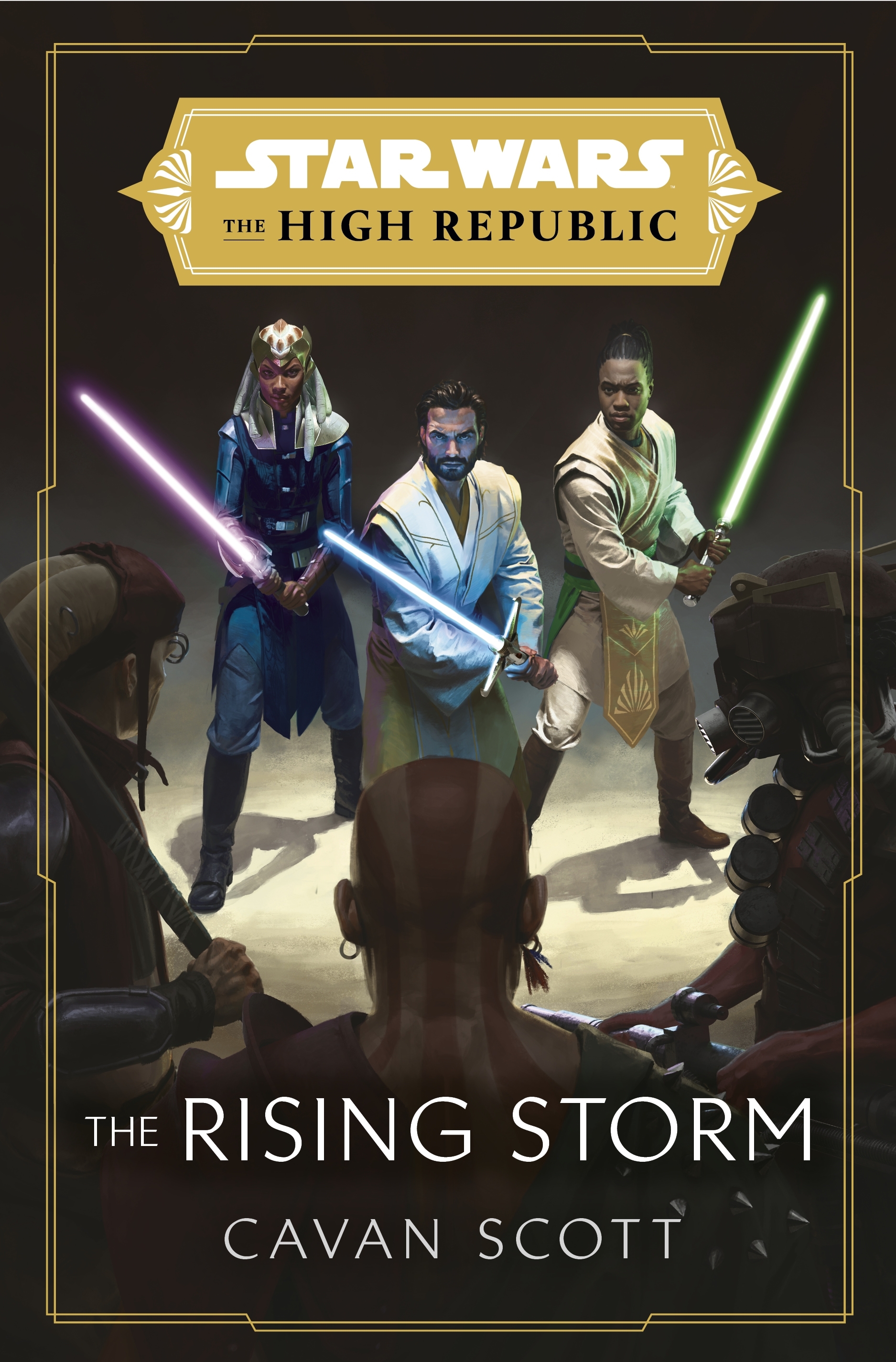
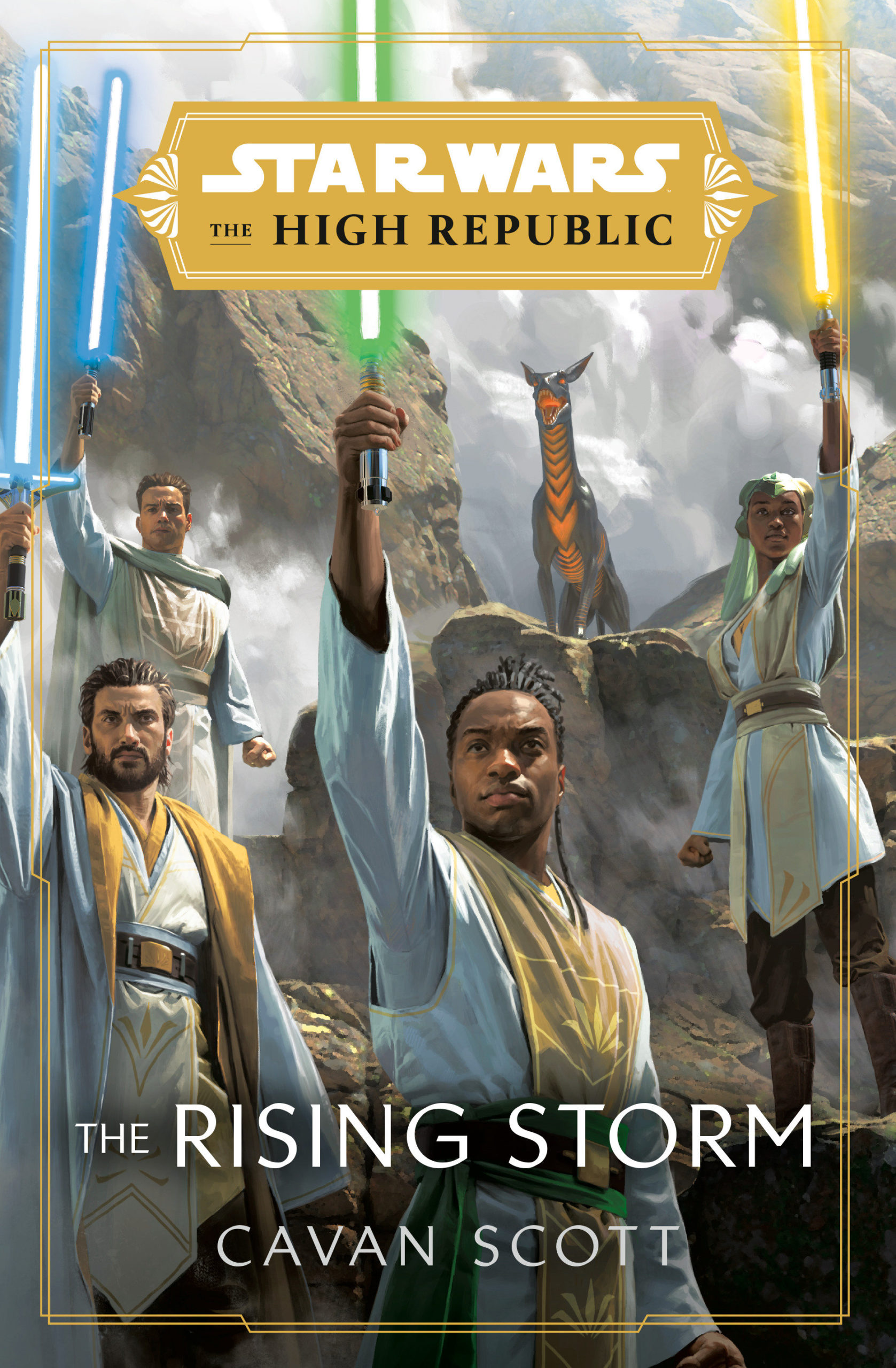
For last couple of years, the focus of the Star Wars extended universe has been The High Republic, an intriguing prequel series of tie-in media that expands and explores the iconic Star Wars universe in the centuries before the Skywalker Saga.  Set hundreds of years before The Phantom Menace, the High Republic series examines the Republic and the Jedi at the height of their influence, as well as the many dangers they encountered during this time.  I have had an awesome time with the High Republic series, and there are some excellent stories contained within this elaborate prequel sub-series, written by a great collection of writers.  Highlights so far include the main novels Light of the Jedi, The Rising Storm and The Fallen Star, as well as great young adult novels such as Midnight Horizon, all of which come very highly recommended.

The latest batch of High Republic books are currently part of the second phase of the series, which acts as a prequel to the first and upcoming third High Republic phases.  Set even further back in the Star Wars timeline, the second phase provides intriguing context to the previous entries, including the origins of the main antagonists and the reason for their hatred of the Jedi.  I have so far read the preceding second phase novel, The Path of Deceit, a fantastic young adult read, and I have been excited for Convergence for some time.  Written by talented new Star Wars author Zoraida Córdova, Convergence was an amazing read that I had a wonderful time listening to.

It is a time of great expansion, exploration and diplomatic strides in the galaxy as the Republic seeks to expand its influence.  Led by the Jedi, Republic pathfinder teams are constantly journeying out into the furthest reaches of the galaxy, seeking out new civilizations and planets.  However, not everyone is excited to see the Republic or the Jedi, and chaos is always around the corner.

Nowhere is this clearer than the closely neighbouring planets of Eiram and E’ronoh, which have been at war for generations.  Bound to the fighting by hatred and years of conflict, the end of both planets looks to be near, as the war has resulted in nothing but drought, starvation and despair.  However, after an unexpected tragedy brings the two heirs of Eiram and E’ronoh together for the first time, a solution to the ongoing war comes clear and the mediating Republic are able to broker a marriage alliance between the two royal families.

But before wedding preparations can begin, an attempt is made on the lives of the young couple, which once again brings the planets close to war.  Determined to keep the peace, young Jedi Knight Gella Nattai is chosen to act as the couple’s bodyguard and journeys across both planets with them as they attempt to sell the peace to their people.  A serious and dedicated Jedi, Gella is unprepared for another companion for the journey as Republic Chancellor Kyong also sends her son, Axel Greylark, to represent the Republic.  A rogue and cad of the highest quality, Axel swiftly gets under the group’s skin, especially as his disdain for all Jedi, including Gella, is plainly evident.  However, the new companions need to work as a team, as they find themselves caught in a deadly conspiracy that can impact not only the warring planets but the entire Republic.  Can they get to the bottom of this plot before it is too late, and are they truly ready for the consequences if they do?

Damn, now this was a pretty awesome Star Wars novel from a very talented author.  Córdova came up with a remarkable and powerful narrative for Convergence that not only contained its own brilliant character-driven plot, but which also sets up some awesome narrative threads for the future.  I had an amazing time getting through Convergence, and it was one of the better Star Wars books I read in 2022.

Córdova brings out an impressive and complex story for Convergence that drags you in quickly and hits you with a ton of great elements from this new High Republic era.  Primarily set around the war-torn twin worlds of Eiram and E’ronoh, Convergence starts off with the two once again on the brink of war after an unfortunate space battle.  However, the battle leads to the intervention of the Jedi and the Republic, who attempt to force peace, as well as the chance meeting between the planet’s two royal heirs.  What follows is a compelling bout of political intrigue, as the two planets negotiate, while various elements with ulterior motives try to sabotage it.  This early part of the book is pretty damn compelling, as the author spends a good amount of time introducing the complex characters as well as the well-crafted background setting and war story arc.

Thanks to some mysterious murders and sabotages, the middle of Convergence evolves into an exciting road-trip narrative, as the two royals, their new Jedi bodyguard and the unrepentant party boy Axel Greylark, embark on a goodwill mission to both planets, which results in further action and adventure, while also taking the time to build up the four main characters and establish some intriguing relationships between them.  After some excellent and often heartbreaking sequences, the story enters a whole new phase as the deadly outside influences trying to disrupt the peace process are revealed.  There are series of great twists and turns around here, including one massive reveal that severely impacts a major character, and everything you think you know about the plot is changed as hidden motivations are revealed.  The last third of the book is easily the most exciting, as you wait for the various characters to explode when everything is brought to the light and the full scope of the various plots are revealed.  The author really amps up the action towards the end, including one of the most chaotic wedding sequences in Star Wars history, and there is no shortage of intense interactions as certain characters come face to face.  Everyone walks away from Convergence with their emotional and excitement buckets filled and I really appreciated the fantastic swings that Córdova took in this major High Republic book.

I deeply enjoyed how this excellent narrative came together, and Córdova has a great writing style that lends itself to an intense character-driven plot.  Told from multiple compelling character perspectives, Córdova has produced an excellent narrative that combines adventure, intrigue and character growth with the lore-heavy Star Wars universe.  While there is plenty of action and some great universe building featured here, most of the book is constructed around intense character emotions as the central protagonists attempt to overcome their pasts and the dangerous secrets they all hide.  The author keeps the pace of Convergence’s narrative pretty constant throughout, and there were no major areas that slowed down or got stuck, and I enjoyed the continued build-up of disasters and betrayals that occurred.  The various action scenes featured throughout a very well written and make sure to highlight both the emotion behind each battle, but the iconic Star Wars elements such as the Jedi.  There is also a great sense of mystery and betrayal throughout the book that gives it a powerful overarching tone, and you really get drawn in trying to see how the characters are going to implode with their own inner chaos.  It really proved quite impossible not to enjoy this captivating read, and I really think that Córdova showcased just how impressive her writing ability is with this outstanding read.

In addition to having an outstanding story, Convergence also serves as a great entry in the second phase of the High Republic and I loved how it continued certain awesome storylines as a key novel in this sub-series.  I have mentioned a couple of times previously on my blog that I was surprised they started off the second phase of this sub-series with the young adult book, Path of Deceit.  However, after getting through Convergence, I now completely understand why they did this, as the more subtle Path of Deceit really helped to set up certain key overarching plot elements, as well as the wilder aspect of this period of the Star Wars timeline.  Convergence had a narrower narrative focus which, which really benefited from not having to introduce a whole new batch of major antagonists in too much detail.  Córdova was able to expertly utilise and then expand some of the elements from Path of Deceit throughout Convergence’s narrative, which I think really enhanced the overall story, and made it a bit more gripping and connected with the wider series.  I do think that at this point in the High Republic, Convergence is a very hard novel for those non-Star Wars fans to easily jump in and fully appreciate.  A lot of the joy of Convergence and the other books in the prequel second phase is in seeing the origins of key characters, organisations or events that are featured or discussed in the first phase.  As such, you can only fully appreciate this book if you have read a few of the key novels from the first phase, and this makes Convergence a little less accessible as a result.  Luckily, Convergence really is geared towards established fans of the franchise, who are guaranteed to have a wonderful time with this book.

I really must highlight the outstanding settings that were such a key part of Convergence’s narrative and tone.  Part of this comes from the even earlier timeline that the book is set in, as this period of the High Republic is a lot wilder and less civilized in places, more resembling a space western than the golden age seen in the first phase.  While the story doesn’t spend a lot of time in the wider Star Wars universe, you get an idea of the different society and times in this new phase, and it really feels like a period of flux and new ideas.  However, the story primarily takes place on the twin worlds of Eiram and E’ronoh, both of which have been featured to a degree during the first phase (Into the Dark and The Fallen Star for example).  Both planets are shown in even more detail in Convergence, especially as the characters spend most of the book there.  Stuck in an endless cycle of war and destruction, both Eiram and E’ronoh are in very dire straits when Convergence begins, which adds a great layer of politics, strife, and desperate characters to the narrative.  The protagonists are forced to dive into the history and culture of both planets to resolve the war, which reveals some major emotional edges as the dark similarities and differences between them make peace seem impossible.  Córdova does a remarkable job highlighting both planets throughout the course of Convergence and I really cannot emphasise how impressive they were as a background setting, especially as there is a tangible tension and threat of violence permeating both.  I deeply enjoyed this cool setting and I look forward to seeing another author’s take on these planets, and the wider Star Wars universe at this time in the next High Republic books.

While I loved the epic story and impressive Star Wars elements, the best part about Convergence for me was the exceptional characters that Córdova introduced and strongly featured throughout the course of the narrative.  Each character is pretty intriguing in their own way, and many are clearly set to become central figures in this second phase and will no doubt be reutilised again by other authors in the future.  The plot of Convergence, however, primarily rests around four complex and well-written protagonists who tend to serve as the main point-of-view characters of the book.

The first two characters I need to talk about are Jedi Knight Gella Nattai and political scion Axel Greylark, who form an intriguing odd-couple pairing for much of the book.  Gella is naturally the more serious and stoic Jedi character, who is dealing with regrets and uncertainty after a failed mission that saw the order lose confidence in her.  Now forced to work under more experienced Jedi Masters, Gella is uncertain what her future holds, but her impulsive nature brings her into the middle of the conflict on the two warring planets.  She is eventually relegated to the role of bodyguard for the royal characters and is teamed up with Axel, who is easily the most entertaining and fun character in this entire book.  The son of one of the Supreme Chancellors, Axel is a pampered rogue and troublemaker who spends most of the book gambling, flirting and doing irresponsible things (think Lando dialled up to 11).  Introduced in a very entertaining early chapter which ends with him shooting up an illegal casino, Axel is sent by his mother to the twin planets as her envoy and is recruited as an extra bodyguard when things go bad.  He immediately goes to work annoying Gella, not just because of her uptight personality, but because he also has a great dislike of the Jedi in general after they failed his family as a child.  While it is easy to see Axel as a one-note character, he is one of the most complex figures in the entire novel and he has one of the best character arcs.  I loved the unique partnership he formed with Gella, which initially begins with great antagonism but eventually morphs into something else, that really changes both for the better.  Of course, there is a further great twist around Axel that changes the entirety of his story, and it will be fascinating to see how that evolves in some future books.

The other two major characters are the heirs to Eiram and E’ronoh, Princess Xiri A’lbaran of Eiram and Prince Phan-tu Zenn of E’ronoh, who suddenly find the fate of both worlds resting on their shoulders when they have a chance meeting.  Both are very different from each other as Xiri is a tough and practical warrior from a proud lineage, while Phan-tu is a kind and somewhat gentle former orphan who was adopted into the royal family.  Despite their differences, both are dedicated to their respective planets and initiate the peace process through an arranged marriage that will unite their houses.  While initially uncertain of each other, the two begin to grow closer as the book continues, not only because of their duty but because of their legitimate feelings as they prove themselves to their future spouse.  The author features a slow-burn romance between the two that builds throughout the course of the story and has a lot of roadblocks to it, including both characters’ families and pasts filled with tragedy.  Xiri and Phan-tu prove to be exceptional partners as the book proceeds, and I also really enjoyed the fantastic friendship group they formed with Gella and Axel during their travels, as the four stay to play off each other perfectly.  These four end up really carrying the book on their shoulders, and I really must compliment Córdova on how well they were crafted and the amazing stories woven around them.  Backed up by an amazing supporting cast of big personalities, this was an amazing character-focused book, and I cannot wait to see how some of these figures are featured in future High Republic works.

I doubt that anyone who is familiar with my blog and my love for Star Wars novels is going to be too surprised that I chose to check out Convergence on audiobook rather than reading the physical book I received.  I love, love, love all the Star Wars audiobooks, especially as the production team behind them always features iconic Star Wars sound effects and music throughout the runtime, which I find adds to the overall ambience and emotional impact of the plot.  Convergence was another exceptional example of this, and I especially enjoyed how the awesome music made every major scene feel that little more epic.  At the same time, Convergence also featured the outstanding voice work of Marc Thompson, who is easily one of the best Star Wars audiobook narrators of all time.  I always enjoy Thompson’s brilliant voice work in Star Wars fiction (such as in the audiobooks for Thrawn, Chaos Rising, Greater Good, Lesser Evil, Scoundrels, Dark Disciple and more), and he once again hit it out of the park in Convergence, giving each of the characters their own distinctive voice that really brought out their personalities and inner emotions.  I really loved some of the cool voices that Thompson brought out for Convergence, especially as they were well tailored for the relevant characters and their backgrounds, and this ended up being an epic performance from him that allowed listeners to power through the audiobook.  Coming in with a runtime of roughly 13 and a half hours, Convergence has a decent length, but dedicated listeners should have no trouble powering through it quickly.  I personally thought this was an outstanding way to enjoy this amazing book, and I even featured Convergence on my favourite audiobooks of 2022 list before I’d even finished it.

The brilliant High Republic series of Star Wars fiction continues to roll on at an unstoppable pace with the latest epic read, Convergence by Zoraida Córdova.  Featuring an exceptional plot, amazingly complex characters and serving as an intriguing prequel to the previous run of High Republic books, Convergence was an outstanding read that I cannot recommend enough.  One of the best Star Wars books of 2022, Convergence was extremely impressive and captivating and I am now very excited to check out all the High Republic entries of 2023.

Amazon     Book Depository

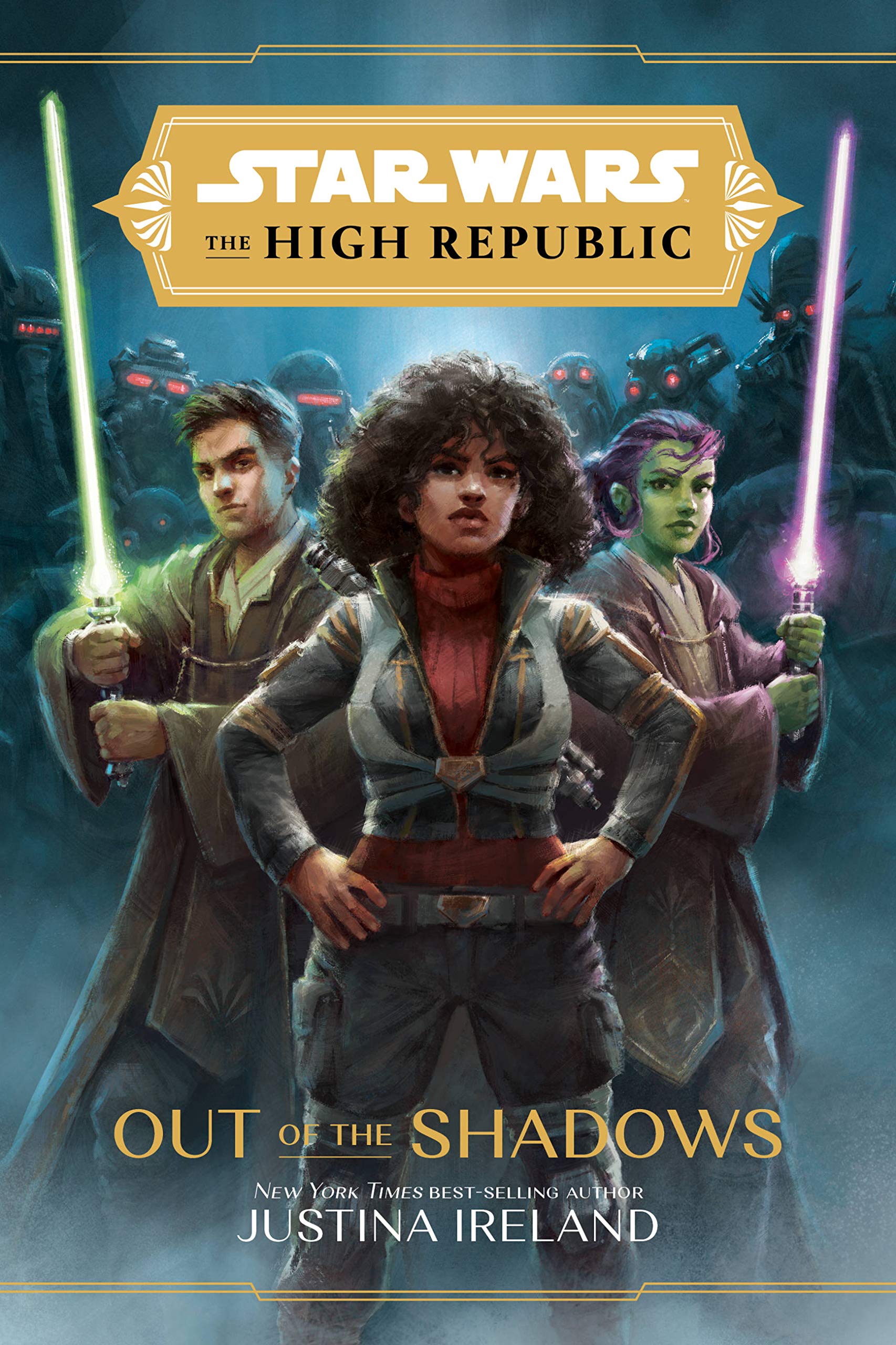
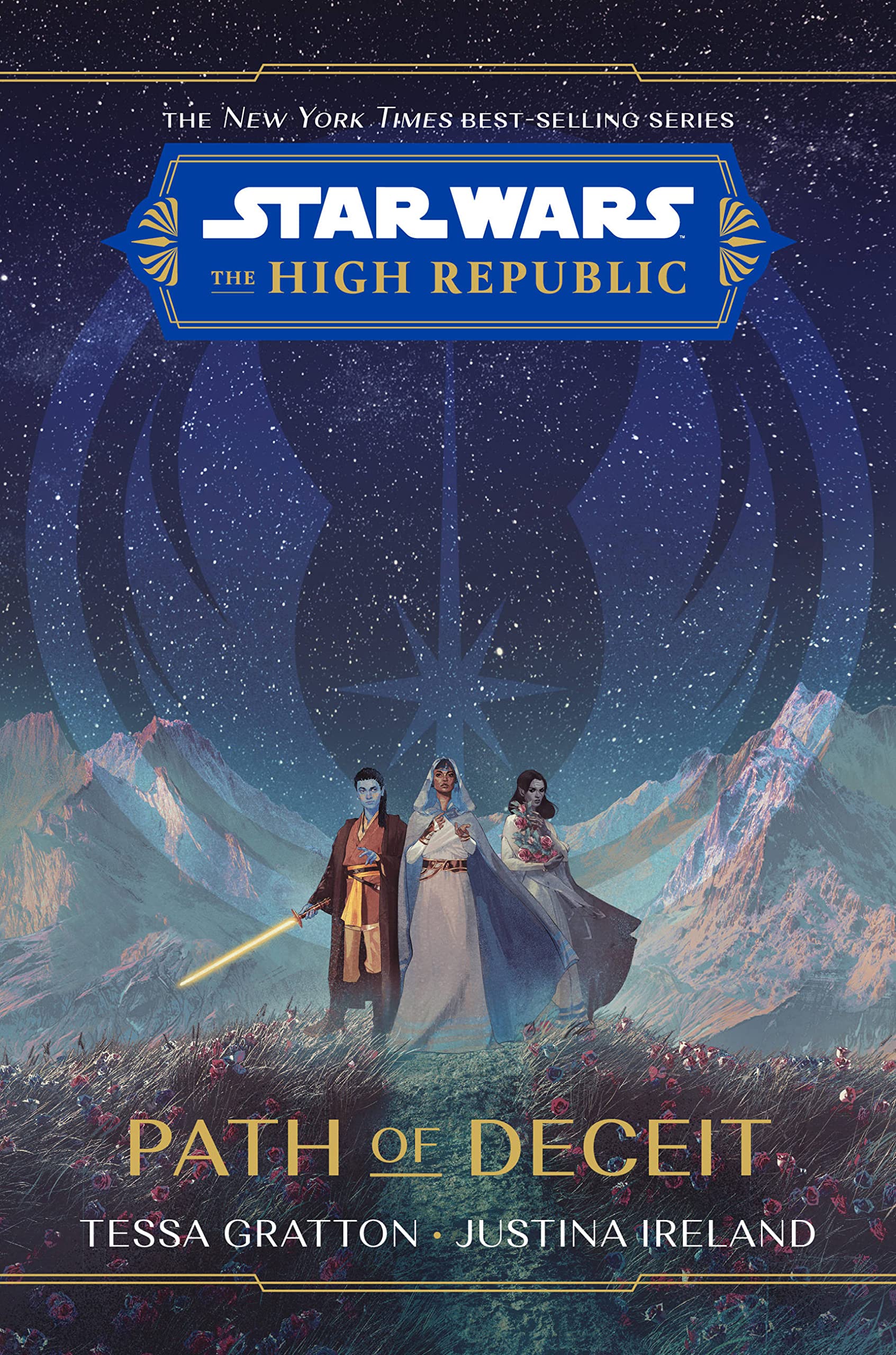
Star Wars: The High Republic: Path of Deceit by Tessa Gratton and Justina Ireland

Star Wars - Path of Deceit Cover

Publisher: Disney Lucasfilm Press (Audiobook – 4 October 2022)

Series: Star Wars: The High Republic – Phase Two

Length: 8 hours and 10 minutes

My Rating: 4.5 out of 5 stars

Amazon

The second phase of The High Republic begins with an absolute banger as the team of Tessa Gratton and Justina Ireland introduce Star Wars fans to a bold new young adult novel that ends up being epic in all the right ways with Path of Deceit.

For the last two years, Star Wars extended fiction has been firmly focused on the compelling multimedia project, The High Republic.  Set centuries before the prequel films, The High Republic takes readers to a whole new period of Star Wars history, where the Republic and the Jedi were at the absolute height of their power and influence.  However, not everything is perfect, and the Jedi characters are soon forced into conflict with dangerous forces bent on destroying them.  The first phase of The High Republic introduced readers to this new time period extremely well, while also setting up several fascinating characters, as well as the villainous Nihil, a group of space marauders who seek to destroy the order that the Republic represents.  I quickly fell in love with this cool new Star Wars subseries, and I enjoyed the massive range of different media present in this first phase, including comics, manga, children’s books, audio productions and a ton of novels.  The main story of this series is expertly told across the three main adult books, Light of the Jedi, The Rising Storm, and The Fallen Star, while other compelling, and often vital, stories take place in young adult books like Into the Dark, Out of the Shadows and Midnight Horizon, the associated comic series, as well as the audio production Tempest Runner.  This entire first phase came together extremely well, and I was really impressed with the range of stories they told, as well as the excellent new characters and elaborate new universe expansions that occurred.

After completing the first phase earlier this year, the various writers associated with The High Republic project, have just embarked on their ambitious second phase of High Republic fiction.  The second phase goes back even further into Star Wars history by being set 150 years before the events of the previous High Republic books.  The idea is that the second phase will act as a prequel to the first, showing how the Nihil were formed and the reasons behind their leader’s hatred for the Jedi.  These details will no doubt become extremely important for the third phase, while also helping the reader understand why the events of the first phase unfolded.  The first book in this second phase is Path of Deceit, written by the team of Star Wars fiction newcomer Tessa Gratton and established Star Wars writer Justina Ireland, who made a name for herself in the first phase with her young adult and middle school books.  Both authors really throw their heart into Path of Deceit, and the result in a fantastic and captivating read that presents Star Wars fans with something very epic indeed.

It is a time of exploration and discovery in the galaxy as the Republic enters an age of expansion.  Under the guidance of the Jedi, teams have been sent into the furthest corners of the Outer Rim, seeking out new planets, civilisations, and people to add to the delicate tapestry of life, diplomacy and trade that forms the basis for the Republic.  However, not all the discoveries being made are good, and many dangers lurk out in the far reaches of space.

Of these dangers, the most benign appear to be a small Force cult on the remote planet of Dalna.  Known as the Path of the Open Hand, this group believe that the Force should be free, and that no one should have the power to use and abuse it, including the Jedi.  Led by the charismatic Mother, the Path of the Open Hand is small, but features a fervent congregation of believers, including a hopeful young woman, Marda Ro.

Marda Ro always dreams of leaving Dalna to preach the message of the Path throughout the galaxy.  However, protected by her free-spirited cousin Yana Ro and held back by the Mother, Marda appears destined to remain always on Dalna.  That is until two Jedi, Jedi Knight Zallah Macri and her Padawan Kevmo Zink, arrive on Dalna, investigating the theft of several Force artifacts from surrounding systems.  Believing that the thefts are related to the Path, the two Jedi begin to investigate the group, and Marda and the young Kevmo soon form a tight bond as their connection grows.  However, not everything is as it seems on Dalna, and soon the Mother reveals a dark secret that will reverberate throughout the galaxy for centuries to come.

I have to admit that even before I started reading Path of Deceit, I kind of had some doubts about whether I was going to really enjoy it.  Not only was I surprised that this second phase of the High Republic was starting out with a young adult book, rather than the upcoming adult novel, Convergence, but I was also apprehensive about the reverse time skip between phases.  Setting this second phase 150 years before the events of the first phase was a bold choice, especially considering that The High Republic is a prequel series in itself.  However, if Path of Deceit is any indication of what is to come, then the entire second phase of The High Republic is going to be pretty damn impressive and fit into the wider High Republic extremely well.  The team of Gratton and Ireland did a remarkable job here, producing a slick, slow-burn Star Wars story that introduces many key elements of this new timeline while also giving some fantastic hints of what is to come.  I had an absolute blast getting through this book, and it is has definitely gotten me excited for the next round of High Republic fiction.

I was deeply, deeply impressed with the captivating story that the authors came up with for Path of Deceit.  Due to its position in this new High Republic phase, Gratton and Ireland had to achieve quite a lot during the narrative, not only introducing key characters and settings, but also tying them into the wider High Republic history.  However, I think they achieved this goal extremely well, and the subsequent story is very intriguing and intense.  I do need to warn people that the Path of Deceit does start of fairly slow and takes a long while for all its excellent storylines to pay off.

The book is primarily set on the planet of Dalna and follows three young central characters as they find themselves caught up in the actions of the mysterious Path of the Open Hand.  These central characters include Marda Ro, a devout member of the Path, her cousin Yana Ro, who leads the Path’s covert unit that steal Force artifacts, and Kevmo Zink, who arrives on the planet to investigate the Path and the recent thefts.  The first half of the book sees the various characters gradually get to know each other, while Marda and Kevmo grow closer, despite their different viewpoints of the Force.  As the story continues, you start to see some cracks in the serene appearance of the Path, with Yana growing more and more determined to leave as she begins to see the Mother for what she really is.  However, even with a few action scenes and a great flood sequence, the story is still moving at a gradual pace, with the authors laying down some subtle hints of what is to come.  All that changes in the last quarter of the novel, as everything comes together in a big and shocking way.  While the narrative appears to be heading in one certain direction, the authors suddenly unleash a pretty major twist that really surprised me.  This twist was extremely brilliant, not only because of how well set up it was but because its execution was very sudden and a major gamechanger.  The entire tone of the novel changes after that, with the characters taking on new roles, and you see just how well-connected Path of Deceit is to the books of Phase One.  This twist honestly makes you really appreciate the slow and careful pace of the rest of the book, and you realise just how cleverly they were setting everything up.  The entirety of Path of Deceit ends on an excellent and powerful note, and the reader is left eagerly looking forward to seeing how the rest of this second phase comes together.

The team of Gratton and Ireland set out this story in a very awesome way, and I felt that everything came together extremely well to enhance the fantastic narrative.  The split between the three main perspectives helped to produce a balanced and multifaceted narrative, and I liked seeing the distinctive alternate viewpoints of the cool events occurring.  While the pacing was initially a bit slow and there was a little less action than your typical Star Wars novel, Path of Deceit makes up for it by focusing more on the characters, setting up the new version of the universe, and featuring a great young adult story that will really appeal to the teenage audience.  The way that the characters interact and focus on their attractions is very typical of most young adult books, but I felt that it didn’t get too over-the-top.  Instead, it is just enough to help bring the younger reader in, while also still being intense and compelling enough to keep older readers still attached and entertained.  I personally deeply enjoyed how the story was presented, especially once the pace increased towards the end, and this entire novel was an absolute joy to read.

As I mentioned before, quite a lot of importance is attached to whether Path of Deceit did a good job featuring the relevant Star Wars and High Republic elements.  I say that Gratton and Ireland strongly succeeded, as they not only provided a great viewpoint of this new period of Star Wars fiction but they also provided some captivating and clever links to the first phase.  While most of the focus of Path of Deceit is primarily on one planet, so you don’t get the full galaxy view, I did like the initial glimpse of this universe.  There is a real Western frontier vibe to the entire setting, with explorers, settlers, pilgrims, and people looking for a fresh start interacting with new elements from the Outer Rim.  There are also some hints about how this version of the Republic and the Jedi are set up, and there is a very good mixture of elements that I think are going to come together very well in the future.  I also really enjoyed the mysterious and captivating Path of the Open Hand, who were introduced as an alternative Force cult who are completely opposed to the actions of the Jedi.  Their curious viewpoint of the Force, and their methods for preserving it, make for quite a fascinating group and I deeply enjoyed how they developed.  As for connections to the first High Republic phase, well let us say that Path of Deceit is a very key novel regarding this, as several key characters with connections to the future are brilliantly set up here.  So many key elements or organisations from the first phase are introduced in a completely different form here, and you will be surprised at the origins of some of the best bits from the established High Republic books.  I loved some of the impressive set up that Gratton and Ireland featured in Path of Deceit, and this young adult novel is a very key part of this phase of the High Republic, with story elements from it set to reverb through certain upcoming books all the way to the future in the third phase.

Now, one of the main questions I am sure many people are wondering is how much knowledge of the High Republic and wider Star Wars universe people need to enjoy Path of Deceit.  Naturally, as the introductory book in the second phase of an established Star Wars sub-series, people who have read the previous High Republic books are going to have a better time with Path of Deceit that readers who have not.  Not only do you have a better idea of what the earlier Star Wars period are going to look like, but you also will appreciate some of the revelations that appear in this book and have a better ability to make connections between this phase and the previous one.  As such I would strongly recommend checking out all the key previous High Republic content first (the three adult books at the very least), as you a really going to have a better time with Path of Deceit that way, especially as the big twist towards the end makes a lot more sense if you do.  However, this isn’t the absolute worst book to start the High Republic with, and maybe reading the prequel second phase first is a better way of enjoying these books.  Either way, Gratton and Ireland do a good job of making this book pretty accessible to new readers, and I think that anyone with a decent knowledge of Star Wars fiction will probably be able to enjoy and appreciate this book.

Path of Deceit contains a great group of central characters that the authors do an excellent job of introducing.  This includes three intriguing teenage protagonists who have a complex and fascinating narratives that see them engage with this new world in very different ways.  Marda Ro is the devoted adherent to the Path of the Open Hand, who believes in their mission and their leader with all her heart.  Marda has a deeply compelling and well-laid-out story arc in Path of Deceit that eventually sees her question her believes and connections to the Path once she meets Jedi Padawan Kevmo Zink.  Already feeling disconnected from the galaxy and people due to her species, which is renowned and reviled for unknown reasons, Marda was a real emotional tinderbox in this book, and her relationship with Kevmo only complicates this further.  However, the events of the book change her in a way no-one could really predict, even with the hints her name contain, and her metamorphosis from sweet character to something else is very clever and quite impactful.  I have a feeling that she is going to have one of the best character arcs in the entire second phase, and I look forward to seeing how her narrative completely unfolds.

I also like the storylines surrounding the main Jedi character, Padawan Kevmo Zink, and Marda’s cousin Yana Ro, both of whom have their own distinctive arcs that I was quite intrigued by.  Kevmo Zink is a great young Jedi character who is drawn by his own romantic urges and desire for connections as much by the Force.  Kevmo serves as a great newcomer character to Dalna and the Path of the Open Hand and provides a great alternate perspective to Marda’s strict commitment to their ways.  He also serves as an intriguing love interest to Marda, and the classic Star Wars relationship between a conflicted Jedi and a forbidden girl made for some great reading, without being too silly or over-the-top.  I had a lot of fun with Kevmo, and I liked his infectious humour and his extremely positive view of the universe.  His storyline also goes in some very surprising directions, and this ended up being a very intriguing character to follow.  Yana Ro on the other hand is a more wild and exciting addition to the cast, who acts extremely differently to her cousin Marda.  A less indoctrinated member of the Path, Yana knows that there is something rotten at their heart, and seeks a way out, mainly by stealing Force artifacts for the Mother.  Her journey is very emotionally rich, and a little bit tragic, and I had a wonderful time seeing her storyline come to fruition, especially as it puts her in a very exciting position for future entries in the series.  Yana’s realistic viewpoint of the Path, as well as her own species’ inclinations and reputation, stands in great contrast of that of Marda, and her more grounded and aggressive mindset also makes her stand out compared to Kevmo.  As such, there is a good balance of personalities in Path of Deceit amongst the point of view protagonists, and this helps to produce a fantastic and compelling read.

There are also several great side characters who add their own spice to the story.  The most prominent of these is Kevmo’s Jedi master, Zallah Macri, an extremely serious Jedi Knight who serves as Kevmo’s mentor and guide.  Zallah is a suitable cautionary figure throughout the book, trying to keep Kevmo focused on the Force and their investigation, despite his obsession with Marda.  The other side character I really want to focus on is the Mother, the Path of the Open Hand’s mysterious leader who has managed to take over the cult through to her apparent strong connection to the Force.  The Mother serves as a rather compelling antagonist throughout the book, especially as you spend most of the time wondering if she is really Force sensitive, or whether she is running a long con on her followers.  An aloof and secretive antagonist, it soon becomes very clear that the Mother has her own objectives and plans that run contrary to that of her followers, and the full extent of them proves to be very exciting and destructive.  I felt that the Mother was an excellent alternative character for Path of Deceit, especially as her plans have some major long-term impacts on the point-of-view characters, and she has some dark secrets that need to be explored further.  These, and other characters, really add to the overall strength on the novel and I deeply enjoyed the way that Gratton and Ireland introduced them and took them through a fascinating emotional ride.

As with most Star Wars novels, I chose to check out Path of Deceit’s audiobook format, which was a pleasurable and fun experience as always.  At just over eight hours, this was a relatively quick audiobook, and I managed to knock it out pretty quickly.  This format did an excellent job of presenting Path of Deceit’s compelling narrative, and I had fun having this book read out to me.  However, the real joy of a Star Wars audiobook always lies in the excellent extra production elements that have been added in.  The classic Star Wars sound effects are used very well throughout Path of Deceit’s audiobook, and hearing blasters, lightsabers and even the sounds of people in the crowds, helps to drag listeners into the story and its surrounding universe.  However, I am always more impressed with the fantastic use of the iconic Star Wars musical score that is threaded through multiple scenes in the audiobook.  Path of Deceit has a pretty cool selection of scores playing throughout it, and I liked how the music often reflected the more rural setting and the mystical elements it was exploring.  The various bits of music work extremely well at enhancing key scenes throughout the book, and there were several times when the careful application of these tunes enhanced the emotional impact of the entire book.

On top of the cool sound effects and powerful musical inclusions, much of my enjoyment of Path of Deceit’s audiobook lies in the excellent narrator who was telling the story.  Path of Deceit is narrated by actress Erin Yvette, who has done a lot of voice work recently in the video game space.  While Yvette hasn’t provided narration for too many Star Wars books yet, she did a great job here in Path of Deceit, and I loved how she read out the book.  Yvette’s voice fits the young adult tone of this Star Wars novel extremely well, and she ensures that the compelling tale is effectively shared out to the listener.  In addition, she also provides a range of excellent voices to the various characters featured throughout the book.  Each of her voices really fits the respective character, and you get a real sense of their nature, their bearing, and their emotional state as you hear Yvette narrate them.  Not only does she capture the youthful nature of characters like Kevmo Zink and Marda Ro well, but she also gets the proper Jedi character Zallah Macri, the more self-serving voice of Yana Ro, and the mystical, manipulative voice of the Mother, down perfectly.  This voice work is pretty damn impressive, and when combined with audiobook’s sound effects and outstanding Star Wars music, it helps to turn the Path of Deceit audiobook into an outstanding experience.  This was such an awesome way to enjoy this latest High Republic novel, and audiobook remains my absolute favourite way to enjoy a Star Wars tie-in book.

I am feeling a heck of a lot better about the second phase of the High Republic after powering through Path of Deceit.  The wonderful team of Tessa Gratton and Justina Ireland produced an outstanding young adult Star Wars novel that did a lot of remarkable things.  Featuring a well-crafted story that slowly but surely hooks you and some fantastic characters, Path of Deceit charts its own course while also brilliant tying into the High Republic novels that have come before.  I can’t wait to see where this phase goes following this impressive story in Path of Deceit and I am planning to read the next High Republic book as soon as I can.

Amazon

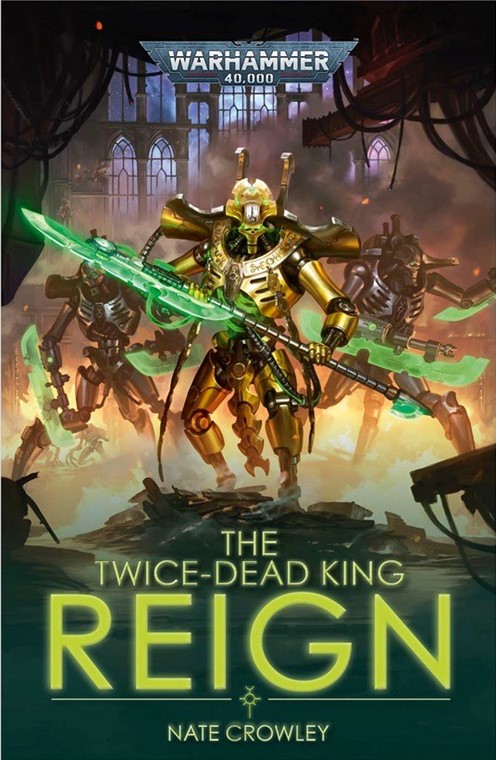
The Twice-Dead King: Reign by Nate Crowley

The Twice-Dead King - Reign Cover

Publisher: Black Library (Audiobook – 15 January 2022)

Series: The Twice-Dead King – Book Two

Length: 12 hours and 3 minutes

My Rating: 4.5 out of 5 stars

Amazon     Book Depository

The fate of Oltyx and his necron dynasty is revealed in Reign, the epic and impressive second entry in The Twice-Dead King series of Warhammer 40,000 novels by Nate Crowley.

Last year I was lucky enough to listen to the fantastic and compelling Warhammer 40,000 novel, The Twice-Dead King: Ruin, which followed an exiled necron prince, Oltyx, one of the heirs to the Ithakas Dynasty.  After defending a barren rock in the far reaches of space for centuries, the immortal, metal-coated Oltyx soon encounters a grave threat of an invading alien fleet and is forced to break his exile and head back to his dynasty’s capital planet.  However, he soon discovers that his father, the king, and his court have been infected by a terrible madness and he must find a way to claim power and unite the remnants of his people before it is too late.  I had an outstanding time with Ruin and I was extremely excited when the planned second half of the series, Reign, came out a couple of weeks ago.

Reign takes place directly after the events of Ruin and sees Oltyx, now king of the Ithakas necrons, attempting to find a way to preserve his people after his capital planet was destroyed by the massed forces of the human Imperium.  With the remnants of his people crammed aboard his fleet, Oltyx searches for a safe planet to claim as their new home.  However, the forces of the Imperium are relentless in their mission to destroy all Xenos, and Oltyx’s fleet soon finds itself under pursuit from their massive crusade fleet.  At the same time, Oltyx is forced to deal with the vicious politics of the necron court, with the bickering and scheming nobles hoping to gain power at his expense.

However, the further the necrons run, the more apparent it becomes that the humans will never leave them alone.  Spurred on by his most loyal advisors, Oltyx embarks on a risky plan to find an ancient planet, said to be ruled over by a deadly king and his hordes.  Making use of long-lost technology, Oltyx and his people undertake a deadly trip towards their goal.  However, a far greater threat soon emerges in the very heart of his ship.  The flayer curse that has long infected his people and which drove Oltyx’s father mad has returned, and soon thousands are infected.  Forced to take drastic actions to save his people, Oltyx soon learns the full weight of responsibility and loneliness that all kings must bear.  But this king has a dark secret that will threaten the entire Ithakas Dynasty.  Can Oltyx control the dark urges that reside deep within his soul or will a new twice-dead king rise to reign over the Ithakas necrons?

Reign is an epic and exciting sequel to the first The Twice-Dead King novel, and I had a brilliant time getting through this compelling and fantastic novel.  This book has an excellent story that dives deep into the Warhammer 40,000 lore to explore one of the more mysterious races in the canon while focusing on a conflicted and damaged protagonist.

This latest The Twice-Dead King book had an intense and impressive narrative that I found myself incredibly drawn to.  Reign directly follows on from Ruin and continues several great storylines and character arcs established in the first book.  The book opens with the necrons on the run after the destruction of their crown world by the Imperium, and the recently crowned Oltyx desperately trying to produce a solution while also being assailed by doubts and regrets of his new position.  It really does not take long for the action to kick off, with the Imperium continuing their chase while Oltyx is assailed from within his own ship by treachery, dissention and doubt.  What follows is an intense chase storyline as the necron fleet tries to outrun their pursuers as Oltyx leads them to potential sanctuaries.  This eventually finds the necron travelling through a featureless void for the last half of the book, where they encounter greater internal problems as the terrifying flayer curse rears its head throughout the ships.  This results in some incredibly scary and powerful scenes that dives deeps into the protagonists’ insecurities and fears as he starts a brutal reign over his people.  All this leads up to epic conclusion, which not only features a brilliant fight scene between necrons and Space Marines, but then takes the protagonist on a deep journey to the heart of his enemies and himself.  There are some clever and powerful moments throughout the entire book, and I loved how several inclusions or continued throwaway lines really paid off.  I enjoyed how this book ended and Crowley leaves the narrative open for a follow-up, as there are a few questions left unanswered that I would really like to find out about.

Crowley has a great writing style that I felt really enhanced the intriguing and captivating Warhammer story contained within Reign.  The book’s narrative is well paced, with the plot jumping perfectly between great action sequences, touching character moments and freaky near-horror spots.  The author really lays in the detail during these scenes and the reader is swiftly drawn into the elaborate world of the necron, from the outrageous characters to the massive ships and artifacts.  This level of detail really brought the powerful narrative to life, and I was impressed with how epic and cool it made the various action sequences appear.  I particularly loved one elaborate fight sequence that saw the protagonist and his guards face off against the very best of the Angels Encarmine, including a full Death Company and a Chaplain.  This led to a destructive and intriguing duel, featuring some interesting similarities and a great clash of martial styles.  Reign is primarily a book for the dedicated Warhammer fan, especially as it focuses on an obscure race from deep within the lore.  You also really need to read the preceding book, Ruin, first, as all the key storylines follow through from there.  Some readers could probably get away with only reading the second book, especially as Crowley provide some detailed refreshing context and explanation, but I would strongly suggest going from the start to get the full experience of this fun and addictive read.

I deeply enjoyed how much Warhammer 40,000 lore that Reign features, especially as it dives into the heart of one of the most interesting factions, the necrons.  The necrons, ancient aliens with an ancient Egyptian motif who were made immortal by being encased in metal, are a fascinating race who are somewhat underutilised in Warhammer extended fiction.  However, throughout The Twice-Dead King novels, Crowley has done a wonderful job of examining everything important about the necrons and he soon expands your view of this mysterious and long-dead race, turning them into a very captivating and personable group.  Crowley really dives into the lore of the necrons, focusing on everything, such as their history, their emotions, technology, philosophies, physiology, strengths and their weaknesses.  There is a great focus on the many mental conditions impacting them thanks to their transition from flesh to metal, including the flayer curse which drives them insane and forces them to cut off the skin of their opponents and attempt to eat their flesh, despite their inability to consume anything.  The author brings each of these conditions to life, especially in Reign, and watching the various necron characters attempt to overcome the curses coming for them and impacting their friends is deeply fascinating and powerful.

I really enjoyed the intense sense of tragedy and decline that Crowley installs in the various necron characters, and you swiftly start rooting for them, despite the universe usually portraying humans as protagonists.  There are some major necron moments in this novel, and I loved the range of interesting characters, desolate settings and powerful technology that Crowley cleverly features.  You also must love seeing the rest of the universe through the necron’s ancient and somewhat arrogant eyes, as it makes for some amusing insights.  It was particularly fun to see their opinions about the human fleet coming after them, including the Space Marines of the Angels Encarmine, and their constant disbelief at their crudity and apparent success is a fun part of the book.  The Angels Encarmine are actually an interesting mirror to the necrons, as the Space Marines have also attempted to become better by enhancing their weak initial flesh.  The Angels Encarmine, a successor chapter of the Blood Angels, also share a similar bloodlust, insanity and desire for killing that the necron flayed ones have, and their appearance during the Black Rage is very similar to necrons suffering from flayers curse.  I deeply enjoyed this excellent and captivating examination of this part of the Warhammer 40,000 canon and Crowley has a brilliant understanding of this complex universe.

I also really enjoyed seeing the continued journey of the main character and sole point-of-view character, Oltyx, who is now the king of his dynasty.  Oltyx is a great, damaged character who went through substantial growth in the last novel as he attempted to become a worthy prince and regain his honour, only to discover that his father, the king, had gone insane with the flayer curse, which forced Oltyx to kill him.  Reeling from this and the death of his brother by the humans, Oltyx takes control as the new king and instantly finds himself overcome with responsibility as external and internal threats threaten to overwhelm him.  It is extremely captivating to watch Oltyx attempt to deal with the various dangers and concerns of a king, especially as he is wracked with guilt over his many mistakes and riven with indecision over the best course from his people.  Thanks to his own internal suffering, insidious visions from the past and his own brush with the flayer curse, Oltyx makes some terrible decisions throughout Reign, and his slow descent towards tyranny and insanity is brilliantly portrayed.  The subsequent and intriguing evolution of his character is set up extremely well, and it results in some major changes for Oltyx.  I really hope that Crowley will continue the story of Oltyx in the future as there is still a lot of development and story to follow there.

Like most Warhammer novels I have checked out, I chose to enjoy Reign in its audiobook format, which ended up being a great decision.  Having the complex and detail laden story read to me really helped to cement all the key detail of Reign in my head, and it really helped to paint an incredible picture of the various settings, events and battles.  It also was a pretty quick way to enjoy this great book, as, with a runtime of around 12 hours, most fans can power through Reign in no time at all.  I must highlight the impressive narration from Richard Reed, who also lent his voice to the first book in the series.  Reed has a brilliant voice that does an excellent job bringing all the ancient, proud and inhuman necron characters to life.  I loved the magnificent and powerful tones he gave to the main character and point of view character Oltyx, and the entire rest of the cast are given extremely cool and fitting voices that highlight their distinctive and mechanised personalities.  Reed ensures that the various mental diseases and age-related degradations that the necron characters are suffering really comes through in his voicing of them, and the occasional stutter or lengthy pause between words helps to highlight just how decrepit some of the ancient necrons is an excellent touch.  This was a brilliant and addictive way to enjoy this second The Twice-Dead King novel, and I would strongly recommend Reign’s audiobook to all Warhammer fans.

Nate Crowley continues to shine as a brilliant and talented author of Warhammer fiction, as his latest book, The Twice-Dead King: Reign, was such an awesome read.  Continuing the great narrative set up in Ruin, Reign was an amazing sequel that continued to dive down into the troubled mind of its cursed, necron protagonist.  I loved the amazing and captivating story that followed, especially as it showed the necron in all their bloody glory and revealed just how complex they can be.  A must read for all fans of Warhammer 40,000 fiction; Reign is an outstanding book that I just could not get enough of.

Amazon     Book Depository

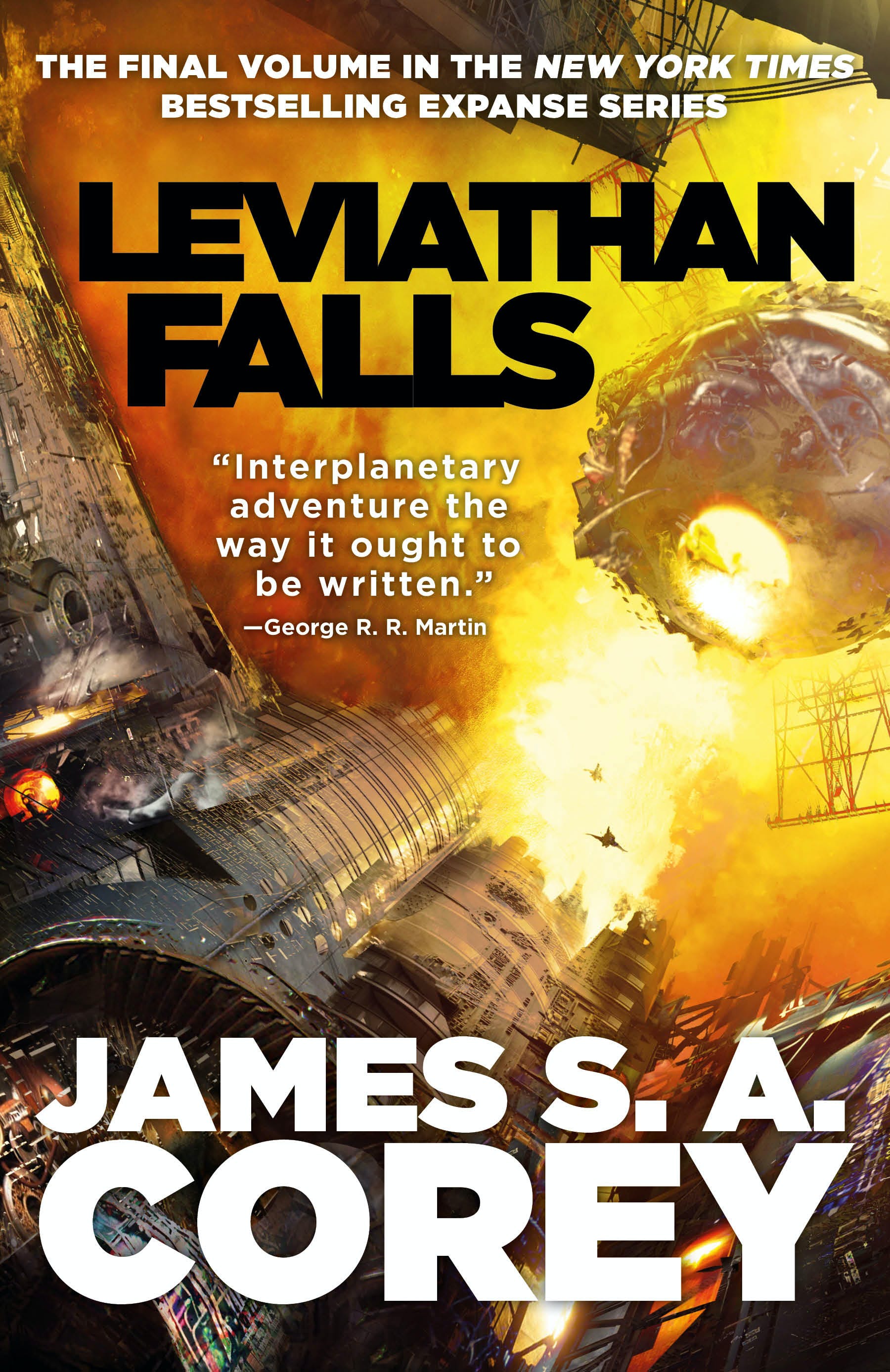
Leviathan Falls by James S. A. Corey

Leviathan Falls Cover

Publisher: Orbit/Recorded Books (Audiobook – 30 November 2021)

Series: The Expanse – Book Nine

Length: 19 hours and 40 minutes

My Rating: 4.5 out of 5 stars

Amazon     Book Depository

For my last review of 2021 I check out the epic and highly anticipated final book in the iconic The Expanse series by James S. A. Corey, Leviathan Falls.

For the last ten years the science fiction genre has been dominated by the impressive and captivating The Expanse series.  Written by James S. A. Corey, the joint pen name of authors Daniel Abraham and Ty Franck, The Expanse series consists of nine awesome novels that navigate the troubles and wars of future humans in both our solar system, and other systems accessed by ancient alien technology.  This has been a pretty amazing series which has moved from wars between Earth, Mars and the Belt, to intergalactic travel and battles between galactic empires and interdimensional aliens.  I have been really enjoying this series lately, and the last two novels, Persepolis Rising and Tiamat’s Wrath were extremely fun, especially as they utilised the conquering Laconian Empire, which forced the protagonists to form a rebel movement known as the underground.

The plot of Leviathan Falls starts a few months after the events of Tiamat’s Wrath, which saw the underground destroy Laconia’s shipyards and free James Holden, captain of the Rocinante, and Teresa Duarte, the daughter of the Laconian high consul.  Now the Rocinante flies throughout the various settled systems attempting to keep the underground alive and bring down the faltering Laconian Empire.  At the same time, unnatural and destructive alien forces, disturbed by the intergalactic technology used to traverse space, are reaching into our universe and attempting to exterminate all human life.

The best hope for humanity may lie in the hands of the Laconian high consul, Winston Duarte, whose alien enhancements have given him unnatural insight into the universe.  However, Winston Duarte is currently missing, having vanished from his room as he attempts to unleash his ambitious master plan.  To find him, the Laconians unleash their ultimate hunter, Colonel Aliana Tanaka, who focuses on the Rocinante, determined to use Teresa as bait.  At the same time, Dr Elvi Okoye leads a desperate scientific mission to uncover the secrets of the ancient aliens whose technology has allowed humanity to expand throughout the universe.  But her progress is dependent on the lives of the mysterious half-alien children in her care, whose ability to connect with the past could save the future.

As the situation in the universe becomes even more desperate, the crew of Rocinante are once again thrust into the midst of the battle for humanity’s survival.  Entering a desperate alliance and faced with near certain extinction, the Rocinante and their allies embark on a final battle for the future.  However, not only are they facing the malevolent forces from outside their universe, but also the radical and altered Winston Duarte, whose plan to save the species comes with an impossible price.  Can Holden and his crew stop him before it is too late, or is the final chapter in humanity’s story?

Leviathan Falls was another intense and impressive science fiction read from Corey, who brings this epic series to an end in a big way.  This ninth and final Expanse novel had a captivating and intense narrative filled with amazing and realistic science fiction elements, complex characters, and a fitting and heartbreaking conclusion that wraps everything up extremely well.  This ended up being a fantastic novel and I was glad I had a chance to see how everything finished up.

There is a great narrative for this book that takes the reader on a powerful and compelling ride as the authors seek to wrap everything up.  Leviathan Falls continues several of the storylines set up in the previous novels, especially Tiamat’s Wrath, and takes them towards their inevitable conclusion.  Told through multiple characters, including several minor figures, this is a slow-burn narrative that methodically sets up the various storylines and explores them to their full extent.  The story gets quite complex in places as the protagonists attempt to survive not only the various battles between the Laconians and the underground but also the malevolent entities attempting to take them down from another universe.  The first half of the story focuses on a cat-and-mouse battle between the protagonists on the Rocinante and the Laconian Colonel Tanaka, while there are some interesting examinations of Elvi’s attempts to understand the threat facing humanity.  These storylines lead up to a big event that sets up the intense and exciting second half of the novel and forces the previously disparate characters to come together and face the major threat.  This results in a massive, extended sequence that forces several characters to make some major decisions, and a moving conclusion that is both devastating and a fitting ending to the franchise.

The team behind The Expanse have a really unique writing style that I think fits the epic scope of their series.  Using an intense amount of description, as well as some colourful analogies, the authors paint a brilliant picture of the events occurring around them that perfectly encapsulates the insanities and complexities of the situation.  The Expanse series is known for its realistic approach to science fiction, and this continues through in Leviathan Falls as the reader gets a real sense of the awesome nature of space flight through the various characters’ eyes.  While some of the science fiction elements are obviously invented solely for the narrative, most of the human technology in this book appears to be quite realistic and well thought out.  I also love the cool take on space travel, communication and fights, with many of the events in space taking hours or days to complete due to distance and light delays.  This is particularly impressive during the battle sequences which rely more on calculations and manoeuvres than fast-paced firepower, and it really added to the intensity of multiple scenes throughout the book.

While I enjoyed the narrative and the way that the authors told the story, Leviathan Falls did drag a little in places.  I honestly think they could have streamlined this into a better novel by taking out, say, 50 to 100 pages, and I personally would have cut all the chapters told from the perspective of Kit Kamal, which have no major impact on the overall story.  I also think that the authors went a tad overboard in places trying to make some of the elements and experiences seem a little cleverer than they needed to be, such as certain long-winded interludes.  While I understand that this is their writing style and it usually works, I felt that it made parts of the book a little unwieldy and unnecessarily complex.  Being the grand finale, it was also a very inaccessible novel for new readers, especially as so much of the plot relies on knowledge of some of the preceding books, particularly Persepolis Rising and Tiamat’s Wrath.  However, the rest of Leviathan Falls story more than compensates for some of the above issues, and this still ended up being an excellent and compelling read.

Fans of this series will no doubt appreciate some of the excellent world building that took place in Leviathan Falls.  The author introduces some interesting and compelling expansions of various elements of lore and technology within this universe, especially when it comes to the two ancient alien races who the protagonists have been encountering throughout the series.  It was rather fascinating to see how certain elements were utilised throughout the plot, and they ended up enhancing the narrative extremely well.  I loved all the use of alien technology, especially as there are some great call-backs to the previous books and the weird molecules and artefacts the protagonists previously encountered.  There was also a good wrap up with the universe that I really appreciated, and it think it ends everything on a compelling and interesting note.

Leviathan Falls features an impressive cast of complex characters, and the multiple perspectives are used to great effect throughout the book to craft a massive and elaborate narrative.  I liked the cool range of characters in this book, especially as it primarily focuses on the well-established cast from the previous novels, as well as one great new antagonist.  The vast array of perspectives proves to be a lot of fun to explore, although I do question the necessity of one or two overutilised point-of-view characters.  I also appreciated some of the development that occurred around the recurring cast of the series.  This included a tangible sense of weariness that multiple characters experienced, especially the series’ long-running protagonists, which helped to reflect how they have aged and evolved over the years, especially in the face of so much adversity.  There are also a couple of interesting inclusions that I quite enjoyed, including one excellent character whose return will come as a pleasant surprise to fans of The Expanse.

There are several extremely awesome characters that I really must highlight in this book, including protagonist James Holden, the captain of the Rocinante and main character of the series.  Holden has gone through a lot throughout The Expanse novels, and it shows in Leviathan Falls.  The character is clearly dealing with some PTSD following his extended imprisonment in the prior novel, and there are some compelling and intense trauma storylines around him.  Holden has a particularly major moment in this novel, and it ended up being an interesting and moving novel for this great central character.  Aside from Holden, you also must love the work put into the surviving crew members of the Rocinante, Naomi Nagata, Amos Burton and Alex Kamal, each of whom have their own interesting storylines and serve as great point-of-view characters.  I particularly enjoyed the increased focus on Naomi now that she’s the head of the underground, and it was still fascinating to see her as a confident and capable leader.  Amos’s storyline was also rather interesting, especially after he died and was resurrected by alien technology in the previous novel.  This gives him some unique perspectives throughout the book, although there were only so many times you can hear about the “unnatural pauses” he now has.

In addition to the Rocinante crew members, several other exceptional characters also really stood out to me.  I continued to enjoy the inclusion of Elvi Okoye, the brilliant scientist who was drafted into the Laconian military force as the leading expert on alien technology.  Elvi offers most of the scientific insight into the events occurring in the novel, and it was interesting to see her experiences as she attempts to understand the ancient alien technology and discover a solution to the mysterious attacks plaguing the various human systems.  I also really appreciated Colonel Aliana Tanaka, a Laconian soldier who is sent to track down the missing Winston Duarte by hounding the Rocinante and trying to take back Teresa Duarte.  Despite being a new character, Tanaka has one of the best arcs in the entire novel, as she is forced to contend with not only the boldness of the protagonists but also her own instabilities and issues.  While she initially appears to be a mostly rage filled attack-dog, the author soon expands on her character and backstory turning her into a very complex and somewhat sympathetic figure.  This is particularly true after a major event results in an unwelcome intrusion in her mind, and her inability to cope makes her even wilder and angrier.  These brilliant characters really helped to enhance Leviathan Fall’s plot and it was an absolute pleasure to see all the great character driven story arcs come to an end.

While I did receive a physical copy of Leviathan Falls, I ended up listening to the audiobook version to fit this book into my reading schedule.  This was a pretty good audiobook, and I had a fantastic time getting through it.  Leviathan Falls has a decent run time of just under 20 hours, which did take me a while to get through, especially in some of the spots where my engagement slipped a little.  Despite the length, this was a fantastic audiobook adaptation and I appreciated the impressive narration from Jefferson Mays, who has previously lent his voice to all the previous The Expanse novels.  Mays’ voice seems to fit the massive and epic format of the series extremely well and I found myself appreciating and following some of the heavy scientific elements, battle sequences and intriguing analogies a bit better with his work.  He also provides some excellent voices to the various characters featured in the series which fit their various personalities and helped to showcase their emotions.  I had an awesome time listening to this latest audiobook and it is an impressive way to check this novel out.

After nine epic novels, The Expanse series by James S. A. Corey finally comes to end with the fantastic Leviathan Falls.  This final book does an excellent job of tying together the various story threads from the previous novels and giving this impressive series the outstanding conclusion it deserves.  Filled with complex characters, a powerful and rich science fiction setting, and an intriguing central storyline, Leviathan Falls was an awesome read.  An amazing and cool conclusive episode, Leviathan Falls is really worth checking out and I loved its compelling and exciting story.

Amazon     Book Depository

Star Wars: The High Republic: Out of the Shadows by Justina Ireland

Star Wars - Out of the Shadows Cover

Publisher: Disney Lucasfilm Press (Audiobook – 27 July 2021)

Series: Star Wars – The High Republic

Length: 10 hours and 50 minutes

My Rating: 4 out of 5 stars

Amazon     Book Depository

The marvels and terrors of the High Republic era of Star Wars history continues with the latest fantastic and exciting young adult tie-in novel, Star Wars: Out of the Shadows by Justina Ireland.

The High Republic is an interconnected collection of novels, comics, audio dramas and other pieces of media produced by top Star Wars authors, set hundreds of years before the films.  Starting in January 2021, this compelling multimedia project features several great pieces of fiction, including the awesome introductory novel Light of the Jedi by Charles Soule, the impressive The Rising Storm by Cavan Scott, and the entertaining young adult novel Into the Dark by Claudia Gray.  The latest High Republic novel, Out of the Shadows, is another compelling young adult novel that continues several key storylines from previous High Republic novels.  This was the second Star Wars book from author Justina Ireland, who previously wrote the High Republic junior novel, A Test of Courage.

Death, destruction, pirates, and plant monsters!  The Republic may be at the height of its culture and influence, but it is in some major trouble.  Following the devastation that occurred during the Republic Fair at Valo, the Republic are at war with the marauders known as the Nihil, with the Jedi leading the efforts to hunt them down.  But in the far corners of space, the Nihil are planning something new, something that could change the very fabric of the galaxy.

Sylvestri Yarrow is a young pilot and captain of a dilapidated ship, who is doing the best she can to keep her crew above water after the death of her mother.  However, when her ship is suddenly pulled out of hyperspace in a remote area of space with a boarding party of Nihil raiders waiting for her, she has no choice but to abandon her home.  Determined to get some form of justice, Sylvestri heads to Coruscant to convince someone of the dangers, but no one is willing to listen to a teenage pilot from the frontier until the unscrupulous and ultra-wealthy Xylan Graf appears and makes her an offer she cannot refuse.

In exchange for a new ship and a substantial number of credits, Sylvestri will accompany Xylan to the area of space where she lost her ship to help him disprove rumours of a dangerous Nihil weapon and to convince a senator into giving his family access to valuable hyperspace lanes.  Despite her misgivings about the plan, and the trustworthiness of Xylan, Sylvestri agrees to accompany him.  However, the Senator has a caveat: Xylan must take along some unimpeachable observers of her choosing, Jedi.  Now accompanied by young Jedi Knight Vernestra Rwoh, her Padawan Imri Cantaros, Master Cohmac Vitus, his apprentice Reath Silas, and, awkwardly, Sylvestri’s ex-girlfriend Jordanna Sparkburn, the team heads out to the wilds of space.  But the Nihil are always watching and waiting from the shadows, and their plans could spell doom for everyone.  Can Sylvestri and her new Jedi friends survive the dangers ahead of them, or will terrible secrets from her past threaten to overwhelm everyone once they are dragged out of the shadows.

Out of the Shadows proved to be a fun and compelling entry in this great new Star Wars series that I had a fantastic time listening to.  Featuring a great story and some excellent characters, this novel continues several key storylines from the previous High Republic novels and presents a strong and action-packed adventure.

Ireland has come up with a pretty good story for Out of the Shadows, resulting in a very exciting read.  Set around a year after Ireland’s last novel, A Test of Courage, and a short period after the events of the last major High Republic novel The Rising Storm, Out of the Shadows ties together several intriguing story threads set around some compelling characters.  The book starts out quick, with each major characters introduced in short order through a series of separate point-of-view chapters.  These early introductions do a good job of establishing the characters’ histories, personalities and motivations, and sending them on their various story paths.  The first third of the novel moves quickly, with each character getting some compelling moments, such as Sylvestri getting involved with unscrupulous businessman Xylan Graf, while Jedi Vernestra and her friends get a taste of the dangerous frontier life on their way to Coruscant.  This results in a fun mixture of plot inclusions, from some captivating political intrigue in Sylvestri’s storyline to some more action in Vernestra’s story combined with some interesting examinations of the Jedi and the Force.

These storylines combine around halfway through the book, with the key characters (except for one point-of-view antagonist) coming together and working as a team.  While it did have some good moments, I felt the middle part of the novel dragged a little, and there was not a great deal of excitement there.  However, it did set up the conclusion nicely, with Sylvestri and the Jedi coming face to face with the Nihil in less-than-ideal circumstances.  After a short confrontation, the story goes into overdrive, with the characters racing through several events all the way up to the end, including one event that might have some major ramifications for the High Republic storylines.  Strangely enough, while the second act was a little slow, the final part of the novel was way too quick, with a lot happening in a very short amount of time.  Still there were some great moments in these end scenes, including a couple of good twists, and it also sets up some further adventures extremely well.  All the key characters get gratifying conclusions to their various storylines, and readers are left feeling pretty satisfied with how events turned out.  Ireland makes sure to layer her story with some great action sequences, and there are some entertaining moments spread throughout the book.  I had a wonderful time reading this cool story, and it ended up being a rather good Star Wars book.

This latest Star Wars novel is marketed towards a young adult audience, and I felt that it was a particularly good read for teenagers.  Not only does it feature several teenage characters kicking ass, including a girl who became a Jedi Knight at age 15, but it also contains a clever and enjoyable story that does not pander to the younger age group or shy away from violence or controversial topics.  Ireland did a great job diving into the teenage mindset, and I felt that the various teenage characters featured in this novel were well portrayed as competent and complex figures.  I also liked the strong LGBT+ elements that Ireland featured throughout the novel, especially between Sylvestri and Jordanna Sparkburn, and it is cool that it is being shown so prominently in these novels.  Like many young adult Star Wars novels, this book is can be easily enjoyed by older Star Wars fans, who will appreciate the intriguing story and fascinating developments to the wider High Republic universe.  Younger readers will also probably have a good time with this novel, especially as Ireland does not go too over the top with the violence and romance, and as such I felt that this was an accessible novel to fans of all ages.

Out of the Shadows’ narrative is a continuation of several previous High Republic novels, which readers may need a bit of pre-knowledge about to fully enjoy.  Not only does this novel continue to expand the High Republic series and make frequent references to characters and events primarily featured in Light of the Jedi or The Rising Storm; it also serves as a direct continuation of two previous books.  This includes Ireland’s first Star Wars novel, A Test of Courage, as well as earlier 2021 release, Into the Dark, with key characters and storylines continued in Out of the Shadows.  Readers unfamiliar with these previous novels might also have a hard time following what is happening in Out of the Shadows, although I did think Ireland had a good go at making this novel accessible to readers, no matter their knowledge base.  Some key events of previous novels are explored in some detail, and I had no trouble following what was happening or who the characters were, even though I haven’t read A Test of Courage.  Ireland also blended the various existing storylines together extremely well, and this helped to turn Out of the Shadow into a key entry in the overall High Republic series, especially as it continues to show the galactic machinations of the Nihil.  It also looks like several storylines, mainly surrounding Ireland’s primary protagonist Vernestra Rwoh, will be continued in some future novels and I will have to try to read Ireland’s next novel, Mission of Disaster, even though I have avoided the junior High Republic novels in the past.

One of the things that particularly impressed me about Out of the Shadows was the excellent collection of characters that Ireland fit into her narrative.  There is a substantial central cast in this book, including some new additions and some characters who have appeared in previous High Republic novels.  The author does a good job of introducing and exploring these key characters throughout the novel, and you get some interesting and intense character development occurring, which really adds to the narrative.

These characters include Sylvestri Yarrow, a young pilot who finds herself dragged into the middle of this adventure.  Sylvestri is a tough frontier girl with a big independent streak and a massive chip on her shoulder when it comes to both the Nihil and the Jedi, and she goes through a lot in this novel.  Serving as one of the main point-of-view characters, Sylvestri offers a very interesting view on the events occurring and has some deep connections to the Nihil plot without even realising it.  She also forms an intense and fantastic relationship with Jordanna Sparkburn, her ex-girlfriend, who suddenly re-enters her life.  Jordanna is a frontier deputy responsible for defending her planet from Nihil raiders, which has seen her fight in quite a few battles.  Brought into the story after the Jedi help her to defend her home, Jordanna accompanies them to Coruscant and then gets wrapped up the main story.  Mainly introduced as the tough girl still interested in Sylvestri, Jordanna gains a lot of depth as a character as the story progresses, especially as she has experienced a lot of trauma after being forced into multiple battles.  A lot of this comes out when Sylvestri is in trouble, and Jordanna goes on a bit of a killing spree with a unique Nihil weapon she has obtained.  This scene really adds a lot to how the reader sees her, and it proves to be quite fascinating.  I was also a big fan of Jordanna’s giant alien cat, Remy, a dangerous creature who is just a big kitten at heart, especially when she bonds with some of the other characters.

I also enjoyed the great Jedi characters featured in Out of the Shadows.  These include Jedi Knight Vernestra Rwoh and her Padawan Imri Cantaros, who were the main characters of A Test of Courage and are now Ireland’s go-to Star Wars protagonists.  These two Jedi make for a unique pairing, as Vernestra is a brilliant Jedi prodigy, becoming a Knight at a very young age, while Imri is only slightly younger and has a unique ability to perceive emotions.  Vern is a particularly striking character, particularly with her lightwhip (a lightsaber modified to also be used as a whip) and I enjoyed seeing the challenges that a very young Knight would face.  Her unique connection to the force also connects her to another interesting character in the High Republic canon, and it sets her up for some big storylines in the future.  The other major Jedi characters are Jedi Master Cohmac Vitus and his apprentice Reath Silas.  Cohmac and Reath were previously heavily featured in a previous young adult novel, Into the Dark, and it was great to see them again.  Despite being the apprentice, Reath is the more prominent character, with several point-of-view chapters to himself.  While it was great to see more of Reath and Cohmac, they are a little underutilised, and I would have liked to see more about them, especially with Reath’s unique connection to one of the antagonists.

The other two characters who were a lot of fun in this book are Nan and Xylan Graf, two complex figures who are playing their own games.  Nan is a young Nihil spy and infiltrator who previously encountered Reath while the two were trapped on a space station together.  Serving as one of Marchion Ro’s most loyal soldiers, Nan is entrusted with an important treasure and is subsequently forced to navigate the Nihil’s internal feuding and plotting to survive.  Nan provides a fantastic alternate perspective for much of the events of the novel as she is used to show what is happening in the Nihil camp.  I liked her use in this book, and while I would have enjoyed a much more intense confrontation with Reath when they are inevitably reunited, I did enjoy how Nan’s story arc dramatically changed towards the end of the novel, which should be interesting for future High Republic novels.  The other character is Xylan Graf, the ultimate rich-kid master manipulator.  Xylan is the scion to the exceedingly powerful and rich Graf family, who organises the entire expedition, seemingly to gain rights to a valuable sector of space.  Xylan is an extremely flashy and stylish figure, and it is quite entertaining to see the other characters react to his eccentricities.  He is also quite a sly operator, cooking up plans and spinning tales to keep everyone happy.  He is so slippery that you honestly don’t know what he is planning for most of the novel, and I felt that he was a very compelling and fun addition to the cast.  All of the above characters were really fun and I hope they reappear in some of the future High Republic entries.

I made sure to grab a copy of Out of the Shadows’ audiobook format, which proved to be an interesting experience.  While I tend to really enjoy Star Wars audiobooks due to the cool production inclusions they usually feature, I ended up being a little disappointed with Out of the Shadow’s audiobook.  This was mainly because it lacked the iconic Star Wars musical score or background sound effects that all the other Star Wars audiobooks have, which made for a more subdued listening experience.  While this didn’t make Out of the Shadows impossible to enjoy, it was a very noticeable departure from the typical fun I have with Star Wars audiobooks, and several scenes could have benefited from being enhanced by some emotional music.  Still, I enjoyed the production, mainly because narrator Keylor Leigh does a really good job telling the story.  Leigh, who previously narrated Ireland’s A Test of Courage, has a great voice for teenage characters.  I felt that Leigh gave each of the key protagonists a unique and fitting voice, and she also ensured that the narrative moved along at a quick and exciting pace.  In addition, with a runtime of just under 11 hours, this is a relatively quick listen, which dedicated listeners can power through in no time at all.  As a result, this is a good format to enjoy Out of the Shadows on, although I really do wish that it had featured the usual strong Star Wars production values.

Star Wars: Out of the Shadows by Justina Ireland is an awesome and captivating High Republic tie-in novel, which continues to explore this unique period in Star Wars history.  Containing a fun story and some great characters, this novel serves as a key entry in the High Republic series, following several fascinating plot threads from some previous novels.  Readers are in for an excellent time with this novel, and Out of the Shadows proves to be an exciting and compelling experience.

Amazon     Book Depository

Star Wars: The High Republic: The Rising Storm by Cavan Scott

Star Wars - The Rising Storm Cover

Publisher: Penguin Random House Audio (Audiobook – 6 July 2021)

Series: Star Wars – The High Republic

Length: 15 hours and 32 minutes

My Rating: 4.75 out of 5 stars

Amazon

Prepare to dive back down into one of the most unique parts of the current Star Wars canon, as bestselling author Cavan Scott presents the next exciting adventure in The High Republic era, The Rising Storm.

The High Republic is a massive collaborative multimedia Star Wars project that started earlier this year and which represents a new area of focus for the Star Wars franchise.  Set in the Golden Age of the Republic, hundreds of years before the events of the Skywalker Saga, The High Republic currently contains several amazing pieces of tie-in fiction, with unique tales making up an overarching storyline.  I have so far read two entries in this series, the introductory novel Light of the Jedi by Charles Soule and the great young adult book Into the Dark by Claudia Gray.  The next major entry in this series is the fantastic and exciting The Rising Storm by Cavan Scott, which continues several storylines from Light of the Jedi.  Scott, who previously wrote the fantastic Dooku: Jedi Lost audio drama, has come up with a fascinating and compelling novel that I really enjoyed.

Two hundred years before the events of The Phantom Menace, the Republic was at its zenith, with the Jedi leading the expansion outwards to the Outer Rim.  However, following the Great Hyperspace Disaster, the Republic’s safety and security looks uncertain.  Even after the creation of Starlight Beacon, the Outer Rim is still a dangerous place, especially with the machinations of the notorious pirate group, the Nihil, as well as the spreading attacks from the plant monsters known as Drengir.

Determined to show that the Republic and the principles that govern it are still strong, Chancellor Lina Soh has organised the Republic Fair on the planet of Valo.  The fair will bring together cultural displays, new technology, Jedi artifacts and other wonders of the galaxy in a massive celebration to demonstrate the possibilities that an expanding Republic will have on the entire galaxy.  Attended by high-ranking Republic dignitaries, visiting diplomats, celebrities, leading scientists and prominent Jedi, all eyes in the galaxy will be on the fair and its participants.  However, some of these watching eyes have far more hostile intent and are determined to see the Republic Fair fail at all costs.

The most dangerous of these is Marchion Ro, the mysterious and unpredictable Eye of the Nihil.  Under his leadership, the Nihil have achieved much infamy and caused inordinate destruction throughout the Outer Rim, and Ro is determined to keep the Republic and the hated Jedi out of his territory.  As the fair begins, Ro orders a devastating attack that will shake the very galaxy to its core.  As Jedi such as Stellan Gios, Bell Zettifar and Elzar Mann attempt to hold back to the tide of evil descending on Valo, they are about to discover that there is something far more dangerous afoot in the galaxy.  Marchion Ro has uncovered an ancient evil and the entire galaxy, and every Jedi in it, is about to fear his wrath.

Now this was an awesome book, and one that is really starting to make me fall in love with The High Republic.  Scott has produced an intense and powerful story that continues to develop some of the best The High Republic characters, while also advancing some great storylines established in the previous novels and comics.  I had a wonderful time getting through this book, and this may be one of my favourite The High Republic novels so far.

This book has an awesome and captivating narrative to it.  Set about a year after the events of the first High Republic novel, The Rising Storm quickly introduces several intriguing storylines that each follow a different key character.  This includes a great storyline surrounding Elzar Mann as he attempts to decipher a warning given to him by the Force, as well as the tale of the conflicted and distracted Jedi apprentice Bell Zettifar.  There is also great storyline that follows a new character, mercenary Force user Ty Yorrick, as she takes on a new contract, and several storylines that follow key characters in the Nihil.  All these initially separated storylines are quite fun and do a good job setting up the various main characters, as well as establishing the current relevant events occurring in the galaxy.  While these individual storylines are quite fun and feature a mixture of intriguing characters, they swiftly come together into one combined narrative, when all the participants arrive at Valo for the Republic Fair.  Based on the book’s synopsis and the initial planning by the Nihil, you know that the fair is going to be attacked in some way, and Scott makes sure to ramp up anticipation for the upcoming carnage, showing multiple scenes that could lead into it.  However, even after all that, I was still not quite prepared for how amazing the main part of the novel turned out to be.

The eventual raid on the fair ended up lasting for quite a substantial part of the novel, as a coordinated attack separates the key characters.  With communications down and chaos reigning all around them, the protagonists are on their own, with each of their separate storylines focusing on their own encounters with the Nihil.  The entire raid is utter bedlam and proves to be a hotbed of action, intense moments, and dangerous character development.  I was honestly surprised at how dark parts of this book got, and readers are guaranteed a thrilling experience as there are several outstanding and intense action sequences.  Each of the main characters is effectively highlighted during this period, and readers will quickly become engrossed in their storylines and their attempts to navigate the dangers they encountered.  The entire raid sequence comes to an end with a decent part of the novel still left, which I initially thought was a bit of a mistake, as Scott could have ended the novel perfectly in the attack’s aftermath.  Instead, he constructed an incredible final sequence that really tied the entire narrative together, resulting in a memorable conclusion that sets up the next wave of novels perfectly.  While I did feel the story could have used a little bit of trimming, this was an overall excellent narrative, which I think was stronger than the preceding Light of the Jedi, mainly because it did not require the universe setup that Soule was required to chuck in.

While I deeply enjoyed The Rising Storm’s addictive story, this novel is a bit of a niche read and is mostly going to appeal to established fans of the franchise.  The Star Wars extended universe is an interesting and enjoyable place to explore, but it can be easy to get a little lost while checking out these books.  This is especially true with the new High Republic range, which takes the reader to a fictional period that has not been introduced to a wider universe either in a film or television series.  Due to its position as a second wave High Republic novel, you really need to check out some of the earlier works in the series before you try this one out, especially Light of the Jedi, which sets up most of the storylines and characters featured in this novel.  It is also important to add that this novel ties into several of the other High Republic comics and novels.  Events from these books and comics are referenced throughout The Rising Storm as Scott’s key characters interact with the protagonists of these other works, such as the junior novel, Race to Crashpoint Tower.  Knowledge of some of these contemporaneous pieces of fiction is not 100 per cent necessary, although several plot points and references become a lot clearance once you recognise the connection.  While Scott did do his best to make story accessible to new readers, I think that most High Republic newcomers would be better served reading Light of the Jedi first, which will make it so much easier to enjoy this awesome novel.

One of the more difficult things about reading a High Republic novel is the lack of any recognisable characters from the Star Wars films or television shows, as the only character from them alive at this point is Yoda (who keeps disappearing).  However, I found myself getting really invested in the complex and intriguing characters featured in The Rising Storm, as Scott makes use of both original characters and characters introduced in previous pieces of High Republic fiction.  This novel focuses on a huge selection of supporting characters, each of whom have their own adventures and stories.  One of my favourites was damaged Jedi Elzar Mann.  Mann is a troubled being who spends most of this novel haunted by both a dark vision from the Force and his unrequited and forbidden love to his friend and fellow Jedi Avar Kriss.  Because of this, Mann spends most of the novel walking the very edge of the Jedi code, breaking nearly every rule he can, including that major one about not falling in love or having a physical relationship with someone.  This sets him on a knife’s edge, and when the Nihil come, he is pushed dangerously close to the Dark Side (which mirrors Anakin’s fall in several ways) with some spectacular results.  This portrayal of Mann is one of the most compelling and exciting in the entire novel, and I appreciated the inclusion of a rogue Jedi.  Another complex Jedi character that I enjoyed was apprentice Bell Zettifar, who was a major point-of-view character in Light of the Jedi.  Bell is still reeling from the events of the first book where his master was apparently killed by the Nihil.  Because of this and other traumatic events, Bell spends much of the novel doubting the Force and his place in it.  I found myself really drawn to this character, and I appreciated the tough journey he was going on.  Unfortunately, it looks like Bell is going to go into some very dark places in the future, which should make for some excellent and moving storylines.

Aside from Mann and Bell, another great character I liked was Stellan Gios, a Jedi recently elevated to the Jedi Council.  Stellan, who had a minor role in previous pieces of High Republic fiction gets a lot more focus in this novel and proves to be a fantastic point of view character.  He is another complex figure, especially as he also has doubts and regrets, despite his position as a Council member.  I saw Stellan as the Obi-Wan Kenobi of the High Republic (partially because of the voice used by the audiobook narrator) and I liked his mostly calm demeanour, unrelenting friendship with the wilder Elzar Mann and the way he acts as straight man to several unusual Jedi characters.  Stellan goes through a lot in The Rising Storm, and it was fantastic to see him continuously overcoming adversity as he becomes more use to his place on the Council.  I also deeply enjoyed the character of Ty Yorrick, who was probably the best original character in this novel.  Ty is a former Jedi apprentice turned rogue mercenary who uses her Force abilities and spiked purple lightsaber to hunt monsters.  Despite her aversion for getting mixed up with the Jedi, Ty finds herself at the Republic Fair and must contend with both Jedi and Nihil.  While Ty was not the most developed character in this novel, I really liked her unique style and the fantastic mentor-student bond she eventually forms with Elzar Mann.  She has a lot of potential as a character, and I can see her becoming a major figure in the High Republic novels.

Some of the final characters I need to mention include Rhil Dairo, a spunky reporter who finds herself in the middle of all the key events of the book, recording with her cam droid.  Rhil is a fantastic and fun reporter character, much in the vein of Lois Lane, who can kick ass and get the scoop at the same time.  I also loved the scenes that featured Orbalin, a Jedi archivist and history buff.  Despite his more academic inclinations, Orbalin is quite a fun character who proves to be a real badass, especially as he manages to hold off several Nihil characters, including the lethal Lourna Dee, while giving a history lesson.  Finally, it was also great to see more of Wookie Jedi Burryaga, the cuddliest and nicest Jedi of all time, who everyone loves and who the reader feels inordinately protective of.  All these protagonists and more add so much to The Rising Storm’s narrative, and it was absolutely great to see all of their storylines unfold.

I am also deeply enjoying the villains of The High Republic, the Nihil.  The Nihil are a collection of murderous and self-centred pirates, who use their unique technology and tactics to bedevil the Republic and the Jedi.  With their own unique look and style, which is a mixture of spacefaring Vikings and Mad Max villains, the Nihil are a pretty fun group of characters to follow.  After a very strong introduction in Light of the Jedi, they have another amazing showing in The Rising Storm, achieving some major acts of destruction.  Thanks to their weird weapons, violent attitude and being constantly high on a cocktail of drugs and stimulants, the Nihil prove to be pretty dangerous opponents, even to the Jedi.  This makes for some very unique fight sequences, and it was fascinating to see the Jedi overwhelmed by these criminals.  At the same time, there is also an intriguing focus on the leadership of the Nihil, as the top commanders, the Tempest Runners, fight for dominance against each other and Marchion Ro.  Ro is proving to be a particularly intense and fascinating villain and Scott really builds on the character in this novel, showing more of his flaws, his motivations and his abilities to deceive and destroy.  There are several amazing storylines following Ro throughout this novel, including one where he obtains a mysterious evil item from the past.  The eventual partial reveal of this plot device results in The Rising Storm’s memorable conclusion and the High Republic creative team clearly has some fantastic plans for Ro in the future and they are turning him into one of the more complex and dastardly villains in the entire Star Wars canon.

As is becoming my recurring habit, I ended up listening to an audiobook version of this Star Wars novel.  This of course was a wonderful experience, as the team behind these books ensured that this latest Star Wars audiobook was the usual audio treat that I have come to love.  Featuring a decent run time of just over 15 and a half hours, The Rising Storm audiobook was an exceptional listen that I managed to power through in just over a week and which proved to be an exceptional way to enjoy this Star Wars adventure.  The entire narrative of The Rising Storm is enhanced and supported by a range of awesome and iconic Star Wars sound effects and music, which are intended to draw the listener into the story.  Both the sound effects and music are used to incredible effect throughout, and I think that they both added so much to my overall enjoyment of The Rising Storm.  The sound effects do a remarkable job presenting the ambient noise of every single scene, with crowd noises, the hum of a lightsaber, the engine noises of a ship or the sounds of blaster fire, constantly played in the background.  I was particularly impressed by the chaotic sound effects used during the Nihil attack on the fair, as you are treated to background noises of terror and destruction for several hours, which helps to highlight just how devastating the entire affair is.  In addition, the always impressive John Williams musical score is so much fun to hear, and it was put to particular good use in several significant scenes to enhance dramatic impacts.  I was extremely moved when I heard some of this music, as it either pumped me up during key action scenes (Duel of the Fates always gets me hyped), or to be deeply saddened when the more tragic musical cords struck up.

In addition to the exceptional use of sound effects and music, I also was deeply impressed with the incredible voice work featured in this audiobook.  Leading Star Wars narrator Marc Thompson once again lends his voice to this audiobook, continuing the work that he did in the Light of the Jedi.  Thompson has previously narrated some of my favourite Star Wars audiobooks, including Thrawn, Chaos Rising, Greater Good, Scoundrels, Dark Disciple, and the Doctor Aphra audio drama.  I also really enjoyed the awesome work he did in The Rising Storm, as Thompson not only revises the many voices that he introduced in Light of the Jedi but also adds in several new ones for the new characters.  I felt that various voices that Thompson did fit each of the characters extremely well, and he was able to perfectly personify their personality and written nature using a variety of fun accents.  I also found that Thompson was able to highlight the various emotions that the characters were feeling, giving the listeners a great sense of what they were feeling through his tone.  It was also cool to hear the combination of sound effect and Thompson’s voice when it comes to several alien characters featured within the audiobook, especially those whose voices were altered by technology.  All this outstanding voice work, combined with the awesome sound effects and music, helps to turn The Rising Storm into an absolutely incredible and addictive audiobook, and this is easily the best way to enjoy this fantastic Star Wars book.

The High Republic continues to expand as the amazing Cavan Scott adds his own unique spin on events with the exciting and memorable Star Wars: The Rising Storm.  This latest addition in the intriguing High Republic range does a fantastic job introducing the next stage of this unique Star Wars time period, complete with a devastating event, some major changes and some outstanding new characters.  I had an incredible time reading this great novel, and The Rising Storm is a must read for all fans of the Star Wars franchise, especially in its audiobook format.  If you have not gotten into the High Republic yet, you are missing out, and I cannot wait to see what happens next.  I will also have to make sure to grab a copy of Cavan Scott’s next Star Wars audio drama, Tempest Runner, a High Republic entry which is set for release in a couple of months and which will tell the tale of one of the more intriguing Nihil characters, Lourna Dee.

Star Wars - The Rising Storm Cover 2

Amazon

Artifact Space by Miles Cameron

Artifact Space Cover

Publisher: Gollancz (Ebook – 29 June 2021)

Series: Arcana Imperii – Book One

Length: 568 pages

My Rating: 5 out of 5 stars

Amazon

After already conquering the world of thrillers, historical fiction and fantasy fiction, bestselling author Miles Cameron presents his very first science fiction epic, the outstanding and brilliant Artifact Space.

Far in the future, humanity has spread out amongst the stars, expanding its influence and bringing trade and technology across multiple planets.  The success of humanity’s current expansion can primarily be attributed to xenoglas, a strong and mysterious material that forms the basis for trade, construction, and the economy.  Xenoglas is obtained from a mysterious alien race known as the Starfish, who can be found at the Trade Point, a massive structure at the edge of human space that only the most sophisticated and powerful ships are capable of reaching.  Humanity has created the greatships, kilometre long ships with massive city-sized cargo holds, capable of transporting all manner of human goods the long distance between the greatest human orbital cities to Trade Point and bring back vast hauls of xenoglas.

Marca Nbaro has always dreamed about venturing into space aboard a greatship and escaping her harsh upbringing in the notorious Orphanage.  However, after getting on the wrong side of the corrupt Dominus, Nbaro is forced to flee with few possessions, scandals dogging her step and an incomplete education.  Pawning everything for some forged records, Nbaro boards the greatship Athens as a junior officer as it prepares to depart on the multi-year journey to Trade Point.

Despite being constantly terrified of her sordid past being discovered, Nbaro is soon able to gain friends and standing aboard the greatship, and for the first time ever her future looks bright.  However, Nbaro’s dreams of mercantile success are soon blown out of the water when news of the destruction of two other greatships reaches the Athens.  It soon becomes apparent that the Athens is also at risk of from whatever mysterious forces have suddenly appeared.  Involuntarily brought into the midst of a dangerous conspiracy, Nbaro is recruited by Athens AI and the greatships’ security office to protect the ship.  As Nbaro works to safeguard her new friends and home, she finds herself facing an insidious and dangerous enemy that is determined to stop the Athens and its crew by any means necessary.  Can Nbaro and her friends protect the Athens as it makes a hurried journey towards the Trade Point, or will her first flight end in ruin and destruction?

Genuine question: is there any genre that Miles Cameron cannot write amazing novels in?  Well, after reading Artifact Space, it looks like Cameron really can do it all, as his latest novel is an exceptional and captivating read.  Cameron, who also writes as Christian Cameron and Gordon Kent (a joint pseudonym shared with his father Kenneth Cameron), is an author who I have been a fan of for a while.  I deeply enjoyed some of the great historical fiction reads he released as Christian Cameron, such as Tyrant and Killer of Men, as well as his more recent release The New Achilles.  I am also a major fan of the awesome fantasy novels he released as part of his Master and Mages series, including Cold Iron and Dark Forge.  Both of these awesome novels were exceptional reads that got five-star reviews from me, with Dark Forge being one of the best books and audiobooks I enjoyed in 2019.

Due to how much I enjoyed his great fantasy and historical fiction novels, I was very intrigued when I saw that Cameron was writing Artifact Space, his debut science fiction novel set in his newly created Arcana Imperii universe.  After featuring Artifact Space in a Waiting on Wednesday article, I was lucky enough to receive an advanced proof from Cameron, which I managed to read last week.  I am a little annoyed with myself for taking so long to get to Artifact Space, as it turned out to be an exceptional and deeply compelling epic that takes its reader of an exciting adventure out into the depths of space.  I had an amazing time reading Artifact Space and it is yet another of Cameron’s incredible novels to get a five-star rating from me.

Artifact Space contains a powerful and engrossing science fiction narrative that follows a complex and damaged protagonist as she engages in a dangerous and thrilling adventure out into the stars.  Cameron starts his novel off without much preamble, with the protagonist engaging in a dangerous race to the Athens to escape her past.  Once aboard, Nbaro becomes enfolded in the day-to-day life aboard the Athens, which swiftly teaches her, and by extension the reader, much about Cameron’s new setting.  The first half of the novel is pretty intriguing, as Cameron not only sets up his fantastic protagonist, great supporting characters and fantastic universe, but he also features some compelling adventures in space as the protagonist finds her feet aboard the ship while also dealing with some lethal personal problems.  While I really enjoyed this cool start to Artifact Space, the novel enters a completely new gear towards the second half of the book, especially after it becomes clear that a shadowy conspiracy has plans to destroy the Athens, with the protagonist stuck right in the middle of the key events.  Following a particularly intense and exciting sequence near the middle of the book, the rest of Artifact Space flows across at an extremely brisk pace, as several key storylines are resolved, and the Athens finds itself under increased attack from a variety of places.  All of this leads up to an impressive and captivating conclusion that sets up the following novel perfectly while keep the reader wanting more.

I really enjoyed the clever and powerful story that Cameron came up for Artifact Space.  There is something deeply compelling about seeing a great character getting an in-depth lesson in something new and fantastic, and I loved all the cool sequences of spaceship life, piloting and control that formed a great part of this book.  I am also a massive fan of how exciting and suspenseful the second half of the book turned out to be, as Cameron installs an excellent and thrilling storyline with plenty of threats, revelations and twists, which constantly leaves the reader on the edge of their seat.  Cameron also features several intense and exciting action sequences both aboard the ship and out in space, all of which are fantastically written and deeply enhance the cool and compelling narrative.  I quite liked how Cameron also adapted his writing style to suit the science fiction genre.  While the author maintains his propensity to feature an immense amount of detail in his story, I found that the writing was a lot more fluid and a little less formal than how he writes his historical fiction and fantasy novels.  I think this worked well for Artifact Space, as not only did it fit the futuristic setting a lot better, but it also ensured that the reader could get through the novel a little quicker.  I had an amazing time getting through this incredible narrative and it honestly did not take me long to become completely engrossed in Artifact Space’s story.  I absolutely flew through the second half of the narrative as I could not wait to see what obstacles the protagonist would experience next, as well as how the novel would end.

I was deeply impressed by the fantastic and impressive science fiction setting that was featured in this novel.  Cameron has come up with a compelling and detailed universe for Artifact Space, and it was one that I had a lot of fun exploring.  The story is set hundreds of years in the future and features a period of human exploration and expansion after a historic dark age which forced people to leave Earth.  Much of humanity’s current economy and progress is due to its xenoglas trade with the Starfish, and much of the book’s plot revolves around this trade, featuring the greatships, the alien Trade Point and the various human planets that lie between the Trade Point and the human population centres.  Each of these locations is very cool, and Cameron expertly brings them to life with his detailed and descriptive writing, which produces some excellent backdrops for the narrative.  Cameron also spends a lot of time describing the fantastic setting that is the greatship itself.  The greatship, an immense vessel filled with a unique collection of crew, cargo, rooms, and technology, all of which are needed to take the assembled characters from one end of the galaxy to the next.  Most of the story is set aboard the greatship Athens, and it proves to be a fantastic setting to explore.  Thanks to the author’s use of a new crewmember as the narrative’s point-of-view character, the reader is given an in-depth view of the ship and everything that makes it tick and it really will not take them long to fall in love with the Athens and all its unique features and quirks.  I think that Cameron did an exceptional job introducing all the elements of this universe throughout Artifact Space, and I never found myself getting lost of confused about what was going on.  There are so many exciting, fascinating, and clever universe details featured throughout this novel and I look forward to seeing how Cameron populates this universe in the future.

I also really enjoyed the great selection of characters.  The most prominent of these is central protagonist and point-of-view character, Marca Nbaro, an orphan from a formerly wealthy family who cons her way aboard the Athens.  Due to her hard early life at the Orphanage, a terrible state-run institution, Nbaro is an extremely damaged character.  Forced to spend most of her life looking over her shoulder and expecting betrayal, Nbaro is unfamiliar with the easy camaraderie and friendship she experiences aboard the Athens and is generally suspicious of everyone she encounters.  She is also terrified that the rest of the crew will find out about her forged grades, which would see her chucked off the ship, while also harbouring a low opinion about her own abilities and skills, believing that she did not really earn her place aboard the ship.  This is a fantastic basis for a character, and I really appreciated the way in which Cameron examined the mentality and deeper concerns of his protagonist, especially as it ensures that you really care for Nbaro and want to see her succeed.  I liked the way in which Nbaro grew as a character throughout the course of the novel, especially as she gains a sense of self-worth thanks to her natural abilities and the connections she forges.  The character soon finds herself in a variety of unique and dangerous situations as she puts everything on the line to save her new friends and home, and it was great to see the character enter hero mode and succeed.  I am really looking forward to seeing how Nbaro continues to develop in the next novel, as well as where her personal story ends up.

Cameron has also filled Artifact Space with a wide range of intriguing and likeable supporting characters who the protagonist engages with during her adventures.  There is a fairly large collection of supporting characters in this book, especially as Nbaro makes friends and collections throughout the entire greatship and beyond.  I had a lot of fun getting to know some of the characters throughout this novel, and I was a particular fan of the weird and brilliant Dorcas, Nbaro’s friendly roommate Thea, and the ship’s clever and sarcastic AI, Morosini.  All these characters, and many more, added a lot to Artifact Space’s story, especially as most of them form a unique relationship or friendship with Nbaro.  While a few interesting supporting characters don’t survive to the end of the novel, the remaining swath of fun characters should help to make the next entry in this series very special.  I enjoyed seeing several of these characters develop alongside the protagonist, and they were great additions to this fantastic novel.

With Artifact Space, outstanding author Miles Cameron has shown the world that he is more than capable of writing science fiction, as he produces a compelling, character-driven epic, set deep in the future with aliens, giant spaceships and galaxy spanning conspiracies.  This was an amazing and captivating read which quickly drags the reader in with its intense and exciting story and exceptional science fiction setting.  I had an absolutely incredible time reading this impressive novel, and Artifact Space comes highly recommended to anyone who wants a great science fiction read.  I cannot wait to see how this series continues in Cameron’s next book, but in the meantime I need to make tracks to finish his Master and Mages series, as I cannot get enough of Cameron’s incredible writing.

Amazon

Project Hail Mary by Andy Weir

Project Hail Mary Cover

Publisher: Del Ray (Trade Paperback – 4 May 2021)

Series: Standalone

Length: 476 pages

My Rating: 5 out of 5 stars

Amazon

Prepare to ride off into the unknown with Project Hail Mary, an utterly compelling and powerful science fiction novel from bestselling author Andy Weir.

Andy Weir is a fascinating and highly regarded author who has been a major figure in the science fiction genre after writing a few fantastic novels.  While he has also written books such as Theft of Pride, Artemis and James Moriarty, Consulting Criminal, Weir is best known for his science fiction masterpiece, The Martian, which has been adapted into an epic movie of the same name.  I absolutely loved the film version of The Martian, which made me very curious about some of Weir’s other works.  As a result, I was excited when I received a copy of his latest novel, especially as it sounded like an intriguing read.

Ryland Grace is having a very interesting time in space.  Waking up aboard a ship he does not recognise, Grace has idea who he is or what he is doing there; all he knows is that he has been asleep for a very long time, he is currently millions of miles from home and he is alone except for two corpses.  But as he explores his ship, the Hail Mary, glimpses of his past life slowly come back to him, as well as details of the desperate mission he is a part of.

Grace is the only surviving member of a crack crew of scientists and astronauts who were sent one a one-way trip to a distant star in order to find out how humanity can stop alien microbes, known as Astrophage, draining our sun and cooling the Earth to an apocalyptic level.  Alone, disorientated, and finding himself with a massive and impossible burden upon his shoulders, Grace must find the courage and skill to analyse the problem before him and find a way to save our planet.  When a second ship arrives in the system, Grace finds himself with an unexpected ally.  As he forms a usual friendship and gets lost in his work, Grace will need every bit of knowledge and science at his disposal to find the answer before it is too late.  However, success is no certainty, and Grace will have to overcome his own hidden past if he is to save everyone and everything he cares about.

Wow, just wow.  I suspected that I would be in for an amazing time with Project Hail Mary when I started, especially as there were positive reviews on the cover from the notable trio of George R. R. Martin, Brandon Sanderson and Blake Crouch, three authors who know a lot about epic, outstanding reads.  However, I was blown away by how much I enjoyed this incredible book and I swiftly became engrossed with the awesome narrative contained within Project Hail Mary.  This was a deeply impressive and captivating read which is easily one of the best science fiction novels of 2021 and which gets a full five-star rating from me.

Project Hail Mary contains an epic and deeply addictive narrative of science, adventure and personal growth.  This entire novel begins with a rather interesting hook, with the protagonist coming out of a coma aboard a spaceship with no memory of how he got there and two corpses lying next to him.  Watching this then unnamed character explore and attempt to work out what is happening to him is pretty fascinating and it drags the reader in with its mystery.  As the protagonist regains his memory, Project Hail Mary morphs into more of a science based adventure story with massive stakes, as the character finds himself engaging in a suicide mission to save Earth.  This progresses at a great pace for the first third of the novel, and there is a nice rhythm of the character becoming familiar with the Hail Mary while also regaining his memories of the lead-up to of the mission.  Weir then introduces an intriguing and compelling major story development that completely morphs the structure of the plot and turns Project Hail Mary from the doomed adventure of a lone man to something else entirely.  I loved what the narrative turned into from this point, especially as it featured some captivating camaraderie, a unique relationship and fascinating science fiction elements.  All of this leads up to the novel’s big conclusion, which features several memorable moments and an excellent conclusion that will leave readers extremely satisfied.  This was an outstanding story, and I could not believe how quickly I become obsessed with finding out how the clever and exciting story would end.

A major highlight of Project Hail Mary is the fantastic use of flashbacks throughout the book’s narrative.  These flashbacks represent the protagonist slowly regaining memories of the events that led up to the mission, and which highlights the entirety of the Astrophage arrival near the sun, all the way up to the launch of the Hail Mary.  I really enjoyed the way in which the author utilised these flashbacks, which provided the reader with substantial detail about the character, the purpose of his mission, and the ship that serves as the novel’s setting, all of which comes into play as the story progresses.  The various flashbacks really helped to enhance the plot, especially as the protagonist was forced to battle his own ignorance and lack of memory, as well as only gradually learn about what was happening back on Earth.  It also ensured a smoother flow throughout the book, saving substantial exposition at the start of the novel, and leaving the background plot open for surprises and clever moments.  All these flashbacks lead to an epic and incredibly clever twist near the end of the novel that completely changes everything and shines a completely new light on the protagonist’s actions and everything the reader thought they knew.  I deeply, deeply enjoyed this twist, and it was one of the most memorable literary moments I have experienced in a while.  This cleverly set up and brilliantly utilised format helps to create an exceptional story that readers will deeply enjoy and which will be stuck in their heads for a very long time.

People familiar with Weir’s writings will know that the author loves featuring vast amounts of science talk and terminology in his stories, and Project Hail Mary is no exception.  Weir’s latest novel is absolutely packed full of science, technology and intriguing scenarios, all of which revolve around space travel, alien life, resource management, solar bodies and much, much more.  Nearly every page of this novel contains the protagonist engaging in some scientific adventure, using science to solve a specific problem, or answering some unusual mystery.  While this may seem a little repetitive, I found all the science talk and subsequent solutions to be extremely compelling and I enjoyed seeing what unexpected pieces of science the protagonist would use next.  I felt that the author did an amazing job of explaining all of the underlying scientific principles contained within Project Hail Mary, and despite my own lack of a scientific background I was able to follow everything pretty closely and I always had a good idea of what his protagonist was talking about.  I will admit that I would have no idea about how practical or realistic some of the ideas contained within this novel are, so if Weir has chucked in some incorrect science about space flight, biology or physics, I would not have a clue.  However, everything seemed realistic and well explained to me, so I am choosing to believe that most of what happened is potentially possible.

I quite enjoyed the unique scenarios featured within Project Hail Mary, especially regarding the degradation of our sun.  As shown in the excellent flashback sequences, energy from the sun is being absorbed by the Astrophage microbes, eventually causing a new ice age.  The whole idea of the Astrophage is very intriguing, and I enjoyed seeing the planet’s reaction to this new life form and various nations banding together to save the planet.  The Astrophage turn out to be a clever plot device; while they are dooming the planet, some of their other unique abilities may lead to its survival.  I liked seeing the various ways in which these microbes could be used, and it proved to be a fascinating addition to the plot.  I also quite enjoyed seeing the changes that occurred on Earth as the Hail Mary project came into being, especially as the measures put in place to prolong human life and come up with the necessary power for the mission, resulting in some big planetary changes.  Weir also comes up with some outstanding first-contact scenes throughout the novel, and I really appreciated seeing the protagonist communicate with a previously unknown species.  The author comes up with some great scenes around this, and it was cool to see how and why humans would try talking to and working with another race.  All the science and technology were worked into the novel extremely well, and I felt that it helped to make this amazing story more compelling and realistic.

Another great highlight of Project Hail Mary is the great characters.  The most prominent character is of course Ryland Grace, who serves as primary narrator and point-of-view character for the novel.  Grace is a fantastic leading character as he proves to be both entertaining and relatable.  A former biologist turned school science teacher, Grace is drafted into the mission to save Earth from the Astrophage due to his expertise and unique scientific outlook.  Weir does an amazing job portraying this fantastic character, especially as you see him both aboard his one-way flight aboard Hail Mary and during his time on Earth in the lead up to the mission, which presents a really interesting view of his personality and motivations.  Grace is a very science-orientated person, able to find a solution to any problem that presents to himself.  This “do the science, work the problem” attitude is very reminiscent of The Martian, and readers will no doubt see some similarities between the two.  I really enjoyed Grace as a character, especially as he approaches nearly every event with a clever and irreverent wit, which results in most of the book’s humour.  Grace goes through several major moments throughout Project Hail Mary, and I loved seeing the development that occurred for him between the earlier flashbacks and the end of the novel.  The protagonist really changes for the better throughout Project Hail Mary, and I deeply enjoyed some of the catalysts for this change, which included utterly surprising twists and the heart-warming moments.  This was an awesome protagonist and readers will find themselves growing very attached to him.

Aside from Grace, there is a small selection of supporting characters, the vast majority of whom only appear in the protagonist’s memory flashbacks.  The one exception to this is Rocky, with whom Grace forms a unique and touching friendship with in the main storyline.  While I do not want to spoil too much about this amazing character, I will say that Rocky proves to be an outstanding addition to the narrative and readers will find themselves really invested in his story and his friendship with Grace.  I also quite enjoyed the character of Eva Stratt, the head of the UN task force designed to combat the problems caused by the Astrophage, who recruits Grace for the Hail Mary mission.  Stratt is a bureaucrat given absolute power and authority by every world government to move the mission along as fast as possible without any delays or interference.  Appearing exclusively in Grace’s flashbacks, Stratt is a very no-nonsense character, and it was really entertaining to see her bully her way through every problem, such as when she manages to undermine the authority of a court by showing up to the trial with the US Army.  Stratt serves as a great foil to Grace throughout the flashbacks, and it proved to be quite fun to see Stratt keep Grace on track while also indulging some of his seemingly impossible requests and suggestions.  Stratt is also responsible for one of the best moments in the entire novel, and I love how so much of her story and development built up to this one major moment.  These characters, and some others, added so much to novel, and I had an outstanding time getting to know them as the story progressed.

Project Hail Mary is an outstanding and incredible read that sees the amazing Andy Weir at his very best.  Mixing cool science, clever writing techniques and intriguing characters together into a fun and powerful story, Project Hail Mary was deeply compelling and near impossible to put down.  I had an exceptional time getting through this novel, and this was one of the best novels I have read so far in 2021.  A highly recommended book for all science fiction fans or anyone interested in an intelligent and exciting read, I am very excited to see how the planned film adaption turns out.

Amazon