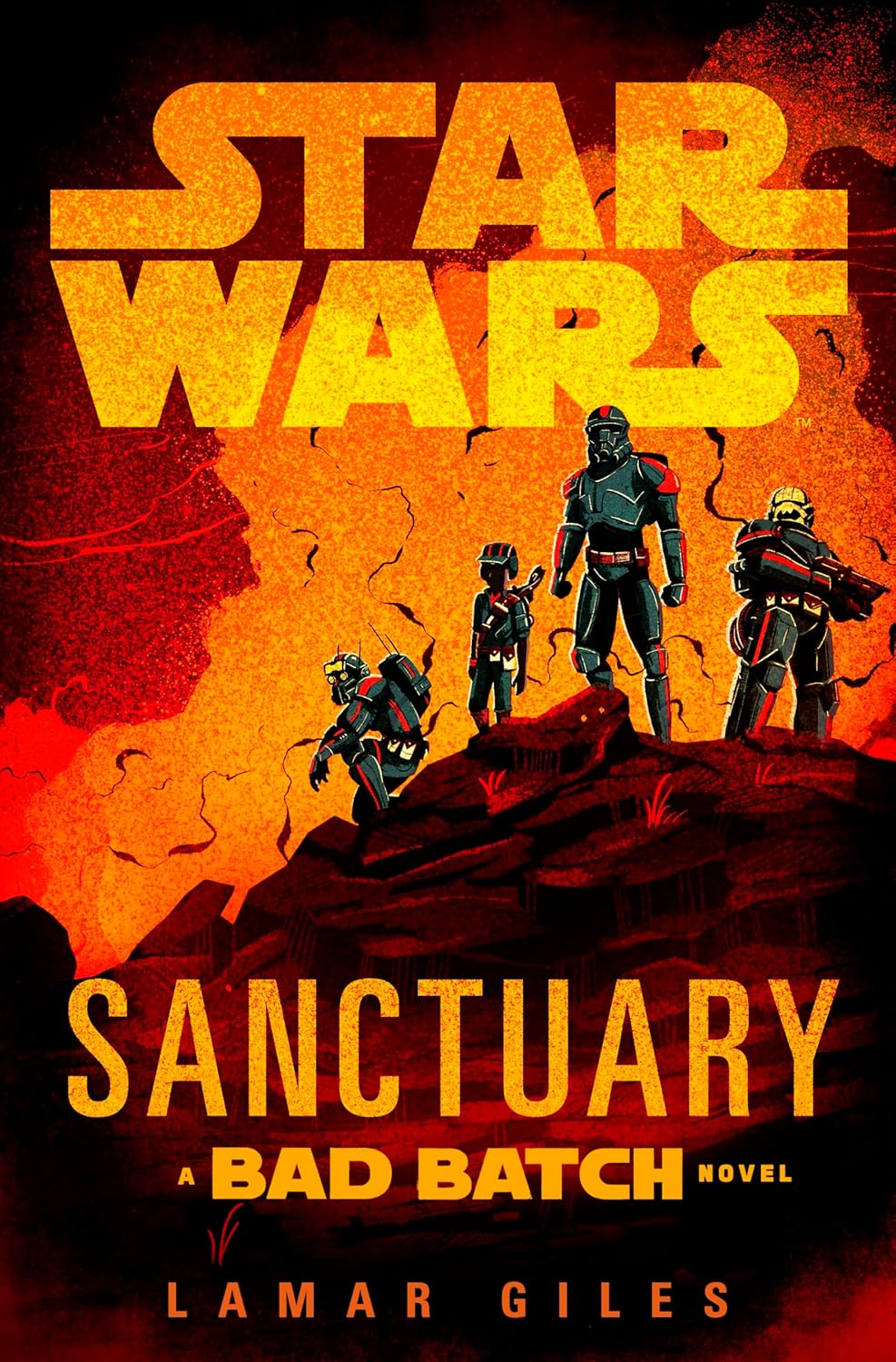
Star Wars: Sanctuary by Lamar Giles

Publisher: Random House Audio (Audiobook – 6 August 2025)

Series: Star Wars – The Bad Batch

Length: 11 hours and 46 minutes

My Rating: 4.75 out of 5 stars

Amazon

New Star Wars author Lamar Giles presents an epic and highly entertaining novel that follows everyone’s favourite group of rogue clones, with the Bad Batch focused novel, Sanctuary.

2025 has been an awesome year for Star Wars fiction.  Between the intense political novel, The Mask of Fear by Alexander Freed, and the upcoming Darth Vader-focused novel, Master of Evil by Adam Christopher, there are some interesting and heavy books coming out to further the lore of this iconic franchise.  However, there have also been some highly entertaining entries in this canon, including the fantastic novel Sanctuary.  Written by young adult fiction author Lamar Giles, Sanctuary is the author’s very first Star Wars novel, having previously written a short story in an anthology book.  A tie-in to The Bad Batch animated series, Sanctuary was an intriguing adult Star Wars novel that wasn’t originally on my reading radar.  However, in the mood for an audiobook from a familiar franchise, I decided to check it out, and boy was I glad that I did.

After turning on the Empire and deciding to live their own lives, the members of Experimental Clone Force 99, better known as the Bad Batch, are on the run, taking odd jobs and helping the innocents of the galaxy.  Made up of the grizzled Hunter, brilliant Tech, loveable powerhouse Wrecker and child prodigy Omega, the Bad Batch members have become an unlikely family.  However, after a series of dangerous missions, the members of the squad are tired, especially with their former comrades Echo and Crosshair on their own separate journeys. 

Needing a safe place to rest, the Bad Batch have found sanctuary on the planet of Pabu.  An idyllic settlement hidden from the eyes of the Empire, Pabu appears to be the perfect place for the clones to finally settle down and escape the constant battles.  However, before they can enjoy the peace of their new home, they’ll first have to help rebuild it.  With the settlement desperate for resources after a massive tidal wave, the members of the Bad Batch team up with pirate and self-proclaimed liberator of treasures, Phee Genoa, who promises an easy payday.

Hired to recover a valuable relic from an auction house, the crew’s ploy to steal it is quickly discovered, forcing them to revert to their usual fugitive ways.  However, their escape plan becomes complicated when Phee insists that they take on a second job, ferrying a mysterious couple to safe harbour.  Going against his better judgement, Hunter agrees to take on the passengers, but soon discovers that their new cargo has many secrets.  Forced to contend with an obsessive ISB agent and murderous tycoon with dangerous connections, the Bad Batch will risk it all for their new home.  But have they finally found an enemy too dangerous to defeat?

Sanctuary was an excellent and very entertaining Star Wars novel that proved a lot of fun to read.  Perfectly bringing the characters from The Bad Batch to life for an exciting new adventure, Sanctuary was an outstanding read that featured a compelling and action-packed story of love and life in the Star Wars universe.

Giles pulled together a captivating and very fitting narrative for Sanctuary, the serves as a great addition to The Bad Batch show, while also telling its own unique story.  Set towards the end of second season of the series, right after the events of the 13th episode, Pabu, Sanctuary is a fast-paced, character-driven story that takes the protagonists into the gritty underbelly of the Star Wars universe.  Starting with a very entertaining heist sequence, which goes about as well as any of the team’s plans, the titular Bad Batch and their pirate associate Phee Goena, escape with the loot, planning to sell it to a wealthy buyer.  At the same time, they take on two passengers, pregnant woman Keshiri Sohi and her masked partner Kuuto, who require smuggling across the galaxy.  Giles does a great job setting up all these initial story elements, and he quickly adds in some compelling complications that add some exciting drama to the narrative.  This includes a righteous ISB agent, Supervisor Sendril Crane, who is hunting their passengers, as well as the squad’s potential buyer, Cellia Moten, who would prefer to kill Phee Goena rather than pay her.

After an excellent shootout sequence halfway through the book where the protagonists are forced to simultaneously resist both Crane and Moten, the book slightly slows down as Giles works in some excellent story elements for both the protagonists and antagonists.  This includes growing drama between the Bad Batch and their passengers over their various secrets and lies, which also ties in nicely to internal conflicts amongst the team.  At the same time, Crane finds himself in the sinister orbit of the highly connected Cellia Moten, with the two trying to manipulate the other for their secrets and influence.  After a series of personal scenes for the protagonists that finally get them on the same page, Giles moves the story towards the end game, with the antagonists finding out where they are hiding.  This results in a series of awesome action sequences, with all the protagonists forced to fight to escape.  All the book’s characters, including its two villains, have their moment to shine here, and there are some powerful examinations of the relationship between new characters Crane and Sohi.  After some suitably climatic moments, the book ends on a high note that fans will really enjoy.  Giles also adds in an excellent cameo at the end that serves as a cathartic conclusion to another character’s story, and which I thought was a fitting and fun way to end the book.

I really enjoyed Giles’s writing style for Sanctuary, especially as he managed to achieve a lot in this novel.  Not only do we get a fantastic Bad Batch focused narrative loaded with action, adventure and other exciting Star Wars elements, but Giles also managed to include some powerful, personal moments, as various character dramas from both the show and this specific novel are played out.  The result was a slick and fast-paced novel that quickly draws the reader in with its easy humour and fun focus on The Bad Batch’s entertaining characters.  Thanks to some excellently timed shifts in character perspective, all the key members of Sanctuary’s cast have their moment to shine.  I particularly loved parts of the book that showcased the antagonist’s journey, which served as outstandingly entertaining contrast to some of the more character-driven chapters around the protagonists.  The combination of intrigue and Imperial politics in these scenes, as well as the mind games between to delightfully devious villains, was a true highlight of the book, and it allowed Giles to up the stakes of the plot, especially when it starts diving into some deeper Star Wars elements with some excellent references.

As a fan of The Bad Batch animated series I personally really enjoyed Sanctuary as Giles perfectly captured the tone and humour of the show.  Working as a great tie-in, Sanctuary fills in some interesting gaps between two of the show’s episodes, and the author does an excellent job of examining some of the issues the characters are facing during this period.  While naturally geared towards those familiar with The Bad Batch, Giles ensures that Sanctuary isn’t too show-lore dependent, and most general Star Wars fans will be able to read this book and have a great time.  Indeed, those unfamiliar with the animated series get a good glimpse at the humour and character dynamics in this novel, and it could serve as a good entry point to show.  Even if they don’t, the author also adds in a bunch of references that anyone familiar with Star Wars will be able to appreciate.  I felt that Giles did an excellent job exploring the period the novel is set in, the early days of the Empire a couple of years after the events of Revenge of the Sith, which is one of the more fascinating times in the franchise’s lore, and it was interesting to see how some of the new characters fit into this time.  As such, Sanctuary is going to appeal to a wide range of readers, and it’s a great read for fans of the Star Wars extended universe.

I have already mentioned a few times the excellent character work in Sanctuary as Giles features a great cast for this book.  Naturally for a Bad Batch book, the titular cast get much of the focus in Sanctuary, with excellent portrayals of Hunter, Tech, Wrecker and Omega.  Giles expertly captures their personalities from the show and reproduces them in Sanctuary.  As such, you are given some very interesting insights into the minds of each of these characters at this point in the series, with a particular focus on each clone’s glance towards the future and what they want out of life.  While there are some interesting alternating characters here amongst the cast, including Omega trying to become more independent, Tech’s unlikely romance with Phee, and Wrecker’s simple desire to blow things up, much of the character development for the main cast revolves around Hunter.  Giles spends a large amount of time diving into Hunter’s issues with losing control and no longer being a soldier, as well as some of the resentment he has from Crosshair’s abandonment of the squad.  This results in several fractious family moments, especially as Hunter’s caution tends to put him at odds with the rest of the team’s desires, and his distrust of Phee and their new passengers causes some noticeable friction.  These character dramas are a compelling part of the book’s overall plot, although Giles also does a good job of showcasing the more happy-family version of the Bad Batch, which fans of the show will appreciate, considering we all know what’s coming in a few episodes time.  That being said, I’m not sure I can forgive Giles for his line about Tech’s grapnel gun never failing him.

Aside from the titular Bad Batch, Giles features several additional outstanding characters, including returning show favourite Phee Genoa.  A free-spirited pirate and treasure hunter, Phee was a breath of fresh air amongst the stuffier clone soldier protagonists, and it was entertaining to see the unique interactions she had with the other characters.  Her antagonism of the rigid Hunter was particularly fun, especially as it brought up some much-needed drama, however, it was her relationship with Tech that was a true highlight of the book.  Giles did a good expanding on the feelings hinted at in the show, and they proved to be a very distinctive couple as a result.  I felt this gave some of the upcoming events of the animated series a little bit more of a tragic air, as you try to imagine what could be, and you end up liking them in a very bittersweet way.  The main cast of protagonists were well rounded out by new figures Keshiri Sohi and the masked Kuuto.  Mysterious passengers with secret pasts who cause all manner of trouble for the main cast, Sohi and Kuuto spend much of the book seemingly untrustworthy with their own agendas.  However, thanks to some excellent reveals, as well as a couple of good flashbacks, you grow to understand the complexity around their actions, and they proved to be a compelling addition to the cast as a result.

While I really enjoyed the protagonists, I felt they somewhat got overshadowed by the book’s impressive antagonists.  This includes ISB Supervisor Sendril Crane, a diligent and intense figure on the heels of Sohi and Kuuto.  Crane has a brilliant introduction in this book, which shows off his intelligence and ruthlessness, and he only gets better from there as you come to understand his background as a spy and his obsession with Sohi.  While Crane proves to be a ruthless adversary, he is well matched by Sanctuary’s other main antagonist, Cellia Morten.  An ultra-rich, politically connected tycoon with a penchant for murder, Morten is shown to be an outstandingly deranged figure early on, and she swifty amps up her evilness as the book continues.  Giles does an exceptional job sculpting Morten into the very worst rich villain he could, especially once her motivations for killing are revealed, and it was very fun for to eventual face reality on the real power structure in the galaxy.  While both serve as great antagonists to the main cast, the real beauty of these villainous characters occurs when they interact with each other, which results in a series of manipulative conversations which are thoroughly entertaining.  I particularly enjoyed how Morten continuously got the better of the normally unflappable Crane, especially in their first meeting when she gets out being arrested by asking if he had been sent by her good friend Sheev, with her use of namedropping and connections only getting better from there.  These two antagonists played off each other perfectly, and their battle of wits and cruelty, was even more entertaining than their hunt for the protagonists.  All these great characters added so much to my enjoyment of Sanctuary, and I loved the amazing arcs and interactions that emerged.

Naturally, I ended up listening to Sanctuary on audiobook, rather than seeking out a physical copy, as the audiobook format is the absolute best way to enjoy a Star Wars novel.  I love how incredible a Star Wars novel can sound when read out, and this was particularly true with Sanctuary, as all the awesome action and great characters were so much more impactful and fun in this format.  A lot of this is due to the narration of Marc Thompson, who does an exceptional job voicing all the characters and bringing the entire book to life.  Thompson, who is one of my favourite audiobook narrators, has long been one of the top narrators of Star Wars fiction thanks to his brilliant vocal talents and ability to impersonate various characters from the shows (see my previous reviews of Thrawn and Scoundrels by Timothy Zahn and Dark Disciple by Christie Golden).  His skill was on full display in Sanctuary, especially as he perfectly voiced Hunter, Tech and Wrecker throughout this novel, as well as several other characters from the show.  I was honestly so impressed by how he managed to accurately he was able to voice the three main clones from the show, with each of their distinctive but similar voices, coming across so damn close to their voice actor in the show, Dee Bradley Baker.  At the same time, he also does a good take on Wanda Sykes’s character Phee Genoa, and even does a passible voice for Omega, which includes the New Zealand accent of actress Michelle Ang. 

Thompson’s outstanding narration is further enhanced by the fantastic inclusion of Star Wars sound effects and music, which is an outstanding part of all Star Wars audiobooks.  The entire story really comes to life when you can hear crowd sounds and blaster fire amongst the dialogue, while the iconic Star Wars music makes several scenes just a little more epic, especially when they help remind you of moments from the films.  These extra audio inclusions pair perfectly with Thompson’s narration, and it honestly felt like you were listening to an episode of The Bad Batch with this audiobook.  I really enjoyed this full listening experience, and I ended up powering through Sanctuary’s near 12-hour long runtime in no time at all.  This was such a great listen, and this was honestly one of the better audiobooks I had the pleasure of listening to in 2025.

With a brilliant story, fun characters and a ton of action, Lamar Giles’ Star Wars novel, Sanctuary, was an outstanding hit.  An excellent tie-in novel that follows the entertaining characters from The Bad Batch animated series, Sanctuary was an impressive and exciting novel that had me hooked very early on.  A deeply compelling and addictive read, Sanctuary comes very highly recommended, especially on audiobook, and all Star Wars fans are going to have a great time with this awesome read.

Amazon

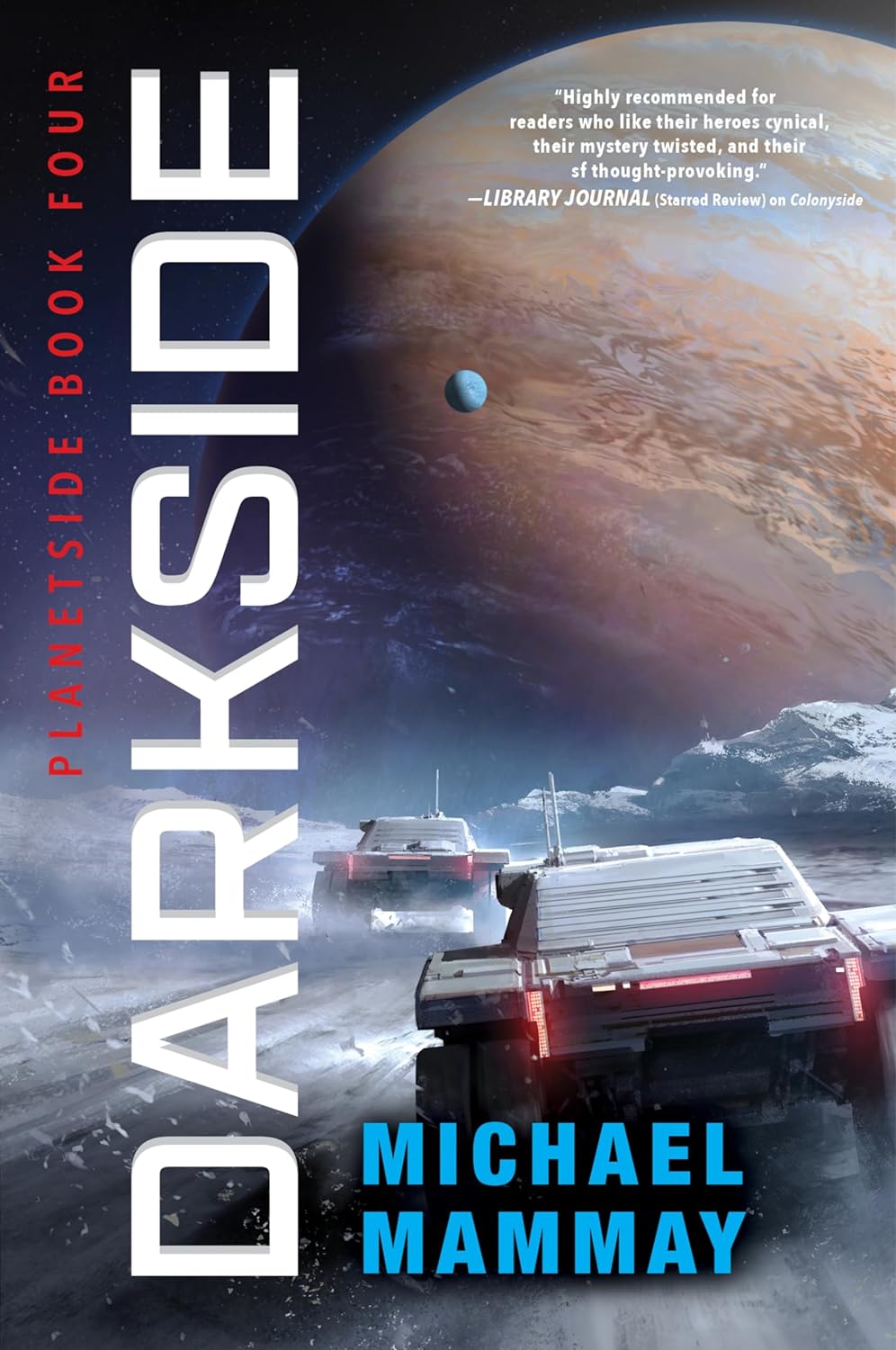
Darkside by Michael Mammay

Publisher: Harper Audio (Audiobook – 24 September 2024)

Series: Planetside – Book Four

Length: eight hours and six minutes

My Rating: 5 out of 5 stars

Amazon

One of my favourite science fiction authors returns with another fantastic and compelling military thriller in space, the highly addictive Darkside by Michael Mammay.

Back in 2018 I had the very great pleasure of reading the debut novel of new author Michael Mammay, Planetside.  An intriguing science fiction thriller that sent a retiring military officer to an alien planet to find a missing soldier, Planetside turned into quite the clever and exciting read, and I really got attached to its complex narrative and maverick protagonist.  Ending on a massive and well-written twist, Planetside was an exceptional read and was one of my favourite books of 2018.  The series continued strong from that point on as Mammary released more cool additions to the Planetside series, each of which pit the protagonist against human corruption and corporate greed in the depths of space with Spaceside (one of my favourite books of 2019) and Colonyside (one of my favourite books and audiobooks of 2021).  I have been curious to see if Mammay was planning to continue this series going forward, and I was nicely surprised earlier this year to find out that there was a fourth book coming out with Darkside.  One of my most anticipated books of 2024, Darkside was an intriguing entry to the series that once again forced the author’s protagonist to deal with old corporate threats on a distinctive new environment.

Colonel Carl Butler, former military officer turned genocidal fall-guy, has had an interesting life since his retirement from the military.  Thanks to the machinations of both the government and powerful corporation, Butler has found himself drawn into multiple conspiracies, and his direct way of dealing with the resulting controversy has made him infamous throughout the galaxy, as well as making him some very dangerous enemies.

Attempting to live out a quiet life on a remote planet, Butler finds his retirement once again disturbed when a young girl tracks him down, requesting his help in finding her missing father.  Finding it hard to say no to the desperate girl, especially when it becomes clear that something truly sinister has befallen her father, Butler reluctantly agrees to help, not realising the trouble he is about to find himself in again.

The missing father, Jorge Ramiro, had been working as the assistant for a famous archaeologist on the isolated moon of Taug.  With no electronic trace of Jorge remaining on the planet, Butler and his team chart a ship to the mining operations of Taug to find him.  However, Butler soon finds his investigation complicated by the fact that he has history with the two consortiums who control mining on Taug, Caliber and Omicron, as both have tried to kill him in the past.  Determined to find the truth no matter what, Butler relentless follows the dwindling trail of clues before him, even when that leads to the dangerous dark side of Taug where secrets lie hidden, and the two corporations are free to act without repercussion.

Michael Mammay presents another outstanding and impressive science fiction thriller that drags the reader in with its elaborate tale of intrigue, secrets, and one determined man seeking to fight the system.  Featuring a great combination of elements and a fantastically fun protagonist, Darkside was a brilliant addition to the Planetside series, and I had such an amazing time with it that it gets a full five-star rating from me.

I felt that Mammay produced another exciting and captivating narrative for his fourth Planetside book that ties in nicely to the rest of the series while providing readers with an excellent and entertaining ride capable of standing on its own feet.  Once again bringing in series protagonist Carl Butler to investigate a mysterious case on a new planet, Darkside features a fantastic tale of mystery, corporate antics and deeper intrigue.  The author does a great job of quickly setting the scene at the start of Darkside before dropping the protagonist right into the action as they attempt to find the missing father on Taug.  Seeking information from both corporations on the moon, Butler initially starts a methodical and low-key investigation.  However, things get tricky when Butler and his team discover evidence of a major coverup, and the protagonist is forced to pit the corporations against each other in his attempts to find the missing person.  This complex first half proves to be an excellent start to the novel, and Mammay ensures that the tension, stakes and mystery rise at an effectively rate, keeping the reader’s attention the entire way through.

Things take a very exciting turn around halfway through Darkside, as Butler’s investigation provoke action from his opponents that results in some extremely dramatic and intense moments.  While I had been enjoying the investigation and intrigue of the first half of the book, it was fun to dive into something much more action packed for the second half, and I really enjoyed the exciting direction that Mammay took the story.  There are some great reveals here, and I love how complicated the various corporate lies and agendas became at times.  Everything leads up to a very intense final set of sequences, as Butler finds his back against the wall and is forced to decide which devil to have in his corner.  There are some great twists here, as well as a cool chapter told from the perspective of one of the series’ major supporting characters, and it leads up to a particularly intense and moving conclusion that perfectly fit the overarching anti-corporate message of the entire series.

Darkside has an excellent and addictive style to it that really draws the reader in.  Told from the perspective of the cynical, but realistic, Colonel Butler, readers are presented an outstanding thriller novel expertly set in a futuristic setting.  Starting off with a mystery of a missing person, the story evolves into a more elaborate game of intrigue as the protagonist attempts to outsmart two rival companies.  Mammay hits the right blend of manipulation, investigation and action throughout Darkside, and readers are presented with a great story that thrills the reader while dragging them further in with the curious mystery.  This story is well set by the moon of Taug, which proves to be an outstanding setting for this intense novel.  Not only does Mammay provide some striking descriptions of this desolate moon, but the isolated nature of it, as well as more scientific elements like gravity and composition, are well utilised in the plot, creating problems and opportunities for the protagonists.  Whilst Darkside is part of a larger series, for the most part it is a standalone novel that new readers can easily dive into, especially as there is an effective summary at the front to fill in some major details about the protagonist and his previous outings.  I think I had a bit more fun having read the previous books first, especially as you appreciate how Butler’s relationship with some of the supporting characters has grown, as well as having a better understanding the protagonist’s adversarial relationship with the corporations on the moon.  Darkside was such a great addition to this series, and I had an exceptional time powering through this novel in record time.

Another major element of Darkside, and indeed the entire Planetside series, that I come to really enjoy, was the outstanding characters who sat at the heart of the story and who add some real emotional depth to the book.  This primarily refers to the protagonist and point-of-view character, Colonel Carl Butler, who is very fun to follow.  A former career soldier trying to enjoy retirement, Butler has been hit by controversy, betrayal and the downside of duty, which has made him infamous and forced him to live on a remote planet.  Despite this, he is still a cheerful figure whose desire to do good forces him into another adventure.  Witty and honourable, Butler has a very eccentric personality that results in most of Darkside’s humour, and you have to laugh at some of his clever thoughts and responses to the dark events around him.  Despite having a seemingly carefree, easy-going attitude, Butler is a canny operator at this point in the series, and it was great to see how he has finally learnt from his previous experiences of dealing with corrupt corporations.  I also really enjoy how Mammay portrays Butler’s thought process in this novel, as you get to see him weighing the options and impacts of his various potential actions, and seeing the steps Butler takes to make his decisions makes him a little more human and relatable to the reader.  As such, you really get caught up in Butler’s latest crusade, and it proves hard not to root for him the entire way, even despite his dark history.

In addition to Butler, Mammay also features a great supporting cast of characters in Darkside, most of whom play off Butler extremely well.  This includes the returning characters of Mac and Ganos, Butler’s bodyguard and computer expert respectively, who once again saddle up to help.  Mammay works these two characters back into the plot quickly and effectively, and it was great to see this team in action again.  Mac and Ganos serve as an entertaining support to Butler, especially as by this point, they have learned to anticipate their boss’s likely course of action.  I really enjoyed seeing the close camaraderie and support these three had together, and it there were some excellent and moving moments as a result.  The rest of the case also worked well around these central characters, with several new members of Butler’s team providing some intriguing plot options.  Throw in the usual collection of local soldiers who work with Butler, and a group of manipulative corporate officers who serve as the antagonists, and the cast of Darkside proves to be a fantastic part of the book, and I loved seeing them all in action.

I ended up enjoying Darkside on audiobook, which has been my preferred way of enjoying the Planetside books, primarily because of the inclusion of R. C. Bray as the narrator.  Bray, who is one of my favourite audiobook narrators, did another exceptional job voicing the characters in Darkside, and I love how well his gruff and rich voice fits Colonel Butler.  Bray’s voice work perfectly captures Butler’s sarcastic, pragmatic and rebellious streak, and you really get caught up in this excellent narrator’s central performance.  In addition to his excellent portrayal of Butler, Bray also brings all the supporting cast to life in fun and effective manner, with each character given their own distinctive voice or accent.  I particularly enjoyed the fun voice he gave to Butler’s right-hand man, Mac, which was handy considering Mac got a lengthy chapter from his perspective that really popped in Bray’s voice.  I honestly don’t think I would have enjoyed Darkside quite as much without having Bray read it out to me, and I have so much love for the paring between Bray and Mammay’s great writing.  Coming in with a runtime of just over eight hours, most people will be able to power through Darkside very quickly, and I honestly found it very hard to stop listening to this audiobook, which comes very highly recommended.

Michael Mammay continues to impress with Darkside, a brilliant addition to his fantastic Planetside series that proves hard to turn away from.  Clever, exciting, and featuring a well-written and intense story, Darkside is one of Mammay’s best Planetside novels yet, and I cannot wait to see how he continues the story in the future, especially as the rascally protagonists keeps making more and more enemies.

Amazon

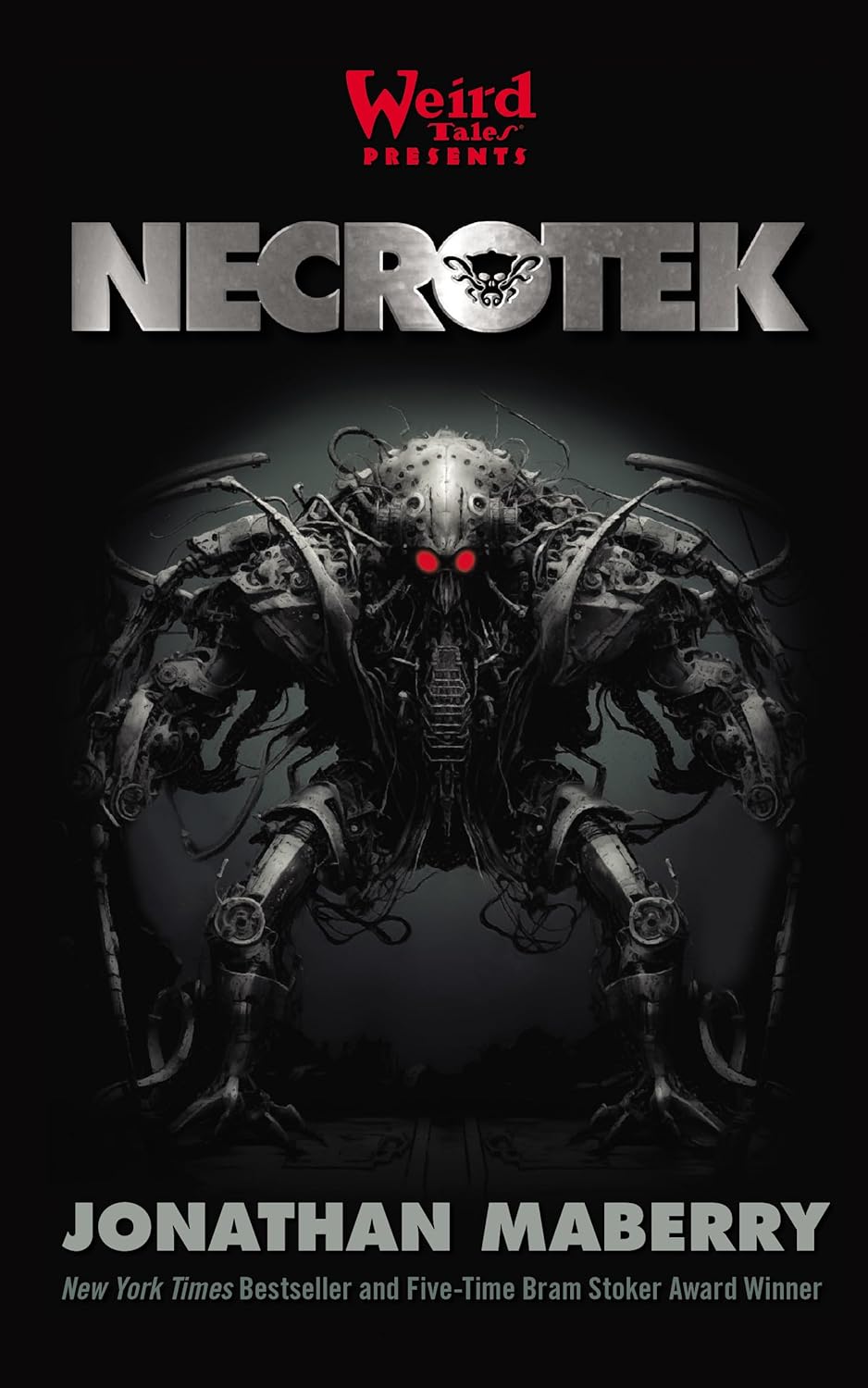
NecroTek by Jonathan Maberry

Publisher: Blackstone Audio (Audiobook – 28 May 2025)

Series: NecroTek – Book One

Length: 15 hours and 24 minutes

My Rating: 5 out of 5 stars

Amazon

One of the leading authors of action-packed fiction, Jonathan Maberry, dives headfirst into the science fiction genre with the unique read NecroTek, a remarkable Lovecraftian adventure in space that takes readers to some very dark places.

Readers of this blog will know that I have long been a fan of compelling author Jonathan Maberry, who has been impressing me with his elaborate, grim and varied book for years.  A long-time writer of horror-filled fiction across the genres, Maberry has multiple books and series under his belt, and I have had the great pleasure of reading a large portion of his existing works.  His main body of fiction is his Joe Ledger thriller series, which follows a tortured protagonist as he attempts to stop an array of dark technological threats assailing the modern world.  This series, which includes great books like Patient Zero, Assassin’s Code, Predator One and Dogs of War, as well as the Rogue Team International sequel series (Rage, Relentless and Cave 13), proved to be a great introduction to the author for me, and my appreciation for him grew after reading his Kagen the Damned dark fantasy series.  Made up of Kagen the Damned (one of my favourite books and audiobooks of 2022), Son of the Poison Rose (one of my favourite books and audiobooks of 2023), and The Dragon in Winter (which I am currently reading now), the Kagen the Damned books saw the author bring his distinctive style to the world of dark fantasy in a big way, and I loved the end result.

Due to how much I love Maberry’s captivating and enthralling novels, I always instantly grab anything new the author writes, and this includes his first release of 2024, NectroTek.  While his Joe Ledger books often feature strong science fiction elements in their thriller narratives, NecroTek was the first pure science fiction novel from the author, and I felt that he did an outstanding job applying his style and love for old-school horror into this new genre.  Released under the banner of the iconic Weird Tales horror magazine, NecroTek was one of my most anticipated releases of 2024, and it did not disappoint.


Plot Synopsis:

From New York Times bestselling author Jonathan Maberry, NecroTek is a gripping sci-fi thriller full of ghosts, gods, and a battle for the soul of humanity.

Neither cosmic philosopher Lars Soren, hotshot pilot Bianca Petrescu, nor the high priestess Jessica McHugh–Lady Death herself–can say quite where in the galaxy they are. But after an experiment gone horribly wrong, one thing is clear: Asphodel Station isn’t in orbit around Jupiter any longer. Worse, the monsters that live out here–ancient eldritch beings thought only to exist in stories and nightmares–have now been alerted to Earth’s existence.

Their army of Shoggoths is coming for us next.

Humanity’s only hope for survival lies on the surface of the alien world of Shadderal, where a ghost named Lost, the last of an ancient race, still haunts the vast plains of the Field of Dead Birds. But hope has a cost. Lost tells Soren about ancient derelict spacecraft awaiting on Shadderal, shapeshifting machines that blend ultra-advanced technology with the dark powers of necromancy. These ships might just be nimble enough to defend mankind against the coming invasion.

But there’s a catch: they can only be piloted by the dead.

As human starfighters fall in battle, their spirits can be called back from death to pilot these ghost ships of a fallen race. But will this new necromantic technology–NecroTek–allow humanity to stand against the vast armies of the Shoggoths? And even if it can, is the war to save the human race worth the cost of its pilots’ immortal souls?


What another brilliant read from Jonathan Maberry!  NecroTek was an outstanding and captivating novel that I unsurprisingly loved thanks to its elaborate and ambitious narrative, loaded with horror, carnage and a distinctive tale of survival against the odds.  Moving, powerful and highly emotional, NecroTek was such an epic and captivating novel, and I must give it a full five-star rating as a result.

Maberry produces another complex, detailed and powerfully dark narrative for NecroTek that is part science fiction, part horror, and all excitement.  Starting off just in advance of the events that will set the story in motion, Maberry does a great job of opening the book up and quickly setting the scene for the reader.  The start of a new series unconnected from his previous works (for now), this is one of the easier Maberry novels to break into, and you are soon invested in the tale of scientific exploration.  However, things change quickly once the teleportation experiment fails, and as this is Maberry, when things go wrong, they go wrong in a big and gruesome way.  The author really leans into his love of horror during these opening moments, and there are some shocking depictions of the side effects of the jump through space, as well as the terrifying things waiting for the survivors on the other side.  Maberry revels in featuring powerful depictions of terror and craziness here and it makes for a brilliant and often disturbing first part of the book.

After this horrifying start to the novel, NecroTek becomes more of a science fiction tale, although Maberry quickly infects it with his beloved Lovecraftian elements, as the protagonists soon discover that they have been discovered by Shoggoths above a mysterious planet.  This allows for some fantastic moments, as the humans attempt to defeat this new alien foe with their existing ships, while continuing to dive into the complex science and philosophy surrounding their circumstances.  This middle section of the book moves at a swift pace, and the readers are treated to some excellent battle sequences in space, as well as the character’s continued uncertainty as they try to understand the outrageous situation they have found themselves in.  Maberry does a great job setting down the required Lovecraftian lore and bringing key parts of the plot to light during this part of the book, and readers easily become absorbed in his compelling ideas, especially when they are coated in a combination of adventure, horror and intriguing characters.

Everything leads up perfectly to the final third of NecroTek, which sees the protagonists desperate to defend both the station, and the important planet they hover above.  Faced with attacks on multiple fronts and so many tragedies, the protagonists are forced to rely on a new ally and the titular NecroTek to face off against the Shoggoth fleet.  Maberry keeps the tension riding high for this final part of the book, and you are constantly on the edge of your seat as several simultaneous battles rage around the reader, often fought in some extremely epic ways.  There is some captivating tragedy, deeply moving moments of sacrifice, and elaborate dives into the human psyche as everything comes together, and you will be left dazed and moved by everything that unfolds.  An overall exceptional and unique story, NecroTek was so much fun, and I liked the potential for story continuation that exists at the end of the novel.

Maberry has a very distinctive writing style that he utilises in all his novels, no matter the genre, and which always results in an awesome and complex read.  Featuring a huge number of short and sharp perspective chapters that constantly jump between the key characters, as well as a few shots of the antagonists and other mysterious creatures, you get a layered story that shows so many complex actions at the same time.  This style works extremely well in this science fiction adventure, and I loved the elaborate ways he showcased the dark events occurring around the station, whether you get the experiences of the recurring characters, or one-off chapters that shows what happened to specific characters before they die.  These chapters deeply enhance the horror vibes in the book, which keep you on your toes and provides an overarching sense of threat and danger that really makes you concerned for the protagonists.  This cool horror vibe blends well with the extremely detailed science fiction setting and storyline, to create a particularly striking read that really stuck with me, especially as the author also dives into Lovecraftian elements which work nicely into Maberry’s distinctive tone.  As with most of Maberry’s work, NecroTek does get incredibly dark and disturbing at times, which may not appeal to every reader, especially when it comes to some of the more distressing occurrences.  However, Maberry channels this darkness extremely well into the plot and the various action sequences of the book, producing a rafter of ultra-exciting scenes that really stick in the mind.  I personally felt his various space-combat sequences were extremely good, and I loved how effectively he showcased the intricate nature of the battles, even when things get extreme with the inclusion of ghost-powered battle mechs. 

As with all Jonathan Maberry novels, the true power and heart of NecroTek lies in its many impressive and complex characters, who the author utilises to tell a particularly powerful and layered story.  Maberry has a real gift for producing compelling, damaged, and often highly over-the top characters for his various series, and NecroTek is no different as he introduces a range of figures whose unique perspectives shape and power the story.  While NecroTek lacks the full-on antagonist’s perspective that usually make his novels so effective (due to the enemies being unknowable aliens), you get a great spread of alternating perspectives and thoughts throughout NecroTek, as well as the powerful emotions behind them.  These emotions are greatly enhanced by the fact that all the human characters within NecroTek are disorientated or damaged by the earlier events of the plot, and watching them overcome their rage, fear or despair, really amps up the feeling of the unknown and the complex emotions that swirl around the plot.

While there are many characters featured within NecroTek, Maberry does focus the plot on a few key protagonists whose stories get a bit more attention.  This includes cosmic philosopher Lars Soren, who serves as one of the main explorers of the new world and the voice of calm reason amongst the protagonists.  I liked how effectively Maberry utilised a scholar protagonist for much of this novel, and it allowed for a much more thoughtful narrative at times.  Of course, as this is Maberry, there needs to be a militant main protagonist as well, and that role was filled ably by military pilot Bianca Petrescu.  A confident and skilled pilot, Bianca worked as a great partner to Soren throughout much of the adventure, and I liked the contrast in their styles and actions.  Bianca also works well as part of the fighter group, known as the Lost Souls, who work to defend the station from the Shoggoth fleet.  Acting like an extended family, the Lost Souls are a vital part of the book’s plot, especially as their eventual, many-layered sacrifice, results in some of the most emotionally charged scenes in the book, which is further enhanced by how much you have come to care for the whole group.  Throw in an actual necromancer and an ancient alien whose guilt-ridden ghost provides aid to the protagonists whilst also damning them, and the cast of NecroTek was extremely strong.  I really enjoyed the elaborate narrative threads that emerged around these figures, and it led to a very powerful and intense read.

As with most of the Jonathan Maberry novels, I chose to enjoy NecroTek on audiobook, which is easily the best way to enjoy one of the author’s elaborate and powerful novels.  Maberry’s distinctive writing style of constantly shifting characters, loaded action, and horrifying elements really comes across when read out and I honestly believe that this is the best way to enjoy one of author’s books.  A lot of this is due to the continued use of long-term Maberry collaborator Ray Porter, who has lent his voice to most of Maberry’s compelling audiobooks.  One of my favourite audiobook narrators, Ray Porter has an outstanding voice that expertly moves Maberry’s complex and addictive narrative around at a fast and effective pace.  Porter’s ability to instil emotion, intensity and often scary tones into his narration is extremely epic, and he can ensure that readers are always on the edge of their seats as they wait for more action or horror to emerge.  Porter also has a great range of different awesome voices that seem to always perfectly fit the character they are assigned to, and I love the fun and entertaining tones that convey so much of fear, feelings and deeper emotional state.  Coming in with an overall run time of 15 hours and 24 minutes, this is a long audiobook, although it proves easy to power through it quickly, especially in the action-heavy second half.  As such, the NecroTek audiobook version comes highly recommended, and you will not be disappointed when you listen to it.

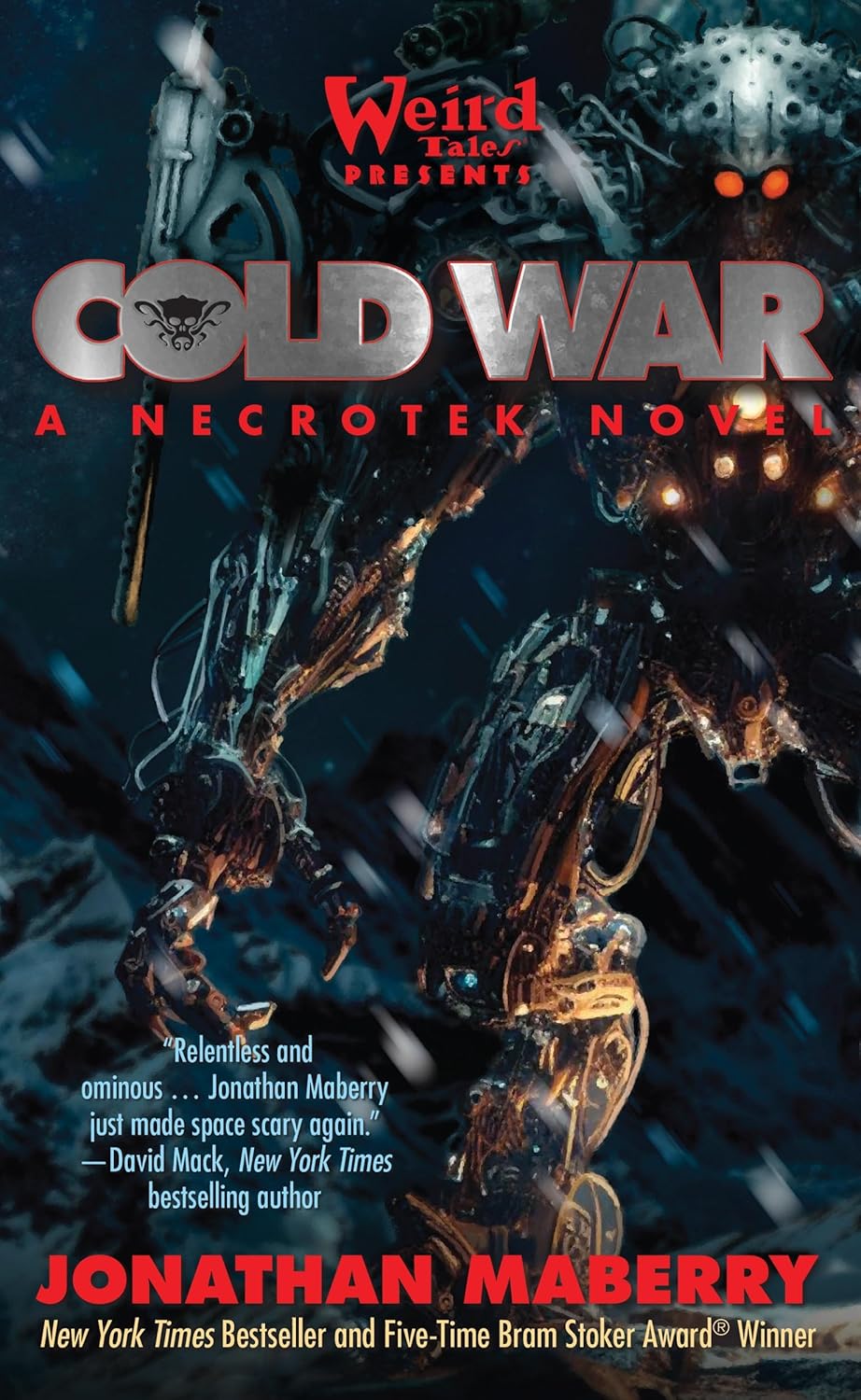
Jonathan Maberry once again deeply impresses me with his elaborate and addictively dark science fiction read, NecroTek.  A very distinctive Maberry creation, NecroTek features a brilliant story that brings together cool new science fiction elements with the author’s love for all thing Lovecraftian into a brutal and captivating read.  Fast paced and loaded with complex characters, fantastic action, and some truly epic sequences, NecroTek was such a great read from Maberry and comes highly recommended.  I look forward to seeing how Maberry continues the series in the future, especially as a sequel, Cold War, is apparently set for release in 2025.

Amazon

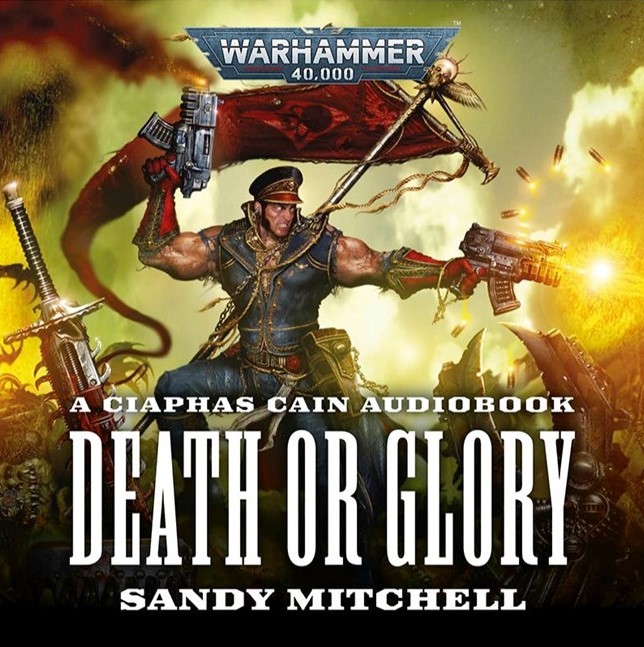
Warhammer 40,000: Death or Glory by Sandy Mitchell

Death or Glory Cover 2

Publisher: Black Library (Audiobook – 28 February 2006)

Series: Ciaphas Cain – Book Four

Length: 8 hours and 50 minutes

My Rating: 4.75 out of 5 stars

Amazon

After recently getting through awesome Warhammer 40,000 novels like Straight Silver and Sabbat Martyr, I was in the mood for even more fantastic fiction, so I decided to check out the always reliable Ciaphas Cain series by Sandy Mitchell with Death or Glory.

The Ciaphas Cain books are an outstanding and highly entertaining Warhammer 40,000 series that shows the grimdark universe in a whole new light.  Written by talented author Sandy Mitchell (a pseudonym of Alex Stewart), the Ciaphas Cain books follow an unlikely hero, Commissar Ciaphas Cain.  Despite being a Commissar, officers who are supposed to be embodiments of duty, discipline and bravery, Cain is a highly practical and fearful man who wants to stay alive in the deadly Warhammer 40,000 universe.  However, his attempts to stay out of the fight usually result in him getting thrust into even more danger which he needs to survive using his trademark cunning and manipulation tactics.  His various adventures have also turned him into a legendary hero throughout the Imperium of Man, something that results in even more trouble for unlucky Commissar.

The Ciaphas Cain books are always a lot of fun to read, especially as Mitchell takes a comedic take to the Warhammer universe.  Loaded with unlikely coincidences, clever humour and over-the-top characters, the first three Ciaphas Cain novels, For the Emperor, Caves of Ice and The Traitor’s Hand, have been extremely awesome and this is easily one of my favourite Warhammer 40,000 series.  As such, when I needed something particularly entertaining to listen to, I chose the fourth book in the series, Death or Glory.

Relatively young Commissar Ciaphas Cain is not yet the hero of the Imperium he is fated to become, although he has already started to gain a reputation he doesn’t believe he deserves.  After stopping a genestealer infestation, Cain and the artillery unit he is attached to are ordered to the planet of Perlia, which has fallen under siege by the orks.  Happy to spend the next war far behind the lines with the artillery, Cain is unprepared for the dangers to come.

Upon arriving in the Perlia system, the ship Cain is travelling aboard comes under ork attack and Cain has no choice but to rapidly disembark in an escape pod.  Trapped with his aid, Jurgen, Cain’s pod is shot down before they can be rescued, which results in them crashlanding on Perlia.  Hoping to find sanctuary after a harrowing adventure in space, Cain is horrified to discover that they have crashed into the wrong side of the planet and are currently stuck well behind enemy lines.

Knowing that the only way to survive the ork hordes is to rejoin the main Imperial army, Cain has no choice but to embark on a dangerous road trip across the continent.  However, with thousands of brutish orks in the way, Cain will need help to survive.  Pulling together an unlikely army of scattered troops and desperate civilians, Cain heads off into the desert, hoping to find his salvation.  Their resulting journey will pit them against the full ork army and help turn Cain into a legend known throughout the galaxy.

Death or Glory was another exceedingly fun and deeply captivating entry in the Ciaphas Cain series that once again places Mitchell’s complex protagonist in all manner of trouble.  Action-packed, clever, and filled with excellent humour, Death or Glory was an outstanding read that I could not get enough of.

I really enjoyed the awesome story that Mitchell came up with for Death and Glory, particularly because it was a somewhat fresh take on the usual narrative.  Rather than following Cain as he works with his regiment to stop a hidden threat, Death or Glory shows Cain alone (except for Jurgen) and behind enemy lines on an ork controlled world.  Acting as a prequel to the previous novels in the series, you see the slightly younger Cain attempt to find his way back to safety, only to encounter multiple groups of refugees and scattered soldiers who turn to him for leadership.  The resulting story turns into a hilarious combination of Mad Max, Laurence of Arabia, and Kelly’s Heroes, as Cain leads his band, many of whom are crewing crude ork vehicles, across the ork controlled territories, including a vast desert.  There are several amazing battle scenes that see the humans fight back against the orks in desperate situations, often won thanks in part to Cain’s tactical insight and his unlikely manoeuvres designed to keep him alive.  This is a non-stop story, and you get really drawn into the constant travel, fighting and attempts at survival that emerge.  The orks prove to be great antagonists for the story, especially as Mitchell provides them as a mostly serious enemy.  While they are slightly underpowered in the face of the unbeatable Cain, and you do see the inherently sillier side of them, Mitchell also makes sure to showcase their prowess and brutality, which keeps the stakes high and the story even more captivating.  Ending on a final battle where Cain showcases his unlikely heroism by pure chance, Death or Glory had me hooked with its story the entire way through, and I loved the fantastic scenario that Mitchell came up with.

I have mentioned in previous reviews of the Ciaphas Cain series that Mitchell has an outstanding style that really enhance the story and bring out the innate humour within.  This is once again the case for Death or Glory, as the story is primarily told in the chronicle form from Cain’s perspective.  These unvarnished insights into Cain’s mind paint a vivid and fun picture of the events he was involved in, and you get some interesting insights into his actual motivations.  This fun story is further enhanced by the fact the memoirs have been modified by Cain’s associate, Inquisitor Vail, as she adds in a variety of notes, additional information, in-universe historical texts and footnotes.  Not only are these delightful additions informative and serve as a great way to quickly insert details of the larger war into the plot, but they are also quite funny due to the author’s sarcastic tone.  I love some of the entertaining jokes that emerge in the footnotes, especially as it allows the author to quickly reference certain ridiculous elements of life in the Warhammer universe, many of which are parodies of classic British activities.  These additional notes really change the tone of the entire book, and I love how it allows Mitchell to turn Death and Glory into something far more than a typical war story.

While there is a definite focus on humour in Death or Glory, there is still a ton of action and intense adventure here, as Mitchell draws inspiration from classic desert war movies.  The carnage of the orks is bleak, the battles are hard, and the situation is desperate as Cain and his comrades navigate the desert.  These darker elements play off the humour of Death and Glory extremely well, and I loved the complex narrative that emerged.  I enjoyed how Mitchell kept up the same excellent level of humour and compelling story elements that the previous entries were known for, and there was a strong effort to keep it consistent with the previous books.  You do notice that Mitchell utilises a bit of repetition in his books, with similar lines and descriptions used again and again.  While this is not too noticeable if you take a break in between books, it is very apparent for chain readers.  Still, this is a minor issue that Mitchell does a good job of dispelling in Death or Glory with the more unique storyline.

Like most of the entries in this series, Death or Glory can be read as a standalone novel with no real pre-knowledge of the previous books needed to enjoy it.  Indeed, Death or Glory is set earlier than the other Ciaphas Cain books, so this is a good entry point to the larger series.  There are a few references to the other Ciaphas Cain books, which established fans will enjoy, and Mitchell also provides clever hints at future events Cain will have to encounter.  Death or Glory also serves as a very fun introduction to the ork faction, especially as our protagonist has never encountered them before.  This allows the reader to get a fresh outside perspective on these alien characters, while also including details that hardcore Warhammer fans will appreciate.  As such, Death or Glory proves to be an awesome addition to the series that will appeal to fans of all levels and could easily spark a new reader to fall in love with Warhammer 40,000 fiction.

A recurring highlight of this series is the fantastic characters who populate the narrative, particularly main protagonist Ciaphas Cain.  Cain is a particularly complex Warhammer 40,000 character, mainly because he is both a renowned hero and a self-serving coward who only wants to avoid a fight.  Portrayed as a fun combination of Blackadder and Flashman, Cain is shown to be purely selfish, with his every move calculated to keep himself alive.  However, through accident or something else, his plans often backfire, forcing him into over-the-top dangerous situations that ensure others see him as an amazing hero.  This is on full display in Death or Glory as Cain pulls together a band of survivors that gets far larger and more chaotic the further they get along.  Despite his plan being designed to get himself to safety, many see him as a heroic revolutionary leader, which he is forced to maintain to keep his band of protectors loyal to him.  It is quite fun to see everyone misinterpret his decisions, and several fictional historical texts showcase the process of overexaggerating his deeds in hilarious detail.  However, despite all his protestations to the reader about being a coward, you once again see that there is far more to Cain than he lets on.  Rather than being a terrible person, he is just a sensible and tactically aware figure in a universe where the actions of unachievably brave heroes are constantly lauded.  This has led Cain to completely underestimate his own self-worth, even though he is routinely shown to be an impressive fighter, clever tactician, and caring leader.  I love this complex look at Cain, especially as his self-deprecating account ensures he is even more likeable, despite his selfish habits, and you really get drawn in to his crazy adventures.

Aside from Cain, several other figures were impressive in Death or Glory.  The most prominent, at least from impact on the book, is Cain’s associate Inquisitor Vail.  Despite not actually appearing as a character in the main adventure, Vail’s presence is strongly felt as she is the one editing and presenting Cain’s fictional memoirs.  As such, you are constantly gifted with Vail’s overlying narration and notes, especially as she provides greater context to the story and translates some of Cain’s wilder claims.  Thanks to her sarcasm, as well as her personal insights into Cain’s actual character, Vail provides a fantastic alternate viewpoint of events, and it is always fun to see her call out Cain for his lies and terrible writing style.  The other major character you must talk about is Cain’s aid and reliable bodyguard, Jurgen.  The Baldrick to Cain’s Blackadder, Jurgen is generally shown to be an unhygienic, smelly, and slightly dim companion who is utterly loyal to Cain.  However, despite this appearance, Jurgen proves to be an interesting and likeable figure, and he forms an excellent partnership with Cain.  His skills are well on display in Death or Glory, mainly due to his intimate knowledge about orks, and he once again showed himself to be an unappreciated part of Cain’s ultimate victory.  Throw in a band of intriguing survivors who flock around Cain, including several capable soldiers, a somewhat insane Tech-priest and determined troop of civilians, and Death and Glory had some great characters you can’t help but root for.

I have mentioned multiple times in the past that the best way to enjoy a Warhammer 40,000 novel is in its audiobook format.  Nowhere is that truer than the Ciaphas Cain books, which make excellent use of multiple narrators to expertly adapt the fantastically funny content of the novels.  Death or Glory is an outstanding example of this, as the brilliant production and excellent narrators produced something that I powered through very shortly, even with its nearly nine-hour long runtime.  The intense action, compelling story and outstanding humour is all amazingly highlighted in this format, and I especially loved the four amazing narrators who were brought in to voice the characters.  This includes returning favourites Stephen Perring and Penelope Rawlins, who fulfill their respective roles perfectly.  Perring is probably the most prominent narrator of the bunch as he voices all the chapters told from Cain’s perspective.  Perring is an awesome narrator as he perfectly captures the chaotic characters featured within the book, especially Cain and  Jurgen.  His portrayal of Cain is probably the best, as he expertly showcases the protagonist’s exterior boldness, as well as his interior fear and deep humanity.  Jurgen of course also comes out very well, and I love how Perring captures Jurgen’s unique persona and unquestionable loyalty to Cain.

While Perring voices the main chapters, Penelope Rawlins is just as important as she voices Inquisitor Vail, who writes the prelude, chapter introductions, additional material and footnotes that are scattered throughout the book, providing editorial notes and material to make the story more organised.  Rawlins’ voice is seamlessly worked into the main plot multiple times throughout the course of the audiobook, and I like how well her inclusions work with Perring’s main narration, especially as Rawlins perfectly captures both Vail’s sarcasm and the clear admiration she has for Cain.  This audiobook would not be as entertaining or clever as it is without these clever insertions by Rawlins, and she adds just as much to the production as Perring does.  In addition, Death and Glory brings two new narrators to the series with Joe Jameson and Richard Reed, who voice in-universe historical texts and autobiographies included to provide additional context to Cain’s ramblings.  I was very happy to hear from both familiar narrators, as Jameson lent his voice to the Necromunda novel Fire Made Flesh by Denny Flowers, as well as the Legacy of the Mercenary King series by Nick Martell (The Kingdom of Liars, The Two-Faced Queen and The Voyage of the Forgotten), while Reed narrated The Infinite and the Divine by Robert Rath, The Twice-Dead King series by Nate Crowley (Ruin and Reign) and Grim Repast by Marc Collins.  I really liked Jameson and Reed’s performances as a result, although both were a little underutilised thanks to the constraints of the narrative.  Still, these four narrators provided some exceptional voice work, and I had an amazing time listening to them throughout the course of this audiobook.  As such, Death and Glory comes very highly recommended in its audiobook format, and there is no better way to enjoy this book.

Sandy Mitchell continues to write one of the most entertaining Warhammer 40,000 series out there with this fourth entry in the epic Ciaphas Cain series.  An outstanding and hilarious novel that I absolutely powered through, I cannot recommend Death or Glory enough, and you will fall in love with this brilliant book.

Amazon

Quick Review – Fractal Noise by Christopher Paolini

Fractal Noise Cover

Publisher: Tor (Trade Paperback – 16 May 2023)

Series: Fractalverse – 0.5

Length: 287 pages

My Rating: 4.5 out of 5 stars

Amazon

Return to the epic Fractalverse of the always awesome Christopher Paolini with this standalone prequel novel, Fractal Noise, a tense and impressive dark science fiction novel.

Christopher Paolini is an author that I have been a major fan of for a very long time thanks to his iconic and epic Inheritance Cycle series.  The amazing Inheritance Cycle first debuted over 20 years ago with the amazing fantasy novel Eragon, which told the compelling story of a young hero and his dragon companion as they fight to free a conquered land.  The Inheritance Cycle series is one of my all-time favourite series due to the great story, impressive world building, and the sheer nostalgia that I hold for them.  Indeed, I am particularly excited because Paolini is also releasing a sequel to the Inheritance Cycle books later this year with Murtagh, which is one of my most anticipated reads for the second half of 2023.  However, before we get to that there is even more Paolini goodness to unwrap this year as the author has also released the intriguing science fiction novel, Fractal Noise.  A standalone prequel to his science fiction epic from a few years ago, To Sleep in a Sea of Stars, Fractal Noise was an intriguing read that I had a lot of fun reading in the last week.

Plot Synopsis:

July 25th, 2234: The crew of the Adamura discovers the Anomaly.

On the seemingly uninhabited planet Talos VII: a circular pit, 50 kilometers wide.

Its curve not of nature, but design.

Now, a small team must land and journey on foot across the surface to learn who built the hole and why.

But they all carry the burdens of lives carved out on disparate colonies in the cruel cold of space.

For some the mission is the dream of the lifetime, for others a risk not worth taking, and for one it is a desperate attempt to find meaning in an uncaring universe.

Each step they take toward the mysterious abyss is more punishing than the last.

And the ghosts of their past follow.


Fractal Noise
was a very awesome book from Paolini that I had an outstanding time getting through.  I must admit that when I first received a copy of Fractal Noise, I wasn’t too sure that I was going to read it, mainly because while I enjoyed To Sleep in a Sea of Stars, it was a bit too long and overcomplicated, and I feared this potentially unnecessary prequel would be the same.  However, I decided to give it a shot, especially as Fractal Noise was considerably shorter than the original novel in this series, and boy am I glad that I did.

Paolini sets up a simple but very effective story in Fractal Noise that is set 23 years before the events of To Sleep in a Sea of Stars, which details the discover and early exploration of a mysterious alien artefact that was mentioned in the original novel.  Just like with To Sleep in a Sea of Stars, Fractal Noise is told from the perspective of a single scientific protagonist, this time a xenobiologist names Alex Crichton, and follows them and their team as they examine a newly discovered space anomaly, an uninhabited planet with a 50km-wide perfect hole in it that is constantly relaying a continuous, overwhelming beat.  This anomaly could only have been created by a sentient species, and the scientists aboard the ship decide to journey to the planet to find any additional signs of alien life and to discover more about the hole.  However, to make it to the edge they need to land a substantial distance away and trek to it by foot in an arduous journey with many potential complications.

Paolini does a good job of quickly and effectively setting up this compelling plot in the first 50 pages of Fractal Noise while also providing great introductions to the damaged protagonist, as well as the accompanying scientists that are taking the trek with him.  However, the real story doesn’t start until the protagonists land on the planet and begin walking the distance towards the hole.  The author really goes out of his way to make this trek as arduous as possible, as the characters need to walk through wind, dust and other obstacles, all while pulling a mechanised sled behind them that slowly breaks down.  The sheer repetitiveness of this task, combined with the desolate landscape, injuries, and the unique planet that rings with a loud “thud” every few seconds, works to slowly wear down the protagonists and force them into some very dark places of their mind.  The closer they get to their goal, the harder their task becomes as the vibrations and noise produced by the hole becomes more intense and places a bigger toil on their bodies and technology.  At the same time, every setback impacts their minds even further as the four scientists soon fall to dangerous infighting as each of them is haunted by their own ghosts and their own reasons for being there.

I really liked how the entire story slowly devolved into a dark and ultra-intense psychological science fiction thriller as Paolini worked to emulate desolate real-life expeditions (such as those old-school arctic journeys), with his excellent storytelling.  The slow but unstoppable mental decline of the characters is handled perfectly, and while you are initially more worried about the protagonist, Alex Crichton, due to the recent tragedies in his life, the other characters are the ones you have to watch out for as they become more and more deranged or determined in their own ways.  Watching everyone slowly turn on each other as the journey becomes harder and harder on them is extremely compelling, and it proves hard to turn away as things get darker and darker.  The author supplements this compelling narrative with some intriguing, realistic and very-well thought out science fiction elements, especially when it comes to the physics of the planet, the obstacles they are facing, and the technology they have access to.  However, there is also a certain primitive edge to the storytelling as no matter how advanced their technology is, when it starts to fail, they are forced to dive back into more a much more basic mindset.  All this combines well with the fantastic dive into Crichton’s bleak mental state, as the protagonist begins to see the expedition as an important quest that will give him some redemption for his recent losses.

The entire story continues along this dark vein all the way to its compelling conclusion, and I was honestly pretty addicted towards the end, knocking out the last couple of hundred pages in a single night.  Watching the final snap of each protagonist was pretty brutal, but it was a necessary commutation of the complex storytelling that had been leading up to at that point.  I loved how well the barren landscape served as a background to this great story, and the constant “thump” “thump” of the planet as they drew closer gave such an outstanding atmosphere to the plot.  Paolini really pulled together an excellent read here that both serves as a continuation of his existing universe, while also giving readers a story so very different to anything that he has produced before.

Overall, I found Fractal Noise to be an outstanding and epic new novel from Christopher Paolini, which I had such a great time with.  I cannot emphasise just how intense and complex this initially simple story becomes, and the author’s ability to create forbidding settings, damaged characters, and suffocating story atmospheres has clearly grow over the years.  Due to its connections to the history of his pervious novel, Fractal Noise is perfect for fans of To Sleep in a Sea of Stars, while also being very open to new readers interested in a compelling and bleak science fiction adventure.  Fractal Noise was an exceptional read that comes very highly recommended from me and I cannot wait to see more of Paolini’s writing later this year when Murtagh comes out.

Amazon

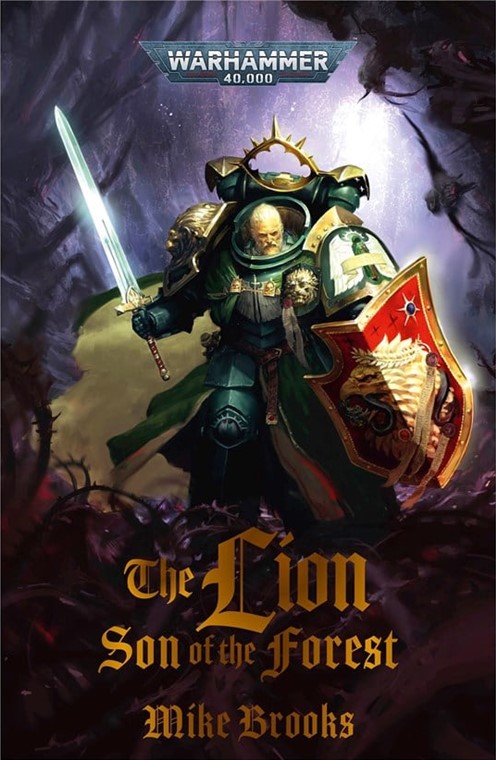
Warhammer 40,000: The Lion: Son of the Forest by Mike Brooks

The Lion - Son of the Forest Cover

Publisher: Black Library (Audiobook – 22 April 2023)

Series: Warhammer 40,000

Length: 12 hours and 15 minutes

My Rating: 4.75 out of 5 stars

Amazon

One of the fastest rising authors of Warhammer 40,000 fiction, Mike Brooks, returns with another exceptional read, this time covering one of the most significant events in recent Warhammer fiction, the return of Lion El’Johnson with The Lion: Son of the Forest.

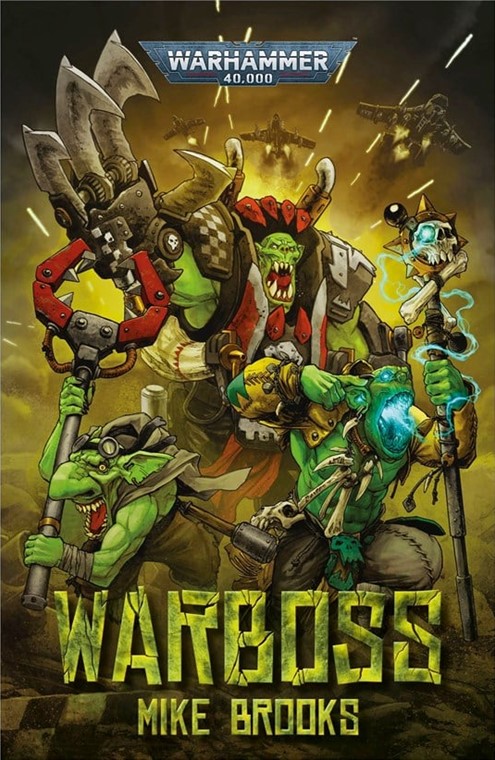
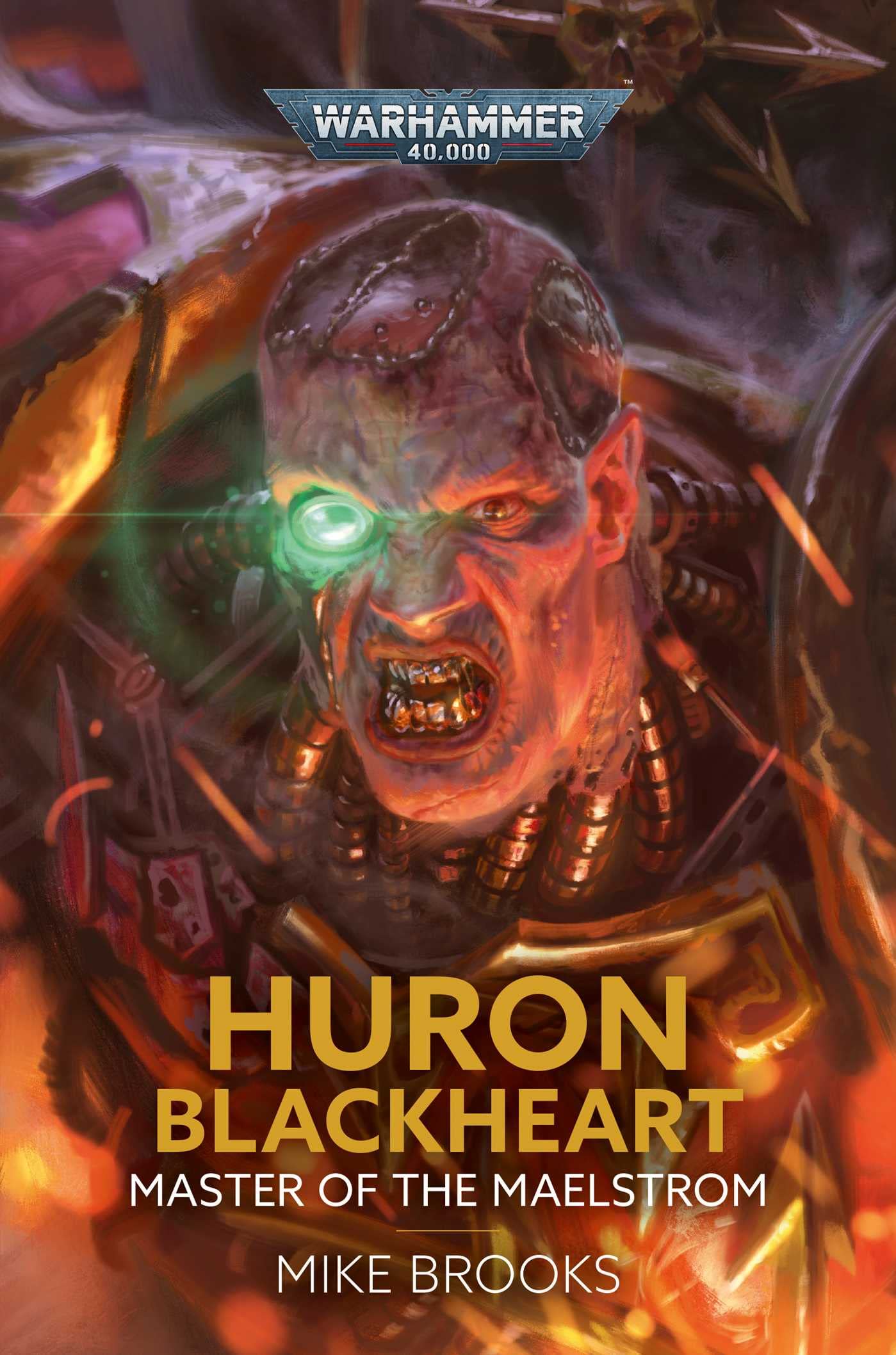
At this point I think that my love for all things Warhammer is pretty well established, especially after my lengthy post earlier this year detailing my favourite Warhammer 40,000 novels.  I have been having a ton of fun in 2023 with this cool franchise, and I have just managed to finish off the newest Warhammer novel with The Lion: Son of the Forest.  This is the latest book from the very impressive Mike Brooks, who has been making a real name for himself in Warhammer 40,000 fiction and who seems to get better with every one of his books that I read.  His previous novel, Huron Blackheart: Master of the Maelstrom was a great read about an excellent established villain, and I had a lot of fun with his most recent book, Warboss, a highly entertaining novel about the always crazy orks.  However, I think that The Lion is probably his most ambitious and captivating novel yet as he covers the return of the Primarch of the Dark Angels, Lion El’Johnson.  This is a pretty big deal in Warhammer circles, and I was very impressed with how Brooks puts his own spin on the return to create an epic and powerful read.

At the dawn of the Imperium of Man, there was no force more deadly nor more loyal to the Emperor than the Dark Angels, the first Legion of Space Marines.  Led by their implacable and unstoppable Primarch and genefather, Lion El’Johnson, better known as the Lion, nothing was able to stop the Dark Angels as they crusaded from planet to planet dispensing the Emperor’s will.  However, following the events of the Horus Heresy and the Lion’s inability to save the Emperor, the Dark Angels imploded from within.  Treachery and years of resentment saw the Legion engage in a brutal and sudden civil war, which resulted in the destruction of the Dark Angel’s home world of Caliban, the scattering of the traitor Dark Angels throughout time and space as the Fallen, and the disappearance and apparent death of the Lion right when the galaxy needed him most.

Now in the 41st millennium, humanity is facing the greatest threat since the Horus Heresy.  The fall of Cadia spawned the Great Rift, a sprawling gap of daemon infested space that split the already crumbling Imperium in two, distributing travel, communications and coordination between humanity’s armies.  Into this darkness, the dread forces of Chaos emerge, destroying all before them, while other malign threats begin to eat away the remains of the Imperium.  The doom of all mankind seems certain, but hope is about to emerge in the most unlikely of places.

After a 10,000-year absence, the Lion awakens on the far-flung and devastated planet of Camarth, with no memory of how he got there.  Discovering one of his former sons, the Fallen Zabriel, the Lion soon discovers what has happened to the Imperium in his absence, as well as the terrible threats of the Great Rift and the forces of Chaos.  Unsure of his purpose or what has happened to him, the Lion sets out to preserve humanity from the forces trying to destroy it.  Rallying members of the Fallen from their long exile, the Lion begins a new campaign throughout the besieged systems of man, while trying to reconcile himself to everything he has lost.  But a dangerous and well-organised Chaos warband, the Ten Thousand Eyes, led by two of the Lion’s Fallen sons, are determined to destroy the returned Primarch and enact an ambitious plan with galaxy shattering consequences.  Can an isolated Lion survive the insanity of the 41st millennium, or has he returned only to face his doom?

Wow, now this was a pretty damn awesome Warhammer 40,000 novel.  Mike Brooks continues to really impress me with this cool new book, and I loved the elaborate and captivating tale contained within The Lion: Son of the Forest.  Featuring an intriguing and emotionally charged narrative that perfectly revives a key Warhammer 40,000 character, The Lion is an outstanding read and I think this is probably Brooks’ best Warhammer novel yet.

The Lion had a particularly interesting narrative that was firmly set around the return of Lion El’Johnson, and I loved the unique tale that Brooks came up.  The initial scenes of the book are quite fascinating as Brooks presents a symbol laden couple of chapters to show the Lion’s initial return, which I felt was a great way to start the story as it set up a lot of intriguing moments and gave the book quite a distinctive theme.  The introduction of two new alternate perspective characters a few chapters in helps to morph the story into a more typical Warhammer 40,000 narrative as it sees the Lion and other former members of the Dark Angels awaken in the current timeline.  The story soon sees the Lion reunite with one of his former sons and begin to reclaim a conquered Imperial planet from a notorious Chaos warband while trying to understand the new universe he’s in.  Getting back to his roots as a protector, the Lion soon is soon drawn into larger affairs, thanks a mysterious new ability he has obtained, and he sets out to do the right thing and right the wrongs of his past.  His actions not only lead him to more of his sons, ensuring that this book has a deep emotional heart to it, but it also leads him into conflict with a dangerous enemy, one that has big plans for him.

The Lion’s narrative is pretty epic in its scope and power as Brooks tells an exciting and compelling story about both the past and the present, and how one hero can make a difference.  The story features some great moments, including cool battles, emotional reunions, and dives into ancient history, as the characters come to grips with what the Lion’s return means to the greater universe.  Everything leads up to an ultra-intense finale as the Lion encounters a truly fallen son and is forced to reckon with the sins of his Legion and family.  I really enjoyed this epic narrative and Brooks sets out all the events extremely well, ensuring that readers will follow one excellent scene to the next.  While not every mystery is explained, the author does lay out some intriguing events that will grab a lot of Warhammer fans attention, and it leaves it open for more awesome books in the future.  I had an incredible time with The Lion and I managed to finish it off in a short amount of time.

This outstanding story is beautifully brought to life in Brooks’s capable hands as he deploys an excellent and captivating writing style throughout The Lion.  Brooks really had a tall order here in bringing back a key character from the Warhammer mythos and I think that he handled in an outstanding way by focusing on the emotional aspects of the character, rather than a pure action novel.  While The Lion does have some outstanding battle sequences designed to showcase just how epic a Space Marine can be, the focus is really on character development as Brooks examines three outstanding point of view figures while also telling an excellent narrative about characters trying to find their place in a strange new galaxy.

I loved how the author split the story across the three different perspectives, and I enjoyed how he made them so distinctive by using different styles and tenses for each of them.  For example, Baelor’s chapters use a third-person narration to show his struggles without going too deep into his head, the scenes shown from Zabriel’s eyes are written in a first person chronicle style as he recounts his story as if writing a journal, while the chapters focusing on the Lion are also in the third person, but feature a different, more epic style, which at times put me in mind of an older story or saga.  These different styles really fit the characters and their specific stories, and I appreciated how Brooks utilised these changes of styles to really tell a complex by subtly layering a classic Warhammer tale with pain, emotional damage, and uncertainty.

I felt that the author got the right balance of action and adventure with character growth, and you really get attached to the protagonists and their unique experiences in the Warhammer 40,000 universe.  I also loved how Brooks layered the story with a ton of Arthurian symbolism, as the Lion is meant to mirror King Arthur in this book, returning during his people’s darkest hour after dying during a war with his sons.  This included an excellent take on the Green Knight tale, with a dark Warhammer 40,000 twist to it, which also leads to one of the book’s funniest moments with a Monty Python homage.  I really got drawn into this outstanding story thanks to the way that Brooks told it, and this was an excellent and captivating read.

Now, this one of those Warhammer 40,000 novels that I probably wouldn’t recommend to new Warhammer readers as the story dives into some deep canon elements of the franchise.  Due to its focus on the return of Lion El’Johnson, a particularly important character that was only recently brought back in the game as a major event, The Lion is a key book in the Warhammer 40,000 expanded universe, and I felt readers needed a good understanding of the lore to fully appreciate its story.  This is because is strongly related to the history of the Dark Angels, and indeed all the Space Marines, and while Brooks does revisit and explain these events, having a more in-depth knowledge really does make that story that much clearer and more intriguing.  For those established fans of Warhammer 40,000 fiction, you are in for a real treat as Brooks expertly expands the lore while also providing some intriguing insights into established canon.  Seeing the Lion return and interact with his Fallen brethren was so damn cool, and it really tied into some of the best bits of Dark Angel lore that has been building for years and years.

I loved how the story examined both the current state of the Warhammer 40,000 universe, as well as the Horus Heresy, and it was fantastic to see characters who survived the Heresy arrive in the current universe and see what has been unleashed by the arrival of the Great Rift.  There are also a ton of jokes, references, and in-universe discussions that I had a lot of fun with, including intriguing new descriptions of events of the Horus Heresy, as well as more intriguing Dark Angels history.  I personally deeply enjoyed seeing the various ancient characters discuss the events that happened after they disappeared, and their reactions at the state of the Imperium, the deification of the Emperor to godhood, and what happened to the Dark Angels in the Lion’s absence, and this lead to some outstanding scenes.  The Lion proved to be a pretty epic piece of Warhammer 40,000 fiction and I was really impressed with how Brooks told such a unique and important story.

As I mentioned before, The Lion is a very powerful character driven novel as Brooks focuses on a cast of damaged and dispossessed figures thrust into an uncompromising future.  This is mostly clearly seen in the main character of Lion El’Johnson, the legendary Primarch of the Dark Angels and son of the Emperor, who returns after 10,000 years of mysterious disappearance.  Brooks paints quite the intriguing and complex picture around the Lion, showing him as a being out of time who, after experiencing some of the greatest losses and betrayals imaginable, awakens 10,000 years in the future with no idea of what happened to him.  The Lion is shocked at what the Imperium has become and how badly the universe has changed without him there.  Forced to reconcile with both this new future and his many failures, the older and wiser Lion heads back to the basics of his youth, protecting humans from monsters while also trying to reconnect with his lost sons, the Fallen, who he has mixed feelings about.  Brooks’s characterisation of the Lion is very different to what we’ve seen in previous novels, which I think a smart move, as the character is tired and lonely in this reality, and very much aware of the mistakes he has throughout his life.  Watching him relive some of the worst decisions he made during the Horus Heresy is very moving, and I loved how his insights into the past allowed him to move forward with his rediscovered sons and attempt to forgive them.  While there are a still a lot of questions around how the Lion returned (something I hope Brooks addresses in the future), I think that this was a pretty impressive return of such a key character, and I look forward to seeing more books focused on him.

The other major characters featured within The Lion are former Dark Angels who rebelled against their father thousands of years ago and were scattered throughout time and space following the destruction of Caliban.  Known collectively as the Fallen, these Space Marine characters have very complex feelings about Lion El’Johnson, especially as many believe he betrayed them and the Imperium, and they have all spent the intervening years being relentlessly hunted by the modern Dark Angels and their successor chapters.  This intriguing background was fertile ground for rich character development and backgrounds, and a large portion of the novel’s emotional depth relied heavily on the Lion meeting and reconciling with his lost sons.  Brooks produces several brilliant scenes that showcase the turbulent relationship between the Lion and the returning Fallen, and it was fascinating to see the Lion, a usually stubborn and proud character, admit that he was wrong and try to make amend to his sons.  I loved the intriguing group of characters that emerged in a supporting role as a result, especially as Brooks set them up as counterpoints to the Knights of the Round Table to match the Arthurian vibes around the Lion.

The most prominent of these supporting characters is Zabriel, the first Fallen that the returned Lion encounters, who serves as his guide to the new universe.  Zabriel has some amazing scenes in this book, especially as he provides the Lion with the first taste of the trauma the Fallen have experienced thanks to their father, and he makes sure the Lion knows that.  His well written chapters really capture his deep emotional conflict throughout The Lion, as he tries to reconcile the betrayals of the past with the hope that surrounds the revelation that Lion El’Johnson has returned.  His interactions with other members of the Fallen are really impressive as well, and I think he had some of the best chapters in the book.  Zabriel’s intriguing perspective is well matched by the other major point of view character, Baelor, a fellow Fallen who has chosen to continue following his former commander Seraphax, who he believes has a great plan to save the Imperium.  To achieve this goal, Seraphax has taken to wielding dark magic and is working with the followers of Chaos, forming the deadly warband, The Ten Thousand Eyes.  This forces Baelor to make a lot of compromises as he works to maintain his loyalty to Seraphax, even though they are doing terrible things.  The return of the Lion really throws Baelor for a loop, and there is a great undercurrent of denial to him as he tries to process all the implications that this has for him.  Brooks paints a brilliantly narrative of conflicted loyalty and duty around Baelor which worked wonderfully with all his chapters depicting the horrors of Chaos.  The rest of the Fallen characters in The Lion are very well written, and while some of them didn’t get a lot of focus, I loved some of the distinctive personalities that emerged.  It will be interesting to see how many of them are featured in the future, especially as there are still some secrets I wouldn’t mind knowing (who is The Red Whisper?), and I deeply appreciated how well Brooks featured them here.

To nobody’s great surprise, I checked out The Lion on audiobook, which is easily the best way to enjoy any good Warhammer novel.  Naturally, The Lion was pretty damn epic in this form, and everything about the book is greatly enhanced by the narration, as the epic story, amazing characters, and intriguing additions to the Warhammer universe, all come to life when read out.  I particularly enjoyed the voice work of Timothy Watson, who previously impressed me in last year’s Warhammer 40,000 audiobook, Krieg.  Watson has a wonderfully booming and commanding voice that worked well with all the powerful Space Marine characters in The Lion.  The narrators take on the confident and radiant tones of Lion El’Johnson was particularly awesome, and I really felt that he captured both the majesty of the character, as well as his deeper uncertainty and regret.  The other Space Marine characters are also extremely well captured, and I liked the fun range of voices that emerged, especially as they all seemed to fit that respective character and convey the key parts of their identity to the listener.  The villains are also cleverly narrated, and Watson goes out of his way to make them sound as inhuman as possible in places.  Coming in with a run time of over 12 hours, The Lion has a decent length for a Warhammer audiobook, although Watson’s fantastic narration moves the story along at a swift pace, ensuring that the listener is constantly hooked on the plot.  This entire production was just amazing, and I had an exceptional time listening to The Lion on audiobook, which is such an epic way to enjoy a Warhammer 40,000 novel.

Mike Brooks continues to rise through the ranks of Warhammer 40,000 authors with his outstanding new novel, The Lion: Son of the Forest.  The impressive and captivating read brilliantly brings back one of the most significant characters in the Warhammer canon and places him in an intense and deeply powerful tale of betrayal, forgiveness and displacement.  I had such an epic time with The Lion: Son of the Forest and this probably the best Warhammer book of 2023 so far.  I cannot wait to see what happens to this iconic character in the future, nor can wait to get my next Mike Brooks novel.  Highly recommended and required reading for all fans of Warhammer fiction.

Amazon

Warhammer 40,000: Warboss by Mike Brooks

Warhammer 40,000 - Warboss Cover

Publisher: Black Library (Audiobook – 25 March 2023)

Series: Warhammer 40,000

Length: 8 hours and 48 minutes

My Rating: 4.5 out of 5 stars

Amazon

Prepare for the ultimate battle for control as several feuding ork bosses fight to become the new leader of the Waaagh! in this amazing and highly entertaining Warhammer 40,000 novel, Warboss by Mike Brooks.

2023 has been a big Warhammer 40,000 fiction year for me as I have been having an absolute blast reading all manner of cool novels from across the franchise (make sure to check out my recently released list about my favourite Warhammer 40,000 novels).  However, while I have read a ton of Warhammer books this year, I have not had the opportunity to read any 2023 Warhammer releases.  Well, I am on my way to rectify that by looking at the recently released Warboss by awesome author Mike Brooks, who also wrote the 2022 novel Huron Blackheart: Master of the Maelstrom.  Brooks did an outstanding job with this fantastic new book, and I had so much damn fun with Warboss and its highly entertaining and hilarious story.

In the far future of the 41st millennium, there are few things are more destructive or unstoppable than an ork warband on a rampage.  One of the most effective bands currently killing its way through the galaxy is that of Warboss Gazrot Goresnappa whose Waaagh! has conquered the once mighty human fortress world of Aranua.  After several decisive and bloody victories, the Waaagh! celebrates in front of the planet’s remaining bastion, the massive Davidia Hive.  All it will take is one final assault to totally defeat the humans on Aranua so Warboss Goresnappa can strip their resources and lead his boyz to bigger and better fights out in the stars.

However, before Goresnappa can achieve his great victory, an unfortunate accident sees him very, very dead under the giant decapitated head of a Gargant war machine.  With their leader squashed, the Waaagh! now has an opening for Warboss, and several ambitious orks from across the no-longer united clans step forward to fight for the job.  However, before the usual brawl for leadership can begin, a prophecy from the clan’s resident weirdboy, Old Morgrub, reveals that the ork gods have something very special in store for the Waaagh! and its next leader.  A mysterious gate lies underneath the human city that could transport the Waaagh! to fights anywhere in the galaxy, and whichever boss finds it first will be the new Warboss.

Forced to obey the words of the gods, the bosses engage in their own elaborate plans to breach the Hive City and claim the gate.  But which boss can triumph over the others?  Will it be the brutal Goff Big Boss Mag Dedfist, the suicidally fast Speedboss of the Evil Sunz, Zagnob Thundaskuzz, the sneaky and cunning leader of the Blood Axes, Da Genrul, or could it even be the leader of the grot uprising, the self-proclaimed prophet of Gork and Mork, Snaggi Littetoof?  All four believe that they are the only ones capable of leading the Waaagh! and they will fight tooth and nail to become Warboss.  But to succeed they’ll need to not only overcome all their rivals but the human defenders of the Hive City and an Aeldari army waiting in the depths to defend their gate.  May the best ork win!

Oh dear, oh dear, what a damn funny book.  Honestly, any Warhammer 40,000 novel that focuses on the orks is bound to be comedy gold, but Warboss is one of the better ones I have had the pleasure of reading.  Author Mike Brooks does a wonderful job of telling a tight and amazingly fun story that perfectly showcases the orks in all their green skinned glory.  I had so much fun with this book and I managed to power through Warboss in very short order.

This proved to be a pretty fast-paced and impressive story, and it’s one that I was able to have a blast listening to as it unfolded.  Primarily focusing on the various ork characters that are part of Waaagh! Goresnappa, Warboss starts off with a sudden game changer for the protagonists as the infamous Warboss Goresnappa is killed off in hilarious fashion thanks to a group of argumentative grots and the falling head of a massive war machine.  This leads several of the remaining ork bosses throwing their hats into the ring to become the Warboss, and all hell follows as a result.  Tasked with finding a hidden Aeldari gate under the human city, each of the ork bosses implements their own plans to get into the city first, whether that be through blowing down the walls, infiltrating from below, or driving around the city at high speeds, hoping for the best.  Brooks breaks the story up around the main three contenders nicely, and you soon get a good idea of their different, but very orkish strategies.  However, the story is made even more enjoyable thanks to some of the alternate perspectives that emerge.  This includes the ambitious grot Snaggi Littletoof who, after accidently killing Warboss Goresnappa, attempts his own grot uprising and tries to find the gate to gain his cause legitimacy.  Several human characters are also shown, often to add some interesting contrast to the orks, and it is fun to see their attempted counterattacks, which often leads to disaster.  This makes for an excellent first two-thirds of the book and Brooks does a great job of showcasing both the protagonists and the ork nation as a whole while also setting up a very entertaining story.

Unsurprisingly, the orks make it into the city and everyone starts arriving at the gate at the same time, often in comedic or unexpected ways.  This leads to a very fast-paced final third as everyone starts fighting everyone else to become Warboss, facing off against humans, Aeldari, and every rival faction of the Waaagh!.  Brooks showcases this final big battle in some excellent ways, and you get really drawn into the crazy carnage that follows thanks to the well-written and exciting action scenes.  The use of multiple perspectives was pretty useful here, and I liked how the author showed the same massive battle again and again, each time from the point of view of another character.  This added more detail to the brawl each time, as well as some amusing alternate opinions of events from some very different characters.  Brooks throws in some excellent twists and turns here and you are never quite certain who is going to come out on top in the battle for supremacy.  The eventual fate of every major character is pretty fantastic and really fits the storylines that have been building up throughout the book.  I personally came away from Warboss extremely satisfied and I loved all the cool developments and totally insane moments that occurred.  Overall, this was a very impressive standalone Warhammer 40,000 narrative and it is very hard not come away loving this story thanks to the awesome humour and all the fantastic, over-the-top interactions that occurred.

All fans of Warhammer fiction know that ork focused novels are some of the funniest novels out there, due to the way that they focus on the over-the-top antics of this beloved faction.  Some good examples of previous Warhammer books that strongly featured orks include Ghazghkull Thraka: Prophet of the Waaagh! by Nate Crowley (one of my favourite books of 2022) and Catachan Devil by Justin Woolley, and I think that Warboss is up there with these fantastic reads.  This outstanding book really dove into the humour as you watched the crude and eternally underestimated orks battle it out amongst each other and the other factions, often coming up with insane and funny solutions to all the deadly problems they encounter.  There honestly wasn’t a single chapter where I wasn’t laughing at some of the crazy stuff that just occurred, and Brooks had a real talent for writing from the ork perspective.  There was some great consistency in the way that the ork characters acted and thought throughout Warboss and every chapter focussed on them saw the characters using similar lingo, slang and descriptions of the other races in the Warhammer 40,000 universe.  As such, you get a great appreciation for the ork mindset and it was great to see the ork perspective on all the book’s over-the-top moments.

One of the things that I felt set Warboss aside from some other Warhammer 40,000 novels featuring orks is that Brooks didn’t fall into the trap of portraying them simply as funny simpletons.  Instead, Brooks shows that the orks are quite smart and complex in their way, it just that their culture, in comparison to humans or Aeldari, has more of a focus on violence and straightforwardness than the other races in the galaxy.  This is backed up by scene after scene of the orks utilising their skills, technology and cunning to win various encounters against seemingly smarter or more organised opponents, and it is always quite fun to see the orks looking down on their opponents for making mistakes that they wouldn’t do.  While this love of extreme violence is mostly played for fun, Brook’s also tries to show the darker side of it, as the orks are pretty damn brutal in how they deal with the humans and Aeldari they encountered.  I loved the great contrast between the ork and human characters that Brooks added into Warboss, as the humans were always so arrogant and condescending towards the orks’ intelligence, even when they were beating them.  This complete lack of understanding by most of the human characters really enhanced the various ork chapters, especially those that showed the orks managing to understand and outthink their human opponents, and I really appreciated this fantastic deeper dive into ork mindset and society.  I did think that Brooks might have made the orks slightly too overpowered in Warboss, as they manage to take on quite a few major enemies with relative ease, but this always added some fun to the story and it was interesting to see the full potential of the orks.

This deep dive into the orks is further cemented thanks to the several outstanding character arcs that Brooks set up throughout Warboss, particularly around the four main characters fighting for control of the Waaagh! in their own way.  The three ork characters Mag Dedfist, Zagnob Thundaskuzz and Genrul Uzbrag (Da Genrul), are in some ways quite similar, in that they have several similar racial tendencies towards violence or leadership.  However, each of them represents a different clan, and so they have different battle tendencies which really helps to highlight the different factions within ork society.  Mag Dedfist is a Goff, and so he relies more on classic violence and explosions to achieve his goals in the most direct ways possible.  Zagnob is an Evil Sun boss who has dedicated himself to the Kult of Speed and believes in riding the fastest vehicle he can find right towards the enemy.  The most entertaining of these is probably Da Genrul, a member of the Blood Axe clan who admire human martial ability and utilise their own take on tactics, discipline and stealth to achieve their goals, often outsmarting the humans they are aping.

I was also a big fan of the character of Snaggi Littletoof, a grot with ideas of grandeur who attempts to start a grot uprising against their cruel ork masters.  The grots (also known as gretchins, essentially goblins from classic fantasy), smaller cousins of the orks who are used as slave labour and cannon fodder, aren’t particularly well featured in most Warhammer 40,000 fiction, so I had fun with a whole character arc around them in Warboss.  Snaggi and his band of rebellious grots (Da GrotWaaagh!), are a very entertaining inclusion, and I liked the revolutionary storyline that Brooks set around them that provided both humour and an interesting look at typical grot life.  It was so much fun to see Snaggi inspiring his followers to go against their nature and rebel, especially as the orks had no idea what they heck they were doing.  Thanks to Brook’s use of Mag, Zagnob, Da Genrul and Snaggi, you get a great understanding of each of their specific faction and the author did a particularly good job of featuring each of them equally.  Indeed, thanks to the appearance of several different ork characters in a supporting role, you get a pretty good idea of nearly every major ork clan, faction and designation, and even those readers completely unfamiliar with orks can come away from this book knowing most of the key things you need to know about them.

These ork and grot protagonists are well backed up by several entertainingly arrogant human characters who honestly make the orks seem reasonable and likeable in comparison.  The best is easily Captain Armenisu Varrow, who is held prisoner by Da Genrul as his pet and tactical advisor.  Varrow goes through so much hell in this book, but is so deliciously haughty while he does so that you really can’t feel sorry for him.  Despite his ironclad belief in his own intelligence, Varrow is outsmarted time and time again, and it is just great to see him cower his way through events while still thinking he is the smart one.  His story arc is very entertaining and I loved how very dark it gets, especially at the end.  The rest of the humans are also great in their own ways, even if they are only featured for a short amount of time, and their ongoing false remarks about the abilities of the orks in the face of the carnage they are laying down always made me chuckle.  An overall great group of characters who help to turn this amazing story into something truly special.

I checked out Warboss on audiobook, which honestly is becoming my go-to format for all things Warhammer.  This proved to be another excellent decision as the Warboss audiobook was a ball of absolute fun that I had a brilliant time listening to.  Coming in with a runtime of under nine hours, this is a pretty easy audiobook to power through quickly and I managed it in a few, hilarious sessions.  The outstanding, comedy laden story really works well in the audiobook format and so many of the great jokes come across that much better when you listen to them.  It definitely helped that they brought in established Warhammer narrator Harry Myers to voice this book as he did a spectacular job here.  I have deeply enjoyed Myers in several recent Warhammer audiobooks, including The Wraithbone Phoenix by Alec Worley (one of my favourite audiobooks of 2022) and Day of Ascension by Adrian Tchaikovsky, and he has another amazing performance in Warboss.  His voice is just perfect for all the alien characters featured within this novel, and the various gruff tones of the orks and high-pitched squeals of the grots are very spot on.  In addition, several of the human characters are shown in all their arrogant finery throughout the audiobook and you really appreciate just how stupid they are through this medium.  Each character is expertly showcased to the reader through Myers’ voice, and I loved every line he read out as a result.  I also deeply enjoyed how well his narration worked to convey all the fantastic jokes loaded throughout the production, including that hilarious bit involving the ork characters failing to know the chapter numbers.  This was a such a great audiobook to listen to and I cannot recommend this format enough for Warboss as you are guaranteed to have an exceptional time listening to it.

Mike Brooks continues to impress me as an outstanding author of Warhammer fiction with his amazing novel Warboss.  A comedy heavy novel that perfectly showcases the always fun orks, Warboss is pure entertainment from start to finish that both established fans of the franchise and new readers can easily enjoy.  Brooks has a clear appreciation for this faction which really shines through in his storytelling, and I loved his great take on everything orkish.  One of the funniest and enjoyable releases of 2023 so far, this is essential reading for all interest in hilarious Warhammer fiction, and I am very glad I checked it out.

Amazon

Throwback Thursday – Warhammer 40,000: The Guns of Tanith by Dan Abnett

The Guns of Tanith Cover

Publisher: Black Library (Audiobook – 25 April 2002)

Series: Gaunt’s Ghosts – Book Five

Length: 10 hours and 10 minutes

My Rating: 4.5 out of 5 stars

Amazon

Welcome back to my Throwback Thursday series, where I republish old reviews, review books I have read before or review older books I have only just had a chance to read.  After having such a great time reviewing the previous Gaunt’s Ghosts novel, Honour Guard, in my last Throwback Thursday, I immediately read the fifth fantastic entry in the series, The Guns of Tanith, which proved to be just as awesome and exciting.

As I mentioned last week, I have been really getting into the works of Dan Abnett over the last year, and I now consider several of his books to be amongst the best Warhammer 40,000 novels I have had the pleasure of reading.  Not only did I deeply enjoy his epic Eisenhorn trilogy (made up of Xenos, Malleus and Hereticus) but I have also been powering through his Gaunt’s Ghosts books.  The Gaunt’s Ghosts books are some of the more iconic novels in the Warhammer 40,000 franchise and are often considered essential reading by fans of the franchise due to the captivating way they capture the gruelling experiences of ordinary human soldiers in this grim, futuristic setting.  The first four novels in the series, First and Only, Ghostmaker, Necropolis and Honour Guard, as well as the prequel novel The Vincula Insurgency, are all excellent and exciting in their own way, and I have had a ton of fun seeing the impressive war narratives set around the men of the Tanith First-and-Only, informally known as Gaunt’s Ghosts.  As I was still in the mood for some awesome action at the end of last week, I just had to keep going with these books and I quickly picked up the fifth entry, The Guns of Tanith.

As the massive Sabbat Worlds Crusade continues to pit the forces of the Imperium of Man against the foul forces of Chaos, the battlelines extend across multiple planets and systems, drawing in millions of soldiers.  The latest phase of the crusade has severely stretched the supply lines of the Imperial assault and the Chaos foes are quick to take advantage, threatening to cut off and surround the main Imperial force.  To stave off disaster, Warmaster Macaroth, needs the Tanith First-and-Only to recapture the vital promethium producing planet of Phantine so the crusade can be resupplied and continue.

Led by the heroic Colonel-Commissar Ibram Gaunt, the Tanith First-and-Only engage in a deadly airborne assault on several of the planet’s domed cities.  Relying on their unique skills of navigation and infiltration, the Ghosts prove to be vital to the operation and soon take the key city of Cirenholm.  However, holding the city proves to be harder than expected.  While preparing for the next assault, the vile murder of a freed Cirenholm civilian places a Ghost on trial and opens up the festering cultural divides within the regiment.

As Gaunt attempts to get to the bottom of the crime and ensure that the innocent are left alive, the Ghosts are given a vital mission to undertake.  A dangerous Chaos warlord has taken command of the final occupied city, Ouranberg, and his lethal command threatens to devastate an attack by the Imperials.  To ensure a successful invasion of this Chaos stronghold, a specialised team of Ghosts is tasked with infiltrating the city and assassinating the enemy leader in advance of the main assault force.  Featuring some of the best the Ghosts have to offer, the assassination squad will be forced to walk through hell to achieve their objective and not everyone will be coming back.

In this fifth entry in this amazing series, Abnett continues to impress with another powerful and captivating character-driven read that takes the Ghosts through a gruelling round of battles, tragedy and growth that proves near impossible to put down.  The Guns of Tanith was a pretty strong entry in the series, expanding on some of the interesting storylines from the first novel while also introducing a new dark scenario for the characters to deal with.

The Guns of Tanith features a fantastic narrative from Abnett that contains his usual blend of high-intensity action, character growth, and intriguing examinations of the Warhammer 40,000 universe, that make all the Gaunt’s Ghosts novels such a treat to read.  Following on from the events of the previous books in the series The Guns of Tanith is told in Abnett’s typical style, with a ton of unique character perspectives, mostly those of the Ghosts, which presents the reader with a rich and vibrant view of the events, as well as the unique, character-driven storylines that emerge.  While this fifth Gaunt’s Ghosts novel can be read as a standalone book, The Guns of Tanith does see several ongoing, character focused storylines come to a head or get even more complicated. As such, readers should really consider checking out the previous novels first so they can get the full emotional weight of the revelations and twists that emerge.

The main narrative of The Guns of Tanith is bookended by major extended battle sequences that see the Ghosts and their allies engage in elaborate fights across two separate cities.  The first of these battles, in Cirenhom, sees all the Ghosts forced to engage in a particularly bloody battle with limited ammunition against a dangerous and determined foe that has set up some elaborate traps.  This extended sequence is both epic and useful as it provides the reader with a ton of intense action to draw them into the novel while Abnett introduces the characters and storylines that this latest novel is focused on.  You also get a good overview to the new setting of Phantine, a polluted planet with a toxic atmosphere that requires multiple forms of airship to traverse.  This unique location adds some great spice to the overall story, especially as it requires the characters to learn some unique aerial skills, while also allowing Abnett to have fun featuring several impressive dogfights.  There are some great moments during this first extended battle sequence, and it sets the rest of the book up nicely.

The middle of the book is where the reader gets into the real meat of the story, especially as it lowers the intensity levels down from the action-packed introduction and allows the reader to breathe and absorb all the intriguing story elements to come.  At first, I wasn’t too keen on a quieter middle section to this novel, especially as I thought it would make The Guns of Tanith more of a bridging novel in the series, rather than a book that could stand on its own.  However, Abnett soon proved me wrong as this intriguing central storyline contained a lot of major character moments and intriguing plot lines, while also expertly setting up the final third of the book.  The main storyline explored in the centre involves a murder investigation when one of the Ghosts is accused of killing an innocent civilian.  Abnett does a great job with this murder storyline, especially as it brings in compelling mystery and legal thriller elements to it, while also driving the characters in some excellent directions.  However, the real joy of this part of the book is the focus on the camaraderie and factions within the Ghosts, and the fracturing coherence in places leads to some memorable moments later on.

The final section of the book focuses on the assault of the Phantine city, Ouranberg, and the special Ghosts mission to assassinate the Chaos warlord.  Following several supporting members of the cast, this final third of The Guns of Tanith takes these characters on a particularly dark mission through a Chaos stronghold, and Abnett throttles up the tension and brutality to the maximum, ensuring that the readers are strongly hooked on everything unfolding.  Watching the separated teams attempt to navigate through enemy territory leads to some dark and bloody sequences, and everything comes together in a brutal confrontation where all the characters get a moment to shine.  The invasion in the aftermath of this assault brings the entirety of The Guns of Tanith together in an outstanding way, as several major storylines are expertly and impressively resolved, often in ways that leave the characters even more damaged than when they started.  This is also a particularly shocking death of a major character that is guaranteed to move long-term readers of the series.  Abnett does a masterful job of setting this death up, including by showcasing several misleading near-misses, so you really don’t know who is going to live or die right up to the end.  His eventual choice is one designed to wound his readers, and you will have to come back to see how it impacts the rest of this series.  Overall, this was an extremely solid and impressive Gaunt’s Ghosts narrative, and I deeply enjoyed how Abnett continued and finalised some of the great character storylines from the previous books, while also providing the reader with more action and intrigue than they can handle.

As with most of the Gaunt’s Ghosts books, The Guns of Tanith is an open read to all those unfamiliar with the wider Warhammer 40,000 canon.  Abnett goes out of his way to make his books accessible for new readers, and he always provides enough detail and background so that anyone can catch up and enjoy the subsequent story.  However, for those fans more familiar with the Warhammer universe, there are always a ton of great elements or unique world building details that they will find particularly fascinating.  The new locations in The Guns of Tanith are pretty damn spiffing, and I had a lot of fun with the polluted planet, especially as it requires multiple arial sequences.  This is turn leads to the introduction of the Phantine XX Fighter Corps, who Abnett will go on to feature in his spin-off novel, Double Eagle, and it was fun to see how they get their start here.  For me, though, the best part of the universe expansion was Abnett’s in-depth look at the day-to-day life of the common soldier in the Imperial Guard.  While Abnett has always done a masterful job of capturing the footslogger experience in his novels, I felt that The Guns of Tanith was one of his best attempts to dive into the core of his beloved regiment.  Not only is there are lot of story focus on the various members and factions of the regiment, but Abnett also spent some time trying to explore the downtime and personal lives of the characters, and it was pretty intriguing to see the accompanying civilian baggage train of the regiment, which includes their families and other vital services.  I also personally loved the scenes that examined the problems associated with the Imperial bureaucracy as the Ghosts come up against their greatest enemy: bad paperwork.  Certain mistakes ensure that the Ghosts are left with minimal ammunition as the Departmento Munitorum orders the wrong power packs for their lasguns.  The following extended sequence which saw the regiment unable to fight effectively because their ammunition couldn’t fit their guns was an impressive part of the book and it definitely raised the stakes during the book’s introduction.

As usual, one of the major highlights of The Guns of Tanith is the amazing characters that the story focuses on, as Abnett once again fits a huge number of character-driven storylines into the book.  At this point in the series, Abnett has introduced a pretty substantial cast of characters, many of whom have ongoing storylines, and it is intriguing to see them unfold even further in The Guns of Tanith, especially as Abnett does a great job featuring most of them equally and then combining them into the larger narrative.  Many of the more intriguing character arcs in this book carry over from the previous novels and there are some great conclusions and expansions to them here that helps to improve the already great narrative of The Guns of Tanith.  At the same time, several new characters are introduced here or finally given prominence, and it was interesting to see how they fit into the already established character dynamics that Abnett has been building up.  The cohesiveness of the Ghosts as a regiment ends up becoming a huge fixture of this book as the Tanith-Verghastite divide is explored in greater detail by many of the characters.  It was fascinating to see how Abnett handled these character storylines in The Guns of Tanith, and several of them ended up being some of the best parts of the book.

As with most of the novels in the series, quite a lot of character focus goes towards the main protagonist, Colonel-Commissar Ibram Gaunt, whose experiences as the commander of this unique regiment continue to trouble him in various ways.  In The Guns of Tanith, this takes the form of his apparent unconscious bias towards the Tanith elements of his regiment over the Verghastite recruits, which is showcased by his differing reactions during two court cases.  This results in several intense interactions between Gaunt and members of his team, which helped to showcase the protagonist’s idealism and a certain degree of naiveté when it comes to Imperial politics, both of which will cause him trouble in the future.  This is also an intriguing look at the issues caused by Gaunt holding the dual rank of Colonel and Commissar, which make him simultaneously a command officer and a political officer in charge of discipline.  This is the first time the duality of his roles has caused some major problems for him, and it was interesting to see several characters question him about it.  Watching Gaunt try to balance his various hats while also maintaining the respect of his men and his superiors makes this a rather compelling novel for Gaunt and I will be intrigued to see how this affects the character in the future.

While there is always a lot of focus on Gaunt, many of the other characters have big moments here, and it is always interesting to see which characters Abnett will focus on in each particular novel.  Firstly, this is one of the Gaunt’s Ghosts books where the major characters of Colm Corbec and Elim Rawne do not get a lot of focus, as Abnett sets them aside to make room for others.  Corbec is once again wounded early on in the plot to keeps him out of the action, while Rawne, after getting a good needling into Gaunt, is showcased as the senior commander, but that’s about it.  Instead, a lot of the focus goes towards some of the newer members of the cast, such as Gol Kolea, whose attempts to balance his complex family concerns leads only to tragedy and despair for him and the reader.  Cuu continues to be a menace, while surgeon Ana Curth acts as several character’s consciences throughout the book.  The previously overlooked but surprisingly lucky Bonin finally got some prominence in this novel, and I loved finding out how he survived Necropolis.  The newer characters of Commissar Hark and Captain Ban Daur also proved to be essential parts of the plot, and I am really glad that Abnett continued to utilise them, as they helped Gaunt see the errors of several decisions while simultaneously taking on some of Gaunt’s more unorthodox methods.  Members of the original Ghosts, such as Brin Milo, Larkin, Bragg and Mkoll all had good roles in The Guns of Tanith as well, and their balanced scenes showcased different triumphs and tragedies.  Finally, I was glad that Abnett decided to keep featuring the mysterious preacher, Ayatani Zweil, after his fun introduction in Honour Guard.  Zweil is an always entertaining yet serious figure, and it was great to see him knock some sense into several characters when they needed it.  I’m honestly only scratching the surface here, as a ton of other characters were well featured throughout The Guns of Tanith as Abnett continues to build and bring together his final cast of major characters.  Each of these amazing protagonists had some superb impacts on narrative of this novel, and I cannot wait to see how Abnett continues to develop them in the later books of the series.  I am assuming it is only a matter of time until more of the characters start to die, and I am sure that will break my heart just as much as the big death in The Guns of Tanith did.

Due to my love of the format, I of course listened to The Guns of Tanith on audiobook, which is easily the best way to enjoy any Warhammer book.  I have gone on a lot about the fantastic Gaunt’s Ghosts audiobooks in recent reviews, and The Guns of Tanith has all the same advantages, as one of my favourite audiobook narrators, Toby Longworth, brings the reader right into the heart of the action with his great voice work.  Every scene is masterfully showcased by his narration, and all the characters are brought to life thanks to the great voices he utilises for them.  Longworth really stretched himself when it came to accents in this latest novel, and he features a ton of great new voices, as well as the existing tones from the previous audiobooks, to bring this entire audiobook together.  With the standard runtime of just over 10 hours, The Guns of Tanith audiobook is a real snap to power through, and I honestly finished it off in only a few days.

Unsurprisingly, I absolutely loved the fifth entry in Dan Abnett’s exceptional Gaunt’s Ghosts books, The Guns of Tanith, which proved to be another powerful and enjoyable Warhammer 40,000 novel.  Filled with Abnett’s usual impressive battles, The Guns of Tanith also had a brilliant focus on characters-driven storylines that dominated most of the plot and kept the readers hooked the entire time.  An intense, addictive, and deeply personal Gaunt’s Ghosts books, The Guns of Tanith was pretty damn outstanding and I loved every second of it.

Amazon

Quick Review – Warhammer 40,000: Huron Blackheart: Master of the Maelstrom by Mike Brooks

Huron Blackheart Cover

Publisher: Black Library (Audiobook – 7 May 2022)

Series: Warhammer 40,000

Length: 6 hours and 23 minutes

My Rating: 4.25 out of 5 stars

Amazon

I am really in love with the Warhammer 40,000 universe at the moment as they are producing some incredible books.  While many feature huge casts or examine vast conflicts, some of the very best Warhammer 40,000 novels provide greater context and insight into the game’s legendary characters.  These major character driven novels often result in some intriguing and powerful reads, and I love the complex stories that they tell.  One of the more interesting ones recently was the epic Huron Blackheart: Master of the Maelstrom by rising Warhammer 40,000 fiction author Mike Brooks.  This was a great and exciting read from last year, which I unfortunately never got the chance to properly review.  However, as I have just started listening to one of Brooks’s more recent novels, Warboss, I thought it would be beneficial to do a quick review of Huron Blackheart.

Plot Synopsis:

Huron Blackheart is the lord of the Red Corsairs, master of the lawless Maelstrom and its piratical denizens – but oathbreakers and renegades can seldom rely on the loyalty of their followers. With the galaxy thrown into turmoil by the return of Roboute Guilliman, the former Tyrant of Badab faces a renewed Imperium and fresh challengers emerging within his own ranks.

Huron must call on every trick he knows to stay in control – and alive. Yet even a warrior as ferocious and opportunistic as the Blood Reaver must be wary, for although there are many bargains he can strike, all power comes at a price…

Brooks has produced a very awesome and enjoyable read with Huron Blackheart which drags you in with its intense and entertaining story.  As the name suggests, the book primarily focuses on one of the more interesting characters from the wider Warhammer 40,000 canon, Huron Blackheart.  Huron Blackheart is a particularly cool character with a well-established background as a former loyal space marine who turned traitor and become a notorious pirate lord, haunting vast swathes of the Imperium.  Rather than diving into the full history of the character, Brooks instead tells a more contemporary narrative that shows the current actions of Huron Blackheart in the aftermath of the return of Roboute Guilliman.

The story sees Huron planning his next great offensive against the hated Imperium when one of his subordinates suddenly becomes a threat when he arrives with a mighty war prize, a legendary Ultramarines battle cruiser and Roboute Guilliman’s personal flagship, which the canny underling had managed to capture.  Now faced with a potential rival, Huron is further blindsided when several of his underlings ensure that a powerful daemonic relic falls out of his hands, further weakening his hold on his minions.  Forced into a corner, Huron soon finds himself caught between his murderous minions and the dark powers that surround him, and he’ll need to make a deadly decision that could change his existence and the remnants of his soul forever.

This is a pretty enjoyable and compelling overall narrative, and it is always quite a lot of fun to see events unfold from a villain’s perspective.  The author did a good job of balancing out some of the elements of the story, and the reader is treated to a great mix of Chaos politics, intense action, and a focus on the always awesome figure of Huron Blackheart.  Brooks makes good use of a multi-character perspective throughout Huron Blackheart, which is mostly effective in telling the fun and enjoyable narrative.  The main one of course is from Huron itself, which gives you some very interesting views into his mind, but several other characters are also well featured, including a captured Tech Priest who is forcibly recruited into Huron’s ranks at the start of the novel.  She provides a great outsider perspective to the entire story, and, when combined with Huron’s own cynical observances, you get a great view of the book’s events, especially all the backstabbing, politicking and carnage that emerges.  Not every character is given this great treatment however, as several of the supporting cast end up being a bit one-dimensional in places, which make their subsequent perspective shots a bit hard to care about.  Still, Brooks’s great use of perspective does capture the novel’s slightly darker and more bloody tone that some of the other Warhammer 40,000 novels out there as Brooks attempts to capture the villainous edge to every character.  I particularly enjoyed several of the scenes that showed the entire elaborate nature of Huron’s corsair organisation, and it was a lot of fun to see all the different factions, as well as several different groups of Chaos Space Marines, working together for piratical purposes.  I did think that the story itself was a little basic in places, especially when it came to its direction, and several of the twists or reveals were well telegraphed.  Still, I was pretty entertained the entire way through Huron Blackheart, and readers are guaranteed a pretty good time with the story.

Naturally for a book titled Huron Blackheart, a lot of the story is built around the exploration of who Huron is and what role he fills in the galaxy.  I must admit that this was one of those established Warhammer characters that I wasn’t particularly familiar with, so I was quite keen to see how the author would feature them.  Unsurprisingly, Brooks does a good job of setting Huron up as a particularly intense and ghastly central character for the novel, and you soon get a good idea of his motivations and the rage burning within him.  While Brooks was a little light on Huron’s full character history, readers fully understand his hatred, as well as other intriguing aspects of his character, such as his pragmatism, his deep-seated rage, and an actual understanding of the powers he has bound himself to.  I loved seeing the world through Huron’s eyes in parts of the book, especially as you see all his canny and cynical insights into the motivations of his minions and the key players of the Warhammer 40,000 universe.  Watching Huron attempt to manipulate every situation to his advantage is a ton of fun, and he cuts quite a distinctive figure in this book, even when on the losing end of a potential scheme.  Despite some of the setbacks he suffers in this novel, Huron comes away as a particularly strong and intelligent character, and it was fun to follow a Chaos leader that can control so many naturally treacherous beings.  Brooks also does a good job of tying Huron’s story into the wider current canon of the Warhammer 40,000 universe and it was fascinating to see what role Huron envisions his raiders having in the current wars of the galaxy.  There are some great references to other recent books and events, particularly when it comes the events around the captured Ultramarines ships, and I felt that this entire novel slid in nicely into this wider canon.

I ended up listening to Huron Blackheart on audiobook, which is always my preferred medium for Warhammer stories.  The Huron Blackheart audiobook ended up being a pretty awesome listen, especially with the impressive narration of Andrew Wincott.  Wincott captured every dark and bloody setting perfectly with his narration, and you got a real sense of the scale and menace of every scene, especially those focused on Huron himself.  Wincott made sure to also feature some great voices which really showed the full range of crazed figures that made up the supporting cast.  However, the best voice work was saved for Huron Blackheart himself, as Wincott wanted to inject some intensity into him.  Wincott gives him a deep, loud, and croaky voice, that perfectly captures his inhuman nature and helps readers to envision his mutilated flesh.  As such, the Huron Blackheart audiobook is an outstanding way to the enjoy the story, and with a run time of just under six and a half hours, it is one that you can power through pretty quickly.

Overall, Huron Blackheart: Master of the Maelstrom was a great Warhammer 40,000 book and I am glad that I got the chance to listen to it last year.  Mike Brooks had a lot of fun bringing the intriguing central protagonist to life in this new book, and his subsequent story of treachery and survival was interesting and easy to get through.  This was a particularly solid entry in the Warhammer canon, and all established fans of the franchise will have an excellent time with Huron Blackheart, especially in its audiobook format.

Amazon

Throwback Thursday – Warhammer 40,000: Honour Guard by Dan Abnett

Warhammer 40,000 - Honour Guard Cover

Publisher: Black Library (Audiobook – July 2001)

Series: Gaunt’s Ghosts – Book Four

Length: 10 hours and 12 minutes

My Rating: 4.5 out of 5 stars

Amazon

Welcome back to my Throwback Thursday series, where I republish old reviews, review books I have read before or review older books I have only just had a chance to read.  For this week’s Throwback Thursday I’m still in a Warhammer 40,000 mood, so I decided to dive even further into Dan Abnett’s classic Gaunt’s Ghosts series with the fourth book, Honour Guard.

Readers of this blog will no doubt have noticed a fair increase in the number of Warhammer 40,000 novels I’ve highlighted this year, as this entire grim expanded universe has quite an addictive quality to it.  Foremost amongst these books have been the compelling works of veteran author Dan Abnett, who has written so many impressive and key parts of the Warhammer canon over the years.  I deeply enjoyed his Eisenhorn trilogy (Xenos, Malleus and Hereticus), all three of which were given pride of place in my recent post listing my favourite Warhammer 40,000 novels.  However, his best-known works are his Gaunt’s Ghosts series of books, which catalogue the adventures of the Tanith First and Only regiment of Imperial Guard, better known as Gaunt’s Ghosts.  I have had a wonderful time with the first three novels, First and Only, Ghostmaker and Necropolis, as well as the prequel novel The Vincula Insurgency, which showcased the bloody lives of the common soldier in this war-torn universe.  I have really gotten attached to this series and when I wanted a quick read, there was nothing I would rather turn to then the next Gaunt’s Ghosts book, Honour Guard.

Throughout the extended, system-spanning Sabbat World crusades, the men of the Tanith First and Only have fought against the dark forces of Chaos in every way imaginable.  Led by their heroic commander, Colonel-Commissar Ibram Gaunt, the Tanith soldiers, known colloquially as Gaunt’s Ghosts, have had many victories, but few failures.  So, when fighting on the holy Shrine World of Hagia, the Ghosts are devastated when they trigger a disastrous enemy trap that destroys a holy city and creates a psyker beacon that will draw a massive Chaos fleet down on their position.

Troubled by his failures to protect one of the most important planets in the Sabbat Worlds and made a scapegoat by his commander, Gaunt is left a broken man.  His one chance to save his career and his regiment is to lead the Tanith and an armoured company as an honour guard to a sacred shrine to recover the holy relics of Saint Sabbat.  If he can recover the relics and evacuate them from the planet before the Chaos fleet arrives, he may be able to keep the Ghosts under his command.

Beginning the arduous pilgrimage, Gaunt and his men soon discover that the road to the shrine isn’t as clear as their intelligence indicated.  A vast enemy army lies in wait for them, and the Ghosts will have to fight every step of the way to secure their objective and make their escape.  However, there are far more mysterious forces at work behind the scenes as Gaunt and some of his men soon find themselves being driven on by religious visions of Saint Sabbat herself.  Is the holy saint talking to them, or is something more sinister manipulating them?

Honour Guard was another epic science fiction military adventure that I powered through in no time at all.  Skilfully continuing the intriguing Gaunt’s Ghost story, Abnett has produced a thoughtful and intense read that throws the protagonists into a captivating action-packed scenario that really showcases the gritty nature of the Warhammer 40,000 universe.

Honour Guard has a somewhat typical Gaunt’s Ghosts story to it, and if you’ve read the series before then you know that means great characters, intense fights with big set-piece battles, and a compelling look at the common soldier in the Warhammer 40,000 universe.  This fourth book follows on from the events of Necropolis, and Abnett quickly and ably shows the changes to the regiment that the previous adventures have wrought, especially with all the new Verghastite recruits.  Abnett starts things off with an epic series of battles as the Ghosts attempt to take a Chaos controlled city.  This opening sprawl of fights is not only intense but it expertly introduces the new setting, sets up several key story points, and lets the reader know who the main characters of Honour Guard are going to be.  From there, the characters, especially the main protagonist, Gaunt, face a major setback as the city is destroyed, their allies are killed, and a massive Chaos fleet has been summoned to destroy the holy planet they are on.  There are some great moments in this early bit of the book, especially as Abnett really dives into the impacts of the failure on Gaunt.  It also sets up the intriguing story element that Gaunt is likely to lose his command and the Ghosts will be broken up as a result.

With that set up, Abnett then drives into the meat of the story, with Gaunt leading the Ghosts and an armoured regiment as an honour guard to retrieve the sacred relics of one of the Imperium’s most important saints before the enemy fleet arrives.  Framed as an easy mission to give Gaunt an honourable send off, the mission naturally goes to hell when the Ghosts discover a vast enemy army between them and their goal.  This results in several major battles on the road, and Abnett has a lot of fun combining infantry fighting with tank warfare to make the conflicts even more impressive.  Each battle is extremely fun in its own regard, and fans of action and military combat really won’t be disappointed by Honour Guard as a result.  At the same time, there is a real focus on the characters, as several of the protagonists are going through different personal struggles, especially Gaunt.  Abnett also introduces an intriguing and moving side storyline that sees several long-running Gaunt’s Ghosts characters, who were wounded and left behind, attempt to make their own way to the conflict, guided by religious visions.  Everything leads up to a final battle sequence at the objective as the honour guard are trapped with a massive enemy force coming towards them.  Abnett naturally spends pages detailing all the bloody fighting, which serves as a great backdrop to the main story elements.  While I did think that the big finale of the book was too sudden and coincidental, it did fit into the general theme of faith and miracles that were covered in a lot of the plot.  Overall, this was another great, action-heavy narrative that I was able to sit back and enjoy.

As with all Abnett’s work, Honour Guard is extremely well written, and readers who have enjoyed any of the author’s previous books will be aware of what they are in for with this fantastic novel.  The author features a great blend of action, universe building and character development throughout his novel, and readers are ensured of constant excitement or intense, character-driven moments.  The entire story is told from multiple character perspectives, as the entire cast is well represented.  Not only does this allow the reader to get interesting updates from all the intriguing characters, many of whom have been built up in previous books, but it also ensures that you get a wide view of events featured throughout the novel, including several different perspectives of each battle.  I do think that the book was lacking a good antagonist perspective (or honestly a real antagonist character), and if Abnett would have included that, the entire story would have felt a bit more complete.  Still, the sheer number of perspectives and supporting characters ensures that the reader sees every angle of the action.  That is really great, as the battle scenes are some of the best parts of the book.  Abnett never holds back when it comes to the carnage, and every massive fight, armoured vehicle engagement and or infantry push is covered in high detail.  The author really tries to highlight the brutality and trauma of war, as well as the hell each of the soldier characters goes through, and you ended up riveted to the plot as a result, especially as no side character is safe.  I am glad that Abnett keeps up his outstanding writing throughout the Gaunt’s Ghosts series and I ended up getting really caught up in Honour Guard as a result.

This proved to be another interesting addition to both the Gaunt’s Ghosts series and the wider Warhammer 40,000 universe, and fans of both are going to have a pretty great time with this new novel.  As with most of the books in the series, Honour Guard can be read as a standalone novel, although starting with the earlier books does give the reader more insight into the characters.  Abnett really tries to make each of his novels as accessible as possible, and readers new to the series or Warhammer fiction in general can easily dive in here and have a fun time with all the military action.  However, Abnett also has a lot of fun expanding out the canon in Honour Guard, especially as you get to see more regiments of the Imperial Guard in action against the forces of Chaos.  One of the most intriguing lore aspects of Honour Guard is the examination of key elements of the Sabbat Worlds, which have been the overarching focus of this series.  In particular, there is a focus on the legendary figure of Saint Sabbat, who is a personal hero of many of the characters.  This sends the story down an interesting spiral of faith and devotion in the Imperial Cult, as many have their religious beliefs tested due to the earlier events of the story.  As such, there are some great examinations of the Imperial religion, and it is fascinating to see the potential spiritual ramifications of several events throughout the novel.  I also quite enjoyed the main setting of the planet of Hagia, which is only really featured in this novel.  Abnett sets the entire world up very quickly and you soon find yourself caught up in the fight for this religious planet which is completely dedicated to worship of the Emperor and his saints.  Abnett works several religious elements of the planet into the story extremely well, and it proves to be quite fascinating backdrop for this awesome novel.

One of the best things about Abnett’s writing is his ability to construct multiple complex and intriguing characters who all go through some great development.  This is particularly true in the Gaunt’s Ghosts books, as he has constructed a pretty massive cast of characters throughout the first three books in the series who all come into play in Honour Guard.  I really enjoyed all the amazing characters in this fourth novel, especially as there is a very interesting change of dynamics due to the Verghastite recruits joining at the end of the previous novel, Necropolis.  Not only does that mean that some of the best new characters from the previous book are once again featured here, but it builds some fantastic rivalries between the soldiers as the new Ghosts attempt to gain acceptance from the men of Tanith.  Honour Guard ended up being a fantastic litmus test for Abnett’s expanded cast, especially as it introduces some compelling cultural and gender divides to the regiment, while also ensuring that all the fantastic characters the author utilised in Necropolis don’t go to waste.

Many of these great characters really stood out to me in Honour Guard, but of course most of the focus was once again on the central protagonist of Colonel-Commissar Ibram Gaunt.  This was a pretty significant novel for Gaunt, as readers get to see him at his very lowest point after he suffers a devastating defeat.  This pushes him into a depressive spiral, which is very surprising after how controlled and confident he has been in the previous novels.  Abnett really does a great job of showcasing Gaunt’s lost confidence and internal anger, and watching him overcome it becomes an intense part of the book.  The author really dives down deep into Gaunt’s motivations throughout Honour Guard, and you come away feeling a lot closer to the character as a result.  It isn’t always easy for an author to show their main protagonist dealing with defeat and loss, but Abnett did a wonderful job of it in Honour Guard, and I think it makes Gaunt a much stronger figure as a result.

Aside from Gaunt, a lot of the other characters are really well utilised throughout Honour Guard, with some great side storylines and adventures.  Colonel Corbec’s adventure with long-running Gaunt’s Ghosts characters Dorden, Brin Milo and Bragg, had some excellent moments to it, especially as many of them are still dealing with the loss of loved ones or their planet.  Abnett also makes great use of several notable characters introduced in Necropolis like Gol Kolea, Captain Ban Daur and Ana Curth in Honour Guard.  It was great to see the author spending time developing storylines around them which will continue to build throughout the series, and I enjoyed seeing them attempting to integrate into the Tanith regiment.  Even new characters like Viktor Hark, the regiments new Commissar, the slippery and entertaining killer Cuu, and troubled Trooper Vamberfeld, all added some awesome elements to the overall story.  I liked how Hark proved to be a compelling reflection of Gaunt, while Vamberfeld showcased the traumas war can have on a soldier’s mind, while also placing him right in the middle of key events.  However, some of the best character work in Honour Guard occurred around the always entertaining Major Rawne.  Rawne, who has sworn multiple times to kill Gaunt, bears witness to his commander’s fall from grace after his defeat.  However, rather than revelling in it, Rawne ends up having a big confrontation with Gaunt towards the end of the book to snap some sense in him.  Watching this cynical character be the voice of reason to Gaunt was just brilliant, and the resulting exchange added some fantastic layers to Rawne that I deeply enjoyed.  While I really would have loved some more named antagonists, the characters overall in Honour Guard were pretty exceptional, and I really loved how Abnett worked their unique personal narratives into the wider plot.

I doubt anyone is going to be too surprised that I checked out Honour Guard on audiobook, as that has been my preferred format for all Abnett’s books.  This is mainly because the action, characters, and grim setting are always translated across so effortlessly on the audiobook, and you can really appreciate all the cool detail that Abnett includes as a result.  Coming in a just over 10 hours, the Honour Guard audiobook has a pretty typical length for a Warhammer book, and I was able to quickly power through it.  As usual, I need to highlight the amazing narration of Toby Longworth, who has lent his voice to all of Abnett’s previous books.  Longworth has an outstanding voice that really captures the tone of the story and ensures that the reader can envision every single battle taking place.  His real talent is his ability to dive into every single character Abnett comes up with and give them a fitting voice that captures their personality and emotions.  There is some impressive continuation from the previous Gaunt’s Ghosts audiobooks as Longworth brings back all the voices he previously featured there, which I deeply appreciated.  He also employs an intriguing range of accents, which help to emphasise the different planets of origin for the various characters and regiments featured in the book.  This attention to detail and impressive voice work helps to make Honour Guard, and indeed all the Gaunt’s Ghosts audiobooks really stand out, and I had a wonderful time listening to the book in this format.  Easily the best way to enjoy this fantastic novel.

Honestly, there was no question about me enjoying Honour Guard, considering how much fun I have been having with the previous Gaunt’s Ghosts books.  This fourth entry has a great story and some brilliant writing by Abnett, and readers are in for an exceptional experience of bullets, blood and explosions in some the best military fiction in the Warhammer 40,000 universe.  This was an outstanding read, and I can give no higher compliment than to say that the moment I finished off Honour Guard, I started listening to the next novel in the series, The Guns of Tanith.  I honestly cannot get enough of this incredible Warhammer 40,000 series and it will be very interesting to see what unique storylines Abnett cooks up next.

Amazon