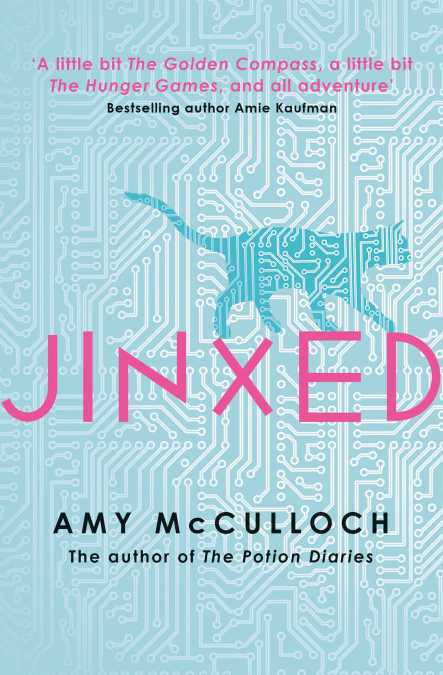
Jinxed by Amy McCulloch

Jinxed Cover.jpg

Publisher: Simon & Schuster

Publication Date – 9 August 2018

Amazon     Book Depository

Creative young adult fiction author Amy McCulloch returns with a fun and compelling techno-thriller that takes an incredible and entertaining look at the potential future of your favourite devices and combines them with a unique idea of how to make them even more user-friendly.

In the near future, the must-have technological device is the baku, your brand new best friend.  Bakus combine all the features of your smart devices and internet connection with a constant companion in the form of a robotic animal that is customisable to your needs and price range.  Low range bakus take the form of small creations like insects, while the most advanced baku are created to look like birds of prey or large land animals.  Not only are bakus the most popular form of communication device, but in this day and age, even basic bakus are needed to fully experience day-to-day life.

Lacey Chu has big dreams of working for Moncha Corp, the company which designs and creates the baku, as well as working for her idol, Moncha’s founder, Monica Chan.  However, the only way to achieve that dream is to get accepted into the exclusive Profectus Academy, the elite tech school whose graduates become the designers, coders and creators of the next generation of baku.  When Lacey is rejected from the academy and can no longer afford her dream baku, she is crushed.  That is until she finds Jinx, a ruined cat baku that appears to have been abandoned at the bottom of a canyon.  Bringing it home to fix, Lacey’s fortunes appear to immediately turn around when her application for the Profectus Academy is suddenly accepted and Jinx is listed as the advanced baku she is required to have for classes.

Arriving in the academy, she finds it a very different place than she imagined.  The students and faculty are obsessed with Baku Battles, the academy-sponsored fights between bakus that help determine a student’s rank and prestige in the academy.  Finding herself drafted onto a Baku Battle team, Lacey starts to learn all about the inner workings of the baku.  The more she learns, the more she begins to realise that something is very different about Jinx.  Jinx is not the usual mindless machine; Jinx can think for himself, has his own personality and is even starting to communicate with Lacey.  As Jinx begins to mess with parts of Lacey’s life, she begins to fully comprehend the implications of Jinx’s existence.  What shadowy secret lies at the heart of Moncha, and will Lacey and her friends be able to save Jinx from them?

Amy McCulloch is a well-established young adult fiction author who has written a number of books since her 2013 debut.  McCulloch also writes under the name Amy Alward and mostly focuses on young adult fantasy novels as part of her Potion and The Knots Sequence series.  Jinxed is her first foray into the science fiction genre and represents an exciting techno-thriller that explores an intriguing piece of future technology and the exciting adventure that happens around it.

The overall story of Jinxed is an excellent mixture of science fiction, thriller and teen drama elements, all set within a captivating academy background.  As a result, throughout the book, there is a ton for the reader to enjoy as they are introduced to the technology around the baku and see the narrator investigate a conspiracy centred around the creation of Jinx, all while dealing with the highs and lows of school life.  It is a fun combination of different story elements that works towards a great overall narrative.  I was able to work out what one of the twists was going to be quite early in the book, but it didn’t really impact my enjoyment of the story.  There are some great moments throughout, as well as a surprising ending that makes me very curious to read any sequels that McCulloch brings out.

The baku are an essential part of this story and are a really interesting element that McCulloch has chosen to use.  Many science fiction and technology based authors are currently attempting to predict what the next big piece of technology will be in the world, with many of them focusing on what the next ground-breaking piece of communications technology will be.  While many of these suggestions seem quite plausible and seem to support the current trends in technology, this is the first book I’ve seen that suggests combining a person’s smart device with a robotic pet.  The narrator suggests that the fiction justification for the creation of the baku was to give people a companion that is both helpful and which also limits their dependencies and addictions to mobile phones and smart devices.  It’s a rather fun concept and it is cool to see how McCulloch imagines how these creations would work.

The baku are broken down into various levels of sophistication, from the basic models which look like insects and can only do the most basic of tasks, to the ultra-sophisticated versions which come in the form of some very powerful creatures.  It is also intriguing to see how many of the book’s various characters start to care for their bakus like they are real animals, and the bond that they form as a result, even if their bakus aren’t sentient.  The bond that forms between Lacey and Jinx is fairly unique, however, as Jinx is an early form of artificial intelligence, and it is nice to see it develop through the course of the book as Lacey risks her life to help Jinx.  There are a few great scenes which show Jinx trying to come to grips with his existence, whether he is helping other bakus, questioning how baku are made, or by attempting to exist among a group of real life cats.  A truly intriguing postulation about future technologies, McCulloch has created a unique and fascinating idea that works well within this narrative.

Most of the action of this book is contained within fights between the bakus rather than between any of the human characters.  This is mostly done in the Baku Battles tournament at the school, where several bakus fight each other in a free-for-all brawl.  I love a good fictional tournament, and each of the bakus has various techniques.  As a result, the fights within the book can become quite fun and energetic as eagle, boar, tiger, cat and frog bakus all fight in various ways.  I also enjoyed the scoring concept that McCulloch came up with for this tournament, as the surviving team receives all the points, but their opponents can steal them if they can repair their team’s bakus sufficiently by the next day.  This is an intriguing stipulation for a tournament which allows McCulloch to show off several scenes of the narrator doing advanced repair work.  These tournament battles do a good job of moving the plot along and work into the books various elements very well, whether by giving the narrator access to certain locations to investigate secrets, or by bringing her closer to or further apart from other characters in the books, to allowing a closer examination of the workings and mindsets of the book’s technological elements.

Amy McCulloch’s latest book, Jinxed is a high-octane technological thriller that makes use of amazing science fiction elements to create an enthralling adventure.  Aimed for a young adult audience, the lack of any substantial violence, except between the book’s distinctive robotic animals, makes this a perfect read for a wide range of younger readers.  At the same time, the intriguing concept of future technology and its wide range of applications, including for high-stakes gladiatorial battles, makes it intriguing for an older readers.  This is an absolutely fantastic book from McCulloch.  I really enjoyed it and I’m looking forward to seeing where it goes next.

My Rating:

Four and a half stars

Amazon     Book Depository

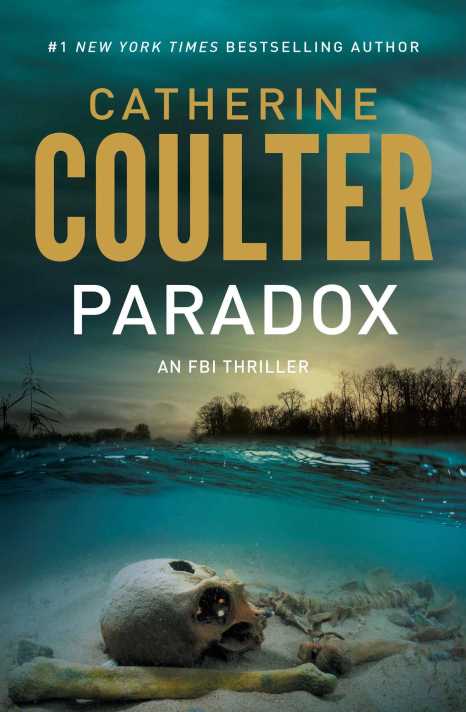
Paradox by Catherine Coulter

Paradox Cover.jpg

Publisher: Simon & Schuster

Publication Date – 31 July 2018

Amazon     Book Depository

Those looking for an intense and stimulating piece of crime fiction should look no further than the new book in the long-running FBI Thriller series, Paradox, which combines a clever murder mystery with a dark psychological thriller.

FBI Agents Sherlock and Savich wake up to their worst nightmare: an armed man in their son’s bedroom.  Only just managing to foil the potential kidnapping, Sherlock and Savich are confronted by the terrible fact that their son is being targeted by someone trying to get to them.  A few days later, in the small town of Willicott, Maryland, Police Chief Ty Christie witnesses a murder on the lake from the deck of her house.  Both of these crimes are connected to an escaped prisoner from a mental institution and a terrifying ghost from Sherlock and Savich’s past.  Things get more complicated when the lake is dredged for the victim’s body and a surprise discovery is made: the skeletal remains of several bodies that have been lying on the lake bed for years.  As the FBI is called in to investigate, Ty must face the disturbing reality that her home may have been used as the dumping ground for a serial killer.

Splitting their attentions between the two cases, Sherlock and Savich hunt for a deranged killer with a serious grudge against them, but are they prepared for just how crazy their quarry is?  At the same time, Ty and her new FBI partner, Sala Porto, start to investigate the recovered bodies.  A distinctive belt buckle may prove to be their best lead, but this discovery will have some unexpected consequences in another small town.  How are these cases connected, and what devastating secrets will be uncovered as a result?

Coulter is an extremely prolific author, having written a huge number of books since her 1981 debut.  Paradox is the 22nd book in Coulter’s long-running FBI Thriller series, which has been published annually since 1996, with only one gap in 2006.  The FBI Thriller series follows the investigation of a wide range of mysteries and crimes by members of the FBI, with many of the featured characters recurring through the various books.  At the same time, Coulter has co-written the A Brit in the FBI books with J. T. Ellison.  A Brit in the FBI is a sister series to the FBI Thriller franchise, which features several characters from the original series and already contains five books, including the 2018 release The Sixth Day.

Before this book, I had not read any of the other entries in the FBI Thriller series, and I was a little worried I might have trouble following the story of Paradox as a result.  However, I was pleasantly surprised about how easily it was for me to jump into the plot of this book and enjoy the intriguing mysteries planted within.  It is important to note that a significant part of the story does link back to the 13th entry in the series, Knockout.  Coulter does an amazing job summarising all the relevant detail of this previous book and ensuring that the readers of Paradox are well informed of the events that could have an impact on this current case.  This book also plays host to a huge range of characters employed by the FBI.  While I knew that the main two agents, Sherlock and Savich, have appeared multiple times before as the main protagonists, I was uncertain about how many times any of the other characters may have appeared in previous books in the series.  As a result, their inclusion and actions might not have had as much impact on me as they were supposed to, although I don’t think this takes too much away from the story.  As a result, while Paradox will be particularly appealing to those readers who have enjoyed the FBI Thriller books before, new readers can easily come into the series at this point and still enjoy this excellent murder mystery.

Paradox’s story is split between two separate investigations, both of which are very different in scope and content.  The focus of recurring protagonists, Sherlock and Savich, mainly involves the hunt for a deranged character from their past who is targeting several people he holds a grudge against.  In the other storyline, new characters Ty Christie and FBI Agent Sala Porto are investigating the bodies found within the lake, and find themselves on the hunt for a previously undiscovered serial killer.  Both cases are exceedingly interesting and offer different things to the reader.  The hunt for the fugitive who has committed recent crimes becomes a desperate game of cat and mouse between the investigators and the killer, and both sides have trouble predicting the actions of the other.  As a result, this storyline is faster paced and set in a bunch of different locations.  This storyline also relies on a darker psychological tone to stand out rather than dramatic twists, although there are a few noteworthy reveals for the reader to keep an eye out for.

The investigation into the bones on the bottom of the lake comes across as a more traditional murder mystery, as the characters associated with this case look at clues, follow evidence and interrogate a range of suspects.  This story has a more fixed setting, which mostly focuses on a small town located near the lake, although there are a few detours to other locations.  The examination of the connected and trusting nature of a small town is a great feature, as there are quite a few secrets and lies hidden within this friendly setting, as well as quite a few suspicious characters who show an interest in the case.  This storyline turns out to contain quite an intricate mystery that contains a huge range of twists and surprises that will keep readers on the edge of their seats.  The final reveals are quite dramatic and have significant impacts on several characters that are introduced.  This is an amazing piece of murder mystery fiction.

While these two storylines are ostensibly separate from each other, there is a bit of crossover between them.  The two teams of investigators are constantly in communication with each other, and there are several discussions about their respective cases.  In addition, one of the characters who is mainly investigating the bones in the lake, FBI agent Sala Porto, has a significant personal stake in finding the fugitive that Sherlock and Savich are hunting for, as one particular murder the antagonist commits haunts him throughout the book.  As a result, he and Ty also meet some people associated with the hunt for the fugitive, and also make a significant break in the case towards the end of the book that adds a whole new dimension to the story.  Both storylines are very well written and ensure that the readers get a variety of different elements to entertain and intrigue them.

An interesting feature of Paradox is the way that Coulter tells her story from a huge range of separate viewpoints, which helps create an interesting and unique tone for this book.  While a large part of the story is told from the point of view of Ty and the FBI agents Porto, Sherlock and Savich, other characters also tell a substantial part of the story.  The book’s main antagonist, the fugitive being pursued by Sherlock and Savich, probably has the next largest point-of-view scenes within the book.  These chapters are particularly dark, and the insight into his mind and psyche that result from these scenes are noticeably intense and chilling.  It is also fascinating to see the fugitive’s mindset as he tries to attack the people he hates, while at the same time avoid capture by the FBI.  Paradox also makes use of a range of other smaller side characters, especially in the storyline where Ty and Porto investigate the bones found in the lake.  These viewpoints are often brief, but are usually tied in to the relevant investigation and provide some interesting details about the suspects, as well as provide some background history to the case.  There is a lot of extra detail added to some of the periphery characters, as well as a significant amount of discussion especially the relationships and past that some of these minor characters had.  This focus on some of the supporting characters contributes a lot to the book’s unique tone, although at times it does feel unnecessary to go into such details.

One of the Paradox’s key highlights is the antagonist Coulter uses for the fugitive killer arc that Sherlock and Savich are investigating.  Without going into too much detail, as even mentioning the character’s name may spoil the story for long-term fans of the FBI Thriller series, this antagonist is a fantastic and memorable addition to the story.  The chapters focused on this antagonist are excellently written and turn Paradox into a partial psychological thriller, as it examines a rather unhinged character.  This character is definitely a stand-out part of this book, and represents a great return from a previous entry in the FBI Thriller series.

The latest book from bestselling author Catherine Coulter, Paradox, is an outstanding piece of modern crime fiction that presents two enthralling crime based storylines that compliment each other, working together to create a highly enjoyable and intriguing overall narrative.  Dark, clever and character driven, Paradox is an excellent addition to the long-running FBI Thriller series that will be equally appealing to both long-term fans of the franchise and causal readers looking for a new mystery fix.

My Rating:

Four stars

Amazon     Book Depository

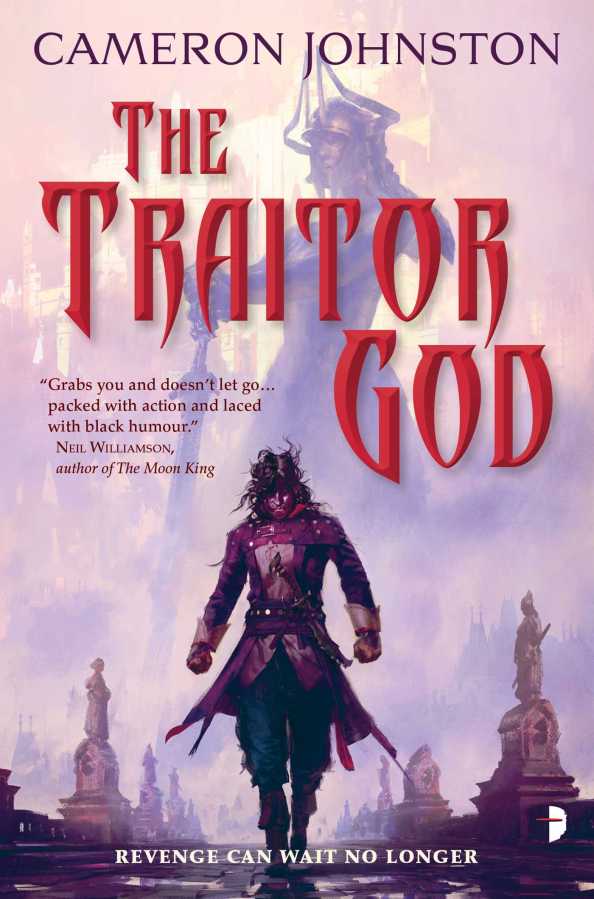
The Traitor God by Cameron Johnston

The Traitor God Cover

Publisher: Angry Robot

Publication date – 5 June 2018

Amazon

Prepare yourself for dark magic and a powerfully inventive adventure in The Traitor God, one of 2018’s best fantasy debuts from exciting new author Cameron Johnston.

Ten years ago, reviled mind-bending magician Edrin Walker fled his home city of Setharis with demons biting at his heels.  On that night, a god died, his mentor disappeared and Edrin’s memories of the events surrounding his exile were erased from his mind.  All Edrin remembers is that he made a deal with somebody extremely powerful.  In exchange for him leaving the city, this mysterious figure guaranteed the safety and long life of his closest friends.

Edrin has spent the last 10 years wandering the wilderness, living day to day and evading the creatures hunting him.  Content with his decision and new life, his exile ends the moment he witnesses the death of his best friend, Lynas.  In one terrible night, Lynas was brutally murdered and skinned alive, and Edrin saw every minute of it through their powerful mental link.  Now, with nothing left to lose, Edrin will return home, his only intention to burn everyone and everything until he finds the person responsible for his friend’s death.

However, returning to Setharis is a dangerous proposition.  Not only is he still being hunted by demons, but the Arcanum, Setharis’s governing body of magicians, will kill him the moment they find out he is still alive.  Beyond caring, Edrin will risk everything to get revenge, and woe betide any man, magician, demon or god who gets in his way.

This is an extraordinary first novel from Johnston, who has produced a stylish and highly addictive sword and sorcery fantasy adventure with a morally corrupt protagonist, a great new fantasy setting and a huge number of magical battle sequences.

The Traitor God contains an impressive dark fantasy action story that effortlessly captures the reader’s imagination and attention and drags them through every page of the book.  What starts as a revenge investigation and rampage turns into a fight for the future of an entire city, as mysterious forces are unleashed.  The story is told solely from the perspective of the protagonist, Edrin, and as a result it has been noticeably infected with his dark humour and well-developed scepticism.  The familiar storyline of a hero returning home and finding that everything has changed works well within The Traitor God.  Readers will enjoy watching the powerful magician manipulate the new generation of criminals and bystanders who are unfamiliar with what he can do.  While the eventual revelation of who is responsible for the murder is a tad predictable, the investigation getting there is amazing, and fans will enjoy seeing the protagonist confront his enemies.  The scope of the villain’s evil plot is quite impressive and results in some massive scenes towards the end of the book.  I really enjoyed the cunningness and ingenuity of the protagonist and had fun watching him come up with clever solutions to the difficult and unique problems he encounters.  There is one amazing scene towards the end of the book when his plan to finish off a powerful antagonist is slowly revealed to the reader.  The reveal of the protagonist’s master plan, which is kept hidden from the reader due to magical plot elements, is done perfectly within this scene, and the audience will enjoy the clever ideas and dark humour used within.

The vast majority of the plot of Johnston’s book is set within the city of Setharis, which is controlled by an army of powerful magicians.  The city is a great setting for this dark fantasy novel as the protagonist is forced to conduct his investigation through its corrupt and crime-ridden streets.  It is clear that Johnston has spent significant time creating Setharis, and Edrin explores vast swathes of it during his adventures.  The exploration of the Arcanum is particularly intriguing, and readers will be shown the noticeable differences between the sanctuary of magicians and the dwellings where the city’s poor live.  Edrin’s observations about the inequalities and corruption of the Arcanum are unique among the book’s magicians.  This allows Johnston to show off the arrogance of the other magicians, which plays into the plot while at the same time endearing Edrin to the reader.  The setting of Setharis is an amazing part of this novel, and readers will look forward to returning to it in Johnston’s future works.

One of the best parts of The Traitor God is the sheer amount of exceptional magical and fantasy elements that have been packed into it by the author.  Edrin has unique magical mind powers that allow him to control people he encounters, and these are surprisingly dark powers for a fantasy protagonist to have.  These powers are intriguing, as they are known and feared throughout Johnston’s fantasy world, and Edrin suffers significant discrimination as a result.  The scenes where Edrin uses his mind-bending abilities are well presented by Johnston, as he successfully endeavours to show the effect Edrin’s power has on the other character’s minds.

The other magicians that feature in The Traitor God also have magical powers that catch the reader’s imagination when they are presented in the book.  The book features magicians with powers to nullify the magic of other magicians, sniffers who can smell and identify magicians from a distance, magicians who use body enhancement magic to become epic soldiers, and one extremely skilled hydromancer.  Johnston has also created some fascinating rules and abilities that affect all of the magicians within the book, including Edrin, and result in some wonderful story elements.  A great example of this revolves around the rule that magic permeates every cell of a magician’s body and leaks out of them into items like their clothing or bedding.  Johnston uses this fact to great effect throughout the story, as his protagonist is constantly forced to find constructive ways to avoid enemies who can detect his magic.  The author has also created memorable descriptions of the way that magicians are forced to access their magical power.  Johnston establishes that magicians within The Traitor God have to be careful about the magic they draw into themselves, lest they burn themselves out or go mad with power.  There are several scenes where Edrin is forced to draw large amounts of magic into himself to face powerful opponents or save the lives of his friends, and the resultant internal battles to retain control and his sanity are a fantastic part of the narrative.

While Johnston goes into incredible detail about the rules and roles of the magicians of Setharis, he has also included some alternative magical users who do not follow the same rules.  The comparison between these two different groups of magic users is quite distinctive, and scenes where they come into conflict with each other are quite destructive and highly enjoyable.  Johnston has made sure to include a number of unique demonic creatures the hunt and harry the protagonist.  These creatures are quite distinctive, and Johnston cleverly ties their hunting ability into his rules about magical scents and detection.  The most memorable magical creature within the book is also the largest, and results in some significant, fast-paced and explosive scenes throughout the book.  Overall, the electrifying and distinctive magical and fantasy elements within The Traitor God are one of the book’s most intriguing characteristics and highlight just how imaginative and creative Johnston is.

There are a tremendous number of action-filled sequences throughout the book as the main character and his allies fight criminals, demons, magicians and gods.  As a result, The Traitor God will appeal to wide range of readers eager to get their latest dose of intense fantasy action.  There are brawls, chases, complex magical duels, fights with monstrous foes, large-scale magical warfare within a city, and even a fight between two gigantic magical constructs.  Various elements that Johnston sets up when describing the city of Setharis or the magical abilities and rules of his magician characters often come into play during these scenes, and the author does a great job of winding his own lore into these fantastic sequences.  Those drawn to magical and fantasy action and battles will find all their needs and more are met within this book.

In his debut book, Cameron Johnston has shown that he is author with an immense and powerful imagination and the ability to skilfully transcribe his ideas into a powerful narrative.  The Traitor God is a fantastic piece of dark fantasy, with some incredibly thrilling action and adventure subplots.  This book is a highly recommended read, and Johnston is an author that fantasy fans will need to keep an eye on.

My Rating:

Four and a half stars

Amazon

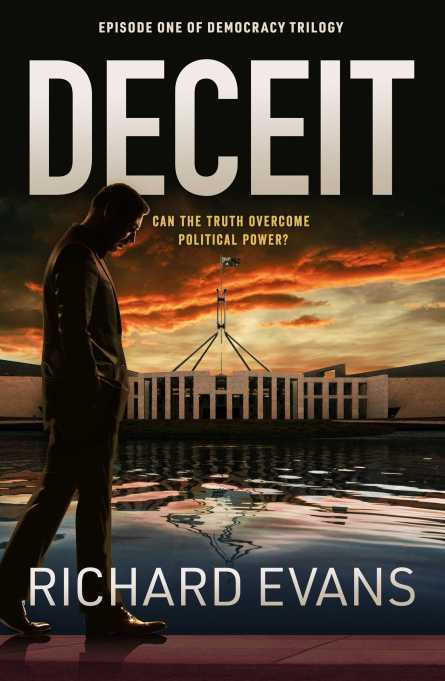
Deceit by Richard Evans

Deceit Cover

Publisher: Impact Press

Publication date – 18 June 2018

Amazon     Book Depository

From former politician Richard Evans comes one of the most incredible fictional examinations of the Australian political system with Deceit, an exciting and superb political thriller.

When corrupt Australian Prime Minster Andrew Gerrard makes a deal with his Indonesian counterpart, he embarks on a plan to build up a retirement nest egg by passing a controversial funding bill for overseas detention centres over a period of several years.  However, when key members of his party die in a tragic plane accident, Gerrard decides to process all of the funding in one go and receive the full amount of his payoff.

Outnumbered in the House of Representatives, and with only one week to pass the bill through both houses of parliament, the task looks impossible.  But the Prime Minister is a canny political operator with no conscience to speak of and with the Speaker deep in his pocket and with no conscience to speak off.  Equipped with a master plan, Gerrard starts to manipulate the bill through parliament.

The only person who may be able to stop him is the outgoing Clerk of the House of Representatives, Gordon O’Brien, who suspects that the Prime Minister’s mysterious last-minute bill is more sinister than it appears.  As one of the few people who believe in the sanctity of the parliament, O’Brien will risk everything to find out the truth and ensure no wrongdoing is done on his watch.  Utilising all the tools at his disposal, including the opposition and investigative journalist Anita Devlin, O’Brien prepares to move against the Prime Minister.  Let the political games begin!

Evans is a former Australian politician who served two terms as a federal member of parliament in the 1990s.  Evans has decided to utilise his political experience and expertise by creating a series of Australian politics based thrillers and dramas, with several books planned for release in 2019 and 2020.  Deceit is his debut novel and the first book of his planned Democracy trilogy, with the second book in this series, Duplicity, already set to be released in 2019.  Readers interested in fictional depictions of Australian politics should also keep an eye out for his upcoming Referendum and Jack Hudson series, both of which will start to be published in the next two years.

Deceit is a fabulous political thriller with a fantastic story that twists and turns through multiple layers of manipulation, deceptions, lies and double-crosses.  The book’s main antagonist, Australian Prime Minister Andrew Gerrard is a selfish, manipulative and sleazy character who serves as a perfect villain for this story and whose plots are a highlight of this book.  Evans has done a clever job of spreading the story out among multiple point-of-view characters, as this allows the reader to view the impact of Gerrard’s manoeuvrings and lets them see how they are received by members of the opposition, the media and O’Brien.  Evans is a very talented storywriter, and the entire plot of Deceit is extremely compelling and very well thought out.  Readers will fall in love with this amazing story and will find its overall conclusion very satisfying.

As someone who lives and works in the book’s main setting, Australia’s capital city, Canberra, I have received a lot of exposure to Australian politics.  As a result, I loved the author’s exceedingly realistic and accurate depictions of the Australian political system and how it was used within this story.  There is some great coverage of Australia’s parliamentary procedure and the creation and passage of bills and laws through both houses of parliament that are presented in a precise and well-described way.  There are also a number of characters who hold roles that are actually part of Australia’s political and civil service.  These positions and roles are explored in detail, and the reader is given significant insights into what work and requirements are needed by the people holding them.  Evan’s does a fantastic job of weaving these usually dry subjects into a very enthralling narrative, and readers will be intrigued to see how the fictional Prime Minister plans to get a dodgy bill past the entire country without anyone noticing what he is doing.

The standout scene of the book has to be an extended chapter that featured a session of question time in the House of Representatives.  Question time is a daily occurrence during the parliamentary sitting period during which government and non-government members of parliament ask ministers questions about their various portfolios.  As someone who has been exposed to many question times, I was struck by how genuine Evans’s description of this event was.  Evans perfectly encapsulates the entire process from start to finish and was able to recreate the snarky and sometimes petulant nature of the discourse that are the usual fare of question time.  The author expertly links the overarching storyline of political corruption into this scene, as one member of the opposition is suspicious and starts to ask the Prime Minister leading questions about the controversial bill he has put forward.  The political back-and-forth around these questions was amazing, and it was fascinating watching them being tied into the rest of the story.  Overall, this sequence was exceedingly compelling, and the entire time I was reading it I was physically incapable of putting the book down.

Deceit also contains some detailed and enjoyable depictions of Australia’s Parliament House and the capital city, Canberra.  Parliament House is a beautiful building, and Evans does a wonderful job describing Parliament House in detail and examining various parts of the building, from the Prime Minister’s office and courtyard, to the various gardens, media offices and even cafes.  Other little nuances of life within Parliament House are also captured within the text, no doubt because of Evans’s prior experiences working within the building.

I also really enjoyed seeing my home city of Canberra featured in this book.  Despite being the capital city, Canberra does not feature much in fiction, due to it being a smaller and newer city than Sydney or Melbourne.  Deceit, however, contains some great depictions of the areas of Canberra close to Parliament House.  There are several references to some real restaurants and cafes that politicians are known to frequent and where several big political discussions are known to have taken place.  There are also several scenes where the characters explore other parts of Canberra as part of the book’s plot.  I for one found it incredibly amusing and disconcerting to read a scene about a secretive handoff of documents set in a cinema that I’ve watched The Hunger Games and Doctor Who specials in.  Canberra locals will love seeing their city as a major fixture of this book, and other readers will get to explore Australia’s capital and see its potential as a setting in this exciting thriller.

Richard Evans’ first book, Deceit, is a five-star thriller that brings the Australian political process to life.  Former politician Evans brings all of his insight and expertise to this new book, and readers will be astounded by the realistic descriptions of Australian politics and the way it has been utilised in this exciting and first-rate story.  This is an outstanding debut from Evans, and this terrific read comes highly recommended.

My Rating:

Five Stars

Amazon     Book Depository

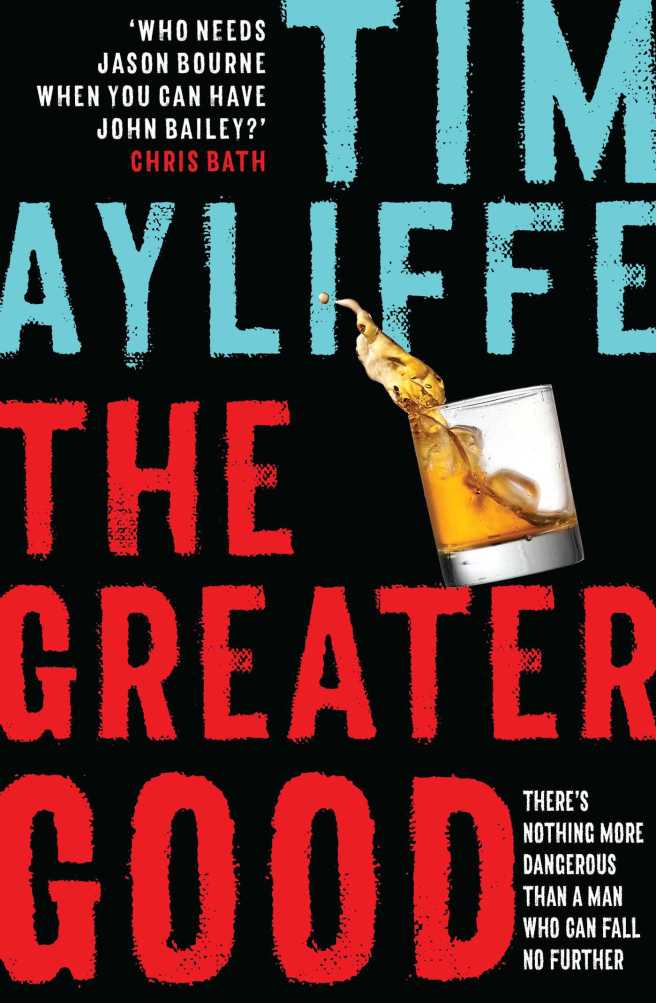
The Greater Good by Tim Ayliffe

The Greater Good Cover

Publisher: Simon & Schuster

Publication Date – 23 April 2018

Amazon

Australian author Tim Ayliffe presents a fantastic debut thriller set in iconic Sydney that delves into the heart of politics and the role of the media in the modern world.

John Bailey was a brilliant war correspondent for the Australian paper, The Journal.  However, his life took a downward turn when he was kidnapped in Iraq and tortured for several months.  Now, years later, Bailey is living a life of alcoholism and self-destruction, only occasionally contributing articles to The Journal.

However, when a prostitute is found murdered in her high-end Sydney apartment, his editor and old friend, Gerald Summers, sends him to investigate the crime, claiming that Bailey is the only person he trusts to report the story.  The prime suspect in the case is an influential political advisor who had a close relationship with the victim.  When Bailey encounters the advisor, he claims to have information that will clear his name, while at the same time implicating his boss, the defence minister.

After a run-in with an old friend in the CIA, Bailey soon realises that there is much more to this story than a simple murder.  Investigating further, he soon discovers that the murder was committed to cover up a massive conspiracy that the defence minister is linked to.  When witnesses to the crime start turning up dead and the police are pressured to drop their investigation, Bailey is determined to uncover the truth and publish the full story.  But powerful people are invested in keeping this case quiet, and Bailey soon finds himself in their crosshairs.

This is an exciting and high-energy first book from Ayliffe, who makes full use of his journalistic experience and political insights to create a smashing thriller with a tangible Australian presence.  The investigation into the conspiracy and its associated murders works well as the heart of this story, and readers are invited along on a wild thrill ride as the protagonists rush through this murky world of Australian politics and espionage in a quest to find the truth.

The character of Bailey serves as a great central narrator for this frenetic story, and readers will love the maverick approach he has to investigating the case and the lack of restraint of manners he has when it comes to dealing with Sydney’s political and financial elite.  Ayliffe also spends a significant amount of time attempting to humanise his main character by examining his past as a prisoner and the effects his PTSD has had on his life and career.  There are some great, emotional scenes as Bailey attempts to get over his problems with the help of other characters, and Bailey comes across as a much more grounded and damaged protagonist as a result.  The other main narrator in The Greater Good is Sharon Dexter, who serves as the official police investigator and Bailey’s main love interest.  Her investigation focuses more on cover-ups, sexism, and corruption in the police force, and these parts of the book serve as a great counterpoint to the sections featuring Bailey.

Ayliffe has made full use of his political knowledge and insight throughout this book.  A large amount of the plot revolves around both Australian and international politics, and readers will be amazed at the potential conspiracy he is able to create.  Various Australian political elements are dragged into the story and play a key part of the plot.  These include discussions about pre-selections of federal seats, government spending and the role of several federal government agencies.  World politics and the current status of Australia on the world stage are also examined within the story.  There is a large focus on the expanding role of China, and the discussion about whether Australia should strengthen its relationship with this new world power or whether it should maintain its current relationship with the United States.  This discussion is a key part of understanding the plot, and plays out in the book in a similar manner to current debates on the subject within Australia.  This adds a real sense of realism to the story and makes readers, especially those familiar with current Australian news and politics, very thoughtful.

Throughout The Greater Good, the main characters are attempting to obtain evidence of a conspiracy so that they can print it in their newspaper, The Journal.  As a result, the role of print media in keeping government’s honest and uncovering political corruption is examined in some detail.  It is clear that Ayliffe, a career Australian journalist, is very supportive of the media remaining in this role, and many of his characters are quite critical of attempts to stall the publication of these stories.  This allegorical analysis of the current role of media in politics and society is an intriguing part of the book and many readers will find this exceedingly relevant in light of recent world events.

Readers also need to keep an eye out for Ayliffe’s clever and entertaining inclusion of characters that are clearly based on real life Australian personalities.  For example, the fictional Australian Prime Minister is described as an athletic man who is known for his fun runs and surfing, in a way reminiscent of former Prime Minister Tony Abbott.  In addition, certain plot twists towards the end of the book will also remind the audience of another previous Prime Minster.  Another example is a minor character who is introduced as a prominent talk show radio host.  This character appears to be a composite creation of several of Australia’s right-wing radio commentators and comes across in a very similar manner to these real life presenters.  These cheeky additions are a fun inclusion that will amuse readers with even a passing knowledge of these Australian personalities.

In many ways The Greater Good can be considered a love letter to the author’s home city of Sydney, as it contains a number of different locations and references that will be quite familiar to Sydneysiders.  The narrator visits a number of different suburbs within Sydney, including Palm Beach, King Street, Finger Wharf at Woolloomooloo, Bondi and Chinatown, and also frequents some real life Sydney venues, such as Harry’s Café de Wheels.  Not only is the food, geographical location and description of this Sydney café described in the text, but the author has also included a write-up of the restaurant’s owners and its history.  In addition to furnishing the story with real life Sydney locations, Ayliffe also includes brief references to events and occurrences that Australians would recognise the significance of, such as Australian rugby, lockout laws and the current ice epidemic.  While none of these locations or occurrences is essential to the plot, they do add a certain sense of reality to the entire novel, and Australian readers will enjoy seeing locations and scenarios that they recognise and understand.

Tim Ayliffe’s debut novel, The Greater Good, is a fun and exhilarating political crime thriller that is guaranteed to electrify and entertain in good measure.  Making full use of Ayliffe’s extensive knowledge of Australian politics, culture and media, this very topical book is an excellent read for Australian audiences and those international readers keen to explore Australia’s potential for thrillers.

My Rating:

Four stars

Amazon

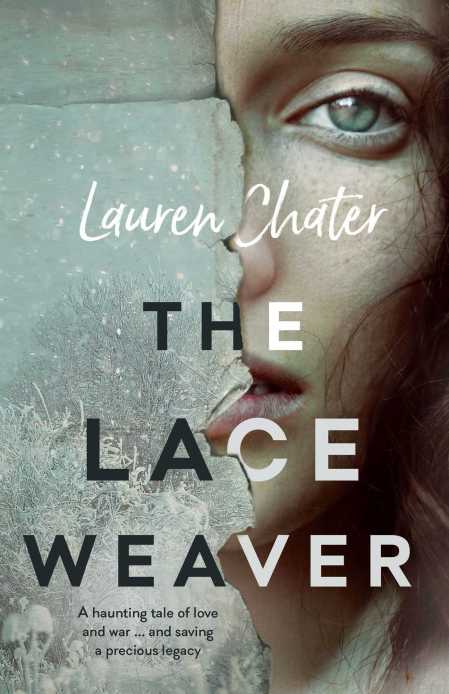
The Lace Weaver by Lauren Chater

The Lace Weaver Cover.jpg

Publisher: Simon & Schuster

Publication Date – 19 March 2018

Amazon     Book Depository

Love, war, suffering, oppression, hope and lace all come together in this emotionally charged debut from Australian author Lauren Chater.

It has been two years since the outbreak of World War II.  Following their respective expansions, Nazi Germany and the USSR now control much of Europe between them.  The small country of Estonia, located on the border of the USSR, has been occupied by the Soviets and is now controlled by Stalin’s Red Army, who have brutally installed their communist ideals.  Now all of Estonia’s resources are controlled by the Soviets and any signs of opposition are brutally cracked down on.

In the middle of this horrific occupation lives Katarina, a young Estonian woman whose family survives because their farm produces food for the occupying forces.  While the Soviets are attempting to control all parts of Estonian life, Katarina works to preserve her family’s culture through their lace shawls, which contain intricate and unique patterns and stories.  She must also deal with her feelings for her old friend Oskar, who is leading the revolution against the Soviets.

At the same time in Moscow, another young woman, Lydia, lives an ostensible life of privilege, but is really living in a gilded cage, controlled by her ruthless guardian.  Fleeing to Estonia, the land of her mother, Lydia attempts to find sanctuary but finds out just how far her captivity truly extends.

When a Soviet crackdown forces Katarina and Lydia together, these two women must find a way to survive the horrors of the occupation.  As they become part of Oskar’s resistance against the Soviets, Katarina and Lydia must learn to work together, even when Lydia falls for Katarina’s brother Jakob.  But their situation is about to get even worse, with the forces of the Third Reich set to invade.

This is fantastic first book from Chater, who has woven together an amazing tale filled with great characters and an outstanding and underused historical location.  This book is also an extraordinary piece of dramatic literature.  All of the main characters experience significant loss, heartache and disappointment as they attempt to survive the most turbulent time in our world’s history.  These heartbreaking losses of friends, family and other loved ones draw the reader in, while Chater’s fantastic writing makes them feel the character’s loss and grief as she highlights the brutal reality of those caught in the middle of war.

Perhaps the most memorable part of The Lace Weaver is the story’s central setting of Estonia.  During World War II, Estonia was in the unfortunate position of being one of the countries that fell between the Soviet Union and Nazi Germany.  Estonia was a significant theatre of war where many horrors occurred, and yet very few novels focus on this part of World War II.  Chater’s decision to focus on this underused period of war history is intriguing, and she has done a commendable job of calling attention to the horrors experienced by the Estonians during the time that they were occupied by two of the world’s most brutal regimes.

Estonia was brutally occupied by the Soviets in 1940, and a large portion of this book is set during this period.  Chater does an amazing job of describing this brutal period through the eyes of her Estonian characters.  There is a serious sense of dread from these characters as they anticipate what horrible crimes might occur next.  The descriptions of the Soviet soldiers’ brutality and contempt for the Estonians is at times harrowing, and there is one sequence describing a mass deportation that will stick in the reader’s mind.  While the scenes describing the occupation of the Soviets are pretty distressing, one of the most disturbing parts of this story is that for much of the book many of the characters, especially Oskar and Jakob, believe that their salvation and freedom could be granted to them by the Nazis.  Reading this can prove to be disquieting as you are forced to watch the characters help the Nazis occupy their country.  The characters working out what they have let into their country is chilling to behold, and by this point readers will be desperate to see what happens next in Estonia.

In addition to focusing on the terrible occupations Estonia suffered during the war, The Lace Weaver also contains an insightful look into some aspects of Estonian culture.  This is mainly shown through the use of the lace shawls, which are described as an important part of Estonian culture and history.  Chater spends a large part of the book investigating these shawls, and the reader soon appreciates their importance.  Katarina spends a significant part of her narration describing the significance of these shawls to her family, and her interactions allow the readers to see how vital they were to her social and familiar circles.  These shawls are also very important to the story as they draw many of the characters together, especially the two main characters, Katarina and Lydia.  The scenes in which the shawls are being worked can also be seen as an indicator of the periods when the characters are managing to survive and have some hope for the future, and are to be cherished, especially as the reader grows to care for these characters.

There are some great characters within The Lace Weaver that readers will find themselves deeply invested in.  Narration of this story is split evenly between the two main characters, Katarina and Lydia, both of whom have unique stories to tell.  Lydia’s transformation from a sheltered girl in Russia to a hardboiled Estonian survivor is particularly gripping, and revelations about who she actually is offer big thrills in the first part of the book and up her personal stakes.  Katarina’s story of survival and her attempts to keep the cultural ways of life she inherited from her beloved grandmother are also heartfelt and compelling.  The unique stories that these two characters have are deeply absorbing and emotional, and Chater does a masterful job of eventually combining these two stories together into one extraordinary and captivating tale.

The Lace Weaver is a deep and emotional wartime drama that makes full use of its dark setting, rare historical fiction location and amazing characters.  Australian author Lauren Chater has produced a very impressive first book and readers will fall in love with this fantastic tale.

My Rating:

Four stars

Amazon     Book Depository

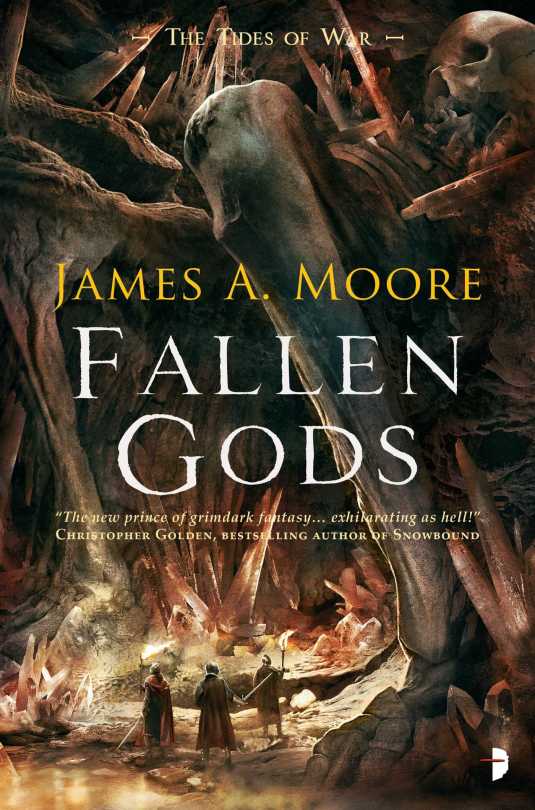
Fallen Gods by James A. Moore

Fallen Gods Cover

Publisher: Angry Robot

Publication Date – 2 January 2018

Amazon     Book Depository

Those looking for a fast-paced action fantasy adventure to really get the blood pumping should prepare themselves for Fallen Gods, the latest novel from one of the leading authors in dark fantasy, James A. Moore.

Brogan McTyre, former soldier of the Kingdom of Stennis Brae, is a damned man.  After the Grakhul, the servants of his world’s cruel gods, took his entire family, Brogan risked everything to save them from being sacrificed.  Although he failed, his actions resulted in the disruption of sacred rites, a desecration he compounded by killing or enslaving all of the Grakhul.  Now with the gods angered beyond all belief, their dark heralds, the He-Kisshu, have unleased terrible storms and intense acts of destruction across the Five Kingdoms.  The only way they will stop the destruction and avert armageddon is with the sacrifice of Brogan and his companions.

Now Brogan and his men, including his loyal second-in-command, Harper Ruttket, are being hunted.  Everyone is out to capture them – not just the servants of the gods but anyone seeking to survive the oncoming destruction.  As Brogan and his men flee across the Five Kingdoms, their adversaries start to become more powerful and demonic in nature, and not even an army of mercenaries will be able to save them.  Their only hope might be an item of immense power: a sword containing the heart of a slain god hidden within the Broken Mountains.

Elsewhere, Myridia the Grakhul leads her remaining sisters to salvation while trying to avoid the shadowy Night People hunting them.  Niall Leraby and Tully, two freed former sacrifices, seek safety in Niall’s home city of Edinrun but find it already in the grips of an intense magical madness.  Brogan’s former king, Bron McNar, and his fellow rulers of the Five Kingdoms must find a way to appease the gods before their lands and people are completely destroyed.  Beron the slaver seeks revenge against Brogan and the men who brought the wrath of the gods down on him and his people.  But Beron is serving a darker master; one who may prove to be an even greater threat to the world then the gods.

As the world he knows breaks down around him, can Brogan claim the power he needs to survive, and will it be enough to stop the utter chaos he has unleashed?

James A Moore is a renowned author of dark fantasy and horror who has written more than 40 books in his career.  Some of his previous works include the Serenity Falls trilogy, the Seven Forges series and the Subject Seven series.  Fallen Gods is the second book in The Tides of War series and is the sequel to his 2017 action extravaganza, The Last Sacrifice.

This is a perfect book for readers who are looking for an action-packed adventure story.  Moore has made sure to include a large number of varied battles and fight sequences through this book, as well as several other intense action scenes.  These action sequences are also enhanced by the author’s use of crazy and inventive fantasy creatures that are encountered by the book’s characters.  In addition to the unique creatures that Moore introduced in the previous book in this series, the characters within Fallen Gods are also forced to contend with numerous new creatures and opponents.  Not only do they encounter rampaging gods, magically powered soldiers and maddened slavers, they are also forced to contend with corrupted and demonically mutated Grakhuls and He-Kissus that are even more freaky than the original versions.  As a result, this is an extremely fun dark fantasy book than contains enough action to excite any reader with a pulse.

As soon as a reader starts Fallen Gods it will quickly become obvious that there is a lot going on within this book.  Moore makes use of several recurring narrators throughout the books and is constantly implementing quick-fire changes between them.  Each of the narrators has their own unique storyline filled with their own side characters and adventures throughout different parts of Moore’s fantasy world.  There are also several interludes told from the perspectives of minor characters and groups away from the story’s main characters.  Whilst many of these interludes contain key plot points and set up later scenes with one or more of the main characters, a number have been included to explore the rest of the Five Kingdoms.  In particular, they show how a range of different characters are experiencing the wrath of the gods and the associated destruction, as well as the various ways in which they are attempting to survive.  Moore does a great job of tying the varied storylines and interludes together at the end of the book, as most of the main and minor characters have been subtly placed in or have had their focus turned towards a singular location where they will all meet up.  As a result, Moore is able to showcase large portions of his fantasy landscape to the reader whilst also expanding on his fascinating narrative of a world suffering divine punishment and the craziness that results.

While there are a number of positives to Moore having such a huge range of narrators and storylines, Fallen Gods does seem a bit overcrowded at the start.  However, readers should be reassured that each of the individual storylines is very easy to follow and they should have no problem viewing all of the storylines together as one cohesive and enjoyable plot.  That being said, new readers could possibly benefit from starting with the first book in the series, The Last Sacrifice.  While Moore does a really good job of explaining the vast majority of the book’s story elements, there are one or two features that may confuse new readers when they are first introduced.  Most of these are eventually explained later in the book, so readers will only be in the dark for a short period of time.  However, there is at least one plot element that originated within The Last Sacrifice which could prove to be slightly confusing to the uninitiated.  That said, if a reader wishes to start their exploration of this series with Fallen Gods, they should have no problem enjoying this excellent action adventure.

Overall, this is an exciting and highly charged book that makes the most of its dark fantasy premise.  Readers will love the overarching story of a world experiencing the wrath of its vengeful gods, which Moore masterfully tells with his huge range of narrators and point-of-view characters.  This is a fantastic sequel to The Last Sacrifice, and I can’t wait to see what madness occurs in the next instalment of this series.

My Rating:

Four stars

Amazon     Book Depository

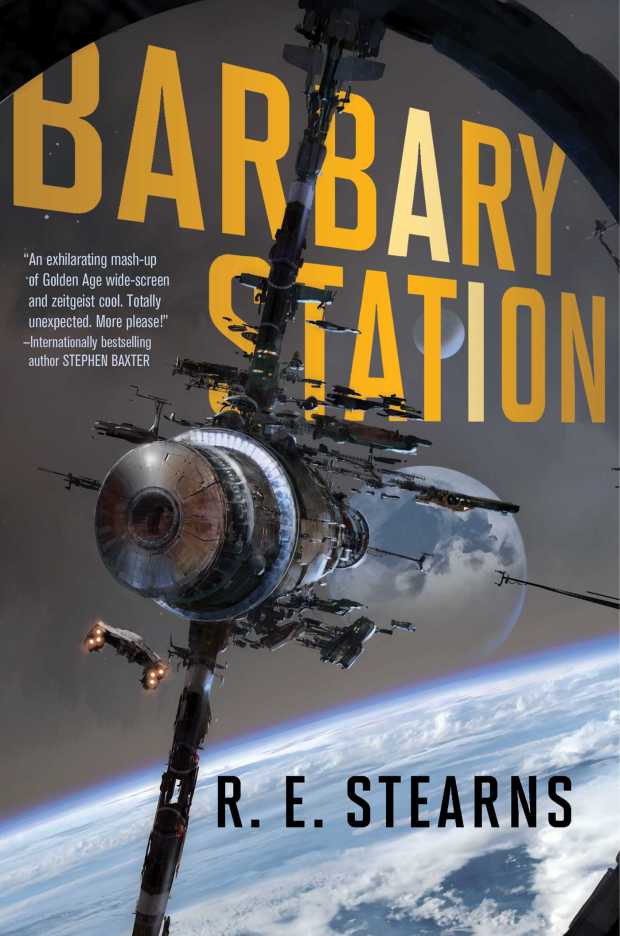
Barbary Station by R. E. Seams

barbary-station-9781481476867_hr

Publisher: Saga Press

Publication Date – 31 October 2017

Amazon     Book Depository

Space pirates take on rogue artificial intelligences in this electrifying young adult science fiction debut from R. E. Stearns.

In the distant future, humanity is recovering from a devastating civil war between Earth and its colonies.  Life is hard for all, especially for newly graduated engineers Adda Karpe and Iridian Nassir, who can only look forward to a lifetime of paying off their loans on a minimum wage.  So when Adda’s brother, Pel, contacts her with an opportunity, Adda and Iridian decide on a future as pirates.  Hijacking a massive colony ship, the girls make for Barbary Station, the base of operations for the infamous Captain Sloan, whose adventures and riches have been romanticised across the system.

Hoping to impress the pirates with their stolen ship, Adda and Iridian are shocked when, instead of bold adventurers living in luxurious conditions, they find a mismatched crew barely surviving in a hidden makeshift base welded to the hull of Barbary Station.

The station’s AI, AegiSKADA, has gone haywire and has taken to targeting all life forms on the station, bearing a particular grudge against the pirates.  Armed drones hunt people through the interior of the station, and the station’s gun batteries shoot down any ship that gets too close.  On top of that, a colony of refugees are hiding in the station, a team of crazed doctors are making life difficult for everyone and three mysterious ships swoop around the station, killing or saving as they see fit.

Now wanted criminals, Adda and Iridian have to destroy the AI to become members of the pirate crew.  The last team that tried to shut down AegiSKADA died a fiery death, and the pirates have already taken bets on how long the newcomers will survive.  Luckily, Adda is an expert on artificial intelligences and Iridian is a former solider with a big combat shield and superior survival skills.

However, AegiSKADA is the most is one of the most advanced AIs in the galaxy and is surrounded by lethal defences.  AegiSKADA is learning and is determined to kill every invader on Barbary Station.  And, as malevolent as the AI is, it is not the only danger facing Adda and Iridian.

Barbary Station is a great debut from R. E. Stearns, a thrilling new voice in science fiction.  This young adult book takes an exhilarating look into a future of artificial intelligences while introducing some exciting characters and fast-paced action.

Stearns does a great job of exploring the concepts of artificial intelligences, as well as examining the theories and debates about whether they are truly alive.  Among the highlights of the book are the multiple scenes in which Adda interfaces with the station’s systems, including some especially tense scenes in which she interfaces directly with AegiSKADA in order to determine what actions it is taking against the humans.  Stearns masterfully handles the complex matter of AI sentience, creating a narrative which is engaging and thought provoking without oversimplifying the underlying concepts.

Narration for the novel is split between the two main characters, Adda and Iridian, allowing for a well-balanced breakup of the book’s various scenes.  Iridian’s scenes are usually filled with action and exploration, while Adda’s scenes tend to involve the technical exposition and theoretical debate.  The dual perspectives help enhance certain scenes while also adding a dash of realism and tension to those moments when Adda and Iridian are unaware of how the other is faring in their respective missions.  Our heroes, with their varied experiences and character traits, are great foils for each other and can meet the challenges within Stearns’ universe.  It is great to see a same-sex couple so well portrayed in a young adult novel.

Stearns has also populated the book with a range of other interesting characters.  The majority of inhabitants within the station are a typical group of mismatched misfit pirates, led by the revered and enigmatic Captain Sloan, enduring and reflecting the chaotic nature of life within Barbary Station.  Stearns does take the time to introduce a few key characters for the reader to get attached to, and uses them for full emotional effect.  Perhaps the most interesting is Pel, a flakey, skittish character who manipulates his sister into a dangerous environment in order to save himself.  He undergoes some great character development within the story.  Readers will be intrigued as elements of his history and his motivations are revealed, especially regarding his unique connection to events within the space station.

Overall, Stearns has produced a charming and engrossing first book, bringing together several individually great science fiction elements and combining them into one kickass novel.  Barbary Station is a fantastic choice for science fiction fans no matter their age.

My Rating:

Four stars

Amazon     Book Depository