Quick Review – The Girl From London by Olivia Spooner

The Girl From London Cover

Publisher: Moa Press (Trade Paperback – 14 November 2023)

Series: Standalone

Length: 314 pages

My Rating: 4.25 out of 5 stars

Amazon

Fantastic New Zealand author Olivia Spooner presents her first dive into historical fiction, with the intriguing and clever historical drama, The Girl Form London, an outstanding read that proved quite fascinating.

Plot Synopsis:

London, 1940. Ruth, a young schoolteacher, volunteers as an escort helping to evacuate children from war-torn England to Australia and New Zealand. Her three-month voyage is fraught – their passage is perilous, and the children anxious and homesick. Nine-year-old Fergus is more troubled than most and Ruth forms an unexpected bond with the boy.

It’s not just Fergus who captures Ruth’s attention. Bobby, a fellow volunteer who initially infuriates Ruth with his laidback charm, somehow gets under her skin and throws her ordered life into chaos.

Tragedy strikes on their return voyage, when the Rangitane is attacked by German raiders. As the ship goes down, the surviving passengers are taken as prisoners of war aboard the German vessel. To the rest of the world, they are missing, presumed dead.

New Zealand 2005. Hazel boards a plane to London, eager to explore Europe. Sitting next to her is a man named Joe. On her lap is a treasured book from her grandfather, Fergus. A book that will finally reveal Ruth’s story.

A captivating, heart-wrenching story of love, loss, and the resilience of the human spirit that will stay with you long after you turn the final page.

This was an outstanding novel from Spooner that took the reader on an enchanting and tragic adventure during some very distinctive moments from World War II.  Spooner chose to tell The Girl From London’s narrative through the somewhat overused medium of a young person in modern times learning about the struggles their older relatives went through during the war.  However, I rather enjoyed Spooner’s take on this writing trope by having her modern characters getting invested in a novel that covers the adventure of Hazel’s grandfather and the people that were important to him as a child.  This not only allowed the author to dive back into the unique story generated in the past but also allowed for a quite good and heartfelt romance story to occur in the present as Hazel and Joe have a meet-cute which develops naturally into a compelling, complex relationship.

While this modern storyline was interesting, I much preferred the storyline set in the past surrounding Ruth’s journey from England to Australian and New Zealand and then the tragic events aboard the Rangitane.  That entire journey away from England was pretty darn fascinating, and I loved the captivating details of how the children were being transported to safety, the inherent tragedy of their journey, and the complicated figures who volunteered to help escort them to a new life.  Spooner covers the historical aspects of their journey extremely well and the first half of their story is quite powerful and lovely, especially as she takes the time to explore the various characters, their developing relationships, and their complex motivations for being on the ship.

The Girl From London takes a fascinating turn once the main characters start the second part of their journey aboard the Rangitane.  The historical events covering the sinking of this ship off the coast of New Zealand during the war is absolutely amazing, and despite a love for history and a good knowledge of World War II history, I had personally never heard of the Rangitane before.  As such I was really enthralled by this real-life tale, and Spooner told it magnificently, examining the taking of the ship in detail and showcasing all the remarkable events that followed.  While these events in themselves are fascinating, Spooner makes them even more compelling by tying her great characters into this historical event.  By this point of the book, you’ve come to care for the characters, so having them involved in this tragedy really raises the stakes for the reader, especially as you know something bad has to happen to Ruth at some point.  This entire part of the book was pretty remarkable, and I really got caught up in how everything unfolded.

I think that Spooner did a pretty good job of bringing the two separate storylines together in an effective and enjoyable way.  As I mentioned above, I liked Spooner’s version of the relative finding out their grandparent’s story here, and the constant breaks in the World War II storyline to explore Hazel and Joe’s burgeoning relationship gave the story a distinctive flavour.  Honestly having her grandfather’s story not become Hazel’s entire identity was quite refreshing compared to other historical dramas I’ve read and I liked the mixture of storylines that emerged.  Still, it was good to get some closure on the main storyline surrounding Ruth, and I liked the emotionally powerful way that Spooner chose to have her story be told.  The ending is both tragic and heartwarming in all the right ways and this ended up being quite an excellent read.

Overall, The Girl From London is a wonderful and compelling historical drama that I had a fantastic time reading.  Olivia Spooner produced a compelling and emotionally charged narrative, that examines romance, sacrifice and the power of choices across the generations, while also diving into a fascinating historical event.  This ended up being an amazing book and Spooner definitely showcased her ability as an author in her first foray into historical fiction.

Amazon

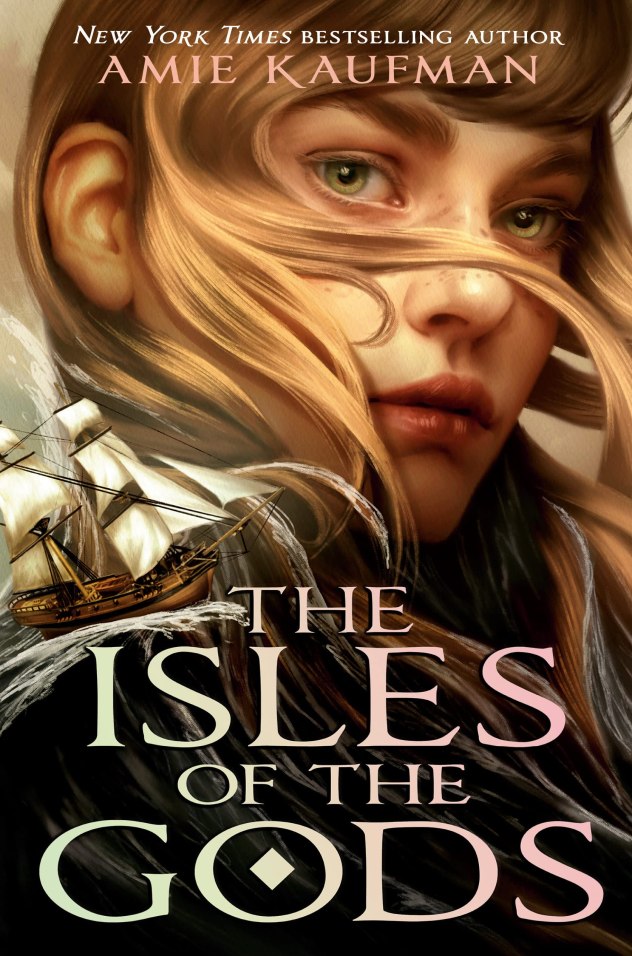
The Isles of the Gods by Amie Kaufman

The Isles of the Gods Cover

Publisher: Allen & Unwin (Trade Paperback – 2 May 2023)

Series: The Isles of the Gods – Book One

Length: 456 pages

My Rating: 4.5 out of 5 stars

Amazon

One of Australia’s best young adult fantasy authors, Amie Kaufman, returns with another impressive and captivating read that combines amazing fantasy elements with a great cast of teenage characters in The Isles of the Gods.

Amie Kaufman is an outstanding Australian author who has produced several amazing series over the years.  While she has written individual series, such as her Elementals trilogy, Kaufman’s career has been particularly defined by her collaborations with other impressive authors, including Meagan Spooner, with whom she cowrote the Starbound trilogy and Unearthed series, and Jay Kristoff, with whom she cowrote The Illuminae Files series.  I best know Kaufman from another series she wrote with Kristoff, the Aurora Cycle trilogy.  This outstanding trilogy, which featured the amazing books Aurora Rising, Aurora Burning and Aurora’s End, told a brilliant story about a squad of teenage space peacekeepers as they attempt to save the universe from all manner of dangerous threats.  I had a lot of fun with this series, and I have been meaning to read more from both Kaufman and Kristoff for a while.  As such, I was very excited when I received a copy of Kaufman’s new young adult fantasy, The Isles of the Gods, and I made sure to read it as soon as I could.

Following a devastating war between the gods that destroyed nations, peace has reigned in the world for five hundred and one years.  This peace was hard won, as the aggressive Macean, God of risks, was only brought to heel by the actions of the warrior God Barrica and her followers from the Kingdom of Alinor.  The sacrifice of Alinor’s king allowed Barrica to imprison her brother in a deep sleep, one that Macean has been unable to awaken from in half a millennium.  With the other gods stepping back from reality, only Macean and Barrica remain in the world, with Barrica serving as eternal sentinel over her brother’s sleep.  However, as tensions once again being to rise in the world and Barrica’s power seems to fade, the people of Mellacea, loyal followers of Macean, begin to plot war with Alinor and seek to bring back Macean once again.

Selly is a young and ambitious sailor whose many desires, be they the command of her own ship or of magic, seem always just out of her reach.  Trapped by circumstance in the Alinor capital of Kirkpool, Selly plots to sneak away from her controlling ship’s captain and try to reach her father.  However, her plans are ruined when she unexpectedly runs into the cocky and flamboyant Prince Leander of Alinor.  A powerful magician generally considered a fop by his people, Leander commandeers Selly and her ship for a secret mission to the legendary Isles of the Gods, where Leander needs to perform a ritual which could end the war before it even begins.

As the journey begins, Selly finds herself clashing with the prince, who she sees as spoiled and incapable of taking his responsibilities seriously.  But as they continue, they soon find themselves caught in the middle of a disaster.  Forces from Mellacea are plotting to start the war, and their first strike destroys the diversionary fleet Leander was supposed to be travelling on.  Fleeing from enemies on all fronts, Selly and Leander will need to work with a young scholar to survive and try to achieve their goal.  But to win, they’ll need to defeat a dangerous group of killers which includes an ambitious criminal desperate to prove herself to her sister and her god, and one of Leander’s former best friends, who is determined to get revenge.  Can Selly and Leander succeed and stop the war, or will the gods once again rise to devastate the world?

Kaufman produces another elaborate and captivating read with The Isles of the Gods, which I had an outstanding time reading.  Featuring an excellent new fantasy setting, a powerful young adult narrative, and some absolutely amazing characters, The Isles of the Gods is an epic read that I managed to power through in a few fantastic days.

The Isles of the Gods has an excellent and fast-paced young adult fantasy narrative that is guaranteed to drag you in and keep you hooked the entire way through.  Starting off with a bit of useful exposition, especially in a compelling prelude, the main narrative quickly introduces the reader to the five main characters of the story through their specific perspective chapters.  While each character has their own specific story, the main plot is practically split into two as three of the characters, Selly, Leander and Keegan, attempt to head to The Isles of the Gods, while the other two characters, Jude and Laskia, are involved in the plot to kill Leander.  Kaufman builds up an intriguing and powerful story around these alternate narratives, and the reader is soon caught in the captivating journey across the sea that each of them undertakes.  Split into four parts, the story has a good flow to it as all the characters find obstacles to overcome.  This includes a nautically focused first part, an intense second part with the protagonists trapped in enemy territory, a short third part which again is strongly nautically based, while the climatic fourth part brings everything together as the reader is engulfed in tragedy and the intriguing conclusion to several character arcs and storylines.  Each part of the story is pretty exciting and emotionally powerful the entire way through as the characters engage in their respective quests while trying to deal with their many personal dramas and relationships.  There are some very dark moments loaded into the narrative and I deeply appreciated the way that Kaufman slowly teased out revelations about each character ensuring that there was always more for the reader to learn.  The Isles of the Gods ends on a very interesting note as every character completes their respective arcs and a new potential chapter of their life is revealed.  It is very clear that there is a lot more of this story to go and it will be quite intriguing to see what happens in the author’s next novel.

Kaufman utilised an excellent and easy to enjoy writing style in The Isles of the Gods that complimented the complex narrative and ensured that the reader would get really caught up in all the relevant events.  The split of the story around five separate point-of-view characters worked exceedingly well, and I really appreciated seeing multiple sides to the same events, especially as you get the perspective of protagonists, antagonists, and reluctant followers, each of which brings something very different to the story.  The short, sharp chapters from multiple perspectives really moves the story along at great pace while also leaving plenty of room to develop the characters and dive into the compelling relationships and issues between each of the protagonists.  Kaufman hits a fantastic balance between action, intrigue, humour, world building, romance and character growth throughout The Isles of the Gods, and there was barely a second that wasn’t compelling in its own way.  I particularly enjoyed the many scenes set on the water as Kaufman had a lot of fun in a primarily nautical novel.  Nautically themed fantasy books aren’t always the easiest of things for an author to pull off, but I felt Kaufman did an outstanding job with it as she crafts multiple outstanding sequences out on the waves which is often enhanced by the character’s use of magic.

As I mentioned above, The Isles of the Gods is a young adult novel, which, thanks to its excellent teenage cast, is focused towards a younger audience.  This is one of those young adult novels that will appeal to quite a large audience of readers, especially as Kaufman has featured a lot of mature themes throughout the book, including war, death, sacrifice and finding oneself.  Teenage readers will really appreciate the way that Kaufman doesn’t pull any punches with her story and leaves a lot of complex elements for them to get to grips with.  At the same time, this more mature content, intriguing new fantasy setting, and complicated characters will ensure that older readers can still have a lot of fun with this novel, and any major fantasy fan will deeply enjoy and appreciate the fantastic story that Kaufman pulled together.  As such, I would strongly recommend The Isles of the Gods to a huge range of different readers, and there is really something for everybody here.

Something that always impresses me about Amie Kaufman as an author is the way that she can create new and sophisticated new fantasy realms for each of her excellent series.  The Isles of the Gods is a particularly good example of this as Kaufman sets her narrative around a great new fantasy realm with some intriguing backstory and elements to it.  I loved the cool history, which involves fallen gods and warring nations, that the author works into the overarching plot perfectly, ensuring that all these intriguing details become quite essential to the main story.  The resulting world gets some gets some substantial exploration throughout The Isles of the Gods, and Kaufman takes the time to visit some of the more fascinating and distinctive locales in this world, while leaving the door open for more to be explored in the future.  The world itself has a good mixture of steampunk technology and magic to it, and I liked how the authors dives into the mechanics behind both religion and the spirt based elemental magic that was so key to the plot.  The recurring focus on sacrifice, which proves to be essential for both magic and the gods, was particularly noteworthy, especially as it results in some powerful moments, and it really made these fantasy elements pop.  All this creativity from Kaufman helped to turn The Isles of the Gods into an outstanding read, and I look forward to exploring more of this realm in the future.

One of the big highlights of The Isles of the Gods for me was the exceptional collection of focal characters.  The plot of this impressive fantasy novel focuses around five teenagers, each of whom have multiple chapters shown from their perspective.  Kaufman develops some amazing and moving character arcs across the book and you really get drawn into the personal stories and the intriguing relationships that form between them.

A large amount of the plot revolves around the characters of Selly and Leander, who form the emotional heart of the book.  Selly is a sailor and failed magician who is desperate to escape her current life and finally become the captain she things she deserves.  She runs straight into the beacon of overconfidence and charisma that is Leander at the start of the book and their storylines end up intertwined the entire way through.  Leander is easily the most entertaining character in the entire book and his fun manner, exceptional magical abilities and ability to charm most people will swiftly have you falling in love with him.  This works in great contrast to Selly, who is one of the few people unimpressed with Leander, and the two enter a somewhat antagonistic relationship as they clash on everything.  Of course, this eventually leads to a romance (this is young adult fiction after all), but the build up to it works really well.  The two characters play off each other perfectly, especially as they call out each other’s flaws and mistakes, and you really grow to enjoy the banter between them.  Along the way, the characters both address some of their deeper issues, such as Selly’s failure when it comes to contacting spirits and Leander’s inner fears and guilt which drives him to act so over-the-top.  Kaufman works these compelling character issues into the narrative extremely well and it helps the reader to build a stronger attachment to Leander and Selly throughout.  Their joint arc ends up being a major highlight of The Isles of the Gods, and it will be interesting to see how Kaufman continues it in the future.

The Isles of the Gods features three other point-of-view characters, each of whom has their own distinctive and compelling story arc.  The first of these is Keegan, an Alinorish noble who has run away from his family and responsibilities to try and become a scholar.  A former classmate of Leander’s, Keegan is dragged into the adventure inadvertently when Leander charters Selly’s ship on which he is a passenger.  Portrayed as asexual and a little antisocial, Keegan is a solid member of the cast who is initially reluctant to help but eventually becomes a firm companion to Selly and Leander.  His scholarly knowhow and history with Leander lead to some big moments in the novel, and he is partially responsible for Leander’s growth within the book.  Another character with a complex history with Leander is Jude, a noble bastard from Alinor who was also at school with Leander and Keegan.  However, he has since moved to Mellacea after an apparent betrayal by Leander and now works for a crime lord.  Forced into the plot to kill his former friend, Jude goes through quite a lot of conflict throughout the novel as he finds himself getting dragged deeper and deeper into the chaos against his will while also trying to understand his complex past with Leander.  Jude serves as a quite a good alternate perspective within the antagonists’ ranks, showcasing a more conflicted and human view of their actions, and his story added a lot to the plot.  The final character is Laskia, who serves as the main antagonist of the story.  The younger sister of a notorious Mellacean crime lord, Laskia is an ambitious religious fanatic, desperate to prove herself to her sister and to her god Macean.  She leads the conspiracy to kill Leander, and despite her ruthless actions is shown to be troubled and unsure of herself.  However, her ambitious and righteous fury continue to drive her on, and she has a powerful and dark arc throughout the novel that really drew me in.  Honestly, all five point-of-view characters were pretty exceptional, and it will be very interesting to see how Kaufman continues their storylines in the future.

Amie Kaufman continues to dominate the young adult fantasy scene in a big way with her latest epic book, The Isles of the Gods.  This very talented Australian author has produced another amazing and awesome read that blends complex characters, a cool new setting, and an addictive and impressive young adult fantasy narrative, that had me hooked the entire way through.  I had such a brilliant time reading The Isles of the Gods and I’m extremely keen to see how Kaufman will continue it in the future.  This is an exceptional young adult fantasy novel that you need to check out!

Amazon

Throwback Thursday: Usagi Yojimbo: Volume 11: Seasons by Stan Sakai

Usagi Yojimbo Seasons

Publisher: Dark Horse Books (Paperback – 1999)

Series: Usagi Yojimbo – Book 11

Length: 198 pages

My Rating: 5 out of 5 stars

Amazon

Reviewed as part of my Throwback Thursday series, where I republish old reviews, review books I have read before or review older books I have only just had a chance to read.

It has been a while since I have done a Usagi Yojimbo Throwback Thursday, but after doing a Waiting on Wednesday for the next upcoming volume in this epic series, Homecoming, I was in a Usagi mood and decided to write something extra.  As a result, I check out the 11th Usagi Yojimbo volume by the legendary Stan Sakai, Seasons.

Seasons is a fantastic and spectacular entry in the series that presents the reader with a series of great Usagi Yojimbo adventures that follow the rabbit ronin Miyamoto Usagi as he traverses his version of feudal Japan during the various seasons of the year.  This is a key entry in the series as it sets up a number of storylines for the next several volumes while also introducing some great new characters.  Needless to say, I had an incredible time reading this volume of the series and I have a lot of love for a number of the stories contained within it.  Seasons contains issues #7-12 of the Dark Horse Comics run on the Usagi Yojimbo series, as well as stories taken from the Usagi Yojimbo Colour Special.  This results in 11 separate stories throughout the volume, made up of single-issue entries and a couple of shorter tales, all of which contain an impressive and deeply enjoyable story with beautiful artwork.

USagi #7

The first story featured within Seasons is The Withered Field, an epic story of samurai honour and the warrior’s way.  In this story, Usagi is visiting a famed fencing school with the hope of challenging some of its instructors to test his skill.  However, before he can issue his challenge, all of the school’s instructors are beaten by another ronin, Nakamura Koji, a skilled swordsman who demands a fight with the school’s master.  As he waits for his challenge, Usagi befriends him and discovers that he was once a famed sword master himself, who began the warrior’s pilgrimage after suffering a humiliating defeat at the hands of a mysterious and unconventional swordsman.  Now determined to find this swordsman and rechallenge him, Nakamura Koji shows great interest in Usagi, especially when they must content with treachery from the fencing school.

The Withered Field is an outstanding story that serves as a compelling and powerful start to this volume.  I really enjoyed the amazing narrative that examined honour and martial prowess, with Usagi encountering a famed warrior who is even better than he is.  This great story does an excellent job of introducing the character of Nakamura Koji, who becomes a major figure in some of the future volumes in this series and who has an interesting connection to Usagi and his past.  The entire storyline around the two ronin facing off against the fencing school is extremely cool and action packed, and it appears to take a lot of influence from the second entry in the iconic 1950s Samurai film trilogy (which follows the adventures of Miyamoto Musashi, the historical samurai who serves as an inspiration for Usagi), Duel of Ichijoji Temple, with the students attempting to stop the wandering ronin from defeating their master.  There are amazing action sequences throughout this story, with Usagi and Nakamura Koji engaging in several awesome duels.  I particularly loved the opening sequence where Koji goes through the pre-fight forms before facing off in his sparring match against a fencing school instructor.  The eventual reveal that the samurai who defeated Koji when he was younger was Usagi’s mentor, Katsuichi, comes as little surprise, but it sets up an amazing story later in the series which makes this great story a must read for fans of Usagi Yojimbo.

Seasons’ second story is the thrilling but haunting A Promise in the Snow, which sees Usagi travelling through a snowy mountain pass during the height of winter.  As he trudges along, he comes across bandits attacking an innocent merchant and his servants.  Intervening, Usagi is able to slay all the bandits, but not before they severely wound the merchant.  Usagi finds the merchant’s young daughter and promises to save her father, carrying him back to his village.  However, the mountain passes are treacherous, and Usagi must contend with harsh weather, a pack of hungry wild tokage lizards and a dangerous avalanche.  But no matter what the mountain throws at him, nothing will prepare Usagi for the great shock awaiting him at the end of his journey. 

Usagi #8

This is a great entry in this volume that features a desperate struggle for survival in a dangerous location.  Sakai came up with an epic story for A Promise in the Snow, and I really love seeing Usagi power through great trials and tribulations to keep his promise to a young girl.  There are some beautifully drawn scenes throughout this story, and Sakai does a fantastic job bringing the snowy landscape to life in all its wondrous, deadly glory.  I also loved the way in which Sakai’s drawings highlighted Usagi’s struggles to get through the tough terrain; you can see him get more and more weary with each obstacle he encounters.  This story has a fantastic ending that is reminiscent of a lot of classic ghost tales, and looking back you see that Sakai set this twist up brilliantly, with tons of little clues.  Overall, this was an exceptional story which is a true highlight of this volume.

Next up with have the action-packed, intriguing story, The Conspiracy of Eight.  In this entry, Usagi is visiting the temple of his friend, priest Sanshobo, when an injured samurai wearing the crest of the notorious Lord Hikiji arrives at the gate.  The samurai bears a dangerous letter that names eight conspirators who are plotting against the Shogun.  As Usagi and Sanshobo debate what to do with the information, a large force of ronin arrives at the temple, determined to claim the injured samurai and kill all witnesses. 

This is another fantastic entry in Seasons that once again sees Usagi drawn into a major conspiracy impacting the realm.  There are a lot of cool elements to this story, such as Usagi and Sanshobo being forced to mount a defence of the temple from a dangerous siege.  This is a great, fast-paced story, and I really liked the unique battle scenes, especially the monks with staffs facing off against sword-wielding bandits.  Many of the plot elements contained within this tale come into play in several later Usagi Yojimbo stories, including one featured later in this volume, and I think Sakai did an exceptional job introducing them in The Conspiracy of Eight.  I also liked seeing the return of Sanshobo, the wise and noble priest and former samurai general.  Sanshobo serves as a good foil to Usagi’s more impulsive nature, cautioning him about acting in the affairs of great lords and counselling him that his proposed actions could lead to the death of many people.  While mainly a figure of wisdom, Sanshobo also serves as a great leader, utilising his experiences as a general to defend his temple and keep his monks alive.  The Conspiracy of Eight ends up being a very solid and enjoyable entry in this volume and I very much enjoyed seeing Sakai solidify a great new side character.

Usagi #9

Right after The Conspiracy of Eight comes another intriguing story that is primarily set within Sanshobo’s temple, Snakes and Blossoms.  In this entry, Usagi tells two short tales to Sanshobo: one that describes a crazy misadventure he had, and another that describes some important lessons from his past.  This two shorter tales work as sub-stories to Snakes and Blossoms and ensures that it is a distinctive entry in Seasons.  The first of the shorter tales is titled Hebi, which is set shortly after the events of the final story in Volume 7: Gen’s Story and sees Usagi and Gen once again lost following one of Gen’s shortcuts.  As the two ronin wander the unused paths, Gen saves Usagi from a wild snake that attempts to kill him.  However, Gen’s heroic actions has unexpected consequences when the two travellers are confronted by a mysterious nun at an abandoned temple later that night.  This was a rather cool horror story that exemplifies the sort of weird situations that Usagi can find himself in.  I loved the way in which Sakai plays Usagi and Gen off each other, and there are some very humorous interactions between this oddball pairing.  There is also some really insane artwork in this short story, and I loved the fantastic and scary sight of a giant snake emerging from its disguise to try and kill the protagonists. 

The other short story contained within Snakes and Blossoms is the cute tale, The Courage of the PlumThe Courage of the Plum takes place during Usagi’s childhood when he is training with his master, Katsuichi.  As the two walk through the snow, Katsuichi attempts to teach his student the various hidden aspects of nature around them, including the trees, each of which can represent human virtues.  The young Usagi is particularly intrigued by Katsuichi’s description of the humble plum tree as brave, and Katsuichi schools Usagi on how this smaller tree can be braver than the mightiest of oaks.  I always enjoy the depictions of Usagi’s unorthodox training under Katsuichi, as the student and teacher have a very amusing dynamic, and The Courage of the Plum turned out to be a delightful shorter entry with some intriguing philosophical discussion and some lovely drawings of the winter landscape.  Overall, Hebi and The Courage of Plum make for a fantastic combination of tales and I quite enjoyed seeing these two unique, short stories come together.

Up next in Seasons is an amazing shorter entry, Return to Adachi Plain, which sees Usagi journey back to the site of his greatest defeat, Adachi Plain, the battlefield where his lord Mifune (named after actor Toshiro Mifune, who starred in multiple classic samurai films that Sakai references in his works, including as Miyamoto Musashi in the Samurai trilogy), was killed in front of him.  Flashing back to tragic events that started his wandering lifestyle, Usagi remembers the battle in greater detail and the reader sees not only the role he played in saving the head of his lord from mutilation but also the first time he came directly in conflict with the villainous Lord Hikiji. 

Usagi #10

Return to Adachi Plain is a fantastic entry in this series as it is essentially one big war sequence, showing Usagi amid a violent battle from his past.  This story expands on the war sequence that was shown in Volume 2: Samurai, and it was really cool to see more of this battle, especially the combat scene between Usagi and Hikiji, which serves as the origin for Usagi’s distinctive forehead scar.  A fantastic shorter story that provides greater depth to Usagi’s role in this major defeat, this battle sequence was later reused in colour in Volume 34: Bunraku and Other Stories, and the events disclosed within is likely to come up in the upcoming Volume 35: Homecoming.

The next story in this volume is a relatively short entry called The CrossingThe Crossing is set aboard a small passenger ship where a group of rowdy peasants sing and dance to a fun folk song on deck.  However, during the climax of the performance, one of the peasants accidently bumps into an arrogant samurai who takes offence and moves to kill the transgressor, until a fellow passenger intervenes.  Unfortunately for everyone involved, the Good Samaritan isn’t Usagi; instead it is the demon spearman Jei. 

This is a captivating darker story that once again highlights just how dangerous and deranged Jei, one of the best antagonists in the entire Usagi Yojimbo series, is.  Sakai has written an extremely clever tale here that does a wonderful job showcasing Jei’s compelling nature as both a defender of the innocent and a raging psychopath who views nearly everyone as evil in form or another.  It’s fantastic watching the expressions on the peasants’ faces turn from relief to absolute terror as they slowly realise just how crazy Jei is, and you have to love that entertaining ending with the unsuspecting dock worker.  The Crossing serves as an excellent follow-up to several other shorter Jei stories that appeared in recent volumes, including The Nature of the Viper (which appeared in Volume 9: Daisho) and Black Soul (which appeared in Volume 10: The Brink of Life and Death), and this ends up being an impressive and compelling filler story in this volume.

Usagi #11

The shorter entries keep on coming! The Patience of the Spider introduces a new compelling character, General Ikeda.  Ikeda is a famed warrior and general who led a revolt against the Geishu Clan years ago (when the clan was ruled by the father of Usagi’s friend Lord Noriyuki).  When his revolt fails and his army is vanquished, Ikeda and two of his retainers flee to an abandoned farm and determine that their next course of action is to hide and wait.  Using a patient web-building spider as inspiration, Ikeda and his comrades show fortitude and restraint by disguising themselves as peasants and farming the land as they wait for the opportune moment.  However, as the years pass and Ikeda gains a family and faces the many harsh trials and dangers that await a peasant farmer, he begins to see the world differently, until the once notorious general is a completely new person, one with very different desires and dreams.

The Patience of the Spider is an outstanding example of how Sakai can quickly build up an intriguing and powerful character and ensure that the reader is utterly transfixed by their tale.  While this entry is relatively short, it is very impactful and may be one of the best stories in Seasons.  The tale of General Ikeda, as he faces the many different hardships of peasant life, including drought, bandits, floods and great personal loss, while also experiencing great joy and community, is extremely well written.  It proves to be extremely captivating to see this resolute man slowly change his nature as life overcomes him.  This also proves to be an excellent introduction to the character of Ikeda, who will go on to have a substantial role in the two big Grasscutter storylines, and his amazing character arc has an exceptional start here.  A very impressive and powerful tale, The Patience of the Spider is an amazing character-driven narrative from Sakai that is an absolute treat to read.

The next story featured in Seasons is the curious tale, The Lord of the Owls, which sees Usagi encounter a strange fellow traveller.  As Usagi stops at an inn, he witnesses a group of ruffians follow after a mysterious hooded samurai walking the road with the intention of robbing him.  Following them, Usagi witnesses the figure quickly kill the bandits after first startling him with his hypnotic and powerful gaze.  This man is eventually introduced as Oyama Tadanori, the mysterious Lord of the Owls, who reputedly can see the future and who claims that his destiny is intertwined with Usagi. 

Usagi #12

This was an interesting story that presents the reader with a lot of curious and unanswered questions.  While the main story is rather good, especially when it comes to the fate of the greedy bandits, the reader is left extremely mystified by the Lord of the Owls and his powers of prediction.  This entry opens up a rather fascinating storyline that is still not complete; despite an appearance in a later comic, Usagi is still waiting to uncover more about this figure and their combined destiny.  While I am hopeful that this story will pay off somewhere down the line, but in the meantime this particular entry has some great action sequences, a fun new character and some stunning landscape shots, which makes it really worth checking out. 

Up next with have a clever story, The First Tenet, which deals with the machination and inside politics of the Neko Ninja clan.  In this entry, Kagemaru, the second in command of the Neko Ninja, makes a move to betray his commander, Chizu, by reporting some of her recent personal missions to Lord Hebi, Lord Hikiji’s chief advisor.  Hebi, who is enraged by the news that Chizu is moving the Neko Ninja against the interests of Lord Hikiji, considers supporting Kagemura but is reluctant, especially as “deceit is the first tenet of the ninja”.  However, Kagemaru has subtle ways of getting what he wants, and soon Hebi finds himself in a dangerous situation that will change the future of the Neko Ninja forever. 

The First Tenet is a great story that masterfully shows of the duplicitous internal politics of the Neko Ninja and the supporters of Lord Hikiji.  The storyline started here will eventually have some interesting implications for major side character Chizu, and Sakai does a fantastic job setting it up.  I loved all the plotting and subterfuge that appears in this story, and it proves to be a fun and clever read.  I also love the massive battle scene that occurs in the middle of the tale, and it was particularly cool to see Lord Hebi, a massive snake, finally get into a fight.  Hebi is a terrifying figure to behold in combat, and it is worth reading this story just to see that.  An excellent and exciting addition to Seasons, I really enjoyed The First Tenet, especially as it leads to a lot of outstanding ninja storylines down the road.

Usagi Colour Special - Green Persimmon

Seasons’ penultimate story is The Obakeneko of the Geishu Clan, a chilling supernatural tale that sees Usagi and his companions face off against a malignant spirit.  As Usagi draws closer to the lands of his friends in the Geishu Clan, he stops outside a ruined mansion where he suddenly recalls the last time he was there.  Flashing back to shortly after the events of Volume 4: The Dragon Bellow Conspiracy, Usagi, Gen and Tomoe are travelling back to Geishu lands and attempt to seek shelter at a beautiful mansion.  The mansion belongs to the Lady Takagi, a mysterious woman who provides them with rooms and food and seems quite happy for the company.  However, as the night continues, Tomoe grows suspicious with their host and attempts to investigate, eventually revealing that Lady Takagi is a demon who is determined to kill and eat her guests. 

This was a very fast-paced and exciting tale that provides an awesome horror edge to the stories contained with Seasons.  I love it when Sakai features iconic Japanese supernatural monsters in his tale as they always prove to be outstanding and fearsome opponents for the protagonists.  The monster featured within The Obakeneko of the Geishu Clan is no exception, and I loved the freaky tale based around her and the desperate fight for survival that Usagi and his friends are forced to undertake.  While Sakai mostly focuses on the horror aspects of this story, I liked how he included a few humorous moments, such as including a great reference to Sakai’s prior comic, Groo the Wanderer: “did I err?”, as well as the funny concluding moment that sees Usagi fleeing in terror from a couple of woodcutters.  This was a really fantastic supernatural tale and it is always cool to see Sakai’s amazing depictions of these inventive Japanese monsters.

The final story in this excellent volume is the intense and action-packed Green Persimmon.  In this story Usagi, who is on his way to the Geishu lands, comes across a dying Geishu retainer who entrusts Usagi with delivering a mysterious package to his lord.  Opening the package reveals a simple and seemingly unremarkable ceramic green persimmon.  However, moments after receiving the persimmon, Usagi is attacked by a band of armed samurai who are desperate to reclaim it at all costs.  Managing to defeat his attackers, Usagi continues along the rough and windy coast road to the Geishu lands, but he encounters even more men determined to reclaim the persimmon and is soon forced to fight for his life as his attackers employ ruthless means to kill him.

Usagi-Yojimbo-Book-11-Seasons-Print-

Green Persimmon is an awesome and fantastic story that I deeply enjoyed, and which holds a great deal of significance for me.  This was actually the first Usagi Yojimbo story that I ever read, as a colour version of this story appeared in a magazine aimed at younger teens down here in Australia when I was a lot younger.  This story really stuck with me over the years due to the exciting story and cool action sequences, and it was one of the main reasons (along with Usagi’s appearances in the Teenage Mutant Ninja Turtles cartoons) that I decided to check out the Usagi Yojimbo comics in later life.  Needless to say, I am still very impressed with Green Persimmon years later; it is an enjoyable and memorable story to end this 11th volume.  I love the fluid combat sequences in this issue, including Usagi throwing the persimmon into the air and killing all his opponents before deftly catching it, and there are also some great banter scenes between Usagi and his attackers.  I also enjoyed the epic scene where Usagi finds himself trapped within a field of flame thanks to a flurry of fire arrows around him.  Not only is it cool that Usagi successfully survives by utilising the lessons of the legend of Prince Yamato Takeru and the Grass-Cutting Sword (the full events of which are drawn by Sakai in the next volume), but when he emerges from the ground covered in soot and dirt, he looks particularly demonic and enraged as he faces his opponents, making for an epic and amazing scene.  All of this is set to a fantastically drawn background of the rugged coastal landscape, which proves to be a fantastic setting for the various combat scenes.  If I had to offer any criticism about this story, it would be that the conclusion and reveal of the purpose of the ceramic persimmon did not really go anywhere and there were no mentions of this victory over series antagonist, Lord Hikiji, ever again.  However, I still really love this entry as Green Persimmon has so many cool and impressive elements to it and it is a great end note for this volume.

Seasons is another fantastic and incredible comic by Stan Sakai that sees Usagi engage in some captivating and intriguing adventures.  Featuring a cool mixture of different Usagi Yojimbo tales, Seasons is an amazing entry in the series.  I absolutely love a lot of the stories contained within this volume, which are once again anchored by outstanding character and breathtaking artwork.  This volume gets a full five-star rating from me and comes highly recommended.  On a side note, I am very glad that I decided to do another Usagi Yojimbo comic in a Throwback Thursday article as I have a lot of fun reviewing them.  I might have to skip ahead a volume for my next Throwback Thursday, as I cannot find my copy of Volume 12, Grasscutter.  However, I will either find it or get a new copy soon, as Grasscutter is too major a storyline to miss.  I hope you enjoy the review and make sure to check out some of the other reviews I have done of this epic and amazing series.

Amazon

Call of the Bone Ships by RJ Barker

Call of the Bone Ships Cover

Publisher: Orbit (Trade Paperback – 24 November 2020)

Series: The Tide Child – Book Two

Length: 491 pages

My Rating: 5 out of 5 stars

Amazon     Book Depository

One of the biggest rising stars in fantasy fiction, the always impressive RJ Barker, returns with the second novel in The Tide Child trilogy, Call of the Bone Ships, an epic read that was one of the best fantasy releases of 2020.

Welcome back to the boneship known as Tide Child, a black ship of the damned crewed by those condemned to death for various crimes in the Hundred Isles and tasked with fighting in a war against their nation’s rivals, the Gaunt Islanders.  Following their first grand adventure, which saw Tide Child save the last of the vast sea dragons from whose bones the powerful ships are made, much has changed in the world.  The Shipwife of Tide Child, Lucky Meas Gilbryn, seeks to undermine her mother, the ruler of the Hundred Isles, by working with black ships of both nations to create a new settlement outside of their tyrannical controls.  However, their previous decision to save the last dragon has had unexpected consequences, and soon the ocean is alive with the news that more dragons have returned.  With their return comes the battle to kill the creatures and harvest their bones to create more ships, as the nation with the most ships will rule the waves.  However, the crew of Tide Child find themselves drawn into a different conflict when they chance upon a damaged ship with a hold full of dead or dying prisoners.

Attempting to find out more about the mysterious cargo, Meas and Tide Childs’ Deckkeeper, Joron Twiner, try to follow it to its original destination, only to discover that their new island sanctuary has been destroyed and its people carried off for a nefarious purpose.  As they start to fight back against their former comrades in the Hundred Isles, Tide Child finds itself in the midst of a dark conspiracy which will push the entire world into chaos and conflict.  A new war is coming to the oceans, and no-one is safe from its deadly consequences.

Well damn, how does Barker keep on doing it?  Over the last few years, RJ Barker has been one of the most consistent and outstanding fantasy fiction writers out there, producing several incredible and deeply enjoyable novels.  I was a major fan of his debut, The Wounded Kingdom trilogy, as all three novels, Age of Assassins, Blood of Assassins and King of Assassins were amazing reads, with each one being better than the last.  However, Barker’s writing was on a whole other level in 2019 when he published the first entry in The Tide Child trilogy, The Bone Ships, an epic read that detailed the trials and tribulations of a condemned crew aboard a ship made from dragon bones.  I absolutely loved The Bone Ships and it was one of my favourite books and audiobooks of 2019.  Needless to say, I was extremely eager to receive my copy of Call of the Bone Ships, and it was one of my most anticipated reads for the second half of 2020.  Unfortunately, circumstances forced me to hold off reading this novel until the end of the year, which I deeply regret as this was another awesome novel from Barker that got an easy five-star rating from me.

For Call of the Bone Ships, Barker has come up with another exciting and amazing narrative which follows a unique group of protagonists on a deadly adventure through a dark fantasy world.  Told primarily from the point of view of Tide Child’s Deckkeeper (first mate), Jordon Twiner, this is a massive character-driven story filled with action, intrigue, and betrayal.  While the first novel in this series focused on a wild adventure as a ship followed their new captain on a quest to find a sea dragon, this second novel focuses more on the politics of the Hundred Isles, as the Tide Child and their allies attacking as undercover rebels to undermine the cruel ruling hierarchy and determine what their plans are.  After an intriguing introduction, Call of the Bone Ships swiftly devolves into a war novel, as Meas and her crew begin to fight back against the oppressive Hundred Islanders who oppose them.  At the same time, Joron is forced to deal with a number of personal issues aboard the ship as he finds himself thrust into the midst of danger and betrayal as everything in his life goes to hell around him.  The plot of Call of the Bone Ships goes into some dark but captivating directions, and the Tide Child crew are hit with some major curveballs and tragic events.  All of this leads up to an impressive conclusion which is highlighted by a major and dramatic cliff-hanger that is going to require any reader of this book to desperately wait for the final entry in this series to be released.  While this book was a tad slow to start, especially if you were unfamiliar or somewhat forgetful of the events of The Bone Ships, it eventually resulted in a truly epic and outstanding story that proves impossible to put down once you get wrapped in its intense and captivating narrative.  The plot of Call of the Bone Ships has a fantastic flow on from the previous entry in the series and served as an excellent sequel, making great use of several of the story elements introduced in The Bone Ships and more than living up to the hype Barker established with the first The Tide Child novel.

One of the things that I have been most impressed with for this series is the author’s ability to create a gripping and consistently well-written maritime story.  Narratives that are primarily set aboard boats are notoriously hard to write, but Barker has risen to the challenge, writing a novel rich in naval and maritime detail, with a major fantasy fiction edge to it.  Call of the Bone Ships contains an intense amount of intriguing detail about the coming and goings aboard the ship out at sea and Barker does an amazing job highlighting the various day-to-day actions a crew are expected to undertake, as well as all the unique features that makes a ship in this fantasy universe different from real-world ships.  This impressive attention to detail translates extremely well into several naval battles and combat sequences, and it was cool to see the Tide Child engage in battle with other ships in some outstanding and beautifully written sequences.  In addition, Barker ensures that every major character in this novel had a real nautical feel to them.  Everything about these characters, from the way they spoke to how they act or think aboard the ship made you think of old sea-salts who had spent a lifetime on the waves, which helps to bring an interesting ring of realism to the story.  I also really love the intense and encapsulating atmospheres that Barker creates with his excellent writing ability, and you get a real sense of the moods of the entire ship throughout the novel, whether it be despair at something bad that has befallen the ship, or the sense of repetitive boredom that arrives from the ship doing the same action day after day with no break in routine.  All of this helps to produce a truly exceptional narrative, and I cannot emphasise how impressive the author’s various nautical inclusions are.

While the series is nominally about the dangerous events that the Tide Child finds itself involved with, in many ways its plot is driven by the growth and development of the main protagonist and point-of-view character Joron Twiner.  At the start of this series, Joron was a depressed and embittered young man who was unjustly forced aboard the black ship and made its Shipwife due to his lack of courage and determination.  But after meeting Meas and beginning to serve under her, Joron has become a competent officer who has the respect of most of his crew and who is now dedicated to Meas and her mission.  Call of the Bone Ships turns out to be a major novel for Joron as he participates in several adventures and battles, showing his skill as a commander, warrior and leader throughout the novel.  However, participation in these adventures has severe consequences as Joron gets beaten down and broken apart multiple times from injuries, betrayal and personal tragedy.  Watching Joron suffer is quite a hard part of this novel as the reader becomes extremely attached to him due to his likeable personality and sheer determination.  However, it is worth it to see Joron rise again as a stronger and much more developed person, and this ended up being a fantastic part of his personal story arc.  A lot of this book is also dedicated to Joron’s mysterious ability as the caller, someone who is prophesied by the Gullaime (the enslaved avian wind mystics who provide power to the ships) as a great saviour.  Joron, who first experienced these powers while calling a sea dragon to his aid, continues to develop certain abilities which prove to be rather effective and spectacular throughout the novel and opens up a lot of opportunities for the character.  The end of Call of the Bone Ships leaves Joron in an extremely intriguing position, and I am deeply curious about how his story will end in the final novel.

In addition to his complex protagonist, Barker also includes a literal raft of impressive and captivating characters, most of whom serve as members of Tide Child’s crew.  These great characters each have distinctive personalities and add a great deal to the narrative.  The main side character is easily Lucky Meas, the Shipwife of Tide Child who has turned her ship from a bastion of reprobates to a group of heroes with a noble purpose (mostly).  Meas is a truly inspirational character who has served as a close mentor to Joron and who continues to lead her crew with wisdom, experience, and humility.  Meas was a little less utilised in this novel than in the first book, with Joron taking more of a lead now that he has some command experience.  She was still a fantastic and distinctive character within this latest novel, and I really enjoyed where her personal story arc went, even though we still do not have that much information about her backstory.  Another great character was Tide Child’s ultra-powerful Gullaime, who continues to work along the crew, especially Joron, who has a special connection to the creature.  The Gullaime also has a rather intriguing arc in this novel, and it is clear that he will play a rather substantial role in the ending of the overall series.  The mysterious bird creature also develops a lot more as a character in this novel, especially after encountering different members of his species, although he continues to provide his entertaining tirades of broken speech to the crew.  The rest of the crew prove to be extremely compelling, and I liked the fact that Barker spent time expanding out the roles and personalities of a huge number of side characters, including giving several of them brief point-of-view chapters.  However, in some of these cases it did seem that the author only gave these characters more of a role so that he could then brutally kill them off, much to the heartbreak of the reader.  A number of these characters do get some rather substantial and enjoyable story arcs, and it will be interesting to see where the remaining members of the crew end up in the final book.

I have a lot of love for the dark and elaborate fantasy worlds that Barker creates in his novels, and the one featured in The Tide Child series is particularly amazing.  I deeply enjoyed this harsh and cruel world of small islands, deadly seas and warring nations, especially with the cool gender-bent world (for example, captains are known as Shipwives, while boats are referred to as him).  I really enjoyed returning to this amazing and creative world, especially as it proves to be an incredibly rich setting for the novel’s awesome and addictive narrative.  Barker does some excellent world-building in this second entry in the series, and you get some cool features, such as different groups of Gullaimes who lack wind powers but serve as jailers for their powered brethren, some new powers for the characters and some intriguing new locations.  All of this helped to create a more elaborate and impressive narrative and it is always cool to see more of this grim and deadly fantasy universe, especially as Barker’s awesome writing bring so many of the more impressive elements, such as the giant dragons, to life in such epic fashion.

The final thing I wanted to praise about Call of the Bone Ships were all the little details featured within the paperback version of the novel, that I would have previously missed in the first The Tide Child novel due to me checking out The Bone Ships in audiobook format.  I definitely have to highlight the impressive and intricate cover above, which was drawn by talented artist Edward Bettison.  The covers for this series are extremely cool, and I cannot wait to see what amazing design the artist comes up for the final entry in the series.  I also really liked the awesome artwork that was featured within the novel.  Not only is there a fantastic and detailed map at the very front of the book but there is also some sweet artwork at the start of each chapter, which depicts locations, creatures and characters from within the book.  Barker has also featured a short index at the end of the novel which contains some of the crew titles that were created for the series, detailing what each crew member is supposed to do.  All of these details are great and eye-catching inclusions to the novel, and I felt that it made Call of the Bone Ships just a little bit more special.

Call of the Bone Ships by RJ Barker was another epic and outstanding novel that shows why Barker is one of the most impressive new fantasy talents in recent years.  This incredible sequel to 2019’s The Bone Ships contains an exceptional and addictive story at sea, featuring rich and complex characters and all set within a creative and vibrantly dark fantasy world.  The combination of these awesome elements helps to create a captivating and powerful read which turned out to be one of the best books of the year.  I cannot recommend this novel enough.  If you have not found out about RJ Barker yet, you are really missing out!

Amazon     Book Depository

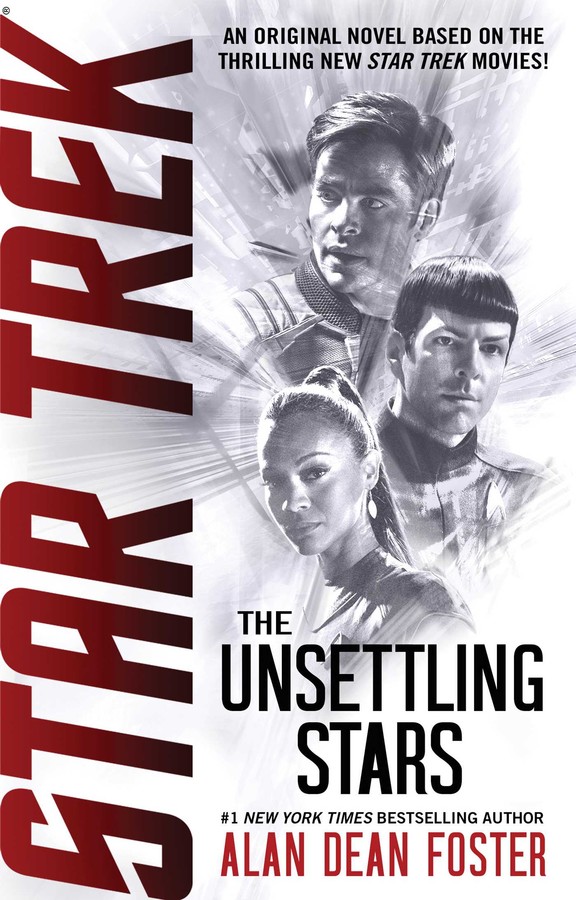
Star Trek: The Unsettling Stars by Alan Dean Foster

The Unsettling Stars Cover

Publisher: Simon & Schuster Audio (Audiobook – 14 April 2020)

Series: Star Trek: Kelvin Timeline – Book One

Length: 8 hours and 5 minutes

My Rating: 4 out of 5 stars

Amazon     Book Depository

My continued exploration of the fun and entertaining genre that is Star Trek fiction continues, as I check out the latest tie-in novel, Star Trek: The Unsettling Stars by Alan Dean Foster, an intriguing read which serves as a tie-in to the alternate Kelvin timeline, the spinoff timeline that occurred during the 2009 Star Trek film.

The Unsettling Stars is a rather interesting Star Trek read that is the first original novel set in the Kelvin timeline, except for official film novelisations and the Star Trek: Starfleet Academy young adult miniseries. This book was originally set for release back in 2010 under the title Refugees, but it was pulled from publication along with three other proposed novels that tied in to the most recent Star Trek movies. Another one of these books, More Beautiful Than Death by David Mack, is set for release later this year, and no doubt the other two proposed novels from 2010 will be published at some point as well. The Unsettling Stars is the third Star Trek novel released this year (behind The Last Best Hope and The High Frontier), and it is the first one in a series of Star Trek novels I identified in a recent Waiting on Wednesday article. As a result, I was rather pleased to get a copy of the audiobook format of this novel, especially as this book was written by the acclaimed author Alan Dean Foster.

Foster is a veteran science fiction and fantasy author who has been writing since the 1970s. He has written a multitude of novels over the years, including books set in his long-running Humanx Commonwealth Universe, The Damned trilogy, the Spellsinger series, The Taken trilogy, The Tipping Point trilogy and a huge range of standalone novels. Foster also has a large amount of experience writing tie-in novels to popular franchises, having written the official novelisations to several series, including the Alien movies, the Transformers movies, Terminator Salvation and The Chronicles of Riddick. Foster also has a deep connection with the Star Wars franchise, having ghost-written the official novelisation for the original Star Wars movie. He also wrote Splinter of the Mind’s Eye, which was intended to be a low-budget spinoff from Star Wars if the first movie did badly in the box office. Seeing that Star Wars was a major success, Splinter of the Mind’s Eye was released as the first official Star Wars novel, meaning that Foster started the Star Wars expanded universe (which has become a major staple for this blog). Foster has since gone on to write a second Star Wars novel, The Approaching Storm, and he recently wrote the official novelisation to Star Wars: The Force Awakens, nearly 40 years after he first got involved with the franchise.

Foster also has some rather interesting connections to the Star Trek franchise. While The Unsettling Stars is the first original novel that he has written for Star Trek, he has produced some official novelisations of several shows and movies over his career. Back in the 1970s, he wrote the official novelisations for Star Trek: The Animated Series, contained in 10 separate books. He also wrote the official novelisations for the 2009 Star Trek film, as well as for its sequel, Star Trek Into Darkness. However, his most significant contribution to the Star Trek universe has to be the fact that he wrote the story for the original Star Trek film, 1979’s Star Trek: The Motion Picture. As a result, Foster is definitely an interesting author to check out, and while I have not had the pleasure of reading any of his stuff previously, I was rather intrigued to see how this novel would turn out.

Years ago, a time travelling Romulan ship attacked and destroyed the Federation starship the U.S.S. Kelvin, killing the father of James T. Kirk. The changes which occurred following the destruction of this ship resulted in a whole new timeline, similar to the main Star Trek universe in most ways, but with a number of key differences. In this new timeline, Kirk, with the help of his young crew aboard the U.S.S. Enterprise, was eventually able to defeat this powerful Romulan ship, but not before it destroyed the Vulcan home planet. Now, after being promoted to captain of the Enterprise, Kirk and his crew embark on their first mission together.

With their ship repaired after the battle with the Romulan ship, the crew of the Enterprise take it out of spacedock in what is seen as a simple shakedown cruise. However, not long after they set out, they receive a distress signal from a ship just outside of Federation space. Arriving at the source of the signal, they find a single colony ship belonging to an alien race known as the Perenorean. Appearing to be peaceful refugees, the Perenorean request help as they have sustained damaged and are lacking the resources to travel to their original destination. But within moments of contact between the two ships, a second group of unknown alien ships arrive, determined to wipe out the Perenoreans. Despite not knowing the full history of this conflict, Kirk eventually comes to the aid of the Perenoreans, sending their attackers running, although not before they give the crew of the Enterprise a cryptic warning about the people they just saved.

Meeting with the Perenoreans, Kirk and his comrades discover that their new acquaintances are an extremely advanced group of beings whose capacity to learn and innovate seems limitless. Extremely grateful and determined to repay those who have helped them, the Perenoreans endear themselves to the Enterprise’s crew, who decide to help them relocate to a nearby planet. However, not everything is as it seems with the Perenoreans, whose desire to help and improve everything around them comes with its own unique set of issues. Can the crew of the Enterprise find a solution to the problems their new friends are causing or have they unwittingly unleased a terrible scourge on the Federation?

The Unsettling Stars proved to be a compelling and exciting Star Trek novel that I was able to get through quite quickly. Foster comes up with a rather clever and entertaining central story, set in the unique Kelvin alternate timeline, that revolves around a classic Star Trek first contact mission, with some interesting twists to it. The author crafts together a great story that spends a good amount of time with the key members of the Enterprise crew, with a particular focus on Kirk, Spock, McCoy, Uhura and Scott, as well as introducing several other new members of the crew, who each have a couple of scenes. The Unsettling Stars comes across like a typical Star Trek adventure, featuring a good blend of action, adventure, diplomacy and scientific discussion, similar to an episode of one of the shows. No real prior knowledge about the greater Star Trek universe is needed to enjoy this book, although it is geared more towards those readers who have a greater appreciation for the franchise, and who have at least watched the 2009 Star Trek film. Overall, The Unsettling Stars is a gripping and enjoyable Star Trek novel with a great story that I had a fantastic time listening to.

One of my favourite elements of this book was Foster’s inclusion of the new alien race, the Perenoreans. The Perenoreans are a group of extremely friendly aliens that the Enterprise rescue and help relocate to a new colony planet. The Perenoreans are an interesting new alien species in the Star Trek canon, characterised by their great intelligence, ability to adapt and evolve to any situation, and their desire to help anyone they come across. While it is also intriguing to see a new fictional alien species, a large amount of this book’s narrative lies around the crew discovering the true intentions and motivations of this species. While they seem friendly, you just know that they are going to turn out to be sinister or problematic in some way or another. The way that they genuflect is way over the top, and there is no way a whole race of people is that friendly. Also, there would not be much of story if they did not turn out to be problematic in some way. Foster does an excellent job of slowly hinting at their true nature, and it helps build up a good amount of tension throughout the course of the book. The eventual reveal of their secrets is rather fascinating and makes for a great payoff after all the build-up. I also really liked the conclusion to their whole arc, especially as it made use of a fun, but seemingly unimportant story element to wrap the whole thing up. These aliens are an amazing part of this book’s story, and it was one that made me enjoy The Unsettling Stars a whole lot more.

I also think that Foster did a good job of writing this book like it was set in the Kelvin timeline. The Kelvin timeline is filled with all manner of intriguing differences to the main Star Trek timeline, and the author spent a bit of time incorporating these differences into The Unsettling Stars. While at times the book did a feel a little like a tie-in to The Original Series, Foster was always quick to showcase some key elements of the Kelvin universe. Kirk is a little more arrogant and eager for glory in this book, and there are several discussions about his rapid promotion to captain, which results in a bit more scrutiny from Starfleet. McCoy is a bit more of a grump in this novel, and he has a bit more of an antagonistic relationship with Spock. There is also a bit of time spent exploring the new relationship between Spock and Uhura, and there are several mentions about Spock’s new dynamic as a member of a refugee species. I liked seeing the return of Simon Pegg’s fun version of Scotty, whose inclusion makes for several entertaining and enjoyable scenes. I also have to highlight the excellent reference to Star Trek: The Motion Picture that occurred in this book, as the crew of this version of the Enterprise come across a key item from this film well before it becomes a problem. It’s not often that a writer gets to erase the entirety of a film they scripted over 40 years previously, and I quite liked how this event turned out as part of the larger story. I had a fantastic time exploring the Kelvin timeline in this book, and I look forward seeing more of it in the future novels set in this timeline.

As I mentioned above, I ended up checking out The Unsettling Stars in its audiobook format, which was narrated by Robert Petkoff. This is a rather short audiobook, which runs for just over eight hours. While it took me a few days to get through (mainly due to lack of listening time than anything else), most readers should be able to listen to the whole book rather quickly, especially once they get engrossed in the intriguing story. Like every other Star Trek book I have so far listened to, The Unsettling Stars audiobook featured the vocal talents of Robert Petkoff, who seems to be the primary narrator for Star Trek audiobooks. Petkoff is an amazingly talented narrator who has come up with some incredibly realistic voices for key members of the various Star Trek television shows. In particular, he has come up with some fantastic voices for the members of The Original Series, which he uses throughout The Unsettling Stars to great effect, bringing the main crew of the Enterprise to life, while also coming up with great voices for some of the additional members of the crew and the various aliens that they encounter. All of this is really cool, and hearing these similar voices helps bring the reader into the Star Trek zone. If I had one criticism, though, it would be that Petkoff uses the same voices here that he uses for all the other audiobooks based around The Original Series. While I appreciate that the characters in the Kelvin timeline are supposed to be versions of the cast from The Original Series, hearing the Kelvin timeline characters speak in the same voice as their counterparts was a tad disjointing, and it made me forgot at times that this book is supposed to be set in an alternate timeline. A little bit of variation from Petkoff could have potentially helped this, although I am uncertain about what exactly he could have done to set this apart. Despite this minor criticism, I still really enjoyed listening to the audiobook version of this book, and I would recommend this format to anyone who wanted to check out The Unsettling Stars.

The Unsettling Stars is an excellent and exciting new Star Trek novel from the legendary author Alan Dean Foster. I had a great time unwrapping the cool mystery around the new race of aliens that Foster came up with for this novel, and it was fun to see a story in the Kelvin universe. This was a fantastic addition to the Star Trek canon, and I would recommend this to any fans of the franchise who want a clever new read.

Amazon     Book Depository

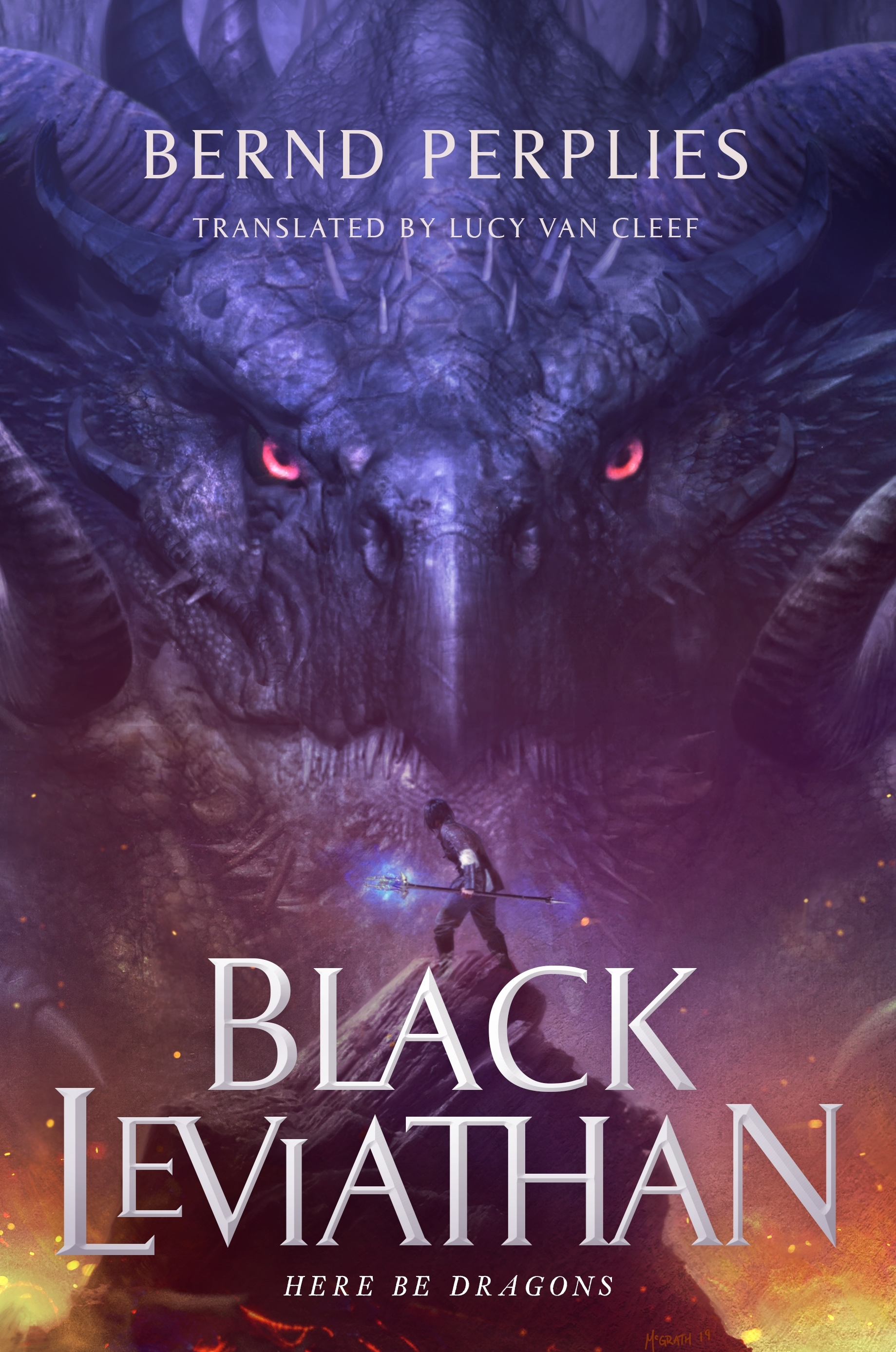
Black Leviathan by Bernd Perplies

Black Leviathan Cover

Publisher: Tor (Trade Paperback – 25 February 2020)

English Edition Translated by Lucy Van Cleef

Length: 331 pages

My Rating: 4.25 out 5 stars

Amazon

Get ready for an exciting fantasy adventure from acclaimed German author, Bernd Perplies, with Black Leviathan, an extremely fun and inventive novel that is essentially Moby Dick with dragons.

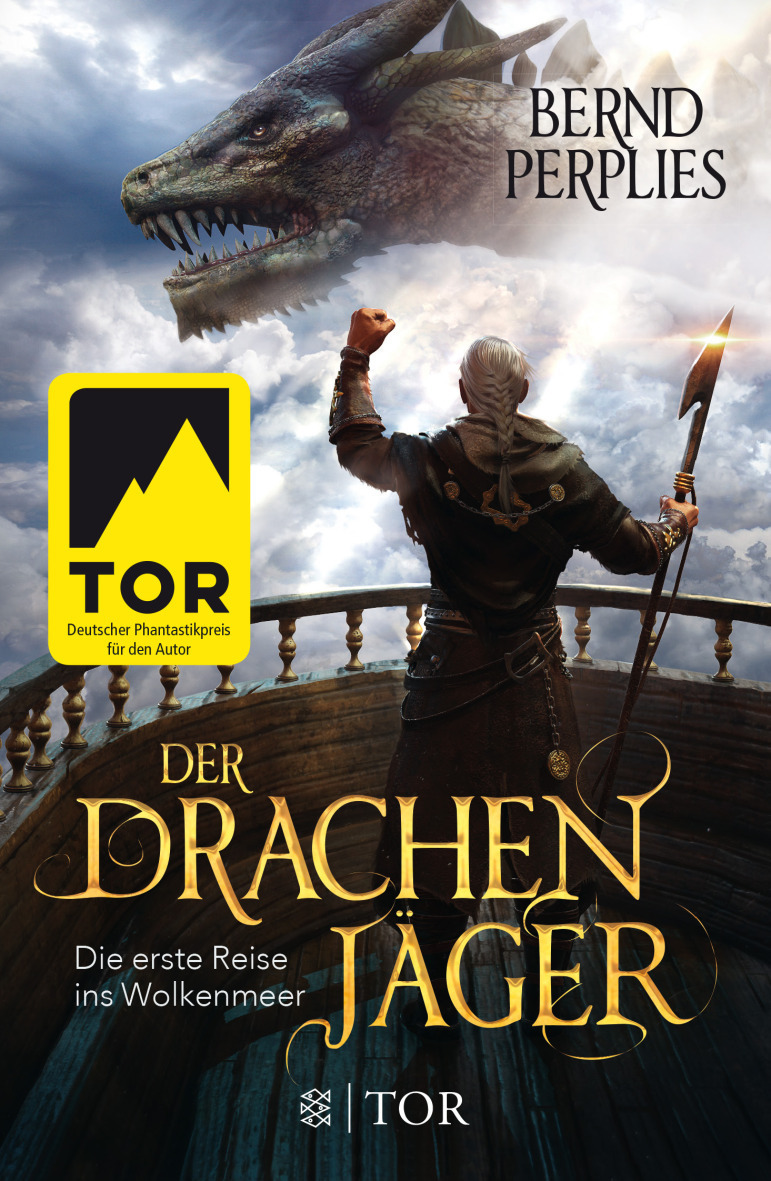
Bernd Perplies is a best-selling German fantasy and science fiction writer who debuted in 2008 with his first book, Son of the Curse Bringer. He has since authored several different series, including the Star Trek Prometheus trilogy, which he co-wrote with Christian Humberg and which were the first Star Trek books licensed to be written outside of the United States. Black Leviathan was initially released back in 2017 in Germany under the title The Dragon Hunter, and it is the first book in his Sea of Clouds series. This is the first one of Perplies’s solo books to be released in English (his Star Trek books got an English releases), and it was translated by Lucy Van Cleef.

Welcome to the Cloudmere, a floating expanse of thick cloud, mists, floating islands and mountain tops high above the ground. Thanks to the magical kyrillian crystals, which allow anything holding them to float in the air, airships now also fly through the Cloudmere attempting to harvest the useful resources available in this harsh landscape. The most valuable of resources come from the dragons, the ferocious beasts that soar amongst the clouds and mountains. Various species of dragons exist, each with their own special talents and defences, and each of which are valuable in their own way. However, hunting dragons is a dangerous occupation, and only the bravest, the most skilled or the extremely desperate set out into the Cloudmere as a drachenjäger, a dragon hunter.

Lian is a young man living in the floating city of Skargakar. The city’s entire economy revolves around the hunting and processing of dragons, and Lian himself makes a small earning carving kyrillian crystals. Lian also looks after his father, Lonjar Draksmasher, a famed drachenjäger of yesteryear whose injuries have driven him to drink. But when Lonjar is murdered in front of him, Lian instinctively gets revenge on the criminal who killed him, and now needs to get out of town quickly or face the wrath of his victim’s father, the most dangerous crime lord in the city. Taking up his father’s magical hunting spear and accompanied by his best friend, Canzo, Lian seeks work aboard one of the many drachenjäger ships leaving the city. The only one willing to take them on is the infamous Carryola.

Boarding the Carryola they find themselves working with an eclectic and effective crew of drachenjägers, and Lian believes that he has reached relative safety. However, the captain of the Carryola, Adaron, has an obsession that may prove to be the doom of Lian and the rest of the crew. Adaron is determined to hunt down and kill the Firstborn Gargantuan, a rare Black Leviathan dragon, a creature out of legends and one of the most destructive beings lurking in the Cloudmere. Now caught between a powerful dragon and a crazed captain, Lian must find a way to survive, but he quickly learns that death is always lying just around the corner in the Cloudmere.

This turned out to be a fantastic and deeply enjoyable fantasy adventure novel which I had an absolute blast reading. Black Leviathan features a fast-paced and action-packed story of a group of dragon hunters flying around in the sky chasing after a mythical and gigantic dragon, and what’s not to love about that? Perplies introduces a ship full of distinctive and compelling characters (most of whom you shouldn’t get too attached to), including an obsessive and ruthless captain, and sets them up against a powerful foe. This results in quite a fun and exciting novel, and I enjoyed some of the intriguing directions that Perplies took the story. While some elements of the story are a little bit typical of action adventure novels, such as characters whose death is a foregone conclusion the moment you meet them, this was an excellent story that is extremely easy to enjoy, and very hard to put down.

One of the best parts of Black Leviathan is the clever and inventive new world that Perplies has created as a backdrop for his fun story. The author did an outstanding job producing a unique fantasy world up in the clouds, filled with all manner of sentient races, exotic locations and intriguing magical technologies, all of which prove to be really fascinating to explore throughout the course of the story. The Cloudmere is an amazing location for a fantasy novel, and I really enjoyed seeing an entire book spent up in the clouds, either in floating cities or aboard magically powered airships. However, the highlight of this new world has to be the various species of dragons that roam the Cloudmere and dragon hunters that chase after them. Black Leviathan features a world where dragon hunting is a vast and profitable industry, and it is really quite interesting to see the various aspects of dragon hunting and its subsequent applications within this novel. There are some obvious similarities between this fictional dragon hunting industry and the real-life historical whale hunting industry and was really cool to see Perplies reinvent this iconic historical trade with fantasy creatures, floating ships and a sea of clouds.

The dragon hunting aspect of the book also results in some pretty incredible action sequences. There are some really exciting and fun dragon hunting scenes featured throughout Black Leviathan and watching the crew of an airship attempt to take down a dragon in mid-air was easily some of my favourite parts of the entire book. Perplies came up with some very clever hunting techniques for his drachenjäger, and it was very cool to see all of them unfold, especially as many require the protagonist to jump onto the back of the targeted dragon and kill them while riding on their back. This fantasy world also has many different types of dragon with a variety of different abilities (some breath fire, some have sword-like tails), each of which results a different sort of hunt with its own range of difficulties. Of course, the biggest hunt of all is when they catch up with Gargantuan, the titular Black Leviathan, the largest and most powerful dragon in the Cloudmere. That hunt goes about as well as expected, and it was extremely exciting to see the crew attempt to use their tried-and-tested techniques against this beast.

I mentioned at the start of this review that Black Leviathan was a bit like Moby Dick. That is because it features a captain who is obsessed with killing a specific rare beast who wronged him years ago, in this case a black dragon rather than a white whale. The entirety of this feud is actually shown in this book, as the first two chapters deal with Adaron’s first ship getting destroyed by Gargantuan, with nearly all his friends dying, including his fiancé, whose hand he was holding when she was eaten (with Adaron left holding her severed arm). As a result, the Adaron we see in the present is a much harder man who bears a great hatred for all dragons and is determined to find and kill Gargantuan no matter the cost. This results in a great story of obsession and hatred as Adaron scours the Cloudmere for his prey, while also attempting to kill any other dragon he comes across. The author has done a great job showing Adaron as an eccentric and damaged character from the first time the protagonist meets him. Not only does he order his own whipping every time a member of his crew gets killed by a dragon but he also keeps the skeletal hand of his fiancé in his cabin as a constant reminder of his mission to kill his prey. However, as the book progresses, it becomes more and more obvious that his obsession with finding Gargantuan has driven him insane. Not only does Adaron sacrifice his crew’s safety to locate the dragon but he ignores the concerns of the people serving under them and he even utilises dark practices to find his prey. This all results in a great final showdown with Gargantuan at the end of the book, and I think that the author did an amazing job concluding this captivating story arc.

Black Leviathan by Bernd Perplies is an excellent and deeply enjoyable fantasy adventure that combines a great central story with an extremely creative fantasy world to create a compelling and fun read. This book is filled to the brim with action and adventure and is guaranteed to get any fantasy lover’s pulse racing. I really loved this book, and I look forward to any future English releases of Perplies work. I do note that Perplies released a second book in this series in 2018, The World Finder, and hopefully we’ll get to see that in English in the next year or so.

u1_978-3-596-29671-2

Amazon

Mass Effect: Annihilation by Catherynne M. Valente

Mass Effect Annihilation Cover

Publishers: Titan Books

                        Blackstone Audio

Publication Date – 6 November 2018

Amazon     Book Depository

A new galaxy, a ship full of disparate alien species, what could possibly go wrong?  Veteran author Catherynne M. Valente brings to life a new adventure in the Mass Effect universe with Mass Effect: Annihilation, the third official tie-in novel to the 2017 video game, Mass Effect: Andromeda.

This was a really good piece of science fiction that expertly built on the intricate extended universe that has been created around the Mass Effect video game franchise.  I should preface this review by mentioning that I am a huge fan of this video game series, and one of the best things about it is the great universe and intriguing storylines that have been produced as a result.  While I know that many people had some valid criticisms about the latest game in the series, Andromeda, I actually really enjoyed the new addition to the series’ story and lore and had a lot of fun playing it and exploring all the additional plot that is hidden outside of the main missions.  One of the many mysteries that I hoped to get an answer about was the fate of Quarian ark, so I was very eager to read this book when I first heard about what it was going to focus on.

For those unfamiliar with the Mass Effect franchise, the first game was released in 2007 and is set in a universe where humanity has gained spaceflight and by 2183 has expanded throughout the Milky Way galaxy.  Once they were outside of our solar systems, humans met with several alien races which governed large portions of the galaxy.  The three main species, the Asari, the Salarians and the Turians, formed a ruling council on the ancient alien space station, the Citadel, which served as a capital city for these races and several other allied species.  The game series followed the human protagonist, Commander Shepard, as he (or she, depending on your settings), investigates the resurgence of the Reapers: ancient, sentient space ships who appear every 50,000 years to destroy all sentient organic life.  While Shepard is able to delay the appearance of the Reapers in the first two games, they launch a full-scale attack in Mass Effect 3, leading to significant, galaxy-changing events.

The game Mass Effect: Annihilation is based on, Mass Effect Andromeda, is the fourth Mass Effect game released and a loose sequel to the original series.  Andromeda is set over 600 years after the events of Mass Effect 3, and follows a group of explorers and colonists from the Milky Way galaxy as they travel to the Andromeda galaxy in an epic one-way trip to find new planets to settle on.  This was a result of the Andromeda Initiative, a joint exercise from a number of Citadel species in order to settle in the new galaxy.  The Initiative launched their ships to Andromeda in the period between Mass Effect 2 and 3.  Each of the main Citadel races, humans, Asari, Salarians and Turians sent an ark ship to Andromeda, each filled with 20,000 cryogenically frozen members of their respective species.  These four arks were launched at the same time, and the plan was for them to dock in the Nexus, a miniature version of the Milky Way Citadel sent in advance of the arks, which was to be used as a staging ground while the Pathfinders found and explored new planets for their races to settle on.  During the events of Mass Effect: Andromeda, mention was made of a fifth ark, built by the Quarians and filled with several other alien races, that was supposed to launch soon after the initial four arks.  However, this fifth ark made no appearance during Andromeda, and was one of the game’s unsolved mysteries, perhaps destined to never be solved, as there is currently no plans to continue the Mass Effect game franchise (although it is too big a franchise for them not to do something else with it in the future).

The Mass Effect games have inspired a number of additional media releases over the years.  Four Mass Effect books were written between 2007 and 2012 to correspond with the original game trilogy, as well as a number of comic book series.  Following the release of Mass Effect: Andromeda in 2017, a new trilogy of books was commissioned which further explored key events or characters mentioned in the fourth game.  Annihilation is the third and final book in the Mass Effect: Andromeda book trilogy.

As the Reaper fleet begins to appear in the Milky Way galaxy, a fifth ark is launched by the Andromeda Initiative to bring another 20,000 settlers to the Andromeda galaxy.  Built by the planetless Quarians, the ark Keelah Si’yah is the only ark to hold colonists from a number of different races, including Quarians, Drell, Elcor, Batarians, Volus and Hanar.  Despite having different outlooks, opinions, biological requirements and reasons to leave the Milky Way, these races are united in their decision to reach the new galaxy and find new planets to settle on.

As the ship reaches the end of its 600-year long journey, problems are soon identified aboard the ship.  One of the ark’s Sleepwalker teams, a small team of individuals tasked with checking on the status of the ark as it flies through space, is suddenly awoken years before the Keelah Si’yah is scheduled to dock with the Nexus.  The ship’s virtual intelligence has identified certain discrepancies in the readings of several Drell cryopods.  Investigating the pods, the Sleepwalker team find that their inhabitants have died from a disease, something that is supposed to be impossible while frozen.  Even worse, the ships systems are all reporting that everything is fine, and that the inhabitants of the pods are still alive.

The Sleepwalker team quickly discover that the dead colonists have all been infected by a virulent disease, one that seems capable of jumping across to the vastly different alien species.  The team are desperate to find out the cause of the disease, but their investigation is severely hampered by a number of system failures across the ark, while the ship’s computers continue to insist that everything is all right.  As the failing systems start to randomly unfreeze more and more colonists, the disease quickly spreads across the ark.  It soon becomes apparent that the disease has been artificially created, and that someone is launching a deliberate attack against the Keelah Si’yah and its crew.  As the various colonists turn on each other in fear and confusion, can the Sleepwalker team find a cure and uncover who is behind the attack, or will everyone on the ark die before reaching Andromeda?

The author of this book, Catherynne M. Valente is not an author I was very familiar with before listening to Annihilation, but she appears to have produced a wide range of different novels, some of which are quite quirky in content.  I do remember seeing and trying to get a copy of her 2018 release, Space Opera, earlier this year, mainly because it sounded like such a fun read, what with it essentially being Eurovision in space.  Luckily, I was able to obtain a copy of Annihilation a week ago and powered through its audiobook format, narrated by Tom Taylorson.

Mass Effect: Annihilation has an exciting and intriguing story that expands on the established lore of the Mass Effect universe while also providing the reader with a compelling science fiction mystery.  The story is broken up into three main parts: the characters attempting to identify and cure the disease, the attempts to fix the ship’s broken system and an investigation into who or what initiated the attack on the ark and its inhabitants.  As a result, there is a good combination of medical, technical and investigative scenes that come together into a rather intriguing overall narrative.  There is not a lot of action, but the focus on the various problems around the ship is very interesting.  The link between the various parts of the book and the final solution to who is behind them was also quite clever and the reasons behind it were quite interesting.  There are some certain dark moments, especially when it comes to the reveal of who was behind it.  Annihilation is obviously going to appeal a lot more to readers who are familiar with the games and who enjoy the backstory of this series, but this is a great story with plenty for other readers to enjoy, and I felt that Valente makes this story accessible for outside readers.

One of the most interesting parts about Annihilation is the fact that the book focuses on the less prominent alien races in the Mass Effect universe.  Aside from one prologue that follows a human, every single character is a member of six less common races in the lore and games, the Quarians, Drell, Volus, Batarians, Hana and Elcor.  This is unique, as the games and the previous novels tend to mostly focus on human characters, or feature a significant number of characters from the games more prominent races, such as the token sexy alien species, the Asari, or the gigantic and war loving Krogan.  The other main council races, the Turians and the Salarians, are also extremely prominent compared to the six races featured within this book, with great Turian and Salarian characters appearing frequently in the games or the books (I am the very model of a scientist Salarian).  In pretty much all of the games, the protagonist can choose members of the above aliens to be a part of the team.  However, Annihilation completely changes this around, as four of the six races that the book focuses on have never had usable characters in any of the games and are mostly minor side characters.  Of the other two races, the Quarians do get a good examination within the games, with one of their members quite a key character.  The Drell are explored to a much lesser degree, although badass Drell assassin Thane Krios as a useable teammate in the second game.

I was pleasantly surprised to read a book where these six less commonly featured races were so prominent.  Valente has a great understanding of these races and spends a significant part of the book exploring each race’s various quirks, important parts of their biology, culture, society or lifestyle, as well as certain parts of their history.  The author does a fantastic job expressing all these racial traits throughout the book, and even new readers to the franchise can quickly gain an understanding of what these species are and what is key to all of them.  For example, Valente is able to expertly capture the various speech characteristics of each of the races featured in Annihilation.  This includes the heavy breathing of the Volus, the lack of personal pronouns in the Hanar’s dialogue, the rolling stream of Drell memories that they say aloud when flashing back to important memories, and even the Elcor habit of prefacing their sentences with their emotional state.  These are all done incredibly consistently throughout the book and really add a lot of authenticity to the story.  These vocal patterns can also be particularly entertaining, especially when it comes to the Elcors, as nothing is more amusing than having an angry Elcor calmly telling everyone how enraged he is.  The various alien species did have the potential to make the investigation into the virus hard to understand, but the author cleverly got around this by having the characters compare the disease, cures and other relevant aspects to common and recognisable human disease.  Overall, these alien inclusions are fantastic, and it was great to see these more obscure fictional species finally get the limelight in a Mass Effect story.

While the alien races as a whole are great inclusions in Annihilation, Valente has also created some amazing characters to make up the Sleepwalker team investigating the issues plaguing the ark.  These characters include the team’s leader, Quarian Senna’Nir vas Keelah Si’yah, Drell detective Anax Therion, Elcor doctor Yorrik, former Batarian crime lord Borbala Ferank, Volus tailor Irit Non and a religiously fanatic Hanar apothecary.  Each of these characters is pretty fun, and all of them have demons in their past that are explored throughout the book.  For example, Senna’Nir is obsessed by computer intelligences, something that is forbidden by the other Quarians following a terrible event in their history.  As a result, Senna’Nir spends large portions of the book coming to terms with his secret obsession, and it is quite an interesting subplot which also allows the introduction of one of the best side characters, a sassy Quarian grandmother virtual intelligence.  Each of the characters’ backstories is fairly compelling and each add a lot to the story.  Borbal Ferank’s crime lord persona is also a lot of fun throughout the book, as she casually mentions her previous crimes and familiar betrayals that are quite common for Batarians.  There are also the mysteries around Anax, as the ultimate infiltrator gives several versions of her past throughout the book to various characters to get the answers and stories she requires.

Easily the best character in Annihilation is Yorrik, the Shakespeare-obsessed Elcor doctor who spends the entire book trying to cure the virus infecting the ark.  He was extremely amusing throughout the entire book, as he spend significant parts of the book dropping jokes in his emotionless tone, or attempting to engage his companions in discussion about his extremely long Elcor adaptions of Hamlet or Macbeth.  Yorrik is a fantastic character throughout the entire book, and he is definitely the person the reader gets the most attached to.  Never have Shakespearian quotes been more appropriate for the fate of an alien.  I also really loved the unique partnership between Anax and Borbala.  The detective and criminal make a great team, and the two have a lot of fun investigating the attack on the ship, and it was great seeing the two of them get closer to each other through the course of the book.  Valente has done an incredible job with the characters in this book, and their histories, relationships and unique viewpoints really make this novel awesome.

I listened to the audiobook version of Annihilation, which I found to be an amazing way to enjoy this book.  At just under nine hours long, this is an easy audiobook to get through, but it is one I had a lot of fun with.  One of the best things about the audiobook version was the fact that they got Tom Taylorson, the voice of the male protagonist in Mass Effect: Andromeda, to narrate this audiobook, which is just awesome for those people who have played the game.  Taylorson does an excellent job portraying each of the characters in this book and I loved all the voices he came up with.  He also managed to get all of the unique voice patterns and vocal particularities of the various alien species down perfectly, and each alien species sounded exactly as they did in the games.  This is an outstanding piece of audiobook narration, which really added a lot to how much I enjoyed this book.

Overall, I am going to give Mass Effect: Annihilation a rating of four and a half stars.  I will admit that one of the main reasons I am giving it such a high rating is because of my love of all things Mass Effect and because of how much I love the franchises lore and expanded fictional history.  I am aware that people who are not as familiar with Mass Effect may not enjoy it as much, but I hope that most readers will appreciate the great characters, interesting story and excellent audiobook adaption.  This is great piece of science fiction and an excellent tie-in novel that is a perfect read for fans of the Mass Effect franchise.

My Rating:

Four and a half stars

Amazon     Book Depository