Nucleus by Rory Clements

Nucleus Cover.jpg

Publisher: Zaffre

Australian Publication Date – 1 March 2018

World Publication Date – 25 January 2018

Amazon     Book Depository

In June 1939, war is on the horizon.  While many in England still hope to avoid another conflict with the Germans, it is becoming clearer that war may be unavoidable.  Nazi Germany is aggressively moving throughout Europe, while back in England the IRA has embarked on a new bombing campaign.

While the world watches and waits, many governments have turned their focus towards a dangerous new arms race.  Advances in nuclear fission have allowed scientists to envision a potentially game-changing weapon: an atomic bomb.  Many believe that the research at Cambridge’s Cavendish Laboratory will lead to the creation of the first bomb, and the laboratory is now the subject of intense scrutiny.

While holidaying in America, Cambridge professor Tom Wilde is summoned to the White House to meet President Roosevelt.  The president requests that Wilde use his position to spy on the research at Cavendish and report their progress to the Americans.  Upon his return to Cambridge, Wilde begins to suspects that Nazi spies may have infiltrated the laboratory when one of the Cavendish researchers is brutally murdered.  As he investigates further, he learns that the murder may be connected to a wealthy family with Nazi sympathies and the famous movie star sister of one of his colleagues.  Wilde is forced into a web of spies and assassins as he tries to discover what terrible plans the Nazis have for Cavendish.  What does his long-lost cousin have to do with this plot, and how do these attacks tie into a kidnapped child that Wilde’s girlfriend, Lydia, is searching for in Germany?

Nucleus is a pulse-pounding thriller that combines mysterious events and spycraft with a dark historical background and a grounding in nuclear physics.  This is the second book in Clements’ Tom Wilde series, and the follow-up novel to his 2017 bestseller, Corpus, which was a stunning historical thriller that featured a plot against the royal family.

Clements has a lot of experience with historical thrillers, having previously examined espionage during the Elizabethan era in his acclaimed John Shakespeare series.  In Nucleus, Clements combines several intriguing storylines into one compelling plot that will draw the reader into the book’s many mysteries.  With a series of hidden adversaries, twisting character loyalties and several shocking conclusions, Clements tells a first-rate thriller that combines well with his story’s historical setting and locations.

Clements uses his latest book to once again explore the period of calm immediately before World War II.  Clements does a masterful job of depicting the dread and apprehension filling England as the whole country found itself drawing closer and closer to war.  This bleak and foreboding historical period is the perfect setting for Clements’ thriller, especially as the characters realise the major repercussions their actions could have on the world.

The historical locations used throughout Nucleus are an essential part of the book and add a lot to the story.  Clements once again returns to the Cambridge backdrop that was one of the defining features of Corpus.  The academic background is used less during this book, but the reader is compensated by being able to see the famous Cavendish Laboratory.  There is also a harrowing journey into Nazi Germany for one of the characters, Lydia, which Clements uses to full effect, highlighting the terror many German citizens felt during that time and their attempts to flee the country before it was too late.  Another highlight of the scenes set in Nazi Germany was the interesting focus on some of the groups attempting to get refugees out of the country, such as the Quakers and the staff at the British Embassy.  The reader also experiences Lydia’s palpable dread as she comes into direct contact with the dark mechanisms of the Nazi machine, and these scenes contain an amazing and appropriate level of suspense.

Due to it being a major plot point for Nucleus, Clements spends a significant amount of time focusing on the state of nuclear science in the 1930s.  Clements does a good job of explaining the science in some detail without it getting too complicated.  As a result, the reader receives a basic understanding of nuclear science of the time, at least enough to appreciate what the spies and nuclear physicist characters within the book are up to and are attempting to achieve.  This is a good balance to have and it allows the reader to experience the fascinating early history of nuclear fission and the early arms race for the atomic bomb.

By infusing his excellent storytelling with a dark historical period, Clements once again delivers with an exhilarating historical thriller.  Featuring a gritty and captivating storyline and making full use of its excellent historical setting, Nucleus is guaranteed to blow you away.

My Rating:

Four and a half stars

Amazon     Book Depository

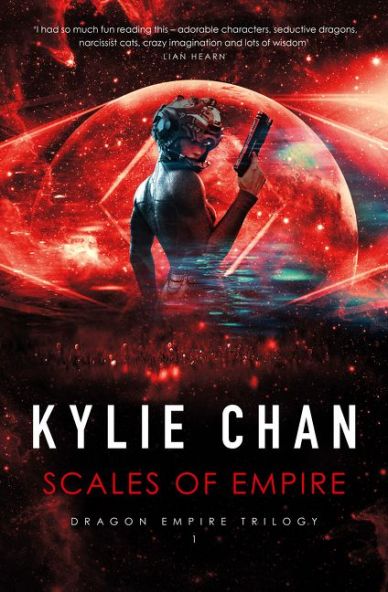
Scales of Empire by Kylie Chan

Scales of Empire Cover

Publisher: Harper Voyager

Publication Date – 19 February 2018

Amazon     Book Depository

Can humanity survive the arrival of an alien dragon with an offer of love?  Find out in this curious novel about first contact with aliens from bestselling Australian author Kylie Chan.

In the near future, Earth’s ecosystem is failing and humanity’s only hope for survival lies in escaping our solar system and finding viable new planets to colonise.  Corporal Jian Choumali has been chosen to accompany one of the huge generation ships that is preparing to journey to a distant planet.  However, the launch is interrupted by the arrival of a giant alien spaceship above Earth that will change humanity forever.

The ship is piloted by an alien known as a dragon, which bears a striking resemblance to the beasts of legend.  Dragons are the ruling members of a vast technologically and culturally advanced empire made up of numerous alien races.  The Dragon emissary, Shiumo, brings offers of peace, love and advanced technology to humanity as she introduces Earth to a wider universe.

Jian and her commander, Richard Alto, are chosen to be the first delegates to meet with Shiumo, and they soon become her guides to Earth.  Shiumo becomes a sensation overnight, providing humanity with longer lives, faster-than-light travel and a solution to Earth’s failing ecosystem.

However, the more Jian gets to know Shiumo, the more it becomes apparent that the Dragons may not be as benevolent as they seem.  What price will humanity really have to pay to join the Empire, and what role will the Dragons’ cat-like enemies play in the future of Earth?

Scales of Empire is the first book in the intriguing Dragon Empire trilogy, written by Australian author Kylie Chan.  This is Chan’s first voyage into science fiction, having previously written the Chinese mythology inspired Xuan Wu series.

Scales of Empire has a number of cool features that make it an amusing and thought-provoking science fiction novel.  Chan has constructed a first contact story that explores how humanity could potentially interact with an advanced alien race.  Chan provides a series of fascinating postulations about what human products would prove desirable to an alien species, what humanity could use in our defence against potential alien threats, and what our place would be among a vast interstellar empire.  The Dragons are the stars of this book, as Chan has imbued them with several distinctive abilities and personality quirks.  There is also a fun origin story to explain the similarities between the alien Dragons and the Earth dragons of myth and legend.  Having the other main alien race also resemble an Earth species, in this case cats, is a little over the top very unrealistic.  However, the behaviour of this other species acts as a good foil to the apparently benevolent and socially advanced Dragons.

Science fiction aficionados will also appreciate Chan’s descriptions and theories about what would be required for humans to reach and colonise other inhabitable planets in the galaxy.  Chan spends some of the early parts of the book highlighting her theories about how humans in the near future would achieve this.  Her descriptions of large ships that would require ten generations of its crew to live in space before they even reached the planet is fascinating, as are her suggestions about the ideal initial crewmembers; not a lot of other writers would suggest that colonisation ships should have large crews mostly made up of bisexual women with good genetic diversity.  In addition, there is also some intriguing discussion about the colonisation of other planets, and several chapters are dedicated to the training and initial colonisation of a planet, which many readers will find enticing.

While these science fiction aspects of the book are good reasons to try Scales of Empire, one of the most compelling and memorable aspect of this book is the constant examination of whether the Dragons are as benevolent as they seem, or if they have their own secret agenda.  This becomes a central focus of the story as the human characters analyse all of the Dragons’ actions while coming up with countermoves and their own attempts at manipulation.  There are many twists and turns, and at points it becomes hard to tell whether the Dragons or the humans come off as the worst species during these interactions.  This results in a really compelling narrative which serves as a superb central focus for the book and will keep you hooked until the final reveal.

The new book from Kylie Chan is an intriguing start to a promising science fiction trilogy.  Examining humanity’s potential first contact with an alien species, Chan asks the question: between an alien species with its own agenda and mistrustful and calculating humans, who is the greater evil?  This is a brilliant bit of fiction that provides a distinctive and in-depth discussion and is definitely worth exploring.

My Rating:
Three and a half stars

to

Four stars

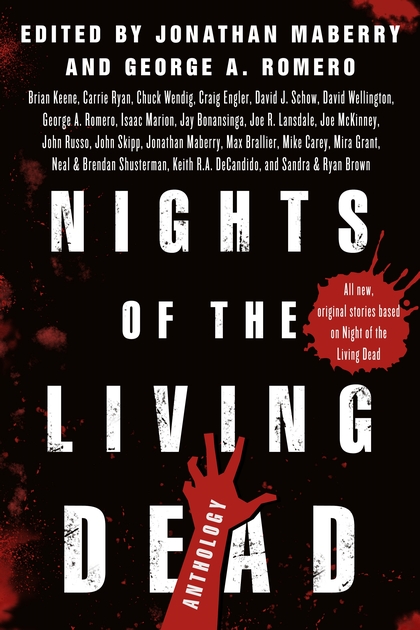
Nights of the Living Dead edited by George A. Romero and Jonathan Maberry

Nights of the Living Dead Cover

Publisher: Duckworth

Australian Publication Date – 1 December 2017

World Publication Date – 11 July 2017

Amazon     Book Depository

In 1968, the late, great, George A. Romero created one of the most iconic films in horror movie history, Night of the Living DeadNight of the Living Dead has had many lasting impacts in the world of film, but one of the most significant things it did was to firmly enforce the terror of the zombie into the public consciousness and set the rules for all future zombie works.

Since that day, zombies have dominated people’s minds and pop culture in all its forms.  From movies to television and comic books, zombie stories infest modern fiction.  The introduction of zombies has also influenced the world of literature, with many prominent authors producing some incredible and varied works of zombie fiction.  From World War Z to Warm Bodies, these bestsellers have enthralled the world, with many serving as inspiration for other mediums.

One significant piece of zombie literature published in 1989 was Book of the Dead, edited by John Skipp and Craig Spector.  Book of the Dead was an anthology of short stories based on the zombie apocalypse premise introduced in Night of the Living Dead.  With a foreword by Romero himself and bringing together original stories from a large number of prominent horror authors, including Stephen King, this iconic book is considered one of the first pieces of zombie literature.  It produced two follow up anthologies, Still Dead and Mondo Zombie.

Now, the concept of a zombie anthology book has again been resurrected in Nights of the Living Dead, edited by George A. Romero and Jonathan Maberry.

Nights of the Living Dead contains 20 new and unique stories from a distinguished group of authors.  Each of these stories is set in a world forever changed by a zombie apocalypse and shows the horror through the eyes of a range of different survivors enduring a number of different scenarios.  Police, doctors, murderers, white supremacists, scientists and showmen all examine different sides of the classic zombie apocalypse.  Many of the stories are set in more contemporary times, exploring how people in 2017 would react to this phenomenon while also allowing some commentary of current social issues.

Fans of the original movie may also be interested in several stories set during the events of the film.  The connection that some of these stories have to Night of the Living Dead is somewhat minor, with the stories merely being set in the same year, thus allowing the reader to assume they are set during the same outbreak.  Other stories have a far more significant connection to the events of the movie.  John Russo’s story is a direct sequel to the movie and follows some of the posse that played a significant part in the end of the film.  Another story, by Isaac Marion, is told from the perspective of a minor character in the film, Karen Cooper, and features her dramatic and eventually violent interactions with other characters in the movie.

Perhaps one of the best features of Nights of the Living Dead is the sheer talent that has been gathered together to write this book.  Numbered among the contributors are some of the most influential writers of zombie fiction, including both of the Night of the Living Dead’s original screenwriters, Romero and Russo.  The other writers include multiple Bram Stroker Award winners, such as editor Jonathan Maberry, whose contribution to zombie culture includes working on the Marvel Zombies series.  Many of the authors have their own zombie fiction novels and series, including Isaac Marion, writer of Warm Bodies, Briane Keene, author of The Rising, and Mira Grant, author of the Newsflesh series.  The list of contributors also includes people who have worked on zombie comics and television shows, including one of the writers and co-creators of Z-Nation, Craig Engler.

The various contributions to the anthology allow the reader to enjoy a range of zombie stories which may appeal to different people.  Personal favourites include David Wellington’s short story set around the International Space Station and Mira Grant’s emotional tale set in a zoo.  Other great stories includes Craig Engler’s tale of vigilante justice in a world of zombies and a new original contribution by George A. Romero, which also takes the time to examine racism in more modern times.  Readers may also be interested in the forewords from Romero and Maberry, which examine their experiences with the movie and how it has influenced zombie culture for the last 50 years.

Nights of the Living Dead is an exciting anthology series that presents the reader with 20 new and unique stories from some of the leading minds in zombie fiction.  With a range of different and exciting stories of the zombie apocalypse, many with ties to the original movie, this is a must-read book for all fans of zombie fiction and the man who inspired it all.

My Rating:

Four stars

Amazon     Book Depository

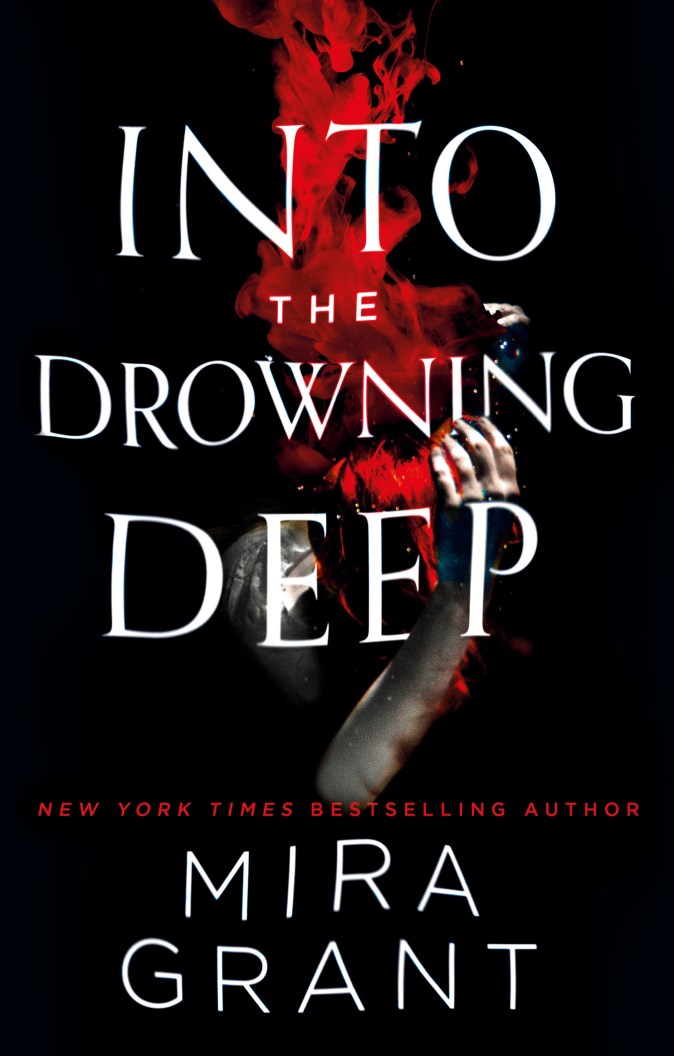
Into the Drowning Deep by Mira Grant

Into the Drowning Deep Cover

Publisher: Orbit

Publication Date – 14 November 2017

Amazon

From one of the brightest stars in horror and science fiction, comes a heart pounding and imaginative story about terrifying creatures in the deep.

Mermaids have always been the stuff of legends, whether they feature in sailors’ cautionary tales or children’s stories. Seven years ago, when Imagine Entertainment sent a mockumentary team out to the Mariana Trench about the Atargatis they found just how real mermaids were, but with no survivors and only unbelievable leaked video footage to tell their story, the incident is either considered a tragic accident at sea or derided as a hoax.

Now, Imagine Entertainment are planning a second expedition to the Mariana Trench to find incontrovertible proof of mermaids and show the world what happened to the crew of the Atargatis. Larger and better prepared, the second expedition sets out onboard the giant pleasure cruiser Melusine, hosting state-of-art research facilities and filled with the leading experts in a range of marine sciences.

Also onboard are Victoria Stewart, whose beloved sister died upon the Atargatis, and the world’s leading expert on mermaids, Dr Jillian Toth, who is still haunted by her decision not to accompany the original expedition.

Arriving at the Mariana Trench, it doesn’t take long for the mermaids to appear. But these mermaids are not the stuff of children’s stories. They are real, they are dangerous and they are very, very hungry.

Grant has impressive science fiction and horror credentials, including her zombie thriller series Newsflesh and her ‘science-gone-wrong’ inspired Parasitology series. Drowning in the Deep is another outstanding story of horror from Grant and is a worthy sequel to her exciting 2015 novella, Rolling in the Deep.

By far one of the best things about Drowning in the Deep is how Grant turns mermaids, long associated with fairy tales and Disney movies, into credible monsters for her book. Using a combination of suspenseful and descriptive writing, bestowing the creatures with several creepy abilities and loading the book with a range of scientific explanations to make them as plausible as possible, Grant has succeeded in creating scary mermaids.

An interesting feature of the book is the manner in which Grant introduces the mermaids to the story. Rather than taking the traditional path and gradually revealing the monsters over the course of the first half of the book, Grant discloses the mermaids in all their gory glory within the first few pages of the book. All the characters know what they will be up against well in advance; the thrills come in discovering whether that is enough to ensure their survival.

Grant also takes time to introduce all the key characters and explain their backgrounds and motivations. This adds to the story and creates a range of characters whose fates readers will be deeply concerned for. In addition, she makes good use of multiple viewpoints to tell the story. Chapters are presented from the perspectives of each of the main characters, some of the minor characters, the mermaids themselves and even a pod of dolphins. This results in an intricate tapestry of a story and allows for a wide variety of scenes and a deeper understanding of the mystery and horror that is the mermaid.

Grant adds several fun additions to the front of each chapter, such as biography extracts, descriptions of videos, blog posts, articles from a cryptozoology periodical and a number of sections of a lecture from one of the characters, Dr Toth. This is a great way to add a lot of additional background without disturbing the flow and suspense of the overall story. Grant also includes quotes from the characters at the front of the chapters. These quotes help set the tone for the overall book and for the individual chapters. An example of this can be seen in a quote set up at the beginning of the book: “Did you really think we were the apex predators of the world?” Attributed to the story’s mermaid expert, Dr Toth, this is a great way to draw in the reader’s initial interest while at the same time setting a tone of dread as the ship full of overconfident scientists drifts closer to the trench.

Overall, Into the Drowning Deep is an enthralling read and one of the standout books so far in 2018. It is guaranteed to make you think twice about swimming in the ocean.

My Rating:

Five Stars

Amazon