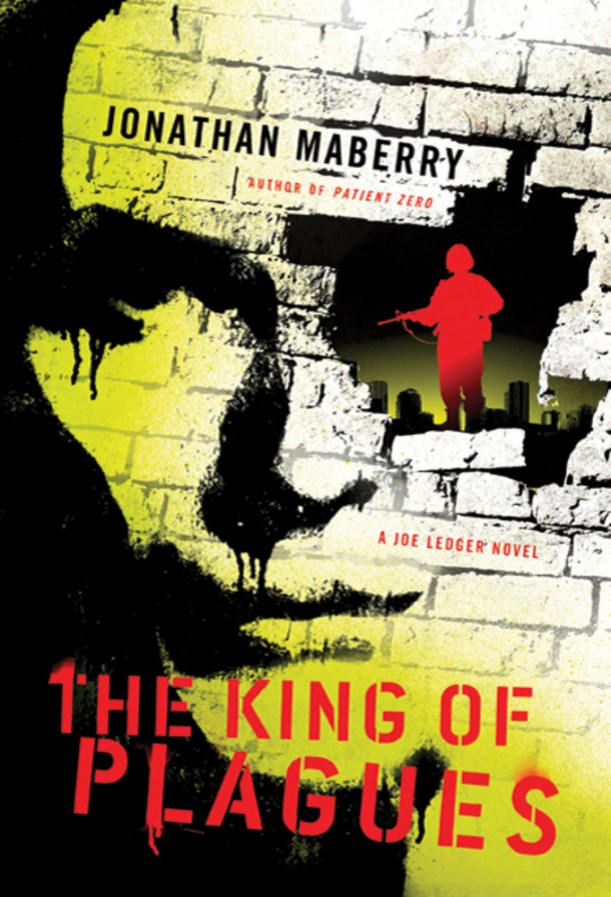
Throwback Thursday – The King of Plagues by Jonathan Maberry – Audiobook Review

The King of Plagues Cover.jpg

Publisher: Blackstone Audio (8 April 2011)

Series: Joe Ledger series – Book 3

Length: 16 hours and 10 minutes

My Rating: 5 out of 5 stars

Amazon     Book Depository

Reviewed as part of my Throwback Thursday series, where I republish old reviews, review books I have read before or review older books I have only just had a chance to read.

Over the last year or so, reading and reviewing all of the books in Jonathan Maberry’s Joe Ledger series has been something of a passion project for me. I absolutely loved the 10th and latest book in the series, Deep Silence, when I read it last year and found its superb blend of the horror, science fiction and thriller genres to be incredibly compelling and a whole lot of fun to read. Since then, I have gone back and read and reviewed the first two books in the series, Patient Zero and The Dragon Factory, and I found that I enjoyed them just as much as Deep Silence. As a result, when I got a gap in my reading schedule recently, I decided to check out the third book in the series, The King of Plagues, and once again found myself drawn into the world of Joe Ledger and the DMS.

Following the events of The Dragon Factory, which saw the death of the women he loved, Joe Ledger has left the chaotic world of the Department of Military Sciences (DMS) behind. Living in London, Ledger is suddenly thrust back into the field when an explosion levels a busy London hospital, killing everyone inside in one of the worst acts of terrorism the world has ever seen. Horrified by this callous attack, Ledger returns to active duty with the DMS and is immediately targeted by a hit team, before traveling to investigate a second attack at an Ebola research laboratory.

It does not take long to identify that the people behind these attacks are the group known as the Seven Kings. The Seven Kings are a mysterious secret society that Ledger and the DMS have dealt with before, as they influence and equip terrorist organisations around the world. Pledging fealty to a shadowy goddess and having a small army of highly trained mercenaries and the ability to influence highly placed people around the world, the Seven Kings are determined to change the world for their own benefit and are willing to kill anyone to achieve their goals.

As part of their plan to destabilise the world and benefit from the resulting economic chaos, the Seven Kings are planning to unleash weaponised versions of the Ten Plagues of Egypt that will not only kill untold masses but which will cripple the Seven Kings’ major opponents. If that was not bad enough, an old enemy from Joe Ledger’s past has resurfaced and is working with the Seven Kings to extract his revenge as the King of Plagues. Can Ledger and the DMS stop the devastating plans of the Seven Kings, or will the world once again bear witness to the devastation of the Ten Plagues?

The King of Plagues was another excellent addition to the Joe Ledger series that I had a fantastic time listening to. Maberry once again presents an exciting and addictive story that combines thriller action, a despicable evil scheme and a great group of characters, all told in Maberry’s distinctive writing style. This was an outstanding novel and yet another book in the Joe Ledger series that gets a five-star rating from me.

I always really enjoy the way that Maberry sets out the plots of his Joe Ledger books. The author utilises a huge range of different character perspectives across a number of different time periods to tell a full and complex overall story. By doing this the author is able to showcase a number of sides of the story. Not only does the reader get to see the protagonist’s story, but they also get to see how the antagonist’s evil scheme was planned and executed. Overall, this was a spectacular way to tell the story, and I always think that the reader gets so much more out of these books as a result. Maberry also did a fantastic job making this book accessible to readers unfamiliar with the series. While reading the Joe Ledger series out of order may result in some series spoilers for some of the earlier books, readers are easily able to start exploring this series with The King of Plagues and not have their enjoyment of the story suffer as a result.

The King of Plagues is filled with an amazing roster of characters, each of whom brings a lot of depth and emotion to the story. The main protagonist, Joe Ledger, has to be one of the biggest smartasses in fiction, and it is always a delight to watch him quip and make sarcastic comments across the world. However, despite that flippant exterior, Ledger is a complex emotional wreck who is still dealing with all manner of trauma and is barely containing his anger and bloodlust, especially when dealing with terrible events like the one in this book. I always find it fascinating when Maberry dives into the psyche of the series’ titular character, and it was especially poignant in The King of Plagues, as Ledger is still dealing with the loss of his love interest from the first two books, Grace Courtland. However, Ledger is not the only great character in this book. One of my favourites has to be Mr Church, the mysterious leader of the DMS, who everyone seems to be afraid of. Church once again shines in his role as the ultimate spymaster, but in this book he has some additional scenes that add to his character. In just one scene he shows the reader just why everyone is so afraid of him. There is also an attempt to humanise the character with some interesting reveals towards the end of the book, and I found those worked well and helped me like Church even more.

This book also featured the introduction of several other new characters. The main one of these, Circe O’Tree, is a brilliant young woman with a major chip on her shoulder who works as an analyst helping the DMS. I thought she was an intriguing character, especially due to her connections with the Seven Kings and several members of the DMS and her ability to analyse human behaviour. The King of Plagues also saw the introduction of the infamous Aunt Sallie, the second-in-command of the DMS, who is fearfully mentioned several times in the first two books. Aunt Sallie is a pretty fun character, and I am looking forward to seeing more of her scary, no-nonsense charm in the future. Funnily enough, one of my favourite characters was actually a dog, as The King of Plagues sees the inclusion of Ledger’s DMS attack dog, Ghost. Ghost was actually introduced in short story set between the second and third novels, Dog Days, but this is the first time readers of the main series get to see him in action. Despite being a ferocious and well-trained killing machine, Ghost is an absolutely adorable character who is responsible for some very funny moments in the story. Also, because he is such a good boy, you cannot help but get attached to him, and really get worried when he is in danger.

In addition to the great cast of protagonists, Maberry also utilises a great cast of antagonists in this novel in the form of The Seven Kings. The Seven Kings are an evil secret organisation who revel in deception and lies as they put their various plots and schemes into place. The identities of the various members of the Seven Kings is certainly interesting, and I really enjoyed this group and found them to be a fantastic group of antagonists. I absolutely loved the complex and devastating grand evil plan that they came up with in this story, and the full scope of their plot was pretty darn impressive. I was a little wary of this group at first, as they were introduced as some great threat that the DMS had apparently faced before, although there hadn’t been any mention of them in any of the previous books. However, in a number of interlude chapters set in the months before the current events of the plot, their lack of mention in the previous book is explained and they are presented as a force to be reckoned with. I quite liked this group of antagonists, and while certain revelations about them were not as surprising as in other Joe Ledger books, such as The Dragon Factory, for example, I did like certain developments that occurred within the Seven Kings, and I look forward to seeing how certain members show up again.

One of the things that makes the Seven Kings really sinister is their use of coercion and manipulation to achieve all their goals. At the most disturbing level, they target a number of people across the world with families and manage to terrify them so much that they will commit terrorist acts in order to save their loved ones. There are some quite chilling scenes in this book where the chief enforcer for the Seven Kings threatens these victims, and the lengths these innocent people will go to and the evils they will commit in the name of their families are horrifying at times. In addition, the Seven Kings use Twitter and other social media to fan the fires of hatred around the world, creating conspiracies and prejudice against certain ethnic groups that eventually result in violence. This examination of the evils of social media and how it can be used to spread hate is pretty fascinating, and it’s interesting to note that, as the book was written in 2011, it precedes a lot of the more recent and highly publicised incidents of Twitter being used to influence people. These inclusions really help set the Seven Kings apart from other villains in the Joe Ledger series and makes sure the reader is both disgusted and impressed by their methods.

The King of Plagues also saw the return of two antagonists from a previous book in the series, who join up with the Seven Kings to help them fulfil their master plan. I felt that both of these characters were used to their full potential within this book, and both had some truly intriguing and clever story arcs which contrasted quite impressively. For example, one starts on the long, hard road to redemption, while the other falls even further down the rabbit hole to pure evil. I won’t go into any more detail in order to avoid spoilers, but these two characters were extremely impressive, and were the main characters showing the inner workings of the Seven Kings.

Like the rest of the books in the Joe Ledger series, The King of Plagues is rich with action and firefights, as the protagonists engage in a number of battles with the minions of the Seven Kings. The action comes thick and fast throughout the book, and Maberry’s knowledge and research into various forms of armed and unarmed combat is extremely obvious. The way some of the firefights are paced out is pretty spectacular, and it is always impressive what a well-trained special operations team can do. Maberry really shines when it comes to the hand-to-hand combat sequences, though, as Ledger rips through his opponents with his martial arts prowess. The fight sequences in this book are straight up awesome, and those readers who love an action-packed book will be well catered to with The King of Plagues.

One of the things that I quite enjoyed about The King of Plagues was the author’s decision to include a number of celebrity cameos throughout the story. Not only does the protagonist encounter some famous singers and actors as part of the plot (including having a weird conversation at the end of the book with a famous rock star), but a number of celebrities are put into some interesting and deadly positions throughout the plot. I also had a good laugh at Maberry’s inclusion of a terrorist think tank made up of thriller writers coming up with the most outrageous situations they could think of, especially as that becomes a major plot point later in the book (and may have serious ramifications later in the series). The authors named dropped in these scenes are pretty impressive, and I thought it was a cute touch from Maberry to include his contemporaries like that. The use of the celebrities was an interesting choice from Maberry, but I think it fits into the wacky vibe of the Joe Ledger series quite well, and it was not too distracting from the main plot.

As with the previous books in the Joe Ledger series, I listened to The King of Plagues on audiobook. The audiobook is around 16 hours and 10 minutes long and is narrated by Ray Porter, who has to be my favourite audiobook narrator at the moment. Porter has an amazing vocal range, and I love the way that he portrays the main character of this book, Joe Ledger. Porter really brings Ledger to life in these audiobooks, not only amplifying the character’s sarcasm and smartass nature, giving real anger and sadness to Ledger when needed. The rest of the characters in this series are also really well done. I have mentioned before how much I love the voice he uses for Mr Church, and Porter really gets a lot of mileage out his Boston accent for some of the other characters. In addition to Porter’s awesome vocal work, I found that listening to The King of Plagues really helped bring me into the story. Not only does the action really pop in this format but listening to the antagonists come up with their evil plans and threats can be quite chilling at times. As a result, I would strongly recommend that readers check out the audiobook version of The King of Plagues. I know I will be checking out the rest of the books in the Joe Ledger series on audiobook as well.

Once again, I had an absolute blast listening to a book in Jonathan Maberry’s Joe Ledger series, as The King of Plagues was another outstanding addition to this fantastic series. Featuring a well-written and captivating story, some amazing characters, an evil and over-the-top plot, a number of intriguing plot points and some of the best action sequences in modern thriller fiction, this was an incredible read. I cannot wait to check out the fourth book in this series, and quite frankly all of the upcoming books sound like they have some truly outrageous stories.

Amazon     Book Depository

Star Trek: The Next Generation: Available Light by Dayton Ward – Audiobook Review

Star Trek - Available Light Cover

Publisher: Simon & Schuster Audio (9 April 2019)

Series: Star Trek

Length: 11 hours and 59 minutes

My Rating: 4 out of 5 stars

Amazon     Book Depository

For my latest review, I dive back into the massive universe of extended books that surround the Star Trek television and movie series, with the latest novel from legendary Star Trek fiction author Dayton Ward.

When I reviewed my first piece of Star Trek fiction, The Way to the Stars by Una McCormack, a couple of months ago, I mentioned how substantial the extended book universe around Star Trek was. With a huge number of series that cover various points of the Star Trek universe and over 840 novels to accompany the various movies and television shows, there are so many additional stories and characters out there for dedicated fans to enjoy. Star Trek tie-in novels and comics were not something that I had really gotten into before The Way to the Stars, but after enjoying it, I thought that Available Light would be a good opportunity to expand my knowledge of the Star Trek universe. I also decided that I would try my first Star Trek audiobook; I chose to listen to the audiobook format of Available Light, narrated by Robert Petkoff.

Quite a large amount of the extremely large Star Trek extended universe can be attributed to the author of this book, Dayton Ward. Ward is a prolific author who has been writing Star Trek fiction since 1998 with his inclusions in the long-running Strange New Words collections of Star Trek short stories, becoming the first author to contribute to three separate volumes of this series. Since then he has written more than 20 additional inclusions in the Star Trek universe, including last year’s Star Trek Discovery: Drastic Measures, which made my Top Ten list of Books I Wish I Read in 2018.

Available Light is the latest book in a series of novels which are set after the events of the last Star Trek: The Next Generation film, Nemesis. Available Light takes place in the year 2386, set seven years after the events of Nemesis and continues to follow the adventures of the USS Enterprise E, under the command of Captain Picard. Ward has written the last three books in this specific Star Trek series and Available Light continues several of the storylines established in these previous novels.

For over 200 years, covert organisation Section 31 has policed and protected the United Federation of Planets from the shadows. Following the designs of an artificial intelligence, Control, Section 31 has committed attacks, assassinations, political interference and all manner of illegal actions to preserve the security of the Federation, without any oversight. However, thanks to the actions of Star Trek: Deep Space Nine character, Dr Julian Bashir, all of Section 31’s secrets have been published and are now out in the open for everyone to see. With the entire Federation of Planets now aware of Section 31’s actions, the Federation government and Starfleet move to arrest and prosecute all known Section 31 agents for treason against the Federation.

While numerous crimes and atrocities have been revealed, perhaps none is more controversial than Section 31’s assassination of Federation President Min Zife following his secret deposition by a group of Starfleet officers. More shocking is the revelation that one of the Starfleet officers responsible for the illegal coup d’etat that unseated Min Zife was none other than Jean-Luc Picard, the captain of the USS Enterprise E.

While the politicians and remaining commanders of Starfleet argue about the future of Picard, the Enterprise continues its exploration of the distant and uncharted Odyssean Pass. The Enterprise has come across an incredibly large and ancient spaceship adrift in the middle of nowhere and apparently abandoned. When the Enterprise’s away team boards the ship, they discover that the ship might not be as abandoned as first believed. As Picard and the Enterprise attempt to help the mysterious beings who inhabit the ship, they find their plans complicated by the arrival of a band of salvagers with designs on the massive ship.

I really enjoyed Available Light, as Ward presents the reader with a compelling adventure in space that really reminded me of an episode of Star Trek: The Next Generation. Ward goes deep into the Star Trek lore to produce an intriguing story for the fans, and it was quite interesting to see how the events of Available Light help shape the wider Star Trek book universe. The book makes exceptional use of advanced science and a large amount of action to make the story even more interesting and fun. I especially enjoyed the various wonderful examples of ship-to-ship combat that occurred throughout much of the book, and I found them to be extremely entertaining and exciting. Overall, this is a pretty fun read, although there are some issues when it comes to its intended audience and the distribution of its two main storylines.

One of the things that I always try to cover when reviewing novels related to movies, television shows and video games is whether a book is suitable only for fans of the original media or whether readers with limited background knowledge of the franchise will be able to appreciate the book. Available Light falls into the category of books which is primarily aimed towards those readers with some knowledge and appreciation of the Star Trek franchise, especially those who are fans of the books, as Ward makes use of a number of storylines that originated in other books. For example, Available Light continues to showcase the Enterprise’s exploration of the region of space known as the Odyssean Pass, which has been covered in Ward’s last three novels, Armageddon’s Arrow, Headlong Flight and Hearts and Minds. It also dramatically follows storylines started in David Mack’s 2004 novel, A Time to Heal, which detailed the assassination of Min Zife, and his 2017 Star Trek: Section 31 novel, Control, which featured the publication of Section 31’s secrets. The book also contains a huge number of references to previous Star Trek adventures that happened in other books, the movies and the television shows. This does not just include those works associated with The Next Generation, as events from other shows, such as Deep Space Nine, are also heavily referenced. As a result, fans of these existing pieces of Star Trek fiction will have a much deeper appreciation for what is going on, and they may already be invested in the storylines that have been established in these previous books.

Dedicated fans of The Next Generation television series and movies will probably be surprised about the extensive storylines established in these books. Since the events of Nemesis, the books included in these series cover a huge range of adventures and character developments of the crew of the Enterprise. Those Star Trek television and movies fans coming into this book will be surprised at events like Picard and Beverly Crusher getting married and having a son. These fans should also be prepared for the fact that only a few of The Next Generation’s main characters are really featured in Available Light. While Picard, Worf, Geordi La Forge and Beverly Crusher are still aboard the Enterprise, major characters such as Deanna Troi, Data and Wesley Crusher do not appear at all, while the character of William Riker (now an Admiral) only appears in one chapter. In their place, several new, original characters have taken on their roles and become point-of-view characters for the Enterprise. While these characters are quite intriguing, fans of the original crew may be a little disappointed not to see how the missing characters are going. Ward has also included some characters that appeared in minor roles in both The Next Generation and Deep Space Nine. These include Admiral William Ross (who appeared in 13 episodes of Deep Space Nine), Worf’s brother Martok (who also appeared in Deep Space Nine) and Philippa Louvois (the Judge Advocate General from The Next Generation episode The Measure of a Man). Not only are these characters quite interesting in their own right, but there are some significant developments for some of these characters that fans of the franchise will be deeply intrigued to see.

That being said, while a large amount of the story is quite heavy on Star Trek lore, references and tie-ins to previous storylines, Ward does an exception job making this story accessible to a wide range of readers. I am not a particularly dedicated Star Trek fan and I only have an average knowledge of the lore and the various series and movies. However, I was able to follow the story quite closely, as Ward did a fantastic job explaining and describing the events that occurred in the previous storylines and episodes that Available Light’s story follows on from. While some readers whose knowledge of Star Trek is lesser than mine might struggle a little with the book, I feel that Ward has made this book extremely accessible to most readers. However, this book will really appeal to those readers who have a prior appreciation of the Star Trek franchise.

I should mention that that this book, like many licensed Star Trek novels, is not actually considered to be canon in relation to the television shows or movies. While some books, such as the recent Star Trek Discovery books, are considered to be canon (indeed, events in The Way to the Stars were mentioned in the show), Available Light and the books that it follows on from are not. That means that events that occur in this book are unlikely to affect what happens in upcoming movies or television shows, such as the upcoming show featuring the return of Captain Picard. While reading a non-canon book like this might not appeal to some fans of the franchise, I still quite enjoyed the story, and I am intrigued to see how this separate Star Trek universe will continue.

Available Light features two separate storylines that mostly remain separate from each other. The first storyline focuses on the fallout of the events of Control, including the revelation about Section 31’s actions and the attempts by the Federation to round up and prosecute all those who worked with or for the covert organisation. The second storyline focuses on the Enterprise as they encounter the new alien ship and the various inhabitants of this new region of space. Despite the huge amount of detail used to describe the Section 31 part of the book in both the official synopsis and the synopsis I wrote above, this storyline only really takes up around one-third of Available Light, with the remaining two thirds focusing on the Enterprise and her crew. I found both storylines to be extremely fascinating and a lot of fun. The Enterprise storyline felt like a classic episode of a Star Trek television series, with the crew working together to explore an intriguing phenomenon and overcome the odds to save an innocent party. The Section 31 storyline is also really cool, and I really enjoyed seeing what happens when the existence of this organisation becomes public knowledge.

While Ward does try to bring these two separate storylines together, such as by examining Picard’s guilt at the role he played in Min Zife’s ousting and assassination and having it affect his actions in the Enterprise storyline, I did at times feel like I was reading two unrelated books. I really think this would have been a better book if Ward had focused on only one storyline. I would have really loved a book completely dedicated to the aftermath of the Section 31 reveal, including having Picard stand trial for his crimes, and I am sure that the story of the Enterprise discovering the massive ship could have been even better with some additional storytelling. Instead, the story of Picard’s trail will occur later this year in David Mack’s upcoming novel, Collateral Damage. While it was slightly disappointing to find out that Available Light’s Section 31 storyline was mostly included to set up a future book, it was still really interesting and helped created a book that was a lot of fun to read.

Ever since Section 31 was first introduced, it has been a deeply intriguing plot point. The idea of a secret Federation security organisation that goes against nearly everything that Starfleet stands for is really clever, and it opens up a lot of possibilities. Section 31 is getting a lot of focus at the moment, as not only did they appear throughout the second season of Star Trek Discovery (which utilised the AI program Control, who appeared in several novels linked to Available Light as an antagonist) but there are apparently plans to do a Section 31 television series featuring Michelle Yeoh’s character from Discovery. As a result, it was really interesting to see this book universe version of Section 31 start to unravel in Available Light. The shock and outrage that results throughout the book are deeply intriguing, and I really liked seeing how the Federation and Starfleet reacted to the news. This really was a cool plot point, and I am extremely curious to see what happens to the organisation in future books.

As I mentioned before, I chose to listen to the audiobook version of Available Light. At just under 12 hours in length, it did not take me too long to get through this book, and I found it to be a great format to enjoy the intriguing, Star Trek based plot. I did find that listening to the story helped me pick up a lot more of the previous storylines and Star Trek references that Ward had littered throughout the book, which probably gave me a better base to enjoy the story. I found Robert Petkoff to be a really good narrator, and I really enjoyed the way that he told the story. Petkoff does a pretty good impersonation of the male characters from The Next Generation, including Picard, Worf and La Forge, and I found his Picard voice to be extremely convincing. Petkoff also did a great impersonation of Vulcan and Klingon characters throughout the book, and I thought the voices he attributed to these alien characters were quite excellent. As a result, I would strongly recommend the audiobook version of Available Light, and I am extremely glad it was the version of the book I chose to enjoy.

In the end, my second dive into the Star Trek universe was a little bit of a mixed bag. While there are some great and enjoyable story inclusions throughout Available Light, this is a book that is more aimed towards extremely dedicated Star Trek fans and features a split story that at times is more concerned with setting up future books rather than standing on its own. But I found the storylines explored within the books to be a lot fun, and I had an absolute blast listening to this captivating Star Trek tale. I am still really keen to check out additional Star Trek novels, and I hope to see where the various plots explored in this book go from here.

Amazon     Book Depository

Throwback Thursday – The Andromeda Strain by Michael Crichton

The Andromeda Strain Cover.jpg

Publishers: Brilliance Audio (Audiobook Edition – 26 May 2015)

                        Knopf (12 May 1969)

Series: Standalone/Book 1

Length: 8 hours 15 minutes

My Rating: 4.5 out of 5 stars

Amazon     Book Depository

Reviewed as part of my Throwback Thursday series, where I republish old reviews, review books I have read before or review older books I have only just had a chance to read.

For this week’s Throwback Thursday I take a look at a classic techno-thriller from legendary author Michael Crichton, The Andromeda Strain.

The Andromeda Strain was released nearly 50 years ago, in May 1969, and represented a bold new direction from Crichton, who had previously done several pulpy crime novels, such as Odds On and Scratch One, under the name John Lange, as well as the medical crime thriller A Case of Need, which he wrote under the name Jeffrey Hudson.  The Andromeda Strain was considered to be part of the new techno-thriller genre and is still considered to be a major example of this genre.

I have only read three of Crichton’s books before, including Jurassic Park (for obvious reasons), The Lost World and Pirate Latitudes.  While I have always intended to go back and read some more of Crichton’s works, I have never had the time to do so.  However, with the recent announcement that The Andromeda Evolution is being released in November to correspond with the 50-year anniversary of The Andromeda Strain, I thought this would be the perfect opportunity to check out one of Crichton’s earlier books.  For that reason, I listened to the audiobook version of The Andromeda Strain narrated by David Morse.

When a military satellite comes down in the small town of Piedmont, Arizona, nearly all the residents in the town die.  They are victims of a mysterious new pathogen that either instantly clotted all the blood in their body or drove them to suicide.  The military quickly activate the Wildfire protocol, and a small government team of scientists and doctors take command of Piedmont and the satellite.

Believing that the satellite contains an extraterrestrial organism, the team bring it and the two survivors of Piedmont, an old man and a baby, to a secret and secure underground Wildfire laboratory for study.  Deep in the laboratory, the team attempt to identify and categorise the organism which has been given the codename Andromeda.  However, Andromeda is evolving a way no member of the Wildfire team believed possible, and not even the laboratory’s nuclear bomb safeguards may be enough to keep it contained.

After listening to The Andromeda Strain over a couple of days, I found it to be an extremely thrilling and complex novel that I really got into and which I am eager to review.  However, after 50 years and thousands of reviews I am not too sure how much I can really say about this book that has not already been said.  That being said, when looking at this book from a 2019 perspective, I feel that The Andromeda Strain is still an extremely strong techno-thriller, with some expert storytelling and an in-depth scientific base that is still relevant in this modern era.

In this book, Crichton utilised a very dry, detailed and scientific approach to his writing, slowly covering every aspect of the events unfolding before each of the protagonists, while also providing the reader with backstory on the characters and briefings on the various relevant scientific and political components of the book.  Despite this somewhat less exciting writing style, Crichton is still able to create quite a thrilling atmosphere throughout the book as the story gets closer to the inevitable disaster part of the plot.  Crichton really adds to the suspense by mentioning the various mistakes that the protagonist are making and hinting at all the problems going on around them that will eventually lead to the release of the Andromeda microbe.

I did feel that the book ended rather suddenly, and I was surprised that the investigation part of the story was still going with only a short amount of the book left to go.  I found it interesting that the part of the story that dealt with the release of Andromeda and the subsequent race to stop the nuclear explosion about to wipe out the lab was introduced so late in the book and solved so very quickly.  I was expecting a large portion of the story to focus on the main characters getting past all of the impressive contamination protocols in order to stop the nuclear explosion.  Instead, this was all solved within about 10 minutes of audiobook narration, or probably five to 10 pages of a normal book.  While I was surprised about this, I suppose it does make sense in the context of the rest of the story, where the characters and briefing material did mention several times that there was a three-minute delay between the bomb arming and the explosion.  This was all extremely thrilling, and I felt that the book is still capable of keeping authors on the edge of their seats.

One of the things that really surprised me about the book was the advanced level of technology that was featured within a story written and set in 1969.  Perhaps this is simply ignorance as a result of being a child of the 90s, but I feel it is more likely the result of Crichton having a great understanding of technology and potential future advances that might be utilised within a high-level government laboratory.  Certainly, the scientific features of this book are extremely impressive, and I felt that they were still extremely relevant and understandable in a 2019 context.  For example, all the extreme quarantine methods surrounding the Wildfire laboratory sound like perfectly reasonable steps that modern laboratories could use to keep pathogens contained.  All the discussions about viruses and micro-organisms were also incredibly detailed, and I felt that much of the information discussed around those is still relevant today, and modern audiences will still be able to understand and consider it quite easily.

I did find the concept of the Odd-Man Hypothesis to be extremely interesting.  In essence, the Odd-Man Hypothesis states that out of all the humans in the world, unmarried men are the most likely to make the best and most dispassionate decision in the face of an emergency.  This becomes a key part of the story, as one of the characters is designated as the Odd-Man and is the only person with the ability to shut off the laboratory’s nuclear self-destruct device.  Now this is one theory that does not translate to more modern times, although, in fairness, most of The Andromeda Strain’s characters did not take it that seriously either.  That being said, it was an extremely intriguing element to read about, and I enjoyed the discussion around its viability and use within the context of the story.

As I mentioned above, I chose to listen to The Andromeda Strain in its audiobook format.  There are actually a number of different audiobook versions of The Andromeda Strain out there, each with different narrators, such as an earlier version narrated by Chris Noth.  I ended up listening to the most recent audiobook version of this book, although I imagine a new version is sure to follow soon, especially with a sequel about to come out.  The version I listened to was narrated by actor David Morse and was released in 2015.  This version is 8 hours and 15 minutes long, and I found myself powering through it very quickly.

I think that the audiobook was a really great way to listen to The Andromeda Strain, as it allows the reader to absorb the huge amount of scientific detail and discussion a lot easier.  I felt that David Morse was an excellent narrator for this book, and that his basic narration voice perfectly fit the books tone and style.  Morse also comes up with some great voices for this book, and I was particularly impressed by his weary old man voice.  As a result, I would highly recommend the audiobook version of The Andromeda Strain, as it is definitely an outstanding way to the listen to this fantastic story.

Overall, I loved this dive back into the past and I had a lot of fun listening to this classic techno-thriller.  Crichton is an amazing author, especially when it comes to a more science-based story, and I am incredibly impressed that his story still holds up 50 years after it was first published.  I am extremely curious to see where the upcoming sequel, The Andromeda Evolution, takes the story, and how well new author Daniel H. Wilson replicates Crichton’s style.  This book has also encouraged me to check out some more of Crichton’s works, and I am looking forward to reading some more of this author’s excellent techno-thrillers, as well as some of his intriguing historical fiction pieces.

Amazon     Book Depository

Star Trek Discovery: The Way To The Stars by Dr Una McCormack

Star Trek Discovery - The Way To The Stars Cover

Publisher: Gallery Books (Trade Paperback Format – 8 January 2019)

Series: Star Trek Discovery – Book 4

Length: 276 pages

My Rating: 3.75 out of 5 stars

Amazon     Book Depository

Get ready to dive into the extended Star Trek universe with The Way To The Stars, the latest tie-in novel to the franchise’s current show, Star Trek Discovery.

While most people would be familiar with the iconic Star Trek television shows and movies, some may be unaware that there is an extremely rich and extensive Star Trek universe across a variety of different media formats.  This is particularly true when it comes to the vast number of Star Trek novels which utilise the franchise’s massive universe.  Since 1967, during the run of the original Star Trek television series, a bevy of authors have contributed to this extended universe by creating a huge number of novels made up a range of different series and publishers.  There are now over 840 Star Trek novels, not only complementing the various Star Trek movies and television shows but also creating a series of new adventures.

With the announcement of the latest Star Trek television show, Star Trek Discovery, in late 2017, a new series of related novels was commissioned for release around the same time.  This new series focused on several of the characters featured within Star Trek Discovery, providing intriguing character history and a series of new, exciting adventures.  The first book in this series, Desperate Hours, was released in 2017, days after the premier episode of Star Trek Discovery.  These books have so far covered several of the show’s key characters, including Michael Burnham, Saru, Gabriel Lorca and Philippa Georgiou, while a fifth book out later this year will focus on Christopher Pyke and the original crew of the U.S.S. Enterprise.  I actually have a copy of the second book in this series, Drastic Measures, on my bookshelf at home, and I have been intending to read it for some time.  I will hopefully get to that, and the other books in the Star Trek Discovery book range, at some point in the future.

I have to admit that I am more of a casual Star Trek fan and I have more of a preference for Star Wars (and with that, I lose several Trekkies reading this review).  That being said, I have watched a number of the movies and I am really enjoying Star Trek Discovery at the moment.  This book is the first actual Star Trek novel that I have had the pleasure of reading, and there are several cool-sounding upcoming Star Trek novels that I am probably going to try and check out.

The Way To The Stars focuses on the character of Sylvia Tilly, the young, brilliant and awkward Starfleet cadet and essential member of the U.S.S. Discovery’s crew.  However, when she was 16, years before she joined Starfleet, her life was going down a different path.  The daughter of a high-ranking United Federation of Planets (the Federation) diplomat, Tilly finds herself under intense pressure to succeed.  Forced by her domineering mother to abandon her love of science and engineering to pursue a career as a diplomat, Tilly is shipped off to an elite off-world boarding school.

Forced out of her comfort zone, and continuously micromanaged by her mother, Tilly begins to crack under the pressure until, for the first time in her life, she rebels.  Escaping the school and embarking on a dangerous off-world trip, Tilly seeks her own path in life, which will eventually lead her join Starfleet and adventure out into the stars.

The Way To The Stars is the fourth entry in the Star Trek Discovery book series, and it is written by veteran science fiction and tie-in novel author, Dr Una McCormack.  Dr McCormack is an expert when it comes to the novelisation of popular science fiction television shows, having written a number of Doctor Who tie-in novels throughout her career.  Dr McCormack also has a large amount of experience when it comes to the Star Trek extended universe, having authored several novels that continue the adventures of The Next Generation and Deep Space Nine television series.

This book was a little different to what I anticipated it would be.  Rather than featuring an action-packed adventure with Starfleet like the previous books in the Star Trek Discovery series, The Way To The Stars mainly focused on Tilly’s school and family life.  While this was still a very interesting and enjoyable read, I kept expecting pirates, aliens or some sort of antagonist to drop in and take over the school, forcing Tilly to use the engineering skills that her mother and school friends were so dismissive of to save the day.  So it was a tad disappointing to find this book only contained a mostly school-based story, more concerned with Tilly’s studies, her overbearing mother and her problems making friends.  Do not get me wrong; there are a lot of fun and enjoyable elements to these parts of the story, and the later part of the book in which Tilly runs away from school and tries to make her own way in space are very interesting.  It was, however, somewhat lighter than what I was expecting from a Star Trek novel, and its tone and writing style reminded me more of a young adult school novel.

That said, this was still a very enjoyable novel as Dr McCormack does an amazing job of bringing one of Star Trek Discovery’s most entertaining characters to life while placing her in a fun and interesting coming of age story.  The author makes great use of the Star Trek elements to tell her story, and I found it fascinating to see the advanced interplanetary schooling (rich boarding schools are rich boarding schools no matter what planet they are on), as well as Tilly’s adventures on human planets and ships outside of Federation space.  The latter parts of the book set on the Starfleet ship were fun, and it was great to see the adventures of a scientific ship, as well as Tilly’s contributions to their voyage.  The resultant first contact that they make was interesting, and it was cool to see elements from the part of the story set in the school come into play during this bit.  Overall, I did have a lot of fun reading The Way To The Stars, and found it to be a very well-written story with a lot of intriguing elements to it.  I really got into the story and managed to read it in only a couple of days, so many people should have fun reading it.

One of the things that I did like about The Way To The Stars was the way the author brought the book’s main character, Tilly, to life.  Within Star Trek Discovery, Tilly, as portrayed by Mary Wiseman, is a fun, brilliant and neurotic character who serves as the show’s moral centre and heart.  Despite mostly being a kind and thoughtful person, Tilly is regularly able to take control of a situation and act in a command capacity, often with humorous results.  I felt that Dr McCormack’s portrayal of Tilly within this book did an excellent job of either showing that these were already existing qualities/personality traits or else examined the first time that Tilly ever showcased these traits.  It was really good to see where Tilly came from and the sort of influences she had in her life to turn her into the character that is so beloved in the show.  As a result, The Way To The Stars is an excellent coming of age story, and I really enjoyed the way that the author wrote the character within the book.

This book is strongly related to the Star Trek Discovery television show; however, I do not believe that too much pre-existing knowledge or fandom experience is required to enjoy The Way To The Stars.  Dr McCormack has an inclusive writing style and I believe that anyone with even a basic knowledge of Star Trek will be able to pick this book up and enjoy the fun story within.  It should go without saying, though, that those people who are fans of the Star Trek universe will get a lot more out of this story.  This is especially true for fans of Star Trek Discovery, who will appreciate this deeper dive into the protagonist’s backstory and the examination of her early life.  I believe that The Way To The Stars is considered to be a canon story within the Star Trek universe; however, I doubt that the events within will have any impact on the show.  Still, it is quite an interesting inclusion that will really interest those who have come to enjoy the characters of Star Trek Discovery.

Star Trek Discovery: The Way To The Stars is a fun and enjoyable tie-in novel that does an amazing job of examining the past of a key character of the show.  Dr McCormack creates an interesting coming-of-age story that will appeal to hardcore Trekkies and casual science fiction readers alike.  I quite enjoyed my first foray into the Star Trek extended universe, and I am planning to try and get some of other Star Trek books coming out later this year.  Stay tuned to see me go further beyond the final frontier.

Amazon     Book Depository

Stranger Things: Suspicious Minds by Gwenda Bond

Stranger Things Suspicious Minds Cover.jpg

Publisher: Century (Trade Paperback Edition – 5 February 2019)

Series: Stranger Things

Length: 301 pages

My Rating: 4 out of 5 stars

Amazon     Book Depository

From acclaimed young adult fiction author Gwenda Bond comes this first official tie-in novel to the television sensation, Stranger Things.

It is 1969, and while America languishes in the midst of the Vietnam War, shadowy events with long-term implications are starting to take place in the small town of Hawkins, Indiana.  The enigmatic Dr Martin Brenner has arrived at the Hawkins National Laboratory to start conducting a series of experiments as part of the CIA’s secretive MKUltra program.  Arriving with him is the doctor’s most gifted test subject, a young girl simply known by the number Eight, who can create illusions with her mind.

In a nearby college campus in Bloomington a young student, Terry Ives, signs up as a test subject for a government experiment at her university.  When she meets Dr Brenner her determination and curiosity impresses him enough to include her in his new experiment.  Travelling to and from the Hawkins National Laboratory in an unmarked van, Terry meets her fellow participants in the experiment, Alice, Gloria and Ken.  Each of the participants has a unique set of skills or abilities, which Brenner hopes to draw out through administration of psychedelic drugs and other invasive techniques.

As the months pass and the experiments become harsher and even more unethical, Terry attempts to find out more about who Dr Brenner really is and what the objective of his experiments are.  When Terry discovers Eight, she begins to question everything that Dr Brenner has done.  With their academic and personal lives deeply tied to the experiment, Terry and her fellow test subjects must find a way to leave the program.  But Dr Brenner is determined to keep each of them involved in his project, and he will do whatever he can to not only trap each of them, including doing the unthinkable to Terry.

It is near impossible to be unaware of the cultural phenomenon that is Stranger Things, the Netflix show that takes its audience on a dark journey into a world of alternate universes and psychokinetic powers with a healthy dose of 80s nostalgia.  Stranger Things: Suspicious Minds is the first official tie-in novel to the television series, and it provides its readers with a prequel story that not only reveals some much-needed backstory to one of the series’ most beloved protagonists (no, not Barb), but also highlights the true nature of a sinister character from the first series.  Suspicious Minds is written by young adult author Gwenda Bond, who has significant experience writing tie-in novels, having previously written the intriguing-sounding Lois Lane series, which focuses on a younger version of the famed comic book journalist.

Despite Bond’s background as a young adult fiction author, this book is much more targeted towards an older audience.  The overall story can be quite dark in places, featuring canon-typical violence and horror themes, and the final chapters of the book show the antagonist doing some exceedingly cold and ruthless actions towards the protagonists.  Due to me being a fan of the television series, I did have a good inkling about how this story was going to end, but I still really enjoyed the dark twist regarding the main character and antagonist at the conclusion of the book and thought that it was quite cleverly done.  One of the other reasons I enjoyed Suspicious Minds was due to Bond’s outstanding story that contained some excellent allusions to the Stranger Things television show and a brand-new historical context to set the story within.

It does need to be said that Suspicious Minds is really a story for those fans of the Stranger Things television show.  This book is set some years before the television show and reveals how Eleven came to be in the custody of the Hawkins National Laboratory.  As a result, one of the main characters of this book is Eleven’s mother, Terry Ives, who was briefly seen in Season 1 and Season 2 of the show.  Some investigation in the first season and pretty powerful flashback in the second season have revealed some of these events, but not a lot of context was given.  As a result, viewers were uncertain about how Terry came to the attention of the government, who or where Eleven’s father was, or why Eleven was considered to be so special even before she was born.  All of these questions and more are answered within Suspicious Minds, and Bond is able to construct a fantastic background for this part of the television show.

In addition to the focus on Terry Ives and the origin of Eleven, Bond spends a significant amount of time focusing on the character of Dr Martin Brenner.  Dr Brenner is one of the main antagonists of the first season of Stranger Things, as he is not only the person responsible for containing and abusing Eleven but also the man in charge of the cover-up surrounding Will Byers’s disappearance.  For a good part of Season 2 of the show, it was assumed that Dr Brenner had died in the Demogorgon attack in the Season 1 finale; however, it was eventually revealed that he was alive and in hiding.  This probably means that he will be a major character again in Season 3 of the show, which means that the content of this book is extremely interesting for fans of the show.  Throughout Suspicious Minds, Bond goes out of her way to highlight what a cold and calculating character Brenner really is and to examine in more detail the crimes that he perpetuated against Eleven’s mother.  I found this examination of Dr Brenner to be absolutely fascinating, and the battle of wits that occurred between Terry and Brenner was a fantastic plot focus for this book.  By the end of the story, Brenner has been built up as a considerable antagonist, and it will be extremely interesting to see how much of Suspicious Minds’ characterisation of him will appear in future episodes of the show.

Aside from the necessary focus on these main two characters and their creation of Eleven, Bond also included a few curious connections to the show that I did quite enjoyed.  For example, there is a bit of a focus on the character of Eight/Kali, who appeared in a second season episode of the television show.  Suspicious Minds shows her as a young child, and focuses on her relationship with the Dr Brenner and some other characters.  There are also a few obligatory references to the Upside Down and the Demogorgon which, while interesting, do not overwhelm the rest of the plot.  I was also rather amused by Bond spending some time explaining how a photograph of Dr Brenner and his test subjects was taken so it could fit into the plot of Season 1.  Overall, I did enjoy these references, but I was relieved that Bond did not go too overboard with them and instead focused on her own unique story, resulting in a narrative that stood by itself and could potentially be enjoyed by someone who has not watched the show.

One of the most beloved parts of the Stranger Things television show is its use of 80s nostalgia, as it provides its viewers with epic amounts of cultural and historical references.  Bond does a good job replicating this scene-setting in the book by highlighting parts of that late 60s and early 70s American culture and society.  While there are several fun cultural references throughout the book, I liked how a large amount of the plot and background story focused on America’s involvement in the Vietnam War, which was dominating society at this point.  Suspicious Minds contains a number of references to the war, and Bond spends a good amount of time highlighting the various attitudes towards the war, including the divide between younger students and the older generations.  Several key events of this time are either shown or alluded to, such as Nixon’s “Silent Majority” speech, the 1969 National Draft Lottery and the Kent State University Massacre.  These result in some great settings for the story, and the impacts that they have on the characters and the overall plot of this book are really quite clever and interesting.  I also quite enjoyed how Bond tried to replicate the fantasy roleplaying vibe of the Stranger Things kids in this book by having her protagonists take inspiration from a fantasy source.  As Dungeons & Dragons would not be released until a few years after the events of this book, Terry and her friends refer to themselves as the Fellowship of the Ring, as each of them are major fans of The Lord of the Rings books.  I really enjoyed Bond’s decision to include this as a reflection of the show, and I loved how she chose a more time-appropriate series to serve as their inspiration.

Gwenda Bond’s novel, Suspicious Minds, is a compelling new addition to the Stranger Things universe which serves as a fantastic prequel to the television series.  Utilising an excellent combination of Stranger Things characters and intriguing historical events, this novel paints a dark and tragic picture of the origins of one of the franchise’s most iconic characters, while also examining the dark side of an early antagonist.  Highly recommend for those readers interested in expanding their knowledge of the Stranger Things’ universe, this book is also a dark and captivating story that will stick in the reader’s minds even if they are not fans of the franchise.

Amazon     Book Depository

Throwback Thursday – The Dragon Factory by Jonathan Maberry

The Dragon Factory Cover.jpg

Publishers: St. Martin Griffins

                        Blackstone Audio

Publication Date – 2 March 2010

Amazon     Book Depository

Reviewed as part of my Throwback Thursday series, where I republish old reviews, review books I have read before or review older books I have only just had a chance to read.

My quest to get through all of the books in Jonathan Maberry’s Joe Ledger series continues.  In this week’s Throwback Thursday I look at the second epic entry in what is fast becoming one of my favourite series of all time, The Dragon Factory.

It has been only a few months since former police officer Joe Ledger joined the elite and top-secret American intelligence agency, the Department of Military Sciences (DMS).  Working with the DMS and its mysterious leader, Mr Church, Ledger has helped save the country and the world from a variety of unique scientific threats.  Therefore, Ledger is extremely surprised when one morning a team from the NSA ambushes him and attempts to place him under arrest.

Without any warning, Ledger and the DMS find themselves caught in the crossfire between two rival organisations of rogue geneticists who have already drawn first blood against the DMS.  One of these organisations works on perfecting the world’s deadliest diseases, while the other seeks to create an army of genetically enhanced soldiers and terrifying animal hybrids.  Both of these factions are well funded, have remained hidden from the world’s intelligence agencies and have access to game-changing technology.  However, one has a terrifying vision for the future that they will go to any lengths to achieve.

As Ledger leads his team in an all-out war against these rival groups, they begin to uncover the full extent of these villains and the connection they have with Church and the DMS’s secret past.  The Extinction Clock has started to count down, and the entire world will be changed when it hits zero.  Forced to battle impossible odds, will Ledger be able to save the world again or will death and tragedy rain down around him?

Those who have been following my reviews in the last few months will remember that I first experienced Jonathan Maberry’s amazing Joe Ledger series when I read last year’s epic release, Deep Silence, which was among my top 10 reads of 2018Deep Silence was the 10th book in the series, and its clever writing, over-the-top elements and outstanding audiobook adaption made me immediately go back and check out the first book in the series, Patient Zero.  I found Patient Zero, with its focus on weaponised zombies, to be just as entertaining as Deep Silence, while also serving as an amazing start to the series.  Because of how much I enjoyed Deep Silence and Patient Zero, I decided to check out the other books in the Joe Ledger series as soon as possible.  The Dragon Factory is the second book in this series, and it continues the epic adventure started in Patient Zero.  Featuring excellent antagonists, fun new elements and a killer storyline, The Dragon Factory is an amazing book which I experienced in its audiobook format.

Having read the first book and the latest book in this series before reading this second instalment gave me an interesting insight when it came to reading The Dragon Factory.  While Patient Zero was a great book, I felt that The Dragon Factory is the book in the series where Maberry really hit his stride.  I found that this second book contained a much better combination of character focus, humour, intense action and the books fantastic science fiction elements.  The overall story of The Dragon Factory was absolutely incredible and extremely compelling, allowing me to rush through this book in no time at all.  I loved several of the twists that Maberry inserted into this book, although I did see the book’s big plot development coming from some distance away.  However, knowing it was coming did not lessen the impact for me, and it represents some amazing writing from the author.  There was a lot less horror elements in The Dragon Factory than the other Joe Ledger books I have read, but it still contains a healthy dose of mad-science elements, and I loved all the scientific discussions included throughout the book.

One of the best things about the Joe Ledger series is the wide range of viewpoints that the author employs to show the protagonist’s actions and to highlight the plots, schemes and planning of the various antagonists.  This allows the reader to get a much more widespread view of the various actions being taken by the book’s various characters, and the reader gets to see events that happened weeks before the book’s main storyline at various points throughout the narrative.  Maberry uses this to particular effect in The Dragon Factory, and it enhances many of the books various story elements.  I also loved how each of the main story chapters had a timer at the top counting down how many hours were left on the Extinction Clock.  I thought this was an extremely clever literary device that served at least two purposes in the book.  Not only did it add a real sense of dread to the story as the countdown leads closer and closer to a devastating event but it was also useful in highlighting the chronological order in which some of the chapters occurred, which was extremely useful during some of the later action sequences.

One of the most entertaining parts of The Dragon Factory was the amazing new villains that Maberry focused on.  In this book the protagonists find themselves up against two sets of geneticists, each with their own specialities and goals.  As the story progresses, the reader gets a deep understanding of both groups’ motives, plans, creations and the various moves and counter-moves they make against each other and the DMS.  Watching the two different groups attempt to attack or manipulate their rivals is an intriguing part of the plot, and it was fascinating to see the impacts the protagonist’s actions had on their villains schemes and overall plans.  Having geneticists as the villains not only allowed Maberry to create a series of memorable and destructive creatures for the protagonists to fight but it also added some very fun edges to the conflicts between the rival villain establishments.  While the motivations of one group are quite a basic, the motivations of the other group are very over the top, and the full list of their fictional crimes is quite insane.  I honestly laughed out loud when certain details about this group were revealed towards the end of the book, but it was an extremely out-there twist that I loved so much.  Maberry does a really good job of fleshing out all the main antagonists, which I think helps create a much richer and more enjoyable story.

Maberry is a bit of an action fanatic, so those readers who are looking for some fictional fights have come to the right book.  There is a huge range of different action sequences throughout this book as the DMS and the two rival groups of evil scientists unleash their forces against each other.  I am always amazed at the level of detail Maberry is able to convey in his action sequences, as he paints a vivid picture of the combat while also discussing the various tactics and techniques behind them.  For example, when the main protagonist engages a skilled opponent in an epic knife fight, not only does the reader get a great description of the battle that’s taking place but they also get an understanding of the various moves being utilised and the advantages and disadvantages of the different knives.  I really enjoy the way that the author goes into the psychology of the fight, and it really shows how much research and thought has gone into these sequences.  The genetically enhanced super soldiers and weird animal hybrids are pure fun, and provide the reader with some extreme and wildly entertaining pieces of violence.  An easy choice for any action junkie, you will not be disappointed with this read.

Joe Ledger continues to serve as a fantastic protagonist for this series, and I love his uber-sarcastic personality.  Ledger is the only point-of-view character whose chapters are told from the first person perspective.  This is an interesting differentiation which highlights Ledger’s importance to the plot and helps showcase his fighting ability.  Ledger, like Maberry, is a martial arts enthusiast, and the author uses his character’s first person perspective to really show off his fight scenes and show the devastating fight moves that he can perform.  The first-person perspective also allows Maberry to explore the unique psyche of his protagonist, as Ledger’s mind is broken up into three separate personalities following a traumatic event in his childhood.  This has always been an interesting character trait for Maberry’s protagonist, but it was especially intriguing to see how Ledger and his mind react to certain traumatic events that occurred in this other book.  Mr Church continues to shine as the best secondary character in this series, and his calm persona, mysterious past and the sheer badassery that comes off him are absolutely amazing.

Without question, the best way to check out The Dragon Factory is in its audiobook format, which goes for a very enjoyable 16 hours.  The main reason for this has to be the incredible narration from Ray Porter, who has narrated all the books in the Joe Ledger series.  The narration a great way to absorb all the action, plots and science, and Porter does an amazing job of vocalising all of the characters, especially Ledger and Mr Church.  I loved the way that Porter was able to capture Ledger’s sarcasm and humorous edge for most of the book, and then turning on a dime to capture the harder and more vicious parts of the character when he gets enraged or upset.  The voice work on Mr Church is once again exceptional; every time he voices the character I can almost see the calm and mysterious figure, and I love how Porter makes him sound like a cross between Tom Hanks and JFK.  This is some first-rate voice work, and I find it adds an incredible amount to this excellent story.

After absolutely loving Patient Zero and Deep Silence I never once doubted that I would enjoy The Dragon Factory.  I was amazed by how much fun I had with this book, which I found to be insanely addictive and near impossible to stop listening to.  Featuring all of the elements of this series that I already loved, as well as some outstanding new features, this was an insane read that I cannot recommend enough.  Without a doubt this needs to be experienced in its audiobook format, and Porter has to be one of my favourite audiobook narrators at the moment.  I am already planning to dive into the third book of this series, so keep an eye out for my review of it in the next month.

My Rating:

Five Stars

Amazon     Book Depository

Mass Effect: Annihilation by Catherynne M. Valente

Mass Effect Annihilation Cover

Publishers: Titan Books

                        Blackstone Audio

Publication Date – 6 November 2018

Amazon     Book Depository

A new galaxy, a ship full of disparate alien species, what could possibly go wrong?  Veteran author Catherynne M. Valente brings to life a new adventure in the Mass Effect universe with Mass Effect: Annihilation, the third official tie-in novel to the 2017 video game, Mass Effect: Andromeda.

This was a really good piece of science fiction that expertly built on the intricate extended universe that has been created around the Mass Effect video game franchise.  I should preface this review by mentioning that I am a huge fan of this video game series, and one of the best things about it is the great universe and intriguing storylines that have been produced as a result.  While I know that many people had some valid criticisms about the latest game in the series, Andromeda, I actually really enjoyed the new addition to the series’ story and lore and had a lot of fun playing it and exploring all the additional plot that is hidden outside of the main missions.  One of the many mysteries that I hoped to get an answer about was the fate of Quarian ark, so I was very eager to read this book when I first heard about what it was going to focus on.

For those unfamiliar with the Mass Effect franchise, the first game was released in 2007 and is set in a universe where humanity has gained spaceflight and by 2183 has expanded throughout the Milky Way galaxy.  Once they were outside of our solar systems, humans met with several alien races which governed large portions of the galaxy.  The three main species, the Asari, the Salarians and the Turians, formed a ruling council on the ancient alien space station, the Citadel, which served as a capital city for these races and several other allied species.  The game series followed the human protagonist, Commander Shepard, as he (or she, depending on your settings), investigates the resurgence of the Reapers: ancient, sentient space ships who appear every 50,000 years to destroy all sentient organic life.  While Shepard is able to delay the appearance of the Reapers in the first two games, they launch a full-scale attack in Mass Effect 3, leading to significant, galaxy-changing events.

The game Mass Effect: Annihilation is based on, Mass Effect Andromeda, is the fourth Mass Effect game released and a loose sequel to the original series.  Andromeda is set over 600 years after the events of Mass Effect 3, and follows a group of explorers and colonists from the Milky Way galaxy as they travel to the Andromeda galaxy in an epic one-way trip to find new planets to settle on.  This was a result of the Andromeda Initiative, a joint exercise from a number of Citadel species in order to settle in the new galaxy.  The Initiative launched their ships to Andromeda in the period between Mass Effect 2 and 3.  Each of the main Citadel races, humans, Asari, Salarians and Turians sent an ark ship to Andromeda, each filled with 20,000 cryogenically frozen members of their respective species.  These four arks were launched at the same time, and the plan was for them to dock in the Nexus, a miniature version of the Milky Way Citadel sent in advance of the arks, which was to be used as a staging ground while the Pathfinders found and explored new planets for their races to settle on.  During the events of Mass Effect: Andromeda, mention was made of a fifth ark, built by the Quarians and filled with several other alien races, that was supposed to launch soon after the initial four arks.  However, this fifth ark made no appearance during Andromeda, and was one of the game’s unsolved mysteries, perhaps destined to never be solved, as there is currently no plans to continue the Mass Effect game franchise (although it is too big a franchise for them not to do something else with it in the future).

The Mass Effect games have inspired a number of additional media releases over the years.  Four Mass Effect books were written between 2007 and 2012 to correspond with the original game trilogy, as well as a number of comic book series.  Following the release of Mass Effect: Andromeda in 2017, a new trilogy of books was commissioned which further explored key events or characters mentioned in the fourth game.  Annihilation is the third and final book in the Mass Effect: Andromeda book trilogy.

As the Reaper fleet begins to appear in the Milky Way galaxy, a fifth ark is launched by the Andromeda Initiative to bring another 20,000 settlers to the Andromeda galaxy.  Built by the planetless Quarians, the ark Keelah Si’yah is the only ark to hold colonists from a number of different races, including Quarians, Drell, Elcor, Batarians, Volus and Hanar.  Despite having different outlooks, opinions, biological requirements and reasons to leave the Milky Way, these races are united in their decision to reach the new galaxy and find new planets to settle on.

As the ship reaches the end of its 600-year long journey, problems are soon identified aboard the ship.  One of the ark’s Sleepwalker teams, a small team of individuals tasked with checking on the status of the ark as it flies through space, is suddenly awoken years before the Keelah Si’yah is scheduled to dock with the Nexus.  The ship’s virtual intelligence has identified certain discrepancies in the readings of several Drell cryopods.  Investigating the pods, the Sleepwalker team find that their inhabitants have died from a disease, something that is supposed to be impossible while frozen.  Even worse, the ships systems are all reporting that everything is fine, and that the inhabitants of the pods are still alive.

The Sleepwalker team quickly discover that the dead colonists have all been infected by a virulent disease, one that seems capable of jumping across to the vastly different alien species.  The team are desperate to find out the cause of the disease, but their investigation is severely hampered by a number of system failures across the ark, while the ship’s computers continue to insist that everything is all right.  As the failing systems start to randomly unfreeze more and more colonists, the disease quickly spreads across the ark.  It soon becomes apparent that the disease has been artificially created, and that someone is launching a deliberate attack against the Keelah Si’yah and its crew.  As the various colonists turn on each other in fear and confusion, can the Sleepwalker team find a cure and uncover who is behind the attack, or will everyone on the ark die before reaching Andromeda?

The author of this book, Catherynne M. Valente is not an author I was very familiar with before listening to Annihilation, but she appears to have produced a wide range of different novels, some of which are quite quirky in content.  I do remember seeing and trying to get a copy of her 2018 release, Space Opera, earlier this year, mainly because it sounded like such a fun read, what with it essentially being Eurovision in space.  Luckily, I was able to obtain a copy of Annihilation a week ago and powered through its audiobook format, narrated by Tom Taylorson.

Mass Effect: Annihilation has an exciting and intriguing story that expands on the established lore of the Mass Effect universe while also providing the reader with a compelling science fiction mystery.  The story is broken up into three main parts: the characters attempting to identify and cure the disease, the attempts to fix the ship’s broken system and an investigation into who or what initiated the attack on the ark and its inhabitants.  As a result, there is a good combination of medical, technical and investigative scenes that come together into a rather intriguing overall narrative.  There is not a lot of action, but the focus on the various problems around the ship is very interesting.  The link between the various parts of the book and the final solution to who is behind them was also quite clever and the reasons behind it were quite interesting.  There are some certain dark moments, especially when it comes to the reveal of who was behind it.  Annihilation is obviously going to appeal a lot more to readers who are familiar with the games and who enjoy the backstory of this series, but this is a great story with plenty for other readers to enjoy, and I felt that Valente makes this story accessible for outside readers.

One of the most interesting parts about Annihilation is the fact that the book focuses on the less prominent alien races in the Mass Effect universe.  Aside from one prologue that follows a human, every single character is a member of six less common races in the lore and games, the Quarians, Drell, Volus, Batarians, Hana and Elcor.  This is unique, as the games and the previous novels tend to mostly focus on human characters, or feature a significant number of characters from the games more prominent races, such as the token sexy alien species, the Asari, or the gigantic and war loving Krogan.  The other main council races, the Turians and the Salarians, are also extremely prominent compared to the six races featured within this book, with great Turian and Salarian characters appearing frequently in the games or the books (I am the very model of a scientist Salarian).  In pretty much all of the games, the protagonist can choose members of the above aliens to be a part of the team.  However, Annihilation completely changes this around, as four of the six races that the book focuses on have never had usable characters in any of the games and are mostly minor side characters.  Of the other two races, the Quarians do get a good examination within the games, with one of their members quite a key character.  The Drell are explored to a much lesser degree, although badass Drell assassin Thane Krios as a useable teammate in the second game.

I was pleasantly surprised to read a book where these six less commonly featured races were so prominent.  Valente has a great understanding of these races and spends a significant part of the book exploring each race’s various quirks, important parts of their biology, culture, society or lifestyle, as well as certain parts of their history.  The author does a fantastic job expressing all these racial traits throughout the book, and even new readers to the franchise can quickly gain an understanding of what these species are and what is key to all of them.  For example, Valente is able to expertly capture the various speech characteristics of each of the races featured in Annihilation.  This includes the heavy breathing of the Volus, the lack of personal pronouns in the Hanar’s dialogue, the rolling stream of Drell memories that they say aloud when flashing back to important memories, and even the Elcor habit of prefacing their sentences with their emotional state.  These are all done incredibly consistently throughout the book and really add a lot of authenticity to the story.  These vocal patterns can also be particularly entertaining, especially when it comes to the Elcors, as nothing is more amusing than having an angry Elcor calmly telling everyone how enraged he is.  The various alien species did have the potential to make the investigation into the virus hard to understand, but the author cleverly got around this by having the characters compare the disease, cures and other relevant aspects to common and recognisable human disease.  Overall, these alien inclusions are fantastic, and it was great to see these more obscure fictional species finally get the limelight in a Mass Effect story.

While the alien races as a whole are great inclusions in Annihilation, Valente has also created some amazing characters to make up the Sleepwalker team investigating the issues plaguing the ark.  These characters include the team’s leader, Quarian Senna’Nir vas Keelah Si’yah, Drell detective Anax Therion, Elcor doctor Yorrik, former Batarian crime lord Borbala Ferank, Volus tailor Irit Non and a religiously fanatic Hanar apothecary.  Each of these characters is pretty fun, and all of them have demons in their past that are explored throughout the book.  For example, Senna’Nir is obsessed by computer intelligences, something that is forbidden by the other Quarians following a terrible event in their history.  As a result, Senna’Nir spends large portions of the book coming to terms with his secret obsession, and it is quite an interesting subplot which also allows the introduction of one of the best side characters, a sassy Quarian grandmother virtual intelligence.  Each of the characters’ backstories is fairly compelling and each add a lot to the story.  Borbal Ferank’s crime lord persona is also a lot of fun throughout the book, as she casually mentions her previous crimes and familiar betrayals that are quite common for Batarians.  There are also the mysteries around Anax, as the ultimate infiltrator gives several versions of her past throughout the book to various characters to get the answers and stories she requires.

Easily the best character in Annihilation is Yorrik, the Shakespeare-obsessed Elcor doctor who spends the entire book trying to cure the virus infecting the ark.  He was extremely amusing throughout the entire book, as he spend significant parts of the book dropping jokes in his emotionless tone, or attempting to engage his companions in discussion about his extremely long Elcor adaptions of Hamlet or Macbeth.  Yorrik is a fantastic character throughout the entire book, and he is definitely the person the reader gets the most attached to.  Never have Shakespearian quotes been more appropriate for the fate of an alien.  I also really loved the unique partnership between Anax and Borbala.  The detective and criminal make a great team, and the two have a lot of fun investigating the attack on the ship, and it was great seeing the two of them get closer to each other through the course of the book.  Valente has done an incredible job with the characters in this book, and their histories, relationships and unique viewpoints really make this novel awesome.

I listened to the audiobook version of Annihilation, which I found to be an amazing way to enjoy this book.  At just under nine hours long, this is an easy audiobook to get through, but it is one I had a lot of fun with.  One of the best things about the audiobook version was the fact that they got Tom Taylorson, the voice of the male protagonist in Mass Effect: Andromeda, to narrate this audiobook, which is just awesome for those people who have played the game.  Taylorson does an excellent job portraying each of the characters in this book and I loved all the voices he came up with.  He also managed to get all of the unique voice patterns and vocal particularities of the various alien species down perfectly, and each alien species sounded exactly as they did in the games.  This is an outstanding piece of audiobook narration, which really added a lot to how much I enjoyed this book.

Overall, I am going to give Mass Effect: Annihilation a rating of four and a half stars.  I will admit that one of the main reasons I am giving it such a high rating is because of my love of all things Mass Effect and because of how much I love the franchises lore and expanded fictional history.  I am aware that people who are not as familiar with Mass Effect may not enjoy it as much, but I hope that most readers will appreciate the great characters, interesting story and excellent audiobook adaption.  This is great piece of science fiction and an excellent tie-in novel that is a perfect read for fans of the Mass Effect franchise.

My Rating:

Four and a half stars

Amazon     Book Depository

Throwback Thursday: Patient Zero by Jonathan Maberry

Patient Zero Cover.jpg

Publishers: St. Martin’s Griffin

                       Blackstone Audiobooks

Publication Date – 3 March 2009

Amazon     Book Depository

Reviewed as part of my Throwback Thursday series, where I republish old reviews, review books I have read before or review older books I have only just had a chance to read.

A couple of weeks ago I listened to and reviewed the latest book in Jonathan Maberry’s Joe Ledger series, Deep Silence, and found myself hooked on the insane, mad science based thriller adventure.  After enjoying Deep Silence and giving it a five-star review, I started checking out some of the previous books in the Joe Ledger series that I had not had a chance to read before, and found myself enjoying the plot concepts of the other books in the series.  The moment I finished listening to Deep Silence, I immediately jumped back to the first book in the series, Patient Zero, to review as part of my Throwback Thursday series.

When Baltimore detective Joe Ledger is assigned to a joint terrorism taskforce, he thinks it is an opportunity to fight back against the people responsible for 9/11.  What he was not expecting was to have a crazed man try to bite him on his first raid with the taskforce after discovering a warehouse filled with terrorists.  His elation about a job well done is destroyed when he encounters one of the terrorists again later that week.  There is just one problem: Ledger knows that he killed him during the first raid.  Someone has created a terrifying bio-weapon that can turn ordinary people into zombies, and worse, they have supplied this virus to a destructive terrorist organisation that plans to release it within the United States.

As the full extent of the horror being unleashed against them is revealed, Ledger finds himself recruited into a newly created covert organisation that was set up to handle extraordinary threats such as this.  Known as the Department of Military Sciences (DMS), this organisation wields the latest technology and the country’s brightest scientists under the command of the mysterious Mr Church.  As a member of the DMS, Ledger leads an elite team of combat specialists in the field in an attempt to contain any attempts to unleash the virus on the population and to destroy those who have already been infected.  As Ledger’s investigation progresses, he uncovers an elaborate conspiracy that will have devastating impacts for all of humanity.  But with the fate of the world in the balance, it soon becomes clear that there is a traitor within the DMS who has no qualms about unleashing a zombie apocalypse.

I have to admit that after absolutely loving Deep Silence, I had very high expectations when I started reading Patient Zero.  Luckily I was not disappointed and found that Patient Zero had a fantastic action based storyline that makes good use of its mad science elements to create an intense and very enjoyable novel that sets up all the elements for this future series.  I also chose to check out the first book in this series in its audiobook format, which, at just under 15 hours, is a great way to enjoy this high-octane story.

Hands down, the best thing about this novel has to be the zombies and the way that Maberry has created a compelling and intricate thriller story around this classic horror story concept.  The thriller aspect of this is really clever.  Rather than being the central antagonists themselves, the zombies are a tool being utilised in a wide-reaching conspiracy that the protagonists have to unravel in order to figure out the origins and endgames of the book’s true antagonists.  These thriller elements are quite detailed, and Maberry utilises a number of chapters told from the antagonists’ point of view to add some depth to the conspiracy and showcase the extent of their plot, as well the problems these groups have.  The protagonists also have to deal with potential traitors in their ranks, advanced science that they do not understand and a surprisingly organised, devious and well-equipped terrorist organisation.  All of this is an extremely captivating thriller storyline, and I love how Maberry has managed to utilise the book’s zombie element to help flesh this out.

Maberry has also created a unique and intriguing zombie origin for this book that is based on potential real-life science.  The zombies in this book are the result of a disease rather than a supernatural calamity.  They have been created by some advanced science and extreme mutations of existing diseases and viruses, such as prion diseases.  As a result, Maberry and his characters spend a lot of time examining the potential science behind this zombie virus, which pulls the reader in as they consider how close something this crazy could be to a reality.  I was really struck by the way that Maberry tried to show the horror that these creatures would inflict on the people who encounter them, and the sheer terror that they inflect on normal humans.  The point-of-view protagonists spend significant time explaining how terrifying and emotionally damaging it is to have to encounter and fight these infected people, as well as how guilty they feel about having to kill them.  There are quite a few parts of the book where the characters discuss how damaging these events are to them, and it really adds some emotional gravitas to this story.  Maberry is a prominent author of zombie fiction, so it is no surprise that he is able to create quite a number of awesome and terrifying scenes featuring the zombies as they attack and kill all around them.  There are also some interesting zombie deviations that appear and offer some unique elements to the story.  Overall this is an incredible and memorable addition to this story and one that will really appeal to fans of zombies and the horror genre.

Action is a major part of the Joe Ledger series, as the protagonist leads an elite special forces unit against all these elite scientific threats.  As a result, there are a huge number of action sequences throughout this novel and the reader is constantly left with a racing pulse.  There are so many great fast-paced elements throughout Patient Zero for action junkies to enjoy.  Maberry is always great at describing special forces tactics in his stories, and I enjoyed seeing them used against the unique threats in this book.  There are a number of excellent firefights throughout the story, and the author has a great mind to examining the psychology of a gun battle.  Maberry’s love of martial arts and close-combat fighting once again shines through in Patient Zero, as his protagonist is an expert fighter who has innumerable hand-to-hand fights with a number of different opponents.  While the above actions scenes are all extremely awesome, the best scenes have to revolve around the desperate fight between these elite soldiers and the horde of zombies that they encounter.  These scenes are really fantastic and watching the special forces characters fight tooth and nail against a horde of zombies becomes a captivating and powerful part of this book.  There are quite a few crazy action scenes throughout Patient Zero for the reader to look out for and which are defiantly a highlight of the book.  I personally found that listening to these scenes in the audiobook format really brought me into the centre of the action, and it was an excellent way to enjoy this element.

Patient Zero is an excellent introduction to the Joe Ledger series and contains a number of elements that will continue into the rest of the series.  I came to this book having first read the 10th and latest book in the series, Deep Silence.  As a result, I was really intrigued to see what characters were introduced in the first book and which ones do not appear in the final book of the series.  There are some interesting differences between Patient Zero and Deep Silence that I found quite fascinating.  For example, the opponents and technology in this first book are a lot more realistic, as Maberry has yet to start utilising the Lovecraft-inspired aliens which feature in some of the later Joe Ledger novels.  The head of the DMS, the mysterious Mr Church, also comes across as a much colder character in this first book, as well as someone who is more comfortable with civilian deaths and sacrifice if it results in the survival of the rest of the world.  That being said, there are some familiar elements.  Ledger is still an incredibly sarcastic and funny protagonist, and the author tries to highlight a huge range of varied viewpoints to show the whole range of the plot the DMS is trying to unravel.  Patient Zero serves as a great introduction to the DMS, and I really enjoyed seeing the early days of this organisation.  I also love how everyone is quite confused about what this organisation is and the mystery around Mr Church, who appears to have an incredible amount of influence and power in Washington.  For example, at one point he actually tells the president of the United States that he is wasting his time and hangs up on him in, an action an incredulous Ledger describes as “bitch-slapping the president”.

Patient Zero is an incredible first novel in Jonathan Maberry’s incredible Joe Ledger series and one that serves as a fantastic introduction for readers unfamiliar with this series.  Featuring all sorts of mad science, impressive action sequences, a five-star thriller storyline and a ton of amazing zombies, this is an outstanding novel and one that proves very hard to put down.  After loving this book, as well as the latest book in this series, Deep Silence, I am now fully determined to read the rest of the books in the Joe Ledger series.  Fully expect to see a review for The Dragon Factory very soon; I have no doubt that I will really enjoy that book as well.

My Rating:

Five Stars

Amazon     Book Depository

Deep Silence by Jonathan Maberry

Deep Silence Cover.png

Publishers: St. Martins Griffin

                        Macmillan Audio

Publication Date – 30 October 2018

Amazon     Book Depository

From horror legend Jonathan Maberry comes the 10th book in his weird-science based horror, thriller, science fiction Joe Ledger series, which takes the reader on a wild joyride through a world gone mad in this five-star adventure.

I have to admit that Maberry is not an author that I have had much experience with before.  The only work of his I have previously read was a fun short story that was featured in a volume of zombie short stories he jointly edited with George A. Romero in 2017 that I previously reviewed here.  However, I am extremely happy that I decided to check out this latest book as it exposed me to this incredible series, which I enjoyed immensely.  I can think of no greater praise for this novel then to say that upon finishing it, I immediately dropped everything and started reading the first book in the series, Patient Zero, which I will be reviewing in the next few weeks as part of my Throwback Thursday series.

I chose to listen to Deep Silence on audiobook rather than read a physical copy.  The audiobook format of this book is just under 16½ hours long and is narrated by Ray Porter, who has worked on several other books in the series.

In this latest book, a Russian splinter group have developed a powerful weapon with pieces of alien crystal seeded throughout the planet.  This new weapon can cause devastating earthquakes on a level never before seen and has the potential to destroy the entirety of the United States.  The weapon also has a chilling side effect: it causes people around the epicentre of the quake to engage in violent acts of madness, from suicide to ferocious attacks on others.  The first attack targets Washington, with mass violence erupting around the Capitol building.

America’s only hope may be the top-secret rapid response organisation, the Department of Military Sciences (DMS).  For years, the DMS has been the only line of defence against the insane science America’s enemies are utilising and developing in this new age of wonders.  From deadly diseases, ancient forbidden technologies, extreme acts of genetic manipulation, the latest forms of cyber and electronic attack, and even weaponised zombies, the DMS, led in the field by Captain Joe Ledger, has managed to stop all these threats and more.  Utilising the latest military and espionage equipment and the best and brightest soldiers and scientists America has to offer, the DMS operates just outside the government and can go further than any other agency can.

However, while the DMS attempts to combat this latest threat, they find themselves hindered by a megalomaniac President whose stupidity and paranoia make him more afraid of the DMS than the group unleashing earthquakes across his country.  As Joe and his team attempt to hunt down the origins of this attack they must contend not only with a dangerous Russian force but also with agents of their own Government and devices that can drive even the most dedicated DMS agent insane.  But as the Russians attempt to force the eruption of the Yellowstone caldera, the greatest threat may come from the creatures the technology was stolen from.

Deep Silence is the 10th book in Maberry’s Joe Ledger series, which started in 2009 with Patient Zero.  Maberry has been writing since 2006, with his debut book Ghost Road Blues forming the first book in the Pine Deep Trilogy.  Since then, Maberry has written a huge number of books, most of which have a horror theme or focus.  Apart from his Joe Ledger series, Maberry is probably best known for his Rot & Ruin series, a young adult zombie apocalypse series.  Aside from his fictional novels, Maberry has also written several comics for Marvel as well of a number of non-fiction books, which tend to focus on Maberry’s passions for martial arts and the supernatural.

Deep Silence is an exceptional book that combines together a number of genres, including science fiction, thriller, horror, military fiction and spy thrillers into one very captivating narrative.  The end result is a non-stop thrill ride that perfectly utilises the series’s bizarre nature and advanced science to create a devastating threat and a larger-than-life protagonist to face it.  There are so many amazing elements to this book, from its continuation of an enjoyable series, to the very weird elements that come into play, to the excellent writing style and enjoyable characters.  Once I started reading this book I just could not stop, and it is easily one of my favourite books of this year.

From what I understand, the Joe Ledger series started off mostly focusing on the mad sciences that humans are able to create and use against each other.  However, in recent books, the series has taken on a more Lovecraftian vibe, with unknown aliens, space demons and incredibly insane technology.  Deep Silence in particular seems to relate back to several of these previous alien technology based novels, as the devices, technology and motives that the book’s antagonists utilise are closely related to the adventures that occurred in previous books.  That being said, there is still the continuous use of more advanced human technologies utilised by many of the book’s characters, especially those working for the DMS.  All the crazy gadgets that they use are pretty impressive, but none (with one or two major exceptions) are outside the realm of possibility and reflect technologies that could potentially exist.  Indeed, in the introduction to Patient Zero, Maberry actually confirms that most of the technology he describes in his books is currently used or could soon be used by intelligence organisations around the world today.

One of the challenges of coming into a series late is the reader’s lack of knowledge about the universe’s background information, lore and the development of its main characters and the extent of their relationships.  Maberry does an incredible job bridging this gap throughout Deep Silence, providing the reader with descriptions of previous events, recaps of character descriptions and history and making use of a number of references to previous missions and adventures captured in the other books in the Joe Ledger series.  There are also a number of scenes that appeared to be callbacks to previous books, although the author was able to describe the pertinent details of these events.  As a result, I was never lost at any point and really appreciated the recaps and detailed descriptions the book’s various point-of-view characters provided throughout the novel.  It also made me very curious about some of the previous books in the franchise, and I am now very interested in checking out some of these insane and fun-sounding adventures.  As a result, Deep Silence is an excellent book if you want to get an idea of what the Joe Ledger series is all about.  At the same time, established fans of this long-running series will be interested to see the significant changes that occur to the book’s main characters, as well as the scenes detailing where the series will potentially be going in the future.

One of the things that I really enjoyed about Deep Silence was the way that Maberry presents the book’s narrative from multiple perspectives and across a range of different time periods.  Because of this, the reader is given a far wider view of the overall narrative.  Not only do they get to see the protagonists attempting to investigate and stop what is going on, but they get to see the antagonists coming up with their plans, discovering and researching their doomsday device over a period of years and then implementing their mission.  This also allows the reader to get a far deeper understanding of the antagonist’s objectives and mindscapes in committing these acts and what it costs them mentally and emotionally.  Nearly all the fun and eccentric characters working in the DMS get a few scenes told from their point of view.  This provides the reader with some high level, but easy to follow, scientific discussions, hacking sequences and the utilisation of incredibly exciting-sounding advanced espionage technology.  There is also a focus within Deep Silence of the politics around and behind the DMS, and how the organisation’s leader, the mysterious Mr Church (who is totally an alien, right?), deals with these situations.

While all of the other point-of-view characters are entertaining and it is intriguing to view their sides of the story, the best character has to be the series’s main protagonist, Joe Ledger.  Ledger is the extremely dangerous and slightly disturbed leader of the DMS field team, and has been at the forefront of all the adventures in this series.  It is interesting to note that Ledger is the only character in this book whose story is told from the first person perspective, which is fortunate because Ledger is one of the biggest smartasses in fiction, especially within the privacy of his head.  Nearly every single piece of the book told from Ledger’s point of view is filled with jokes, wisecracks, and exaggerated or sarcastic thoughts.  Ledger has some incredibly humorous observations about the world around him, especially the eccentric characters he encounters, and his thoughts are just as likely to be self-deprecating as they are to be insulting about the people he has to deal with.  He is also an eccentric being who does some incredibly funny things, from having fun with his opponents to humming the Mission Impossible theme as he breaks into a safe.  However, beneath this humorous exterior there is a deeply damaged character who is severely impacted by events that have occurred before and during this series.  Maberry spends significant time diving into this character’s history and psyche, which quickly gives the reader, even readers previously unfamiliar with the series, a good understanding of his life and the events that define him.  His deep and fractured mind becomes a key part of this story, especially when it encounters mind-altering alien crystal and events beyond the realm of human comprehension.  All of this helps create an amazing and incredibly relatable central character whom the reader becomes incredibly drawn to, and as a result, Ledger is one of the best things about this book.  Special mention should also be given to Ledger’s combat dog Ghost, who appears in nearly all the same scenes as Ledger and is just as much of an enjoyable character as his owner.

While the mad science elements and characters are great, Maberry has also ensured that this is the perfect book for those action junkies looking for fast-paced thrills.  Ledger is an absolute beast throughout this book and engages in a number of fantastic fights in a variety of different scenarios.  Maberry channels his love of martial arts through this character and includes a number of detailed and very quick fight scenes as Ledger dismantles his opponents with efficient skill.  The other characters are no slouches and there are number of great action sequences I enjoyed.  Two of my favourites have to be two separate and extended sequences which see Ledger and DMS’s Echo Team engage in massive fire fights with a range of opponents.  These scenes are absolutely incredible and make the reader feel like they are really in the middle of a gun battle.  The author takes pains to try and highlight how methodical and calm professional teams can be during battles while also highlighting the various strategies and combat advantages used.  The multiple perspectives come into play here perfectly, as the different members of Echo Team engage in various encounters around the main battle, really highlighting what an effective special ops team can accomplish in the field.  Maberry enhances the fun and the action to a crazy degree by also utilising the advanced technology available to the DMS agents.  This not only includes some insane and deadly weaponry, which is very cool in action, but also other pieces of advanced technology such as drones, body armour, goggles, and enhancements for Ghost that help turn the battles into massive and enjoyable set pieces.

Nothing, however, can top the sheer insanity that unfolds when the book’s antagonists unleash their super weapon against the world.  Maberry’s descriptive and skilled writing really brings these scenes to life.  The sheer devastation of the earthquakes that he describes is just incredible and very disturbing.  But nothing is more crazy or electrifying then the scenes where the people who are affected by the strange energy given off by the weapon go insane and start participating in a violent rampage against themselves or against each other.  Maberry pulls no punches here and all the violence is on full display, from terrible acts of violence against anyone around them to disturbing suicides or episodes of self-harm.  In many of these scenes the author attempts to get into the head of these characters and watch them slowly unfold from within.  This mostly prevalent with his protagonist, Joe Ledger, but other characters’ thoughts are shown.  Let’s just say you’ll never look at the Beatles song Revolution 9 the same again.  The biggest example of this insanity happens around the Capitol building in Washington DC, and quite frankly it reminded me of the church scene in Kingsman: The Secret Service, with the protagonists stuck in the middle of a crazy mob.

One of the more intriguing parts of Deep Silence is the side character of the President of the United States of America.  While this character is never explicitly named in the book, he is clearly supposed to be a Trump analogue.  The character is an easily manipulated, short-tempered, Twitter-obsessed moron who puts his own needs far above those of the country he is governing.  The resemblance to Trump is uncanny, and Maberry does an incredible job mirroring his arrogance and personality throughout the book.  While this character is a great addition by itself, Maberry spends a lot of time exploring how a character like this would deal with the advanced technology and extreme catastrophes that are a major part of this series.  The results are frustrating for the reader as they are forced to sit there and watch this character make all the wrong decisions and serve his own agenda or self-interest.  It was also very intriguing watching this President go up against the DMS as he routinely targets the department out of fear and ignorance.  The new political reality of Washington becomes a major factor throughout Deep Silence, and Maberry is understandably critical about how things are being run and the insanity currently gripping Washington.  It was very interesting to see Maberry incorporate the current unpredictable political reality of America into his new book, and readers will be very intrigued to see how this might impact the future of his long-running series.

I listened to the audiobook version of Deep Silence, narrated by Ray Porter.  The audiobook version does go for over 16 hours, so it’s one of the longer ones I have listened to lately.  That being said, due to its exceptional content, I found myself making a variety of excuses just to keep listening to this audiobook, and got through it very quickly.  The audiobook is an incredible way to experience this book, and I would highly recommend it, mainly because of Ray Porter’s narration.  Porter absolutely nails all of the characters and provides a number of amazing voices to fully capture the diverse accents and attitudes of this eccentric group of characters.  I was particularly enthralled with the calm, cool voice he gifted to the DMS Director, Mr Church, which really reminded me of Tom Hanks’s voice.  Special mention should also be given to his narration of the President.  The narrator created a fantastic Trump-like voice that fully conveyed the character’s high opinion of himself, as well as his dismissive and arrogant nature.  I actually had a visceral reaction when I heard that voice the first time, it was that good.  Porter’s narration for Joe Ledger was also perfect, as he does an incredible job portraying Ledger’s high-energy musings and the full tone of his personality.  Porter’s voice peaks and rises to meet the full intent of any of Ledger’s sentences, and he is a master at conveying Ledger’s innate sarcasm.  At the same time, he is also able to make his voice more serious and subdued during the darker scenes in which Ledger is deep within his head or his memories.  This is sterling work from Porter, and one of the best audiobook narrations I have ever listened to.  As a result, I highly recommend that the audiobook version of Deep Silence as the best way to experience this novel.

Bestselling author Jonathan Maberry once again takes his audience on a captivating thrill ride in the Joe Ledger Series.  Deep Silence provides the reader with an extraordinary and very engrossing story that proves extremely hard to put down.  Equally enjoyable for established fans of this long-running series and new readers who have yet to experience Maberry’s work, readers can and will have an incredible amount of fun with this book.  Best enjoyed in audiobook format, Deep Silence is guaranteed to make you a dedicated fan of the author and easily gets a five-star rating from me.

My Rating:

Five Stars

Amazon     Book Depository

The Anomaly by Michael Rutger

The Anomaly Cover

Publishers: Zaffre

                       Hachette Audio

Publication Date – 12 June 2018

Amazon

Prepare to have your fear of the dark reignited in this suspenseful and creative new novel from one of the best horror/thriller writers in the business, which takes the reader on one hell of an adventure.

The world is full of many secrets, cover-ups and mysteries, all of which have been hidden from the public by the academic elite.  At least, that’s what Nolan Moore would have you believe.  Nolan is an amateur archaeologist and former screenwriter whose web series, The Anomaly Files, attempts to uncover weird things from history.  Derided by the experts, The Anomaly Files has a devoted following of conspiracy theorists which Nolan hopes to turn into a television deal, and his latest episode might just be the break that he needs.

Following clues left by an explorer in 1909, Nolan and his production team travel to the Grand Canyon, hoping to find a hidden cave that may contain evidence of an ancient civilisation unrecorded in history.  For once, Nolan appears to be right, as the team manage to find the opening to a cave high up in a remote part of the canyon.  Exploring, they find a cave system filled with mysterious items and artefacts unlike anything ever discovered in this area before.  Their elation at this unique archaeological breakthrough is quickly quashed when they find themselves trapped within the cave, cut off from the outside world.

As their lights start to fade and their supplies begin to dwindle, Nolan and the team hold out hope for a rescue.  However, it soon becomes clear that something is very wrong.  Something alive is entombed with them and there is far more to this cave than they could have ever imagined.  As the team try to survive an increasingly desperate situation, Nolan must uncover the secrets of the structure they find themselves trapped in before they all die in darkness.

Michael Rutger is actually a pseudonym for bestselling author Michael Marshall, who has also written as Michael Marshall Smith.  Rutger has been writing since 1994 and is known for his intriguing science fiction novels, which often have a strong horror/thriller element to them.  The author is probably best known for his creepy 2002 release The Straw Men, which spawned two sequels, but his bibliography is littered with a number of other powerful and terrifying novels.  Fans of Rutger’s previous work will no doubt enjoy the quick reference to The Straw Men contained within The Anomaly, and it will be interesting to see if Rutger goes back to that series in the future.  I chose to listen to The Anomaly on audiobook.  The audiobook is narrated by Brandon Williams, and, at just under 10 hours in length, it doesn’t take too long to get to the heart of this great story.

One of the most enjoyable things about The Anomaly is the tense atmosphere that Rutger instils with his skilled writing and terrifying creative elements.  The reader really gets a sense of the desperation and despair slowly creeping up on the characters as the story progresses, even if they attempt to keep a brave face with each other.  With a limited and dwindling number of lights being held by the characters, Rutger is able to create quite a few opportunities for his protagonists to be forced to crawl around in the dark in this hostile environment.  The oppressive darkness takes a real shape during the book and at times has a near physical sense to it as the characters deal with it in different ways.  I felt that the story contained a well-balanced combination of action, exploration, archaeological and scientific exposition, despair-filled periods of rest, several gruesome and traumatic scenes and a surprising amount of humour from the characters.  However, even as the characters crack jokes at each other, you can feel the darkness surrounding them and you are constantly wondering what is going to happen next.

Special mention needs to go to Rutger’s creation of The Anomaly Files webcast show that was a major feature of the book’s early plot and the main plot reason that this group of characters are in this situation.  The author spends significant time describing the creation and filming process behind this show, and it’s intriguing how similar it sounds to some real-life conspiracy theory shows or broadcasts.  This accurate portrayal of a web show adds a lot of realism to the story, especially as it becomes clear that the characters are in over their heads and are different from the usual group of leading experts or military types you’d usually find in this type of novel.

I am not going to go into too much detail about the mystery of the cave as I don’t want to spoil this book for anyone who hasn’t read it yet.  Trying to figure out what exactly is behind the events affecting the protagonists is a big part of the experience, and too many details could potentially ruin the book’s impact.  Suffice to say, this central mystery is a very unique and creative idea from Rutger that is made up of a variety of different elements.  It was very intriguing to see the full extent of this central idea be revealed to the protagonists as the story progresses and readers will be astounded by what Rutger has come up with.  This mystery is made up of an interesting mixture of aspects from a number of different genres, and the author combines them together into one very intriguing conclusion with some massive implications.  I really enjoyed this exploration into the weird, and some of the things that harassed the protagonists as a result of the central mystery element worked very well with the tense nature of the story.

One of the defining features of The Anomaly is the strong focus on the characters entering the cave.  The readers grow to really care for these characters, and quite a lot of time is spent exploring their past and showing them as people who don’t deserve to be trapped in this terrible situation.  Most of the book’s focus is on the protagonist and narrator Nolan Moore, who is the cynical host of The Anomaly Files.  Nolan is a great central protagonist to have tell this story, as he is an observant character who has witty and at times piercing insights into his fellow characters while also providing the reader with his detailed examinations of the locations around him.  Despite coming off as a bit arrogant at the start of the book, the character’s brutal honesty about himself, as well as the exploration of certain parts of his past, does a lot to humanise him to the reader and make him into a character you can really care about.  This humanisation is furthered by his attempts to save his team and the extreme guilt that he feels for having brought his team into this place.

While Nolan is a great central character, Rutger also spends a significant amount of time focusing on the side characters, who in some ways are just as important as Nolan to the book’s overall story.  My absolute favourite of these characters had to be The Anomaly Files British producer, Ken, who spends the entire time quipping, swearing and generally making the most sarcastic comments he can, no matter how dire the situation gets.  Most of the book’s humour comes from Ken’s dialogue, as he makes it clear he’ll be joking and insulting the world right up till his death.  While this sort of character seems an odd choice for a thriller/horror novel, I felt his sarcastic attitude and comments fit the tense tone perfectly as he encapsulates a lot of feelings a normal person would have in that situation.  Ken is also one of those characters you can’t help but love and who you really, really hope will survive all the terrible stuff happening around them.

Molly the assistant producer and Pierre the cameraman also get a significant amount of focus in the book and are really good side characters.  Molly goes from being the most calm and collected character at the start of the book to the person most affected by the darkness and atmosphere of the cave.  Watching her try and work through her issues is quite inspiring, and there is even a descent exploration of the root of these deeper issues.  Not much of Pierre’s backstory is shown; however, the reader gets a good sense of his character throughout the book, and Nolan’s changing opinion and growing admiration for him mirrors the reader’s thoughts on him.  Other main characters include the ambitious reporter, Gemma, and Feather, the new age hippy who acts as a representative of the show’s sponsor.  Both of these characters get some decent exploration in the book, as well as some great scenes that make them stand out in their own ways.

I really enjoyed the audiobook version of The Anomaly.  I would definitely recommend it for anyone interested in finding out more about this compelling story.  I felt that having this book read out to me helped expand on the story’s tension and dark atmosphere, and it was a fantastic way to enjoy this amazing story.  Brandon Williams’s narration of the audiobook is excellent, and his voices for the characters are a highlight of this format.  Williams does a great job capturing the book’s point-of-view character, Nolan, very well, and the audience gets a real sense of the character’s cynical nature and inner thoughts through the terrific narration.  I absolutely loved the voice that Williams created for Ken, as he gives the character a very distinctive English accent that fits Ken’s sarcastic personality perfectly.  The accent is just wonderful and actually reminded me a lot of Matt Ryan’s voice for John Constantine in some of the modern television shows, especially when he swears (‘bollocks’, for example, is used multiple times).  The rest of the voices that Williams creates work well for the other characters and allow the readers to distinguish between them, although the less said about the ‘South African’ accent for minor character Dylan, the better.

With a powerfully intense atmosphere, The Anomaly is an exceptional horror/thriller from bestselling author Michael Rutger.  This is an amazing book, and readers will have a lot of fun trying to unravel the book’s central mystery, while desperately hoping their favourite characters survive this chilling adventure.  Addictive and terrifying in equal measures, this is an outstanding book that comes highly recommended for anyone looking for a weird, thrilling or horror based read.

My Rating:

Four and a half stars

Amazon