Throwback Thursday: Usagi Yojimbo: Volume 14: Demon Mask by Stan Sakai

Usagi Yojimbo - Demon Mask Cover

Publisher: Dark Horse Comics (Paperback – March 2001)

Series: Usagi Yojimbo – Book 14

Length: 224 pages

My Rating: 5 out of 5 stars

Amazon

Welcome back to my Throwback Thursday series, where I republish old reviews, review books I have read before or review older books I have only just had a chance to read.  In this latest Throwback Thursday I once again dive into the awesome and elaborate world of Usagi Yojimbo as I check out the 14th epic volume, Demon Mask.

It feels good to be on a Usagi Yojimbo review streak here at The Unseen Library, and I have been having a lot of fun diving into some of the awesome middle volumes of one of my absolute favourite comic series.  My last two Throwback Thursday reviews of the 12th Usagi Yojimbo volume, Grasscutter, and the 13th volume, Grey Shadows, were really fun to pull together, and I really had no choice but to also have a look at the 14th volume this week with Demon Mask.

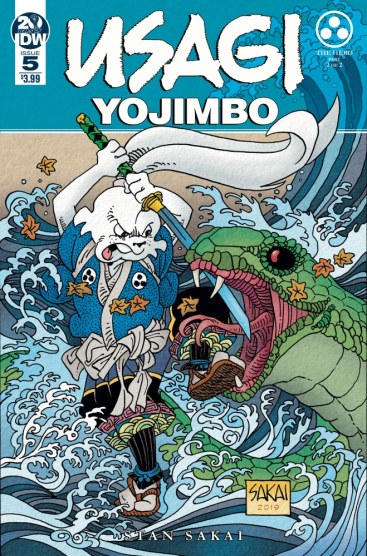
Usagi #31

Demon Mask is another excellent addition to the Usagi Yojimbo series that unsurprisingly gets a full five-star rating from me.  Exclusively written and drawn by Stan Sakai, this impressive entry once again follows the rabbit ronin Miyamoto Usagi as he continues his action-packed adventures through the anthropomorphic animal filled version of feudal Japan this series is set in.  Containing issues #31-38 of the Dark Horse Comics run on the series, as well as a few additional issues from associated magazines, Demon Mask continues the trend of featuring several shorter stories, while also leading back towards the next volume, Grasscutter II, which will contain a big crossover story.  I deeply enjoyed all the cool stories in this volume, and there are some real classics here.

The first story contained within Demon Mask is the entertaining and elaborate tale, The Inn on Moon Shadow Hill.  In this story, a travelling Usagi comes across a mysterious inn surrounded by strange sights and an unusual group of patrons.  The land surrounding the inn is apparently haunted, filled with all manner of monsters, demons and obakemono (haunts), which attracts many wealthy individuals to the safe inn to watch.  However, Usagi is soon drawn into a hefty wager with an arrogant merchant and must travel outside the inn to encounter the haunts and the forces behind them.

This is quite an amusing story that perfectly combines Sakai’s fantastic humour with his love of classic Japanese monsters and haunts.  The entire story comes together really well, first introducing the situation, and then forcing Usagi outside to face the ghosts after making a bet.  The subsequent reveal of the various monsters and creatures is pretty spectacular, and Sakai goes out of his way to include as many uniquely Japanese legendary creatures as possible, especially in one breathtaking and elaborate panel.  I really enjoyed the fun twist that occurred here, especially as it allowed Usagi to win his bet with the merchant, and his over-the-top explanation of what he experienced was pretty damn amusing with all the exaggerated facial expressions and reactions from Usagi and his audience.  This ends on a very satisfying and entertaining note, and The Inn on Moon Shadow Hill ended up being a fantastic and light-hearted start to the entire volume.

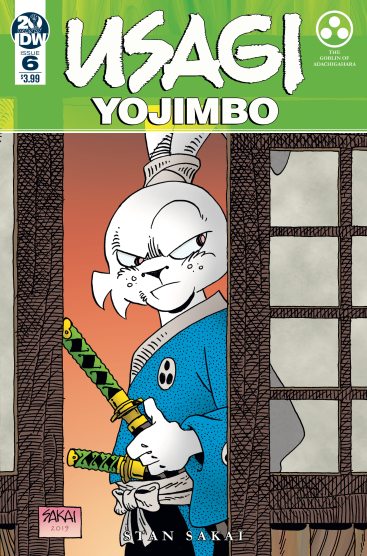
Usagi #32

Following on from the first fun story is the touching tale, A Life of Mush.  In this story Usagi encounters a brash peasant boy, Eizo, who wishes to become a warrior to avoid the farmer’s simple lifestyle (a life of eating mush).  However, Eizo soon grows tired of Usagi’s honourable warrior philosophy and attempts to befriend a group of bandits, only to discover that there is more to life and battle than brashness and toughness.  This was a great shorter story that presents an interesting outside perspective on the life of a warrior in this setting.  I liked the comparison between a child’s view of a warrior to Usagi’s intense dedication and spiritual thoughts, which in fairness, does seem a little more boring.  The subsequent events provide a fantastic lesson on perception and life choices, as Eizo and the bandits he encounters discover just how tough a true warrior like Usagi can be.  A compelling and thoughtful addition to the volume, A Life of Mush was a powerful and clever read.

The next story is a shorter entry, Deserters, which brings us back to the iconic Neko Ninja and their leader, Chizu.  Deserters examines a tragic tale of two Neko Ninja, Take and Saruko, who attempt to leave the Neko Ninja and start a new life together.  Captured by their fellows, they are taken before Chizu for trial, and must soon face the treachery and manipulation of Chizu’s ambitious second in command, Kagemaru.  This was another excellent shorter entry in Demon Mask, especially as it combines some quick, but efficient, character introductions, with some inherent tragedy and betrayal.  The result of the story, while a little predictable, ends up being very moving, and you can’t help but feel for the star-crossed lovers.  I also really like how this shorter entry turns out to be an interesting bridging story between several of the plot lines in the 11th volume, Seasons, and some of the big storylines in the next few volumes.  A surprisingly important and powerful story, Deserters is a great read that adds a lot to the overall volume.

Usagi #33

Up next, we have the rather entertaining and fun story, A Potter’s Tale, which makes great use of amusing coincidences to create a fantastic and hilarious story.  A Potter’s Tale sees the notorious thief, Samo, steal a precious jewel from a wealthy merchant and have to stash it.  Choosing an unfired pot in a small pottery shop, Samo makes the vessel distinctive before he is brought in for questioning.  Unfortunately, Usagi is staying with the same family of potters and chaos ensues when Usagi and his friends take a liking to Samo’s inadvertent innovation.

This is a great story that always gets a good laugh out of me when I read it.  While a rather quick story, Sakai manages to achieve a lot with it, setting up the base of the humour quickly and ensuring that the reader becomes invested with both the potters and the caddish thief.  The subsequent fantastic use of surprises, reveals and coincidences results in some amusing scenes, especially when the unlucky thief discovers that he must give up all his ill-gotten loot to fix his mistake.  The reveal that all his endeavours are for naught and his loot has returned to its original owner, in a roundabout way, is pretty entertaining, as is the ironic comeuppance he gets for his actions.  Sakai makes sure to enhance this story by featuring a compelling look at traditional Japanese pottery making (I love it when he examines authentic Japanese industries or art forms), and there are some beautiful sequences drawn as a result.  Easily one of the most entertaining stories in this volume, I deeply enjoyed A Potter’s Tale, and it is always guaranteed to crack me up.

Usagi #34

Sakai follows this funny story with another shorter entry, The Missive, which sees Nakamura Koji’s request for a duel reach Usagi’s master, Katsuichi.  Reflecting on the matter of honour brought before him, Katsuichi remembers a moment from Usagi’s childhood and the lessons it contains.  This was another quick but excellent entry from Sakai, which once again highlights how much he can do with only a few short pages.  Not only do we get an excellent bridging storyline between a good entry in the 11th volume, Seasons, and another future volume, but you also get an interesting reveal about a major supporting character.  Throw in an amusing childhood tale about a young Usagi, and you have an entertaining and unique entry that helps to break up the flow of the overall volume.

Now we get to the main event of the volume, with the three-issue story, The Mystery of the Demon Mask.  After receiving a dire warning about his future, Usagi ventures into a new town, only to witness a deadly duel between a fellow ronin and a mysterious opponent wearing a demon mask.  Encountering the police, including the venerable Inspector Kojo, Usagi soon learns that the killer, known as Demon Mask, has been targeting and killing ronin around town.  Helping with the investigation, Usagi encounters all manner of potential suspects as he also finds himself firmly in Demon Mask’s sites.

Usagi #35

The Mystery of the Demon Mask is probably the best story in the entire volume, and Sakai has put a lot of effort into developing a powerful and elaborate murder mystery storyline in this unique Japanese setting.  The entire story has a great flow to it, quickly introducing the villain, the murderous Demon Mask, and then introducing Usagi to the various players involved in the investigation.  From there Usagi is thrust into several dangerous situations as Demon Mask stalks him and other masterless samurai around the town.  There are several complex and intriguing characters introduced during this story, each of whom is a potential suspect.  This story ends on a big finale, with Demon Mask exposed as he faces off against Usagi in a deadly duel.  Sakai does a brilliant job of revealing who the killer is, and I really appreciated the various subtle clues scattered throughout the story to set this up.  This ended up being quite a fantastic murder mystery story that works extremely well despite the limitations of the shorter comic form.  The motivations behind the killer are pretty heartbreaking, and I really appreciated Sakai’s portrayal of their madness and grief.  There is an excellent focus on fighting and duels throughout this story, especially as Demon Mask engages several skilled samurai in personal combat, and I loved seeing all these fights unfold.  An excellent entry that has a brilliant balance of mystery, complex characters, classic Japanese elements and comic book action.

Following on from this awesome murder mystery story, we have another intriguing dive into Japanese mythology and monsters with the spooky story, Kumo.  In this story, Usagi, who is eager to reach his friends, takes a shortcut across the mountains and finds himself in an isolated village, surrounded by an unusual number of spiders and an insane amount of webbing.  When the innkeeper’s daughter is kidnapped in an improbable attack, it becomes apparent that something more is haunting the village, and that Usagi’s only hope might be another traveller in town, Sasuke.

Usagi #36

This was another particularly good entry in Demon Mask; I always love Sakai’s more supernatural narratives.  The story premise is somewhat typical, with Usagi arriving in a troubled town that needs his help, this time in defeating the monsters haunting them.  The subsequent conflict with this threat gets pretty wild, not just because of the cool monster (in this case a Spider Goblin and her giant spider minions), but also because it introduces the intriguing side character of Sasuke.  Sasuke, also known as The Demon Queller, is a mystical monster hunter who travels around Japan taking down supernatural threats (no doubt with Kansas blaring in the background).  Sasuke goes on to become a major recurring character within this series, having most recently appeared in the 34th volume, Bunraku and Other Stories (where he does some cool Demon Slayer-esque sword fighting).  However, he gets a very awesome introduction here in Kumo, with Sakai perfectly setting up the character’s mystique, as well as his powerful magical abilities.  This story literally sees Sasuke summon up a giant frog to fight a Spider Goblin, which has so many levels of awesome to it, and I loved seeing the magic on monster fight that ensures.  Another fantastic story that makes excellent use of Japan’s rich spiritual and mythological past, I always have an outstanding time reading Kumo.

The final major story in this volume is the intriguing tale, Reunion.  Usagi returns to the monastery of his friend, priest Sanshobo, only to discover it under attack by brigands, apparently after a rich merchant sheltering inside.  Working with Sanshobo and a recovered Gen, Usagi must find a way to overcome the brigand horde and save the monastery from attack.  However, the real threat may already be inside the walls, and soon Usagi, Sanshobo and Gen must overcome a dangerous enemy determined to take the most precious treasure, the legendary sword Grasscutter.

Usagi #37

Reunion was another fun entry which ended the main Demon Mask stories on a compelling and interesting note.  While a distinctive story itself, Reunion is primarily focused on setting up the events of the following major volume, Grasscutter II.  This presents a fun scenario where Sanshobo’s temple is attacked (again, it honesty gets attacked a lot), while the real danger remains inside the wall.  There are several fun parts to this story, from Usagi’s attempted infiltration of the gang, the many fight scenes against to the bandits, to the dangerous confrontation against the disguised adversaries within the temple.  This proved to be an excellent story, and it was great to see Sanshobo and Gen again, especially as they prepare for their next epic adventure.

While Reunion concludes the main stories, this volume also has a couple of shorter stories that were contained in other publications, such as Dark Horse Presents (vol. 1) #140, Dark Horse Presents Annual #3, Wizard Magazine #3, Oni Double Feature #11, and Dark Horse Extra #20-23.  These short stories provide a couple of quick, highly amusing tales which leave the reader smiling as they close the volume.  Sakai achieves a lot in these shorter stories, and each has an entertaining or moving story, even if they only last for only a page.  The most detailed of these was the entertaining Death and Taxes, which sees Usagi fighting bandits for a conniving and amusingly clever peasant.  There is also the sweet little story, A Funny Thing Happened on the Way to the Tournament, which shows a young Usagi meeting his future friend (and love interest) Tomoe Ame when they were children.  The short but powerful Netsuke sees Usagi reflect on a former comrade, while The Leaping Ninja has a hilarious one-page tale about an acrobatic infiltrator who leaps before he looks.  The final story was the intense Tsuru, which sees Usagi encounter a member of the Koroshi assassins with a love for paper cranes, who has a contract out on Usagi, resulting in a fantastic duel.  Despite their length, each of these stories features all of Sakai’s usual attention to detail and excellent story writing, and it was great to see these excellent examples of the creators shorter writing style.

Usagi #38

I must once again highlight all the incredible artwork featured in this impressive volume, as Sakai continues to showcase all his amazing artistic talent.  Pretty much every panel in this volume is filled with some excellent and powerful art, as Sakai tells his complex tales.  There is the usual brilliant focus on Japanese landscapes and towns, and Sakai has such a talent for capturing all the elaborate cultural elements of the period, as well as the beautiful locations that dotted Japan.  While all the art is really well drawn in this volume, I definitely have to highlight a few panels in particular.  The first story, The Inn on Moon Shadow Hill, has so many great drawings of creatures and haunts from Japanese folklore, and there is one brilliant panel were all of them are they facing Usagi at once.  The spider goblin and her minions in Kumo are also very cool and spooky, and the various scenes where they fight a samurai like Usagi and the magical Sasuke are pretty extraordinary.  I also loved the awesome character design on the antagonist Demon Mask from the main story.  Not only does it bear an interesting similarity to Usagi’s main foe, Jai (who himself is based on a character with distinctive mask), but it looks so dangerous and intimidating, especially when they silently engage in battle.  I deeply enjoyed the exceptional artwork in Demon Mask, and Sakai has once again shown how much feeling and emotion he can portray with his brush and ink.

Another week, another epic and incredible Usagi Yojimbo volume reviewed on my blog.  The 14th volume of this outstanding series, Demon Mask, was another awesome comic as Stan Sakai provides his usual blend of impressive writing, stunning artwork, and powerful characters.  Featuring several memorable and exciting short stories, Demon Mask serves as an excellent and wonderful entry in this wider series, and it is one that I always look forward to reading.  A highly recommended read, Sakai really can do no wrong with this exceptional series.
Amazon

Usagi Yojimbo: Volume 34: Bunraku and Other Stories by Stan Sakai

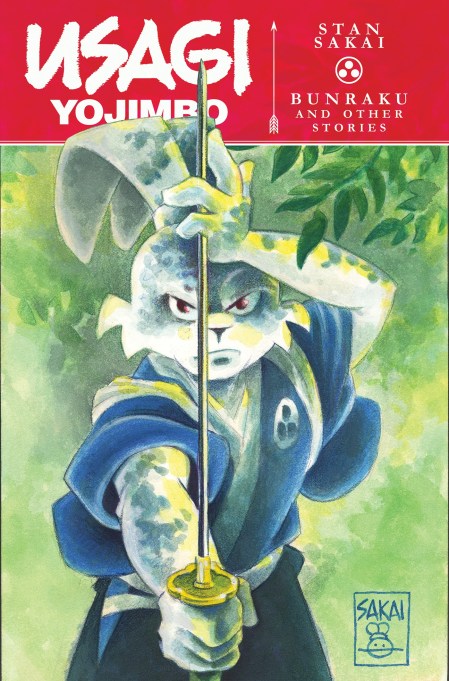
Usagi Yojimbo Bunraku and Other Stories Cover

Publisher: IDW Publishing (Paperback – 21 April 2020)

Writer, Artist and Letterer: Stan Sakai

Colourist: Tom Luth

Series: Usagi Yojimbo – Book 34

Length: 178 pages

My Rating: 5 out of 5 stars

Amazon

It is once again that wonderful time of the year when the brand-new volume of the ongoing comic series, Usagi Yojimbo, comes out. Legendary comic creator Stan Sakai returns with the 34th volume in this series, Bunraku and Other Stories, which contains four epic and entertaining stories taking place in the unique setting of a version of feudal Japan inhabited by anthropomorphic animals.

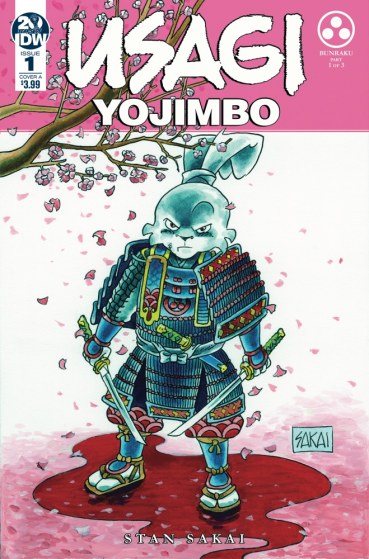
Usagi Yojimbo #1

Those who are familiar with my blog will know that I am a massive fan of the Usagi Yojimbo series, having read all of the comics that have been released, and this is easily one of my favourite series at the moment. I have been eagerly reading these comics for years, and since starting this blog I have been enjoying reviewing entries in the series, such as the prior two volumes, Mysteries and The Hidden (Mysteries was actually the first comic I ever reviewed on this blog), as well as some of the older volumes of the comic. As a result, I was extremely keen to get a copy of the new volume, and Bunraku and Other Stories was one of the top books I wanted to check out this autumn.

This latest volume is a rather special one, as it contains the first Usagi Yojimbo issues that Sakai has written for IDW Publishing. This series has been published by Dark Horse Comics since 1997, and their style was similar to that of the publisher before them, Fantagraphics Books. This move to IDW Publishing brings with it some very intriguing stylistic changes, namely that fact that each issue is now completely in colour. This is a massive departure from the previous entries in the series, each of which were originally released in black and white, and it brings the stories to life in a whole new manner. In order to do this, the series now employs a colourist, Tom Luth, who previously worked on Groo the Wanderer with Sakai. In addition, this latest volume is also physically different from all the previous volumes, as Bunraku and Other Stories is noticeably taller, which surprised me a bit when I saw it the first time, and which is seriously going to mess up aesthetics of my bookshelf. However, having the taller volume allows for slightly bigger panels than were typically featured in the previous Usagi Yojimbo stories, which I quite enjoyed.

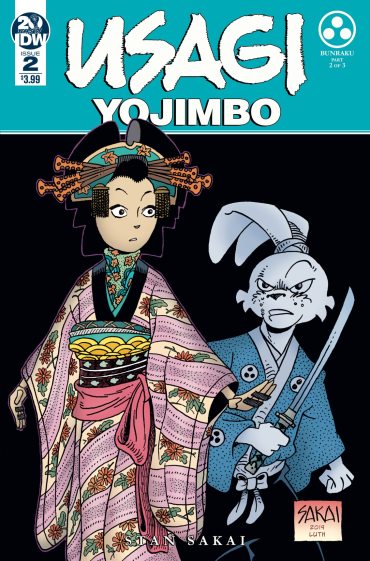
Usagi Yojimbo #2

However, even with some of these physical changes, this is still the same old Usagi Yojimbo. Sakai has once again produced some outstanding and deeply enjoyable stories, equipped with his trademark art style and his fantastic and loveable characters. Bunraku and Other Stories contains Issues #1-7 of the new, IDW Publishing, run on the series, and is made up of four separate stories.

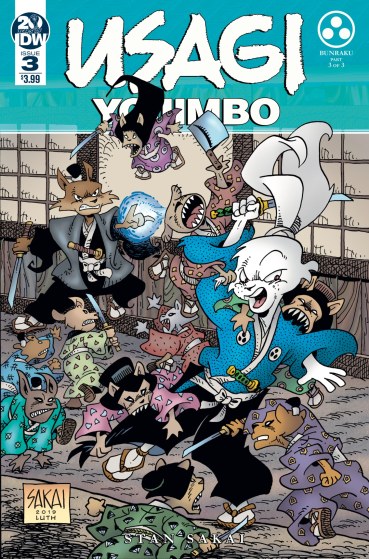
The first of these stories is titled Bunraku, and it is the main story of this entire volume, made up of the first three issues. In this story, Usagi is enjoying a bunraku, a traditional Japanese puppet play, when he encounters an old acquaintance, Sasuke, the Demon Queller. Sasuke’s endless hunt for demons and monsters has led him to the bunraku theatre, where he senses that a new evil has taken hold. Despite his reluctance to get involved in another one of Sasuke’s dangerous missions, Usagi agrees to help, especially after they find a corpse that has been supernaturally drained of its life energy. Together, Usagi and Sasuke find that a dangerous and malevolent being has infected the bunraku theatre, and they must do everything in their power to end it.

Usagi Yojimbo #3

Bunraku serves as an exciting and compelling first story in this volume, and I quite enjoyed its supernatural storyline. The Usagi Yojimbo series has a rich history of featuring Japan’s various supernatural monsters and demons in its narratives, and this is easily one of the better ones they have done. The antagonists of this story are rather creepy, and they serve as extremely deadly opponents to Usagi, who finds himself dramatically outclassed at several points throughout the story. I also liked the return of Sasuke, who has shown up in several supernatural storylines since his first appearance back in volume 14. Sasuke is a rather distinctive and intriguing character in this series, as he has dedicated his life to hunting and destroying demons and monsters, many of whom are opponents far beyond normal samurai like Usagi. Despite his tremendous magical powers, Sasuke often finds himself severely drained after each fight, but his drive to complete his mission spurs him on, despite how weary or physically weakened he becomes. Usagi and Sasuke have some interesting interactions throughout this story, as Usagi has become more wary of Sasuke after their last several encounters. Sasuke insists that Usagi helps him once again, and even guilts Usagi into working with him, which makes for a very unusual team dynamic. I thought it made sense that Usagi would be reluctant to get involved, as he or someone he loves has nearly died each time Sasuke has appeared so far. There was also a rather interesting moment when their antagonist asks Sasuke if Usagi was being groomed to replace him, a question that Sasuke does not provide an answer to, and which makes me think we will be seeing a lot more of this character in the future.

One of the more intriguing aspects of the story of Bunraku is the fascinating examination and depiction of the bunraku puppet shows. I always love it when Sakai highlights cool aspects of Japanese history, culture or industry in his stories, and this entry was really amazing. The whole concept of a life-size puppet theatre was really intriguing, and Sakai did a great job examining it, showing what sort of stories they produced and how elaborate their performances could be. This unique art form also turned out to be an awesome basis for this horror adventure story, and I really liked how Sakai worked it into the plot. I also really enjoyed the artwork contained within this first story, and Sakai has come up with some rather impressive sequences and scenes that not only do a fantastic job conveying the action that is occurring but which really highlight the horror aspect of the narrative. The various supernatural opponents in this book are shown to be quite scary and threatening, and I loved the way that Usagi’s face looked absolutely terrified as he fought against them. The use of colour in this first story is also extremely cool, and I loved how it helped bring the whole story to life. I particularly liked the way that the colour really enhanced all of Sasuke’s magical abilities and made them look that much more distinctive and mystical. There is one amazing sequence in which Sasuke turns his sword into flames, which looked so damn awesome and it put me in mind of that one iconic scene from the recent Demon Slayer anime. All in all, this was an outstanding and enjoyable first story in this volume, and readers are in for a real treat right of the bat.

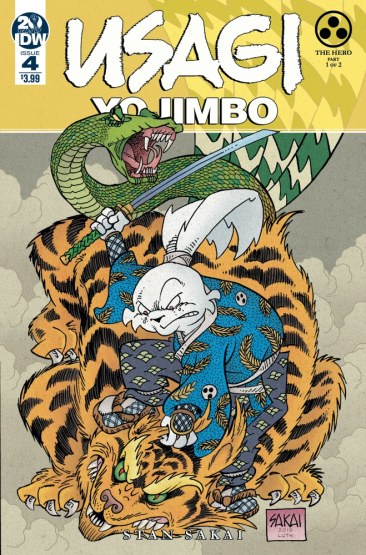
Usagi Yojimbo #4

The next story that is featured within this volume is the two-issue tale, The Hero. In this entry, Usagi, still journeying across the countryside, has encountered an interesting fellow traveller, a famed author who is journeying to her father’s house. The author, Lady Mura, has written several novels, including a tragic tale of heroism that she lets Usagi read. As the two travel together, Usagi learns that Mura is the wife of a high-ranking samurai who is jealous of his wife’s writing ability, as the fame she gains from that far exceeds his reputation as a warrior. While Usagi is able to protect Mura from many of the dangers on the road, including bandits, how will he react when he encounters her husband, especially as the strict rules of honour that bind all samurai forbids him from interfering?

This is a rather heavy and clever story that I think is potentially the best entry in the entire volume. Sakai has crafted together an excellently written and well-thought out narrative that cuts deep into the reader’s emotional core before the end. The character of Lady Mura is an extremely tragic figure, as even after all Usagi does to protect her, her story still ends in heartbreak, just like all her novels. Despite how her story ends, she is able to pass on some inspiration to Usagi about the true nature of a hero, which is how she sees Usagi. There are some really intriguing discussions about the code of the samurai that binds all the major characters within this story, and the problems and compromises that occur because of it are in full display throughout The Hero. I also think that Sakai came up with a perfect ending for the entire story, which felt extremely satisfying, considering what had happened throughout the course of the narrative. The artwork in this story is also really cool, as not only do you have some of the most impressive depictions of the varied and beautiful feudal Japanese landscape (which look so impressive in colour) but you also have some amazing scenes that show fragments of Lady Mura’s novels. These scenes place Usagi in the role of the hero of the classic story (Sakai has done something similar in prior stories like My Lord’s Daughter in the sixth volume, Circles) and show him taking on an undead horde and their evil master, and they are some amazing drawn sequences. The Hero is a truly great story, and I think that Sakai has done an outstanding job coming up with this tragic and heartfelt tale.

Usagi Yojimbo #5

The next story, Adachi, is one of the more interesting entries in this volume, and it was one that I was curious to check out. This story was actually written in commemoration of the 35th anniversary of the series and features a fresh take on the very first Usagi Yojimbo story, The Goblin of Adachigahara, which I previously reviewed in the first volume, The Ronin. In this new version of the story, Usagi returns to the scene of one of his greatest personal tragedies, the battle of Adachigahara Plain (or Adachi Plain in later Usagi Yojimbo stories), where his lord, Mifune, died after one of his generals betrayed him. In the course of this battle, Usagi, who served as Lord Mifune’s bodyguard, was able to perform an essential service by fleeing the battlefield with Mifune’s head, keeping it out of the hands of the treacherous general and the evil Lord Hikiji. Usagi has journeyed back to this place to pay respects to the place he buried his late lord’s head, which only he knows the location of. However, he senses that he is being watched and continues his journey, eventually seeking shelter at the hut of an old lady, who warns him of a goblin that haunts the mountain. Later that night, the goblin attacks the house, trying to kill Usagi, but Usagi is able to trick him and engage him in a fair fight. The goblin is revealed to be the general who betrayed Mifune, who was disgraced and banished by Lord Hikiji due to Usagi’s actions in denying Hikiji his lord’s head. Now determined to claim Mifune’s head and claim what is owed to him, the goblin seeks to kill Usagi, who manages to win, thanks to the help of the old lady, revealed to be the general’s wife, who has remained in exile with him.

This is a really interesting updated version of the story, which I quite enjoyed reading. The whole story is actually a combination of three prior Usagi Yojimbo stories, with some new elements thrown in. The first part of the story, which shows Usagi reliving the events of Adachi Plain, utilises parts from two stories, including Samurai (which appeared in the second volume, Samurai) and Return to Adachi Plain (which appeared in the 11th volume, Seasons). This combination provided a much richer examination of the battle, especially Usagi’s role within it, and I think the two separate sequences merged together well, while also looking even more impressive in colour. The story then continues to focus on the events that previously occurred within The Goblin of Adachigahara, although there are some interesting additions. This includes the goblin deliberately targeting Usagi, due to his role in his dishonour, and Usagi finding out the identity of his attacker before killing him. Knowing that this is the general who betrayed his beloved lord adds a whole new emotional element to the story for Usagi, and their fight is a lot more vicious and elaborate. I also liked the way that Sakai spent time enhancing the visuals surrounding the goblin. While he looked rather cool in the original story, in Adachi, Sakai has made him look even more awesome and intimidating, especially in colour. I also found it interesting that Sakai has turned this whole event into a more recent story in Usagi’s timeline, rather than being an event that occurred quite early in his adventures. The change in the chronology is intriguing, especially as there is a rather great scene in the middle where Usagi, upon visiting the grave his former lord, begs to be released from his vow of service, perhaps so that he can pledge fealty to his friend, Lord Noriyuki of the Geishu Clan. Overall, I thought that this was a clever new take on a classic Usagi Yojimbo story, and fans of this series will appreciate this anniversary special.

Usagi Yojimbo #6

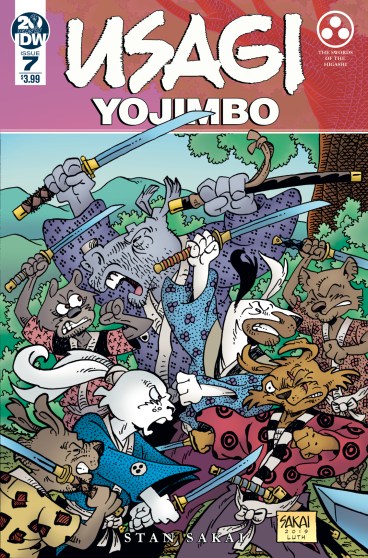
The fourth and final story in this volume is The Swords of the Higashi, which serves as a light-hearted and entertaining conclusion to this volume. The Swords of the Higashi sees the always amusing Usagi Yojimbo side character, Gen, involved in a whole new batch of trouble. This time, Gen and his occasional partner Stray Dog are attempting to recover two extremely valuable stolen swords from a group of bandits. Killing the bandits, the two bounty hunters run into Usagi, who decides to accompany them back to the sword’s owners, the Higashi clan. However, the three ronin make the mistake of leaving one of the bandits alive, and they must contend with a continued flurry of attacks as they make their way back to town.

Now this was a fun and enjoyable story that I found to be extremely hilarious. There are several great elements to this story that I really enjoyed, including the fantastic use of the three main characters, Usagi, Gen and Stray Dog, and their banter as they wander the wilderness is rather entertaining. There is also the really funny extended sequence which sees the characters come under constant attack from bandits and bounty hunters as they attempt to return the blades. Each of these attacks is led by the same bandit, who finds the three companions, gets his cohorts to attack them, and then runs away in a panic when the protagonists win, only to return with a new group of bandits and repeat the cycle a short time later. This repeated turn of events is extremely funny, mainly due to the ridiculousness of the situation and because of the way that Usagi and his friends get more and more exhausted and exasperated with each new cycle. Sakai does an amazing job of making all three protagonists look scruffier and more dispirited with each new attack, and their reactions each time are deeply entertaining, from the way that Stray Dog keeps yelling at Gen for it being his fault, Gen’s growing resentment and frustration at the bandit whose life he saved, and the usual stoic Usagi getting more and more exhausted with each fight: “I’ve been through battles less tiring than today!”. Sakai wraps this whole amusing episode up with a rather clever conclusion to the story, which sees another classic Usagi Yojimbo side character get the best of everyone, and which makes all of Usagi, Gen and Stray Dog’s effort be for nought, which is just so mean considering all they went through. This was an outstanding story that had me laughing the entire way through, and I thought it was the perfect way to end this entire volume.

Usagi Yojimbo #7

The latest Usagi Yojimbo volume, Bunraku and Other Stories, is another incredible comic from Stan Sakai that I absolutely loved. Sakai has once again produced several exciting and clever stories, filled with great characters, powerful emotional moments, clever examinations of classic Japanese culture and a number of visually stunning sequences, which are so much fun to read. With the comics now in full and glorious colour, this was an outstanding new entry in the series, and is a must read for all Usagi Yojimbo fans. It gets a full five-star rating from me and comes highly recommended.

Amazon