
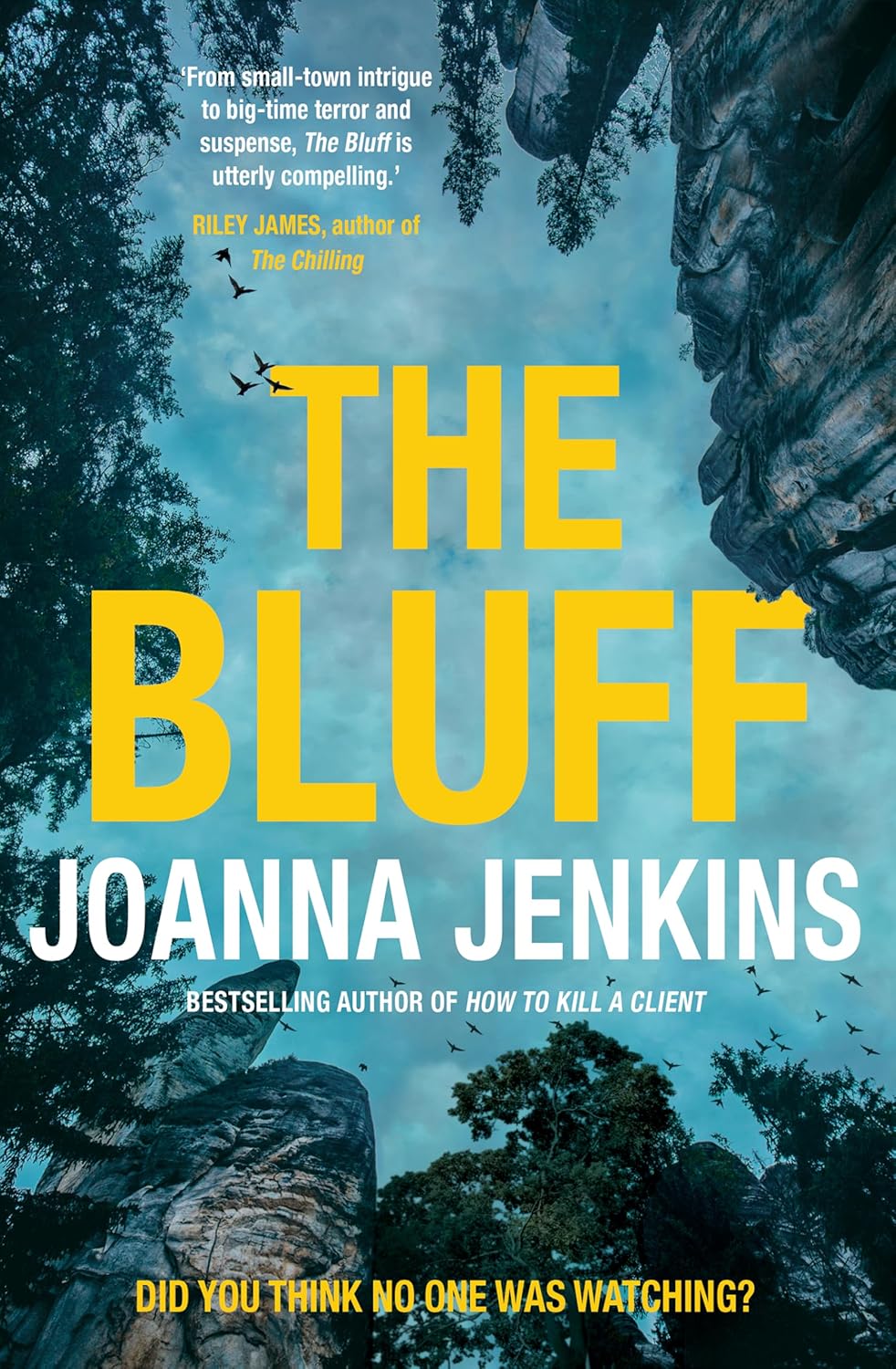
Publisher: Allen & Unwin (Trade Paperback – 4 March 2025)
Series: How to Kill a Client – Book Two
Length: 432 pages
My Rating: 4.5 out of 5 stars
Impressive new Australian author Joanna Jenkins presents another captivating piece of crime fiction with the gripping and emotionally charged read, The Bluff.
Back in 2023 I had the very great pleasure of reading the fantastic legal thriller, How to Kill a Client. The debut novel of Australian author Joanna Jenkins, How to Kill a Client followed various members of a prestigious Australian law firm who are forced to deal with the fallout of the murder of one of their biggest clients, a man who everyone in the firm had a motive to kill. Jenkins produced an outstanding story in her first novel, and How to Kill a Client ended up being one of my favourite debuts and pieces of Australian fiction of 2023. Due to how good her first book was, I have been keeping an eye out for anything else from Jenkins and I was very happy to see she had a new book coming out in 2025 with The Bluff. A surprising sequel to How to Kill a Client, The Bluff has been on my to-read list for a while, and I was very glad that I finally got the chance to check it out.
Plot Synopsis:
People like Dash didn’t die. He was only what? Mid-thirties? Well off. Adored. By some anyway. World at his feet. Well, Myddle at his feet, which was his world.
Ruth Dawson has taken a break from big city law to fill in for a few months at a mate’s small-town legal practice in Myddle. It’s not what she’s used to . . .
So when she hears the front door of her office open she’s expecting a weird demand, or a question she doesn’t know the answer to. But it’s Bea Baulderstone’s mum, worried that she hasn’t seen her seventeen-year-old daughter for five days, and Constable Gazza Parker is refusing to report the girl missing.
Ruth tries to find Bea, but Myddle is a wall of indifference. Then Dash Rogers is found at his farm gate, dead from a gunshot wound, and suddenly the town is very interested in Bea’s whereabouts.
An unputdownable thriller of deception and greed, The Bluff reveals an enmeshed web of family and community loyalties, set in the lush rural hinterland of east coast Australia.
The Bluff was an extremely captivating and complex Australian thriller from Joanna Jenkins that stands on its own feet while also serving as a great sequel to How to Kill a Client. Featuring a fantastic character-driven story loaded with mystery, impressive storytelling and an excellent rural setting, The Bluff had me hooked very quickly, and I ended up powering through it in a day.
I really enjoyed the amazing story that Jenkins came up with for The Bluff, as she provides both an intriguing mystery, and some great character development. A mostly standalone plot set after the events of How to Kill a Client, the reader is reintroduced to high profile layer Ruth Dawson, who is taking a break from the high-flying life to manage a small law firm in the small New South Wales town of Myddle. This change in setting and story focus towards a rural thriller, rather than the big-city legal thriller of Jenkins’ previous book, proved to be quite effective, as was the very clever way the author set out The Bluff’s story.
Jenkins ensured that readers get dragged into The Bluff’s tale almost immediately, with two very quick sequences at the start: one that showed a key moment of the plot without any context, and then a subsequent scene where the protagonist is reintroduced and then finds out about the narrative’s two main mysteries, a missing girl and a murder. With these important bits of information in your brain, the reader is then transported back six months and is shown all the events that occurred over this period that led up to the disappearance of Bea Baulderstone and the murder of Dash Rogers. Through this six-month period, you become acquainted with all the key players around Myddle and observe their interactions with the victims and the protagonist, and you begin the appreciate the complex web of relationships, problems and personalities that surround the case, as well as the many potential motivations for the book’s main crimes.
This dive back in time was an outstanding writing choice by Jenkins that allowed the reader to really appreciate the full breadth of the relationships and troubles that accompany the crime, all while perfectly utilising The Bluff’s excellent rural setting. With every brick of plot laid down to hint at the events to come, you find yourself becoming more and more involved with the plot as you try to picture how and why the murder will occur and which of the many interesting and emotional characters may commit it. The inclusion of a countdown at the start of each new chapter gives a great ticking clock vibe to The Bluff, and you become more and more anxious and excited as you get closer the plot’s principal event. The reader also begins to appreciate just how despicable the main murder victim is, and that allows for an even more compelling read, as you can see just how many potential people have a motive to kill him, as well as cause the disappearance of the missing girl.
The final third of The Bluff is probably the best, and I flew through it to find out how the story ends. The final series of events leading up to the pivotal killings are particularly dark (and potentially triggering for some readers), and it was fascinating to see everyone’s emotional state in advance of this crime, especially as there are so many potential suspects. However, rather than show the killings there, Jenkins instead jumps back to the timeline from the front of the book and spends the last 100 or so pages dealing with the subsequent investigation, with the protagonist pulling events together. I liked this delay, as it provided an excellent trickle effect for the twists and also allowed the protagonist to shine as she uses her knowledge of events and her own skills at deduction to identify the culprit and protect her friends in the town. The eventual solutions for the mysteries were very clever, and Jenkins did such a great job subtly dropping the clues throughout the backstory of the plot and setting up the various motivations. I really appreciated the many complex and compelling twists which fit into the plot perfectly, especially the last one that really made you think.
This entire brilliant story is wrapped up in some great character arcs, as Jenkins features a range of protagonists and potential suspects, each of whom were quite compelling and brought different shades of drama to the plot. I loved seeing their complex relationships and interactions throughout the plot of The Bluff, especially those that could lead to them committing the book’s main crimes. There are some really great characters here, and it was especially interesting to see more of series protagonist Ruth Dawson, who is not only continuing to move on from the personal trauma and loneliness that was a key part of How to Kill Your Client, but is also trying to figure out where her life is going after the collapse of her previous law firm. These character arcs come together in a very satisfying manner at the end of The Bluff, and a lot of this book’s complexity and strength came from how relatable and compelling Jenkins’ made these various characters, especially when it comes to their anger, fear and potential ability to commit murder.
Overall, The Bluff was an exceptional and deeply impressive sequel from Joanna Jenkins that I think was even stronger than the excellent first book. Featuring a very clever and well-written narrative that brings together powerful character storylines and a great rural setting with complex mystery, The Bluff proved to be extremely captivating, and you will become engrossed in uncovering the full extent of the plot. One of the best Australian crime fiction books of 2025 so far, The Bluff comes highly recommended and is really worth checking out.

 The Unseen Library