

Publisher: Orbit (Trade Paperback – 11 January 2022)
Series: The Siege – Book Three
Length: 352 pages
My Rating: 5 out of 5 stars
2022 is off to a very good start for me, especially as I have already read an amazing novel that quite frankly may end up being one of my favourite books of the year. This awesome read was the third and final book in K. J. Parker’s clever and compelling The Siege series, A Practical Guide to Conquering the World.
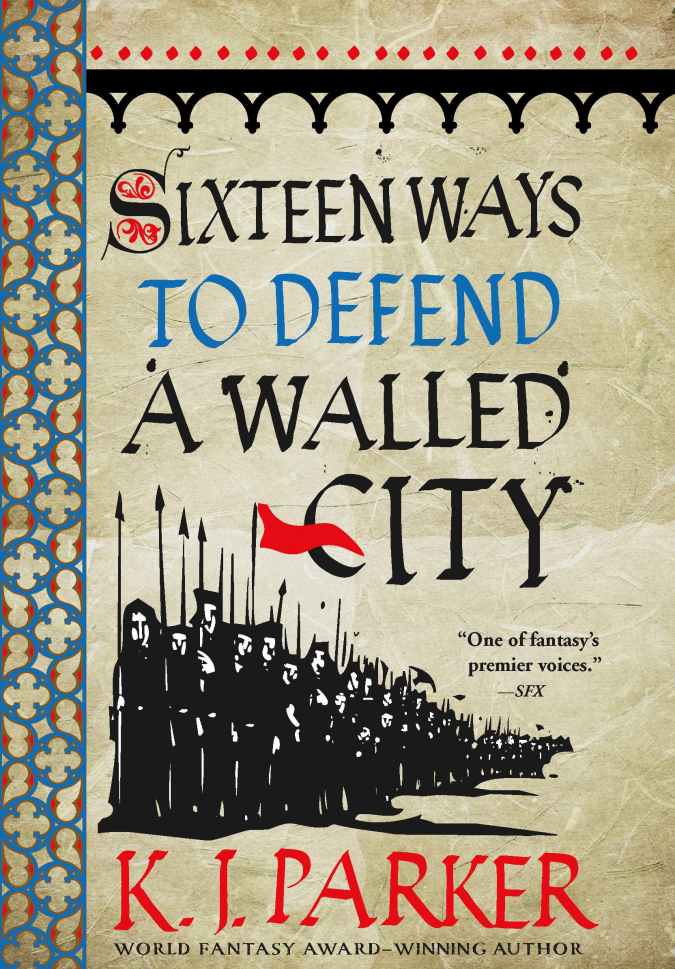
Over the last few years, I have been having an incredible time reading the incredible and deeply entertaining fantasy Siege series from K. J. Parker. Parker, a pseudonym for bestselling author Tom Holt, has come up with something very special with The Siege series that combines an interesting new fantasy world with some brilliant humour and intriguing insights into human nature and reactions. The first entries in The Siege series, Sixteen Ways to Defend a Walled City and How to Rule an Empire and Get Away with It, were both exceptional reads and they were among my absolute favourite books of 2019 and 2020 respectfully. As such I have been eagerly waiting for a long time, and while I was initially disappointed that A Practical Guide to Conquering the World was delayed until the start of 2022, it ended up being such a great read and worth the wait.
The Siege series is set in an alternate fantasy world that bears some interesting similarities to ancient Europe. The first book in the series, Sixteen Ways to Defend a Walled City, introduces the Robur Empire, a Roman-esque empire that is destroyed at the start of the novel by a coalition of enemies. The one exception to this destruction was the Robur capital, simply known as The City, which was able to survive thanks to the actions of a military engineer and conman who was able to come up with some very inventive defences. The second book, How to Rule an Empire and Get Away with It, was set a few years later and followed a new protagonist, an actor and playwright who is forced to impersonate the City’s figurehead after his death to keep the population’s morale and unity up to keep fighting the ongoing siege. However, this second protagonist eventually takes control of the city and manages to evacuate it, leading the people to a new life. The third and final book, A Practical Guide to Conquering the World, occurs during and beyond the events of both the first and second novel (if these books occurred the way they are portrayed) and features a new protagonist in a different land.
Aemilius Felix Boiannes the younger is a minor diplomat and translator assigned to the Robur embassy in the mighty Echmen Empire. Content to live a relatively blameless life away from the people that wronged him, Felix’s life is forever changed when news of the fall of Robur reaches the Echmen. Almost killed by the Echmen for no longer having a country, Felix’s life is only spared thanks to a debt owed by barbarian princess. Determined to no longer live by the whims of others, Felix embarks on an ambitious plan that will reshape all of history.
When the Echmen attempt to enslave the princess’s people, Felix saves her and leads her out of Echmen territory. Able to convince his new friend to unite the various barbarian tribes, Felix utilises his knowledge as a scholar to lead them to victory over the Echmen. However, his ambition is not limited to conquering the greatest empire in existence, Felix is determined to take over the entire world and he already has all the tools to do so. However, not even Felix is able to foresee all the consequences of his actions, and soon the entire world will be turned upside down. For good or for bad, the story of Felix, the most influential and dangerous man in history, is about to begin.
Well damn, now this was one hell of a read. Parker has come up with another exceptional read here with A Practical Guide to Conquering the World, combining a brilliant and clever story with incredible humour and an entertaining and compelling look into the human psyche. Filled with constant laughs, intriguing developments and a truly addictive narrative, this book got an easy five-star rating from me and is near impossible to put down once you start it.
I have had a lot of fun with the great stories that Parker comes up with for this cool trilogy, especially as they are exceedingly entertaining and very unpredictable, even if, due to their complexity and cleverness, they are a bit hard to explain in my inevitable glowing reviews. Like the rest of the series, A Practical Guide to Conquering the World is a standalone novel that can be read either by itself or as a continuation of the first two books in the series. This novel is told in the chronicle style and tells the autobiography of the protagonist, Felix, a translator and scholar who finds himself in all manner of trouble when his nation is destroyed while he is in a foreign land. Able to survive thanks to a recent good deed, Felix is soon dragged into the politics of the nation he is trapped in and attempts to stop the Chinese inspired Echmen empire from destroying and enslaving several neighbouring barbarian tribes. Forced to put his scholarly knowledge to the test, Felix devises multiple brilliant and unpredictable plans to not only manipulate everyone around him, but to also defeat a massive empire and bend all its power to his ultimate goal of world domination and beyond. This story goes in some extremely fun directions, and you honestly will not be able to put it down once you start as you become engrossed in seeing what elaborate idea Felix will come up with next. There are some fantastic ploys and captivating twists scattered throughout this novel, and it is fascinating to see this nobody slowly gain more and more power thanks to his wit and ability to understand people. I had an outstanding time getting through this story and it is extremely hilarious and very exciting.
A Practical Guide to Conquering the World is part of a larger series which switches protagonists with each entry, providing a new and unique tale of the aftermath of the siege of the City. This third novel starts around the same time as the first book, Sixteen Ways to Defend a Walled City, and covers several years, going past the events of the second book, How to Rule an Empire and Get Away With It. It is really interesting to see how this third book ties into everything, especially as the protagonist only has second-hand knowledge of the events of the prior two novels and, thanks to several clever inclusions in this book, as well as the unreliability of the narrators of the other entries, you’re not even certain those events actually occurred. While new readers don’t need to have any knowledge of the other Siege novels to enjoy A Practical Guide to Conquering the World, I had a lot of fun seeing the mentions and discussions about the events of these prior books, especially as the protagonist is very disbelieving about what he hears. The inclusion of a recurring character from the past book increases the connection to the rest of the series, although as she is also rather cagey, you have no idea how reliable her recollection of events is. I loved how compelling this loosely connected series turned out to be, and it was a lot of fun to see how the entire funny saga come together into one entertaining collection.
Just like with the first two books in the series, A Practical Guide to Conquering the World is set around a single protagonist, with the story reflecting their personal account of what they experienced. This new protagonist, Felix, is another entertaining and interesting central character, a former soldier who, after making some big mistakes and paying the cost for them, is banished to a diplomatic post in another country. This, and his ability for languages, ironically ensures that he survives the destruction of his homeland and places him in a unique position for his goals. I personally really enjoyed the cool story that Parker places around Felix and while there are some notable similarities between him and the other protagonists of the Siege books, mainly the fact that he is a conniving and selfish person with impressive insights into human nature and reaction, I think that there are enough differences to keep readers of the series happy. I loved the focus on his experience with languages and scholarly research, which he uses to great effect throughout the book, manipulating translations for his advantage and then coming up with obscure or historical solutions to the various problems he faces. Watching him turn this unique knowledge to his advantage, especially once he is inadvertently placed in the centre of world-shaping events, is really cool, and I loved seeing him succeed in his goals. Parker adds in a great attempted redemptive arc around Felix, which serves as a surprising driving force for much of what he does. However, readers do have to take Felix on face value, as, like the previous two protagonists of the Siege books, Felix is a bit of an unreliable narrator who may or may not be altering the story to make himself sound better to history. The final stinger of the book, which hints at the falseness of Felix’s account, is a clever and amusing touch from Parker, and you will come away wondering just how much you believe this character.
Easily the highlight of this book is the amazing humour that Parker has laced his impressive story with. Parker has an incredible and wicked ability with subtle comedy which permeates the entirety of A Practical Guide to Conquering the World thanks to the unique abilities that occur within. Much of this humour is derived from the eccentric protagonists’ impressive insights into the human mind, which allows him to manipulate events and people to his favour. Thanks to some great setup and some outrageous events, the readers get to see this protagonist subtly manipulate everyone, and his explanations for how he gets away with it and the subsequent reactions are extremely amusing. At the same time, Parker also satirises large parts of the human experience and culture, including the inefficiencies of bureaucracy, the inevitability of betrayal in the name of survival, the herd mentality of groups of people, the unpredictability of starting your own religion, and the inherent suspicion that everyone has inside them. All of this comes together quite brilliantly throughout the book, and you will honestly be chuckling straight from the beginning, especially as the first joke, about a massive bureaucracy nearly killing the wrong person due to a case of mistaken identity, is very cleverly put together.
Overall, K. J. Parker really did not disappoint with the third and final entry in his hilarious and impressive Siege trilogy. A Practical Guide to Conquering the World was just as fun and clever as the first two books, and I had a brilliant time reading this captivating fantasy novel. Containing a wildly inventive narrative set around a compelling protagonist, you will fall in love with this outstanding book, especially as Parker’s comedic inclusions will keep you laughing. A Practical Guide to Conquering the World is easily going to be one of the best books of 2022 and if you have not checked out The Siege series yet, do yourself a favour and dive into these hilarious and addictive books.
 The Unseen Library