Top Ten Tuesday – My Favourite Audiobooks of 2024

Top Ten Tuesday is a weekly meme that currently reside at The Artsy Reader Girl and features bloggers sharing lists on various book topics.  The official topic for this list involved listing the ten top books you hope that Santa would bring you this year.  While this is a fun sounding topic, I am instead going to continue my annual end of year wrap up of the best books I read in 2024.  In previous weeks I have highlighted some of the best pre-2024 novels, best new-to-me-authors and best 2024 sequels I read in the last year.  However, this week I am going to look at something near and dear to my hear, the best audiobooks of 2024.

Readers of this blog only need to check out my extensive audiobook category to the right to know that I have a lot of love for the audiobook format.  In my opinion, the audiobook is often the best way to experience a good book and in many cases this format makes a novel far more enjoyable.  As a result, I listened to quite a few audiobooks this year, and while a good chunk of them were books released before 2024 and featured in my Throwback Thursday posts, most were released this year.  There were some truly outstanding and impressive audiobooks released in 2024 and I knew going in that I was going to have an extremely hard time coming up with a final version of this list.

For this list I have only included audiobooks released in 2024 that I have listened to, which left me with a long list of extremely impressive audiobooks which I wanted to include in this post.  To help cut this down, I considered a range of factors, including the quality of the original novel, the skill of the narrator, production value, pacing and other features.  Looking at all this I was eventually able to cut the list down to the absolute best 10 audiobooks, with my typical generous honourable mentions section.  I had to make some very hard decisions here, and I ended up excluding several extremely good audiobooks from the main list.  Still, I think it really represents the best audiobooks I enjoyed this year and there are some amazing productions below.

Honourable Mentions:

The Chaos Agent, written by Mark Greaney and narrated by Jay Snyder
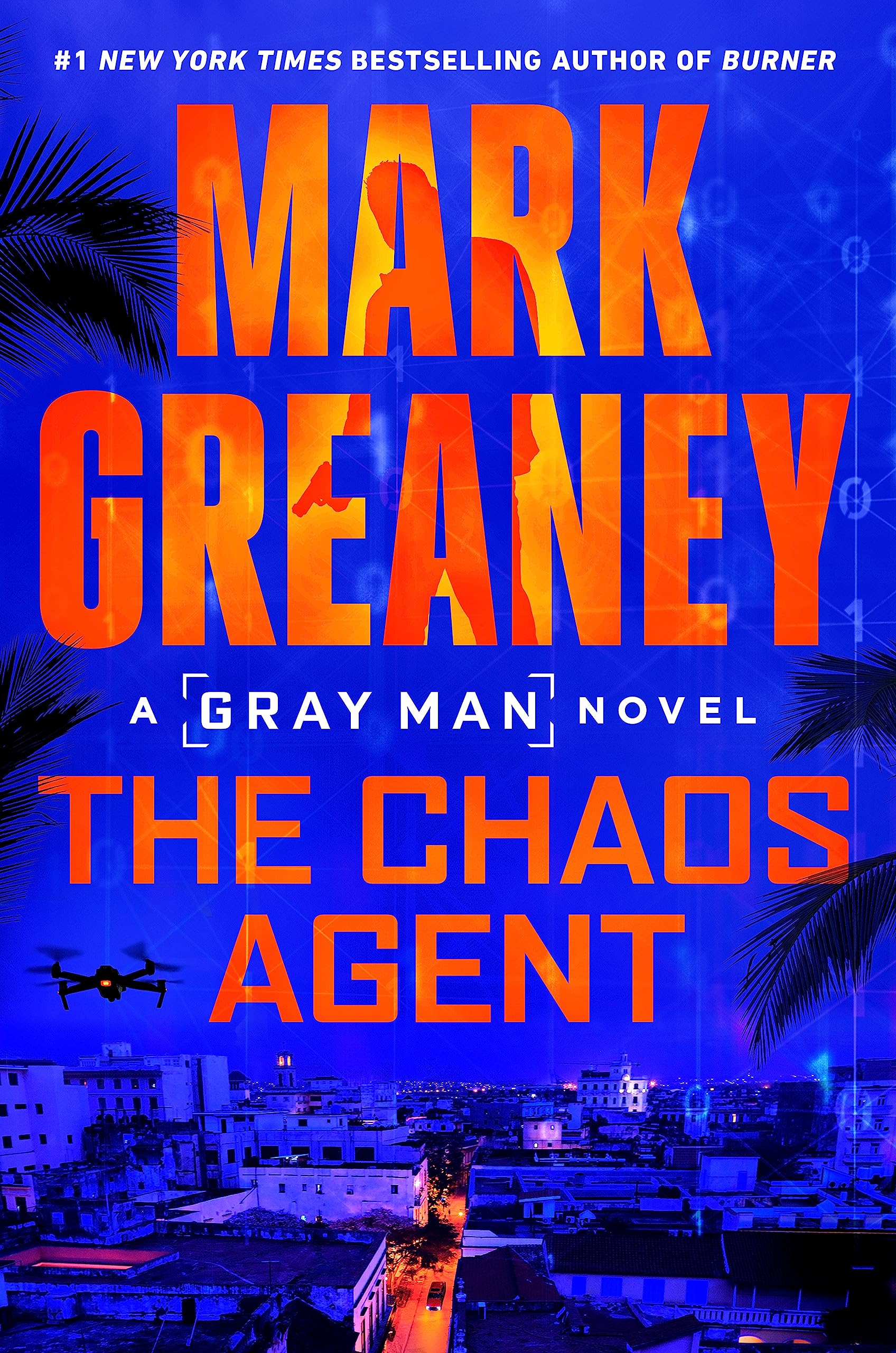
An excellent continuation of the Gray Man series once again read out by Jay Snyder.
Amazon


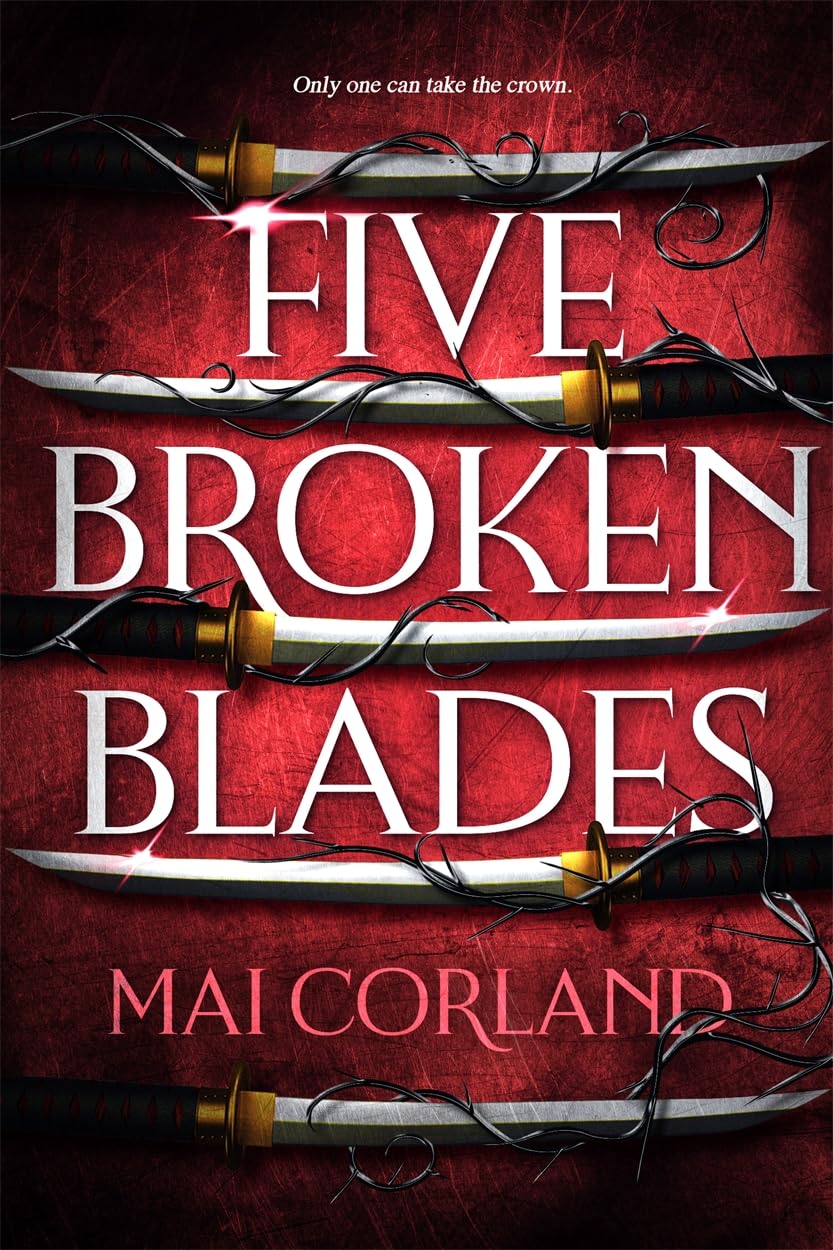
Five Broken Blades, written by Mai Corland and narrated by Greg Chun, Zion Jang, Roger Yeh, Donald Chang, Jaine Ye and Sophie Oda

A fun fantasy novel that was perfectly brought to life by a brilliant team of narrators.

Amazon


Goodbye Girl, written by James Grippando and narrated by Jonathan Davis

One of my favourite Star Wars narrators, Jonathan Davis, made this excellent legal thriller particularly awesome to listen to.

Amazon


Warhammer 40,000: Da Red Gobbo Collection, written by Mike Brooks, Denny Flowers and Rhuairidh James, narrated by Harry Myers

Three fantastic authors present an array of outstanding Warhammer 40,000 stories around a legendary figure, Da Red Gobbo, all of which is narrated by the highly talented Harry Myers.

Amazon

Top Ten List:

NecroTek/The Dragon in Winter, written by Jonathan Maberry and narrated by Ray Porter
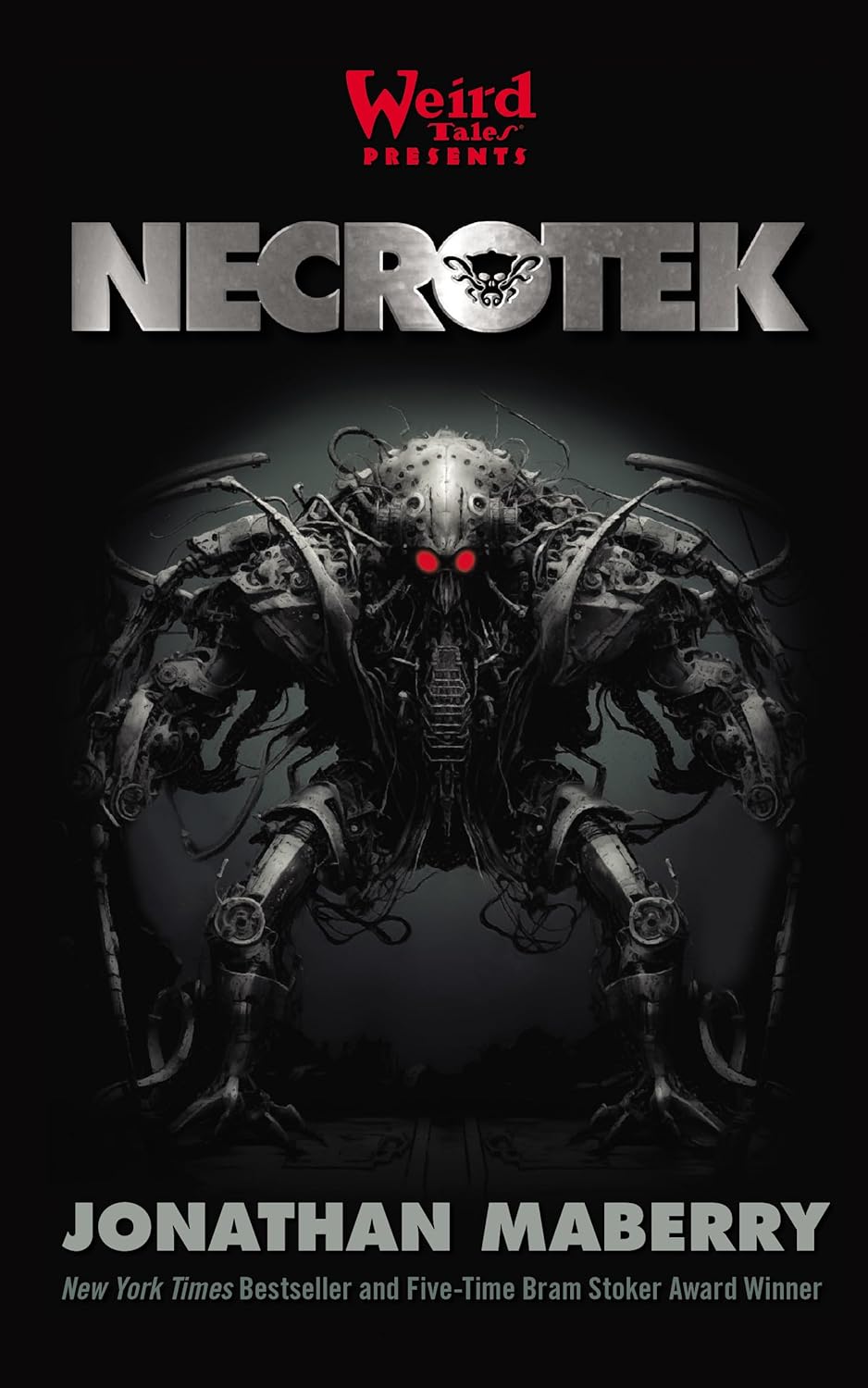
First up on this list we have a double entry, as we were lucky enough to get two books from one of my favourite authors, Jonathan Maberry.  Made up of the dark science fiction adventure, NecroTek, and the brilliant fantasy epic, The Dragon in Winter, both of which were particularly awesome.  I chose to combine these two audiobooks into a single entry here, due to the fact they both shared the same narrator in the legendary Ray Porter.  Porter, who is one of my favourite audiobook narrators, is synonymous with Maberry at this point, having lent his voice to most of the author’s books while always providing an exceptional performance.  I love how well Porter’s narration enhances Maberry’s exceptional novels, and it makes these audiobooks extremely special.  As such, I had to include them here, and both NecroTek and The Dragon in Winter come highly recommended as some of the best audiobooks of the year.

Amazon


We Solve Murders, written by Richard Osman and narrated by Nicola Walker
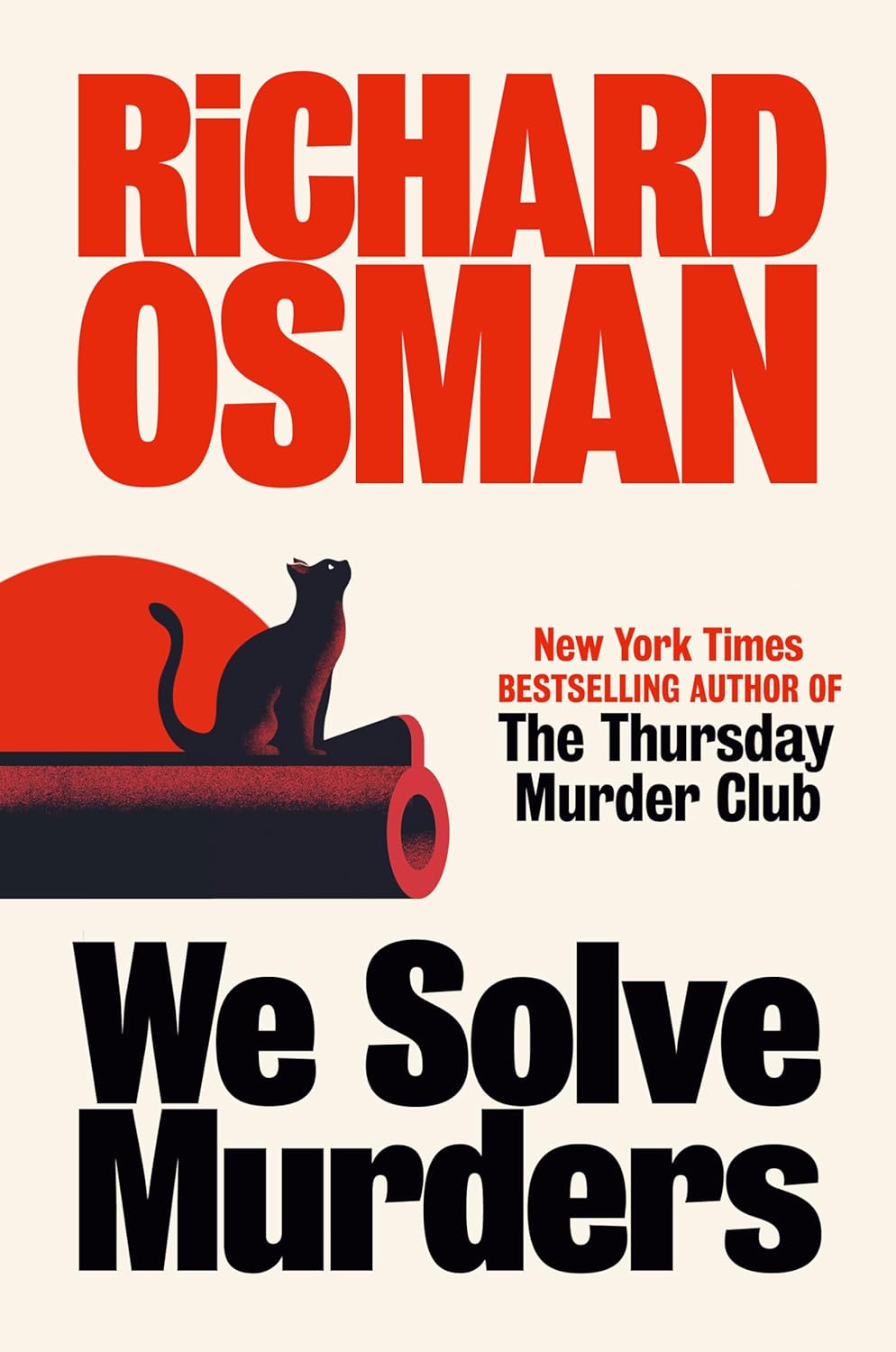
After wowing us with the first four Thursday Murder Club books (The Thursday Murder Club, The Man Who Died Twice, The Bullet That Missed and The Last Devil to Die), Osman went on a different path this year with the clever and fast-paced thriller, We Solve Murders.  A particularly fun book that combines Osman’s classic humour with a brilliant and intense story, We Solve Murders was another exceptional read that I couldn’t get enough of, especially in its audiobook format.  Thanks to the impressive narration of actress Nicola Walker, We Solve Murders was an extremely awesome listen that made the elaborate narrative became even more fantastic.  A truly great audiobook production that you won’t be able to stop listening to it.

Amazon


Warhammer 40,000: Above and Beyond, written by Denny Flowers and narrated by Phillip Sacramento
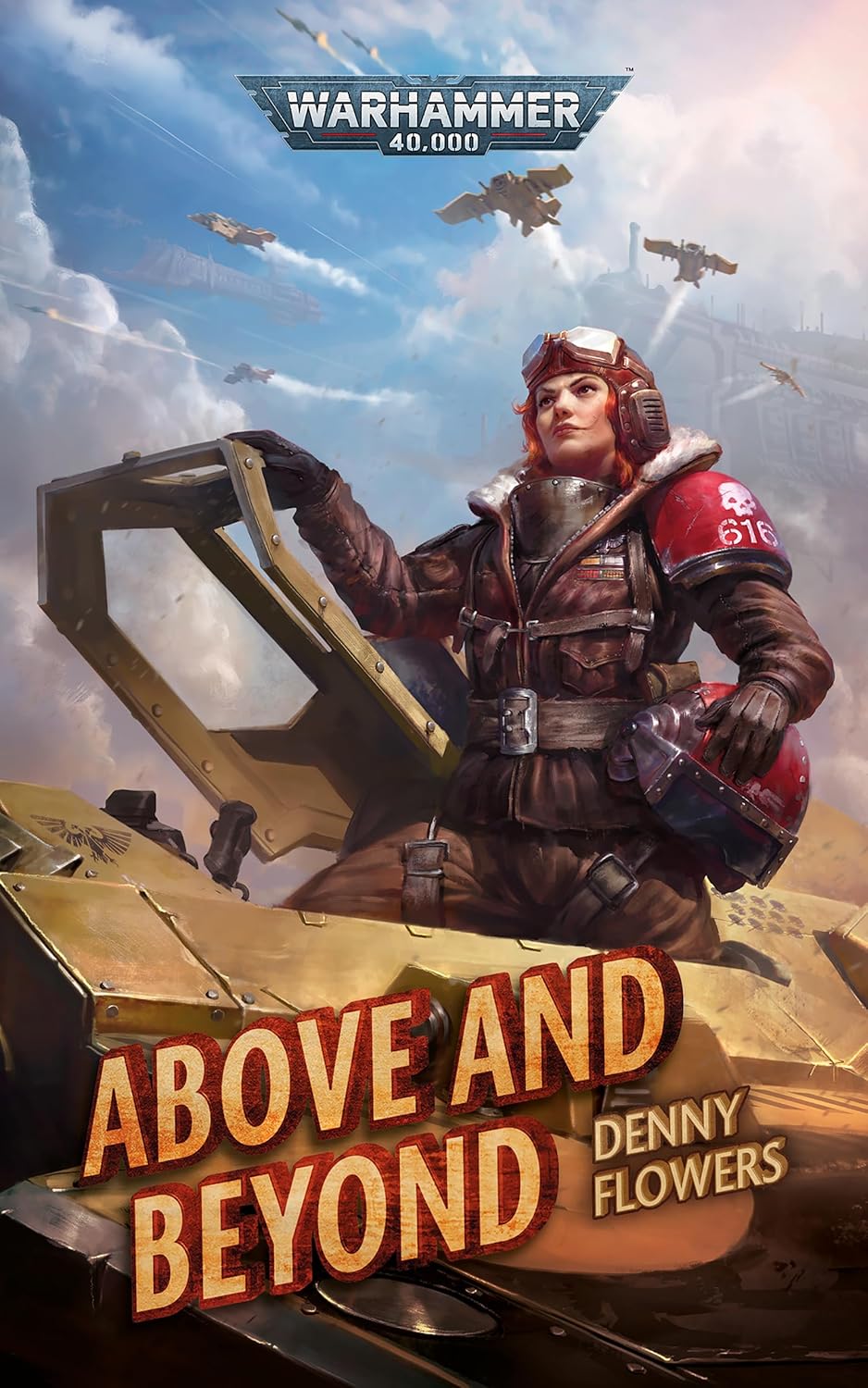
I have a few Warhammer 40,000 audiobooks on this list, but one of the most unique and compelling was Above and Beyond by Denny Flowers.  The sequel to one of my favourite Warhammer 40,000 novels, Outgunned, Above and Beyond brought together a damaged propaganda expert and a broken hero into a cynical and entertaining adventure that really dives into the dark side of the Warhammer universe.  Funny, powerful and featuring an outstanding story, Above and Beyond was so damn good, and it was even better when listened to on audiobook.  Phillip Sacramento perfectly captures the grim themes of Flowers’ writing with his narration, and you soon become enthralled in following the book’s damaged characters on their new adventure.  An exceptional and amazing listen, you will not be dissatisfied with this Warhammer 40,000 audiobook.

Amazon


The Fury of the Gods, written by John Gwynne and narrated by Colin Mace

John Gwynne brings his epic Bloodsworn Saga fantasy series to a powerful end with the brutal and impressive The Fury of the Gods.  Finalising a series of great character arcs and pushing his protagonists into one particularly deadly war, The Fury of the Gods was everything I could have hoped for, and I loved how it wrapped up the storylines previously raised in The Shadow of the Gods and The Hunger of the Gods.  I had a fantastic time with this novel, and I particularly enjoyed the cool audiobook version that was narrated by Colin Mace.  Mace brings so much energy to this narrative, and his excellent take on the characters turns this into an outstanding listen.

Amazon


Darkside, written by Michael Mammay and narrated by R. C. Bray
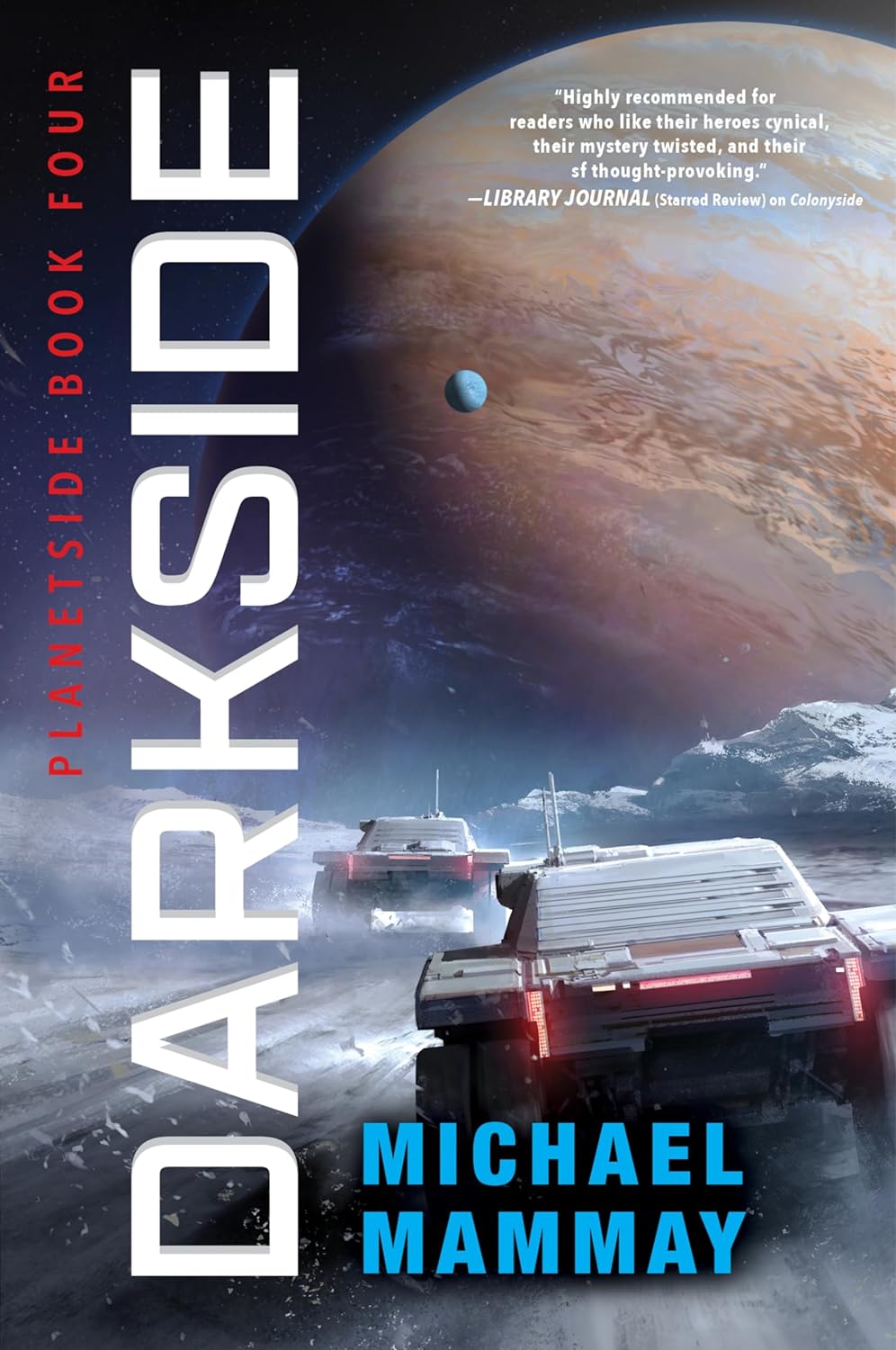
One of the most awesome and fun science fiction audiobooks of 2024 had to be Darkside by Michael Mammay.  Mammay, who previously impressed me with his previous books, Planetside, Spaceside and Colonyside, produced an intriguing fourth entry to his Planetside series with Darkside, as his maverick protagonist investigates a new conspiracy driven by corrupt corporations.  This fourth entry was such a great listen on audiobook, especially as it featured the return of the always incredible R. C. Bray as narrator.  Bray, who has such a distinctive voice and style, helps to make this audiobook even more special, and I had so much fun with Darkside as result.

Amazon


Warhammer 40,000: Lord of Excess, written by Rich McCormick and narrated by Richard Reed

Another particularly cool Warhammer 40,000 audiobook in 2024 was Renegades: Lord of Excess.  The debut novel of Rich McCormick, Lord of Excess followed a band of hedonistic Chaos Space Marines as they conquer an isolated planet, only to have everything come crashing down around them.  A fascinating and captivating addition to the Warhammer 40,000 canon, Lord of Excess was an amazing read from McCormick, and like most Warhammer 40,000 books is deeply benefited from its audiobook format.  Not only does the outrageous story really come to life when read out, but narrator Richard Reed ensures all the larger-than-life characters are perfectly showcased.  A truly outstanding Warhammer audiobook that I had such a great time with.

Amazon


Point Nemo, written by Jeremy Robinson and narrated by R. C. Bray

Few audiobooks were as epic this year as Point Nemo by Jeremey Robinson, which was also narrated by R. C. Bray.  A fast-paced and highly awesome science fiction thriller, Point Nemo had an outstanding plot behind it that followed a band of adventurers as they attempted to uncover the secrets of an island created from alien spores.  The story and action of Point Nemo are very amazing on their own, but I felt that the narration of Bray added even more to it, and I was very impressed by all of Bray’s amazing performances this year.  An exceptional listen that I cannot recommend enough.

Amazon


A Tide of Black Steel, written by Anthony Ryan and narrated by Steven Brand

Acclaimed fantasy author Anthony Ryan followed up his Covenant of Steel series (The Pariah, The Martyr and The Traitor) in a big way with the new book, A Tide of Black Steel.  Featuring an exciting and intriguing new narrative that expands Ryan’s existing setting, A Tide of Black Steel was an epic fantasy novel that I had so much fun with, especially on audiobook.  It helped that the narrator of the Covenant of Steel audiobooks, Steven Brand, once again lent his voice to proceedings, and the resulting production was a powerful and amazing production that I couldn’t stop listening to.

Amazon


Warhammer 40,000: Da Big Dakka, written by Mike Brooks and narrated by Harry Myers

The final Warhammer audiobook I need to feature on this list is the outstanding and hilarious Da Big Dakka by Mike Brooks.  The sequel to Brooks’ previous novels, Brutal Kunnin and Warboss, Da Big Dakka follows a rowdy group of orks who raid the most dangerous city in the Warhammer 40,000 universe.  A clever read that I laughed the entire way through, especially with the fantastic narration of Harry Myers, who always perfectly captures the rowdy orks and their eccentric enemies.  This was a really impress audiobook and I had a wonderful time listening to it.

Amazon


Crucible of Chaos, written by Sebastien de Castell and narrated by Joe Jameson
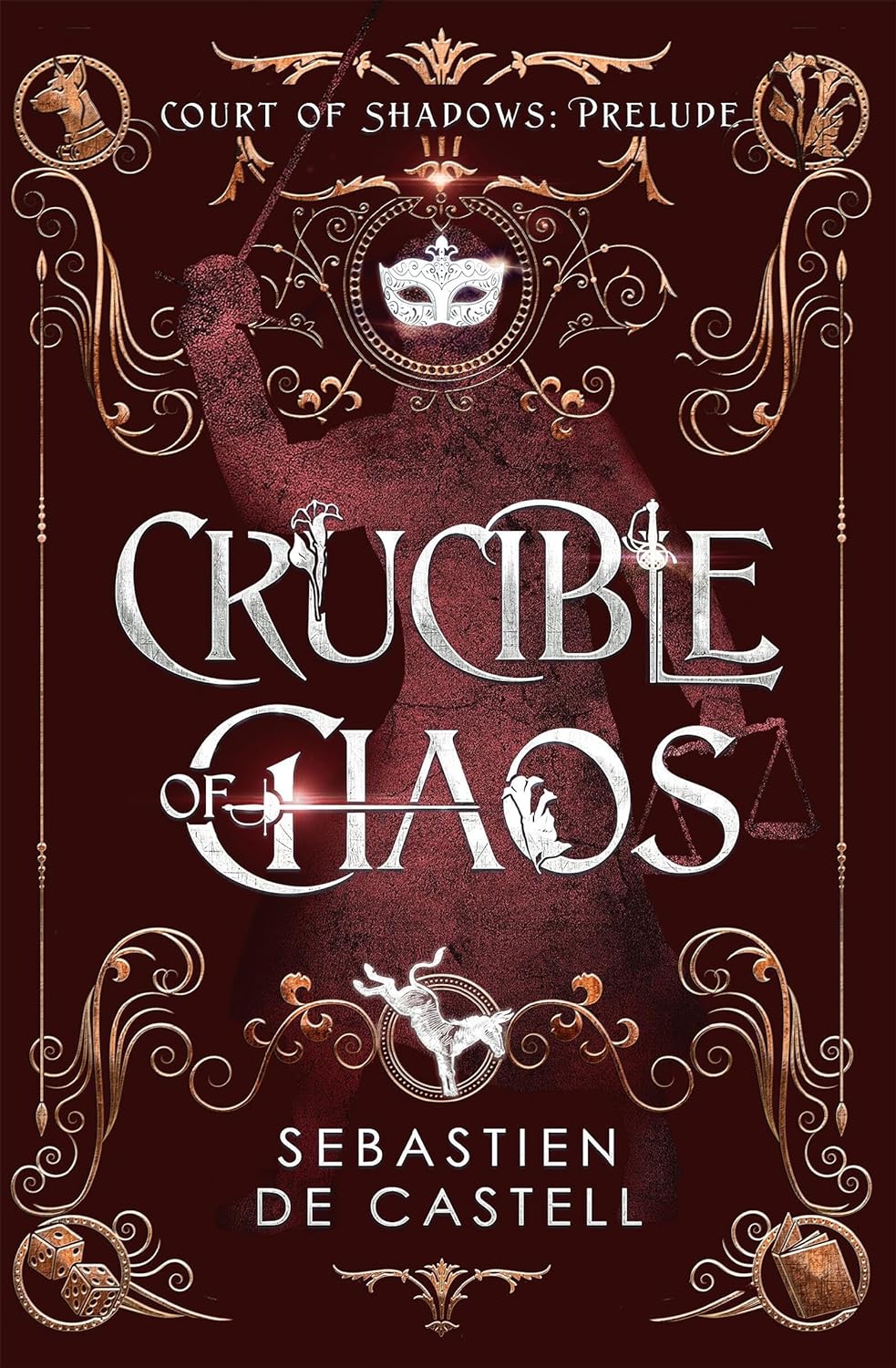
I am slightly cheating with this final entry as Crucible of Chaos came out in 2023.  However, due to its late December 2023 release, as well as it’s connection to the early 2024 novel, Play of Shadows, I have decided to include it as part of this list.  Crucible of Chaos was an exceptional book from talented fantasy author Sebastien de Castell, that saw an unlikely investigator and his noble steed attempt to uncover the cause of insanity and chaos in a famous monastery.  A clever and funny read, Crucible of Chaos was an impressive audiobook, and I had a lot of fun with how Joe Jameson, another favourite narrator of mine, brought it too life.

Amazon


Well that is the end of this latest Top Ten list, and as you can see, I have been lucky enough to listen to some awesome audiobooks this year (although I clearly focused a little too much on Warhammer fiction).  All the above audiobooks are extremely good and I would highly recommend each of them in their audiobook format.  Let me know what your favourite audiobooks of 2024 were in the comments below, and make sure to check back next week to see what my overall favourite novels of the year were.

Warhammer 40,000: Renegades: Lord of Excess by Rich McCormick

Publisher: Black Library (Audiobook – 6 April 2024)

Series: Warhammer 40,000: Renegades – Book Two

Length: 14 hours and 17 minutes

My Rating: 5 out of 5 stars

Amazon

Prepare to break the bounds of sensation, desire and treachery in the amazing Warhammer 40,000 novel, Lord of Excess by Rich McCormick, the second book in the fantastic Renegades series.

I have been having a great time with the huge variety of unique and elaborate Warhammer 40,000 books coming out in recent years, and it is always fun to see the impressive reads the franchise is producing.  One of the things I particularly enjoy about the Warhammer 40,000 fiction machine is the way in which it gives new authors the chance to shine, with several talented authors writing their very first book as part of the Warhammer canon.  I have already talked about one particularly good Warhammer 40,000 debut this year with Deathworlder by Victoria Hayward, but another incredible first novel I had the great pleasure of reading was Lord of Excess by new author Rich McCormick.

Lord of Excess was an exceptional book that was released as part of the loosely connected Renegades series that looks at a different band of traitor Space Marines as they make their dark way through the universe.  For example, the first Renegades book, Harrowmaster by Mike Brooks, looked at the nefarious Alpha Legion, and I am sure that future entries will dive into the other traitor legions with some fun stories.  Lord of Excess is the second Renegades book, and it provides the reader with an outstanding and unique story focussed on the ultimate beings of excess, the Emperor’s Children.

At the dawn of the Imperium, the Emperor’s Children were the master of mankind’s most loyal and revered Space Marine Legions, dedicated to the fight for humanity while seeking perfection in all things.  However, during the tumultuous events of the Horus Heresy, the Emperor’s Children followed their Primarch into treachery, and turned against their Emperor, falling into the service of the ruinous powers of Chaos.

Now, millennia later, the Emperor’s Children are a twisted remnant of their former glory.  Scattered into smaller warbands, the Emperor’s Children now only seek pleasure and sensation in hedonistic service to the Chaos God Slaanesh, the lord of obsession and excess.  One such band is the feared and infamous group known as the Adored.  Lead by the tainted Space Marine Xantine, the Adored has ravaged the galaxy for centuries, taking slaves and bringing untold torment, but Xantine has never found what he truly desires, until now.

Suddenly dropped out of the Warp, the Adored find themselves in orbit about the isolated planet of Serrine.  A wealthy and corrupt planet of the Imperium, Serrine has been long cut off from the rest of humanity due to corrupted currents of the Warp.  Sensing the opportunity to carve out a place for himself, Xantine decides to take control of Serrine, and turn it into the perfect society, dedicated to loving him.  However, making true perfection is an impossible task, and Xantine soon finds his rule challenged by both the population of Serrine and those closest to him.  Worse, there are darker forces at work within the bowels of Serrine, and soon the world will be engulfed in perfect destruction.

Lord of Excess was an exceptional and impressive Warhammer 40,000 novel that achieved so very much for the reader.  Featuring a complex and compelling tale of betrayal, deceit and corruption, loaded with fun characters and larger-than-life personalities, Lord of Excess was an entertaining and elaborate read from the very start, and I could not get enough of it.

I really loved the story contained with Lord of Excess, and I find it hard to believe that this was McCormick’s very first novel.  The plot of Lord of Excess is an elaborate and continuous tale of woe and failed ambition as it charts main character, Xantine of the Emperor’s Children, as he attempts to bring perfection to the world of Serrine.  Starting off by introducing Xantine and his renegade Space Marines, you are soon shown the world of Serrine, an isolated and mismanaged Hiveworld with plenty of its own problems, including an uprising from a genestealer cult.  Taking advantage of these chaotic events, an obsessive Xantine leads his mostly apathetic Emperor’s Children to the planet’s surface, telling the locals they are there to save them.  This proves to be an intriguing start, as the reader is shown a battle between two very different group of villains, which is essentially the equivalent of the cenobites from Hellraiser facing off against xenomorphs from Alien (with both sides using a lot of purple).  This fight against the genestealers is a fun first part of the book, and I honestly thought that McCormick was going to stretch that conflict out for the entirety of Lord of Excess.  However, the author instead chooses to cleverly end this conflict about a third of the way through the book, and the rest of the novel goes in some very interesting directions.

Following this introduction, Lord of Excess than goes through a series of time skips, as you follow the unlucky course of Serrine under the “benevolent” rule of the Emperor’s Children.  Each new version of Serrine you see is somehow worse the previous version, and it proves extremely entertaining to watch the inherent downsides of the protagonist’s twisted version of perfection.  The plot cleverly rotates between the machinations of Xantine and his Adored as they fight over the course of their warband, and several intriguing human inhabitants of Serrine, whose reaction to the fate of their planet varies across the emotional spectrum.  The plot goes in some very interesting and entertaining directions, as Xantine finds himself continuously beset by betrayal, mostly of his own making, while many others are driven to extreme lengths by Xantine’s actions, and other malign foes hiding beneath Serrine’s surface.  Things continuously get darker and darker as the plot continues, leading up to a brutal and amusing conclusion.  I loved the various elaborate twists and captivating revelations that McCormick cleverly worked into the plot, and his accompanying character work really helps to sell it.  The book ends on a fantastic note, with devilish and deserved endings for many members of the cast, and the ultimate fates of everyone really reminds you that Lord of Excess is a grimdark book focussing on deranged villains.

McCormick really showcased his effective and powerful writing style in Lord of Excess, and I loved the elaborate and multifaceted book that he ended up creating.  The fantastic story has so many deep elements to it, and it transcends the typical action-focused Warhammer fiction by providing nuanced portrayals of society, human nature, and the impossible search for perfection.  That’s not to say that there isn’t action in Lord of Excess, as McCormick loads the book with multiple over-the-top and entertaining fight sequences that prove hard not to love.  However, he also balances these battles with intriguing character work, long-running elaborate story elements, and complex depictions of intriguing Warhammer features.  The way in which the author cleverly shifts the narrative around several fantastic characters works to create a fun and layered story with many moving parts to it.  I also love how descriptive and visual McCormick got at times.  The author clearly had fun describing the many excesses and mutations of the Adored, and you really got a clear and vivid sense of the twisted nature of the beings involved.  This ended up being such an outstanding read, and McCormick did such a great job bringing his elaborate story to life in the absolute best way.

I felt that Lord of Excess was a pretty awesome Warhammer 40,000 novel, that will really appeal to a varied audience.  Established Warhammer fans will love the fantastic depictions of the Emperor’s Children featured within this book, and I love how well McCormick captured the complexities of these renegade Space Marines and the depths to which they have sunk.  While he doesn’t do a full deep dive into the history of the Emperor’s Children, McCormick provides some detailed flashbacks into their past, that Warhammer readers will appreciate, which also providing some good context for new readers.  While this book did spend a lot of time examining the Emperor’s Children, it also featured its own unique and clever narrative, which really utilised the grimdark nature of the wider Warhammer setting to its advantage.  Readers are gifted by a truly complex and intense read, and I felt that Lord of Excess is an amazing example of just how good a Warhammer 40,000 novel can be.  This would be a pretty good entry point for new readers keen to check out the elaborate Warhammer 40,000 fictional universe, especially as you can get an amazing sense of the overall cruel, deadly and often ironic nature of this fantastic overarching setting.

Easily the key strengths of Lord of Excess were the elaborate, distinctive and damaged characters that McCormick centred his story around.  There are some brilliant characters featured in this book, from ancient traitor Space Marines lost in their own obsessions, to the normal inhabitants of Serrine, whose lives are irrevocably turned upside down by the arrival of the Adored.  These elaborate character arcs are very intriguing, and McCormick expertly features them throughout his story, ensuring that the reader becomes intrigued by the fates of these various figures.  The most prominent character is the Adored leader, Xantine.  An ambitious and twisted being, Xantine finds himself drawn to the world of Serrine and sees it as an opportunity to create a perfect world, much like the previous planets the Emperor’s Children called home.  Xantine proves to be an intriguing central figure for the book, especially as you get drawn into his obsession and the disdain of his followers for his vision.  Thanks to the machinations of the daemon S’janth, who shares Xantine’s body, you get some fascinating insights into this character’s mind, and you soon appreciate the depths of his determination to be perfect, which stems from his daddy issues and dark personal history.  I loved seeing how the events of the book were driven with this figures love of perfection, and Xantine proved to be an excellent dark heart to this entire story.

In addition to Xantine, Lord of Excess features several other great characters, all of whom are damaged in fantastic and intriguing ways.  This includes the various members of the Adored, each of whom has their own unique obsessions and focuses.  McCormick really had fun when it came to these corrupted figures, and there are some delightfully over-the-top characters as a result.  These other members of the Adored often come into conflict with Xantine, primarily due to their incompatible obsessions, and I loved the barbed interactions that followed, especially as Xantine both loves and hates his fellow renegades.  While several of these characters stood out, the best one was probably Vavisk.  Vavisk, a Noise Marine, is obsessed with finding the perfect sound, and often finds himself lost in his horrifying music.  However, Vavisk is also Xantine’s closest friend, and the unique bond of brotherhood between these two figures, proves to be a key part of the book, especially as the potential for it to break is always there.

Other major characters include several inhabitants of Serrine who attempt to survive the actions of Xantine.  Due to a creation myth, many people on Serrine initially see Xantine as a destined saviour, and the eventual revelation of his true nature leads to much heartache for them.  These characters provide an outstanding alternative perspective to that of Xantine and the other Adored, and I loved seeing the various reactions to the evil that came to their planet.  Key figures include the young man Arqat, whose rage at the injustices performed against him drives him to some dark places.  The mysterious Cecily founds salvation and escape thanks to the patronage of Xantine, although her loyalty costs her deeply.  While the foppish noble Pierod, seeks to take advantage of the arrival of the Adored, which has blistering ups and downs for him.  I really enjoyed these three human characters, and their unique storylines, some of which were nearly as extensive as Xantine’s, helped to turn Lord of Excess into a particularly brilliant read as you get drawn into their various tales of woe and opportunity.  While Pierod’s story was probably the most entertaining, due to his naked ambition and greed, you honestly connect to all three of them, and it proves fascinating to see where their encounters with the Adored takes them.  McCormick writes some grim and fitting fates for all three of them, and the other humans of Serrine, and seeing the journey they take to get there, is so damn entertaining.

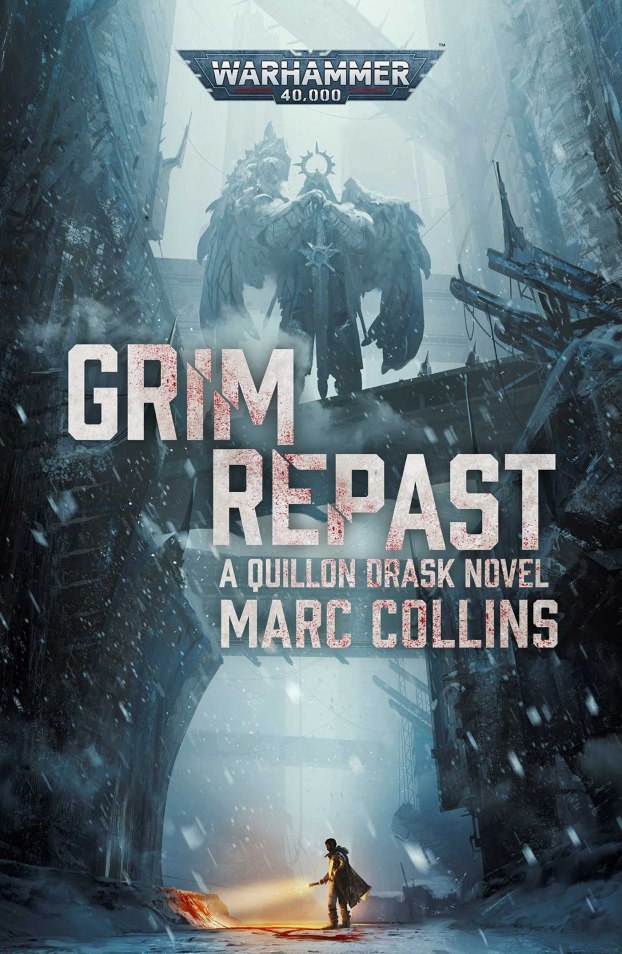
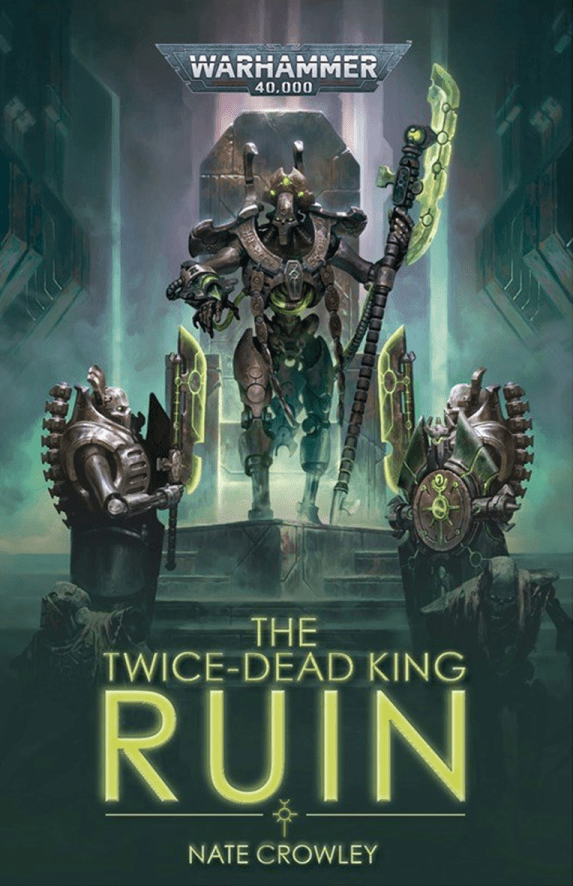
As with most Warhammer 40,000 novels I enjoy, I ended up grabbing Lord of Excess on audiobook, which is just the best way to appreciate a piece of Warhammer fiction.  Coming in with a runtime of over 14 hours, the Lord of Excess audiobook is a decent length, but one you can get through quickly once you become caught up in the outstanding plot.  I love how well this format highlighted the epic narrative featured with Lord of Excess, and you get a real sense of the plot’s chaotic delights, unnatural horrors, and devilish figures when they are read out to you.  It helped that the Lord of Excess audiobook was helmed by one of the very best Warhammer 40,000 narrators, Richard Reed.  Reed has been killing it in recent years with his work in Warhammer 40,000 fiction, including The Infinite and the Divine by Robert Rath, Ruin and Reign by Nate Crowley and Grim Repast by Marc Collins, all of which were greatly enhanced by his impressive voice work.  His work in Lord of Excess is particularly awesome, as he once again produces an impressive range of unique voices to fit the big personalities of the plot.  This includes multiple mutated and utterly corrupted Space Marines, and Reed provides very fitting voices for them, as well as the unlucky humans caught up in their machinations.  The over-the-top story comes out so much better because of Reed’s compelling narration, and I love how effectively he captured the various insane figures.  This amazing voice work turned the Lord of Excess audiobook into something very special, and I had an exceptional time getting through it.

Lord of Excess by Rich McCormick is an absolutely brilliant and amazing piece of Warhammer 40,000 fiction that I could not get enough of.  Expertly combining elaborate elements of the Warhammer 40,000 canon with a complex narrative and darkly damaged characters, Lord of Excess was so much fun to read, and it proves impossible not to get caught up in this epic debut.  This might be one of the smartest and most compelling pieces of Warhammer 40,000 fiction release so far in 2024.  A truly outstanding Warhammer 40,000 book from a particularly amazing new author, Lord of Excess comes very highly recommended, and Rich McCormick is an author with big things in his future.

Amazon

Warhammer 40,000: Cain’s Last Stand by Sandy Mitchell

Cain's Last Stand Cover

Publisher: Black Library (Audiobook – 1 January 2008)

Series: Ciaphas Cain – Book Six

Length: 10 hours and 30 minutes

My Rating: 4.75 out of 5 stars

Amazon

I’ve been on a real roll with the amazing Ciaphas Cain series by Sandy Mitchell (a pseudonym of Alex Stewart) lately, which is easily one of the funniest Warhammer 40,000 series out there.  Amazing books like For the Emperor, Caves of Ice, The Traitor’s Hand, Death or Glory and Duty Calls have all proved to be highly entertaining, and I like the author’s take on a less heroic figure in the martyr-filled grimdark Warhammer 40,000 universe.  As such, when in need of a particularly fun read, I made the very easy choice to power through another entry in this classic series last week with the sixth book, Cain’s Last Stand.  This was an unsurprisingly awesome book, and I loved the intriguing story that emerged.

Commissar Ciaphas Cain, legendary hero of the Imperium and self-professed fraudulent coward, has done the near impossible and survived decades of brutal service in the Imperial Guard.  Now effectively retired from active duty, Cain has returned to the planet of Perlia, which he helped save from an ork invasion early in his career, and now spends his time teaching Commissar cadets at the planet’s Schola Progenium.  However, the battle is never truly over for Cain, and soon dark forces begin to descend once again.

Half a galaxy away, Abaddon the Despoiler has launched his 13th Black Crusade, determined to invade the Imperium of Man.  While most of the fighting occurs around the fortress world of Cadia, a splinter fleet has broken off and is heading deep into the Imperium, defeating several forces sent to stop it.  When it becomes apparent that this fleet is heading directly for Perlia, Cain is once again forced into action, especially as he knows exactly what they are coming for.

An ancient alien device of devastating power lies hidden on Perlia, one capable of reshaping reality itself, and Cain is one of the few people who knows it’s there.  With no means of escape available and the fate of the galaxy in the balance, Cain is forced to lead the defence of Perlia against the oncoming Chaos tide.  With only a ramshackle army of local soldiers, militia and students from the Schola under his command, the defence of the planet looks grim, especially when faced with a charismatic Chaos lord and his fanatically loyal soldiers.  Worse, a far greater evil has its eyes on Perlia, one that Cain fears above all else.  Can the legendary hero of the Imperium pull out one last impossible victory before he rides off into the sunset, or has Cain finally met his match at the site of his greatest triumph?

Mitchell continues to bring joy to the dark Warhammer 40,000 universe with this epic sixth entry, which I had so much fun with.  Cain’s Last Stand was an excellent read, and I loved the cool and elaborate story that emerged.

I think Cain’s Last Stand might be one of my favourite stories that Mitchell has so far used for the Ciaphas Cain series, especially because it differs from the standard narrative patterns of the series, while also cleverly tying together some intriguing ongoing storylines.  Set further into the future than any of the previous books, you get to see a nearly retired Cain in action, as the series finally ties itself into the events of the 13th Black Crusade (the original version of it, not the darker recent retcon).  I liked how Mitchell takes the reader back to the setting of the fourth book, Death or Glory, and the initial scenes of Cain as a reluctant but capable teacher, were very fun.  The switch from Tyranids to Chaos as the main threat is handled extremely well, and I liked the continued niggle that even worse enemies are lurking around.  The subsequent reveal that the reason behind the invasion is due to the ancient artefact first hinted at in Death or Glory and then expanded on in Duty Calls was great, and Mitchell does an excellent job of tying the various ongoing storylines together.

The second half of Cain’s Last Stand proves to be a very fun planetary invasion arc, especially as Cain works to rally an unusual array of defenders, including untrained militia, under strength garrison forces, and his own students.  The forces of Chaos prove to be excellent foes for this story, and I liked the much more insidious nature of the threat that emerged, especially as there was a slow build to the reveal.  After plenty of action, clever ploys, some touching tragedy, and so much misdirection from the protagonist, the story eventually heads to the inevitable last stand, which cleverly mirrors a similar event from Death or Glory.  Mitchell does a great job of building up anticipation for this event, and it doesn’t disappoint as there are some excellent action sequences and fun revelations that occurred.  I particularly enjoyed the big bluff that leads to the death of a certain enemy, especially as it was a classic Cain antic.  The final reveal about the actual big bad of the story was well handled, and it leaves this storyline open for the future, which I am very excited for.  An overall excellent addition to the series that builds on the prior novels while offering existing fans something new to enjoy.

Mitchell continues to utilise the fantastic writing style that has made the other Ciaphas Cain books so much fun, and I love how it cleverly enhances the narrative of Cain’s Last Stand.  As always, the cool journal format, equipped with entertaining footnotes and in-universe texts from Inquisitor Amberley Vail, ensures that you get a frank and cynical look at events in the Warhammer 40,000 universe, and I love the inherent humour that results.  The various action scenes are exciting and fast-paced, and the constant commentary of complaints and annoyance that emerges from the protagonist are very entertaining.  This action and compelling humour are well offset by some of the darker elements of the plot, including some genuinely tragic moments, and you get thrown around the emotional ringer as a result.  This mixture of elements helped to create a much more impactful and complex read, and I appreciated some occasional seriousness to go with the impressive humour.

As with most books in the Ciaphas Cain series, Cain’s Last Stand can be read as a standalone read, especially as the author does a good job of rehashing relevant events from the prior novels.  However, for the full experience, especially when it comes to some fascinating storylines, reading the last two books would be good, and I really enjoyed how the author kept bringing the story back to these prior adventures.  While there was once again some repetition between books as Mitchell reutilises his favourite lines, I felt that the more original story and important connections to previous books ensured that Cain’s Last Stand stood out and got away from some of these minor issues.  An excellently written book that will appeal to both new readers and established fans of the series.

As always, I must give a callout to the outstanding characters featured in Cain’s Last Stand.  This of course includes Commissar Ciaphas Cain, the main protagonist and narrator, whose harrowing adventures we continue to follow.  I’ve talked a lot about the exciting dichotomy of Cain throughout my previous reviews, especially as he can be considered both a hero and a coward, and I loved seeing that occur again in Cain’s Last Stand.  Cain continues to be both a self-serving cad and a peerless commander, and it always fun to see himself plot to survive while discounting his own accomplishments.  His adventures in this book are particularly fun, and the inclusion of the protagonist as a teacher trying to get his methodology of command to Commissar cadets was a great choice from Mitchell and plays nicely on some of his offhand comments in previous books.  This, as well as the return to a planet important to his mythos, ensures that Cain has a lot to think about in Cain’s Last Stand, and I really enjoyed the way his past adventures keep coming back to haunt him.  This was a powerful adventure for Cain, and I always enjoy seeing the protagonist debate his own legacy whilst doing his trademark daring deeds.

The supporting cast for Cain’s Last Stand was also very good, and it provided an interesting mixed of established characters, returning figures, and raft of great new comrades.  This includes Inquisitor Amberley Vail, whose role as the overarching narrator of the book, as well as the person behind the footnotes, ensures that her fun influence is felt the entire way through.  Cain’s faithful bagman, Jurgen, was also a welcome inclusion, and his loyal service and fun interactions with Cain were as great as always.  Jurgen once again showed why he is the true MVP of the Ciaphas Cain series, and you have to love the entertaining contrast between his Baldrick-esque appearance and his impressive abilities.  Other great characters include a favourite character from Death or Glory, an interesting array of fellow teachers from Cain’s Schola Progenium, and other unique comrades for the protagonist.  I particularly enjoyed the class of Commissar cadets who are being instructed by Cain, and it was fun to see the range of different personalities they had.  Throw in a smarmy Chaos warlord whose charisma and influence outweighed his abilities and stature, and you had a great cast for Cain’s Last Stand, and I had a lot of fun seeing Cain interact with them.

I once again had an outstanding time with the audiobook format of this book, and frankly there is no better way to enjoy a Ciaphas Cain novel.  Thanks to the epic and well-cast multiple narrators, readers get an amazing experience when they listen to Cain’s Last Stand, especially as it helps to really capture the crazy nature of the plot.  The main narrators are Stephen Perring and Penelope Rawlins, who voice Cain’s perspective and Inquisitor Vail’s notes respectfully.  Perring once again does an incredible job voicing the main cast of the story, especially Cain and Jurgen, while Rawlins has a lot of fun including her character’s informative, if often sarcastic, comments throughout the plot.  These two main narrators complement each other extremely well, and I always have an awesome time listening to them.  The audiobook also features the talents of additional narrators Richard Reed, John Banks and Phillipe Bosher, each of whom voice fun in-universe texts and pieces of propaganda to liven up the main plot and provide some amusing context for the main story.  I have so much love for how these narrators bring the story together and this proved to be another impressive audiobook to listen to, especially as its great style really fit the fantastic story Mitchell came up with.  With a run time of 10 hours and 30 minutes, this is a very easy audiobook to get through quickly, and I managed to finish it off in no time at all.

Cain’s Last Stand was another amazing entry in the Ciaphas Cain series by Sandy Mitchell, and I have so much love for this entertaining and fun Warhammer 40,000 series.  This sixth book was a particularly impressive entry in the series, and I loved the complex story that emerged, especially as it brings together several previous adventures from Mitchell’s outstanding protagonist.  A clever, exciting and overall funny book that I could not get enough of, Cain’s Last Stand comes highly recommended and I look forward to continuing this series in the future.

Amazon

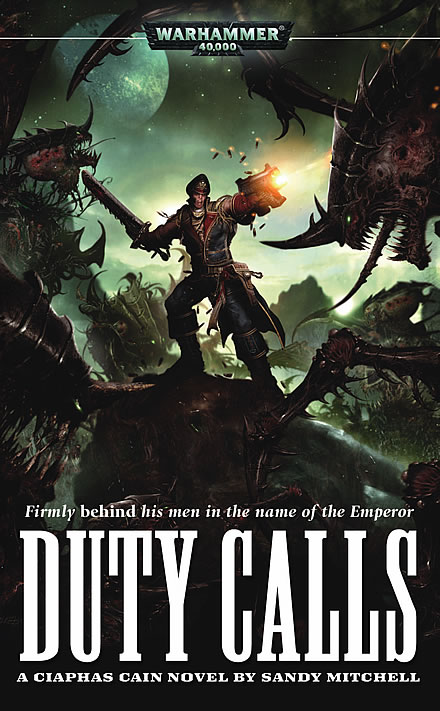
Warhammer 40,000: Duty Calls by Sandy Mitchell

Duty Calls Cover

Publisher: Black Library (Audiobook – 22 May 2007)

Series: Ciaphas Cain – Book Five

Length: 9 hours and 37 minutes

My Rating: 4.5 out of 5 stars

Amazon

One of the most entertaining authors of Warhammer fiction, Sandy Mitchell, continues to shine with the fifth book in his excellent Ciaphas Cain series, Duty Calls.

I doubt anyone is too surprised to hear that I broke a recent lull of reading by resuming the Ciaphas Cain series.  The Ciaphas Cain books, written by Sandy Mitchell (the alternate penname of author Alex Stewart), are an outstanding series that aims to bring a little humour to the crazy and dark battles of the gothic Warhammer 40,000 universe.  I have deeply enjoyed the first four books in this series, For the Emperor, Caves of Ice, The Traitor’s Hand and Death or Glory, and this honestly is one of the very best Warhammer 40,000 series out there.

Commissar Ciaphas Cain, hero of the Imperium and self-confessed self-serving coward, continues his exciting and deadly adventures when a new dark threat rises to destroy humanity.  After his last harrowing adventure with the Valhallan 597th, Cain is keen for a less deadly experience, and his new deployment to help crack down on civil unrest on the planet of Periremunda seems to be the ticket.  However, nothing is ever simple when Cain is involved.

Upon arriving on Periremunda, Cain quickly finds his life in danger as a series of assassination attempts are made against him.  Realising that his assailants are genestealers, the deadly scouts of the Tyranid swarm, Cain begins to understand the true danger Periremunda is in, as the genstealers herald the approach a Hive Fleet.  But unstoppable hordes of alien creatures are the least of Cain’s worries as he is reunited with his old flame, Inquisitor Amberley Vail.

Ostensibly on Periremunda to help the Imperial Guard stave off the Tyranid invasion, it soon becomes apparent that Vail is there for a darker reason.  Something incredibly important has been hidden on the planet that has the potential to change the entire Imperium.  Forced to assist Vail, Cain and his trusty aide, Jurgen, find themselves thrust into the deadly intricacies of a battle between hidden underground factions.  But with hungry Tyranids all around, deadly assassins gunning for Cain and a mysterious Chaos cult causing mischief, can Cain survive his deadliest encounter yet?

Duty Calls was an awesome addition to the Ciaphas Cain series that builds on several of the prior adventures, while also testing the protagonist in some fun new ways.  I loved the interesting story contained with Duty Calls, and this was one of Mitchell’s stronger additions to the series.

This fifth Ciaphas Cain novel had a great story behind it, although I am sure that prior readers will be familiar with the overall thrust of the narrative, with the seemingly cowardly Cain arriving on a new planet to face one threat, only to discover a much more dangerous enemy hiding beneath the surface that he is forced to reluctantly face and defeat, once again accidentally proving that he is a hero.  While Mitchell does try to break this story premise up throughout the series, this is a recurring story format, which can get a little too repetitive.  However, I think that Duty Calls stands on its own feet and Mitchell does a good job distinguishing it from the previous entries in the series.  The initial hidden threat of genestealers transforms into a massive Tyranid invasion, and it proved intriguing to see the protagonist face off against the ravening alien forces.  Tyranids are easily one of the best antagonists in the entire Warhammer 40,000 canon, and while they lose a little of their fighting ability in the face of Cain’s plot armour, they proved to be a great threat in Duty Calls.

While Mitchell could have probably left Duty Calls as simply a military novel, the inclusion of major recurring character Inquisitor Amberley Vail ensures that Cain is thrust into a much more subtle form of danger alongside the Tyranid invasion.  Caught between warring factions of the Inquisition and Adeptus Mechanicus, Cain is used as a pawn in the resulting shadow war, and there are some great scenes as Cain dodges assassination attempts, hidden Chaos cults, and other unseen dangers, all while trying to work out what the elaborate conspiracy is.  Novels that focus on the plots and conspiracies of Inquisitors are always very cool in the Warhammer 40,000 universe (see my reviews for Xenos, Malleus and Hereticus by Dan Abnett), and Mitchell fits Cain into this intrigue laden story arc extremely well.  It helped that there was some excellent set-up for this in the previous novel, and it was good to get a continuation here.  The resulting combination of storylines comes together really well, and Duty Calls has a really impressive and addictive narrative that will appeal to all fans of Warhammer 40,000 fiction.

As with the previous Ciaphas Cain novels, Mitchell does a great job of balancing the various elements of Duty Calls perfectly.  While primarily a military focused science fiction read, Duty Calls also has some great elements of intrigue and espionage, which ensures extra levels of excitement and danger.  However, I feel that the best part of Duty Calls is the inherent humour that Mitchell produces, which is a real rarity in Warhammer fiction.  Most of this is due to the hilarious and cynical narration of the main character, who pulls no punches when it comes to describing how ridiculous events are and the fact that he’s caught in the middle of them.  Extra humour is also built in due to the contained chronicle format that Mitchell has set the series out in, with the protagonist’s journal entries enhanced by extra documentation, descriptions, references and notes from Cain’s associate, Inquisitor Vail.  Vail’s sarcastic take on Cain’s description of events throughout these extra notes is a lot of fun, and the additional in-universe texts and broadcasts seek to showcase just how ridiculous humanity and the Imperium has gotten in the war-torn future, with over-the-top bits of propaganda and biased historical documents.  All this adds to quite a funny book, and this built-in comedy pairs remarkably well with the more serious parts of Duty Call’s narrative to create a truly addictive and fun read.

I felt that Duty Calls was a strong entry in the Ciaphas Cain series, especially as it builds nicely off the events of the preceding novel, Death or Glory.  Due to the series looking at different time periods of Cain’s career, Duty Calls is set between the second and third books, although it makes a lot of references to the first novel, and the events of Death or Glory, which took place many years before.  While the jumps around the timeline are a little confusing, Mitchell makes it work, and I liked seeing the return of several recurring characters, as well as a continuation of some mysterious storylines from the previous book.  Despite these connections, Duty Calls also works quite well as a standalone novel, and new readers can jump into the series here without too many issues.  Indeed, Duty Calls is a good introduction to both the Tyranids and the Warhammer 40,000 universe, and the Ciaphas Cain books are very much engineered for new Warhammer fans.  I will say that after reading several Ciaphas Cain books in a row, Mitchell’s proclivity for repeating elements from his other novels is a bit more obvious, and you do get a little weary of hearing the same phrases, descriptions and character depictions again and again.  Still, Mitchell ensures that Duty Calls is a particularly entertaining read, so its easy to really get stuck into it, and I deeply enjoyed seeing this unique series continue.

As always, I must mention the great characters featured within Duty Calls.  The most prominent of these is series protagonist Ciaphas Cain, who might be one of the more complex and debated figures in the Warhammer 40,000 canon.  Shown by his own admission to be a coward and a false hero, Cain spends most of the book trying to come up with ways to avoid combat and surviving the inevitable battles that his reputation and own bad luck force him to participate in.  His memoirs are filled with cynical allusions to the methods he utilises to survive, and you can see that Mitchell is trying to emulate classic characters like Flashman or Blackadder.  However, despite the character’s constant assurances that he is no hero, you see time and time again that there is far more to Cain, as he routinely defeats the enemy, often thanks to his own caution, survival instincts and ability to inspire his fellow troops.  I love how you are constantly rooting for Cain, despite his attempts to weasel out of trouble, and his self-deprecation about his actions really makes you feel for him, especially as its apparent that he is just one filled with self-doubt after not being an over-the-top martyr like the other heroes in the Warhammer 40,000 universe.  At the same time, Cain also provides a lot of the book’s humour, as you are bombarded with his fun comments and cynical attitude about everyone he encounters.  As such, I really appreciate Cain as a central character in this series, and it is always so much fun to follow him throughout his adventures.

Aside from Cain, there is an interesting array of characters featured in Duty Calls who I had a lot of fun with.  Many of them are recurring from the previous novels, and it was good to see various familiar faces again.  This includes Cain’s faithful aide, Jurgen, who Mitchell portrays in a manner like Baldrick from Blackadder, due to his apparent gormless attitude and poor personal hygiene.  However, in many ways Jurgen is just as much a hero as Cain, often being the one to save the day with his skills and big gun, and he forms a great team with Cain, especially as his Commissar is usually the one drawing the enemy’s attention from his aide’s attacks.  I also really enjoyed seeing the return of Inquisitor Amberley Vail, both as a character in Cain’s adventures and the person publishing his memoirs.  Vail proves to be the perfect foil to Cain for many reasons, and I like how she’s the only person who can effectively manipulate Cain and doesn’t fall for his lies and schemes.  Vail constantly calls out Cain, both in person and through the footnotes she amends to his chronicles, and I love how she has his number, while also clearly caring for Cain as a partner.  Duty Calls really shows just how dangerous Vail can be though, especially as she gets into the fight and makes some tough decisions.  Other interesting characters include several familiar soldiers from the Valhallan 597th, the outrageous members of Vail’s inquisitorial retinue, and a several intriguing antagonists who prove to be great and over-the-top opponents to the sensible Cain.  All these characters added a lot to the impact of the book, and I cannot wait to see how they fit into Cain’s adventures again in the future.

Readers who have seen my previous Ciaphas Cain reviews know that the only way I am going to enjoy this series is through its audiobook format.  All Warhammer novels make awesome audiobooks, but the Ciaphas Cain audiobooks are something particularly special thanks to the use of multiple narrators.  Duty Calls features six separate narrators who add a great deal to the production thanks to their fantastic voices and entertaining takes on the characters and universe.  Most of this narration is done by the superbly talented Stephen Perring, who lends his voice to all the chapters told from Cain’s perspective.  As such, he covers most of the first-person action and adventures of the main character, and his take on the complex Cain and his colleagues is exceptional.  The way he captures the various aspects of Cain’s character through his voice work is impressive, and you really get a sense of the multiple layers surrounding his motivations.  Perring also does a really good job of capturing the other intriguing characters Cain interacts with, including his aid Jurgen, and the eclectic members of the Inquisition that crosses his path.

After Perring, the most prominent narrator is Penelope Rawlins, who provides narrations for the various inclusions written by Inquisitor Vail.  As such, Rawlin’s voice is constantly interjected into the audiobook at various points as she reads out the footnotes, context pages, and personal remarks from Vail, as she attempts to make Cain’s story more readable.  Rawlins has really perfected her Vail voice over the course of the series, and it is always great to have the playful, informative, and often gently exasperated tones of a chronicling Inquisitor come through the plot.  There is also some good contrast between Perring and Rawlins, especially as both voice the character of Vail throughout Duty Calls, and they serve as a winning main team.

The other four narrators, Emma Gregory, Richard Reed, Tara Rawson and Andrew James Spooner are also very fun, even if they are used a little sparingly.  These four narrators’ voice extracts from various in-universe texts, chronicles and new casts that Inquisitor Vail has added to Cain’s manuscripts to give them more context.  These talented narrators go all out in voicing these intriguing and often over-the-top inclusions, and I love the humorous spin their excellent narration adds to them as a result.  Gregory is particularly noteworthy, especially as she once again voices the ridiculously patriotic memoirs of an officer fighting alongside Cain, but all these extra narrators do such a great job.  This excellent and entertaining combination of voice actors and audiobook narrators turns Duty Calls into a real treat to listen to, and I honestly cannot recommend this format enough to anyone interested in checking out the Ciaphas Cain series.

I continue to fall further in love with the Ciaphas Cain series as Sandy Mitchell produces another amazing and fun story in Duty Calls.  Loaded with action, humour, and a particularly complex protagonist, Duty Calls had everything I’ve come to expect from the Ciaphas Cain series, and I deeply enjoyed how Mitchell continues to showcase the Warhammer 40,000 universe in his own distinctive way.  I can think of no better way to highlight just how much of a great time I had with Duty Calls than to reveal that I automatically started listening to the sequel Cain’s Last Stand, the moment I finished it.  Highly recommended to all Warhammer fans and new readers wanting some fun science fiction adventures.

Amazon

Warhammer 40,000: Death or Glory by Sandy Mitchell

Death or Glory Cover 2

Publisher: Black Library (Audiobook – 28 February 2006)

Series: Ciaphas Cain – Book Four

Length: 8 hours and 50 minutes

My Rating: 4.75 out of 5 stars

Amazon

After recently getting through awesome Warhammer 40,000 novels like Straight Silver and Sabbat Martyr, I was in the mood for even more fantastic fiction, so I decided to check out the always reliable Ciaphas Cain series by Sandy Mitchell with Death or Glory.

The Ciaphas Cain books are an outstanding and highly entertaining Warhammer 40,000 series that shows the grimdark universe in a whole new light.  Written by talented author Sandy Mitchell (a pseudonym of Alex Stewart), the Ciaphas Cain books follow an unlikely hero, Commissar Ciaphas Cain.  Despite being a Commissar, officers who are supposed to be embodiments of duty, discipline and bravery, Cain is a highly practical and fearful man who wants to stay alive in the deadly Warhammer 40,000 universe.  However, his attempts to stay out of the fight usually result in him getting thrust into even more danger which he needs to survive using his trademark cunning and manipulation tactics.  His various adventures have also turned him into a legendary hero throughout the Imperium of Man, something that results in even more trouble for unlucky Commissar.

The Ciaphas Cain books are always a lot of fun to read, especially as Mitchell takes a comedic take to the Warhammer universe.  Loaded with unlikely coincidences, clever humour and over-the-top characters, the first three Ciaphas Cain novels, For the Emperor, Caves of Ice and The Traitor’s Hand, have been extremely awesome and this is easily one of my favourite Warhammer 40,000 series.  As such, when I needed something particularly entertaining to listen to, I chose the fourth book in the series, Death or Glory.

Relatively young Commissar Ciaphas Cain is not yet the hero of the Imperium he is fated to become, although he has already started to gain a reputation he doesn’t believe he deserves.  After stopping a genestealer infestation, Cain and the artillery unit he is attached to are ordered to the planet of Perlia, which has fallen under siege by the orks.  Happy to spend the next war far behind the lines with the artillery, Cain is unprepared for the dangers to come.

Upon arriving in the Perlia system, the ship Cain is travelling aboard comes under ork attack and Cain has no choice but to rapidly disembark in an escape pod.  Trapped with his aid, Jurgen, Cain’s pod is shot down before they can be rescued, which results in them crashlanding on Perlia.  Hoping to find sanctuary after a harrowing adventure in space, Cain is horrified to discover that they have crashed into the wrong side of the planet and are currently stuck well behind enemy lines.

Knowing that the only way to survive the ork hordes is to rejoin the main Imperial army, Cain has no choice but to embark on a dangerous road trip across the continent.  However, with thousands of brutish orks in the way, Cain will need help to survive.  Pulling together an unlikely army of scattered troops and desperate civilians, Cain heads off into the desert, hoping to find his salvation.  Their resulting journey will pit them against the full ork army and help turn Cain into a legend known throughout the galaxy.

Death or Glory was another exceedingly fun and deeply captivating entry in the Ciaphas Cain series that once again places Mitchell’s complex protagonist in all manner of trouble.  Action-packed, clever, and filled with excellent humour, Death or Glory was an outstanding read that I could not get enough of.

I really enjoyed the awesome story that Mitchell came up with for Death and Glory, particularly because it was a somewhat fresh take on the usual narrative.  Rather than following Cain as he works with his regiment to stop a hidden threat, Death or Glory shows Cain alone (except for Jurgen) and behind enemy lines on an ork controlled world.  Acting as a prequel to the previous novels in the series, you see the slightly younger Cain attempt to find his way back to safety, only to encounter multiple groups of refugees and scattered soldiers who turn to him for leadership.  The resulting story turns into a hilarious combination of Mad Max, Laurence of Arabia, and Kelly’s Heroes, as Cain leads his band, many of whom are crewing crude ork vehicles, across the ork controlled territories, including a vast desert.  There are several amazing battle scenes that see the humans fight back against the orks in desperate situations, often won thanks in part to Cain’s tactical insight and his unlikely manoeuvres designed to keep him alive.  This is a non-stop story, and you get really drawn into the constant travel, fighting and attempts at survival that emerge.  The orks prove to be great antagonists for the story, especially as Mitchell provides them as a mostly serious enemy.  While they are slightly underpowered in the face of the unbeatable Cain, and you do see the inherently sillier side of them, Mitchell also makes sure to showcase their prowess and brutality, which keeps the stakes high and the story even more captivating.  Ending on a final battle where Cain showcases his unlikely heroism by pure chance, Death or Glory had me hooked with its story the entire way through, and I loved the fantastic scenario that Mitchell came up with.

I have mentioned in previous reviews of the Ciaphas Cain series that Mitchell has an outstanding style that really enhance the story and bring out the innate humour within.  This is once again the case for Death or Glory, as the story is primarily told in the chronicle form from Cain’s perspective.  These unvarnished insights into Cain’s mind paint a vivid and fun picture of the events he was involved in, and you get some interesting insights into his actual motivations.  This fun story is further enhanced by the fact the memoirs have been modified by Cain’s associate, Inquisitor Vail, as she adds in a variety of notes, additional information, in-universe historical texts and footnotes.  Not only are these delightful additions informative and serve as a great way to quickly insert details of the larger war into the plot, but they are also quite funny due to the author’s sarcastic tone.  I love some of the entertaining jokes that emerge in the footnotes, especially as it allows the author to quickly reference certain ridiculous elements of life in the Warhammer universe, many of which are parodies of classic British activities.  These additional notes really change the tone of the entire book, and I love how it allows Mitchell to turn Death and Glory into something far more than a typical war story.

While there is a definite focus on humour in Death or Glory, there is still a ton of action and intense adventure here, as Mitchell draws inspiration from classic desert war movies.  The carnage of the orks is bleak, the battles are hard, and the situation is desperate as Cain and his comrades navigate the desert.  These darker elements play off the humour of Death and Glory extremely well, and I loved the complex narrative that emerged.  I enjoyed how Mitchell kept up the same excellent level of humour and compelling story elements that the previous entries were known for, and there was a strong effort to keep it consistent with the previous books.  You do notice that Mitchell utilises a bit of repetition in his books, with similar lines and descriptions used again and again.  While this is not too noticeable if you take a break in between books, it is very apparent for chain readers.  Still, this is a minor issue that Mitchell does a good job of dispelling in Death or Glory with the more unique storyline.

Like most of the entries in this series, Death or Glory can be read as a standalone novel with no real pre-knowledge of the previous books needed to enjoy it.  Indeed, Death or Glory is set earlier than the other Ciaphas Cain books, so this is a good entry point to the larger series.  There are a few references to the other Ciaphas Cain books, which established fans will enjoy, and Mitchell also provides clever hints at future events Cain will have to encounter.  Death or Glory also serves as a very fun introduction to the ork faction, especially as our protagonist has never encountered them before.  This allows the reader to get a fresh outside perspective on these alien characters, while also including details that hardcore Warhammer fans will appreciate.  As such, Death or Glory proves to be an awesome addition to the series that will appeal to fans of all levels and could easily spark a new reader to fall in love with Warhammer 40,000 fiction.

A recurring highlight of this series is the fantastic characters who populate the narrative, particularly main protagonist Ciaphas Cain.  Cain is a particularly complex Warhammer 40,000 character, mainly because he is both a renowned hero and a self-serving coward who only wants to avoid a fight.  Portrayed as a fun combination of Blackadder and Flashman, Cain is shown to be purely selfish, with his every move calculated to keep himself alive.  However, through accident or something else, his plans often backfire, forcing him into over-the-top dangerous situations that ensure others see him as an amazing hero.  This is on full display in Death or Glory as Cain pulls together a band of survivors that gets far larger and more chaotic the further they get along.  Despite his plan being designed to get himself to safety, many see him as a heroic revolutionary leader, which he is forced to maintain to keep his band of protectors loyal to him.  It is quite fun to see everyone misinterpret his decisions, and several fictional historical texts showcase the process of overexaggerating his deeds in hilarious detail.  However, despite all his protestations to the reader about being a coward, you once again see that there is far more to Cain than he lets on.  Rather than being a terrible person, he is just a sensible and tactically aware figure in a universe where the actions of unachievably brave heroes are constantly lauded.  This has led Cain to completely underestimate his own self-worth, even though he is routinely shown to be an impressive fighter, clever tactician, and caring leader.  I love this complex look at Cain, especially as his self-deprecating account ensures he is even more likeable, despite his selfish habits, and you really get drawn in to his crazy adventures.

Aside from Cain, several other figures were impressive in Death or Glory.  The most prominent, at least from impact on the book, is Cain’s associate Inquisitor Vail.  Despite not actually appearing as a character in the main adventure, Vail’s presence is strongly felt as she is the one editing and presenting Cain’s fictional memoirs.  As such, you are constantly gifted with Vail’s overlying narration and notes, especially as she provides greater context to the story and translates some of Cain’s wilder claims.  Thanks to her sarcasm, as well as her personal insights into Cain’s actual character, Vail provides a fantastic alternate viewpoint of events, and it is always fun to see her call out Cain for his lies and terrible writing style.  The other major character you must talk about is Cain’s aid and reliable bodyguard, Jurgen.  The Baldrick to Cain’s Blackadder, Jurgen is generally shown to be an unhygienic, smelly, and slightly dim companion who is utterly loyal to Cain.  However, despite this appearance, Jurgen proves to be an interesting and likeable figure, and he forms an excellent partnership with Cain.  His skills are well on display in Death or Glory, mainly due to his intimate knowledge about orks, and he once again showed himself to be an unappreciated part of Cain’s ultimate victory.  Throw in a band of intriguing survivors who flock around Cain, including several capable soldiers, a somewhat insane Tech-priest and determined troop of civilians, and Death and Glory had some great characters you can’t help but root for.

I have mentioned multiple times in the past that the best way to enjoy a Warhammer 40,000 novel is in its audiobook format.  Nowhere is that truer than the Ciaphas Cain books, which make excellent use of multiple narrators to expertly adapt the fantastically funny content of the novels.  Death or Glory is an outstanding example of this, as the brilliant production and excellent narrators produced something that I powered through very shortly, even with its nearly nine-hour long runtime.  The intense action, compelling story and outstanding humour is all amazingly highlighted in this format, and I especially loved the four amazing narrators who were brought in to voice the characters.  This includes returning favourites Stephen Perring and Penelope Rawlins, who fulfill their respective roles perfectly.  Perring is probably the most prominent narrator of the bunch as he voices all the chapters told from Cain’s perspective.  Perring is an awesome narrator as he perfectly captures the chaotic characters featured within the book, especially Cain and  Jurgen.  His portrayal of Cain is probably the best, as he expertly showcases the protagonist’s exterior boldness, as well as his interior fear and deep humanity.  Jurgen of course also comes out very well, and I love how Perring captures Jurgen’s unique persona and unquestionable loyalty to Cain.

While Perring voices the main chapters, Penelope Rawlins is just as important as she voices Inquisitor Vail, who writes the prelude, chapter introductions, additional material and footnotes that are scattered throughout the book, providing editorial notes and material to make the story more organised.  Rawlins’ voice is seamlessly worked into the main plot multiple times throughout the course of the audiobook, and I like how well her inclusions work with Perring’s main narration, especially as Rawlins perfectly captures both Vail’s sarcasm and the clear admiration she has for Cain.  This audiobook would not be as entertaining or clever as it is without these clever insertions by Rawlins, and she adds just as much to the production as Perring does.  In addition, Death and Glory brings two new narrators to the series with Joe Jameson and Richard Reed, who voice in-universe historical texts and autobiographies included to provide additional context to Cain’s ramblings.  I was very happy to hear from both familiar narrators, as Jameson lent his voice to the Necromunda novel Fire Made Flesh by Denny Flowers, as well as the Legacy of the Mercenary King series by Nick Martell (The Kingdom of Liars, The Two-Faced Queen and The Voyage of the Forgotten), while Reed narrated The Infinite and the Divine by Robert Rath, The Twice-Dead King series by Nate Crowley (Ruin and Reign) and Grim Repast by Marc Collins.  I really liked Jameson and Reed’s performances as a result, although both were a little underutilised thanks to the constraints of the narrative.  Still, these four narrators provided some exceptional voice work, and I had an amazing time listening to them throughout the course of this audiobook.  As such, Death and Glory comes very highly recommended in its audiobook format, and there is no better way to enjoy this book.

Sandy Mitchell continues to write one of the most entertaining Warhammer 40,000 series out there with this fourth entry in the epic Ciaphas Cain series.  An outstanding and hilarious novel that I absolutely powered through, I cannot recommend Death or Glory enough, and you will fall in love with this brilliant book.

Amazon

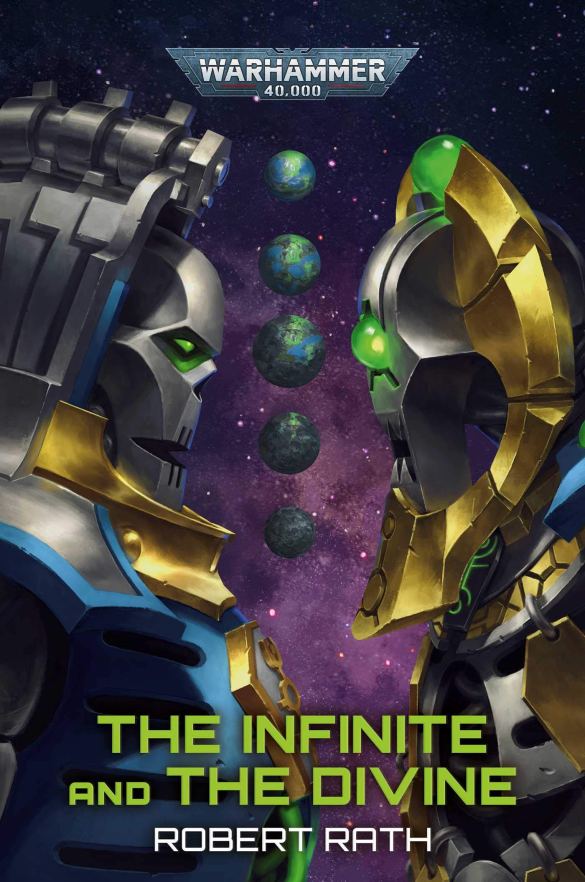
Warhammer 40,000: The Infinite and The Divine by Robert Rath

The Infinite and the Divine Cover

Publisher: Black Library (Audiobook – 10 October 2020)

Series: Warhammer 40,000

Length: 13 hours and 21 minutes

My Rating: 5 out of 5 stars

Amazon     Book Depository

Prepare to dive into one of the most entertaining and elaborate rivalries in Warhammer history with the outstanding and captivating read, The Infinite and The Divine, by the exceedingly talented Robert Rath.

Before I pause my current obsession with Warhammer fiction to pursue other recent books, I just had to read one more intriguing Warhammer 40,000 novel that I have been hearing a lot about in recent years, The Infinite and The Divine.  The debut Warhammer 40,000 novel of exceptional author Robert Rath, who previously wowed me with last year’s epic book, Assassinorum: Kingmaker (one of my favourite books and audiobooks of 2022) The Infinite and The Divine dives into one of the more unique factions in the Warhammer universe, the Necron.  This intriguing and fun novel follows two fantastic Necron characters as they engage in a bitter and lengthy feud across time and space.  Pretty much every review I’d read about The Infinite and The Divine was highly positive and I just had to try it out, and boy did it live up to all my expectations.

Long before the Imperium of Man and the Emperor existed, before the fall of the Aeldari and even before the Necrons traded their flesh away for immortal metal, there existed something far more deadly and permanent, an undying conflict between two arrogant scholars.  Even before they became immortal beings of metal, Trazyn the Infinite and Orikan The Divine were bitter rivals.  While Trazyn glorifies the past and seeks to capture and contain anything of rare or historical value, Orikan looks only to the future, divining events that are to come and hoping to find a way to become a being of energy.  But despite their differences, these two Necron are about to be drawn into the same obsession.

When Trazyn manages to obtain a rare Necron artefact, Orikan infiltrates Trazyn’s gallery to steal it, believing that it is the key to locating an ancient Necron tomb that could provide invaluable knowledge for the future of the Necrons.  However, Trazyn is unwilling to lose such a treasure, nor let Orikan’s trespass go unanswered, and swiftly snatches the artefact back, hoping to locate and plunder the tomb for himself.

So begins a battle of cat and mouse that will last millennia.  As both academics attempt to unlock the secrets of the artefact and gain the knowledge to find the tomb, they will engage in a series of deadly attacks and subterfuges to gain the advantage and destroy their opponent.  Their battles will destroy planets and shape the future of civilizations as they proceed, unheeding of the cost to those around them.  But the closer Trazyn and Orikan get to their goal, the more apparent it becomes that the treasure they seek is far beyond anything that the two rivals can ever imagine, and soon they and the entire Necron race sits on the precipice of destruction.

Wow, now that was an exceedingly epic and engaging Warhammer book.  Rath really pulled out all the stops for his debut here as The Infinite and The Divine is an incredibly clever and captivating read that I had an exceedingly hard time putting down.  Following two outstanding and petty protagonists, Rath hits the perfect blend of humour, intense action, and compelling lore expansions to elaborate Warhammer 40,000 lore, which turns The Infinite and The Divine into quite an elaborate and impressive read.

The Infinite and The Divine has a pretty epic and entertaining character driven story  that essentially boils down to two highly arrogant immortals going on an elaborate scavenger hunt across the galaxy for thousands of years, while also simultaneously engaging in a petty and deadly feud to ensure they win and their opponent fails.  This is an exceptional and highly amusing story concept which Rath utilises to his full ability, creating a captivating narrative that really drags you in and keeps you chuckling the entire way through.  The book starts with Trazyn facing off against an offshoot tribe of dinosaur-riding Aeldari, which does a lot to grab your attention while also perfectly introducing one of the main characters.  Rath keeps the momentum rolling after these initial fun fight scenes as Trazyn returns home to discover his rival, Orikan, invading his sanctum trying to steal one of his precious artefacts.  After a compelling fight that really highlights the differences between the two characters, Orikan escapes, and this sets off their bitter feud.

What follows is a series of fights and schemes across several different battlefields and locations as the two trade their advantage back and forth by claiming and then losing the artefact, all while attempting to kill each other.  There are some gloriously entertaining scraps throughout this book, especially as both Trazyn and Orikan have very different abilities and focuses, which Rath perfectly works into the story.  I have to highlight a particularly awesome and funny trial sequence near the start that played out in several different and amusing ways as Orikan uses his mastery of time to rewind events to try and get a result that favours him.  The two engage in some gloriously petty and hilarious methods to try and claim victory, and their reactions at being bested and the lengths they go to win really helps to turn this book into a fantastic and epic read.  Rath does a great job of switching attention between these two excellent characters as the book continues and I loved seeing the intriguing differences of opinions and the elaborate schemes that swirl within both their minds as they squabble.  The author adds in some great additional context of the wider universe throughout the story as well, and I loved the use of in-universe texts, such as the Necron epic The War in Heaven, at the start of each chapter, as they provide some subtle hints of what is to come.

The story gradually focuses on one specific planet which the Necron characters visit and fight across as they attempt to unlock the mysteries of the contested artefact and the treasure it unlocks.  This part of the book is particularly intriguing, as Rath adds in some compelling examinations of the evolution of this planet, and it is fascinating to see how their feud influences the people within, often to everyone’s detriment.  Trazyn and Orikan are eventually able to unlock the secrets of the artefact, which only intensifies their conflict, and I loved some of the very fun ways that they each try to knock off their opponents, especially as it often makes their own situation even worse.  I also felt that it was very clever how the author worked in the planet’s history and culture into the solution of the main mystery, and it was great when seemingly innocuous discussions about human society were actually hints about major events to come.  Everything leads up to the final opening of the tomb they have long been searching for, which of course only unleashes more problems.  Rath did a really good job of layering in hints and clever clues about the final twist, and I deeply enjoyed the massive reveal that emerged.  The protagonists are forced to work together in several spectacular scenes which did a wonderful job of highlighting the relationship the two formed throughout the conflict, while deeply upping the stakes and providing the reader with some memorable moments and entertaining battles.  Everything ends on an amazing note, especially with some final great betrayals by the protagonists, and you come away from The Infinite and The Divine pretty damn satisfied and extremely amused.

I was deeply impressed with how Rath brought The Infinite and The Divine’s complex and entertaining story together and considering the outstanding way in which he dove into the subject matter, it is pretty remarkable that this was his first Warhammer novel.  I was always going to be very interested in a book that focused on the Necrons, one of the more intriguing and distinctive factions in the Warhammer 40,000 canon, but I felt that Rath did a particularly exceptional job at capturing the essence of these immortal beings.  The great humour and comedy that he brought to the protagonists’ eternal feud really helped to make these ethereal beings very relatable and I loved their fun and arrogant opinions about the other races in the galaxy.  Rath manages to load a lot of snark into their observations about humans, orks and other species throughout their discussions, and it was quite fascinating to see their divergent opinions on the subject, as Orikan is determined to ignore and scorn all organics, while Trazyn is fascinated by culture and hopes to study or collect everything of value they have.  However, Rath also goes a lot deeper and you get an intense and powerful examination of the Necron self, including how they feel about their current state of being, the decline of their empire and the many sacrifices they have made over the years.  This, combined with an intriguing examination of their history, culture and personalities, gives readers a great understanding of the Necron race and any fan of this faction is absolutely going to love The Infinite and The Divine.  Rath’s excellent descriptions of the events, history, and the elaborate battles and technology really paints a beautiful picture around the Necrons and I felt that he did a remarkable job fitting the story around this background lore.  I especially loved the intriguing dive into Necron magic and other technology discussions, and it was really fun to see Orikan manipulate time throughout the book to make some very epic scenes.  While a few elements were extremely lore heavy, especially when it came to decoding the artefact, this was a very good use of the Necrons, and I really hope that Rath dives into additional unique factions in the future.

Despite Rath’s impressive and compelling descriptions of the Necrons and the wider universe, I don’t think I would recommend The Infinite and The Divine to those new to the Warhammer franchise, as the sheer amount of lore might break their reading flow.  However, for those a little more familiar with the history and background of the Warhammer 40,000 universe, this is a fantastic read which would serve as an exceptional transitional novel for those interested in checking out non-human stories in this canon.  I really cannot emphasise how great a book this was for Necron fans though and I deeply enjoyed Rath’s vision of these aliens and their unique culture.

I also really must highlight the excellent and compelling central characters of this book who take the form of ancient Necrons, Trazyn the Infinite and Orikan The Divine.  Ancient Necron lords who are the masters in their respective fields, Trazyn and Orikan are both particularly entertaining and fun in their own ways, as each of them believes themselves to be the smartest person in the room at all times.  Due to this, and many other reasons, the two hate each other with a passion and they enter into their eternal feud over several perceived grievances.  There is something delightfully entertaining about watching these supposedly highly evolved, ancient and wise beings engage in such petty actions against each other, and the way they bring out the worst in each other is so glorious, especially as it permeates the entire novel with some exceptional humour.  I personally loved how both were just as bad as the other in this feud, as this ensures that you don’t actually care which one of them wins and you can just get lost in the resulting chaos.  Ironically, the two protagonists actually have a lot in common, and when they are forced to work together they prove to be an effective team capable of so much more.  There are some great flashes of a deeper potential friendship at times, although this never lasts, although it is entertaining and moving to see what could have been had their rivalry not consumed their lives.  Throw in some very unique abilities, technology and artefacts between the two, which results in some particularly entertaining scenes and battles (watching Trazyn unleash his captured collections against his foes is always fun), and these two prove to be an outstanding central focus who really bring this exceptional story together.  I had so much fun with Trazyn and Orikan and I hope we see much more of them in the future, especially if the future of their private war is revealed.

I naturally listened to The Infinite and The Divine on audiobook, which was an epic experience as always.  The audiobook versions of all the Warhammer books are very effective at conveying the cool narratives, and I felt that The Infinite and The Divine’s audiobook really helped the reader to appreciate the elaborate story and the ton of lore that Rath fit into this book.  With a run time of nearly 13 and a half hours, this is a decent length Warhammer audiobook, although dedicated readers will power through it once you get caught up in the story.  I had a lot of fun listening to this audiobook, especially as they got the very talented Richard Reed to narrate the format.  Reed is an outstanding voice actor, who has a lot of experience narrating Warhammer novels, such as the Warhammer Crime novel Grim Repast by Marc Collins.  However, the main reason that I liked the use of Reed was because he also narrated the two The Twice-Dead King audiobooks, Ruin and Reign by Nate Crowley, which also focused on the Necrons.  Reed once again expertly captures the ancient and deadly nature of these metal alien creatures in his narration, and I felt that both main characters, Trazyn and Orikan, were perfectly portrayed by him.  Their intelligence and ancient emotions are shown to the listener, and I felt that Rath did a great job of showcasing their arrogance and pettiness through his voice work.  Throw in some additional great portrayals of the other eclectic characters and aliens contained in this book, and you have an outstanding performance which really helped The Infinite and The Divine’s audiobook format shine.  As such, this is absolutely the best way to enjoy this amazing novel and I cannot recommend it enough.

Robert Rath really cemented his Warhammer fiction legacy early with The Infinite and The Divine, which is one of the best and funniest Warhammer 40,000 novels I have read.  The exceptional book presents the reader with a unique and captivating narrative that perfectly utilises the iconic Necron faction while also telling a deep, personal and humorous story of betrayal, antagonism and treasure hunting.  I absolutely loved The Infinite and The Divine and I am really regretting not reading it earlier, especially as it lives up to all the hype.  A highly recommend book that is frankly one of the better Warhammer tie-in novels out there.

Amazon     Book Depository

Warhammer 40,000: Grim Repast by Marc Collins

Warhammer 40,000 - Grim Repast Cover

Publisher: Black Library (Audiobook – 25 September 2021)

Series: Warhammer Crime

Length: 9 hours and 52 minutes

My Rating: 4.5 out of 5 stars

Amazon     Book Depository

Prepare for a gruesome and dark murder mystery novel in the gritty Warhammer 40,000 universe with the incredible and awesome Warhammer Crime novel, Grim Repast by Marc Collins.

I have made no secret of the fact that I am currently in the middle of a big Warhammer reading frenzy, having recently reviewed several awesome books, including two novels in my last Throwback Thursday posts (Xenos by Dan Abnett and Deus Encarmine by James Swallow).  However, I am still not done with the tie-in books in this very cool franchise as I have just finished another outstanding read, this time a book which is part of the Warhammer Crime sub-series.

The Warhammer Crime books are a fantastic and captivating series which, as the name suggests, blends crime fiction storylines with the epic Warhammer 40,000 universe.  All set within the tortured and sprawling human city of Varangantua, these great novels tell a range of entertaining and complex crime stories, including dark murder mysteries and elaborate thrillers, which make great use of the gothic futuristic setting.  I have so far enjoyed two Warhammer Crime entries, Dredge Runners and The Wraithbone Phoenix by Alec Worley, both of which were pretty epic reads.  These initial awesome reads really sold the Warhammer Crime series to me, and I have been interested in enjoying another entry.  I ended up choosing the great sounding read, Grim Repast, by rising Warhammer author Marc Collins.  One of Collins’s first full-length novels, Grim Repast is an exceptional read with one of the darkest crime narratives I have ever had the pleasure of reading.

“This city eats men….”

Veteran probator Quillon Drask thinks that he has seen all the dangers, depravities and villains that Varangantua has to offer, but he is about to discover a whole new level of horror.  Already traumatised and ostracised after his last lethal case and the betrayal that accompanied it, Drask’s first new investigation is not the simple job he was hoping for, as a body has been found in the dying district of Polaris.  The victim, a businessman on the wrong side of town, has been gruesomely mutilated, the implications of his injuries have frightening implications.

As more bodies are discovered, Drask finds himself chasing after a deadly killer who murders and dismembers without compunction and who has a sudden obsession with tormenting Drask.  Forced to play a deadly game that uncovers the corruption of his own organisation and sets him against the city’s elite, Drask finds himself alone and afraid against an enemy he doesn’t understand.  Only his twisted insights into the criminal mind, as well as the lessons of his career and devious dead mentor, offer the answers that he needs to solve the case and stop the killer.  However, not even Drask’s dark mind can comprehend the true horrors that lie beneath his city, one that connects to Varangantua’s past and a dangerous hunger that has always controlled people like him.

Wow, Marc Collins really came out swinging with this epic and outstanding Warhammer Crime entry.  Grim Repast is probably one of the best pure mystery novels set in the Warhammer universe that I have so far read, and I loved how seamlessly Collins was able to blend a dark, psychological crime fiction narrative with the grim and repressive atmosphere of a Warhammer 40,000 city.

Collins has cooked up a pretty wicked story for Grim Repast, which brings together multiple elements from across the genres to really highlight just how epic and complex a Warhammer story can be.  Following the compelling and damaged protagonist and narrator Probator Quillon Drask through the deadly streets of Varangantua as he chases after a lethal serial killer, Grim Repast is first and foremost a crime novel, and one that really grabs the reader’s attention.  Coming off as a dark psychological thriller with classic noir detective elements to it, the protagonist is forced to delve into the darkest heart of his massive, gothic city when he investigates several connected murders whose victims have been butchered in inventive and dark ways.

Collins sets up the case extremely well and then adds some intriguing complications to it where Drask is forced to investigate against the opposition of his bosses and their corporate controllers.  Bringing together a ton of character growth, disturbing developments in the murder case, as well as some fun action as Drask comes face-to-face with the killer in disguise, the plot moves quickly, and you are soon very hooked on finding the killer and the people pulling the strings behind them.  Forced to contend with the interference of a giant corporation, the protagonist finds himself in the middle of a dark conspiracy and, after the typical cop requirement of being suspended without his gun or badge, investigates on his own.  The mystery itself is well-set out and slowly unfolds, even if the overall culprit behind it isn’t too surprising.  However, the obvious suspect isn’t a narrative weakness, as the power of the story revolves around the protagonist fighting through the corruption and the insanity to confront his suspect, as well as the wider implications and horrors his investigation reveal.  The last third of the story is particularly brutal and grim as the protagonist uncovers some pretty horrendous crimes tied into the dark past of Varangantua, and is forced to face them by himself.  Everything ends in a pretty bloody manner, and I had a wonderful time seeing how this entire awesome crime narrative came together.  I loved the cool conclusion of this book, and the hints at some potential adventures for this character is something I would be extremely keen for.

This was a very well written book, and I really appreciated how Collins was able to tell such an effective and powerful story.  Featuring a quick pace and a brilliant focus on a very damaged protagonist, Grim Repast keeps you on your toes the entire time, and I loved how well it blended multiple crime fiction elements for the story while also making full use of the grim Warhammer setting.  The crime itself has some outstanding elements to it, and I was getting some major Jack the Ripper vibes from the plot as Drask receives several taunting notes from the killer.  Collins really brings about a dark and desperate tone around the characters and the city itself, and this lends itself perfectly to the complex crimes, especially as the murders have far deeper meaning and consequences than are initially seen.  The use of corruption and dangerous corporations helped to ensure that the character had even more mysteries and obstacles to overcome, which I thought was an outstanding bonus hook to the story.  The fantastic focus on murder and mystery rather than on wider universe elements ensures that Grim Repast also serves as a pretty good entry into Warhammer 40,000 fiction, especially for crime fiction lovers.  While some elements of the story hint or briefly discuss larger events or bits of the universe’s wider lore, you really don’t need to understand it to enjoy this book, and anybody who loves a complex and gloomy crime fiction can easily have their first taste of Warhammer fiction here without any issues.

Perhaps one of the best elements of Grim Repast that Collins featured was the setting of Varangantua itself.  While the continent-spanning city of Varangantua has appeared in the other Warhammer Crime books, I don’t think I fully appreciated just how good a setting it is until reading Grim Repast.  Collins sets out to make the city as dreary, deadly and dark as possible, and you find yourself getting lost amongst its constricting streets, compelling people and many hidden dangers.  The author honestly sets the city up as a character in itself, and it is quite powerful to see the protagonist move amongst its streets as Varangantua works to consume him, mind, body and soul.  To just make things a little grimmer, Collins chooses to set most of the story in the section of the city known as Polaris, an icy, desolate part of town that is slowly dying due to a lack of commerce.  I love how Polaris’s fortunes seem to match that of the protagonist himself, and Collins really amps up the noir vibes of Polaris with a ton of neon signs, dingy apartments and corrupt cops, making it feel that little bit more like a classic police story.

However, no matter how dingy and gothic Varangantua may be, it is still a futuristic city, so the universe’s advanced technology and other wider Warhammer elements are integrated into the city as well.  There are some great scenes where the city’s law enforcement utilises interesting investigation methods to solve the brutal murders, and I liked seeing the set up of a police force within the Warhammer 40,000 setting, especially as it is as corrupt or degraded as most things within the Imperium of Man.  I also really enjoyed how Collins was able to tie the mystery into the history of the city itself, with key parts of Varangantua’s past coming to the surface during the course of Grim Repast.  This gives the book a lot more substance when it is fully revealed, especially as it increases the overall stakes of the book, and I really appreciated and enjoyed how Collin’s utilised this brilliant setting throughout his book.

I also have to highlight the outstanding central protagonist and point-of-view character, Quillon Drask.  Collins created a wonderful character in Drask, a beaten down and emotionally damaged cop, reminiscent of classic pulp or noir detectives and investigators.  Still emotionally traumatised by the betrayal of his mentor during the last case, Drask attempts to find some normalcy in his work.  However, Drask is now isolated from the rest of his force, not just because of his propensity for finding the weirdest cases, but because of the taint surrounding his mentor.  Drask channels much of his anger and trauma into the new case, but he soon confronts forces that even he can’t fight through.  His obsession with this new case, his well-founded hatred of the aristocracy, and his desire for redemption, lead him to continue his investigation despite his boss’s orders, which leads him into all manner of trouble.  Collins did an outstanding job showcasing this character’s intense mental trauma throughout Grim Repast, and he really comes across as a complex and dark individual.  Despite being a troubled soul, you can’t help but like Drask, as his grim stubbornness just keeps forcing him towards the abyss, and nothing he does in the book, not even solving the murders, brings him any real comfort.  I loved how Collins also explored his penchant for getting into the darkest parts of the human mind and empathising with killers, and he reminded me a bit of Will Graham from the Hannibal Lector franchise, which isn’t too surprising considering that there are some major Thomas Harris influences in this book.  Drask gives a great running commentary on his dark observations of the city around him, and Collins really dives into the mind of his character throughout the course of the book.  This really adds to the book’s overall tone and quality, and I absolutely loved how Collins set out his central protagonist.

If I were to make one major complaint about Grim Repast, it would be that Collins relied a little too much on people reading his short story, Cold Cases, first.  Appearing in the Warhammer Crime anthology book, No Good Men, Cold Cases was the previous (and first) appearance of Quillon Drask, in which he hunted down another notorious killer.  Collins brought up Cold Cases multiple times throughout the course of Grim Repast, as the events helped form the protagonist and led to his mental/profession state in Grim Repast.  While I appreciate that Collins was trying to tie his new book back into this introductory story, I found it a bit confusing and irritating at times, mainly because I haven’t read Cold Cases.  I kind of got a little tired of the continued references to Cold Cases throughout Grim Repast, as it messed with the initial flow and enjoyment of this novel.  While you can pick up the events of Cold Cases through context as Grim Repast continues, I felt that Collins could have either eased up on the references a little or featured a better summary of this short story at the start, especially as it was such a big part of the protagonist’s motivations.  While this wasn’t a massive issue in my enjoyment of Grim Repast, it bugged me the entire way through, and it is something readers interested in Grim Repast should be aware of.  Overall, though, this was a pretty epic read, and I would recommend it, even with this issue.

To no-one’s surprise I ended up listening to the Grim Repast audiobook, which was pretty damn awesome.  I have so much love for Warhammer 40,000 audiobooks, especially as they are always so successful at capturing the dark tone of the settings as well as the complex stories.  I felt that Grim Repast was a particularly good example of this, as its audiobook really drew the reader into the cold surrounds of Varangantua and refused to let you leave.  It helped that Grim Repast was narrated by the highly talented Richard Reed, who previously impressed me with his narration of Nate Crowley’s The Twice-Dead King books, Ruin and Reign.  Reed has a naturally tough and rugged voice that does Grim Repast’s story a lot of justice, as his tones perfectly fit the noir-esque city of Varangantua.  I especially enjoyed how he portrayed Quillon Drask throughout the book, giving him a very gravelly tone that showcased his gruff exterior, while also expertly conveying the protagonist’s inner turmoil and pain.  You really get the full sense of who Drask is through Reed’s great voice work, and I really cannot emphasise how much value Reed’s narration added to this awesome audiobook.  With a runtime of just under 10 hours, Grim Repast is an easy audiobook to quickly power through, and you will really find yourself getting dragged into this elaborate and powerful tale in this format.

Fans of crime fiction, Warhammer fiction and everything in between should look no further than Grim Repast by Marc Collins for their next epic read.  Bringing together a complex and twisted murder mystery with the iconic setting of Varangantua in the Warhammer 40,000 universe, Grim Repast is an outstanding amalgamation of mystery, a dark psychological thriller, and the madness of the grim Warhammer 40,000 future, all of which makes for one hell of a dark and emotionally charged story.  I had an amazing time reading this powerful read, and it comes very highly recommended.

Amazon     Book Depository

The Twice-Dead King: Reign by Nate Crowley

The Twice-Dead King - Reign Cover

Publisher: Black Library (Audiobook – 15 January 2022)

Series: The Twice-Dead King – Book Two

Length: 12 hours and 3 minutes

My Rating: 4.5 out of 5 stars

Amazon     Book Depository

The fate of Oltyx and his necron dynasty is revealed in Reign, the epic and impressive second entry in The Twice-Dead King series of Warhammer 40,000 novels by Nate Crowley.

Last year I was lucky enough to listen to the fantastic and compelling Warhammer 40,000 novel, The Twice-Dead King: Ruin, which followed an exiled necron prince, Oltyx, one of the heirs to the Ithakas Dynasty.  After defending a barren rock in the far reaches of space for centuries, the immortal, metal-coated Oltyx soon encounters a grave threat of an invading alien fleet and is forced to break his exile and head back to his dynasty’s capital planet.  However, he soon discovers that his father, the king, and his court have been infected by a terrible madness and he must find a way to claim power and unite the remnants of his people before it is too late.  I had an outstanding time with Ruin and I was extremely excited when the planned second half of the series, Reign, came out a couple of weeks ago.

Reign takes place directly after the events of Ruin and sees Oltyx, now king of the Ithakas necrons, attempting to find a way to preserve his people after his capital planet was destroyed by the massed forces of the human Imperium.  With the remnants of his people crammed aboard his fleet, Oltyx searches for a safe planet to claim as their new home.  However, the forces of the Imperium are relentless in their mission to destroy all Xenos, and Oltyx’s fleet soon finds itself under pursuit from their massive crusade fleet.  At the same time, Oltyx is forced to deal with the vicious politics of the necron court, with the bickering and scheming nobles hoping to gain power at his expense.

However, the further the necrons run, the more apparent it becomes that the humans will never leave them alone.  Spurred on by his most loyal advisors, Oltyx embarks on a risky plan to find an ancient planet, said to be ruled over by a deadly king and his hordes.  Making use of long-lost technology, Oltyx and his people undertake a deadly trip towards their goal.  However, a far greater threat soon emerges in the very heart of his ship.  The flayer curse that has long infected his people and which drove Oltyx’s father mad has returned, and soon thousands are infected.  Forced to take drastic actions to save his people, Oltyx soon learns the full weight of responsibility and loneliness that all kings must bear.  But this king has a dark secret that will threaten the entire Ithakas Dynasty.  Can Oltyx control the dark urges that reside deep within his soul or will a new twice-dead king rise to reign over the Ithakas necrons?

Reign is an epic and exciting sequel to the first The Twice-Dead King novel, and I had a brilliant time getting through this compelling and fantastic novel.  This book has an excellent story that dives deep into the Warhammer 40,000 lore to explore one of the more mysterious races in the canon while focusing on a conflicted and damaged protagonist.

This latest The Twice-Dead King book had an intense and impressive narrative that I found myself incredibly drawn to.  Reign directly follows on from Ruin and continues several great storylines and character arcs established in the first book.  The book opens with the necrons on the run after the destruction of their crown world by the Imperium, and the recently crowned Oltyx desperately trying to produce a solution while also being assailed by doubts and regrets of his new position.  It really does not take long for the action to kick off, with the Imperium continuing their chase while Oltyx is assailed from within his own ship by treachery, dissention and doubt.  What follows is an intense chase storyline as the necron fleet tries to outrun their pursuers as Oltyx leads them to potential sanctuaries.  This eventually finds the necron travelling through a featureless void for the last half of the book, where they encounter greater internal problems as the terrifying flayer curse rears its head throughout the ships.  This results in some incredibly scary and powerful scenes that dives deeps into the protagonists’ insecurities and fears as he starts a brutal reign over his people.  All this leads up to epic conclusion, which not only features a brilliant fight scene between necrons and Space Marines, but then takes the protagonist on a deep journey to the heart of his enemies and himself.  There are some clever and powerful moments throughout the entire book, and I loved how several inclusions or continued throwaway lines really paid off.  I enjoyed how this book ended and Crowley leaves the narrative open for a follow-up, as there are a few questions left unanswered that I would really like to find out about.

Crowley has a great writing style that I felt really enhanced the intriguing and captivating Warhammer story contained within Reign.  The book’s narrative is well paced, with the plot jumping perfectly between great action sequences, touching character moments and freaky near-horror spots.  The author really lays in the detail during these scenes and the reader is swiftly drawn into the elaborate world of the necron, from the outrageous characters to the massive ships and artifacts.  This level of detail really brought the powerful narrative to life, and I was impressed with how epic and cool it made the various action sequences appear.  I particularly loved one elaborate fight sequence that saw the protagonist and his guards face off against the very best of the Angels Encarmine, including a full Death Company and a Chaplain.  This led to a destructive and intriguing duel, featuring some interesting similarities and a great clash of martial styles.  Reign is primarily a book for the dedicated Warhammer fan, especially as it focuses on an obscure race from deep within the lore.  You also really need to read the preceding book, Ruin, first, as all the key storylines follow through from there.  Some readers could probably get away with only reading the second book, especially as Crowley provide some detailed refreshing context and explanation, but I would strongly suggest going from the start to get the full experience of this fun and addictive read.

I deeply enjoyed how much Warhammer 40,000 lore that Reign features, especially as it dives into the heart of one of the most interesting factions, the necrons.  The necrons, ancient aliens with an ancient Egyptian motif who were made immortal by being encased in metal, are a fascinating race who are somewhat underutilised in Warhammer extended fiction.  However, throughout The Twice-Dead King novels, Crowley has done a wonderful job of examining everything important about the necrons and he soon expands your view of this mysterious and long-dead race, turning them into a very captivating and personable group.  Crowley really dives into the lore of the necrons, focusing on everything, such as their history, their emotions, technology, philosophies, physiology, strengths and their weaknesses.  There is a great focus on the many mental conditions impacting them thanks to their transition from flesh to metal, including the flayer curse which drives them insane and forces them to cut off the skin of their opponents and attempt to eat their flesh, despite their inability to consume anything.  The author brings each of these conditions to life, especially in Reign, and watching the various necron characters attempt to overcome the curses coming for them and impacting their friends is deeply fascinating and powerful.

I really enjoyed the intense sense of tragedy and decline that Crowley installs in the various necron characters, and you swiftly start rooting for them, despite the universe usually portraying humans as protagonists.  There are some major necron moments in this novel, and I loved the range of interesting characters, desolate settings and powerful technology that Crowley cleverly features.  You also must love seeing the rest of the universe through the necron’s ancient and somewhat arrogant eyes, as it makes for some amusing insights.  It was particularly fun to see their opinions about the human fleet coming after them, including the Space Marines of the Angels Encarmine, and their constant disbelief at their crudity and apparent success is a fun part of the book.  The Angels Encarmine are actually an interesting mirror to the necrons, as the Space Marines have also attempted to become better by enhancing their weak initial flesh.  The Angels Encarmine, a successor chapter of the Blood Angels, also share a similar bloodlust, insanity and desire for killing that the necron flayed ones have, and their appearance during the Black Rage is very similar to necrons suffering from flayers curse.  I deeply enjoyed this excellent and captivating examination of this part of the Warhammer 40,000 canon and Crowley has a brilliant understanding of this complex universe.

I also really enjoyed seeing the continued journey of the main character and sole point-of-view character, Oltyx, who is now the king of his dynasty.  Oltyx is a great, damaged character who went through substantial growth in the last novel as he attempted to become a worthy prince and regain his honour, only to discover that his father, the king, had gone insane with the flayer curse, which forced Oltyx to kill him.  Reeling from this and the death of his brother by the humans, Oltyx takes control as the new king and instantly finds himself overcome with responsibility as external and internal threats threaten to overwhelm him.  It is extremely captivating to watch Oltyx attempt to deal with the various dangers and concerns of a king, especially as he is wracked with guilt over his many mistakes and riven with indecision over the best course from his people.  Thanks to his own internal suffering, insidious visions from the past and his own brush with the flayer curse, Oltyx makes some terrible decisions throughout Reign, and his slow descent towards tyranny and insanity is brilliantly portrayed.  The subsequent and intriguing evolution of his character is set up extremely well, and it results in some major changes for Oltyx.  I really hope that Crowley will continue the story of Oltyx in the future as there is still a lot of development and story to follow there.

Like most Warhammer novels I have checked out, I chose to enjoy Reign in its audiobook format, which ended up being a great decision.  Having the complex and detail laden story read to me really helped to cement all the key detail of Reign in my head, and it really helped to paint an incredible picture of the various settings, events and battles.  It also was a pretty quick way to enjoy this great book, as, with a runtime of around 12 hours, most fans can power through Reign in no time at all.  I must highlight the impressive narration from Richard Reed, who also lent his voice to the first book in the series.  Reed has a brilliant voice that does an excellent job bringing all the ancient, proud and inhuman necron characters to life.  I loved the magnificent and powerful tones he gave to the main character and point of view character Oltyx, and the entire rest of the cast are given extremely cool and fitting voices that highlight their distinctive and mechanised personalities.  Reed ensures that the various mental diseases and age-related degradations that the necron characters are suffering really comes through in his voicing of them, and the occasional stutter or lengthy pause between words helps to highlight just how decrepit some of the ancient necrons is an excellent touch.  This was a brilliant and addictive way to enjoy this second The Twice-Dead King novel, and I would strongly recommend Reign’s audiobook to all Warhammer fans.

Nate Crowley continues to shine as a brilliant and talented author of Warhammer fiction, as his latest book, The Twice-Dead King: Reign, was such an awesome read.  Continuing the great narrative set up in Ruin, Reign was an amazing sequel that continued to dive down into the troubled mind of its cursed, necron protagonist.  I loved the amazing and captivating story that followed, especially as it showed the necron in all their bloody glory and revealed just how complex they can be.  A must read for all fans of Warhammer 40,000 fiction; Reign is an outstanding book that I just could not get enough of.

Amazon     Book Depository

Warhammer 40,000: The Twice-Dead King: Ruin by Nate Crowley

The Twice-Dead King - Ruin Cover

Publisher: Black Library (Audiobook – 9 October 2021)

Series: Twice Dead King – Book One

Length: 11 hours and 22 minutes

My Rating: 4.75 out of 5 stars

Amazon     Book Depository

Intriguing new author Nate Crowley presents one of the most complex and fascinating Warhammer 40,000 novels I had the pleasure of reading, The Twice-Dead King: Ruin, an epic and thrilling novel that explores one of the most intriguing races in the canon, the Necrons.

I have been having a lot of fun listening to a bunch of awesome Warhammer 40,000 (Warhammer 40K) novels over the last year, with some great examples including Deathwatch: Shadowbreaker by Steve Parker, Kal Jerico: Sinner’s Bounty by Joshua Reynolds, Fire Made Flesh by Denny Flowers, and First and Only by Dan Abnett.  While I have deeply enjoyed all these novels, I felt that it was time to go outside of the novels that typically focus on this universe’s human characters and instead read something with a more unique subject matter.  As such, when I saw that The Twice-Dead King: Ruin had recently been released, I instantly grabbed a copy, and I am really glad that I did.

Ruin is the first novel in The Twice-Dead King series, which looks set to explore the Necrons and their place in the current Warhammer 40K universe.  This was the second Warhammer 40K novel from author Nate Crowley, who previously released the intriguing Ork-centric novel, Ghazghkull Thraka: Prophet of the Waaagh!, as well as several short stories/novellas set in the universe.  Crowley makes full use of his talent for getting into the mind of fictional aliens to create an excellent and enjoyable read that I had a wonderful time listening to.

In the chaotic and war-striven future of the 41st millennium, many powerful and dangerous races fight for domination and destruction.  However, no race is more mysterious or feared than the immortal beings known as the Necrons.  The Necrons are an ancient and ruthless race who, thousands of years ago, sacrificed their mortality and humanity to defeat a powerful enemy as well as death itself.  Forced into thousands of years of hibernation after their great victory, the Necrons are now slowly awakening to reclaim their empire by destroying all life in the galaxy.

However, despite their intense belief in themselves, the Necrons are a dying race, gradually being whittled down by time, madness, and the unceasing tide of organic life they are forced to constantly fight against.  None know this better that Oltyx, a bitter and resentful Necron Lord who has been banished to the wretched border world of Sedh.  Once heir to the throne of a mighty and glorious dynasty, he now only has control of a small garrison of degraded warriors who are slowly dwindling under constant attacks from Ork raiders attempting to invade the Necron empire.

As Oltyx dreams about vengeance and reclaiming his birthright, he finds himself facing an immense threat that could spell the doom of his dynasty and the entire Necron race.  The invading Orks are only the precursor of a larger and much more powerful enemy, one his small force has no chance of defeating.  With no other option, Oltyx is forced to return to his dynasty’s crownworld and beg for reinforcements from the court who cast him out.  However, his return uncovers something far more disturbing than he could have ever imagined.  A twisted horror now lies within the heart of Oltyx’s dynasty, bringing only madness and bloodshed with it.  To ensure his people’s survival, Oltyx must face the curse of the Necrons and the pure horror of a twice-dead king.

Ruin is an exceptional and captivating tie-in novel that perfectly combines an intriguing and addictive narrative with large amounts of Warhammer 40K lore and some great character work.  This is a perfectly paced story that does an exceptional job introducing the complex setting and character and placing them into an intense and emotionally rich adventure.  While the initial start of the book is a tad slow due to the necessity of throwing in so much Necron lore, it swiftly picks up speed and excitement within the first few chapters.  I personally became really attached to this novel a couple of chapters in when the protagonist and point-of-view character, Oltyx, attempts to determine the best way to defend his planet against the Ork invaders, while also simultaneously mulling over the failures of his personal history.  There was one amazing extended sequence that saw Oltyx attempting to analyse a vision from his past to come up with a perfect plan, while also watching a massive force of Orks approaching.  This scene perfectly blended a fun Warhammer battle with alien history and a complex character moment, all set to a timer that was counting down to the start of combat.  From there the story gets even more enjoyable, as after getting up close and personal with the real horrors of the Necrons, the protagonist discovers that there is a bigger danger approaching: humans.  From there, Oltxyx is forced to journey back to his home planet to beg for help, but instead finds a secret more terrible and disturbing than he could ever imagine.  After some severe lows, combined with a couple of family reunions of variable enjoyment, the story leads up to an impressive and epic conclusion, loaded with war, destruction and sacrifice.  This satisfying and moving conclusion wraps up this leg of the story extremely well and treats the reader to some outstanding action sequences and some major emotional moments that will define the protagonist for the entire series.  An overall brilliant and deeply memorable narrative, I powered through this cool book and loved every second of it.

Ruin was also a pretty impressive entry in the overall Warhammer 40K canon, especially as it contains an outstanding look at one of the franchises more unique races, the Necrons, who are extremely underrepresented in the extended fiction.  Crowley has done a brilliant job here with Ruin, and I loved the distinctive and compelling Warhammer 40K story it contained.  The author has made sure to load up this book with a ton of detail, information and settings unique to this massive franchise, and fans will no doubt love immersing themselves in this cool lore.  Ruin also contains several massive and well-written battle sequences that will easily remind readers of the table-top games that this franchise is built around and which really increase the epic nature of this novel.  The immense amount of somewhat more obscure lore may turn off readers new to Warhammer 40K fiction.  However, I think that most new readers can probably follow along pretty well here, especially as Crowley has a very descriptive and accessible writing style, and Ruin proves to be an excellent and compelling introduction to the Necrons.

I was deeply impressed by how Crowley featured the Necrons in Ruin, especially as he provides a deep explanation of their history and personalities, while also making this somewhat aloof race extremely sympathetic.  The Necrons are a very interesting race within the Warhammer 40K canon, with a look that can be best summed up as Ancient Egyptian Terminators.  They also have a backstory that is somewhat similar to the Cybermen from Doctor Who, in that they are formally organic beings who were transplanted into metal bodies, with only a few members (mostly the former nobility) maintaining their personalities, memories and emotions.  This makes them a very hard species to get a handle on, and most of their appearances in the expanded fiction feature them as cold antagonists.  However, Crowley really went out of his way to showcase the deep and rich culture, history and personalities contained within this race, and the reader ends up getting an impressive and comprehensive look at them throughout Ruin.

This book contains so many intriguing and compelling details about the Necrons, and the reader gets a real crash-course, including why they gave up their humanity to become metallic monsters.  Crowley attempts to cover every single detail about the Necron way of life in this book, and Ruin is filled with cool discussions about current Necron biology, how their components work, how they communicate, and what the mindset of these immortals truly are.  The readers are left with a vision into the complex and hierarchical minds of this unique race, and you get some compelling insights into who they are and why they do what they do.  In addition, Crowley really attempts to highlight just how tragic the Necrons really are as a race, with a deep and compelling look at what they truly gave up when they become the metal beings we all know.  Crowley paints the Necrons as a dying race, despite the apparent immortality bestowed upon them, as the finite members are slowly being worn down by combat, disrepair, and madness.  There is a particularly fascinating look at how the transition from flesh to metal has deeply impacted the psyche of many of its members, as some have been driven into a deep depression while others are turned into crazed cannibals.  This fascinating and comprehensive examination helps to turn the Necrons into quite a sympathetic race throughout Ruin, and you end up rooting for them as the book progresses, even when they are fighting humans.  While the Necrons have never been my favourite race/faction in the Warhammer 40K canon, I deeply appreciated seeing a novel from their point of view, and Crowley’s excellent writing has helped to alter my opinion about them.  I must admit that it was extremely fun to see their perspective on the events of the Warhammer 40K universe, as well as their opinions about the other races inhabiting it (the protagonist makes a very intriguing comparison between Necrons and Space Marines that really sticks in the mind).  This was a perfect Necron novel, and readers will come away with a whole new appreciate for their backstory and plight.

Another thing that I deeply enjoyed about Ruin was the complicated protagonist, Oltyx, a disgraced Necron noble who has been banished to a desolate and worthless frontier planet for his transgressions.  At the start of Ruin, Oltyx is an angry and arrogant creature, weighed down by his bitterness and resentment, and is not a particularly fun character.  However, as the story progresses, Crowley adds layer upon layer of complexity to him, using a mixture of flashbacks, personal insights, revelations, and alternate perspectives of his memories.  This slowly turns him into a sympathetic and compelling figure, showing him as one of the few nobles to truly care about the future of his people, whole also exploring his concerns about the madness and apathy that could one day claim him.  As the story progresses, and he reencounters the members of his family and has more visions of his past, Oltyx continues to evolve into a much more likable character, especially as he deals with great adversity and tragedy.  This adversity gives him some great appreciation for his race, even the lower tiers, and he soon comes away a well-rounded figure with an interesting future ahead of him.  This was an overall exceptional introduction to this character and Crowley has set up this figure up perfectly for the future entries in this series.

Aside from Oltyx proper, there were a couple of other fun figures I must highlight in this book.  Five of these characters are actually part of Oltyx himself, as the protagonist has installed five subminds into his head in order to help him achieve his mission.  These five subminds each provide different insights to a range of subjects, including doctrine, aliens, combat, strategy, and analytical analysis.  The various subminds each have their own personalities, based on their design, and it is fun to see them interact with Oltyx in his head and with each other.  While some of the subminds are focused on more than others, they prove to be an intriguing inclusion in the story, especially as they also grow and develop alongside Oltyx, especially once he comes to appreciate them more.  The subminds also help compensate for the general lack of other side characters in the novel, which are a result of both isolated planets and the general lack of remaining sentience amongst the Necrons.

The other major side character I want to talk about is Djoseras, Oltyx’s brother, who the protagonist blames for his exile.  Djoseras is an excellent mentor character who was just as deeply impacted by the transition to a metal body as his brother.  Despite Oltyx’s bitter memories about him, nothing about Djoseras is as cut-and-dry and you initially believe.  Once you encounter him in person and see some additional memories for Oltyx, you really grow to appreciate Djoseras more, especially once you see him lead an army in battle.  Oltyx’s multiple encounters with Djoseras add some outstanding emotional elements to the story, and each of his appearances were complex and compelling.  Other side characters are introduced in this book, although most of them were only featured for a short time.  However, they will probably have a bigger role in the future novels in this series, and Ruin serves as a good introduction to them.

I grabbed a copy of Ruin in its audiobook format, which proved to be an outstanding way to enjoy Ruin, especially as it allows listeners to really absorb all the cool and impressive details contained within this compelling read.  This novel has a decent runtime of over 11 hours and features some brilliant voice work from narrator Richard Reed.  Reed is a talented narrator who has been a major fixture of the Warhammer audiobook scene in the last few years, and I really loved the awesome job he did here with Ruin.  Reed has a great voice for this impressive science fiction epic, and he manages to move the story along at a quick and thrilling pace which allowed me to finish off this novel in a few short days.  Each of the major characters are gifted their own distinctive voice throughout Ruin, which fits them perfectly and ensures that the reader always knows who is talking.  I particularly enjoyed the fun voice work set around the protagonist’s five subminds, especially as they are similar, yet slightly different, to that of the protagonist.  I also really appreciated Reed’s voice work during certain big scenes, such as when attempting to emulate a crowd of mad, chanting Necrons, and his great narration really helped to enhance these scenes.  An exceptional and deeply entertaining audiobook outing, I would strongly recommend this format to anyone interested in enjoying this fantastic epic.

With Ruin, the first The Twice-Dead King book, brilliant author Nate Crowley, has provided Warhammer 40K fans with an exceptional and powerful introduction to the mysterious Necron faction.  Featuring a captivating, action-packed narrative, a complex protagonist, and an excellent examination of the complex Necrons, Ruin is a must read for all fans of the franchise.  This is easily one of the best Warhammer 40K tie-in novels I have had the pleasure of reading and I cannot wait to see what Crowley adds to this franchise in the future.  This series is set to continue with the second entry, The Twice-Dead King: Reign, and I cannot wait to see what happens next.

Make sure to also check out my review for the second The Twice-Dead King novel, Reign.

Amazon     Book Depository