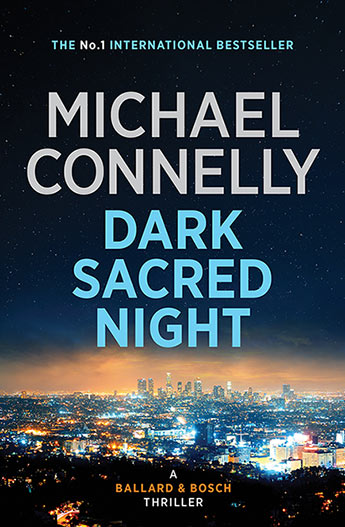
Dark Sacred Night by Michael Connelly

Dark Sacred Night.jpg

Publishers: Orion

                       Hachette Audio

Publication Date – 30 October 2018

Amazon

Legendary crime author Michael Connelly returns for another clever and technically detailed crime thriller that teams up his iconic and most utilised protagonist, Harry Bosch, with his recently created female protagonist, Renée Ballard.

In the chaotic world of the LAPD, Renée Ballard is an outsider who has found herself permanently on the graveyard shift of the Hollywood beat.  Returning to the near-abandoned station after a callout, Ballard is surprised to find a stranger rifling through her unit’s filing cabinets.  The intruder is maverick retired detective Harry Bosch, formally of the LAPD, now currently working as a contractor for the San Fernando police.

Bosch is working a cold case for personal reasons.  The victim, a 15-year-old runaway, Daisy Clayton, was brutally murdered several years before and Bosch has gotten close to the girl’s devastated mother.  Initially kicking him out the station, Ballard’s subsequent investigation of Bosch’s actions reveals the full details of the case to her and she finds herself drawn to Bosch’s hunt for justice.  As the two outsider detectives join forces in order to solve the case, they are once again thrust into the grimy underworld of Hollywood.  But as they attempt to find justice, a cornered killer, departmental politics and the dangerous suspects of the two detectives other investigations may cause the case to come crashing down around them.

Michael Connelly is a prolific and award-winning crime novelist who has been writing since 1992.  During that period he has written over 30 books, all of which are set in the same shared universe.  Connelly’s debut book, The Black Echo, introduced his most iconic character, Harry Bosch, who has been the protagonist of 21 of Connelly’s books, as well as being a supporting character in several other books.  Due to the author’s focus on this character, Connelly’s extended crime universe is often referred to as the Harry Bosch universe.  Connelly has also written a number of other thrillers in this universe, featuring several other protagonists, such as lawyer Mickey Haller, reporter Jack McEvoy and investigator Terry McCaleb.  Many of the characters introduced in previous books often have small roles in later books, while Bosch has had interactions with most of Connelly’s other protagonists.  The second protagonist in Dark Scared Night, Renée Ballard, is a more recent creation who was introduced in the 2017 novel The Late Show, and this is her first interaction with Bosch in Connelly’s wider universe.

Outside of the literary world, Connelly’s works have been adapted to film and screen.  His Harry Bosch novels have been adapted into the current Bosch television series, which will air its fifth season in 2019.  Two of his books have also been adapted into movies.  His novel, Blood Work was adapted into film in 2002 with Clint Eastwood, while his first legal novel, The Lincoln Lawyer was adapted into film in 2011 with Matthew McConaughey.

Dark Sacred Night is an excellent piece of crime fiction that presents the reader with a series of interesting investigations, told from the perspectives of two fantastic police protagonists.  I listened to this book in its audiobook format, which is jointly narrated by Christine Lakin and Titus Welliver, and runs for 10 hours and 39 minutes.  Dark Sacred Night primarily focuses on the investigation into a cold case of a young runaway girl who was brutally killed nine years previously.  This central case is massively intriguing and takes the reader deep into the sordid and disturbing criminal nightlife of Hollywood.  The main case is a gritty and unique investigation as the protagonists are forced to rely on different methods than they would usually utilise to solve the case.  Rather than having any recent evidence, the detectives are forced to rely on old interviews and pieces of police intelligence to identify any potential suspects or witnesses.  This is an intriguing way to investigate an old crime, and I really enjoyed the way they were forced to utilise this less substantial evidence to find their killer.  This method results in the protagonists identifying and investigating several distinctive suspects, and the reader is presented with a series of false leads and suggested possibilities.  I was able to identify who the killer was quite early in the book, but I still had a lot of fun following the investigation to its conclusion.

I really enjoyed the way that Connelly seeded a large number of smaller cases throughout the novel for the protagonists to solve, as well as a number of examples of police work in action.  There is an interesting split here as Ballard, the full-time detective, is given a series of more official and everyday crimes to solve, such as a suspicious death, a missing persons, a theft, trespassing and a kidnapping that she investigates to various degrees throughout the book.  Bosch, on the other hand, only has one case, an old, unsolved gang execution that he is pursuing in San Fernando and which is the focus for a good portion of his chapters.  The inclusion of these smaller cases is a clever move from Connelly as it breaks up the story from a pure focus on the main case and presents a wider viewpoint of crime and policing in the book’s setting.  It also allows the author to showcase his protagonists’ divergent investigative skills and presents the readers with an additional number of compelling mysteries and adventures that they can sink their teeth into.  Some of these additional cases tie into the main mystery in some surprising ways and clues or suspects may be revealed through this.

All of these mysteries do an amazing job showing of the author’s obvious knowledge of police procedures and law enforcement techniques.  Connelly, a former crime reporter for the Los Angeles Times, has an amazing grasp of the minutiae of police work and he expertly inserts these details into his story.  As a result his police characters mostly investigate crimes, examine evidence and file the paperwork in a way that feel extremely realistic and which adds a huge amount to the books authenticity.  Connelly’s police characters even feel like real cops, as the way that they act or think feels like real life police would act.  All of this combines with the amazing mysteries to create a first-rate piece of crime fiction.

Dark Sacred Night is the first time that Connelly’s main protagonist, Bosch, engages with the author’s newest protagonist, Ballard.  There are some interesting similarities between the two characters, which makes for a great story.  Both detectives have a similar maverick style when it comes to investigating crimes, and both have been screwed over by LAPD politics and had their careers impacted as a result.  As a result, both characters are dogged in their pursuit of criminals, especially those guilty of sex crimes, and both are willing to bend the rules to get their suspects.  However, the main difference between them is how far they will go to get justice.  While Ballard is happy to bend rules, she doesn’t go too far over the line or deliberately hurt or damage her suspects.  Bosch on the other hand has a much more flexible idea of where the line is and engages in some questionable behaviour that could be seeing as going too far. The two characters work well together during this book, and I hope that Connelly continues to use his latest protagonist in the future, especially as there are some interesting stories available when it comes to her complex police past.

The audiobook version of Long Dark Night is a great way to enjoy this crime novel and I found that I quickly powered through the book with this format.  The audiobook format utilises two separate narrators to describe the adventure contained within, broken up by whichever protagonist is narrating that chapter.  For example, Christine Lakin narrates the chapters told from Ballard’s point of view, while Titus Welliver narrates Bosch’s chapters.  Both of these narrators have great voices for their central characters, and both of them fit in perfectly in this gritty crime drama.  Lakin captures Ballard’s character perfectly, and you get a real sense of the no-nonsense and wary personality that is Ballard every time you hear Lakin’s voice.  Welliver’s voice, on the other hand, is deep and gruff and really fits Bosch’s old school and veteran personality.  Overall there is some fantastic voice work in the audiobook format of Dark Sacred Night, and I found that listening to this mystery really drew me into the middle of this investigation and helped me remember certain details and clues.

This latest book from veteran crime author Michael Connelly is a fantastic mystery thriller that draws the reader in with two outstanding protagonists and a series of captivating mysteries.  Dark Sacred Night is written in a way that is very easy to get into and the reader can enjoy the full mystery without any details of the previous books in Connelly’s shared universe.  As a result, despite it being such a late book in this long-running series, Dark Sacred Night is also the perfect place to start your investigation into the crime sensation that is Michael Connelly.  First rate crime fiction at it’s very best, this is an outstanding release from Connelly that is guaranteed to draw the reader into the dark and intriguing world of mysteries.

My Rating:

Four and a half stars

Amazon

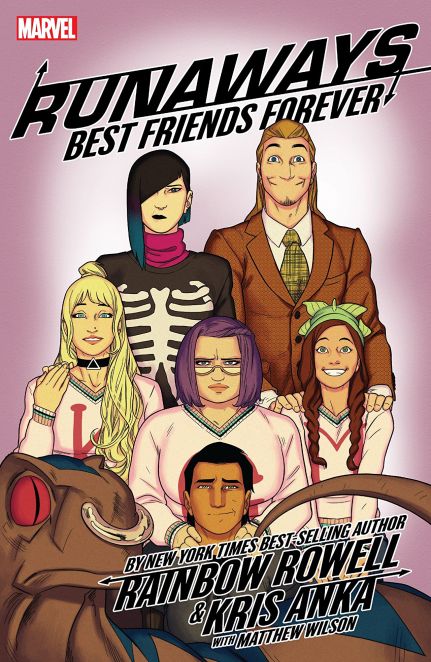
Runaways Volume 2: Best Friends Forever by Rainbow Rowell and Kris Anka

Runaways Volume 2 Cover.jpg

Publisher: Marvel Comics

Publication Date – 30 October 2018

Amazon     Book Depository

Recently reunited and still coming to terms with being a family again, the adventures of Marvel Comics’ favourite group of misfit youths continues in Best Friends Forever, the second volume of young adult author Rainbow Rowell and artist Kris Anika’s run on Runaways.

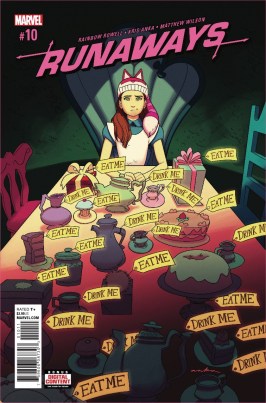
The Runaways, Chase, Gert, Karolina, Nico, Victor, Molly and Old Lace are finally back together and living in one of their parents’ old hideouts.  While most of the team have grown up since the last time they were all together, this does not mean that they have their lives together.  Each of the Runaways has their issues to deal with, be it Gert’s recent return to life after several years of being dead, Karolina’s relationship problems or Victor’s current existence as a disembodied head.  The only one who appears to have their life even remotely together is the team’s youngest and at times wisest member, Molly, who is enjoying her time in middle school.  But even Molly is having problems, as she is faced with a hard choice and must consider whether she actually wants to grow up.

Runaways_Vol_5_8.jpg

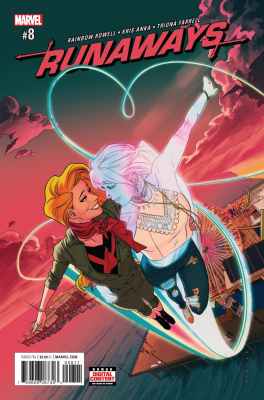
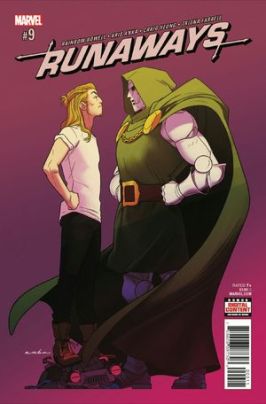
As Molly deliberates over the dilemma presented to her, a barrage of other arrivals impact on the Runaways.  Karolina’s girlfriend, Julie Power of Power Pack fame, is in town, which causes significant drama for Karolina and Nico, while Dr Doom has apparently appeared on their doorstep, determined to find Victor.  Can a team rife with squabbles, drama and internal strife come together to face the problems before them, or will their significant changes be too much to bear?

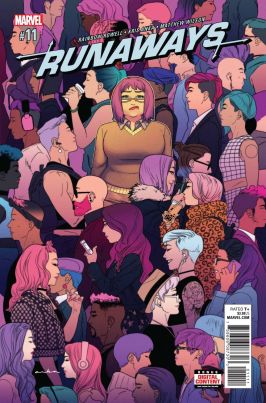
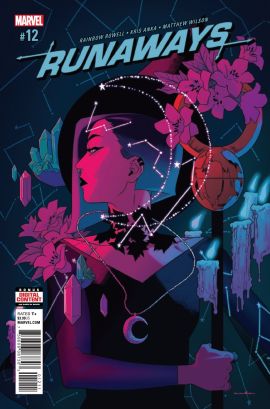
Runaways is still one of my favourite Marvel series.  After the revamp earlier this year, previously reviewed here, these fantastic characters are still going strong.  In this second volume, Rowell, Atkins and their creative team continue to produce some outstanding and emotional stories that are based more on the relationships between the main characters than the traditional crime-fighting storylines contained within other comics.  While they do go up against a couple of superpowered opponents within this story, none of these antagonists is truly evil, and their motivations and history are a lot more morally ambiguous than some of the previous Runaways stories.  The creative team do a fantastic job of blending highly emotional storylines with a bunch of fun and heart-warming sequences, filled with random and funny elements, such as an errant Doombot.  This all comes together into one fantastic overall story that hits all the right buttons.  This second volume contains issues #7 – #12 of this new run on Runaways.

Runaways_Vol_5_9.jpg

One of the main aspects of this second volume of Runaways is the continued focus on the relationships between the series’ main characters.  Most of these characters are still coming to terms with being back together after all of them attempted to live lives outside of their team.  Quite a bit of Volume 2 involves the characters trying to determine what roles they have within this surrogate family, and the fact that they are not as close as they used to be.  What I liked is the way that Chase, usually the most immature member of the team, attempts to become the father of the group, matching up with the traditional female leader of the team, Nico, as the team’s mother.  This new parental role is highlighted in a funny couple of scenes where Chase and Nico use magic to become Molly’s legal guardians, a shortcut way that “seems totally legit and great”.  A lot of this volume is also focused on the romantic relationships between several of the group’s characters, including the relationship between Gert and Victor and the new romantic feelings between Nico and Carolina.  I thought the lead-in to both these relationships worked out very well and sets up some interesting potential in future volumes.  I am also very curious to see how the friendship between Victor and Chase is going to be impacted as a result of this new relationship in future volumes of this series.  I liked the way that the relationships and romantic considerations that featured between Carolina and Julie and Carolina and Nico were handled very well and with great sensitivity, and showed great representations of LGBT+ relationships.

Runaways_Vol_5_10.jpg

I also appreciated the way that Rowell and Anika continued to focus on the emotional and mental damage that the team’s exploits have had on these characters over their entire comic book history.  In this second volume, there is a significant focus on Victor, who was mentally and physically damaged during his previous appearances in Vision.  Chase and Doombot’s attempts to rebuild Victor during this volume prove to be a particularly vivid trigger for Victor, and leads to some significant emotional moments.  There is also a look at Victor’s fear of vibranium because of its addictive and mind-altering impact on him, which drove him to commit terrible acts in a previous series.  The creative team also take a look at the life of old team member Klara, the young powered girl the team rescued from abuse back in 1907 during a time-travel adventure.  It was previously revealed that Klara had been taken away from the team by the state and is now in a loving household.  A brief section of this volume is dedicated to the team finding her and attempting to bring her back into the fold, but Klara refuses to come back, as she is happy in her new life.  You have to appreciate Klara’s sound reasoning for not wanting to come back to the team, due to the death and multiple problems experienced in the previous adventures.
Runaways_Vol_5_11.jpg

One of the most significant issues that the character’s experiences have had on them is based around their negative opinions of adults.  Most of the truly terrible things in their lives have been the result of the plans of the adults they encounter, and their distrust of most adult characters has been a long-running aspect of the series.  It is interesting to see that this carries through to the new series, even though several of the characters are now actually adults.  This viewpoint is most prevalent in Gert, whose death during one of the previous run of this series means she still shares the beliefs these characters had while they were fugitives.  However, the rest of the team also have a hard time trusting other adults, such as when they assume Klara’s new adopted parents have to be evil, as every adult they have previously dealt with in similar circumstances were also evil or abusive.  This viewpoint has significant plot impacts in this second volume, as Molly, given the opportunity to stay young forever, talks to several of the other Runaways in an attempt to subtly work out their thoughts on growing up.  Most of the characters, including non-team member Julie Powers, talk somewhat negatively about their current lives and regret growing up, which tempts Molly to accept the chance to stay young.  The final message of this storyline strongly implies that growing up isn’t so bad, as even the antagonist, a young girl who has stayed 13 for 50 years, does not always want to be young.  It was also interesting to see Klara try to correct the team when they say that no adults can be trusted; having had a loving family relationship, she no longer believes that.

Runaways_Vol_5_12.jpg

The second volume of this run of Runaways continues to make use of some fun artwork throughout the various issues.  The character designs continue to be fun, and it is interesting to see some new looks and some constantly changing character designs, especially for the trendy Nico.  The art is often used for comedic affect.  Victor has a fun use throughout the book, and it is pretty humorous to see the head floating around in a number of scenes, even in a middle of a fight scene.  I also loved how throughout the course of the volume, he was given more and more advanced mobility upgrades in each scene that he appeared in, each more comedic than the last.  For example, at the start of the volume he is mostly transported in other character’s hand, his own momentum or in a backpack.  However, as the volume continues he is variously attached to a Roomba, a small tracked rover, several helium balloons (so he can get the feeling on flight back again) and eventually a new drone.  All of these are slightly ridiculous and fun, but they do not take away from the emotional nature of several scenes, and I must point out some of the awesome drawings that hint at the issues Nico is having with her magic.

The second volume of this new series of Runaways, Best Friends Forever, is another strong and emotional addition to this new version of this young adult superhero comic.  I really appreciated the creative teams continued focus on the character relationships and the emotional aspects of the characters’ lives.  Best Friends Forever is another fantastic addition to this powerful new run of Runaways, and I am excited to see what happens to this great group of characters next.

My Rating:

Four and a half stars

Amazon     Book Depository

Timeless by R. A. Salvatore

Timeless Cover.jpg

Publisher: Harper Voyager

Publication Date – 4 September 2018

Amazon     Book Depository

From one of fantasy’s most legendary writers, R. A. Salvatore, comes another electrifying adventure of swords and steel, as Salvatore once again presents a thrilling tale of his iconic protagonist, the dark elf Drizzt Do’Urden.

Centuries ago, the city of Menzoberranzan gave birth to a drow whose talents with the blade were unsurpassed by any other practitioner.  This drow’s name was Zaknafein.  Desired by an ambitious noble house and its twisted Matron, Malice, Zaknafein would become a pawn in the battle of intrigue and positioning that have eternally plagued Menzoberranzan.  His only relief from his arduous life was his friendship with the young mercenary Jarlaxle.

Years later, a young Drizzt Do’Urden fled the city and the violent ways of his people.  However, his escape was only capable thanks to the twofold sacrifice of his father, Zaknafein, who not only allowed himself to be sacrificed to the dark goddess Lolth but also willed his resurrected body to its absolute destruction in order to stop its hunt for Drizzt in the catacombs of the Underdark.  Not only was Zaknafein his father; he was also the man responsible for Drizzt’s moral code and, most importantly, the man who taught Drizzt how to fight, turning him into the most skilled sword wielder in all of Faerun.

But now, after years of Drizzt’s adventures on the surface world, something truly amazing has happened: Zaknafein has been returned to life and has found his way to the surface world.  No-one is certain how he has been resurrected or why, but Zaknafein is determined to be reunited with his son, even if he has changed far more than he could ever imagine.

The world has also changed in the last few years.  The Sword Coast is undergoing a period of rare peace.  The dwarves, led by Drizzt’s friend King Bruenor Battlehammer, rule in Gauntlgrym, while the city of Luskan is secretly ruled by Jarlaxle and his mercenary band, Bregan D’aerthe.  With their territories connected by magical gates, Bruenor, Jarlaxle and the halfling community of Bleeding Vines have formed an alliance, ensuring the security of the realm.  However, the ambitious and greedy Lord Neverember, ruler of Neverwinter, is a constant thorn in their side as he plots to steal power from the lands around him.  While usually only a minor nuisance, Neverember has been making deals with a mysterious noble house of Waterdeep and a minor dwarven clan for vast sums of money.  As the allies investigate further, they uncover the start of a destructive demonic conspiracy that could destroy all they have built.  What foul plans are being hatched, and what will happen with Drizzt and Zaknafein find themselves in the middle of a demon stronghold?

R. A. Salvatore is one of the most experienced and enduring authors of fantasy fiction in the world today. Having written more than 60 fantasy books since his 1988 debut, Salvatore has created a number of worlds and characters across his career, from his 12 books in the Corona universe, which includes the 2018 release Child of a Mad God, to his Chronicles of Ynis Aielle trilogy, The Crimson Shadow series, The Cleric Quintet and The Spearwielder’s Tale trilogy. Salvatore is also somewhat infamously known for his foray into Star Wars fiction, with his 1999 release, Vector Prime, which saw the canonical death of Chewbacca in the original expanded universe, a decision that has since been retconned following the Disney acquisition of the franchise.  However, his most iconic and popular books would have to be his long-running series that follows the adventures of the dark elf Drizzt Do’Urden.

The character of Drizzt Do’Urden was first introduced in Salvatore’s debut novel, The Crystal Shard, which is also the first book in The Icewind Dale trilogy.  The Icewind Dale trilogy is set within the Forgotten Realms universe, a large-scale interconnected collection of fantasy books from a range of different authors, all set within the titular Forgotten Realms, a spinoff location of the Dungeons & Dragons roleplaying franchise.  The Icewind Dale trilogy featured a band of powerful characters including Drizzt, the dwarf chieftain Bruenor Battlehammer, the barbarian warrior Wulfgar, the halfling thief Regis and Bruenor’s adopted human daughter, Catti-brie.  While these characters all had their own adventures within this series, it was clear that Salvatore had intended to focus his series on Wulfgar and make him the main protagonist.

However, the character of Drizzt proved to be particularly popular with the fans.  A large amount of this may be a result of the characters anomalous nature, as not only is Drizzt a dark elf living above the surface, but he was one of the few good dark elves in fantasy fiction at that point in time.  The dark elves, also known as the drow, are a race of dark-skinned elves who live in the Underdark, the dark catacombs that lie under the continent of Faerun, in the world of Abeir-Toril.  In the Forgotten Realms universe, dark elves are generally an evil and self-serving race who consider themselves superior to the other races in the Forgotten Realms and often conduct destructive raids against the surface world.  As a result of this popularity, Salvatore chose to focus on Drizzt more and more as his series progressed.  This included establishing the character as one of the greatest practitioners of the sword in the Forgotten Realms, as well as introducing an equally matched adversary, Artemis Entreri.

This focus on Drizzt continued into Salvatore’s second Forgotten Realms series, The Dark Elf trilogy, which was a prequel series to The Icewind Dale trilogy.  The Dark Elf trilogy focused on the birth of Drizzt in the dark elf city of Menzoberranzan, a female-led society dedicated to the worship of the demonic spider god Lolth.  While this is where Drizzt was raised and first learnt how to wield his iconic dual blades, the character of Drizzt never fit in, except with his father Zaknafein, who tried to teach him that the dark elves, especially those dedicated to the worship of Lolth, were evil.  Drizzt would escape Menzoberranzan at the end of the first book in the trilogy, Homeland, and spend the next two books exploring the world outside the city, eventually coming to the surface and finding his home in the Icewind Dale.  Since then, Drizzt and his companions have undergone a number of adventures both above and below the surface of Faerun, with numerous changes impacting these protagonists.  Timeless is the 34th book to feature Drizzt or his companions, and is one of the few ongoing series still being produced in the Forgotten Realms universe.

Timeless is the first book in Salvatore’s new Noname trilogy, and while the series is invariably going to focus on Drizzt, this first book mostly takes a look at the returning Zaknafein.  As a result, the majority of the story is set in the current chronology of Salvatore’s universe and sees Zaknafein attempting to find his place in the new world he has returned to, while also exploring a new threat to the Companions of the Hall (Drizzt and his friends).  There is also a second timeline that is set many years before the events of Homeland and focuses on the early life of Zaknafein.  While both storylines are enjoyable, I found myself drawn more to the prequel storyline, which focused more on the elaborate and exciting intrigues of the drow and how Zaknafein and Jarlaxle became the drow we all came to know and love.  The contemporary storyline is mostly focused on the reuniting of Zaknafein and Drizzt after their many years apart, both in and out of text.  Their emotional reunion forms the heart of this storyline, while Zaknafein’s exploration of this new world he finds himself in is an intriguing part of the book.  A side effect of this is that some of the longstanding characters, such as Wulfgar and Bruenor, have a reduced role in the book.  While I hope they feature more later in this trilogy, I felt the story was able to survive without them.  This book also spends a lot of time setting up the storyline and threats that will form the focus of this new series.  To that end, Salvatore has done an incredible job, creating several intriguing storylines that readers will enjoy following in future books and presenting the protagonists with a number of potential threats for the series.  However, Salvatore has also ensured that the reader will be hit with some severe emotional gut-punches in this first instalment, ensuring that they are dragged into the next book in this trilogy.  I enjoyed going back and forth between these two separate storylines.  Each of these storylines complemented the other one perfectly and highlighted the character of Zaknafein in more detail.

While The Icewind Dale trilogy and the series that followed it are excellent pieces of fantasy fiction, my favourite Drizzt Do’Urden series has always been The Dark Elf trilogy, which I consider one of the best origin story arcs in all of fantasy fiction.  As a result, I was always going to enjoy any novel tied to this prequel trilogy.  Timeless contains a number of call-backs to this original trilogy and works to provide the reader with some interesting and unexplored backstory for the great character of Zaknafein, including how he became associated with the house of Do’Urden.  It also shows the formation of his distinctive character traits, such as his sense of mercy, his hatred of the female dark elves who enslaved him and his intense rebellion against the drow’s patron goddess, Lolth.  Some of the most emotional parts of this original trilogy revolved around Drizzt and Zaknafein as they attempted to escape from the harsh landscape of Menzoberranzan and Zaknafein’s eventual sacrifices to save his son from Lolth’s evil grasp.  Therefore it was amazing to see the two of them finally reunite after all these years in the most appropriate manner possible: a duel.  Watching Drizzt slowly realise that the person fighting against him is actually his long lost father is incredible and something that I really enjoyed.

It was also a lot of fun to see the earlier days of one of my favourite characters, Jarlaxle.  Jarlaxle is a flamboyant and deceptively cunning drow mercenary who is one of the most compelling characters in Salvatore’s books.  The character was first introduced in the second book of The Dark Elf trilogy, Exile, and quickly revealed himself to be a very memorable character.  Salvatore utilised him in a number of his follow-up series, and even gave him his own trilogy with Artemis Entreri.  I was therefore very happy to see him in both timelines of Timeless, as it provides the reader with some great entertainment as well as answering some interesting questions, like how he came up with his distinctive look.  His bromance with Zaknafein was another fun part of both storylines, and I liked seeing the previous connection these two great characters had with each other.  Overall, fans of Salvatore’s preceding books, especially The Dark Elf trilogy will love Timeless and become engrossed in seeing one of the most impactful characters in Drizzt’s life return after more than 20 years and 30 books.

As you would expect from a novel about Drizzt Do’Urden and Zaknafein, two of the most pumped-up sword users in all of fantasy fiction, there is an absolute ton of action and swordplay in this book.  Throughout the course of Timeless, the father and son duo engage in a number of exciting battles and extravagant duels as they face off against a variety of different foes in both of the book’s timelines.  There is so much going on in this book for readers to enjoy, from battles against demonic foes to Zaknafein and Jarlaxle taking on the most devious of drow opponents they can find in the prequel timeline.  The halfling Regis, who is generally one of the most entertaining characters in Salvatore’s books, also has an amazing sequence as he infiltrates a hidden vault, using a combination of alchemy, daring do and the well-honed thieves’ instincts and skills he has been displaying since The Crystal Shard.  Jarlaxle also steals any fight scene he is involved with, using his various magical devices and hidden weapons to cause all manner of chaos against his opponents, resulting in some of the most entertaining parts of the books.

However, easily the best action sequences have to be the duels between Drizzt and Zaknafein.  These two blade masters are generally regarded as the two best fighters in all of the Forgotten Realms and have not faced each other since the early 1990s.  As a result, Salvatore presents several highly detailed duels between the father and son.  These duels are written in incredible detail and Salvatore does a fantastic job highlighting the speed, intensity and skill that these two combatants have as they battle against each other in scenes which hark back to their original amazing duels in Homeland.  Ultimately, Salvatore is once again able to capture the magic that these two combatants had in their original appearances and their fights take on a completely new edge with the emotional intensity of these characters’ reunion.

Salvatore has once again provided his readers with an exhilarating adventure that pits the monsters and villains of the Forgotten Realms against your favourite fantasy heroes.  This is definitely a book that will have the most impact for existing fans of Salvatore’s Forgotten Realms novels, and as such I really enjoyed Timeless.  While newer readers may have a little trouble following the plot after 34 books worth of backstory (39 if you include The Cleric Quintet), Salvatore’s writing will ensure they get an electrifying adventure that will encourage them to look back at the original books in this series.  An outstanding fantasy adventure from one of the best writers in the business, this is fantastic read that is well worth checking out.

My Rating:

Four and a half stars

Amazon     Book Depository

The Chaos of Now by Erin Lange

The Chaos of Now Cover.jpg

Publisher: Faber & Faber

Publication Date – 2 October 2018

Amazon     Book Depository

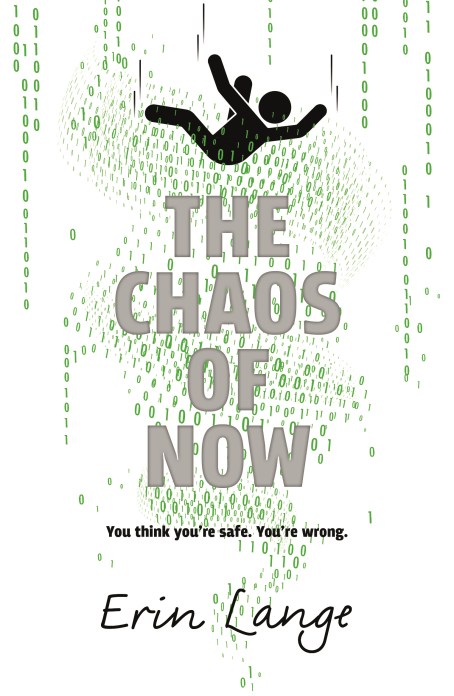
From one of the most intriguing authors of modern young adult fiction comes this powerful story about bullying in the modern cyber world and the potential impacts our choices can have on those around us.

One year ago, a student at Haver High, Jordan Bishop, walked into the school cafeteria and committed suicide by setting himself on fire, a reaction to the relentless online bullying he was experiencing.  Since that event, life at Haver High has not been the same.  Not only do the scars of Jordan’s actions remain but radical legislation brought in to combat cyberbullying ensure that students’ online lives are openly monitored by federal cybersnoops.

Eli Bennett is a young hacker who is desperate to graduate and leave town in order escape his father and his father’s new girlfriend, Misty.  Eli is happy enough at school with his only friend, Zach, although he wouldn’t mind getting to know the beautiful Isabel.  But when he is approached by fellow hackers Seth and Mouse, he finds himself drawn into an entirely new challenge.  Seth and Mouse were Jordan’s friends, but have had to keep their relationship with him a secret to avoid backlash from the other students.  Desperate to get some sort of justice for their fallen comrade, they are seeking a way to get back at those students who drove Jordan to kill himself.  Their idea is to create a website where Jordan’s bullies can be publicly shamed, and they need Eli to make it untraceable to the authorities.  Despite being haunted by a previous hacking mistake, Eli agrees to help, interested in the potential of this sort of website.

Calling the website ‘Friends of Bishop’, the site provides the students of Haver High with an anonymous forum to post videos about bad behaviour in the school.  With the help of a few bombshell videos, the site becomes a hit, and Eli and his friends believe they are making some real changes.  With the cybersnoops desperately try to shut down the site, the hidden Friends of Bishop revel in their notoriety and the praise of many of their classmates.  But when their quest for justice takes a nasty turn, Eli finds himself facing the real-world consequences of his actions and must try and work out what the right thing to do is.

The Chaos of Now is the fourth book from the talented and at times controversial young adult author, Erin Lange.  Lange is probably best known for her 2012 debut novel, Butter, which focused on a bullied obese boy’s plan to eat himself to death on a live internet broadcast.  Her next two books, Dead Ends and Rebel, Bully, Geek, Pariah also looked at the lives of socially isolated high school students, as well as the consequences of bullying behaviour.  The Chaos of Now takes a deeper focus on extreme cyberbullying and the potential impacts it can have.  I absolutely enjoyed The Chaos of Now and powered through it in less than a day as I became absorbed in its fantastic narrative, its emotional and moral heart and its very intriguing elements and warnings.

This book contains a poignant and well-thought-out story that takes its protagonist on a captivating adventure as he is faced with a series of moral dilemmas and explores the resultant consequences of his decisions on himself and those around him.  There are some incredible emotional scenes as the main characters examine their anger, grief, guilt and internal moral compasses when they look back at what they did or what they failed to do.  There is also a heartrending plot twist towards the end of the book which paints the entire narrative in a completely new light while also upping the stakes for the protagonist and his friends.

At the centre of this incredible book lies a powerful message about the modern epidemic of cyberbullying and the dangers of our modern computer based world.  Within the context of the story, the protagonist is drawn into a quest for justice after a young man who is bullied online commits suicide.  The architects of this revenge are the victim’s friends, who feel guilty for not standing up for their friend and not coming forward after his death.  As part of their quest, they create an anonymous website where embarrassing and incriminating videos can be posted about the people who drove Jordan to commit suicide, as well as videos about any other bullies or people the protagonists believe need to be taken down a peg.  Lange does an incredible job exploring all the aspect of this cyberbullying, from an examination of the events that led up to Jacob’s suicide to the impacts of the posted videos on the people they are shaming.  Lange does not try to shape this as a black and white issue; instead, everything that occurs has the potential for negative consequences.  For example, throughout the course of the book, the protagonists post several videos, each of which appears to have different levels of embarrassing or incriminating footage.  While the potential impacts of some of these videos appear to be minor, some are later revealed to have major consequences for the people involved.  At the same time, the more explicit videos have huge, life-altering consequences for the people involved.  Through the course of her narrative, Lange shows the full effect of these videos, whether they are extreme or seemingly innocuous, and shows how the people’s lives are affected and how other people treat them because of what is revealed.  Often these outcomes are quite devastating, and the protagonists, having become cyberbullies themselves, are left examining whether their victims actually deserved to have their lives ruined in this way, and if their actions can truly be considered justice.  The final message of this book, that cyberbullying or any form of negative online actions can have severe and often unforeseen consequences, is quite powerful, and I thought that Lange did an incredible job highlighting this throughout her novel.

Another intriguing part of this book is the extreme way the government attempts to deal with the problem of cyberbullying.  In this book, following the extreme suicide of Jordan, the government introduces harsh and controlling rules about internet privacy for students and gives government officers known as cybersnoops the ability to monitor everything young people do on the internet.  This is a thought-provoking reaction, and one that could potentially be used in the real world to address the problem of cyberbullying.  Readers will be interested to see Lange’s thoughts on such a program being introduced and how the youth impacted by it may react.  The resultant story comes across as a cautionary tale.  While more needs to be done to combat the issues of cyberbullying, Lange’s stories suggests that certain approaches could be just as problematic, as many of the protagonist’s actions are as a result of the restrictions imposed upon them.

I really enjoyed the coding aspects of this book, and it was fascinating to see the various computer and coding terms included throughout the story.  Lange’s ensures that these technical aspects are explained to the reader in a clear and concise manner so that even technical luddites like this reviewer are able to have a good understanding of what is going on in the story.  Readers of The Chaos of Now should also take note of the various ways in which the internet or someone’s personal electronic devices can be used against them, and is definitely an informative inclusion.

Lange’s focus on her protagonist’s personal relationships is another great part of this book, and provides an invaluable social heart to this novel.  At the start of the book, Eli only has one friend, Zach, a fellow coder who serves as Eli’s social and hacking conscience.  When Eli makes friends with Seth and Mouse, he is happy to have new friends and works with them on their website.  But, as the book progresses, Eli’s relationship with Zach suffers as he constantly hides his dodgy actions with the Friends of Bishop website.  It is interesting to see how Eli is forced to assume the more moral and cautious role with Seth and Mouse, who are much more obsessed with revenge than Eli is.  Having assumed this role, Eli feels a lot more guilt for the group’s actions, as he knows he should do more to curtail their more reckless actions.  This is further compounded when Eli gets angry and momentarily abandons his moral position, and the resultant actions cause significant harm.  The later part of the relationship with Seth and Mouse is very intense and contains one hell of a climactic scene.  The Chaos of Now also contains the heart-warming story of the growing relationship between Eli and his father’s girlfriend, Misty, who becomes one of the most likable characters in the entire book.  I also enjoyed the relationship between Eli and the bully Malcolm who Eli has several negative encounters with at the start of the book.  While Eli at first wants to destroy him like the other bullies at Haver High, his discovery of Malcolm’s deeper problems and the future awaiting him makes Eli rethink his position.  This focus on the protagonist’s relationships is an extraordinary part of the book, which weaves into the story very well and plays a big part in the protagonist’s decisions and actions.

The Chaos of Now is a great piece of young adult fiction that provides an amazing insight into one of the key issues affecting the youth of today.  With some mature themes, this book is definitely intended for the slightly older teen audience and is probably most appropriate for high school students who are a similar age to the characters of this book.  As this book provides an intriguing and powerful insight into the modern day issue of cyberbullying and presents a look at the extreme consequences that could result from these actions, I would strongly recommend it to these students, as they would be most interested in the message and story that it contains.  While not intended for older readers, the content of this book is instantly relatable for anyone who has ever been to high school and is aware of the current issues surrounding cyberbullying and problems with the internet.

Lange has created a terrific book which I felt covered some of the issues around cyberbullying perfectly.  Featuring a heartfelt and at times crushing story that tries to understand the different sides of this complex problem, this is another superb and memorable release from an incredible young adult fiction author.

My Rating:

Four and a half stars

Amazon     Book Depository

After the Lights Go Out by Lili Wilkinson

After the Lights Go Out

Publisher: Allen & Unwin

Publication Date – 1 August 2018

Amazon     Book Depository

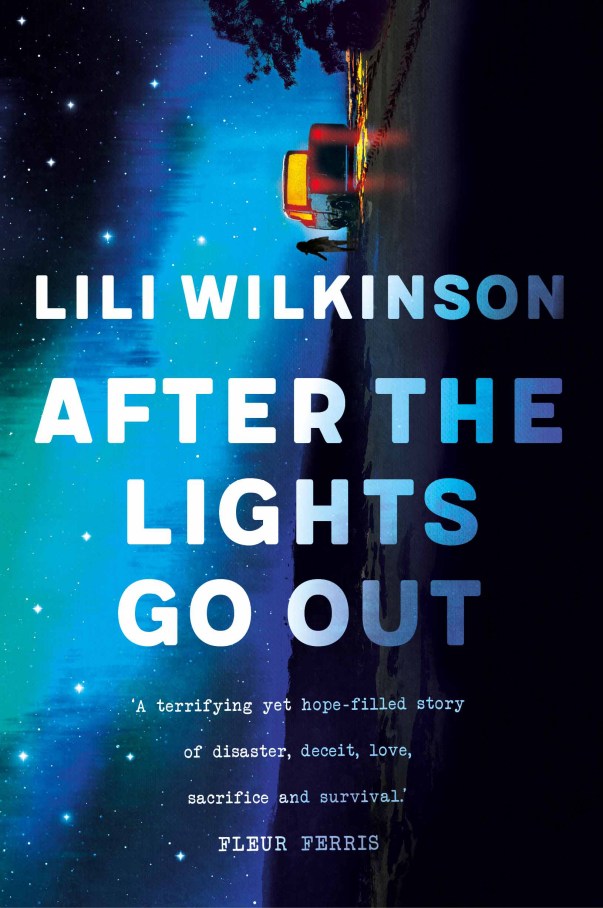
From bestselling Australian author Lili Wilkinson comes After the Lights Go Out, an incredible and powerful young adult adventure set in the heart of the bush that asks the impossible question: should a person choose family or community in an emergency?

Seventeen-year-old Prudence Palmer is a young woman living outside the small Australian outback town of Jubilee with her father, Rick, and her younger twin sisters, Grace and Blyth.  To the other inhabitants of the town, they are just another mining family, living close to Rick’s workplace.  However, they are actually hiding a much deeper secret: they are doomsday preppers.  Convinced that the world will soon suffer some form of imminent catastrophe, Rick has moved his daughters off the grid to Jubilee and has constructed a hidden bunker out the back of his property.  Filled with a substantial amount of food, medicine, equipment, weapons and entertainment, the bunker has everything they need to survive the end of the world.  The girls have also been trained to survive and are ready to react against a variety of scenarios.

While Rick is sure a world-changing disaster is just around the corner, Pru is less certain, and is happy to keep her family’s activities a secret.  So it is a great shock to her when something actually happens and every electrical device, modern car and generator in Jubilee suddenly fails.  With Rick gone, Pru and her sisters must suddenly implement their survival plan without their father’s guidance and make the hard decision to hide their bunker and supplies from their friends in the town.  With food, water and medicine becoming scarce, and with no transportation, communications or other vital necessities, the town starts to fall apart.  As the situation gets even worse, Pru and her sisters must decide between helping their friends or doing as they have been trained and survive alone.

Lili Wilkinson is an exciting Australian author who has produced 10 intense and dramatic young adult novels since her 2006 debut, Joan of Arc: The Story of Jehanne Darc.  Her eleventh novel, After the Lights Go Out is an outstanding standalone book that could potentially replace Tomorrow, When the War Began as the go-to disaster story for Australian young adult audiences.  This book contains a dramatic and moving main story that plunges the world into chaos and places the potential survival of a small town in the hands of one young woman.

At the heart of this book lies a tough moral dilemma for the narrator Pru when she must decide between helping her local community and guaranteeing her family’s survival.  Pru’s father, Rick, a hardcore survivalist, has stocked the family bunker with enough supplies to keep Pru and her sisters alive for several years.  He has also taught his daughters to never help anyone but themselves, and to keep all their supplies for the family.  When a disaster strikes and Rick goes missing, it is up to Pru and her sisters to make the decision, and at first they choose to keep the bunker and supplies hidden from their friends in Jubilee.  As the situation in the town gets worse, Pru’s guilt conflicts with her father’s training and instructions.  This internal debate is intensified when she falls in love with newcomer Mateo and watches him and his mother doing everything they can to save the townsfolk, despite the fact they are not locals and have no significant connection to people living there.  Watching Pru’s internal struggle and the external debate with her sisters is intense, and the reader is left wondering what they would do in a similar situation.  How Pru’s eventual decision affects her family and her relationships with the people of Jubilee is very memorable, and hits all the right emotional notes in this excellent story.

After the Lights Go Out contains an intriguing examination of the doomsday prepper phenomenon that is currently occurring around the world.  The main character’s father believes every single conspiracy theory that exists and is determined to prepare his daughters for anything.  It is clear that Wilkinson has done some significant research into survivalists and their various techniques, and as a result her characters are prepared for every doomsday scenario and have a ton of supplies and a high-tech bunker at their disposal.  There is a lot of discussion and exposition about the various survivalist conspiracies, plans to live in an altered world, the necessary techniques and the ideal supplies that every prepper should have.  Despite most doomsday preppers being American, many of the techniques in this book have an Australian flavour to them, as the girls know the local fauna, flora and means of survival out in the harsh bush conditions.  While every preparation the Palmer family has undertaken is fascinating to read about, I found the examination of the improvised medical techniques the characters use to be particularly outstanding.  This includes including one memorable and somewhat graphic sequence where the narrator needs to perform some rudimentary dentistry.  Overall, the use of the doomsday preppers’ planning and theories is an incredibly intriguing part of this story that provides the reader with some cool facts and the results of the author’s in-depth research.

Wilkinson has also populated the book with some excellent characters who really bring the story together.  While the Palmer sisters are good central characters and Pru is a great narrator who has to make a huge range of tough decisions, the best character has to be the Palmer father, Rick.  Rick is a crazed survivalist who is convinced that the world is about to end and whose paranoia has driven him to outback Australia.  When one of his disaster scenarios actually comes true, he becomes even more erratic, and watching his fears overcome his love for his daughters is very tragic to behold.  There is also Mateo, the young American tourist and liberal city-slicker who is essentially the opposite of Pru when it comes to life experiences.  The relationship between him and Pru is nice.  It evolves at a natural pace and offers the reader some different insights into the situation and the motivations of the Palmer sisters.  Another effective character is Keller Reid, the older boy with an unhealthy obsession with Pru’s younger sisters.  Keller is a particularly despicable character who serves as a very annoying minor antagonist who moves the plot around.  Watching him through the narrator’s eyes, you cannot help but hate him and hope he gets some eventual comeuppance.  The other townsfolk of Jubilee are a good mixture of characters, and it’s nice seeing them come together as a community rather than break down and kill each other as Rick believed they would.

Another part of this book that stood out to me was Wilkinson’s use of the powerful Australian landscape and the examination of small country towns.  The author provides some vivid images of the distinctive Australian bush, and looks at the various features that make it an intriguing backdrop for a story about survivalists.  The author also produces some exceptional portrayals of the close communities that exists in small town Australia and how they their isolation might be both a benefit and a detriment to their survival in a doomsday scenario.  It is definitely a unique setting for a catastrophe novel such as After the Lights Go Out, and one which I felt really added to the beauty and intensity of the story.

I really enjoyed this book and thought it was an incredible piece of literature from Wilkinson.  Because of its excellent story and the phenomenal look it takes at survivalists and their viewpoint of the world, I think this book is perfect for its intended young adult audience, which could prove to be very empowering and enjoyable read for them.  Parents should aware that there are some adult moments and a couple of graphic scenes, but this excellent and informative story is worth the risk.  After the Lights Go Out is a deep and powerful five-star book that provides its readers with an excellent examination of doomsday preppers.  This is definitely one of the best young adult books I have read this year and I cannot recommend this outstanding Australian book enough.

My Rating:

Five Stars

Amazon     Book Depository

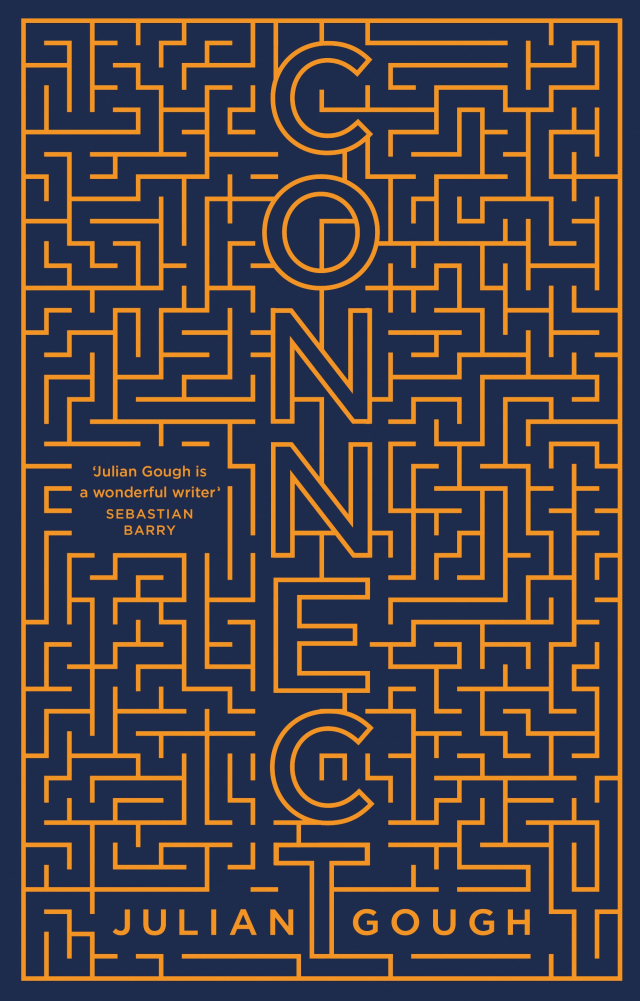
Connect by Julian Gough

Connect Cover

Publisher: Picador

Publication Date – 8 May 2018

Amazon     Book Depository

For those looking for a darkly complex and intense techno-thriller, look no further than Connect by Julian Gough, a unique novel that also critiques future trends and humanity’s increasing reliance on technology.

In the very near future, computer technology has been incorporated into nearly everything, linking the world and helping with all aspects of day to day life.  In Nevada, awkward young teen Colt is a talented hacker living with his mother, Naomi.  Seeking to create a perfect replication of the real world in virtual space, Colt has also developed a dangerous fascination with his mother’s biotech research.

When Colt submits his mother’s revolutionary work to a biotech conference, Naomi comes to the attention of the government, including Colt’s father, a high-ranking spook, Ryan, concerned with its potential implications.  However, Colt has also taken the opportunity to inject himself with the experimental biotech, turning himself into something new: a hybrid of man and technology.  Colt and Naomi are soon considered to be threats to the government, and Ryan activates an experimental defence network to hunt them down.  Colt and Naomi are forced to go on the run and must try to avoid a barrage of killer drones programmed to target and kill them at any cost.  Will Colt’s new abilities be enough to overcome the computer intelligence seeking them, or will the future of technology be changed forever?

Connect is an inspired new novel from Gough which represents a different direction from his previous writings.  Connect is a fascinating read and an interesting techno-thriller that examines the future of technology, creates a compelling dialogue and makes significant use of some excellent narrative elements.

The main story is an absorbing thriller that pits the protagonists against some sizeable opponents and threats.  One of their main opponents is an advanced and experimental computer program that is connected to every piece of technology in the country.  As a result, the protagonists are forced to find ways to avoid the overwhelming surveillance hunting them. Not only must they avoid pursuit from teaching devices and video cameras but they must also find a way to go low tech in a society that has computers connected to everything.  There are some great scenes where the characters are forced to out-think drones hunting them and try to find ways around the tracking programs that determine when and where to attack.  All of these play wonderfully into the book’s thriller storyline, and there is some real excitement when the protagonists encounter and attempt to counter these technological threats.

Gough spends a significant amount of Connect examining the future of technology and ends up offering some significant commentary on our reliance on technology and its potential influence on us.  The story is set in the immediate future, where everything is controlled by computers and certain things common in our current world no longer exist.  For example, most cars are self-driven, everything has become exceedingly automated and cash has become nearly obsolete.  In other words, it is a picture of how our world is likely to turn out in the next few years, based on current advances in technology.  Gough scrutinises how this over-reliance on technology could be detrimental to humanity, and how it could be turned against us by hackers and governments.  There is also an examination of the automation of a nation’s defence and security as an advanced security program is activated to hunt down the protagonists.  The debate around such a program is very in-depth, and the readers will be fascinated by some of the arguments presented.  Naturally, the program starts getting out of hand as it is manipulated into seeing the protagonists as a bigger threat than they are and it starts to dramatically escalate its attempts to destroy its targets.  This thought-provoking discussion and examination of the future of technology is a key part of Connect and will prove to be one of the most intriguing parts of the book for some thoughtful readers.

One of the most noticeable parts of the book is the unusual format that Gough has chosen to implement throughout his book.  The story is broken up into 12 chapters, and then further broken down into 149 sub-chapters, and is formatted in a way that vaguely reminded me of code within a computer program.  The inclusion of such a visually distinctive writing format does not break up the flow of the story, nor does it affect the reader’s ability to follow the story.  It does, however, dramatically change towards the end of the book in a way that ties in nicely with some of the significant plot elements occurring during this part of the book.  Gough has also chosen to include a number of relevant quotes at the start of each of the chapters.  I personally enjoyed reading those and connecting them to the plot of the upcoming chapter, and may prove to be more amusing to those of a more computer or technical mindset than myself.  Overall, the consistent use of this unique format and the attention grabbing quotes work well with the technology-centric plot and are a clever addition by Gough.

The point of view of Connect is mostly shared between the book’s protagonists, Colt and Naomi, although the main human antagonist, Ryan, also features in a few of the book’s chapters.  These separate viewpoints offer different subjects to the reader, and Gough has done a fantastic job of presenting unique content for both of his protagonists.  The scenes that follow Colt are a stimulating experience, allowing the reader a real sense of Colt’s social awkwardness and the disconnectedness he feels with the real world, especially when he focuses on his recreation of the real world in his virtual reality.  This virtual world appears in quite a number of scenes and plays a pivotal role in the end of the plot, and it is curious to watch Colt attempt to live most of his life within this world.  The characterisation of Colt shifts subtly after he injects himself with the experimental biotech and he starts to change.  It is interesting to watch his character change and mature after this point, especially as he attempts to initiate a very awkward romance with another young hacker.  The interactions he has with technology after this point, including with the advanced defence program hunting him, are some great scenes, especially as he creates and utilises some clever work-arounds to manipulate the computer networks to his advantage.

The scenes that feature Naomi’s perspective are significantly different, representing a noticeable change of pace for the reader.  Naomi is a very damaged person who presents herself in very different way to her socially awkward son.  Gough has made sure to communicate her multiple neuroses and issues to the reader, which adds a lot of drama to the story as she must attempt to save her son whilst trying not to get overwhelmed.  Like her son, she also undergoes substantial character development throughout the story, and the reader will enjoy watching her work towards a better relationship with her son.  In addition to this excellent piece of character work, the chapters featuring Naomi as the focal point are generally a lot darker and more adult.  For example, one of these sub-chapters features one of the most memorable and disturbing death scenes that I’ve ever read.

Connect is deep thriller that revels in its use of technological elements to create a distinctive and eccentric story.  Julian Gough’s discussion and consideration of a technologically advanced future and the problems this could create is compelling and thought-provoking, and his great use of characters and formatting elements turns this into one of the most unique pieces of literature you are likely to read this the year.

My Rating:

Four stars

Amazon     Book Depository

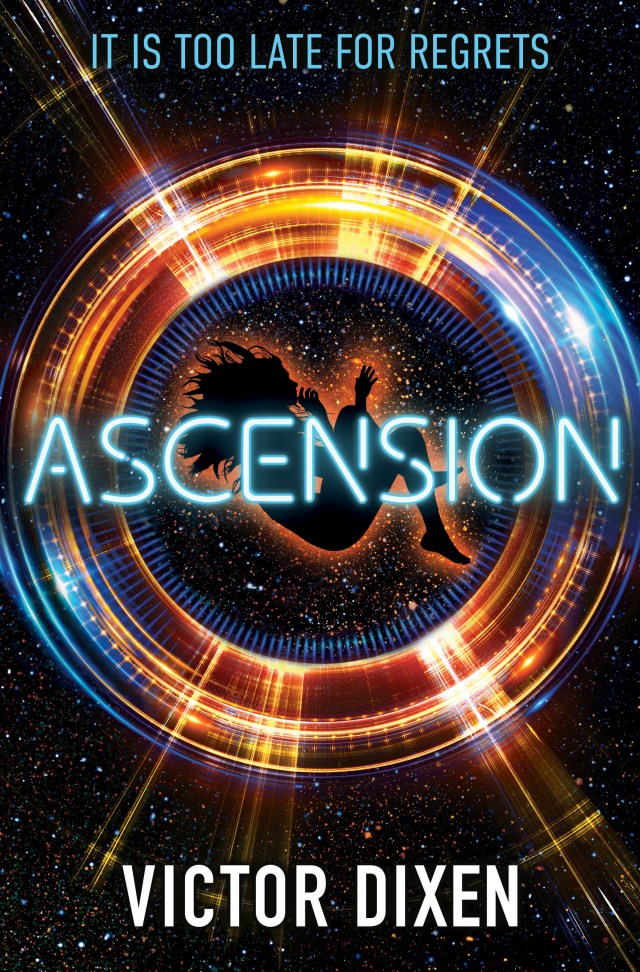
Ascension by Victor Dixen

Ascension Cover

Publisher: Hot Key Books

English Edition Translated by Daniel Hahn

Publication Date – 28 June 2018

Amazon     Book Depository

The first book in the bestselling French Phobos series is finally here.  Ascension is a fun guilty pleasure read geared towards a young adult audience that explores the dark side of reality television.

In the near future, a private company has bought NASA and is about to send the first humans to Mars as part of the Genesis program.  However, this will not be a typical voyage to another planet; it will be the most ambitious reality television show of all time.  The international group of young astronauts has been chosen through a worldwide contest, and the entire voyage into space will be broadcast back to Earth to be viewed by the masses.  Not only will these six young men and six young women colonise Mars but they will also be expected to pair up into couples by the time they reach Mars through an insane bought of speed-dating.

The boys and girls will be placed into separate bays of the same spaceship and will only be allowed to interact with the person of their choosing for six minutes each week.  In these six minutes they will meet and try to seduce their counterparts and attempt to determine who their perfect match is.  By the end of their trip, each of them must choose a partner to marry and live with once they reach the red planet.

For one of the contestants, Léonor, the Genesis program is her chance to escape from a planet where she has only ever experienced pain.  The one-way trip is the biggest opportunity of her life and she is eager for glory and love.  But as they move further away from Earth, Léonor begins to learn that this journey is far more dangerous than she had expected.  A deadly conspiracy surrounds this journey and it is far too late for regrets.

Ascension is written by Victor Dixen, a French author who has contributed multiple series to the Young Adult genre.  His previous works included a reimagination of classic fairy tales in the Animale series, and the science fiction based The Strange Case of Jack Spark series.  Ascension is part one of his exciting Phobos series, which was first published in France back in 2015.  Phobos will be the first of Dixen’s series to be translated into English, with the next two books in the series, Distortion and Collison both set to be published in English within the next year.

Ascension is a fantastic book with a lot of parts to it that make for a highly compelling and interesting read.  The overarching concept of a space exploration being turned into a reality television contest is a little crazy, but Dixen has some great explanations for this plot set-up that sound actually plausible and realistic.  With the current political craziness around the world and humanity’s constant fascination with reality television, you can’t help but think that this could be a distinct possibility.

Dixen is a talented author who is able to perfectly recreate the feel of a large-scale reality television show within his book, with all of the worst parts included.  The male and female contestants are kept apart from each other for the whole journey and are constantly aware of the world watching them through all the cameras, and they act accordingly.  Dixen shows off the various ways the producers are trying to manipulate the contestants, such as misleading messages from their host and group showings of each contestant’s ratings and accrued prize money, all in the name of creating drama.  There are also a number of scenes that show large groups of people watching the show and becoming obsessed with it in a way reminiscent of the early days of Big Brother and American Idol.  There are fun inclusions to show this off, such as having scenes where people back on Earth change their hairstyles and looks to match their favourite contestant, the contestants’ home countries showing massive support for them, and a fun scene where a cynic has to listen to other people gossip about the show.

While the parts of the book reminiscent of a typical reality television show are fantastic by themselves, they are taken to a whole other level when they are seen in conjunction with the backstage production meetings scenes.  Reality television show production meetings are probably already fairly sinister but Dixen is really able to amp this up by showing the show’s producers and host engaged in some ominous discussions involving deaths, murder, manipulation and their own bonuses.  Ascension contains a great main antagonist in Serena McBee, the host.  Serena is pretty much the ultimate villain for young people, as she acts like their friend while she tries to manipulate them, thinking she knows everything about them and how to control them.  All of these sinister surroundings create a compelling read that will really draw the reader in.

I have to admit that when I started to read Ascension the last thing I thought I would be interested in would be the potential relationships between the contestants.  However, Dixen puts significant effort into introducing the 12 contestants and describing their personalities and histories, ensuring the reader becomes invested in their futures.  While Léonor is the main character that the author focuses on, the reader is also shown many of the dating segments that the other contestants are involved with to dramatic effect.  There are also a number of discussions between the female characters as they discuss their tragic histories, their hopes for the future and who their preferred partners will be.  As a result, the reader does find themselves really caring about the characters becoming extremely interested in who will end up with whom.

Dixen also enhances his terrific narrative inclusions, sinister overtones and compelling character interactions with a range of useful visual elements included in the text.  These include flyers for the show, tables with the results of the contestants’ prize money and survey results, and detailed technical diagrams of the spaceship and the Mars habitations.  The diagrams of the ship help the readers visualise the ship and habitats, while the flyers and tables make them feel like part of the show’s audience.  These elements are well used within Ascension and are a great addition to the book.

Ascension by Victor Dixen is an exciting and invigorating young adult read that can now finally be enjoyed by an English-speaking audience.  Readers will love how the author has included an extremely realistic reality television setting into a dramatic science fiction story filled with all the emotion and manipulation you would expect from the trashiest of dating shows out there.  This crazy and brilliant read should captivate the young adult audience of the English-speaking world, just like it did with its French-speaking audience, and I will be keeping an eye out for the next two parts of this series.

My Rating:

Four stars

Amazon     Book Depository