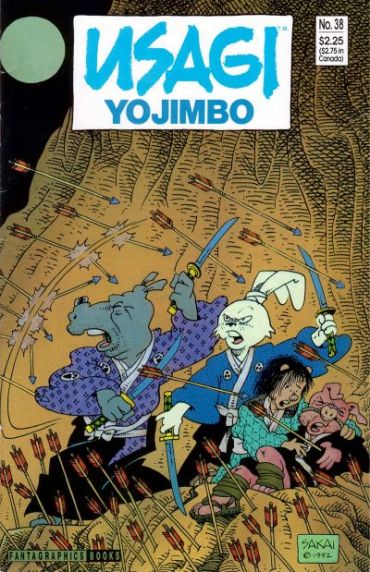
Star Wars: Queen’s Peril by E. K. Johnston

Queen's Peril Cover

Publisher: Random House Audio (Audiobook – 2 June 2020)

Series: Star Wars

Length: 6 hours and 10 minutes

My Rating: 3.75 out of 5 stars

Amazon

Prepare to dive back into a galaxy far, far away, as bestselling young adult author E. K. Johnston presents the very first Star Wars novel of 2020, Star Wars: Queen’s Peril.

Padmé Naberrie has always wanted to serve the people of her home planet of Naboo, and she knows that the best way to do that is to become Queen. Entering the competitive election, the 14-year-old politician is elected as ruler of Naboo. Casting aside her real identity for the protection of herself and her family, Padmé takes on a new name, Amidala, and moves into the royal palace, determined to bring change to Naboo. However, even a ruler as brilliant and diplomatic as Padmé is unable to do everything by herself, and she finds out that she is going to need help.

In order to keep her safe and to assist her with her needs, Padmé is introduced to a group of talented young women who will serve as her handmaidens. Acting as her assistants, confidantes, bodyguards and decoys, each of her handmaidens brings something different to the group, and it is up to Padmé to turn them into an effective team. Together, Padmé and her new friends seem capable of dealing with any challenge that may impact them.

However, there is a dark plot at work within the Republic, and its mastermind has Naboo in their sights. Soon Naboo is invaded by the armies of the Trade Federation, who seek to capture Queen Amidala and force her to sign away the planet. Forced to flee in disguise, Padmé sets out to reclaim her home and will do anything to free her planet. While Jedi, soldiers and a young chosen one may rally to their cause, the fate of Naboo ultimately rests on the shoulders of a young queen and her loyal handmaidens.

Queen’s Peril is an intriguing and enjoyable new addition to the Star Wars canon from bestselling author E. K. Johnston. I have been rather enjoying some of Johnston’s recent Star Wars releases, and I had a fun time reading her 2016 novel, Ahsoka, as well as last year’s fantastic release, Queen’s Shadow. Queen’s Peril is the first of several Star Wars books being released in 2020 (although some have been delayed), and I have been looking forward to seeing how this book turns out. This new novel acts as a prequel to Queen’s Shadow and is set both before and during the events of the first Star Wars prequel film, The Phantom Menace. This ended up being a fun and interesting read that explores some unique parts of Star Wars lore.

This latest Star Wars novel contains an intriguing tale that starts from the moment that Padmé is elected queen and takes on the Amidala persona. The first two thirds of this book follow the early days of Amidala’s reign, introducing Padmé and her handmaidens and showing how they became such a tight-knit team. There are a number of great moments during this first part of the story, and it was interesting to see the origin of a number of elements of the Amidala character that are shown in The Phantom Menace, such as her voice, the establishment of the decoy system, and a huge range of other compelling features. There are also several scenes that are dedicated to exploring why the Trade Federation decided to target Naboo and what the origins of their conflict were. I really enjoyed the first two thirds of this book, and I feel that the final third kind of let it down a little. The last part of the book focuses on the invasion of Naboo and follows the events of The Phantom Menace. While it was cool to see some different perspectives on the events of the film, this part of the book felt rather rushed, as the narrative jumped between a number of sequences from the movie in rather quick succession. Despite the problems with the ending, this was still a rather compelling story, and I did enjoy Johnston’s additions to the Star Wars universe.

While on the surface this book appears to be purely about Padmé, Queen’s Peril is actually about a number of different characters who made Padmé’s role as Queen Amidala possible. Padmé is naturally one of the main characters of the book, but all five of her handmaidens are just as important to the story. Johnston previously introduced each of these handmaidens in Queen’s Shadow, and briefly explored their unique skills and what they brought to the group. She does this again in Queen’s Peril, although this is done in greater detail, as this book shows each character’s history and how each of them became a handmaiden. Each of the handmaidens is given a distinctive personality, and all five get a number of scenes told from their point-of-view. I really enjoyed learning more about these characters, and it was great to see them come together as a group and work towards ensuring that Padmé was protected and an effective queen. While each of the characters are explored in some detailed, the biggest focus is on Sabé, Padmé’s first handmaiden and her main decoy (played by Keira Knightly in the film). The author spends time showing the unique relationship between Sabé and Padmé, and it was captivating to see the trust between them grow. Because she was so heavily focused on in the movie, Padmé does not get a lot of scenes in the last third of the book, so quite a bit this part of the story is told from the perspective of all the handmaidens. It was rather interesting to see how each of these characters went during the course of the film, and it was particularly cool to see some scenes with Sabé as she pretended to be the Queen.

In addition to Padmé and her handmaidens, Queen’s Peril also featured point-of-view chapters or scenes from pretty much all the key characters from The Phantom Menace film. The use of all these extra characters was an interesting choice from Johnston, and I liked how it expanded the story and showed some fresh perspectives and backstory for several major Star Wars protagonists. Most of these appearances are rather brief, with characters like Anakin, Obi-Wan Kenobi and Qui-Gon Jinn only getting a few minor scenes. However, other characters do get some extended sequences, especially Captain Panaka, the head of Amidala’s palace guards. Several chapters are told from Panaka’s perspective, and he becomes quite a key character within the book, mainly because he is the person who finds and recruits all of the handmaidens. Panaka is a major driving force of the plot, and it was interesting to see his role expanded from the films, especially as you get more insight into why he is so dedicated to the Queen. I also really liked how the book features several sequences told from the perspective of Senator Palpatine/Darth Sidious. These scenes were fun, as they showed a lot of Palpatine’s earliest manipulations, including how he was able to organise the invasion of Naboo. Overall, I rather appreciated how the author utilised all the characters within Queen’s Peril, and watching their development and interactions proved to be quite compelling.

Like the author’s other Star Wars novels, Queen’s Peril is intended for a young adult audience, and Johnston does a fantastic job tailoring it towards younger readers. This book has a lot of great young adult moments to it, especially as it focuses on a group of teen girls working together to outsmart a variety of adults and then eventually save their entire planet from an invasion. Queen’s Peril has some fantastic portrayals of these teen protagonists, and there are a number of sequences which show them stepping up or dealing with complicated issues that younger female readers will appreciate. While it is intended for younger readers, Queen’s Peril, like most young adult Star Wars novels, is also very accessible to all readers who are major fans of the franchise, and it is easy for older readers to get into and enjoy the plot of the book and its intriguing new additions to the Star Wars lore.

I did have a minor complaint about the release order of the books in Johnston’s series about Padmé. While I enjoyed both Queen’s Peril and Queen’s Shadow, I really do think that it was an odd decision to release Queen’s Shadow first, and then release a prequel novel a year later. It would have been better to release Queen’s Peril first to introduce the various handmaidens and help build up the emotional connection between them and Padmé, making their use and inclusion in Queen’s Shadow a bit more impactful. It might also have made a bit more sense to have Queen’s Peril only focus on events before The Phantom Menace, have another book focus exclusively on what was happening with the handmaidens and Padmé during the course of the film (which would have ensured that Queen’s Peril did not feel as rushed as it did towards the end), and then release Queen’s Shadow. While I am sure that there is some reason why the order for these books was a bit off, probably at the publisher level, I think they could have planned this out a little better.

I ended up grabbing the audiobook version of Queen’s Peril, and I had a great time listening to this book. Queen’s Peril has a short run time of just over six hours, so it is rather easy to get through this book quickly. Like all Star Wars audiobooks, this version of Queen’s Peril was a real auditory treat, due to the excellent use of the iconic Star Wars sound effects and scores from the movies, which are used to enhance each of the scenes. While it was great to once again hear all the fantastic music and intriguing background noises, Queen’s Peril’s greatest strength as an audiobook comes from its fantastic narrator, Catherine Taber. Taber is the actress who voiced Padmé in The Clones Wars animated television show, and, short of getting Natalie Portman in, is the perfect person to narrate a novel about the character. Taber also narrated the previous Johnston book about Padmé, Queen’s Shadow (indeed all of Johnston’s Star Wars books have featured the character’s voice actor as a narrator for their audiobook), and it was great to see her return. She naturally does a perfect voice for the character of Padmé, as well as for the handmaidens, who had similar speaking patterns due to their role as decoys. There are some great vocal scenes between these characters, especially when they are trying to perfect the Amidala voice, and they go through several variations throughout the book. In addition, because Queen’s Peril features nearly every major character from The Phantom Menace, Taber also had to voice several different people who were brought to life by some amazing actors in the original film. I felt that Taber did a fantastic job as imitating some of these voices, and it proved to be a real showcase for her skills as a voice actor. Overall, I had an amazing time listening to this audiobook, and I would strongly recommend this format to anyone interested in checking out Queen’s Peril.

Star Wars: Queen’s Peril is an intriguing and exciting new young adult Star Wars release from E. K. Johnson that acts as a sequel to her previous awesome novel, Queen’s Shadow. Johnston comes up with another compelling story that explores the early life of Padmé/Queen Amidala and her loyal handmaidens. While it does have some flaws, it is a very good book, and it should prove to be a fun read for established fans of the franchise and younger readers who are interested in breaking into the expanded universe. I had an amazing time listening to this book and I look forward to seeing what sort of Star Wars story Johnston produces next.

Amazon

Throwback Thursday: Usagi Yojimbo: Volume 9: Daisho by Stan Sakai

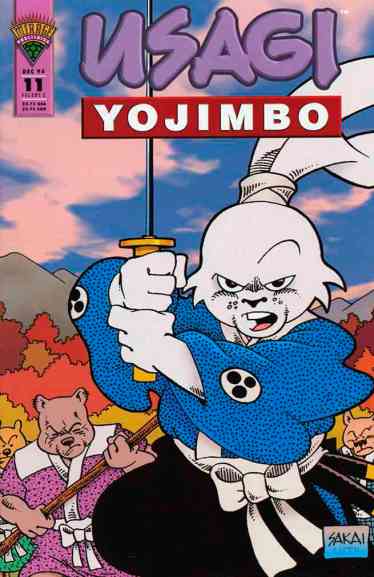
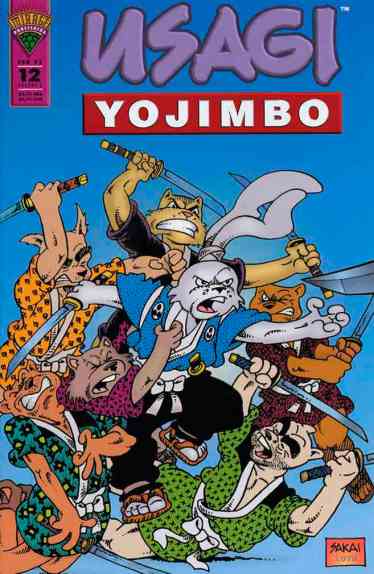
Usagi Yojimbo Daisho Cover

Publisher: Dark Horse Books (Paperback – 1998)

Series: Usagi Yojimbo – Book 9

Length: 215 pages

My Rating: 5 out of 5 stars

Amazon

Reviewed as part of my Throwback Thursday series, where I republish old reviews, review books I have read before or review older books I have only just had a chance to read.

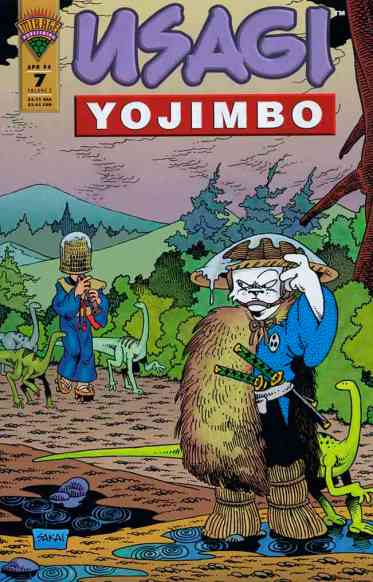
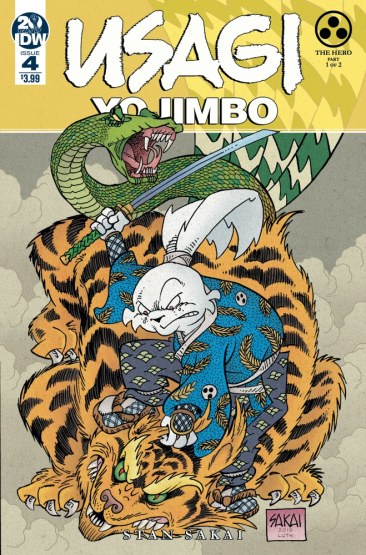
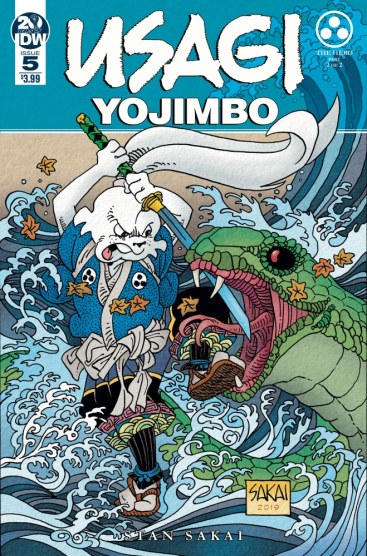
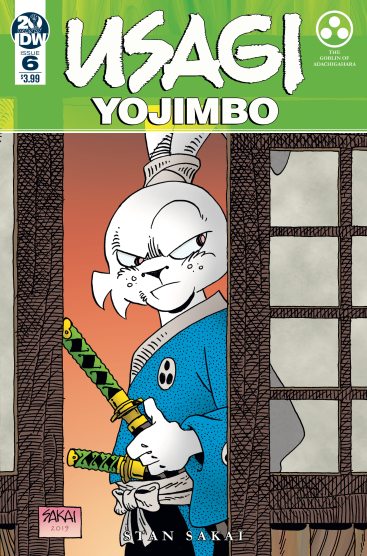
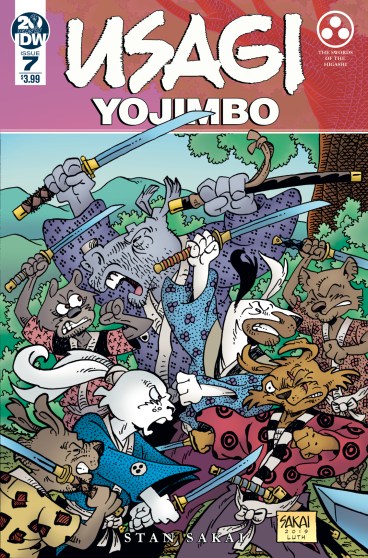
Usagi Yojimbo Mirage - #7

It has been another good week of reading and reviewing for me, so I thought I would reward myself by doing a Throwback Thursday review of Daisho, the ninth volume in the outstanding, long-running Usagi Yojimbo series from one of my favourite authors, Stan Sakai.

Daisho is an impressive and exciting entry in the series, which unsurprisingly gets a five star rating out of me (full disclosure, every volume of this series is going to get five stars from me, it is just that damn good). This volume contains Issues #7-14 of the second run on the Usagi Yojimbo series, which was originally published by Mirage Comics (Issues #7 and #8 are only partially represented in Daisho as some stories from these issues were used in the prior volume, while a story from Issue #13 appears in the tenth volume that I will review next), and which has been collected into this volume by Dark Horse Books. This ninth Usagi Yojimbo volume is filled with several fantastic and creative stories that follow Usagi as he journeys across the land, getting into all manner of trouble and misadventures in this version of feudal Japan populated solely by anthropomorphic animals. Daisho serves as a significant inclusion in the overarching series, due to its connections to previous stories, and its introduction or resurrection of several key characters.

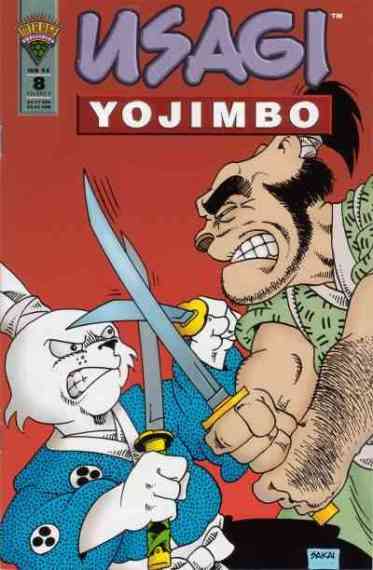
Usagi Yojimbo Mirage - 8

This volume starts off with an inspiring and tragic story, The Music of Heavens, which once again sees Usagi traversing the wilderness. His solitude is broken when he encounters the pack of Tokage lizards who he unwittingly befriended in a previous story, The Lizards’ Tale (which was featured in Volume 8: Shades of Death). While Usagi is less than thrilled to see the Tokages, they end up leading him towards another traveller who is making their camp in the woods. The traveller, Omori Kazan, is a mendicant Buddhist priest and skilled musician, who invites Usagi into his camp and talks to him about the various forms of music he studies. However, someone is stalking their camp, determined to get revenge and unafraid to kill an innocent bystander to get it.

I really liked The Music of Heavens and it proved to be a compelling first entry in this volume. The story is based on Usagi’s encounter with a new character, Omori Kazan. Kazan is an intriguing person due to his position as a komuso monk (the monks of emptiness) of a particular sect of Buddhism, which lends him a very distinctive look thanks to the woven basket hat (tengai) he wears on his head disguising his features. Kazan has an amazing arc that delivers a lot in a short while, as he introduces himself to Usagi and the reader, discusses music and religion, and then simultaneously meets his end while also experiencing the divine for the first time. This entire character arc is both beautiful and tragic at the same time, and it provides both Usagi and the reader with some significant emotional moments, especially when it comes to Usagi’s farewell to the Tokages. I also liked how Sakai utilises an antagonist from a previous story, and the fight between Usagi and this character was swift and well-drawn. This was an excellent introductory entry for this volume, and it is a story that I really enjoyed.

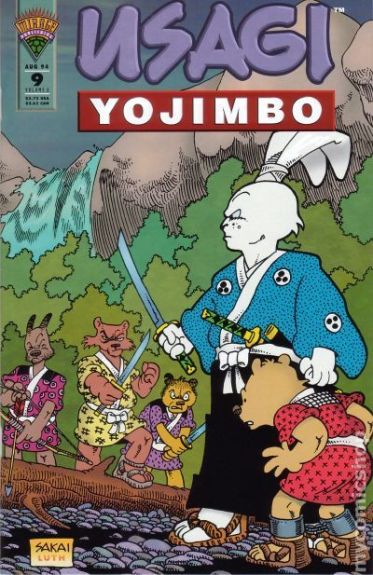
Usagi Yojimbo Mirage - 9

The second story in Daisho is the entertaining and clever entry, The Gambler, the Widow, and the Ronin. This story reintroduces the gambler from the previous story, The Duel (featured in Volume 6: Circles), who is up to his old tricks of organising deadly sword duels and cashing in on the bets of the local townsfolk. After the death of his previous samurai accomplice, Shubo, during a duel with Usagi, the gambler has been forced to find a new partner, the brutish and less skilled swordsman, Kedamono. However, Kedamono’s greed has convinced the gambler that it is time to end their partnership, and he quickly finds the ideal solution when Usagi arrives in town. However, as the gambler plots, he fails to realise that he is being stalked by Shubo’s widow, who is determined to get her revenge for the role he played in her husband’s death.

This was another amazing story that serves as a fantastic follow-up to a great prior Usagi Yojimbo story. I always get a real western vibe out of The Gambler, the Widow, and the Ronin, due to its title and the premise around a duel, it proves to be an excellent entry in this volume. Usagi is once again drawn into the plots of the gambler, and thanks to his humility, honour and good manners, which are mistaken as a weakness, both Kedamono and the local villagers are convinced that Usagi is a poor swordsman. However, the gambler, who has seen Usagi in action before, manipulates the odds so that he wins all the money when Usagi defeats his opponent, in a fun reversal of the events of The Duel. This was an incredibly entertaining scene as Usagi is again forced to deal with a bloodthirsty crowd, while the gambler feigns being saddened by the loss of his companion, despite being secretly delighted. However, the gambler ends up getting his comeuppance, and the widow, whose sad final scene was so memorable in The Duel, finally gets a small measure of justice. This was a very clever and enjoyable story, and I really loved how Sakai dived back to a prior standalone story to provide some closure and a fun continuation.

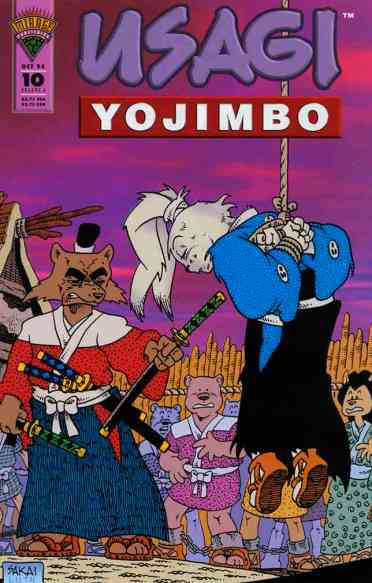
Usagi Yojimbo Mirage - 10

The next story is called Slavers, and it is a longer entry made up of two separate issues. In Slavers, Usagi encounters a young boy being pursued by bandits. Usagi defeats them and learns that the boy was attempting to get help for his village, which has been taken over by a gang of bandits who have enslaved the villagers as part of a destructive scam to steal their harvest and make a small fortune. Deciding to help the villagers, Usagi infiltrates the gang and attempts to rally the villagers to his cause. However, the gang’s leader, the villainous General Fujii, discovers the deception and captures Usagi, planning to kill all the villagers to make good his escape. Slavers is an amazing story that is not only intriguing in its own right but which also expertly sets up the series of follow-up stories that make up most of this volume. While the standalone narrative of Slavers gets a bit dark at times, due to an extended capture scene surrounding Usagi, it is a rather compelling story filled with action, deception and struggles against adversity.

Slavers is quickly followed up by three separate but distinct stories that can be combined together with Slavers into one large narrative that wraps up all the loose ends from the initial entry. The first one of these stories, Daisho Part One, sees Usagi in hot pursuit of General Fujii, who is in possession of Usagi’s precious swords. Due to the brutal actions of Fujii, Usagi loses his quarry and is forced into an extended hunt for him, eventually coming to a ransacked village. It turns out that the village had recently been raided by Fujii’s new gang, and Usagi must make a hard choice between recovering his soul or helping those in need.

Usagi Yojimbo Mirage - 11

I have a lot of love for Daisho Part One; it is probably one of my favourite entries in this entire volume. The story starts out with a magnificent and beautifully drawn sequence that shows the various elaborate processes by which a samurai’s swords are created. This impressive opening sequence is one of my favourite pieces of Usagi Yojimbo art from the entire series, and its creation highlights not only Sakai’s skill as an artist but his ability to research and portray intriguing parts of Japan’s unique culture and heritage. This sequence also shows the important a samurai’s swords to their wielder, as they are reflections of that warrior’s soul. This key concept is then brought to life in the main story, as it sees a somewhat unhinged Usagi risking everything to reclaim his swords from Fujii. Sakai does an outstanding job showing off how frustrated and enraged Usagi is at having his swords stolen from him, and he comes across as being quite frightening several times through the story. Usagi’s anger comes to a head when he reaches the village and his initial decision is to abandon the villagers and immediately follow Fujii and his men. However, a local village girl is able to shame him into thinking of others, and the old Usagi returns, providing aid to the villagers. This was an extremely compelling story that does a wonderful job combining a powerful, character driven narrative, with some exquisite artwork and some intriguing aspects of history, into an exceptional entry in this volume.

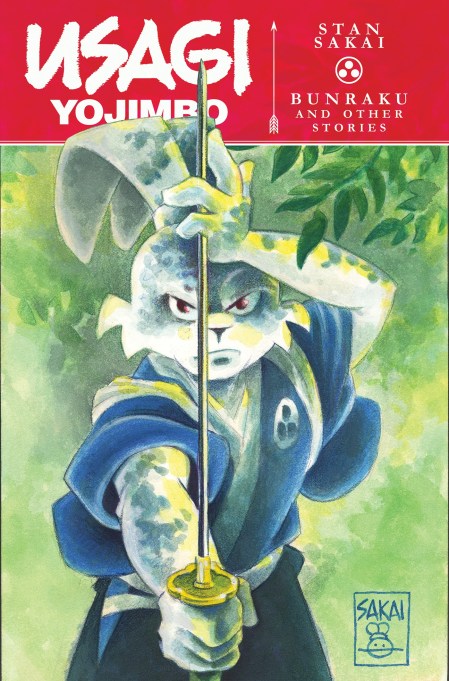
The next story in this volume is Mongrels, a quick story about a recurring Usagi Yojimbo side character, the bounty hunter Gen, which occurs around the same time as Daisho Part One. In this story, Gen enters a village and starts asking questions about his current bounty, General Fujii. However, he is not the only bounty hunter in town, as he soon encounters the notorious hunter Stray Dog, who is also hunting for Fujii. After a tense conversation, the two-part ways; however, both are determined to capture Fujii and outsmart their competition. This was a fun story that not only brings Gen into this multi-issue narrative but also introduces a couple of great recurring characters. Stray Dog is a fantastic character in the Usagi Yojimbo universe, and he often appears as a compelling rival (and sometime partner) to Gen (such as in the latest Usagi Yojimbo volume, Bunraku and Other Stories). This story serves as a swift and clever introduction to the character, and it was fun to see the rivalry between Gen and Stray Dog form so quickly. Mongrels also introduces the extremely entertaining side character, the Snitch (also called Toady), a sneaky, greedy character who provides information to the highest bidder. While the Snitch has only a short appearance in this story, he is going to start appearing in a lot of follow up volumes, and it is always fun to see where a character starts out. Overall, this was a great story that fits a lot of significant introductions and events into a few short pages.

Usagi Yojimbo Mirage - 12

The final story in this arc surrounding General Fujii is Daisho Part Two, in which Usagi and his guide meet up with Gen and Stray Dog right at the end of Mongrels. The three samurai decide to team up to raid General Fujii’s lair, and they engage in an all-out fight for money and honour. However, not everyone on the team is keen to work together, and betrayal is afoot. This was an excellent conclusion to the entire storyline, which I really enjoyed. This is a story chocked full of action, as the entire narrative sets up a massive fight between multiple combatants within an abandoned temple. There is some great character work within this story, not only from the protagonists, who bicker and fight amongst themselves, but also with the major antagonist, General Fujii. There some intriguing scenes that show Fujii’s efforts to lead and control a gang of bandits and cutthroats, and I also liked how Sakai shows him being haunted by thoughts of Usagi, whose swords he is holding onto. Usagi and Fujii finally get their showdown in this story, and it served as a fantastic end to this whole extended narrative. There are also some compelling moments surrounding Stray Dog, as he seeks to cheat the others out of the reward money for Fujii. While this initially paints him in a bad light, the source of his need for money is quickly shown, and it highlights just how complex and multifaceted this new side character is. I really liked how this entire story narrative ends, and Daisho Part Two is an excellent part of this volume.

The next story in this volume is the two-part entry, Runaways. In Runaways, Usagi journeys through a small town, when he finds himself in the path of a procession of the local noble lady. Hearing the lady’s name, Usagi is thrown back into the past as he remembers an adventure that occurred many years prior, when he was in the service of Lord Mifune. After finding out that the love of his life, Mariko, has married another man, Usagi is given a seemingly simple mission as a distraction. His task, to escort the young Princess Kinuko to the lands of her future husband, becomes infinitely more complicated, when their party is ambushed by a horde of Neko Ninja. Escaping with the princess, Usagi disguises Kinuko as a peasant in an attempt to hide her from their pursuers. However, the more time that Usagi and Kinuko spend together, the closer they become, until the lines of duty, honour and station become extremely blurred.

Usagi Yojimbo Mirage - 13

This was another exceptional story within the volume, and I liked how it flashed back to an adventure during his pre-ronin life. Set during the period when Usagi served Lord Mifune (as shown in Volume 2: Samurai), Runaways contains a powerful and emotional narrative that is actually based on Roman Holiday (Sakai is a massive Audrey Hepburn fan), which sees a princess run away with a strong male protagonist and grow close to him, despite her responsibilities and their differences in station. This proves to be a fun, if extremely loose adaption of the movie, and Sakai builds up a complex relationship between Usagi and Kinuko, as the two characters, both tragic victims of circumstances when it comes to love, grow closer to each other. However, despite their feelings, this relationship is fated to never be, and it ends in heartbreak, with the memories of it haunting both Usagi and Kinuko years later. I really liked how this story played out, and it was interesting to see aspects of samurai honour folded into the narrative from Roman Holiday. Other fantastic highlights of this story include the multitude of impressive fight scenes between Usagi and the Neko Ninja, starting with a major battle between two large groups of samurai and ninja. I also liked the exploration of the traditional Tanabata Matsuri festival that the two characters find themselves attending, especially as Kinuko has fun experiencing local customs, foods and activities that someone of her station will never get to enjoy. It was also cool to see an early adventure from Usagi, especially as this entry foreshadows events that have occurred in other volumes, including the return of several now-dead characters, such as Shingen (future leader of the Neko Ninja, who was introduced in Volume 3: The Wanderer’s Road, and died in Volume 4: The Dragon Bellow Conspiracy). An overall exciting and impressive story, Runaways is an amazing highlight of this volume.

The final entry is the short story, The Nature of the Viper. In this tale, a local fisherman finds the badly injured body of Usagi’s recurring foe, Jei, after he was thrown from a cliff during the climatic events of Circles. Bringing him back to his hut, the fisherman tends to Jei and manages to save his life. When Jei awakens, he shows his gratitude to the farmer be recounting a tale of viper and a peasant (a version of the classic fable, The Farmer and the Viper), before killing him and resuming his hunt for Usagi. This is a good, short entry that shows the fate of Jei after his last appearance. Jei comes across just as villainous and creepy as ever, and it was fun seeing the fisherman slowly realise just how much trouble he is in as the story progresses. While having a villain recount The Farmer and the Viper as justification for why they are killing a person is somewhat cliched at this point (although to be fair, this story was written back in the 90s), it was still a fantastic sequence. I think that this was an excellent way to end the volume, especially as the reader is left knowing that Jei has returned and that Usagi will be encountering him once again in the future.

Usagi Yojimbo Mirage - 14

Sakai has once again knocked it out of the park with the ninth volume in his series. Daisho contains several outstanding and memorable stories that are all wildly entertaining and contain some clever links to past and future entries in this series. I had an absolute blast reading this volume, and it is an extremely strong addition to the incredible Usagi Yojimbo series that comes highly recommend.

Amazon

We are the Dead by Mike Shackle

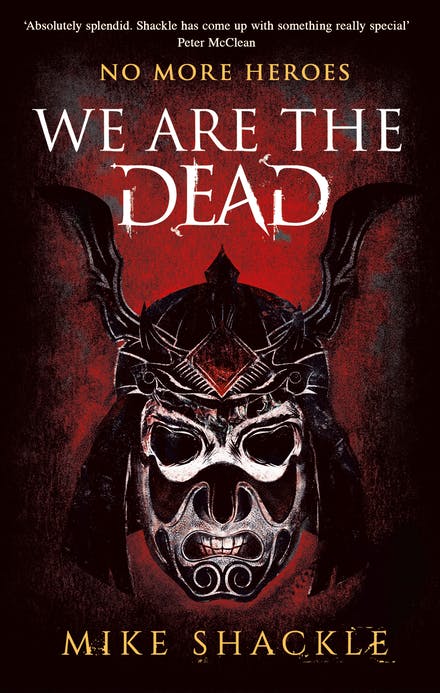
We are the Dead Cover

Publisher: Orion (Audiobook – 8 August 2019)

Series: The Last War – Book One

Length: 18 hours and 6 minutes

My Rating: 4.75 out of 5 stars

Amazon     Book Depository

Honour, loyalty, service and death! I finally get around to checking out one of last year’s hottest fantasy debuts with this review of We Are the Dead by Mike Shackle.

Generations ago, the nation of Jia was protected by powerful mages who wielded amazing magic that could shape the world around it. But when the magic faded, the people turned to the Shulka, their revered warrior caste, who held back the barbaric northern Egril tribes with their tactics, superior weapons and skills in combat. For hundreds of years the Shulka have successfully defeated the Egril raids, but their many victories have led to complacency.

During the latest raiding season, the Shulka are surprised when an organised and well-armed force marches upon them. Supported by demons and magic, the like of which has not been seen in an age, the Egril swiftly defeat the Shulka armies and conquer all of Jia in days. Their conquest is quick and brutal, and few are spared the bloody wrath of the Egril and their monsters. Those who do survive are forced in servitude and must worship the Egril’s terrible god or else suffer the consequences.

Now, six months after the invasion began, the country appears beaten, but there are always some heroes who are ready to fight back. In the capital city, Tinnstra, the disgraced, cowardly daughter of Jia’s greatest Shulka general finds herself drawn into a plot to save the royal family and soon finds the fate of the entire Kingdom resting in her hands. Elsewhere, a crippled Shulka warrior and his wheelchair-bound son attempts to lead an organised rebellion, but he soon finds that his greatest assets may be a young terrorist and a widowed mother who is trying to provide for her son. Can this unusual group of damaged heroes turn the tide against an all-powerful army or is it already too late to save their country from the control of a dark death god?

We Are the Dead is an intricate and impressive dark fantasy debut from talented new author Mike Shackle, which forms the first book in his The Last War series. This fantastic book came out last year, and it was one of the books I most regret not getting a chance to read in 2019, especially after I saw some of the very positive reviews being written about it. I really have been meaning to check this novel out for a while now, so I went out and grabbed the audiobook format of We Are the Dead a few weeks ago and started listening to it. I am extremely glad that I ended up reading this book, as I fell in love with this novel and its compelling character-driven story.

This novel contains an outstanding and exciting narrative that follows five unique and intriguing characters across eight days of rebellion and bloodshed in a conquered nation. We Are the Dead’s story starts off big; after a quick introduction to the world and a couple of the characters, everything soon blows apart as a destructive full-scale invasion occurs. The story than jumps forward six months and explores how the world has changed, and what has happened to the central group of characters. What follows is five intriguing and exciting separate storylines, each told from the perspective of a different character involved in various parts of the first major attempt from the Shulka resistance movement to strike back and restore their country. Each of these five storylines starts off by examining the unique adventures and experiences of that character and showing how they are brought into the latest round of fight. Each of the storylines starts off exclusively focusing on one point-of-view character, but they quickly start to connect as the plot of the book unfolds. All five separate storylines eventually come together exceedingly well into one extremely enjoyable and action-packed narrative that proves hard to put down. I really liked the way that all storylines all joined together, and it was fantastic to see the quicker narrative jumps between the various characters at the end of the book. I also enjoyed how the main story focused on eight days of conflict and adventure, with the various character arcs running concurrently with each other, as this allowed for a tight, powerful narrative. The various characters go through a lot of big and life-changing moments in the span of these eight days and there are some major cliff-hangers and surprising deaths that leave the reader in wild suspense. All of this makes for some great reading, and you will be on the edge of your seat for the entirety of this book.

Shackle chooses to tell his exciting story through the eyes of five separate point-of-view characters, all of whom have their own viewpoint and adventures within We are the Dead. Each of these characters have a fascinating character arcs, especially as most of the characters grow through adversity as they experience the horrors of war and learn the necessities of sacrifice, duty and loyalty.

The character who got the most focus within this novel was Tinnstra, the daughter of a legendary Shulka warrior who has a lot of high expectations weighing on her shoulders. Despite her heritage and her skill with a blade, Tinnstra starts the book dropping out of the Shulka academy, because she is a blatant and obvious coward. Managing to flee from the invasion, Tinnstra attempts to forge a new life for herself in the conquered capital, but eventually finds herself in the midst of the Shulka rebellion, with a particularly important package that could change the course of the war. At the start of this book, I really did not like Tinnstra, mainly because every second sentence in her chapters involved her pathetically doubting herself or calling herself a coward. Thankfully, this led to a rather good storyline about finding one’s courage and stepping up in a big way, and she eventually came across as a real badass with some fantastic and enjoyable chapters towards the end of the book.

Another great character is Jax, a former Shulka general who, after losing his arm during the initial invasion, becomes a determined resistance leader with his wheelchair-bound son. Jax is probably the most consistent protagonist throughout most of the book, serving as a steady and wise figure who is forced to face the reality of failing his country. Jax is an extremely likeable character, which makes it really hard for the reader when he goes through some incredibly dark moments that have the potential to break him.

Next up we have Dren, a teen terrorist who, after witnessing his family dying during the invasion, becomes a rabid killer, brutally attempting to take out any Egrils (or Skulls, as they are known, due to their distinctive helmets), not matter the collateral damage. Dren is a pretty unlikeable kid at the start of the book due to his overwhelming anger towards the Egrils, any Jian who associates with them and the Shulka resistance, who he hates just as much as the Egrils due to the way that they treated the peasants before the invasion and because of their failure in stopping the slaughter. However, as the book progresses, the reader gets more and more invested in Dren’s compelling story, especially when he starts spending time with Jax. Jax is a terrific mentor figure for Dren, who eventually learns the error of his ways and starts to take more responsibility for himself and the band of child terrorists he has recruited.

The final Jian character who the book focuses on is Yas, a single mother who attempts to earn a living working as a maid for the invaders. Yas is recruited as a spy by the Skulka resistance and ends up becoming more and more involved in their plots and schemes. Yas’s storyline is another fantastic arc, and there are some interesting similarities to Tinnstra’s arc, in that she finds her courage to fight back and do what is right. However, Yas’s story is more tied into the love of her family and her son, and how she wants a better world for her child to grow up in.

In addition to Jian characters, Shackle also tells a portion of the book from the perspective of Darus, an Egril Chosen, an officer who has been granted a magical ability by their powerful leader. Darus is a psychotic torturer with severe sister issues, who delights in causing pain and torment and who is determined to win glory and power. Darus’s powers are ironically that of healing, meaning that he is essentially an immortal antagonist who can also heal people that he comes into contact with. He uses this power throughout the book to heal his victims, bringing them back from the brink of death, so that he can torture them again and again in order to break their spirits. As you can probably guess, Darus is a rather reprehensible and unredeemable character, but one who offers an intriguing counterpoint to the protagonists. It is always cool to see something from the villain’s point of view, and I felt that Darus was a perfect antagonist for this dark and twisted novel.

All five of these characters proved to be extremely interesting to follow, and I really liked where all of their arcs went. Shackle does an impressive job making their portrayals and emotions seem realistic, and you can almost feel the fear, anger and hatred that several of the characters exude. I appreciated how none of the protagonists were perfect heroes, and most of them are victims or products of the war and the circumstances they find themselves in. I found it rather interesting to see how the various characters saw each other throughout the course of the story, such as when some of the characters viewed Tinnstra for the first time and mistake her expressions of terror and apprehension for looks of determination and impatience to get towards the enemy. I also have to highlight the raft of cool and likeable side characters featured throughout the course of the story, many of whom steal several scenes from the point-of-view characters. These are a fun collection of side characters, although readers really should not get too attached to them, as they tend to have a rather short lifespan within the course of the book. Overall, We are the Dead contains some excellent and enjoyable characters, and I really appreciated the complicated and captivating storylines that Shackle wove around them.

In addition to the impressive story and excellent characters, Shackle has come up with an awesome new fantasy world for We are the Dead. The entirety of the story is set within the nation of Jia, a cultured land with a proud warrior tradition, which is somewhat reminiscent of feudal Japan. Shackle does a fantastic job of setting up this landscape in the initial couple of chapters, before everything changes thanks to the invasion. The new Jia, six months after the brutal conquest, is a vastly different place, filled with hunger, fear and desperation as the survivors are forced to adapt to their new way of life. Shackle did an amazing job portraying a nation completely under enemy occupation, and I was put in mind of Nazi-occupied France, due to the round up of civilians, the inclusion of collaborators and snitches, retaliations against the populace and the careful resistance movements relying on help from a nation across the sea to survive. The Egrils also proved to be a great antagonistic nation for the plot of this book, and I loved how they were able to fool the conceited Shulka warriors by pretending to be tribal savages for years, before invading with an organised and advanced army, utilising magical and demonic assets to perfection. There were some distinctive Nazi elements to the Egrils, such as the way that they swiftly conquered all of Jia in a few days with Blitzkrieg-like tactics, their absolute devotion to their anointed leader (who is totally going to turn out to be the lost brother of the mage Aasgod, right?), their stormtrooper-like appearance and tactics, as well as the fact that the narrator of the audiobook format gave all the Egril characters a distinctive Germanic accent. All of this proved to be an excellent background for We are the Dead and I loved seeing the story unfold in this recently conquered fantasy nation.

Those readers who like some action in their stories will be extremely satisfied with We are the Dead, as Shackle has loaded his book with all manner of fights, battles and gratuitous violence (the best type of violence). This is an extremely action-packed novel, and I personally enjoyed all the cool fight sequences, from the small-scale battles between trained warriors, the brutal hit-and-run tactics of Dren’s fighters, and several larger fight sequences between opposing forces. Shackle proved to be very adapt at bringing these action sequences to life, and I found myself quite pumped up as a result of reading this book. Readers should be warned however that We are the Dead does feature a number of vivid and disturbing torture sequences, which are made even worse by the fact that the torturer, Darus, can heal his victim and keep inflicting pain, over and over again. As a result, if intense torture scenes make you uncomfortable, then you are probably better off avoiding this book.

As I mentioned above, I chose to listen to an audiobook version of We are the Dead, rather than grabbing a physical copy. The audiobook format has a run time of just over 18 hours, and it is narrated by Nicola Bryant. This is a lengthy audiobook and it took me a little while to get through it. Part of this is because the story is a tad slow at the start of the book, although I did end up absolutely powering through the last six hours extremely quickly in comparison to the first two thirds of the novel. I really enjoyed the audiobook version, and I found it to be an incredible way to absorb We are the Dead’s clever and detailed narrative. I was also impressed with Bryant’s narration, as she brought some real passion to the audiobook. You could hear the intense emotions in Bryant’s voice as she narrated the story, and you can tell that she was trying to emulate what the characters were feeling with her narration. Bryant also utilised a fantastic and distinctive set of voices for the various characters featured within the novel, and I think that she had an excellent grasp of their personalities and emotions. This proved to be an exception audiobook, and I would definitely suggest checking out this format of We are the Dead.

We are the Dead is an outstanding and deeply enjoyable fantasy novel from Mike Shackle, who really hit it out of the park with his debut novel. I had an amazing time listening to this book, and I loved the blend of compelling story, fantastic setting, complex characters and intense action sequences. This book comes very highly recommended, and I am regretting not picking up a copy of this book last year. I will not be making the same mistake later this year when Shackle’s sequel book, A Fool’s Hope, comes out in December, and I am looking forward to seeing where the story goes next.

Amazon     Book Depository

Film Review – Justice League Dark: Apokolips War

Justice League Dark - Apokolips War

Studio: Warner Bros. Animation and DC Entertainment

Series: DC Universe Animated Original Movies – Film 38, DC Animated Movie Universe – Film 15

Director: Matt Peters and Christina Sotta

Producer: James Tucker

Screenplay: Mairghread Scott

Writers: Christina Sotta and Ernie Altbacker

Length: 90 minutes

My Rating: 5 out of 5 stars

For this review I am going to go a little outside my wheelhouse by reviewing the latest animated comic book adaption from DC comics, Justice League Dark: Apokolips War. Fair warning: this is going to be a rather in-depth analysis, so those people who have not seen this film yet might be better served watching it first and then coming back. I will also have a spoiler alert for a key part of the movie towards the end of the review, so keep an eye out for that.

Over the last 13 years, DC Comics have been leading the way over Marvel Comics in the distinctive field of animated movie adaptations of their comic books. While Marvel have produced a couple of decent animated films, such as Planet Hulk and Hulk Vs., the DC adaptations have been leaps and bounds ahead of them. Most of these epic DC animated films have been part of the DC Universe Animated Original Movies project, which has produced 38 distinctive animated films since 2007. There have been some rather impressive and enjoyable releases as part of this project, and I have watched each one of them as soon as they have come out.

While a lot of the DC Universe Animated Original Movies stand alone, 15 films were set within a shared universe, with the same group of voice actors reprising their roles multiple times. This shared universe, known as the DC Animated Movie Universe, started in 2013 with Justice League: The Flashpoint Paradox, and examines an alternate universe inadvertently created by the Flash. This new universe is very heavily influenced by The New 52 continuity of comics (but don’t hold that against it), and features an interesting collection of films featuring a range of different DC characters, although there is a noticeable and understandable focus on Batman and the Justice League. Justice League Dark: Apokolips War is the 15th entry in the DC Animated Movie Universe and serves as the conclusion to most of the storylines that were featured within the preceding 14 movies. This film was directed by Matt Peters and Christina Sotta, and features a story written by Christina Sotta and Ernie Altbacker, with the screenplay written by Mairghread Scott.

Following two previous attempts to conquer Earth by intergalactic tyrant and New God Darkseid, the Justice League is determined to safeguard the planet no matter what. Led by a vengeful Superman, the League launches a pre-emptive attack against Darkseid’s fortress planet of Apokolips, when it becomes clear that he intends to invade Earth again. However, the League’s attack fails miserably as they fly into a trap set by Darkseid, who uses his new troops, the Paradooms, to swiftly defeating the entire Justice League, killing or capturing most of its members.

Now, two years later, Earth has been brutally conquered by Darkseid, who has devastated the planet, and intends to drain it of its magma in order to fuel his future designs of conquest. With nearly all of Earth’s heroes killed during Darkseid’s assault, only a scattered few remain to oppose his plans. At the fore is Clark Kent, the former Superman, who has been stripped of his powers by Darkseid, and who now leads a resistance movement with his wife, Lois Lane. Determined to save the Earth no matter the cost, Clark recruits the surviving members of the League and the Teen Titans: Raven, Damian Wayne and John Constantine for one final mission.

With the help of an odd and violent group of villains, including Lex Luthor, Etrigan the Demon and Harley Quinn’s Suicide Squad, Superman and small team attempt the impossible, a second assault on Apokolips. However, even if they succeed in reaching Apokolips, they will face terrible opposition. Former members of the Justice League, including Batman and Wonder Women, have been converted into loyal soldiers for Darkseid, and they will do everything in their power to defend him. Can Superman and his team defeat Darkseid once and for all, or are these Earth’s final days?

Well damn, now that was one hell of an animated film. As I mentioned above, I have watched a ton of animated comic book adaptations but Justice League Dark: Apokolips War might just be one of the finest and most impressive animated adaptations that DC comics has ever created. This outstanding, five-star film is just plain amazing, and I had an incredible time watching it (multiple times). Apokolips War contains an intense story, pulse-pounding action, an amazing voice cast and a superb connection to prior films and comics, which helps create an epic and powerful animated movie experience. The creative team behind this movie did an exceptional job on this film, turning it into an intense and addictive viewing treat that I absolutely loved. Viewers should be warned, this is not a film for kids, as it has a well-deserved R-rating (MA15+ in Australia), which it earns very quickly and very explicitly.

At the heart of the excellent movie is an exciting and clever story that pits the broken remainder of Earth’s heroes against the ultimate villain in the DC canon. Apokolips War has such a cool concept, starting off with the entire Justice League getting taken out in the first few minutes and then abruptly jumping two years into the future, showing a world devastated by an evil alien invasion. This perfectly sets the scene for a character-driven narrative that follows the last desperate attempt of a handful of mixed protagonists, as they attempt an all-or-nothing mission with extremely high stakes. This results in all manner of character development, tragedy, intense action, and a fantastic smattering of witty humour, which all comes together into a compelling and utterly memorable overall narrative. I was deeply impressed with where the writers took this fantastic story, and I really appreciated all the existing storylines and the substantial character arcs that they were able to explore, expand on and finalise within the movie’s hour and a half run time. This was such a great story, and it worked exceedingly well with the enjoyable characters, eye-catching animation and the awesome team of voice actors to create an amazing overall film.

One of the things that I think I should address first is about whether or not you need to see the other entries in the DC Animated Movie Universe before watching Apokolips War. Due to its cool action and well-written plot, this is a film that is rather easy for viewers unfamiliar with the franchise to follow and enjoy, although a lot of the story elements will make a lot more sense if you are familiar with the DC Comics universe and characters. While you can probably get away without watching any of the previous movies, this is the 15th and final entry in an interconnected universe, so there are obviously going to be some advantages to watching these other films first. For example, you get a much better understanding of the characters, their relationships and their personalities in this universe, and having this knowledge about the characters beforehand can really increase the dramatic punch that a bunch of their actions have. I also personally enjoyed the continued storylines of this film universe, and I liked seeing how this movie wraps up a lot of character arcs and answers some interesting questions. As a result, I would strongly recommend watching some of the other movies first: The Flashpoint Paradox, Justice League: War, Justice League vs. Teen Titans, Justice League Dark, Suicide Squad: Hell to Pay, The Death of Superman and Reign of the Supermen as a bare minimum (yes, I know that calling seven movies a minimum is a bit much, but that just goes to show how intricate this animated universe was).

The creators of this movie utilise an intriguing and unique cast of characters, continuing many of the character arcs established in the prior animated movies. Fair warning: quite a few major comic book characters, including some characters who have been key additions to this animated universe, die in the opening moments of the movie, while some others only get a few scenes, often without any dialogue, before they are also killed. While this movie has quite a huge death toll, I think most of the killings do serve a purpose by motivating the surviving characters, highlighting the brutal nature of the film and its antagonist, or providing a real emotional punch to the viewer. While a large number of characters from the DC universe only get small roles, Apokolips War does contain a rather intriguing and diverse group of central characters who are extremely interesting to follow.

The main character of Apokolips War is John Constantine, the rogue magician last seen in Justice League Dark. Ever since his live action television series a few years ago, Constantine has been popping up in all manner of DC Comic adaptions. Constantine is a fantastic central protagonist, constantly moving the plot along and providing entertaining commentary and witty remarks about the events occurring around him. He also has a rather tragic storyline, which sees him full of regret and shame after he let down his love interest, Zatanna. Not only does this result in a conflict with Superman, but it also serves as a driving force throughout the movie as he tries to redeem himself. Constantine also serves as the heart of the entire movie, acting as a confidant to several characters and providing inspiration during key moments, including one impressive speech at the very end. While he is an amazing character, he was a bit overused when it came to solving problems, as he seemed to have a magical solution for nearly every obstacle that the protagonists came up against. While it does show off his resourcefulness, and his jack-of-all-trades approach to magic, I thought that it was a bit of a crutch for the story at times. Still, I loved Constantine as a protagonist, and I cannot think of anyone better to be the main character for this film.

Another character that I really appreciated throughout this movie was Superman/Clark Kent. If the recent live-action DC movies have shown us one thing, it is that Superman is a very hard character to write or portray at times, due to his powerset, his iconic nature and his somewhat dated ideals. However, the DC Animated Movie Universe is one of the few projects which has covered the character perfectly and allowed the viewer to care about him. His use in The Death of Superman and its sequel Reign of the Supermen was particularly impressive, and the creative team have followed that up extremely well with Apokolips War. In the opening scenes, he is an angry and vengeful character, recklessly determined to take the fight to Darkseid and finish him off for good. However, following his defeat, he is cast back down to Earth without his powers and with a painful liquid Kryptonite tattoo to remind him of his failure and to demoralise those people he encounters. Despite this, Superman shows his usual spirit and determination, rallying the remaining heroes to Apokolips, and is a generally fun and inspirational character. The best thing about his character, however, is his relationship with Lois Lane throughout the film. Lois is a major badass in Apokolips War, reverting to the resistance leader persona that she had in The Flashpoint Paradox and leading the various heroes and villains (whom she brings to her side after a boxing match with Harley Quinn in a very fun scene). The relationship between Lois and Clark is one of the major emotional centres of Apokolips War, and it serves as a great continuation of their entire joint character arc from their previous movies. It also leads to the most powerful and emotionally charged scene of the entire movie, which was an extremely touching and memorable moment.

The other major protagonists are the two surviving Teen Titans, Robin and Raven, who both add a lot to the plot. The Robin in this movie is the Damian Wayne version of the character, who has been a focal protagonist of several films in the DC Animated Movie Universe. While Damian Wayne is not my favourite Robin (Tim Drake for the win), he has been a solid part of this shared universe, especially in the two Teen Titans movies. In Apokolips War, Damian is his usual arrogant self, although he has grown and matured since his introduction. However, the events at the start of the film turn him to a darker path, and he ends up leading the League of Shadows like his grandfather before him. While at first reluctant, he is convinced to help their mission by Raven, to whom he had grown close in Justice League vs. Teen Titans and Teen Titans: The Judas Contract. Damian’s major scene is the eventual encounter he has with a Darkseid controlled Batman, and their emotionally charged fight sequence is a great part of the movie. Raven is also a fantastic character as she spends most of the film fighting her literal inner demon, her father, Trigon, whom she has imprisoned in the gem in her forehead. The emotional turmoil of the film and the constant conflict against her father has drained Raven, and she is a shell of herself throughout Apokolips War. Raven has some rather dark moments in this film, and her continued inner conflict is an excellent part of the plot. I really liked that the writers chose to focus on Raven, and it turned out to be an exceedingly interesting continuation of her storyline from the excellent Justice League vs. Teen Titans film. I also really enjoyed seeing the extension of the relationship between Robin and Raven. There had been some hints of a connection between the two in their previous entries in the universe, but the writing team took the time to explore it in more detail in this film. There are some rather nice moments as a result, as well as some heartbreaking sequences (this is a pretty traumatic film after all), and overall, both of them proved to be a great addition to the movie.

While the above main characters are great, I really need to highlight the inclusion of the entertaining side characters, who add an incredible amount of fun and excitement to the movie. At the top of this list is Etrigan the Demon, last seen in Justice League Dark. Etrigan was easily the most amusing character in the entire film, mainly because he is comically depressed following the death of the human he was bonded to, Jason Blood, in his previous appearance. Because of this, he spends most of the film following Constantine, looking for something to break him out of his stupor, and being too apathetic to take anything seriously or even to rhyme (which is a big problem for a rhyming demon). His antics are very entertaining, and every appearance he has is designed to make you laugh, right up to the end. I also loved the fantastic use of the Suicide Squad characters in this film. Harley Quinn is her usual, exceedingly violent and over-the-top self in this film, and it was fun to see her lead the Suicide Squad: “Best boss ever”. Next up you have the always dependable Captain Boomerang, who is at his sleaziest right of the bat. Boomerang is another fun addition to the team, due to his funny jabs towards the other members of the Squad, and he has some great moments, including starting an Australian/British rivalry with Constantine. However, the best member of the Suicide Squad has to be King Shark, who stands out right from his start when Constantine hilariously identifies him as one of his exes (which is a great nod to Constantine’s bisexual orientation in the comics). Unlike the pacifist King Shark we see in the Harley Quinn animated show, this version of the character is a bloodthirsty killing machine who gleefully eats several people. He also appears to only be able to only able to say one phrase: “King Shark is a shark!” which I thought was a nice homage to Groot. Pretty much every scene with King Shark is just great, and you will surprised how much fun his constant declarations of “King Shark is a shark!” becomes, especially as it leads up to an amazing joke with Captain Boomerang. I loved all four of these characters, and their inclusion was a masterstroke from the creators, due to how much heart and humour they add to the film.

No superhero movie would be complete without a great antagonist, and Apokolips War features the biggest bad in the entire DC universe, Darkseid. Darkseid has been the major villain for the entire DC Animated Movie Universe, from his destructive introduction in the Justice League: War, to his manipulations in The Death of Superman and Reign of the Supermen. As a result, Darkseid is an amazing antagonist for this movie, as you get to wrap up his storyline and see how he has been building up to this battle for the entire length of the DC Animated Movie Universe. Darkseid is exceedingly ruthless and destructive in this movie, more than living up to his reputation by brutally taking out the Justice League and killing so many protagonists and heroes. I loved his portrayal as a cold uber-tyrant, and he has some awesome scenes, such as taking out the entire Green Lantern Corp by himself, or facing off against a raft of powerful opponents (including one massive brawl against another major DC antagonist). Of course, his most evil acts revolve around his treatment of the heroes that he captures in the opening acts of the film. I have already mentioned his depowering of Superman, but that is nothing compared to what he does to other members of the League, as he turns them into twisted cybernetic monstrosities, slaved to his will. I was particularly impressed with how he managed to twist Batman’s mind, turning him into his chief enforcer and strategist. Having the ultimate hero become as ruthless as the Batman in this film is a little jarring, and I felt that it was a rather intriguing character arc to explore. I also have to mention Darkseid’s new foot soldiers, the Paradooms. Paradooms are the traditional Apokolipian soldier’s, the Parademons, who have been enhanced with the DNA of Doomsday, making them more than a match for most of the heroes in the Justice League. While the name ‘Paradooms’ is a little uninspired, they do add an exciting new element to the story, especially after the thrashing that the Justice League gave the Parademons in Justice League: War. I did think that their power levels were a little inconsistent at times, as one minute they are killing the entire Justice League, the next they are getting taken out rather easily by the Suicide Squad, but overall they were a destructive addition to the universe. I really liked this collection of antagonists, and I think that having such impressive baddies, really amped up the stakes and my enjoyment of the film.

Apokolips War has a truly impressive voice cast, with most voice actors returning after prior appearances in the DC Animated Movie Universe. At the forefront is Matt Ryan, who once again voices Constantine to perfection in this film. Anyone who has seen any live action or animated feature where Ryan portrays Constantine will know how awesome his work is, and in Apokolips War he once again shines, bringing his brand of charm and roguish appeal to the character. I also must highlight Jerry O’Connell voicing Superman in this movie. O’Connell has been killing it as Superman throughout this shared universe, and Apokolips War is some of his best work. He brings a great deal of passion to the role, and I think that his voice expertly captures all of Superman’s attributes, from his inherent positivity, to his anger at Darkseid and everything that he has done. O’Connell’s Superman also has an amazing amount of chemistry with the film’s Lois Lane, although this is not surprising, considering that Lois is voiced by O’Connell’s real-life wife, Rebecca Romijn. Romijn also does a fantastic job with Lois, and I really like her take on the character, showing of Lois’s boundless confidence and deep love for Clark. Romijn also touches on Lois’s vulnerabilities and doubts in this film, and this helps her produce one of the best and most heartfelt sequences in the entire movie.

I am also a major fan of young voice actor Stuart Allan and his take on Damian Wayne. Allan has been voicing Damian since 2014, and he has always perfectly captured the character’s arrogance and reckless personality. I like how Allan has grown up in step with the character, and his portrayal of Damian in this film adds some more restraint, uncertainty and vulnerability to the character after the opening events. Another impressive young voice actor in this movie is Taissa Farmiga, who returns to voice Raven for the third time. Farmiga has a much younger and more vulnerable take on the character of Raven than Teen Titans fans would be used to, and I think it works extremely well, showing off how scared Raven is of herself and her inherent darkness.

There is also a fantastic group of voice actors voicing the many side characters and antagonists in this movie. Candyman himself, Tony Todd, voices Darkseid, and his deep and callous take on the character, really helps to make the antagonist seem even more menacing and evil. Jason O’Mara does another amazing job as Batman in this film, and I like his more calculating take on the character, especially when he is under Darkseid’s control. Rainn Wilson is also entertaining as Lex Luthor, and he brings a real cowardly, slimy air to his parts of the film. Rosario Dawson is once again cast perfectly as Wonder Woman, and I loved her strong and confident voice for this character. John DiMaggio, Hyden Walch and Liam McIntyre all return to voice members of the Suicide Squad they have portrayed before, and they are all rather entertaining. I have already mentioned how much I loved DiMaggio’s King Shark, and it was fun to see him provide a new voice to the character after portraying him in Assault of Arkham. Walch provides another excellent turn as Harley Quinn, bringing some great energy to the character, and I think I prefer her portrayal to that of her Teen Titans co-star Tara Strong. McIntyre also does an excellent Captain Boomerang, and I personally liked it when they cast an Australian in the role, even if the character is a bit of a silly Australian caricature. While there are a couple of actors who I haven’t discussed, I think I have done enough to show how this movie has an exceedingly strong voice cast, and there was not a single miscast in the entire film.

I also have to praise the amazing animation quality featured within this movie. The animators behind Apokolips War have helped produce an incredibly slick movie with some impressive backgrounds and some fantastic and eye-popping action sequences, some of which were quite brutal and over-the-top at times. Apokolips War also features some cool and unique character designs, as many of the character had new and distinctive looks as a result of the harsh plot of the movie. This includes the depowered Superman with the Kryptonite S on his chest, half-dead cybernetic Justice League members and a whole new evil costume motif for Batman. I also have a lot of love for how the musical elements of this movie fit in with the visuals, and some of the instrumental scores that were featured really helped some key events pop out and stick in the mind, especially when combined with some of the impressive animation. For example, there is a great scene about two-thirds in where the music helps really enhances a major moment around one of the key characters, there is also a bit right at the end of the movie where the score plays extremely well with a really visually impressive moment, creating a fantastic ending for the entire movie. This helps turn Apokolips War in a visual and audible treat, and I thought that the fantastic combination of these elements helped to create an excellent movie.


The next paragraph gets extremely plot heavy in its discussion, so I am issuing a SPOILER ALERT.

I need to discuss how the entire movie concludes, mainly because I am in two minds about it. The film essentially ends with the entire DC Animated Movie Universe being erased out of existence, when Constantine talks the Flash into creating another Flashpoint once it becomes clear that the Earth is doomed. While it was an amazing scene, especially with the monologue that Constantine gives to convince Flash to do it and the fade to white that heralded the end of the movie, I thought it was a controversial way to end the film. Not only was it a rather predictable move thanks to several discussions about the alternative Flashpoint universe made earlier in the film (and the fact that time travel was the only obvious way to fix everything), but it also seems to do the rest of the amazing film a disservice by instantly erasing it, and it reminded me of those television episodes where major events turned out to be dream sequences or simulations. That being said, I did think it was a great way to conclude the entire DC Animated Movie Universe, which was created as a result of a Flashpoint in the very first movie, and it keeps the entire plot of this shared universe rather contained. It will be interesting to see what happens next in the DC Universe Animated Original Movies range, and whether they create a new animated shared universe in the future. I also would love if they maybe set another movie in this universe post-Apokolips War, because seeing what happened in the crumbling ruins of Earth with a depleted Justice League has a lot of story potential

SPOILERS END


Justice League Dark: Apokolips War is an incredible and highly recommended animated comic book adaptation, which serves as an epic and memorable conclusion to the DC Animated Movie Universe. I had an exceptional time watching this movie, especially as it blended a dark and clever story with amazing characters, impressive animation and a top-notch team of voice actors. This was an overall great film, and it might be one of the best new movies of 2020 so far (which to be fair, might be due to most films getting pushed back this year). I had a great time reviewing this animated film, and I might spend a bit of time reviewing more animated comic book movies in the future. As most of them are adaptions of existing comic books, I think this is close enough to my current focus as a reviewer to fit on this blog, and I look forward to examining some of my favourite animated comic book movies in the future.

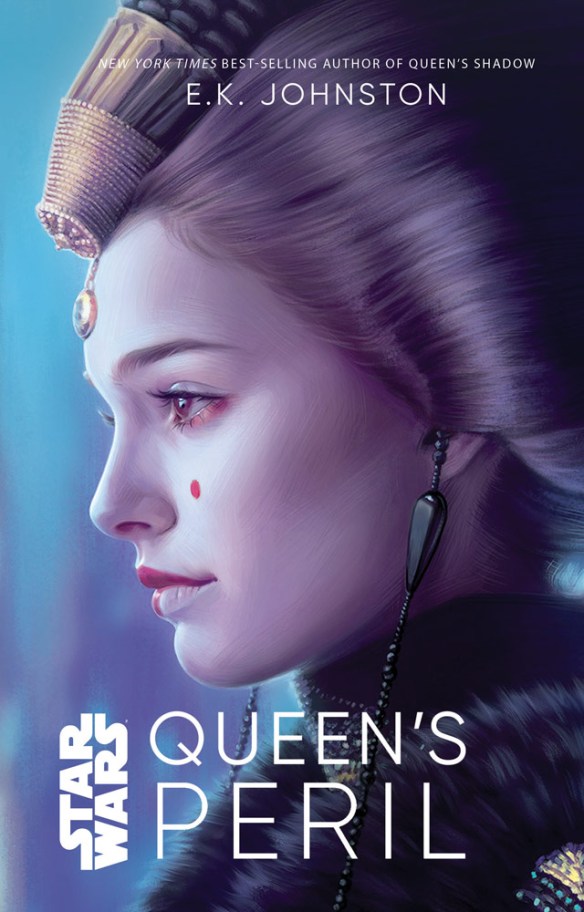
Race the Sands by Sarah Beth Durst

Race the Sands Cover

Publisher: HarperAudio (Audiobook – 21 April 2020)

Series: Standalone

Length: 15 hours and 45 minutes

My Rating: 5 out of 5 stars

Amazon

Bestselling author Sarah Beth Durst returns with a pulse pounding and compelling new novel, Race the Sands, an excellent fantasy novel that has a really great story to it.

In the kingdom of Becar, the most important thing to a person is the state of their soul. Guided by the augurs, priests who can read people’s aura, the inhabitants of Becar do all they can to better themselves, as who you are in this life determines your future lives. The purest souls come back as humans or a great animal, while those more corrupt individuals come back as something lower, such as insects or vermin, a state that can only be redeemed after several lifetimes. However, for those truly evil beings, their punishment is to come back as a monster, as a kehok. Kehoks are chimera-like beasts who spawn out in the wilds and who live existences of pure anguish and pain. These monsters have no hope of redemption or salvation and each time they die they will come back as a different type of kehok. The only way that a kehok can break this hellish cycle of resurrection is to become grand champion of the Races, the favoured pastime of the Becaran people. The Races pit several kehoks and their riders against each other to find out not only who has the fastest kehok but which rider has the greatest mental control over their charge.

Tamra used to be an elite kehok rider, but now she scrapes a living as a professional trainer. After several setbacks, including a tragic accident at the previous year’s Races, Tamra is in need of a win, not only to get back on top but to get the prize money that will allow her to pay for her daughter’s expensive augur training. As none of the professional riders will trust her, Tamra is forced to take on and train an unknown street girl, Raia. Raia recently ran away from home to escape her terrible family and a potentially deadly arranged marriage, and she is desperate to find a way to make a living.

Together, Tamra and Raia make an unlikely pair, but with Tamra’s experience and Raia’s natural talent, they might stand a chance, especially as Tamra has managed to obtain a swift and unusual kehok. As Tamra, Raia and their new kehok all attempt to change their destinies, events from around Becar start to impact them. Chaos is engulfing the kingdom, as the former emperor’s reincarnated vessel has yet to be found. Without the vessel no new emperor can be crowned, and the kingdom is on the brink of collapse and invasion. Can this team succeed in the chaos, or will their success have unexpected consequences?

This was an extremely compelling and deeply enjoyable book from a very talented author, Sarah Beth Durst. Durst is a veteran author who has produced a number of young adult and adult fantasy fiction novels since her 2007 debut, Into the Wild. Durst is probably best known at the moment for her Queens of Renthia series, which started in 2016 with her highly acclaimed novel, The Queen of Blood. Durst is actually a new author to me, and I have not had the pleasure of reading any of her previous novels. I have to admit that checking out Race the Sands was a bit of an impulse choice for me; while I was aware that this interesting sounding book was coming out, it was not one that I was initially planning on reading. However, I heard some rather good things about it from a bunch of other reviewers and their glowing praise convinced me that it would be worth reading. I am extremely glad that I did read it, as it turned out to be an excellent read that I deeply enjoyed.

Race the Sands is a standalone fantasy novel that tells a complex and intriguing story completely separate from Durst’s previous works of fiction. Durst does an outstanding job coming up with a deeply compelling and exciting novel that combines a clever fantasy story about racing monsters with an inventive setting and a cast of great characters to create an overall fantastic read. Despite being a book primarily for the adult fantasy fiction crowd, Race the Sands reads a lot like a young adult fiction novel at times, and it has immense appeal for a huge group of different readers, no matter where your interest in fantasy fiction lies.

At the centre of Race the Sands lies an amazing story of action, intrigue and character growth, all based around the really cool concept of people racing monsters out in the desert for glory, money and redemption. This story starts off extremely strong, introducing the high-stakes world of kehok racing and the intriguing main characters, and I would have happily read a whole book based around the races. However, while all the race sequences are extremely exciting, the book ultimately morphs into a much larger narrative, that revolves around the fate of the entire kingdom of Becar. I really liked how the entire story unfolded, especially as all the political intrigue and overarching threats resulted in an epic and impressive conclusion, that was well presented and which showed the book’s protagonists in the most awesome light possible. This was a truly compelling and memorable story, and Durst does a fantastic job packing so much plot and action into a single, standalone novel.

In addition to the excellent story, I was also really impressed with the clever setting and background that Durst came up with for Race the Sands. Becar is an intriguing nation with ancient Egyptian overtones to it, and its two most distinctive features are its obsession with racing monsters and its complex system of reincarnation. I have already mentioned the kehok races above, and they are a really great highlight of Race the Sands. Durst expertly introduces the races and the key concepts behind them early on in the novel, and every single aspect about them is an extremely cool part of the story. However, I really want to emphasise the story element of the Becaran reincarnation system and soul reading that dictates how the populace acts and behaves during their lifetime. This whole system of good and bad souls, which are read by the benevolent augurs, is an important part of the narrative, and is routinely examined by all of the major character throughout the course of the book. In essence the reincarnation system sounds simple: lead a pure life and you come back in a better form in your next reincarnation; be a bad person and come back as something worse. However, it soon becomes clear that there is something rotten at the heart of the whole system, and quite a lot of the story is dedicated to exploring what is wrong and who is behind it. It leads to some real metaphysical discussions about choices, ethics and corruption, which proves to be an excellent and clever part of the book. All of this makes for a great backdrop to this story, and it was a truly fascinating to see how the author explores and utilises these elements throughout the book.

Durst also spends a good amount of time setting up several great characters, who are the heart and soul of the novel, and who each add their own unique elements to the story. There are around five main characters, each of whom serves as a point-of-view character for much of the book, as well as several significant side characters, with one or two of these also serving as lesser point-of-view characters, and each of them add their own unique perspective to the story. At the top of this list is Tamra, the tough as nails, no-nonsense kehok trainer who is haunted by her mistakes and who is eager to redeem herself by training a new racer, which will also allow her to hold onto her daughter. Despite her rough and powerful exterior, Tamra is really a caring and motherly character, who is willing to compromise her own soul and beliefs if it ensures that the people she cares about are safe and happy. Tamra is a fantastic central character, and I loved her raw determination and notable cynicism about the world she lives in. I also have to mention the awesome part she plays in the outstanding conclusion, where she comes across as an amazing badass, completely changing everything in one of my favourite parts of the entire book.

In addition to Tamra, the next major character is the racer Raia, whom Tamra takes under her wing. Raia is introduced as a flighty and scared creature, a failed augur student who is fleeing from her terrible parents and her murderous future fiancé. Despite having no experience, Raia’s only option to survive and make a living is to get involved in kehok racing, and her natural connection to the lion kehok that Tamra buys, ensures that she is taken on as a student. Due to plot circumstances, Raia is given a crash course in kehok racing, and it is through her eyes that we see a lot of details about the Races and what it takes to become a successful rider, which is an exciting part of the book. Raia is also the character who goes through the most growth throughout the course of the book, as she attempts to leave the shadow cast over her by her terrible parents, and quickly gains confidence thanks to her success as a racer, her mentorship under Tamra, some new friendships and the connection she has with her kehok. I really liked seeing Raia’s growth, and she is one of the more inspiration characters within the book.

Another great character is augur Yorbel, the friend and confidant to the heir to the throne, who sets out to find the late king’s reincarnated host in the most unlikely of places. Yorbel, who starts off as a rather naive and sheltered character due to his upbringing in the temple as an augur, finds himself involved in secrecy and intrigue as he attempts to undertake his mission. However, throughout the course of the book, Yorbel finds himself learning more and more about the dark side of humanity, and the difficulties involved with keeping a pure soul. Despite being one of the nicest and most innocent characters, Yorbel has quite a few ethical dilemmas during this book, and the conclusion of his arc was somewhat shocking and intense. I also have to mention Lady Evara, the rich, noble sponsor of Tamra and Raia. I went into Race the Sands knowing to look out for Lady Evara, as several other reviewers identified her as their favourite character. I can definitely see why, as she was easily the most entertaining character in the entire book. Coming across as a snobbish, self-serving master manipulator, it was a lot of fun to see her interact with characters like the serious Tamra or the passive Yorbel. However, Evara also has a lot of depth to her character as well as some interesting backstory, and the parts of the book that featured her were a real treat. I really enjoyed all the main characters in this book, and this great cast of protagonists helped to turn Race the Sands into a first-class read.

I chose to listen to Race the Sands’ audiobook format, and I found it to be a fantastic way to enjoy this excellent book. The audiobook has a run time of 15 hours and 45 minutes and it is narrated by the talented Emily Ellet. I absolutely blew through this audiobook in only a few days, and it became harder and harder to turn it off the more I got engrossed in the story. I thought that the audiobook format really brought all the intense race scenes to life in all their glory, and I especially loved hearing some of the epic moments from the book’s conclusion. I really liked the various voices that Ellet came up with for the books various characters, and I felt that her portrayals of characters like Tamra, Raia and Yorbel were pretty perfect and really reflected how they were written. I also enjoyed the voice that the narrator provides to all of the book’s highborn women, including Lady Evara and the female augurs, put me a bit in mind of Inara from Firefly, i.e. very posh, confident and in complete control of every situation. That being said, all the highborn women do sound very similar to each other, although I didn’t find that to be too distracting. Overall, I had an outstanding time listening to Race the Sands, and it is an amazing format for any potential readers to utilise.

Race the Sands by Sarah Beth Durst is a deeply impressive and highly enjoyable fantasy read which comes highly recommended. This book contains an exciting and addictive narrative that makes great use of its complex characters and intriguing plot elements to tell a story full of action, adventure and brilliant character development. I had an awesome time reading this book, and it gets a full five stars from me. I am really glad that I decided to check this book out, and I will be definitely be checking out some of Durst’s other novels in the future.
Amazon

The Ballad of Songbirds and Snakes by Suzanne Collins

The Ballad of Songbirds and Snakes Cover

Publisher: Scholastic Audio (Audiobook – 19 May 2020)

Series: The Hunger Games – Book 0

Length: 16 hours and 16 minutes

My Rating: 4 out of 5 stars

Amazon

It is time to return to Panem as bestselling young adult fiction author Suzanne Collins presents the thrilling prequel to her acclaimed The Hunger Games series, The Ballad of Songbirds and Snakes.

It has been 10 years since the third and final book in The Hunger Games trilogy was published. Since then the series has gone from strength the strength, thanks to the four films that converted these books into an ultra-popular franchise. Like many, I jumped onto The Hunger Games bandwagon after the first film was released, and I ended up listening to all three of the novels in quick succession. This of course turned me into a pretty major fan of the franchise, and I eagerly watched the next three films as they were released. As a result, I was extremely intrigued when I heard that Collins was writing a prequel novel, and I have been looking forward to it for some time. I ended up listening to the audiobook version of The Ballad of Songbirds and Snakes right after its release, and it proved to be an extremely interesting book that I rather enjoyed.

It has only been a decade since the Capitol won the war that ravished Panem, defeating the Districts and forcing them back under Capitol control. As punishment for their crimes, every year two children from each of the 12 surviving Districts are forced to compete in the Hunger Games, a brutal fight to the death from which there is only one survivor. While many in both the Capitol and the Districts view the Games as distasteful, for one young man it represents an invaluable opportunity.

Coriolanus Snow is a young academy student whose family has fallen on hard times after the war. Coriolanus’s one chance to get into the Capitol university and have a chance at wealth and prestige is to successfully mentor one of the tributes in the annual Hunger Games and ensure that they win. The odds seem to be against him when he is given the female tribute from District 12, generally considered the lowest tribute with the worst odds of surviving. However, when his tribute, the wild and alluring Lucy Gray Baird, sings on stage at the reaping, Coriolanus’s hopes rise, as her antics capture the attention of everyone in the Capitol. Determined to succeed no matter the cost, Coriolanus soon finds his fate entwined with that of Lucy Gray. But as he gets closer and closer with his tribute, just how far is Coriolanus willing to go, and how will his decisions now affect the future of Panem forever?

The Ballad of Songbirds and Snakes is a captivating and entertaining read that serves as a fascinating prequel to the original Hunger Games novels. Collins comes up with a fantastic, character-driven story that focuses on the main antagonist of the first trilogy, President Snow, while also diving back into the past of her unique dystopian future, showing the early days of the Hunger Games. I have to admit that I had rather high expectations going into this novel, and I ended up being a little disappointed at times with how it turned out. This was a rather less exciting read than the previous Hunger Games books, as Collins spends a lot of time exploring society, human nature and the psyche of the villainous protagonist. It was also way too long, and I think it could have been shortened down a little. Despite probably being my least favourite Hunger Games novel so far, The Ballad of Songbirds and Snakes is still a really good book that I had an amazing time listening to it.

This book contains an intriguing plot that follows the protagonist as he becomes involved in the events of the 10th annual Hunger Games. The story is broken up into three distinctive parts, each of which takes up about a third of the book’s narrative. The first part deals with the lead-up to the Hunger Games, the second part follows the actual Hunger Games as Snow watches from the outside, while the last third of the book details the aftermath of the games, and features a new adventure for the protagonist. Each of these three parts proved to be enjoyable in their own right, and together they formed a rather compelling overall narrative. I was a little surprised that the actual Hunger Games ended about two-thirds of the way into the story. When the novel suddenly jumped to a post-Hunger Games storyline with third of the book still to go, I honestly thought that Collins had made a mistake, and would have been better off portraying an extended Hunger Games. However, this third part served as a rather good conclusion to the entire novel, and I actually really liked some of the major plot elements that occurred there, especially as they were the most transformative part of the novel for the main character. There are a lot of cool moments within this story, as well as a bevy of supporting characters, many of whom Collins is able to give a bit of depth to with a few short paragraphs. I actually really enjoyed where this story went, and while I did envision it going in a different direction, I think that Collins did a good job with it in the end.

One of the key things about The Ballad of Songbirds and Snakes is that it serves as an origin story for President Snow, the main antagonist of the original Hunger Games trilogy. It features an 18-year-old Snow as the main character and is told completely from his perspective. I understand that quite a few people were not exactly thrilled that President Snow was the focus of this novel, and many did not want to see a book that followed a young version of him. While I can understand their feelings about this, I personally enjoyed seeing something that focused on Snow and his early history. I have read and enjoyed many stories in the past that focus on a villain, or which features them as a major protagonist, and it can often be quite fun to see their perspectives and motivations. The Ballad of Songbirds and Snakes is a good example of this, and I found it fascinating to see a younger Snow and watch his involvement in his first Hunger Games.

Collins has an interesting take on the character of the young President Snow, and presents the reader with some key moments from his life, as well as some of the people who helped shape him into the villain we know in the later books. The author spends time exploring elements of his childhood, such as showing how he suffered during the war, not only losing both his parents, but also nearly dying from starvation as the Districts besieged the Capitol. There are also some intriguing examinations of his family, such as the grandmother who gifted him his love of roses, and the revelation that the character of Tigress, who appeared in the third book (fourth movie), is actually Snow’s cousin and closest living relative. However, despite these more humanising elements, Snow is shown to be a truly irredeemable person even before the transformative events of the novel. From the very start of the book, Collins portrays him as a manipulative and conceited individual, constantly sucking up to people in order to get what he wants, resentful of those around him who have more than he does and concerned most of all with status. While there are some intriguing nature versus nurture elements to his early behaviours, Snow is shown to be just an unpleasant person. This of course makes him a hard protagonist to get behind for this book, and for most of the story you really were not rooting for him to succeed. Despite this, I found his story to be rather compelling and I enjoyed seeing this mostly amoral teenager attempt to succeed, while presenting the reader with various, weak or selfish justifications for his actions in his mind.

While he is already a pretty despicable person, it is the events of The Ballad of Songbirds and Snakes that truly turn him into the cutthroat person that takes control of the Capitol in the future. Thanks to a combination of his experiences and some perceived betrayals (which are always worse from his point of view), as well as the mentorship of the Capitol’s sadistic head gamemaker, Doctor Gaul, Snow becomes much more ruthless and ambitious, and some of his actions towards the end of the book show just how evil he has become. It was also cool to see him embrace the philosophy around the Hunger Games, as well as developing a hatred of District 12 and certain other symbols and songs, all of which the character would carry with him to the main trilogy 60 years in the future. All of this analysis of Snow’s character formed a captivating heart to the story, and I liked the more villain-centric novel, even if this great antagonist did come across as a winy child at times. I will be intrigued to see more of the events that influenced Snow in the future, although I can appreciate that many others would prefer stories based around Collins’s protagonists.
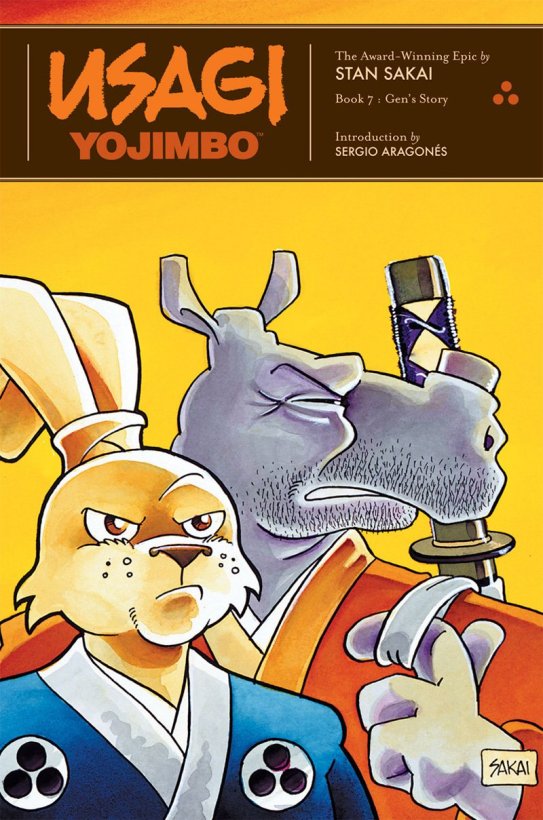
The other major character that I have to discuss is Snow’s tribute from District 12, Lucy Gray Baird. Lucy Gray is an entertaining and likeable character who steps off the page right at the moment of her introduction and sticks in the mind. Lucy Gray is a very different tribute to that of Katniss from the main trilogy, being a singer and rebellious entertainer who effortlessly makes everyone fall in love with her, and who relies on cunning and underhanded tactics to survive rather than martial prowess. She also serenades both the reader and the other characters with a variety of different songs, and I quite enjoyed seeing several of the musical numbers she came up with, especially as you find out the origins of one of the musical pieces that appear in the original trilogy. Lucy Gray is the character who the reader is most drawn to, and you find yourself even hoping that Snow succeeds, as this will ensure Lucy Gray’s survival. Snow and Lucy Gray end up having a bit of an awkward romance, which on the surface seems nice, although you only see it from Snow’s point of view, and he becomes rather possessive of her in his own mind. I would have been interested to see Lucy Gray’s thoughts on Snow, as it could have really changed the whole dynamic of their relationship. Overall, though, Lucy Gray is a great new character, and the way her arc in this book ends really helps drive home how terrible Snow can be.

The thing that I think most people, especially established fans of The Hunger Games novels, will enjoy about this prequel novel is the substantial world building that Collins does. The author does an outstanding job showing off an early version of Panem, which is still recovering from the impacts of the war, and where control over the Districts is not yet complete. This is a rather different Capitol to what you see in the other The Hunger Games books, as there are no elaborate costumes, outrageous styles, strange cosmetic surgery or excessive luxuries. Instead it is a far more subdued Capitol, with less food, traumatised people and rubble still in the streets. This made for a curious contrast to what we see in the future books, and it was interesting to see the differences and similarities. There are also some exciting flashbacks to the war itself from the memory of Snow, and it was cool to learn a little more about that. Naturally, The Ballad of Songbirds and Snakes contains a lot of foreshadowing to the events of the original Hunger Games trilogy, and fans will enjoy seeing historical views of certain key events, locations and people.

One of the most fascinating aspects of this world building is the author’s exploration of the early Hunger Games and how they took place. These Games are very different to the elaborate affairs shown in the original trilogy. Up until this point the Hunger Games are rather basic, with the tributes simply thrown into an abandoned sports arena with a bunch of weapons. There are some great comparisons between these more basic games and the games that we are more familiar with, such as the way that the tributes are treated, as rather than the luxurious train with all the fancy food that Katniss and Peeta travelled in, the tributes for these Hunger Games arrive starved and injured in a livestock train. This is also the games where they start to experiment with some of the elements that are recognisable from the main games, such as having a mentor, brief interviews with a Flickerman (in this case, Lucky Flickerman, the local news weatherman and amateur magician), gambling and sponsors. It was really cool to see the origins of these ideas, and why they were implemented, and it makes for a truly fascinating addition to the book. Collins also really dives into the philosophy behind the Games, and why the leaders of the Capitol were so eager for them to succeed and why they believed that they helped control the Districts. The origin of the Games is also revealed, as well as some of the key players, and I think it served as an invaluable piece of this universe’s lore. I quite liked learning more about the early days of the Hunger Games, and I imagine that a lot of readers will love to find out how such a terrible event came to pass.

The actual Hunger Games that took place in The Ballad of Songbirds and Snakes was a shorter and more barebones affair than what we have seen before. The tributes are fighting in an actual sporting arena, rather than a terraformed zone, and most of them spend the time hiding in the tunnels. Due to the fact that we are seeing it from Snow’s point of view, and because the arena only has a couple of cameras that only cover a fraction of the area, there are a lot of periods of inactivity and blank time, where the reader has no idea what is going on. This made for a much more disrupted experience, and while it was interesting to see the games unfold from the outside (something we saw a little bit of in the movie, but not in the books), it was nowhere as exciting as it could have been. That being said, there are still some really cool moments of child murder, and I did like seeing the mentor’s role in winning the games. The way in which the games came to an end was also rather clever, and it played into the events occurring outside with Snow. While it could have been longer, more exciting and perhaps more intense, this was still a fun part of the novel, and I look forward to seeing more fights to the death in any future Hunger Games novels Collins writes.

As I mentioned above, I ended up listening to the audiobook version of The Ballad of Songbirds and Snakes rather than grab a physical copy, and I am rather glad that I did, as it proved to be a great way to enjoy this book. The Ballad of Songbirds and Snakes audiobook is narrated by Santino Fontana and has a run time of just over 16 hours. This was a rather extensive run time for a Hunger Games novel; it was around five hours longer than any of the previous audiobooks in the series. That being said, I was able to get through this audiobook in a rather short period of time, and I found myself really engaged by this format, as it helped explore all the elements of this earlier version of Panem. Santino Fontana proved to be a very good narrator for this novel and he does an excellent job bringing the book’s large host of characters to life. The various voices he does fit the characters rather well, and I thought that his narration helped to highlight how horrible Snow could be at times. I also liked how Fontana’s narration worked with the multiple songs that Collins featured throughout the novel, and his spoken version of them sounded rather cool. As a result, I would definitely recommend the audiobook version of The Ballad of Songbirds and Snakes to people interested in checking this book out, as it was a wonderful format to enjoy this great story with.

The Ballad of Songbirds and Snakes was a curious and unique new addition to The Hunger Games franchise, which I thought turned out to be a rather good read. Collins ended up writing an intriguing, character-based narrative that showed a new side to the main antagonist of her original trilogy. While this book is not without its flaws, I had a wonderful time reading it, and once I got into its plot I had a hard time putting it down. Ideal for those fans of the previous Hunger Games novel, this book should make for an interesting movie in the future, and I am planning to grab any future novels from Collins set in this universe.

Amazon

The Viennese Girl by Jenny Lecoat

The Viennese Girl Cover

Publisher: Allen & Unwin (Trade Paperback – 28 April 2020)

Series: Standalone

Length: 266 pages

My Rating: 4.5 out of 5 stars

Amazon     Book Depository

Love, war, endurance. Debuting author Jenny Lecoat presents an impressive and compelling historical drama with The Viennese Girl, a fantastic read based on a remarkable true story.

June 1940. The inhabitants of the Channel Island of Jersey can only watch as the German army invades and takes complete control of their island without any opposition. Abandoned by the British and forced to fend for themselves, the people of Jersey must get ready to endure a lengthy occupation that will last to the very end of the war.

For young Jewish girl Hedy Bercu this is a nightmare situation. Having already successfully fled from the Nazis when they invaded her home of Vienna, Hedy once again finds herself trapped and persecuted, only this time she has nowhere to escape to. Forced to do everything she can to survive, Hedy tries to hide her true identity and even accepts a job as a translator in the German headquarters. However, Hedy is not content to simply sit back and let the Nazis win without a fight, and she begins to engage in several small acts of resistance which bring her to the attention of a German lieutenant, Kurt Neumann.

Kurt finds himself instantly smitten by the mysterious Hedy, and he attempts to pursue a relationship with her, without knowing about her tragic past. But when Hedy’s attempts at sabotage are discovered, her Jewish heritage is revealed to all and she becomes the most sought-after fugitive on the island. Can Hedy rely on her friends and Kurt to survive, and how will she escape detection from the Nazis on their most isolated and heavily occupied territory?

The Viennese Girl is a great debut novel from television writer Jenny Lecoat, which turned about to be quite an intriguing historical drama that I am really glad that I checked out. A very important thing to know about this novel is that it is actually based on a true story of the Jersey occupation. The main characters contained within this story are all real people, and their tale has been mostly unknown until a recent publication by Dr Gilly Carr in the Journal of Holocaust and Genocide Studies.

Lecoat provides an exquisite novelisation of these historical events within The Viennese Girl and turns it powerful and captivating narrative of romance and resistance that follows two real-life star-crossed lovers, Hedy and Kurt, as they attempt to survive a terrible situation. The story is shown from the dual perspectives of Hedy and Kurt, whose different viewpoints show off various aspects of the German occupation of Jersey. This book makes great use of a combination of a dramatic and tension filled storyline, fantastic portrayals of real-life characters, a distinctive historical setting and a compelling romance to make for an amazing read.

The lives of and the relationship between the two main characters, Hedy and Kurt, forms an excellent centre to this book. Both are intriguing characters in their own right. For example, Hedy is a Jewish girl doing everything she can to survive after being trapped by the Nazis a second time. She is rightly bitter and terrified about the entire situation, but brave enough to fight back against the Germans with small acts of sabotage. Naturally, the parts of the book told from Hedy’s point of view are filled with all manner of tension as she is terrified of being taken away by the Nazis, a feeling that only intensifies as the book proceeds. There is also a prevailing sense of loneliness and despair brought on by her situation, the lack of people on Jersey who she can trust and the knowledge of what has happened to her Jewish friends and family back home. Kurt, on the other hand, is a reluctant member of the German army who has become disenfranchised with his more radical Nazi colleagues. He has some rather surprising views for a German officer, and a distinct dislike for many of the people he serves with, and there is a bit of sadness in him as he watches the war consume Jersey. This, and the instant attraction he feels for Hedy, compels him to help her without really knowing anything about her. Kurt then goes to some amazing lengths to help save Hedy in the future once he knows the full detail of her history and manages to outthink some determined opponents.

The author makes sure to spend time exploring both of these characters through the course of the occupation, as well as examining their history, feelings and intentions. Despite all the inherently problematic issues that would occur with such a romance, the two fall in love and start a dedicated relationship. Their romance is an essential part of the story, and I think that Lecoat did a wonderful job showing how such a romance could occur, as well as exploring all the drama that resulted. I liked how the romance managed to help make each of them better, and it healed certain holes in their hearts and minds. I really enjoyed this romance, and I ended up being pleasantly surprised after finishing this book to find that Kurt was a real person who really did fall in love with and help Hedy (due to the unlikely situation, I had assumed that he was either a fictional character or an embellished version of someone). The knowledge that this romance actually happened really enhanced Lecoat’s incredible story for me, and I am rather glad to have seen how it unfolded.

In addition to Hedy and Kurt, I also have to highlight the character of Dorothea Weber (née Le Brocq), who was also a real person featured heavily in Dr Carr’s article. Dorothea was the wife of Hedy’s best friend and fellow refugee Anton, who would eventually become Hedy’s close companion and saviour after she hides Hedy in her house for the later years of the occupation. Dorothea was a rather complex character who has a rather interesting act within this novel, especially when it comes to her relationship with Hedy. For the first half of the book, Hedy sees Dorothea as an interloper and distraction to her friendship with Anton and is a bit annoyed by the attention she gets, her apparent helplessness and obsessions with American films and actresses. However, as the war progresses and Anton is conscripted into the German army, their relationship grows, especially as both of them face their own form of persecution. While Hedy is oppressed for her Jewish heritage, Dorothea faces ostracism from her friends and family for marrying an Austrian, especially one who ends up in the German army, and is labelled a Jerrybag (a derogative term for Jersey girls who were sleeping with the enemy). While she comes across as extremely naïve at the start of the book, Dorothea really grows as a character throughout the book, and continually shows off her surprising inner strength by standing up to people and not hesitating to take Hedy in and hide her from the Germans, despite the obvious risks. I really enjoyed learning about Dorothea’s story, and she became a fantastic part of this book, and it was rather gratifying to learn how the real Dorothea has been deservedly honoured by both the Jewish community and Britain in recent years.

I also really enjoyed learning more about the German occupation of Jersey during the Second World War. This was honestly a topic that I knew very little about, but which proves to be a rather fascinating backdrop to this character driven story. Lecoat, a Jersey native, does a fantastic job showcasing all the details of this invasion, and follows the entirety of the occupation in her story, right up until the end of World War II (the occupiers were some of the last German forces to surrender). The author captures a number of key moments from the occupation in the story while also including several historical figures in her narrative. I also liked how she endeavoured to highlight what day to day life for the inhabitants of Jersey would have been like with the Germans there, and it was interesting to see her interpretations of the islander’s attitudes, how they dealt with the Germans and how desperate the situation got at times throughout the occupation. This proved to be a really interesting and distinctive element to the novel, and I quite enjoyed learning more about this part of World War II that is often overlooked in other historical fiction novels.

Overall, The Viennese Girl is a superb and memorable historical drama novel that is very much worth checking out. Lecoat hit it out of the park with her debut novel, and I was absolutely enthralled by her amazing narrative of courage, survival and love in the most unlikely of circumstances. This was a really impressive novel, and it’s story is going to stick with me for a very long time.

Amazon     Book Depository

Usagi Yojimbo: Volume 34: Bunraku and Other Stories by Stan Sakai

Usagi Yojimbo Bunraku and Other Stories Cover

Publisher: IDW Publishing (Paperback – 21 April 2020)

Writer, Artist and Letterer: Stan Sakai

Colourist: Tom Luth

Series: Usagi Yojimbo – Book 34

Length: 178 pages

My Rating: 5 out of 5 stars

Amazon

It is once again that wonderful time of the year when the brand-new volume of the ongoing comic series, Usagi Yojimbo, comes out. Legendary comic creator Stan Sakai returns with the 34th volume in this series, Bunraku and Other Stories, which contains four epic and entertaining stories taking place in the unique setting of a version of feudal Japan inhabited by anthropomorphic animals.

Usagi Yojimbo #1

Those who are familiar with my blog will know that I am a massive fan of the Usagi Yojimbo series, having read all of the comics that have been released, and this is easily one of my favourite series at the moment. I have been eagerly reading these comics for years, and since starting this blog I have been enjoying reviewing entries in the series, such as the prior two volumes, Mysteries and The Hidden (Mysteries was actually the first comic I ever reviewed on this blog), as well as some of the older volumes of the comic. As a result, I was extremely keen to get a copy of the new volume, and Bunraku and Other Stories was one of the top books I wanted to check out this autumn.

This latest volume is a rather special one, as it contains the first Usagi Yojimbo issues that Sakai has written for IDW Publishing. This series has been published by Dark Horse Comics since 1997, and their style was similar to that of the publisher before them, Fantagraphics Books. This move to IDW Publishing brings with it some very intriguing stylistic changes, namely that fact that each issue is now completely in colour. This is a massive departure from the previous entries in the series, each of which were originally released in black and white, and it brings the stories to life in a whole new manner. In order to do this, the series now employs a colourist, Tom Luth, who previously worked on Groo the Wanderer with Sakai. In addition, this latest volume is also physically different from all the previous volumes, as Bunraku and Other Stories is noticeably taller, which surprised me a bit when I saw it the first time, and which is seriously going to mess up aesthetics of my bookshelf. However, having the taller volume allows for slightly bigger panels than were typically featured in the previous Usagi Yojimbo stories, which I quite enjoyed.

Usagi Yojimbo #2

However, even with some of these physical changes, this is still the same old Usagi Yojimbo. Sakai has once again produced some outstanding and deeply enjoyable stories, equipped with his trademark art style and his fantastic and loveable characters. Bunraku and Other Stories contains Issues #1-7 of the new, IDW Publishing, run on the series, and is made up of four separate stories.

The first of these stories is titled Bunraku, and it is the main story of this entire volume, made up of the first three issues. In this story, Usagi is enjoying a bunraku, a traditional Japanese puppet play, when he encounters an old acquaintance, Sasuke, the Demon Queller. Sasuke’s endless hunt for demons and monsters has led him to the bunraku theatre, where he senses that a new evil has taken hold. Despite his reluctance to get involved in another one of Sasuke’s dangerous missions, Usagi agrees to help, especially after they find a corpse that has been supernaturally drained of its life energy. Together, Usagi and Sasuke find that a dangerous and malevolent being has infected the bunraku theatre, and they must do everything in their power to end it.

Usagi Yojimbo #3

Bunraku serves as an exciting and compelling first story in this volume, and I quite enjoyed its supernatural storyline. The Usagi Yojimbo series has a rich history of featuring Japan’s various supernatural monsters and demons in its narratives, and this is easily one of the better ones they have done. The antagonists of this story are rather creepy, and they serve as extremely deadly opponents to Usagi, who finds himself dramatically outclassed at several points throughout the story. I also liked the return of Sasuke, who has shown up in several supernatural storylines since his first appearance back in volume 14. Sasuke is a rather distinctive and intriguing character in this series, as he has dedicated his life to hunting and destroying demons and monsters, many of whom are opponents far beyond normal samurai like Usagi. Despite his tremendous magical powers, Sasuke often finds himself severely drained after each fight, but his drive to complete his mission spurs him on, despite how weary or physically weakened he becomes. Usagi and Sasuke have some interesting interactions throughout this story, as Usagi has become more wary of Sasuke after their last several encounters. Sasuke insists that Usagi helps him once again, and even guilts Usagi into working with him, which makes for a very unusual team dynamic. I thought it made sense that Usagi would be reluctant to get involved, as he or someone he loves has nearly died each time Sasuke has appeared so far. There was also a rather interesting moment when their antagonist asks Sasuke if Usagi was being groomed to replace him, a question that Sasuke does not provide an answer to, and which makes me think we will be seeing a lot more of this character in the future.
One of the more intriguing aspects of the story of Bunraku is the fascinating examination and depiction of the bunraku puppet shows. I always love it when Sakai highlights cool aspects of Japanese history, culture or industry in his stories, and this entry was really amazing. The whole concept of a life-size puppet theatre was really intriguing, and Sakai did a great job examining it, showing what sort of stories they produced and how elaborate their performances could be. This unique art form also turned out to be an awesome basis for this horror adventure story, and I really liked how Sakai worked it into the plot. I also really enjoyed the artwork contained within this first story, and Sakai has come up with some rather impressive sequences and scenes that not only do a fantastic job conveying the action that is occurring but which really highlight the horror aspect of the narrative. The various supernatural opponents in this book are shown to be quite scary and threatening, and I loved the way that Usagi’s face looked absolutely terrified as he fought against them. The use of colour in this first story is also extremely cool, and I loved how it helped bring the whole story to life. I particularly liked the way that the colour really enhanced all of Sasuke’s magical abilities and made them look that much more distinctive and mystical. There is one amazing sequence in which Sasuke turns his sword into flames, which looked so damn awesome and it put me in mind of that one iconic scene from the recent Demon Slayer anime. All in all, this was an outstanding and enjoyable first story in this volume, and readers are in for a real treat right of the bat.

Usagi Yojimbo #4

The next story that is featured within this volume is the two-issue tale, The Hero. In this entry, Usagi, still journeying across the countryside, has encountered an interesting fellow traveller, a famed author who is journeying to her father’s house. The author, Lady Mura, has written several novels, including a tragic tale of heroism that she lets Usagi read. As the two travel together, Usagi learns that Mura is the wife of a high-ranking samurai who is jealous of his wife’s writing ability, as the fame she gains from that far exceeds his reputation as a warrior. While Usagi is able to protect Mura from many of the dangers on the road, including bandits, how will he react when he encounters her husband, especially as the strict rules of honour that bind all samurai forbids him from interfering?

This is a rather heavy and clever story that I think is potentially the best entry in the entire volume. Sakai has crafted together an excellently written and well-thought out narrative that cuts deep into the reader’s emotional core before the end. The character of Lady Mura is an extremely tragic figure, as even after all Usagi does to protect her, her story still ends in heartbreak, just like all her novels. Despite how her story ends, she is able to pass on some inspiration to Usagi about the true nature of a hero, which is how she sees Usagi. There are some really intriguing discussions about the code of the samurai that binds all the major characters within this story, and the problems and compromises that occur because of it are in full display throughout The Hero. I also think that Sakai came up with a perfect ending for the entire story, which felt extremely satisfying, considering what had happened throughout the course of the narrative. The artwork in this story is also really cool, as not only do you have some of the most impressive depictions of the varied and beautiful feudal Japanese landscape (which look so impressive in colour) but you also have some amazing scenes that show fragments of Lady Mura’s novels. These scenes place Usagi in the role of the hero of the classic story (Sakai has done something similar in prior stories like My Lord’s Daughter in the sixth volume, Circles) and show him taking on an undead horde and their evil master, and they are some amazing drawn sequences. The Hero is a truly great story, and I think that Sakai has done an outstanding job coming up with this tragic and heartfelt tale.

Usagi Yojimbo #5

The next story, Adachi, is one of the more interesting entries in this volume, and it was one that I was curious to check out. This story was actually written in commemoration of the 35th anniversary of the series and features a fresh take on the very first Usagi Yojimbo story, The Goblin of Adachigahara, which I previously reviewed in the first volume, The Ronin. In this new version of the story, Usagi returns to the scene of one of his greatest personal tragedies, the battle of Adachigahara Plain (or Adachi Plain in later Usagi Yojimbo stories), where his lord, Mifune, died after one of his generals betrayed him. In the course of this battle, Usagi, who served as Lord Mifune’s bodyguard, was able to perform an essential service by fleeing the battlefield with Mifune’s head, keeping it out of the hands of the treacherous general and the evil Lord Hikiji. Usagi has journeyed back to this place to pay respects to the place he buried his late lord’s head, which only he knows the location of. However, he senses that he is being watched and continues his journey, eventually seeking shelter at the hut of an old lady, who warns him of a goblin that haunts the mountain. Later that night, the goblin attacks the house, trying to kill Usagi, but Usagi is able to trick him and engage him in a fair fight. The goblin is revealed to be the general who betrayed Mifune, who was disgraced and banished by Lord Hikiji due to Usagi’s actions in denying Hikiji his lord’s head. Now determined to claim Mifune’s head and claim what is owed to him, the goblin seeks to kill Usagi, who manages to win, thanks to the help of the old lady, revealed to be the general’s wife, who has remained in exile with him.

This is a really interesting updated version of the story, which I quite enjoyed reading. The whole story is actually a combination of three prior Usagi Yojimbo stories, with some new elements thrown in. The first part of the story, which shows Usagi reliving the events of Adachi Plain, utilises parts from two stories, including Samurai (which appeared in the second volume, Samurai) and Return to Adachi Plain (which appeared in the 11th volume, Seasons). This combination provided a much richer examination of the battle, especially Usagi’s role within it, and I think the two separate sequences merged together well, while also looking even more impressive in colour. The story then continues to focus on the events that previously occurred within The Goblin of Adachigahara, although there are some interesting additions. This includes the goblin deliberately targeting Usagi, due to his role in his dishonour, and Usagi finding out the identity of his attacker before killing him. Knowing that this is the general who betrayed his beloved lord adds a whole new emotional element to the story for Usagi, and their fight is a lot more vicious and elaborate. I also liked the way that Sakai spent time enhancing the visuals surrounding the goblin. While he looked rather cool in the original story, in Adachi, Sakai has made him look even more awesome and intimidating, especially in colour. I also found it interesting that Sakai has turned this whole event into a more recent story in Usagi’s timeline, rather than being an event that occurred quite early in his adventures. The change in the chronology is intriguing, especially as there is a rather great scene in the middle where Usagi, upon visiting the grave his former lord, begs to be released from his vow of service, perhaps so that he can pledge fealty to his friend, Lord Noriyuki of the Geishu Clan. Overall, I thought that this was a clever new take on a classic Usagi Yojimbo story, and fans of this series will appreciate this anniversary special.

Usagi Yojimbo #6

The fourth and final story in this volume is The Swords of the Higashi, which serves as a light-hearted and entertaining conclusion to this volume. The Swords of the Higashi sees the always amusing Usagi Yojimbo side character, Gen, involved in a whole new batch of trouble. This time, Gen and his occasional partner Stray Dog are attempting to recover two extremely valuable stolen swords from a group of bandits. Killing the bandits, the two bounty hunters run into Usagi, who decides to accompany them back to the sword’s owners, the Higashi clan. However, the three ronin make the mistake of leaving one of the bandits alive, and they must contend with a continued flurry of attacks as they make their way back to town.

Now this was a fun and enjoyable story that I found to be extremely hilarious. There are several great elements to this story that I really enjoyed, including the fantastic use of the three main characters, Usagi, Gen and Stray Dog, and their banter as they wander the wilderness is rather entertaining. There is also the really funny extended sequence which sees the characters come under constant attack from bandits and bounty hunters as they attempt to return the blades. Each of these attacks is led by the same bandit, who finds the three companions, gets his cohorts to attack them, and then runs away in a panic when the protagonists win, only to return with a new group of bandits and repeat the cycle a short time later. This repeated turn of events is extremely funny, mainly due to the ridiculousness of the situation and because of the way that Usagi and his friends get more and more exhausted and exasperated with each new cycle. Sakai does an amazing job of making all three protagonists look scruffier and more dispirited with each new attack, and their reactions each time are deeply entertaining, from the way that Stray Dog keeps yelling at Gen for it being his fault, Gen’s growing resentment and frustration at the bandit whose life he saved, and the usual stoic Usagi getting more and more exhausted with each fight: “I’ve been through battles less tiring than today!”. Sakai wraps this whole amusing episode up with a rather clever conclusion to the story, which sees another classic Usagi Yojimbo side character get the best of everyone, and which makes all of Usagi, Gen and Stray Dog’s effort be for nought, which is just so mean considering all they went through. This was an outstanding story that had me laughing the entire way through, and I thought it was the perfect way to end this entire volume.

Usagi Yojimbo #7

The latest Usagi Yojimbo volume, Bunraku and Other Stories, is another incredible comic from Stan Sakai that I absolutely loved. Sakai has once again produced several exciting and clever stories, filled with great characters, powerful emotional moments, clever examinations of classic Japanese culture and a number of visually stunning sequences, which are so much fun to read. With the comics now in full and glorious colour, this was an outstanding new entry in the series, and is a must read for all Usagi Yojimbo fans. It gets a full five-star rating from me and comes highly recommended.

Amazon

Song of the Risen God by R. A. Salvatore

Song of the Risen God Cover

Publisher: Audible Studios (Audiobook – 28 January 2020)

Series: Coven trilogy – Book Three

Length: 17 hours and 3 minutes

My Rating: 5 out of 5 stars

Amazon     Book Depository

Legendary fantasy author R. A. Salvatore brings his Coven trilogy to an explosive and enthralling end with the third and final novel, Song of the Risen God.

The Coven trilogy is an exciting series that Salvatore has been writing over the last three years, which is set in the world of Corona, the setting of his previous series, The DemonWars Saga. This new trilogy follows the adventures of an interesting group of characters in the lands surrounding Loch Beag, including the imposing mountain, Fireach Speuer. The first two novels in this series, Child of a Mad God and Reckoning of Fallen Gods, have both been extremely good, and I have been enjoying reading some of Salvatore’s non-Forgotten Realms fantasy work. I am a massive fan of Salvatore’s writing and I have been looking forward to finishing this series off for some time now. Salvatore certainly did not disappoint with the final entry in this trilogy, as this final novel is potentially my favourite book in the entire series.

War has once again come to the world of Corona, as a new evil leads its forces on a mission of conquest and destruction. The wild lands surrounding Loch Beag and Fireach Speuer have never been peaceful, but now a massive army of invaders is marching across them, determined to conquer and kill all before them. These mysterious invaders are the Xoconai, a lost race of humanoids from the other side of Fireach Speaur. Now, with their reborn god leading the charge on his mighty dragon, the Xoconai are commanded to expand their empire to the opposing coast.

With no hope of defeating the vast host that has suddenly appeared above them, the few surviving inhabitants of the villages surrounding Loch Beag flee through the wilds to find sanctuary. Led by the powerful witch Aoelyn, the frontiersman Talmadge and the ranger Aydrian Wyndon, the villagers move towards the apparent safety of Honce-the-Bear, the most powerful human kingdom in Corona. There they hope to warn the people of Honce-the-Bear of the approaching danger and gather a force that can push back the Xoconai.

However, the dark ambition of the Xoconai god, Scathmizzane, knows no limit, and his magical powers are as vast as they are terrifying in their origin. Using these powers, Scathmizzane is able to accelerate the Xoconai invasion at a tremendous pace, striking right at the heart of Honce-the-Bear, and managing to overpower both their armies and the magic of the Abellican monks. As the Xoconai horde advances, it falls to Aoelyn, Aydrian and their companions to stop them by any means necessary. But can even the most powerful magic user on the continent and a fallen king be able to throw back the invading armies, or will Scathmizzane’s dark power fall across all the lands?

Song of the Risen God is a really impressive and captivating read that provides the reader with an entertaining adventure in one of Salvatore’s detailed and expansive fantasy universe. This final book in the Coven trilogy is a cool addition to the trilogy that not only acts as a satisfactory conclusion to this new series but which also ties it even more firmly into the wider world of Corona.

This book contains an epic and wide-ranging narrative that showcases the dramatic aftermath of the second novel in the series, Reckoning of the Fallen Gods, which saw a massive army and a dragon-riding god descend on the isolated setting of the first two novels. In this third novel, the protagonists are chased all the way to one of this world’s key settings, the kingdom of Honce-the-Bear, where they must fight to save the world from the invading horde. This turned out to be a rather interesting departure from the previous novels in the Coven trilogy, which were much smaller in their scope, tending to focus on a handful of closely related villages in a single location. I actually liked this change of pace, as it made for a much more impressive conclusion, and I quite enjoyed seeing the characters interact with the wider world. This turned out to be an extremely exciting and fast-paced novel that contained a lot of entertaining action and large-scale battle sequences, although the author does not skimp on the intriguing dialogue, creative world building or compelling character development. Salvatore utilises a host of point-of-view characters to tell this story from a variety of different angles, which leads to a rich and comprehensive overall narrative. I am also glad that the author continues to feature in-world texts at the beginning of each part of the novel, which provides some fascinating insights into some characters, and contains some clues about a big twist towards the end of Song of the Risen God. Overall, this was an extremely captivating story with a great blend of elements, and I had a fantastic time reading it.

One of the more distinctive parts of Song of the Risen God is how it connects with some of the previous books set in the world of Corona. Corona is a unique fantasy world created by Salvatore, which has previously served as the setting for 13 novels, including the previous two Coven books. The first seven of these books are all part of the same series, known as The DemonWars Saga, which established many elements of this world, including the kingdom of Honce-the-Bear, the Abellican order of monks and the world’s gem based magical system. The Coven series has always been set in Corona, but the first novel in this trilogy, Child of a Mad God, had very little to do with these prior books. More of a connection was established in Reckoning of Fallen Gods, especially with the appearance of Aydrian, who was a major figure in the later DemonWars books. However, in Song of the Risen God, Salvatore fully combines this trilogy with his prior series, by bringing the protagonists and antagonists of the previous Coven books into the main location of The DemonWars Saga and having them interact with these established characters and settings.

Immersing this series more fully into the wider fantasy world was an interesting choice from Salvatore, and it one of the major things that distinguishes Song of the Risen God from the previous books in the trilogy. This was not a sudden or random decision from Salvatore, as there have been hints that this was going to happen in the previous two books, especially once Aydrian was introduced as a major character. I rather enjoyed the way that Salvatore so dramatically expanded the setting and started using elements from The DemonWars Saga in this novel, as it made for a much more expansive and fascinating story. I never actually read any of the books in The DemonWars Saga (a regrettable gap in my Salvatore knowledge), and before reading Song of the Risen God, I had no real idea what happened in this series, aside from what was discussed in the second Coven novel. However, I found that you really didn’t need any pre-existing knowledge of these earlier books, as Salvatore spends a good amount of time explaining some of the major story events that occurred during these novels and how they impact the current plot. As a result, at no point while reading Song of the Risen God was I in anyway confused by what was going on, and I always had a good idea how the plot was tied into the wider universe. I really appreciated being able to enjoy the entirety of the plot without having to read The DemonWar Saga first (which admittedly sounds pretty awesome, and I might have to check them out at some point), and I think that Salvatore did a fantastic job recapping the events of this prior series in text. Fans of The DemonWars Saga will no doubt like the fact that Salvatore is once again exploring this world, and many will be interested in seeing how much the universe has changed in the intervening years, as well as the major developments that occur as part of Song of the Risen God.

As I mentioned above, Song of the Risen God is the third and final book in the Coven trilogy, which does mean that this book might be a bit harder to follow for those readers who try to jump into the series at the very end (although that would be true for any trilogy). Salvatore does do a good job of recapping and exploring some of the key events of the first two novels, so most readers should be able to follow it well enough. I think that Song of the Risen God proved to be a great conclusion to the entire trilogy, as all of the major storylines were wrapped up rather well. The ending of the book also suggests that Salvatore is planning an additional Corona based series in the future, and if so, it is likely to focus on some of the major characters from the Coven trilogy. I personally would be extremely interested in a follow up series to these books, especially after all the major events that occurred in this novel, and I look forward to seeing what Salvatore cooks up next.

One of the major highlights of Song of the Risen God was the incredible raft of characters. This book had a massive and diverse group of characters featured within it, including the protagonists of the previous two books, characters from The DemonWars Saga and original characters who appeared for the first time within this book. Salvatore did a fantastic job diving down into several of these protagonists, and there was some rather intriguing character development that occurred throughout Song of the Risen God, most of which has some interesting roots in some of Salvatore’s previous novels.

A good portion of the book focuses on Aoelyn, who has served as the main protagonist for the first two Coven novels. Aoelyn is a witch who has spent the previous books trying to escape the clutches of her vicious tribe, the Usgar. In this novel, Aoelyn finally has her freedom, and finds herself in a brand new world, although she still seems to be dealing with some of the same prejudices and problems that occurred amongst the Usgar. Aoelyn spends a good portion of this book continuing to come to terms with her magical powers, which both define her and frighten her, as she has seen how magic can corrupt individuals, and she also attempts to take responsibility for the Xoconai invasion, which she inadvertently caused by killing a demon in the first Coven novel. I felt that Salvatore covered her character arc rather well, and there were quite a few intriguing moments, including Aoelyn making new friends and finding closure with some of the antagonists from the first two novels. I also liked some of the interesting developments that occurred towards the end of the novel with Aoelyn, which not only impact her outlook on life, but which may have some major impacts on any future Corona novels that feature her.

In addition to Aoelyn, quite a few other characters have some fantastic moments within Song of the Risen God. Bahdlahn, the former Usgar slave and Aoelyn’s childhood friend, probably had the most dramatic character development of all within this novel, as he grew and grew with every new encounter and experience within the plot. You cannot help but get attached to Bahdlahn, especially as he goes from wide-eyed former slave who had barely seen anything of the world, all the way up to an elite knight and resistance fighter in Honce-the-Bear. Bahdlahn is another character who has some interesting developments towards the end of this novel, and it looks like Salvatore has some big plans for him in the future. The former Usgar witch Connebragh also has a rather fascinating, if shorter, storyline within this book, as she befriends two former inhabitants of the lakeside villages, despite the long hostility between her tribe and theirs, and helps them survive the Xoconai invasion. The frontier explorers Talmadge and Khotai are also well utilised towards the front of the book, and there are some great moments with them, especially as Khotai regains her mobility in a rather unique way, although both disappear for the last third of the book. Salvatore also invests time in showing the viewpoint of a couple of key Xoconai characters, which I think really adds a lot to the story. Rather than having the Xoconai solely being mindless followers of Scathmizzane, these character perspectives help show them as being rather similar to humans, and two characters in particular have some very interesting viewpoints that lead them to question the word of their god as they attempt to fight his holy war.
All of these character arcs are great, but my personal favourite has to be the one surrounding Aydrian Wyndon. Aydrian is a major character within The DemonWars Saga, as the son of the original protagonists, who eventually became the main antagonist of the series after being possessed by a demon. Freed from his corruption at the end of the series and banished from Honce-the-Bear, which he ruled for a brief time, Aydrian has taken up the role of a ranger, which led to him meeting and helping the protagonists of the Coven series in the previous novel. In this book, he finds the threat of the Xoconai so great that he is forced to return to Honce-the-Bear, despite his banishment, to warn his former people. This leads to several outstanding scenes where he revisits the hurt and despair that he previously caused as a despotic and murderous king, and it serves as a fantastic defining characteristic as he searches for redemption. Aydrian has an absolutely incredible storyline throughout this novel, and his inclusion really added a whole lot to the overall narrative.

In addition to the fantastic story and amazing characters, I also have to once again highlight some of the enjoyable fantasy elements that Salvatore includes in this novel. At the fore of this is the cool gem-based magic that is one of the defining features of the stories set in Corona. This gem magic is an excellent concept, and it proved to be particularly fascinating in this novel as Aoelyn, a self-taught magical gem user, encounters members of the Abellican Church, who also use this form of magic, although in an apparently lesser way. Salvatore makes full use of all this cool magic throughout Song of the Risen God, and there are some rather impressive and destructive examples of the universe’s various magics, which were a lot of fun to see. I really enjoyed some of the cool and unique fantasy elements contained within this book, and it was a rather exciting addition to the story.

I ended up listening to the audiobook format of Song of the Risen God rather than grabbing a physical copy. This audiobook runs for just over 17 hours and is narrated by Tim Gerald Reynolds, who has provided narration for several of Salvatore’s previous books, including the other Coven books. I really enjoyed the audiobook version, and it proved to be a fantastic way to absorb and experience the cool story and the intriguing settings and characters. This is a bit of a longer audiobook and it took me over a week to fully listen to it, although my audiobook listening schedule has been a bit messed up lately. I felt that Reynolds did a really good job narrating this audiobook, and his fantastic voice really helped me get sucked into this fun story. Reynolds had a great handle on all the characters featured within Song of the Risen God, and I liked all the voices that he came up with for them. I ended up having an amazing time listening to this audiobook, and this is a truly excellent format to enjoy this novel in.

Song of the Risen God is a very impressive and deeply enjoyable fantasy novel that comes highly recommended. R. A. Salvatore once again shows why he is one of my favourite authors as he produces a slick and captivating read which is not only fantastic in its own right but which concludes an epic trilogy and ties it into a wider fantasy universe. This proved to be an absolutely amazing read, and I think I have to award it a full five-star rating based on how much fun I had listening to it. Salvatore has done it once again, and I look forward to checking out his next book in a few months.

Amazon     Book Depository

Throwback Thursday: Usagi Yojimbo: Volume 7: Gen’s Story by Stan Sakai

Usagi Yojimbo Gen's Story

Publisher: Fantagraphics Books (Paperback – 1996)

Series: Usagi Yojimbo – Book Seven

Length: 187 pages

My Rating: 5 out of 5 stars

Amazon     Book Depository

Reviewed as part of my Throwback Thursday series, where I republish old reviews, review books I have read before or review older books I have only just had a chance to read.

For this week’s Throwback Thursday, I once again dive into the wonderful world of Usagi Yojimbo and review the seventh volume of this incredible ongoing comic series, Gen’s Story. I have been really enjoying going back and reviewing the older volumes of this fantastic comic by legendary writer and artist Stan Sakai, and this seventh volume is another excellent addition to the series that I always have a terrific time reading.

Usagi 32

Gen’s Story is an amazing example of a Usagi Yojimbo volume, which contains several short stories, each of which shows a unique tale set within the series’ clever version of feudal Japan populated with anthropomorphised animals. Each of the individual stories in this volume is rather good, and together they form a fantastic volume that not only introduces a recurring side-character but which also explores the backstory of another key character and serves as a perfect end note for one of the series’ best character arcs. This volume is made up of issues #32-38 of the Fantagraphics Books run on Usagi Yojimbo, as well as a story from Critters #38, which makes Gen’s Story a tad longer than a typical volume. All of these issues make for an awesome read, and Gen’s Story is another excellent addition to the Usagi Yojimbo series.

The first story contained within this volume is the fun and enjoyable tale, Kitsune. In this story Usagi encounters a talented street performer, Kitsune, who entertains the crowd with the tricks she can perform with her koma (spinning tops). However, Kitsune is much more than a simple entertainer; she is also an extremely skilled thief and pickpocket who manages to take Usagi’s purse without him realising it. This forces Usagi to stay late at an inn, washing dishes to pay for his meal, which results in him witnessing and intervening in an altercation between a notorious gambler and some local gangsters. Deciding to help the gambler under the mistaken belief that he is an innocent merchant, Usagi attempts to escort him out of town, where the two encounter Kitsune again just before the gangsters attack, leading to a fight in the streets.

Usagi 33

Kitsune is an entertaining story that works well as a suitably light-hearted start to the entire volume (get a fun story in before the feels start). The whole of this story is really amusing from the very start, and it contains some great comedy elements, from Usagi getting taken advantage of by Kitsune and the way he doesn’t initially realise that the person he is helping out is the same gambler who previously led a mob against him in A Kite Story, which was part of the fifth volume, Lone Goat and Kid. This leads to a great scenario where the gambler is forced to rely on Usagi for protection, while silently hoping that he will not remember who he is or what he previously did. Of course, Usagi eventually figures out who he is, thanks to the gambler’s boasting, and this results in a great end to the whole farcical tale. This issue also serves as an excellent introduction to the character of Kitsune, who goes on to become a major recurring figure within the Usagi Yojimbo stories. Sakai does a fantastic job showing off Kitsune’s personality and skills as a thief throughout this story, and I also love all the cool drawings he does of Kitsune’s various tricks with the spinning tops. Kitsune’s entire arc throughout this story is great, and I love how Usagi was able to get even with her at the very end, which is a fun prequel to all their future encounters. The combination of an entertaining plot, a great character introduction and an enjoyable call-back to a previous story helps to make Kitsune an excellent first entry in this volume, and I had an amazing time reading it.

The second story in this volume is the short entry Gaki. Gaki is quick and amusing story that follows a young Usagi back when he was a student under the tutelage of his sword master Katsuichi. After one of Katsuichi’s typical lessons, which sees Usagi receive a smack to the head, Usagi attempts to retaliate, striking a blow that seemingly kills his master and causes his ghost to start haunting Usagi. Of course, it ends up being a whole big misdirection, but it results in a fun sequence in which young Usagi is chased by a vengeful spirit, which all leads to a humorous conclusion. The highlight of this quick tale has to be the amazing drawings of the vengeful spirit and the pure terror that appears on the face of the young Usagi, all of which are way out of proportion to Gaki’s rather innocent story. All of this makes for an entertaining second inclusion in Gen’s Story, and it, together with the first story, provides readers with a fun start to this volume.

Critters 38

The third story is where we start getting to the heavier narratives of this volume, as the reader is treated to the supernatural tale, Broken Ritual. This story sees Usagi walking late at night through a small village filled with an unnatural amount of fear, especially after a loud and terrifying wail breaks the silence. Talking to the townsfolk, Usagi learns that the village, which is located close to the site of the battle of Adachi Plain, is haunted by one of Usagi’s old comrades, General Tadaoka, who died following the battle in the midst of an incomplete seppuku ritual. Now, due to the shame of having a dishonourable death at the hands of an unworthy and unnamed enemy, Tadaoka’s spectre appears in the spot where he died each full moon, letting out a wail of anguish. Upon hearing this tale, Usagi decided to try and help end the suffering of his former comrade and manages to help the spirt pass peacefully by successfully performing the seppuku ritual on the ghost.

Broken Ritual is an impressive and gripping story of honour and duty which is easily one of the best inclusions in this volume. This is one of those stories that really sticks in the reader’s mind, and the whole concept of samurai honour, even from beyond the grave, is a really fascinating central plot aspect. I loved the exploration of the seppuku ritual, and the supernatural elements of this story play into this really well, as it highlights just how important an honourable death is to a samurai like Tadaoka, so much so that he came back from the grave to ensure it was done properly. Sakai’s art is in top form for this volume, and his outstanding depiction of a wartime seppuku ritual is absolutely incredible. The intense facial expressions of Tadaoka during the seppuku scenes are particularly enthralling, and Sakai does a fantastic job of showing the pain and concentration that would have been on such a person’s face. All of this leads to a deeply captivating story, and it is amazing the sort of gripping tale Sakai can spin together in single issue.

Usagi 34

The fourth story in this volume is the shorter story, The Tangled Skein, which is the story that was originally featured in Critters #38. This is a creepy, quick story that follows Usagi in the immediate aftermath of the battle of Adachi Plain. Fleeing from the victorious troops of Lord Hikiji, Usagi attempts to hide in a dark forest known as The Tangled Skein, which is rumoured to be filled with all manner of haunts. Naturally, Usagi runs into one of these haunts, a demon disguised as a helpful old lady, and he must try to escape her clutches with help from the most unlikely of sources. This was an awesome supernatural storyline that I quite enjoyed, especially as the story once again highlights some of the philosophies surrounding samurai honour and what duties a samurai has to his lord, and vice versa. Fast-paced, exciting and with a surprisingly poignant moral to its story, The Tangled Skein is great entry to the volume, and I am glad that Sakai included it.

The next story in this volume is simply call Gen, and it is the major storyline contained within Gen’s Story. Made up of three Usagi Yojimbo issues, this is an excellent story of revenge and obsession that also continues the theme of the last few stories by looking at samurai honour and obligation. This story also reveals the full backstory of the always amusing and enjoyable recurring side character Gen and shows how he came to be a bounty hunter. The story is broken into three separate parts by issue, with the first part called Lady Asano’s Story, the second part called Sins of the Father and the third and final part titled Lady Asano’s Revenge.

Usagi 35

Naturally, Gen revolves around the character Gen, who Usagi once again meets out in the wilds, and helps him claim his latest bounty. Recovering from this fight in a nearby town, Usagi shares a meal with a destitute noblewoman and her retainer. The noblewomen, Lady Asano, is on the hunt for her husband’s murderer, a former advisor who betrayed him for great reward, and her exhaustive 20-year long quest has left her poor and on her own. The story is interrupted by the arrival of Gen, who is revealed to be the son of the great General Murakami, the most revered retainer of the Asano clan, and whose family owes allegiance to Lady Asano. Gen, bitter at the years his hard and disciplined father spent dragging him and his mother around the countryside hunting the murderer, an event that led to the death of Gen’s mother and Gen becoming a bounty hunter, refuses to help Lady Asano. However, once Lady Asano and Usagi are captured by the murderous advisor, revealed to be the town’s magistrate, Gen attempts to help, leading to an emotional and violent confrontation.

This was another excellent story that had a number of fantastic elements to it. It was great to finally get Gen’s backstory revealed, as Gen promised to tell his story all the way back in the second volume, Samurai. This was actually a rather tragic backstory for Gen, and I really liked seeing it, especially as it fits in really well with Gen’s character, not only explaining why he is so eager to fight for money but also why he is so dismissive and distrustful of honourable samurai, who must remind him of his father. Sakai makes sure to wrap up Gen’s personal history rather well within this story, as Gen gets some closure with his father towards the end of the story in one of the few instances that we see a really serious and emotionally wrought Gen. I also liked how Sakai continued to explore the concept of samurai honour within this story, especially the obsession and hurt that it can cause. We got to see the negative impacts that having an extremely loyal and honourable samurai as a father had on Gen, and Sakai also focused on the obsession for revenge and redemption that existed within Lady Asano, which not only drove her into poverty but also gave her the strength to finally get her revenge. The sequence where the dying Lady Asano slowly advanced towards the target of her wrath was pretty intense, and she almost appeared demonic as she slowly moved to get her revenge. Other cool highlights of the story include the huge pitched battle that occurred between the protagonists and their opponents’ retainers in the magistrate’s compound, and the continued fun banter between Usagi and Gen, which adds some much needed humour into this heavier story. Overall, this is an impressive and addictive expanded story, that achieves a lot of fantastic character development and which serves as an excellent focus of this entire volume.

Usagi 36

The next story contained within this volume is another lighter story, The Return of Kitsune. In this story, Usagi, who is accompanied by Gen, once again encounters Kitsune, who is up to her usual tricks of street performances and pickpocketing. This time, however, she accidently steals a valuable letter meant for a corrupt local merchant, and she is subsequently hunted through the streets until she runs into Usagi and Gen. Usagi and Gen was work together to save Kitsune from the merchant, even if they cannot agree on what the best course of action is.

The Return of Kitsune is probably one of the funniest inclusions in this volume. The highlight of this entry has to be the first meeting between the two fun side characters, Kitsune and Gen. These two characters play off each other extremely well, and you cannot help but chuckle at the exasperated expression on Usagi’s face as the Gen and Kitsune begin to flirt with each other. I also enjoyed seeing the opposing philosophies of Usagi and Gen clash throughout this story, as Usagi wants to intervene to save lives, while Gen wants to stay out of the whole thing and claims that Usagi is too nosey. This whole argument proves to be a rather entertaining part of the story, and it results in some excellent scenes towards the end of the story, especially when Usagi takes Gen’s advice about minding his own business and fails to tell his friend that Kitsune stole his purse.

Usagi 37

The final entry in this volume is the outstanding narrative, The Last Ino Story, which serves as the last appearance of one of the best recurring characters to appear in the earlier volumes of this series. In The Last Ino Story, Usagi and Gen are taking one of Gen’s infamous shortcuts late at night and find themselves ambushed by bandits while traversing a narrow path along the side of a cliff. Managing to outsmart their attackers, Usagi and Gen seek shelter in a nearby abandoned hut, where they find themselves confronted by a young woman who is attempting to defend her wounded husband. Able to make their way inside, they find that the woman’s husband is none other than the Zato Ino, who has settled down and abandoned his violent ways after his last encounter with Usagi and Gen. Gravely wounded by the same bandits Usagi and Gen encountered, Ino appears close to death and the two samurai must work quickly if they are to save him and ensure he gets to live the life he rightly deserves.

The Last Ino Story is an outstanding and emotionally rich story which is an amazing way to finish this entire volume off. This last entry in this volume contains a great story in its own right, especially as it serves as a fantastic conclusion to one of the best character arcs in the series, that of Zato Ino. Ino was introduced all the way back in the first volume, The Ronin, as a blind outlaw who was trying to find a quiet place to settle down and rid himself of his life of violence, but whose efforts were constantly disrupted by his large bounty and the hunters chasing him. However, as the series progressed and Usagi kept meeting him, he grew as a character, from him gaining his first true friend in the third volume, The Wanderer’s Road, to him finally finding a home and family after the events of the fourth volume, The Dragon Bellow Conspiracy. This final appearance from him (and it is indeed the last time that you see him), serves as a perfect send off to him, as Usagi and Gen, the only two people who knew his past and gave him a chance, find out that he ended up having a the peaceful life he always wanted and has even more happiness on the way. As a result, this is a perfect story for those readers who got attached to the character of Ino through the first volumes of the series, and it was great to see his story come to a satisfying end.

Usagi 38

I also liked Gen’s character arc throughout this story, especially once he finds out that Ino was the injured man in the barn. Gen and Ino have a complicated past, as Gen was initially trying to hunt Ino down for his bounty during their first encounter, and Ino ended up saving his life. In order to repay him, Gen dragged the injured Ino out of the castle before it exploded and told everyone, including Usagi, that Ino had died, in order to ensure that the blind pig would no longer be hunted and could settle down. In this story, Gen, upon seeing the man he saved once again dying, loses his cool and begins to take his rage out on an owl that has been stalking him throughout the course of the book, which he sees as an omen of death. Watching Gen constantly run out into the rain to chase away an owl is amusing on the surface, but it also reveals his deeper feelings that he usually keeps hidden: “The one decent thing I did was give him his peace, and you won’t take it away!” His determination to keep Ino alive because of this is a real change from his usual behaviour, and it helps underline that deep down Gen is a good character, even if he reverts to his usual gruff self the moment he knows Ino is fine. I also liked how the whole saga with the owl ended up, and it was a fun little turn around on the bird being an omen of death. Other highlights of this story include the cool battle sequence towards the front when Usagi and Gen manage to climb up the cliff and face the bandits trying to kill them. The five panels which show this fight are really cool, from the way that the grim faced Usagi and Gen are framed in the moonlight, the close-up of the bandits faces as they charge, the shot of Usagi’s bloody sword, and the way the fight is only alluded to by the sound effects that have been written in, makes for a great sequence that I really liked. All in all, The Last Ino Story is a first-rate inclusion, and it leaves the reader with a memorable and emotionally substantial ending to this volume.

The seventh Usagi Yojimbo volume, Gen’s Story, is another incredible addition to this awesome and deeply enjoyable series. Each of the entries within this excellent volume are outstanding reads, containing complex characters, fantastic narrative arcs and Sakai’s impressive artwork. Gen’s Story gets another five-star review from me, and Stan Sakai has once again shown why he is one of my favourite creative minds.

Amazon     Book Depository