The Final Girl Support Group by Grady Hendrix

The Final Girl Support Group Cover

Publisher: Penguin Random House Audio (Audiobook – 13 July 2021)

Series: Standalone

Length: 13 hours and 55 minutes

My rating: 4.25 out of 5 stars

Amazon     Book Depository

Bestselling author Grady Hendrix presents one of the most unique and intriguing novels of 2021, The Final Girl Support Group, a compelling thriller that brilliantly explores the slasher movie genre.

Hendrix is an interesting author and screenwriter whose name I have been hearing a lot in the last couple of years.  The author debuted in 2012 and has gone on to write several fun horror-based novels, including Horrorstör, We Sold Our Souls and The Southern Book Club’s Guide to Slaying Vampires.  Each of Hendrix’s previous novels had some fun concepts, and while I have not had the opportunity to check them out myself, I did read some very positive reviews for the previous two novels.  Hendrix’s latest book is The Final Girl Support Group, which caught my eye a few months ago.  What I found was a cool and clever novel that proved to be a compelling and addictive read.

We all know who the final girls are.  They are the only survivors of the vicious horror killers and slasher fiends in the movies, who manage to kill their monsters, avenge their friends, and walk off into a bloody sunset.  However, what happens to these final girls after they survive the worst days of their lives?  How do the final girls move on?

For Lynnette Tarkington, the horror of her defining moment never truly left her.  Twenty-two years since surviving terrible experiences, she is still barely able to leave her apartment, with paranoia and fear forcing her to see unimaginable danger around every corner.  Her only solace is the long-running support group she shares with five other final girls who have gone through their own traumatising events.  Together these women have slowly begun to put their lives back together one way or another, until the fateful day that one of their number fails to show up to group.

It soon becomes clear that their missing member has been murdered, a victim of one of the monsters they all fear.  As the remaining final girls go to ground, Lynnette finds herself under attack by someone who knows all about her and her escape plans.  Forced to improvise outside of her comfort zone, Lynnette discovers proof that other final girls are also being targeted.  When evidence suggests that Lynnette is responsible for some horrendous actions, she goes on the run to find out who is framing her.  Desperate, terrified, and still bearing the scars from all those years ago, Lynnette’s situation looks grim, but her latest monster is about to discover that you never count a final girl out.

As you can probably guess from the awesome plot of this book, The Final Girl Support Group is a very interesting novel that has some excellent elements to it.  Hendrix has come up with a clever narrative for this book, especially as it contains a very fun and compelling take on the classic slasher films.

The Final Girl Support Group has an excellent and deeply entertaining narrative which tells a very unique tale of a plot to kill the survivors of classic horror killers.  Hendrix does a really good job setting up each of the characters and the different world they lived in.  From there the story moves fast, as the protagonist experiences a variety of attacks on herself and her friends from all manner of directions.  The middle of the novel slows down a little and is extremely heavy, really examining the psychology of the protagonist and her friends, while also containing some excellent reveals and dark moments.  This all leads up to a very exciting conclusion, which was extremely intense and reminiscent of the films Hendrix is emulating and honouring.

Despite its roots, this novel was written more like a character-driven psychological thriller rather than a pure horror read, which I think worked extremely well.  The entire novel is loaded up with some cool twists, and the eventual reveal about who is behind the plot is pretty awesome and has some clever set-up behind it.  I loved the author’s inclusion of certain in-universe fictional articles and other inclusions, such as horror movie reviews, listicles and police transcripts, which helped to enrich the universe while also providing some interesting context to the various characters.  While I did have some issues with the middle section of the novel, mostly because of my feelings towards the main character, I felt that the entire narrative came together extremely well, and the outstanding conclusion really enhanced the entire overarching story.  An overall compelling and addictive read.

Easily the best part of this entire novel was the author’s examination of the horror/slasher genre as part of the plot.  Hendrix is obviously a massive fan of the horror genre, which is not too surprising considering he has actually written a couple of horror screenplays, such as the weird and disturbing sounding Satanic Panic, which I’m kind of keen to check out.  This love of horror is very clearly shown throughout The Final Girl Support Group, as this book acts as a major homage to some of the most famous slasher films of the last century.  The five other members of the support group are all strongly inspired by the final girls from Friday the 13th, A Nightmare on Elm Street, Halloween, The Texas Chainsaw Massacre and Scream.  Each of these characters has a very similar backstory to the characters from these movies, and Hendrix takes the time to describe the events that made them famous, which are near matches to the films, with similar characters, events and sequels.  Even Lynnette’s story, which is shown in the most detail, bears a very strong resemblance to the controversial 1980’s slasher film, Silent Night, Deadly Night and its sequel (a somewhat more obscure film that I had never heard of).

As a result, this novel is chock full of references to these various films, as well as some other horror/slasher entries (there was one that sounded a lot like Leprechaun).  I must admit that I am not the biggest fan of the horror genre, and my knowledge of slasher films is limited, however, even I was able to pick up and appreciate most of the references, which was really cool.  Hendrix does a wonderful job of deconstructing the various films, and it was extremely compelling and fascinating to see the author explore the aftermath of the event, the psychology of the killers, and the concept of crazy film fans.  I deeply appreciated the way that Hendrix structure this unique world where all these slasher movies occurred, and it was very interesting to see stuff like the final girls getting the film rights to their experiences, or the acceptance that a killer will come back in one form or another for a sequel.  The author also explores the negative sides of the slasher genre, such as the fact that they can be rather sexist and exploitative, and that author manages to cleverly tie some of the violence of the novels into the alt-right and men’s rights movements.  I did think that the underlying message that all men are evil was plastered on a little too thickly (having every single male character be an ass was a bit much), but I suppose that was a pretty significant theme of these slasher films.  This examination of the horror and slasher genre was pretty damn amazing, and fans of these movies are going to absolutely love seeing all the subtle references and compelling homages.

While I loved the story and all the amazing slasher film references in The Final Girl Support Group, I did feel that the novel was rather let down by the characters.  I was not the biggest fan of protagonist and point-of-view character, Lynnette, and I am in two minds about how much I liked her.  I did appreciate the author’s depiction of her as extremely paranoid and traumatised, which felt very realistic and deep.  I also enjoyed her survivalist mindset, which reminded me of Jamie Lee Curtis’s character in the 2018 Halloween film.  However, what annoyed me was at how incompetent the character was.  While I understood that the author was building towards the character having a breakthrough and becoming more dependable, I honestly think he really overdid the hopelessness.  Despite all her training and disaster planning, she manages to mess up every single action, interaction, or plan that she engages in, and is constantly outsmarted by the most obvious ploys or traps.  It was so frustrating to see her screw up again and again, and I found myself nearly yelling at the book every time she made a mistake.  Honestly, if Hendrix had dialled back these traits just a little, I probably would have enjoyed this novel a little more.  That being said, I did really appreciate the changes to the characters that did occur, and it was great to see her get some wins eventually.  I also enjoyed some of the twists that Hendrix set up around the character, which proved to be extremely compelling and place new light on her story.

Other members of the support group include Dani (whose story is like Halloween), Marilyn (Texas Chainsaw Massacre), Julia (Scream), Heather (Nightmare on Elm Street) and Adrienne (Friday the 13th).  Hendrix spends a bit of time exploring these characters, and it was cool to see the exploration of all these classic final girls and the aftermath of their horrors.  I really enjoyed seeing how each of them moved on with their lives after their experiences, with the characters running the gauntlet from inspirational to depressing.  It proved to be extremely captivating to learn more about these characters, and I grew to like several of them, although Heather was pretty annoying (her issues relate to her more psychological experiences, and the character does redeem herself by the end of the book).  I did find myself getting frustrated with each of these characters at times, as they also make some classic horror movie heroine mistakes, such as not performing a double tap (rule one in a horror situation), and being so quick to disbelieve Lynnette, even after all their experiences.  There were also some noticeable issues when it came to portraying the character’s ages.  Despite each of these characters having their traumatic event occur in the 1980’s when there were teenagers, none of them act like middle-aged women, which seemed really odd to me.  However, in the end I was able to overlook some of these flaws, and I ended up enjoying each of the characters’ stories and development.

While I was tempted to grab a copy of The Final Girl Support Group as an ebook for a quick read, I ended up getting the audiobook version, which has a runtime of just under 14 hours and which took me about a week to get through.  One of the more interesting things about this audiobook format is the narrator, Adrienne King, who horror/slasher fans will recognise as the final girl of the original Friday the 13th and who also had a subsequent appearance in Friday the 13th Part 2.  I felt that this was a pretty brilliant choice, not only because King portrayed a final girl but because her own real-life experiences with stalkers mirrors what happens to the characters in this novel.  However, while I did think it was a very fitting choice, I have to admit that I was not amazingly impressed with King’s narration.  She did a good job keeping the novel going at a quick pace and providing some emotion and feeling to the story, but I didn’t like the way she voiced the characters.  There is some variation between some of the final girls, but I honestly found that King’s voice work highlighted some of the character’s annoying tendencies and it never fully drew me in.  Still, this audiobook format is a fine way to enjoy this novel, and it is worth checking out.  I am also sure that Friday the 13th fans will enjoying hearing King’s take on the novel, especially when she describes the various homages to her own film, including the similarities in the deaths between one of the characters and King’s final girl in Friday the 13th Part 2.

The Final Girl Support Group was a fantastic read and is one of the more memorable and inventive novels of 2021.  Grady Hendrix does an outstanding examination of the final girl phenomenon in this novel and manages to craft quite an impressive and enjoyable thriller narrative around it.  While I wasn’t the biggest fan of every aspect of The Final Girl Support Group, it is still a great novel to check out, and horror fans will love the excellent examination of the genre.  I am very glad I decided to check this novel out and I will have to keep an eye out for whatever unusual book Hendrix writes next.

Amazon     Book Depository

Firefly: Life Signs by James Lovegrove

Firefly Life Signs

Consulting Editor: Joss Whedon

Publisher: Titan Books (Hardcover – 15 March 2021)

Series: Firefly – Book Five

Length: 377 pages

My Rating: 4.5 out of 5 stars

Amazon     Book Depository

One of my favourite tie-in series returns with another awesome Firefly novel by bestselling author James Lovegrove.  This time, Lovegrove digs up an intriguing unaired plotline for the epic science fiction series and crafts an outstanding story out of it for Firefly: Life Signs.

Set between the events of the Firefly television series and the Serenity film, Captain Malcolm Reynolds and the crew of Serenity are still scraping by, earning a living from barely legal jobs while also dealing with the consequences of their previous capers.  Life seems to be normal (well, normal for this motley crew) until they receive some shocking news: former crewmember Inara is dying from a terminal illness.

Rushing to her side, a devastated Mal learns that Inara is suffering from Kiehl’s Myeloma, an incurable form of cancer.  With only a few short weeks until Inara’s time is up, Serenity’s crew look set to lose one of their own, until a rumour reaches them of a potential cure.  Esau Weng, a maverick scientist, was rumoured to be working on a medical breakthrough that could potentially treat Inara’s condition.  However, the unethical and secretive nature of his work landed him in trouble with the Alliance, who arrested him and bundled him off to their most notorious prison.

Tracking Esau’s location, the crew are disheartened to learn that he has been sent to the prison planet of Atata, a dangerous and harsh place where the worst criminals and dissidents the verse has to offer are housed.  Inmates are abandoned on its surface and are forced to survive with no guards, no protection, and limited resources.  Worse, the planet is a frozen wasteland, nearly uninhabitable thanks to its failed terraforming, with its snow-covered surface filled with mutated animals.  Determined to save Inara no matter what, Mal organises a desperate infiltration of the prison with Zoe, Jayne and Simon.  However, finding Weng will prove to be harder than they imagined, as they are forced to deal with the deranged ruler of the prison.  Can Mal and his team find Weng before it is too late, and even if they can, will his supposed cure be enough to save Inara?

Over the last couple of years, there has been an excellent resurgence in Firefly/Serenity tie-in fiction as new publishing companies have taken charge of producing content for the franchise.  One of the best examples of this has been the new collection of Firefly novels that introduced some compelling original stories surrounding various members of Serenity’s crew.  All of these novels have been pretty awesome so far, and I have really enjoyed the awesome and impressive stories they have created.

While other authors have been lined up for these books, such as Tim Lebbon (who wrote Firefly: Generations), the MVP of this series has been James Lovegrove, who has written four out of the five novels (including this one).  His previous books have included Big Damn Hero (with Nancy Holder), The Magnificent Nine and The Ghost Machine, all three of which have been exceptional tie-in reads.  In my opinion, each of Lovegrove’s Firefly novels has been better than the last, and this continues to be the case with Life SignsLife Signs was an outstanding and clever read that explores some of the most interesting and compelling aspects of the Firefly universe while also getting to the very core of some of its iconic characters.

For his latest Firefly novel, Lovegrove comes up with an awesome narrative that is both exciting and emotionally powerful, as the crew engage in a prison break to save one of their own.  Like the rest of the Firefly books that I have had the pleasure of reading, Life Signs is an extremely fast-paced novel, which makes great use of multiple character perspectives, including all the members of Serenity’s crew as well as several new characters, to tell a complete and intriguing story.  The novel starts at pace, with the crew receiving the devastating news about Inara’s upcoming death, which hits all the characters, especially Mal, extremely hard.  From there the story splits into two linked but separate story arcs: one on the planet and one in space.  The storyline set on the prison planet is pretty good, and it was a lot of fun to see the more criminally minded Mal, Zoe and Jayne attempt to blend in, along with a faltering Simon.  Their attempts to infiltrate the criminal inhabitants of the prison ends up producing several interesting issues that they need to overcome, and they eventually engage in a desperate battle for survival out in Atata’s snowy wasteland.  There are some great twists associated with this part of the story, including a clever one surrounding an inmate who joins their team, and this was a fantastic part of the book.  At the same time, the three other members of the crew are out in space aboard Serenity and must deal with a fanatical Alliance captain who is determined to capture them, resulting in some amazing space exploits which push River to the fore.  Both these separated arcs are pretty awesome, and they come together extremely well, ensuring the reader gets a fantastic blast of action and character development.  I also enjoyed the additional emotional weight that the life-or-death storyline surrounding Inara has, and it was definitely a powerful and compelling narrative that readers are guaranteed to want to finish off as quickly as they can.

Life Signs is an intriguing and clever addition to the wider Firefly canon.  While the story is quite open to new readers or those who are unfamiliar with the franchise, this is definitely a novel best enjoyed by fans of the Firefly television show and additional tie-in media, as there are a number of fun references and major character moments that they will find particularly appealing.  One of the most interesting parts of this book is the storyline surrounding Inara having cancer.  As some Firefly fans may be aware, members of the show’s creative team have revealed that they initially planned a whole major storyline around Inara suffering from a terminal illness, which would have appeared in a future episode of the show.  They even layered a few hints about this in the first season, such as her mysterious syringe and the reasons why she was travelling on Serenity rather than a more luxurious ship.  I was very excited to hear that parts of this storyline were being used in Life Signs and I think that Lovegrove did a great job examining this interesting character thread surrounding Inara.  Not only does this result in some brilliant and dramatic moments, but Lovegrove makes sure to make mention of several of the hints that were shown in the television series, which fans will deeply appreciate.  Lovegrove provides several additional references that eagle-eyed fans will appreciate, such as the very start of the book containing a fun follow-up to one of the crew’s previous adventures.  Lovegrove also subtly ties Life Signs into some of the previous Firefly novels he wrote, including through a key supporting character, and I quite liked the continuity of the novels.  As a result, this is a perfect read for Firefly fans, although general science fiction buffs or those who enjoyed the show will have a great time with this novel as well.

As usual with Lovegrove’s Firefly novels, one of the most impressive highlights of this book is the fantastic depiction of the fantastic characters from the show.  Lovegrove has always done an amazing job of bringing these great characters to life within his novels and I really love his attention to character detail, emotion and their inner selves.  Life Signs continues this trend by thoroughly examining several members of the crew and I deeply enjoyed the emotional and enjoyable inclusions to the plot.

You can probably guess that Inara gets a bit of focus in this novel, due to the reveal that she is dying.  As I mentioned above, I really enjoyed that Lovegrove utilised this story arc in Life Signs, and the author leverages this plot to provide a fantastic and powerful dive into Inara’s character, a re-examination of her actions during the television show, as well as an exploration of her relationship with the other people aboard Serenity.  This serves to be one of the more intriguing portrayals of Inara in this series of novels, although it is rather brief as Inara spends most of the novel in a near-death state.  Due to Inara’s illness keeping her out of much of the plot, a lot of the story’s emotional weight fall to Mal, who ends up getting most of the focus of this novel.  While you do get his typical cocky attitude, fun humour and ability to annoy anyone around him, you also get to see Mal on the emotional edge during this book.  Mal is naturally devastated by the news that his unspoken love interest is dying, and he quickly latches on to any hope for her survival.  As a result, he dives into the hunt for a cure with reckless abandon and ends up taking some big risks.  Lovegrove did an amazing job portraying Mal as a bit deranged in this novel, and it was fascinating to see the usual conscientious captain seemingly prioritise Inara’s survival over the safety of his crew.  There are some amazingly dramatic and moving moments throughout this book as Mal struggles to deal with the emotions surrounding Inara’s potential death, and Firefly fans will be left on the edge of their seats as Lovegrove provides some new angles to their complex relationship.

While a good portion of the novel focuses on Mal and his concerns for Inara, the rest of Serenity’s crew also appear throughout the novel, as each of them has at least one chapter shown from their point of view.  Interestingly enough, both Tam siblings get a decent chunk of focus, with their storylines not as connected to each other’s as usual.  Simon has a great arc down on the prison planet after he is dragged along to determine if Weng can actually help Inara.  Due to his lack of criminal believability, Simon ends up having a very interesting time in the prison, especially after he befriends a seemingly innocent female inmate, who forms a romantic attachment to Simon.  This ends up causing many problems with Simon, due to his poor lying abilities and conflicted feelings over Kaylee, and it was really interesting to see how his arc ended up.  On the other hand, River spends her part of the story aboard Serenity, and is called into action when the ship is threatened by Alliance military vessels.  I loved that Lovegrove spent time exploring River’s piloting Serenity, something that is shown at the end of the Serenity film, and it was really cool to see her do some complex and insane manoeuvres.  The chapters shown from River’s point of view are amongst some of the most entertaining parts of the book, and it is always great to see this crazy genius in action.

Zoe, Wash, Kaylee and Jayne round up the main cast of this book, although each of them has more of a supporting role.  Zoe does have an intriguing storyline that sees her bond with a fellow former soldier in the prison, and there were hints back at her past as a Dust Devil, something that was initially introduced in one of Joss Whedon’s comic books.  All these characters are portrayed in exquisite detail however, and Lovegrove does a good job replicating their personalities and characteristics throughout the story.  Overall, fans of the franchise will love the way that each of the characters are utilised throughout Life Signs, and I cannot wait to see which characters are featured in the next Firefly novel.

Firefly: Life Signs is another exceptional and clever Firefly tie-in novel from the impressive James Lovegrove.  Lovegrove has come up with an exciting and clever tale that successfully utilises a planned storyline from the show and produce an addictive and memorable narrative with it.  Readers will love the awesome call back to this iconic science fiction show including the excellent portrayals of the main cast of characters.  I had an amazing time reading this book and Firefly fans are going to love every second they spend reading it.  While I cannot wait to get my hands on the next entry in this series, which looks set to be Carnival by Una McCormack, Life Signs is an outstanding novel to check out now and comes highly recommended.

Amazon     Book Depository

Star Wars (2020): Volume One: The Destiny Path by Charles Soule and Jesús Saiz

Star Wars (2020) - Volume 1 Cover

Publisher: Marvel Comics (Paperback – 10 November 2020)

Series: Star Wars (2020) – Volume One

Writer: Charles Soule

Artist: Jesús Saiz

Colour Artists: Arif Prianto, Jesús Saiz, Rachelle Rosenberg and Dan Brown

Letterer: VC’s Clayton Cowles

Length: 136 pages

My Rating: 5 out of 5 stars

Amazon

The next stage of the Star Wars comic universe continues as Charles Soule, Jesús Saiz and their team of talented artists present the first volume of the Star Wars (2020) series, The Destiny Path.

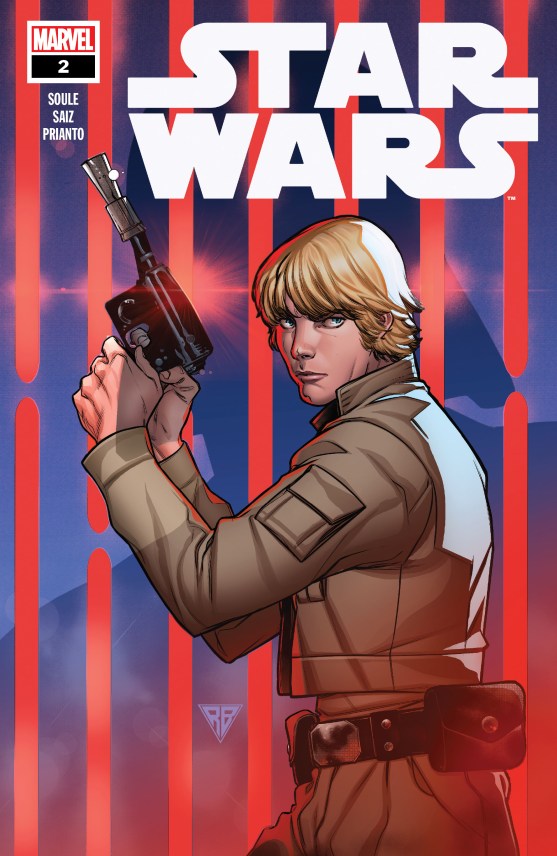
Star Wars (2020) #1 Cover

Shortly after the Disney buyout of Star Wars and their subsequent creation of a whole new canon, Marvel Comics started to develop a new range of Star Wars comics.  While there were several great series, limited series and standalone comics set during various periods of Star War history, the main series were set between the events of A New Hope and The Empire Strikes Back.  These key comics, which included the Star Wars (2015), Darth Vader (2015) and Doctor Aphra (2016) series, did a fantastic job of filling in the gaps between these two films and presenting readers with some clever and unique adventures.  All these series came to an end in late 2019, with their plots coinciding with the start of events from The Empire Strikes Back.  In the wake of their cessation, Marvel announced four new Star Wars comic series that would take their place (after suffering some pandemic-related delays), set in the aftermath of The Empire Strikes Back.  While I have already looked at some of these comics, including the first entry of the Darth Vader (2020) series, I think it is time that I explored the flagship series of this new run of comics, the Star Wars (2020) series.

The Star Wars (2020) series will explore what happens to the main cast of protagonists after the events of The Empire Strikes Back and is set in the year or so between that film and Return of the Jedi.  This looks set to be a long-running series that will not only tell its own tale but will tie in to the events of the other current comics, probably resulting in some crossovers.  This first volume, The Destiny Path, contains issues #1-6 of the Star Wars (2020) series and serves as an excellent and compelling introduction to the rest of the series.

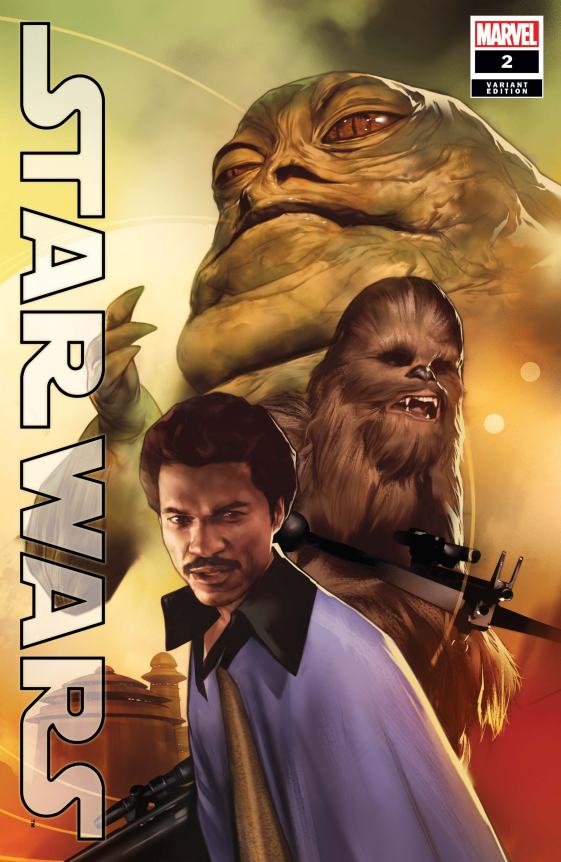
Star Wars (2020) #2 Cover

Following the battle of Hoth, the Rebel Alliance is in disarray.  With their fleet scattered around the galaxy and the might of the Empire reigning supreme, these are the darkest days the Rebellion has ever faced, especially as the Empire appears to have found a way to locate their ships and hiding places.  The hope of the entire Rebel Alliance may lie in the hands of its greatest leaders and heroes, but, after the events on Bespin, even these shining beacons of rebellion have been damaged beyond recognition.

With Han Solo captured by the Empire and handed over to the bounty hunter Boba Fett, those on the Millennium Falcon are dispirited and lost.  However, finding a Rebel cell under attack prompts them into action.  Despite missing the man she loves, Princess Leia is determined to rescue him and revive the Rebel Alliance by any means necessary.  At the same time, reluctant Rebel recruit Lando Calrissian attempts to make himself useful, despite mistrust from everyone around him.  Finally, Luke Skywalker, after losing a hand and finding out the horrible truth of his parentage is in shock.  Worse, his meeting with Vader appears to have damaged his connection to the Force, and neither of his masters will appear to talk to him.

Star Wars (2020) #2 Cover2

As the Rebel Alliance seeks a way to survive, each of these players, with the help of Chewbacca, C-3PO and R2-D2, begin the next stage of their journey.  As Luke seeks a lightsaber, Leia looks to find a way to save Han and Alliance, while Lando looks for redemption in all the wrong places.  All their journeys lead the back to the scene of one of the worst moments of their past, Bespin.  But how far will Luke, Leia and Lando go to achieve their goes, and will they be able to survive the dangerous enemies chasing them?

This is an outstanding and intense Star Wars comic that does a wonderful job of setting up a brand-new series of exciting adventures.  Charles Soule, who has written some of the best Star War comics out there, creates an exceptional and captivating tale that highlights the tragic consequences of The Empire Strikes Back.  Featuring some incredible artwork, amazing big moments, and a perfect portrayal of some of the iconic original trilogy cast, this is an outstanding and awesome comic.

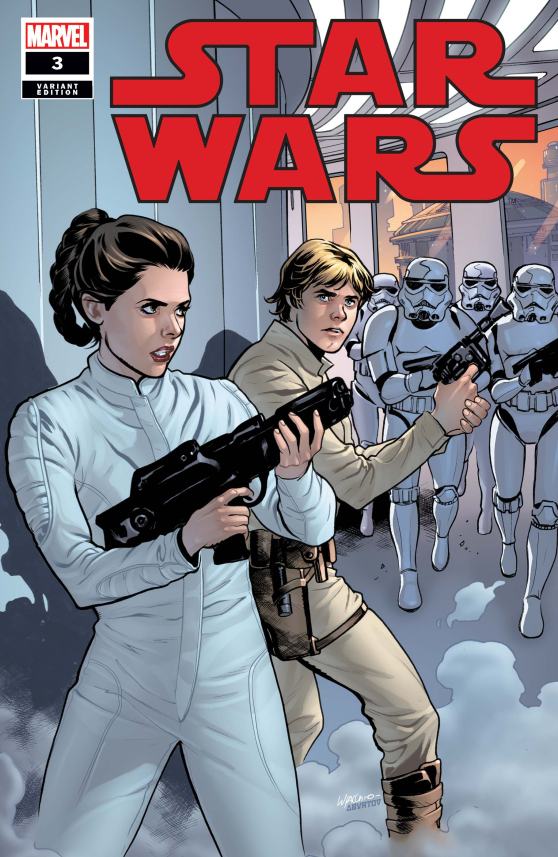
Star Wars (2020) #3 Cover

For this cool first volume in the Star Wars (2020) series, the author has come up with an extremely compelling and clever multi-part narrative that I deeply enjoyed.  The Destiny Path has a strongly character-driven story, following Luke, Leia and Lando as they attempt to recover from the traumatic events of The Empire Strikes Back.  The narrative starts right after the heroes escape from the Cloud City at Bespin (technically before the closing scene of The Empire Strikes Back) and places the shell-shocked characters right in the middle of a firefight against an intriguing new foe.  The next stage of the story contains an intriguing couple of sequences aboard the Rebel medical frigate, showing off some new angles to the film’s final scenes, while also following Lando and Chewie as they head to Tatooine to scope out Jabba’s palace.  This part of the narrative is very clever and exciting, especially as it paints Lando as a bit of a wildcard, with unclear loyalties.  The next section of the comic takes Luke, Leia and Lando back to Bespin, each for a different reason.  There are some high octane and emotionally rich comic issues here, especially as all three of the characters are forced to face up to their recent mistakes and losses, while also taking on the Imperial garrison stationed there.  All of this leads up to the final part of the book, which is primarily focused on Luke, who journeys to several distant planets following a vision to find a new lightsaber.  There are some really cool sequences here as Luke continues to battle his own personal demons (and a real one, but we’ll get to that later), before eventually coming away with an unexpected prize.  All these disparate storylines work really well on their own, but their real strength lies in the way in which they tie together perfectly throughout The Destiny Path.  You end up getting a fantastic story as you follow one major event to the next, and I liked the unique tales contained within each section.  All of this serves as an awesome and powerful start to the Star Wars (2020) series, and there are plenty of hints of awesomeness to come as the Rebels bounce back while Luke continues to grow as a Jedi.  Epic Star Wars storytelling at its best!

Star Wars (2020) #3 Cover2

There is no way that I can talk about The Destiny Path without geeking out about some of the cool and memorable Star Wars elements and references featured within.  I deeply, deeply enjoyed seeing the intriguing and dramatic aftermath of The Empire Strikes Back that Soule envisions here, especially as he took the time to explore the various traumas and consequences of the events at Bespin.  This was a fantastic heart of the entire volume which is going to appeal to all fans of the Star Wars franchise.  Other cool Star Wars moments that fans will love include the mysterious events occurring around the Skywalker lightsaber.  This lightsaber, which disappears at the end of The Empire Strikes Back and reappears in The Force Awakens, is a major item throughout the Star Wars canon and I liked seeing Luke trying to find it in the bowels of Cloud City, only for it to slip into another mysterious person’s grip.  It will be interesting to see what happens to that in the future, and foresee it being a fascinating narrative thread throughout this entire series.

In addition to these elements from the films, Soule also fits in a lot of other cool references and call-backs to previous Star Wars comics, especially ones that he has had a hand in.  The most obvious of these was the appearance of Verla, who Luke encounters while trying to find a new lightsaber.  Verla is a Force-sensitive woman who first appeared in The Burning Seas volume of Soule’s Dark Lord of the Sith comic series.  It was great to see that Verla survived, and Soule does a good job working her into this story, portraying her as the damaged and cynical former Jedi student who is just trying to survive.  Verla’s inclusion allows Luke to learn more about Vader, both as a Jedi hunter and a Jedi named Anakin, and it was interesting to finally see him learn about the Jedi purges, Order 66, and the Inquisitors.  I also noticed a lot of mentions about the High Republic in this volume.  I really should not be too surprised about this, especially as Soule is one of the leading creative minds behind the High Republic range, having written the first novel in the series, Light of the Jedi.  It looks like Star Wars (2020) is going to rely on several events from the High Republic books, and I am intrigued about how Soule will work them into his cool story.  All of these Star Wars elements are extremely cool, and I think that they will deeply appeal to every fan of this franchise.  While mega fans are obviously going to love some of the more obscure references that Soule fit into this comic, this series is also very easy to enjoy if you have a more basic knowledge of Star Wars.

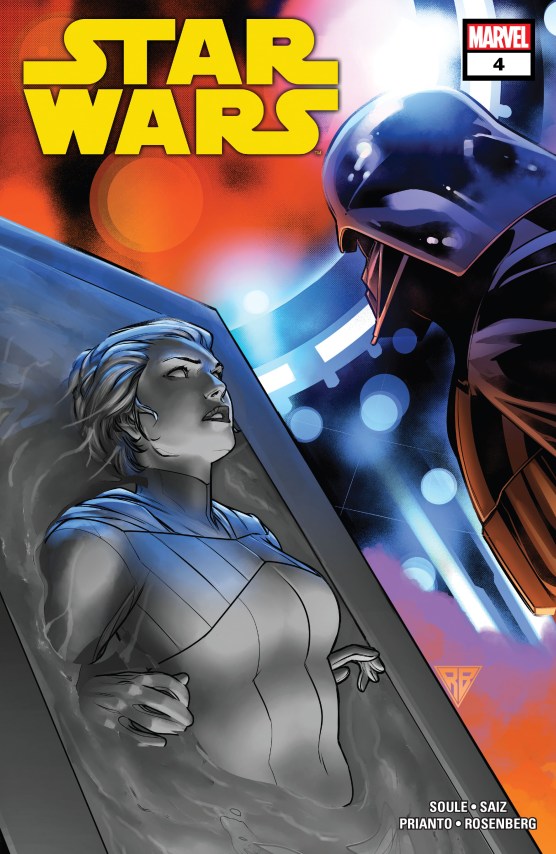
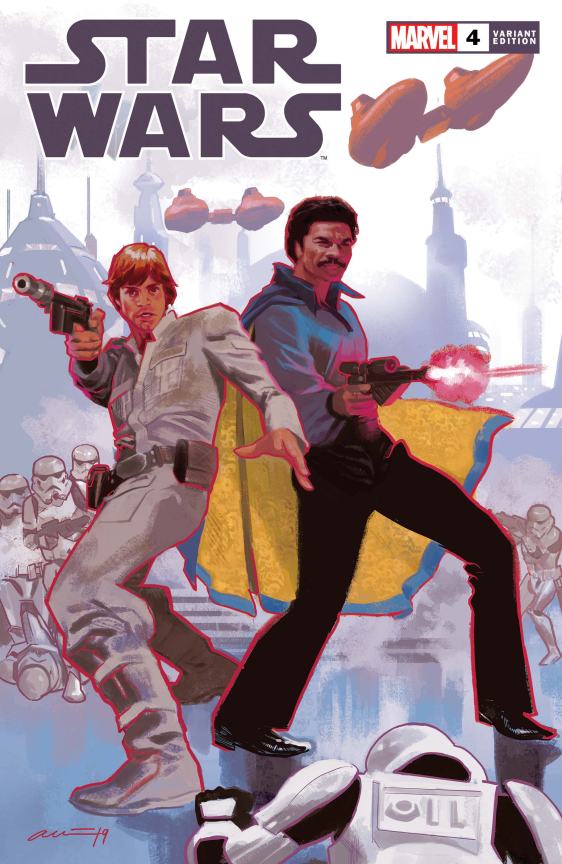
Star Wars (2020) #4 Cover

I do have to quickly highlight that one of my favourite parts of this entire comic is one of the final sequences in the volume.  In this sequence, Luke visits an abandoned Jedi temple which is filled with a mound of untouched treasures, including a lightsaber which he desperately needs.  However, it turns out that this entire building is a trap (Luke was warned, to be fair), as he is quickly attacked by the ghost of the Grand Inquisitor.  The Grand Inquisitor is an awesome character who served as the main antagonist of the first season of the Star Wars Rebels animated series.  Soule has previously utilised him in his Dark Lord of the Sith comic series, especially the first two volumes, Imperial Machine and Legacy’s End, but this current comic is set after his death in Rebels.  There are so many cool elements to the Grand Inquisitor’s return in this comic, including a fantastically drawn fight between him and Luke, where Luke encounters a double-bladed lightsaber for the first time, and I loved the Grand Inquisitor’s fiery, spiritual appearance.  However, the best part of this whole unique inclusion was the characters final interaction with Darth Vader.  Here it is revealed that Vader is the one trapping the Inquisitor’s spirit in this world, using him as a tool and a trap.  When the Inquisitor begs Vader for his release, Vader refuses, as the Inquisitor still has use to him.  The forlorn spirit starts to fade, but not before sadly uttering “there are worst things than death”.  This is an outstanding call-back to the character’s final words in Rebels, and it was so cool to see his morbid prediction come to pass.  This whole sequence really pushed The Destiny Path up a level for me, and I love how the creative team worked this into this fantastic and awesome comic.

Easily one of the best parts of this entire comic is the creative team’s portrayal of the iconic Star Wars characters who serve as the main protagonists of this amazing first volume.  Soule has done an incredible job writing a character-driven narrative around these protagonists, and I love his in-depth examination of their psyches and actions following The Empire Strikes Back.  The author pulls together some great storylines around these characters, and I loved seeing what amazing adventures they went on between these two films.

Star Wars (2020) #4 Cover2

One of the main characters explored during this book is the original Star Wars hero, Luke Skywalker.  Now, Luke is going through a lot at this point, having just had his hand chopped off and learned that his father is Darth Vader.  Luke spends most of the first part of the novel absolutely traumatised by these events and ends up doubting himself while also concealing this revelation from his friends.  To compound his issues, Luke finds his connection to the Force somehow damaged or fractured, as neither of his masters, Obi Wan Kenobi and Yoda, are reaching out to him.  This results in a more scattered Luke, and I loved the way that Soule dove into his damaged mindset.  There are some great and powerful moments throughout this comic that show off Luke’s trauma, as well some dramatic moments when he lashes out uncontrollably with the Force.  After receiving some visions and engaging in a hunt for a new lightsaber, Luke starts to come to terms with the events surrounding him, and it is great to see him recover somewhat, including by learning more about his father.  This slight reconciliation with his identity enables Luke to regain his control over the Force, and there are some very cool scenes where he uses his powerful and advanced abilities against the Empire.  Overall, this was a pretty spectacular look at Luke, and I really appreciated the cool story that Soule spun around him.  It will be interesting to see what is going to happen to Luke in the future entries of this comic, especially as he continues along his journey to become a full-fledged Jedi.  It will also be cool to see more of Luke’s new yellow lightsaber, which was an intriguing decision by Soule which I think is going to really pay off.

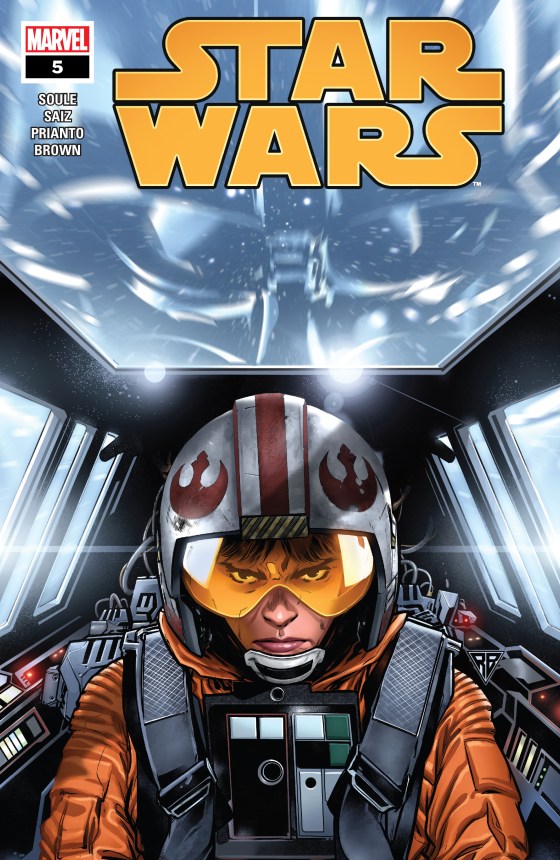
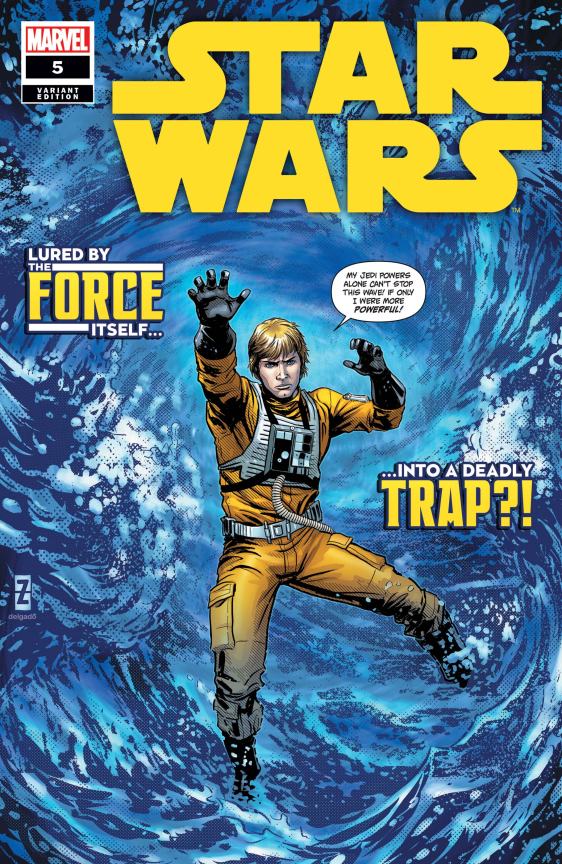
Star Wars (2020) #5 Cover

In addition to Luke, a lot of the story focuses on Leia.  Like the rest of the characters, Leia is pretty traumatised, as she discovered her love for Han only to lose him in seconds.  While at times she seems in control, especially as she works to salvage the Rebels fleet, she is clearly still impacted by this loss.  As a result, she desperately attempts to find a way to save him from Boba Fett, even if that means risking herself and her friends.  Her recklessness leads her back to Bespin with the others as she attempts to find more about the carbonite freezing process.  While Leia’s arc is possibly the least interesting (which isn’t a criticism; it’s just the other two main characters have some outstanding stories), she does have some great moments in this comic, and I especially loved the visual of her also trapped in carbonite.  It was also great to see more of badass Rebel leader Leia in this comic as she steps up and takes charge to protect those around her.  I imagine that the creative team have some great ideas for Leia in the future and I cannot wait to see what they are.

The other main character of this volume was the flashy and charismatic rogue, Lando Calrissian, who finds himself stuck with the other protagonists after helping them flee from Bespin.  Despite his attempts to do the right thing at the end of The Empire Strikes Back, Lando is still not trusted by anyone, as they blame him for his betrayal and the loss of Han.  As a result, Lando attempts to find some form of redemption with them, although he mostly comes across as a self-centred bastard.  Soule works a really intriguing storyline around Lando, and I loved seeing his meeting with Jabba the Hutt as he makes some initial inquiries into Han’s location.  Lando is able to talk his way out of a meeting with Jabba, although the reader is left wondering whether he plans to sell out the Rebels.  This nicely leads into his storyline on Bespin as he accompanies Luke and Leia back there.  It was great to see Lando returning to his city, especially as he manages to con his way through a range of different Imperial obstacles, and he was fully in his roguish element.  While Lando appears to return to Cloud City for selfish reasons, such as throwing a big middle-finger to the Empire, his jaunt does awaken his inner hero a little, and you get a glimpse of the person we eventually see in Return of the Jedi.  Lando is easily the most entertaining character in the entire comic and most of The Destiny Path’s humour is derived from his interactions with most of the other characters.  He is a very funny character, and it was great to see so much focus on him after barely featuring in the last stage of Star Wars comics.  I look forward to seeing what Soule and the creative team have for him in the future, and I think he is going to be the MVP character of the entire series.

Star Wars (2020) #5 Cover2

Aside from the three main characters above, The Destiny Path also includes a great range of other characters from various points in Star Wars history.  Like its precursor comic, Star Wars (2020) also follows Chewbacca, C-3PO and R2-D2, although I think these three great characters were a little overshadowed by Luke, Leia and Lando in this volume.  Chewie does have a bunch of fun moments throughout the comic, mostly in his interactions with Lando, and it is entertaining to see him be forced to deal with the cocky former friend.  R2-D2 does have a great sidekick time with Luke, and it was always fun to see him save the mighty Jedi’s life again and again.  There is also an interesting focus on a couple of new or lesser-known characters.  For example, it looks like Soule is going to spend a bit of time following Kes Dameron and Shara Bey, the parents of a certain Poe Dameron.  The Destiny Path also introduces an intriguing new antagonist in the form of Commander Zahra, a fanatical Imperial officer placed in charge of eliminating the remnants of the Rebel Alliance.  Zahra is tactical genius who I understand is going to have a major role in some upcoming comics.  This volume proves to be an excellent introduction to this cool new character, especially as it establishes her dangerous intelligence, murderous mentality and the insane grudge she bears against Leia, all while she commands the unique Star Destroyer, Tarkin’s Will, which still bears scars from being hit by wreckage of the original Death Star.  Zahra proves to be an outstanding antagonist, and I cannot wait to see what deviousness and insanity she brings to the rest of the series.

I definitely need to highlight the incredible and eye-catching artwork that was an outstanding and memorable feature of this awesome comic.  The artistic team behind this comic did an amazing job from start to finish, and every page was a visual treat for the eyes.  While all the art in this comic is great, there are a few things that really stood out to me, such as character design.  The artists do such an incredible job capturing the main characters throughout this comic, especially in the first issue where all their post-The Empire Strikes Back pain and emotion is on full display.  It was uncanny how similar these characters looked to their portrayal in the film, and it is a testament to the artists’ amazing ability.  There are also several awesome combat sequences scattered throughout the comic and I loved the way in which the art brought them to life.  A particularly good example of this was the opening space battle between the Empire and a small Rebel fleet.  The artists come up with an incredible background for this fight, which takes place between a sun and a concentrated barrage of green turbolaser bolts, which are being used to fence the Rebels in place.  This was so visually pretty, and it really enhanced the cool story and fighter combat that was taking place in front of it.  I also deeply enjoyed the way in which the artists have recreated several key scenes from The Empire Strikes Back.  These scenes, which include Luke losing his hand, finding out that Vader is his father and Han giving his iconic “I know” to Leia, are scattered throughout key parts of The Destiny Path.  Not only are these cool visually, but they are also clever from a writing point of view, dragging the readers back to the emotional impact of these events and driving how much they are still sticking in the mind of the protagonists.  I cannot overstate how awesome this art is and I had an absolute blast seeing every explosion, Force burst and clever flashback that they were able to fit in.

Star Wars (2020) #6 Cover

Well, if the above multi-page rant above didn’t give it away, then I’ll say it clearly here: this comic is incredible!  Soule, Saiz and the other talented artists have done an amazing job with this first volume of the Star Wars (2020) series, and The Destiny Path is an epic and awesome read.  I loved the in-depth examination of these key characters after The Empire Strikes Back and there are so many cool Star Wars elements worked into the story.  This is one of my favourite Star Wars comics and it gets a full five-star rating from me.  I cannot wait to see what extraordinary stories and powerful artform this fantastic creative team comes up with next and I need to order the next volume in now.

Amazon

Throwback Thursday – The Last Continent by Terry Pratchett

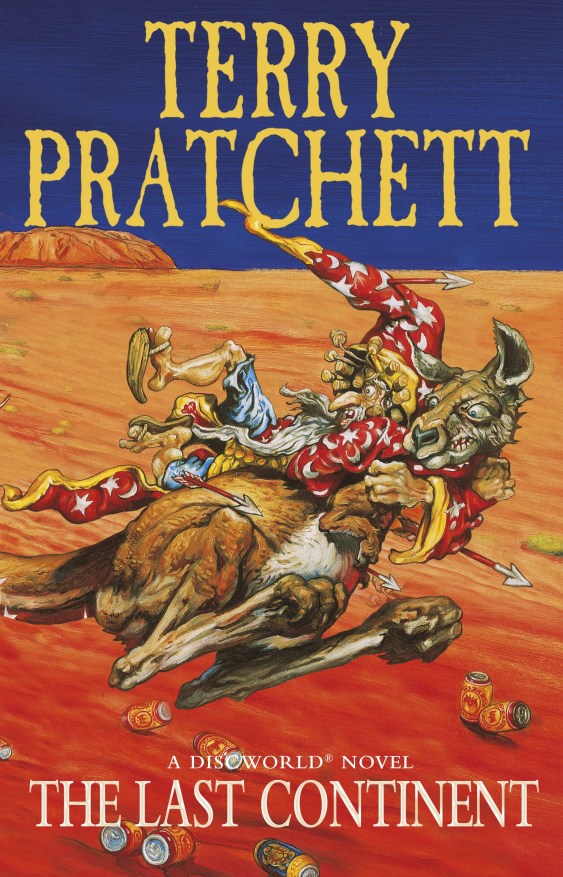
The Last Continent Cover

Publisher: Doubleday and ISIS Audiobook (1 May 1998)

Series: Discworld – Book 22

Length: 9 hours and 57 minutes

My Rating: 5 out of 5 stars

Amazon

This is part of my Throwback Thursday series, where I republish old reviews, review books I have read before or review older books I have only just had a chance to read.  For this Throwback Thursday I take a look at one of my absolute favourite books of all time, the incredibly funny and always enjoyable The Last Continent, by legendary author Sir Terry Pratchett.

I have never made it a secret that I absolutely love the works of the late, great, Terry Pratchett, who I consider to be one of the best authors of all time.  I love and adore every single one of Pratchett’s hilarious and captivating novels, especially the entries in the wacky and wild Discworld series, a comedy fantasy series set in an absolutely insane world of magic, monsters and outrageous personalities that lies upon a disc shaped world, borne through space on the back of four elephants, who themselves are on the back of a giant turtle.  I have so much love for this outstanding and hilarious series, and I have read each and every entry in multiple times.  Heck, even the name of my blog, The Unseen Library, is taken from a fictional institution in the Discworld series!  However, despite how much I love the series, I have so far only reviewed one Discworld novel on this blog so far (Shame! Shame! Shame!), Moving Pictures, and this is something I have been meaning to rectify for some time.

I recently did a Top Ten Tuesday list where I looked at some of the funniest books I have ever read, which included several Discworld novels, and this inspired me to do a review for another Pratchett read.  I ended up going with one of my favourite Discworld novels of all time, the incredible and wildly entertaining The Last Continent, which places one of the author’s most iconic characters into the most dangerous places imaginable, Australia.  I am reviewing this book slightly out of the order I originally planned, but I figured reviewing this one now may encourage me to get to others in the future.  I should admit that I have not read The Last Continent recently, but this is one of the many Discworld novels that I have read multiple times, either in its paperback (I’ve actually got a signed copy of this book) or its audiobook format, and at this point I have it pretty much memorised.

So the first thing I should cover is:

“This is not a book about Australia.  No, it’s about somewhere entirely different which just happens to be, here and there, a bit…Australian.

Still…no worries, right?”

Welcome to EcksEcksEcksEcks (XXXX), the Discworld’s last continent.  Made by a rogue creator who snuck in after the rest of the Disc was created and kept hidden away from its other civilisations by a series of massive storms, XXXX is a deadly and dangerous place.  Filled with some of the most lethal and confusing creatures on the entire Disc and populated by a friendly, if occasionally murderous, group of people, XXXX is a hell of a place to live.  Unfortunately, everything in it is about to die as the water dries out and even the beer is getting hard to find.

Luckily for the people of XXXX, a hero has been found, one who is battling his way through the wastes and towns of the country, his legend growing all along.  But who is this road warrior, sheep shearer, horse wrangler, beer drinker and ballad-worthy bush ranger, and why is he apparently so determined to run away from his heroic destiny?

That man is Rincewind, the Discworld’s most cowardly and inept wizard, who has been bounced from one end of the Disc to the other and been chased by every sort of monster, maniac and seller of regional delicacies you can imagine.  All Rincewind wants to do is go home, and he is determined to avoid any new adventures as a chosen hero, no matter what the talking kangaroo stalking him tries to tell him.  Despite his best efforts, Rincewind once again finds himself caught up in the special craziness of the locals, and if he wants to survive, he needs to find a way to save everyone.  What’s the worst that could happen???

So, as you may be able to tell from the above synopsis, this is a bit of a crazy novel, but it is one that is always guaranteed to make me laugh, especially with its fantastic Australian-based humour.  The Last Continent is the 22nd overall entry in the Discworld series and the sixth book to focus on the character of Rincewind.  I personally have a lot of love for this particular Terry Pratchett novel, and it is probably one of my all-time favourite Discworld novels.

Pratchett came up with a pretty clever and fantastic story for The Last Continent, which sees several of his established characters get involved in wackiness all around a newly discovered continent.  The main story follows Rincewind as he tracks across the wastelands of XXXX after getting sent there at the end of his previous novel, Interesting Times (there was an accident with a butterfly), and he is now primarily concerned with trying to find a way home.  However, mysterious forces soon work to turn him into the hero who will save XXXX from a thousand-year crippling drought.  Rincewind, who is more concerned with reaching the nearest port, soon gets involved with all manner of road bandits, deadly creatures, drunken locals and an annoying talking kangaroo, all of which lead him to the secrets at the heart of this lost continent.  At the same time, the wizard faculty at Unseen University are faced with a serious problem when their trusty orangutan colleague, the Librarian, falls ill, and they require his real name to work a spell to save him.  However, the only person who knows the Librarian’s real name is Rincewind, and so the faculty blunder their way through a magical portal to find him.  However, in predictable fashion, they find themselves trapped on a weird island thousands of years in the past and forced to deal with an immature and slightly beetle-obsessed god of evolution.

I really enjoyed both story arcs contained within this book, and Pratchett did an amazing job bringing them together.  Both have some fantastic and weird elements to them and they make great use of the particular adventures and attitudes of their relevant characters.  While Rincewind is forced to run away from all manner of deadly situations you typically see here in Australia (let me tell you, the dropbears and road gangs are murder), the wizard faculty blunder their way through all manner of unique situations, mostly by ignoring what is happening to them.  Each storyline is unique and has some fantastic highlights, but the real strength is the way in which Pratchett combines them together into one cohesive narrative.  Not only are both distinctive arcs perfectly spread out and separated throughout the course of the book, but Pratchett does a fantastic job combining them together in a clever way.  This ended up serving as a great near-final adventure for Rincewind (he’s more of a supporting character in his following appearances), and I think it did a wonderful job wrapping up his main arc.  While readers should probably read some of the earlier Discworld novels featuring Rincewind (especially the preceding Interesting Times), The Last Continent can easily be read alone, and readers will have an outstanding time reading this fun and compelling comedic adventure.

In my opinion, The Last Continent is one of Pratchett’s funniest novels, although I might be somewhat biased by my own personal humour and background.  I always have an outstanding time reading this book and there are so many clever jokes and amusing references that I cannot help but laugh, no matter how many times I hear them.  This book has a lot of Pratchett’s classic humour elements to it, such as the unusual quirks of his various characters and the funny little footnotes, filled with great references and punchlines.  The author goes off on some very entertaining segues during this book, and I love some of the great jokes he came up with, especially those that make fun of Australia.

Now, despite what the author says at the front of this book, The Last Continent is clearly a parody of Australia, and Pratchett clearly enjoyed utilising every single Australian reference or cliché he could think of to craft his funny book.  The continent of XXXX is an over-the-top fantasy version of Australia, with many of the outrageous stereotypes that you would expect, as well as some more subtle choices, and it serves as a truly amusing setting for this book, especially as Rincewind perfectly plays the part of clueless tourist.  While you could potentially discount The Last Continent as merely satirising Australia, I have always seen it as something cleverer, as I think that Pratchett was more making fun of the stereotypes that outsiders came up with rather than Australia itself.  That being said, Pratchett, as a Brit, did take a few good shots, although that’s only to be expected.  As an Australian myself, I always enjoy when comedy writers try to encapsulate Australia in their works, as it is quite amusing to see what they reference.  I always thought that Pratchett did this the best with The Last Continent, as he really dived into so many aspects of Australia life, nature and culture, and there are some truly funny jokes contained within.  Australian historical or cultural icons like Mad Max, Priscilla, Queen of the Desert, Skippy, The Man From Snowy River, Crocodile Dundee, and Ned Kelly are utilised in this book to great effect throughout The Last Continent, and there are some truly outrageous and clever references and jokes here.

While The Last Continent is filled with many, many funny Australian jokes, a few really stick out to me.  I personally always laugh so hard when Death, wanting to learn more about the continent his elusive prey Rincewind has landed on, decides to ask his library for a list of all the deadly animals on XXXX.  However, this results in him being buried by a massive pile of reference books, including “Dangerous Mammals, Reptiles, Amphibians, Birds, Fish, Jellyfish, Insects, Spiders, Crustaceans, Grasses, Trees, Mosses and Lichens of Terror Incognita: (Volume 29c, Part Three).  This is followed up by a request for a list of harmless creatures on the continent, and a single card appears bearing the sentence “some of the sheep”.  I love that over-the-top joke about how dangerous Australia’s wildlife is (it is honestly not that bad, although my editor was bitten by a sheep the other day), and that was one of the best ways I have seen it bought up.  I also loved the references to Australian hero worship of notorious criminals such as Ned Kelly or the jolly swagman from Waltzing Matilda.  There are some amazing jokes here, from people attempting to make catchy ballads, to the prison guards providing advice and help on last words and escape possibilities, all of which capture the rebellious Australian spirit.  I particularly liked Pratchett’s version of Waltzing Matilda, which was perfect in its rhyme, its satirical analysis of the original poem, and how it fit into The Last Continent’s narrative:

“Once a moderately jolly wizard camped by a waterhole under the shade of a tree that he was completely unable to identify.  And he swore as he hacked and hacked at a can of beer, saying ‘what kind of idiots put beer in tins?’”

Other great Australian comedic sequences for me include the scene where the Unseen University wizards attempt to design a duck by committee, resulting in the mighty platypus, an impromptu Mad Max road chase with horse-drawn carts and the constant references to a certain line in our national anthem.  All of these jokes, and more, were pretty amazing and I really enjoyed seeing some of the outrageous and over-the-top elements that British culture picks up about Australia.

While I really enjoyed all the fun references to Australia, some of Pratchett’s best jokes in The Last Continent occurred during the secondary storyline that followed the faculty of Unseen University as they go back in time and encounter the god of evolution.  The author uses this part of the book to make comedic observations about time travel, evolution and advanced biology.  Not only does include a particularly hilarious sequence in which someone tries to explain the grandfather paradox to a group of wilfully ignorant wizards, but there are some truly funny jokes about evolution and biology which cleverly reference some advanced concepts and historical basis of the science.  While I read this book years ago, it wasn’t until I took some specific biology classes that I fully grasped just how intelligent some of the jokes in this part of the book are.  I personally love a book which you can come back to time and time again and find some new joke or layer to, and this is the case with The Last Continent, which no doubt still contains elements or references I’ve missed.  All of this results in a comically brilliant read, and The Last Continent remains one of my favourite Disworld reads as a result.

I have always enjoyed the great character choices contained within this book, as Pratchett brings together some old favourites, as well as a few entertaining new ones, to tell the story.  The main character of The Last Continent is Pratchett’s original Discworld protagonist, Rincewind, the cowardly and inept hero who cannot even spell “wizard” properly, but who has served as a world-saving hero on multiple occasions.  Rincewind is always a particularly fun character to follow, not only because he constantly finds himself caught in all manner of unique situations which he heroically tries to run away from (he has become quite the expert at running away), but he has a certain realistic approach to life that allows him to see through the ridiculousness around him and address it in a funny manner.  At this point in the series, Rincewind has been bounced around from adventure to adventure against his will so much that he has developed a bit of knack for knowing when it is going to happen again, including figuring out all the signs someone gives off when they are trying to con him into being a hero.  It proves to be quite entertaining to see Rincewind try to escape from people trying to drag him into the narrative, especially as all his attempts to get out of dangerous situations generally put him in even worse trouble.  It is also really worth seeing Rincewind’s reactions to the various elements of XXXX life, especially as he soon begins to realise that everyone there has some very unusual ideas about how to live and die, most of which he is very opposed to.  I really enjoyed this more mature and somewhat resigned version of Rincewind and I have to say that this is one of my more favourite adventures of his (either this or Interesting Times).  It was definitely great to see the character get a happy ending towards the end of the book for once, which he frankly deserved after his last few adventures.

While Rincewind is tearing it up in not-Australia, Pratchett also dedicates around half of The Last Continent to the characters who form the faculty of the Disc’s premier wizard school, Unseen University.  Many wizard characters have featured in the Discworld books, but this current iteration of the faculty (with the exception of the Librarian) was originally introduced in the 10th book, Moving Pictures, and has remained pretty constant ever since.  This group includes the hunting-obsessed Archchancellor, Mustrum Ridcully; the quite insane Bursar; the incredibly obese Dean; the amusing team of the Senior Wrangler, the Chair of Indefinite Studies and the Lecturer in Recent Runes; the orangutan Librarian (working in a library is dangerous work); and the long-suffering Ponder Stibbons, the youngest member of the faculty and the only one with any common sense.  Pratchett had previously done an amazing job building up all of these characters in prior books, highlighting their unique quirks and issues, including the overwhelmingly stubborn, childish and traditionalist personalities of the older wizards.  This excellent blend of personality types really makes the older wizard characters really amusing and their adventures, especially when encountering strange gods and creators who they generally ignore, are extremely funny.  While an entire book about these characters would potentially be a bit overwhelming, I think that Pratchett got the balance right in The Last Continent, and they ended up serving as a fun counterpoint to Rincewind.  Stibbons was also a particularly good straight-man to his fellow wizards, and the contrast between keen intellectualism and entrenched “wisdom” is a fantastic part of the book.  I rather enjoyed Stibbons arc in this book, especially as you get to appreciate the true depth of his frustration with his fellow wizards, although he does gain a deeper appreciation for them as the book progresses.  Other amusing storylines with the wizards includes the Senior Wrangler’s obsession with housekeeper, Mrs Whitlow, which eventually gets shared with some of the other wizards, and the uncontrollable shapeshifting infecting the Librarian, which makes for some entertaining gags.  I also really enjoyed the fact that much of the book’s plot revolves around the fact that no-one actually knows the Librarian’s name, a fun feature from the previous books, and it was interesting to see the reasons why this was the case.

Aside from this fun collection of wizard characters, Pratchett makes great use of a fine selection of supporting characters, each of whom add some fantastic fun to the overall story.  This includes a very inventive group of new characters, each of whom represent various parts of XXXX life, whether they be depressed operatic chefs, police officers more concerned with getting their charges ballads and famous last stands, bushland drovers, belligerent drinkers, desert-wandering crossdressers in a princess-themed cart and even a crazed road warrior named Mad.  Despite most of them being the result of a punchline or extended joke, Pratchett sets each of these characters up really well and ensures each of them has a fun and satisfying character arc in the book.  I also quite enjoyed the return of fan favourite character, Death, who goes on a bit of a tourist phase through the book.  I really liked Death’s random appearances throughout The Last Continent, especially as he drops some amusing anecdotes about dying in XXXX, and it was also great to see his current viewpoint on Rincewind.  Whereas before he was always determined to catch and kill Rincewind, as he was the one mortal who constantly got away from him, in this book, Death, who no longer has any idea of when Rincewind is actually going to die and is now quite fascinated by him, keeps himself appraised of his progress and is generally friendly to him, even if that freaks Rincewind out.  I also loved the appearance of another member of the extended Dibbler clan, even if the XXXX version was a parody of a certain unpleasant right-wing political figure here in Australia.  The appearance of another ruthlessly mercantile hot-food dispenser with inedible food is a great continuation of a running joke Pratchett has been using for several books, and it is one that really pays dividends in The Last Continent, when Rincewind recounts all the terrible foods he’s eaten over the years from the various Dibblers he has encountered, which then runs into a fantastic diatribe about the dangers of national delicacies, especially XXXX’s meat pie floater (a real meal here in Australia, although there is no way in hell I would ever eat one).  All of these characters add so much to the book’s story, and I love the inventiveness that Pratchett puts into them.

While I have enjoyed all the Discworld novels in their physical paperback format at one point or another, my preferred way to experience a Pratchett novel these days is in its audiobook form.  All of the Discworld novels have been turned into excellent audiobooks over the years, and The Last Continent is no exception.  Narrated by the outstanding Nigel Planer, who ended up narrating over 20 Discworld novels (The Last Continent was the penultimate Discworld book he leant his voice to), and with an easily enjoyable runtime of just under 10 hours, this is a pretty fantastic audiobook that I regularly rush through in not time at all.  I find that all the awesome jokes in this book come across in the audiobook format extremely well, even the jokes traditionally contained within the book’s footnotes, and Planer’s witty voice is always pitched at the best tone to bring out the joke’s potential.  I really appreciate the way in which Planer utilised the same voices for the various recurring characters he has used in all their previous appearances, and each of the voices fit the characters very well.  I also really enjoyed the voices he came up with all the new characters, and it was exceedingly amusing to see him come up with a range of Australian voices and accents and have them belt out a variety of outlandish slang terms.  All in all, this turns out to be an excellent audiobook version of The Last Continent and it is pretty much the only way I enjoy this novel at the moment.

As you can see from the huge review I pulled together above (I have written university essays that were shorter), I really love The Last Continent.  This fantastic Australian parody is easily one of my favourite Discworld novels, and I deeply enjoy the outstanding and entertaining story that Pratchett wove around this outrageous version of my country.  Anyone who is familiar with anything Australian is going to have an incredible time reading this book, and I honestly do not think I could give this anything less than five stars.  A highly recommended read from one of the funniest authors of all time.

Amazon

Throwback Thursday – Moving Pictures by Terry Pratchett

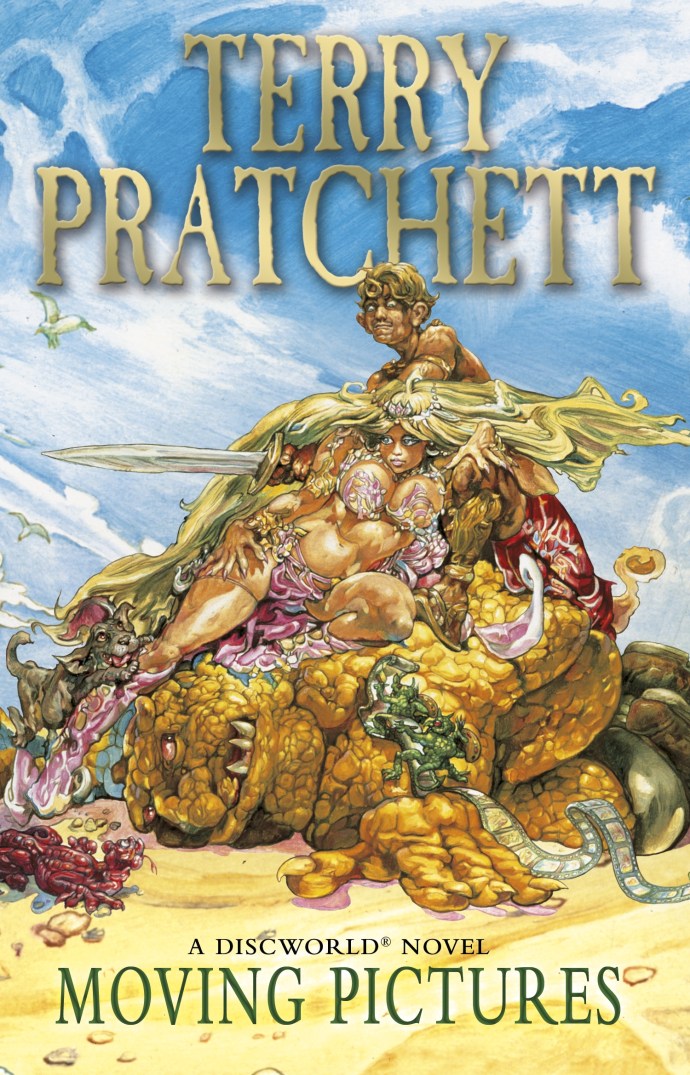
Moving Pictures Cover

Publishers: Corgi and ISIS Audiobooks (14 November 1991)

Series: Discworld – Book 10

Length: 332 pages or 10 hours and 8 minutes

My Rating: 5 out of 5 stars

Amazon

Reviewed as part of my Throwback Thursday series, where I republish old reviews, review books I have read before or review older books I have only just had a chance to read.

Because my blog shares the name of a building featured in Terry Pratchett’s Discworld series, some people might have assumed that I am a fan.  You would be right, so very, very right.  I have loved Discworld since I was a small child, and my appreciation and respect for the complex writings of the late, great genius, Sir Terry Pratchett, has grown with me.  The Discworld series represents one of my ultimate comfort series of books.  It’s the series that I go back to at any time when I want something fun and familiar to enjoy.  I have read all of the adult books set in Discworld multiple times (I have yet to read all of the young adult ones), and it is an unusual year when I do not listen or read some of these books in my spare time.  Pretty much every single book in this series deserves five out of five stars or higher (with one or two exceptions that I may mark down to a 4.75 with a heavy, heavy heart), and you are unlikely to find any real criticisms about this book below.  After nearly a year of running this blog, the continued exclusion of a review of any of Pratchett’s Discworld is a travesty, and one that I seek to rectify in this somewhat late Throwback Thursday with a review of the 10th book in the series, Moving Pictures.

Before I review Moving Pictures, here is some quick context of the Discworld series for those people unfamiliar with these books.  Discworld is the main series of Sir Terry Pratchett, set upon the Discworld, world and mirror of worlds.  The Discworld, or the Disc, is a flat world that rests on the backs of four massive elephants, who themselves stand on the back of a gigantic turtle swimming in space, Great A’Tuin.  The Discworld itself features a huge range of different nations and continents that bear striking similarities to real-world locations.  This series is, without a doubt, the best series that utilises a combination of fantasy and satire in the entire world.  The seamless blend of the two elements is just incredible, and both elements do an unbelievable job at enhancing each other.  Before his death, Pratchett wrote 41 books in the Discworld series, six of which are considered young adult books.  While the books can be read in any real order, the series were mostly written in chronological order (with the exception of Small Gods), and events from earlier books in the series are often referenced.  Although most of the Discworld stories are self-contained, a number of the books are linked together by a recurring main character and are subsequently grouped together into subseries.  These include the Rincewind, Witches, City Watch, Death, Tiffany Arching and Moist von Lipwig subseries, in addition to a few standalone books that fall outside of any of the subseries.  Characters often appear in other Discworld books outside of their subseries, and there are a string of side or secondary characters who appear in multiple subseries and standalone books.

The book I am reviewing, Moving Pictures, is a standalone book that does not really fall within any of the main subseries.  It is sometimes considered part of minor subseries, called the Industrial Revolution subseries, with The Truth and Monstrous Regiment, but I am not a big fan of that distinction.  As it is the first Discworld book I am reviewing, you might think that it is my favourite book in the entire series, which is not true; although it does get five out of five stars from me and I have enjoyed it an amazing number of times, it is not my absolute favourite Discworld book, although it is high on the list.  It is, however, an easier one for me to review as there is a lot I can say about it.

Goodreads Synopsis:

‘Holy wood is a different sort of place. People act differently here. Everywhere else the most important things are gods or money or cattle. Here, the most important thing is to be important.’

People might say that reality is a quality that things possess in the same way that they possess weight. Sadly alchemists never really held with such a quaint notion. They think that they can change reality, shape it to their own purpose. Imagine then the damage that could be wrought if they get their hands on the ultimate alchemy: the invention of motion pictures, the greatest making of illusions. It may be a triumph of universe-shaking proportions. It’s either that or they’re about to unlock the dark terrible secret of the Holy Wood hills – by mistake…

The blurb above is a bit vague on the details of what is actually happening in Moving Pictures.  Essentially, the alchemists of Ankh-Morpork, the largest city on the Discworld (and a central location for many of the books), suddenly develop filmmaking, which they call moving pictures, and set up a filming base at the ancient and abandoned Holy Wood.  The moving pictures issue a weird siren call to the inhabitants of the Discworld, dragging all manners of people and creatures from across the lands and infecting them with their magic (not a metaphor).

Among those drawn to Holy Wood are Victor Tugelbend, a former student wizard, and Theda “Ginger” Withel, a small-town girl with big dreams.  Thanks to the magical on-screen chemistry between them, Victor and Ginger quickly become the superstars of the fledgling moving pictures industry, especially when the Discworld’s most infamous salesman, Cut-Me-Own-Throat Dibbler, comes to town and takes over the studios.

However, reality on the Discworld is always a bit thin, and Lovecraftian monsters (a favourite recurring antagonist of Pratchett’s early Discworld novels) are revealed to be the ones who planted the idea of moving pictures and Holy Wood in the alchemists’ heads.  Using the new sort of magic created by Holy Wood, the creatures start to break through.  With the wizards of Unseen University, the people who are supposed to guard against these sorts of incursions, distracted by the arrival of an unconventional new Archchancellor, it is up to Victor, Ginger and a ragtag band of other Holy Wood characters to save the day.

This book has so many moving parts to it that it’s hard to know where to begin when reviewing it.  While the main story is concerned with the introduction of moving pictures into the Discworld, there are a number of other entertaining storylines going on throughout the book, each one complementing the main story and creating an amazing overall narrative.  The major appeal of this book is its sharp and intelligent satire of the movie business, which also examines the nature of a film industry in a world as crazy as the Discworld.  I also quite like all the amazing characters, either introduced or built up in this book, many of whom appear in later books in the series.

This book is absolutely hilarious and filled with a huge number of clever and outrageous jokes and observations about the film industry, all of which lie on top of Pratchett’s usual humour about day-to-day life in the Discworld and his random observations, many of which are perfectly introduced in the book’s footnotes.  The main storyline is an amazing portrayal of the hectic early days of the film industry, placed in a fantasy setting.  The cameras are powered by miniature demons (who paint the pictures really, really fast), the lighting is done by salamanders, actors of all species make up the cast, the audience eat ‘banged grains’ while watching the ‘clicks’ and the film’s monsters and villains are all trolls in crude costumes.  However, literal movie magic is making people do strange things (strange even for Discworld folk), talking animals are showing up looking for work, Dwarfs are singing “Hihohihohiho” as they work, characters routinely burst into song and dance in the rain, and one producer keeps threatening to turn people into stars, all while the book’s few straight-characters look on in bemusement.  All of this is amazing, and the sheer number of fantasy-assisted jokes throughout the book is pretty unbelievable.

At its heart, Moving Pictures is a satire and a critique about the film industry as a whole.  Quite a large amount of the story is dedicated to parodying the real-life the crazy effect that movies can have on audiences and the people who make them, as the book shows some ridiculous events.  The story also reflects the insubstantial nature of fame and the fragility of dreams surrounding the movie industry.  The fast-moving world of the film industry is also shown, although sped up even more for comedic and story value, as they film creators are constantly searching and finding new advancements in their field.  A great example of this is shown when Cut-My-Own-Throat Dibbler invents and then continually advances the art of advertisement, so that, within a few short weeks, the film industry goes from ineffective text advertisements to eye-catching posters and explorations of product placement and subliminal messages.  Pratchett handles these critiques very skilfully, and you cannot help but laugh aloud as he skewers the film industry quite cleverly throughout Moving Pictures.

Pratchett also filled Moving Pictures with a ton of references to iconic films and elements of the film industry.  Many of the characters involved with the films are caricatures of famous movie actors, with Victor playing all the typical romantic or manly male heroes of the day, and Ginger is essentially Marilyn Monroe.  Several films are parodied throughout the book, such as Gone With The Wind, which becomes Blown Away, an epic love story set around a famous Ankh-Morpork Civil War.  There is a rather good King Kong parody, in which a gigantic woman kidnaps a poor defenceless Ape (the Librarian) and drags him to the roof of the tallest tower in Ankh-Morpork, all while two wizards on a broomstick shoot at it with a crossbow, with one shouting “If it bleeds, we can kill it!”  That is only scratching the surface of the references featured within this book.  A golden figure with a name starting with O plays a big part in the story, the various studios are all parodies of real-life studios, and there a huge number of funny and subtle references to various famous films.  Examples of these include Wizard of Oz, Lassie, Lawrence of Arabia, Indiana Jones, Looney Tunes, Blues Brothers, Casablanca, Tarzan and Star Trek just to name a few.  Readers can go through this book multiple times and not pick up every detail, which is a testament to the cleverness of Pratchett and his ability to come up with some hilarious references.

I have always found the way that Pratchett utilises or re-uses his characters to be extremely fascinating; while some characters appear in multiple books, a number of his main characters, especially from his earlier books, are only used once. There are several examples of this, including Mort from Mort, Pteppic from Pyramids and Esk from Equal Rites (who did appear in a later young adult novel, but there was a significant time gap between the writing of these two books).  While Pratchett may have simply had only one story in mind for these characters, I have a feeling that he simply did not like how they turned out and decided not to use them again under any circumstances.  Mort is probably the best example of this.  Despite being the protagonist of the first Death subseries book Mort, he never appears in any of the Death subseries books again (aside from one brief flashback), and is instead replaced by his own daughter, Susan.  It is interesting to note that most of the main characters who were never or rarely used again are somewhat similar to each other, being young heroes without too many obvious flaws to them.  On the other hand, the unique main characters Pratchett creates with notable flaws, such as Rincewind, the wizard who has turned cowardice into an art form, or the overly cynical and dangerous alcoholic Sam Vimes, helm multiple books.

If I have to make one criticism about this book, it is the weak and somewhat inconsistent main characters, Victor and Ginger.  Ginger is a generic female character, and while she is a good parody of Marilyn Monroe and other early screen actresses, she is pretty one-dimensional and unlikeable.  Victor starts out with some very interesting character traits, as he is described as an extremely lazy person, whose unique brand of laziness forces him to become a brilliant student wizard in order for him to succeed in his quest to fail every test he ever takes by a certain point margin to ensure he remains a student.  However, these character traits are pretty much thrown out the window a few chapters in and he becomes a typical male hero for the rest of the book.  While this sort of straight-man character was needed for this wacky adventure, it is surprising that the character never again really shows the slightest hint of some of these earlier established character traits.  It is interesting to note that neither Victor or Ginger appear in any of the subsequent Discworld novels, so I think there is a strong possibility that Pratchett might also have disliked how these characters turned out.

While one or two of his earlier main characters were somewhat unimpressive, Pratchett always managed to make up for this by creating a range of memorable and enjoyable side characters.  It was always interesting to see which of these side characters would appear in various later books, as you knew Pratchett had to like them as well.  For example, Granny Weatherwax was a supporting character in Equal Rites, but Pratchett must have liked writing her, as she became a major character in the Discworld series, even getting her own subseries with several other witch characters.  Moving Pictures is perhaps the best example of Pratchett’s love of side characters; while Victor and Ginger never appear in the Discworld again, many of the side characters introduced or developed in this book have major roles later in the series.

For example, I was always impressed with how this book turned two minor characters from Guards! Guards!, Cut-Me-Own-Throat Dibbler and Detritus the troll, and gave them more expanded roles in Moving Pictures.  Dibbler was an opportunistic merchant who got a couple of good, if minor, scenes in Guards! Guards!, but in Moving Pictures, Pratchett transformed him into a ruthless and extremely savvy salesman who gets in the front door of every major new opportunity inflicted on the Discworld, but is often forced by circumstances back to becoming a sausage-in-a-bun merchant.  Dibbler was absolutely fantastic as the stereotypical sleazy film producer, and it is unsurprising why he suddenly became a major recurring character throughout the Discworld books, not only appearing in nearly every book set in Ankh-Morpork but also having clones of him appear in the other nations and cities, all of whom sell disgusting local delicacies.  Detritus is another great example, as he goes from the simple bouncer introduced in previous books to a troll seeking love and a new way of life.  Pratchett comes up with a great personality for Detritus in this book, and it carries through to the City Watch subseries when he joins the Watch in Men at Arms and becomes a major recurring character in this subseries and other books set around Ankh-Morpork.  Other recurring characters, Death and the Librarian, are as awesome as ever, but Dibbler and Detritus are the real standout stars of this book.

Several new characters introduced in this story also make a number of reappearances throughout the rest of the Discworld series.  A good example of this is the talking dog, Gaspode, who is a fantastic and sarcastic character through the book.  He has some great scenes, with the highlight being his friendship with Laddie, a Lassie parody and idiot who Gaspode takes under his wing.  The idea of a clever, underappreciated and sarcastic talking dog side character apparently worked so well that Pratchett found a way to return his magical intelligence and ability to speak a few books later in Men at Arms (the same book Detritus reappeared in) and he then featured in several additional books.

You also have to love the new wizard characters that Pratchett also created for this book.  Before Moving Pictures, the faculty of Unseen University, with the exception of the Librarian and Rincewind, were replaced each book with a new group of senior wizards, thanks to the competitive nature of succession in the university.  However, this 10th book introduces a brand new and more permanent faculty of Unseen University, led by Archchancellor Mustrum Ridcully.  Ridcully is a fantastic character as he is big, loud and sporty man who is generally the complete opposite to any other wizard previously shown in the Discworld series.  I really enjoyed his storyline and found it to be one of the most entertaining in the entire book.  Pratchett must have agreed, as Ridcully became the only recurring Archchancellor in the Discworld series.  This also allowed for the creation and stabilisation of unique characters to make up the senior faculty of Unseen University, including the Bursar, the Dean, the Chair of Indefinite Studies and the Lecturer in Recent Runes.  While the other wizards have a fun romp breaking out to go see the moving pictures, the Bursar has a great story, as you get to see the first signs of madness that would afflict him throughout every other book he appears in, as he first encounters the stress associated with working under Ridcully.  I also liked the introduction of a young Ponder Stibbons, whose bad day while trying to escape from the university is pretty humorous, but also the complete departure from his later role as the only serious member of the faculty.  Thanks to their entertaining storylines, the wizards would appear in multiple books in the rest of the Discworld series, and while they never had their own specific subseries, they would get major inclusions in several other subseries, including substantial stories in The Last Continent, Soul Music, Lords and Ladies and The Hogfather, as well as their own novel, Unseen Academics.

While I have physically read most of the books in the Discworld series, including Moving Pictures, these days I tend to only listen to the audiobook formats of these books.  The Discworld audiobooks are pretty awesome, and the two narrators for the series, Nigel Planer and Stephen Briggs, both do an incredible job.  I find that the humour in the Discworld novels is massively enhanced by the narration, and I love listening to the stories this way.  At 10 hours and 8 minutes, this is not a long audiobook, and I always tend to power through these books really, really quickly.  Planer is a comedy veteran and has an awesome audiobook voice, and it is quite impressive the sheer range of different and distinctive voices he can come up with.  I also like his incredible consistency when it comes the multiple books in the Discworld series; for example, voices he creates for Moving Pictures are generally the same used for that character in later books he narrated.  The audiobook format of Moving Pictures is my preferred way to enjoy this book, and it is really worth trying out.

As you can see from my extremely long rant above, I absolutely love Moving Pictures and the Discworld series.  Pratchett created an incredibly complex and extremely funny novel that laughs right at the heart of the film industry.  The sheer range of references in this book is amazing, and the creation and enhancing of the various side characters featured in this book has massive ramifications for many of the later Discworld novels.  If you have yet to experience the joy of Terry Pratchett’s Discworld series, get on it as soon as you can.  It is well worth it, and Moving Pictures is a great place to start your Pratchett adventure.  I fully intend to review more books in this series in the future.

Amazon