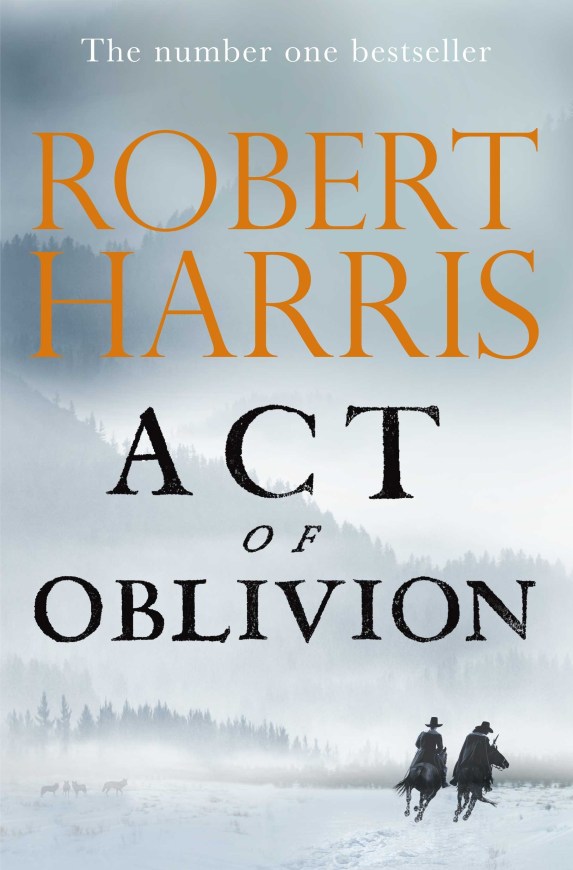
Act of Oblivion by Robert Harris

Act of Oblivion Cover

Publisher: Hutchinson Heinemann (Trade Paperback – 20 September 2022)

Series: Standalone

Length: 464 pages

My Rating: 4.5 out of 5 stars

Amazon

That master of historical fiction, Robert Harris, returns with another deeply compelling read, this time diving into one of the most fascinating manhunts in history with Act of Oblivion.

1660, England.  It is the dawn a new age in English history.  Following the death of Oliver Cromwell, the country has allowed King Charles II to come to power.  In exchange, the King has agreed to clemency for the former Parliamentarians, allowing peace to return to England for the first time in decades.  However, the King’s clemency is not absolute, and under the terms of the Act of Oblivion, all the men involved in the execution of his father, King Charles I, including the 59 men who signed his death warrant, are to be hunted down and brutally executed.

General Edward Whalley and his son-in-law, Colonel William Goffe, are two such men.  Former Parliamentarian leaders, their signatures lie prominent on the king’s death warrant.  Knowing that their deaths are close behind, Whalley and Goffe are forced to abandon their families and flee to the colonies.  Arriving in New England, Whalley and Goffe attempt to become part of the local community, but the shadow of their treason is far-reaching, and both old soldiers will have to live with the consequences of their action.

In London, Richard Nayler has been appointed as secretary of the regicide committee of the Privy Council.  Tasked with tracking down, capturing and executing all the men wanted in relation to the King’s death, Nayler attacks his task with zeal and passion, determined to bring justice to those who wronged the kingdom.  However, Nayler saves the vast amount his hatred and determination for Whalley and Goffe, two men he bears a particular grudge against.  Soon, a large bounty is placed on the two fugitive’s heads, and Nayler himself arrives in America, determined to see the men captured.  Forced to flee across the continent, Whalley and Goffe find themselves as outcasts and fugitives wherever they go.  The chase is on in the new world, and no-one is prepared for how far this mission of vengeance will go.

Robert Harris does it again, producing a brilliant and riveting historical epic that reconstructs fantastic historical events in impressive detail.  I have long been a fan of Harris’s writing, having deeply enjoyed An Officer and a Spy and V2, and his latest book, Act of Oblivion, is one his better works.  I had an outstanding time getting through this complex novel, especially as it spent substantial time diving into a unique historical occurrence I was unfamiliar with.

I had an exceptional time with Act of Oblivion, especially as Harris presents an elaborate and massive story set across multiple years.  Leaning heavily into historical sources, Harris dives deep into the flight of Goffe and Whalley and perfectly portrays their journey to America and the hardships they encountered.  This proves to be quite an intense and frustrating tale, as these two protagonists suffer a great deal through the course of the book.  Forced to abandon their families, Goffe and Whalley are initially seen as heroes by the people of Boston and Cambridge, but the two fugitives are gradually forced to flee from these towns due to the machinations of the English and their former enemies.  Forced to flee to smaller and smaller settlements, the protagonists are chucked into some uncomfortable positions in their flight, which includes years of depredation and isolation throughout the country.  The full tale of their time in America (or at least what is known), is pretty damn remarkable, and I felt that Harris did a wonderful job bringing it to life and showing what these two might of experienced and the lengths they went through to survive.  However, it does occasionally get slow in places, mainly because the historical fugitives were often unable to move for fear of being captured.

Harris covers these slower periods well by mixing in a second major storyline that runs parallel to the depictions of Whalley and Goffe.  This second storyline is primarily set in England and Europe and showcases the events occurring while the fugitives are in hiding.  Mainly shown from the perspective of the fictional character hunting them, Richard Nayler, as well as several scenes that show the fugitives’ family, this second storyline adds some real colour and danger to the events, especially as you get to witness the hunt from the other end.  The blend of fictional and historically accurate storylines works extremely well, and Harris creates a deeply fascinating and compelling overall narrative that really draws you in.  Seeing the simultaneous actions of both hunter and fugitives is a lot of fun, and I loved Nayler’s reactions to the constant escapes of Whalley and Goffe.  Harris also spends time showing the hunt for the other regicides, which Nayler embarks on with greater success.  Not only does this add in some additional fun action and historical context, but it also ups the stakes of the main storyline, as you are forced to witness the gruesome fate that awaits Whalley and Goffe if caught.  All this adds up to quite a remarkable tale, and I was deeply impressed with how exciting and captivating Harris was able to make these historical events appear.

One thing that is extremely clear about Act of Oblivion is the sheer amount of historical research that Harris put into crafting this book.  There is so much exceptional and compelling detail put into Act of Oblivion, as Harris goes out of his way to make this book as historically accurate as possible.  Naturally a substantial amount of this research goes into showing the known events of the two fugitives, as Harris meticulously recounts where they went and the various places they were forced to hide.  While the author does add in a few literary embellishments, this appears to be a very accurate and intriguing depiction of the fugitives’ flight in America, and I had such an amazing time seeing what they went through.  Harris makes sure to try and tells as much of their tale as possible, and the book goes all the way up until 1679, when the records end.  At the same time, Harris spends a large amount of time exploring the history of the rest of the world.  The novel is chock full of intriguing depictions of various key parts of British and American history at the time, which I found to be extremely fascinating, especially as you get to see how England changed after the return of the

King.  Harris also makes sure to examine how major historical events around the world might have impacted the lives of the two fugitives, and I felt that he worked all these fascinating events into the main story extremely well.  All the historical aspects of the book are showcased to the reader in a fantastic and very readable way, and even non-history fans will be able to dive into this story extremely easily.  This is mostly because the historical events themselves are pretty damn remarkable (honestly historical reality stranger than fiction in some places), but I really appreciated how well Harris was able to explore them and showcase them to the reader.

Another historical aspect of this book I deeply enjoyed was the author’s extremely detailed and moving depictions of the American countryside and its settlements in the 17th century.  Quite a lot of the book is spent out in the American wilds, as the two protagonists are constantly fleeing from their pursuers and avoiding people, and Harris makes sure to patiently and lovingly depict the various locations they find themselves in.  You really get a sense of the beauty and danger of the land during this period, and I loved seeing the various English characters react to the wide open spaces after spending time in cities like London.  Harris also takes the time to describe several of the historical settlements that the characters journeyed to and through, and you get a real sense of how built up or settled they were.  I found it fascinating to see all the descriptions about the various settlements, especially as many are quite significant cities in modern times, and it was really cool to see how they originated.  The descriptions of towns like Boston and Cambridge were pretty intriguing, especially as I didn’t realise just how built-up they were during this period (sentiments that some of the character’s shared), and I loved also seeing the Dutch settlement of New Amsterdam, especially as Harris also explored the events that saw it renamed as something far more iconic.  Throw in the deeply fascinating depictions of the people inhabiting these settlements, including the distinctive religious differences (so many puritans) and political sentiments.  Religion in particular becomes quite a key part of this book, and watching the various Puritan figures discuss their beliefs and their thoughts on the actions of the main characters, is particularly intriguing, as you get to see how these religious fugitives shaped early America.  Overall, this is a very impressive and clearly heavily researched look at 17th century America, which all historical fiction fans will deeply appreciate.

I also really enjoyed the central figures of Act of Oblivion and I found their storylines to be very compelling.  As I mentioned above, I really didn’t know that much about Edward Whalley and William Goffe before reading this book, but that swiftly changed.  Harris did a remarkable job showcasing the lives of these two historical figures and you really get to know everything about them.  While I am sure that Harris made a few character changes to fit the narrative, I felt that the overall presentation of them was pretty realistic.  Harris really highlights their personalities, religious convictions, and deep pride in the actions they took under Cromwell throughout the book as they spend time remembering their pasts.  All the key moments are their lives are captured in some way throughout the book, either in the plot or in their memories, and you soon see what events led them to become fugitives.  While the depictions of some their actions during the war and Cromwell’s control of England does make them a tad unsympathetic, I grew attached to them, especially as you see them suffer in isolation over a period of years.  Harris did a remarkable job showcasing how he believed these people would have felt spending years and years trapped in attics and basements, and you can just feel the mental and physical impacts it had on them.  This was frankly a brilliant portrayal, and I had an excellent time getting to know these unique historical figures.

Aside from Whalley and Goffe, the other major character I need to mention is Richard Nayler, the man charged with hunting the fugitives down.  Nayler is a purely fictional character, although Harris indicates upfront that someone likely had this job in the 17th century.  I quite enjoyed the portrayal of Nayler in this book, especially as he serves as a grim and determined counterpart to the protagonists.  A Royalist who witnessed the execution of King Charles I, Nayler goes about his duties with a resolute duty, determined to make all the regicides pay.  However, his main obsession lies with Whalley and Goffe, who holds responsible for the death of his wife and child.  Despite this tragic past, it is a times hard to feel sorry for the super serious Nayler, especially as he has little compassion for others, even the innocent.  However, he is quite a captivating figure, especially as his growing obsession with finding the fugitives becomes more and more apparent.  While his fellow returned Royalists initially share his determination, it soon becomes evident that he is true fanatic, while the others are purely in it for political reasons.  Harris really shows the downside of obsession through this character, especially as Nayler sacrifices a lot to try and find the fugitives.  I felt he had an impressive storyline throughout Act of Oblivion, and this great fictional character played off the real historical figures extremely well.

Robert Harris’ latest novel, Act of Oblivion, once again highlights the author’s outstanding skill as he recounts a particularly fascinating occurrence from history.  I loved the amazing story contained in Act of Oblivion, especially as the author did such a great job incorporating historical events into an intense and captivating plot.  Deeply intriguing and very entertaining, Act of Oblivion is a highly recommended read, and I can’t wait to see what elaborate historical tale Harris comes up with next.
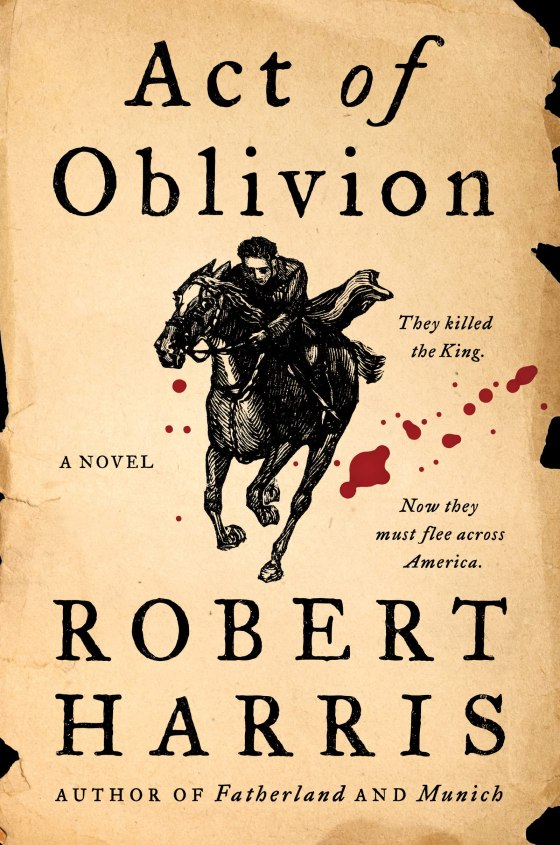
Act of Oblivion Cover 2

Amazon

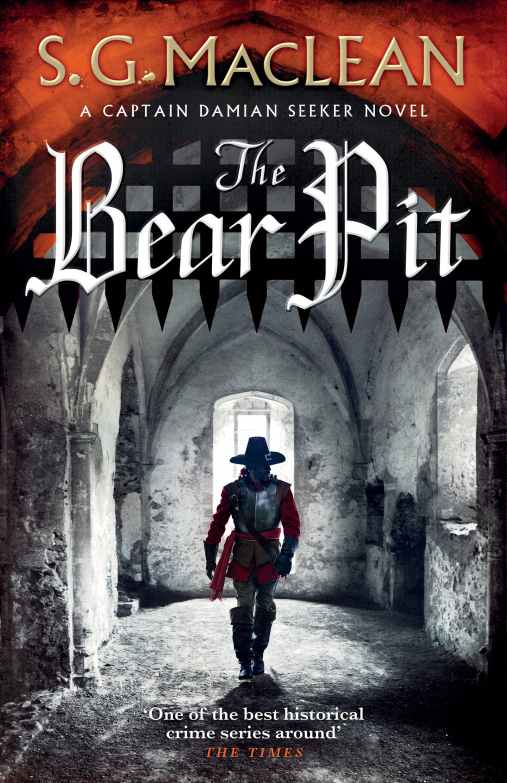
The Bear Pit by S. G. MacLean

The Bear Pit Cover

Publisher: Quercus (Trade Paperback – 11 July 2019)

Series: Damien Seeker – Book Four

Length: 410 pages

My Rating: 4.5 out of 5 stars

Amazon

Back in 2018 I was lucky enough to receive a copy of Destroying Angel, the third book in S. G. MacLean’s Damien Seeker series of historical murder mysteries.  I had an amazing time reading this fantastic book, which I ended up giving a full five-star rating, and I was excited when I heard that a sequel was coming out in 2019.  This sequel, The Bear Pit, had an intriguing premise and sounded like it was going to be quite an awesome read.  Unfortunately, I did not get a chance to read it last year when it first came out, which I have been regretting for some time now.  Luckily, I recently found myself with a little bit of spare reading time, so I finally managed to check this book out.  I am really glad that I did, as The Bear Pit contained a captivating and clever story that sets MacLean’s intense protagonist on the trial of some dedicated killers.

London, 1656.  Oliver Cromwell rules England as the Lord Protector, but not everyone is happy with his reign.  Many believe that his death will end the Puritan state and lead to a return of the monarchy in exile.  In order to bring this about, three men loyal to the crown are currently plotting to kill him.  However, Cromwell is not without his protectors, and his most ardent investigator, the legendary Captain Damien Seeker, is on the case.

Seeker has only recently returned to London after a harrowing investigation in Yorkshire and he is determined to catch the potential assassins before it is too late.  However, Seeker soon finds himself on another case when he discovers the mutilated body of man while conducting a raid on a gaming house.  The victim appears to have been brutally savaged by a bear, yet all the bears in London were shot after bear baiting was declared illegal by Cromwell.  Where did the bear come from and why was it used to commit a murder?

While he continues his hunt for the assassins, Seeker employs his reluctant agent, Thomas Faithly, a former Royalist turned informer, to infiltrate the underground fighting pits in an attempt to find out if any bears remain in the city.  However, as both investigations progress it soon becomes clear that they are connected and that the murder is tied into the assassins hunting Cromwell.  As Seeker attempts to stop them before it is too late, he finds himself facing off against a talented and intelligent foe with great reason to hate Cromwell and everything Seeker stands for.  Can Seeker stop the assassins before it is too late, or has he finally come up against someone even he cannot outthink?

MacLean has come up with another fantastic and compelling historical murder mystery with The Bear Pit.  This book contains an amazing multi-character narrative that combines an intriguing murder mystery storyline with real-life political intrigue and plots, enjoyable characters and a fascinating historical backdrop, all of which comes together into an impressive overall narrative.  Despite being the fourth Damien Seeker book, The Bear Pit is very accessible to readers unfamiliar with the series, and people who are interested in a good historical murder mystery can easy dive into this book without any issues.

At the heart of this novel is an enthralling mystery and intrigue laden storyline that sees Seeker and his companions not only investigating a murder apparently done by a bear, but also trying to unravel a plot to assassinate Cromwell.  This turned into quite an enjoyable and exciting tale that was filled with all manner of twists, surprises, reveals, action-packed fights, disguised antagonists and confused loyalties.  Naturally, the murder and the assassination plot are connected, and the investigations of the protagonist and his compatriots combine together as they attempt to find out who is behind the various crimes and why they were committed.  This proved to be a very captivating storyline, and I really loved the way in which MacLean blended an inventive murder mystery with realistic political intrigue and plots.  There are several clever clues and plenty of foreshadowing throughout the book, and the end result of the mystery was rather clever and somewhat hard to predict.  I really liked how these intriguing storylines turned out, and they helped to make this story particularly addictive and hard to put down.

Another distinctive and enjoyable part of this book is the great characters contained within it.  The main character of The Bear Pit is the series’ titular protagonist Damien Seeker, the moody and serious investigator and loyal solider of Oliver Cromwell.  Seeker is a particularly hardnosed protagonist who inspires all manner of fear and worry in the various people he meets, and it proves to be rather enjoyable to watch him go about his business.  While Seeker is the main character, this novel also follows a substantial cast of characters who end up narrating substantial parts of this book.  Most of these additional point-of-view characters have appeared in previous entries in the series, and it was great to see MacLean reuse them so effectively while also successfully reintroducing them in the context of this book.  Two of the main characters who assist Seeker with his investigation are Thomas Faithly and Lawrence Ingolby, both of whom were introduced in the previous novel, Destroying Angel.  Both characters are rather interesting additions to the novel’s investigative plot, and they serve as a great counterpoint to Seeker due to their youth, their inexperience, and their own way of investigating the crimes.  While Ingolby was a great younger character who looks set to be a major protagonist in the next book in the series, a large amount of the plot revolves around Faithly and his conflicted loyalties.  Faithly is a former exile with strong ties to the royal family, but his desire to return to England sees him make a deal with Seeker to serve Cromwell as a spy.  Despite his desire to remain in England, Faithly finds himself torn between his existing friendships and his new loyalty to Seeker, and this ends up becoming a rather dramatic and compelling part of the book.  Extra drama is introduced thanks to the reappearance of Maria Ellingworth, Seeker’s former love interest.  Both Seeker and Ellingworth have a lot of unresolved feelings with each other, which only become even more confused throughout the course of The Bear Pit when they find themselves in a love triangle with another major character.  This romantic angle, as well as the continued use of his secret daughter, really helps to humanise Seeker, and I enjoyed getting a closer look under Seeker’s usual tough mask.

In addition to the fantastic mystery and intriguing characters, one of the best aspects of The Bear Pit, and indeed the entire Damien Seeker series, is the author’s fascinating look at life in Cromwell’s England.  This is particularly interesting part of England’s history, which saw the implementation of Puritan law across the country, while secret Royalists lay hidden across the country.  This book in particular took a look at what was going on within London, and it was fascinating to see the various aspects of life during the period, from the politics, the hidden loyalties, the impact of day-to-day activities and the removal of previously iconic parts of London life, such as the bear baiting and other blood sports.  MacLean does a really good job of examining these various aspects of life during the Cromwell era and working them into her novels, making them a vital part of the plot as well as a fascinating setting.

One of the most fascinating and impressive historical aspects that MacLean includes in The Bear Pit was the focus on the 1656 plot to kill Oliver Cromwell.  This was a real historical conspiracy that took place throughout London, as three conspirators attempted to kill Cromwell through various means.  The author really dives into the details of the plot throughout this book, and the reader gets a glimpse into the various attempts that were made on Cromwell during this period, as well as the identity and motivations of the three killers.  MacLean even shows several chapters from these killers’ viewpoints, showing all the various preparations they put into each attempt, and then presenting how and why they failed.  I really liked how the author worked these assassination attempts into the main plot of the book, utilising Seeker as a major reason why several of the attempts failed and ensuring that the antagonists were aware of him and considered him the mostly likely person to stop them.  This was a very clever story aspect as a result, and I liked the blend of creative storytelling with historical fact to create an epic and impressive storyline that really stood out.  I also liked MacLean’s compelling inclusion of a major historical Royalist figure as the mastermind of the plot and the main antagonist of the book.  This character has such a distinctive and infamous reputation, and I liked how the author hinted at their arrival and then sprung the surprise towards the end of the book.  This was such a great part of the plot and I look forward to seeing what major historical events MacLean features in the next book in the series.

Overall, The Bear Pit was an outstanding and captivating historical murder mystery that really highlighted S. G. MacLean’s writing ability and creativity.  I really enjoyed the excellent blend of murder and intrigue, set during a fascinating period of England’s history, and the author’s use of great characters and the inclusion of a particularly notable historical occurrence proved to be extremely impressive and resulted in an outstanding read.  As a result, The Bear Pit comes highly recommended by me and I really do regret taking this long to read it.  Luckily, this should ensure that the overall plot of the series is fresh in my mind when I get my hands on the next and final book in the Damien Seeker series, The House of Lamentations, which is out in a couple of weeks.  I have already put in my order for a copy of this upcoming book and I am looking forward to seeing how MacLean finishes off this series, especially after I had such an awesome time reading The Bear Pit.

Amazon

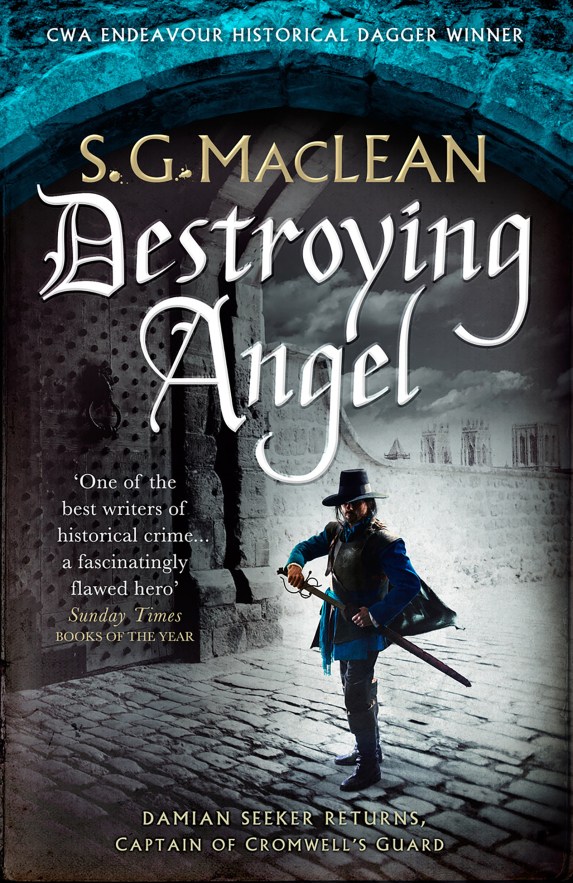
Destroying Angel by S. G. MacLean

Destroying Angel Cover.jpg

Publisher: Quercus

Publication date – 12 July 2018

Amazon

Prepare to experience an excellent multi-mystery story set deep in the heart of Cromwell’s Puritan England in Destroying Angel, the new book from historical thriller sensation S. G. MacLean.

It is 1655, a time of great change for England.  Oliver Crowell’s forces have cleared the Royalist armies from England, and exiled the King and his court to the continent.  The country is now in the grip of Puritan morals and the rule of Cromwell’s major-generals.

In York, Captain Damian Seeker of Cromwell’s army is responsible for hunting down Royalist elements hiding within the country and quelling dissent against the new regime.  His latest mission requires him to journey to the small village of Faithly on the Yorkshire moors to deliver the government’s new laws and ordinances and inspect the area for traitors.  In addition, a fugitive member of the King’s exiled court may have returned to his family estates near Faithly, and Seeker is charged with searching the village and the surrounding countryside.

But upon arriving in Faithly, Seeker bears witness to the tragic death of the young ward of the town’s commissioner.  Her death appears to be the result of poisoned mushrooms, slipped to her at a formal dinner attended by Seeker and several of the village’s notable citizens.  Was she the intended target or just a causality of a far larger game?  As Seeker begins to investigate, he soon finds that Faithly is a seething hotbed of resentment and fear.  Plots, secrets, lies and petty jealousies lie just beneath the surface, and many of the village’s inhabitants seek to use the dramatic changes in England’s rule for their own gain.  As Seeker attempts to navigate the chaos he finds in Faithly, a chance encounter from his past will change everything for the captain.

MacLean has once again delivered a fantastic and intensely thrilling piece of historical fiction.  Destroying Angel is the third book in the Captain Seeker series, and the seventh overall book from MacLean, who has also published four historical thrillers in his Alexander Seaton series.  In his latest book, Maclean has created several compelling mysteries that are expertly combined with the book’s fascinating historical background.

The main storyline of Destroying Angel is a fantastic investigation into the secrets and mysteries surrounding a small village.  When the book’s protagonist arrives at Faithly, the central location of the plot, he encounters a village that is brimming with hidden secrets and lies.  While the core mysteries revolve around the poisoned girl and the location of the fugitive Royalist lord, the protagonist is forced to uncover all of the village’s many secrets in order to find the solutions to the murder and treachery that he encounters.  The reader is presented with a massive stream of information about many of the characters in the book, all of which is cleverly woven into a series of intriguing solutions.  For example, the eventual motives for the poisoning of the commissioner’s ward are particularly captivating, and fairly tragic.  MacLean ensures that every single secret and hidden past is tied into the overall story and has created an outstanding narrative that highlights his substantial skill at historical mysteries.

In addition to the huge range of mysteries that MacLean has inserted into his book, there is also a significant storyline that will prove to be extremely interesting to fans of the previous books in the Captain Seeker series.  While performing his other investigations, the protagonist is thrust into an emotive storyline when he suddenly encounters ghosts from his past.  This new storyline is particularly intriguing as it goes deep into the protagonist’s past, uncovering old wounds and substantially increasing his emotional stake in the story.  Previous readers of this series will find it intriguing to see the usually implacable character of Seeker so rattled and unbalanced in this story.  The sudden and violent introduction into this storyline is particularly memorable and represents a noticeable change in the book’s tone, and is an excellent inclusion in an already fantastic read.

One of the most impressive and enjoyable elements of this book is the author’s spectacular use of an absorbing historical setting.  During this period, England is experiencing significant change, as the King and his followers have all been expelled from the country and a new group of people have risen in power.  Despite it being a significant part of England’s history, not too many historical fiction authors have chosen to set their books during this period.  MacLean does an amazing job of exploring the various aspects of this new regime and tying them into the overall plot of Destroying Angel.  This includes the new laws that have been put in place, the changes to local governance and the effect of military rule on the people.  However, one of the most fascinating aspects of the entire plot is MacLean’s examination of the Puritan moralities that were imposed on the people of England.  Destroying Angel focuses on how this affected day to day life, what role the new church had in England and how they treated priests who didn’t meet Puritan expectations.  One of the best parts of the book is the blatantly biased trial of the priest of Faithly village, as members of the populace and a special state examiner, known as ‘the Trier’, attempt to remove him from his parish.  The author has chosen a great location to showcase these examples of life under Cromwell, as the small village setting allows the reader to see how it affected normal, everyday people.  It also allows the reader to get an idea about some of the discontent and petty power plays that could have possibly resulted from the changes to the system.  Overall, MacLean has set his series with a deeply interesting time period that serves as the perfect background for a murder and conflict ridden story.

Destroying Angel is a fantastic and incredibly enjoyable novel that serves as an outstanding and powerful new addition to MacLean’s Captain Seeker series, combining several captivating mysteries with an outstanding and rarely utilised historical setting.  Readers will find so much to love about this book, which is historical murder mystery at its very best.

My Rating:

Five Stars

Amazon