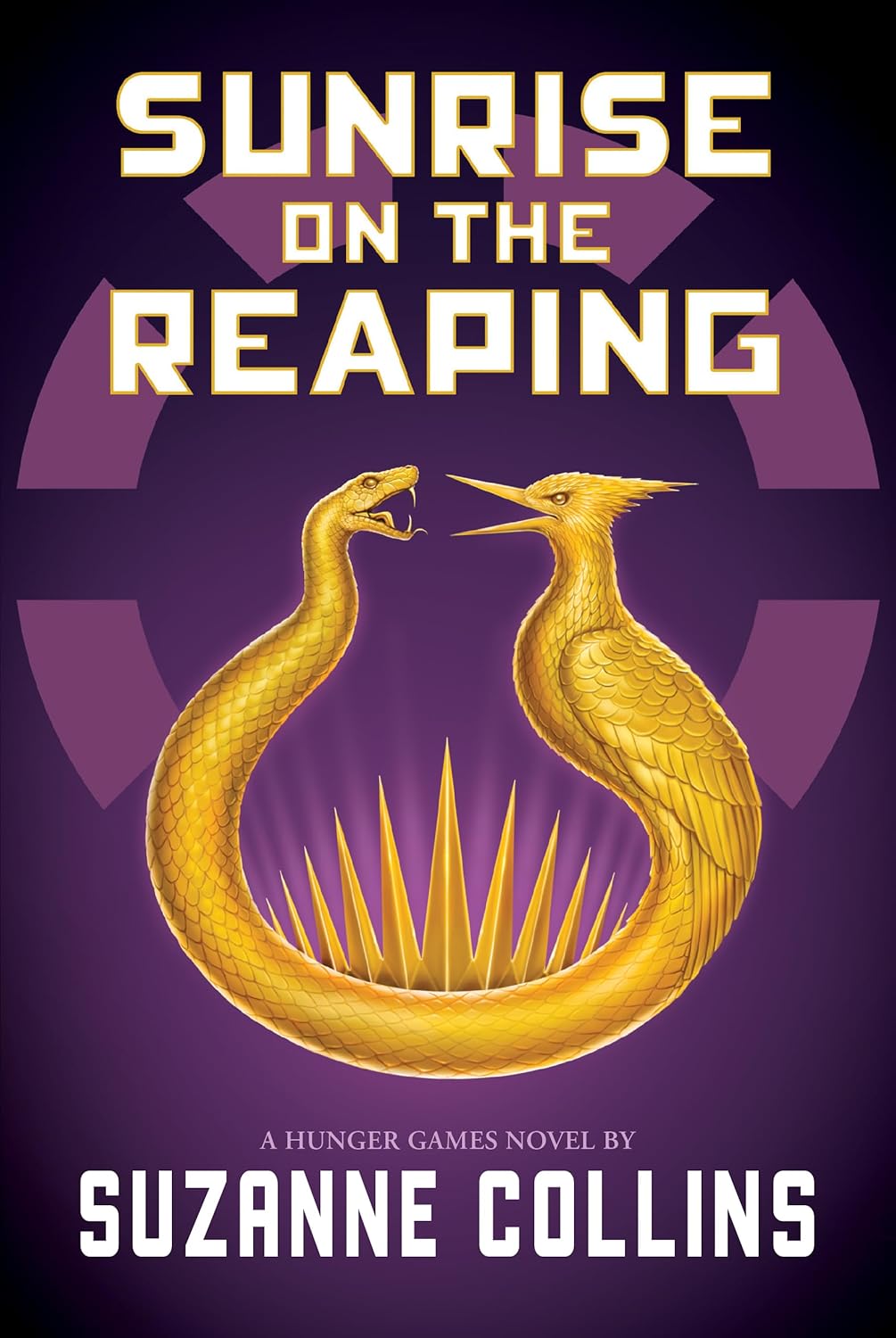
Sunrise on the Reaping by Suzanne Collins

Publisher: Scholastic Audio (Audiobook – 18 March 2025)

Series: The Hunger Games – Book 0.5

Length: 12 hours and 48 minutes

My Rating: 5 out of 5 stars

Amazon

Acclaimed author Suzanne Collins presents the next epic and heartbreaking entry to her iconic Hunger Games series with the brilliant prequel, Sunrise on the Reaping.

Unless you’ve been living under a rock for the last few years, then you’ll probably be more than familiar with the Hunger Games series by Suzanne Collins, as well as the major film franchise that it spawned.  Set in a dystopian future where 24 teenagers are forced to fight to the death each year, the Hunger Games franchise is a very cool and inventive young adult series that expertly blends great characters, an overarching anti-authoritarian narrative and a ton of complex action with its excellent central concept.  I have been a massive fan of the Hunger Games since watching the first movie, which I went into blind and ended up deeply enjoying.  I have since read all the books, including Collins’s previous prequel, A Ballad of Songbirds and Serpents, all of which are extremely awesome and contain exceptional stories that cleverly add to the larger setting.

While I have enjoyed all the awesome Hunger Games books that Collins has so far written, there has always been one intriguing story from the universe that I always felt needed to be expanded on, that of the rascally old drunk mentor Haymitch Abernathy (played perfectly by Woody Harrelson in the films).  I especially have always wanted more detail about Haymitch’s own Hunger Games, which were briefly summarised in the second novel, Catching Fire.  Well, Collins has just granted one of my fondest literary wishes as her latest book captures just that with Sunrise on the ReapingSunrise on the Reaping has been very high on my to-read list since it was first announced, and it was one of my most anticipated novels of 2025, as well as a much-anticipated film in late 2026.  I had a real blast listening to it, and boy did Collins take her story to all the dark places I wanted, and further beyond.

May the odds be ever in your favour!

As the dawn breaks on the 50th annual Hunger Games, few people have cause to celebrate, even young District 12 bootlegger Haymitch Abernathy, whose birthday unfortunately falls on Reaping Day each year.  Despite growing up in a totalitarian dictatorship, Haymitch believes that he has a good life, with friends, family and the love of his life.  However, he is unprepared for just how badly a single moment can change everything.

Selected as one of his district’s Hunger Games tributes, Haymitch suddenly finds himself torn away from everything he loves and must contemplate fighting for his life to survive in the Capitol’s arena.  However, this is no ordinary Hunger Games, it is the second Quarter Quell, and twice as many tributes have been taken from each of the districts, ensuring that his games will be the largest and most brutal battle ever seen.

Forced to compete alongside three other District 12 tributes, including one of his best friends, an oddsmaker whose family prospers by betting on the games, and the most stuck-up-girl in town, Haymitch knows that his chances of survival are slim.  However, something within Haymitch wants to fight back against both the Capitol and the controlling President Snow.  Finding unlikely allies, Haymitch seeks a way to make his impending death mean something and to strike a blow that the Capitol can’t ignore.  But can Haymitch survive long enough to make his stand, while still keeping true to his own loyalties and friendships? The fires of rebellion start to burn here, but Haymitch will soon find out that when flames start, people get burnt.

Well hot damn, that is how you do a prequel.  Suzanne Collins once again shows why she is the leading lady of dystopian young adult fiction, with the brilliant and powerful Sunrise on the Reaping.  A devastating prequel to her original Hunger Games trilogy that perfectly tells the haunting tale of Haymitch Abernathy, Sunrise on the Reaping was an exceptional novel that I can’t help but give a full five-star rating to.  This is a must-read for all fans of the Hunger Games series, but be warned: you won’t be prepared for how tragic the book gets.

I honestly have so much to say about the epic new story that Collins came up with for Sunrise on the Reaping, although I really don’t want to ruin anything for those who have yet to read it.  I will say that if you think you know the story from the summary in Catching Fire, then you are very, very wrong, as Collins twists everything you thought you knew about the 50th Hunger Games and Haymitch Abernathy, while breaking your heart in so many ways.

This dive into tragedy is very well established, and Collins does a brilliant job of initially setting the scene around young Haymitch and showing his early life, family and the other connections he has around District 12.  It doesn’t take long for Collins to turn the expected narrative on its head, thanks to a very clever bait-and-switch, and from that moment on, you really don’t know what to expect.  While much of Sunrise on the Reaping does follow the story beats you would expect from reading the previous books and from Catching Fire’s summary, Collins keeps cleverly turning or twisting them around, so that events like the Tributes parade, the pre-game training and the interviews go in some surprising and often even more traumatic directions.  At the same time, Haymitch has interesting interactions with an array of great supporting characters, many of whom will be very familiar to those who have read the previous Hunger Games books.  All this works to provide much more depth to a story that could have simply been about a massive teenage deathmatch, and which helps to drag you even more into the story, especially as it gives you some intriguing context about Haymitch’s upcoming actions.

Things get pretty crazy once the characters get into the games proper at around the halfway point, and Collins keeps this part of the story fast paced, as you watch Haymitch navigate the arena, surviving the fights and trying to enact his own plans.  This is the part of the book that really deviates from the previously shown version of these games, and I loved how much more detail and complexity Collins gives this latest batch of carnage as Haymitch tries to enact his own hidden goals alongside the previously known narrative.  This works to form quite a compelling plot, which I won’t talk about too much to avoid spoilers.  I will say that there are some truly devastating moments, and you cannot help but feel despair as you witness what really happened to Haymitch and his fellow tributes.  There are so many heartbreaking scenes scattered throughout this part of the book, as well as some great moments of rebellion and humanity, all of which keeps you hooked as you wait to see the brutal final moments of these games.  Collins does an amazing job wrapping everything up in a powerful way, although the conclusion is guaranteed to gut you.  While you know something bad is coming, the full enormity and devastation of the ending really does break you and ensures that will come away from Sunrise on the Reaping haunted and with a deeper appreciation of the rest of the series.

I deeply enjoyed how this epic novel came about, as Collins delivered a complex, powerful and distinctive character-driven read that has the right balance of moving character arcs, desperate survival, brutal tragedy and clever word building, all brought together by a series of shocking twists and heart-breaking reveals.  Once again told exclusively from the protagonist’s perspective, you witness events through the eyes of the young and rebellious Haymitch, which narrows the reader’s vision of the plot.  While I do hope that the film makers show some alternative perspectives like they did in the original Hunger Games films (i.e. what was happening in the control room), I think that this single-character perspective worked extremely well for the book, allowing the reader to get closer to the protagonist, appreciate his emotional reactions to the dark events unfurling around him, while also provide a great outsider perspective to the craziness of the Capitol and the arena.  Collins utilises this to tell a dark and haunting tale, and you are soon inundated with the many injustices Haymitch experiences that Haymitch experiences as he makes his may towards the inevitable Hunger Games.  I really appreciated how well Collins set out the various pivotal events of Sunrise on the Reaping, especially as there are some subtle hints about some of the big events cleverly scattered throughout both the early part of the book, as well as the brief synopsis of the games featured in Catching Fire.  I felt the author did an excellent job pacing everything out, and the reader is constantly on their toes as unexpected events hit the protagonist, and you never quite know what is going to happen next.

As with most of the books in this series, I found Sunrise on the Reaping to be a novel that will appeal to a wide range of readers, including both its intended young adult audience and older fans.  Thanks to the protagonist covering his adventure from start to finish, new readers can easily jump into the series here if they wanted to and not lose any of the book’s intensive impact.  Unsurprisingly, though, Sunrise on the Reaping is going to be best enjoyed by those readers who have enjoyed the rest of the Hunger Games books or movie adaptations.  Collins layers in a ton of references, cameos and hints at events to come, throughout the course of Sunrise on the Reaping’s plot, and eagle-eyed readers will have a lot of satisfaction picking up on them.  I personally loved some of the clever references to the previous prequel, A Ballad of Songbirds and Serpents, including one scene where President Snow utilises some of his knowledge gained from his sojourn to District 12 to rattle Haymitch.  I also quite liked the author’s depictions of the games 24 years before the events of the first novel, and it was interesting to see the similarities and differences between the events, especially after the more basic version that was showcased in A Ballad of Songbirds and Serpents.

One of the things that fans of the series will no doubt be interested in seeing is how the events of Sunrise on the Reaping are widely different to the summary included in Catching Fire.  While certain broad strokes of the event are the same as what Katniss and Peeta saw in the recording, most of what happened in the actual games and its lead-up is vastly different, with Collins showing some very surprising motivations and hidden events throughout the course of the book.  I found this to be extremely fascinating, mainly because it so cleverly invokes the overlapping theme of Sunrise on the Reaping: control of information as a powerful tool of authoritarian governments.  There are some very clever scenes where the Capitol edits and rewrites key events of the plot to suit their own propaganda, and it was fascinating to see tragedies, injustices and occasional flashes of kindness hidden away or completely erased to make Snow look good and Haymitch and the other tributes look like animals or noble patriots.  This allowed Collins to hide a very compelling early rebellion storyline amongst the events of the book, which puts the events of the main trilogy in a whole new light and makes you full reevaluate some of the supporting cast members.  Collins did this in a very clever manner which doesn’t devalue or contradict the events of the other Hunger Games novels but which allowed Sunrise on the Reaping to stand out as a major entry in the larger canon, with events that would resonate down the years.  I really cannot emphasise enough what an impressive act of long-term series writing this is, and you can tell that Collins put an exceptional amount of thought and planning into bringing this unique story to life.

This compelling read features an excellent and varied array of major and supporting characters, including a whole collection of major existing characters from the franchise, as well as several great new figures.  Collins wrapped some amazing storylines around these outstanding figures, and I was really impressed by how attached I grew to several of them, even though I knew what their eventual fate was likely to be.

Due to his role as the book’s main narrator and point-of-view character, most of Sunrise on the Reaping’s focus was around the young Haymitch Abernathy, and it was particularly fascinating to see a younger version of this iconic figure.  Initially shown to be a hopeful and confident teenager with ambitions of love and a future, you soon become quite attached to the young Haymitch due to his selflessness and his willingness to protect his friends and loved ones leading up to the games, as well as the inherent rebellious nature that makes him a target of the Capitol and Snow.  However, as the book continues and Haymitch experiences multiple tragedies, including a series of dark deaths, you witness his spirit start to break piece by piece.  While you had to know that Haymitch was going to have a hard time in this novel, especially after seeing the drunk and damaged figure from the original trilogy, it was still very heartbreaking to see every dark event that befalls him, especially while witnessing all his thoughts and emotions.  I really loved this deeper dive into Haymitch’s life, especially as you get to see why he had so little hope or resolve when you first met him in The Hunger Games, and this makes his entire story from the main trilogy even more impactful.  A truly amazing origin story for one of the best characters in the Hunger Games series.

Aside from Haymitch, Sunrise on the Reaping contains an outstanding array of supporting characters, many of whom Collins makes shine in the time that they appear.  This includes several great new figures, primarily those fellow tributes of Haymitch, whose story alongside the protagonist is highly impactful.  I’m not going to go into too much detail to avoid spoilers, but I felt that several of these new characters were extremely cool, and will no doubt become even larger than life on the big screen.  Highlights for me include Wyatt Callow, a young oddsmaker whose family business makes the other tributes distrust him; Louella McCoy, the youngest tribute from District 12, whose story is especially tragic; and Ampert Latier, a tribute with connections to a major character from the original trilogy.  Lenore Dove Baird, Haymitch’s love interest back home, is a very enthralling figure who has some potential connections to a major figure from A Ballad of Songbirds and Serpents, which allows for some very compelling and moving scenes.  Other interesting new figures included the cruel Capitol escort, Drusilla Sickle, and the reptile-obsessed stylist Magno Stift, while several other great characters step up in their own way.  However, it was the final District 12 tribute, Maysilee Donner, who really stole the show for me, and her fantastic wit and brutal barbs helped turn her into a major favourite of mine, especially when you realise that she isn’t as stuck up as people believe she is.

Collins wraps up this cast with several characters introduced in the original trilogy who have some memorable appearances here.  However, they aren’t just there to please the fans; Collins used them strategically to give a lot more depth to some of these recurring characters as you witness early key events in their personal history.  Many of these appearances helped to underscore why they are so willing to rebel or help Katniss, and I loved how well they were featured in the plot.  Special mention must go to a returning President Snow (the only character to appear in all five books), who was a spectacular antagonist in this latest Hunger Games book.  The author made sure to showcase Snow at his most cruel and vindictive during his scenes, and Collin’s use of him here was a pure masterclass of evil that you had to love.  I also need to highlight the fantastic deeper dive into Plutarch Heavensbee, whose motivations during the Catching Fire, are a little clearer after reading Sunrise on the Reaping, and it was awesome, if initially a little surprising, to see him so well utilised in this novel.

Overall, I think that the character work in Sunrise on the Reaping was quite exceptional, and I loved how well all these characters were featured in this book.  While the particularly large cast of supporting characters did mean that some tributes weren’t as well featured or explored as they could have been (this is also a side effect of there being twice as many tributes), the figures who were highlighted more than made up for this, and I loved the various complex and tragic story arcs that surrounded them.  I cannot wait to see how many of these characters come across in the upcoming Sunrise on the Reaping film, although based on the recent casting announcements, they are going to shine so brightly when they appear.

As with the rest of the books in the Hunger Games series, I chose to listen to Sunrise on the Reaping on audiobook, which is an exceptional way to absorb Collins’s dark and brutal tale.  Featuring a runtime of just under 13 hours, Sunrise on the Reaping has a decent length that I managed to move through quickly.  Thanks to some great narration and an excellent pace, the audiobook format did an outstanding job of enhancing many of the best elements of Sunrise on the Reaping, especially the central characters and the emotional depth of the protagonist.  The narrator of this audiobook, actor Jefferson White, was particularly effective, and I loved how he brought the story to life with his voice.  His take on many of the characters was pretty damn perfect, with his voice for the young Haymitch being particularly effective.  His young Haymitch, which was the default tone for much of the audiobook, was a great take on a younger Woody Harrelson, and I really felt that he captured the characters many nuances and emotions.  I also liked how White tried to sing out the various melodies that were so intrinsic to the plot of Sunrise on the Reaping, which ensured that they were a little more impactful.  This outstanding narration really helped to enhance my enjoyment of the books’ epic plot, and I honestly felt that this was the best way to enjoy this exceptional addition to the Hunger Games franchise.

I think the above five pages are more than enough to showcase just how much I loved Sunrise on the Reaping, which was such a brilliant addition to the Hunger Games series.  Suzanne Collins honestly outdid herself with this incredible prequel, and you will not be prepared for how complex and emotionally traumatising this outstanding novel is.  I honestly cannot not stop thinking about how Sunrise on the Reaping turned out and this is easily one of the better books (and audiobooks) I have so far enjoyed in 2025.
Amazon

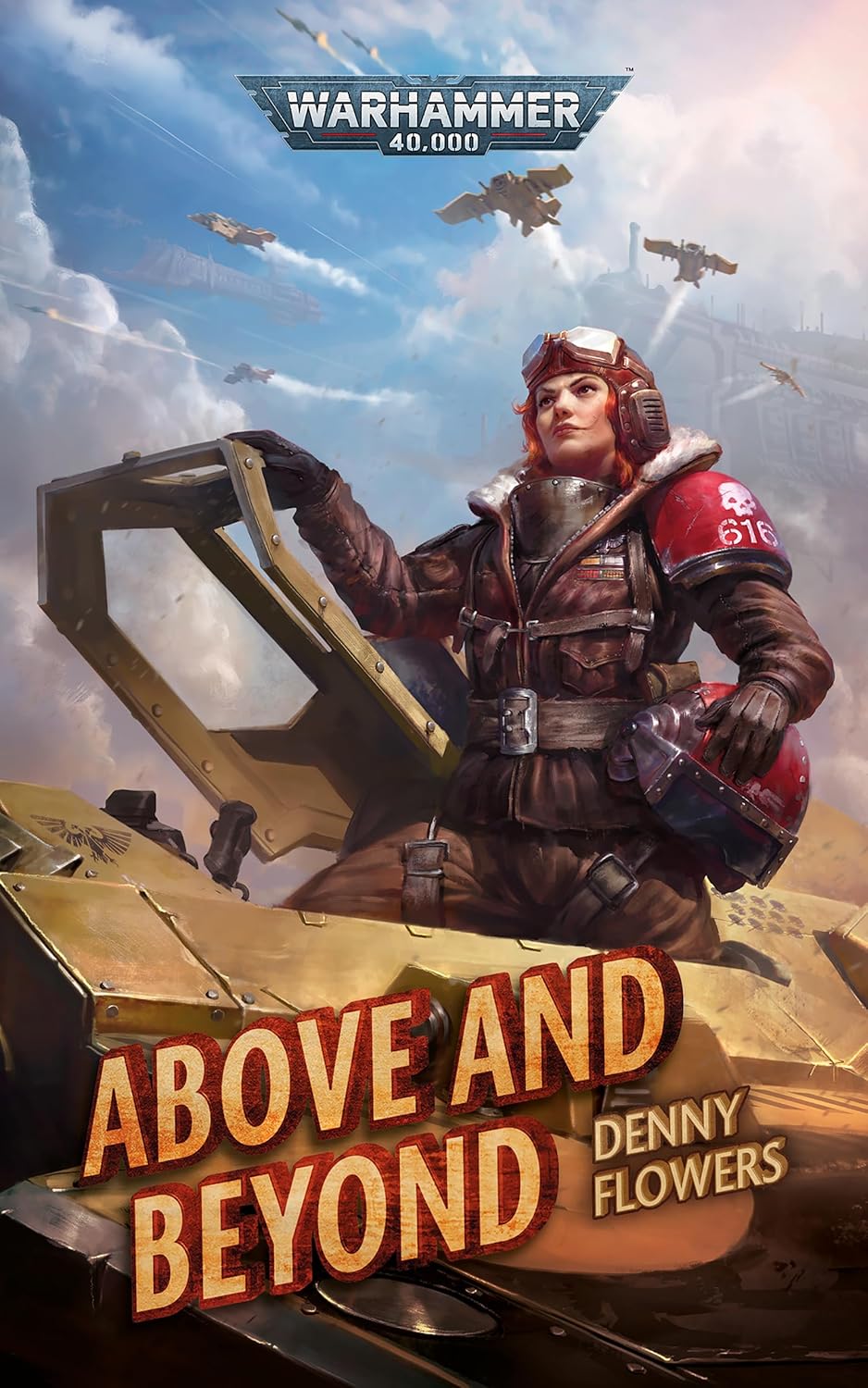
Warhammer 40,000: Above and Beyond by Denny Flowers

Publisher: Black Library (Audiobook – 12 October 2024)

Series: Lucille von Shard series – Book Two

Length: 12 hours and 52 minutes

My Rating: 5 out of 5 stars

Amazon

Denny Flowers presents one of the most ambitious and captivating Warhammer 40,000 novels of 2024, with the brilliant and deliciously cynical read, Above and Beyond.

As a massive fan of all things Warhammer 40,000 fiction, I have been spending awful lot of time diving into all the recently released novels and audiobooks from the franchise (see the ever-expanding Warhammer tab to the right).  As such, I have become quite familiar with the newer authors contributing to this massive expanded grimdark universe, and there are several rising stars that my radar is firmly fixed on.  This includes the very impressive Denny Flowers, who honestly has the potential to become one of the best authors in this franchise.  While he has so far only written three books (including this one), every single new novel from Flowers is a step above the last, and I have really gotten attached to his fantastic imagination and writing style.  His first book, Fire Made Flesh, was an awesome book, and it ended up being one of my favourite debuts of 2021.  However, Fire Made Flesh was quickly overshaded in my mind by the author’s brilliant second book, Outgunned.

Outgunned was an outstanding read that dove into the darker side of the already grim Warhammer 40,000 universe in all the right ways.  Following a propaganda expert as he attempts to create an epic film based around a legendary fighter ace, Outgunned proved to be an excellent read, especially once the protagonist beings to understand just how jaded his chosen subject is.  However, a rampaging ork invasion and elaborate political intrigue on a miserable swamp planet brings events even further to a head, and the protagonists endure a gruelling and desperate battle to survive.  I really loved Outgunned thanks to its unique narrative, and it has had a proud place in my favourite Warhammer 40,000 novel list.  Due to how impressive I found Outgunned to be, I was very excited when I heard that a sequel was out this year and made sure to grab Above and Beyond the first chance I could.

Kile Simlex is a broken man.  Once one of the most successful propagandists in the Imperium of Man, Simlex’s films used to inspire untold millions in the name of the God Emperor, ensuring innumerable new recruits to humanity’s armies.  However, a cursed assignment to the swamp planet of Bacchus showed him the realities of war and innate corruption of the Imperium, while his chosen subject, the eternally cynical fighter ace Lucille von Shard, proved to be both a skilled fighter and a deadly disappointment.

Years later, Simlex is now a shadow of his former self.  Emotionally and physically scarred from his experiences on Bacchus, Simlex’s attempts to show the Imperium’s citizens the real horrors of war ensured that he was dismissed from his lofty position.  Now forced to toil as lowly scribe, Simlex has grown bitter as his footage from Bacchus was used to create a crass and untrue popular film which elevated Flight Command von Shard to the status of legendary hero.  However, Simlex is about to find his chance of redemption when he once again becomes involved with the dangerous von Shard family.

Attempting to live in obscurity, Simlex’s life is turned upside down when Shard’s brother, Commissar Tobia von Shard enters his office.  Commissar von Shard has intercepted a cryptic message sent to Simlex from Shard asking for help, and the commissar is determined to deliver assistance, one way or another.  Forced to accompany the commissar on his journey, Simlex travels to Deighton, a world in open rebellion, to discover a war being fought using propaganda films and heroic shots of Shard in action.  However, the real Shard is a shadow of her former self, worn down by war, guilt and her status as a hero, and determined to push Simlex away.  But with a deadly xenos pilot seeking to destroy her legacy, and a manipulative new propagandist controlling events from on high, Simlex and Shard both need to work together to survive.

Denny Flowers honestly gets better with every single book he writes as Above and Beyond was a particularly impressive and powerful piece of Warhammer 40,000 fiction.  Providing Flower’s own distinctive take on the glorious wars of the Warhammer 40,000 universe, Above and Beyond was a memorable, addictive and emotionally charged novel that had me hooked the entire way through with its complex context and brilliantly damaged characters.  This was such an exceptional read, and I have very little choice but to give it a well-deserved five-star rating.

Above and Beyond has an excellent and exciting narrative that both stands on its own, while also serving as a compelling sequel to Outgunned.  Shown from the perspective of former propagandist Kile Simlex, whose actions following the previous book have resulted in a substantial fall from grace, Above and Beyond sees him forced back into the chaos of war after his former muse, Lucille von Shard, apparently seeks his help.  Forcibly recruited by Shard’s commissar brother, Simlex traves to the planet Deighton, and finds himself caught up in an unusual war, as brutal Imperial soldiers fight against rebelling civilians, while expansive propaganda campaign drives the carnage to new heights.  This first part of the story is very well done, as it catches up the reader quickly to both the events of Outgunned and the subsequent fallout of Simlex’s actions, while also setting up the new storyline.

The rest of Above and Beyond’s story turns out to be exceedingly intense and compelling, as Flowers tells a particularly unique Warhammer 40,000 narrative.  While there is a focus on aerial combat and action, Above and Beyond is mostly a gritty and complex thriller, with the protagonist attempting to uncover various secrets and counter deceitful and dangerous opponents.  This results in an intense character-driven tale as you follow the tired, traumatised, and pessimistic protagonist as he attempts to uncover dark secrets while also coming into deep emotional conflict with Shard.  Flowers takes the narrative in some great directions, especially thanks to a mysterious xenos opponent, some outstanding supporting characters, and a brilliant combination of plot lines.  There are some heartbreaking scenes of tragedy, moments of powerful personal growth, a few very clever twists and a ton of compelling action, all leading up to a fantastic conclusion.  While I won’t go into too much detail here, it was all sufficiently epic, and you find yourself coming out of Above and Beyond extremely satisfied, especially as Flowers continues to develop his major protagonists in some moving and captivating ways.  The author also leaves a few storylines and questions open to explore in some potential future entries, and that is something I am particularly keen for.

Flowers has a unique style for his Lucille von Shard Warhammer 40,000 novels, and it is one that I have really come to appreciate.  Exclusively told from the perspective of main character Kile Simlex, Flowers seeks to show an alternate side to the many wars of the Warhammer 40,000 universe, one that paints the supposedly good Imperium in a harsh and selfish light.  While novels that show the many inequities and issues of the Imperium and the wider Warhammer 40,000 universe are nothing new (indeed it’s an excellent recurring theme), I felt that Flowers took it up to 11 in Above and Beyond, and I loved how superbly and relentless cynical the book got.  Flowers’s dive into the inevitable propaganda side of humanity’s war engine once again proved to be particularly fascinating, and it allowed for some fascinating sequences that highlight human nature and alternate views of the truth.  This focus on propaganda, the impacts of fighting, and the dark secrets of the Imperium, leads to a brilliantly dark, character-driven novel that goes in some excellent directions.  I appreciate how this was more of a down-to-earth, politically charged, military thriller, rather than a full-on action epic, although there still are some great flight combat sequences against shadowy foes.  This compelling and distinctive vein of storylines and themes helped to turn Above and Beyond into one of the more memorable Warhammer books of 2025, and I honestly could not stop listening to it.

I cannot emphasise enough what a clever Warhammer 40,000 novel Above and Beyond was, as Flowers dives right into the corrupt heart of this grimdark universe.  Readers are gifted with a brutally honest look behind the Imperial military curtain, and I loved seeing the protagonist’s continued realisation at just how much corruption and lies there are.  The examination of the role that propaganda plays in keeping the manipulative system in place was also very cool, especially as the book devolves into a war of misinformation and counter-films rather than a typical firefight.  This includes various scenes that show depictions of camera shots or video editing, which were not only fascinating and darkly fun, but helped ensure that Above and Beyond was a particularly distinctive read.  Throw in some intriguing looks at another major faction, whose manipulative influence on several fronts really increase the intensity of the plot, and there is a lot for veteran Warhammer 40,000 fans to sink their teeth into.

As with most Warhammer 40,000 novels, Above and Beyond can be enjoyed as a standalone novel by most readers, as does not take long to get absorbed in its haunting and powerful story.  Flowers does a great job recapping and re-examining key events from Outgunned here, which allows readers to follow the continuing storylines without issue.  Readers also don’t need an abundance of pre-knowledge about the universe to enjoy the story, although I really do appreciate how Flowers captured the gothic and dark feel of the fantastic setting surrounding the entire franchise.  However, to get the most enjoyment out of Above and Beyond, you should check out Outgunned first.  The first book in the series did an excellent job introducing the main protagonists and setting them on a dark adventure that left them damaged and with a new view of the universe around them.  Above and Beyond perfectly examines the aftermath of this first adventure, and the result is extremely moving and a little heartbreaking.  The changes in the characters’ personalities and mentalities from the first book is beautifully done, and so much of Above and Beyond’s plot and impact is focused on how both Simlex and Shard are dealing with their trauma.  Reading Outgunned first helps you appreciate Flower’s clever character writing in Above and Beyond just a little bit more, and I know I got a lot more emotional impact from this sequel because of my experiences with the first Lucille von Shard novel.

So much of Above and Beyond’s impact lies in its exceptional characters, all of whom have brilliant arcs in this book.  The most prominent of these is series protagonist and perspective character, Kile Simlex.  Once a gifted propogandist who made films without thought or question, Simlex is now a bitter shell of his former self.  His revelations about how corrupt the Imperium is and his attempt to show it with a film have led to him losing everything, and his ire has turned towards Shard, who he believes opened his eyes.  Despite being physically and mentally battered, Simlex still has his principles, which he desperately tries to maintain even when faced with danger and the insanity of the von Shards.  I loved seeing Simlex attempting to deal with his trauma throughout Above and Beyond, and it was refreshing for a Warhammer 40,000 series to dive into the consequences of the dark events that the characters witness.  Simlex proved to be a great perspective character, and I liked his insights on the world around him, especially as it is coloured with more cynicism and insight into reality of the Imperium and the wars they fight.  His appreciation for the art of film making, which includes multiple instances of him assessing other people’s propaganda creations, adds an interesting artistic edge to the book, although Flowers often utilises this to get even more cynical.  I also enjoyed the return of the protagonist’s remaining seer-skull, an ancient servo-skull designed for filming and projecting, which offers some intriguing alternate insights into the Simlex’s mind, while also containing a fun hidden twist.  Cleverly continuing the character’s storylines from the first book, while also diving into the trauma surrounding him, I felt that Flower’s writing of Simlex here was particularly good in Above and Beyond and ensured that he was an awesome centre to the entire book.

The other main protagonist of the book is Flight Commander Lucille von Shard, who enters this book as one of the Imperium’s most revered and famous fighter aces.  However, after the events of Outgunned, Shard is a changed woman, broken by her experiences and the various terrible things she has witnessed/participated in.  At the same time, she has been forcibly painted as a renowned hero of the Imperium and now finds herself with the unwanted responsibility of being a figure who inspires others to fight and die.  As such, the Shard Simlex finds in Above and Beyond is a shell of her former self, forced to play along as a propaganda figure without doing any real flying.  Despite this, Shard retains all her trademark arrogance and antagonism, and she plays off Simlex perfectly, especially as both characters blame each other for their current lives.  Flowers did an amazing job turning one of his most confident characters into a shattered being, and Shard’s change in personality in Above and Beyond is both moving and understandable.  While Shard tries to be as unlikable and hostile as possible, there is always a sense of loss and despair around her that ensures you are committed to finding out her story.  Combine that with her still excellent piloting abilities and Shard is such an outstanding alternate protagonist to Simlex, and I really appreciate the intense character work that Flowers puts into her.

Aside from Simlex and Shard, Above and Beyond is loaded up with other complex and intriguing characters, whose intense and unique contributions to the plot are quite impressive.  This includes Flight Sergeant Plient, who previously appeared in Outgunned.  Shard’s loyal mechanic and confidant, and one of Simlex’s only friends, Plient serves as the innocent voice of reason between the two protagonists and is probably the only truly good character in Above and Beyond.  Flowers perfectly reutilised Plient here, and it was fantastic to see how he grounded both the story and the quarrelling main characters.  The easiest character in the book to like, Plient was so damn good, although that should have honestly been a sign of things to come.

I also loved how we got to see more members of the infamous von Shard family.  A mysterious group of siblings who all serve at various levels of the Imperium, the von Shards are all larger-than-life characters who Simlex seem unable to get away from.  This includes the suitably heroic Commissar Tobia von Shard, whose recruitment of Simlex leads to much of the plot.  An ultra-inspiring figure, Commissar von Shard is the complete opposite to his sister in many ways, caring only for duty, honour, and serving the Imperium.  Despite his apparent dogmatic personality, there is a lot of practicality and cunning in the Commissar, which allows him to be even more effective than his office would usually allow.  The other von Shard sibling in this book, Rile von Shard, is a secretive member of the Inquisition, who melded well with his siblings, and I really appreciated the fun, competitive relationships that formed between them.  I did feel that this second von Shard was overshadowed by his unlikely companion, who honestly was one of my favourite figures in the book, although I won’t go into too much detail about him here.  Throw in some truly distinctive Warhammer 40,000 antagonists, including a mysterious xenos pilot was some brilliant monologues and an unhinged master propogandist trying to literally direct the war on Deighton, and Above and Beyond is loaded with exceptional characters, each with their own intriguing and moving arcs.  This is probably Flowers’s best character work yet, and I am so damn keen to see some of these recurring figures again and any future entries to the series.

As with most Warhammer novels, I chose to check out Above and Beyond on audiobook rather than a physical copy.  I personally have so much love for the audiobook format when it comes to Warhammer 40,000 fiction, and the various grimdark elements and over-the-top figures feel so much more enhanced when you have them read out to you.  Above and Beyond was a particularly impressive example of this, as the wonderful audiobook production expertly highlighted all the best bits of this fantastic novel.  I especially enjoyed the return of Phillip Sacramento as narrator, and he did another exceptional job with Above and Beyond.  Sacramento has a very distinctive voice that I felt capture the cynical and complex tone of Above and Beyond perfectly.  His portrayal of Simlex was particularly good, and I loved how he portrayed the protagonist’s emotional range and inbuilt trauma.  I also really enjoyed the voice that Sacramento used for the aeldari characters featured in Above and Beyond, especially for the main antagonist.  Sacramento gave this elusive and ancient character a cruel, arrogant and exceedingly confident voice that honestly reminded me of the Grand Admiral Thrawn from Star Wars.  I felt that this voice perfectly fit the antagonist, and his monologues were so much fun as a result.  With awesome voice work like this, the Above and Beyond audiobook was exceedingly exceptional, and I would strongly recommend it as the best way to enjoy this book, especially as it is so damn easy to power through its near 13-hour runtime.

Denny Flowers continues to showcase why he is one of the best new authors of Warhammer 40,000 fiction with the exceptional novel Above and Beyond.  A highly intelligent and powerful read that expertly builds a moving and exciting story around its damaged protagonists, Above and Beyond is Flowers’s best book yet, and I honestly could not turn away from it.  An addictive read from start to finish, Above and Beyond pulls no punches in showing off the grimdark future of the Warhammer 40,000 universe, and you will fall in love with its brilliant characters and entertaining tone.  One of my top books of the year so far, Above and Beyond comes highly recommended, especially to true fans of Warhammer fiction.

Amazon

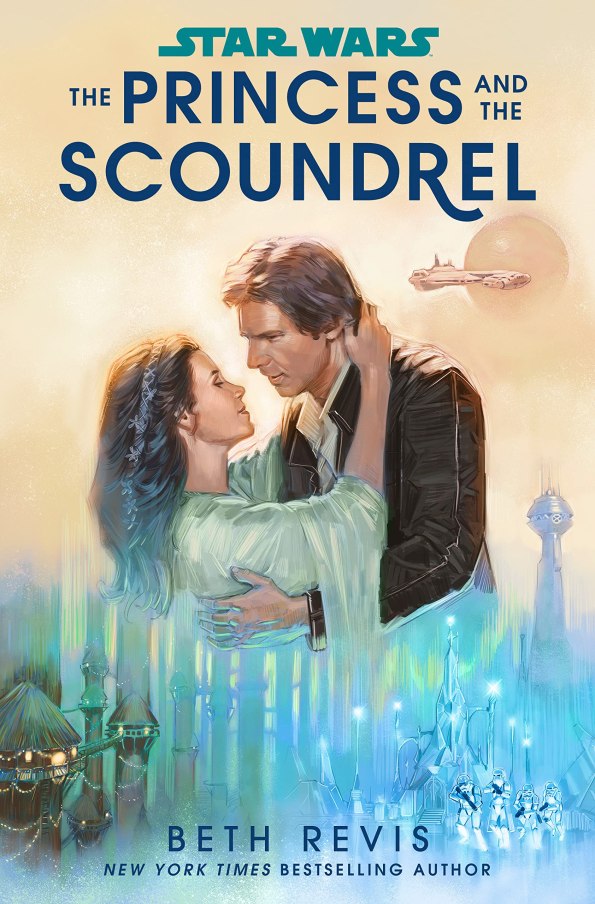
Star Wars: The Princess and the Scoundrel by Beth Revis

Star Wars - The Princess and the Scoundrel Cover

Publisher: Del Rey (Trade Paperback – 16 August 2022)

Series: Star Wars

Length: 348 pages

My Rating: 4 out of 5 stars

Amazon     Book Depository

Outstanding author Beth Revis presents an intriguing and enjoyable new entry in the extended Star Wars canon, with the fantastic tie-in novel, The Princess and the Scoundrel.

2022 has been a rather interesting year for Star Wars fiction.  While the focus has primarily been on the High Republic sub-series, several great authors have produced some awesome reads set around the various film trilogies (such as Star Wars: Brotherhood by Mike Chen).  However, one of the most exciting recent Star Wars tie-in novels is a character-driven read that focuses on the relationship between Han Solo and Princess Leia, The Princess and the Scoundrel, which was written by exciting author Beth Revis.  Revis, who already has some experience with the Star Wars canon, having written the 2017 novel, Rebel Rising, came up with an awesome story in The Princess and the Scoundrel that I had a wonderful time reading.  Not only does The Princess and the Scoundrel explore an interesting period of the complex and inspiring Star Wars canon, but it also contained a fantastic romantic heart that will appeal to a wider range of readers.

Goodreads Synopsis:

The Death Star is destroyed. Darth Vader is dead. The Empire is desolated. But on the forest moon of Endor, amongst the chaos of a changing galaxy, time stands still for a princess and her scoundrel.

After being frozen in carbonite, then risking everything for the Rebellion, Han is eager to stop living his life for other people. He and Leia have earned their future together, a thousand times over. And when he proposes to Leia, it’s the first time in a long time he’s had a good feeling about this. For Leia, a lifetime of fighting doesn’t truly seem over. There is work still to do, penance to pay for the dark secret she now knows runs through her veins. Her brother, Luke, is offering her that chance—one that comes with family and the promise of the Force. But when Han asks her to marry him, Leia finds her answer immediately on her lips . . . Yes.

But happily ever after doesn’t come easily. As soon as Han and Leia depart their idyllic ceremony on Endor for their honeymoon, they find themselves on the grandest and most glamorous stage of all: the Halcyon, a luxury vessel on a very public journey to the most wondrous worlds in the galaxy. Their marriage, and the peace and prosperity it represents, is a lightning rod for everyone in the galaxy—including Imperial remnants still clinging to power.

Facing their most desperate hour, the soldiers of the Empire have dispersed across the galaxy, retrenching on isolated worlds vulnerable to their influence. As the Halcyon travels from world to world, one thing becomes abundantly clear: The war is not over. But as danger draws closer, Han and Leia find that they fight their best battles not alone but as husband and wife.

I had a fantastic time getting through The Princess and the Scoundrel as Beth Revis wrote a pretty awesome and captivating Star Wars novel that covered a lot of bases.  Split between the alternating perspectives of Han and Leia, The Princess and the Scoundrel takes off right after Return of the Jedi.  While the victorious Rebellion plans their next moves, Han and Leia decide to make the most of their sudden freedom to get married after their traumatic year apart.  While both are still reeling from the events of the original trilogy, they come together in a fun wedding scene, before leaving on a glamorous trip that will be part honeymoon part propaganda show.  While initially trying to enjoy their honeymoon, both quickly fall into their old patterns, with Han chafing at the formality, while Leia continues to try and do her work as an ambassador and planner.  Arriving at an isolated ice planet, Han and Leia soon discover a destructive Imperial plot and must come together as a couple to thwart it.  This ended up being a really distinctive read, as Revis worked a more romantic plotline into the always entertaining Star Wars canon.  I loved seeing this fantastic tale of Han and Leia’s first adventure as husband and wife, and Revis ensured readers got an excellent blend of action, intrigue, and character development, as you witnessed these two amazing protagonists try to come together as a married couple.  There is a little something for everyone in this great read, and I found myself getting caught up in the action and the impressive focus on two of my favourite fictional characters.  An overall brilliant book that is really easy to enjoy and appreciate.

The Princess and the Scoundrel proved to be a very interesting addition to the current Star Wars canon.  While the romance between Han and Leia was strongly explored in the previous Legends canon, the current Disney canon has not featured it as much, and as such you see some fascinating events from their lives here for the first time.  Revis paints quite a fun picture of the sudden wedding these two have, which features entertaining interruptions from several key characters, some tricky manoeuvrings from Lando to get Han into a nice outfit, and, of course, a ton of Ewoks, while the honeymoon is as chaotic as you would expect from these two.  As such, this is a pretty key book for all fans of these two iconic characters, and I think that Revis hit an excellent tone when it came to some of these key events.  The author also fits in a lot of fantastic references and moments that a lot of Star Wars fans will appreciate, most of which are covered in a very fun way.  For example, the characters finally address that infamous kiss between Luke and Leia at the start of The Empire Strikes Back, with Han and Luke having a rather awkward conversation about it, before agreeing never to bring it up again.  Revis also makes quite good use of an interesting Han Solo villain from one of the previous canon books, and it was great to see some continuation from the previous intriguing storyline.  That, and several other amusing references, help to make this quite a key book for Star Wars fans, and I had a wonderful, nerdy time getting through it.

Aside from the direct references to the book, I was personally intrigued to see more about the period of Star Wars history that occurred in the immediate aftermath of the Death Star’s destruction in Return of the Jedi.  Despite the death of the Emperor, the war between the Empire and the Rebellion (now renamed as the New Republic), is still ongoing, and indeed some of the toughest fighting is still to come.  Several authors have covered this frenetic period in the current canon with some recent books, such as the Alphabet Squadron trilogy by Alexander Freed (made up of Alphabet Squadron, Shadow Fall and Victory’s Price).  However, I particularly enjoyed how The Princess and the Scoundrel covered this period, as it shows events literally hours after the end of the film.  Quite a bit is shown of the Rebellion’s initial strategies following the battle of Endor, as well as the Empire’s reactions to the death of the Emperor and the sudden shift in power.  While some of the wider campaigns aren’t shown, you get an interesting idea of what the military and political situation was at the time, which I deeply enjoyed.  Revis also spends time examining how members of the general public reacted to the news, and there is an interesting variation of responses.  Not only did some people straight out disbelieve that the events even occurred, with many assuming it was fake propaganda from the Rebellion, others who were associated with the Empire, or who had members of their family aboard the Death Star, acted quite hostile to the change in the established status quo.  These diverse reactions not only reflected some current real-world societal issues, but also provided a compelling insight into just how much influence the Empire had, even on the way to its downfall.  Throw in some hints and previews of the upcoming Operation Cinder, and this proved to be a very interesting addition the Star Wars canon that many established fans will really enjoy.

One of the strongest elements of The Princess and the Scoundrel is its impressive focus on the two main characters, Han Solo and Princess Leia.  While this book does contain a lot of action, intrigue and fantastic Star Wars elements, at its heart it is a romance novel between two well-established and complex characters, both of whom have experienced a lot of trauma and anguish in recent years.  Revis does a remarkable job of diving into both characters throughout the course of The Princess and the Scoundrel, and you really get a sense of their feelings, concerns and traumas following their victory.  However, there is also a great focus on their relationship, and you can really see the strong bond they have, even if they are still coming to terms with their feelings and their wildly different personalities.  I felt that Revis painted a realistic view of their relationship, which contains some difficulties early on, especially with their independent streaks.  However, the author also shows that the two characters are much stronger together, and they can work through any issues that come their way.  I think that this much better than just showing them having a fairy tale relationship, and I really appreciated the authors compelling take on one of the most iconic relationships in fiction.

Aside from their relationship, Revis also did a great job of diving into the complex emotional issues facing both central characters.  For example, Revis makes sure to explore the trauma surrounding Han after being trapped in carbonite for over a year.  Not only did he miss out on a lot of key events in his friends’ lives, but at this point of the book he has only been awake again for a few days, and some of his decisions are based on his concerns and fears about being trapped again.  Leia is also going through a lot after the discovery that Luke is her brother and, more importantly, that Darth Vader was her father.  As such, Leia spends much of the book attempting to reconcile the fact that her real father was a genocidal maniac who tortured her and is partially responsible for destroying her home planet.  This proves to be quite a deep and intriguing part of her character arc, especially since, unlike her newly discovered brother, she is unable to forgive Vader for everything he did.  There is also an interesting look at Leia’s early attempts to connect with the Force, after Luke reveals her Jedi potential.  Watching her attempts at using the Force is very fascinating, especially as she battles with her feelings about Vader while doing so and is reluctant to even try to use the abilities that he could do.  All these unique character examinations, and more, really help to showcase just how complex and traumatised Han and Leia were at this period, and how much their relationship helped them get past it.

Star Wars: The Princess and the Scoundrel by Beth Revis is an amazing read that provides Star Wars fans with something a little different to the typical tie-in novel.  Featuring a continuation of one of film’s most iconic romances, The Princess and the Scoundrels is at times touching and romantic, while also exploring the grim realities of the war-torn galaxy, all topped off with some classic Star Wars action and humour.  With an outstanding focus and understanding of its two main characters, The Princess and the Scoundrel was a fantastic novel that is well worth checking out.

Amazon     Book Depository

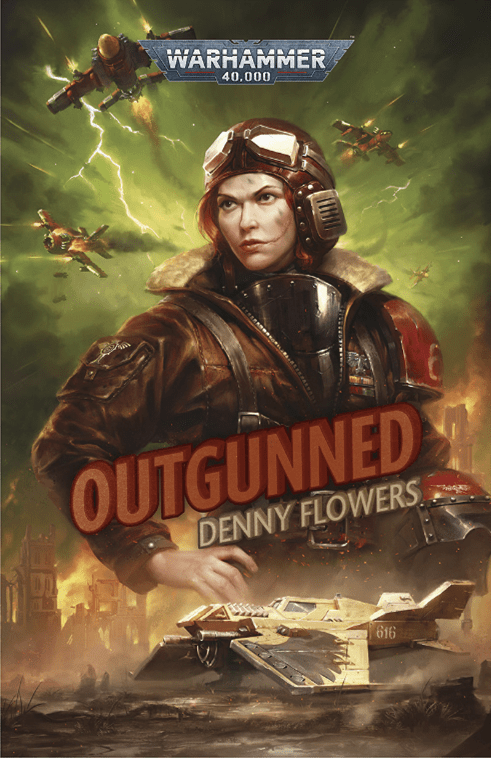
Warhammer 40,000: Outgunned by Denny Flowers

Warhammer 40,000 - Outgunned Cover

Publisher: Black Library (Audiobook – 20 August 2022)

Series: Warhammer 40,000

Length: 10 hours

My Rating: 4.75 out of 5 stars

Amazon

One of the fastest rising stars of Warhammer fiction, Denny Flowers, returns with his second novel in the Warhammer 40,000 canon, Outgunned, a deeply compelling and epic novel with a twisty and powerful story.

Last year I was lucky enough to read an interesting and memorable Warhammer 40,000 novel, Fire Made Flesh.  The debut novel of Denny Flowers, who had previously written some interesting Warhammer 40,000 short stories, Fire Made Flesh was part of the Necromunda subseries and told a fantastic story about warring factions in a spooky underworld town.  I had a lot of fun reading Fire Made Flesh, and it ended up being one of the better debuts I read in 2021.  As such, I have been eager to see how Flowers was going to follow up this debut, and I was deeply excited when I saw that he had a new novel coming out, the intriguing Outgunned.

In the far future, the soldiers of the Imperium of Man fight monsters and aliens on many battlefields and there is always a need for fresh bodies to fill the gaps in the ranks.  That is where Kile Simlex comes in.  A talented propagandist, Simlex excels at creating moving cinematic picts to inspire the people and increase recruitment to the Astra Militarum.  However, Simlex desires greater realism and seeks to travel to a battlefield to gain real footage for his greatest pict yet.

Travelling to the fetid swamp planet of Bacchus, Propagandist Simlex plans to chronicle the adventures of the Aeronautica Imperialis, the brave flying aces who traverse the skies, fighting in deadly aerial combat against the rampaging ork hordes.  In particular, he hopes to make a pict about legendary fighter ace, Lucille von Shard, considered to be the greatest pilot in the Imperium, to turn her into a renowned hero.  However, not everything is as it seems on Bacchus, and Simlex’s attempts to get footage may cost him everything.

Soon after arriving, Simlex begins to realise that the war on Bacchus is not going to plan.  The undermanned Aeronautica forces are being overwhelmed by the supposedly crude orks who have created an elaborate fleet of fighters and are slowly destroying Imperial forces from a hidden base.  At the same time, a mysterious sickness is destroying the planet itself, while its governor is determined to downplay the war no matter the cost.

However, his biggest threat may come from his chosen subject, as Lucille von Shard is an arrogant and disobedient pilot who has only avoided execution due to her peerless flying abilities.  Determined to make the situation work, Simlex attempts to chronicle the reluctant Shard’s skills, while also investigating the strange occurrences on Bacchus.  But is even the legendary Lucille von Shard capable of defeating the mysterious enemy waiting for them within the clouds?  The Green Storm hungers for combat, and the entire Imperium may shake as it approaches.

This was a superb and deeply impressive Warhammer 40,000 read that really highlights Flower’s growing skill as a science fiction writer.  Containing a unique and highly addictive narrative, Outgunned was an outstanding read that blended an exceptional story with some impressive glances at the wider Warhammer 40,000 universe.  I had an amazing time getting through this book and it was one of the more exciting and compelling Warhammer novels of 2022 so far.

I must admit that while I deeply enjoyed Outgunned’s brilliant narrative, it honestly wasn’t what I was expecting when I first started reading it.  Rather than a completely combat/military focused story about battles in the sky, Outgunned is a powerful and intense story that spends just as much time examining the darker aspects of the Imperium of Man as it does facing off against the ork threat.  This becomes clear very early on, especially as the opening introduction from Simlex hints at the deceit, cover-up and lies that are to come.  However, I was still unprepared for the full extent of the fantastic narrative that Flowers came up with, as he blends a lot of complex themes and components with some exceptional character work and clever universe expansions to create something truly special.

Outgunned’s narrative starts off hard and fast, quickly introducing Simlex and his propagandist ways, as well as his intentions on Bacchus, before throwing him briefly into the fray and introducing his fellow protagonist, Shard.  From there, Simlex attempts to film the flying aces in action, but he soon begins to realise that the supposedly stupid orks have developed a giant fleet of sophisticated airships and are slowly winning the battle against the Aeronautica Imperialis.  As he attempts to learn more about this, he finds himself drawn into a major conspiracy as Bacchus’s governor is determined to minimalize the impacts of the ork invasion and is actively working against it.  This forces Simlex to engage in multiple efforts, including diving into the past of his desired subject, the prickly and secretive Shard and flying on several missions against the orks, only to discover just how organised and deadly they are.  At the same time, he also attempts to understand what is truly going on with Bacchus and its people, as he finds many strange elements to them, including a spreading disease and a corrupt leader.  These well set up storylines are not only quite compelling and intriguing in their own right but they come together to tell a complex and impressive story that I was deeply addicted to.  I loved the mysteries and intrigues featured within this story, and they blended extremely well with the more combat orientated aspects of the plot and the unique character interactions that Flowers included.  Everything comes together extremely well at the end, and I loved some of the brilliant revelations and secrets that come out as the story concludes.  The entire narrative leads up to an excellent final fiery confrontation with the orks, which ties in nicely to many of the story elements featured throughout the book.  This is an overall excellent and powerful narrative that will really draw you in, especially with its unique look at the Warhammer 40,000 universe.

I deeply enjoyed the way that Flowers set out Outgunned’s narrative as there are so many great elements to it.  Told in a chronicle format from Propagandist Simlex’s perspective as he recalls the events in a more realistic and negative light.  This works to tell quite an intriguing tale, especially as you get some hints of the events of the future, and the negative tint that Simlex gives to the book’s narrative was a fantastic overall tone.  Despite this interesting narration choice, this novel has a brilliant, fast pace to it and the reader is never left in a dull spot, as there is always some cool action, fascinating intrigue or powerful dive into a character occurring throughout.  I loved the balance of story elements, and I must highlight the fantastic moments where Simlex works on his propaganda picts and dives through his recordings of the events around him.  I also had a lot of fun with the outstanding ariel combat scenes that are featured through the plot.  While they aren’t as heavily featured as you would expect from a book about the Aeronautica Imperialis, there are still some great sequences that were very fun to see.  Flowers really captures the magic and brutality of combat in in the air, and I loved some of the crazy scenes that resulted, especially against the ork stronghold.  There is also a particularly good fight sequence in the middle of a swamp that was pretty awesome, especially as it showed one character’s particular ingenuity and fighting spirit.

Outgunned served as an impressive standalone entry in the Warhammer 40,000 universe, and I deeply enjoyed how self-contained the narrative turned out to be.  Flowers also did a great job explaining most of the relevant Warhammer 40,000 elements featured within Outgunned, and I felt that this book can be easily enjoyed by most science fiction fans, although established Warhammer fans will probably get the most out of it.  I loved some of the very unique Warhammer 40,000 aspects that Flowers featured in Outgunned, as the author came up with some fantastic new elements that added so much more to the story.  I personally thought that Flowers did a really good job examining the Imperium through his character’s eyes, and you really get to see a fun new edge to it.  Not only do you get to see the Aeronautica Imperialis in action, which will appeal to many Imperial Guard fans, but you also get a cool viewpoint of the Imperium’s propaganda department.  Watching the protagonist dive into the techniques and motivations of the Imperial propagandists is quite fascinating, and it gives another great edge to the already dark and gothic Imperium that make you understand that deep down, they really aren’t the good guys they try to make out.  Throw in a fun blast of Imperial politics, as a corrupt planetary governor can manipulate the Astra Militarum for their own selfish ends, as well as some dark viewpoints of the brainwashing of young soldiers that occurred to certain characters, and you have a great, cynical view of the Imperium that I deeply enjoyed.

I was also quite impressed with the intriguing and cool viewpoint of the orks contained in Outgunned.  2022 has been a pretty good year for fascinating ork novels, such as Ghazghkull Thraka: Prophet of the Waagh! and Catachan Devil, and Outgunned offered another great look, even though you rarely get to see the creatures in person.  Instead, Flowers offers an interesting look at them through the human characters’ eyes as they try to work out just how these supposedly crude creatures are winning the war for the skies over the planet.  Watching the characters slowly realise just how ingenious and clever the orks really are is pretty fun, especially as the propagandist main character has spent most of his career showing them as stupid beasts.  As such, the book shows many fantastic examples of the complex ork culture through the eyes of characters who really don’t understand it, which I think worked to make it appear a lot more interesting and mysterious.  Established fans of the ork faction (and what Warhammer fiction reader doesn’t love the orks?), will have a blast watching the characters, especially the sheltered Simlex, try and understand their motivations and tactics, and I felt that it was a great way of showcasing the orks without having a major ork character present.  I deeply enjoyed all the awesome Warhammer 40,000 elements contained with Outgunned, and it really proved to be an amazing entry into the wider canon.

I also must quickly mention the outstanding setting of the planet Bacchus, where the entire narrative took place.  A swamp world with little agricultural value, Bacchus proves to be an unlikely battleground for the forces of the Imperium; however, with an influential governor and a corrupt ruling class enjoying the wine that it produces, it soon becomes a major warzone.  While I quite enjoyed this further example of how corrupt the Imperium is, its main benefit as a setting is the way that Flowers makes Bacchus appear as unpleasant and deadly as possible, and it provides a very distinctive and memorable background for many of the book’s fantastic scenes.  The sickly swamp setting comes across in vivid detail, and you can feel the terrible sucking feel of it, as well as the many dangers in contains.  If that wasn’t bad enough, Flowers also inserts in a mysterious rotting disease that is making Bacchus even more deadly and hostile.  This disease is worked into the larger story beautifully, and it helps to give Bacchus even more of a rotting, decaying feel that makes you wonder why anyone is still fighting the orks for it.  I deeply appreciated this unique and fantastic Warhammer 40,000 setting, and Flower’s masterful portrayal of it deeply enhanced Outgunned’s excellent story.

I also must talk about the outstanding characters contained within Outgunned as Flowers worked to create some impressive and complex central protagonists.  While there are some great supporting figures throughout Outgunned, I am going to limit myself to the main two characters who most of the story revolves around.  The first of these is Propagandist Kile Simlex, a renowned pict maker and artist who has dedicated his life to making inspirational films that inspire mankind and get them to fight the Imperium’s enemies.  Not only is this a very cool position in the Warhammer 40,000 canon, but Flowers writes Simlex in a very compelling way.  I loved how the character’s narration allows you to see the cynical hindsight of Simlex after he survived the events of the book and recounts his adventures, and it was fascinating to see the character slowly lose his faith in the Imperium and the system he has always served when confronted with the events of this book.  The constant danger, political selfishness, betrayal, misinformation and disdain of the soldiers he is trying to help really get to him as the novel progresses, and you really see him start to doubt himself.  Flowers writes some beautiful scenes around this, and the realisations that he has about the Imperium and his role in its continuing exploitation are great, even if they come back to bite him.

I also deeply enjoyed how Flowers paired Simlex with three servo-skulls who are linked to him mentally.  These skulls (literal skulls that have been turned into drones) are specifically altered to act as Simlex’s cameras, and he uses them to record the combat footage and gather information as he attempts to unravel the conspiracies of Bacchus.  The powerful link he has to these skulls ensures that his mind is often split between different perspectives, and he often views the world through these robotic eyes.  This unique method of viewing the world becomes a key part of Simlex’s character, and it was fascinating to see how connected he was to his floating skulls, who almost become characters in their own right.  Simlex proved to be an impressive centre for this entire narrative, and his dark and compelling view of the world really helped to shape this awesome book.

The other major character is Flight Commander Lucille von Shard, the greatest fighter ace in the Imperium, who Simlex is hoping to base his pict on.  Shard is the scion of a legendary Imperial family whose members are serving the Imperium in distinguished roles.  However, rather than being a dutiful solider, Shard is a brash, arrogant and rude figure who knows she’s the best, even when drunk, and is happy to tell everyone she knows.  Always depicted with a sneer on her face, Shard appears not to care about her position, and only truly loves flying, drinking and fighting.  Initially disrespectful of Simlex and everything he represents, the two eventually begin working as an antagonistic team against the orks, and Simlex soon sees Shard in a new light, especially once he discovers that much of her persona is an act.  Flowers does a truly fascinating dive into Shard throughout Outgunned, and she is easily the most interesting and complex characters in the entire novel.  There is so much hidden pain, unreasonable expectations and personality issues surrounding this character, and the hints about what drives her and the realities of her family and her past are just brilliant.  Shard honestly had a perfect character arc and Flowers did something special with this protagonist.  I honestly don’t think that Outgunned would have been as good as it was without Shard, and I had such an outstanding time getting to know her and seeing the complex backstory the author wove around her.

Like most of the Warhammer novels I enjoy, I chose to check out Outgunned in its audiobook format, which was pretty damn epic.  I loved how well the Outgunned audiobook turned out, and the format really enhanced the impressive, action-packed narrative.  The audiobook moves the already great story along at a brisk and fun pace, while also highlighting the excellent characters.  With a run time of 10 hours, this is a pretty quick audiobook to get through, and I managed to power through it in a few days.  I was particularly impressed with the voice work of narrator Phillip Sacramento, who does a wonderful job reading out this compelling book.  Sacramento has a brilliant voice for the dark gothic narrative of Outgunned, and I felt that this Irish accent gave the overall narration a little more gravitas.  I deeply enjoyed the great voices he attributed to the various characters of Outgunned, and every cast member was given a fitting voice that really worked for them.  I felt that Sacramento really captured each of these characters extremely well, and you get a real feel of their rough emotions as they attempt to navigate the terrible situations of the book.  I particularly liked the voice that was used for Lucille von Shard, as the sheer arrogance of the character practically drips into your ear, only to occasionally be replaced by a different emotion as her barriers break.  This outstanding narration added so much to my enjoyment of Outgunned, and this ended up being an exceptional way to enjoy this brilliant book.  As such, this format comes very highly recommended, and it is easily the best format to enjoy Outgunned.

With his second novel, Outgunned, Denny Flowers really showed the world what he is capable of as a Warhammer 40,000 author.  With its outstanding and captivating narrative, Outgunned rose above the author’s previous novel and was one of the better Warhammer 40,000 novels of 2022 so far.  The author wove some brilliant layers into this impressive read, and I loved the incredible characters, memorable setting and fascinating Warhammer elements that enhanced the clever story.  A must-read for all Warhammer 40,000 fans, Outgunned was an absolute pleasure to read and I can’t wait to find out what Flowers has planned next.

Amazon